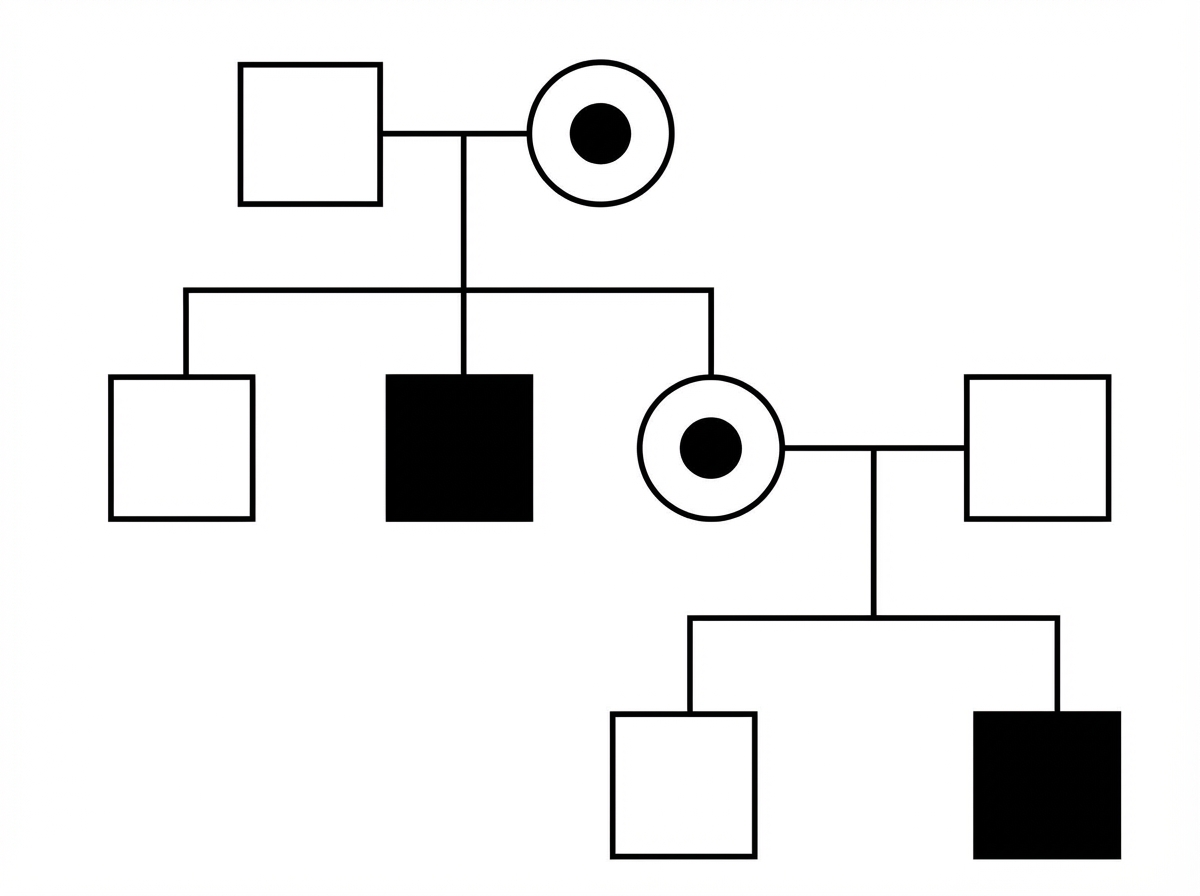
What is the primary pathology in Zellweger syndrome?
AKT1 E17K somatic mutation is associated with which of the following carcinomas?
Ladder pattern of DNA electrophoresis is seen in which of the following cellular processes?
Cellular adaptation maintained even after partial liver resection is known as:
Fat necrosis is seen in which organ?
Which of the following is NOT true about chromosomal instability syndromes?
The NF-2 gene codes for which protein?
A female patient presented with a firm mass of 2 x 2 cms in the upper outer quadrant of the breast. She gives a family history of ovarian carcinoma. Which investigation needs to be done to assess for a relevant mutation?
Tumor necrosis factor (TNF) is secreted by activated:
Which of the following represents the indication for the In-situ DNA nick end labeling technique?
Explanation: **Explanation:** **Zellweger Syndrome** (also known as cerebrohepatorenal syndrome) is the most severe form of the **Peroxisome Biogenesis Disorders (PBD)**. It is an autosomal recessive condition caused by mutations in the **PEX genes**, which are essential for the normal assembly and functioning of peroxisomes. 1. **Why Option C is Correct:** Peroxisomes are organelles responsible for the beta-oxidation of **Very Long Chain Fatty Acids (VLCFA)** and the synthesis of plasmalogens (vital for myelin). In Zellweger syndrome, the failure to import proteins into the peroxisome leads to "empty" peroxisomes. This results in the systemic accumulation of VLCFAs, particularly in the brain and liver, leading to severe neurological dysfunction and organ failure. 2. **Why Other Options are Incorrect:** * **Option A (Mitochondrial defect):** While mitochondria also perform fatty acid oxidation, they handle short, medium, and long-chain fatty acids. Mitochondrial diseases typically present with myopathy, lactic acidosis, and "ragged red fibers," which are distinct from the peroxisomal pathology of Zellweger. * **Option B (Glycoxisomal defect):** Glyoxysomes are specialized peroxisomes found in plants (involved in the glyoxylate cycle); they do not exist in human pathology. **High-Yield Clinical Pearls for NEET-PG:** * **Clinical Triad:** Dysmorphic craniofacial features (high forehead, wide fontanelles), severe hypotonia ("floppy baby"), and neonatal seizures. * **Imaging/Pathology:** Look for **chondrodysplasia punctata** (stippled epiphyses on X-ray) and renal cortical cysts. * **Biochemical Marker:** Elevated serum levels of **Very Long Chain Fatty Acids (VLCFA)** is the diagnostic hallmark. * **Prognosis:** Usually fatal within the first year of life.
Explanation: **Explanation:** The **AKT1 E17K** mutation is a specific somatic point mutation occurring in the pleckstrin homology domain of the AKT1 protein. This mutation results in the constitutive localization of AKT1 to the plasma membrane, leading to the permanent activation of the **PI3K/AKT/mTOR pathway**, which promotes cell survival, growth, and proliferation. **1. Why Breast Carcinoma is correct:** The AKT1 E17K mutation is most frequently identified in **Breast Carcinoma**, specifically in **Estrogen Receptor-positive (ER+)** and **ductal** subtypes. It occurs in approximately 2–5% of breast cancers. It is often mutually exclusive with PIK3CA mutations, suggesting they serve redundant roles in activating the same oncogenic pathway. **2. Analysis of Incorrect Options:** * **Gastric Carcinoma:** While the PI3K pathway is often altered in gastric cancer, it is usually via *PIK3CA* mutations or *PTEN* loss, rather than the specific AKT1 E17K mutation. * **Ovarian Carcinoma:** AKT2 amplification is more common in ovarian cancer. AKT1 mutations are rare in this site. * **Pancreatic Carcinoma:** The hallmark mutation in pancreatic cancer is *KRAS* (found in >90% of cases), not AKT1. **High-Yield Clinical Pearls for NEET-PG:** * **AKT1 E17K** is a "gain-of-function" mutation. * **PI3K/AKT/mTOR Pathway:** This is a major target for newer "targeted therapies" (e.g., Alpelisib for PIK3CA). * **Mutual Exclusivity:** In breast cancer, AKT1 mutations, PIK3CA mutations, and PTEN loss rarely occur in the same tumor. * **Other associations:** Besides breast cancer, AKT1 E17K is also notably found in **Proteus Syndrome** (a mosaic genetic disorder) and some cases of endometrial cancer.
Explanation: **Explanation:** The **DNA ladder pattern** is a hallmark biochemical feature of **Apoptosis** (programmed cell death) [1]. This occurs due to the activation of calcium- and magnesium-dependent **endonucleases** (specifically Caspase-Activated DNase or CAD). These enzymes cleave the DNA at vulnerable internucleosomal linker regions. Since nucleosomes are spaced at regular intervals of approximately 180–200 base pairs, the resulting DNA fragments are multiples of this size (e.g., 200, 400, 600 bp). When these fragments are separated via agarose gel electrophoresis, they form a distinct "ladder" appearance. **Analysis of Incorrect Options:** * **Necrosis:** Unlike the programmed cleavage in apoptosis, necrosis involves accidental, uncontrolled cell death [1]. This leads to random, non-specific DNA degradation by lysosomal enzymes, resulting in a diffuse **"Smear pattern"** on electrophoresis rather than distinct bands. * **Cytolysis:** This refers to the physical bursting of a cell due to osmotic imbalance or membrane damage. While it may lead to secondary necrosis, it is not a specific biochemical process characterized by internucleosomal DNA cleavage. * **Karyorrhexis:** This is a morphological term describing the fragmentation of the nucleus. While karyorrhexis occurs in both apoptosis and necrosis, the specific "laddering" on electrophoresis is a biochemical event unique to the enzymatic precision of apoptosis. **High-Yield Pearls for NEET-PG:** * **Apoptosis:** DNA Laddering (Step-ladder pattern) [1]. * **Necrosis:** DNA Smearing. * **Enzyme involved:** Endonuclease (Caspase-Activated DNase). * **Gold Standard to detect Apoptosis:** **TUNEL Assay** (Terminal deoxynucleotidyl transferase dUTP nick end labeling), which labels the 3' OH ends of the fragmented DNA. * **Annexin V:** Another marker for apoptosis, which binds to phosphatidylserine flipped to the outer membrane leaflet [2]. **References:** [1] Kumar V, Abbas AK, et al.. Robbins and Cotran Pathologic Basis of Disease. 9th ed. Cellular Responses to Stress and Toxic Insults: Adaptation, Injury, and Death, pp. 63-64. [2] Cross SS. Underwood's Pathology: A Clinical Approach. 6th ed. (Basic Pathology) introduces the student to key general principles of pathology, both as a medical science and as a clinical activity with a vital role in patient care. Part 2 (Disease Mechanisms) provides fundamental knowledge about the cellular and molecular processes involved in diseases, providing the rationale for their treatment. Part 3 (Systematic Pathology) deals in detail with specific diseases, with emphasis on the clinically important aspects., pp. 80-81.
Explanation: **Explanation:** **1. Why Hyperplasia is Correct:** Liver regeneration following a partial hepatectomy is a classic example of **compensatory hyperplasia** [3], [5]. In this process, the remaining hepatocytes (which are stable/quiescent cells in the $G_0$ phase) re-enter the cell cycle ($G_1$ phase) in response to growth factors like HGF (Hepatocyte Growth Factor) and cytokines like IL-6 and TNF-̱ [4]. This results in an increase in the **number of cells** to restore the functional mass of the organ [1]. Unlike true regeneration where lost lobes regrow, in humans, the remaining lobes enlarge to compensate for the lost tissue [4]. **2. Why Other Options are Incorrect:** * **Hypertrophy:** This involves an increase in the **size** of cells (not number) due to increased synthesis of structural proteins [2]. While some hypertrophy occurs in the liver, the primary mechanism for mass restoration is hyperplasia. * **Metaplasia:** This is a reversible change where one adult cell type is replaced by another (e.g., Squamous metaplasia in smokers). It is a response to chronic irritation, not tissue loss. * **Dysplasia:** This refers to disordered growth and maturation of an epithelium (pre-neoplastic). It is a pathological process, not an adaptive response to resection. **High-Yield Clinical Pearls for NEET-PG:** * **Cell Cycle Classification:** Hepatocytes are **Stable (Quiescent) cells** [3]. They have a low level of replication but can undergo rapid division in response to stimuli. * **Key Growth Factor:** **HGF** (produced by mesenchymal cells) is the most potent mitogen for hepatocytes. * **Termination:** Regeneration is halted by growth inhibitors like **TGF-̲**. * **Other Hyperplasia Examples:** Endometrial hyperplasia (hormonal), breast enlargement during lactation (hormonal), and skin warts (pathological hyperplasia due to HPV) [2]. **References:** [1] Cross SS. Underwood's Pathology: A Clinical Approach. 6th ed. (Basic Pathology) introduces the student to key general principles of pathology, both as a medical science and as a clinical activity with a vital role in patient care. Part 2 (Disease Mechanisms) provides fundamental knowledge about the cellular and molecular processes involved in diseases, providing the rationale for their treatment. Part 3 (Systematic Pathology) deals in detail with specific diseases, with emphasis on the clinically important aspects., pp. 87-88. [2] Cross SS. Underwood's Pathology: A Clinical Approach. 6th ed. (Basic Pathology) introduces the student to key general principles of pathology, both as a medical science and as a clinical activity with a vital role in patient care. Part 2 (Disease Mechanisms) provides fundamental knowledge about the cellular and molecular processes involved in diseases, providing the rationale for their treatment. Part 3 (Systematic Pathology) deals in detail with specific diseases, with emphasis on the clinically important aspects., pp. 85-87. [3] Cross SS. Underwood's Pathology: A Clinical Approach. 6th ed. (Basic Pathology) introduces the student to key general principles of pathology, both as a medical science and as a clinical activity with a vital role in patient care. Part 2 (Disease Mechanisms) provides fundamental knowledge about the cellular and molecular processes involved in diseases, providing the rationale for their treatment. Part 3 (Systematic Pathology) deals in detail with specific diseases, with emphasis on the clinically important aspects., pp. 108-109. [4] Kumar V, Abbas AK, et al.. Robbins and Cotran Pathologic Basis of Disease. 9th ed. Inflammation and Repair, p. 113. [5] Kumar V, Abbas AK, et al.. Robbins and Cotran Pathologic Basis of Disease. 9th ed. Inflammation and Repair, pp. 113-115.
Explanation: **Explanation:** **Fat necrosis** is a specialized form of cell death that occurs specifically in adipose (fatty) tissue. It is not a distinct pattern of necrosis in the biological sense, but rather a descriptive term for focal areas of fat destruction [1]. **1. Why Breast is Correct:** The **Breast** is composed of a significant amount of adipose tissue. Fat necrosis in the breast typically occurs following **trauma** or surgery. When adipocytes are ruptured, released lipases (or mechanical trauma) break down triglycerides into fatty acids. These fatty acids combine with calcium in a process called **saponification**, resulting in chalky-white deposits [1]. Clinically, this is high-yield because it can present as a painless, hard mass that mimics breast cancer on physical exam and mammography. **2. Why the other options are incorrect:** * **Brain:** Undergoes **Liquefactive necrosis** due to the lack of a supportive connective tissue stroma and a high content of digestive enzymes (hydrolases). * **Kidney & Spleen:** These solid organs typically undergo **Coagulative necrosis** following an ischemic insult or infarct [2]. In coagulative necrosis, the architecture of the dead tissue is preserved for a few days [2]. **NEET-PG High-Yield Pearls:** * **Two Types of Fat Necrosis:** 1. **Enzymatic:** Classically seen in **Acute Pancreatitis**, where pancreatic lipases escape into the peripancreatic fat [1]. 2. **Non-enzymatic/Traumatic:** Classically seen in the **Breast** or subcutaneous tissue. * **Histology:** Look for "shadowy outlines" of necrotic adipocytes with peripheral inflammation and bluish calcium deposits (saponification) [1]. * **Dystrophic Calcification:** Fat necrosis is a classic example of dystrophic calcification (calcium deposition in necrotic tissue with normal serum calcium levels). **References:** [1] Kumar V, Abbas AK, et al.. Robbins and Cotran Pathologic Basis of Disease. 9th ed. Cellular Responses to Stress and Toxic Insults: Adaptation, Injury, and Death, p. 55. [2] Kumar V, Abbas AK, et al.. Robbins and Cotran Pathologic Basis of Disease. 9th ed. Cellular Responses to Stress and Toxic Insults: Adaptation, Injury, and Death, pp. 53-55.
Explanation: Explanation: Chromosomal Instability Syndromes (CIS) are a group of rare genetic disorders characterized by defects in **DNA repair mechanisms** or genomic maintenance [1], [2]. **1. Why Option B is the correct answer (The False Statement):** The hallmark of classic chromosomal instability syndromes is that they are almost exclusively inherited in an **Autosomal Recessive (AR)** pattern [1]. This includes conditions like Fanconi Anemia, Ataxia-Telangiectasia, and Bloom Syndrome [1]. An exception is Xeroderma Pigmentosum (also AR), though some rare variants exist [1]. Therefore, stating they are Autosomal Dominant is incorrect. **2. Analysis of Incorrect Options:** * **Option A (DNA repair defect):** This is the core pathophysiology [2]. For example, Ataxia-Telangiectasia involves a defect in the *ATM* gene (double-strand break repair), while Xeroderma Pigmentosum involves Nucleotide Excision Repair (NER) defects [1]. * **Option C (Increased risk of malignancy):** Because DNA damage accumulates without repair, these patients have a significantly high predisposition to cancers (e.g., Leukemia in Fanconi Anemia, Skin cancer in XP, and Lymphomas in Ataxia-Telangiectasia) [1]. * **Option D (Associated immunodeficiency):** Many CIS present with immune dysfunction. For instance, Ataxia-Telangiectasia is characterized by IgA deficiency and thymic hypoplasia, leading to recurrent sinopulmonary infections. **High-Yield Clinical Pearls for NEET-PG:** * **Fanconi Anemia:** Most common CIS; presents with pancytopenia, thumb/radial defects, and sensitivity to DNA cross-linking agents (Mitomycin C) [1]. * **Bloom Syndrome:** Defect in *BLM* gene (DNA Helicase); characterized by short stature, telangiectatic erythema (butterfly rash), and "sister chromatid exchanges" [1]. * **Ataxia-Telangiectasia:** Defect in *ATM* gene; triad of cerebellar ataxia, oculocutaneous telangiectasia, and IgA deficiency [1]. Increased Alpha-fetoprotein (AFP) is a diagnostic marker. **References:** [1] Kumar V, Abbas AK, et al.. Robbins and Cotran Pathologic Basis of Disease. 9th ed. Neoplasia, pp. 322-323. [2] Cross SS. Underwood's Pathology: A Clinical Approach. 6th ed. (Basic Pathology) introduces the student to key general principles of pathology, both as a medical science and as a clinical activity with a vital role in patient care. Part 2 (Disease Mechanisms) provides fundamental knowledge about the cellular and molecular processes involved in diseases, providing the rationale for their treatment. Part 3 (Systematic Pathology) deals in detail with specific diseases, with emphasis on the clinically important aspects., pp. 226-227.
Explanation: The **NF-2 gene**, located on **chromosome 22q12**, is a tumor suppressor gene. It encodes a protein called **Merlin** (also known as Schwannomin). Merlin is structurally related to the ERM (Ezrin-Radixin-Moesin) family of proteins. Its primary function is to link cell-surface glycoproteins to the actin cytoskeleton. When Merlin is lost, cells lose contact inhibition, leading to uncontrolled proliferation and tumor formation. [1] **Analysis of Options:** * **Option C (Merlin):** Correct. Merlin acts as a tumor suppressor by facilitating contact inhibition through the Hippo signaling pathway. [1] * **Option B (Neurofibromin):** Incorrect. This protein is encoded by the **NF-1 gene** located on chromosome 17. Neurofibromin acts as a GTPase-activating protein (GAP) that downregulates the RAS signaling pathway. [1] * **Options A & D (Catenins):** Incorrect. Catenins (α and β) are proteins that interact with E-cadherin to maintain cell-cell adhesion. While β-catenin is involved in the WNT signaling pathway (mutated in APC/Colon cancer), it is not the product of the NF-2 gene. **High-Yield Clinical Pearls for NEET-PG:** * **Clinical Presentation:** NF-2 is classically associated with **Bilateral Acoustic Neuromas** (Vestibular Schwannomas). Remember the mnemonic: **NF-2** = **2** ears (Bilateral acoustic neuromas) on chromosome **22**. [1] * **MISME Syndrome:** NF-2 is characterized by **M**ultiple **I**nherited **S**chwannomas, **M**eningiomas, and **E**pendymomas. [2] * **Ocular Sign:** Juvenile posterior subcapsular lenticular opacities (cataracts) are a common early diagnostic sign of NF-2. **References:** [1] Kumar V, Abbas AK, et al.. Robbins and Cotran Pathologic Basis of Disease. 9th ed. Peripheral Nerves and Skeletal Muscles, pp. 1248-1249. [2] Kumar V, Abbas AK, et al.. Robbins and Cotran Pathologic Basis of Disease. 9th ed. The Central Nervous System, pp. 1319-1320.
Explanation: ### Explanation **Correct Option: B (BRCA-2)** The clinical presentation of a breast mass in a female with a strong family history of ovarian carcinoma strongly suggests **Hereditary Breast and Ovarian Cancer (HBOC) syndrome**. * **BRCA-1 and BRCA-2** are tumor suppressor genes involved in DNA repair (homologous recombination). * While both are associated with breast and ovarian cancer, **BRCA-2** is specifically linked to a higher risk of male breast cancer and has a strong association with ovarian cancer in familial clusters. In the context of NEET-PG, when a "family history of ovarian cancer" is paired with a breast mass, BRCA mutations are the primary investigation of choice [1]. **Analysis of Incorrect Options:** * **A. p53:** Mutations in *TP53* cause **Li-Fraumeni Syndrome**. While this increases the risk of breast cancer, it is typically associated with sarcomas, brain tumors, and adrenocortical carcinomas rather than a specific link to ovarian carcinoma. * **C. Her 2/Neu:** This is a proto-oncogene (ERBB2) used as a **prognostic and predictive marker** in sporadic breast cancer to determine eligibility for Trastuzumab. It is not a germline mutation used to assess familial risk. * **D. C-myc:** This oncogene is primarily associated with **Burkitt Lymphoma** (t(8;14)). It does not play a diagnostic role in hereditary breast-ovarian syndromes. **High-Yield Clinical Pearls for NEET-PG:** * **BRCA-1:** Located on Chromosome **17q**. Associated with Triple Negative Breast Cancer (TNBC) and Serous Ovarian Carcinoma. * **BRCA-2:** Located on Chromosome **13q**. Associated with increased risk of Prostate, Pancreatic, and Male Breast Cancer. * **Mechanism:** Both genes are involved in **Double-Stranded DNA Break Repair**. * **Prophylaxis:** Patients with these mutations may undergo prophylactic bilateral salpingo-oophorectomy and mastectomy [1]. **References:** [1] Kumar V, Abbas AK, et al.. Robbins and Cotran Pathologic Basis of Disease. 9th ed. The Breast, pp. 1058-1059.
Explanation: **Explanation:** **Correct Answer: A. Macrophages** Tumor Necrosis Factor (TNF), specifically TNF-alpha, is a potent pro-inflammatory cytokine primarily produced by **activated macrophages** [1] (and monocytes) in response to bacterial endotoxins (LPS), immune complexes, and other inflammatory stimuli. It plays a central role in the acute inflammatory response by stimulating the expression of adhesion molecules on endothelial cells and inducing the secretion of other cytokines like IL-1 and IL-6. **Why the other options are incorrect:** * **B. Neutrophils:** While neutrophils are the hallmark of acute inflammation and respond to TNF by increasing their phagocytic activity and respiratory burst, they are not the primary secretors of this cytokine. * **C. Lymphocytes:** T-lymphocytes primarily secrete **TNF-beta** (also known as Lymphotoxin) and other cytokines like IL-2 and IFN-gamma. While they can produce small amounts of TNF-alpha, macrophages remain the predominant source. * **D. Eosinophils:** These cells are primarily involved in parasitic infections and Type I hypersensitivity reactions. Their major mediators include Major Basic Protein (MBP) and Eosinophil Cationic Protein (ECP), not TNF. **High-Yield Clinical Pearls for NEET-PG:** * **Systemic Effects:** In high concentrations, TNF causes **cachexia** (muscle wasting) by suppressing appetite and inhibiting lipoprotein lipase. * **Septic Shock:** TNF is the key mediator of septic shock, leading to myocardial suppression and vascular collapse. * **Granuloma Formation:** TNF is essential for the formation and maintenance of granulomas in Tuberculosis. This is why patients on anti-TNF therapy (e.g., Infliximab, Etanercept) must be screened for latent TB, as these drugs can cause **reactivation**. * **Acute Phase Response:** Along with IL-1 and IL-6, TNF acts on the hypothalamus to induce **fever**. **References:** [1] Kumar V, Abbas AK, et al.. Robbins and Cotran Pathologic Basis of Disease. 9th ed. Inflammation and Repair, pp. 105-106.
Explanation: ### Explanation **Correct Option: A. To detect the fraction of cells in apoptotic pathways** The **In-situ DNA nick end labeling (TUNEL)** technique is a gold-standard method used to identify and quantify cells undergoing **apoptosis** [1]. * **Mechanism:** During the late stages of apoptosis, endogenous endonucleases cleave genomic DNA into short fragments (180–200 base pairs), creating numerous "nicks" or free 3'-hydroxyl (OH) ends [1]. * **The Process:** The enzyme **Terminal Deoxynucleotidyl Transferase (TdT)** is used to catalyze the addition of labeled nucleotides (usually dUTP tagged with a fluorophore or enzyme) to these 3'-OH ends. These labeled "tails" can then be visualized under a microscope, allowing for the identification of apoptotic cells within a tissue section. **Analysis of Incorrect Options:** * **B. To detect cells in S phase:** This is typically achieved using **Bromodeoxyuridine (BrdU)** incorporation or immunohistochemistry for **Ki-67** or **PCNA** (Proliferating Cell Nuclear Antigen). * **C. To detect p53 gene product:** This is performed using **Immunohistochemistry (IHC)** to detect protein overexpression or **DNA sequencing** to identify mutations in the *TP53* gene. * **D. To detect bcr/abl gene:** This translocation [t(9;22)] seen in CML is detected using **Fluorescence In-Situ Hybridization (FISH)** or **RT-PCR** [2]. **High-Yield Clinical Pearls for NEET-PG:** * **DNA Laddering:** On agarose gel electrophoresis, apoptotic DNA shows a characteristic **"step-ladder" pattern** due to internucleosomal cleavage. In contrast, necrosis shows a **"smear" pattern** due to random DNA degradation. * **Annexin V:** Another marker for early apoptosis; it binds to **Phosphatidylserine**, which flips from the inner to the outer leaflet of the plasma membrane during apoptosis. * **Caspase-3:** Detection of "cleaved Caspase-3" via IHC is considered the most specific marker for the execution phase of apoptosis [2]. **References:** [1] Cross SS. Underwood's Pathology: A Clinical Approach. 6th ed. (Basic Pathology) introduces the student to key general principles of pathology, both as a medical science and as a clinical activity with a vital role in patient care. Part 2 (Disease Mechanisms) provides fundamental knowledge about the cellular and molecular processes involved in diseases, providing the rationale for their treatment. Part 3 (Systematic Pathology) deals in detail with specific diseases, with emphasis on the clinically important aspects., pp. 101-102. [2] Kumar V, Abbas AK, et al.. Robbins and Cotran Pathologic Basis of Disease. 9th ed. Cellular Responses to Stress and Toxic Insults: Adaptation, Injury, and Death, pp. 64-65.
Principles of Molecular Pathology
Practice Questions
DNA and RNA Analysis Techniques
Practice Questions
Cytogenetics
Practice Questions
Polymerase Chain Reaction Applications
Practice Questions
Next-Generation Sequencing
Practice Questions
Molecular Diagnosis of Infectious Diseases
Practice Questions
Molecular Oncology
Practice Questions
Pharmacogenomics
Practice Questions
Genetic Counseling and Risk Assessment
Practice Questions
Molecular Diagnostics Quality Control
Practice Questions
Get full access to all questions, explanations, and performance tracking.
Start For Free