Foci of granulomatous inflammation show all of the following except?
NKX3-1 immunohistochemistry is used for the diagnosis of which of the following?
Which of the following is considered a major pyrogenic cytokine?
What is the primary molecular pathology associated with Marfan syndrome?
What is the characteristic feature of apoptosis on light microscopy?
Calnexin and calreticulin are primarily classified as which of the following?
Blau syndrome is associated with a mutation in which gene?
A study of peripheral blood smears shows that neutrophil nuclei of women have a Barr body, whereas those of men do not. The Barr body is an inactivated X chromosome. Which of the following forms of RNA is most likely to play a role in Barr body formation?
Which of the following enzymes is NOT responsible for the removal of free radicals?
Which of the following is a labile cell?
Explanation: ### Explanation A **granuloma** is a distinctive pattern of chronic inflammation characterized by a focal collection of activated macrophages, often surrounded by a rim of lymphocytes and sometimes a peripheral zone of fibrosis [1]. **Why Eosinophils (Option A) is the correct answer:** Eosinophils are typically associated with **Type I hypersensitivity reactions** (allergic diseases) or **parasitic infections** [2]. While they may occasionally be seen in specific types of granulomatous diseases (like Churg-Strauss syndrome or certain fungal infections), they are **not** a defining or universal component of the classic granulomatous inflammatory focus. **Analysis of Incorrect Options:** * **Epithelioid cells (Option B):** These are the hallmark of granulomas. They are activated macrophages that have developed abundant pink cytoplasm, resembling epithelial cells [1]. They are induced by IFN-γ secreted by T-cells. * **Fibrosis (Option C):** In older granulomas, a rim of fibroblasts and connective tissue (fibrosis) often develops due to the secretion of growth factors like TGF-β [1]. This is the body’s attempt to "wall off" the offending agent. * **Lymphocytes (Option D):** Granulomatous inflammation is a form of **Type IV (delayed-type) hypersensitivity**. T-lymphocytes (specifically CD4+ Th1 cells) are essential for activating macrophages into epithelioid cells via cytokine signaling [1]. **NEET-PG High-Yield Pearls:** * **The "Signature" Cell:** The epithelioid cell is the diagnostic cell of a granuloma. * **Giant Cells:** Formed by the fusion of epithelioid cells [1]. Examples include **Langhans giant cells** (peripheral nuclei; seen in TB) and **Foreign body giant cells** (disorganized nuclei). * **Caseation:** Central "cheese-like" necrosis is highly suggestive of *Mycobacterium tuberculosis*. * **Non-caseating granulomas:** Classically seen in Sarcoidosis, Crohn’s disease, and Berylliosis. **References:** [1] Kumar V, Abbas AK, et al.. Robbins and Cotran Pathologic Basis of Disease. 9th ed. Inflammation and Repair, pp. 107-109. [2] Cross SS. Underwood's Pathology: A Clinical Approach. 6th ed. (Basic Pathology) introduces the student to key general principles of pathology, both as a medical science and as a clinical activity with a vital role in patient care. Part 2 (Disease Mechanisms) provides fundamental knowledge about the cellular and molecular processes involved in diseases, providing the rationale for their treatment. Part 3 (Systematic Pathology) deals in detail with specific diseases, with emphasis on the clinically important aspects., pp. 195-196.
Explanation: **Explanation:** **NKX3.1** is a prostate-specific androgen-regulated homeobox gene located on chromosome 8p21. It plays a critical role in normal prostate development and the differentiation of prostatic epithelial cells. 1. **Why Prostate Carcinoma is Correct:** NKX3.1 is currently considered one of the most sensitive and specific immunohistochemical (IHC) markers for **Prostatic Adenocarcinoma**. Its primary clinical utility lies in identifying the prostatic origin of a metastatic tumor, especially when the tumor is high-grade or poorly differentiated [1]. While PSA (Prostate-Specific Antigen) and PSAP (Prostate-Specific Acid Phosphatase) are traditional markers, NKX3.1 often maintains expression in cases where PSA might be focal or negative. 2. **Why Other Options are Incorrect:** * **Colorectal Carcinoma:** The characteristic IHC profile includes **CDX2**, CK20 (+), and CK7 (-). * **Pancreatic Carcinoma:** Typically expresses **CA19-9**, CK7, and CK19. * **Renal Cell Carcinoma (RCC):** The most specific markers for RCC are **PAX8** and **RCC antigen** (CD10 is also frequently positive). **High-Yield Clinical Pearls for NEET-PG:** * **Sensitivity:** NKX3.1 is highly sensitive (>95%) for both primary and metastatic prostate cancer. * **Nuclear Staining:** Unlike PSA (which is cytoplasmic), NKX3.1 shows a distinct **nuclear staining** pattern, making it easier to interpret in small biopsies. * **Differential Diagnosis:** In the context of a "Small Round Blue Cell Tumor" in the testis/prostate region, NKX3.1 helps distinguish prostate alveolar rhabdomyosarcoma (negative) from metastatic prostate cancer (positive). * **Loss of Expression:** Deletion of the 8p21 locus (where NKX3.1 resides) is one of the earliest genetic events in prostate carcinogenesis, often associated with the transition from PIN (Prostatic Intraepithelial Neoplasia) to invasive cancer [1]. **References:** [1] Kumar V, Abbas AK, et al.. Robbins and Cotran Pathologic Basis of Disease. 9th ed. The Lower Urinary Tract and Male Genital System, pp. 988-994.
Explanation: ### Explanation **Correct Answer: D. Interleukin-1** **Mechanism of Action:** Fever (pyrexia) is mediated by **pyrogens**. Interleukin-1 (IL-1) is a potent **endogenous pyrogen** produced primarily by activated macrophages. When IL-1 is released into the circulation, it travels to the anterior hypothalamus (the body’s thermostat). Here, it induces the synthesis of **Prostaglandin E2 (PGE2)** by stimulating the enzyme cyclooxygenase (COX) [1]. PGE2 then acts on the hypothalamic thermoregulatory center to increase the "set-point" for body temperature, resulting in fever [1]. **Analysis of Incorrect Options:** * **A. Interferon alpha (IFN-̑):** Primarily involved in antiviral responses and the activation of Natural Killer (NK) cells. While high doses can cause flu-like symptoms, it is not a primary pyrogenic cytokine. * **B. Tumor necrosis factor beta (TNF-̲):** Also known as Lymphotoxin, it is involved in lymphoid organ development and cytotoxic responses, but it is not a major mediator of the systemic inflammatory febrile response. * **C. Interleukin-3 (IL-3):** Acts as a colony-stimulating factor (CSF) [1] that supports the growth and differentiation of hematopoietic stem cells in the bone marrow. It has no role in thermoregulation. **High-Yield Clinical Pearls for NEET-PG:** * **Major Endogenous Pyrogens:** The "Big Three" are **IL-1, TNF-̰, and IL-6** [1]. Among these, IL-1 is often cited as the most potent. * **Exogenous Pyrogens:** The most common example is **Lipopolysaccharide (LPS)**, an endotoxin found in the cell wall of Gram-negative bacteria. LPS stimulates macrophages to release IL-1 and TNF. * **Pharmacology Link:** Antipyretics like **Aspirin and Paracetamol** reduce fever by inhibiting the COX enzyme, thereby blocking the synthesis of PGE2 in the hypothalamus [1]. * **Acute Phase Response:** IL-1, IL-6, and TNF-̰ also stimulate the liver to produce acute-phase proteins like C-reactive protein (CRP) and Fibrinogen [1]. **References:** [1] Kumar V, Abbas AK, et al.. Robbins and Cotran Pathologic Basis of Disease. 9th ed. Inflammation and Repair, p. 111.
Explanation: **Explanation:** **Marfan Syndrome** is an autosomal dominant disorder of connective tissue caused by mutations in the **FBN1 gene** located on chromosome **15q21**. This gene encodes **Fibrillin-1**, a glycoprotein that serves as the major structural component of extracellular microfibrils [1]. These microfibrils provide a scaffold for the deposition of elastin and are essential for the integrity of tissues such as the aortic wall, skeletal system, and the suspensory ligaments of the lens [1]. * **Why Fibrillin-1 is correct:** Fibrillin-1 not only provides structural support but also regulates **TGF-̢ signaling** [2]. A deficiency in Fibrillin-1 leads to excessive TGF-̢ activation, causing abnormal vascular remodeling and bone overgrowth [2]. * **Why Fibrillin-2 is incorrect:** Mutations in Fibrillin-2 (FBN2 gene on chromosome 5) cause **Congenital Contractural Arachnodactyly (Beals Syndrome)**, characterized by "crumpled" ears and joint contractures, but without the life-threatening aortic complications of Marfan. * **Why Collagen is incorrect:** Collagen defects are primarily associated with **Ehlers-Danlos Syndrome (EDS)** or Osteogenesis Imperfecta [3]. * **Why Elastin is incorrect:** While elastin is associated with fibrillin in elastic fibers [1], primary elastin mutations are linked to **Williams Syndrome** or Cutis Laxa. **High-Yield Clinical Pearls for NEET-PG:** 1. **Cardiovascular:** Aortic root dilation and **dissecting aneurysm** (most common cause of death) and Mitral Valve Prolapse (MVP) [2]. 2. **Ocular:** **Ectopia lentis** (typically **upward** and outward subluxation). 3. **Skeletal:** Arachnodactyly, pectus excavatum, and a high-arched palate [2]. 4. **Diagnostic Sign:** Positive **Walker-Murdoch sign** (wrist sign) and **Steinberg sign** (thumb sign). **References:** [1] Kumar V, Abbas AK, et al.. Robbins and Cotran Pathologic Basis of Disease. 9th ed. With Illustrations By, pp. 35-36. [2] Kumar V, Abbas AK, et al.. Robbins and Cotran Pathologic Basis of Disease. 9th ed. Genetic Disorders, pp. 153-154. [3] Kumar V, Abbas AK, et al.. Robbins and Cotran Pathologic Basis of Disease. 9th ed. Genetic Disorders, pp. 154-155.
Explanation: **Explanation:** **Apoptosis**, or programmed cell death, is a highly regulated process characterized by specific morphological changes [1]. The hallmark feature on light microscopy is **Nuclear Compaction (Pyknosis)**. This occurs due to chromatin condensation, where the chromatin aggregates peripherally under the nuclear membrane into dense masses. This is followed by **karyorrhexis** (nuclear fragmentation), leading to the formation of apoptotic bodies. **Analysis of Options:** * **A. Cellular Swelling:** This is a hallmark of **Necrosis** (oncosis) [3]. In apoptosis, the cell actually **shrinks** (cytoplasmic shrinkage) due to the condensation of organelles. * **C. Intact Cell Membrane:** While it is true that the cell membrane remains structurally intact during apoptosis (preventing inflammation), this is a **structural** feature rather than the most "characteristic" diagnostic feature seen on light microscopy compared to the distinct nuclear changes. * **D. Cytoplasmic Eosinophilia:** While apoptotic cells do show increased eosinophilia (due to loss of cytoplasmic RNA and protein denaturation), this is a non-specific finding also seen prominently in **Necrosis**. **High-Yield NEET-PG Pearls:** * **Gold Standard for Detection:** The **TUNEL assay** (Terminal deoxynucleotidyl transferase dUTP nick end labeling) is used to detect the characteristic DNA fragmentation (internucleosomal cleavage). * **Electrophoresis Pattern:** Apoptosis shows a **"Step-ladder pattern"** (due to 180-200 bp fragments), whereas Necrosis shows a **"Smear pattern."** * **Key Enzyme:** **Caspases** (Cysteine-aspartic proteases) are the executioners of apoptosis [2]. * **Membrane Marker:** **Annexin V** is used to identify apoptotic cells as it binds to Phosphatidylserine, which flips to the outer leaflet of the membrane. **References:** [1] Kumar V, Abbas AK, et al.. Robbins and Cotran Pathologic Basis of Disease. 9th ed. Cellular Responses to Stress and Toxic Insults: Adaptation, Injury, and Death, pp. 63-64. [2] Kumar V, Abbas AK, et al.. Robbins and Cotran Pathologic Basis of Disease. 9th ed. Cellular Responses to Stress and Toxic Insults: Adaptation, Injury, and Death, pp. 64-65. [3] Kumar V, Abbas AK, et al.. Robbins and Cotran Pathologic Basis of Disease. 9th ed. Cellular Responses to Stress and Toxic Insults: Adaptation, Injury, and Death, pp. 51-53.
Explanation: **Explanation:** **1. Why Chaperones is the Correct Answer:** Calnexin and calreticulin are specialized **molecular chaperones** located within the lumen of the Endoplasmic Reticulum (ER). Their primary function is "quality control" during protein synthesis [1]. They specifically bind to misfolded or partially folded glycoproteins, ensuring they achieve their correct three-dimensional conformation before being transported to the Golgi apparatus [1]. If a protein remains misfolded despite their intervention, it is targeted for degradation (ER-associated degradation or ERAD). **2. Analysis of Incorrect Options:** * **A. Glycoproteins:** While calnexin and calreticulin *interact* with glycoproteins (specifically those with monoglucosylated glycans), they are defined by their functional role as chaperones rather than being classified primarily as glycoproteins themselves. * **C. Tumor markers:** These are substances found in blood or tissue that indicate the presence of cancer (e.g., CEA, AFP). Calnexin and calreticulin are ubiquitous intracellular proteins and are not used as diagnostic tumor markers. * **D. Enzymes:** While they have binding affinities, they do not catalyze biochemical reactions in the way classical enzymes (like kinases or dehydrogenases) do. **3. High-Yield Clinical Pearls for NEET-PG:** * **Location Difference:** Calnexin is a **membrane-bound** ER protein, whereas calreticulin is a **soluble** luminal protein. * **Calcium Binding:** Both proteins are calcium-binding; calreticulin is the major calcium-sequestering protein in the ER. * **ER Stress:** Accumulation of misfolded proteins leads to "ER Stress," triggering the **Unfolded Protein Response (UPR)**, which can lead to apoptosis if unresolved [1]. * **Clinical Link:** Mutations in the *CALR* (calreticulin) gene are high-yield markers for **Myeloproliferative Neoplasms (MPN)**, specifically Essential Thrombocythemia and Primary Myelofibrosis (JAK2-negative cases). **References:** [1] Kumar V, Abbas AK, et al.. Robbins and Cotran Pathologic Basis of Disease. 9th ed. With Illustrations By, pp. 25-26.
Explanation: **Explanation:** **Blau Syndrome** is a rare, autosomal dominant autoinflammatory disorder characterized by the clinical triad of **granulomatous dermatitis, uveitis, and symmetric arthritis**. **1. Why Option A is Correct:** The disease is caused by a gain-of-function mutation in the **NOD2 gene** (also known as **CARD15**), located on chromosome 16. The NOD2 protein acts as an intracellular pattern recognition receptor (PRR) that senses muramyl dipeptide (a component of bacterial peptidoglycan). In Blau syndrome, the mutation leads to constitutive activation of the NF-κB pathway, resulting in inappropriate pro-inflammatory signaling and the formation of non-caseating granulomas. **2. Why Other Options are Incorrect:** * **NOD1/CARD1:** While also an intracellular PRR, it recognizes different bacterial ligands (D-glutamyl-meso-diaminopimelic acid) and is not associated with Blau syndrome. * **NOD2/CARD10:** This is a distractor; CARD10 (CARMA3) is involved in GPCR-mediated NF-κB activation but is not the gene for Blau syndrome. * **NOD3/CARD12:** Also known as NLRC4, mutations here are associated with "NLRC4-MAS" (Macrophage Activation Syndrome) and familial cold autoinflammatory syndrome, not Blau syndrome. **3. High-Yield Clinical Pearls for NEET-PG:** * **Genetics:** Blau syndrome is the **familial** form of early-onset sarcoidosis. If the same mutation occurs *de novo* (sporadically), it is referred to as **Early-Onset Sarcoidosis (EOS)**. * **Pathology:** Characterized by **non-caseating granulomas** in the skin, joints, and eyes. * **Differential Diagnosis:** Unlike systemic sarcoidosis, Blau syndrome typically **spares the lungs**. * **NOD2 & Crohn’s Disease:** Interestingly, while *gain-of-function* mutations in NOD2 cause Blau syndrome, *loss-of-function* (polymorphisms) in the same gene are strongly associated with **Crohn’s disease** [1]. **References:** [1] Kumar V, Abbas AK, et al.. Robbins and Cotran Pathologic Basis of Disease. 9th ed. Diseases of the Immune System, pp. 223-224.
Explanation: **Explanation:** The correct answer is **lncRNA (Long non-coding RNA)**. **1. Why lncRNA is correct:** The Barr body represents an inactivated X chromosome (Lyonization), a process essential for dosage compensation in females. This inactivation is mediated by the **XIST gene** (*X-inactive specific transcript*), located in the X-inactivation center (XIC). The XIST gene produces a unique type of RNA that does not code for proteins; instead, it is a **long non-coding RNA (lncRNA)** [1]. XIST lncRNA "coats" the X chromosome from which it is transcribed, triggering gene silencing through chromatin remodeling and DNA methylation, resulting in the formation of heterochromatin (the Barr body) [1]. **2. Why other options are incorrect:** * **mRNA (Messenger RNA):** These are coding RNAs that serve as templates for protein synthesis. * **miRNA (microRNA):** These are small (approx. 22 nucleotides) non-coding RNAs that typically regulate gene expression post-transcriptionally by causing mRNA degradation or inhibiting translation [2]. * **siRNA (Small interfering RNA):** These are double-stranded RNAs involved in the RNA interference (RNAi) pathway, primarily acting to silence specific target genes by mRNA cleavage. **Clinical Pearls for NEET-PG:** * **Formula for Barr Bodies:** Number of Barr bodies = (Total X chromosomes - 1). * *Turner Syndrome (45,XO):* 0 Barr bodies [1]. * *Klinefelter Syndrome (47,XXY):* 1 Barr body. * **Morphology:** In neutrophils, the Barr body appears as a **"Drumstick"** appendage on the nucleus. * **XIST vs. TSIX:** While XIST promotes inactivation, its antisense transcript **TSIX** prevents inactivation on the active X chromosome. **References:** [1] Kumar V, Abbas AK, et al.. Robbins and Cotran Pathologic Basis of Disease. 9th ed. Genetic Disorders, pp. 173-174. [2] Kumar V, Abbas AK, et al.. Robbins and Cotran Pathologic Basis of Disease. 9th ed. With Illustrations By, pp. 16-17.
Explanation: ### Explanation The core concept here is the distinction between **Antioxidant Enzymes** (which scavenge/remove free radicals) and **Pro-oxidant Enzymes** (which generate free radicals) [1]. **Why NADPH Oxidase is the Correct Answer:** Unlike the other options, **NADPH oxidase** is a pro-oxidant enzyme. It is primarily located in the membranes of phagosomes in neutrophils and macrophages [1]. Its physiological role is the **generation** of the superoxide radical ($O_2^{\bullet-}$) from molecular oxygen during the "Respiratory Burst." This process is essential for the oxygen-dependent killing of ingested microorganisms [2]. **Analysis of Incorrect Options (Antioxidant Enzymes):** * **Superoxide Dismutase (SOD):** Converts the superoxide radical ($O_2^{\bullet-}$) into hydrogen peroxide ($H_2O_2$). It acts as the first line of defense against superoxide [1], [2]. * **Catalase:** Located in peroxisomes, it decomposes $H_2O_2$ into water and oxygen ($2H_2O_2 \rightarrow 2H_2O + O_2$) [1]. * **Glutathione Peroxidase:** Found in the cytoplasm, it neutralizes $H_2O_2$ and lipid peroxides by using reduced glutathione (GSH) as a cofactor, converting it to oxidized glutathione (GSSG) [1]. **High-Yield Clinical Pearls for NEET-PG:** * **Chronic Granulomatous Disease (CGD):** Caused by a genetic deficiency in **NADPH oxidase**. Patients cannot produce superoxide radicals, leading to recurrent infections with catalase-positive organisms (e.g., *S. aureus*, *Aspergillus*). * **Fenton Reaction:** The process where $Fe^{2+}$ reacts with $H_2O_2$ to produce the highly reactive **Hydroxyl radical** ($\bullet OH$), which is the most damaging free radical in biological systems [1]. * **Glutathione Reductase:** This enzyme regenerates GSH from GSSG using NADPH as a cofactor (sourced from the HMP shunt). **References:** [1] Kumar V, Abbas AK, et al.. Robbins and Cotran Pathologic Basis of Disease. 9th ed. Cellular Responses to Stress and Toxic Insults: Adaptation, Injury, and Death, pp. 59-60. [2] Cross SS. Underwood's Pathology: A Clinical Approach. 6th ed. (Basic Pathology) introduces the student to key general principles of pathology, both as a medical science and as a clinical activity with a vital role in patient care. Part 2 (Disease Mechanisms) provides fundamental knowledge about the cellular and molecular processes involved in diseases, providing the rationale for their treatment. Part 3 (Systematic Pathology) deals in detail with specific diseases, with emphasis on the clinically important aspects., pp. 100-101.
Explanation: ### Explanation The classification of cells based on their proliferative capacity (the **Lability/Cell Cycle status**) is a fundamental concept in pathology, crucial for understanding tissue repair and regeneration. **1. Why Surface Epithelium is Correct:** **Labile cells** (also known as continuously dividing cells) are cells that follow the cell cycle from one mitosis to the next [1]. They are constantly being lost and replaced by maturation from stem cells and by proliferation of mature cells. **Surface epithelia** (such as the skin, oral cavity, vagina, cervix, and the lining of the gastrointestinal and exocrine ducts) are classic examples because they must constantly regenerate to maintain a barrier against environmental stress [1]. **2. Analysis of Incorrect Options:** * **A. Cardiac cell:** These are **Permanent cells**. They have exited the cell cycle (G0 phase) and cannot undergo division in postnatal life. Injury to these cells results in scarring (fibrosis), not regeneration. * **B. Liver parenchymal cell:** These are **Stable (Quiescent) cells**. They normally have a low level of replication but can rapidly divide in response to stimuli (e.g., partial hepatectomy) [1]. They are considered to be in the G0 phase but can be recruited into G1. * **C. Vascular endothelial cells:** These are also **Stable cells**. Like liver cells and mesenchymal cells (fibroblasts, smooth muscle), they only proliferate in response to specific growth factors during wound healing or angiogenesis. **3. NEET-PG High-Yield Pearls:** * **Labile Cells:** Hematopoietic cells in bone marrow and most surface epithelia [1]. * **Stable Cells:** Parenchyma of most solid organs (Liver, Kidney, Pancreas), endothelial cells, fibroblasts, and smooth muscle cells [2]. * **Permanent Cells:** Neurons, Cardiac myocytes, and Skeletal muscle cells. * **Key Concept:** Regeneration can only occur in labile and stable tissues; permanent tissues heal only by **repair (scarring)** [1]. **References:** [1] Kumar V, Abbas AK, et al.. Robbins and Cotran Pathologic Basis of Disease. 9th ed. Inflammation and Repair, pp. 112-113. [2] Cross SS. Underwood's Pathology: A Clinical Approach. 6th ed. (Basic Pathology) introduces the student to key general principles of pathology, both as a medical science and as a clinical activity with a vital role in patient care. Part 2 (Disease Mechanisms) provides fundamental knowledge about the cellular and molecular processes involved in diseases, providing the rationale for their treatment. Part 3 (Systematic Pathology) deals in detail with specific diseases, with emphasis on the clinically important aspects., pp. 104-105.
Explanation: **Explanation:** **1. Why Option C is Correct:** RNA interference (RNAi) is a natural cellular mechanism used to regulate gene expression by **silencing** specific messenger RNA (mRNA) molecules [2]. It involves small interfering RNA (siRNA) or microRNA (miRNA) that bind to target mRNA sequences, leading to their degradation or inhibition of translation [1], [2]. Because the gene itself remains intact but its protein production is significantly reduced, this process is termed **"knockdown."** In medical research, RNAi is a vital tool for studying the functional loss of a gene without permanently altering the genome. **2. Why Other Options are Incorrect:** * **Option A (Knock-in):** This involves the targeted insertion of a specific gene sequence into the genome, typically using CRISPR/Cas9 or viral vectors. RNAi does not add genetic material. * **Option B (Knockout):** This refers to the complete and permanent elimination of a gene from the DNA (e.g., via homologous recombination). RNAi only suppresses the mRNA; it does not delete the DNA. * **Option D (Knock-up):** This refers to increasing gene expression (overexpression). RNAi is inherently an inhibitory/silencing process and cannot enhance expression. **3. NEET-PG High-Yield Pearls:** * **Mechanism:** RNAi is mediated by the **RISC (RNA-Induced Silencing Complex)** [2]. * **Dicer Enzyme:** This ribonuclease III enzyme cleaves long double-stranded RNA into shorter siRNA/miRNA fragments [2]. * **Clinical Application:** RNAi-based drugs (e.g., **Patisiran**) are used to treat hereditary transthyretin-mediated amyloidosis by "knocking down" the production of the abnormal protein. * **Nobel Prize:** Fire and Mello won the Nobel Prize in 2006 for the discovery of RNA interference. **References:** [1] Cross SS. Underwood's Pathology: A Clinical Approach. 6th ed. (Basic Pathology) introduces the student to key general principles of pathology, both as a medical science and as a clinical activity with a vital role in patient care. Part 2 (Disease Mechanisms) provides fundamental knowledge about the cellular and molecular processes involved in diseases, providing the rationale for their treatment. Part 3 (Systematic Pathology) deals in detail with specific diseases, with emphasis on the clinically important aspects., pp. 230-231. [2] Kumar V, Abbas AK, et al.. Robbins and Cotran Pathologic Basis of Disease. 9th ed. With Illustrations By, pp. 16-18.
Explanation: **Explanation:** **Cystic Fibrosis (CF)** is the most common lethal genetic disease in Caucasian populations [4]. It is inherited in an **Autosomal Recessive (AR)** pattern [1]. This means an individual must inherit two mutated copies of the *CFTR* (Cystic Fibrosis Transmembrane Conductance Regulator) gene—one from each parent—to manifest the disease [2]. Carriers (heterozygotes) are typically asymptomatic but have a 25% chance of passing the condition to their offspring if both parents are carriers [2]. **Why other options are incorrect:** * **Autosomal Dominant (AD):** AD disorders (e.g., Marfan syndrome, Huntington’s) usually involve structural proteins or receptors where a single mutated allele is sufficient to cause the phenotype [3]. CF involves a functional chloride channel; typically, 50% of functional protein in a carrier is enough to maintain health. * **X-linked Recessive (XR):** These disorders (e.g., Hemophilia, Duchenne Muscular Dystrophy) primarily affect males. CF affects males and females with equal frequency and severity, as the *CFTR* gene is located on **Chromosome 7q31.2**. * **X-linked Dominant (XD):** These are rare (e.g., Alport syndrome, Vitamin D resistant rickets) and show a vertical transmission pattern where affected fathers pass the trait to all daughters but no sons. **High-Yield Clinical Pearls for NEET-PG:** * **Gene Mutation:** The most common mutation is **ΔF508** (deletion of phenylalanine at position 508), leading to protein misfolding and degradation in the ER. * **Pathophysiology:** Defective chloride transport leads to abnormally thick, viscid secretions in the lungs, pancreas, and GI tract [4]. * **Diagnosis:** The gold standard is the **Sweat Chloride Test** (Pilocarpine Iontophoresis) showing chloride levels **>60 mmol/L**. * **Key Associations:** Recurrent *Pseudomonas* infections, meconium ileus in newborns, and **bilateral absence of vas deferens (CBAVD)** leading to male infertility. **References:** [1] Kumar V, Abbas AK, et al.. Robbins and Cotran Pathologic Basis of Disease. 9th ed. Genetic Disorders, pp. 150-151. [2] Cross SS. Underwood's Pathology: A Clinical Approach. 6th ed. (Basic Pathology) introduces the student to key general principles of pathology, both as a medical science and as a clinical activity with a vital role in patient care. Part 2 (Disease Mechanisms) provides fundamental knowledge about the cellular and molecular processes involved in diseases, providing the rationale for their treatment. Part 3 (Systematic Pathology) deals in detail with specific diseases, with emphasis on the clinically important aspects., pp. 53-54. [3] Kumar V, Abbas AK, et al.. Robbins and Cotran Pathologic Basis of Disease. 9th ed. Genetic Disorders, pp. 149-150. [4] Cross SS. Underwood's Pathology: A Clinical Approach. 6th ed. (Basic Pathology) introduces the student to key general principles of pathology, both as a medical science and as a clinical activity with a vital role in patient care. Part 2 (Disease Mechanisms) provides fundamental knowledge about the cellular and molecular processes involved in diseases, providing the rationale for their treatment. Part 3 (Systematic Pathology) deals in detail with specific diseases, with emphasis on the clinically important aspects., pp. 120-122.
Explanation: **Explanation:** Karyotyping is the process of pairing and ordering all the chromosomes of an organism [1]. The distinction between these techniques lies in the pretreatment of the chromosomes and the type of microscopy required to visualize the resulting bands. **Why G-banding is correct:** **G-banding (Giemsa banding)** is the most common technique used in clinical cytogenetics [1]. Chromosomes are first treated with **Trypsin** (to digest proteins) and then stained with **Giemsa stain**. This produces a series of light and dark bands that are easily visualized under a standard **light microscope**. Dark bands represent AT-rich, gene-poor, late-replicating regions. **Analysis of Incorrect Options:** * **Q-banding (Quinacrine):** This was the first banding method developed. It uses quinacrine mustard, a fluorescent stain, and requires a **Fluorescence Microscope** for visualization. It is not performed under light microscopy. * **R-banding (Reverse):** This produces the "reverse" pattern of G-banding (dark bands are GC-rich). While it can be viewed under light microscopy if stained with Giemsa after heat treatment, it is primarily used to study the ends of chromosomes (telomeres) and is less common than G-banding. * **C-banding (Constitutive Heterochromatin):** This specifically stains the centromeres and regions containing constitutive heterochromatin. While it uses Giemsa, it is a specialized technique used for specific structural studies rather than routine karyotyping. **High-Yield Clinical Pearls for NEET-PG:** * **Gold Standard:** G-banding remains the gold standard for detecting numerical and large structural chromosomal aberrations (e.g., Trisomy 21, Philadelphia chromosome). * **Resolution:** Standard G-banding identifies 400–500 bands per haploid set; high-resolution banding can identify up to 800 bands [1]. * **Mnemonic:** **G**-banding = **G**iemsa = **G**ood old light microscope. **Q**-banding = **Q**uinacrine = **Q**uick fluorescence. **References:** [1] Kumar V, Abbas AK, et al.. Robbins and Cotran Pathologic Basis of Disease. 9th ed. Genetic Disorders, pp. 167-168.
Explanation: **Explanation:** The inflammatory response is broadly categorized into **Acute** and **Chronic** inflammation based on the duration and the nature of the host tissue response [3]. **Why Granuloma formation is the correct answer:** Granuloma formation is a hallmark of **Chronic Granulomatous Inflammation** [1]. It is a specialized cellular attempt to contain an offending agent that is difficult to eradicate (e.g., *Mycobacterium tuberculosis*, fungi, or foreign bodies) [2]. It involves the collection of activated macrophages (epithelioid cells), lymphocytes, and multinucleated giant cells [1]. Because this process requires a Type IV hypersensitivity reaction and prolonged immune activation, it is **not** seen in acute infections. **Why the other options are incorrect:** * **Vasodilation (B):** This is one of the earliest vascular changes in acute inflammation, mediated by histamine and nitric oxide [4]. It leads to increased blood flow (rubor and calor). * **Exudation (A):** Acute inflammation is characterized by increased vascular permeability, allowing protein-rich fluid (exudate) and blood cells to move from the intravascular space into the interstitial tissue [1]. * **Margination (C):** This is a key step in leukocyte extravasation during acute inflammation. As blood flow slows (stasis), neutrophils move to the periphery of the vessel wall (marginate) before adhering and migrating into the tissue. **NEET-PG High-Yield Pearls:** * **Acute Inflammation Cell:** Neutrophil (Polymorphonuclear leukocyte). * **Chronic Inflammation Cell:** Macrophage/Monocyte. * **Cardinal Signs of Acute Inflammation:** Rubor (redness), Calor (heat), Tumor (swelling), Dolor (pain), and Functio Laesa (loss of function). * **Granuloma Components:** Epithelioid cells (activated macrophages) are the most characteristic feature [2]. Presence of central **caseous necrosis** strongly suggests Tuberculosis. **References:** [1] Kumar V, Abbas AK, et al.. Robbins and Cotran Pathologic Basis of Disease. 9th ed. Infectious Diseases, p. 360. [2] Cross SS. Underwood's Pathology: A Clinical Approach. 6th ed. (Basic Pathology) introduces the student to key general principles of pathology, both as a medical science and as a clinical activity with a vital role in patient care. Part 2 (Disease Mechanisms) provides fundamental knowledge about the cellular and molecular processes involved in diseases, providing the rationale for their treatment. Part 3 (Systematic Pathology) deals in detail with specific diseases, with emphasis on the clinically important aspects., pp. 198-200. [3] Kumar V, Abbas AK, et al.. Robbins and Cotran Pathologic Basis of Disease. 9th ed. Inflammation and Repair, pp. 109-110. [4] Kumar V, Abbas AK, et al.. Robbins and Cotran Pathologic Basis of Disease. 9th ed. Inflammation and Repair, pp. 83-84.
Explanation: **Explanation:** **1. Why Antioxidants is Correct:** The question describes the **Free Radical Theory of Aging**. During normal metabolism, mitochondria produce **Reactive Oxygen Species (ROS)** such as superoxide radicals and hydroxyl ions [1]. Over time, these toxic byproducts cause oxidative damage to proteins, lipids, and DNA [3]. **Lipofuscin**, often called the "wear-and-tear" pigment, is an insoluble brownish-yellow granular material that accumulates in aging cells (especially heart and liver) due to the lipid peroxidation of polyunsaturated lipids in subcellular membranes [1], [5]. **Antioxidants** (e.g., Vitamin E, Vitamin C, Glutathione, and Beta-carotene) counteract this mechanism by scavenging free radicals and neutralizing them before they can cause cellular damage and lipofuscin deposition [1], [2]. **2. Why Other Options are Incorrect:** * **Analgesics:** These are pain-relieving medications (e.g., NSAIDs, Opioids). While some NSAIDs have minor anti-inflammatory effects, they do not directly neutralize metabolic ROS or prevent lipofuscin accumulation. * **Antimicrobials:** These agents target bacteria, viruses, or fungi. They do not influence the intrinsic metabolic aging process of human cells. * **Antineoplastic agents:** These are chemotherapy drugs that often *increase* oxidative stress and cellular damage to kill cancer cells, which would theoretically accelerate rather than counteract aging mechanisms. **3. Clinical Pearls for NEET-PG:** * **Lipofuscin:** It is a marker of past free radical injury [5]. It is **not toxic** to the cell itself but is a tell-tale sign of aging. * **Key Antioxidant Enzymes:** Superoxide Dismutase (SOD), Catalase, and Glutathione Peroxidase are the body's primary enzymatic defenses against ROS [2]. * **Werner Syndrome:** A high-yield condition involving premature aging (progeria) caused by a defect in the DNA helicase enzyme [4]. * **Caloric Restriction:** Currently the most effective known method to reduce ROS production and increase lifespan in experimental models [4]. **References:** [1] Cross SS. Underwood's Pathology: A Clinical Approach. 6th ed. (Basic Pathology) introduces the student to key general principles of pathology, both as a medical science and as a clinical activity with a vital role in patient care. Part 2 (Disease Mechanisms) provides fundamental knowledge about the cellular and molecular processes involved in diseases, providing the rationale for their treatment. Part 3 (Systematic Pathology) deals in detail with specific diseases, with emphasis on the clinically important aspects., pp. 100-101. [2] Kumar V, Abbas AK, et al.. Robbins and Cotran Pathologic Basis of Disease. 9th ed. Cellular Responses to Stress and Toxic Insults: Adaptation, Injury, and Death, p. 59. [3] Kumar V, Abbas AK, et al.. Robbins and Cotran Pathologic Basis of Disease. 9th ed. With Illustrations By, pp. 26-27. [4] Kumar V, Abbas AK, et al.. Robbins and Cotran Pathologic Basis of Disease. 9th ed. Cellular Responses to Stress and Toxic Insults: Adaptation, Injury, and Death, pp. 77-78. [5] Kumar V, Abbas AK, et al.. Robbins and Cotran Pathologic Basis of Disease. 9th ed. Cellular Responses to Stress and Toxic Insults: Adaptation, Injury, and Death, p. 77.
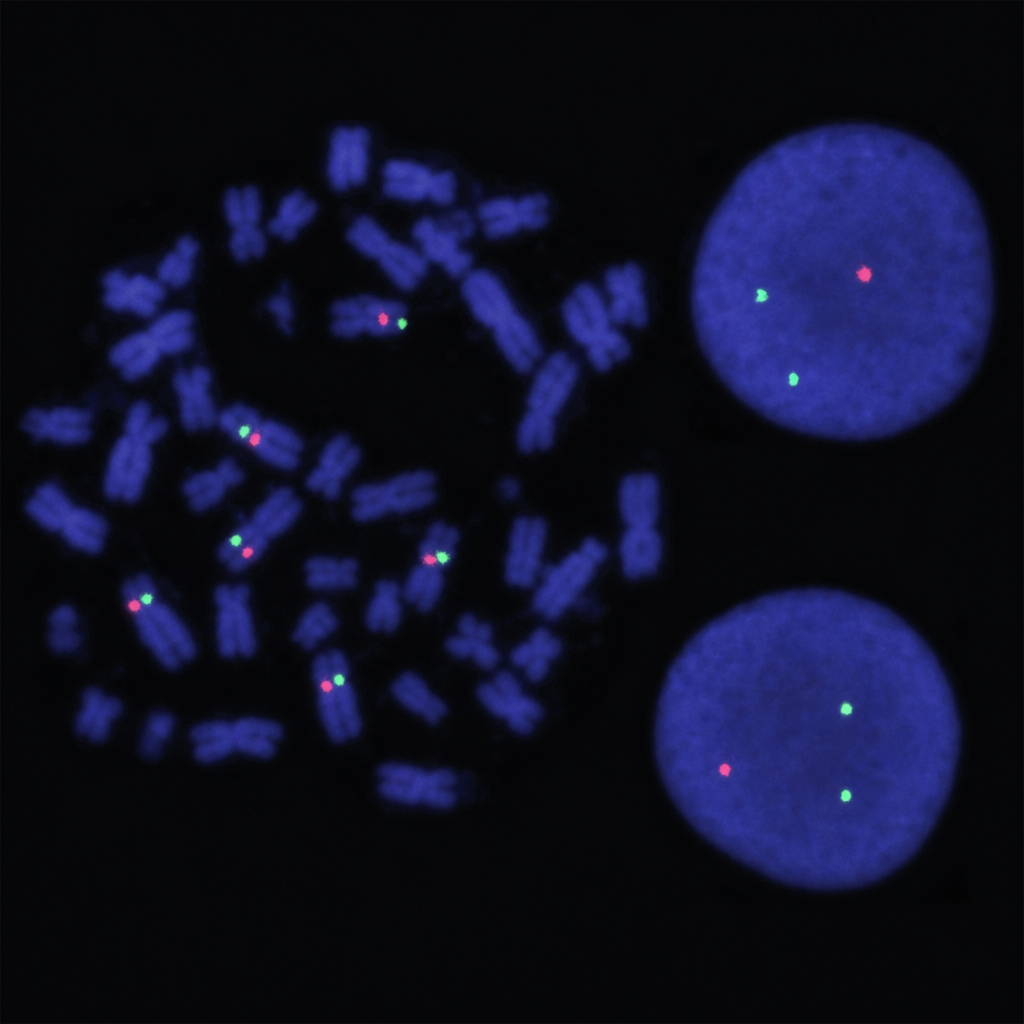
Explanation: ### Explanation **Correct Answer: D. Comparative Genomic Hybridization (CGH)** **Why it is correct:** Comparative Genomic Hybridization (CGH) is specifically designed to detect **copy number variations (CNVs)** by comparing the DNA of a test sample (cancer cell) with a normal reference sample [1]. In this technique, DNA from both sources is labeled with different fluorescent dyes (e.g., green for cancer, red for normal) and hybridized to a normal metaphase spread or a microarray [1]. The ratio of the fluorescence intensities allows for the detection of chromosomal gains (amplifications) or losses (deletions) across the entire genome, effectively differentiating the chromosomal landscape of a malignant cell from a healthy one. **Why other options are incorrect:** * **A. FISH:** Uses fluorescent probes to detect the presence, absence, or location of *specific* DNA sequences [2]. It is highly targeted and cannot scan the entire genome for unknown differences like CGH [1]. * **B. PCR:** Primarily used for amplifying specific DNA sequences to detect mutations or quantify gene expression [3]. It does not provide a global view of chromosomal patterns. * **C. Karyotyping:** While it visualizes the entire set of chromosomes, it has low resolution (5–10 Mb). It can detect structural changes like translocations, but it cannot detect the subtle sub-microscopic gains or losses that CGH identifies [4]. **Clinical Pearls for NEET-PG:** * **Array-CGH (aCGH):** The modern version using microarrays; it is the "gold standard" for detecting microdeletions and microduplications [1]. * **Limitation of CGH:** It **cannot** detect **balanced chromosomal rearrangements** (e.g., reciprocal translocations or inversions) because there is no net change in the amount of DNA. * **FISH vs. CGH:** FISH is for "known" targets; CGH is for "unknown" genome-wide imbalances [1]. **References:** [1] Kumar V, Abbas AK, et al.. Robbins and Cotran Pathologic Basis of Disease. 9th ed. Genetic Disorders, pp. 186-187. [2] Cross SS. Underwood's Pathology: A Clinical Approach. 6th ed. (Basic Pathology) introduces the student to key general principles of pathology, both as a medical science and as a clinical activity with a vital role in patient care. Part 2 (Disease Mechanisms) provides fundamental knowledge about the cellular and molecular processes involved in diseases, providing the rationale for their treatment. Part 3 (Systematic Pathology) deals in detail with specific diseases, with emphasis on the clinically important aspects., pp. 256-257. [3] Kumar V, Abbas AK, et al.. Robbins and Cotran Pathologic Basis of Disease. 9th ed. Genetic Disorders, pp. 185-186. [4] Cross SS. Underwood's Pathology: A Clinical Approach. 6th ed. (Basic Pathology) introduces the student to key general principles of pathology, both as a medical science and as a clinical activity with a vital role in patient care. Part 2 (Disease Mechanisms) provides fundamental knowledge about the cellular and molecular processes involved in diseases, providing the rationale for their treatment. Part 3 (Systematic Pathology) deals in detail with specific diseases, with emphasis on the clinically important aspects., pp. 54-55.
Explanation: **Explanation:** **Psammoma bodies** are characteristic microscopic findings representing a form of **dystrophic calcification**. They appear as round, eosinophilic, concentric laminated (whorled) structures. **Why Option D is correct:** Psammoma bodies are not a typical or diagnostic feature of **Teratomas**. Teratomas are germ cell tumors composed of tissues derived from all three germ layers (ectoderm, mesoderm, and endoderm) [1]. While they may contain bone or teeth (macroscopic calcification), they do not characteristically form the microscopic, laminated psammoma bodies seen in specific epithelial or mesothelial tumors [2]. **Why other options are incorrect:** * **Option A (Meningioma):** Psammoma bodies are a hallmark of the "Psammomatous" subtype of meningioma. * **Option B (Concentric whorled appearance):** This describes the classic morphology of psammoma bodies, formed by the deposition of calcium salts in concentric layers around necrotic tumor cells. * **Option C (Papillary Thyroid Carcinoma):** Psammoma bodies are highly suggestive of this diagnosis, often found within the cores of the papillae. **High-Yield Clinical Pearls for NEET-PG:** To remember the common associations of Psammoma bodies, use the mnemonic **"PSaMMoma"**: * **P:** **P**apillary thyroid carcinoma, **P**apillary renal cell carcinoma, **P**rolactinoma (rarely). * **S:** **S**erous cystadenocarcinoma of the ovary, **S**omatostatinoma. * **M:** **M**esothelioma. * **M:** **M**eningioma. **Key Concept:** Psammoma bodies represent a single-cell necrosis pattern where calcium precipitates, creating a "sand-like" (Greek: *psammos*) appearance. They are a classic example of **dystrophic calcification** (occurring in necrotic tissue with normal serum calcium levels). **References:** [1] Kumar V, Abbas AK, et al.. Robbins and Cotran Pathologic Basis of Disease. 9th ed. The Female Genital Tract, pp. 1033-1034. [2] Cross SS. Underwood's Pathology: A Clinical Approach. 6th ed. Common Clinical Problems From Female Genital Tract Disease, pp. 480-481.
Explanation: ### Explanation **Correct Answer: B. Collagen** **Why it is correct:** Collagen is the most abundant protein in the human body and is characterized by a unique **triple helix** structure (also known as a tropocollagen unit). This structure consists of three polypeptide alpha-chains wound around each other. The stability of this helix is maintained by hydrogen bonds and a repetitive amino acid sequence, typically **Glycine-X-Y**, where X and Y are frequently Proline and Hydroxyproline. Glycine, being the smallest amino acid, is the only one that can fit into the tight central core of the triple helix. **Why the other options are incorrect:** * **A. Cystine:** This is a dimeric amino acid formed by the oxidation of two cysteine residues joined by a disulfide bond. It does not form a triple helix. * **C. Pectin:** This is a structural heteropolysaccharide found in the primary cell walls of terrestrial plants. It is a carbohydrate, not a protein, and lacks the triple helical arrangement. * **D. DNA:** Deoxyribonucleic acid typically exists as a **double helix** (Watson-Crick model), consisting of two complementary polynucleotide chains. **High-Yield Clinical Pearls for NEET-PG:** * **Vitamin C Deficiency (Scurvy):** Vitamin C is a required cofactor for the hydroxylation of proline and lysine residues. Lack of hydroxylation prevents stable triple helix formation, leading to defective collagen and capillary fragility. * **Osteogenesis Imperfecta:** Most commonly caused by mutations in Type I collagen genes, often involving the substitution of Glycine with bulkier amino acids, which disrupts the triple helix stability. * **Alport Syndrome:** Characterized by defects in **Type IV collagen**, which is unique because it forms a meshwork (basement membrane) rather than typical fibrils. * **Ehlers-Danlos Syndrome:** A group of disorders resulting from defects in the synthesis or structure of fibrillar collagen (most commonly Type III or Type V) [1]. Clinical features include fragile, hyperextensible skin and hypermobile joints [1]. **References:** [1] Kumar V, Abbas AK, et al.. Robbins and Cotran Pathologic Basis of Disease. 9th ed. Genetic Disorders, pp. 154-156.
Explanation: The correct answer is **BCL-2**. While BCL-2 is primarily known as an anti-apoptotic protein, it plays a critical role in cross-regulating **Autophagy (Programmed Cell Death Type 2)**. **Why BCL-2 is correct:** Autophagy is regulated by the **Beclin-1** complex. Under normal physiological conditions, BCL-2 binds to Beclin-1, sequestering it and inhibiting the initiation of autophagy. When a cell undergoes stress or starvation, BCL-2 dissociates from Beclin-1, allowing autophagy to proceed. Thus, BCL-2 acts as a molecular switch that inhibits both apoptosis and autophagy. **Analysis of Incorrect Options:** * **p53 (Option A):** Known as the "Guardian of the Genome," p53 primarily regulates the cell cycle and induces apoptosis (Type 1) via the intrinsic pathway when DNA damage is irreparable [1]. While it can influence autophagy, it is not the primary regulatory gene defined by its direct binding to the autophagy machinery like BCL-2. * **BAX (Option B):** BAX is a pro-apoptotic member of the BCL-2 family [3]. Its primary role is to form pores in the outer mitochondrial membrane (MOMP) to release Cytochrome C, leading to Type 1 programmed cell death (Apoptosis), not Type 2 [1],[2]. **NEET-PG High-Yield Pearls:** * **Programmed Cell Death (PCD) Types:** Type 1 = Apoptosis; Type 2 = Autophagy; Type 3 = Necrosis (specifically Necroptosis). * **Beclin-1:** The key protein required for autophagosome formation; it is often deleted in human cancers (e.g., breast, ovary). * **Atg genes:** A group of "Autophagy-related genes" essential for the formation of the autophagosome. * **Morphological Hallmark:** The presence of double-membrane **autophagic vacuoles** (autophagosomes) is the characteristic feature of Type 2 PCD. **References:** [1] Kumar V, Abbas AK, et al.. Robbins and Cotran Pathologic Basis of Disease. 9th ed. Neoplasia, p. 310. [2] Kumar V, Abbas AK, et al.. Robbins and Cotran Pathologic Basis of Disease. 9th ed. Cellular Responses to Stress and Toxic Insults: Adaptation, Injury, and Death, pp. 64-67. [3] Cross SS. Underwood's Pathology: A Clinical Approach. 6th ed. (Basic Pathology) introduces the student to key general principles of pathology, both as a medical science and as a clinical activity with a vital role in patient care. Part 2 (Disease Mechanisms) provides fundamental knowledge about the cellular and molecular processes involved in diseases, providing the rationale for their treatment. Part 3 (Systematic Pathology) deals in detail with specific diseases, with emphasis on the clinically important aspects., pp. 80-81.
Explanation: **Explanation:** **1. Why Cell Swelling is the Correct Answer:** Cell swelling (also known as **hydropic change** or vacuolar degeneration) is the **earliest and most common manifestation** of almost all forms of reversible cell injury [1]. The underlying mechanism involves the failure of energy-dependent membrane pumps. When a cell is injured (e.g., via hypoxia), ATP production decreases, leading to the failure of the **Na+/K+-ATPase pump** [1]. This results in an accumulation of intracellular sodium and an efflux of potassium. The increased osmotic pressure causes an obligatory influx of water into the cell, leading to swelling of the cytoplasm and organelles like the mitochondria and endoplasmic reticulum. **2. Why the Other Options are Incorrect:** * **A, C, and D (Pyknosis, Karyorrhexis, Karyolysis):** These are the three hallmark stages of **nuclear changes in irreversible cell injury (Necrosis)** [1]. * **Pyknosis (A):** Nuclear shrinkage and increased basophilia. * **Karyorrhexis (C):** Fragmentation of the pyknotic nucleus. * **Karyolysis (D):** Fading of chromatin due to DNAse activity. Since cell swelling occurs during the *reversible* phase, it precedes these irreversible nuclear changes. **3. NEET-PG High-Yield Pearls:** * **Light Microscopy:** Cell swelling appears as "cloudy swelling" or small clear vacuoles within the cytoplasm (hydropic change) [1]. * **Gross Appearance:** Affected organs (liver, kidney, heart) show increased weight and pallor. * **Sequence of Reversible Injury:** Decreased ATP → Failure of Na+ pump → Influx of Na+ and H2O → Efflux of K+ → **Cell Swelling** [1]. * **Point of No Return:** Irreversibility is characterized by **severe mitochondrial damage** (vacuolization) and **membrane damage** (plasma and lysosomal membranes). **References:** [1] Kumar V, Abbas AK, et al.. Robbins and Cotran Pathologic Basis of Disease. 9th ed. Cellular Responses to Stress and Toxic Insults: Adaptation, Injury, and Death, pp. 49-50.
Explanation: ### Explanation **Correct Answer: B. Inflammasome** The **inflammasome** is a multi-protein cytoplasmic complex that serves as a key component of the innate immune system [1]. It is specifically designed to recognize both **PAMPs** (Pathogen-Associated Molecular Patterns) and **DAMPs** (Damage-Associated Molecular Patterns). * When cells die (necrosis), they release "danger signals" such as **uric acid crystals, extracellular ATP, and altered membrane lipids** [1]. * The inflammasome (most notably the **NLRP3** type) senses these products of cell death [1]. * Once activated, it triggers the enzyme **Caspase-1**, which cleaves precursor forms of cytokines into their active states (**IL-1β and IL-18**), leading to inflammation and a specialized form of programmed cell death called **pyroptosis** [1]. --- ### Why other options are incorrect: * **A. NETs (Neutrophil Extracellular Traps):** These are extracellular fibrillar networks of chromatin and antimicrobial proteins released by neutrophils to trap and kill **microbes** (bacteria/fungi), not primarily to recognize dead host material. * **C. Necrosis:** This is a **process** of uncontrolled cell death itself, characterized by membrane rupture and leakage of contents. It is the *source* of the dead material, not the *sensor* of it. * **D. Toll-like Receptors (TLRs):** While TLRs are crucial innate sensors, they are primarily located on **plasma membranes and endosomes** to detect microbial components (like LPS or viral RNA). While some TLRs can sense DAMPs, the inflammasome is the classic, specialized cytoplasmic machinery dedicated to recognizing metabolic products of cell injury and dead material [1]. --- ### NEET-PG High-Yield Pearls: * **NLRP3 Inflammasome:** Associated with clinical conditions like **Gout** (sensing uric acid), **Atherosclerosis** (sensing cholesterol crystals), and **Type 2 Diabetes** (sensing amyloid) [1]. * **Caspase-1:** The "Inflammatory Caspase" (unlike Caspase-3, which is the "Executioner Caspase" in apoptosis). * **Pyroptosis:** A pro-inflammatory form of programmed cell death uniquely mediated by the inflammasome. **References:** [1] Kumar V, Abbas AK, et al.. Robbins and Cotran Pathologic Basis of Disease. 9th ed. Diseases of the Immune System, p. 196.
Explanation: ### Explanation **1. Why Option A is Correct:** The cell cycle is strictly regulated by **Cyclins** and **Cyclin-Dependent Kinases (CDKs)**. To transition from the G1 phase to the S phase (DNA synthesis), cells must overcome the "restriction point." [1] In **terminally differentiated adult cells** (like neurons or cardiac myocytes), the cell cycle is arrested in the **G0 phase**. [1] This is primarily due to the high expression of **Cyclin-Dependent Kinase Inhibitors (CDKIs)**, such as the **Cip/Kip family (p21, p27, p57)** and the **INK4 family (p16)**. [1] These inhibitors bind to and silence CDK-cyclin complexes, preventing the phosphorylation of the Retinoblastoma (Rb) protein. Without Rb phosphorylation, the E2F transcription factor remains bound and inactive, effectively blocking entry into the S phase. [2] In contrast, **fetal cells** have low levels of these inhibitors and high telomerase activity, allowing for rapid, continuous proliferation to support organogenesis. [3] **2. Why Other Options are Incorrect:** * **Option B (Phosphatase):** Phosphatases (like CDC25) are actually essential for activating CDKs by removing inhibitory phosphate groups. Their absence would stop cell division, not promote it. * **Option C (Proteinase):** Proteinases (like Caspases or Ubiquitin-proteasome enzymes) are present in both fetal and adult cells for apoptosis and protein turnover. They are not the primary regulators of the G1-S transition. * **Option D (CD Kinases):** CDKs are the "engines" of the cell cycle. If they were absent in fetal cells, the fetus could not grow or develop. Fetal cells have high CDK activity. [1] **3. High-Yield Clinical Pearls for NEET-PG:** * **The "Governor" of the Cell Cycle:** The **RB Gene** (Retinoblastoma) is the key negative regulator. When hypophosphorylated, it stops the cycle. [2] * **The "Guardian" of the Genome:** **p53** acts by inducing **p21** (a CDKI), which halts the cell cycle to allow for DNA repair. * **Quiescent vs. Permanent Cells:** **Stable (Quiescent) cells** (e.g., hepatocytes) are in G0 but can re-enter the cycle; **Permanent cells** (e.g., neurons) have high CDKI levels and cannot re-enter the cycle. [1] **References:** [1] Kumar V, Abbas AK, et al.. Robbins and Cotran Pathologic Basis of Disease. 9th ed. With Illustrations By, pp. 37-38. [2] Kumar V, Abbas AK, et al.. Robbins and Cotran Pathologic Basis of Disease. 9th ed. Neoplasia, pp. 300-301. [3] Kumar V, Abbas AK, et al.. Robbins and Cotran Pathologic Basis of Disease. 9th ed. With Illustrations By, pp. 38-39.
Explanation: **Explanation:** The correct answer is **B. Chimeric transcription factor.** **Understanding the Mechanism:** Alveolar Rhabdomyosarcoma (ARMS) is characterized by specific chromosomal translocations, most commonly **t(2;13)(q35;q14)** and less frequently **t(1;13)(p36;q14)**. These translocations result in the fusion of the **PAX3** (or PAX7) gene with the **FOXO1** (formerly FKHR) gene. * **PAX3/7** are genes involved in muscle differentiation (transcription factors). * **FOXO1** is a transcription factor involved in cell cycle regulation. The resulting **PAX3-FOXO1** fusion protein is a **chimeric transcription factor**. It possesses the DNA-binding domain of PAX and the transactivation domain of FOXO1, making it a much more potent activator of myogenic genes than wild-type PAX3. This leads to dysregulated gene expression, promoting cell proliferation and inhibiting apoptosis. **Analysis of Incorrect Options:** * **A & D (Growth Factor/Receptor):** While many cancers (like GIST or HER2+ breast cancer) involve growth factors or their receptors, ARMS is driven by nuclear genetic rearrangement, not extracellular signaling molecules. * **C (Constitutively active kinase):** This mechanism is classic for **Chronic Myeloid Leukemia (BCR-ABL)**, where the fusion protein acts as a tyrosine kinase. In ARMS, the fusion protein acts directly on DNA in the nucleus. **High-Yield Clinical Pearls for NEET-PG:** * **Embryonal RMS:** Most common type; associated with **loss of heterozygosity (LOH) at 11p15.5** (IGF-2 gene). * **Alveolar RMS:** More aggressive; characterized by **t(2;13)** fusion. * **Histology:** ARMS shows small round blue cells arranged in clusters separated by fibrous septa, resembling pulmonary alveoli. * **IHC Markers:** Desmin, Myogenin (Myf4), and MyoD1 are positive. Myogenin expression is typically more diffuse in the Alveolar variant compared to the Embryonal variant.
Explanation: **Explanation:** **Cat Eye Syndrome (Schmid-Fraccaro Syndrome)** is a rare chromosomal disorder caused by the presence of an extra small marker chromosome (supernumerary chromosome). This marker is derived from **chromosome 22**, specifically the region **22q11**. Because this segment is present in four copies instead of two, it is technically a **partial tetrasomy** (or partial trisomy) of chromosome 22. * **Why Option D is Correct:** The syndrome is defined by the duplication of the proximal long arm (q) and the entire short arm (p) of chromosome 22. The name "Cat Eye" originates from the characteristic vertical **iris coloboma**, which resembles the slit-like pupil of a cat. **Analysis of Incorrect Options:** * **Option A (Partial Trisomy 18):** Associated with Edwards Syndrome [1]. Clinical features include clenched fists with overlapping fingers, rocker-bottom feet, and micrognathia [1]. * **Option B (Partial Trisomy 13):** Associated with Patau Syndrome [1]. Key features include midline defects like holoprosencephaly, cleft lip/palate, and polydactyly [1]. * **Option C (Partial Trisomy 21):** Associated with Down Syndrome [1], the most common autosomal trisomy, characterized by flat facial profile, Simian crease, and mental retardation [1]. **NEET-PG High-Yield Pearls:** * **Classic Triad:** Iris coloboma, anal atresia (with fistula), and preauricular pits/tags. * **Genetics:** It is a "marker chromosome" disorder. Do not confuse it with DiGeorge Syndrome, which is a *deletion* at the same locus (22q11.2) [1]. * **Inheritance:** Most cases are sporadic due to a *de novo* chromosomal mutation during germ cell formation. **References:** [1] Kumar V, Abbas AK, et al.. Robbins and Cotran Pathologic Basis of Disease. 9th ed. Genetic Disorders, pp. 171-173.
Explanation: **Explanation:** The correct answer is **Synovial sarcoma**. This neoplasm is characterized by a highly specific reciprocal translocation, **t(X;18)(p11;q11)** [1]. This translocation results in the fusion of the **SS18** (formerly *SYT*) gene on chromosome 18 with one of the **SSX** genes (usually *SSX1*, *SSX2*, or rarely *SSX4*) on the X chromosome [1]. The resulting **SYT-SSX** fusion protein acts as an aberrant transcriptional regulator that disrupts chromatin remodeling (SWI/SNF complex), leading to oncogenesis. **Analysis of Incorrect Options:** * **Liposarcoma:** Most commonly associated with **t(12;16)** resulting in the **FUS-CHOP** fusion (Myxoid/Round cell subtype) or **MDM2** amplification (Well-differentiated/Dedifferentiated subtype). * **Rhabdomyosarcoma:** Alveolar rhabdomyosarcoma is characterized by **t(2;13)** or **t(1;13)**, involving the **PAX3-FOXO1** or **PAX7-FOXO1** gene fusions. * **Ewing sarcoma:** Classically associated with **t(11;22)(q24;q12)**, leading to the **EWS-FLI1** gene fusion. **High-Yield NEET-PG Pearls:** * **Synovial Sarcoma:** Despite the name, it does *not* arise from synovial cells; it originates from mesenchymal stem cells near joints [1]. * **Morphology:** Can be **biphasic** (epithelial glands + spindle cells) or **monophasic** (spindle cells only) [1]. * **Immunohistochemistry (IHC):** Positive for **TLE1**, Cytokeratin, and EMA. * **Prognostic Correlation:** The **SYT-SSX1** variant is more common in biphasic tumors and is generally associated with a poorer prognosis compared to the *SYT-SSX2* variant. **References:** [1] Kumar V, Abbas AK, et al.. Robbins and Cotran Pathologic Basis of Disease. 9th ed. Bones, Joints, and Soft Tissue Tumors, pp. 1225-1226.
Explanation: ### Explanation **Correct Option: C. Generating hydrogen peroxide (H2O2)** Peroxisomes are specialized membrane-bound organelles containing oxidative enzymes (such as catalase and urate oxidase). Their primary function is the **beta-oxidation of very-long-chain fatty acids (VLCFA)** and the detoxification of various substances. During these oxidative reactions, peroxisomes generate **hydrogen peroxide (H2O2)** as a byproduct [1]. Subsequently, the enzyme **catalase** within the peroxisome decomposes this H2O2 into water and oxygen, protecting the cell from oxidative damage [1]. **Analysis of Incorrect Options:** * **A. Protein synthesis:** This is the primary function of **ribosomes** (either free-floating or attached to the Rough Endoplasmic Reticulum). * **B. Carbohydrate metabolism:** While some gluconeogenesis steps occur in the cytosol and mitochondria, the primary hub for carbohydrate metabolism (glycolysis, TCA cycle) is the **cytosol and mitochondria**. * **D. DNA replication:** This process occurs exclusively within the **nucleus** (and to a small extent in the mitochondria for mtDNA). **High-Yield Clinical Pearls for NEET-PG:** * **Zellweger Syndrome:** An autosomal recessive "peroxisome biogenesis disorder" caused by mutations in *PEX* genes. It leads to the accumulation of VLCFAs, resulting in hypotonia, seizures, hepatomegaly, and early death. * **X-linked Adrenoleukodystrophy (X-ALD):** A defect in the transport of VLCFAs into peroxisomes (ABCD1 mutation), leading to myelin breakdown and adrenal insufficiency. * **Key Enzyme:** **Catalase** is the marker enzyme for peroxisomes [1]. * **Plasmalogen Synthesis:** Peroxisomes are essential for the synthesis of plasmalogens, which are vital phospholipids in the myelin sheath of neurons. **References:** [1] Kumar V, Abbas AK, et al.. Robbins and Cotran Pathologic Basis of Disease. 9th ed. Cellular Responses to Stress and Toxic Insults: Adaptation, Injury, and Death, p. 59.
Explanation: **Explanation:** **Duchenne Muscular Dystrophy (DMD)** is an X-linked recessive disorder caused by a mutation in the **DMD gene**, located on the short arm of the X chromosome (Xp21) [2]. This gene is the largest known human gene, making it highly susceptible to spontaneous mutations. The mutation typically involves **large deletions** (65% of cases) that result in a **frameshift**, leading to a complete absence of the protein **dystrophin** [1]. Dystrophin is crucial for anchoring the muscle cytoskeleton to the extracellular matrix; its absence leads to membrane instability, calcium influx, and progressive myofiber necrosis. **Analysis of Options:** * **Myasthenia Gravis:** This is an autoimmune neuromuscular junction disorder caused by antibodies against postsynaptic acetylcholine receptors (AChR), not a genetic mutation of muscle structural proteins. * **Motor Neuron Disease (MND):** These are neurodegenerative disorders (e.g., ALS) affecting upper and lower motor neurons. While some forms have genetic links (e.g., SOD1 mutations), they are not primary muscular dystrophies. * **Poliomyelitis:** This is an infectious disease caused by the Poliovirus, which destroys anterior horn cells in the spinal cord, leading to flaccid paralysis. **High-Yield Clinical Pearls for NEET-PG:** * **Gower’s Sign:** Patients use their hands to "climb up" their own thighs to stand due to proximal muscle weakness. * **Pseudohypertrophy:** The calves appear enlarged due to the replacement of muscle tissue with fat and connective tissue (fibrosis). * **Becker Muscular Dystrophy (BMD):** A milder form caused by **non-frameshift** mutations, resulting in truncated but functional dystrophin [1]. * **Diagnosis:** Elevated Serum Creatine Kinase (CK) levels are seen from birth; definitive diagnosis is via genetic testing or muscle biopsy (showing absent dystrophin) [1]. **References:** [1] Kumar V, Abbas AK, et al.. Robbins and Cotran Pathologic Basis of Disease. 9th ed. Peripheral Nerves and Skeletal Muscles, pp. 1244-1245. [2] Kumar V, Abbas AK, et al.. Robbins and Cotran Pathologic Basis of Disease. 9th ed. Genetic Disorders, p. 151.
Explanation: **Explanation:** **Xeroderma Pigmentosum (XP)** is a rare genetic disorder characterized by an extreme sensitivity to ultraviolet (UV) radiation [1]. **1. Why the Correct Answer is Right:** The fundamental defect in XP is a mutation in the genes responsible for **Nucleotide Excision Repair (NER)** [1], [2]. Normally, UV light causes the formation of **pyrimidine dimers** (specifically thymine dimers) in DNA. In healthy individuals, the NER pathway identifies and excises these dimers [1]. In XP patients, this repair mechanism is non-functional, leading to the accumulation of mutations in keratinocytes, which rapidly progresses to skin malignancies (Basal Cell Carcinoma, Squamous Cell Carcinoma, and Melanoma) [1], [2]. **2. Analysis of Incorrect Options:** * **Option A:** XP follows an **Autosomal Recessive** inheritance pattern, not dominant [1]. Both parents must be carriers. * **Option C:** While pigmentary changes occur (freckling), the hallmark is not just melanin accumulation but rather cellular damage and atrophy. Irregular melanin in the basal layer is more characteristic of simple ephelides (freckles). * **Option D:** Acanthosis and rete ridge elongation are features of chronic inflammatory conditions or psoriasis; XP typically presents with epidermal atrophy and solar elastosis. **3. NEET-PG High-Yield Pearls:** * **Key Enzyme Defect:** UV-specific endonuclease (involved in the initial nicking of the DNA strand). * **Clinical Presentation:** Severe sunburn after minimal sun exposure, early-onset freckling (before age 2), and a **2000-fold increase** in the risk of skin cancer. * **Associated Conditions:** Some variants (e.g., De Sanctis-Cacchione syndrome) include neurological abnormalities like microcephaly and intellectual disability. * **Diagnosis:** Chromosomal breakage study or unscheduled DNA synthesis (UDS) assay. **References:** [1] Kumar V, Abbas AK, et al.. Robbins and Cotran Pathologic Basis of Disease. 9th ed. Neoplasia, pp. 322-323. [2] Kumar V, Abbas AK, et al.. Robbins and Cotran Pathologic Basis of Disease. 9th ed. Neoplasia, pp. 332-333.
Explanation: **Explanation:** In the diagnosis of prostate carcinoma, the most critical histological feature is the **absence of a basal cell layer**. While benign prostatic glands possess a dual cell layer (inner secretory and outer basal), malignant glands consist of a single layer of neoplastic cells [1]. **Why the Correct Answer is Right:** * **Alpha-Methylacyl-coenzyme Racemase (AMACR/P504S):** This is a mitochondrial and peroxisomal enzyme involved in the beta-oxidation of branched-chain fatty acids. It is **overexpressed in prostatic adenocarcinoma** [1] but is typically absent or weakly expressed in benign glands. * *Note on the Question Context:* While the question asks for a marker used to "label" cells in suspected carcinoma, it is important to clarify that **AMACR labels the malignant cells**, whereas markers like **p63** or **High Molecular Weight Cytokeratin (HMWK/34̢E12)** are used to label the **basal cells**. In clinical practice, a "cocktail" (PIN4) containing AMACR and basal cell markers is used; a positive AMACR and negative p63/HMWK confirms malignancy. **Why the Incorrect Options are Wrong:** * **Alpha-Fetoprotein (AFP):** A marker for Yolk Sac Tumors and Hepatocellular Carcinoma. * **Annexin:** A group of proteins involved in apoptosis and cell signaling; not a specific diagnostic marker for prostate cancer. * **AgNOR (Argyrophilic Nucleolar Organizer Regions):** A silver staining technique used to assess cellular proliferation and malignancy grade, but it is non-specific and not a primary IHC marker for prostate basal cells. **High-Yield Clinical Pearls for NEET-PG:** * **Gold Standard IHC for Prostate Cancer:** **AMACR (+)** and **p63/HMWK (-)** [1]. * **Most common site:** Peripheral zone (posterior lobe) [1]. * **Gleason Scoring:** Based on glandular **architecture**, not nuclear features [1]. * **PSA (Prostate Specific Antigen):** Organ-specific but not cancer-specific (elevated in BPH and prostatitis) [1]. **References:** [1] Kumar V, Abbas AK, et al.. Robbins and Cotran Pathologic Basis of Disease. 9th ed. The Lower Urinary Tract and Male Genital System, pp. 990-994.
Explanation: **Explanation:** **Klinefelter Syndrome (47, XXY)** is a chromosomal aneuploidy characterized by the presence of one or more extra X chromosomes in a male phenotype [1][3]. 1. **Why Karyotyping is Correct:** Karyotyping is the **gold standard** for diagnosing chromosomal numerical and structural abnormalities [1][2]. Since Klinefelter syndrome is defined by its genetic makeup (most commonly 47, XXY), visualizing the metaphase chromosomes under a microscope allows for the definitive identification of the extra X chromosome [2]. It also helps identify mosaic forms (e.g., 46, XY/47, XXY), which occur in about 15% of cases. 2. **Why Other Options are Incorrect:** * **USG Abdomen:** While it may show small, atrophic testes or cryptorchidism, it is non-specific and cannot provide a definitive genetic diagnosis. * **Triple Test:** This is a prenatal screening tool (measuring AFP, hCG, and estriol) used to assess the risk of Down syndrome or neural tube defects; it is not used to diagnose Klinefelter syndrome. * **Echocardiography:** Used to detect structural heart defects (like Mitral Valve Prolapse, which can be associated with Klinefelter), but it is a supportive investigation, not a diagnostic one. **High-Yield Clinical Pearls for NEET-PG:** * **Clinical Features:** Tall stature, eunuchoid body habitus, gynecomastia, small firm testes, and infertility (azoospermia). * **Hormonal Profile:** Increased FSH and LH (due to loss of feedback inhibition) and decreased Testosterone (Hypergonadotropic Hypogonadism). * **Histopathology:** Hyalinization and fibrosis of seminiferous tubules with **Leydig cell hyperplasia** (pseudohyperplasia). * **Barr Body:** Positive (unlike normal males) due to the extra X chromosome. * **Risk:** Increased risk of Male Breast Cancer and germ cell tumors. **References:** [1] Kumar V, Abbas AK, et al.. Robbins and Cotran Pathologic Basis of Disease. 9th ed. Genetic Disorders, pp. 167-168. [2] Cross SS. Underwood's Pathology: A Clinical Approach. 6th ed. (Basic Pathology) introduces the student to key general principles of pathology, both as a medical science and as a clinical activity with a vital role in patient care. Part 2 (Disease Mechanisms) provides fundamental knowledge about the cellular and molecular processes involved in diseases, providing the rationale for their treatment. Part 3 (Systematic Pathology) deals in detail with specific diseases, with emphasis on the clinically important aspects., pp. 54-55. [3] Cross SS. Underwood's Pathology: A Clinical Approach. 6th ed. (Basic Pathology) introduces the student to key general principles of pathology, both as a medical science and as a clinical activity with a vital role in patient care. Part 2 (Disease Mechanisms) provides fundamental knowledge about the cellular and molecular processes involved in diseases, providing the rationale for their treatment. Part 3 (Systematic Pathology) deals in detail with specific diseases, with emphasis on the clinically important aspects., pp. 92-93.
Explanation: ### Explanation **1. Why the Correct Answer is Right:** The core of this question lies in understanding **chimerism** and **genetic markers** following a hematopoietic stem cell transplant (HSCT). * **The Setup:** The patient (Recipient) has an **'A'** nucleotide, while the donor has a **'G'** nucleotide at a specific locus. * **Initial Success:** After the transplant, the appearance of the 'G' polymorphism and the enzyme indicates successful engraftment—donor cells are producing the missing enzyme. [1] * **The Shift:** The subsequent progressive increase in the **'A'** nucleotide polymorphism signifies that the recipient's own cells (autologous recovery) are replacing the donor cells. In the context of HSCT, if donor-derived cells (G) are disappearing and being replaced by recipient cells (A), it indicates that the host's immune system is destroying the graft. [2] This is the definition of **Graft Rejection**. [3] **2. Why the Other Options are Wrong:** * **Graft-versus-host disease (GVHD):** In GVHD, the *donor* T-cells attack the *recipient's* tissues [4]. This would typically result in a dominance of donor cells (G), not an increase in recipient cells (A). * **Generalized immune complex formation:** This refers to Type III hypersensitivity (e.g., Serum Sickness). While it can occur post-transplant, it does not explain the shift in genetic polymorphisms from donor to recipient type. * **Immune paralysis:** This is a state of temporary anergy or non-responsiveness. It would likely lead to persistent engraftment or opportunistic infections, but not the active replacement of donor cells by host cells. **3. Clinical Pearls for NEET-PG:** * **Chimerism Analysis:** Monitoring donor vs. recipient DNA (using SNPs or Short Tandem Repeats/STRs) is the gold standard for assessing engraftment post-HSCT. * **Lysosomal Storage Diseases (LSDs):** HSCT is a therapeutic strategy for certain LSDs (like Hurler Syndrome) because donor-derived macrophages (microglia in the brain, Kupffer cells in the liver) provide a continuous source of the deficient enzyme to neighboring host cells—a process called **cross-correction**. * **Rejection vs. GVHD:** Remember, **Rejection** is Host-vs-Graft (Host T-cells vs. Donor HLA), whereas **GVHD** is Graft-vs-Host (Donor T-cells vs. Host HLA). [4] **References:** [1] Kumar V, Abbas AK, et al.. Robbins and Cotran Pathologic Basis of Disease. 9th ed. Diseases of the Immune System, pp. 244-245. [2] Kumar V, Abbas AK, et al.. Robbins and Cotran Pathologic Basis of Disease. 9th ed. Diseases of the Immune System, pp. 239-240. [3] Cross SS. Underwood's Pathology: A Clinical Approach. 6th ed. (Basic Pathology) introduces the student to key general principles of pathology, both as a medical science and as a clinical activity with a vital role in patient care. Part 2 (Disease Mechanisms) provides fundamental knowledge about the cellular and molecular processes involved in diseases, providing the rationale for their treatment. Part 3 (Systematic Pathology) deals in detail with specific diseases, with emphasis on the clinically important aspects., pp. 180-181. [4] Cross SS. Underwood's Pathology: A Clinical Approach. 6th ed. (Basic Pathology) introduces the student to key general principles of pathology, both as a medical science and as a clinical activity with a vital role in patient care. Part 2 (Disease Mechanisms) provides fundamental knowledge about the cellular and molecular processes involved in diseases, providing the rationale for their treatment. Part 3 (Systematic Pathology) deals in detail with specific diseases, with emphasis on the clinically important aspects., pp. 182-183.
Explanation: The clinical presentation of a young patient with chronic anemia requiring multiple blood transfusions, bronze skin pigmentation, and liver dysfunction (hypoalbuminemia) is a classic description of **Secondary Hemochromatosis (Hemosiderosis)**. **1. Why the Correct Answer is Right:** Each unit of transfused blood contains approximately 200–250 mg of iron. Since the human body lacks an active mechanism to excrete excess iron, chronic transfusion therapy leads to systemic iron overload [4]. The excess iron is stored in the form of **hemosiderin** (an iron-storage complex) within the mononuclear phagocytic system and parenchymal cells [2]. In the liver, hemosiderin initially accumulates in Kupffer cells and eventually in **hepatocytes**, leading to oxidative stress, fibrosis, and cirrhosis [1]. On biopsy, this is visualized as golden-brown granules, which stain positive (blue) with **Prussian Blue** [1]. **2. Why Incorrect Options are Wrong:** * **A. Amyloid:** Amyloidosis is associated with chronic inflammatory conditions (AA) or plasma cell dyscrasias (AL), not chronic transfusion. * **B. Bilirubin:** Canalicular bilirubin stasis (cholestasis) occurs in obstructive jaundice or certain drug-induced liver injuries, not typically in iron overload. * **C. Glycogen:** Glycogen accumulation is seen in Glycogen Storage Diseases (GSDs) or poorly controlled diabetes (Mauriac syndrome), presenting with hepatomegaly but not bronze skin. **3. NEET-PG High-Yield Pearls:** * **Classic Triad of Hemochromatosis:** Bronze skin, Cirrhosis, and Diabetes Mellitus ("Bronze Diabetes") [3]. * **Stain of Choice:** Prussian Blue (Perls' stain) identifies ferric iron [1]. * **Primary vs. Secondary:** Primary (Hereditary) Hemochromatosis is most commonly due to a mutation in the **HFE gene (C282Y)** on Chromosome 6 [3]. * **Cardiac Involvement:** Iron overload is a major cause of restrictive cardiomyopathy in these patients. **References:** [1] Kumar V, Abbas AK, et al.. Robbins and Cotran Pathologic Basis of Disease. 9th ed. Liver and Gallbladder, pp. 854-855. [2] Cross SS. Underwood's Pathology: A Clinical Approach. 6th ed. Common Clinical Problems From Liver And Biliary System Disease, pp. 394-395. [3] Kumar V, Abbas AK, et al.. Robbins and Cotran Pathologic Basis of Disease. 9th ed. Liver and Gallbladder, p. 858. [4] Kumar V, Abbas AK, et al.. Robbins and Cotran Pathologic Basis of Disease. 9th ed. Red Blood Cell and Bleeding Disorders, p. 648.
Explanation: **Explanation:** The **Dystrophin gene** (located on the short arm of the X chromosome, **Xp21**) is the largest known human gene. It encodes dystrophin, a vital structural protein that links the cytoskeleton of a muscle fiber to the surrounding extracellular matrix through the cell membrane. **Why Option D is correct:** **Hypertrophic Cardiomyopathy (HCM)** is primarily a disease of the **sarcomere**. It is most commonly caused by mutations in genes encoding proteins of the contractile apparatus, such as **Beta-myosin heavy chain (MYH7)** and **Myosin-binding protein C (MYBPC3)**. It is not associated with dystrophin mutations. **Why the other options are incorrect:** * **A & B (DMD and BMD):** These are the classic "dystrophinopathies." **Duchenne Muscular Dystrophy (DMD)** results from **frameshift mutations** leading to a total absence of dystrophin (severe phenotype) [1]. **Becker Muscular Dystrophy (BMD)** results from **non-frameshift mutations**, leading to a truncated but partially functional protein (milder phenotype) [1]. * **C (Dilated Cardiomyopathy):** Dystrophin is essential for the mechanical stability of both skeletal and cardiac myocytes. Mutations can lead to **X-linked Dilated Cardiomyopathy (DCM)**, often occurring even in the absence of overt skeletal muscle weakness, as the weakened cardiac sarcolemma leads to progressive myocyte death and fibrosis. **NEET-PG High-Yield Pearls:** * **Inheritance:** X-linked Recessive. * **DMD Diagnosis:** Elevated Serum Creatine Kinase (CK) levels (present from birth); Muscle biopsy shows variation in fiber size and replacement by fat/fibrosis (**Pseudohypertrophy**). * **Gower’s Sign:** Classic clinical finding in DMD due to proximal muscle weakness. * **Death in DMD:** Usually occurs due to respiratory failure or heart failure (DCM). **References:** [1] Kumar V, Abbas AK, et al.. Robbins and Cotran Pathologic Basis of Disease. 9th ed. Peripheral Nerves and Skeletal Muscles, pp. 1244-1245.
Explanation: **Explanation:** **Correct Answer: C. Apoptosis** **Councilman bodies** (also known as acidophilic bodies or apoptotic bodies) are the hallmark histological feature of individual hepatocyte death via **apoptosis** [1]. When a hepatocyte undergoes apoptosis, it shrinks, its nucleus undergoes pyknosis and karyorrhexis, and the cytoplasm becomes intensely eosinophilic (pink-staining) due to organelle condensation [1], [2]. These shrunken, pyknotic cells are then extruded into the hepatic sinusoids. They are most classically associated with **Yellow Fever**, but are also frequently seen in **Viral Hepatitis** (especially Acute Hepatitis) [1]. **Why other options are incorrect:** * **Necrosis:** Unlike apoptosis, necrosis involves cell swelling (oncosis), membrane rupture, and significant inflammation [2]. While "bridging necrosis" or "piecemeal necrosis" occurs in hepatitis, Councilman bodies specifically represent the programmed cell death pathway [1]. * **Cirrhosis:** This is a chronic, end-stage pathological state characterized by diffuse fibrosis and regenerative nodules. While apoptosis may occur during the progression of liver disease, cirrhosis describes the structural architectural change, not the cellular process of forming acidophilic bodies. * **Necroptosis:** This is a hybrid of necrosis and apoptosis (programmed necrosis). While it plays a role in some inflammatory diseases, it is not the mechanism responsible for the formation of classical Councilman bodies. **High-Yield Clinical Pearls for NEET-PG:** * **Morphology:** Councilman bodies appear as small, round, intensely eosinophilic bodies lacking a nucleus or containing nuclear fragments [1]. * **Key Association:** Yellow Fever (Classic association) and Viral Hepatitis [1]. * **Staining:** They stain bright red with H&E stain. * **Mechanism:** Mediated by Caspases (the executioners of apoptosis) [2]. * **Related Finding:** **Mallory-Denk bodies** (found in Alcoholic Hepatitis) are composed of damaged intermediate filaments (cytokeratin), whereas Councilman bodies are apoptotic cells. **References:** [1] Cross SS. Underwood's Pathology: A Clinical Approach. 6th ed. Common Clinical Problems From Liver And Biliary System Disease, pp. 386-387. [2] Kumar V, Abbas AK, et al.. Robbins and Cotran Pathologic Basis of Disease. 9th ed. Cellular Responses to Stress and Toxic Insults: Adaptation, Injury, and Death, pp. 63-69.
Explanation: **Explanation:** **Liquefactive necrosis** is characterized by the transformation of the tissue into a liquid, viscous mass. This occurs due to the digestion of dead cells by hydrolytic enzymes. **Why Cerebrum is Correct:** In the **Central Nervous System (CNS)**, hypoxic cell death (infarction) uniquely results in liquefactive necrosis [1]. This is attributed to two main factors: 1. **High Lipid Content:** The brain is rich in lipids and low in supportive connective tissue. 2. **Enzymatic Digestion:** Microglial cells (the brain's macrophages) release powerful lysosomal enzymes that rapidly digest the necrotic tissue, leaving a fluid-filled cavity [1]. **Why Other Options are Incorrect:** * **Kidney & Heart:** These solid organs typically undergo **Coagulative Necrosis** following an infarct. In this process, the basic structural outline of the tissue is preserved for several days because the injury denatures both structural proteins and enzymes, blocking proteolysis. * **Intestine:** Ischemic injury to the bowel usually leads to **Gangrenous Necrosis**. While this starts as coagulative necrosis, if a bacterial infection superimposes, it can progress to "wet gangrene" (which has a liquefactive component). However, the primary classic example for liquefactive necrosis in exams remains the brain. **High-Yield NEET-PG Pearls:** * **Exceptions:** Liquefactive necrosis is seen in two primary scenarios: **CNS Infarcts** and **Abscesses** (due to neutrophilic enzymes in pyogenic infections). * **Coagulative Necrosis** is the most common pattern of necrosis in all organs *except* the brain. * **Morphology:** The end result of liquefactive necrosis in the brain is the formation of a **cystic space** [1]. **References:** [1] Kumar V, Abbas AK, et al.. Robbins and Cotran Pathologic Basis of Disease. 9th ed. The Central Nervous System, pp. 1268-1269.
Explanation: **Explanation:** **1. Why Down’s Syndrome is Correct:** Down’s syndrome (Trisomy 21) is the most common chromosomal disorder and the leading genetic cause of intellectual disability [1]. It occurs in approximately **1 in 700 to 1 in 800 live births** [2]. The high prevalence is attributed to the fact that Trisomy 21 is more compatible with postnatal survival compared to other autosomal trisomies [4]. The most common mechanism is **meiotic non-disjunction** (95% of cases), strongly associated with advanced maternal age [1]. **2. Why Other Options are Incorrect:** * **Turner’s Syndrome (45,X):** This is the most common sex chromosome abnormality in females, but its incidence is lower (approx. 1 in 2,500 live births) [1]. Notably, 99% of 45,X conceptuses result in spontaneous abortion. * **Klinefelter’s Syndrome (47,XXY):** This is the most common cause of hypogonadism in males, occurring in about 1 in 1,000 live births [3]. While common, it is statistically less frequent than Down’s syndrome. * **Edward’s Syndrome (Trisomy 18):** This is the second most common autosomal trisomy, but it is much rarer (1 in 6,000 to 8,000 live births) and carries a very poor prognosis, with most infants not surviving past the first year [2]. **High-Yield Clinical Pearls for NEET-PG:** * **Most common cause of Down’s:** Maternal meiotic non-disjunction (occurs during Meiosis I). * **Robertsonian Translocation:** Accounts for 4% of cases; involves chromosomes 14 and 21 [2]. * **Screening Markers:** In the first trimester, look for **increased Nuchal Translucency** and **decreased PAPP-A**. In the second trimester (Quadruple screen), **AFP and Estriol are decreased**, while **hCG and Inhibin-A are increased**. * **Associated Risks:** Early-onset Alzheimer’s (APP gene on Ch 21), Acute Leukemia (AMKL/M7 in children <3 years; ALL in older children), and Endocardial Cushion Defects (ASD/VSD). **References:** [1] Cross SS. Underwood's Pathology: A Clinical Approach. 6th ed. (Basic Pathology) introduces the student to key general principles of pathology, both as a medical science and as a clinical activity with a vital role in patient care. Part 2 (Disease Mechanisms) provides fundamental knowledge about the cellular and molecular processes involved in diseases, providing the rationale for their treatment. Part 3 (Systematic Pathology) deals in detail with specific diseases, with emphasis on the clinically important aspects., pp. 40-41. [2] Kumar V, Abbas AK, et al.. Robbins and Cotran Pathologic Basis of Disease. 9th ed. Genetic Disorders, pp. 171-172. [3] Cross SS. Underwood's Pathology: A Clinical Approach. 6th ed. (Basic Pathology) introduces the student to key general principles of pathology, both as a medical science and as a clinical activity with a vital role in patient care. Part 2 (Disease Mechanisms) provides fundamental knowledge about the cellular and molecular processes involved in diseases, providing the rationale for their treatment. Part 3 (Systematic Pathology) deals in detail with specific diseases, with emphasis on the clinically important aspects., pp. 92-93. [4] Kumar V, Abbas AK, et al.. Robbins and Cotran Pathologic Basis of Disease. 9th ed. Genetic Disorders, pp. 168-169.
Explanation: **Explanation:** **Cellular adaptation** refers to reversible functional and structural changes in cells in response to physiological stress or pathological stimuli [3]. These changes allow the cell to survive and maintain homeostasis in a new environment. **Why Dysplasia is the correct answer:** **Dysplasia** is not a true adaptive process; rather, it is characterized by **disordered growth** and maturation. It involves a loss in the uniformity of individual cells and their architectural orientation. While it can be reversible if the stimulus is removed, it is considered a **pre-neoplastic** condition (a precursor to cancer) rather than a healthy adaptive response to stress [4]. **Analysis of Incorrect Options:** * **Atrophy:** An adaptive response where there is a decrease in cell size and number (via autophagy and apoptosis), leading to a reduced size of the organ [2]. * **Hypertrophy:** An increase in the **size** of cells, resulting in an increase in the size of the organ [1]. It occurs in cells with limited replicative capacity (e.g., cardiac muscle). * **Hyperplasia:** An increase in the **number** of cells in an organ or tissue [1]. It occurs in tissues containing cell populations capable of replication (e.g., breast glandular epithelium during pregnancy). **High-Yield Clinical Pearls for NEET-PG:** * **Metaplasia** is the fourth classic type of cellular adaptation (replacement of one adult cell type with another) [5]. * **Dysplasia vs. Neoplasia:** Dysplasia does not inevitably progress to cancer. If the inciting stimulus (like chronic irritation) is removed, dysplasia may regress [4]. * **Key distinction:** Hypertrophy and Hyperplasia often occur together (e.g., the gravid uterus), but in permanent cells like **Myocardium**, only hypertrophy occurs [1]. * **Atrophy mechanism:** Involves increased protein degradation via the **Ubiquitin-Proteasome pathway** [3]. **References:** [1] Cross SS. Underwood's Pathology: A Clinical Approach. 6th ed. (Basic Pathology) introduces the student to key general principles of pathology, both as a medical science and as a clinical activity with a vital role in patient care. Part 2 (Disease Mechanisms) provides fundamental knowledge about the cellular and molecular processes involved in diseases, providing the rationale for their treatment. Part 3 (Systematic Pathology) deals in detail with specific diseases, with emphasis on the clinically important aspects., pp. 85-87. [2] Cross SS. Underwood's Pathology: A Clinical Approach. 6th ed. (Basic Pathology) introduces the student to key general principles of pathology, both as a medical science and as a clinical activity with a vital role in patient care. Part 2 (Disease Mechanisms) provides fundamental knowledge about the cellular and molecular processes involved in diseases, providing the rationale for their treatment. Part 3 (Systematic Pathology) deals in detail with specific diseases, with emphasis on the clinically important aspects., pp. 90-91. [3] Kumar V, Abbas AK, et al.. Robbins and Cotran Pathologic Basis of Disease. 9th ed. Cellular Responses to Stress and Toxic Insults: Adaptation, Injury, and Death, pp. 47-49. [4] Kumar V, Abbas AK, et al.. Robbins and Cotran Pathologic Basis of Disease. 9th ed. Cellular Responses to Stress and Toxic Insults: Adaptation, Injury, and Death, p. 49. [5] Cross SS. Underwood's Pathology: A Clinical Approach. 6th ed. (Basic Pathology) introduces the student to key general principles of pathology, both as a medical science and as a clinical activity with a vital role in patient care. Part 2 (Disease Mechanisms) provides fundamental knowledge about the cellular and molecular processes involved in diseases, providing the rationale for their treatment. Part 3 (Systematic Pathology) deals in detail with specific diseases, with emphasis on the clinically important aspects., pp. 91-92.
Explanation: **Explanation:** **1. Why Desmin is the Correct Answer:** Juvenile rhabdomyosarcoma (including embryonal and alveolar subtypes) is a malignant tumor of **skeletal muscle** origin. **Desmin** is an intermediate filament found in all types of muscle cells (skeletal, cardiac, and smooth). Because rhabdomyosarcoma cells recapitulate various stages of myogenesis, they express muscle-specific markers. While **Myogenin** and **MyoD1** are more specific nuclear markers for rhabdomyosarcoma, **Desmin** is the most commonly used cytoplasmic screening marker to confirm the myogenic lineage of a "small round blue cell tumor." **2. Why Other Options are Incorrect:** * **A. Neurofilament:** This is an intermediate filament specific to **neurons**. It is used as a marker for neuroblastoma or primitive neuroectodermal tumors (PNET), not muscle tumors. * **C. Vimentin:** While vimentin is positive in rhabdomyosarcoma, it is a **non-specific** marker for all mesenchymal cells (including fibroblasts, endothelial cells, and most sarcomas). It lacks the specificity required to diagnose a specific subtype like rhabdomyosarcoma. * **D. Cytokeratin:** This is the hallmark marker for **epithelial cells**. It is used to diagnose carcinomas and is typically negative in rhabdomyosarcoma. **3. NEET-PG High-Yield Pearls:** * **Most Specific Markers:** For rhabdomyosarcoma, **Myogenin (Myf4)** and **MyoD1** are superior to Desmin because they are specific to skeletal muscle differentiation [1]. * **Commonest Site:** The most common site for embryonal rhabdomyosarcoma is the **Head and Neck** (followed by the Genitourinary tract). * **Sarcoma Botryoides:** A variant of embryonal rhabdomyosarcoma found in the vagina of infants, characterized by a "grape-like" appearance and a subepithelial **Cambium layer** [1]. * **Translocation:** Alveolar rhabdomyosarcoma is associated with **t(2;13)** involving the *PAX3-FOXO1* gene. **References:** [1] Kumar V, Abbas AK, et al.. Robbins and Cotran Pathologic Basis of Disease. 9th ed. Bones, Joints, and Soft Tissue Tumors, pp. 1224-1225.
Explanation: **Explanation:** **Why Apoptosis is the correct answer:** Annexin V is a calcium-dependent phospholipid-binding protein with a high affinity for **Phosphatidylserine (PS)**. In healthy cells, PS is strictly maintained on the inner (cytoplasmic) leaflet of the plasma membrane by the enzyme flippase [1]. One of the earliest features of **apoptosis** is the loss of membrane asymmetry, causing PS to "flip" to the outer leaflet [1]. This serves as an "eat-me" signal for phagocytes [2]. Because Annexin V binds specifically to externalized PS, it is used as a sensitive molecular marker to identify and quantify apoptotic cells via flow cytometry. **Why other options are incorrect:** * **Necrosis:** Unlike apoptosis, necrosis involves early loss of membrane integrity (rupture). While Annexin V may bind to internal PS in necrotic cells, it is not a specific marker for the process itself; instead, dyes like Propidium Iodide (PI) are used to differentiate necrosis from apoptosis. * **Gangrene:** This is a clinical term describing macroscopic tissue death (usually coagulative necrosis with or without superadded putrefaction). It is a late-stage morphological change, not a molecular process identified by Annexin V. * **Aging:** Cellular aging (senescence) is characterized by telomere shortening and the accumulation of metabolic damage (e.g., lipofuscin), not the specific externalization of phosphatidylserine. **High-Yield Pearls for NEET-PG:** * **Flip-Flop Mechanism:** The movement of PS from the inner to the outer leaflet is the hallmark of early apoptosis [1]. * **Phagocytosis:** Externalized PS is recognized by macrophages, ensuring "silent" removal of cells without triggering inflammation [2]. * **Other Markers:** Caspases (executioners), Cytochrome C (intrinsic pathway), and DNA ladders (karyorrhexis) are also high-yield markers for apoptosis. **References:** [1] Kumar V, Abbas AK, et al.. Robbins and Cotran Pathologic Basis of Disease. 9th ed. With Illustrations By, pp. 19-20. [2] Kumar V, Abbas AK, et al.. Robbins and Cotran Pathologic Basis of Disease. 9th ed. Cellular Responses to Stress and Toxic Insults: Adaptation, Injury, and Death, pp. 67-69.
Explanation: **Explanation:** The correct answer is **Germline Mosaicism (C)**. This phenomenon occurs when a mutation happens post-zygotically during the early embryonic development of a parent, specifically affecting the precursor cells of the gametes (oocytes or spermatozoa). In this scenario, the parent is phenotypically normal because the mutation is absent in their somatic cells. However, because a significant portion of their germ cells carry the mutation, they can pass the autosomal dominant condition (like Osteogenesis Imperfecta) to **multiple offspring**. When two or more siblings are affected by an autosomal dominant disorder despite phenotypically normal parents, germline mosaicism is the most likely explanation. **Analysis of Incorrect Options:** * **Anticipation (A):** Refers to the increasing severity or earlier onset of a disease in successive generations, typically seen in trinucleotide repeat disorders like Fragile X [1]. * **Genomic Imprinting (B):** Involves differential expression of genes depending on whether they are inherited from the mother or father (e.g., Prader-Willi and Angelman syndromes). * **New Mutation (D):** A *de novo* mutation in a single gamete would explain one affected child, but it is statistically highly improbable for a random new mutation to occur twice in the same family to affect two siblings. **NEET-PG High-Yield Pearls:** * **Classic Examples:** Germline mosaicism is frequently associated with **Osteogenesis Imperfecta** [3]. * **Key Distinction:** If only *one* child is affected and parents are normal, it is a "New Mutation." If *multiple* siblings are affected and parents are normal, it is "Germline Mosaicism." [2] * **Recurrence Risk:** In germline mosaicism, the recurrence risk for future siblings is higher than the general population but lower than the standard 50% seen in typical autosomal dominant inheritance. **References:** [1] Kumar V, Abbas AK, et al.. Robbins and Cotran Pathologic Basis of Disease. 9th ed. Genetic Disorders, p. 179. [2] Kumar V, Abbas AK, et al.. Robbins and Cotran Pathologic Basis of Disease. 9th ed. Genetic Disorders, pp. 170-171. [3] Kumar V, Abbas AK, et al.. Robbins and Cotran Pathologic Basis of Disease. 9th ed. Bones, Joints, and Soft Tissue Tumors, p. 1188.
Explanation: **Explanation:** **Transposons**, commonly known as **"Jumping Genes,"** are mobile genetic elements that can change their position within a genome [1]. While they are physically capable of moving (Option C), their primary biological significance in modern molecular pathology lies in **Gene Regulation (Option A).** [1] **Why Gene Regulation is Correct:** When a transposon moves, it can insert itself into or near a functional gene. This insertion can act as a molecular switch: 1. **Promoter Activity:** Transposons often carry their own promoter sequences, which can activate nearby genes. 2. **Gene Silencing:** If they insert into an exon or a regulatory region, they can disrupt the reading frame or block transcription, effectively "turning off" the gene. 3. **Epigenetic Modification:** They influence chromatin structure, impacting how genes are expressed in different tissues [1]. **Why other options are incorrect:** * **Option B (Chromosomal Aberrations):** While transposons can occasionally cause deletions or inversions, they are not the *primary* mechanism for major chromosomal aberrations (which usually occur during meiosis/mitosis errors). * **Option C (Gene movement):** This describes the *mechanism* of transposons, but the question asks for the *biological process* they are involved in. In a functional context, movement is the means to the end of regulation. * **Option D (Gene amplification):** This refers to an increase in copy number (e.g., N-myc in Neuroblastoma), which is typically mediated by replication errors, not transposition. **High-Yield Clinical Pearls for NEET-PG:** * **Barbara McClintock:** Discovered transposons in maize (Nobel Prize winner). * **Human Genome:** Nearly 45-50% of the human genome consists of transposon-derived sequences (e.g., **Alu elements**, LINEs) [1]. * **Clinical Relevance:** Transposon insertions are linked to diseases like **Hemophilia A** (Factor VIII mutation) and certain hereditary cancers by disrupting tumor suppressor genes [1]. **Note:** Robbins Pathologic Basis of Disease mentions that over one third of the human genome is composed of these elements and they are specifically implicated in gene regulation [1]. **References:** [1] Kumar V, Abbas AK, et al.. Robbins and Cotran Pathologic Basis of Disease. 9th ed. With Illustrations By, pp. 14-15.
Explanation: **Explanation:** The question focuses on the genetic risk of recurrence in Down Syndrome (Trisomy 21). While most cases are sporadic, specific chromosomal arrangements carry a significantly higher risk of recurrence in future offspring. **1. Why Option C is Correct:** The "100% recurrence" specifically refers to a **Robertsonian Translocation** involving chromosome 21. If a parent is a carrier of a **21q;21q translocation** (where two 21st chromosomes are fused together), they can only produce gametes that either have the fused 21;21 chromosome or no 21st chromosome at all [1]. Consequently, all viable offspring will inherit the fused pair plus a normal 21 from the other parent, resulting in **obligate Trisomy 21**. **2. Why Incorrect Options are Wrong:** * **Option A (Translocation 15;21):** This is the most common translocation in Down Syndrome (approx. 4%) [1]. However, the recurrence risk for a carrier mother is only about 10-15%, and for a father, it is 1-3%. It does not lead to 100% recurrence. * **Option B (Mosaicism):** This occurs due to mitotic non-disjunction during early embryogenesis [1]. The risk of recurrence is generally the same as the general population (very low). * **Option D (Non-disjunction):** This is the cause of **95% of Down Syndrome cases** (Meiotic non-disjunction, mostly maternal) [1]. It is a sporadic event related to advanced maternal age, with a low recurrence risk (approx. 1%). **High-Yield Clinical Pearls for NEET-PG:** * **Most common cause:** Meiotic non-disjunction (95%), specifically in Meiosis I of the oocyte. * **Robertsonian Translocation:** Accounts for 4% of cases; independent of maternal age [1]. * **21q;21q Translocation:** The only scenario with a **100% theoretical risk** of Down Syndrome in viable offspring. * **Screening:** Low AFP, Low Estriol, High hCG, and High Inhibin-A (The "Quad Test" profile). **References:** [1] Kumar V, Abbas AK, et al.. Robbins and Cotran Pathologic Basis of Disease. 9th ed. Genetic Disorders, pp. 170-171.
Explanation: **Explanation:** Pathologic calcification is the abnormal tissue deposition of calcium salts. It is divided into two types: **Dystrophic** and **Metastatic**. **Why Option D is Correct:** In **metastatic calcification**, the process typically begins in the **mitochondria** of cells that secrete acid (like gastric mucosa, kidneys, and lungs). The mitochondria act as the initial site of mineral concentration. In contrast, dystrophic calcification usually initiates in membrane-bound vesicles (derived from degenerating cells). **Analysis of Incorrect Options:** * **Option A:** In metastatic calcification, the **serum calcium level is elevated** (hypercalcemia) [2]. Normal serum calcium levels are characteristic of dystrophic calcification. * **Option B:** Metastatic calcification occurs in **normal, living tissues** due to systemic hypercalcemia [2]. Calcification in dead or dying tissue is the definition of dystrophic calcification. * **Option C:** Damaged heart valves (e.g., chronic rheumatic heart disease) undergo **dystrophic calcification** because the tissue is injured, even though serum calcium levels remain normal. **NEET-PG High-Yield Pearls:** 1. **Favored Sites:** Metastatic calcification occurs in tissues with an **internal alkaline compartment** due to the excretion of acid: Gastric mucosa, Kidneys, Lungs, Systemic arteries, and Pulmonary veins [1]. 2. **Common Causes:** Hyperparathyroidism (most common), Vitamin D intoxication, Bone resorption (multiple myeloma, bony metastasis), and Renal failure (secondary hyperparathyroidism) [1], [2]. 3. **Morphology:** On H&E stain, both types appear as basophilic, amorphous granular clumps [1]. Von Kossa stain (black) and Alizarin Red S (red) are used to confirm calcium. **References:** [1] Kumar V, Abbas AK, et al.. Robbins and Cotran Pathologic Basis of Disease. 9th ed. Cellular Responses to Stress and Toxic Insults: Adaptation, Injury, and Death, pp. 76-77. [2] Cross SS. Underwood's Pathology: A Clinical Approach. 6th ed. (Basic Pathology) introduces the student to key general principles of pathology, both as a medical science and as a clinical activity with a vital role in patient care. Part 2 (Disease Mechanisms) provides fundamental knowledge about the cellular and molecular processes involved in diseases, providing the rationale for their treatment. Part 3 (Systematic Pathology) deals in detail with specific diseases, with emphasis on the clinically important aspects., pp. 127-135.
Explanation: The correct answer is **A (Chromosome 13 and 17)**. This question tests the specific chromosomal localization of tumor suppressor genes involved in DNA repair [2]. * **BRCA1** is located on the long arm of **Chromosome 17** (specifically 17q21). * **BRCA2** is located on the long arm of **Chromosome 13** (specifically 13q12.3). The sequence in the question (13 and 17) corresponds to the order of the genes mentioned (BRCA1 and BRCA2). Both genes encode proteins essential for **homologous recombination repair** of double-stranded DNA breaks [2]. Mutations in these genes significantly increase the risk of hereditary breast and ovarian cancer (HBOC) syndrome [3]. **Analysis of Incorrect Options:** * **Option B (17 and 13):** While these are the correct chromosomes, the order is reversed. In medical entrance exams like NEET-PG, the sequence of numbers must match the sequence of the entities named in the stem. * **Options C & D (11 and 13):** Chromosome 11 is associated with other significant pathologies (e.g., WT1 gene for Wilms tumor, β-globin chain synthesis), but not BRCA1. **High-Yield Clinical Pearls for NEET-PG:** * **Function:** BRCA1/2 are "Caretaker" tumor suppressor genes [2]. * **Cancer Risks:** BRCA1 carries a higher risk for ovarian cancer compared to BRCA2. BRCA2 is more strongly associated with **male breast cancer** and pancreatic cancer [1], [3]. * **Inheritance:** Autosomal Dominant with variable penetrance. * **Treatment:** Tumors with BRCA mutations are highly sensitive to **PARP inhibitors** (e.g., Olaparib) due to the principle of "synthetic lethality." * **Mnemonic:** BRCA**1** is on **1**7; BRCA**2** is on **1**3. (Note that both are on the long arm 'q'). **References:** [1] Kumar V, Abbas AK, et al.. Robbins and Cotran Pathologic Basis of Disease. 9th ed. The Pancreas, pp. 898-899. [2] Kumar V, Abbas AK, et al.. Robbins and Cotran Pathologic Basis of Disease. 9th ed. Neoplasia, p. 300. [3] Kumar V, Abbas AK, et al.. Robbins and Cotran Pathologic Basis of Disease. 9th ed. The Breast, pp. 1058-1059.
Explanation: **Explanation:** The correct answer is **C: Decrease in both size and number.** **Underlying Medical Concept:** Aging is characterized by a progressive decline in cellular function and metabolic efficiency. In the context of mitochondria, this is primarily driven by the **Free Radical Theory of Aging**. Over time, mitochondria accumulate mutations in their mitochondrial DNA (mtDNA) due to constant exposure to Reactive Oxygen Species (ROS) generated during oxidative phosphorylation [1], [2]. As cells age: 1. **Biogenesis decreases:** The production of new mitochondria slows down. 2. **Mitophagy increases/dysfunctions:** Damaged mitochondria are cleared out, but the replacement rate is insufficient [3]. 3. **Morphological changes:** There is a characteristic **reduction in both the total number of mitochondria and their individual size**, leading to a diminished capacity for ATP production and increased cellular senescence. **Analysis of Incorrect Options:** * **A & B:** These options suggest a compensatory mechanism (increase in size or number). While some cells may initially undergo "mitochondrial swelling" or compensatory hypertrophy in response to acute stress, the hallmark of *aging* is a net loss of organelle mass and density [1]. * **D:** An increase in both size and number is typically seen in high-metabolic states or physiological hypertrophy (e.g., skeletal muscle following exercise training), which is the opposite of the aging process. **High-Yield NEET-PG Pearls:** * **Mitochondrial DNA (mtDNA):** It is more susceptible to damage than nuclear DNA because it lacks protective histones and has limited repair mechanisms [2]. * **Morphological Hallmarks of Aging:** Apart from mitochondrial shrinkage, look for accumulation of **Lipofuscin** (the "wear-and-tear" pigment) and telomere shortening [3]. * **Werner Syndrome:** A high-yield progeroid syndrome (premature aging) caused by a mutation in the *WRN* gene (DNA helicase). **References:** [1] Kumar V, Abbas AK, et al.. Robbins and Cotran Pathologic Basis of Disease. 9th ed. With Illustrations By, pp. 26-27. [2] Cross SS. Underwood's Pathology: A Clinical Approach. 6th ed. (Basic Pathology) introduces the student to key general principles of pathology, both as a medical science and as a clinical activity with a vital role in patient care. Part 2 (Disease Mechanisms) provides fundamental knowledge about the cellular and molecular processes involved in diseases, providing the rationale for their treatment. Part 3 (Systematic Pathology) deals in detail with specific diseases, with emphasis on the clinically important aspects., pp. 100-101. [3] Cross SS. Underwood's Pathology: A Clinical Approach. 6th ed. (Basic Pathology) introduces the student to key general principles of pathology, both as a medical science and as a clinical activity with a vital role in patient care. Part 2 (Disease Mechanisms) provides fundamental knowledge about the cellular and molecular processes involved in diseases, providing the rationale for their treatment. Part 3 (Systematic Pathology) deals in detail with specific diseases, with emphasis on the clinically important aspects., pp. 241-242.
Explanation: **Explanation:** **Correct Answer: D. Vitamin C** Vitamin C (Ascorbic acid) is a critical cofactor for the enzymes **prolyl hydroxylase** and **lysyl hydroxylase**. These enzymes are responsible for the **hydroxylation** of proline and lysine residues in pre-procollagen chains. This hydroxylation is a classic example of **post-translational modification**, occurring after the polypeptide chain has been synthesized. It allows for the formation of stable hydrogen bonds, which are essential for the triple-helix stability of collagen. Without Vitamin C, collagen fibers are defective and weak, leading to the clinical manifestation of Scurvy. **Analysis of Incorrect Options:** * **Vitamin B12 (Cobalamin):** Acts as a coenzyme for DNA synthesis (conversion of homocysteine to methionine) and myelin maintenance. It is involved in metabolic pathways rather than post-translational protein modification. * **Biotin (Vitamin B7):** Functions as a cofactor for **carboxylation** enzymes (e.g., Pyruvate carboxylase). While it modifies substrates, it is not primarily associated with the structural modification of proteins after translation. * **Beta-carotene:** A precursor to Vitamin A. Vitamin A is involved in gene transcription (via RAR/RXR receptors) and epithelial differentiation, but not direct post-translational modification of proteins. **High-Yield Clinical Pearls for NEET-PG:** * **Scurvy:** Characterized by "corkscrew hair," perifollicular hemorrhages, and bleeding gums due to defective collagen. * **Vitamin K:** Another high-yield vitamin involved in post-translational modification (**gamma-carboxylation** of Glutamic acid residues on Factors II, VII, IX, and X) [1]. * **Location:** Hydroxylation of collagen occurs within the **Rough Endoplasmic Reticulum (RER)**. **References:** [1] Cross SS. Underwood's Pathology: A Clinical Approach. 6th ed. Common Clinical Problems From Blood And Bone Marrow Disease, pp. 582-583, 624-625.
Explanation: The clinical presentation of a **56-year-old chronic smoker** with a **bronchial mass** is highly suggestive of **Bronchogenic Carcinoma** (most commonly Squamous Cell Carcinoma or Small Cell Carcinoma) [1]. 1. **Why Cytokeratin is correct:** Cytokeratins (CK) are intermediate filaments found in the intracytoplasmic cytoskeleton of **epithelial tissue**. Since carcinomas arise from epithelial cells, **Cytokeratin** is the definitive immunohistochemical (IHC) marker used to identify tumors of epithelial origin. In the lung, CK7 and CK5/6 are frequently used to further sub-classify these malignancies. 2. **Why the other options are incorrect:** * **Vimentin:** This is the intermediate filament marker for cells of **mesenchymal origin**. It is used to identify sarcomas (e.g., osteosarcoma, angiosarcoma) and is typically negative in pure carcinomas. * **E-cadherin:** While this is a cell-cell adhesion molecule found in epithelial cells, it is primarily used as a functional marker rather than a diagnostic lineage marker. Its *loss* is a hallmark of Epithelial-Mesenchymal Transition (EMT) and is specifically used to differentiate Lobular (negative) from Ductal (positive) breast carcinoma. * **Leukocyte Common Antigen (LCA/CD45):** This is the primary marker for cells of **hematopoietic origin**. It is used to diagnose Lymphomas, which can sometimes present as mediastinal masses but are not typically associated with chronic smoking and bronchial origin. **High-Yield Clinical Pearls for NEET-PG:** * **Desmin:** Marker for Rhabdomyosarcoma (Skeletal muscle). * **S-100 / HMB-45:** Markers for Melanoma. * **Synaptophysin / Chromogranin:** Markers for Neuroendocrine tumors (like Small Cell Lung Cancer) [2]. * **TTF-1 (Thyroid Transcription Factor-1):** Highly specific for Adenocarcinomas of the lung and Thyroid tumors. **References:** [1] Cross SS. Underwood's Pathology: A Clinical Approach. 6th ed. Common Clinical Problems From Respiratory Tract Disease, pp. 336-337. [2] Cross SS. Underwood's Pathology: A Clinical Approach. 6th ed. Common Clinical Problems From Respiratory Tract Disease, pp. 337-338.
Explanation: **Explanation:** **Langerhans Cell Histiocytosis (LCH)** is a clonal proliferation of Langerhans cells, which are specialized dendritic cells [2]. The hallmark diagnostic feature of LCH is the presence of **Birbeck’s granules** (Option D) [1]. * **Why Birbeck’s granules are correct:** These are unique, rod-shaped, pentalaminar cytoplasmic organelles with a dilated terminal end, giving them a characteristic **"tennis racket" appearance** on Electron Microscopy (EM) [1]. They contain the protein **Langerin (CD207)**, which is involved in the endocytosis of antigens [1]. In LCH, cells also typically express **CD1a** and **S100**. **Analysis of Incorrect Options:** * **A. Foamy macrophages:** These are lipid-laden macrophages commonly seen in atherosclerosis, xanthomas, or Niemann-Pick disease, but are not specific to LCH. * **B. Giant cells:** While multinucleated giant cells can occasionally be seen in the background of LCH lesions, they are non-specific and found in various granulomatous inflammations and bone tumors. * **C. Plasma cells:** These are seen in chronic inflammation and Multiple Myeloma. While LCH lesions have an "inflammatory" background (eosinophils, lymphocytes), plasma cells are not the defining feature. **High-Yield Clinical Pearls for NEET-PG:** * **BRAF V600E Mutation:** Seen in approximately 50-60% of LCH cases (crucial molecular marker) [2]. * **Eosinophilic Granuloma:** The most common clinical presentation of LCH, often appearing as a "punched-out" bone lesion (especially in the skull). * **Hand-Schüller-Christian triad:** Diabetes insipidus, Exophthalmos, and Bone lesions. * **Letterer-Siwe disease:** The aggressive, multisystem form seen in infants. **References:** [1] Kumar V, Abbas AK, et al.. Robbins and Cotran Pathologic Basis of Disease. 9th ed. Diseases of White Blood Cells, Lymph Nodes, Spleen, and Thymus, p. 630. [2] Kumar V, Abbas AK, et al.. Robbins and Cotran Pathologic Basis of Disease. 9th ed. Diseases of White Blood Cells, Lymph Nodes, Spleen, and Thymus, pp. 629-630.
Explanation: **Explanation:** **Liquefactive necrosis** is characterized by the transformation of the tissue into a liquid, viscous mass. This occurs because the rate of enzymatic digestion of cells exceeds the rate of protein denaturation. **Why Option B is Correct:** In the **Central Nervous System (CNS)**, ischemic injury (stroke) uniquely results in liquefactive necrosis rather than coagulative necrosis [1]. This is due to two primary reasons: 1. **High Lipid Content:** The brain is rich in lipids and low in supporting connective tissue. 2. **Hydrolytic Enzymes:** Brain cells contain a high concentration of lysosomal enzymes that rapidly digest the dead tissue, leading to the formation of a soft, liquefied area that eventually results in a cystic space [1]. **Analysis of Incorrect Options:** * **Option A (Heart):** Ischemic necrosis of the heart (Myocardial Infarction) leads to **Coagulative Necrosis**. The cell's structural proteins are denatured, preserving the basic outline of the cell for several days. * **Option C (Intestine):** Ischemic necrosis of the bowel typically results in **Gangrenous Necrosis**. While this starts as coagulative necrosis, if a bacterial infection superimposes, it becomes "wet gangrene" (a form of liquefactive necrosis), but the primary ischemic process is coagulative. * **Option D (Tuberculosis):** This is the classic example of **Caseous Necrosis**, characterized by a "cheese-like," friable, white appearance, typically found within a granuloma. **NEET-PG High-Yield Pearls:** * **Coagulative Necrosis:** The most common pattern; seen in all solid organ infarcts **except** the brain. * **Liquefactive Necrosis:** Seen in two specific scenarios: **Brain infarcts** and **Abscesses** (due to neutrophilic enzymes) [1]. * **Fat Necrosis:** Seen in Acute Pancreatitis (enzymatic) and breast trauma (non-enzymatic). * **Fibrinoid Necrosis:** Seen in immune-mediated vascular damage (e.g., Polyarteritis Nodosa, Malignant Hypertension). **References:** [1] Kumar V, Abbas AK, et al.. Robbins and Cotran Pathologic Basis of Disease. 9th ed. The Central Nervous System, pp. 1268-1269.
Explanation: ### Explanation The hierarchy of stem cells is defined by their **potency**, which refers to the cell's ability to differentiate into different cell types. In biological hierarchy, the "lowest" level of specialization (or the "highest" level of potency) belongs to cells that have not yet committed to any specific lineage. **Why Totipotent Stem Cells are Correct:** **Totipotent stem cells** (e.g., the zygote and early blastomeres) are at the absolute top of the potency hierarchy but the **lowest in specialization** [1]. They have the "total" potential to differentiate into any cell type in the body, including **extra-embryonic tissues** (like the placenta) [1]. Because they are completely undifferentiated and uncommitted, they represent the starting point of development [2]. **Analysis of Incorrect Options:** * **Multipotent uncommitted stem cells:** These are further down the hierarchy. They can differentiate into multiple cell types but are restricted to a specific family (e.g., Hematopoietic stem cells can form all blood cells but not neurons) [1]. * **Committed stem cells:** These are progenitor cells that have already "decided" their fate [2]. They are more specialized and have lost the ability to produce diverse cell types [3]. * **Unipotent stem cells:** These are at the **highest level of specialization** and the lowest level of potency [1]. They can only produce one specific cell type (e.g., basal cells of the epidermis) but retain the property of self-renewal. **NEET-PG High-Yield Pearls:** 1. **Hierarchy Order (Potency):** Totipotent > Pluripotent (can form all three germ layers but NOT placenta) [1] > Multipotent > Oligopotent > Unipotent. 2. **Pluripotent Example:** Embryonic Stem Cells (ESCs) derived from the inner cell mass of the blastocyst [2]. 3. **Induced Pluripotent Stem Cells (iPS):** Somatic cells "reprogrammed" to a pluripotent state using specific transcription factors (Yamanaka factors: Oct3/4, Sox2, Klf4, and c-Myc). 4. **Niche:** The specific microenvironment that maintains stem cell dormancy and regulates their transition to proliferation. **References:** [1] Cross SS. Underwood's Pathology: A Clinical Approach. 6th ed. (Basic Pathology) introduces the student to key general principles of pathology, both as a medical science and as a clinical activity with a vital role in patient care. Part 2 (Disease Mechanisms) provides fundamental knowledge about the cellular and molecular processes involved in diseases, providing the rationale for their treatment. Part 3 (Systematic Pathology) deals in detail with specific diseases, with emphasis on the clinically important aspects., pp. 84-85. [2] Kumar V, Abbas AK, et al.. Robbins and Cotran Pathologic Basis of Disease. 9th ed. With Illustrations By, pp. 39-40. [3] Cross SS. Underwood's Pathology: A Clinical Approach. 6th ed. (Basic Pathology) introduces the student to key general principles of pathology, both as a medical science and as a clinical activity with a vital role in patient care. Part 2 (Disease Mechanisms) provides fundamental knowledge about the cellular and molecular processes involved in diseases, providing the rationale for their treatment. Part 3 (Systematic Pathology) deals in detail with specific diseases, with emphasis on the clinically important aspects., pp. 77-78.
Explanation: ### Explanation **Phagocytosis** is a specific step in the cellular events of acute inflammation, defined as the process of ingestion of particulate matter (such as bacteria or cell debris) by neutrophils and macrophages. **1. Why "Pavementing of cells" is the correct answer:** Pavementing (also known as **Margination**) occurs during the **hemodynamic phase** of inflammation [4]. As blood flow slows (stasis), leukocytes move from the central axial stream to the periphery of the vessel wall [4]. While it is a prerequisite for leukocytes to eventually reach the site of injury, it is a **vascular event**, not a component of the phagocytic process itself. **2. Analysis of Incorrect Options (Steps of Phagocytosis):** Phagocytosis consists of three distinct, sequential steps [1]: * **Recognition and Attachment (Option A):** Phagocytes use receptors (like Mannose or Scavenger receptors) to bind to microbes [1]. This is enhanced by **opsonins** (IgG, C3b) [3]. * **Engulfment (Option B):** The cell membrane extends pseudopods around the particle to form a **phagosome**, which then fuses with a lysosome to form a **phagolysosome** [1], [2]. * **Killing and Degradation (Option D):** This occurs via **Oxygen-dependent** mechanisms (Respiratory burst involving NADPH oxidase and Myeloperoxidase) or **Oxygen-independent** mechanisms (Lysozyme, Lactoferrin, Acid hydrolases) [2]. **Clinical Pearls for NEET-PG:** * **Opsonization:** The most important opsonins are **IgG** and **C3b** [1], [3]. * **NADPH Oxidase Deficiency:** Leads to **Chronic Granulomatous Disease (CGD)**, where phagocytes can engulf but cannot kill catalase-positive organisms. * **Chédiak-Higashi Syndrome:** A defect in vesicle fusion (phagolysosome formation), leading to impaired engulfment and giant granules in neutrophils. * **Sequence of Cellular Events:** Margination → Rolling → Adhesion → Diapedesis (Transmigration) → Chemotaxis → **Phagocytosis** [4]. **References:** [1] Kumar V, Abbas AK, et al.. Robbins and Cotran Pathologic Basis of Disease. 9th ed. Inflammation and Repair, pp. 89-91. [2] Kumar V, Abbas AK, et al.. Robbins and Cotran Pathologic Basis of Disease. 9th ed. Inflammation and Repair, p. 91. [3] Cross SS. Underwood's Pathology: A Clinical Approach. 6th ed. (Basic Pathology) introduces the student to key general principles of pathology, both as a medical science and as a clinical activity with a vital role in patient care. Part 2 (Disease Mechanisms) provides fundamental knowledge about the cellular and molecular processes involved in diseases, providing the rationale for their treatment. Part 3 (Systematic Pathology) deals in detail with specific diseases, with emphasis on the clinically important aspects., pp. 190-191. [4] Kumar V, Abbas AK, et al.. Robbins and Cotran Pathologic Basis of Disease. 9th ed. Migration in the tissues toward a chemotactic stimulus, pp. 86-87.
Explanation: **Explanation:** The clinical scenario describes **ischemic acute tubular necrosis (ATN)** resulting from hypoperfusion (near-drowning/shock). Karyorrhexis and karyolysis are definitive markers of **irreversible cell injury** (necrosis) [1]. **Why "Decrease in intracellular pH" is correct:** When blood flow to the kidneys decreases, hypoxia ensues, leading to a failure of oxidative phosphorylation [1]. The cell shifts to **anaerobic glycolysis** to maintain ATP levels. This metabolic shift results in the accumulation of **lactic acid** and inorganic phosphates. The consequent drop in intracellular pH (acidosis) causes **clumping of nuclear chromatin**, which is one of the earliest light microscopic changes preceding nuclear dissolution (karyolysis) [1]. **Analysis of Incorrect Options:** * **A & D:** In ischemia, there is a **decrease in ATP production**, not an increase [1]. This leads to the **failure (not activation) of the Na+/K+ ATPase pump**, causing intracellular sodium accumulation and cellular swelling (hydropic change) [1]. * **B:** Ischemia leads to an **increase in intracellular calcium**. Failure of ATP-dependent calcium pumps causes calcium to influx from the extracellular space and leak from the mitochondria/ER [1]. High cytosolic calcium activates injurious enzymes like phospholipases, proteases, and endonucleases [1]. **NEET-PG High-Yield Pearls:** * **Earliest change in reversible injury:** Cellular swelling (due to Na+/K+ ATPase failure) [1]. * **Point of no return (Irreversible injury):** Severe mitochondrial damage (amorphous densities) and profound membrane damage [1]. * **Nuclear changes in necrosis:** Pyknosis (shrinkage/condensation) → Karyorrhexis (fragmentation) → Karyolysis (dissolution by DNase) [1]. * **Ischemic ATN:** Characterized by "skip lesions" along the nephron, most severely affecting the proximal convoluted tubule (PCT) and thick ascending limb. **References:** [1] Kumar V, Abbas AK, et al.. Robbins and Cotran Pathologic Basis of Disease. 9th ed. Cellular Responses to Stress and Toxic Insults: Adaptation, Injury, and Death, pp. 51-61.
Explanation: **Explanation:** The regulation of apoptosis (programmed cell death) is primarily governed by the **BCL-2 family of proteins**, which act as a rheostat to determine cell survival. These proteins are categorized into three functional groups based on their BCL-homology (BH) domains: 1. **Anti-apoptotic (Pro-survival):** These proteins, including **BCL-2**, BCL-XL, and MCL-1, reside in the outer mitochondrial membrane [3]. They prevent the leakage of Cytochrome C by inhibiting the formation of mitochondrial pores. BCL-2 specifically binds to and neutralizes pro-apoptotic proteins [1]. 2. **Pro-apoptotic (Effectors):** These include **BAX** and **BAK**. Upon activation, they oligomerize to form pores in the mitochondrial membrane (MOMP - Mitochondrial Outer Membrane Permeabilization), leading to the release of Cytochrome C and activation of the caspase cascade [3]. 3. **Pro-apoptotic (BH3-only sensors):** These include **BIM**, BID, and BAD. They act as "stress sensors" that neutralize anti-apoptotic proteins and directly activate BAX/BAK. **Analysis of Options:** * **BCL-2 (Correct):** It is the prototype anti-apoptotic protein. Overexpression (e.g., in Follicular Lymphoma via t(14;18)) leads to increased cell survival and oncogenesis [1]. * **BAX & BAK (Incorrect):** These are the "executioner" pro-apoptotic proteins that create mitochondrial channels [3]. * **BIM (Incorrect):** This is a BH3-only protein that promotes apoptosis in response to growth factor withdrawal. **High-Yield Clinical Pearls for NEET-PG:** * **Follicular Lymphoma:** Characterized by **t(14;18)**, which translocates the BCL-2 gene to the IgH locus, causing BCL-2 overexpression [1], [2]. * **Venetoclax:** A BH3-mimetic drug that inhibits BCL-2, used in the treatment of CLL and AML. * **Guardian of the Genome:** p53 induces apoptosis by upregulating BAX [3]. **References:** [1] Kumar V, Abbas AK, et al.. Robbins and Cotran Pathologic Basis of Disease. 9th ed. Neoplasia, pp. 310-311. [2] Kumar V, Abbas AK, et al.. Robbins and Cotran Pathologic Basis of Disease. 9th ed. Diseases of White Blood Cells, Lymph Nodes, Spleen, and Thymus, pp. 602-604. [3] Kumar V, Abbas AK, et al.. Robbins and Cotran Pathologic Basis of Disease. 9th ed. Neoplasia, p. 310.
Explanation: The correct answer is **Ehlers-Danlos syndrome (EDS)** because it is a disorder of **collagen synthesis**, not a defect in DNA repair [1]. Chromosomal breakage syndromes are a group of genetic disorders characterized by chromosomal instability, high rates of breakage, and a significantly increased risk of malignancy. **Why Ehlers-Danlos Syndrome is the exception:** EDS is a heterogeneous group of connective tissue disorders caused by defects in the synthesis or structure of fibrillar collagen (e.g., mutations in *COL5A1*, *COL3A1*) [1]. It manifests clinically as skin hyperextensibility, joint hypermobility, and tissue fragility [1]. It does not involve defects in DNA repair mechanisms or chromosomal instability. **Analysis of Incorrect Options (Chromosomal Breakage Syndromes):** * **Fanconi’s Anaemia:** An autosomal recessive disorder caused by defects in the **FANC gene complex**, which is responsible for repairing DNA interstrand cross-links [2]. It presents with pancytopenia, thumb deformities, and a high risk of AML. * **Ataxia Telangiectasia:** Caused by a mutation in the **ATM gene**, which codes for a protein kinase that senses DNA double-strand breaks [2]. It presents with cerebellar ataxia, oculocutaneous telangiectasia, and immunodeficiency. * **Bloom Syndrome:** Caused by a mutation in the **BLM gene** (recQ helicase family), leading to defective DNA helicase activity [2]. Clinical features include "butterfly" facial rash, growth retardation, and "sister chromatid exchanges." **High-Yield Clinical Pearls for NEET-PG:** * **Xeroderma Pigmentosum** is another classic breakage syndrome caused by defective **Nucleotide Excision Repair (NER)** [2]. * **Nijmegen Breakage Syndrome** (NBN gene) is often grouped here; it involves defective double-strand break repair. * **Diagnostic Test:** Fanconi’s anaemia is diagnosed using the **Diepoxybutane (DEB) test** or Mitomycin C test to induce chromosomal breaks in vitro. **References:** [1] Kumar V, Abbas AK, et al.. Robbins and Cotran Pathologic Basis of Disease. 9th ed. Genetic Disorders, pp. 154-155. [2] Kumar V, Abbas AK, et al.. Robbins and Cotran Pathologic Basis of Disease. 9th ed. Neoplasia, pp. 322-323.
Explanation: **Explanation:** **Familial Hypercholesterolemia (FH)** is a classic example of an **Autosomal Dominant (AD)** disorder [3]. It is primarily caused by mutations in the **LDLR gene**, which encodes the Low-Density Lipoprotein (LDL) receptor [1]. 1. **Why Autosomal Dominant is Correct:** In FH, a mutation in a single allele (heterozygous state) is sufficient to cause a significant clinical phenotype [3]. Heterozygotes have a 50% reduction in functional LDL receptors, leading to a two-to-threefold increase in plasma cholesterol levels from birth. Homozygotes (inheriting two mutant alleles) are much more severely affected, often presenting with myocardial infarction before age 20, demonstrating a "gene dosage effect" common in AD conditions [2]. 2. **Why Other Options are Incorrect:** * **Autosomal Recessive:** While a rare form (ARH) exists due to mutations in the *LDLRAP1* protein, the classic and most common form of FH follows a dominant pattern where carriers are clinically symptomatic [3]. * **X-linked Dominant/Recessive:** The LDLR gene is located on **Chromosome 19** (an autosome), not on the sex chromosomes. Therefore, the inheritance is independent of the patient's biological sex. **NEET-PG High-Yield Pearls:** * **Key Mutations:** Most commonly the **LDLR gene**; other mutations include **ApoB-100** (ligand for LDLR) and **PCSK9** (which degrades LDLR) [1]. * **Clinical Triad:** Hypercholesterolemia, Tendon Xanthomas (especially Achilles tendon), and premature Coronary Artery Disease (CAD). * **Pathophysiology:** Impaired hepatic uptake of LDL leads to increased plasma LDL and increased scavenger receptor-mediated uptake by macrophages (forming foam cells). [1] * **Treatment:** Statins are the mainstay; PCSK9 inhibitors are used for refractory cases. **References:** [1] Kumar V, Abbas AK, et al.. Robbins and Cotran Pathologic Basis of Disease. 9th ed. Genetic Disorders, pp. 157-159. [2] Kumar V, Abbas AK, et al.. Robbins and Cotran Pathologic Basis of Disease. 9th ed. Genetic Disorders, pp. 149-150. [3] Cross SS. Underwood's Pathology: A Clinical Approach. 6th ed. (Basic Pathology) introduces the student to key general principles of pathology, both as a medical science and as a clinical activity with a vital role in patient care. Part 2 (Disease Mechanisms) provides fundamental knowledge about the cellular and molecular processes involved in diseases, providing the rationale for their treatment. Part 3 (Systematic Pathology) deals in detail with specific diseases, with emphasis on the clinically important aspects., pp. 53-54.
Explanation: **Langerhans Cell Histiocytosis (LCH)** is a proliferative disorder of Langerhans cells, which are specialized dendritic cells [1]. In pathology, identifying these cells requires specific immunohistochemical (IHC) markers. **Why CD1a is the correct answer:** CD1a is the most specific and widely used diagnostic marker for Langerhans cells. It is a protein involved in presenting lipid antigens to T-cells. In the context of LCH, the presence of **CD1a** and **S100** on IHC, along with the identification of **Birbeck granules** (tennis-racket shaped organelles) on electron microscopy, confirms the diagnosis [1]. **Analysis of incorrect options:** * **CD1b, CD1c, and CD1d:** While these are also members of the CD1 family involved in lipid antigen presentation, they are not used as diagnostic markers for histiocytosis. CD1b and CD1c are expressed on various subsets of dendritic cells and B-cells, while CD1d is primarily involved in presenting lipids to NKT cells. They lack the diagnostic specificity required for LCH. **High-Yield Clinical Pearls for NEET-PG:** * **Langerin (CD207):** This is the most specific marker for LCH as it is directly associated with the formation of Birbeck granules [1]. * **BRAF V600E Mutation:** Found in approximately 50% of LCH cases; it is a common "hot topic" in molecular pathology [1]. * **Classic Triad (Hand-Schüller-Christian disease):** Calvarial bone defects, diabetes insipidus, and exophthalmos. * **Letterer-Siwe Disease:** The aggressive, multisystem form of LCH seen in infants (<2 years). **References:** [1] Kumar V, Abbas AK, et al.. Robbins and Cotran Pathologic Basis of Disease. 9th ed. Diseases of White Blood Cells, Lymph Nodes, Spleen, and Thymus, pp. 629-630.
Explanation: **Explanation:** **Klinefelter’s Syndrome (47, XXY)** is a chromosomal aneuploidy characterized by the presence of one or more extra X chromosomes in a male phenotype. 1. **Why Karyotyping is Correct:** Karyotyping is the **gold standard** for diagnosing chromosomal numerical and structural abnormalities [1]. It involves culturing cells (usually peripheral blood lymphocytes), arresting them in metaphase using colchicine, and staining them (G-banding) to visualize the full set of chromosomes [2]. In Klinefelter’s, karyotyping reveals the classic **47, XXY** pattern (or variants like 48, XXXY), confirming the diagnosis by identifying the extra sex chromosome. 2. **Why Incorrect Options are Wrong:** * **Ultrasound Abdomen:** While it may show small, atrophic testes or cryptorchidism, it cannot provide a definitive genetic diagnosis. * **Triple Test:** This is a maternal screening tool (AFP, hCG, and Estriol) used during pregnancy to screen for Down syndrome or neural tube defects, not for postnatal diagnosis of sex chromosome aneuploidies. * **Echocardiography:** Used to detect structural heart defects (common in Turner syndrome, e.g., Coarctation of Aorta), but Klinefelter’s is not typically associated with specific diagnostic cardiac anomalies. **High-Yield Clinical Pearls for NEET-PG:** * **Clinical Features:** Tall stature, gynecomastia, small firm testes (testicular dysgenesis), and infertility (azoospermia). * **Hormonal Profile:** Increased FSH and LH (due to loss of feedback inhibition) and decreased Testosterone (Hypergonadotropic Hypogonadism). * **Microscopy:** Hyalinization and fibrosis of seminiferous tubules with **Leydig cell hyperplasia**. * **Barr Body:** Unlike normal males, Klinefelter patients are **Barr body positive** (Number of Barr bodies = Total X chromosomes – 1). * **Associated Risks:** Increased risk of Male Breast Cancer and Extragonadal Germ Cell Tumors (Mediastinal). **References:** [1] Kumar V, Abbas AK, et al.. Robbins and Cotran Pathologic Basis of Disease. 9th ed. Genetic Disorders, pp. 167-168. [2] Cross SS. Underwood's Pathology: A Clinical Approach. 6th ed. (Basic Pathology) introduces the student to key general principles of pathology, both as a medical science and as a clinical activity with a vital role in patient care. Part 2 (Disease Mechanisms) provides fundamental knowledge about the cellular and molecular processes involved in diseases, providing the rationale for their treatment. Part 3 (Systematic Pathology) deals in detail with specific diseases, with emphasis on the clinically important aspects., pp. 54-55.
Explanation: **Explanation:** Wound healing is a complex biological process divided into inflammatory, proliferative, and remodeling phases [1]. Factors affecting this process are categorized into local and systemic factors [1]. **Why "Young Age" is the correct answer:** Age is a significant systemic factor in wound healing. **Young age** is generally associated with a robust immune response, rapid cell proliferation, and efficient collagen synthesis, leading to **faster and better wound healing**. In contrast, advanced age (old age) is a factor for poor wound healing due to reduced vascularity, slower re-epithelialization, and comorbid conditions like diabetes. **Analysis of Incorrect Options:** * **Infection:** This is the **single most important local cause** of delayed wound healing [1]. It prolongs the inflammatory phase and causes persistent tissue injury [1]. * **Zinc Deficiency:** Zinc is a vital cofactor for **DNA polymerase and RNA polymerase**, which are essential for cell proliferation. It is also required for **matrix metalloproteinases (MMPs)** involved in wound remodeling. Its deficiency significantly impairs epithelialization and collagen synthesis. * **Vitamin D Deficiency:** While Vitamin C (proline hydroxylation) is the most famous vitamin linked to healing [1], recent studies and clinical pathology confirm that Vitamin D is crucial for the production of **antimicrobial peptides** (like cathelicidin) and the modulation of keratinocytes. Deficiency impairs the early stages of wound repair and increases infection risk. **High-Yield Clinical Pearls for NEET-PG:** * **Most important systemic factor:** Diabetes Mellitus [1]. * **Most important local factor:** Infection [1]. * **Glucocorticoids:** Impair healing by inhibiting TGF-̢ and reducing collagen synthesis (resulting in weak scars) [1]. * **Vitamin C:** Essential for the hydroxylation of proline and lysine; deficiency leads to **Scurvy** and wound dehiscence [1]. * **Keloid vs. Hypertrophic Scar:** Keloids extend beyond the boundaries of the original wound and do not regress, whereas hypertrophic scars stay within the boundaries. **References:** [1] Kumar V, Abbas AK, et al.. Robbins and Cotran Pathologic Basis of Disease. 9th ed. Inflammation and Repair, pp. 116-117.
Explanation: **Explanation:** The correct answer is **Wilms tumor (Nephroblastoma)**. This association is rooted in the molecular pathology of the **WT1 gene**, a tumor suppressor gene located on **chromosome 11p13** [1]. Deletions or mutations in this region lead to the development of Wilms tumor, either sporadically or as part of syndromic complexes like **WAGR syndrome** (Wilms tumor, Aniridia, Genitourinary anomalies, and intellectual disability/Range of developmental delays) [1]. Another locus on chromosome 11, **11p15.5 (WT2 gene)**, is associated with **Beckwith-Wiedemann Syndrome**, which also predisposes to Wilms tumor. **Analysis of Incorrect Options:** * **Neuroblastoma:** Characterized primarily by **N-myc amplification** and deletions of the short arm of **chromosome 1 (1p36)**. * **Retinoblastoma:** Associated with the **RB1 gene** located on **chromosome 13q14** [2]. It follows Knudson’s "two-hit" hypothesis [2]. * **Osteosarcoma:** Most commonly associated with mutations in the **RB1 gene (13q14)** and the **TP53 gene (17p13)**. Patients with hereditary retinoblastoma have a significantly increased risk of developing osteosarcoma later in life. **High-Yield Clinical Pearls for NEET-PG:** * **WAGR Syndrome:** Caused by a microdeletion on 11p13 involving both the *WT1* and *PAX6* (aniridia) genes [1]. * **Denys-Drash Syndrome:** Associated with *WT1* mutations, characterized by gonadal dysgenesis and early-onset nephropathy [1]. * **Beckwith-Wiedemann Syndrome (BWS):** Involves genomic imprinting defects at 11p15.5; look for macroglossia, hemihyperplasia, and omphalocele in the clinical stem. * **Histology:** Wilms tumor typically shows a "triphasic" pattern: blastemal, stromal, and epithelial cells. **References:** [1] Kumar V, Abbas AK, et al.. Robbins and Cotran Pathologic Basis of Disease. 9th ed. Diseases of Infancy and Childhood, pp. 487-488. [2] Kumar V, Abbas AK, et al.. Robbins and Cotran Pathologic Basis of Disease. 9th ed. Neoplasia, p. 300.
Explanation: ### Explanation The correct answer is **Germline mosaicism (D)**. **Understanding the Concept:** In this scenario, phenotypically normal parents have multiple children affected by **Osteogenesis Imperfecta (OI)**, which is typically an autosomal dominant (AD) disorder [1]. If a parent were a carrier of a somatic mutation, they would show symptoms. If it were a *de novo* mutation, it would rarely occur twice in the same family. **Germline mosaicism** occurs when a mutation happens post-zygotically during the parent's embryonic development, affecting only a subset of germ cells (sperm or eggs) but not the somatic cells. Consequently, the parent remains clinically healthy (normal phenotype) but can pass the mutant allele to multiple offspring. This is a classic "exception" to Mendelian inheritance patterns frequently tested in NEET-PG. **Why other options are incorrect:** * **Mutation (A):** While a *de novo* mutation explains a single affected child from normal parents, the occurrence of **two** affected siblings makes a single random mutation statistically improbable. * **Anticipation (B):** This refers to the increasing severity or earlier onset of a disease in successive generations (e.g., Huntington’s disease, Fragile X). It is associated with trinucleotide repeat expansions, not the recurrence of AD traits in normal parents [2]. * **Genomic imprinting (C):** This involves differential gene expression depending on whether the allele is inherited from the mother or father (e.g., Prader-Willi/Angelman syndromes). It does not explain the recurrence of a structural bone defect like OI in this context. **High-Yield Clinical Pearls for NEET-PG:** * **Osteogenesis Imperfecta:** Most commonly due to mutations in **COL1A1** or **COL1A2** (Type I Collagen) [3]. * **Suspect Germline Mosaicism:** Whenever two or more offspring are affected by an **Autosomal Dominant** or **X-linked** disorder, but both parents are phenotypically and genotypically (in blood tests) normal. * **Common Examples:** Osteogenesis Imperfecta, Duchenne Muscular Dystrophy (DMD), and Achondroplasia. **References:** [1] Cross SS. Underwood's Pathology: A Clinical Approach. 6th ed. (Basic Pathology) introduces the student to key general principles of pathology, both as a medical science and as a clinical activity with a vital role in patient care. Part 2 (Disease Mechanisms) provides fundamental knowledge about the cellular and molecular processes involved in diseases, providing the rationale for their treatment. Part 3 (Systematic Pathology) deals in detail with specific diseases, with emphasis on the clinically important aspects., pp. 53-54. [2] Kumar V, Abbas AK, et al.. Robbins and Cotran Pathologic Basis of Disease. 9th ed. Genetic Disorders, pp. 149-150. [3] Kumar V, Abbas AK, et al.. Robbins and Cotran Pathologic Basis of Disease. 9th ed. Bones, Joints, and Soft Tissue Tumors, p. 1188.
Explanation: **Explanation:** The fundamental requirement for **karyotyping** is the presence of **actively dividing cells** (cells in metaphase). To visualize chromosomes, cells must be cultured and stimulated to undergo mitosis using a mitogen (like Phytohemagglutinin). [1], [2] **Why Monocytes are the correct answer:** Monocytes are **terminally differentiated** cells in the peripheral blood. Unlike lymphocytes, they do not readily divide in standard culture media used for karyotyping. While they are nucleated, they lack the proliferative capacity required to reach the metaphase stage necessary for chromosomal analysis. **Analysis of other options:** * **Lymphocytes (Option A):** These are the most common cells used for postnatal karyotyping. T-lymphocytes can be easily stimulated to divide using mitogens, making them ideal for analysis. * **Amniocytes (Option C):** These are fetal cells shed into the amniotic fluid. They are the gold standard for prenatal diagnosis via amniocentesis (usually performed at 15–20 weeks) as they can be cultured and harvested for chromosomal study. * **Fibroblasts (Option D):** These cells are obtained via skin biopsy or from fetal tissues. They are highly proliferative in culture and are often used when a permanent cell line or mosaicism study is required. [2] **NEET-PG High-Yield Pearls:** * **Arresting Agent:** Colchicine or Colcemid is used to arrest cells in **metaphase** by inhibiting spindle formation. [1] * **Common Mitogen:** Phytohemagglutinin (PHA) is specifically used to stimulate T-lymphocytes. * **Chorionic Villus Sampling (CVS):** Another source of fetal cells (trophoblasts) for karyotyping, performed earlier than amniocentesis (10–12 weeks). * **Staining:** G-banding (Giemsa) is the most common technique used for identifying numerical and structural aberrations. [1], [2] **References:** [1] Cross SS. Underwood's Pathology: A Clinical Approach. 6th ed. (Basic Pathology) introduces the student to key general principles of pathology, both as a medical science and as a clinical activity with a vital role in patient care. Part 2 (Disease Mechanisms) provides fundamental knowledge about the cellular and molecular processes involved in diseases, providing the rationale for their treatment. Part 3 (Systematic Pathology) deals in detail with specific diseases, with emphasis on the clinically important aspects., pp. 54-55. [2] Kumar V, Abbas AK, et al.. Robbins and Cotran Pathologic Basis of Disease. 9th ed. Genetic Disorders, pp. 167-171.
Explanation: **Explanation:** **Cat Eye Syndrome (Schmid-Fraccaro Syndrome)** is a rare chromosomal disorder caused by the presence of an extra small marker chromosome (SMC). This marker chromosome is derived from **chromosome 22**, specifically a partial tetrasomy of the short arm (p) and a small portion of the long arm (q) (inv dup 22pter-q11). Because this results in four copies of this specific genetic material instead of two, it is classified under the spectrum of **Trisomy 22** (specifically partial tetrasomy/trisomy 22). **Analysis of Options:** * **Trisomy 22 (Correct):** While full trisomy 22 is usually incompatible with life (common in first-trimester miscarriages), the partial trisomy/tetrasomy seen in Cat Eye Syndrome allows for survival. The name is derived from the characteristic **vertical coloboma** of the iris, resembling a feline eye. * **Trisomy 18 (Edward Syndrome):** Characterized by micrognathia, low-set ears, rocker-bottom feet, and overlapping fingers. * **Trisomy 13 (Patau Syndrome):** Characterized by midline defects such as holoprosencephaly, cleft lip/palate, polydactyly, and microphthalmia. * **Trisomy 21 (Down Syndrome):** The most common viable trisomy, presenting with epicanthal folds, Simian crease, and intellectual disability [1]. **High-Yield Clinical Pearls for NEET-PG:** * **Clinical Triad of Cat Eye Syndrome:** 1. Iris Coloboma, 2. Preauricular pits/tags, 3. Anal atresia. * **Cardiac association:** Total Anomalous Pulmonary Venous Connection (TAPVC). * **Cytogenetics:** Often identified via FISH (Fluorescence In Situ Hybridization) targeting the 22q11.2 region [2]. **References:** [1] Kumar V, Abbas AK, et al.. Robbins and Cotran Pathologic Basis of Disease. 9th ed. Genetic Disorders, pp. 170-171. [2] Kumar V, Abbas AK, et al.. Robbins and Cotran Pathologic Basis of Disease. 9th ed. Genetic Disorders, p. 173.
Explanation: ### Explanation The correct answer is **A. Ca2+**. **Mechanism of Cell Injury:** In a hypoxic environment, the failure of oxidative phosphorylation leads to a depletion of **ATP**. This triggers a cascade of events: 1. **Failure of the Na+/K+ pump:** Leads to intracellular accumulation of Na+ and water (causing the cell swelling mentioned in the question). 2. **Failure of the Ca2+ pump:** Normally, cytosolic calcium is maintained at very low levels. ATP depletion causes an influx of Ca2+ from the extracellular space and its release from intracellular stores (mitochondria and endoplasmic reticulum) [3]. **Why Ca2+ is the key driver:** Increased cytosolic calcium acts as a "second messenger" that activates several potentially lethal enzymes [3]: * **ATPases:** Further deplete ATP stores. * **Phospholipases:** Cause membrane damage. * **Proteases:** Breakdown cytoskeleton and membrane proteins [4]. * **Endonucleases:** Responsible for the **chromatin clumping** and DNA fragmentation. * **Mitochondrial Permeability Transition (MPT):** High mitochondrial Ca2+ leads to the opening of the MPT pore, resulting in the loss of membrane potential and release of pro-apoptotic proteins (like Cytochrome c), ultimately leading to cell death [2], [4]. **Why other options are incorrect:** * **B (Cl-) & C (HCO3-):** While ion shifts occur during swelling, they are passive consequences of osmotic changes and do not possess the enzymatic-activating properties that drive irreversible injury. * **D (K+):** Under hypoxic conditions, K+ typically **leaves** the cell (efflux) due to the failure of the Na+/K+ ATPase, rather than accumulating in the cytosol. **NEET-PG High-Yield Pearls:** * **Reversible Injury:** Characterized by cellular swelling (hydropic change) and fatty change [1]. * **Irreversible Injury:** Characterized by **severe mitochondrial damage**, extensive plasma membrane damage, and lysosomal rupture [4]. * **Point of No Return:** The massive influx of calcium is considered a hallmark of the transition from reversible to irreversible cell injury [3]. **References:** [1] Kumar V, Abbas AK, et al.. Robbins and Cotran Pathologic Basis of Disease. 9th ed. Cellular Responses to Stress and Toxic Insults: Adaptation, Injury, and Death, pp. 61-62. [2] Cross SS. Underwood's Pathology: A Clinical Approach. 6th ed. (Basic Pathology) introduces the student to key general principles of pathology, both as a medical science and as a clinical activity with a vital role in patient care. Part 2 (Disease Mechanisms) provides fundamental knowledge about the cellular and molecular processes involved in diseases, providing the rationale for their treatment. Part 3 (Systematic Pathology) deals in detail with specific diseases, with emphasis on the clinically important aspects., pp. 102-103. [3] Kumar V, Abbas AK, et al.. Robbins and Cotran Pathologic Basis of Disease. 9th ed. Cellular Responses to Stress and Toxic Insults: Adaptation, Injury, and Death, pp. 57-59. [4] Kumar V, Abbas AK, et al.. Robbins and Cotran Pathologic Basis of Disease. 9th ed. Cellular Responses to Stress and Toxic Insults: Adaptation, Injury, and Death, pp. 60-61.
Explanation: Apoptosis (programmed cell death) is mediated by a family of cysteine proteases called **Caspases** [1]. These are broadly categorized into **Initiator caspases** and **Executioner (Effector) caspases**. **1. Why Caspase 3 is Correct:** Caspase 3 is the primary **Executioner Caspase**. Once activated by initiator caspases, executioners (Caspases 3, 6, and 7) cleave structural proteins and activate nucleases (like CAD - Caspase Activated DNase), leading to the characteristic morphological changes of apoptosis, such as DNA fragmentation and cell shrinkage. **2. Analysis of Incorrect Options:** * **Caspase 8:** This is an **Initiator Caspase** for the **Extrinsic (Death Receptor) Pathway** [1]. It is activated by the binding of ligands like FasL to the Fas receptor. * **Caspase 9:** This is an **Initiator Caspase** for the **Intrinsic (Mitochondrial) Pathway** [1]. It is activated when Cytochrome C is released into the cytosol and forms the "Apoptosome" complex. * **Caspase 5:** This belongs to the **Inflammatory Caspase** group (along with Caspases 1, 4, and 11), which are involved in pyroptosis and cytokine processing rather than the standard apoptotic cascade [1]. **High-Yield Clinical Pearls for NEET-PG:** * **Initiator Caspases:** 8, 9, 10. * **Executioner Caspases:** 3, 6, 7. * **Intrinsic Pathway Marker:** Cytochrome C release from mitochondria [1]. * **Extrinsic Pathway Marker:** Activation of Caspase 8 (which can also cross-talk with the intrinsic pathway via the protein **Bid**). * **DNA Laddering:** A hallmark of apoptosis caused by internucleosomal cleavage of DNA by Caspase-activated nucleases. **References:** [1] Kumar V, Abbas AK, et al.. Robbins and Cotran Pathologic Basis of Disease. 9th ed. Cellular Responses to Stress and Toxic Insults: Adaptation, Injury, and Death, pp. 64-69.
Explanation: This question tests your knowledge of **Cytokeratin (CK) expression patterns**, which are essential immunohistochemical (IHC) markers used to identify the primary site of metastatic carcinomas of unknown origin. ### **Explanation of the Correct Answer** **Prostate Carcinoma (Option A):** Most adenocarcinomas are positive for at least one cytokeratin (CK7 or CK20). However, **Prostate Carcinoma** is a classic "double negative" tumor (**CK7– / CK20–**). To confirm a prostate origin, pathologists typically look for markers like **PSA** (Prostate-Specific Antigen), **PSMA**, or **NKX3.1**. In many cases, diagnostic accuracy is further Improved using markers like AMACR [1]. ### **Analysis of Incorrect Options** * **Carcinoma of the Colon (Option B):** Colorectal adenocarcinomas follow a characteristic **CK7– / CK20+** pattern. This is a high-yield distinction for differentiating GI malignancies from lung or breast cancers. * **Urothelial Carcinoma (Option C):** Transitional cell (urothelial) carcinomas are typically **"double positive" (CK7+ / CK20+)**. They also express markers like GATA3 and p63. * **Mesothelioma (Option D):** Mesotheliomas are typically **CK7+ / CK20–**. They are further identified using markers like Calretinin, WT-1, and Cytokeratin 5/6. ### **High-Yield Clinical Pearls for NEET-PG** Understanding the CK7/CK20 matrix is vital for solving IHC-based questions: 1. **CK7+ / CK20+:** Urothelial carcinoma, Pancreatic adenocarcinoma, Gastric adenocarcinoma (variable). 2. **CK7+ / CK20–:** Lung (adenocarcinoma), Breast, Thyroid, Gynecological tract (Ovary/Endometrium), and Mesothelioma. 3. **CK7– / CK20+:** Colorectal carcinoma (most common association). 4. **CK7– / CK20–:** **Prostate carcinoma**, Hepatocellular carcinoma (HCC), and Renal Cell Carcinoma (RCC). **Mnemonic:** "Prostate, Liver (HCC), and Kidney (RCC) are the **Null** (Negative) zones." **References:** [1] Kumar V, Abbas AK, et al.. Robbins and Cotran Pathologic Basis of Disease. 9th ed. The Lower Urinary Tract and Male Genital System, pp. 989-994.
Explanation: **Explanation:** The **BRAF V600E mutation** is a gain-of-function mutation in the *BRAF* oncogene, leading to constitutive activation of the MAPK/ERK signaling pathway, which promotes cellular proliferation. **Why Grade II Astrocytoma is the correct answer:** Diffuse gliomas, such as **Grade II Astrocytomas** (e.g., Diffuse Astrocytoma, IDH-mutant), are characterized by mutations in **IDH1 or IDH2** genes. BRAF V600E mutations are notably absent in these low-grade diffuse gliomas. In contrast, BRAF mutations (specifically the *KIAA1549-BRAF* fusion) are the hallmark of **Pilocytic Astrocytoma (Grade I)**, while the **BRAF V600E** point mutation is frequently seen in **Pleomorphic Xanthoastrocytoma (PXA)** and Gangliogliomas. **Analysis of Incorrect Options:** * **Langerhans Cell Histiocytosis (LCH):** Approximately 50-60% of LCH cases harbor the BRAF V600E mutation, making it a key diagnostic and therapeutic target [1]. * **Erdheim-Chester Disease (ECD):** This rare non-Langerhans cell histiocytosis shows BRAF V600E mutations in about 50% of patients, similar to LCH. * **Ovarian Carcinoma:** BRAF V600E mutations are specifically associated with **Low-grade Serous Carcinoma** of the ovary and its precursor, serous borderline tumors. (Note: High-grade serous carcinomas typically harbor *TP53* mutations instead). **High-Yield Clinical Pearls for NEET-PG:** * **Mnemonic for BRAF V600E:** "**M**y **B**est **H**airy **P**ill **C**an **L**ift **E**veryone" * **M**elanoma (50%) * **B**orderline Ovarian Tumor * **H**airy Cell Leukemia (100%—pathognomonic) [1] * **P**apillary Thyroid Carcinoma * **C**olorectal Carcinoma (MSI-H subtype) * **L**angerhans Cell Histiocytosis [1] * **E**rdheim-Chester Disease * **Targeted Therapy:** Vemurafenib and Dabrafenib are BRAF inhibitors used in treating these malignancies. **References:** [1] Kumar V, Abbas AK, et al.. Robbins and Cotran Pathologic Basis of Disease. 9th ed. Diseases of White Blood Cells, Lymph Nodes, Spleen, and Thymus, pp. 629-630.
Explanation: **Explanation:** Apoptosis (programmed cell death) is tightly regulated by the **Bcl-2 family of proteins**, which act as a molecular switch for the intrinsic (mitochondrial) pathway [2]. These proteins are categorized into two functional groups: pro-apoptotic and anti-apoptotic. **Why Bax is Correct:** **Bax** (along with **Bak**) is a **pro-apoptotic effector** protein [1]. When activated by cellular stress or DNA damage, Bax and Bak oligomerize and insert into the outer mitochondrial membrane. This creates pores, leading to **Mitochondrial Outer Membrane Permeabilization (MOMP)**. This allows the release of **Cytochrome c** into the cytosol, which activates the caspase cascade, ultimately leading to cell death. **Why the Other Options are Incorrect:** * **Bcl-2, Bcl-xL, and Mcl-1 (Options B, C, and D):** These are all **anti-apoptotic (pro-survival)** proteins [1]. They reside in the mitochondrial membranes and cytosol, where they bind to and inhibit pro-apoptotic sensors and effectors. Their primary role is to prevent the leakage of Cytochrome c, thereby keeping the cell alive. **High-Yield Clinical Pearls for NEET-PG:** * **The Ratio Matters:** The balance between pro-apoptotic (Bax/Bak) and anti-apoptotic (Bcl-2/Bcl-xL) factors determines the cell's fate [2]. * **BH3-only proteins:** Proteins like **Bad, Bim, and Bid** are "sensors" that neutralize anti-apoptotic proteins, allowing Bax/Bak to function. * **Follicular Lymphoma:** Characterized by the **t(14;18)** translocation, which leads to the overexpression of **Bcl-2**, preventing apoptosis and allowing neoplastic B-cells to survive [3]. * **Mnemonic:** "Bax" and "Bak" make the mitochondrial membrane "leak." **References:** [1] Kumar V, Abbas AK, et al.. Robbins and Cotran Pathologic Basis of Disease. 9th ed. Neoplasia, p. 310. [2] Kumar V, Abbas AK, et al.. Robbins and Cotran Pathologic Basis of Disease. 9th ed. Cellular Responses to Stress and Toxic Insults: Adaptation, Injury, and Death, pp. 64-65. [3] Kumar V, Abbas AK, et al.. Robbins and Cotran Pathologic Basis of Disease. 9th ed. Neoplasia, pp. 310-311.
Explanation: **Explanation:** **Why Metaplasia is Correct:** Vitamin A (Retinoic acid) is essential for the normal differentiation of epithelial tissues. It acts as a transcription factor by binding to nuclear receptors, ensuring that specialized epithelia (like the mucus-secreting columnar epithelium of the respiratory tract) maintain their specific characteristics. In **Vitamin A deficiency**, this regulatory signal is lost, leading to **Squamous Metaplasia**. The delicate columnar epithelium is replaced by a rugged, stratified squamous epithelium. While this new epithelium is more resistant to physical stress, it loses vital functions (like mucus secretion) [1]. If the underlying stimulus (deficiency) persists, this metaplastic epithelium can undergo genetic mutations, progressing to **dysplasia** [2] and eventually **squamous cell carcinoma** [1]. **Why Other Options are Incorrect:** * **Dysplasia:** This refers to disordered growth and loss of cellular architectural uniformity [2]. While dysplasia is a precursor to cancer, it is the *consequence* of persistent metaplasia in this context, not the primary cellular adaptation caused directly by the deficiency. * **Aplasia:** This refers to the failure of an organ or tissue to develop or function. It is a developmental or regenerative failure, not a transformation of cell types. * **Hyperplasia:** This is an increase in the number of cells in an organ. While it can coexist with other changes [2], it does not describe the change in cell *type* (differentiation) characteristic of Vitamin A deficiency. **High-Yield Clinical Pearls for NEET-PG:** * **Bitot’s Spots:** Keratin debris on the conjunctiva due to squamous metaplasia. * **Keratomalacia:** Softening and ulceration of the cornea. * **Xerophthalmia:** Pathological dryness of the conjunctiva and cornea. * **Therapeutic Use:** All-trans retinoic acid (ATRA) is used in Acute Promyelocytic Leukemia (APL - M3) to induce the differentiation of leukemic blasts. **References:** [1] Kumar V, Abbas AK, et al.. Robbins and Cotran Pathologic Basis of Disease. 9th ed. Cellular Responses to Stress and Toxic Insults: Adaptation, Injury, and Death, p. 49. [2] Kumar V, Abbas AK, et al.. Robbins and Cotran Pathologic Basis of Disease. 9th ed. The Lung, p. 723.
Explanation: **Explanation:** The correct answer is **A. NPHS2**. **1. Why NPHS2 is correct:** Steroid-resistant nephrotic syndrome (SRNS) is frequently caused by genetic mutations affecting the structural integrity of the glomerular filtration barrier [1]. The **NPHS2 gene** encodes **Podocin**, a critical integral membrane protein localized to the slit diaphragm of podocytes [1]. Mutations in NPHS2 lead to autosomal recessive SRNS, typically manifesting as Focal Segmental Glomerulosclerosis (FSGS). Unlike minimal change disease, these genetic forms do not respond to corticosteroid therapy because the defect is structural rather than immunological [1]. **2. Why the other options are incorrect:** * **HOX11 (TLX1):** This is a homeobox gene primarily associated with T-cell acute lymphoblastic leukemia (T-ALL) and spleen development, not renal filtration. * **PAX:** The PAX gene family (e.g., PAX2, PAX8) is crucial for kidney development (nephrogenesis). Mutations in PAX2 are associated with Renal-Coloboma Syndrome, characterized by optic nerve coloboma and renal hypoplasia, but not specifically SRNS. * **ACE:** The Angiotensin-Converting Enzyme gene is studied for its role in hypertension and the progression of chronic kidney disease, but it is not the primary causative mutation for steroid-resistant nephrotic syndrome. **High-Yield Clinical Pearls for NEET-PG:** * **NPHS1:** Encodes **Nephrin**. Mutations cause Finnish-type congenital nephrotic syndrome (autosomal recessive). * **NPHS2:** Encodes **Podocin**. Associated with childhood-onset SRNS and FSGS [1]. * **ACTN4:** Encodes ̡-actinin-4; mutations cause an autosomal dominant form of FSGS [1]. * **WT1:** Mutations can lead to Denys-Drash syndrome (nephropathy, Wilms tumor, and intersex disorders). **References:** [1] Kumar V, Abbas AK, et al.. Robbins and Cotran Pathologic Basis of Disease. 9th ed. The Kidney, pp. 921-928.
Explanation: **Explanation:** The number of Barr bodies in a cell is determined by the **Lyon Hypothesis**, which states that in individuals with more than one X chromosome, all except one X chromosome are inactivated to ensure dosage compensation. The formula to calculate the number of Barr bodies is: **Number of Barr bodies = Total number of X chromosomes – 1** **1. Why Option A (47, XXX) is correct:** In Triple X syndrome, there are three X chromosomes [1]. Applying the formula (3 - 1 = 2), these individuals exhibit **two Barr bodies** in their somatic cell nuclei (e.g., buccal smear). **2. Analysis of Incorrect Options:** * **47, XXY (Klinefelter Syndrome):** Despite being phenotypically male, these individuals have two X chromosomes [1]. Therefore, they exhibit **one Barr body** (2 - 1 = 1). * **45, X0 (Turner Syndrome):** These individuals have only one X chromosome. Since 1 - 1 = 0, they exhibit **no Barr bodies**. * **46, XY (Normal Male):** Normal males have only one X chromosome and thus show **no Barr bodies**. **High-Yield Clinical Pearls for NEET-PG:** * **Barr Body Composition:** It is composed of highly condensed **facultative heterochromatin**. * **XIST Gene:** Located on the X-inactivation center (Xic) at **Xq13**, the *XIST* non-coding RNA is essential for the initiation and spread of X-inactivation. * **Drumstick Appearance:** In peripheral blood smears, the Barr body appears as a "drumstick" appendage on the nucleus of **polymorphonuclear neutrophils (PMNs)**. * **Timing:** X-inactivation occurs early in embryonic life (blastocyst stage, approximately day 15-16). **References:** [1] Cross SS. Underwood's Pathology: A Clinical Approach. 6th ed. (Basic Pathology) introduces the student to key general principles of pathology, both as a medical science and as a clinical activity with a vital role in patient care. Part 2 (Disease Mechanisms) provides fundamental knowledge about the cellular and molecular processes involved in diseases, providing the rationale for their treatment. Part 3 (Systematic Pathology) deals in detail with specific diseases, with emphasis on the clinically important aspects., pp. 92-93.
Explanation: ### Explanation **1. Why Cytokeratin (CK) is the Correct Answer:** The clinical presentation (56-year-old chronic smoker with a bronchial mass) is highly suggestive of **Bronchogenic Carcinoma** (most commonly Squamous Cell Carcinoma or Small Cell Carcinoma). These are **epithelial tumors**. Cytokeratins are intermediate filaments found specifically in the intracytoplasmic cytoskeleton of epithelial cells. IHC staining for CK is the gold standard for confirming the epithelial origin of a tumor, thereby definitively diagnosing it as a **Carcinoma** [1]. **2. Analysis of Incorrect Options:** * **Vimentin:** This is the intermediate filament marker for **mesenchymal cells**. It is used to diagnose sarcomas (e.g., fibrosarcoma, osteosarcoma) [1]. While some carcinomas can show focal vimentin expression (epithelial-mesenchymal transition), it is not the primary diagnostic marker for a bronchial mass. * **Epithelial Membrane Antigen (EMA):** While EMA is expressed by many carcinomas, it is less specific than Cytokeratin. It is also expressed in some plasma cell tumors and certain sarcomas (like synovial sarcoma), making it less reliable for a definitive primary diagnosis of a bronchial mass. * **Leukocyte Common Antigen (LCA/CD45):** This is the definitive marker for **hematolymphoid malignancies** (Lymphomas/Leukemias). It would be used if the differential diagnosis included a primary pulmonary lymphoma, which is much rarer than carcinoma in a chronic smoker [1]. **3. NEET-PG High-Yield Clinical Pearls:** * **CK7+/CK20-:** Pattern typically seen in Primary Lung Adenocarcinoma. * **p40 and p63:** Highly specific markers for **Squamous Cell Carcinoma** of the lung. * **TTF-1 (Thyroid Transcription Factor-1):** Positive in Lung Adenocarcinoma and Small Cell Carcinoma (also positive in Thyroid tumors). * **Synaptophysin/Chromogranin:** Markers used for **Neuroendocrine tumors** (Small Cell and Carcinoid). * **Rule of Thumb:** Carcinoma = Cytokeratin; Sarcoma = Vimentin; Lymphoma = LCA; Melanoma = S100/HMB-45. **References:** [1] Cross SS. Underwood's Pathology: A Clinical Approach. 6th ed. (Basic Pathology) introduces the student to key general principles of pathology, both as a medical science and as a clinical activity with a vital role in patient care. Part 2 (Disease Mechanisms) provides fundamental knowledge about the cellular and molecular processes involved in diseases, providing the rationale for their treatment. Part 3 (Systematic Pathology) deals in detail with specific diseases, with emphasis on the clinically important aspects., pp. 208-209.
Explanation: **Explanation:** **1. Why Chromosome 11 is Correct:** Wilms tumor (Nephroblastoma) is the most common primary renal tumor of childhood. Its pathogenesis is strongly linked to the **WT1 (Wilms Tumor 1) gene**, which is located on **Chromosome 11p13** [1]. This gene is essential for normal renal and gonadal development. Mutations or deletions in this region are associated with sporadic Wilms tumor and syndromic forms like **WAGR syndrome** (Wilms tumor, Aniridia, Genitourinary anomalies, and mental Retardation) [1]. Additionally, the **WT2 gene** locus is located on **Chromosome 11p15.5**, associated with **Beckwith-Wiedemann Syndrome**. **2. Analysis of Incorrect Options:** * **Chromosome 1:** While many cancers have secondary changes here, it is not the primary locus for Wilms tumor. However, 1p deletions are sometimes seen as a poor prognostic marker in Wilms. * **Chromosome 10:** This is the location of the **PTEN gene** (Cowden syndrome) and the **RET proto-oncogene** (MEN 2A/2B and Medullary Thyroid Carcinoma). * **Chromosome 12:** Associated with genes like **KRAS** and certain sarcomas (e.g., Clear cell sarcoma of the kidney), but not the classic Wilms tumor gene. **3. High-Yield Clinical Pearls for NEET-PG:** * **Histology:** Characterized by a **triphasic pattern** (Blastema, Stroma, and Epithelium). * **Denys-Drash Syndrome:** Associated with WT1 mutations, characterized by gonadal dysgenesis and early-onset nephropathy. * **Beckwith-Wiedemann Syndrome (BWS):** Linked to the WT2 locus (11p15.5); features include macroglossia, organomegaly, and hemihypertrophy. * **Prognosis:** The presence of **anaplasia** (TP53 mutation) is the most important histological predictor of poor prognosis. **References:** [1] Kumar V, Abbas AK, et al.. Robbins and Cotran Pathologic Basis of Disease. 9th ed. Diseases of Infancy and Childhood, pp. 487-488.
Explanation: ### Explanation **Dyskeratosis Congenita (DKC)** is a rare inherited bone marrow failure syndrome characterized by the classic **clinical triad**: 1. **Nail dystrophy** (ridged, split, or absent nails) 2. **Oral leukoplakia** (white patches on the tongue/mucosa) 3. **Reticular skin hyperpigmentation** (typically in a "lace-like" pattern on the neck and chest) **Why Option A is the Correct Answer:** The cutaneous manifestation of DKC is **hyperpigmentation**, not depigmentation. The skin changes usually appear in the first decade of life and are characterized by a dusky, reticular (net-like) pattern of increased melanin deposition. **Analysis of Other Options:** * **Option B (Leukoplakia):** This is a hallmark of the classic triad. It carries a high risk of malignant transformation into squamous cell carcinoma. * **Option C (Nail Dystrophy):** This is often the earliest sign of the triad, appearing in early childhood. * **Option D (Shortened telomere length):** DKC is fundamentally a **"telomeropathy."** It is caused by mutations in genes responsible for telomere maintenance (e.g., *DKC1, TERC, TERT*). Measuring telomere length in peripheral blood leukocytes via Flow-FISH is the gold-standard diagnostic test. **High-Yield Clinical Pearls for NEET-PG:** * **Inheritance:** Most commonly X-linked recessive (*DKC1* gene encoding **dyskerin**), but autosomal dominant and recessive forms exist. * **Primary Cause of Death:** Bone marrow failure (aplastic anemia) occurs in ~80% of patients. * **Cancer Risk:** Significant predisposition to Head and Neck Squamous Cell Carcinoma (HNSCC) and Myelodysplastic Syndrome (MDS). * **Hoyeraal-Hreidarsson Syndrome:** A severe variant of DKC characterized by cerebellar hypoplasia and immunodeficiency.
Explanation: **Explanation:** **Cat Eye Syndrome (Schmid-Fraccaro Syndrome)** is a rare chromosomal disorder typically caused by a partial tetrasomy of the short arm (p) and a small section of the long arm (q) of **chromosome 22**. Specifically, it involves an extra marker chromosome (inv dup 22q11). While technically a partial tetrasomy, in the context of standard medical examinations like NEET-PG, it is classically associated with **Trisomy 22** (specifically partial trisomy/tetrasomy 22). The syndrome derives its name from the characteristic vertical coloboma of the iris, which resembles the pupil of a cat. **Analysis of Options:** * **Trisomy 18 (Edwards Syndrome):** Characterized by micrognathia, low-set ears, clenched fists with overlapping fingers, and rocker-bottom feet [1], [2]. * **Trisomy 13 (Patau Syndrome):** Characterized by midline defects such as holoprosencephaly, cleft lip/palate, polydactyly, and microphthalmia [1]. * **Trisomy 21 (Down Syndrome):** The most common autosomal trisomy, presenting with epicanthal folds, Simian crease, intellectual disability, and cardiac defects (endocardial cushion defects) [1], [2]. **High-Yield Clinical Pearls for NEET-PG:** * **Clinical Triad:** The classic presentation includes **Iris Coloboma**, **Anal Atresia** (with fistula), and **Preauricular pits/tags**. * **Genetics:** It is usually a de novo mutation involving the 22q11 region, but it is distinct from DiGeorge Syndrome (which is a microdeletion of 22q11.2) [1]. * **Other features:** Congenital heart defects (often TAPVC) and renal abnormalities. * **Mnemonic:** Remember the **"3 As"** of Cat Eye Syndrome: **A**nal atresia, **A**uricular tags, and **A**bnormal iris (Coloboma). **References:** [1] Kumar V, Abbas AK, et al.. Robbins and Cotran Pathologic Basis of Disease. 9th ed. Genetic Disorders, pp. 170-173. [2] Cross SS. Underwood's Pathology: A Clinical Approach. 6th ed. (Basic Pathology) introduces the student to key general principles of pathology, both as a medical science and as a clinical activity with a vital role in patient care. Part 2 (Disease Mechanisms) provides fundamental knowledge about the cellular and molecular processes involved in diseases, providing the rationale for their treatment. Part 3 (Systematic Pathology) deals in detail with specific diseases, with emphasis on the clinically important aspects., pp. 92-93.
Explanation: **Explanation:** Angelman syndrome is a classic example of **Genomic Imprinting**, an epigenetic process where certain genes are expressed in a parent-of-origin-specific manner [1]. **1. Why Maternal Imprinting is Correct:** In normal individuals, the **UBE3A gene** on chromosome 15 (15q11-q13) is active only on the maternal chromosome, while the paternal copy is silenced (imprinted). Angelman syndrome occurs when the **maternal** contribution is lost—either through a deletion of the maternal 15q11-q13 region (70% of cases), paternal uniparental disomy (two copies from the father), or imprinting defects [1]. Because the paternal gene is already silenced, the loss of the functional maternal gene leads to a total lack of UBE3A expression in the brain. **2. Why Other Options are Incorrect:** * **Paternal Imprinting:** This refers to the silencing of the paternal allele. If the **paternal** contribution is lost (and the maternal copy is silenced), it results in **Prader-Willi Syndrome**, not Angelman [1]. * **Both/None:** These are incorrect as the syndromes are distinct clinical entities based on which parental allele is defective [1]. **High-Yield Clinical Pearls for NEET-PG:** * **Mnemonic:** **M**aternal = **A**ngelman (**M**appy **A**ngel); **P**aternal = **P**rader-Willi (**P**opular **P**rader). * **Angelman Presentation:** "Happy Puppet" syndrome—characterized by inappropriate laughter, seizures, ataxia, and severe intellectual disability [1]. * **Prader-Willi Presentation:** Hyperphagia (obesity), hypogonadism, and hypotonia [1]. * **Diagnosis:** Fluorescence in situ hybridization (FISH) or methylation-specific PCR [1]. **References:** [1] Kumar V, Abbas AK, et al.. Robbins and Cotran Pathologic Basis of Disease. 9th ed. Genetic Disorders, pp. 181-182.
Explanation: **Explanation:** The core of this question lies in the distinction between **targeted** detection of specific chromosomes and **genome-wide** screening. **1. Why Microarray is the correct answer:** Chromosomal Microarray (CMA) is a high-resolution, genome-wide screening tool. While it can detect aneuploidy, it is **not specific** to a pre-selected chromosome [1]. Instead, it scans the entire genome to identify copy number variants (CNVs), microdeletions, and microduplications. Unlike FISH or QF-PCR, you do not need to "suspect" a specific trisomy beforehand to use a microarray; it provides a comprehensive map of gains and losses across all chromosomes [1]. **2. Why the other options are incorrect:** * **FISH (Fluorescence In Situ Hybridization):** This is a targeted technique. It uses fluorescent probes specific to a particular chromosome (e.g., probes for 13, 18, 21, X, and Y) [1]. It is the gold standard for rapid detection of **specific** suspected aneuploidies in prenatal diagnosis. * **QF-PCR (Quantitative Fluorescence Polymerase Chain Reaction):** This is a highly specific molecular method. It uses chromosome-specific polymorphic markers (STRs) to quantify the amount of DNA. It is specifically designed to detect common aneuploidies (Trisomy 13, 18, 21) rapidly. **Clinical Pearls for NEET-PG:** * **Karyotyping:** Detects balanced translocations (Microarray cannot detect balanced rearrangements because there is no change in the "amount" of DNA). Karyotyping allows chromosomes to be counted and grouped to reveal disorders like trisomy [2]. * **Microarray:** The first-line investigation for children with multiple congenital anomalies, developmental delay, or autism. * **Resolution:** Microarray (10-100 kb) > Karyotyping (5-10 Mb). * **QF-PCR:** Preferred for rapid prenatal diagnosis due to its high throughput and lower cost compared to FISH. **References:** [1] Kumar V, Abbas AK, et al.. Robbins and Cotran Pathologic Basis of Disease. 9th ed. Genetic Disorders, pp. 186-187. [2] Cross SS. Underwood's Pathology: A Clinical Approach. 6th ed. (Basic Pathology) introduces the student to key general principles of pathology, both as a medical science and as a clinical activity with a vital role in patient care. Part 2 (Disease Mechanisms) provides fundamental knowledge about the cellular and molecular processes involved in diseases, providing the rationale for their treatment. Part 3 (Systematic Pathology) deals in detail with specific diseases, with emphasis on the clinically important aspects., pp. 54-55.
Explanation: **Explanation:** **Apoptosis** (programmed cell death) is regulated by a delicate balance between pro-apoptotic and anti-apoptotic proteins [4]. 1. **Why Bcl-2 is correct:** **Bcl-2** is the prototypical **anti-apoptotic** protein [1]. It resides in the outer mitochondrial membrane and functions by stabilizing the membrane, preventing the leakage of Cytochrome C into the cytosol [1]. By inhibiting the formation of the "apoptosome," it prevents the activation of caspases, thereby inhibiting apoptosis [2]. Overexpression of Bcl-2 (commonly seen in Follicular Lymphoma due to t(14;18)) leads to cell survival despite DNA damage [3]. 2. **Why other options are incorrect:** * **p53:** Known as the "Guardian of the Genome," p53 **promotes** apoptosis [1]. When DNA damage is irreparable, p53 upregulates pro-apoptotic proteins like **BAX and BAK**, leading to cell death [1]. * **NMYC:** This is an oncogene (commonly amplified in Neuroblastoma). While it promotes cell proliferation, it does not directly inhibit the apoptotic machinery in the same way Bcl-2 does; in many contexts, MYC overactivity can actually sensitize cells to apoptosis unless countered by anti-apoptotic signals [1]. * **ras:** This is a signal transduction oncogene (GTPase). While it promotes cell survival and growth via the MAPK/ERK pathway, its primary role is **mitogenesis** rather than being a direct inhibitor of the apoptotic cascade. **High-Yield Clinical Pearls for NEET-PG:** * **Pro-apoptotic members:** BAX, BAK (form mitochondrial pores), and BH3-only proteins (Bad, Bid, Bim, PUMA) [2]. * **Anti-apoptotic members:** Bcl-2, Bcl-xL, and MCL-1 [1]. * **Executioner Caspases:** Caspase 3, 6, and 7. * **Intrinsic Pathway Trigger:** Withdrawal of growth factors or DNA damage [4]. * **Extrinsic Pathway Trigger:** Fas-FasL interaction or TNF-TNFR1 [1]. **References:** [1] Kumar V, Abbas AK, et al.. Robbins and Cotran Pathologic Basis of Disease. 9th ed. Neoplasia, p. 310. [2] Kumar V, Abbas AK, et al.. Robbins and Cotran Pathologic Basis of Disease. 9th ed. Cellular Responses to Stress and Toxic Insults: Adaptation, Injury, and Death, pp. 65-67. [3] Kumar V, Abbas AK, et al.. Robbins and Cotran Pathologic Basis of Disease. 9th ed. Neoplasia, pp. 310-311. [4] Kumar V, Abbas AK, et al.. Robbins and Cotran Pathologic Basis of Disease. 9th ed. Cellular Responses to Stress and Toxic Insults: Adaptation, Injury, and Death, pp. 64-65.
Explanation: **Explanation:** **Liquefaction necrosis** is the correct answer because it is characterized by the transformation of the tissue into a liquid, viscous mass. This occurs due to the digestion of dead cells by hydrolytic enzymes. 1. **Why it is correct:** * **Pyogenic Infections:** In bacterial or fungal infections, microbes stimulate the accumulation of inflammatory cells (neutrophils). These leukocytes release potent lysosomal enzymes that digest ("liquefy") the surrounding tissue, resulting in the formation of pus [2]. * **Brain Infarction:** Unlike other organs where ischemia causes coagulative necrosis, the brain undergoes liquefaction necrosis. This is because the brain has a high lipid content and lacks a strong supporting connective tissue framework, allowing autolytic enzymes to rapidly dissolve the parenchyma [1], [3]. 2. **Why other options are incorrect:** * **Coagulative necrosis:** The most common pattern of necrosis (seen in most solid organ infarcts like the heart or kidney). It preserves the basic structural outline of the tissue for several days because the injury denatures both structural proteins and enzymes. * **Caseous necrosis:** A "cheese-like" appearance characteristic of **Tuberculosis** (granulomatous inflammation) [4]. It is a combination of coagulative and liquefaction necrosis. * **Fat necrosis:** Specifically refers to focal areas of fat destruction, typically seen in **Acute Pancreatitis** (enzymatic) or breast trauma (non-enzymatic) [4]. **NEET-PG High-Yield Pearls:** * **Exception Rule:** Ischemia in all organs leads to Coagulative necrosis **EXCEPT** the Brain (Liquefaction) [3]. * **Wet Gangrene:** This is essentially coagulative necrosis with a superimposed liquefactive action of bacteria. * **Morphology:** In liquefaction necrosis, the tissue is eventually removed by phagocytes, leaving a fluid-filled cyst or cavity [1], [3]. **References:** [1] Kumar V, Abbas AK, et al.. Robbins and Cotran Pathologic Basis of Disease. 9th ed. The Central Nervous System, pp. 1268-1269. [2] Cross SS. Underwood's Pathology: A Clinical Approach. 6th ed. (Basic Pathology) introduces the student to key general principles of pathology, both as a medical science and as a clinical activity with a vital role in patient care. Part 2 (Disease Mechanisms) provides fundamental knowledge about the cellular and molecular processes involved in diseases, providing the rationale for their treatment. Part 3 (Systematic Pathology) deals in detail with specific diseases, with emphasis on the clinically important aspects., pp. 192-193. [3] Cross SS. Underwood's Pathology: A Clinical Approach. 6th ed. (Basic Pathology) introduces the student to key general principles of pathology, both as a medical science and as a clinical activity with a vital role in patient care. Part 2 (Disease Mechanisms) provides fundamental knowledge about the cellular and molecular processes involved in diseases, providing the rationale for their treatment. Part 3 (Systematic Pathology) deals in detail with specific diseases, with emphasis on the clinically important aspects., pp. 148-149. [4] Kumar V, Abbas AK, et al.. Robbins and Cotran Pathologic Basis of Disease. 9th ed. Cellular Responses to Stress and Toxic Insults: Adaptation, Injury, and Death, p. 55.
Explanation: **Explanation:** The **Alpha-1 Antitrypsin (AAT)** gene, officially known as the **SERPINA1** gene (Serine Protease Inhibitor, Group A, Member 1), is located on the **long arm of Chromosome 14 (14q32.1)** [1], [2]. **Why Chromosome 14 is Correct:** The SERPINA1 gene encodes alpha-1 antitrypsin, a glycoprotein synthesized primarily in the liver [1]. Its chief function is to inhibit **neutrophil elastase**, an enzyme that breaks down elastin in the alveolar walls [1], [2]. Mutations in this gene (most commonly the **PiZ allele**) lead to protein misfolding, resulting in liver cirrhosis (due to accumulation of polymers in hepatocytes) and panacinar emphysema (due to unchecked elastase activity in the lungs) [1], [2]. **Analysis of Incorrect Options:** * **Chromosome 11:** Associated with the Beta-globin gene (Sickle cell anemia, Thalassemia) and the WT1 gene (Wilms tumor). * **Chromosome 12:** Home to the PAH gene (Phenylketonuria) and the KRAS oncogene. * **Chromosome 13:** Notable for the RB1 (Retinoblastoma) and BRCA2 genes, as well as the ATP7B gene (Wilson disease). **High-Yield Clinical Pearls for NEET-PG:** * **Inheritance:** Autosomal Codominant. * **Histology:** Characterized by **PAS-positive, diastase-resistant** eosinophilic globules in the periportal hepatocytes [1]. * **Phenotypes:** **PiMM** (Normal), **PiSZ** (Increased risk), **PiZZ** (Highest risk for clinical disease) [2]. * **Lung Involvement:** Classically presents as **panacinar emphysema**, predominantly affecting the **lower lobes** [2]. **References:** [1] Kumar V, Abbas AK, et al.. Robbins and Cotran Pathologic Basis of Disease. 9th ed. Liver and Gallbladder, pp. 856-858. [2] Kumar V, Abbas AK, et al.. Robbins and Cotran Pathologic Basis of Disease. 9th ed. The Lung, pp. 683-684.
Explanation: ### Explanation **Correct Answer: B. Waldenstrom Macroglobulinemia** **Mechanism:** The **MYD88 L265P** mutation is a gain-of-function mutation found in over **90-95%** of patients with Waldenstrom Macroglobulinemia (WM). MYD88 is an adapter protein in the Toll-like receptor (TLR) and Interleukin-1 receptor signaling pathways. The L265P mutation (substitution of proline for leucine at position 265) leads to constitutive activation of the **NF-̀B pathway**, promoting the survival and proliferation of malignant lymphoplasmacytic cells. **Analysis of Incorrect Options:** * **A. Hairy Cell Leukemia:** The hallmark genetic driver here is the **BRAF V600E** mutation (seen in >95% of cases). * **C. Multiple Myeloma:** Characterized by complex cytogenetics, most commonly involving **IGH translocations** [e.g., t(11;14), t(4;14)] or 13q deletions, rather than MYD88 mutations. * **D. Acute Myeloid Leukemia (AML):** Associated with mutations in **FLT3, NPM1, or DNMT3A**, and various chromosomal translocations [e.g., t(8;21), t(15;17)]. **High-Yield Clinical Pearls for NEET-PG:** * **Waldenstrom Macroglobulinemia (WM):** Defined as Lymphoplasmacytic Lymphoma (LPL) with bone marrow involvement and an **IgM monoclonal gammopathy** [1]. * **Clinical Triad:** Hyperviscosity syndrome (visual disturbances, neurological symptoms), hepatosplenomegaly, and lymphadenopathy [1]. * **Diagnostic Clue:** Absence of lytic bone lesions (unlike Multiple Myeloma) and presence of **Dutcher bodies** (intranuclear inclusions of immunoglobulins). * **Therapeutic Target:** The presence of MYD88 mutation makes these patients highly responsive to **Ibrutinib** (a BTK inhibitor). **References:** [1] Kumar V, Abbas AK, et al.. Robbins and Cotran Pathologic Basis of Disease. 9th ed. Diseases of White Blood Cells, Lymph Nodes, Spleen, and Thymus, pp. 609-610.
Explanation: **Explanation:** **Cowden Syndrome** is an autosomal dominant disorder characterized by multiple hamartomas and an increased risk of various malignancies. It is caused by a germline mutation in the **PTEN (Phosphatase and Tensin homolog)** gene located on chromosome 10q23. **PTEN** is a critical tumor suppressor gene that encodes a lipid phosphatase. It acts as a negative regulator of the **PI3K/AKT/mTOR signaling pathway**. When PTEN is mutated or lost, the pathway becomes constitutively active, leading to uncontrolled cell proliferation and survival. Clinically, Cowden syndrome presents with trichilemmomas (skin tumors), oral papillomas, and a high risk of breast, thyroid (follicular), and endometrial carcinomas. **Analysis of Incorrect Options:** * **A. STK 11 mutation:** Associated with **Peutz-Jeghers Syndrome**, characterized by hamartomatous GI polyps and perioral hyperpigmentation. * **B. SMAD 4 mutation:** Associated with **Juvenile Polyposis Syndrome** (along with BMPR1A mutations), which predisposes to gastric and colonic adenocarcinomas. * **D. PTCH mutation:** Associated with **Gorlin Syndrome** (Nevoid Basal Cell Carcinoma Syndrome) [1][2], characterized by multiple basal cell carcinomas, odontogenic keratocysts, and bifid ribs [1][2]. **High-Yield Clinical Pearls for NEET-PG:** * **PTEN** is the most frequently mutated gene in **Endometrial Carcinoma** (Endometrioid type). * Cowden syndrome is part of the **PTEN Hamartoma Tumor Syndrome (PHTS)** spectrum, which also includes Bannayan-Riley-Ruvalcaba syndrome. * **Lhermitte-Duclos disease** (dysplastic gangliocytoma of the cerebellum) is a pathognomonic CNS feature of Cowden syndrome. **References:** [1] Kumar V, Abbas AK, et al.. Robbins and Cotran Pathologic Basis of Disease. 9th ed. Neoplasia, pp. 306-307. [2] Kumar V, Abbas AK, et al.. Robbins and Cotran Pathologic Basis of Disease. 9th ed. The Skin, pp. 1157-1158.
Explanation: **Explanation:** The **BRCA-1 (Breast Cancer 1)** gene is a critical tumor suppressor gene located on the **long arm (q) of Chromosome 17 (specifically 17q21)**. It encodes a protein involved in the repair of double-stranded DNA breaks via homologous recombination. Mutations in BRCA-1 significantly increase the lifetime risk of developing breast cancer (often triple-negative) and ovarian cancer (serous carcinoma). **Analysis of Options:** * **Chromosome 17 (Correct):** This is the locus for **BRCA-1**, as well as other high-yield genes like **TP53** (17p13.1) [2], **HER2/neu** (ERBB2) [1], and **NF1**. * **Chromosome 13:** This is the location of the **BRCA-2** gene (specifically 13q12.3) [3] and the **RB1** (Retinoblastoma) gene [2]. Confusing BRCA-1 (Ch 17) and BRCA-2 (Ch 13) is a common examiner trap. * **Chromosome 11:** This chromosome houses the **WT1** (Wilms tumor) gene and the **Cyclin D1 (PRAD1)** gene, often involved in Mantle Cell Lymphoma [t(11;14)]. * **Chromosome 22:** This is the location of the **NF2** (Merlin) gene and is part of the "Philadelphia chromosome" [t(9;22)] seen in CML. **High-Yield Clinical Pearls for NEET-PG:** * **Mnemonic:** "BRCA-**1** is on **1**7; BRCA-**2** is on **1**3." (Note that both are on odd-numbered chromosomes). * **Inheritance:** Autosomal Dominant with variable penetrance. * **Associated Malignancies:** BRCA-1 is more strongly associated with **ovarian cancer** and **early-onset breast cancer** compared to BRCA-2. BRCA-2 is more specifically associated with **male breast cancer**. * **Mechanism:** Both genes are involved in the **DNA Damage Response (DDR)** pathway. Cells deficient in these genes are highly sensitive to **PARP inhibitors** (e.g., Olaparib) due to synthetic lethality. **References:** [1] Kumar V, Abbas AK, et al.. Robbins and Cotran Pathologic Basis of Disease. 9th ed. The Breast, pp. 1059-1060. [2] Cross SS. Underwood's Pathology: A Clinical Approach. 6th ed. (Basic Pathology) introduces the student to key general principles of pathology, both as a medical science and as a clinical activity with a vital role in patient care. Part 2 (Disease Mechanisms) provides fundamental knowledge about the cellular and molecular processes involved in diseases, providing the rationale for their treatment. Part 3 (Systematic Pathology) deals in detail with specific diseases, with emphasis on the clinically important aspects., pp. 227-228. [3] Kumar V, Abbas AK, et al.. Robbins and Cotran Pathologic Basis of Disease. 9th ed. The Pancreas, pp. 898-899.
Explanation: ### Explanation **Correct Answer: C. Metaplasia** **Why Metaplasia is correct:** Metaplasia is a reversible change in which one differentiated cell type (epithelial or mesenchymal) is replaced by another differentiated cell type [2]. It is often an adaptive response to chronic irritation [2]. The **non-respiratory terminal bronchioles** are normally lined by simple ciliated columnar epithelium and Clara cells; they lack goblet cells. In response to chronic irritation (most commonly from **cigarette smoke** or air pollutants), the epithelium undergoes a protective change [1]. The appearance of mucus-secreting goblet cells in this location is a classic example of **Mucous Metaplasia** (also called Goblet Cell Metaplasia) [1]. This adaptation increases mucus production to protect the airway, though it may lead to small airway obstruction [3]. **Why the other options are incorrect:** * **A. Anaplasia:** Refers to a lack of differentiation and is a hallmark of malignancy. It involves a total loss of structural and functional differentiation. * **B. Dysplasia:** Characterized by disordered growth and maturation of an epithelium (loss of uniformity and architectural orientation) [1]. While it can precede cancer, it is not a simple replacement of one cell type with another. * **D. Hyperplasia:** Refers to an increase in the *number* of cells in an organ or tissue that already contains those cells [4]. Since goblet cells are not normally present in terminal bronchioles, their appearance is a change in cell type (metaplasia) rather than just an increase in existing cells. **NEET-PG High-Yield Pearls:** * **Most common epithelial metaplasia:** Squamous metaplasia (e.g., respiratory tract of smokers where columnar cells change to squamous) [3]. * **Barrett’s Esophagus:** A classic example of **Columnar Metaplasia** (Squamous to Columnar/Goblet cells) due to acid reflux. * **Mechanism:** Metaplasia does not result from a change in the phenotype of an already differentiated cell; instead, it is the result of **reprogramming of tissue-specific stem cells**. * **Vitamin A deficiency** can induce squamous metaplasia in the respiratory tract and ducts of glands. **References:** [1] Kumar V, Abbas AK, et al.. Robbins and Cotran Pathologic Basis of Disease. 9th ed. The Lung, p. 723. [2] Cross SS. Underwood's Pathology: A Clinical Approach. 6th ed. (Basic Pathology) introduces the student to key general principles of pathology, both as a medical science and as a clinical activity with a vital role in patient care. Part 2 (Disease Mechanisms) provides fundamental knowledge about the cellular and molecular processes involved in diseases, providing the rationale for their treatment. Part 3 (Systematic Pathology) deals in detail with specific diseases, with emphasis on the clinically important aspects., pp. 91-92. [3] Kumar V, Abbas AK, et al.. Robbins and Cotran Pathologic Basis of Disease. 9th ed. Cellular Responses to Stress and Toxic Insults: Adaptation, Injury, and Death, p. 49. [4] Kumar V, Abbas AK, et al.. Robbins and Cotran Pathologic Basis of Disease. 9th ed. Cellular Responses to Stress and Toxic Insults: Adaptation, Injury, and Death, pp. 46-47.
Explanation: **Explanation:** The cell cycle is a highly regulated sequence of events that leads to cell division [1]. It is divided into Interphase (G1, S, and G2 phases) and the M (Mitotic) phase [1]. **1. Why the Correct Answer is Right:** The **Synthetic phase (S phase)** is the specific period during which **DNA replication** occurs [4]. During this phase, the DNA content of the cell doubles (from 2n to 4n), ensuring that each of the two daughter cells receives a complete set of chromosomes. This is also the phase where histone proteins are synthesized to package the newly formed DNA. **2. Analysis of Incorrect Options:** * **Resting phase (G0):** This is a quiescent stage where cells have exited the cycle and are not actively preparing to divide (e.g., mature neurons or cardiac myocytes) [1]. No DNA synthesis occurs here. * **Mitotic phase (M phase):** This is the stage of actual nuclear division (prophase, metaphase, anaphase, telophase) and cytoplasmic division (cytokinesis). DNA is condensed into chromosomes and separated, but no new DNA is synthesized [1]. * **Premitotic phase (G2):** This occurs after the S phase and before mitosis. It is a period of rapid cell growth and protein synthesis to prepare the cell for division, but DNA replication is already complete by this stage [1]. **Clinical Pearls for NEET-PG:** * **Checkpoints:** The **G1-S checkpoint** (regulated by p53 and Rb protein) is the most critical "restriction point" where the cell decides whether to divide or enter G0 [1], [2]. * **Cyclins:** Cyclin A and CDK2 are the primary regulators of the S phase. * **Pharmacology Link:** Many chemotherapy drugs (Antimetabolites like Methotrexate and 5-Fluorouracil) are **S-phase specific**, as they interfere with DNA synthesis. * **Lab Marker:** **Ki-67** is a clinical marker used in pathology to measure the growth fraction of cells (it is expressed in all phases except G0) [3]. **References:** [1] Kumar V, Abbas AK, et al.. Robbins and Cotran Pathologic Basis of Disease. 9th ed. With Illustrations By, pp. 37-38. [2] Kumar V, Abbas AK, et al.. Robbins and Cotran Pathologic Basis of Disease. 9th ed. Neoplasia, pp. 302-303. [3] Kumar V, Abbas AK, et al.. Robbins and Cotran Pathologic Basis of Disease. 9th ed. The Female Genital Tract, pp. 1007-1008. [4] Kumar V, Abbas AK, et al.. Robbins and Cotran Pathologic Basis of Disease. 9th ed. Neoplasia, pp. 296-297.
Explanation: **Explanation:** The correct answer is **Xeroderma pigmentosum (XP)**. **1. Why Xeroderma Pigmentosum is correct:** XP is a classic example of an autosomal recessive disorder characterized by a defect in **Nucleotide Excision Repair (NER)** [1]. Under normal conditions, NER enzymes identify and excise pyrimidine dimers (specifically thymine dimers) caused by ultraviolet (UV) radiation [1]. In XP patients, this repair mechanism is non-functional, leading to the accumulation of mutations, extreme photosensitivity, and a 2000-fold increased risk of skin cancers (Basal Cell Carcinoma, Squamous Cell Carcinoma, and Melanoma) at a young age [1], [2]. **2. Why the other options are incorrect:** * **Retinoblastoma (RB):** This is caused by a mutation in the *RB1* gene (a tumor suppressor gene) on chromosome 13q14. It regulates the G1/S checkpoint of the cell cycle, not DNA repair. * **Neurofibromatosis (NF):** NF1 and NF2 are caused by mutations in tumor suppressor genes (*NF1*/Neurofibromin and *NF2*/Merlin, respectively) involved in downregulating RAS signaling and cell-to-cell contact inhibition. * **MEN-I (Multiple Endocrine Neoplasia Type 1):** This is caused by a mutation in the *MEN1* gene, which encodes the protein **Menin**. Menin acts as a tumor suppressor involved in transcriptional regulation and genome stability, but it is not classified primarily as a DNA repair defect. **3. High-Yield Clinical Pearls for NEET-PG:** * **Other DNA Repair Defects:** * **Mismatch Repair (MMR):** Lynch Syndrome (HNPCC). * **Homologous Recombination:** BRCA1/BRCA2 (Breast/Ovarian cancer), Bloom Syndrome, and Fanconi Anemia [1]. * **Double-strand break repair (Non-homologous end joining):** Ataxia-telangiectasia [1]. * **XP Hallmark:** "Children of the Night" – extreme sun sensitivity and early-onset skin malignancies [2]. **References:** [1] Kumar V, Abbas AK, et al.. Robbins and Cotran Pathologic Basis of Disease. 9th ed. Neoplasia, pp. 322-323. [2] Kumar V, Abbas AK, et al.. Robbins and Cotran Pathologic Basis of Disease. 9th ed. Neoplasia, pp. 332-333.
Explanation: **Explanation:** **Cell swelling** (also known as hydropic change or vacuolar degeneration) is the **earliest and most common** morphological manifestation of almost all forms of cell injury [1]. **Why it is the correct answer:** The fundamental mechanism behind cell swelling is the failure of energy-dependent membrane pumps. When a cell is injured (e.g., via hypoxia), ATP production decreases [2]. This leads to the failure of the **Na⁺/K⁺-ATPase pump**, causing an influx of sodium into the cell and an efflux of potassium. Water follows sodium into the cell to maintain osmotic equilibrium, resulting in cellular enlargement and the formation of small clear vacuoles within the cytoplasm [1]. **Why the other options are incorrect:** * **Karyolysis (A) and Karyorrhexis (D):** These are nuclear changes associated with **irreversible** cell injury (necrosis) [1]. Karyolysis refers to nuclear fading due to DNAse activity, while karyorrhexis refers to nuclear fragmentation. These occur much later in the cell death sequence. * **Loss of plasma membrane (B):** Damage to the plasma membrane is the critical "point of no return" that signifies a transition from reversible to **irreversible** injury [2]. While it occurs before nuclear changes, it is preceded by the initial reversible phase of cell swelling. **NEET-PG High-Yield Pearls:** * **Reversible Injury:** Characterized by cell swelling, fatty change, and plasma membrane blebbing [2]. * **Irreversible Injury (Cell Death):** Characterized by profound mitochondrial dysfunction, membrane rupture, and nuclear changes (Pyknosis → Karyorrhexis → Karyolysis). * **Microscopic appearance:** Under a light microscope, cell swelling is seen as "cloudy swelling" or hydropic degeneration [1]. **References:** [1] Kumar V, Abbas AK, et al.. Robbins and Cotran Pathologic Basis of Disease. 9th ed. Cellular Responses to Stress and Toxic Insults: Adaptation, Injury, and Death, pp. 51-53. [2] Kumar V, Abbas AK, et al.. Robbins and Cotran Pathologic Basis of Disease. 9th ed. Cellular Responses to Stress and Toxic Insults: Adaptation, Injury, and Death, pp. 49-50.
Explanation: **Explanation:** The **HER2/neu** gene (also known as **ERBB2**) is a proto-oncogene located on the **long arm of chromosome 17 (17q12)** [1]. It encodes a 185-kDa transmembrane glycoprotein with intrinsic tyrosine kinase activity, belonging to the Epidermal Growth Factor Receptor (EGFR) family. Amplification of this gene leads to overexpression of the HER2 protein, driving cell proliferation and survival, most notably in breast and gastric carcinomas. **Analysis of Options:** * **Option D (17):** Correct. Chromosome 17 is the locus for *HER2/neu* [1]. In pathology, the ratio of *HER2* signals to Chromosome 17 centromere (*CEP17*) signals via FISH is the gold standard for determining gene amplification [1]. * **Option A (13):** This chromosome houses the **RB1** (Retinoblastoma) tumor suppressor gene and the **BRCA2** gene. * **Option B (14):** This is the site of the **Immunoglobulin Heavy Chain (IgH)** locus, frequently involved in translocations in B-cell lymphomas (e.g., t(14;18) in Follicular Lymphoma). * **Option C (15):** This chromosome contains the **PML** gene, involved in the t(15;17) translocation characteristic of Acute Promyelocytic Leukemia (APML). **High-Yield Clinical Pearls for NEET-PG:** 1. **Breast Cancer:** *HER2* amplification occurs in ~15-20% of cases and signifies a more aggressive phenotype but serves as a target for **Trastuzumab** (Herceptin) [1], [2]. 2. **Testing:** Immunohistochemistry (IHC) is used for screening (Score 3+ is positive); **FISH** is the definitive "gold standard" for equivocal (2+) cases [1], [2]. 3. **Other Genes on Chromosome 17:** **TP53** (17p13.1), **BRCA1** (17q21), and **NF1** (17q11.2). A useful mnemonic: "Most 'heavyweight' cancer genes (TP53, BRCA1, HER2) are on 17." **References:** [1] Kumar V, Abbas AK, et al.. Robbins and Cotran Pathologic Basis of Disease. 9th ed. The Breast, pp. 1059-1066. [2] Cross SS. Underwood's Pathology: A Clinical Approach. 6th ed. (Basic Pathology) introduces the student to key general principles of pathology, both as a medical science and as a clinical activity with a vital role in patient care. Part 2 (Disease Mechanisms) provides fundamental knowledge about the cellular and molecular processes involved in diseases, providing the rationale for their treatment. Part 3 (Systematic Pathology) deals in detail with specific diseases, with emphasis on the clinically important aspects., pp. 258-259.
Explanation: **Explanation:** The correct answer is **Cytokeratin (C)**. **1. Why Cytokeratin is correct:** Cytokeratins (CK) are intermediate filaments found specifically in the intracytoplasmic cytoskeleton of **epithelial tissue**. Since Squamous Cell Carcinoma (SCC) is a malignant tumor derived from the epithelium, it characteristically expresses cytokeratin [1]. In pathology, Immunohistochemistry (IHC) for CK is the gold standard to confirm the epithelial origin of a poorly differentiated tumor. Specific subtypes like **p40** and **p63** are further used as highly specific markers for squamous differentiation. **2. Why the other options are incorrect:** * **Vimentin (A):** This is the intermediate filament characteristic of **mesenchymal cells** [1]. It is a marker for sarcomas (e.g., osteosarcoma, angiosarcoma) and is also expressed in normal fibroblasts, endothelium, and leukocytes. * **Desmin (B):** This is a marker for **muscle cells** (both skeletal and smooth muscle). It is used to identify tumors like Rhabdomyosarcoma or Leiomyosarcoma. * **Glial Fibrillary Acidic Protein (GFAP) (D):** This is the intermediate filament found in **glial cells** (astrocytes and ependymal cells). It is the primary marker for CNS tumors such as Astrocytomas and Glioblastomas. **High-Yield Clinical Pearls for NEET-PG:** * **Epithelial markers:** Cytokeratin, EMA (Epithelial Membrane Antigen). * **Melanoma markers:** S-100, HMB-45, Melan-A. * **Neuroendocrine markers:** Chromogranin A, Synaptophysin, CD56. * **Vascular markers:** CD31, CD34, Factor VIII-related antigen. * **Prostate marker:** PSA (Prostate Specific Antigen). **References:** [1] Cross SS. Underwood's Pathology: A Clinical Approach. 6th ed. (Basic Pathology) introduces the student to key general principles of pathology, both as a medical science and as a clinical activity with a vital role in patient care. Part 2 (Disease Mechanisms) provides fundamental knowledge about the cellular and molecular processes involved in diseases, providing the rationale for their treatment. Part 3 (Systematic Pathology) deals in detail with specific diseases, with emphasis on the clinically important aspects., pp. 208-211.
Explanation: **Explanation:** **Fragile X Syndrome (FXS)** is the most common inherited cause of intellectual disability [1]. The underlying molecular mechanism is a **trinucleotide repeat expansion** (CGG) in the 5' untranslated region of the ***FMR1* gene** on the X chromosome [1][2]. **Why Genomic Imprinting is the Correct Answer:** Genomic imprinting involves the differential expression of a gene depending on whether it is inherited from the mother or the father (e.g., Prader-Willi and Angelman syndromes) [3]. Fragile X syndrome does **not** involve imprinting. Instead, it is characterized by **transcriptional silencing** via DNA methylation once the CGG repeats exceed a threshold (full mutation >200 repeats) [1]. It also exhibits **anticipation**, where the disease becomes more severe or has an earlier onset in successive generations. **Analysis of Incorrect Options:** * **A. Testicular enlargement:** Post-pubertal **macro-orchidism** is a hallmark clinical feature of Fragile X syndrome [1]. * **B. Cause of mental retardation:** It is the second most common genetic cause of intellectual disability after Down syndrome and the **most common inherited cause** [4]. * **C. Trinucleotide repeat mutations:** FXS is the classic example of a trinucleotide repeat disorder (CGG) [2]. Other examples include Huntington’s (CAG) and Friedreich’s ataxia (GAA). **High-Yield Clinical Pearls for NEET-PG:** * **Gene:** *FMR1* (Fragile X Mental Retardation 1) [1]. * **Protein:** FMRP (essential for synaptic plasticity) [1]. * **Cytogenetics:** Seen as a "break" or gap at the end of the long arm of the X chromosome (Xq27.3) when cultured in folate-deficient medium. * **Clinical Triad:** Long face with large mandible, large everted ears, and macro-orchidism. * **Premutation (55-200 repeats):** Associated with Fragile X-associated tremor/ataxia syndrome (FXTAS) and primary ovarian insufficiency [4]. **References:** [1] Kumar V, Abbas AK, et al.. Robbins and Cotran Pathologic Basis of Disease. 9th ed. Genetic Disorders, pp. 179-181. [2] Kumar V, Abbas AK, et al.. Robbins and Cotran Pathologic Basis of Disease. 9th ed. Genetic Disorders, p. 177. [3] Kumar V, Abbas AK, et al.. Robbins and Cotran Pathologic Basis of Disease. 9th ed. Genetic Disorders, pp. 182-183. [4] Kumar V, Abbas AK, et al.. Robbins and Cotran Pathologic Basis of Disease. 9th ed. Genetic Disorders, pp. 177-179.
Explanation: Explanation: Molecular studies, specifically **Fluorescence In Situ Hybridization (FISH)** and cytogenetics, are fundamental to the management of **Multiple Myeloma (MM)** [1][2]. Unlike many other cancers where diagnosis is primarily morphological, the management of MM is dictated by molecular risk stratification. [2] **1. Why Multiple Myeloma is Correct:** Molecular profiling is mandatory for determining prognosis and choosing therapeutic intensity. High-risk molecular markers include **del(17p)** (loss of TP53), **t(4;14)**, and **t(14;16)**. Conversely, t(11;14) is considered standard risk. These findings guide the use of specific proteasome inhibitors or stem cell transplant eligibility, making molecular study indispensable for clinical decision-making. **2. Why the other options are incorrect:** * **Renal Cell Carcinoma (RCC):** Diagnosis and management are primarily based on TNM staging and histological subtypes (Clear cell, Papillary). While VHL mutations exist [3], they are not routinely used to guide standard clinical management. * **Seminoma:** Management is based on clinical staging and tumor markers (hCG). Molecular studies do not currently dictate the standard of care. * **Basal Cell Carcinoma (BCC):** Diagnosis is clinical and histological. While the Hedgehog pathway (PTCH1 mutation) is involved, molecular testing is rarely required for management, as local excision or topical therapy is standard. **High-Yield Clinical Pearls for NEET-PG:** * **FISH on Bone Marrow:** The gold standard for risk stratification in MM. [2] * **Revised ISS (R-ISS):** Incorporates cytogenetics [del(17p), t(4;14), t(14;16)] along with LDH and ISS stage. * **TP53 deletion [del(17p)]:** The most significant adverse prognostic factor in Multiple Myeloma. **References:** [1] Kumar V, Abbas AK, et al.. Robbins and Cotran Pathologic Basis of Disease. 9th ed. Diseases of White Blood Cells, Lymph Nodes, Spleen, and Thymus, pp. 608-609. [2] Kumar V, Abbas AK, et al.. Robbins and Cotran Pathologic Basis of Disease. 9th ed. Neoplasia, pp. 342-343. [3] Kumar V, Abbas AK, et al.. Robbins and Cotran Pathologic Basis of Disease. 9th ed. Neoplasia, pp. 325-326.
Explanation: ### Explanation The **DNA nick and labeling technique**, commonly known as **TUNEL** (Terminal deoxynucleotidyl transferase dUTP Nick End Labeling), is a gold-standard method for detecting and quantifying **apoptosis** (programmed cell death). **1. Why Option C is Correct:** A hallmark of apoptosis is the activation of endogenous endonucleases, which cleave genomic DNA into short fragments (180–200 base pairs), creating a "DNA ladder" on electrophoresis. This process leaves numerous **3'-hydroxyl (OH) ends** (nicks) in the DNA. The TUNEL assay uses the enzyme **Terminal deoxynucleotidyl transferase (TdT)** to attach labeled nucleotides (like dUTP) to these 3'-OH ends. By measuring the intensity of the label, clinicians can quantify the fraction of cells undergoing apoptosis. **2. Why Other Options are Incorrect:** * **Option A:** Mitochondrial DNA is typically quantified using qPCR or Southern Blotting, not by labeling DNA nicks. * **Option B:** Nucleic acid fractions (DNA vs. RNA) are measured using spectrophotometry (A260/A280 ratio) or specific dyes like Ethidium Bromide. * **Option C:** Meiotic division is studied via karyotyping or flow cytometry to assess DNA ploidy (n vs. 2n), not by DNA fragmentation. **3. High-Yield Clinical Pearls for NEET-PG:** * **DNA Laddering:** A classic feature of apoptosis seen on agar gel electrophoresis. In contrast, **Necrosis** shows a "smear" pattern due to random DNA degradation. * **Caspase-3:** Known as the "Executioner Caspase," it is the primary enzyme responsible for activating the endonucleases that create the nicks detected by TUNEL. * **Annexin V:** Another marker for apoptosis; it binds to **Phosphatidylserine**, which flips from the inner to the outer leaflet of the plasma membrane during early apoptosis.
Explanation: **Explanation:** **Velocardiofacial (VCF) syndrome**, also known as **DiGeorge syndrome** or **22q11.2 deletion syndrome**, is the most common microdeletion syndrome in humans, occurring in approximately 1 in 4,000 live births [1]. It is caused by a microdeletion on the long arm of chromosome 22 (22q11.2) [1]. The clinical spectrum is broad, often remembered by the mnemonic **CATCH-22**: **C**ardiac defects (Tetralogy of Fallot), **A**bnormal facies, **T**hymic hypoplasia (T-cell deficiency), **C**left palate, and **H**ypocalcemia (due to parathyroid hypoplasia). **Analysis of Incorrect Options:** * **WAGR Syndrome:** Caused by a microdeletion at **11p13**. It is much rarer than 22q11.2 deletion and is characterized by **W**ilms tumor, **A**niridia, **G**enitourinary anomalies, and mental **R**etardation. * **Prader-Willi Syndrome (PWS):** Caused by the loss of the **paternal** copy of the **15q11-q13** region (via microdeletion or uniparental disomy) [2]. While common, its incidence (1:15,000) is lower than VCF syndrome. * **Angelman Syndrome:** Caused by the loss of the **maternal** copy of the same **15q11-q13** region (UBE3A gene) [2]. Like PWS, it is less frequent than VCF syndrome. **High-Yield Clinical Pearls for NEET-PG:** * **Diagnosis:** The gold standard for detecting microdeletions is **Fluorescence In Situ Hybridization (FISH)** or Chromosomal Microarray (CMA), as they are too small to be seen on a standard karyotype [1]. * **Embryology:** VCF syndrome results from the defective development of the **3rd and 4th pharyngeal pouches**. * **Psychiatry Link:** Patients with 22q11.2 deletion have a significantly high risk (up to 25%) of developing **Schizophrenia** in adulthood [1]. **References:** [1] Kumar V, Abbas AK, et al.. Robbins and Cotran Pathologic Basis of Disease. 9th ed. Genetic Disorders, pp. 172-173. [2] Kumar V, Abbas AK, et al.. Robbins and Cotran Pathologic Basis of Disease. 9th ed. Genetic Disorders, pp. 181-183.
Explanation: **Explanation:** **1. Why Stem Cells are correct:** Metaplasia is a reversible change in which one differentiated cell type (epithelial or mesenchymal) is replaced by another cell type [1]. Crucially, this does not occur by a differentiated cell "changing its shape." Instead, it is the result of a **reprogramming of tissue stem cells** (or undifferentiated mesenchymal cells in connective tissue) [1]. Under the influence of cytokines, growth factors, and extracellular matrix components, these stem cells are triggered to differentiate along a new pathway [1]. For example, in Barrett’s esophagus, chronic acid reflux causes esophageal squamous stem cells to reprogram into columnar cells. **2. Why the other options are incorrect:** * **Stellate cells:** These are specialized cells found primarily in the liver (Ito cells) responsible for Vitamin A storage and, when activated, fibrosis. They are not the source of generalized epithelial metaplasia. * **Squamous and Columnar cells:** These are **fully differentiated cells**. Once a cell has reached its terminal differentiation state, it cannot "morph" directly into another cell type [1]. The change must occur at the precursor (stem cell) level before the new cell is born [1]. **3. Clinical Pearls for NEET-PG:** * **Most common epithelial metaplasia:** Squamous metaplasia (e.g., in the respiratory tract of smokers where columnar cells are replaced by squamous cells) [1], [2]. * **Barrett’s Esophagus:** A classic example of **columnar metaplasia** (squamous to columnar). * **Connective Tissue Metaplasia:** Formation of bone in soft tissue (e.g., **Myositis ossificans**) is a mesenchymal metaplasia. * **Double-edged sword:** While metaplasia is a protective response to stress, if the stimulus persists, it can serve as a soil for **malignant transformation** (dysplasia to neoplasia) [1]. * **Vitamin A deficiency:** Can induce squamous metaplasia in the respiratory tract and eyes (Xerophthalmia). **References:** [1] Kumar V, Abbas AK, et al.. Robbins and Cotran Pathologic Basis of Disease. 9th ed. Cellular Responses to Stress and Toxic Insults: Adaptation, Injury, and Death, p. 49. [2] Cross SS. Underwood's Pathology: A Clinical Approach. 6th ed. (Basic Pathology) introduces the student to key general principles of pathology, both as a medical science and as a clinical activity with a vital role in patient care. Part 2 (Disease Mechanisms) provides fundamental knowledge about the cellular and molecular processes involved in diseases, providing the rationale for their treatment. Part 3 (Systematic Pathology) deals in detail with specific diseases, with emphasis on the clinically important aspects., pp. 91-92.
Explanation: **Explanation:** **Integrins** are transmembrane heterodimeric glycoproteins (composed of $\alpha$ and $\beta$ subunits) that serve as the primary receptors for cell-extracellular matrix (ECM) interactions [1]. They play a critical role in cell adhesion, migration, and signal transduction [1]. **Why Laminin is the correct answer:** While integrins are versatile and can bind to various ECM components, they are the **primary receptors for Laminin** [1]. Laminin is a major glycoprotein found in the **basal lamina**. The binding of integrins to laminin is essential for anchoring epithelial cells to the basement membrane, maintaining tissue architecture, and regulating cell differentiation. **Analysis of Incorrect Options:** * **Fibronectin (A):** Although integrins (specifically the $\alpha_5\beta_1$ subtype) do bind to fibronectin via the **RGD (Arg-Gly-Asp) sequence** [1], in the context of standard pathology textbooks (like Robbins), the classic association for integrins in the basement membrane is with laminin. * **Vitronectin (B):** This is a plasma and ECM protein that binds to the $\alpha_v\beta_3$ integrin (the vitronectin receptor). It is primarily involved in coagulation and fibrinolysis rather than primary structural cell anchoring. * **Collagen (C):** While some integrins ($\alpha_1\beta_1$ and $\alpha_2\beta_1$) bind to collagen, collagen primarily interacts with other receptors like discoidin domain receptors (DDRs) or glycoprotein VI in platelets. **NEET-PG High-Yield Pearls:** 1. **RGD Sequence:** Many ECM proteins (Fibronectin, Vitronectin, VWF) bind to integrins through the tripeptide sequence **Arginine-Glycine-Aspartic acid (RGD)** [1]. 2. **Glanzmann Thrombasthenia:** A clinical condition caused by a deficiency of **GP IIb/IIIa** (an integrin), leading to defective platelet aggregation [1]. 3. **Leukocyte Adhesion Deficiency (LAD) Type 1:** Caused by a defect in the **$\beta_2$ chain (CD18)** of integrins (LFA-1/MAC-1), resulting in impaired leukocyte migration and recurrent bacterial infections [1]. 4. **Inside-Out Signaling:** A unique feature of integrins where intracellular signals trigger a conformational change that increases the receptor's affinity for external ligands. **References:** [1] Kumar V, Abbas AK, et al.. Robbins and Cotran Pathologic Basis of Disease. 9th ed. With Illustrations By, pp. 36-37.
Explanation: **Explanation:** The core concept tested here is the **differentiation hierarchy of hematopoiesis**. Hematopoietic Stem Cells (HSCs) are multipotent cells that give rise to two main lineages: the Common Lymphoid Progenitor (CLP) and the **Common Myeloid Progenitor (CMP)** [1]. 1. **Why Erythroid is correct:** Myeloid stem cells (CMPs) are "committed" progenitors. According to the classical model of hematopoiesis, the myeloid lineage specifically differentiates into **erythrocytes (erythroid cells)**, megakaryocytes (platelets), granulocytes (neutrophils, eosinophils, basophils), and monocytes [1]. Therefore, injecting myeloid stem cells into an ablated animal will result in the production of these specific cell types, with erythroid cells being a primary derivative [2]. 2. **Why other options are incorrect:** * **T-Lymphocytes:** These are derived from the **Lymphoid** stem cell line (CLP), not the myeloid line [1]. * **Fibroblasts:** These are mesenchymal cells derived from **Mesenchymal Stem Cells (MSCs)**, not hematopoietic lineages. * **Hematopoietic Stem Cells:** These are the *precursors* to myeloid cells. A committed myeloid stem cell cannot "revert" or be induced into a multipotent HSC under normal physiological conditions (differentiation is generally a one-way street) [1]. **High-Yield NEET-PG Pearls:** * **HSC Markers:** CD34+ and CD117+ (c-kit) are the most characteristic markers for identifying hematopoietic stem cells. * **Erythropoietin (EPO):** The primary cytokine driving the myeloid progenitor toward the erythroid lineage [3]. * **Site of Hematopoiesis:** In adults, it occurs in the red bone marrow (membranous bones); in the fetus, the liver is the chief site between 2–7 months of gestation. **References:** [1] Kumar V, Abbas AK, et al.. Robbins and Cotran Pathologic Basis of Disease. 9th ed. The Heart, pp. 588-589. [2] Cross SS. Underwood's Pathology: A Clinical Approach. 6th ed. Common Clinical Problems From Blood And Bone Marrow Disease, pp. 585-586. [3] Cross SS. Underwood's Pathology: A Clinical Approach. 6th ed. Common Clinical Problems From Blood And Bone Marrow Disease, pp. 586-587.
Explanation: **Explanation:** **Correct Option: A. t(x;18)** Synovial sarcoma is characterized by a highly specific reciprocal translocation, **t(X;18)(p11;q11)** [1]. This translocation results in the fusion of the *SS18* (formerly *SYT*) gene on chromosome 18 with one of the *SSX* genes (*SSX1*, *SSX2*, or *SSX4*) on the X chromosome [1]. The resulting **SS18-SSX fusion protein** acts as an aberrant epigenetic regulator, disrupting chromatin remodeling (SWI/SNF complex) and driving oncogenesis. This translocation is present in >95% of cases, making it a "gold standard" for diagnosis via FISH or RT-PCR. **Analysis of Incorrect Options:** * **B. t(9;22):** Known as the **Philadelphia chromosome**, it creates the *BCR-ABL1* fusion gene [3]. It is the hallmark of Chronic Myeloid Leukemia (CML) and a subset of Acute Lymphoblastic Leukemia (ALL) [3]. * **C. t(11;14):** This involves the *CCND1* (Cyclin D1) gene and the IgH locus. It leads to overexpression of Cyclin D1 and is characteristic of **Mantle Cell Lymphoma**. * **D. t(14;18):** This involves the *BCL2* gene and the IgH locus [2]. It leads to the overexpression of the anti-apoptotic protein BCL2, characteristic of **Follicular Lymphoma** [2]. **High-Yield Clinical Pearls for NEET-PG:** * **Demographics:** Synovial sarcoma typically affects young adults (15–40 years) [1]. * **Location:** Despite the name, it rarely arises *within* a joint; it usually occurs in the deep soft tissues of the extremities near joints [1]. * **Morphology:** It can be **Biphasic** (spindle cells + epithelial cells forming glands) or **Monophasic** (spindle cells only) [1]. * **Immunohistochemistry (IHC):** Characteristically positive for **TLE1**, Cytokeratin, and EMA. **References:** [1] Kumar V, Abbas AK, et al.. Robbins and Cotran Pathologic Basis of Disease. 9th ed. Bones, Joints, and Soft Tissue Tumors, pp. 1225-1226. [2] Kumar V, Abbas AK, et al.. Robbins and Cotran Pathologic Basis of Disease. 9th ed. Diseases of White Blood Cells, Lymph Nodes, Spleen, and Thymus, pp. 602-604. [3] Cross SS. Underwood's Pathology: A Clinical Approach. 6th ed. (Basic Pathology) introduces the student to key general principles of pathology, both as a medical science and as a clinical activity with a vital role in patient care. Part 2 (Disease Mechanisms) provides fundamental knowledge about the cellular and molecular processes involved in diseases, providing the rationale for their treatment. Part 3 (Systematic Pathology) deals in detail with specific diseases, with emphasis on the clinically important aspects., pp. 225-226.
Explanation: **Explanation:** Fragile X syndrome is the most common inherited cause of intellectual disability (mental retardation) and the second most common genetic cause after Down syndrome [1]. It is caused by a **CGG trinucleotide repeat expansion** in the *FMR1* gene on the X chromosome, leading to transcriptional silencing [1]. **Why the correct answer is "Mental retardation and macroorchidism":** The question asks for the clinical features present in Fragile X. The hallmark triad of Fragile X syndrome includes **Mental retardation**, a long face with a large mandible (**large facies**), and **Macroorchidism** (enlarged testes). Macroorchidism typically becomes evident post-puberty and is a classic diagnostic clue in medical exams. **Analysis of Options:** * **Macroorchidism vs. Microorchidism:** Fragile X is characterized by *enlarged* testes (Macroorchidism). Therefore, any option containing **Microorchidism** (small testes) is clinically incorrect for this syndrome. Microorchidism is more commonly associated with conditions like Klinefelter syndrome (47, XXY). * **Mental Retardation:** This is a consistent feature of the syndrome due to the lack of FMRP (Fragile X Mental Retardation Protein), which is essential for normal cognitive development [1]. * **Large Facies:** Patients typically exhibit a long, narrow face, prominent forehead, and large everted ears. **NEET-PG High-Yield Pearls:** 1. **Genetics:** It follows an X-linked dominant inheritance with variable expressivity and **Anticipation** (symptoms become more severe in successive generations). 2. **Molecular Mechanism:** Full mutation occurs when CGG repeats exceed **200**. This leads to **hypermethylation** of the promoter region [1]. 3. **Cytogenetics:** When cells are cultured in a folate-deficient medium, the X chromosome shows a "break" or gap at the end of the long arm (q27.3). 4. **Other Features:** Mitral valve prolapse, joint hypermobility, and autistic-like behaviors. **References:** [1] Kumar V, Abbas AK, et al.. Robbins and Cotran Pathologic Basis of Disease. 9th ed. Genetic Disorders, pp. 179-181.
Explanation: ### Explanation **1. Understanding the Correct Answer (C: 5 Megabases)** In cytogenetics, the resolution of a technique refers to the smallest amount of genetic material that can be reliably detected. Standard **G-banding (Karyotyping)** involves viewing metaphase chromosomes under a light microscope [1]. The human genome consists of approximately 3 billion base pairs. A standard karyotype typically yields 400–550 bands per haploid set [1]. At this level of magnification, a single band represents roughly **5 to 10 megabases (Mb)** of DNA. Therefore, any deletion or duplication smaller than 5 Mb is generally invisible to the naked eye under a light microscope. **2. Analysis of Incorrect Options** * **A (5 Kb) & D (500 Kb):** These resolutions are far too fine for light microscopy. 5 Kb is the realm of **Sanger Sequencing** or high-resolution **NGS**. 500 Kb (0.5 Mb) is the typical resolution for **FISH (Fluorescence In Situ Hybridization)** or **Chromosomal Microarray (CMA)**. * **B (50 Mb):** This is too coarse. While very large chromosomal abnormalities (like whole-arm translocations) are 50 Mb or larger, the *limit* of resolution is much lower (5 Mb). **3. Clinical Pearls & High-Yield Facts for NEET-PG** * **Karyotyping (Light Microscopy):** Best for numerical errors (Aneuploidy like Trisomy 21) and large structural rearrangements (>5 Mb) [1]. * **Microdeletion Syndromes:** Conditions like DiGeorge Syndrome (22q11.2 deletion) often involve segments smaller than 5 Mb (typically 3 Mb) and are frequently **missed on standard karyotyping**, requiring FISH or Microarray for diagnosis. * **High-Resolution Banding:** By arresting cells in prophase or prometaphase (before maximum condensation), resolution can be improved to detect segments as small as **2–3 Mb** [1]. * **Hierarchy of Resolution:** Sequencing (1 bp) > Microarray (10–100 Kb) > FISH (100 Kb – 1 Mb) > Karyotyping (5–10 Mb). **References:** [1] Kumar V, Abbas AK, et al.. Robbins and Cotran Pathologic Basis of Disease. 9th ed. Genetic Disorders, pp. 167-168.
Explanation: **Explanation:** The clinical presentation of jaundice, hepatomegaly, and HBV positivity points toward **Viral Hepatitis**. The fundamental concept in HBV-induced liver injury is that the virus itself is **not directly cytopathic**. Instead, hepatocyte death is an **indirect, immune-mediated process** [1]. **1. Why the correct answer is right:** In Hepatitis B, viral antigens (specifically HBsAg and HBcAg) are expressed on the surface of infected hepatocytes. These antigens are presented via **MHC Class I molecules** to **CD8+ Cytotoxic T-lymphocytes (CTLs)**. The CTLs recognize these foreign viral proteins and induce apoptosis of the hepatocyte to eliminate the viral reservoir [1]. Therefore, the cell death is a result of the host’s immune response rather than direct viral replication. **2. Why the incorrect options are wrong:** * **Option A:** Accumulation of abnormal proteins (like alpha-1 antitrypsin deficiency) can cause cell injury, but it is not the primary mechanism of cell death in viral hepatitis. * **Option B:** Free radicals (ROS) contribute to inflammation and chronic damage, they are not the primary "indirect mechanism" of acute/subacute hepatocyte death in HBV. * **Option D:** Impairment of the Na+/K+ ATPase pump is a hallmark of **reversible cell injury** (cellular swelling) caused by hypoxia or ATP depletion, not the specific immunopathology of HBV. **High-Yield Pearls for NEET-PG:** * **HBV Mechanism:** Indirect injury via CD8+ T-cells (Type IV Hypersensitivity). * **Morphology:** Look for **Councilman bodies** (acidophilic/apoptotic bodies) which represent hepatocytes undergoing apoptosis [1]. * **Ground-glass hepatocytes:** Seen in chronic HBV due to the accumulation of HBsAg in the endoplasmic reticulum. * **Direct Cytopathic Viruses:** Unlike HBV, viruses like Poliovirus or HIV can cause direct cell lysis. **References:** [1] Cross SS. Underwood's Pathology: A Clinical Approach. 6th ed. Common Clinical Problems From Liver And Biliary System Disease, pp. 386-387.
Explanation: ### Explanation The process of microbial killing within phagocytes occurs via two main pathways: Oxygen-dependent and Oxygen-independent. **Why Myeloperoxidase (MPO) is Correct:** The **H₂O₂-MPO-Halide system** is the most potent bactericidal mechanism in neutrophils [1]. During the "respiratory burst," superoxide is converted to hydrogen peroxide ($H_2O_2$). **Myeloperoxidase (MPO)**, an enzyme present in the azurophilic granules of neutrophils, then converts $H_2O_2$ and a halide (usually chloride) into **hypochlorite ($HOCl^-$)** [1]. Hypochlorite is the active ingredient in household bleach and destroys microbes through lipid peroxidation and protein oxidation. **Analysis of Incorrect Options:** * **A. Protease:** While neutral proteases (like elastase and cathepsin G) contribute to the degradation of dead microbes within the phagolysosome (Oxygen-independent killing) [1], they are primarily involved in digesting the microbial backbone *after* the initial oxidative kill. They are less efficient than the MPO system. * **C. Oxidase:** NADPH oxidase is the enzyme responsible for the initial production of superoxide radicals ($O_2^{\bullet-}$). While it initiates the respiratory burst, the final enzymatic digestion and potent microbicidal action are specifically attributed to the MPO-mediated formation of hypochlorite [1]. * **D. All of the above:** While multiple enzymes are involved in the overall process, MPO is the definitive enzyme for the specific "enzymatic digestion" via the halide system in the phagolysosome. **High-Yield Clinical Pearls for NEET-PG:** * **MPO Deficiency:** Patients are usually asymptomatic, but may have increased susceptibility to *Candida albicans* infections. * **NBT Test (Nitroblue Tetrazolium):** Used to screen for **Chronic Granulomatous Disease (CGD)**, which is a deficiency in NADPH oxidase. In CGD, the NBT test remains colorless (negative) because the cells cannot produce superoxide. * **MPO Marker:** MPO is a specific histochemical marker used to differentiate **Acute Myeloid Leukemia (AML)** from Acute Lymphoblastic Leukemia (ALL). **References:** [1] Kumar V, Abbas AK, et al.. Robbins and Cotran Pathologic Basis of Disease. 9th ed. Inflammation and Repair, pp. 91-92.
Explanation: **Explanation:** The fundamental requirement for karyotyping is the availability of **actively dividing cells** (cells in metaphase) [1]. Since most cells in the body are in the $G_0$ (quiescent) phase, they must be capable of undergoing mitosis when stimulated by a mitogen (like Phytohemagglutinin) in a culture medium [2]. **Why Blood Monocytes are the Correct Answer:** Monocytes are terminally differentiated cells in the peripheral blood. Unlike lymphocytes, they do not readily transform or proliferate in standard culture media used for cytogenetic analysis. Therefore, they cannot be arrested in metaphase to visualize chromosomes, making them unsuitable for karyotyping. **Analysis of Other Options:** * **Blood Lymphocytes (Option A):** These are the most common source for postnatal karyotyping. Though they are mature, T-lymphocytes can be stimulated to divide using mitogens (Phytohemagglutinin), allowing for chromosomal analysis [2]. * **Amnion/Amniotic Fluid (Option C):** Used in prenatal diagnosis. These contain desquamated fetal cells (amniocytes) which are cultured to detect numerical or structural chromosomal aberrations (e.g., Down Syndrome) [2]. * **Fibroblasts (Option D):** Obtained via skin biopsy, these cells divide well in culture and are often used when mosaicism is suspected or when a permanent cell line is required [1]. **NEET-PG High-Yield Pearls:** 1. **Sample of Choice:** Peripheral blood (T-lymphocytes) is the gold standard for routine postnatal karyotyping. 2. **Cell Cycle Arrest:** Colchicine or Colcemid is added to the culture to inhibit the spindle apparatus, arresting cells in **Metaphase** [2]. 3. **Staining:** G-banding (Giemsa) is the most common technique used globally [1]. 4. **Tissues used:** Bone marrow (for hematological malignancies), Chorionic villi (CVS), and skin fibroblasts. **References:** [1] Kumar V, Abbas AK, et al.. Robbins and Cotran Pathologic Basis of Disease. 9th ed. Genetic Disorders, pp. 167-168. [2] Cross SS. Underwood's Pathology: A Clinical Approach. 6th ed. (Basic Pathology) introduces the student to key general principles of pathology, both as a medical science and as a clinical activity with a vital role in patient care. Part 2 (Disease Mechanisms) provides fundamental knowledge about the cellular and molecular processes involved in diseases, providing the rationale for their treatment. Part 3 (Systematic Pathology) deals in detail with specific diseases, with emphasis on the clinically important aspects., pp. 54-55.
Explanation: ### Explanation **Correct Option: B. Isochromosome** An **isochromosome** is a structural chromosomal abnormality formed when a chromosome divides **transversely (perpendicular)** to its longitudinal axis rather than the normal longitudinal (vertical) division. [1] * **Mechanism:** Instead of separating into two identical sister chromatids, the centromere splits horizontally. This results in one chromosome consisting of two short arms (p) and another consisting of two long arms (q). [1] * **Consequence:** The resulting cell has a loss of one arm's genetic material and a duplication of the other. The most common clinical example is **i(12p)** in germ cell tumors and **i(Xq)**, which is seen in approximately 15% of cases of **Turner Syndrome** (45,X/46,X,i(Xq)). [1] **Analysis of Incorrect Options:** * **A. Ring chromosome:** Formed when a chromosome sustains breaks at both ends (telomeres), followed by the fusion of the damaged "sticky" ends. This results in a circular structure and loss of distal genetic material. * **C & D. Acrocentric and Subtelocentric chromosomes:** These terms describe the **normal morphology** of chromosomes based on centromere position. * *Acrocentric:* Centromere is very near one end (e.g., chromosomes 13, 14, 15, 21, 22). * *Subtelocentric:* Centromere is located between the midpoint and the tip. These are not results of abnormal division. **High-Yield Clinical Pearls for NEET-PG:** * **Turner Syndrome:** The most common structural abnormality is the isochromosome of the long arm of X [i(Xq)]. [1] * **Robertsonian Translocation:** Occurs only in **acrocentric** chromosomes; it involves the fusion of two long arms and the loss of two short arms. * **Philadelphia Chromosome:** A reciprocal translocation t(9;22) seen in CML. **References:** [1] Kumar V, Abbas AK, et al.. Robbins and Cotran Pathologic Basis of Disease. 9th ed. Genetic Disorders, pp. 169-170.
Explanation: **Explanation:** **Correct Option: C (Amyloid Beta-2 microglobulin)** Dialysis-related amyloidosis (DRA) is a well-recognized complication of long-term hemodialysis. **Beta-2 microglobulin (Aβ2m)** is a component of the MHC Class I molecule found on all nucleated cells [1]. In healthy individuals, it is filtered by the kidneys. However, in patients with end-stage renal disease, standard dialysis membranes cannot efficiently filter this protein. This leads to high serum concentrations, causing the protein to misfold and deposit as amyloid fibrils, primarily in periarticular structures, bones, and joints [1]. **Analysis of Incorrect Options:** * **A. Amyloid light chain (AL):** Derived from immunoglobulin light chains (usually lambda). It is associated with **Plasma Cell Dyscrasias** (e.g., Multiple Myeloma) and is the most common form of systemic primary amyloidosis [2]. * **B. Amyloid associated protein (AA):** Derived from Serum Amyloid-Associated (SAA) protein, an acute-phase reactant [3]. It is seen in **Secondary Amyloidosis** resulting from chronic inflammatory conditions like Rheumatoid Arthritis, Bronchiectasis, or Osteomyelitis. * **D. Beta amyloid protein (Aβ):** Derived from Amyloid Precursor Protein (APP). It is found in the cerebral plaques of **Alzheimer’s disease** and in Down syndrome. **NEET-PG High-Yield Pearls:** * **Clinical Presentation of DRA:** Characterized by **Carpal Tunnel Syndrome** (often the first symptom), persistent joint effusions, and spondyloarthropathy. * **Staining:** Like all amyloids, Aβ2m shows **Apple-green birefringence** under polarized light after Congo Red staining [1]. * **Modern Dialysis:** The incidence of DRA has decreased with the use of high-flux membranes which filter larger molecules more effectively. **References:** [1] Kumar V, Abbas AK, et al.. Robbins and Cotran Pathologic Basis of Disease. 9th ed. Diseases of the Immune System, p. 266. [2] Kumar V, Abbas AK, et al.. Robbins and Cotran Pathologic Basis of Disease. 9th ed. Diseases of the Immune System, pp. 266-267. [3] Kumar V, Abbas AK, et al.. Robbins and Cotran Pathologic Basis of Disease. 9th ed. Diseases of the Immune System, pp. 267-268.
Explanation: ### Explanation **Comparative Genomic Hybridization (CGH)** is a molecular cytogenetic method used to detect copy number variations (gains or losses) in the genome [3]. In this technique, DNA from **test cells (cancer cells)** and **reference cells (normal cells)** are labeled with different fluorescent dyes (usually green and red) and hybridized to a normal metaphase spread or a microarray [2]. By comparing the ratio of the two colors, clinicians can identify chromosomal imbalances, such as amplifications or deletions, which are hallmarks of malignancy [2]. **Why other options are incorrect:** * **PCR (Polymerase Chain Reaction):** This technique is used to amplify specific DNA sequences. While it can detect mutations or presence of viral DNA, it does not provide a global comparison of whole chromosomes between two cell types [1]. * **Western Blotting:** This is used for the detection and analysis of specific **proteins**, not DNA or chromosomes. * **Southern Blotting:** This technique is used to detect specific **DNA sequences** within a sample [1]. While it can identify gene rearrangements, it is not a comparative tool for whole-genome chromosomal differentiation [3]. **High-Yield Clinical Pearls for NEET-PG:** * **CGH Limitation:** It cannot detect **balanced chromosomal abnormalities** (like reciprocal translocations or inversions) because there is no net change in the amount of DNA. * **Array-CGH:** A more advanced version that uses microarrays instead of metaphase spreads, offering much higher resolution to detect "micro-deletions" [3]. * **FISH (Fluorescence In Situ Hybridization):** Used for detecting specific known chromosomal translocations (e.g., BCR-ABL in CML) [4]. Unlike CGH, FISH requires a specific probe for a suspected target [3]. **References:** [1] Kumar V, Abbas AK, et al.. Robbins and Cotran Pathologic Basis of Disease. 9th ed. Genetic Disorders, pp. 185-186. [2] Kumar V, Abbas AK, et al.. Robbins and Cotran Pathologic Basis of Disease. 9th ed. Genetic Disorders, p. 187. [3] Kumar V, Abbas AK, et al.. Robbins and Cotran Pathologic Basis of Disease. 9th ed. Genetic Disorders, pp. 186-187. [4] Cross SS. Underwood's Pathology: A Clinical Approach. 6th ed. (Basic Pathology) introduces the student to key general principles of pathology, both as a medical science and as a clinical activity with a vital role in patient care. Part 2 (Disease Mechanisms) provides fundamental knowledge about the cellular and molecular processes involved in diseases, providing the rationale for their treatment. Part 3 (Systematic Pathology) deals in detail with specific diseases, with emphasis on the clinically important aspects., pp. 225-226.
Explanation: **Explanation:** **1. Why Thalassemia is the correct answer:** Thalassemia is a quantitative defect in hemoglobin synthesis characterized by reduced or absent production of alpha or beta-globin chains [1]. **$\beta^0$-Thalassemia** (total absence of $\beta$-globin synthesis) is frequently caused by **nonsense mutations** [1]. In this process, a single nucleotide substitution creates a premature stop codon (e.g., UAG, UAA, or UGA) within the mRNA sequence. This leads to premature termination of translation, resulting in truncated, non-functional proteins that are rapidly degraded [1]. Other common mutations in Thalassemia include splice-site mutations and promoter region mutations. **2. Why the other options are incorrect:** * **Sickle Cell Anemia:** This is the classic example of a **missense mutation**. A point mutation (GAG $\rightarrow$ GTG) leads to the substitution of Valine for Glutamic acid at the 6th position of the $\beta$-globin chain, creating a qualitative defect. * **AIHA (Autoimmune Hemolytic Anemia):** This is an acquired condition caused by antibodies (IgG or IgM) directed against red cell antigens, not a primary genetic mutation of the globin chains. * **Hemophilia:** While Hemophilia A can involve various mutations, the most characteristic genetic defect in severe Hemophilia A is an **inversion** (specifically Intron 22 inversion), though deletions and nonsense mutations can occur less frequently. **High-Yield Clinical Pearls for NEET-PG:** * **Point Mutation Types:** * *Silent:* No change in amino acid. * *Missense:* Different amino acid (e.g., Sickle Cell). * *Nonsense:* Premature Stop Codon (e.g., $\beta^0$-Thalassemia). * **Frameshift Mutation:** Insertion or deletion of nucleotides (not a multiple of 3), often seen in **Tay-Sachs disease** or certain types of Thalassemia. * **Trinucleotide Repeat Disorders:** Characterized by "Anticipation" (e.g., Fragile X, Huntington’s). **References:** [1] Kumar V, Abbas AK, et al.. Robbins and Cotran Pathologic Basis of Disease. 9th ed. Red Blood Cell and Bleeding Disorders, pp. 646-647.
Explanation: ### Explanation **Correct Answer: D. Metastatic calcification** **Mechanism:** Metastatic calcification occurs when calcium salts are deposited in **normal (viable) tissues** due to **hypercalcemia** [2]. In this patient, a parathyroid adenoma leads to primary hyperparathyroidism, causing elevated serum calcium levels [3]. When the calcium-phosphate product exceeds a certain threshold, calcium precipitates into tissues. It typically affects interstitial tissues of the **lungs, kidneys (nephrocalcinosis), gastric mucosa, and systemic arteries** [1]. These sites are prone because they lose acid (e.g., $CO_2$ in lungs, $HCl$ in stomach), creating an internal **alkaline environment** that favors calcium deposition [1]. **Analysis of Incorrect Options:** * **A. Arteriosclerosis:** While Monckeberg medial calcific sclerosis involves calcium, it is a localized vascular phenomenon, not a systemic result of hypercalcemia. * **B. Dystrophic calcification:** This occurs in **dead or dying (necrotic) tissues** despite **normal serum calcium levels** [2]. Examples include calcification in atherosclerotic plaques, old tuberculous lymph nodes, or damaged heart valves. * **C. Granulomatous inflammation:** While some granulomatous diseases (like Sarcoidosis) can cause hypercalcemia via Vitamin D activation, the *mechanism* of widespread deposition in normal organs described here is specifically metastatic calcification. **NEET-PG High-Yield Pearls:** * **Mnemonic for Metastatic Calcification sites:** "**L**ucky **G**uys **K**iss **A**ll **V**irtuous **S**pirits" (**L**ungs, **G**astric mucosa, **K**idneys, **A**rteries, **V**eins). * **Common Causes:** Hyperparathyroidism (most common), Bone resorption (multiple myeloma, bony metastasis), Vitamin D intoxication, and Renal failure (secondary hyperparathyroidism) [3]. * **Morphology:** On H&E stain, calcium appears as **basophilic (blue-purple)**, amorphous granular clumps. * **Stains:** **von Kossa** (black) and **Alizarin Red S** (orange-red) are used to identify calcium. **References:** [1] Kumar V, Abbas AK, et al.. Robbins and Cotran Pathologic Basis of Disease. 9th ed. Cellular Responses to Stress and Toxic Insults: Adaptation, Injury, and Death, pp. 76-77. [2] Cross SS. Underwood's Pathology: A Clinical Approach. 6th ed. (Basic Pathology) introduces the student to key general principles of pathology, both as a medical science and as a clinical activity with a vital role in patient care. Part 2 (Disease Mechanisms) provides fundamental knowledge about the cellular and molecular processes involved in diseases, providing the rationale for their treatment. Part 3 (Systematic Pathology) deals in detail with specific diseases, with emphasis on the clinically important aspects., pp. 134-135. [3] Cross SS. Underwood's Pathology: A Clinical Approach. 6th ed. (Basic Pathology) introduces the student to key general principles of pathology, both as a medical science and as a clinical activity with a vital role in patient care. Part 2 (Disease Mechanisms) provides fundamental knowledge about the cellular and molecular processes involved in diseases, providing the rationale for their treatment. Part 3 (Systematic Pathology) deals in detail with specific diseases, with emphasis on the clinically important aspects., pp. 127-128.
Explanation: **Explanation:** **Klinefelter Syndrome (47, XXY)** is a chromosomal disorder characterized by the presence of one or more extra X chromosomes in a male phenotype [3]. 1. **Why Karyotyping is Correct:** Karyotyping is the **gold standard** for diagnosing numerical and structural chromosomal abnormalities [1]. Since Klinefelter syndrome is defined by an aneuploidy (most commonly 47, XXY), visualizing the metaphase chromosomes under a microscope allows for the definitive identification of the extra X chromosome [2]. It can also detect mosaicism (e.g., 46,XY/47,XXY), which occurs in about 15% of cases. 2. **Why Other Options are Incorrect:** * **USG Abdomen:** While it may show small, atrophic testes or cryptorchidism, it cannot provide a definitive genetic diagnosis. * **Triple Test:** This is a maternal screening tool (AFP, hCG, and estriol) used during pregnancy to assess the risk of Down syndrome or neural tube defects, not for diagnosing Klinefelter syndrome postnatally. * **Echocardiography:** Used to detect structural heart defects (like Mitral Valve Prolapse, which can be associated with Klinefelter), but it is a supportive investigation, not a diagnostic one. **High-Yield Clinical Pearls for NEET-PG:** * **Clinical Features:** Tall stature, gynecomastia, small firm testes (testicular dysgenesis), and infertility (azoospermia). * **Hormonal Profile:** **Increased FSH and LH** (due to loss of feedback inhibition) and **decreased Testosterone**. * **Pathology:** Histology shows hyalinization and fibrosis of seminiferous tubules and **apparent** Leydig cell hyperplasia. * **Barr Body:** Positive (unlike normal males) due to the extra X chromosome. * **Risk:** Increased risk of Male Breast Cancer and Germ Cell Tumors (specifically extragonadal mediastinal tumors). **References:** [1] Kumar V, Abbas AK, et al.. Robbins and Cotran Pathologic Basis of Disease. 9th ed. Genetic Disorders, pp. 167-168. [2] Cross SS. Underwood's Pathology: A Clinical Approach. 6th ed. (Basic Pathology) introduces the student to key general principles of pathology, both as a medical science and as a clinical activity with a vital role in patient care. Part 2 (Disease Mechanisms) provides fundamental knowledge about the cellular and molecular processes involved in diseases, providing the rationale for their treatment. Part 3 (Systematic Pathology) deals in detail with specific diseases, with emphasis on the clinically important aspects., pp. 54-55. [3] Cross SS. Underwood's Pathology: A Clinical Approach. 6th ed. (Basic Pathology) introduces the student to key general principles of pathology, both as a medical science and as a clinical activity with a vital role in patient care. Part 2 (Disease Mechanisms) provides fundamental knowledge about the cellular and molecular processes involved in diseases, providing the rationale for their treatment. Part 3 (Systematic Pathology) deals in detail with specific diseases, with emphasis on the clinically important aspects., pp. 92-93.
Explanation: **Explanation:** **Chromosomal Instability Syndromes** are a group of inherited disorders characterized by defects in **DNA repair mechanisms** [1]. These defects lead to a high frequency of chromosomal breakage, rearrangements, and mutations, which significantly increase the individual's predisposition to various malignancies. 1. **Fanconi Anemia (Option A):** This is an autosomal recessive disorder caused by a defect in the repair of **DNA interstrand cross-links**. It presents with bone marrow failure (aplastic anemia), thumb/radius anomalies, and a high risk of AML and squamous cell carcinomas [2]. (Note: Do not confuse this with *Fanconi Syndrome*, which is a renal proximal tubule defect). 2. **Ataxia-Telangiectasia (Option B):** Caused by a mutation in the **ATM gene** (on chromosome 11), which is responsible for sensing double-stranded DNA breaks. Clinical features include cerebellar ataxia, oculocutaneous telangiectasia, and immunodeficiency [2]. 3. **Bloom Syndrome (Option C):** Caused by a mutation in the **BLM gene**, which encodes **DNA Helicase**. It is characterized by "sister chromatid exchanges," short stature, and a butterfly-shaped photosensitive rash [2]. Since all three conditions are classic examples of defects in DNA maintenance and repair leading to chromosomal fragility, **Option D (All of the above)** is the correct answer. **High-Yield Clinical Pearls for NEET-PG:** * **Xeroderma Pigmentosum:** Another key instability syndrome caused by a defect in **Nucleotide Excision Repair (NER)**, leading to extreme sensitivity to UV light [2]. * **HNPCC (Lynch Syndrome):** Caused by a defect in **Mismatch Repair (MMR)** genes (*MSH2, MLH1*), leading to microsatellite instability. * **BRCA 1/2 Mutations:** Lead to defects in **Homologous Recombination** repair, increasing the risk of breast and ovarian cancers. **References:** [1] Cross SS. Underwood's Pathology: A Clinical Approach. 6th ed. (Basic Pathology) introduces the student to key general principles of pathology, both as a medical science and as a clinical activity with a vital role in patient care. Part 2 (Disease Mechanisms) provides fundamental knowledge about the cellular and molecular processes involved in diseases, providing the rationale for their treatment. Part 3 (Systematic Pathology) deals in detail with specific diseases, with emphasis on the clinically important aspects., pp. 226-227. [2] Kumar V, Abbas AK, et al.. Robbins and Cotran Pathologic Basis of Disease. 9th ed. Neoplasia, pp. 322-323.
Explanation: **Explanation:** **Cat scratch disease (CSD)**, caused by the Gram-negative bacterium *Bartonella henselae*, is the classic condition associated with **stellate granulomas**. Pathologically, these are characterized by central irregular (star-shaped) areas of **suppurative necrosis** (containing neutrophils) surrounded by a rim of palisading epithelioid histiocytes and lymphocytes. This unique combination of granulomatous and suppurative inflammation is a hallmark of CSD, typically seen in the regional lymph nodes draining the site of a cat scratch or bite. **Analysis of Incorrect Options:** * **Leprosy:** Characterized by non-caseating granulomas (Tuberculoid) or diffuse histiocytic infiltration without well-formed granulomas (Lepromatous). Stellate morphology is not seen. * **Coccidioidomycosis:** Typically presents with granulomas containing thick-walled **spherules** filled with endospores. While it can cause suppuration, it does not form the characteristic stellate pattern. * **Histoplasmosis:** Features granulomas containing small, intracellular yeast cells (2-4 µm) with a "pseudo-capsule," often found within macrophages. **High-Yield Clinical Pearls for NEET-PG:** * **Differential Diagnosis of Stellate Granulomas:** Apart from Cat scratch disease, stellate granulomas are also seen in **Lymphogranuloma Venereum (LGV)** and occasionally in **Tularemia**. * **Warthin-Starry Stain:** This silver stain is the gold standard for visualizing *Bartonella henselae* in tissue sections. * **Clinical Presentation:** CSD usually presents as painful regional lymphadenopathy (most commonly axillary or cervical) in a child or young adult following contact with a kitten.
Explanation: **Explanation:** **Liquefactive necrosis** is characterized by the transformation of the tissue into a liquid, viscous mass. This occurs due to the complete digestion of dead cells by hydrolytic enzymes. **Why the Brain is Correct:** In the Central Nervous System (CNS), ischemic injury (infarct) uniquely leads to liquefactive necrosis rather than coagulative necrosis [1,4]. This is primarily because the brain has a **high lipid content** and **low amounts of structural proteins** (collagen). When brain cells die, the release of lysosomal enzymes (autolysis) rapidly liquefies the tissue. Additionally, the brain lacks a strong supporting stroma, and the inflammatory response involves microglial cells that clear debris, leaving a fluid-filled cavity [1,4]. **Why Other Options are Incorrect:** * **Lung, Liver, and Spleen:** These are solid visceral organs. Ischemic necrosis (infarct) in these organs typically results in **Coagulative Necrosis** [2]. In coagulative necrosis, the basic structural outline of the tissue is preserved for several days because the injury denatures not only structural proteins but also the enzymes, blocking proteolysis. * *Note:* Liquefactive necrosis can occur in the lungs or liver only during **bacterial or fungal infections** (abscess formation), where inflammatory cells (neutrophils) release potent enzymes. However, as a primary response to ischemia, it is exclusive to the brain. **Clinical Pearls for NEET-PG:** * **Coagulative Necrosis:** Most common type; seen in all organs except the brain [2]. * **Liquefactive Necrosis:** Characteristic of **Brain Infarcts** and **Abscesses** (pus formation) [1]. * **Caseous Necrosis:** "Cheese-like" appearance; pathognomonic for **Tuberculosis**. * **Fat Necrosis:** Seen in **Acute Pancreatitis** (enzymatic) and breast trauma (non-enzymatic). * **Fibrinoid Necrosis:** Seen in immune-mediated vascular injury (e.g., Polyarteritis Nodosa, Malignant Hypertension). **References:** [1] Kumar V, Abbas AK, et al.. Robbins and Cotran Pathologic Basis of Disease. 9th ed. The Central Nervous System, pp. 1268-1269. [2] Cross SS. Underwood's Pathology: A Clinical Approach. 6th ed. (Basic Pathology) introduces the student to key general principles of pathology, both as a medical science and as a clinical activity with a vital role in patient care. Part 2 (Disease Mechanisms) provides fundamental knowledge about the cellular and molecular processes involved in diseases, providing the rationale for their treatment. Part 3 (Systematic Pathology) deals in detail with specific diseases, with emphasis on the clinically important aspects., pp. 148-149.
Explanation: ### Explanation **Why Option B is the correct (False) statement:** The statement is false because FISH is **not restricted** to the metaphase of the cell cycle. While FISH can be performed on metaphase chromosomes (which provides high resolution for structural abnormalities) [1], one of its greatest clinical advantages is that it can be performed on **interphase nuclei**. This allows for rapid diagnosis because it bypasses the need for time-consuming cell cultures required to arrest cells in metaphase. **Analysis of other options:** * **Option A:** This is true. FISH utilizes fluorescently labeled DNA probes (e.g., centromeric, telomeric, or locus-specific) that hybridize to complementary sequences on the target chromosome [3]. * **Option C:** This is true. **Spectral Karyotyping (SKY)** or Multiplex-FISH (M-FISH) uses a combination of five different fluorochromes to "paint" all 24 human chromosomes in different colors simultaneously, making it ideal for identifying complex translocations. * **Option D:** This is true. FISH is routinely used on prenatal samples (amniotic fluid or chorionic villus sampling) for the rapid detection of common aneuploidies like Trisomy 21, 18, and 13. **Clinical Pearls for NEET-PG:** * **Resolution:** FISH has a much higher resolution (approx. 100kb–1Mb) than traditional G-banding karyotyping (approx. 5Mb) [1]. * **Common Applications:** * **HER2/neu** amplification in breast cancer (Gold standard) [3]. * **BCR-ABL** translocation in CML [2]. * Microdeletion syndromes (e.g., **DiGeorge Syndrome** - 22q11.2). * **Limitation:** FISH cannot detect small point mutations or very small insertions/deletions; for those, DNA sequencing or PCR is required [2]. **References:** [1] Cross SS. Underwood's Pathology: A Clinical Approach. 6th ed. (Basic Pathology) introduces the student to key general principles of pathology, both as a medical science and as a clinical activity with a vital role in patient care. Part 2 (Disease Mechanisms) provides fundamental knowledge about the cellular and molecular processes involved in diseases, providing the rationale for their treatment. Part 3 (Systematic Pathology) deals in detail with specific diseases, with emphasis on the clinically important aspects., pp. 54-55. [2] Kumar V, Abbas AK, et al.. Robbins and Cotran Pathologic Basis of Disease. 9th ed. Genetic Disorders, pp. 185-186. [3] Cross SS. Underwood's Pathology: A Clinical Approach. 6th ed. (Basic Pathology) introduces the student to key general principles of pathology, both as a medical science and as a clinical activity with a vital role in patient care. Part 2 (Disease Mechanisms) provides fundamental knowledge about the cellular and molecular processes involved in diseases, providing the rationale for their treatment. Part 3 (Systematic Pathology) deals in detail with specific diseases, with emphasis on the clinically important aspects., pp. 256-257.
Explanation: In immunohistochemistry (IHC), the combination of **Cytokeratin 7 (CK7)** and **Cytokeratin 20 (CK20)** is a fundamental diagnostic algorithm used to determine the primary site of an unknown metastatic tumor. ### **Explanation of the Correct Answer** **A. Prostate Carcinoma:** Most prostate adenocarcinomas are characteristically **CK7 negative and CK20 negative** [1]. This "double negative" profile is a high-yield diagnostic marker. To confirm prostate origin, pathologists typically use more specific markers like **PSA (Prostate Specific Antigen)** or **PSMA** [1]. ### **Analysis of Incorrect Options** * **B. Colon Carcinoma:** Classically follows a **CK7– / CK20+** pattern. This is the "signature" profile for colorectal adenocarcinoma. * **C. Urothelial Carcinoma:** Typically shows a **CK7+ / CK20+** (double positive) pattern. This helps differentiate it from prostate cancer, which often presents with similar clinical symptoms. * **D. Mesothelioma:** Characteristically **CK7+ / CK20–**. It also expresses specific markers like Calretinin and WT-1. ### **High-Yield Clinical Pearls for NEET-PG** * **CK7+/CK20– Profile:** Seen in Lung (adenocarcinoma), Breast, Thyroid, and Endometrial cancers. * **CK7–/CK20+ Profile:** Highly suggestive of Colorectal cancer and Merkel cell carcinoma. * **CK7+/CK20+ Profile:** Seen in Urothelial (Bladder), Pancreatic, and Gastric cancers. * **CK7–/CK20– Profile:** Seen in **Prostate cancer**, Renal Cell Carcinoma (RCC), and Hepatocellular Carcinoma (HCC) [1]. * **Memory Aid:** "Prostate and Kidney (RCC) are 'double negative' (7-/20-), while the Bladder (Urothelial) is 'double positive' (7+/20+)." **References:** [1] Kumar V, Abbas AK, et al.. Robbins and Cotran Pathologic Basis of Disease. 9th ed. The Lower Urinary Tract and Male Genital System, pp. 989-994.
Explanation: **Explanation:** In surgical pathology, Immunohistochemistry (IHC) is the gold standard for identifying the lineage of poorly differentiated tumors. The distinction between carcinoma and lymphoma relies on identifying cell-specific intermediate filaments [1]. **1. Why Cytokeratin is Correct:** * **Cytokeratin (CK)** is the characteristic intermediate filament found in **epithelial cells**. * Since **Carcinomas** are malignant tumors of epithelial origin, they express Cytokeratin [1]. * **Lymphomas**, being of lymphoid origin, express **Leukocyte Common Antigen (LCA/CD45)** but are negative for Cytokeratin. Therefore, CK positivity confirms a carcinoma and rules out lymphoma [1]. **2. Why Other Options are Incorrect:** * **Desmin (Option A):** This is an intermediate filament found in **skeletal, smooth, and cardiac muscle**. It is used to identify myogenic tumors like Rhabdomyosarcoma or Leiomyosarcoma. * **Myoglobin (Option B):** This is a cytoplasmic protein found specifically in **striated muscle** (skeletal and cardiac). It is a highly specific marker for Rhabdomyosarcoma but is not found in epithelial or lymphoid cells. * **Vimentin (Option C):** This is the intermediate filament of **mesenchymal cells**. While it is expressed in sarcomas, it is considered "non-specific" because it can be co-expressed in some carcinomas (e.g., Renal Cell Carcinoma) and lymphomas. It cannot reliably distinguish between the two. **Clinical Pearls for NEET-PG:** * **Common IHC Panel for Undifferentiated Tumors:** * **Carcinoma:** Cytokeratin (+) * **Lymphoma:** LCA / CD45 (+) * **Melanoma:** S100, HMB-45, or Melan-A (+) * **Sarcoma:** Vimentin (+) * **High-Yield Fact:** Small cell carcinoma (Neuroendocrine) often shows a "perinuclear dot-like" staining pattern with Cytokeratin 20 (CK20). **References:** [1] Cross SS. Underwood's Pathology: A Clinical Approach. 6th ed. (Basic Pathology) introduces the student to key general principles of pathology, both as a medical science and as a clinical activity with a vital role in patient care. Part 2 (Disease Mechanisms) provides fundamental knowledge about the cellular and molecular processes involved in diseases, providing the rationale for their treatment. Part 3 (Systematic Pathology) deals in detail with specific diseases, with emphasis on the clinically important aspects., pp. 208-209.
Explanation: **Explanation:** The **Prussian blue reaction** (Perls' stain) is the gold standard for detecting non-heme ferric iron ($Fe^{3+}$) in tissues, such as hemosiderin [1][2]. **1. Why the correct answer is right:** The principle involves treating tissue sections with a mixture of **potassium ferrocyanide** and dilute hydrochloric acid (HCl). The HCl releases ferric ions ($Fe^{3+}$) from binding proteins like ferritin and hemosiderin [2]. These free ferric ions then react with the potassium ferrocyanide. The chemical reaction results in the **oxidation of ferrocyanide to ferric ferrocyanide**, an insoluble bright blue pigment known as Prussian blue. * **Chemical Equation:** $4Fe^{3+} + 3K_4[Fe(CN)_6] \rightarrow Fe_4[Fe(CN)_6]_3$ (Prussian Blue) + $12K^+$ **2. Why the incorrect options are wrong:** * **Option A & C:** These involve "ferricyanide." Ferricyanide is used in the **Turnbull Blue** reaction, which detects *ferrous* ($Fe^{2+}$) iron, not the ferric iron typically found in hemosiderin. * **Option D:** While it mentions the correct reactants, the specific chemical transformation in the Perls' reaction is the formation of the complex salt **ferric ferrocyanide**. **3. Clinical Pearls for NEET-PG:** * **Primary Use:** Diagnosis of **Hemochromatosis** and **Hemosiderosis** [1]. * **Hematology:** Used on bone marrow aspirates to assess iron stores and identify **Sideroblastic anemia** (Ringed sideroblasts) [2]. * **Differential:** It does *not* stain iron bound to hemoglobin or myoglobin [2]. * **Asbestos:** It is used to visualize **ferruginous bodies** (asbestos bodies coated with iron). **References:** [1] Kumar V, Abbas AK, et al.. Robbins and Cotran Pathologic Basis of Disease. 9th ed. Liver and Gallbladder, pp. 854-855. [2] Kumar V, Abbas AK, et al.. Robbins and Cotran Pathologic Basis of Disease. 9th ed. Cellular Responses to Stress and Toxic Insults: Adaptation, Injury, and Death, pp. 75-76.
Explanation: The **BCR-ABL1** fusion gene, resulting from the **t(9;22)** translocation (Philadelphia chromosome), produces different protein isoforms depending on the breakpoint in the *BCR* gene [1], [2]. The clinical behavior of the associated leukemia is directly linked to the size of the protein produced. ### Why Option A is the Correct Answer (The "NOT True" Statement) **P190 BCR-ABL** is formed by a breakpoint in the minor breakpoint cluster region (**m-bcr**). Unlike the classic P210 found in CML, P190 has higher tyrosine kinase activity [2]. It is primarily associated with **B-cell Acute Lymphoblastic Leukemia (B-ALL)** and occasionally "Ph+ AML." Because it typically manifests as an acute leukemia, it follows an **aggressive**, not indolent, clinical course [3]. ### Explanation of Other Options * **Option B:** In the context of B-ALL, the presence of the P190 fusion protein is a **poor prognostic factor** compared to other genetic subtypes, requiring intensive therapy or tyrosine kinase inhibitors (TKIs) [3]. * **Option C & D:** The **P230** isoform (micro-bcr or **μ-bcr**) involves a larger portion of the BCR gene. It is the hallmark of **Chronic Neutrophilic Leukemia (CNL)** and a rare variant of CML. Clinically, P230 is associated with a more **indolent** (slow-growing) course, often presenting with prominent neutrophilia and minimal blast counts. ### NEET-PG High-Yield Pearls * **P190 (m-bcr):** Associated with **ALL** (found in 25% of adults and 3% of children). * **P210 (M-bcr):** The classic isoform associated with **Chronic Myeloid Leukemia (CML)** [1], [2]. * **P230 (μ-bcr):** Associated with **CNL** and "neutrophilic-CML"; has the most indolent course. * **Mechanism:** The ABL portion provides constitutive **tyrosine kinase activity**, which activates downstream signaling pathways (JAK/STAT, PI3K/AKT) leading to uncontrolled cell proliferation [2]. **References:** [1] Cross SS. Underwood's Pathology: A Clinical Approach. 6th ed. (Basic Pathology) introduces the student to key general principles of pathology, both as a medical science and as a clinical activity with a vital role in patient care. Part 2 (Disease Mechanisms) provides fundamental knowledge about the cellular and molecular processes involved in diseases, providing the rationale for their treatment. Part 3 (Systematic Pathology) deals in detail with specific diseases, with emphasis on the clinically important aspects., pp. 225-226. [2] Cross SS. Underwood's Pathology: A Clinical Approach. 6th ed. Common Clinical Problems From Blood And Bone Marrow Disease, pp. 605-607. [3] Kumar V, Abbas AK, et al.. Robbins and Cotran Pathologic Basis of Disease. 9th ed. Diseases of White Blood Cells, Lymph Nodes, Spleen, and Thymus, pp. 600-602.
Explanation: Enriched Explanation: Infarcts are classified as **Red (Hemorrhagic)** or **White (Anemic)** based on the amount of hemorrhage into the necrotic tissue [1]. **Why Small Intestine is Correct:** Red infarcts typically occur in tissues with a **dual blood supply**, loose architecture, or when there is venous occlusion [1]. The **Small Intestine** is the classic example because it has extensive collateral circulation (mesenteric arcades) [2]. When an arterial occlusion occurs, blood from collateral vessels seeps into the necrotic area. Additionally, the loose nature of the bowel wall allows blood to collect, giving it a dark red, hemorrhagic appearance [2]. **Why Incorrect Options are Wrong:** * **Kidney (B) and Spleen (C):** These are solid organs with **end-arterial circulation** (no significant collaterals) [1]. When an artery is blocked, there is no secondary source of blood to fill the area, resulting in a **White (Anemic) Infarct** [1]. These are typically wedge-shaped with the apex pointing toward the occlusion. * **Heart (D):** The myocardium is a solid organ with limited collateral flow. Myocardial infarctions are typically **White Infarcts**, though they may show some peripheral redness due to inflammation [1]. **High-Yield NEET-PG Pearls:** * **Red Infarct Locations:** Think of the mnemonic **"LOBES"**: **L**ungs (dual supply: bronchial and pulmonary), **O**vary (torsion/venous occlusion), **B**owel (collaterals), **E**nd-organ with reperfusion (e.g., post-thrombolysis), and **S**uperior Sagittal Sinus thrombosis (venous) [1]. * **White Infarct Locations:** Heart, Spleen, and Kidney [1]. * **Morphology:** Most infarcts are wedge-shaped. The hallmark of all infarcts (except the brain) is **coagulative necrosis** [1]. The brain undergoes **liquefactive necrosis**. **References:** [1] Kumar V, Abbas AK, et al.. Robbins and Cotran Pathologic Basis of Disease. 9th ed. Hemodynamic Disorders, Thromboembolic Disease, and Shock, p. 140. [2] Kumar V, Abbas AK, et al.. Robbins and Cotran Pathologic Basis of Disease. 9th ed. The Gastrointestinal Tract, pp. 784-786.
Explanation: **Explanation:** **Nodular Regenerative Hyperplasia (NRH)** is a rare liver condition characterized by the transformation of normal liver parenchyma into small, regenerative nodules without significant fibrosis. 1. **Why Option C is Correct:** The primary clinical significance of NRH is its association with **non-cirrhotic portal hypertension**. Approximately 50% of patients develop clinical signs of portal hypertension, such as esophageal varices, splenomegaly, or ascites. This occurs because the nodules compress the intrahepatic portal vein branches, increasing vascular resistance despite the absence of cirrhosis. 2. **Why Other Options are Incorrect:** * **Option A:** The nodules in NRH are typically very small, usually ranging from **0.1 to 0.3 cm** (rarely exceeding 0.5 cm). A range up to 1 cm is more characteristic of macronodular cirrhosis [1]. * **Option B:** The hallmark histological feature that distinguishes NRH from cirrhosis is the **absence of fibrous septa** between the nodules. Reticulin staining is often required to visualize the collapsed framework and the "crowding" of hepatocytes. * **Option C:** Liver function tests (AST/ALT) are usually **normal or only mildly elevated** [2]. Marked elevation is suggestive of acute hepatitis or severe hepatocellular injury, not NRH. **High-Yield Clinical Pearls for NEET-PG:** * **Associations:** NRH is frequently associated with systemic conditions like **Rheumatoid Arthritis (Felty Syndrome)**, Hematologic malignancies, and the use of drugs like **Azathioprine**. * **Histology:** Look for "atrophic" hepatocytes in the periphery and "hyperplastic" hepatocytes in the center of the nodules. * **Key Distinction:** NRH = Nodules + No Fibrosis; Cirrhosis = Nodules + Fibrosis. **References:** [1] Cross SS. Underwood's Pathology: A Clinical Approach. 6th ed. Common Clinical Problems From Liver And Biliary System Disease, pp. 395-396. [2] Cross SS. Underwood's Pathology: A Clinical Approach. 6th ed. Common Clinical Problems From Liver And Biliary System Disease, pp. 396-398.
Explanation: **Explanation:** **1. Why Ataxia Telangiectasia is correct:** Ataxia Telangiectasia (AT) is an autosomal recessive multisystem disorder caused by mutations in the **ATM (Ataxia-Telangiectasia Mutated) gene** located on **chromosome 11q22-23**. The ATM protein is a critical serine/threonine kinase that senses **double-stranded DNA breaks** [1]. Upon detecting damage, it activates p53 and other checkpoint proteins to halt the cell cycle or initiate repair. A mutation leads to genomic instability, clinical ataxia, oculocutaneous telangiectasia, and profound radiosensitivity [1]. **2. Why the other options are incorrect:** * **Fragile X Syndrome:** Caused by a **CGG trinucleotide repeat expansion** in the **FMR1 gene** on the X chromosome, leading to hypermethylation and gene silencing. * **Joubert Syndrome:** A ciliopathy characterized by the "molar tooth sign" on MRI. It is genetically heterogeneous, involving mutations in genes like **INPP5E or TMEM67**, but not ATM. * **Spinocerebellar Ataxia (SCA):** Most common forms (SCA1, 2, 3) are caused by **CAG trinucleotide repeats** (polyglutamine diseases) in various genes (e.g., ATXN1), not ATM [1]. **3. High-Yield Clinical Pearls for NEET-PG:** * **Classic Triad:** Progressive cerebellar ataxia, oculocutaneous telangiectasias, and recurrent sinopulmonary infections (due to **IgA deficiency**). * **Laboratory Marker:** Characteristically elevated **Alpha-Fetoprotein (AFP)** levels in children. * **Malignancy Risk:** Patients have a 100-fold increased risk of developing lymphomas and leukemias. * **Diagnostic Hallmark:** Increased sensitivity to **ionizing radiation** (due to defective DNA repair). **References:** [1] Kumar V, Abbas AK, et al.. Robbins and Cotran Pathologic Basis of Disease. 9th ed. The Central Nervous System, pp. 1300-1301.
Explanation: **Tuberous Sclerosis Complex (TSC)** is an autosomal dominant neurocutaneous syndrome caused by mutations in the **TSC1 (Hamartin)** or **TSC2 (Tuberin)** genes [1]. These proteins normally inhibit the mTOR pathway; their loss leads to uncontrolled cell growth and hamartoma formation across multiple organs [1]. **Why Angiomyolipoma (AML) is correct:** Renal Angiomyolipoma is the most common mesenchymal tumor associated with TSC, occurring in approximately **70-80% of patients** [1]. While AMLs occur in both genders, they are significantly more frequent and larger in **females** due to the presence of estrogen receptors on the tumor cells. These are benign triphasic tumors composed of abnormal blood vessels, smooth muscle, and adipose tissue. **Analysis of Incorrect Options:** * **Pulmonary Lymphangioleiomyomatosis (LAM):** This is a cystic lung disease seen almost exclusively in females with TSC [1]. However, its prevalence (approx. 30-40%) is lower than that of renal AMLs. * **Rhabdomyosarcoma:** This is a malignant skeletal muscle tumor. TSC is associated with **Cardiac Rhabdomyomas** (the most common fetal cardiac tumor), not rhabdomyosarcomas [1]. * **Optic Glioma:** This is a classic feature of **Neurofibromatosis Type 1 (NF1)**, not Tuberous Sclerosis [2]. TSC is instead associated with Retinal Astrocytic Hamartomas (Phakomas). **High-Yield Clinical Pearls for NEET-PG:** * **Vogt’s Triad:** Adenoma sebaceum (facial angiofibromas), mental retardation, and seizures (seen in only 30% of cases) [1]. * **Dermatological markers:** Ash-leaf spots (earliest sign), Shagreen patches (connective tissue nevi), and Periungual fibromas (Koenen tumors). * **CNS findings:** Subependymal Giant Cell Astrocytoma (SEGA) and cortical tubers [1]. * **Management:** mTOR inhibitors like **Everolimus** or Sirolimus are used to reduce the size of SEGA and renal AMLs. **References:** [1] Kumar V, Abbas AK, et al.. Robbins and Cotran Pathologic Basis of Disease. 9th ed. The Central Nervous System, pp. 1318-1319. [2] Cross SS. Underwood's Pathology: A Clinical Approach. 6th ed. Common Clinical Manifestations Of Central And Peripheral Nervous System Disease, pp. 724-725.
Explanation: **Factor V Leiden** is the most common inherited cause of hypercoagulability (thrombophilia) [1], [2]. ### **Why the Correct Answer is Right** The Factor V Leiden mutation is a specific **point mutation** (specifically a **mis-sense mutation**) where there is a substitution of **Guanine by Adenine (G→A)** at nucleotide 1691. This genetic change results in the replacement of the amino acid **Arginine with Glutamine** at position 506 (Arg506Gln) [2]. * **Mechanism:** This mutation occurs at the cleavage site where **Activated Protein C (APC)** normally inactivates Factor Va. The structural change renders Factor Va resistant to degradation by APC, leading to a pro-thrombotic state [2]. ### **Why Other Options are Wrong** * **Frame shift mutation:** These involve insertions or deletions of nucleotides (not in multiples of three), shifting the reading frame [3]. Example: Tay-Sachs disease. * **Tri-nucleotide repeat mutation:** These involve expansions of specific three-base sequences. Example: Huntington’s disease or Fragile X syndrome. * **Non-sense mutation:** This occurs when a point mutation creates a premature stop codon, leading to a truncated protein. Example: Some forms of Beta-thalassemia. ### **High-Yield Clinical Pearls for NEET-PG** * **Inheritance:** Autosomal Dominant. * **Clinical Presentation:** Recurrent Deep Vein Thrombosis (DVT) and pulmonary embolism [2]. It is also associated with pregnancy complications like recurrent miscarriages. * **Diagnosis:** Suspect in patients with "Activated Protein C Resistance" (APCR) [2]. Confirmed by PCR-based genetic testing. * **Key Fact:** Heterozygotes have a 5-10 fold increased risk of venous thrombosis, while homozygotes have an 80-fold increased risk. **References:** [1] "Cross SS. Underwood's Pathology: A Clinical Approach. 6th ed. Common Clinical Problems From Cardiovascular Disease, pp. 281-282." [2] "Kumar V, Abbas AK, et al.. Robbins and Cotran Pathologic Basis of Disease. 9th ed. Hemodynamic Disorders, Thromboembolic Disease, and Shock, pp. 133-134." [3] "Cross SS. Underwood's Pathology: A Clinical Approach. 6th ed. (Basic Pathology) introduces the student to key general principles of pathology, both as a medical science and as a clinical activity with a vital role in patient care. Part 2 (Disease Mechanisms) provides fundamental knowledge about the cellular and molecular processes involved in diseases, providing the rationale for their treatment. Part 3 (Systematic Pathology) deals in detail with specific diseases, with emphasis on the clinically important aspects., pp. 57-58."
Explanation: **Explanation:** The cytoskeleton of a cell consists of three main components: microfilaments (actin), microtubules (tubulin), and **intermediate filaments (IFs)**. Intermediate filaments provide mechanical strength to cells and are categorized into several types based on their tissue distribution. **Why Cadherin is the correct answer:** **Cadherins** are not intermediate filaments; they are **transmembrane cell adhesion molecules**. They play a critical role in cell-cell junctions (like desmosomes and adherens junctions) by mediating calcium-dependent adhesion [1]. While cadherins often link to the cytoskeleton internally, they are structurally distinct from the IF family. **Analysis of incorrect options:** * **Lamin (Option A):** These are Type V intermediate filaments located within the nucleus (nuclear lamina). They provide structural support to the nuclear envelope and regulate DNA replication. * **Vimentin (Option C):** A Type III intermediate filament found in cells of **mesenchymal origin** (e.g., fibroblasts, endothelium, smooth muscle). It is a classic IHC marker for sarcomas. * **Desmin (Option D):** Also a Type III intermediate filament, specifically found in **all types of muscle cells** (skeletal, cardiac, and smooth). It is used as an IHC marker to identify myogenic tumors (e.g., rhabdomyosarcoma). **High-Yield Clinical Pearls for NEET-PG:** * **Cytokeratin:** IF for epithelial cells (Marker for Carcinomas). * **GFAP:** IF for glial cells (Marker for Astrocytomas). * **Neurofilaments:** IF for neurons (Marker for Neuroblastoma/Pheochromocytoma). * **Mallory Hyaline:** These are inclusions of pre-keratin intermediate filaments found in alcoholic liver disease. * **Diagnostic Tip:** If a question asks for a marker of "mesenchymal origin," always look for **Vimentin**. **References:** [1] Kumar V, Abbas AK, et al.. Robbins and Cotran Pathologic Basis of Disease. 9th ed. With Illustrations By, pp. 23-24.
Explanation: **Explanation:** **Gastrointestinal Stromal Tumor (GIST)** is the most common mesenchymal tumor of the gastrointestinal tract. The correct answer is **C-KIT** because approximately 85-90% of GISTs are driven by oncogenic gain-of-function mutations in the **c-KIT gene** (which encodes the CD117 receptor tyrosine kinase) [1]. This mutation leads to constitutive activation of the kinase signaling pathway, resulting in uncontrolled cell proliferation [1]. **Analysis of Options:** * **C-KIT (CD117):** This is the hallmark diagnostic marker for GIST. In cases where c-KIT is negative, mutations in **PDGFRA** (Platelet-Derived Growth Factor Receptor Alpha) are often found [1]. * **BRCA-1 & BRCA-2:** These are tumor suppressor genes involved in DNA repair. Mutations are primarily associated with hereditary **Breast and Ovarian Cancer** syndromes, not mesenchymal GI tumors. * **p53:** Known as the "Guardian of the Genome," this is the most commonly mutated gene in human cancers (e.g., Li-Fraumeni syndrome). While it may be involved in the progression of many tumors, it is not the primary driver or diagnostic marker for GIST. **High-Yield Clinical Pearls for NEET-PG:** * **Origin:** GISTs arise from the **Interstitial Cells of Cajal (ICC)**, the pacemakers of the gut [1]. * **Most Common Site:** Stomach (60%), followed by the small intestine. * **Markers:** **CD117** (most specific) and **DOG1** (Discovered on GIST-1). * **Treatment:** The discovery of the c-KIT mutation led to the use of **Imatinib mesylate** (a tyrosine kinase inhibitor), which has revolutionized the prognosis of unresectable or metastatic GIST [1]. **References:** [1] Kumar V, Abbas AK, et al.. Robbins and Cotran Pathologic Basis of Disease. 9th ed. The Gastrointestinal Tract, pp. 782-784.
Explanation: **Explanation:** The correct answer is **B. Lipochrome (Lipofuscin)**. The description of a **yellow-brown, finely granular pigment** in the heart of an elderly patient (implied by Alzheimer's disease) is the classic presentation of **Lipofuscin**, also known as "wear and tear" or "aging" pigment [1]. 1. **Why it is correct:** Lipofuscin is an insoluble pigment composed of polymers of lipids and phospholipids complexed with protein [1]. It is derived through the **peroxidation of polyunsaturated lipids** of subcellular membranes. It is not harmful to the cell itself but serves as a hallmark of aging and free radical injury. In the heart, extensive accumulation leads to a condition known as **"Brown Atrophy."** 2. **Why the other options are incorrect:** * **A. Hemosiderin:** This is a golden-yellow to brown, granular pigment derived from hemoglobin (iron). While it looks similar, it is associated with iron overload (hemosiderosis) and would typically stain positive with **Prussian Blue**, unlike lipofuscin. * **C. Glycogen:** Glycogen is a clear/white intracellular inclusion on H&E staining (appearing as empty vacuoles) [1]. It requires a **PAS stain** for visualization and is not yellow-brown. * **D. Fat:** Intracellular fat (steatosis) appears as clear, sharply demarcated vacuoles on H&E. **High-Yield Clinical Pearls for NEET-PG:** * **Staining:** Lipofuscin is **PAS positive** and can be visualized with Sudan Black B (though it is not a true fat). * **Location:** Most commonly seen in **perikaryal (around the nucleus)** locations in permanent cells like **myocytes and neurons** [1]. * **Mechanism:** It is a sign of **autophagy**; the pigment represents undigested material persisting in residual bodies within lysosomes [1]. **References:** [1] Kumar V, Abbas AK, et al.. Robbins and Cotran Pathologic Basis of Disease. 9th ed. Cellular Responses to Stress and Toxic Insults: Adaptation, Injury, and Death, p. 75.
Explanation: **Explanation:** Chronic inflammation is a prolonged process (weeks to months) characterized by the simultaneous occurrence of inflammation, tissue injury, and attempts at repair. [1] **Why Angiogenesis is Correct:** Angiogenesis (the formation of new blood vessels) is a hallmark of the **repair phase** of chronic inflammation. [1] It is mediated by growth factors like VEGF and FGF, which stimulate endothelial cell proliferation to supply oxygen and nutrients to the developing granulation tissue. [1] Along with mononuclear cell infiltration (macrophages, lymphocytes) and fibrosis, angiogenesis constitutes the classic morphological triad of chronic inflammation. [1] **Analysis of Incorrect Options:** * **Purulent Exudate:** This is a feature of **acute inflammation**, specifically "suppurative inflammation." It consists of neutrophils, liquefied debris, and edema fluid (pus), typically seen in pyogenic bacterial infections. * **Edema:** This is one of the cardinal signs of **acute inflammation**. It results from increased vascular permeability and vasodilation (exudation), occurring within minutes to hours of injury. * **Induration:** While induration (hardening of tissue) can occur in chronic states, it is specifically the clinical hallmark of a **Type IV Hypersensitivity reaction** (e.g., a positive Tuberculin/Mantoux test) rather than a general pathological sign of all chronic inflammatory processes. **NEET-PG High-Yield Pearls:** * **Cells of Chronic Inflammation:** Macrophages are the "dominant" cells. [1] * **Granulomatous Inflammation:** A specific subtype of chronic inflammation characterized by epithelioid histiocytes (activated macrophages). * **Key Growth Factor:** **VEGF** is the most important mediator for angiogenesis in chronic inflammation and wound healing. [1] * **Morphological Triad:** 1. Infiltration with mononuclear cells; 2. Tissue destruction; 3. Healing by connective tissue replacement (Angiogenesis + Fibrosis). [1] **References:** [1] Kumar V, Abbas AK, et al.. Robbins and Cotran Pathologic Basis of Disease. 9th ed. Inflammation and Repair, pp. 103-119.
Explanation: **Explanation:** The **FMR1 gene** (Fragile X Mental Retardation 1) is located on the long arm of the X chromosome (Xq27.3). The hallmark of Fragile X Syndrome is the expansion of a **CGG trinucleotide repeat** within the 5' untranslated region (UTR) of this gene [1]. In a normal individual, there are 6–54 repeats; however, in affected individuals, this expands to a "full mutation" (>200 repeats), leading to hypermethylation of the promoter and transcriptional silencing of the gene [1]. **Analysis of Options:** * **Option D (Correct):** The FMR1 gene contains (5′-CGG-3′)n repeat segments. The expansion of these repeats is the primary molecular mechanism behind the disease [1]. * **Option A (Incorrect):** In Fragile X Syndrome, the FMR1 protein (FMRP) is **absent or significantly reduced** due to gene silencing [1]. It is not "expressed" in the disease state; its absence causes the pathology. * **Option B (Incorrect):** While FMRP is widely expressed, it is most abundantly found in the **brain and testes** (not ovaries) [1]. This explains the clinical presentation of intellectual disability and macro-orchidism. * **Option C (Incorrect):** Loss of FMRP is **sufficient** to cause the syndrome. FMRP is an RNA-binding protein that regulates the translation of specific mRNAs at the synapse; its absence disrupts synaptic plasticity [1]. **High-Yield Clinical Pearls for NEET-PG:** * **Inheritance:** X-linked dominant with variable expressivity (Anticipation occurs). * **Clinical Triad:** Long face with large mandible, large everted ears, and **Macro-orchidism** (post-pubertal). * **Premutation (55–200 repeats):** Associated with **FXTAS** (Fragile X-associated Tremor/Ataxia Syndrome) and **POI** (Primary Ovarian Insufficiency). * **Diagnosis:** PCR (for small repeats) and **Southern Blot** (to detect full mutations and methylation status). **References:** [1] Kumar V, Abbas AK, et al.. Robbins and Cotran Pathologic Basis of Disease. 9th ed. Genetic Disorders, pp. 179-181.
Explanation: **Explanation:** **Correct Answer: D. SF3B1** The presence of **ring sideroblasts** (erythroblasts with iron-laden mitochondria encircling the nucleus) is a hallmark of specific subtypes of Myelodysplastic Syndrome (MDS). The **SF3B1** (*Splicing Factor 3b Subunit 1*) gene mutation is highly specific for MDS with ring sideroblasts (MDS-RS). This gene encodes a core component of the RNA splicing machinery (spliceosome) [1]. Mutations lead to aberrant splicing of iron transporters (like *ABCB7*), causing mitochondrial iron accumulation. In the revised WHO/ICC classifications, the presence of an SF3B1 mutation allows for the diagnosis of MDS-RS even if the ring sideroblast count is as low as 5% (compared to the usual 15% threshold). **Incorrect Options:** * **A. ASXL1:** An epigenetic regulator. Mutations are common in MDS and AML but are associated with a **poor prognosis** and do not specifically correlate with ring sideroblasts [1]. * **B. EZH2:** Part of the Polycomb Repressive Complex 2 (PRC2). Mutations are linked to myelofibrosis and MDS but signify an adverse prognosis rather than a specific morphological feature [1]. * **C. TET2:** One of the most common mutations in MDS and Clonal Hematopoiesis of Indeterminate Potential (CHIP). It involves DNA demethylation; while common, it is not specific to the sideroblastic phenotype [1]. **High-Yield Clinical Pearls for NEET-PG:** * **Stain for Ring Sideroblasts:** Perls’ Prussian Blue stain. * **Definition:** ≥5 granules covering at least 1/3rd of the nuclear circumference. * **Prognostic Value:** SF3B1 mutations in MDS are generally associated with a **favorable prognosis** and lower risk of transformation to AML. * **Treatment:** Luspatercept is a newer agent used specifically for anemia in MDS-RS patients. **References:** [1] Kumar V, Abbas AK, et al.. Robbins and Cotran Pathologic Basis of Disease. 9th ed. Diseases of White Blood Cells, Lymph Nodes, Spleen, and Thymus, pp. 622-624.
Explanation: **Explanation:** **Sudan IV** is the correct answer because it belongs to a group of lipid-soluble dyes (including Sudan III and Oil Red O) used to demonstrate **neutral fats, triglycerides, and lipids** in tissue sections. These stains work on the principle of physical solubility: the dye is more soluble in the lipid droplets than in the solvent (usually alcohol or propylene glycol), causing it to migrate into the fat and stain it a brilliant red-orange. *Note:* For lipid staining, tissues must be processed as **frozen sections** because routine paraffin embedding involves organic solvents (like xylene) that dissolve fats [1]. **Analysis of Incorrect Options:** * **A. PAS (Periodic Acid-Schiff):** Used primarily to detect **glycogen**, mucopolysaccharides, and basement membranes [2]. It stains these structures magenta. * **B. Prussian Blue (Perl’s Stain):** Used to detect **ferric iron** (hemosiderin). It is the gold standard for diagnosing conditions like hemochromatosis or sideroblastic anemia. * **C. Alcian Blue:** Used to identify **acidic mucopolysaccharides** (mucin). It is frequently used to diagnose Barrett’s esophagus (staining goblet cells blue). **NEET-PG High-Yield Pearls:** * **Oil Red O:** The most commonly used stain for lipids in modern pathology (superior to Sudan IV). * **Osmium Tetroxide:** A unique stain that colors lipids **black** and is also used as a fixative in electron microscopy. * **Sudan Black B:** Stains phospholipids and is used in hematopathology to differentiate Acute Myeloid Leukemia (AML) from ALL. **References:** [1] Cross SS. Underwood's Pathology: A Clinical Approach. 6th ed. (Basic Pathology) introduces the student to key general principles of pathology, both as a medical science and as a clinical activity with a vital role in patient care. Part 2 (Disease Mechanisms) provides fundamental knowledge about the cellular and molecular processes involved in diseases, providing the rationale for their treatment. Part 3 (Systematic Pathology) deals in detail with specific diseases, with emphasis on the clinically important aspects., pp. 25-26. [2] Kumar V, Abbas AK, et al.. Robbins and Cotran Pathologic Basis of Disease. 9th ed. Cellular Responses to Stress and Toxic Insults: Adaptation, Injury, and Death, p. 75.
Explanation: **Explanation:** The human genome consists of a total of **46 chromosomes**, which are organized into 23 pairs [1]. These are categorized into two types: **Autosomes (Somatic Chromosomes)** and **Allosomes (Sex Chromosomes).** 1. **The Correct Answer (D):** In a normal human diploid cell, there are **22 pairs of autosomes**, totaling **44 somatic chromosomes** [1]. These chromosomes carry genes for general body characteristics and are identical in both males and females. 2. **The Remaining 2:** The final pair (the 23rd pair) consists of sex chromosomes (XX in females or XY in males), which determine the biological sex of the individual [1]. Therefore, the formula is: **44 Autosomes + 2 Sex Chromosomes = 46 Total Chromosomes.** **Analysis of Incorrect Options:** * **Options A (42) & B (41):** These numbers do not correspond to any standard physiological or common pathological chromosomal count in humans. * **Option C (46):** This represents the **total** number of chromosomes (diploid number/2n). The question specifically asks for "somatic chromosomes" (autosomes), excluding the sex chromosomes. **Clinical Pearls for NEET-PG:** * **Euploidy:** A state where the chromosome number is an exact multiple of the haploid set (e.g., 46, 69, 92). * **Aneuploidy:** An abnormal number of chromosomes that is not a multiple of 23 (e.g., Trisomy 21/Down Syndrome has 47 chromosomes) [2]. * **Barr Body:** In females, one of the two X chromosomes is inactivated and stays as condensed heterochromatin (Barr body). The number of Barr bodies is always **(Total X chromosomes - 1)**. * **Karyotyping:** Usually performed during **Metaphase** of mitosis when chromosomes are most condensed [1]. **References:** [1] Kumar V, Abbas AK, et al.. Robbins and Cotran Pathologic Basis of Disease. 9th ed. Genetic Disorders, pp. 167-168. [2] Kumar V, Abbas AK, et al.. Robbins and Cotran Pathologic Basis of Disease. 9th ed. Genetic Disorders, pp. 170-171.
Explanation: **Explanation:** **Genome-wide Association Studies (GWAS)** is a powerful research approach used to identify genetic variations associated with specific diseases or traits [1]. **1. Why Option B is Correct:** GWAS involves scanning the entire genome of a large group of people (cases with a disease vs. healthy controls) to find **Single Nucleotide Polymorphisms (SNPs)** that occur more frequently in those with the disease [1]. Unlike linkage analysis, which looks for inheritance patterns in families, GWAS is "hypothesis-free" and identifies common genetic variants across a population [1]. This is crucial in understanding **polygenic (complex) diseases** like Type 2 Diabetes, Hypertension, and Alzheimer’s disease [1]. **2. Why Other Options are Incorrect:** * **Option A (Syndrome):** GWAS is a research methodology or tool, not a clinical syndrome or a collection of symptoms. * **Option C (Array):** While GWAS often utilizes "microarrays" (SNP chips) to process data, the formal name of the study design is "Association Studies." * **Option D (Amplification):** Amplification (like PCR) is a laboratory technique, but GWAS focuses on the statistical association between existing variants and disease phenotypes. **High-Yield Clinical Pearls for NEET-PG:** * **Primary Target:** GWAS specifically looks for **SNPs** (Single Nucleotide Polymorphisms) [1]. * **Odds Ratio:** Results are often plotted on a **Manhattan Plot**, where the highest "peaks" represent the most significant genetic associations. * **Clinical Utility:** GWAS helps identify "risk alleles" and has led to the discovery of novel pathways in diseases like Crohn’s disease (e.g., identifying the *NOD2* gene) [2]. * **Limitation:** It identifies *associations*, not necessarily *causation* [1]. Further functional studies are required to prove a gene causes a disease. **References:** [1] Kumar V, Abbas AK, et al.. Robbins and Cotran Pathologic Basis of Disease. 9th ed. Genetic Disorders, pp. 188-189. [2] Kumar V, Abbas AK, et al.. Robbins and Cotran Pathologic Basis of Disease. 9th ed. Diseases of the Immune System, pp. 223-224.
Explanation: **Explanation:** The patient is presenting with **Sheehan Syndrome** (Postpartum Pituitary Necrosis). During pregnancy, the pituitary gland enlarges significantly due to lactotroph hyperplasia, making it highly susceptible to ischemia. Massive obstetric hemorrhage causes systemic hypotension, leading to ischemic necrosis of the anterior pituitary [2]. **1. Why "Lack of trophic signals" is correct:** The anterior pituitary produces **Adrenocorticotropic Hormone (ACTH)**, which is the essential trophic signal for the adrenal cortex (specifically the zona fasciculata and reticularis). Necrosis of the pituitary leads to a deficiency of ACTH [1]. Without this constant hormonal stimulation, the adrenal cortex undergoes **disuse atrophy**, resulting in small adrenal glands and secondary adrenal insufficiency (Addisonian crisis) [2]. **2. Why other options are incorrect:** * **Chronic inflammation:** This would typically present with enlarged or irregular glands (e.g., in tuberculosis or fungal infections) rather than simple atrophy following a postpartum event. * **Chronic ischemia:** While the *pituitary* suffered ischemia, the *adrenal glands* did not. Their atrophy is a secondary functional response, not a primary vascular event. * **Hemorrhagic necrosis:** This describes **Waterhouse-Friderichsen Syndrome** (usually due to *Neisseria meningitidis*), which causes acute adrenal destruction and enlargement due to hemorrhage, not atrophy [3]. **Clinical Pearls for NEET-PG:** * **Sheehan Syndrome:** Look for a history of postpartum hemorrhage followed by failure to lactate (prolactin deficiency) and loss of pubic/axillary hair (gonadotropin deficiency) [2]. * **Adrenal Atrophy:** In secondary adrenal insufficiency (Pituitary origin), the **Zona Glomerulosa remains intact** because it is regulated by the Renin-Angiotensin system, not ACTH [1]. Therefore, mineralocorticoid levels are usually normal. * **CT Finding:** Small, symmetrical adrenal glands are a hallmark of secondary (ACTH-deficient) atrophy. **References:** [1] Kumar V, Abbas AK, et al.. Robbins and Cotran Pathologic Basis of Disease. 9th ed. The Endocrine System, pp. 1134-1135. [2] Cross SS. Underwood's Pathology: A Clinical Approach. 6th ed. Common Clinical Problems From Liver And Biliary System Disease, pp. 416-417. [3] Kumar V, Abbas AK, et al.. Robbins and Cotran Pathologic Basis of Disease. 9th ed. The Endocrine System, p. 1133.
Explanation: **Explanation:** The **Periodic acid–Schiff (PAS)** stain is the gold standard for highlighting basement membranes throughout the body, including the ocular structures [1]. **Why PAS is the correct answer:** The PAS reaction works by oxidizing glucose residues (hexoses and hexosamines) in tissue into aldehydes using periodic acid. These aldehydes then react with the Schiff reagent to produce a brilliant **magenta/purplish-red color**. Basement membranes are rich in neutral mucopolysaccharides and Type IV collagen, making them strongly PAS-positive [2]. In the eye, PAS is specifically used to visualize the **Descemet’s membrane**, the lens capsule, and the basement membranes of the retinal vasculature (crucial for diagnosing diabetic retinopathy) [1]. **Analysis of Incorrect Options:** * **Alcian Blue:** This stain is used to detect **acidic mucopolysaccharides** (like hyaluronic acid). In ophthalmology, it is used to identify macular corneal dystrophy but does not highlight the basement membrane. * **Methylene Blue:** A simple basic dye used primarily as a counterstain or for vital staining to identify corneal epithelial defects; it lacks specificity for carbohydrates. * **Giemsa Stain:** Primarily used for hematological smears and identifying infectious agents like *Chlamydia trachomatis* (inclusion conjunctivitis) or Acanthamoeba. **High-Yield Clinical Pearls for NEET-PG:** * **Thickest basement membrane in the body:** The **Lens Capsule** (strongly PAS positive). * **Kimmelstiel-Wilson (KW) nodules:** PAS-positive nodules in the kidney, pathognomonic for diabetic nephropathy. * **PAS with Diastase:** Used to differentiate glycogen (which is digested by diastase) from other PAS-positive substances like mucin or fungi. * **Fungal morphology:** PAS is excellent for highlighting fungal cell walls (e.g., *Candida*, *Aspergillus*). **References:** [1] Kumar V, Abbas AK, et al.. Robbins and Cotran Pathologic Basis of Disease. 9th ed. The Eye, p. 1328. [2] Kumar V, Abbas AK, et al.. Robbins and Cotran Pathologic Basis of Disease. 9th ed. The Endocrine System, p. 1121.
Explanation: **Explanation:** **1. Why Option A is Correct:** Karyotyping is a cytogenetic technique used to examine the number and structure of chromosomes in a cell [1]. **Klinefelter’s syndrome** is a chromosomal aneuploidy characterized by the presence of at least one extra X chromosome in a male (most commonly **47, XXY**). Since karyotyping visualizes the entire set of chromosomes (the karyogram), it is the gold standard for diagnosing numerical abnormalities like trisomies and sex chromosome disorders [2]. **2. Why the Other Options are Incorrect:** * **Multiple Myeloma (B):** This is a plasma cell dyscrasia. While specific chromosomal translocations (e.g., t(11;14)) are prognostic, the diagnosis is primarily based on bone marrow biopsy (plasma cells >10%), M-protein spike on electrophoresis, and CRAB features. * **Niemann-Pick Disease (C):** This is an autosomal recessive lysosomal storage disorder caused by a deficiency of the enzyme acid sphingomyelinase. Diagnosis is made via enzyme assays or genetic testing for specific mutations (SMPD1 gene), not by looking at chromosome structure. * **Pemphigus (D):** This is an autoimmune blistering skin disease. Diagnosis relies on clinical presentation, histopathology (acantholysis), and direct immunofluorescence (DIF) showing IgG/C3 in a "fishnet" pattern against desmogleins. **3. NEET-PG High-Yield Pearls:** * **Resolution:** Standard karyotyping can only detect abnormalities larger than **5–10 Mb**. For smaller microdeletions (e.g., DiGeorge Syndrome), **FISH** (Fluorescence In Situ Hybridization) is required. * **Sample Collection:** For a postnatal karyotype, peripheral blood T-lymphocytes are stimulated with a mitogen (e.g., **Phytohemagglutinin**) to arrest them in **metaphase** using colchicine [2]. * **Barr Body:** In Klinefelter’s (47, XXY), one Barr body is present (Total X chromosomes minus one) [3]. **References:** [1] Kumar V, Abbas AK, et al.. Robbins and Cotran Pathologic Basis of Disease. 9th ed. Genetic Disorders, pp. 167-168. [2] Cross SS. Underwood's Pathology: A Clinical Approach. 6th ed. (Basic Pathology) introduces the student to key general principles of pathology, both as a medical science and as a clinical activity with a vital role in patient care. Part 2 (Disease Mechanisms) provides fundamental knowledge about the cellular and molecular processes involved in diseases, providing the rationale for their treatment. Part 3 (Systematic Pathology) deals in detail with specific diseases, with emphasis on the clinically important aspects., pp. 54-55. [3] Kumar V, Abbas AK, et al.. Robbins and Cotran Pathologic Basis of Disease. 9th ed. Genetic Disorders, pp. 191-192.
Explanation: **Explanation:** In Systemic Lupus Erythematosus (SLE), the production of autoantibodies against nuclear antigens is the hallmark of the disease [1]. **Why Anti-dsDNA is correct:** While many antibodies appear in SLE, **Anti-dsDNA** and **Anti-Smith (Sm)** antibodies are considered **highly specific** for the diagnosis [1]. Anti-dsDNA levels often correlate with disease activity, particularly the development of lupus nephritis, making it useful for both diagnosis and monitoring. **Analysis of Incorrect Options:** * **Anti-nuclear antibodies (ANA):** This is the **best screening test** for SLE due to its very high sensitivity (95-99%) [1]. However, it lacks specificity as it is positive in many other autoimmune conditions (Scleroderma, RA, Sjögren’s) and even in healthy individuals [1]. * **Anti-centromere antibody:** This is highly specific for **Limited Cutaneous Systemic Sclerosis** (formerly CREST syndrome), not SLE [1]. * **Anti-histone antibody:** This is the characteristic marker for **Drug-Induced Lupus (DILE)** [1]. While it can be present in systemic SLE, its presence in the absence of other SLE-specific markers strongly suggests a drug-induced etiology (e.g., Hydralazine, Procainamide). **NEET-PG High-Yield Pearls:** * **Most Sensitive Test for SLE:** ANA (Indirect Immunofluorescence is the gold standard). * **Most Specific Tests for SLE:** Anti-dsDNA and Anti-Smith. * **Antibody for Neonatal Lupus/Congenital Heart Block:** Anti-Ro (SSA) and Anti-La (SSB). * **Antibody for Libman-Sacks Endocarditis/Thrombosis:** Anti-phospholipid antibodies (APLA). * **Drug-Induced Lupus:** Anti-histone positive; Anti-dsDNA usually negative; CNS and Renal involvement are rare. **References:** [1] Kumar V, Abbas AK, et al.. Robbins and Cotran Pathologic Basis of Disease. 9th ed. Diseases of the Immune System, pp. 226-230.
Explanation: **Explanation:** **Ataxia Telangiectasia (AT)** is an autosomal recessive multisystem disorder caused by a mutation in the **ATM gene** (located on chromosome 11q22-23). The ATM protein is a protein kinase responsible for sensing double-stranded DNA breaks and activating cell cycle checkpoints (like p53). **1. Why Option A is Correct:** An elevated level of **Alpha-fetoprotein (AFP)** is a highly sensitive diagnostic marker for Ataxia Telangiectasia (found in >95% of patients after the age of 2). While the exact mechanism is not fully understood, it is believed to reflect a failure of liver cell maturation or genomic instability in hepatic lineages. **2. Why Other Options are Incorrect:** * **Option B:** While AT patients have a significantly increased risk of malignancies [2], they are specifically predisposed to **lymphomas and leukemias** (due to defective V(D)J recombination) and breast cancer [2]. Squamous cell carcinoma is more characteristically associated with *Xeroderma Pigmentosum* [3]. * **Option C:** AT is inherited in an **Autosomal Recessive** pattern, not dominant [1]. **3. NEET-PG High-Yield Pearls:** * **Clinical Triad:** Progressive cerebellar ataxia (early childhood), oculocutaneous telangiectasias (spider veins in eyes/skin), and recurrent sinopulmonary infections [2]. * **Immunodeficiency:** Characterized by low levels of **IgA, IgE, and IgG2**. * **Radiosensitivity:** Patients are hypersensitive to ionizing radiation (X-rays/CT scans) because they cannot repair double-stranded DNA breaks [3]. * **Microscopy:** Cells show enlarged, pleomorphic nuclei (cytomegaly). **References:** [1] Kumar V, Abbas AK, et al.. Robbins and Cotran Pathologic Basis of Disease. 9th ed. The Central Nervous System, pp. 1300-1301. [2] Kumar V, Abbas AK, et al.. Robbins and Cotran Pathologic Basis of Disease. 9th ed. Diseases of the Immune System, pp. 250-251. [3] Kumar V, Abbas AK, et al.. Robbins and Cotran Pathologic Basis of Disease. 9th ed. Neoplasia, pp. 322-323.
Explanation: **Explanation:** **DiGeorge Syndrome (DGS)** is caused by a microdeletion on chromosome **22q11.2** [1]. This deletion results in the maldevelopment of the **3rd and 4th pharyngeal pouches** during embryogenesis. **Why Hypocalcemia is correct:** The 3rd and 4th pharyngeal pouches are responsible for the development of the **parathyroid glands** (inferior and superior, respectively). In DGS, parathyroid hypoplasia or aplasia leads to a deficiency in Parathyroid Hormone (PTH) [2]. Since PTH is essential for maintaining serum calcium levels (by increasing bone resorption and renal calcium reabsorption), its absence results in **hypocalcemia** [2]. This can manifest clinically as tetany or seizures in the neonatal period [2]. **Why the other options are incorrect:** * **Hypercalcemia:** This would be seen in conditions of PTH excess (Hyperparathyroidism), which is the opposite of the pathology in DGS. * **Hypokalemia & Hyperkalemia:** Potassium imbalances are typically related to renal tubular defects, adrenal issues (like Conn’s or Addison’s), or medications. DGS does not primarily affect potassium homeostasis. **High-Yield Clinical Pearls for NEET-PG:** To remember the features of 22q11 deletion, use the mnemonic **CATCH-22**: * **C:** **C**ardiac defects (specifically Conotruncal anomalies like Tetralogy of Fallot, Truncus Arteriosus, or Interrupted Aortic Arch). * **A:** **A**bnormal facies (low-set ears, hypertelorism) [1]. * **T:** **T**hymic hypoplasia (leading to T-cell deficiency and recurrent fungal/viral infections) [2]. * **C:** **C**left palate. * **H:** **H**ypocalcemia (due to parathyroid hypoplasia) [2]. * **22:** **22**q11 deletion [1]. *Note:* If the patient has the 22q11 deletion but lacks the thymic/parathyroid issues and presents primarily with facial and cardiac defects, it is referred to as **Velocardiofacial Syndrome** [1]. **References:** [1] Kumar V, Abbas AK, et al.. Robbins and Cotran Pathologic Basis of Disease. 9th ed. Genetic Disorders, pp. 172-173. [2] Kumar V, Abbas AK, et al.. Robbins and Cotran Pathologic Basis of Disease. 9th ed. The Endocrine System, pp. 1107-1108.
Explanation: The clinical presentation of hepatosplenomegaly and delayed milestones in a one-year-old, combined with the presence of PAS-positive, diastase-resistant material in histiocytes, is characteristic of **Gaucher Disease**. Gaucher disease is an autosomal recessive lysosomal storage disorder caused by a deficiency of the enzyme **glucocerebrosidase** [1]. This leads to the accumulation of glucosylceramide (glucocerebroside) within the lysosomes of macrophages (Gaucher cells). On light microscopy, these cells have a "wrinkled tissue paper" appearance [2]. Under **electron microscopy**, the accumulated glucocerebrosides aggregate into characteristic **parallel arrays of tubular structures** (also described as elongated, twisted bilayers) within the distended lysosomes [1]. **Analysis of Incorrect Options:** * **Option A:** **Birbeck granules** (tennis-racket shaped) are the hallmark of **Langerhans Cell Histiocytosis**, not lysosomal storage disorders [3]. * **Option B:** **Myelin figures** (concentric whorls of membranes) are seen in **Niemann-Pick Disease** (deficiency of sphingomyelinase) or as a general sign of reversible cell injury. * **Option C:** **Option D:** **Electron-dense deposits** in mitochondria are typically seen in irreversible cell injury (flocculent densities) or specific mitochondrial myopathies, but not in Gaucher disease. **NEET-PG High-Yield Pearls:** * **Gaucher Disease** is the most common lysosomal storage disorder. * **Gaucher Cells:** Large macrophages with fibrillary cytoplasm (wrinkled paper appearance); they are PAS-positive and show high levels of **Tartrate-Resistant Acid Phosphatase (TRAP)** [2]. * **Type 1 (Non-neuronopathic):** Most common; involves bone (Erlenmeyer flask deformity) and spleen. * **Type 2 & 3 (Neuronopathic):** Involve the CNS, explaining the "delayed milestones" mentioned in the vignette [1]. **References:** [1] Kumar V, Abbas AK, et al.. Robbins and Cotran Pathologic Basis of Disease. 9th ed. Genetic Disorders, pp. 162-163. [2] Kumar V, Abbas AK, et al.. Robbins and Cotran Pathologic Basis of Disease. 9th ed. Genetic Disorders, p. 163. [3] Kumar V, Abbas AK, et al.. Robbins and Cotran Pathologic Basis of Disease. 9th ed. Diseases of White Blood Cells, Lymph Nodes, Spleen, and Thymus, p. 630.
Explanation: **Explanation:** **Lipofuscin**, also known as the "wear-and-tear" or "aging" pigment, is an insoluble brownish-yellow granular intracellular material [1]. It is a hallmark of free radical injury and lipid peroxidation [2]. 1. **Why "Wear and Tear" is correct:** Lipofuscin is composed of polymers of lipids and phospholipids complexed with proteins. It represents the indigestible residues of subcellular organelles (like mitochondria) that have undergone autophagic digestion [2]. As cells age or undergo chronic oxidative stress, these residues accumulate within lysosomes [1]. It is most commonly seen in permanent or long-lived cells such as **cardiac myocytes, hepatocytes, and neurons** [2]. In the heart, its heavy accumulation leads to a condition known as **Brown Atrophy**. 2. **Why other options are incorrect:** * **Fat deposit:** This refers to Steatosis (fatty change), which involves the abnormal accumulation of triglycerides within parenchymal cells (e.g., in the liver due to alcohol) [1]. * **Iron deficiency:** Iron overload (not deficiency) leads to the accumulation of **Hemosiderin**, a golden-yellow pigment. Unlike lipofuscin, hemosiderin is detected using the **Prussian Blue** stain. * **Calcification:** This involves the deposition of calcium salts (Dystrophic or Metastatic) and appears as gritty, white granules or purple-blue deposits on H&E stain, not as pigmented macrophages. **High-Yield NEET-PG Pearls:** * **Stain:** Lipofuscin is naturally pigmented but can be highlighted with **PAS (Periodic Acid-Schiff)** or **Sudan Black B**. * **Significance:** It is **not toxic** to the cell but serves as a "tell-tale" sign of past free radical damage [2]. * **Differentiation:** Unlike Hemosiderin, Lipofuscin is **negative** for Prussian Blue/Perl’s stain. **References:** [1] Kumar V, Abbas AK, et al.. Robbins and Cotran Pathologic Basis of Disease. 9th ed. Cellular Responses to Stress and Toxic Insults: Adaptation, Injury, and Death, pp. 73-77. [2] Cross SS. Underwood's Pathology: A Clinical Approach. 6th ed. (Basic Pathology) introduces the student to key general principles of pathology, both as a medical science and as a clinical activity with a vital role in patient care. Part 2 (Disease Mechanisms) provides fundamental knowledge about the cellular and molecular processes involved in diseases, providing the rationale for their treatment. Part 3 (Systematic Pathology) deals in detail with specific diseases, with emphasis on the clinically important aspects., pp. 241-242.
Explanation: **Explanation:** **Correct Option: C. Adenocarcinoma of the lung** The **ALK (Anaplastic Lymphoma Kinase)** gene rearrangement is a well-established driver mutation in a subset (approx. 3–5%) of Non-Small Cell Lung Carcinomas (NSCLC), specifically **Adenocarcinoma** [1]. The most common translocation is **t(2;5)**, leading to the **EML4-ALK** fusion protein [1]. This fusion results in constitutive tyrosine kinase activity, promoting cell proliferation and survival [1]. It is typically seen in "never-smokers," younger patients, and those with acinar or signet-ring morphology. **Incorrect Options:** * **A. GIST:** Primarily driven by mutations in the **c-KIT (CD117)** gene (85%) or **PDGFRA** gene. ALK translocations are not characteristic here. * **B. AML:** Characterized by various translocations like t(8;21), t(15;17), or inv(16). While ALK can be seen in rare lymphomas (ALCL), it is not a hallmark of AML. * **D. Hepatocellular Carcinoma:** Most commonly associated with chronic HBV/HCV infection, cirrhosis, and mutations in **TP53** or **CTNNB1** (Beta-catenin), rather than ALK rearrangements. **High-Yield Clinical Pearls for NEET-PG:** * **Targeted Therapy:** Patients with ALK-positive lung cancer respond remarkably well to ALK inhibitors like **Crizotinib**, Ceritinib, or Alectinib [1]. * **Mutual Exclusivity:** ALK mutations are usually mutually exclusive with **EGFR** and **KRAS** mutations. * **Other ALK associations:** ALK translocations were first discovered in **Anaplastic Large Cell Lymphoma (ALCL)**—specifically t(2;5) involving the *NPM1* gene—and are also seen in **Inflammatory Myofibroblastic Tumors (IMT)**. **References:** [1] Kumar V, Abbas AK, et al.. Robbins and Cotran Pathologic Basis of Disease. 9th ed. Neoplasia, pp. 293-294.
Explanation: **Explanation:** The correct answer is **Apoptosis**. **1. Why Apoptosis is correct:** Apoptosis is defined as **programmed cell death**, a highly regulated process where a cell activates intrinsic enzymes (caspases) to degrade its own nuclear DNA and proteins [1]. It is often described as "cell suicide." Unlike other forms of cell death, it is **internally programmed**, energy-dependent (requires ATP), and occurs without eliciting an inflammatory response because the cell membrane remains intact until the cell is phagocytosed [4]. **2. Why the other options are incorrect:** * **Necrobiosis (A):** This refers to the physiological death of cells at the end of their natural life span (e.g., the constant shedding of skin cells). It is a slower, natural replacement process rather than an acute programmed pathway. * **Necrosis (C):** This is "accidental" or pathological cell death resulting from external injury (e.g., ischemia, toxins). It is characterized by membrane rupture, enzymatic digestion of the cell, and a significant **inflammatory response**. * **Oncosis (D):** Derived from the Greek word for "swelling," oncosis is pre-lethal cell swelling due to failure of ionic pumps. It is the hallmark of necrosis, contrasting with the cell shrinkage seen in apoptosis. **High-Yield Clinical Pearls for NEET-PG:** * **Morphological Hallmark:** The most characteristic feature of apoptosis is **chromatin condensation** (pyknosis). * **Biochemical Hallmark:** DNA breakdown into 180–200 base pair fragments, appearing as a **"Step-ladder pattern"** on gel electrophoresis. * **Key Enzymes:** **Caspases** (Cysteine aspartate-specific proteases) [3]. Caspase-3 is the common executioner. * **Anti-apoptotic marker:** Bcl-2; **Pro-apoptotic markers:** Bax and Bak [2]. **References:** [1] Kumar V, Abbas AK, et al.. Robbins and Cotran Pathologic Basis of Disease. 9th ed. Cellular Responses to Stress and Toxic Insults: Adaptation, Injury, and Death, pp. 63-64. [2] Cross SS. Underwood's Pathology: A Clinical Approach. 6th ed. (Basic Pathology) introduces the student to key general principles of pathology, both as a medical science and as a clinical activity with a vital role in patient care. Part 2 (Disease Mechanisms) provides fundamental knowledge about the cellular and molecular processes involved in diseases, providing the rationale for their treatment. Part 3 (Systematic Pathology) deals in detail with specific diseases, with emphasis on the clinically important aspects., pp. 80-81. [3] Kumar V, Abbas AK, et al.. Robbins and Cotran Pathologic Basis of Disease. 9th ed. Cellular Responses to Stress and Toxic Insults: Adaptation, Injury, and Death, pp. 64-65. [4] Kumar V, Abbas AK, et al.. Robbins and Cotran Pathologic Basis of Disease. 9th ed. Cellular Responses to Stress and Toxic Insults: Adaptation, Injury, and Death, pp. 67-69.
Explanation: **Explanation:** **1. Why Option B (Chromosome 14) is Correct:** Alpha-1-antitrypsin (AAT) deficiency is an autosomal codominant disorder caused by mutations in the **SERPINA1 gene**. This gene is located on the long arm of **Chromosome 14 (14q32.1)** [1]. The gene encodes for alpha-1-antitrypsin, a serine protease inhibitor (serpin) that protects tissues, especially the lungs, from enzymes like neutrophil elastase [1, 2]. In deficient individuals, misfolded proteins accumulate in the liver (causing cirrhosis) and fail to reach the lungs (causing panacinar emphysema) [1, 2]. **2. Why the Other Options are Incorrect:** * **Option A (Chromosome 10):** Associated with the **PTEN gene** (Cowden syndrome) and the **RET proto-oncogene** (MEN 2A/2B). * **Option C (Chromosome 17):** A very high-yield chromosome in pathology, housing the **TP53** (Li-Fraumeni syndrome), **BRCA1**, and **NF1** genes. * **Option D (Chromosome 11):** Associated with the **WT1** (Wilms tumor), **PAX6** (Aniridia), and **HBB** (Beta-globin chain/Sickle cell/Thalassemia) genes. **3. Clinical Pearls for NEET-PG:** * **Inheritance:** Autosomal Codominant. * **Most Common Alleles:** **M** (Normal), **S** (Slow), and **Z** (Very Slow). The **PiZZ phenotype** carries the highest clinical risk. * **Liver Histology:** Characterized by **PAS-positive, diastase-resistant pink globules** in periportal hepatocytes (representing misfolded protein in the ER) [1]. * **Lung Pathology:** Classically causes **Panacinar (Panlobular) emphysema**, typically involving the lower lobes [1, 2]. * **Smoking:** Significantly accelerates the onset of emphysema in these patients by inactivating the remaining AAT. **References:** [1] Kumar V, Abbas AK, et al.. Robbins and Cotran Pathologic Basis of Disease. 9th ed. Liver and Gallbladder, pp. 856-858. [2] Kumar V, Abbas AK, et al.. Robbins and Cotran Pathologic Basis of Disease. 9th ed. Genetic Disorders, pp. 152-153.
Explanation: **Explanation:** **Reperfusion injury** occurs when blood flow is restored to tissues after a period of ischemia. While restoration of flow is essential, it paradoxically causes additional cell death [1]. **1. Why Oxidative Stress is the Correct Answer:** The primary driver of reperfusion injury is the sudden burst of **Reactive Oxygen Species (ROS)**. During the ischemic phase, cells accumulate breakdown products like hypoxanthine. When oxygen is reintroduced (reperfusion), enzymes like xanthine oxidase react with it to produce massive amounts of superoxide radicals, hydroxyl radicals, and hydrogen peroxide. These ROS cause lipid peroxidation of membranes, protein denaturation, and DNA damage, leading to cell death. Additionally, the influx of calcium and the recruitment of leukocytes further amplify this oxidative damage [2]. **2. Why Other Options are Incorrect:** * **A. Ischemia:** This is the initial lack of blood flow that causes cell injury, but it is the *precursor* to reperfusion injury, not the cause of the injury that occurs *after* flow is restored [3]. * **C. Toxins:** While toxins cause cell injury, they do so through direct chemical damage or metabolic interference, not via the specific mechanism of reoxygenation [1]. * **D. Temperature change:** While hypothermia can be protective during ischemia, temperature change itself is not the primary biochemical trigger for reperfusion damage. **High-Yield NEET-PG Pearls:** * **Mitochondrial Permeability Transition Pore (MPTP):** Reperfusion causes the opening of these pores, leading to the loss of membrane potential and ATP depletion [4]. * **Antioxidants:** Enzymes like Superoxide Sodmutase (SOD), Catalase, and Glutathione Peroxidase act as scavengers to mitigate this damage. * **Clinical Correlation:** This phenomenon is most commonly seen in myocardial infarction (post-thrombolysis/angioplasty) and organ transplantation [1]. **References:** [1] Kumar V, Abbas AK, et al.. Robbins and Cotran Pathologic Basis of Disease. 9th ed. Cellular Responses to Stress and Toxic Insults: Adaptation, Injury, and Death, pp. 62-63. [2] Kumar V, Abbas AK, et al.. Robbins and Cotran Pathologic Basis of Disease. 9th ed. Cellular Responses to Stress and Toxic Insults: Adaptation, Injury, and Death, pp. 57-59. [3] Kumar V, Abbas AK, et al.. Robbins and Cotran Pathologic Basis of Disease. 9th ed. Cellular Responses to Stress and Toxic Insults: Adaptation, Injury, and Death, pp. 61-62. [4] Kumar V, Abbas AK, et al.. Robbins and Cotran Pathologic Basis of Disease. 9th ed. Cellular Responses to Stress and Toxic Insults: Adaptation, Injury, and Death, pp. 60-61.
Explanation: ### Explanation **Correct Answer: C. Synaptophysin** **Underlying Concept:** Neuroendocrine tumors (NETs) are derived from cells of the diffuse neuroendocrine system [3]. These cells contain specialized cytoplasmic organelles: **synaptic-like vesicles** and **dense-core secretory granules** [2]. * **Synaptophysin** is a glycoprotein found in the membrane of synaptic vesicles. It is considered one of the most specific and sensitive pan-neuroendocrine markers. * **Chromogranin A** is another classic marker, located within the matrix of the dense-core granules. **Analysis of Incorrect Options:** * **A. Cytokeratin:** This is a marker for **epithelial differentiation**. While many NETs (like carcinoid tumors) express cytokeratin because they are carcinomas, it is not specific to neuroendocrine lineage [1]. * **B. Calretinin:** This is a calcium-binding protein and the primary IHC marker for **Mesothelioma**. It is also used to identify Leydig cells and certain cortical neurons. * **D. Carcinoembryonic Antigen (CEA):** This is an oncofetal antigen used primarily as a tumor marker for **colorectal carcinoma** and other adenocarcinomas. It is not a specific marker for neuroendocrine differentiation. **High-Yield NEET-PG Pearls:** 1. **Pan-Neuroendocrine Markers:** Synaptophysin (most sensitive), Chromogranin A (most specific), and CD56 (NCAM) [1]. 2. **NSE (Neuron-Specific Enolase):** Though used, it is the least specific neuroendocrine marker. 3. **Ki-67 Index:** Crucial in NETs for grading (e.g., Grade 1 vs. Grade 3 Small Cell Carcinoma). 4. **Specific NET Markers:** **TTF-1** is often positive in small cell lung carcinoma, while **CDX2** suggests a gastrointestinal origin. **References:** [1] Cross SS. Underwood's Pathology: A Clinical Approach. 6th ed. Common Clinical Problems From Respiratory Tract Disease, pp. 337-338. [2] Kumar V, Abbas AK, et al.. Robbins and Cotran Pathologic Basis of Disease. 9th ed. The Gastrointestinal Tract, pp. 781-782. [3] Kumar V, Abbas AK, et al.. Robbins and Cotran Pathologic Basis of Disease. 9th ed. The Gastrointestinal Tract, pp. 780-781.
Explanation: **Explanation:** The correct answer is **Multiplex ligation-dependent probe amplification (MLPA)**. **Why MLPA is correct:** MLPA is a powerful variation of PCR that allows for the detection of copy number variations (CNVs), such as deletions or duplications, of any size—ranging from a single exon to an entire gene. Unlike standard PCR, MLPA does not amplify the target DNA directly; instead, it amplifies pairs of probes that hybridize to the target sequence [1]. Because it can detect very small, submicroscopic changes that are below the resolution of traditional microscopy, it is the gold standard for diagnosing conditions like Duchenne Muscular Dystrophy (DMD) and Spinal Muscular Atrophy (SMA). **Why other options are incorrect:** * **Southern Blotting:** While it can detect large deletions or rearrangements, it is labor-intensive, requires large amounts of DNA, and has a low resolution for small, submicroscopic deletions [1]. * **Cytogenomic Array Technology (CMA):** While excellent for detecting submicroscopic CNVs across the whole genome, its resolution is typically limited to changes larger than 10–50 kilobases [1]. It may miss very small single-exon deletions that MLPA can detect. * **Chromosome Painting (FISH):** This technique uses fluorescent probes to visualize large chromosomal segments [1]. Its resolution is limited to approximately 1–2 megabases, making it unsuitable for detecting small submicroscopic deletions. **High-Yield Clinical Pearls for NEET-PG:** * **MLPA** is the investigation of choice for **DMD** (detecting exon deletions) and **BRCA1/2** gene rearrangements. * **Karyotyping** resolution: 5–10 Mb; **FISH** resolution: 1–2 Mb; **MLPA** resolution: Single nucleotide/exon level. * If a question asks for the "best method for detecting microdeletions like DiGeorge syndrome," **FISH** or **CMA** are often the preferred answers, but for "deletions of any size" (especially single exons), **MLPA** is superior. **References:** [1] Kumar V, Abbas AK, et al.. Robbins and Cotran Pathologic Basis of Disease. 9th ed. Genetic Disorders, pp. 185-189.
Explanation: ### Explanation Free radicals are highly reactive chemical species with a single unpaired electron in an outer orbit. They are inherently unstable and cause cellular injury by attacking vital macromolecules [1]. **Why "Synthesis of new proteins" is the correct answer:** Free radicals are agents of **destruction**, not biosynthesis. They damage existing cellular components through oxidation [3]. The synthesis of new proteins is a complex, energy-dependent physiological process (translation) regulated by the cell's genetic machinery. While cells may synthesize "stress proteins" (like heat shock proteins) or antioxidant enzymes in *response* to oxidative stress, the free radicals themselves do not catalyze or perform protein synthesis; they primarily cause protein degradation and misfolding. **Analysis of Incorrect Options:** * **A. Lipid peroxidation in membranes:** Free radicals (especially hydroxyl radicals, OH•) attack the double bonds of polyunsaturated fatty acids in membranes [1]. This triggers a self-propagating chain reaction (peroxidation) that results in extensive membrane damage to organelles and the plasma membrane [3]. * **B. Oxidative modification of proteins:** Free radicals promote the oxidation of amino acid side chains, formation of protein-protein cross-links (e.g., disulfide bonds), and oxidation of the protein backbone [3]. This leads to the fragmentation of proteins and loss of enzymatic activity. * **C. DNA damage:** Reactive oxygen species (ROS) react with thymine in nuclear and mitochondrial DNA, causing single- and double-strand breaks [1]. This is a critical mechanism in carcinogenesis, cell aging, and apoptosis [3]. **NEET-PG High-Yield Pearls:** * **Most reactive ROS:** Hydroxyl radical (OH•) – formed via the **Fenton Reaction** ($Fe^{2+} + H_2O_2 \rightarrow Fe^{3+} + OH^\bullet + OH^-$) [2]. * **Key Antioxidant Enzymes:** Superoxide Dismutase (converts $O_2^\bullet$ to $H_2O_2$), Catalase (decomposes $H_2O_2$), and Glutathione Peroxidase [1]. * **Morphological hallmark:** Cell swelling and membrane damage are the initial results of free radical-mediated injury. **References:** [1] Cross SS. Underwood's Pathology: A Clinical Approach. 6th ed. (Basic Pathology) introduces the student to key general principles of pathology, both as a medical science and as a clinical activity with a vital role in patient care. Part 2 (Disease Mechanisms) provides fundamental knowledge about the cellular and molecular processes involved in diseases, providing the rationale for their treatment. Part 3 (Systematic Pathology) deals in detail with specific diseases, with emphasis on the clinically important aspects., pp. 100-101. [2] Kumar V, Abbas AK, et al.. Robbins and Cotran Pathologic Basis of Disease. 9th ed. Cellular Responses to Stress and Toxic Insults: Adaptation, Injury, and Death, p. 59. [3] Kumar V, Abbas AK, et al.. Robbins and Cotran Pathologic Basis of Disease. 9th ed. Cellular Responses to Stress and Toxic Insults: Adaptation, Injury, and Death, pp. 59-60.
Explanation: The correct answer is **Hyperplasia**. The liver is a unique organ with a high regenerative capacity. When a portion of the liver is removed (partial hepatectomy) or damaged, the remaining quiescent hepatocytes (in the $G_0$ phase) re-enter the cell cycle (entering $G_1$) to compensate for the lost mass [1], [3]. This process is a classic example of **compensatory hyperplasia** [3]. It is driven by growth factors (like HGF and TGF-α) and cytokines (like IL-6 and TNF) [3]. Once the liver reaches its original mass, proliferation is halted by growth inhibitors like TGF-β. **Analysis of Incorrect Options:** **Apoptosis (A):** This is programmed cell death. It would lead to a decrease in cell number, not an increase in organ size. **Dysplasia (B):** This refers to disordered growth and maturation of an epithelium, often a precursor to neoplasia. It is not a physiological regenerative process. **Hydropic change (D):** Also known as cloudy swelling, this is an early form of reversible cell injury due to accumulation of water. It causes cellular swelling but does not contribute to functional tissue regeneration. **NEET-PG High-Yield Pearls:** **Cell Type:** Hepatocytes are classified as **Stable cells** (Quiescent). They have a low baseline replication rate but can rapidly divide in response to stimuli [1]. **Hyperplasia vs. Hypertrophy:** While the liver regenerates primarily via hyperplasia (increase in cell number), the heart and skeletal muscles respond to increased load primarily via hypertrophy (increase in cell size) [2]. **Key Mediator:** **Hepatocyte Growth Factor (HGF)**, produced by mesenchymal cells in the liver, is the most potent mitogen for hepatocytes. **References:** [1] Cross SS. Underwood's Pathology: A Clinical Approach. 6th ed. (Basic Pathology) introduces the student to key general principles of pathology, both as a medical science and as a clinical activity with a vital role in patient care. Part 2 (Disease Mechanisms) provides fundamental knowledge about the cellular and molecular processes involved in diseases, providing the rationale for their treatment. Part 3 (Systematic Pathology) deals in detail with specific diseases, with emphasis on the clinically important aspects., pp. 108-109. [2] Cross SS. Underwood's Pathology: A Clinical Approach. 6th ed. (Basic Pathology) introduces the student to key general principles of pathology, both as a medical science and as a clinical activity with a vital role in patient care. Part 2 (Disease Mechanisms) provides fundamental knowledge about the cellular and molecular processes involved in diseases, providing the rationale for their treatment. Part 3 (Systematic Pathology) deals in detail with specific diseases, with emphasis on the clinically important aspects., pp. 85-87. [3] Kumar V, Abbas AK, et al.. Robbins and Cotran Pathologic Basis of Disease. 9th ed. Inflammation and Repair, pp. 113-115.
Explanation: ### Explanation The clinical presentation of lethargy, oliguria (decreased urine output), and elevated creatinine/BUN in a young patient is highly suggestive of **Acute Kidney Injury (AKI)**, specifically **Acute Tubular Necrosis (ATN)** [3]. The key to answering this question lies in distinguishing between **reversible** and **irreversible** cellular injury [1]. #### Why "Nuclear Fragmentation" is Correct? Nuclear fragmentation (karyorrhexis) is a definitive hallmark of **irreversible cell injury** and cell death (necrosis) [1]. In ATN, severe ischemia or toxins lead to the breakdown of the cell's metabolic machinery. Once the nucleus undergoes pyknosis (shrinkage), karyorrhexis (fragmentation), or karyolysis (dissolution), the cell has passed the "point of no return." In the context of ATN, this signifies the death of tubular epithelial cells [1]. #### Analysis of Incorrect Options: * **A. Chromatin clumping:** This is one of the earliest changes seen in **reversible injury**. It occurs due to a decrease in intracellular pH (lactic acidosis) resulting from anaerobic glycolysis. * **B. Mitochondrial swelling:** While a hallmark of cell injury, "small" or "moderate" swelling is considered **reversible** [1]. Only the appearance of large, flocculent, amorphous densities within the mitochondrial matrix signifies irreversible damage [2]. * **C. Plasma membrane blebs:** These are protrusions of the cell membrane caused by cytoskeletal dysfunction. They are characteristic features of **reversible injury** [1] and can disappear if oxygenation is restored. #### NEET-PG High-Yield Pearls: * **Reversible Injury:** Cellular swelling (hydropic change), fatty change, membrane blebbing, and ribosomal detachment [1]. * **Irreversible Injury:** Severe mitochondrial damage (amorphous densities), **nuclear changes**, and profound membrane rupture (lysosomal leakage) [1]. * **ATN Pathology:** Look for "Muddy brown casts" in urine sediment. On EM, loss of brush borders in proximal tubules is an early sign [3]. * **Key Distinction:** If the question mentions "loss of nuclei" or "fragmentation," always think of **Necrosis/Irreversibility** [1]. **References:** [1] Kumar V, Abbas AK, et al.. Robbins and Cotran Pathologic Basis of Disease. 9th ed. Cellular Responses to Stress and Toxic Insults: Adaptation, Injury, and Death, p. 53. [2] Kumar V, Abbas AK, et al.. Robbins and Cotran Pathologic Basis of Disease. 9th ed. Cellular Responses to Stress and Toxic Insults: Adaptation, Injury, and Death, pp. 53-55. [3] Kumar V, Abbas AK, et al.. Robbins and Cotran Pathologic Basis of Disease. 9th ed. The Kidney, pp. 933-934.
Explanation: ### Explanation **Correct Answer: B. Cat-scratch disease** **Mechanism and Pathology:** Cat-scratch disease (CSD), caused by the Gram-negative bacterium *Bartonella henselae*, characteristically presents with **stellate (star-shaped) necrotizing granulomas**. These are typically found in the regional lymph nodes draining the site of inoculation. The hallmark histological progression involves the formation of lymphoid hyperplasia [1], followed by the development of central **suppurative necrosis** (containing neutrophils) surrounded by palisading histiocytes and giant cells, resulting in the classic "stellate" appearance. **Analysis of Incorrect Options:** * **A. Sarcoidosis:** Characterized by **non-caseating granulomas** [2, 4] that are "naked" (lacking a significant peripheral rim of lymphocytes). They often contain Asteroid bodies or Schaumann bodies, but not stellate necrosis [3]. * **C. Crohn’s Disease:** Features **non-caseating granulomas** in approximately 40-60% of cases, primarily located in the submucosa of the bowel wall. * **D. Tuberculosis:** The classic finding is **caseating granulomas** with central "cheesy" necrosis, surrounded by Langhans giant cells and a prominent lymphocytic rim [2]. **NEET-PG High-Yield Pearls:** * **Stellate Granulomas** are also seen in **Lymphogranuloma Venereum (LGV)** and **Tularemia**. * **Warthin-Starry silver stain** is the specific stain used to visualize *Bartonella henselae*. * In immunocompromised patients (e.g., HIV), *Bartonella* causes **Bacillary Angiomatosis** rather than granulomas. * **Asteroid bodies** (found in Sarcoidosis) are star-shaped inclusions *inside* giant cells, whereas **Stellate granulomas** refer to the *overall shape* of the necrotic area. Do not confuse the two [3]. **References:** [1] Cross SS. Underwood's Pathology: A Clinical Approach. 6th ed. Common Clinical Problems From Diseases Of The Urinary And Male Genital Tracts, pp. 553-554. [2] Kumar V, Abbas AK, et al.. Robbins and Cotran Pathologic Basis of Disease. 9th ed. Inflammation and Repair, p. 109. [3] Cross SS. Underwood's Pathology: A Clinical Approach. 6th ed. (Basic Pathology) introduces the student to key general principles of pathology, both as a medical science and as a clinical activity with a vital role in patient care. Part 2 (Disease Mechanisms) provides fundamental knowledge about the cellular and molecular processes involved in diseases, providing the rationale for their treatment. Part 3 (Systematic Pathology) deals in detail with specific diseases, with emphasis on the clinically important aspects., pp. 198-200.
Explanation: **Explanation:** **1. Why Single Nucleotide Polymorphism (SNP) is correct:** SNPs are the most common form of DNA variation in the human genome [1]. They involve a change in a **single nucleotide** (e.g., Cytosine replaced by Thymine) at a specific position. To be classified as a polymorphism, the variant must occur in at least **1% of the population**. There are approximately 10 million SNPs in the human genome, occurring roughly every 300–1000 base pairs. While most are "neutral" (located in non-coding regions), they serve as vital genetic markers for disease susceptibility and drug metabolism (pharmacogenomics) [1]. **2. Why other options are incorrect:** * **Copy Number Variations (CNVs):** These involve large stretches of DNA (1 kilobase to several megabases) that are deleted or duplicated. While CNVs account for a significant portion of genetic *diversity* by total base pair count, they occur much less frequently than SNPs. * **Transposons:** Also known as "jumping genes," these are mobile genetic elements. While they contribute to evolution, they are not the most common form of variation compared to the ubiquitous SNP. * **Mutations:** By definition, a mutation is a permanent change in DNA that occurs in **less than 1%** of the population. They are rare events typically associated with specific diseases, whereas polymorphisms are common variations in the general population. **High-Yield Clinical Pearls for NEET-PG:** * **SNP vs. Mutation:** The 1% prevalence cutoff is the key differentiator. * **Haplotype:** A set of SNPs that are inherited together on the same chromosome. * **GWAS (Genome-Wide Association Studies):** These studies primarily use SNPs to identify genetic variations associated with complex diseases like Type 2 Diabetes and Hypertension [2]. * **CNVs and Disease:** CNVs are frequently associated with complex phenotypes such as Autism and Schizophrenia. **References:** [1] Cross SS. Underwood's Pathology: A Clinical Approach. 6th ed. (Basic Pathology) introduces the student to key general principles of pathology, both as a medical science and as a clinical activity with a vital role in patient care. Part 2 (Disease Mechanisms) provides fundamental knowledge about the cellular and molecular processes involved in diseases, providing the rationale for their treatment. Part 3 (Systematic Pathology) deals in detail with specific diseases, with emphasis on the clinically important aspects., pp. 56-57. [2] Kumar V, Abbas AK, et al.. Robbins and Cotran Pathologic Basis of Disease. 9th ed. Genetic Disorders, pp. 188-189.
Explanation: **Cystic Fibrosis (CF)** is a classic example of a **monogenic** (single-gene) disorder [1]. It follows an **autosomal recessive** inheritance pattern, meaning that while an individual must inherit two defective *alleles* (one from each parent) to manifest the disease, the mutation occurs at only **one specific gene locus** [2]. 1. **Why "One gene" is correct:** The disease is caused exclusively by mutations in the **CFTR gene** (Cystic Fibrosis Transmembrane Conductance Regulator), located on the long arm of **chromosome 7 (7q31.2)** [3]. This gene encodes a chloride channel protein. Although over 2,000 different mutations within this single gene have been identified, the pathology always stems from this one genetic location [3]. 2. **Why other options are incorrect:** Options B, C, and D refer to polygenic or multigenic inheritance. Diseases like hypertension, diabetes mellitus, or cleft palate involve multiple genes. CF is a Mendelian disorder, which by definition involves a single gene locus [1]. **High-Yield Clinical Pearls for NEET-PG:** * **Most Common Mutation:** The deletion of phenylalanine at position 508 (**ΔF508**) is the most frequent mutation worldwide (Class II mutation: protein misfolding and degradation) [3]. * **Pathophysiology:** Defective chloride transport leads to abnormally thick, viscid secretions in the lungs, pancreas, and GI tract [2]. * **Diagnosis:** The gold standard is the **Sweat Chloride Test** (Pilocarpine iontophoresis); levels **>60 mmol/L** are diagnostic. * **Key Clinical Sign:** Meconium ileus in newborns and recurrent *Pseudomonas* infections in adults. * **Infertility:** 95% of males are infertile due to **Congenital Bilateral Absence of the Vas Deferens (CBAVD)**. **References:** [1] Kumar V, Abbas AK, et al.. Robbins and Cotran Pathologic Basis of Disease. 9th ed. Genetic Disorders, p. 147. [2] Cross SS. Underwood's Pathology: A Clinical Approach. 6th ed. (Basic Pathology) introduces the student to key general principles of pathology, both as a medical science and as a clinical activity with a vital role in patient care. Part 2 (Disease Mechanisms) provides fundamental knowledge about the cellular and molecular processes involved in diseases, providing the rationale for their treatment. Part 3 (Systematic Pathology) deals in detail with specific diseases, with emphasis on the clinically important aspects., pp. 120-122. [3] Kumar V, Abbas AK, et al.. Robbins and Cotran Pathologic Basis of Disease. 9th ed. Diseases of Infancy and Childhood, p. 476.
Explanation: **Explanation:** **Coagulative necrosis** is the most common pattern of cell death [1]. It is primarily caused by **ischemia** (loss of blood supply) in all solid organs except the brain [1]. The hallmark of this process is the preservation of the basic structural outline of the tissue for several days, even though the cells are dead [1]. This occurs because the injury denatures not only structural proteins but also the enzymes (proteases) that would otherwise dissolve the cell, leading to the characteristic "ghost-like" appearance of cells under the microscope [1]. **Analysis of Options:** * **Liquefactive Necrosis:** Characterized by the digestion of dead cells, resulting in a liquid viscous mass [1]. It is typically seen in **focal bacterial/fungal infections** (abscesses) and, uniquely, in **ischaemic neurons of the CNS (Brain)** [1]. * **Caseous Necrosis:** A "cheese-like" friable white appearance seen most commonly in **Tuberculosis** (granulomatous inflammation) [2]. It is a combination of coagulative and liquefactive patterns. * **Fatty Necrosis:** Refers to focal areas of fat destruction, typically resulting from the release of activated pancreatic lipases (Acute Pancreatitis) or trauma to the breast [2]. **High-Yield Clinical Pearls for NEET-PG:** * **Heart/Kidney/Spleen:** Classic sites for Coagulative necrosis (Infarction) [1]. * **Brain:** The only organ where ischemia leads to Liquefactive, not Coagulative, necrosis [1]. * **Wet Gangrene:** A combination of coagulative necrosis (from ischemia) and liquefactive necrosis (from superimposed bacterial infection). * **Microscopic Hallmark:** Loss of nuclei with preservation of cell shape (Acidophilic, opaque cytoplasm) [3]. **References:** [1] Kumar V, Abbas AK, et al.. Robbins and Cotran Pathologic Basis of Disease. 9th ed. Cellular Responses to Stress and Toxic Insults: Adaptation, Injury, and Death, pp. 53-55. [2] Kumar V, Abbas AK, et al.. Robbins and Cotran Pathologic Basis of Disease. 9th ed. Cellular Responses to Stress and Toxic Insults: Adaptation, Injury, and Death, p. 55. [3] Kumar V, Abbas AK, et al.. Robbins and Cotran Pathologic Basis of Disease. 9th ed. Cellular Responses to Stress and Toxic Insults: Adaptation, Injury, and Death, p. 53.
Explanation: **Explanation:** The correct answer is **C (A 'smeared' pattern of DNA fragmentation)** because this feature is characteristic of **Necrosis**, not Apoptosis. **1. Why Option C is correct (The Exception):** In apoptosis, DNA is cleaved by Ca²⁺ and Mg²⁺-dependent endonucleases into fragments of specific sizes (multiples of 180–200 base pairs). When visualized on gel electrophoresis, this creates a distinct **"Step-ladder pattern."** In contrast, necrosis involves random, non-specific DNA degradation, which results in a continuous **"Smeared pattern." **2. Analysis of Incorrect Options:** * **Option A (Expression of caspases):** Caspases (Cysteine-aspartic proteases) are the central executioners of apoptosis [3]. They exist as inactive zymogens and are activated via the Intrinsic (Mitochondrial) or Extrinsic (Death Receptor) pathways [1], [3]. * **Option B (Internucleosomal cleavage):** This is the hallmark biochemical event of apoptosis. Endonucleases cut DNA at the vulnerable linker regions between nucleosomes, leading to the characteristic laddering. * **Option D (Expression of phosphatidylserine):** In healthy cells, phosphatidylserine is located on the inner leaflet of the plasma membrane. In apoptosis, it flips to the **outer leaflet**. This acts as an "eat-me" signal for macrophages, ensuring phagocytosis without an inflammatory response. **High-Yield NEET-PG Pearls:** * **Gold Standard for detecting Apoptosis:** TUNEL assay (Terminal deoxynucleotidyl transferase dUTP nick end labeling). * **Annexin V:** A marker used to detect the externalization of phosphatidylserine. * **Anti-apoptotic genes:** Bcl-2, Bcl-xL, Mcl-1 [2], [4]. * **Pro-apoptotic genes:** Bax, Bak (form channels in the mitochondrial membrane) [2], [4]. * **Key Morphological Feature:** Chromatin condensation (Pyknosis) is the most characteristic feature of apoptosis. Unlike necrosis, the cell membrane remains intact, and there is **no inflammation.** **References:** [1] Kumar V, Abbas AK, et al.. Robbins and Cotran Pathologic Basis of Disease. 9th ed. Cellular Responses to Stress and Toxic Insults: Adaptation, Injury, and Death, p. 67. [2] Kumar V, Abbas AK, et al.. Robbins and Cotran Pathologic Basis of Disease. 9th ed. Neoplasia, p. 310. [3] Kumar V, Abbas AK, et al.. Robbins and Cotran Pathologic Basis of Disease. 9th ed. Cellular Responses to Stress and Toxic Insults: Adaptation, Injury, and Death, pp. 64-65. [4] Cross SS. Underwood's Pathology: A Clinical Approach. 6th ed. (Basic Pathology) introduces the student to key general principles of pathology, both as a medical science and as a clinical activity with a vital role in patient care. Part 2 (Disease Mechanisms) provides fundamental knowledge about the cellular and molecular processes involved in diseases, providing the rationale for their treatment. Part 3 (Systematic Pathology) deals in detail with specific diseases, with emphasis on the clinically important aspects., pp. 80-81.
Explanation: **Explanation:** **CD95**, also known as the **Fas receptor**, is a key mediator of the **extrinsic (death receptor-initiated) pathway of apoptosis** [1]. When CD95 binds to its ligand (FasL), it triggers the formation of the Death-Inducing Signaling Complex (DISC), which activates Caspase-8 [2]. This cascade ultimately leads to programmed cell death. It is a classic marker used to identify cells primed for apoptosis, particularly in the context of immune regulation and the elimination of self-reactive lymphocytes. **Analysis of Incorrect Options:** * **CD34:** This is a well-known marker for **hematopoietic stem cells** and vascular endothelium. It is clinically used to quantify stem cells for bone marrow transplants. * **CD8:** This is a surface glycoprotein found on **cytotoxic T cells**. While these cells can induce apoptosis in target cells (via Granzyme/Perforin), the marker itself identifies the cell type, not the process of apoptosis. * **CD110:** Also known as the **MPL receptor**, it is the receptor for thrombopoietin. It is primarily expressed on hematopoietic stem cells, megakaryocytes, and platelets. **High-Yield Pearls for NEET-PG:** * **Annexin V:** Another critical marker for apoptosis; it binds to **Phosphatidylserine**, which flips from the inner to the outer leaflet of the plasma membrane during early apoptosis. * **FLIP Protein:** An important inhibitor that prevents apoptosis by blocking Caspase-8 activation. * **DNA Laddering:** A hallmark biochemical feature of apoptosis seen on gel electrophoresis due to internucleosomal cleavage by endonucleases. * **BCL-2:** An anti-apoptotic protein (stabilizes the mitochondrial membrane), whereas **BAX and BAK** are pro-apoptotic [3]. **References:** [1] Kumar V, Abbas AK, et al.. Robbins and Cotran Pathologic Basis of Disease. 9th ed. Cellular Responses to Stress and Toxic Insults: Adaptation, Injury, and Death, p. 67. [2] Kumar V, Abbas AK, et al.. Robbins and Cotran Pathologic Basis of Disease. 9th ed. Cellular Responses to Stress and Toxic Insults: Adaptation, Injury, and Death, pp. 65-67. [3] Cross SS. Underwood's Pathology: A Clinical Approach. 6th ed. (Basic Pathology) introduces the student to key general principles of pathology, both as a medical science and as a clinical activity with a vital role in patient care. Part 2 (Disease Mechanisms) provides fundamental knowledge about the cellular and molecular processes involved in diseases, providing the rationale for their treatment. Part 3 (Systematic Pathology) deals in detail with specific diseases, with emphasis on the clinically important aspects., pp. 80-81.
Explanation: **Explanation:** **Beal’s Syndrome**, also known as **Congenital Contractural Arachnodactyly (CCA)**, is an autosomal dominant connective tissue disorder. It is caused by a mutation in the **FBN2 gene** located on chromosome 5q23, which encodes the protein **Fibrillin-2**. Fibrillin-2 is essential for the early assembly of elastic fibers during fetal development. **Why the other options are incorrect:** * **Fibrillin-1 (Option A):** Mutations in the *FBN1* gene (chromosome 15) cause **Marfan Syndrome** [1]. While both syndromes share features like a marfanoid habitus and arachnodactyly, Beal’s syndrome is distinguished by joint contractures and "crumpled" ears, and it typically lacks the life-threatening aortic root dilation seen in Marfan syndrome [1]. * **Elastin (Option B):** Mutations in the elastin (*ELN*) gene are associated with **Williams Syndrome** (supravalvular aortic stenosis) and **Autosomal Dominant Cutis Laxa**. [2] * **Laminin (Option C):** Laminins are major components of the basal lamina. Defects in laminin-2 (merosin) lead to **Congenital Muscular Dystrophy**, while defects in laminin-5 are seen in **Junctional Epidermolysis Bullosa**. **High-Yield Clinical Pearls for NEET-PG:** * **Classic Triad of Beal’s:** 1. Arachnodactyly (long, thin fingers), 2. Congenital joint contractures (knees/elbows), and 3. **Crumpled appearance of the pinna** (highly characteristic). * **Fibrillin-1 vs. Fibrillin-2:** Remember "1" for Marfan (more common/major) and "2" for Beal (secondary/contractures). * **Prognosis:** Unlike Marfan syndrome, the joint contractures in Beal’s syndrome often improve spontaneously with age, and cardiac involvement is rare. **References:** [1] Kumar V, Abbas AK, et al.. Robbins and Cotran Pathologic Basis of Disease. 9th ed. Genetic Disorders, pp. 153-154. [2] Cross SS. Underwood's Pathology: A Clinical Approach. 6th ed. (Basic Pathology) introduces the student to key general principles of pathology, both as a medical science and as a clinical activity with a vital role in patient care. Part 2 (Disease Mechanisms) provides fundamental knowledge about the cellular and molecular processes involved in diseases, providing the rationale for their treatment. Part 3 (Systematic Pathology) deals in detail with specific diseases, with emphasis on the clinically important aspects., pp. 122-123.
Explanation: ### Explanation **1. Why the Correct Answer is Right:** The **RB1 gene**, the first tumor suppressor gene ever discovered, is located on **chromosome 13q14** [1]. Retinoblastoma follows the "Knudson’s Two-Hit Hypothesis." In hereditary cases, the child inherits one defective copy of the RB1 gene (the first "hit") in all somatic cells [2]. A subsequent spontaneous mutation in the remaining normal allele (the second "hit") in retinal cells leads to tumor development [1]. Because the first hit is germline, these patients are predisposed to bilateral tumors and secondary malignancies like osteosarcoma. **2. Why the Incorrect Options are Wrong:** * **13p14:** The "p" denotes the short arm (petit) of the chromosome. The RB1 gene is located on the long arm ("q") [1]. * **14p13 & 14q13:** Chromosome 14 is not associated with the RB1 gene. While chromosome 14 is involved in other pathologies (e.g., the IgH locus at 14q32 involved in follicular lymphoma or Burkitt lymphoma), it has no role in the pathogenesis of retinoblastoma. **3. High-Yield Clinical Pearls for NEET-PG:** * **Two-Hit Hypothesis:** Essential for understanding tumor suppressor genes (RB, TP53) [3]. * **Clinical Presentation:** The most common sign is **Leukocoria** (white pupillary reflex). * **Histology:** Look for **Flexner-Wintersteiner rosettes** (specific for retinoblastoma) and Homer Wright rosettes (less specific). * **Associated Tumors:** Patients with germline 13q14 mutations have a significantly high risk of developing **Osteosarcoma** later in life. * **RB Protein Function:** It controls the **G1 to S phase** transition of the cell cycle by binding and inhibiting the **E2F transcription factor** [4]. When RB is phosphorylated (inactivated) by CDK4/6-Cyclin D complexes, E2F is released, allowing cell cycle progression [4]. **References:** [1] Kumar V, Abbas AK, et al.. Robbins and Cotran Pathologic Basis of Disease. 9th ed. Neoplasia, p. 300. [2] Cross SS. Underwood's Pathology: A Clinical Approach. 6th ed. (Basic Pathology) introduces the student to key general principles of pathology, both as a medical science and as a clinical activity with a vital role in patient care. Part 2 (Disease Mechanisms) provides fundamental knowledge about the cellular and molecular processes involved in diseases, providing the rationale for their treatment. Part 3 (Systematic Pathology) deals in detail with specific diseases, with emphasis on the clinically important aspects., pp. 227-228. [3] Kumar V, Abbas AK, et al.. Robbins and Cotran Pathologic Basis of Disease. 9th ed. Neoplasia, pp. 298-300. [4] Kumar V, Abbas AK, et al.. Robbins and Cotran Pathologic Basis of Disease. 9th ed. Neoplasia, pp. 300-301.
Explanation: **Explanation:** **Osteogenesis Imperfecta (OI)**, also known as "Brittle Bone Disease," is a genetic disorder characterized by bone fragility. The correct answer is **Type I Collagen** because OI is primarily caused by autosomal dominant mutations in the *COL1A1* or *COL1A2* genes. These genes encode the alpha chains of Type I collagen, which is the major structural protein of the bone matrix (osteoid), skin, and tendons. Defects lead to either a quantitative deficiency or structural abnormality in the triple helix formation, resulting in weak bones prone to fractures. **Analysis of Incorrect Options:** * **Type II Collagen:** Found primarily in **hyaline cartilage** and vitreous humor. Defects are associated with **Achondrogenesis type II** [1] and Stickler syndrome. * **Type III Collagen:** Known as "reticulin" fibers, found in extensible tissues like blood vessels, uterus, and fetal skin. Defects lead to the **Vascular type of Ehlers-Danlos Syndrome (EDS)** [2]. * **Type IV Collagen:** Forms the **basal lamina** (basement membrane). Defects are seen in **Alport Syndrome** (presents with nephritis, deafness, and ocular lesions) and Goodpasture Syndrome (autoantibodies against Type IV collagen). **High-Yield Clinical Pearls for NEET-PG:** * **Blue Sclera:** A classic sign of OI caused by thinning of the scleral collagen, allowing the underlying choroidal veins to show through. * **Hearing Loss:** Due to deformity or fracture of the ossicles in the middle ear. * **Dentinogenesis Imperfecta:** "Opalescent teeth" due to deficiency of Type I collagen in dentin. * **Mnemonic for Collagen Types:** * **Type I:** **B**one (One/Bone) * **Type II:** **C**artilage (Two/Car-two-lage) * **Type III:** **R**eticular/Arteries (Three/E-D-S) * **Type IV:** **F**loor/Basement Membrane (Four/Floor) **References:** [1] Kumar V, Abbas AK, et al.. Robbins and Cotran Pathologic Basis of Disease. 9th ed. Bones, Joints, and Soft Tissue Tumors, p. 1188. [2] Kumar V, Abbas AK, et al.. Robbins and Cotran Pathologic Basis of Disease. 9th ed. Genetic Disorders, pp. 154-155.
Explanation: Apoptosis is a pathway of cell death induced by a tightly regulated intracellular program, often referred to as **"programmed cell death."** **Why Option C is the correct answer:** Unlike necrosis, **apoptosis does not involve an inflammatory process.** [4] This is because the cell membrane remains intact throughout the process. The cellular contents are neatly packaged into "apoptotic bodies," which are rapidly cleared by macrophages before they can leak out and trigger an inflammatory response. [4] In contrast, necrosis involves membrane rupture and the release of DAMPs (Damage-Associated Molecular Patterns), which recruit inflammatory cells. **Analysis of other options:** * **Option A (Programmed cell death):** This is a defining characteristic of apoptosis. It is an active, energy-dependent process used to eliminate unwanted or damaged cells without harming the host. [3] * **Option B (Associated gene is BCL2):** The BCL2 family of genes are the primary regulators of the mitochondrial (intrinsic) pathway of apoptosis. [2] BCL2 itself is a well-known **anti-apoptotic** protein that prevents the release of Cytochrome C. [1] **High-Yield NEET-PG Pearls:** * **Morphological Hallmark:** The most characteristic feature of apoptosis is **chromatin condensation** (pyknosis). * **Biochemical Hallmark:** Activation of **Caspases** (Cysteine-aspartic proteases). [3] Caspase-3 is the common executioner caspase. [3] * **DNA Pattern:** On gel electrophoresis, apoptosis shows a **"Step-ladder pattern"** due to internucleosomal DNA cleavage by endonucleases (Necrosis shows a "Smear pattern"). * **Flippase Activity:** Phosphatidylserine moves from the inner to the outer leaflet of the plasma membrane, acting as an "eat-me" signal for phagocytes. [4] **References:** [1] Kumar V, Abbas AK, et al.. Robbins and Cotran Pathologic Basis of Disease. 9th ed. Neoplasia, p. 310. [2] Kumar V, Abbas AK, et al.. Robbins and Cotran Pathologic Basis of Disease. 9th ed. Cellular Responses to Stress and Toxic Insults: Adaptation, Injury, and Death, pp. 65-67. [3] Kumar V, Abbas AK, et al.. Robbins and Cotran Pathologic Basis of Disease. 9th ed. Cellular Responses to Stress and Toxic Insults: Adaptation, Injury, and Death, pp. 64-65. [4] Kumar V, Abbas AK, et al.. Robbins and Cotran Pathologic Basis of Disease. 9th ed. Cellular Responses to Stress and Toxic Insults: Adaptation, Injury, and Death, pp. 67-69.
Explanation: ### Explanation The clinical presentation of hepatosplenomegaly, delayed milestones, and histiocytes containing PAS-positive material in a young child points toward **Langerhans Cell Histiocytosis (LCH)**. [1] **1. Why Option A is Correct:** The hallmark ultrastructural finding in LCH is the **Birbeck granule**. [1] These are unique, rod-shaped or "tennis racket-shaped" cytoplasmic organelles with a central linear striation. [1] They are pentalaminar structures formed by the invagination of the cell membrane and are associated with the protein **Langerin (CD207)**. [1] In LCH, the histiocytes (Langerhans cells) are PAS-positive due to the presence of complex carbohydrates/glycoconjugates. **2. Why the Other Options are Incorrect:** * **Option B (Myelin figures):** These are whorled phospholipid masses seen in states of cell injury or in certain lysosomal storage diseases (like Niemann-Pick), but they are not the diagnostic hallmark for LCH. * **Option C (Parallel arrays of tubular structures):** These are characteristic of **Gaucher disease** (specifically, glucocerebroside accumulations in lysosomes appearing as "crinkled paper" or fibrillar structures). [2] While Gaucher presents with hepatosplenomegaly, the EM finding is distinct from Birbeck granules. [2] * **Option D (Electron dense deposits in mitochondria):** These are typically seen in irreversible cell injury (flocculent densities) or specific mitochondrial myopathies, not in histiocytic disorders. ### NEET-PG High-Yield Pearls: * **Immunophenotype of LCH:** Positive for **S100, CD1a, and Langerin (CD207)**. [1] CD207 is the most specific marker. * **Clinical Spectrum:** Includes Letterer-Siwe disease (multisystem, <2 years old), Hand-Schüller-Christian triad (diabetes insipidus, exophthalmos, and bone lesions), and Eosinophilic Granuloma (solitary bone lesion). * **PAS Positivity:** While many storage diseases are PAS-positive, the combination of EM "tennis rackets" and histiocytic infiltration is pathognomonic for LCH. [1] **References:** [1] Kumar V, Abbas AK, et al.. Robbins and Cotran Pathologic Basis of Disease. 9th ed. Diseases of White Blood Cells, Lymph Nodes, Spleen, and Thymus, pp. 629-630. [2] Kumar V, Abbas AK, et al.. Robbins and Cotran Pathologic Basis of Disease. 9th ed. Genetic Disorders, pp. 162-163.
Explanation: **Explanation:** **DITRA Syndrome** (Deficiency of Interleukin-36-Receptor Antagonist) is a rare, life-threatening autoinflammatory disorder characterized by recurrent episodes of generalized pustular psoriasis, fever, and systemic inflammation. **1. Why IL-36 is correct:** The condition is caused by a loss-of-function mutation in the **IL36RN gene**, which encodes the **IL-36 receptor antagonist (IL-36Ra)**. Under normal physiological conditions, IL-36Ra inhibits the pro-inflammatory signaling of IL-36 cytokines (IL-36α, β, and γ). In DITRA, the absence of this antagonist leads to unchecked IL-36 signaling, resulting in the massive recruitment of neutrophils and the formation of sterile pustules [1]. **2. Why the other options are incorrect:** * **IL-46:** There is no well-characterized human cytokine named IL-46 relevant to autoinflammatory skin diseases. (Note: CD46 is a complement regulator, but unrelated to DITRA). * **IL-10:** This is a potent anti-inflammatory cytokine. Mutations in IL-10 or its receptor are associated with **Early-Onset Inflammatory Bowel Disease (IBD)** [2], not pustular psoriasis. * **IL-26:** While IL-26 is involved in host defense and Th17 responses, it is not the causative factor in DITRA syndrome. **High-Yield Clinical Pearls for NEET-PG:** * **Inheritance:** DITRA follows an **Autosomal Recessive** pattern. * **Clinical Presentation:** Sudden onset of high fever, malaise, and widespread "lakes of pus" (sterile pustules) on an erythematous base [1]. * **Treatment Target:** Since the pathology involves the IL-36 pathway, **Spesolimab** (an IL-36 receptor monoclonal antibody) is a specific FDA-approved treatment for generalized pustular psoriasis flares. * **Related Condition:** **CAMPS** (Cardiomyopathy and Myocytic Pustular Psoriasis) is another autoinflammatory skin condition, but it is associated with *AP1S3* mutations. **References:** [1] Cross SS. Underwood's Pathology: A Clinical Approach. 6th ed. Disorders Involving Inflammatory And Haemopoietic Cells, pp. 636-637. [2] Kumar V, Abbas AK, et al.. Robbins and Cotran Pathologic Basis of Disease. 9th ed. Diseases of the Immune System, pp. 223-224.
Explanation: **Explanation:** Apoptosis (programmed cell death) is tightly regulated by the **Bcl-2 family of proteins**, which act as a molecular switch for the intrinsic (mitochondrial) pathway [1]. These proteins are categorized into three functional groups based on their pro- or anti-apoptotic roles. **1. Why Bcl-2 is correct:** **Bcl-2** (along with **Bcl-xL** and **Mcl-1**) is a classic **anti-apoptotic** gene [1]. These proteins reside in the outer mitochondrial membrane and prevent the leakage of Cytochrome c into the cytosol by neutralizing pro-apoptotic proteins [3]. In many cancers, such as Follicular Lymphoma [t(14;18)], Bcl-2 is overexpressed, leading to cell immortality [2]. **2. Why other options are incorrect:** * **Bax and Bak (Options A & B):** These are **pro-apoptotic** "effector" proteins [3]. When activated by cellular stress, they undergo oligomerization to form pores in the outer mitochondrial membrane (MOMP - Mitochondrial Outer Membrane Permeabilization) [1]. This allows Cytochrome c to escape, activating the caspase cascade and leading to cell death [3]. **High-Yield NEET-PG Pearls:** * **The Pro-Apoptotic "Sensors":** These are the **BH3-only proteins** (e.g., **Bad, Bim, Bid, PUMA, NOXA**). They sense cell stress and activate Bax/Bak while inhibiting Bcl-2 [3]. * **The "Guardian of the Genome":** **p53** induces apoptosis by upregulating the transcription of Bax and PUMA [1]. * **Caspases:** The "initiator" caspase for the intrinsic pathway is **Caspase-9**, while the "executioner" caspases are **3 and 6** [3]. * **Mnemonic:** To remember pro-apoptotic effectors, think **"Bax and Bak puncture the Bag (mitochondria)."** **References:** [1] Kumar V, Abbas AK, et al.. Robbins and Cotran Pathologic Basis of Disease. 9th ed. Neoplasia, p. 310. [2] Kumar V, Abbas AK, et al.. Robbins and Cotran Pathologic Basis of Disease. 9th ed. Neoplasia, pp. 310-311. [3] Kumar V, Abbas AK, et al.. Robbins and Cotran Pathologic Basis of Disease. 9th ed. Cellular Responses to Stress and Toxic Insults: Adaptation, Injury, and Death, pp. 64-65.
Explanation: **Explanation:** **Turner Syndrome** is the most common sex chromosome abnormality in females, characterized by the complete or partial absence of one X chromosome [1]. 1. **Why 45, X0 is correct:** The standard karyotype for Turner syndrome is **45, X** (often written as 45, X0 to denote the missing chromosome) [2]. This occurs due to **nondisjunction** during meiosis, most commonly of paternal origin. The loss of the second X chromosome leads to accelerated loss of oocytes (streak ovaries) and short stature due to the loss of the *SHOX* gene [1]. 2. **Analysis of Incorrect Options:** * **Trisomy 21 (Option A):** This is the karyotype for **Down Syndrome** (47, XX/XY +21), the most common autosomal trisomy [2]. * **46, X0 (Option C):** This is a nomenclature error. A human karyotype must total 46 chromosomes if it is "normal," but the "0" indicates a missing chromosome, which would result in a total count of 45. * **47, XXX (Option D):** Known as **Triple X Syndrome** or "Superfemale" syndrome [2]. These individuals are phenotypically female and often asymptomatic, though they may have learning disabilities. **High-Yield Clinical Pearls for NEET-PG:** * **Most common cause of primary amenorrhea.** * **Clinical Features:** Short stature, webbed neck (cystic hygroma), widely spaced nipples (shield chest), and **streak ovaries** [1]. * **Cardiac Associations:** Bicuspid aortic valve (most common) and **Coarctation of the aorta** (pre-ductal). * **Renal Association:** Horseshoe kidney. * **Genetics:** 50% are 45,X; others are mosaics (e.g., 45,X/46,XX) or have structural abnormalities (isochromosome Xq) [2]. Mosaicism increases the risk of **Gonadoblastoma** if a Y chromosome fragment is present. **References:** [1] Kumar V, Abbas AK, et al.. Robbins and Cotran Pathologic Basis of Disease. 9th ed. Genetic Disorders, pp. 175-177. [2] Kumar V, Abbas AK, et al.. Robbins and Cotran Pathologic Basis of Disease. 9th ed. Genetic Disorders, pp. 168-169.
Explanation: **Explanation:** The core of this question lies in distinguishing between **mediators of inflammation** (which initiate, amplify, or regulate the inflammatory response) and **effector enzymes** (which carry out the actual destruction of pathogens) [2]. **Why Myeloperoxidase (MPO) is the correct answer:** Myeloperoxidase is a lysosomal enzyme found primarily in the azurophilic granules of neutrophils [1]. It is an **effector molecule** of the respiratory burst. MPO converts hydrogen peroxide ($H_2O_2$) and halide ions (like $Cl^-$) into **hypochlorous acid (HOCl)**, a potent bactericidal agent [1]. While it is essential for the killing phase of inflammation, it does not function as a signaling mediator that coordinates the inflammatory process [3]. **Analysis of Incorrect Options:** * **TNF-α and IL-1:** These are the "master cytokines" of acute inflammation [5]. They are produced mainly by activated macrophages and are responsible for inducing endothelial cell activation, leukocyte adhesion, and systemic acute-phase responses (like fever) [3]. * **Prostaglandins:** These are lipid mediators derived from arachidonic acid via the cyclooxygenase (COX) pathway [4]. They are key mediators of vasodilation, pain, and fever [3]. **High-Yield Clinical Pearls for NEET-PG:** * **MPO Deficiency:** The most common inherited defect of phagocytes; however, most patients are asymptomatic because other killing mechanisms remain intact. * **P-ANCA:** Antibodies against Myeloperoxidase are a hallmark of Microscopic Polyangiitis and Churg-Strauss Syndrome. * **Vasoactive Amines:** Histamine and Serotonin are the *first* mediators to be released during acute inflammation (pre-formed in mast cells) [2]. * **Nitric Oxide (NO):** Acts as a dual-purpose molecule—it causes vasodilation (mediator) but also acts as a free radical to kill microbes (effector). **References:** [1] Kumar V, Abbas AK, et al.. Robbins and Cotran Pathologic Basis of Disease. 9th ed. Inflammation and Repair, pp. 91-92. [2] Kumar V, Abbas AK, et al.. Robbins and Cotran Pathologic Basis of Disease. 9th ed. Inflammation and Repair, pp. 93-94. [3] Kumar V, Abbas AK, et al.. Robbins and Cotran Pathologic Basis of Disease. 9th ed. Inflammation and Repair, p. 101. [4] Kumar V, Abbas AK, et al.. Robbins and Cotran Pathologic Basis of Disease. 9th ed. Inflammation and Repair, p. 95. [5] Kumar V, Abbas AK, et al.. Robbins and Cotran Pathologic Basis of Disease. 9th ed. Inflammation and Repair, pp. 97-99.
Explanation: **Explanation:** **Myotonic Dystrophy (Type 1)** is the most common adult-onset muscular dystrophy. It is an **autosomal dominant** multisystem disorder caused by the expansion of a **CTG trinucleotide repeat** in the 3' untranslated region (UTR) of the **DMPK gene** (Dystrophia Myotonica Protein Kinase) located on chromosome 19q13.3 [1]. The pathogenesis involves "RNA toxicity," where the expanded CUG repeats in the mRNA sequester RNA-binding proteins (like MBNL1), leading to abnormal alternative splicing of various genes (e.g., chloride channel CLC-1), which results in the characteristic clinical feature of **myotonia** (delayed muscle relaxation) [1]. **Analysis of Incorrect Options:** * **B & C (Dystrophin 1 & 2):** Mutations or deletions in the *Dystrophin* gene (located on the X chromosome) lead to **Duchenne** and **Becker Muscular Dystrophies**. These are X-linked recessive disorders, not associated with trinucleotide repeats. * **D (CAG repeats):** CAG expansions are characteristic of **Huntington’s Disease** (Polyglutamine disease) and Spinocerebellar Ataxias. **High-Yield Clinical Pearls for NEET-PG:** * **Anticipation:** Myotonic dystrophy shows "anticipation," where the disease becomes more severe and has an earlier onset in successive generations due to further expansion of repeats during gametogenesis (especially maternal transmission) [2]. * **Clinical Features:** "Hatchet facies" (wasting of temporalis/masseter), frontal balding, cataracts, cardiac conduction defects, and testicular atrophy [1]. * **Diagnosis:** Percussion myotonia (e.g., slow relaxation of the thumb after tapping the thenar eminence) is a classic bedside sign [1]. **References:** [1] Cross SS. Underwood's Pathology: A Clinical Approach. 6th ed. Common Clinical Manifestations Of Central And Peripheral Nervous System Disease, pp. 732-733. [2] Kumar V, Abbas AK, et al.. Robbins and Cotran Pathologic Basis of Disease. 9th ed. Genetic Disorders, pp. 177-179.
Explanation: **Explanation:** Acute inflammation is a rapid response to injury or infection designed to deliver mediators of host defense to the site of damage. The **hallmark of acute inflammation** is the combination of **vasodilation and increased vascular permeability**, which together facilitate the formation of an inflammatory exudate [1]. 1. **Why Option C is Correct:** * **Vasodilation:** Induced by mediators like histamine and nitric oxide, it increases blood flow (causing redness and heat) [2]. * **Increased Permeability:** This is the most characteristic feature of acute inflammation [1]. It leads to the escape of protein-rich fluid (exudate) into the extravascular tissue, resulting in edema (swelling) [3]. This allows antibodies and clotting factors to reach the site of injury. 2. **Why Other Options are Incorrect:** * **A. Vasoconstriction:** This is a transient, neurogenic reflex lasting only seconds. It is not a hallmark but a fleeting precursor to the inflammatory process. * **B. Stasis:** While stasis (slowing of blood flow) occurs as a result of fluid loss and increased blood viscosity, it is a consequence of increased permeability, not the primary hallmark. * **D. Leukocyte Margination:** This is a crucial step in the cellular phase of inflammation where WBCs move to the periphery of the vessel. However, it is secondary to the hemodynamic changes (stasis) caused by increased permeability [5]. **High-Yield Clinical Pearls for NEET-PG:** * **Most common mechanism of increased permeability:** Endothelial cell contraction (immediate transient response), primarily mediated by histamine, bradykinin, and leukotrienes [3]. * **Triple Response of Lewis:** Includes flush (capillary dilation), flare (arteriolar dilation), and wheal (exudation/edema) [2]. * **Starling’s Hypothesis:** In inflammation, the increase in colloid osmotic pressure of the interstitial fluid (due to protein leakage) is the main driver of edema [4]. **References:** [1] Kumar V, Abbas AK, et al.. Robbins and Cotran Pathologic Basis of Disease. 9th ed. Inflammation and Repair, pp. 84-85. [2] Kumar V, Abbas AK, et al.. Robbins and Cotran Pathologic Basis of Disease. 9th ed. Inflammation and Repair, p. 101. [3] Cross SS. Underwood's Pathology: A Clinical Approach. 6th ed. (Basic Pathology)... Part 2 (Disease Mechanisms), pp. 187-188. [4] Cross SS. Underwood's Pathology: A Clinical Approach. 6th ed. (Basic Pathology)... Part 2 (Disease Mechanisms), pp. 186-187. [5] Cross SS. Underwood's Pathology: A Clinical Approach. 6th ed. (Basic Pathology)... Part 2 (Disease Mechanisms), pp. 188-189.
Explanation: ### Explanation **Concept Overview** Linkage Disequilibrium (LD) is a fundamental concept in population genetics and molecular pathology. It refers to the **non-random association** of alleles at different loci. In simpler terms, it occurs when specific alleles at two or more neighboring genes are inherited together more frequently than would be expected by chance [1]. **Why Option D is Correct** In the context of disease mapping, if a specific genetic marker is consistently found in individuals with a particular disease, that marker is said to be in "linkage disequilibrium" with the disease-causing mutation. This happens because the marker and the disease gene are physically located very close to each other on the same chromosome, preventing them from being separated by genetic recombination (crossover) during meiosis [1]. Thus, they are **co-inherited**. **Analysis of Incorrect Options** * **Option A:** Genes that are never co-inherited are either on different chromosomes or very far apart on the same chromosome, leading to independent assortment. * **Option B:** If a gene is not inherited with a disease-causing gene, it shows "linkage equilibrium" or independent assortment, meaning there is no statistical association between them. * **Option C:** Genetic mutations are permanent alterations in the DNA sequence; while LD helps *locate* mutations, LD itself is a statistical relationship between alleles, not the mutation itself. **NEET-PG High-Yield Pearls** * **Haplotype:** A group of alleles (in LD) that are inherited together from a single parent. * **Clinical Application:** LD is the basis for **Genome-Wide Association Studies (GWAS)**, used to identify genetic variations associated with complex diseases like Diabetes Mellitus and Schizophrenia. * **MHC/HLA Complex:** The Human Leukocyte Antigen (HLA) region on Chromosome 6 exhibits some of the highest levels of linkage disequilibrium in the human genome, which is why certain HLA types are strongly associated with specific autoimmune diseases (e.g., HLA-B27 and Ankylosing Spondylitis) [1]. **References:** [1] Cross SS. Underwood's Pathology: A Clinical Approach. 6th ed. (Basic Pathology) introduces the student to key general principles of pathology, both as a medical science and as a clinical activity with a vital role in patient care. Part 2 (Disease Mechanisms) provides fundamental knowledge about the cellular and molecular processes involved in diseases, providing the rationale for their treatment. Part 3 (Systematic Pathology) deals in detail with specific diseases, with emphasis on the clinically important aspects., pp. 49-56.
Explanation: Fragile X syndrome is the most common cause of inherited intellectual disability and the second most common genetic cause of mental retardation after Down syndrome. [1] **Explanation of the Correct Answer:** Fragile X syndrome is a classic example of a **Trinucleotide Repeat Disorder**. [2] It is caused by the expansion of a **CGG** repeat sequence in the 5' untranslated region of the **FMR1 gene** located on the long arm of the X chromosome (Xq27.3). [3] In normal individuals, there are about 6–54 repeats; however, in affected individuals, this expands to a "full mutation" of >200 repeats. [1] This expansion leads to hypermethylation of the promoter region, silencing the FMR1 gene and resulting in a deficiency of the Fragile X Mental Retardation Protein (FMRP), which is essential for normal brain development. [1] **Analysis of Incorrect Options:** * **B. Chromosome breaking:** While the name "Fragile X" comes from the appearance of a "broken" or constricted site on the X chromosome when cultured in folate-deficient medium, the chromosome does not actually break in vivo. The "fragility" is a cytogenetic artifact, not the underlying molecular mechanism. [3] * **C. Mitochondrial mutation:** Fragile X follows an X-linked dominant inheritance pattern with variable expressivity and incomplete penetrance (Sherman paradox), not mitochondrial (maternal) inheritance. * **D. Centrachrome absent:** This is a non-medical/distractor term with no relevance to the pathogenesis of the syndrome. **High-Yield Clinical Pearls for NEET-PG:** * **Clinical Triad:** Long face with a prominent jaw (macrognathia), large everted ears, and **macro-orchidism** (enlarged testes, post-pubertal). * **Anticipation:** The disease shows "genetic anticipation," where the severity increases and age of onset decreases in successive generations due to further expansion of repeats. * **Premutation (55-200 repeats):** Associated with Fragile X-associated Tremor/Ataxia Syndrome (FXTAS) and Premature Ovarian Failure. **References:** [1] Kumar V, Abbas AK, et al.. Robbins and Cotran Pathologic Basis of Disease. 9th ed. Genetic Disorders, pp. 179-181. [2] Kumar V, Abbas AK, et al.. Robbins and Cotran Pathologic Basis of Disease. 9th ed. Genetic Disorders, p. 177. [3] Kumar V, Abbas AK, et al.. Robbins and Cotran Pathologic Basis of Disease. 9th ed. Genetic Disorders, p. 179.
Explanation: **Explanation:** **Pyroptosis** is a specialized form of programmed cell death characterized by the activation of the **Inflammasome** [2]. The process begins when cytosolic receptors (like NLRP3) recognize PAMPs or DAMPs, leading to the formation of the inflammasome complex [1]. This complex activates **Caspase-1**, which performs two critical functions: it cleaves pro-IL-1̠ into its active inflammatory form and cleaves **Gasdermin D** [2]. The N-terminal fragments of Gasdermin D form pores in the plasma membrane, causing osmotic swelling, membrane rupture, and the release of inflammatory cytokines. **Analysis of Options:** * **Necrosis (A):** This is accidental, uncontrolled cell death resulting from severe injury. While it triggers inflammation due to membrane rupture, it does not involve the programmed assembly of an inflammasome. * **Apoptosis (B):** This is "silent" programmed cell death. It involves Caspases (3, 6, 7, 8, 9) but specifically avoids triggering an inflammasome or inflammation to prevent damage to surrounding tissues. * **Necroptosis (C):** A form of programmed necrosis that is **Caspase-independent** [2]. It relies on the RIPK1-RIPK3-MLKL pathway. While it mimics necrosis morphologically, it does not utilize the inflammasome machinery. **High-Yield Clinical Pearls for NEET-PG:** * **Key Enzyme:** Caspase-1 (Canonical) or Caspase-4/5/11 (Non-canonical) [2]. * **Key Protein:** Gasdermin D (the "pore-former"). * **Distinction:** Unlike apoptosis, pyroptosis is highly **pro-inflammatory**. * **Clinical Link:** Inflammasome overactivation is linked to gout (monosodium urate crystals) and Type 2 Diabetes [1]. **References:** [1] Kumar V, Abbas AK, et al.. Robbins and Cotran Pathologic Basis of Disease. 9th ed. Diseases of the Immune System, p. 196. [2] Kumar V, Abbas AK, et al.. Robbins and Cotran Pathologic Basis of Disease. 9th ed. Cellular Responses to Stress and Toxic Insults: Adaptation, Injury, and Death, p. 71.
Explanation: **Explanation:** **Zellweger Syndrome** (also known as cerebrohepatorenal syndrome) is the most severe form of the **Peroxisome Biogenesis Disorders (PBD)**. It is an autosomal recessive condition caused by mutations in the **PEX genes**, which are essential for the normal assembly and functioning of peroxisomes. 1. **Why Option C is Correct:** Peroxisomes are organelles responsible for the beta-oxidation of **Very Long Chain Fatty Acids (VLCFA)** and the synthesis of plasmalogens (vital for myelin). In Zellweger syndrome, the failure to import proteins into the peroxisome leads to "empty" peroxisomes. This results in the systemic accumulation of VLCFAs, particularly in the brain and liver, leading to severe neurological dysfunction and organ failure. 2. **Why Other Options are Incorrect:** * **Option A (Mitochondrial defect):** While mitochondria also perform fatty acid oxidation, they handle short, medium, and long-chain fatty acids. Mitochondrial diseases typically present with myopathy, lactic acidosis, and "ragged red fibers," which are distinct from the peroxisomal pathology of Zellweger. * **Option B (Glycoxisomal defect):** Glyoxysomes are specialized peroxisomes found in plants (involved in the glyoxylate cycle); they do not exist in human pathology. **High-Yield Clinical Pearls for NEET-PG:** * **Clinical Triad:** Dysmorphic craniofacial features (high forehead, wide fontanelles), severe hypotonia ("floppy baby"), and neonatal seizures. * **Imaging/Pathology:** Look for **chondrodysplasia punctata** (stippled epiphyses on X-ray) and renal cortical cysts. * **Biochemical Marker:** Elevated serum levels of **Very Long Chain Fatty Acids (VLCFA)** is the diagnostic hallmark. * **Prognosis:** Usually fatal within the first year of life.
Explanation: **Explanation:** The **AKT1 E17K** mutation is a specific somatic point mutation occurring in the pleckstrin homology domain of the AKT1 protein. This mutation results in the constitutive localization of AKT1 to the plasma membrane, leading to the permanent activation of the **PI3K/AKT/mTOR pathway**, which promotes cell survival, growth, and proliferation. **1. Why Breast Carcinoma is correct:** The AKT1 E17K mutation is most frequently identified in **Breast Carcinoma**, specifically in **Estrogen Receptor-positive (ER+)** and **ductal** subtypes. It occurs in approximately 2–5% of breast cancers. It is often mutually exclusive with PIK3CA mutations, suggesting they serve redundant roles in activating the same oncogenic pathway. **2. Analysis of Incorrect Options:** * **Gastric Carcinoma:** While the PI3K pathway is often altered in gastric cancer, it is usually via *PIK3CA* mutations or *PTEN* loss, rather than the specific AKT1 E17K mutation. * **Ovarian Carcinoma:** AKT2 amplification is more common in ovarian cancer. AKT1 mutations are rare in this site. * **Pancreatic Carcinoma:** The hallmark mutation in pancreatic cancer is *KRAS* (found in >90% of cases), not AKT1. **High-Yield Clinical Pearls for NEET-PG:** * **AKT1 E17K** is a "gain-of-function" mutation. * **PI3K/AKT/mTOR Pathway:** This is a major target for newer "targeted therapies" (e.g., Alpelisib for PIK3CA). * **Mutual Exclusivity:** In breast cancer, AKT1 mutations, PIK3CA mutations, and PTEN loss rarely occur in the same tumor. * **Other associations:** Besides breast cancer, AKT1 E17K is also notably found in **Proteus Syndrome** (a mosaic genetic disorder) and some cases of endometrial cancer.
Explanation: **Explanation:** The **DNA ladder pattern** is a hallmark biochemical feature of **Apoptosis** (programmed cell death) [1]. This occurs due to the activation of calcium- and magnesium-dependent **endonucleases** (specifically Caspase-Activated DNase or CAD). These enzymes cleave the DNA at vulnerable internucleosomal linker regions. Since nucleosomes are spaced at regular intervals of approximately 180–200 base pairs, the resulting DNA fragments are multiples of this size (e.g., 200, 400, 600 bp). When these fragments are separated via agarose gel electrophoresis, they form a distinct "ladder" appearance. **Analysis of Incorrect Options:** * **Necrosis:** Unlike the programmed cleavage in apoptosis, necrosis involves accidental, uncontrolled cell death [1]. This leads to random, non-specific DNA degradation by lysosomal enzymes, resulting in a diffuse **"Smear pattern"** on electrophoresis rather than distinct bands. * **Cytolysis:** This refers to the physical bursting of a cell due to osmotic imbalance or membrane damage. While it may lead to secondary necrosis, it is not a specific biochemical process characterized by internucleosomal DNA cleavage. * **Karyorrhexis:** This is a morphological term describing the fragmentation of the nucleus. While karyorrhexis occurs in both apoptosis and necrosis, the specific "laddering" on electrophoresis is a biochemical event unique to the enzymatic precision of apoptosis. **High-Yield Pearls for NEET-PG:** * **Apoptosis:** DNA Laddering (Step-ladder pattern) [1]. * **Necrosis:** DNA Smearing. * **Enzyme involved:** Endonuclease (Caspase-Activated DNase). * **Gold Standard to detect Apoptosis:** **TUNEL Assay** (Terminal deoxynucleotidyl transferase dUTP nick end labeling), which labels the 3' OH ends of the fragmented DNA. * **Annexin V:** Another marker for apoptosis, which binds to phosphatidylserine flipped to the outer membrane leaflet [2]. **References:** [1] Kumar V, Abbas AK, et al.. Robbins and Cotran Pathologic Basis of Disease. 9th ed. Cellular Responses to Stress and Toxic Insults: Adaptation, Injury, and Death, pp. 63-64. [2] Cross SS. Underwood's Pathology: A Clinical Approach. 6th ed. (Basic Pathology) introduces the student to key general principles of pathology, both as a medical science and as a clinical activity with a vital role in patient care. Part 2 (Disease Mechanisms) provides fundamental knowledge about the cellular and molecular processes involved in diseases, providing the rationale for their treatment. Part 3 (Systematic Pathology) deals in detail with specific diseases, with emphasis on the clinically important aspects., pp. 80-81.
Explanation: **Explanation:** **1. Why Hyperplasia is Correct:** Liver regeneration following a partial hepatectomy is a classic example of **compensatory hyperplasia** [3], [5]. In this process, the remaining hepatocytes (which are stable/quiescent cells in the $G_0$ phase) re-enter the cell cycle ($G_1$ phase) in response to growth factors like HGF (Hepatocyte Growth Factor) and cytokines like IL-6 and TNF-̱ [4]. This results in an increase in the **number of cells** to restore the functional mass of the organ [1]. Unlike true regeneration where lost lobes regrow, in humans, the remaining lobes enlarge to compensate for the lost tissue [4]. **2. Why Other Options are Incorrect:** * **Hypertrophy:** This involves an increase in the **size** of cells (not number) due to increased synthesis of structural proteins [2]. While some hypertrophy occurs in the liver, the primary mechanism for mass restoration is hyperplasia. * **Metaplasia:** This is a reversible change where one adult cell type is replaced by another (e.g., Squamous metaplasia in smokers). It is a response to chronic irritation, not tissue loss. * **Dysplasia:** This refers to disordered growth and maturation of an epithelium (pre-neoplastic). It is a pathological process, not an adaptive response to resection. **High-Yield Clinical Pearls for NEET-PG:** * **Cell Cycle Classification:** Hepatocytes are **Stable (Quiescent) cells** [3]. They have a low level of replication but can undergo rapid division in response to stimuli. * **Key Growth Factor:** **HGF** (produced by mesenchymal cells) is the most potent mitogen for hepatocytes. * **Termination:** Regeneration is halted by growth inhibitors like **TGF-̲**. * **Other Hyperplasia Examples:** Endometrial hyperplasia (hormonal), breast enlargement during lactation (hormonal), and skin warts (pathological hyperplasia due to HPV) [2]. **References:** [1] Cross SS. Underwood's Pathology: A Clinical Approach. 6th ed. (Basic Pathology) introduces the student to key general principles of pathology, both as a medical science and as a clinical activity with a vital role in patient care. Part 2 (Disease Mechanisms) provides fundamental knowledge about the cellular and molecular processes involved in diseases, providing the rationale for their treatment. Part 3 (Systematic Pathology) deals in detail with specific diseases, with emphasis on the clinically important aspects., pp. 87-88. [2] Cross SS. Underwood's Pathology: A Clinical Approach. 6th ed. (Basic Pathology) introduces the student to key general principles of pathology, both as a medical science and as a clinical activity with a vital role in patient care. Part 2 (Disease Mechanisms) provides fundamental knowledge about the cellular and molecular processes involved in diseases, providing the rationale for their treatment. Part 3 (Systematic Pathology) deals in detail with specific diseases, with emphasis on the clinically important aspects., pp. 85-87. [3] Cross SS. Underwood's Pathology: A Clinical Approach. 6th ed. (Basic Pathology) introduces the student to key general principles of pathology, both as a medical science and as a clinical activity with a vital role in patient care. Part 2 (Disease Mechanisms) provides fundamental knowledge about the cellular and molecular processes involved in diseases, providing the rationale for their treatment. Part 3 (Systematic Pathology) deals in detail with specific diseases, with emphasis on the clinically important aspects., pp. 108-109. [4] Kumar V, Abbas AK, et al.. Robbins and Cotran Pathologic Basis of Disease. 9th ed. Inflammation and Repair, p. 113. [5] Kumar V, Abbas AK, et al.. Robbins and Cotran Pathologic Basis of Disease. 9th ed. Inflammation and Repair, pp. 113-115.
Explanation: **Explanation:** **Fat necrosis** is a specialized form of cell death that occurs specifically in adipose (fatty) tissue. It is not a distinct pattern of necrosis in the biological sense, but rather a descriptive term for focal areas of fat destruction [1]. **1. Why Breast is Correct:** The **Breast** is composed of a significant amount of adipose tissue. Fat necrosis in the breast typically occurs following **trauma** or surgery. When adipocytes are ruptured, released lipases (or mechanical trauma) break down triglycerides into fatty acids. These fatty acids combine with calcium in a process called **saponification**, resulting in chalky-white deposits [1]. Clinically, this is high-yield because it can present as a painless, hard mass that mimics breast cancer on physical exam and mammography. **2. Why the other options are incorrect:** * **Brain:** Undergoes **Liquefactive necrosis** due to the lack of a supportive connective tissue stroma and a high content of digestive enzymes (hydrolases). * **Kidney & Spleen:** These solid organs typically undergo **Coagulative necrosis** following an ischemic insult or infarct [2]. In coagulative necrosis, the architecture of the dead tissue is preserved for a few days [2]. **NEET-PG High-Yield Pearls:** * **Two Types of Fat Necrosis:** 1. **Enzymatic:** Classically seen in **Acute Pancreatitis**, where pancreatic lipases escape into the peripancreatic fat [1]. 2. **Non-enzymatic/Traumatic:** Classically seen in the **Breast** or subcutaneous tissue. * **Histology:** Look for "shadowy outlines" of necrotic adipocytes with peripheral inflammation and bluish calcium deposits (saponification) [1]. * **Dystrophic Calcification:** Fat necrosis is a classic example of dystrophic calcification (calcium deposition in necrotic tissue with normal serum calcium levels). **References:** [1] Kumar V, Abbas AK, et al.. Robbins and Cotran Pathologic Basis of Disease. 9th ed. Cellular Responses to Stress and Toxic Insults: Adaptation, Injury, and Death, p. 55. [2] Kumar V, Abbas AK, et al.. Robbins and Cotran Pathologic Basis of Disease. 9th ed. Cellular Responses to Stress and Toxic Insults: Adaptation, Injury, and Death, pp. 53-55.
Explanation: Explanation: Chromosomal Instability Syndromes (CIS) are a group of rare genetic disorders characterized by defects in **DNA repair mechanisms** or genomic maintenance [1], [2]. **1. Why Option B is the correct answer (The False Statement):** The hallmark of classic chromosomal instability syndromes is that they are almost exclusively inherited in an **Autosomal Recessive (AR)** pattern [1]. This includes conditions like Fanconi Anemia, Ataxia-Telangiectasia, and Bloom Syndrome [1]. An exception is Xeroderma Pigmentosum (also AR), though some rare variants exist [1]. Therefore, stating they are Autosomal Dominant is incorrect. **2. Analysis of Incorrect Options:** * **Option A (DNA repair defect):** This is the core pathophysiology [2]. For example, Ataxia-Telangiectasia involves a defect in the *ATM* gene (double-strand break repair), while Xeroderma Pigmentosum involves Nucleotide Excision Repair (NER) defects [1]. * **Option C (Increased risk of malignancy):** Because DNA damage accumulates without repair, these patients have a significantly high predisposition to cancers (e.g., Leukemia in Fanconi Anemia, Skin cancer in XP, and Lymphomas in Ataxia-Telangiectasia) [1]. * **Option D (Associated immunodeficiency):** Many CIS present with immune dysfunction. For instance, Ataxia-Telangiectasia is characterized by IgA deficiency and thymic hypoplasia, leading to recurrent sinopulmonary infections. **High-Yield Clinical Pearls for NEET-PG:** * **Fanconi Anemia:** Most common CIS; presents with pancytopenia, thumb/radial defects, and sensitivity to DNA cross-linking agents (Mitomycin C) [1]. * **Bloom Syndrome:** Defect in *BLM* gene (DNA Helicase); characterized by short stature, telangiectatic erythema (butterfly rash), and "sister chromatid exchanges" [1]. * **Ataxia-Telangiectasia:** Defect in *ATM* gene; triad of cerebellar ataxia, oculocutaneous telangiectasia, and IgA deficiency [1]. Increased Alpha-fetoprotein (AFP) is a diagnostic marker. **References:** [1] Kumar V, Abbas AK, et al.. Robbins and Cotran Pathologic Basis of Disease. 9th ed. Neoplasia, pp. 322-323. [2] Cross SS. Underwood's Pathology: A Clinical Approach. 6th ed. (Basic Pathology) introduces the student to key general principles of pathology, both as a medical science and as a clinical activity with a vital role in patient care. Part 2 (Disease Mechanisms) provides fundamental knowledge about the cellular and molecular processes involved in diseases, providing the rationale for their treatment. Part 3 (Systematic Pathology) deals in detail with specific diseases, with emphasis on the clinically important aspects., pp. 226-227.
Explanation: **Explanation:** Karyotyping is the process of pairing and ordering all the chromosomes of an organism to detect numerical or structural abnormalities [1]. The fundamental requirement for karyotyping is the presence of **actively dividing cells** (cells in metaphase) [2]. **Why Blood Monocytes are the correct answer:** While monocytes are nucleated cells, they are **terminally differentiated** cells in the peripheral blood. They do not spontaneously undergo mitosis in culture media under standard laboratory conditions used for cytogenetics. Therefore, they cannot be arrested in metaphase to visualize discrete chromosomes. **Analysis of other options:** * **Blood Lymphocytes (Option A):** This is the most common source for postnatal karyotyping. Although mature lymphocytes are resting ($G_0$ phase), they can be induced to divide (mitosis) using a mitogen like **Phytohemagglutinin (PHA)**. * **Amnion/Amniotic Fluid (Option C):** Used in prenatal diagnosis. These contain fetal cells (amniocytes) that are easily cultured and harvested during metaphase. * **Fibroblasts (Option D):** Obtained via skin biopsy, these cells are highly proliferative in culture and are often used when a mosaicism is suspected or when blood samples are unavailable [3]. **NEET-PG High-Yield Pearls:** 1. **Arresting Agent:** **Colchicine** (or Colcemid) is used to arrest cells in **metaphase** by inhibiting spindle formation [2]. 2. **Staining:** **G-banding (Giemsa)** is the most common technique used for karyotyping [1], [2]. 3. **Tissues used:** Any nucleated cell capable of division can be used (e.g., Bone marrow for leukemias, Chorionic villi for prenatal screening). **Mature RBCs** cannot be used as they lack a nucleus. 4. **Resolution:** Standard karyotyping detects defects larger than **5-10 Mb**. For smaller microdeletions, FISH or Microarray is required. **References:** [1] Kumar V, Abbas AK, et al.. Robbins and Cotran Pathologic Basis of Disease. 9th ed. Genetic Disorders, pp. 167-168. [2] Cross SS. Underwood's Pathology: A Clinical Approach. 6th ed. (Basic Pathology) introduces the student to key general principles of pathology, both as a medical science and as a clinical activity with a vital role in patient care. Part 2 (Disease Mechanisms) provides fundamental knowledge about the cellular and molecular processes involved in diseases, providing the rationale for their treatment. Part 3 (Systematic Pathology) deals in detail with specific diseases, with emphasis on the clinically important aspects., pp. 54-55. [3] Kumar V, Abbas AK, et al.. Robbins and Cotran Pathologic Basis of Disease. 9th ed. Genetic Disorders, pp. 168-169.
Explanation: The **NF-2 gene**, located on **chromosome 22q12**, is a tumor suppressor gene. It encodes a protein called **Merlin** (also known as Schwannomin). Merlin is structurally related to the ERM (Ezrin-Radixin-Moesin) family of proteins. Its primary function is to link cell-surface glycoproteins to the actin cytoskeleton. When Merlin is lost, cells lose contact inhibition, leading to uncontrolled proliferation and tumor formation. [1] **Analysis of Options:** * **Option C (Merlin):** Correct. Merlin acts as a tumor suppressor by facilitating contact inhibition through the Hippo signaling pathway. [1] * **Option B (Neurofibromin):** Incorrect. This protein is encoded by the **NF-1 gene** located on chromosome 17. Neurofibromin acts as a GTPase-activating protein (GAP) that downregulates the RAS signaling pathway. [1] * **Options A & D (Catenins):** Incorrect. Catenins (α and β) are proteins that interact with E-cadherin to maintain cell-cell adhesion. While β-catenin is involved in the WNT signaling pathway (mutated in APC/Colon cancer), it is not the product of the NF-2 gene. **High-Yield Clinical Pearls for NEET-PG:** * **Clinical Presentation:** NF-2 is classically associated with **Bilateral Acoustic Neuromas** (Vestibular Schwannomas). Remember the mnemonic: **NF-2** = **2** ears (Bilateral acoustic neuromas) on chromosome **22**. [1] * **MISME Syndrome:** NF-2 is characterized by **M**ultiple **I**nherited **S**chwannomas, **M**eningiomas, and **E**pendymomas. [2] * **Ocular Sign:** Juvenile posterior subcapsular lenticular opacities (cataracts) are a common early diagnostic sign of NF-2. **References:** [1] Kumar V, Abbas AK, et al.. Robbins and Cotran Pathologic Basis of Disease. 9th ed. Peripheral Nerves and Skeletal Muscles, pp. 1248-1249. [2] Kumar V, Abbas AK, et al.. Robbins and Cotran Pathologic Basis of Disease. 9th ed. The Central Nervous System, pp. 1319-1320.
Explanation: ### Explanation **Correct Answer: B. BRCA-2** **1. Why BRCA-2 is the correct answer:** The clinical presentation describes a breast mass in a female with a strong family history of ovarian carcinoma. This combination is a classic indicator of **Hereditary Breast and Ovarian Cancer (HBOC) syndrome**. [1] * **BRCA-1 and BRCA-2** are tumor suppressor genes involved in DNA repair (homologous recombination). * While both are associated with breast and ovarian cancer, **BRCA-2** is specifically linked to a higher risk of male breast cancer and is frequently tested when this specific dual-cancer family history is present. In the context of NEET-PG, when breast and ovarian cancers coexist in a family pedigree, BRCA mutations are the primary investigation of choice. [1] **2. Why other options are incorrect:** * **p53 (Option A):** Mutations in *TP53* lead to **Li-Fraumeni Syndrome**. While this increases breast cancer risk, it is typically associated with a diverse spectrum of tumors (Sarcomas, Brain tumors, Leukemia, Adrenal cortical tumors) rather than a specific link to ovarian carcinoma. * **Her 2/Neu (Option C):** This is a proto-oncogene (*ERBB2*). Testing is done for **prognosis and treatment stratification** (Trastuzumab therapy) in confirmed cases, but it is a somatic mutation, not a germline mutation used to assess hereditary risk. * **C-myc (Option D):** This oncogene is associated with **Burkitt Lymphoma** (t(8;14)). It has no primary diagnostic role in hereditary breast-ovarian syndromes. **3. High-Yield Clinical Pearls for NEET-PG:** * **BRCA-1:** Located on **Chromosome 17q**; higher risk of medullary carcinoma of the breast and serous ovarian cystadenocarcinoma. [1] * **BRCA-2:** Located on **Chromosome 13q**; associated with male breast cancer, prostate, and pancreatic cancer. [2] * **Triple Negative Breast Cancer (TNBC):** Frequently associated with BRCA-1 mutations. * **PARP Inhibitors (e.g., Olaparib):** The treatment of choice for cancers with BRCA mutations due to "synthetic lethality." **References:** [1] Kumar V, Abbas AK, et al.. Robbins and Cotran Pathologic Basis of Disease. 9th ed. The Breast, pp. 1058-1059. [2] Kumar V, Abbas AK, et al.. Robbins and Cotran Pathologic Basis of Disease. 9th ed. The Pancreas, pp. 898-899.
Explanation: ### Explanation **Correct Option: B (BRCA-2)** The clinical presentation of a breast mass in a female with a strong family history of ovarian carcinoma strongly suggests **Hereditary Breast and Ovarian Cancer (HBOC) syndrome**. * **BRCA-1 and BRCA-2** are tumor suppressor genes involved in DNA repair (homologous recombination). * While both are associated with breast and ovarian cancer, **BRCA-2** is specifically linked to a higher risk of male breast cancer and has a strong association with ovarian cancer in familial clusters. In the context of NEET-PG, when a "family history of ovarian cancer" is paired with a breast mass, BRCA mutations are the primary investigation of choice [1]. **Analysis of Incorrect Options:** * **A. p53:** Mutations in *TP53* cause **Li-Fraumeni Syndrome**. While this increases the risk of breast cancer, it is typically associated with sarcomas, brain tumors, and adrenocortical carcinomas rather than a specific link to ovarian carcinoma. * **C. Her 2/Neu:** This is a proto-oncogene (ERBB2) used as a **prognostic and predictive marker** in sporadic breast cancer to determine eligibility for Trastuzumab. It is not a germline mutation used to assess familial risk. * **D. C-myc:** This oncogene is primarily associated with **Burkitt Lymphoma** (t(8;14)). It does not play a diagnostic role in hereditary breast-ovarian syndromes. **High-Yield Clinical Pearls for NEET-PG:** * **BRCA-1:** Located on Chromosome **17q**. Associated with Triple Negative Breast Cancer (TNBC) and Serous Ovarian Carcinoma. * **BRCA-2:** Located on Chromosome **13q**. Associated with increased risk of Prostate, Pancreatic, and Male Breast Cancer. * **Mechanism:** Both genes are involved in **Double-Stranded DNA Break Repair**. * **Prophylaxis:** Patients with these mutations may undergo prophylactic bilateral salpingo-oophorectomy and mastectomy [1]. **References:** [1] Kumar V, Abbas AK, et al.. Robbins and Cotran Pathologic Basis of Disease. 9th ed. The Breast, pp. 1058-1059.
Explanation: **Explanation:** **Correct Answer: A. Macrophages** Tumor Necrosis Factor (TNF), specifically TNF-alpha, is a potent pro-inflammatory cytokine primarily produced by **activated macrophages** [1] (and monocytes) in response to bacterial endotoxins (LPS), immune complexes, and other inflammatory stimuli. It plays a central role in the acute inflammatory response by stimulating the expression of adhesion molecules on endothelial cells and inducing the secretion of other cytokines like IL-1 and IL-6. **Why the other options are incorrect:** * **B. Neutrophils:** While neutrophils are the hallmark of acute inflammation and respond to TNF by increasing their phagocytic activity and respiratory burst, they are not the primary secretors of this cytokine. * **C. Lymphocytes:** T-lymphocytes primarily secrete **TNF-beta** (also known as Lymphotoxin) and other cytokines like IL-2 and IFN-gamma. While they can produce small amounts of TNF-alpha, macrophages remain the predominant source. * **D. Eosinophils:** These cells are primarily involved in parasitic infections and Type I hypersensitivity reactions. Their major mediators include Major Basic Protein (MBP) and Eosinophil Cationic Protein (ECP), not TNF. **High-Yield Clinical Pearls for NEET-PG:** * **Systemic Effects:** In high concentrations, TNF causes **cachexia** (muscle wasting) by suppressing appetite and inhibiting lipoprotein lipase. * **Septic Shock:** TNF is the key mediator of septic shock, leading to myocardial suppression and vascular collapse. * **Granuloma Formation:** TNF is essential for the formation and maintenance of granulomas in Tuberculosis. This is why patients on anti-TNF therapy (e.g., Infliximab, Etanercept) must be screened for latent TB, as these drugs can cause **reactivation**. * **Acute Phase Response:** Along with IL-1 and IL-6, TNF acts on the hypothalamus to induce **fever**. **References:** [1] Kumar V, Abbas AK, et al.. Robbins and Cotran Pathologic Basis of Disease. 9th ed. Inflammation and Repair, pp. 105-106.
Explanation: ### Explanation **Correct Option: A. To detect the fraction of cells in apoptotic pathways** The **In-situ DNA nick end labeling (TUNEL)** technique is a gold-standard method used to identify and quantify cells undergoing **apoptosis** [1]. * **Mechanism:** During the late stages of apoptosis, endogenous endonucleases cleave genomic DNA into short fragments (180–200 base pairs), creating numerous "nicks" or free 3'-hydroxyl (OH) ends [1]. * **The Process:** The enzyme **Terminal Deoxynucleotidyl Transferase (TdT)** is used to catalyze the addition of labeled nucleotides (usually dUTP tagged with a fluorophore or enzyme) to these 3'-OH ends. These labeled "tails" can then be visualized under a microscope, allowing for the identification of apoptotic cells within a tissue section. **Analysis of Incorrect Options:** * **B. To detect cells in S phase:** This is typically achieved using **Bromodeoxyuridine (BrdU)** incorporation or immunohistochemistry for **Ki-67** or **PCNA** (Proliferating Cell Nuclear Antigen). * **C. To detect p53 gene product:** This is performed using **Immunohistochemistry (IHC)** to detect protein overexpression or **DNA sequencing** to identify mutations in the *TP53* gene. * **D. To detect bcr/abl gene:** This translocation [t(9;22)] seen in CML is detected using **Fluorescence In-Situ Hybridization (FISH)** or **RT-PCR** [2]. **High-Yield Clinical Pearls for NEET-PG:** * **DNA Laddering:** On agarose gel electrophoresis, apoptotic DNA shows a characteristic **"step-ladder" pattern** due to internucleosomal cleavage. In contrast, necrosis shows a **"smear" pattern** due to random DNA degradation. * **Annexin V:** Another marker for early apoptosis; it binds to **Phosphatidylserine**, which flips from the inner to the outer leaflet of the plasma membrane during apoptosis. * **Caspase-3:** Detection of "cleaved Caspase-3" via IHC is considered the most specific marker for the execution phase of apoptosis [2]. **References:** [1] Cross SS. Underwood's Pathology: A Clinical Approach. 6th ed. (Basic Pathology) introduces the student to key general principles of pathology, both as a medical science and as a clinical activity with a vital role in patient care. Part 2 (Disease Mechanisms) provides fundamental knowledge about the cellular and molecular processes involved in diseases, providing the rationale for their treatment. Part 3 (Systematic Pathology) deals in detail with specific diseases, with emphasis on the clinically important aspects., pp. 101-102. [2] Kumar V, Abbas AK, et al.. Robbins and Cotran Pathologic Basis of Disease. 9th ed. Cellular Responses to Stress and Toxic Insults: Adaptation, Injury, and Death, pp. 64-65.
Explanation: The clinical presentation of jaundice (scleral icterus), elevated bilirubin, and raised transaminases (AST and ALT) in the context of Hepatitis A indicates **acute hepatocellular injury**. [1], [3] **1. Why "Cell Membrane Defects" is correct:** Serum enzymes like AST and ALT are normally contained within the cytoplasm of hepatocytes. When the **plasma membrane integrity** is compromised due to injury (in this case, viral hepatitis), these enzymes leak out of the cell into the systemic circulation. [2] This leakage is the primary reason for the elevation of transaminases in blood tests. Even reversible injury can cause enough membrane blebbing or increased permeability to release these enzymes before actual cell death occurs. **2. Why the other options are incorrect:** * **Lysosomal autophagy:** This is a process of "self-eating" where a cell digests its own organelles during nutrient deprivation or sublethal injury. It does not directly cause the leakage of cytoplasmic enzymes into the blood. * **Mitochondrial swelling:** This is one of the earliest signs of **reversible** cell injury due to the failure of ATP-dependent ion pumps. While it occurs in hepatitis, it is an intracellular change and not the direct mechanism for the release of AST/ALT into the serum. * **Nuclear chromatin clumping:** This is a feature of reversible injury caused by a decrease in intracellular pH (lactic acidosis). Like mitochondrial swelling, it is an internal structural change and does not explain the presence of liver enzymes in the extracellular compartment. **High-Yield Clinical Pearls for NEET-PG:** * **AST (Aspartate Aminotransferase):** Found in mitochondria and cytoplasm; less specific for the liver (also in heart/muscle). * **ALT (Alanine Aminotransferase):** Found primarily in the cytoplasm; **more specific** for liver injury. * **Irreversible Injury Markers:** While membrane damage allows enzyme leakage, the hallmarks of *irreversible* injury are severe mitochondrial damage (vacuolization) and nuclear changes (pyknosis, karyorrhexis, and karyolysis). * **Hepatitis A:** Typically a self-limiting infection; does not lead to chronic hepatitis or a carrier state. [4] **References:** [1] Cross SS. Underwood's Pathology: A Clinical Approach. 6th ed. Common Clinical Problems From Liver And Biliary System Disease, pp. 386-387. [2] Kumar V, Abbas AK, et al.. Robbins and Cotran Pathologic Basis of Disease. 9th ed. Liver and Gallbladder, pp. 870-872. [3] Kumar V, Abbas AK, et al.. Robbins and Cotran Pathologic Basis of Disease. 9th ed. Liver and Gallbladder, pp. 836-837. [4] Kumar V, Abbas AK, et al.. Robbins and Cotran Pathologic Basis of Disease. 9th ed. Liver and Gallbladder, pp. 841-842.
Explanation: The correct answer is **Ischaemia**. The speed of cell injury depends on the severity and duration of the insult [1]. Ischaemia causes irreversible injury faster than hypoxia because it involves a total failure of blood supply [3]. **1. Why Ischaemia is the correct answer:** In **Hypoxia**, oxygen delivery is reduced, but blood flow continues. This allows for the delivery of glucose (enabling anaerobic glycolysis) and the removal of toxic metabolic byproducts (like lactic acid). In contrast, **Ischaemia** is the cessation of blood flow [3]. This results in: * Rapid depletion of oxygen [1]. * Failure to deliver glucose, halting even anaerobic glycolysis [3]. * Failure to wash out metabolic wastes, leading to rapid intracellular acidosis and lysosomal enzyme activation [1]. Therefore, ischaemia compromises cell viability much more rapidly than hypoxia alone. **2. Why other options are incorrect:** * **Hypoxia:** While a major cause of cell injury, the persistence of blood flow allows for compensatory anaerobic metabolism, delaying irreversible damage compared to ischaemia [3]. * **Decreased ATP:** This is a *consequence* of both hypoxia and ischaemia. While ATP depletion leads to cell swelling and ribosomal detachment, it is the cumulative effect of metabolic failure in ischaemia that accelerates the transition to irreversibility [1]. * **Increased cytosolic Ca2+:** This is a "point of no return" mediator that activates phospholipases and endonucleases [2]. However, it is a downstream effect triggered by ATP failure; ischaemia is the primary insult that initiates this process most rapidly. **NEET-PG High-Yield Pearls:** * **Earliest change in cell injury:** Decreased ATP (leads to failure of Na+/K+ pump → cellular swelling) [1]. * **Hallmark of Irreversibility:** Severe mitochondrial damage (inability to generate ATP) and profound membrane damage (plasma and lysosomal) [2]. * **Morphological sign of irreversibility:** Amorphous densities in the mitochondrial matrix [4]. **References:** [1] Kumar V, Abbas AK, et al.. Robbins and Cotran Pathologic Basis of Disease. 9th ed. Cellular Responses to Stress and Toxic Insults: Adaptation, Injury, and Death, pp. 61-62. [2] Kumar V, Abbas AK, et al.. Robbins and Cotran Pathologic Basis of Disease. 9th ed. Cellular Responses to Stress and Toxic Insults: Adaptation, Injury, and Death, pp. 60-61. [3] Kumar V, Abbas AK, et al.. Robbins and Cotran Pathologic Basis of Disease. 9th ed. The Heart, pp. 548-550. [4] Kumar V, Abbas AK, et al.. Robbins and Cotran Pathologic Basis of Disease. 9th ed. Cellular Responses to Stress and Toxic Insults: Adaptation, Injury, and Death, pp. 53-55.
Explanation: **Explanation:** **1. Why Dysplasia is the Correct Answer:** Actinic keratosis (AK) is the classic clinical example of **dysplasia** (disordered growth) occurring in the squamous epithelium due to chronic ultraviolet (UV) radiation [1]. In AK, there is a loss of cellular uniformity and architectural orientation. Histologically, this is characterized by pleomorphism, hyperchromatic nuclei, and increased mitotic figures, primarily involving the basal layers of the epidermis. While it is a pre-malignant condition, it has not yet breached the basement membrane; if it does, it progresses to Squamous Cell Carcinoma (SCC) [2]. **2. Why Other Options are Incorrect:** * **Atrophy:** Refers to a decrease in cell size and number leading to reduced organ size. While aged skin may show thinning, the specific cellular atypia in AK defines it as dysplasia. * **Hyperplasia:** This is an increase in the *number* of cells in an organ or tissue. While AK may show thickening of the stratum corneum (hyperkeratosis), the defining feature is the "disordered" nature of the cells, not just an increase in quantity [1]. * **Hypertrophy:** This is an increase in the *size* of individual cells, usually seen in permanent cells like cardiac muscle. It does not involve the cellular atypia or loss of polarity seen in AK. **3. NEET-PG High-Yield Pearls:** * **Actinic Keratosis:** Also known as "Solar Keratosis." It is considered a **pre-cancerous** lesion for Squamous Cell Carcinoma. * **Histology Hallmark:** "Parakeratosis" (retention of nuclei in the stratum corneum) and "Solar Elastosis" (accumulation of blue-gray elastic fibers in the dermis). * **Molecular Link:** Chronic UV exposure leads to **TP53 gene mutations**, which are frequently found in actinic keratosis [3]. * **Clinical Presentation:** Typically presents as "sandpaper-like" rough scales on sun-exposed areas (face, scalp, ears). **References:** [1] Kumar V, Abbas AK, et al.. Robbins and Cotran Pathologic Basis of Disease. 9th ed. The Skin, p. 1156. [2] Cross SS. Underwood's Pathology: A Clinical Approach. 6th ed. Disorders Involving Inflammatory And Haemopoietic Cells, pp. 644-645. [3] Kumar V, Abbas AK, et al.. Robbins and Cotran Pathologic Basis of Disease. 9th ed. The Skin, pp. 1158-1160.
Explanation: **Explanation:** In cellular pathology, the hallmark of **reversible cell injury** is **cellular swelling** (hydropic change), not shrinkage [1]. When a cell is injured, the failure of energy-dependent ion pumps (like the Na⁺-K⁺ ATPase) leads to an influx of sodium and water, causing the cell and its organelles to swell [1]. **Cell shrinkage** is a characteristic feature of **Apoptosis** (programmed cell death), which is a form of irreversible cell injury/death [1]. In contrast, irreversible injury leading to necrosis typically involves cell swelling followed by membrane rupture [1]. **Analysis of Options:** * **ATP depletion (A) & Reduction of phosphorylation (D):** These are the primary biochemical triggers of reversible injury [1]. Ischemia leads to decreased oxidative phosphorylation in mitochondria, resulting in reduced ATP [2]. This failure drives the subsequent ionic imbalances and swelling. * **Fatty acid deposition (C):** Also known as **steatosis**, this is a classic sign of reversible injury, particularly in organs involved in lipid metabolism (like the liver) [1]. It occurs due to the inability of the injured cell to metabolize or export lipids [1]. **NEET-PG High-Yield Pearls:** * **First sign of reversible injury:** Cellular swelling (seen under light microscopy as small clear vacuoles, termed hydropic change) [1]. * **First sign of irreversible injury:** Mitochondrial membrane damage or plasma membrane damage. * **Hallmark of Irreversibility:** Amorphous densities in the mitochondrial matrix and profound membrane damage. * **Morphology of Apoptosis:** Cell shrinkage, chromatin condensation (pyknosis), and formation of apoptotic bodies [1]. **References:** [1] Kumar V, Abbas AK, et al.. Robbins and Cotran Pathologic Basis of Disease. 9th ed. Cellular Responses to Stress and Toxic Insults: Adaptation, Injury, and Death, pp. 49-53. [2] Kumar V, Abbas AK, et al.. Robbins and Cotran Pathologic Basis of Disease. 9th ed. Cellular Responses to Stress and Toxic Insults: Adaptation, Injury, and Death, pp. 56-57.
Explanation: **Explanation:** Cell swelling (hydropic change/vacuolar degeneration) is the **earliest and most common manifestation of reversible cell injury** [1]. It occurs when cells cannot maintain ionic and fluid homeostasis due to failure of energy-dependent membrane pumps [1]. **Why Calcification is the Correct Answer:** Calcification (specifically pathologic calcification) is a process of abnormal mineral deposition in tissues. It is generally a feature of **irreversible cell injury** or chronic metabolic derangement [2]. In **Dystrophic calcification**, calcium salts deposit in dead or dying tissues (necrosis), while in **Metastatic calcification**, deposits occur in normal tissues due to hypercalcemia. It does not involve the acute influx of water that characterizes cell swelling [1]. **Analysis of Incorrect Options:** * **Hypoxia (D):** This is the most common cause of cell swelling. Reduced oxygen leads to decreased ATP production, causing the **Na+/K+ ATPase pump** to fail [2]. Sodium accumulates inside the cell, drawing water in by osmosis [1]. * **Infection (A):** Bacterial toxins or viral replication can damage the plasma membrane or interfere with cellular metabolism, leading to acute reversible injury and subsequent swelling [1]. * **Malignancy (B):** Rapidly growing tumor cells often outstrip their blood supply, leading to localized hypoxia and reversible injury (swelling) in the tumor core before progressing to necrosis [2]. **High-Yield NEET-PG Pearls:** * **Mechanism:** Failure of Na+/K+ ATPase pump → ↑ Intracellular Na+ → ↑ Osmotic pressure → Influx of water [1]. * **Morphology:** On light microscopy, cell swelling appears as **"Hydropic change"** or "Vacuolar degeneration" [1]. * **Gross Appearance:** Affected organs show increased weight, pallor, and turgidity [1]. * **Reversibility:** Cell swelling is reversible; however, if the stimulus persists, it progresses to irreversible injury (membrane rupture and nuclear changes) [2]. **References:** [1] Kumar V, Abbas AK, et al.. Robbins and Cotran Pathologic Basis of Disease. 9th ed. Cellular Responses to Stress and Toxic Insults: Adaptation, Injury, and Death, pp. 51-53. [2] Kumar V, Abbas AK, et al.. Robbins and Cotran Pathologic Basis of Disease. 9th ed. Cellular Responses to Stress and Toxic Insults: Adaptation, Injury, and Death, pp. 49-50.
Explanation: The question describes cell injury caused by **ionizing radiation (X-rays)**. When X-rays interact with intracellular water (radiolysis), they generate **Reactive Oxygen Species (ROS)**, specifically the hydroxyl radical (•OH), which is the most damaging free radical [1]. To prevent lipid peroxidation and DNA damage, cells utilize an antioxidant defense system. **Why Glutathione Peroxidase is correct:** Glutathione peroxidase is a key intracellular antioxidant enzyme. It neutralizes hydrogen peroxide ($H_2O_2$) and lipid peroxides by converting reduced glutathione (GSH) into oxidized glutathione (GSSG) [1]. This process effectively scavenges free radicals produced by radiant energy, thereby protecting the cell membrane and organelles from oxidative stress. It notably requires **Selenium** as a cofactor. **Analysis of Incorrect Options:** * **Endonuclease:** These enzymes cleave phosphodiester bonds within DNA. While they are involved in DNA repair and apoptosis, they do not neutralize free radicals; in fact, their activation during irreversible injury leads to DNA fragmentation [1]. * **Lactate Dehydrogenase (LDH):** This is a glycolytic enzyme that converts pyruvate to lactate. It is a marker of cell death (leaking into serum when the membrane is damaged) but plays no role in neutralizing ROS. * **Phospholipase:** These enzymes break down phospholipids. Their activation (often by increased cytosolic calcium) actually *contributes* to cell injury by destroying the plasma membrane and organelle membranes. **High-Yield NEET-PG Pearls:** * **Most potent ROS:** Hydroxyl radical (•OH), formed via the **Fenton Reaction** [1]. * **Antioxidant Enzymes:** 1. **Superoxide Dismutase (SOD):** Converts $O_2^-$ to $H_2O_2$ [1]. 2. **Catalase:** Converts $H_2O_2$ to $H_2O$ and $O_2$ (located in peroxisomes) [1]. 3. **Glutathione Peroxidase:** Neutralizes $H_2O_2$ (located in cytoplasm/mitochondria) [1]. * **Vitamins:** Vitamins A, C, and E also act as non-enzymatic free radical scavengers. **References:** [1] Kumar V, Abbas AK, et al.. Robbins and Cotran Pathologic Basis of Disease. 9th ed. Cellular Responses to Stress and Toxic Insults: Adaptation, Injury, and Death, pp. 59-60.
Explanation: **Explanation:** The **BCR-ABL fusion gene** is the molecular hallmark of Chronic Myeloid Leukemia (CML), resulting from the reciprocal translocation **t(9;22)**, also known as the Philadelphia chromosome [2]. **Why FISH is the correct answer:** **Fluorescence In Situ Hybridization (FISH)** uses fluorescently labeled DNA probes specific to the BCR (chromosome 22) and ABL (chromosome 9) genes. In a positive cell, these probes overlap to create a "fusion signal." FISH is highly sensitive, can be performed on interphase (non-dividing) cells, and provides rapid results, making it a gold standard for detecting gene fusions [2]. **Analysis of Incorrect Options:** * **Flow Cytometry:** This method detects **cell surface and cytoplasmic antigens** (immunophenotyping). It is used to diagnose the lineage of leukemia (e.g., AML vs. ALL) but cannot detect specific genetic translocations. * **Karyotyping:** While karyotyping can detect the Philadelphia chromosome, it identifies the **chromosomal translocation** (the physical swap of material), not the **fusion gene** itself. It also requires dividing cells (metaphase) and has lower resolution than FISH. * **RT-PCR:** Reverse Transcriptase-PCR is used to detect and quantify the **BCR-ABL mRNA transcript** [1]. While it is the most sensitive method for monitoring **Minimal Residual Disease (MRD)**, FISH is the classic diagnostic choice for identifying the gene fusion at the DNA level. **High-Yield Clinical Pearls for NEET-PG:** * **Philadelphia Chromosome:** t(9;22)(q34;q11). * **Protein Product:** p210 (CML) or p190 (ALL). * **Treatment:** Tyrosine Kinase Inhibitors (e.g., Imatinib). * **Gold Standard for Monitoring:** Quantitative RT-PCR is used to assess the molecular response to therapy [1]. **References:** [1] Kumar V, Abbas AK, et al.. Robbins and Cotran Pathologic Basis of Disease. 9th ed. Genetic Disorders, pp. 185-186. [2] Cross SS. Underwood's Pathology: A Clinical Approach. 6th ed. (Basic Pathology) introduces the student to key general principles of pathology, both as a medical science and as a clinical activity with a vital role in patient care. Part 2 (Disease Mechanisms) provides fundamental knowledge about the cellular and molecular processes involved in diseases, providing the rationale for their treatment. Part 3 (Systematic Pathology) deals in detail with specific diseases, with emphasis on the clinically important aspects., pp. 225-226.
Explanation: **Explanation:** Nanotechnology, specifically the use of **Quantum Dots (nanocrystals)**, has revolutionized cancer diagnosis due to their unique optical properties. **Why Option D is the correct answer:** The statement is incorrect because nanocrystals actually exhibit a **large Stokes shift** (a wide difference between their excitation and emission peak spectra). A narrow difference would cause "spectral overlap," making it difficult to distinguish the signal from background noise. A large difference allows for clearer imaging and easier separation of the emitted light from the excitation source, which is a significant advantage in sensitive cancer detection. **Analysis of Incorrect Options:** * **Option A:** Nanocrystals are significantly **brighter** and more **photostable** than traditional organic dyes. They do not bleach (fade) easily, allowing for long-term tracking of cancer cells. * **Option B:** They have a **narrow emission spectrum**. This allows for "multiplexing," where multiple different targets (e.g., different tumor markers) can be labeled with different colors simultaneously without the colors overlapping. * **Option C:** The peak wavelength is **tunable**. By simply changing the size of the nanocrystal, scientists can change the color it emits (smaller dots emit blue/UV; larger dots emit red/Infrared). **Clinical Pearls for NEET-PG:** * **Quantum Dots:** Semiconductor nanocrystals (2–10 nm) used as fluorescent probes. * **Theranostics:** A key application of nanotechnology where diagnosis and therapy are combined in a single platform. * **Enhanced Permeability and Retention (EPR) Effect:** The physiological basis for nanoparticle accumulation in tumors due to leaky vasculature and poor lymphatic drainage.
Explanation: **Explanation:** The clinical presentation described—early cataracts, alopecia (hair loss), skin atrophy, osteoporosis, and accelerated atherosclerosis—is characteristic of **Werner Syndrome** (Adult Progeria) [1]. This is an autosomal recessive disorder characterized by premature aging. **Why Helicase is Correct:** Werner Syndrome is caused by a mutation in the **WRN gene**, which encodes a member of the RecQ family of **DNA Helicases** [1]. Helicases are essential enzymes that unwind the DNA double helix during replication, repair, and recombination. A deficiency in this protein leads to genomic instability, defective DNA repair, and rapid telomere shortening, resulting in the clinical features of accelerated aging [1], [2]. **Why Other Options are Incorrect:** * **Deaminase:** Adenosine deaminase (ADA) deficiency leads to Severe Combined Immunodeficiency (SCID), not premature aging. * **Oxidase:** Deficiencies in oxidases (e.g., NADPH oxidase) are associated with Chronic Granulomatous Disease (CGD), characterized by recurrent infections. * **Polymerase:** While DNA polymerases are vital for replication, mutations in specific polymerases are more commonly linked to predispositions for colorectal cancers (e.g., POLE/POLD1) rather than the systemic progeroid features seen here. **High-Yield Clinical Pearls for NEET-PG:** * **Werner Syndrome (WRN gene):** Adult-onset progeria; defect in **DNA Helicase** [1]. * **Bloom Syndrome (BLM gene):** Also a **DNA Helicase** defect; characterized by growth retardation, photosensitivity, and "butterfly" rash [1]. * **Cockayne Syndrome:** Defect in transcription-coupled DNA repair; presents with "bird-like" facies and dwarfism. * **Hutchinson-Gilford Progeria:** Childhood-onset; caused by mutations in **Lamin A** (LMNA gene), leading to nuclear envelope instability. **References:** [1] Kumar V, Abbas AK, et al.. Robbins and Cotran Pathologic Basis of Disease. 9th ed. Cellular Responses to Stress and Toxic Insults: Adaptation, Injury, and Death, pp. 77-78. [2] Cross SS. Underwood's Pathology: A Clinical Approach. 6th ed. (Basic Pathology) introduces the student to key general principles of pathology, both as a medical science and as a clinical activity with a vital role in patient care. Part 2 (Disease Mechanisms) provides fundamental knowledge about the cellular and molecular processes involved in diseases, providing the rationale for their treatment. Part 3 (Systematic Pathology) deals in detail with specific diseases, with emphasis on the clinically important aspects., pp. 243-244.
Explanation: **Explanation:** The fundamental difference between an active cell and a resting cell lies in the **G0 phase** (Quiescence) [1]. **Why G0 is the correct answer:** The cell cycle consists of the interphase (G1, S, G2) and the M phase [2]. An **active cell** is one that is continuously cycling or has entered the cycle to divide. In contrast, a **resting cell** has exited the cell cycle and entered **G0**, a state of metabolic activity but reproductive quiescence [1]. The principal difference between rapidly dividing cells and those that divide slowly is the time spent temporarily in G0 between divisions [3]. Cells in G0 can remain there indefinitely (permanent cells like neurons) or re-enter the G1 phase upon stimulation by growth factors (stable cells like hepatocytes) [1]. **Why other options are incorrect:** * **G1 Phase:** This is the first gap phase where the cell grows and prepares for DNA replication [2]. Both active and "committed" cells pass through G1; it is not a resting phase. * **G2 Phase:** This is the second gap phase where the cell ensures DNA replication is complete before mitosis [2]. Cells here are actively preparing for division. * **M Phase (Mitosis):** This is the most active stage of the cell cycle where physical cell division occurs. **High-Yield Clinical Pearls for NEET-PG:** 1. **Labile Cells:** Continuously in the cell cycle (e.g., bone marrow, GI epithelium). They lack a G0 phase [1]. 2. **Stable Cells:** Typically in G0 but can enter G1 if injured (e.g., Liver, Kidney, Pancreas) [1]. 3. **Permanent Cells:** Terminally differentiated and stuck in G0 (e.g., Neurons, Cardiac myocytes) [1]. 4. **Restriction Point (R):** Located in late G1; it is the "point of no return" where a cell becomes committed to the cell cycle independent of external growth factors, regulated primarily by the **Rb protein** [1]. **References:** [1] Kumar V, Abbas AK, et al.. Robbins and Cotran Pathologic Basis of Disease. 9th ed. With Illustrations By, pp. 37-38. [2] Cross SS. Underwood's Pathology: A Clinical Approach. 6th ed. (Basic Pathology) introduces the student to key general principles of pathology, both as a medical science and as a clinical activity with a vital role in patient care. Part 2 (Disease Mechanisms) provides fundamental knowledge about the cellular and molecular processes involved in diseases, providing the rationale for their treatment. Part 3 (Systematic Pathology) deals in detail with specific diseases, with emphasis on the clinically important aspects., pp. 78-79. [3] Cross SS. Underwood's Pathology: A Clinical Approach. 6th ed. (Basic Pathology) introduces the student to key general principles of pathology, both as a medical science and as a clinical activity with a vital role in patient care. Part 2 (Disease Mechanisms) provides fundamental knowledge about the cellular and molecular processes involved in diseases, providing the rationale for their treatment. Part 3 (Systematic Pathology) deals in detail with specific diseases, with emphasis on the clinically important aspects., pp. 79-80.
Explanation: **Explanation:** **Laminin** is a large, cross-shaped heterotrimeric glycoprotein that serves as a primary structural component of the **basement membrane (BM)** [2]. It is the most abundant glycoprotein in the BM and plays a crucial role in mediating cell-to-matrix interactions by binding to cell surface receptors (integrins) and other matrix components like Type IV collagen and heparan sulfate [2]. * **Why Option B is Correct:** The basement membrane is composed of Type IV collagen, laminin, entactin (nidogen), and proteoglycans [1]. Laminin specifically anchors the overlying epithelial or endothelial cells to the underlying connective tissue, providing structural scaffolding and influencing cell differentiation and migration [2]. * **Why Options A, C, and D are Incorrect:** While the lens (capsule), liver (sinusoids), and lungs (alveolar walls) all contain basement membranes, the question asks for the specific structural site where laminin is a defining constituent [3]. Laminin is not a parenchymal component of the liver or lungs, nor is it the primary bulk material of the lens; it is specifically localized to the **basement membrane layer** within these organs [1]. **High-Yield Clinical Pearls for NEET-PG:** * **Structure:** Laminin is a heterotrimer consisting of $\alpha$, $\beta$, and $\gamma$ chains. * **Junctional Epidermolysis Bullosa:** This condition is caused by a genetic deficiency in **Laminin-5**, leading to severe skin blistering. * **Congenital Muscular Dystrophy:** Mutations in the **Laminin $\alpha$2-chain** (merosin) are a known cause. * **Cancer Metastasis:** Tumor cells often utilize surface receptors to bind to laminin in the basement membrane as a prerequisite for invasion and distant spread. **References:** [1] Kumar V, Abbas AK, et al.. Robbins and Cotran Pathologic Basis of Disease. 9th ed. The Kidney, p. 907. [2] Kumar V, Abbas AK, et al.. Robbins and Cotran Pathologic Basis of Disease. 9th ed. With Illustrations By, pp. 32-34. [3] Cross SS. Underwood's Pathology: A Clinical Approach. 6th ed. (Basic Pathology) introduces the student to key general principles of pathology, both as a medical science and as a clinical activity with a vital role in patient care. Part 2 (Disease Mechanisms) provides fundamental knowledge about the cellular and molecular processes involved in diseases, providing the rationale for their treatment. Part 3 (Systematic Pathology) deals in detail with specific diseases, with emphasis on the clinically important aspects., pp. 104-105.
Explanation: **Explanation:** Neutrophils contain two main types of granules that play a crucial role in the inflammatory response and microbial killing: **Primary (Azurophilic)** and **Secondary (Specific)** granules. **Why Lactoferrin is Correct:** **Lactoferrin** is a hallmark component of **Secondary (Specific) granules**. These granules are smaller, more numerous, and are released earlier during the inflammatory process. Lactoferrin functions as a bacteriostatic agent by sequestering free iron, which is essential for bacterial growth. Other components of secondary granules include Lysozyme, Collagenase, Gelatinase, Vitamin B12-binding protein, and Alkaline Phosphatase. **Analysis of Incorrect Options:** * **Cathepsin G (Option A):** This is a neutral protease found in **Primary (Azurophilic) granules** [1]. It aids in the degradation of bacterial proteins. * **Defensin (Option C):** These are cationic antimicrobial peptides found in **Primary granules** [1]. They create pores in bacterial membranes, leading to lysis. * **Myeloperoxidase (Option D):** MPO is the most characteristic enzyme of **Primary granules** [1]. It is essential for the "Respiratory Burst," converting hydrogen peroxide ($H_2O_2$) and chloride ions into hypochlorous acid (HOCl), the most potent bactericidal system in neutrophils. **High-Yield Clinical Pearls for NEET-PG:** * **Primary Granules:** Contain MPO, Defensins, Cathepsin G, Elastase, and Acid Hydrolases [1]. * **Secondary Granules:** Contain Lactoferrin, Lysozyme, Collagenase, and **NAP (Neutrophil Alkaline Phosphatase)**. * **NAP Score:** Used to differentiate Leukemoid Reaction (High NAP) from Chronic Myeloid Leukemia (Low NAP). * **Chediak-Higashi Syndrome:** Characterized by the formation of **giant granules** due to a defect in lysosomal trafficking (LYST gene). **References:** [1] Kumar V, Abbas AK, et al.. Robbins and Cotran Pathologic Basis of Disease. 9th ed. Inflammation and Repair, pp. 91-92.
Explanation: **Explanation:** **Trinucleotide repeat expansion** [1] is the correct answer because it is the molecular basis for the phenomenon of **anticipation**. Anticipation refers to a genetic condition where the disease becomes more severe or has an earlier age of onset in successive generations [1]. This occurs because the unstable repeats (e.g., CGG, CAG, GAA) tend to expand further during gametogenesis (meiosis) [1]. Once the number of repeats crosses a specific threshold, it leads to gene silencing or toxic gain-of-function, manifesting as clinical disease. **Analysis of Options:** * **A. Translocation:** This involves the exchange of genetic material between non-homologous chromosomes (e.g., t(9;22) in CML). While it causes disease, it does not typically worsen in severity across generations. * **B. Chromosome breaking:** This is characteristic of DNA repair defect syndromes (e.g., Fanconi anemia, Bloom syndrome). It leads to genomic instability and cancer predisposition but not anticipation. * **D. Mitochondrial mutation:** These exhibit **maternal inheritance** and **heteroplasmy** [1]. While the severity can vary among siblings due to the proportion of mutant mitochondria inherited, it does not follow the predictable generational worsening seen in anticipation. **High-Yield Clinical Pearls for NEET-PG:** * **Fragile X Syndrome (CGG):** Most common cause of inherited intellectual disability; shows anticipation during **oogenesis** (maternal transmission) [1]. * **Huntington Disease (CAG):** Shows anticipation primarily during **spermatogenesis** (paternal transmission). * **Myotonic Dystrophy (CTG):** Shows the most dramatic examples of anticipation (congenital form). * **Friedreich Ataxia (GAA):** The only common trinucleotide repeat disorder with an **Autosomal Recessive** inheritance pattern. **References:** [1] Kumar V, Abbas AK, et al.. Robbins and Cotran Pathologic Basis of Disease. 9th ed. Genetic Disorders, pp. 177-181.
Explanation: **Explanation:** **Liquefactive necrosis** is characterized by the transformation of the tissue into a liquid, viscous mass. This occurs due to the digestion of dead cells by hydrolytic enzymes. **Why the Brain is the Correct Answer:** In the Central Nervous System (CNS), ischemic injury (infarct) uniquely results in liquefactive necrosis rather than coagulative necrosis [1]. This is primarily because the brain has a **high lipid content** and **low protein framework**. Additionally, the brain is rich in lysosomal enzymes (hydrolases) and lacks a strong supporting connective tissue stroma. When cells die, these enzymes quickly digest the tissue, and the area is eventually cleared by microglia (macrophages), leaving a cystic cavity. From 10 days to 3 weeks, the tissue liquefies, eventually leaving a fluid-filled cavity [1]. **Why Other Options are Incorrect:** * **Kidney, Liver, and Spleen:** These are solid visceral organs. Ischemic injury (infarct) in these organs typically leads to **Coagulative Necrosis**. In coagulative necrosis, the basic structural outline of the tissue is preserved for several days because the injury denatures not only structural proteins but also the enzymes responsible for proteolysis. **NEET-PG High-Yield Pearls:** 1. **Two Main Scenarios for Liquefactive Necrosis:** * Ischemic injury/Infarction in the **Brain**. * **Abscess formation** (focal bacterial or fungal infections), where inflammatory cells (neutrophils) release potent enzymes that liquefy the surrounding tissue. 2. **Coagulative Necrosis** is the most common pattern of necrosis overall (except in the brain). 3. **Key Histology:** In liquefactive necrosis, the tissue architecture is completely lost [1]; in coagulative necrosis, "tombstone" appearances (preserved outlines without nuclei) are seen. **References:** [1] Kumar V, Abbas AK, et al.. Robbins and Cotran Pathologic Basis of Disease. 9th ed. The Central Nervous System, pp. 1268-1269.
Explanation: **Explanation:** **Liquefactive necrosis** is characterized by the transformation of the tissue into a liquid, viscous mass. This occurs due to the digestion of dead cells by hydrolytic enzymes. **Why the Brain is the Correct Answer:** The brain is the classic and most common site for liquefactive necrosis following an ischemic injury (infarct) [1]. Unlike most other solid organs, the brain has a **high lipid content** and **low protein structural framework**. When brain cells die, the release of lysosomal enzymes (autolysis) rapidly digests the tissue. Furthermore, the brain lacks a substantial connective tissue matrix to maintain its structure during injury, resulting in the formation of a liquid cyst or cavity [1]. **Why Other Options are Incorrect:** * **B, C, and D (Kidney, Liver, Spleen):** These are solid peripheral organs. Ischemic injury (infarct) in these organs typically leads to **Coagulative Necrosis**. In coagulative necrosis, cell proteins and enzymes are denatured, preserving the basic structural outline of the tissue for several days. The only exception is if these organs develop a bacterial or fungal infection, which can trigger liquefactive necrosis through the recruitment of neutrophils (suppurative inflammation). **High-Yield NEET-PG Pearls:** * **Two Main Settings for Liquefactive Necrosis:** 1. Ischemic injury in the **Central Nervous System (CNS)** [1]. 2. **Focal bacterial or fungal infections** (abscess formation), where inflammatory cells (neutrophils) release potent enzymes. * **Key Feature:** The end result is often a creamy yellow fluid called **pus**. * **Microscopic Appearance:** Characterized by an absence of cell architecture and the presence of necrotic debris and inflammatory cells. * **Comparison:** Remember, **Coagulative necrosis** is the most common pattern of necrosis overall in the body (except in the brain). **References:** [1] Kumar V, Abbas AK, et al.. Robbins and Cotran Pathologic Basis of Disease. 9th ed. The Central Nervous System, pp. 1268-1269.
Explanation: ***Deletion on chromosome 3p*** - This clinical presentation of **cerebellar hemangioblastoma**, **renal cell carcinoma (clear cell type)**, and multiple renal and pancreatic cysts in a familial context is highly characteristic of **Von Hippel-Lindau (VHL) disease**. [1] - VHL disease is caused by an inherited or sporadic inactivation (deletion or mutation) of the **VHL tumor suppressor gene** located on the short arm of chromosome 3 (**3p25.3**). [2] *Deletion on chromosome 13q* - Deletion of the **RB1 gene** on chromosome 13q is associated with **retinoblastoma** and an increased risk of **osteosarcoma**, not VHL disease. - The clinical picture of headaches, cerebellar mass, and renal cell carcinoma is distinct from the typical presentation of RB1-associated disorders. *Deletion on chromosome 17p* - Deletion or mutation of the **TP53 gene** on chromosome 17p is primarily associated with **Li-Fraumeni syndrome**, which increases the risk for a variety of cancers, including sarcomas, breast cancer, and adrenocortical carcinoma, but less commonly VHL-related tumors. - This deletion is not the genetic locus for the VHL tumor suppressor gene. *Trisomy of chromosome 12* - Trisomy 12 is a common chromosomal anomaly found in B-cell chronic lymphocytic leukemia (**CLL**) and some benign tumors like **uterine leiomyomas**. - It is an inappropriate anomaly for a familial syndrome presenting with hemangioblastoma and renal cell carcinoma. **References:** [1] Cross SS. Underwood's Pathology: A Clinical Approach. 6th ed. Common Clinical Manifestations Of Central And Peripheral Nervous System Disease, pp. 724-725. [2] Kumar V, Abbas AK, et al.. Robbins and Cotran Pathologic Basis of Disease. 9th ed. The Kidney, pp. 958-959.
Explanation: ***Bloom Syndrome*** - **Bloom syndrome** is a **rare autosomal recessive disorder** caused by a mutation in the *BLM* gene, leading to excessive sister chromatid exchange and chromosomal breakage (a form of **chromosomal instability syndrome**). - It is a **syndrome of gene mutation** and **chromosomal instability**, not an abnormal number of chromosomes (aneuploidy). ***Trisomy 21*** - This refers to having three copies of chromosome 21 (47, XX or XY, +21), which is the definition of a common **aneuploidy** known as **Down Syndrome** [1]. - Aneuploidy is the condition of having an abnormal number of chromosomes in a haploid set [3]. ***Trisomy 13*** - This involves having three copies of chromosome 13 (47, XX or XY, +13), which is a lethal **aneuploidy** known as **Patau Syndrome** [2]. - It results from meiotic non-disjunction, leading to severe developmental defects [1]. ***Klinefelter Syndrome*** - The genotype is typically 47, XXY, meaning there is an extra X chromosome [2]. - This is a form of sex chromosome **aneuploidy**, characterized by small testes, infertility, and gynecomastia [4]. **References:** [1] Kumar V, Abbas AK, et al.. Robbins and Cotran Pathologic Basis of Disease. 9th ed. Genetic Disorders, pp. 170-171. [2] Cross SS. Underwood's Pathology: A Clinical Approach. 6th ed. (Basic Pathology) introduces the student to key general principles of pathology, both as a medical science and as a clinical activity with a vital role in patient care. Part 2 (Disease Mechanisms) provides fundamental knowledge about the cellular and molecular processes involved in diseases, providing the rationale for their treatment. Part 3 (Systematic Pathology) deals in detail with specific diseases, with emphasis on the clinically important aspects., pp. 92-93. [3] Kumar V, Abbas AK, et al.. Robbins and Cotran Pathologic Basis of Disease. 9th ed. Genetic Disorders, pp. 168-169. [4] Kumar V, Abbas AK, et al.. Robbins and Cotran Pathologic Basis of Disease. 9th ed. Genetic Disorders, pp. 191-192.
Explanation: ***FBN1 (Fibrillin-1)*** - The clinical triad of tall stature/long limbs (**Marfanoid habitus**) and **ectopia lentis** (lens dislocation) is characteristic of **Marfan syndrome** [1]. - Marfan syndrome is caused by an autosomal dominant mutation in the **FBN1 gene** on chromosome 15, which codes for the connective tissue protein **Fibrillin-1** [1]. *COL5A* - Mutations in **COL5A** (Type V collagen) are typically associated with the Classical type of **Ehlers-Danlos syndrome (EDS)**. - Clinical features of EDS primarily include **skin hyperextensibility** and **joint hypermobility**, which are not the most prominent features in this presentation. *PAX6* - The **PAX6 gene** is a master gene for eye development, and its mutation primarily causes **Aniridia** (absence of the iris) or other widespread ocular developmental defects. - Although ophthalmological findings are present, aniridia is not the key ocular finding, making PAX6 mutation an incorrect association. *TGF-β R2* - Mutations in **TGF-β R2** are linked to **Loeys-Dietz syndrome**, which involves severe **aortic root dilation** and craniocervical instability [1]. - While Loeys-Dietz syndrome presents with Marfanoid skeletal features, **ectopia lentis** is rare or absent, differentiating it from Marfan syndrome (FBN1) [1]. **References:** [1] Kumar V, Abbas AK, et al.. Robbins and Cotran Pathologic Basis of Disease. 9th ed. Genetic Disorders, pp. 153-154.
Explanation: ***Kearns-Sayre syndrome*** - This condition is caused by large-scale deletions in **mitochondrial DNA (mtDNA)**, leading to a pattern of **maternal inheritance** (non-Mendelian) [1]. - Mitochondrial disorders are passed exclusively from the mother, affecting all offspring, which defines this specific inheritance pattern [1]. *Duchenne muscular dystrophy* - This follows an **X-linked recessive** pattern of inheritance, where the defective gene is located on the X chromosome [2]. - It primarily affects males, with mothers typically being asymptomatic carriers, clearly distinguishing it from mitochondrial inheritance [2]. *Huntington's disease* - This is an **autosomal dominant** disorder, meaning it is caused by a mutation on a non-sex chromosome and can be passed from either parent [3]. - It affects both males and females equally, with a 50% chance of transmission regardless of the child's sex [3]. *Marfan syndrome* - This is an **autosomal dominant** condition resulting from a mutation in the **FBN1 gene** (nuclear DNA) [3]. - The inheritance does not rely exclusively on the maternal line, as expected in an autosomal dominant Mendelian disorder [3]. **References:** [1] Kumar V, Abbas AK, et al.. Robbins and Cotran Pathologic Basis of Disease. 9th ed. Genetic Disorders, p. 181. [2] Kumar V, Abbas AK, et al.. Robbins and Cotran Pathologic Basis of Disease. 9th ed. Genetic Disorders, p. 151. [3] Kumar V, Abbas AK, et al.. Robbins and Cotran Pathologic Basis of Disease. 9th ed. Genetic Disorders, pp. 149-150.
Explanation: ***Fibrillin-1 (FBN1)*** - The clinical presentation (tall stature, long limbs, increased arm span, aortic root dilation, and lens subluxation/ectopia lentis) is characteristic of **Marfan Syndrome** [1]. - Marfan syndrome is caused by an autosomal dominant mutation in the **FBN1 gene** on chromosome 15, which codes for the microfibrillar protein **fibrillin-1** [1]. *COL4A5* - Mutations in **COL4A5** (Type IV collagen) are associated with **Alport Syndrome**. - Alport syndrome primarily presents with **progressive sensorineural hearing loss**, ocular abnormalities (not typically lens subluxation), and **nephropathy** (hematuria/proteinuria). *COL1A1* - Mutations in **COL1A1** (Type I collagen) are most commonly associated with **Osteogenesis Imperfecta (OI)**. - OI is characterized by **recurrent fractures**, often with blue sclerae, hearing loss, and joint laxity, but not the specific cardiovascular and ocular features seen here. *Elastin* - Mutations in the **Elastin gene (ELN)** are responsible for **Supravalvular Aortic Stenosis (SVAS)**, often seen in **Williams Syndrome**. - Williams syndrome also involves intellectual disability and a characteristic 'elfin' facies, which are not mentioned in this patient's presentation. **References:** [1] Kumar V, Abbas AK, et al.. Robbins and Cotran Pathologic Basis of Disease. 9th ed. Genetic Disorders, pp. 153-154.
Explanation: ***TP53 - Mucosal Neuroma*** - This is an **incorrect association**. Mucosal neuromas are a hallmark feature of **Multiple Endocrine Neoplasia type 2B (MEN 2B)** [2]. - MEN 2B is caused by a germline gain-of-function mutation in the **RET proto-oncogene**, not the TP53 tumor suppressor gene (which is associated with **Li-Fraumeni syndrome**). *STK11 - Breast Cancer* - This is a **correct association**. Mutations in the **STK11** gene cause **Peutz-Jeghers syndrome (PJS)**. - Patients with PJS have a significantly increased risk of developing several malignancies, including gastrointestinal cancers and non-GI cancers like **breast cancer**. *PTEN - Thyroid Carcinoma* - This is a **correct association**. Germline mutations in the **PTEN** gene are responsible for **Cowden Syndrome**. - Cowden Syndrome is characterized by hamartomas and a high lifetime risk of developing cancers, most notably **follicular thyroid carcinoma** and breast cancer. *BRCA2 - Prostate Carcinoma* - This is a **correct association**. Germline mutations in **BRCA2** are strongly linked to hereditary breast and ovarian cancer syndromes [1]. - Men with **BRCA2** mutations have a substantially elevated risk of developing **prostate carcinoma**, often presenting with high-grade, aggressive disease. **References:** [1] Kumar V, Abbas AK, et al.. Robbins and Cotran Pathologic Basis of Disease. 9th ed. The Pancreas, pp. 898-899. [2] Kumar V, Abbas AK, et al.. Robbins and Cotran Pathologic Basis of Disease. 9th ed. The Endocrine System, pp. 1139-1140.
Explanation: ***II and III (Correct Answer)*** - **Prader-Willi syndrome** and **Angelman syndrome** are classic examples of disorders caused by **genomic imprinting** defects on chromosome 15 [1]. - **Prader-Willi syndrome** results from the loss of paternal 15q11-q13 expression, while **Angelman syndrome** results from the loss of maternal 15q11-q13 expression [1]. - Both conditions demonstrate parent-of-origin effects, where the same chromosomal region causes different phenotypes depending on whether the mutation is inherited from the mother or father [1]. *II and IV (Incorrect)* - While Prader-Willi syndrome is linked to genomic imprinting, **Edward syndrome** (Trisomy 18) is caused by a chromosomal abnormality (an extra copy of chromosome 18), not genomic imprinting. - Edward syndrome presents with distinct clinical features like **micrognathia** and **rocker-bottom feet**, different from imprinting disorders. *I and IV (Incorrect)* - **Rubinstein-Taybi syndrome** is caused by mutations in the **CREBBP** gene or deletion of 16p13.3, which are not related to genomic imprinting. - **Edward syndrome** is a chromosomal aneuploidy (Trisomy 18), not a disorder of genomic imprinting. *I and III (Incorrect)* - **Rubinstein-Taybi syndrome** is a genetic disorder caused by mutations in the CREBBP or EP300 genes, and it is not associated with genomic imprinting. - Only **Angelman syndrome** among these two options is caused by genomic imprinting. **References:** [1] Kumar V, Abbas AK, et al.. Robbins and Cotran Pathologic Basis of Disease. 9th ed. Genetic Disorders, pp. 181-182.
Explanation: **Turner syndrome** - The **karyotype shows 45,X**, meaning there is only one X chromosome and no second sex chromosome (Y or another X). This absence of a full second sex chromosome is the defining genetic characteristic of **Turner syndrome** [1]. - The clinical presentation of a **23-year-old female with a height of 4 feet (short stature)** is a classic sign of Turner syndrome, which results from the partial or complete monosomy of the X chromosome. Short stature in these patients is specifically linked to the haploinsufficiency of the SHOX gene [1]. *Klinefelter's syndrome* - This syndrome is characterized by the presence of an **extra X chromosome in males**, leading to a karyotype typically 47,XXY [2]. - While individuals with Klinefelter's syndrome may also have a variety of physical and developmental challenges, the patient's biological sex (female) and the specific karyotype shown **(45,X)** do not align with this condition. *Down syndrome* - Down syndrome is caused by a **trisomy of chromosome 21**, meaning there are three copies of chromosome 21 instead of the usual two [2]. - The provided karyotype clearly shows **two copies of chromosome 21** and a sex chromosome abnormality (45,X), making Down syndrome an incorrect diagnosis [1]. *Edward's syndrome* - Edward's syndrome is characterized by a **trisomy of chromosome 18**, meaning there are three copies of chromosome 18 [1]. - The presented karyotype shows **two copies of chromosome 18** and an abnormality in the sex chromosomes, ruling out Edward's syndrome. **References:** [1] Kumar V, Abbas AK, et al.. Robbins and Cotran Pathologic Basis of Disease. 9th ed. Genetic Disorders, pp. 171-177. [2] Cross SS. Underwood's Pathology: A Clinical Approach. 6th ed. (Basic Pathology) introduces the student to key general principles of pathology, both as a medical science and as a clinical activity with a vital role in patient care. Part 2 (Disease Mechanisms) provides fundamental knowledge about the cellular and molecular processes involved in diseases, providing the rationale for their treatment. Part 3 (Systematic Pathology) deals in detail with specific diseases, with emphasis on the clinically important aspects., pp. 92-93.
Explanation: ***BRAF V600E*** - The image displays cells with **Langerhans cell morphology**, including folded nuclei and abundant pale cytoplasm, which are characteristic of **Langerhans cell histiocytosis (LCH)** [1]. - The **BRAF V600E mutation** is the most common genetic alteration found in LCH, present in about 50-60% of cases and activating the MAPK pathway [1]. *RAS* - **RAS mutations** are frequently seen in various cancers, including colorectal adenocarcinoma, pancreatic adenocarcinoma, and non-small cell lung cancer. - While RAS pathway activation can occur in LCH, a direct RAS mutation is not the most common genetic driver; rather, downstream effectors like BRAF V600E are more prominent [1]. *RET* - **RET mutations** are primarily associated with **medullary thyroid carcinoma** (in both sporadic and inherited forms like MEN 2A and MEN 2B) and can also be found in certain types of lung cancer. - They are not a characteristic genetic alteration for Langerhans cell histiocytosis. *P53* - The **TP53 gene** encodes the tumor suppressor protein p53, and mutations in this gene are among the most frequent genetic alterations across a wide spectrum of human cancers. - Although p53 plays a critical role in cell cycle regulation and apoptosis, it is not a primary or common driver mutation specifically associated with Langerhans cell histiocytosis [1]. **References:** [1] Kumar V, Abbas AK, et al.. Robbins and Cotran Pathologic Basis of Disease. 9th ed. Diseases of White Blood Cells, Lymph Nodes, Spleen, and Thymus, pp. 629-630.
Explanation: ***Multiplex PCR*** - **Multiplex PCR** allows for the simultaneous amplification of **multiple DNA targets** in a single reaction, making it ideal for identifying syndromes with numerous potential causative agents. - This method uses **multiple primer pairs** in one reaction tube, each designed to amplify a specific target sequence, thus efficiently detecting various pathogens or genetic markers. *RT-PCR* - **Reverse Transcription PCR (RT-PCR)** is used to detect **RNA targets** by first converting RNA into cDNA, which is then amplified. - While useful for RNA viruses or gene expression studies, it is not primarily designed for simultaneous detection of multiple diverse causative agents in the same way as multiplex PCR. *Nested PCR* - **Nested PCR** uses two sets of primers in sequential reactions to **increase sensitivity and specificity** by reducing non-specific binding. - This technique is generally employed to detect very low copies of a specific target or to overcome issues with non-specific amplification, rather than for identifying multiple different agents concurrently. *Conventional PCR* - **Conventional PCR** amplifies a **single specific DNA target** using one pair of primers per reaction. [1] - It requires separate reactions for each potential causative agent, making it inefficient and labor-intensive when testing for a syndrome with multiple etiologies. **References:** [1] Cross SS. Underwood's Pathology: A Clinical Approach. 6th ed. (Basic Pathology) introduces the student to key general principles of pathology, both as a medical science and as a clinical activity with a vital role in patient care. Part 2 (Disease Mechanisms) provides fundamental knowledge about the cellular and molecular processes involved in diseases, providing the rationale for their treatment. Part 3 (Systematic Pathology) deals in detail with specific diseases, with emphasis on the clinically important aspects., pp. 56-57.
Explanation: ***Prader-Willi syndrome*** - The karyotype shows an abnormality on **chromosome 15**, which is consistent with Prader-Willi syndrome caused by **deletion of 15q11-q13** inherited from the **paternal** chromosome or **maternal uniparental disomy**. - While PWS deletions are typically **submicroscopic**, larger deletions can occasionally be visible on standard karyotyping, particularly when they represent **class I deletions** that are more extensive and involve additional chromosomal material beyond the typical PWS critical region. *Angelman syndrome* - Although Angelman syndrome also involves **chromosome 15q11-q13 deletion**, it results from **maternal** deletion or **paternal uniparental disomy**, and presents with distinctly different clinical features. - Clinical presentation includes **severe intellectual disability**, **ataxia**, **seizures**, **absent speech**, and **inappropriate laughter** (happy demeanor), which differs significantly from the PWS phenotype. *DiGeorge syndrome* - DiGeorge syndrome is caused by **deletion of chromosome 22q11.2**, not chromosome 15 as shown in the karyotype. - Clinical features include **cardiac defects** (conotruncal abnormalities), **thymic hypoplasia**, **parathyroid hypoplasia** (hypocalcemia), **cleft palate**, and characteristic facial features (CATCH-22 syndrome). *Cri du Chat syndrome* - This syndrome results from **deletion of chromosome 5p** (short arm of chromosome 5), not chromosome 15 as indicated in the karyotype. - Characteristic features include **high-pitched cry** resembling a cat's meow in infancy, **intellectual disability**, **microcephaly**, and **distinctive facial features**.
Explanation: ***Mismatch repair gene*** - **HNPCC (hereditary non-polyposis colorectal cancer)**, also known as Lynch syndrome, is caused by inherited mutations in genes responsible for **DNA mismatch repair** [1]. - These genes, such as **MLH1, MSH2, MSH6, and PMS2**, normally correct errors that occur during DNA replication, preventing the accumulation of mutations. *Base pair excision* - **Base excision repair** is a distinct DNA repair pathway that primarily fixes small base lesions, such as damaged or modified bases. - This mechanism is not primarily implicated in the development of HNPCC. *Point mutation* - A **point mutation** refers to a single nucleotide change in a DNA sequence, which can be the *result* of a defective repair mechanism but is not the defect itself. - While mismatch repair defects lead to an increased rate of point mutations, the underlying *defect* in HNPCC is in the repair system, not in the mutation type. *Nucleotide excision* - **Nucleotide excision repair** is a major pathway for removing bulky, helix-distorting DNA lesions, such as those caused by UV radiation. - Defects in this pathway are associated with conditions like **xeroderma pigmentosum**, not HNPCC. **References:** [1] Kumar V, Abbas AK, et al.. Robbins and Cotran Pathologic Basis of Disease. 9th ed. The Gastrointestinal Tract, p. 817.
Explanation: ***Hereditary HNPCC*** - **Hereditary Nonpolyposis Colorectal Cancer (HNPCC)**, also known as Lynch syndrome, is caused by inherited mutations in **DNA mismatch repair (MMR) genes** [1]. - Defective MMR leads to an accumulation of **mutations** in microsatellite regions, increasing the risk of colorectal and other cancers [1]. *MUTYH Associated Polyposis* - This condition is associated with mutations in the **MUTYH gene**, which plays a role in **base excision repair**, not mismatch repair [1]. - It leads to an increased risk of colorectal polyps and cancer, but through a different DNA repair pathway. *Bloom Disorder* - Bloom syndrome is caused by mutations in the **BLM gene**, which encodes a DNA helicase involved in **DNA replication** and repair. - It results in genomic instability, increased cancer risk, and characteristic growth retardation and photosensitivity, distinct from mismatch repair defects. *SCID* - **Severe Combined Immunodeficiency (SCID)** refers to a group of genetic disorders that impair the development and function of **T and B lymphocytes**. - While some forms involve defects in DNA repair enzymes vital for V(D)J recombination (**e.g., RAG enzymes, Artemis**), SCID is primarily an immune disorder and not directly associated with the mismatch repair pathway in the context of cancer predisposition like HNPCC. **References:** [1] Kumar V, Abbas AK, et al.. Robbins and Cotran Pathologic Basis of Disease. 9th ed. The Gastrointestinal Tract, p. 817.
Explanation: ***Droplet digital PCR*** - **Droplet digital PCR (ddPCR)** offers superior sensitivity for detecting **low allele frequency mutations** by partitioning the sample into thousands of individual reactions. - This compartmentalization allows for the direct quantification of target DNA molecules without relying on a standard curve, making it highly accurate for rare mutation detection. *FISH* - **Fluorescence in situ hybridization (FISH)** primarily detects **chromosomal abnormalities** like translocations, deletions, or amplifications, rather than single-nucleotide variants or small indels with low allele frequencies [2]. - It visualizes genetic changes at a **cytogenetic level** on an intracellular basis, not typically for quantifying rare DNA mutations in a heterogeneous sample. *Sanger sequencing* - **Sanger sequencing** is the gold standard for **sequencing individual DNA fragments** but has a detection limit of around 15-20% for allele frequency, making it unsuitable for very low allele frequency mutations [1]. - It struggles to reliably detect minor alleles when they are present in a small proportion of the total DNA pool. *Nested PCR* - **Nested PCR** increases the sensitivity and specificity of amplification by using two sets of primers in a sequential manner but does not inherently provide the **quantification capability** or the same level of **low allele frequency detection** as ddPCR processes. - While sensitive for detecting target sequences, it is not designed for precise quantification of rare mutations in a background of wild-type sequences. **References:** [1] Kumar V, Abbas AK, et al.. Robbins and Cotran Pathologic Basis of Disease. 9th ed. Genetic Disorders, p. 185. [2] Kumar V, Abbas AK, et al.. Robbins and Cotran Pathologic Basis of Disease. 9th ed. Genetic Disorders, pp. 185-186.
Explanation: ***Correct: 2+*** A **Her2/neu immunohistochemistry (IHC) score of 2+** is considered **equivocal**, meaning it's uncertain whether Her2/neu is overexpressed. In such cases, **Fluorescence In Situ Hybridization (FISH)** is required to determine the amplification status of the *HER2* gene, which guides treatment decisions regarding anti-HER2 therapy (trastuzumab) [1], [2]. The 2+ score shows incomplete and weak to moderate membrane staining in >10% of tumor cells, necessitating gene amplification confirmation. *Incorrect: All of the options* While FISH is crucial for equivocal interpretations, it is **not required for all** possible Her2/neu IHC results [2]. Some scores (1+ and 3+) definitively indicate Her2/neu status without requiring confirmatory testing. Routinely performing FISH for all IHC scores would be unnecessary and costly. *Incorrect: 1+* An IHC score of **1+** indicates **no Her2/neu overexpression** (faint/barely perceptible incomplete membrane staining in >10% of tumor cells). In this situation, the patient is considered **Her2-negative**, and FISH testing is **not required** as the result is clearly negative. *Incorrect: 3+* An IHC score of **3+** indicates **clear Her2/neu overexpression** (strong, complete membrane staining in >10% of tumor cells) [1]. Patients with an IHC 3+ score are considered **Her2-positive**, and typically **FISH testing is not required** to confirm this result, as the overexpression is unequivocal [2]. **References:** [1] Cross SS. Underwood's Pathology: A Clinical Approach. 6th ed. (Basic Pathology) introduces the student to key general principles of pathology, both as a medical science and as a clinical activity with a vital role in patient care. Part 2 (Disease Mechanisms) provides fundamental knowledge about the cellular and molecular processes involved in diseases, providing the rationale for their treatment. Part 3 (Systematic Pathology) deals in detail with specific diseases, with emphasis on the clinically important aspects., pp. 256-259. [2] Kumar V, Abbas AK, et al.. Robbins and Cotran Pathologic Basis of Disease. 9th ed. The Breast, pp. 1064-1066.
Explanation: ***Correct Option: 2,3*** - **Statement 2 is TRUE**: HER2neu amplification occurs in only a fraction (~15-20%) of breast cancers, making it a specific subset requiring targeted therapy with trastuzumab (Herceptin) [1]. - **Statement 3 is TRUE**: EGFR (epidermal growth factor receptor) mutations or overexpression are commonly seen in non-small cell lung cancer (NSCLC) and serve as important therapeutic targets for tyrosine kinase inhibitors. *Incorrect Option: 1,3* - Statement 1 is **FALSE**: BRCA1 is a **tumor suppressor gene**, not an oncogene. It functions in DNA double-strand break repair, and loss-of-function mutations increase the risk of breast and ovarian cancers. - Statement 3 is TRUE, but the inclusion of the false statement about BRCA1 makes this option incorrect. *Incorrect Option: 1,2* - Statement 1 is **FALSE**: BRCA1 is a **tumor suppressor gene**, not an oncogene. - Statement 2 is TRUE [1], but the false classification of BRCA1 invalidates this option. *Incorrect Option: All of the options* - Statement 1 is **FALSE**: BRCA1 is a tumor suppressor gene, not an oncogene. - Statement 4 is **FALSE**: N-MYC is an **oncogene** that is amplified in neuroblastoma and other cancers, not a tumor suppressor gene. - Since two of the four statements are incorrect, "All of the options" cannot be true. **References:** [1] Kumar V, Abbas AK, et al.. Robbins and Cotran Pathologic Basis of Disease. 9th ed. The Breast, pp. 1059-1060.
Explanation: ***Turner syndrome*** - Females with **Turner syndrome** have a **45, X0 karyotype**, meaning they only have one X chromosome [1]. - The **Barr body** is formed by the inactivation of one of the two X chromosomes in females, so its absence indicates only one X chromosome [1]. *Marfan's syndrome* - **Marfan's syndrome** is an autosomal dominant disorder affecting connective tissue, caused by a mutation in the **FBN1 gene** on chromosome 15. - The presence or absence of a Barr body is not directly related to Marfan's syndrome as it affects both males and females, and females would still have a Barr body. *Down's syndrome* - **Down's syndrome** is caused by **trisomy 21**, an extra copy of chromosome 21. - The presence or absence of a Barr body is determined by the number of X chromosomes, and individuals with Down's syndrome, if female, would still have a Barr body. *Klinefelter syndrome* - Individuals with **Klinefelter syndrome** have a **47, XXY karyotype**, possessing at least two X chromosomes and one Y chromosome. - This condition is characterized by the presence of a **Barr body** due to the inactivation of one of the multiple X chromosomes. **References:** [1] Kumar V, Abbas AK, et al.. Robbins and Cotran Pathologic Basis of Disease. 9th ed. Genetic Disorders, pp. 175-177.
Explanation: ***Neuroblastoma*** - **N-myc gene amplification** is a crucial **prognostic indicator** in neuroblastoma, correlating with aggressive disease and poor outcomes [1]. - Neuroblastoma is a **childhood cancer of neural crest origin**, often presenting as an adrenal mass or in sympathetic ganglia. *Nephroblastoma* - Also known as **Wilms tumor**, it is a childhood kidney cancer. - Its prognosis is more strongly associated with histology (e.g., **anaplasia**) and specific gene mutations like **WT1**, not N-myc amplification. *Retinoblastoma* - This is a **childhood eye cancer**. - Its prognosis is primarily linked to the presence of **RB1 gene mutations** and the extent of retinoblastoma gene protein (pRB) expression, not N-myc. *Rhabdomyosarcoma* - An aggressive **childhood soft tissue sarcoma** with skeletal muscle differentiation. - Prognostic factors often include clinical staging, histology (e.g., **alveolar vs. embryonal**), and specific genetic translocations like **PAX-FOXO1**, rather than N-myc amplification. **References:** [1] Kumar V, Abbas AK, et al.. Robbins and Cotran Pathologic Basis of Disease. 9th ed. Diseases of Infancy and Childhood, pp. 486-487.
Explanation: ***DNA*** - **DNA** is the primary target for radiation-induced damage due to its critical role in cellular function and its complex structure, making it susceptible to breaks and mutations [1], [2]. - Damage to **DNA** can lead to **cell cycle arrest**, **apoptosis**, or **uncontrolled cell proliferation** (carcinogenesis) if not properly repaired [1], [2]. *Cell wall* - The **cell wall** is a rigid outer layer found in plants, fungi, and bacteria, not typically in human cells, and its primary role is structural support and protection, not a common target for direct radiation effects. - Animal cells, which are primarily affected by human-relevant radiation doses, lack a **cell wall**. *Cell membrane* - While the **cell membrane** can be affected by radiation, leading to changes in permeability and ion transport, these effects are generally secondary to **DNA damage** in terms of severe cellular consequences [2]. - The cell membrane primarily functions in **cell signaling** and **transport**, and direct damage often requires higher radiation doses to cause significant cellular death compared to DNA. *Cytoplasm* - The **cytoplasm** contains various organelles and cytosol, and while radiation can cause **oxidative stress** and damage to cytoplasmic components, the most critical and irreparable damage is typically to the **DNA** within the nucleus [2]. - Damage to cytoplasmic components often has less severe and more readily repairable consequences for cell survival compared to direct nuclear DNA damage. **References:** [1] Cross SS. Underwood's Pathology: A Clinical Approach. 6th ed. (Basic Pathology) introduces the student to key general principles of pathology, both as a medical science and as a clinical activity with a vital role in patient care. Part 2 (Disease Mechanisms) provides fundamental knowledge about the cellular and molecular processes involved in diseases, providing the rationale for their treatment. Part 3 (Systematic Pathology) deals in detail with specific diseases, with emphasis on the clinically important aspects., pp. 101-102. [2] Kumar V, Abbas AK, et al.. Robbins and Cotran Pathologic Basis of Disease. 9th ed. Central Nervous System Synapse, pp. 436-439.
Explanation: ***47*** - **Klinefelter syndrome** is a genetic condition in males characterized by the presence of an extra X chromosome, resulting in a **47, XXY karyotype** [1]. - This additional chromosome increases the total count from the typical 46 to **47** [1]. *44* - A count of 44 chromosomes would indicate either a severe **aneuploidy** or a **haploid** state, which is not compatible with human life in a full somatic cell. - Normal human somatic cells contain 46 chromosomes (2n). *46* - A count of 46 chromosomes represents the **normal diploid number** for human somatic cells (46, XX for females and 46, XY for males). - This count would signify a genetically typical individual, not someone with Klinefelter syndrome. *45* - A count of 45 chromosomes typically indicates a **monosomy**, such as **Turner syndrome** (45, X) in females, where one sex chromosome is missing. - This is a different chromosomal abnormality from Klinefelter syndrome, which involves an extra chromosome. **References:** [1] Cross SS. Underwood's Pathology: A Clinical Approach. 6th ed. (Basic Pathology) introduces the student to key general principles of pathology, both as a medical science and as a clinical activity with a vital role in patient care. Part 2 (Disease Mechanisms) provides fundamental knowledge about the cellular and molecular processes involved in diseases, providing the rationale for their treatment. Part 3 (Systematic Pathology) deals in detail with specific diseases, with emphasis on the clinically important aspects., pp. 92-93.
Explanation: ***46,X,i(Xp)*** - This karyotype indicates an **isochromosome of the short arm of the X chromosome**, with two copies of Xp and complete loss of Xq. - This results in **duplication of Xp material** (including the critical SHOX gene region), which **prevents the characteristic short stature** of Turner syndrome [1]. - While Xq material is lost, the **presence of two Xp arms protects against the Turner phenotype**, making this karyotype **NOT typically associated with Turner syndrome**. Just as the loss of SHOX is associated with short stature, excess copies are associated with tall stature [1]. - This is an extremely rare karyotype that does not produce the classic Turner syndrome features. *45,XO* - This is the **classic and most common karyotype for Turner syndrome** (about 50-60% of cases), characterized by complete absence of one X chromosome. - Results in characteristic features: **short stature, gonadal dysgenesis, webbed neck, cardiac anomalies**, and lymphedema. *46,X,r(X)* - This karyotype has a **ring X chromosome**, where both ends of the X chromosome have fused together, typically with loss of genetic material from both arms. - The loss of critical genes leads to **Turner syndrome phenotype** due to haploinsufficiency. - Ring X chromosomes account for approximately 5% of Turner syndrome cases. *46,X,i(X)(q10)* - This is an **isochromosome of the long arm of the X chromosome** (i(Xq)), with two copies of Xq and complete loss of Xp [1]. - The **loss of Xp material (including SHOX gene)** causes the characteristic **short stature and skeletal abnormalities** of Turner syndrome [1]. - This is the **second most common structural abnormality** causing Turner syndrome (15-20% of cases). **References:** [1] Kumar V, Abbas AK, et al.. Robbins and Cotran Pathologic Basis of Disease. 9th ed. Genetic Disorders, pp. 169-177.
Explanation: ***MALDI*** - **Matrix-assisted laser desorption/ionization (MALDI)** is a soft ionization technique used in mass spectrometry for analyzing biomolecules like proteins and peptides. - It is not suitable for detecting large-scale chromosomal rearrangements such as **subtelomeric deletions or duplications**. *FISH* - **Fluorescence in situ hybridization (FISH)** uses fluorescent DNA probes that bind to specific target regions on chromosomes, allowing for the detection of deletions or duplications [1]. - **Subtelomeric FISH** specifically targets the ends of chromosomes and is a common method for identifying subtelomeric rearrangements [1]. *MAPH* - **Multiplex amplifiable probe hybridization (MAPH)** is a technique used for detecting copy number variations (CNVs), including deletions and duplications, in specific genomic regions. - It can be applied to **subtelomeric regions** by designing probes specific to those areas, making it useful for diagnosing subtelomeric rearrangements. *CGH array* - **Comparative genomic hybridization array (CGH array)** is a high-resolution method that compares the patient's DNA to a control DNA to detect unbalanced chromosomal abnormalities across the entire genome [1]. - It is highly effective in identifying **copy number changes**, including subtelomeric deletions and duplications, associated with intellectual disability [1], [2]. **References:** [1] Kumar V, Abbas AK, et al.. Robbins and Cotran Pathologic Basis of Disease. 9th ed. Genetic Disorders, pp. 186-187. [2] Kumar V, Abbas AK, et al.. Robbins and Cotran Pathologic Basis of Disease. 9th ed. Genetic Disorders, p. 187.
Explanation: ***Translocation*** - **Translocations** are chromosomal rearrangements that were historically detected primarily by **cytogenetic methods** (karyotyping, conventional FISH), rather than by traditional molecular genetic testing methods focused on DNA sequencing [3]. - While modern molecular techniques like **RT-PCR for fusion transcripts** (e.g., BCR-ABL), **NGS-based fusion detection**, and **targeted breakpoint sequencing** can now detect translocations, the classic distinction is that translocations involve large-scale structural chromosomal changes better visualized by cytogenetics [2], [3]. - In the traditional classification, molecular genetic testing referred primarily to **sequence-based methods** (PCR, Sanger sequencing) that detect smaller-scale DNA changes rather than gross chromosomal rearrangements. *Deletion* - **Deletions** are readily detected by molecular genetic testing using PCR, Sanger sequencing, MLPA (Multiplex Ligation-dependent Probe Amplification), and NGS [5]. - These techniques identify missing DNA sequences by analyzing changes in fragment size, read depth, or absence of expected amplification products [2], [5]. *Amplification* - **Amplification** (increased gene copy number) is detected by molecular methods including **quantitative PCR (qPCR)**, **digital PCR**, and **NGS-based copy number analysis** [4]. - These techniques quantify gene copy numbers to identify amplifications like HER2 amplification in breast cancer. *Point mutation* - **Point mutations** are the primary target of classic molecular genetic testing [1]. - Detected by **Sanger sequencing**, **allele-specific PCR**, **NGS panels**, and other sequence-based methods that identify single nucleotide changes in DNA [1], [2]. **References:** [1] Kumar V, Abbas AK, et al.. Robbins and Cotran Pathologic Basis of Disease. 9th ed. Genetic Disorders, p. 185. [2] Kumar V, Abbas AK, et al.. Robbins and Cotran Pathologic Basis of Disease. 9th ed. Genetic Disorders, pp. 185-186. [3] Kumar V, Abbas AK, et al.. Robbins and Cotran Pathologic Basis of Disease. 9th ed. Neoplasia, pp. 342-343. [4] Kumar V, Abbas AK, et al.. Robbins and Cotran Pathologic Basis of Disease. 9th ed. Neoplasia, p. 344. [5] Kumar V, Abbas AK, et al.. Robbins and Cotran Pathologic Basis of Disease. 9th ed. Genetic Disorders, pp. 183-184.
Explanation: ***ΔF508*** - This mutation accounts for approximately **70% of all cystic fibrosis (CF) cases** worldwide, making it the most common genetic abnormality [1]. - It results in the deletion of a **phenylalanine residue** at position 508 in the **CFTR protein**, leading to misfolding and degradation [1]. *R117H mutation* - This is a rare **splice-site mutation** that can cause a milder form of CF or CFTR-related disorders. - It results in reduced CFTR protein function but is not the most common mutation. *G551D mutation* - This mutation is a **class III gating mutation**, meaning it impairs the opening of the **chloride channel** rather than its synthesis or trafficking. - It is relatively rare and is specifically targeted by CFTR modulator therapies like ivacaftor. *G542X mutation* - This is a **class I nonsense mutation** that introduces a premature stop codon, leading to a truncated and non-functional CFTR protein [1]. - While it causes severe CF, it is less common than the ΔF508 mutation. **References:** [1] Kumar V, Abbas AK, et al.. Robbins and Cotran Pathologic Basis of Disease. 9th ed. Diseases of Infancy and Childhood, p. 476.
Explanation: ***Point mutation*** - **FISH (Fluorescence In Situ Hybridization)** is a cytogenetic technique used to detect **chromosomal abnormalities** by visualizing specific DNA sequences [3]. A point mutation involves a single nucleotide change, which is too small to be detected by FISH [1]. - Techniques like **DNA sequencing** or **PCR-based methods** are required to identify point mutations. *Deletion* - FISH can effectively detect **deletions** of significant size (typically several kilobases or larger) in a chromosome by noting the absence of a fluorescent signal from a probe designed to bind to the deleted region [1]. - This is commonly used in congenital disorders or cancer to identify regions of **genomic loss**. *Amplification* - **Gene amplification** involves an increased number of copies of a specific gene or chromosomal region. FISH can detect this by showing multiple, clustered fluorescent signals when using a probe specific to the amplified region [2]. - A classic example is **HER2 gene amplification** in breast cancer, which guides treatment decisions [2]. *Translocation* - **Chromosomal translocations**, where a segment of one chromosome breaks off and attaches to another chromosome, can be readily identified by FISH [3]. This is done using specific probes that generate distinct fusion signals or abnormal signal patterns. - **BCR-ABL fusion** in chronic myeloid leukemia (CML) is a well-known example detected by FISH [3]. **References:** [1] Cross SS. Underwood's Pathology: A Clinical Approach. 6th ed. (Basic Pathology) introduces the student to key general principles of pathology, both as a medical science and as a clinical activity with a vital role in patient care. Part 2 (Disease Mechanisms) provides fundamental knowledge about the cellular and molecular processes involved in diseases, providing the rationale for their treatment. Part 3 (Systematic Pathology) deals in detail with specific diseases, with emphasis on the clinically important aspects., pp. 58-59. [2] Cross SS. Underwood's Pathology: A Clinical Approach. 6th ed. (Basic Pathology) introduces the student to key general principles of pathology, both as a medical science and as a clinical activity with a vital role in patient care. Part 2 (Disease Mechanisms) provides fundamental knowledge about the cellular and molecular processes involved in diseases, providing the rationale for their treatment. Part 3 (Systematic Pathology) deals in detail with specific diseases, with emphasis on the clinically important aspects., pp. 256-257. [3] Cross SS. Underwood's Pathology: A Clinical Approach. 6th ed. (Basic Pathology) introduces the student to key general principles of pathology, both as a medical science and as a clinical activity with a vital role in patient care. Part 2 (Disease Mechanisms) provides fundamental knowledge about the cellular and molecular processes involved in diseases, providing the rationale for their treatment. Part 3 (Systematic Pathology) deals in detail with specific diseases, with emphasis on the clinically important aspects., pp. 225-226.
Explanation: ***CDH1 mutation*** - The **CDH1 gene** mutation is associated with hereditary diffuse gastric cancer, which can lead to gastric adenocarcinoma, especially in individuals with a family history of cancer. - This mutation increases the risk of developing **signet-ring cell type** gastric cancer, which may present with **poorly differentiated histology** and a palpable mass [1]. *KRAS mutation* - The **KRAS gene** mutation is commonly associated with **pancreatic** and other cancers, but not specifically with gastric adenocarcinoma. - It is often found in tumors arising from the **pancreas** and **colorectal** cancers, rather than in the context of gastric cancer. *BRCA1 mutation* - The **BRCA1 mutation** is primarily associated with **breast** and **ovarian cancers**, and does not directly link to gastric cancer. - While it may have a broader cancer risk, it does not specifically increase the likelihood of developing gastric adenocarcinoma. *APC mutation* - The **APC gene** mutation is primarily linked to **Familial Adenomatous Polyposis (FAP)**, which leads to colorectal cancer, not gastric cancer. - Though it can be associated with some **extraintestinal manifestations**, it does not have a direct correlation with gastric adenocarcinoma. **References:** [1] Kumar V, Abbas AK, et al.. Robbins and Cotran Pathologic Basis of Disease. 9th ed. The Gastrointestinal Tract, p. 779.
Explanation: **Correct: BRCA1** - **BRCA1** (and **BRCA2**) mutations are most strongly associated with an increased risk for both **hereditary breast cancer** and **ovarian cancer**, known as hereditary breast and ovarian cancer syndrome (HBOC) [1]. - These genes play a crucial role in **DNA repair** via homologous recombination, and their dysfunction leads to genomic instability and increased cancer susceptibility. - **BRCA1** mutation carriers have a **50-85% lifetime risk of breast cancer** and a **40-60% risk of ovarian cancer** [1]. *Incorrect: TP53* - The **TP53 gene** is a tumor suppressor gene linked to **Li-Fraumeni syndrome**, which increases the risk for various cancers, including breast cancer, sarcomas, brain tumors, and adrenocortical carcinoma. - While it increases breast cancer risk, ovarian cancer is not a prominent feature, and it is not the primary gene for **both breast and ovarian cancer** predisposition. *Incorrect: HER2* - **HER2** is an oncogene whose **amplification or overexpression** is associated with an aggressive subtype of breast cancer (HER2-positive breast cancer). - It is a **somatic alteration** (not germline), serving as a **prognostic and predictive biomarker** for targeted therapy (trastuzumab), not an inherited predisposition gene. *Incorrect: KRAS* - **KRAS** is an oncogene frequently mutated in **colorectal cancer**, pancreatic cancer, and lung cancer [2]. - It is involved in cell signaling pathways, but mutations in **KRAS are not associated with hereditary breast and ovarian cancer syndrome**. **References:** [1] Kumar V, Abbas AK, et al.. Robbins and Cotran Pathologic Basis of Disease. 9th ed. The Breast, pp. 1058-1059. [2] Kumar V, Abbas AK, et al.. Robbins and Cotran Pathologic Basis of Disease. 9th ed. The Pancreas, pp. 898-899.
Explanation: ***FISH*** - **Fluorescence In Situ Hybridization (FISH)** uses fluorescently labeled probes that bind specifically to target DNA sequences on chromosomes, making it ideal for visualizing **chromosomal translocations**, such as the **BCR-ABL fusion** in CML [3]. - Its ability to directly visualize chromosomal abnormalities makes it a powerful diagnostic tool for a variety of genetic conditions and cancers [3]. *NGS* - **Next-Generation Sequencing (NGS)** provides high-throughput sequencing of entire genomes or specific regions, useful for detecting a broad range of **genomic alterations** including point mutations, small indels, and some structural variants [3]. - While NGS can detect translocations, FISH is often preferred for rapid and targeted detection of known translocations due to its direct visualization and cost-effectiveness for specific aberrations. *Sanger Sequencing* - **Sanger sequencing** is a method for determining the precise order of nucleotides within a DNA molecule, primarily used for sequencing individual DNA fragments up to 1000 base pairs. - It is highly accurate for detecting **point mutations** and small insertions/deletions within specific genes, but it is not suitable for detecting large chromosomal rearrangements like translocations across different chromosomes [1]. *Southern Blot* - **Southern blot** is a laboratory technique used to detect specific DNA sequences in DNA samples and involves DNA electrophoresis, transfer to a membrane, and hybridization with a labeled probe. - While it can detect large DNA rearrangements, it is less sensitive, more time-consuming, and requires larger amounts of DNA compared to FISH, especially for identifying a specific translocation [2]. **References:** [1] Kumar V, Abbas AK, et al.. Robbins and Cotran Pathologic Basis of Disease. 9th ed. Genetic Disorders, pp. 185-186. [2] Kumar V, Abbas AK, et al.. Robbins and Cotran Pathologic Basis of Disease. 9th ed. Genetic Disorders, pp. 186-187. [3] Cross SS. Underwood's Pathology: A Clinical Approach. 6th ed. (Basic Pathology) introduces the student to key general principles of pathology, both as a medical science and as a clinical activity with a vital role in patient care. Part 2 (Disease Mechanisms) provides fundamental knowledge about the cellular and molecular processes involved in diseases, providing the rationale for their treatment. Part 3 (Systematic Pathology) deals in detail with specific diseases, with emphasis on the clinically important aspects., pp. 225-226.
Explanation: ***Marfan syndrome*** - This connective tissue disorder is caused by a **mutation in the FBN1 gene**, which encodes for **fibrillin-1** [1]. - Fibrillin-1 is a crucial component of **elastic fibers**, affecting the skeletal, ocular, and cardiovascular systems [1]. *Cystic fibrosis* - This genetic disorder is caused by mutations in the **CFTR (cystic fibrosis transmembrane conductance regulator) gene** [2]. - It primarily affects the lungs and digestive system by impairing **chloride transport** [2]. *Sickle cell anemia* - This is a **hemoglobinopathy** resulting from a point mutation in the **HBB gene** that leads to production of abnormal beta-globin [2]. - This mutation causes red blood cells to deform into a **sickle shape** under low oxygen conditions. *Tay-Sachs disease* - This is a lysosomal storage disorder caused by mutations in the **HEXA gene**, leading to a deficiency of the **hexosaminidase A enzyme**. - The deficiency results in the harmful accumulation of **gangliosides** in nerve cells, particularly in the brain. **References:** [1] Kumar V, Abbas AK, et al.. Robbins and Cotran Pathologic Basis of Disease. 9th ed. Genetic Disorders, pp. 153-154. [2] Kumar V, Abbas AK, et al.. Robbins and Cotran Pathologic Basis of Disease. 9th ed. Genetic Disorders, p. 147.
Explanation: ***Inability to repair UV-induced DNA damage.*** - Nucleotide excision repair (NER) is the primary pathway for removing **bulky DNA adducts**, such as **pyrimidine dimers** caused by ultraviolet (UV) radiation [1]. - A defect in NER means these **mutagenic lesions** accumulate, leading to **genomic instability** and an increased likelihood of oncogenic mutations in skin cells [1]. *Increased oxidative damage* - While oxidative damage can contribute to cancer, it is primarily repaired by **base excision repair (BER)**, not nucleotide excision repair (NER). - NER plays a minor role in addressing **oxidative DNA lesions**, which are typically smaller than the bulky adducts targeted by NER. *Impaired mismatch repair* - Mismatch repair (MMR) is a correction system that fixes errors made during **DNA replication**, such as incorrect base pairing or small insertions/deletions. - Defects in MMR are associated with hereditary nonpolyposis colorectal cancer (HNPCC), rather than the increased skin cancer risk seen with NER defects. *Defective base excision repair* - Base excision repair (BER) is responsible for removing **small, non-bulky DNA lesions**, such as modified bases, abasic sites, and single-strand breaks. - While critical for genome integrity, its defect does not directly explain the heightened **UV-induced skin cancer risk**, which is characteristic of NER impairment. **References:** [1] Kumar V, Abbas AK, et al.. Robbins and Cotran Pathologic Basis of Disease. 9th ed. Neoplasia, pp. 322-333.
Explanation: ***FBN1 gene, leading to defective fibrillin-1*** - Marfan syndrome is an autosomal dominant disorder caused by a mutation in the **FBN1 gene** on chromosome 15 [1]. - This gene encodes **fibrillin-1**, a glycoprotein essential for the formation of elastic fibers found in connective tissue [1]. *CFTR gene, leading to defective chloride channels* - The **CFTR gene** is responsible for **cystic fibrosis**, a disorder characterized by abnormal fluid transport across epithelial cells due to defective chloride channels [2]. - Patients with cystic fibrosis often have respiratory, digestive, and reproductive system issues, which are distinct from the features of Marfan syndrome. *HBB gene, leading to abnormal hemoglobin* - The **HBB gene** encodes the beta-globin chain of hemoglobin; mutations in this gene cause **sickle cell anemia** and **beta-thalassemia** [3]. - These conditions primarily affect red blood cell function and lead to anemia and related complications, not connective tissue abnormalities. *GAA gene, leading to defective acid alpha-glucosidase* - The **GAA gene** is responsible for **Pompe disease** (glycogen storage disease type II), which involves a deficiency of acid alpha-glucosidase. - This enzyme deficiency leads to the accumulation of glycogen in lysosomes, causing muscle weakness and organ damage, symptoms unrelated to Marfan syndrome. **References:** [1] Kumar V, Abbas AK, et al.. Robbins and Cotran Pathologic Basis of Disease. 9th ed. Genetic Disorders, pp. 153-154. [2] Kumar V, Abbas AK, et al.. Robbins and Cotran Pathologic Basis of Disease. 9th ed. Genetic Disorders, p. 147. [3] Kumar V, Abbas AK, et al.. Robbins and Cotran Pathologic Basis of Disease. 9th ed. Cellular Responses to Stress and Toxic Insults: Adaptation, Injury, and Death, pp. 50-51.
Explanation: ***KRAS mutation analysis*** - **KRAS mutations** are present in approximately **90% of pancreatic adenocarcinomas**, making it the most commonly mutated gene in this malignancy [1]. - As a true **molecular test**, KRAS mutation analysis is performed on **tissue biopsy specimens** to confirm the diagnosis and guide therapeutic decisions. - Detection of KRAS mutations in pancreatic tissue strongly supports the diagnosis of adenocarcinoma and has prognostic implications [1]. - This is the most relevant **molecular test** among the options for diagnosing pancreatic cancer. *CA 19-9 serum levels* - **CA 19-9** is a **tumor marker** (not a molecular test) commonly elevated in pancreatic adenocarcinoma. - While clinically useful for monitoring and prognosis, it is a **serological biomarker** measured by immunoassay, not a molecular diagnostic test. - Can be elevated in benign conditions like cholestasis and chronic pancreatitis, limiting its diagnostic specificity. - Additionally, 10-15% of the population (Lewis antigen-negative individuals) cannot synthesize CA 19-9. *TP53 mutation analysis* - **TP53 mutations** occur in 50-75% of pancreatic adenocarcinomas but are found in many other cancers as well [1]. - While it is a molecular test, it lacks specificity for pancreatic cancer and is not routinely used as a primary diagnostic test. - Its role is more in prognosis and research rather than initial diagnosis. *BRCA1/2 mutation testing* - **BRCA1/2 mutations** confer increased risk for pancreatic cancer, especially in families with hereditary breast-ovarian cancer syndrome [2]. - This is a **germline genetic test** for assessing predisposition and guiding targeted therapy (PARP inhibitors), not a diagnostic test for an existing pancreatic mass [2]. - Performed on blood samples to identify hereditary cancer risk, not for diagnosing current malignancy. **References:** [1] Kumar V, Abbas AK, et al.. Robbins and Cotran Pathologic Basis of Disease. 9th ed. The Pancreas, pp. 897-898. [2] Kumar V, Abbas AK, et al.. Robbins and Cotran Pathologic Basis of Disease. 9th ed. The Pancreas, p. 899.
Explanation: ***Fluorescence In Situ Hybridization (FISH)*** - **FISH** is commonly used for detecting **specific chromosomal rearrangements**, such as balanced translocations, deletions, and duplications [1]. - It uses **fluorescently labeled probes** that bind to specific regions of chromosomes, allowing for rapid visualization and confirmation under a microscope [1]. *Polymerase Chain Reaction (PCR)* - **PCR** is primarily used for **amplifying specific DNA sequences** and detecting sequence variations, not for visualizing chromosomal structural changes. - While it can detect small deletions or insertions if primers are designed appropriately, it cannot visualize or analyze a **balanced translocation**. *Micro-array* - **Microarray analysis** (e.g., Array Comparative Genomic Hybridization, aCGH) is excellent for detecting **unbalanced chromosomal abnormalities** (gains or losses of genetic material) [1]. - However, it cannot detect **balanced translocations** because there is no net gain or loss of genetic material, only a rearrangement [1]. *Next-Generation Sequencing (NGS)* - **NGS** can detect various genetic alterations, including single nucleotide variants, small insertions/deletions, and **copy number variations**. - While advances are being made, routine NGS for comprehensive detection of complex **chromosomal rearrangements**, especially balanced ones, can be challenging and often requires specialized bioinformatics pipelines. **References:** [1] Kumar V, Abbas AK, et al.. Robbins and Cotran Pathologic Basis of Disease. 9th ed. Genetic Disorders, pp. 186-187.
Explanation: ***FISH*** - **Fluorescence in situ hybridization (FISH)** is the gold standard for detecting HER2/neu amplification in breast cancer [1,2]. - It provides accurate analysis of **HER2 gene copy number** and is essential for determining eligibility for HER2-targeted therapies [1,2]. *PCR* - Polymerase chain reaction (PCR) detects **DNA sequences**, but it does not provide information on gene copy number or amplification status. - It is more suited for **qualitative or quantitative DNA analysis**, rather than for evaluating specific gene amplifications like HER2. *NGS* - Next-generation sequencing (NGS) is a high-throughput method that sequences DNA but may not reliably quantify HER2 copy number directly. - It offers comprehensive genomic profiling, making it less appropriate for focused HER2 amplification testing compared to **FISH**. *Micro-array* - Micro-array involves analyzing multiple genes simultaneously, but it lacks the specificity and sensitivity needed for **HER2 amplification detection**. - It is not typically used for clinical HER2 testing due to complexity and the need for more refined techniques like **FISH**. **References:** [1] Kumar V, Abbas AK, et al.. Robbins and Cotran Pathologic Basis of Disease. 9th ed. The Breast, p. 1066. [2] Cross SS. Underwood's Pathology: A Clinical Approach. 6th ed. (Basic Pathology) introduces the student to key general principles of pathology, both as a medical science and as a clinical activity with a vital role in patient care. Part 2 (Disease Mechanisms) provides fundamental knowledge about the cellular and molecular processes involved in diseases, providing the rationale for their treatment. Part 3 (Systematic Pathology) deals in detail with specific diseases, with emphasis on the clinically important aspects., pp. 256-259.
Explanation: ***Decreased replication fidelity; increased cancer risk*** - Defective **mismatch repair (MMR)** genes in Lynch syndrome lead to reduced ability to correct errors during DNA replication, resulting in **decreased replication fidelity** [1]. - This accumulation of uncorrected errors, particularly in **microsatellites**, increases the rate of mutations and genomic instability, significantly elevating the **cancer risk** [2]. *Increased replication fidelity; decreased cancer risk* - This option is incorrect because defective MMR genes lead to a *decrease* in the accuracy of DNA replication, not an increase. - Reduced fidelity results in a *higher* cancer risk due to accumulating mutations. *No effect on replication fidelity; unchanged cancer risk* - This is incorrect as the primary role of MMR genes is to maintain **replication fidelity**; their defect directly impacts this process. - The direct consequence of defective MMR is a significant *increase* in cancer risk, predominantly **colorectal cancer** [1]. *Increased DNA repair efficiency; reduced cancer risk* - This option incorrectly suggests an improvement in DNA repair efficiency, which is the opposite of what occurs with defective MMR genes. - A reduction in DNA repair efficiency is what leads to an *increased* cancer risk. **References:** [1] Kumar V, Abbas AK, et al.. Robbins and Cotran Pathologic Basis of Disease. 9th ed. The Gastrointestinal Tract, p. 817. [2] Cross SS. Underwood's Pathology: A Clinical Approach. 6th ed. (Basic Pathology) introduces the student to key general principles of pathology, both as a medical science and as a clinical activity with a vital role in patient care. Part 2 (Disease Mechanisms) provides fundamental knowledge about the cellular and molecular processes involved in diseases, providing the rationale for their treatment. Part 3 (Systematic Pathology) deals in detail with specific diseases, with emphasis on the clinically important aspects., pp. 226-227.
Explanation: ***FISH*** - FISH (Fluorescence In Situ Hybridization) uses **fluorescently labeled probes** that bind to specific DNA sequences on chromosomes, enabling the **direct visualization of chromosomal translocations** under a microscope [2]. - This method is particularly effective for identifying **known or suspected translocations** where specific probes can be designed for the breakpoint regions [1]. - **Superior to karyotyping** for detecting cryptic translocations and providing precise breakpoint identification, making it the **gold standard for translocation detection** in clinical practice (e.g., BCR-ABL in CML, PML-RARA in APL) [2]. *Array CGH* - Array Comparative Genomic Hybridization (aCGH) is used to detect **copy number variations (CNVs)**, such as deletions or duplications, across the genome [1]. - While it can indirectly detect some translocation events that result in CNVs, it is **not the primary method for directly visualizing or characterizing balanced translocations**, which do not involve gain or loss of genetic material [1]. *Karyotyping* - Karyotyping provides a **visual representation of a cell's chromosomes**, arranged by size and centromere position [3]. - It can detect **large chromosomal translocations** (typically >5-10 Mb), but its resolution is limited, meaning small or cryptic translocations may be missed [3]. - **Less sensitive and specific** compared to FISH for detecting and characterizing specific translocations. *Sanger Sequencing* - Sanger sequencing is a method for **determining the precise order of nucleotides** within a DNA fragment. - It is best suited for detecting **single-nucleotide variants (SNVs)**, small insertions, or deletions, and is **not designed to detect large-scale chromosomal abnormalities** like translocations across different chromosomes. **References:** [1] Kumar V, Abbas AK, et al.. Robbins and Cotran Pathologic Basis of Disease. 9th ed. Genetic Disorders, pp. 186-187. [2] Cross SS. Underwood's Pathology: A Clinical Approach. 6th ed. (Basic Pathology) introduces the student to key general principles of pathology, both as a medical science and as a clinical activity with a vital role in patient care. Part 2 (Disease Mechanisms) provides fundamental knowledge about the cellular and molecular processes involved in diseases, providing the rationale for their treatment. Part 3 (Systematic Pathology) deals in detail with specific diseases, with emphasis on the clinically important aspects., pp. 225-226. [3] Cross SS. Underwood's Pathology: A Clinical Approach. 6th ed. (Basic Pathology) introduces the student to key general principles of pathology, both as a medical science and as a clinical activity with a vital role in patient care. Part 2 (Disease Mechanisms) provides fundamental knowledge about the cellular and molecular processes involved in diseases, providing the rationale for their treatment. Part 3 (Systematic Pathology) deals in detail with specific diseases, with emphasis on the clinically important aspects., pp. 54-55.
Explanation: ***Increased mutation rate due to genomic instability*** - Defects in **DNA repair enzymes** lead to an inability to correct DNA damage, resulting in the accumulation of mutations [1]. - This accumulation of mutations increases **genomic instability**, which is a hallmark of cancer development, as critical genes controlling cell growth and division are more likely to be affected [1], [2]. *Enhanced DNA repair mechanisms* - This statement is contrary to the premise; defects in DNA repair enzymes mean that the mechanisms are **compromised**, not enhanced. - Enhanced DNA repair would typically lead to **decreased mutation rates** and contribute to genomic stability, thereby reducing cancer risk [1]. *Increased cell survival* - While some mutations might lead to increased cell survival in the context of cancer, the direct consequence of **defective DNA repair** is often **apoptosis** or cell cycle arrest to prevent the proliferation of damaged cells [3]. - Unrepaired DNA damage typically triggers cellular responses aimed at **eliminating damaged cells** rather than promoting their survival [1]. *Increased cellular differentiation* - **Cellular differentiation** is a process where cells become more specialized, which is generally a mechanism to control cell growth and maintain tissue homeostasis. - Defects in DNA repair are more directly linked to **uncontrolled cell proliferation** and **dedifferentiation** (loss of specialized features) observed in many cancers, rather than increased differentiation [2]. **References:** [1] Kumar V, Abbas AK, et al.. Robbins and Cotran Pathologic Basis of Disease. 9th ed. Neoplasia, pp. 288-290. [2] Cross SS. Underwood's Pathology: A Clinical Approach. 6th ed. (Basic Pathology) introduces the student to key general principles of pathology, both as a medical science and as a clinical activity with a vital role in patient care. Part 2 (Disease Mechanisms) provides fundamental knowledge about the cellular and molecular processes involved in diseases, providing the rationale for their treatment. Part 3 (Systematic Pathology) deals in detail with specific diseases, with emphasis on the clinically important aspects., pp. 226-227. [3] Kumar V, Abbas AK, et al.. Robbins and Cotran Pathologic Basis of Disease. 9th ed. Neoplasia, pp. 332-333.
Explanation: ***Albinism*** - **Albinism** is an **autosomal recessive disorder** characterized by a partial or complete lack of melanin pigment in the skin, hair, and eyes [1], [2]. - This condition is inherited when an individual receives **two copies of the defective gene**, one from each parent [1]. *Huntington's disease* - **Huntington's disease** is an **autosomal dominant disorder**, meaning only one copy of the mutated gene is sufficient to cause the disease. - It is characterized by progressive neurodegeneration, leading to uncontrolled movements, cognitive decline, and psychiatric problems. *Marfan's syndrome* - **Marfan's syndrome** is an **autosomal dominant disorder** affecting connective tissue, primarily impacting the skeletal, ocular, and cardiovascular systems. - It results from a mutation in the **FBN1 gene** which encodes for fibrillin-1, a component of elastic fibers. *Neurofibromatosis-1* - **Neurofibromatosis type 1 (NF1)** is an **autosomal dominant disorder** caused by a mutation in the NF1 gene, leading to the growth of tumors along nerves. - Clinical features include **café-au-lait spots**, neurofibromas, and Lisch nodules. **References:** [1] Kumar V, Abbas AK, et al.. Robbins and Cotran Pathologic Basis of Disease. 9th ed. Genetic Disorders, pp. 150-151. [2] Cross SS. Underwood's Pathology: A Clinical Approach. 6th ed. (Basic Pathology) introduces the student to key general principles of pathology, both as a medical science and as a clinical activity with a vital role in patient care. Part 2 (Disease Mechanisms) provides fundamental knowledge about the cellular and molecular processes involved in diseases, providing the rationale for their treatment. Part 3 (Systematic Pathology) deals in detail with specific diseases, with emphasis on the clinically important aspects., pp. 119-120.
Explanation: ***Requires DNA polymerase*** - **FISH (Fluorescence In Situ Hybridization)** is a cytogenetic technique used to detect and localize specific DNA sequences on chromosomes [1]. - It does not involve DNA synthesis or amplification, therefore, it does **not require DNA polymerase**. - FISH is purely a **hybridization technique** where labeled probes bind directly to target sequences. *Used to detect copy number variations* - **FISH** is commonly used to identify **aneuploidies** (e.g., trisomy 21) or deletions/duplications of specific chromosomal regions, which are forms of **copy number variations** [2]. - This is achieved by using probes that bind to specific unique sequences or whole chromosomes, allowing for quantification of chromosome or gene copies [2]. *Used to detect balanced translocations* - **FISH** can detect balanced translocations, especially when using **dual-color break-apart probes** that span known breakpoints or fusion probes for specific translocations. - While some subtle balanced translocations without known breakpoints may be missed, FISH is a standard method for detecting many clinically relevant translocations (e.g., BCR-ABL, PML-RARA). *Requires fluorescent probes* - **FISH** by definition uses **fluorescently labeled DNA probes** that hybridize to complementary sequences on chromosomes [1]. - These probes can be short oligonucleotides or larger DNA fragments (BAC clones, cosmids), all tagged with fluorescent dyes for visualization under fluorescence microscopy [2]. **References:** [1] Kumar V, Abbas AK, et al.. Robbins and Cotran Pathologic Basis of Disease. 9th ed. Genetic Disorders, pp. 186-187. [2] Cross SS. Underwood's Pathology: A Clinical Approach. 6th ed. (Basic Pathology) introduces the student to key general principles of pathology, both as a medical science and as a clinical activity with a vital role in patient care. Part 2 (Disease Mechanisms) provides fundamental knowledge about the cellular and molecular processes involved in diseases, providing the rationale for their treatment. Part 3 (Systematic Pathology) deals in detail with specific diseases, with emphasis on the clinically important aspects., pp. 256-257.
Explanation: ***Correct Answer: TP53*** - Li-Fraumeni syndrome is an autosomal dominant hereditary cancer syndrome linked to germline mutations in the **TP53 tumor suppressor gene**. - The TP53 gene encodes the **p53 protein**, a critical regulator of the cell cycle and apoptosis, often called the "guardian of the genome." *Incorrect: CDKN2A* - Mutations in the **CDKN2A gene** are primarily associated with familial melanoma and pancreatic cancer. - This gene encodes two tumor suppressor proteins, **p16INK4a** and **p14ARF**, which regulate the cell cycle. *Incorrect: PTEN* - The **PTEN gene** is associated with Cowden syndrome, which increases the risk of benign and malignant tumors in various tissues, including breast, thyroid, and endometrium. - PTEN is a tumor suppressor gene involved in cell growth, proliferation, and apoptosis. *Incorrect: MDM2* - The **MDM2 gene** is an oncogene that inactivates the p53 tumor suppressor protein. - While it interacts with p53, MDM2 mutations or overexpression are not the primary cause of Li-Fraumeni syndrome; rather, they contribute to cancer development by inhibiting p53 function.
Explanation: **Translocation 11; 22** - The most common and characteristic genetic alteration in **Ewing's sarcoma** is a **balanced chromosomal translocation** between chromosomes 11 and 22, specifically **t(11;22)(q24;q12)**. - This translocation results in the fusion of the **EWS gene** (on chromosome 22) with the **FLI1 gene** (on chromosome 11), creating a novel **fusion oncogene (EWS-FLI1)** that drives tumor development. *Translocation X : 18* - This translocation, **t(X;18)(p11.2;q11.2)**, is characteristic of **synovial sarcoma**, a distinct soft tissue tumor, not Ewing's sarcoma. - It leads to the fusion of the **SS18 gene** with one of several **SSX genes** (SSX1, SSX2, or SSX4). *Activating mutation of cell surface protein* - While activating mutations in various genes can occur in cancers, a general statement about an "activating mutation of a cell surface protein" is not the specific, most common genetic hallmark for **Ewing's sarcoma**. - Ewing's sarcoma is defined by its characteristic **fusion oncogene**. *Missense mutation in EXTI* - A **missense mutation in EXTI** (exostosin glycosyltransferase 1) is associated with **hereditary multiple exostoses** (also known as multiple osteochondromas), a different genetic disorder. - This mutation is not a defining characteristic or common mutation found in **Ewing's sarcoma**.
Explanation: ***Chromosome 15*** - **Prader-Willi syndrome** is characterized by a deletion or other abnormality on the **paternal copy** of **chromosome 15q11-q13** [1]. - This specific region contains genes critical for normal development and function, whose altered expression due to the paternal origin causes the syndrome [1]. *Chromosome 5* - Abnormalities of chromosome 5 are associated with conditions like **Cri-du-chat syndrome**, which involves a deletion on the short arm (5p). - This is not linked to the characteristic symptoms of Prader-Willi syndrome. *Chromosome 10* - Defects on chromosome 10 are associated with various other genetic disorders, such as **multiple endocrine neoplasia type 2 (MEN 2)** or **Cowden syndrome**. - There is no established direct link between chromosome 10 abnormalities and Prader-Willi syndrome. *Chromosome 21* - **Trisomy 21** is the genetic defect responsible for **Down syndrome** (presence of an extra copy of chromosome 21) [2]. - While a common chromosomal abnormality, it presents with a distinct set of clinical features different from Prader-Willi syndrome [2]. **References:** [1] Kumar V, Abbas AK, et al.. Robbins and Cotran Pathologic Basis of Disease. 9th ed. Genetic Disorders, pp. 182-183. [2] Kumar V, Abbas AK, et al.. Robbins and Cotran Pathologic Basis of Disease. 9th ed. Genetic Disorders, pp. 171-172.
Explanation: ***Down syndrome*** - The **karyotype** shows an extra copy of chromosome 21 (trisomy 21), characteristic of Down syndrome (47, XX or XY, +21) [1]. - This is the **most common chromosomal abnormality**, occurring in approximately 1 in 700 live births [1] [2]. - Clinical features include **intellectual disability**, **characteristic facial features** (flat nasal bridge, upslanting palpebral fissures), **single palmar crease**, **congenital heart defects**, and **increased risk of leukemia** [1]. *Turner syndrome* - Turner syndrome is caused by **monosomy X** (45,X), meaning there's only one X chromosome and no second sex chromosome. - The presented karyotype does not show a missing sex chromosome; instead, it shows an extra autosomal chromosome (chromosome 21). *Patau syndrome* - Patau syndrome is characterized by **trisomy 13**, meaning an extra copy of chromosome 13 [1]. - The karyotype does not exhibit trisomy 13; it shows trisomy 21. - Patau syndrome presents with severe abnormalities including **holoprosencephaly**, **cleft lip/palate**, and **polydactyly**. *Klinefelter syndrome* - Klinefelter syndrome is characterized by the presence of an **extra X chromosome in males** (47,XXY) [2]. - The provided karyotype shows trisomy 21, not a sex chromosome aneuploidy. - Klinefelter syndrome presents with **tall stature**, **small testes**, **gynecomastia**, and **infertility**. **References:** [1] Kumar V, Abbas AK, et al.. Robbins and Cotran Pathologic Basis of Disease. 9th ed. Genetic Disorders, pp. 170-172. [2] Cross SS. Underwood's Pathology: A Clinical Approach. 6th ed. (Basic Pathology) introduces the student to key general principles of pathology, both as a medical science and as a clinical activity with a vital role in patient care. Part 2 (Disease Mechanisms) provides fundamental knowledge about the cellular and molecular processes involved in diseases, providing the rationale for their treatment. Part 3 (Systematic Pathology) deals in detail with specific diseases, with emphasis on the clinically important aspects., pp. 92-93.
Explanation: ***Bax*** - **Bax** is a **pro-apoptotic gene** that actively promotes programmed cell death by forming channels in the mitochondrial outer membrane, leading to cytochrome c release and activation of caspases [1]. - It is a key member of the Bcl-2 family and plays a critical role in the **intrinsic apoptotic pathway** [2]. - Unlike the other options, Bax **promotes** rather than inhibits apoptosis [1]. *Bclx* - **Bcl-xL** is an **anti-apoptotic** gene that **inhibits** cell death by preventing the activation of pro-apoptotic proteins like Bax [1]. - It maintains mitochondrial membrane integrity, thereby **blocking** apoptosis [1]. *Mcl* - **Mcl-1** (Myeloid cell leukemia sequence 1) is an **anti-apoptotic** gene belonging to the Bcl-2 family [1]. - Its primary role is to **inhibit** apoptosis and promote cell survival by sequestering pro-apoptotic proteins [1]. *Bcl2* - **Bcl-2** (B-cell lymphoma 2) is the prototype **anti-apoptotic** gene that **prevents** programmed cell death [3]. - It functions by binding to and inhibiting pro-apoptotic members of the Bcl-2 family, thus maintaining cell viability and **opposing** apoptosis [3]. **References:** [1] Kumar V, Abbas AK, et al.. Robbins and Cotran Pathologic Basis of Disease. 9th ed. Neoplasia, p. 310. [2] Kumar V, Abbas AK, et al.. Robbins and Cotran Pathologic Basis of Disease. 9th ed. Cellular Responses to Stress and Toxic Insults: Adaptation, Injury, and Death, pp. 64-67. [3] Kumar V, Abbas AK, et al.. Robbins and Cotran Pathologic Basis of Disease. 9th ed. Neoplasia, pp. 310-311.
Explanation: ***PTEN*** - Cowden syndrome is an **autosomal dominant** inherited disorder caused by germline mutations in the **PTEN (phosphatase and tensin homolog) tumor suppressor gene**. - The PTEN gene plays a crucial role in cell growth, proliferation, and apoptosis, and its dysfunction leads to uncontrolled cell growth and the development of multiple **hamartomas** and increased cancer risk. *TP53* - Mutations in the **TP53 gene** are primarily associated with Li-Fraumeni syndrome, a different inherited cancer predisposition syndrome characterized by a high risk of various cancers including sarcomas, breast cancer, and adrenocortical carcinoma. - While both inherited cancer syndromes involve tumor suppressor gene mutations, the specific gene affected and the clinical presentation differ significantly. *RB1* - The **RB1 gene** is a tumor suppressor gene primarily associated with **retinoblastoma**, a rare childhood eye cancer, and an increased risk of other cancers like osteosarcoma. - It plays a critical role in cell cycle regulation, and its mutation leads to uncontrolled cell division in the retina and other tissues. *KRAS* - The **KRAS gene** is an oncogene, not a tumor suppressor gene, and its mutations are frequently found in various sporadic cancers, particularly **colorectal cancer**, pancreatic cancer, and lung cancer. - KRAS mutations lead to constitutive activation of signaling pathways that promote cell growth and survival, but they are not the primary genetic cause of inherited Cowden syndrome.
Explanation: ***Bloom syndrome*** - Bloom syndrome is the **classic chromosomal instability syndrome** characterized by **spontaneous chromosomal breaks, gaps, and markedly increased sister chromatid exchanges (SCEs)**. - It is an **autosomal recessive disorder** caused by mutations in the BLM gene (RecQ helicase family), leading to impaired DNA repair and replication [1]. - Patients exhibit **growth deficiency, photosensitive facial erythema, immunodeficiency**, and a dramatically **increased risk of cancers** at an early age. - The **hallmark laboratory finding** is a 10-fold increase in sister chromatid exchanges, making it the **prototypical chromosomal instability disorder**. *Fanconi anemia* - Fanconi anemia is **also a chromosomal instability syndrome**, characterized by **chromosomal breakage** when lymphocytes are exposed to DNA crosslinking agents (DEB/MMC test) [1]. - However, it presents primarily with **progressive bone marrow failure, congenital anomalies** (thumb/radial ray, café-au-lait spots, short stature), and increased cancer risk (particularly AML and squamous cell carcinomas). - While chromosomal instability is present, the **clinical presentation is dominated by bone marrow failure**, distinguishing it from Bloom syndrome. *Ataxia-telangiectasia* - Ataxia-telangiectasia is **also a chromosomal instability syndrome** with chromosomal breaks and translocations (especially involving chromosomes 7 and 14) [1]. - Caused by **ATM gene mutations**, leading to defective DNA double-strand break repair and cell cycle checkpoint control. - However, it is **clinically characterized primarily by progressive cerebellar ataxia, oculocutaneous telangiectasias, immunodeficiency**, and elevated AFP levels. - The **neurological manifestations predominate** the clinical picture, distinguishing it from Bloom syndrome. *None of the options* - This option is incorrect because Bloom syndrome is the **classic and prototypical chromosomal instability syndrome**, characterized predominantly by chromosomal instability features rather than other system involvement. **References:** [1] Kumar V, Abbas AK, et al.. Robbins and Cotran Pathologic Basis of Disease. 9th ed. Neoplasia, pp. 322-323.
Explanation: ***Autosomal monosomy*** - **Autosomal monosomy** is the most lethal form of monosomy because it involves the loss of an entire autosome, leading to a severe imbalance in gene dosage. [1] - The human body cannot typically survive with the loss of a whole autosome, resulting in early embryonic or fetal demise. [1] *Chromosomal monosomy* - This is a broader term that includes both **autosomal monosomy** and **sex chromosome monosomy**. - While many forms of chromosomal monosomy are lethal, **sex chromosome monosomy (e.g., Turner syndrome)** is survivable, making the general term "chromosomal monosomy" less specific for the *most lethal* condition. [1] *Autosomal trisomy* - **Autosomal trisomy** involves an extra copy of an autosome (e.g., Trisomy 21 for Down syndrome), which, while causing significant health issues, is generally less lethal than the complete loss of an autosome. [1] - Many individuals with autosomal trisomies can survive to birth and beyond, unlike most cases of autosomal monosomy. [1] *Chromosomal trisomy* - This refers to having an extra copy of any chromosome, including **autosomes** and **sex chromosomes**. - While conditions like **Trisomy 13 (Patau syndrome)** and **Trisomy 18 (Edwards syndrome)** are highly lethal, the presence of *extra* genetic material is typically less universally lethal than the *absence* of an entire autosome. [1] **References:** [1] Kumar V, Abbas AK, et al.. Robbins and Cotran Pathologic Basis of Disease. 9th ed. Genetic Disorders, pp. 168-169.
Explanation: ***All of the options*** - **Fragile X syndrome**, **Friedreich ataxia**, and **Huntington's chorea** are all well-known examples of genetic disorders caused by trinucleotide repeat expansions [1]. - The mutations involve an abnormal increase in the number of repetitions of a specific three-nucleotide sequence in the DNA [1]. *Fragile X syndrome* - This condition is caused by an expansion of the **CGG repeat** in the **FMR1 gene** on the X chromosome [1]. - The expansion leads to hypermethylation and silencing of the gene, impairing the production of fragile X mental retardation protein [1]. *Friedreich ataxia* - This is an autosomal recessive neurodegenerative disorder caused by an expansion of the **GAA repeat** in an intron of the **frataxin gene (FXN)**. - The repeat expansion interferes with transcription, leading to reduced frataxin protein levels. *Huntington's chorea* - This is an autosomal dominant neurodegenerative disorder caused by an expansion of the **CAG repeat** in the **huntingtin gene (HTT)**. - The expanded polyglutamine tract in the huntingtin protein leads to protein misfolding and neuronal damage, particularly in the striatum [1]. **References:** [1] Kumar V, Abbas AK, et al.. Robbins and Cotran Pathologic Basis of Disease. 9th ed. Genetic Disorders, pp. 177-181.
Explanation: ***Multiple endocrine neoplasia*** - This syndrome involves mutations in **proto-oncogenes** like RET rather than tumor suppressor genes. - The condition is mainly characterized by the presence of **multiple endocrine tumors** rather than a failure of tumor suppression. *Retinoblastoma* - Associated with mutations in the **RB1 tumor suppressor gene**, leading to uncontrolled cell proliferation [1] [2]. - Classic example of **loss of function** in a tumor suppressor gene resulting in cancer, specifically in early childhood [1] [2]. *Neurofibromatosis* - Caused by mutations in **NF1** or **NF2 genes**, both of which function as tumor suppressors. - Leads to benign tumors such as **neurofibromas** and other neurogenic tumors due to malfunction in tumor suppression. *Breast cancers* - Often related to mutations in tumor suppressor genes such as **BRCA1** and **BRCA2**, which increase cancer risk [2]. - Implicated in the hereditary form of breast and ovarian cancers due to their roles in DNA repair and cell cycle regulation [2]. **References:** [1] Cross SS. Underwood's Pathology: A Clinical Approach. 6th ed. (Basic Pathology) introduces the student to key general principles of pathology, both as a medical science and as a clinical activity with a vital role in patient care. Part 2 (Disease Mechanisms) provides fundamental knowledge about the cellular and molecular processes involved in diseases, providing the rationale for their treatment. Part 3 (Systematic Pathology) deals in detail with specific diseases, with emphasis on the clinically important aspects., pp. 227-228. [2] Kumar V, Abbas AK, et al.. Robbins and Cotran Pathologic Basis of Disease. 9th ed. Neoplasia, pp. 298-302.
Explanation: ***Gene TP53*** - Li-Fraumeni syndrome is a rare, inherited cancer susceptibility syndrome associated with germline mutations in the **TP53 tumor suppressor gene**. - The **TP53 gene** encodes the p53 protein, which plays a critical role in cell cycle arrest, DNA repair, and initiation of apoptosis in response to cellular stress, thus preventing tumor formation. *Gene P21* - The **p21 gene** (CDKN1A) is a cyclin-dependent kinase inhibitor that acts downstream of p53, mediating p53-induced cell cycle arrest. - While p21 is involved in the p53 pathway, mutations in p21 itself are not the primary cause of Li-Fraumeni syndrome. *Gene RB1* - The **RB1 gene** encodes the retinoblastoma protein, a tumor suppressor involved in cell cycle regulation, particularly in controlling passage from G1 to S phase. - Mutations in **RB1** are primarily associated with hereditary retinoblastoma and osteosarcoma, not Li-Fraumeni syndrome. *Gene BRCA1* - The **BRCA1 gene** is a tumor suppressor gene involved in DNA repair, especially homologous recombination. - Germline mutations in **BRCA1** are strongly associated with hereditary breast and ovarian cancer syndrome, not Li-Fraumeni syndrome.
Explanation: ***Karyotype*** - A **karyotype** is considered the **gold standard** for diagnosing chromosomal abnormalities like **Edwards syndrome** (Trisomy 18) because it allows for the visualization and analysis of all 46 chromosomes [1]. - It can detect changes in chromosome number (aneuploidy) and large structural rearrangements, directly confirming the presence of an extra chromosome 18 [2]. *MLPA (Multiplex Ligation-dependent Probe Amplification)* - **MLPA** is a molecular technique used to detect **copy number variations** for specific targeted regions but does not provide a comprehensive view of the entire karyotype. - While it can detect trisomies, it is generally used for specific gene deletions or duplications and is not the first-line diagnostic method for whole chromosome aneuploidies like Edwards syndrome. *Microarray (Chromosomal Microarray Analysis)* - **Microarray** is a high-resolution method that can detect smaller deletions and duplications (microdeletions/microduplications) unidentifiable by traditional karyotyping. - However, for whole chromosome trisomies, a **karyotype** remains the gold standard as it directly visualizes the extra chromosome rather than inferring its presence through copy number changes of multiple probes [3]. *FISH (Fluorescence In Situ Hybridization)* - **FISH** is a targeted technique that uses fluorescent probes to detect specific chromosomal regions or whole chromosomes [3]. - While useful for rapid detection of common aneuploidies or specific translocations, it requires prior suspicion of a particular chromosomal abnormality and does not provide a comprehensive global view of all chromosomes like a traditional **karyotype** [3]. **References:** [1] Kumar V, Abbas AK, et al.. Robbins and Cotran Pathologic Basis of Disease. 9th ed. Genetic Disorders, pp. 167-168. [2] Cross SS. Underwood's Pathology: A Clinical Approach. 6th ed. (Basic Pathology) introduces the student to key general principles of pathology, both as a medical science and as a clinical activity with a vital role in patient care. Part 2 (Disease Mechanisms) provides fundamental knowledge about the cellular and molecular processes involved in diseases, providing the rationale for their treatment. Part 3 (Systematic Pathology) deals in detail with specific diseases, with emphasis on the clinically important aspects., pp. 54-55. [3] Kumar V, Abbas AK, et al.. Robbins and Cotran Pathologic Basis of Disease. 9th ed. Genetic Disorders, pp. 186-187.
Explanation: ***XXY*** - Klinefelter's syndrome is a **chromosomal disorder** that affects males, resulting from the presence of an extra X chromosome [2]. - The typical sex chromosome pattern is **XXY**, leading to a total of 47 chromosomes (47, XXY) [2]. - Clinical features include **tall stature**, **gynecomastia**, **small firm testes**, **infertility**, and **decreased testosterone** levels [2]. *XO* - This chromosomal pattern (45, XO) is characteristic of **Turner syndrome**, which affects females [1]. - Individuals with Turner syndrome typically present with **short stature**, **ovarian dysgenesis**, and a **webbed neck** [1]. *XX* - This is the normal sex chromosome pattern for a **female** (46, XX). - Females with this pattern typically develop normal **secondary sexual characteristics** and reproductive functions. *XY* - This is the normal sex chromosome pattern for a **male** (46, XY). - Males with this pattern typically develop normal **secondary sexual characteristics** and reproductive functions. **References:** [1] Kumar V, Abbas AK, et al.. Robbins and Cotran Pathologic Basis of Disease. 9th ed. Genetic Disorders, pp. 173-174. [2] Kumar V, Abbas AK, et al.. Robbins and Cotran Pathologic Basis of Disease. 9th ed. Genetic Disorders, pp. 174-175.
Explanation: ***11*** - **Multiple Endocrine Neoplasia type 1 (MEN1)** is caused by a germline mutation in the **MEN1 gene**, which is located on **chromosome 11** [1]. - The MEN1 gene acts as a **tumor suppressor gene**, and its inactivation leads to the development of tumors in the parathyroid glands, pituitary gland, and pancreatic islets [1]. *10* - Chromosome 10 is associated with other endocrine disorders, such as **Multiple Endocrine Neoplasia type 2 (MEN2)** due to mutations in the **RET gene** [1]. - However, it is **not involved** in the pathogenesis of MEN1. *12* - Chromosome 12 is generally **not directly implicated** in specific forms of Multiple Endocrine Neoplasia. - While it harbors many genes, none are definitively linked to MEN1. *13* - Chromosome 13 is notably associated with the **Retinoblastoma gene (RB1)**, a tumor suppressor gene involved in retinoblastoma and other cancers. - It plays **no direct role** in the genetic basis of MEN1. **References:** [1] Kumar V, Abbas AK, et al.. Robbins and Cotran Pathologic Basis of Disease. 9th ed. The Endocrine System, pp. 1104-1105.
Explanation: ***Polysyndactyly*** - The **HOX gene** plays a critical role in limb development and is associated with the malformation of **polysyndactyly**, which is characterized by extra fingers or toes [1]. - This condition is due to the disruption of the normal **patterning** during limb formation, directly involving the action of HOX genes [1]. *Gorlin syndrome* - Gorlin syndrome is primarily caused by mutations in the **PTCH1 gene**, linked to **basal cell carcinoma** and other abnormalities. - It does not involve HOX gene mutations, hence is **not** related to limb malformations. *Holoprosencephaly* - Holoprosencephaly is a developmental condition often linked to **chromosomal anomalies** and abnormal embryonic development, **not specifically** HOX gene mutations. - It refers to the incomplete separation of the forebrain, distinct from the **limb malformations** associated with HOX genes. *Mayer Rokitansky syndrome* - Mayer-Rokitansky syndrome involves **agenesis** or **hypoplasia** of the uterus and upper two-thirds of the vagina, which is due to other genetic factors. - This condition is not related to the functions of the **HOX genes** in limb or skeletal development. **References:** [1] Kumar V, Abbas AK, et al.. Robbins and Cotran Pathologic Basis of Disease. 9th ed. Bones, Joints, and Soft Tissue Tumors, p. 1186.
Explanation: ***Vulval cancer*** - While there may be some rare, sporadic cases, **vulval cancer** is generally not considered a primary cancer with a strong, well-established association with **BRCA2 mutations**. - Its etiology is more commonly linked to **HPV infection** and other risk factors not directly related to hereditary breast and ovarian cancer syndromes. *Breast cancer* - **BRCA2 mutations** are strongly associated with an increased lifetime risk of developing **breast cancer**, particularly for **male breast cancer**. - These mutations impair DNA repair mechanisms, leading to genomic instability that can result in cancerous transformation of breast tissue. *Prostate cancer* - Men with **BRCA2 mutations** have a significantly elevated risk of developing **prostate cancer**, often at an earlier age and with a more aggressive phenotype. - This association is well-documented, making BRCA2 testing relevant in high-risk prostate cancer populations. *Ovarian cancer* - **BRCA2 mutations** are a significant risk factor for **ovarian cancer**, particularly **high-grade serous ovarian cancer**. - The risk is substantial, though generally lower than that conferred by BRCA1 mutations for ovarian cancer in particular.
Explanation: ***Ataxia telangiectasia*** - Characterized by **mutation in the ATM gene**, leading to impaired DNA repair and increased genomic instability [1], which is closely associated with malignancies like lymphomas and leukemias [1]. - Patients often present with **telangiectasia**, ataxia [2], and increased sensitivity to radiation due to this DNA repair defect. *Sickle cell disease* - A genetic disorder caused by a mutation in the **HBB gene**, leading to deformed red blood cells, not primarily linked to **gene instability**. - Its complications include **vaso-occlusive crises** and organ damage rather than malignancy. *Marfan's syndrome* - Caused by mutations in the **FBN1 gene**, it primarily affects connective tissue and has no direct association with gene instability or malignancy. - Clinical features include **tall stature**, **long limbs**, and cardiovascular issues like aortic dilation, but not increased cancer risk. *Klippel field syndrome* - This is a vascular disorder characterized by **arteriovenous malformations**, and it does not relate to gene instability or increased cancer susceptibility. - Symptoms are primarily related to **vascular anomalies** impacting the skin and underlying structures, not a predisposition for malignancy. **References:** [1] Cross SS. Underwood's Pathology: A Clinical Approach. 6th ed. (Basic Pathology) introduces the student to key general principles of pathology, both as a medical science and as a clinical activity with a vital role in patient care. Part 2 (Disease Mechanisms) provides fundamental knowledge about the cellular and molecular processes involved in diseases, providing the rationale for their treatment. Part 3 (Systematic Pathology) deals in detail with specific diseases, with emphasis on the clinically important aspects., pp. 212-213, 225-227. [2] Kumar V, Abbas AK, et al.. Robbins and Cotran Pathologic Basis of Disease. 9th ed. The Central Nervous System, pp. 1300-1301.
Explanation: ***p53 gene (tumor suppressor gene)*** - The **E6 gene product of HPV** inactivates the **p53 tumor suppressor protein**, which normally functions to halt cell growth or induce apoptosis in response to DNA damage [1], [2]. - Degradation of p53 by E6 leads to **uncontrolled cell proliferation** and genomic instability, contributing significantly to malignant transformation [1]. *C-myc gene (proto-oncogene)* - While **c-myc** is a proto-oncogene involved in cell growth and proliferation, it is not the primary target directly affected by the HPV E6 protein. - Activation of c-myc can be a secondary event in carcinogenesis, but it's not the direct mechanism by which E6 promotes malignancy. *N-myc gene (proto-oncogene)* - **N-myc** is another proto-oncogene, often associated with neuroblastoma, and is not a direct target of the HPV E6 oncoprotein. - Its role in HPV-induced cancers is not central to the mechanism of E6. *RAS gene (involved in signaling)* - The **RAS gene** is a proto-oncogene encoding proteins involved in cell signaling pathways that regulate cell growth and differentiation [2]. - Mutations in RAS are common in various cancers, but the HPV E6 protein does not primarily target or inactivate the RAS gene or its protein products for malignant transformation. **References:** [1] Kumar V, Abbas AK, et al.. Robbins and Cotran Pathologic Basis of Disease. 9th ed. The Female Genital Tract, pp. 1007-1008. [2] Kumar V, Abbas AK, et al.. Robbins and Cotran Pathologic Basis of Disease. 9th ed. Neoplasia, pp. 301-304.
Explanation: ***Blood*** - **Peripheral blood lymphocytes** are easily accessible and stimulate to divide in culture, providing sufficient metaphase cells for karyotyping. - This is the most common and least invasive method for routine **karyotyping** in adults and children. *Bone marrow* - While bone marrow cells can be used for karyotyping, especially in diagnosing **hematological malignancies**, it is a more invasive procedure than a blood draw [1]. - Bone marrow is primarily used when there is suspicion of a **chromosomal abnormality** specifically affecting hematopoietic cells, such as in leukemia [1]. *Amniotic fluid* - **Amniotic fluid** is collected via **amniocentesis** and contains fetal cells, making it suitable for prenatal karyotyping. - However, it is an **invasive procedure** reserved for specific prenatal diagnostic indications, not routine karyotyping in postnatal individuals. *Chorionic villi* - **Chorionic villi** are obtained via **chorionic villus sampling (CVS)** and provide fetal cells for early prenatal karyotyping. - Like amniotic fluid, CVS is an **invasive prenatal diagnostic** test and not the "best" or most common sample for general karyotyping. **References:** [1] Cross SS. Underwood's Pathology: A Clinical Approach. 6th ed. Common Clinical Problems From Blood And Bone Marrow Disease, pp. 584-585.
Explanation: ***Transformation*** - **Transformation** is the classical and most commonly used method to study oncogenes in the laboratory. - In this technique, **oncogenes are introduced into normal cells** (often NIH 3T3 fibroblasts) to observe whether they can induce **malignant transformation** [1]. - Transformed cells exhibit characteristic changes including **loss of contact inhibition**, **anchorage-independent growth** (colony formation in soft agar), **immortalization**, and ability to form tumors in nude mice. - This method has been fundamental in **identifying and characterizing oncogenes** since the 1970s and remains a gold standard for functional oncogene studies [1]. *Transduction* - **Transduction** involves introducing oncogenes into cells using **viral vectors** (especially retroviruses) [1]. - While this is indeed a common method for delivering oncogenes in research, it is a **technique for gene delivery** rather than the broader experimental approach. - Often used in conjunction with transformation assays. *Conjugation* - **Conjugation** is a mechanism of horizontal gene transfer in **bacteria** involving direct cell-to-cell contact. - This is **not relevant** for studying oncogenes in mammalian/eukaryotic cells where cancer biology is studied. *Gene editing (e.g., CRISPR)* - **CRISPR** and other gene editing technologies are modern tools that allow precise manipulation of endogenous genes. - While increasingly used in oncogene research, CRISPR is a **newer technique** and not the **References:** [1] Cross SS. Underwood's Pathology: A Clinical Approach. 6th ed. (Basic Pathology) introduces the student to key general principles of pathology, both as a medical science and as a clinical activity with a vital role in patient care. Part 2 (Disease Mechanisms) provides fundamental knowledge about the cellular and molecular processes involved in diseases, providing the rationale for their treatment. Part 3 (Systematic Pathology) deals in detail with specific diseases, with emphasis on the clinically important aspects., pp. 228-230.
Explanation: ***Beta-Catenin*** - While **beta-catenin protein accumulation** is critical in colorectal cancer pathogenesis (primarily through APC mutations), direct mutations in the **CTNNB1 gene** (encoding beta-catenin) are **rare in colorectal cancer** (~5% of cases) [1]. - Most colorectal cancers achieve beta-catenin activation indirectly through **APC inactivation**, making beta-catenin gene mutations the least likely mechanism among the listed options [1]. - This contrasts with other cancers (e.g., hepatocellular carcinoma, endometrial cancer) where direct CTNNB1 mutations are more common. *APC* - The **adenomatous polyposis coli (APC) gene** is mutated in approximately **80% of sporadic colorectal cancers**, representing the earliest and most common genetic alteration in the **adenoma-carcinoma sequence** [1]. - APC loss leads to beta-catenin accumulation and constitutive **Wnt pathway activation**, driving uncontrolled cell proliferation [2]. - Germline APC mutations cause **familial adenomatous polyposis (FAP)** [5]. *K-ras* - **K-ras oncogene** mutations occur in **30-50% of colorectal cancers**, typically as an intermediate event in the adenoma-carcinoma progression [1]. - These activating mutations lead to constitutive signaling through the **MAPK pathway**, promoting cell proliferation and survival independent of growth factor signals. *Mismatch Repair Genes* - **Mismatch repair (MMR) genes** (MLH1, MSH2, MSH6, PMS2) are involved in **15-20% of all colorectal cancers** [4]. - Germline mutations cause **Lynch syndrome (HNPCC)** (~3% of CRCs) [5]. - Sporadic **MLH1 promoter hypermethylation** accounts for 12-15% of colorectal cancers, leading to **microsatellite instability (MSI-high)** tumors [3]. - MMR deficiency represents an alternative, well-established pathway of colorectal carcinogenesis. **References:** [1] Kumar V, Abbas AK, et al.. Robbins and Cotran Pathologic Basis of Disease. 9th ed. The Gastrointestinal Tract, p. 819. [2] Kumar V, Abbas AK, et al.. Robbins and Cotran Pathologic Basis of Disease. 9th ed. Neoplasia, pp. 304-305. [3] Kumar V, Abbas AK, et al.. Robbins and Cotran Pathologic Basis of Disease. 9th ed. The Gastrointestinal Tract, pp. 819-821. [4] Cross SS. Underwood's Pathology: A Clinical Approach. 6th ed. Common Clinical Problems From Alimentary System Disease, pp. 373-374. [5] Kumar V, Abbas AK, et al.. Robbins and Cotran Pathologic Basis of Disease. 9th ed. The Gastrointestinal Tract, pp. 821-822.
Explanation: ***BRCA2 mutation*** - **BRCA2 mutations** are the most common genetic mutations found in men with **breast cancer**, significantly increasing their lifetime risk. - They are also associated with an increased risk of **prostate cancer**, **pancreatic cancer**, and **melanoma** in men. *TP53 mutation* - **TP53 mutations** are associated with **Li-Fraumeni syndrome**, a hereditary cancer syndrome that increases the risk of various cancers, including sarcomas, brain tumors, and early-onset breast cancer in women. - While it can increase breast cancer risk, it is less commonly associated with **male breast carcinoma** compared to BRCA2. *PALB2 mutation* - **PALB2 (Partner And Localizer of BRCA2) mutations** are associated with an increased risk of breast cancer in both men and women, acting in concert with BRCA2. - While impactful, they are less prevalent than **BRCA2 mutations** in male breast cancer overall. *BRCA1 mutation* - **BRCA1 mutations** primarily increase the risk of breast and ovarian cancer in women. While they can increase the risk of **male breast cancer** to some extent, their contribution is much lower than that of **BRCA2 mutations** [1]. **References:** [1] Kumar V, Abbas AK, et al.. Robbins and Cotran Pathologic Basis of Disease. 9th ed. The Breast, pp. 1058-1059.
Explanation: ***PTEN*** - **PTEN** (phosphatase and tensin homolog) is a **tumor suppressor gene** frequently inactivated in **endometrial carcinoma**, particularly in cases of **endometrioid histology**. - Loss of PTEN function leads to uncontrolled cell proliferation and survival by activating the **PI3K/Akt signaling pathway**, contributing to tumor development. *BRAF* - **BRAF mutations** are most commonly associated with **melanoma** and certain types of **thyroid cancer**, specifically papillary thyroid carcinoma. - While BRAF mutations can be found in a small subset of other cancers, they are not a primary driver or common gene in endometrial carcinoma. *KRAS* - **KRAS mutations** are frequently observed in **colorectal cancer**, **pancreatic cancer**, and **non-small cell lung cancer**. - Though KRAS can be mutated in various cancers, it is not the most commonly involved gene in endometrial carcinoma. *Mismatch repair genes* - Mutations in **mismatch repair (MMR) genes** (e.g., MLH1, MSH2, MSH6, PMS2) are characteristic of **Lynch syndrome** and lead to **microsatellite instability (MSI)**. - While MSI is observed in a significant subset of endometrial cancers (especially those associated with Lynch syndrome), PTEN mutations are more broadly common across all types of endometrial carcinoma.
Explanation: ***Correct: Down syndrome*** - The karyotype shows **trisomy 21** (47 chromosomes with an extra chromosome 21), which causes **Down syndrome**. - This is the most common chromosomal abnormality, with characteristic karyotype showing **three copies of chromosome 21**. - Clinical features include intellectual disability, characteristic facies, and congenital heart defects. *Incorrect: Angelman syndrome* - Caused by **deletion or mutation of UBE3A gene** on chromosome 15, not trisomy 21. - Shows normal chromosomal number (46 chromosomes), unlike the **47 chromosomes** seen in this karyotype. - Characterized by developmental delay, seizures, and happy demeanor. *Incorrect: Fragile X syndrome* - Results from **CGG repeat expansion** in the FMR1 gene on the X chromosome. - Typically shows **normal karyotype structure** (46 chromosomes), not the **extra chromosome 21** visible here. - Most common inherited cause of intellectual disability. *Incorrect: Cri du chat syndrome* - Caused by **deletion on chromosome 5p**, which would show as a **missing chromosomal segment**. - The karyotype would show **46 chromosomes with 5p deletion**, not **47 chromosomes with trisomy 21**. - Named for characteristic cat-like cry in infancy. *Incorrect: Turner syndrome* - Results from **missing X chromosome** (45,X karyotype) in females. - Shows **45 chromosomes total**, not the **47 chromosomes with extra chromosome 21** seen here. - Presents with short stature and ovarian dysgenesis.
Explanation: ***Promoting cell proliferation through overexpression*** - Overexpression of Her-2/Neu leads to increased **cell proliferation**, a key feature in the progression of breast cancer [1,2]. - It is often associated with **aggressive tumor behavior** and poorer prognosis in patients [1]. *Alteration in gene expression* - While Her-2/Neu may influence gene expression, it primarily functions through **signaling pathways** that promote cell division rather than through alteration itself. - This oes not directly correlate with the specific impact of Her-2/Neu in tumor progression. *Gene amplification* - Gene amplification refers to the increased number of copies of the Her-2 gene, but does not directly describe its role in empowered **proliferation** or tumor advancement [1,3]. - This process is a mechanism but doesn't explain how it promotes cancer progression effectively. *Inhibiting tumor growth* - Her-2/Neu does not inhibit tumor growth; rather, it is **associated with aggressive growth** and poor prognosis in breast cancer [1]. - This ontradicts the established role of Her-2/Neu in promoting cancer rather than suppressing it. **References:** [1] Kumar V, Abbas AK, et al.. Robbins and Cotran Pathologic Basis of Disease. 9th ed. The Breast, p. 1066. [2] Kumar V, Abbas AK, et al.. Robbins and Cotran Pathologic Basis of Disease. 9th ed. The Breast, pp. 1059-1060. [3] Kumar V, Abbas AK, et al.. Robbins and Cotran Pathologic Basis of Disease. 9th ed. Neoplasia, p. 292.
Explanation: ***Duchenne muscular dystrophy*** - Duchenne muscular dystrophy is primarily a **muscle degeneration disorder** caused by mutations in the **dystrophin gene**, not a chromosome breakage disorder. - It does not involve issues with **chromosomal stability** or breakage, unlike the others listed. *Ataxia telangiectasia* - Ataxia telangiectasia is associated with defects in **DNA repair mechanisms**, leading to **chromosome breakage** and instability [1]. - Patients exhibit progressive **ataxia**, **telangiectasia**, and increased sensitivity to radiation. *Fanconi anemia* - Fanconi anemia is characterized by a defect in the **DNA repair pathway**, resulting in increased **chromosome breakage** [1]. - It is associated with **bone marrow failure** and development of various malignancies. *Bloom syndrome* - Bloom syndrome results from defects in the **BLM gene**, leading to **genomic instability** and an increased rate of chromosome breakage [1]. - This condition causes symptoms like **short stature**, **facial lesions**, and a predisposition to cancer. **References:** [1] Kumar V, Abbas AK, et al.. Robbins and Cotran Pathologic Basis of Disease. 9th ed. Neoplasia, pp. 322-323.
Explanation: ***Anderson Tawil Syndrome*** - This syndrome is a **channelopathy** specifically linked to mutations in the **KCNJ2 gene**, which encodes a subunit of a potassium channel. [1] - It presents with a triad of symptoms: **paroxysmal periodic paralysis**, **cardiac arrhythmias (long QT syndrome)**, and **dysmorphic facial features**. *Ataxia Telangiectasia* - This is an **autosomal recessive disorder** characterized by **progressive cerebellar ataxia**, oculocutaneous telangiectasias, and immunodeficiency. - It is caused by mutations in the **ATM gene**, which is involved in DNA repair, not ion channel function. *Spinocerebellar Ataxia* - This is a broad group of **hereditary ataxias** primarily affecting the cerebellum and spinal cord. - Most forms involve **trinucleotide repeat expansions** or other gene mutations that lead to neuronal degeneration, not directly affecting ion channels. *Friedreich Ataxia* - This is an **autosomal recessive neurodegenerative disorder** caused by a **GAA triplet repeat expansion** in the **FXN gene**, which encodes the protein frataxin. - The disease involves **progressive ataxia**, dysarthria, and loss of proprioception, but it is not classified as a channelopathy. **References:** [1] Cross SS. Underwood's Pathology: A Clinical Approach. 6th ed. (Basic Pathology) introduces the student to key general principles of pathology, both as a medical science and as a clinical activity with a vital role in patient care. Part 2 (Disease Mechanisms) provides fundamental knowledge about the cellular and molecular processes involved in diseases, providing the rationale for their treatment. Part 3 (Systematic Pathology) deals in detail with specific diseases, with emphasis on the clinically important aspects., pp. 120-122.
Explanation: ***G banding*** - This method is the **most widely used** technique for karyotyping, allowing clear visualization of chromosome bands under light microscopy [1][2]. - G banding helps in identifying **chromosomal abnormalities** and is routinely utilized in clinical genetics [2]. *C banding* - Primarily highlights the **centromeric regions** of chromosomes, but is less common than G banding for overall karyotyping. - Does not provide a full **karyotype view**, making it less suitable for routine analysis. *R banding* - Useful for providing **reverse staining**, which shows the bands in a different manner but is not as commonly employed in clinical settings. - Typically used to analyze specific **chromosomal translocations**, rather than routine karyotyping. *Q banding* - This technique involves **fluorescent microscopy** to visualize chromosomes but is not as prevalent for basic karyotyping. - Mainly used for detecting **specific chromosomal anomalies**, not the standard karyotype assessment. **References:** [1] Cross SS. Underwood's Pathology: A Clinical Approach. 6th ed. (Basic Pathology) introduces the student to key general principles of pathology, both as a medical science and as a clinical activity with a vital role in patient care. Part 2 (Disease Mechanisms) provides fundamental knowledge about the cellular and molecular processes involved in diseases, providing the rationale for their treatment. Part 3 (Systematic Pathology) deals in detail with specific diseases, with emphasis on the clinically important aspects., pp. 54-55. [2] Kumar V, Abbas AK, et al.. Robbins and Cotran Pathologic Basis of Disease. 9th ed. Genetic Disorders, pp. 167-168.
Explanation: ***Ret proto-oncogene (Correct Answer)*** - **Mutations** in the **RET proto-oncogene** are central to the development of **medullary thyroid carcinoma (MTC)**, especially in hereditary forms like **Multiple Endocrine Neoplasia type 2 (MEN 2)** [1], [2]. - Activating mutations in *RET* lead to constitutive activation of its tyrosine kinase domain, promoting uncontrolled cell growth and survival in **parafollicular C cells** [1], [3]. - Found in ~98% of hereditary MTC and ~40-50% of sporadic cases. *p53 (Incorrect)* - The **p53 tumor suppressor gene** is frequently mutated in a wide variety of human cancers, but it is not the primary driver in **medullary thyroid carcinoma**. - Its role is often seen in later-stage or more aggressive cancers, typically losing normal cell cycle control. *Her2/neu (Incorrect)* - The **HER2/neu (ERBB2) gene** encodes a receptor tyrosine kinase primarily associated with **breast cancer** and some **gastric cancers**, where its overexpression is a therapeutic target [1]. - Its overexpression is not a characteristic feature or driver mutation for **medullary thyroid carcinoma**. *Rb gene (Incorrect)* - The **retinoblastoma (Rb) gene** is a **tumor suppressor gene** crucial for regulating the cell cycle, and mutations are associated with retinoblastoma and other cancers like **osteosarcoma** and **small cell lung cancer**. - While it's a significant tumor suppressor, mutations in the *Rb gene* are not directly linked to the pathogenesis of **medullary thyroid carcinoma**. **References:** [1] Kumar V, Abbas AK, et al.. Robbins and Cotran Pathologic Basis of Disease. 9th ed. Neoplasia, p. 292. [2] Kumar V, Abbas AK, et al.. Robbins and Cotran Pathologic Basis of Disease. 9th ed. The Endocrine System, pp. 1139-1140. [3] Cross SS. Underwood's Pathology: A Clinical Approach. 6th ed. Common Clinical Problems From Liver And Biliary System Disease, pp. 428-429.
Explanation: ***47XXY*** - **Klinefelter's syndrome** is a genetic condition in males resulting from the presence of an extra X chromosome, leading to a karyotype of **47,XXY** [1]. - This extra X chromosome causes characteristic features such as **infertility**, small testes, and gynecomastia [1]. *46XY* - This represents the typical **karyotype of a normal male**, with 46 chromosomes including one X and one Y sex chromosome. - Individuals with this genotype do not present with the signs and symptoms of Klinefelter's syndrome. *46XX* - This represents the typical **karyotype of a normal female**, with 46 chromosomes including two X sex chromosomes. - This genotype does not cause Klinefelter's syndrome, which affects males. *45XO* - This karyotype is characteristic of **Turner syndrome**, a condition primarily affecting females due to the absence of one X chromosome [2]. - Individuals with Turner syndrome experience different symptoms, such as short stature, webbed neck, and **gonadal dysgenesis**. **References:** [1] Kumar V, Abbas AK, et al.. Robbins and Cotran Pathologic Basis of Disease. 9th ed. Genetic Disorders, pp. 174-175. [2] Kumar V, Abbas AK, et al.. Robbins and Cotran Pathologic Basis of Disease. 9th ed. Genetic Disorders, pp. 191-192.
Explanation: ***47,XXY*** - This genotype represents the presence of an **extra X chromosome** in males, which is the defining characteristic of Klinefelter syndrome. - Individuals with this syndrome typically have **47 chromosomes** instead of the usual 46. *45,X* - This genotype describes **Turner syndrome**, which is characterized by the absence of one X chromosome in females [1]. - Individuals with Turner syndrome are typically female and present with a distinct set of physical features and health issues. *47,XXX* - This genotype is known as **Triple X syndrome** or **Trisomy X**, which affects females who have an extra X chromosome. - While it involves an extra sex chromosome, it is distinct from Klinefelter syndrome both in terms of affected sex and clinical presentation. *Trisomy 13* - This refers to **Patau syndrome**, a severe chromosomal disorder caused by an extra copy of chromosome 13. - It is an **autosomal trisomy** and is not related to sex chromosome abnormalities like Klinefelter syndrome. **References:** [1] Kumar V, Abbas AK, et al.. Robbins and Cotran Pathologic Basis of Disease. 9th ed. Genetic Disorders, pp. 191-192.
Principles of Molecular Pathology
Practice Questions
DNA and RNA Analysis Techniques
Practice Questions
Cytogenetics
Practice Questions
Polymerase Chain Reaction Applications
Practice Questions
Next-Generation Sequencing
Practice Questions
Molecular Diagnosis of Infectious Diseases
Practice Questions
Molecular Oncology
Practice Questions
Pharmacogenomics
Practice Questions
Genetic Counseling and Risk Assessment
Practice Questions
Molecular Diagnostics Quality Control
Practice Questions
Get full access to all questions, explanations, and performance tracking.
Start For Free