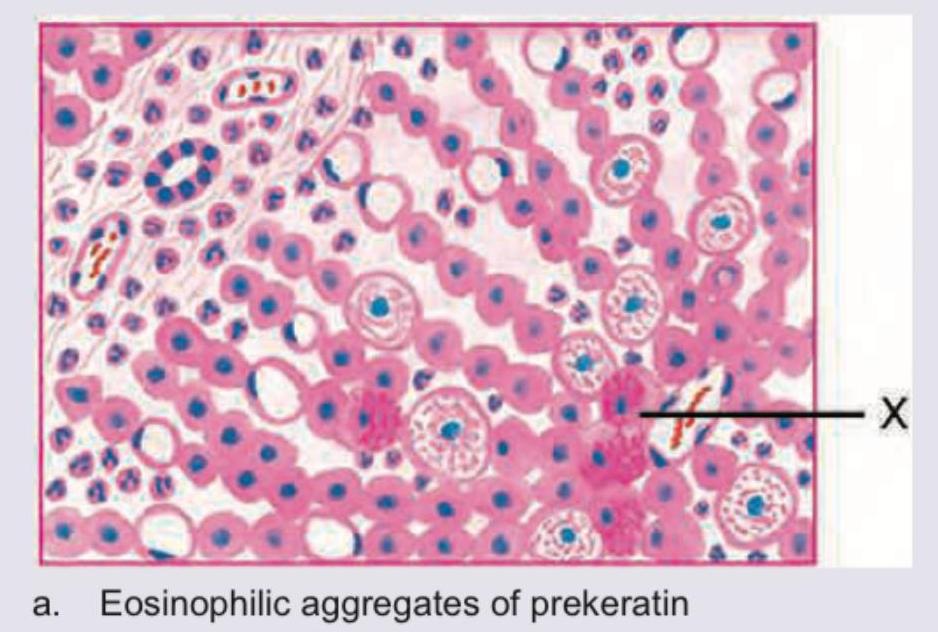
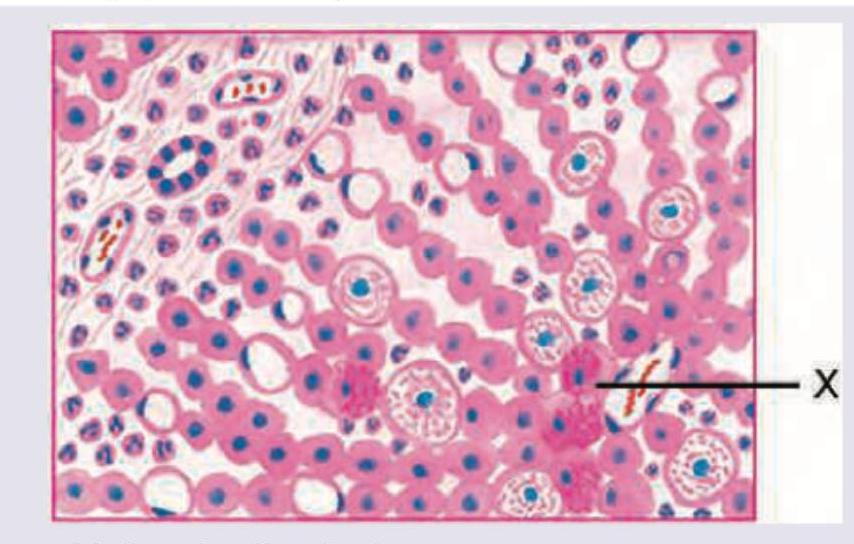
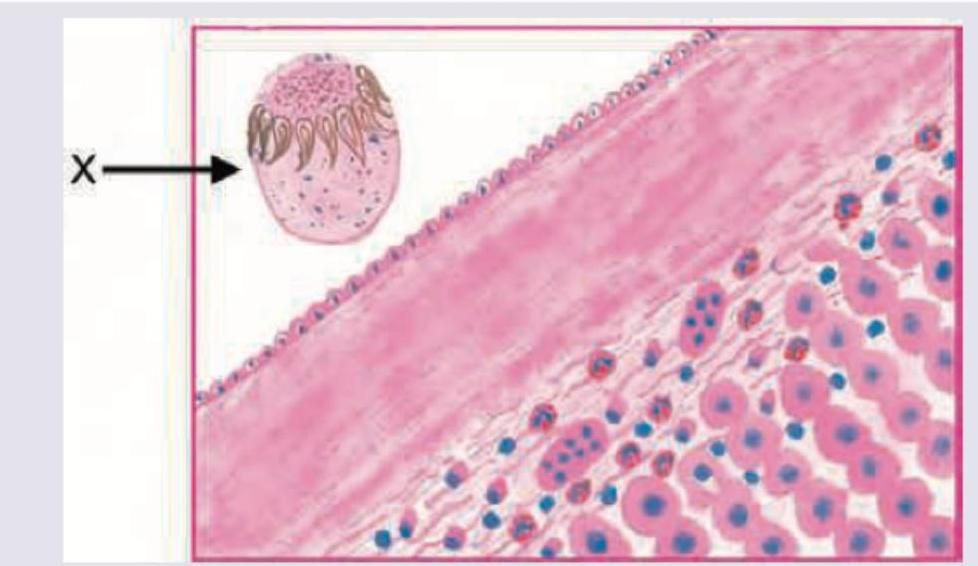
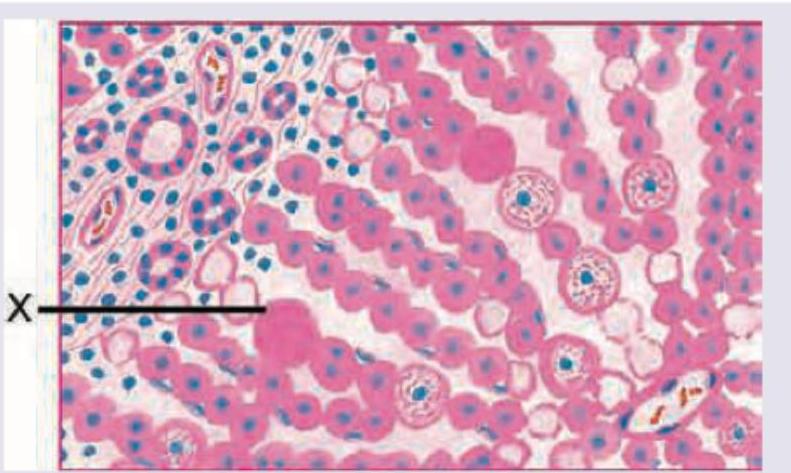
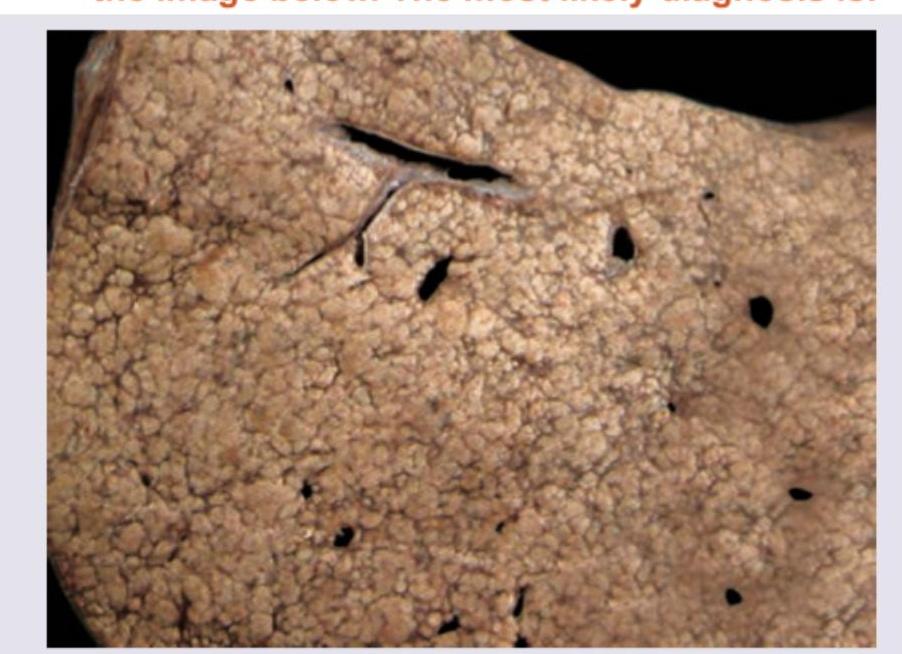
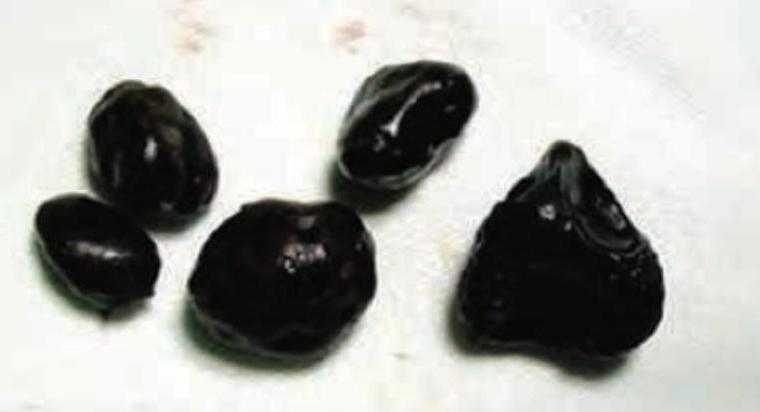
Ballooning degeneration of hepatocytes is characteristically seen in which of the following conditions?
What is the most common inherited disorder of cholangiocyte injury?
Which of the following conditions typically shows a normal liver biopsy?
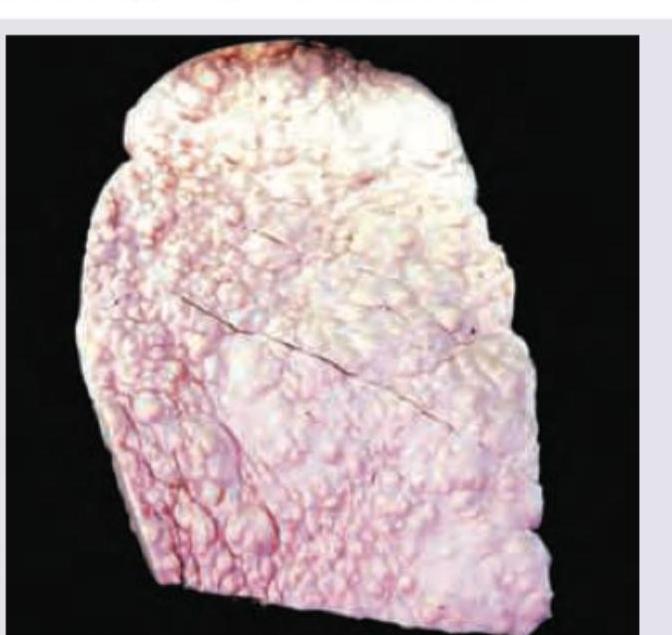
Which of the following is not a histomorphological feature of cirrhosis of the liver?
In Budd-Chiari syndrome, the occlusion is at which level?
Which of the following is NOT a histopathological feature of extrahepatic biliary atresia?
Hepatocellular damage of Wilson's disease resembles which of the following conditions?
A 43-year-old man has experienced progressive fatigue, pruritus, and icterus for 4 months. A colectomy was performed 5 years ago for the treatment of ulcerative colitis. On physical examination, he has generalized jaundice. The abdomen is not distended; on palpation, there is no abdominal pain and there are no masses. Laboratory studies show a serum alkaline phosphatase level of 285 U/L and an elevated titer of anti-neutrophil cytoplasmic antibodies. Cholangiography shows widespread intrahepatic biliary tree obliteration and a beaded appearance in the remaining ducts. Which of the following morphologic features is most likely to be present in his liver?
A patient presents with icterus and absent urine urobilinogen. What does this indicate?
Unconjugated hyperbilirubinemia is seen in all of the following except:
Explanation: **Explanation:** **Ballooning degeneration** is a form of reversible cell injury (specifically, severe hydropic change) characterized by the swelling of hepatocytes. It occurs due to the failure of ATP-dependent Na⁺/K⁺ pumps, leading to an influx of water into the cell. This causes the cytoplasm to appear pale and "clumpy," and the cell to swell to several times its original size. * **Why Option A is correct:** Ballooning degeneration is the hallmark of **Acute Hepatitis** (viral or alcoholic) [1]. In acute injury, the rapid metabolic insult leads to sudden cellular edema. Along with "Acidophil bodies" (Councilman bodies), it represents the primary morphological change in acute viral hepatitis [1]. * **Why Option B is incorrect:** While some ballooning can occur in chronic hepatitis, the characteristic features are **portal inflammation and fibrosis**. In Chronic Hepatitis B, "Ground-glass hepatocytes" (due to HBsAg accumulation) are more pathognomonic than ballooning [2]. * **Why Option C is incorrect:** Cirrhosis is the end-stage of chronic liver disease defined by **bridging fibrosis and regenerative nodules** [3]. The cellular architecture is already permanently altered, and ballooning is not a defining feature of this stage. **High-Yield Clinical Pearls for NEET-PG:** * **Councilman Bodies:** These are intensely eosinophilic, shrunken, apoptotic hepatocytes seen in acute hepatitis (especially Yellow Fever and Viral Hepatitis) [1]. * **Mallory-Denk Bodies:** Eosinophilic "rope-like" intracytoplasmic inclusions (damaged intermediate filaments) often seen within ballooned hepatocytes in **Alcoholic Steatohepatitis** and **NASH** [1]. * **Feathery Degeneration:** A specific type of swelling seen in **cholestasis** due to bile salt accumulation, distinct from the ballooning seen in viral hepatitis. **References:** [1] Cross SS. Underwood's Pathology: A Clinical Approach. 6th ed. Common Clinical Problems From Liver And Biliary System Disease, pp. 386-390. [2] Kumar V, Abbas AK, et al.. Robbins and Cotran Pathologic Basis of Disease. 9th ed. Liver and Gallbladder, pp. 843-844. [3] Kumar V, Abbas AK, et al.. Robbins and Cotran Pathologic Basis of Disease. 9th ed. Liver and Gallbladder, pp. 848-850.
Explanation: **Explanation:** **Cystic Fibrosis (CF)** is the correct answer because it is the most common inherited disorder directly causing **cholangiocyte injury** [5]. The underlying defect lies in the **CFTR (Cystic Fibrosis Transmembrane Conductance Regulator)** protein, which is expressed on the apical membrane of cholangiocytes [1]. In CF, defective chloride transport leads to the production of abnormally thick, dehydrated, and acidic bile [2]. This causes "biliary sludging," ductal obstruction, and subsequent inflammatory injury to the biliary epithelium, eventually leading to focal biliary cirrhosis [4]. **Analysis of Incorrect Options:** * **Dubin-Johnson Syndrome:** This is an autosomal recessive disorder caused by a defect in the **MRP2** transporter. It leads to impaired excretion of conjugated bilirubin into the bile, causing conjugated hyperbilirubinemia and a "black liver," but it does not cause primary cholangiocyte injury. * **Crigler-Najjar Syndrome Type II:** This involves a partial deficiency of the enzyme **UGT1A1**, leading to unconjugated hyperbilirubinemia. The pathology is related to bilirubin conjugation in hepatocytes, not ductal injury. * **Wilson Disease:** This is a disorder of copper metabolism (ATP7B mutation). While it causes significant hepatocellular damage and cirrhosis, the primary site of injury is the **hepatocyte** due to copper accumulation, not the cholangiocyte. **High-Yield NEET-PG Pearls:** * **CFTR Location:** In the liver, CFTR is found *only* in cholangiocytes, not hepatocytes. * **Liver Morphology in CF:** Look for "Focal Biliary Cirrhosis" and eosinophilic "bile plugs" in dilated bile ductules [4]. * **Diagnostic Clue:** CF is a multisystem disorder; always correlate liver findings with chronic sinopulmonary infections and pancreatic insufficiency [3]. **References:** [1] Kumar V, Abbas AK, et al.. Robbins and Cotran Pathologic Basis of Disease. 9th ed. Diseases of Infancy and Childhood, p. 476. [2] Kumar V, Abbas AK, et al.. Robbins and Cotran Pathologic Basis of Disease. 9th ed. Lumen Of Sweat Duct, pp. 475-476. [3] Kumar V, Abbas AK, et al.. Robbins and Cotran Pathologic Basis of Disease. 9th ed. Diseases of Infancy and Childhood, pp. 476-477. [4] Kumar V, Abbas AK, et al.. Robbins and Cotran Pathologic Basis of Disease. 9th ed. Diseases of Infancy and Childhood, pp. 477-478. [5] Cross SS. Underwood's Pathology: A Clinical Approach. 6th ed. (Basic Pathology) introduces the student to key general principles of pathology, both as a medical science and as a clinical activity with a vital role in patient care. Part 2 (Disease Mechanisms) provides fundamental knowledge about the cellular and molecular processes involved in diseases, providing the rationale for their treatment. Part 3 (Systematic Pathology) deals in detail with specific diseases, with emphasis on the clinically important aspects., pp. 120-122.
Explanation: **Explanation:** **Gilbert Syndrome (Correct Answer):** Gilbert syndrome is the most common hereditary hyperbilirubinemia, characterized by a mild deficiency of the enzyme **UGT1A1** (approximately 30% of normal activity). This leads to intermittent, unconjugated hyperbilirubinemia, often triggered by stress, fasting, or illness. Crucially, the liver architecture remains entirely preserved. Under a light microscope, a liver biopsy in Gilbert syndrome appears **completely normal**, making it the correct choice [1]. **Why other options are incorrect:** * **Dubin-Johnson Syndrome:** This condition is characterized by a defect in the **MRP2** transporter, leading to conjugated hyperbilirubinemia. A biopsy classically shows a **grossly black liver** due to the accumulation of coarse, dark-brown melanin-like pigment in hepatocytes [1]. * **Hemochromatosis:** This is a disorder of iron overload. A biopsy reveals extensive deposition of **hemosiderin** (visualized with **Prussian Blue stain**) within hepatocytes and bile duct epithelium [2], eventually progressing to micronodular cirrhosis. * **Wilson’s Disease:** This disorder of copper metabolism presents with a wide spectrum of histopathology, ranging from steatosis and chronic hepatitis to **Mallory-Denk bodies** and cirrhosis [2]. Copper accumulation can be demonstrated using **Rhodanine or Orcein stains**. **High-Yield Clinical Pearls for NEET-PG:** * **Gilbert vs. Crigler-Najjar:** Both involve UGT1A1 deficiency, but Gilbert is mild/asymptomatic, while Crigler-Najjar Type I is a total absence of the enzyme, leading to kernicterus [1]. * **Rotor Syndrome:** Similar to Dubin-Johnson but **lacks** the black liver pigmentation (biopsy is generally normal or shows non-specific changes, but Gilbert is the classic "normal biopsy" answer) [1]. * **Trigger:** Jaundice in Gilbert syndrome typically appears after **prolonged fasting** or strenuous exercise. **References:** [1] Kumar V, Abbas AK, et al.. Robbins and Cotran Pathologic Basis of Disease. 9th ed. Liver and Gallbladder, p. 860. [2] Cross SS. Underwood's Pathology: A Clinical Approach. 6th ed. Common Clinical Problems From Liver And Biliary System Disease, pp. 394-395.
Explanation: ### Explanation **Cirrhosis** is defined pathologically by the conversion of the normal liver architecture into structurally abnormal nodules separated by fibrosis [1]. It is the end-stage of chronic liver injury. **Why "Diffuse microvesicular steatosis" is the correct answer:** Microvesicular steatosis is a feature of **acute, severe metabolic derangement** of hepatocytes (e.g., Reye’s syndrome, Acute Fatty Liver of Pregnancy, or Valproate toxicity). It is characterized by tiny lipid droplets that do not displace the nucleus [3]. While chronic macrovesicular steatosis (NAFLD/Alcohol) can *lead* to cirrhosis, microvesicular steatosis itself is not a defining histomorphological feature of the cirrhotic process. **Analysis of Incorrect Options:** * **Regenerative Nodules (A):** These are a hallmark of cirrhosis [1]. They consist of proliferating hepatocytes surrounded by fibrotic bands [2]. They lack normal lobular architecture (e.g., no organized portal tracts or central veins). * **Dense Bands of Fibrosis (D):** This is the second defining feature. Chronic inflammation activates **Stellate cells (Ito cells)**, which transform into myofibroblasts and deposit Type I and III collagen in the space of Disse, forming bridging septa [2]. * **Portal Vein Thrombosis (C):** While not a primary diagnostic feature, it is a common **histomorphological and clinical complication** of cirrhosis due to sluggish portal flow (stasis) and a pro-thrombotic state. **NEET-PG High-Yield Pearls:** * **Gold Standard for Diagnosis:** Liver biopsy (though often diagnosed clinically/radiologically). * **Key Cell Type:** **Stellate cells** (Ito cells) are the primary cells responsible for fibrosis [2]. * **Classification:** Based on nodule size—**Micronodular** (<3mm, typical of Alcohol) and **Macronodular** (>3mm, typical of Viral Hepatitis) [1]. * **Reticulin Stain:** Essential to highlight the altered architecture and collapse of the reticulin framework in cirrhosis. **References:** [1] Cross SS. Underwood's Pathology: A Clinical Approach. 6th ed. Common Clinical Problems From Liver And Biliary System Disease, pp. 395-396. [2] Kumar V, Abbas AK, et al.. Robbins and Cotran Pathologic Basis of Disease. 9th ed. Liver and Gallbladder, p. 834. [3] Cross SS. Underwood's Pathology: A Clinical Approach. 6th ed. Common Clinical Problems From Liver And Biliary System Disease, pp. 389-390.
Explanation: **Explanation:** **Budd-Chiari Syndrome (BCS)** is a clinical triad of abdominal pain, ascites, and hepatomegaly caused by the obstruction of hepatic venous outflow [1]. **1. Why the Correct Answer is Right:** The primary pathology in Budd-Chiari syndrome is the **occlusion of two or more major hepatic veins** [1]. This obstruction leads to increased intrahepatic hydrostatic pressure, causing centrilobular congestion, necrosis, and eventually "nutmeg liver" appearance [2]. Because the **Caudate Lobe** has independent venous drainage directly into the Inferior Vena Vena Cava (IVC), it typically undergoes compensatory hypertrophy, a classic diagnostic sign on imaging. **2. Why the Incorrect Options are Wrong:** * **Inferior Vena Cava (IVC):** While IVC obstruction (e.g., by a web) can cause a similar clinical picture (sometimes called "Obliterative Hepatocavopathy"), the classic definition of Budd-Chiari syndrome specifically targets the hepatic veins. * **Renal Vein:** Occlusion here leads to Renal Vein Thrombosis, characterized by flank pain and hematuria, often associated with Nephrotic Syndrome, but it does not cause hepatic congestion. * **Splenic Vein:** Occlusion here leads to "Left-sided" or "Sinistral" portal hypertension, resulting in isolated gastric varices, but the liver parenchyma remains unaffected. **3. NEET-PG High-Yield Pearls:** * **Most common cause:** Polycythemia Vera (myeloproliferative neoplasms). * **Imaging Gold Standard:** Doppler Ultrasound is the initial test; Hepatic Venography is the gold standard. * **Histology:** Shows "Centrilobular congestion and necrosis" (Zone 3) [1]. * **Association:** Often linked to pregnancy, oral contraceptives, and PNH (Paroxysmal Nocturnal Hemoglobinuria) [1]. **References:** [1] Kumar V, Abbas AK, et al.. Robbins and Cotran Pathologic Basis of Disease. 9th ed. Liver and Gallbladder, pp. 869-870. [2] Cross SS. Underwood's Pathology: A Clinical Approach. 6th ed. Common Clinical Problems From Liver And Biliary System Disease, pp. 401-402.
Explanation: ### Explanation **Extrahepatic Biliary Atresia (EHBA)** is a neonatal condition characterized by the complete obstruction or disappearance of all or part of the extrahepatic biliary tree [1]. #### Why "Bile Lakes" is the Correct Answer **Bile lakes** (focal collections of bile within the liver parenchyma) are a classic histopathological hallmark of **Primary Biliary Cholangitis (PBC)** or long-standing secondary biliary cirrhosis in adults. In EHBA, while there is significant cholestasis, the process is usually too acute or the architectural destruction too diffuse for discrete "lakes" to form before the liver progresses to biliary cirrhosis. Therefore, bile lakes are typically **not** seen in the early diagnostic biopsy of EHBA. #### Analysis of Incorrect Options * **Marked bile duct degeneration (B):** This is a core feature. The disease involves an inflammatory destruction of the biliary epithelium, leading to ductal necrosis and eventual disappearance [1]. * **Fibrosis of the hepatic duct (C):** The "atresia" itself is characterized by progressive fibro-obliterative destruction of the extrahepatic ducts (hepatic or common bile ducts), replacing the lumen with fibrous tissue [1]. * **Parenchymal cholestasis (D):** Due to the complete outflow obstruction, bile plugs in the canaliculi and hepatocytes (cholestasis) are universal findings [1]. #### NEET-PG High-Yield Pearls * **Most common cause** of neonatal cholestasis and the most frequent indication for liver transplantation in children. * **Histopathology Triad:** Bile duct proliferation (ductular reaction), portal tract edema, and portal fibrosis [1]. * **Diagnosis:** The "Gold Standard" is an intraoperative cholangiogram. * **Treatment:** **Kasai Procedure** (Hepatoportoenterostomy), which is most successful if performed before 60 days of life [1]. * **Differential:** Must be distinguished from **Neonatal Hepatitis**, which shows prominent multinucleated giant cells but lacks significant ductal proliferation. **References:** [1] Kumar V, Abbas AK, et al.. Robbins and Cotran Pathologic Basis of Disease. 9th ed. Liver and Gallbladder, pp. 862-865.
Explanation: **Explanation:** Wilson’s Disease (Hepatolenticular degeneration) is an autosomal recessive disorder caused by mutations in the **ATP7B gene**, leading to impaired biliary copper excretion and systemic copper accumulation [1]. The correct answer is **D (All of the above)** because Wilson’s disease is known as the "great mimic" in hepatopathology. The liver injury patterns are highly variable and can manifest as: 1. **Acute Hepatitis:** It can present as an abrupt onset of jaundice and elevated transaminases, sometimes progressing to fulminant hepatic failure (characteristically with Coombs-negative hemolytic anemia). 2. **Chronic Hepatitis:** This is the most common presentation [2]. Histologically, it mimics **Autoimmune Hepatitis**, showing interface hepatitis, portal inflammation, and macrovesicular steatosis. 3. **Cholestasis:** Chronic copper toxicity leads to bile duct injury and features of cholestasis, occasionally mimicking Primary Sclerosing Cholangitis or Primary Biliary Cholangitis in its later stages. **Why other options are not "the only" answer:** While Wilson's disease frequently presents as chronic hepatitis, it is not limited to that morphology. Because it can present as a spectrum—ranging from asymptomatic steatosis to acute liver failure or biliary cirrhosis—selecting any single option (A, B, or C) would be incomplete. **High-Yield Clinical Pearls for NEET-PG:** * **Diagnosis:** Low serum Ceruloplasmin, increased 24-hour urinary copper, and increased hepatic copper content (>250 μg/g dry weight) [2]. * **Ocular Finding:** **Kayser-Fleischer (KF) rings** in Descemet’s membrane (best seen on slit-lamp exam) [1], [2]. * **Histology:** Rhodanine or Orcein stains are used to demonstrate copper-associated protein. * **Treatment:** Copper chelators like **D-Penicillamine** or Trientine; Zinc (to inhibit intestinal absorption). **References:** [1] Kumar V, Abbas AK, et al.. Robbins and Cotran Pathologic Basis of Disease. 9th ed. Liver and Gallbladder, pp. 855-856. [2] Cross SS. Underwood's Pathology: A Clinical Approach. 6th ed. Common Clinical Problems From Liver And Biliary System Disease, pp. 394-395.
Explanation: ### Explanation The clinical presentation points toward a diagnosis of **Primary Sclerosing Cholangitis (PSC)**. The key diagnostic markers in this case are the strong association with **Ulcerative Colitis** (seen in ~70% of PSC patients), elevated alkaline phosphatase (cholestatic pattern), positive **p-ANCA** (anti-neutrophil cytoplasmic antibodies), and the pathognomonic **"beaded appearance"** on cholangiography caused by irregular strictures and segmentally dilated bile ducts [1]. #### Why the Correct Answer is Right: * **Option A (Concentric "onion-skin" ductular fibrosis):** This is the classic histological hallmark of PSC [2]. It involves circumferential, periductal fibrosis around medium-sized bile ducts, which eventually leads to their obliteration and replacement by solid fibrous scars (vanishing bile duct syndrome). #### Why Other Options are Wrong: * **Option B (Copper deposition):** While copper can accumulate in any chronic cholestatic liver disease (including PSC and PBC), it is a non-specific finding and not the primary morphologic feature used for diagnosis [4]. * **Option C (Granulomatous bile duct destruction):** This describes "Florid Duct Lesions," which are characteristic of **Primary Biliary Cholangitis (PBC)** [3]. PBC typically affects middle-aged women and is associated with Anti-Mitochondrial Antibodies (AMA), not p-ANCA or Ulcerative Colitis. * **Option D (Interface hepatitis):** This refers to inflammation at the portal-parenchymal interface (limiting plate), which is the hallmark of **Autoimmune Hepatitis**, not a primary biliary obstructive disease. #### NEET-PG High-Yield Pearls: * **PSC vs. PBC:** PSC is more common in males and involves both intra- and extrahepatic ducts; PBC is more common in females and involves only small intrahepatic ducts [1]. * **Imaging:** MRCP/ERCP is the gold standard for PSC ("beaded appearance") [1]. * **Malignancy Risk:** Patients with PSC have a significantly increased risk of **Cholangiocarcinoma** (10-15%). * **p-ANCA:** In the context of liver disease, p-ANCA is highly suggestive of PSC or Autoimmune Hepatitis Type 1. **References:** [1] Kumar V, Abbas AK, et al.. Robbins and Cotran Pathologic Basis of Disease. 9th ed. Liver and Gallbladder, pp. 865-866. [2] Cross SS. Underwood's Pathology: A Clinical Approach. 6th ed. Common Clinical Problems From Liver And Biliary System Disease, pp. 393-394. [3] Kumar V, Abbas AK, et al.. Robbins and Cotran Pathologic Basis of Disease. 9th ed. Liver and Gallbladder, pp. 864-865. [4] Cross SS. Underwood's Pathology: A Clinical Approach. 6th ed. Common Clinical Problems From Liver And Biliary System Disease, pp. 392-393.
Explanation: **Explanation:** The presence of **icterus (jaundice)** combined with **absent urine urobilinogen** is a classic hallmark of **obstructive (post-hepatic) jaundice** [1]. **1. Why Peri-hepatic Obstruction is Correct:** In a healthy state, conjugated bilirubin is excreted via the bile duct into the intestine, where gut bacteria convert it into **urobilinogen** [3]. Most urobilinogen is excreted in feces (as stercobilin), but a small portion is reabsorbed into the portal circulation and excreted by the kidneys [3]. In **peri-hepatic (obstructive) jaundice** (e.g., gallstones, head of pancreas carcinoma), bile flow to the intestine is completely blocked [1]. Consequently, no bilirubin reaches the gut, no urobilinogen is formed, and therefore, **urobilinogen is absent in the urine** [2]. **2. Why Other Options are Incorrect:** * **Hemolysis (Pre-hepatic):** Increased breakdown of RBCs leads to excessive unconjugated bilirubin [1]. This results in *increased* production and excretion of urobilinogen in the urine. * **Hepatitis & Liver Failure (Hepatic):** In hepatocellular jaundice, there is both impaired uptake and impaired excretion. While urine urobilinogen may be normal or decreased, it is **rarely absent** unless there is significant intrahepatic cholestasis [2]. **NEET-PG High-Yield Pearls:** * **Urine Findings in Obstruction:** Bilirubin is present (conjugated), but Urobilinogen is absent [4]. * **Stool Appearance:** "Clay-colored" (acholic) stools due to lack of stercobilin [4]. * **Biochemical Marker:** Alkaline Phosphatase (ALP) and GGT are significantly elevated in obstructive patterns compared to ALT/AST. * **Pruritus:** Common in obstruction due to the deposition of bile salts in the skin. * **Common Causes:** Gallstones and carcinoma of the pancreas head are frequent causes of biliary obstruction [5]. **References:** [1] Cross SS. Underwood's Pathology: A Clinical Approach. 6th ed. Common Clinical Problems From Liver And Biliary System Disease, pp. 384-385. [2] Cross SS. Underwood's Pathology: A Clinical Approach. 6th ed. Common Clinical Problems From Liver And Biliary System Disease, pp. 385-386. [3] Kumar V, Abbas AK, et al.. Robbins and Cotran Pathologic Basis of Disease. 9th ed. Liver and Gallbladder, pp. 858-860. [4] Cross SS. Underwood's Pathology: A Clinical Approach. 6th ed. Common Clinical Problems From Liver And Biliary System Disease, pp. 380-381. [5] Cross SS. Underwood's Pathology: A Clinical Approach. 6th ed. Common Clinical Problems From Liver And Biliary System Disease, pp. 403-404.
Explanation: To approach this question, it is essential to distinguish between defects in bilirubin **conjugation** (leading to unconjugated hyperbilirubinemia) and defects in bilirubin **excretion** (leading to conjugated hyperbilirubinemia) [1]. ### **Explanation of the Correct Answer** **C. Dubin-Johnson Syndrome:** This is an autosomal recessive disorder caused by a mutation in the **MRP2 protein** (Multidrug Resistance-associated Protein 2). This protein is responsible for the transport of conjugated bilirubin from the hepatocyte into the bile canaliculi [1]. Since the defect occurs *after* conjugation has taken place in the endoplasmic reticulum, it results in **conjugated (direct) hyperbilirubinemia** [1]. ### **Analysis of Incorrect Options** * **A. Crigler-Najjar Syndrome:** Caused by a total (Type I) or partial (Type II) deficiency of the enzyme **UGT1A1** [1]. Without this enzyme, bilirubin cannot be conjugated, leading to severe unconjugated hyperbilirubinemia [1]. * **B. Physiological Jaundice:** Occurs in neonates due to immature UGT1A1 activity and increased RBC breakdown [2]. This results in a transient rise in unconjugated bilirubin [2]. * **D. Gilbert Syndrome:** A common, benign condition characterized by reduced activity of UGT1A1 (roughly 30% of normal) [1]. It manifests as mild unconjugated hyperbilirubinemia, often triggered by stress, fasting, or illness. ### **High-Yield Clinical Pearls for NEET-PG** * **Dubin-Johnson vs. Rotor Syndrome:** Both cause conjugated hyperbilirubinemia [1]. However, Dubin-Johnson is characterized by a **grossly black liver** (due to epinephrine metabolite accumulation) and normal urinary coproporphyrin levels (but 80% is Coproporphyrin I). Rotor syndrome does **not** have a pigmented liver [1]. * **Crigler-Najjar Type I vs. II:** Type I does not respond to Phenobarbital and carries a high risk of **Kernicterus**. Type II (Arias Syndrome) responds to Phenobarbital as it induces the remaining enzyme activity. * **Gilbert Syndrome** is often a "spot diagnosis" in exams when a medical student or athlete develops mild jaundice after a period of intense exercise or fasting. **References:** [1] Kumar V, Abbas AK, et al.. Robbins and Cotran Pathologic Basis of Disease. 9th ed. Liver and Gallbladder, pp. 858-860. [2] Cross SS. Underwood's Pathology: A Clinical Approach. 6th ed. Common Clinical Problems From Liver And Biliary System Disease, pp. 384-385.
Jaundice and Cholestasis
Practice Questions
Viral Hepatitis
Practice Questions
Alcoholic and Non-alcoholic Fatty Liver Disease
Practice Questions
Drug and Toxin Induced Liver Injury
Practice Questions
Cirrhosis and Its Complications
Practice Questions
Metabolic Liver Diseases
Practice Questions
Liver Tumors
Practice Questions
Gallbladder and Biliary Tract Diseases
Practice Questions
Congenital Liver Diseases
Practice Questions
Liver Transplantation Pathology
Practice Questions
Get full access to all questions, explanations, and performance tracking.
Start For Free