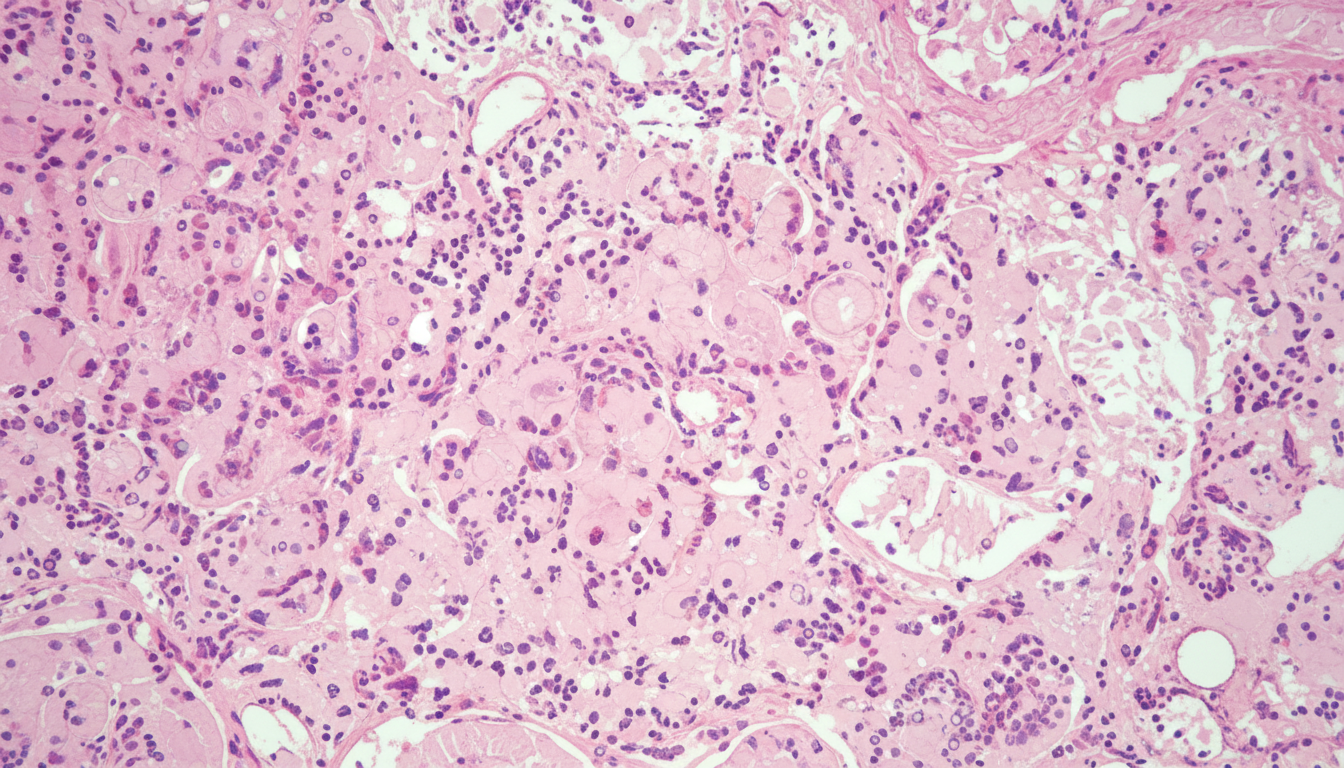
Which of the following liver tumors is likely to develop in females taking oral contraceptives?
What is the most common cause of Budd-Chiari syndrome?
Which of the following is NOT an alteration in liver function tests seen in bacterial sepsis?
Which of the following features in a liver biopsy is characteristic of alpha-1 antitrypsin deficiency?
A patient with right heart failure secondary to tricuspid regurgitation is found to have increased liver enzymes. USG shows enlargement of the liver. If the patient is developing 'nutmeg liver', what is the most likely etiology?
Unconjugated hyperbilirubinemia with increased urobilinogen is seen in which of the following conditions?
In patients with cirrhosis of the liver, where is the site of obstruction in the portal system?
A 48-year-old woman presents with a 3-week history of fatigue, yellow skin, and yellow sclerae. Physical examination reveals mild jaundice. Her serum bilirubin level is 3.7 mg/dL, predominantly unconjugated. Liver function tests, including serum AST, ALT, and alkaline phosphatase, are normal. Hemoglobin level is 6.0 g/dL. Jaundice resolves after corticosteroid administration. What is the most likely cause of hyperbilirubinemia in this patient?
Prussian blue stain detects which of the following?
Which of the following viruses does not cause chronic hepatitis?
Explanation: **Explanation:** **Hepatic Adenoma (Hepatocellular Adenoma)** is a benign liver tumor strongly associated with the long-term use of **oral contraceptive pills (OCPs)** [1]. The risk is directly proportional to the duration and dose of estrogen. These tumors are typically found in young women of childbearing age [1]. * **Pathophysiology:** Estrogens promote the proliferation of hepatocytes. These tumors are often subcapsular and highly vascular, carrying a significant risk of **spontaneous rupture and life-threatening intraperitoneal hemorrhage**, especially during pregnancy. * **Morphology:** Histologically, they consist of sheets of hepatocytes without normal lobular architecture (absence of portal tracts and bile ducts) [1]. **Analysis of Incorrect Options:** * **A. Hepatoma (Hepatocellular Carcinoma):** While OCPs are a risk factor for benign adenomas, HCC is primarily associated with chronic Hepatitis B/C, cirrhosis, and Aflatoxin exposure. * **B. Lymphoma:** Primary hepatic lymphoma is extremely rare and usually associated with immunocompromised states (e.g., HIV) or chronic infections, not hormonal therapy. * **C. Focal Nodular Hyperplasia (FNH):** FNH is the second most common benign liver tumor. While it is more common in females, its relationship with OCPs is controversial; OCPs may cause FNH to grow, but they are not the primary causative agent. FNH is characterized by a pathognomonic **"central stellate scar."** **High-Yield Clinical Pearls for NEET-PG:** * **Molecular Subtypes:** HNF1-α inactivated (lowest malignancy risk), β-catenin activated (highest risk of malignant transformation to HCC), and Inflammatory (most common) [1]. * **Management:** Discontinuation of OCPs can sometimes lead to tumor regression [1]. * **Imaging:** On CT/MRI, FNH shows a "spoke-wheel" appearance due to the central scar, whereas Adenomas show heterogeneous enhancement. **References:** [1] Kumar V, Abbas AK, et al.. Robbins and Cotran Pathologic Basis of Disease. 9th ed. Liver and Gallbladder, pp. 874-875.
Explanation: **Explanation:** **Budd-Chiari Syndrome (BCS)** is a clinical triad of abdominal pain, ascites, and hepatomegaly caused by the obstruction of hepatic venous outflow. **1. Why Option D is Correct:** The most common underlying mechanism of Budd-Chiari syndrome is **thrombosis of the hepatic veins** [2]. This obstruction leads to increased intrahepatic pressure, centrilobular congestion, and necrosis (nutmeg liver) [2], [3]. In the Western world, the primary driver is a hypercoagulable state [1], most notably **Polycythemia Vera** (the most common specific cause) and other myeloproliferative neoplasms (JAK2 mutations). **2. Analysis of Incorrect Options:** * **Option A (Idiopathic):** While many cases were historically labeled idiopathic, modern diagnostic tools identify an underlying prothrombotic condition in over 75% of patients. * **Option B (Valves/Webs):** Membranous webs or "valves" in the **Inferior Vena Cava (IVC)** are a significant cause of BCS in Asia and South Africa, but globally, hepatic vein thrombosis remains more frequent. * **Option C (Hepatocellular Carcinoma):** While HCC can cause BCS via direct tumor invasion or compression of the hepatic veins, it is a secondary cause and less common than primary thrombosis. **High-Yield Clinical Pearls for NEET-PG:** * **Morphology:** The liver shows a **"Nutmeg" appearance** (congestive hepatopathy) [3]. * **Caudate Lobe:** It is characteristically **enlarged (hypertrophied)** because it has independent venous drainage directly into the IVC, sparing it from the hepatic vein obstruction. * **Imaging:** Doppler Ultrasound is the initial investigation of choice; "Spider-web" collateral vessels may be seen on venography. * **Association:** Strongly associated with **PNH (Paroxysmal Nocturnal Hemoglobinuria)** and pregnancy/oral contraceptives [2]. **References:** [1] Cross SS. Underwood's Pathology: A Clinical Approach. 6th ed. Common Clinical Problems From Liver And Biliary System Disease, pp. 398-399. [2] Kumar V, Abbas AK, et al.. Robbins and Cotran Pathologic Basis of Disease. 9th ed. Liver and Gallbladder, pp. 869-870. [3] Kumar V, Abbas AK, et al.. Robbins and Cotran Pathologic Basis of Disease. 9th ed. Liver and Gallbladder, pp. 870-872.
Explanation: **Explanation:** In the context of bacterial sepsis, the liver often undergoes functional changes known as **"Sepsis-associated Cholestasis."** **Why Option D is the correct answer (The False Statement):** While sepsis is a common cause of jaundice in critically ill patients, jaundice is **not always** associated with leukocytosis [1]. In severe sepsis or Gram-negative infections, patients may present with **leukopenia** (low WBC count) or a normal WBC count with a "left shift" (increased bands) [1]. Therefore, the presence of jaundice does not mandate a high white cell count. **Analysis of other options:** * **Option A:** Sepsis typically causes **conjugated hyperbilirubinemia** due to impaired canalicular excretion. Interestingly, this often occurs with **disproportionately normal or mildly elevated** transaminases (ALT/AST) and alkaline phosphatase, making it a classic "dissociated" biochemical picture. * **Option B & C:** The pathophysiology is driven by **endotoxemia** (LPS). Endotoxins trigger the release of cytokines (TNF-̑, IL-6), which downregulate hepatocyte canalicular transport systems (like **MRP2**). This impairs the transport of bile acids and organic anions, leading to cholestasis without primary mechanical obstruction. **NEET-PG High-Yield Pearls:** * **Mechanism:** Cytokine-mediated downregulation of transport proteins (MRP2/BSEP). * **Histology:** Often shows "canalicular cholestasis" (bile plugs) most prominent in Zone 3, with minimal hepatocyte necrosis. * **Clinical Hint:** If a septic patient develops sudden jaundice with stable liver enzymes, think of sepsis-induced cholestasis rather than viral hepatitis or biliary obstruction. **References:** [1] Kumar V, Abbas AK, et al.. Robbins and Cotran Pathologic Basis of Disease. 9th ed. Inflammation and Repair, pp. 110-111.
Explanation: Alpha-1 Antitrypsin (AAT) deficiency is an autosomal codominant disorder characterized by the misfolding of the AAT protein [1]. This prevents the protein from being secreted by hepatocytes, leading to its accumulation within the liver [1]. 1. **PAS-positive, diastase-resistant globules:** This is the **pathognomonic** histological feature [2]. The misfolded AAT protein accumulates in the endoplasmic reticulum of hepatocytes, appearing as eosinophilic round globules. These globules are PAS-positive; unlike glycogen, they are not digested by diastase, making them "diastase resistant." 2. **Cirrhosis:** The chronic accumulation of these misfolded proteins causes hepatocyte stress and apoptosis, eventually leading to chronic hepatitis, fibrosis, and ultimately **micronodular or mixed cirrhosis** [1]. 3. **Mallory Hyaline (Mallory-Denk bodies):** While most classically associated with alcoholic liver disease, Mallory hyaline (clumped intermediate filaments) can also be seen in AAT deficiency, Wilson disease, and non-alcoholic steatohepatitis (NASH). **Why "All of the above" is correct:** All three features are recognized histological findings in a patient with liver involvement due to AAT deficiency. **High-Yield Clinical Pearls for NEET-PG:** * **Genetics:** Most common mutation is **Glu342Lys** (PiZ allele). * **Stain of choice:** PAS with diastase pretreatment. * **Organ Involvement:** Causes **Panacinar emphysema** in lungs (due to lack of protease inhibition) and **Cirrhosis** in the liver (due to toxic gain of function/accumulation) [1]. * **Neonatal Jaundice:** AAT deficiency is a common genetic cause of neonatal cholestasis. **References:** [1] Kumar V, Abbas AK, et al.. Robbins and Cotran Pathologic Basis of Disease. 9th ed. Liver and Gallbladder, pp. 856-858. [2] Cross SS. Underwood's Pathology: A Clinical Approach. 6th ed. Common Clinical Problems From Liver And Biliary System Disease, pp. 388-389.
Explanation: **Explanation:** **1. Why Chronic Venous Congestion (CVC) is correct:** The term **'Nutmeg Liver'** is the classic macroscopic description for chronic passive venous congestion of the liver [1]. In this patient, **Right Heart Failure (RHF)** leads to a "back-up" of blood into the Inferior Vena Vena Cava (IVC) and hepatic veins. This increased pressure causes blood to pool in the **centrilobular regions (Zone 3)** of the liver acinus [3]. * **Pathology:** The central veins and sinusoids become distended with blood (appearing dark/red), while the surrounding periportal hepatocytes (Zone 1) remain relatively oxygenated or undergo fatty change (appearing pale/yellow) [1]. This alternating dark and light pattern mimics the cut surface of a nutmeg seed [3]. **2. Why the other options are incorrect:** * **Infarction of liver:** Rare due to the liver's dual blood supply (Hepatic artery and Portal vein). When it occurs, it typically presents as a "pale infarct" or "Zahn infarct," not a nutmeg pattern. * **Amyloidosis:** Characterized by the deposition of extracellular fibrillar proteins [2]. Grossly, the liver appears enlarged, pale, and waxy/rubbery, but lacks the mottled congestive pattern. * **Budd-Chiari Syndrome:** While this involves hepatic vein obstruction (causing congestion), the question specifically links the condition to **Right Heart Failure/Tricuspid Regurgitation**, which is the systemic cause of CVC. Budd-Chiari is typically due to local thrombosis or webs. **3. NEET-PG High-Yield Pearls:** * **Microscopic hallmark:** Centrilobular necrosis (Zone 3) occurs first because it is furthest from the arterial supply and most susceptible to hypoxia [3]. * **Cardiac Cirrhosis:** Long-standing CVC can lead to centrilobular fibrosis, eventually resulting in "cardiac cirrhosis" [3]. * **Morphology:** Nutmeg liver = Red-brown depressed centers (congested central veins) + Tan/yellow periphery (fatty/viable hepatocytes) [1]. **References:** [1] Kumar V, Abbas AK, et al.. Robbins and Cotran Pathologic Basis of Disease. 9th ed. Hemodynamic Disorders, Thromboembolic Disease, and Shock, p. 126. [2] Cross SS. Underwood's Pathology: A Clinical Approach. 6th ed. Common Clinical Problems From Liver And Biliary System Disease, pp. 401-402. [3] Kumar V, Abbas AK, et al.. Robbins and Cotran Pathologic Basis of Disease. 9th ed. Liver and Gallbladder, pp. 870-872.
Explanation: ### Explanation **1. Why Hemolytic Anemia is Correct:** In hemolytic anemia, there is excessive breakdown of Red Blood Cells (RBCs), leading to an overproduction of **unconjugated bilirubin (UCB)**. The liver's capacity to conjugate bilirubin is overwhelmed, resulting in unconjugated hyperbilirubinemia [1]. Since more bilirubin is eventually conjugated and excreted into the intestine, bacteria convert this excess bilirubin into **urobilinogen**. A significant portion of this urobilinogen is reabsorbed into the portal circulation (enterohepatic circulation) and excreted by the kidneys, leading to **increased urinary urobilinogen** [2]. **2. Why the Other Options are Incorrect:** * **Liver Cirrhosis:** This typically presents with **mixed hyperbilirubinemia** (both conjugated and unconjugated) due to impaired hepatocyte function and architectural distortion [3]. Urobilinogen levels are variable but not classically increased in the same pattern as hemolysis. * **Bile Duct Obstruction & Sclerosing Cholangitis:** These are causes of **obstructive (post-hepatic) jaundice**. They result in **conjugated hyperbilirubinemia** [3]. Because bile cannot reach the intestine, urobilinogen cannot be formed. This leads to **absent urobilinogen** in urine and pale/clay-colored stools [2]. **3. NEET-PG High-Yield Pearls:** * **Hemolysis:** ↑ Unconjugated Bilirubin + ↑ Urinary Urobilinogen + **Absent** Urinary Bilirubin (UCB is water-insoluble and cannot pass the glomerular basement membrane). * **Obstructive Jaundice:** ↑ Conjugated Bilirubin + **Presence** of Urinary Bilirubin (dark urine) + **Absent** Urinary Urobilinogen [2]. * **Crigler-Najjar & Gilbert Syndrome:** These are genetic causes of isolated unconjugated hyperbilirubinemia but do not typically show the massive increase in urobilinogen seen in hemolysis. **References:** [1] Kumar V, Abbas AK, et al.. Robbins and Cotran Pathologic Basis of Disease. 9th ed. Red Blood Cell and Bleeding Disorders, pp. 639-640. [2] Cross SS. Underwood's Pathology: A Clinical Approach. 6th ed. Common Clinical Problems From Liver And Biliary System Disease, pp. 384-385. [3] Cross SS. Underwood's Pathology: A Clinical Approach. 6th ed. Common Clinical Problems From Liver And Biliary System Disease, pp. 380-381.
Explanation: **Explanation:** In **Cirrhosis**, the fundamental pathology involves diffuse fibrosis and the transformation of normal liver parenchyma into regenerative nodules. This process leads to **Portal Hypertension**, which is classified based on the anatomical site of resistance to blood flow [2]. **Why Option D is Correct:** The primary site of obstruction in cirrhosis is **Sinusoidal** [2]. The architectural distortion caused by collagen deposition in the **Space of Disse** (capillarization of sinusoids) and the physical compression of sinusoids by regenerative nodules significantly increase resistance to portal blood flow. Additionally, a decrease in nitric oxide (vasodilator) and an increase in endothelin (vasoconstrictor) within the sinusoids further exacerbate this resistance [2]. **Why Other Options are Incorrect:** * **A. Hepatic Vein:** Obstruction here is classified as **Post-hepatic**. This is characteristic of **Budd-Chiari Syndrome**, not cirrhosis [2],[4]. * **B. Post-sinusoidal:** While some components of cirrhosis can affect the terminal hepatic venules, "Post-sinusoidal" typically refers to conditions like **Sinusoidal Obstruction Syndrome (Veno-occlusive disease)**. In the context of cirrhosis, "Sinusoidal" is the more accurate and standard classification [2]. * **C. Extra-hepatic portal vein:** This is a **Pre-hepatic** cause of portal hypertension, most commonly seen in **Portal Vein Thrombosis** [2],[3]. **High-Yield Facts for NEET-PG:** * **Most common cause of Portal Hypertension in India:** Cirrhosis (Sinusoidal). * **Most common cause of Non-Cirrhotic Portal Hypertension (NCPH):** Extra-hepatic portal vein obstruction (EHPVO). * **Stellate Cells (Ito cells):** These are the primary cells responsible for fibrosis in cirrhosis; they transform into myofibroblasts and secrete Type I and III collagen [1]. * **Wedged Hepatic Venous Pressure (WHVP):** This measurement reflects sinusoidal pressure and is elevated in cirrhosis. **References:** [1] Cross SS. Underwood's Pathology: A Clinical Approach. 6th ed. Common Clinical Problems From Liver And Biliary System Disease, pp. 381-382. [2] Kumar V, Abbas AK, et al.. Robbins and Cotran Pathologic Basis of Disease. 9th ed. Liver and Gallbladder, pp. 834-835. [3] Kumar V, Abbas AK, et al.. Robbins and Cotran Pathologic Basis of Disease. 9th ed. Liver and Gallbladder, pp. 868-869. [4] Kumar V, Abbas AK, et al.. Robbins and Cotran Pathologic Basis of Disease. 9th ed. Liver and Gallbladder, pp. 869-870.
Explanation: ### Explanation The clinical presentation points toward **unconjugated hyperbilirubinemia** secondary to **extravascular hemolysis** [1]. **1. Why Autoimmune Hemolytic Anemia (AIHA) is correct:** The patient presents with jaundice and a significantly low hemoglobin (6.0 g/dL), indicating anemia [3]. The bilirubin is predominantly **unconjugated**, and liver enzymes (AST, ALT, ALP) are normal, which rules out primary hepatic or biliary pathology [1]. In AIHA, red blood cells are destroyed prematurely, often forming spherocytes that are removed by phagocytosis in the spleen [2]. The resolution of jaundice with **corticosteroids** is the diagnostic "clue," as steroids are the first-line treatment for Warm-type AIHA (IgG-mediated) [2]. **2. Why the other options are incorrect:** * **Acute Hepatitis B:** This would present with conjugated hyperbilirubinemia and significantly elevated transaminases (AST/ALT > 500-1000 U/L). * **Gallstone (Choledocholithiasis):** This causes obstructive jaundice characterized by **conjugated** hyperbilirubinemia and a marked rise in Alkaline Phosphatase (ALP). * **Primary Biliary Cholangitis (PBC):** This is a chronic cholestatic condition. While it affects middle-aged women, it presents with elevated ALP, pruritus, and positive anti-mitochondrial antibodies (AMA), not sudden severe anemia responsive to steroids. **Clinical Pearls for NEET-PG:** * **Unconjugated Hyperbilirubinemia + Anemia = Hemolysis.** * **Unconjugated Hyperbilirubinemia + Normal Hb + Normal LFTs = Gilbert Syndrome** (the most common hereditary cause). * **Corticosteroid responsiveness** in the context of hemolysis is a classic indicator of **Warm AIHA**. * Always check the **Reticulocyte count** and **Haptoglobin** levels in such cases to confirm hemolysis. **References:** [1] Kumar V, Abbas AK, et al.. Robbins and Cotran Pathologic Basis of Disease. 9th ed. Red Blood Cell and Bleeding Disorders, pp. 639-640. [2] Cross SS. Underwood's Pathology: A Clinical Approach. 6th ed. Common Clinical Problems From Blood And Bone Marrow Disease, pp. 602-603. [3] Cross SS. Underwood's Pathology: A Clinical Approach. 6th ed. Common Clinical Problems From Blood And Bone Marrow Disease, pp. 596-597.
Explanation: **Explanation:** **1. Why Ferric Iron is Correct:** The Prussian blue reaction (also known as the Perls’ reaction) is the gold standard histochemical stain for detecting **Ferric iron (Fe³⁺)**. In this process, the tissue is treated with potassium ferrocyanide and hydrochloric acid. The acid releases ferric ions from binding proteins like ferritin and hemosiderin [3]. These ions then react with the potassium ferrocyanide to form an insoluble, bright blue pigment called **ferric ferrocyanide** (Prussian blue) [1]. This is clinically vital for diagnosing iron overload states like **Hereditary Hemochromatosis** and **Hemosiderosis** [4]. **2. Why Other Options are Incorrect:** * **Ferrous iron (Fe²⁺):** Prussian blue does not detect the ferrous form. To detect ferrous iron, the **Turnbull’s blue** stain is used, where potassium ferricyanide reacts with Fe²⁺. * **Glycogen:** Glycogen is best demonstrated using the **Periodic Acid-Schiff (PAS)** stain, which yields a magenta color [2]. Diastase digestion is often used to confirm its presence. * **Lipids:** Lipids are dissolved during routine paraffin processing. To detect them, frozen sections must be used with stains like **Sudan Black B** or **Oil Red O**. **3. High-Yield Clinical Pearls for NEET-PG:** * **Hemosiderin vs. Lipofuscin:** On H&E stain, both appear as golden-brown pigments [2]. Prussian blue is the definitive test to differentiate them; **hemosiderin is positive (blue)**, while lipofuscin (the "wear-and-tear" pigment) is negative. * **Asbestos Bodies:** These are "ferruginous bodies" coated with iron and are highlighted beautifully by Prussian blue stain. * **Bone Marrow:** Prussian blue is used on bone marrow aspirates to assess iron stores and identify **sideroblasts** (e.g., in Sideroblastic anemia). **References:** [1] Kumar V, Abbas AK, et al.. Robbins and Cotran Pathologic Basis of Disease. 9th ed. Liver and Gallbladder, pp. 854-855. [2] Kumar V, Abbas AK, et al.. Robbins and Cotran Pathologic Basis of Disease. 9th ed. Cellular Responses to Stress and Toxic Insults: Adaptation, Injury, and Death, p. 75. [3] Kumar V, Abbas AK, et al.. Robbins and Cotran Pathologic Basis of Disease. 9th ed. Cellular Responses to Stress and Toxic Insults: Adaptation, Injury, and Death, pp. 75-76. [4] Cross SS. Underwood's Pathology: A Clinical Approach. 6th ed. Common Clinical Problems From Liver And Biliary System Disease, pp. 394-395.
Explanation: **Explanation:** The correct answer is **Hepatitis E Virus (HEV)**. Chronic hepatitis is defined as inflammation of the liver lasting for more than six months [1]. The primary viruses capable of causing chronic infection are those that can evade the host immune response and persist in hepatocytes. **Why HEV is the correct answer:** HEV is typically an enterically transmitted virus (fecal-oral route) that causes **acute, self-limiting hepatitis** [2]. In the general immunocompetent population, it does not progress to a chronic state. * *Note:* While chronic HEV has been reported in severely immunocompromised individuals (e.g., organ transplant recipients), for the purpose of standard medical examinations like NEET-PG, HEV and HAV are classified as causes of **acute hepatitis only** [2]. **Why the other options are incorrect:** * **Hepatitis B Virus (HBV):** Approximately 5-10% of infected adults (and up to 90% of infected neonates) develop chronic hepatitis, which can lead to cirrhosis and hepatocellular carcinoma (HCC) [2]. * **Hepatitis C Virus (HCV):** HCV has the highest rate of chronicity, with nearly **80%** of infected individuals developing chronic liver disease [2], [3]. * **Hepatitis D Virus (HDV):** HDV requires HBV for replication. When it occurs as a **superinfection** in a chronic HBV carrier, it frequently leads to chronic hepatitis and rapid progression to cirrhosis [2]. **High-Yield Clinical Pearls for NEET-PG:** * **HEV & Pregnancy:** HEV is notorious for causing **fulminant hepatic failure** in pregnant women, with a mortality rate of approximately 20% [3]. * **Transmission:** Remember the mnemonic **"The Vowels (A and E) go to the Bowel"** (fecal-oral), while B, C, and D are parenteral [2]. * **HCV:** It is the most common indication for liver transplantation worldwide due to its high chronicity rate. **References:** [1] Kumar V, Abbas AK, et al.. Robbins and Cotran Pathologic Basis of Disease. 9th ed. Liver and Gallbladder, pp. 841-842. [2] Kumar V, Abbas AK, et al.. Robbins and Cotran Pathologic Basis of Disease. 9th ed. Liver and Gallbladder, p. 842. [3] Cross SS. Underwood's Pathology: A Clinical Approach. 6th ed. Common Clinical Problems From Liver And Biliary System Disease, pp. 391-392.
Jaundice and Cholestasis
Practice Questions
Viral Hepatitis
Practice Questions
Alcoholic and Non-alcoholic Fatty Liver Disease
Practice Questions
Drug and Toxin Induced Liver Injury
Practice Questions
Cirrhosis and Its Complications
Practice Questions
Metabolic Liver Diseases
Practice Questions
Liver Tumors
Practice Questions
Gallbladder and Biliary Tract Diseases
Practice Questions
Congenital Liver Diseases
Practice Questions
Liver Transplantation Pathology
Practice Questions
Get full access to all questions, explanations, and performance tracking.
Start For Free