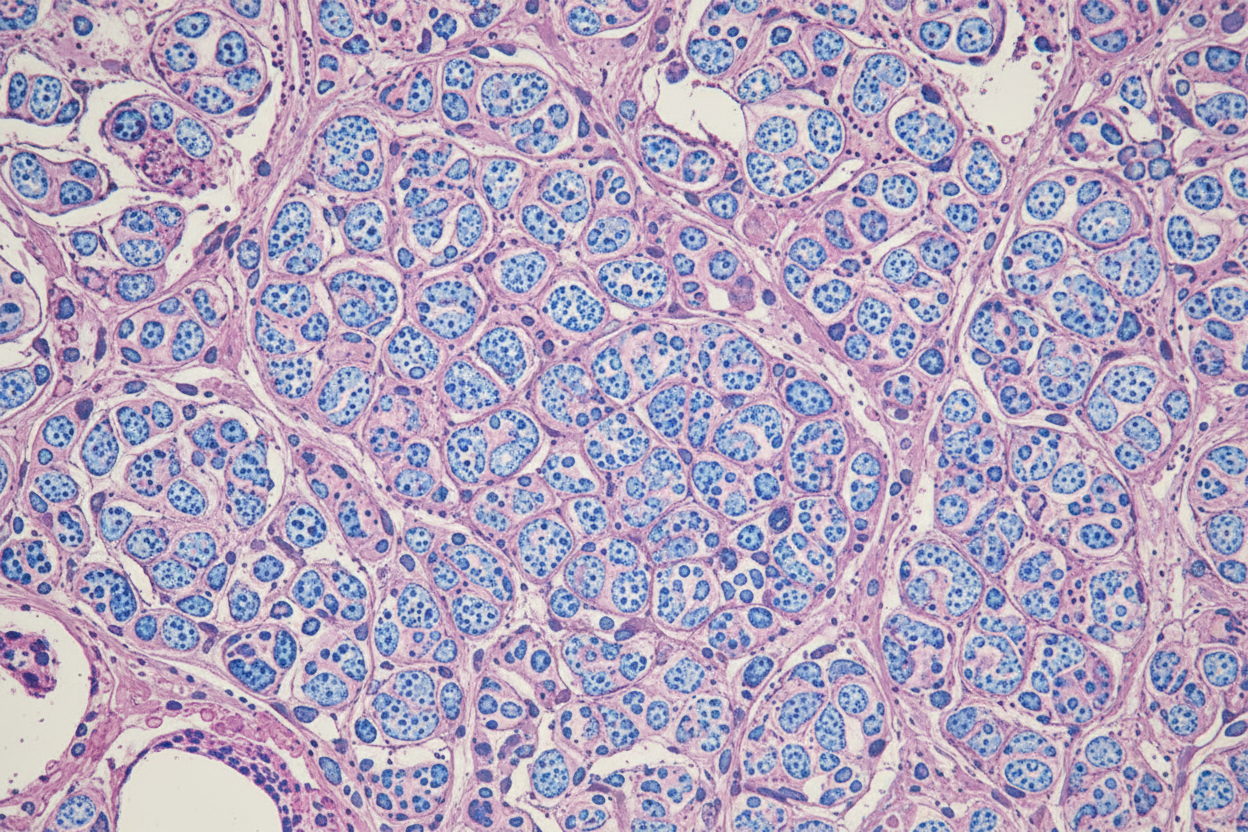
Hepatitis B virus (HBV) is associated with all of the following conditions except?
Budd-Chiari syndrome is characterized by all except?
Micro-vesicular fatty liver in Reye's syndrome is due to what underlying defect?
Cholesterol stones are primarily made up of which form of cholesterol?
In alcoholic liver disease, which of the following pigments is deposited in the hepatocytes?
Which of the following features in a liver biopsy is seen in alpha-1 antitrypsin deficiency?
Defective hepatic conjugation is seen in all the following except –
Mallory bodies are seen in all of the following conditions except?
A 40-year-old obese female presents with fullness of the right upper quadrant of the abdomen. Her medical history is significant for Type 2 diabetes mellitus and hyperlipidemia. A liver biopsy is most likely suggestive of which of the following diagnoses?
Which of the following is not a feature of Alcoholic liver disease?
Explanation: **Explanation:** The correct answer is **Hepatic adenoma**. This question tests your knowledge of the clinical sequelae of Hepatitis B Virus (HBV) infection versus benign liver tumors. **1. Why Hepatic Adenoma is the correct answer:** Hepatic adenoma is a **benign** liver tumor primarily associated with **oral contraceptive pill (OCP) use**, anabolic steroid use, and glycogen storage diseases (Type I and III) [1]. It is not caused by viral infections. HBV is a DNA virus that integrates into the host genome, leading to chronic inflammation or direct oncogenesis, which results in malignant transformation rather than benign adenomas. **2. Analysis of Incorrect Options:** * **Chronic Hepatitis:** Approximately 5-10% of adults (and up to 90% of neonates) infected with HBV fail to clear the virus, leading to chronic hepatitis (defined as inflammation persisting for >6 months) [1]. * **Cirrhosis:** Persistent inflammation and hepatocyte death in chronic HBV lead to progressive fibrosis. HBV is one of the leading causes of post-necrotic cirrhosis worldwide. * **Hepatic Cancer (HCC):** HBV is strongly associated with Hepatocellular Carcinoma [1]. Unlike HCV, HBV can cause HCC even **without** the prior development of cirrhosis, due to the integration of the HBx protein which inactivates the p53 tumor suppressor gene [1]. **NEET-PG High-Yield Pearls:** * **HBV Morphology:** Characterized by **"Ground-glass hepatocytes"** (due to HBsAg accumulation in the endoplasmic reticulum) [1]. * **HBx Protein:** The specific viral protein responsible for transcriptional activation of oncogenes [1]. * **Risk of HCC:** HBV increases the risk of HCC by approximately 100-fold in chronic carriers. * **Adenoma Risk:** The most feared complication of hepatic adenoma is **rupture during pregnancy**, leading to life-threatening intraperitoneal hemorrhage. **References:** [1] Kumar V, Abbas AK, et al.. Robbins and Cotran Pathologic Basis of Disease. 9th ed. Liver and Gallbladder, pp. 838-874.
Explanation: **Explanation:** **Budd-Chiari Syndrome (BCS)** is a clinical condition caused by the obstruction of hepatic venous outflow at any level from the small hepatic veins to the junction of the inferior vena cava (IVC) with the right atrium [1]. **Why "Fatty Liver" is the correct answer:** Fatty liver (steatosis) is not a characteristic feature of Budd-Chiari syndrome. The primary pathology in BCS is **vascular congestion** [1]. When venous outflow is blocked, it leads to increased sinusoidal pressure and centrilobular congestion. This results in ischemic necrosis of hepatocytes (nutmeg liver) and eventually fibrosis, but it does not typically manifest as the accumulation of triglycerides (fatty change) within hepatocytes [1], [3]. **Analysis of other options:** * **Hepatic vein obstruction (Option D):** This is the classic definition of BCS [1]. It is most commonly caused by thrombosis associated with hypercoagulable states (e.g., Polycythemia vera, PNH). * **Inferior Vena Cava obstruction (Option C):** Obstruction of the intrahepatic or suprahepatic IVC (often by "webs") is a major cause of BCS, particularly in Asian populations. * **Hepatomegaly (Option B):** Due to massive venous congestion and fluid accumulation within the liver parenchyma, the liver becomes enlarged and tender [1]. **High-Yield Clinical Pearls for NEET-PG:** * **Classic Triad:** Abdominal pain, hepatomegaly, and ascites. * **Morphology:** The liver shows a **"Nutmeg" appearance** (centrilobular congestion and necrosis) [1], [2]. * **Caudate Lobe:** Often undergoes **compensatory hypertrophy** because its venous drainage bypasses the main hepatic veins and enters the IVC directly. * **Most common cause:** Polycythemia vera (myeloproliferative neoplasms). * **Imaging:** Doppler ultrasound is the initial investigation of choice. **References:** [1] Kumar V, Abbas AK, et al.. Robbins and Cotran Pathologic Basis of Disease. 9th ed. Liver and Gallbladder, pp. 869-870. [2] Cross SS. Underwood's Pathology: A Clinical Approach. 6th ed. Common Clinical Problems From Liver And Biliary System Disease, pp. 401-402. [3] Kumar V, Abbas AK, et al.. Robbins and Cotran Pathologic Basis of Disease. 9th ed. Liver and Gallbladder, pp. 870-872.
Explanation: **Reye’s Syndrome** is a rare but severe condition characterized by acute encephalopathy and **micro-vesicular steatosis** (fatty liver), typically following a viral illness (like Influenza or Varicella) in children treated with **Aspirin**. **1. Why Option A is Correct:** The core pathophysiology involves **mitochondrial dysfunction**. Salicylates (Aspirin) act as a mitochondrial toxin in susceptible children, leading to the inhibition of **mitochondrial beta-oxidation of fatty acids**. When beta-oxidation is impaired, free fatty acids cannot be broken down into acetyl-CoA. Instead, they are converted into triglycerides which accumulate as tiny droplets within the hepatocytes, creating the characteristic "micro-vesicular" appearance [1]. **2. Why Incorrect Options are Wrong:** * **Option B:** While oxidative phosphorylation is eventually affected due to mitochondrial damage, the primary driver of lipid accumulation is the specific failure to oxidize fatty acids. * **Option C:** Fatty acid synthesis occurs in the cytoplasm; Reye’s syndrome is primarily a mitochondrial pathology. * **Option D:** Acyl CoA synthesis is the activation step of fatty acids; however, the defect in Reye's lies deeper within the mitochondrial matrix where the actual oxidation cycles occur. **High-Yield Clinical Pearls for NEET-PG:** * **Morphology:** Liver biopsy shows small fat vacuoles (micro-vesicular) that do not displace the nucleus (unlike macro-vesicular change in alcohol) [2]. * **Electron Microscopy:** Shows "swollen, pleomorphic mitochondria" with loss of cristae. * **Biochemical Markers:** Elevated serum ammonia (due to urea cycle disruption), elevated AST/ALT, and prolonged PT/INR, but notably **normal or near-normal bilirubin**. * **Contraindication:** Never give Aspirin to children with viral fevers; use Acetaminophen (Paracetamol) instead. **References:** [1] Kumar V, Abbas AK, et al.. Robbins and Cotran Pathologic Basis of Disease. 9th ed. Cellular Responses to Stress and Toxic Insults: Adaptation, Injury, and Death, p. 73. [2] Kumar V, Abbas AK, et al.. Robbins and Cotran Pathologic Basis of Disease. 9th ed. Liver and Gallbladder, p. 852.
Explanation: **Explanation:** **1. Why the correct answer is right:** Cholesterol gallstones form when bile becomes supersaturated with cholesterol, exceeding its solubilizing capacity (the "lithogenic index"). When this occurs, cholesterol can no longer remain in a micellar state and nucleates into solid crystals. Specifically, these stones are composed of **crystalline cholesterol monohydrate** [1]. These crystals aggregate and grow into macroscopic stones, often aided by gallbladder stasis and mucus hypersecretion. Under polarized microscopy, these crystals typically appear as rhomboid plates with notched corners. **2. Why the incorrect options are wrong:** * **Option A (Amorphous):** Cholesterol in gallstones is highly organized into a lattice structure; it is not amorphous (shapeless). * **Option C (Polyhydrate):** This is a chemically incorrect term in this context. The stable solid form of cholesterol in human bile is specifically the monohydrate (one water molecule per cholesterol molecule) [1]. * **Option D (Cholesterol with calcium palmitate):** While many cholesterol stones contain small amounts of calcium salts (like calcium palmitate or carbonate) in their core or as laminations, the **primary** constituent that defines a cholesterol stone is the crystalline monohydrate form [1]. **3. High-Yield Facts for NEET-PG:** * **The "4 F’s" Risk Factors:** Female, Fat, Fertile (multiparity), and Forty. * **Radiology:** Pure cholesterol stones are **radiolucent** (80% of stones). They become radiopaque only if they contain sufficient calcium carbonate (pigment component) [1]. * **Morphology:** Pure cholesterol stones are usually pale yellow, hard, and often solitary. * **Pathogenesis:** Three factors are essential: Bile supersaturation, gallbladder hypomotility, and accelerated nucleation. **References:** [1] Kumar V, Abbas AK, et al.. Robbins and Cotran Pathologic Basis of Disease. 9th ed. Liver and Gallbladder, p. 882.
Explanation: In **Alcoholic Liver Disease (ALD)**, the correct answer is **Hemosiderin**. Chronic alcohol consumption is a well-recognized cause of secondary iron overload (hemosiderosis) [1], [2]. This occurs because alcohol increases intestinal iron absorption by suppressing **hepcidin** (the master regulator of iron) [3] and can also lead to hemolysis or the intake of iron-rich beverages (e.g., certain wines). On histology, this appears as golden-brown granules in the cytoplasm of hepatocytes, which stain positive with **Prussian Blue** [1]. **Analysis of Incorrect Options:** * **Hemoglobin:** This is the oxygen-carrying protein within RBCs. While it is the precursor to hemosiderin, intact hemoglobin is not typically deposited as a pigment within hepatocytes in ALD. * **Lipofuscin:** Known as the "wear-and-tear" pigment, it represents insoluble lipid-protein complexes from lipid peroxidation [4]. While it can be seen in aging or chronic cachectic states, it is not the characteristic pigment specifically associated with the pathology of alcoholic iron overload. * **Melanin:** This is a brown-black pigment produced by melanocytes in the skin and eyes [4]. It is not found in the liver except in rare cases of metastatic melanoma. **NEET-PG High-Yield Pearls:** * **Mallory-Denk Bodies:** These are eosinophilic cytoplasmic inclusions of **damaged intermediate filaments (cytokeratin 8 and 18)** characteristic of alcoholic hepatitis. * **AST:ALT Ratio:** In ALD, the ratio is typically **>2:1** (Alcoholic = **S**cotch and **T**onic). * **Steatosis:** The earliest change in ALD is macrovesicular steatosis (fatty liver), which is reversible with abstinence. * **Stain:** Always remember **Perl’s Prussian Blue** is the gold standard for identifying iron/hemosiderin [1]. **References:** [1] Kumar V, Abbas AK, et al.. Robbins and Cotran Pathologic Basis of Disease. 9th ed. Liver and Gallbladder, pp. 854-855. [2] Cross SS. Underwood's Pathology: A Clinical Approach. 6th ed. Common Clinical Problems From Liver And Biliary System Disease, pp. 394-395. [3] Kumar V, Abbas AK, et al.. Robbins and Cotran Pathologic Basis of Disease. 9th ed. Liver and Gallbladder, p. 854. [4] Kumar V, Abbas AK, et al.. Robbins and Cotran Pathologic Basis of Disease. 9th ed. Cellular Responses to Stress and Toxic Insults: Adaptation, Injury, and Death, p. 75.
Explanation: **Explanation:** Alpha-1 Antitrypsin (AAT) deficiency is a genetic disorder characterized by the misfolding of the AAT protein, which then accumulates within the endoplasmic reticulum of hepatocytes [1]. **Why Option B is Correct:** The accumulation of misfolded AAT protein causes chronic hepatocyte injury and apoptosis. Over time, this persistent damage leads to chronic hepatitis, which progresses to **macronodular or mixed cirrhosis**. In the pediatric population, AAT deficiency is the most common genetic cause of liver disease and cirrhosis [1]. **Analysis of Incorrect Options:** * **Option A (PAS positive, diastase resistant globules):** While these globules are the **hallmark histological feature** of AAT deficiency, the question asks which feature is "seen" in a liver biopsy. In many NEET-PG style questions, if a pathological *process* (like cirrhosis) is listed alongside a *finding*, the clinical outcome or the most significant structural change is often prioritized. However, technically, Option A is also a classic finding [2]. In the context of this specific question's key, Cirrhosis represents the end-stage morphological change. * **Option C (Mallory hyaline):** These are eosinophilic cytoplasmic inclusions (cytokeratin) typically associated with Alcoholic Liver Disease, Wilson’s disease, and Nonalcoholic Steatohepatitis (NASH) [2]. * **Option D (Bile duct proliferation):** This is a feature of obstructive jaundice or Primary Biliary Cholangitis (PBC), not a primary feature of AAT deficiency. **High-Yield Clinical Pearls for NEET-PG:** * **Genetics:** Autosomal Codominant; most severe form is the **PiZZ phenotype** [1]. * **Staining:** The globules are located in **periportal hepatocytes** and are PAS-positive because they contain glycoproteins; they are **diastase resistant** (unlike glycogen, which is digested by diastase). * **Extra-hepatic manifestation:** Panacinar emphysema (due to lack of protease inhibition in the lungs) [1]. * **Diagnosis:** Serum protein electrophoresis (shows absent alpha-1 peak) and liver biopsy. **References:** [1] Kumar V, Abbas AK, et al.. Robbins and Cotran Pathologic Basis of Disease. 9th ed. Liver and Gallbladder, pp. 856-858. [2] Cross SS. Underwood's Pathology: A Clinical Approach. 6th ed. Common Clinical Problems From Liver And Biliary System Disease, pp. 388-389.
Explanation: The core concept of this question revolves around the enzyme **UDP-glucuronosyltransferase (UGT1A1)**, which is responsible for the conjugation of bilirubin in the liver [1]. ### **Explanation of the Correct Answer** **D. Novobiocin therapy:** This is the correct answer because Novobiocin does not cause a defect in conjugation. Instead, it causes jaundice by **inhibiting the hepatic uptake** of bilirubin from the blood into the hepatocytes. While it results in unconjugated hyperbilirubinemia, the mechanism is an "uptake defect" rather than a "conjugation defect." ### **Why Other Options are Incorrect** * **A. Neonatal Jaundice:** Newborns have a transient, physiological deficiency of UGT1A1 enzyme activity. This leads to **defective conjugation** during the first few days of life. * **B. Gilbert Syndrome:** This is a common hereditary condition characterized by a **reduction in UGT1A1 activity** (to about 30% of normal), leading to mild unconjugated hyperbilirubinemia, especially during stress or fasting [1]. * **C. Crigler–Najjar Syndrome:** This involves a severe (Type I - total; Type II - partial) **deficiency of UGT1A1**, resulting in significant defects in hepatic conjugation and high levels of unconjugated bilirubin [1]. ### **High-Yield Clinical Pearls for NEET-PG** * **Conjugation Defects:** Remember the mnemonic **"G-C-N"** (Gilbert, Crigler-Najjar, Neonatal) for conjugation failure. * **Uptake Defects:** Drugs like **Novobiocin, Rifampicin, and Flavaspidic acid** interfere with bilirubin uptake. * **Excretion Defects:** **Dubin-Johnson** (black liver due to melanin-like pigment) and **Rotor Syndrome** are defects in the *excretion* of conjugated bilirubin into the bile canaliculi [1]. * **Crigler-Najjar Type II (Arias Syndrome):** Unlike Type I, Type II responds to **Phenobarbital**, which induces the remaining UGT1A1 enzyme activity. **References:** [1] Kumar V, Abbas AK, et al.. Robbins and Cotran Pathologic Basis of Disease. 9th ed. Liver and Gallbladder, p. 860.
Explanation: **Explanation:** **Mallory-Denk bodies** (Mallory hyaline) are eosinophilic, rope-like intracytoplasmic inclusions composed of tangled intermediate filaments (primarily **cytokeratin 8 and 18**) and ubiquitin. While classically associated with alcoholic liver disease [1,2], they are not pathognomonic and appear in several chronic cholestatic and metabolic conditions. **Why Secondary Biliary Cirrhosis is the correct answer:** In **Secondary Biliary Cirrhosis**, which results from prolonged extrahepatic biliary obstruction (e.g., gallstones or strictures), the primary histological features are bile duct proliferation, "bile lakes," and portal tract fibrosis. **Mallory bodies are characteristically absent** in this condition, helping to distinguish it from primary biliary cirrhosis. **Analysis of Incorrect Options:** * **Alcoholism:** This is the most common association. Mallory bodies are a hallmark of **Alcoholic Hepatitis** [2], typically found in "ballooned" hepatocytes. * **Primary Biliary Cirrhosis (PBC):** Mallory bodies are frequently seen in the periportal hepatocytes during the later stages of PBC due to chronic cholestasis [1]. * **Wilson’s Disease:** This metabolic disorder involving copper accumulation often shows Mallory bodies in the hepatocytes, especially during the chronic hepatitis phase [1]. **High-Yield Clinical Pearls for NEET-PG:** * **Composition:** Cytokeratin 8 & 18 + Ubiquitin + Heat shock proteins. * **Mnemonic for Mallory Bodies (WAP):** **W**ilson’s disease, **A**lcoholic hepatitis, **P**rimary biliary cirrhosis. (Also seen in **NASH**/NAFLD, Indian Childhood Cirrhosis, and Hepatocellular Carcinoma). * **Staining:** They are best visualized with **H&E stain** (eosinophilic) or **p62/Ubiquitin** immunohistochemistry. **References:** [1] Cross SS. Underwood's Pathology: A Clinical Approach. 6th ed. Common Clinical Problems From Liver And Biliary System Disease, pp. 388-395. [2] Kumar V, Abbas AK, et al.. Robbins and Cotran Pathologic Basis of Disease. 9th ed. Liver and Gallbladder, p. 848.
Explanation: **Explanation:** The clinical presentation describes a classic case of **Non-alcoholic Fatty Liver Disease (NAFLD)**, specifically **Non-alcoholic Steatohepatitis (NASH)**. The patient exhibits the "metabolic syndrome" triad: obesity, Type 2 diabetes mellitus, and hyperlipidemia [2]. These conditions lead to insulin resistance, causing increased peripheral lipolysis and hepatic uptake of free fatty acids, resulting in macrovesicular steatosis and subsequent inflammatory injury (steatohepatitis) [3]. **Why the other options are incorrect:** * **Peliosis hepatis:** Characterized by blood-filled cystic spaces in the liver. It is typically associated with anabolic steroid use, oral contraceptives, or infections like *Bartonella henselae*, not metabolic syndrome. * **Autoimmune hepatitis:** Usually presents in females with other autoimmune markers (ANA, Anti-Smooth Muscle Antibodies) and elevated globulins [4]. Histology shows a characteristic "plasma cell-rich" infiltrate and interface hepatitis. * **Primary Biliary Sclerosis (Cholangitis):** An autoimmune destruction of intrahepatic bile ducts. It typically presents with pruritus, jaundice, and elevated alkaline phosphatase (ALP), with the hallmark being Anti-Mitochondrial Antibodies (AMA) [4]. **High-Yield Clinical Pearls for NEET-PG:** * **Histology of NASH:** Look for the "Mallory-Denk bodies" (ubiquitinated intermediate filaments), hepatocyte ballooning, and "chicken-wire" fibrosis (perisinusoidal/pericellular fibrosis) [1]. * **NASH vs. ASH:** Histologically, they are nearly identical. The differentiation is based solely on the patient's alcohol intake history (<20-30g/day for NASH) [1]. * **Most common cause** of incidental elevation of liver enzymes in the Western world and increasingly in India is NAFLD [5]. **References:** [1] Kumar V, Abbas AK, et al.. Robbins and Cotran Pathologic Basis of Disease. 9th ed. Liver and Gallbladder, pp. 852-854. [2] Kumar V, Abbas AK, et al.. Robbins and Cotran Pathologic Basis of Disease. 9th ed. Liver and Gallbladder, pp. 851-852. [3] Kumar V, Abbas AK, et al.. Robbins and Cotran Pathologic Basis of Disease. 9th ed. Liver and Gallbladder, p. 852. [4] Cross SS. Underwood's Pathology: A Clinical Approach. 6th ed. Common Clinical Problems From Liver And Biliary System Disease, pp. 388-389. [5] Cross SS. Underwood's Pathology: A Clinical Approach. 6th ed. Common Clinical Problems From Liver And Biliary System Disease, pp. 389-390.
Explanation: Alcoholic Liver Disease (ALD) follows a characteristic histological progression: **Steatosis → Alcoholic Hepatitis → Cirrhosis.** [2] **Explanation of the Correct Answer:** **Option C (Lymphocytic infiltration of portal tracts)** is the correct answer because it is **not** a hallmark of ALD. In alcoholic hepatitis, the characteristic inflammatory infiltrate consists of **Neutrophils** (polymorphonuclear leukocytes) surrounding degenerating hepatocytes containing Mallory-Denk bodies [1]. In contrast, a predominantly lymphocytic infiltrate in the portal tracts is the hallmark of **Chronic Viral Hepatitis** (e.g., Hepatitis B or C) [1]. **Analysis of Incorrect Options:** * **Option A (Macrovesicular fat):** This is the earliest change in ALD (Steatosis). Alcohol metabolism increases lipid synthesis and decreases fatty acid oxidation, leading to large clear vacuoles that displace the nucleus to the periphery [3]. * **Option B (Lipogranuloma):** These are small collections of macrophages and lymphocytes surrounding a central lipid globule. They are commonly seen in the lobules in both alcoholic and non-alcoholic fatty liver disease. * **Option C (Portal and sinusoidal collagen):** Chronic alcohol consumption activates **Stellate cells**, leading to fibrosis [2]. A high-yield pattern in ALD is **"Chicken-wire fibrosis"** (pericellular/perisinusoidal fibrosis) and "perivenular fibrosis" around the central vein [3]. **High-Yield Clinical Pearls for NEET-PG:** * **Mallory-Denk Bodies:** Eosinophilic cytoplasmic inclusions made of damaged **cytokeratin intermediate filaments** (not specific to ALD, also seen in Wilson’s and NASH) [4]. * **AST:ALT Ratio:** Typically **>2:1** in ALD (Alcohol "S"timulates "T"ransaminase). * **First sign of Cirrhosis:** Central hyaline sclerosis (obliteration of the central vein). **References:** [1] Cross SS. Underwood's Pathology: A Clinical Approach. 6th ed. Common Clinical Problems From Liver And Biliary System Disease, pp. 388-389. [2] Kumar V, Abbas AK, et al.. Robbins and Cotran Pathologic Basis of Disease. 9th ed. Liver and Gallbladder, p. 848. [3] Kumar V, Abbas AK, et al.. Robbins and Cotran Pathologic Basis of Disease. 9th ed. Liver and Gallbladder, pp. 848-850. [4] Cross SS. Underwood's Pathology: A Clinical Approach. 6th ed. Common Clinical Problems From Liver And Biliary System Disease, pp. 389-390.
Jaundice and Cholestasis
Practice Questions
Viral Hepatitis
Practice Questions
Alcoholic and Non-alcoholic Fatty Liver Disease
Practice Questions
Drug and Toxin Induced Liver Injury
Practice Questions
Cirrhosis and Its Complications
Practice Questions
Metabolic Liver Diseases
Practice Questions
Liver Tumors
Practice Questions
Gallbladder and Biliary Tract Diseases
Practice Questions
Congenital Liver Diseases
Practice Questions
Liver Transplantation Pathology
Practice Questions
Get full access to all questions, explanations, and performance tracking.
Start For Free