Clonorchis sinensis is known to cause which of the following conditions?
A liver biopsy specimen shows Mallory hyaline. Which of the following conditions would you exclude from the diagnosis?
Centrizonal necrosis of the liver occurs with which of the following?
Which of the following is NOT a feature of non-cirrhotic portal hypertension?
Which of the following is associated with angiosarcoma of the liver?
What is the immature variant of hepatocellular carcinoma?
Granulomatous hepatitis may be seen with which of the following drugs?
An alcoholic presented with ascites, bloody tap, and elevated alpha-fetoprotein. What is the most likely diagnosis?
A 48-year-old man presents with increasing abdominal girth and yellowish skin over 5 months. Examination reveals scleral icterus, generalized jaundice, abdominal distension, and a fluid wave. Laboratory findings include total serum bilirubin of 5.2 mg/dL (direct 4.2 mg/dL), AST of 380 U/L, ALT of 158 U/L, alkaline phosphatase of 95 U/L, total protein of 6.4 g/dL, albumin of 2.2 g/dL, prothrombin time of 18 seconds, PTT of 30 seconds, and blood ammonia of 105 mmol/L. What is the most likely cause of these findings?
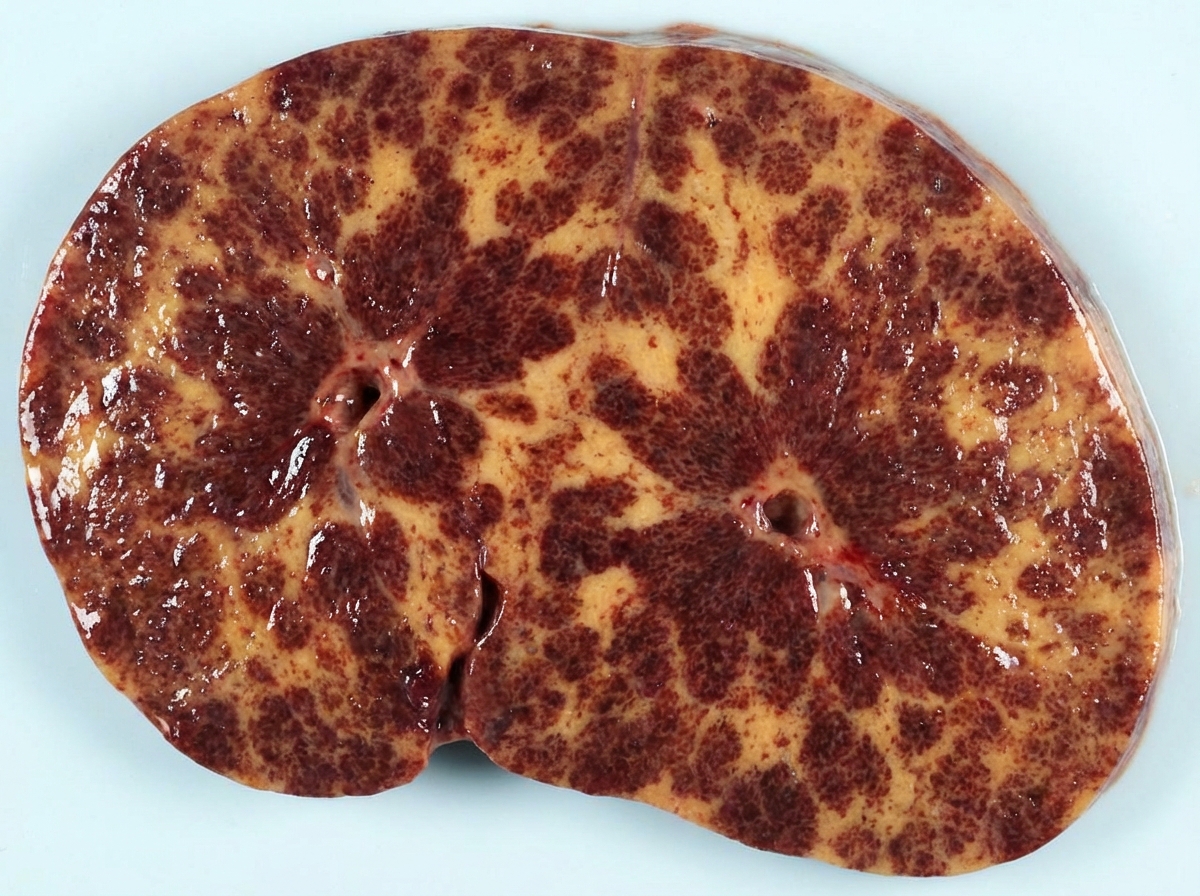
Cholesterolosis is:
Explanation: **Explanation:** *Clonorchis sinensis* (the Chinese liver fluke) is a well-established biological carcinogen. The correct answer is **Cholangiocarcinoma** because chronic infection leads to persistent mechanical irritation and immunopathological damage to the biliary epithelium. **Why Cholangiocarcinoma is correct:** The adult flukes reside in the intrahepatic bile ducts. Chronic infection triggers a sequence of pathological changes: chronic inflammation → adenomatous hyperplasia of the biliary epithelium → periductal fibrosis → dysplasia → and eventually, **cholangiocarcinoma** (adenocarcinoma of the bile ducts) [1]. This association is so strong that the IARC classifies *C. sinensis* as a Group 1 carcinogen [1]. **Analysis of Incorrect Options:** * **Common bile duct adenoma:** While the fluke causes epithelial hyperplasia, it specifically predisposes to malignant transformation rather than isolated benign adenomas. * **Choledochal cyst:** These are congenital cystic dilatations of the biliary tree, usually due to an anomalous pancreaticobiliary duct junction, not parasitic infections. * **Hepatocellular carcinoma (HCC):** HCC is primarily associated with Hepatitis B/C, cirrhosis, and Aflatoxin B1. While *Clonorchis* affects the liver, it targets the bile ducts (biliary tree) rather than the hepatocytes. **High-Yield Pearls for NEET-PG:** * **Other Parasite-Cancer Link:** *Schistosoma haematobium* is similarly linked to Squamous Cell Carcinoma of the urinary bladder. * **Intermediate Hosts:** *Clonorchis* is transmitted via ingestion of undercooked freshwater fish (second intermediate host); snails are the first intermediate host. * **Imaging:** On ultrasound, it may show "biliary sludge" or diffuse thickening of the bile duct walls. * **Drug of Choice:** Praziquantel is the treatment for *Clonorchis sinensis*. **References:** [1] Kumar V, Abbas AK, et al.. Robbins and Cotran Pathologic Basis of Disease. 9th ed. Liver and Gallbladder, pp. 880-881.
Explanation: The presence of **Mallory-Denk bodies (Mallory hyaline)** is a classic histopathological finding characterized by eosinophilic, rope-like intracytoplasmic inclusions within hepatocytes [1]. These are composed of tangled intermediate filaments (specifically **cytokeratin 8 and 18**) and ubiquitin. **Why Hepatitis E is the correct answer:** Mallory hyaline is typically associated with chronic metabolic, toxic, or neoplastic liver insults. **Hepatitis E** is an acute viral hepatitis (except in immunocompromised patients) that typically presents with features like ballooning degeneration, cholestasis, and focal necrosis, but it **does not** characteristically produce Mallory hyaline [2]. **Analysis of other options:** * **Alcoholic Liver Disease (ALD):** This is the most classic association. Mallory hyaline is a hallmark of alcoholic steatohepatitis [1]. * **Hepatocellular Carcinoma (HCC):** Mallory bodies can frequently be seen within the malignant hepatocytes of certain HCC variants. * **Wilson’s Disease:** This is a well-known non-alcoholic cause of Mallory hyaline, often seen during the chronic inflammatory or cirrhotic stages due to copper-induced oxidative stress. **NEET-PG High-Yield Pearls:** * **Mnemonic for Mallory Hyaline (W-A-N-I-B):** **W**ilson’s disease, **A**lcoholic liver disease, **N**onalcoholic steatohepatitis (NASH), **I**ndian Childhood Cirrhosis, **B**iliary cirrhosis (Primary Biliary Cholangitis). * **Composition:** They are **Intermediate filaments** (Cytokeratin 8/18). * **Stain:** They stain positive with **p62** and **Ubiquitin** immunohistochemistry. * **Appearance:** Described as "eosinophilic, irregular, or ropey" inclusions in the perinuclear region [1]. **References:** [1] Cross SS. Underwood's Pathology: A Clinical Approach. 6th ed. Common Clinical Problems From Liver And Biliary System Disease, pp. 389-390. [2] Kumar V, Abbas AK, et al.. Robbins and Cotran Pathologic Basis of Disease. 9th ed. Liver and Gallbladder, pp. 844-845.
Explanation: ### Explanation **Correct Answer: B. Heart failure (CHF)** **Mechanism of Centrizonal Necrosis:** Centrizonal necrosis (Zone 3 necrosis) refers to cell death occurring around the central vein (terminal hepatic vein) [1]. This area is the most susceptible to injury because it is the **distal-most part of the hepatic acinus**, receiving blood that is already depleted of oxygen and nutrients. In **Congestive Heart Failure (CHF)**, two mechanisms lead to centrizonal necrosis: [1] 1. **Passive Congestion:** Right-sided heart failure causes blood to back up into the hepatic veins, increasing pressure and causing congestion. 2. **Hypoperfusion:** Reduced cardiac output leads to ischemia. The combination of hypoxia and congestion results in the characteristic **"Nutmeg Liver"** appearance, where the dark red congested centers (Zone 3) contrast with the pale, fatty peripheral areas (Zone 1) [2][3]. **Analysis of Incorrect Options:** * **A. Carbon tetrachloride (CCl4) toxicity:** While CCl4 classically causes Zone 3 necrosis (due to the high concentration of P450 enzymes there that convert it into the toxic radical $CCl_3\bullet$), it is primarily a **toxicological** model. In clinical exams, if both are present, CHF is the classic pathological prototype for "centrizonal" hemodynamic injury. However, note that CCl4 *does* cause centrizonal necrosis; but in many standardized formats, CHF is the preferred answer for systemic pathology. * **C. Smoking:** Chronic smoking is not a direct cause of acute or zonal hepatic necrosis; it is primarily associated with respiratory and cardiovascular pathologies. * **D. Chronic alcoholism:** Alcohol typically causes **steatosis (fatty change)**, Mallory-Denk bodies, and eventually cirrhosis. While it can cause "sclerosing hyaline necrosis" in Zone 3, it is not the classic cause of "centrizonal necrosis" compared to the hemodynamic collapse seen in CHF. **High-Yield Clinical Pearls for NEET-PG:** * **Zone 1 (Periportal):** Affected first by phosphorus poisoning and Eclampsia. * **Zone 2 (Mid-zonal):** Classically affected in **Yellow Fever**. * **Zone 3 (Centrizonal):** Affected by Ischemia (Shock/CHF), Halothane, Acetaminophen (Paracetamol) toxicity, and CCl4. * **Nutmeg Liver:** Macroscopic hallmark of chronic passive venous congestion (CPVC) of the liver [2]. **References:** [1] Kumar V, Abbas AK, et al.. Robbins and Cotran Pathologic Basis of Disease. 9th ed. Liver and Gallbladder, pp. 870-872. [2] Kumar V, Abbas AK, et al.. Robbins and Cotran Pathologic Basis of Disease. 9th ed. Hemodynamic Disorders, Thromboembolic Disease, and Shock, p. 126. [3] Cross SS. Underwood's Pathology: A Clinical Approach. 6th ed. Common Clinical Problems From Liver And Biliary System Disease, pp. 401-402.
Explanation: **Explanation:** Non-cirrhotic portal hypertension (NCPH) refers to a group of disorders characterized by increased portal pressure in the absence of cirrhosis [1]. The hallmark of NCPH is the preservation of liver synthetic function and architecture [1]. **1. Why Ascites is the correct answer:** In NCPH, the site of resistance to portal blood flow is typically **pre-sinusoidal** (e.g., Extrahepatic Portal Vein Obstruction or Non-Cirrhotic Portal Fibrosis). Because the obstruction occurs before the hepatic sinusoids, the sinusoidal pressure remains normal [1]. Ascites primarily develops due to high sinusoidal pressure and hypoalbuminemia (low oncotic pressure). Since liver function is preserved in NCPH, albumin levels are normal and sinusoidal pressure is low, making **ascites rare or absent** unless there is a precipitating factor like infection or sudden thrombosis [1]. **2. Why other options are incorrect:** * **Hematemesis:** This is a common presenting feature. Increased portal pressure leads to the formation of gastroesophageal varices [1]. Since the liver is healthy, these patients tolerate variceal bleeding much better than cirrhotic patients. * **Splenomegaly:** Congestive splenomegaly is a cardinal feature of portal hypertension, regardless of the cause [2]. It is often massive in NCPH (especially in NCPF). **High-Yield Clinical Pearls for NEET-PG:** * **NCPH Triad:** Splenomegaly, esophageal varices, and normal liver function tests (LFTs). * **Common Causes:** Non-cirrhotic portal fibrosis (NCPF), Extrahepatic portal vein obstruction (EHPVO), and Schistosomiasis (most common cause worldwide) [2]. * **Liver Biopsy:** Essential to rule out cirrhosis; it shows normal or near-normal histology with patent sinusoids [3]. * **Prognosis:** Significantly better than cirrhosis because there is no liver cell failure. **References:** [1] Kumar V, Abbas AK, et al.. Robbins and Cotran Pathologic Basis of Disease. 9th ed. Liver and Gallbladder, pp. 868-869. [2] Kumar V, Abbas AK, et al.. Robbins and Cotran Pathologic Basis of Disease. 9th ed. Liver and Gallbladder, pp. 834-835. [3] Kumar V, Abbas AK, et al.. Robbins and Cotran Pathologic Basis of Disease. 9th ed. Liver and Gallbladder, p. 868.
Explanation: **Explanation:** **Angiosarcoma of the liver** is a rare, highly aggressive malignant tumor of endothelial cells [2]. The correct answer is **Arsenic (Option D)** because it is a well-documented chemical carcinogen associated with this specific malignancy. ### 1. Why Arsenic is Correct Arsenic exposure (often via contaminated well water or medicinal use like "Fowler’s solution") is a classic risk factor for hepatic angiosarcoma. Other high-yield associations include: * **Vinyl Chloride Monomer (VCM):** Used in the plastics industry. * **Thorotrast:** A radioactive contrast medium used historically (alpha-particle emitter) [1]. * **Anabolic Steroids:** Long-term use. ### 2. Why Other Options are Incorrect * **Nickel (Option A):** Primarily associated with cancers of the **nasal cavity, paranasal sinuses, and lungs**. * **Chromium (Option B):** Hexavalent chromium is a potent respiratory carcinogen linked to **bronchogenic carcinoma**. * **Cadmium (Option C):** Associated with **prostate cancer** and **renal cell carcinoma**, as well as obstructive lung disease. ### 3. Clinical Pearls for NEET-PG * **Marker:** Angiosarcomas are of endothelial origin, making them positive for **CD31** (most specific) and **CD34** [2]. * **Histology:** Characterized by malignant spindle cells forming irregular, anastomosing vascular channels [2]. * **Prognosis:** Extremely poor; these tumors are often multicentric and rapidly fatal. * **Differential:** Do not confuse with *Hepatocellular Carcinoma (HCC)*, which is linked to Aflatoxin B1 and Hepatitis B/C. **References:** [1] Cross SS. Underwood's Pathology: A Clinical Approach. 6th ed. (Basic Pathology) introduces the student to key general principles of pathology, both as a medical science and as a clinical activity with a vital role in patient care. Part 2 (Disease Mechanisms) provides fundamental knowledge about the cellular and molecular processes involved in diseases, providing the rationale for their treatment. Part 3 (Systematic Pathology) deals in detail with specific diseases, with emphasis on the clinically important aspects., pp. 216-217. [2] Kumar V, Abbas AK, et al.. Robbins and Cotran Pathologic Basis of Disease. 9th ed. Diseases of Infancy and Childhood, pp. 527-528.
Explanation: **Explanation:** The correct answer is **Fibrolamellar Hepatocellular Carcinoma (FL-HCC)**. While the question uses the term "immature variant," it refers to the specific clinico-pathological subtype that typically affects **young adults (ages 20–40)** without underlying cirrhosis or HBV/HCV infection. **Why Fibrolamellar is correct:** FL-HCC is distinct from conventional HCC. Microscopically, it is characterized by large, polygonal cells with abundant eosinophilic cytoplasm (due to packed mitochondria) and prominent nucleoli. These cells are separated by **parallel (lamellar) bundles of collagen fibers**. It is considered a "variant" because it has a unique genetic driver (DNAJB1-PRKACA fusion) and a better prognosis if resectable compared to conventional HCC. **Analysis of Incorrect Options:** * **A. Pseudoglandular:** This is a histological *pattern* of conventional HCC where tumor cells arrange themselves around a central lumen (resembling glands or acini), often containing bile. It is not a distinct clinical variant. * **C & D. Pleomorphic and Giant Cell:** These are morphological descriptions of high-grade, poorly differentiated HCC. They represent extreme cellular atypia [2] rather than a specific "immature" or distinct clinical variant like FL-HCC [1]. **NEET-PG High-Yield Pearls:** * **Patient Profile:** Young age, no cirrhosis [3], equal male-to-female ratio. * **Tumor Marker:** Serum **Alpha-fetoprotein (AFP) is usually normal** (High-yield distinction!). * **Radiology:** Often presents as a large solitary mass with a **central stellate scar** (must differentiate from Focal Nodular Hyperplasia). * **Genetics:** Recurrent submicroscopic deletion on chromosome 19 resulting in the **DNAJB1-PRKACA fusion gene**. **Note on the Question:** Hepatoblastoma is the actual "immature" primary liver tumor of childhood [1], but in the context of HCC variants in adults/adolescents, FL-HCC is the intended answer. **References:** [1] Kumar V, Abbas AK, et al.. Robbins and Cotran Pathologic Basis of Disease. 9th ed. Liver and Gallbladder, pp. 875-876. [2] Kumar V, Abbas AK, et al.. Robbins and Cotran Pathologic Basis of Disease. 9th ed. Liver and Gallbladder, pp. 878-879. [3] Cross SS. Underwood's Pathology: A Clinical Approach. 6th ed. Common Clinical Problems From Liver And Biliary System Disease, pp. 399-400.
Explanation: **Explanation:** Granulomatous hepatitis is a specialized form of drug-induced liver injury (DILI) characterized by the formation of non-caseating granulomas within the hepatic parenchyma or portal tracts [1]. This represents a delayed hypersensitivity (Type IV) reaction to certain pharmacological agents. **Why "All of the above" is correct:** All three listed drugs are classic, high-yield causes of hepatic granulomas: * **Carbamazepine:** An anticonvulsant frequently associated with hypersensitivity reactions, including the DRESS syndrome, where granulomatous liver involvement can occur. * **Allopurinol:** Used for gout, it is a well-documented cause of "fibrin-ring" granulomas (though more common in Q fever, they can occur with allopurinol) and systemic granulomatous reactions. * **Phenylbutazone:** An NSAID (now less commonly used) that is a prototypical cause of drug-induced granulomatous hepatitis. **Other common causes of Granulomatous Hepatitis:** * **Infections (Most common):** Tuberculosis (caseating), Sarcoidosis (non-caseating), Schistosomiasis, and Q fever (fibrin-ring granulomas). * **Other Drugs:** Quinidine, Methyldopa, Hydralazine, and Sulfonamides. **NEET-PG High-Yield Pearls:** 1. **Most common cause of hepatic granulomas worldwide:** Tuberculosis. 2. **Most common cause of non-infectious hepatic granulomas:** Sarcoidosis [1], [2]. 3. **Fibrin-ring granulomas (Doughnut granulomas):** Classically associated with **Q fever** (*Coxiella burnetii*), but also seen in Allopurinol toxicity and Cytomegalovirus. 4. If a question mentions "granuloma with eosinophils," suspect a **drug-induced** etiology. **References:** [1] Cross SS. Underwood's Pathology: A Clinical Approach. 6th ed. Common Clinical Problems From Liver And Biliary System Disease, pp. 401-402. [2] Cross SS. Underwood's Pathology: A Clinical Approach. 6th ed. (Basic Pathology) introduces the student to key general principles of pathology, both as a medical science and as a clinical activity with a vital role in patient care. Part 2 (Disease Mechanisms) provides fundamental knowledge about the cellular and molecular processes involved in diseases, providing the rationale for their treatment. Part 3 (Systematic Pathology) deals in detail with specific diseases, with emphasis on the clinically important aspects., pp. 198-200.
Explanation: ### Explanation The clinical presentation points directly to **Hepatocellular Carcinoma (HCC)**. The key diagnostic triad here is: 1. **Underlying Risk Factor:** Alcoholism is a leading cause of cirrhosis, which is the precursor for 80-90% of HCC cases [2]. 2. **Bloody Tap (Hemorrhagic Ascites):** While cirrhotic ascites is typically straw-colored, a "bloody tap" in a known cirrhotic patient is a classic sign of malignancy (HCC) invading blood vessels or a ruptured tumor [1]. 3. **Tumor Marker:** **Alpha-fetoprotein (AFP)** is the highly specific serum marker for HCC [1]. Levels >400 ng/mL in a high-risk patient are virtually diagnostic. #### Why the other options are incorrect: * **Choriocarcinoma:** While this also presents with elevated AFP (and β-hCG), it typically occurs in the gonads or as a gestational malignancy, not as a primary liver complication of alcoholism. * **Acute Hemorrhagic Pancreatitis:** This presents with acute, severe epigastric pain radiating to the back and elevated amylase/lipase. While it can cause bloody peritoneal fluid, it does not cause an elevation in AFP. * **Pancreatic Carcinoma:** This usually presents with obstructive jaundice (painless) or weight loss. The relevant tumor marker is **CA 19-9**, not AFP. #### High-Yield Pearls for NEET-PG: * **Most common site of metastasis for HCC:** Lungs (via hematogenous spread). * **Fibrolamellar Variant:** A subtype of HCC seen in young adults (20-40s) without cirrhosis; it has a better prognosis and **normal AFP levels**. * **Histology:** Look for "Mallory bodies" (also in alcoholic hepatitis) and "Bile plugs" within the tumor cells. * **Screening:** Cirrhotic patients should be screened every 6 months using Ultrasound and serum AFP [1]. **References:** [1] Cross SS. Underwood's Pathology: A Clinical Approach. 6th ed. Common Clinical Problems From Liver And Biliary System Disease, pp. 399-400. [2] Kumar V, Abbas AK, et al.. Robbins and Cotran Pathologic Basis of Disease. 9th ed. Liver and Gallbladder, pp. 876-879.
Explanation: ### Explanation The clinical presentation and laboratory profile are classic for **Alcoholic Liver Disease (ALD)**, specifically alcoholic hepatitis progressing to cirrhosis. **1. Why Option B is Correct:** * **AST:ALT Ratio:** The most characteristic finding is an **AST:ALT ratio > 2:1**. In ALD, AST is typically <500 U/L, and ALT is lower because alcoholics are often deficient in Vitamin B6 (pyridoxal phosphate), a necessary cofactor for ALT synthesis [1]. * **Liver Failure Markers:** The patient shows signs of chronic liver failure and portal hypertension: hypoalbuminemia (2.2 g/dL), prolonged prothrombin time (18s), hyperammonemia, and ascites (fluid wave) [1]. * **Hyperbilirubinemia:** The elevation is predominantly conjugated (direct), reflecting hepatic parenchymal damage. **2. Why Other Options are Wrong:** * **A. Acute Hepatitis A:** Typically presents with very high transaminases (often >1000 U/L) and an **ALT > AST** pattern [1]. * **C. Choledocholithiasis:** This would present with a "cholestatic pattern," characterized by a significantly elevated **Alkaline Phosphatase (ALP)** and GGT, rather than the isolated transaminase pattern seen here [1]. * **D. Metastatic Adenocarcinoma:** While it can cause jaundice and ascites, it usually presents with significant weight loss and a markedly elevated ALP. It does not typically produce a specific 2:1 AST:ALT ratio. **3. NEET-PG High-Yield Pearls:** * **Mallory-Denk Bodies:** Eosinophilic cytoplasmic inclusions (damaged intermediate filaments/keratin) seen in alcoholic hepatitis (also seen in Wilson’s and NAFLD). * **Steatosis:** The earliest morphological change in alcohol consumption is macrovesicular steatosis (fatty liver) [2]. * **Neutrophilic Infiltration:** Alcoholic hepatitis is characterized by a neutrophilic reaction around degenerating hepatocytes. * **"Chicken-wire" Fibrosis:** Perisinusoidal/pericellular fibrosis is the characteristic pattern of scarring in ALD [2]. **References:** [1] Kumar V, Abbas AK, et al.. Robbins and Cotran Pathologic Basis of Disease. 9th ed. Liver and Gallbladder, pp. 850-851. [2] Kumar V, Abbas AK, et al.. Robbins and Cotran Pathologic Basis of Disease. 9th ed. Liver and Gallbladder, p. 848.
Explanation: **Explanation:** **Cholesterolosis** (also known as "Strawberry Gallbladder") is a common, benign condition characterized by the abnormal accumulation of cholesterol esters and triglycerides within **lamina propria macrophages** (foam cells) of the gallbladder wall. 1. **Why Option C is Correct:** The condition occurs due to the supersaturation of bile with cholesterol. This excess cholesterol is absorbed by the gallbladder epithelium and subsequently engulfed by macrophages in the lamina propria. These lipid-laden macrophages form yellow mucosal flecks against a background of hyperemic (red) mucosa, giving it a characteristic **"Strawberry Gallbladder"** appearance. It is usually an incidental finding and is not necessarily associated with cholelithiasis or serum hypercholesterolemia. 2. **Why Other Options are Incorrect:** * **Option A:** Choline metabolism defects are associated with fatty liver (steatosis) but have no direct link to cholesterolosis. * **Option B:** Epithelial tumors of the brain (like gliomas) involve neuroectodermal tissue; cholesterolosis is strictly a hepatobiliary pathology. * **Option C:** While gallbladder stones can cause obstructive jaundice, cholesterolosis itself is typically asymptomatic and does not cause biliary obstruction unless accompanied by large stones. **High-Yield NEET-PG Pearls:** * **Gross Appearance:** "Strawberry Gallbladder" (Yellow specks on red mucosa). * **Microscopy:** Lipid-laden macrophages (foam cells) in the **lamina propria**. * **Clinical Significance:** Usually asymptomatic; diagnosed incidentally during cholecystectomy or on ultrasound (seen as non-shadowing, non-mobile mucosal projections). * **Association:** It is **not** strongly correlated with high blood cholesterol levels.
Jaundice and Cholestasis
Practice Questions
Viral Hepatitis
Practice Questions
Alcoholic and Non-alcoholic Fatty Liver Disease
Practice Questions
Drug and Toxin Induced Liver Injury
Practice Questions
Cirrhosis and Its Complications
Practice Questions
Metabolic Liver Diseases
Practice Questions
Liver Tumors
Practice Questions
Gallbladder and Biliary Tract Diseases
Practice Questions
Congenital Liver Diseases
Practice Questions
Liver Transplantation Pathology
Practice Questions
Get full access to all questions, explanations, and performance tracking.
Start For Free