Mallory's hyaline is seen in which condition?
Overgrowth of the bile duct in a localized region is termed as:
Ground glass hepatocytes are seen in which of the viral hepatitis?
Which of the following is associated with angiosarcoma of the liver?
Extrahepatic cholestasis is associated with which of the following findings?
Which of the following is NOT a characteristic of hepatic adenoma?
Which substance is/are not deposited in a hepatocyte?
Which of the following statements is NOT true about hepatoblastoma?
All are potential carcinogens for hepatic angiosarcoma except?
Ground-glass hepatocytes are seen in which of the following viral hepatitis?
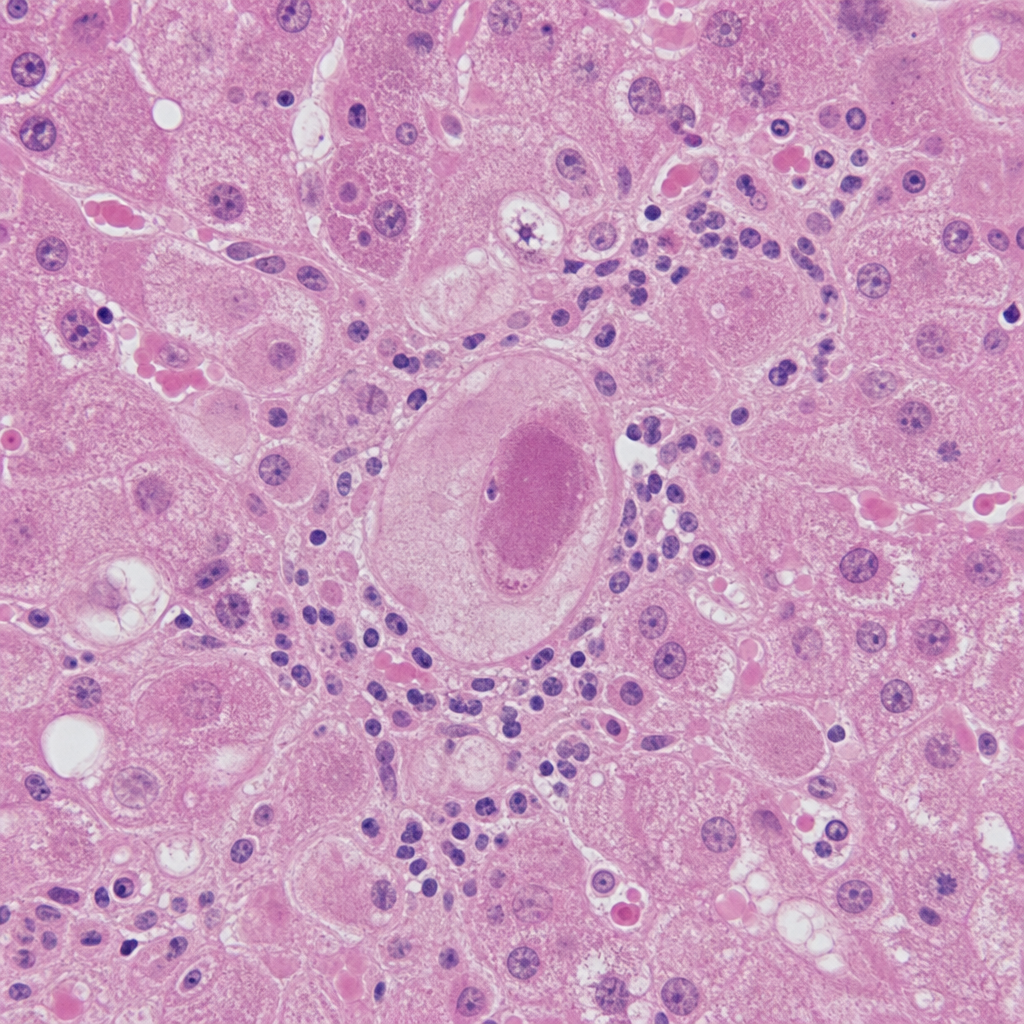
Explanation: **Explanation:** **Mallory-Denk bodies (Mallory’s hyaline)** are eosinophilic, rope-like intracytoplasmic inclusions found within hepatocytes [1], [2]. They are composed of tangled intermediate filaments (specifically **Cytokeratin 8 and 18**) complexed with ubiquitin and heat shock proteins [2]. **Why Indian Childhood Cirrhosis (ICC) is correct:** ICC is a unique form of liver disease historically associated with copper toxicity (due to boiling milk in copper vessels). It is characterized by extreme copper deposition, marked "creeping" fibrosis, and a **profuse presence of Mallory’s hyaline**. In fact, ICC is one of the classic conditions where Mallory bodies are most abundant and widespread. **Analysis of Incorrect Options:** * **Hepatitis C:** Characteristically shows lymphoid follicles in portal tracts and microvesicular steatosis, but Mallory bodies are not a typical feature [3]. * **Amoebic Liver Abscess:** This is a parasitic infection causing "anchovy sauce" pus and liquefactive necrosis; it does not involve the cytoskeletal changes that form Mallory hyaline. * **Autoimmune Hepatitis:** Typically presents with "interface hepatitis" (piecemeal necrosis) and a predominance of plasma cells, rather than Mallory bodies [3]. **High-Yield Clinical Pearls for NEET-PG:** * **Mnemonic for Mallory Bodies (M-A-L-L-O-R-Y):** * **M** - Morbid Obesity (NASH) [2] * **A** - Alcoholic Hepatitis (Most common association) [1], [3] * **L** - Liver Cell Adenoma * **L** - Lead poisoning (rarely) * **O** - Other: **Indian Childhood Cirrhosis**, Wilson’s Disease [4] * **R** - Resection/Primary Biliary Cholangitis (PBC) [3] * **Y** - Yardley’s (Alpha-1 Antitrypsin deficiency - though PAS+ globules are more characteristic) [3] * **Stain:** Mallory bodies are best visualized with **H&E stain** (as pink/eosinophilic inclusions) or **p62/ubiquitin** immunohistochemistry. **References:** [1] Cross SS. Underwood's Pathology: A Clinical Approach. 6th ed. Common Clinical Problems From Liver And Biliary System Disease, pp. 389-390. [2] Kumar V, Abbas AK, et al.. Robbins and Cotran Pathologic Basis of Disease. 9th ed. Liver and Gallbladder, pp. 852-854. [3] Cross SS. Underwood's Pathology: A Clinical Approach. 6th ed. Common Clinical Problems From Liver And Biliary System Disease, pp. 388-389. [4] Cross SS. Underwood's Pathology: A Clinical Approach. 6th ed. Common Clinical Problems From Liver And Biliary System Disease, pp. 394-395.
Explanation: ### Explanation **Correct Answer: A. Hamartoma** A **Hamartoma** is defined as a benign, focal overgrowth of cells and tissues native to the anatomical site where it is found. In the liver, a localized overgrowth of bile ducts (often associated with fibrous stroma) is known as a **Biliary Hamartoma** (also called a Von Meyenburg Complex) [1]. These are typically small, multiple, and represent a failure of embryonic involution of the ductal plate. **Why other options are incorrect:** * **B. Choristoma:** This refers to a mass of histologically normal tissue in an **abnormal** anatomical location (e.g., pancreatic tissue found in the stomach wall). Since bile ducts are native to the liver, their overgrowth cannot be a choristoma. * **C. Polyp:** A polyp is a macroscopic projection above a mucosal surface. While some polyps can be hamartomatous, the term "polyp" describes a physical shape rather than the specific pathological process of localized tissue overgrowth. * **D. Malignant tumor:** Malignancy involves uncontrolled, autonomous growth with the potential for metastasis and invasion [2]. A localized overgrowth of mature, native tissue is a benign developmental anomaly, not a malignancy. **High-Yield NEET-PG Pearls:** * **Von Meyenburg Complexes (Biliary Hamartomas):** Often discovered incidentally on imaging or autopsy. On MRI, they appear as multiple small, "starry sky" cystic lesions [1]. * **Ductal Plate Malformations:** Biliary hamartomas belong to this group of diseases, which also includes Polycystic Liver Disease and Caroli Disease. * **Key Distinction:** Remember the "H" in **H**amartoma for **H**ere (native site) and the "C" in **C**horistoma for **C**hanged location (ectopic). **References:** [1] Cross SS. Underwood's Pathology: A Clinical Approach. 6th ed. Common Clinical Problems From Liver And Biliary System Disease, pp. 400-401. [2] Kumar V, Abbas AK, et al.. Robbins and Cotran Pathologic Basis of Disease. 9th ed. Neoplasia, p. 276.
Explanation: **Explanation:** **Ground glass hepatocytes** are a classic histopathological hallmark of **Chronic Hepatitis B Virus (HBV) infection** [1]. This appearance is caused by the massive accumulation of **Hepatitis B surface Antigen (HBsAg)** within the smooth endoplasmic reticulum (SER) of the hepatocytes [1]. On H&E staining, the cytoplasm appears granular, eosinophilic, and has a "foggy" or "frosted glass" translucency, often pushing the nucleus to the periphery [1]. **Why the other options are incorrect:** * **Hepatitis A (HAV):** Typically causes acute hepatitis characterized by ballooning degeneration and acidophilic (Councilman) bodies, but it does not produce ground glass changes as it does not lead to chronic HBsAg accumulation [2]. * **Hepatitis C (HCV):** The characteristic histological features of HCV include **lymphoid aggregates** or follicles in the portal tracts and **macrovesicular steatosis** (fatty changes) [1]. * **Hepatitis D (HDV):** While HDV requires HBV for replication, it is not independently associated with ground glass cells. In some cases of HDV co-infection, a "sanded nuclei" appearance (due to HBcAg) may be noted, but ground glass cytoplasm specifically refers to HBsAg. **High-Yield Clinical Pearls for NEET-PG:** * **Special Stains:** Ground glass hepatocytes can be highlighted using **Orcein stain**, **Victoria blue**, or **Aldehyde fuchsin** (appearing dark brown/purple). * **Differential Diagnosis:** Ground glass appearance can also be seen in patients taking certain drugs (e.g., Cytochrome P450 inducers like Phenobarbital) due to SER hypertrophy, and in **Type IV Glycogen Storage Disease** (Lafora body disease). * **Councilman Bodies:** These are apoptotic, shrunken, intensely eosinophilic hepatocytes seen in many viral hepatitides (especially Yellow Fever and HAV), not to be confused with ground glass cells. **References:** [1] Kumar V, Abbas AK, et al.. Robbins and Cotran Pathologic Basis of Disease. 9th ed. Liver and Gallbladder, pp. 843-845. [2] Kumar V, Abbas AK, et al.. Robbins and Cotran Pathologic Basis of Disease. 9th ed. Liver and Gallbladder, p. 842.
Explanation: **Explanation:** **Angiosarcoma of the liver** is a rare, highly aggressive malignant tumor derived from the endothelial lining of the blood vessels. It is strongly associated with specific environmental and occupational carcinogens. **1. Why Arsenic is Correct:** Arsenic (specifically inorganic arsenic) is a well-documented risk factor for hepatic angiosarcoma [1], [3]. Chronic exposure typically occurs through contaminated well water or historically via medicinal preparations like **Fowler’s solution** (potassium arsenite) [1]. Arsenic induces DNA damage and inhibits repair mechanisms, leading to the malignant transformation of sinusoidal endothelial cells [3]. **2. Why the Other Options are Incorrect:** * **Nickel:** Primarily associated with cancers of the nasal cavity, paranasal sinuses, and lungs (squamous cell carcinoma). * **Chromium:** Hexavalent chromium is a potent respiratory carcinogen linked to lung cancer, particularly in workers involved in chrome plating or pigment production. * **Cadmium:** Associated with obstructive airway disease and an increased risk of lung and prostate cancer, but not specifically linked to hepatic angiosarcoma. **3. Clinical Pearls for NEET-PG:** * **High-Yield Risk Factors:** Memorize the "Big Three" for hepatic angiosarcoma: 1. **Vinyl Chloride Monomer (VCM):** Used in the PVC plastics industry. 2. **Thorotrast:** A radioactive contrast medium (Thorium dioxide) used in the mid-20th century [2]. 3. **Arsenic:** Found in pesticides and contaminated water [1]. * **Tumor Marker:** These tumors are often positive for **CD31** (PECAM-1) and **CD34**, which are markers for endothelial differentiation. * **Clinical Presentation:** Patients often present with hepatomegaly, weight loss, and abdominal pain; the prognosis is extremely poor [2], with most patients surviving less than one year. **References:** [1] Kumar V, Abbas AK, et al.. Robbins and Cotran Pathologic Basis of Disease. 9th ed. Neoplasia, p. 286. [2] Cross SS. Underwood's Pathology: A Clinical Approach. 6th ed. (Basic Pathology) introduces the student to key general principles of pathology, both as a medical science and as a clinical activity with a vital role in patient care. Part 2 (Disease Mechanisms) provides fundamental knowledge about the cellular and molecular processes involved in diseases, providing the rationale for their treatment. Part 3 (Systematic Pathology) deals in detail with specific diseases, with emphasis on the clinically important aspects., pp. 216-217. [3] Kumar V, Abbas AK, et al.. Robbins and Cotran Pathologic Basis of Disease. 9th ed. Infectious Diseases, pp. 420-421.
Explanation: **Explanation:** Extrahepatic cholestasis (obstructive jaundice) occurs when there is a physical blockage in the biliary tree (e.g., gallstones, carcinoma of the pancreas head) [1]. This prevents conjugated bilirubin from entering the intestine. **1. Why Option A is correct:** In cholestasis, the liver continues to conjugate bilirubin, but it cannot be excreted into the bile. Consequently, **conjugated bilirubin** regurgitates into the bloodstream. Unlike unconjugated bilirubin, conjugated bilirubin is **water-soluble** and can be filtered by the renal glomeruli [2]. Its presence in the urine (bilirubinuria) is a hallmark of obstructive jaundice and gives the urine a characteristic "dark tea" color [1]. **2. Why the other options are incorrect:** * **Option B:** Since bile cannot reach the intestine, gut bacteria cannot convert bilirubin into **urobilinogen**. Therefore, urobilinogen will be **absent** (or significantly decreased) in the urine in complete extrahepatic cholestasis [2]. * **Option C & D:** While serum bilirubin levels do rise in cholestasis, these options are less specific. "Total bilirubin in serum" is elevated in all types of jaundice (pre-hepatic, hepatic, and post-hepatic). The question asks for a finding *associated* with the condition; the presence of bilirubin in the urine is the most definitive clinical finding distinguishing obstructive/hepatocellular jaundice from hemolytic jaundice. **High-Yield NEET-PG Pearls:** * **Van den Bergh Reaction:** Obstructive jaundice gives a **Direct Positive** reaction (due to conjugated bilirubin). * **Stool Findings:** Due to the lack of stercobilin, patients present with **clay-colored (acholic) stools** [1]. * **Enzymes:** Characterized by a disproportionate rise in **Alkaline Phosphatase (ALP)** and **GGT** compared to ALT/AST. * **Pruritus:** Often present due to the systemic accumulation of bile salts. **References:** [1] Cross SS. Underwood's Pathology: A Clinical Approach. 6th ed. Common Clinical Problems From Liver And Biliary System Disease, pp. 380-381. [2] Cross SS. Underwood's Pathology: A Clinical Approach. 6th ed. Common Clinical Problems From Liver And Biliary System Disease, pp. 384-385.
Explanation: **Explanation:** Hepatic Adenoma is a benign liver tumor primarily seen in young women associated with oral contraceptive use [1]. The hallmark of any true neoplasm (even benign) is the **loss of normal architecture** [2]. **1. Why "Normal liver architecture" is the correct answer:** In hepatic adenoma, the normal lobular architecture is **absent**. Specifically, there is a complete lack of **portal tracts** (no bile ducts) [1]. The presence of normal architecture, including portal triads and central veins, is characteristic of Focal Nodular Hyperplasia (FNH) or normal liver tissue, not an adenoma. **2. Analysis of incorrect options:** * **Increased fat & Glycogen:** Adenoma cells are often "clearer" than normal hepatocytes because they frequently accumulate high amounts of glycogen and lipid (steatosis) [1]. This is a common histological finding. * **Cells arranged in cords:** The tumor is composed of sheets or cords of hepatocytes that closely resemble normal cells but are separated by prominent orphan arteries (unpaired arteries) rather than normal portal structures [1]. **High-Yield Clinical Pearls for NEET-PG:** * **Risk Factors:** Oral contraceptive pills (OCPs), anabolic steroids, and Glycogen Storage Disease Type I (von Gierke) [1]. * **Complications:** High risk of **spontaneous rupture and intraperitoneal hemorrhage**, especially during pregnancy. * **Molecular Subtypes:** * *HNF1-α inactivated:* Lowest risk of malignancy, often fatty [1]. * *β-catenin activated:* **Highest risk** of malignant transformation to Hepatocellular Carcinoma (HCC) [1]. * *Inflammatory:* Associated with obesity and elevated CRP. * **Radiology:** Often shows "cold" spots on sulfur colloid scans (unlike FNH). **References:** [1] Kumar V, Abbas AK, et al.. Robbins and Cotran Pathologic Basis of Disease. 9th ed. Liver and Gallbladder, pp. 874-875. [2] Kumar V, Abbas AK, et al.. Robbins and Cotran Pathologic Basis of Disease. 9th ed. Neoplasia, pp. 276-278.
Explanation: ### Explanation The correct answer is **C. Bile pigment**. In pathology, it is crucial to distinguish between substances that are **produced** by a cell and those that are **deposited** within it. 1. **Why Bile Pigment is the correct answer:** Bile is a physiological product synthesized and secreted by hepatocytes [1], [3]. In conditions of cholestasis, bile may accumulate within the hepatocyte cytoplasm (appearing as yellow-green plugs). However, according to standard pathology nomenclature (Robbins), bile is considered a **secretory product** rather than an exogenous or endogenous "deposit" or "pigment of wear and tear." 2. **Analysis of Incorrect Options:** * **Lipofuscin (A):** Known as the "wear and tear" pigment, it is an endogenous deposit representing lipid peroxidation of subcellular membranes. It is commonly seen in the hepatocytes of aging individuals or those with atrophy (Brown atrophy). * **Melanin-like pigment (B):** This is a classic feature of **Dubin-Johnson Syndrome** [2]. The liver appears black grossly due to the accumulation of a coarsely granular, melanin-like pigment (metabolites of epinephrine) within the lysosomes of hepatocytes [2]. * **Melanin (D):** While primary melanin is produced by melanocytes, it is generally not found in hepatocytes. However, in the context of this specific question (often a repeat from older medical exams), the distinction rests on the "secretory" nature of bile versus the "storage/deposition" nature of the others. ### High-Yield NEET-PG Pearls: * **Dubin-Johnson Syndrome:** Characterized by a defect in the **MRP2** transporter, leading to "Black Liver" due to melanin-like pigment [2]. * **Rotor Syndrome:** Similar to Dubin-Johnson but **lacks** the liver pigmentation [2]. * **Iron Deposition:** Stains with **Prussian Blue** (Perl’s stain). In Hemochromatosis, iron deposits first in the periportal hepatocytes. * **Mallory-Denk Bodies:** These are inclusions of pre-keratin intermediate filaments (cytokeratin 8 and 18) commonly seen in alcoholic liver disease. **References:** [1] Cross SS. Underwood's Pathology: A Clinical Approach. 6th ed. Common Clinical Problems From Liver And Biliary System Disease, pp. 384-385. [2] Kumar V, Abbas AK, et al.. Robbins and Cotran Pathologic Basis of Disease. 9th ed. Liver and Gallbladder, p. 860. [3] Cross SS. Underwood's Pathology: A Clinical Approach. 6th ed. Common Clinical Problems From Liver And Biliary System Disease, pp. 381-382.
Explanation: **Hepatoblastoma** is the most common primary liver tumor in children, typically occurring before the age of 3 [1], [2]. ### **Explanation of the Correct Answer** **Option B is NOT true** because hepatoblastoma is composed of **primitive, immature cells**, not mature hepatocytes. Histologically, it is divided into two main types [1]: 1. **Epithelial type:** Consists of small, polygonal **fetal cells** (forming cords) or even smaller, primitive **embryonal cells** (forming sheets/rosettes) [1]. 2. **Mixed epithelial-mesenchymal type:** Contains the epithelial components plus primitive mesenchyme (fibrous tissue, osteoid, or cartilage) [1]. The presence of mature hepatocytes would be more characteristic of a regenerative nodule or a well-differentiated hepatocellular carcinoma, not this embryonal tumor [1]. ### **Analysis of Other Options** * **Option A:** True. It is the most common pediatric liver malignancy, with the majority of cases diagnosed before age 2 [1]. * **Option C:** True. Unlike Hepatocellular Carcinoma (HCC) in adults, hepatoblastoma typically arises in a **non-cirrhotic liver**. * **Option D:** True. If left untreated, the tumor is aggressive and fatal due to local invasion and distant metastasis (most commonly to the lungs). ### **NEET-PG High-Yield Pearls** * **Tumor Marker:** Serum **Alpha-fetoprotein (AFP)** is significantly elevated in 90% of cases and is used for diagnosis and monitoring recurrence. * **Genetic Association:** Strongly associated with **Familial Adenomatous Polyposis (FAP)** and **Beckwith-Wiedemann Syndrome**. * **Molecular Pathogenesis:** Mutations in the **Wnt/β-catenin signaling pathway** (CTNNB1 gene) are found in nearly all cases [1]. * **Morphology Hint:** Look for "osteoid" or "squamous islands" in the mixed type; these are classic pathological descriptors [1]. **References:** [1] Kumar V, Abbas AK, et al.. Robbins and Cotran Pathologic Basis of Disease. 9th ed. Liver and Gallbladder, pp. 875-876. [2] Cross SS. Underwood's Pathology: A Clinical Approach. 6th ed. (Basic Pathology) introduces the student to key general principles of pathology, both as a medical science and as a clinical activity with a vital role in patient care. Part 2 (Disease Mechanisms) provides fundamental knowledge about the cellular and molecular processes involved in diseases, providing the rationale for their treatment. Part 3 (Systematic Pathology) deals in detail with specific diseases, with emphasis on the clinically important aspects., pp. 211-212.
Explanation: **Explanation:** **Hepatic Angiosarcoma** is a rare, highly aggressive mesenchymal tumor of the liver. It is unique in pathology because it has a strong association with specific environmental and occupational chemical exposures. **1. Why Naphthylamine is the correct answer:** **Naphthylamine** (specifically 2-Naphthylamine) is a classic carcinogen associated with **Transitional Cell Carcinoma (TCC) of the Urinary Bladder**, not the liver [1]. It is an aromatic amine used in the dye and rubber industries. It undergoes metabolism in the liver but is activated in the bladder, leading to urothelial malignancy. **2. Analysis of Incorrect Options (Known Carcinogens for Angiosarcoma):** * **Thorotrast (Option A):** A radioactive contrast medium (Thorium dioxide) used historically in radiology [1]. It emits alpha particles and has a long half-life, depositing in the Liver (Kupffer cells), Spleen, and Bone marrow. It is the most potent risk factor for hepatic angiosarcoma [1]. * **Arsenic (Option B):** Chronic exposure to arsenic (via contaminated well water or medicinal Fowler’s solution) is a well-documented cause of both skin cancer and hepatic angiosarcoma. * **Polyvinyl Chloride (Option C):** Workers in the plastics industry exposed to **Vinyl Chloride Monomer (VCM)** gas are at a significantly increased risk [1]. This is a classic "occupational" association frequently tested in exams. **3. High-Yield Clinical Pearls for NEET-PG:** * **Tumor Marker:** Angiosarcomas are of endothelial origin; hence, they express **CD31** (most specific), **CD34**, and **von Willebrand factor**. * **Latency:** The period between exposure (e.g., Thorotrast) and tumor development is often very long (20–30 years). * **Aflatoxin B1:** Remember, this is associated with **Hepatocellular Carcinoma (HCC)**, not angiosarcoma [2]. * **Oral Contraceptive Pills (OCPs):** Associated with **Hepatic Adenoma**, not angiosarcoma. **References:** [1] Cross SS. Underwood's Pathology: A Clinical Approach. 6th ed. (Basic Pathology) introduces the student to key general principles of pathology, both as a medical science and as a clinical activity with a vital role in patient care. Part 2 (Disease Mechanisms) provides fundamental knowledge about the cellular and molecular processes involved in diseases, providing the rationale for their treatment. Part 3 (Systematic Pathology) deals in detail with specific diseases, with emphasis on the clinically important aspects., pp. 216-218. [2] Cross SS. Underwood's Pathology: A Clinical Approach. 6th ed. (Basic Pathology) introduces the student to key general principles of pathology, both as a medical science and as a clinical activity with a vital role in patient care. Part 2 (Disease Mechanisms) provides fundamental knowledge about the cellular and molecular processes involved in diseases, providing the rationale for their treatment. Part 3 (Systematic Pathology) deals in detail with specific diseases, with emphasis on the clinically important aspects., pp. 215-216.
Explanation: **Explanation:** **Ground-glass hepatocytes** are a classic histopathological hallmark of **Chronic Hepatitis B infection** [1]. This appearance is caused by the massive accumulation of **Hepatitis B surface antigen (HBsAg)** within the smooth endoplasmic reticulum (SER) of the hepatocyte [1]. Under light microscopy, the cytoplasm appears enlarged, granular, and eosinophilic with a "shattered glass" or "frosted" appearance, often surrounded by a clear halo. * **Why Hepatitis B is correct:** The overproduction of HBsAg filaments and spheres leads to the distension of the SER [1]. These cells can be specifically highlighted using special stains like **Orcein, Shikata’s stain, or Aldehyde Fuchsin**, and confirmed via immunohistochemistry for HBsAg. * **Why other options are incorrect:** * **Hepatitis A:** Typically presents as acute hepatitis with prominent inflammatory cell infiltration and "ballooning degeneration," but does not cause ground-glass changes [1]. * **Hepatitis C:** Characterized by **lymphoid aggregates** in portal tracts, **macrovesicular steatosis** (fatty change), and bile duct injury [1]. * **Hepatitis D:** While it requires HBV for co-infection, the specific "ground-glass" morphology is a direct result of HBsAg production (HBV). **High-Yield Pearls for NEET-PG:** 1. **Councilman Bodies:** These are eosinophilic, apoptotic hepatocytes seen in many viral hepatitides (especially Yellow Fever and Hepatitis A/B). 2. **Drug-induced Ground-glass cells:** Drugs like **Chlorpromazine** and **Phenobarbital** can induce SER proliferation, mimicking the ground-glass appearance. 3. **Lafora Disease:** Can also show ground-glass-like inclusions (PAS positive) in hepatocytes. 4. **Sandwich Appearance:** In chronic HBV, HBsAg is in the cytoplasm (ground-glass), while HBcAg is found in the nucleus (sanded nuclei). **References:** [1] Kumar V, Abbas AK, et al.. Robbins and Cotran Pathologic Basis of Disease. 9th ed. Liver and Gallbladder, pp. 843-845.
Explanation: **Explanation:** The liver is the central hub for the synthesis of almost all coagulation factors [1]. In chronic or acute liver damage, the synthetic function of hepatocytes is compromised, leading to a significant reduction in the production of clotting factors. **Why Option A is Correct:** Prothrombin (Factor II) is a key vitamin K-dependent glycoprotein synthesized by the liver [1]. It is the precursor to thrombin, which converts fibrinogen into fibrin. In liver disease, the **decreased synthesis of prothrombin** (along with Factors VII, IX, and X) is the primary and most direct cause of a bleeding diathesis [1]. This is why the Prothrombin Time (PT) is the most sensitive laboratory marker for assessing the liver's synthetic function. **Why Other Options are Incorrect:** * **B. Lack of Vitamin K:** While vitamin K is necessary for the carboxylation of certain factors, the primary issue in liver *damage* is the inability of the hepatocytes to utilize the vitamin or synthesize the protein backbone itself, rather than a simple dietary lack of the vitamin. * **C. Platelet Deficiency:** Thrombocytopenia does occur in liver disease (often due to hypersplenism from portal hypertension or decreased thrombopoietin), but it is considered a secondary or contributory factor rather than the "primary" biochemical cause of the coagulation defect. * **D. Lack of Vitamin B:** Vitamin B (like B12 or Folate) deficiency can cause macrocytic anemia but does not directly cause the primary bleeding disorder associated with hepatic failure. **High-Yield Clinical Pearls for NEET-PG:** * **Factor VII** has the shortest half-life (approx. 6 hours), making PT the earliest indicator of liver dysfunction. * **Factor VIII** is the only clotting factor **not** exclusively synthesized by hepatocytes (it is produced by sinusoidal endothelial cells); thus, its levels may remain normal or even be elevated in liver failure. * **Vitamin K Challenge (Koller Test):** Used to differentiate obstructive jaundice from parenchymal liver disease. If PT improves after Vit K injection, the cause is likely obstructive (malabsorption). **References:** [1] Cross SS. Underwood's Pathology: A Clinical Approach. 6th ed. Common Clinical Problems From Blood And Bone Marrow Disease, pp. 582-583, 624-625.
Explanation: **Explanation:** **Ductopenic cholestasis**, also known as **Vanishing Bile Duct Syndrome (VBDS)**, is characterized by the progressive destruction and loss of intrahepatic bile ducts (specifically the interlobular ducts) [1]. **Why Methyldopa is the correct answer:** Methyldopa typically causes an **acute hepatitis-like picture** or a chronic hepatitis pattern [2]. Its mechanism of injury is usually related to the production of toxic metabolites or an autoimmune-mediated reaction rather than the destruction of bile ducts [3]. It is not associated with the "vanishing bile duct" phenomenon. **Analysis of Incorrect Options (Causes of Ductopenia):** * **Chlorpromazine:** This is the classic prototype for drug-induced cholestasis. While it usually causes reversible cholestasis, chronic use can lead to a "primary biliary cholangitis-like" syndrome with actual duct loss. * **Carbamazepine:** This anticonvulsant is a well-documented cause of idiosyncratic liver injury that can manifest as severe ductopenia [3]. * **Tricyclic Antidepressants (TCAs):** Agents like amitriptyline are known to cause cholestatic liver injury which, in rare cases, progresses to permanent bile duct loss. **High-Yield Clinical Pearls for NEET-PG:** * **Definition of Ductopenia:** Defined histologically as the absence of bile ducts in more than 50% of the portal tracts (minimum 10 portal tracts should be evaluated). * **Other Causes of VBDS:** * **Genetic:** Alagille Syndrome (most common inherited cause). * **Autoimmune:** Primary Biliary Cholangitis (PBC), Primary Sclerosing Cholangitis (PSC) [1]. * **Infectious:** CMV, Congenital Syphilis. * **Others:** Graft-versus-host disease (GVHD), Chronic Rejection of liver transplant. * **Drug Mnemonic:** Remember **"C-C-A"** for drug-induced VBDS: **C**hlorpromazine, **C**arbamazepine, **A**ugmentin (Amoxicillin-Clavulanate). **References:** [1] Kumar V, Abbas AK, et al.. Robbins and Cotran Pathologic Basis of Disease. 9th ed. Liver and Gallbladder, pp. 864-865. [2] Kumar V, Abbas AK, et al.. Robbins and Cotran Pathologic Basis of Disease. 9th ed. Liver and Gallbladder, pp. 846-847. [3] Kumar V, Abbas AK, et al.. Robbins and Cotran Pathologic Basis of Disease. 9th ed. Liver and Gallbladder, pp. 847-848.
Explanation: **Explanation:** **Hepatitis B (Option B)** is the correct answer because "Ground Glass Hepatocytes" (GGH) are the classic histopathological hallmark of **Chronic Hepatitis B infection** [1]. This appearance is caused by the massive accumulation of **Hepatitis B surface antigen (HBsAg)** within the smooth endoplasmic reticulum (SER) of the hepatocyte [2]. On H&E staining, the cytoplasm appears granular, eosinophilic, and hazy, resembling frosted or "ground" glass [1]. These cells can be specifically highlighted using special stains like **Orcein, Aldehyde Fuchsin, or Victoria Blue.** **Why other options are incorrect:** * **Hepatitis A and E (Options A & D):** These are typically acute, self-limiting infections that do not progress to a chronic carrier state [1]. Histologically, they show features of acute hepatitis like ballooning degeneration and acidophilic (Councilman) bodies, but not ground glass changes. * **Hepatitis D (Option C):** While HDV requires HBV for replication, the specific "ground glass" morphology is a direct result of HBsAg overproduction, which is the signature of the HBV infection itself. **High-Yield NEET-PG Pearls:** * **Councilman Bodies:** These are apoptotic, shrunken, intensely eosinophilic hepatocytes seen in many viral hepatitides (especially Yellow Fever and Acute Hepatitis). * **Sandglass Nuclei:** Seen in Hepatitis B due to the accumulation of HBcAg (core antigen) in the nucleus. * **Interface Hepatitis:** Formerly known as "piecemeal necrosis," this is the hallmark of chronic active hepatitis, characterized by inflammation spilling over the limiting plate into the parenchyma. * **Differentiating GGH:** Ground glass appearance can also be seen in **Drug-induced liver injury** (e.g., Cytochrome P450 induction by Phenobarbitone) and **Lafora disease**, but in the context of viral hepatitis, it is pathognomonic for HBV. **References:** [1] Kumar V, Abbas AK, et al.. Robbins and Cotran Pathologic Basis of Disease. 9th ed. Liver and Gallbladder, pp. 843-844. [2] Kumar V, Abbas AK, et al.. Robbins and Cotran Pathologic Basis of Disease. 9th ed. Liver and Gallbladder, pp. 844-845.
Explanation: **Explanation:** Fibrolamellar Carcinoma (FLC) is a distinct variant of hepatocellular carcinoma (HCC) that typically occurs in young adults. Understanding its unique clinical profile is crucial for NEET-PG. **1. Why Option D is the Correct Answer (False Statement):** Unlike conventional HCC, **Fibrolamellar carcinoma is NOT associated with elevated serum Alpha-Fetoprotein (AFP) levels.** In most cases, AFP levels remain normal or only minimally elevated. This is a high-yield diagnostic differentiator. Instead, these tumors may show elevated serum neurotensin or vitamin B12-binding capacity. **2. Analysis of Incorrect Options (True Statements):** * **Option A:** FLC has an equal sex distribution or a **slight female predominance**, unlike conventional HCC, which is significantly more common in males. * **Option B:** It generally carries a **better prognosis** than conventional HCC because it is usually slow-growing and occurs in a non-cirrhotic liver, making surgical resection more successful [1]. * **Option C:** FLC characteristically arises in **non-cirrhotic livers**. There is no association with Hepatitis B, Hepatitis C, or alcohol-induced liver disease [1]. **Clinical Pearls for NEET-PG:** * **Age Group:** Typically affects patients between **20–40 years** (younger than conventional HCC). * **Morphology:** Grossly, it presents as a single large hard mass with a **central stellate scar** (mimicking Focal Nodular Hyperplasia). * **Histology:** Characterized by large, polygonal, eosinophilic (oncocytic) hepatocytes separated by **parallel lamellae of collagen bundles** (hence "fibrolamellar"). * **Genetic Marker:** A specific DNAJB1-PRKACA gene fusion is considered a diagnostic hallmark. **References:** [1] Cross SS. Underwood's Pathology: A Clinical Approach. 6th ed. Common Clinical Problems From Liver And Biliary System Disease, pp. 399-400.
Explanation: **Non-Cirrhotic Portal Fibrosis (NCPF)**, also known as Idiopathic Portal Hypertension (IPH), is a clinical syndrome characterized by portal hypertension in the absence of cirrhosis or extrahepatic portal vein obstruction [1]. **Why Bridging Fibrosis is the Correct Answer:** The hallmark of NCPF is that the **liver architecture remains preserved**. Bridging fibrosis (fibrosis connecting portal tracts to each other or to central veins) and regenerative nodules are the defining features of **cirrhosis**. Since NCPF is by definition "non-cirrhotic," bridging fibrosis is absent. **Analysis of Incorrect Options:** * **A. Fibrosis in and around the portal tracts:** This is a classic finding. There is dense collagenous thickening of the portal tracts (periportal fibrosis), but it does not progress to bridge between tracts. * **B. Thrombosis of the medium and small portal vein branches:** This is the primary pathological event [1]. Obliterative portal venopathy (narrowing or thrombosis of small portal vein radicals) leads to increased resistance and portal hypertension. * **C. Non-specific inflammatory cell infiltrates:** Mild, chronic inflammatory cells (lymphocytes) are frequently seen within the fibrotic portal tracts, though they are not diagnostic. **NEET-PG High-Yield Pearls:** * **Clinical Presentation:** Massive splenomegaly and recurrent variceal bleeding in a patient with well-preserved liver function tests (LFTs). * **Gross Appearance:** The liver surface is usually smooth or shows fine granularity, unlike the nodular surface of cirrhosis. * **Key Histology:** Look for "Abberant vessels" (herniation of portal vein branches into the parenchyma) and "Portal tract attenuation." * **Schistosomiasis:** Globally, this is the most common cause of a similar clinical picture (Pipe-stem fibrosis), but NCPF is idiopathic. **References:** [1] Kumar V, Abbas AK, et al.. Robbins and Cotran Pathologic Basis of Disease. 9th ed. Liver and Gallbladder, pp. 868-869.
Explanation: ### Explanation **Focal Nodular Hyperplasia (FNH)** is the second most common benign liver tumor after hemangioma [1]. It is not a true neoplasm but a hyperplastic response to a pre-existing vascular malformation. **1. Why Option B is the Correct Answer (The False Statement):** FNH is significantly **more common in females** (female-to-male ratio of approximately 8:1 to 9:1), typically occurring in the 3rd to 5th decades of life. The statement that it is more common in males is incorrect. **2. Analysis of Other Options:** * **Option A:** While FNH is usually solitary (80%), **multiple nodules** can occur in about 20% of cases. * **Option C:** Although FNH is not caused by **Oral Contraceptive Pills (OCPs)** (unlike hepatic adenoma), OCPs may stimulate the growth of a pre-existing FNH due to estrogen sensitivity. * **Option D:** This statement is **incorrect regarding typical radiology**, but in the context of NEET-PG "Except" questions, Option B is the "most" false. *Note: Classically, FNH is hypervascular (bright) in the arterial phase and becomes isodense in the delayed phase.* However, in many exam patterns, the gender predilection is the primary high-yield discriminator. --- ### High-Yield Clinical Pearls for NEET-PG: * **Gross Morphology:** Characterized by a pathognomonic **Central Stellate Scar** (fibrous) containing a large anomalous artery. * **Microscopy:** Shows nodules of normal hepatocytes separated by fibrous septa containing bile duct proliferation (ductular reaction) but **no normal portal triads**. * **Radiology:** "Spoke-wheel" appearance on angiography due to the central artery. * **Management:** Usually asymptomatic and carries **no risk of malignant transformation** or spontaneous rupture (unlike hepatic adenoma), thus often managed conservatively. * **Key Association:** May be associated with other vascular anomalies like hemangiomas or hereditary hemorrhagic telangiectasia (HHT). **References:** [1] Cross SS. Underwood's Pathology: A Clinical Approach. 6th ed. Common Clinical Problems From Liver And Biliary System Disease, pp. 398-399.
Explanation: **Explanation:** **Wilson’s Disease** is an autosomal recessive disorder characterized by the accumulation of copper in various tissues, primarily the liver and brain, due to mutations in the *ATP7B* gene [1]. **Why Timms Sulfide is the correct answer:** While several stains can detect copper, **Timms sulfide silver stain** is considered the **most sensitive** histochemical method. It can detect even minute amounts of copper and other heavy metals by converting them into metal sulfides, which are then visualized using silver enhancement. In the early stages of Wilson’s disease, copper is distributed cytoplasmically; Timms stain is superior for detecting this non-granular copper. **Analysis of Incorrect Options:** * **Rhodamine & Rubeanic acid:** These are the most **commonly used** stains in clinical practice. They identify copper-associated protein in lysosomes (granular copper). However, they are less sensitive than Timms sulfide and may yield false negatives in early stages or in cases of diffuse cytoplasmic distribution. * **Trichrome stain (Masson’s Trichrome):** This is used to assess the degree of **fibrosis and cirrhosis** in the liver. It stains collagen blue/green but does not detect copper. **High-Yield Clinical Pearls for NEET-PG:** * **Gold Standard for Diagnosis:** Quantitative hepatic copper measurement (>250 μg/g dry weight) via liver biopsy. * **Kayser-Fleischer (KF) Rings:** Copper deposition in the **Descemet’s membrane** of the cornea [2]. * **Biochemical Markers:** Decreased serum ceruloplasmin, increased urinary copper excretion, and decreased total serum copper [2]. * **Morphology:** Early changes include steatosis (fatty liver) and Mallory-Denk bodies, eventually progressing to macronodular cirrhosis [1]. **References:** [1] Kumar V, Abbas AK, et al.. Robbins and Cotran Pathologic Basis of Disease. 9th ed. Liver and Gallbladder, pp. 855-856, 858. [2] Cross SS. Underwood's Pathology: A Clinical Approach. 6th ed. Common Clinical Problems From Liver And Biliary System Disease, pp. 394-395.
Explanation: **Explanation:** Fibrolamellar Carcinoma (FLC) is a distinct variant of Hepatocellular Carcinoma (HCC) that typically occurs in young adults. **Why Option D is the correct (False) statement:** Unlike conventional HCC, **Serum Alpha-fetoprotein (AFP) levels are usually normal** in patients with Fibrolamellar carcinoma [1]. This is a high-yield diagnostic differentiator. Instead, these patients may show elevated serum neurotensin or vitamin B12-binding capacity, though these are less commonly tested. **Analysis of other options:** * **Option A (Good prognosis):** FLC generally has a better prognosis than conventional HCC because it is usually detected in non-cirrhotic livers, allowing for better surgical resectability [1]. * **Option B (No association with cirrhosis):** This is a hallmark of FLC. While conventional HCC is strongly linked to HBV, HCV, and cirrhosis, FLC occurs in **non-cirrhotic livers** and lacks traditional risk factors [1]. * **Option C (Incidence):** FLC affects males and females equally, or shows a slight female preponderance, unlike conventional HCC which is significantly more common in males. **NEET-PG High-Yield Pearls for FLC:** 1. **Age:** Typically occurs in young adults (20–40 years). 2. **Morphology:** Characterized by large, polygonal cells with abundant eosinophilic cytoplasm (oncocytic appearance) and prominent nucleoli, separated by **parallel lamellae of collagen bundles**. 3. **Genetics:** A characteristic **DNAJB1-PRKACA gene fusion** is now considered a highly specific diagnostic marker. 4. **Gross appearance:** Often presents as a single large hard mass with a **central stellate scar** (resembling Focal Nodular Hyperplasia). **References:** [1] Cross SS. Underwood's Pathology: A Clinical Approach. 6th ed. Common Clinical Problems From Liver And Biliary System Disease, pp. 399-400.
Explanation: **Explanation:** **Microvesicular steatosis** is characterized by the accumulation of tiny lipid droplets within the cytoplasm of hepatocytes that do not displace the nucleus [1]. This occurs due to severe impairment of mitochondrial fatty acid β-oxidation. **Why Reye Syndrome is Correct:** Reye syndrome is a classic example of microvesicular steatosis. It typically occurs in children following a viral illness (like Influenza or Varicella) treated with **Aspirin (salicylates)**. Salicylates act as mitochondrial toxins, leading to mitochondrial dysfunction, hepatic failure, and encephalopathy. On histology, the liver shows diffuse microvesicular fat without significant inflammation or necrosis. **Analysis of Incorrect Options:** * **Diabetes mellitus & Lipodystrophy:** These are associated with **Macrovesicular steatosis** (Non-Alcoholic Fatty Liver Disease) [2]. In these conditions, large fat globules displace the nucleus to the periphery [2]. * **Phosphorus intoxication:** Acute phosphorus poisoning typically causes **periportal (Zone 1) necrosis** and can lead to macrovesicular changes, but it is not the classic prototype for microvesicular steatosis. **High-Yield Clinical Pearls for NEET-PG:** * **Other causes of Microvesicular Steatosis:** Acute Fatty Liver of Pregnancy (AFLP), Valproate toxicity, and Tetracycline toxicity. * **Other causes of Macrovesicular Steatosis:** Alcoholism (most common), Obesity, and Malnutrition (Kwashiorkor) [3]. * **Reye Syndrome Hallmark:** Electron microscopy reveals "swollen, pleomorphic mitochondria." * **Aspirin Contraindication:** Never give aspirin to children with viral fevers to prevent Reye syndrome; use Paracetamol instead. **References:** [1] Kumar V, Abbas AK, et al.. Robbins and Cotran Pathologic Basis of Disease. 9th ed. Cellular Responses to Stress and Toxic Insults: Adaptation, Injury, and Death, p. 73. [2] Kumar V, Abbas AK, et al.. Robbins and Cotran Pathologic Basis of Disease. 9th ed. Liver and Gallbladder, pp. 851-852. [3] Kumar V, Abbas AK, et al.. Robbins and Cotran Pathologic Basis of Disease. 9th ed. Liver and Gallbladder, p. 848.
Explanation: Explanation: In a healthy liver, the **space of Disse** (the area between hepatocytes and sinusoidal endothelial cells) contains a delicate framework of **Type IV collagen** (basement membrane type) and reticulin. This allows for the free exchange of nutrients and proteins between the blood and hepatocytes. In **liver cirrhosis**, chronic injury leads to the activation of **Hepatic Stellate Cells (Ito cells)** [1]. Once activated, these cells transform into myofibroblasts and shift their production from the normal Type IV collagen to "fibrillar" collagen, specifically **Type I and Type III** [1]. This process, known as **capillarization of the sinusoids**, creates a dense fibrous barrier that obstructs metabolic exchange, leading to portal hypertension and hepatocyte dysfunction [2]. **Analysis of Options:** * **Option C (Correct):** Type I and Type III are the primary fibrillar collagens deposited during fibrosis and cirrhosis. * **Options A & B (Incorrect):** Type IV is a normal constituent of the space of Disse; its replacement by Type I/III is the hallmark of pathology. Type II collagen is primarily found in **hyaline cartilage** and is not involved in liver fibrosis. * **Option D (Incorrect):** While Type III is correct, Type II is not found in the liver. **High-Yield Clinical Pearls for NEET-PG:** * **Key Cell:** The **Hepatic Stellate Cell (Ito Cell)** is the primary source of excess collagen in cirrhosis [1]. * **Vitamin A:** In their quiescent state, Stellate cells are the body's main storage site for Vitamin A. * **Morphology:** The shift from Type IV to Type I/III collagen leads to the loss of endothelial fenestrations (capillarization). * **Stain:** **Masson’s Trichrome** is used to highlight these collagen fibers (stains blue). **References:** [1] Cross SS. Underwood's Pathology: A Clinical Approach. 6th ed. Common Clinical Problems From Liver And Biliary System Disease, pp. 381-382. [2] Kumar V, Abbas AK, et al.. Robbins and Cotran Pathologic Basis of Disease. 9th ed. With Illustrations By, pp. 32-34.
Explanation: **Explanation:** **Non-Cirrhotic Portal Fibrosis (NCPF)**, also known as Idiopathic Portal Hypertension (IPH), is a clinical syndrome characterized by portal hypertension in the absence of cirrhosis or extrahepatic portal vein obstruction. **Why Bridging Fibrosis is the Correct Answer:** The hallmark of NCPF is that the **liver architecture remains preserved**. Bridging fibrosis (fibrous bands connecting portal tracts to each other or to central veins) is a characteristic feature of **Cirrhosis** [1]. In NCPF, while there is portal and periportal fibrosis, it does not progress to the extensive bridging or regenerative nodule formation seen in cirrhosis [2]. Therefore, bridging fibrosis is not a feature of NCPF. **Analysis of Incorrect Options:** * **Option A (Fibrosis in/around portal tracts):** This is a classic finding. There is dense collagenous thickening of the portal tracts, often described as "portal sclerosis." * **Option B (Thrombosis of portal vein branches):** NCPF is considered an obliterative venopathy. Histology often shows "phlebosclerosis" or organized thrombi in the small and medium intrahepatic portal vein branches, leading to their narrowing or obliteration. * **Option C (Non-specific inflammatory infiltrates):** Mild, non-specific chronic inflammatory cells (lymphocytes) are frequently observed within the fibrotic portal tracts. **High-Yield Clinical Pearls for NEET-PG:** * **Clinical Presentation:** Massive splenomegaly and recurrent variceal bleeding in a patient with well-preserved liver function tests (LFTs). * **Gross Appearance:** The liver surface is usually smooth or shows fine scarring, unlike the nodular surface of cirrhosis [2]. * **Key Histological Sign:** "Aberrant" or "proliferated" thin-walled vascular channels in the portal tracts (angiomatosis). * **Banti’s Syndrome:** An older term often used synonymously with NCPF in the Indian subcontinent. **References:** [1] Kumar V, Abbas AK, et al.. Robbins and Cotran Pathologic Basis of Disease. 9th ed. Liver and Gallbladder, p. 834. [2] Cross SS. Underwood's Pathology: A Clinical Approach. 6th ed. Common Clinical Problems From Liver And Biliary System Disease, pp. 395-396.
Explanation: **Explanation:** Wilson’s disease (Hepatolenticular degeneration) is an autosomal recessive disorder caused by mutations in the **ATP7B gene**, leading to impaired biliary copper excretion and systemic copper accumulation [1]. The liver is the primary site of injury, and its histopathological presentation is notoriously diverse, earning it the reputation of a **"great mimic"** in liver pathology. 1. **Acute Hepatitis:** In children or young adults, Wilson’s disease can present as an abrupt episode of acute hepatitis, sometimes progressing to fulminant hepatic failure with Coombs-negative hemolytic anemia. 2. **Chronic Hepatitis:** This is the most common presentation. Histology shows features indistinguishable from autoimmune hepatitis or chronic viral hepatitis, including interface hepatitis, lymphocytic infiltration, and piecemeal necrosis [2]. 3. **Cholestasis:** While less common than hepatocellular damage, copper toxicity can lead to bile duct injury and cholestatic features, especially in advanced stages or during acute flares. **Why "All of the above" is correct:** Wilson’s disease does not have a single pathognomonic histological pattern. It can manifest as **steatosis** (resembling NAFLD), **acute hepatitis**, **chronic hepatitis** (leading to cirrhosis), or **cholestasis**. Therefore, it encompasses all the listed patterns of hepatocellular damage. **High-Yield Clinical Pearls for NEET-PG:** * **Diagnosis:** Low serum Ceruloplasmin, increased 24-hour urinary copper, and increased hepatic copper content (>250 μg/g dry weight) [1]. * **Kayser-Fleischer (KF) rings:** Copper deposition in the **Descemet’s membrane** of the cornea (best seen on slit-lamp exam) [2]. * **Histology:** Rhodanine or Orcein stains are used to visualize copper-associated protein. * **Treatment:** Chelating agents like **D-Penicillamine** or Trientine; Zinc (to inhibit intestinal absorption). **References:** [1] Kumar V, Abbas AK, et al.. Robbins and Cotran Pathologic Basis of Disease. 9th ed. Liver and Gallbladder, pp. 855-856. [2] Cross SS. Underwood's Pathology: A Clinical Approach. 6th ed. Common Clinical Problems From Liver And Biliary System Disease, pp. 394-395.
Explanation: **Explanation:** **Focal Nodular Hyperplasia (FNH)** is the second most common benign liver tumor after hemangioma [1]. It is not a true neoplasm but rather a **hyperplastic response** of hepatocytes to a pre-existing localized vascular malformation. **Why Option B is the Correct Answer (The False Statement):** FNH is typically **asymptomatic** and is usually discovered incidentally during imaging or surgery for unrelated reasons. Furthermore, it most commonly presents as a **solitary, well-circumscribed nodule** (80-95% of cases) rather than multiple nodules. Pain or symptoms only occur if the lesion is exceptionally large. **Analysis of Other Options:** * **Option A:** It is indeed an **unusual benign tumor** (technically a tumor-like condition) characterized by a "spoke-wheel" appearance on imaging. * **Option C:** There is a strong female predilection (F:M ratio approx. 8:1), typically occurring in the 3rd to 5th decades of life. Unlike hepatic adenomas, its link to oral contraceptives is controversial and less definitive. * **Option D:** Histologically, FNH contains all normal liver constituents—**hepatocytes, Kupffer cells, and bile ducts**—but they are organized abnormally. The presence of Kupffer cells allows FNH to take up Technetium-99m sulfur colloid on scintigraphy, a key diagnostic feature. **NEET-PG High-Yield Pearls:** * **Pathognomonic Feature:** A **central stellate scar** containing large thick-walled arteries. * **Imaging:** "Spoke-wheel" vascularity on angiography. * **Management:** Usually conservative (observation) as there is **no risk of malignant transformation** or spontaneous hemorrhage (unlike Hepatic Adenoma). * **Microscopy:** Shows "ductular reaction" at the edge of the fibrous septa. **References:** [1] Cross SS. Underwood's Pathology: A Clinical Approach. 6th ed. Common Clinical Problems From Liver And Biliary System Disease, pp. 398-399.
Explanation: **Explanation:** **Chronic Alcoholism (Correct Answer):** Alcoholic Liver Disease (ALD) is the most common cause of macrovesicular steatosis (fatty change) [1]. The underlying mechanism involves an increased NADH/NAD+ ratio generated by alcohol dehydrogenase [3]. This biochemical shift inhibits fatty acid oxidation (beta-oxidation) and stimulates lipogenesis. Additionally, alcohol increases the peripheral mobilization of fatty acids and decreases the secretion of VLDL, leading to the accumulation of triglycerides within hepatocytes. **Analysis of Incorrect Options:** * **Hepatitis B Virus (HBV):** Characteristically presents with **"Ground-glass hepatocytes"** due to the accumulation of HBsAg in the endoplasmic reticulum [4]. It does not typically cause fatty change. * **Wilson’s Disease:** While it can cause steatosis in early stages, its hallmark is the accumulation of copper, leading to **Kayser-Fleischer rings** and cirrhosis [4]. It is less "characteristic" for fatty change compared to alcohol. * **Hepatitis C Virus (HCV):** Genotype 3 is known to cause steatosis, but the classic histological finding for HCV is **lymphoid aggregates** in the portal tracts and bile duct damage [4]. **NEET-PG High-Yield Pearls:** * **Microvesicular Steatosis:** Seen in Reye’s syndrome, Fatty liver of pregnancy, and Sodium Valproate toxicity. * **Macrovesicular Steatosis:** Seen in Alcoholism, Obesity, and Diabetes Mellitus (NAFLD) [2]. * **Mallory-Denk Bodies:** Eosinophilic cytoplasmic inclusions (cytokeratin intermediate filaments) seen in Alcoholic Hepatitis, Wilson’s disease, and Alpha-1 antitrypsin deficiency [4]. * **Reversibility:** Fatty change (steatosis) is the earliest and fully reversible stage of alcoholic liver disease [1]. **References:** [1] Kumar V, Abbas AK, et al.. Robbins and Cotran Pathologic Basis of Disease. 9th ed. Liver and Gallbladder, pp. 848-850. [2] Cross SS. Underwood's Pathology: A Clinical Approach. 6th ed. Common Clinical Problems From Liver And Biliary System Disease, pp. 389-390. [3] Kumar V, Abbas AK, et al.. Robbins and Cotran Pathologic Basis of Disease. 9th ed. Liver and Gallbladder, p. 848. [4] Cross SS. Underwood's Pathology: A Clinical Approach. 6th ed. Common Clinical Problems From Liver And Biliary System Disease, pp. 388-389.
Explanation: Cirrhosis is morphologically classified based on nodule size: **Micronodular** (<3 mm, uniform nodules) and **Macronodular** (>3 mm, varying sizes) [1]. **Why Wilson’s Disease is Correct:** Wilson’s disease (hepatolenticular degeneration) is a disorder of copper metabolism [1]. While it may initially present with micronodular changes, it characteristically progresses to **macronodular cirrhosis** (post-necrotic type) as the disease advances [1]. The toxic accumulation of copper leads to large areas of parenchymal collapse and subsequent coarse regeneration, forming large nodules [2]. **Analysis of Incorrect Options:** * **A. Primary Biliary Cirrhosis (PBC):** This is an autoimmune destruction of intrahepatic bile ducts [1]. It typically results in **micronodular cirrhosis** because the cholestatic injury is diffuse and uniform across the liver lobules. * **B. Indian Childhood Cirrhosis (ICC):** Characterized by massive copper deposition and "creeping" fibrosis, ICC typically presents with **micronodular cirrhosis** and a lack of regenerative nodules (due to the severity of the insult). * **C. Hemochromatosis:** Iron overload causes diffuse, fine scarring throughout the liver, leading to a classic **micronodular** pattern (often described as a "brick-red" liver) [1]. **High-Yield Clinical Pearls for NEET-PG:** * **Macronodular causes:** Chronic Viral Hepatitis (B and C) and Wilson’s disease. * **Micronodular causes:** Alcohol (most common), Hemochromatosis, and Biliary cirrhosis [1]. * **Wilson’s Disease Triad:** Liver cirrhosis, Basal ganglia symptoms (Parkinsonism), and Kayser-Fleischer (KF) rings in the cornea [1]. * **Diagnostic Gold Standard:** Increased hepatic copper content (>250 μg/g dry weight). **References:** [1] Cross SS. Underwood's Pathology: A Clinical Approach. 6th ed. Common Clinical Problems From Liver And Biliary System Disease, pp. 388-396. [2] Kumar V, Abbas AK, et al.. Robbins and Cotran Pathologic Basis of Disease. 9th ed. Liver and Gallbladder, pp. 855-856.
Explanation: **Explanation:** **Primary Biliary Cholangitis (formerly Primary Biliary Cirrhosis - PBC)** is characterized by the chronic, progressive destruction of small-to-medium-sized intrahepatic bile ducts. The hallmark histopathological finding is the **Florid Duct Lesion** [1]. This lesion consists of a heavy inflammatory infiltrate (lymphocytes and plasma cells) surrounding a bile duct, often associated with **non-caseating granulomatous destruction** of the ductal epithelium [1]. **Analysis of Options:** * **Primary Biliary Cholangitis (PBC):** Correct. It is an autoimmune condition primarily affecting middle-aged women. The "Florid Duct Lesion" is the diagnostic morphological feature seen in Stage I of the disease [1]. * **Primary Sclerosing Cholangitis (PSC):** Incorrect. PSC involves both intra- and extrahepatic ducts. Its characteristic histopathology is **"Onion-skin fibrosis"** (periductal concentric fibrosis), not florid duct lesions. * **Klatskin Tumor:** Incorrect. This is a hilar cholangiocarcinoma occurring at the junction of the right and left hepatic ducts. It presents as a malignant glandular neoplasm. * **Secondary Biliary Cirrhosis:** Incorrect. This results from prolonged mechanical obstruction of the extrahepatic biliary tree (e.g., gallstones or strictures). It is characterized by bile stasis, bile lakes, and ductular proliferation, but lacks the specific autoimmune granulomatous lesions of PBC. **High-Yield Clinical Pearls for NEET-PG:** * **Mnemonic for PBC:** The **"4 Ms"** — **M**iddle-aged **M**others, **M**itochondrial antibodies (AMA positive in 95%), and **M**IgM elevation. * **Associated Conditions:** PBC is frequently associated with other autoimmune diseases like Sjögren’s syndrome and Hashimoto’s thyroiditis. * **Biochemical Marker:** Markedly elevated **Alkaline Phosphatase (ALP)** and GGT. * **Treatment:** Ursodeoxycholic acid (UDCA) is the first-line medical management. **References:** [1] Kumar V, Abbas AK, et al.. Robbins and Cotran Pathologic Basis of Disease. 9th ed. Liver and Gallbladder, pp. 864-865.
Explanation: **Explanation:** **Nodular Regenerative Hyperplasia (NRH)** is a condition characterized by the diffuse transformation of liver parenchyma into small regenerative nodules without significant fibrosis. The underlying pathophysiology involves **obliterative portal venopathy**, leading to uneven blood flow. Areas with poor perfusion atrophy, while areas with compensatory increased blood flow undergo hyperplasia. **Why Option C is Correct:** NRH is strongly associated with conditions that cause **sinusoidal or portal microvascular injury**. Drug-induced sinusoidal obstruction syndrome (SOS), often caused by chemotherapeutic agents (like oxaliplatin or azathioprine), creates the hemodynamic instability required for NRH to develop. Other common associations include organ transplantation, autoimmune diseases (Rheumatoid Arthritis, Felty syndrome), and myeloproliferative disorders. **Why Other Options are Incorrect:** * **A. Budd-Chiari Syndrome:** This involves large hepatic vein obstruction. While it causes congestion, it typically leads to "nutmeg liver" [1] and centrilobular necrosis rather than the diffuse nodularity seen in NRH. [2] * **B. Alcohol Abuse:** This leads to alcoholic liver disease, characterized by steatosis, Mallory-Denk bodies [4], and eventually **cirrhosis** [3] (which, unlike NRH, involves extensive fibrosis). * **D. Hepatitis B Infection:** This is a classic cause of post-necrotic cirrhosis. NRH is specifically defined by the *absence* of the fibrous septa that characterize viral-induced cirrhosis. **High-Yield Clinical Pearls for NEET-PG:** * **Key Histology:** Small nodules of hyperplastic hepatocytes surrounded by rims of atrophic hepatocytes; **No fibrosis** (Reticulin stain is essential to visualize the architectural change). * **Clinical Presentation:** Often presents as **non-cirrhotic portal hypertension** (splenomegaly, varices) in a patient with normal or near-normal liver function tests. * **Association:** Always rule out HIV medications (Didanosine) and systemic lupus erythematosus (SLE) in NRH cases. **References:** [1] Kumar V, Abbas AK, et al.. Robbins and Cotran Pathologic Basis of Disease. 9th ed. Liver and Gallbladder, pp. 869-870. [2] Kumar V, Abbas AK, et al.. Robbins and Cotran Pathologic Basis of Disease. 9th ed. Liver and Gallbladder, pp. 870-872. [3] Cross SS. Underwood's Pathology: A Clinical Approach. 6th ed. Common Clinical Problems From Liver And Biliary System Disease, pp. 395-396. [4] Cross SS. Underwood's Pathology: A Clinical Approach. 6th ed. Common Clinical Problems From Liver And Biliary System Disease, pp. 389-390.
Explanation: **Explanation:** **Budd-Chiari Syndrome (BCS)** is a clinical condition characterized by the obstruction of hepatic venous outflow [1]. This obstruction can occur at any level from the small **hepatic veins** to the junction of the **inferior vena cava (IVC)** and the right atrium [1], [2]. 1. **Why Hepatic Veins are Correct:** The hallmark of BCS is the blockage of the major hepatic veins. This leads to increased intrahepatic pressure, causing centrilobular congestion, necrosis, and eventually cirrhosis [1]. The classic clinical triad includes **abdominal pain, ascites, and hepatomegaly**. 2. **Why Other Options are Incorrect:** * **Options A & B (IVC):** While obstruction of the *suprahepatic* portion of the IVC can cause BCS (often seen in Asia due to membranous webs), obstruction of the **infrarenal or renal segments** does not typically cause the classic liver-specific symptoms of BCS. Instead, it leads to lower limb edema and renal dysfunction. * **Option C (Superior Mesenteric Vein):** Thrombosis here leads to mesenteric ischemia and bowel infarction, not hepatic outflow obstruction [2]. **High-Yield Clinical Pearls for NEET-PG:** * **Most Common Cause:** In the West, it is often associated with hypercoagulable states (e.g., Polycythemia Vera, Factor V Leiden mutation, PNH) [1]. * **Morphology:** The liver shows a **"Nutmeg liver"** appearance due to chronic passive congestion [1], [3]. * **Imaging:** The **"Spider-web"** appearance of collateral vessels on venography is a characteristic finding. * **Caudate Lobe:** This lobe often undergoes **compensatory hypertrophy** because its venous drainage bypasses the main hepatic veins and enters the IVC directly. **References:** [1] Kumar V, Abbas AK, et al.. Robbins and Cotran Pathologic Basis of Disease. 9th ed. Liver and Gallbladder, pp. 869-870. [2] Kumar V, Abbas AK, et al.. Robbins and Cotran Pathologic Basis of Disease. 9th ed. Liver and Gallbladder, pp. 834-835. [3] Cross SS. Underwood's Pathology: A Clinical Approach. 6th ed. Common Clinical Problems From Liver And Biliary System Disease, pp. 401-402.
Explanation: **Explanation:** **Hepatic Adenoma (Correct Answer):** Hepatic adenoma is a benign epithelial liver tumor strongly associated with the prolonged use of **oral contraceptive pills (OCPs)** [1], [2]. The risk increases significantly with the duration of use and the estrogen dose [1]. These tumors are often subcapsular and carry a clinical risk of **spontaneous rupture and life-threatening intraperitoneal hemorrhage**, especially during pregnancy. Histologically, they consist of sheets of hepatocytes without normal lobular architecture (absence of portal tracts). **Incorrect Options:** * **Thyroid Adenoma:** These are benign follicular neoplasms of the thyroid gland. Their pathogenesis is primarily linked to TSH receptor mutations or iodine deficiency, not OCP use. * **Fibroadenoma:** This is the most common benign tumor of the female breast. While estrogen-sensitive (they may enlarge during pregnancy), they are not classically linked to OCP use as a primary causative factor in the same definitive manner as hepatic adenomas. * **Myoma (Leiomyoma):** These are benign smooth muscle tumors of the uterus. While their growth is estrogen-dependent, they are not "caused" by OCPs; in fact, OCPs are often used as a treatment modality to manage the heavy bleeding associated with them. **High-Yield Clinical Pearls for NEET-PG:** * **Molecular Subtypes:** The **HNF1-α inactivated** subtype [1] has the lowest risk of malignancy, while the **β-catenin activated** subtype has the highest risk of malignant transformation to Hepatocellular Carcinoma (HCC). * **Management:** Discontinuation of OCPs can lead to the regression of the tumor [1]. * **Imaging:** On imaging, they may show a "steatotic" appearance (HNF1-α type) or "atypical" enhancement. * **Anabolic Steroids:** Besides OCPs, the use of anabolic steroids is another significant risk factor for hepatic adenomas [1], [2]. **References:** [1] Kumar V, Abbas AK, et al.. Robbins and Cotran Pathologic Basis of Disease. 9th ed. Liver and Gallbladder, p. 874. [2] Kumar V, Abbas AK, et al.. Robbins and Cotran Pathologic Basis of Disease. 9th ed. Infectious Diseases, pp. 429-430.
Explanation: **Explanation:** The clinical presentation and histopathology point directly to **Autoimmune Hepatitis (AIH)**. [1] **1. Why Autoimmune Hepatitis is correct:** * **Demographics:** AIH typically affects young to middle-aged women (as seen in this 20-year-old patient). * **Histopathology:** The hallmark of AIH is **"Interface Hepatitis"** (periportal inflammation) characterized by a dense infiltrate of **lymphocytes and plasma cells**. [1] The presence of plasma cells is a high-yield diagnostic clue. * **Treatment Response:** AIH is highly responsive to **corticosteroids** (prednisolone) or immunosuppressants (azathioprine), which aligns with the patient’s recovery. * **Serology:** Negative viral markers and negative Anti-Mitochondrial Antibodies (AMA) rule out common differentials. [1] **2. Why other options are incorrect:** * **Extrahepatic Jaundice:** This is a mechanical obstruction (e.g., gallstones). It presents with conjugated hyperbilirubinemia and dilated bile ducts on ultrasound, not plasma cell-rich parenchymal inflammation. * **Primary Biliary Cholangitis (PBC):** While it affects women, it is characterized by **positive AMA** (95% of cases) and the destruction of small intrahepatic bile ducts (florid duct lesions), rather than diffuse interface hepatitis. [1] * **Primary Sclerosing Cholangitis (PSC):** This typically affects males and is strongly associated with Ulcerative Colitis. Histology shows **"onion-skin" fibrosis** of the bile ducts. **High-Yield Clinical Pearls for NEET-PG:** * **Type 1 AIH:** Most common; associated with **ANA** (Anti-Nuclear Antibody) and **ASMA** (Anti-Smooth Muscle Antibody). [1] * **Type 2 AIH:** More common in children/adolescents; associated with **Anti-LKM1** (Liver Kidney Microsome type 1) antibodies. [1] * **Diagnostic Clue:** If a question mentions "Plasma cells in liver biopsy" + "Response to steroids," always think Autoimmune Hepatitis. **References:** [1] Kumar V, Abbas AK, et al.. Robbins and Cotran Pathologic Basis of Disease. 9th ed. Liver and Gallbladder, pp. 845-846.
Explanation: **Explanation:** The presence or absence of bilirubin in urine depends on whether the bilirubin is **conjugated** or **unconjugated** [2], [3]. **1. Why Hemolytic Jaundice is correct:** In hemolytic jaundice, there is an overproduction of bilirubin due to the excessive breakdown of red blood cells [1]. This results in high levels of **unconjugated (indirect) bilirubin**. Unconjugated bilirubin is tightly bound to albumin, making it water-insoluble; therefore, it cannot be filtered by the renal glomeruli and does not appear in the urine [2], [5]. This is why hemolytic jaundice is often referred to as **"acholuric jaundice"** (jaundice without bilirubinuria). **2. Why the other options are incorrect:** * **Obstructive Jaundice (A), Primary Biliary Cirrhosis (B), and Extrahepatic Biliary Atresia (C):** All three conditions involve cholestasis (obstruction to bile flow). In these cases, the liver successfully conjugates the bilirubin, but it cannot be excreted into the intestine [4]. This **conjugated (direct) bilirubin** regurgitates into the bloodstream. Because conjugated bilirubin is water-soluble and not bound to albumin, it is easily filtered by the kidneys, leading to dark-colored urine (bilirubinuria) [3], [5]. **High-Yield NEET-PG Pearls:** * **Urine Bilirubin:** Only conjugated bilirubin appears in urine [5]. * **Urine Urobilinogen:** Increased in hemolytic jaundice; absent in complete obstructive jaundice (clay-colored stools) [1], [4]. * **Van den Bergh Reaction:** Indirect positive in hemolytic jaundice; Direct positive in obstructive jaundice; Biphasic in hepatocellular jaundice. * **Key Concept:** If a patient is jaundiced but the urine dipstick is negative for bilirubin, think **Hemolysis** or **Gilbert Syndrome**. **References:** [1] Kumar V, Abbas AK, et al.. Robbins and Cotran Pathologic Basis of Disease. 9th ed. Red Blood Cell and Bleeding Disorders, p. 640. [2] Kumar V, Abbas AK, et al.. Robbins and Cotran Pathologic Basis of Disease. 9th ed. Liver and Gallbladder, pp. 858-860. [3] Cross SS. Underwood's Pathology: A Clinical Approach. 6th ed. Common Clinical Problems From Liver And Biliary System Disease, pp. 380-381. [4] Cross SS. Underwood's Pathology: A Clinical Approach. 6th ed. Common Clinical Problems From Liver And Biliary System Disease, pp. 385-386. [5] Cross SS. Underwood's Pathology: A Clinical Approach. 6th ed. Common Clinical Problems From Liver And Biliary System Disease, pp. 384-385.
Explanation: **Explanation:** **Mallory-Denk Bodies (MDBs)**, often referred to as Mallory hyaline, are eosinophilic cytoplasmic inclusions found within hepatocytes. They are composed of tangled intermediate filaments, specifically **Pre-keratin (Cytokeratin 8 and 18)**, ubiquitinated proteins, and heat shock proteins. **Why Secondary Biliary Cirrhosis is the correct answer:** Mallory bodies are characteristic of chronic cholestatic conditions and toxic liver injuries. While they are frequently seen in **Primary Biliary Cirrhosis (PBC)** due to chronic bile stasis and hepatocyte stress [1], they are typically **absent** in **Secondary Biliary Cirrhosis**. Secondary biliary cirrhosis results from extrahepatic biliary obstruction (e.g., gallstones or strictures); the pathology here is dominated by bile lakes and infarcts rather than the specific cytoskeletal derangement required to form MDBs. **Analysis of Incorrect Options:** * **Alcoholic Cirrhosis:** This is the most classic association. MDBs are a hallmark of alcoholic hepatitis and subsequent cirrhosis [1]. * **Indian Childhood Cirrhosis (ICC):** This condition is characterized by excessive copper deposition and is famous for having the **most numerous** and prominent Mallory bodies. * **Primary Biliary Cirrhosis (PBC):** As a chronic intrahepatic cholestatic disease, MDBs are frequently found in the periportal hepatocytes [1]. **High-Yield Clinical Pearls for NEET-PG:** * **Mnemonic for Mallory Bodies (W-A-I-P-H-E-R):** **W**ilson’s disease, **A**lcoholic hepatitis, **I**ndian childhood cirrhosis, **P**rimary biliary cirrhosis, **H**epatocellular carcinoma, **E**nd-stage liver disease (NASH), and **R**esection (post-bypass). * **Staining:** They are eosinophilic (pink) on H&E stain and can be highlighted using **Ubiquitin** or **Cytokeratin** immunohistochemical stains. * **Key Fact:** Mallory bodies are **not** specific to any single disease but are a marker of hepatocyte injury and oxidative stress. **References:** [1] Cross SS. Underwood's Pathology: A Clinical Approach. 6th ed. Common Clinical Problems From Liver And Biliary System Disease, pp. 388-390.
Explanation: **Explanation:** **Hepatic Adenoma (Hepatocellular Adenoma)** is a benign liver tumor strongly associated with hormonal influences and specific metabolic disturbances [1]. **Why Glycogen Storage Disorder (GSD) is correct:** The strongest association between a metabolic disease and hepatic adenoma is found in **GSD Type I (von Gierke disease)** [2] and occasionally **GSD Type III**. In GSD Type I, the deficiency of glucose-6-phosphatase leads to chronic hypoglycemia and hyperinsulinemia [2]. These metabolic imbalances, combined with the accumulation of glycogen in hepatocytes, trigger hepatocyte proliferation and the formation of multiple adenomas (adenomatosis). Notably, adenomas in GSD patients carry a higher risk of malignant transformation into hepatocellular carcinoma (HCC) compared to those induced by oral contraceptives. **Why other options are incorrect:** * **Lipid storage disorders** (e.g., Gaucher disease) primarily involve the accumulation of lipids in macrophages (Kupffer cells), leading to hepatosplenomegaly but not typically predisposing to adenomas. * **Mitochondrial diseases** usually present with liver failure, steatosis, or cirrhosis (e.g., Alpers syndrome) rather than discrete benign tumors. * **Lysosomal storage disorders** (a broad category including many lipid and mucopolysaccharide disorders) generally cause organomegaly and cellular dysfunction rather than neoplastic transformation into adenomas. **High-Yield Clinical Pearls for NEET-PG:** 1. **Risk Factors:** Oral Contraceptive Pills (OCPs) are the most common cause; others include anabolic steroids and GSD Type I [1]. 2. **Molecular Subtypes:** [1] * *HNF1α-inactivated:* Lowest risk of malignancy. [1] * *β-catenin activated:* **Highest risk** of malignant transformation to HCC. [1] * *Inflammatory:* Associated with obesity and fatty liver. 3. **Complications:** The most feared acute complication is **spontaneous rupture and intraperitoneal hemorrhage**, especially during pregnancy. **References:** [1] Kumar V, Abbas AK, et al.. Robbins and Cotran Pathologic Basis of Disease. 9th ed. Liver and Gallbladder, pp. 874-875. [2] Kumar V, Abbas AK, et al.. Robbins and Cotran Pathologic Basis of Disease. 9th ed. Genetic Disorders, pp. 164-165.
Explanation: ### Explanation The clinical presentation of a young patient from sub-Saharan Africa with a large hepatic mass, jaundice, and markedly elevated **alpha-fetoprotein (AFP)** is classic for **Hepatocellular Carcinoma (HCC)** [1]. **1. Why Aflatoxin B1 is Correct:** In sub-Saharan Africa and parts of Southeast Asia, HCC is frequently linked to dietary exposure to **Aflatoxin B1**, a toxin produced by *Aspergillus flavus* (found in contaminated stored grains and peanuts) [1]. Aflatoxin B1 causes a specific **mutation in the p53 tumor suppressor gene** (typically a G:C to T:A transversion at codon 249). When combined with chronic Hepatitis B infection, which is endemic in these regions, the risk of HCC increases synergistically [1]. **2. Analysis of Incorrect Options:** * **B. Clonorchis sinensis:** This Chinese liver fluke is a major risk factor for **Cholangiocarcinoma** (bile duct cancer), not HCC [3]. AFP is typically normal in cholangiocarcinoma. * **C. Hepatitis A:** This virus causes acute self-limiting hepatitis and does not progress to chronic liver disease or cirrhosis; therefore, it is not associated with HCC. * **D. Polyvinyl chloride (PVC):** Exposure to PVC (used in the plastics industry) is a specific risk factor for **Hepatic Angiosarcoma**, a rare malignant vascular tumor, rather than HCC. **Clinical Pearls for NEET-PG:** * **Most common primary site of HCC:** Right lobe of the liver. * **Tumor Marker:** AFP >400–500 ng/mL is highly suggestive of HCC in the presence of a liver mass [2]. * **Fibrolamellar Variant:** A subtype of HCC seen in young adults (20s) without cirrhosis; it has a better prognosis and normal AFP levels. * **Microscopy:** Look for "Mallory bodies" and "Bile plugs" within the malignant hepatocytes. **References:** [1] Kumar V, Abbas AK, et al.. Robbins and Cotran Pathologic Basis of Disease. 9th ed. Liver and Gallbladder, pp. 876-877. [2] Cross SS. Underwood's Pathology: A Clinical Approach. 6th ed. Common Clinical Problems From Liver And Biliary System Disease, pp. 399-400. [3] Kumar V, Abbas AK, et al.. Robbins and Cotran Pathologic Basis of Disease. 9th ed. Liver and Gallbladder, pp. 879-880.
Explanation: **Fibrolamellar Carcinoma (FLC)** is a distinct variant of hepatocellular carcinoma (HCC) that differs significantly from the conventional type in terms of demographics, risk factors, and clinical presentation. ### **Explanation of the Correct Option** **Option C is the correct answer (not true)** because Fibrolamellar Carcinoma is **not associated** with Hepatitis B virus (HBV), Hepatitis C virus (HCV), or cirrhosis. Unlike conventional HCC, which typically arises in a background of chronic liver disease or viral infection, FLC occurs in non-cirrhotic, healthy livers [1]. ### **Analysis of Other Options** * **Option A (Seen in young adults):** This is true. FLC typically affects adolescents and young adults (ages 20–40), with no gender predilection, whereas conventional HCC usually affects older patients. * **Option B (Better prognosis):** This is true. Because FLC usually occurs in a non-cirrhotic liver and is often slow-growing, it is more amenable to surgical resection, leading to a better 5-year survival rate compared to conventional HCC [1]. * **Option D (Elevated AFP not seen):** This is true. Serum **Alpha-fetoprotein (AFP) levels are typically normal** in FLC [1]. This is a high-yield diagnostic differentiator from conventional HCC, where AFP is often significantly elevated. ### **High-Yield Clinical Pearls for NEET-PG** * **Morphology:** Characterized by large, polygonal cells with abundant eosinophilic cytoplasm (oncocytic appearance) and prominent nucleoli, separated by **parallel lamellae of collagen bundles**. * **Molecular Marker:** A highly specific genetic translocation, **DNAJB1-PRKACA fusion gene**, is found in nearly all cases of FLC. * **Radiology:** Often presents as a large solitary mass with a **central stellate scar** (similar to Focal Nodular Hyperplasia), but the scar in FLC shows delayed enhancement on CT. * **Neurotensin:** Serum neurotensin or vitamin B12-binding capacity may be elevated in some patients. **References:** [1] Cross SS. Underwood's Pathology: A Clinical Approach. 6th ed. Common Clinical Problems From Liver And Biliary System Disease, pp. 399-400.
Explanation: **Explanation:** Steatosis (fatty change) is classified into two types based on the size of the lipid droplets: **Macrovesicular** (large droplets displacing the nucleus) and **Microvesicular** (tiny droplets with a central nucleus) [2]. **Why Methotrexate is the correct answer:** Methotrexate toxicity typically causes **Macrovesicular steatosis**, which can progress to hepatic fibrosis and cirrhosis with chronic use [1]. It does not typically present with the acute mitochondrial dysfunction required to produce microvesicular changes. **Analysis of Incorrect Options (Causes of Microvesicular Steatosis):** * **Alcoholic Liver Disease:** While chronic alcoholism usually causes macrovesicular steatosis, **Acute Alcoholic Foaminess** is a specific variant characterized by microvesicular changes [2]. * **Acute Fatty Liver of Pregnancy (AFLP):** A life-threatening condition in the third trimester caused by a defect in mitochondrial beta-oxidation of fatty acids (often associated with LCHAD deficiency in the fetus), leading to microvesicular fat accumulation. * **Reye's Syndrome:** Occurs in children treated with Aspirin during viral infections. It involves severe mitochondrial injury, leading to microvesicular steatosis and encephalopathy. **High-Yield Clinical Pearls for NEET-PG:** * **Microvesicular Steatosis Mnemonic (A-B-C-D-R):** **A**cute Fatty Liver of Pregnancy, **B**alvalproate (Valproic acid), **C**holera/Tetracyclines, **D**-Drugs (Amiodarone - can be both), **R**eye’s Syndrome. * **Macrovesicular Steatosis:** Most common causes are **Obesity (NAFLD)**, **Diabetes Mellitus**, and **Chronic Alcoholism** [3]. * **Key Histology:** In microvesicular steatosis, the nucleus remains **centrally located**, whereas in macrovesicular steatosis, the nucleus is **pushed to the periphery** (signet ring appearance) [2]. **References:** [1] Kumar V, Abbas AK, et al.. Robbins and Cotran Pathologic Basis of Disease. 9th ed. Liver and Gallbladder, pp. 846-847. [2] Kumar V, Abbas AK, et al.. Robbins and Cotran Pathologic Basis of Disease. 9th ed. Liver and Gallbladder, pp. 848-850. [3] Kumar V, Abbas AK, et al.. Robbins and Cotran Pathologic Basis of Disease. 9th ed. Liver and Gallbladder, pp. 852-854.
Explanation: Alcoholic liver disease (ALD) follows a well-defined spectrum of pathological changes driven by the toxic effects of acetaldehyde and oxidative stress [5]. **Why Granuloma formation is the correct answer:** Granulomas are organized collections of macrophages (epithelioid cells) typically formed in response to persistent irritants that cannot be easily degraded [1]. Common causes of hepatic granulomas include **Sarcoidosis, Tuberculosis, Schistosomiasis, and certain drugs (e.g., Allopurinol)** [1]. Chronic alcoholism does not trigger a granulomatous immune response; instead, it causes direct metabolic injury and neutrophilic inflammation. **Analysis of Incorrect Options:** * **Fatty degeneration (Steatosis):** This is the **earliest** and most common response to alcohol [4]. It occurs due to an increased NADH/NAD+ ratio, which inhibits fatty acid oxidation and promotes lipogenesis [5]. * **Cholestatic hepatitis:** Alcoholic hepatitis often presents with features of cholestasis (jaundice, elevated alkaline phosphatase) [3]. Histologically, it is characterized by hepatocyte swelling (ballooning), **Mallory-Denk bodies**, and neutrophilic infiltration [4]. * **Cirrhosis:** This is the **end-stage** of chronic alcohol consumption [3]. Persistent inflammation and cytokine release (especially TGF-β) activate **Stellate cells**, leading to diffuse fibrosis and regenerating nodules that architecturaly distort the liver [5]. **High-Yield Clinical Pearls for NEET-PG:** * **Mallory-Denk Bodies:** These are eosinophilic cytoplasmic inclusions made of **damaged intermediate filaments (cytokeratin)** [4]. While classic for ALD, they are not pathognomonic (also seen in Wilson’s disease and NASH) [2]. * **AST:ALT Ratio:** In alcoholic liver disease, the ratio is typically **>2:1** (Alcoholic **S**tatistics are **T**errible) [3]. * **First change:** Microvesicular steatosis; **Most common change:** Macrovesicular steatosis. **References:** [1] Cross SS. Underwood's Pathology: A Clinical Approach. 6th ed. Common Clinical Problems From Liver And Biliary System Disease, pp. 401-402. [2] Cross SS. Underwood's Pathology: A Clinical Approach. 6th ed. Common Clinical Problems From Liver And Biliary System Disease, pp. 388-389. [3] Kumar V, Abbas AK, et al.. Robbins and Cotran Pathologic Basis of Disease. 9th ed. Liver and Gallbladder, pp. 850-851. [4] Cross SS. Underwood's Pathology: A Clinical Approach. 6th ed. Common Clinical Problems From Liver And Biliary System Disease, pp. 389-390. [5] Kumar V, Abbas AK, et al.. Robbins and Cotran Pathologic Basis of Disease. 9th ed. Liver and Gallbladder, pp. 848-850.
Explanation: **Explanation:** The classification of chronic hepatitis into **Chronic Persistent Hepatitis (CPH)** and **Chronic Active Hepatitis (CAH)** is fundamentally based on **histopathological patterns**, making liver biopsy the gold standard for differentiation [1]. 1. **Why Liver Histology is Correct:** * **Chronic Persistent Hepatitis (CPH):** Characterized by inflammation confined to the portal tracts. The limiting plate (the layer of hepatocytes bordering the portal triad) remains intact [2]. * **Chronic Active Hepatitis (CAH):** Characterized by **"Piecemeal Necrosis"** (Interface Hepatitis). The inflammation spills over the limiting plate into the surrounding parenchyma, causing destruction of hepatocytes [2]. It may also show "bridging necrosis" (portal-to-portal or portal-to-central vein) [2]. 2. **Why Other Options are Incorrect:** * **Extrahepatic manifestations (A):** These (like arthralgia or rashes) can occur in both types, especially when associated with Hepatitis B, C, or autoimmune etiology; they do not define the histological severity [3]. * **Anti-smooth muscle antibody (B):** This is a marker for **Autoimmune Hepatitis (Type 1)** [4]. While it suggests an etiology, it does not distinguish between the persistent and active forms of the disease. * **Hepatitis B surface antigen (D):** HBsAg indicates the presence of a Hepatitis B infection but does not provide information regarding the degree of liver injury or the histological stage [1]. **NEET-PG High-Yield Pearls:** * **Interface Hepatitis:** The modern term for piecemeal necrosis; it is the hallmark of CAH [2]. * **Ground Glass Hepatocytes:** Characteristic of Chronic Hepatitis B (due to HBsAg accumulation in the ER) [1]. * **Councilman Bodies:** Eosinophilic, apoptotic hepatocytes seen in acute viral hepatitis (also seen in Yellow Fever). * **Current Practice:** The terms CPH and CAH have largely been replaced by the **Grade** (degree of inflammation/necrosis) and **Stage** (degree of fibrosis) scoring systems (e.g., METAVIR or Ishak score) [1]. **References:** [1] Kumar V, Abbas AK, et al.. Robbins and Cotran Pathologic Basis of Disease. 9th ed. Liver and Gallbladder, pp. 843-844. [2] Kumar V, Abbas AK, et al.. Robbins and Cotran Pathologic Basis of Disease. 9th ed. Liver and Gallbladder, p. 844. [3] Kumar V, Abbas AK, et al.. Robbins and Cotran Pathologic Basis of Disease. 9th ed. Liver and Gallbladder, pp. 842-843. [4] Kumar V, Abbas AK, et al.. Robbins and Cotran Pathologic Basis of Disease. 9th ed. Liver and Gallbladder, pp. 845-846.
Explanation: **Explanation:** **Primary Sclerosing Cholangitis (PSC)** is the correct answer. The hallmark histopathological feature of PSC is **"onion skin" fibrosis**, which refers to concentric periductal fibrosis surrounding affected bile ducts [1]. This process eventually leads to the obliteration of the duct lumen, leaving behind a solid, cord-like scar known as a **"tombstone scar."** PSC typically involves both intrahepatic and extrahepatic bile ducts and is strongly associated with **Ulcerative Colitis** (approx. 70% of cases) [1]. **Analysis of Incorrect Options:** * **Primary Biliary Cirrhosis (PBC):** Characterized by the **"florid duct lesion"** (granulomatous destruction of small intrahepatic bile ducts), not concentric fibrosis. It primarily affects middle-aged women and is associated with Anti-Mitochondrial Antibodies (AMA). * **Extrahepatic Biliary Atresia/Fibrosis:** Presents in neonates with progressive obstruction. While it involves fibrosis, it lacks the specific concentric "onion skin" pattern and is characterized by bile duct proliferation and portal tract edema. * **Congenital Hepatic Fibrosis:** Part of the fibropolycystic disease spectrum (associated with ARPKD). It features enlarged portal tracts with abnormally shaped, dilated bile ducts (ductal plate malformation) rather than periductal concentric scarring. **High-Yield Pearls for NEET-PG:** * **Imaging Gold Standard:** MRCP/ERCP shows a **"beaded appearance"** due to irregular strictures and dilations [1]. * **Antibody:** p-ANCA is often positive (though not specific). * **Malignancy Risk:** Significantly increased risk of **Cholangiocarcinoma**. * **Gender Predilection:** Unlike PBC, PSC is more common in **males** [1]. **References:** [1] Kumar V, Abbas AK, et al.. Robbins and Cotran Pathologic Basis of Disease. 9th ed. Liver and Gallbladder, pp. 865-866.
Explanation: **Explanation:** **Cirrhosis** is the most significant and common risk factor for **Hepatocellular Carcinoma (HCC)** [3]. Approximately 80% to 90% of HCC cases develop in the background of a cirrhotic liver [2]. The underlying mechanism involves a continuous cycle of chronic inflammation, hepatocyte necrosis, and compensatory regeneration. This increased cellular turnover, combined with the presence of fibrotic septa, leads to the accumulation of genetic mutations and the formation of dysplastic nodules, which eventually progress to malignancy. **Analysis of Incorrect Options:** * **Alcoholic Hepatitis (A):** While chronic alcohol consumption is a major cause of cirrhosis (which then leads to HCC), alcoholic hepatitis itself is an acute inflammatory phase. It is a precursor, but not as strong a direct risk factor as established cirrhosis. * **Schistosomiasis (B):** *Schistosoma mansoni* and *S. japonicum* cause "pipestem" periportal fibrosis and portal hypertension, but they are not typically associated with an increased risk of HCC. * **Fascioliasis (D):** *Fasciola hepatica* involves the biliary tree rather than the hepatocytes. It is associated with biliary obstruction but not with the development of HCC. **NEET-PG High-Yield Pearls:** * **Global Context:** Globally, **Hepatitis B Virus (HBV)** is the most common cause of HCC (especially in Asia and Africa), often causing cancer even *without* prior cirrhosis due to DNA integration [1]. * **Western Context:** **HCV and Alcoholism** are the leading causes [3]. * **Emerging Risk:** **NAFLD/NASH** is currently the fastest-growing cause of HCC in developed nations. * **Tumor Marker:** **Alpha-fetoprotein (AFP)** is the most common screening marker, though it lacks high sensitivity [2]. * **Aflatoxin B1:** Produced by *Aspergillus flavus*, it causes HCC by inducing a specific mutation in the **p53 gene (codon 249)** [1]. **References:** [1] Kumar V, Abbas AK, et al.. Robbins and Cotran Pathologic Basis of Disease. 9th ed. Liver and Gallbladder, pp. 876-877. [2] Cross SS. Underwood's Pathology: A Clinical Approach. 6th ed. Common Clinical Problems From Liver And Biliary System Disease, pp. 399-400. [3] Cross SS. Underwood's Pathology: A Clinical Approach. 6th ed. (Basic Pathology) introduces the student to key general principles of pathology, both as a medical science and as a clinical activity with a vital role in patient care. Part 2 (Disease Mechanisms) provides fundamental knowledge about the cellular and molecular processes involved in diseases, providing the rationale for their treatment. Part 3 (Systematic Pathology) deals in detail with specific diseases, with emphasis on the clinically important aspects., pp. 215-216.
Explanation: ### Explanation **Correct Option: A. Hepatocellular Carcinoma (HCC)** The diagnosis is based on the classic triad of **chronic alcoholism (cirrhosis), hepatomegaly, and elevated serum Alpha-Fetoprotein (AFP)** [1]. * **Pathophysiology:** Chronic alcohol consumption leads to cirrhosis, which is the strongest predisposing factor for HCC [2]. * **Tumor Marker:** AFP is a highly specific glycoprotein marker for HCC when significantly elevated (typically >400 ng/mL) [1]. In a patient with underlying liver disease and a new liver mass/enlargement, a rise in AFP is pathognomonic for malignant transformation. **Why other options are incorrect:** * **B. Liver cell hyperplasia:** This is a benign compensatory process (e.g., Focal Nodular Hyperplasia). While it causes hepatomegaly, it does **not** cause an elevation in AFP. * **C. Hepatic adenoma:** These are benign epithelial tumors most commonly associated with **oral contraceptive use** in women or anabolic steroid use. They rarely cause significant AFP elevation. * **D. Hepatitis:** While acute or chronic hepatitis can cause liver enlargement and mild AFP elevations during liver regeneration, the combination of chronic alcoholism and a significant rise in AFP in an older male strongly points toward malignancy (HCC) rather than simple inflammation. **NEET-PG High-Yield Pearls:** * **Most common site of metastasis for HCC:** Lungs (via hematogenous spread). * **Fibrolamellar Variant:** A subtype of HCC seen in young adults, **not** associated with cirrhosis, and usually has **normal AFP levels**. It has a better prognosis. * **Microscopic Hallmark:** Presence of **Mallory-Denk bodies** (also seen in alcoholic hepatitis) and "bile plugs" within the tumor cells. * **Screening:** Patients with cirrhosis should be screened every 6 months using Ultrasound and AFP levels [1]. **References:** [1] Cross SS. Underwood's Pathology: A Clinical Approach. 6th ed. Common Clinical Problems From Liver And Biliary System Disease, pp. 399-400. [2] Kumar V, Abbas AK, et al.. Robbins and Cotran Pathologic Basis of Disease. 9th ed. Liver and Gallbladder, pp. 876-877.
Explanation: **Explanation:** **Non-Cirrhotic Portal Fibrosis (NCPF)**, also known as Idiopathic Portal Hypertension (IPH), is a clinical syndrome characterized by portal hypertension in the absence of cirrhosis or extrahepatic portal vein obstruction. **Why Bridging Fibrosis is the Correct Answer:** The hallmark of NCPF is that the **liver architecture remains preserved**. Bridging fibrosis (fibrosis connecting portal tracts to each other or to central veins) and regenerative nodules are the defining features of **cirrhosis**, which is explicitly absent in NCPF [1]. Therefore, bridging fibrosis is not a feature of this condition. **Analysis of Incorrect Options:** * **A. Fibrosis in and around the portal tracts:** This is a classic finding. There is dense collagenous thickening of the portal tracts (periportal fibrosis), but it does not progress to bridge between tracts. * **B. Thrombosis of the medium and small portal vein branches:** NCPF is considered an "obliterative portal venopathy." Microscopic examination often reveals "obliterative venopathy," where small portal vein branches are narrowed, thrombosed, or replaced by fibrous tissue. * **C. Non-specific inflammatory cell infiltrates:** Mild, chronic inflammatory cell infiltration (lymphocytes) within the portal tracts is a common, non-specific finding in NCPF biopsies. **High-Yield Clinical Pearls for NEET-PG:** * **Clinical Presentation:** Typically presents with massive splenomegaly and recurrent variceal bleeding in a young/middle-aged patient with **normal liver function tests (LFTs)**. * **Gross Appearance:** The liver surface is usually smooth or slightly granular, unlike the nodular surface of cirrhosis [1]. * **Key Histology:** Look for "Aberrant vessels" (herniation of portal vein branches into the parenchyma) and "Portal tract collagenization." * **Schistosomiasis:** This is the most common cause of non-cirrhotic portal fibrosis worldwide (Pipe-stem fibrosis), though NCPF in India is often idiopathic or linked to poor socioeconomic status. **References:** [1] Cross SS. Underwood's Pathology: A Clinical Approach. 6th ed. Common Clinical Problems From Liver And Biliary System Disease, pp. 395-396.
Explanation: **Explanation:** The liver is the most common site for hematogenous and lymphatic metastases due to its dual blood supply (portal and systemic) and fenestrated endothelium. **Why Gallbladder Cancer is the correct answer:** Gallbladder carcinoma (GBC) has a unique anatomical relationship with the liver. It is located in the gallbladder fossa, directly adjacent to the liver segments IV and V. Unlike the other options, GBC spreads to the liver via **three distinct routes**: 1. **Direct Extension:** Due to the lack of a serosa between the gallbladder and the liver [1]. 2. **Lymphatic Spread:** Through the cholecysto-retropancreatic pathways. 3. **Venous Drainage:** Small veins from the gallbladder drain directly into the portal venous system of the adjacent liver parenchyma. Statistically, liver involvement is seen in **60-90%** of cases at the time of diagnosis, making it the most frequent site for secondaries among the given options. **Analysis of Incorrect Options:** * **Pancreatic and Gastric Cancer:** While these frequently metastasize to the liver via the portal circulation, the incidence of liver secondaries at the time of presentation is lower compared to the direct and aggressive spread seen in GBC [2]. * **Periampullary Cancer:** These often present early with obstructive jaundice, leading to earlier diagnosis before extensive liver secondaries have developed. **High-Yield Pearls for NEET-PG:** * **Most common site of secondaries in the liver:** Colon (overall), followed by Stomach and Pancreas. * **Most common primary tumor of the liver:** Hepatocellular Carcinoma (HCC). * **Most common liver tumor overall:** Metastatic/Secondary carcinoma. * **Imaging Sign:** "Umbilication" of liver nodules is a classic sign of hepatic secondaries due to central necrosis. **References:** [1] Kumar V, Abbas AK, et al.. Robbins and Cotran Pathologic Basis of Disease. 9th ed. Liver and Gallbladder, p. 886. [2] Cross SS. Underwood's Pathology: A Clinical Approach. 6th ed. Common Clinical Problems From Liver And Biliary System Disease, pp. 408-409.
Explanation: **Explanation:** **Peliosis hepatis** is a rare vascular condition characterized by the **primary dilatation of hepatic sinusoids**, resulting in the formation of irregular, blood-filled cystic spaces within the liver parenchyma. These cysts are typically not lined by endothelium. * **Pathogenesis:** It is most commonly associated with the use of **anabolic steroids**, oral contraceptives, and certain infections (notably **Bartonella henselae** in HIV patients, known as bacillary peliosis). * **Clinical Significance:** While often asymptomatic, it can lead to massive intra-abdominal hemorrhage or liver failure. **Why the other options are incorrect:** * **Hepar lobatum:** This refers to the coarsely scarred, lobulated appearance of the liver seen in **Tertiary Syphilis** due to the healing of multiple gummas. * **Von-Meyenburg Complex:** These are **biliary hamartomas**. They are small, benign clusters of dilated bile ducts embedded in a fibrous stroma, representing a malformation of the ductal plate. * **Caroli’s Disease:** This is a congenital disorder characterized by **segmental dilatation of the intrahepatic bile ducts**. It is part of the spectrum of fibropolycystic liver diseases and is associated with an increased risk of cholangiocarcinoma. **High-Yield Pearls for NEET-PG:** * **Peliosis Hepatis + HIV:** Always think of *Bartonella henselae* (Bacillary Peliosis). * **Drug Association:** Anabolic steroids are the most frequently cited pharmacological cause in exams. * **Gross Appearance:** The liver shows "blood-filled lakes" or a "Swiss cheese" appearance on cross-section.
Explanation: Hepatocellular Carcinoma (HCC) is most commonly associated with chronic viral hepatitis, specifically **Hepatitis B Virus (HBV)** and **Hepatitis C Virus (HCV)**. [1] **Why HCV is the correct answer:** HCV is a major risk factor for HCC globally. [1] Unlike HBV (a DNA virus), HCV is an RNA virus that does not integrate into the host genome. [2] Instead, it promotes carcinogenesis through **chronic inflammation, repeated cycles of hepatocyte necrosis, and regeneration**, eventually leading to cirrhosis. [3] The HCV core protein and non-structural proteins (like NS5A) also interfere with cell signaling pathways and inhibit tumor suppressor genes (e.g., p53), further driving malignant transformation. [3] **Why the other options are incorrect:** * **Herpes Simplex Virus (HSV):** While it can cause fulminant hepatitis in immunocompromised patients or pregnant women, it does not cause chronic infection or lead to malignancy. * **Hepatitis A (HAV) & Hepatitis E (HEV):** These are primarily transmitted via the fecal-oral route and cause **acute hepatitis**. [2] They do not progress to chronic carrier states or cirrhosis, and therefore are not associated with an increased risk of HCC. (Note: HEV can be chronic in immunocompromised patients, but is not a recognized cause of HCC). [2] **High-Yield NEET-PG Pearls:** * **Most common cause of HCC worldwide:** HBV (due to high prevalence in Asia/Africa). [1] * **Most common cause of HCC in developed nations:** HCV and NAFLD/NASH. * **HBV Mechanism:** Can be direct (DNA integration/HBx protein) or indirect (cirrhosis). [3] * **HCV Mechanism:** Indirect (almost always occurs in the setting of established cirrhosis). [1] * **Tumor Marker:** Alpha-fetoprotein (AFP) is the most common screening marker for HCC. **References:** [1] Kumar V, Abbas AK, et al.. Robbins and Cotran Pathologic Basis of Disease. 9th ed. Liver and Gallbladder, pp. 876-877. [2] Kumar V, Abbas AK, et al.. Robbins and Cotran Pathologic Basis of Disease. 9th ed. Liver and Gallbladder, p. 842. [3] Kumar V, Abbas AK, et al.. Robbins and Cotran Pathologic Basis of Disease. 9th ed. Neoplasia, pp. 336-337.
Explanation: ### Explanation **Primary Sclerosing Cholangitis (PSC)** is the correct answer. It is a chronic cholestatic liver disease characterized by inflammation, destruction, and fibrosis of both intrahepatic and extrahepatic bile ducts [1]. **1. Why the correct answer is right:** The hallmark histopathological feature of PSC is **periductal "onion-skin" fibrosis** [2]. This occurs due to concentric layers of fibrous tissue (collagen) depositing around the bile ducts. Over time, this progressive fibrosis leads to the obliteration of the ductal lumen, resulting in a characteristic **"solid cord"** or "vanishing bile duct" appearance. On imaging (ERCP/MRCP), this segmental narrowing and dilation produce a **"beaded appearance"** [1]. **2. Why the other options are incorrect:** * **Ulcerative Colitis (UC):** While ~70% of PSC patients have co-existing UC, the "onion skin" fibrosis is a feature of the liver pathology (PSC) itself, not the colitis [1][2]. UC is an *association*, not the site where this specific fibrosis occurs. * **Primary Biliary Cirrhosis (PBC):** Now called Primary Biliary Cholangitis, it primarily affects *small* intrahepatic ducts [3]. The classic lesion is a **"Florid duct lesion"** (granulomatous destruction of bile ducts), not concentric fibrosis. * **Cholangiocarcinoma:** This is a malignancy of the bile ducts. While PSC is a major risk factor for it, the pathology of cholangiocarcinoma involves malignant epithelial cells forming glandular structures, not the specific concentric periductal fibrosis seen in PSC. **3. Clinical Pearls for NEET-PG:** * **Antibody:** Most common is **p-ANCA** (Perinuclear Anti-Neutrophil Cytoplasmic Antibody). * **Imaging Gold Standard:** MRCP/ERCP showing "string of beads" [1]. * **Gender Predilection:** More common in **males** (unlike PBC, which is common in females) [1]. * **Risk:** Significantly increases the risk of **Cholangiocarcinoma** and **Colorectal Cancer**. **References:** [1] Kumar V, Abbas AK, et al.. Robbins and Cotran Pathologic Basis of Disease. 9th ed. Liver and Gallbladder, pp. 865-866. [2] Cross SS. Underwood's Pathology: A Clinical Approach. 6th ed. Common Clinical Problems From Liver And Biliary System Disease, pp. 393-394. [3] Kumar V, Abbas AK, et al.. Robbins and Cotran Pathologic Basis of Disease. 9th ed. Liver and Gallbladder, pp. 864-865.
Explanation: Alpha-fetoprotein (AFP) is a glycoprotein normally produced by the fetal yolk sac and liver. In adults, massive elevations (typically >400-500 ng/mL or >10 times the upper normal limit) are highly suggestive of specific malignancies, most notably **Hepatocellular Carcinoma (HCC)** and **Germ Cell Tumors (Yolk Sac Tumor)** [1]. **Why Option B is Correct:** While primary HCC is the classic cause of high AFP [1], **Metastatic carcinoma of the liver** (especially from the GI tract, pancreas, or lung) is a frequent clinical cause of significantly elevated AFP [2]. When the liver is extensively replaced by metastatic deposits, the surrounding regenerating hepatocytes or the tumor cells themselves (in certain foregut lineages) can lead to a marked rise in serum AFP levels, often exceeding 10 times the normal limit. **Analysis of Incorrect Options:** * **A. Seminoma:** This is a "pure" germ cell tumor. A key diagnostic feature is that **Seminomas do not produce AFP**. If AFP is elevated in a suspected seminoma, it indicates a mixed germ cell tumor component (specifically Yolk Sac elements). * **C. Cirrhosis of the liver:** Chronic liver inflammation and regeneration can cause AFP elevation, but it is usually **mild to moderate** (rarely exceeding 100-200 ng/mL) [1]. * **D. Oat cell tumor (Small Cell Lung Cancer):** This is a neuroendocrine tumor. While it may produce ectopic hormones (ACTH, ADH), it is not a recognized cause of significant AFP elevation. **High-Yield Pearls for NEET-PG:** * **AFP Cut-off:** In the context of a liver mass, an AFP >400 ng/mL is considered diagnostic for HCC in many clinical guidelines [1]. * **Yolk Sac Tumor (Endodermal Sinus Tumor):** AFP is the definitive marker; look for **Schiller-Duval bodies** on histology. * **Neural Tube Defects:** Elevated AFP in maternal screening suggests spina bifida or anencephaly, while **low AFP** is associated with Down Syndrome (Trisomy 21). **References:** [1] Cross SS. Underwood's Pathology: A Clinical Approach. 6th ed. Common Clinical Problems From Liver And Biliary System Disease, pp. 399-400. [2] Cross SS. Underwood's Pathology: A Clinical Approach. 6th ed. Common Clinical Problems From Liver And Biliary System Disease, pp. 398-399.
Explanation: ### Explanation **Mallory Hyaline (Mallory-Denk bodies)** are eosinophilic, rope-like intracytoplasmic inclusions found within hepatocytes [1]. They are primarily composed of tangled **intermediate filaments (cytokeratin 8 and 18)** complexed with other proteins like ubiquitin and p62. **1. Why Alcoholic Hepatitis is Correct:** Mallory hyaline is a classic histological hallmark of **Alcoholic Hepatitis** [1], [2]. Chronic alcohol consumption leads to oxidative stress and acetaldehyde toxicity, causing the collapse and condensation of the hepatocyte cytoskeleton. While not pathognomonic (exclusive) to alcohol, it is most characteristically associated with it, often accompanied by "ballooning degeneration" of hepatocytes and a neutrophilic infiltrate [1]. **2. Why Other Options are Incorrect:** * **Yellow Fever:** Characterized by **Councilman bodies** (acidophilic bodies), which represent apoptotic hepatocytes. * **Hepatitis B:** Characterized by **"Ground-glass hepatocytes,"** where the cytoplasm appears granular and opaque due to the massive accumulation of HBsAg in the endoplasmic reticulum [2]. * **Primary Sclerosing Cholangitis (PSC):** Characterized by "onion-skin" fibrosis of the bile ducts. While Mallory bodies can occasionally be seen in chronic cholestatic conditions (like Wilson’s disease or PBC), they are not the defining characteristic. **3. NEET-PG High-Yield Pearls:** * **Mnemonic for Mallory Bodies:** "Mallory's **W**hiskey **P**arty" (**W**ilson’s disease, **W**eber-Christian disease, **A**lcoholic liver disease, **R**esection/Bypass [Ileal], **T**oxicity [Amiodarone], **Y**indian [Indian] Childhood Cirrhosis) [2]. * **Stain:** Mallory hyaline stains positive with **High Molecular Weight Cytokeratin (HMWCK)** and **Ubiquitin** stains. * **Key Distinction:** Remember, **Councilman bodies = Apoptosis** (Viral/Yellow fever), whereas **Mallory bodies = Cytoskeletal damage** (Alcoholic/Metabolic). **References:** [1] Cross SS. Underwood's Pathology: A Clinical Approach. 6th ed. Common Clinical Problems From Liver And Biliary System Disease, pp. 389-390. [2] Cross SS. Underwood's Pathology: A Clinical Approach. 6th ed. Common Clinical Problems From Liver And Biliary System Disease, pp. 388-389.
Explanation: **Explanation:** **Congestive splenomegaly** occurs due to chronic venous congestion, which leads to the pooling of blood within the splenic sinusoids [2]. **1. Why Cirrhosis is the correct answer:** Cirrhosis is the most common cause of **portal hypertension**, which is the primary driver of congestive splenomegaly [1]. In cirrhosis, the architectural distortion of the liver increases resistance to portal blood flow [1]. This backward pressure is transmitted to the splenic vein, causing chronic engorgement of the spleen. Over time, this leads to physical enlargement (splenomegaly) and histological changes such as fibrosis of the red pulp and the formation of **Gandy-Gamna bodies** (siderofibrotic nodules) [2]. **2. Analysis of Incorrect Options:** * **Chronic congestive cardiac failure (A):** While this causes systemic venous congestion and "nutmeg liver," the pressure is often dissipated through the systemic circulation. It causes splenic congestion, but it is a much less common cause of significant splenomegaly compared to portal hypertension [1]. * **Hepatic vein occlusion (C):** Also known as Budd-Chiari syndrome. While it causes portal hypertension and splenomegaly, it is a rare clinical entity compared to the high prevalence of cirrhosis [1]. * **Stenosis of the splenic vein (D):** This causes "left-sided" or "extrahepatic" portal hypertension [1]. While it leads to localized splenomegaly, it is an uncommon cause [2]. **High-Yield Pearls for NEET-PG:** * **Gandy-Gamna bodies:** These are small, brown nodules in the spleen containing iron and calcium deposits, characteristic of chronic congestive splenomegaly. * **Hypersplenism:** Enlargement often leads to increased sequestration of blood cells, resulting in anemia, leukopenia, or thrombocytopenia [2]. * **Weight:** A normal spleen weighs ~150g; in massive congestive splenomegaly (e.g., due to cirrhosis), it can exceed 1000g [2]. **References:** [1] Kumar V, Abbas AK, et al.. Robbins and Cotran Pathologic Basis of Disease. 9th ed. Liver and Gallbladder, pp. 834-835. [2] Kumar V, Abbas AK, et al.. Robbins and Cotran Pathologic Basis of Disease. 9th ed. Diseases of White Blood Cells, Lymph Nodes, Spleen, and Thymus, pp. 632-634.
Explanation: **Explanation:** The correct answer is **Hepatitis D**. **Anti-LKM (Liver-Kidney Microsomal) antibodies** are a group of autoantibodies directed against cytochrome P450 enzymes. While they are classic markers for Autoimmune Hepatitis (AIH), different subtypes are associated with specific viral triggers: 1. **Anti-LKM3:** These antibodies are directed against **UDP-glucuronosyltransferase (UGT1)**. They are highly specific for patients with **Chronic Hepatitis D (Delta)**, occurring in approximately 10-15% of cases. While they can rarely appear in Type 2 AIH, their presence in a clinical vignette involving viral co-infection points toward Hepatitis D. 2. **Anti-LKM1:** Directed against **CYP2D6** [1]. This is the hallmark of **Autoimmune Hepatitis Type 2** (typically seen in children/young females) and is also found in some cases of Hepatitis C [1]. 3. **Anti-LKM2:** Directed against **CYP2C9**. These were historically associated with **Ticrynafen-induced hepatitis** (drug-induced). **Why other options are incorrect:** * **Hepatitis B:** Does not typically induce LKM antibodies; diagnosis relies on HBsAg and HBV DNA. * **Hepatitis C:** Frequently associated with **Anti-LKM1**, not LKM3 [1]. * **Autoimmune Hepatitis:** AIH Type 2 is defined by **Anti-LKM1** [1]. While LKM3 can rarely be present, it is the classic "high-yield" association for Hepatitis D in competitive exams. **High-Yield Clinical Pearls for NEET-PG:** * **AIH Type 1:** Most common; positive for **ANA** and/or **Anti-Smooth Muscle Antibody (ASMA)** [1]. * **AIH Type 2:** Positive for **Anti-LKM1** and **Anti-LC1** (Liver Cytosol antigen) [1]. * **Soluble Liver Antigen (SLA/LP):** The most specific antibody for Autoimmune Hepatitis [1]. * **Hepatitis D requirement:** Remember that HDV is a defective RNA virus that requires the HBsAg coat from HBV for transmission. **References:** [1] Kumar V, Abbas AK, et al.. Robbins and Cotran Pathologic Basis of Disease. 9th ed. Liver and Gallbladder, pp. 845-846.
Explanation: **Explanation:** The question asks to identify the condition **not** primarily associated with abnormal copper metabolism. **1. Why Cardiomyopathy is the Correct Answer:** Cardiomyopathy is not a classic manifestation of copper metabolism disorders [3]. While severe copper deficiency (rare) can theoretically affect cardiac enzymes, it is not a recognized pathogenic feature of the major copper-related diseases like Wilson’s or Menkes. In Wilson disease, copper accumulates primarily in the **liver, brain (basal ganglia), and cornea (Kayser-Fleischer rings)**, but clinically significant cardiomyopathy is not a standard diagnostic or pathological feature [1], [2]. **2. Analysis of Incorrect Options:** * **Wilson Disease (Hepatolenticular Degeneration):** Caused by a mutation in the **ATP7B gene** on chromosome 13 [2]. This leads to impaired biliary excretion of copper and failure to incorporate copper into ceruloplasmin, resulting in toxic copper accumulation in the liver and brain [1]. * **Menkes Disease (Kinky Hair Syndrome):** Caused by a mutation in the **ATP7A gene**. This results in impaired intestinal absorption of copper, leading to severe systemic **copper deficiency**. Clinical features include "steely" or "kinky" hair, growth failure, and neurological degeneration. * **Indian Childhood Cirrhosis (ICC):** A progressive form of liver cirrhosis in children historically linked to high dietary copper intake (e.g., milk boiled in copper or brass vessels). It is characterized by massive copper deposition in hepatocytes and prominent Mallory-Denk bodies. **High-Yield Clinical Pearls for NEET-PG:** * **ATP7B = Wilson** (B for Biliary excretion/Basal ganglia). * **ATP7A = Menkes** (A for Absorption/Absence of copper). * **Diagnostic Triad for Wilson:** Low serum ceruloplasmin, increased urinary copper excretion, and Kayser-Fleischer (KF) rings on slit-lamp exam [1]. * **Stains for Copper:** Rhodanine stain (most specific), Orcein stain (stains copper-binding protein), and Timm’s silver sulfide stain. **References:** [1] Cross SS. Underwood's Pathology: A Clinical Approach. 6th ed. Common Clinical Problems From Liver And Biliary System Disease, pp. 394-395. [2] Kumar V, Abbas AK, et al.. Robbins and Cotran Pathologic Basis of Disease. 9th ed. Liver and Gallbladder, pp. 855-856. [3] Kumar V, Abbas AK, et al.. Robbins and Cotran Pathologic Basis of Disease. 9th ed. The Heart, pp. 572-576.
Explanation: **Explanation:** **Alpha-fetoprotein (AFP)** is a glycoprotein normally synthesized by the fetal liver and yolk sac. In adult pathology, it serves as a crucial tumor marker for Hepatocellular Carcinoma (HCC) and certain Germ Cell Tumors (Yolk Sac Tumor). [1] **Why Option B is correct:** Hepatoblastoma is the most common primary liver tumor in children. [2] AFP is an exceptionally sensitive marker for this condition, being elevated in approximately **90% of hepatoblastoma cases**. It is used not only for diagnosis but also for monitoring treatment response and detecting recurrence. **Analysis of Incorrect Options:** * **Options A & C (100%):** In clinical medicine, tumor markers are rarely 100% sensitivity. A small subset of tumors (especially poorly differentiated ones or specific variants) may not secrete the marker. [1] * **Option D (90% of HCC):** While AFP is the classic marker for HCC, its sensitivity is lower than in hepatoblastoma. AFP is elevated in roughly **60-70% of HCC cases**. Notably, the **Fibrolamellar variant of HCC** is characteristically associated with **normal AFP levels**, a high-yield distinction for exams. **High-Yield Clinical Pearls for NEET-PG:** * **AFP Cut-off:** In the context of a liver mass, an AFP level **>400 ng/mL** is highly suggestive of HCC. * **Other causes of elevated AFP:** Cirrhosis, chronic hepatitis (usually lower levels), and non-seminomatous germ cell tumors (Yolk Sac Tumor). * **Hepatoblastoma Association:** Often associated with **FAP (Familial Adenomatous Polyposis)** and Beckwith-Wiedemann syndrome. [2] * **Diagnosis of HCC:** Unlike most cancers, HCC can often be diagnosed based on imaging (triphasic CT/MRI showing arterial enhancement and venous washout) and elevated AFP without a mandatory biopsy. [1] **References:** [1] Cross SS. Underwood's Pathology: A Clinical Approach. 6th ed. Common Clinical Problems From Liver And Biliary System Disease, pp. 399-400. [2] Kumar V, Abbas AK, et al.. Robbins and Cotran Pathologic Basis of Disease. 9th ed. Liver and Gallbladder, pp. 875-876.
Explanation: In obstructive jaundice (post-hepatic jaundice), the physical blockage of the biliary tree (e.g., gallstones, carcinoma of the pancreas head) prevents conjugated bilirubin and bile salts from entering the duodenum [1]. **1. Why "Excess of bile salts in the urine" is correct:** When bile flow is obstructed, bile salts and conjugated bilirubin regurgitate from the hepatocytes into the systemic circulation [1]. Since bile salts are water-soluble, they are filtered by the kidneys and excreted in the urine. This is clinically detected using **Hay’s Test**. The presence of bile salts in urine is a hallmark of obstructive jaundice. **2. Why the other options are incorrect:** * **Option A (Urobilinogen):** Urobilinogen is formed by the action of intestinal bacteria on bilirubin. In complete obstruction, no bilirubin reaches the gut; therefore, no urobilinogen is produced [1]. Consequently, urobilinogen will be **absent** in the urine, and stools will appear "clay-colored" [1]. * **Option B (Unconjugated bilirubin):** Obstructive jaundice primarily causes an elevation of **conjugated (direct) bilirubin**, as the liver can still conjugate bilirubin but cannot excrete it [1]. Excess unconjugated bilirubin is characteristic of hemolytic (pre-hepatic) jaundice [1]. **NEET-PG High-Yield Pearls:** * **Van den Bergh Reaction:** Obstructive jaundice gives a **Direct Positive** reaction. * **Enzymatic Marker:** **Alkaline Phosphatase (ALP)** and GGT are significantly elevated in obstructive patterns, whereas ALT/AST are markers for hepatocellular injury [2]. * **Pruritus:** The accumulation of bile salts in the skin is the primary cause of intense itching in these patients [2]. * **Vitamin Deficiency:** Lack of bile salts in the gut leads to malabsorption of fat-soluble vitamins (A, D, E, **K**), often resulting in a prolonged Prothrombin Time (PT). **References:** [1] Cross SS. Underwood's Pathology: A Clinical Approach. 6th ed. Common Clinical Problems From Liver And Biliary System Disease, pp. 380-386. [2] Cross SS. Underwood's Pathology: A Clinical Approach. 6th ed. Common Clinical Problems From Liver And Biliary System Disease, pp. 392-393.
Explanation: **Explanation:** Cirrhosis is classified morphologically based on the size of the regenerating nodules: **Micronodular** (<3 mm) and **Macronodular** (>3 mm) [1]. **Why Wilson’s Disease is the Correct Answer:** In **Wilson’s disease**, the initial presentation may be micronodular; however, as the disease progresses and chronic inflammation persists, it characteristically evolves into **Macronodular cirrhosis** [3]. For NEET-PG purposes, Wilson’s disease, Chronic Hepatitis (B or C), and Alpha-1 antitrypsin deficiency are the classic prototypes for macronodular patterns. **Analysis of Incorrect Options:** * **Alcoholic Cirrhosis:** This is the classic prototype of **Micronodular cirrhosis** (Laennec’s cirrhosis) [1]. Chronic alcohol intake causes uniform nutritional insult, leading to small, regular nodules. (Note: It may convert to macronodular if the patient stops drinking [2]). * **Budd-Chiari Syndrome:** Chronic venous outflow obstruction leads to congestive hepatopathy. The resulting "cardiac cirrhosis" or "congestive cirrhosis" typically presents with a micronodular pattern due to the diffuse nature of the centrilobular necrosis. * **Indian Childhood Cirrhosis (ICC):** Characterized by excessive copper deposition and marked "creeping" fibrosis, ICC classically presents with a micronodular pattern and is often associated with the absence of distinct regenerative nodules in early stages. **High-Yield Clinical Pearls for NEET-PG:** * **Micronodular (<3mm):** Alcohol (most common), Malnutrition, Hemochromatosis (early), Biliary cirrhosis, Budd-Chiari. * **Macronodular (>3mm):** Post-necrotic (Viral hepatitis B/C), Wilson’s disease, Alpha-1 antitrypsin deficiency. * **Mixed Cirrhosis:** Often seen in long-standing cases where micronodules coalesce into larger ones. * **Key Histology:** Regardless of nodule size, the hallmark of cirrhosis is the presence of **regenerating nodules** completely surrounded by **fibrous bands** (Type I and III collagen) [1]. **References:** [1] Cross SS. Underwood's Pathology: A Clinical Approach. 6th ed. Common Clinical Problems From Liver And Biliary System Disease, pp. 395-396. [2] Kumar V, Abbas AK, et al.. Robbins and Cotran Pathologic Basis of Disease. 9th ed. Liver and Gallbladder, p. 834. [3] Cross SS. Underwood's Pathology: A Clinical Approach. 6th ed. Common Clinical Problems From Liver And Biliary System Disease, pp. 394-395.
Explanation: **Explanation:** The progression of chronic hepatitis to cirrhosis is not uniform; it is primarily determined by the **underlying etiology (Option B)** [2]. While histological features describe the current state of damage, the cause of the hepatitis dictates the natural history, the speed of fibrogenesis, and the response to treatment [2], [3]. For example, Hepatitis C (HCV) typically progresses slowly over decades, whereas Hepatitis B (HBV) with Delta virus co-infection or certain autoimmune hepatitides can progress much more rapidly to cirrhosis [2]. **Analysis of Incorrect Options:** * **Option A (Serological findings):** These are useful for diagnosis (e.g., HBsAg, Anti-HCV) and monitoring viral load, but they do not independently predict the rate of fibrosis as accurately as the specific disease entity itself [3]. * **Option C (Bridging necrosis):** This is a histological marker of **severity** and activity (grade) [3]. While bridging necrosis (portal-portal or portal-central) indicates a higher risk of progression compared to simple interface hepatitis, it is a snapshot in time rather than the primary driver of the disease's trajectory [4]. * **Option D (Mallory hyaline):** These are eosinophilic cytoplasmic inclusions (cytokeratin intermediate filaments) most commonly associated with Alcoholic Liver Disease [1]. While they indicate hepatocyte injury, they are not a prognostic indicator for the speed of progression to cirrhosis. **NEET-PG High-Yield Pearls:** * **Definition of Cirrhosis:** Characterized by three features: Bridging fibrosis, parenchymal nodules (regenerative), and disruption of the entire liver architecture. * **Ground Glass Hepatocytes:** Characteristic of Chronic Hepatitis B (due to HBsAg accumulation in the ER) [3], [5]. * **Lymphoid Aggregates:** Often seen in the portal tracts of Hepatitis C [3], [5]. * **Steatosis:** A common feature of Hepatitis C (Genotype 3) and Non-Alcoholic Fatty Liver Disease (NAFLD) [1], [3]. **References:** [1] Cross SS. Underwood's Pathology: A Clinical Approach. 6th ed. Common Clinical Problems From Liver And Biliary System Disease, pp. 389-390. [2] Cross SS. Underwood's Pathology: A Clinical Approach. 6th ed. Common Clinical Problems From Liver And Biliary System Disease, pp. 391-392. [3] Kumar V, Abbas AK, et al.. Robbins and Cotran Pathologic Basis of Disease. 9th ed. Liver and Gallbladder, pp. 843-844. [4] Kumar V, Abbas AK, et al.. Robbins and Cotran Pathologic Basis of Disease. 9th ed. Liver and Gallbladder, p. 844. [5] Kumar V, Abbas AK, et al.. Robbins and Cotran Pathologic Basis of Disease. 9th ed. Liver and Gallbladder, pp. 844-845.
Explanation: **Explanation:** **1. Why Galactosemia is Correct:** Galactosemia (specifically classic galactosemia due to GALT deficiency) is a metabolic disorder where the accumulation of galactose-1-phosphate leads to direct hepatotoxicity. In the liver, this manifests as early-onset **intrahepatic cholestasis**, severe steatosis, and bile ductular proliferation. The toxic metabolites cause damage to the hepatocytes and canalicular membranes, leading to the accumulation of bile within the liver parenchyma (cholestasis) and eventually progressing to cirrhosis if untreated. **2. Analysis of Incorrect Options:** * **Hypercalcemia:** While hypercalcemia can cause systemic issues like renal stones or pancreatitis, it does not directly cause intrahepatic cholestasis. * **Hemochromatosis:** This is a disorder of iron overload. While it leads to micronodular cirrhosis and significantly increases the risk of Hepatocellular Carcinoma (HCC), the primary pathology is the deposition of hemosiderin in hepatocytes, not cholestasis. * **Cystic Fibrosis:** While CF can cause liver disease, it typically results in **biliary cirrhosis** [1] due to inspissated (thickened) secretions within the *extrahepatic* or large intrahepatic bile ducts, rather than primary intrahepatic canalicular cholestasis. **3. NEET-PG High-Yield Pearls:** * **Histology of Galactosemia:** Look for "diffuse fatty change" and "pseudo-acinar" transformation of hepatocytes. * **Clinical Presentation:** An infant presenting with jaundice, hepatomegaly, and **cataracts** after starting milk feeds. * **Diagnostic Clue:** Presence of non-glucose reducing substances in the urine. * **Other causes of Intrahepatic Cholestasis:** Viral hepatitis, Alcoholic liver disease, Primary Biliary Cholangitis (PBC), and drugs (e.g., Anabolic steroids, OCPs) [2]. **References:** [1] Kumar V, Abbas AK, et al.. Robbins and Cotran Pathologic Basis of Disease. 9th ed. Liver and Gallbladder, p. 862. [2] Kumar V, Abbas AK, et al.. Robbins and Cotran Pathologic Basis of Disease. 9th ed. Liver and Gallbladder, pp. 860-862.
Explanation: **Explanation:** **Mallory-Denk bodies** (Mallory hyaline) are eosinophilic, rope-like intracytoplasmic inclusions composed of tangled intermediate filaments (primarily **cytokeratin 8 and 18**) and ubiquitin [1]. They are a classic marker of hepatocyte injury but are **not pathognomonic** for any single disease. **Why Secondary Biliary Cirrhosis is the Correct Answer:** In **Secondary Biliary Cirrhosis**, the pathology is driven by chronic extrahepatic biliary obstruction (e.g., gallstones or strictures) [3]. While this leads to bile stasis, ductular proliferation, and portal fibrosis, it typically **does not** result in the formation of Mallory bodies. In contrast, Mallory bodies are frequently seen in conditions involving chronic cholestasis of *intrahepatic* origin or metabolic derangements. **Analysis of Incorrect Options:** * **Alcoholism:** This is the most common association [1]. Mallory bodies are a hallmark of **Alcoholic Steatohepatitis**, though they can also be seen in Non-Alcoholic Steatohepatitis (NASH) [1]. * **Primary Biliary Cirrhosis (PBC):** Mallory bodies are frequently found in the periportal hepatocytes during the later stages of PBC due to chronic intrahepatic cholestasis [1]. * **Wilson’s Disease:** This disorder of copper metabolism often shows Mallory bodies in the cytoplasm of hepatocytes, particularly during the chronic hepatitis phase [1], [2]. **High-Yield Clinical Pearls for NEET-PG:** * **Mnemonic for Mallory Bodies (M-A-L-L-O-R-Y):** **M**-Medication (Amiodarone), **A**-Alcoholic hepatitis, **L**-Liver cell carcinoma (HCC), **L**-Lead poisoning (rare), **O**-Obesity (NASH), **R**-Rao’s (Indian Childhood Cirrhosis), **Y**-Yellow (Wilson’s/PBC). * **Composition:** Cytokeratin intermediate filaments (CK 8/18) + Ubiquitin + p62 protein. * **Appearance:** "Eosinophilic, rope-like, or clumped" inclusions on H&E stain. **References:** [1] Cross SS. Underwood's Pathology: A Clinical Approach. 6th ed. Common Clinical Problems From Liver And Biliary System Disease, pp. 388-389. [2] Cross SS. Underwood's Pathology: A Clinical Approach. 6th ed. Common Clinical Problems From Liver And Biliary System Disease, pp. 394-395. [3] Kumar V, Abbas AK, et al.. Robbins and Cotran Pathologic Basis of Disease. 9th ed. Liver and Gallbladder, pp. 860-862.
Explanation: The liver's biliary system is divided into **intrahepatic** (intracanalicular/ductular) and **extrahepatic** components [1]. This question tests the anatomical localization of biliary pathologies. ### **Explanation of the Correct Answer** **A. Alagille Syndrome:** This is an autosomal dominant disorder (typically involving the *JAG1* gene) characterized by **ductal paucity**. It specifically affects the **intracanalicular hepatic apparatus** (the small intrahepatic bile ducts). Histologically, there is a marked decrease in the ratio of bile ducts to portal tracts. Clinical features include cholestasis, butterfly vertebrae, and peripheral pulmonary artery stenosis. ### **Explanation of Incorrect Options** * **B. Cystic Fibrosis:** While it can cause biliary cirrhosis, the primary pathology involves the plugging of **medium-sized intrahepatic bile ducts** with inspissated secretions, rather than a primary defect of the intracanalicular apparatus. * **C. Congenital Hepatic Fibrosis:** This belongs to the spectrum of **fibropolycystic diseases** (ductal plate malformations). It involves the persistence of embryonic biliary structures and the formation of broad bands of fibrous tissue in the portal tracts, rather than the canalicular system. * **D. Caroli Disease:** This is characterized by segmental **cystic dilatation of the larger intrahepatic bile ducts**. ### **High-Yield NEET-PG Pearls** * **Ductal Paucity:** Defined as a bile duct-to-portal tract ratio of **<0.4** (Normal is 0.9–1.8). * **Alagille Syndrome Triad:** Cholestasis + Butterfly vertebrae + Posterior embryotoxon (eye finding). * **Fibropolycystic Diseases:** Often associated with **PKHD1** gene mutations and Polycystic Kidney Disease (ARPKD). * **Caroli Syndrome:** Caroli disease + Congenital hepatic fibrosis. **References:** [1] Kumar V, Abbas AK, et al.. Robbins and Cotran Pathologic Basis of Disease. 9th ed. Liver and Gallbladder, pp. 860-862.
Explanation: In chronic hepatitis, histological assessment is standardized using scoring systems like the **METAVIR** or **Knodell (Histological Activity Index)** systems. These systems evaluate two distinct parameters: **Grade** (degree of necro-inflammatory activity) and **Stage** (extent of fibrosis) [1]. **Why Cholestasis is the Correct Answer:** Cholestasis refers to the impairment of bile flow and is a feature of obstructive jaundice or primary biliary diseases (like PBC or PSC). While it may occur in acute hepatitis or end-stage cirrhosis, it is **not** a component of the standardized scoring systems used to assess the severity or progression of chronic viral hepatitis (HBV/HCV). **Analysis of Incorrect Options:** * **Periportal Inflammation (Interface Hepatitis):** This is a key component of the **Grade**. It describes the extension of inflammation from the portal tract into the surrounding parenchyma ("piecemeal necrosis"). * **Bridging Necrosis:** This represents severe necro-inflammatory activity where areas of necrosis connect portal-to-portal or portal-to-central veins [1]. It is a major factor in determining the **Grade**. * **Portal Fibrosis:** This defines the **Stage** of the disease. Scoring tracks the progression from simple portal fibrosis to bridging fibrosis and, ultimately, cirrhosis [1]. **NEET-PG High-Yield Pearls:** * **METAVIR System:** Specifically designed for Hepatitis C. * **Activity (A):** A0 (none) to A3 (severe). * **Fibrosis (F):** F0 (none) to F4 (cirrhosis). * **Ground Glass Hepatocytes:** Characteristic of Chronic Hepatitis B (due to HBsAg accumulation in the ER) [1]. * **Lymphoid Aggregates/Follicles:** Highly suggestive of Chronic Hepatitis C [1]. * **Interface Hepatitis:** The hallmark of "active" chronic hepatitis. **References:** [1] Kumar V, Abbas AK, et al.. Robbins and Cotran Pathologic Basis of Disease. 9th ed. Liver and Gallbladder, pp. 843-844.
Explanation: ### Explanation **Correct Answer: B. Hepatocellular Carcinoma (HCC)** The diagnosis of Hepatocellular Carcinoma (HCC) is established based on the clinical triad present in this patient: **Pre-existing Cirrhosis + Hepatomegaly + Elevated Alpha-fetoprotein (AFP).** 1. **Underlying Concept:** Cirrhosis is the strongest risk factor for HCC (present in ~80% of cases). AFP is a specific tumor marker for HCC; levels >200 ng/mL in a cirrhotic patient with a liver mass are highly suggestive, and levels >400 ng/mL are considered diagnostic [1]. The presence of new-onset hepatomegaly or clinical deterioration in a known cirrhotic patient should always raise suspicion for malignant transformation [1]. **Why other options are incorrect:** * **Focal Nodular Hyperplasia (FNH):** This is a benign, non-neoplastic response to a vascular malformation [2]. It typically occurs in young to middle-aged women, is not associated with cirrhosis, and AFP levels remain normal. A "central stellate scar" is its classic imaging hallmark. * **Hepatic Adenoma:** This benign neoplasm is strongly linked to oral contraceptive use or anabolic steroids [2]. While it carries a risk of rupture or malignant transformation, it does not typically occur in a background of cirrhosis or present with significantly elevated AFP. * **Metastasis:** While metastases are the most common tumors of the liver overall [2], they usually present as multiple "umbilicated" nodules and occur in a non-cirrhotic liver. Furthermore, AFP is not a marker for most metastatic diseases (except certain germ cell tumors). **NEET-PG High-Yield Pearls:** * **Most common primary liver cancer:** Hepatocellular Carcinoma [2]. * **Most common liver tumor overall:** Metastasis (usually from colon, lung, or breast) [2]. * **Fibrolamellar Variant:** A subtype of HCC occurring in young adults *without* cirrhosis; it has a better prognosis and **normal AFP**. * **Microscopic Hallmark:** "Mallory bodies" can be seen, and the tumor often shows a trabecular pattern with bile production. **References:** [1] Cross SS. Underwood's Pathology: A Clinical Approach. 6th ed. Common Clinical Problems From Liver And Biliary System Disease, pp. 399-400. [2] Cross SS. Underwood's Pathology: A Clinical Approach. 6th ed. Common Clinical Problems From Liver And Biliary System Disease, pp. 398-399.
Explanation: **Explanation:** **1. Why Perls Iron Stain is Correct:** Hemochromatosis is a disorder of iron overload where excessive iron is deposited in parenchymal cells, particularly the liver, pancreas, and heart [1]. In the liver, this iron accumulates as **hemosiderin**. **Perls Prussian Blue (iron stain)** is the gold standard for visualizing ferric iron ($Fe^{3+}$) [1]. The potassium ferrocyanide in the stain reacts with ferric iron to produce a bright blue pigment (ferric ferrocyanide), allowing for the quantification of iron via the Scheuer scoring system or the hepatic iron index [1]. **2. Why Other Options are Incorrect:** * **Alcian Blue:** This stain is used to identify **acid mucopolysaccharides** and sulfated mucins. In liver pathology, it is primarily used to highlight bile duct structures or certain types of hepatic tumors. * **Congo Red:** This is the specific stain for **Amyloid** [2]. Under polarized light, amyloid stained with Congo Red exhibits a characteristic "apple-green birefringence" [2]. * **Masson’s Trichrome:** This stain is used to visualize **collagen/fibrosis**. It stains muscle and cytoplasm red and collagen blue/green. It is essential for staging cirrhosis and assessing the degree of scarring in chronic liver diseases. **3. High-Yield Clinical Pearls for NEET-PG:** * **Classic Triad of Hemochromatosis:** "Bronze diabetes" (Skin hyperpigmentation, Diabetes mellitus, and Cirrhosis). * **Hereditary Hemochromatosis:** Most commonly due to a mutation in the **HFE gene** (C282Y mutation on Chromosome 6) [1]. * **Prussian Blue vs. Hall’s Stain:** While Perls Prussian Blue stains iron, **Hall’s (Fouchet) stain** is used to identify bile (green). * **Hepatocellular Carcinoma (HCC):** Patients with hemochromatosis have a 200-fold increased risk of developing HCC [3]. **References:** [1] Kumar V, Abbas AK, et al.. Robbins and Cotran Pathologic Basis of Disease. 9th ed. Liver and Gallbladder, pp. 854-855. [2] Kumar V, Abbas AK, et al.. Robbins and Cotran Pathologic Basis of Disease. 9th ed. Diseases of the Immune System, pp. 268-269. [3] Kumar V, Abbas AK, et al.. Robbins and Cotran Pathologic Basis of Disease. 9th ed. Liver and Gallbladder, p. 854.
Explanation: **Explanation:** The pathogenesis of liver injury in Hepatitis B Virus (HBV) infection is not caused by the virus itself, but by the host’s immune response. **Why the correct answer is right:** HBV is a **non-cytopathic virus**, meaning it does not directly kill the hepatocytes it infects. Instead, the liver damage is mediated by **CD8+ Cytotoxic T-Lymphocytes (CTLs)**. These sensitized T-cells recognize viral antigens (specifically HBsAg and HBcAg) presented on the surface of hepatocytes via MHC Class I molecules. The CTLs then destroy the infected cells to eliminate the virus, leading to the inflammation and necrosis seen in acute hepatitis [1]. **Analysis of incorrect options:** * **Option A:** HBV does not have a direct cytopathic effect. In contrast, viruses like Hepatitis C (certain genotypes) or Steatohepatitis involve more direct cellular damage [1]. A classic example of a non-cytopathic state is the "Healthy Carrier," where the liver is full of virus but remains undamaged because the immune system is not attacking the cells [2]. * **Option C & D:** While HBV is associated with immune-complex mediated diseases (Type III Hypersensitivity) like **Polyarteritis Nodosa (PAN)** and Glomerulonephritis, these represent **extrahepatic manifestations** of the disease, not the mechanism of acute liver parenchymal injury [2]. **High-Yield Clinical Pearls for NEET-PG:** * **Ground Glass Hepatocytes:** Seen in chronic HBV; due to accumulation of HBsAg in the endoplasmic reticulum. * **Councilman Bodies:** Eosinophilic apoptotic hepatocytes seen in acute viral hepatitis [1]. * **Window Period:** The interval where HBsAg and Anti-HBs are both negative; **Anti-HBc IgM** is the only marker present [3]. * **Indicator of Infectivity:** HBeAg (represents active viral replication). **References:** [1] Cross SS. Underwood's Pathology: A Clinical Approach. 6th ed. Common Clinical Problems From Liver And Biliary System Disease, pp. 386-387. [2] Kumar V, Abbas AK, et al.. Robbins and Cotran Pathologic Basis of Disease. 9th ed. Liver and Gallbladder, pp. 842-843. [3] Kumar V, Abbas AK, et al.. Robbins and Cotran Pathologic Basis of Disease. 9th ed. Liver and Gallbladder, pp. 838-840.
Explanation: **Explanation:** **Mallory-Denk bodies (Mallory Hyaline)** are eosinophilic, rope-like cytoplasmic inclusions found within hepatocytes [1]. They represent a classic pathological finding characterized by the **aggregation of damaged intermediate filaments**, specifically **Cytokeratin 8 and 18**, cross-linked by ubiquitin. **Why "All of the Above" is correct:** While traditionally associated with **Alcoholic Liver Disease (Option A)** [1], Mallory hyaline is not pathognomonic (specific) for it. It is a marker of chronic hepatocyte injury and can be seen in several other conditions: * **Hepatocellular Carcinoma (Option B):** Inclusions are frequently seen in malignant hepatocytes. * **Wilson’s Disease (Option C):** Copper-induced oxidative stress leads to filament damage and Mallory body formation [3]. * **Other conditions:** Non-alcoholic steatohepatitis (NASH) [2], Primary Biliary Cholangitis (PBC), Indian Childhood Cirrhosis, and Alpha-1 antitrypsin deficiency. **High-Yield Clinical Pearls for NEET-PG:** 1. **Composition:** Primarily Cytokeratin 8/18 and Ubiquitin (often tested as "What are they made of?"). 2. **Appearance:** Described as "twisted rope" or "irregular eosinophilic clumps" on H&E stain [2]. 3. **Special Stain:** They can be highlighted using **p62** or **Ubiquitin** immunohistochemical stains. 4. **Differential Diagnosis:** Do not confuse Mallory bodies with **Councilman bodies** (apoptotic hepatocytes seen in Yellow Fever/Viral Hepatitis) or **Negri bodies** (Rabies). In summary, Mallory hyaline is a non-specific marker of hepatocyte proteotoxic stress seen across a spectrum of metabolic, toxic, and neoplastic liver diseases. **References:** [1] Cross SS. Underwood's Pathology: A Clinical Approach. 6th ed. Common Clinical Problems From Liver And Biliary System Disease, pp. 388-389. [2] Cross SS. Underwood's Pathology: A Clinical Approach. 6th ed. Common Clinical Problems From Liver And Biliary System Disease, pp. 389-390. [3] Cross SS. Underwood's Pathology: A Clinical Approach. 6th ed. Common Clinical Problems From Liver And Biliary System Disease, pp. 394-395.
Explanation: **Explanation:** The core concept behind this question is the distinction between viruses that cause chronic infection and those that are strictly acute. **Chronic hepatitis** is defined as clinico-pathological evidence of liver inflammation and necrosis for **more than 6 months** [3]. **Why HAV is the correct answer:** Hepatitis A Virus (HAV) and Hepatitis E Virus (HEV) are transmitted via the fecal-oral route and typically cause **acute, self-limiting hepatitis** [1]. They do not have a chronic carrier state and do not progress to chronic hepatitis or cirrhosis [2]. Therefore, HAV cannot simulate chronic hepatitis. (Note: HEV can cause chronic hepatitis only in severely immunocompromised individuals, such as organ transplant recipients) [2]. **Why the other options are incorrect:** * **HBV (Hepatitis B):** This is a classic cause of chronic hepatitis. Approximately 5-10% of adults and 90% of neonates infected with HBV develop chronic infection, leading to potential cirrhosis and HCC [2]. * **Haemochromatosis:** This is an iron-overload disorder. The deposition of iron in hepatocytes triggers oxidative stress, chronic inflammation, and fibrosis, which histologically and clinically mimics the progression of chronic viral hepatitis. * **Wilson’s Disease:** This disorder of copper metabolism can present as "Chronic Active Hepatitis." The accumulation of copper leads to chronic liver injury, making it a vital differential diagnosis for unexplained chronic liver disease in younger patients. **High-Yield Clinical Pearls for NEET-PG:** * **Hepatitis Viruses and Chronicity:** Only HBV, HCV, and HDV (with HBV) cause chronic hepatitis [4]. * **Ground Glass Hepatocytes:** Characteristic of chronic HBV (due to HBsAg in the ER) [4]. * **Wilson’s Disease:** Look for the "Kayser-Fleischer ring" and low serum ceruloplasmin. * **Haemochromatosis:** Often presents with the triad of cirrhosis, diabetes ("Bronze Diabetes"), and skin hyperpigmentation. **References:** [1] Cross SS. Underwood's Pathology: A Clinical Approach. 6th ed. Common Clinical Problems From Liver And Biliary System Disease, pp. 390-391. [2] Kumar V, Abbas AK, et al.. Robbins and Cotran Pathologic Basis of Disease. 9th ed. Liver and Gallbladder, p. 842. [3] Kumar V, Abbas AK, et al.. Robbins and Cotran Pathologic Basis of Disease. 9th ed. Liver and Gallbladder, pp. 841-842. [4] Kumar V, Abbas AK, et al.. Robbins and Cotran Pathologic Basis of Disease. 9th ed. Liver and Gallbladder, pp. 844-845.
Explanation: **Explanation:** **Liver cell adenoma (Hepatocellular adenoma)** is a benign neoplasm of hepatocytes. Its development is strongly associated with the use of **oral contraceptive pills (OCPs)** containing estrogen [1]. The risk is proportional to the duration of use and the hormone dosage. Estrogen promotes the proliferation of hepatocytes, and cessation of OCPs often leads to the regression of these tumors [1]. **Analysis of Options:** * **Hepatocellular carcinoma (HCC):** While OCPs have been studied for potential links to HCC, the primary risk factors remain Hepatitis B/C, cirrhosis, and aflatoxin. HCC is a malignant tumor, whereas OCP-related lesions are typically benign. * **Bile duct adenoma:** These are small, benign tumors derived from biliary epithelium, not hepatocytes. They are usually incidental findings and have no established association with OCP use. * **Focal nodular hyperplasia (FNH):** FNH is a regenerative response to a pre-existing vascular malformation (characterized by a "central stellate scar"). While it is more common in females, it is **not** caused by OCPs, though OCPs may slightly increase the size of an existing FNH. **High-Yield Clinical Pearls for NEET-PG:** * **Complication:** The most feared complication of liver cell adenoma is **spontaneous rupture and intraperitoneal hemorrhage**, especially during pregnancy. * **Molecular Subtypes:** *HNF1-α inactivated* (lowest risk), *β-catenin activated* (highest risk of malignant transformation to HCC), and *Inflammatory* (most common) [1]. * **Management:** Large adenomas (>5 cm) or those with β-catenin mutations require surgical resection due to the risk of rupture or malignancy. **References:** [1] Kumar V, Abbas AK, et al.. Robbins and Cotran Pathologic Basis of Disease. 9th ed. Liver and Gallbladder, p. 874.
Explanation: ### Explanation Portal hypertension is classified based on the anatomical site of resistance to blood flow relative to the hepatic sinusoids: **Pre-hepatic, Intra-hepatic (Pre-sinusoidal, Sinusoidal, Post-sinusoidal), and Post-hepatic.** [1] **1. Why Schistosomiasis is correct:** Schistosomiasis (specifically *S. mansoni* and *S. japonicum*) is the **most common cause of pre-sinusoidal intrahepatic portal hypertension** worldwide. [1] The parasite eggs lodge in the small portal venules, triggering a granulomatous reaction and subsequent "pipestem" fibrosis (Symmers' fibrosis). Because the obstruction occurs in the portal tracts *before* the blood reaches the sinusoids, the sinusoidal pressure remains normal (measured by a normal Wedge Hepatic Venous Pressure - WHVP), but the portal pressure is elevated. **2. Analysis of Incorrect Options:** * **Cirrhosis (Option A):** This is the most common cause of portal hypertension overall, but it is classified as **Sinusoidal**. [1] The architectural distortion and nodules compress the sinusoids themselves. * **Sarcoidosis (Option B):** While it can cause pre-sinusoidal resistance due to granuloma formation in portal tracts, [1] it is significantly less common than Schistosomiasis globally. * **Graft-versus-host disease (Option D):** GVHD primarily affects the bile ducts and can lead to **Post-sinusoidal** resistance (similar to Sinusoidal Obstruction Syndrome/Veno-occlusive disease) in severe cases, but it is not a primary cause of pre-sinusoidal hypertension. **3. NEET-PG High-Yield Pearls:** * **Non-Cirrhotic Portal Fibrosis (NCPF):** The most common cause of pre-sinusoidal portal hypertension in **India**. * **WHVP vs. FHVP:** In pre-sinusoidal causes, the Wedge Hepatic Venous Pressure (WHVP) is equal to the Free Hepatic Venous Pressure (FHVP). In sinusoidal causes (Cirrhosis), WHVP is elevated. * **Extra-hepatic Pre-hepatic cause:** Portal vein thrombosis. [2] * **Post-hepatic cause:** Budd-Chiari Syndrome (Hepatic vein thrombosis). [1] **References:** [1] Kumar V, Abbas AK, et al.. Robbins and Cotran Pathologic Basis of Disease. 9th ed. Liver and Gallbladder, pp. 834-835. [2] Kumar V, Abbas AK, et al.. Robbins and Cotran Pathologic Basis of Disease. 9th ed. Liver and Gallbladder, pp. 868-869.
Explanation: ### Explanation The differentiation between **Chronic Persistent Hepatitis (CPH)** and **Chronic Active Hepatitis (CAH)** is fundamentally based on the **histopathological assessment** of the liver architecture and the extent of inflammation. [1] **Why Liver Biopsy is the Correct Answer:** Historically, chronic hepatitis was classified based on morphological patterns seen on a liver biopsy: * **Chronic Persistent Hepatitis (CPH):** Characterized by inflammation (mainly lymphocytic) confined strictly to the **portal tracts**. The limiting plate (the layer of hepatocytes bordering the portal tract) remains intact. * **Chronic Active Hepatitis (CAH):** Characterized by **"Piecemeal Necrosis"** (interface hepatitis), where inflammation spills over the portal tract into the surrounding parenchyma, destroying the limiting plate. [1] It may also show "bridging necrosis" (portal-to-portal or portal-to-central vein). [1] *Note: While modern classification (Metavir/Ishak scores) focuses on Grade (activity) and Stage (fibrosis), the distinction between "persistent" and "active" remains a classic biopsy-driven concept in pathology.* **Why Other Options are Incorrect:** * **Anti-SM (Smooth Muscle) Antibodies:** These are markers for Type 1 Autoimmune Hepatitis. [2] While they suggest an etiology, they do not differentiate the morphological pattern of persistence vs. activity. * **C-reactive protein (CRP):** This is a non-specific acute-phase reactant indicating general inflammation; it lacks the specificity to distinguish between types of chronic hepatitis. * **Arteritis:** This refers to inflammation of the arteries (e.g., Polyarteritis Nodosa), which is not a defining feature used to classify chronic hepatitis. **NEET-PG High-Yield Pearls:** * **Piecemeal Necrosis (Interface Hepatitis):** The hallmark of Chronic Active Hepatitis. * **Ground Glass Hepatocytes:** Seen in Chronic Hepatitis B (due to HBsAg accumulation in the ER). [1] * **Councilman Bodies:** Eosinophilic apoptotic hepatocytes seen in acute viral hepatitis (and Yellow Fever). * **Bridging Necrosis:** A sign of severe CAH that predisposes the patient to cirrhosis. [1] **References:** [1] Kumar V, Abbas AK, et al.. Robbins and Cotran Pathologic Basis of Disease. 9th ed. Liver and Gallbladder, pp. 843-844. [2] Kumar V, Abbas AK, et al.. Robbins and Cotran Pathologic Basis of Disease. 9th ed. Liver and Gallbladder, pp. 845-846.
Explanation: **Explanation:** The question asks for the feature that is **NOT** characteristic of Hepatocellular Carcinoma (HCC). While HCC is indeed highly prevalent in Asian populations due to the endemicity of Hepatitis B [1], the phrasing of the options suggests a nuance in diagnostic protocols and clinical presentation. **1. Why Option A is the "Correct" Answer (The Exception):** In the context of standard medical examinations, while HCC is statistically common in Asia [3], it is often considered a "distractor" if the question focuses on clinical/pathological features. However, if we look at the clinical management of HCC, **Liver Biopsy (Option B)** is often avoided if imaging (Triple-phase CT/MRI) shows classic enhancement patterns (arterial wash-in, venous wash-out) in a cirrhotic patient, due to the risk of **needle track seeding**. Therefore, in many clinical scenarios, biopsy is *not* the primary diagnostic tool. *Note: If the provided key marks A as the "incorrect feature," it may be due to a specific question framing regarding global vs. localized epidemiology, though HCC is objectively most common in East/Southeast Asia.* **2. Analysis of Other Options:** * **Option B (Liver Biopsy):** While diagnostic, it is often deferred in favor of imaging and Alpha-fetoprotein (AFP) levels [2] to prevent complications. * **Option C (HBV/HCV):** Chronic viral hepatitis is the leading risk factor for HCC globally [1]. * **Option D (Fibrolamellar Variant):** This is a high-yield fact. It occurs in younger patients (20s-30s), is **not** associated with cirrhosis or HBV, and has a significantly **better prognosis** than conventional HCC. **Clinical Pearls for NEET-PG:** * **Tumor Marker:** Alpha-fetoprotein (AFP) is the most common marker [2]. * **Microscopy:** Look for **Mallory bodies** and **Bile plugs** within tumor cells. * **Fibrolamellar HCC:** Characterized by "onocytic" hepatocytes separated by parallel lamellae of collagen. * **Risk Factors:** Aflatoxin B1 (causes p53 mutation at codon 249), Cirrhosis, and Hemochromatosis [1]. **References:** [1] Kumar V, Abbas AK, et al.. Robbins and Cotran Pathologic Basis of Disease. 9th ed. Liver and Gallbladder, pp. 876-877. [2] Cross SS. Underwood's Pathology: A Clinical Approach. 6th ed. Common Clinical Problems From Liver And Biliary System Disease, pp. 399-400. [3] Cross SS. Underwood's Pathology: A Clinical Approach. 6th ed. (Basic Pathology) introduces the student to key general principles of pathology, both as a medical science and as a clinical activity with a vital role in patient care. Part 2 (Disease Mechanisms) provides fundamental knowledge about the cellular and molecular processes involved in diseases, providing the rationale for their treatment. Part 3 (Systematic Pathology) deals in detail with specific diseases, with emphasis on the clinically important aspects., pp. 215-216.
Explanation: **Explanation:** The liver lobule is divided into three zones based on oxygenation and metabolic activity [1]. While most hepatotoxins cause Zone 3 (centrilobular) necrosis and certain toxins cause Zone 1 (periportal) necrosis [2], **Yellow Fever** is the classic and unique cause of **Zone 2 (midzonal) necrosis**. **Why Yellow Fever is correct:** In Yellow Fever (a flavivirus infection), the pathological hallmark is midzonal necrosis. This is often accompanied by the formation of **Councilman bodies** (apoptotic, eosinophilic hepatocytes) and **Torres bodies** (intranuclear inclusions) [4]. The specific involvement of Zone 2 is a high-yield distinguishing feature used frequently in pathology exams. **Analysis of Incorrect Options:** * **Enteric Fever (Typhoid):** Characterized by "Typhoid nodules," which are small focal clusters of Kupffer cells and lymphocytes scattered throughout the parenchyma, rather than a specific zonal necrosis. * **Scarlet Fever:** Caused by *Streptococcus pyogenes*; it primarily affects the skin and throat. While it can cause non-specific reactive hepatitis, it does not produce midzonal necrosis. * **Rheumatic Fever:** An autoimmune reaction following Group A Strep infection affecting the heart, joints, and skin (Aschoff bodies). It does not typically involve hepatic necrosis. **High-Yield Clinical Pearls for NEET-PG:** * **Zone 1 (Periportal):** Affected by Phosphorus poisoning, Eclampsia, and Cocaine. * **Zone 2 (Midzonal):** Classically **Yellow Fever**. * **Zone 3 (Centrilobular):** Most common site of injury [3]. Affected by Ischemia (Shock liver), Paracetamol (Acetaminophen) toxicity [2], and Carbon Tetrachloride ($CCl_4$). * **Councilman Bodies:** Also seen in Viral Hepatitis [4], but their association with midzonal necrosis strongly points to Yellow Fever. **References:** [1] Kumar V, Abbas AK, et al.. Robbins and Cotran Pathologic Basis of Disease. 9th ed. Liver and Gallbladder, p. 828. [2] Kumar V, Abbas AK, et al.. Robbins and Cotran Pathologic Basis of Disease. 9th ed. Liver and Gallbladder, p. 832. [3] Kumar V, Abbas AK, et al.. Robbins and Cotran Pathologic Basis of Disease. 9th ed. Liver and Gallbladder, pp. 870-872. [4] Cross SS. Underwood's Pathology: A Clinical Approach. 6th ed. Common Clinical Problems From Liver And Biliary System Disease, pp. 386-387.
Explanation: **Explanation:** **Underlying Medical Concept:** Sickle cell anemia is a chronic **extravascular hemolytic anemia**. In this condition, the premature destruction of sickled red blood cells leads to a massive release of hemoglobin [1]. This hemoglobin is metabolized into unconjugated bilirubin. When the liver is overwhelmed by this excess bilirubin, it is conjugated and excreted into the bile in high concentrations [1]. In the gallbladder, this excess bilirubin can precipitate with calcium to form **calcium bilirubinate** stones, also known as **black pigment stones** [2]. **Analysis of Options:** * **Option C (Bilirubin): Correct.** As explained, chronic hemolysis leads to pigment stone formation [2]. * **Option A (Cholesterol): Incorrect.** Cholesterol stones are the most common type of gallstone in the general population, typically associated with the "4 Fs" (Female, Fat, Forty, Fertile). They are caused by supersaturation of bile with cholesterol, not hemolysis. * **Option B (Calcium carbonate): Incorrect.** While calcium is a component of pigment stones (as calcium bilirubinate), pure calcium carbonate stones are rare in humans and not the primary driver of cholelithiasis in sickle cell patients. **High-Yield NEET-PG Pearls:** * **Black Pigment Stones:** Associated with chronic hemolysis (Sickle cell, Hereditary Spherocytosis, Thalassemia) [1] and Cirrhosis. They are usually radiopaque (visible on X-ray) due to calcium content. * **Brown Pigment Stones:** Associated with bacterial or parasitic **infections** of the biliary tract (e.g., *E. coli*, *Clonorchis sinensis*). * **Clinical Association:** Up to 70% of adult patients with sickle cell anemia develop gallstones [2]; this is a common cause of right upper quadrant pain that must be differentiated from a "vaso-occlusive crisis." **References:** [1] Kumar V, Abbas AK, et al.. Robbins and Cotran Pathologic Basis of Disease. 9th ed. Red Blood Cell and Bleeding Disorders, p. 640. [2] Kumar V, Abbas AK, et al.. Robbins and Cotran Pathologic Basis of Disease. 9th ed. Red Blood Cell and Bleeding Disorders, pp. 644-645.
Explanation: **Explanation:** The correct answer is **D. Exposure to industrial dyes.** Hepatocellular Carcinoma (HCC) is primarily associated with chronic liver injury, cirrhosis, and specific dietary toxins [1]. **Industrial dyes** (specifically aromatic amines like benzidine and 2-naphthylamine) are classic risk factors for **Transitional Cell Carcinoma (TCC) of the urinary bladder**, not HCC. **Analysis of Options:** * **Hepatitis B (Option A):** HBV is a major risk factor worldwide [1]. Unlike other causes, HBV can cause HCC even in the absence of cirrhosis because it is a DNA virus that integrates into the host genome, leading to genomic instability. * **Primary Biliary Cirrhosis (Option B):** Any condition that leads to end-stage liver disease (cirrhosis) increases the risk of HCC [3]. While the risk in PBC is lower than in Hepatitis B or C, it remains a documented causative factor once cirrhosis develops. * **Chronic Alcohol Consumption (Option C):** Alcohol leads to cirrhosis via alcoholic steatohepatitis [2]. Cirrhosis is the strongest predisposing factor for HCC, present in approximately 80-90% of cases [1]. **High-Yield Clinical Pearls for NEET-PG:** * **Aflatoxin B1:** Produced by *Aspergillus flavus* (found in stored grains/peanuts), it causes a specific mutation in the **p53 gene (codon 249)**, significantly increasing HCC risk [1]. * **Vinyl Chloride:** Exposure to this industrial chemical is associated with **Angiosarcoma of the liver**, not HCC. * **Tumor Marker:** **Alpha-fetoprotein (AFP)** is the most common screening marker, though it can be normal in 30% of cases [3]. * **Fibrolamellar Variant:** A subtype of HCC occurring in young adults (20-30s) without cirrhosis, carrying a better prognosis. **References:** [1] Kumar V, Abbas AK, et al.. Robbins and Cotran Pathologic Basis of Disease. 9th ed. Liver and Gallbladder, pp. 876-877. [2] Kumar V, Abbas AK, et al.. Robbins and Cotran Pathologic Basis of Disease. 9th ed. Liver and Gallbladder, p. 848. [3] Cross SS. Underwood's Pathology: A Clinical Approach. 6th ed. Common Clinical Problems From Liver And Biliary System Disease, pp. 399-400.
Explanation: **Explanation:** The liver is highly sensitive to hemodynamic changes. In **chronic right heart failure**, there is a backup of blood into the systemic venous system, specifically the inferior vena cava and hepatic veins. This leads to **passive venous congestion** of the liver [1]. **1. Why "Congested" is correct:** Increased venous pressure causes blood to pool in the centrilobular regions (Zone 3) of the hepatic acinus, as these areas are furthest from the arterial supply and closest to the central vein [3]. Grossly, this creates a speckled appearance known as **"Nutmeg Liver,"** where dark red congested areas (centrilobular) contrast with tan-colored viable or fatty parenchyma (periportal) [2], [3]. **2. Why other options are wrong:** * **Shrinking:** This is characteristic of end-stage cirrhosis or acute massive hepatic necrosis (e.g., fulminant hepatitis), not initial chronic congestion. * **Fatty liver:** While hypoxia from congestion can lead to secondary fatty changes, "congested" is the primary and most characteristic morphological description of the heart failure-affected liver [1]. * **Nodular:** Nodularity is the hallmark of **cirrhosis**. While long-standing congestion can lead to "cardiac sclerosis" or "cardiac cirrhosis," the immediate characteristic appearance remains congestion [3]. **High-Yield NEET-PG Pearls:** * **Microscopy:** Look for centrilobular necrosis and hemorrhage (Zone 3) due to its proximity to the central vein and susceptibility to hypoxia [1]. * **Nutmeg Liver:** A classic buzzword for the gross appearance of chronic passive congestion. * **Cardiac Cirrhosis:** This term is used when long-term congestion leads to centrilobular fibrosis, though true regenerative nodules (required for a diagnosis of cirrhosis) are often absent [3]. **References:** [1] Kumar V, Abbas AK, et al.. Robbins and Cotran Pathologic Basis of Disease. 9th ed. Hemodynamic Disorders, Thromboembolic Disease, and Shock, p. 126. [2] Cross SS. Underwood's Pathology: A Clinical Approach. 6th ed. Common Clinical Problems From Liver And Biliary System Disease, pp. 401-402. [3] Kumar V, Abbas AK, et al.. Robbins and Cotran Pathologic Basis of Disease. 9th ed. Liver and Gallbladder, pp. 870-872.
Explanation: **Explanation:** The correct answer is **B. Ground glass hepatocytes**. **Why Ground Glass Hepatocytes is the correct (EXCEPT) option:** Ground glass hepatocytes are a characteristic histopathological feature of **Chronic Hepatitis B** [1]. They represent the massive accumulation of Hepatitis B surface antigen (HBsAg) within the smooth endoplasmic reticulum of the hepatocyte, giving the cytoplasm a foggy, blurred, or "ground glass" appearance. Since the question asks about **Acute Hepatitis E**, this feature would not be present. Hepatitis E typically presents as a self-limiting acute infection (except in pregnancy or immunocompromised states) and does not lead to the chronic HBsAg accumulation required for this morphology [1]. **Analysis of Incorrect Options (Features seen in Acute Hepatitis):** * **A. Ballooning change:** This is a hallmark of reversible cell injury in acute hepatitis [2]. Hepatocytes swell due to the accumulation of intracellular fluid (hydropic degeneration). * **C. Focal or spotty necrosis:** This refers to the death of small clusters of hepatocytes throughout the lobule, often accompanied by inflammatory cell infiltration [2]. It is a classic finding in acute viral hepatitis. * **D. Acidophil bodies (Councilman bodies):** These are deeply eosinophilic, shrunken, pyknotic hepatocytes undergoing apoptosis [2]. They are frequently seen in acute viral hepatitis (including HEV) and yellow fever. **NEET-PG High-Yield Pearls:** * **Hepatitis E:** Most common cause of epidemic viral hepatitis in India. High mortality rate (up to 20%) in **pregnant women** due to fulminant hepatic failure. * **Ground Glass Hepatocytes:** Also seen in **Type IV Glycogenosis** and patients on drugs like **Cytochrome P450 inducers** (e.g., Phenobarbital). * **Stains for Ground Glass Cells:** Shikata’s Orcein, Victoria Blue, and Aldehyde Fuchsin. **References:** [1] Kumar V, Abbas AK, et al.. Robbins and Cotran Pathologic Basis of Disease. 9th ed. Liver and Gallbladder, pp. 843-844. [2] Cross SS. Underwood's Pathology: A Clinical Approach. 6th ed. Common Clinical Problems From Liver And Biliary System Disease, pp. 386-387.
Explanation: **Explanation:** The correct answer is **Cholestasis without portal inflammation (Option B)**. Oral Contraceptive Pills (OCPs) contain synthetic estrogens and progestins that can interfere with the transport of bile acids across the canalicular membrane [1]. This leads to **bland cholestasis**, characterized by the presence of bile plugs within dilated canaliculi and bilirubin staining of hepatocytes [1]. Crucially, this occurs **without** significant hepatocyte necrosis or portal tract inflammation, distinguishing it from viral or drug-induced hepatitis. **Analysis of Incorrect Options:** * **A. Microvesicular fatty infiltration:** This is classically associated with Reye’s syndrome, Acute Fatty Liver of Pregnancy (AFLP), and Valproate toxicity, not OCP use. * **C. Portal inflammation:** OCP-induced liver injury is "bland," meaning it lacks the inflammatory infiltrate (lymphocytes/neutrophils) typically seen in viral hepatitis or primary biliary cholangitis. * **D. Perivenular fibrosis:** This is a hallmark of alcoholic liver disease (steatohepatitis) and is not a feature of OCP-induced injury. **High-Yield Clinical Pearls for NEET-PG:** * **OCPs and Tumors:** OCP use is the most significant risk factor for **Hepatic Adenoma**. These tumors carry a risk of rupture and intraperitoneal hemorrhage, especially during pregnancy. * **Vascular Complications:** OCPs are prothrombotic and are a known risk factor for **Budd-Chiari Syndrome** (hepatic vein thrombosis). * **Gallstones:** Estrogen increases cholesterol secretion into bile (lithogenic bile), increasing the incidence of cholelithiasis in OCP users. * **Dubin-Johnson Syndrome:** OCPs can exacerbate jaundice in patients with underlying Dubin-Johnson or Rotor syndrome due to impaired bilirubin excretion [1]. **References:** [1] Kumar V, Abbas AK, et al.. Robbins and Cotran Pathologic Basis of Disease. 9th ed. Liver and Gallbladder, pp. 860-874.
Explanation: The core concept in transplant pathology is that **T-lymphocyte-mediated immunity** is the primary driver of both acute and chronic cellular rejection [1], [2]. In this patient, the post-transplant elevation of liver enzymes suggests graft rejection. 1. **Why D is Correct:** Chronic rejection in liver transplantation is characterized by "vanishing bile duct syndrome" and **obliterative arteriopathy**. This process is primarily mediated by **T-cells** (both CD4+ and CD8+) [1], [3]. T-lymphocytes recognize donor HLA antigens as foreign, leading to a cytokine cascade and direct cytotoxicity that damages hepatic vascular endothelial cells and bile duct epithelium [2]. Therefore, immunosuppressive drugs (like Tacrolimus or Cyclosporine) specifically target T-cell activation (calcineurin inhibitors) to prevent this injury [1]. 2. **Why Incorrect Options are Wrong:** * **A & B (Autoantibodies/Complement):** These are primarily involved in *Hyperacute Rejection* (pre-formed antibodies) or specific types of antibody-mediated rejection (AMR) [2]. While they play a role, they are not the primary targets for preventing standard chronic cellular injury in liver grafts. * **C (HLA expression):** While HLA mismatch triggers the response, we cannot clinically "target" or suppress the expression of these antigens on the donor organ cells themselves [3]; we must instead suppress the recipient’s immune recognition of them. **NEET-PG High-Yield Pearls:** * **Hyperacute Rejection:** Minutes to hours; Type II Hypersensitivity (Pre-formed antibodies) [2]. Rare in liver due to its dual blood supply and "immunological privilege." * **Acute Cellular Rejection:** Days to weeks; Type IV Hypersensitivity. Features: Portal triaditis, endotheliitis, and bile duct damage [2]. * **Chronic Rejection:** Months to years. Key histological hallmark: **Vanishing Bile Duct Syndrome** and **Arteriolar thickening/obliteration**. * **Drug of Choice:** Calcineurin inhibitors (T-cell inhibitors) are the backbone of post-transplant immunosuppression [1]. **References:** [1] Cross SS. Underwood's Pathology: A Clinical Approach. 6th ed. (Basic Pathology) introduces the student to key general principles of pathology, both as a medical science and as a clinical activity with a vital role in patient care. Part 2 (Disease Mechanisms) provides fundamental knowledge about the cellular and molecular processes involved in diseases, providing the rationale for their treatment. Part 3 (Systematic Pathology) deals in detail with specific diseases, with emphasis on the clinically important aspects., pp. 180-181. [2] Kumar V, Abbas AK, et al.. Robbins and Cotran Pathologic Basis of Disease. 9th ed. Diseases of the Immune System, p. 242. [3] Kumar V, Abbas AK, et al.. Robbins and Cotran Pathologic Basis of Disease. 9th ed. Diseases of the Immune System, pp. 240-241.
Explanation: **Explanation:** **Primary Sclerosing Cholangitis (PSC)** is the correct answer. The hallmark pathological feature of PSC is **periductal "onion-skin" fibrosis** [2]. This represents concentric layers of fibrous tissue depositing around medium and small-sized intrahepatic bile ducts. Over time, this progressive fibrosis leads to the obliteration of the duct lumen, leaving behind a solid fibrous scar known as a **"tombstone scar."** Radiologically, this alternating segment of stenosis and dilation creates a characteristic "beaded appearance" on ERCP/MRCP [1]. **Analysis of Incorrect Options:** * **Primary Biliary Cirrhosis (PBC):** Characterized by the **"Florid Duct Lesion,"** which involves granulomatous destruction of small intrahepatic bile ducts. It does not typically show concentric onion-skin fibrosis. * **Extrahepatic Biliary Atresia/Fibrosis:** Presents with neonatal jaundice due to complete obstruction of the extrahepatic biliary tree. Histology shows bile duct proliferation and portal tract edema, not the specific onion-skin pattern. * **Congenital Hepatic Fibrosis:** Part of the fibrocystic liver disease spectrum (associated with ARPKD). It features broad bands of mature collagenous tissue and malformed, dilated bile ducts (ductal plate malformation). **High-Yield Clinical Pearls for NEET-PG:** * **Association:** Strongly associated with **Ulcerative Colitis** (approx. 70% of PSC patients have UC) [1], [2]. * **Antibody:** **p-ANCA** is positive in about 60-80% of cases. * **Gender:** More common in **males** (unlike PBC, which is more common in females) [1]. * **Risk:** Significant increased risk of **Cholangiocarcinoma**. * **Imaging Gold Standard:** MRCP/ERCP showing "beading" of the biliary tree [1]. **References:** [1] Kumar V, Abbas AK, et al.. Robbins and Cotran Pathologic Basis of Disease. 9th ed. Liver and Gallbladder, pp. 865-866. [2] Cross SS. Underwood's Pathology: A Clinical Approach. 6th ed. Common Clinical Problems From Liver And Biliary System Disease, pp. 393-394.
Explanation: **Explanation:** **Ground glass cells of Hadziyannis** are a classic histopathological hallmark of **Chronic Hepatitis B Virus (HBV) infection** [1]. These are found exclusively in the **Liver**. 1. **Why Liver is Correct:** In chronic HBV infection, there is a massive overproduction and accumulation of **Hepatitis B surface Antigen (HBsAg)** within the smooth endoplasmic reticulum (SER) of the hepatocytes [1]. On H&E staining, this results in a voluminous, granular, and eosinophilic cytoplasm with a "frosted" or "ground glass" appearance. These cells can be specifically highlighted using special stains like **Orcein, Victoria Blue, or Aldehyde Fuchsin.** 2. **Why Other Options are Incorrect:** * **Bone:** Pathology here typically involves Paget’s disease (mosaic pattern) or osteosarcoma, but not ground glass hepatocytes. * **Thyroid:** While "Ground glass nuclei" (Orphan Annie eye nuclei) are characteristic of **Papillary Thyroid Carcinoma**, they refer to nuclear clearing, not the cytoplasmic Hadziyannis change. * **Prostate:** Common findings include corpora amylacea or adenocarcinoma, but ground glass cells are not a diagnostic feature here. **High-Yield Clinical Pearls for NEET-PG:** * **Hadziyannis Cells:** Specific for HBsAg (Chronic HBV) [1]. * **Councilman Bodies:** Eosinophilic, apoptotic hepatocytes seen in acute viral hepatitis and Yellow Fever. * **Mallory-Denk Bodies:** "Rope-like" intracytoplasmic inclusions (cytokeratin) seen in Alcoholic Liver Disease, Wilson’s disease, and NASH. * **Distinction:** Do not confuse "Ground glass cytoplasm" (HBV) with "Ground glass nuclei" (Papillary Thyroid Carcinoma/HSV). **References:** [1] Kumar V, Abbas AK, et al.. Robbins and Cotran Pathologic Basis of Disease. 9th ed. Liver and Gallbladder, pp. 843-845.
Explanation: **Explanation:** **Hepatocellular Carcinoma (HCC)** is the most common primary malignancy of the liver and is strongly associated with **cirrhosis** [1], [2]. In approximately 80-90% of cases, HCC develops within a cirrhotic liver. The underlying mechanism involves chronic inflammation, repeated cycles of hepatocyte death, and compensatory regeneration, which leads to genomic instability and the formation of dysplastic nodules that eventually progress to carcinoma [4]. Chronic Hepatitis B and C, alcoholic liver disease, and Non-Alcoholic Steatohepatitis (NASH) are the leading causes of the preceding cirrhosis [1]. **Analysis of Incorrect Options:** * **Fibrolamellar Carcinoma:** This is a distinct variant of HCC that typically occurs in **young adults (20-40 years)** and, crucially, is **not associated with cirrhosis** or HBV/HCV infection. It has a better prognosis and presents as a single large scirrhous tumor with fibrous bands. * **Hepatoblastoma:** This is the most common liver tumor of **childhood** (usually occurring before age 3). It is associated with FAP and Beckwith-Wiedemann syndrome, not adult-onset cirrhosis. * **Pancreatic Cancer:** While it can metastasize to the liver, it is a primary malignancy of the pancreas and does not arise from cirrhotic liver tissue [3]. **High-Yield Clinical Pearls for NEET-PG:** * **Tumor Marker:** Serum **Alpha-fetoprotein (AFP)** is the most common screening marker, though it can be normal in 30% of cases [2]. * **Radiology:** HCC shows a characteristic **"Wash-in"** (arterial enhancement) and **"Wash-out"** (venous phase) pattern on Triphasic CT [4]. * **Aflatoxin B1:** Exposure (from *Aspergillus flavus*) is a major risk factor for HCC, often causing a specific mutation in the **p53 gene (codon 249)** [1]. **References:** [1] Kumar V, Abbas AK, et al.. Robbins and Cotran Pathologic Basis of Disease. 9th ed. Liver and Gallbladder, pp. 876-877. [2] Cross SS. Underwood's Pathology: A Clinical Approach. 6th ed. Common Clinical Problems From Liver And Biliary System Disease, pp. 399-400. [3] Cross SS. Underwood's Pathology: A Clinical Approach. 6th ed. Common Clinical Problems From Liver And Biliary System Disease, pp. 398-399. [4] Kumar V, Abbas AK, et al.. Robbins and Cotran Pathologic Basis of Disease. 9th ed. Liver and Gallbladder, pp. 878-879.
Explanation: **Explanation:** Fibrolamellar Carcinoma (FLC) is a distinct variant of Hepatocellular Carcinoma (HCC) that differs significantly from the conventional type in terms of demographics and clinical behavior. **1. Why Option D is Correct:** Fibrolamellar carcinoma generally carries a **better prognosis** compared to conventional HCC. This is primarily because it typically arises in a **non-cirrhotic liver** [1], allowing for more aggressive surgical resection. Additionally, patients are usually younger and have better physiological reserves. **2. Why the other options are incorrect:** * **Option A (Diffuse in nature):** FLC usually presents as a **single, large, well-circumscribed hard mass** (scirrhous tumor) with a characteristic central stellate scar. It is not diffuse. * **Option B (Occurs after 60 years):** FLC typically affects **young adults** (usually between 20 and 40 years of age). Conventional HCC is more common in older populations. * **Option C (Cirrhosis as a feature):** Unlike conventional HCC, FLC is **not associated with cirrhosis** [1], HBV, or HCV infection. This is a hallmark diagnostic feature. **3. High-Yield Clinical Pearls for NEET-PG:** * **Morphology:** Characterized by large, polygonal cells with abundant eosinophilic cytoplasm (due to mitochondria) and prominent nucleoli, separated by **parallel (lamellar) bundles of collagen**. * **Tumor Marker:** Serum **Alpha-fetoprotein (AFP) levels are usually normal**. * **Molecular Hallmark:** A characteristic recurrent **DNAJB1-PRKACA gene fusion** is found in almost all cases. * **Radiology:** Often shows a central calcified scar (unlike the non-calcified scar of Focal Nodular Hyperplasia). **References:** [1] Cross SS. Underwood's Pathology: A Clinical Approach. 6th ed. Common Clinical Problems From Liver And Biliary System Disease, pp. 399-400.
Explanation: **Explanation:** **Primary Sclerosing Cholangitis (PSC)** is a chronic cholestatic liver disease characterized by inflammation, destruction, and fibrosis of both intrahepatic and extrahepatic bile ducts, leading to a "beaded" appearance on imaging [2]. **Why Cholangiocarcinoma is correct:** The chronic inflammatory milieu and constant cellular turnover in the biliary epithelium in PSC patients significantly increase the risk of malignant transformation. Approximately **7% to 15%** of patients with PSC will develop **cholangiocarcinoma** (bile duct cancer). This is the most feared complication of PSC and often necessitates rigorous surveillance. **Why other options are incorrect:** * **Adenocarcinoma of the Pancreas:** While PSC is associated with autoimmune pancreatitis (specifically IgG4-related disease), it is not a primary risk factor for pancreatic adenocarcinoma. * **Adenocarcinoma of the Gallbladder:** Although PSC patients have a higher incidence of gallbladder polyps and stones, the strongest and most direct malignant association remains with the bile ducts (cholangiocarcinoma). * **Hepatocellular Carcinoma (HCC):** HCC typically arises in the setting of cirrhosis (Hepatitis B, C, or Alcohol). While PSC can progress to cirrhosis, the specific risk for HCC is much lower compared to the risk of cholangiocarcinoma. **High-Yield NEET-PG Pearls:** * **Strongest Association:** PSC is most commonly associated with **Ulcerative Colitis** (approx. 70-80% of PSC patients have UC) [1]. * **Serology:** **p-ANCA** is positive in about 60-80% of cases (though not specific). * **Imaging Gold Standard:** MRCP/ERCP showing **"string of beads"** appearance [2]. * **Histology:** Classic **"Onion-skin" fibrosis** around bile ducts [1]. * **Gender Predilection:** Unlike Primary Biliary Cholangitis (PBC), PSC is more common in **males** [2]. **References:** [1] Cross SS. Underwood's Pathology: A Clinical Approach. 6th ed. Common Clinical Problems From Liver And Biliary System Disease, pp. 393-394. [2] Kumar V, Abbas AK, et al.. Robbins and Cotran Pathologic Basis of Disease. 9th ed. Liver and Gallbladder, pp. 865-866.
Explanation: **Explanation:** **Nutmeg liver** is the classic macroscopic appearance of **Chronic Venous Congestion (CVC)** of the liver, most commonly resulting from congestive heart failure (right-sided) [1] or Budd-Chiari syndrome [3]. **Why it occurs:** The "nutmeg" appearance is caused by the contrast between two distinct zones: 1. **Congested/Hemorrhagic Areas (Red-brown):** Increased venous pressure leads to blood pooling and pressure atrophy in the **centrilobular regions (Zone 3)**, as these are furthest from the arterial supply and most susceptible to hypoxia [1],[2]. 2. **Fatty/Normal Areas (Yellow-tan):** The surrounding periportal hepatocytes (Zone 1) receive better oxygenation but may undergo fatty change due to milder hypoxia, creating a pale contrast [2]. **Analysis of Incorrect Options:** * **A. Alcoholic liver disease:** Characterized by steatosis (fatty change), Mallory-Denk bodies, and eventually micronodular cirrhosis, but not the specific alternating pattern of CVC. * **C. Hepatoma (HCC):** Typically presents as a large solitary mass, multiple nodules, or a diffuse infiltrative pattern, often associated with cirrhosis. * **D. Secondary carcinoma:** Presents as multiple "umbilicated" nodules of varying sizes scattered throughout the liver parenchyma. **NEET-PG High-Yield Pearls:** * **Microscopic hallmark:** Centrilobular necrosis (Zone 3) and hemorrhage [1]. * **Cardiac Cirrhosis:** Long-standing CVC can lead to centrilobular fibrosis, eventually resulting in cardiac cirrhosis [2]. * **Zone 3 Vulnerability:** Remember that Zone 3 is the first to be affected by ischemia/congestion and the first to show fatty change in alcoholics, but the last to be affected by viral hepatitis. **References:** [1] Kumar V, Abbas AK, et al.. Robbins and Cotran Pathologic Basis of Disease. 9th ed. Hemodynamic Disorders, Thromboembolic Disease, and Shock, p. 126. [2] Kumar V, Abbas AK, et al.. Robbins and Cotran Pathologic Basis of Disease. 9th ed. Liver and Gallbladder, pp. 870-872. [3] Kumar V, Abbas AK, et al.. Robbins and Cotran Pathologic Basis of Disease. 9th ed. Liver and Gallbladder, pp. 869-870.
Explanation: The key to answering this question lies in distinguishing between **acute** and **chronic** viral hepatitis. **Why "Ground glass hepatocytes" is the correct answer:** Ground glass hepatocytes are a hallmark of **Chronic Hepatitis B**, not acute infection [1]. This appearance is caused by the massive accumulation of HBsAg (Hepatitis B surface Antigen) within the smooth endoplasmic reticulum of the hepatocyte cytoplasm [2]. It takes time for this viral antigen to accumulate to a level visible by light microscopy; therefore, it is absent in the acute phase. On staining, these cells appear granular and eosinophilic and are positive for **Shikata’s orcein stain** [3]. **Explanation of incorrect options (Features of Acute Hepatitis):** * **Ballooning change (Option A):** This is a form of reversible cell injury where hepatocytes swell due to the accumulation of water (hydropic degeneration). It is a classic feature of acute viral injury [4]. * **Focal or spotty necrosis (Option B):** In acute hepatitis, individual or small clusters of hepatocytes undergo necrosis [4]. This is often accompanied by an inflammatory infiltrate. * **Acidophil bodies (Option D):** Also known as **Councilman bodies**, these represent hepatocytes undergoing apoptosis [4]. They appear as small, shrunken, deeply eosinophilic (pink) rounded bodies. They are characteristic of acute viral hepatitis. **High-Yield Clinical Pearls for NEET-PG:** * **Councilman bodies** are seen in both Viral Hepatitis and Yellow Fever. * **Bridging necrosis** (portal-to-portal or portal-to-central) indicates a more severe form of hepatitis and carries a risk of progression to cirrhosis. * **Interface hepatitis** (formerly "piecemeal necrosis") is the hallmark of Chronic Active Hepatitis. * **Mallory-Denk bodies** (cytokeratin filaments) are typically associated with Alcoholic Liver Disease, not viral hepatitis. **References:** [1] Kumar V, Abbas AK, et al.. Robbins and Cotran Pathologic Basis of Disease. 9th ed. Liver and Gallbladder, pp. 843-844. [2] Kumar V, Abbas AK, et al.. Robbins and Cotran Pathologic Basis of Disease. 9th ed. Liver and Gallbladder, p. 844. [3] Kumar V, Abbas AK, et al.. Robbins and Cotran Pathologic Basis of Disease. 9th ed. Liver and Gallbladder, pp. 844-845. [4] Cross SS. Underwood's Pathology: A Clinical Approach. 6th ed. Common Clinical Problems From Liver And Biliary System Disease, pp. 386-387.
Explanation: **Explanation:** The correct answer is **D. Irritable Bowel Syndrome (IBS)**. **Why IBS is the correct answer:** Irritable Bowel Syndrome is a functional gastrointestinal disorder characterized by abdominal pain and altered bowel habits without structural or biochemical abnormalities. It does not cause chronic inflammation, fibrosis, or cirrhosis of the liver, and therefore carries no increased risk for hepatocellular carcinoma (HCC). In contrast, **Inflammatory Bowel Disease (IBD)**, specifically Ulcerative Colitis, is associated with Primary Sclerosing Cholangitis and an increased risk of *cholangiocarcinoma*, but not typically HCC. **Why the other options are incorrect:** * **Hepatitis B (HBV):** Globally the most common cause of HCC [1]. It is unique because it is a DNA virus that integrates into the host genome, allowing it to cause HCC even in the absence of cirrhosis [5]. * **Hepatitis C (HCV):** A major risk factor where HCC almost always occurs in the setting of established cirrhosis [4]. Chronic inflammation and oxidative stress drive malignant transformation. * **Alcohol Abuse:** Chronic alcohol consumption leads to alcoholic steatohepatitis and eventually cirrhosis [2]. Cirrhosis from any cause is the strongest predisposing factor for HCC [3]. **High-Yield Clinical Pearls for NEET-PG:** * **Most common cause of HCC worldwide:** HBV infection [1]. * **Most common cause of HCC in developed nations:** HCV and Non-Alcoholic Fatty Liver Disease (NAFLD/NASH). * **Aflatoxin B1:** Produced by *Aspergillus flavus*, it causes a specific mutation in the **p53 gene (codon 249)**, significantly increasing HCC risk [1]. * **Tumor Marker:** Alpha-fetoprotein (AFP) is used for surveillance, though it is not 100% specific [3]. * **Fibrolamellar Variant:** A subtype of HCC seen in young adults, not associated with cirrhosis or HBV, and carries a better prognosis. **References:** [1] Kumar V, Abbas AK, et al.. Robbins and Cotran Pathologic Basis of Disease. 9th ed. Liver and Gallbladder, pp. 876-877. [2] Cross SS. Underwood's Pathology: A Clinical Approach. 6th ed. Common Clinical Problems From Liver And Biliary System Disease, pp. 391-392. [3] Cross SS. Underwood's Pathology: A Clinical Approach. 6th ed. Common Clinical Problems From Liver And Biliary System Disease, pp. 399-400. [4] Cross SS. Underwood's Pathology: A Clinical Approach. 6th ed. (Basic Pathology) introduces the student to key general principles of pathology, both as a medical science and as a clinical activity with a vital role in patient care. Part 2 (Disease Mechanisms) provides fundamental knowledge about the cellular and molecular processes involved in diseases, providing the rationale for their treatment. Part 3 (Systematic Pathology) deals in detail with specific diseases, with emphasis on the clinically important aspects., pp. 215-216. [5] Kumar V, Abbas AK, et al.. Robbins and Cotran Pathologic Basis of Disease. 9th ed. Liver and Gallbladder, pp. 838-840.
Explanation: **Explanation:** **Non-Cirrhotic Portal Fibrosis (NCPF)** is a clinical syndrome characterized by portal hypertension, splenomegaly, and variceal bleeding in the absence of cirrhosis or extrahepatic portal vein obstruction. **1. Why the correct answer is right:** The primary pathology in NCPF involves **obliterative venopathy** of the small portal vein branches. Because these changes occur within the liver but *before* the blood reaches the hepatic sinusoids, it is classified as an **intrahepatic pre-sinusoidal obstruction** [1]. The portal pressure is elevated, but the Wedged Hepatic Venous Pressure (WHVP)—which reflects sinusoidal pressure—remains normal or near-normal. **2. Why the incorrect options are wrong:** * **Extrahepatic obstruction:** This refers to conditions like Extrahepatic Portal Vein Obstruction (EHPVO), where the blockage is in the main portal vein outside the liver [1]. * **Intrahepatic sinusoidal obstruction:** This is the hallmark of **Cirrhosis**, where the resistance to blood flow occurs within the sinusoids due to fibrosis and nodule formation [1]. * **Intrahepatic post-sinusoidal obstruction:** This occurs in **Sinusoidal Obstruction Syndrome (SOS)** (formerly Veno-occlusive disease), where the terminal hepatic venules are affected. **High-Yield Clinical Pearls for NEET-PG:** * **Commonest Presentation:** Massive hematemesis due to esophageal varices in a young/middle-aged patient. * **Liver Function Tests (LFTs):** Usually normal (unlike cirrhosis). * **Biopsy Findings:** Portal fibrosis and "narrowing/obliteration" of portal vein branches; **no cirrhosis** (no regenerative nodules). * **Schistosomiasis:** Another classic cause of intrahepatic pre-sinusoidal portal hypertension (due to eggs lodging in portal triads) [1]. * **Idiopathic Portal Hypertension (IPH):** The term used in Japan and the West for the same clinical entity as NCPF. **References:** [1] Kumar V, Abbas AK, et al.. Robbins and Cotran Pathologic Basis of Disease. 9th ed. Liver and Gallbladder, pp. 832-835.
Explanation: **Explanation:** **Mallory-Denk bodies** (Mallory’s hyaline) are a hallmark finding in alcoholic hepatitis [1]. They represent **Hyaline degeneration**, which refers to an intra-cytoplasmic accumulation of proteinaceous material that appears homogeneous, glassy, and eosinophilic (pink) on H&E staining [2]. 1. **Why Hyaline Degeneration is Correct:** Mallory bodies are composed of tangled intermediate filaments, specifically **cytokeratins 8 and 18**, complexed with other proteins like ubiquitin and heat shock proteins. This protein aggregation occurs due to hepatocyte injury, leading to the characteristic "rope-like" eosinophilic inclusions around the nucleus [1]. 2. **Why Other Options are Incorrect:** * **Amyloid degeneration:** This involves the extracellular deposition of misfolded fibrillar proteins (beta-pleated sheets). Mallory bodies are intracellular. * **Hydropic degeneration:** Also known as cloudy swelling, this is caused by an influx of water into the cell due to failure of Na+/K+ pumps. It results in a pale, swollen cytoplasm, not dense protein aggregates. * **Fatty degeneration (Steatosis):** This is the accumulation of triglycerides within hepatocytes (clear vacuoles) [1]. While common in alcoholic liver disease, it is distinct from the proteinaceous Mallory bodies. **High-Yield NEET-PG Pearls:** * **Stain:** Mallory bodies are highlighted by **Ubiquitin** immunohistochemical stains. * **Not Pathognomonic:** Although classic for Alcohol, they are also seen in **NASH** (Non-alcoholic steatohepatitis) [3], **Wilson disease**, **Primary Biliary Cholangitis**, and **Indian Childhood Cirrhosis**. * **Morphology:** They are typically described as "eosinophilic rope-like" inclusions. **References:** [1] Cross SS. Underwood's Pathology: A Clinical Approach. 6th ed. Common Clinical Problems From Liver And Biliary System Disease, pp. 389-390. [2] Cross SS. Underwood's Pathology: A Clinical Approach. 6th ed. Common Clinical Problems From Liver And Biliary System Disease, pp. 388-389. [3] Kumar V, Abbas AK, et al.. Robbins and Cotran Pathologic Basis of Disease. 9th ed. Liver and Gallbladder, pp. 852-854.
Explanation: Explanation: Chronic Venous Congestion (CVC) of the liver is a hemodynamic disorder typically resulting from systemic venous hypertension [1]. Why Option A is the correct answer (The "Except" statement): Gamma-Gandy bodies (siderofibrotic nodules) are small, firm, brown-to-yellow nodules composed of fibrous tissue, hemosiderin, and calcium deposits. These are characteristic features of congestive splenomegaly (often due to portal hypertension), not the liver. In the liver, chronic congestion leads to centrilobular necrosis, but not the formation of these specific nodules. Analysis of Incorrect Options: Option B (Nutmeg liver): This is the classic macroscopic appearance of CVC liver. The "nutmeg" pattern arises from the contrast between the dark-red, congested, and necrotic centrilobular areas (Zone 3) and the surrounding tan-colored, fatty, or normal periportal hepatocytes (Zone 1) [1], [2]. Option C (Dilated blood channels): Microscopically, the central veins and sinusoids are distended and engorged with blood due to back-pressure, leading to pressure atrophy of surrounding hepatocytes [2]. Option D (Right-sided heart failure): This is indeed the most common cause of CVC liver [3]. Failure of the right ventricle leads to increased pressure in the inferior vena cava and hepatic veins, which is transmitted directly to the liver. High-Yield Clinical Pearls for NEET-PG: Zone 3 Vulnerability: In CVC liver, hepatocytes in Zone 3 (centrilobular) are the first to undergo necrosis because they are furthest from the arterial blood supply and closest to the congested central vein [1]. Cardiac Sclerosis: Long-standing CVC can lead to "Cardiac Cirrhosis," where fibrosis develops around the central veins [2]. Gamma-Gandy Bodies: Always associate these with the Spleen in the context of Portal Hypertension or Sickle Cell Anemia. **References:** [1] Kumar V, Abbas AK, et al.. Robbins and Cotran Pathologic Basis of Disease. 9th ed. Hemodynamic Disorders, Thromboembolic Disease, and Shock, p. 126. [2] Kumar V, Abbas AK, et al.. Robbins and Cotran Pathologic Basis of Disease. 9th ed. Liver and Gallbladder, pp. 870-872. [3] Kumar V, Abbas AK, et al.. Robbins and Cotran Pathologic Basis of Disease. 9th ed. Liver and Gallbladder, pp. 834-835.
Explanation: **Explanation:** Cholangiocarcinoma (CCA) is a malignant tumor arising from the epithelial lining of the bile ducts. Understanding its spread is crucial for NEET-PG. **1. Why Liver is the Correct Answer:** Cholangiocarcinoma, particularly the intrahepatic and perihilar (Klatskin tumor) types, primarily spreads via **direct extension** and **portal venous drainage**. Because the bile ducts are anatomically embedded within or in close proximity to the hepatic parenchyma, the **liver** is the most common site for both direct invasion and metastatic seeding [1]. Intrahepatic spread often presents as satellite nodules within the liver. **2. Analysis of Incorrect Options:** * **B. Bones:** While CCA can metastasize to the bone, it is a late-stage occurrence and significantly less common than hepatic or lymphatic spread. * **C. Lung:** The lungs are the most common site for **extra-abdominal** distant metastasis, but they occur less frequently than intra-abdominal spread to the liver and regional lymph nodes. * **D. Pancreas:** While distal cholangiocarcinomas can involve the head of the pancreas via direct extension due to anatomical proximity, it is not considered a primary site of distant metastasis. **3. High-Yield Clinical Pearls for NEET-PG:** * **Risk Factors:** Primary Sclerosing Cholangitis (most common in the West), *Clonorchis sinensis* (liver fluke), and Choledochal cysts. * **Tumor Marker:** **CA 19-9** is the most commonly used marker for monitoring. * **Morphology:** Most are well-to-moderately differentiated **adenocarcinomas** with a dense fibrous stroma (desmoplasia) [1]. * **Klatskin Tumor:** A specific type of hilar cholangiocarcinoma occurring at the confluence of the right and left hepatic ducts. **References:** [1] Kumar V, Abbas AK, et al.. Robbins and Cotran Pathologic Basis of Disease. 9th ed. Liver and Gallbladder, pp. 880-881.
Explanation: **Explanation:** Granulomatous hepatitis is a specialized form of drug-induced liver injury (DILI) characterized by the formation of non-caseating granulomas within the hepatic parenchyma or portal tracts [1]. This represents a delayed hypersensitivity (Type IV) reaction to certain pharmacological agents. **Why "All of the above" is correct:** All three listed drugs are classic, high-yield causes of hepatic granulomas: * **Carbamazepine:** An anticonvulsant frequently associated with hypersensitivity reactions, including DILI with granulomatous features and systemic symptoms (DRESS syndrome). * **Allopurinol:** Used for gout, it is a well-documented cause of "fibrin-ring" granulomas and severe hypersensitivity hepatitis. * **Phenylbutazone:** An NSAID (though less commonly used now) that is a prototypical cause of drug-induced granulomatous hepatitis. **Other common causes:** While these three are correct, other notable drugs include **Hydralazine, Quinidine, Methyldopa, and Sulfonamides.** **Clinical Pearls for NEET-PG:** 1. **Most Common Cause:** In the general clinical context, the most common cause of hepatic granulomas is **Sarcoidosis**, followed by infections like **Tuberculosis** and **Schistosomiasis** [1]. 2. **Drug-Induced vs. Infection:** Drug-induced granulomas are typically non-caseating. If caseating necrosis is present, think Tuberculosis first. 3. **Histology:** Look for "Fibrin-ring granulomas" (a central lipid vacuole surrounded by a fibrin ring and epithelioid cells); while classic for **Q fever**, they can also be seen in **Allopurinol** toxicity. 4. **Diagnostic Step:** When granulomas are found on liver biopsy, a thorough drug history is mandatory before labeling it as idiopathic or sarcoidosis [1]. **References:** [1] Cross SS. Underwood's Pathology: A Clinical Approach. 6th ed. Common Clinical Problems From Liver And Biliary System Disease, pp. 401-402.
Explanation: **Explanation:** The liver is the primary metabolic factory of the body, responsible for synthesizing the majority of plasma proteins. However, the production of **Globulins** is the exception to this rule. **1. Why Globulin is the correct answer:** Globulins are divided into alpha, beta, and gamma fractions. While alpha and beta globulins are synthesized in the liver, **Gamma-globulins (Immunoglobulins)** are produced by **plasma cells** (derived from B-lymphocytes) in the lymphoid tissue. Since the question asks what is *not exclusively* produced by the liver, globulin is the correct choice because a significant portion of it originates extra-hepatically. **2. Why the other options are incorrect:** * **Albumin (Option D):** This is the most abundant plasma protein and is synthesized **exclusively** by hepatocytes [2]. In chronic liver disease (like cirrhosis), serum albumin levels drop, leading to decreased oncotic pressure and edema [2]. * **Prothrombin (Factor II) and Factor VII (Options A & B):** The liver is the sole site of synthesis for almost all coagulation factors [1], including the Vitamin K-dependent factors (II, VII, IX, and X) [1]. Factor VII has the shortest half-life (approx. 6 hours), making it the most sensitive marker for acute liver injury. **High-Yield Clinical Pearls for NEET-PG:** * **The "Exception" Rule:** All plasma proteins are synthesized by the liver **EXCEPT** Immunoglobulins (Plasma cells) and von Willebrand Factor (Endothelial cells/Megakaryocytes). * **Albumin vs. PT:** Albumin is a marker of **chronic** liver synthetic function (half-life ~20 days), whereas Prothrombin Time (PT) is the best indicator of **acute** liver synthetic function due to the short half-life of Factor VII. * **A:G Ratio:** In cirrhosis, the Albumin:Globulin ratio is **reversed** (decreased albumin and increased gamma-globulins due to immune activation). **References:** [1] Cross SS. Underwood's Pathology: A Clinical Approach. 6th ed. Common Clinical Problems From Blood And Bone Marrow Disease, pp. 582-583. [2] Cross SS. Underwood's Pathology: A Clinical Approach. 6th ed. Common Clinical Problems From Liver And Biliary System Disease, pp. 380-381.
Explanation: ### Explanation **Why Option D is the Correct Answer:** Erythropoietin (EPO) is primarily produced by the **interstitial cells of the peritubular capillary bed in the kidney** (approx. 90%). While the liver is the primary source of EPO during fetal life, in adults, it contributes only about 10% of total production. Therefore, liver damage does not typically lead to a clinically significant decrease in erythropoietin levels. In fact, certain liver pathologies like Hepatocellular Carcinoma (HCC) can cause a *paraneoplastic syndrome* resulting in **increased** EPO production and polycythemia. **Analysis of Incorrect Options:** * **Option A & B:** The liver synthesizes almost all coagulation factors (except Factor VIII and vWF) [1]. **Factor VII** has the shortest half-life (approx. 6 hours), making it the first factor to decline in liver dysfunction. This leads to an early **increase in Prothrombin Time (PT)**, which is a sensitive marker for the liver's synthetic function. * **Option C:** Liver damage (hepatocellular jaundice) impairs both the conjugation process and the excretion of bilirubin into the bile canaliculi [1]. This results in a "mixed" hyperbilirubinemia, where both **conjugated and unconjugated bilirubin** levels are elevated in the serum [1]. **NEET-PG High-Yield Pearls:** * **Best indicator of acute liver prognosis:** Prothrombin Time (PT). * **Best indicator of chronic liver synthetic function:** Serum Albumin [1]. * **Shortest half-life clotting factor:** Factor VII. * **Liver-specific enzymes:** ALT (Alanine Aminotransferase) is more specific for liver injury than AST [1]. * **Councilman bodies:** Eosinophilic apoptotic hepatocytes seen in viral hepatitis and Yellow Fever. **References:** [1] Cross SS. Underwood's Pathology: A Clinical Approach. 6th ed. Common Clinical Problems From Liver And Biliary System Disease, pp. 380-398.
Explanation: **Explanation:** Fatty liver (steatosis) refers to the abnormal accumulation of triglycerides within hepatocytes. The pattern of distribution within the hepatic lobule is a high-yield distinction for the NEET-PG exam. **Why Malnutrition is Correct:** In cases of **Protein-Energy Malnutrition (specifically Kwashiorkor)**, there is a severe deficiency of proteins [1]. This leads to a decreased synthesis of **apolipoproteins** (specifically Apo-B100), which are essential for transporting triglycerides out of the liver as VLDLs. The resulting fatty change typically begins in the **Periportal area (Zone 1)** because these cells are the first to receive nutrients and are most affected by the protein deficit required for lipid export. **Analysis of Incorrect Options:** * **Alcoholism:** This is the most common cause of steatosis [2]. However, alcoholic fatty liver typically shows a **Centrilobular (Zone 3)** distribution because Zone 3 has the highest concentration of alcohol dehydrogenase and is most susceptible to metabolic hypoxia [2]. * **Viral Hepatitis:** This primarily causes hepatocyte inflammation and necrosis (ballooning degeneration), not significant fatty infiltration. * **Tetracycline:** High doses of tetracycline cause **microvesicular steatosis**, which is usually diffuse rather than localized to the periportal region. **High-Yield Clinical Pearls for NEET-PG:** 1. **Zone 1 (Periportal):** Affected by Phosphorus poisoning, Eclampsia, and Kwashiorkor. 2. **Zone 3 (Centrilobular):** Affected by Ischemia (Shock liver), Alcohol, and Carbon Tetrachloride ($CCl_4$) poisoning [2]. 3. **Microvesicular Steatosis:** Seen in Reye’s syndrome, Fatty liver of pregnancy, and Tetracycline toxicity. 4. **Macrovesicular Steatosis:** Seen in Alcoholism, Obesity, and Diabetes Mellitus [2]. **References:** [1] Kumar V, Abbas AK, et al.. Robbins and Cotran Pathologic Basis of Disease. 9th ed. Central Nervous System Synapse, pp. 441-442. [2] Kumar V, Abbas AK, et al.. Robbins and Cotran Pathologic Basis of Disease. 9th ed. Liver and Gallbladder, pp. 848-850.
Explanation: The presence of **Councilman bodies** is a classic histopathological hallmark of **Acute Viral Hepatitis** [1]. **1. Why Acute Viral Hepatitis is correct:** Councilman bodies (also known as acidophilic bodies or apoptotic bodies) represent individual hepatocytes undergoing **apoptosis** [1]. During acute viral infection, cytotoxic T-cells induce programmed cell death in infected hepatocytes. These cells shrink, lose their nuclei (pyknosis/karyorrhexis), and become intensely eosinophilic (pink) rounded masses that are often extruded into the space of Disse [1]. While seen in various conditions, they are most characteristically associated with acute viral hepatitis and Yellow Fever. **2. Why the other options are incorrect:** * **Heart failure:** Typically presents with "Nutmeg liver" due to chronic passive congestion [2]. Histology shows centrilobular necrosis (Zone 3) and sinusoidal congestion, not isolated apoptotic bodies [2]. * **Cirrhosis of the liver:** Characterized by diffuse fibrosis and regenerating nodules that distort the liver architecture. While apoptosis may occur, the defining feature is the bridging fibrosis [3]. * **Wilson's disease:** Histology varies from fatty change to chronic hepatitis or cirrhosis. Specific findings include increased copper deposition (demonstrated by Rhodanine or Orcein stains) and Mallory-Denk bodies. **Clinical Pearls for NEET-PG:** * **Councilman Bodies:** Think Apoptosis + Viral Hepatitis/Yellow Fever [1]. * **Mallory-Denk Bodies:** Eosinophilic "rope-like" intracytoplasmic inclusions (damaged intermediate filaments) seen in Alcoholic Hepatitis, Wilson’s Disease, and NASH. * **Ground Glass Hepatocytes:** Associated with Chronic Hepatitis B (HBsAg accumulation in the ER) [3]. * **Feathery Degeneration:** Seen in cholestasis due to bile salt accumulation. **References:** [1] Cross SS. Underwood's Pathology: A Clinical Approach. 6th ed. Common Clinical Problems From Liver And Biliary System Disease, pp. 386-387. [2] Kumar V, Abbas AK, et al.. Robbins and Cotran Pathologic Basis of Disease. 9th ed. Liver and Gallbladder, pp. 870-872. [3] Kumar V, Abbas AK, et al.. Robbins and Cotran Pathologic Basis of Disease. 9th ed. Liver and Gallbladder, p. 844.
Explanation: **Explanation:** The correct answer is **B. Eosinophilic intracytoplasmic inclusions.** **Understanding the Concept:** Alcoholic hyaline, also known as **Mallory-Denk bodies**, is a hallmark histological feature of alcoholic hepatitis [1]. These are clumped, rope-like, **eosinophilic (pink-staining)** intracytoplasmic inclusions found within degenerating hepatocytes [1]. Biochemically, they are composed of damaged **intermediate filaments**, specifically **cytokeratin 8 and 18**, cross-linked with proteins like ubiquitin and p62. **Analysis of Options:** * **Option A (Lipofuscin):** This is a "wear-and-tear" pigment representing lipid peroxidation. It appears as golden-brown granular pigment, typically seen in aging or chronic atrophy (brown atrophy of the heart), not as alcoholic hyaline. * **Option C (Basophilic inclusions):** Basophilic (blue/purple) staining usually indicates nucleic acids or calcium. Alcoholic hyaline is proteinaceous and distinctly acidophilic/eosinophilic. * **Option D (Hemazoin):** This is a dark brown pigment formed by malaria parasites from the breakdown of hemoglobin. It is not associated with alcoholic liver disease. **NEET-PG High-Yield Pearls:** * **Composition:** Mallory bodies = Cytokeratin 8/18 + Ubiquitin. * **Stain:** They are highlighted by **H&E stain** (as eosinophilic) and can be specifically identified using **immunohistochemistry for Ubiquitin**. * **Not Pathognomonic:** While classic for alcoholic hepatitis, Mallory-Denk bodies are also seen in **NASH** (Non-alcoholic steatohepatitis) [2], **Wilson disease**, **Primary Biliary Cholangitis (PBC)**, and **Indian Childhood Cirrhosis**. * **Reversibility:** Fatty change (steatosis) is reversible, but alcoholic hepatitis with Mallory bodies indicates more severe, acute cellular injury. **References:** [1] Cross SS. Underwood's Pathology: A Clinical Approach. 6th ed. Common Clinical Problems From Liver And Biliary System Disease, pp. 388-390. [2] Kumar V, Abbas AK, et al.. Robbins and Cotran Pathologic Basis of Disease. 9th ed. Liver and Gallbladder, pp. 852-854.
Explanation: **Explanation:** **Neonatal Hepatitis** is the correct answer because it is histologically characterized by **"Giant Cell Transformation"** of hepatocytes [1]. In response to various insults (such as biliary atresia, α1-antitrypsin deficiency, or TORCH infections), neonatal hepatocytes undergo a unique morphological change where they become markedly enlarged and multinucleated (containing 4 to 20 nuclei). This is a non-specific reactive change unique to the neonatal liver's immature response to injury [1]. **Analysis of Incorrect Options:** * **Alcoholic Hepatitis:** Characterized by hepatocyte swelling (ballooning degeneration), **Mallory-Denk bodies** (eosinophilic intermediate filaments), and "chicken-wire" fibrosis. Giant cells are not a feature. * **Serum Hepatitis (Hepatitis B):** Typically shows "Ground-glass hepatocytes" (due to HBsAg accumulation in the ER) and Councilman bodies (apoptotic hepatocytes) [2]. * **Amoebic Hepatitis (Liver Abscess):** Characterized by liquefactive necrosis resulting in the classic **"Anchovy sauce" pus**. Histology shows necrotic debris and trophozoites, not giant cell transformation of hepatocytes. **High-Yield Clinical Pearls for NEET-PG:** * **Giant Cell Transformation:** While most common in neonatal hepatitis, it can also be seen in **Autoimmune Hepatitis** (specifically the "Post-infantile giant cell hepatitis" variant). * **Neonatal Jaundice:** Always differentiate between Neonatal Hepatitis (medical) and Biliary Atresia (surgical) using a HIDA scan or liver biopsy [1]. * **Mallory Bodies:** Remember they are *not* specific to alcohol; they are also seen in Wilson’s disease, Primary Biliary Cholangitis (PBC), and NASH. **References:** [1] Kumar V, Abbas AK, et al.. Robbins and Cotran Pathologic Basis of Disease. 9th ed. Liver and Gallbladder, pp. 862-864. [2] Kumar V, Abbas AK, et al.. Robbins and Cotran Pathologic Basis of Disease. 9th ed. Liver and Gallbladder, pp. 843-844.
Explanation: ### Explanation **1. Why Calcium Bilirubinate is Correct:** The patient has **Sickle Cell Anemia**, a chronic hemolytic state. In hemolysis, there is an excessive breakdown of red blood cells, leading to an increased production of **unconjugated bilirubin** [1]. This excess bilirubin is conjugated by the liver and excreted into the bile. In the gallbladder, high concentrations of bilirubin can precipitate with calcium to form **Black Pigment Stones (Calcium Bilirubinate)** [2]. These stones are typically small, multiple, ovoid, and radiopaque (visible on X-ray in 50-75% of cases). **2. Why the Other Options are Incorrect:** * **B. Calcium oxalate:** These are the most common type of **renal (kidney) stones**, not gallstones. They are associated with hypercalciuria or hyperoxaluria. * **C. Cholesterol:** These are the most common gallstones in the general population, associated with the "4 Fs" (Female, Fat, Fertile, Forty). They form due to supersaturation of bile with cholesterol, not hemolysis [2]. * **D. Cholesterol and calcium bilirubinate:** These are **Mixed Stones**. While they contain both components, they are primarily associated with chronic cholecystitis and biliary tract infections (Brown pigment stones), rather than pure hemolytic states. **3. NEET-PG High-Yield Pearls:** * **Black Pigment Stones:** Associated with chronic hemolysis (Sickle cell, Hereditary Spherocytosis, Thalassemia) and Cirrhosis [2]. They are usually found in the gallbladder. * **Brown Pigment Stones:** Associated with **biliary tract infections** (e.g., *E. coli*, *Clonorchis sinensis*). They are often found in the bile ducts. * **Radiopacity:** Unlike cholesterol stones (which are radiolucent), pigment stones are often **radiopaque** due to high calcium content. * **Clinical Presentation:** Right upper quadrant pain radiating to the right shoulder (Boas' sign) after fatty meals indicates biliary colic. **References:** [1] Kumar V, Abbas AK, et al.. Robbins and Cotran Pathologic Basis of Disease. 9th ed. Red Blood Cell and Bleeding Disorders, pp. 640-645. [2] Kumar V, Abbas AK, et al.. Robbins and Cotran Pathologic Basis of Disease. 9th ed. Liver and Gallbladder, pp. 882-883.
Explanation: **Explanation:** The distinction between **macrovesicular** and **microvesicular** steatosis is a high-yield concept in pathology. **1. Why Alcoholic Fatty Liver is the Correct Answer:** Alcoholic fatty liver disease (AFLD) typically causes **macrovesicular steatosis** [1]. In this condition, large lipid droplets accumulate within the cytoplasm, displacing the nucleus to the periphery of the hepatocyte [1], [2]. While chronic alcohol use is the most common cause of macrovesicular change, the other options listed are classic triggers for the much rarer microvesicular form. **2. Analysis of Incorrect Options (Causes of Microvesicular Steatosis):** In microvesicular steatosis, the cytoplasm is filled with tiny lipid vacuoles that **do not displace the nucleus**. This usually reflects severe mitochondrial dysfunction and defective beta-oxidation of fatty acids. * **Tetracycline toxicity:** High doses (especially intravenous) inhibit mitochondrial protein synthesis, leading to microvesicular changes. * **Acute Fatty Liver of Pregnancy (AFLP):** A life-threatening third-trimester condition often associated with a deficiency in the enzyme LCHAD (Long-chain 3-hydroxyacyl-CoA dehydrogenase) in the fetus. * **Reye’s Syndrome:** Occurs in children treated with aspirin during a viral illness (e.g., Varicella or Influenza); it involves profound mitochondrial injury. **High-Yield Clinical Pearls for NEET-PG:** * **Macrovesicular Steatosis:** Alcohol, Obesity (NAFLD), Diabetes Mellitus, Malnutrition (Kwashiorkor), and Corticosteroids. * **Microvesicular Steatosis:** Reye’s Syndrome, AFLP, Tetracyclines, Valproate toxicity, and Jamaican Vomiting Sickness. * **Mnemonic for Microvesicular:** "**T**errible **V**iral **R**eye's **A**ffects **P**regnancy" (**T**etracycline, **V**alproate, **R**eye's, **A**cute **F**atty liver of **P**regnancy). **References:** [1] Kumar V, Abbas AK, et al.. Robbins and Cotran Pathologic Basis of Disease. 9th ed. Liver and Gallbladder, pp. 848-850. [2] Cross SS. Underwood's Pathology: A Clinical Approach. 6th ed. Common Clinical Problems From Liver And Biliary System Disease, pp. 389-390.
Explanation: **Explanation:** **Emperipolesis** is a characteristic histological hallmark of **Autoimmune Hepatitis (AIH)** [1]. The term refers to the active penetration of one living cell into the cytoplasm of another living cell, where both remain viable. In the context of AIH, this typically involves **CD8+ T-lymphocytes or Plasma cells** entering the cytoplasm of **hepatocytes** [1], [2]. This process is thought to be a mechanism of immune-mediated hepatocyte destruction. **Why the other options are incorrect:** * **Alcoholic Hepatitis:** Characterized by hepatocyte swelling (ballooning), **Mallory-Denk bodies** (cytokeratin intermediate filaments), and a neutrophilic infiltrate with "chicken-wire" fibrosis. * **Viral Hepatitis:** Typically presents with **Councilman bodies** (apoptotic hepatocytes), lobular inflammation, and "ground-glass" hepatocytes (specifically in Chronic Hepatitis B). * **Drug-Induced Liver Injury (DILI):** A "great mimic" that can show various patterns (cholestatic, granulomatous, or steatotic) [2], but emperipolesis is not a defining feature unless it specifically mimics an autoimmune pattern. **High-Yield Clinical Pearls for NEET-PG:** * **AIH Histology Triad:** 1. Interface hepatitis (piecemeal necrosis), 2. Plasma cell-rich infiltrates, 3. **Emperipolesis** and hepatocyte rosettes [1]. * **Serology:** Type 1 AIH (ANA, Anti-Smooth Muscle Ab/ASMA); Type 2 AIH (Anti-LKM1) [3]. * **Rosettes:** In AIH, hepatocytes undergo regenerative changes forming pseudorosettes [1]. * **Differential:** Emperipolesis is also a classic feature of **Rosai-Dorfman disease** (histiocytes engulfing lymphocytes), but in liver pathology, always associate it with AIH. **References:** [1] Kumar V, Abbas AK, et al.. Robbins and Cotran Pathologic Basis of Disease. 9th ed. Liver and Gallbladder, p. 846. [2] Kumar V, Abbas AK, et al.. Robbins and Cotran Pathologic Basis of Disease. 9th ed. Liver and Gallbladder, pp. 846-847. [3] Kumar V, Abbas AK, et al.. Robbins and Cotran Pathologic Basis of Disease. 9th ed. Liver and Gallbladder, pp. 845-846.
Explanation: The distinction between chronic active hepatitis (CAH) and chronic persistent hepatitis (CPH) is fundamentally based on **histopathological findings** rather than clinical or serological markers [4]. 1. **Why Option C is correct:** * **Chronic Persistent Hepatitis (CPH):** Characterized by inflammatory infiltrates (mostly lymphocytes) confined strictly to the **portal tracts** [1]. The limiting plate (the layer of hepatocytes bordering the portal tract) remains intact. * **Chronic Active Hepatitis (CAH):** Characterized by **"Piecemeal Necrosis"** (Interface Hepatitis). The inflammation spills over the portal tract into the surrounding parenchyma, causing destruction of the limiting plate [1]. It may also show "bridging necrosis" (portal-to-portal or portal-to-central vein), which signifies a higher risk of progression to cirrhosis. 2. **Why other options are incorrect:** * **Option A & B:** While extrahepatic manifestations (like arthralgia) and Anti-Smooth Muscle Antibodies (ASMA) are common in Autoimmune Hepatitis (a form of CAH), they are not universal across all causes of chronic hepatitis (e.g., viral) and cannot reliably distinguish the *activity* or *grade* of the disease [2]. * **Option D:** HBsAg merely indicates the presence of Hepatitis B infection; it does not differentiate whether the resulting liver damage is persistent (mild) or active (aggressive). **NEET-PG High-Yield Pearls:** * **Interface Hepatitis (Piecemeal Necrosis):** The hallmark of Chronic Active Hepatitis. * **Ground Glass Hepatocytes:** Seen in Chronic Hepatitis B (due to HBsAg accumulation in the ER) [4]. * **Councilman Bodies:** Eosinophilic apoptotic hepatocytes seen in acute viral hepatitis [3]. * **Classification Shift:** Modern pathology now uses "Grading" (degree of inflammation/necrosis) and "Staging" (degree of fibrosis) instead of the older CPH/CAH terminology, but the histological distinction remains a classic exam favorite [4]. **References:** [1] Kumar V, Abbas AK, et al.. Robbins and Cotran Pathologic Basis of Disease. 9th ed. Liver and Gallbladder, p. 844. [2] Kumar V, Abbas AK, et al.. Robbins and Cotran Pathologic Basis of Disease. 9th ed. Liver and Gallbladder, pp. 845-846. [3] Cross SS. Underwood's Pathology: A Clinical Approach. 6th ed. Common Clinical Problems From Liver And Biliary System Disease, pp. 386-387. [4] Kumar V, Abbas AK, et al.. Robbins and Cotran Pathologic Basis of Disease. 9th ed. Liver and Gallbladder, pp. 843-844.
Explanation: The liver lobule is divided into three zones based on oxygenation and metabolic activity [1]. **Zone 1 (Periportal zone)** is closest to the hepatic artery and portal vein, receiving the highest concentration of oxygen and nutrients, but also the highest concentration of ingested toxins [1]. **Why Phosphorus Poisoning is correct:** Phosphorus is a direct hepatotoxin. Because Zone 1 is the first to encounter blood entering from the portal circulation, it receives the highest concentration of the toxin. This results in **Periportal (Zone 1) necrosis**. Other conditions causing Zone 1 necrosis include **Eclampsia** and **Ferrous sulfate** poisoning. **Analysis of Incorrect Options:** * **Shock (Option A):** Leads to **Centrilobular (Zone 3) necrosis** [2]. Zone 3 is furthest from the arterial supply and is the most susceptible to hypoxia and "nutmeg liver" changes [2]. * **Yellow Fever (Option B):** Characteristically causes **Mid-zonal (Zone 2) necrosis**. It is also associated with Councilman bodies (apoptotic hepatocytes). * **Viral Hepatitis (Option D):** Typically causes **diffuse inflammation** or "spotty necrosis." While it can involve any zone, it is most classically associated with interface hepatitis (at the portal-parenchymal junction) and is not primarily defined as a periportal necrotic process like phosphorus poisoning [1]. **High-Yield Clinical Pearls for NEET-PG:** * **Zone 1 (Periportal):** Affected by Phosphorus, Eclampsia, Cocaine. * **Zone 2 (Mid-zonal):** Affected by Yellow Fever. * **Zone 3 (Centrilobular):** Affected by Ischemia (Shock), Acetaminophen (Paracetamol) toxicity, Carbon tetrachloride ($CCl_4$), and Halothane [3]. This zone has the highest concentration of Cytochrome P450 enzymes. **References:** [1] Kumar V, Abbas AK, et al.. Robbins and Cotran Pathologic Basis of Disease. 9th ed. Liver and Gallbladder, p. 828. [2] Kumar V, Abbas AK, et al.. Robbins and Cotran Pathologic Basis of Disease. 9th ed. Liver and Gallbladder, pp. 870-872. [3] Kumar V, Abbas AK, et al.. Robbins and Cotran Pathologic Basis of Disease. 9th ed. Liver and Gallbladder, p. 832.
Explanation: ### Explanation **Primary Sclerosing Cholangitis (PSC)** is a chronic cholestatic liver disease characterized by inflammation, obliterative fibrosis, and segmental **sclerosis** of both intrahepatic and extrahepatic bile ducts [1]. The hallmark pathological finding is "onion-skin" fibrosis—concentric periductal fibrosis that eventually leads to the disappearance of the duct (vanishing bile duct syndrome) [2]. On imaging (MRCP/ERCP), this segmental narrowing and dilation create a classic "beads-on-a-string" appearance [1]. #### Why the other options are incorrect: * **Obstructive Jaundice:** This is a clinical manifestation, not a specific disease. While it can be caused by PSC, the term refers to the backup of bile due to any mechanical blockage (e.g., tumors or strictures) and does not inherently imply sclerosis [3]. * **Bile Duct Atresia:** This is a neonatal condition involving the complete absence or destruction of the extrahepatic biliary tree. While it involves fibrosis, it is characterized by developmental failure and progressive biliary cirrhosis in infants, rather than the chronic sclerosing pattern seen in PSC. * **Bile Stones (Choledocholithiasis):** These cause mechanical obstruction and secondary inflammation (ascending cholangitis). While chronic irritation can lead to scarring, it does not cause the diffuse, idiopathic sclerosis characteristic of PSC. #### NEET-PG High-Yield Pearls: * **Association:** Strongly associated with **Ulcerative Colitis** (approx. 70% of PSC patients have UC) [1]. * **Marker:** Often associated with **p-ANCA** positivity (though not specific). * **Complication:** Significant risk factor for **Cholangiocarcinoma**. * **Gender:** More common in males (unlike Primary Biliary Cholangitis, which is more common in females) [1]. **References:** [1] Kumar V, Abbas AK, et al.. Robbins and Cotran Pathologic Basis of Disease. 9th ed. Liver and Gallbladder, pp. 865-866. [2] Cross SS. Underwood's Pathology: A Clinical Approach. 6th ed. Common Clinical Problems From Liver And Biliary System Disease, pp. 393-394. [3] Cross SS. Underwood's Pathology: A Clinical Approach. 6th ed. Common Clinical Problems From Liver And Biliary System Disease, pp. 400-401.
Explanation: **Explanation:** The clinical presentation (palmar erythema, spider angiomata, gynecomastia) combined with histological findings (micronodular cirrhosis, steatosis, and Mallory hyaline) confirms a diagnosis of **Alcoholic Liver Cirrhosis** [1], [2]. **Why Hyperestrogenism is the correct answer:** In chronic liver disease, the liver’s ability to metabolize and clear endogenous hormones is severely impaired. Specifically, there is a **decreased degradation of estrogen** and an increased peripheral conversion of androgens (androstenedione) into estrogens by aromatase in adipose tissue. This state of **hyperestrogenism** leads to: 1. **Gynecomastia:** Estrogen stimulates breast tissue proliferation. 2. **Spider Angiomata & Palmar Erythema:** Estrogen causes local vasodilation of the skin vasculature. 3. **Testicular Atrophy:** High estrogen levels exert negative feedback on the pituitary, reducing LH/FSH. **Why the other options are incorrect:** * **A. Hyperbilirubinemia:** While cirrhosis causes jaundice due to impaired bilirubin conjugation and excretion, it does not affect breast tissue or secondary sexual characteristics. * **C. Hypersensitivity vasculitis:** This is an immune-mediated inflammation of small blood vessels (often drug-induced) and is unrelated to the hormonal changes of liver failure. * **D. Hypoalbuminemia:** Decreased albumin synthesis by the liver leads to a drop in oncotic pressure, resulting in **ascites and peripheral edema**, but not gynecomastia. **NEET-PG High-Yield Pearls:** * **Mallory Hyaline (Mallory-Denk bodies):** These are eosinophilic intracytoplasmic inclusions made of **damaged intermediate filaments (cytokeratins 8 and 18)**. While classic for alcoholic hepatitis, they can also be seen in Wilson disease, NASH, and primary biliary cholangitis [3]. * **Micronodular Cirrhosis:** Characterized by nodules <3mm; typically caused by alcohol, malnutrition, or biliary obstruction [1], [2]. * **Hyperammonemia:** In cirrhosis, this occurs due to portosystemic shunting and liver failure, leading to **Hepatic Encephalopathy** (the cause of this patient's disorientation). **References:** [1] Cross SS. Underwood's Pathology: A Clinical Approach. 6th ed. Common Clinical Problems From Liver And Biliary System Disease, pp. 395-396. [2] Kumar V, Abbas AK, et al.. Robbins and Cotran Pathologic Basis of Disease. 9th ed. Liver and Gallbladder, pp. 848-850. [3] Cross SS. Underwood's Pathology: A Clinical Approach. 6th ed. Common Clinical Problems From Liver And Biliary System Disease, pp. 388-389.
Explanation: **Explanation:** The liver is the most common site for blood-borne visceral metastasis because it receives a dual blood supply (portal and systemic) and possesses a fenestrated sinusoidal endothelium that facilitates the seeding of circulating tumor cells [1], [2]. **Why Metastasis is Correct:** Statistically, **metastatic tumors are 18–20 times more common** than primary liver cancers [1]. The most frequent primary sites seeding to the liver are the colon, pancreas, lung, and breast [2]. While Hepatocellular Carcinoma (HCC) is the most common *primary* malignancy of the liver, it is far less frequent than secondary (metastatic) involvement [1]. **Analysis of Incorrect Options:** * **Papilloma:** This is a benign epithelial tumor, rarely found in the liver, and is not a significant clinical entity in this context. * **Hepatic Adenoma:** A benign liver tumor strongly associated with oral contraceptive use and anabolic steroids [3]. It carries a risk of rupture/hemorrhage but is not the most common cancer. * **Cavernous Hemangioma:** This is the **most common benign tumor** of the liver. It is usually an incidental finding and does not undergo malignant transformation. **High-Yield Clinical Pearls for NEET-PG:** * **Most common tumor of the liver (overall):** Metastasis [1]. * **Most common benign tumor of the liver:** Cavernous hemangioma. * **Most common primary malignant tumor of the liver:** Hepatocellular Carcinoma (HCC) [1]. * **Imaging Hallmark:** Metastatic lesions typically present as **multiple "umbilicated" nodules** (central necrosis), whereas primary HCC often presents as a solitary mass or diffuse infiltration in a cirrhotic liver. **References:** [1] Cross SS. Underwood's Pathology: A Clinical Approach. 6th ed. Common Clinical Problems From Liver And Biliary System Disease, pp. 398-399. [2] Kumar V, Abbas AK, et al.. Robbins and Cotran Pathologic Basis of Disease. 9th ed. Neoplasia, p. 282. [3] Kumar V, Abbas AK, et al.. Robbins and Cotran Pathologic Basis of Disease. 9th ed. Liver and Gallbladder, pp. 874-875.
Explanation: The severity of hereditary hyperbilirubinemia depends on the degree of enzyme deficiency and the type of bilirubin involved (conjugated vs. unconjugated). **1. Why Crigler-Najjar Syndrome Type I (CN-I) is the correct answer:** CN-I is the most fatal because it involves a **complete absence** of the enzyme **UDP-glucuronosyltransferase (UGT1A1)** [1]. This leads to severe, life-threatening unconjugated hyperbilirubinemia (often >20 mg/dL). Because unconjugated bilirubin is lipid-soluble, it crosses the blood-brain barrier and deposits in the basal ganglia, causing **kernicterus** (bilirubin encephalopathy). Without a liver transplant, it is usually fatal in infancy [1]. **2. Why the other options are incorrect:** * **Crigler-Najjar Type II (Arias Syndrome):** There is a **partial deficiency** of UGT1A1 (enzyme activity <10%). Hyperbilirubinemia is less severe, kernicterus is rare, and patients usually respond to Phenobarbital (which induces enzyme production) [1]. * **Dubin-Johnson Syndrome:** This is a benign condition caused by a defect in the **MRP2 protein**, leading to impaired transport of conjugated bilirubin into bile [1]. It is characterized by a "black liver" but has a normal life expectancy. * **Rotor Syndrome:** Similar to Dubin-Johnson but without the black liver pigmentation [1]. It is a benign, asymptomatic conjugated hyperbilirubinemia. **High-Yield Clinical Pearls for NEET-PG:** * **UGT1A1 Spectrum:** Gilbert Syndrome (mild deficiency) → CN-II (moderate) → CN-I (total absence) [1]. * **Phenobarbital Test:** Used to differentiate CN-I (no response) from CN-II (serum bilirubin decreases). * **Dubin-Johnson vs. Rotor:** Dubin-Johnson has a **black liver** (epinephrine metabolites) and **normal** total urinary coproporphyrin (but >80% is isomer I). Rotor has a **normal liver** and **elevated** total urinary coproporphyrin [1]. **References:** [1] Kumar V, Abbas AK, et al.. Robbins and Cotran Pathologic Basis of Disease. 9th ed. Liver and Gallbladder, p. 860.
Explanation: **Explanation:** Alcoholic Liver Disease (ALD) encompasses a spectrum of changes: fatty liver (steatosis), alcoholic hepatitis, and cirrhosis [4]. **Why Mallory Hyaline is Correct:** Mallory-Denk bodies (Mallory hyaline) are a hallmark of **alcoholic hepatitis** [1], [2]. They are eosinophilic, ropey intracytoplasmic inclusions found within degenerating hepatocytes [1]. Biochemically, they represent tangled clumps of **intermediate filaments** (specifically pre-keratin/cytokeratin 8 and 18) and ubiquitin [3]. While not pathognomonic (also seen in Wilson disease and NASH), they are most classically associated with ALD [2]. **Analysis of Incorrect Options:** * **Perivenular fibrosis:** While fibrosis in ALD typically begins in the perivenular (centrilobular) area (Zone 3), the question asks for a characteristic feature [4]. Mallory hyaline is a more specific histological marker for the inflammatory phase of ALD. * **Spotty necrosis:** This is the characteristic pattern of cell death in **Acute Viral Hepatitis**, where individual hepatocytes undergo apoptosis (Councilman bodies). * **Zonal necrosis:** This refers to death in specific functional zones, most commonly Zone 3 (centrilobular) in **Paracetamol (Acetaminophen) toxicity** or ischemic injury ("shock liver"). **High-Yield NEET-PG Pearls:** 1. **AST:ALT Ratio:** In ALD, the ratio is typically **>2:1** [5]. This is because alcohol induces AST synthesis and causes a deficiency of Pyridoxal-5-phosphate (Vitamin B6), which is required for ALT activity. 2. **Neutrophilic Infiltration:** Alcoholic hepatitis is characterized by a "neutrophilic reaction" surrounding hepatocytes containing Mallory bodies [3]. 3. **Chicken-wire fibrosis:** The characteristic pattern of fibrosis in ALD is sinusoidal/pericellular, often described as "chicken-wire" appearance [3]. **References:** [1] Cross SS. Underwood's Pathology: A Clinical Approach. 6th ed. Common Clinical Problems From Liver And Biliary System Disease, pp. 389-390. [2] Cross SS. Underwood's Pathology: A Clinical Approach. 6th ed. Common Clinical Problems From Liver And Biliary System Disease, pp. 388-389. [3] Kumar V, Abbas AK, et al.. Robbins and Cotran Pathologic Basis of Disease. 9th ed. Liver and Gallbladder, pp. 852-854. [4] Kumar V, Abbas AK, et al.. Robbins and Cotran Pathologic Basis of Disease. 9th ed. Liver and Gallbladder, p. 848. [5] Kumar V, Abbas AK, et al.. Robbins and Cotran Pathologic Basis of Disease. 9th ed. Liver and Gallbladder, pp. 850-851.
Explanation: **Explanation:** The liver is highly sensitive to hemodynamic changes. In **chronic right heart failure**, there is a backup of blood into the systemic venous system, specifically the inferior vena cava and hepatic veins [1]. This leads to **passive venous congestion** of the liver [3]. **1. Why "Congested" is correct:** Increased venous pressure causes blood to pool in the centrilobular regions (Zone 3) of the hepatic acinus, as these areas are furthest from the arterial supply and closest to the central vein [1], [3]. Grossly, this creates a speckled appearance known as **"Nutmeg Liver,"** where dark red congested areas (central veins) contrast with tan-colored viable or fatty periportal hepatocytes [1], [2], [3]. **2. Why other options are incorrect:** * **Shrinking:** This is characteristic of end-stage cirrhosis or acute fulminant hepatic necrosis, not initial chronic congestion. * **Fatty liver:** While hypoxia from congestion can lead to secondary fatty changes in hepatocytes, the primary and most defining gross feature of heart failure is congestion. * **Nodular:** A nodular surface is the hallmark of **cirrhosis**. While long-standing congestion can lead to "cardiac cirrhosis" (bridging fibrosis), the immediate characteristic appearance remains congestion [3]. **High-Yield Clinical Pearls for NEET-PG:** * **Microscopy:** Look for centrilobular necrosis and hemorrhage (Zone 3) due to its proximity to the central vein and lowest oxygenation [1]. * **Nutmeg Liver:** A classic buzzword for chronic passive congestion [1], [2]. * **Cardiac Cirrhosis:** Occurs only in prolonged, severe cases where fibrosis bridges central veins [3]. * **Clinical Sign:** "Congestive hepatomegaly" often presents with a tender, pulsatile liver on palpation. **References:** [1] Kumar V, Abbas AK, et al.. Robbins and Cotran Pathologic Basis of Disease. 9th ed. Hemodynamic Disorders, Thromboembolic Disease, and Shock, p. 126. [2] Cross SS. Underwood's Pathology: A Clinical Approach. 6th ed. Common Clinical Problems From Liver And Biliary System Disease, pp. 401-402. [3] Kumar V, Abbas AK, et al.. Robbins and Cotran Pathologic Basis of Disease. 9th ed. Liver and Gallbladder, pp. 870-872.
Explanation: ### Explanation **Correct Option: B. Hepatocellular Carcinoma (HCC)** The most significant risk factor for Hepatocellular Carcinoma (HCC) worldwide is cirrhosis, regardless of the underlying etiology (alcoholism, Hepatitis B, or Hepatitis C) [2]. In a patient with established cirrhosis presenting with a new focal liver mass, HCC must be the primary suspicion [1]. A crucial high-yield point for NEET-PG is that **serum Alpha-Fetoprotein (AFP) is not elevated in approximately 30-40% of HCC cases.** A normal AFP level does not rule out HCC; diagnosis is often confirmed via characteristic imaging (triphasic CT showing arterial enhancement and venous washout) or biopsy [1]. **Why other options are incorrect:** * **A. Fibrohyperplasia:** This is not a standard pathological term for a localized liver mass in the context of cirrhosis. Focal Nodular Hyperplasia (FNH) is a benign condition, typically seen in young women, and is not associated with cirrhosis [3]. * **C. Metastatic disease:** While metastases are the most common tumors of the liver overall [3], in the specific setting of **pre-existing cirrhosis**, primary HCC is statistically more likely than metastatic disease. * **D. Hepatocellular adenoma:** This is a benign tumor strongly associated with oral contraceptive use or anabolic steroids [3]. It typically occurs in non-cirrhotic livers. **Clinical Pearls for NEET-PG:** * **Screening:** Cirrhotic patients should undergo USG and AFP screening every 6 months [1]. * **Fibrolamellar Variant:** A subtype of HCC seen in young adults without cirrhosis; it has a better prognosis and characteristically **normal AFP levels**. * **Most common site of metastasis:** HCC most commonly spreads hematogenously to the **lungs**. * **Aetiology:** Globally, HBV is the most common cause; however, in the West and in many parts of India, HCV and Alcoholism are leading causes [2]. **References:** [1] Cross SS. Underwood's Pathology: A Clinical Approach. 6th ed. Common Clinical Problems From Liver And Biliary System Disease, pp. 399-400. [2] Kumar V, Abbas AK, et al.. Robbins and Cotran Pathologic Basis of Disease. 9th ed. Liver and Gallbladder, pp. 876-877. [3] Cross SS. Underwood's Pathology: A Clinical Approach. 6th ed. Common Clinical Problems From Liver And Biliary System Disease, pp. 398-399.
Explanation: **Explanation:** The correct answer is **Wilson’s disease**, though this requires careful interpretation. In the **early stages** or in asymptomatic carriers of Wilson’s disease, the liver biopsy can appear histologically **normal** under a light microscope, or show only non-specific fatty changes (steatosis) [1]. While advanced Wilson’s disease leads to cirrhosis or chronic active hepatitis, it is a classic "trick" in pathology exams that early-stage copper accumulation may not show significant architectural distortion or diagnostic features without special stains (like Rhodanine or Orcein) [1]. **Analysis of Options:** * **Dubin-Johnson Syndrome:** Characterized by a distinct **grossly black liver**. Histology shows pathognomonic **coarse, dark brown melanin-like pigment** within hepatocytes (lysosomes) in the centrilobular area. * **Gilbert Syndrome:** This is a functional defect in bilirubin glucuronidation (UGT1A1 deficiency). While the liver biopsy is histologically normal, it is rarely the "classic" answer for this specific question type compared to the metabolic stages of Wilson's. However, in many clinical contexts, Gilbert’s also shows a normal biopsy. * **Hemochromatosis:** This condition is defined by massive iron deposition [2]. Biopsy characteristically shows **hemosiderin granules** (golden-yellow pigment) that stain positive with **Prussian Blue**, eventually leading to micronodular cirrhosis [2]. **NEET-PG High-Yield Pearls:** * **Wilson’s Disease:** Look for "Kayser-Fleischer rings," low serum ceruloplasmin, and increased urinary copper [1]. The earliest sign on EM is mitochondrial abnormalities. * **Rotor Syndrome:** Similar to Dubin-Johnson but **lacks** the liver pigmentation (biopsy is normal). * **Crigler-Najjar & Gilbert:** Both show normal liver histology as they are biochemical defects in conjugation. * **Dubin-Johnson vs. Rotor:** Remember "D" for Dubin and "D" for Dark/Dirty liver (pigmented). **References:** [1] Kumar V, Abbas AK, et al.. Robbins and Cotran Pathologic Basis of Disease. 9th ed. Liver and Gallbladder, p. 858. [2] Kumar V, Abbas AK, et al.. Robbins and Cotran Pathologic Basis of Disease. 9th ed. Liver and Gallbladder, pp. 854-855.
Explanation: **Explanation:** Fibrolamellar Carcinoma (FLC) is a distinct variant of hepatocellular carcinoma (HCC) that typically arises in non-cirrhotic livers [1]. **Why Option A is the Correct Answer (The False Statement):** Contrary to traditional teaching, recent epidemiological data and large-scale studies (including SEER data) have shown that Fibrolamellar Carcinoma occurs with **equal frequency in males and females** (1:1 ratio). Older textbooks often cited a female predilection, but for NEET-PG, it is important to recognize that there is no significant gender bias, unlike conventional HCC which strongly favors males. **Analysis of Other Options:** * **Option B (Better prognosis):** FLC generally has a better prognosis than conventional HCC because it usually occurs in a non-cirrhotic liver, allowing for better surgical resectability [1]. * **Option C (AFP levels):** This is a high-yield point. In FLC, **Serum AFP levels are characteristically normal.** A level >1000 would be highly suggestive of conventional HCC or a germ cell tumor, not FLC [1]. *(Note: While the question asks for the "except," Option C is also technically a false statement in clinical practice; however, in the context of standard MCQ patterns, Option A is the classic "false" examiner favorite regarding demographics).* * **Option D (Younger individuals):** FLC typically affects adolescents and young adults (usually between ages 20–40), whereas conventional HCC occurs in older patients with chronic liver disease. **NEET-PG High-Yield Pearls:** * **Morphology:** Characterized by large, polygonal cells with abundant eosinophilic cytoplasm (oncocytes) and prominent nucleoli, separated by **parallel lamellae of collagen bundles**. * **Marker:** Neurotensin expression is often positive. * **Genetics:** Associated with a unique **DNAJB1-PRKACA gene fusion**. * **Risk Factors:** Not associated with HBV, HCV, or cirrhosis [1]. **References:** [1] Cross SS. Underwood's Pathology: A Clinical Approach. 6th ed. Common Clinical Problems From Liver And Biliary System Disease, pp. 399-400.
Explanation: **Explanation:** The core concept here is the site of pathology within the hepatobiliary system. **Primary Biliary Cholangitis (formerly Cirrhosis)** is an autoimmune destruction of the **intrahepatic small bile ducts and canaliculi** [2]. Because the canalicular function and the integrity of the bile ducts are compromised, the transport of bile acids from the hepatocytes into the biliary tree is disrupted [1]. This leads to a defect in the enterohepatic circulation, resulting in cholestasis and the accumulation of bile acids in the liver and blood. **Analysis of Incorrect Options:** * **Cirrhosis (Option A):** While cirrhosis involves global liver dysfunction, it is a late-stage architectural distortion (fibrosis and regenerative nodules) [4]. It is not primarily defined by a specific canalicular defect in bile acid circulation until very advanced stages. * **Gilbert’s Syndrome (Option B):** This is a disorder of **bilirubin conjugation** due to decreased activity of the enzyme UGT1A1. It does not involve bile acid transport or canalicular structural defects. * **Dubin-Johnson Syndrome (Option D):** This involves a defect in the **MRP2 protein**, which transports *conjugated bilirubin* into the bile canaliculi. While it is a canalicular transport defect, it specifically affects bilirubin excretion (causing black liver), not the primary enterohepatic circulation of bile acids. **NEET-PG High-Yield Pearls:** * **PBC Hallmark:** Anti-Mitochondrial Antibodies (AMA) are present in >95% of cases. * **Histology:** Look for "Florid duct lesions" (granulomatous destruction of bile ducts) [2]. * **Clinical Presentation:** Pruritus (due to bile acid deposition) is often the earliest symptom, preceding jaundice [1]. * **Treatment:** Ursodeoxycholic acid (UDCA) is the first-line therapy to improve bile flow [3]. **References:** [1] Cross SS. Underwood's Pathology: A Clinical Approach. 6th ed. Common Clinical Problems From Liver And Biliary System Disease, pp. 392-393. [2] Kumar V, Abbas AK, et al.. Robbins and Cotran Pathologic Basis of Disease. 9th ed. Liver and Gallbladder, pp. 864-865. [3] Kumar V, Abbas AK, et al.. Robbins and Cotran Pathologic Basis of Disease. 9th ed. Liver and Gallbladder, pp. 865-866. [4] Kumar V, Abbas AK, et al.. Robbins and Cotran Pathologic Basis of Disease. 9th ed. Liver and Gallbladder, p. 862.
Explanation: **Explanation:** **Correct Answer: D. Hemosiderin in hepatocytes** The patient has **Secondary Hemochromatosis (Hemosiderosis)**. Each unit of transfused blood contains approximately 200–250 mg of iron. Since the human body lacks an active mechanism to excrete excess iron, chronic blood transfusions lead to systemic iron overload [1], [3]. Excess iron is stored in the form of **hemosiderin** within the mononuclear phagocytic system (Kupffer cells) and eventually within parenchymal cells like **hepatocytes** [1], [2]. On histology, this appears as golden-yellow, granular pigment. To confirm, a **Prussian Blue stain** (Perl’s reaction) is used, which stains the iron granules blue [2]. Over time, this iron deposition causes free radical damage (Fenton reaction), leading to hepatocyte injury, fibrosis, and abnormal liver function tests [5]. **Why other options are incorrect:** * **A. Steatosis:** This refers to fatty change (lipid accumulation), typically associated with alcohol use, obesity, or diabetes, not iron overload. * **B. Bilirubin in canaliculi:** This indicates **cholestasis** (impaired bile flow). While advanced cirrhosis from iron overload could cause jaundice, the primary and most direct pathological finding of multiple transfusions is iron deposition. * **C. Glycogen:** Excessive glycogen accumulation is seen in Glycogen Storage Diseases (GSDs), not transfusion-related injury. **NEET-PG High-Yield Pearls:** * **Hereditary Hemochromatosis:** Most commonly due to a mutation in the **HFE gene** (C282Y) [4]. * **Classic Triad:** "Bronze Diabetes" (Cirrhosis, Diabetes Mellitus, and Skin Hyperpigmentation). * **Stain of Choice:** Prussian Blue stain [2]. * **Cardiac Involvement:** Can lead to restrictive or dilated cardiomyopathy. * **Primary vs. Secondary:** In primary (hereditary) hemochromatosis, iron deposits in hepatocytes first; in secondary (transfusional), it deposits in Kupffer cells first before involving hepatocytes. **References:** [1] Cross SS. Underwood's Pathology: A Clinical Approach. 6th ed. Common Clinical Problems From Liver And Biliary System Disease, pp. 394-395. [2] Kumar V, Abbas AK, et al.. Robbins and Cotran Pathologic Basis of Disease. 9th ed. Liver and Gallbladder, pp. 854-855. [3] Kumar V, Abbas AK, et al.. Robbins and Cotran Pathologic Basis of Disease. 9th ed. Red Blood Cell and Bleeding Disorders, p. 648. [4] Kumar V, Abbas AK, et al.. Robbins and Cotran Pathologic Basis of Disease. 9th ed. Liver and Gallbladder, p. 858. [5] Kumar V, Abbas AK, et al.. Robbins and Cotran Pathologic Basis of Disease. 9th ed. Liver and Gallbladder, p. 854.
Explanation: **Explanation:** **Cholangiocarcinoma** is a malignancy arising from the intrahepatic or extrahepatic bile duct epithelium. Histologically, the vast majority are well-to-moderately differentiated **adenocarcinomas** that demonstrate a prominent **desmoplastic response** [1]. 1. **Why Scirrhous type is correct:** The hallmark of cholangiocarcinoma is the presence of abundant, dense, fibrous stroma surrounding the malignant glandular structures [1]. This intense desmoplasia gives the tumor a firm, gritty consistency, which is termed a **"scirrhous"** appearance. This characteristic is a key diagnostic feature that helps distinguish it from other liver tumors like Hepatocellular Carcinoma (HCC), which is typically softer and more vascular. 2. **Why other options are incorrect:** * **Squamous cell type:** While rare cases of adenosquamous carcinoma exist, the primary morphology is glandular (adenocarcinoma), not squamous [1]. * **Colloid cell type:** This refers to mucin-rich "gelatinous" tumors (common in the GI tract). While cholangiocarcinomas can produce mucin, they are defined by their fibrous stroma rather than large extracellular mucin pools [1]. * **Columnar type:** Although the cells are often cuboidal to columnar, "scirrhous" is the specific pathological term used to describe the overall architectural resemblance and tissue density of these tumors. **High-Yield NEET-PG Pearls:** * **Risk Factors:** Primary Sclerosing Cholangitis (most common in the West), *Clonorchis sinensis* (liver fluke), and Thorotrast exposure. * **Tumor Marker:** CA 19-9 is frequently elevated. * **Klatskin Tumor:** A specific subtype of cholangiocarcinoma occurring at the junction of the right and left hepatic ducts (hilum). * **Histology Tip:** Unlike HCC, cholangiocarcinoma **does not** contain bile pigment or hyaline inclusions (Mallory bodies) within the tumor cells. **References:** [1] Kumar V, Abbas AK, et al.. Robbins and Cotran Pathologic Basis of Disease. 9th ed. Liver and Gallbladder, pp. 880-881.
Explanation: Explanation: Cholangiocarcinoma is a malignancy arising from the epithelial lining of the biliary tree [1]. The primary pathophysiology involves **chronic inflammation and cholestasis**, which lead to cellular dysplasia and malignant transformation. **Why Option B is the correct answer:** While **gallstones (cholelithiasis)** and stones in the common bile duct (**choledocholithiasis**) are common causes of biliary obstruction and inflammation, they are **not** significantly associated with an increased risk of cholangiocarcinoma [1]. In contrast, stones within the intrahepatic bile ducts (hepatolithiasis) are a known risk factor [3]. **Analysis of Incorrect Options:** * **Ulcerative Colitis (A) & Sclerosing Cholangitis (C):** Primary Sclerosing Cholangitis (PSC) is the most common predisposing factor for cholangiocarcinoma in the West [1]. Since roughly 70% of PSC patients also have Ulcerative Colitis, both are high-risk conditions [2]. * **Clonorchis sinensis (D):** This liver fluke (along with *Opisthorchis viverrini*) is a major risk factor in Southeast Asia [1]. Chronic infection causes chronic biliary inflammation and hyperplasia, leading to malignancy. **NEET-PG High-Yield Pearls:** * **Thorotrast:** A formerly used radiocontrast agent strongly linked to both cholangiocarcinoma and hepatic angiosarcoma [1]. * **Choledochal Cysts:** Congenital cystic dilations of the bile duct carry a high risk of malignancy (up to 15%) [1]. * **Tumor Marker:** **CA 19-9** is often elevated in cholangiocarcinoma (though not specific). * **Morphology:** Most are well-to-moderately differentiated **adenocarcinomas** characterized by a dense fibrous stroma (desmoplasia) [1]. **References:** [1] Kumar V, Abbas AK, et al.. Robbins and Cotran Pathologic Basis of Disease. 9th ed. Liver and Gallbladder, pp. 880-881. [2] Kumar V, Abbas AK, et al.. Robbins and Cotran Pathologic Basis of Disease. 9th ed. Liver and Gallbladder, pp. 865-866. [3] Kumar V, Abbas AK, et al.. Robbins and Cotran Pathologic Basis of Disease. 9th ed. Liver and Gallbladder, p. 862.
Explanation: **Explanation:** The hallmark of **Dubin-Johnson Syndrome (DJS)** is a **grossly black or darkly pigmented liver** [1]. This occurs due to a mutation in the **MRP2 gene**, which encodes a canalicular multidrug resistance-associated protein responsible for the transport of conjugated bilirubin and other organic anions into the bile [1]. The failure of this transporter leads to the accumulation of epinephrine metabolites (melanin-like polymers) within lysosomes of hepatocytes, giving the liver its characteristic dark appearance. **Analysis of Options:** * **Dubin-Johnson Syndrome (Correct):** Characterized by conjugated hyperbilirubinemia, normal total bile acid levels, and a dark/black liver [1]. A key diagnostic feature is the altered urinary coproporphyrin excretion pattern (80% is Coproporphyrin I). * **Rotor Syndrome:** Similar to DJS (conjugated hyperbilirubinemia) but lacks liver pigmentation [1]. It is caused by defects in OATP1B1 and OATP1B3 transporters. The liver appears grossly normal. * **Gilbert Syndrome:** The most common hereditary hyperbilirubinemia, caused by reduced activity of **UGT1A1** [1]. It results in mild **unconjugated** hyperbilirubinemia; the liver is structurally and grossly normal. * **Crigler-Najjar Syndrome:** Caused by a total (Type I) or near-total (Type II) absence of UGT1A1 [1]. It leads to severe **unconjugated** hyperbilirubinemia. The liver is not pigmented. **High-Yield NEET-PG Pearls:** * **DJS vs. Rotor:** DJS has a black liver and gallbladder is usually not visualized on oral cholecystography. Rotor has a normal liver and the gallbladder is visualized. * **Biopsy:** In DJS, biopsy shows coarse, iron-negative, dark brown granules in hepatocytes [1]. * **Trigger:** Jaundice in Gilbert syndrome is typically triggered by stress, fasting, or infection. **References:** [1] Kumar V, Abbas AK, et al.. Robbins and Cotran Pathologic Basis of Disease. 9th ed. Liver and Gallbladder, p. 860.
Explanation: **Explanation:** **Nutmeg liver** is the classic gross pathological description for **Chronic Passive Congestion (CPC) of the liver**, typically resulting from right-sided heart failure [1], [2]. **Why the correct answer is right:** In right heart failure, there is a backup of blood into the inferior vena cava and hepatic veins. This leads to persistent congestion of the **centrilobular regions (Zone 3)** of the liver acinus [3]. * **Pathogenesis:** The increased venous pressure causes congestion and atrophy of hepatocytes around the central vein [2]. Macroscopically, these areas appear dark/reddish-brown. In contrast, the periportal areas (Zone 1) are better oxygenated and may undergo fatty change, appearing pale/yellow. * **Appearance:** The alternating pattern of dark (congested/hemorrhagic) and light (fatty) areas resembles the cut surface of a **nutmeg** [1], [3]. **Why the incorrect options are wrong:** * **Cirrhosis of liver:** Characterized by diffuse fibrosis and regenerating nodules. While "Cardiac Cirrhosis" can occur as a late stage of CPC, the term "nutmeg liver" specifically refers to the congestive phase [3]. * **Hepatoma (HCC):** Usually presents as a large solitary mass or multiple discrete nodules with vascular invasion, not a diffuse speckled pattern. * **Secondary carcinomatous deposits:** Appear as multiple, variable-sized, firm, pale nodules, often showing **umbilication** (central necrosis), which is distinct from the uniform mottled appearance of CPC. **High-Yield Facts for NEET-PG:** * **Microscopy:** Shows "Centrilobular necrosis" and congestion of sinusoids [1]. * **Zone 3 Vulnerability:** Zone 3 is most susceptible to hypoxia and congestion because it is furthest from the hepatic artery [3]. * **Clinical Link:** Most commonly associated with **Congestive Heart Failure (CHF)** and **Constrictive Pericarditis** [4]. **References:** [1] Kumar V, Abbas AK, et al.. Robbins and Cotran Pathologic Basis of Disease. 9th ed. Hemodynamic Disorders, Thromboembolic Disease, and Shock, p. 126. [2] Cross SS. Underwood's Pathology: A Clinical Approach. 6th ed. Common Clinical Problems From Liver And Biliary System Disease, pp. 401-402. [3] Kumar V, Abbas AK, et al.. Robbins and Cotran Pathologic Basis of Disease. 9th ed. Liver and Gallbladder, pp. 870-872. [4] Kumar V, Abbas AK, et al.. Robbins and Cotran Pathologic Basis of Disease. 9th ed. Liver and Gallbladder, pp. 834-835.
Explanation: **Explanation:** Cirrhosis is pathologically defined by the presence of regenerating nodules surrounded by fibrous septa [1]. The classification into micronodular and macronodular types is based strictly on the **diameter of these nodules**. * **Correct Answer (C):** In **Macronodular Cirrhosis**, the nodules are of varying sizes and have a diameter **greater than 3 mm**. These nodules often contain intact portal tracts and are typically associated with chronic viral hepatitis (HBV, HCV) or Wilson’s disease. * **Micronodular Cirrhosis:** This is defined by uniform nodules **less than or equal to 3 mm** in diameter [1]. This pattern is classically seen in Alcoholic Liver Disease (Laennec’s cirrhosis), primary biliary cholangitis, and hemochromatosis. **Why other options are incorrect:** * **A & B (1 mm and 2 mm):** These measurements fall within the range of micronodular cirrhosis. While nodules can be this small (e.g., 2 mm), they do not represent the threshold for "macronodular" classification [1]. * **D (4 mm):** While a 4 mm nodule is technically macronodular, the standardized diagnostic cutoff used in pathology textbooks (like Robbins) and medical examinations is specifically **3 mm**. **High-Yield Clinical Pearls for NEET-PG:** * **Mixed Cirrhosis:** A pattern where both micro and macronodules are present; often seen as micronodular cirrhosis progresses over time. * **Reversibility:** While fibrosis was traditionally considered irreversible, modern hepatology recognizes that early-stage fibrosis can regress if the underlying cause (e.g., HBV/HCV) is treated. * **Gold Standard Diagnosis:** Liver biopsy remains the definitive method to assess the architectural changes of cirrhosis. * **Key Histological Stain:** **Masson’s Trichrome** is used to highlight the blue-staining (or green-staining depending on variant) collagen fibers in the fibrous septa [1]. **References:** [1] Cross SS. Underwood's Pathology: A Clinical Approach. 6th ed. Common Clinical Problems From Liver And Biliary System Disease, pp. 395-396.
Explanation: ### Explanation **Cholesterosis** (also known as **Strawberry Gallbladder**) is a common, usually asymptomatic condition characterized by the abnormal accumulation of cholesterol esters and triglycerides within **lamina propria macrophages** (foam cells) of the gallbladder wall [1]. #### Why Option C is Correct: The condition arises when there is an imbalance in the secretion of cholesterol into bile, leading to its absorption by the gallbladder epithelium and subsequent phagocytosis by macrophages in the lamina propria [1]. Grossly, these yellow specks of lipid against the hyperemic (red) mucosa resemble the seeds of a strawberry, hence the name "Strawberry Gallbladder." #### Why Other Options are Incorrect: * **Option A:** Cholesterosis is related to lipid transport within the gallbladder wall, not a systemic defect in choline metabolism [1]. * **Option B:** This is a distractor. There is no association between cholesterosis and neuro-epithelial brain tumors. * **Option D:** While cholesterosis can coexist with gallstones (cholelithiasis), it does not inherently cause biliary obstruction or jaundice [1]. It is typically an incidental finding during cholecystectomy or autopsy. #### NEET-PG High-Yield Pearls: * **Gross Appearance:** "Strawberry Gallbladder" (Yellow flecks on a red mucosal background). * **Microscopic Hallmark:** Aggregates of **lipid-laden macrophages (foam cells)** in the tips of the mucosal villi (lamina propria) [1]. * **Clinical Significance:** It is generally a benign, non-inflammatory condition and is **not** a precursor to gallbladder cancer. * **Association:** It may be associated with cholesterol stones, but the gallbladder function usually remains normal. **References:** [1] Kumar V, Abbas AK, et al.. Robbins and Cotran Pathologic Basis of Disease. 9th ed. Cellular Responses to Stress and Toxic Insults: Adaptation, Injury, and Death, pp. 73-74.
Explanation: **Explanation:** **Alagille Syndrome** is an autosomal dominant multisystem disorder, most commonly caused by mutations in the **JAG1 gene** (Notch signaling pathway). The hallmark pathological feature is **Bile Duct Paucity**, defined as a reduced ratio of intrahepatic bile ducts to portal tracts (typically <0.4). This leads to chronic cholestasis starting in infancy. * **Option A (Correct):** Bile duct paucity is the defining histological feature. It results from the failure of the intrahepatic bile ducts to develop normally during embryogenesis. * **Option B (Incorrect):** IHBD dilation is characteristic of obstructive conditions like Caroli disease or biliary atresia, not Alagille syndrome, where ducts are absent or underdeveloped. * **Option C (Incorrect):** PBC is an autoimmune destruction of small bile ducts primarily seen in middle-aged women, characterized by "florid duct lesions" and Anti-Mitochondrial Antibodies (AMA) [1]. * **Option D (Incorrect):** PSC involves "onion-skin" fibrosis and strictures of both intra- and extrahepatic ducts, typically associated with Ulcerative Colitis. **High-Yield Clinical Pearls for NEET-PG:** * **Clinical Pentad:** 1. Chronic cholestasis (paucity of ducts), 2. Congenital heart defects (most commonly **Peripheral Pulmonary Artery Stenosis**), 3. Skeletal abnormalities (**Butterfly vertebrae**), 4. Ocular findings (**Posterior embryotoxon**), and 5. Characteristic **facies** (broad forehead, deep-set eyes, pointed chin). * **Genetics:** JAG1 mutation (90%) or NOTCH2 mutation. * **Diagnosis:** Liver biopsy showing a bile duct-to-portal tract ratio of <0.4. **References:** [1] Kumar V, Abbas AK, et al.. Robbins and Cotran Pathologic Basis of Disease. 9th ed. Liver and Gallbladder, pp. 864-865.
Explanation: The progression of Alcoholic Liver Disease (ALD) follows a spectrum: Steatosis → Alcoholic Hepatitis → Cirrhosis [1]. The key to this question lies in understanding the threshold of **irreversible structural damage.** **1. Why Cirrhosis is the Correct Answer:** Cirrhosis represents the end-stage of chronic liver injury. It is characterized by **bridging fibrosis** and the replacement of normal parenchyma with **regenerative nodules** [1]. Once the extracellular matrix is extensively cross-linked and the native vascular architecture is destroyed, the damage becomes permanent [1]. While stopping alcohol can prevent further deterioration and complications, the established fibrotic scarring does not revert to normal liver tissue [1]. **2. Why the Other Options are Wrong:** * **Steatosis (Macro/Microvesicular fatty change):** This is the earliest response to alcohol [1]. It involves the accumulation of lipid droplets in hepatocytes due to altered NAD+/NADH ratios. It is **completely reversible** within 2–4 weeks of abstinence [1]. * **Alcoholic Hepatitis:** This involves hepatocyte swelling (ballooning), Mallory-Denk bodies, and neutrophil infiltration [1]. While more severe than steatosis, the inflammatory changes and acute necrosis can resolve with cessation of alcohol and supportive care, provided it hasn't yet progressed to cirrhosis [1]. **Clinical Pearls for NEET-PG:** * **Mallory-Denk Bodies:** These are eosinophilic cytoplasmic inclusions made of **cytokeratin intermediate filaments** (High-yield). * **First change in ALD:** Fatty change (Steatosis) [1]. * **AST:ALT Ratio:** In ALD, the ratio is typically **>2:1** (Alcoholic "S"tatistics "T"end to be higher). * **Centrilobular (Zone 3) Fibrosis:** This is the earliest site of fibrosis in alcoholic liver disease, often showing a "chicken-wire" pattern [1]. **References:** [1] Kumar V, Abbas AK, et al.. Robbins and Cotran Pathologic Basis of Disease. 9th ed. Liver and Gallbladder, pp. 848-850.
Explanation: **Explanation:** **Councilman bodies** (also known as acidophilic bodies or apoptotic bodies) are the hallmark histopathological feature of **Acute Viral Hepatitis**. [1] 1. **Mechanism (Why C is correct):** In acute viral hepatitis, cytotoxic T-cells (CD8+) recognize viral antigens on the surface of hepatocytes. This triggers **apoptosis** (programmed cell death). As the hepatocyte shrinks, its cytoplasm becomes intensely eosinophilic (pink-staining) and the nucleus undergoes pyknosis or karyorrhexis. These shrunken, dense, eosinophilic remnants are Councilman bodies. While most commonly associated with Yellow Fever historically, they are a classic finding in all forms of acute viral hepatitis. 2. **Analysis of Incorrect Options:** * **Wilson’s Disease (A):** Characterized by copper accumulation. Histology shows steatosis, Mallory-Denk bodies, and eventually cirrhosis, but Councilman bodies are not a primary feature. * **Alcoholic Hepatitis (B):** The classic finding here is the **Mallory-Denk body**, which consists of tangled intermediate filaments (cytokeratin). [1] These are "rope-like" eosinophilic inclusions, distinct from the "shrunken cell" appearance of Councilman bodies. * **Autoimmune Hepatitis (D):** Characterized by a dense **"Interface Hepatitis"** (plasma cell-rich infiltrate at the portal-parenchymal interface) and "rosette" formation of hepatocytes. **High-Yield Clinical Pearls for NEET-PG:** * **Councilman Body = Apoptosis** (Eosinophilic/Acidophilic body). [1] * **Mallory-Denk Body = Cytokeratin accumulation** (seen in Alcohol, Wilson’s, and Alpha-1 antitrypsin deficiency). [1] * **Ground Glass Hepatocytes:** Characteristic of **Hepatitis B** (due to HBsAg accumulation in the ER). * **Councilman bodies** are also classically associated with **Yellow Fever**. **References:** [1] Cross SS. Underwood's Pathology: A Clinical Approach. 6th ed. Common Clinical Problems From Liver And Biliary System Disease, pp. 386-390.
Explanation: **Explanation:** **Mallory-Denk bodies** (Mallory hyaline) are eosinophilic, ropey, intracytoplasmic inclusions found within hepatocytes [1]. They are composed of tangled intermediate filaments, specifically **Cytokeratin 8 and 18**, ubiquitinated proteins, and p62. While not pathognomonic, they are a hallmark feature of **Alcoholic Hepatitis**, typically seen alongside hepatocyte swelling (ballooning) and neutrophilic infiltration [2]. **Analysis of Options:** * **Alcoholic Hepatitis (Correct):** Chronic alcohol consumption leads to oxidative stress and acetaldehyde toxicity, causing the collapse and cross-linking of the keratin cytoskeleton, forming these characteristic inclusions [1]. * **Yellow Fever (Incorrect):** This is associated with **Councilman bodies** (apoptotic hepatocytes), which are intensely eosinophilic, rounded bodies representing pyknotic necrosis. * **Hepatitis B (Incorrect):** Characterized by **"Ground-glass hepatocytes"** due to the massive accumulation of HBsAg in the smooth endoplasmic reticulum [1]. * **Primary Sclerosing Cholangitis (Incorrect):** This is a chronic cholestatic disease characterized by "onion-skin" fibrosis of the bile ducts. While Mallory bodies can occasionally appear in chronic cholestasis, they are not a characteristic or diagnostic feature of PSC. **High-Yield Clinical Pearls for NEET-PG:** * **Composition:** Mallory bodies are made of **Pre-keratin** (Intermediate filaments). * **Staining:** They are highlighted by **Ubiquitin** immunohistochemical stains. * **Other Associations:** Remember the mnemonic **"NAMED"** for other conditions where Mallory bodies appear [2]: **N**onalcoholic steatohepatitis (NASH), **A**lcoholic hepatitis, **M**orbid obesity, **E**ndian (Indian) childhood cirrhosis, and **D**rugs (Amiodarone, Griseofulvin). * **Alcoholic Hepatitis Ratio:** Look for an **AST:ALT ratio > 2:1** in clinical vignettes [3]. **References:** [1] Cross SS. Underwood's Pathology: A Clinical Approach. 6th ed. Common Clinical Problems From Liver And Biliary System Disease, pp. 388-389. [2] Kumar V, Abbas AK, et al.. Robbins and Cotran Pathologic Basis of Disease. 9th ed. Liver and Gallbladder, pp. 852-854. [3] Kumar V, Abbas AK, et al.. Robbins and Cotran Pathologic Basis of Disease. 9th ed. Liver and Gallbladder, pp. 850-851.
Explanation: ### Explanation **Correct Option: A. Nutmeg Liver** Chronic right-sided heart failure leads to **chronic passive congestion (CPC)** of the liver [1]. The mechanism involves back-pressure from the right atrium to the inferior vena cava and hepatic veins. This results in: 1. **Centrilobular Congestion:** The central veins and sinusoids become distended with blood, leading to atrophy and necrosis of hepatocytes in Zone 3 (the area furthest from arterial supply) [2], [3]. 2. **Peripheral Fatty Change:** The periportal hepatocytes (Zone 1) receive better oxygenation but may undergo fatty change due to hypoxia. The alternating pattern of dark red (congested/necrotic central zones) and tan-yellow (fatty peripheral zones) creates a mottled appearance resembling the cut surface of a **nutmeg** [1], [2]. **Why other options are incorrect:** * **B. Normal liver:** Chronic heart failure invariably leads to structural changes due to persistent venous hypertension and hypoxia [3]. * **C. Hemosiderosis liver:** While chronic congestion can lead to some iron deposition from broken-down RBCs, it is not the *characteristic* gross morphological description. Hemosiderosis is more typical of iron overload syndromes. * **D. Liver failure:** While "cardiac cirrhosis" can occur in prolonged cases, the question asks for the characteristic autopsy finding, which is the specific "nutmeg" appearance [3]. **NEET-PG High-Yield Pearls:** * **Zone 3 (Centrilobular):** Most susceptible to ischemic injury and congestion because it is the least oxygenated zone [3]. * **Cardiac Cirrhosis:** Long-term untreated CPC can lead to centrilobular fibrosis, eventually resulting in cirrhosis [3]. * **Microscopy:** Look for "centrilobular hemorrhagic necrosis" [1]. * **Clinical Sign:** A "pulsatile liver" on palpation is a classic clinical sign of tricuspid regurgitation leading to hepatic congestion. **References:** [1] Kumar V, Abbas AK, et al.. Robbins and Cotran Pathologic Basis of Disease. 9th ed. Hemodynamic Disorders, Thromboembolic Disease, and Shock, p. 126. [2] Cross SS. Underwood's Pathology: A Clinical Approach. 6th ed. Common Clinical Problems From Liver And Biliary System Disease, pp. 401-402. [3] Kumar V, Abbas AK, et al.. Robbins and Cotran Pathologic Basis of Disease. 9th ed. Liver and Gallbladder, pp. 870-872.
Explanation: **Explanation:** The clinical presentation—chronic Hepatitis B, nodular liver, hypoalbuminemia (2.5 g/dL), prolonged prothrombin time (28s), and a history of variceal bleeding—points to **Cirrhosis with Portal Hypertension** [1], [2]. **1. Why Caput Medusae is Correct:** Portal hypertension leads to the opening of portosystemic shunts [1]. **Caput medusae** occurs when the umbilical vein (a remnant of the fetal circulation) undergoes recanalization. This allows blood from the portal system to bypass the liver and flow into the superficial epigastric veins of the abdominal wall, appearing as dilated, radiating periumbilical veins [1]. **2. Analysis of Incorrect Options:** * **B. Diminished deep tendon reflexes:** Not typically associated with cirrhosis. However, *hyperreflexia* may be seen in hepatic encephalopathy (Stage II/III) [2]. * **C. Distended jugular veins:** This is a sign of right-sided heart failure or fluid overload. In cirrhosis, JVP is usually normal or low due to peripheral vasodilation and splanchnic pooling, despite the presence of ascites [1]. * **D. Papilledema:** This indicates increased intracranial pressure. While hepatic encephalopathy causes cerebral edema in acute liver failure, it is rarely associated with papilledema in chronic cirrhosis [2]. **3. NEET-PG High-Yield Pearls:** * **Portosystemic Shunts to Remember:** * *Lower Esophagus:* Left gastric vein ↔ Azygos vein (Esophageal varices) [3]. * *Rectum:* Superior rectal vein ↔ Middle/Inferior rectal veins (Anorectal varices). * *Umbilicus:* Paraumbilical veins ↔ Superficial epigastric veins (Caput medusae). * **Child-Pugh Score:** Uses Albumin, Bilirubin, PT/INR, Ascites, and Encephalopathy to assess cirrhosis severity [2]. * **Stellate Cells (Ito cells):** Located in the Space of Disse; they are the primary cells responsible for collagen production and fibrosis in cirrhosis. **References:** [1] Kumar V, Abbas AK, et al.. Robbins and Cotran Pathologic Basis of Disease. 9th ed. Liver and Gallbladder, pp. 835-836. [2] Cross SK. Underwood's Pathology: A Clinical Approach. 6th ed. Common Clinical Problems From Liver And Biliary System Disease, pp. 396-398. [3] Cross SS. Underwood's Pathology: A Clinical Approach. 6th ed. Common Clinical Problems From Liver And Biliary System Disease, pp. 383-384.
Explanation: In chronic viral hepatitis, the assessment of a liver biopsy is standardized using two distinct parameters: **Grade** and **Stage**. [1] ### **Why Option D is Correct** **Grading** is a measure of the **severity and activity** of the disease. It specifically evaluates the degree of hepatocellular necrosis and the intensity of inflammatory infiltrate. [1] Key components of grading include: * **Interface hepatitis** (formerly "piecemeal necrosis"): Inflammation at the limiting plate. * **Lobular inflammation** and focal necrosis. * **Bridging necrosis**: Necrosis connecting portal tracts or central veins. [3] ### **Analysis of Incorrect Options** * **Option A:** Hepatitis A (and E) are causes of **acute** hepatitis and do not progress to chronic hepatitis. [2] Only HBV, HCV, and HDV cause chronic disease. * **Option B:** The terms "Chronic Active" and "Chronic Persistent" are **obsolete**. Modern pathology uses standardized scoring systems (like Metavir or Ishak) that focus on specific histological activity and fibrosis levels. * **Option C:** While steatosis (fatty change) is a characteristic feature of **Hepatitis C (Genotype 3)**, it is **not pathognomonic**. [1] It can also be seen in NAFLD, ALD, and other metabolic conditions. Ground-glass hepatocytes are more specific for HBV. [1] ### **NEET-PG High-Yield Pearls** * **Grading vs. Staging:** Remember: **G**rade = Inflammation/Necrosis (Activity); **S**tage = Fibrosis/Cirrhosis (Progression). [1] * **Gold Standard Scoring:** The **Metavir system** is most commonly used (Activity: A0-A3; Fibrosis: F0-F4). * **HCV Hallmark:** Lymphoid aggregates or follicles in the portal tracts are highly suggestive of Hepatitis C. [1] * **HBV Hallmark:** Ground-glass hepatocytes (due to HBsAg accumulation in the ER). [1] **References:** [1] Kumar V, Abbas AK, et al.. Robbins and Cotran Pathologic Basis of Disease. 9th ed. Liver and Gallbladder, pp. 843-844. [2] Kumar V, Abbas AK, et al.. Robbins and Cotran Pathologic Basis of Disease. 9th ed. Liver and Gallbladder, pp. 844-845. [3] Kumar V, Abbas AK, et al.. Robbins and Cotran Pathologic Basis of Disease. 9th ed. Liver and Gallbladder, p. 844.
Explanation: **Explanation:** **Councilman bodies** (also known as acidophilic bodies or apoptotic bodies) are the hallmark histopathological feature of **Acute Viral Hepatitis** [1]. 1. **Why Acute Viral Hepatitis is correct:** In viral hepatitis, hepatocytes undergo programmed cell death (**apoptosis**) due to the immune response against virus-infected cells [1]. Morphologically, these hepatocytes shrink, lose their nuclei (pyknosis/karyolysis), and their cytoplasm becomes intensely eosinophilic (pink-staining) and rounded [1]. These shrunken, "mummified" cells are Councilman bodies. While most famously associated with Yellow Fever, they are a classic finding in all forms of acute viral hepatitis [1]. 2. **Why the other options are incorrect:** * **Heart failure:** Typically presents with "Nutmeg liver" due to centrilobular congestion and necrosis, not apoptotic Councilman bodies. * **Cirrhosis:** Characterized by bridging fibrosis and regenerative nodules that disrupt the liver architecture. * **Wilson’s Disease:** Characterized by copper accumulation [4]. Histology shows steatosis, Mallory-Denk bodies, and eventually cirrhosis, but Councilman bodies are not a primary diagnostic feature [4]. **High-Yield Clinical Pearls for NEET-PG:** * **Councilman bodies = Apoptosis.** [1] * **Mallory-Denk bodies:** Eosinophilic "rope-like" inclusions (cytokeratin) seen in Alcoholic Hepatitis, Wilson’s Disease, and NASH [3]. * **Ground-glass hepatocytes:** Seen in Chronic Hepatitis B (HBsAg accumulation in the ER) [2]. * **Councilman bodies in Yellow Fever:** Historically, this is the most classic association mentioned in textbooks. * **Other names:** Acidophilic bodies or apoptotic bodies [1]. **References:** [1] Cross SS. Underwood's Pathology: A Clinical Approach. 6th ed. Common Clinical Problems From Liver And Biliary System Disease, pp. 386-387. [2] Kumar V, Abbas AK, et al.. Robbins and Cotran Pathologic Basis of Disease. 9th ed. Liver and Gallbladder, pp. 844-845. [3] Cross SS. Underwood's Pathology: A Clinical Approach. 6th ed. Common Clinical Problems From Liver And Biliary System Disease, pp. 389-390. [4] Cross SS. Underwood's Pathology: A Clinical Approach. 6th ed. Common Clinical Problems From Liver And Biliary System Disease, pp. 394-395.
Explanation: **Explanation:** The distinction between chronic active hepatitis (CAH) and chronic persistent hepatitis (CPH) is fundamentally based on **histopathological findings** observed in a liver biopsy. 1. **Why Option A is correct:** * **Chronic Persistent Hepatitis (CPH):** Characterized by inflammatory infiltrates (mostly lymphocytes) restricted to the **portal tracts**. The limiting plate (the layer of hepatocytes bordering the portal tract) remains intact [1]. * **Chronic Active Hepatitis (CAH):** Characterized by **"Piecemeal Necrosis"** (Interface Hepatitis), where inflammation spills over the portal tract to destroy the limiting plate and adjacent hepatocytes. It often progresses to "bridging necrosis" and eventually cirrhosis [1]. 2. **Why other options are incorrect:** * **Option B:** HBsAg indicates a Hepatitis B infection but does not differentiate the *pattern* of liver injury (CPH vs. CAH) [2]. * **Option C:** Extrahepatic manifestations (like arthralgia or glomerulonephritis) can occur in various forms of chronic hepatitis and are not the primary diagnostic criteria [3]. * **Option D:** Anti-smooth muscle antibodies (ASMA) are markers for **Autoimmune Hepatitis (Type 1)**, but they do not distinguish between the persistent or active histological stages of the disease [4]. **High-Yield Clinical Pearls for NEET-PG:** * **Interface Hepatitis (Piecemeal Necrosis):** The hallmark of Chronic Active Hepatitis [1]. * **Ground Glass Hepatocytes:** Characteristic of Chronic Hepatitis B (due to HBsAg accumulation in the ER) [2]. * **Councilman Bodies:** Eosinophilic apoptotic hepatocytes seen in acute viral hepatitis. * **Bridging Necrosis:** Portals-to-portal or portal-to-central vein necrosis; a sign of severe CAH and a precursor to cirrhosis [1]. **References:** [1] Kumar V, Abbas AK, et al.. Robbins and Cotran Pathologic Basis of Disease. 9th ed. Liver and Gallbladder, p. 844. [2] Kumar V, Abbas AK, et al.. Robbins and Cotran Pathologic Basis of Disease. 9th ed. Liver and Gallbladder, pp. 843-844. [3] Kumar V, Abbas AK, et al.. Robbins and Cotran Pathologic Basis of Disease. 9th ed. Liver and Gallbladder, pp. 842-843. [4] Kumar V, Abbas AK, et al.. Robbins and Cotran Pathologic Basis of Disease. 9th ed. Liver and Gallbladder, pp. 845-846.
Explanation: Explanation: The core of this question lies in distinguishing between **metabolic/storage disorders** and **infiltrative/proliferative disorders**. **Why Histiocytosis is the correct answer:** Langerhans Cell Histiocytosis (LCH) is a **proliferative disorder** characterized by the abnormal clonal expansion of dendritic cells (histiocytes). While it can involve the liver, it does so through **infiltration** of the portal tracts, often leading to sclerosing cholangitis-like pictures or hepatomegaly. It is not a metabolic defect of synthesis or breakdown. **Why the other options are incorrect:** * **Hemochromatosis (Option B):** A classic metabolic disorder of **iron metabolism** (HFE gene mutation) leading to excessive iron deposition in hepatocytes, resulting in micronodular cirrhosis [1]. * **Gaucher’s Disease (Option C):** A **lysosomal storage disorder** caused by a deficiency of glucocerebrosidase. It leads to the accumulation of glucosylceramide in macrophages (Gaucher cells) within the liver and spleen [2]. * **Wilson’s Disease (Option D):** A metabolic disorder of **copper transport** (ATP7B mutation) resulting in impaired biliary copper excretion and toxic accumulation in the liver and brain [1, 3]. **NEET-PG High-Yield Pearls:** * **Gaucher Cells:** Described as having a "wrinkled tissue paper" or "crumpled silk" appearance of the cytoplasm. * **Wilson’s Disease:** Look for Kayser-Fleischer (KF) rings and low serum ceruloplasmin [3]. * **Hemochromatosis Triad:** "Bronze diabetes" (Cirrhosis, Diabetes Mellitus, and Skin Pigmentation). * **Other Metabolic Causes:** Alpha-1 antitrypsin deficiency [1], Galactosemia, and Glycogen storage diseases [2]. **References:** [1] Kumar V, Abbas AK, et al.. Robbins and Cotran Pathologic Basis of Disease. 9th ed. Liver and Gallbladder, pp. 855-858. [2] Kumar V, Abbas AK, et al.. Robbins and Cotran Pathologic Basis of Disease. 9th ed. Genetic Disorders, pp. 164-165. [3] Cross SS. Underwood's Pathology: A Clinical Approach. 6th ed. Common Clinical Problems From Liver And Biliary System Disease, pp. 394-395.
Explanation: Alcoholic liver disease (ALD) encompasses a spectrum of histopathological changes ranging from steatosis to cirrhosis [2]. The correct answer is **All of the above** because ALD involves a combination of degenerative, inflammatory, and fibrotic processes [2]. ### **Explanation of Findings:** 1. **Perivenular Fibrosis:** This is one of the earliest signs of irreversible damage in ALD. Fibrosis typically begins in the **centrilobular region (Zone 3)** around the central vein (perivenular) [1]. It often presents as a "chicken-wire" pattern of scarring, which eventually leads to cirrhosis [1]. 2. **Mallory Hyaline (Mallory-Denk Bodies):** These are eosinophilic, intracytoplasmic inclusions made of tangled **intermediate filaments (keratin 8 and 18)** [1]. While characteristic of alcoholic hepatitis, they are not pathognomonic and can be seen in Wilson’s disease or NASH [1]. 3. **Spotty Necrosis:** This refers to the focal death of individual hepatocytes accompanied by a mild inflammatory infiltrate. In ALD, this occurs alongside more prominent features like ballooning degeneration and neutrophilic infiltration [1]. ### **Clinical Pearls for NEET-PG:** * **AST:ALT Ratio:** In ALD, the ratio is typically **>2:1**. This is because alcohol induces mitochondrial damage (releasing AST) and causes a deficiency in Pyridoxal-5-phosphate (required for ALT synthesis). * **Neutrophilic Infiltration:** Unlike viral hepatitis (lymphocytic), alcoholic hepatitis is characterized by a **neutrophilic** response around degenerating hepatocytes [1]. * **Reversibility:** Fatty change (steatosis) is completely reversible with abstinence, but perivenular fibrosis marks the progression toward irreversible injury [1]. * **Zone 3 Vulnerability:** Zone 3 is most susceptible to alcoholic injury due to the highest concentration of CYP2E1 and the lowest oxygen tension [1]. **References:** [1] Kumar V, Abbas AK, et al.. Robbins and Cotran Pathologic Basis of Disease. 9th ed. Liver and Gallbladder, pp. 848-850. [2] Cross SS. Underwood's Pathology: A Clinical Approach. 6th ed. Common Clinical Problems From Liver And Biliary System Disease, pp. 388-390.
Explanation: **Explanation:** **Mallory-Denk bodies (Mallory Hyaline)** are eosinophilic, rope-like intracytoplasmic inclusions found within hepatocytes. They are composed of tangled intermediate filaments, specifically **Cytokeratin 8 and 18**, ubiquitinated proteins, and heat shock proteins. **Why Neonatal Hepatitis is the correct answer:** Neonatal hepatitis is characterized by giant cell transformation of hepatocytes, cholestasis, and inflammation, but it **does not** typically feature the formation of Mallory hyaline [2]. The presence of Mallory bodies usually signifies chronic oxidative stress or toxic injury to the hepatocyte cytoskeleton, which is not a hallmark of neonatal hepatitis. **Analysis of Incorrect Options:** * **Alcoholic Liver Disease (ALD):** This is the classic association [1]. Mallory hyaline is a hallmark of alcoholic steatohepatitis, though it is not pathognomonic. * **Indian Childhood Cirrhosis (ICC):** This condition is characterized by massive copper deposition and extensive Mallory hyaline formation, often more abundant than in ALD. * **Hepatocellular Carcinoma (HCC):** Mallory bodies are frequently seen in the malignant hepatocytes of HCC, as well as in Wilson’s disease and Non-alcoholic steatohepatitis (NASH) [1]. **NEET-PG High-Yield Pearls:** * **Composition:** Primarily Cytokeratin 8/18 (Intermediate filaments). * **Staining:** They appear bright pink on H&E stain and can be highlighted using **Ubiquitin** immunohistochemical stains. * **Mnemonic (Conditions with Mallory Hyaline): "WITCH"** * **W**ilson’s disease [1] * **I**ndian childhood cirrhosis * **T**oxic (Alcoholic) hepatitis [1] * **C**hronic cholestatic disorders (e.g., Primary Biliary Cholangitis) * **H**epatocellular carcinoma / **H**epatosteatosis (NASH) [1] **References:** [1] Kumar V, Abbas AK, et al.. Robbins and Cotran Pathologic Basis of Disease. 9th ed. Liver and Gallbladder, pp. 852-854. [2] Kumar V, Abbas AK, et al.. Robbins and Cotran Pathologic Basis of Disease. 9th ed. Liver and Gallbladder, pp. 862-864.
Explanation: **Explanation:** The liver lobule is divided into three zones based on oxygenation and metabolic activity. **Zone 3 (Centrilobular area)** surrounds the central vein and is the most susceptible to injury because it receives the least oxygenated blood and contains the highest concentration of cytochrome P450 enzymes [1]. **Why Yellow Fever is the correct answer:** Yellow fever is a classic cause of **mid-zonal necrosis (Zone 2)**; however, in severe cases, the necrosis typically extends to involve the **centrilobular (Zone 3)** area. A hallmark finding in Yellow Fever is the presence of **Councilman bodies** (apoptotic hepatocytes). While it is uniquely associated with Zone 2, in the context of standard pathology exams like NEET-PG, it is frequently grouped with conditions causing centrilobular damage due to the progression of the viral insult. **Analysis of Incorrect Options:** * **Halothane:** Primarily causes **massive hepatic necrosis** or diffuse necrosis rather than isolated centrilobular patterns, though it can start in Zone 3 due to metabolite activation. * **Chronic Venous Congestion (CVC):** Leads to the "Nutmeg Liver" appearance. While it causes centrilobular congestion and atrophy, the primary pathological process is pressure-induced rather than pure necrotic insult, though severe CVC can lead to centrilobular necrosis (cardiac sclerosis) [1]. * **Hemorrhagic Shock:** Typically results in **centrilobular ischemic necrosis** (Ischemic hepatitis) [2]. However, in many standardized MCQ banks, Yellow Fever is the preferred "textbook" answer for specific viral-induced centrilobular/mid-zonal patterns. **High-Yield Pearls for NEET-PG:** * **Zone 1 (Periportal):** Affected by Phosphorus poisoning, Eclampsia, and Iron toxicity. * **Zone 2 (Mid-zonal):** Classically **Yellow Fever**. * **Zone 3 (Centrilobular):** Affected by Ischemia (Shock), Right Heart Failure, Acetaminophen (Paracetamol) toxicity, and Carbon Tetrachloride ($CCl_4$) [1]. * **Councilman Bodies:** Eosinophilic remnants of apoptotic hepatocytes seen in Yellow Fever and Viral Hepatitis. **References:** [1] Kumar V, Abbas AK, et al.. Robbins and Cotran Pathologic Basis of Disease. 9th ed. Liver and Gallbladder, pp. 828-832. [2] Kumar V, Abbas AK, et al.. Robbins and Cotran Pathologic Basis of Disease. 9th ed. Liver and Gallbladder, pp. 870-872.
Explanation: **Explanation:** Acetaminophen (Paracetamol) toxicity is a classic cause of **Centrilobular (Zone 3) Necrosis** [1]. **1. Why Option A is Correct:** Acetaminophen is metabolized in the liver primarily by conjugation. However, in overdose, these pathways are saturated, and the drug is processed by the **Cytochrome P450 system** (specifically CYP2E1) into a highly reactive toxic metabolite called **NAPQI** (*N-acetyl-p-benzoquinone imine*). * **Zone 3 (Centrilobular area)** has the highest concentration of CYP450 enzymes and the lowest oxygen tension [1]. * NAPQI depletes glutathione stores, leading to oxidative stress and hepatocyte death specifically in this region. **2. Why Other Options are Incorrect:** * **B. Microvesicular fatty infiltration:** This is characteristic of **Reye’s Syndrome**, Acute Fatty Liver of Pregnancy, or Valproate toxicity, not acetaminophen. * **C. Cholestasis:** This involves impaired bile flow (e.g., primary biliary cholangitis or drug-induced like anabolic steroids). Acetaminophen causes acute hepatocellular death rather than biliary obstruction. * **D. Periportal inflammation:** Zone 1 (Periportal) is typically affected by toxins that do not require metabolic activation (e.g., Phosphorus) or viral hepatitis. Acetaminophen spares this zone initially because it has lower P450 activity. **3. NEET-PG High-Yield Pearls:** * **Antidote:** **N-acetylcysteine (NAC)**, which replenishes glutathione stores. * **Histology:** Look for "confluent necrosis" starting in Zone 3 [1]. * **Alcohol Connection:** Chronic alcoholics are at higher risk because alcohol induces CYP2E1, leading to faster production of toxic NAPQI even at lower doses. * **Most common cause** of drug-induced acute liver failure (ALF) worldwide [1]. **References:** [1] Kumar V, Abbas AK, et al.. Robbins and Cotran Pathologic Basis of Disease. 9th ed. Liver and Gallbladder, p. 832.
Explanation: **Explanation:** **Caroli’s disease** is a rare congenital disorder characterized by multifocal segmental dilatation of the large intrahepatic bile ducts. When this condition is associated with **congenital hepatic fibrosis**, it is termed **Caroli’s syndrome**. 1. **Why Autosomal Recessive is correct:** Caroli’s syndrome is inherited in an **autosomal recessive** pattern [1]. It is frequently associated with **Autosomal Recessive Polycystic Kidney Disease (ARPKD)** [3]. Both conditions result from mutations in the *PKHD1* gene, which encodes the protein **fibrocystin** [1]. This protein is essential for the normal development of the primary cilia in the epithelial cells of the bile ducts and renal tubules (making it a "ciliopathy") [1]. 2. **Why other options are incorrect:** * **Autosomal Dominant:** While Autosomal Dominant Polycystic Kidney Disease (ADPKD) is common, it is typically associated with liver cysts rather than the ductal plate malformations seen in Caroli’s syndrome [2]. * **X-linked patterns:** There is no documented X-linked inheritance for Caroli’s syndrome; it affects males and females equally and follows Mendelian recessive inheritance. **High-Yield Clinical Pearls for NEET-PG:** * **Ductal Plate Malformation:** The underlying developmental pathology in Caroli’s syndrome. * **Clinical Presentation:** Recurrent bouts of bacterial cholangitis, hepatolithiasis, and signs of portal hypertension (due to hepatic fibrosis). * **Imaging Hallmark:** The **"Central Dot Sign"** on CT/MRI, representing small portal vessels surrounded by dilated bile ducts. * **Complication:** Increased risk of **cholangiocarcinoma** (approximately 7% risk). **References:** [1] Kumar V, Abbas AK, et al.. Robbins and Cotran Pathologic Basis of Disease. 9th ed. The Kidney, pp. 952-953. [2] Kumar V, Abbas AK, et al.. Robbins and Cotran Pathologic Basis of Disease. 9th ed. The Kidney, pp. 950-951. [3] Cross SS. Underwood's Pathology: A Clinical Approach. 6th ed. Common Clinical Problems From Diseases Of The Urinary And Male Genital Tracts, pp. 544-545.
Explanation: **Explanation:** **Strawberry Gallbladder (Cholesterosis)** is a common, usually asymptomatic condition characterized by the accumulation of cholesterol-laden macrophages (foam cells) within the lamina propria of the gallbladder wall. 1. **Why Cholesterosis is correct:** The term "Strawberry Gallbladder" is a gross descriptive term. The yellow specks of cholesterol deposits against the background of a hyperemic (reddened) gallbladder mucosa resemble the seeds and skin of a strawberry. It is caused by an imbalance in the secretion of cholesterol and bile salts, leading to the focal accumulation of cholesterol esters. 2. **Why other options are incorrect:** * **Emphysematous Cholecystitis:** This is a severe form of acute cholecystitis caused by gas-forming organisms (e.g., *Clostridium perfringens*). It is characterized by gas in the gallbladder wall/lumen, not cholesterol deposits. * **Mucocoele (Hydrops):** This occurs due to chronic cystic duct obstruction, where the bile is resorbed and replaced by clear, mucinous secretions, leading to a distended, thin-walled gallbladder. * **Gallbladder Polyp:** While cholesterol polyps are a subtype of cholesterosis, the "strawberry" appearance refers specifically to the diffuse mucosal pattern of cholesterosis rather than a solitary neoplastic or inflammatory growth. **High-Yield NEET-PG Pearls:** * **Microscopy:** Look for "Foam cells" (lipid-laden macrophages) in the tips of the mucosal folds (villi). * **Association:** It is **not** necessarily associated with high serum cholesterol levels or gallstones (though stones coexist in ~50% of cases). * **Radiology:** On Ultrasound, cholesterol polyps appear as small, non-shadowing, non-mobile echogenic foci attached to the wall. * **Clinical Significance:** Usually an incidental finding during cholecystectomy; it does not carry a risk of malignancy.
Explanation: **Explanation:** In Western and many developing nations, **Cholesterol stones** are the most common type of gallstones, accounting for more than **80%** of cases [1]. **1. Why Cholesterol is Correct:** Cholesterol is normally rendered soluble in bile by the detergent action of bile salts and phospholipids. Gallstones form when the bile becomes **supersaturated** with cholesterol (lithogenic bile). This occurs due to either excessive cholesterol secretion or a deficiency in bile salts/lecithin. Once supersaturated, cholesterol nucleates into solid crystals, which then aggregate to form stones. **2. Why the other options are incorrect:** * **Bile Pigments (Option A):** These form **Pigment stones** (Black or Brown) [1]. While common in conditions involving chronic hemolysis (e.g., Sickle Cell Anemia) or biliary tract infections, they account for less than 20% of the total gallstone burden. * **Calcium Salts (Option C):** Calcium (as calcium carbonate or bilirubinate) is often a component of mixed stones, but it is rarely the primary constituent. Its presence is significant because it makes stones **radio-opaque** on X-rays. * **Phospholipids (Option D):** Phospholipids (like Lecithin) are actually **solubilizers** of cholesterol [2]. A decrease in phospholipids promotes stone formation, but they are not the primary structural component of the stones themselves. **High-Yield Clinical Pearls for NEET-PG:** * **The "4 F’s" Risk Factors:** Female, Fat, Fertile (multiparity), and Forty [2]. * **Radiology:** 80% of cholesterol stones are **radiolucent** (cannot be seen on X-ray); 20% are radio-opaque due to calcium content. * **Pure Cholesterol Stones:** Usually large, single, and yellowish-white with a crystalline surface. * **Stasis:** Gallbladder stasis (e.g., in pregnancy or rapid weight loss) is a major contributor to stone formation. **References:** [1] Kumar V, Abbas AK, et al.. Robbins and Cotran Pathologic Basis of Disease. 9th ed. Liver and Gallbladder, p. 882. [2] Cross SS. Underwood's Pathology: A Clinical Approach. 6th ed. Common Clinical Problems From Liver And Biliary System Disease, pp. 403-404.
Explanation: **Explanation:** **Correct Answer: C. Polyarteritis nodosa (PAN)** Polyarteritis nodosa is a systemic necrotizing vasculitis of medium and small-sized muscular arteries. Approximately **10% to 30%** of patients with PAN are positive for the **Hepatitis B Surface Antigen (HBsAg)**. The pathogenesis involves the deposition of immune complexes (containing HBsAg and anti-HBs antibodies) in the vessel walls, leading to transmural inflammation and fibrinoid necrosis [1]. This association is a classic "high-yield" link in pathology and internal medicine. **Why the other options are incorrect:** * **A. Wegener’s granulomatosis (GPA):** This is a small-vessel vasculitis characterized by granulomatous inflammation of the respiratory tract and glomerulonephritis. It is strongly associated with **c-ANCA (PR3-ANCA)**, not Hepatitis B [1]. * **B. Systemic Lupus Erythematosus (SLE):** SLE is a multisystem autoimmune disease characterized by antinuclear antibodies (ANA). While viral infections can sometimes trigger flares, there is no specific causal association with Hepatitis B [2]. * **D. Sjogren Syndrome:** This is an autoimmune destruction of exocrine glands (lacrimal and salivary). It is more commonly associated with **Hepatitis C** (which can cause cryoglobulinemia and sicca-like symptoms), but not specifically with Hepatitis B. **Clinical Pearls for NEET-PG:** * **PAN Key Features:** "Rosary sign" or "string of beads" appearance on angiography due to microaneurysms; characteristically **spares the lungs**. * **Hepatitis B Associations:** Apart from PAN, HBV is also associated with **Membranous Nephropathy** (especially in children) [2]. * **Hepatitis C Associations:** Strongly linked with **Mixed Cryoglobulinemia**, Porphyria Cutanea Tarda, and Lichen Planus. **References:** [1] Cross SS. Underwood's Pathology: A Clinical Approach. 6th ed. Common Clinical Problems From Osteoarticular And Connective Tissue Disease, pp. 687-688. [2] Kumar V, Abbas AK, et al.. Robbins and Cotran Pathologic Basis of Disease. 9th ed. The Kidney, pp. 910-911.
Explanation: **Explanation:** **Ground glass hepatocytes** are the hallmark histopathological feature of **Chronic Hepatitis B Virus (HBV)** infection [1]. This appearance is caused by the massive overproduction and accumulation of **Hepatitis B surface Antigen (HBsAg)** within the smooth endoplasmic reticulum (SER) of the hepatocyte [1]. Under light microscopy, the cytoplasm appears granular, hazy, and eosinophilic, resembling "frosted glass." These cells can be specifically highlighted using special stains such as **Orcein, Aldehyde Fuchsin, or Victoria Blue.** **Analysis of Options:** * **Hepatitis A (A):** Characterized by acute inflammation, ballooning degeneration, and acidophilic (Councilman) bodies, but it does not cause chronic infection or ground glass changes [1]. * **Hepatitis C (C):** Characteristically shows **lymphoid aggregates** in the portal tracts and **macrovesicular steatosis** (fatty change) [1]. It does not produce ground glass hepatocytes. * **Hepatitis D (D):** While HDV requires HBV for replication, the specific "ground glass" morphology is a direct result of HBsAg accumulation from the HBV genome itself. HDV infection typically shows more severe necro-inflammation. **High-Yield NEET-PG Pearls:** 1. **Councilman Bodies:** These are apoptotic, shrunken, eosinophilic hepatocytes seen in many viral hepatitides (especially Yellow Fever and HAV). 2. **Sandglass Nuclei:** Seen in Hepatitis D (HDV) due to the accumulation of Delta antigens. 3. **Bridging Necrosis:** A sign of severe viral hepatitis indicating a higher risk of progression to cirrhosis. 4. **Special Stains:** Remember that HBsAg stains positive with **Shikata’s Orcein stain**, which is a classic exam favorite. **References:** [1] Kumar V, Abbas AK, et al.. Robbins and Cotran Pathologic Basis of Disease. 9th ed. Liver and Gallbladder, pp. 843-845.
Explanation: **Explanation:** **Centrilobular necrosis (Zone 3 necrosis)** refers to damage surrounding the terminal hepatic vein. This area is most susceptible to injury because it has the lowest oxygen tension (farthest from the hepatic artery) and the highest concentration of **Cytochrome P450 enzymes**. **Why Carbon tetrachloride (CCl4) is correct:** CCl4 is the classic example of a direct hepatotoxin. In Zone 3, it is metabolized by the P450 system into the highly reactive **trichloromethyl radical (•CCl3)**. This radical initiates lipid peroxidation of the endoplasmic reticulum membranes, leading to cellular swelling, fatty change, and ultimately, centrilobular necrosis. Other causes of Zone 3 necrosis include paracetamol (acetaminophen) toxicity [1] and congestive heart failure (nutmeg liver) [1]. **Analysis of Incorrect Options:** * **White phosphorus:** Typically causes **Zone 1 (Periportal) necrosis**. This area is the first to encounter blood-borne toxins entering via the portal triad. * **Yellow fever virus:** Characteristically causes **Mid-zonal (Zone 2) necrosis**. A high-yield finding here is the presence of **Councilman bodies** (apoptotic hepatocytes). * **Eclampsia:** Associated with **Periportal (Zone 1) necrosis** and subcapsular hemorrhages, often as part of the HELLP syndrome. **High-Yield Pearls for NEET-PG:** * **Zone 1 (Periportal):** First to receive oxygen; affected by phosphorus, eclampsia, and viral hepatitis. * **Zone 2 (Mid-zonal):** Affected by Yellow fever. * **Zone 3 (Centrilobular):** Most sensitive to ischemia (shock liver) and metabolic toxins (CCl4, Halothane, Rifampicin, and Acetaminophen) [1]. * **Councilman bodies:** Eosinophilic globules representing apoptotic hepatocytes, seen in Yellow fever and Viral hepatitis. **References:** [1] Kumar V, Abbas AK, et al.. Robbins and Cotran Pathologic Basis of Disease. 9th ed. Liver and Gallbladder, pp. 832, 870-872.
Explanation: **Explanation:** Anti-Liver Kidney Microsomal (LKM) antibodies are key serological markers used to differentiate types of autoimmune and drug-induced liver diseases. **Why Option C is the correct (False) statement:** LKM-2 antibodies are specifically associated with **drug-induced hepatitis**, particularly that caused by **Ticrynafen** (a diuretic no longer in use). They are directed against Cytochrome P450 2C9. In contrast, it is **LKM-3** antibodies that are associated with **Chronic Hepatitis D (HDV)** infection (and sometimes Type 2 AIH). Therefore, linking LKM-2 to HDV is pathologically incorrect. **Analysis of other options:** * **Option A & D:** **LKM-1** antibodies are the hallmark of **Type 2 Autoimmune Hepatitis (AIH)** [1]. This condition typically affects children and young women and often progresses to chronic hepatitis and cirrhosis [1]. The target antigen is Cytochrome P450 2D6 [1]. * **Option B:** As mentioned, **LKM-2** is classically linked to drug-induced liver injury (Ticrynafen), making this a true statement. **High-Yield NEET-PG Pearls:** * **AIH Type 1:** Most common; associated with **ANA** (Anti-Nuclear Antibody) and **ASMA** (Anti-Smooth Muscle Antibody) [1]. * **AIH Type 2:** Associated with **Anti-LKM-1** and **Anti-LC1** (Liver Cytosol antigen type 1) [1]. * **LKM-3:** Associated with **Hepatitis D** and 10% of Type 2 AIH cases. * **SLA/LP:** Anti-Soluble Liver Antigen is the most specific marker for AIH [1]. * **Histology:** Look for "Interface Hepatitis" (piecemeal necrosis) and plasma cell infiltrates [1], [2]. **References:** [1] Kumar V, Abbas AK, et al.. Robbins and Cotran Pathologic Basis of Disease. 9th ed. Liver and Gallbladder, pp. 845-846. [2] Kumar V, Abbas AK, et al.. Robbins and Cotran Pathologic Basis of Disease. 9th ed. Liver and Gallbladder, p. 846.
Explanation: ### Explanation The core of this question lies in distinguishing between **primary metabolic/storage disorders** and **infiltrative/neoplastic processes**. [4] **1. Why Histiocytosis is the Correct Answer:** Langerhans Cell Histiocytosis (LCH) is an **infiltrative/proliferative disorder** characterized by the abnormal proliferation of bone marrow-derived histiocytes. While it can involve the liver (causing hepatomegaly or sclerosing cholangitis-like patterns), it is not a metabolic or storage disease. It is classified as a "dendritic cell neoplasm" rather than a defect in cellular metabolism. **2. Analysis of Incorrect Options (Metabolic Causes):** * **Hemochromatosis:** A classic **metabolic disorder of iron homeostasis** (most commonly HFE gene mutation). It leads to excessive iron deposition in hepatocytes, eventually causing micronodular cirrhosis and increasing the risk of Hepatocellular Carcinoma (HCC). [1] * **Wilson Disease:** An autosomal recessive **metabolic disorder of copper transport** (ATP7B mutation). [2] It results in toxic copper accumulation in the liver, brain (basal ganglia), and eyes (Kayser-Fleischer rings). [1] * **Gaucher Disease:** A **lysosomal storage disease** (metabolic) caused by glucocerebrosidase deficiency. [3] It leads to the accumulation of glucocerebroside in the mononuclear phagocyte system, causing massive hepatosplenomegaly. **Clinical Pearls for NEET-PG:** * **Gaucher Cells:** Characterized by a "wrinkled tissue paper" appearance of the cytoplasm. [3] * **Wilson Disease:** Best initial screening test is decreased Serum Ceruloplasmin; Gold standard is Liver Biopsy (increased copper). [1] * **Hemochromatosis:** Prussian Blue stain is used to visualize iron (hemosiderin). The classic triad is Cirrhosis, Diabetes ("Bronze Diabetes"), and Skin Pigmentation. * **Alpha-1 Antitrypsin Deficiency** is another high-yield metabolic cause of liver disease (PAS-positive, diastase-resistant globules). **References:** [1] Cross SS. Underwood's Pathology: A Clinical Approach. 6th ed. Common Clinical Problems From Liver And Biliary System Disease, pp. 394-395. [2] Kumar V, Abbas AK, et al.. Robbins and Cotran Pathologic Basis of Disease. 9th ed. Liver and Gallbladder, pp. 855-856. [3] Kumar V, Abbas AK, et al.. Robbins and Cotran Pathologic Basis of Disease. 9th ed. Genetic Disorders, p. 163. [4] Cross SS. Underwood's Pathology: A Clinical Approach. 6th ed. Common Clinical Problems From Liver And Biliary System Disease, pp. 393-394.
Explanation: **Explanation:** The correct answer is **Hepatocellular Carcinoma (HCC)**. **Why HCC is the correct diagnosis:** In the context of NEET-PG, the combination of **chronic alcoholism** and **cirrhosis** is the strongest risk factor for developing Hepatocellular Carcinoma [2]. While Alpha-Fetoprotein (AFP) is a classic tumor marker for HCC, it is crucial to remember that **AFP is normal in approximately 30-40% of HCC cases**, especially in the early stages or with specific histological variants [1]. Therefore, a normal AFP level does not rule out HCC when a new liver mass appears in a cirrhotic patient [1]. **Analysis of Incorrect Options:** * **Focal Nodular Hyperplasia (FNH):** This is a benign, non-neoplastic response to a vascular anomaly, typically seen in young to middle-aged women [3]. It is characterized by a "central stellate scar" and is not associated with cirrhosis. * **Metastatic Disease:** While metastases are the most common tumors of the liver overall [3], in the specific background of **cirrhosis**, primary HCC is statistically more likely than metastases (cirrhotic livers are actually less hospitable to metastatic seeding). * **Hepatic Adenoma:** This benign tumor is strongly associated with **oral contraceptive use** or anabolic steroid use, not typically with alcoholic cirrhosis [3]. **High-Yield Clinical Pearls for NEET-PG:** * **Gold Standard Investigation:** Triple-phase CT scan (shows intense arterial enhancement with "delayed washout") [4]. * **Most common site of metastasis:** Lungs (via hematogenous spread). * **Fibrolamellar Variant:** A subtype of HCC seen in young adults, not associated with cirrhosis, and usually has a **normal AFP**. * **Screening:** Patients with cirrhosis should undergo ultrasound and AFP testing every 6 months [1]. **References:** [1] Cross SS. Underwood's Pathology: A Clinical Approach. 6th ed. Common Clinical Problems From Liver And Biliary System Disease, pp. 399-400. [2] Kumar V, Abbas AK, et al.. Robbins and Cotran Pathologic Basis of Disease. 9th ed. Liver and Gallbladder, pp. 876-877. [3] Cross SS. Underwood's Pathology: A Clinical Approach. 6th ed. Common Clinical Problems From Liver And Biliary System Disease, pp. 398-399. [4] Kumar V, Abbas AK, et al.. Robbins and Cotran Pathologic Basis of Disease. 9th ed. Liver and Gallbladder, pp. 878-879.
Explanation: **Explanation:** Hyperbilirubinemia is classified based on whether the elevation is in the **unconjugated (indirect)** or **conjugated (direct)** fraction of bilirubin [4]. **Correct Answer: C. Gilbert Syndrome** Gilbert syndrome is a common, autosomal recessive condition characterized by reduced activity of the enzyme **UDP-glucuronosyltransferase (UGT1A1)** [1]. This enzyme is responsible for conjugating bilirubin with glucuronic acid in the liver. A deficiency leads to impaired conjugation, resulting in isolated, mild **unconjugated hyperbilirubinemia**, typically triggered by stress, fasting, or illness [1]. **Analysis of Incorrect Options:** * **A & B (Rotor and Dubin-Johnson Syndromes):** These are autosomal recessive disorders characterized by impaired biliary excretion of bilirubin from hepatocytes into the bile canaliculi [1]. Therefore, they present with **conjugated hyperbilirubinemia**. (Note: Dubin-Johnson is distinguished by a "black liver" due to melanin-like pigment) [1]. * **D (Bile Duct Obstruction):** This is a post-hepatic (obstructive) cause of jaundice [4]. Since the bilirubin has already been processed by the liver, the backup into the bloodstream consists of **conjugated bilirubin** [3]. **High-Yield Clinical Pearls for NEET-PG:** * **Crigler-Najjar Syndrome:** Also causes unconjugated hyperbilirubinemia. Type I is a total absence of UGT1A1 (fatal without transplant), while Type II (Arias syndrome) is a partial deficiency [1]. * **Gilbert vs. Hemolysis:** Both cause unconjugated hyperbilirubinemia, but Gilbert syndrome will have normal hemoglobin and reticulocyte counts [2]. * **Urine Findings:** Unconjugated bilirubin is not water-soluble and is bound to albumin; therefore, it **never** appears in urine (acholuric jaundice) [5]. Conjugated bilirubin is water-soluble and appears in urine, making it dark [3], [5]. **References:** [1] Kumar V, Abbas AK, et al.. Robbins and Cotran Pathologic Basis of Disease. 9th ed. Liver and Gallbladder, p. 860. [2] Kumar V, Abbas AK, et al.. Robbins and Cotran Pathologic Basis of Disease. 9th ed. Red Blood Cell and Bleeding Disorders, p. 640. [3] Cross SS. Underwood's Pathology: A Clinical Approach. 6th ed. Common Clinical Problems From Liver And Biliary System Disease, pp. 385-386. [4] Cross SS. Underwood's Pathology: A Clinical Approach. 6th ed. Common Clinical Problems From Liver And Biliary System Disease, pp. 384-385. [5] Cross SS. Underwood's Pathology: A Clinical Approach. 6th ed. Common Clinical Problems From Liver And Biliary System Disease, pp. 380-381.
Explanation: The clinical presentation of a large mass in a cirrhotic liver, confirmed by biopsy as a tumor of hepatic parenchymal cells, points to **Hepatocellular Carcinoma (HCC)**. [1] **Why Hepatitis B Virus (HBV) is correct:** HBV is a major risk factor for HCC globally. [1] Unlike Hepatitis C, HBV is a DNA virus that can integrate its genome into the host cell's DNA. This integration can cause genomic instability and activate endogenous proto-oncogenes (like *TERT* promoter mutations). [2] Additionally, the **HBx protein** produced by the virus disrupts cell cycle control and inhibits apoptosis by binding to p53, directly promoting oncogenesis even in the absence of established cirrhosis. [2][3] **Why the other options are incorrect:** * **Epstein-Barr virus (EBV):** Primarily associated with Nasopharyngeal carcinoma, Burkitt lymphoma, and Hodgkin lymphoma, not primary liver cancer. * **Human herpesvirus type 8 (HHV 8):** Also known as Kaposi Sarcoma-associated Herpesvirus (KSHV), it is the causative agent of Kaposi sarcoma, typically seen in HIV/AIDS patients. * **Human papillomavirus (HPV):** Strongly linked to squamous cell carcinomas of the cervix, anogenital region, and oropharynx. **High-Yield Clinical Pearls for NEET-PG:** * **Tumor Marker:** **Alpha-fetoprotein (AFP)** is the most common serum marker used for HCC screening and monitoring. [4] * **Aflatoxin B1:** Produced by *Aspergillus flavus*, it is a potent co-carcinogen with HBV, often causing a specific mutation in the **p53 gene (codon 249)**. [1] * **Fibrolamellar Variant:** A subtype of HCC occurring in young adults without cirrhosis; it has a better prognosis and is characterized by "onocytic" hepatocytes and parallel collagen bundles. **References:** [1] Kumar V, Abbas AK, et al.. Robbins and Cotran Pathologic Basis of Disease. 9th ed. Liver and Gallbladder, pp. 876-877. [2] Kumar V, Abbas AK, et al.. Robbins and Cotran Pathologic Basis of Disease. 9th ed. Neoplasia, pp. 336-337. [3] Kumar V, Abbas AK, et al.. Robbins and Cotran Pathologic Basis of Disease. 9th ed. Liver and Gallbladder, pp. 838-840. [4] Cross SS. Underwood's Pathology: A Clinical Approach. 6th ed. Common Clinical Problems From Liver And Biliary System Disease, pp. 399-400.
Explanation: **Explanation:** **Mallory-Denk bodies (Mallory Hyaline)** are characteristic eosinophilic intracytoplasmic inclusions found in hepatocytes. They are composed of tangled intermediate filaments (specifically **cytokeratin 8 and 18**) ubiquitinated and complexed with heat shock proteins (p62) [2]. 1. **Why Alcoholic Hepatitis is Correct:** While not pathognomonic, Mallory hyaline is a hallmark feature of **Alcoholic Hepatitis** [1]. Chronic alcohol consumption leads to oxidative stress and cytoskeletal damage, causing these proteins to aggregate into "rope-like" eosinophilic masses, typically seen in ballooned hepatocytes [1]. 2. **Analysis of Incorrect Options:** * **Yellow Fever:** Characterized by **Councilman bodies** (acidophilic bodies), which represent apoptotic hepatocytes. * **Hepatitis B:** Classically associated with **"Ground-glass hepatocytes"** due to the accumulation of HBsAg in the endoplasmic reticulum [1]. * **Primary Sclerosing Cholangitis (PSC):** Characterized by "onion-skin" fibrosis of the bile ducts. While Mallory bodies can occasionally appear in chronic cholestatic conditions, they are not the *characteristic* finding. **High-Yield Clinical Pearls for NEET-PG:** * **Stain:** Mallory bodies are highlighted by **Ubiquitin** or **p62** immunohistochemical stains. * **Mnemonic for Mallory Bodies (W-I-L-S-O-N):** * **W**ilson’s disease * **I**ndian Childhood Cirrhosis * **L**iver cell carcinoma (Hepatocellular Carcinoma) * **S**teatohepatitis (Alcoholic and Non-alcoholic) [2] * **O**bstructive Biliary Cirrhosis (Primary Biliary Cholangitis) * **N**alpha-1 antitrypsin deficiency (rarely) * **Key Distinction:** Councilman bodies = Apoptosis; Mallory bodies = Cytoskeletal damage. **References:** [1] Cross SS. Underwood's Pathology: A Clinical Approach. 6th ed. Common Clinical Problems From Liver And Biliary System Disease, pp. 388-389. [2] Kumar V, Abbas AK, et al.. Robbins and Cotran Pathologic Basis of Disease. 9th ed. Liver and Gallbladder, pp. 852-854.
Explanation: **Explanation:** The progression of chronic hepatitis to cirrhosis is determined by several factors, but **Etiology (Option A)** is the single most important predictor [1]. The underlying cause dictates the natural history, the rate of fibrogenesis, and the effectiveness of available treatments. For example, Hepatitis C has a high rate of chronicity (~80%), whereas Hepatitis B progresses to chronicity in only ~5% of immunocompetent adults [1]. Furthermore, certain etiologies like Autoimmune Hepatitis or Wilson’s disease may progress more aggressively if untreated compared to others [2]. **Analysis of Incorrect Options:** * **B. Associated serological findings:** These are useful for diagnosis (e.g., HBsAg, Anti-HCV) and monitoring viral load, but they do not independently predict the speed of cirrhotic transformation as accurately as the etiology itself [2]. * **C. Presence of bridging necrosis:** While bridging necrosis (portal-to-portal or portal-to-central) is a significant histological feature indicating severe injury and an increased risk of fibrosis, it is a *snapshot* of current damage [3]. The etiology determines whether this damage will persist and lead to end-stage liver disease. * **D. Presence of Mallory hyaline:** These eosinophilic cytoplasmic inclusions are characteristic of Alcoholic Liver Disease (and sometimes NAFLD/NASH or Wilson’s), but they are neither pathognomonic nor the primary driver of progression to cirrhosis [2]. **NEET-PG High-Yield Pearls:** * **Ground-glass hepatocytes:** Pathognomonic for Chronic Hepatitis B (due to HBsAg accumulation in ER) [3]. * **Lymphoid aggregates/follicles in portal tracts:** Highly suggestive of Hepatitis C [3]. * **Interface Hepatitis (Piecemeal Necrosis):** The hallmark of active chronic hepatitis, characterized by inflammation spilling over the limiting plate into the parenchyma. * **Staging vs. Grading:** In liver biopsies, **Grade** refers to the degree of inflammation/necrosis (activity), while **Stage** refers to the degree of fibrosis/cirrhosis [3]. **References:** [1] Cross SS. Underwood's Pathology: A Clinical Approach. 6th ed. Common Clinical Problems From Liver And Biliary System Disease, pp. 391-392. [2] Cross SS. Underwood's Pathology: A Clinical Approach. 6th ed. Common Clinical Problems From Liver And Biliary System Disease, pp. 388-389. [3] Kumar V, Abbas AK, et al.. Robbins and Cotran Pathologic Basis of Disease. 9th ed. Liver and Gallbladder, pp. 843-845.
Explanation: ### Explanation **Correct Answer: C. Stellate cell** In the normal liver, **Hepatic Stellate Cells (HSCs)**, also known as **Ito cells**, are located in the **Space of Disse** and function primarily as the storage site for Vitamin A (retinoids). When the liver suffers chronic injury (due to alcohol, viral hepatitis, or fatty liver), these cells undergo a process called **activation** [1], [2]. Triggered by cytokines like **TGF-β** (the most potent fibrogenic agent) released by damaged hepatocytes and Kupffer cells, the Stellate cells transform into **myofibroblast-like cells** [1]. In this activated state, they lose their Vitamin A droplets and begin synthesizing large amounts of **Type I and Type III collagen**, leading to the deposition of fibrous septa characteristic of hepatic cirrhosis [1]. **Why other options are incorrect:** * **A. Endothelial cells:** These line the hepatic sinusoids. While they lose their fenestrations during cirrhosis (a process called "capillarization"), they do not produce collagen. * **B. Kupffer cells:** These are specialized macrophages of the liver [1]. Their role is to phagocytose debris and release inflammatory cytokines (like TNF and TGF-β) that activate Stellate cells, but they do not produce collagen themselves. * **D. Bile duct epithelium:** These cells (cholangiocytes) line the biliary tree. While they can proliferate in response to injury (ductular reaction), they are not the primary source of extracellular matrix in cirrhosis. **High-Yield Clinical Pearls for NEET-PG:** * **TGF-β** is the key cytokine responsible for Stellate cell activation and fibrosis. * **Space of Disse:** The anatomical location where Stellate cells reside and where collagen deposition begins. * **Vitamin A Storage:** Stellate cells are the largest reservoir of Vitamin A in the body. * **Reversibility:** Early-stage fibrosis may be reversible if the underlying cause is removed [2], but advanced cirrhosis is generally irreversible. **References:** [1] Cross SS. Underwood's Pathology: A Clinical Approach. 6th ed. Common Clinical Problems From Liver And Biliary System Disease, pp. 381-382. [2] Kumar V, Abbas AK, et al.. Robbins and Cotran Pathologic Basis of Disease. 9th ed. Liver and Gallbladder, pp. 830-832.
Explanation: **Explanation:** **Hepatitis B Virus (HBV)** is a well-established oncogenic DNA virus and a leading cause of **Hepatocellular Carcinoma (HCC)** worldwide [1]. The oncogenic potential of HBV is attributed to two main mechanisms: 1. **Insertional Mutagenesis:** HBV DNA integrates into the host genome, causing genomic instability and activating proto-oncogenes [2]. 2. **HBx Protein:** The virus produces the HBx protein, which acts as a transcriptional transactivator [3]. It disrupts cell cycle control by inhibiting the p53 tumor suppressor gene and activating the Wnt/β-catenin signaling pathway [2]. Unlike HCV, HBV can cause HCC even in the absence of cirrhosis [1]. **Analysis of Incorrect Options:** * **Arboviruses:** These are arthropod-borne viruses (e.g., Dengue, Zika, Yellow Fever). While Yellow Fever affects the liver (causing Councilman bodies), it does not lead to chronic infection or malignancy. * **Herpesvirus:** While some herpesviruses are oncogenic (e.g., EBV causes Burkitt lymphoma; HHV-8 causes Kaposi sarcoma), they are not associated with primary liver cancer. * **Hepatitis A Virus (HAV):** HAV is transmitted via the fecal-oral route and causes acute hepatitis only. It never progresses to chronic hepatitis, cirrhosis, or HCC. **High-Yield Clinical Pearls for NEET-PG:** * **Most common cause of HCC globally:** Hepatitis B (especially in Asia and Africa) [4]. * **Most common cause of HCC in the West:** Hepatitis C and NAFLD/NASH [4]. * **Tumor Marker:** Alpha-fetoprotein (AFP) is the most common screening marker for HCC. * **Aflatoxin B1:** A potent co-carcinogen produced by *Aspergillus flavus* that induces a specific mutation in **codon 249 of the p53 gene**, significantly increasing HCC risk in HBV-infected individuals [1]. **References:** [1] Kumar V, Abbas AK, et al.. Robbins and Cotran Pathologic Basis of Disease. 9th ed. Liver and Gallbladder, pp. 876-877. [2] Kumar V, Abbas AK, et al.. Robbins and Cotran Pathologic Basis of Disease. 9th ed. Neoplasia, pp. 336-337. [3] Kumar V, Abbas AK, et al.. Robbins and Cotran Pathologic Basis of Disease. 9th ed. Liver and Gallbladder, pp. 838-840. [4] Cross SS. Underwood's Pathology: A Clinical Approach. 6th ed. (Basic Pathology) introduces the student to key general principles of pathology, both as a medical science and as a clinical activity with a vital role in patient care. Part 2 (Disease Mechanisms) provides fundamental knowledge about the cellular and molecular processes involved in diseases, providing the rationale for their treatment. Part 3 (Systematic Pathology) deals in detail with specific diseases, with emphasis on the clinically important aspects., pp. 215-216.
Explanation: Granulomatous hepatitis is characterized by the presence of organized collections of macrophages (epithelioid cells) within the liver parenchyma [2]. This is a manifestation of a **Type IV hypersensitivity reaction** to various infectious, systemic, or drug-induced triggers [3]. **Why Dengue Fever is the correct answer:** Dengue fever is an acute viral infection that typically causes **microvesicular steatosis, councilman bodies (acidophilic bodies), and focal mid-zonal necrosis** [4]. While it can lead to significant hepatic dysfunction or even fulminant hepatic failure, it does **not** induce a chronic inflammatory granulomatous response. **Analysis of other options:** * **Wegener’s Granulomatosis (GPA):** This is a systemic small-vessel vasculitis. While primarily affecting the respiratory tract and kidneys, it can involve the liver, leading to necrotizing granulomas. * **Hodgkin’s Disease:** This is a classic "non-infectious" cause of hepatic granulomas. Granulomas may be found in the liver even in the absence of direct lymphomatous involvement (a paraneoplastic phenomenon). * **Beryllium Exposure:** Chronic berylliosis is a systemic disease that closely mimics sarcoidosis, leading to the formation of non-caseating granulomas in the lungs and extrapulmonary sites like the liver [2]. **NEET-PG High-Yield Pearls:** 1. **Most common cause** of hepatic granulomas worldwide: **Sarcoidosis** and **Tuberculosis** [1]. 2. **Most common drug cause:** Allopurinol, Phenylbutazone, and Hydralazine [1]. 3. **Q Fever (Coxiella burnetii):** Characteristically shows **"Doughnut granulomas"** (fibrin-ring granulomas with a central lipid vacuole). 4. **Schistosomiasis:** Causes granulomas in response to eggs trapped in the portal venules, leading to "Pipe-stem fibrosis." **References:** [1] Cross SS. Underwood's Pathology: A Clinical Approach. 6th ed. Common Clinical Problems From Liver And Biliary System Disease, pp. 401-402. [2] Cross SS. Underwood's Pathology: A Clinical Approach. 6th ed. (Basic Pathology) introduces the student to key general principles of pathology, both as a medical science and as a clinical activity with a vital role in patient care. Part 2 (Disease Mechanisms) provides fundamental knowledge about the cellular and molecular processes involved in diseases, providing the rationale for their treatment. Part 3 (Systematic Pathology) deals in detail with specific diseases, with emphasis on the clinically important aspects., pp. 198-200. [3] Kumar V, Abbas AK, et al.. Robbins and Cotran Pathologic Basis of Disease. 9th ed. The Kidney, pp. 940-941. [4] Kumar V, Abbas AK, et al.. Robbins and Cotran Pathologic Basis of Disease. 9th ed. Liver and Gallbladder, pp. 836-837.
Explanation: In the healthy liver, **Ito cells (Hepatic Stellate Cells)** reside in the **Space of Disse** and function primarily as the body’s main storage site for Vitamin A (retinoids). However, in response to chronic liver injury (inflammation or toxins), these cells undergo a process called **activation** [1], [2]. Activated Ito cells transform into **myofibroblast-like cells** [1]. This transformation is driven by cytokines, most notably **TGF-β** (the most potent fibrogenic cytokine), secreted by activated Kupffer cells and damaged hepatocytes. Once activated, Ito cells lose their Vitamin A droplets and become the **primary source of collagen (Types I and III)**, leading to the progressive fibrosis and architectural distortion characteristic of cirrhosis [1]. **Analysis of Incorrect Options:** * **Kupffer Cells:** These are specialized macrophages of the liver [1]. While they play a crucial role in initiating fibrosis by secreting pro-inflammatory cytokines (like TNF and TGF-β) that activate Ito cells, they do not produce collagen themselves. * **Hepatocytes:** These are the functional parenchymal cells. While they are the targets of injury in cirrhosis, their primary roles are metabolic and synthetic (e.g., albumin, clotting factors); they do not synthesize collagen. * **Canalicular Cells:** These refer to the specialized surfaces of hepatocytes that form bile canaliculi. They are involved in bile transport, not extracellular matrix production [1]. **High-Yield NEET-PG Pearls:** * **TGF-β** is the most important cytokine involved in the activation of Ito cells. * **Space of Disse** is the anatomical location where Ito cells are found and where initial collagen deposition occurs (perisinusoidal fibrosis). * **Vitamin A storage** is the "quiescent" function of Ito cells; its loss is a hallmark of activation. **References:** [1] Cross SS. Underwood's Pathology: A Clinical Approach. 6th ed. Common Clinical Problems From Liver And Biliary System Disease, pp. 381-382. [2] Kumar V, Abbas AK, et al.. Robbins and Cotran Pathologic Basis of Disease. 9th ed. Liver and Gallbladder, pp. 830-832.
Explanation: ### Explanation **Hepatic Adenoma** is a benign liver tumor most commonly associated with oral contraceptive use in women and anabolic steroid use in men [1]. **Why "Normal liver architecture" is the correct (EXCEPT) answer:** The hallmark of a hepatic adenoma is the **loss of normal liver architecture** [1]. While the hepatocytes themselves may appear relatively normal, the tumor lacks the organized structure of a classic liver lobule. Specifically, it lacks **portal tracts** (which contain bile ducts, hepatic arteries, and portal veins) and **central veins** [1]. Instead, it consists of sheets and cords of hepatocytes supplied by isolated, prominent "orphan" arteries [1]. **Analysis of other options:** * **A. Increased glycogen and fat:** Hepatocytes in an adenoma are often larger than normal because they are "stuffed" with glycogen and lipid droplets, giving the cytoplasm a pale or vacuolated appearance [1]. * **C. Bile ductules are not seen:** This is a key diagnostic feature. The absence of bile ducts/ductules helps pathologically distinguish an adenoma from **Focal Nodular Hyperplasia (FNH)**, where ductular proliferation is common [1]. * **D. Tumor markers are normal:** Unlike Hepatocellular Carcinoma (HCC), hepatic adenomas do not typically cause an elevation in **Alpha-Fetoprotein (AFP)** [2]. **High-Yield Clinical Pearls for NEET-PG:** * **Risk of Rupture:** Large adenomas (>5cm) or those occurring during pregnancy have a high risk of spontaneous rupture and life-threatening intraperitoneal hemorrhage. * **Malignant Transformation:** While benign, they can progress to HCC, particularly the **HNF1α-inactivated** or **β-catenin activated** subtypes [1]. * **Imaging:** On CT/MRI, they show arterial phase enhancement but lack the "central stellate scar" characteristic of FNH. **References:** [1] Kumar V, Abbas AK, et al.. Robbins and Cotran Pathologic Basis of Disease. 9th ed. Liver and Gallbladder, pp. 874-875. [2] Cross SS. Underwood's Pathology: A Clinical Approach. 6th ed. Common Clinical Problems From Liver And Biliary System Disease, pp. 399-400.
Explanation: **Explanation:** Hemochromatosis is a systemic disorder of iron overload characterized by excessive iron deposition (hemosiderin) in various parenchymal organs, leading to tissue damage and functional impairment [1]. **Why Gastric Atrophy is the Correct Answer:** Iron deposition in hemochromatosis primarily affects the liver, pancreas, heart, and endocrine glands. While iron can deposit in the gastric mucosa, it typically does not lead to **gastric atrophy** or significant clinical gastric pathology. Gastric atrophy is more commonly associated with autoimmune processes (Pernicious anemia) or chronic *H. pylori* infection. **Analysis of Incorrect Options:** * **Pigmentation:** Known as "Bronze Diabetes," skin hyperpigmentation occurs due to both increased melanin production and dermal iron deposition. * **Diabetes Mellitus:** Iron deposition in the pancreatic islet cells leads to selective destruction of beta cells, resulting in secondary diabetes. * **Liver Enlargement:** The liver is the first organ affected [2]. Hepatomegaly occurs due to hemosiderin deposition, which eventually progresses to micronodular cirrhosis and increases the risk of Hepatocellular Carcinoma (HCC) [3]. **High-Yield Clinical Pearls for NEET-PG:** * **Classic Triad:** Cirrhosis, Diabetes Mellitus, and Skin Pigmentation ("Bronze Diabetes"). * **Genetics:** Most commonly due to a mutation in the **HFE gene** (C282Y mutation on Chromosome 6). * **Staining:** **Prussian Blue** (Perl’s stain) is used to visualize iron (blue granules) [2]. * **Cardiac Involvement:** Can lead to restrictive or dilated cardiomyopathy and arrhythmias. * **Joints:** Characterized by **pseudogout** (Calcium pyrophosphate deposition) typically in the 2nd and 3rd metacarpophalangeal joints. **References:** [1] Cross SS. Underwood's Pathology: A Clinical Approach. 6th ed. Common Clinical Problems From Liver And Biliary System Disease, pp. 409-412. [2] Kumar V, Abbas AK, et al.. Robbins and Cotran Pathologic Basis of Disease. 9th ed. Liver and Gallbladder, pp. 854-855. [3] Kumar V, Abbas AK, et al.. Robbins and Cotran Pathologic Basis of Disease. 9th ed. Liver and Gallbladder, p. 854.
Explanation: **Explanation:** The core concept to understand for NEET-PG is that **Non-Alcoholic Steatohepatitis (NASH)** and **Alcoholic Steatohepatitis (ASH)** are **histologically indistinguishable** [1]. While the etiology and patient history differ, the morphological pattern of injury is identical. **Why Option C is the correct answer:** NASH is defined by the presence of hepatic steatosis in individuals who consume little to no alcohol. The histological hallmark of NASH is a pattern of injury that mimics alcoholic hepatitis exactly [1]. Therefore, stating that the features are "different" is incorrect. Diagnosis relies on clinical history (exclusion of alcohol) rather than a biopsy's ability to differentiate the two. **Analysis of incorrect options (Features present in NASH):** * **A. Hepatocyte ballooning:** This represents cell injury and swelling [1]. It is a mandatory component for the diagnosis of NASH [3]. * **B. Steatosis:** Macrovesicular steatosis (fat droplets displacing the nucleus) is the prerequisite finding in the NAFLD spectrum [2]. * **D. Mallory-Denk bodies:** These are eosinophilic cytoplasmic inclusions of damaged intermediate filaments (cytokeratin 8/18). While more prominent in ASH, they are frequently seen in NASH [1]. **High-Yield Clinical Pearls for NEET-PG:** 1. **The "NASH Triad":** Steatosis + Hepatocyte Ballooning + Lobular Inflammation [1]. 2. **Fibrosis Pattern:** Characteristically begins in **Zone 3** (perivenular) with a "chicken-wire" appearance [1]. 3. **Risk Factors:** Strongly associated with Metabolic Syndrome (Obesity, Type 2 Diabetes, Dyslipidemia) [3]. 4. **NAFLD Activity Score (NAS):** Used by pathologists to grade the severity based on steatosis, inflammation, and ballooning. **References:** [1] Kumar V, Abbas AK, et al.. Robbins and Cotran Pathologic Basis of Disease. 9th ed. Liver and Gallbladder, pp. 852-854. [2] Kumar V, Abbas AK, et al.. Robbins and Cotran Pathologic Basis of Disease. 9th ed. Liver and Gallbladder, p. 852. [3] Cross SS. Underwood's Pathology: A Clinical Approach. 6th ed. Common Clinical Problems From Liver And Biliary System Disease, pp. 389-390.
Explanation: ### Explanation **Hepatocellular Carcinoma (HCC)** is the most common primary malignancy of the liver, often arising in the setting of chronic hepatitis or cirrhosis [1]. Diagnosis relies on imaging (LI-RADS) and specific serum biomarkers. **Why Alpha-2 Macroglobulin is the Correct Answer:** Alpha-2 macroglobulin ($\alpha_2$M) is a large plasma protein produced by the liver. While it is a component of the **FibroTest** (used to assess liver fibrosis), it is **not** a specific tumor marker for HCC. In fact, in many cases of advanced liver disease or malignancy, its levels do not correlate with tumor presence or progression, making it the "except" option in this list. **Analysis of Incorrect Options (Markers that ARE raised in HCC):** * **Alpha-fetoprotein (AFP):** The most widely used screening and diagnostic marker for HCC [1]. Levels >400 ng/mL are highly suggestive of HCC in the presence of a liver mass. * **PIVKA-2 (Protein Induced by Vitamin K Absence or Antagonist-II):** Also known as **Des-gamma-carboxyprothrombin (DCP)**. These two terms (Options C and D) refer to the same biomarker. In HCC, the malignant hepatocytes have a defect in the post-translational carboxylation of prothrombin, leading to the release of this abnormal precursor. It is highly specific for HCC and often used alongside AFP to increase diagnostic sensitivity. **High-Yield Clinical Pearls for NEET-PG:** * **Most specific marker for HCC:** DCP (PIVKA-2) is often considered more specific than AFP because AFP can be elevated in pregnancy, yolk sac tumors, and cirrhosis. * **AFP-L3:** A specific isoform of AFP (Lens culinaris agglutinin-reactive fraction) that is highly specific for HCC. * **Glypican-3:** A cell-surface proteoglycan that is a useful **immunohistochemical (IHC) marker** to differentiate HCC from benign hepatic nodules. * **Fibrolamellar Variant:** A subtype of HCC occurring in young adults without cirrhosis; it typically presents with **normal AFP levels**. **References:** [1] Cross SS. Underwood's Pathology: A Clinical Approach. 6th ed. Common Clinical Problems From Liver And Biliary System Disease, pp. 399-400.
Explanation: ### Explanation The correct answer is **Crigler-Najjar syndrome**. In **Crigler-Najjar syndrome (Type I and II)**, there is a deficiency or total absence of the enzyme **UDP-glucuronosyltransferase (UGT1A1)**. This leads to severe unconjugated hyperbilirubinemia. However, the liver architecture remains **histologically normal** because the defect is purely biochemical (enzymatic) [1]. While bile thrombi may occasionally be seen in bile canaliculi due to severe stasis, the hepatocytes and overall liver structure show no characteristic pathology under a light microscope [1]. #### Analysis of Other Options: * **Gilbert’s Syndrome:** While often described as having normal histology [1], it may occasionally show a slight increase in **lipofuscin pigment** (wear-and-tear pigment) in the centrilobular region. However, in the context of competitive exams, Crigler-Najjar is the classic answer for "completely normal" histology. * **Dubin-Johnson Syndrome:** This is characterized by a defect in the **MRP2 transporter**. The hallmark histological finding is a **grossly black/dark brown liver** due to the accumulation of coarse, melanin-like pigment within lysosomes of hepatocytes [1]. * **Rotor Syndrome:** Similar to Dubin-Johnson but lacks the dark pigmentation. However, it often shows **nonspecific changes** like prominent vacuolation or minor histological variations, making it less "perfectly normal" than Crigler-Najjar in a textbook sense. #### High-Yield Clinical Pearls for NEET-PG: * **Dubin-Johnson vs. Rotor:** Dubin-Johnson has a **black liver** and normal total urinary coproporphyrin (but >80% is isomer I). Rotor syndrome has a **normal-colored liver** and increased total urinary coproporphyrin. * **Crigler-Najjar Type I:** Total absence of UGT1A1; fatal due to **kernicterus** unless treated with liver transplant [1]. Does not respond to Phenobarbital. * **Crigler-Najjar Type II (Arias Syndrome):** Partial deficiency; less severe; **responds to Phenobarbital** (induces enzyme activity). **References:** [1] Kumar V, Abbas AK, et al.. Robbins and Cotran Pathologic Basis of Disease. 9th ed. Liver and Gallbladder, p. 860.
Explanation: **Explanation** The question asks to identify the option that is **not** a prehepatic cause of portal hypertension leading to cirrhosis-like clinical features. **1. Why Option D is Correct:** **Severe Congestive Heart Failure (CHF)** is a **post-hepatic** cause of portal hypertension [1]. In CHF, right-sided heart failure leads to backup of blood into the inferior vena cava and hepatic veins. This causes chronic passive congestion of the liver (Nutmeg liver). Prolonged congestion leads to centrilobular necrosis and fibrosis, a condition known as **Cardiac Cirrhosis**. Since the pathology originates "after" the liver in the venous outflow tract, it is classified as post-hepatic. **2. Why the other options are incorrect:** * **Portal vein thrombosis (A) and Splenic vein thrombosis (B):** These are classic **pre-hepatic** causes [1]. They occur due to an obstruction in the venous system before it enters the liver parenchyma [2]. The liver itself is initially normal, but the pressure in the portal system rises. * **Massive splenomegaly (C):** This causes pre-hepatic portal hypertension through an "increased flow" mechanism. The massive increase in splenic blood flow overloads the portal venous system, leading to portal hypertension even in the absence of primary liver disease. **High-Yield Clinical Pearls for NEET-PG:** * **Classification of Portal Hypertension:** * **Pre-hepatic:** Portal/Splenic vein thrombosis, Banti’s syndrome [1]. * **Intra-hepatic:** Cirrhosis (most common), Schistosomiasis, Sarcoidosis [1]. * **Post-hepatic:** Budd-Chiari syndrome, IVC obstruction, Constrictive pericarditis, Severe CHF [1]. * **Nutmeg Liver:** Seen in chronic passive congestion (CHF); characterized by red-brown centrilobular areas (congestion) against tan-colored periportal areas (fatty change). * **Cardiac Cirrhosis:** Unlike true cirrhosis, regenerative nodules are often absent; it is primarily a fibrotic process. **References:** [1] Kumar V, Abbas AK, et al.. Robbins and Cotran Pathologic Basis of Disease. 9th ed. Liver and Gallbladder, pp. 834-835. [2] Kumar V, Abbas AK, et al.. Robbins and Cotran Pathologic Basis of Disease. 9th ed. Liver and Gallbladder, pp. 868-869.
Explanation: **Explanation:** **Rokitansky-Aschoff (R-A) sinuses** are pseudodiverticular outpocketings of the gallbladder mucosa that penetrate through the muscularis propria. 1. **Why Option A is Correct:** **Adenomyomatosis** is a hyperplastic condition characterized by the proliferation of the gallbladder surface epithelium and hypertrophy of the muscularis layer. This process leads to the deep invagination of the mucosa into or through the thickened muscle wall, forming prominent R-A sinuses. When these sinuses become dilated or filled with bile/sludge, they create a characteristic "comet-tail artifact" on ultrasonography, which is a classic diagnostic sign. 2. **Why Other Options are Incorrect:** * **Chronic Cholecystitis (Option B):** While R-A sinuses can occasionally be seen in chronic cholecystitis due to increased intraluminal pressure and chronic inflammation [1], they are the *defining* and most prominent pathological feature of Adenomyomatosis. In the context of NEET-PG, Adenomyomatosis is the primary association. * **Acute Cholecystitis (Option C):** This is characterized by acute neutrophilic infiltration, edema, and hemorrhage [1]; it does not typically involve the structural mucosal herniation seen in R-A sinuses. * **Carcinoma of the Gallbladder (Option D):** This involves malignant epithelial proliferation with basement membrane invasion. While R-A sinuses can sometimes be mistaken for malignancy (as they appear as "glands" deep in the muscle), they are a benign reactive process. **High-Yield Clinical Pearls for NEET-PG:** * **Histology:** R-A sinuses are lined by normal-appearing columnar epithelium, distinguishing them from adenocarcinoma. * **Radiology:** Look for the **"Comet-tail artifact"** or **"V-shaped"** reverberation artifacts on USG, which are pathognomonic for Adenomyomatosis. * **Strawberry Gallbladder:** Do not confuse R-A sinuses with **Cholesterolosis**, where lipid-laden macrophages accumulate in the lamina propria (not the muscle). **References:** [1] Cross SS. Underwood's Pathology: A Clinical Approach. 6th ed. Common Clinical Problems From Liver And Biliary System Disease, pp. 404-405.
Explanation: **Explanation:** The diagnosis of **Alcoholic Hepatitis** is primarily established by analyzing the pattern and ratio of serum transaminases (AST and ALT). **1. Why Alcoholic Hepatitis is correct:** * **AST:ALT Ratio:** In alcoholic liver disease, the AST:ALT ratio is typically **>2:1** [1]. In this case, the ratio is approximately 3:1 (313/103). * **Mechanism:** Alcohol causes a deficiency of **pyridoxal-5'-phosphate (Vitamin B6)**, which is a necessary cofactor for ALT synthesis. Consequently, ALT levels remain relatively low compared to AST. Furthermore, alcohol induces the release of mitochondrial AST. * **Absolute Values:** In alcoholic hepatitis, transaminases are usually elevated but rarely exceed **500 IU/L**. The provided values (313 and 103) fit this classic "moderate elevation" profile. **2. Why other options are incorrect:** * **Viral Hepatitis:** Typically presents with much higher transaminase levels (often >1000 IU/L) and an **AST:ALT ratio <1** (ALT is higher than AST) [1]. * **Biliary Atresia:** This is a neonatal condition presenting with conjugated hyperbilirubinemia and significantly elevated **GGT and Alkaline Phosphatase** due to cholestasis. The GGT here (44 IU/L) is near the normal range. * **Drug-Induced Liver Injury (DILI):** While DILI can mimic various patterns, it most commonly presents with a hepatocellular pattern similar to viral hepatitis (ALT > AST) or a cholestatic pattern. **NEET-PG High-Yield Pearls:** * **AST:ALT >2:1** is highly suggestive of alcohol; **>3:1** is almost diagnostic [1]. * **Mallory-Denk bodies** (cytokeratin intermediate filaments) are the characteristic histological finding in alcoholic hepatitis [2]. * **GGT** is a sensitive marker for alcohol ingestion but lacks specificity [3]; however, a normal GGT (as seen here) is unusual for chronic heavy drinkers, though the transaminase ratio remains the "gold standard" for the exam question. **References:** [1] Kumar V, Abbas AK, et al.. Robbins and Cotran Pathologic Basis of Disease. 9th ed. Liver and Gallbladder, pp. 850-851. [2] Cross SS. Underwood's Pathology: A Clinical Approach. 6th ed. Common Clinical Problems From Liver And Biliary System Disease, pp. 389-390. [3] Cross SS. Underwood's Pathology: A Clinical Approach. 6th ed. Common Clinical Problems From Liver And Biliary System Disease, pp. 388-389.
Explanation: **Explanation:** **Mallory hyaline** (also known as Mallory-Denk bodies) are eosinophilic, rope-like intracytoplasmic inclusions found within hepatocytes [1]. They are primarily composed of tangled **intermediate filaments**, specifically **Cytokeratin 8 and 18**, complexed with other proteins like ubiquitin and p62. 1. **Why Cytokeratin is Correct:** Hepatocytes are epithelial cells, and their structural framework is maintained by cytokeratin intermediate filaments. Under conditions of oxidative stress or toxic injury (most classically in alcoholic liver disease), these filaments undergo misfolding, cross-linking, and aggregation, forming the characteristic "hyaline" appearance [1]. 2. **Why other options are incorrect:** * **Vimentin:** This is the intermediate filament characteristic of mesenchymal cells (e.g., fibroblasts, endothelium), not epithelial hepatocytes. * **Keratin:** While cytokeratin is a type of keratin, in medical pathology, "Keratin" usually refers to the specific filaments found in squamous epithelium (e.g., skin). Cytokeratin is the more precise term for internal epithelial organs. * **Collagen:** This is an extracellular matrix protein involved in fibrosis (cirrhosis), not an intracellular inclusion [1]. **High-Yield Clinical Pearls for NEET-PG:** * **Classic Association:** Most commonly associated with **Alcoholic Hepatitis** [1]. * **Other Associations (Mnemonic: "W-I-L-S-O-N"):** **W**ilson’s disease, **I**ndian Childhood Cirvis, **L**iver cell adenoma, **S**teatohepatitis (NASH), **O**bstructive biliary cirrhosis (Primary Biliary Cholangitis), and **N**eoplasms (Hepatocellular Carcinoma) [1]. * **Staining:** They appear bright pink on H&E stain and can be highlighted using **ubiquitin** immunohistochemical stains. **References:** [1] Cross SS. Underwood's Pathology: A Clinical Approach. 6th ed. Common Clinical Problems From Liver And Biliary System Disease, pp. 388-390.
Explanation: **Explanation:** **Vanishing Bile Duct Syndrome (VBDS)** refers to a group of disorders characterized by the progressive destruction and loss of intrahepatic bile ducts (ductopenia), leading to chronic cholestasis [1]. **Why Sarcoidosis is Correct:** Sarcoidosis is a multisystem granulomatous disease. In the liver, it causes the formation of non-caseating granulomas, primarily in the portal tracts [2]. These granulomas can physically compress or immunologically destroy the small bile ducts, leading to significant ductopenia [2]. This process mimics the pathology seen in Primary Biliary Cholangitis (PBC), making sarcoidosis a classic cause of VBDS [2]. **Analysis of Incorrect Options:** * **Chronic Viral Hepatitis:** This primarily involves hepatocyte inflammation and necrosis (interface hepatitis). While it can cause some biliary damage, it does not typically lead to the widespread loss of bile ducts characteristic of VBDS. * **Lymphoma:** While certain lymphomas (like Hodgkin’s) can cause paraneoplastic cholestasis or direct infiltration, they are not the primary or classic association for "Vanishing Bile Duct Syndrome" compared to granulomatous or autoimmune conditions. * **Non-cirrhotic Portal Fibrosis (NCPF):** This condition involves obliterative venopathy of the portal vein branches leading to portal hypertension. The biliary tree remains largely intact. **High-Yield Clinical Pearls for NEET-PG:** * **Definition of Ductopenia:** Loss of bile ducts in >50% of portal tracts (based on a biopsy containing at least 10 portal tracts). * **Other Causes of VBDS:** * **Autoimmune:** Primary Biliary Cholangitis (PBC) - *Most common cause* [1]. * **Infectious:** CMV infection (especially in neonates/immunocompromised). * **Drugs:** Chlorpromazine, Amoxicillin-Clavulanic acid, Stevens-Johnson Syndrome. * **Miscellaneous:** Graft-versus-host disease (GVHD), Alagille Syndrome (congenital). * **Key Diagnostic Marker:** GGT and Alkaline Phosphatase are significantly elevated in VBDS due to the cholestatic pattern of injury [3]. **References:** [1] Kumar V, Abbas AK, et al.. Robbins and Cotran Pathologic Basis of Disease. 9th ed. Liver and Gallbladder, pp. 864-865. [2] Cross SS. Underwood's Pathology: A Clinical Approach. 6th ed. Common Clinical Problems From Liver And Biliary System Disease, pp. 401-402. [3] Cross SS. Underwood's Pathology: A Clinical Approach. 6th ed. Common Clinical Problems From Liver And Biliary System Disease, pp. 392-393.
Explanation: **Explanation:** Fibrolamellar Carcinoma (FLC) is a distinct variant of hepatocellular carcinoma (HCC) that differs significantly from the conventional type in terms of demographics, clinical presentation, and prognosis. **Why Option C is the correct answer (False statement):** Unlike conventional HCC, **Alpha-fetoprotein (AFP) levels are typically normal** in patients with fibrolamellar carcinoma [1]. A high AFP level (especially >1000 ng/mL) is a hallmark of classic HCC, but it is not a feature of FLC. This is a high-yield diagnostic differentiator for exams. **Analysis of other options:** * **Option A (More common in females):** While some studies suggest an equal gender distribution, many classic texts and clinical data indicate a slight female preponderance, unlike conventional HCC which is significantly more common in males. * **Option B (Better prognosis):** FLC generally has a better prognosis than conventional HCC because it usually occurs in a **non-cirrhotic liver**, allowing for better surgical resectability [1]. * **Option D (Occurs in younger individuals):** FLC typically affects adolescents and young adults (usually between ages 20–40), whereas conventional HCC is more common in older patients with underlying chronic liver disease [1]. **NEET-PG High-Yield Pearls for Fibrolamellar Carcinoma:** 1. **Morphology:** Characterized by large, polygonal cells with abundant eosinophilic cytoplasm (oncocytes) separated by **parallel lamellae of collagen bundles**. 2. **Background:** Occurs in the **absence of cirrhosis** [1] or HBV/HCV infection. 3. **Radiology:** Often presents as a large solitary mass with a **central stellate scar** (must be differentiated from Focal Nodular Hyperplasia). 4. **Molecular Marker:** Associated with a specific recurrent **DNAJB1-PRKACA gene fusion**. **References:** [1] Cross SS. Underwood's Pathology: A Clinical Approach. 6th ed. Common Clinical Problems From Liver And Biliary System Disease, pp. 398-400.
Explanation: ### Explanation **1. Why Option C is the Correct (Incorrect Statement):** **Focal Nodular Hyperplasia (FNH)** is not a variant of hepatocellular carcinoma (HCC); it is a **benign, non-neoplastic** reactive process of the liver. It typically presents as a well-demarcated, unencapsulated mass characterized by a pathognomonic **central stellate scar**. It has no malignant potential. The most common malignant variant of HCC is the conventional type, while the **Fibrolamellar variant** is a distinct subtype seen in younger patients with a better prognosis. **2. Analysis of Other Options:** * **Option A (Hepatitis C):** Correct statement. Chronic HCV infection is a major risk factor for HCC, especially when it progresses to cirrhosis [1], [2]. The risk is significantly higher in patients with high viral loads and advanced fibrosis. * **Option B (Oral Contraceptive Pills):** Correct statement. While OCPs are most strongly linked to **Hepatic Adenoma** [4], long-term use has been epidemiologically associated with a slightly increased risk of HCC, particularly in the absence of underlying cirrhosis. * **Option D (Chromosomal Abnormalities):** Correct statement. HCC is genetically complex [2]. Common alterations include mutations in the **TP53** gene (especially with Aflatoxin B1 exposure) [1], **CTNNB1** (β-catenin), and amplification of **MET** or **MYC**. [5] **3. NEET-PG High-Yield Pearls:** * **Tumor Marker:** Alpha-fetoprotein (AFP) is the most common marker (levels >400 ng/mL are highly suggestive) [3]. * **Aflatoxin B1:** Produced by *Aspergillus flavus*; causes a specific mutation in **codon 249 of the TP53 gene** [1]. * **Radiology:** HCC shows "arterial enhancement" with "venous washout" on Triphasic CT. * **Fibrolamellar Variant:** Occurs in young adults (20–40s), no association with cirrhosis or HBV/HCV, normal AFP, and characterized by "onocytic" hepatocytes separated by parallel lamellae of collagen. **References:** [1] Kumar V, Abbas AK, et al.. Robbins and Cotran Pathologic Basis of Disease. 9th ed. Liver and Gallbladder, pp. 876-877. [2] Kumar V, Abbas AK, et al.. Robbins and Cotran Pathologic Basis of Disease. 9th ed. Neoplasia, pp. 336-337. [3] Cross SS. Underwood's Pathology: A Clinical Approach. 6th ed. Common Clinical Problems From Liver And Biliary System Disease, pp. 399-400. [4] Kumar V, Abbas AK, et al.. Robbins and Cotran Pathologic Basis of Disease. 9th ed. Liver and Gallbladder, p. 874. [5] Kumar V, Abbas AK, et al.. Robbins and Cotran Pathologic Basis of Disease. 9th ed. Liver and Gallbladder, pp. 874-875.
Explanation: **Explanation:** **Non-alcoholic steatohepatitis (NASH)** is a clinicopathological entity characterized by hepatic steatosis, inflammation, and hepatocyte injury (ballooning) in patients who consume little to no alcohol. **Why Wilson’s Disease is the correct answer:** While NASH is most commonly associated with metabolic syndrome, it is important to recognize that it can be a **histological manifestation** of several specific metabolic disorders. In **Wilson’s disease**, the accumulation of copper leads to oxidative stress, which can manifest early on as macrovesicular steatosis and steatohepatitis, mimicking the histological features of NASH [1][2]. In the context of this specific question (likely based on standard textbook classifications like Robbins), Wilson’s disease is listed as a recognized secondary cause of the NASH pattern. **Analysis of Incorrect Options:** * **A, B, and D (Diabetes, Obesity, Triglyceridemia):** These are the primary components of **Metabolic Syndrome**. While they are the most common *risk factors* for Non-Alcoholic Fatty Liver Disease (NAFLD), they are generally considered the "primary" causes. In many competitive exams, when "NASH" is asked as being "caused by" a specific disease entity, examiners are looking for secondary triggers or metabolic mimics like Wilson's [1] or certain drugs (e.g., Amiodarone). **High-Yield Clinical Pearls for NEET-PG:** * **Histology:** Look for "Mallory-Denk bodies" (ubiquitinated intermediate filaments) and "Chicken-wire fibrosis" (perisinusoidal/pericellular fibrosis). * **The "Two-Hit" Hypothesis:** 1st hit is insulin resistance (steatosis); 2nd hit is oxidative stress (steatohepatitis). * **Wilson’s Disease Screening:** Always suspect Wilson’s in a young patient presenting with unexplained steatosis or cirrhosis; check for Kayser-Fleischer rings and low serum ceruloplasmin [1][2]. **References:** [1] Cross SS. Underwood's Pathology: A Clinical Approach. 6th ed. Common Clinical Problems From Liver And Biliary System Disease, pp. 394-395. [2] Kumar V, Abbas AK, et al.. Robbins and Cotran Pathologic Basis of Disease. 9th ed. Liver and Gallbladder, pp. 855-856.
Explanation: Hepatocellular carcinoma (HCC) is the most common primary malignancy of the liver, typically arising in the setting of chronic liver injury and cirrhosis. [1] **Explanation of the Correct Answer:** **Option D (Animal fat in diet)** is the correct answer because dietary fat intake is not a direct, established independent risk factor for HCC. While a high-fat diet can contribute to Non-Alcoholic Fatty Liver Disease (NAFLD) and metabolic syndrome—which may eventually progress to Non-Alcoholic Steatohepatitis (NASH) and cirrhosis—the fat itself is not considered a primary carcinogen in the same category as viral or chemical triggers. **Analysis of Incorrect Options:** * **Hepatitis C Infection (A):** Chronic HCV is a major risk factor. It causes continuous hepatocyte inflammation and regeneration, leading to cirrhosis, which is the precursor in most HCV-related HCC cases. [1], [2] * **Alcoholism (B):** Chronic alcohol consumption leads to alcoholic steatohepatitis and cirrhosis. Acetaldehyde (a metabolite of alcohol) also causes DNA damage, promoting oncogenesis. [1] * **Aflatoxins (C):** Produced by *Aspergillus flavus* (found in contaminated grains/peanuts), Aflatoxin B1 is a potent hepatocarcinogen. [1], [2] It causes a specific mutation in the **p53 tumor suppressor gene** (codon 249 mutation), a high-yield fact for exams. **High-Yield Clinical Pearls for NEET-PG:** * **Most common cause worldwide:** Hepatitis B Virus (HBV). Notably, HBV can cause HCC even in the **absence of cirrhosis** due to DNA integration. [1] * **Tumor Marker:** Alpha-fetoprotein (AFP) is used for screening and monitoring. * **Genetic Mutation:** Loss of function in **TP53** and activation of **β-catenin** are common molecular pathways. [1] * **Metastasis:** HCC has a strong propensity for **hematogenous spread**, particularly invading the portal and hepatic veins. [3] **References:** [1] Kumar V, Abbas AK, et al.. Robbins and Cotran Pathologic Basis of Disease. 9th ed. Liver and Gallbladder, pp. 876-877. [2] Cross SS. Underwood's Pathology: A Clinical Approach. 6th ed. (Basic Pathology) introduces the student to key general principles of pathology, both as a medical science and as a clinical activity with a vital role in patient care. Part 2 (Disease Mechanisms) provides fundamental knowledge about the cellular and molecular processes involved in diseases, providing the rationale for their treatment. Part 3 (Systematic Pathology) deals in detail with specific diseases, with emphasis on the clinically important aspects., pp. 215-216. [3] Kumar V, Abbas AK, et al.. Robbins and Cotran Pathologic Basis of Disease. 9th ed. Liver and Gallbladder, pp. 878-879.
Explanation: ### Explanation **Correct Option: A. Hepatocellular Carcinoma (HCC)** The diagnosis of Hepatocellular Carcinoma is based on the clinical triad of **chronic liver disease (alcoholism)**, **painful hepatomegaly**, and a significantly **elevated serum Alpha-Fetoprotein (AFP)** [1]. * **Pathophysiology:** Chronic alcohol consumption leads to cirrhosis, which is the strongest predisposing factor for HCC [1]. * **Tumor Marker:** AFP is the classic tumor marker for HCC [2]. While mild elevations can occur in cirrhosis, levels >400–500 ng/mL (or a rapidly rising trend) in a patient with a liver mass are highly suggestive of malignancy [2]. **Why other options are incorrect:** * **B. Liver cell hyperplasia:** This is a benign compensatory process (e.g., Nodular Regenerative Hyperplasia). It does not typically cause significant AFP elevation or a painful, rapidly enlarging liver mass. * **C. Hepatic adenoma:** These are benign tumors most commonly associated with **oral contraceptive use** in women or anabolic steroid use. While they can cause pain if they rupture, they do not cause an increase in AFP. * **D. Hepatitis:** While acute or chronic hepatitis can cause liver enlargement and pain, they do not typically present with the high AFP levels seen in HCC. AFP may rise slightly during liver regeneration, but not to the levels seen in malignancy. **High-Yield Clinical Pearls for NEET-PG:** * **Most common primary site of HCC:** Cirrhotic liver (Alcohol, HBV, HCV, or NASH) [1]. * **AFP Cut-off:** A level >200 ng/mL in the presence of a liver mass is highly suspicious; >400 ng/mL is diagnostic in the right clinical context [2]. * **Other AFP associations:** Yolk sac tumors (Endodermal sinus tumor), Neural tube defects (increased in maternal serum), and Down Syndrome (decreased in maternal serum). * **Fibrolamellar variant of HCC:** Occurs in young adults, is **not** associated with cirrhosis, and usually has **normal AFP levels**. **References:** [1] Kumar V, Abbas AK, et al.. Robbins and Cotran Pathologic Basis of Disease. 9th ed. Liver and Gallbladder, pp. 876-877. [2] Cross SS. Underwood's Pathology: A Clinical Approach. 6th ed. Common Clinical Problems From Liver And Biliary System Disease, pp. 399-400.
Explanation: **Explanation:** **Mallory-Denk bodies (Mallory hyaline)** are eosinophilic, rope-like cytoplasmic inclusions found within hepatocytes [1]. They represent tangled masses of **damaged intermediate filaments**, specifically **keratins 8 and 18**, ubiquitinated proteins, and heat shock proteins. 1. **Why Alcoholic Liver Disease is correct:** While not pathognomonic, Mallory hyaline is a classic hallmark of **Alcoholic Hepatitis** [2]. Chronic alcohol consumption leads to oxidative stress and acetaldehyde toxicity, causing the misfolding and aggregation of keratin filaments into these characteristic hyaline inclusions [1]. 2. **Why other options are incorrect:** * **Hepatocellular Carcinoma:** While Mallory bodies can occasionally be seen in HCC, they are not a defining characteristic. HCC is better identified by architectural distortion and elevated Alpha-fetoprotein (AFP). * **Primary Biliary Cholangitis (PBC):** PBC is characterized by the destruction of small intrahepatic bile ducts and "florid duct lesions," not primarily by Mallory hyaline [1]. * **Liver Abscess:** This presents with liquefactive necrosis and neutrophilic infiltration due to pyogenic or amoebic infection, lacking the specific cytoskeletal changes seen in alcoholic injury. **High-Yield Clinical Pearls for NEET-PG:** * **Staining:** Mallory bodies are visible on H&E stain but can be highlighted using **Ubiquitin** or **p62** immunohistochemistry. * **Differential Diagnosis:** Besides alcohol, Mallory hyaline can be seen in **NASH** (Non-alcoholic steatohepatitis), **Wilson disease**, **Indian Childhood Cirrhosis**, and **Alpha-1 antitrypsin deficiency** [1]. * **Mnemonic:** Remember **"Mallory's Wench"** for conditions with Mallory bodies: **W**ilson’s, **E**arly PBC, **N**ASH, **C**irrhosis (Indian Childhood), **H**epatitis (Alcoholic). **References:** [1] Cross SS. Underwood's Pathology: A Clinical Approach. 6th ed. Common Clinical Problems From Liver And Biliary System Disease, pp. 388-390. [2] Kumar V, Abbas AK, et al.. Robbins and Cotran Pathologic Basis of Disease. 9th ed. Liver and Gallbladder, pp. 848-850.
Explanation: ### Explanation **1. Why the Correct Answer is Right:** **Budd-Chiari Syndrome (BCS)** is defined as the obstruction of hepatic venous outflow at any level from the small hepatic veins to the junction of the inferior vena cava (IVC) with the right atrium [1]. The core pathology involves thrombosis or occlusion of the major hepatic veins, leading to increased intrahepatic pressure, centrilobular congestion, and necrosis [1]. Clinically, it presents with the classic triad of **abdominal pain, ascites, and hepatomegaly.** **2. Analysis of Incorrect Options:** * **A. Central venous congestion:** While this is a *histological feature* seen in Budd-Chiari syndrome (and right-sided heart failure), it is a consequence of the disease rather than the defining clinical entity [1]. In the context of this question, "Venoocclusive disease" (specifically of the major veins) is the synonym/subset of the BCS spectrum. * **B. Hepatomegaly:** This is a clinical *sign* of hepatic vein obstruction, not the disease itself. It occurs due to the backup of blood within the liver parenchyma [2]. * **C. Portal vein obstruction:** This involves the inflow to the liver, not the outflow [3]. Portal vein thrombosis leads to non-cirrhotic portal hypertension but does not typically cause the centrilobular necrosis characteristic of hepatic vein occlusion [3]. **3. High-Yield Clinical Pearls for NEET-PG:** * **Sinusoidal Obstruction Syndrome (SOS):** Formerly called "Veno-occlusive disease" (VOD), this specifically involves the **terminal hepatic venules** (microscopic) and is commonly associated with **bone marrow transplantation** or ingestion of **Pyrrolizidine alkaloids** (Bush tea). * **Nutmeg Liver:** Chronic passive congestion (often from BCS or Right Heart Failure) gives the liver a mottled appearance resembling a nutmeg [2]. * **Imaging Gold Standard:** Doppler Ultrasound is the initial test; "Spider-web" collateral vessels are a characteristic finding on angiography. * **Association:** Polycythemia vera is the most common primary myeloproliferative neoplasm associated with Budd-Chiari syndrome. **References:** [1] Kumar V, Abbas AK, et al.. Robbins and Cotran Pathologic Basis of Disease. 9th ed. Liver and Gallbladder, pp. 869-870. [2] Cross SS. Underwood's Pathology: A Clinical Approach. 6th ed. Common Clinical Problems From Liver And Biliary System Disease, pp. 401-402. [3] Kumar V, Abbas AK, et al.. Robbins and Cotran Pathologic Basis of Disease. 9th ed. Liver and Gallbladder, pp. 868-869.
Explanation: Explanation: In **Alcoholic Cirrhosis**, elevated serum **IgA** levels are a characteristic finding [1]. The underlying mechanism involves the shunting of blood through portosystemic collaterals, bypassing the hepatic Kupffer cells. Normally, Kupffer cells clear IgA-antigen complexes; in cirrhosis, these antigens reach the systemic circulation, triggering a sustained immune response. Additionally, alcohol-induced damage to the intestinal barrier increases the translocation of gut-derived antigens, further stimulating IgA production. A classic histological finding in alcoholic liver disease is the deposition of IgA in a continuous "linear" or "sinusoidal" pattern along the hepatic sinusoids. Analysis of Options: * **Alcoholic Hepatitis (Option A):** While inflammatory markers (like CRP) and leukocytosis are common, the massive polyclonal rise in IgA is more characteristic of the chronic, architectural distortion seen in cirrhosis [1]. * **Microvesicular Fatty Change (Option C):** This is seen in acute conditions like Reye’s syndrome, Fatty Liver of Pregnancy, or Valproate toxicity. It involves mitochondrial dysfunction rather than chronic immune stimulation. * **Macrovesicular Fatty Change (Option D):** This is the earliest stage of alcoholic liver disease (steatosis) [2]. It is reversible and typically does not present with significant immunoglobulin alterations. High-Yield Clinical Pearls for NEET-PG: * **AST:ALT Ratio:** In alcoholic liver disease, the ratio is typically **>2:1** (due to pyridoxal phosphate deficiency affecting ALT more than AST) [3]. * **Mallory-Denk Bodies:** These are eosinophilic cytoplasmic inclusions of damaged **keratin intermediate filaments**, commonly seen in alcoholic hepatitis (but not pathognomonic) [1]. * **Serum Markers:** Elevated **Gamma-Glutamyl Transferase (GGT)** is a highly sensitive marker for chronic alcohol ingestion [1]. * **Hyperglobulinemia:** Cirrhosis often shows a "Beta-Gamma bridge" on serum protein electrophoresis. **References:** [1] Cross SS. Underwood's Pathology: A Clinical Approach. 6th ed. Common Clinical Problems From Liver And Biliary System Disease, pp. 388-389. [2] Kumar V, Abbas AK, et al.. Robbins and Cotran Pathologic Basis of Disease. 9th ed. Liver and Gallbladder, p. 848. [3] Kumar V, Abbas AK, et al.. Robbins and Cotran Pathologic Basis of Disease. 9th ed. Liver and Gallbladder, pp. 850-851.
Explanation: Fibrolamellar Carcinoma (FLC) is a distinct clinicopathological variant of Hepatocellular Carcinoma (HCC). The correct answer is **D** because FLC is actually associated with a **better prognosis** than conventional HCC. This is primarily because it typically arises in non-cirrhotic livers, allowing for more aggressive surgical resection [1]. **Analysis of Options:** * **Option A (True):** FLC is a rare morphological variant of HCC characterized by large, polygonal cells with abundant eosinophilic cytoplasm and prominent nucleoli, separated by parallel (lamellar) bundles of collagen fibers. * **Option B (True):** Unlike conventional HCC, which is often associated with elevated Alpha-Fetoprotein (AFP) [1], AFP levels in FLC are **typically normal**. This is a high-yield diagnostic differentiator. * **Option C (True):** FLC has a unique demographic profile; it occurs in **young adults** (usually between ages 20–40) and lacks the typical risk factors like Hepatitis B/C or cirrhosis. **High-Yield Clinical Pearls for NEET-PG:** * **Gross Appearance:** Often presents as a single, large, hard "scirrhous" mass with a **central stellate scar** (mimicking Focal Nodular Hyperplasia). * **Microscopy:** Look for "Oncocyte-like" cells and dense collagen arranged in lamellae. * **Molecular Marker:** A highly specific genetic feature is the **DNAJB1-PRKACA fusion gene** (resulting from a deletion on chromosome 19). * **Prognosis:** Better survival rates (approx. 50-70% 5-year survival) compared to conventional HCC, mainly due to the absence of underlying liver disease [1]. **References:** [1] Cross SS. Underwood's Pathology: A Clinical Approach. 6th ed. Common Clinical Problems From Liver And Biliary System Disease, pp. 399-400.
Explanation: **Explanation:** **Gilbert’s Syndrome** is the correct answer because it is the **most common** cause of hereditary hyperbilirubinemia, affecting approximately 3–7% of the general population. It is an autosomal recessive condition characterized by a mild reduction (about 30% of normal) in the activity of the enzyme **UDP-glucuronosyltransferase (UGT1A1)** [1]. This leads to intermittent, mild unconjugated hyperbilirubinemia, often triggered by stress, fasting, or illness. **Analysis of Incorrect Options:** * **Crigler-Najjar Syndrome:** This is much rarer than Gilbert’s. Type I involves a total absence of UGT1A1 (fatal without transplant), while Type II involves a severe deficiency (<10% activity) [1]. * **Dubin-Johnson Syndrome:** A rare autosomal recessive disorder involving a defect in the **MRP2 transport protein**, leading to conjugated hyperbilirubinemia and a characteristic **black liver** due to pigment deposition [1]. * **Rotor’s Syndrome:** Similar to Dubin-Johnson but even rarer; it involves a defect in OATP1B1/B3 transporters. It presents with conjugated hyperbilirubinemia but **lacks** the black liver pigmentation [1]. **NEET-PG High-Yield Pearls:** * **Gilbert’s Syndrome:** Look for a young patient with mild jaundice during exams or infection, with normal LFTs except for isolated unconjugated bilirubin (<3 mg/dL). No treatment is required. * **Enzyme Deficiency:** Gilbert’s and Crigler-Najjar involve **UGT1A1** (Unconjugated); Dubin-Johnson and Rotor involve **excretion defects** (Conjugated) [1]. * **Diagnostic Test:** The "Fasting Test" (bilirubin increases upon caloric restriction) is classic for Gilbert’s. * **Biopsy:** Dubin-Johnson shows coarse brown-black granules in hepatocytes (epinephrine metabolites); Rotor’s biopsy is histologically normal [1]. **References:** [1] Kumar V, Abbas AK, et al.. Robbins and Cotran Pathologic Basis of Disease. 9th ed. Liver and Gallbladder, p. 860.
Explanation: **Explanation:** **Acetaminophen (Paracetamol) toxicity** is a classic cause of drug-induced liver injury [1]. The correct answer is **Centrizonal necrosis (Zone 3 necrosis)** because of the unique metabolic profile of the liver lobule [1]. 1. **Why Centrizonal Necrosis is Correct:** Acetaminophen is metabolized in the liver by the **Cytochrome P450 system** (specifically CYP2E1) into a highly reactive toxic metabolite called **NAPQI** [2]. The highest concentration of P450 enzymes is found in **Zone 3 (the centrizonal area)** surrounding the central vein [1]. Furthermore, Zone 3 has the lowest oxygen tension and the least amount of glutathione (which neutralizes NAPQI). Consequently, when glutathione stores are exhausted, NAPQI causes massive oxidative stress and covalent bonding to cellular proteins, leading to necrosis specifically in Zone 3 [1]. 2. **Why Other Options are Incorrect:** * **Focal scattered necrosis:** This is typical of viral hepatitis (spotty necrosis) rather than predictable dose-dependent toxins [1]. * **Midzonal necrosis (Zone 2):** This is extremely rare but can be seen in Yellow Fever. * **Steatohepatitis:** This is characterized by fat accumulation, Mallory-Denk bodies, and neutrophil infiltration, typically seen in Alcohol-associated Liver Disease or NAFLD/NASH, not acute acetaminophen poisoning [2]. **NEET-PG High-Yield Pearls:** * **Antidote:** N-acetylcysteine (NAC), which replenishes glutathione stores. * **Zonal Anatomy:** Zone 1 (Periportal) is affected first by phosphorus poisoning or Eclampsia; Zone 3 is affected by Ischemia ("Shock liver"), Halothane, and Acetaminophen [1]. * **Histology:** In severe cases, centrizonal necrosis can progress to **massive hepatic necrosis**, leading to a "shrunken" liver [1]. **References:** [1] Kumar V, Abbas AK, et al.. Robbins and Cotran Pathologic Basis of Disease. 9th ed. Liver and Gallbladder, p. 832. [2] Kumar V, Abbas AK, et al.. Robbins and Cotran Pathologic Basis of Disease. 9th ed. Liver and Gallbladder, pp. 846-847.
Explanation: **Explanation:** The distinction between **macrovesicular** and **microvesicular** steatosis is a high-yield concept in hepatic pathology. **1. Why Alcoholic Liver Disease (ALD) is the correct answer:** Alcoholic liver disease typically presents with **macrovesicular steatosis**. In this condition, large lipid droplets accumulate within the cytoplasm of hepatocytes, displacing the nucleus to the periphery [1]. While chronic alcohol use is the most common cause of macrovesicular steatosis globally, it does not typically cause the microvesicular form [2]. **2. Analysis of Incorrect Options (Causes of Microvesicular Steatosis):** In microvesicular steatosis, the cytoplasm is filled with tiny lipid vesicles that do not displace the nucleus, often due to mitochondrial dysfunction and impaired beta-oxidation of fatty acids. * **Acute Fatty Liver of Pregnancy (AFLP):** A life-threatening third-trimester emergency characterized by diffuse microvesicular fat. * **Reye Syndrome:** Occurs in children following a viral illness treated with aspirin; it features mitochondrial injury leading to microvesicular steatosis. * **Methotrexate Toxicity:** While methotrexate is primarily associated with hepatic fibrosis and cirrhosis, acute or high-dose toxicity can manifest as microvesicular steatosis. (Other drugs include Valproate and Tetracyclines). **Clinical Pearls for NEET-PG:** * **Macrovesicular Steatosis:** Most common causes are **Alcohol**, **Obesity/Diabetes (NAFLD)**, and **Hepatitis C (Genotype 3)** [1], [3]. * **Microvesicular Steatosis:** Think of the mnemonic **"MARS"** — **M**ethotrexate/Mitochondrial toxins, **A**FLP, **R**eye Syndrome, and **S**alicylates/Sodium Valproate. * **Histology Tip:** In microvesicular steatosis, the liver cells have a "foamy" appearance, but the nucleus remains central. **References:** [1] Kumar V, Abbas AK, et al.. Robbins and Cotran Pathologic Basis of Disease. 9th ed. Liver and Gallbladder, pp. 848-850. [2] Cross SS. Underwood's Pathology: A Clinical Approach. 6th ed. Common Clinical Problems From Liver And Biliary System Disease, pp. 389-390. [3] Kumar V, Abbas AK, et al.. Robbins and Cotran Pathologic Basis of Disease. 9th ed. Liver and Gallbladder, pp. 852-854.
Explanation: **Explanation:** The clinical presentation of neonatal cholestasis (conjugated hyperbilirubinemia and high ALP) combined with the classic histological finding of **eosinophilic, PAS-positive, diastase-resistant cytoplasmic globules** in hepatocytes is pathognomonic for **Alpha-1-Antitrypsin (A1AT) Deficiency** [1]. 1. **Why A1AT Deficiency is correct:** A1AT is a protease inhibitor synthesized in the liver [1]. In the most common severe mutation (PiZZ), a single amino acid substitution causes the protein to misfold. These misfolded proteins cannot be secreted and instead aggregate within the endoplasmic reticulum of hepatocytes [1]. These aggregates appear as round-to-oval eosinophilic globules that stain positive with **Periodic Acid-Schiff (PAS)** and remain positive even after treatment with **diastase** (which digests glycogen). In infants, this leads to cholestatic jaundice and may progress to cirrhosis [1]. 2. **Why other options are incorrect:** * **Extrahepatic biliary atresia:** While it is the most common cause of neonatal cholestasis, the histology typically shows bile duct proliferation, portal fibrosis, and bile plugs, but *not* PAS-positive globules. * **Congenital hepatic fibrosis & Ductal plate abnormality:** These belong to the spectrum of fibropolycystic diseases. Histology shows "bridging" fibrosis and malformed, dilated bile ducts (ductal plate malformations) rather than intracellular protein accumulation. **High-Yield Pearls for NEET-PG:** * **Genetics:** Autosomal Codominant; localized on Chromosome 14 [1]. * **Stain:** PAS-positive, **Diastase-resistant** (crucial for differentiating from glycogen) [1]. * **Organ Involvement:** Liver (due to protein accumulation/toxicity) and Lungs (Panacinar emphysema due to lack of circulating protease inhibitor) [1]. * **Most common genetic cause** of liver disease in children. **References:** [1] Kumar V, Abbas AK, et al.. Robbins and Cotran Pathologic Basis of Disease. 9th ed. Liver and Gallbladder, pp. 856-858.
Explanation: **Explanation:** The liver lobule is divided into three zones based on oxygenation and metabolic activity [1]. While most hepatotoxins cause Zone 3 (centrilobular) necrosis and certain toxins cause Zone 1 (periportal) necrosis, **Yellow Fever** is the classic and unique cause of **Zone 2 (midzonal) necrosis**. **Why Yellow Fever is correct:** In Yellow Fever, the virus causes characteristic midzonal necrosis. Histologically, this is accompanied by the presence of **Councilman bodies** (apoptotic, eosinophilic hepatocytes) [2] and **Torres bodies** (intranuclear inclusions). The sparing of the immediate periportal and pericentral areas is a hallmark of this viral infection. **Analysis of Incorrect Options:** * **Enteric Fever (Typhoid):** Characterized by "Typhoid nodules," which are small focal clusters of hepatocytes undergoing necrosis replaced by macrophages (Kupffer cells). It does not follow a midzonal pattern. * **Scarlet Fever:** Caused by *Streptococcus pyogenes*, it primarily manifests as a skin rash and "strawberry tongue." Liver involvement is rare and non-specific. * **Rheumatic Fever:** An autoimmune multi-system inflammatory disease following Group A Strep infection. While it affects the heart, joints, and CNS, it does not cause specific zonal liver necrosis. **High-Yield Clinical Pearls for NEET-PG:** * **Zone 1 (Periportal):** Affected by Phosphorus poisoning, Eclampsia, and Cocaine [1]. * **Zone 2 (Midzonal):** Classically **Yellow Fever**. * **Zone 3 (Centrilobular):** Most common site of injury. Affected by Ischemia (Shock liver), Paracetamol (Acetaminophen) toxicity [1], [3], and Carbon tetrachloride ($CCl_4$). * **Councilman Bodies:** Also seen in other viral hepatitides [2], but most famously associated with Yellow Fever in the context of midzonal patterns. **References:** [1] Kumar V, Abbas AK, et al.. Robbins and Cotran Pathologic Basis of Disease. 9th ed. Liver and Gallbladder, p. 828. [2] Cross SS. Underwood's Pathology: A Clinical Approach. 6th ed. Common Clinical Problems From Liver And Biliary System Disease, pp. 386-387. [3] Kumar V, Abbas AK, et al.. Robbins and Cotran Pathologic Basis of Disease. 9th ed. Liver and Gallbladder, p. 832.
Explanation: **Explanation:** **Dubin-Johnson Syndrome (DJS)** is an autosomal recessive disorder characterized by a defect in the transport of bilirubin from hepatocytes into the bile canaliculi [1]. 1. **Why Option C is False (The Correct Answer):** DJS causes **conjugated hyperbilirubinemia**, not unconjugated [1]. In this condition, the liver can conjugate bilirubin with glucuronic acid normally, but it lacks the transport protein required to excrete the conjugated bilirubin into the bile. Consequently, conjugated bilirubin leaks back into the blood, leading to jaundice. 2. **Analysis of Other Options:** * **Option A (Liver Pigmentation):** This is a hallmark feature. Due to the impaired excretion of epinephrine metabolites (polymers of epinephrine), they accumulate in lysosomes, giving the liver a characteristic **grossly black/dark brown appearance** [1]. * **Option B (Inheritance):** DJS follows an **autosomal recessive** pattern of inheritance [1]. * **Option D (Molecular Defect):** The condition is caused by a mutation in the **ABCC2 gene**, which encodes the **Multidrug Resistance-associated Protein 2 (MRP2)** [1]. This protein is essential for the canalicular secretion of conjugated bilirubin and other organic anions. **High-Yield Clinical Pearls for NEET-PG:** * **Rotor Syndrome vs. DJS:** Both cause conjugated hyperbilirubinemia, but Rotor Syndrome **does not** feature a pigmented liver and has a different urinary coproporphyrin excretion pattern [1]. * **Urinary Coproporphyrin:** In DJS, total urinary coproporphyrin levels are normal, but **>80% is Coproporphyrin I** (normally, Coproporphyrin III predominates). * **Oral Cholecystography:** The gallbladder is typically **not visualized** in DJS due to the inability to excrete the contrast medium. * **Prognosis:** DJS is a benign condition and generally does not require treatment [1]. **References:** [1] Kumar V, Abbas AK, et al.. Robbins and Cotran Pathologic Basis of Disease. 9th ed. Liver and Gallbladder, p. 860.
Explanation: **Explanation:** The correct diagnosis is **Hepatocellular Carcinoma (HCC)**. This conclusion is based on the classic triad of risk factors and biomarkers presented in the question: 1. **Chronic Liver Disease (Cirrhosis):** Cirrhosis is the strongest predisposing factor for HCC, acting as a premalignant state due to continuous hepatocyte regeneration and oxidative stress [1]. 2. **Hepatitis B Infection (HBsAg positive):** HBV is a major oncogenic virus. It can cause HCC both indirectly (via cirrhosis) and directly (by integrating its DNA into the host genome, leading to genomic instability) [2], [3]. 3. **Tumor Marker (Alpha-fetoprotein):** AFP is the most specific serum marker for HCC [1]. While mild elevations can occur in hepatitis, significantly increased levels in a cirrhotic patient are highly suggestive of malignant transformation. **Analysis of Incorrect Options:** * **Options A & C (Submassive and Massive Hepatic Necrosis):** These refer to patterns of acute, severe liver injury (e.g., fulminant viral hepatitis or drug toxicity like Paracetamol). While they cause a rise in transaminases (AST/ALT), they do not typically present with elevated AFP or occur as a primary complication of chronic cirrhosis in this context. * **Option D:** Incorrect, as the clinical presentation perfectly fits the profile of HCC. **NEET-PG High-Yield Pearls:** * **Most common primary site of metastasis to the liver:** Colon. * **Most common primary malignant tumor of the liver:** Hepatocellular Carcinoma. * **Fibrolamellar Variant of HCC:** Occurs in young adults, is *not* associated with cirrhosis or HBV, and typically has a **normal AFP**. * **Screening:** Patients with cirrhosis should undergo screening every 6 months using Ultrasound and AFP levels [1]. **References:** [1] Cross SS. Underwood's Pathology: A Clinical Approach. 6th ed. Common Clinical Problems From Liver And Biliary System Disease, pp. 399-400. [2] Kumar V, Abbas AK, et al.. Robbins and Cotran Pathologic Basis of Disease. 9th ed. Liver and Gallbladder, pp. 876-877. [3] Kumar V, Abbas AK, et al.. Robbins and Cotran Pathologic Basis of Disease. 9th ed. Liver and Gallbladder, pp. 838-840.
Explanation: **Explanation:** **Primary Sclerosing Cholangitis (PSC)** is a chronic cholestatic liver disease characterized by inflammation, obliterative fibrosis, and segmental narrowing of both intrahepatic and extrahepatic bile ducts [2]. 1. **Why Ulcerative Colitis (UC) is correct:** There is a very strong clinical association between PSC and Inflammatory Bowel Disease (IBD) [1]. Approximately **70-80% of patients with PSC have underlying Ulcerative Colitis** [2]. Conversely, about 4-5% of UC patients will develop PSC [2]. The pathogenesis is thought to involve immune-mediated injury, often presenting with the classic "onion-skin" fibrosis on biopsy and a "beaded appearance" of bile ducts on ERCP/MRCP [1], [2]. 2. **Why other options are incorrect:** * **Hemochromatosis:** This is a disorder of iron overload leading to micronodular cirrhosis, skin hyperpigmentation, and diabetes ("bronze diabetes"). It does not primarily affect the biliary tree. * **Wilson Disease:** This involves impaired copper excretion leading to copper accumulation in the liver (cirrhosis), brain (basal ganglia), and eyes (Kayser-Fleischer rings). It is not associated with sclerosing cholangitis. * **Primary Biliary Cholangitis (PBC):** While also a cholestatic disease, PBC primarily affects **small intrahepatic bile ducts** and is most commonly seen in middle-aged women. It is characterized by Anti-Mitochondrial Antibodies (AMA), which are typically absent in PSC. **High-Yield Pearls for NEET-PG:** * **Imaging Gold Standard:** MRCP/ERCP showing "string of beads" appearance [2]. * **Serology:** PSC is often associated with **p-ANCA** (positive in 60-80% of cases). * **Biopsy:** Characteristic **"Onion-skin" fibrosis** (periductal fibrosis) [1]. * **Malignancy Risk:** PSC significantly increases the risk of **Cholangiocarcinoma** and Colorectal Cancer. * **Gender:** Unlike PBC (females), PSC is more common in **males** (2:1 ratio) [2]. **References:** [1] Cross SS. Underwood's Pathology: A Clinical Approach. 6th ed. Common Clinical Problems From Liver And Biliary System Disease, pp. 393-394. [2] Kumar V, Abbas AK, et al.. Robbins and Cotran Pathologic Basis of Disease. 9th ed. Liver and Gallbladder, pp. 865-866.
Explanation: **Explanation:** The presence of **Anti-Liver Kidney Microsome (Anti-LKM) antibodies** is a classic marker for autoimmune-mediated liver injury, but their specific subtype determines the clinical association [1]. **Why Drug-induced Hepatitis is correct:** While Anti-LKM-1 is the hallmark of Type II Autoimmune Hepatitis (AIH) [1], **Anti-LKM-2** antibodies are specifically associated with **Drug-Induced Liver Injury (DILI)**, historically linked to the drug **Ticrynafen** (a diuretic) [1]. These antibodies are directed against Cytochrome P450 2C9. In the context of this specific question, "Drug-induced hepatitis" is a recognized association for the LKM antibody family [1]. **Analysis of Incorrect Options:** * **Type I Autoimmune Hepatitis:** This is the most common form of AIH. It is characterized by **Anti-Nuclear Antibodies (ANA)** and/or **Anti-Smooth Muscle Antibodies (ASMA)**, not Anti-LKM [1]. * **Type II Autoimmune Hepatitis:** This subtype is characterized by **Anti-LKM-1** antibodies (targeting CYP2D6) and Anti-Liver Cytosol type 1 (ALC-1) antibodies [1]. It typically affects children and young girls. * **Chronic Hepatitis D:** While some patients with Chronic Hepatitis C or D may transiently develop Anti-LKM-3 antibodies, it is not the primary diagnostic marker for Hepatitis D. **High-Yield Clinical Pearls for NEET-PG:** * **LKM-1:** Type II Autoimmune Hepatitis (Target: CYP2D6) [1]. * **LKM-2:** Drug-induced hepatitis (Target: CYP2C9). * **LKM-3:** Chronic Hepatitis D (Target: UDP-glucuronosyltransferase). * **SLA/LP (Soluble Liver Antigen):** Most specific marker for Autoimmune Hepatitis [1]. * **Type I AIH** is associated with **HLA-DR3 or DR4**, whereas **Type II** is associated with **HLA-DRB1 and DQB1**. **References:** [1] Kumar V, Abbas AK, et al.. Robbins and Cotran Pathologic Basis of Disease. 9th ed. Liver and Gallbladder, pp. 845-846.
Explanation: **Explanation:** **Nutmeg liver** is the classic macroscopic description for **Chronic Passive Congestion (CPC)** of the liver, most commonly caused by **Chronic Congestive Heart Failure (right-sided).** [1] **Why the correct answer is right:** In chronic right-sided heart failure, there is a "back-up" of blood into the inferior vena cava and hepatic veins. This leads to persistent venous congestion within the liver [2]. The increased pressure causes congestion and hemorrhage in the **centrilobular areas (Zone 3)**, which are furthest from the arterial blood supply [1]. Macroscopically, these congested red-brown areas contrast with the surrounding pale, fatty, or normal hepatocytes (Zones 1 and 2), creating a mottled appearance resembling the cut surface of a **nutmeg** [3]. **Why the other options are wrong:** * **Acute Heart Failure (A & B):** Acute failure typically results in sudden congestion and possibly centrilobular necrosis, but it does not provide enough time for the distinct, alternating mottled pattern of "nutmeg liver" to develop. * **Alcohol Toxicity (C):** Chronic alcohol consumption typically leads to steatosis (fatty liver), alcoholic hepatitis (Mallory-Denk bodies), or micronodular cirrhosis. While the liver may appear yellow and greasy, it does not show the red-mottled nutmeg pattern unless heart failure is also present. **High-Yield Clinical Pearls for NEET-PG:** * **Microscopic view:** Centrilobular (Zone 3) congestion, hemorrhage, and atrophy of hepatocytes [1]. * **Cardiac Cirrhosis:** If chronic congestion persists, it can lead to fibrosis, specifically "bridging fibrosis" between central veins, known as cardiac cirrhosis [3]. * **Zone 3 Vulnerability:** Zone 3 is the most susceptible to both congestion and hypoxia because it is the least oxygenated part of the hepatic acinus [3]. **References:** [1] Kumar V, Abbas AK, et al.. Robbins and Cotran Pathologic Basis of Disease. 9th ed. Hemodynamic Disorders, Thromboembolic Disease, and Shock, p. 126. [2] Cross SS. Underwood's Pathology: A Clinical Approach. 6th ed. Common Clinical Problems From Liver And Biliary System Disease, pp. 401-402. [3] Kumar V, Abbas AK, et al.. Robbins and Cotran Pathologic Basis of Disease. 9th ed. Liver and Gallbladder, pp. 870-872.
Explanation: **Explanation:** Fibrolamellar Hepatocellular Carcinoma (FL-HCC) is a distinct variant of hepatocellular carcinoma that typically occurs in young adults (20–40 years) without underlying cirrhosis or hepatitis virus infection. **1. Why Option A is the correct answer (The Exception):** Unlike conventional HCC, **Alpha-fetoprotein (AFP) levels are typically normal** in patients with fibrolamellar HCC. This is a classic diagnostic differentiator frequently tested in exams [1]. If a young patient presents with a large liver mass but normal AFP, FL-HCC should be the top differential. **2. Analysis of other options:** * **Option B:** While FL-HCC has a **better prognosis** and higher resectability rate than conventional HCC (due to the absence of cirrhosis), it still carries a significant risk of **late recurrences**, often requiring long-term follow-up [1]. * **Option C:** FL-HCC is associated with unique biochemical markers, specifically **elevated serum neurotensin** and **increased Vitamin B12 binding capacity** (transcobalamin I), which can serve as diagnostic clues. * **Option D:** Unlike conventional HCC, which primarily spreads hematogenously, FL-HCC has a higher propensity for **lymph node metastasis** at the time of diagnosis. **High-Yield Clinical Pearls for NEET-PG:** * **Morphology:** Characterized by large, polygonal cells with abundant eosinophilic cytoplasm (oncocytic) and prominent nucleoli, separated by **parallel lamellae of collagen bundles**. * **Genetics:** A highly specific molecular marker is the **DNAJB1-PRKACA gene fusion**. * **Gross Appearance:** Often presents as a single large hard mass with a **central stellate scar** (resembling Focal Nodular Hyperplasia). * **Gender:** Occurs equally in males and females (no male predominance). **References:** [1] Cross SS. Underwood's Pathology: A Clinical Approach. 6th ed. Common Clinical Problems From Liver And Biliary System Disease, pp. 399-400.
Explanation: **Explanation:** **Piecemeal necrosis** (also known as **Interface Hepatitis**) is the hallmark histological feature of **Chronic Active Hepatitis**. It refers to the destruction of hepatocytes at the "interface" between the portal tract and the liver parenchyma [1], [2]. 1. **Why Chronic Active Hepatitis is correct:** In this condition, an inflammatory infiltrate (primarily lymphocytes and plasma cells) spills over from the portal tracts into the adjacent limiting plate of hepatocytes [1], [2]. This leads to the erosion of the limiting plate and the death of individual or small groups of hepatocytes, giving the portal-parenchymal interface a "moth-eaten" or "piecemeal" appearance [2]. 2. **Analysis of Incorrect Options:** * **Non-alcoholic fatty liver disease (NAFLD):** Characterized primarily by macrovesicular steatosis, ballooning degeneration, and Mallory-Denk bodies, typically in a centrilobular (Zone 3) distribution [3]. * **Primary biliary cirrhosis (PBC):** Primarily involves the destruction of small intrahepatic bile ducts (florid duct lesions) rather than the hepatocyte interface. * **Indian childhood cirrhosis (ICC):** Characterized by massive copper deposition, extensive Mallory hyaline, and pericellular ("chicken-wire") fibrosis, leading to rapid progression to cirrhosis. **High-Yield Clinical Pearls for NEET-PG:** * **Interface Hepatitis** is used to grade the **activity** (severity of inflammation) in chronic hepatitis (HBV, HCV, and Autoimmune Hepatitis) [1], [2]. * **Bridging Necrosis:** When necrosis extends between portal tracts or between portal tracts and central veins; it signifies more severe disease than piecemeal necrosis [1]. * **Councilman Bodies:** These are acidophilic (eosinophilic) apoptotic hepatocytes seen in acute viral hepatitis. **References:** [1] Kumar V, Abbas AK, et al.. Robbins and Cotran Pathologic Basis of Disease. 9th ed. Liver and Gallbladder, pp. 843-845. [2] Kumar V, Abbas AK, et al.. Robbins and Cotran Pathologic Basis of Disease. 9th ed. Liver and Gallbladder, p. 846. [3] Cross SS. Underwood's Pathology: A Clinical Approach. 6th ed. Common Clinical Problems From Liver And Biliary System Disease, pp. 389-390.
Explanation: **Explanation:** *Clonorchis sinensis* (the Chinese liver fluke) is a well-established biological carcinogen. The correct answer is **Cholangiocarcinoma** because chronic infection leads to persistent mechanical irritation and immunopathological damage to the biliary epithelium. **Why Cholangiocarcinoma is correct:** The adult flukes reside in the intrahepatic bile ducts. Chronic infection triggers a sequence of pathological changes: chronic inflammation → adenomatous hyperplasia of the biliary epithelium → periductal fibrosis → dysplasia → and eventually, **cholangiocarcinoma** (adenocarcinoma of the bile ducts) [1]. This association is so strong that the IARC classifies *C. sinensis* as a Group 1 carcinogen [1]. **Analysis of Incorrect Options:** * **Common bile duct adenoma:** While the fluke causes epithelial hyperplasia, it specifically predisposes to malignant transformation rather than isolated benign adenomas. * **Choledochal cyst:** These are congenital cystic dilatations of the biliary tree, usually due to an anomalous pancreaticobiliary duct junction, not parasitic infections. * **Hepatocellular carcinoma (HCC):** HCC is primarily associated with Hepatitis B/C, cirrhosis, and Aflatoxin B1. While *Clonorchis* affects the liver, it targets the bile ducts (biliary tree) rather than the hepatocytes. **High-Yield Pearls for NEET-PG:** * **Other Parasite-Cancer Link:** *Schistosoma haematobium* is similarly linked to Squamous Cell Carcinoma of the urinary bladder. * **Intermediate Hosts:** *Clonorchis* is transmitted via ingestion of undercooked freshwater fish (second intermediate host); snails are the first intermediate host. * **Imaging:** On ultrasound, it may show "biliary sludge" or diffuse thickening of the bile duct walls. * **Drug of Choice:** Praziquantel is the treatment for *Clonorchis sinensis*. **References:** [1] Kumar V, Abbas AK, et al.. Robbins and Cotran Pathologic Basis of Disease. 9th ed. Liver and Gallbladder, pp. 880-881.
Explanation: The presence of **Mallory-Denk bodies (Mallory hyaline)** is a classic histopathological finding characterized by eosinophilic, rope-like intracytoplasmic inclusions within hepatocytes [1]. These are composed of tangled intermediate filaments (specifically **cytokeratin 8 and 18**) and ubiquitin. **Why Hepatitis E is the correct answer:** Mallory hyaline is typically associated with chronic metabolic, toxic, or neoplastic liver insults. **Hepatitis E** is an acute viral hepatitis (except in immunocompromised patients) that typically presents with features like ballooning degeneration, cholestasis, and focal necrosis, but it **does not** characteristically produce Mallory hyaline [2]. **Analysis of other options:** * **Alcoholic Liver Disease (ALD):** This is the most classic association. Mallory hyaline is a hallmark of alcoholic steatohepatitis [1]. * **Hepatocellular Carcinoma (HCC):** Mallory bodies can frequently be seen within the malignant hepatocytes of certain HCC variants. * **Wilson’s Disease:** This is a well-known non-alcoholic cause of Mallory hyaline, often seen during the chronic inflammatory or cirrhotic stages due to copper-induced oxidative stress. **NEET-PG High-Yield Pearls:** * **Mnemonic for Mallory Hyaline (W-A-N-I-B):** **W**ilson’s disease, **A**lcoholic liver disease, **N**onalcoholic steatohepatitis (NASH), **I**ndian Childhood Cirrhosis, **B**iliary cirrhosis (Primary Biliary Cholangitis). * **Composition:** They are **Intermediate filaments** (Cytokeratin 8/18). * **Stain:** They stain positive with **p62** and **Ubiquitin** immunohistochemistry. * **Appearance:** Described as "eosinophilic, irregular, or ropey" inclusions in the perinuclear region [1]. **References:** [1] Cross SS. Underwood's Pathology: A Clinical Approach. 6th ed. Common Clinical Problems From Liver And Biliary System Disease, pp. 389-390. [2] Kumar V, Abbas AK, et al.. Robbins and Cotran Pathologic Basis of Disease. 9th ed. Liver and Gallbladder, pp. 844-845.
Explanation: ### Explanation **Correct Answer: B. Heart failure (CHF)** **Mechanism of Centrizonal Necrosis:** Centrizonal necrosis (Zone 3 necrosis) refers to cell death occurring around the central vein (terminal hepatic vein) [1]. This area is the most susceptible to injury because it is the **distal-most part of the hepatic acinus**, receiving blood that is already depleted of oxygen and nutrients. In **Congestive Heart Failure (CHF)**, two mechanisms lead to centrizonal necrosis: [1] 1. **Passive Congestion:** Right-sided heart failure causes blood to back up into the hepatic veins, increasing pressure and causing congestion. 2. **Hypoperfusion:** Reduced cardiac output leads to ischemia. The combination of hypoxia and congestion results in the characteristic **"Nutmeg Liver"** appearance, where the dark red congested centers (Zone 3) contrast with the pale, fatty peripheral areas (Zone 1) [2][3]. **Analysis of Incorrect Options:** * **A. Carbon tetrachloride (CCl4) toxicity:** While CCl4 classically causes Zone 3 necrosis (due to the high concentration of P450 enzymes there that convert it into the toxic radical $CCl_3\bullet$), it is primarily a **toxicological** model. In clinical exams, if both are present, CHF is the classic pathological prototype for "centrizonal" hemodynamic injury. However, note that CCl4 *does* cause centrizonal necrosis; but in many standardized formats, CHF is the preferred answer for systemic pathology. * **C. Smoking:** Chronic smoking is not a direct cause of acute or zonal hepatic necrosis; it is primarily associated with respiratory and cardiovascular pathologies. * **D. Chronic alcoholism:** Alcohol typically causes **steatosis (fatty change)**, Mallory-Denk bodies, and eventually cirrhosis. While it can cause "sclerosing hyaline necrosis" in Zone 3, it is not the classic cause of "centrizonal necrosis" compared to the hemodynamic collapse seen in CHF. **High-Yield Clinical Pearls for NEET-PG:** * **Zone 1 (Periportal):** Affected first by phosphorus poisoning and Eclampsia. * **Zone 2 (Mid-zonal):** Classically affected in **Yellow Fever**. * **Zone 3 (Centrizonal):** Affected by Ischemia (Shock/CHF), Halothane, Acetaminophen (Paracetamol) toxicity, and CCl4. * **Nutmeg Liver:** Macroscopic hallmark of chronic passive venous congestion (CPVC) of the liver [2]. **References:** [1] Kumar V, Abbas AK, et al.. Robbins and Cotran Pathologic Basis of Disease. 9th ed. Liver and Gallbladder, pp. 870-872. [2] Kumar V, Abbas AK, et al.. Robbins and Cotran Pathologic Basis of Disease. 9th ed. Hemodynamic Disorders, Thromboembolic Disease, and Shock, p. 126. [3] Cross SS. Underwood's Pathology: A Clinical Approach. 6th ed. Common Clinical Problems From Liver And Biliary System Disease, pp. 401-402.
Explanation: **Explanation:** Wilson’s disease (Hepatolenticular degeneration) is an autosomal recessive disorder caused by mutations in the **ATP7B gene**, leading to impaired biliary copper excretion and systemic copper accumulation [1]. **Why "All of the above" is correct:** Wilson’s disease is known as a "great mimic" in hepatopathology because its histological presentation is highly variable and non-specific. The pattern of hepatocellular damage depends on the stage and severity of the disease: * **Acute Hepatitis:** Early stages or sudden copper release can cause ballooning degeneration and focal necrosis, mimicking viral hepatitis [2]. * **Chronic Hepatitis:** Persistent copper toxicity leads to portal inflammation, interface hepatitis, and piecemeal necrosis, resembling Autoimmune Hepatitis (AIH) [2]. * **Submassive Liver Necrosis:** In cases of **Fulminant Wilson’s Disease**, there is rapid, widespread destruction of hepatocytes leading to submassive or massive hepatic necrosis and acute liver failure [2]. **Why individual options are insufficient:** While each option (A, B, and C) represents a valid histological finding in Wilson’s disease, none of them alone captures the full spectrum of the disease's pathology. Therefore, "All of the above" is the most accurate choice. **High-Yield NEET-PG Pearls:** * **Histology:** Look for **Mallory-Denk bodies**, macrovesicular steatosis, and glycogenated nuclei in hepatocytes. * **Stains:** Copper-associated proteins are identified using **Rhodanine** or **Orcein** stains (though these may be negative in early stages). * **Diagnosis:** Low serum Ceruloplasmin, increased 24-hour urinary copper, and the presence of **Kayser-Fleischer (KF) rings** on slit-lamp exam [1], [2]. * **Biochemical Clue:** Fulminant Wilson’s often presents with Coombs-negative hemolytic anemia and a characteristically low Alkaline Phosphatase to Bilirubin ratio. **References:** [1] Kumar V, Abbas AK, et al.. Robbins and Cotran Pathologic Basis of Disease. 9th ed. Liver and Gallbladder, pp. 855-856. [2] Cross SS. Underwood's Pathology: A Clinical Approach. 6th ed. Common Clinical Problems From Liver And Biliary System Disease, pp. 394-395.
Explanation: **Explanation:** Non-cirrhotic portal hypertension (NCPH) refers to a group of disorders characterized by increased portal pressure in the absence of cirrhosis [1]. The hallmark of NCPH is the preservation of liver synthetic function and architecture [1]. **1. Why Ascites is the correct answer:** In NCPH, the site of resistance to portal blood flow is typically **pre-sinusoidal** (e.g., Extrahepatic Portal Vein Obstruction or Non-Cirrhotic Portal Fibrosis). Because the obstruction occurs before the hepatic sinusoids, the sinusoidal pressure remains normal [1]. Ascites primarily develops due to high sinusoidal pressure and hypoalbuminemia (low oncotic pressure). Since liver function is preserved in NCPH, albumin levels are normal and sinusoidal pressure is low, making **ascites rare or absent** unless there is a precipitating factor like infection or sudden thrombosis [1]. **2. Why other options are incorrect:** * **Hematemesis:** This is a common presenting feature. Increased portal pressure leads to the formation of gastroesophageal varices [1]. Since the liver is healthy, these patients tolerate variceal bleeding much better than cirrhotic patients. * **Splenomegaly:** Congestive splenomegaly is a cardinal feature of portal hypertension, regardless of the cause [2]. It is often massive in NCPH (especially in NCPF). **High-Yield Clinical Pearls for NEET-PG:** * **NCPH Triad:** Splenomegaly, esophageal varices, and normal liver function tests (LFTs). * **Common Causes:** Non-cirrhotic portal fibrosis (NCPF), Extrahepatic portal vein obstruction (EHPVO), and Schistosomiasis (most common cause worldwide) [2]. * **Liver Biopsy:** Essential to rule out cirrhosis; it shows normal or near-normal histology with patent sinusoids [3]. * **Prognosis:** Significantly better than cirrhosis because there is no liver cell failure. **References:** [1] Kumar V, Abbas AK, et al.. Robbins and Cotran Pathologic Basis of Disease. 9th ed. Liver and Gallbladder, pp. 868-869. [2] Kumar V, Abbas AK, et al.. Robbins and Cotran Pathologic Basis of Disease. 9th ed. Liver and Gallbladder, pp. 834-835. [3] Kumar V, Abbas AK, et al.. Robbins and Cotran Pathologic Basis of Disease. 9th ed. Liver and Gallbladder, p. 868.
Explanation: Gallstones (cholelithiasis) are classified into two main types: **Cholesterol stones** and **Pigment stones** [1]. **1. Why Cholesterol is the Correct Answer:** Cholesterol stones are the most common type of gallstones (accounting for >80% of cases in Western populations) [1]. Pure cholesterol stones are typically **pale yellow**, round to oval, and often large. They form when the concentration of cholesterol in bile exceeds the ability of bile salts and lecithin to keep it in a solubilized state (supersaturation), leading to nucleation and crystal growth [1]. **2. Analysis of Incorrect Options:** * **Mucin glycoprotein (A):** While mucin acts as a "glue" or scaffold that traps cholesterol crystals to help them aggregate into stones, it is a minor structural component, not the predominant constituent. * **Calcium carbonate (B) & Calcium phosphate (D):** These are inorganic calcium salts. While they can be found in "mixed" stones or as a major component of **pigment stones** (which are black or brown), they do not give stones a pale yellow appearance [1]. Pure calcium carbonate stones are rare in humans and typically appear grayish-white. **Clinical Pearls for NEET-PG:** * **The "4 F’s" Risk Factors:** Fat, Female, Fertile (multiparity), and Forty [2]. * **Radiology:** Pure cholesterol stones are **radiolucent** (not visible on X-ray). They only become radiopaque if they contain sufficient calcium salts (>20%). * **Black Pigment Stones:** Associated with chronic hemolysis (e.g., Sickle Cell Anemia, Thalassemia) and are usually radiopaque [1]. * **Brown Pigment Stones:** Associated with biliary tract infections (e.g., *E. coli*, *Clonorchis sinensis*). **References:** [1] Kumar V, Abbas AK, et al.. Robbins and Cotran Pathologic Basis of Disease. 9th ed. Liver and Gallbladder, pp. 882-883. [2] Cross SS. Underwood's Pathology: A Clinical Approach. 6th ed. Common Clinical Problems From Liver And Biliary System Disease, pp. 403-404.
Explanation: **Explanation:** **Angiosarcoma of the liver** is a rare, highly aggressive malignant tumor of endothelial cells [2]. The correct answer is **Arsenic (Option D)** because it is a well-documented chemical carcinogen associated with this specific malignancy. ### 1. Why Arsenic is Correct Arsenic exposure (often via contaminated well water or medicinal use like "Fowler’s solution") is a classic risk factor for hepatic angiosarcoma. Other high-yield associations include: * **Vinyl Chloride Monomer (VCM):** Used in the plastics industry. * **Thorotrast:** A radioactive contrast medium used historically (alpha-particle emitter) [1]. * **Anabolic Steroids:** Long-term use. ### 2. Why Other Options are Incorrect * **Nickel (Option A):** Primarily associated with cancers of the **nasal cavity, paranasal sinuses, and lungs**. * **Chromium (Option B):** Hexavalent chromium is a potent respiratory carcinogen linked to **bronchogenic carcinoma**. * **Cadmium (Option C):** Associated with **prostate cancer** and **renal cell carcinoma**, as well as obstructive lung disease. ### 3. Clinical Pearls for NEET-PG * **Marker:** Angiosarcomas are of endothelial origin, making them positive for **CD31** (most specific) and **CD34** [2]. * **Histology:** Characterized by malignant spindle cells forming irregular, anastomosing vascular channels [2]. * **Prognosis:** Extremely poor; these tumors are often multicentric and rapidly fatal. * **Differential:** Do not confuse with *Hepatocellular Carcinoma (HCC)*, which is linked to Aflatoxin B1 and Hepatitis B/C. **References:** [1] Cross SS. Underwood's Pathology: A Clinical Approach. 6th ed. (Basic Pathology) introduces the student to key general principles of pathology, both as a medical science and as a clinical activity with a vital role in patient care. Part 2 (Disease Mechanisms) provides fundamental knowledge about the cellular and molecular processes involved in diseases, providing the rationale for their treatment. Part 3 (Systematic Pathology) deals in detail with specific diseases, with emphasis on the clinically important aspects., pp. 216-217. [2] Kumar V, Abbas AK, et al.. Robbins and Cotran Pathologic Basis of Disease. 9th ed. Diseases of Infancy and Childhood, pp. 527-528.
Explanation: **Explanation:** **Correct Answer: A. Chronic alcoholism** Fatty change (steatosis) is the most common and earliest manifestation of alcoholic liver disease [1]. The underlying mechanism involves an increased ratio of NADH/NAD+ produced by alcohol metabolism (via alcohol dehydrogenase). This biochemical shift stimulates lipid synthesis (lipogenesis), inhibits fatty acid oxidation, and impairs the assembly and secretion of lipoproteins (VLDL), leading to the accumulation of triglycerides within hepatocytes [1]. **Analysis of Incorrect Options:** * **B. Wilson’s Disease:** While Wilson’s disease can occasionally show microvesicular steatosis, its hallmark is the toxic accumulation of **copper** in the liver, brain, and cornea (Kayser-Fleischer rings) [3]. It typically presents as chronic hepatitis or cirrhosis rather than primary fatty change. * **C. Hepatitis C Virus (HCV):** HCV (specifically Genotype 3) is known to cause steatosis [3]; however, in the context of standard pathology exams, **Chronic Alcoholism** is the classic, prototypical cause of macrovesicular fatty liver. * **D. Hepatitis B Virus (HBV):** HBV is a non-cytopathic virus that typically causes "ground-glass hepatocytes" (due to HBsAg accumulation in the ER) [3]. It does not characteristically cause fatty change. **High-Yield Clinical Pearls for NEET-PG:** * **Morphology:** Alcoholic fatty liver is usually **macrovesicular** (large fat droplets displacing the nucleus) [1]. * **Reversibility:** Steatosis is completely reversible within 2–4 weeks of alcohol abstinence [1]. * **Mallory-Denk Bodies:** These are eosinophilic cytoplasmic inclusions (cytokeratin intermediate filaments) seen in alcoholic hepatitis, but they are *not* specific to it (also seen in Wilson’s and NASH) [1]. * **Nonalcoholic Fatty Liver Disease (NAFLD):** Associated with metabolic syndrome (obesity, diabetes) and is now the most common cause of incidental fatty liver [2]. **References:** [1] Kumar V, Abbas AK, et al.. Robbins and Cotran Pathologic Basis of Disease. 9th ed. Liver and Gallbladder, pp. 848-850. [2] Kumar V, Abbas AK, et al.. Robbins and Cotran Pathologic Basis of Disease. 9th ed. Liver and Gallbladder, pp. 852-854. [3] Cross SS. Underwood's Pathology: A Clinical Approach. 6th ed. Common Clinical Problems From Liver And Biliary System Disease, pp. 388-389.
Explanation: **Explanation:** The correct answer is **Fibrolamellar Hepatocellular Carcinoma (FL-HCC)**. While the question uses the term "immature variant," it refers to the specific clinico-pathological subtype that typically affects **young adults (ages 20–40)** without underlying cirrhosis or HBV/HCV infection. **Why Fibrolamellar is correct:** FL-HCC is distinct from conventional HCC. Microscopically, it is characterized by large, polygonal cells with abundant eosinophilic cytoplasm (due to packed mitochondria) and prominent nucleoli. These cells are separated by **parallel (lamellar) bundles of collagen fibers**. It is considered a "variant" because it has a unique genetic driver (DNAJB1-PRKACA fusion) and a better prognosis if resectable compared to conventional HCC. **Analysis of Incorrect Options:** * **A. Pseudoglandular:** This is a histological *pattern* of conventional HCC where tumor cells arrange themselves around a central lumen (resembling glands or acini), often containing bile. It is not a distinct clinical variant. * **C & D. Pleomorphic and Giant Cell:** These are morphological descriptions of high-grade, poorly differentiated HCC. They represent extreme cellular atypia [2] rather than a specific "immature" or distinct clinical variant like FL-HCC [1]. **NEET-PG High-Yield Pearls:** * **Patient Profile:** Young age, no cirrhosis [3], equal male-to-female ratio. * **Tumor Marker:** Serum **Alpha-fetoprotein (AFP) is usually normal** (High-yield distinction!). * **Radiology:** Often presents as a large solitary mass with a **central stellate scar** (must differentiate from Focal Nodular Hyperplasia). * **Genetics:** Recurrent submicroscopic deletion on chromosome 19 resulting in the **DNAJB1-PRKACA fusion gene**. **Note on the Question:** Hepatoblastoma is the actual "immature" primary liver tumor of childhood [1], but in the context of HCC variants in adults/adolescents, FL-HCC is the intended answer. **References:** [1] Kumar V, Abbas AK, et al.. Robbins and Cotran Pathologic Basis of Disease. 9th ed. Liver and Gallbladder, pp. 875-876. [2] Kumar V, Abbas AK, et al.. Robbins and Cotran Pathologic Basis of Disease. 9th ed. Liver and Gallbladder, pp. 878-879. [3] Cross SS. Underwood's Pathology: A Clinical Approach. 6th ed. Common Clinical Problems From Liver And Biliary System Disease, pp. 399-400.
Explanation: **Explanation:** Granulomatous hepatitis is a specialized form of drug-induced liver injury (DILI) characterized by the formation of non-caseating granulomas within the hepatic parenchyma or portal tracts [1]. This represents a delayed hypersensitivity (Type IV) reaction to certain pharmacological agents. **Why "All of the above" is correct:** All three listed drugs are classic, high-yield causes of hepatic granulomas: * **Carbamazepine:** An anticonvulsant frequently associated with hypersensitivity reactions, including the DRESS syndrome, where granulomatous liver involvement can occur. * **Allopurinol:** Used for gout, it is a well-documented cause of "fibrin-ring" granulomas (though more common in Q fever, they can occur with allopurinol) and systemic granulomatous reactions. * **Phenylbutazone:** An NSAID (now less commonly used) that is a prototypical cause of drug-induced granulomatous hepatitis. **Other common causes of Granulomatous Hepatitis:** * **Infections (Most common):** Tuberculosis (caseating), Sarcoidosis (non-caseating), Schistosomiasis, and Q fever (fibrin-ring granulomas). * **Other Drugs:** Quinidine, Methyldopa, Hydralazine, and Sulfonamides. **NEET-PG High-Yield Pearls:** 1. **Most common cause of hepatic granulomas worldwide:** Tuberculosis. 2. **Most common cause of non-infectious hepatic granulomas:** Sarcoidosis [1], [2]. 3. **Fibrin-ring granulomas (Doughnut granulomas):** Classically associated with **Q fever** (*Coxiella burnetii*), but also seen in Allopurinol toxicity and Cytomegalovirus. 4. If a question mentions "granuloma with eosinophils," suspect a **drug-induced** etiology. **References:** [1] Cross SS. Underwood's Pathology: A Clinical Approach. 6th ed. Common Clinical Problems From Liver And Biliary System Disease, pp. 401-402. [2] Cross SS. Underwood's Pathology: A Clinical Approach. 6th ed. (Basic Pathology) introduces the student to key general principles of pathology, both as a medical science and as a clinical activity with a vital role in patient care. Part 2 (Disease Mechanisms) provides fundamental knowledge about the cellular and molecular processes involved in diseases, providing the rationale for their treatment. Part 3 (Systematic Pathology) deals in detail with specific diseases, with emphasis on the clinically important aspects., pp. 198-200.
Explanation: ### Explanation The clinical presentation points directly to **Hepatocellular Carcinoma (HCC)**. The key diagnostic triad here is: 1. **Underlying Risk Factor:** Alcoholism is a leading cause of cirrhosis, which is the precursor for 80-90% of HCC cases [2]. 2. **Bloody Tap (Hemorrhagic Ascites):** While cirrhotic ascites is typically straw-colored, a "bloody tap" in a known cirrhotic patient is a classic sign of malignancy (HCC) invading blood vessels or a ruptured tumor [1]. 3. **Tumor Marker:** **Alpha-fetoprotein (AFP)** is the highly specific serum marker for HCC [1]. Levels >400 ng/mL in a high-risk patient are virtually diagnostic. #### Why the other options are incorrect: * **Choriocarcinoma:** While this also presents with elevated AFP (and β-hCG), it typically occurs in the gonads or as a gestational malignancy, not as a primary liver complication of alcoholism. * **Acute Hemorrhagic Pancreatitis:** This presents with acute, severe epigastric pain radiating to the back and elevated amylase/lipase. While it can cause bloody peritoneal fluid, it does not cause an elevation in AFP. * **Pancreatic Carcinoma:** This usually presents with obstructive jaundice (painless) or weight loss. The relevant tumor marker is **CA 19-9**, not AFP. #### High-Yield Pearls for NEET-PG: * **Most common site of metastasis for HCC:** Lungs (via hematogenous spread). * **Fibrolamellar Variant:** A subtype of HCC seen in young adults (20-40s) without cirrhosis; it has a better prognosis and **normal AFP levels**. * **Histology:** Look for "Mallory bodies" (also in alcoholic hepatitis) and "Bile plugs" within the tumor cells. * **Screening:** Cirrhotic patients should be screened every 6 months using Ultrasound and serum AFP [1]. **References:** [1] Cross SS. Underwood's Pathology: A Clinical Approach. 6th ed. Common Clinical Problems From Liver And Biliary System Disease, pp. 399-400. [2] Kumar V, Abbas AK, et al.. Robbins and Cotran Pathologic Basis of Disease. 9th ed. Liver and Gallbladder, pp. 876-879.
Explanation: ### Explanation The clinical presentation and laboratory profile are classic for **Alcoholic Liver Disease (ALD)**, specifically alcoholic hepatitis progressing to cirrhosis. **1. Why Option B is Correct:** * **AST:ALT Ratio:** The most characteristic finding is an **AST:ALT ratio > 2:1**. In ALD, AST is typically <500 U/L, and ALT is lower because alcoholics are often deficient in Vitamin B6 (pyridoxal phosphate), a necessary cofactor for ALT synthesis [1]. * **Liver Failure Markers:** The patient shows signs of chronic liver failure and portal hypertension: hypoalbuminemia (2.2 g/dL), prolonged prothrombin time (18s), hyperammonemia, and ascites (fluid wave) [1]. * **Hyperbilirubinemia:** The elevation is predominantly conjugated (direct), reflecting hepatic parenchymal damage. **2. Why Other Options are Wrong:** * **A. Acute Hepatitis A:** Typically presents with very high transaminases (often >1000 U/L) and an **ALT > AST** pattern [1]. * **C. Choledocholithiasis:** This would present with a "cholestatic pattern," characterized by a significantly elevated **Alkaline Phosphatase (ALP)** and GGT, rather than the isolated transaminase pattern seen here [1]. * **D. Metastatic Adenocarcinoma:** While it can cause jaundice and ascites, it usually presents with significant weight loss and a markedly elevated ALP. It does not typically produce a specific 2:1 AST:ALT ratio. **3. NEET-PG High-Yield Pearls:** * **Mallory-Denk Bodies:** Eosinophilic cytoplasmic inclusions (damaged intermediate filaments/keratin) seen in alcoholic hepatitis (also seen in Wilson’s and NAFLD). * **Steatosis:** The earliest morphological change in alcohol consumption is macrovesicular steatosis (fatty liver) [2]. * **Neutrophilic Infiltration:** Alcoholic hepatitis is characterized by a neutrophilic reaction around degenerating hepatocytes. * **"Chicken-wire" Fibrosis:** Perisinusoidal/pericellular fibrosis is the characteristic pattern of scarring in ALD [2]. **References:** [1] Kumar V, Abbas AK, et al.. Robbins and Cotran Pathologic Basis of Disease. 9th ed. Liver and Gallbladder, pp. 850-851. [2] Kumar V, Abbas AK, et al.. Robbins and Cotran Pathologic Basis of Disease. 9th ed. Liver and Gallbladder, p. 848.
Explanation: **Explanation:** **Cholesterolosis** (also known as "Strawberry Gallbladder") is a common, benign condition characterized by the abnormal accumulation of cholesterol esters and triglycerides within **lamina propria macrophages** (foam cells) of the gallbladder wall. 1. **Why Option C is Correct:** The condition occurs due to the supersaturation of bile with cholesterol. This excess cholesterol is absorbed by the gallbladder epithelium and subsequently engulfed by macrophages in the lamina propria. These lipid-laden macrophages form yellow mucosal flecks against a background of hyperemic (red) mucosa, giving it a characteristic **"Strawberry Gallbladder"** appearance. It is usually an incidental finding and is not necessarily associated with cholelithiasis or serum hypercholesterolemia. 2. **Why Other Options are Incorrect:** * **Option A:** Choline metabolism defects are associated with fatty liver (steatosis) but have no direct link to cholesterolosis. * **Option B:** Epithelial tumors of the brain (like gliomas) involve neuroectodermal tissue; cholesterolosis is strictly a hepatobiliary pathology. * **Option C:** While gallbladder stones can cause obstructive jaundice, cholesterolosis itself is typically asymptomatic and does not cause biliary obstruction unless accompanied by large stones. **High-Yield NEET-PG Pearls:** * **Gross Appearance:** "Strawberry Gallbladder" (Yellow specks on red mucosa). * **Microscopy:** Lipid-laden macrophages (foam cells) in the **lamina propria**. * **Clinical Significance:** Usually asymptomatic; diagnosed incidentally during cholecystectomy or on ultrasound (seen as non-shadowing, non-mobile mucosal projections). * **Association:** It is **not** strongly correlated with high blood cholesterol levels.
Explanation: **Explanation:** Cholangiocarcinoma (CCA) is a malignancy arising from the epithelial lining of the bile ducts. The primary underlying mechanism for its development is **chronic inflammation and cholestasis**, which leads to cellular proliferation and DNA damage [1]. **Why Option B is Correct:** * **Opisthorchis sinensis** (Chinese liver fluke) and **Clonorchis sinensis** are classic risk factors. These parasites reside in the biliary tree, causing chronic mechanical irritation and secreting inflammatory cytokines. This persistent inflammatory milieu triggers malignant transformation of the biliary epithelium. This is a high-yield association frequently tested in exams. **Analysis of Incorrect Options:** * **Option A (Obesity):** While obesity is a significant risk factor for Non-Alcoholic Fatty Liver Disease (NAFLD) and **Hepatocellular Carcinoma (HCC)**, its link to cholangiocarcinoma is much weaker and not considered a primary classic risk factor. * **Option C (Salmonella carrier state):** Chronic carriage of *Salmonella typhi* is strongly associated with **Gallbladder Carcinoma**, not typically with intrahepatic or extrahepatic cholangiocarcinoma. * **Option D (Hepatitis B Virus):** HBV is the leading cause of **Hepatocellular Carcinoma (HCC)** worldwide due to its integration into the host genome. While some studies suggest a minor link, it is not a "known" primary risk factor for CCA compared to biliary-specific insults. **NEET-PG High-Yield Pearls:** 1. **Primary Sclerosing Cholangitis (PSC):** The most common risk factor for CCA in Western countries. 2. **Thorotrast:** A formerly used radiocontrast agent strongly linked to CCA and Angiosarcoma. 3. **Caroli Disease:** Congenital cystic dilation of intrahepatic bile ducts that increases CCA risk. 4. **Tumor Marker:** **CA 19-9** is often elevated in cholangiocarcinoma [2]. **References:** [1] Kumar V, Abbas AK, et al.. Robbins and Cotran Pathologic Basis of Disease. 9th ed. Neoplasia, pp. 286-287. [2] Kumar V, Abbas AK, et al.. Robbins and Cotran Pathologic Basis of Disease. 9th ed. Liver and Gallbladder, pp. 879-880.
Explanation: Alcoholic Liver Disease (ALD) follows a well-defined spectrum of histopathological changes [1]. The correct answer is **Granuloma formation**, as this is not a feature of alcohol-induced injury; rather, it suggests etiologies like sarcoidosis, tuberculosis, or drug reactions [1]. ### **Explanation of Options:** * **A. Fatty degeneration (Steatosis):** This is the earliest and most common response to alcohol [1]. Ethanol metabolism increases the NADH/NAD+ ratio, inhibiting fatty acid oxidation and promoting triglyceride accumulation within hepatocytes (macrovesicular steatosis) [1]. * **B. Chronic hepatitis:** Prolonged alcohol consumption leads to chronic inflammation, hepatocyte necrosis, and progressive fibrosis [1]. This stage often features "Mallory-Denk bodies" (ubiquitinated intermediate filaments) and "creeping fibrosis" (perivenular/pericellular fibrosis) [1]. * **D. Cholestatic hepatitis:** Severe alcoholic hepatitis can present with cholestasis (bile stasis). This is characterized by jaundice, elevated bilirubin, and histological evidence of bile plugs in canaliculi, often indicating a poorer prognosis. ### **Why Granuloma formation is the answer:** Granulomas are organized collections of macrophages (epithelioid cells). Alcohol causes **neutrophilic infiltration** (in alcoholic hepatitis) and **fibrosis**, but it does not trigger the type IV hypersensitivity or chronic macrophage activation required to form granulomas [1]. ### **NEET-PG High-Yield Pearls:** * **Mallory-Denk Bodies:** Eosinophilic cytoplasmic inclusions found in alcoholic hepatitis (also seen in Wilson’s disease and NASH) [1]. * **AST:ALT Ratio:** Typically **>2:1** in ALD (due to pyridoxal phosphate deficiency affecting ALT). * **First sign of Fibrosis:** Perivenular (Zone 3) fibrosis, also called "chicken-wire" fibrosis [1]. * **Final Stage:** Laennec’s Cirrhosis (micronodular cirrhosis). **References:** [1] Cross SS. Underwood's Pathology: A Clinical Approach. 6th ed. Common Clinical Problems From Liver And Biliary System Disease, pp. 388-402.
Explanation: **Explanation:** Non-alcoholic fatty liver disease (NAFLD) and its progressive form, **Non-alcoholic steatohepatitis (NASH)**, are fundamentally metabolic disorders characterized by hepatic fat accumulation in the absence of significant alcohol consumption [1]. **Why Gallstone disease is the correct answer:** Gallstone disease (cholelithiasis) is a **complication** or a co-existing condition often seen in patients with metabolic syndrome, but it is not a direct cause or a clinical component of NASH itself. While both share risk factors like obesity, the pathophysiology of NASH is driven by insulin resistance and lipotoxicity, whereas gallstones involve bile stasis and cholesterol supersaturation in the gallbladder. **Analysis of Incorrect Options:** * **Obesity (B):** This is the most common risk factor. Adipose tissue dysfunction leads to an increased flux of free fatty acids to the liver [1]. * **Diabetes Mellitus (A):** Type 2 Diabetes and insulin resistance are central to the "two-hit hypothesis" of NASH [1]. Insulin resistance promotes peripheral lipolysis and hepatic de novo lipogenesis [1]. * **Hypertriglyceridemia (C):** Dyslipidemia (specifically high triglycerides and low HDL) is a core component of Metabolic Syndrome, which is strongly associated with hepatic steatosis [3]. **High-Yield NEET-PG Pearls:** * **Pathogenesis:** The "Two-Hit Hypothesis"—1st hit is steatosis (fat accumulation); 2nd hit is oxidative stress leading to inflammation and fibrosis [1]. * **Histology:** NASH is characterized by the triad of **Steatosis, Ballooning degeneration** of hepatocytes, and **Mallory-Denk bodies** [2]. * **Most common cause:** Metabolic Syndrome (Obesity, T2DM, Hypertension, Dyslipidemia) [3]. * **Other causes to remember:** Total parenteral nutrition (TPN), rapid weight loss, and drugs like Amiodarone or Methotrexate. **References:** [1] Kumar V, Abbas AK, et al.. Robbins and Cotran Pathologic Basis of Disease. 9th ed. Liver and Gallbladder, pp. 851-852. [2] Kumar V, Abbas AK, et al.. Robbins and Cotran Pathologic Basis of Disease. 9th ed. Liver and Gallbladder, pp. 852-854. [3] Cross SS. Underwood's Pathology: A Clinical Approach. 6th ed. Common Clinical Problems From Liver And Biliary System Disease, pp. 389-390.
Explanation: **Explanation:** **Bile ductopenia** refers to the progressive destruction and loss of intrahepatic bile ducts (vanishing bile duct syndrome). It is defined histologically as the absence of bile ducts in more than 50% of the portal tracts in a liver biopsy specimen [1]. **Why Option A is Correct:** In **Graft-versus-host disease (GVHD)**, particularly the chronic form following hematopoietic stem cell transplantation, donor T-cells recognize the recipient's bile duct epithelial cells as foreign. This leads to direct immunological destruction of the small bile ducts, resulting in cholestasis and characteristic bile ductopenia. **Why Other Options are Incorrect:** * **B. Alcoholic hepatitis:** Characterized by hepatocyte swelling (ballooning degeneration), **Mallory-Denk bodies**, and "chicken-wire" fibrosis. It does not typically cause primary bile duct loss. * **C. Autoimmune hepatitis:** Primarily involves an interface hepatitis (lymphoplasmacytic infiltrate at the limiting plate) and rosette formation of hepatocytes. While it can overlap with biliary diseases, ductopenia is not its hallmark. * **D. Cirrhosis:** This is the end-stage of various chronic liver diseases characterized by diffuse nodules and bridging fibrosis [1]. While ducts may be distorted, "ductopenia" is a specific pathological process rather than a general feature of cirrhosis. **High-Yield Clinical Pearls for NEET-PG:** * **Differential Diagnosis of Ductopenia:** Apart from GVHD, it is seen in **Primary Biliary Cholangitis (PBC)**, Primary Sclerosing Cholangitis (PSC), Alagille syndrome, and chronic liver transplant rejection [1]. * **Key Histology in GVHD:** Look for "lymphocytic cholangitis" (lymphocytes infiltrating the duct wall) before total duct loss occurs. * **Clinical Presentation:** Patients typically present with elevated alkaline phosphatase (ALP) and jaundice [2]. **References:** [1] Kumar V, Abbas AK, et al.. Robbins and Cotran Pathologic Basis of Disease. 9th ed. Liver and Gallbladder, pp. 864-865. [2] Kumar V, Abbas AK, et al.. Robbins and Cotran Pathologic Basis of Disease. 9th ed. Liver and Gallbladder, pp. 866-868.
Explanation: ### Explanation **1. Why Option A is the Correct Answer (The "Except" Feature):** Hepatocellular Carcinoma (HCC) is **highly prevalent in Asian populations**, particularly in East and Southeast Asia [1], [3]. This is primarily due to the high endemicity of **Hepatitis B Virus (HBV)** and exposure to **Aflatoxin B1** (produced by *Aspergillus flavus*) [1]. Therefore, stating it is "not common" in Asians is factually incorrect, making it the right choice for an "except" question. **2. Analysis of Other Options:** * **Option B (Liver biopsy is diagnostic):** Histopathology remains the gold standard for diagnosis. It typically shows a trabecular pattern, bile production by tumor cells, and Mallory-Denk bodies [1]. However, in clinical practice, imaging (LI-RADS criteria) is often used to avoid the risk of needle track seeding. * **Option C (Raised titre of HBV and HCV antibodies):** Chronic viral hepatitis is the leading cause of HCC globally [1]. HBV (a DNA virus) integrates into the host genome, while HCV (an RNA virus) causes chronic inflammation and cirrhosis, both significantly increasing HCC risk [1], [3]. * **Option D (Fibrolamellar type has a good prognosis):** This is a distinct variant of HCC occurring in young adults (20–40 years) without underlying cirrhosis. It is characterized by "onocytic" hepatocytes separated by parallel lamellae of collagen. It has a significantly better prognosis than conventional HCC. **3. Clinical Pearls for NEET-PG:** * **Tumor Marker:** **Alpha-fetoprotein (AFP)** is the most common marker; levels >400 ng/mL are highly suggestive [2]. * **Most common site of metastasis:** Intrahepatic (within the liver) and extrahepatic to the **Lungs** [4]. * **Molecular Pathogenesis:** Mutations in **TP53** (associated with Aflatoxin) and **CTNNB1** (Beta-catenin) are common [1]. * **Gross Appearance:** Can be unifocal (massive), multifocal, or diffusely infiltrative [5]. It has a strong propensity for **vascular invasion** (portal and hepatic veins) [5]. **References:** [1] Kumar V, Abbas AK, et al.. Robbins and Cotran Pathologic Basis of Disease. 9th ed. Liver and Gallbladder, pp. 876-877. [2] Cross SS. Underwood's Pathology: A Clinical Approach. 6th ed. Common Clinical Problems From Liver And Biliary System Disease, pp. 399-400. [3] Cross SS. Underwood's Pathology: A Clinical Approach. 6th ed. (Basic Pathology) introduces the student to key general principles of pathology, both as a medical science and as a clinical activity with a vital role in patient care. Part 2 (Disease Mechanisms) provides fundamental knowledge about the cellular and molecular processes involved in diseases, providing the rationale for their treatment. Part 3 (Systematic Pathology) deals in detail with specific diseases, with emphasis on the clinically important aspects., pp. 215-216. [4] Kumar V, Abbas AK, et al.. Robbins and Cotran Pathologic Basis of Disease. 9th ed. Liver and Gallbladder, pp. 879-880. [5] Kumar V, Abbas AK, et al.. Robbins and Cotran Pathologic Basis of Disease. 9th ed. Liver and Gallbladder, pp. 878-879.
Explanation: **Explanation:** Alpha-fetoprotein (AFP) is a glycoprotein normally synthesized by the fetal liver and yolk sac. In adults, it serves as a crucial tumor marker for Hepatocellular Carcinoma (HCC) and certain germ cell tumors. **Why Option A is the correct answer (The "Not True" statement):** Fibrolamellar Hepatocellular Carcinoma (FL-HCC) is a distinct variant of liver cancer that typically occurs in young adults (20–40 years) without underlying cirrhosis. A hallmark diagnostic feature of FL-HCC is that **AFP levels are usually normal**. This distinguishes it from conventional HCC, where AFP is frequently elevated [1]. **Analysis of other options:** * **Option B:** In conventional HCC, high pre-operative AFP levels (>1000 ng/mL) correlate with larger tumor size, vascular invasion, and a higher rate of recurrence, thus indicating a **worse prognosis**. * **Option C:** AFP is not exclusive to the liver. It can be elevated in various gastrointestinal malignancies, most notably **gastric carcinoma** (hepatoid variant) and pancreatic tumors. * **Option D:** AFP is a marker of hepatocyte regeneration. Therefore, transiently **increased levels** are commonly seen in non-neoplastic conditions like acute or chronic hepatitis and liver cirrhosis. **High-Yield Pearls for NEET-PG:** 1. **Normal AFP range:** <10–20 ng/mL. Values >400–500 ng/mL in a cirrhotic patient are highly suggestive of HCC [1]. 2. **FL-HCC Characteristics:** "Scirrhous" morphology, nested hepatocytes separated by lamellar collagen bundles, and **normal AFP**. 3. **Other AFP associations:** Yolk sac tumors (Endodermal sinus tumors), Neural tube defects (high in maternal serum), and Down Syndrome (low in maternal serum). **References:** [1] Cross SS. Underwood's Pathology: A Clinical Approach. 6th ed. Common Clinical Problems From Liver And Biliary System Disease, pp. 399-400.
Explanation: **Explanation:** The correct answer is **Massive hepatic necrosis (Option A)**. *Amanita phalloides*, commonly known as the "Death Cap" mushroom, contains potent hepatotoxic octapeptides called **amatoxins** (specifically **α-amanitin**). The underlying mechanism involves the inhibition of **RNA polymerase II**, which halts mRNA synthesis and leads to widespread cell death. Because the toxin is potent and systemic, it causes extensive, pan-lobular destruction of hepatocytes, leading to a "shrunken" liver and acute liver failure—a classic example of massive hepatic necrosis [1]. **Analysis of Incorrect Options:** * **B. Centrilobular zonal necrosis (Zone 3):** This is typically seen in ischemic injury or toxicities requiring metabolic activation by the P450 system (e.g., **Paracetamol/Acetaminophen** poisoning or Carbon tetrachloride) [1]. While *Amanita* can affect Zone 3, its primary hallmark is the progression to massive, non-zonal necrosis. * **C. Periportal injury (Zone 1):** This is characteristic of toxins that do not require metabolic activation or are directly toxic upon entering the liver via the portal vein, such as **Phosphorus** poisoning or Eclampsia. * **D. Granuloma formation:** This is a chronic inflammatory response seen in conditions like Sarcoidosis, Tuberculosis, or drug reactions (e.g., Allopurinol), not in acute fulminant poisoning [2]. **High-Yield Facts for NEET-PG:** * **Mechanism:** α-amanitin inhibits RNA Polymerase II. * **Clinical Course:** Characterized by a "latent period" (6–24 hours) followed by severe GI symptoms and subsequent fulminant hepatic failure. * **Morphology:** The liver appears small, shrunken, and bile-stained with a wrinkled capsule [1]. * **Other causes of Massive Necrosis:** Viral hepatitis (HBV, HEV in pregnancy), drugs (Halothane, Isoniazid), and heatstroke [1]. **References:** [1] Kumar V, Abbas AK, et al.. Robbins and Cotran Pathologic Basis of Disease. 9th ed. Liver and Gallbladder, p. 832. [2] Cross SS. Underwood's Pathology: A Clinical Approach. 6th ed. Common Clinical Problems From Liver And Biliary System Disease, pp. 401-402.
Explanation: **Explanation:** Fibrolamellar Carcinoma (FLC) is a distinct variant of Hepatocellular Carcinoma (HCC) that differs significantly from conventional HCC in its clinical presentation and biochemical profile. **Why Option D is the correct answer:** The hallmark of Fibrolamellar Carcinoma is that **Alpha-Fetoprotein (AFP) levels are typically normal.** Unlike conventional HCC, where AFP is a sensitive tumor marker [1], FLC does not produce AFP. Therefore, an AFP level > 1000 ng/mL is highly characteristic of conventional HCC or yolk sac tumors, but NOT FLC. Instead, FLC may show elevated serum neurotensin or vitamin B12-binding capacity. **Analysis of other options:** * **Option A (More common in females):** FLC shows a slight female predilection or an equal gender distribution (M:F = 1:1), unlike conventional HCC which is significantly more common in males. * **Option B (Occurs in younger individuals):** FLC typically affects adolescents and young adults (usually between 5–35 years of age), whereas conventional HCC usually occurs in older patients with underlying cirrhosis [1]. * **Option C (Better prognosis):** FLC generally has a better prognosis than conventional HCC because it usually arises in a **non-cirrhotic liver**, allowing for better surgical resectability [1]. **High-Yield Clinical Pearls for NEET-PG:** * **Morphology:** Characterized by large, polygonal cells with abundant eosinophilic cytoplasm (due to mitochondria) and prominent nucleoli, separated by **parallel lamellae of collagen bundles**. * **Gross Appearance:** Often presents as a single large hard mass with a **central stellate scar** (mimicking Focal Nodular Hyperplasia). * **Genetic Marker:** A characteristic **DNAJB1-PRKACA fusion gene** resulting from a deletion on chromosome 19 is highly specific for FLC. * **Risk Factors:** It is NOT associated with HBV, HCV, or cirrhosis [1]. **References:** [1] Cross SS. Underwood's Pathology: A Clinical Approach. 6th ed. Common Clinical Problems From Liver And Biliary System Disease, pp. 399-400.
Explanation: The liver is organized into functional units called **hepatic acini**, which are divided into three zones based on their proximity to the blood supply (the portal triad) [3]. **1. Why Zone 3 (Centrilobular) is the correct answer:** Zone 3 is the area surrounding the central vein. It is the **farthest** from the hepatic artery and portal vein [3]. Consequently, the blood reaching this zone has the lowest oxygen tension and nutrient concentration. Because it sits at the "distal end" of the blood flow, it is the first to suffer from hypoxia and is most susceptible to **ischemic injury** (e.g., shock liver) and **nutmeg liver** (congestive heart failure) [1, 2]. Additionally, it contains the highest concentration of CYP450 enzymes, making it the primary site for drug-induced injury (e.g., Paracetamol toxicity). **2. Why other options are incorrect:** * **Option A (Periportal/Zone 1):** This zone is closest to the portal triad and receives the most oxygenated blood. It is the most resistant to ischemia but is the first to be affected by direct-acting toxins (e.g., phosphorus) and viral hepatitis. * **Option B (Midzonal/Zone 2):** This is the intermediate area. While it can be affected, it is rarely the primary site of injury except in specific conditions like Yellow Fever. * **Option D:** The zones have distinct metabolic and vascular profiles [3]; therefore, they are never affected equally by systemic insults. **High-Yield Clinical Pearls for NEET-PG:** * **Ischemia/Shock/Right Heart Failure:** Affects Zone 3 (Centrilobular necrosis) [1]. * **Paracetamol (Acetaminophen) Toxicity:** Affects Zone 3 (due to NAPQI formation by CYP450). * **Aflatoxin/Hepatitis:** Primarily affects Zone 1. * **Yellow Fever:** Classically affects Zone 2 (Councilman bodies). **References:** [1] Kumar V, Abbas AK, et al.. Robbins and Cotran Pathologic Basis of Disease. 9th ed. Liver and Gallbladder, pp. 870-872. [2] Cross SS. Underwood's Pathology: A Clinical Approach. 6th ed. Common Clinical Problems From Liver And Biliary System Disease, pp. 401-402. [3] Kumar V, Abbas AK, et al.. Robbins and Cotran Pathologic Basis of Disease. 9th ed. Liver and Gallbladder, p. 828.
Explanation: ### Explanation **Correct Answer: A. Hepatocellular Carcinoma (HCC)** The diagnosis of Hepatocellular Carcinoma is based on the clinical triad of **chronic liver injury (alcoholism)**, **hepatomegaly**, and a **significant elevation of Serum Alpha-Fetoprotein (AFP)** [1]. * **Pathophysiology:** Chronic alcoholism leads to cirrhosis, which is the strongest predisposing factor for HCC [2]. * **Tumor Marker:** AFP is the most specific serum marker for HCC [1]. While mild elevations can occur in cirrhosis or hepatitis, levels >200 ng/mL (or a rapidly rising trend) in a patient with a liver mass are highly suggestive of malignancy. **Why other options are incorrect:** * **B. Liver cell hyperplasia:** This is a benign compensatory process (e.g., Focal Nodular Hyperplasia). It does not typically cause significant AFP elevation and is usually an incidental finding rather than a cause of symptomatic hepatomegaly in an alcoholic. * **C. Hepatic adenoma:** These are benign tumors strongly associated with **oral contraceptive pill (OCP)** use in women or anabolic steroid use. AFP levels remain normal. * **D. Hepatitis:** While hepatitis (alcoholic or viral) causes abdominal pain and hepatomegaly, it does not typically cause the marked elevation of AFP seen in malignancy. AFP may rise slightly during liver regeneration, but not to the levels diagnostic of HCC. **High-Yield Clinical Pearls for NEET-PG:** * **Most common site of metastasis for HCC:** Lungs (via hematogenous spread). * **Fibrolamellar Variant:** A subtype of HCC seen in young adults (20-40s) without cirrhosis; it has a better prognosis and **normal AFP levels**. * **Screening:** Patients with cirrhosis should be screened every 6 months using **Ultrasonography (USG)** and **AFP** [1]. * **Aetiology:** Globally, Hepatitis B is the most common cause; however, in the West and among alcoholics, cirrhosis is the primary driver [2]. **References:** [1] Cross SS. Underwood's Pathology: A Clinical Approach. 6th ed. Common Clinical Problems From Liver And Biliary System Disease, pp. 399-400. [2] Kumar V, Abbas AK, et al.. Robbins and Cotran Pathologic Basis of Disease. 9th ed. Liver and Gallbladder, pp. 876-877.
Explanation: The distinction between chronic persistent hepatitis (CPH) and chronic active hepatitis (CAH) is fundamentally based on **histopathological architecture**, making a liver biopsy the definitive diagnostic tool. [1] ### **Explanation of the Correct Answer** While both conditions involve chronic inflammation of the liver (lasting >6 months), they are differentiated by the **location and extent of inflammation** seen on biopsy: * **Chronic Persistent Hepatitis (CPH):** Inflammation is strictly confined to the **portal tracts**. The limiting plate (the layer of hepatocytes bordering the portal tract) remains intact. It carries a good prognosis and rarely progresses to cirrhosis. * **Chronic Active Hepatitis (CAH):** Characterized by **"piecemeal necrosis"** (interface hepatitis), where inflammation spills over the portal tract into the surrounding parenchyma, destroying the limiting plate. [1] This form is aggressive and frequently progresses to cirrhosis. ### **Why Other Options are Incorrect** * **Anti-SM and Autoantibodies (A & C):** These are markers used to diagnose **Autoimmune Hepatitis**, not to differentiate the morphological patterns of CPH vs. CAH. [2] While CAH is often associated with autoimmune markers, these antibodies do not define the "activity" or "persistence" of the hepatitis; only histology can. * **C-reactive protein (B):** CRP is a non-specific acute-phase reactant. It indicates general systemic inflammation but provides no information regarding liver architecture or the specific type of hepatitis. ### **NEET-PG High-Yield Pearls** * **Interface Hepatitis:** The hallmark of Chronic Active Hepatitis (formerly called piecemeal necrosis). [1] * **Ground Glass Hepatocytes:** Seen in Chronic Hepatitis B (due to HBsAg accumulation in the ER). [1] * **Councilman Bodies:** Eosinophilic apoptotic hepatocytes seen in acute viral hepatitis (and Yellow Fever). * **Bridging Necrosis:** A feature of severe CAH where necrosis connects portal-to-portal or portal-to-central vein areas. [1] **References:** [1] Kumar V, Abbas AK, et al.. Robbins and Cotran Pathologic Basis of Disease. 9th ed. Liver and Gallbladder, pp. 843-844. [2] Kumar V, Abbas AK, et al.. Robbins and Cotran Pathologic Basis of Disease. 9th ed. Liver and Gallbladder, pp. 845-846.
Explanation: **Explanation:** The correct answer is **Actinomycosis (Option C)**. **Why Actinomycosis is correct:** Hepatic actinomycosis, caused primarily by the Gram-positive anaerobic bacterium *Actinomyces israelii*, is characterized by the formation of multiple, intercommunicating abscesses separated by fibrous septa. On gross examination, this creates a distinctive **"honeycomb liver"** appearance. These abscesses often contain "sulfur granules"—yellowish clumps of organisms—and have a high tendency to form cutaneous sinuses. **Analysis of Incorrect Options:** * **Micronodular Cirrhosis (A):** Characterized by small, uniform nodules (usually <3mm) separated by thin bands of fibrous tissue [1]. It is often described as a **"hobnail liver"** due to the irregular surface, but not honeycomb. * **Dubin-Johnson Syndrome (B):** This is a benign autosomal recessive disorder causing conjugated hyperbilirubinemia. The liver appears grossly **black or dark brown** due to the accumulation of epinephrine metabolites (melanin-like pigment) in lysosomes, not a honeycomb pattern. * **Hydatidosis (D):** Caused by *Echinococcus granulosus*, it typically presents as a large, unilocular cyst with a "water lily sign" (detached endocyst) or a **"cartwheel/rosette"** appearance when daughter cysts are present. **High-Yield NEET-PG Pearls:** * **Sulfur Granules:** Pathognomonic for Actinomycosis; they are actually colonies of bacteria, not sulfur. * **Nutmeg Liver:** Seen in chronic passive congestion (e.g., Right-sided Heart Failure). * **Moroccan Leather Appearance:** Seen in Hemochromatosis (due to iron deposition and fibrosis). * **Stain for Actinomyces:** Gomori Methenamine Silver (GMS) or Periodic Acid-Schiff (PAS); they are filamentous and branching, often confused with Nocardia (which is weakly acid-fast). **References:** [1] Cross SS. Underwood's Pathology: A Clinical Approach. 6th ed. Common Clinical Problems From Liver And Biliary System Disease, pp. 395-396.
Explanation: **Explanation:** The correct answer is **B. Eosinophilic intracytoplasmic inclusions.** **Understanding Alcoholic Hyaline (Mallory-Denk Bodies):** Alcoholic hyaline, also known as **Mallory-Denk bodies**, are characteristic morphological features of alcoholic hepatitis [1]. Microscopically, they appear as irregular, ropey, **eosinophilic (pink-staining)** clumps within the cytoplasm of hepatocytes [2]. Biochemically, these inclusions are composed of tangled masses of **intermediate filaments**, specifically **Pre-keratin (Cytokeratin 8 and 18)**, complexed with other proteins like ubiquitin and p62. They are typically found in "ballooned" (swollen) hepatocytes and are often surrounded by neutrophils (satellitosis) [1]. **Why other options are incorrect:** * **A. Lipofuscin:** This is a "wear-and-tear" pigment representing lipid peroxidation. It appears as golden-brown granular pigment, not eosinophilic hyaline. * **C. Basophilic intracytoplasmic inclusions:** Basophilic (blue/purple) inclusions are not characteristic of alcoholic liver disease. Examples of basophilic structures include Negri bodies (though these are eosinophilic, they are often confused) or certain viral inclusions like CMV (which are often amphophilic). * **D. Hemozoin:** This is a malarial pigment formed by the breakdown of hemoglobin by *Plasmodium* parasites. **High-Yield Clinical Pearls for NEET-PG:** * **Mallory-Denk bodies** are NOT pathognomonic for alcoholic liver disease; they are also seen in **Wilson disease, Non-alcoholic steatohepatitis (NASH), Primary Biliary Cholangitis (PBC), and Indian Childhood Cirrhosis.** * **Stain:** They can be highlighted using **Ubiquitin** immunohistochemical stains. * **Reversibility:** Fatty change (steatosis) is the earliest and most reversible stage of alcoholic liver disease [1]. * **Classic Triad of Alcoholic Hepatitis:** Hepatocyte swelling (ballooning), Mallory bodies, and Neutrophilic infiltration [3]. **References:** [1] Cross SS. Underwood's Pathology: A Clinical Approach. 6th ed. Common Clinical Problems From Liver And Biliary System Disease, pp. 389-390. [2] Cross SS. Underwood's Pathology: A Clinical Approach. 6th ed. Common Clinical Problems From Liver And Biliary System Disease, pp. 388-389. [3] Kumar V, Abbas AK, et al.. Robbins and Cotran Pathologic Basis of Disease. 9th ed. Liver and Gallbladder, pp. 852-854.
Explanation: **Explanation:** **Epithelioid Hemangioendothelioma (EHE)** is a rare vascular neoplasm of intermediate malignancy, falling between a benign hemangioma and a highly aggressive angiosarcoma. 1. **Why Option A is the correct answer (The Exception):** Unlike many other primary liver tumors, EHE shows a distinct **female preponderance** (Female:Male ratio of approximately 3:1). Therefore, the statement that it is "most common in males" is incorrect. 2. **Analysis of other options:** * **Option B (Liver Transplant):** EHE is unique because, despite being a malignant tumor that is often multicentric or metastatic at presentation, it has a relatively indolent course. Liver transplantation is considered a standard and effective treatment of choice for unresectable cases, showing excellent long-term survival rates. * **Option C (Vinyl Chloride):** While more classically associated with hepatic Angiosarcoma, exposure to vinyl chloride, oral contraceptives, and asbestos has also been implicated in the pathogenesis of EHE. * **Option D (Factor VIII Staining):** Since EHE is a tumor of endothelial origin, it expresses vascular markers [1]. **Factor VIII-related antigen**, CD31, and CD34 are used immunohistochemically to confirm the diagnosis [1]. **NEET-PG High-Yield Pearls:** * **Characteristic Histology:** Features "epithelioid" endothelial cells with intracytoplasmic vacuoles (containing RBCs) and a myxoid/sclerotic stroma. * **Molecular Marker:** The **WWTR1-CAMTA1** gene fusion is a highly specific diagnostic marker for EHE. * **Radiology:** Often presents as peripheral subcapsular nodules that may cause "capsular retraction." **References:** [1] Kumar V, Abbas AK, et al.. Robbins and Cotran Pathologic Basis of Disease. 9th ed. Diseases of Infancy and Childhood, pp. 527-528.
Explanation: **Explanation:** **Budd-Chiari Syndrome (BCS)** is a clinical triad of abdominal pain, ascites, and hepatomegaly caused by the obstruction of hepatic venous outflow [1]. This obstruction can occur at any level from the small hepatic veins to the junction of the inferior vena cava (IVC) with the right atrium. The underlying pathophysiology is almost always related to a **hypercoagulable state** (thrombophilia). 1. **Antithrombin III deficiency (Option A):** Antithrombin is a natural anticoagulant. Its deficiency leads to an unchecked coagulation cascade, significantly increasing the risk of venous thrombosis, including the hepatic veins. 2. **Protein C deficiency (Option B):** Protein C (along with Protein S) acts to inactivate Factors Va and VIIIa. A deficiency removes this "brake" on the system, leading to a prothrombotic state. 3. **Oral Contraceptive (OCP) use (Option C):** Estrogen in OCPs increases the plasma concentration of clotting factors and decreases anticoagulant levels. OCP use is a well-documented acquired risk factor for BCS, especially in women with underlying genetic predispositions [1]. Since all three conditions promote thrombosis, **Option D (All of the above)** is the correct answer. **High-Yield Clinical Pearls for NEET-PG:** * **Most common cause:** Polycythemia Vera (Myeloproliferative neoplasms) is the most frequent underlying cause of BCS. * **Nutmeg Liver:** Chronic venous congestion leads to a characteristic "nutmeg" appearance of the liver (centrilobular congestion and necrosis) [1]. * **Caudate Lobe Hypertrophy:** Because the caudate lobe has independent venous drainage directly into the IVC, it often undergoes compensatory hypertrophy in BCS. * **Clinical Presentation:** Patients typically present with the triad of **hepatomegaly, ascites, and abdominal pain.** **References:** [1] Kumar V, Abbas AK, et al.. Robbins and Cotran Pathologic Basis of Disease. 9th ed. Liver and Gallbladder, pp. 869-870.
Explanation: **Explanation:** **Mallory-Denk bodies (Mallory Hyaline)** are eosinophilic, rope-like intracytoplasmic inclusions found within hepatocytes. They represent an accumulation of damaged intermediate filaments, specifically **Cytokeratin 8 and 18**, which have been ubiquitinated and cross-linked. **Why "All of the above" is correct:** While classically associated with **Alcoholic Liver Disease** (where they are most prominent), Mallory hyaline is not pathognomonic for it [1]. It is a non-specific marker of hepatocyte injury and can be seen in several chronic liver conditions: * **Alcoholic Liver Disease (Option A):** The most common association, especially in alcoholic hepatitis [1]. * **Hepatocellular Carcinoma (Option B):** Can be found within the malignant hepatocytes. * **Wilson’s Disease (Option C):** Often seen during the chronic inflammatory phase. * **Other conditions:** Non-alcoholic steatohepatitis (NASH), Primary Biliary Cholangitis (PBC), Indian Childhood Cirrhosis, and Alpha-1 antitrypsin deficiency [2]. **High-Yield Clinical Pearls for NEET-PG:** * **Composition:** Primarily Cytokeratin 8 and 18 (Intermediate filaments). * **Staining:** They appear bright pink/eosinophilic on H&E stain. They can be highlighted using **Ubiquitin** or **p62** immunohistochemical stains. * **Key Distinction:** Do not confuse Mallory bodies with **Councilman bodies** (apoptotic hepatocytes seen in Yellow Fever and Viral Hepatitis) or **Negri bodies** (seen in Rabies). * **Mnemonic:** "Mallory is a **W**eird **A**nd **I**nsecure **N**eighbor" (**W**ilson’s, **A**lcoholic hepatitis, **I**ndian childhood cirrhosis, **N**ASH). **References:** [1] Cross SS. Underwood's Pathology: A Clinical Approach. 6th ed. Common Clinical Problems From Liver And Biliary System Disease, pp. 388-390. [2] Kumar V, Abbas AK, et al.. Robbins and Cotran Pathologic Basis of Disease. 9th ed. Liver and Gallbladder, pp. 852-854.
Explanation: **Explanation:** The correct answer is **D. Ground glass hepatocytes**. This is a characteristic histological feature of **Chronic Hepatitis B infection**, caused by the massive accumulation of Hepatitis B surface antigen (HBsAg) within the smooth endoplasmic reticulum [1]. On H&E stain, these cells appear as finely granular, eosinophilic cytoplasm with a distinct clear halo. **Why the other options are incorrect (Features of Autoimmune Hepatitis):** Autoimmune Hepatitis (AIH) is characterized by a "plasma cell-rich" inflammatory infiltrate. Its hallmark histological features include: * **Interface Hepatitis (Option A):** This is the most characteristic feature, where dense inflammatory infiltrates (lymphocytes and plasma cells) spill over from the portal tracts into the adjacent periportal parenchyma, causing necrosis of limiting plate hepatocytes [1]. * **Emperipolesis (Option B):** This refers to the active penetration of one cell into another (typically a CD8+ T-cell or plasma cell entering a hepatocyte), where the engulfed cell remains viable [1]. * **Hepatic Rosette Formation (Option C):** In response to injury, regenerating hepatocytes arrange themselves in circular clusters or "pseudorosettes" [1]. **NEET-PG High-Yield Pearls:** * **Serology:** Type 1 AIH is associated with **ANA** and **Anti-Smooth Muscle Antibodies (ASMA)**. Type 2 AIH (more common in children) is associated with **Anti-LKM1** antibodies [1]. * **Hypergammaglobulinemia:** A key diagnostic clue is a disproportionate rise in serum IgG levels [1]. * **Staining:** Ground glass hepatocytes (HBV) can be specifically highlighted using **Orcein** or **Victoria Blue** stains. **References:** [1] Kumar V, Abbas AK, et al.. Robbins and Cotran Pathologic Basis of Disease. 9th ed. Liver and Gallbladder, pp. 843-846.
Explanation: **Explanation:** **Hepatitis B Virus (HBV)** is a well-established oncogenic virus and a leading cause of **Hepatocellular Carcinoma (HCC)** worldwide [1]. Unlike Hepatitis C, HBV is a DNA virus that can integrate its genome into the host hepatocyte DNA [2]. This integration causes genomic instability and activates endogenous proto-oncogenes [2]. Furthermore, the **HBx protein** produced by the virus disrupts cell cycle control by binding to and inactivating the tumor suppressor protein **p53**, directly promoting carcinogenesis even in the absence of cirrhosis [2], [3]. **Analysis of Incorrect Options:** * **Arboviruses (Option A):** These are viruses transmitted by arthropod vectors (e.g., Dengue, Zika, Yellow Fever). While Yellow Fever affects the liver (causing Councilman bodies), it does not cause chronic infection or malignancy. * **Herpes Simplex Virus (Option B):** HSV can cause fulminant hepatitis in immunocompromised patients or pregnant women (characterized by "punched-out" necrosis), but it is not associated with chronic liver disease or HCC. * **Hepatitis A Virus (Option C):** HAV is transmitted via the fecal-oral route and causes acute hepatitis only [4]. It never progresses to a chronic state, carrier state, or malignancy [4]. **High-Yield Clinical Pearls for NEET-PG:** * **HBV vs. HCV:** HBV is the most common cause of HCC globally, but HCV is a major contributor in Western nations [1]. HBV can cause HCC **without** prior cirrhosis, whereas HCV-induced HCC almost always occurs in a cirrhotic liver [1]. * **Tumor Marker:** Alpha-fetoprotein (AFP) is the classic screening marker for HCC. * **Aflatoxin B1:** Produced by *Aspergillus flavus*, this dietary toxin acts synergistically with HBV to increase HCC risk by causing a specific mutation in the **p53 gene (codon 249)** [1]. * **Morphology:** Look for "Ground-glass hepatocytes" (HBsAg accumulation) in chronic HBV infection [3]. **References:** [1] Kumar V, Abbas AK, et al.. Robbins and Cotran Pathologic Basis of Disease. 9th ed. Liver and Gallbladder, pp. 876-877. [2] Kumar V, Abbas AK, et al.. Robbins and Cotran Pathologic Basis of Disease. 9th ed. Neoplasia, pp. 336-337. [3] Kumar V, Abbas AK, et al.. Robbins and Cotran Pathologic Basis of Disease. 9th ed. Liver and Gallbladder, pp. 838-840. [4] Kumar V, Abbas AK, et al.. Robbins and Cotran Pathologic Basis of Disease. 9th ed. Liver and Gallbladder, p. 842.
Explanation: The distribution of fatty change (steatosis) in the liver depends on the underlying etiology and the metabolic zones of the hepatic lobule. **Why Malnutrition is Correct:** In conditions of severe protein-energy malnutrition (specifically **Kwashiorkor**), there is a deficiency of apolipoproteins required for the export of triglycerides from the liver as VLDLs [1]. The **periportal area (Zone 1)** is the first to receive blood supply rich in nutrients and oxygen. In malnutrition, fatty infiltration begins in Zone 1 because these hepatocytes are metabolically active but lack the protein machinery to export lipids, leading to characteristic periportal steatosis. **Analysis of Incorrect Options:** * **Alcoholism:** This typically causes **centrilobular (Zone 3) steatosis** [2]. Zone 3 has the highest concentration of alcohol dehydrogenase and is most susceptible to the metabolic imbalances (increased NADH/NAD+ ratio) caused by ethanol metabolism. The fatty change is often most prominent around the central vein [3]. * **Viral Hepatitis:** This is primarily an inflammatory condition characterized by hepatocyte swelling (ballooning degeneration) and apoptosis (Councilman bodies), rather than prominent fatty infiltration. * **Tetracycline:** High doses of tetracycline cause **microvesicular steatosis**, which is usually diffuse but often more prominent in the **centrilobular (Zone 3)** region. **NEET-PG High-Yield Pearls:** * **Zone 1 (Periportal):** Affected by Malnutrition, Phosphorus poisoning, and Eclampsia. * **Zone 3 (Centrilobular):** Affected by Alcohol, Ischemia (Congestive Heart Failure), and Carbon Tetrachloride ($CCl_4$) poisoning. * **Microvesicular Steatosis:** Seen in Reye’s syndrome, Fatty liver of pregnancy, and Tetracycline toxicity. * **Macrovesicular Steatosis:** Seen in Alcoholism, Obesity, and Diabetes Mellitus [3]. **References:** [1] Kumar V, Abbas AK, et al.. Robbins and Cotran Pathologic Basis of Disease. 9th ed. Central Nervous System Synapse, pp. 441-442. [2] Kumar V, Abbas AK, et al.. Robbins and Cotran Pathologic Basis of Disease. 9th ed. Liver and Gallbladder, p. 848. [3] Kumar V, Abbas AK, et al.. Robbins and Cotran Pathologic Basis of Disease. 9th ed. Liver and Gallbladder, pp. 848-850.
Explanation: **Explanation:** **Rokitansky-Aschoff (R-A) sinuses** are the hallmark histopathological feature of **Chronic Cholecystitis** [1]. ### 1. Why Chronic Cholecystitis is Correct? Chronic cholecystitis is characterized by persistent inflammation and fibrosis of the gallbladder wall, usually due to gallstones. The underlying mechanism involves **increased intraluminal pressure**, which causes the mucosal epithelium to herniate through the muscularis propria. These deep outpocketings of the mucosa into the muscular layer are termed Rokitansky-Aschoff sinuses [1]. While they are not inherently neoplastic, they are diagnostic of chronic inflammatory changes. ### 2. Analysis of Incorrect Options: * **A. Acute Cholecystitis:** This is characterized by neutrophil infiltration, edema, and mucosal ulceration. While R-A sinuses may be present if there is "acute-on-chronic" inflammation, they are not a defining feature of primary acute cholecystitis. * **C. Xanthogranulomatous Cholecystitis:** This is a rare variant of chronic cholecystitis characterized by the presence of **foamy macrophages (lipid-laden)** and giant cells. While R-A sinuses may be seen, the presence of xanthoma cells is the distinguishing feature. * **D. Gallbladder Carcinoma:** This involves malignant epithelial proliferation with cellular atypia and invasion. While R-A sinuses can sometimes be mistaken for invasive carcinoma (pseudoinvasion), they are benign structures. ### 3. NEET-PG High-Yield Pearls: * **Definition:** R-A sinuses = Mucosal herniations through the muscularis propria. * **Luschka’s Ducts:** Do not confuse R-A sinuses with Luschka’s ducts. Luschka’s ducts are accessory bile ducts located in the gallbladder wall (usually on the hepatic surface) and are not related to inflammation. * **Porcelain Gallbladder:** A late complication of chronic cholecystitis where the wall becomes calcified; it carries an increased risk of gallbladder carcinoma. * **Strawberry Gallbladder:** Refers to **Cholesterolosis**, which involves focal accumulations of cholesterol-laden macrophages in the lamina propria (not R-A sinuses). **References:** [1] Kumar V, Abbas AK, et al.. Robbins and Cotran Pathologic Basis of Disease. 9th ed. Liver and Gallbladder, pp. 884-886.
Explanation: ### Explanation **1. Why Centrilobular is Correct:** The liver is organized into functional units called **Rappaport acini**, which are divided into three zones based on their proximity to the blood supply [2]. * **Zone 1 (Periportal):** Receives the most oxygenated blood. * **Zone 3 (Centrilobular/Perivenular):** Located furthest from the arterial supply, surrounding the central vein [2]. In states of **anoxia, hypoxia, or hypoperfusion** (e.g., congestive heart failure or shock), Zone 3 receives the least amount of oxygen [3]. Consequently, it is the first area to undergo ischemic necrosis. This pattern is classically referred to as **Centrilobular Necrosis** [1]. **2. Why the Other Options are Incorrect:** * **B. Around the periphery:** This refers to Zone 1 (Periportal). This area is the *last* to be affected by hypoxia but the *first* to be affected by ingested toxins (e.g., phosphorus) or viral hepatitis [2]. * **C. Around the central vein:** While technically the same anatomical location as centrilobular, "Centrilobular" is the standard pathological term used to describe this zone-specific necrosis in the context of the acinus. * **D. Around the bile duct:** Bile duct damage is characteristic of primary biliary cholangitis or obstructive jaundice, not systemic anoxia. **3. NEET-PG High-Yield Pearls:** * **Nutmeg Liver:** Chronic passive congestion (often from right-sided heart failure) leads to centrilobular congestion and necrosis, creating a mottled appearance resembling a nutmeg [1]. * **Zone 2 (Mid-zonal):** Necrosis here is rare but classically associated with **Yellow Fever**. * **Acetaminophen (Paracetamol) Toxicity:** Also causes **Zone 3 necrosis** because this zone has the highest concentration of Cytochrome P450 enzymes, which convert the drug into its toxic metabolite (NAPQI). **References:** [1] Kumar V, Abbas AK, et al.. Robbins and Cotran Pathologic Basis of Disease. 9th ed. Liver and Gallbladder, pp. 870-872. [2] Kumar V, Abbas AK, et al.. Robbins and Cotran Pathologic Basis of Disease. 9th ed. Liver and Gallbladder, p. 828. [3] Cross SS. Underwood's Pathology: A Clinical Approach. 6th ed. (Basic Pathology) introduces the student to key general principles of pathology, both as a medical science and as a clinical activity with a vital role in patient care. Part 2 (Disease Mechanisms) provides fundamental knowledge about the cellular and molecular processes involved in diseases, providing the rationale for their treatment. Part 3 (Systematic Pathology) deals in detail with specific diseases, with emphasis on the clinically important aspects., pp. 150-151.
Explanation: ### Explanation **Correct Option: D. Necrosis around central veins** In **acute viral hepatitis**, the primary site of injury is the liver parenchyma [1], [2]. The characteristic histological hallmark is **spotty necrosis** (or lobular hepatitis), which is most prominent in **Zone 3 (centrilobular area)** around the central veins [1]. This occurs because hepatocytes in Zone 3 are furthest from the arterial blood supply and are most susceptible to metabolic and inflammatory stress. Morphologically, this is seen as: * **Ballooning degeneration:** Swelling of hepatocytes. * **Acidophil bodies (Councilman bodies):** Shrunken, eosinophilic, apoptotic hepatocytes [2]. --- ### Why the other options are incorrect: * **A. Mononuclear cell infiltration:** While present in acute hepatitis, it is a non-specific finding seen in almost all inflammatory liver conditions (including chronic hepatitis and drug-induced injury) [3]. It is not the *most* characteristic diagnostic feature. * **B. Scarring (Fibrosis):** This is a hallmark of **chronic** liver disease and cirrhosis. Acute viral hepatitis typically resolves without scarring unless it progresses to submassive or massive necrosis [1]. * **C. Interface hepatitis:** Formerly known as "piecemeal necrosis," this refers to inflammation and erosion of the limiting plate (the boundary between the portal tract and parenchyma). This is the classic histological hallmark of **chronic hepatitis**, not acute [3]. --- ### NEET-PG High-Yield Pearls: * **Councilman Bodies:** These are apoptotic hepatocytes characteristic of viral hepatitis (and Yellow Fever) [2]. * **Ground Glass Hepatocytes:** Characteristic of **Chronic Hepatitis B** (due to HBsAg accumulation in the ER) [3]. * **Sanded Nuclei:** Seen in **Hepatitis B** (due to HBcAg). * **Lymphoid Aggregates & Steatosis:** Often suggestive of **Hepatitis C** infection [3]. * **Bridging Necrosis:** Necrosis connecting portal-to-portal or portal-to-central areas; it indicates a more severe clinical course [2]. **References:** [1] Kumar V, Abbas AK, et al.. Robbins and Cotran Pathologic Basis of Disease. 9th ed. Liver and Gallbladder, p. 832. [2] Cross SS. Underwood's Pathology: A Clinical Approach. 6th ed. Common Clinical Problems From Liver And Biliary System Disease, pp. 386-387. [3] Kumar V, Abbas AK, et al.. Robbins and Cotran Pathologic Basis of Disease. 9th ed. Liver and Gallbladder, pp. 843-844.
Explanation: **Explanation:** **Nodular Regenerative Hyperplasia (NRH)** is a condition characterized by the diffuse transformation of liver parenchyma into small, regenerative nodules without significant fibrosis. The underlying pathophysiology involves **obliterative portal venopathy**, leading to an uneven blood supply where some areas atrophy while others undergo compensatory hyperplasia. **Why Drug Toxicity is Correct:** NRH is strongly associated with various systemic conditions and exposures that affect the hepatic microvasculature. **Drug toxicity**, particularly from chemotherapeutic agents (e.g., **Azathioprine**, 6-thioguanine, Oxaliplatin) and immunosuppressants, is a well-documented cause [1]. Other major associations include autoimmune diseases (Rheumatoid Arthritis, Felty syndrome) and myeloproliferative disorders. **Analysis of Incorrect Options:** * **A. Budd-Chiari Syndrome:** This involves obstruction of hepatic venous outflow [2]. While it causes congestion and "nutmeg liver," it typically leads to centrilobular necrosis and fibrosis rather than the diffuse non-fibrotic nodularity seen in NRH [2]. * **B. Alcohol Abuse:** Chronic alcohol consumption leads to steatosis, alcoholic hepatitis, and eventually **Cirrhosis** [1]. Unlike NRH, cirrhosis is defined by the presence of extensive bridging fibrosis. * **C. Hepatitis B Infection:** This is a primary cause of post-necrotic cirrhosis. NRH occurs in the *absence* of significant inflammation or viral-induced scarring. **NEET-PG High-Yield Pearls:** * **Key Histology:** Nodules are present, but **Reticulin stain** will show absence of fibrosis (distinguishing it from cirrhosis). * **Clinical Presentation:** Often presents as **non-cirrhotic portal hypertension** (splenomegaly, varices) in a patient with normal liver function tests. * **Association:** Always look for a history of **organ transplantation** or **HIV treatment** (Highly Active Antiretroviral Therapy) in clinical vignettes. **References:** [1] Kumar V, Abbas AK, et al.. Robbins and Cotran Pathologic Basis of Disease. 9th ed. Liver and Gallbladder, pp. 846-847. [2] Kumar V, Abbas AK, et al.. Robbins and Cotran Pathologic Basis of Disease. 9th ed. Liver and Gallbladder, pp. 869-870.
Explanation: **Explanation:** **Hepatocellular Carcinoma (HCC)** is the most common primary malignancy of the liver, often arising in the setting of chronic hepatitis B/C or cirrhosis [1]. **Why AFP is the Correct Answer:** **Alpha-fetoprotein (AFP)** is a glycoprotein normally synthesized by the fetal liver and yolk sac. In adults, levels are normally minimal. However, in HCC, the malignant hepatocytes undergo "dedifferentiation" and resume the production of AFP [1]. It serves as a crucial screening and diagnostic marker [1]. A level **>400 ng/mL** in a patient with a liver mass is highly suggestive of HCC. **Analysis of Incorrect Options:** * **CEA (Carcinoembryonic Antigen):** Primarily associated with **Colorectal Carcinoma**. It is also elevated in pancreatic, gastric, and breast cancers, but not typically in primary HCC. * **HCG (Human Chorionic Gonadotropin):** A marker for **Germ Cell Tumors** (like Choriocarcinoma) and gestational trophoblastic disease. * **CA 19-9:** The classic marker for **Pancreatic Adenocarcinoma** and **Cholangiocarcinoma** (bile duct cancer). **High-Yield Clinical Pearls for NEET-PG:** * **AFP-L3:** A specific fraction of AFP that is more specific for HCC than total AFP. * **DCP (Des-gamma-carboxy prothrombin):** Another highly specific marker for HCC, often used when AFP levels are low. * **Fibrolamellar Variant:** A subtype of HCC occurring in young adults without cirrhosis; notably, **AFP levels are usually normal** in these patients. * **Other causes of raised AFP:** Yolk sac tumors (Endodermal sinus tumors), cirrhosis, and pregnancy. **References:** [1] Cross SS. Underwood's Pathology: A Clinical Approach. 6th ed. Common Clinical Problems From Liver And Biliary System Disease, pp. 399-400.
Explanation: **Explanation:** **Alagille Syndrome** is an autosomal dominant multisystem disorder, most commonly caused by mutations in the **JAG1 gene** (Notch signaling pathway). The hallmark pathological feature is **Bile Duct Paucity**, defined as a reduced ratio of interlobular bile ducts to portal tracts (typically <0.4). * **Why Option A is Correct:** In Alagille syndrome, there is a failure in the development of the intrahepatic biliary tree. Histologically, this manifests as a significant scarcity of bile ducts within the portal triads, leading to chronic cholestasis and jaundice in neonates or young children. * **Why Options B, C, and D are Incorrect:** * **IHBR Dilation:** This is characteristic of obstructive conditions (like biliary atresia or stones) or Caroli disease, not a developmental lack of ducts. * **PBC:** This is an autoimmune destruction of small bile ducts typically seen in middle-aged women, characterized by "florid duct lesions" and anti-mitochondrial antibodies (AMA). * **PSC:** This involves "onion-skin" fibrosis of the bile ducts and is strongly associated with Ulcerative Colitis; it affects both intra- and extrahepatic ducts. **High-Yield Clinical Pearls for NEET-PG:** * **Genetic Mutation:** *JAG1* (90%) or *NOTCH2* genes. * **Clinical Pentad:** 1. **Liver:** Cholestasis due to bile duct paucity. 2. **Heart:** Peripheral pulmonary artery stenosis (most common). 3. **Eyes:** Posterior embryotoxon (anterior chamber defect). 4. **Skeletal:** "Butterfly vertebrae" (clefting of vertebral bodies). 5. **Facies:** Characteristic "triangular facies" (prominent forehead, deep-set eyes, pointed chin). * **Diagnosis:** Often suspected in an infant with neonatal jaundice and a heart murmur.
Explanation: **Explanation:** **Cavernous Hemangioma** is the most common primary benign tumor of the liver [2]. These are typically small, solitary, and asymptomatic lesions discovered incidentally during imaging (ultrasound or CT) or laparotomy for unrelated conditions. Pathologically, they consist of large, blood-filled vascular channels lined by a single layer of endothelium [1]. **Analysis of Options:** * **A. Hemangioma (Correct):** It is the most frequent incidental finding. They are usually <5 cm and do not require treatment unless they become symptomatic (e.g., pain due to thrombosis or hemorrhage). * **B. Adenoma:** Hepatic Adenomas are less common and strongly associated with oral contraceptive use or anabolic steroids [1]. They carry a risk of rupture (especially during pregnancy) and malignant transformation, unlike hemangiomas. * **C. Lymphoma:** Primary hepatic lymphoma is extremely rare. Secondary involvement of the liver by systemic lymphoma is more common but occurs in the context of known malignancy, not in "healthy" individuals. * **D. Hamartoma:** Mesenchymal hamartomas are rare benign tumors primarily seen in infants and children, not the general adult population. **High-Yield Pearls for NEET-PG:** * **Imaging Gold Standard:** MRI is the most sensitive; on CT, they show characteristic **peripheral globular enhancement** with "centripetal fill-in" (filling from periphery to center). * **Biopsy Caution:** Percutaneous biopsy is generally **contraindicated** due to the high risk of hemorrhage. * **Most common liver tumor overall:** Metastatic carcinoma (most commonly from the colon) [2]. * **Most common primary malignant liver tumor:** Hepatocellular Carcinoma (HCC) [2]. **References:** [1] Kumar V, Abbas AK, et al.. Robbins and Cotran Pathologic Basis of Disease. 9th ed. Liver and Gallbladder, p. 874. [2] Cross SS. Underwood's Pathology: A Clinical Approach. 6th ed. Common Clinical Problems From Liver And Biliary System Disease, pp. 398-399.
Explanation: **Explanation:** **1. Why Hepatocellular Carcinoma (HCC) is correct:** In a patient with **chronic alcoholism and cirrhosis**, the development of a new liver mass is **HCC until proven otherwise** [3]. Cirrhosis is the strongest predisposing factor for HCC, present in 80-90% of cases [2]. A crucial high-yield point for NEET-PG is that **Serum Alpha-Fetoprotein (AFP) is normal in approximately 30-40% of HCC cases**. A normal AFP level does not exclude the diagnosis, especially in early or well-differentiated HCC [1]. **2. Why other options are incorrect:** * **Fibrohyperplasia (Focal Nodular Hyperplasia):** This is a benign, non-neoplastic response to vascular malformation, typically seen in young women. It is not associated with cirrhosis or alcoholism. * **Metastases:** While metastases are the most common tumors of the liver overall, in the specific setting of **underlying cirrhosis**, primary HCC is statistically more likely than metastatic disease (as cirrhosis is somewhat "protective" against certain metastases due to altered vascularity). * **Hepatocellular Adenoma:** This is a benign tumor strongly associated with **oral contraceptive pill (OCP) use** in women or anabolic steroid use. It rarely occurs in the background of alcoholic cirrhosis. **Clinical Pearls for NEET-PG:** * **Most common site of metastasis for HCC:** Lungs (via hematogenous spread). * **Radiological Hallmark:** "Wash-in" (arterial phase enhancement) and "Wash-out" (venous phase) on Triphasic CT. * **Fibrolamellar Variant:** A subtype of HCC seen in young adults, **not** associated with cirrhosis, and typically has a **normal AFP**. * **Screening:** Patients with cirrhosis should undergo USG and AFP levels every 6 months [1]. **References:** [1] Cross SS. Underwood's Pathology: A Clinical Approach. 6th ed. Common Clinical Problems From Liver And Biliary System Disease, pp. 399-400. [2] Kumar V, Abbas AK, et al.. Robbins and Cotran Pathologic Basis of Disease. 9th ed. Liver and Gallbladder, pp. 876-877. [3] Cross SS. Underwood's Pathology: A Clinical Approach. 6th ed. Common Clinical Problems From Liver And Biliary System Disease, pp. 388-389.
Explanation: Steatosis (fatty change) occurs when there is an imbalance between the delivery/synthesis of lipids and their utilization/export. In the context of **starvation, diabetes mellitus, and corticosteroid use**, the body enters a catabolic state where peripheral adipose tissue undergoes **increased lipolysis**. This releases a massive amount of **Free Fatty Acids (FFAs)** into the bloodstream, which are then delivered to the liver [1]. Once in the hepatocytes, these FFAs are esterified into **triglycerides**, overwhelming the liver's capacity to export them as VLDL, thus leading to lipid accumulation [2]. **Analysis of Options:** * **Option A (Incorrect):** The liver does not "excrete" free fatty acids directly; they are either oxidized for energy or converted into triglycerides and exported as Very Low-Density Lipoproteins (VLDL). * **Option B (Incorrect):** A high NADH/NAD ratio is the primary mechanism for **Alcoholic Liver Disease**. While it does shift metabolism toward lipid synthesis, it is not the primary mechanism driven by peripheral lipolysis in starvation or diabetes. * **Option D (Incorrect):** Inhibition of apoprotein synthesis (e.g., in Protein-Energy Malnutrition/Kwashiorkor or CCl4 poisoning) prevents the formation of VLDL, leading to triglyceride accumulation, not phospholipid accumulation. **High-Yield NEET-PG Pearls:** * **Most common cause of Steatosis (Global):** Alcohol abuse and Obesity/Metabolic Syndrome (NAFLD). * **Morphology:** Macrovesicular steatosis is common; the nucleus is displaced to the periphery [3]. * **Microvesicular steatosis:** Seen in Reye’s syndrome, Fatty liver of pregnancy, and Valproate toxicity (Emergency conditions). * **Stains for Fat:** Sudan IV or Oil Red O (requires **frozen sections**, as routine processing with alcohol/xylene dissolves fat). **References:** [1] Kumar V, Abbas AK, et al.. Robbins and Cotran Pathologic Basis of Disease. 9th ed. The Endocrine System, pp. 1114-1115. [2] Kumar V, Abbas AK, et al.. Robbins and Cotran Pathologic Basis of Disease. 9th ed. Liver and Gallbladder, pp. 851-852. [3] Kumar V, Abbas AK, et al.. Robbins and Cotran Pathologic Basis of Disease. 9th ed. Liver and Gallbladder, pp. 852-854.
Explanation: **Explanation:** The differentiation between **Chronic Active Hepatitis (CAH)** and **Chronic Persistent Hepatitis (CPH)** is based primarily on the **morphological pattern of liver injury**, making **Histopathology** the gold standard for diagnosis [1]. 1. **Why Histopathology is Correct:** * **Chronic Persistent Hepatitis (CPH):** Characterized by inflammatory infiltrates (mostly lymphocytes) confined strictly to the **portal tracts**. The limiting plate (the layer of hepatocytes bordering the portal tract) remains intact [2]. * **Chronic Active Hepatitis (CAH):** Characterized by **"Piecemeal Necrosis"** (Interface Hepatitis). The inflammation spills over the portal tracts into the surrounding parenchyma, causing destruction of the limiting plate [2]. It may also show "bridging necrosis" (portal-to-portal or portal-to-central vein), which carries a high risk of progression to cirrhosis [2]. 2. **Why Other Options are Incorrect:** * **HBsAg and Anti-HBsAg:** These are serological markers used to identify the **etiology** (Hepatitis B infection) or immune status. They do not provide information regarding the degree of necro-inflammatory activity or the structural integrity of the liver lobule [1]. Both CAH and CPH can occur in a patient who is HBsAg positive. **NEET-PG High-Yield Pearls:** * **Interface Hepatitis (Piecemeal Necrosis):** The hallmark of Chronic Active Hepatitis. * **Ground Glass Hepatocytes:** Seen in Chronic Hepatitis B due to HBsAg accumulation in the endoplasmic reticulum [1]. * **Councilman Bodies:** Eosinophilic, apoptotic hepatocytes seen in acute viral hepatitis (but can also be seen in chronic forms). * **Staging vs. Grading:** In histopathology, **Grading** refers to the severity of necro-inflammatory activity (e.g., Ishak score), while **Staging** refers to the degree of fibrosis/cirrhosis [1]. **References:** [1] Kumar V, Abbas AK, et al.. Robbins and Cotran Pathologic Basis of Disease. 9th ed. Liver and Gallbladder, pp. 843-844. [2] Kumar V, Abbas AK, et al.. Robbins and Cotran Pathologic Basis of Disease. 9th ed. Liver and Gallbladder, p. 844.
Explanation: Hepatocellular Carcinoma (HCC) is the most common primary malignancy of the liver, typically arising in the setting of chronic liver injury and cirrhosis [1]. **Why Irritable Bowel Syndrome (IBS) is the correct answer:** IBS is a functional gastrointestinal disorder characterized by abdominal pain and altered bowel habits without any structural or biochemical abnormalities. It does not involve chronic inflammation, fibrosis, or cellular dysplasia of the liver. Therefore, it has no association with the development of HCC. In contrast, **Inflammatory Bowel Disease (IBD)**, specifically Ulcerative Colitis, is a risk factor for *Cholangiocarcinoma* (via Primary Sclerosing Cholangitis), but not directly for HCC. **Why the other options are incorrect:** * **Hepatitis B (HBV):** A major risk factor worldwide [3]. HBV can cause HCC even in the absence of cirrhosis because it is a DNA virus that integrates into the host genome, leading to genomic instability [2]. * **Hepatitis C (HCV):** A leading cause of HCC in developed nations [3]. Unlike HBV, HCV is an RNA virus and almost always induces HCC through the pathway of chronic inflammation and established cirrhosis [2]. * **Alcohol:** Chronic alcohol consumption leads to alcoholic steatohepatitis and eventually cirrhosis, which provides the proliferative environment necessary for hepatocarcinogenesis [1]. **NEET-PG High-Yield Pearls:** * **Most common cause of HCC worldwide:** HBV infection [3]. * **Most common cause of HCC in the West:** HCV and NAFLD/NASH. * **Aflatoxin B1:** A potent dietary carcinogen (from *Aspergillus flavus*) that causes a specific mutation in the **p53 gene (codon 249)**, significantly increasing HCC risk [1]. * **Tumor Marker:** Serum **Alpha-fetoprotein (AFP)** is used for screening and monitoring, though it is not 100% specific. **References:** [1] Kumar V, Abbas AK, et al.. Robbins and Cotran Pathologic Basis of Disease. 9th ed. Liver and Gallbladder, pp. 876-877. [2] Kumar V, Abbas AK, et al.. Robbins and Cotran Pathologic Basis of Disease. 9th ed. Neoplasia, pp. 336-337. [3] Cross SS. Underwood's Pathology: A Clinical Approach. 6th ed. (Basic Pathology) introduces the student to key general principles of pathology, both as a medical science and as a clinical activity with a vital role in patient care. Part 2 (Disease Mechanisms) provides fundamental knowledge about the cellular and molecular processes involved in diseases, providing the rationale for their treatment. Part 3 (Systematic Pathology) deals in detail with specific diseases, with emphasis on the clinically important aspects., pp. 215-216.
Explanation: **Explanation:** The term **"Honey-comb liver"** refers to a specific macroscopic appearance where the liver parenchyma is replaced by multiple, small, intercommunicating abscesses separated by fibrous septa. **1. Why Actinomycosis is Correct:** Hepatic actinomycosis (caused by *Actinomyces israelii*) typically presents with chronic, suppurative inflammation. The bacteria induce the formation of multiple abscesses that are interconnected by sinus tracts and surrounded by dense fibrous tissue. On a gross specimen, this creates a characteristic "honey-comb" appearance. Histologically, these abscesses contain "sulfur granules," which are colonies of the filamentous bacteria. **2. Analysis of Incorrect Options:** * **Micronodular Cirrhosis:** Characterized by small, uniform nodules (usually <3mm) separated by thin bands of fibrous tissue [2]. It is often described as a **"Hobnail liver"** due to the irregular surface, not honey-comb. * **Dubin-Johnson Syndrome:** This is a conjugated hyperbilirubinemia caused by a defect in the MRP2 transporter. The liver appears **grossly black** (Black liver) due to the accumulation of epinephrine metabolites in lysosomes, but the architecture remains smooth. * **Hydatidosis (Echinococcosis):** Typically presents as a large, unilocular cyst (E. granulosus) or multilocular infiltrative growth (E. multilocularis). While it can look "bubbly" in the alveolar form, the specific term "honey-comb liver" is classically reserved for Actinomycosis. **High-Yield Clinical Pearls for NEET-PG:** * **Sulfur Granules:** Pathognomonic for Actinomycosis (though they do not actually contain sulfur). * **Nutmeg Liver:** Seen in Chronic Passive Congestion (e.g., Right Heart Failure) [1], [3]. * **Frosted Liver (Zuckergussleber):** Seen in Glisson’s capsule inflammation/perisplenitis. * **Actinomycosis Treatment:** High-dose Penicillin G is the drug of choice. **References:** [1] Cross SS. Underwood's Pathology: A Clinical Approach. 6th ed. Common Clinical Problems From Liver And Biliary System Disease, pp. 401-402. [2] Cross SS. Underwood's Pathology: A Clinical Approach. 6th ed. Common Clinical Problems From Liver And Biliary System Disease, pp. 395-396. [3] Kumar V, Abbas AK, et al.. Robbins and Cotran Pathologic Basis of Disease. 9th ed. Liver and Gallbladder, pp. 870-872.
Explanation: In Chronic Venous Congestion (CVC) of the liver, the primary pathology is back-pressure from the right heart, leading to congestion of the centrilobular regions [1][2]. **Why Option A is the Correct Answer (The "Except"):** **Gamna-Gandy bodies** (siderofibrotic nodules) are characteristic of **Chronic Venous Congestion of the Spleen**, not the liver. They are small, firm, brown-to-yellow nodules composed of fibrous tissue, elastic fibers, and deposits of iron (hemosiderin) and calcium, resulting from focal hemorrhages within the splenic follicles. **Analysis of Incorrect Options:** * **Option B (Nutmeg Liver):** This is a classic gross finding in CVC liver [1]. The "nutmeg" appearance is caused by the contrast between the **congested, red-brown centrilobular zones** (Zone 3) and the **pale, fatty, or normal periportal zones** (Zone 1) [2]. * **Option C (Dilated blood channels):** Microscopically, CVC liver is characterized by marked **dilation of the central veins and sinusoids** [1]. This congestion leads to pressure atrophy and necrosis of hepatocytes in the centrilobular area (Zone 3), as it is furthest from the arterial blood supply [2]. **High-Yield Clinical Pearls for NEET-PG:** * **Cardiac Cirrhosis:** Prolonged, severe CVC liver can lead to centrilobular fibrosis, eventually resulting in "cardiac cirrhosis" [2]. * **Zone 3 Vulnerability:** In the liver acinus, Zone 3 (centrilobular) is the most susceptible to both hypoxia (ischemia) and congestion [2]. * **Spleen vs. Liver:** Remember: **Nutmeg = Liver**; **Gamna-Gandy = Spleen**. * **Stain for Gamna-Gandy:** Perls' Prussian Blue (for iron) and Von Kossa (for calcium). **References:** [1] Kumar V, Abbas AK, et al.. Robbins and Cotran Pathologic Basis of Disease. 9th ed. Hemodynamic Disorders, Thromboembolic Disease, and Shock, p. 126. [2] Kumar V, Abbas AK, et al.. Robbins and Cotran Pathologic Basis of Disease. 9th ed. Liver and Gallbladder, pp. 870-872.
Explanation: **Explanation:** **Von-Meyenburg Complexes (VMCs)**, also known as **Biliary Hamartomas**, are small, benign malformations of the intrahepatic bile ducts [1]. They are the result of a failure in the involution of the embryonic ductal plate [1]. 1. **Why Liver is Correct:** VMCs are specifically located in the **liver** [1]. Histologically, they consist of clusters of dilated, irregular, or angulated bile ducts embedded in a dense fibrocollagenous stroma [1]. These ducts are lined by a single layer of cuboidal biliary epithelium and often contain proteinaceous material (bile). While usually asymptomatic and discovered incidentally, they are clinically significant because they can mimic metastatic liver disease on imaging (appearing as multiple small, subcapsular hypoechoic nodules). 2. **Why Other Options are Incorrect:** * **Brain:** While the brain has various hamartomatous lesions (e.g., in Tuberous Sclerosis), VMCs are strictly biliary in origin. * **Kidney:** Though VMCs are associated with **Autosomal Dominant Polycystic Kidney Disease (ADPKD)**, the complexes themselves are found in the liver, not the renal parenchyma [1]. * **Spleen:** Splenic hamartomas exist but are composed of red pulp elements, not biliary structures. **High-Yield Clinical Pearls for NEET-PG:** * **Association:** Strongly associated with **Polycystic Liver Disease** and **ADPKD** [1]. * **Imaging:** On MRI, they appear as "starry sky" patterns (multiple small hyperintense lesions on T2-weighted images). * **Malignant Potential:** Though benign, they are rarely considered precursors to **Cholangiocarcinoma** [2]. * **Differential Diagnosis:** Must be distinguished from **Caroli Disease** (which involves communication with the biliary tree, whereas VMCs do not). **References:** [1] Kumar V, Abbas AK, et al.. Robbins and Cotran Pathologic Basis of Disease. 9th ed. Liver and Gallbladder, p. 868. [2] Kumar V, Abbas AK, et al.. Robbins and Cotran Pathologic Basis of Disease. 9th ed. Liver and Gallbladder, pp. 880-881.
Explanation: In the context of chronic hepatitis, the **etiology (cause)** is the single most important predictor of whether the disease will progress to cirrhosis. [1] ### **Why Etiology is the Correct Answer** The natural history of hepatitis is dictated primarily by the underlying cause. For example, Hepatitis B (HBV) and Hepatitis C (HCV) have vastly different rates of chronicity and progression. [1] While 90% of adults with HBV recover completely, approximately 80% of those with HCV develop chronic infection, significantly increasing the risk of cirrhosis. Similarly, autoimmune hepatitis or Wilson’s disease carries a much higher risk of rapid progression compared to certain drug-induced liver injuries. While histological features (like bridging necrosis) indicate current severity, the **etiology** determines the persistence of the insult and the ultimate prognosis. [2] ### **Analysis of Incorrect Options** * **B. Associated serological findings:** These are useful for diagnosis (e.g., HBsAg, Anti-HCV) and monitoring viral load, but they are markers of the etiology rather than independent predictors of cirrhosis. [1] * **C. Presence of bridging necrosis:** This is a histological feature of "Grade" (activity). While bridging necrosis (portal-to-portal or portal-to-central) indicates a higher risk of progression than simple piecemeal necrosis, it is a snapshot in time. Without knowing the etiology, one cannot predict if the necrosis will resolve or lead to permanent scarring. [2] * **D. Presence of Mallory hyaline:** These are eosinophilic cytoplasmic inclusions (cytokeratin intermediate filaments) most commonly associated with Alcoholic Liver Disease. [1] While they indicate cell injury, they are neither specific to cirrhosis nor the primary driver of progression. ### **NEET-PG High-Yield Pearls** * **Grading vs. Staging:** In liver pathology, **Grade** refers to the degree of inflammation and necrosis (activity), while **Stage** refers to the degree of fibrosis/cirrhosis. [2] * **HCV Fact:** Hepatitis C is the most common cause of post-transfusion hepatitis and a leading cause of cirrhosis and HCC worldwide. [1] * **Ground Glass Hepatocytes:** Characteristic histological finding in chronic Hepatitis B (due to HBsAg accumulation in the ER). [1], [2] **References:** [1] Cross SS. Underwood's Pathology: A Clinical Approach. 6th ed. Common Clinical Problems From Liver And Biliary System Disease, pp. 388-392. [2] Kumar V, Abbas AK, et al.. Robbins and Cotran Pathologic Basis of Disease. 9th ed. Liver and Gallbladder, pp. 843-845.
Explanation: **Explanation:** The clinical presentation of jaundice, a nodular liver, and a mass in a cirrhotic liver strongly suggests **Hepatocellular Carcinoma (HCC)**. The biopsy confirms a malignancy derived from hepatic parenchymal cells (hepatocytes) [2]. **1. Why Hepatitis B Virus (HBV) is correct:** HBV is a leading cause of HCC worldwide [3]. It promotes oncogenesis through two main pathways: * **Indirectly:** Chronic inflammation and cycles of hepatocyte death and regeneration (cirrhosis) increase the risk of spontaneous mutations [1]. * **Directly:** Unlike HCV (an RNA virus), HBV is a DNA virus that can **integrate its genome into the host DNA**. This can cause genomic instability and activate proto-oncogenes (like the *HBx* protein, which inhibits p53 and activates the Wnt/β-catenin pathway) [1]. **2. Why the other options are incorrect:** * **A. Epstein-Barr virus (EBV):** Associated with Burkitt lymphoma, Nasopharyngeal carcinoma, and Hodgkin lymphoma, but not HCC. * **B. Human Herpes virus type 6 (HHV-6):** Causes Roseola infantum; it is not linked to hepatic malignancy. * **C. Human T-lymphotropic virus (HTLV-1):** Directly linked to Adult T-cell Leukemia/Lymphoma (ATLL). **High-Yield Clinical Pearls for NEET-PG:** * **Tumor Marker:** Alpha-fetoprotein (AFP) is the most common marker for HCC [4]. * **Aflatoxin B1:** A potent co-carcinogen for HCC (produced by *Aspergillus flavus*) that causes a specific mutation in the **p53 gene (codon 249)** [2]. * **Fibrolamellar Variant:** A subtype of HCC seen in young adults without cirrhosis; it has a better prognosis and is characterized by "onocytic" hepatocytes and parallel collagen bundles. * **Vascular Invasion:** HCC has a high propensity for invading the hepatic and portal veins. **References:** [1] Kumar V, Abbas AK, et al.. Robbins and Cotran Pathologic Basis of Disease. 9th ed. Neoplasia, pp. 336-337. [2] Kumar V, Abbas AK, et al.. Robbins and Cotran Pathologic Basis of Disease. 9th ed. Liver and Gallbladder, pp. 876-877. [3] Cross SS. Underwood's Pathology: A Clinical Approach. 6th ed. (Basic Pathology) introduces the student to key general principles of pathology, both as a medical science and as a clinical activity with a vital role in patient care. Part 2 (Disease Mechanisms) provides fundamental knowledge about the cellular and molecular processes involved in diseases, providing the rationale for their treatment. Part 3 (Systematic Pathology) deals in detail with specific diseases, with emphasis on the clinically important aspects., pp. 215-216. [4] Cross SS. Underwood's Pathology: A Clinical Approach. 6th ed. Common Clinical Problems From Liver And Biliary System Disease, pp. 399-400.
Explanation: **Explanation:** **Correct Answer: A. Hemangioma** Cavernous hemangiomas are the **most common benign primary tumors of the liver**. [1] They are typically small (less than 5 cm), solitary, and asymptomatic. Because they rarely cause clinical symptoms, they are most frequently discovered as **incidental findings** during abdominal imaging (ultrasound or CT) or at autopsy in otherwise healthy individuals. [1] Pathologically, they consist of large, blood-filled vascular channels lined by a single layer of endothelium. [1] **Why other options are incorrect:** * **B. Adenoma:** Hepatic cell adenomas are less common and strongly associated with **oral contraceptive pill (OCP)** use or anabolic steroids. [1] Unlike hemangiomas, they carry a risk of life-threatening rupture (especially during pregnancy) and malignant transformation. [1] * **C. Lymphoma:** Primary hepatic lymphoma is extremely rare. Secondary involvement of the liver by systemic lymphoma is more common but occurs in the context of known malignancy, not in "healthy individuals." * **D. Hamartoma:** Mesenchymal hamartomas are rare benign tumors primarily seen in the **pediatric population** (usually under age 2), not typically found in healthy adults. **NEET-PG High-Yield Pearls:** * **Most common liver tumor overall:** Metastatic carcinoma (most commonly from colon, lung, or breast). * **Most common primary malignant liver tumor:** Hepatocellular Carcinoma (HCC). * **Imaging characteristic of Hemangioma:** On contrast CT, they show **peripheral globular enhancement** with "centripetal fill-in" (filling from the periphery toward the center). * **Biopsy Caution:** Biopsy is generally avoided in suspected hemangiomas due to the risk of significant hemorrhage. **References:** [1] Kumar V, Abbas AK, et al.. Robbins and Cotran Pathologic Basis of Disease. 9th ed. Liver and Gallbladder, p. 874.
Explanation: ### Explanation **Correct Option: A. Hepatocellular Carcinoma (HCC)** The diagnosis is based on the classic triad of a predisposing factor, clinical findings, and a specific tumor marker. 1. **Risk Factor:** Chronic alcoholism leads to cirrhosis, which is the most significant precursor for HCC [2]. 2. **Clinical Finding:** Hepatomegaly in a patient with chronic liver disease suggests malignant transformation [1]. 3. **Tumor Marker:** **Alpha-fetoprotein (AFP)** is a highly specific marker for HCC when significantly elevated (typically >400 ng/mL). In the context of a liver mass or enlargement, elevated AFP is diagnostic of HCC until proven otherwise [1]. **Why other options are incorrect:** * **B. Liver cell hyperplasia:** This is a regenerative response to injury (e.g., Nodular Regenerative Hyperplasia). While it causes liver enlargement, it does not typically cause a significant rise in AFP. * **C. Hepatic adenoma:** These are benign tumors most commonly associated with **oral contraceptive use** in women or anabolic steroid use. They do not cause an elevation in AFP. * **D. Hepatitis:** While acute or chronic hepatitis (especially B or C) can cause hepatomegaly and mild AFP elevations during liver regeneration, the combination of chronic alcoholism and a marked AFP rise strongly points toward malignancy (HCC) over simple inflammation [2]. **High-Yield Pearls for NEET-PG:** * **Most common primary site of origin for HCC:** Cirrhotic liver (80% of cases) [1]. * **Most common cause of HCC worldwide:** Hepatitis B Virus (HBV) [2]. * **Most common cause of HCC in the West/India:** Hepatitis C and Alcoholism [2]. * **Characteristic Histology:** "Mallory bodies" (also seen in alcoholic hepatitis) and "Bile plugs" within tumor cells. * **Fibrolamellar variant:** A subtype of HCC occurring in young adults, **not** associated with cirrhosis, and has a **normal AFP**. **References:** [1] Cross SS. Underwood's Pathology: A Clinical Approach. 6th ed. Common Clinical Problems From Liver And Biliary System Disease, pp. 399-400. [2] Kumar V, Abbas AK, et al.. Robbins and Cotran Pathologic Basis of Disease. 9th ed. Liver and Gallbladder, pp. 876-879.
Explanation: **Explanation:** **Cholangiocarcinoma** is a malignancy arising from the epithelial lining of the intrahepatic or extrahepatic bile ducts [1]. **Why Option D is Correct:** *Clonorchis sinensis* (the Chinese liver fluke) and *Opisthorchis viverrini* are well-established risk factors for cholangiocarcinoma. These parasites reside in the biliary tree, causing chronic inflammation, biliary stasis, and mucosal hyperplasia. This persistent irritation leads to DNA damage and malignant transformation of the cholangiocytes. This is a high-yield association frequently tested in exams. **Analysis of Incorrect Options:** * **Option A (Hepatitis B):** HBV is a primary risk factor for **Hepatocellular Carcinoma (HCC)**, not cholangiocarcinoma [2]. While chronic inflammation can theoretically increase cancer risk, the association with HCC is significantly stronger. * **Option B (Cirrhosis):** While cirrhosis is the strongest predisposing factor for HCC [3], it is not a primary driver for cholangiocarcinoma. Risk factors for cholangiocarcinoma are more specific to the biliary tree (e.g., Primary Sclerosing Cholangitis, Caroli disease, and Thorotrast exposure). * **Option C (Alpha-fetoprotein):** AFP is a **tumor marker** used for the diagnosis and monitoring of HCC [3]. It is not a causative agent. Furthermore, AFP levels are typically normal in patients with cholangiocarcinoma (where CA 19-9 is more commonly elevated). **NEET-PG High-Yield Pearls:** 1. **Primary Sclerosing Cholangitis (PSC):** The most common predisposing factor for cholangiocarcinoma in Western countries. 2. **Morphology:** Most cholangiocarcinomas are well-differentiated **adenocarcinomas** producing mucin [1]. 3. **Klatskin Tumor:** A specific type of cholangiocarcinoma occurring at the junction of the right and left hepatic ducts (hilar region). 4. **Tumor Markers:** HCC = AFP; Cholangiocarcinoma = CA 19-9 and CEA. **References:** [1] Kumar V, Abbas AK, et al.. Robbins and Cotran Pathologic Basis of Disease. 9th ed. Liver and Gallbladder, pp. 879-880. [2] Kumar V, Abbas AK, et al.. Robbins and Cotran Pathologic Basis of Disease. 9th ed. Liver and Gallbladder, pp. 876-877. [3] Cross SS. Underwood's Pathology: A Clinical Approach. 6th ed. Common Clinical Problems From Liver And Biliary System Disease, pp. 399-400.
Explanation: **Explanation:** **1. Why Porcelain Gallbladder is correct:** Porcelain gallbladder refers to the extensive **intramural calcification** of the gallbladder wall, typically resulting from chronic cholecystitis. It is considered a significant precancerous lesion because it is associated with an increased risk of **Gallbladder Carcinoma (GBC)**. While older studies suggested a risk as high as 20-25%, modern data suggests a lower but still significant risk (approx. 7-15%), particularly when the calcification is "selective" or "punctate" (mucosal) rather than complete transmural calcification. Prophylactic cholecystectomy is generally recommended. **2. Why the other options are incorrect:** * **Mirizzi’s Syndrome:** This is a clinical condition where a gallstone impacted in the cystic duct or gallbladder neck causes extrinsic compression of the Common Hepatic Duct (CHD), leading to obstructive jaundice. It is an inflammatory complication, not a premalignant one. * **Cholesterolosis:** Also known as "Strawberry Gallbladder," this involves the accumulation of cholesterol-laden macrophages in the lamina propria (xanthoma cells). It is a benign metabolic finding and does not increase the risk of malignancy. * **Acalculous Cholecystitis:** This is acute inflammation of the gallbladder in the absence of gallstones, often seen in critically ill patients (burns, sepsis, major trauma) [2]. It is a surgical emergency but not a precursor to cancer. **3. NEET-PG High-Yield Pearls:** * **Most common risk factor for GBC:** Gallstones (Cholelithiasis), especially stones >3 cm [3]. * **Other Precancerous Lesions:** Adenomatous polyps (>10mm), Choledochal cysts (Type I and IV), and Anomalous Pancreaticobiliary Duct Junction (APBDJ). * **Histology:** Most gallbladder cancers are **Adenocarcinomas** [1]. * **Radiology:** Porcelain gallbladder appears as a curvilinear, echogenic rim with posterior shadowing on ultrasound, or a "rim of calcification" on CT. **References:** [1] Kumar V, Abbas AK, et al.. Robbins and Cotran Pathologic Basis of Disease. 9th ed. Liver and Gallbladder, p. 886. [2] Kumar V, Abbas AK, et al.. Robbins and Cotran Pathologic Basis of Disease. 9th ed. Liver and Gallbladder, pp. 883-884. [3] Cross SS. Underwood's Pathology: A Clinical Approach. 6th ed. Common Clinical Problems From Liver And Biliary System Disease, pp. 403-404.
Explanation: **Explanation:** **1. Why Perl’s Iron Stain is Correct:** Hemochromatosis is a disorder of iron overload where excessive iron is deposited in parenchymal cells (hemosiderosis). **Perl’s Prussian Blue** is the gold-standard histochemical stain for detecting ferric iron ($Fe^{3+}$) [1]. In this reaction, potassium ferrocyanide reacts with ferric iron in the tissue to form an insoluble bright blue pigment called **ferric ferrocyanide** (Prussian blue). In the liver, this stain highlights coarse blue granules within hepatocytes and bile duct epithelium, allowing for the calculation of the Hepatic Iron Index [1]. **2. Analysis of Incorrect Options:** * **Alcian Blue:** Used to identify **acid mucopolysaccharides** (mucins). It is commonly used to diagnose Barrett’s esophagus or certain mucin-secreting tumors. * **Congo Red:** The specific stain for **Amyloid**. Under polarized light, amyloid stained with Congo Red exhibits a characteristic "apple-green birefringence." * **Masson’s Trichrome:** Used to visualize **connective tissue (collagen)**. In liver pathology, it is essential for staging fibrosis and diagnosing cirrhosis by staining collagen fibers blue/green against a red cytoplasmic background [1]. **3. NEET-PG High-Yield Pearls:** * **Hereditary Hemochromatosis:** Most commonly due to a mutation in the **HFE gene (C282Y)** on Chromosome 6. * **Classic Triad:** "Bronze diabetes" (Cirrhosis, Diabetes Mellitus, and Skin hyperpigmentation). * **Hepatocellular Carcinoma (HCC):** Patients with hemochromatosis have a 200-fold increased risk of developing HCC. * **Distinction:** Perl’s stain reacts with **Hemosiderin** (ferric iron) but does *not* stain Ferritin or Hemoglobin directly [1]. **References:** [1] Kumar V, Abbas AK, et al.. Robbins and Cotran Pathologic Basis of Disease. 9th ed. Liver and Gallbladder, pp. 854-855.
Explanation: ### Explanation **1. Why Option D is the Correct (Incorrect Statement):** Anti-LKM2 antibodies are specifically associated with **drug-induced hepatitis**, particularly that caused by **Ticrynafen** (a diuretic no longer in use). They are **not** associated with Hepatitis D. The antibody associated with Hepatitis D (HDV) is actually **Anti-LKM3**, which targets the enzyme UDP-glucuronosyltransferase. **2. Analysis of Other Options:** * **Option A:** Anti-LKM1 antibodies are the hallmark of **Type 2 Autoimmune Hepatitis (AIH)** [1]. They target the enzyme **Cytochrome P450 2D6 (CYP2D6)** [1]. This type typically affects children and young girls [1]. * **Option B:** As mentioned, Anti-LKM2 is the classic marker for Ticrynafen-induced liver injury, making this a correct statement. * **Option C:** Interestingly, up to 10% of patients with **Chronic Hepatitis C** can test positive for Anti-LKM1 antibodies. This is a high-yield fact as it can complicate the diagnosis between viral and autoimmune hepatitis. **3. High-Yield Clinical Pearls for NEET-PG:** * **LKM-1:** Type 2 Autoimmune Hepatitis (Target: CYP2D6) [1]. * **LKM-2:** Drug-induced (Ticrynafen). * **LKM-3:** Chronic Hepatitis D (Target: UGT-1). * **Type 1 AIH:** Most common type; associated with **ANA** (Anti-Nuclear Antibody) and **ASMA** (Anti-Smooth Muscle Antibody) [1]. * **SLA/LP Antibody:** Soluble Liver Antigen/Liver Pancreas antibody is the most specific marker for Autoimmune Hepatitis [1]. **References:** [1] Kumar V, Abbas AK, et al.. Robbins and Cotran Pathologic Basis of Disease. 9th ed. Liver and Gallbladder, pp. 845-846.
Explanation: ### Explanation **Reye’s Syndrome** is a rare but life-threatening condition characterized by acute encephalopathy and liver failure, typically following a viral illness (like Influenza or Varicella) in children treated with **aspirin (salicylates)**. #### 1. Why Microvesicular Steatosis is Correct The pathophysiology involves **mitochondrial dysfunction**, which leads to the inhibition of fatty acid β-oxidation. This results in the accumulation of small fat droplets within the cytoplasm of hepatocytes that do not displace the nucleus. This histological pattern is known as **microvesicular steatosis**. On electron microscopy, mitochondria appear swollen and pleomorphic with a loss of internal cristae. #### 2. Why Other Options are Incorrect * **Macrovesicular Steatosis (B):** This is the most common form of fatty liver, seen in **Alcoholic Liver Disease** [1], Obesity, and Diabetes [2]. Here, a single large fat globule displaces the nucleus to the periphery [2]. * **Both (C):** While some conditions (like certain drug toxicities) can show mixed patterns, Reye’s syndrome is classically and predominantly microvesicular. * **No Steatosis (D):** Steatosis is the hallmark pathological feature of Reye’s syndrome; its absence would point toward other causes of acute liver failure. #### 3. NEET-PG High-Yield Pearls * **Clinical Triad:** Viral prodrome + Aspirin use + Acute vomiting/Encephalopathy. * **Laboratory Findings:** Elevated serum ammonia, prolonged PT/INR, and elevated AST/ALT. Notably, **bilirubin levels are usually normal or only mildly elevated** (icterus is rare). * **Other conditions with Microvesicular Steatosis:** 1. Acute Fatty Liver of Pregnancy (AFLP) [3] 2. Valproate toxicity 3. Tetracycline toxicity 4. Jamaican Vomiting Sickness (Hypoglycin A) * **Management:** Supportive care; the most important preventive measure is avoiding aspirin in children under 19 years of age. **References:** [1] Cross SS. Underwood's Pathology: A Clinical Approach. 6th ed. Common Clinical Problems From Liver And Biliary System Disease, pp. 389-390. [2] Kumar V, Abbas AK, et al.. Robbins and Cotran Pathologic Basis of Disease. 9th ed. Liver and Gallbladder, pp. 848-850. [3] Kumar V, Abbas AK, et al.. Robbins and Cotran Pathologic Basis of Disease. 9th ed. Liver and Gallbladder, p. 872.
Explanation: **Explanation:** The **Fibrolamellar variant of Hepatocellular Carcinoma (FL-HCC)** is a distinct subtype of liver cancer that carries a significantly better prognosis compared to conventional HCC. **Why Fibrolamellar HCC is the correct answer:** Unlike conventional HCC, which typically arises in the setting of chronic liver disease or cirrhosis, FL-HCC usually occurs in **young adults (20–40 years)** with **no underlying cirrhosis** or hepatitis B/C infection [1]. Because the background liver is healthy, these patients can tolerate aggressive surgical resection [1]. Histologically, it is characterized by large polygonal cells separated by parallel (lamellar) bundles of collagen fibers. It is also associated with normal alpha-fetoprotein (AFP) levels. **Analysis of Incorrect Options:** * **Hepatocellular Carcinoma (HCC):** Most cases are associated with cirrhosis and chronic viral hepatitis. The underlying liver dysfunction and high rate of recurrence lead to a poorer prognosis compared to the fibrolamellar variant [2]. * **Cholangiocarcinoma:** This malignancy of the bile ducts is highly aggressive, often diagnosed at an advanced stage, and has a very low 5-year survival rate [3]. * **Angiosarcoma:** A rare, highly malignant vascular tumor associated with exposure to vinyl chloride or Thorotrast. It is extremely aggressive with a dismal prognosis (often fatal within a year). **High-Yield Clinical Pearls for NEET-PG:** * **AFP Levels:** Usually **normal** in Fibrolamellar HCC (unlike conventional HCC) [1]. * **Molecular Marker:** The **DNAJB1-PRKACA** gene fusion is a highly specific diagnostic marker for FL-HCC. * **Radiology:** Often presents as a large solitary mass with a **central stellate scar** (must be differentiated from Focal Nodular Hyperplasia). * **Demographics:** Equal incidence in males and females (unlike conventional HCC, which is more common in males). **References:** [1] Cross SS. Underwood's Pathology: A Clinical Approach. 6th ed. Common Clinical Problems From Liver And Biliary System Disease, pp. 399-400. [2] Kumar V, Abbas AK, et al.. Robbins and Cotran Pathologic Basis of Disease. 9th ed. Liver and Gallbladder, pp. 879-880. [3] Kumar V, Abbas AK, et al.. Robbins and Cotran Pathologic Basis of Disease. 9th ed. Liver and Gallbladder, pp. 880-881.
Explanation: **Explanation:** The progression of chronic hepatitis to cirrhosis is a dynamic process driven by persistent inflammation and fibrogenesis. While several histological and clinical factors play a role, the **underlying etiology** is the single most important determinant of the rate of progression. 1. **Why Underlying Etiology is Correct:** The cause of the liver injury dictates the intensity of the immune response and the effectiveness of treatment [1]. For example, Hepatitis C (HCV) typically progresses slowly over decades, whereas Hepatitis B (HBV) with HDV coinfection or autoimmune hepatitis can progress much more rapidly. Furthermore, if the etiology is treatable (e.g., abstinence in alcoholic liver disease or antivirals for HBV), progression can be halted or even reversed [1]. 2. **Why Other Options are Incorrect:** * **Associated serological findings:** These help in diagnosis and monitoring viral load but do not independently predict the speed of fibrogenesis as accurately as the disease type itself [1]. * **Bridging necrosis:** While this is a significant histological marker of *severity* and a precursor to fibrosis, it is a "snapshot" in time. The etiology determines whether this necrosis will persist and lead to rapid cirrhosis. * **Mallory hyaline:** These are eosinophilic cytoplasmic inclusions (cytokeratin aggregates) most commonly seen in alcoholic liver disease, Wilson’s disease, and NASH [1]. They are markers of hepatocyte injury but are not predictive of the rate of progression to cirrhosis. **NEET-PG High-Yield Pearls:** * **Ground glass hepatocytes:** Characteristic of Chronic Hepatitis B (HBsAg accumulation) [1]. * **Councilman bodies:** Apoptotic hepatocytes seen in acute viral hepatitis. * **Interface Hepatitis (Piecemeal necrosis):** The hallmark of chronic active hepatitis, characterized by inflammation spilling over the limiting plate into the parenchyma. * **Most common cause of cirrhosis in India:** Historically Hepatitis B, though NAFLD (now MASLD) is rapidly rising. **References:** [1] Cross SS. Underwood's Pathology: A Clinical Approach. 6th ed. Common Clinical Problems From Liver And Biliary System Disease, pp. 388-389.
Explanation: **Explanation:** **1. Why Prussian Blue is Correct:** Hemochromatosis is a disorder of iron overload where excessive iron is deposited in tissues (liver, pancreas, heart) in the form of **hemosiderin** [2]. In the liver, this typically manifests as golden-brown granules within hepatocytes and Kupffer cells [1]. **Prussian blue (Perls’ reaction)** is the specific histochemical stain used to identify ferric iron ($Fe^{3+}$) [1]. The potassium ferrocyanide in the stain reacts with ferric iron to produce a bright blue pigment (ferric ferrocyanide), allowing for the quantification and localization of iron stores. **2. Why Other Options are Incorrect:** * **Masson Fontana:** This stain is used to detect **melanin** and argentaffin granules (e.g., in carcinoid tumors). It reduces silver nitrates to metallic silver (black). * **Masson Trichrome:** This is used to visualize **connective tissue (collagen)**. It stains muscle/cytoplasm red and collagen blue/green. It is used in liver pathology to assess the degree of **cirrhosis or fibrosis**, but not iron. * **Congo Red:** This is the gold-standard stain for **Amyloid**. Under polarized light, amyloid stained with Congo red exhibits a characteristic "apple-green birefringence." **Clinical Pearls for NEET-PG:** * **Hereditary Hemochromatosis:** Most commonly due to a mutation in the **HFE gene (C282Y)** on Chromosome 6. * **Classic Triad (Bronze Diabetes):** Cirrhosis, Diabetes Mellitus, and Skin Hyperpigmentation. * **Hepatocellular Carcinoma (HCC):** Patients with hemochromatosis have a significantly increased risk (up to 200-fold) of developing HCC. * **Staining Pattern:** In primary hemochromatosis, iron deposition starts in the periportal hepatocytes (Zone 1), whereas in secondary hemosiderosis (e.g., post-transfusion), it often starts in Kupffer cells [1]. **References:** [1] Kumar V, Abbas AK, et al.. Robbins and Cotran Pathologic Basis of Disease. 9th ed. Liver and Gallbladder, pp. 854-855. [2] Kumar V, Abbas AK, et al.. Robbins and Cotran Pathologic Basis of Disease. 9th ed. Cellular Responses to Stress and Toxic Insults: Adaptation, Injury, and Death, pp. 75-76.
Explanation: **Explanation:** In the context of cirrhosis, especially in a middle-aged male, a primary differential diagnosis is **Hereditary Hemochromatosis**. This condition leads to excessive iron deposition in hepatocytes, eventually causing micronodular cirrhosis [1]. **1. Why Perls Prussian Blue is correct:** Perls Prussian Blue is the gold-standard special stain for detecting **ferric iron ($Fe^{3+}$)** [1]. In cases of cirrhosis caused by iron overload (hemochromatosis or hemosiderosis), this stain reacts with iron to produce a bright blue color (hemosiderin) [1]. It helps pathologists differentiate between iron pigment and other brown pigments like lipofuscin or bile. **2. Analysis of Incorrect Options:** * **Alcian Blue:** Used to identify **acidic mucopolysaccharides** (mucins). It is commonly used to diagnose Barrett’s esophagus or certain mucin-secreting tumors. * **Masson Fontana:** Used to detect **melanin** and argentaffin granules (e.g., in carcinoid tumors). * **Von Kossa:** Used to demonstrate **calcium** deposits (appearing black). It is relevant in conditions like nephrocalcinosis or atherosclerotic plaques, not cirrhosis. **Clinical Pearls for NEET-PG:** * **Masson’s Trichrome:** This is another high-yield stain for cirrhosis; it stains **collagen/fibrosis** blue, helping to visualize the fibrous septa and architectural distortion. * **Rhodanine Stain:** Used for **Copper** (relevant for Wilson’s Disease) [2]. * **PAS (Periodic Acid-Schiff) with Diastase:** Used to identify **Alpha-1 Antitrypsin deficiency** globules (which are diastase-resistant). * **Classic Triad of Hemochromatosis:** Cirrhosis, Diabetes ("Bronze Diabetes"), and Skin Pigmentation. **References:** [1] Kumar V, Abbas AK, et al.. Robbins and Cotran Pathologic Basis of Disease. 9th ed. Liver and Gallbladder, pp. 854-855. [2] Kumar V, Abbas AK, et al.. Robbins and Cotran Pathologic Basis of Disease. 9th ed. Liver and Gallbladder, pp. 855-856.
Explanation: **Explanation:** **Budd-Chiari Syndrome (BCS)** is characterized by the obstruction of hepatic venous outflow at any level from the small hepatic venules to the junction of the inferior vena cava (IVC) with the right atrium. In clinical pathology, BCS is often classified into three types based on the anatomical site of obstruction: * **Correct Answer (C):** **Type III BCS** specifically refers to the obstruction of the **small centrilobular venules** and intrahepatic radicles. This is also known as **Veno-Occlusive Disease (VOD)** or Sinusoidal Obstruction Syndrome (SOS). It is commonly associated with toxic injuries, such as ingestion of pyrrolizidine alkaloids (Bush tea) or as a complication of hematopoietic stem cell transplantation and chemotherapy. **Analysis of Incorrect Options:** * **Option A:** Obstruction of the IVC (with or without hepatic vein involvement) is classified as **Type I BCS**. This is frequently seen in cases of "membranous webs" in the IVC, common in Asian populations. * **Option B:** Obstruction of the **major (large) hepatic veins** is classified as **Type II BCS** [1]. This is the most common form in Western countries, often linked to hypercoagulable states (e.g., Polycythemia Vera, Factor V Leiden mutation) [1]. **NEET-PG High-Yield Pearls:** * **Classic Triad:** Abdominal pain, ascites, and hepatomegaly. * **Morphology:** The liver shows a characteristic **"Nutmeg liver"** appearance due to chronic passive congestion [1]. * **Microscopy:** Centrilobular congestion and necrosis (Zone 3) are prominent because these areas are furthest from the arterial supply and most susceptible to venous stasis [1]. * **Imaging:** Doppler ultrasound is the initial investigation of choice; "Spider-web" collateral vessels are a pathognomonic finding on angiography. **References:** [1] Kumar V, Abbas AK, et al.. Robbins and Cotran Pathologic Basis of Disease. 9th ed. Liver and Gallbladder, pp. 869-872.
Explanation: Explanation: Mallory-Denk bodies (Mallory hyaline) are eosinophilic, rope-like intracytoplasmic inclusions found in hepatocytes [1]. They are composed of tangled intermediate filaments, specifically **Cytokeratin 8 and 18**, ubiquitinated proteins, and heat shock proteins. **Why Secondary Biliary Cirrhosis is the correct answer:** While Mallory bodies are common in chronic cholestatic conditions, they are characteristically **absent** in **Secondary Biliary Cirrhosis** (caused by prolonged extrahepatic biliary obstruction) [2]. In this condition, the primary pathology involves bile stasis, bile infarcts, and "feathery degeneration" of hepatocytes rather than the specific cytoskeletal damage that leads to Mallory body formation. **Analysis of Incorrect Options:** * **Alcoholic Cirrhosis:** This is the most classic association. Mallory bodies were originally described in alcoholic liver disease (though they are not pathognomonic) [1]. * **Indian Childhood Cirrhosis (ICC):** This condition is characterized by excessive copper deposition and is notorious for having **abundant** Mallory hyaline bodies. * **Primary Biliary Cirrhosis (PBC):** As a chronic intrahepatic cholestatic disease, PBC frequently shows Mallory bodies in the periportal hepatocytes during later stages [1]. **High-Yield Clinical Pearls for NEET-PG:** * **Mnemonic for Mallory Bodies (W-A-I-P-H-N):** **W**ilson’s disease, **A**lcoholic hepatitis, **I**ndian childhood cirrhosis, **P**rimary biliary cirrhosis, **H**epatocellular carcinoma, **N**on-alcoholic steatohepatitis (NASH). * **Stain:** They are best visualized with **H&E stain** (eosinophilic) or **p62/Ubiquitin** immunohistochemistry. * **Composition:** Remember **Cytokeratin 8/18**; this is a frequent standalone MCQ. **References:** [1] Cross SS. Underwood's Pathology: A Clinical Approach. 6th ed. Common Clinical Problems From Liver And Biliary System Disease, pp. 388-390. [2] Kumar V, Abbas AK, et al.. Robbins and Cotran Pathologic Basis of Disease. 9th ed. Liver and Gallbladder, pp. 860-862.
Explanation: **Explanation:** Drug-induced liver injury (DILI) is a high-yield topic for NEET-PG, categorized primarily into hepatocellular, cholestatic, or mixed patterns [1]. **Correct Answer: B. Chlorpromazine** Chlorpromazine is the classic example of **"Cholestatic Hepatitis."** The underlying mechanism is an idiosyncratic reaction (Type B) that results in bile stasis within the canaliculi, accompanied by a prominent **portal inflammatory infiltrate** (often containing eosinophils) and occasional focal hepatocyte necrosis [1]. This distinguishes it from "pure" cholestasis. **Analysis of Incorrect Options:** * **A. Halothane:** Typically causes **massive hepatic necrosis** (fulminant hepatitis). Histologically, it resembles viral hepatitis with centrilobular necrosis. * **C. Oral Contraceptive Pills (OCPs):** These cause **"Bland Cholestasis"** (pure cholestasis). Unlike chlorpromazine, there is bile plugging *without* significant portal inflammation or necrosis. OCPs are also associated with hepatic adenomas and Budd-Chiari syndrome. * **D. Methyldopa:** Primarily causes **chronic active hepatitis** or a hepatocellular pattern of injury, similar to autoimmune hepatitis. **High-Yield Clinical Pearls for NEET-PG:** * **Pure/Bland Cholestasis:** OCPs, Anabolic steroids. * **Cholestatic Hepatitis:** Chlorpromazine, Erythromycin estolate, Amoxicillin-clavulanate. * **Microvesicular Steatosis:** Reye’s syndrome, Valproate, Tetracycline, Acute Fatty Liver of Pregnancy. * **Macrovesicular Steatosis:** Alcohol, Methotrexate, Amiodarone. * **Granulomatous Hepatitis:** Phenylbutazone, Allopurinol. **References:** [1] Kumar V, Abbas AK, et al.. Robbins and Cotran Pathologic Basis of Disease. 9th ed. Liver and Gallbladder, pp. 846-847.
Explanation: **Hepatocellular Carcinoma (HCC)** is the correct answer. The **Okuda Staging System** was one of the first systems developed specifically for HCC [1][2]. Unlike traditional TNM staging, which focuses solely on tumor anatomy, the Okuda system is unique because it integrates both **tumor size** (extent of involvement) and the **severity of underlying liver dysfunction** (cirrhosis) [1][2]. It uses four parameters: 1. Tumor size (> or < 50% of the liver) 2. Presence of Ascites 3. Serum Albumin levels 4. Serum Bilirubin levels **Analysis of Incorrect Options:** * **Pancreatic Cancer:** Staging typically follows the TNM system or clinical classification into Resectable, Borderline Resectable, and Metastatic. * **Hepatoblastoma:** This pediatric liver tumor is staged using the **PRETEXT** (Pretreatment Extent of Disease) system, based on Couinaud sectors involved. * **Renal Cell Carcinoma (RCC):** Staging is primarily based on the **Robson’s Classification** (historical) or the current **TNM system**, focusing on Gerota’s fascia involvement and venous extension. **Clinical Pearls for NEET-PG:** * **BCLC (Barcelona Clinic Liver Cancer):** Currently the most widely used staging system for HCC in clinical practice as it guides treatment strategy [1]. * **Child-Pugh Score:** Used to assess the prognosis of chronic liver disease/cirrhosis, not a cancer staging system itself, though its components overlap with Okuda. * **Milan Criteria:** Used to determine eligibility for liver transplantation in HCC patients (Single nodule ≤5cm or 3 nodules ≤3cm) [1]. **References:** [1] Cross SS. Underwood's Pathology: A Clinical Approach. 6th ed. Common Clinical Problems From Liver And Biliary System Disease, pp. 399-400. [2] Kumar V, Abbas AK, et al.. Robbins and Cotran Pathologic Basis of Disease. 9th ed. Liver and Gallbladder, pp. 878-880.
Explanation: **Explanation:** The clinical presentation describes a patient from a high-risk geographic region (Sub-Saharan Africa) with chronic exposure to moldy grains, which is a classic scenario for **Aflatoxin B1** induced Hepatocellular Carcinoma (HCC) [1], [2]. **1. Why Aflatoxin B1 is correct:** Aflatoxin B1 is a potent hepatocarcinogen produced by the fungus *Aspergillus flavus*, which grows on stored grains and peanuts in humid climates [2], [3]. The pathogenesis involves the metabolic activation of Aflatoxin B1 in the liver to a reactive epoxide. This metabolite causes a specific **transversion mutation (G:C to T:A)** in **codon 249 of the TP53 tumor suppressor gene**, leading to uncontrolled cell proliferation and HCC [1]. **2. Why other options are incorrect:** * **Direct-acting alkylating agents:** These are weak carcinogens (e.g., cyclophosphamide) that do not require metabolic activation. They are primarily associated with secondary malignancies like Acute Myeloid Leukemia (AML), not HCC. * **Azo dyes:** These (e.g., Scarlet Red) are historically linked to bladder cancer and hepatomas in experimental animals, but they are not the primary cause of HCC in humans exposed to moldy grains. * **Vinyl chloride:** This industrial chemical is specifically associated with **Angiosarcoma of the liver**, a rare vascular tumor, rather than Hepatocellular Carcinoma [1]. **Clinical Pearls for NEET-PG:** * **Most common risk factor for HCC worldwide:** Chronic Hepatitis B (HBV) and Hepatitis C (HCV) infection [2]. * **Synergistic effect:** The risk of HCC increases exponentially when Aflatoxin B1 exposure is combined with chronic HBV infection [2]. * **Tumor Marker:** Alpha-fetoprotein (AFP) is the most common serum marker for HCC [4]. * **Fibrolamellar variant:** A subtype of HCC seen in young adults, not associated with cirrhosis or HBV, and has a better prognosis. **References:** [1] Kumar V, Abbas AK, et al.. Robbins and Cotran Pathologic Basis of Disease. 9th ed. Neoplasia, pp. 331-332. [2] Kumar V, Abbas AK, et al.. Robbins and Cotran Pathologic Basis of Disease. 9th ed. Liver and Gallbladder, pp. 876-877. [3] Cross SS. Underwood's Pathology: A Clinical Approach. 6th ed. (Basic Pathology) introduces the student to key general principles of pathology, both as a medical science and as a clinical activity with a vital role in patient care. Part 2 (Disease Mechanisms) provides fundamental knowledge about the cellular and molecular processes involved in diseases, providing the rationale for their treatment. Part 3 (Systematic Pathology) deals in detail with specific diseases, with emphasis on the clinically important aspects., pp. 215-216. [4] Cross SS. Underwood's Pathology: A Clinical Approach. 6th ed. Common Clinical Problems From Liver And Biliary System Disease, pp. 399-400.
Explanation: **Explanation:** **Hepatic Angiosarcoma** is a rare, highly aggressive mesenchymal tumor arising from the endothelial lining of the hepatic sinusoids. It is strongly associated with specific environmental and occupational carcinogens. **1. Why Vinyl Chloride is Correct:** Vinyl chloride monomer (used in the PVC plastics industry) is the classic high-yield risk factor for hepatic angiosarcoma. Chronic exposure leads to the formation of DNA adducts, causing mutations in the **TP53 and KRAS** genes. Other well-documented risk factors include **Thorotrast** (a radioactive contrast medium used historically) [1] and **Arsenic** (found in pesticides or contaminated well water). **2. Why the other options are incorrect:** * **Oral Contraceptive Pills (OCP):** These are strongly associated with **Hepatic Adenoma**, a benign epithelial tumor. While OCPs can cause focal nodular hyperplasia or Budd-Chiari syndrome, they are not linked to angiosarcoma [2]. * **Phenacetin:** This is an analgesic (now largely banned) primarily associated with **Transitional Cell Carcinoma (TCC)** of the renal pelvis and bladder, as well as analgesic nephropathy. It does not cause liver tumors. **3. High-Yield Clinical Pearls for NEET-PG:** * **Markers:** Angiosarcomas are of endothelial origin, so they express **CD31** (most specific), **CD34**, and **von Willebrand factor**. * **Latency:** There is often a long latency period (20+ years) between exposure (e.g., Thorotrast) and tumor development [1]. * **Prognosis:** Extremely poor; most patients survive less than one year after diagnosis due to rapid growth and frequent metastasis. * **Aflatoxin B1:** Remember this is the risk factor for **Hepatocellular Carcinoma (HCC)**, not angiosarcoma. **References:** [1] Cross SS. Underwood's Pathology: A Clinical Approach. 6th ed. (Basic Pathology) introduces the student to key general principles of pathology, both as a medical science and as a clinical activity with a vital role in patient care. Part 2 (Disease Mechanisms) provides fundamental knowledge about the cellular and molecular processes involved in diseases, providing the rationale for their treatment. Part 3 (Systematic Pathology) deals in detail with specific diseases, with emphasis on the clinically important aspects., pp. 216-217. [2] Kumar V, Abbas AK, et al.. Robbins and Cotran Pathologic Basis of Disease. 9th ed. Liver and Gallbladder, pp. 874-875.
Explanation: **Explanation:** **Cholangiocarcinoma** is a malignancy arising from the intrahepatic or extrahepatic bile duct epithelium. Histologically, it is almost exclusively an **adenocarcinoma** characterized by the formation of glandular or tubular structures [1]. **Why Scirrhous type is correct:** The hallmark histological feature of cholangiocarcinoma is a profound **desmoplastic reaction** (proliferation of dense, fibrous connective tissue) surrounding the malignant glandular cells [1]. This dense, fibrous stroma gives the tumor a firm, gritty consistency, which is termed a **"scirrhous"** morphology. This characteristic is a key diagnostic feature that helps pathologists distinguish it from other liver tumors like Hepatocellular Carcinoma (HCC), which typically has much less stroma. **Analysis of Incorrect Options:** * **Squamous cell type:** While rare cases of adenosquamous carcinoma exist, the primary morphology is glandular, not squamous. * **Colloid cell type:** This refers to tumors with abundant extracellular mucin (e.g., in the colon or breast). While cholangiocarcinomas produce mucin, they do not typically present with the massive "mucin pools" characteristic of colloid types [1]. * **Columnar cell type:** While the cells themselves are often cuboidal to columnar, the question asks for the histological *type* or growth pattern. "Scirrhous" specifically describes the dominant architectural feature (the dense stroma) that defines the tumor's appearance. **High-Yield Pearls for NEET-PG:** * **Risk Factors:** Primary Sclerosing Cholangitis (strongest association), *Clonorchis sinensis* (liver fluke), and Caroli disease. * **Tumor Marker:** CA 19-9 is often elevated. * **Klatskin Tumor:** A specific type of extrahepatic cholangiocarcinoma occurring at the junction of the right and left hepatic ducts. * **IHC:** Cholangiocarcinomas are typically positive for **CK7 and CK19**, whereas HCC is usually negative for these markers. **References:** [1] Kumar V, Abbas AK, et al.. Robbins and Cotran Pathologic Basis of Disease. 9th ed. Liver and Gallbladder, pp. 880-881.
Explanation: **Explanation:** **Budd-Chiari Syndrome (BCS)** is defined as the obstruction of hepatic venous outflow at any level from the small hepatic veins to the junction of the inferior vena cava (IVC) with the right atrium. **Why Paroxysmal Nocturnal Hemoglobinuria (PNH) is correct:** In the context of NEET-PG and global clinical data, **myeloproliferative neoplasms (MPNs)** and hypercoagulable states are the leading causes of BCS [2]. Among the specific hematological disorders listed, **PNH** is the most common cause of hepatic vein thrombosis. The underlying mechanism involves the deficiency of GPI-anchored proteins (CD55/CD59), leading to complement-mediated hemolysis and a profound prothrombotic state. In approximately 15-30% of PNH patients, thrombosis occurs, with the hepatic veins being a primary site. **Analysis of Incorrect Options:** * **A. Valve in the IVC:** While membranous webs or valves in the IVC are a significant cause of BCS in specific geographic regions (like Nepal and parts of Asia), they are less common globally compared to systemic hypercoagulable states. * **B. Hepatocellular Carcinoma (HCC):** HCC can cause BCS via direct tumor invasion or compression of the hepatic veins [2], but it is a secondary cause and less frequent than primary hematological triggers. * **C. Renal Cell Carcinoma (RCC):** RCC is known for its propensity to invade the renal vein and extend into the IVC, potentially causing outflow obstruction, but it is a rare cause of classic BCS. **High-Yield Clinical Pearls for NEET-PG:** * **Classic Triad:** Abdominal pain, hepatomegaly, and ascites. * **Morphology:** The liver shows **"Nutmeg liver"** (centrilobular congestion and necrosis) [1]. In chronic cases, the **caudate lobe** often undergoes compensatory hypertrophy because it has independent venous drainage directly into the IVC. * **Most common underlying MPN:** Polycythemia Vera. * **Imaging Gold Standard:** Doppler Ultrasound is the initial test; Venography is the definitive gold standard. **References:** [1] Kumar V, Abbas AK, et al.. Robbins and Cotran Pathologic Basis of Disease. 9th ed. Liver and Gallbladder, pp. 869-870. [2] Cross SS. Underwood's Pathology: A Clinical Approach. 6th ed. Common Clinical Problems From Liver And Biliary System Disease, pp. 398-399.
Explanation: The liver lobule is divided into three zones based on oxygenation and metabolic activity. **Peripheral necrosis (Zone 1/Periportal necrosis)** involves the area closest to the hepatic artery and portal vein [1]. **1. Why Phosphorus is correct:** Phosphorus is a classic example of a toxin that causes **Zone 1 (Peripheral) necrosis**. Because Zone 1 is the first to receive blood from the portal circulation, it is exposed to the highest concentrations of ingested toxins before they are metabolized or diluted [1]. Other causes of Zone 1 necrosis include **Eclampsia** and **Ferrous sulfate** toxicity. **2. Analysis of Incorrect Options:** * **Carbon tetrachloride ($CCl_4$):** This is the classic cause of **Centrilobular necrosis (Zone 3)**. $CCl_4$ is converted by P450 enzymes (highest in Zone 3) into the highly reactive free radical $CCl_3^\bullet$, leading to lipid peroxidation. * **Benzene:** Benzene is primarily associated with **bone marrow toxicity** (aplastic anemia and AML) rather than specific patterns of hepatic lobular necrosis. * **Rifampicin:** This antitubercular drug typically causes **hepatocellular injury or cholestasis**, but when discussing specific zonal necrosis in pathology, it is not the prototypical agent for peripheral necrosis. **3. NEET-PG High-Yield Pearls:** * **Zone 3 (Centrilobular):** Most common site of necrosis [1]. Affected by **Ischemia/Shock** (furthest from blood supply) [2], **Acetaminophen (Paracetamol)** [3], and **Halothane**. * **Zone 2 (Mid-zonal):** Rarely affected in isolation; classically seen in **Yellow Fever**. * **Councilman Bodies:** Eosinophilic apoptotic hepatocytes seen in viral hepatitis (especially Yellow Fever). * **Nutmeg Liver:** Result of chronic passive congestion (Right Heart Failure) leading to Zone 3 hemorrhage and necrosis [2]. **References:** [1] Kumar V, Abbas AK, et al.. Robbins and Cotran Pathologic Basis of Disease. 9th ed. Liver and Gallbladder, p. 828. [2] Kumar V, Abbas AK, et al.. Robbins and Cotran Pathologic Basis of Disease. 9th ed. Liver and Gallbladder, pp. 870-872. [3] Kumar V, Abbas AK, et al.. Robbins and Cotran Pathologic Basis of Disease. 9th ed. Liver and Gallbladder, p. 832.
Explanation: **Explanation:** **Budd-Chiari Syndrome (BCS)** is a clinical condition characterized by the obstruction of hepatic venous outflow [1]. This occurs due to thrombosis or compression of the **hepatic veins** (at any level from the small hepatic venules to the junction with the IVC) or the **intrahepatic/suprahepatic portion of the Inferior Vena Cava (IVC)** [4]. 1. **Why Hepatic Veins are correct:** The hallmark of BCS is the inability of blood to exit the liver. This leads to increased intrahepatic pressure, centrilobular congestion, and necrosis (Nutmeg liver) [1]. Clinically, this manifests as the classic triad of **abdominal pain, ascites, and hepatomegaly**. 2. **Why other options are incorrect:** * **Infrarenal IVC:** Obstruction here causes lower limb edema and venous stasis but does not directly cause the hepatic congestion seen in BCS. * **Renal Veins:** Thrombosis here leads to Nephrotic syndrome or acute kidney injury, not hepatic outflow obstruction. * **Superior Mesenteric Vein:** Thrombosis of this vessel leads to mesenteric ischemia and bowel infarction; it is a component of portal vein thrombosis, not BCS [3]. **High-Yield Clinical Pearls for NEET-PG:** * **Most common cause:** Polycythemia Vera (and other myeloproliferative neoplasms). * **Morphology:** The **Caudate Lobe** is often spared and undergoes compensatory hypertrophy because it has independent venous drainage directly into the IVC. * **Imaging:** "Spider-web" network of collateral vessels on angiography. * **Nutmeg Liver:** While also seen in congestive heart failure, in BCS, it occurs without signs of right-sided heart failure (e.g., no JVP elevation) [2]. **References:** [1] Kumar V, Abbas AK, et al.. Robbins and Cotran Pathologic Basis of Disease. 9th ed. Liver and Gallbladder, pp. 869-870. [2] Cross SS. Underwood's Pathology: A Clinical Approach. 6th ed. Common Clinical Problems From Liver And Biliary System Disease, pp. 401-402. [3] Kumar V, Abbas AK, et al.. Robbins and Cotran Pathologic Basis of Disease. 9th ed. Liver and Gallbladder, pp. 868-869. [4] Kumar V, Abbas AK, et al.. Robbins and Cotran Pathologic Basis of Disease. 9th ed. Liver and Gallbladder, pp. 834-835.
Explanation: **Explanation:** In chronic liver disease (cirrhosis), the liver’s synthetic function is impaired, leading to a deficiency of almost all coagulation factors [1], [2]. This results in a prolonged **Prothrombin Time (PT)** and **Activated Partial Thromboplastin Time (aPTT)** [3]. **1. Why D-dimer is normal (Correct Answer):** D-dimer is a specific degradation product of **cross-linked fibrin**. It is elevated only when there is active clot formation followed by fibrinolysis (as seen in DIC). In cirrhosis, the prolonged PT/aPTT are due to **decreased synthesis** of factors, not due to active consumption or secondary fibrinolysis [2]. Since there is no widespread clot formation, D-dimer remains normal. **2. Analysis of Incorrect Options:** * **B. Fibrinogen will be low:** While the liver synthesizes fibrinogen, it is an "acute phase reactant." In most stable cirrhotic patients, levels remain within the normal range until very late-stage liver failure. The normal **Thrombin Time (15s)** in this patient specifically indicates that fibrinogen levels and function are currently adequate. * **C & D. Antithrombin III and Protein C:** These are natural anticoagulants synthesized by the liver [2]. In cirrhosis, their levels **decrease** (not increase) alongside procoagulant factors [3]. This leads to a "rebalanced" hemostatic state, explaining why cirrhotics can still develop thrombosis (e.g., portal vein thrombosis) despite high PT/aPTT. **Clinical Pearls for NEET-PG:** * **PT** is the most sensitive marker for liver synthetic function due to the short half-life of Factor VII. * **Factor VIII** is NOT synthesized by hepatocytes (it's made in sinusoidal endothelial cells); thus, it is often normal or elevated in liver disease, helping distinguish it from DIC. * **Thrombin Time (TT)** evaluates the conversion of fibrinogen to fibrin. A normal TT rules out significant hypofibrinogenemia or heparin interference. **References:** [1] Cross SS. Underwood's Pathology: A Clinical Approach. 6th ed. Common Clinical Problems From Liver And Biliary System Disease, pp. 396-398. [2] Cross SS. Underwood's Pathology: A Clinical Approach. 6th ed. Common Clinical Problems From Blood And Bone Marrow Disease, pp. 582-583. [3] Cross SS. Underwood's Pathology: A Clinical Approach. 6th ed. Common Clinical Problems From Blood And Bone Marrow Disease, pp. 624-625.
Explanation: Hepatic Adenoma (HA) is a benign liver tumor primarily associated with oral contraceptive pill (OCP) use [1]. Understanding its clinical presentation and risks is crucial for NEET-PG. **Why Option B is the correct answer (False statement):** Contrary to many benign liver lesions (like hemangiomas), hepatic adenomas are **frequently symptomatic**. Patients often present with right upper quadrant pain due to rapid growth or intratumoral hemorrhage. Because these tumors are highly vascular and lack a stable connective tissue framework, they have a high propensity for spontaneous rupture, leading to life-threatening intraperitoneal hemorrhage (hemoperitoneum). **Analysis of other options:** * **Option A (True):** There is a strong female predilection (9:1 ratio), directly linked to estrogen exposure from OCPs [1]. * **Option C (True):** The risk of rupture and hemorrhage significantly increases during pregnancy due to hormonal stimulation and increased vascularity. * **Option D (True):** While malignant transformation to Hepatocellular Carcinoma (HCC) can occur, the overall risk is considered **low** (approx. 4-5%), though it is notably higher in the **̢-catenin mutated subtype** [2] and in male patients. **High-Yield Clinical Pearls for NEET-PG:** 1. **Subtypes:** * *HNF-1̑ inactivated:* Lowest risk of malignancy; associated with fatty change [2]. * *̢-catenin activated:* **Highest risk** of malignant transformation; often seen in males or those using anabolic steroids [1]. * *Inflammatory:* Associated with obesity and NAFLD; high risk of bleeding [2]. 2. **Management:** Lesions >5 cm or those with ̢-catenin mutations usually require surgical resection due to the risk of rupture or HCC. 3. **Imaging:** Classically shows "cold" spots on Sulfur Colloid scans because they lack Kupffer cells. **References:** [1] Kumar V, Abbas AK, et al.. Robbins and Cotran Pathologic Basis of Disease. 9th ed. Liver and Gallbladder, p. 874. [2] Kumar V, Abbas AK, et al.. Robbins and Cotran Pathologic Basis of Disease. 9th ed. Liver and Gallbladder, pp. 874-875.
Explanation: **Explanation:** The correct answer is **Noncirrhotic portal fibrosis (NCPF)**. Chronic arsenic exposure, often through contaminated groundwater, is a well-documented cause of NCPF (also known as Idiopathic Portal Hypertension). **1. Why NCPF is correct:** Arsenic is a potent endothelial toxin. Chronic ingestion leads to damage of the small intrahepatic portal vein branches and perisinusoidal fibrosis. This results in increased resistance to portal blood flow and portal hypertension, but crucially, the liver parenchyma remains non-cirrhotic (no regenerative nodules). Clinically, patients present with massive splenomegaly and variceal bleeding despite preserved liver function. **2. Why other options are incorrect:** * **Hepatic carcinoma:** While arsenic is a known carcinogen, its primary hepatic malignancy association is **Angiosarcoma** (a vascular tumor), not Hepatocellular Carcinoma (HCC). * **Hepatic adenoma:** These are typically associated with oral contraceptive pills (OCPs) or anabolic steroids, not heavy metal toxicity. * **Hepatic cirrhosis:** Arsenic causes portal hypertension through "pre-sinusoidal" mechanisms. While it causes fibrosis, it does not typically progress to the diffuse architectural reorganization and nodularity required for a diagnosis of cirrhosis. **High-Yield Clinical Pearls for NEET-PG:** * **Arsenic & Liver:** The most specific association is **Angiosarcoma** (along with Vinyl Chloride and Thorotrast). NCPF is the most common presentation of chronic arsenicosis in the Indian subcontinent (especially West Bengal). * **Arsenic & Skin:** Look for "raindrop" pigmentation (hyperpigmentation) and palmoplantar hyperkeratosis [1]. * **Arsenic & Other Organs:** Associated with Squamous Cell Carcinoma (SCC) of the skin and lung cancer [1]. * **NCPF Triad:** Portal hypertension + Splenomegaly + Patent portal vein in the absence of cirrhosis. **References:** [1] Kumar V, Abbas AK, et al.. Robbins and Cotran Pathologic Basis of Disease. 9th ed. Infectious Diseases, pp. 420-421.
Explanation: **Explanation:** **Hepar lobatum** is a classic morphological manifestation of **Tertiary Syphilis** [1]. It occurs due to the formation and subsequent healing of multiple **gummas** (granulomatous lesions) within the liver. As these gummas heal, they undergo extensive fibrosis and scarring. The resulting deep, radiating fibrous scars contract, dividing the liver into irregular, prominent lobes, giving it a characteristic "botryoid" (cluster of grapes) or coarsely lobulated appearance. **Analysis of Options:** * **Option B (Syphilis):** Correct. The cicatrization (scarring) of hepatic gummas in late-stage syphilis is the specific cause of the lobulated "Hepar lobatum" deformity. * **Option A & C (Hepatitis A & B):** Incorrect. Viral hepatitis typically causes diffuse inflammation. While chronic Hepatitis B can lead to cirrhosis (characterized by regenerative nodules and diffuse fibrosis), it does not produce the deep, coarse, lobulated scars seen in Hepar lobatum. * **Option D (Biliary atresia):** Incorrect. This is a neonatal condition characterized by the obstruction of the extrahepatic biliary tree, leading to secondary biliary cirrhosis and cholestasis, not gummatous lobulation. **High-Yield Pearls for NEET-PG:** * **Gumma:** The hallmark of tertiary syphilis [1]; a form of coagulative necrosis with a rubbery consistency. * **Microscopy:** Gummas show a central zone of necrosis surrounded by mononuclear cells (plasma cells, lymphocytes) and a peripheral rim of fibroblasts. * **Arterial involvement:** Syphilis is often associated with **endarteritis obliterans** (narrowing of small arteries due to intimal proliferation) [1]. * **Other Hepatic Syphilis:** Congenital syphilis presents differently, often showing diffuse interstitial fibrosis (pericellular fibrosis) known as **"Flint liver."** **References:** [1] Kumar V, Abbas AK, et al.. Robbins and Cotran Pathologic Basis of Disease. 9th ed. Infectious Diseases, pp. 388-389.
Explanation: **Explanation:** The key to answering this question lies in distinguishing between the two morphological patterns of hepatic steatosis: **Macrovesicular** and **Microvesicular**. **1. Why Alcoholic Liver Disease is the Correct Answer:** Alcoholic liver disease (ALD) typically presents with **Macrovesicular steatosis** [1]. In this pattern, a single large fat droplet displaces the nucleus to the periphery of the hepatocyte [1], [2]. While chronic alcohol use is the most common cause of macrovesicular steatosis worldwide, it does not typically produce the microvesicular pattern [1]. **2. Analysis of Incorrect Options (Causes of Microvesicular Steatosis):** In microvesicular steatosis, the cytoplasm is filled with tiny fat droplets that **do not displace the nucleus** to the periphery. This is usually due to severe mitochondrial dysfunction. * **Acute Fatty Liver of Pregnancy (AFLP):** A life-threatening condition in the third trimester, often associated with a deficiency in the enzyme LCHAD. * **Reye’s Syndrome:** Occurs in children treated with Aspirin during viral infections (Varicella/Influenza); it involves profound mitochondrial injury. * **Phosphorus Intoxication:** A classic hepatotoxin that causes acute microvesicular changes. **3. High-Yield Clinical Pearls for NEET-PG:** * **Macrovesicular Steatosis (Common):** Alcohol, Obesity, Type 2 Diabetes (NAFLD), Malnutrition (Kwashiorkor), and Hepatitis C (Genotype 3) [1], [3]. * **Microvesicular Steatosis (Rare/Emergency):** Reye’s Syndrome, AFLP, Valproate toxicity, Tetracycline toxicity, and Phosphorus poisoning. * **Histology Tip:** If the nucleus is central, think *Micro*; if the nucleus is pushed to the side (signet ring appearance), think *Macro* [1]. **References:** [1] Kumar V, Abbas AK, et al.. Robbins and Cotran Pathologic Basis of Disease. 9th ed. Liver and Gallbladder, pp. 848-850. [2] Cross SS. Underwood's Pathology: A Clinical Approach. 6th ed. Common Clinical Problems From Liver And Biliary System Disease, pp. 389-390. [3] Kumar V, Abbas AK, et al.. Robbins and Cotran Pathologic Basis of Disease. 9th ed. Liver and Gallbladder, pp. 852-854.
Explanation: ### Explanation **1. Why Ito cells (Hepatic Stellate Cells) are correct:** In a healthy liver, **Ito cells** (located in the Space of Disse) function primarily as storage sites for Vitamin A (quiescent state). However, in response to chronic liver injury, they undergo **"activation"** triggered by cytokines like **TGF-̢** (the most potent fibrogenic cytokine), PDGF, and TNF. Activated stellate cells transform into **myofibroblast-like cells**, which are the primary source of excess extracellular matrix and **Type I and III collagen**, leading to the fibrosis characteristic of cirrhosis [1], [2]. **2. Why the other options are incorrect:** * **Kupffer cells (A):** These are specialized macrophages of the liver [1]. While they play a crucial role in initiating fibrosis by secreting pro-inflammatory cytokines (like TGF-̢) that activate Ito cells, they do not produce collagen themselves. * **Hepatocytes (C):** These are the functional parenchymal cells responsible for metabolism and detoxification. In cirrhosis, they undergo necrosis or apoptosis but do not transform into collagen-producing cells. * **Canalicular cells (D):** These refer to the specialized surfaces of hepatocytes that form bile canaliculi. They are involved in bile transport, not structural protein synthesis. **3. NEET-PG High-Yield Pearls:** * **Space of Disse:** The anatomical location where Ito cells reside and where collagen deposition occurs in early fibrosis. * **Vitamin A Storage:** Ito cells store 80% of the body's retinoids in lipid droplets. * **TGF-̢:** The single most important cytokine involved in the activation of stellate cells and subsequent fibrogenesis. * **Reversibility:** Early-stage fibrosis is potentially reversible, but established cirrhosis with dense scars is generally considered irreversible [2]. **References:** [1] Cross SS. Underwood's Pathology: A Clinical Approach. 6th ed. Common Clinical Problems From Liver And Biliary System Disease, pp. 381-382. [2] Kumar V, Abbas AK, et al.. Robbins and Cotran Pathologic Basis of Disease. 9th ed. Liver and Gallbladder, pp. 830-832.
Explanation: **Explanation:** Alpha-1 antitrypsin (A1AT) deficiency is a genetic disorder characterized by the misfolding of the A1AT protein (most commonly the **PiZ variant**). This misfolded protein cannot be secreted by hepatocytes, leading to its accumulation within the endoplasmic reticulum [1]. **Why "All of the above" is correct:** * **Eosinophilic:** On standard H&E staining, these accumulated proteins appear as distinct, round-to-oval **eosinophilic (pinkish)** hyaline globules within the cytoplasm of hepatocytes, particularly in the periportal regions [1]. * **PAS Positive:** These inclusions are composed of glycoproteins. The Periodic Acid-Schiff (PAS) stain reacts with the carbohydrate moieties of the misfolded protein, staining the globules a deep magenta/purple. * **Diastase Resistant:** This is the most characteristic feature. While glycogen is also PAS-positive, it is digested by the enzyme diastase. Since A1AT globules are proteins and not glycogen, they remain visible after diastase treatment (**PAS-D positive**). **Clinical Pearls for NEET-PG:** * **Genetics:** Autosomal codominant inheritance; the **PiZZ phenotype** carries the highest risk for both panacinar emphysema (lungs) and cirrhosis (liver) [1], [2]. * **Morphology:** The globules are most prominent in **periportal hepatocytes** (Zone 1). * **Diagnosis:** Gold standard is isoelectric focusing for phenotype identification. * **Associated Pathology:** It is the most common genetic cause of liver disease in children and is associated with an increased risk of **Hepatocellular Carcinoma (HCC)** even in the absence of cirrhosis. **References:** [1] Kumar V, Abbas AK, et al.. Robbins and Cotran Pathologic Basis of Disease. 9th ed. Liver and Gallbladder, pp. 856-858. [2] Kumar V, Abbas AK, et al.. Robbins and Cotran Pathologic Basis of Disease. 9th ed. The Lung, pp. 684-685.
Explanation: In cirrhosis, the architectural distortion of the liver leads to **portal hypertension**. The primary site of resistance is **intrahepatic**, specifically at the level of the **sinusoids** [1]. ### Why Sinusoids is the Correct Answer: The pathogenesis of portal hypertension in cirrhosis involves two main factors: 1. **Structural changes:** The activation of **Stellate cells** leads to collagen deposition in the **Space of Disse** (capillarization of sinusoids), physically narrowing the sinusoidal lumen. 2. **Dynamic changes:** There is a decrease in nitric oxide (vasodilator) and an increase in endothelin-1 (vasoconstrictor) within the sinusoids, increasing vascular resistance [1]. ### Why Other Options are Incorrect: * **A. Hepatic vein:** Obstruction here is characteristic of **Budd-Chiari Syndrome**, not typical cirrhosis [1]. * **B. Post-sinusoidal:** While some textbooks historically categorized cirrhosis as post-sinusoidal, modern pathology confirms the primary resistance occurs within the sinusoids due to fibrosis and nodule formation. True post-sinusoidal obstruction occurs in **Sinusoidal Obstruction Syndrome (Veno-occlusive disease)**. * **C. Extra-hepatic portal vein:** This is a **pre-hepatic** cause of portal hypertension, commonly seen in Portal Vein Thrombosis (PVT) [1] or Schistosomiasis (which is specifically pre-sinusoidal intrahepatic). ### NEET-PG High-Yield Pearls: * **Most common cause of Portal Hypertension:** Cirrhosis [1]. * **Most common cause of Pre-hepatic Portal Hypertension:** Portal vein thrombosis [1]. * **Stellate Cells (Ito cells):** The primary cells responsible for hepatic fibrosis; they store Vitamin A in their quiescent state. * **Portal Hypertension Definition:** Portal venous pressure gradient **>5 mmHg**. Clinical complications (varices, ascites) usually appear when the gradient exceeds **10-12 mmHg**. **References:** [1] Kumar V, Abbas AK, et al.. Robbins and Cotran Pathologic Basis of Disease. 9th ed. Liver and Gallbladder, pp. 832-835.
Explanation: ### Explanation **Correct Answer: B. Kupffer's cell hyperplasia with macrophage infiltration around the periportal area laden with pigments** **Pathophysiology:** In malaria (especially *Plasmodium falciparum*), the liver is involved during both the pre-erythrocytic and erythrocytic phases. The hallmark histopathological change is the activation of the **Mononuclear Phagocyte System**. Kupffer cells (resident liver macrophages) undergo significant **hyperplasia and hypertrophy** as they clear parasitized Red Blood Cells (RBCs), cellular debris, and **hemozoin pigment** (malarial pigment) [1]. This pigment, a product of hemoglobin digestion by the parasite, appears as dark brown or black granular material within the Kupffer cells and macrophages, primarily concentrated in the periportal areas [1]. The liver may also appear slate-grey or black macroscopically. **Analysis of Incorrect Options:** * **A. Microabscess formation:** This is characteristic of pyogenic liver abscesses (e.g., *S. aureus* or *E. coli*) or fungal infections (Candidiasis), not malaria. * **C. Non-caseating granuloma:** These are seen in Sarcoidosis, Tuberculosis (early), Berylliosis, or certain drug reactions. Malaria does not typically trigger granulomatous inflammation. * **D. Non-specific neutrophilic infiltration:** Neutrophils are markers of acute bacterial inflammation or alcoholic hepatitis (Mallory bodies). Malaria is characterized by a mononuclear/histiocytic response. **High-Yield Clinical Pearls for NEET-PG:** * **Malarial Pigment (Hemozoin):** It is iron-containing but **Prussian Blue negative** (unlike hemosiderin), as the iron is trapped in crystalline form [1]. * **Durck’s Granulomas:** Small foci of microglial proliferation and necrosis in the brain, seen in Cerebral Malaria. * **Blackwater Fever:** Severe intravascular hemolysis leading to hemoglobinuria and acute renal failure, often associated with *P. falciparum*. * **Liver Involvement:** While the liver is the site of the initial exo-erythrocytic cycle, it does not typically show significant necrosis; the primary finding remains pigment-laden macrophage activity [1]. **References:** [1] Kumar V, Abbas AK, et al.. Robbins and Cotran Pathologic Basis of Disease. 9th ed. Infectious Diseases, p. 400.
Explanation: **Explanation:** Cholangiocarcinoma is a malignancy arising from the epithelial lining of the biliary tree [1]. The primary underlying mechanism for its development is **chronic inflammation and cholestasis**, which leads to cellular proliferation and DNA damage. **Why Cholelithiasis is the correct answer:** While **Cholelithiasis** (gallstones) is a major risk factor for **Gallbladder Carcinoma**, it is **not** significantly associated with Cholangiocarcinoma. In contrast, **Hepatolithiasis** (intrahepatic stones) is a well-known risk factor because it causes chronic irritation and recurrent pyogenic cholangitis within the bile ducts themselves [2]. **Analysis of Incorrect Options:** * **Asiatic Cholangiohepatitis (Recurrent Pyogenic Cholangitis):** This condition, often associated with *Clonorchis sinensis* or *Opisthorchis viverrini* infections, causes chronic biliary inflammation and stone formation, significantly increasing the risk [2]. * **Ulcerative Colitis:** This is strongly associated with **Primary Sclerosing Cholangitis (PSC)**. PSC is the most common predisposing factor for cholangiocarcinoma in Western countries due to the chronic fibro-obliterative destruction of bile ducts. * **Choledochal Cyst:** These congenital cystic dilatations of the bile duct lead to bile stasis and activation of pancreatic enzymes within the duct, causing chronic mucosal injury and a high risk of malignant transformation. **NEET-PG High-Yield Pearls:** * **Most common site:** Perihilar (Klatskin tumor), located at the junction of the right and left hepatic ducts. * **Tumor Marker:** CA 19-9 is often elevated (though non-specific). * **Risk Factors Mnemonic:** "The 4 C's" – **C**lonorchis, **C**holedochal cyst, **C**irrhosis (HCV/HBV), and **C**olitis (via PSC). * **Thorotrast:** Historical exposure to this contrast agent is a classic, high-yield risk factor for both cholangiocarcinoma and angiosarcoma of the liver. **References:** [1] Kumar V, Abbas AK, et al.. Robbins and Cotran Pathologic Basis of Disease. 9th ed. Liver and Gallbladder, pp. 880-881. [2] Kumar V, Abbas AK, et al.. Robbins and Cotran Pathologic Basis of Disease. 9th ed. Liver and Gallbladder, p. 862.
Explanation: **Explanation:** **Adenocarcinoma** is the most common primary malignancy of the gallbladder, accounting for approximately **90–95%** of all cases [1]. This malignancy typically arises from the glandular epithelium lining the gallbladder wall. It is frequently associated with chronic inflammation, most commonly due to **cholelithiasis (gallstones)**, which is present in about 70–90% of cases [2]. Morphologically, these tumors can be infiltrating (diffuse thickening of the wall) or exophytic (cauliflower-like mass) [1]. **Analysis of Incorrect Options:** * **Squamous cell carcinoma:** This is a rare primary malignancy of the gallbladder (approx. 2–5%) [1]. It usually occurs due to squamous metaplasia of the gallbladder epithelium triggered by chronic irritation from stones. * **Mucinous cystadenoma:** This is a benign cystic neoplasm. While it has malignant potential (can progress to cystadenocarcinoma), it is far less common than primary adenocarcinoma. * **Serous cystadenoma:** These are almost always benign, thin-walled cystic lesions more commonly associated with the pancreas than the gallbladder. **High-Yield Clinical Pearls for NEET-PG:** * **Risk Factors:** The most significant risk factor is **gallstones**, particularly "porcelain gallbladder" (intramural calcification), which carries a high risk of malignancy [2]. * **Demographics:** It is more common in females (2:1 to 3:1 ratio) and shows a high prevalence in North India (specifically the Gangetic belt) [2]. * **Molecular Pathogenesis:** Mutations in the **TP53** gene are common in the early stages, while **KRAS** mutations are seen in later stages. * **Prognosis:** Generally poor, as it is often asymptomatic until it reaches an advanced stage or incidentally discovered during a cholecystectomy. **References:** [1] Kumar V, Abbas AK, et al.. Robbins and Cotran Pathologic Basis of Disease. 9th ed. Liver and Gallbladder, p. 886. [2] Kumar V, Abbas AK, et al.. Robbins and Cotran Pathologic Basis of Disease. 9th ed. Liver and Gallbladder, pp. 883-884.
Explanation: **Explanation:** In malaria, the liver is a primary site of involvement during the exo-erythrocytic phase. The characteristic histological finding is **Kupffer cell hyperplasia** [1]. As the malaria parasite (Plasmodium) infects and ruptures red blood cells, it releases hemoglobin breakdown products and **hemozoin pigment** (malarial pigment). The Kupffer cells, which are the resident macrophages of the liver, proliferate and become heavily engorged as they phagocytose these pigments and cellular debris [1]. This often gives the liver a slate-gray or "dusky" macroscopic appearance [1]. **Analysis of Incorrect Options:** * **A. Microabscesses:** These are typically seen in pyogenic liver abscesses or systemic bacterial infections (e.g., *Staphylococcus aureus* or *E. coli*), not protozoal infections like malaria. * **C. Piecemeal necrosis (Interface Hepatitis):** This is the hallmark of Chronic Active Hepatitis (especially Hepatitis B and C), where inflammation spills over from the portal tracts into the adjacent parenchyma. * **D. Non-caseating granuloma:** These are characteristic of Sarcoidosis, Tuberculosis (though TB is usually caseating), or drug-induced liver injury. **High-Yield NEET-PG Pearls:** * **Malarial Pigment:** Hemozoin is an iron-containing pigment but is **Prussian Blue negative** (unlike hemosiderin), as the iron is sequestered in a crystalline form. * **Liver Involvement:** While the liver is enlarged (hepatomegaly), true "hepatitis" with significant transaminase elevation is rare in malaria; the pathology is primarily reticuloendothelial [1]. * **Other Organs:** Similar pigment deposition and macrophage hyperplasia are seen in the **spleen** (leading to "Big Spleen Disease" or Tropical Splenomegaly Syndrome) and bone marrow [1]. **References:** [1] Kumar V, Abbas AK, et al.. Robbins and Cotran Pathologic Basis of Disease. 9th ed. Infectious Diseases, p. 400.
Explanation: **Explanation:** **Hemosiderosis** refers to the systemic or localized deposition of **Iron** in the form of hemosiderin within tissues [3]. In the liver, this occurs when the body’s iron stores are overloaded, leading to the accumulation of golden-yellow, granular pigment primarily within the Kupffer cells and hepatocytes [1], [2]. Unlike hemochromatosis, hemosiderosis typically does not involve initial tissue damage or fibrosis, though chronic overload can progress to cellular injury [1], [2]. **Why other options are incorrect:** * **Copper:** Accumulation of copper in the liver is the hallmark of **Wilson Disease** (Hepatolenticular degeneration), caused by a mutation in the *ATP7B* gene [2], [4]. * **Zinc:** While zinc is an essential trace element, its toxicity does not manifest as a specific pigmentary deposition in the liver like iron. * **Manganese:** Manganese toxicity (Manganism) primarily affects the central nervous system (specifically the basal ganglia), leading to Parkinsonian-like symptoms, rather than hepatic pigment deposition. **High-Yield NEET-PG Pearls:** 1. **Staining:** The gold standard for identifying iron (hemosiderin) is the **Prussian Blue (Perls') stain**, which colors the granules royal blue [1]. 2. **Hemochromatosis vs. Hemosiderosis:** Hemochromatosis is a clinical syndrome of iron overload with associated organ damage (cirrhosis, diabetes, skin pigmentation—"Bronze Diabetes") [4]. 3. **Morphology:** In early stages of systemic overload, iron appears first in **Kupffer cells**; in hereditary hemochromatosis, it appears first in **periportal hepatocytes** [1]. **References:** [1] Kumar V, Abbas AK, et al.. Robbins and Cotran Pathologic Basis of Disease. 9th ed. Liver and Gallbladder, pp. 854-855. [2] Cross SS. Underwood's Pathology: A Clinical Approach. 6th ed. Common Clinical Problems From Liver And Biliary System Disease, pp. 394-395. [3] Kumar V, Abbas AK, et al.. Robbins and Cotran Pathologic Basis of Disease. 9th ed. Cellular Responses to Stress and Toxic Insults: Adaptation, Injury, and Death, pp. 75-76. [4] Kumar V, Abbas AK, et al.. Robbins and Cotran Pathologic Basis of Disease. 9th ed. Liver and Gallbladder, p. 858.
Explanation: **Explanation:** The clinical presentation of chronic alcoholism, ascites, and signs of hyperestrogenism (gynecomastia and testicular atrophy) strongly indicates **Liver Cirrhosis**. The question asks for the finding that is *not* a characteristic feature of cirrhosis. **Why Option C is the correct answer:** **Necrosis and infiltration of neutrophils** (specifically around degenerating hepatocytes containing Mallory-Denk bodies) is the hallmark of **Acute Alcoholic Hepatitis**, not cirrhosis [4]. While alcoholic hepatitis often precedes or coexists with cirrhosis, it represents an *acute inflammatory phase*. Cirrhosis itself is defined by chronic, end-stage structural changes rather than active neutrophilic infiltration [1]. **Analysis of Incorrect Options (Features of Cirrhosis):** * **Option A & D:** Cirrhosis is histologically defined by the **complete disruption of architecture** [1]. The normal hexagonal lobular structure is replaced by **regenerating nodules** of hepatocytes [3]. These nodules lack normal vascular orientation (e.g., absence of central veins). * **Option B:** **Bands of fibrosis** (bridging fibrosis) are essential for the diagnosis [2]. These fibrous septa encircle the regenerating nodules, connecting portal tracts to each other or to central veins [3]. **NEET-PG High-Yield Pearls:** * **Definition of Cirrhosis:** 1. Bridging fibrosis, 2. Parenchymal nodules, 3. Disruption of architecture [1]. * **Hyperestrogenism in Cirrhosis:** Occurs due to the liver's inability to metabolize estrogen and androstenedione. Clinical signs: Spider angiomas, palmar erythema, gynecomastia, and testicular atrophy. * **Mallory-Denk Bodies:** These are eosinophilic intracytoplasmic inclusions (cytokeratin intermediate filaments) seen in alcoholic hepatitis, but they are *not* pathognomonic (also seen in NAFLD, Wilson’s, and PBC) [4]. **References:** [1] Cross SS. Underwood's Pathology: A Clinical Approach. 6th ed. Common Clinical Problems From Liver And Biliary System Disease, pp. 395-396. [2] Kumar V, Abbas AK, et al.. Robbins and Cotran Pathologic Basis of Disease. 9th ed. Liver and Gallbladder, p. 834. [3] Kumar V, Abbas AK, et al.. Robbins and Cotran Pathologic Basis of Disease. 9th ed. Liver and Gallbladder, p. 850. [4] Cross SS. Underwood's Pathology: A Clinical Approach. 6th ed. Common Clinical Problems From Liver And Biliary System Disease, pp. 389-390.
Explanation: Hemochromatosis is a systemic disorder of iron overload characterized by the excessive accumulation of iron (hemosiderin) in various parenchymal organs, leading to tissue damage and functional impairment [1]. **Why Hepatitis is the correct answer:** Hepatitis refers to an inflammatory process of the liver, typically caused by viruses, toxins, or autoimmune reactions. In Hemochromatosis, the liver damage is caused by direct **oxidative stress** (Fenton reaction) leading to fibrosis and eventually cirrhosis, rather than a primary inflammatory "hepatitis" picture [1]. While there is hepatocyte death, the hallmark is progressive fibrosis without the significant inflammatory infiltrate seen in viral or autoimmune hepatitis [1]. **Analysis of Incorrect Options:** * **Micronodular Cirrhosis:** This is the classic end-stage liver morphology in Hemochromatosis. Chronic iron deposition triggers stellate cell activation, leading to diffuse fine scarring and small nodules [1]. * **Diabetes Mellitus:** Known as "Bronze Diabetes," this occurs due to iron deposition directly in the pancreatic islet cells, causing selective destruction and insulin deficiency. * **Skin Pigmentation:** Patients develop a characteristic metallic gray-bronze skin color due to both increased melanin production and dermal hemosiderin deposition. **High-Yield Clinical Pearls for NEET-PG:** * **Classic Triad:** Cirrhosis, Diabetes Mellitus, and Skin Pigmentation (Bronze Diabetes). * **Genetics:** Most commonly an autosomal recessive mutation in the **HFE gene** (C282Y mutation on Chromosome 6) [1]. * **Staining:** **Prussian Blue** stain is used to visualize iron (hemosiderin) as blue granules [1]. * **Cardiac Involvement:** Can lead to Restrictive or Dilated Cardiomyopathy and arrhythmias. * **Malignancy Risk:** Hemochromatosis carries a significantly high risk (200-fold) for **Hepatocellular Carcinoma (HCC)** [1]. **References:** [1] Kumar V, Abbas AK, et al.. Robbins and Cotran Pathologic Basis of Disease. 9th ed. Liver and Gallbladder, pp. 854-855.
Explanation: **Explanation:** **Primary Biliary Cholangitis (formerly Primary Biliary Cirrhosis)** is a chronic autoimmune liver disease characterized by the immune-mediated destruction of small intrahepatic bile ducts [2]. The hallmark laboratory finding, present in over 95% of patients, is the **Anti-Mitochondrial Antibody (AMA)**, specifically targeting the E2 subunit of the pyruvate dehydrogenase complex. This makes AMA a highly specific and sensitive diagnostic marker for PBC. **Analysis of Incorrect Options:** * **Hepatic Cirrhosis (A):** This is a generic end-stage pathological state of various liver diseases (e.g., Alcohol, Hepatitis B/C). While it may show markers like Alpha-fetoprotein (if HCC develops), AMA is not a standard feature. * **Cardiac Cirrhosis (B):** This results from chronic passive congestion due to right-sided heart failure. The pathology shows "Nutmeg liver" and centrilobular necrosis, not autoimmune markers [1]. * **Primary Sclerosing Cholangitis (C):** PSC involves inflammation and fibrosis of both intra- and extrahepatic bile ducts (beaded appearance). It is strongly associated with Ulcerative Colitis and **p-ANCA** (Perinuclear Anti-Neutrophil Cytoplasmic Antibodies), not AMA. **NEET-PG High-Yield Pearls:** * **Mnemonic for PBC:** The **"4 Ms"** — **M**iddle-aged women, **M**itochondrial antibodies (AMA), **M** IgM elevation, and **M**ultilayered epithelium (granulomatous destruction of bile ducts) [1]. * **Histology:** Look for "Florid duct lesions" (granulomatous inflammation) [2]. * **Treatment of Choice:** Ursodeoxycholic acid (UDCA). * **PSC vs. PBC:** PSC is more common in males and involves the "onion-skin" fibrosis of bile ducts. **References:** [1] Cross SS. Underwood's Pathology: A Clinical Approach. 6th ed. Common Clinical Problems From Liver And Biliary System Disease, pp. 401-402. [2] Kumar V, Abbas AK, et al.. Robbins and Cotran Pathologic Basis of Disease. 9th ed. Liver and Gallbladder, pp. 864-865.
Explanation: ### Explanation **Hepatitis B Virus (HBV)** is a major risk factor for **Hepatocellular Carcinoma (HCC)** worldwide [1]. Unlike Hepatitis C, HBV is a DNA virus that can integrate its genome into the host cell's DNA, leading to genomic instability [3]. It produces the **HBx protein**, which disrupts cell cycle control and inhibits apoptosis by inactivating the p53 tumor suppressor gene [2]. Crucially, HBV can cause HCC even in the **absence of cirrhosis**, making it a potent oncogenic driver [1]. **Analysis of Incorrect Options:** * **Hepatitis A Virus (HAV):** This is an RNA virus transmitted via the fecal-oral route. It causes acute hepatitis but **never** progresses to chronic infection, cirrhosis, or malignancy. * **Cytomegalovirus (CMV):** While CMV can cause hepatitis (especially in immunocompromised patients or neonates), it is not associated with chronic liver disease or oncogenesis in the liver. * **Epstein-Barr Virus (EBV):** EBV is strongly linked to Nasopharyngeal carcinoma and Burkitt lymphoma. While it can cause infectious mononucleosis with transient hepatitis, it does not lead to HCC. **High-Yield Clinical Pearls for NEET-PG:** * **Most common cause of HCC globally:** Hepatitis B (especially in Africa and Asia) [4]. * **Most common cause of HCC in the West:** Hepatitis C and Alcohol/NAFLD. * **Tumor Marker:** Alpha-fetoprotein (AFP) is used for screening, though it is not 100% specific. * **Aflatoxin B1:** A potent co-carcinogen produced by *Aspergillus flavus* that causes a specific mutation in the **p53 gene (codon 249)**, synergistically increasing HCC risk with HBV [1]. * **Fibrolamellar Variant:** A subtype of HCC seen in young adults, not associated with HBV or cirrhosis, and carries a better prognosis. **References:** [1] Kumar V, Abbas AK, et al.. Robbins and Cotran Pathologic Basis of Disease. 9th ed. Liver and Gallbladder, pp. 876-877. [2] Kumar V, Abbas AK, et al.. Robbins and Cotran Pathologic Basis of Disease. 9th ed. Liver and Gallbladder, pp. 838-840. [3] Kumar V, Abbas AK, et al.. Robbins and Cotran Pathologic Basis of Disease. 9th ed. Neoplasia, pp. 336-337. [4] Cross SS. Underwood's Pathology: A Clinical Approach. 6th ed. (Basic Pathology) introduces the student to key general principles of pathology, both as a medical science and as a clinical activity with a vital role in patient care. Part 2 (Disease Mechanisms) provides fundamental knowledge about the cellular and molecular processes involved in diseases, providing the rationale for their treatment. Part 3 (Systematic Pathology) deals in detail with specific diseases, with emphasis on the clinically important aspects., pp. 215-216.
Explanation: ### Explanation **Correct Answer: D. Viral hepatitis** **Councilman bodies** (also known as acidophilic bodies or apoptotic bodies) are a hallmark histopathological finding in **Viral Hepatitis** (especially acute) and **Yellow Fever** [1]. They represent individual hepatocytes undergoing **apoptosis** [1]. **Pathophysiology:** When a hepatocyte is infected by a virus, it undergoes programmed cell death. Morphologically, the cell shrinks, the nucleus undergoes pyknosis (condensation) and karyorrhexis (fragmentation), and the cytoplasm becomes intensely eosinophilic (pink-staining) due to organelle condensation [1]. These shrunken, rounded, pyknotic cells are then extruded into the hepatic sinusoids. --- ### Analysis of Incorrect Options: * **A. Molluscum contagiosum:** Characterized by **Henderson-Patterson bodies**, which are large, intracytoplasmic, eosinophilic inclusion bodies found in the epidermis. * **B. Rabies:** Characterized by **Negri bodies**, which are eosinophilic, sharply outlined, intracytoplasmic inclusion bodies found specifically in the pyramidal cells of the hippocampus and Purkinje cells of the cerebellum. * **C. Granuloma inguinale (Donovanosis):** Characterized by **Donovan bodies**, which are rod-shaped, Gram-negative bacteria (*Klebsiella granulomatis*) seen within the vacuoles of macrophages. --- ### High-Yield Clinical Pearls for NEET-PG: 1. **Councilman Bodies vs. Mallory Bodies:** Do not confuse them. **Mallory bodies** (Mallory-Denk bodies) are "twisted rope" intracytoplasmic inclusions of damaged **cytokeratin intermediate filaments**, typically seen in Alcoholic Liver Disease and Wilson's disease. 2. **Yellow Fever:** While Councilman bodies are classic for Viral Hepatitis, they were historically first described in Yellow Fever. 3. **Apoptosis Marker:** Councilman bodies are the classic textbook example of apoptosis occurring in a visceral organ [1]. 4. **Other Inclusions to Remember:** * **Lewy bodies:** Parkinson’s disease (alpha-synuclein). * **Hirano bodies:** Alzheimer’s disease (actin). * **Cowdry Type A:** Herpes Simplex Virus. **References:** [1] Cross SS. Underwood's Pathology: A Clinical Approach. 6th ed. Common Clinical Problems From Liver And Biliary System Disease, pp. 386-387.
Explanation: **Explanation:** Mallory-Denk bodies (Mallory Hyaline) are eosinophilic, ropey intracytoplasmic inclusions composed of tangled intermediate filaments (primarily **cytokeratin 8 and 18**) and proteins like ubiquitin. They are a hallmark of chronic liver injury and oxidative stress but are **not** a feature of acute viral hepatitis like Hepatitis E [2]. **Why Hepatitis E is the correct answer:** Hepatitis E typically causes an acute, self-limiting hepatitis (except in pregnancy or immunocompromised states) [2]. The histopathology of acute viral hepatitis is characterized by hepatocyte swelling (ballooning degeneration), acidophilic bodies (Councilman bodies), and inflammatory infiltrates, rather than the chronic cytoskeletal damage required to form Mallory Hyaline. **Why the other options are incorrect:** Mallory Hyaline is classically associated with the mnemonic **"WITCH"** or **"Indian-PWP"**: * **Wilson Disease (Option A):** Chronic copper accumulation leads to oxidative damage and Mallory body formation [1]. * **Indian Childhood Cirrhosis (Option B):** Characterized by excessive copper deposition and prominent Mallory hyaline. * **Primary Biliary Cirrhosis (Option C):** Chronic cholestatic conditions lead to the formation of these inclusions in periportal hepatocytes. * **Other causes:** Alcoholic liver disease (most common) [1], Non-alcoholic steatohepatitis (NASH), and Alpha-1 antitrypsin deficiency. **High-Yield Clinical Pearls for NEET-PG:** * **Composition:** Mallory bodies are made of **Pre-keratin** (Intermediate filaments CK 8/18). * **Stain:** They stain positive with **p62** and **Ubiquitin** immunohistochemistry. * **Councilman Bodies vs. Mallory Bodies:** Councilman bodies (seen in Yellow Fever/Viral Hepatitis) represent apoptosis, whereas Mallory bodies represent cytoskeletal intermediate filament degradation [1]. **References:** [1] Cross SS. Underwood's Pathology: A Clinical Approach. 6th ed. Common Clinical Problems From Liver And Biliary System Disease, pp. 389-395. [2] Kumar V, Abbas AK, et al.. Robbins and Cotran Pathologic Basis of Disease. 9th ed. Liver and Gallbladder, pp. 836-837.
Explanation: **Explanation:** Bile duct obstruction (Extrahepatic Cholestasis) leads to a predictable sequence of histopathological changes in the liver due to the retrograde pressure of backed-up bile and the resulting inflammatory response [2]. * **Proliferation of bile ducts (Ductular Reaction):** This is one of the earliest and most characteristic signs [1]. In response to increased pressure and biliary stasis, the bile ductules at the periphery of the portal tracts proliferate and become tortuous [1]. * **Bile lakes:** These are pathognomonic for **extrahepatic** biliary obstruction [1]. They represent focal areas of hepatocyte necrosis where bile has accumulated directly into the liver parenchyma, forming "lakes" of golden-brown pigment. * **Portal fibrosis:** Chronic obstruction triggers an inflammatory response in the portal tracts. Over time, this leads to the deposition of collagen (fibrosis), which can eventually progress to **Secondary Biliary Cirrhosis** [2]. **Why "All of the above" is correct:** All three features—ductular proliferation, the formation of bile lakes, and portal fibrosis—are classic morphological hallmarks of large duct obstruction [1], [2]. **High-Yield Clinical Pearls for NEET-PG:** * **Bile Plugs:** These are seen within dilated bile canaliculi and are the most common feature of cholestasis (both intra and extrahepatic). * **Feathery Degeneration:** This refers to the swollen, foamy appearance of hepatocytes due to the detergent effect of accumulated bile salts [1]. * **Distinction:** While ductular proliferation occurs in many liver diseases, **Bile Lakes** are specifically diagnostic of large (extrahepatic) duct obstruction. * **Ascending Cholangitis:** If the obstructed bile becomes infected, neutrophils can be seen infiltrating the bile duct epithelium (Neutrophilic Cholangitis) [2]. **References:** [1] Kumar V, Abbas AK, et al.. Robbins and Cotran Pathologic Basis of Disease. 9th ed. Liver and Gallbladder, pp. 864-865. [2] Kumar V, Abbas AK, et al.. Robbins and Cotran Pathologic Basis of Disease. 9th ed. Liver and Gallbladder, pp. 866-868.
Explanation: In chronic hepatitis, the **etiology** (the underlying cause) is the single most important predictor of the likelihood of progression to cirrhosis. [1] ### Why Etiology is the Correct Answer While histological features provide a snapshot of current damage, the natural history of the disease is dictated by the cause. For example, **Hepatitis C (HCV)** has a high rate of chronicity (approx. 80%) and progression to cirrhosis (20%), whereas **Hepatitis B (HBV)** in immunocompetent adults progresses to chronicity in less than 5% of cases. [1] Similarly, autoimmune hepatitis or Wilson’s disease carries a much higher risk of rapid fibrosis compared to self-limiting viral infections. [2] ### Explanation of Incorrect Options * **B. Associated serological findings:** These are useful for diagnosis (e.g., HBsAg, Anti-HCV) and monitoring viral load, but they do not independently determine the long-term fibrotic outcome as much as the nature of the virus itself. * **C. Presence of bridging necrosis:** This is a histological marker of **severity (Grade)**. While it indicates significant acute damage and an increased risk of fibrosis, it is a transient finding. [3] The underlying etiology determines if this damage will persist and lead to cirrhosis. * **D. Presence of Mallory hyaline:** These are eosinophilic cytoplasmic inclusions (cytokeratin intermediate filaments) most commonly seen in **Alcoholic Liver Disease**. [2] While characteristic, they are not pathognomonic and do not predict progression better than the etiology (alcoholism) itself. ### High-Yield NEET-PG Pearls * **Grade vs. Stage:** In liver pathology, **Grade** refers to the intensity of inflammation/necrosis (e.g., Piecemeal or Bridging necrosis), while **Stage** refers to the degree of fibrosis/cirrhosis. [3] * **Ground-glass hepatocytes:** Characteristic of Chronic Hepatitis B (due to HBsAg accumulation in the ER). [1, 3] * **Councilman bodies:** Eosinophilic apoptotic hepatocytes seen in acute viral hepatitis. **References:** [1] Cross SS. Underwood's Pathology: A Clinical Approach. 6th ed. Common Clinical Problems From Liver And Biliary System Disease, pp. 391-392. [2] Cross SS. Underwood's Pathology: A Clinical Approach. 6th ed. Common Clinical Problems From Liver And Biliary System Disease, pp. 388-389. [3] Kumar V, Abbas AK, et al.. Robbins and Cotran Pathologic Basis of Disease. 9th ed. Liver and Gallbladder, pp. 843-844.
Explanation: **Explanation:** **Councilman bodies** (also known as acidophilic bodies or apoptotic bodies) are a hallmark histopathological finding in **Acute Viral Hepatitis** (most commonly Yellow Fever, but also Hepatitis A, B, and C) [1]. 1. **Why Acute Viral Hepatitis is correct:** Councilman bodies represent individual hepatocytes undergoing **apoptosis** [1]. During acute viral infection, cytotoxic T-cells induce programmed cell death in infected hepatocytes. Morphologically, these cells shrink, lose their nuclei (pyknosis/karyorrhexis), and become intensely **eosinophilic** (pink-staining) globes that are often extruded into the space of Disse [1]. 2. **Why other options are incorrect:** * **Alcoholic Cirrhosis:** The characteristic inclusion here is the **Mallory-Denk body**, which consists of damaged intermediate filaments (cytokeratin). These appear as "rope-like" eosinophilic inclusions, not apoptotic bodies. * **Wilson’s Disease:** While it can show various features, the classic findings include copper accumulation (demonstrated by Rhodanine stain) and fatty change, rather than isolated Councilman bodies. * **Autoimmune Hepatitis:** This is characterized by **Interface Hepatitis** (piecemeal necrosis) and a dense infiltrate of **plasma cells**. **High-Yield Clinical Pearls for NEET-PG:** * **Councilman Body = Apoptosis:** Always associate Councilman bodies with hepatocyte apoptosis [1]. * **Yellow Fever:** Classically, Councilman bodies were first described in Yellow Fever. * **Mallory Bodies vs. Councilman Bodies:** Mallory bodies are "intracytoplasmic" (damaged filaments), whereas Councilman bodies are "entire shrunken cells" (apoptotic). * **Staining:** Councilman bodies stain bright pink with H&E stain and are PAS positive. **References:** [1] Cross SS. Underwood's Pathology: A Clinical Approach. 6th ed. Common Clinical Problems From Liver And Biliary System Disease, pp. 386-387.
Explanation: **Explanation:** The distribution of fatty change (steatosis) in the liver depends on the underlying etiology and the metabolic state of the hepatocytes in different zones of the hepatic acinus. **1. Why Malnutrition is Correct:** In cases of **Protein-Energy Malnutrition (specifically Kwashiorkor)**, there is a severe deficiency of amino acids required for the synthesis of **Apolipoprotein B-100**. Since apolipoproteins are essential for exporting triglycerides out of the liver as VLDLs, fat accumulates within the hepatocytes. This infiltration characteristically begins in **Zone 1 (Periportal area)** because these cells are the first to receive nutrients and are the most metabolically active in terms of lipid processing, but lack the protein machinery to export them. **2. Analysis of Incorrect Options:** * **Alcoholism (Option A):** This is the most common cause of steatosis [1]. It typically causes **Centrilobular (Zone 3)** fatty change [2]. Zone 3 has the lowest oxygen tension and the highest concentration of alcohol dehydrogenase, making it most susceptible to metabolic injury and hypoxia. * **Viral Hepatitis (Option B):** While Hepatitis C (Genotype 3) can cause steatosis [4], viral hepatitis is primarily characterized by inflammatory infiltrates, hepatocyte swelling (ballooning degeneration), and apoptosis (Councilman bodies), rather than a specific periportal fatty pattern. * **Tetracycline (Option C):** High doses of tetracycline cause **Microvesicular steatosis**, which is usually diffuse but often more prominent in the **Centrilobular (Zone 3)** region. **3. Clinical Pearls for NEET-PG:** * **Zone 1 (Periportal):** Affected by Malnutrition, Phosphorus poisoning, and Eclampsia. * **Zone 3 (Centrilobular):** Affected by Alcohol, Ischemia (Shock liver), Carbon tetrachloride ($CCl_4$), and Obesity/NAFLD [3]. * **Microvesicular Steatosis:** Seen in Reye’s Syndrome, Fatty liver of pregnancy, and Sodium Valproate toxicity. * **Macrovesicular Steatosis:** Seen in Alcoholism, Diabetes Mellitus, and Obesity. **References:** [1] Kumar V, Abbas AK, et al.. Robbins and Cotran Pathologic Basis of Disease. 9th ed. Liver and Gallbladder, p. 848. [2] Kumar V, Abbas AK, et al.. Robbins and Cotran Pathologic Basis of Disease. 9th ed. Liver and Gallbladder, pp. 848-850. [3] Kumar V, Abbas AK, et al.. Robbins and Cotran Pathologic Basis of Disease. 9th ed. Liver and Gallbladder, pp. 852-854. [4] Cross SS. Underwood's Pathology: A Clinical Approach. 6th ed. Common Clinical Problems From Liver And Biliary System Disease, pp. 388-389.
Explanation: **Explanation:** **Primary Biliary Cholangitis (formerly Primary Biliary Cirrhosis - PBC)** is a chronic autoimmune liver disease characterized by the T-cell mediated destruction of small intrahepatic bile ducts. The hallmark of PBC is the presence of **Antimitochondrial Antibodies (AMA)**, which are found in approximately 95% of patients [1]. These antibodies specifically target the E2 subunit of the pyruvate dehydrogenase complex (PDC-E2) located on the inner mitochondrial membrane. **Analysis of Options:** * **Primary Biliary Cirrhosis (A):** Correct. The presence of AMA is the most specific diagnostic marker for this condition [1]. It typically affects middle-aged women and presents with pruritus and fatigue. * **Secondary Biliary Cirrhosis (B):** This is caused by prolonged **extrahepatic** biliary obstruction (e.g., gallstones, strictures, or tumors) [2]. It is a mechanical issue, not an autoimmune one; therefore, AMA is absent. * **Neonatal Hepatitis (C) & Neonatal Cholestasis (D):** These conditions in infants are usually due to idiopathic causes, infections (TORCH), or structural defects like biliary atresia [3]. They do not involve the autoimmune mitochondrial destruction seen in adults. [1] **High-Yield Clinical Pearls for NEET-PG:** * **The "M" Rule for PBC:** **M**iddle-aged women, **M**itochondrial antibodies (AMA), Anti-**M**2 antibody (most specific), and increased Ig**M**. * **Histology:** Look for "Florid duct lesions" (granulomatous destruction of bile ducts). * **Treatment:** Ursodeoxycholic acid (UDCA) is the first-line treatment to slow progression. * **Association:** Often associated with other autoimmune diseases like Sjögren’s syndrome and Hashimoto’s thyroiditis. **References:** [1] Kumar V, Abbas AK, et al.. Robbins and Cotran Pathologic Basis of Disease. 9th ed. Liver and Gallbladder, pp. 864-865. [2] Kumar V, Abbas AK, et al.. Robbins and Cotran Pathologic Basis of Disease. 9th ed. Liver and Gallbladder, pp. 866-868. [3] Kumar V, Abbas AK, et al.. Robbins and Cotran Pathologic Basis of Disease. 9th ed. Liver and Gallbladder, p. 864.
Explanation: **Explanation:** Steatosis (fatty liver) is categorized into **macrovesicular** and **microvesicular** types based on the size of the lipid droplets and the position of the nucleus [1]. **Microvesicular fatty liver** is characterized by the presence of multiple tiny lipid droplets within the cytoplasm of hepatocytes that **do not displace the nucleus** to the periphery. This condition is typically a result of severe mitochondrial dysfunction, leading to the failure of beta-oxidation of fatty acids. * **Reye’s Syndrome:** Classically occurs in children following a viral illness (Influenza or Varicella) treated with Aspirin. It involves mitochondrial damage leading to acute hepatic failure and encephalopathy. * **Drugs (Valproate & Tetracycline):** Both are well-known hepatotoxins that interfere with mitochondrial function. High-dose intravenous tetracycline and valproic acid are classic triggers for microvesicular change. * **Other causes:** Acute Fatty Liver of Pregnancy (AFLP) and Jamaican Vomiting Sickness. **Why "All of the Above" is correct:** Since Valproic acid, Tetracycline, and Reye’s syndrome all share the common pathophysiology of mitochondrial impairment resulting in small-droplet fat accumulation, they are all classic causes of microvesicular steatosis. **High-Yield Clinical Pearls for NEET-PG:** * **Macrovesicular Steatosis:** The most common form; seen in **Alcoholic Liver Disease**, Obesity, and Diabetes Mellitus. The nucleus is pushed to the periphery. * **AFLP (Acute Fatty Liver of Pregnancy):** Occurs in the 3rd trimester; associated with a deficiency of the enzyme **LCHAD** (Long-chain hydroxyacyl-CoA dehydrogenase). * **Stain:** Lipid in fatty liver can be demonstrated on frozen sections using **Oil Red O** or **Sudan Black** stains. **References:** [1] Kumar V, Abbas AK, et al.. Robbins and Cotran Pathologic Basis of Disease. 9th ed. Cellular Responses to Stress and Toxic Insults: Adaptation, Injury, and Death, p. 73.
Explanation: **Explanation:** The correct answer is **Hepatitis D virus (HDV)**. **Why HDV is correct:** Microvesicular steatosis (fatty change) is a characteristic histological feature of **Hepatitis D virus** infection, particularly in severe or fulminant cases [1]. In HDV infection, the accumulation of small fat droplets within the cytoplasm of hepatocytes occurs without displacing the nucleus. This is often attributed to the direct cytopathic effect of the Delta antigen on mitochondrial function, leading to impaired beta-oxidation of fatty acids. **Analysis of Incorrect Options:** * **Hepatitis A (HAV):** Typically presents with lobular inflammation, hepatocyte swelling (ballooning degeneration), and acidophilic (Councilman) bodies. It does not typically cause steatosis. * **Hepatitis B (HBV):** The hallmark histological finding is **"Ground-glass hepatocytes,"** caused by the accumulation of HBsAg in the endoplasmic reticulum. While it causes inflammation, it is not associated with microvesicular fat. * **Hepatitis C (HCV):** HCV is famously associated with **Macrovesicular steatosis** (large fat droplets displacing the nucleus), lymphoid aggregates in portal tracts, and bile duct injury. It does not typically cause microvesicular change. **High-Yield NEET-PG Pearls:** 1. **Microvesicular Steatosis Differential:** Remember the mnemonic **"RASH"**: **R**eye’s syndrome, **A**cute fatty liver of pregnancy, **S**alicylates/Sodium Valproate toxicity, and **H**epatitis D (also HEV in pregnant women) [1]. 2. **HDV Requirement:** HDV is a defective RNA virus that requires the HBsAg coat from HBV for its transmission and replication [1]. 3. **HCV vs. HDV Fat:** If the question mentions "Steatosis" generally, think HCV (Genotype 3). If it specifies "Microvesicular," think HDV. **References:** [1] Kumar V, Abbas AK, et al.. Robbins and Cotran Pathologic Basis of Disease. 9th ed. Liver and Gallbladder, pp. 836-837, 842.
Explanation: **Explanation:** The classic triad of **Hereditary Hemochromatosis** is often referred to as **"Bronze Diabetes."** It consists of **micronodular cirrhosis, diabetes mellitus, and skin pigmentation.** 1. **Micronodular Cirrhosis:** Chronic iron overload leads to the accumulation of hemosiderin in hepatocytes. This triggers lipid peroxidation and collagen formation, resulting in a characteristic micronodular pattern of cirrhosis. [1] 2. **Diabetes Mellitus:** Iron deposition in the endocrine pancreas causes selective destruction of beta cells, leading to secondary insulin-dependent diabetes. [2] 3. **Skin Pigmentation:** The "bronze" appearance results from both increased melanin production and the deposition of hemosiderin in the dermis. **Analysis of Incorrect Options:** * **Option A:** While it includes diabetes and pigmentation, the cirrhosis in hemochromatosis is typically **micronodular** (similar to alcoholic cirrhosis) rather than macronodular. * **Option B:** The triad involves **Diabetes Mellitus** (pancreatic pathology), not Diabetes Insipidus (posterior pituitary/renal pathology). [3] **High-Yield NEET-PG Pearls:** * **Genetics:** Most commonly due to a mutation in the **HFE gene** (C282Y mutation on Chromosome 6). [4] * **Staining:** **Prussian Blue** (Perl’s stain) is used to visualize iron deposits (blue granules). [1] * **Other Features:** Dilated cardiomyopathy, "hook-like" osteophytes in the joints, and hypogonadism (due to pituitary deposition). * **Screening:** Transferrin saturation is the best initial screening test; Ferritin levels are used to monitor iron stores. * **Treatment:** Therapeutic phlebotomy is the mainstay of management. [4] **References:** [1] Kumar V, Abbas AK, et al.. Robbins and Cotran Pathologic Basis of Disease. 9th ed. Liver and Gallbladder, pp. 854-855. [2] Cross SS. Underwood's Pathology: A Clinical Approach. 6th ed. Common Clinical Problems From Liver And Biliary System Disease, pp. 435-436. [3] Cross SS. Underwood's Pathology: A Clinical Approach. 6th ed. (Basic Pathology) introduces the student to key general principles of pathology, both as a medical science and as a clinical activity with a vital role in patient care. Part 2 (Disease Mechanisms) provides fundamental knowledge about the cellular and molecular processes involved in diseases, providing the rationale for their treatment. Part 3 (Systematic Pathology) deals in detail with specific diseases, with emphasis on the clinically important aspects., pp. 120-122. [4] Kumar V, Abbas AK, et al.. Robbins and Cotran Pathologic Basis of Disease. 9th ed. Liver and Gallbladder, p. 854.
Explanation: **Explanation:** **Focal Nodular Hyperplasia (FNH)** is a benign, non-neoplastic liver lesion [1]. It is considered a hyperplastic response of hepatocytes to a pre-existing localized vascular malformation rather than a true neoplasm. 1. **Why Option D is the correct answer (False statement):** FNH is a completely **benign** condition. Unlike Hepatic Adenomas, FNH has **no malignant potential** and does not progress to Hepatocellular Carcinoma (HCC). Therefore, surgical resection is usually not required unless the patient is symptomatic. 2. **Analysis of Incorrect Options (True statements):** * **Option A:** Since FNH is not a germ cell tumor or a malignancy, tumor markers like **Alpha-fetoprotein (AFP) remain normal** [2]. * **Option B:** While the association is much stronger with Hepatic Adenomas, FNH can occasionally be associated with **Oral Contraceptive Pills (OCPs)** and anabolic steroids, which may cause the lesion to enlarge. * **Option C:** The hallmark of FNH is a **central stellate (star-shaped) scar**. This scar contains large thick-walled arteries with eccentric intimal hyperplasia, which radiate outward to the periphery. **Clinical Pearls for NEET-PG:** * **Demographics:** Most common in young to middle-aged women. * **Imaging Hallmark:** On CT/MRI, the central scar shows **delayed enhancement** (the scar "lights up" in the venous/delayed phase). * **Microscopy:** Shows nodules of normal-appearing hepatocytes separated by fibrous septa (resembling "localized cirrhosis"). Importantly, it lacks normal portal tracts but contains bile ductule proliferation. * **Key Distinction:** Unlike Hepatic Adenoma, FNH is **not** associated with a risk of spontaneous rupture or intraperitoneal hemorrhage. **References:** [1] Cross SS. Underwood's Pathology: A Clinical Approach. 6th ed. Common Clinical Problems From Liver And Biliary System Disease, pp. 398-399. [2] Cross SS. Underwood's Pathology: A Clinical Approach. 6th ed. Common Clinical Problems From Liver And Biliary System Disease, pp. 399-400.
Explanation: **Explanation:** The correct answer is **Angiosarcoma of the liver**. **1. Why the correct answer is right:** Angiosarcoma is a rare, highly aggressive malignant tumor of the vascular endothelial cells. There is a well-established causal link between chronic occupational exposure to **vinyl chloride** (used in the plastics industry), **thorotrast** [1] (a legacy radiocontrast agent), and **arsenic**. These carcinogens induce DNA damage in the sinusoidal endothelial cells of the liver, leading to malignant transformation. Clinically, it presents with hepatomegaly, weight loss, and often carries a very poor prognosis due to its rapid growth and tendency for late diagnosis. **2. Why the incorrect options are wrong:** * **Carcinoid tumor:** These are neuroendocrine tumors most commonly found in the gastrointestinal tract (appendix, ileum) or lungs. They are not associated with vinyl chloride exposure. * **Hepatic adenoma:** This is a benign liver tumor [2] strongly associated with the use of **oral contraceptive pills (OCPs)** in women or anabolic steroid use. It carries a risk of rupture and hemorrhage, but not a link to industrial chemicals. * **Lymphoma:** While primary hepatic lymphoma can occur, it is rare and typically associated with chronic hepatitis C or immunosuppression (HIV), not chemical carcinogens like vinyl chloride. **3. NEET-PG High-Yield Pearls:** * **Markers:** Angiosarcomas are positive for endothelial markers like **CD31** and **von Willebrand factor (vWF)**. * **Other associations:** Thorotrast is also associated with Cholangiocarcinoma. * **Aflatoxin B1:** Strongly associated with **Hepatocellular Carcinoma (HCC)**, especially in the presence of Hepatitis B. * **Vinyl Chloride:** Also associated with CNS tumors and Raynaud’s phenomenon (acro-osteolysis). **References:** [1] Cross SS. Underwood's Pathology: A Clinical Approach. 6th ed. (Basic Pathology) introduces the student to key general principles of pathology, both as a medical science and as a clinical activity with a vital role in patient care. Part 2 (Disease Mechanisms) provides fundamental knowledge about the cellular and molecular processes involved in diseases, providing the rationale for their treatment. Part 3 (Systematic Pathology) deals in detail with specific diseases, with emphasis on the clinically important aspects., pp. 216-217. [2] Cross SS. Underwood's Pathology: A Clinical Approach. 6th ed. Common Clinical Problems From Liver And Biliary System Disease, pp. 398-399.
Explanation: **Explanation:** The progression of chronic hepatitis to liver cirrhosis is primarily determined by the underlying **Etiology (Option A)** [1]. While histological features describe the current state of damage, the cause of the injury is the most significant predictor of long-term prognosis. For example, Hepatitis C virus (HCV) has a high rate of chronicity (~80%), whereas Hepatitis B virus (HBV) progresses to chronicity in only about 5% of immunocompetent adults [1]. Similarly, autoimmune hepatitis or metabolic diseases (like Wilson’s disease) have different natural histories and rates of fibrogenesis compared to viral causes [3]. **Analysis of Incorrect Options:** * **Associated serological findings (Option B):** These are useful for diagnosis and monitoring viral load or activity (e.g., HBeAg status), but they do not independently dictate the rate of progression as much as the specific causative agent itself [3]. * **Presence of bridging necrosis (Option C):** This is a histological marker of **severity (Grade)** [2]. While bridging necrosis (portal-to-portal or portal-to-central) indicates a higher risk of developing fibrosis, it is a snapshot of current damage rather than the ultimate determinant of progression. * **Presence of Mallory hyaline (Option D):** These are eosinophilic cytoplasmic inclusions (cytokeratin aggregates) typically seen in Alcoholic Liver Disease, Wilson’s disease, and NASH [3]. They are a feature of hepatocyte injury but are not a prognostic indicator for cirrhosis. **NEET-PG High-Yield Pearls:** * **Definition of Cirrhosis:** Characterized by bridging fibrous septa, parenchymal nodules, and disruption of the entire liver architecture. * **Ground Glass Hepatocytes:** Characteristic of Chronic Hepatitis B (HBsAg accumulation in ER) [2]. * **Councilman Bodies:** Apoptotic hepatocytes seen in acute viral hepatitis. * **Most common cause of cirrhosis in India:** Historically Alcohol, but Non-Alcoholic Fatty Liver Disease (NAFLD/MASLD) is rapidly rising [3]. **References:** [1] Cross SS. Underwood's Pathology: A Clinical Approach. 6th ed. Common Clinical Problems From Liver And Biliary System Disease, pp. 391-392. [2] Kumar V, Abbas AK, et al.. Robbins and Cotran Pathologic Basis of Disease. 9th ed. Liver and Gallbladder, pp. 843-844. [3] Cross SS. Underwood's Pathology: A Clinical Approach. 6th ed. Common Clinical Problems From Liver And Biliary System Disease, pp. 388-389.
Explanation: Alpha-fetoprotein (AFP) is a glycoprotein normally synthesized by the fetal liver and yolk sac. In adults, it serves as a crucial tumor marker, but its diagnostic utility depends on the specific pathology involved. **Why Option A is the Correct Answer (The False Statement):** Fibrolamellar Hepatocellular Carcinoma (FL-HCC) is a distinct variant of liver cancer that typically occurs in young adults (20–40 years) without underlying cirrhosis. A hallmark diagnostic feature of FL-HCC is that **AFP levels are usually normal.** This distinguishes it from conventional Hepatocellular Carcinoma (HCC), where AFP is frequently elevated [1]. **Analysis of Other Options:** * **Option B:** In conventional HCC, high pre-operative AFP levels (>1000 ng/mL) correlate with larger tumor size, vascular invasion, and a higher rate of recurrence, thus indicating a **worse prognosis** [1]. * **Option C:** AFP is not exclusive to the liver. It can be elevated in **germ cell tumors** (Yolk sac tumor) [2] and certain gastrointestinal malignancies, most notably **gastric (stomach) carcinoma** and pancreatic cancer. * **Option D:** AFP is an "acute phase" marker of hepatocyte regeneration. Therefore, transiently **increased levels** are commonly seen in non-malignant conditions like **acute/chronic hepatitis** and liver cirrhosis [1]. **High-Yield Clinical Pearls for NEET-PG:** * **Normal AFP:** <10–20 ng/mL. * **Diagnostic for HCC:** Levels >400–500 ng/mL in a patient with a liver mass are highly suggestive of HCC [1]. * **FL-HCC Characteristics:** "Oncocytic" hepatocytes, abundant mitochondria, and dense collagen bands (lamellae). It has a better prognosis than conventional HCC. * **Triple Test/Quadruple Screen:** AFP is decreased in Down Syndrome and increased in Neural Tube Defects (NTDs). **References:** [1] Cross SS. Underwood's Pathology: A Clinical Approach. 6th ed. Common Clinical Problems From Liver And Biliary System Disease, pp. 399-400. [2] Cross SS. Underwood's Pathology: A Clinical Approach. 6th ed. Common Clinical Problems From Diseases Of The Urinary And Male Genital Tracts, pp. 512-513.
Explanation: **Explanation:** Hepatocellular Carcinoma (HCC) is strongly associated with chronic viral hepatitis, specifically **Hepatitis C Virus (HCV)** [1] and Hepatitis B Virus (HBV) [4]. HCV is an RNA virus that does not integrate into the host genome; instead, it promotes oncogenesis through chronic inflammation, repeated cycles of hepatocyte death and regeneration, and the production of reactive oxygen species [4]. This persistent injury eventually leads to **cirrhosis**, which is the primary precursor for HCC in HCV-infected patients [2]. **Analysis of Options:** * **Hepatitis C Virus (Correct):** Chronic infection leads to cirrhosis in approximately 20% of cases, significantly increasing the risk of HCC [2]. * **Hepatitis A and E Viruses:** These are transmitted via the fecal-oral route and cause **acute** hepatitis only [2]. They do not progress to chronic carrier states, cirrhosis, or malignancy. * **Hepatitis G Virus:** While it can cause chronic viremia, it is not currently established as a significant cause of chronic liver disease or HCC. **High-Yield Clinical Pearls for NEET-PG:** * **Most common cause of HCC worldwide:** Hepatitis B Virus (HBV) [1]. * **Most common cause of HCC in the West/developed nations:** Hepatitis C Virus (HCV) and NAFLD [2]. * **Mechanism:** HBV can cause HCC *without* cirrhosis (via DNA integration/HBx protein) [3], whereas HCV-induced HCC almost always occurs in the setting of **cirrhosis** [1]. * **Tumor Marker:** Alpha-fetoprotein (AFP) is the most commonly used screening marker for HCC. * **Characteristic Histology:** Look for "Mallory bodies" (also seen in alcoholic liver disease) and "pseudoglandular" patterns in HCC. **References:** [1] Kumar V, Abbas AK, et al.. Robbins and Cotran Pathologic Basis of Disease. 9th ed. Liver and Gallbladder, pp. 876-877. [2] Cross SS. Underwood's Pathology: A Clinical Approach. 6th ed. Common Clinical Problems From Liver And Biliary System Disease, pp. 391-392. [3] Kumar V, Abbas AK, et al.. Robbins and Cotran Pathologic Basis of Disease. 9th ed. Liver and Gallbladder, pp. 838-840. [4] Kumar V, Abbas AK, et al.. Robbins and Cotran Pathologic Basis of Disease. 9th ed. Neoplasia, pp. 336-337.
Explanation: **Explanation:** The key to answering this question lies in distinguishing between **epithelial** and **mesenchymal** (connective tissue) tumors. **1. Why Angiosarcoma is correct:** Angiosarcoma is a highly aggressive tumor arising from the endothelial cells lining the blood vessels [2]. Since blood vessels are mesenchymal in origin, **Angiosarcoma is the most common primary malignant mesenchymal tumor of the liver.** While rare overall, it is classically associated with specific chemical exposures such as **Vinyl Chloride**, **Thorotrast** (a contrast agent), and **Arsenic**. **2. Why the other options are incorrect:** * **Hepatocellular Carcinoma (HCC):** This is the most common primary malignancy of the liver overall [3]. However, it arises from hepatocytes, which are **epithelial** cells, not mesenchymal. * **Cholangiocarcinoma:** This is the second most common primary liver malignancy [3]. It arises from the bile duct epithelium, making it an **epithelial** tumor (adenocarcinoma). * **Hepatoblastoma:** This is the most common liver tumor in **children** [1]. While it can contain mesenchymal elements (mixed type), it is primarily considered an embryonal epithelial tumor [1]. **3. NEET-PG High-Yield Pearls:** * **Most common primary liver tumor:** HCC (Epithelial). * **Most common liver tumor overall:** Metastasis (usually from colon, lung, or breast) [3]. * **Most common benign liver tumor:** Cavernous Hemangioma (Mesenchymal) [3]. * **Angiosarcoma Marker:** CD31 (Endothelial marker) [2]. * **Clinical Presentation:** Angiosarcomas are often multicentric and carry a high risk of spontaneous intraperitoneal hemorrhage. **References:** [1] Kumar V, Abbas AK, et al.. Robbins and Cotran Pathologic Basis of Disease. 9th ed. Liver and Gallbladder, pp. 875-876. [2] Kumar V, Abbas AK, et al.. Robbins and Cotran Pathologic Basis of Disease. 9th ed. Diseases of Infancy and Childhood, pp. 527-528. [3] Cross SS. Underwood's Pathology: A Clinical Approach. 6th ed. Common Clinical Problems From Liver And Biliary System Disease, pp. 398-399.
Explanation: **Explanation:** Cirrhosis is defined by a diffuse process characterized by the conversion of normal liver architecture into structurally abnormal **regenerative nodules** separated by **bridging fibrosis** [1]. **Why "Fatty Infiltration" is the correct answer:** While fatty change (steatosis) can be a *precursor* or a *cause* of cirrhosis (as seen in Alcohol-related Liver Disease or NAFLD), it is **not a defining pathological feature** of cirrhosis itself [2]. Once the liver reaches the end-stage of cirrhosis, the fat often disappears—a phenomenon sometimes referred to as "burnt-out" NASH [2]. Therefore, fatty infiltration is not a typical or required finding for a diagnosis of cirrhosis. **Analysis of Incorrect Options:** * **Loss of normal hepatic architecture:** This is a hallmark of cirrhosis [1]. The normal lobular structure and the relationship between portal tracts and central veins are completely disrupted. * **Degeneration of hepatocytes:** Cirrhosis involves ongoing cycles of hepatocyte death (degeneration/necrosis) and compensatory regeneration [3]. * **Loss of intercellular connective tissue matrix:** This is a distractor; in cirrhosis, there is actually an **increase** in the extracellular matrix (fibrosis). However, the question asks what is *typically NOT seen*. In the context of standard pathology textbooks (like Robbins), the focus is on the *deposition* of collagen in the Space of Disse, which disrupts the normal delicate intercellular framework [4]. **NEET-PG High-Yield Pearls:** * **Gold Standard for Diagnosis:** Liver biopsy remains the definitive method to confirm cirrhosis [1]. * **Key Pathogenetic Cell:** The **Stellate Cell (Ito Cell)** is the primary cell responsible for collagen deposition and fibrosis in cirrhosis [4]. * **Classification:** Cirrhosis is classified morphologically into Micronodular (<3mm, e.g., Alcohol) and Macronodular (>3mm, e.g., Viral Hepatitis) [1]. * **Reversibility:** While traditionally considered irreversible, early-stage fibrosis may regress if the underlying cause is removed. **References:** [1] Cross SS. Underwood's Pathology: A Clinical Approach. 6th ed. Common Clinical Problems From Liver And Biliary System Disease, pp. 395-396. [2] Cross SS. Underwood's Pathology: A Clinical Approach. 6th ed. Common Clinical Problems From Liver And Biliary System Disease, pp. 389-390. [3] Kumar V, Abbas AK, et al.. Robbins and Cotran Pathologic Basis of Disease. 9th ed. Liver and Gallbladder, p. 848. [4] Kumar V, Abbas AK, et al.. Robbins and Cotran Pathologic Basis of Disease. 9th ed. Liver and Gallbladder, p. 852.
Explanation: **Explanation:** **Alagille Syndrome (Correct Answer):** Alagille syndrome is an autosomal dominant disorder, most commonly caused by mutations in the **JAG1 gene** (Notch signaling pathway). The hallmark pathological feature is **ductopenia**, defined as a congenital scarcity or complete absence of intrahepatic bile ducts. This leads to chronic cholestasis. Clinically, it presents with a characteristic pentad: 1. Cholestasis (ductopenia) 2. Congenital heart defects (most commonly **peripheral pulmonary artery stenosis**) 3. Skeletal abnormalities (**butterfly vertebrae**) 4. Ocular findings (**posterior embryotoxon**) 5. Characteristic facial features (broad forehead, deep-set eyes, and pointed chin). **Incorrect Options:** * **Von Meyenburg Complexes:** These are small, benign **bile duct hamartomas**. They represent clusters of dilated intrahepatic bile ducts embedded in a fibrous stroma, rather than an absence of ducts [2]. * **Polycystic Liver Disease (PCLD):** Characterized by the presence of multiple epithelial-lined cysts. It is often associated with Autosomal Dominant Polycystic Kidney Disease (ADPKD) and results from ductal plate malformations, not ductopenia [1]. * **Caroli Disease:** This involves segmental **dilatation** of the larger intrahepatic bile ducts [2]. If associated with congenital hepatic fibrosis, it is termed Caroli Syndrome [2]. **NEET-PG High-Yield Pearls:** * **Definition of Ductopenia:** A ratio of bile ducts to portal tracts of **<0.5** (Normal is 0.9–1.8). * **JAG1 Mutation:** The most frequent genetic association (90% of cases). * **Butterfly Vertebrae:** A classic radiological sign frequently tested in integrated clinical questions. * **Posterior Embryotoxon:** An anteriorly displaced Schwalbe's line in the eye. **References:** [1] Kumar V, Abbas AK, et al.. Robbins and Cotran Pathologic Basis of Disease. 9th ed. The Kidney, pp. 952-953. [2] Kumar V, Abbas AK, et al.. Robbins and Cotran Pathologic Basis of Disease. 9th ed. Liver and Gallbladder, p. 868.
Explanation: ### Explanation Autoimmune Hepatitis (AIH) is a chronic inflammatory liver disease classified into two main types based on the specific circulating autoantibodies present. [1] **1. Why Option A is Correct:** **Type II AIH** typically affects children and adolescents and is characterized by the presence of: * **Anti-LKM-1 (Liver-Kidney Microsome type 1):** Directed against Cytochrome P450 2D6. [1] * **Anti-LC-1 (Liver Cytosol type 1):** Directed against formiminotransferase cyclodeaminase. [1] * **Anti-LC-2:** A less common but specific marker for Type II. This subtype is often more severe, progresses rapidly to cirrhosis, and is less responsive to standard therapy compared to Type I. [1] **2. Analysis of Incorrect Options:** * **Option B:** Antinuclear antibody (ANA) and Anti-dsDNA are characteristic of Systemic Lupus Erythematosus (SLE). While ANA is found in Type I AIH, dsDNA is not a primary marker for liver disease. [3] * **Option C:** This is a mix of types. **Anti-Smooth Muscle Antibody (ASMA)** and **ANA** are the hallmark markers for **Type I AIH** (the most common form worldwide). [1] * **Option D:** As mentioned, dsDNA is not a diagnostic marker for autoimmune hepatitis. **3. NEET-PG High-Yield Pearls:** * **Type I AIH:** Most common; associated with **ANA, ASMA (Anti-actin)**, and Anti-SLA/LP. It shows a bimodal age distribution. [1] * **Type II AIH:** Primarily pediatric; associated with **Anti-LKM-1 and Anti-LC-1**. [1] * **Histology:** Look for **"Interface Hepatitis"** (piecemeal necrosis) and a dense infiltrate of **Plasma Cells**. [2] * **HLA Associations:** Type I is linked to HLA-DR3/DR4; Type II is linked to HLA-DRB1/DQB1. * **Treatment:** Corticosteroids and Azathioprine are the mainstays of management. **References:** [1] Kumar V, Abbas AK, et al.. Robbins and Cotran Pathologic Basis of Disease. 9th ed. Liver and Gallbladder, pp. 845-846. [2] Kumar V, Abbas AK, et al.. Robbins and Cotran Pathologic Basis of Disease. 9th ed. Liver and Gallbladder, p. 846. [3] Kumar V, Abbas AK, et al.. Robbins and Cotran Pathologic Basis of Disease. 9th ed. Diseases of the Immune System, pp. 226-227.
Explanation: **Explanation:** **Piecemeal necrosis** (also known as **Interface Hepatitis**) is the hallmark histological feature of **Chronic Active Hepatitis**. [1] 1. **Why the correct answer is right:** Piecemeal necrosis refers to the destruction of hepatocytes at the **limiting plate** (the boundary between the portal tract and the liver parenchyma). It is characterized by an inflammatory infiltrate (mainly lymphocytes and plasma cells) spilling out from the portal tract into the adjacent lobule, leading to the erosion of the limiting plate. [3] This process is a key indicator of disease activity and progression toward cirrhosis in chronic viral hepatitis (HBV, HCV) and autoimmune hepatitis. [2] 2. **Why the incorrect options are wrong:** * **Alcoholic hepatitis:** Characterized by **Mallory-Denk bodies**, hepatocyte swelling (ballooning degeneration), and neutrophilic infiltration, typically in a "chicken-wire" fibrosis pattern. [2] * **Indian childhood cirrhosis:** Distinctive for massive **Mallory body** formation and extensive pericellular fibrosis, but not primarily defined by interface hepatitis. * **Primary alcoholic cirrhosis:** Represents the end-stage of alcoholic liver disease with regenerative nodules and bridging fibrosis [1]; the acute inflammatory "piecemeal" activity is not its defining feature. **NEET-PG High-Yield Pearls:** * **Interface Hepatitis** is the modern term for Piecemeal Necrosis. [3] * **Ground glass hepatocytes** are seen in Chronic Hepatitis B (due to HBsAg accumulation). [1], [2] * **Councilman bodies** (acidophilic bodies) represent single-cell apoptosis, often seen in acute viral hepatitis and Yellow Fever. * **Bridging necrosis** (portal-to-portal or portal-to-central) indicates a more severe form of injury than piecemeal necrosis. [1] **References:** [1] Kumar V, Abbas AK, et al.. Robbins and Cotran Pathologic Basis of Disease. 9th ed. Liver and Gallbladder, pp. 843-844. [2] Cross SS. Underwood's Pathology: A Clinical Approach. 6th ed. Common Clinical Problems From Liver And Biliary System Disease, pp. 388-389. [3] Kumar V, Abbas AK, et al.. Robbins and Cotran Pathologic Basis of Disease. 9th ed. Liver and Gallbladder, p. 846.
Explanation: **Explanation:** **Chronic Alcoholism (Correct Answer):** Steatosis (fatty change) is the earliest and most common response to alcohol consumption [1]. The underlying mechanism involves an increased ratio of NADH/NAD+ generated by alcohol dehydrogenase and aldehyde dehydrogenase. This biochemical shift inhibits fatty acid oxidation (beta-oxidation) and stimulates lipogenesis. Additionally, alcohol increases the peripheral mobilization of fatty acids and decreases the synthesis/secretion of lipoproteins (VLDL), leading to the accumulation of triglycerides within hepatocytes [2]. **Analysis of Incorrect Options:** * **Hepatitis B Virus (HBV):** Characteristically presents with **"Ground-glass hepatocytes"** due to the accumulation of HBsAg in the endoplasmic reticulum [3]. It typically causes spotty necrosis and inflammation rather than fatty change. * **Wilson’s Disease:** While it can cause steatosis in early stages, its hallmark is the toxic accumulation of **copper**, leading to Kayser-Fleischer rings and basal ganglia degeneration [3]. It is primarily associated with chronic hepatitis and cirrhosis. * **Hepatitis C Virus (HCV):** While HCV (specifically Genotype 3) is known to cause steatosis [3], **Chronic Alcoholism** is the most "characteristic" and classic cause of fatty liver in pathology textbooks. In the context of NEET-PG, alcohol remains the primary association for macrovesicular steatosis. **High-Yield Clinical Pearls for NEET-PG:** * **Morphology:** Alcoholic fatty liver is usually **macrovesicular** (large fat globules displacing the nucleus) [1]. * **Reversibility:** Fatty change due to alcohol is completely reversible upon cessation of intake [1]. * **Micro-vesicular Steatosis:** Remember the "R-A-F-T" mnemonic: **R**eye’s syndrome, **A**cute fatty liver of pregnancy, **F**etal fatty acid oxidation defects, and **T**etracycline toxicity. * **Mallory-Denk Bodies:** These are eosinophilic cytoplasmic inclusions (cytokeratin intermediate filaments) seen in alcoholic hepatitis, but they are *not* specific to it [1]. **References:** [1] Kumar V, Abbas AK, et al.. Robbins and Cotran Pathologic Basis of Disease. 9th ed. Liver and Gallbladder, pp. 848-850. [2] Kumar V, Abbas AK, et al.. Robbins and Cotran Pathologic Basis of Disease. 9th ed. Liver and Gallbladder, p. 848. [3] Cross SS. Underwood's Pathology: A Clinical Approach. 6th ed. Common Clinical Problems From Liver And Biliary System Disease, pp. 388-389.
Explanation: ### **Explanation** **Correct Answer: B. Kupffer's cell hyperplasia with macrophage infiltration around the periportal area laden with pigments** **Mechanism and Pathophysiology:** In Malaria (especially *P. falciparum*), the liver undergoes significant reactive changes due to the massive destruction of infected erythrocytes. The hallmark histopathological finding is the **hyperplasia of Kupffer cells** (resident liver macrophages) [2]. These cells become intensely phagocytic, engulfing parasitized red blood cells and **hemozoin pigment** (malarial pigment) [1]. Hemozoin is a dark-brown, granular, iron-containing pigment formed by the parasite from the breakdown of host hemoglobin [1]. These pigment-laden macrophages typically accumulate in the **periportal areas** and within the sinusoids, giving the liver a characteristic slate-gray or blackish discoloration macroscopically. **Analysis of Incorrect Options:** * **A. Microabscess formation:** This is characteristic of **pyogenic liver abscesses** (e.g., *E. coli*, *Klebsiella*) [1] or disseminated fungal infections (Candidiasis), not protozoal infections like malaria. * **C. Non-caseating granuloma:** This is the classic finding in **Sarcoidosis** [3], Berylliosis, or certain drug reactions. While some infections (like Leprosy or Brucellosis) cause granulomas, malaria does not. * **D. Non-specific neutrophilic infiltration:** Neutrophils are markers of acute bacterial inflammation or alcoholic hepatitis (Mallory-Denk bodies). In malaria, the cellular response is predominantly mononuclear (macrophages/Kupffer cells). **NEET-PG High-Yield Pearls:** * **Malarial Pigment (Hemozoin):** It is birefringent under polarized light and is also found in the spleen and bone marrow [1]. * **Durck’s Granulomas:** Small foci of microglial proliferation around necrotic cerebral vessels seen in **Cerebral Malaria**. * **Blackwater Fever:** Severe intravascular hemolysis leading to hemoglobinuria and acute renal failure, often associated with *P. falciparum*. * **Liver Function:** Despite these changes, clinical jaundice in malaria is usually pre-hepatic (hemolytic) rather than due to hepatocellular failure. **References:** [1] Cross SS. Underwood's Pathology: A Clinical Approach. 6th ed. Common Clinical Problems From Diseases Of The Urinary And Male Genital Tracts, pp. 568-569. [2] Cross SS. Underwood's Pathology: A Clinical Approach. 6th ed. Common Clinical Problems From Liver And Biliary System Disease, pp. 381-382. [3] Cross SS. Underwood's Pathology: A Clinical Approach. 6th ed. Common Clinical Problems From Liver And Biliary System Disease, pp. 401-402.
Explanation: **Explanation:** **Centrilobular necrosis (Zone 3 necrosis)** occurs primarily in the area surrounding the central vein. This zone is most susceptible to injury because it has the lowest oxygen tension and the highest concentration of **Cytochrome P450 enzymes**, which are responsible for the metabolic activation of many toxins [1]. **Why Carbon Tetrachloride (CCl4) is correct:** CCl4 is the classic example of a direct hepatotoxin that causes centrilobular necrosis. In the smooth endoplasmic reticulum of Zone 3 hepatocytes, CCl4 is converted by CYP450 (specifically CYP2E1) into the highly reactive **trichloromethyl radical (•CCl3)** [4]. This radical initiates **lipid peroxidation** of the intracellular membranes, leading to rapid cell swelling, fatty change, and subsequent centrilobular necrosis [4]. **Analysis of Incorrect Options:** * **Phosphorus:** Typically causes **Periportal necrosis (Zone 1)**. Zone 1 is the first to encounter blood-borne toxins absorbed from the gut. * **Arsenic:** Associated with **portal hypertension**, cirrhosis, and specifically **Angiosarcoma** of the liver, rather than acute centrilobular necrosis. * **Ethanol:** While chronic alcohol use affects Zone 3 (leading to steatosis and alcoholic hepatitis), acute "necrosis" as a classic toxicological hallmark is more specifically associated with CCl4 or Acetaminophen overdose in medical exams [2]. **High-Yield Facts for NEET-PG:** * **Zone 1 (Periportal):** Affected by Phosphorus, Eclampsia, and Ferrous sulfate toxicity. * **Zone 2 (Mid-zonal):** Affected by Yellow Fever. * **Zone 3 (Centrilobular):** Affected by CCl4, Acetaminophen (Paracetamol), Halothane, and Right-sided Heart Failure (Nutmeg liver) [1], [2]. * **Councilman Bodies:** Apoptotic hepatocytes seen in viral hepatitis and Yellow Fever [3]. **References:** [1] Kumar V, Abbas AK, et al.. Robbins and Cotran Pathologic Basis of Disease. 9th ed. Liver and Gallbladder, pp. 870-872. [2] Kumar V, Abbas AK, et al.. Robbins and Cotran Pathologic Basis of Disease. 9th ed. Liver and Gallbladder, p. 832. [3] Cross SS. Underwood's Pathology: A Clinical Approach. 6th ed. Common Clinical Problems From Liver And Biliary System Disease, pp. 386-387. [4] Kumar V, Abbas AK, et al.. Robbins and Cotran Pathologic Basis of Disease. 9th ed. Cellular Responses to Stress and Toxic Insults: Adaptation, Injury, and Death, pp. 62-63.
Explanation: **Explanation:** **Crigler-Najjar Syndrome (CNS)** is a rare autosomal recessive disorder characterized by a genetic mutation in the **UGT1A1 gene**. This gene encodes the enzyme **Uridine diphosphate-glucuronosyltransferase (UGT)**, which is responsible for converting unconjugated bilirubin into water-soluble conjugated bilirubin [1]. 1. **Why Option B is Correct:** In CNS, there is either a total absence (Type I) or a severe deficiency (Type II) of the UGT enzyme [1]. This leads to a profound **defect in hepatic conjugation**, resulting in severe, persistent unconjugated hyperbilirubinemia. 2. **Why Other Options are Incorrect:** * **Option A (Uptake):** A defect in bilirubin uptake is characteristic of **Gilbert Syndrome** (though it also involves mild conjugation defects) [1]. * **Option C & D (Excretion/Release):** Defects in the excretion of conjugated bilirubin into the bile canaliculi are seen in **Dubin-Johnson Syndrome** (defect in MRP2 protein) and **Rotor Syndrome** [1]. These conditions present with conjugated hyperbilirubinemia. **High-Yield Clinical Pearls for NEET-PG:** * **Type I CNS:** Complete enzyme absence; serum bilirubin >20 mg/dL; does not respond to Phenobarbital; risk of **Kernicterus** is very high; treatment is usually a liver transplant [1]. * **Type II (Arias Syndrome):** Partial enzyme deficiency (<10%); serum bilirubin <20 mg/dL; **responds to Phenobarbital** (which induces the remaining enzyme activity) [1]. * **Histology:** Liver biopsy in CNS is typically **normal**, unlike Dubin-Johnson, which shows a characteristic "black liver" due to melanin-like pigment [1]. **References:** [1] Kumar V, Abbas AK, et al.. Robbins and Cotran Pathologic Basis of Disease. 9th ed. Liver and Gallbladder, pp. 858-860.
Explanation: **Hepatic Adenoma: Explanation** **Why Option C is the correct answer (The False Statement):** Hepatic adenoma is most commonly seen in **young women of childbearing age** (typically 20–40 years), rather than older females. This demographic predilection is strongly linked to the hormonal influence of estrogen on the hepatocytes. **Analysis of Incorrect Options (True Statements):** * **A. A benign lesion:** Hepatic adenomas are benign epithelial tumors of the liver [1]. While they are non-cancerous, they are clinically significant due to the risk of rupture (causing intraperitoneal hemorrhage) or malignant transformation into hepatocellular carcinoma (especially the ̠-catenin mutated subtype) [2]. * **B. Associated with OCP use:** There is a well-established, dose-dependent relationship between the use of oral contraceptive pills and the development of these tumors [1]. Regression may occur upon discontinuation of the hormone [1]. * **C. Appears cold on isotope scan:** On a Technetium-99m sulfur colloid scan, hepatic adenomas typically appear as **"cold" spots**. This is because they lack normal bile ducts and have a deficiency or absence of Kupffer cells, which are required to take up the isotope. (In contrast, Focal Nodular Hyperplasia often appears "hot" or "isointense"). **High-Yield NEET-PG Pearls:** 1. **Risk Factors:** OCP use (most common), anabolic steroids, and Glycogen Storage Disease (Type I and III) [1]. 2. **Molecular Subtypes:** * *HNF1-̑ inactivated:* Low risk of malignancy; associated with fatty change [1]. * *̠-catenin activated:* **Highest risk** of malignant transformation [2]. * *Inflammatory:* Associated with obesity and CRP elevation. 3. **Clinical Presentation:** Often asymptomatic but can present with acute abdominal pain due to **spontaneous rupture**, especially during pregnancy. **References:** [1] Kumar V, Abbas AK, et al.. Robbins and Cotran Pathologic Basis of Disease. 9th ed. Liver and Gallbladder, p. 874. [2] Kumar V, Abbas AK, et al.. Robbins and Cotran Pathologic Basis of Disease. 9th ed. Liver and Gallbladder, pp. 874-875.
Explanation: **Explanation:** Reye’s syndrome is an acute, life-threatening condition characterized by encephalopathy and fatty liver, typically following a viral illness (like Influenza or Varicella) in children treated with **aspirin**. **Why Glycogen Depletion is correct:** The hallmark of Reye’s syndrome is severe **mitochondrial dysfunction**. This leads to a failure of fatty acid oxidation and a subsequent metabolic crisis. To compensate for the lack of energy production, the body rapidly consumes all available glucose stores. Histologically, this manifests as a profound **depletion of glycogen** in hepatocytes, alongside the characteristic **microvesicular steatosis** (fine lipid droplets that do not displace the nucleus). **Analysis of Incorrect Options:** * **A & B (Mitochondrial and ER changes):** While mitochondrial damage is the primary trigger, the specific morphological changes seen under electron microscopy are **swelling and pleomorphism** of mitochondria (loss of cristae), not "budding and branching." Swelling of the ER is a non-specific sign of cell injury and not a diagnostic hallmark here. * **C (Paranuclear microdense deposits):** These are not associated with Reye’s syndrome. They are more characteristic of certain storage disorders or specific protein aggregation pathologies. **High-Yield Clinical Pearls for NEET-PG:** * **Aspirin Link:** Aspirin acts as a mitochondrial toxin in susceptible children by inhibiting beta-oxidation. * **Biochemical Markers:** Elevated serum ammonia, prolonged PT/INR, and elevated AST/ALT with **normal bilirubin** (a key distinguishing feature). * **Morphology:** Microvesicular steatosis is seen in Reye’s, Fatty Liver of Pregnancy, and Valproate toxicity. * **Brain Pathology:** Cerebral edema is the most common cause of death; however, there is typically **no inflammation** in the brain or liver.
Explanation: **Explanation:** **Chronic Alcoholism (Correct Answer):** Steatosis (fatty change) is the earliest and most common response to alcohol consumption [1]. The underlying mechanism involves an increased NADH:NAD+ ratio produced by alcohol dehydrogenase and acetaldehyde dehydrogenase. This biochemical shift inhibits fatty acid oxidation (β-oxidation) and stimulates lipogenesis. Additionally, alcohol increases the peripheral mobilization of fatty acids and decreases the synthesis/secretion of lipoproteins (VLDL), leading to the accumulation of triglycerides within hepatocytes (macrovesicular steatosis) [1], [2]. **Analysis of Incorrect Options:** * **HBV Infection:** Characteristically presents with **"Ground-glass hepatocytes"** due to the accumulation of HBsAg in the endoplasmic reticulum [3]. It does not typically cause significant fatty change. * **Wilson’s Disease:** While it can show steatosis in early stages, its hallmark is the accumulation of **copper** leading to Kayser-Fleischer rings and neuropsychiatric symptoms [3]. The diagnostic histological feature is increased copper deposition (Rhodanine stain). * **HCV Infection:** While Genotype 3 of HCV is known to cause some steatosis, it is not the *characteristic* or primary feature compared to alcoholism [3]. HCV is more classically associated with **lymphoid aggregates** in portal tracts and bile duct damage. **NEET-PG High-Yield Pearls:** * **Mallory-Denk Bodies:** Eosinophilic cytoplasmic inclusions (cytokeratin intermediate filaments) seen in Alcoholic Hepatitis [2], but also in Wilson’s disease and Primary Biliary Cholangitis. * **Reversibility:** Alcoholic steatosis is completely reversible with 2–4 weeks of abstinence [1]. * **Microvesicular Steatosis:** Seen in Reye’s syndrome, Fatty liver of pregnancy, and Valproate toxicity (Alcohol causes *Macrovesicular*). **References:** [1] Kumar V, Abbas AK, et al.. Robbins and Cotran Pathologic Basis of Disease. 9th ed. Liver and Gallbladder, pp. 848-850. [2] Cross SS. Underwood's Pathology: A Clinical Approach. 6th ed. Common Clinical Problems From Liver And Biliary System Disease, pp. 389-390. [3] Cross SS. Underwood's Pathology: A Clinical Approach. 6th ed. Common Clinical Problems From Liver And Biliary System Disease, pp. 388-389.
Explanation: **Explanation:** **Budd-Chiari Syndrome (BCS)** is defined as the obstruction of hepatic venous outflow at any level from the small hepatic veins to the junction of the inferior vena cava (IVC) with the right atrium [1]. 1. **Why Option B is Correct:** The "sinusoid" is the functional unit of the liver. Obstruction occurring after the blood has passed through the sinusoids is termed **postsinusoidal**. Since the blockage in BCS occurs in the major hepatic veins or the IVC (outside the functional liver parenchyma), it is classified as **extrahepatic postsinusoidal** obstruction. This leads to increased sinusoidal pressure, centrilobular congestion, and necrosis [1]. 2. **Why Other Options are Incorrect:** * **Extrahepatic presinusoidal (A):** Refers to obstruction before blood reaches the liver, typically **Portal Vein Thrombosis**. * **Sinusoidal (C):** Refers to pathology within the sinusoids, such as **Cirrhosis** or Sickle Cell Disease. * **Intrahepatic postsinusoidal (D):** Refers to obstruction of the terminal hepatic venules (small venules) within the liver. The classic example is **Sinusoidal Obstruction Syndrome (Veno-occlusive disease)**, often seen after bone marrow transplantation or ingestion of pyrrolizidine alkaloids (Bush tea). **NEET-PG High-Yield Pearls:** * **Classic Triad:** Abdominal pain, hepatomegaly, and ascites. * **Morphology:** The liver shows a **"Nutmeg liver"** appearance (congestive hepatopathy) [1]. * **Microscopy:** Centrilobular (Zone 3) congestion and necrosis [1]. * **Imaging:** The **Caudate lobe** is often enlarged (hypertrophied) because it has independent venous drainage directly into the IVC, sparing it from the obstruction. * **Most common cause:** Polycythemia vera (and other hypercoagulable states) [1]. **References:** [1] Kumar V, Abbas AK, et al.. Robbins and Cotran Pathologic Basis of Disease. 9th ed. Liver and Gallbladder, pp. 869-870.
Explanation: **Explanation:** **Hepatocellular Carcinoma (HCC)** is the most common primary malignancy of the liver, often arising in the setting of chronic hepatitis or cirrhosis [1]. **1. Why AFP is Correct:** **Alpha-Fetoprotein (AFP)** is a glycoprotein normally synthesized by the fetal liver and yolk sac. In adults, levels are typically negligible. However, in HCC, the malignant hepatocytes undergo "dedifferentiation" and resume production of this fetal protein. Raised serum alpha-fetoprotein is an established diagnostic marker, although it is not usually detectable in early or well-differentiated HCC [1]. * **Diagnostic Threshold:** While mild elevations occur in cirrhosis/hepatitis, levels **>400 ng/mL** in a high-risk patient are highly suggestive of HCC. * **Clinical Use:** It is used for screening high-risk patients (alongside ultrasound) and monitoring treatment response/recurrence [1]. **2. Why Other Options are Incorrect:** * **CEA (Carcinoembryonic Antigen):** Primarily used for **Colorectal Carcinoma**. It may also be elevated in pancreatic, gastric, and lung cancers, but is not specific to the liver. * **HCG (Human Chorionic Jogadotropin):** A marker for **Gestational Trophoblastic Disease** (Hydatidiform mole/Choriocarcinoma) and certain germ cell tumors (e.g., Seminoma). * **CA-125 (Cancer Antigen 125):** The primary marker for **Ovarian Cancer** (specifically epithelial types). **High-Yield Clinical Pearls for NEET-PG:** * **AFP-L3:** A specific isoform of AFP that is more specific for HCC than total AFP. * **DCP (Des-gamma-carboxy prothrombin):** Another highly specific marker for HCC, often used when AFP levels are low. * **Fibrolamellar Variant:** A subtype of HCC occurring in young adults without cirrhosis; notably, **AFP is usually normal** in these patients. * **Aetiology:** Globally, Hepatitis B is the most common cause; however, in the West, Hepatitis C and NAFLD are leading causes. **References:** [1] Cross SS. Underwood's Pathology: A Clinical Approach. 6th ed. Common Clinical Problems From Liver And Biliary System Disease, pp. 399-400.
Explanation: **Explanation:** The liver is the most common site for blood-borne visceral metastases because of its dual blood supply (portal vein and hepatic artery) and its role as a massive filtration system [2]. **1. Why Metastasis is Correct:** Statistically, **metastatic tumors** are the most common neoplasms found in the liver, outnumbering primary liver cancers [1]. The most frequent primary sources are the **colon, pancreas, breast, and lung** [3]. On imaging or gross pathology, they typically present as multiple, well-circumscribed nodules [2]. **2. Analysis of Incorrect Options:** * **Cavernous Hemangioma (Option A):** This is the most common **benign** primary tumor of the liver [1]. While frequent, it is less common than metastatic disease. * **Hepatocellular Carcinoma (Option B):** This is the most common **primary malignant** tumor of the liver [1]. It usually arises in the setting of chronic liver disease or cirrhosis (HBV/HCV). * **Adenoma (Option C):** This is a rare benign tumor, most commonly associated with **oral contraceptive pill (OCP)** use or anabolic steroids [1]. It carries a risk of rupture and intraperitoneal hemorrhage. **3. NEET-PG High-Yield Pearls:** * **Most common liver tumor:** Metastasis [1]. * **Most common benign liver tumor:** Cavernous hemangioma [1]. * **Most common primary malignant liver tumor:** Hepatocellular Carcinoma (HCC) [1]. * **Most common primary liver tumor in children:** Hepatoblastoma. * **Tumor Marker for HCC:** Alpha-fetoprotein (AFP). * **Imaging Sign:** Metastases often show a "target" or "bull’s eye" appearance on ultrasound. **References:** [1] Cross SS. Underwood's Pathology: A Clinical Approach. 6th ed. Common Clinical Problems From Liver And Biliary System Disease, pp. 398-399. [2] Kumar V, Abbas AK, et al.. Robbins and Cotran Pathologic Basis of Disease. 9th ed. Neoplasia, p. 282. [3] Kumar V, Abbas AK, et al.. Robbins and Cotran Pathologic Basis of Disease. 9th ed. The Lung, pp. 724-725.
Explanation: **Explanation:** The correct answer is **Hepatic adenoma**. Hepatic adenoma is a benign liver tumor primarily associated with **oral contraceptive pill (OCP) use** in women and **anabolic steroid use** in men [1]. It is not etiologically linked to viral hepatitis infections like HBV. **Why other options are incorrect:** * **Hepatic Cancer (Hepatocellular Carcinoma - HCC):** HBV is a major risk factor for HCC [2]. The virus integrates its DNA into the host genome, leading to genomic instability and the expression of the **HBx protein**, which inactivates the p53 tumor suppressor gene [3]. * **Chronic Hepatitis:** HBV is a leading cause of chronic hepatitis. Approximately 5-10% of adults and up to 90% of neonates infected with HBV progress to a chronic carrier state [5] (defined as HBsAg persistence for >6 months). * **Cirrhosis:** Persistent inflammation and necrosis during chronic HBV infection trigger hepatic stellate cell activation, leading to extensive fibrosis and the eventual development of cirrhosis [2]. **High-Yield NEET-PG Pearls:** * **Ground-glass hepatocytes:** A classic histopathological finding in chronic HBV, representing the accumulation of HBsAg in the endoplasmic reticulum [4]. * **Extrahepatic manifestations of HBV:** Polyarteritis Nodosa (PAN) and Membranous Glomerulonephritis are frequently tested associations. * **Risk of HCC:** Unlike Hepatitis C, HBV can cause HCC **without** preceding cirrhosis due to its oncogenic DNA integration [2]. * **Hepatic Adenoma Risk:** If a patient with a known adenoma becomes pregnant, there is a high risk of **rupture and intraperitoneal hemorrhage** due to estrogen stimulation [1]. **References:** [1] Kumar V, Abbas AK, et al.. Robbins and Cotran Pathologic Basis of Disease. 9th ed. Liver and Gallbladder, p. 874. [2] Kumar V, Abbas AK, et al.. Robbins and Cotran Pathologic Basis of Disease. 9th ed. Liver and Gallbladder, pp. 876-877. [3] Kumar V, Abbas AK, et al.. Robbins and Cotran Pathologic Basis of Disease. 9th ed. Liver and Gallbladder, pp. 838-840. [4] Kumar V, Abbas AK, et al.. Robbins and Cotran Pathologic Basis of Disease. 9th ed. Liver and Gallbladder, pp. 844-845. [5] Kumar V, Abbas AK, et al.. Robbins and Cotran Pathologic Basis of Disease. 9th ed. Liver and Gallbladder, p. 838.
Explanation: **Explanation:** **Hepatic Adenoma** is a benign epithelial liver tumor that occurs most commonly in young women of childbearing age. **1. Why Oral Contraceptives (OCPs) are correct:** There is a strong, well-established causal relationship between the long-term use of **oral contraceptives** and the development of hepatic adenomas [1]. The risk increases with the duration of use and the potency of the estrogen component [1]. These tumors are often highly vascular and carry a significant risk of **spontaneous rupture and life-threatening intraperitoneal hemorrhage**, especially during pregnancy or menstruation. Regression may occur upon discontinuation of OCPs [1]. **2. Why other options are incorrect:** * **Hepatitis B & C (Options A & B):** These viral infections are primary risk factors for **Hepatocellular Carcinoma (HCC)** and cirrhosis, but they are not associated with benign hepatic adenomas. * **Polycythemia Vera (Option D):** This myeloproliferative disorder is a major risk factor for **Budd-Chiari Syndrome** (hepatic vein thrombosis) due to hypercoagulability, but it does not cause adenomas. **3. High-Yield Clinical Pearls for NEET-PG:** * **Risk Factors:** Besides OCPs, hepatic adenomas are associated with **Anabolic Steroids** and **Glycogen Storage Diseases** (especially Type I - von Gierke disease) [1]. * **Morphology:** Characterized by sheets of hepatocytes without portal tracts or bile ducts. * **Molecular Subtypes:** * *HNF1-α inactivated:* Low malignancy risk [1]. * *β-catenin activated:* High risk of malignant transformation to HCC. * *Inflammatory:* Associated with obesity and CRP elevation. * **Management:** Large adenomas (>5 cm) or those with β-catenin mutations are usually resected due to the risk of rupture or malignancy. **References:** [1] Kumar V, Abbas AK, et al.. Robbins and Cotran Pathologic Basis of Disease. 9th ed. Liver and Gallbladder, p. 874.
Explanation: **Explanation:** **Mallory-Denk bodies (Mallory hyaline)** are eosinophilic, rope-like intracytoplasmic inclusions found within hepatocytes [1], [3]. They are primarily composed of tangled intermediate filaments, specifically **Cytokeratin 8 and 18**, ubiquitinated proteins, and heat shock proteins [2]. 1. **Why Alcoholic Liver Disease (ALD) is correct:** Mallory hyaline is a classic hallmark of alcoholic hepatitis [1]. Chronic alcohol consumption leads to oxidative stress and cytoskeletal damage, causing the condensation of pre-keratin filaments into these characteristic eosinophilic masses. While not pathognomonic, they are most frequently associated with ALD in clinical practice [3]. 2. **Analysis of Incorrect Options:** * **Hepatocellular Carcinoma (HCC):** While Mallory bodies can occasionally be seen in HCC, they are not a defining characteristic. HCC is more typically associated with **Alpha-fetoprotein (AFP)** elevation and "pseudo-rosette" patterns. * **Primary Biliary Cholangitis (PBC):** PBC is characterized by the destruction of small intrahepatic bile ducts and **florid duct lesions** [3]. While Mallory bodies can appear in late-stage cholestasis, they are not the primary diagnostic feature. * **Wilson’s Disease:** This is a disorder of copper metabolism [3]. While Mallory bodies can be present, the more characteristic findings are **increased hepatic copper** (Rhodanine stain) and **Kayser-Fleischer rings** in the cornea. **High-Yield Clinical Pearls for NEET-PG:** * **Composition:** Cytokeratin 8 and 18 (Intermediate filaments) [2]. * **Stain:** They are visible on H&E stain but can be highlighted using **Ubiquitin** or **p62** immunohistochemistry. * **Mnemonic for Mallory Bodies (W-A-N-I-P):** **W**ilson’s disease, **A**lcoholic hepatitis, **N**on-alcoholic steatohepatitis (NASH), **I**ndian childhood cirrhosis, **P**rimary biliary cholangitis. * **Key Distinction:** In Alcoholic Hepatitis, look for the triad of **Hepatocyte swelling (ballooning), Mallory bodies, and Neutrophilic infiltration** [2]. **References:** [1] Cross SS. Underwood's Pathology: A Clinical Approach. 6th ed. Common Clinical Problems From Liver And Biliary System Disease, pp. 389-390. [2] Kumar V, Abbas AK, et al.. Robbins and Cotran Pathologic Basis of Disease. 9th ed. Liver and Gallbladder, pp. 852-854. [3] Cross SS. Underwood's Pathology: A Clinical Approach. 6th ed. Common Clinical Problems From Liver And Biliary System Disease, pp. 388-389.
Explanation: **Explanation:** Cholangiocarcinoma (CCA) is a malignancy arising from the epithelial lining of the biliary tree. The primary underlying mechanism for its development is **chronic inflammation and cholestasis**, which leads to cellular injury, DNA damage, and subsequent malignant transformation. **1. Why Primary Sclerosing Cholangitis (PSC) is correct:** PSC is the most significant risk factor for cholangiocarcinoma in the Western world [1]. It is characterized by chronic fibrosing inflammation of the intrahepatic and extrahepatic bile ducts. Approximately 10–15% of patients with PSC will develop CCA, often at a younger age than the general population [1]. **2. Why the other options are incorrect:** * **Gallstones (Cholelithiasis):** While gallstones are a major risk factor for **Gallbladder Carcinoma**, they are not directly linked to cholangiocarcinoma. However, *hepatolithiasis* (intrahepatic stones) is a known risk factor [2]. * **Ankylostomiasis:** This is an infection caused by hookworms (*Ancylostoma duodenale*), which primarily affects the intestines and causes iron-deficiency anemia. It has no association with biliary malignancy. The parasitic infections that *do* cause CCA are the liver flukes, specifically **Opisthorchis viverrini** and **Clonorchis sinensis**. **High-Yield Clinical Pearls for NEET-PG:** * **Parasitic Risk Factors:** Liver flukes (*C. sinensis*) are a classic high-yield association for CCA in endemic areas (Southeast Asia). * **Congenital Risk Factors:** **Caroli disease** and choledochal cysts (Type I and IV) significantly increase the risk. * **Tumor Marker:** **CA 19-9** is the most commonly used marker for monitoring, though it lacks specificity. * **Morphology:** Most CCAs are well-to-moderately differentiated **adenocarcinomas** with a dense fibrous stroma (desmoplasia) [3]. * **Klatskin Tumor:** A specific subtype of hilar cholangiocarcinoma occurring at the junction of the right and left hepatic ducts. **References:** [1] Kumar V, Abbas AK, et al.. Robbins and Cotran Pathologic Basis of Disease. 9th ed. Liver and Gallbladder, pp. 865-866. [2] Kumar V, Abbas AK, et al.. Robbins and Cotran Pathologic Basis of Disease. 9th ed. Liver and Gallbladder, pp. 866-868. [3] Kumar V, Abbas AK, et al.. Robbins and Cotran Pathologic Basis of Disease. 9th ed. Liver and Gallbladder, pp. 880-881.
Explanation: **Explanation:** Alcoholic Liver Disease (ALD) begins with **Steatosis (Fatty Liver)**. While alcohol metabolism involves multiple pathways, the primary driver for increased fat deposition in the liver—especially in the context of acute/chronic alcohol consumption—is the **increased mobilization of free fatty acids (FFAs) from peripheral adipose tissue.** [1], [2] **Why Option A is Correct:** Alcohol consumption triggers the release of catecholamines, which stimulate peripheral lipolysis (catabolism of fat). This results in a massive influx of FFAs into the liver via the portal circulation. Once in the hepatocytes, these FFAs are esterified into triglycerides, leading to steatosis. **Analysis of Incorrect Options:** * **B & C:** While decreased fatty acid oxidation (due to an increased NADH:NAD ratio) and increased triglyceride synthesis do occur in ALD, they are considered **secondary mechanisms** [3] or consequences of the metabolic shift. In the context of this specific question, the "increased catabolism of fat peripherally" is the recognized primary source of the lipid load. * **D:** While fat does accumulate first in the **centrilobular (Zone 3)** area (around the terminal hepatic vein) [1], this describes the *location* of the pathology, not the *mechanism* of deposition. **NEET-PG High-Yield Pearls:** * **Earliest Change:** Steatosis is the earliest morphological change in ALD and is reversible with abstinence. [1] * **Microscopy:** Look for "Macrovesicular steatosis" where a large fat globule pushes the nucleus to the periphery. [1] * **Metabolic Shift:** Alcohol metabolism by Alcohol Dehydrogenase (ADH) increases the **NADH/NAD+ ratio**, which inhibits gluconeogenesis and fatty acid oxidation while promoting lipogenesis. [3] * **Zone 3 Vulnerability:** Zone 3 is most susceptible to alcoholic injury because it has the lowest oxygen tension and the highest concentration of CYP2E1. [1] **References:** [1] Kumar V, Abbas AK, et al.. Robbins and Cotran Pathologic Basis of Disease. 9th ed. Liver and Gallbladder, pp. 848-850. [2] Kumar V, Abbas AK, et al.. Robbins and Cotran Pathologic Basis of Disease. 9th ed. Infectious Diseases, pp. 426-427. [3] Kumar V, Abbas AK, et al.. Robbins and Cotran Pathologic Basis of Disease. 9th ed. Infectious Diseases, pp. 425-426.
Explanation: **Explanation:** **Non-alcoholic Steatohepatitis (NASH)** is the progressive form of Non-alcoholic Fatty Liver Disease (NAFLD), characterized by hepatic steatosis, ballooning degeneration, and inflammation [1]. **Why Diabetes Mellitus (DM) is the correct answer:** The primary driver of NASH is **Insulin Resistance** [1]. In Type 2 Diabetes Mellitus, insulin resistance leads to increased peripheral lipolysis and an influx of free fatty acids (FFAs) into the liver [2]. This triggers oxidative stress and the release of inflammatory cytokines (the "two-hit hypothesis"), leading to hepatocyte injury [3]. While obesity is a major risk factor, clinical studies and pathology textbooks (like Robbins) emphasize that **Diabetes Mellitus** has the strongest and most direct metabolic association with the progression from simple steatosis to NASH and subsequent cirrhosis. **Analysis of Incorrect Options:** * **B. Obesity:** While highly associated with NAFLD, obesity is considered a risk factor rather than a definitive diagnostic association in the context of this specific question's hierarchy [1]. DM represents a more advanced state of metabolic dysfunction. * **C. Ischemic Heart Disease (IHD):** IHD is a *consequence* of the metabolic syndrome that causes NASH, rather than a direct cause or primary association of the liver pathology itself. * **D. Gallstones:** These are associated with obesity and rapid weight loss but do not play a role in the pathogenesis of steatohepatitis. **High-Yield Clinical Pearls for NEET-PG:** * **Histology:** Look for "Mallory-Denk bodies" (ubiquitinated intermediate filaments) and "Chicken-wire fibrosis" (perisinusoidal/pericellular fibrosis) [4]. * **The "Two-Hit" Hypothesis:** 1st hit is Steatosis; 2nd hit is Oxidative Stress/Lipid Peroxidation [1]. * **Most common cause of incidental elevation of LFTs** in the developed world is NAFLD. * **Treatment:** Weight loss and insulin sensitizers (like Pioglitazone) are mainstay therapies. **References:** [1] Kumar V, Abbas AK, et al.. Robbins and Cotran Pathologic Basis of Disease. 9th ed. Liver and Gallbladder, pp. 851-852. [2] Kumar V, Abbas AK, et al.. Robbins and Cotran Pathologic Basis of Disease. 9th ed. The Endocrine System, pp. 1114-1115. [3] Kumar V, Abbas AK, et al.. Robbins and Cotran Pathologic Basis of Disease. 9th ed. Liver and Gallbladder, p. 852. [4] Kumar V, Abbas AK, et al.. Robbins and Cotran Pathologic Basis of Disease. 9th ed. Liver and Gallbladder, pp. 852-854.
Explanation: **Explanation:** **Von-Meyenburg Complexes (VMC)**, also known as **biliary hamartomas**, are small, benign developmental malformations of the intrahepatic bile ducts. 1. **Why Liver is Correct:** VMCs arise from the failure of embryonic involution of the ductal plate [1]. Pathologically, they appear as small (usually <1 cm), grey-white subcapsular nodules. Microscopically, they consist of dilated, irregular, or angulated bile ducts embedded in a dense fibrocollagenous stroma. They are typically asymptomatic and are often discovered incidentally during imaging or laparotomy. 2. **Why Other Options are Incorrect:** * **Brain:** While the brain can have hamartomatous lesions (e.g., in Tuberous Sclerosis), VMCs are specific to the biliary tree. * **Kidney:** Renal hamartomas are common (e.g., Angiomyolipomas), but VMCs are strictly hepatic. However, VMCs are frequently associated with **Autosomal Dominant Polycystic Kidney Disease (ADPKD)** [1]. * **Spleen:** Splenic hamartomas exist but are composed of disorganized vascular channels and red pulp, not biliary epithelium. **High-Yield Clinical Pearls for NEET-PG:** * **Imaging Appearance:** On MRI (MRCP), they appear as multiple "starry sky" small cystic lesions that do not communicate with the biliary tree. * **Clinical Significance:** They are benign but can mimic liver metastases on imaging. * **Associations:** Strongly associated with **Polycystic Liver Disease (PCLD)** and **ADPKD** [1]. * **Malignant Potential:** Extremely low, but rare cases of transformation into cholangiocarcinoma have been reported. **References:** [1] Kumar V, Abbas AK, et al.. Robbins and Cotran Pathologic Basis of Disease. 9th ed. Liver and Gallbladder, p. 868.
Explanation: **Explanation:** **Budd-Chiari Syndrome (BCS)** is characterized by the obstruction of hepatic venous outflow at any level from the small hepatic veins to the junction of the inferior vena cava with the right atrium. **Why Polycythemia Vera is the Correct Answer:** The primary underlying mechanism for BCS in adults is a **hypercoagulable state**. Among all prothrombotic disorders, **Polycythemia Vera (PV)**—a myeloproliferative neoplasm—is the most common cause globally. In PV, the increased red cell mass and associated JAK2 mutations lead to hyperviscosity and a high risk of venous thrombosis, specifically in the hepatic veins [1], [2]. **Analysis of Incorrect Options:** * **Hepatic vein valves:** While membranous webs or "valves" in the IVC are a significant cause of BCS in certain geographic regions (like Nepal or parts of Asia), they are less common globally compared to hematologic malignancies. * **Nephrotic syndrome:** This causes a hypercoagulable state due to the loss of Antithrombin III in urine, but it more typically leads to **Renal Vein Thrombosis** rather than BCS. * **Paroxysmal nocturnal hemoglobinuria (PNH):** PNH is a very strong risk factor for BCS, and BCS is a leading cause of death in PNH patients. However, statistically, Polycythemia Vera occurs more frequently in the general population and remains the leading cause. **High-Yield Clinical Pearls for NEET-PG:** * **Classic Triad:** Abdominal pain, hepatomegaly, and ascites. * **Nutmeg Liver:** Chronic congestion leads to a "nutmeg" appearance (centrilobular necrosis). * **Caudate Lobe Hypertrophy:** Since the caudate lobe has separate venous drainage directly into the IVC, it often undergoes compensatory hypertrophy in BCS. * **Most common cause in pregnancy:** Protein S deficiency or associated thrombophilic states. **References:** [1] Kumar V, Abbas AK, et al.. Robbins and Cotran Pathologic Basis of Disease. 9th ed. Diseases of White Blood Cells, Lymph Nodes, Spleen, and Thymus, pp. 626-627. [2] Cross SS. Underwood's Pathology: A Clinical Approach. 6th ed. Common Clinical Problems From Blood And Bone Marrow Disease, pp. 614-615.
Explanation: **Explanation:** Fibrolamellar Carcinoma (FLC) is a distinct variant of Hepatocellular Carcinoma (HCC) that differs significantly from the conventional type in its clinical and pathological profile. **Why Option D is the Correct Answer (The Exception):** Unlike conventional HCC, which typically arises in the background of chronic liver disease [1] or cirrhosis (due to Hepatitis B, C, or Alcohol) [2], **Fibrolamellar Carcinoma occurs in non-cirrhotic, healthy livers.** There is no association with HBV/HCV infection or elevated Alpha-Fetoprotein (AFP) levels. **Analysis of Other Options:** * **Option A (Age 20-40 years):** FLC typically affects young adults (mean age ~25 years) with no gender predilection, whereas conventional HCC is more common in older patients. * **Option B (Extensive Fibrosis):** The name "fibrolamellar" is derived from its characteristic histology: large, polygonal malignant hepatocytes separated by **parallel (lamellar) bundles of collagen fibers**. * **Option C (Favorable Prognosis):** Because it occurs in a non-cirrhotic liver and is often slow-growing, it generally has a better prognosis and higher resectability rate compared to conventional HCC [2]. **High-Yield Clinical Pearls for NEET-PG:** * **Tumor Marker:** AFP is usually **normal**. A specific molecular marker is the **DNAJB1-PRKACA fusion gene** (resulting from a deletion on chromosome 19). * **Gross Appearance:** Often presents as a single, large, hard "scirrhous" mass with a **central stellate scar** (mimicking Focal Nodular Hyperplasia). * **Microscopy:** Cells are "Oncocyte-like"—large, eosinophilic, and granular due to abundant mitochondria. * **Neurotensin:** Serum levels of neurotensin or vitamin B12 binding capacity may be elevated. **References:** [1] Kumar V, Abbas AK, et al.. Robbins and Cotran Pathologic Basis of Disease. 9th ed. Liver and Gallbladder, pp. 876-877. [2] Cross SS. Underwood's Pathology: A Clinical Approach. 6th ed. Common Clinical Problems From Liver And Biliary System Disease, pp. 399-400.
Explanation: **Explanation:** **1. Why Option A is Correct:** Non-Alcoholic Steatohepatitis (NASH), the inflammatory component of Non-Alcoholic Fatty Liver Disease (NAFLD), is a well-established and rapidly increasing risk factor for **Hepatocellular Carcinoma (HCC)**. Chronic inflammation and oxidative stress in NASH lead to DNA damage and cellular regeneration, which can progress to malignancy even in the absence of established cirrhosis [1], [2]. [3] **2. Why the Other Options are Incorrect:** * **Option B:** Oral Contraceptive Pills (OCPs) are strongly associated with **Hepatic Adenoma**, a benign tumor. They are not a primary risk factor for HCC. * **Option C:** Focal Nodular Hyperplasia (FNH) is a benign, non-neoplastic reactive process characterized by a "central stellate scar." It has **no malignant potential** and is not a precursor to HCC. * **Option D:** While genetic mutations (like *TP53* or *CTNNB1*) occur, HCC is not characterized by specific, diagnostic chromosomal abnormalities in the way certain leukemias or sarcomas are [1]. The pathogenesis is more closely linked to chronic viral infection (HBV/HCV) and metabolic insults. **3. High-Yield Clinical Pearls for NEET-PG:** * **Most common risk factor worldwide:** Hepatitis B Virus (HBV) [1]. * **Most common risk factor in the West/Japan:** Hepatitis C Virus (HCV). * **Tumor Marker:** Alpha-fetoprotein (AFP) is used for screening, though it can be normal in 30% of cases [2]. * **Fibrolamellar Variant:** Occurs in young adults, is not associated with cirrhosis, and has a better prognosis. * **Aflatoxin B1:** A potent carcinogen from *Aspergillus flavus* that causes a specific mutation in the **TP53 gene (codon 249)** [1]. **References:** [1] Kumar V, Abbas AK, et al.. Robbins and Cotran Pathologic Basis of Disease. 9th ed. Liver and Gallbladder, pp. 876-877. [2] Cross SS. Underwood's Pathology: A Clinical Approach. 6th ed. Common Clinical Problems From Liver And Biliary System Disease, pp. 399-400. [3] Cross SS. Underwood's Pathology: A Clinical Approach. 6th ed. Common Clinical Problems From Liver And Biliary System Disease, pp. 389-390.
Explanation: **Explanation:** Gallstones (cholelithiasis) are broadly classified into cholesterol stones and pigment stones [1]. **Why Cholesterol is the correct answer:** Cholesterol stones are the most common type of gallstones in Western populations and are increasingly common in India [1]. Pure cholesterol stones are typically **pale yellow**, round to ovoid, and have a finely granular external surface. They form when bile becomes supersaturated with cholesterol (lithogenic bile), exceeding the solubilizing capacity of bile salts and lecithin. While most stones are "mixed" (containing some calcium salts and bilirubin), cholesterol remains the predominant constituent (>50% by weight) in these pale yellow stones [1]. **Why other options are incorrect:** * **Mucin glycoprotein:** This acts as a "scaffold" or "glue" that aids in the nucleation and entrapment of crystals during stone formation, but it is a minor structural component, not the predominant constituent [2]. * **Calcium carbonate & Calcium phosphate:** These are inorganic calcium salts. While they are found in mixed stones and are the primary components of rare "limey bile," they do not form the bulk of the classic pale yellow stones. High calcium content typically makes stones appear whiter and more radiopaque. **NEET-PG High-Yield Pearls:** * **The "4 F’s" Risk Factors:** Fat, Female, Fertile, and Forty [2]. * **Radiology:** Pure cholesterol stones are **radiolucent** (not visible on X-ray); they become radiopaque only if they acquire enough calcium (mixed stones). * **Pigment Stones:** Black pigment stones (associated with chronic hemolysis) and Brown pigment stones (associated with biliary infections/flukes) are primarily composed of **calcium bilirubinate** [1]. **References:** [1] Kumar V, Abbas AK, et al.. Robbins and Cotran Pathologic Basis of Disease. 9th ed. Liver and Gallbladder, p. 882. [2] Cross SS. Underwood's Pathology: A Clinical Approach. 6th ed. Common Clinical Problems From Liver And Biliary System Disease, pp. 403-404.
Explanation: **Explanation:** **Ground glass cells of Hadziyannis** are a classic histopathological hallmark of **Chronic Hepatitis B Virus (HBV) infection** [1]. These are found exclusively in the **Liver**. 1. **Why Liver is Correct:** In chronic HBV infection, there is a massive overproduction and accumulation of **Hepatitis B surface antigen (HBsAg)** within the smooth endoplasmic reticulum (SER) of the hepatocytes [1]. On H&E staining, this results in a finely granular, homogeneous, eosinophilic ("ground glass") appearance of the cytoplasm, which displaces the nucleus to the periphery [1]. These cells can be specifically highlighted using special stains like **Orcein, Shikata, or Aldehyde Fuchsin.** 2. **Why Other Options are Incorrect:** * **Bone:** Pathology here typically involves "ground glass" appearance on **radiology** (e.g., Fibrous Dysplasia), not cellular histology of Hadziyannis. * **Thyroid:** Associated with "Orphan Annie eye" nuclei (Papillary Thyroid Carcinoma), which are cleared-out nuclei, not cytoplasmic ground glass changes. * **Prostate:** Common findings include corpora amylacea or specific architectural changes in adenocarcinoma, but not Hadziyannis cells. **High-Yield Clinical Pearls for NEET-PG:** * **Hadziyannis Cells = HBsAg** (Surface antigen) [1]. * **Sanded Nuclei = HBcAg** (Core antigen accumulation in the nucleus). * **Differential Diagnosis:** Ground glass hepatocytes can also be seen in **Type IV Glycogenosis** (Lafora body disease) and due to certain drugs (e.g., Cytochrome P450 inducers like Phenobarbital), but the term "Hadziyannis" specifically refers to HBV. * **Stains for HBsAg:** Orcein (most common), Victoria Blue, and Immunohistochemistry (IHC) [1]. **References:** [1] Kumar V, Abbas AK, et al.. Robbins and Cotran Pathologic Basis of Disease. 9th ed. Liver and Gallbladder, pp. 843-845.
Explanation: ### Explanation **Hepatoblastoma** is the most common primary liver malignancy in children, typically occurring before the age of 3 [1]. **Why Option C is the correct answer (The Exception):** The pathogenesis of hepatoblastoma is primarily driven by the **Wnt/β-catenin signaling pathway**, not the JAK-STAT pathway [1]. Approximately 70-90% of cases show mutations in the *CTNNB1* gene, leading to the nuclear accumulation of β-catenin, which promotes uncontrolled cell proliferation. **Analysis of other options:** * **Option A (Small round cell tumor):** Histologically, the **epithelial type** (fetal or embryonal cells) is most common [1]. However, the **undifferentiated (anaplastic) variant** presents as a "small round blue cell tumor," making it an important differential diagnosis for other pediatric malignancies like neuroblastoma or Wilms tumor [2]. * **Option B (Most common liver tumor):** This is a classic high-yield fact. Hepatoblastoma accounts for roughly 50% of all pediatric liver masses. * **Option D (Associated with Beckwith-Wiedemann syndrome):** Hepatoblastoma is strongly associated with genetic syndromes, most notably **Beckwith-Wiedemann syndrome** (overgrowth disorder) and **Familial Adenomatous Polyposis (FAP)**. **High-Yield Clinical Pearls for NEET-PG:** * **Tumor Marker:** Serum **Alpha-fetoprotein (AFP)** is markedly elevated in >90% of cases and is used for diagnosis and monitoring recurrence. * **Histology:** Look for "fetal" cells (small, uniform) and "embryonal" cells (smaller, darker, forming rosettes) [1]. Mesenchymal elements (osteoid or cartilage) may also be present (Mixed type) [1]. * **Prognosis:** The **fetal subtype** has a better prognosis, while the **small cell undifferentiated subtype** has the worst prognosis. **References:** [1] Kumar V, Abbas AK, et al.. Robbins and Cotran Pathologic Basis of Disease. 9th ed. Liver and Gallbladder, pp. 875-876. [2] Cross SS. Underwood's Pathology: A Clinical Approach. 6th ed. (Basic Pathology) introduces the student to key general principles of pathology, both as a medical science and as a clinical activity with a vital role in patient care. Part 2 (Disease Mechanisms) provides fundamental knowledge about the cellular and molecular processes involved in diseases, providing the rationale for their treatment. Part 3 (Systematic Pathology) deals in detail with specific diseases, with emphasis on the clinically important aspects., pp. 211-212.
Explanation: **Explanation:** **Fatty change (Steatosis)** is defined as the abnormal accumulation of **Triacylglycerols (Triglycerides)** within parenchymal cells [1]. While it is most commonly seen in the liver (the primary organ of fat metabolism), it can also occur in the heart, muscle, and kidneys. 1. **Why Triacylglycerols (TAGs) are correct:** The liver normally processes free fatty acids (FFAs) by esterifying them into triglycerides. These are then complexed with apoproteins to form Lipoproteins (VLDL) for secretion into the blood. Steatosis occurs when there is an imbalance between the synthesis and utilization of TAGs [1]. This can be due to increased entry of FFAs, increased synthesis of fatty acids, decreased oxidation, or impaired secretion of VLDL (as seen in protein malnutrition or alcohol abuse). 2. **Why other options are incorrect:** * **Phospholipids:** These are structural components of cell membranes. Their accumulation is typically seen in lysosomal storage diseases (e.g., Niemann-Pick disease), not standard fatty liver. * **Cholesterol:** While cholesterol can accumulate in the liver (e.g., in Niemann-Pick Type C), it typically manifests as "foamy macrophages" or xanthomas in other tissues. It is not the primary constituent of steatosis. * **Free Fatty Acids (FFAs):** FFAs are the *precursors* to triglycerides. They are chemically reactive and toxic to cells; therefore, the liver rapidly converts them into neutral TAGs for storage. **Clinical Pearls for NEET-PG:** * **Most common cause:** In developed nations, the most common causes are **Alcohol abuse** and **Non-alcoholic fatty liver disease (NAFLD)** associated with diabetes/obesity. * **Morphology:** Grossly, the liver appears enlarged, yellow, and greasy. Microscopically, **Sudan IV** or **Oil Red O** stains are used on frozen sections to confirm the presence of fat (as routine processing with alcohol/xylene dissolves fat, leaving clear vacuoles). * **Reversibility:** Fatty change is a **reversible** cell injury, provided the underlying stimulus (like alcohol) is removed [1]. **References:** [1] Kumar V, Abbas AK, et al.. Robbins and Cotran Pathologic Basis of Disease. 9th ed. Cellular Responses to Stress and Toxic Insults: Adaptation, Injury, and Death, p. 73.
Explanation: **Explanation:** Hepatocellular Carcinoma (HCC) is the most common primary malignancy of the liver, and its distribution is heavily influenced by specific environmental and biological risk factors [1]. **Why "Females" is the correct answer:** Epidemiologically, HCC shows a strong **male predominance** (ratio approximately 3:1) [2]. This is attributed to higher rates of smoking and alcohol consumption in men, as well as the protective effect of **estrogen** in females, which inhibits the production of IL-6 (a cytokine that promotes chronic inflammation and hepatocyte proliferation). Therefore, being female is considered a "protective" factor rather than a predisposing one. **Analysis of Incorrect Options:** * **Hepatitis B (HBV):** This is the most common cause of HCC worldwide. HBV is a DNA virus that can integrate into the host genome, causing genomic instability and activating oncogenes even in the absence of cirrhosis [1]. * **Hepatitis C (HCV):** A major risk factor in Western countries and Japan [2]. Unlike HBV, HCV is an RNA virus that causes HCC primarily through the pathway of chronic inflammation and cirrhosis. * **Aflatoxins:** Produced by *Aspergillus flavus* (found in moldy grains/peanuts), Aflatoxin B1 is a potent carcinogen [1]. It causes a specific **mutation in the p53 tumor suppressor gene** (codon 249 mutation), significantly increasing HCC risk, especially when synergistic with HBV [1]. **High-Yield Clinical Pearls for NEET-PG:** * **Most common site of metastasis:** Lungs (via hematogenous spread). * **Tumor Marker:** Alpha-fetoprotein (AFP) is used for screening and monitoring [3]. * **Fibrolamellar Variant:** A specific subtype of HCC that occurs in young adults (20-30s), has **no association with HBV/cirrhosis**, and carries a better prognosis. * **Microscopic Hallmark:** Presence of "bile" within the tumor cells or pseudo-acini. **References:** [1] Kumar V, Abbas AK, et al.. Robbins and Cotran Pathologic Basis of Disease. 9th ed. Liver and Gallbladder, pp. 876-877. [2] Cross SS. Underwood's Pathology: A Clinical Approach. 6th ed. Common Clinical Problems From Liver And Biliary System Disease, pp. 391-392. [3] Cross SS. Underwood's Pathology: A Clinical Approach. 6th ed. Common Clinical Problems From Liver And Biliary System Disease, pp. 399-400.
Explanation: **Explanation:** Fatty liver (Steatosis) refers to the abnormal accumulation of triglycerides within parenchymal cells [1]. The liver is the central organ for lipid metabolism, and any imbalance between the synthesis/input and utilization/export of lipids leads to steatosis [1]. **1. Why Option A is Correct:** The accumulation of triglycerides occurs when there is a disruption in the metabolic pathways. **Decreased beta-oxidation of fatty acids** (the process by which fatty acids are broken down to generate energy) leads to an excess pool of free fatty acids. These are then esterified into triglycerides, which accumulate in the hepatocytes. This is a classic mechanism in **Alcoholic Liver Disease**, where an increased NADH/NAD+ ratio inhibits beta-oxidation [2]. **2. Why the Other Options are Incorrect:** * **B. Decreased triglycerides:** This is the opposite of the pathology. Fatty liver is defined by an *increase* in intracellular triglycerides. * **C. Decreased fatty acid mobilization:** In conditions like starvation or diabetes, there is actually **increased** mobilization of fatty acids from adipose tissue to the liver, which contributes to fatty liver [2]. * **D. Increased catabolism of fatty acids:** Increased catabolism (breakdown) would reduce the lipid load in the liver, thereby preventing or reversing steatosis. **Clinical Pearls for NEET-PG:** * **Most common cause:** In developed nations, the most common causes are obesity, diabetes mellitus, and alcohol abuse [2]. * **Protein Malnutrition (Kwashiorkor):** Causes fatty liver due to **decreased synthesis of apolipoproteins**, which are essential for exporting triglycerides out of the liver as VLDL [1]. * **Morphology:** Grossly, the liver appears enlarged, yellow, and greasy. Microscopically, "clear" vacuoles are seen pushing the nucleus to the periphery (Signet ring appearance in macrovesicular steatosis) [2]. * **Special Stain:** **Sudan IV** or **Oil Red O** on frozen sections are used to confirm the presence of fat (as routine processing with alcohol/xylene dissolves lipids). **References:** [1] Kumar V, Abbas AK, et al.. Robbins and Cotran Pathologic Basis of Disease. 9th ed. Cellular Responses to Stress and Toxic Insults: Adaptation, Injury, and Death, p. 73. [2] Kumar V, Abbas AK, et al.. Robbins and Cotran Pathologic Basis of Disease. 9th ed. Liver and Gallbladder, pp. 848-852.
Explanation: **Explanation:** Mallory-Denk bodies (MDBs) are eosinophilic, rope-like intracytoplasmic inclusions composed of damaged intermediate filaments (specifically **cytokeratin 8 and 18**) and proteins like ubiquitin and p62. **Why Secondary Biliary Cirrhosis is the correct answer:** While Mallory-Denk bodies are classically associated with **Primary Biliary Cholangitis (PBC)**, they are generally **absent** in **Secondary Biliary Cirrhosis** [2]. Secondary biliary cirrhosis results from prolonged extrahepatic biliary obstruction (e.g., gallstones, strictures, or tumors). The pathology here is dominated by bile stasis, ductular proliferation, and portal fibrosis rather than the specific hepatocellular injury patterns that trigger MDB formation [3]. **Analysis of other options:** * **Nonalcoholic Fatty Liver Disease (NAFLD):** MDBs are a hallmark of the "steatohepatitis" phase (NASH), representing oxidative stress and cytoskeletal damage [1]. * **Wilson’s Disease:** This disorder of copper metabolism causes chronic oxidative damage to hepatocytes, frequently leading to the formation of MDBs. * **Alpha-1 Antitrypsin (A1AT) Deficiency:** While A1AT is characterized by PAS-positive, diastase-resistant globules, MDBs can also be seen due to the proteotoxic stress caused by misfolded proteins in the endoplasmic reticulum. **NEET-PG High-Yield Pearls:** 1. **Mnemonic for MDBs (WASH):** **W**ilson’s, **A**lcoholic hepatitis (most common), **S**teatohepatitis (NASH), **H**epatocellular carcinoma/Indian Childhood Cirrhosis. 2. **Composition:** Primarily **Pre-keratin** (Cytokeratin 8/18). 3. **Stain:** They are highlighted by **Ubiquitin** immunostaining. 4. **Primary vs. Secondary:** Remember, MDBs are seen in **Primary** Biliary Cholangitis but not typically in **Secondary** Biliary Cirrhosis. **References:** [1] Kumar V, Abbas AK, et al.. Robbins and Cotran Pathologic Basis of Disease. 9th ed. Liver and Gallbladder, pp. 852-854. [2] Kumar V, Abbas AK, et al.. Robbins and Cotran Pathologic Basis of Disease. 9th ed. Liver and Gallbladder, pp. 866-868. [3] Kumar V, Abbas AK, et al.. Robbins and Cotran Pathologic Basis of Disease. 9th ed. Liver and Gallbladder, pp. 860-862.
Explanation: ### Explanation **Hepatocellular Carcinoma (HCC)** is the most common primary malignancy of the liver, and its development is strongly linked to chronic viral infections that cause genomic instability and chronic inflammation [1]. **Why Hepatitis B Virus (HBV) is the correct answer:** HBV is a DNA virus that significantly increases the risk of HCC through two primary mechanisms: 1. **Direct Oncogenesis:** Unlike Hepatitis C, HBV can integrate its DNA into the host genome, causing insertional mutagenesis [3]. The **HBx protein** is a key virulence factor that disrupts cell cycle control and inhibits p53 (a tumor suppressor gene) [2]. 2. **Indirect Oncogenesis:** Chronic infection leads to repeated cycles of hepatocyte death and regeneration (cirrhosis), increasing the likelihood of spontaneous mutations [3]. Notably, HBV can cause HCC even in the **absence of cirrhosis** [1]. **Why the other options are incorrect:** * **Hepatitis A Virus (HAV):** This is an RNA virus transmitted via the fecal-oral route. It causes acute hepatitis only and **never** progresses to chronic liver disease or carrier states; thus, it has no association with HCC. * **Cytomegalovirus (MCV) & Epstein-Barr Virus (EBV):** While both are members of the Herpesvirus family that can cause systemic infections and mild reactive hepatitis (especially in infectious mononucleosis), they are not hepatotropic viruses and do not lead to chronic liver malignancy. EBV is associated with Burkitt lymphoma and Nasopharyngeal carcinoma, but not HCC. **High-Yield Clinical Pearls for NEET-PG:** * **Global Risk:** Worldwide, HBV is the most common cause of HCC. However, in Western nations, HCV and NAFLD (Nonalcoholic Fatty Liver Disease) are rising contributors [1]. * **Tumor Marker:** **Alpha-fetoprotein (AFP)** is the most commonly used surveillance marker for HCC. * **Aflatoxin B1:** Produced by *Aspergillus flavus*, this dietary toxin acts synergistically with HBV to increase HCC risk by causing a specific mutation in the **TP53 gene (codon 249)** [1]. **References:** [1] Kumar V, Abbas AK, et al.. Robbins and Cotran Pathologic Basis of Disease. 9th ed. Liver and Gallbladder, pp. 876-877. [2] Kumar V, Abbas AK, et al.. Robbins and Cotran Pathologic Basis of Disease. 9th ed. Liver and Gallbladder, pp. 838-840. [3] Kumar V, Abbas AK, et al.. Robbins and Cotran Pathologic Basis of Disease. 9th ed. Neoplasia, pp. 336-337.
Explanation: **Explanation:** **1. Why Liver is Correct:** Oval cells are the resident stem cells (progenitors) of the liver [3]. They are located within the **Canals of Hering** (the junction between the bile ductular system and hepatocytes) [4]. These cells are termed "bipotential" because they have the capacity to differentiate into two distinct lineages: * **Hepatocytes:** The functional cells of the liver parenchyma [2]. * **Cholangiocytes:** The epithelial cells lining the bile ducts. Under normal physiological conditions, liver regeneration occurs via simple hepatocyte mitosis. However, when hepatocyte proliferation is inhibited or exhausted (e.g., in chronic viral hepatitis or cirrhosis), oval cells are activated to repopulate the liver [1]. **2. Why Other Options are Incorrect:** * **Lung:** The primary progenitor cells in the lung are **Type II Pneumocytes** (which replace Type I cells) and **Clara cells** (in the bronchioles). * **Brain:** Neural stem cells are primarily found in the subventricular zone and the dentate gyrus of the hippocampus. * **Heart:** The heart has very limited regenerative capacity; any repair is typically mediated by cardiac fibroblasts leading to scarring, not by "oval cells." **3. High-Yield Clinical Pearls for NEET-PG:** * **Markers:** Oval cells typically express markers of both lineages, such as **CK19** (biliary) and **AFP/Albumin** (hepatocytic), along with stem cell markers like **CD117 (c-kit)** and **Sca-1**. * **Location:** Always remember the **Canals of Hering** as the specific anatomical niche [4]. * **Activation:** They are the "second line of defense" in liver regeneration, triggered only when the primary hepatocyte replication pathway is blocked [2]. **References:** [1] Kumar V, Abbas AK, et al.. Robbins and Cotran Pathologic Basis of Disease. 9th ed. Liver and Gallbladder, pp. 833-834. [2] Cross SS. Underwood's Pathology: A Clinical Approach. 6th ed. (Basic Pathology) introduces the student to key general principles of pathology, both as a medical science and as a clinical activity with a vital role in patient care. Part 2 (Disease Mechanisms) provides fundamental knowledge about the cellular and molecular processes involved in diseases, providing the rationale for their treatment. Part 3 (Systematic Pathology) deals in detail with specific diseases, with emphasis on the clinically important aspects., pp. 108-109. [3] Cross SS. Underwood's Pathology: A Clinical Approach. 6th ed. (Basic Pathology) introduces the student to key general principles of pathology, both as a medical science and as a clinical activity with a vital role in patient care. Part 2 (Disease Mechanisms) provides fundamental knowledge about the cellular and molecular processes involved in diseases, providing the rationale for their treatment. Part 3 (Systematic Pathology) deals in detail with specific diseases, with emphasis on the clinically important aspects., pp. 104-105. [4] Cross SS. Underwood's Pathology: A Clinical Approach. 6th ed. Common Clinical Problems From Liver And Biliary System Disease, pp. 381-382.
Explanation: **Explanation:** The question focuses on **Epithelioid Hemangioendothelioma (EHE)**, a rare vascular tumor of the liver. **1. Why Option A is the correct answer (False statement):** Hemangioendothelioma is classified as an **intermediate-grade (borderline) malignant tumor**. It falls between a benign hemangioma and a highly aggressive angiosarcoma. The adult variant is specifically known for its unpredictable clinical course and potential for metastasis (most commonly to lungs and bone). Therefore, labeling it as "benign" is pathologically incorrect. **2. Analysis of other options:** * **Option B (More common in females):** This is a true statement. EHE shows a distinct female predilection, typically occurring in the 30–50 age group. * **Option C (Multiple/Bilateral involvement):** This is true. Unlike many primary liver tumors, EHE is frequently multifocal at the time of diagnosis, involving both lobes of the liver in approximately 60-80% of cases. * **Option D (Indication for liver transplant):** This is true. Because the tumor is often multifocal and slow-growing, it is not always amenable to resection. Liver transplantation is a recognized and successful treatment modality for EHE, even in the presence of limited extrahepatic disease. **High-Yield Clinical Pearls for NEET-PG:** * **Histology:** Characterized by "epithelioid" endothelial cells with **intracytoplasmic vacuoles** (containing RBCs) and a dense **myxohyaline stroma**. * **Immunohistochemistry (IHC):** Positive for vascular markers like **CD31, CD34, and Factor VIII-related antigen.** [1] * **Radiology:** Often shows "capsular retraction" due to the dense fibrous nature of the tumor. * **Infantile Hemangioendothelioma:** Unlike the adult epithelioid variant, the infantile form is the most common benign liver tumor of childhood, often presenting with high-output heart failure. **References:** [1] Kumar V, Abbas AK, et al.. Robbins and Cotran Pathologic Basis of Disease. 9th ed. Diseases of Infancy and Childhood, pp. 527-528.
Explanation: **Explanation:** The clinical presentation of fever, jaundice, clay-colored stools, and dark urine in a young patient is highly suggestive of **Acute Viral Hepatitis**. **1. Why Councilman Bodies is correct:** In acute viral hepatitis, hepatocytes undergo two main types of cell death: * **Ballooning degeneration:** Swelling of hepatocytes (liquefactive necrosis). * **Apoptosis:** Individual hepatocytes shrink, become intensely eosinophilic (pyknotic), and lose their nuclei. These shrunken, acidophilic apoptotic debris are called **Councilman bodies** (also known as acidophilic bodies or apoptotic bodies) [1]. They are a hallmark of viral hepatitis (especially Yellow Fever and Hepatitis B/C). **2. Why other options are incorrect:** * **Mallory bodies:** These are "rope-like" eosinophilic intracytoplasmic inclusions made of damaged intermediate filaments (cytokeratin). They are characteristic of **Alcoholic Liver Disease** [2] (though also seen in Wilson’s disease and NASH), not acute viral apoptosis. * **Cowdry A bodies:** These are intranuclear inclusions (not cytoplasmic bodies) typically seen in **Herpes Simplex Virus (HSV)** or Varicella infections. * **Russell bodies:** These are eosinophilic inclusions of **immunoglobulins** found in the cytoplasm of plasma cells (seen in chronic inflammation or Multiple Myeloma). **Clinical Pearls for NEET-PG:** * **Councilman bodies = Apoptosis** (Viral Hepatitis) [1]. * **Mallory bodies = Cytokeratin filaments** (Alcoholic Hepatitis) [2]. * **Ground-glass hepatocytes:** Characteristic of Chronic Hepatitis B (due to HBsAg accumulation in the ER) [3]. * **Bridging Necrosis:** A sign of severe viral hepatitis connecting portal-to-portal or portal-to-central tracts, indicating a higher risk of progression to cirrhosis [1]. **References:** [1] Cross SS. Underwood's Pathology: A Clinical Approach. 6th ed. Common Clinical Problems From Liver And Biliary System Disease, pp. 386-387. [2] Cross SS. Underwood's Pathology: A Clinical Approach. 6th ed. Common Clinical Problems From Liver And Biliary System Disease, pp. 389-390. [3] Kumar V, Abbas AK, et al.. Robbins and Cotran Pathologic Basis of Disease. 9th ed. Liver and Gallbladder, pp. 844-845.
Explanation: **Fibrolamellar Carcinoma (FLC)** is a distinct variant of Hepatocellular Carcinoma (HCC) that differs significantly from conventional HCC in its epidemiology, clinical presentation, and prognosis. [1] ### **Explanation of Options** * **A. Common in young adults and children (Correct):** Unlike conventional HCC, which typically occurs in older adults with underlying liver disease, FLC characteristically affects **young adults (ages 20–40)** and children. There is no gender predilection (Male = Female). [1] * **B. More common in males (Incorrect):** Conventional HCC has a strong male predominance (3:1). FLC, however, affects males and females equally. [1] * **C. Related to OCP use (Incorrect):** FLC is **not** associated with oral contraceptive use (which is linked to Hepatic Adenoma), nor is it associated with HBV, HCV, or cirrhosis. It typically arises in a **non-cirrhotic liver**. [1] * **D. Associated with a poor prognosis (Incorrect):** FLC generally has a **better prognosis** than conventional HCC because it is often slow-growing and occurs in a healthy, non-cirrhotic liver, making surgical resection more successful. [1] ### **High-Yield Clinical Pearls for NEET-PG** * **Morphology:** Grossly, it presents as a single large hard mass with a **central stellate scar** (resembling Focal Nodular Hyperplasia). * **Histology:** Characterized by large, polygonal, **oncocytic cells** (rich in mitochondria) separated by parallel lamellae of dense **collagen bundles** (fibrolamellar pattern). * **Tumor Marker:** Serum **Alpha-fetoprotein (AFP) levels are usually normal**. [1] * **Molecular Hallmark:** A characteristic **DNAJB1-PRKACA gene fusion** is found in nearly all cases, which is a highly specific diagnostic marker. **References:** [1] Cross SS. Underwood's Pathology: A Clinical Approach. 6th ed. Common Clinical Problems From Liver And Biliary System Disease, pp. 399-400.
Explanation: **Explanation:** **1. Why Chronic Passive Congestion (CPC) is Correct:** 'Nutmeg liver' is the classic gross description for chronic passive congestion of the liver, most commonly caused by **Right-Sided Heart Failure** [1]. * **Pathophysiology:** Increased pressure in the inferior vena cava is transmitted to the hepatic veins and central veins. This leads to congestion and hypoxia in the **centrilobular areas (Zone 3)**, causing them to appear dark/reddish-brown [3]. * **The Contrast:** The periportal areas (Zone 1) remain relatively well-oxygenated or undergo fatty change, appearing tan/yellow. The alternating pattern of dark (congested) and light (fatty/normal) areas mimics the cut surface of a **nutmeg seed** [1], [2]. **2. Why the Other Options are Incorrect:** * **A. Cirrhosis:** Characterized by diffuse architectural distortion with regenerative nodules and fibrous septa. While "Cardiac Cirrhosis" can occur as an end-stage of CPC, the term 'nutmeg liver' specifically refers to the congestive phase [3]. * **B. Hepatoma (HCC):** Usually presents as a large solitary mass, multifocal nodules, or a diffusely infiltrative lesion, often with a greenish hue (if bile-producing), but not a uniform nutmeg pattern. * **C. Secondary Carcinomatous Deposits:** These appear as multiple, variable-sized, "umbilicated" nodules (central necrosis) scattered throughout the liver. **3. NEET-PG High-Yield Pearls:** * **Microscopy:** Look for centrilobular necrosis and hemorrhage (Zone 3) with fatty change in Zone 1 [1]. * **Cardiac Cirrhosis:** Prolonged CPC leads to centrilobular fibrosis, also known as "bridging fibrosis" [3]. * **Budd-Chiari Syndrome:** Obstruction of hepatic venous outflow (e.g., thrombosis) can also produce a nutmeg liver appearance [4]. * **Morphology Key:** Nutmeg liver = Red-brown depressed centers (congested central veins) + Tan-yellow peripheries (fatty hepatocytes) [1]. **References:** [1] Kumar V, Abbas AK, et al.. Robbins and Cotran Pathologic Basis of Disease. 9th ed. Hemodynamic Disorders, Thromboembolic Disease, and Shock, p. 126. [2] Cross SS. Underwood's Pathology: A Clinical Approach. 6th ed. Common Clinical Problems From Liver And Biliary System Disease, pp. 401-402. [3] Kumar V, Abbas AK, et al.. Robbins and Cotran Pathologic Basis of Disease. 9th ed. Liver and Gallbladder, pp. 870-872. [4] Kumar V, Abbas AK, et al.. Robbins and Cotran Pathologic Basis of Disease. 9th ed. Liver and Gallbladder, pp. 834-835.
Explanation: **Explanation:** **Spider nevi** (also known as spider angiomas) are a classic cutaneous manifestation of hyperestrogenism, most commonly seen in patients with chronic liver disease (cirrhosis). **1. Why Estrogen is the Correct Answer:** In a healthy individual, the liver is responsible for the metabolism and clearance of steroid hormones. In patients with liver failure or cirrhosis, the liver's ability to metabolize **estrogen** is significantly impaired, leading to increased serum levels. Estrogen has a direct **vasodilatory effect** on precapillary sphincters. This results in the characteristic central red arteriole with radiating "legs" (capillaries) seen on the skin, typically in the distribution of the superior vena cava (face, neck, and upper chest). **2. Why Other Options are Incorrect:** * **Androgen:** In liver disease, androgens (like testosterone) are actually decreased or more rapidly converted to estrogen via peripheral aromatization. Low androgen levels contribute to feminization (e.g., loss of chest hair) but do not cause spider nevi. * **Steroids (Glucocorticoids):** Excess glucocorticoids (Cushing’s syndrome) cause skin thinning and purple striae, not spider nevi. * **Progesterone:** While progesterone levels may fluctuate in liver disease, it does not possess the potent vasodilatory properties required to form spider angiomas. **3. NEET-PG High-Yield Pearls:** * **Hyperestrogenism Triad in Cirrhosis:** Spider nevi, Palmar erythema, and Gynecomastia. * **Clinical Test:** Spider nevi exhibit **"pulsatility"**; when the central arteriole is pressed with a glass slide (diascopy) or a pinhead, the entire lesion blanches and refills from the center outward upon release. * **Other causes:** Spider nevi can also be seen in physiological states with high estrogen, such as **pregnancy** or in women taking **Oral Contraceptive Pills (OCPs)**.
Explanation: **Explanation:** **Peliosis Hepatis** is a rare vascular condition characterized by the presence of multiple, blood-filled cystic spaces within the liver parenchyma. These spaces are typically lined by endothelial cells (though they can sometimes be unlined) and communicate directly with the hepatic sinusoids. The pathogenesis is often linked to an obstruction of blood flow at the level of the junction between the sinusoids and the central veins. **Why the other options are incorrect:** * **Hemangioma liver:** This is the most common benign liver tumor [1]. While it consists of blood-filled spaces, they are organized as a discrete neoplastic mass of cavernous vascular channels, rather than diffuse cystic spaces throughout the parenchyma [1]. * **Hepatic adenoma:** This is a benign epithelial neoplasm composed of sheets of hepatocytes [1]. It lacks the characteristic cystic blood-filled spaces and is strongly associated with oral contraceptive use [1]. * **Regenerative nodules:** These are seen in cirrhosis and consist of proliferating hepatocytes surrounded by fibrous septa. They do not contain cystic vascular spaces. **High-Yield NEET-PG Pearls:** * **Associations:** Peliosis hepatis is classically associated with the use of **anabolic steroids**, oral contraceptives, and chronic wasting diseases like **HIV/AIDS** or **Tuberculosis**. * **Infectious Cause:** It can be caused by *Bartonella henselae* (Bacillary peliosis) in immunocompromised patients. * **Clinical Significance:** While often asymptomatic, it can lead to sudden, massive intra-abdominal hemorrhage or liver failure. * **Imaging:** On CT/MRI, it shows a characteristic "centripetal" enhancement pattern. **References:** [1] Kumar V, Abbas AK, et al.. Robbins and Cotran Pathologic Basis of Disease. 9th ed. Liver and Gallbladder, p. 874.
Explanation: **Explanation:** **Reye’s syndrome** is a rare but severe condition characterized by acute encephalopathy and fatty liver failure, typically following a viral illness (like Influenza or Varicella) in children treated with **aspirin (salicylates)**. The underlying pathophysiology involves **mitochondrial dysfunction**, which leads to the inhibition of fatty acid oxidation. This results in **microvesicular steatosis** (small droplets of fat within hepatocytes) without significant inflammation or necrosis. Because routine formalin fixation and paraffin embedding dissolve lipids, these microvesicles may appear as clear vacuoles or be difficult to visualize on standard H&E stains. To definitively identify these neutral lipids, frozen sections must be used and stained with **Oil-red-O** or **Sudan Black**, which highlights the fat droplets in bright red or black, respectively. **Analysis of Incorrect Options:** * **A. Reticulin stain:** Used to visualize the type III collagen framework of the liver. It is helpful in diagnosing cirrhosis or hepatic tumors (where the reticulin framework is disrupted) but does not detect fat. * **C. PAS (Periodic Acid-Schiff) stain:** Primarily used to highlight glycogen, basement membranes, and fungi. In the liver, it is specifically used to detect diastase-resistant globules in **Alpha-1 Antitrypsin deficiency**. * **D. Mustein stain:** This is likely a distractor or a misspelling of Movat’s Pentachrome or similar; it has no diagnostic relevance to Reye’s syndrome. **High-Yield NEET-PG Pearls:** * **Morphology:** Look for "Microvesicular steatosis" (also seen in Fatty Liver of Pregnancy and Valproate toxicity). * **Electron Microscopy:** Shows characteristic **"Amoeboid" (swollen) mitochondria** with loss of cristae. * **Clinical Triad:** Prior viral fever + Aspirin intake + Profuse vomiting/Altered sensorium. * **Biochemical marker:** Elevated serum ammonia and PT/PTT, but usually normal or only mildly elevated bilirubin.
Explanation: **Explanation:** The correct answer is **Steroids (Option C)**. Specifically, anabolic steroids and oral contraceptives are well-known causes of **Peliosis Hepatis**. This is a vascular lesion characterized by the presence of large, blood-filled cystic spaces in the liver, which are not lined by endothelium [1]. These cysts can rupture, leading to potentially fatal intra-abdominal hemorrhage. **Analysis of Options:** * **Steroids (Correct):** Both anabolic steroids and synthetic estrogens are associated with Peliosis Hepatis and hepatic vein thrombosis (Budd-Chiari syndrome) [1]. * **Halothane (Incorrect):** This anesthetic agent is classically associated with **idiosyncratic hepatotoxicity**, ranging from mild hepatitis to massive hepatic necrosis ("Halothane Hepatitis"), but not primary vascular lesions. * **Isoniazid (INH) (Incorrect):** This antitubercular drug typically causes **hepatocellular injury** resembling viral hepatitis, characterized by focal or bridging necrosis. * **Cyclizine/CPZ (Incorrect):** Chlorpromazine (CPZ) is a classic cause of **drug-induced cholestasis** (bland cholestasis), where there is interference with bile flow without significant vascular involvement. **High-Yield Clinical Pearls for NEET-PG:** * **Peliosis Hepatis:** Associated with **Steroids**, **Azathioprine**, and infections like **Bartonella henselae** (Bacillary Peliosis). * **Vinyl Chloride & Thorotrast:** High-yield associations for **Angiosarcoma** (a malignant vascular tumor of the liver). * **Budd-Chiari Syndrome:** Often caused by Oral Contraceptive Pills (OCPs) leading to hepatic vein thrombosis [1]. * **Veno-occlusive Disease (Sinusoidal Obstruction Syndrome):** Associated with pyrrolizidine alkaloids (Bush tea) and post-bone marrow transplant chemotherapy. **References:** [1] Kumar V, Abbas AK, et al.. Robbins and Cotran Pathologic Basis of Disease. 9th ed. Liver and Gallbladder, pp. 869-870.
Explanation: **Explanation:** **Vanishing Bile Duct Syndrome (VBDS)** refers to a group of disorders characterized by the progressive destruction and loss of intrahepatic bile ducts (ductopenia). Histologically, it is defined as the absence of bile ducts in more than 50% of the portal tracts in a liver biopsy specimen [1]. **Why "All of the Above" is Correct:** The underlying mechanism involves chronic inflammation or genetic defects leading to the irreversible loss of small bile ducts. * **Primary Biliary Cholangitis (PBC):** Formerly called Primary Biliary Cirrhosis, this is the classic example of VBDS. It involves T-cell mediated destruction of small intrahepatic bile ducts (florid duct lesions) [1]. * **Primary Sclerosing Cholangitis (PSC):** This condition involves inflammation and "onion-skin" fibrosis of both intra- and extrahepatic bile ducts, eventually leading to ductular loss [3, 5]. * **Cystic Fibrosis:** Mutations in the CFTR gene lead to thick, inspissated secretions in the bile ducts, causing focal biliary cirrhosis and secondary ductopenia. **Other Causes of VBDS:** * **Drug-induced:** Augmentin (most common), Phenytoin, and Carbamazepine [2]. * **Graft-versus-Host Disease (GVHD):** A major cause in post-transplant patients. * **Alagille Syndrome:** A genetic cause (JAG1 mutation) leading to congenital ductopenia. **High-Yield Clinical Pearls for NEET-PG:** * **Hallmark Sign:** Progressive cholestasis (elevated Alkaline Phosphatase and GGT) with jaundice [4]. * **PBC Marker:** Anti-Mitochondrial Antibody (AMA) is positive in 95% of cases. * **PSC Association:** Strongly associated with Ulcerative Colitis (p-ANCA positive) [3, 5]. * **Biopsy Requirement:** At least 10 portal tracts must be present in a biopsy to accurately diagnose ductopenia. **References:** [1] Kumar V, Abbas AK, et al.. Robbins and Cotran Pathologic Basis of Disease. 9th ed. Liver and Gallbladder, pp. 864-865. [2] Cross SS. Underwood's Pathology: A Clinical Approach. 6th ed. Common Clinical Problems From Liver And Biliary System Disease, pp. 401-402. [3] Cross SS. Underwood's Pathology: A Clinical Approach. 6th ed. Common Clinical Problems From Liver And Biliary System Disease, pp. 393-394. [4] Kumar V, Abbas AK, et al.. Robbins and Cotran Pathologic Basis of Disease. 9th ed. Liver and Gallbladder, pp. 865-866.
Explanation: **Explanation:** **Vanishing Bile Duct Syndrome (VBDS)** refers to a group of disorders characterized by the progressive destruction and loss of intrahepatic bile ducts (ductopenia), leading to chronic cholestasis. **Why Sarcoidosis is correct:** Sarcoidosis is a systemic granulomatous disease. In the liver, it causes the formation of non-caseating granulomas, primarily in the portal tracts [1]. These granulomas can physically compress or immunologically destroy the small bile ducts, leading to significant ductopenia and a clinical picture of VBDS [1]. **Analysis of Incorrect Options:** * **Chronic Viral Hepatitis:** This typically presents with interface hepatitis, portal inflammation, and fibrosis [3]. While it can cause biliary scarring in late stages (cirrhosis), it is not a classic cause of primary ductopenia or VBDS. * **Lymphoma:** While Hodgkin Lymphoma is a known (though rare) cause of paraneoplastic VBDS, it is not the primary association intended in standard pathology curriculum compared to granulomatous diseases like Sarcoidosis. * **Non-cirrhotic Portal Fibrosis (NCPF):** This condition involves obliterative venopathy of the portal vein branches leading to portal hypertension. The bile ducts remain largely unaffected. **High-Yield Clinical Pearls for NEET-PG:** * **Definition of Ductopenia:** Loss of bile ducts in >50% of portal tracts (usually based on a biopsy containing at least 10 portal tracts) [2]. * **Other Causes of VBDS:** Primary Biliary Cholangitis (PBC) – *most common cause* [2], Primary Sclerosing Cholangitis (PSC), Graft-versus-Host Disease (GVHD), and Alagille Syndrome. * **Drug-induced VBDS:** Most commonly associated with Chlorpromazine, Amoxicillin-Clavulanic acid, and Carbamazepine. * **Histology Tip:** Look for "empty" portal tracts containing an artery and a vein but lacking the accompanying bile duct [2]. **References:** [1] Cross SS. Underwood's Pathology: A Clinical Approach. 6th ed. Common Clinical Problems From Liver And Biliary System Disease, pp. 401-402. [2] Kumar V, Abbas AK, et al.. Robbins and Cotran Pathologic Basis of Disease. 9th ed. Liver and Gallbladder, pp. 864-865. [3] Cross SS. Underwood's Pathology: A Clinical Approach. 6th ed. Common Clinical Problems From Liver And Biliary System Disease, pp. 391-392.
Explanation: **Explanation** The correct answer is **Alcoholic fatty liver** because it typically presents as **macrovesicular steatosis** [1]. In **macrovesicular steatosis**, a single large fat droplet fills the cytoplasm of the hepatocyte, displacing the nucleus to the periphery [1]. This is the hallmark of chronic conditions like Alcohol-associated Liver Disease (ALD), Obesity, and Diabetes Mellitus (NAFLD) [3, 4]. In contrast, **microvesicular steatosis** is characterized by the accumulation of multiple tiny fat droplets within the cytoplasm that do not displace the nucleus. This pattern is usually associated with acute, severe mitochondrial dysfunction and impaired beta-oxidation of fatty acids. **Analysis of Incorrect Options:** * **Tetracycline toxicity:** High doses of intravenous tetracycline (especially in pregnant women) cause direct mitochondrial injury leading to microvesicular fat. * **Acute fatty liver of pregnancy (AFLP):** A life-threatening third-trimester emergency often associated with a deficiency of the enzyme Long-chain 3-hydroxyacyl-CoA dehydrogenase (LCHAD) in the fetus, resulting in microvesicular changes. * **Reye’s Syndrome:** Occurs in children following a viral illness (Influenza/Varicella) treated with Aspirin. It causes profound mitochondrial damage and microvesicular steatosis. **High-Yield Clinical Pearls for NEET-PG:** * **Macrovesicular Steatosis:** Alcohol, Obesity, Diabetes, Malnutrition (Kwashiorkor), and Hepatitis C (Genotype 3) [4, 5]. * **Microvesicular Steatosis:** Reye’s Syndrome, AFLP, Tetracyclines, Sodium Valproate toxicity, and Jamaican Vomiting Sickness. * **Key Histology:** In microvesicular steatosis, the hepatocyte looks "foamy" or "clear," but the nucleus remains central. **References:** [1] Kumar V, Abbas AK, et al.. Robbins and Cotran Pathologic Basis of Disease. 9th ed. Liver and Gallbladder, pp. 848-850. [2] Cross SS. Underwood's Pathology: A Clinical Approach. 6th ed. Common Clinical Problems From Liver And Biliary System Disease, pp. 389-390. [3] Kumar V, Abbas AK, et al.. Robbins and Cotran Pathologic Basis of Disease. 9th ed. Liver and Gallbladder, pp. 852-854. [4] Cross SS. Underwood's Pathology: A Clinical Approach. 6th ed. Common Clinical Problems From Liver And Biliary System Disease, pp. 388-389.
Explanation: **Explanation:** **Emperipolesis** is a characteristic histological feature of **Autoimmune Hepatitis (AIH)**. It refers to the active penetration of one cell into the cytoplasm of another cell, where both remain viable [1]. In the context of AIH, it specifically describes **CD8+ T-lymphocytes or Plasma cells** being engulfed by **Hepatocytes**. 1. **Why Autoimmune Hepatitis is correct:** AIH is characterized by a dense portal inflammatory infiltrate. The hallmark histological triad includes: * **Interface Hepatitis:** Inflammation spilling from the portal tract into the parenchyma [1]. * **Plasma cell-rich infiltrates:** Predominance of plasma cells in the portal areas [1]. * **Emperipolesis:** Lymphocytes seen within the cytoplasm of hepatocytes, often associated with hepatocyte apoptosis and "rosette" formation [1]. 2. **Why other options are incorrect:** * **Alcoholic Hepatitis:** Characterized by **Mallory-Denk bodies** (ubiquitinated keratin filaments), neutrophil infiltration, and "chicken-wire" fibrosis [3]. * **Acute Hepatitis:** Typically shows spotty necrosis, ballooning degeneration, and Acidophil (Councilman) bodies, but lacks the specific emperipolesis seen in AIH [2]. * **Chronic Hepatitis (Viral):** While it shares interface hepatitis with AIH, it is distinguished by specific markers (e.g., **Ground-glass hepatocytes** in HBV or lymphoid aggregates in HCV [4]) rather than emperipolesis. **High-Yield Clinical Pearls for NEET-PG:** * **Serology:** AIH Type 1 is associated with **ANA** and **Anti-Smooth Muscle Antibodies (ASMA)**; Type 2 is associated with **Anti-LKM1** antibodies [1]. * **Other conditions with Emperipolesis:** Rosai-Dorfman disease (histiocytes engulfing lymphocytes) and Giant Cell Arteritis. * **Liver Rosettes:** In AIH, regenerating hepatocytes form clusters called "rosettes" as a response to severe injury [1]. **References:** [1] Kumar V, Abbas AK, et al.. Robbins and Cotran Pathologic Basis of Disease. 9th ed. Liver and Gallbladder, pp. 844-846. [2] Cross SS. Underwood's Pathology: A Clinical Approach. 6th ed. Common Clinical Problems From Liver And Biliary System Disease, pp. 386-387. [3] Cross SS. Underwood's Pathology: A Clinical Approach. 6th ed. Common Clinical Problems From Liver And Biliary System Disease, pp. 389-390. [4] Kumar V, Abbas AK, et al.. Robbins and Cotran Pathologic Basis of Disease. 9th ed. Liver and Gallbladder, pp. 844-845.
Explanation: ### Explanation **Hepatocellular Carcinoma (HCC)** is the most common primary malignancy of the liver. This question requires identifying the "except" statement regarding its clinical and pathological features. **Why Option A is the "Except" (Correct Answer):** While HCC is indeed highly prevalent in Asian and African populations due to the endemicity of Hepatitis B, the phrasing of the question in many standard medical exams (including those based on older editions of Robbins) often considers this a "feature" rather than a diagnostic or pathological characteristic [1], [2]. However, in the context of this specific MCQ, Option A is often marked as the answer because it is a **demographic fact** rather than a clinical/pathological feature of the disease itself, or it may be considered "incorrect" if the question implies it is *only* common in Asians. **Analysis of Other Options:** * **Option B (Liver biopsy is diagnostic):** Histopathology is the gold standard for diagnosis. It reveals malignant hepatocytes in trabecular, pseudoglandular, or solid patterns with bile production [4]. * **Option C (Raised titre of HBV and HCV):** Chronic viral hepatitis is the leading risk factor globally [1]. Integration of HBV DNA into the host genome and chronic inflammation in HCV are key oncogenic drivers. * **Option D (Fibrolamellar type):** This is a distinct variant occurring in young adults (20–40 years) without cirrhosis. It is characterized by "onocytic" hepatocytes separated by parallel lamellae of collagen and carries a **significantly better prognosis** than conventional HCC. **High-Yield Clinical Pearls for NEET-PG:** * **Tumor Marker:** Alpha-fetoprotein (AFP) is the most common marker (levels >400 ng/mL are highly suggestive) [3]. * **Radiology:** HCC shows **"arterial phase enhancement"** and **"delayed venous washout"** on triphasic CT. * **Risk Factors:** Cirrhosis (most common), Aflatoxin B1 (causes p53 mutation at codon 249), and Hemochromatosis [1]. * **Metastasis:** Most common site of extrahepatic spread is the **Lungs**. **References:** [1] Kumar V, Abbas AK, et al.. Robbins and Cotran Pathologic Basis of Disease. 9th ed. Liver and Gallbladder, pp. 876-877. [2] Cross SS. Underwood's Pathology: A Clinical Approach. 6th ed. (Basic Pathology) introduces the student to key general principles of pathology, both as a medical science and as a clinical activity with a vital role in patient care. Part 2 (Disease Mechanisms) provides fundamental knowledge about the cellular and molecular processes involved in diseases, providing the rationale for their treatment. Part 3 (Systematic Pathology) deals in detail with specific diseases, with emphasis on the clinically important aspects., pp. 215-216. [3] Cross SS. Underwood's Pathology: A Clinical Approach. 6th ed. Common Clinical Problems From Liver And Biliary System Disease, pp. 399-400. [4] Kumar V, Abbas AK, et al.. Robbins and Cotran Pathologic Basis of Disease. 9th ed. Liver and Gallbladder, pp. 878-879.
Explanation: **Explanation:** **Mallory-Denk Bodies (Mallory Hyaline)** are eosinophilic, ropey, intracytoplasmic inclusions found within hepatocytes [1]. They represent tangled masses of **damaged intermediate filaments** (specifically **Cytokeratin 8 and 18**) ubiquitinated and complexed with heat shock proteins (p62). 1. **Why Alcoholic Liver Disease (ALD) is correct:** While not pathognomonic, Mallory bodies are a hallmark feature of **Alcoholic Hepatitis** [1]. Chronic alcohol consumption leads to oxidative stress and acetaldehyde toxicity, causing protein misfolding and cytoskeletal collapse, resulting in these characteristic inclusions. 2. **Analysis of Incorrect Options:** * **Hepatocellular Carcinoma (HCC):** While Mallory bodies can occasionally be seen in HCC, they are not a "characteristic" diagnostic feature. HCC is better identified by architectural disruption and elevated Alpha-fetoprotein. * **Primary Biliary Cholangitis (PBC):** PBC is characterized by the destruction of small intrahepatic bile ducts and "florid duct lesions." Mallory bodies are rare and usually signify end-stage cholestasis rather than the primary pathology [2]. * **Wilson’s Disease:** This is a disorder of copper metabolism. While Mallory bodies can occur in the chronic stage, the characteristic findings are **Kayser-Fleischer rings** and increased hepatic copper deposition [2]. **High-Yield Clinical Pearls for NEET-PG:** * **Staining:** Mallory bodies are **Eosinophilic** (pink) on H&E stain and can be highlighted using **Ubiquitin** or **Cytokeratin** immunohistochemical stains. * **Mnemonic (Conditions with Mallory Bodies):** **"W**hen **A**ny **I**ndian **N**eeds **B**eer**"** * **W**ilson’s Disease [2] * **A**lcoholic Hepatitis (Most common) [1] * **I**ndian Childhood Cirrhosis * **N**ASH (Non-alcoholic Steatohepatitis) [3] * **B**iliary Cirrhosis (Primary) [2] * **Councilman Bodies vs. Mallory Bodies:** Do not confuse them. Councilman bodies are **apoptotic** hepatocytes seen in Yellow Fever and Viral Hepatitis, whereas Mallory bodies are **cytoskeletal** inclusions. **References:** [1] Cross SS. Underwood's Pathology: A Clinical Approach. 6th ed. Common Clinical Problems From Liver And Biliary System Disease, pp. 389-390. [2] Cross SS. Underwood's Pathology: A Clinical Approach. 6th ed. Common Clinical Problems From Liver And Biliary System Disease, pp. 388-389. [3] Kumar V, Abbas AK, et al.. Robbins and Cotran Pathologic Basis of Disease. 9th ed. Liver and Gallbladder, pp. 852-854.
Explanation: **Explanation:** **Primary Sclerosing Cholangitis (PSC)** is the correct answer. The hallmark histopathological feature of PSC is **"onion-skin" fibrosis** [2], which refers to circumferential, concentric periductal fibrosis surrounding affected bile ducts. This process eventually leads to the obliteration of the duct lumen, leaving behind a solid, fibrous **"tombstone scar."** PSC involves both intrahepatic and extrahepatic bile ducts and is characterized by chronic inflammation and progressive fibrosis [1]. **Analysis of Incorrect Options:** * **Primary Biliary Cirrhosis (PBC):** Now known as Primary Biliary Cholangitis, it is characterized by the **"florid duct lesion"** (granulomatous destruction of small intrahepatic bile ducts), not concentric fibrosis. It primarily affects middle-aged women. * **Extrahepatic Biliary Atresia/Fibrosis:** This involves complete obstruction or absence of the extrahepatic biliary tree in neonates, leading to portal tract edema and bile duct proliferation, but it does not show the classic onion-skin pattern. * **Congenital Hepatic Fibrosis:** This is part of the fibrocystic liver disease spectrum (associated with ARPKD). It is characterized by enlarged portal tracts with diffuse periportal fibrosis and abnormally shaped (variable) bile ducts (ductal plate malformation). **High-Yield Clinical Pearls for NEET-PG:** * **Association:** Strongly associated with **Ulcerative Colitis** (approx. 70% of PSC patients have UC) [1]. * **Imaging:** The gold standard is MRCP/ERCP, showing a **"beaded appearance"** due to irregular strictures and dilations [1]. * **Marker:** Often associated with **p-ANCA** positivity (though not specific). * **Risk:** Significantly increases the risk of **Cholangiocarcinoma**. **References:** [1] Kumar V, Abbas AK, et al.. Robbins and Cotran Pathologic Basis of Disease. 9th ed. Liver and Gallbladder, pp. 865-866. [2] Cross SS. Underwood's Pathology: A Clinical Approach. 6th ed. Common Clinical Problems From Liver And Biliary System Disease, pp. 393-394.
Explanation: **Explanation:** Fibrolamellar Hepatocellular Carcinoma (FL-HCC) is a distinct variant of hepatocellular carcinoma that differs significantly from the conventional type in its epidemiology and pathogenesis. **1. Why Option A is the Correct Answer (The False Statement):** Unlike conventional HCC, which typically arises in the background of chronic liver disease or cirrhosis (due to HBV, HCV, or alcohol), **FL-HCC occurs in non-cirrhotic livers.** It typically affects young adults (20–40 years) with no gender predilection and no association with viral hepatitis or metabolic syndrome [1]. **2. Analysis of Other Options:** * **Option B:** FL-HCC generally has a **better prognosis** than conventional HCC because it occurs in a healthy liver, allowing for more aggressive surgical resection [1]. However, the rate of **recurrence** remains high even after successful surgery. * **Option C:** A high-yield biochemical marker for FL-HCC is a significant elevation in **serum neurotensin** and **Vitamin B12-binding capacity** (transcobalamin I). Unlike conventional HCC, Serum Alpha-Fetoprotein (AFP) is usually normal [1]. * **Option D:** FL-HCC has a high propensity for **lymph node metastasis**, which is often present at the time of diagnosis. **NEET-PG High-Yield Pearls:** * **Morphology:** Characterized by large, polygonal cells with abundant eosinophilic cytoplasm (oncocytic) and prominent nucleoli, separated by **parallel lamellae of collagen bundles**. * **Molecular Marker:** The most specific genetic finding is a recurrent **DNAJB1-PRKACA gene fusion**. * **Imaging:** Often presents as a large solitary mass with a **central stellate scar** (must be differentiated from Focal Nodular Hyperplasia). **References:** [1] Cross SS. Underwood's Pathology: A Clinical Approach. 6th ed. Common Clinical Problems From Liver And Biliary System Disease, pp. 399-400.
Explanation: **Explanation:** The central mechanism of cirrhosis is **fibrosis**, which involves the excessive deposition of Type I and Type III collagen in the Space of Disse. **1. Why Option A is correct:** The **Perisinusoidal cells (Stellate cells or Ito cells)** are the primary source of collagen in cirrhosis. In a healthy liver, these cells are quiescent and function to store Vitamin A. However, in response to chronic liver injury, they undergo "activation." [1], [2] Triggered by cytokines like **TGF-β** (the most potent fibrogenic cytokine), PDGF, and TNF, they transform into **myofibroblast-like cells**. These activated cells lose their Vitamin A droplets and begin synthesizing large amounts of extracellular matrix (ECM) and collagen, leading to fibrosis. [1] **2. Why the other options are incorrect:** * **Kupffer cells (Option B):** These are specialized macrophages located within the sinusoids. [1] While they play a crucial role by secreting the cytokines (like TGF-β) that *activate* stellate cells, they do not produce collagen themselves. * **Hepatocytes (Option C):** These are the functional parenchymal cells of the liver. In cirrhosis, they undergo necrosis or apoptosis; they do not transform into collagen-producing cells. * **Dendritic cells (Option D):** These are antigen-presenting cells involved in the immune response and do not have a role in the structural deposition of collagen. **High-Yield NEET-PG Pearls:** * **Space of Disse:** The anatomical location where stellate cells reside and where collagen deposition begins (leading to "capillarization" of sinusoids). * **TGF-β:** The most important cytokine involved in the activation of stellate cells. * **Vitamin A Storage:** Quiescent stellate cells are the body's primary storage site for Vitamin A (retinoids). * **Morphology:** Cirrhosis is characterized by the triad of bridging fibrosis, regenerating nodules, and disruption of the entire liver architecture. **References:** [1] Cross SS. Underwood's Pathology: A Clinical Approach. 6th ed. Common Clinical Problems From Liver And Biliary System Disease, pp. 381-382. [2] Kumar V, Abbas AK, et al.. Robbins and Cotran Pathologic Basis of Disease. 9th ed. Liver and Gallbladder, pp. 830-832.
Explanation: **Explanation:** Fibrolamellar Carcinoma (FLC) is a distinct variant of Hepatocellular Carcinoma (HCC) that differs significantly from the conventional type in terms of demographics and clinical behavior. **1. Why the correct answer is right:** Fibrolamellar carcinoma generally carries a **better prognosis** than conventional HCC. This is primarily because it typically arises in a **non-cirrhotic liver** [2], allowing for more aggressive surgical resection (lobectomy) with better functional reserve. Additionally, it is often diagnosed at a resectable stage compared to HCC associated with chronic liver disease. **2. Why the incorrect options are wrong:** * **Option A:** It is not diffuse; it usually presents as a **single, large, hard "scirrhous" mass** [1] with well-defined margins and a characteristic central stellate scar. * **Option B:** It occurs in **young adults** (typically between 20–40 years of age), unlike conventional HCC which peaks in the 6th and 7th decades. There is no gender predilection. * **Option C:** **Cirrhosis is absent** [2] in the majority of cases. Patients usually present with non-specific symptoms like abdominal pain or a palpable mass. Risk factors like HBV, HCV, or alcohol are typically absent. **High-Yield Clinical Pearls for NEET-PG:** * **Morphology:** Characterized by large, polygonal cells with abundant eosinophilic cytoplasm (oncocytic) and prominent nucleoli, separated by **parallel lamellae of collagen bundles**. * **Tumor Marker:** Serum **Alpha-fetoprotein (AFP) levels are usually normal** [2]. * **Molecular Hallmark:** A characteristic **DNAJB1-PRKACA gene fusion** is found in nearly all cases (highly specific). * **Radiology:** Often shows a central calcified scar (unlike the non-calcified scar of Focal Nodular Hyperplasia). **References:** [1] Kumar V, Abbas AK, et al.. Robbins and Cotran Pathologic Basis of Disease. 9th ed. Liver and Gallbladder, pp. 878-879. [2] Cross SS. Underwood's Pathology: A Clinical Approach. 6th ed. Common Clinical Problems From Liver And Biliary System Disease, pp. 399-400.
Explanation: **Explanation:** The diagnosis of Hepatocellular Carcinoma (HCC) often relies on a combination of imaging and specific serum biomarkers. **Why Alpha-2 macroglobulin is the correct answer:** Alpha-2 macroglobulin is a large plasma glycoprotein produced by the liver that acts as an antiprotease. While its levels may fluctuate in various chronic liver diseases (like cirrhosis or fibrosis), it is **not** a specific tumor marker for HCC. In fact, decreased levels are sometimes noted in advanced liver disease due to impaired synthesis. **Analysis of incorrect options (True HCC markers):** * **Alpha-fetoprotein (AFP):** The most widely used screening and diagnostic marker for HCC [1]. Levels >200 ng/mL in a patient with a liver mass are highly suggestive of HCC [2]. * **PIVKA-2 (Protein Induced by Vitamin K Absence/Antagonist-II):** Also known as Des-gamma-carboxyprothrombin (DCP). It is an abnormal prothrombin molecule produced by malignant hepatocytes. It is highly specific for HCC and often used in conjunction with AFP to increase diagnostic sensitivity. * **Neurotensin:** This is a neuropeptide that is frequently elevated in patients with **Fibrolamellar variant of HCC**, making it a recognized biochemical marker for this specific subtype. **NEET-PG High-Yield Pearls:** * **Fibrolamellar HCC:** Characterized by normal AFP levels, elevated **Neurotensin**, and elevated **Vitamin B12 binding capacity**. * **AFP-L3:** A glycoform of AFP that is more specific for HCC than total AFP; it helps differentiate HCC from benign chronic liver disease. * **Glypican-3:** A cell-surface heparan sulfate proteoglycan that is a highly sensitive immunohistochemical (IHC) marker for HCC. **References:** [1] Cross SS. Underwood's Pathology: A Clinical Approach. 6th ed. Common Clinical Problems From Liver And Biliary System Disease, pp. 399-400. [2] Kumar V, Abbas AK, et al.. Robbins and Cotran Pathologic Basis of Disease. 9th ed. Neoplasia, p. 346.
Explanation: **Explanation:** The correct answer is **Histiocytosis (Option A)**. **Why Histiocytosis is the correct answer:** Histiocytosis (specifically Langerhans Cell Histiocytosis) is categorized as a **neoplastic/proliferative disorder** involving dendritic cells, rather than a primary metabolic defect. While it can involve the liver—leading to hepatomegaly, jaundice, or sclerosing cholangitis-like patterns—the underlying pathology is an abnormal proliferation of cells, not a systemic error of metabolism. **Analysis of Incorrect Options (Metabolic Causes):** * **Hemochromatosis (Option B):** An autosomal recessive disorder of **iron metabolism** [1] leading to excessive iron deposition in hepatocytes, eventually causing micronodular cirrhosis and increasing the risk of hepatocellular carcinoma [4]. * **Gaucher’s Disease (Option C):** A **lysosomal storage disorder** caused by a deficiency of glucocerebrosidase. This leads to the accumulation of glucosylceramide in macrophages (Gaucher cells) within the liver and spleen [1], making it a classic metabolic cause of hepatomegaly. * **Wilson’s Disease (Option D):** An autosomal recessive disorder of **copper metabolism** (ATP7B mutation) [3]. Impaired biliary excretion of copper leads to toxic accumulation in the liver, brain (basal ganglia), and eyes (Kayser-Fleischer rings) [2]. **NEET-PG High-Yield Pearls:** * **Gaucher Cells:** Described as having a "crinkled paper" or "wrinkled tissue paper" appearance of the cytoplasm. * **Hemochromatosis Triad:** "Bronze Diabetes" (Cirrhosis, Diabetes Mellitus, and Skin Hyperpigmentation). * **Wilson’s Disease Screening:** Low serum ceruloplasmin levels and increased 24-hour urinary copper excretion [2], [3]. * **Histiocytosis Marker:** Positive for **S100, CD1a, and Langerin (CD207)**; electron microscopy shows **Birbeck granules** (tennis-racket shape). **References:** [1] Cross SS. Underwood's Pathology: A Clinical Approach. 6th ed. Common Clinical Problems From Liver And Biliary System Disease, pp. 393-394. [2] Cross SS. Underwood's Pathology: A Clinical Approach. 6th ed. Common Clinical Problems From Liver And Biliary System Disease, pp. 394-395. [3] Kumar V, Abbas AK, et al.. Robbins and Cotran Pathologic Basis of Disease. 9th ed. Liver and Gallbladder, pp. 855-856. [4] Kumar V, Abbas AK, et al.. Robbins and Cotran Pathologic Basis of Disease. 9th ed. Liver and Gallbladder, pp. 854-855.
Explanation: **Explanation:** **Budd-Chiari Syndrome (BCS)** is a clinical condition caused by the obstruction of hepatic venous outflow [1]. This obstruction can occur at any level from the small hepatic veins to the junction of the inferior vena cava (IVC) with the right atrium. 1. **Why Option D is Correct:** The hallmark of Budd-Chiari syndrome is **Hepatic vein thrombosis**. When these veins are blocked, blood cannot exit the liver, leading to increased intrahepatic pressure [1]. This results in the classic clinical triad: **abdominal pain, hepatomegaly, and ascites**. Pathologically, this causes centrilobular congestion and necrosis (nutmeg liver appearance) [1]. 2. **Why Other Options are Incorrect:** * **Option A (Portal vein thrombosis):** This leads to portal hypertension and esophageal varices [2] but does not typically cause the massive hepatomegaly or centrilobular necrosis seen in BCS. * **Option B (Hepatic artery thrombosis):** This usually occurs in the context of liver transplantation and leads to biliary strictures or liver infarction [2], not venous congestion. * **Option C (Cystic artery thrombosis):** This would lead to gallbladder ischemia or gangrenous cholecystitis, unrelated to systemic hepatic venous outflow. **High-Yield Clinical Pearls for NEET-PG:** * **Most common cause:** Polycythemia vera (myeloproliferative disorders). Other causes include Factor V Leiden mutation, PNH, and pregnancy. * **Imaging Gold Standard:** Doppler Ultrasound is the initial test; Venography is the gold standard. * **Morphology:** The **Caudate lobe** is often spared and undergoes compensatory hypertrophy because it has independent venous drainage directly into the IVC. * **Microscopy:** Shows "Centrilobular congestion and sinusoidal dilatation" [1]. **References:** [1] Kumar V, Abbas AK, et al.. Robbins and Cotran Pathologic Basis of Disease. 9th ed. Liver and Gallbladder, pp. 869-870. [2] Kumar V, Abbas AK, et al.. Robbins and Cotran Pathologic Basis of Disease. 9th ed. Liver and Gallbladder, pp. 868-869.
Explanation: The liver has a **dual blood supply** (Hepatic Artery and Portal Vein), making true hepatic infarction rare. However, infarction occurs when there is a significant compromise in blood flow or severe systemic congestion that overcomes this protective mechanism. * **Eclampsia (Option A):** In severe pre-eclampsia and eclampsia, systemic endothelial dysfunction leads to vasospasm and the formation of fibrin thrombi in the periportal sinusoids. This results in focal hemorrhage and **ischemic necrosis (infarction)**, often presenting as subcapsular hematomas [1]. * **Chronic Venous Congestion (Option B):** Prolonged right-sided heart failure causes blood to back up into the hepatic veins. This leads to "Nutmeg Liver." In severe or acute-on-chronic cases, the increased pressure and reduced arterial perfusion lead to **centrilobular hemorrhagic necrosis**, which is a form of infarction [1]. * **Budd-Chiari Syndrome (Option C):** This is characterized by the obstruction of two or more major hepatic veins. The sudden cessation of venous outflow leads to extreme intrahepatic pressure and severe congestion, resulting in **hemorrhagic infarction** of the affected liver parenchyma [1]. **Conclusion:** Since all three conditions involve mechanisms (thrombosis, congestion, or outflow obstruction) that lead to ischemic or hemorrhagic necrosis, **"All of the above"** is the correct answer. **High-Yield Clinical Pearls for NEET-PG:** * **Zahn Infarct:** This is a "pseudo-infarct." It is a well-demarcated area of congestion and atrophy (without true necrosis) caused by the obstruction of a branch of the **portal vein**. * **Centrilobular Necrosis (Zone 3):** This area is most susceptible to ischemic injury because it is furthest from the arterial supply [1]. * **Most common cause of Hepatic Infarct:** Thrombosis or embolism of the **Hepatic Artery** (e.g., post-liver transplant or polyarteritis nodosa). **References:** [1] Kumar V, Abbas AK, et al.. Robbins and Cotran Pathologic Basis of Disease. 9th ed. Liver and Gallbladder, pp. 869-872.
Explanation: **Explanation:** **Non-cirrhotic Portal Fibrosis (NCPF)**, also known as Idiopathic Portal Hypertension (IPH), is a clinical syndrome characterized by portal hypertension in the absence of cirrhosis or extrahepatic portal vein obstruction. **Why Bridging Fibrosis is the correct answer:** The hallmark of NCPF is that the **liver architecture remains preserved**. Bridging fibrosis (linkage of portal tracts to each other or to central veins) is a precursor to cirrhosis and signifies advanced architectural distortion. In NCPF, while there is portal fibrosis, it does not progress to bridging or nodule formation. Therefore, its presence would exclude a diagnosis of NCPF. **Analysis of Incorrect Options:** * **A. Fibrosis in and around the portal tracts:** This is a classic feature. There is dense collagen deposition within the portal tracts, often leading to "portal tract expansion." * **B. Thrombosis of portal vein branches:** NCPF is considered an "obliterative venopathy." Histology often shows luminal narrowing or complete thrombosis of small and medium-sized portal vein radicles. * **C. Non-specific inflammatory cell infiltrates:** Mild, chronic inflammatory cells (lymphocytes) are frequently seen in the portal tracts, though they are not as prominent as in viral hepatitis. **High-Yield Clinical Pearls for NEET-PG:** * **Clinical Presentation:** Massive splenomegaly and variceal bleeding in a young/middle-aged patient with preserved liver function tests (LFTs). * **Gross Appearance:** The liver surface is usually smooth or shows fine scarring, but never the regenerative nodules seen in cirrhosis. * **Key Histological Sign:** "Phlebosclerosis" (thickening of portal vein walls) and "Aberrant vessels" (herniation of portal vein branches into the parenchyma). * **Differential Diagnosis:** Must be distinguished from EHPVO (Extrahepatic Portal Vein Obstruction), where the primary block is in the main portal vein, not the intrahepatic branches.
Explanation: **Explanation:** **Mallory-Denk bodies (Mallory’s hyaline)** are eosinophilic, rope-like intracytoplasmic inclusions found in hepatocytes [1]. They are composed of tangled intermediate filaments (specifically **Cytokeratin 8 and 18**) ubiquitinated and cross-linked with p62. **Why Indian Childhood Cirrhosis (ICC) is correct:** ICC is a rare form of liver disease characterized by excessive copper accumulation. It is one of the classic conditions where Mallory’s hyaline is found in abundance, alongside marked pericellular fibrosis and micronodular cirrhosis. **Analysis of Incorrect Options:** * **Hepatitis C:** Characteristically shows lymphoid follicles in portal tracts and macrovesicular steatosis, but Mallory bodies are not a typical feature [3]. * **Amoebic Liver Abscess:** Pathologically characterized by "anchovy sauce" pus and liquefactive necrosis; it does not involve the formation of hyaline inclusions. * **Autoimmune Hepatitis:** Typically presents with "interface hepatitis" (plasma cell-rich infiltrate at the limiting plate) and rosette formation of hepatocytes, rather than Mallory bodies [3]. **High-Yield Clinical Pearls for NEET-PG:** * **Mnemonic for Mallory Bodies (M-A-L-L-O-R-Y):** * **M** - Madhu (Indian Childhood Cirrhosis) * **A** - Alcoholic Hepatitis (Most common association) [1] * **L** - Liver Cell Carcinoma (HCC) * **L** - Low protein diet (Kwashiorkor) * **O** - Obesity (NASH/NAFLD) [2] * **R** - Resection/Bypass (Jejunoileal bypass) * **Y** - Yardley’s (Primary Biliary Cholangitis) and Wilson’s Disease [3]. * **Stain:** Mallory bodies are highlighted by **Ubiquitin** or **p62** immunohistochemical stains. * **Composition:** They are **not** pathognomonic for any single disease but indicate hepatocyte injury/stress [2]. **References:** [1] Cross SS. Underwood's Pathology: A Clinical Approach. 6th ed. Common Clinical Problems From Liver And Biliary System Disease, pp. 389-390. [2] Kumar V, Abbas AK, et al.. Robbins and Cotran Pathologic Basis of Disease. 9th ed. Liver and Gallbladder, pp. 852-854. [3] Cross SS. Underwood's Pathology: A Clinical Approach. 6th ed. Common Clinical Problems From Liver And Biliary System Disease, pp. 388-389.
Explanation: ### Explanation **Correct Option: A. Nonalcoholic steatohepatitis (NASH)** The clinical profile describes a classic case of **Metabolic Syndrome** (obesity, diabetes mellitus, and hypertriglyceridemia). NASH is the progressive form of Nonalcoholic Fatty Liver Disease (NAFLD) [2]. It occurs due to insulin resistance, which leads to increased peripheral lipolysis and hepatic uptake of free fatty acids [2]. This results in "two hits": first, hepatic steatosis, followed by oxidative stress and cytokine-mediated inflammation (steatohepatitis) [2]. Histologically, it is characterized by **macrovesicular steatosis, hepatocyte ballooning, and Mallory-Denk bodies [1].** **Why other options are incorrect:** * **B. Microvesicular hepatosis:** This is characterized by small fat droplets that do not displace the nucleus. It is typically seen in acute, life-threatening conditions like **Reye’s syndrome, Acute Fatty Liver of Pregnancy (AFLP),** or Valproate toxicity, rather than chronic metabolic syndrome. * **C. Peliosis hepatis:** This refers to the presence of blood-filled cystic spaces in the liver. It is associated with the use of **anabolic steroids, oral contraceptives,** or infections like *Bartonella henselae*. * **D. Autoimmune hepatitis:** This typically presents in young to middle-aged women with other autoimmune markers (ANA, Anti-Smooth Muscle Antibody) [5]. Histology shows a characteristic **"Interface Hepatitis"** with a dense plasma cell infiltrate, which is absent here [5]. **High-Yield Clinical Pearls for NEET-PG:** * **NAFLD** is now the most common cause of chronic liver disease worldwide [4]. * **Histological Hallmark:** The earliest sign of fibrosis in NASH is **perivenular/pericellular fibrosis** (described as a "chicken-wire" pattern) [1]. * **Mallory-Denk bodies** are eosinophilic cytoplasmic inclusions made of damaged intermediate filaments (ubiquitinated cytokeratins 8 and 18) [3]. * **ALT vs. AST:** In NASH, ALT is usually higher than AST (ALT > AST), unlike alcoholic liver disease where AST:ALT > 2:1. **References:** [1] Kumar V, Abbas AK, et al.. Robbins and Cotran Pathologic Basis of Disease. 9th ed. Liver and Gallbladder, pp. 852-854. [2] Kumar V, Abbas AK, et al.. Robbins and Cotran Pathologic Basis of Disease. 9th ed. Liver and Gallbladder, pp. 851-852. [3] Kumar V, Abbas AK, et al.. Robbins and Cotran Pathologic Basis of Disease. 9th ed. Liver and Gallbladder, p. 852. [4] Cross SS. Underwood's Pathology: A Clinical Approach. 6th ed. Common Clinical Problems From Liver And Biliary System Disease, pp. 389-390. [5] Cross SS. Underwood's Pathology: A Clinical Approach. 6th ed. Common Clinical Problems From Liver And Biliary System Disease, pp. 388-389.
Explanation: The clinical presentation—a middle-aged female with fatigue, pruritus, hepatosplenomegaly, elevated transaminases, hypergammaglobulinemia (IgG), and positive ANA—is classic for **Autoimmune Hepatitis (AIH)**. The presence of Coombs-positive hemolytic anemia further supports an autoimmune etiology. [1] **Why Anti-LKM 2 Ab is the Correct Answer:** * **Anti-LKM 2 (Liver-Kidney Microsomal type 2) antibodies** are specifically associated with **drug-induced hepatitis** (classically caused by Ticrynafen, a diuretic). They are **not** a marker for idiopathic Autoimmune Hepatitis. **Analysis of Other Options:** * **Anti-LKM 1 Ab (Option A):** These are the hallmark antibodies for **Type 2 AIH**, which typically affects children and young adults but can be seen in adults. They target Cytochrome P450 2D6. [1] * **Anti-SMA (Option C):** Anti-Smooth Muscle Antibodies are the characteristic marker for **Type 1 AIH** (the most common form worldwide), often found alongside ANA. [1] * **pANCA (Option D):** Perinuclear Anti-Neutrophil Cytoplasmic Antibodies are frequently positive in Type 1 AIH (atypical pANCA pattern), even in the absence of Primary Sclerosing Cholangitis. **Clinical Pearls for NEET-PG:** * **AIH Type 1:** Most common; ANA and/or Anti-SMA positive; associated with HLA-DR3/DR4. [1] * **AIH Type 2:** Anti-LKM 1 and/or Anti-Liver Cytosol (ALC-1) positive; usually seen in children. [1] * **AIH Type 3:** Anti-SLA/LP (Soluble Liver Antigen) positive. [1] * **Histology:** Look for **"Interface Hepatitis"** (piecemeal necrosis) and a prominent **plasma cell** infiltrate in the portal tracts. [1] * **LKM-3 Ab:** Associated with Hepatitis D (Delta) virus infection. **References:** [1] Kumar V, Abbas AK, et al.. Robbins and Cotran Pathologic Basis of Disease. 9th ed. Liver and Gallbladder, pp. 845-846.
Explanation: ### Explanation **Correct Answer: A. HLA-A3** **Concept:** The clinical presentation describes **Hereditary Hemochromatosis (HH)**, an autosomal recessive disorder characterized by excessive intestinal iron absorption leading to multiorgan deposition (cirrhosis, "bronze" diabetes, and cardiomyopathy). The most common mutation involves the **HFE gene** (C282Y mutation) located on the short arm of **Chromosome 6**. This gene is closely linked to the **HLA-A3** locus. Approximately 70% of patients with hereditary hemochromatosis carry the HLA-A3 allele, making it a classic genetic association in medical pathology. **Analysis of Incorrect Options:** * **B. HLA-B27:** Associated with **Seronegative Spondyloarthropathies**, most notably Ankylosing Spondylitis, Reactive Arthritis, and Psoriatic Arthritis [1]. * **C. HLA-DR2:** Associated with Multiple Sclerosis, Hay fever, Goodpasture syndrome, and **Narcolepsy**. * **D. HLA-DR3:** Associated with **Autoimmune disorders** such as Systemic Lupus Erythematosus (SLE), Type 1 Diabetes Mellitus, and Graves' disease [1]. **NEET-PG High-Yield Pearls:** * **Triad of Hemochromatosis:** Cirrhosis, Diabetes Mellitus, and Skin Pigmentation ("Bronze Diabetes"). * **Stain of Choice:** **Prussian Blue** (Perl’s stain) is used to visualize iron (hemosiderin) as blue granules. * **Screening:** Transferrin saturation is the best initial screening test (increased); Ferritin levels are also elevated. * **Complication:** Patients have a significantly increased risk (up to 200-fold) of developing **Hepatocellular Carcinoma (HCC)**. * **Treatment:** Therapeutic phlebotomy is the mainstay of management. **References:** [1] Cross SS. Underwood's Pathology: A Clinical Approach. 6th ed. (Basic Pathology) introduces the student to key general principles of pathology, both as a medical science and as a clinical activity with a vital role in patient care. Part 2 (Disease Mechanisms) provides fundamental knowledge about the cellular and molecular processes involved in diseases, providing the rationale for their treatment. Part 3 (Systematic Pathology) deals in detail with specific diseases, with emphasis on the clinically important aspects., pp. 49-50.
Explanation: The **"Honeycomb appearance"** of the liver is a classic pathological description for **Hepatic Actinomycosis**. **1. Why Actinomycosis is correct:** Actinomycosis (most commonly *Actinomyces israelii*) is a chronic suppurative infection characterized by the formation of multiple communicating abscesses. These abscess cavities are separated by dense fibrous septa, creating a multiloculated, "honeycomb" architectural pattern on gross examination. Microscopically, these abscesses contain characteristic **"Sulfur granules"** (colonies of filamentous bacteria). **2. Why other options are incorrect:** * **Micronodular Cirrhosis:** Characterized by small, uniform nodules (usually <3mm) surrounded by fibrous bands [1]. It is often described as a **"Hobnail liver"** due to the irregular surface, not honeycomb. * **Dubin-Johnson Syndrome:** This is an autosomal recessive disorder of bilirubin excretion. The liver grossly appears **black or dark brown** due to the accumulation of coarse, iron-free, melanin-like pigment in hepatocytes. * **Hydatidosis (Echinococcosis):** Typically presents as a large, unilocular or multilocular cyst with a distinct wall (pericyst, ectocyst, and endocyst). While it can have "daughter cysts," it is described as a **"Water lily sign"** (on imaging) or simple cyst, not a honeycomb liver. **3. High-Yield Clinical Pearls for NEET-PG:** * **Actinomyces:** Gram-positive, non-acid-fast, anaerobic branching filaments. * **Sulfur Granules:** These are NOT made of sulfur; they are masses of bacteria with a peripheral "Splendore-Hoeppli phenomenon" (radiating eosinophilic clubs). * **Nutmeg Liver:** Seen in Chronic Passive Congestion (right heart failure) [2]. * **Frothy Liver:** Seen in *Clostridium perfringens* infection (gas gangrene) due to post-mortem gas production. **References:** [1] Cross SS. Underwood's Pathology: A Clinical Approach. 6th ed. Common Clinical Problems From Liver And Biliary System Disease, pp. 395-396. [2] Kumar V, Abbas AK, et al.. Robbins and Cotran Pathologic Basis of Disease. 9th ed. Liver and Gallbladder, pp. 870-872.
Explanation: **Explanation:** **Primary Sclerosing Cholangitis (PSC)** is a chronic cholestatic liver disease characterized by inflammation, obliterative fibrosis, and segmental narrowing of both intrahepatic and extrahepatic bile ducts [2]. **Why Cholangiocarcinoma is correct:** The chronic inflammatory state and constant biliary epithelial cell turnover in PSC significantly predispose patients to malignant transformation [1]. Approximately **10–15%** of patients with PSC will develop **cholangiocarcinoma** (bile duct cancer). This is the most feared complication of the disease, often presenting with a rapid decline in liver function or a "dominant stricture" on imaging [1]. **Analysis of Incorrect Options:** * **A. Adenocarcinoma of pancreas:** While PSC involves the biliary tree, it is not a primary risk factor for pancreatic cancer. * **C. Hepatocellular carcinoma (HCC):** HCC typically arises in the setting of cirrhosis (HBV, HCV, or Alcohol). While PSC can lead to cirrhosis, the risk of cholangiocarcinoma is disproportionately higher and more characteristic of PSC. * **D. Adenocarcinoma of gallbladder:** Although PSC patients have a slightly higher risk of gallbladder polyps and cancer, the association with cholangiocarcinoma is far more classic and frequently tested in exams. **High-Yield Clinical Pearls for NEET-PG:** * **Association:** 70–80% of PSC patients have **Ulcerative Colitis (UC)** [2]. However, only 4–5% of UC patients develop PSC [2]. * **Imaging:** The gold standard is MRCP/ERCP, showing a characteristic **"Beaded appearance"** (multifocal strictures and dilations) [2]. * **Histology:** Classic **"Onion-skin fibrosis"** (periductal concentric fibrosis) [3]. * **Antibody:** Often associated with **p-ANCA** (though not specific). * **Gender:** Predominantly affects **males** (unlike Primary Biliary Cholangitis, which affects females) [2]. **References:** [1] Cross SS. Underwood's Pathology: A Clinical Approach. 6th ed. Common Clinical Problems From Liver And Biliary System Disease, pp. 400-401. [2] Kumar V, Abbas AK, et al.. Robbins and Cotran Pathologic Basis of Disease. 9th ed. Liver and Gallbladder, pp. 865-866. [3] Cross SS. Underwood's Pathology: A Clinical Approach. 6th ed. Common Clinical Problems From Liver And Biliary System Disease, pp. 393-394.
Explanation: Fibrolamellar Carcinoma (FLC) is a distinct variant of Hepatocellular Carcinoma (HCC) that differs significantly from the conventional type in terms of demographics, clinical presentation, and prognosis. **Why Option C is the correct answer (False statement):** Unlike conventional HCC, **Fibrolamellar Carcinoma is NOT associated with Alpha-Fetoprotein (AFP) elevation.** In almost all cases, serum AFP levels remain normal [1]. This is a high-yield diagnostic differentiator. If a young patient presents with a large liver mass but normal AFP, FLC should be the top differential. **Analysis of other options:** * **Option A (More common in females):** While some studies suggest an equal gender distribution, many classic texts note a slight female preponderance, unlike conventional HCC which is significantly more common in males. * **Option B (Better prognosis):** FLC generally has a better prognosis than conventional HCC because it usually arises in a **non-cirrhotic liver**, allowing for better surgical resectability [1]. * **Option D (Occurs in younger individuals):** FLC typically affects adolescents and young adults (usually between ages 20–40), whereas conventional HCC is more common in older patients with underlying chronic liver disease. **High-Yield Clinical Pearls for NEET-PG:** * **Morphology:** Characterized by large, polygonal cells with abundant eosinophilic cytoplasm (oncocytes) separated by **parallel lamellae of collagen bundles**. * **Risk Factors:** It is NOT associated with HBV, HCV, or cirrhosis [1]. * **Radiology:** Often presents as a large solitary mass with a **central stellate scar** (similar to Focal Nodular Hyperplasia, but the scar in FLC is calcified and does not enhance). * **Molecular Marker:** A characteristic **DNAJB1-PRKACA gene fusion** is seen in nearly all cases. **References:** [1] Cross SS. Underwood's Pathology: A Clinical Approach. 6th ed. Common Clinical Problems From Liver And Biliary System Disease, pp. 399-400.
Explanation: **Explanation:** The hallmark of **acute viral hepatitis** is diffuse liver cell injury and regeneration [3]. The correct answer is **Ground glass hepatocytes** because this is a feature of **Chronic Hepatitis B**, not acute hepatitis [1]. **1. Why "Ground Glass Hepatocytes" is the correct (Except) answer:** Ground glass hepatocytes refer to cells with a granular, eosinophilic "frosted glass" cytoplasm [1]. This appearance is caused by the massive accumulation of **HBsAg (Hepatitis B Surface Antigen)** within the smooth endoplasmic reticulum [2]. This finding indicates a high viral load over a prolonged period, making it a diagnostic marker for **Chronic Hepatitis B** or the asymptomatic carrier state, rather than the acute phase [1]. **2. Analysis of Incorrect Options (Features of Acute Hepatitis):** * **Ballooning Degeneration:** This is a form of reversible cell injury where hepatocytes swell due to the accumulation of intracellular fluid (hydropic change). It is a classic feature of acute viral insult [3]. * **Focal or Spotty Necrosis:** Acute hepatitis is characterized by small clusters of hepatocyte death (necrosis) accompanied by inflammatory cell infiltrates [3]. * **Acidophil Bodies (Councilman Bodies):** These are shrunken, intensely eosinophilic, pyknotic hepatocytes undergoing **apoptosis** [3]. They are a signature finding in acute viral and drug-induced hepatitis. **Clinical Pearls for NEET-PG:** * **Councilman bodies** are also seen in Yellow Fever. * **Bridging necrosis** (portal-to-portal or portal-to-central) suggests a more severe clinical course [3]. * **Staining:** Ground glass hepatocytes can be highlighted using **Orcein** or **Aldehyde Fuchsin** stains. * **Interface Hepatitis** (formerly "piecemeal necrosis") is the hallmark of Chronic Active Hepatitis, not acute hepatitis. **References:** [1] Kumar V, Abbas AK, et al.. Robbins and Cotran Pathologic Basis of Disease. 9th ed. Liver and Gallbladder, pp. 844-845. [2] Kumar V, Abbas AK, et al.. Robbins and Cotran Pathologic Basis of Disease. 9th ed. Liver and Gallbladder, pp. 843-844. [3] Cross SS. Underwood's Pathology: A Clinical Approach. 6th ed. Common Clinical Problems From Liver And Biliary System Disease, pp. 386-387.
Explanation: **Explanation:** The correct answer is **Steroids (C)**. Specifically, anabolic steroids and oral contraceptives are well-known causes of **Peliosis hepatis**. This is a vascular lesion characterized by the presence of blood-filled cystic spaces in the liver, which are not lined by endothelium. These cysts can rupture, leading to potentially fatal intra-abdominal hemorrhage. **Analysis of Options:** * **A. Halothanes:** Primarily cause **massive hepatic necrosis** (fulminant hepatitis). This is an immune-mediated idiosyncratic reaction leading to acute liver failure rather than a vascular lesion. * **B. Isoniazid (INH):** Causes drug-induced hepatitis ranging from asymptomatic elevation of liver enzymes to **bridging necrosis** or chronic hepatitis. It does not typically cause vascular pathology. * **D. Chlorpromazine (CPZ):** A classic cause of **intrahepatic cholestasis**. It leads to "bland cholestasis" where bile plugs are seen in canaliculi without significant inflammation or vascular damage. **High-Yield Clinical Pearls for NEET-PG:** * **Peliosis Hepatis:** Associated with **Anabolic Steroids**, Oral Contraceptive Pills (OCPs), and infections like *Bartonella henselae* (Bacillary peliosis). * **Budd-Chiari Syndrome:** Often linked to OCP use [1], leading to hepatic vein thrombosis (a different type of vascular lesion) [1]. * **Vinyl Chloride & Thorotrast:** High-yield triggers for **Angiosarcoma**, a malignant vascular tumor of the liver. * **Aflatoxin B1:** Strongly associated with **Hepatocellular Carcinoma (HCC)** via TP53 mutations. **References:** [1] Kumar V, Abbas AK, et al.. Robbins and Cotran Pathologic Basis of Disease. 9th ed. Liver and Gallbladder, pp. 869-870.
Explanation: **Explanation:** **Clonorchis sinensis** (the Chinese liver fluke) is a well-established risk factor for **Cholangiocarcinoma** (adenocarcinoma of the bile duct epithelium). The pathogenesis involves the adult flukes residing in the intrahepatic bile ducts, where they cause chronic mechanical irritation and release metabolic byproducts. This leads to chronic inflammation, epithelial hyperplasia, and periductal fibrosis, eventually progressing to malignant transformation. **Analysis of Options:** * **Clonorchis sinensis (Correct):** Along with *Opisthorchis viverrini*, this parasite is classified as a Group 1 carcinogen by the IARC. It is typically acquired by consuming undercooked freshwater fish containing metacercariae. * **Paragonimus westermani:** Known as the lung fluke, it primarily causes pulmonary infections resembling tuberculosis (hemoptysis and lung cysts). It is not associated with biliary malignancy. * **Loa Loa:** A filarial nematode (African eye worm) transmitted by *Chrysops* flies. It causes Calabar swellings and subconjunctival migration but has no oncogenic potential. * **Schistosoma haematobium:** This trematode is strongly associated with **Squamous Cell Carcinoma of the Urinary Bladder**, not cholangiocarcinoma [1]. It resides in the vesical venous plexuses. **High-Yield Clinical Pearls for NEET-PG:** * **Other Risk Factors for Cholangiocarcinoma:** Primary Sclerosing Cholangitis (most common in the West), Fibropolycystic liver disease (Caroli disease), and Thorotrast exposure. * **Tumor Marker:** CA 19-9 is often elevated. * **Morphology:** Most are adenocarcinomas with abundant fibrous stroma (desmoplasia), giving them a firm, gritty consistency [2]. * **Klatskin Tumor:** A specific type of cholangiocarcinoma occurring at the junction of the right and left hepatic ducts (perihilar). **References:** [1] Kumar V, Abbas AK, et al.. Robbins and Cotran Pathologic Basis of Disease. 9th ed. Infectious Diseases, pp. 405-408. [2] Kumar V, Abbas AK, et al.. Robbins and Cotran Pathologic Basis of Disease. 9th ed. Liver and Gallbladder, pp. 880-881.
Explanation: **Explanation:** In patients with liver cirrhosis, the liver's synthetic function is impaired, leading to a decrease in almost all coagulation factors (except Factor VIII and von Willebrand factor) [1]. This results in the prolongation of **Prothrombin Time (PT)** and **Activated Partial Thromboplastin Time (aPTT)**, as seen in this patient [2]. **1. Why Option A is Correct:** **D-dimer** is a fibrin degradation product that specifically indicates the breakdown of a cross-linked fibrin clot (fibrinolysis). In stable cirrhosis, while there is a deficiency of clotting factors, there is no active, widespread intravascular coagulation or systemic fibrinolysis occurring. Therefore, D-dimer levels remain **normal**. Elevated D-dimers would instead suggest a complication like Disseminated Intravascular Coagulation (DIC) [2]. **2. Why Incorrect Options are Wrong:** * **Option B:** While the liver synthesizes fibrinogen, levels usually remain within the normal range (200–400 mg/dL) or are only mildly decreased until the very end stages of liver failure [4]. A level <100 mg/dL is characteristic of severe DIC or afibrinogenemia [2]. * **Option C & D:** **Antithrombin III (ATIII)**, **Protein C**, and **Protein S** are natural anticoagulants synthesized by the liver [3]. In cirrhosis, their levels **decrease** alongside procoagulant factors. They will never be high or elevated in this clinical context. **Clinical Pearls for NEET-PG:** * **PT** is the most sensitive marker of liver synthetic function and is used in the **Child-Pugh** and **MELD** scores. * **Factor VII** has the shortest half-life, making PT the first lab value to become deranged in acute liver injury. * **Thrombin Time (TT)** measures the conversion of fibrinogen to fibrin; a normal TT (as seen here) confirms that fibrinogen levels and function are adequate. * **Vitamin K** administration does not fully correct the PT in cirrhosis (unlike in obstructive jaundice), as the primary issue is a lack of hepatocytes to synthesize the factors [3]. **References:** [1] Cross SS. Underwood's Pathology: A Clinical Approach. 6th ed. Common Clinical Problems From Blood And Bone Marrow Disease, pp. 582-583. [2] Cross SS. Underwood's Pathology: A Clinical Approach. 6th ed. Common Clinical Problems From Blood And Bone Marrow Disease, pp. 625-626. [3] Cross SS. Underwood's Pathology: A Clinical Approach. 6th ed. Common Clinical Problems From Blood And Bone Marrow Disease, pp. 624-625. [4] Cross SS. Underwood's Pathology: A Clinical Approach. 6th ed. Common Clinical Problems From Liver And Biliary System Disease, pp. 396-398.
Explanation: **Explanation:** **Nutmeg liver** is the classic macroscopic appearance of the liver seen in **Chronic Venous Congestion (CVC)**, most commonly resulting from right-sided heart failure [1], [2]. **Why Chronic Venous Congestion is correct:** The pathophysiology involves a "back-pressure" effect from the heart to the inferior vena cava and hepatic veins [2]. This leads to blood pooling in the **centrilobular regions (Zone 3)** of the liver acinus, as these areas are furthest from the arterial supply and closest to the hepatic venules [3]. * **Macroscopically:** The liver exhibits a mottled appearance resembling the cross-section of a nutmeg [1], [2]. The **dark red spots** represent congested, hemorrhagic, and atrophic centrilobular zones, while the **pale/yellow areas** represent the surrounding periportal hepatocytes (Zone 1) which may undergo fatty change but remain better oxygenated [1]. * **Microscopically:** There is congestion of centrilobular sinusoids, atrophy of hepatocytes, and potentially "cardiac sclerosis" (fibrosis) in chronic cases [2]. **Why other options are incorrect:** * **Jaundice:** This is a clinical sign of hyperbilirubinemia. While it can coexist with CVC [2], it does not produce the specific mottled architectural pattern of nutmeg liver. * **Cirrhosis:** This involves diffuse bridging fibrosis and regenerative nodules. While "cardiac cirrhosis" can be an end-stage of CVC [2], the term "nutmeg liver" specifically refers to the congestive phase. * **Hepatocellular Carcinoma:** This typically presents as a discrete mass or diffuse infiltration of malignant cells, not a uniform mottled congestive pattern. **High-Yield Pearls for NEET-PG:** * **Zone 3 (Centrilobular):** Most susceptible to hypoxia and congestion (Nutmeg liver) [3]. * **Zone 1 (Periportal):** Most susceptible to direct-acting toxins (e.g., Phosphorus) and viral hepatitis. * **Cardiac Cirrhosis:** Long-standing CVC leading to centrilobular fibrosis [2]. * **Common Cause:** Right-sided heart failure (Congestive Heart Failure) [1]. **References:** [1] Kumar V, Abbas AK, et al.. Robbins and Cotran Pathologic Basis of Disease. 9th ed. Hemodynamic Disorders, Thromboembolic Disease, and Shock, p. 126. [2] Kumar V, Abbas AK, et al.. Robbins and Cotran Pathologic Basis of Disease. 9th ed. Liver and Gallbladder, pp. 870-872. [3] Cross SS. Underwood's Pathology: A Clinical Approach. 6th ed. Common Clinical Problems From Liver And Biliary System Disease, pp. 401-402.
Explanation: **Explanation:** The correct answer is **Hepatic adenoma**. This question tests your knowledge of the clinical sequelae of Hepatitis B Virus (HBV) infection versus benign liver tumors. **1. Why Hepatic Adenoma is the correct answer:** Hepatic adenoma is a **benign** liver tumor primarily associated with **oral contraceptive pill (OCP) use**, anabolic steroid use, and glycogen storage diseases (Type I and III) [1]. It is not caused by viral infections. HBV is a DNA virus that integrates into the host genome, leading to chronic inflammation or direct oncogenesis, which results in malignant transformation rather than benign adenomas. **2. Analysis of Incorrect Options:** * **Chronic Hepatitis:** Approximately 5-10% of adults (and up to 90% of neonates) infected with HBV fail to clear the virus, leading to chronic hepatitis (defined as inflammation persisting for >6 months) [1]. * **Cirrhosis:** Persistent inflammation and hepatocyte death in chronic HBV lead to progressive fibrosis. HBV is one of the leading causes of post-necrotic cirrhosis worldwide. * **Hepatic Cancer (HCC):** HBV is strongly associated with Hepatocellular Carcinoma [1]. Unlike HCV, HBV can cause HCC even **without** the prior development of cirrhosis, due to the integration of the HBx protein which inactivates the p53 tumor suppressor gene [1]. **NEET-PG High-Yield Pearls:** * **HBV Morphology:** Characterized by **"Ground-glass hepatocytes"** (due to HBsAg accumulation in the endoplasmic reticulum) [1]. * **HBx Protein:** The specific viral protein responsible for transcriptional activation of oncogenes [1]. * **Risk of HCC:** HBV increases the risk of HCC by approximately 100-fold in chronic carriers. * **Adenoma Risk:** The most feared complication of hepatic adenoma is **rupture during pregnancy**, leading to life-threatening intraperitoneal hemorrhage. **References:** [1] Kumar V, Abbas AK, et al.. Robbins and Cotran Pathologic Basis of Disease. 9th ed. Liver and Gallbladder, pp. 838-874.
Explanation: **Explanation:** **Budd-Chiari Syndrome (BCS)** is a clinical condition caused by the obstruction of hepatic venous outflow at any level from the small hepatic veins to the junction of the inferior vena cava (IVC) with the right atrium [1]. **Why "Fatty Liver" is the correct answer:** Fatty liver (steatosis) is not a characteristic feature of Budd-Chiari syndrome. The primary pathology in BCS is **vascular congestion** [1]. When venous outflow is blocked, it leads to increased sinusoidal pressure and centrilobular congestion. This results in ischemic necrosis of hepatocytes (nutmeg liver) and eventually fibrosis, but it does not typically manifest as the accumulation of triglycerides (fatty change) within hepatocytes [1], [3]. **Analysis of other options:** * **Hepatic vein obstruction (Option D):** This is the classic definition of BCS [1]. It is most commonly caused by thrombosis associated with hypercoagulable states (e.g., Polycythemia vera, PNH). * **Inferior Vena Cava obstruction (Option C):** Obstruction of the intrahepatic or suprahepatic IVC (often by "webs") is a major cause of BCS, particularly in Asian populations. * **Hepatomegaly (Option B):** Due to massive venous congestion and fluid accumulation within the liver parenchyma, the liver becomes enlarged and tender [1]. **High-Yield Clinical Pearls for NEET-PG:** * **Classic Triad:** Abdominal pain, hepatomegaly, and ascites. * **Morphology:** The liver shows a **"Nutmeg" appearance** (centrilobular congestion and necrosis) [1], [2]. * **Caudate Lobe:** Often undergoes **compensatory hypertrophy** because its venous drainage bypasses the main hepatic veins and enters the IVC directly. * **Most common cause:** Polycythemia vera (myeloproliferative neoplasms). * **Imaging:** Doppler ultrasound is the initial investigation of choice. **References:** [1] Kumar V, Abbas AK, et al.. Robbins and Cotran Pathologic Basis of Disease. 9th ed. Liver and Gallbladder, pp. 869-870. [2] Cross SS. Underwood's Pathology: A Clinical Approach. 6th ed. Common Clinical Problems From Liver And Biliary System Disease, pp. 401-402. [3] Kumar V, Abbas AK, et al.. Robbins and Cotran Pathologic Basis of Disease. 9th ed. Liver and Gallbladder, pp. 870-872.
Explanation: **Reye’s Syndrome** is a rare but severe condition characterized by acute encephalopathy and **micro-vesicular steatosis** (fatty liver), typically following a viral illness (like Influenza or Varicella) in children treated with **Aspirin**. **1. Why Option A is Correct:** The core pathophysiology involves **mitochondrial dysfunction**. Salicylates (Aspirin) act as a mitochondrial toxin in susceptible children, leading to the inhibition of **mitochondrial beta-oxidation of fatty acids**. When beta-oxidation is impaired, free fatty acids cannot be broken down into acetyl-CoA. Instead, they are converted into triglycerides which accumulate as tiny droplets within the hepatocytes, creating the characteristic "micro-vesicular" appearance [1]. **2. Why Incorrect Options are Wrong:** * **Option B:** While oxidative phosphorylation is eventually affected due to mitochondrial damage, the primary driver of lipid accumulation is the specific failure to oxidize fatty acids. * **Option C:** Fatty acid synthesis occurs in the cytoplasm; Reye’s syndrome is primarily a mitochondrial pathology. * **Option D:** Acyl CoA synthesis is the activation step of fatty acids; however, the defect in Reye's lies deeper within the mitochondrial matrix where the actual oxidation cycles occur. **High-Yield Clinical Pearls for NEET-PG:** * **Morphology:** Liver biopsy shows small fat vacuoles (micro-vesicular) that do not displace the nucleus (unlike macro-vesicular change in alcohol) [2]. * **Electron Microscopy:** Shows "swollen, pleomorphic mitochondria" with loss of cristae. * **Biochemical Markers:** Elevated serum ammonia (due to urea cycle disruption), elevated AST/ALT, and prolonged PT/INR, but notably **normal or near-normal bilirubin**. * **Contraindication:** Never give Aspirin to children with viral fevers; use Acetaminophen (Paracetamol) instead. **References:** [1] Kumar V, Abbas AK, et al.. Robbins and Cotran Pathologic Basis of Disease. 9th ed. Cellular Responses to Stress and Toxic Insults: Adaptation, Injury, and Death, p. 73. [2] Kumar V, Abbas AK, et al.. Robbins and Cotran Pathologic Basis of Disease. 9th ed. Liver and Gallbladder, p. 852.
Explanation: **Explanation:** **1. Why the correct answer is right:** Cholesterol gallstones form when bile becomes supersaturated with cholesterol, exceeding its solubilizing capacity (the "lithogenic index"). When this occurs, cholesterol can no longer remain in a micellar state and nucleates into solid crystals. Specifically, these stones are composed of **crystalline cholesterol monohydrate** [1]. These crystals aggregate and grow into macroscopic stones, often aided by gallbladder stasis and mucus hypersecretion. Under polarized microscopy, these crystals typically appear as rhomboid plates with notched corners. **2. Why the incorrect options are wrong:** * **Option A (Amorphous):** Cholesterol in gallstones is highly organized into a lattice structure; it is not amorphous (shapeless). * **Option C (Polyhydrate):** This is a chemically incorrect term in this context. The stable solid form of cholesterol in human bile is specifically the monohydrate (one water molecule per cholesterol molecule) [1]. * **Option D (Cholesterol with calcium palmitate):** While many cholesterol stones contain small amounts of calcium salts (like calcium palmitate or carbonate) in their core or as laminations, the **primary** constituent that defines a cholesterol stone is the crystalline monohydrate form [1]. **3. High-Yield Facts for NEET-PG:** * **The "4 F’s" Risk Factors:** Female, Fat, Fertile (multiparity), and Forty. * **Radiology:** Pure cholesterol stones are **radiolucent** (80% of stones). They become radiopaque only if they contain sufficient calcium carbonate (pigment component) [1]. * **Morphology:** Pure cholesterol stones are usually pale yellow, hard, and often solitary. * **Pathogenesis:** Three factors are essential: Bile supersaturation, gallbladder hypomotility, and accelerated nucleation. **References:** [1] Kumar V, Abbas AK, et al.. Robbins and Cotran Pathologic Basis of Disease. 9th ed. Liver and Gallbladder, p. 882.
Explanation: In **Alcoholic Liver Disease (ALD)**, the correct answer is **Hemosiderin**. Chronic alcohol consumption is a well-recognized cause of secondary iron overload (hemosiderosis) [1], [2]. This occurs because alcohol increases intestinal iron absorption by suppressing **hepcidin** (the master regulator of iron) [3] and can also lead to hemolysis or the intake of iron-rich beverages (e.g., certain wines). On histology, this appears as golden-brown granules in the cytoplasm of hepatocytes, which stain positive with **Prussian Blue** [1]. **Analysis of Incorrect Options:** * **Hemoglobin:** This is the oxygen-carrying protein within RBCs. While it is the precursor to hemosiderin, intact hemoglobin is not typically deposited as a pigment within hepatocytes in ALD. * **Lipofuscin:** Known as the "wear-and-tear" pigment, it represents insoluble lipid-protein complexes from lipid peroxidation [4]. While it can be seen in aging or chronic cachectic states, it is not the characteristic pigment specifically associated with the pathology of alcoholic iron overload. * **Melanin:** This is a brown-black pigment produced by melanocytes in the skin and eyes [4]. It is not found in the liver except in rare cases of metastatic melanoma. **NEET-PG High-Yield Pearls:** * **Mallory-Denk Bodies:** These are eosinophilic cytoplasmic inclusions of **damaged intermediate filaments (cytokeratin 8 and 18)** characteristic of alcoholic hepatitis. * **AST:ALT Ratio:** In ALD, the ratio is typically **>2:1** (Alcoholic = **S**cotch and **T**onic). * **Steatosis:** The earliest change in ALD is macrovesicular steatosis (fatty liver), which is reversible with abstinence. * **Stain:** Always remember **Perl’s Prussian Blue** is the gold standard for identifying iron/hemosiderin [1]. **References:** [1] Kumar V, Abbas AK, et al.. Robbins and Cotran Pathologic Basis of Disease. 9th ed. Liver and Gallbladder, pp. 854-855. [2] Cross SS. Underwood's Pathology: A Clinical Approach. 6th ed. Common Clinical Problems From Liver And Biliary System Disease, pp. 394-395. [3] Kumar V, Abbas AK, et al.. Robbins and Cotran Pathologic Basis of Disease. 9th ed. Liver and Gallbladder, p. 854. [4] Kumar V, Abbas AK, et al.. Robbins and Cotran Pathologic Basis of Disease. 9th ed. Cellular Responses to Stress and Toxic Insults: Adaptation, Injury, and Death, p. 75.
Explanation: **Explanation:** Alpha-1 Antitrypsin (AAT) deficiency is a genetic disorder characterized by the misfolding of the AAT protein, which then accumulates within the endoplasmic reticulum of hepatocytes [1]. **Why Option B is Correct:** The accumulation of misfolded AAT protein causes chronic hepatocyte injury and apoptosis. Over time, this persistent damage leads to chronic hepatitis, which progresses to **macronodular or mixed cirrhosis**. In the pediatric population, AAT deficiency is the most common genetic cause of liver disease and cirrhosis [1]. **Analysis of Incorrect Options:** * **Option A (PAS positive, diastase resistant globules):** While these globules are the **hallmark histological feature** of AAT deficiency, the question asks which feature is "seen" in a liver biopsy. In many NEET-PG style questions, if a pathological *process* (like cirrhosis) is listed alongside a *finding*, the clinical outcome or the most significant structural change is often prioritized. However, technically, Option A is also a classic finding [2]. In the context of this specific question's key, Cirrhosis represents the end-stage morphological change. * **Option C (Mallory hyaline):** These are eosinophilic cytoplasmic inclusions (cytokeratin) typically associated with Alcoholic Liver Disease, Wilson’s disease, and Nonalcoholic Steatohepatitis (NASH) [2]. * **Option D (Bile duct proliferation):** This is a feature of obstructive jaundice or Primary Biliary Cholangitis (PBC), not a primary feature of AAT deficiency. **High-Yield Clinical Pearls for NEET-PG:** * **Genetics:** Autosomal Codominant; most severe form is the **PiZZ phenotype** [1]. * **Staining:** The globules are located in **periportal hepatocytes** and are PAS-positive because they contain glycoproteins; they are **diastase resistant** (unlike glycogen, which is digested by diastase). * **Extra-hepatic manifestation:** Panacinar emphysema (due to lack of protease inhibition in the lungs) [1]. * **Diagnosis:** Serum protein electrophoresis (shows absent alpha-1 peak) and liver biopsy. **References:** [1] Kumar V, Abbas AK, et al.. Robbins and Cotran Pathologic Basis of Disease. 9th ed. Liver and Gallbladder, pp. 856-858. [2] Cross SS. Underwood's Pathology: A Clinical Approach. 6th ed. Common Clinical Problems From Liver And Biliary System Disease, pp. 388-389.
Explanation: The core concept of this question revolves around the enzyme **UDP-glucuronosyltransferase (UGT1A1)**, which is responsible for the conjugation of bilirubin in the liver [1]. ### **Explanation of the Correct Answer** **D. Novobiocin therapy:** This is the correct answer because Novobiocin does not cause a defect in conjugation. Instead, it causes jaundice by **inhibiting the hepatic uptake** of bilirubin from the blood into the hepatocytes. While it results in unconjugated hyperbilirubinemia, the mechanism is an "uptake defect" rather than a "conjugation defect." ### **Why Other Options are Incorrect** * **A. Neonatal Jaundice:** Newborns have a transient, physiological deficiency of UGT1A1 enzyme activity. This leads to **defective conjugation** during the first few days of life. * **B. Gilbert Syndrome:** This is a common hereditary condition characterized by a **reduction in UGT1A1 activity** (to about 30% of normal), leading to mild unconjugated hyperbilirubinemia, especially during stress or fasting [1]. * **C. Crigler–Najjar Syndrome:** This involves a severe (Type I - total; Type II - partial) **deficiency of UGT1A1**, resulting in significant defects in hepatic conjugation and high levels of unconjugated bilirubin [1]. ### **High-Yield Clinical Pearls for NEET-PG** * **Conjugation Defects:** Remember the mnemonic **"G-C-N"** (Gilbert, Crigler-Najjar, Neonatal) for conjugation failure. * **Uptake Defects:** Drugs like **Novobiocin, Rifampicin, and Flavaspidic acid** interfere with bilirubin uptake. * **Excretion Defects:** **Dubin-Johnson** (black liver due to melanin-like pigment) and **Rotor Syndrome** are defects in the *excretion* of conjugated bilirubin into the bile canaliculi [1]. * **Crigler-Najjar Type II (Arias Syndrome):** Unlike Type I, Type II responds to **Phenobarbital**, which induces the remaining UGT1A1 enzyme activity. **References:** [1] Kumar V, Abbas AK, et al.. Robbins and Cotran Pathologic Basis of Disease. 9th ed. Liver and Gallbladder, p. 860.
Explanation: **Explanation:** **Mallory-Denk bodies** (Mallory hyaline) are eosinophilic, rope-like intracytoplasmic inclusions composed of tangled intermediate filaments (primarily **cytokeratin 8 and 18**) and ubiquitin. While classically associated with alcoholic liver disease [1,2], they are not pathognomonic and appear in several chronic cholestatic and metabolic conditions. **Why Secondary Biliary Cirrhosis is the correct answer:** In **Secondary Biliary Cirrhosis**, which results from prolonged extrahepatic biliary obstruction (e.g., gallstones or strictures), the primary histological features are bile duct proliferation, "bile lakes," and portal tract fibrosis. **Mallory bodies are characteristically absent** in this condition, helping to distinguish it from primary biliary cirrhosis. **Analysis of Incorrect Options:** * **Alcoholism:** This is the most common association. Mallory bodies are a hallmark of **Alcoholic Hepatitis** [2], typically found in "ballooned" hepatocytes. * **Primary Biliary Cirrhosis (PBC):** Mallory bodies are frequently seen in the periportal hepatocytes during the later stages of PBC due to chronic cholestasis [1]. * **Wilson’s Disease:** This metabolic disorder involving copper accumulation often shows Mallory bodies in the hepatocytes, especially during the chronic hepatitis phase [1]. **High-Yield Clinical Pearls for NEET-PG:** * **Composition:** Cytokeratin 8 & 18 + Ubiquitin + Heat shock proteins. * **Mnemonic for Mallory Bodies (WAP):** **W**ilson’s disease, **A**lcoholic hepatitis, **P**rimary biliary cirrhosis. (Also seen in **NASH**/NAFLD, Indian Childhood Cirrhosis, and Hepatocellular Carcinoma). * **Staining:** They are best visualized with **H&E stain** (eosinophilic) or **p62/Ubiquitin** immunohistochemistry. **References:** [1] Cross SS. Underwood's Pathology: A Clinical Approach. 6th ed. Common Clinical Problems From Liver And Biliary System Disease, pp. 388-395. [2] Kumar V, Abbas AK, et al.. Robbins and Cotran Pathologic Basis of Disease. 9th ed. Liver and Gallbladder, p. 848.
Explanation: **Explanation:** The clinical presentation describes a classic case of **Non-alcoholic Fatty Liver Disease (NAFLD)**, specifically **Non-alcoholic Steatohepatitis (NASH)**. The patient exhibits the "metabolic syndrome" triad: obesity, Type 2 diabetes mellitus, and hyperlipidemia [2]. These conditions lead to insulin resistance, causing increased peripheral lipolysis and hepatic uptake of free fatty acids, resulting in macrovesicular steatosis and subsequent inflammatory injury (steatohepatitis) [3]. **Why the other options are incorrect:** * **Peliosis hepatis:** Characterized by blood-filled cystic spaces in the liver. It is typically associated with anabolic steroid use, oral contraceptives, or infections like *Bartonella henselae*, not metabolic syndrome. * **Autoimmune hepatitis:** Usually presents in females with other autoimmune markers (ANA, Anti-Smooth Muscle Antibodies) and elevated globulins [4]. Histology shows a characteristic "plasma cell-rich" infiltrate and interface hepatitis. * **Primary Biliary Sclerosis (Cholangitis):** An autoimmune destruction of intrahepatic bile ducts. It typically presents with pruritus, jaundice, and elevated alkaline phosphatase (ALP), with the hallmark being Anti-Mitochondrial Antibodies (AMA) [4]. **High-Yield Clinical Pearls for NEET-PG:** * **Histology of NASH:** Look for the "Mallory-Denk bodies" (ubiquitinated intermediate filaments), hepatocyte ballooning, and "chicken-wire" fibrosis (perisinusoidal/pericellular fibrosis) [1]. * **NASH vs. ASH:** Histologically, they are nearly identical. The differentiation is based solely on the patient's alcohol intake history (<20-30g/day for NASH) [1]. * **Most common cause** of incidental elevation of liver enzymes in the Western world and increasingly in India is NAFLD [5]. **References:** [1] Kumar V, Abbas AK, et al.. Robbins and Cotran Pathologic Basis of Disease. 9th ed. Liver and Gallbladder, pp. 852-854. [2] Kumar V, Abbas AK, et al.. Robbins and Cotran Pathologic Basis of Disease. 9th ed. Liver and Gallbladder, pp. 851-852. [3] Kumar V, Abbas AK, et al.. Robbins and Cotran Pathologic Basis of Disease. 9th ed. Liver and Gallbladder, p. 852. [4] Cross SS. Underwood's Pathology: A Clinical Approach. 6th ed. Common Clinical Problems From Liver And Biliary System Disease, pp. 388-389. [5] Cross SS. Underwood's Pathology: A Clinical Approach. 6th ed. Common Clinical Problems From Liver And Biliary System Disease, pp. 389-390.
Explanation: Alcoholic Liver Disease (ALD) follows a characteristic histological progression: **Steatosis → Alcoholic Hepatitis → Cirrhosis.** [2] **Explanation of the Correct Answer:** **Option C (Lymphocytic infiltration of portal tracts)** is the correct answer because it is **not** a hallmark of ALD. In alcoholic hepatitis, the characteristic inflammatory infiltrate consists of **Neutrophils** (polymorphonuclear leukocytes) surrounding degenerating hepatocytes containing Mallory-Denk bodies [1]. In contrast, a predominantly lymphocytic infiltrate in the portal tracts is the hallmark of **Chronic Viral Hepatitis** (e.g., Hepatitis B or C) [1]. **Analysis of Incorrect Options:** * **Option A (Macrovesicular fat):** This is the earliest change in ALD (Steatosis). Alcohol metabolism increases lipid synthesis and decreases fatty acid oxidation, leading to large clear vacuoles that displace the nucleus to the periphery [3]. * **Option B (Lipogranuloma):** These are small collections of macrophages and lymphocytes surrounding a central lipid globule. They are commonly seen in the lobules in both alcoholic and non-alcoholic fatty liver disease. * **Option C (Portal and sinusoidal collagen):** Chronic alcohol consumption activates **Stellate cells**, leading to fibrosis [2]. A high-yield pattern in ALD is **"Chicken-wire fibrosis"** (pericellular/perisinusoidal fibrosis) and "perivenular fibrosis" around the central vein [3]. **High-Yield Clinical Pearls for NEET-PG:** * **Mallory-Denk Bodies:** Eosinophilic cytoplasmic inclusions made of damaged **cytokeratin intermediate filaments** (not specific to ALD, also seen in Wilson’s and NASH) [4]. * **AST:ALT Ratio:** Typically **>2:1** in ALD (Alcohol "S"timulates "T"ransaminase). * **First sign of Cirrhosis:** Central hyaline sclerosis (obliteration of the central vein). **References:** [1] Cross SS. Underwood's Pathology: A Clinical Approach. 6th ed. Common Clinical Problems From Liver And Biliary System Disease, pp. 388-389. [2] Kumar V, Abbas AK, et al.. Robbins and Cotran Pathologic Basis of Disease. 9th ed. Liver and Gallbladder, p. 848. [3] Kumar V, Abbas AK, et al.. Robbins and Cotran Pathologic Basis of Disease. 9th ed. Liver and Gallbladder, pp. 848-850. [4] Cross SS. Underwood's Pathology: A Clinical Approach. 6th ed. Common Clinical Problems From Liver And Biliary System Disease, pp. 389-390.
Explanation: **Explanation:** **Hepatic Adenoma (Hepatocellular Adenoma)** is a benign liver tumor strongly associated with the long-term use of **oral contraceptive pills (OCPs)** [1]. The risk is directly proportional to the duration and dose of estrogen. These tumors are typically found in young women of childbearing age [1]. * **Pathophysiology:** Estrogens promote the proliferation of hepatocytes. These tumors are often subcapsular and highly vascular, carrying a significant risk of **spontaneous rupture and life-threatening intraperitoneal hemorrhage**, especially during pregnancy. * **Morphology:** Histologically, they consist of sheets of hepatocytes without normal lobular architecture (absence of portal tracts and bile ducts) [1]. **Analysis of Incorrect Options:** * **A. Hepatoma (Hepatocellular Carcinoma):** While OCPs are a risk factor for benign adenomas, HCC is primarily associated with chronic Hepatitis B/C, cirrhosis, and Aflatoxin exposure. * **B. Lymphoma:** Primary hepatic lymphoma is extremely rare and usually associated with immunocompromised states (e.g., HIV) or chronic infections, not hormonal therapy. * **C. Focal Nodular Hyperplasia (FNH):** FNH is the second most common benign liver tumor. While it is more common in females, its relationship with OCPs is controversial; OCPs may cause FNH to grow, but they are not the primary causative agent. FNH is characterized by a pathognomonic **"central stellate scar."** **High-Yield Clinical Pearls for NEET-PG:** * **Molecular Subtypes:** HNF1-α inactivated (lowest malignancy risk), β-catenin activated (highest risk of malignant transformation to HCC), and Inflammatory (most common) [1]. * **Management:** Discontinuation of OCPs can sometimes lead to tumor regression [1]. * **Imaging:** On CT/MRI, FNH shows a "spoke-wheel" appearance due to the central scar, whereas Adenomas show heterogeneous enhancement. **References:** [1] Kumar V, Abbas AK, et al.. Robbins and Cotran Pathologic Basis of Disease. 9th ed. Liver and Gallbladder, pp. 874-875.
Explanation: **Explanation:** Cholangiocarcinoma (CCA) is a malignancy arising from the epithelial lining of the biliary tree [1]. It is anatomically classified into three types: intrahepatic, perihilar, and distal. **Why Hilum is correct:** The **Hilum (Perihilar region)** is the most common site, accounting for approximately **50% to 60%** of all cases. These tumors, specifically occurring at the junction of the right and left hepatic ducts, are famously known as **Klatskin tumors**. Their strategic location leads to early obstructive jaundice, making them a classic presentation in clinical exams. **Analysis of Incorrect Options:** * **Distal biliary tract:** This is the second most common site, accounting for about **20% to 30%** of cases. These occur between the junction of the cystic duct and the Ampulla of Vater. * **Intrahepatic:** This is the least common site (**10% or less**), arising within the liver parenchyma proximal to the right and left hepatic ducts [1]. However, its incidence is currently rising globally. * **Multifocal:** While CCA can occasionally present with multiple nodules (especially the intrahepatic type), it is a pattern of spread rather than a primary anatomical site of origin. **High-Yield Clinical Pearls for NEET-PG:** * **Risk Factors:** Primary Sclerosing Cholangitis (most common in the West), *Clonorchis sinensis* (liver fluke), and Choledochal cysts. * **Morphology:** Most are well-differentiated, mucin-producing **adenocarcinomas** characterized by a dense fibrous stroma (**desmoplasia**) [1]. * **Tumor Marker:** CA 19-9 is frequently elevated. * **Radiology:** "Painless progressive jaundice" with "dilated intrahepatic ducts and a small gallbladder" (if the lesion is at the hilum) is a classic board scenario. **References:** [1] Kumar V, Abbas AK, et al.. Robbins and Cotran Pathologic Basis of Disease. 9th ed. Liver and Gallbladder, pp. 880-881.
Explanation: **Explanation:** **Budd-Chiari Syndrome (BCS)** is a clinical triad of abdominal pain, ascites, and hepatomegaly caused by the obstruction of hepatic venous outflow. **1. Why Option D is Correct:** The most common underlying mechanism of Budd-Chiari syndrome is **thrombosis of the hepatic veins** [2]. This obstruction leads to increased intrahepatic pressure, centrilobular congestion, and necrosis (nutmeg liver) [2], [3]. In the Western world, the primary driver is a hypercoagulable state [1], most notably **Polycythemia Vera** (the most common specific cause) and other myeloproliferative neoplasms (JAK2 mutations). **2. Analysis of Incorrect Options:** * **Option A (Idiopathic):** While many cases were historically labeled idiopathic, modern diagnostic tools identify an underlying prothrombotic condition in over 75% of patients. * **Option B (Valves/Webs):** Membranous webs or "valves" in the **Inferior Vena Cava (IVC)** are a significant cause of BCS in Asia and South Africa, but globally, hepatic vein thrombosis remains more frequent. * **Option C (Hepatocellular Carcinoma):** While HCC can cause BCS via direct tumor invasion or compression of the hepatic veins, it is a secondary cause and less common than primary thrombosis. **High-Yield Clinical Pearls for NEET-PG:** * **Morphology:** The liver shows a **"Nutmeg" appearance** (congestive hepatopathy) [3]. * **Caudate Lobe:** It is characteristically **enlarged (hypertrophied)** because it has independent venous drainage directly into the IVC, sparing it from the hepatic vein obstruction. * **Imaging:** Doppler Ultrasound is the initial investigation of choice; "Spider-web" collateral vessels may be seen on venography. * **Association:** Strongly associated with **PNH (Paroxysmal Nocturnal Hemoglobinuria)** and pregnancy/oral contraceptives [2]. **References:** [1] Cross SS. Underwood's Pathology: A Clinical Approach. 6th ed. Common Clinical Problems From Liver And Biliary System Disease, pp. 398-399. [2] Kumar V, Abbas AK, et al.. Robbins and Cotran Pathologic Basis of Disease. 9th ed. Liver and Gallbladder, pp. 869-870. [3] Kumar V, Abbas AK, et al.. Robbins and Cotran Pathologic Basis of Disease. 9th ed. Liver and Gallbladder, pp. 870-872.
Explanation: **Explanation:** In the context of bacterial sepsis, the liver often undergoes functional changes known as **"Sepsis-associated Cholestasis."** **Why Option D is the correct answer (The False Statement):** While sepsis is a common cause of jaundice in critically ill patients, jaundice is **not always** associated with leukocytosis [1]. In severe sepsis or Gram-negative infections, patients may present with **leukopenia** (low WBC count) or a normal WBC count with a "left shift" (increased bands) [1]. Therefore, the presence of jaundice does not mandate a high white cell count. **Analysis of other options:** * **Option A:** Sepsis typically causes **conjugated hyperbilirubinemia** due to impaired canalicular excretion. Interestingly, this often occurs with **disproportionately normal or mildly elevated** transaminases (ALT/AST) and alkaline phosphatase, making it a classic "dissociated" biochemical picture. * **Option B & C:** The pathophysiology is driven by **endotoxemia** (LPS). Endotoxins trigger the release of cytokines (TNF-̑, IL-6), which downregulate hepatocyte canalicular transport systems (like **MRP2**). This impairs the transport of bile acids and organic anions, leading to cholestasis without primary mechanical obstruction. **NEET-PG High-Yield Pearls:** * **Mechanism:** Cytokine-mediated downregulation of transport proteins (MRP2/BSEP). * **Histology:** Often shows "canalicular cholestasis" (bile plugs) most prominent in Zone 3, with minimal hepatocyte necrosis. * **Clinical Hint:** If a septic patient develops sudden jaundice with stable liver enzymes, think of sepsis-induced cholestasis rather than viral hepatitis or biliary obstruction. **References:** [1] Kumar V, Abbas AK, et al.. Robbins and Cotran Pathologic Basis of Disease. 9th ed. Inflammation and Repair, pp. 110-111.
Explanation: Alpha-1 Antitrypsin (AAT) deficiency is an autosomal codominant disorder characterized by the misfolding of the AAT protein [1]. This prevents the protein from being secreted by hepatocytes, leading to its accumulation within the liver [1]. 1. **PAS-positive, diastase-resistant globules:** This is the **pathognomonic** histological feature [2]. The misfolded AAT protein accumulates in the endoplasmic reticulum of hepatocytes, appearing as eosinophilic round globules. These globules are PAS-positive; unlike glycogen, they are not digested by diastase, making them "diastase resistant." 2. **Cirrhosis:** The chronic accumulation of these misfolded proteins causes hepatocyte stress and apoptosis, eventually leading to chronic hepatitis, fibrosis, and ultimately **micronodular or mixed cirrhosis** [1]. 3. **Mallory Hyaline (Mallory-Denk bodies):** While most classically associated with alcoholic liver disease, Mallory hyaline (clumped intermediate filaments) can also be seen in AAT deficiency, Wilson disease, and non-alcoholic steatohepatitis (NASH). **Why "All of the above" is correct:** All three features are recognized histological findings in a patient with liver involvement due to AAT deficiency. **High-Yield Clinical Pearls for NEET-PG:** * **Genetics:** Most common mutation is **Glu342Lys** (PiZ allele). * **Stain of choice:** PAS with diastase pretreatment. * **Organ Involvement:** Causes **Panacinar emphysema** in lungs (due to lack of protease inhibition) and **Cirrhosis** in the liver (due to toxic gain of function/accumulation) [1]. * **Neonatal Jaundice:** AAT deficiency is a common genetic cause of neonatal cholestasis. **References:** [1] Kumar V, Abbas AK, et al.. Robbins and Cotran Pathologic Basis of Disease. 9th ed. Liver and Gallbladder, pp. 856-858. [2] Cross SS. Underwood's Pathology: A Clinical Approach. 6th ed. Common Clinical Problems From Liver And Biliary System Disease, pp. 388-389.
Explanation: **Explanation:** Reye’s syndrome is an acute, life-threatening condition characterized by encephalopathy and fatty liver, typically following a viral illness (like Influenza or Varicella) in children treated with **aspirin**. **Why Glycogen Depletion is the Correct Answer:** The pathophysiology of Reye’s syndrome centers on **mitochondrial dysfunction**. Aspirin acts as an uncoupler of oxidative phosphorylation, leading to a failure of fatty acid oxidation and the urea cycle. This metabolic crisis results in a profound energy deficit. To compensate, the liver rapidly exhausts its stores of glycogen via glycogenolysis to maintain blood glucose levels, leading to the characteristic histological finding of **glycogen depletion**. **Analysis of Incorrect Options:** * **A & B (Mitochondrial and ER changes):** While mitochondrial damage is the primary insult, the characteristic ultrastructural change is **pleomorphic, enlarged, and swollen mitochondria** with loss of mitochondrial dense bodies—not "budding and branching." Swelling of the ER is a non-specific sign of cell injury. * **C (Paranuclear microdense deposits):** These are not associated with Reye’s syndrome. They are more characteristic of certain storage diseases or specific protein aggregation disorders. **High-Yield Clinical Pearls for NEET-PG:** * **Microvesicular Steatosis:** The hallmark histological feature is diffuse, small-droplet fat (microvesicular) in hepatocytes without nuclear displacement. * **Aspirin Link:** It is triggered by salicylates inhibiting mitochondrial beta-oxidation. * **Lab Findings:** Elevated serum ammonia, prolonged PT/INR, and elevated AST/ALT, but notably **normal or near-normal bilirubin**. * **Clinical Presentation:** Persistent vomiting, hepatomegaly, and rapidly progressing altered consciousness (cerebral edema).
Explanation: **Explanation:** **1. Why Chronic Venous Congestion (CVC) is correct:** The term **'Nutmeg Liver'** is the classic macroscopic description for chronic passive venous congestion of the liver [1]. In this patient, **Right Heart Failure (RHF)** leads to a "back-up" of blood into the Inferior Vena Vena Cava (IVC) and hepatic veins. This increased pressure causes blood to pool in the **centrilobular regions (Zone 3)** of the liver acinus [3]. * **Pathology:** The central veins and sinusoids become distended with blood (appearing dark/red), while the surrounding periportal hepatocytes (Zone 1) remain relatively oxygenated or undergo fatty change (appearing pale/yellow) [1]. This alternating dark and light pattern mimics the cut surface of a nutmeg seed [3]. **2. Why the other options are incorrect:** * **Infarction of liver:** Rare due to the liver's dual blood supply (Hepatic artery and Portal vein). When it occurs, it typically presents as a "pale infarct" or "Zahn infarct," not a nutmeg pattern. * **Amyloidosis:** Characterized by the deposition of extracellular fibrillar proteins [2]. Grossly, the liver appears enlarged, pale, and waxy/rubbery, but lacks the mottled congestive pattern. * **Budd-Chiari Syndrome:** While this involves hepatic vein obstruction (causing congestion), the question specifically links the condition to **Right Heart Failure/Tricuspid Regurgitation**, which is the systemic cause of CVC. Budd-Chiari is typically due to local thrombosis or webs. **3. NEET-PG High-Yield Pearls:** * **Microscopic hallmark:** Centrilobular necrosis (Zone 3) occurs first because it is furthest from the arterial supply and most susceptible to hypoxia [3]. * **Cardiac Cirrhosis:** Long-standing CVC can lead to centrilobular fibrosis, eventually resulting in "cardiac cirrhosis" [3]. * **Morphology:** Nutmeg liver = Red-brown depressed centers (congested central veins) + Tan/yellow periphery (fatty/viable hepatocytes) [1]. **References:** [1] Kumar V, Abbas AK, et al.. Robbins and Cotran Pathologic Basis of Disease. 9th ed. Hemodynamic Disorders, Thromboembolic Disease, and Shock, p. 126. [2] Cross SS. Underwood's Pathology: A Clinical Approach. 6th ed. Common Clinical Problems From Liver And Biliary System Disease, pp. 401-402. [3] Kumar V, Abbas AK, et al.. Robbins and Cotran Pathologic Basis of Disease. 9th ed. Liver and Gallbladder, pp. 870-872.
Explanation: ### Explanation **1. Why Hemolytic Anemia is Correct:** In hemolytic anemia, there is excessive breakdown of Red Blood Cells (RBCs), leading to an overproduction of **unconjugated bilirubin (UCB)**. The liver's capacity to conjugate bilirubin is overwhelmed, resulting in unconjugated hyperbilirubinemia [1]. Since more bilirubin is eventually conjugated and excreted into the intestine, bacteria convert this excess bilirubin into **urobilinogen**. A significant portion of this urobilinogen is reabsorbed into the portal circulation (enterohepatic circulation) and excreted by the kidneys, leading to **increased urinary urobilinogen** [2]. **2. Why the Other Options are Incorrect:** * **Liver Cirrhosis:** This typically presents with **mixed hyperbilirubinemia** (both conjugated and unconjugated) due to impaired hepatocyte function and architectural distortion [3]. Urobilinogen levels are variable but not classically increased in the same pattern as hemolysis. * **Bile Duct Obstruction & Sclerosing Cholangitis:** These are causes of **obstructive (post-hepatic) jaundice**. They result in **conjugated hyperbilirubinemia** [3]. Because bile cannot reach the intestine, urobilinogen cannot be formed. This leads to **absent urobilinogen** in urine and pale/clay-colored stools [2]. **3. NEET-PG High-Yield Pearls:** * **Hemolysis:** ↑ Unconjugated Bilirubin + ↑ Urinary Urobilinogen + **Absent** Urinary Bilirubin (UCB is water-insoluble and cannot pass the glomerular basement membrane). * **Obstructive Jaundice:** ↑ Conjugated Bilirubin + **Presence** of Urinary Bilirubin (dark urine) + **Absent** Urinary Urobilinogen [2]. * **Crigler-Najjar & Gilbert Syndrome:** These are genetic causes of isolated unconjugated hyperbilirubinemia but do not typically show the massive increase in urobilinogen seen in hemolysis. **References:** [1] Kumar V, Abbas AK, et al.. Robbins and Cotran Pathologic Basis of Disease. 9th ed. Red Blood Cell and Bleeding Disorders, pp. 639-640. [2] Cross SS. Underwood's Pathology: A Clinical Approach. 6th ed. Common Clinical Problems From Liver And Biliary System Disease, pp. 384-385. [3] Cross SS. Underwood's Pathology: A Clinical Approach. 6th ed. Common Clinical Problems From Liver And Biliary System Disease, pp. 380-381.
Explanation: **Explanation:** **Chronic Alcoholism (Correct Answer):** Steatosis (fatty change) is the earliest and most common manifestation of alcoholic liver disease [1]. The underlying mechanism involves an increased ratio of NADH/NAD+ generated by alcohol dehydrogenase. This biochemical shift stimulates lipid synthesis (lipogenesis), inhibits fatty acid oxidation (β-oxidation), and impairs the assembly and secretion of lipoproteins (VLDL). Histologically, this appears as macrovesicular steatosis, typically starting in Zone 3 (centrilobular) of the liver acinus [2]. **Analysis of Incorrect Options:** * **Hepatitis B Virus (HBV):** Characteristically presents with **"Ground-glass hepatocytes"** due to the accumulation of HBsAg in the endoplasmic reticulum. It does not typically cause significant fatty change. * **Wilson’s Disease:** While it can cause steatosis in early stages, its hallmark is the toxic accumulation of **copper**, leading to Kayser-Fleischer rings and neuropsychiatric symptoms. * **Hepatitis C Virus (HCV):** While **Genotype 3** of HCV is known to cause steatosis, the most characteristic histological feature of HCV is **lymphoid aggregates** in the portal tracts and bile duct damage. **NEET-PG High-Yield Pearls:** * **Microvesicular Steatosis:** Seen in Reye’s syndrome, Fatty liver of pregnancy, and Sodium Valproate toxicity. * **Macrovesicular Steatosis:** Seen in Alcoholism, Obesity, and Diabetes Mellitus (NAFLD) [3]. * **Mallory-Denk Bodies:** Eosinophilic cytoplasmic inclusions (cytokeratin intermediate filaments) seen in Alcoholic Hepatitis, Wilson’s disease, and Alpha-1 antitrypsin deficiency [1]. **References:** [1] Kumar v, Abbas AK, et al.. Robbins and Cotran Pathologic Basis of Disease. 9th ed. Liver and Gallbladder, pp. 848-850. [2] Cross SS. Underwood's Pathology: A Clinical Approach. 6th ed. Common Clinical Problems From Liver And Biliary System Disease, pp. 389-390. [3] Kumar V, Abbas AK, et al.. Robbins and Cotran Pathologic Basis of Disease. 9th ed. Liver and Gallbladder, pp. 852-854.
Explanation: **Explanation:** In **Cirrhosis**, the fundamental pathology involves diffuse fibrosis and the transformation of normal liver parenchyma into regenerative nodules. This process leads to **Portal Hypertension**, which is classified based on the anatomical site of resistance to blood flow [2]. **Why Option D is Correct:** The primary site of obstruction in cirrhosis is **Sinusoidal** [2]. The architectural distortion caused by collagen deposition in the **Space of Disse** (capillarization of sinusoids) and the physical compression of sinusoids by regenerative nodules significantly increase resistance to portal blood flow. Additionally, a decrease in nitric oxide (vasodilator) and an increase in endothelin (vasoconstrictor) within the sinusoids further exacerbate this resistance [2]. **Why Other Options are Incorrect:** * **A. Hepatic Vein:** Obstruction here is classified as **Post-hepatic**. This is characteristic of **Budd-Chiari Syndrome**, not cirrhosis [2],[4]. * **B. Post-sinusoidal:** While some components of cirrhosis can affect the terminal hepatic venules, "Post-sinusoidal" typically refers to conditions like **Sinusoidal Obstruction Syndrome (Veno-occlusive disease)**. In the context of cirrhosis, "Sinusoidal" is the more accurate and standard classification [2]. * **C. Extra-hepatic portal vein:** This is a **Pre-hepatic** cause of portal hypertension, most commonly seen in **Portal Vein Thrombosis** [2],[3]. **High-Yield Facts for NEET-PG:** * **Most common cause of Portal Hypertension in India:** Cirrhosis (Sinusoidal). * **Most common cause of Non-Cirrhotic Portal Hypertension (NCPH):** Extra-hepatic portal vein obstruction (EHPVO). * **Stellate Cells (Ito cells):** These are the primary cells responsible for fibrosis in cirrhosis; they transform into myofibroblasts and secrete Type I and III collagen [1]. * **Wedged Hepatic Venous Pressure (WHVP):** This measurement reflects sinusoidal pressure and is elevated in cirrhosis. **References:** [1] Cross SS. Underwood's Pathology: A Clinical Approach. 6th ed. Common Clinical Problems From Liver And Biliary System Disease, pp. 381-382. [2] Kumar V, Abbas AK, et al.. Robbins and Cotran Pathologic Basis of Disease. 9th ed. Liver and Gallbladder, pp. 834-835. [3] Kumar V, Abbas AK, et al.. Robbins and Cotran Pathologic Basis of Disease. 9th ed. Liver and Gallbladder, pp. 868-869. [4] Kumar V, Abbas AK, et al.. Robbins and Cotran Pathologic Basis of Disease. 9th ed. Liver and Gallbladder, pp. 869-870.
Explanation: ### Explanation The clinical presentation points toward **unconjugated hyperbilirubinemia** secondary to **extravascular hemolysis** [1]. **1. Why Autoimmune Hemolytic Anemia (AIHA) is correct:** The patient presents with jaundice and a significantly low hemoglobin (6.0 g/dL), indicating anemia [3]. The bilirubin is predominantly **unconjugated**, and liver enzymes (AST, ALT, ALP) are normal, which rules out primary hepatic or biliary pathology [1]. In AIHA, red blood cells are destroyed prematurely, often forming spherocytes that are removed by phagocytosis in the spleen [2]. The resolution of jaundice with **corticosteroids** is the diagnostic "clue," as steroids are the first-line treatment for Warm-type AIHA (IgG-mediated) [2]. **2. Why the other options are incorrect:** * **Acute Hepatitis B:** This would present with conjugated hyperbilirubinemia and significantly elevated transaminases (AST/ALT > 500-1000 U/L). * **Gallstone (Choledocholithiasis):** This causes obstructive jaundice characterized by **conjugated** hyperbilirubinemia and a marked rise in Alkaline Phosphatase (ALP). * **Primary Biliary Cholangitis (PBC):** This is a chronic cholestatic condition. While it affects middle-aged women, it presents with elevated ALP, pruritus, and positive anti-mitochondrial antibodies (AMA), not sudden severe anemia responsive to steroids. **Clinical Pearls for NEET-PG:** * **Unconjugated Hyperbilirubinemia + Anemia = Hemolysis.** * **Unconjugated Hyperbilirubinemia + Normal Hb + Normal LFTs = Gilbert Syndrome** (the most common hereditary cause). * **Corticosteroid responsiveness** in the context of hemolysis is a classic indicator of **Warm AIHA**. * Always check the **Reticulocyte count** and **Haptoglobin** levels in such cases to confirm hemolysis. **References:** [1] Kumar V, Abbas AK, et al.. Robbins and Cotran Pathologic Basis of Disease. 9th ed. Red Blood Cell and Bleeding Disorders, pp. 639-640. [2] Cross SS. Underwood's Pathology: A Clinical Approach. 6th ed. Common Clinical Problems From Blood And Bone Marrow Disease, pp. 602-603. [3] Cross SS. Underwood's Pathology: A Clinical Approach. 6th ed. Common Clinical Problems From Blood And Bone Marrow Disease, pp. 596-597.
Explanation: **Explanation:** **1. Why Ferric Iron is Correct:** The Prussian blue reaction (also known as the Perls’ reaction) is the gold standard histochemical stain for detecting **Ferric iron (Fe³⁺)**. In this process, the tissue is treated with potassium ferrocyanide and hydrochloric acid. The acid releases ferric ions from binding proteins like ferritin and hemosiderin [3]. These ions then react with the potassium ferrocyanide to form an insoluble, bright blue pigment called **ferric ferrocyanide** (Prussian blue) [1]. This is clinically vital for diagnosing iron overload states like **Hereditary Hemochromatosis** and **Hemosiderosis** [4]. **2. Why Other Options are Incorrect:** * **Ferrous iron (Fe²⁺):** Prussian blue does not detect the ferrous form. To detect ferrous iron, the **Turnbull’s blue** stain is used, where potassium ferricyanide reacts with Fe²⁺. * **Glycogen:** Glycogen is best demonstrated using the **Periodic Acid-Schiff (PAS)** stain, which yields a magenta color [2]. Diastase digestion is often used to confirm its presence. * **Lipids:** Lipids are dissolved during routine paraffin processing. To detect them, frozen sections must be used with stains like **Sudan Black B** or **Oil Red O**. **3. High-Yield Clinical Pearls for NEET-PG:** * **Hemosiderin vs. Lipofuscin:** On H&E stain, both appear as golden-brown pigments [2]. Prussian blue is the definitive test to differentiate them; **hemosiderin is positive (blue)**, while lipofuscin (the "wear-and-tear" pigment) is negative. * **Asbestos Bodies:** These are "ferruginous bodies" coated with iron and are highlighted beautifully by Prussian blue stain. * **Bone Marrow:** Prussian blue is used on bone marrow aspirates to assess iron stores and identify **sideroblasts** (e.g., in Sideroblastic anemia). **References:** [1] Kumar V, Abbas AK, et al.. Robbins and Cotran Pathologic Basis of Disease. 9th ed. Liver and Gallbladder, pp. 854-855. [2] Kumar V, Abbas AK, et al.. Robbins and Cotran Pathologic Basis of Disease. 9th ed. Cellular Responses to Stress and Toxic Insults: Adaptation, Injury, and Death, p. 75. [3] Kumar V, Abbas AK, et al.. Robbins and Cotran Pathologic Basis of Disease. 9th ed. Cellular Responses to Stress and Toxic Insults: Adaptation, Injury, and Death, pp. 75-76. [4] Cross SS. Underwood's Pathology: A Clinical Approach. 6th ed. Common Clinical Problems From Liver And Biliary System Disease, pp. 394-395.
Explanation: **Explanation:** The correct answer is **Hepatitis E Virus (HEV)**. Chronic hepatitis is defined as inflammation of the liver lasting for more than six months [1]. The primary viruses capable of causing chronic infection are those that can evade the host immune response and persist in hepatocytes. **Why HEV is the correct answer:** HEV is typically an enterically transmitted virus (fecal-oral route) that causes **acute, self-limiting hepatitis** [2]. In the general immunocompetent population, it does not progress to a chronic state. * *Note:* While chronic HEV has been reported in severely immunocompromised individuals (e.g., organ transplant recipients), for the purpose of standard medical examinations like NEET-PG, HEV and HAV are classified as causes of **acute hepatitis only** [2]. **Why the other options are incorrect:** * **Hepatitis B Virus (HBV):** Approximately 5-10% of infected adults (and up to 90% of infected neonates) develop chronic hepatitis, which can lead to cirrhosis and hepatocellular carcinoma (HCC) [2]. * **Hepatitis C Virus (HCV):** HCV has the highest rate of chronicity, with nearly **80%** of infected individuals developing chronic liver disease [2], [3]. * **Hepatitis D Virus (HDV):** HDV requires HBV for replication. When it occurs as a **superinfection** in a chronic HBV carrier, it frequently leads to chronic hepatitis and rapid progression to cirrhosis [2]. **High-Yield Clinical Pearls for NEET-PG:** * **HEV & Pregnancy:** HEV is notorious for causing **fulminant hepatic failure** in pregnant women, with a mortality rate of approximately 20% [3]. * **Transmission:** Remember the mnemonic **"The Vowels (A and E) go to the Bowel"** (fecal-oral), while B, C, and D are parenteral [2]. * **HCV:** It is the most common indication for liver transplantation worldwide due to its high chronicity rate. **References:** [1] Kumar V, Abbas AK, et al.. Robbins and Cotran Pathologic Basis of Disease. 9th ed. Liver and Gallbladder, pp. 841-842. [2] Kumar V, Abbas AK, et al.. Robbins and Cotran Pathologic Basis of Disease. 9th ed. Liver and Gallbladder, p. 842. [3] Cross SS. Underwood's Pathology: A Clinical Approach. 6th ed. Common Clinical Problems From Liver And Biliary System Disease, pp. 391-392.
Explanation: ### Explanation **Primary Biliary Cholangitis (PBC)** is a chronic autoimmune cholestatic liver disease characterized by the destruction of small intrahepatic bile ducts [1]. **1. Why Option A is the Correct Answer (The "Not True" Statement):** While PBC can progress to end-stage cirrhosis [1], the risk of **Hepatocellular Carcinoma (HCC)** is significantly lower compared to other chronic liver diseases like Hepatitis B, Hepatitis C, or Hemochromatosis. While a slight increase in risk exists in the advanced cirrhotic stage, it is not a hallmark or a primary complication typically associated with PBC in the same way it is with Primary Sclerosing Cholangitis (which carries a high risk of Cholangiocarcinoma). *Note: In many standard pathology textbooks (like Robbins), the focus for PBC is on liver failure rather than malignancy.* **2. Analysis of Other Options:** * **Option B (Often asymptomatic):** This is **true**. Up to 50-60% of patients are asymptomatic at the time of diagnosis, often discovered incidentally through elevated alkaline phosphatase (ALP) during routine blood tests. * **Option C (IgM levels elevated):** This is **true**. A characteristic laboratory finding in PBC is a significant elevation in serum **IgM** levels, which helps differentiate it from other liver diseases. * **Option D (AMA positive):** This is **true**. **Antimitochondrial Antibodies (AMA)**, specifically against the E2 subunit of the pyruvate dehydrogenase complex, are the hallmark of PBC, being positive in >95% of cases. **3. NEET-PG High-Yield Pearls:** * **Demographics:** Classically affects middle-aged women (Female:Male ratio = 9:1). * **Clinical Presentation:** Pruritus (often the first symptom) [3] and fatigue. * **Pathology:** Characterized by **"Florid Duct Lesions"** (granulomatous destruction of bile ducts) [1]. * **Associated Conditions:** Frequently associated with other autoimmune diseases like Sjögren’s syndrome, Hashimoto’s thyroiditis, and Scleroderma (CREST syndrome). * **Treatment:** Ursodeoxycholic acid (UDCA) is the first-line therapy [2]. **References:** [1] Kumar V, Abbas AK, et al.. Robbins and Cotran Pathologic Basis of Disease. 9th ed. Liver and Gallbladder, pp. 864-865. [2] Kumar V, Abbas AK, et al.. Robbins and Cotran Pathologic Basis of Disease. 9th ed. Liver and Gallbladder, pp. 865-866. [3] Cross SS. Underwood's Pathology: A Clinical Approach. 6th ed. Common Clinical Problems From Liver And Biliary System Disease, pp. 392-393.
Explanation: **Explanation:** **Alpha-fetoprotein (AFP)** is a glycoprotein normally synthesized by the fetal liver, yolk sac, and fetal gastrointestinal tract. In adults, its levels are typically negligible; however, it serves as a crucial **tumor marker** when levels are significantly elevated. 1. **Why Hepatocellular Carcinoma (HCC) is correct:** HCC is the most common primary malignancy of the liver. AFP is elevated in approximately 70-80% of patients with HCC [1]. It is used for screening (especially in cirrhotic patients), diagnosis (levels >400 ng/mL are highly suggestive), and monitoring response to treatment or recurrence [1]. 2. **Why the other options are incorrect:** * **Infant Hemangioendothelioma:** This is the most common benign vascular tumor of the liver in infants. It typically presents with normal AFP levels; however, it may be associated with high-output heart failure. * **Amoebic Liver Abscess:** This is an inflammatory/infectious condition caused by *Entamoeba histolytica*. It presents with fever and right upper quadrant pain, but tumor markers like AFP remain normal. * **Embryonal Sarcoma:** This is a rare, highly malignant mesenchymal tumor in children. Unlike Hepatoblastoma [2] or HCC, it typically does not produce AFP. **High-Yield Clinical Pearls for NEET-PG:** * **Other conditions with elevated AFP:** Yolk sac tumors (Endodermal sinus tumors), Hepatoblastoma [2], and Neural Tube Defects (measured in maternal serum). * **AFP in Pregnancy:** Elevated in Neural Tube Defects (e.g., Spina Bifida, Anencephaly) and abdominal wall defects (Gastroschisis); **decreased** in Down Syndrome (Trisomy 21). * **Fibrolamellar variant of HCC:** A specific subtype occurring in young adults without cirrhosis; notably, it usually has **normal AFP levels**. **References:** [1] Cross SS. Underwood's Pathology: A Clinical Approach. 6th ed. Common Clinical Problems From Liver And Biliary System Disease, pp. 399-400. [2] Kumar V, Abbas AK, et al.. Robbins and Cotran Pathologic Basis of Disease. 9th ed. Liver and Gallbladder, pp. 875-876.
Explanation: Cirrhosis is classified morphologically based on nodule size into **micronodular** (<3 mm) and **macronodular** (>3 mm) [1]. **Why Wilson’s Disease is the correct answer:** Wilson’s disease typically presents as **macronodular cirrhosis**. In the early stages, it may show fatty changes or chronic hepatitis, but as the disease progresses to end-stage liver failure, the regenerative nodules are characteristically large (macronodular) [2]. This is a classic distinction often tested in exams. **Analysis of Incorrect Options:** * **Laennec’s Cirrhosis (Alcoholic Cirrhosis):** This is the prototypical cause of **micronodular cirrhosis**. Chronic alcohol consumption leads to uniform, small nodules due to repeated cycles of injury and diffuse scarring [1]. (Note: It may transform into macronodular if alcohol is discontinued [4]). * **Primary Biliary Cirrhosis (PBC):** This autoimmune destruction of small intrahepatic bile ducts leads to a **micronodular** pattern because the damage is distributed uniformly across the portal tracts [3]. * **Indian Childhood Cirrhosis (ICC):** Characterized by excessive copper deposition (from brass utensils) and marked fibrosis, ICC typically presents with a **micronodular** pattern and is associated with "Mallory-Denk bodies." **NEET-PG High-Yield Pearls:** * **Micronodular causes:** Alcohol (most common), Hemochromatosis, PBC, ICC, and Malnutrition. * **Macronodular causes:** Post-necrotic (Viral Hepatitis B & C), Wilson’s disease, and Alpha-1 antitrypsin deficiency. * **Mixed Cirrhosis:** Often seen in long-standing cases where micronodules coalesce into larger nodules. * **Wilson’s Disease Marker:** Low serum ceruloplasmin and Kayser-Fleischer (KF) rings in the cornea [2]. **References:** [1] Cross SS. Underwood's Pathology: A Clinical Approach. 6th ed. Common Clinical Problems From Liver And Biliary System Disease, pp. 395-396. [2] Cross SS. Underwood's Pathology: A Clinical Approach. 6th ed. Common Clinical Problems From Liver And Biliary System Disease, pp. 394-395. [3] Cross SS. Underwood's Pathology: A Clinical Approach. 6th ed. Common Clinical Problems From Liver And Biliary System Disease, pp. 388-389. [4] Kumar V, Abbas AK, et al.. Robbins and Cotran Pathologic Basis of Disease. 9th ed. Liver and Gallbladder, p. 834.
Explanation: Hemochromatosis is a disorder of iron overload where excessive iron is deposited in various parenchymal organs as **hemosiderin**, leading to tissue damage and fibrosis [1]. **1. Why CNS is the correct answer:** The **Central Nervous System (CNS)** is generally spared in hereditary hemochromatosis because the **blood-brain barrier (BBB)** effectively limits the entry of non-transferrin-bound iron into the brain parenchyma. While the pituitary gland (which lies outside the BBB) is frequently involved, the brain itself does not show significant iron deposition or clinical dysfunction. **2. Analysis of other options:** * **Bronze Diabetes:** This is the classic triad of hemochromatosis. It occurs due to iron deposition in the **pancreas** (causing islet cell destruction and diabetes) and the **skin** (causing hyperpigmentation) [2]. * **Hyperpigmentation:** Increased skin pigmentation occurs via two mechanisms: direct iron deposition in the dermis and increased melanin production (due to iron's effect on melanocytes). * **Restrictive Cardiomyopathy:** Iron deposits in the myocardium (siderosis) typically lead to **restrictive cardiomyopathy** [2] in early stages, though it can progress to dilated cardiomyopathy and arrhythmias. **High-Yield Clinical Pearls for NEET-PG:** * **Classic Triad:** Cirrhosis, Diabetes Mellitus, and Skin Pigmentation ("Bronze Diabetes"). * **Most Common Cause:** Mutation in the **HFE gene** (C282Y mutation on Chromosome 6). * **Organ Involvement Order:** Liver (first and most common) > Pancreas > Heart > Pituitary > Joints (Pseudogout/CPPD). * **Stain:** **Prussian Blue** (Perls' stain) is used to visualize iron (blue granules) [1]. * **Treatment of Choice:** Therapeutic phlebotomy. **References:** [1] Kumar V, Abbas AK, et al.. Robbins and Cotran Pathologic Basis of Disease. 9th ed. Liver and Gallbladder, pp. 854-855. [2] Kumar V, Abbas AK, et al.. Robbins and Cotran Pathologic Basis of Disease. 9th ed. Cellular Responses to Stress and Toxic Insults: Adaptation, Injury, and Death, p. 75.
Explanation: **Explanation:** **Mallory-Denk Bodies (Mallory Hyaline)** are eosinophilic cytoplasmic inclusions composed of tangled intermediate filaments (cytokeratins 8 and 18) and ubiquitin [1], [2]. While classically associated with **Alcoholic Liver Disease** [2], [4], they are seen in several other chronic and acute cholestatic or metabolic liver conditions. **Why Hepatitis E is the correct answer:** In the context of this specific question, **Hepatitis E** is a recognized cause of Mallory hyaline formation during the acute phase of the infection, particularly in cases presenting with severe cholestasis or fulminant hepatic failure. While less common than in alcoholic hepatitis, its presence is a documented histopathological feature of HEV infection. **Analysis of Incorrect Options:** * **Wilson’s Disease:** Mallory bodies are frequently seen in Wilson’s disease [1], especially in the chronic hepatitis or cirrhotic stages [3]. However, in many NEET-PG patterns, if Hepatitis E is provided as a specific "viral" exception or the intended answer, it highlights the examiner's focus on acute viral triggers for hyaline change. * **Indian Childhood Cirrhosis (ICC):** This condition is characterized by extensive, prominent Mallory hyaline (often more than any other condition) and excessive copper deposition. * **Primary Biliary Cirrhosis (PBC):** Mallory hyaline is a common finding in the late (cirrhotic) stages of PBC due to chronic cholestasis [1]. **Clinical Pearls for NEET-PG:** 1. **Mnemonic for Mallory Bodies (WITCH):** **W**ilson’s disease, **I**ndian childhood cirrhosis, **T**oxicity (Alcohol), **C**hronic cholestasis (PBC), and **H**epatocellular carcinoma/Hepatitis (Non-alcoholic steatohepatitis). 2. **Staining:** Mallory bodies are **PAS negative** but can be highlighted using **immunohistochemistry for Ubiquitin**. 3. **Key Association:** Always remember **Alcoholic Hepatitis** as the most common cause, but **Indian Childhood Cirrhosis** as the condition with the most "abundant" Mallory hyaline. **References:** [1] Cross SS. Underwood's Pathology: A Clinical Approach. 6th ed. Common Clinical Problems From Liver And Biliary System Disease, pp. 388-389. [2] Cross SS. Underwood's Pathology: A Clinical Approach. 6th ed. Common Clinical Problems From Liver And Biliary System Disease, pp. 389-390. [3] Cross SS. Underwood's Pathology: A Clinical Approach. 6th ed. Common Clinical Problems From Liver And Biliary System Disease, pp. 394-395. [4] Kumar V, Abbas AK, et al.. Robbins and Cotran Pathologic Basis of Disease. 9th ed. Liver and Gallbladder, p. 848.
Explanation: **Explanation:** The clinical presentation describes a classic case of **Cirrhosis** resulting from chronic alcohol abuse [2, 4]. The patient exhibits signs of **portal hypertension** (ascites, splenomegaly, hemorrhoids, and bleeding esophageal varices) and **hepatic failure** (jaundice, hypoalbuminemia, coagulopathy, and hyperammonemia) [1, 5]. **1. Why Cirrhosis is correct:** Cirrhosis is characterized by diffuse fibrosis and the conversion of normal liver architecture into regenerative nodules [2, 4]. This fibrosis increases resistance to portal blood flow, leading to **portal hypertension** [1]. To bypass the high-pressure liver, blood is shunted into collateral systemic veins. The most clinically significant site is the **lower esophagus**, where dilated submucosal veins (**esophageal varices**) are prone to rupture, causing life-threatening hematemesis [1]. The presence of spider telangiectasias and gynecomastia further indicates impaired estrogen metabolism, a hallmark of chronic liver failure [4]. **2. Why other options are incorrect:** * **Cholangitis:** This is an inflammation/infection of the bile ducts, typically presenting with Charcot’s triad (fever, jaundice, RUQ pain), not portal hypertension. * **Cholestasis:** Refers to the impairment of bile flow. While it causes jaundice and pruritus, it does not directly cause esophageal varices unless it progresses to secondary biliary cirrhosis [3]. * **Hepatitis:** While acute or chronic hepatitis (inflammation) can cause elevated enzymes and jaundice, the presence of systemic collateral circulation (hemorrhoids, varices) and stigmata of chronic disease (testicular atrophy) points specifically to the end-stage architectural changes of cirrhosis. **NEET-PG High-Yield Pearls:** * **AST:ALT Ratio > 2:1** is highly suggestive of Alcoholic Liver Disease. * **Portal Hypertension triad:** Ascites, Splenomegaly, and Esophageal Varices. * **Most common cause of death** in Cirrhosis: Bleeding esophageal varices or Hepatic Encephalopathy. * **Pathology:** Look for **Mallory-Denk bodies** (ubiquitinated intermediate filaments) in alcoholic hepatitis and **Stellate cell (Ito cell)** activation as the primary driver of fibrosis. **References:** [1] Cross SS. Underwood's Pathology: A Clinical Approach. 6th ed. Common Clinical Problems From Liver And Biliary System Disease, pp. 383-384. [2] Cross SS. Underwood's Pathology: A Clinical Approach. 6th ed. Common Clinical Problems From Liver And Biliary System Disease, pp. 395-396. [3] Kumar V, Abbas AK, et al.. Robbins and Cotran Pathologic Basis of Disease. 9th ed. Liver and Gallbladder, p. 850. [4] Cross SS. Underwood's Pathology: A Clinical Approach. 6th ed. Common Clinical Problems From Liver And Biliary System Disease, pp. 396-398.
Explanation: **Explanation:** **Primary Biliary Cirrhosis (PBC)**, now increasingly referred to as Primary Biliary Cholangitis, is a chronic autoimmune liver disease characterized by the immune-mediated destruction of small intrahepatic bile ducts [1]. The hallmark laboratory finding, present in over 95% of patients, is the presence of **Anti-Mitochondrial Antibodies (AMA)**. These antibodies specifically target the E2 subunit of the pyruvate dehydrogenase complex (PDC-E2) located on the inner mitochondrial membrane. **Analysis of Options:** * **Primary Biliary Cirrhosis (Correct):** The strong association with AMA makes it a definitive diagnostic marker. It typically affects middle-aged women and presents with pruritus and fatigue [1]. * **Hepatitis A, B, and C (Incorrect):** These are viral infections of the liver. Their diagnosis relies on viral serology (e.g., HBsAg, Anti-HCV, IgM anti-HAV) and molecular testing (PCR) [2]. While they cause inflammation and necrosis, they do not typically trigger the production of anti-mitochondrial antibodies. **High-Yield Clinical Pearls for NEET-PG:** * **Mnemonic for PBC:** The "4 Ms"—**M**iddle-aged women, **M**itochondrial antibodies (AMA), **M** IgM (elevated), and **M**anagement with Ursodeoxycholic acid. * **Histology:** Look for "Florid duct lesions" (granulomatous destruction of bile ducts) [1]. * **Associated Conditions:** Frequently associated with other autoimmune diseases like Sjögren’s syndrome, Scleroderma (CREST), and Thyroiditis. * **Differentiation:** Contrast PBC with **Primary Sclerosing Cholangitis (PSC)**, which is associated with Ulcerative Colitis, "onion-skin" fibrosis on histology, and **p-ANCA** positivity. **References:** [1] Kumar V, Abbas AK, et al.. Robbins and Cotran Pathologic Basis of Disease. 9th ed. Liver and Gallbladder, pp. 864-865. [2] Kumar V, Abbas AK, et al.. Robbins and Cotran Pathologic Basis of Disease. 9th ed. Liver and Gallbladder, pp. 844-845.
Explanation: **Explanation:** **Fibrolamellar Hepatocellular Carcinoma (FL-HCC)** is a distinct variant of hepatocellular carcinoma typically seen in young adults (20–40 years) without underlying cirrhosis or HBV/HCV infection. **Why Neurotensin is correct:** Unlike conventional HCC, FL-HCC cells frequently express **Neurotensin**, a neuropeptide. Elevated serum levels of neurotensin or its precursor (pro-neurotensin) and increased expression of Vitamin B12-binding protein (transcobalamin) are characteristic biochemical markers for this variant. **Analysis of Incorrect Options:** * **AFP (Alpha-Fetoprotein):** This is the most significant differentiator. While AFP is elevated in 60–80% of conventional HCC cases [1], it is characteristically **normal** in FL-HCC. * **Glypican-3 & Hep-Par-1:** These are highly sensitive and specific immunohistochemical markers for **hepatocytic differentiation**. They are positive in both conventional HCC and the fibrolamellar variant; therefore, they are not specific markers for FL-HCC itself. **High-Yield Clinical Pearls for NEET-PG:** * **Demographics:** Young adults; no gender predilection (unlike conventional HCC which is male-dominant). * **Morphology:** Large polygonal cells with abundant eosinophilic cytoplasm (oncocytic) and prominent nucleoli, separated by **parallel lamellae of collagen bundles**. * **Genetic Marker:** A highly specific recurrent fusion gene, **DNAJB1-PRKACA**, is found in nearly all cases of FL-HCC. * **Prognosis:** Generally better than conventional HCC because it usually arises in a non-cirrhotic liver [1], making it more amenable to surgical resection. **References:** [1] Cross SS. Underwood's Pathology: A Clinical Approach. 6th ed. Common Clinical Problems From Liver And Biliary System Disease, pp. 399-400.
Explanation: **Explanation:** **Mallory bodies** (also known as Mallory-Denk bodies) are eosinophilic, ropey, intracytoplasmic inclusions found in hepatocytes. They are primarily composed of **cytokeratin intermediate filaments** (specifically CK8 and CK18) that have become ubiquitinated, cross-linked, and aggregated. This occurs due to cellular stress, leading to the collapse of the hepatocyte’s cytoskeleton. **Analysis of Options:** * **A. Cytokeratin (Correct):** These are the intermediate filaments characteristic of epithelial cells, including hepatocytes. Their derangement and subsequent aggregation form the hallmark "Mallory body." * **B. Desmin:** This is the intermediate filament found in **muscle cells** (skeletal, cardiac, and smooth). * **C. Laminin:** This is a major glycoprotein component of the **basal lamina** (extracellular matrix), not an intracellular intermediate filament. * **D. Vimentin:** This is the intermediate filament characteristic of **mesenchymal cells** (e.g., fibroblasts, endothelium). **Clinical Pearls for NEET-PG:** 1. **Associations:** Classically associated with **Alcoholic Liver Disease**, but also seen in Non-Alcoholic Steatohepatitis (NASH), Wilson’s disease, Primary Biliary Cholangitis (PBC), and Indian Childhood Cirrhosis. 2. **Staining:** They appear as "twisted-rope" inclusions on H&E stain. They stain positive with **Ubiquitin** and **p62** immunohistochemical stains. 3. **Morphology:** They are typically found in "ballooned" hepatocytes (cells undergoing degenerative swelling).
Explanation: **Explanation:** In hepatic cirrhosis, the characteristic change in the serum protein electrophoresis (SPEP) pattern is a significant increase in **Gamma globulins**, often accompanied by a phenomenon known as **"Beta-Gamma bridging."** **Why Gamma globulin is increased:** The increase is primarily due to a polyclonal gammopathy. In a cirrhotic liver, the damaged parenchyma and shunting of portal blood allow intestinal antigens to bypass hepatic filtration. These antigens reach the systemic circulation and stimulate the reticuloendothelial system and B-lymphocytes, leading to increased production of antibodies (IgA, IgG, and IgM). The IgA specifically migrates between the beta and gamma zones, creating the classic "bridging" appearance on electrophoresis. **Analysis of Incorrect Options:** * **Albumin:** This is the most abundant protein synthesized by the liver. In cirrhosis, due to impaired synthetic function, serum albumin levels **decrease** (hypoalbuminemia), contributing to edema and ascites [1]. * **Alpha 1 & Alpha 2 globulins:** These fractions contain acute-phase reactants (like Alpha-1 antitrypsin and Haptoglobin) synthesized by hepatocytes. In chronic liver disease/cirrhosis, their synthesis is typically **decreased** or remains normal, but they do not characteristically increase. **NEET-PG High-Yield Pearls:** * **Beta-Gamma Bridging:** Pathognomonic SPEP finding for portal cirrhosis (caused by IgA elevation). * **A:G Ratio:** In cirrhosis, the Albumin-to-Globulin ratio is **reversed** (normally 2:1, it becomes <1). * **Prothrombin Time (PT):** The best indicator of acute synthetic function and prognosis in liver disease, as Factor VII has the shortest half-life. * **Serum Albumin:** A better indicator of **chronic** synthetic function (half-life ~20 days) [1]. **References:** [1] Cross SS. Underwood's Pathology: A Clinical Approach. 6th ed. Common Clinical Problems From Liver And Biliary System Disease, pp. 396-398.
Explanation: **Explanation:** **Bile ductopenia** refers to the progressive loss or disappearance of intrahepatic bile ducts. It is defined histologically as the absence of bile ducts in more than 50% of the portal tracts in a liver biopsy specimen [1]. **Why Option A is Correct:** In **Graft-versus-host disease (GVHD)**, specifically the chronic form following hematopoietic stem cell transplantation, donor T-cells recognize the host's biliary epithelial cells as foreign. This leads to direct immunological destruction of the small bile ducts (vanishing bile duct syndrome), resulting in cholestasis and ductopenia. **Why Other Options are Incorrect:** * **B. Alcoholic hepatitis:** Characterized by hepatocyte swelling (ballooning), Mallory-Denk bodies, and neutrophil infiltration. It does not typically involve the destruction of bile ducts. * **C. Autoimmune hepatitis:** Primarily involves "interface hepatitis" (lymphoplasmacytic infiltrate at the limiting plate) and hepatocyte necrosis. While it can overlap with biliary diseases, ductopenia is not a hallmark feature. * **D. Cirrhosis:** This is the end-stage of various chronic liver diseases characterized by diffuse fibrosis and regenerative nodules [1]. While bile ducts may be distorted, ductopenia is not the defining pathological process. **High-Yield Clinical Pearls for NEET-PG:** * **Differential Diagnosis of Ductopenia:** Apart from GVHD, other high-yield causes include **Primary Biliary Cholangitis (PBC)**, **Primary Sclerosing Cholangitis (PSC)**, Alagille syndrome (congenital), and chronic rejection of a liver transplant [1], [2]. * **Histology Hint:** Look for "portal tracts without accompanying bile ducts" alongside the hepatic artery branches. * **Clinical Presentation:** Patients typically present with features of obstructive jaundice (itching, raised Alkaline Phosphatase, and conjugated hyperbilirubinemia). **References:** [1] Kumar V, Abbas AK, et al.. Robbins and Cotran Pathologic Basis of Disease. 9th ed. Liver and Gallbladder, pp. 864-865. [2] Kumar V, Abbas AK, et al.. Robbins and Cotran Pathologic Basis of Disease. 9th ed. Liver and Gallbladder, pp. 865-866.
Explanation: **Explanation:** **1. Why Pigmented Stones are the Correct Answer:** Pigmented gallstones (specifically **Black Pigment Stones**) are primarily composed of calcium bilirubinate [3]. In conditions of **chronic hemolysis** (e.g., Hereditary Spherocytosis, Sickle Cell Anemia, Thalassemia), there is an excessive breakdown of red blood cells [1]. This leads to an increased production of unconjugated bilirubin [1]. When the liver excretes this excess bilirubin into the bile, it can precipitate with calcium to form hard, radiopaque black stones within the gallbladder [1]. **2. Why Other Options are Incorrect:** * **Cholesterol Stones:** These are the most common type of gallstone globally [2]. They form due to supersaturation of bile with cholesterol, often associated with the "4 F's": Female, Fat, Fertile, and Forty [2]. Hemolysis does not increase cholesterol levels in bile. * **Mixed Stones:** These contain a combination of cholesterol, calcium salts, and bile pigments. While they are common in patients with chronic cholecystitis, they are not the classic hallmark of a primary hemolytic process. **3. High-Yield Clinical Pearls for NEET-PG:** * **Black vs. Brown Stones:** * **Black stones** form in the gallbladder and are associated with **hemolysis** and cirrhosis [3]. They are usually radiopaque (visible on X-ray). * **Brown stones** form in the bile ducts and are associated with **infection** (e.g., *E. coli*, *Ascaris lumbricoides*, or *Clonorchis sinensis*) [3]. They are usually radiolucent. * **Enzyme Link:** The enzyme **Beta-glucuronidase** (released by bacteria or damaged hepatocytes) plays a key role in pigment stone formation by deconjugating bilirubin diglucuronide into insoluble free bilirubin [3]. * **Radiopacity:** Approximately 50-75% of pigment stones are radiopaque, whereas only 15-20% of cholesterol stones are radiopaque. **References:** [1] Kumar V, Abbas AK, et al.. Robbins and Cotran Pathologic Basis of Disease. 9th ed. Red Blood Cell and Bleeding Disorders, p. 640. [2] Cross SS. Underwood's Pathology: A Clinical Approach. 6th ed. Common Clinical Problems From Liver And Biliary System Disease, pp. 403-404. [3] Kumar V, Abbas AK, et al.. Robbins and Cotran Pathologic Basis of Disease. 9th ed. Liver and Gallbladder, pp. 882-883.
Explanation: **Explanation:** Mallory bodies (Mallory-Denk bodies) are eosinophilic intracytoplasmic inclusions found in hepatocytes. They are composed of tangled intermediate filaments, specifically **Pre-keratin (Cytokeratin 8 and 18)**, ubiquitinated proteins, and heat shock proteins. **Why Secondary Biliary Cirrhosis is the correct answer:** While Mallory bodies are frequently seen in **Primary Biliary Cholangitis (PBC)** [1], they are characteristically **absent** in Secondary Biliary Cirrhosis. Secondary biliary cirrhosis results from prolonged mechanical obstruction of the extrahepatic biliary tree (e.g., gallstones or strictures), where the pathology is dominated by bile stasis and ductal proliferation rather than the specific intermediate filament derangement required to form Mallory bodies. **Analysis of Incorrect Options:** * **Alcoholic Hepatitis:** This is the classic association. Mallory bodies were originally described here and are a hallmark feature, though not pathognomonic. * **Non-alcoholic Steatohepatitis (NASH):** Mallory bodies are frequently present in NASH, reflecting similar hepatocyte injury mechanisms as alcoholic hepatitis. * **Hepatocellular Carcinoma (HCC):** These inclusions can be seen in neoplastic hepatocytes, particularly in the fibrolamellar variant of HCC. **NEET-PG High-Yield Pearls:** * **Mnemonic for Mallory Bodies (W-A-I-T-N-H):** **W**ilson’s disease, **A**lcoholic hepatitis, **I**ndian childhood cirrhosis, **T**oxicity (Amiodarone), **N**ASH, and **H**epatocellular carcinoma/Primary Biliary Cholangitis. * **Staining:** They are highlighted by **Ubiquitin** immunohistochemical stains. * **Composition:** Primarily Cytokeratin 8 and 18. * **Key Distinction:** Always remember: Mallory bodies = Primary Biliary Cholangitis [1]; No Mallory bodies = Secondary Biliary Cirrhosis. **References:** [1] Cross SS. Underwood's Pathology: A Clinical Approach. 6th ed. Common Clinical Problems From Liver And Biliary System Disease, pp. 401-402.
Explanation: The key to answering this question lies in distinguishing between **acute** and **chronic** viral hepatitis. [4] **Why "Ground glass hepatocytes" is the correct answer:** Ground glass hepatocytes are a hallmark of **Chronic Hepatitis B**, not acute infection [1]. This appearance is caused by the massive accumulation of HBsAg (Hepatitis B surface Antigen) within the smooth endoplasmic reticulum of the hepatocyte cytoplasm. It takes time for this viral protein to accumulate to a level visible by light microscopy, which is why it is absent in the acute phase. On staining, these cells appear granular and eosinophilic [2] and show positivity with **Shikata’s orcein stain**. **Explanation of incorrect options (Features of Acute Hepatitis):** * **Ballooning change:** This is a form of reversible cell injury where hepatocytes swell due to the accumulation of water (hydropic degeneration) [3]. It is a classic feature of acute viral injury. * **Focal or spotty necrosis:** Acute hepatitis is characterized by scattered (lobular) inflammation and death of individual hepatocytes, often referred to as spotty necrosis [3]. * **Acidophil bodies (Councilman bodies):** These are shrunken, deeply eosinophilic, pyknotic hepatocytes undergoing apoptosis [3]. They are frequently seen in acute viral hepatitis (and Yellow Fever). **High-Yield Clinical Pearls for NEET-PG:** * **Ground glass appearance:** Chronic HBV (HBsAg accumulation) [1]. * **Sanded nuclei:** Chronic HBV (HBcAg accumulation in the nucleus). * **Councilman bodies:** Apoptotic hepatocytes (Acute Hepatitis) [3]. * **Interface Hepatitis (Piecemeal necrosis):** Characteristic of Chronic Hepatitis (inflammation spilling from portal tracts into the parenchyma). * **Bridging necrosis:** Suggests a more severe form of hepatitis that may progress to cirrhosis [4]. **References:** [1] Kumar V, Abbas AK, et al.. Robbins and Cotran Pathologic Basis of Disease. 9th ed. Liver and Gallbladder, pp. 844-845. [2] Kumar V, Abbas AK, et al.. Robbins and Cotran Pathologic Basis of Disease. 9th ed. Liver and Gallbladder, pp. 843-844. [3] Cross SS. Underwood's Pathology: A Clinical Approach. 6th ed. Common Clinical Problems From Liver And Biliary System Disease, pp. 386-387. [4] Kumar V, Abbas AK, et al.. Robbins and Cotran Pathologic Basis of Disease. 9th ed. Liver and Gallbladder, p. 844.
Explanation: **Explanation:** The correct answer is **D. All of the above**. The underlying medical concept is that **isolated hyperbilirubinemia** (whether unconjugated or conjugated) caused by genetic defects in bilirubin metabolism typically does not result in structural damage to the liver parenchyma. Therefore, the architecture of the liver remains normal under light microscopy [1]. * **Gilbert Syndrome (Option A):** This is the most common hereditary hyperbilirubinemia, caused by reduced activity of the enzyme **UGT1A1**. It presents as mild, fluctuating unconjugated hyperbilirubinemia, often triggered by stress or fasting. Liver histology is **completely normal** [1]. * **Crigler-Najjar Syndrome (Option C):** This involves a more severe (Type I) or partial (Type II) deficiency of **UGT1A1**. While clinically more serious (especially Type I, which can lead to kernicterus), the liver itself shows **normal histology** because the defect is purely enzymatic [1]. * **Rotor Syndrome (Option B):** This is a rare autosomal recessive condition causing conjugated hyperbilirubinemia due to defects in hepatic storage and uptake (OATP1B1/B3). Unlike Dubin-Johnson syndrome, there is **no pigment accumulation**, and the liver histology is **normal** [1]. **Why Dubin-Johnson is the exception:** In **Dubin-Johnson Syndrome**, while the liver function is technically preserved, the liver histology is **abnormal** due to the presence of coarse, **black-brown pigment** (epinephrine metabolites) in the lysosomes of hepatocytes, giving the liver a characteristic "black" gross appearance [1]. **High-Yield Clinical Pearls for NEET-PG:** * **Normal Histology:** Gilbert, Crigler-Najjar, and Rotor syndromes [1]. * **Black Liver/Pigmented Histology:** Dubin-Johnson syndrome [1]. * **Urinary Coproporphyrin:** In Rotor syndrome, total urinary coproporphyrin is elevated; in Dubin-Johnson, total levels are normal, but >80% is Coproporphyrin I. * **Gilbert Syndrome Trigger:** Often diagnosed when mild jaundice appears after a period of fasting or illness. **References:** [1] Kumar V, Abbas AK, et al.. Robbins and Cotran Pathologic Basis of Disease. 9th ed. Liver and Gallbladder, pp. 858-860.
Explanation: **Explanation:** **Tetracycline** is a classic cause of **microvesicular steatosis** (fatty change) in the liver. The underlying mechanism involves the inhibition of mitochondrial beta-oxidation of fatty acids and interference with the synthesis of apoproteins [1], [2]. This leads to the accumulation of triglycerides within small vesicles in the hepatocytes, which do not displace the nucleus. High-dose intravenous tetracycline, particularly in pregnant women, can lead to acute fatty liver of pregnancy-like syndrome, which is a high-yield clinical association [2]. **Analysis of Incorrect Options:** * **Erythromycin:** Primarily associated with **cholestatic jaundice** (specifically Erythromycin estolate), characterized by bile stasis and inflammation, rather than fatty change. * **Chlorpromazine:** A classic cause of **drug-induced cholestasis**. It causes "bland cholestasis" or a sensitivity-type reaction in the bile canaliculi [2]. * **Acetaminophen:** The hallmark of acetaminophen toxicity is **centrilobular (Zone 3) hepatic necrosis**, not fatty change [2]. It is mediated by the toxic metabolite NAPQI when glutathione stores are depleted. **High-Yield Clinical Pearls for NEET-PG:** * **Microvesicular Steatosis:** Remember the mnemonic **"RATS"**: **R**eye’s syndrome, **A**cute fatty liver of pregnancy, **T**etracycline toxicity, and **S**alicylates. * **Macrovesicular Steatosis:** Most commonly caused by **Alcohol**, Obesity, and Diabetes Mellitus [3], [4]. * **Zone 3 Necrosis:** Besides Acetaminophen, it is also seen in Halothane toxicity and Ischemic hepatitis ("Shock liver"). **References:** [1] Kumar V, Abbas AK, et al.. Robbins and Cotran Pathologic Basis of Disease. 9th ed. Cellular Responses to Stress and Toxic Insults: Adaptation, Injury, and Death, p. 73. [2] Kumar V, Abbas AK, et al.. Robbins and Cotran Pathologic Basis of Disease. 9th ed. Liver and Gallbladder, pp. 846-847. [3] Kumar V, Abbas AK, et al.. Robbins and Cotran Pathologic Basis of Disease. 9th ed. Liver and Gallbladder, p. 848. [4] Kumar V, Abbas AK, et al.. Robbins and Cotran Pathologic Basis of Disease. 9th ed. Liver and Gallbladder, pp. 851-852.
Explanation: ### Explanation **Correct Answer: A. Perihepatic (Extrahepatic) obstruction** The presence of urobilinogen in urine depends on the **enterohepatic circulation** [2]. Under normal conditions, conjugated bilirubin is excreted into the intestine via the bile duct. Intestinal bacteria then convert it into **urobilinogen** [3]. Most of this is excreted in feces (as stercobilin), but a small portion is reabsorbed into the portal blood and subsequently excreted by the kidneys [3]. In **perihepatic (obstructive) jaundice**, there is a complete blockage of bile flow into the intestine [1]. Since no bilirubin reaches the gut, no urobilinogen is formed. Consequently, there is no urobilinogen to be reabsorbed into the blood or excreted in the urine, leading to **absent urinary urobilinogen**. **Why the other options are incorrect:** * **B. Hemolysis:** Increased breakdown of RBCs leads to an overproduction of bilirubin [4]. This results in increased formation and reabsorption of urobilinogen, leading to **elevated** levels in the urine. * **C. Hepatitis:** In early or partial hepatocellular damage, the liver's ability to re-excrete reabsorbed urobilinogen is impaired, often leading to **increased** urinary urobilinogen [1]. * **D. Liver failure:** Similar to hepatitis, the failing liver cannot process the urobilinogen returning from the gut, typically resulting in its presence (or increase) in the urine unless there is concomitant intrahepatic cholestasis. **High-Yield Clinical Pearls for NEET-PG:** * **Complete Obstruction:** Characterized by "Acholic" (clay-colored) stools and absent urinary urobilinogen [1], [4]. * **Bilirubinuria:** Only **conjugated bilirubin** appears in urine (water-soluble) [2]. Therefore, urine bilirubin is positive in obstructive jaundice and hepatitis, but **negative in hemolysis** (acholuric jaundice). * **Triple Finding in Obstructive Jaundice:** ↑ Conjugated Bilirubin, ↑ Alkaline Phosphatase (ALP), and Absent Urinary Urobilinogen. **References:** [1] Cross SS. Underwood's Pathology: A Clinical Approach. 6th ed. Common Clinical Problems From Liver And Biliary System Disease, pp. 385-386. [2] Cross SS. Underwood's Pathology: A Clinical Approach. 6th ed. Common Clinical Problems From Liver And Biliary System Disease, pp. 384-385. [3] Kumar V, Abbas AK, et al.. Robbins and Cotran Pathologic Basis of Disease. 9th ed. Liver and Gallbladder, pp. 858-860. [4] Cross SS. Underwood's Pathology: A Clinical Approach. 6th ed. Common Clinical Problems From Liver And Biliary System Disease, pp. 380-381.
Explanation: **Explanation:** Hepatocellular Carcinoma (HCC) is the most common primary malignancy of the liver, strongly linked to chronic liver injury and genetic mutations [1]. **1. Why Option A is Correct:** Chronic viral hepatitis is the leading cause of HCC worldwide [4]. **HBV** (a DNA virus) can cause HCC even without cirrhosis by integrating into the host genome and acting as a direct oncogene [3]. **HCV** (an RNA virus) causes HCC primarily through the pathway of chronic inflammation and subsequent cirrhosis [3]. **2. Analysis of Other Options:** * **Option B (Cirrhosis):** While the question asks for the "true" statement, Option B is also technically true in clinical practice (80-90% of HCC cases arise in cirrhotic livers) [1]. However, in many standardized exams, the viral association (A) is prioritized as the primary etiological driver. * **Option C (Fibrolamellar Variant):** This is a distinct subtype of HCC that typically occurs in **young adults (20-40 years)**, has no gender predilection, and is notably **not associated with cirrhosis** or HBV/HCV. It has a better prognosis. * **Option D (Vascular Invasion):** This is incorrect. HCC has a **high propensity for vascular invasion**, particularly into the portal vein and hepatic veins (sometimes extending into the inferior vena cava). **NEET-PG High-Yield Pearls:** * **Tumor Marker:** Alpha-fetoprotein (AFP) is the most common marker (levels >200 ng/mL are highly suggestive) [2]. * **Morphology:** Shows a "trabecular" pattern; bile production by tumor cells is a pathognomonic feature. * **Risk Factors:** Aflatoxin B1 (causes p53 mutation at codon 249), Hemochromatosis, and NAFLD/NASH [1]. * **Radiology:** Characterized by "arterial enhancement" and "venous washout" on contrast CT/MRI. **References:** [1] Kumar V, Abbas AK, et al.. Robbins and Cotran Pathologic Basis of Disease. 9th ed. Liver and Gallbladder, pp. 876-877. [2] Cross SS. Underwood's Pathology: A Clinical Approach. 6th ed. Common Clinical Problems From Liver And Biliary System Disease, pp. 399-400. [3] Kumar V, Abbas AK, et al.. Robbins and Cotran Pathologic Basis of Disease. 9th ed. Neoplasia, pp. 336-337. [4] Cross SS. Underwood's Pathology: A Clinical Approach. 6th ed. (Basic Pathology) introduces the student to key general principles of pathology, both as a medical science and as a clinical activity with a vital role in patient care. Part 2 (Disease Mechanisms) provides fundamental knowledge about the cellular and molecular processes involved in diseases, providing the rationale for their treatment. Part 3 (Systematic Pathology) deals in detail with specific diseases, with emphasis on the clinically important aspects., pp. 215-216.
Explanation: **Explanation:** The hallmark of **Macro-vesicular steatosis** is the presence of a single, large fat droplet within the hepatocyte that displaces the nucleus to the periphery [1]. This occurs due to an imbalance between the synthesis, utilization, and export of triglycerides. **1. Why Protein-Energy Malnutrition (PEM) is correct:** In conditions like Kwashiorkor, there is a severe deficiency of amino acids required for the synthesis of **Apolipoproteins** (specifically Apo B-100). Since triglycerides must bind to apolipoproteins to form VLDLs for export from the liver, a lack of these proteins leads to the accumulation of fat within hepatocytes, resulting in macro-vesicular steatosis. **2. Analysis of Incorrect Options:** * **Viral Hepatitis:** Typically presents with hepatocyte swelling (ballooning degeneration), Councilman bodies (apoptosis), and inflammatory infiltrates, rather than significant fatty change [3]. * **Acute Fatty Liver of Pregnancy (AFLP) & Reye’s Syndrome:** These are classic examples of **Micro-vesicular steatosis**. In these conditions, the liver is filled with tiny fat droplets that do *not* displace the nucleus. This is usually due to mitochondrial dysfunction (e.g., LCHAD deficiency in AFLP or salicylate use in Reye’s). **High-Yield Clinical Pearls for NEET-PG:** * **Macro-vesicular causes:** Obesity, Diabetes Mellitus, Chronic Alcoholism (most common), and PEM [1], [2]. * **Micro-vesicular causes:** Reye’s Syndrome, AFLP, Valproate toxicity, and Tetracycline toxicity. * **Special Stain:** **Sudan IV** or **Oil Red O** can be used to demonstrate fat on frozen sections (fat is dissolved in routine paraffin processing). **References:** [1] Kumar V, Abbas AK, et al.. Robbins and Cotran Pathologic Basis of Disease. 9th ed. Liver and Gallbladder, pp. 848-850. [2] Kumar V, Abbas AK, et al.. Robbins and Cotran Pathologic Basis of Disease. 9th ed. Liver and Gallbladder, pp. 851-852. [3] Cross SS. Underwood's Pathology: A Clinical Approach. 6th ed. Common Clinical Problems From Liver And Biliary System Disease, pp. 388-389.
Explanation: **Explanation:** Cholangiocarcinoma (CCA) is a malignancy arising from the epithelial lining of the biliary tree. It is anatomically classified into three types: Intrahepatic, Perihilar, and Distal. **Why the Hilum is Correct:** The **Perihilar region (Hilum)** is the most common site, accounting for approximately **50% to 60%** of all cases. These tumors, specifically located at the junction of the right and left hepatic ducts, are famously known as **Klatskin tumors**. Their strategic location often leads to early obstructive jaundice. **Analysis of Incorrect Options:** * **Distal Biliary Tract:** This accounts for about **20% to 30%** of cases. These tumors are located between the junction of the cystic duct and the Ampulla of Vater. * **Intrahepatic Duct:** This is the least common site, representing only **10%** of cases. These tumors occur within the liver parenchyma, proximal to the second-order bile ducts. * **Multifocal:** While cholangiocarcinoma can occasionally be multifocal (especially the intrahepatic subtype), it is a pattern of presentation rather than a primary anatomical site. **High-Yield Clinical Pearls for NEET-PG:** * **Risk Factors:** Primary Sclerosing Cholangitis (most common in the West), *Clonorchis sinensis* (liver fluke) infection, and Choledochal cysts. * **Morphology:** Most are well-to-moderately differentiated **adenocarcinomas** with marked desmoplasia (dense fibrous stroma) [1]. * **Tumor Marker:** **CA 19-9** is frequently elevated (though non-specific). * **Imaging:** Magnetic Resonance Cholangiopancreatography (MRCP) is the gold standard for visualizing the extent of ductal involvement. **References:** [1] Kumar V, Abbas AK, et al.. Robbins and Cotran Pathologic Basis of Disease. 9th ed. Liver and Gallbladder, pp. 880-881.
Explanation: **Explanation:** In liver cirrhosis, the primary site of portal hypertension and obstruction is the **sinusoids** [1]. The pathophysiology involves two main mechanisms: 1. **Structural Changes:** Chronic injury leads to the activation of **Hepatic Stellate Cells (Ito cells)**, which transform into myofibroblasts and deposit collagen in the Space of Disse (fibrosis) [2]. This results in "capillarization" of the sinusoids, narrowing the lumen and increasing resistance to blood flow. 2. **Dynamic Changes:** Regenerative nodules physically compress the sinusoids and terminal hepatic veins, further obstructing the intrahepatic portal circulation. **Analysis of Options:** * **Portal Vein (Option A):** Obstruction here is termed **Pre-hepatic** portal hypertension (e.g., Portal Vein Thrombosis) [1]. While it causes portal hypertension, it is not the primary site of resistance *within* a cirrhotic liver. * **Splenic Vein (Option B):** Obstruction here causes **localized portal hypertension** (isolated gastric varices) but is not a feature of generalized cirrhosis. * **Hepatic Vein (Option D):** Obstruction here is termed **Post-hepatic** portal hypertension, characteristic of **Budd-Chiari Syndrome**, not cirrhosis [1]. **NEET-PG High-Yield Pearls:** * **Classification of Portal HTN:** * *Pre-hepatic:* Portal vein thrombosis [1]. * *Intra-hepatic (Presinusoidal):* Schistosomiasis, Sarcoidosis [1]. * *Intra-hepatic (Sinusoidal):* **Cirrhosis (Most common cause) [1].** * *Post-hepatic:* Budd-Chiari, Right-sided heart failure [1]. * **Key Cell:** The **Stellate Cell** is the most important cell involved in hepatic fibrosis [2]. * **Clinical Sign:** The earliest clinical sign of portal hypertension is often **splenomegaly**. **References:** [1] Kumar V, Abbas AK, et al.. Robbins and Cotran Pathologic Basis of Disease. 9th ed. Liver and Gallbladder, pp. 832-835. [2] Cross SS. Underwood's Pathology: A Clinical Approach. 6th ed. Common Clinical Problems From Liver And Biliary System Disease, pp. 381-382.
Explanation: **Explanation:** **Councilman bodies** (also known as acidophilic bodies or apoptotic bodies) are the hallmark of single-cell death in the liver. They represent **hepatocytes undergoing apoptosis**. Morphologically, they appear as small, shrunken, intensely eosinophilic (pink), pyknotic, or fragmented nuclei-containing bodies, often found within the Sinusoids or Space of Disse. 1. **Why Acute Viral Hepatitis is correct:** In acute viral hepatitis (especially Yellow Fever and Hepatitis A, B, or E), cytotoxic T-cells trigger rapid apoptosis of individual hepatocytes [1]. This "spotty necrosis" results in the formation of Councilman bodies. While they can occur in other conditions, they are most **characteristically** associated with acute viral insults [1]. 2. **Why other options are incorrect:** * **Chronic Viral Hepatitis:** Characterized more by "piecemeal necrosis" (interface hepatitis) and portal fibrosis rather than isolated acidophilic bodies. * **Autoimmune Hepatitis:** Defined by a dense infiltrate of plasma cells and interface hepatitis. * **Alcoholic Hepatitis:** The characteristic finding here is the **Mallory-Denk body** (intracytoplasmic hyaline inclusions of damaged intermediate filaments/keratin), not Councilman bodies. It also features neutrophilic infiltration and hepatocyte ballooning. **High-Yield Pearls for NEET-PG:** * **Councilman Bodies:** Apoptotic hepatocytes (Eosinophilic/Acidophilic) [1]. * **Mallory Bodies:** Damaged cytokeratin filaments (Alcoholic Hepatitis, Wilson’s Disease, NASH). * **Ground Glass Hepatocytes:** Hepatitis B surface antigen (HBsAg) accumulation in the ER (Chronic HBV). * **Yellow Fever:** Classically associated with Councilman bodies in historical texts. **References:** [1] Cross SS. Underwood's Pathology: A Clinical Approach. 6th ed. Common Clinical Problems From Liver And Biliary System Disease, pp. 386-387.
Explanation: **Explanation:** **Thorium dioxide (Thorotrast)** is a radiopaque contrast medium used historically in the 1930s–1950s [1]. It is a potent carcinogen because it emits alpha particles and has an extremely long biological half-life (several decades), as it is sequestered by the Reticuloendothelial System (RES), primarily in the liver, spleen, and bone marrow [1]. **Why Angiosarcoma is correct:** Angiosarcoma of the liver is a rare, highly aggressive malignant vascular tumor. Thorium dioxide is the classic, high-yield etiologic agent associated with its development, often occurring after a long latent period (20–30 years) [1]. The radioactive particles cause chronic DNA damage to the sinusoidal endothelial cells, leading to malignant transformation. **Why other options are incorrect:** * **Lymphoma:** While radiation can increase the risk of certain hematological malignancies, Thorotrast is specifically linked to solid tumors of the RES organs (liver/spleen) rather than primary lymphomas. * **Lymphangiosarcoma:** This is a malignancy of lymphatic vessels, most commonly associated with chronic lymphedema (Stewart-Treves Syndrome), not radioactive contrast exposure. * **Hemangioendothelioma:** This is a vascular tumor of intermediate malignancy (between a hemangioma and angiosarcoma). While it occurs in the liver, it is not the classic association for Thorotrast. **High-Yield Clinical Pearls for NEET-PG:** * **Risk Factors for Hepatic Angiosarcoma:** Thorotrast, Vinyl Chloride monomer (PVC industry workers), Arsenic (pesticides/Fowler’s solution), and Anabolic steroids. * **Tumor Marker:** Angiosarcomas are typically positive for **CD31** (PECAM-1) and **CD34**. * **Imaging:** On X-ray, Thorotrast can sometimes be seen as radio-opacities in the liver and spleen decades after administration. **References:** [1] Cross SS. Underwood's Pathology: A Clinical Approach. 6th ed. (Basic Pathology) introduces the student to key general principles of pathology, both as a medical science and as a clinical activity with a vital role in patient care. Part 2 (Disease Mechanisms) provides fundamental knowledge about the cellular and molecular processes involved in diseases, providing the rationale for their treatment. Part 3 (Systematic Pathology) deals in detail with specific diseases, with emphasis on the clinically important aspects., pp. 216-217.
Explanation: **Explanation:** **Councilman bodies** (also known as acidophilic bodies or apoptotic bodies) are a hallmark histopathological finding in **Acute Viral Hepatitis** [1]. They represent individual hepatocytes undergoing **apoptosis** [1]. Morphologically, these appear as small, shrunken, intensely eosinophilic (pink), pyknotic, or fragmented nuclei, often found within the Sinusoids of Disse. While most commonly associated with viral hepatitis (especially Yellow Fever), they can be seen in any condition causing acute hepatocyte death. **Analysis of Options:** * **Acute Viral Hepatitis (Correct):** The inflammatory process triggers T-cell mediated apoptosis of hepatocytes, leading to the formation of these characteristic acidophilic bodies [1]. * **Central Cholangiocarcinoma:** This is a malignancy of the bile duct epithelium. Histology typically shows adenocarcinoma features (gland formation and mucin production) rather than hepatocyte apoptosis. * **Wilson Disease:** Characterized by copper deposition. Key histological findings include steatosis, Mallory-Denk bodies, and eventually cirrhosis, but Councilman bodies are not a primary feature. * **Cirrhosis:** This is the end-stage of chronic liver injury characterized by bridging fibrosis and regenerative nodules. While apoptosis may occur during the progression, Councilman bodies are specific markers of acute necroinflammatory activity. **High-Yield Pearls for NEET-PG:** * **Councilman bodies** = Apoptosis (Acidophilic/Eosinophilic bodies) [1]. * **Mallory-Denk bodies** = Cytokeratin intermediate filament aggregation (seen in Alcoholic Liver Disease, Wilson Disease, and NASH). * **Ground Glass Hepatocytes** = HBsAg accumulation in the endoplasmic reticulum (Chronic Hepatitis B). * **Councilman bodies** are most classically associated with **Yellow Fever**, but in the context of general pathology questions, **Acute Viral Hepatitis** is the standard answer. **References:** [1] Cross SS. Underwood's Pathology: A Clinical Approach. 6th ed. Common Clinical Problems From Liver And Biliary System Disease, pp. 386-387.
Explanation: **Explanation:** Cholangiocarcinoma (CCA) is a malignancy arising from the epithelial lining of the biliary tree [2]. The primary pathophysiology involves **chronic inflammation and cholestasis**, which lead to cellular injury, DNA damage, and malignant transformation. **Why Primary Biliary Cirrhosis (PBC) is the correct answer:** While PBC (now called Primary Biliary Cirrhosis/Cholangitis) involves chronic inflammation of the small intrahepatic bile ducts [3], it is **not** traditionally considered a significant risk factor for cholangiocarcinoma. Instead, PBC is more closely associated with an increased risk of **Hepatocellular Carcinoma (HCC)** once cirrhosis develops. **Analysis of Incorrect Options (Risk Factors for CCA):** * **Primary Sclerosing Cholangitis (PSC):** This is the most common predisposing factor in the Western world. Approximately 10-15% of PSC patients develop CCA [1]. * **Hepatolithiasis (Intrahepatic bile duct stones):** Chronic irritation and recurrent bacterial infections caused by stones lead to chronic proliferative cholangitis, a precursor to malignancy [4]. * **Liver Flukes (*Opisthorchis viverrini* and *Clonorchis sinensis*):** Highly prevalent in Southeast Asia, these parasites reside in the bile ducts, causing chronic inflammation and promoting carcinogenesis. **High-Yield Clinical Pearls for NEET-PG:** * **Most common site:** The confluence of the right and left hepatic ducts (**Klatskin tumor**). * **Tumor Marker:** **CA 19-9** is frequently elevated (though non-specific). * **Congenital Risk Factor:** **Choledochal cysts** (Type I and IV) significantly increase CCA risk due to bile stasis and reflux of pancreatic enzymes. * **Thorotrast:** A historical radiocontrast agent strongly linked to CCA and hepatic angiosarcoma. **References:** [1] Kumar V, Abbas AK, et al.. Robbins and Cotran Pathologic Basis of Disease. 9th ed. Liver and Gallbladder, pp. 865-866. [2] Kumar V, Abbas AK, et al.. Robbins and Cotran Pathologic Basis of Disease. 9th ed. Liver and Gallbladder, pp. 880-881. [3] Kumar V, Abbas AK, et al.. Robbins and Cotran Pathologic Basis of Disease. 9th ed. Liver and Gallbladder, pp. 864-865. [4] Kumar V, Abbas AK, et al.. Robbins and Cotran Pathologic Basis of Disease. 9th ed. Liver and Gallbladder, p. 862.
Explanation: **Explanation:** The correct answer is **Intermediate filaments**. **Mechanism and Pathophysiology:** Mallory bodies (also known as Mallory-Denk bodies) are eosinophilic, rope-like cytoplasmic inclusions found in hepatocytes [1]. They are primarily composed of tangled masses of **cytokeratin intermediate filaments** (specifically CK8 and CK18) that have been ubiquitinated and cross-linked. This occurs due to cellular stress, often from chronic alcohol consumption, which leads to protein misfolding and the failure of the proteasomal degradation system. **Analysis of Incorrect Options:** * **A. ̑1-Antitrypsin:** Deficiency of this protein leads to the accumulation of misfolded ̑1-antitrypsin in the endoplasmic reticulum of hepatocytes, appearing as **PAS-positive, diastase-resistant globules**, not Mallory bodies [1]. * **B. ̢-Amyloid (A̢):** This protein is associated with Alzheimer’s disease (extracellular plaques) and systemic amyloidosis, but it is not a component of the intracellular inclusions seen in alcoholic hepatitis. * **D. Prion protein (PrP):** Abnormal folding of PrP is characteristic of transmissible spongiform encephalopathies (e.g., Creutzfeldt-Jakob disease), affecting the central nervous system rather than the liver. **NEET-PG High-Yield Pearls:** * **Mallory Bodies are NOT pathognomonic for Alcoholic Liver Disease.** They are also seen in Non-alcoholic Steatohepatitis (NASH), Wilson disease, Primary Biliary Cholangitis (PBC), and Alpha-1 antitrypsin deficiency. * **Staining:** They are highlighted by **Ubiquitin** stains. * **Histological Triad of Alcoholic Hepatitis:** Hepatocyte swelling (ballooning), Mallory bodies [1], and neutrophilic infiltration. * **Key Protein:** Remember **Cytokeratin 8/18** as the specific intermediate filament involved. **References:** [1] Cross SS. Underwood's Pathology: A Clinical Approach. 6th ed. Common Clinical Problems From Liver And Biliary System Disease, pp. 388-390.
Explanation: **Explanation:** **Nutmeg liver** is the classic macroscopic description for **Chronic Venous Congestion (CVC)** of the liver, most commonly resulting from congestive heart failure [1], [2]. **1. Why Chronic Venous Congestion is correct:** In CVC, there is persistent back-pressure from the right heart into the hepatic veins. This leads to blood pooling in the **centrilobular areas (Zone 3)**, causing congestion and pressure atrophy of hepatocytes [1]. Grossly, these congested areas appear dark reddish-brown [2]. In contrast, the **periportal areas (Zone 1)** receive better oxygenation and may undergo fatty change, appearing pale/yellow. The alternating pattern of dark (congested) and light (fatty) areas resembles the cut surface of a nutmeg seed [1], [3]. **2. Why other options are incorrect:** * **Hyperaemia:** This is an *active* process due to increased arterial inflow (e.g., inflammation). It results in a bright red, warm organ, not the mottled pattern of CVC. * **Hepatic Thrombosis (Budd-Chiari Syndrome):** While this causes venous outflow obstruction, it typically presents with acute, severe congestion and hepatomegaly [3]. The classic "nutmeg" pattern requires *chronic* duration to allow for the distinct contrast between centrilobular necrosis and periportal fatty change. * **Acute Hepatic Congestion:** The liver is enlarged and cyanotic, but there hasn't been enough time for the characteristic fatty changes or architectural remodeling to create the nutmeg appearance [2]. **High-Yield Facts for NEET-PG:** * **Microscopic hallmark:** Centrilobular (Zone 3) necrosis and hemorrhage [2]. * **Cardiac Cirrhosis:** Long-standing CVC can lead to fibrosis, termed "cardiac cirrhosis" [3]. * **Zone 3 Vulnerability:** Zone 3 is most susceptible to congestion and hypoxia because it is furthest from the hepatic artery [3]. * **Common Cause:** Right-sided heart failure is the most frequent etiology [2]. **References:** [1] Cross SS. Underwood's Pathology: A Clinical Approach. 6th ed. Common Clinical Problems From Liver And Biliary System Disease, pp. 401-402. [2] Kumar V, Abbas AK, et al.. Robbins and Cotran Pathologic Basis of Disease. 9th ed. Hemodynamic Disorders, Thromboembolic Disease, and Shock, p. 126. [3] Kumar V, Abbas AK, et al.. Robbins and Cotran Pathologic Basis of Disease. 9th ed. Liver and Gallbladder, pp. 870-872.
Explanation: ### Explanation **Correct Option: A. Cytochrome P450** Anti-Liver Kidney Microsome (LKM) antibodies are a group of autoantibodies directed against specific metabolic enzymes located within the endoplasmic reticulum (microsomes) of hepatocytes and renal tubular cells. * **Anti-LKM-2** is specifically associated with **Drug-Induced Liver Injury (DILI)**, most notably caused by the drug **Ticrynafen** (a diuretic). * The target antigen for Anti-LKM-2 is **Cytochrome P450 2C9 (CYP2C9)**. The drug acts as a hapten, modifying the P450 enzyme and triggering an immune response against it. **Analysis of Incorrect Options:** * **B. Cytoplasm:** While these antibodies react with antigens located in the cytoplasm (specifically the endoplasmic reticulum), "Cytochrome P450" is the specific molecular target [1]. In NEET-PG, the most specific biochemical target is always the preferred answer. * **C. Biliary tract:** Antibodies against the biliary tract (specifically the interlobular bile ducts) are characteristic of **Primary Biliary Cholangitis (PBC)**, where the hallmark antibody is Anti-Mitochondrial Antibody (AMA) [1]. * **D. Focal tract:** This is a distractor term with no specific clinical relevance to LKM antibodies or autoimmune liver disease. **High-Yield Clinical Pearls for NEET-PG:** * **Anti-LKM-1:** Target is **CYP2D6**. It is the hallmark of **Autoimmune Hepatitis (AIH) Type 2** (typically seen in children/young females) [1]. * **Anti-LKM-2:** Target is **CYP2C9**. Associated with **Drug-induced hepatitis** (Ticrynafen). * **Anti-LKM-3:** Target is **UDP-glucuronosyltransferase**. Associated with **Hepatitis D (Delta)** infection and AIH Type 2. * **Anti-SLA/LP:** Most specific antibody for Autoimmune Hepatitis [1]. **References:** [1] Kumar V, Abbas AK, et al.. Robbins and Cotran Pathologic Basis of Disease. 9th ed. Liver and Gallbladder, pp. 845-846.
Explanation: **Explanation:** **1. Why the Space of Disse is Correct:** Amyloidosis of the liver involves the extracellular deposition of misfolded protein fibrils [2]. In the liver, the **Space of Disse** (the perisinusoidal space between the sinusoidal endothelium and the hepatocytes) is the initial and primary site of deposition [1]. As amyloid accumulates here, it compresses the adjacent hepatocytes and narrows the sinusoidal lumen [1]. This leads to pressure atrophy of hepatocytes, eventually resulting in the characteristic appearance of "amyloid replacement" of the hepatic parenchyma. **2. Why the Other Options are Incorrect:** * **Hepatic parenchyma:** While the parenchyma is eventually destroyed and replaced by amyloid, the deposition is *extracellular* [2]. It does not start inside the hepatocytes themselves but rather exerts external pressure on them from the Space of Disse. * **Intrahepatic ducts:** Amyloid deposition rarely involves the biliary tree directly; clinical jaundice is uncommon in hepatic amyloidosis unless the disease is very advanced. * **Portal tract:** While amyloid can be found in the walls of the hepatic arteries within the portal tracts (especially in AL amyloidosis), the classic initial site for parenchymal involvement and the primary diagnostic feature in liver biopsies is the Space of Disse. **3. NEET-PG High-Yield Pearls:** * **Gross Appearance:** The liver becomes enlarged, firm, and has a pale, "waxy" or "lardaceous" appearance. * **Staining:** Amyloid shows **Apple-green birefringence** under polarized light when stained with **Congo Red** [1]. * **Clinical Presentation:** Hepatomegaly is common, but liver function is often preserved until late stages [3]. Significant jaundice is a poor prognostic sign. * **Classification:** Hepatic involvement is common in both Primary (AL) and Secondary (AA) amyloidosis [1]. **References:** [1] Kumar V, Abbas AK, et al.. Robbins and Cotran Pathologic Basis of Disease. 9th ed. Diseases of the Immune System, pp. 268-269. [2] Kumar V, Abbas AK, et al.. Robbins and Cotran Pathologic Basis of Disease. 9th ed. Diseases of the Immune System, pp. 264-266. [3] Cross SS. Underwood's Pathology: A Clinical Approach. 6th ed. (Basic Pathology) introduces the student to key general principles of pathology, both as a medical science and as a clinical activity with a vital role in patient care. Part 2 (Disease Mechanisms) provides fundamental knowledge about the cellular and molecular processes involved in diseases, providing the rationale for their treatment. Part 3 (Systematic Pathology) deals in detail with specific diseases, with emphasis on the clinically important aspects., pp. 135-136.
Explanation: **Explanation:** **1. Why Hemangioma is Correct:** Cavernous hemangioma is the **most common benign primary tumor of the liver**. These are mesenchymal tumors composed of large, endothelial-lined vascular channels [1]. They are typically small, asymptomatic, and discovered incidentally during imaging or autopsy. While they can occur at any age, they are more frequently identified in adults. **2. Why the other options are incorrect:** * **Hematoma (Option A):** A hematoma is a localized collection of blood outside blood vessels, usually resulting from trauma or surgery. It is a reactive process, not a neoplastic tumor. * **Adenoma (Option B):** Hepatic Adenomas are benign epithelial tumors [1]. While clinically significant due to their association with **oral contraceptive pills (OCPs)** and the risk of rupture or malignant transformation, they are much rarer than hemangiomas [1]. * **Cholangioma (Option D):** Also known as bile duct adenoma, these are rare, small, benign tumors of the biliary epithelium. They are significantly less common than hemangiomas. **3. NEET-PG High-Yield Pearls:** * **Imaging:** On CT/MRI, hemangiomas show a characteristic **"centripetal filling"** pattern (peripheral globular enhancement with gradual central filling). * **Clinical Caution:** Biopsy is generally **contraindicated** if a hemangioma is suspected due to the high risk of intraperitoneal hemorrhage. * **Size:** Hemangiomas >10 cm are termed "Giant Hemangiomas." * **Most common primary malignant tumor:** Hepatocellular Carcinoma (HCC). * **Most common liver tumor overall:** Metastatic deposits (most commonly from the colon). **References:** [1] Kumar V, Abbas AK, et al.. Robbins and Cotran Pathologic Basis of Disease. 9th ed. Liver and Gallbladder, p. 874.
Explanation: **Explanation:** **Piecemeal necrosis** (also known as **Interface Hepatitis**) is the hallmark histological feature of **Chronic Active Hepatitis**. It refers to the destruction of hepatocytes at the "interface" between the portal tract and the liver parenchyma [1]. This process is characterized by an inflammatory infiltrate (primarily lymphocytes and plasma cells) that spills over from the portal triads into the adjacent periportal lobule, causing erosion of the limiting plate [1]. **Analysis of Options:** * **Chronic Active Hepatitis (Correct):** Whether caused by Hepatitis B, C, or Autoimmune Hepatitis, the presence of interface hepatitis/piecemeal necrosis indicates disease activity and a risk of progression to cirrhosis. * **Alcoholic Hepatitis:** Characterized by **Mallory-Denk bodies**, hepatocyte swelling (ballooning degeneration), and a neutrophilic infiltrate. The necrosis is typically focal or centrilobular, not interface-based. * **Indian Childhood Cirrhosis (ICC):** Defined by massive **copper deposition**, coarse "creeping" fibrosis, and prominent Mallory bodies. While aggressive, piecemeal necrosis is not its defining feature. * **Primary Alcoholic Cirrhosis:** Cirrhosis represents the end-stage architectural distortion (nodules and bands of fibrosis). While inflammation may be present, "piecemeal necrosis" specifically describes the active inflammatory process of interface hepatitis seen in chronic viral or autoimmune states. **High-Yield Clinical Pearls for NEET-PG:** * **Bridging Necrosis:** When necrosis extends between portal tracts or between a portal tract and a central vein (Portal-Portal or Portal-Central) [1]. * **Councilman Bodies:** Acidophilic/Apoptotic bodies seen in acute viral hepatitis and Yellow Fever. * **Ground Glass Hepatocytes:** Characteristic of Chronic Hepatitis B (HBsAg accumulation in the ER) [1]. * **Interface Hepatitis** is most severe in **Autoimmune Hepatitis**, often accompanied by numerous plasma cells [1]. **References:** [1] Kumar V, Abbas AK, et al.. Robbins and Cotran Pathologic Basis of Disease. 9th ed. Liver and Gallbladder, p. 846.
Explanation: ### Explanation **Fibrolamellar Hepatocellular Carcinoma (FL-HCC)** is a distinct variant of hepatocellular carcinoma that typically occurs in young adults (20–40 years) without underlying cirrhosis or hepatitis B/C infection. **1. Why Option D is the Correct Answer (The "Except"):** While FL-HCC often appears as a large, firm, solitary mass with a characteristic **central stellate scar** (mimicking Focal Nodular Hyperplasia), it is **not encapsulated**. Although it may appear well-demarcated from the surrounding non-cirrhotic liver, it lacks a true fibrous capsule, which is a common misconception in imaging and gross pathology. **2. Analysis of Other Options:** * **Option A (AFP levels):** Unlike conventional HCC, serum **Alpha-fetoprotein (AFP) is characteristically normal** in FL-HCC [1]. This is a high-yield diagnostic differentiator. * **Option B (Recurrence):** Although FL-HCC has a better prognosis than conventional HCC (due to the absence of cirrhosis), it is still a malignant tumor. **Recurrence is common** after surgical resection, often occurring in the liver or as metastatic spread to regional lymph nodes. * **Option C (Neurotensin):** FL-HCC is associated with unique biochemical markers. Serum **neurotensin** and vitamin B12-binding capacity (transcobalamin) are frequently elevated. **3. NEET-PG High-Yield Clinical Pearls:** * **Microscopy:** Characterized by large, polygonal cells with abundant eosinophilic cytoplasm (due to mitochondria) and prominent nucleoli, separated by **parallel (lamellar) bundles of collagen**. * **Genetic Marker:** A highly specific recurrent **DNAJB1-PRKACA fusion gene** is found in almost all cases of FL-HCC. * **Gender:** Occurs equally in males and females (unlike conventional HCC, which favors males). * **Prognosis:** Better than conventional HCC because the background liver is healthy, allowing for more aggressive surgical resection [1]. **References:** [1] Cross SS. Underwood's Pathology: A Clinical Approach. 6th ed. Common Clinical Problems From Liver And Biliary System Disease, pp. 399-400.
Explanation: **Explanation:** **Steatosis (Fatty Change)** refers to the abnormal accumulation of lipids within parenchymal cells, most commonly occurring in the liver [1]. **1. Why Triglycerides (Option A) is correct:** The liver is the central organ for lipid metabolism. Fatty liver occurs when there is an imbalance between the delivery/synthesis of lipids and their utilization/export [1]. The specific form of lipid that accumulates in the cytoplasm of hepatocytes is **Triglycerides**. This happens due to various mechanisms: increased entry of free fatty acids (FFA), increased synthesis of fatty acids, decreased oxidation of fatty acids, or impaired exit of lipoproteins. **2. Why the other options are incorrect:** * **LDL (Option B):** Low-Density Lipoprotein is a transport vehicle for cholesterol in the blood. While high levels are associated with atherosclerosis, it is not the primary storage form of fat within hepatocytes. * **Lipoprotein a (Option C):** This is a specific type of LDL particle linked to cardiovascular risk; it does not play a role in the pathology of steatosis. * **VLDL (Option D):** Very Low-Density Lipoprotein is the form in which triglycerides are **exported** from the liver. A deficiency in the synthesis of the protein component (apolipoproteins) prevents VLDL formation, leading to the entrapment of triglycerides *inside* the liver, thus causing fatty liver. **High-Yield Clinical Pearls for NEET-PG:** * **Most common causes:** Alcohol abuse and Non-Alcoholic Fatty Liver Disease (NAFLD) associated with obesity/diabetes [2]. * **Gross Appearance:** The liver becomes enlarged, heavy (up to 4-6 kg), yellow, and greasy [2]. * **Microscopy:** Clear vacuoles within hepatocytes that displace the nucleus to the periphery (Macrovesicular steatosis) [2]. * **Special Stains:** Since fat is dissolved during routine processing (alcohol/xylene), it must be visualized in **frozen sections** using **Sudan IV** or **Oil Red O** (stains orange-red). **References:** [1] Kumar V, Abbas AK, et al.. Robbins and Cotran Pathologic Basis of Disease. 9th ed. Cellular Responses to Stress and Toxic Insults: Adaptation, Injury, and Death, p. 73. [2] Kumar V, Abbas AK, et al.. Robbins and Cotran Pathologic Basis of Disease. 9th ed. Liver and Gallbladder, pp. 848-854.
Explanation: **Explanation:** **Hydatid Liver Disease (Option C)** is caused by the larval stage of the cestode *Echinococcus granulosus*. [1] The "crumbled egg appearance" (also known as the **Water-lily sign**) is a classic radiological and pathological feature. It occurs when the endocyst (the inner germinal layer) ruptures and collapses into the cyst fluid, appearing as irregular, wavy membranes floating within the cavity. This appearance is characteristic of a Stage CE3a cyst (WHO classification), indicating a transitional phase where the parasite is no longer viable. **Why other options are incorrect:** * **Hepatic Adenoma (Option A):** These are benign epithelial tumors associated with oral contraceptive use. [2] They typically present as a well-circumscribed mass with a "cold" appearance on sulfur colloid scans, not a crumbled membrane appearance. * **Chronic Amoebic Liver Abscess (Option B):** Caused by *Entamoeba histolytica*, this is classically associated with **"Anchovy sauce pus"** (a reddish-brown, odorless necrotic material). It does not contain internal membranes. * **Haemangioma (Option C):** The most common benign liver tumor. [2] On imaging, it shows peripheral globular enhancement with "centripetal fill-in" on contrast CT, rather than a cystic crumbled appearance. **High-Yield Clinical Pearls for NEET-PG:** * **Casoni’s Test:** An immediate hypersensitivity skin test used for diagnosis (now largely replaced by ELISA). * **Layers of Hydatid Cyst:** Pericyst (host-derived), Ectocyst (outer laminated), and Endocyst (inner germinal). * **Treatment:** PAIR (Puncture, Aspiration, Injection, Re-aspiration) is a minimally invasive treatment option. * **Complication:** Rupture of the cyst can lead to life-threatening **Anaphylactic shock**. **References:** [1] Kumar V, Abbas AK, et al.. Robbins and Cotran Pathologic Basis of Disease. 9th ed. Infectious Diseases, pp. 403-404. [2] Kumar V, Abbas AK, et al.. Robbins and Cotran Pathologic Basis of Disease. 9th ed. Liver and Gallbladder, p. 874.
Explanation: **Explanation:** **Hepatocellular Carcinoma (HCC)** is the most common primary malignancy of the liver [1]. The correct answer is **Cirrhosis**, as it is the single most important precursor and risk factor for HCC, regardless of the underlying etiology [1][2]. 1. **Why Cirrhosis is correct:** Approximately **80-90% of HCC cases** develop in a cirrhotic liver [1]. The pathophysiology involves a cycle of chronic inflammation, continuous hepatocyte death, and compensatory regeneration. This increased cellular turnover leads to the accumulation of genetic mutations and the formation of dysplastic nodules, which eventually progress to carcinoma. In the NEET-PG context, remember: "Cirrhosis is the common denominator for HCC." 2. **Why other options are incorrect:** * **Alcoholic hepatitis:** While chronic alcohol consumption leads to cirrhosis (which then causes HCC), the acute inflammatory state of alcoholic hepatitis itself is not the primary risk factor compared to the established architectural change of cirrhosis [3]. * **Schistosomiasis:** This leads to "pipestem" fibrosis and portal hypertension, but it is **not** typically associated with an increased risk of HCC. * **Fasciolopsis buski:** This is an intestinal fluke. It is **Clonorchis sinensis** and **Opisthorchis viverrini** (liver flukes) that are associated with **Cholangiocarcinoma**, not HCC. **High-Yield Clinical Pearls for NEET-PG:** * **Most common cause worldwide:** Chronic Hepatitis B infection (HBV can cause HCC even *without* cirrhosis due to DNA integration) [2]. * **Most common cause in the West/India:** Hepatitis C and Alcoholic Cirrhosis [3]. * **Tumor Marker:** Alpha-fetoprotein (AFP) is used for screening and monitoring [1]. * **Aflatoxin B1:** Produced by *Aspergillus flavus*, it causes a specific mutation in the **p53 gene (codon 249)**, significantly increasing HCC risk [2]. **References:** [1] Cross SS. Underwood's Pathology: A Clinical Approach. 6th ed. Common Clinical Problems From Liver And Biliary System Disease, pp. 399-400. [2] Kumar V, Abbas AK, et al.. Robbins and Cotran Pathologic Basis of Disease. 9th ed. Liver and Gallbladder, pp. 876-877. [3] Cross SS. Underwood's Pathology: A Clinical Approach. 6th ed. Common Clinical Problems From Liver And Biliary System Disease, pp. 388-389.
Explanation: **Explanation:** **Ballooning degeneration** is a form of reversible cell injury (specifically, severe hydropic change) characterized by the swelling of hepatocytes. It occurs due to the failure of ATP-dependent Na⁺/K⁺ pumps, leading to an influx of water into the cell. This causes the cytoplasm to appear pale and "clumpy," and the cell to swell to several times its original size. * **Why Option A is correct:** Ballooning degeneration is the hallmark of **Acute Hepatitis** (viral or alcoholic) [1]. In acute injury, the rapid metabolic insult leads to sudden cellular edema. Along with "Acidophil bodies" (Councilman bodies), it represents the primary morphological change in acute viral hepatitis [1]. * **Why Option B is incorrect:** While some ballooning can occur in chronic hepatitis, the characteristic features are **portal inflammation and fibrosis**. In Chronic Hepatitis B, "Ground-glass hepatocytes" (due to HBsAg accumulation) are more pathognomonic than ballooning [2]. * **Why Option C is incorrect:** Cirrhosis is the end-stage of chronic liver disease defined by **bridging fibrosis and regenerative nodules** [3]. The cellular architecture is already permanently altered, and ballooning is not a defining feature of this stage. **High-Yield Clinical Pearls for NEET-PG:** * **Councilman Bodies:** These are intensely eosinophilic, shrunken, apoptotic hepatocytes seen in acute hepatitis (especially Yellow Fever and Viral Hepatitis) [1]. * **Mallory-Denk Bodies:** Eosinophilic "rope-like" intracytoplasmic inclusions (damaged intermediate filaments) often seen within ballooned hepatocytes in **Alcoholic Steatohepatitis** and **NASH** [1]. * **Feathery Degeneration:** A specific type of swelling seen in **cholestasis** due to bile salt accumulation, distinct from the ballooning seen in viral hepatitis. **References:** [1] Cross SS. Underwood's Pathology: A Clinical Approach. 6th ed. Common Clinical Problems From Liver And Biliary System Disease, pp. 386-390. [2] Kumar V, Abbas AK, et al.. Robbins and Cotran Pathologic Basis of Disease. 9th ed. Liver and Gallbladder, pp. 843-844. [3] Kumar V, Abbas AK, et al.. Robbins and Cotran Pathologic Basis of Disease. 9th ed. Liver and Gallbladder, pp. 848-850.
Explanation: **Explanation:** **Cystic Fibrosis (CF)** is the correct answer because it is the most common inherited disorder directly causing **cholangiocyte injury** [5]. The underlying defect lies in the **CFTR (Cystic Fibrosis Transmembrane Conductance Regulator)** protein, which is expressed on the apical membrane of cholangiocytes [1]. In CF, defective chloride transport leads to the production of abnormally thick, dehydrated, and acidic bile [2]. This causes "biliary sludging," ductal obstruction, and subsequent inflammatory injury to the biliary epithelium, eventually leading to focal biliary cirrhosis [4]. **Analysis of Incorrect Options:** * **Dubin-Johnson Syndrome:** This is an autosomal recessive disorder caused by a defect in the **MRP2** transporter. It leads to impaired excretion of conjugated bilirubin into the bile, causing conjugated hyperbilirubinemia and a "black liver," but it does not cause primary cholangiocyte injury. * **Crigler-Najjar Syndrome Type II:** This involves a partial deficiency of the enzyme **UGT1A1**, leading to unconjugated hyperbilirubinemia. The pathology is related to bilirubin conjugation in hepatocytes, not ductal injury. * **Wilson Disease:** This is a disorder of copper metabolism (ATP7B mutation). While it causes significant hepatocellular damage and cirrhosis, the primary site of injury is the **hepatocyte** due to copper accumulation, not the cholangiocyte. **High-Yield NEET-PG Pearls:** * **CFTR Location:** In the liver, CFTR is found *only* in cholangiocytes, not hepatocytes. * **Liver Morphology in CF:** Look for "Focal Biliary Cirrhosis" and eosinophilic "bile plugs" in dilated bile ductules [4]. * **Diagnostic Clue:** CF is a multisystem disorder; always correlate liver findings with chronic sinopulmonary infections and pancreatic insufficiency [3]. **References:** [1] Kumar V, Abbas AK, et al.. Robbins and Cotran Pathologic Basis of Disease. 9th ed. Diseases of Infancy and Childhood, p. 476. [2] Kumar V, Abbas AK, et al.. Robbins and Cotran Pathologic Basis of Disease. 9th ed. Lumen Of Sweat Duct, pp. 475-476. [3] Kumar V, Abbas AK, et al.. Robbins and Cotran Pathologic Basis of Disease. 9th ed. Diseases of Infancy and Childhood, pp. 476-477. [4] Kumar V, Abbas AK, et al.. Robbins and Cotran Pathologic Basis of Disease. 9th ed. Diseases of Infancy and Childhood, pp. 477-478. [5] Cross SS. Underwood's Pathology: A Clinical Approach. 6th ed. (Basic Pathology) introduces the student to key general principles of pathology, both as a medical science and as a clinical activity with a vital role in patient care. Part 2 (Disease Mechanisms) provides fundamental knowledge about the cellular and molecular processes involved in diseases, providing the rationale for their treatment. Part 3 (Systematic Pathology) deals in detail with specific diseases, with emphasis on the clinically important aspects., pp. 120-122.
Explanation: **Explanation:** **Gilbert Syndrome (Correct Answer):** Gilbert syndrome is the most common hereditary hyperbilirubinemia, characterized by a mild deficiency of the enzyme **UGT1A1** (approximately 30% of normal activity). This leads to intermittent, unconjugated hyperbilirubinemia, often triggered by stress, fasting, or illness. Crucially, the liver architecture remains entirely preserved. Under a light microscope, a liver biopsy in Gilbert syndrome appears **completely normal**, making it the correct choice [1]. **Why other options are incorrect:** * **Dubin-Johnson Syndrome:** This condition is characterized by a defect in the **MRP2** transporter, leading to conjugated hyperbilirubinemia. A biopsy classically shows a **grossly black liver** due to the accumulation of coarse, dark-brown melanin-like pigment in hepatocytes [1]. * **Hemochromatosis:** This is a disorder of iron overload. A biopsy reveals extensive deposition of **hemosiderin** (visualized with **Prussian Blue stain**) within hepatocytes and bile duct epithelium [2], eventually progressing to micronodular cirrhosis. * **Wilson’s Disease:** This disorder of copper metabolism presents with a wide spectrum of histopathology, ranging from steatosis and chronic hepatitis to **Mallory-Denk bodies** and cirrhosis [2]. Copper accumulation can be demonstrated using **Rhodanine or Orcein stains**. **High-Yield Clinical Pearls for NEET-PG:** * **Gilbert vs. Crigler-Najjar:** Both involve UGT1A1 deficiency, but Gilbert is mild/asymptomatic, while Crigler-Najjar Type I is a total absence of the enzyme, leading to kernicterus [1]. * **Rotor Syndrome:** Similar to Dubin-Johnson but **lacks** the black liver pigmentation (biopsy is generally normal or shows non-specific changes, but Gilbert is the classic "normal biopsy" answer) [1]. * **Trigger:** Jaundice in Gilbert syndrome typically appears after **prolonged fasting** or strenuous exercise. **References:** [1] Kumar V, Abbas AK, et al.. Robbins and Cotran Pathologic Basis of Disease. 9th ed. Liver and Gallbladder, p. 860. [2] Cross SS. Underwood's Pathology: A Clinical Approach. 6th ed. Common Clinical Problems From Liver And Biliary System Disease, pp. 394-395.
Explanation: Fibrolamellar Carcinoma (FLC) is a distinct variant of Hepatocellular Carcinoma (HCC) that typically affects young adults (20–40 years) and differs significantly from conventional HCC in its clinical presentation and laboratory findings. **Why Option D is the Correct Answer (The Exception):** Unlike conventional HCC, **Serum Alpha-Fetoprotein (AFP) levels are characteristically normal** in patients with Fibrolamellar carcinoma [1]. A level >1000 mg/ltr would strongly suggest classic HCC or a germ cell tumor, not FLC. This is a high-yield diagnostic differentiator for exams. **Analysis of Other Options:** * **Option A:** In FLC, there is **no gender predilection** (Male = Female), unlike conventional HCC which shows a strong male predominance [1]. * **Option B:** FLC generally carries a **better prognosis** than conventional HCC because it is usually diagnosed in a non-cirrhotic liver, allowing for better surgical resectability [1]. * **Option C:** FLC is **not associated with cirrhosis** or chronic viral hepatitis (HBV/HCV). It typically arises in a healthy, "de novo" liver [1]. **High-Yield Clinical Pearls for NEET-PG:** * **Morphology:** Characterized by large, polygonal cells with abundant eosinophilic cytoplasm (oncocytes) and prominent nucleoli, separated by **parallel lamellae of collagen bundles**. * **Radiology:** Often presents as a large solitary mass with a **central stellate scar** (must be differentiated from Focal Nodular Hyperplasia). * **Molecular Marker:** A highly specific recurrent **DNAJB1-PRKACA gene fusion** is found in almost all cases of FLC. * **Neurotensin:** Serum neurotensin levels are often elevated in these patients. **References:** [1] Cross SS. Underwood's Pathology: A Clinical Approach. 6th ed. Common Clinical Problems From Liver And Biliary System Disease, pp. 399-400.
Explanation: ### Explanation **Cirrhosis** is defined pathologically by the conversion of the normal liver architecture into structurally abnormal nodules separated by fibrosis [1]. It is the end-stage of chronic liver injury. **Why "Diffuse microvesicular steatosis" is the correct answer:** Microvesicular steatosis is a feature of **acute, severe metabolic derangement** of hepatocytes (e.g., Reye’s syndrome, Acute Fatty Liver of Pregnancy, or Valproate toxicity). It is characterized by tiny lipid droplets that do not displace the nucleus [3]. While chronic macrovesicular steatosis (NAFLD/Alcohol) can *lead* to cirrhosis, microvesicular steatosis itself is not a defining histomorphological feature of the cirrhotic process. **Analysis of Incorrect Options:** * **Regenerative Nodules (A):** These are a hallmark of cirrhosis [1]. They consist of proliferating hepatocytes surrounded by fibrotic bands [2]. They lack normal lobular architecture (e.g., no organized portal tracts or central veins). * **Dense Bands of Fibrosis (D):** This is the second defining feature. Chronic inflammation activates **Stellate cells (Ito cells)**, which transform into myofibroblasts and deposit Type I and III collagen in the space of Disse, forming bridging septa [2]. * **Portal Vein Thrombosis (C):** While not a primary diagnostic feature, it is a common **histomorphological and clinical complication** of cirrhosis due to sluggish portal flow (stasis) and a pro-thrombotic state. **NEET-PG High-Yield Pearls:** * **Gold Standard for Diagnosis:** Liver biopsy (though often diagnosed clinically/radiologically). * **Key Cell Type:** **Stellate cells** (Ito cells) are the primary cells responsible for fibrosis [2]. * **Classification:** Based on nodule size—**Micronodular** (<3mm, typical of Alcohol) and **Macronodular** (>3mm, typical of Viral Hepatitis) [1]. * **Reticulin Stain:** Essential to highlight the altered architecture and collapse of the reticulin framework in cirrhosis. **References:** [1] Cross SS. Underwood's Pathology: A Clinical Approach. 6th ed. Common Clinical Problems From Liver And Biliary System Disease, pp. 395-396. [2] Kumar V, Abbas AK, et al.. Robbins and Cotran Pathologic Basis of Disease. 9th ed. Liver and Gallbladder, p. 834. [3] Cross SS. Underwood's Pathology: A Clinical Approach. 6th ed. Common Clinical Problems From Liver And Biliary System Disease, pp. 389-390.
Explanation: **Explanation:** **Budd-Chiari Syndrome (BCS)** is a clinical triad of abdominal pain, ascites, and hepatomegaly caused by the obstruction of hepatic venous outflow [1]. **1. Why the Correct Answer is Right:** The primary pathology in Budd-Chiari syndrome is the **occlusion of two or more major hepatic veins** [1]. This obstruction leads to increased intrahepatic hydrostatic pressure, causing centrilobular congestion, necrosis, and eventually "nutmeg liver" appearance [2]. Because the **Caudate Lobe** has independent venous drainage directly into the Inferior Vena Vena Cava (IVC), it typically undergoes compensatory hypertrophy, a classic diagnostic sign on imaging. **2. Why the Incorrect Options are Wrong:** * **Inferior Vena Cava (IVC):** While IVC obstruction (e.g., by a web) can cause a similar clinical picture (sometimes called "Obliterative Hepatocavopathy"), the classic definition of Budd-Chiari syndrome specifically targets the hepatic veins. * **Renal Vein:** Occlusion here leads to Renal Vein Thrombosis, characterized by flank pain and hematuria, often associated with Nephrotic Syndrome, but it does not cause hepatic congestion. * **Splenic Vein:** Occlusion here leads to "Left-sided" or "Sinistral" portal hypertension, resulting in isolated gastric varices, but the liver parenchyma remains unaffected. **3. NEET-PG High-Yield Pearls:** * **Most common cause:** Polycythemia Vera (myeloproliferative neoplasms). * **Imaging Gold Standard:** Doppler Ultrasound is the initial test; Hepatic Venography is the gold standard. * **Histology:** Shows "Centrilobular congestion and necrosis" (Zone 3) [1]. * **Association:** Often linked to pregnancy, oral contraceptives, and PNH (Paroxysmal Nocturnal Hemoglobinuria) [1]. **References:** [1] Kumar V, Abbas AK, et al.. Robbins and Cotran Pathologic Basis of Disease. 9th ed. Liver and Gallbladder, pp. 869-870. [2] Cross SS. Underwood's Pathology: A Clinical Approach. 6th ed. Common Clinical Problems From Liver And Biliary System Disease, pp. 401-402.
Explanation: ### Explanation **Extrahepatic Biliary Atresia (EHBA)** is a neonatal condition characterized by the complete obstruction or disappearance of all or part of the extrahepatic biliary tree [1]. #### Why "Bile Lakes" is the Correct Answer **Bile lakes** (focal collections of bile within the liver parenchyma) are a classic histopathological hallmark of **Primary Biliary Cholangitis (PBC)** or long-standing secondary biliary cirrhosis in adults. In EHBA, while there is significant cholestasis, the process is usually too acute or the architectural destruction too diffuse for discrete "lakes" to form before the liver progresses to biliary cirrhosis. Therefore, bile lakes are typically **not** seen in the early diagnostic biopsy of EHBA. #### Analysis of Incorrect Options * **Marked bile duct degeneration (B):** This is a core feature. The disease involves an inflammatory destruction of the biliary epithelium, leading to ductal necrosis and eventual disappearance [1]. * **Fibrosis of the hepatic duct (C):** The "atresia" itself is characterized by progressive fibro-obliterative destruction of the extrahepatic ducts (hepatic or common bile ducts), replacing the lumen with fibrous tissue [1]. * **Parenchymal cholestasis (D):** Due to the complete outflow obstruction, bile plugs in the canaliculi and hepatocytes (cholestasis) are universal findings [1]. #### NEET-PG High-Yield Pearls * **Most common cause** of neonatal cholestasis and the most frequent indication for liver transplantation in children. * **Histopathology Triad:** Bile duct proliferation (ductular reaction), portal tract edema, and portal fibrosis [1]. * **Diagnosis:** The "Gold Standard" is an intraoperative cholangiogram. * **Treatment:** **Kasai Procedure** (Hepatoportoenterostomy), which is most successful if performed before 60 days of life [1]. * **Differential:** Must be distinguished from **Neonatal Hepatitis**, which shows prominent multinucleated giant cells but lacks significant ductal proliferation. **References:** [1] Kumar V, Abbas AK, et al.. Robbins and Cotran Pathologic Basis of Disease. 9th ed. Liver and Gallbladder, pp. 862-865.
Explanation: **Explanation:** Wilson’s Disease (Hepatolenticular degeneration) is an autosomal recessive disorder caused by mutations in the **ATP7B gene**, leading to impaired biliary copper excretion and systemic copper accumulation [1]. The correct answer is **D (All of the above)** because Wilson’s disease is known as the "great mimic" in hepatopathology. The liver injury patterns are highly variable and can manifest as: 1. **Acute Hepatitis:** It can present as an abrupt onset of jaundice and elevated transaminases, sometimes progressing to fulminant hepatic failure (characteristically with Coombs-negative hemolytic anemia). 2. **Chronic Hepatitis:** This is the most common presentation [2]. Histologically, it mimics **Autoimmune Hepatitis**, showing interface hepatitis, portal inflammation, and macrovesicular steatosis. 3. **Cholestasis:** Chronic copper toxicity leads to bile duct injury and features of cholestasis, occasionally mimicking Primary Sclerosing Cholangitis or Primary Biliary Cholangitis in its later stages. **Why other options are not "the only" answer:** While Wilson's disease frequently presents as chronic hepatitis, it is not limited to that morphology. Because it can present as a spectrum—ranging from asymptomatic steatosis to acute liver failure or biliary cirrhosis—selecting any single option (A, B, or C) would be incomplete. **High-Yield Clinical Pearls for NEET-PG:** * **Diagnosis:** Low serum Ceruloplasmin, increased 24-hour urinary copper, and increased hepatic copper content (>250 μg/g dry weight) [2]. * **Ocular Finding:** **Kayser-Fleischer (KF) rings** in Descemet’s membrane (best seen on slit-lamp exam) [1], [2]. * **Histology:** Rhodanine or Orcein stains are used to demonstrate copper-associated protein. * **Treatment:** Copper chelators like **D-Penicillamine** or Trientine; Zinc (to inhibit intestinal absorption). **References:** [1] Kumar V, Abbas AK, et al.. Robbins and Cotran Pathologic Basis of Disease. 9th ed. Liver and Gallbladder, pp. 855-856. [2] Cross SS. Underwood's Pathology: A Clinical Approach. 6th ed. Common Clinical Problems From Liver And Biliary System Disease, pp. 394-395.
Explanation: ### Explanation The clinical presentation points toward a diagnosis of **Primary Sclerosing Cholangitis (PSC)**. The key diagnostic markers in this case are the strong association with **Ulcerative Colitis** (seen in ~70% of PSC patients), elevated alkaline phosphatase (cholestatic pattern), positive **p-ANCA** (anti-neutrophil cytoplasmic antibodies), and the pathognomonic **"beaded appearance"** on cholangiography caused by irregular strictures and segmentally dilated bile ducts [1]. #### Why the Correct Answer is Right: * **Option A (Concentric "onion-skin" ductular fibrosis):** This is the classic histological hallmark of PSC [2]. It involves circumferential, periductal fibrosis around medium-sized bile ducts, which eventually leads to their obliteration and replacement by solid fibrous scars (vanishing bile duct syndrome). #### Why Other Options are Wrong: * **Option B (Copper deposition):** While copper can accumulate in any chronic cholestatic liver disease (including PSC and PBC), it is a non-specific finding and not the primary morphologic feature used for diagnosis [4]. * **Option C (Granulomatous bile duct destruction):** This describes "Florid Duct Lesions," which are characteristic of **Primary Biliary Cholangitis (PBC)** [3]. PBC typically affects middle-aged women and is associated with Anti-Mitochondrial Antibodies (AMA), not p-ANCA or Ulcerative Colitis. * **Option D (Interface hepatitis):** This refers to inflammation at the portal-parenchymal interface (limiting plate), which is the hallmark of **Autoimmune Hepatitis**, not a primary biliary obstructive disease. #### NEET-PG High-Yield Pearls: * **PSC vs. PBC:** PSC is more common in males and involves both intra- and extrahepatic ducts; PBC is more common in females and involves only small intrahepatic ducts [1]. * **Imaging:** MRCP/ERCP is the gold standard for PSC ("beaded appearance") [1]. * **Malignancy Risk:** Patients with PSC have a significantly increased risk of **Cholangiocarcinoma** (10-15%). * **p-ANCA:** In the context of liver disease, p-ANCA is highly suggestive of PSC or Autoimmune Hepatitis Type 1. **References:** [1] Kumar V, Abbas AK, et al.. Robbins and Cotran Pathologic Basis of Disease. 9th ed. Liver and Gallbladder, pp. 865-866. [2] Cross SS. Underwood's Pathology: A Clinical Approach. 6th ed. Common Clinical Problems From Liver And Biliary System Disease, pp. 393-394. [3] Kumar V, Abbas AK, et al.. Robbins and Cotran Pathologic Basis of Disease. 9th ed. Liver and Gallbladder, pp. 864-865. [4] Cross SS. Underwood's Pathology: A Clinical Approach. 6th ed. Common Clinical Problems From Liver And Biliary System Disease, pp. 392-393.
Explanation: **Explanation:** The presence of **icterus (jaundice)** combined with **absent urine urobilinogen** is a classic hallmark of **obstructive (post-hepatic) jaundice** [1]. **1. Why Peri-hepatic Obstruction is Correct:** In a healthy state, conjugated bilirubin is excreted via the bile duct into the intestine, where gut bacteria convert it into **urobilinogen** [3]. Most urobilinogen is excreted in feces (as stercobilin), but a small portion is reabsorbed into the portal circulation and excreted by the kidneys [3]. In **peri-hepatic (obstructive) jaundice** (e.g., gallstones, head of pancreas carcinoma), bile flow to the intestine is completely blocked [1]. Consequently, no bilirubin reaches the gut, no urobilinogen is formed, and therefore, **urobilinogen is absent in the urine** [2]. **2. Why Other Options are Incorrect:** * **Hemolysis (Pre-hepatic):** Increased breakdown of RBCs leads to excessive unconjugated bilirubin [1]. This results in *increased* production and excretion of urobilinogen in the urine. * **Hepatitis & Liver Failure (Hepatic):** In hepatocellular jaundice, there is both impaired uptake and impaired excretion. While urine urobilinogen may be normal or decreased, it is **rarely absent** unless there is significant intrahepatic cholestasis [2]. **NEET-PG High-Yield Pearls:** * **Urine Findings in Obstruction:** Bilirubin is present (conjugated), but Urobilinogen is absent [4]. * **Stool Appearance:** "Clay-colored" (acholic) stools due to lack of stercobilin [4]. * **Biochemical Marker:** Alkaline Phosphatase (ALP) and GGT are significantly elevated in obstructive patterns compared to ALT/AST. * **Pruritus:** Common in obstruction due to the deposition of bile salts in the skin. * **Common Causes:** Gallstones and carcinoma of the pancreas head are frequent causes of biliary obstruction [5]. **References:** [1] Cross SS. Underwood's Pathology: A Clinical Approach. 6th ed. Common Clinical Problems From Liver And Biliary System Disease, pp. 384-385. [2] Cross SS. Underwood's Pathology: A Clinical Approach. 6th ed. Common Clinical Problems From Liver And Biliary System Disease, pp. 385-386. [3] Kumar V, Abbas AK, et al.. Robbins and Cotran Pathologic Basis of Disease. 9th ed. Liver and Gallbladder, pp. 858-860. [4] Cross SS. Underwood's Pathology: A Clinical Approach. 6th ed. Common Clinical Problems From Liver And Biliary System Disease, pp. 380-381. [5] Cross SS. Underwood's Pathology: A Clinical Approach. 6th ed. Common Clinical Problems From Liver And Biliary System Disease, pp. 403-404.
Explanation: To approach this question, it is essential to distinguish between defects in bilirubin **conjugation** (leading to unconjugated hyperbilirubinemia) and defects in bilirubin **excretion** (leading to conjugated hyperbilirubinemia) [1]. ### **Explanation of the Correct Answer** **C. Dubin-Johnson Syndrome:** This is an autosomal recessive disorder caused by a mutation in the **MRP2 protein** (Multidrug Resistance-associated Protein 2). This protein is responsible for the transport of conjugated bilirubin from the hepatocyte into the bile canaliculi [1]. Since the defect occurs *after* conjugation has taken place in the endoplasmic reticulum, it results in **conjugated (direct) hyperbilirubinemia** [1]. ### **Analysis of Incorrect Options** * **A. Crigler-Najjar Syndrome:** Caused by a total (Type I) or partial (Type II) deficiency of the enzyme **UGT1A1** [1]. Without this enzyme, bilirubin cannot be conjugated, leading to severe unconjugated hyperbilirubinemia [1]. * **B. Physiological Jaundice:** Occurs in neonates due to immature UGT1A1 activity and increased RBC breakdown [2]. This results in a transient rise in unconjugated bilirubin [2]. * **D. Gilbert Syndrome:** A common, benign condition characterized by reduced activity of UGT1A1 (roughly 30% of normal) [1]. It manifests as mild unconjugated hyperbilirubinemia, often triggered by stress, fasting, or illness. ### **High-Yield Clinical Pearls for NEET-PG** * **Dubin-Johnson vs. Rotor Syndrome:** Both cause conjugated hyperbilirubinemia [1]. However, Dubin-Johnson is characterized by a **grossly black liver** (due to epinephrine metabolite accumulation) and normal urinary coproporphyrin levels (but 80% is Coproporphyrin I). Rotor syndrome does **not** have a pigmented liver [1]. * **Crigler-Najjar Type I vs. II:** Type I does not respond to Phenobarbital and carries a high risk of **Kernicterus**. Type II (Arias Syndrome) responds to Phenobarbital as it induces the remaining enzyme activity. * **Gilbert Syndrome** is often a "spot diagnosis" in exams when a medical student or athlete develops mild jaundice after a period of intense exercise or fasting. **References:** [1] Kumar V, Abbas AK, et al.. Robbins and Cotran Pathologic Basis of Disease. 9th ed. Liver and Gallbladder, pp. 858-860. [2] Cross SS. Underwood's Pathology: A Clinical Approach. 6th ed. Common Clinical Problems From Liver And Biliary System Disease, pp. 384-385.
Explanation: **Explanation:** **Ballooning degeneration** is a form of reversible cell injury characterized by marked swelling of hepatocytes [2]. It occurs due to the accumulation of intracellular fluid (hydropic change) resulting from the failure of ATP-dependent membrane pumps. **Why Chronic Viral Hepatitis is the correct answer:** In **Chronic Viral Hepatitis**, the hallmark histological feature is **Apoptosis** (programmed cell death), which manifests as **Councilman bodies** (shrunken, intensely eosinophilic, pyknotic hepatocytes) [2]. While ballooning is a feature of acute injury, chronic hepatitis is primarily characterized by portal inflammation, interface hepatitis (piecemeal necrosis), ground-glass hepatocytes (in HBV), and progressive fibrosis [5]. **Analysis of Incorrect Options:** * **Alcoholic Liver Disease (ALD):** Ballooning is a cardinal feature of alcoholic steatohepatitis [1]. It is often accompanied by **Mallory-Denk bodies** (cytokeratin aggregates) and neutrophilic infiltration [3], [4]. * **Non-alcoholic Steatohepatitis (NASH):** Similar to ALD, ballooning of hepatocytes is a mandatory histological requirement for the diagnosis of NASH (part of the NAFLD Activity Score) [1]. * **Acute Viral Hepatitis:** This condition is characterized by diffuse swelling of hepatocytes (ballooning degeneration), which gives the parenchyma a "cobblestone" appearance [2]. **NEET-PG High-Yield Pearls:** 1. **Ballooning Degeneration:** A hallmark of **Steatohepatitis** (Alcoholic/Non-alcoholic) [1] and **Acute Hepatitis** [2]. 2. **Councilman Bodies:** Acidophilic/Apoptotic bodies seen typically in **Viral Hepatitis** (Acute and Chronic) and Yellow Fever [2]. 3. **Ground Glass Hepatocytes:** Characteristic of **Chronic Hepatitis B** (due to HBsAg accumulation in the ER) [5]. 4. **Feathery Degeneration:** Hepatocyte swelling specifically due to **cholestasis** (bile acid accumulation), distinct from ballooning. **References:** [1] Cross SS. Underwood's Pathology: A Clinical Approach. 6th ed. Common Clinical Problems From Liver And Biliary System Disease, pp. 389-390. [2] Cross SS. Underwood's Pathology: A Clinical Approach. 6th ed. Common Clinical Problems From Liver And Biliary System Disease, pp. 386-387. [3] Kumar V, Abbas AK, et al.. Robbins and Cotran Pathologic Basis of Disease. 9th ed. Liver and Gallbladder, pp. 848-850. [4] Kumar V, Abbas AK, et al.. Robbins and Cotran Pathologic Basis of Disease. 9th ed. Liver and Gallbladder, p. 848. [5] Cross SS. Underwood's Pathology: A Clinical Approach. 6th ed. Common Clinical Problems From Liver And Biliary System Disease, pp. 388-389.
Explanation: **Explanation:** The liver plays a central role in hemostasis as it is the primary site for the synthesis of almost all coagulation factors [1] (except Factor VIII and von Willebrand factor). **Why PTT is the correct answer:** The **Prothrombin Time (PT)** and **Partial Thromboplastin Time (PTT)** are the most sensitive clinical indicators of hepatic synthetic function regarding coagulation [1]. In chronic liver disease or acute liver failure, the synthesis of clotting factors (I, II, V, VII, IX, X, XI, XII) is impaired, leading to a prolonged PTT and PT [2]. While PT is often considered more sensitive due to the short half-life of Factor VII, PTT is a standard clinical test used to assess the intrinsic and common pathways, both of which are heavily dependent on liver-produced factors. **Analysis of incorrect options:** * **A. CT, BT:** Clotting Time (CT) is an obsolete, insensitive test. Bleeding Time (BT) primarily assesses platelet function and vascular integrity, not the synthetic function of the liver. * **C. Factor 8:** Unlike other factors, **Factor VIII** is produced primarily by sinusoidal endothelial cells (not hepatocytes) and extrahepatic tissues. In liver failure, Factor VIII levels often remain normal or even increase, making it an unreliable marker for hepatic synthetic function. **High-Yield Clinical Pearls for NEET-PG:** * **PT/INR** is the best prognostic marker in acute liver failure because Factor VII has the shortest half-life (approx. 6 hours). * **Albumin vs. PT:** PT reflects *acute* changes in liver function, whereas Albumin reflects *chronic* changes (due to its 20-day half-life). * If PT/PTT does not correct with Vitamin K injection, it confirms parenchymal liver disease rather than obstructive jaundice/malabsorption [2]. **References:** [1] Cross SS. Underwood's Pathology: A Clinical Approach. 6th ed. Common Clinical Problems From Blood And Bone Marrow Disease, pp. 582-583. [2] Cross SS. Underwood's Pathology: A Clinical Approach. 6th ed. Common Clinical Problems From Blood And Bone Marrow Disease, pp. 624-625.
Explanation: **Explanation:** **Oval cells** are the facultative stem cells of the **Liver** [1]. In the normal liver, regeneration occurs primarily through the proliferation of mature hepatocytes [3]. However, when hepatocyte proliferation is inhibited or overwhelmed (e.g., in chronic liver injury or cirrhosis), oval cells are activated [2]. These cells are located in the **Canals of Hering** (the junction between the bile ductular system and hepatocytes) [4]. They are bipotential, meaning they can differentiate into both hepatocytes and biliary epithelial cells (cholangiocytes). **Analysis of Incorrect Options:** * **Skin:** The stem cells of the skin are primarily located in the **bulge region** of the hair follicle and the basal layer of the epidermis [1]. * **Cornea:** The stem cells for the corneal epithelium are located in the **limbus** (the junction between the cornea and the sclera), known as Limbal Stem Cells. * **Bone:** Bone contains **Mesenchymal Stem Cells** (in the marrow) and **Osteoprogenitor cells** (in the periosteum and endosteum) [1]. **High-Yield Clinical Pearls for NEET-PG:** * **Markers for Oval Cells:** They typically express markers of both hepatocytes (e.g., AFP) and biliary cells (e.g., Cytokeratin 7 and 19) and the stem cell marker **CD117 (c-kit)**. * **Location:** Always remember the **Canals of Hering**; this is a frequent follow-up question [4]. * **Regeneration:** Liver regeneration is a compensatory hyperplasia, not true "regrowth" of lost lobes, but oval cells provide a secondary backup system [5]. **References:** [1] Cross SS. Underwood's Pathology: A Clinical Approach. 6th ed. (Basic Pathology) introduces the student to key general principles of pathology, both as a medical science and as a clinical activity with a vital role in patient care. Part 2 (Disease Mechanisms) provides fundamental knowledge about the cellular and molecular processes involved in diseases, providing the rationale for their treatment. Part 3 (Systematic Pathology) deals in detail with specific diseases, with emphasis on the clinically important aspects., pp. 104-105. [2] Kumar V, Abbas AK, et al.. Robbins and Cotran Pathologic Basis of Disease. 9th ed. Liver and Gallbladder, pp. 833-834. [3] Cross SS. Underwood's Pathology: A Clinical Approach. 6th ed. (Basic Pathology) introduces the student to key general principles of pathology, both as a medical science and as a clinical activity with a vital role in patient care. Part 2 (Disease Mechanisms) provides fundamental knowledge about the cellular and molecular processes involved in diseases, providing the rationale for their treatment. Part 3 (Systematic Pathology) deals in detail with specific diseases, with emphasis on the clinically important aspects., pp. 108-109. [4] Cross SS. Underwood's Pathology: A Clinical Approach. 6th ed. Common Clinical Problems From Liver And Biliary System Disease, pp. 381-382. [5] Kumar V, Abbas AK, et al.. Robbins and Cotran Pathologic Basis of Disease. 9th ed. Inflammation and Repair, pp. 113-115.
Explanation: **Explanation:** The clinical presentation of jaundice and malaise, combined with positive **IgM anti-HAV** serology, confirms a diagnosis of **Acute Hepatitis A**. [1] **1. Why "Complete Recovery" is correct:** Hepatitis A Virus (HAV) is a non-enveloped RNA virus transmitted via the fecal-oral route. Unlike Hepatitis B or C, HAV **never causes chronic infection** [2]. In the vast majority of cases (over 99%), the disease is self-limiting. Patients typically experience a symptomatic phase followed by full clinical and histological recovery, developing lifelong immunity (IgG anti-HAV) [1]. **2. Why the other options are incorrect:** * **A & D (Chronic active hepatitis & Hepatocellular carcinoma):** These are complications of chronic viral hepatitis. Since HAV does not progress to a chronic state or a carrier state, it does not lead to cirrhosis or hepatocellular carcinoma [2]. These outcomes are typically associated with HBV, HCV, and HDV. * **C (Fulminant hepatitis):** While HAV can cause massive hepatic necrosis (fulminant failure), it occurs in less than 0.1% to 0.5% of cases [1]. Therefore, "complete recovery" is statistically the **most likely** outcome compared to fulminant failure. **NEET-PG High-Yield Pearls:** * **HAV Transmission:** Fecal-oral route; often associated with contaminated water or food (e.g., shellfish) [1]. * **Serology:** **IgM** indicates acute infection; **IgG** indicates past infection/immunity [1]. * **Morphology:** Characterized by "ballooning degeneration" and **Councilman bodies** (apoptotic hepatocytes) [3]. * **Rule of Thumb:** "Vowels (A and E) hit the bowel (fecal-oral) and never go chronic." * **Exception:** Hepatitis E (HEV) has a high mortality rate (up to 20%) specifically in **pregnant women** due to fulminant hepatic failure. **References:** [1] Cross SS. Underwood's Pathology: A Clinical Approach. 6th ed. Common Clinical Problems From Liver And Biliary System Disease, pp. 390-391. [2] Kumar V, Abbas AK, et al.. Robbins and Cotran Pathologic Basis of Disease. 9th ed. Liver and Gallbladder, p. 842. [3] Cross SS. Underwood's Pathology: A Clinical Approach. 6th ed. Common Clinical Problems From Liver And Biliary System Disease, pp. 386-387.
Explanation: **Explanation:** **Bile infarcts** are a characteristic histological feature of severe, prolonged **extrahepatic cholestasis** (Option C) [1]. When there is a mechanical obstruction of the large bile ducts (e.g., gallstones, strictures, or tumors), the resulting back-pressure causes bile to leak from the intrahepatic bile ducts into the surrounding liver parenchyma [1]. The detergent action of the accumulated bile acids causes focal necrosis of hepatocytes, creating pale, feathery areas of degeneration known as "bile infarcts." **Why other options are incorrect:** * **Hepatitis B (Option A):** This typically presents with "ground-glass hepatocytes" (due to HBsAg accumulation) and lobular inflammation, not bile-induced necrosis. * **Dubin-Johnson Syndrome (Option B):** This is a functional defect in bilirubin excretion (MRP2 mutation). While it causes a "black liver" due to pigment accumulation in lysosomes, it does not cause bile duct obstruction or infarcts. * **Intrahepatic Cholestasis (Option D):** While it involves bile stasis (e.g., PBC or PSC), bile infarcts are much more classically associated with the high-pressure mechanical obstruction seen in extrahepatic causes [1]. **High-Yield NEET-PG Pearls:** * **Feathery Degeneration:** The earliest histological sign of cholestasis where hepatocytes appear swollen with foamy cytoplasm. * **Bile Lakes:** Larger, extracellular accumulations of bile seen specifically in extrahepatic obstruction. * **Mallory-Denk Bodies:** Can sometimes be seen in chronic cholestasis, though they are more classic for Alcoholic Liver Disease. * **Key Distinction:** Extrahepatic obstruction requires surgical/endoscopic intervention, whereas intrahepatic cholestasis is usually managed medically [1]. **References:** [1] Kumar V, Abbas AK, et al.. Robbins and Cotran Pathologic Basis of Disease. 9th ed. Liver and Gallbladder, pp. 860-868.
Explanation: **Explanation:** **Ductopenia** refers to the progressive loss or paucity of intrahepatic bile ducts. It is defined histologically as a bile duct-to-portal tract ratio of less than 0.5 (normal is 0.9 to 1.0). **Why Alagille Syndrome is correct:** Alagille syndrome is an autosomal dominant multisystem disorder caused by mutations in the **JAG1** or **NOTCH2** genes. It is the classic example of **syndromic ductopenia**. The hallmark pathological finding is a severe deficiency of intrahepatic bile ducts, leading to chronic cholestasis. **Analysis of Incorrect Options:** * **Primary Biliary Cholangitis (PBC):** While PBC involves the destruction of small bile ducts (florid duct lesions), the term "ductopenia" is most characteristically associated with Alagille syndrome in pediatric pathology. PBC is an autoimmune destruction, whereas Alagille is a developmental paucity [1]. * **Caroli’s Disease:** This is characterized by **congenital cystic dilatation** of the intrahepatic bile ducts (a "ductal plate malformation"), which is the opposite of ductopenia. * **Extrahepatic Portal Venous Obstruction (EHPVO):** This is a vascular condition involving thrombosis of the portal vein. It leads to portal hypertension but does not primarily involve the loss of intrahepatic bile ducts. **High-Yield Clinical Pearls for NEET-PG:** * **Alagille Syndrome Pentad:** 1. Ductopenia (Cholestasis), 2. Butterfly vertebrae, 3. Posterior embryotoxon (eye), 4. Peripheral pulmonary artery stenosis, 5. Characteristic facies (broad forehead, deep-set eyes, pointed chin). * **Vanishing Bile Duct Syndrome (VBDS):** This is a broader term for acquired ductopenia seen in PBC, Graft-versus-Host Disease (GVHD), and chronic transplant rejection [1]. * **JAG1 Mutation:** Always associate this Notch signaling pathway defect with Alagille syndrome. **References:** [1] Kumar V, Abbas AK, et al.. Robbins and Cotran Pathologic Basis of Disease. 9th ed. Liver and Gallbladder, pp. 864-865.
Explanation: **Explanation:** Hepatocellular Carcinoma (HCC) is well-known for producing various paraneoplastic syndromes [1]. Among these, **Hypoglycemia** is the most common, occurring in approximately 5–27% of patients. **1. Why Hypoglycemia is correct:** Hypoglycemia in HCC occurs via two primary mechanisms: * **Type A (Pseudodiabetes):** Occurs in rapidly growing tumors where the metabolic demand of the tumor cells exceeds the liver's glucose production capacity. * **Type B:** Occurs due to the tumor’s secretion of **IGF-II (Insulin-like Growth Factor-II)** or "big" IGF-II, which has insulin-mimetic effects and stimulates glucose uptake by tissues. **2. Analysis of Incorrect Options:** * **Hypertension:** Not a recognized paraneoplastic syndrome of HCC. While HCC can be associated with portal hypertension due to cirrhosis or venous invasion, systemic hypertension is unrelated. * **Hypercalcemia:** Though it occurs in HCC (due to PTHrP secretion), it is significantly less common than hypoglycemia [1]. It is more classically associated with Squamous Cell Carcinoma of the lung or Renal Cell Carcinoma [1]. * **Erythrocytosis:** This occurs in about 3–10% of HCC cases due to the ectopic production of **Erythropoietin (EPO)** [1]. While a high-yield association, it is statistically less frequent than hypoglycemia. **Clinical Pearls for NEET-PG:** * **Most common paraneoplastic syndrome in HCC:** Hypoglycemia. * **Most common cause of HCC worldwide:** Hepatitis B Virus (HBV). * **Tumor Marker:** Alpha-fetoprotein (AFP) is the gold standard; however, it can be normal in up to 30% of cases. * **Aflatoxin B1 exposure** (from *Aspergillus flavus*) is a major risk factor, specifically causing a mutation in the **p53 gene (codon 249)**. **References:** [1] Kumar V, Abbas AK, et al.. Robbins and Cotran Pathologic Basis of Disease. 9th ed. Neoplasia, pp. 338-339.
Explanation: **Explanation:** Mallory-Denk bodies (MDBs) are eosinophilic, rope-like intracytoplasmic inclusions found within hepatocytes. They are composed of tangled intermediate filaments, specifically **Pre-keratin (Cytokeratin 8 and 18)**, cross-linked with ubiquitin and p62. **Why Hemochromatosis is the Correct Answer:** In **Hereditary Hemochromatosis**, the primary pathology is the excessive accumulation of iron (hemosiderin) within hepatocytes, which leads to micronodular cirrhosis and increased risk of hepatocellular carcinoma [1]. While iron causes oxidative damage and fibrosis, it does **not** typically induce the specific cytoskeletal derangement required to form Mallory-Denk bodies [1]. **Why the other options are incorrect:** * **Alcoholic Fatty Liver Disease (AFLD):** This is the classic association. MDBs are a hallmark of alcoholic hepatitis, often surrounded by neutrophils (satellitosis) [2]. * **Non-alcoholic Fatty Liver Disease (NAFLD/NASH):** MDBs are frequently seen in the "steatohepatitis" phase of NAFLD, representing cellular injury similar to alcoholic hepatitis [3]. * **Wilson’s Disease:** This disorder of copper metabolism often presents with MDBs during the acute or chronic hepatitis phases [1]. **High-Yield Clinical Pearls for NEET-PG:** * **Mnemonic for Mallory-Denk Bodies:** "**W**illiam **A**lcoholic **I**s **P**reparing **I**ndian **C**urry" (**W**ilson’s, **A**lcoholic hepatitis, **I**ndian Childhood Cirrhosis, **P**rimary Biliary Cholangitis, **I**leal bypass, **C**hronic cholestasis). * **Staining:** They are eosinophilic on H&E but can be highlighted using **Ubiquitin** or **p62** immunohistochemical stains. * **Composition:** Primarily Cytokeratin 8/18. * **Other associations:** Alpha-1 antitrypsin deficiency and Hepatocellular carcinoma (HCC). **References:** [1] Cross SS. Underwood's Pathology: A Clinical Approach. 6th ed. Common Clinical Problems From Liver And Biliary System Disease, pp. 388-389. [2] Cross SS. Underwood's Pathology: A Clinical Approach. 6th ed. Common Clinical Problems From Liver And Biliary System Disease, pp. 389-390. [3] Kumar V, Abbas AK, et al.. Robbins and Cotran Pathologic Basis of Disease. 9th ed. Liver and Gallbladder, pp. 852-854.
Explanation: ### Explanation **Reye’s Syndrome** is a rare but severe condition characterized by acute encephalopathy and fatty liver, typically following a viral illness (like Influenza or Varicella) in children treated with **aspirin**. #### Why "Glycogen Depletion" is Correct: The fundamental pathology in Reye’s syndrome is **mitochondrial dysfunction**, leading to a failure of fatty acid oxidation and gluconeogenesis. As the liver fails to produce glucose, it rapidly exhausts its stored energy reserves. Histologically, this manifests as a profound **depletion of glycogen** in hepatocytes. This is accompanied by the hallmark finding of **microvesicular steatosis** (fine lipid droplets that do not displace the nucleus). #### Analysis of Incorrect Options: * **A & B (Mitochondrial and ER changes):** While Reye’s syndrome involves mitochondrial injury, the characteristic ultrastructural change is **swelling and pleomorphism** (loss of cristae) of mitochondria, not "budding and branching." Swelling of the ER is a non-specific sign of cell injury and is not the diagnostic hallmark here. * **C (Paranuclear microdense deposits):** These are not associated with Reye’s syndrome. Microdense deposits are more characteristic of certain renal pathologies or specific storage diseases. #### NEET-PG High-Yield Pearls: * **Clinical Triad:** Viral prodrome + Aspirin use + Acute liver failure/Encephalopathy. * **Key Lab Findings:** Elevated serum ammonia, prolonged PT/INR, and **hypoglycemia** (correlating with glycogen depletion). * **Liver Biopsy:** Shows microvesicular steatosis. Importantly, there is **minimal to no inflammation** or necrosis. * **Electron Microscopy (EM):** Shows "amoeboid" swelling of mitochondria with loss of dense bodies. * **Mechanism:** Aspirin acts as a mitochondrial toxin in susceptible children, inhibiting β-oxidation.
Explanation: **Explanation:** **Granulomatous hepatitis** is a clinicopathologic condition characterized by the presence of organized collections of macrophages (epithelioid cells) within the liver parenchyma [1], [3]. The correct answer is **Metastatic carcinoma**, as it typically presents with focal mass lesions, necrotic nodules, or diffuse infiltration, but does not induce a granulomatous inflammatory response. **Why the other options are incorrect:** * **Tuberculosis (C):** This is the most common cause of granulomatous hepatitis worldwide [1]. It typically presents with **caseating granulomas** containing Langhans giant cells [4]. * **Blastomycosis (A):** Fungal infections, including Blastomycosis, Histoplasmosis, and Coccidioidomycosis, are well-known triggers for granuloma formation as the immune system attempts to wall off the fungal spores [2]. * **Cat Scratch Disease (D):** Caused by *Bartonella henselae*, this condition can lead to **stellate (star-shaped) necrotizing granulomas** in the liver and spleen, especially in immunocompromised individuals. **NEET-PG High-Yield Pearls:** 1. **Most common cause of hepatic granulomas:** Sarcoidosis (non-caseating) and Tuberculosis (caseating) [1]. 2. **Drug-induced causes:** Allopurinol, Phenylbutazone, Sulfonamides, and Hydralazine are classic triggers [1]. 3. **Schistosomiasis:** A major cause of "pipestem fibrosis" and non-cirrhotic portal hypertension, often presenting with granulomas around parasite eggs. 4. **Q Fever:** Characterized by unique **"Doughnut granulomas"** (a central clear space with a fibrin ring). 5. **Idiopathic:** In about 10-25% of cases, no specific etiology is found despite extensive workup. **References:** [1] Cross SS. Underwood's Pathology: A Clinical Approach. 6th ed. Common Clinical Problems From Liver And Biliary System Disease, pp. 401-402. [2] Kumar V, Abbas AK, et al.. Robbins and Cotran Pathologic Basis of Disease. 9th ed. The Lung, p. 717. [3] Cross SS. Underwood's Pathology: A Clinical Approach. 6th ed. (Basic Pathology) introduces the student to key general principles of pathology, both as a medical science and as a clinical activity with a vital role in patient care. Part 2 (Disease Mechanisms) provides fundamental knowledge about the cellular and molecular processes involved in diseases, providing the rationale for their treatment. Part 3 (Systematic Pathology) deals in detail with specific diseases, with emphasis on the clinically important aspects., pp. 198-200. [4] Kumar V, Abbas AK, et al.. Robbins and Cotran Pathologic Basis of Disease. 9th ed. Infectious Diseases, p. 360.
Explanation: **Explanation:** **Primary Sclerosing Cholangitis (PSC)** is the correct answer. The hallmark histopathological feature of PSC is **periductal "onion-skin" fibrosis** [1], [2]. This occurs due to chronic inflammation and concentric scarring around the medium and large-sized intrahepatic and extrahepatic bile ducts [1]. Over time, this progressive fibrosis leads to the obliteration of the duct lumen, a process known as **vanishing bile duct syndrome**, which gives a characteristic "beaded" appearance on cholangiography (MRCP/ERCP) [1]. **Analysis of Incorrect Options:** * **Primary Biliary Cirrhosis (PBC):** Characterized by the **"Florid duct lesion"** (granulomatous destruction of small intrahepatic bile ducts). It does not show concentric onion-skin fibrosis. * **Extrahepatic Biliary Obstruction:** Typically presents with bile stasis, bile lakes, and portal tract edema, but not the specific concentric periductal fibrosis seen in PSC. * **Congenital Hepatic Fibrosis:** Part of the fibrocystic liver disease spectrum (associated with ARPKD). It features diffuse periportal fibrosis and abnormally shaped bile ducts (ductal plate malformations) rather than periductal scarring. **High-Yield Clinical Pearls for NEET-PG:** * **Association:** Strong association with **Ulcerative Colitis** (approx. 70% of PSC patients have UC) [1], [2]. * **Markers:** p-ANCA is often positive (though not specific). * **Imaging:** "Beads on a string" appearance on MRCP/ERCP [1]. * **Risk:** Significantly increased risk of **Cholangiocarcinoma**. * **Epidemiology:** More common in males (unlike PBC, which is more common in females) [1]. **References:** [1] Kumar V, Abbas AK, et al.. Robbins and Cotran Pathologic Basis of Disease. 9th ed. Liver and Gallbladder, pp. 864-866. [2] Cross SS. Underwood's Pathology: A Clinical Approach. 6th ed. Common Clinical Problems From Liver And Biliary System Disease, pp. 393-394.
Explanation: ### Explanation **Correct Option: A. Prothrombin time (PT)** The liver is the primary site for the synthesis of almost all coagulation factors [1] (except Factor VIII and von Willebrand factor). **Prothrombin time (PT)** measures the extrinsic and common pathways (Factors I, II, V, VII, and X) [4]. Because these factors have relatively short half-lives (especially Factor VII, which is ~6 hours), PT is the most sensitive and earliest laboratory marker of impaired **synthetic function** in acute liver injury [3]. Serum albumin is also a marker of synthesis but is more useful in chronic liver disease due to its longer half-life (approx. 20 days) [2]. **Why the other options are incorrect:** * **B. Hyperbilirubinemia:** This reflects the liver's **excretory and metabolic function** (conjugation and transport), not its synthetic capacity [2]. It can also occur due to hemolysis or biliary obstruction. * **C. Decreased acute phase reactants:** While the liver synthesizes acute phase reactants (like CRP and Fibrinogen), their levels typically **increase** during inflammation or injury. A decrease is not a specific diagnostic hallmark used to assess liver synthetic function in clinical practice. * **D. Disturbance in Kupffer cells:** Kupffer cells are specialized macrophages residing in the hepatic sinusoids. Their dysfunction relates to the liver's **immunological/phagocytic function**, not its ability to synthesize proteins or clotting factors. **High-Yield Clinical Pearls for NEET-PG:** * **Best marker for acute liver failure:** Prothrombin Time (PT) / INR. * **Best marker for chronic liver synthetic function:** Serum Albumin. * **Factor VII:** Has the shortest half-life among clotting factors; hence, its deficiency affects PT first [4]. * **Vitamin K Test:** To differentiate between obstructive jaundice and parenchymal liver disease, Vitamin K is administered [4]. If PT improves, the cause is likely obstructive (malabsorption of fat-soluble Vit K); if it doesn't, the cause is hepatic synthetic failure. **References:** [1] Cross SS. Underwood's Pathology: A Clinical Approach. 6th ed. Common Clinical Problems From Blood And Bone Marrow Disease, pp. 582-583. [2] Cross SS. Underwood's Pathology: A Clinical Approach. 6th ed. Common Clinical Problems From Liver And Biliary System Disease, pp. 383-384. [3] Cross SS. Underwood's Pathology: A Clinical Approach. 6th ed. Common Clinical Problems From Liver And Biliary System Disease, pp. 387-388. [4] Cross SS. Underwood's Pathology: A Clinical Approach. 6th ed. Common Clinical Problems From Blood And Bone Marrow Disease, pp. 624-625.
Explanation: **Explanation:** The distribution of fat within the hepatic lobule is a high-yield topic for NEET-PG. Fatty change (steatosis) can be categorized based on its location relative to the portal triad (Zone 1) or the central vein (Zone 3). **1. Why Viral Hepatitis is Correct:** In **Viral Hepatitis**, particularly in the early stages or specific subtypes, fatty change can be seen in the **periportal (Zone 1)** area [1]. This occurs because the periportal hepatocytes are the first to receive blood supply from the portal vein and hepatic artery, making them the primary site for metabolic alterations and inflammatory responses during certain viral insults. **2. Analysis of Incorrect Options:** * **Alcoholism (Option A):** This is the most common cause of hepatic steatosis [1]. However, alcoholic fatty liver typically begins in the **centrilobular (Zone 3)** region because this area has the lowest oxygen tension and the highest concentration of alcohol dehydrogenase, making it most susceptible to metabolic injury. * **Malnutrition (Option C):** Specifically in Kwashiorkor (protein-energy malnutrition), fatty change is classically **periportal**. However, in the context of standard pathology exams, if "Viral Hepatitis" is an option specifically linked to periportal infiltration in a question, it is often the preferred clinical correlation. *Note: Some texts list Kwashiorkor as periportal; always check for the most specific clinical context provided.* * **Tetracycline (Option D):** High doses of tetracycline cause **microvesicular steatosis**, which is typically diffuse but often more prominent in the **centrilobular (Zone 3)** region. **3. Clinical Pearls for NEET-PG:** * **Zone 1 (Periportal):** Best oxygenated; affected by Phosphorus poisoning, Eclampsia, and Viral Hepatitis [1]. * **Zone 3 (Centrilobular):** Least oxygenated; affected by Ischemia (Shock liver), Alcohol, and Carbon Tetrachloride ($CCl_4$) poisoning. * **Microvesicular Steatosis:** Seen in Reye’s Syndrome, Fatty Liver of Pregnancy, and Tetracycline toxicity. * **Macrovesicular Steatosis:** Seen in Alcoholism, Obesity, and Diabetes Mellitus [1]. **References:** [1] Cross SS. Underwood's Pathology: A Clinical Approach. 6th ed. Common Clinical Problems From Liver And Biliary System Disease, pp. 388-392.
Explanation: **Explanation:** **Reye’s Syndrome** is an acute, life-threatening condition characterized by encephalopathy and fatty liver, typically following a viral illness (like Influenza or Varicella) in children treated with **aspirin**. **1. Why Glycogen Depletion is Correct:** The hallmark of Reye’s syndrome is severe **mitochondrial dysfunction**. This leads to a failure of fatty acid beta-oxidation and a subsequent metabolic crisis. To compensate for the lack of energy production, the liver rapidly exhausts its stores of glycogen through glycogenolysis to maintain blood glucose levels. Histologically, this manifests as **diffuse microvesicular steatosis** (small fat droplets that do not displace the nucleus) and a marked **absence or depletion of glycogen** in hepatocytes. **2. Analysis of Incorrect Options:** * **Option A:** While mitochondria are the primary targets, they typically show **swelling, loss of cristae, and ameboid shapes**, rather than "budding and branching." * **Option B:** Swelling of the endoplasmic reticulum is a non-specific sign of reversible cell injury (hydropic change) and is not the defining feature of Reye’s syndrome. * **Option C:** Paranuclear micro-dense deposits are not characteristic of this condition. The primary ultrastructural changes are confined to the mitochondrial matrix. **3. High-Yield Clinical Pearls for NEET-PG:** * **Etiology:** Associated with **Salicylate (Aspirin)** use in children with viral infections. * **Biochemical markers:** Elevated serum ammonia, prolonged PT/INR, and elevated AST/ALT with **normal bilirubin** (a key diagnostic clue). * **Morphology:** Microvesicular steatosis is seen; however, there is **no inflammation or necrosis** in the liver. * **Brain pathology:** Cerebral edema and increased intracranial pressure, but no inflammatory cells in the CSF.
Explanation: ### Explanation Fibrolamellar Carcinoma (FLC) is a distinct variant of hepatocellular carcinoma (HCC) that differs significantly from the conventional type in terms of demographics, clinical presentation, and prognosis. **Why Option C is the correct answer (False statement):** Unlike conventional HCC, **Alpha-fetoprotein (AFP) levels are typically normal** in patients with fibrolamellar carcinoma [1]. A high AFP level (>1000 ng/mL) is a hallmark of classic HCC, especially when associated with cirrhosis or Hepatitis B/C [1]. In FLC, the absence of this biomarker is a key diagnostic clue. **Analysis of other options:** * **Option A (More common in females):** While some studies suggest an equal gender distribution, traditional teaching and several series indicate a slight female preponderance, unlike conventional HCC which is significantly more common in males. * **Option B (Better prognosis):** FLC generally has a better prognosis than conventional HCC. This is largely because it typically arises in a **non-cirrhotic liver** [1], allowing for better surgical resectability and tolerance to treatment. * **Option D (Occurs in younger individuals):** FLC characteristically affects adolescents and young adults (usually between ages 20–40), whereas conventional HCC typically occurs in older patients with underlying chronic liver disease. **High-Yield Clinical Pearls for NEET-PG:** * **Morphology:** Characterized by large, polygonal cells with abundant eosinophilic cytoplasm (oncocytic) and prominent nucleoli, separated by **parallel lamellae of collagen bundles**. * **Radiology:** Often presents as a large solitary mass with a **central stellate scar** (must be differentiated from Focal Nodular Hyperplasia). * **Genetics:** A highly specific genetic marker is the **DNAJB1-PRKACA gene fusion**. * **Risk Factors:** It is **NOT** associated with HBV, HCV, or cirrhosis [1]. **References:** [1] Cross SS. Underwood's Pathology: A Clinical Approach. 6th ed. Common Clinical Problems From Liver And Biliary System Disease, pp. 399-400.
Explanation: **Explanation:** Cholangiocarcinoma is a malignancy arising from the epithelial lining of the intrahepatic or extrahepatic biliary tree. **Why Option B is Correct:** Chronic inflammation and biliary stasis are the primary drivers of cholangiocarcinoma. **Liver flukes**, specifically ***Opisthorchis sinensis*** (Chinese liver fluke) and ***Clonorchis sinensis***, are major risk factors. These parasites reside in the bile ducts, causing chronic mechanical irritation and releasing metabolic byproducts that induce DNA damage and hyperplasia of the biliary epithelium, eventually leading to malignant transformation. **Analysis of Incorrect Options:** * **A. Obesity:** While obesity is a significant risk factor for Non-Alcoholic Fatty Liver Disease (NAFLD) and **Hepatocellular Carcinoma (HCC)**, it is not a primary established risk factor for cholangiocarcinoma. * **C. Salmonella carrier state:** Chronic *Salmonella typhi* carriage in the gallbladder is strongly associated with **Gallbladder Carcinoma**, not typically cholangiocarcinoma. * **D. HBV infection:** Hepatitis B and C viruses are the leading causes of cirrhosis and **HCC** [3]. While some studies suggest a minor link to intrahepatic cholangiocarcinoma, they are overwhelmingly associated with hepatocytes rather than the biliary epithelium. **High-Yield Facts for NEET-PG:** * **Primary Sclerosing Cholangitis (PSC):** The most common risk factor for cholangiocarcinoma in Western countries [2]. * **Congenital Anomalies:** Choledochal cysts (Caroli disease) increase risk due to bile stasis. * **Thorotrast:** A historical radiocontrast agent strongly linked to both cholangiocarcinoma and hepatic angiosarcoma. * **Tumor Marker:** **CA 19-9** is often elevated in cholangiocarcinoma. * **Morphology:** Most are well-differentiated **adenocarcinomas** producing abundant mucin [1]. **References:** [1] Kumar V, Abbas AK, et al.. Robbins and Cotran Pathologic Basis of Disease. 9th ed. Liver and Gallbladder, pp. 880-881. [2] Kumar V, Abbas AK, et al.. Robbins and Cotran Pathologic Basis of Disease. 9th ed. Liver and Gallbladder, pp. 865-866. [3] Kumar V, Abbas AK, et al.. Robbins and Cotran Pathologic Basis of Disease. 9th ed. Liver and Gallbladder, pp. 876-877.
Explanation: **Explanation:** **Mallory-Denk bodies (Mallory’s hyaline)** are eosinophilic, rope-like intracytoplasmic inclusions found within hepatocytes [1]. They are composed of tangled intermediate filaments (specifically **Cytokeratin 8 and 18**) ubiquitinated and complexed with heat shock proteins (p62) [2]. **Why Option C is correct:** **Indian Childhood Cirrhosis (ICC)** is characterized by massive deposition of copper in the liver and an abundance of Mallory’s hyaline. In fact, ICC is known for having some of the most prominent and numerous Mallory bodies among all liver pathologies, often accompanied by "creeping" fibrosis. **Why the other options are incorrect:** * **Hepatitis C:** Characteristically shows lymphoid follicles in portal tracts and microvesicular steatosis, but Mallory bodies are not a typical feature [1]. * **Amoebic Liver Abscess:** This is a necrotic lesion ("anchovy sauce" pus) caused by *Entamoeba histolytica*. It involves liquefactive necrosis, not intracellular hyaline accumulation. * **Autoimmune Hepatitis:** Typically presents with "interface hepatitis" (plasma cell-rich infiltrates at the limiting plate) and hepatocyte rosettes, but not Mallory hyaline [1]. **High-Yield Clinical Pearls for NEET-PG:** * **Mnemonic for Mallory Bodies (M-A-L-L-O-R-Y):** * **M** - Morbid Obesity (NASH) [2] * **A** - Alcoholic Hepatitis (Most common association) [1] * **L** - Liver Cell Carcinoma (HCC) * **L** - (Indian) Liver Cirrhosis (ICC) * **O** - Other: Wilson’s Disease, Primary Biliary Cholangitis (PBC) * **R** - Resection/Bypass (Jejunoileal bypass) * **Y** - Yardsticks: Alpha-1 Antitrypsin deficiency (rarely) [1] * **Stain:** Mallory bodies are highlighted by **Ubiquitin** immunohistochemical stains. * **Composition:** Pre-keratin intermediate filaments (Cytokeratin 8/18) [2]. **References:** [1] Cross SS. Underwood's Pathology: A Clinical Approach. 6th ed. Common Clinical Problems From Liver And Biliary System Disease, pp. 388-390. [2] Kumar V, Abbas AK, et al.. Robbins and Cotran Pathologic Basis of Disease. 9th ed. Liver and Gallbladder, pp. 852-854.
Explanation: ### Explanation The correct answer is **A. Histiocytosis**. **1. Why Histiocytosis is the correct answer:** Histiocytosis (specifically Langerhans Cell Histiocytosis) is an **infiltrative/neoplastic** disorder, not a primary metabolic one. It is characterized by the abnormal proliferation of Langerhans cells. While it can involve the liver, it typically causes damage through infiltration of the portal tracts or by inducing sclerosing cholangitis-like changes in the biliary tree [2], rather than through a primary defect in cellular metabolism. **2. Analysis of Incorrect Options (Metabolic Causes):** * **Hemochromatosis (B):** A metabolic disorder of **iron metabolism** (HFE gene mutation) leading to excessive iron deposition in hepatocytes, resulting in micronodular cirrhosis and increased risk of HCC [1]. * **Gaucher’s disease (C):** A **lysosomal storage disorder** caused by a deficiency of glucocerebrosidase. It leads to the accumulation of glucosylceramide in the mononuclear phagocyte system, causing massive hepatosplenomegaly. * **Wilson’s disease (D):** A metabolic disorder of **copper metabolism** (ATP7B mutation) resulting in impaired biliary copper excretion and toxic accumulation in the liver, brain, and cornea [1], [3]. **3. NEET-PG High-Yield Pearls:** * **Gaucher’s Disease:** Look for "Crumpled tissue paper" appearance of the cytoplasm in macrophages (Gaucher cells). * **Wilson’s Disease:** Characterized by low serum ceruloplasmin, Kayser-Fleischer (KF) rings, and increased urinary copper [1], [3]. * **Hemochromatosis:** Prussian Blue stain is used to visualize iron (hemosiderin). The classic triad is "Bronze diabetes" (pigmentation, diabetes, and cirrhosis). * **Alpha-1 Antitrypsin Deficiency:** Another high-yield metabolic cause; look for PAS-positive, diastase-resistant globules in hepatocytes. **References:** [1] Cross SS. Underwood's Pathology: A Clinical Approach. 6th ed. Common Clinical Problems From Liver And Biliary System Disease, pp. 394-395. [2] Cross SS. Underwood's Pathology: A Clinical Approach. 6th ed. Common Clinical Problems From Liver And Biliary System Disease, pp. 393-394. [3] Kumar V, Abbas AK, et al.. Robbins and Cotran Pathologic Basis of Disease. 9th ed. Liver and Gallbladder, pp. 855-856.
Explanation: **Explanation:** **Methotrexate (MTX)** is a well-known hepatotoxin used in the treatment of psoriasis, rheumatoid arthritis, and malignancies. Its primary pattern of liver injury is **periportal (Zone 1) fibrosis**, which can insidiously progress to cirrhosis without a significant rise in serum transaminases [1]. The mechanism involves the accumulation of MTX-polyglutamates in hepatocytes, leading to stellate cell activation and collagen deposition specifically in the portal and periportal areas. **Analysis of Incorrect Options:** * **Phenytoin:** Typically causes an idiosyncratic hypersensitivity reaction [1]. The liver pathology usually shows **granulomatous hepatitis** or massive hepatic necrosis (DRESS syndrome), rather than isolated periportal fibrosis. * **Thorotrast:** This is a radioactive contrast medium (Thorium dioxide) formerly used in radiology. It is highly oncogenic and is classically associated with **Angiosarcoma of the liver**, Cholangiocarcinoma, and Hepatocellular carcinoma, rather than simple fibrosis. * **Halothane:** This anesthetic agent causes **"Halothane Hepatitis,"** characterized by massive **centrilobular (Zone 3) necrosis** [1]. This is an immune-mediated reaction triggered by trifluoroacetylated liver proteins. **High-Yield Clinical Pearls for NEET-PG:** * **Zone 1 (Periportal) Injury:** Methotrexate, Phosphorus, Cocaine, and Eclampsia. * **Zone 3 (Centrilobular) Injury:** Paracetamol (Acetaminophen) toxicity, Halothane, Carbon tetrachloride ($CCl_4$), and Ischemic injury ("Shock liver"). * **Monitoring MTX:** Because fibrosis can occur despite normal LFTs, patients on long-term Methotrexate may require a **FibroScan** or liver biopsy to monitor for structural damage. * **Thorotrast** is the most common cause of hepatic angiosarcoma mentioned in exams, followed by Vinyl Chloride monomer and Arsenic. **References:** [1] Kumar V, Abbas AK, et al.. Robbins and Cotran Pathologic Basis of Disease. 9th ed. Liver and Gallbladder, pp. 846-848.
Explanation: Alcoholic liver disease (ALD) encompasses a spectrum of morphological changes that occur due to chronic ethanol consumption. The pathology typically progresses through three overlapping stages [1]: 1. **Fatty Change (Steatosis):** This is the earliest and most common manifestation. Ethanol metabolism increases the NADH/NAD+ ratio, favoring lipid synthesis. Macroscopically, the liver becomes large, yellow, and greasy [2]. Microscopically, **macrovesicular steatosis** (large lipid droplets displacing the nucleus) is seen [2], initially in the centrilobular area (Zone 3). 2. **Alcoholic Hepatitis:** This stage is characterized by hepatocyte swelling (ballooning degeneration) and necrosis. A hallmark finding is **Mallory-Denk bodies**, which are eosinophilic intracytoplasmic inclusions composed of tangled intermediate filaments (cytokeratins 8 and 18) [1]. Neutrophilic infiltration is also prominent. 3. **Fibrosis and Cirrhosis:** Chronic inflammation triggers stellate cell activation. A characteristic pattern in ALD is **pericellular/perisinusoidal fibrosis**, often described as a **"chicken-wire" pattern**, starting in Zone 3 [2]. Over time, this progresses to micronodular cirrhosis (Laennec’s cirrhosis) [3]. **Why "All of the above" is correct:** Since fatty change (A), pericellular fibrosis (B), and Mallory bodies (C) are all classic histological features representing different stages and aspects of alcoholic liver injury, option D is the correct choice [1]. **High-Yield Clinical Pearls for NEET-PG:** * **AST:ALT Ratio:** In ALD, the ratio is typically **>2:1** (Alcoholic **S**tatistics **T**opping). * **Mallory Bodies:** While classic for ALD, they are *not* pathognomonic; they can also be seen in Wilson’s disease, Primary Biliary Cholangitis, and NASH [1]. * **First sign of fibrosis:** Perivenular/pericellular fibrosis in Zone 3 [2]. **References:** [1] Cross SS. Underwood's Pathology: A Clinical Approach. 6th ed. Common Clinical Problems From Liver And Biliary System Disease, pp. 388-390. [2] Kumar V, Abbas AK, et al.. Robbins and Cotran Pathologic Basis of Disease. 9th ed. Liver and Gallbladder, pp. 848-850. [3] Kumar V, Abbas AK, et al.. Robbins and Cotran Pathologic Basis of Disease. 9th ed. Liver and Gallbladder, p. 850.
Explanation: **Explanation:** **Dubin-Johnson Syndrome (DJS)** is an autosomal recessive disorder characterized by a mutation in the **ABCC2 gene**, which encodes the **MRP2 (Multidrug Resistance-associated Protein 2)** transporter [1]. This protein is responsible for the ATP-dependent transport of conjugated bilirubin and other organic anions from hepatocytes into the bile canaliculi. **Why the correct answer is right:** In DJS, the defective MRP2 transporter leads to the accumulation of metabolic byproducts. The characteristic **grossly black/dark brown liver** is due to the accumulation of a coarse, granular pigment within the lysosomes of hepatocytes [1]. Histochemical and electron microscopic studies have confirmed that this pigment is **not** bilirubin, but rather a **melanin-like pigment** derived from the polymerization of **epinephrine metabolites** (specifically oxidation products of catecholamines) that fail to be excreted. **Why the incorrect options are wrong:** * **A & C (Bilirubin pigments):** While DJS results in conjugated hyperbilirubinemia, the diagnostic pigment seen on liver biopsy is not bilirubin itself. Bilirubin is water-soluble in its conjugated form and does not typically form the dense, dark lysosomal granules seen in DJS. * **D (Melanotic pigment):** While often described as "melanin-like," it is not true melanin (which is produced by melanocytes). Calling it "melanotic" is a descriptive misnomer; the biochemical origin is specifically catecholamine metabolites. **High-Yield Clinical Pearls for NEET-PG:** * **Gross Appearance:** "Black Liver" is a classic buzzword for Dubin-Johnson [1]. * **Rotor Syndrome:** Often confused with DJS, but the liver is **not pigmented** (normal color), and the defect lies in OATP1B1/B3 transporters [1]. * **Urinary Coproporphyrin:** In DJS, total urinary coproporphyrin levels are normal, but **>80% is Coproporphyrin I** (in normal individuals, Coproporphyrin III predominates). * **Oral Cholecystography:** The gallbladder is typically **not visualized** in DJS due to the inability to excrete the radiopaque dye. **References:** [1] Kumar V, Abbas AK, et al.. Robbins and Cotran Pathologic Basis of Disease. 9th ed. Liver and Gallbladder, p. 860.
Explanation: ### Explanation **Correct Answer: C. Hepatitis B virus infection predisposes to its development** Hepatocellular Carcinoma (HCC) is strongly associated with chronic viral hepatitis. **Hepatitis B Virus (HBV)** is a major risk factor worldwide [1]. Unlike Hepatitis C, which usually requires the development of cirrhosis first, HBV can cause HCC even in the **absence of cirrhosis** due to its ability to integrate its DNA into the host genome, leading to genomic instability and activation of oncogenes (like the *HBx* protein) [2]. **Analysis of Incorrect Options:** * **A. Most prevalent malignancy worldwide:** This is incorrect. While HCC is a leading cause of cancer-related death, the most prevalent/common cancers globally are **Breast, Lung, and Colorectal cancers**. However, in some specific endemic countries, HCC is the most common tumor [3]. * **B. Commonest primary liver tumor:** This is a tricky distractor. While HCC is the most common **primary malignant** tumor of the liver, the most common **primary tumor overall** (including benign) is **Cavernous Hemangioma**. Furthermore, the most common tumor found in the liver is **Metastatic carcinoma** (secondary), not primary. * **D. Patients typically present in the early stage:** Incorrect. HCC is often "clinically silent" until advanced stages [4]. Most patients present with late-stage symptoms like upper abdominal pain, weight loss, and jaundice, leading to a poor prognosis. **High-Yield Clinical Pearls for NEET-PG:** * **Tumor Marker:** **Alpha-fetoprotein (AFP)** is the most common marker (levels >200 ng/mL are highly suggestive) [4]. * **Fibrolamellar Variant:** Occurs in young adults (20-40s), is **not** associated with HBV/Cirrhosis, and has a better prognosis. * **Microscopy:** Look for **"Bile plugs"** in the canaliculi and **"Mallory bodies"** within the tumor cells. * **Aflatoxin B1:** Produced by *Aspergillus flavus*, it causes a specific mutation in the **TP53 gene (codon 249)**, predisposing to HCC [1]. **References:** [1] Kumar V, Abbas AK, et al.. Robbins and Cotran Pathologic Basis of Disease. 9th ed. Liver and Gallbladder, pp. 876-877. [2] Kumar V, Abbas AK, et al.. Robbins and Cotran Pathologic Basis of Disease. 9th ed. Neoplasia, pp. 336-337. [3] Cross SS. Underwood's Pathology: A Clinical Approach. 6th ed. (Basic Pathology) introduces the student to key general principles of pathology, both as a medical science and as a clinical activity with a vital role in patient care. Part 2 (Disease Mechanisms) provides fundamental knowledge about the cellular and molecular processes involved in diseases, providing the rationale for their treatment. Part 3 (Systematic Pathology) deals in detail with specific diseases, with emphasis on the clinically important aspects., pp. 215-216. [4] Cross SS. Underwood's Pathology: A Clinical Approach. 6th ed. Common Clinical Problems From Liver And Biliary System Disease, pp. 399-400.
Explanation: Fibrolamellar Carcinoma (FLC) is a distinctive variant of hepatocellular carcinoma (HCC) that differs significantly from conventional HCC in its clinical presentation and prognosis. **1. Why Option A is correct:** Fibrolamellar carcinoma generally carries a **better prognosis** than conventional HCC [1]. This is primarily because it typically arises in a non-cirrhotic liver, allowing for more aggressive surgical resection [1]. Additionally, patients are usually younger and have better physiological reserves to tolerate treatment. **2. Why the other options are incorrect:** * **Option B:** Unlike conventional HCC, which peaks in the 5th–7th decades, FLC is most common in **young adults and adolescents** (typically between ages 10 and 35). There is no gender predilection. * **Option C:** FLC is characteristically **not associated with cirrhosis** [1]. The surrounding liver parenchyma is usually normal. * **Option D:** There is **no association** with Hepatitis B (HBV), Hepatitis C (HCV), or other traditional risk factors like alcohol or metabolic syndrome. **High-Yield Clinical Pearls for NEET-PG:** * **Morphology:** Grossly, it presents as a single large, hard "scirrhous" tumor with a **central stellate scar** (resembling Focal Nodular Hyperplasia). * **Microscopy:** It features large, polygonal cells with abundant eosinophilic cytoplasm (due to mitochondria) separated by **parallel lamellae of collagen bundles**. * **Tumor Marker:** Serum **Alpha-fetoprotein (AFP) levels are usually normal**. * **Molecular Hallmark:** A characteristic genetic translocation resulting in the **DNAJB1-PRKACA fusion gene** is highly specific for FLC. **References:** [1] Cross SS. Underwood's Pathology: A Clinical Approach. 6th ed. Common Clinical Problems From Liver And Biliary System Disease, pp. 399-400.
Explanation: In liver pathology, specifically regarding chronic viral hepatitis, it is essential to distinguish between **Grading** and **Staging**. [1] ### 1. Why the Correct Answer is Right **Grading** assesses the **activity** of the disease. It reflects the intensity of the necro-inflammatory process. [1] Pathologists evaluate four main components to determine the grade: * **Interface hepatitis** (formerly "piecemeal necrosis"): Inflammation at the boundary of the portal tract and parenchyma. * **Lobular inflammation** and focal necrosis. * **Portal inflammation.** * **Bridging necrosis.** Common systems used for grading include the **Batts-Ludwig** and **METAVIR** scores. ### 2. Why the Other Options are Wrong * **Option A:** Hepatitis A (and E) are transmitted via the fecal-oral route and cause **acute** hepatitis. They do not progress to chronic hepatitis. * **Option B:** The terms "Chronic Active" and "Chronic Persistent" are **obsolete**. Modern pathology uses the Grade/Stage system because the older classification did not accurately predict prognosis or response to therapy. * **Option C:** While fatty change (steatosis) is a common feature of Hepatitis C (especially Genotype 3), it is **not pathognomonic**. [1] Steatosis is also seen in Alcoholic Liver Disease (ALD) and Non-Alcoholic Fatty Liver Disease (NAFLD). ### 3. Clinical Pearls for NEET-PG * **Staging:** Refers to the extent of **fibrosis** and progression to cirrhosis (architectural change). [1] * **Ground-glass hepatocytes:** Characteristic of Chronic Hepatitis B (due to HBsAg accumulation in the ER). [1] * **Lymphoid aggregates/follicles** in portal tracts: Highly suggestive of Hepatitis C. [1] * **Ductal injury:** Also frequently seen in Hepatitis C. **References:** [1] Kumar V, Abbas AK, et al.. Robbins and Cotran Pathologic Basis of Disease. 9th ed. Liver and Gallbladder, pp. 843-844.
Explanation: Fibrolamellar Carcinoma (FLC) is a distinct variant of Hepatocellular Carcinoma (HCC) that differs significantly from conventional HCC in its clinical presentation and laboratory findings. **Why Option D is the correct answer:** In conventional HCC, serum Alpha-Fetoprotein (AFP) is often significantly elevated [1]. However, in **Fibrolamellar Carcinoma, serum AFP levels are typically normal** or only minimally elevated. This is a high-yield diagnostic differentiator. Instead, these patients may show elevated serum neurotensin or vitamin B12-binding capacity. **Analysis of other options:** * **Option A:** Unlike conventional HCC, which has a strong male predominance [2], FLC has an **equal sex distribution** or a slight female predominance. * **Option B:** FLC generally carries a **better prognosis** than conventional HCC. This is partly because it occurs in younger patients without underlying liver disease, making them better candidates for surgical resection [1]. * **Option C:** FLC characteristically arises in **non-cirrhotic livers**. There is no association with Hepatitis B, Hepatitis C, or alcohol-induced liver damage [2]. **NEET-PG High-Yield Pearls:** * **Age Group:** Typically affects young adults (20–40 years). * **Gross Morphology:** Presents as a single, large, hard "scirrhous" tumor with a characteristic **central stellate scar** (resembling Focal Nodular Hyperplasia). * **Microscopy:** Large, polygonal cells with abundant eosinophilic cytoplasm (due to numerous mitochondria) separated by **parallel lamellae of collagen bundles**. * **Genetic Marker:** A characteristic **DNAJB1-PRKACA** gene fusion is found in nearly all cases. **References:** [1] Cross SS. Underwood's Pathology: A Clinical Approach. 6th ed. Common Clinical Problems From Liver And Biliary System Disease, pp. 399-400. [2] Kumar V, Abbas AK, et al.. Robbins and Cotran Pathologic Basis of Disease. 9th ed. Liver and Gallbladder, pp. 876-877.
Explanation: **Explanation:** Alpha-1-antitrypsin (AAT) deficiency is a genetic disorder characterized by the misfolding of the AAT protein, primarily due to the **PiZ mutation** [1]. This leads to two distinct pathological processes: 1. **Liver Pathology:** The misfolded protein cannot be secreted and accumulates within the endoplasmic reticulum of hepatocytes [1]. These accumulations appear as **PAS-positive, diastase-resistant eosinophilic globules**. Chronic accumulation leads to hepatocyte injury, inflammation, and eventually **fibrosis of the portal tract** and cirrhosis [1]. 2. **Lung Pathology:** Since AAT (a protease inhibitor) fails to reach the lungs, there is unchecked activity of neutrophil elastase [1, 2]. This destroys the alveolar walls, resulting in **panacinar emphysema** [2, 3]. **Analysis of Options:** * **Option C (Correct):** Accurately identifies the triad of lung involvement (emphysema), liver structural damage (portal fibrosis), and the classic histological hallmark (diastase-resistant globules). * **Options A & B (Incorrect):** These state the disease is autosomal dominant. AAT deficiency follows an **autosomal codominant** inheritance pattern [1]. * **Option D (Incorrect):** While the facts listed are true, it is less comprehensive than Option C, which includes the critical finding of portal fibrosis. **High-Yield NEET-PG Pearls:** * **Genetics:** Located on Chromosome 14 (SERPINA1 gene). PiMM is normal; **PiZZ** is the most severe phenotype [1, 2]. * **Histology:** PAS stain highlights the globules; diastase digestion is used to differentiate them from glycogen (glycogen washes away with diastase, AAT globules do not) [1]. * **Clinical:** It is the most common genetic cause of liver disease in children. In adults, suspect AAT deficiency in a non-smoker presenting with lower-lobe emphysema [2]. **References:** [1] Kumar V, Abbas AK, et al.. Robbins and Cotran Pathologic Basis of Disease. 9th ed. Liver and Gallbladder, pp. 856-858. [2] Kumar V, Abbas AK, et al.. Robbins and Cotran Pathologic Basis of Disease. 9th ed. The Lung, pp. 683-684. [3] Kumar V, Abbas AK, et al.. Robbins and Cotran Pathologic Basis of Disease. 9th ed. The Lung, pp. 684-685.
Explanation: ### Explanation The question describes the classic histological presentation of **Chronic Persistent Hepatitis (CPH)**. #### 1. Why the Correct Answer is Right Historically, chronic hepatitis was classified based on morphological patterns of inflammation and necrosis. In **Chronic Persistent Hepatitis**, the inflammatory infiltrate (primarily lymphocytes) is strictly **confined to the portal tracts** [1]. The hallmark of this condition is an **intact limiting plate** (the layer of hepatocytes bordering the portal tract). Because there is no "spillover" of inflammation into the lobule, the lobular architecture remains preserved, and there is no significant piecemeal necrosis [1]. #### 2. Why Other Options are Wrong * **Chronic Active Hepatitis (CAH):** Unlike CPH, CAH is characterized by **interface hepatitis** (piecemeal necrosis), where the inflammation breaches the limiting plate and destroys adjacent hepatocytes [1]. It often leads to bridging necrosis and eventually cirrhosis. * **Active Hepatitis:** This is a general term usually referring to ongoing necro-inflammatory activity (acute or chronic) but lacks the specific morphological confinement to the portal tract described in the stem. * **Alcoholic Hepatitis:** This presents with a distinct triad: **Mallory-Denk bodies**, hepatocyte swelling (ballooning degeneration), and **neutrophilic infiltration**, typically in a centrilobular (Zone 3) distribution, rather than isolated portal inflammation. #### 3. NEET-PG Clinical Pearls * **Interface Hepatitis (Piecemeal Necrosis):** The defining feature that separates "Active" from "Persistent" chronic hepatitis [1]. * **Ground Glass Hepatocytes:** Associated with Chronic Hepatitis B (HBsAg accumulation in the ER) [1]. * **Current Classification:** Modern pathology has moved away from the CPH/CAH nomenclature toward a **Grading (activity)** and **Staging (fibrosis)** system (e.g., METAVIR or Batts-Ludwig scores) [1]. * **Limiting Plate:** Its integrity is the key diagnostic differentiator in this question. **References:** [1] Kumar V, Abbas AK, et al.. Robbins and Cotran Pathologic Basis of Disease. 9th ed. Liver and Gallbladder, pp. 843-845.
Explanation: ### Explanation **Underlying Concept:** Post-hepatic (obstructive) jaundice occurs due to an obstruction in the biliary tree (e.g., gallstones, tumors) after the bilirubin has already been processed by the liver [1]. In this condition, the liver's **uptake and conjugation machinery** (mediated by UDP-glucuronosyltransferase) remain fully functional and intact. Bilirubin is successfully converted into its water-soluble **conjugated form** [1]. However, because the exit route is blocked, the conjugated bilirubin "backs up" and leaks from the hepatocytes or bile canaliculi into the systemic circulation. This results in conjugated hyperbilirubinemia [1]. **Analysis of Options:** * **Option A (Incorrect):** Increased destruction of RBCs (hemolysis) leads to **Pre-hepatic jaundice**, characterized by an excess of *unconjugated* bilirubin, as the liver's conjugation capacity is overwhelmed [1]. * **Option B (Incorrect):** Unconjugated bilirubin is not "trapped" by stones. In fact, unconjugated bilirubin is lipid-soluble and bound to albumin; it does not enter the bile ducts in significant amounts unless it is first conjugated [1]. * **Option D (Incorrect):** While UDP-glucuronosyltransferase is the enzyme responsible for conjugation, its activity does not need to increase "manifold" to cause this pattern. It simply continues its normal physiological function. **NEET-PG High-Yield Pearls:** * **Van den Bergh Reaction:** Post-hepatic jaundice gives a **Direct Positive** reaction (conjugated bilirubin is water-soluble) [1]. * **Urine/Stool Findings:** In complete obstruction, patients present with **clay-colored stools** (absence of stercobilin) and **dark tea-colored urine** (presence of conjugated bilirubinuria) [1]. * **Enzyme Markers:** Obstructive jaundice is characterized by a disproportionate rise in **Alkaline Phosphatase (ALP)** and GGT compared to ALT/AST [1]. **References:** [1] Cross SS. Underwood's Pathology: A Clinical Approach. 6th ed. Common Clinical Problems From Liver And Biliary System Disease, pp. 380-386.
Explanation: **Explanation:** **1. Why Option C is Correct:** Post-hepatic (obstructive) jaundice occurs due to an obstruction in the biliary tree (e.g., gallstones or tumors) after the liver has already processed the bilirubin [1]. In this condition, the liver's functional capacity to uptake and conjugate bilirubin remains intact. The hepatocytes continue to convert water-insoluble unconjugated bilirubin (UCB) into water-soluble **conjugated bilirubin (CB)** using the enzyme UDP-glucuronosyltransferase [4]. However, because the exit route (bile duct) is blocked, the conjugated bilirubin "backs up" and leaks from the hepatocytes or bile canaliculi into the systemic circulation [2]. Thus, the blood shows a predominance of conjugated bilirubin. **2. Why Other Options are Incorrect:** * **Option A:** Increased destruction of RBCs (hemolysis) leads to **Pre-hepatic jaundice**, characterized by an elevation of *unconjugated* bilirubin, as the liver is overwhelmed by the high heme load [1]. * **Option B:** Bilirubin is not "trapped" by stones; rather, the physical obstruction prevents the flow of bile into the intestine, causing a pressure-induced regurgitation of conjugated bilirubin into the blood [2]. * **Option D:** While UDP-glucuronosyltransferase is the conjugating enzyme, its activity is not "increased manifold" as a compensatory mechanism in obstruction; it simply continues to function at its normal physiological rate [4]. **3. High-Yield Clinical Pearls for NEET-PG:** * **Van den Bergh Reaction:** Post-hepatic jaundice gives a **Direct Positive** reaction (measures conjugated bilirubin). * **Urine/Stool Findings:** In obstructive jaundice, urine is dark (due to conjugated bilirubinuria), but **urobilinogen is absent** [3]. Stools are often **clay-colored** (acholic) due to the lack of stercobilin [3]. * **Marker Enzymes:** Obstructive jaundice is characterized by a disproportionate rise in **Alkaline Phosphatase (ALP)** and **GGT** compared to ALT/AST. **References:** [1] Cross SS. Underwood's Pathology: A Clinical Approach. 6th ed. Common Clinical Problems From Liver And Biliary System Disease, pp. 384-385. [2] Cross SS. Underwood's Pathology: A Clinical Approach. 6th ed. Common Clinical Problems From Liver And Biliary System Disease, pp. 385-386. [3] Cross SS. Underwood's Pathology: A Clinical Approach. 6th ed. Common Clinical Problems From Liver And Biliary System Disease, pp. 380-381. [4] Kumar V, Abbas AK, et al.. Robbins and Cotran Pathologic Basis of Disease. 9th ed. Liver and Gallbladder, pp. 858-860.
Explanation: In chronic viral hepatitis, the assessment of a liver biopsy is standardized using two distinct parameters: **Grading** and **Staging** [1]. ### Why the Correct Answer is Right **Grading** refers to the **intensity of necro-inflammatory activity**. It is a measure of the severity of the ongoing disease process [1]. Pathologists evaluate features such as interface hepatitis (piecemeal necrosis), confluent necrosis, lobular inflammation, and portal inflammation. Common scoring systems used include the **Metavir score** and the **Ishak (Modified Knodell) score**. ### Why the Other Options are Wrong * **Option A:** Hepatitis A virus (HAV) and Hepatitis E virus (HEV) cause **acute** hepatitis and do not progress to chronic hepatitis [2]. Chronic hepatitis is primarily caused by HBV, HCV, and HDV. * **Option B:** The older classification into "Chronic Active" and "Chronic Persistent" hepatitis is **obsolete**. Modern pathology focuses on specific etiology, grade of activity, and stage of fibrosis. * **Option C:** While **macrovesicular steatosis** (fatty change) is a characteristic feature of Hepatitis C (especially Genotype 3), it is **not pathognomonic** [1]. Pathognomonic features are those that allow for a definitive diagnosis alone; fatty change can also be seen in NAFLD or alcoholic liver disease. ### NEET-PG High-Yield Pearls * **Grading:** Necrosis + Inflammation (Active process) [1]. * **Staging:** Extent of **Fibrosis** and progression to Cirrhosis (Structural damage) [1]. * **Ground-glass hepatocytes:** Characteristic of Chronic Hepatitis B (due to HBsAg accumulation in the ER) [1]. * **Lymphoid aggregates** in portal tracts and **bile duct damage**: Highly suggestive of Chronic Hepatitis C [2]. **References:** [1] Kumar V, Abbas AK, et al.. Robbins and Cotran Pathologic Basis of Disease. 9th ed. Liver and Gallbladder, pp. 843-844. [2] Kumar V, Abbas AK, et al.. Robbins and Cotran Pathologic Basis of Disease. 9th ed. Liver and Gallbladder, pp. 844-845.
Explanation: **Explanation:** **Von-Meyenburg Complexes (VMCs)**, also known as **biliary hamartomas**, are small, benign malformations of the intrahepatic bile ducts [1]. They occur due to the failure of the embryonic ductal plate to remodel during development [1]. 1. **Why Liver is Correct:** VMCs are specifically located in the **liver**. Histologically, they consist of clusters of dilated, irregular, or angulated bile ducts embedded in a dense fibrocollous stroma [1]. These ducts are lined by a single layer of cuboidal biliary epithelium and often contain "bile plugs" or proteinaceous material. While usually asymptomatic and discovered incidentally, they are important because they can mimic metastatic disease on imaging (appearing as multiple small, subcapsular hypoechoic nodules). 2. **Why Other Options are Incorrect:** * **Brain:** Common congenital lesions include hamartomas (e.g., in Tuberous Sclerosis), but VMCs are not found here. * **Kidney:** While VMCs are associated with **Autosomal Dominant Polycystic Kidney Disease (ADPKD)** and Polycystic Liver Disease [1], the complexes themselves are hepatic lesions, not renal. * **Spleen:** Splenic hamartomas exist (splenomas), but they are composed of red pulp elements, not biliary structures. **High-Yield Clinical Pearls for NEET-PG:** * **Association:** VMCs are part of the spectrum of **Fibropolycystic Liver Diseases**, which includes Caroli disease and Congenital Hepatic Fibrosis [1]. * **Imaging:** On MRI, they appear as "starry sky" patterns (multiple small hyperintense lesions on T2-weighted images). * **Malignant Potential:** Though benign, they are rarely considered precursors to **cholangiocarcinoma**. **References:** [1] Kumar V, Abbas AK, et al.. Robbins and Cotran Pathologic Basis of Disease. 9th ed. Liver and Gallbladder, pp. 881-882, 868.
Explanation: ### Explanation The clinical triad of **arthritis, hyperpigmentation, and hypogonadism** is a classic presentation of **Hereditary Hemochromatosis**, an autosomal recessive disorder (most commonly a mutation in the *HFE* gene) leading to systemic iron overload [1]. **Why Hemochromatosis is correct:** Excess iron (hemosiderin) deposits in various organs, causing oxidative damage: * **Skin:** Iron deposition and increased melanin production lead to a "bronze" discoloration (Bronze Diabetes). * **Joints:** Deposition in synovial lining causes arthritis (typically involving the 2nd and 3rd metacarpophalangeal joints). * **Pituitary:** Iron deposition leads to decreased gonadotropin secretion, resulting in **hypogonadotropic hypogonadism** (impotence/loss of libido). * **Pancreas:** Damage to islets causes Diabetes Mellitus. * **Liver:** Leads to micronodular cirrhosis and increased risk of Hepatocellular Carcinoma (HCC) [1]. **Why other options are incorrect:** * **Ectopic ACTH secreting tumor:** While it causes hyperpigmentation (due to MSH-like activity of ACTH), it presents with Cushingoid features (hypertension, truncal obesity) rather than arthritis or hypogonadism. * **Wilson’s Disease:** This involves copper overload. It presents with liver disease, neuropsychiatric symptoms, and **Kayser-Fleischer rings**, not typically the "bronze" skin or specific arthritis pattern seen here [2]. * **Rheumatoid Arthritis:** While it explains the arthritis, it does not account for hyperpigmentation or endocrine dysfunction like hypogonadism. **High-Yield Clinical Pearls for NEET-PG:** * **Gold Standard Diagnosis:** Liver biopsy with **Prussian Blue stain** (quantifies hepatic iron index) [1]. * **Screening:** Transferrin saturation (best initial test; >45% is suggestive). * **Cardiac involvement:** Restrictive cardiomyopathy (early) or Dilated cardiomyopathy (late). * **Treatment:** Therapeutic phlebotomy is the mainstay. **References:** [1] Kumar V, Abbas AK, et al.. Robbins and Cotran Pathologic Basis of Disease. 9th ed. Liver and Gallbladder, pp. 854-855. [2] Cross SS. Underwood's Pathology: A Clinical Approach. 6th ed. Common Clinical Problems From Liver And Biliary System Disease, pp. 394-395.
Explanation: ### Explanation **Correct Option: A. Hemochromatosis** Hemochromatosis is a disorder of iron overload where excessive iron is deposited in various organs, leading to a classic clinical triad known as **"Bronze Diabetes."** The presentation in the question highlights the multi-system involvement: * **Skin:** Iron deposition and increased melanin production lead to **hyperpigmentation** (bronzing). * **Joints:** Deposition of calcium pyrophosphate (pseudogout) and iron in the joints causes **arthritis**, typically involving the 2nd and 3rd metacarpophalangeal joints [2]. * **Endocrine:** Iron deposition in the pituitary gland leads to decreased gonadotropin secretion, resulting in **hypogonadism** (loss of libido, impotence). * **Pancreas:** Damage to islets causes **Diabetes Mellitus**. **Why other options are incorrect:** * **B. Ectopic ACTH secreting tumor:** While this causes hyperpigmentation (due to MSH-like activity of ACTH), it typically presents with features of Cushing syndrome (weight gain, hypertension) rather than arthritis or hypogonadism [4]. * **C. Wilson’s Disease:** This is a disorder of copper metabolism [3]. It presents with liver cirrhosis, Kayser-Fleischer (KF) rings in the eye, and neurological/psychiatric symptoms (tremors, parkinsonism), not the specific triad of bronzing and arthritis. * **D. Rheumatoid Arthritis:** While this explains the arthritis, it does not account for hyperpigmentation or endocrine dysfunction like hypogonadism. **High-Yield Pearls for NEET-PG:** * **Gene Mutation:** Most commonly the **HFE gene** (C282Y mutation) on Chromosome 6. * **Stain:** **Prussian Blue** stain is used to visualize hemosiderin (iron) in liver biopsies [1]. * **Cardiac Involvement:** Can lead to Restrictive or Dilated Cardiomyopathy. * **Screening:** Best initial test is **Transferrin Saturation** (>45%); Gold standard for diagnosis is **Liver Biopsy** (to calculate Hepatic Iron Index) [1]. **References:** [1] Kumar V, Abbas AK, et al.. Robbins and Cotran Pathologic Basis of Disease. 9th ed. Liver and Gallbladder, pp. 854-855. [2] Cross SS. Underwood's Pathology: A Clinical Approach. 6th ed. Common Clinical Problems From Osteoarticular And Connective Tissue Disease, pp. 683-684. [3] Cross SS. Underwood's Pathology: A Clinical Approach. 6th ed. Common Clinical Problems From Liver And Biliary System Disease, pp. 394-395. [4] Cross SS. Underwood's Pathology: A Clinical Approach. 6th ed. Common Clinical Problems From Liver And Biliary System Disease, pp. 420-421.
Explanation: **Explanation:** Bilirubin is the end product of **heme catabolism**. Approximately 80–85% of bilirubin is derived from the breakdown of hemoglobin from senescent (aged) erythrocytes in the Reticuloendothelial System (spleen, liver, and bone marrow) [1], [4]. The remaining 15–20% comes from the turnover of other heme-containing proteins like myoglobin and cytochromes, or from "ineffective erythropoiesis" in the bone marrow [3]. **Biochemical Pathway:** 1. **Heme Oxygenase** converts heme into **Biliverdin** (releasing iron and carbon monoxide) [2]. 2. **Biliverdin Reductase** then reduces biliverdin into **Unconjugated Bilirubin** (water-insoluble) [2]. 3. This bilirubin is transported to the liver bound to albumin, where it is conjugated with glucuronic acid by the enzyme **UGT1A1** to become water-soluble [2]. **Why other options are incorrect:** * **Albumin:** It is a transport protein synthesized in the liver. It carries unconjugated bilirubin in the blood but does not degrade into it [1]. * **Globulin:** These are functional proteins (like immunoglobulins or transport globulins). Their degradation results in amino acids, not bilirubin [3]. * **Transferrin:** This is the plasma protein responsible for transporting iron. It is not a source of bilirubin [3]. **High-Yield Clinical Pearls for NEET-PG:** * **Rate-limiting step:** Heme oxygenase is the rate-limiting enzyme in bilirubin production. * **Carbon Monoxide (CO):** Heme degradation is the only endogenous source of CO in the human body. * **Van den Bergh Reaction:** Used to differentiate between conjugated (Direct) and unconjugated (Indirect) bilirubin. * **Crigler-Najjar & Gilbert Syndrome:** Result from deficiencies in the **UGT1A1** enzyme, leading to unconjugated hyperbilirubinemia [2]. **References:** [1] Cross SS. Underwood's Pathology: A Clinical Approach. 6th ed. Common Clinical Problems From Liver And Biliary System Disease, pp. 384-385. [2] Kumar V, Abbas AK, et al.. Robbins and Cotran Pathologic Basis of Disease. 9th ed. Liver and Gallbladder, pp. 858-860. [3] Cross SS. Underwood's Pathology: A Clinical Approach. 6th ed. Common Clinical Problems From Blood And Bone Marrow Disease, pp. 587-588. [4] Kumar V, Abbas AK, et al.. Robbins and Cotran Pathologic Basis of Disease. 9th ed. Red Blood Cell and Bleeding Disorders, p. 640.
Explanation: **Explanation:** **Bilirubin** is the end product of **heme catabolism**. Approximately 80–85% of bilirubin is derived from the breakdown of hemoglobin from senescent (aged) red blood cells in the reticuloendothelial system (spleen, liver, and bone marrow) [1]. The remaining 15–20% comes from the turnover of other heme-containing proteins like myoglobin and cytochromes. The biochemical pathway involves two key steps: 1. **Heme Oxygenase** breaks down heme into **biliverdin** (releasing iron and carbon monoxide) [2]. 2. **Biliverdin Reductase** then reduces biliverdin into unconjugated bilirubin [2]. **Analysis of Incorrect Options:** * **Albumin:** This is a transport protein. While bilirubin binds to albumin for transport in the blood to the liver [1], albumin itself is not a precursor to bilirubin. * **Globulin:** These are a group of proteins (including immunoglobulins and transport proteins). They are not involved in the pigment degradation pathway [3]. * **Transferrin:** This is the plasma protein responsible for transporting iron [3]. While it carries the iron released during heme breakdown, it is not degraded into bilirubin. **High-Yield Clinical Pearls for NEET-PG:** * **Rate-limiting step:** Heme oxygenase is the rate-limiting enzyme in bilirubin production. * **Carbon Monoxide (CO):** Heme degradation is the only endogenous source of CO in the human body. * **Van den Bergh Reaction:** Used to differentiate between conjugated (direct) and unconjugated (indirect) bilirubin. * **Crigler-Najjar & Gilbert Syndrome:** These result from defects in the enzyme **UGT1A1**, which is responsible for conjugating bilirubin in the liver [1], [2]. **References:** [1] Cross SS. Underwood's Pathology: A Clinical Approach. 6th ed. Common Clinical Problems From Liver And Biliary System Disease, pp. 384-385. [2] Kumar V, Abbas AK, et al.. Robbins and Cotran Pathologic Basis of Disease. 9th ed. Liver and Gallbladder, pp. 858-860. [3] Cross SS. Underwood's Pathology: A Clinical Approach. 6th ed. Common Clinical Problems From Blood And Bone Marrow Disease, pp. 587-588.
Explanation: **Explanation:** The correct answer is **Alcoholic Cirrhosis**. **Why Alcoholic Cirrhosis is correct:** In alcoholic liver disease, particularly at the stage of cirrhosis, there is a characteristic increase in serum **Immunoglobulin A (IgA)** levels [1]. This occurs due to two primary mechanisms: 1. **Shunting:** In cirrhosis, portal hypertension causes blood to bypass the liver (portosystemic shunting). This prevents the hepatic Kupffer cells from clearing gut-derived antigens, leading to an exaggerated systemic immune response and increased IgA production. 2. **Decreased Clearance:** The damaged hepatocytes and impaired biliary excretion in cirrhosis lead to reduced clearance of IgA-antigen complexes from the circulation. A classic diagnostic finding on immunofluorescence in alcoholic cirrhosis is the **"IgA creeping"** or linear IgA deposition along the hepatic sinusoids. **Why other options are incorrect:** * **Alcoholic Hepatitis:** While inflammatory markers (like CRP and leukocytosis) and AST/ALT ratios (>2:1) are elevated [2], a significant, diagnostic rise in IgA is specifically associated with the structural architectural changes of cirrhosis. * **Microvesicular and Macrovesicular Fatty Change (Steatosis):** These represent the earliest, reversible stages of alcoholic liver disease [2]. At these stages, the hepatic architecture is preserved, and there is no significant portosystemic shunting or immune activation to cause elevated IgA levels. **NEET-PG High-Yield Pearls:** * **Hypergammaglobulinemia Patterns:** * **IgA elevation:** Alcoholic Cirrhosis [1]. * **IgM elevation:** Primary Biliary Cholangitis (PBC) [1]. * **IgG elevation:** Autoimmune Hepatitis. * **Mallory-Denk Bodies:** Ubiquitinated intermediate filaments (keratin 8/18) seen in alcoholic hepatitis (but not pathognomonic) [2]. * **AST > ALT:** Typical of alcoholic liver disease because alcohol is a mitochondrial toxin, and AST is a mitochondrial enzyme. **References:** [1] Cross SS. Underwood's Pathology: A Clinical Approach. 6th ed. Common Clinical Problems From Liver And Biliary System Disease, pp. 388-389. [2] Kumar V, Abbas AK, et al.. Robbins and Cotran Pathologic Basis of Disease. 9th ed. Liver and Gallbladder, p. 848.
Explanation: Alcoholic liver disease (ALD) follows a well-defined spectrum of histopathological changes [1]. The correct answer is **Granuloma formation**, as this is not a feature of alcohol-induced liver injury. [1] ### 1. Why Granuloma formation is the correct answer Granuloma formation in the liver is typically a response to chronic inflammatory stimuli such as infections (Tuberculosis, Sarcoidosis, Leprosy, Schistosomiasis) or certain drugs (Allopurinol, Sulfonamides) [1]. Alcohol causes direct hepatotoxicity and oxidative stress leading to steatosis and fibrosis, but it does not trigger the Type IV hypersensitivity reaction required for granuloma formation. [1] ### 2. Explanation of Incorrect Options * **Fatty degeneration (Steatosis):** This is the earliest and most common response to alcohol [2, 3]. It occurs due to an increased NADH/NAD+ ratio, which inhibits fatty acid oxidation and promotes triglyceride synthesis. [3] * **Chronic hepatitis:** Prolonged alcohol consumption leads to chronic inflammation, characterized by hepatocyte swelling (ballooning degeneration), Mallory-Denk bodies (cytokeratin intermediate filaments), and neutrophilic infiltration. [2, 3] * **Cholestatic hepatitis:** Severe alcoholic hepatitis can present with features of cholestasis, including bile plugs in canaliculi and bilirubin stasis, often manifesting clinically as deep jaundice. [2] ### 3. NEET-PG High-Yield Pearls * **Mallory-Denk Bodies:** These are eosinophilic cytoplasmic inclusions seen in alcoholic hepatitis (also seen in Wilson’s disease and NASH). [2, 3] * **Fibrosis Pattern:** Alcohol typically causes "chicken-wire" fibrosis (perisinusoidal/pericellular fibrosis). [2, 3] * **AST:ALT Ratio:** In alcoholic liver disease, the ratio is typically **>2:1** (due to pyridoxal phosphate deficiency affecting ALT more than AST). * **First change:** Steatosis (Fatty liver) is the earliest, reversible change. [3] **References:** [1] Cross SS. Underwood's Pathology: A Clinical Approach. 6th ed. Common Clinical Problems From Liver And Biliary System Disease, pp. 401-402. [2] Cross SS. Underwood's Pathology: A Clinical Approach. 6th ed. Common Clinical Problems From Liver And Biliary System Disease, pp. 388-389. [3] Kumar V, Abbas AK, et al.. Robbins and Cotran Pathologic Basis of Disease. 9th ed. Liver and Gallbladder, pp. 848-850.
Explanation: **Explanation:** **Angiosarcoma of the liver** is a rare, highly aggressive mesenchymal tumor arising from the endothelial lining of the hepatic sinusoids. The strongest established occupational risk factor for this malignancy is chronic exposure to **Vinyl Chloride Monomer (VCM)**, a gas used in the production of Polyvinyl Chloride (PVC) plastics [3]. Other classic associations include exposure to **Thorotrast** (a legacy radiocontrast agent) and **Arsenic** [2], [3]. **Analysis of Incorrect Options:** * **Angiofibroma of the nose:** This is a benign, highly vascular tumor typically seen in adolescent males (Juvenile Nasopharyngeal Angiofibroma). It is not linked to chemical carcinogens like vinyl chloride. * **Hepatocellular carcinoma (HCC):** While HCC is the most common primary liver cancer, its primary risk factors include Chronic Hepatitis B/C, Cirrhosis, Aflatoxin, and Alcohol. While some chemicals can cause HCC, vinyl chloride is specifically the "textbook" trigger for the endothelial-derived Angiosarcoma [3]. * **Transitional cell carcinoma (TCC) of the bladder:** This is strongly associated with **Aniline dyes**, smoking, Schistosoma haematobium, and Cyclophosphamide, but not vinyl chloride [3]. **NEET-PG High-Yield Pearls:** * **Marker:** Angiosarcomas are of endothelial origin, making them positive for **CD31** (most specific) and **vWF/Factor VIII** [1]. * **Latency:** The period between vinyl chloride exposure and tumor development is often very long (20+ years). * **Radiology:** Unlike hemangiomas, angiosarcomas do not follow a typical filling pattern and are often multicentric with rapid progression. * **Arsenic Triad:** Arsenic exposure is unique as it is linked to three distinct cancers: Angiosarcoma (liver), Squamous Cell Carcinoma (skin/lung), and Bladder cancer [3]. **References:** [1] Kumar V, Abbas AK, et al.. Robbins and Cotran Pathologic Basis of Disease. 9th ed. Diseases of Infancy and Childhood, pp. 527-528. [2] Cross SS. Underwood's Pathology: A Clinical Approach. 6th ed. (Basic Pathology) introduces the student to key general principles of pathology, both as a medical science and as a clinical activity with a vital role in patient care. Part 2 (Disease Mechanisms) provides fundamental knowledge about the cellular and molecular processes involved in diseases, providing the rationale for their treatment. Part 3 (Systematic Pathology) deals in detail with specific diseases, with emphasis on the clinically important aspects., pp. 216-217. [3] Kumar V, Abbas AK, et al.. Robbins and Cotran Pathologic Basis of Disease. 9th ed. Neoplasia, p. 286.
Explanation: ***Hepatitis B***- The biopsy finding of **ground-glass opacity** in hepatocytes is pathognomonic for chronic **Hepatitis B Virus (HBV)** infection, caused by the accumulation of **Hepatitis B surface antigen (HBsAg)** in the endoplasmic reticulum [1].- The patient's presentation of jaundice and anorexia, combined with the risk factor of **multiple sexual partners**, is highly suggestive of HBV transmission [3].*Hepatitis A*- Hepatitis A is transmitted via the **fecal-oral route** and rarely leads to chronic liver disease, making it unlikely given the patient's risk profile and chronic signs [2].- Histologically, it causes predominantly **acute panlobular hepatitis** without the distinguishing ground-glass inclusions.*Hepatitis C*- Histologic evaluation of Hepatitis C often reveals **lymphoid aggregates** within the portal tracts and prominent **steatosis** (fatty change), rather than ground-glass inclusions [1].- While transmitted parenterally and potentially sexually, the absence of the characteristic HCV histological features makes this diagnosis less likely.*Hepatitis D*- Hepatitis D is a **defective virus** requiring co-infection or superinfection with **Hepatitis B** for replication.- Although often co-existing with HBV, the specific **ground-glass appearance** results from the accumulation of **HBsAg**, the protein produced primarily by the Hepatitis B virus [1]. **References:** [1] Kumar V, Abbas AK, et al.. Robbins and Cotran Pathologic Basis of Disease. 9th ed. Liver and Gallbladder, pp. 843-844. [2] Kumar V, Abbas AK, et al.. Robbins and Cotran Pathologic Basis of Disease. 9th ed. Liver and Gallbladder, pp. 844-845. [3] Kumar V, Abbas AK, et al.. Robbins and Cotran Pathologic Basis of Disease. 9th ed. Liver and Gallbladder, p. 838.
Explanation: ***Alcoholic hepatitis*** - The histological findings of **ballooning degeneration** of hepatocytes, **Mallory-Denk bodies** (cytoplasmic hyaline inclusions), and **neutrophilic infiltration** constitute the classic triad diagnostic of alcoholic hepatitis [1]. - This represents an acute inflammatory and destructive liver injury usually superimposed on chronic alcohol abuse and steatosis [2]. - The clinical history of **chronic alcohol abuse** strongly supports this diagnosis [3]. *Viral hepatitis B* - While viral hepatitis B can show hepatocyte injury and inflammation, it typically presents with **lymphocytic infiltration** rather than neutrophilic infiltration [1]. - **Mallory-Denk bodies** are characteristically associated with alcoholic liver disease and are not a typical feature of viral hepatitis [1]. - Ground glass hepatocytes (due to HBsAg accumulation) would be more suggestive of chronic HBV infection [1]. *Primary biliary cholangitis* - PBC is characterized by **chronic non-suppurative destructive cholangitis** affecting small and medium-sized intrahepatic bile ducts [1]. - Histological hallmarks include **granulomatous inflammation** around damaged bile ducts and eventual ductopenia [1]. - The described pattern of hepatocyte ballooning, Mallory-Denk bodies, and neutrophilic infiltration is not consistent with PBC [1]. *Non-alcoholic steatohepatitis (NASH)* - NASH can show histological features very similar to alcoholic hepatitis, including ballooning degeneration, Mallory-Denk bodies, and neutrophilic infiltration [2]. - However, the clear **history of chronic alcohol abuse** makes alcoholic hepatitis the more likely diagnosis [3]. - In the absence of alcohol history, NASH would be a strong consideration with these findings [2]. **References:** [1] Cross SS. Underwood's Pathology: A Clinical Approach. 6th ed. Common Clinical Problems From Liver And Biliary System Disease, pp. 388-390. [2] Kumar V, Abbas AK, et al.. Robbins and Cotran Pathologic Basis of Disease. 9th ed. Liver and Gallbladder, pp. 848-850. [3] Kumar V, Abbas AK, et al.. Robbins and Cotran Pathologic Basis of Disease. 9th ed. Liver and Gallbladder, pp. 850-851.
Explanation: ***Cholesterolosis*** - This condition is characterized by the accumulation of **cholesterol esters** within the macrophages in the lamina propria of the gallbladder wall. - Grossly, it appears as **yellow specks or streaks** on the mucosal surface, often described as a "strawberry gallbladder" due to the resemblance to strawberry seeds. *Cholesterol polyposis* - While cholesterolosis involves diffuse mucosal changes, **cholesterol polyps** are discrete, sessile or pedunculated lesions composed of cholesterol-laden macrophages. - These are typically single or few, rather than the widespread "strawberry" appearance seen in cholesterolosis. *Cholecystitis glandularis proliferans* - This is a rare, benign proliferative lesion of the gallbladder characterized by **hyperplasia of the mucosal glands** and muscularis, often forming intramural diverticula (Rokitansky-Aschoff sinuses) [1]. - It does not primarily involve cholesterol deposition and has a different macroscopic appearance. *Diverticulosis of gallbladder* - Diverticulosis of the gallbladder refers to the presence of **multiple outpouchings or diverticula** from the gallbladder wall. - These are typically **Rokitansky-Aschoff sinuses** [1], which are invaginations of the mucosa through the muscular layer, and are not primarily characterized by cholesterol deposition. **References:** [1] Cross SS. Underwood's Pathology: A Clinical Approach. 6th ed. Common Clinical Problems From Liver And Biliary System Disease, pp. 404-405.
Explanation: ***Gallbladder polyps*** - The image likely shows multiple, small, sessile or pedunculated lesions projecting from the gallbladder mucosa, which are characteristic features of **gallbladder polyps**. - These polyps are often discovered incidentally during cholecystectomy for symptomatic cholecystitis [1][2], as they can sometimes cause symptoms or are found alongside other gallbladder pathologies. *Gallbladder cancer* - **Gallbladder cancer** typically presents as a single, large, irregular mass that infiltrates the gallbladder wall, often with evidence of invasion into surrounding tissues [3]. - While it can be associated with cholecystitis, the image described (multiple, small lesions) is not typical for advanced gallbladder carcinoma [3]. *Cholesterolosis* - **Cholesterolosis**, also known as "strawberry gallbladder," is characterized by the accumulation of cholesterol esters in the macrophages within the lamina propria, giving the mucosa a yellow, speckled appearance. - It does not typically present as distinct, projecting polyps but rather as diffuse mucosal changes. *Strawberry bladder* - **Strawberry bladder** is a colloquial term for **cholesterolosis** of the gallbladder, referring to its speckled, yellow-red appearance due to cholesterol deposits. - This condition involves diffuse mucosal changes rather than discrete polypoid lesions. **References:** [1] Kumar V, Abbas AK, et al.. Robbins and Cotran Pathologic Basis of Disease. 9th ed. Liver and Gallbladder, pp. 883-886. [2] Kumar V, Abbas AK, et al.. Robbins and Cotran Pathologic Basis of Disease. 9th ed. Liver and Gallbladder, pp. 883-884. [3] Kumar V, Abbas AK, et al.. Robbins and Cotran Pathologic Basis of Disease. 9th ed. Liver and Gallbladder, p. 886.
Explanation: ***Siderofibrotic nodules*** - **Siderofibrotic nodules** (also known as **Gamna-Gandy bodies**) are typically found in the **spleen** due to chronic venous congestion, not the liver. - Their presence in a liver specimen would be an unusual finding, making this the incorrect statement about a typical liver specimen with the described changes. *Centrilobular hemorrhagic necrosis* - This is a common finding in conditions causing **hypoxia** or **venous congestion** in the liver, such as **right-sided heart failure** or **Budd-Chiari syndrome** [1]. - The centrilobular zone (Zone 3) is most susceptible to ischemic injury due to its distance from the hepatic artery [2]. *Fatty change* - **Fatty change** (steatosis) is a very common finding in the liver, associated with conditions like **alcohol abuse**, **obesity**, **diabetes**, and **metabolic syndrome** [3]. - It involves the accumulation of **triglycerides** within hepatocytes. *Centrilobular fibrosis* - **Centrilobular fibrosis** can occur as a consequence of chronic injury, particularly in conditions like **alcoholic liver disease** or **chronic passive congestion** [1]. - It represents the deposition of **collagen** around the central veins. **References:** [1] Kumar V, Abbas AK, et al.. Robbins and Cotran Pathologic Basis of Disease. 9th ed. Liver and Gallbladder, pp. 869-870. [2] Kumar V, Abbas AK, et al.. Robbins and Cotran Pathologic Basis of Disease. 9th ed. Liver and Gallbladder, p. 828. [3] Cross SS. Underwood's Pathology: A Clinical Approach. 6th ed. Common Clinical Problems From Liver And Biliary System Disease, pp. 388-389.
Explanation: ***Nutmeg liver*** - **Nutmeg liver** is a gross pathological appearance of the liver due to **chronic passive congestion**, often seen in **right-sided heart failure** [1]. - The variegated appearance resembles a nutmeg due to alternating areas of **congested centrilobular veins** (darker) and **unaffected periportal areas** (lighter) [1][2]. *Post necrotic cirrhosis* - **Post necrotic cirrhosis** is characterized by broad fibrous bands and large regenerative nodules, often following massive hepatic necrosis. - The gross appearance would typically show a **shrunken, nodular liver** with extensive fibrosis, not the specific variegated pattern of nutmeg liver. *Dubin-Johnson syndrome* - **Dubin-Johnson syndrome** is a hereditary disorder causing conjugated hyperbilirubinemia due to impaired bilirubin excretion. - The liver is typically **macroscopically black** due to the accumulation of a dark pigment (epinephrine metabolites) within hepatocytes, which is distinct from the nutmeg appearance. *Miliary TB* - **Miliary tuberculosis** of the liver presents with numerous small, scattered **granulomas** (tubercles) throughout the liver parenchyma [3]. - Grossly, this would appear as **multiple tiny, pale nodules** resembling millet seeds, not the characteristic congested pattern of nutmeg liver. **References:** [1] Kumar V, Abbas AK, et al.. Robbins and Cotran Pathologic Basis of Disease. 9th ed. Hemodynamic Disorders, Thromboembolic Disease, and Shock, p. 126. [2] Kumar V, Abbas AK, et al.. Robbins and Cotran Pathologic Basis of Disease. 9th ed. Liver and Gallbladder, pp. 870-872. [3] Cross SS. Underwood's Pathology: A Clinical Approach. 6th ed. Common Clinical Problems From Liver And Biliary System Disease, pp. 401-402.
Explanation: ***Nutmeg liver*** - This term describes the gross appearance of a liver affected by **chronic passive congestion**, often due to right-sided heart failure [1][3]. - The mottled appearance resembles a cut nutmeg, with dark, congested central veins and paler, fatty peripheral zones [1][2][3]. *Post necrotic cirrhosis* - This is a type of **cirrhosis** resulting from massive or submassive hepatic necrosis, often due to viral hepatitis or drug toxicity. - Histologically, it shows broad bands of fibrosis with regenerating nodules, not the characteristic congestion pattern of nutmeg liver. *Chronic venous congestion of liver* - While "nutmeg liver" is the gross appearance of chronic venous congestion, this option is less specific [2]. - The term "nutmeg liver" specifically refers to the **macroscopic appearance** caused by this congestion [1][3]. *Dubin-Johnson syndrome* - This is a rare, benign, inherited disorder causing **direct hyperbilirubinemia** due to a defect in bilirubin excretion. - The liver appears **black** grossly due to the accumulation of a dark pigment in hepatocytes, which is distinct from the nutmeg appearance. **References:** [1] Kumar V, Abbas AK, et al.. Robbins and Cotran Pathologic Basis of Disease. 9th ed. Hemodynamic Disorders, Thromboembolic Disease, and Shock, p. 126. [2] Cross SS. Underwood's Pathology: A Clinical Approach. 6th ed. Common Clinical Problems From Liver And Biliary System Disease, pp. 401-402. [3] Kumar V, Abbas AK, et al.. Robbins and Cotran Pathologic Basis of Disease. 9th ed. Liver and Gallbladder, pp. 870-872.
Explanation: ***Best visualized with masson trichrome*** - The marking 'X' refers to **Mallory bodies** (also known as Mallory's hyaline or alcoholic hyaline) [1]. - Mallory bodies are **eosinophilic cytoplasmic inclusions** and are best visualized with **hematoxylin and eosin (H&E) stain**, not Masson trichrome. Masson trichrome is used to highlight **collagen** (fibrosis) [2]. *Eosinophilic aggregates of prekeratin* - Mallory bodies are indeed **eosinophilic aggregates** composed primarily of **intermediate filaments**, including **prekeratin** (cytokeratin 8 and 18) [3]. - This description accurately characterizes the composition and staining properties of Mallory bodies. *Intranuclear inclusions* - Mallory bodies are **cytoplasmic inclusions**, not intranuclear [1][3]. - Intranuclear inclusions are typically associated with viral infections (e.g., CMV, herpes) or certain genetic disorders. *Also seen in Indian childhood cirrhosis* - Mallory bodies are a characteristic feature of **alcoholic liver disease** but can also be found in other conditions, including **non-alcoholic steatohepatitis (NASH)**, **Wilson's disease**, **cholestasis**, and **Indian childhood cirrhosis** [1]. - Their presence in Indian childhood cirrhosis is a known histopathological finding. **References:** [1] Cross SS. Underwood's Pathology: A Clinical Approach. 6th ed. Common Clinical Problems From Liver And Biliary System Disease, pp. 388-389. [2] Kumar V, Abbas AK, et al.. Robbins and Cotran Pathologic Basis of Disease. 9th ed. Liver and Gallbladder, pp. 848-850. [3] Kumar V, Abbas AK, et al.. Robbins and Cotran Pathologic Basis of Disease. 9th ed. Liver and Gallbladder, p. 852.
Explanation: ***Mallory hyaline body*** - **Mallory hyaline bodies** (also known as Mallory-Denk bodies) are characteristic eosinophilic cytoplasmic inclusions found in hepatocytes, often seen in **alcoholic fatty liver disease** and other forms of liver injury [1]. - They are composed of tangled intermediate filaments, primarily **keratin 8 and 18**, and indicate hepatocyte damage [1]. *Councilman body* - **Councilman bodies** are apoptotic hepatocytes, appearing as intensely eosinophilic, shrunken cells with condensed nuclei. - They are typically seen in conditions with widespread hepatocyte apoptosis, such as **viral hepatitis** or **yellow fever**, not specifically fatty liver. *Russell body* - **Russell bodies** are eosinophilic, spherical inclusions found within the cytoplasm of **plasma cells**. - They represent an accumulation of **immunoglobulins** within the endoplasmic reticulum and are associated with chronic inflammation or plasma cell dyscrasias, not liver pathology. *Normal Kupffer cell* - **Kupffer cells** are resident macrophages of the liver, located in the sinusoids. - While they are normal components of liver histology, they do not appear as specific "bodies" or inclusions indicative of fatty liver disease; rather, they are involved in phagocytosis and immune responses. **References:** [1] Kumar V, Abbas AK, et al.. Robbins and Cotran Pathologic Basis of Disease. 9th ed. Liver and Gallbladder, pp. 852-854. [2] Cross SS. Underwood's Pathology: A Clinical Approach. 6th ed. Common Clinical Problems From Liver And Biliary System Disease, pp. 388-389.
Explanation: ***Hydatid sand*** - The clinical presentation of painless hepatomegaly in a shepherd with eosinophilia is highly suggestive of **hydatid cyst (Echinococcosis)**. - **Hydatid sand** refers to the granular material found in hydatid cysts, consisting of **protoscolices**, hooklets, and calcareous corpuscles, which are diagnostic on histopathology [1]. *Blood capsule* - This term is not typically used in the context of hydatid cysts or their histopathology. - It does not describe a specific component of a hydatid cyst. *Endocyst* - The **endocyst** (or germinal layer) is the inner, nucleated layer of the hydatid cyst that produces the protoscolices and hydatid fluid [1]. - While part of the cyst, it is a layer, not the granular material referred to as "marking X" in the context of diagnostic findings. *Ectocyst* - The **ectocyst** (or laminated layer) is the acellular, chitinous, and elastic outer layer of the hydatid cyst, surrounding the endocyst [1]. - It is a structural component of the cyst wall, not the diagnostic granular material found within the cyst fluid. **References:** [1] Kumar V, Abbas AK, et al.. Robbins and Cotran Pathologic Basis of Disease. 9th ed. Infectious Diseases, pp. 404-405.
Explanation: ***Councilman body*** - The clinical presentation (nausea, fever, RUQ tenderness, high-risk sexual behavior) is highly suggestive of **acute viral hepatitis**, likely **Hepatitis B** given the risk factors. - **Councilman bodies** (also known as **apoptotic bodies**) are characteristic findings in acute viral hepatitis, representing **apoptotic hepatocytes** [1]. *Mallory hyaline body* - **Mallory bodies** (or **Mallory-Denk bodies**) are typically seen in **alcoholic hepatitis** and other forms of **chronic liver injury**, not acute viral hepatitis [2]. - They are composed of **intermediate filaments** (cytokeratins) and other proteins, indicating hepatocyte damage. *Russell body* - **Russell bodies** are **eosinophilic inclusions** found within the cytoplasm of **plasma cells**, representing **accumulations of immunoglobulins**. - They are associated with conditions involving plasma cell proliferation, such as **multiple myeloma**, and are not a feature of acute viral hepatitis. *Normal kupffer cell* - **Kupffer cells** are **resident macrophages** of the liver and are normally present in the sinusoids. - While they play a role in inflammation, their presence alone as "normal" does not represent the specific pathological change expected in acute viral hepatitis, which is hepatocyte apoptosis [1]. **References:** [1] Cross SS. Underwood's Pathology: A Clinical Approach. 6th ed. Common Clinical Problems From Liver And Biliary System Disease, pp. 386-387. [2] Cross SS. Underwood's Pathology: A Clinical Approach. 6th ed. Common Clinical Problems From Liver And Biliary System Disease, pp. 389-390.
Explanation: ***Cirrhosis*** - The image of the liver from a chronic alcoholic, showing a **nodular, shrunken appearance**, is highly characteristic of **cirrhosis** [1][2]. - **Cirrhosis** is the end-stage of chronic liver disease, marked by widespread **fibrosis** and the formation of **regenerative nodules**, leading to impaired liver function [1][2]. *Focal nodular hyperplasia* - This is a **benign liver lesion** typically characterized by a **central stellate scar** and radiating fibrous septa, which is not consistent with the generalized nodularity seen in the image of a cirrhotic liver. - It usually occurs in otherwise healthy livers and is not directly linked to chronic alcoholism or diffuse liver failure. *Alcoholic fatty liver* - **Alcoholic fatty liver** (steatosis) is an early, usually reversible, stage of alcoholic liver disease characterized by **lipid accumulation** in hepatocytes, making the liver enlarged and greasy, but not typically shrunken and nodular [3]. - While it can progress to more severe forms, the image depicts the advanced, fibrotic changes of cirrhosis rather than simple steatosis [3]. *Hemangioma* - A **hemangioma** is a **benign vascular tumor** of the liver, appearing as a well-circumscribed, often dark red, spongy mass composed of blood vessels. - It presents as a focal lesion and does not cause the diffuse, nodular, and shrunken appearance of the entire liver seen in the image, which is indicative of widespread parenchymal damage. **References:** [1] Kumar V, Abbas AK, et al.. Robbins and Cotran Pathologic Basis of Disease. 9th ed. Liver and Gallbladder, p. 850. [2] Cross SS. Underwood's Pathology: A Clinical Approach. 6th ed. Common Clinical Problems From Liver And Biliary System Disease, pp. 395-396. [3] Kumar V, Abbas AK, et al.. Robbins and Cotran Pathologic Basis of Disease. 9th ed. Liver and Gallbladder, p. 848.
Explanation: ***This is radio-opaque in nature*** - **Pigment stones**, specifically **black pigment stones**, are typically **radio-lucent** or only faintly radio-opaque, making this statement false [1]. - Their radio-opacity is due to calcium content, but it's usually insufficient to be clearly visible on plain X-rays. *Composed of calcium bilirubinate* - **Black pigment stones** are primarily composed of **calcium bilirubinate** and small amounts of calcium phosphate and calcium carbonate [2][3]. - They form when there is an excess of unconjugated bilirubin in the bile, often due to hemolytic conditions [1]. *This is associated with hemolytic disorders* - **Black pigment stones** are strongly associated with conditions causing **chronic hemolysis**, such as **hereditary spherocytosis** or **sickle cell anemia** [1]. - Increased breakdown of red blood cells leads to elevated unconjugated bilirubin, which then precipitates in the gallbladder [1]. *Soft and crumble easily* - **Black pigment stones** are typically **small, multiple, and brittle**, often described as soft and crumbling easily. - This characteristic texture distinguishes them from cholesterol stones, which are usually harder. **References:** [1] Kumar V, Abbas AK, et al.. Robbins and Cotran Pathologic Basis of Disease. 9th ed. Liver and Gallbladder, pp. 882-883. [2] Kumar V, Abbas AK, et al.. Robbins and Cotran Pathologic Basis of Disease. 9th ed. Liver and Gallbladder, p. 862. [3] Kumar V, Abbas AK, et al.. Robbins and Cotran Pathologic Basis of Disease. 9th ed. Liver and Gallbladder, p. 882.
Explanation: ***It is composed of calcium palmitate*** - The gallstones formed in the context of **Klebsiella infection** and **beta-glucuronidase** activity are typically **pigment stones**, specifically **brown pigment stones** [1]. - Brown pigment stones are primarily composed of **calcium bilirubinate** and not calcium palmitate . *This condition is a resultant of secretion of beta glucuronidase* - **Bacterial infection**, particularly with *Klebsiella*, can lead to the production of **beta-glucuronidase** [1]. - This enzyme deconjugates **bilirubin glucuronide** in bile, making it insoluble and promoting the formation of **calcium bilirubinate stones** [1]. *Initiating factor could be ascaris worm* - **Parasitic infections**, such as those by **Ascaris lumbricoides**, can act as a nidus for stone formation in the biliary tree. - The presence of the worm or its eggs can lead to **biliary stasis** and recurrent infections, contributing to pigment stone formation. *This is radiolucent in nature* - **Pigment gallstones**, including brown pigment stones, are generally **radiolucent** on plain X-rays. - This is because they contain little to no calcium carbonate, which is required for radiopacity. **References:** [1] Kumar V, Abbas AK, et al.. Robbins and Cotran Pathologic Basis of Disease. 9th ed. Liver and Gallbladder, pp. 882-883. [2] Kumar V, Abbas AK, et al.. Robbins and Cotran Pathologic Basis of Disease. 9th ed. Liver and Gallbladder, p. 882.
Explanation: ***Nutmeg liver with dark areas of perivenular dead hepatocytes and grey areas of periportal viable hepatocytes*** - **Nutmeg liver** is characteristic of **chronic passive congestion** of the liver, often due to right-sided heart failure [1][2][3]. - The **dark areas** correspond to **congested, necrotic perivenular (centrilobular) hepatocytes**, while the **grey areas** represent **viable periportal hepatocytes** that receive better oxygenation [1][3]. *Nodular regenerative hyperplasia of liver induced due to OCPs* - **Nodular regenerative hyperplasia** is characterized by diffuse micronodular transformation of the liver without fibrosis, often associated with vascular disorders or certain drugs like **OCPs**. - It does not typically present with the distinct "nutmeg" appearance of alternating dark and pale areas related to congestion and necrosis. *Nutmeg liver with pale areas of necrosis and dark congested areas of perivenular viable hepatocytes* - This description incorrectly reverses the appearance of the viable and necrotic areas in **nutmeg liver** [3]. - The **perivenular hepatocytes** are the ones that become **necrotic (dark/congested)** due to hypoxia, while the **periportal hepatocytes** remain **viable (pale/grey)** [3]. *Cirrhotic liver with fibrotic nodules* - **Cirrhosis** is characterized by diffuse **fibrosis** and the formation of **regenerative nodules**, leading to architectural distortion. - While cirrhosis can result from chronic liver injury, the specific "nutmeg" pattern of congestion and necrosis is not the primary histological feature. **References:** [1] Kumar V, Abbas AK, et al.. Robbins and Cotran Pathologic Basis of Disease. 9th ed. Hemodynamic Disorders, Thromboembolic Disease, and Shock, p. 126. [2] Cross SS. Underwood's Pathology: A Clinical Approach. 6th ed. Common Clinical Problems From Liver And Biliary System Disease, pp. 401-402. [3] Kumar V, Abbas AK, et al.. Robbins and Cotran Pathologic Basis of Disease. 9th ed. Liver and Gallbladder, pp. 870-872.
Explanation: ***Basophilic intranuclear inclusion*** - The classic inclusion bodies of **Cytomegalovirus (CMV)**, a common opportunistic infection post-transplant, are **basophilic intranuclear inclusions** often described as "owl's eye" inclusions [1]. - These are found within the nucleus of infected cells, particularly in patients who have undergone **liver transplantation** and are immunosuppressed. *Seen with supravital stain* - **Supravital stains** are used to visualize living cells or structures within them, such as reticulocytes (with new methylene blue) or mitochondria. - CMV inclusion bodies are typically seen on **histopathological examination** of fixed tissue sections stained with H&E, not with supravital stains. *Intracytoplasmic inclusion* - While CMV can also produce **small, eosinophilic intracytoplasmic inclusions** [1], the most characteristic and diagnostic feature is the **large, basophilic intranuclear inclusion**. - Other viruses, like rabies (Negri bodies) or vaccinia, are known for prominent intracytoplasmic inclusions. *Highly sensitive for diagnosis of CMV* - While the presence of these inclusions is **highly specific** for CMV infection, their **sensitivity** can be variable, especially in early or mild infections. - **Molecular methods** like PCR for CMV DNA in blood or tissue are often more sensitive for diagnosis, particularly in the context of transplant patients. **References:** [1] Kumar V, Abbas AK, et al.. Robbins and Cotran Pathologic Basis of Disease. 9th ed. Infectious Diseases, pp. 367-368.
Explanation: ***Changes are irreversible*** - **Fatty change** (steatosis) in the liver, which is the most likely condition described by the other options, is generally considered a **reversible** process if the underlying cause is removed [1][2]. - Irreversible changes typically refer to processes leading to **cell death** or **fibrosis/cirrhosis**, which are not directly implied by the description of a sectioned slice with fat accumulation. *Occurs due to intracellular accumulation of triglycerides* - **Fatty liver** (steatosis) is indeed characterized by the **intracellular accumulation of triglycerides** within hepatocytes [2][3]. - This accumulation can be due to various causes, including alcohol, obesity, and metabolic syndrome. *H and E stain results in non-staining vacuoles* - In **fatty liver**, the accumulated lipids are dissolved during tissue processing for H&E staining, leaving behind **empty, clear vacuoles** within the hepatocytes [1][2]. - These vacuoles appear **non-staining** because the lipid content is lost. *Tense glistening capsule with rounded margins* - A liver with significant **fatty change** often appears **enlarged**, with a **tense, glistening capsule** and **rounded margins** due to the increased volume from lipid accumulation [2]. - This macroscopic appearance is characteristic of a steatotic liver. **References:** [1] Kumar V, Abbas AK, et al.. Robbins and Cotran Pathologic Basis of Disease. 9th ed. Cellular Responses to Stress and Toxic Insults: Adaptation, Injury, and Death, pp. 51-53. [2] Kumar V, Abbas AK, et al.. Robbins and Cotran Pathologic Basis of Disease. 9th ed. Liver and Gallbladder, pp. 848-850. [3] Kumar V, Abbas AK, et al.. Robbins and Cotran Pathologic Basis of Disease. 9th ed. Liver and Gallbladder, p. 852.
Explanation: ***Gordon and Sweet's reticulin stain*** - The image shows **reticular fibers** in the liver, which appear as a delicate, branching network stained in **black**. This pattern is characteristic of a reticulin stain. - Reticulin stains are used to evaluate the **hepatic architecture** and detect its disruption in various liver diseases like cirrhosis. *Warthin starry* - The **Warthin-Starry stain** is primarily used to detect **spirochetes** (e.g., *Treponema pallidum* for syphilis) and certain bacteria like *Helicobacter pylori*. - It would show these organisms as black or brown, usually in a tissue section, but not the widespread network of reticular fibers seen here. *Steiner silver stain* - The **Steiner silver stain** is another type of silver impregnation stain used to detect **spirochetes** and other microorganisms, similar to Warthin-Starry. - It would not highlight the reticular fiber network of the liver in this specific pattern. *Grimelius silver stain* - The **Grimelius silver stain** is used to identify **neuroendocrine cells** and their granules, especially in tumors like carcinoids. - It stains the argyrophilic granules within these cells dark brown or black, which is distinct from the reticular network observed in the image.
Explanation: ***Haemangioma*** - Hepatic haemangiomas are the **most common benign primary liver tumors**, found in approximately 2-20% of the population [1]. - They are typically asymptomatic and are often discovered incidentally on imaging studies. *Adenoma* - Hepatic adenomas are **less common** than haemangiomas [1] and are strongly associated with **oral contraceptive use** and anabolic steroid use [2]. - They have a **risk of malignant transformation** and rupture with hemorrhage, which makes them clinically more significant [2]. *Angiomyolipoma* - Angiomyolipomas are **rare benign tumors** that can occur in the liver, but are more commonly found in the kidneys [3]. - They are characterized by a mixture of **vascular, smooth muscle, and adipose tissue**. *Focal nodular hyperplasia* - Focal nodular hyperplasia (FNH) is the **second most common benign liver tumor** after haemangioma, but still less frequent than haemangiomas [1]. - It is histologically characterized by a **central stellate scar** with radiating fibrous septa, and is usually asymptomatic. **References:** [1] Cross SS. Underwood's Pathology: A Clinical Approach. 6th ed. Common Clinical Problems From Liver And Biliary System Disease, pp. 398-399. [2] Kumar V, Abbas AK, et al.. Robbins and Cotran Pathologic Basis of Disease. 9th ed. Liver and Gallbladder, p. 874. [3] Cross SS. Underwood's Pathology: A Clinical Approach. 6th ed. Common Clinical Problems From Liver And Biliary System Disease, pp. 400-401.
Explanation: ***It is a malignant condition of gall bladder*** - **Strawberry gallbladder**, also known as **cholesterolosis**, is a **benign** condition where cholesterol esters accumulate in the macrophages within the lamina propria of the gallbladder wall. - It is **not cancerous** and does not lead to malignancy. *It may be associated with cholesterol Stones* - **Cholesterolosis** is often associated with a higher incidence of **cholesterol gallstones (cholelithiasis)**, as both conditions involve abnormal cholesterol metabolism [1]. - The accumulation of cholesterol in the gallbladder wall can sometimes precede or coincide with the formation of cholesterol stones within the lumen [1]. *Simple cholecystectomy is the treatment of choice* - For symptomatic **cholesterolosis**, especially when associated with pain or recurrent biliary colic, **cholecystectomy** (surgical removal of the gallbladder) is the standard and effective treatment. - Asymptomatic cases generally do not require treatment. *It has submucous aggregation of cholesterol crystals* - The characteristic appearance of **"strawberry gallbladder"** is due to the macroscopic visualization of yellow, lipid-laden macrophages aggregated within the **lamina propria** (a layer beneath the mucous membrane), appearing as tiny yellow flecks against a red mucosal background. - These aggregates contain **cholesterol esters**, which can crystallize. **References:** [1] Kumar V, Abbas AK, et al.. Robbins and Cotran Pathologic Basis of Disease. 9th ed. Liver and Gallbladder, p. 882.
Explanation: ***Intermediate filaments*** - In chronic alcoholic patients, reddish inclusions within hepatocytes are characteristic of **Mallory bodies** (also known as alcoholic hyaline) [1]. - Mallory bodies are aggregates of **intermediate filaments**, specifically **cytokeratin filaments**, that have been damaged. *Hemosiderin* - **Hemosiderin** is an iron-storage complex and appears as **golden-brown granules** within cells [1]. - While iron overload can occur in alcoholic liver disease, hemosiderin is not the primary component of the reddish inclusions described as Mallory bodies. *Triglycerides* - **Triglycerides** accumulate in hepatocytes in **fatty liver disease** (steatosis), which is common in alcoholics [1]. - These appear as clear lipid vacuoles rather than reddish inclusions. *Glycogen* - **Glycogen** is a branched polysaccharide of glucose, found in the cytoplasm, and appears as clear vacuoles or small, periodic acid-Schiff (PAS)-positive granules. - Hepatic glycogen accumulation is not described as reddish inclusions in the context of alcoholic liver disease. **References:** [1] Cross SS. Underwood's Pathology: A Clinical Approach. 6th ed. Common Clinical Problems From Liver And Biliary System Disease, pp. 388-390.
Explanation: ***Sinusoidal dilatation*** - **Sinusoidal dilatation** is the **characteristic microscopic feature** of **chronic passive congestion** of the liver, directly responsible for the "nutmeg" appearance [1]. - This dilatation occurs due to increased venous pressure from right-sided heart failure, causing blood to back up into the **hepatic sinusoids**, particularly in **Zone 3 (centrilobular)** around the central veins [3]. - On gross examination, the alternating pattern of congested red-brown centrilobular areas and pale periportal areas creates the classic **nutmeg liver** appearance [1], [2]. *Bridging fibrosis* - **Bridging fibrosis** is a feature of **advanced/late-stage chronic passive congestion**, sometimes called **cardiac cirrhosis** or **cardiac sclerosis** [3]. - While long-standing congestion can eventually lead to centrilobular necrosis and fibrosis, **sinusoidal dilatation** is the **primary and early finding** that best supports the diagnosis. - Bridging fibrosis takes months to years to develop and represents chronic injury, not the acute/characteristic finding [3]. *Mallory bodies* - **Mallory bodies** (Mallory-Denk bodies) are diagnostic hallmarks of **alcoholic hepatitis** or **non-alcoholic steatohepatitis (NASH)**. - They represent aggregates of **intermediate filaments** (cytokeratin) within hepatocytes, unrelated to vascular congestion. *Ground glass hepatocytes* - **Ground-glass hepatocytes** are indicative of **chronic hepatitis B virus infection**, representing accumulated **hepatitis B surface antigen (HBsAg)** in the endoplasmic reticulum. - This finding is completely unrelated to **vascular congestion** or the nutmeg liver pattern. **References:** [1] Kumar V, Abbas AK, et al.. Robbins and Cotran Pathologic Basis of Disease. 9th ed. Hemodynamic Disorders, Thromboembolic Disease, and Shock, p. 126. [2] Cross SS. Underwood's Pathology: A Clinical Approach. 6th ed. Common Clinical Problems From Liver And Biliary System Disease, pp. 401-402. [3] Kumar V, Abbas AK, et al.. Robbins and Cotran Pathologic Basis of Disease. 9th ed. Liver and Gallbladder, pp. 870-872.
Explanation: ***Orcein stain*** - **Orcein stain** specifically highlights **hepatitis B surface antigen (HBsAg)**, which accumulates in the cytoplasm of hepatocytes, producing the characteristic **ground glass appearance** [1]. - This stain helps confirm active **HBV infection** in cases where liver biopsy shows suggestive morphological changes [1]. *PAS stain* - **Periodic Acid-Schiff (PAS) stain** detects **carbohydrates** like glycogen and mucin, and can highlight alpha-1 antitrypsin globules in deficient patients. - While it can stain some viral inclusions, it is not specific for the **ground glass hepatocytes of HBV**. *Ziehl-Neelsen stain* - The **Ziehl-Neelsen stain** is an **acid-fast stain** primarily used to identify **acid-fast bacilli** such as *Mycobacterium tuberculosis*. - It is not used for the detection of **viral particles** or specific liver abnormalities. *Grocott's methenamine silver* - **Grocott's methenamine silver (GMS) stain** is primarily used to detect **fungal organisms** and *Pneumocystis jirovecii* in tissue samples. - It does not stain **viral components** or the characteristic features of **hepatitis B infection**. **References:** [1] Kumar V, Abbas AK, et al.. Robbins and Cotran Pathologic Basis of Disease. 9th ed. Liver and Gallbladder, pp. 843-845.
Explanation: ***Haemochromatosis*** - **Haemochromatosis** is a hereditary disorder characterized by excessive iron absorption and deposition in multiple organs, including the liver [1]. - Iron accumulation in **hepatocytes** causes direct cellular injury and can lead to **intrahepatic cholestasis** as one of its hepatic manifestations [1]. - The progressive iron overload leads to **hepatic fibrosis** and eventually **cirrhosis**, with cholestatic features often present due to hepatocellular dysfunction [1]. - Clinical presentation includes hepatomegaly, elevated liver enzymes, and signs of chronic liver disease including cholestasis. *Galactosemia* - **Galactosemia** is an inherited metabolic disorder affecting galactose metabolism, leading to accumulation of galactose-1-phosphate. - While it causes significant **hepatocellular damage** and can progress to cirrhosis, the primary hepatic manifestation is **hepatocellular injury** rather than cholestasis. - The liver pathology typically shows fatty infiltration, hepatomegaly, and cirrhosis, but **intrahepatic cholestasis is not a characteristic feature** of galactosemia. *Hypercalcemia* - **Hypercalcemia** does not cause **intrahepatic cholestasis** as a primary manifestation. - Its hepatic effects are minimal and typically related to systemic complications or calcification, not direct cholestatic liver disease. *All of the options* - This option is incorrect because only **haemochromatosis** among these conditions is characteristically associated with intrahepatic cholestasis. - Neither galactosemia nor hypercalcemia typically present with cholestasis as a primary hepatic feature. **References:** [1] Kumar V, Abbas AK, et al.. Robbins and Cotran Pathologic Basis of Disease. 9th ed. Liver and Gallbladder, pp. 854-855.
Explanation: ***Crystalline cholesterol monohydrate*** - **Cholesterol gallstones** primarily consist of **crystalline cholesterol monohydrate**, which forms when the bile becomes supersaturated with cholesterol [1]. - The **crystallization** of cholesterol leads to the formation of visible stones within the gallbladder. *Amorphous cholesterol dihydrate* - This form of cholesterol is not typically found as the primary component of **gallstones**. - **Amorphous** structures lack a defined crystalline lattice and are less stable for forming solid stones. *Amorphous cholesterol monohydrate* - While **cholesterol monohydrate** is the core component, it is in a **crystalline** rather than amorphous state in gallstones [1]. - **Amorphous** forms are generally transient intermediates and do not constitute the bulk of the stones. *Crystalline cholesterol dihydrate* - **Dihydrate** forms of cholesterol are not the main constituent of gallstones; the **monohydrate** form is the predominant type [1]. - The specific hydration state of **cholesterol monohydrate** makes it the primary compound found in the solid, crystalline structure of gallstones [1]. **References:** [1] Kumar V, Abbas AK, et al.. Robbins and Cotran Pathologic Basis of Disease. 9th ed. Liver and Gallbladder, p. 882.
Explanation: ***Hemangioma*** - Hepatic hemangiomas are the **most frequently encountered benign liver tumors**, found in up to 20% of the population [1]. - They are composed of **dilated, blood-filled vascular spaces** and are typically asymptomatic, often discovered incidentally [2]. *Cyst* - Hepatic cysts are common, but they are **fluid-filled sacs** rather than true tumors derived from solid tissue proliferation. - While frequently encountered, they are distinct from solid benign tumors. *Adenoma* - Hepatic adenomas are **rarer benign liver tumors** strongly associated with **oral contraceptive use** and anabolic steroids [2]. - They carry a risk of hemorrhage and malignant transformation, making them clinically significant but less common than hemangiomas [1], [2]. *FNH* - **Focal Nodular Hyperplasia (FNH)** is the second most common benign liver tumor, characterized by a **central stellate scar** on imaging [1]. - While benign, it is less common than hemangiomas and typically has a different imaging appearance and pathogenesis. **References:** [1] Cross SS. Underwood's Pathology: A Clinical Approach. 6th ed. Common Clinical Problems From Liver And Biliary System Disease, pp. 398-399. [2] Kumar V, Abbas AK, et al.. Robbins and Cotran Pathologic Basis of Disease. 9th ed. Liver and Gallbladder, p. 874.
Explanation: ***Lymphocytic infiltrates and destruction of bile ducts*** - **Primary biliary cholangitis** is characterized by a **lymphocytic infiltrate** that leads to the destruction of small and medium-sized bile ducts in the portal areas [1]. - This autoimmune response results in **progressive cholestasis** and eventual liver damage [1]. *Noncaseating granulomas* - Noncaseating granulomas are more typical of **sarcoidosis** and **primary sclerosing cholangitis** rather than primary biliary cholangitis. - The presence of **granulomas** does not align with the typical pathology observed in primary biliary cholangitis. *Periductal fibrosis and onion-skinning* - This feature is associated with **primary sclerosing cholangitis**, not primary biliary cholangitis. - In primary biliary cholangitis, lymphocytic infiltrates are more significant than the fibrosis described here. *Fibrosis around bile ducts* - While some fibrosis may be present, it is not a defining feature of primary biliary cholangitis. - The hallmark is the **lymphocytic infiltrates** leading to ductal destruction rather than mere fibrosis around the ducts [1]. **References:** [1] Kumar V, Abbas AK, et al.. Robbins and Cotran Pathologic Basis of Disease. 9th ed. Liver and Gallbladder, pp. 864-865.
Explanation: ***Alcoholic liver disease*** - The presence of **Mallory-Denk bodies** and **steatosis** on liver biopsy is highly indicative of alcoholic liver disease [1,2]. - Fatigue and jaundice are common symptoms associated with **alcohol-related liver injury**. *Hepatitis C* - While it can cause **fatigue** and **jaundice**, it typically does not show **Mallory-Denk bodies** in liver biopsies. - Hepatitis C is more often associated with **lymphocytic infiltrates** and chronic inflammation rather than steatosis indicative of alcohol abuse. *Non-alcoholic steatohepatitis* - Although it presents with **steatosis**, it commonly lacks the **Mallory-Denk bodies** characteristic of alcoholic liver disease. - Non-alcoholic steatohepatitis is often linked to metabolic syndrome rather than **alcohol consumption**. *Wilson disease* - This genetic condition usually presents with **copper accumulation**, leading to liver dysfunction, but not **Mallory-Denk bodies** [1]. - Symptoms typically include **neurological** disturbances and **keratoconus** rather than solely fatigue and jaundice. **References:** [1] Cross SS. Underwood's Pathology: A Clinical Approach. 6th ed. Common Clinical Problems From Liver And Biliary System Disease, pp. 388-390. [2] Kumar V, Abbas AK, et al.. Robbins and Cotran Pathologic Basis of Disease. 9th ed. Liver and Gallbladder, pp. 848-850.
Explanation: ***Hepatocytes*** - The combination of **cirrhosis**, **multiple liver nodules**, and **elevated alpha-fetoprotein** is highly suggestive of **Hepatocellular Carcinoma (HCC)** [1], [2]. - HCC originates from **malignant transformation of hepatocytes**, the main functional cells of the liver [3]. *Bile duct epithelium* - Malignancies arising from bile duct epithelium are known as **cholangiocarcinomas** [3]. - While cholangiocarcinomas can occur in cirrhotic livers, they typically do not present with significantly elevated **alpha-fetoprotein**. *Kupffer cells* - Kupffer cells are **macrophages** found in the liver. - Malignancies originating from Kupffer cells are extremely rare and are generally classified as **histiocytic sarcomas**, which have a different clinical presentation. *Endothelial cells* - Endothelial cells line the blood vessels, and malignancies derived from these cells in the liver are primarily **hepatic angiosarcomas**. - Hepatic angiosarcomas are rare, clinically aggressive, and are not typically associated with elevated **alpha-fetoprotein** or the same risk factors as HCC. **References:** [1] Cross SS. Underwood's Pathology: A Clinical Approach. 6th ed. Common Clinical Problems From Liver And Biliary System Disease, pp. 399-400. [2] Kumar V, Abbas AK, et al.. Robbins and Cotran Pathologic Basis of Disease. 9th ed. Liver and Gallbladder, pp. 878-879. [3] Cross SS. Underwood's Pathology: A Clinical Approach. 6th ed. Common Clinical Problems From Liver And Biliary System Disease, pp. 398-399.
Explanation: ***Stellate cells secreting TGF-beta*** - **Stellate cells**, upon activation, secrete **transforming growth factor-beta (TGF-beta)**, which plays a crucial role in promoting fibrosis in the liver [1]. - This factor leads to **extracellular matrix deposition** and results in **fibrous bands** surrounding regenerative nodules, characterizing liver fibrosis [1][2]. *Kupffer cells producing cytokines* - While **Kupffer cells** do produce cytokines that mediate inflammation, they are not the primary drivers of **fibrosis** in this scenario. - Their role is more related to immune responses than direct fibrotic changes in connective tissue. *Hepatocytes releasing albumin* - **Hepatocytes** are primarily responsible for synthesizing proteins like **albumin**, but their activity does not directly lead to **fibrosis**. - Their dysfunction can lead to jaundice but does not cause the fibrosis indicated by the biopsy findings. *Macrophages activating NF-kappaB* - Although **macrophages** can activate the **NF-kappaB pathway**, which is involved in inflammation, it does not specifically initiate the **fibrogenic process** associated with liver fibrosis. - The activation of NF-kappaB is more related to inflammatory responses rather than driving the fibrosis observed in this patient's condition. **References:** [1] Kumar V, Abbas AK, et al.. Robbins and Cotran Pathologic Basis of Disease. 9th ed. Liver and Gallbladder, pp. 830-832. [2] Cross SS. Underwood's Pathology: A Clinical Approach. 6th ed. Common Clinical Problems From Liver And Biliary System Disease, pp. 381-382.
Explanation: ***Liver cirrhosis*** - The presence of **nodular regeneration of hepatocytes** and **fibrosis** surrounding the nodules is characteristic of cirrhosis [1], indicating chronic liver damage. - Cirrhosis leads to significant architectural changes in the liver [1][2], affecting its function and increasing the risk of complications like liver failure and hepatocellular carcinoma. *Hepatitis* - Hepatitis primarily presents with **inflammation** of the liver and may show necrosis but typically does not present with **nodular regeneration** or significant **fibrosis** on biopsy until it progresses significantly. - Acute or chronic hepatitis can lead to cirrhosis over time but does not have the same nodular appearance at the biopsy stage. *Hepatic steatosis* - Hepatic steatosis, or fatty liver, generally shows **macrovesicular** or **microvesicular fat deposition** and does not typically lead to nodularity or fibrous architecture seen in cirrhosis [1][2]. - It may cause liver enlargement but lacks the **regenerative nodules** present in cirrhotic tissue. *Hepatic adenoma* - **Hepatic adenomas** are benign tumors and would present as well-circumscribed lesions rather than nodular regeneration with fibrosis. - They do not typically cause significant liver architecture changes or fibrosis as seen in cirrhosis. **References:** [1] Cross SS. Underwood's Pathology: A Clinical Approach. 6th ed. Common Clinical Problems From Liver And Biliary System Disease, pp. 395-396. [2] Kumar V, Abbas AK, et al.. Robbins and Cotran Pathologic Basis of Disease. 9th ed. Liver and Gallbladder, p. 850.
Explanation: ***Non-alcoholic fatty liver disease*** - The presence of **macrovesicular steatosis** and **ballooning degeneration** in the liver biopsy strongly indicates non-alcoholic fatty liver disease (NAFLD), commonly seen in patients with **obesity**, **hypertension**, and **diabetes** [1][2]. - NAFLD is associated with metabolic syndrome and is characterized by **fat accumulation** in hepatocytes without significant alcohol consumption [1]. *Hemochromatosis* - Hemochromatosis is characterized by **iron overload** leading to different histological changes, typically including **fibrosis** and **iron deposition**, which are not evident here [3]. - Patients usually present with **skin pigmentation** and other systemic symptoms related to iron overload, absent in this case. *Viral hepatitis* - Viral hepatitis typically presents with **portal inflammation** and **interstitial lymphocytic infiltrate**, differing from the findings of macrovesicular steatosis. - Commonly associated with **elevated transaminases** but would show distinct histological features in biopsy, which are not correlating here. *Alcoholic liver disease* - Alcoholic liver disease presents with **microvesicular** steatosis, and the biopsy would typically show **fibrosis** and **inflammation** associated with heavy alcohol use, which is not reported in this case [1][3]. - Patient history of significant alcohol intake would also be expected, but is not mentioned [3]. **References:** [1] Kumar V, Abbas AK, et al.. Robbins and Cotran Pathologic Basis of Disease. 9th ed. Liver and Gallbladder, pp. 852-854. [2] Cross SS. Underwood's Pathology: A Clinical Approach. 6th ed. Common Clinical Problems From Liver And Biliary System Disease, pp. 389-390. [3] Cross SS. Underwood's Pathology: A Clinical Approach. 6th ed. Common Clinical Problems From Liver And Biliary System Disease, pp. 388-389.
Explanation: ***Stellate cells*** - **Hepatic stellate cells**, when activated by liver injury, differentiate into myofibroblast-like cells [1]. - These activated cells are the primary producers of **extracellular matrix components**, including collagen, leading to fibrosis and ultimately cirrhosis [2]. *Kupffer cells* - **Kupffer cells** are resident liver macrophages that play a role in inflammation and host defense [1]. - While they can contribute to the inflammatory milieu that *activates* stellate cells, they are not directly responsible for producing the fibrotic scar tissue. *Hepatocytes* - **Hepatocytes** are the main functional cells of the liver, involved in metabolism, detoxification, and protein synthesis [1]. - While their injury or death can trigger the fibrotic process, hepatocytes themselves do not produce the excessive collagen that characterizes fibrosis. *Bile duct epithelium* - The **bile duct epithelium** lines the bile ducts and is involved in bile modification and transport [1]. - In certain cholestatic liver diseases, damage to bile ducts can contribute to fibrosis, but the epithelial cells themselves are not the primary producers of fibrotic matrix. **References:** [1] Cross SS. Underwood's Pathology: A Clinical Approach. 6th ed. Common Clinical Problems From Liver And Biliary System Disease, pp. 381-382. [2] Kumar V, Abbas AK, et al.. Robbins and Cotran Pathologic Basis of Disease. 9th ed. Liver and Gallbladder, pp. 830-832.
Explanation: ***Alpha-1 antitrypsin deficiency*** - This condition is characterized by **hepatocytes containing globular inclusions** of misfolded alpha-1 antitrypsin protein [1]. - These inclusions stain **positively with periodic acid-Schiff (PAS)** and are **diastase-resistant**, distinguishing them from glycogen [1]. *Wilson disease* - Involves impaired **copper metabolism**, leading to copper accumulation in the liver, brain, and other organs [2]. - Liver pathology shows **fatty change, inflammation, fibrosis**, and sometimes Mallory bodies, but not PAS-positive globular inclusions [2]. *Hemochromatosis* - Characterized by excessive **iron deposition** in various organs, including the liver [4]. - Liver biopsies in hemochromatosis show **iron overload** (stains positive with Prussian blue), not PAS-positive globular inclusions [4]. *Non-alcoholic fatty liver disease* - Involves **fat accumulation (steatosis)** in hepatocytes, often associated with metabolic syndrome [3]. - Liver biopsy typically shows **macrovesicular steatosis**, inflammation, and fibrosis, but not the specific PAS-positive globular inclusions seen in alpha-1 antitrypsin deficiency [3]. **References:** [1] Kumar V, Abbas AK, et al.. Robbins and Cotran Pathologic Basis of Disease. 9th ed. Liver and Gallbladder, pp. 856-858. [2] Cross SS. Underwood's Pathology: A Clinical Approach. 6th ed. Common Clinical Problems From Liver And Biliary System Disease, pp. 394-395. [3] Kumar V, Abbas AK, et al.. Robbins and Cotran Pathologic Basis of Disease. 9th ed. Liver and Gallbladder, pp. 852-854. [4] Kumar V, Abbas AK, et al.. Robbins and Cotran Pathologic Basis of Disease. 9th ed. Liver and Gallbladder, pp. 854-855.
Explanation: ***Hepatocellular carcinoma*** - The patient's presentation with **worsening jaundice** (indicating liver dysfunction or biliary obstruction from a mass) and a **liver mass** is highly suggestive of a primary liver malignancy. [1] - **Eosinophilic cytoplasm** and **prominent nucleoli** on biopsy are classic histological features of hepatocellular carcinoma (HCC), reflecting cellular atypia and active growth. [1] *Cholangiocarcinoma* - While it also presents with jaundice and a liver mass, cholangiocarcinoma typically arises from bile duct epithelial cells and would show **glandular differentiation** with desmoplastic stroma on biopsy, not primarily eosinophilic cytoplasm. - The cell morphology described (eosinophilic cytoplasm, prominent nucleoli) is less characteristic of cholangiocarcinoma compared to HCC. [1] *Metastatic colon cancer* - Metastatic colon cancer to the liver often appears as a liver mass and can cause jaundice. However, the biopsy would reveal **adenocarcinoma cells**, which are usually columnar with mucin production, resembling colonic epithelium, rather than predominantly eosinophilic hepatocytes. - The **histological features** described do not align with those of metastatic adenocarcinoma. *Hemangioma* - A hemangioma is a common **benign vascular tumor** of the liver, usually discovered incidentally and rarely causing jaundice unless very large and compressing bile ducts. - A biopsy of a hemangioma would show **blood-filled spaces lined by endothelial cells**, which is distinctly different from the described cellular morphology of eosinophilic cytoplasm and prominent nucleoli. **References:** [1] Kumar V, Abbas AK, et al.. Robbins and Cotran Pathologic Basis of Disease. 9th ed. Liver and Gallbladder, pp. 878-879.
Explanation: ***Anti-mitochondrial*** - **Anti-mitochondrial antibodies (AMAs)** are the serologic hallmark of **primary biliary cholangitis (PBC)**, previously known as primary biliary cirrhosis. - They are present in about 90-95% of patients with PBC and target enzymes in the inner mitochondrial membrane, particularly the **pyruvate dehydrogenase complex**. *Anti-myosin antibodies* - **Anti-myosin antibodies** are not typically associated with primary biliary cholangitis. - Myosin is a protein found in muscle cells, and antibodies against it are more relevant to certain **myopathies** or cardiac conditions, not liver disease. *Anti-nuclear antibodies* - **Anti-nuclear antibodies (ANAs)** are characteristic of **autoimmune diseases** such as systemic lupus erythematosus, scleroderma, and drug-induced lupus. - While ANAs can be found in a subset of PBC patients, they are not specific for the disease and are not the primary diagnostic antibody. *Anti-endomysial antibodies* - **Anti-endomysial antibodies (EMAs)** are highly specific for **celiac disease**. - They target the endomysium, a type of connective tissue surrounding muscle fibers, and are indicative of gluten-sensitive enteropathy, not primary biliary cholangitis.
Explanation: ***All the above*** - Ductopenia can be seen in various liver diseases, and all the conditions listed are known to be associated with it. - Each condition involves mechanisms that can lead to the loss or destruction of bile ducts, resulting in ductopenia [1]. *Paraneoplastic syndrome related to Hodgkin's lymphoma* - Although it may cause liver dysfunction, it is not a well-established cause of **ductopenia** specifically. - **Hodgkin's lymphoma** primarily leads to compressive effects or portal hypertension rather than direct duct damage. *Chronic graft rejection* - Characterized by various histopathological changes in the liver but not specifically **ductopenia**. - More commonly leads to **bile duct injury**, but the classic presentation is different from ductopenia. *Hepatic sarcoidosis* - While it can impact the liver, its main association is granulomatous infiltration rather than ductopenia. - The predominant effect of sarcoidosis is typically **granuloma formation**, which differs from ductopenia. **References:** [1] Kumar V, Abbas AK, et al.. Robbins and Cotran Pathologic Basis of Disease. 9th ed. Liver and Gallbladder, pp. 864-865.
Explanation: ***Both of the above*** - Bridging necrosis can occur in both **acute and chronic hepatitis**, indicating significant liver parenchyma damage [1]. - It is characterized by the **bridging of necrotic hepatocytes** across portal areas, seen in severe hepatic injury. *None of the above* - This option is incorrect as bridging necrosis is associated with both **acute** and **chronic hepatitis**. - It dismisses the presence of necrosis, which is a clear feature in the context of liver diseases. *Chronic hepatitis* - Although chronic hepatitis may show necrosis, **bridging necrosis** is not exclusively characteristic of it. - It typically exhibits a more diffuse or patchy necrosis pattern rather than the bridging type. *Acute hepatitis* - While acute hepatitis can show necrosis, the term **bridging necrosis** itself is more related to severe acute or chronic conditions, not usually isolated to acute hepatitis [1]. - Acute hepatitis primarily presents with **spotty necrosis** rather than a bridging phenomenon.
Explanation: ***Cirrhosis with portal hypertension*** - **Gamma-Gandy bodies** are **pathognomonic** for **chronic congestive splenomegaly**, most classically caused by **portal hypertension** secondary to **cirrhosis**. - These bodies represent **hemosiderin-laden macrophages** with **fibrosis** and **calcium deposits** that form after repeated episodes of splenic hemorrhage due to chronic venous congestion. - They appear as **brown nodules** on gross examination and are composed of focal areas of hemorrhage, hemosiderin deposition, fibrosis, and eventual dystrophic calcification. - Portal hypertension leads to sustained splenic congestion, making this the **classic association** with Gamma-Gandy bodies. *Sickle cell anemia* - Sickle cell anemia causes **splenic infarction** and eventual **autosplenectomy** (functional asplenia) due to repeated vaso-occlusive crises. - The pathology is **ischemic infarction** rather than congestive splenomegaly, so Gamma-Gandy bodies are **not** characteristically seen. - By adulthood, most patients with sickle cell disease have a small, fibrotic, non-functioning spleen. *Chronic myeloid leukemia* - **CML** causes **massive splenomegaly** due to **extramedullary hematopoiesis** and infiltration by neoplastic myeloid cells. - The spleen enlarges due to cellular proliferation, not chronic passive congestion. - Gamma-Gandy bodies are **not a feature** of CML-related splenomegaly. *Thalassemia with iron overload due to transfusions* - **Thalassemia** causes splenomegaly due to **extramedullary hematopoiesis** and hemolysis. - While there is **iron overload**, it presents as **diffuse hemosiderosis** rather than the focal fibrotic nodules with hemosiderin and calcium that characterize Gamma-Gandy bodies. - The pathophysiology is different from chronic congestive splenomegaly.
Explanation: ***Central*** - In chronic passive hepatic congestion, **central zones** of the liver acini are most commonly affected due to **ischemia** from the compromised blood flow [1]. - This leads to **zonal necrosis**, characterized by hepatocyte degeneration and ultimately fibrosis in these areas [1]. *Peripheral* - Zonal necrosis is less likely to occur in the **peripheral zones** (zone 1), which are better perfused during congestion [2]. - Moreover, necrosis in peripheral zones is more associated with conditions like **toxic substances** or **viral hepatitis**. *None* - The term "none" is not applicable in this context as it implies no specific area is affected, which contradicts the nature of zonal necrosis in congestion. - In chronic passive hepatic congestion, some form of necrosis is always present, commonly in the **central zones** [1]. *Mid zonal* - Mid zonal necrosis (zone 2) does not typically represent the predominant area affected in chronic passive congestion. - The central zones are primarily susceptible, while mid zones may have responses to **different pathological processes**, such as hepatic ischemia or metabolic disturbances [2]. **References:** [1] Kumar V, Abbas AK, et al.. Robbins and Cotran Pathologic Basis of Disease. 9th ed. Hemodynamic Disorders, Thromboembolic Disease, and Shock, p. 126. [2] Kumar V, Abbas AK, et al.. Robbins and Cotran Pathologic Basis of Disease. 9th ed. Liver and Gallbladder, p. 828.
Explanation: ***Alagille Syndrome*** - This is a **genetic disorder** characterized by reduced numbers of **intrahepatic bile ducts (bile duct paucity)**, leading to **cholestasis**. - It involves multiple organ systems, including the heart (e.g., **pulmonary artery stenosis**), skeleton (vertebral abnormalities), eyes (posterior embryotoxon), and kidneys. *Von Meyenburg Complexes* - These are **small, benign malformations** of the intrahepatic bile ducts, often found incidentally. - They represent **dilated bile ducts** but do not involve a reduction in the number of bile ducts or cholestasis. *Polycystic Liver Disease* - Characterized by the development of **multiple cysts** within the liver, which are fluid-filled sacs [1]. - While it involves abnormal bile duct development, it is not primarily defined by a **paucity of bile ducts** [1]. *Caroli Disease* - This is a rare congenital disorder characterized by **segmental saccular dilation of the intrahepatic bile ducts**. - It involves **dilated bile ducts**, not a reduction in their number, and can lead to recurrent cholangitis and stone formation. **References:** [1] Kumar V, Abbas AK, et al.. Robbins and Cotran Pathologic Basis of Disease. 9th ed. The Kidney, pp. 952-953.
Explanation: ***Adenoma*** - Hepatic adenomas are **hormone-dependent tumors** commonly associated with conditions like **oral contraceptive use** and are influenced by estrogen [1]. - These tumors can present as **benign liver masses**, but they have a risk of hemorrhage and malignant transformation [1]. *Hepatocellular carcinoma* - This is a **malignant tumor** of the liver primarily associated with cirrhosis and chronic liver disease, not directly hormone-dependent. - Risk factors include **viral hepatitis** and **alcohol exposure**, rather than hormonal influences. *Hemangioma* - Liver hemangiomas are **vascular lesions** that are usually asymptomatic and are **not hormone-dependent**. - They are the most common benign liver tumors, often discovered incidentally during imaging. *Hemangiopericytoma* - A rare tumor, hemangiopericytoma originates from **pericytes** around blood vessels and is not specifically associated with liver tissue or hormones. - It can arise in various organs but lacks the dependency on hormones seen in hepatic adenomas. **References:** [1] Kumar V, Abbas AK, et al.. Robbins and Cotran Pathologic Basis of Disease. 9th ed. Liver and Gallbladder, p. 874.
Explanation: ***PDGF*** - Platelet-Derived Growth Factor (**PDGF**) is a critical mediator in the **fibrogenic response** associated with liver cirrhosis [1]. - It stimulates the **proliferation** and activation of hepatic stellate cells, leading to excessive **collagen deposition** and fibrosis [1][2]. *ICAM-1* - Intercellular Adhesion Molecule-1 (**ICAM-1**) primarily mediates **cell adhesion** and is involved in inflammatory processes, not directly in fibrosis. - While it may play a role in **leukocyte recruitment**, it does not contribute significantly to the fibrogenic pathway in liver cirrhosis. *PcAM-l* - **PCAM-1** (Platelet/endothelial cell adhesion molecule-1) is involved in **cell adhesion** and is primarily expressed on endothelial cells. - Its role is more associated with **angiogenesis** and inflammation, lacking direct involvement in the fibrogenic process of cirrhosis. *IFN-y* - Interferon-gamma (**IFN-y**) is a cytokine that predominantly has a role in **immune modulation** and does not directly induce fibroblast activation. - It may have regulatory effects on inflammation but does not lead to significant fibrosis associated with liver cirrhosis. **References:** [1] Kumar V, Abbas AK, et al.. Robbins and Cotran Pathologic Basis of Disease. 9th ed. With Illustrations By, pp. 31-32. [2] Kumar V, Abbas AK, et al.. Robbins and Cotran Pathologic Basis of Disease. 9th ed. Liver and Gallbladder, pp. 830-832.
Explanation: ***Bile duct paucity*** - **Bile duct paucity** is a hallmark histologic finding in Alagille syndrome, leading to **cholestasis** and liver disease. - This results from the reduced number of **intrahepatic bile ducts**, which are crucial for bile flow. *IHBR dilation* - **Intrahepatic biliary radical (IHBR) dilation** is characteristic of biliary obstruction, which is not the primary feature of Alagille syndrome. - Alagille syndrome is primarily a genetic condition leading to **hypoplasia or paucity** of bile ducts, not dilation. *PBC* - **Primary Biliary Cholangitis (PBC)** is an autoimmune disease primarily affecting **small intrahepatic bile ducts**, leading to their destruction and fibrosis [1]. - It is typically seen in middle-aged women and is characterized by **antimitochondrial antibodies (AMA)**, which are not features of Alagille syndrome. *PSC* - **Primary Sclerosing Cholangitis (PSC)** is a chronic cholestatic liver disease characterized by **inflammation and fibrosis** of both intrahepatic and extrahepatic bile ducts [2]. - PSC is strongly associated with **inflammatory bowel disease (IBD)** and **ANCA positivity**, which are distinct from the genetic basis and features of Alagille syndrome [2]. **References:** [1] Kumar V, Abbas AK, et al.. Robbins and Cotran Pathologic Basis of Disease. 9th ed. Liver and Gallbladder, pp. 864-865. [2] Kumar V, Abbas AK, et al.. Robbins and Cotran Pathologic Basis of Disease. 9th ed. Liver and Gallbladder, pp. 865-866.
Explanation: ***Analgesics*** - While various drugs can cause liver injury, **analgesics** are not typically associated with the development of **peliosis hepatis**. [1] - **Peliosis hepatis** involves blood-filled cysts in the liver and is linked to specific agents, not common pain relievers. *Anabolic steroids* - **Anabolic steroids** are a well-known cause of **peliosis hepatis**, especially with prolonged high-dose use. - They can induce sinusoidal dilation and hemorrhage, leading to **blood-filled cysts** in the liver. *OC pills* - **Oral contraceptive pills** (OCPs) containing estrogen have been implicated in the development of **peliosis hepatis**, though it is rare. - The estrogen component is thought to affect the **vascular endothelium** and sinusoidal integrity of the liver. *Danazol* - **Danazol**, an attenuated androgen, is strongly associated with **peliosis hepatis** and other liver complications. - It can cause severe damage to the **hepatic sinusoids**, leading to the characteristic blood-filled cavities. **References:** [1] Kumar V, Abbas AK, et al.. Robbins and Cotran Pathologic Basis of Disease. 9th ed. Liver and Gallbladder, pp. 847-848.
Explanation: **Option G*****Acute viral hepatitis*** - Councilman bodies are **characteristic histological findings** in acute viral hepatitis, associated with apoptotic hepatocytes [1]. - They represent **necrosis** of liver cells, which is commonly seen during the acute phase of viral infections affecting the liver [1]. *Alcoholic cirrhosis* - While liver damage is present, Councilman bodies are not typical; they are more associated with acute conditions rather than the chronic nature of cirrhosis. - **Fibrosis** and **bridging necrosis** are evident in alcoholic cirrhosis, distinct from the **acute necrotic changes** seen in viral hepatitis. *Ballooning of cells - Damaged cells show diffuse swelling known as ballooning degeneration.* - Ballooning degeneration indicates **cellular swelling**, often noted in conditions like steatosis or alcoholic liver disease, but does not lead to the formation of Councilman bodies. - These changes are different from the **pyknotic or karyolytic changes** associated with Councilman bodies in acute infections. *Hepatic cell necrosis - The necrosis is usually focal or centirzonal.* - This refers to various types of necrosis in the liver but does not specifically indicate the presence of Councilman bodies, which are linked with apoptotic cells. - While necrosis is common in hepatic pathology, Councilman bodies are particularly associated with **viral hepatitis**. *Wilson's disease* - Although it causes liver damage, it typically results in **copper accumulation** and associated features, not specifically Councilman bodies in its pathology. - The findings in Wilson's disease include **hepatocellular degeneration** without the distinct apoptotic features seen in **acute viral hepatitis**. Option F*Autoimmune hepatitis* - This condition may cause liver cell damage and necrosis but does not typically show Councilman bodies in its histological profile. - It primarily shows **interface hepatitis** and **lymphocytic infiltration**, contrasting with the **apoptotic bodies** seen in acute viral scenarios. **References:** [1] Cross SS. Underwood's Pathology: A Clinical Approach. 6th ed. Common Clinical Problems From Liver And Biliary System Disease, pp. 386-387.
Explanation: ***Bridging necrosis*** - Commonly seen in chronic hepatitis, bridging necrosis indicates severe liver injury and loss of hepatocyte integrity [1]. - Represents a critical finding in liver biopsy, reflecting ongoing inflammation and necrosis between portal areas and central veins [1]. *Councilman bodies* - These are apoptotic hepatocytes observed primarily in acute hepatitis, not chronic hepatitis. - They are indicative of **viral hepatitis** but are less specific for chronic conditions. *Balloning* - Refers to the ballooning degeneration of hepatocytes, commonly seen in fatty liver disease or acute hepatitis rather than chronic hepatitis. - Although it can occur in chronic conditions, it is not a definitive hallmark for chronic hepatitis specifically. *All* - This option is misleading as it suggests that all the listed features are definitive for chronic hepatitis, which is not accurate. - Individual features like **Councilman bodies** and **balloning** are more related to acute or different liver conditions, rather than chronic hepatitis [1]. **References:** [1] Kumar V, Abbas AK, et al.. Robbins and Cotran Pathologic Basis of Disease. 9th ed. Liver and Gallbladder, pp. 842-844.
Explanation: ***Nodular type of cholangiocarcinoma*** - Klatskin tumors are a specific form of **cholangiocarcinoma** occurring at the junction of the left and right hepatic bile ducts [1]. - These tumors are characterized by **biliary obstruction** and often present with **jaundice** as a prominent clinical feature. *Fibrolamellar hepatocellular carcinoma* - This is a variant of **hepatocellular carcinoma** known for its fibrous stroma, distinct from Klatskin tumors which arise from bile ducts. - **Fibrolamellar** is more common in younger patients and typically does not cause **biliary obstruction** characteristic of Klatskin tumors. *Gall bladder carcinoma* - Gall bladder carcinoma originates from the **gallbladder epithelium**, not the bile ducts, differentiating it from Klatskin tumors. - It may present with symptoms such as **abdominal pain** and **weight loss**, rather than the specific obstructive jaundice seen in Klatskin cases. *Hepatocellular carcinoma* - This cancer arises directly from hepatocytes and is unrelated to bile duct tumors like Klatskin tumors. - Commonly linked to **chronic liver disease** and liver cirrhosis, it does not typically present with **obstructive jaundice** as seen in cholangiocarcinomas [1]. **References:** [1] Kumar V, Abbas AK, et al.. Robbins and Cotran Pathologic Basis of Disease. 9th ed. Liver and Gallbladder, pp. 880-881.
Explanation: ***Cholesterolosis*** - This condition is characterized by the accumulation of **cholesterol esters** in the **macrophages** within the lamina propria of the gallbladder wall. - The term **"strawberry gallbladder"** is used due to the appearance of the gallbladder mucosa, which is speckled with bright yellow **cholesterol deposits** against a red background, resembling a strawberry. *Emphysematous cholecystitis* - This is a rare form of acute cholecystitis caused by **gas-forming organisms** like Clostridium, leading to gas in the gallbladder wall and lumen. - It is a severe, acute infection and does not typically result in the characteristic "strawberry" appearance. *Mucocele* - A mucocele of the gallbladder occurs when the **cystic duct is obstructed**, leading to the accumulation of clear, sterile mucus within the gallbladder. - The gallbladder becomes distended with mucus, but its appearance is not described as "strawberry." *Gallbladder polyp* - Gallbladder polyps are **mucosal projections** into the lumen of the gallbladder, which can be neoplastic or non-neoplastic. - They are discrete lesions and do not cause the diffuse, speckled appearance known as "strawberry gallbladder."
Explanation: ***Marked bile duct proliferation*** - Extrahepatic biliary atresia is characterized by the progressive obliteration of the **extrahepatic bile ducts**, leading to a compensatory **proliferation of intrahepatic bile ducts**. [1] - This proliferation is a hallmark histopathological finding, reflecting the body's attempt to establish alternative drainage pathways. [1] *Hepatocyte ballooning degeneration* - This feature is more characteristic of acute and chronic **hepatitis**, particularly alcoholic hepatitis or non-alcoholic steatohepatitis (NASH). - While it can occur in severe cholestasis due to toxin accumulation, it is not a primary or specific finding for biliary atresia. *Parenchymal cholestasis* - **Parenchymal cholestasis** refers to the accumulation of bile within the hepatocytes and bile canaliculi, which can be seen in many forms of liver disease including biliary atresia. - However, it is a general sign of impaired bile flow within the liver and not a specific diagnostic feature distinguishing biliary atresia from other cholestatic conditions. [1] *Fibrosis of the hepatic duct* - While **fibrosis** does occur in biliary atresia, it typically affects the **extrahepatic bile ducts** themselves (leading to their obliteration). - The question asks for a histopathological feature, and while fibrosis is present, **marked bile duct proliferation** within the liver parenchyma is a more specific and prominent microscopic feature used in diagnosis. [1] **References:** [1] Kumar V, Abbas AK, et al.. Robbins and Cotran Pathologic Basis of Disease. 9th ed. Liver and Gallbladder, pp. 862-864.
Explanation: ***Carbon tetrachloride*** - **Carbon tetrachloride** is a classic example of an agent that causes **centrilobular necrosis** because its toxic metabolites (free radicals) are primarily generated by enzymes concentrated in the centrolobular hepatocytes [1]. - This region is most susceptible to **hypoxia** and damage from toxins that require metabolic activation in this zone [1]. *Rifampicin* - Rifampicin is associated with a range of **liver injuries**, including cholestasis and hepatocellular damage, but not typically selective **centrilobular necrosis**. - Its mechanism of hepatotoxicity is often considered **idiosyncratic** and related to altered bilirubin metabolism and bile acid transport. *Isoniazid* - Isoniazid commonly causes a form of **hepatocellular injury** that can range from asymptomatic transaminitis to severe hepatitis, resembling viral hepatitis. - While it can lead to diffuse liver damage, its toxicity is generally not characterized specifically by **centrilobular zonal necrosis**. *Yellow phosphorus* - Yellow phosphorus poisoning typically causes **periportal necrosis**, affecting the hepatocytes around the portal triads first. - This pattern is distinct from centrilobular necrosis and is often seen in cases of severe poisoning. **References:** [1] Kumar V, Abbas AK, et al.. Robbins and Cotran Pathologic Basis of Disease. 9th ed. Liver and Gallbladder, pp. 870-872.
Explanation: ***Hepatic metastasis*** - Liver granulation is typically not associated with **hepatic metastasis**, as metastatic lesions often present as well-circumscribed tumors rather than granulation tissue. - Granulation tissue formation is more commonly seen in conditions resulting from **chronic injury** or inflammation, not in metastatic processes. *Candida* - Candida infection can lead to **granulomatous inflammation** in the liver, possibly resulting in a granulation appearance. - This fungal infection is associated with **abscess formation** and can induce a local inflammatory response. *Sarcoidosis* - Sarcoidosis is a **granulomatous disease** that can affect the liver, leading to liver granulation [1][2]. - It is characterized by **non-caseating granulomas**, often resulting in liver dysfunction and significant clinical findings [1]. *Halothane* - Halothane can cause **halothane hepatitis**, which can lead to liver damage and **necrosis** rather than granulation. - While it induces inflammatory changes, the specific appearance of granulation in the liver is not typical for halothane exposure. **References:** [1] Cross SS. Underwood's Pathology: A Clinical Approach. 6th ed. Common Clinical Problems From Liver And Biliary System Disease, pp. 401-402. [2] Cross SS. Underwood's Pathology: A Clinical Approach. 6th ed. (Basic Pathology) introduces the student to key general principles of pathology, both as a medical science and as a clinical activity with a vital role in patient care. Part 2 (Disease Mechanisms) provides fundamental knowledge about the cellular and molecular processes involved in diseases, providing the rationale for their treatment. Part 3 (Systematic Pathology) deals in detail with specific diseases, with emphasis on the clinically important aspects., pp. 198-200.
Explanation: ***Dark*** - Dubin-Johnson syndrome is characterized by the accumulation of a **melanin-like pigment** (lipofuscin-like material) in the lysosomes of hepatocytes [2]. - This accumulation leads to a **dark, greenish-black or almost black pigmentation** of the liver, which is a hallmark gross pathological finding [3]. - The pigment is chemically distinct but resembles lipofuscin, and gives the liver its characteristic dark appearance on gross examination [2]. *Blue* - A blue liver pigmentation is not a characteristic feature of Dubin-Johnson syndrome or any other common liver disorder. - Pigmentations in the liver are usually related to iron overload (**hemochromatosis**) which is brown, or bile accumulation, which can be yellowish-green [1]. *Red* - A red liver typically indicates conditions like **hepatic congestion** due to heart failure, or acute inflammation, neither of which is associated with Dubin-Johnson syndrome. - Normal liver tissue is reddish-brown, and the syndrome causes a distinct darker discoloration. *White* - A white appearance of the liver is not associated with Dubin-Johnson syndrome. - This might suggest conditions like severe **fatty liver (steatosis)**, fibrosis, or metastatic infiltration, which are different pathological processes. **References:** [1] Cross SS. Underwood's Pathology: A Clinical Approach. 6th ed. Common Clinical Problems From Liver And Biliary System Disease, pp. 394-395. [2] Kumar V, Abbas AK, et al.. Robbins and Cotran Pathologic Basis of Disease. 9th ed. Cellular Responses to Stress and Toxic Insults: Adaptation, Injury, and Death, p. 75. [3] Kumar V, Abbas AK, et al.. Robbins and Cotran Pathologic Basis of Disease. 9th ed. Liver and Gallbladder, p. 860.
Explanation: ***Chronic hepatitis B*** - **Chronic hepatitis B** typically leads to **macronodular cirrhosis**, characterized by large, irregularly sized regenerative nodules separated by broad fibrous septa. - The liver architecture in macronodular cirrhosis is severely disrupted, with nodules often exceeding 3 mm in diameter. *Alcoholic liver disease* - **Alcoholic liver disease** commonly progresses to **micronodular cirrhosis**, which features small, uniformly sized regenerative nodules (typically <3 mm) surrounded by delicate fibrous septa [1]. - This pattern is due to the sustained effect of alcohol on hepatocytes and stellate cells, leading to continuous fibrosis. *Hemochromatosis* - **Hemochromatosis**, particularly advanced stages, often results in **micronodular cirrhosis** due to the progressive deposition of iron in hepatocytes, which causes chronic injury and fibrogenesis [1]. - The widespread iron deposition promotes diffuse fibrosis and the formation of numerous small regenerative nodules. *Chronic extrahepatic biliary obstruction* - **Chronic extrahepatic biliary obstruction** leads to **biliary cirrhosis**, which is typically **micronodular** in its early stages. - Prolonged cholestasis causes inflammation and periductal fibrosis, leading to the formation of small nodules and a characteristic "hobnail" appearance of the liver surface. **References:** [1] Cross SS. Underwood's Pathology: A Clinical Approach. 6th ed. Common Clinical Problems From Liver And Biliary System Disease, pp. 388-396.
Explanation: ***Hepatic hemangioma*** - **Hepatic hemangiomas** are the **most common benign solid tumors of the liver**, often discovered incidentally [1]. - They are composed of a tangled mass of **blood vessels** and are generally asymptomatic [1]. *Focal nodular hyperplasia (FNH)* - FNH is the **second most common benign liver tumor**, characterized by a central scar on imaging [1]. - While benign, it is less common than hepatic hemangioma [1]. *Hepatic adenoma* - Hepatic adenomas are benign tumors with a higher risk of **hemorrhage** and **malignant transformation** compared to hemangiomas [1], [2]. - Their incidence is linked to oral contraceptive use or anabolic steroid use. *Angiolipoma of the liver* - **Angiomyolipomas** are rare benign tumors, more commonly found in the kidney, and are not the most frequent benign liver tumor. - They are composed of varying amounts of **fat**, **smooth muscle**, and **blood vessels**. **References:** [1] Cross SS. Underwood's Pathology: A Clinical Approach. 6th ed. Common Clinical Problems From Liver And Biliary System Disease, pp. 398-399. [2] Kumar V, Abbas AK, et al.. Robbins and Cotran Pathologic Basis of Disease. 9th ed. Liver and Gallbladder, pp. 874-875.
Explanation: ***Hemangioma*** - **Hemangiomas** are the most common benign tumors of the liver, occurring in up to 20% of the population [1]. - They are typically asymptomatic and are often discovered incidentally on imaging studies. *Hepatic adenoma* - **Hepatic adenomas** are benign liver tumors that are less common than hemangiomas and are strongly associated with oral contraceptive use [1]. - They carry a risk of hemorrhage and malignant transformation, which is not characteristic of the most common liver nodule [1]. *Focal nodular hyperplasia* - **Focal nodular hyperplasia (FNH)** is a benign liver lesion characterized by a central scar and normal hepatocellular function, but it is less common than hemangiomas [2]. - While it is the second most common benign liver tumor after hemangioma, it does not surpass hemangioma in overall prevalence [2]. *Cholangiocarcinoma* - **Cholangiocarcinoma** is a malignant tumor of the bile ducts and is a relatively rare and aggressive form of liver cancer [3]. - It is a primary malignancy and is not categorized as the most common nodule found in the liver, which refers to benign lesions in this context [2]. **References:** [1] Kumar V, Abbas AK, et al.. Robbins and Cotran Pathologic Basis of Disease. 9th ed. Liver and Gallbladder, p. 874. [2] Cross SS. Underwood's Pathology: A Clinical Approach. 6th ed. Common Clinical Problems From Liver And Biliary System Disease, pp. 398-399. [3] Kumar V, Abbas AK, et al.. Robbins and Cotran Pathologic Basis of Disease. 9th ed. Liver and Gallbladder, pp. 875-876.
Explanation: ***Viral hepatitis*** - Periportal fatty infiltration is commonly associated with **viral hepatitis**, showing characteristic findings in liver histology [1]. - This condition is linked with **increased hepatocellular damage** and inflammation, contributing to fat accumulation around portal areas. *Tetracycline* - Tetracycline typically causes **hepatotoxicity**, but it does not lead to **periportal fatty changes** specifically. - Adverse effects might include **cholestasis** rather than the fatty infiltration seen with viral infections. *Alcoholism (may cause diffuse fatty liver but not specifically periportal changes)* - Alcoholism mainly results in **diffuse fatty liver** (steatosis) rather than localized periportal changes [1]. - It produces a characteristic **macrovesicular steatosis** throughout the liver rather than sparing the portal areas. *Malnutrition (can cause fatty liver with periportal changes in severe cases)* - Malnutrition can lead to fatty liver, but the changes are typically more **diffuse** and less specifically **periportal**. - While severe malnutrition can show fatty infiltrates, it is not as commonly associated with the **periportal pattern** seen in viral hepatitis. **References:** [1] Cross SS. Underwood's Pathology: A Clinical Approach. 6th ed. Common Clinical Problems From Liver And Biliary System Disease, pp. 388-389.
Explanation: ***Alcoholic liver injury*** - Characterized by **focal or confluent periportal necrosis** and **ballooning degeneration** of hepatocytes, often in the context of alcohol abuse [1]. - Presence of **Mallory bodies** and **megamitochondria** further supports this diagnosis, linking it to alcohol consumption [1,2]. *Chronic Hepatitis B* - Typically presents with **chronic inflammation** and **fibrosis**, not focal necrosis and ballooning degeneration [2]. - Lack of **Mallory bodies**, which are more specific to alcoholic liver damage [1,2]. *Primary HCC* - Usually associated with **mass lesions** in the liver rather than necrosis and ballooning degeneration. - HCC is characterized by malignant changes and **poorly differentiated cells**, not primarily necrotic hepatocytes. *Acute Hepatitis B* - More commonly presents with a diffuse inflammatory response and **hepatocyte necrosis**, but not specifically with ballooning degeneration and Mallory bodies [2]. - The necrosis seen is often more general rather than focal or periportal specifically. **References:** [1] Cross SS. Underwood's Pathology: A Clinical Approach. 6th ed. Common Clinical Problems From Liver And Biliary System Disease, pp. 389-390. [2] Cross SS. Underwood's Pathology: A Clinical Approach. 6th ed. Common Clinical Problems From Liver And Biliary System Disease, pp. 388-389.
Explanation: ***Marked bile duct proliferation*** - **Bile duct proliferation** occurs as the liver attempts to compensate for the obstructed flow, leading to an increase in the number of bile ducts within the portal tracts [1]. - This feature, along with **portal tract edema and fibrosis**, is a classic histopathological finding in extrahepatic biliary atresia [1]. *Bile lakes* - **Bile lakes** are large, amorphous collections of bile found within the liver parenchyma, often seen in conditions with profound cholestasis or rupture of bile ducts, but not a primary feature distinguishing biliary atresia from other cholestatic diseases. - While bile may accumulate in biliary atresia, the presence of distinct bile lakes is not as specific as ductal proliferation. *Hepatocyte ballooning degeneration* - **Hepatocyte ballooning degeneration** is a common feature of various forms of liver injury, particularly in **steatohepatitis** (alcoholic or non-alcoholic) and some viral hepatitis. - It indicates hepatocyte stress and swelling but is not a specific or primary diagnostic feature of extrahepatic biliary atresia. *None of the options* - This option is incorrect because **marked bile duct proliferation** is a characteristic histopathological feature of extrahepatic biliary atresia. **References:** [1] Kumar V, Abbas AK, et al.. Robbins and Cotran Pathologic Basis of Disease. 9th ed. Liver and Gallbladder, pp. 862-865.
Explanation: ***Cholesterol*** - **Cholesterol gallstones** account for about 80% of all gallstones in Western countries [1]. - They form when there is an imbalance in the components of bile, specifically an excess of cholesterol compared to bile salts and phospholipids [1], [2]. *Calcium* - While calcium salts (like **calcium bilirubinate** or **calcium carbonate**) can be components of gallstones, they are usually found in mixed stones or as a minor component [2]. - **Pure calcium stones** are rare. *Phosphate* - **Phosphate** is not a primary component of gallstones. - It is more commonly associated with kidney stones (**calcium phosphate stones**) rather than gallstones. *Bilirubin* - **Bilirubin** is the primary component of **pigment gallstones** (black or brown stones), which account for about 15-20% of gallstones [1]. - These are typically associated with conditions causing **hemolysis** or **bacterial infection** in the biliary tract [3]. **References:** [1] Kumar V, Abbas AK, et al.. Robbins and Cotran Pathologic Basis of Disease. 9th ed. Liver and Gallbladder, p. 882. [2] Cross SS. Underwood's Pathology: A Clinical Approach. 6th ed. Common Clinical Problems From Liver And Biliary System Disease, pp. 403-404. [3] Kumar V, Abbas AK, et al.. Robbins and Cotran Pathologic Basis of Disease. 9th ed. Liver and Gallbladder, pp. 882-883.
Explanation: ***Centrilobular necrosis*** - In acetaminophen overdose, **centrilobular (zone 3) necrosis** is the most common histological finding due to the toxic effects on the liver's **zone 3 hepatocytes** [1]. - This type of necrosis correlates with **reduced blood flow** and increased toxicity in the central regions of liver lobules [1]. *Periportal necrosis* - Typically associated with **ischemic injury** or **viral hepatitis**, not acetaminophen toxicity. - Involves the peripheral areas of the liver lobules and does not reflect the pattern seen in overdose cases. *Midzonal necrosis* - This type of necrosis involves the middle zones (zone 2) of the liver, which are not predominantly affected in acetaminophen toxicity. - Usually seen in conditions like **carbon tetrachloride poisoning** or **cholestasis**, rather than acetaminophen-induced liver damage. *Focal scattered necrosis* - This description implies random areas of necrosis, which is not characteristic of acetaminophen toxicity. - Necrosis is usually more prominent and centralized, especially around the **centrilobular region** in cases of overdose [1]. **References:** [1] Kumar V, Abbas AK, et al.. Robbins and Cotran Pathologic Basis of Disease. 9th ed. Liver and Gallbladder, p. 832.
Explanation: ***None*** - This option indicates that there are no exceptions to the causes of pigmentation in the liver listed. - Pigmentation in the liver can indeed be caused by various factors including pseudomelanin, Wilson's disease, and lipofuscin [1,2]. *Pseudomelanin* - Pseudomelanin is associated with liver pigmentation caused by drugs or hormones, leading to a brown pigment. - It is a known cause of hepatic pigmentation; hence it is not an exception. *Wilson's disease* - Wilson's disease leads to copper accumulation in the liver [1], resulting in **greenish-brown pigmentation**. - This genetic disorder is a recognized cause of hepatic pigmentation, making it inappropriate as an exception [1]. *Lipofuscin* - Lipofuscin is an age-related pigment that accumulates in liver cells due to oxidative stress and cellular aging [2]. - Its presence is another cause of pigmentation and confirms that this option is not an exception. **References:** [1] Kumar V, Abbas AK, et al.. Robbins and Cotran Pathologic Basis of Disease. 9th ed. Liver and Gallbladder, pp. 855-858. [2] Kumar V, Abbas AK, et al.. Robbins and Cotran Pathologic Basis of Disease. 9th ed. Cellular Responses to Stress and Toxic Insults: Adaptation, Injury, and Death, p. 75.
Explanation: ***Neonatal hepatitis (does not present with Mallory bodies)*** - Mallory bodies are typically absent in neonatal hepatitis, which often presents with **hepatocellular necrosis** but not the characteristic cytoplasmic inclusions. - The condition predominantly affects newborns and is associated with **viral infections** rather than alcoholic injury leading to Mallory bodies. *Hepatocellular carcinoma* - Hepatocellular carcinoma may show **Mallory bodies**, particularly in cases that have underlying liver disease such as cirrhosis [2][3]. - They may also appear in the setting of **alcohol-related liver conditions** that can predate the carcinoma [1][4]. *Alcoholic liver disease* - Mallory bodies are a classic finding in alcoholic liver disease, forming due to **cytoskeletal damage** from alcohol metabolism [1][4][5]. - The presence of these bodies, along with **steatosis**, indicates severe liver injury related to alcohol consumption [1][4]. *Indian childhood cirrhosis* - This condition is associated with Mallory bodies and represents **cholestatic liver disease** linked to **nutritional deficiencies** and malabsorption in children. - Histologically, it shares features with alcoholic liver disease, including the presence of these abnormal inclusions [1][4]. **References:** [1] Cross SS. Underwood's Pathology: A Clinical Approach. 6th ed. Common Clinical Problems From Liver And Biliary System Disease, pp. 389-390. [2] Kumar V, Abbas AK, et al.. Robbins and Cotran Pathologic Basis of Disease. 9th ed. Liver and Gallbladder, p. 852. [3] Kumar V, Abbas AK, et al.. Robbins and Cotran Pathologic Basis of Disease. 9th ed. Liver and Gallbladder, pp. 852-854. [4] Cross SS. Underwood's Pathology: A Clinical Approach. 6th ed. Common Clinical Problems From Liver And Biliary System Disease, pp. 388-389. [5] Kumar V, Abbas AK, et al.. Robbins and Cotran Pathologic Basis of Disease. 9th ed. Liver and Gallbladder, pp. 848-850.
Explanation: ***Oxalates*** - Gallstones are primarily composed of **cholesterol**, **bile pigments**, and **calcium salts**, but they do not contain oxalates [1][2][3]. - Oxalates are more commonly associated with **kidney stones**, making this correct. *Carbonate* - Gallstones can contain **calcium carbonate**, particularly in certain types of stones, indicating that this option is incorrect. - These stones are formed in the **gallbladder**, often due to altered bile composition [2]. *Phosphate* - Some gallstones can contain **calcium phosphate**, especially in cases of infection or liver disease, which makes this option unsuitable. - Phosphate can contribute to the formation of **mixed stones** in the gallbladder. *Cholesterol* - In fact, the most common type of gallstone is the **cholesterol stone**, indicating that this option is incorrect [1][3]. - Cholesterol stones form when there is excessive **cholesterol** in the bile, leading to crystallization [3]. **References:** [1] Kumar V, Abbas AK, et al.. Robbins and Cotran Pathologic Basis of Disease. 9th ed. Liver and Gallbladder, pp. 882-883. [2] Cross SS. Underwood's Pathology: A Clinical Approach. 6th ed. Common Clinical Problems From Liver And Biliary System Disease, pp. 403-404. [3] Kumar V, Abbas AK, et al.. Robbins and Cotran Pathologic Basis of Disease. 9th ed. Liver and Gallbladder, p. 882.
Explanation: ***Hepatocellular carcinoma*** - **Hepatocellular carcinoma (HCC)** is known for its aggressive nature and a characteristic tendency to invade vascular structures, particularly the **portal vein** or hepatic veins [1]. - This **vascular invasion** contributes to its metastatic potential and is a critical factor in prognosis and treatment planning [1].*Cavernous hemangioma* - A **cavernous hemangioma** is a benign vascular tumor of the liver, typically recognized as an incidental finding. - While it is a vascular lesion, it does not invade the large hepatic or portal veins but rather consists of **dilated vascular spaces** within the liver parenchyma.*Focal nodular hyperplasia* - **Focal nodular hyperplasia (FNH)** is a **benign liver lesion** characterized by a central fibrous scar and radiating septa [2]. - It is typically well-circumscribed and does not exhibit aggressive features like **vascular invasion** [2].*Hepatic adenoma* - A **hepatic adenoma** is a benign tumor, often associated with oral contraceptive use, which can sometimes pose a risk of rupture or malignant transformation. - However, it does not typically show features of **vascular invasion** into the portal or hepatic veins [2]. **References:** [1] Kumar V, Abbas AK, et al.. Robbins and Cotran Pathologic Basis of Disease. 9th ed. Liver and Gallbladder, pp. 878-879. [2] Cross SS. Underwood's Pathology: A Clinical Approach. 6th ed. Common Clinical Problems From Liver And Biliary System Disease, pp. 398-399.
Explanation: ***Valproate*** - Valproate is a well-documented cause of **drug-induced microvesicular steatosis**, particularly in children - It interferes with **mitochondrial beta-oxidation** of fatty acids, leading to accumulation of small lipid droplets within hepatocytes - The microvesicular pattern is characterized by small fat droplets that do not displace the nucleus - Risk is higher in children under 2 years, those on polytherapy, and patients with metabolic disorders *Reye's Syndrome* - While Reye's Syndrome does cause microvesicular steatosis, it is a **syndrome** (not a drug), typically associated with viral illness and aspirin use in children - It presents with acute encephalopathy and liver dysfunction - Not a pharmacological agent itself *Non-alcoholic fatty liver disease (NAFLD)* - NAFLD causes **macrovesicular steatosis**, not microvesicular - Large lipid droplets displace the hepatocyte nucleus to the periphery - Associated with metabolic syndrome, obesity, and insulin resistance *Acute Fatty Liver of Pregnancy (AFLP)* - AFLP does cause microvesicular steatosis but is a **pregnancy-related condition**, not a drug - Occurs in the third trimester and is a medical emergency - Related to defects in mitochondrial fatty acid oxidation
Jaundice and Cholestasis
Practice Questions
Viral Hepatitis
Practice Questions
Alcoholic and Non-alcoholic Fatty Liver Disease
Practice Questions
Drug and Toxin Induced Liver Injury
Practice Questions
Cirrhosis and Its Complications
Practice Questions
Metabolic Liver Diseases
Practice Questions
Liver Tumors
Practice Questions
Gallbladder and Biliary Tract Diseases
Practice Questions
Congenital Liver Diseases
Practice Questions
Liver Transplantation Pathology
Practice Questions
Get full access to all questions, explanations, and performance tracking.
Start For Free