A 25-year-old woman sustains a deep, open laceration over her right forearm in a motorcycle accident. The wound is cleaned and sutured. Which of the following cell types mediates contraction of the wound to facilitate healing?
What is angiogenesis?
Which type of necrosis is typically associated with pyogenic infection and brain infarction?
Immediate sustained permeability in cells is increased by:
Which of the following statements is true about wound healing?
Which of the following proteins has increased levels during inflammation?
Which among the following is considered as a hallmark of fibrogenic repair?
The macrophage to epithelioid cell conversion in Mycobacterium tuberculosis infection is mediated by:
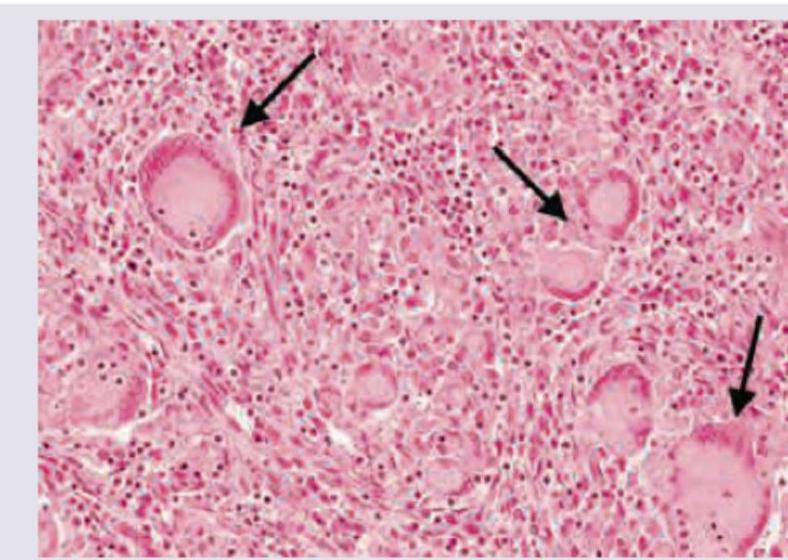
The epithelioid cells and multinucleated giant cells of granulomatous inflammation are derived from which cell type?
A 47-year-old alcoholic presents with acute upper left abdominal pain, which is tender on palpation and referred to his back. Lab results reveal a low serum calcium level. Which of the following is the most likely cause of his hypocalcemia?
Explanation: **Explanation:** The correct answer is **D. Myofibroblasts.** **Mechanism of Wound Contraction:** Wound contraction is a critical step in healing by **secondary intention** (and to a lesser extent, primary intention) [1], [2]. It typically begins within 2 to 3 days and peaks at 2 weeks. This process is mediated by **myofibroblasts** [1]. These are specialized fibroblasts that acquire features of smooth muscle cells, specifically the expression of **α-smooth muscle actin (α-SMA)** [2]. They exert contractile force, pulling the edges of the wound toward the center, thereby reducing the surface area of the defect [1], [2]. **Analysis of Incorrect Options:** * **A. Endothelial cells:** These are involved in **angiogenesis** (neovascularization) driven by VEGF, forming new blood vessels to supply the granulation tissue, but they do not possess contractile properties [1]. * **B. Fibroblasts:** While they are the precursors to myofibroblasts and are responsible for secreting Type III collagen (later replaced by Type I), unstimulated fibroblasts lack the actin-myosin contractile apparatus required for wound shrinkage [1], [2]. * **C. Macrophages:** These are the "master regulators" of inflammation and repair. They clear debris and secrete cytokines (TGF-β, PDGF) that recruit fibroblasts, but they do not physically contract the wound. **High-Yield Clinical Pearls for NEET-PG:** * **TGF-β** is the most important cytokine for the differentiation of fibroblasts into myofibroblasts. * **Primary vs. Secondary Intention:** Contraction is much more pronounced in secondary intention (large, open wounds) [2]. * **Complication:** Excessive contraction leads to a **contracture**, commonly seen after severe burns, which can deform joints and limit mobility [1]. * **Collagen Switch:** During remodeling, Type III collagen (found in granulation tissue) is replaced by **Type I collagen** (high tensile strength) via the action of Matrix Metalloproteinases (MMPs). **References:** [1] Cross SS. Underwood's Pathology: A Clinical Approach. 6th ed. (Basic Pathology) introduces the student to key general principles of pathology, both as a medical science and as a clinical activity with a vital role in patient care. Part 2 (Disease Mechanisms) provides fundamental knowledge about the cellular and molecular processes involved in diseases, providing the rationale for their treatment. Part 3 (Systematic Pathology) deals in detail with specific diseases, with emphasis on the clinically important aspects., pp. 105-106. [2] Kumar V, Abbas AK, et al.. Robbins and Cotran Pathologic Basis of Disease. 9th ed. Inflammation and Repair, pp. 119-121.
Explanation: **Explanation:** **Angiogenesis** (also known as neovascularization) is the physiological process through which new blood vessels form from pre-existing vessels [1]. It is a critical component of the **proliferative phase of wound healing** and chronic inflammation [2]. **Why Option A is correct:** The term is derived from the Greek words *‘angeion’* (vessel) and *‘genesis’* (creation). In the context of tissue repair, angiogenesis is driven by growth factors—primarily **Vascular Endothelial Growth Factor (VEGF)** and **Fibroblast Growth Factor-2 (FGF-2)**. These factors stimulate endothelial cell migration, proliferation, and lumen formation to supply oxygen and nutrients to the healing tissue (granulation tissue) [1]. **Why other options are incorrect:** * **Option B:** Repair by connective tissue refers to **fibrosis or scarring**, where collagen replaces the original parenchyma. While angiogenesis supports this process, it is not the definition of it. * **Option C:** Formation of a blood clot is known as **coagulation or hemostasis**, which occurs in the immediate "hemostatic phase" of injury, preceding angiogenesis. **NEET-PG High-Yield Pearls:** * **Key Stimulus:** Hypoxia is the most potent inducer of angiogenesis, mediated via **HIF-1 (Hypoxia-Inducible Factor)**. * **Key Mediator:** **VEGF** is the most important growth factor for angiogenesis [1]. * **Steps of Angiogenesis:** Vasodilation (via NO) → Degradation of basement membrane (by MMPs) → Migration of endothelial cells → Proliferation → Maturation (recruitment of pericytes) [1]. * **Clinical Correlation:** Excessive angiogenesis is a hallmark of **tumor metastasis**, while inadequate angiogenesis leads to non-healing chronic ulcers [3]. **References:** [1] Kumar V, Abbas AK, et al.. Robbins and Cotran Pathologic Basis of Disease. 9th ed. Inflammation and Repair, pp. 115-116. [2] Kumar V, Abbas AK, et al.. Robbins and Cotran Pathologic Basis of Disease. 9th ed. Inflammation and Repair, pp. 117-119. [3] Cross SS. Underwood's Pathology: A Clinical Approach. 6th ed. (Basic Pathology) introduces the student to key general principles of pathology, both as a medical science and as a clinical activity with a vital role in patient care. Part 2 (Disease Mechanisms) provides fundamental knowledge about the cellular and molecular processes involved in diseases, providing the rationale for their treatment. Part 3 (Systematic Pathology) deals in detail with specific diseases, with emphasis on the clinically important aspects., pp. 88-89.
Explanation: **Explanation:** **Liquefaction (Liquefactive) necrosis** is the correct answer because it is characterized by the transformation of the tissue into a liquid, viscous mass. 1. **Mechanism:** In **pyogenic (bacterial) infections**, the accumulation of neutrophils leads to the release of potent hydrolytic enzymes (lysosomal enzymes) that "digest" or liquefy the tissue, forming pus [2]. 2. **Brain Infarction:** Unlike other solid organs where ischemia causes coagulative necrosis, the brain undergoes liquefactive necrosis [4]. This is due to the brain's high lipid content and lack of a supporting connective tissue framework, leading to rapid enzymatic digestion by microglial cells, eventually leaving a fluid-filled cavity as the dead tissue is removed [1]. **Analysis of Incorrect Options:** * **A. Coagulative Necrosis:** The most common pattern of necrosis, typically seen in hypoxic/ischemic cell death in all solid organs (heart, kidney, spleen) **except** the brain [4]. The cell architecture is preserved for a few days. * **C. Caseous Necrosis:** A "cheese-like" appearance characteristic of **Tuberculosis** (granulomatous inflammation). It is a combination of coagulative and liquefactive features where tissue architecture is completely lost but not liquefied. * **D. Fat Necrosis:** Specifically refers to focal areas of fat destruction, typically seen in **Acute Pancreatitis** (enzymatic) or breast trauma (traumatic). **High-Yield NEET-PG Pearls:** * **Key Exception:** Ischemia = Coagulative necrosis, **BUT** Brain Ischemia = Liquefactive necrosis [1]. * **Wet Gangrene:** A clinical term for liquefactive necrosis superimposed on coagulative necrosis, usually in the limbs or bowel [3]. * **Fibrinoid Necrosis:** Seen in immune-mediated vascular damage (e.g., Polyarteritis Nodosa, Malignant Hypertension) [3]. **References:** [1] Kumar V, Abbas AK, et al.. Robbins and Cotran Pathologic Basis of Disease. 9th ed. The Central Nervous System, pp. 1268-1269. [2] Cross SS. Underwood's Pathology: A Clinical Approach. 6th ed. (Basic Pathology) introduces the student to key general principles of pathology, both as a medical science and as a clinical activity with a vital role in patient care. Part 2 (Disease Mechanisms) provides fundamental knowledge about the cellular and molecular processes involved in diseases, providing the rationale for their treatment. Part 3 (Systematic Pathology) deals in detail with specific diseases, with emphasis on the clinically important aspects., pp. 192-193. [3] Cross SS. Underwood's Pathology: A Clinical Approach. 6th ed. (Basic Pathology) introduces the student to key general principles of pathology, both as a medical science and as a clinical activity with a vital role in patient care. Part 2 (Disease Mechanisms) provides fundamental knowledge about the cellular and molecular processes involved in diseases, providing the rationale for their treatment. Part 3 (Systematic Pathology) deals in detail with specific diseases, with emphasis on the clinically important aspects., pp. 103-104. [4] Kumar V, Abbas AK, et al.. Robbins and Cotran Pathologic Basis of Disease. 9th ed. Cellular Responses to Stress and Toxic Insults: Adaptation, Injury, and Death, pp. 53-55.
Explanation: **Explanation:** The correct answer is **Direct injury and necrosis (Option A)**. Increased vascular permeability is the hallmark of acute inflammation, and it occurs via several mechanisms depending on the severity and nature of the stimulus [1]. **1. Why Direct Injury is Correct:** Direct injury to the endothelium (e.g., severe burns, lytic bacterial infections, or physical trauma) causes **immediate sustained response**. Because the endothelial cells are physically damaged or necrotic, the leakage begins immediately after the injury and persists for several hours or days until the vessel is thrombosed or repaired. It affects all levels of microvasculature (venules, capillaries, and arterioles). **2. Why Other Options are Incorrect:** * **Options B & C (Histamine/Serotonin):** These chemical mediators cause "Endothelial Cell Contraction," leading to intercellular gaps [3]. This is the most common mechanism but results in an **Immediate Transient Response** [1]. It occurs rapidly (within minutes) and is short-lived (15–30 minutes), primarily affecting post-capillary venules [1]. * **Option D (Leukocyte-mediated injury):** This occurs when activated leukocytes release ROS and proteolytic enzymes, damaging the endothelium. This is typically a **delayed** response and is often associated with later stages of inflammation or chronic injury [2]. **High-Yield Clinical Pearls for NEET-PG:** * **Immediate Transient Response:** Most common; mediated by Histamine; affects **venules** only [1]. * **Immediate Sustained Response:** Caused by direct injury; affects **all microvessels** (arterioles, capillaries, venules). * **Delayed Prolonged Leakage:** Classic example is **Sunburn** (thermal/UV injury). Leakage starts after 2–12 hours and lasts for several days [1]. * **Transcytosis:** Increased transport of fluids/proteins via intracellular channels (stimulated by VEGF). **References:** [1] Cross SS. Underwood's Pathology: A Clinical Approach. 6th ed. (Basic Pathology) introduces the student to key general principles of pathology, both as a medical science and as a clinical activity with a vital role in patient care. Part 2 (Disease Mechanisms) provides fundamental knowledge about the cellular and molecular processes involved in diseases, providing the rationale for their treatment. Part 3 (Systematic Pathology) deals in detail with specific diseases, with emphasis on the clinically important aspects., pp. 187-188. [2] Cross SS. Underwood's Pathology: A Clinical Approach. 6th ed. (Basic Pathology) introduces the student to key general principles of pathology, both as a medical science and as a clinical activity with a vital role in patient care. Part 2 (Disease Mechanisms) provides fundamental knowledge about the cellular and molecular processes involved in diseases, providing the rationale for their treatment. Part 3 (Systematic Pathology) deals in detail with specific diseases, with emphasis on the clinically important aspects., pp. 188-189. [3] Kumar V, Abbas AK, et al.. Robbins and Cotran Pathologic Basis of Disease. 9th ed. Inflammation and Repair, pp. 84-85.
Explanation: ### Explanation Wound healing occurs through two main pathways: **Primary Intention** (clean, opposed edges) and **Secondary Intention** (large gaps, tissue loss). [1] **Why Option B is Correct:** The depth of the injury determines the healing mechanism. Superficial wounds (epidermal only) heal by regeneration. However, **deep dermal wounds** involve damage to the underlying connective tissue framework. Because dermal appendages and the complex collagen matrix cannot perfectly regenerate, the body replaces the defect with fibrous connective tissue, leading to **scar formation**. **Analysis of Incorrect Options:** * **Option A:** Infected wounds have irregular margins and significant tissue debris. They cannot be surgically apposed and must heal by **secondary intention**, which involves the formation of extensive granulation tissue. [1] * **Option C:** This statement is actually **also true** in general pathology (Wound contraction is a hallmark of secondary intention, mediated by myofibroblasts [3]). However, in the context of choosing the *most* definitive histological outcome for deep injuries, Option B is the standard textbook answer for the result of dermal damage. *(Note: In competitive exams, if multiple statements seem true, always select the one describing the structural outcome of the specific tissue layer mentioned).* * **Option D:** Primary intention involves minimal tissue loss and clean edges; therefore, it has a **less intense** inflammatory response compared to secondary intention, which requires more phagocytosis and granulation tissue to fill the gap. [1] **High-Yield NEET-PG Pearls:** * **Myofibroblasts:** Responsible for wound contraction; they appear around day 3–5. [3] * **Collagen Switch:** Type III collagen is deposited first (granulation tissue), which is later replaced by **Type I collagen** (mature scar) by the action of collagenases (Zinc-dependent). * **Tensile Strength:** At 1 week (suture removal), strength is ~10%. It reaches a maximum of **70-80%** by 3 months; it never returns to 100%. [2] **References:** [1] Kumar V, Abbas AK, et al.. Robbins and Cotran Pathologic Basis of Disease. 9th ed. Inflammation and Repair, pp. 117-121. [2] Kumar V, Abbas AK, et al.. Robbins and Cotran Pathologic Basis of Disease. 9th ed. Inflammation and Repair, pp. 119-121. [3] Cross SS. Underwood's Pathology: A Clinical Approach. 6th ed. (Basic Pathology) introduces the student to key general principles of pathology, both as a medical science and as a clinical activity with a vital role in patient care. Part 2 (Disease Mechanisms) provides fundamental knowledge about the cellular and molecular processes involved in diseases, providing the rationale for their treatment. Part 3 (Systematic Pathology) deals in detail with specific diseases, with emphasis on the clinically important aspects., pp. 105-106.
Explanation: **Explanation:** The correct answer is **Mannose-binding protein (MBP)**. This question tests the concept of **Acute Phase Reactants (APRs)**—proteins whose plasma concentrations change by at least 25% in response to inflammatory cytokines (primarily IL-6, IL-1, and TNF) [1]. **Why Mannose-binding protein is correct:** MBP (or Mannose-binding lectin) is a **Positive Acute Phase Reactant**. During inflammation, its synthesis in the liver increases. It functions as an opsonin by recognizing microbial carbohydrates and activating the **Lectin pathway of the complement system**, thereby aiding the innate immune response [1]. **Why the other options are incorrect:** Options A, B, and C are **Negative Acute Phase Reactants**. Their serum levels **decrease** during inflammation as the liver prioritizes the synthesis of positive APRs to combat infection/injury. * **Albumin:** The most abundant plasma protein; levels drop to conserve amino acids for positive APRs. * **Transferrin:** Decreases to sequester iron away from bacteria (which require iron for growth) [2]. * **Antithrombin:** Decreases during inflammation, which contributes to the pro-coagulant state often seen in systemic inflammatory responses. **High-Yield Clinical Pearls for NEET-PG:** * **Positive APRs (Mnemonic: "CHAMP"):** **C**-reactive protein (most sensitive), **H**aptoglobin, **A**myloid A, **M**annose-binding protein, **P**rothrombin/Fibrinogen (causes increased ESR), and Ferritin. * **Negative APRs:** Albumin, Transferrin, Transthyretin (Pre-albumin), and Antithrombin. * **ESR vs. CRP:** CRP rises and falls rapidly (useful for monitoring acute activity), while ESR is an indirect measure of fibrinogen and changes more slowly. **References:** [1] Kumar V, Abbas AK, et al.. Robbins and Cotran Pathologic Basis of Disease. 9th ed. Inflammation and Repair, pp. 83-111. [2] Kumar V, Abbas AK, et al.. Robbins and Cotran Pathologic Basis of Disease. 9th ed. Red Blood Cell and Bleeding Disorders, pp. 657-658.
Explanation: **Explanation:** **Why Granulation Tissue is the Correct Answer:** Fibrogenic repair (healing by connective tissue replacement) occurs when the tissue is incapable of regeneration or the underlying framework is severely damaged [3]. The hallmark of this process is the formation of **granulation tissue** [1]. It is a specialized, temporary tissue that serves as a scaffold for scar formation. Histologically, it is characterized by three main components: **newly formed capillaries (angiogenesis), proliferating fibroblasts, and a loose extracellular matrix (ECM)**, often accompanied by scattered inflammatory cells (macrophages) [2]. **Analysis of Incorrect Options:** * **B. Neovascularization:** While neovascularization (angiogenesis) is a vital *component* of granulation tissue, it is not the hallmark of the entire repair process on its own [2]. It is one of the steps required to provide nutrients to the healing site. * **C. Neutrophilic infiltration:** Neutrophils are the hallmark of **acute inflammation**. In the repair phase, neutrophils are replaced by macrophages, which clear debris and secrete growth factors (like TGF-̢) to stimulate fibroblasts [2]. * **D. All of the above:** This is incorrect because neutrophilic infiltration is characteristic of the initial injury/inflammatory phase, not the fibrogenic repair phase. **NEET-PG High-Yield Pearls:** * **Granulation Tissue vs. Granuloma:** Do not confuse them [1]. Granulation tissue is for *healing*; a Granuloma is a collection of epithelioid macrophages seen in *chronic granulomatous inflammation* (e.g., TB). * **Key Growth Factor:** **TGF-̢** is the most important cytokine for synthesis and deposition of connective tissue proteins (fibrosis) [2]. * **Evolution of the Scar:** Over time, granulation tissue evolves into a pale, largely avascular scar as vascularity decreases and collagen content increases. * **Type of Collagen:** Initially, Type III collagen is predominant in granulation tissue, which is later replaced by the stronger **Type I collagen** in mature scars. **References:** [1] Cross SS. Underwood's Pathology: A Clinical Approach. 6th ed. (Basic Pathology) introduces the student to key general principles of pathology, both as a medical science and as a clinical activity with a vital role in patient care. Part 2 (Disease Mechanisms) provides fundamental knowledge about the cellular and molecular processes involved in diseases, providing the rationale for their treatment. Part 3 (Systematic Pathology) deals in detail with specific diseases, with emphasis on the clinically important aspects., pp. 105-106. [2] Kumar V, Abbas AK, et al.. Robbins and Cotran Pathologic Basis of Disease. 9th ed. Inflammation and Repair, pp. 117-119. [3] Kumar V, Abbas AK, et al.. Robbins and Cotran Pathologic Basis of Disease. 9th ed. Inflammation and Repair, pp. 113-115.
Explanation: **Explanation:** The hallmark of *Mycobacterium tuberculosis* infection is the formation of **granulomas**. The conversion of activated macrophages into **epithelioid cells** (cells with abundant pink cytoplasm resembling squamous epithelium) is the defining feature of a granuloma [1]. **Why IFN-γ is the correct answer:** The process is a classic example of **Type IV Hypersensitivity** [3]. CD4+ T-cells (Th1 subset) recognize mycobacterial antigens presented by macrophages and secrete **Interferon-gamma (IFN-γ)**. IFN-γ is the most potent activator of macrophages [2]. It enhances their microbicidal capacity and induces their transformation into epithelioid cells [1]. These epithelioid cells can further fuse to form **Langhans giant cells** (with nuclei arranged in a horseshoe pattern) [1], [2]. **Analysis of Incorrect Options:** * **TNF-α:** While TNF-α is crucial for **maintaining** the structural integrity of the granuloma (preventing its breakdown), it is not the primary cytokine responsible for the initial epithelioid transformation [1]. * **IL-4:** Secreted by Th2 cells, IL-4 promotes the formation of "alternatively activated" (M2) macrophages, which are involved in tissue repair and fibrosis rather than granulomatous inflammation. * **TGF-β:** This is a potent anti-inflammatory and pro-fibrotic cytokine. It plays a role in the later stages of healing and scar formation (fibrosis) around the granuloma. **High-Yield Clinical Pearls for NEET-PG:** * **Epithelioid cells** are essentially activated macrophages that have lost their motility but increased their secretory capacity. * **Langhans Giant Cells** (peripheral nuclei) are characteristic of TB, whereas **Foreign Body Giant Cells** (disorganized nuclei) are seen in non-immunogenic inflammation. * **Key Cytokine Sequence:** Antigen → IL-12 (from Macrophage) → Th1 differentiation → **IFN-γ** (from Th1) → Epithelioid conversion [1]. **References:** [1] Kumar V, Abbas AK, et al.. Robbins and Cotran Pathologic Basis of Disease. 9th ed. Infectious Diseases, pp. 380-381. [2] Kumar V, Abbas AK, et al.. Robbins and Cotran Pathologic Basis of Disease. 9th ed. Inflammation and Repair, p. 109. [3] Cross SS. Underwood's Pathology: A Clinical Approach. 6th ed. (Basic Pathology) introduces the student to key general principles of pathology, both as a medical science and as a clinical activity with a vital role in patient care. Part 2 (Disease Mechanisms) provides fundamental knowledge about the cellular and molecular processes involved in diseases, providing the rationale for their treatment. Part 3 (Systematic Pathology) deals in detail with specific diseases, with emphasis on the clinically important aspects., pp. 173-174.
Explanation: **Explanation:** **1. Why the Correct Answer is Right:** Granulomatous inflammation is a distinctive pattern of chronic inflammation characterized by the formation of **granulomas**. The hallmark of a granuloma is the **epithelioid cell**, which is a modified **activated macrophage** [1]. Under the influence of cytokines (primarily **IFN-γ**), macrophages undergo morphological changes: they develop abundant, pale pink cytoplasm and indistinct cell borders, resembling epithelial cells [1]. When these epithelioid cells fuse together, they form **multinucleated giant cells** (e.g., Langhans giant cells in Tuberculosis or Foreign Body giant cells) [1]. Therefore, both epithelioid cells and giant cells are derived from the **Monocyte-Macrophage lineage**. **2. Why the Incorrect Options are Wrong:** * **Basophils (A):** These are granulocytes involved in Type I hypersensitivity and allergic reactions; they do not transform into epithelioid cells. * **Eosinophils (B):** These are prominent in parasitic infections and IgE-mediated allergies. While they may be present in the periphery of some granulomas (like in Churg-Strauss syndrome), they are not the precursors of epithelioid cells. * **CD4+ T lymphocytes (C):** These cells (specifically Th1 cells) are crucial for *initiating* the granulomatous response by secreting IFN-γ to activate macrophages, but they do not physically transform into epithelioid or giant cells [3]. **3. High-Yield Clinical Pearls for NEET-PG:** * **IFN-γ (Interferon-gamma):** The most important cytokine for the transformation of macrophages into epithelioid cells [1]. * **TNF-α:** Essential for the *maintenance* of a granuloma. Anti-TNF therapy (e.g., Infliximab) can cause the breakdown of granulomas and reactivation of latent TB. * **Langhans Giant Cell:** Characterized by nuclei arranged in a "horseshoe" pattern at the periphery (classic for TB) [1]. * **Foreign Body Giant Cell:** Characterized by nuclei scattered haphazardly throughout the cytoplasm [2]. **References:** [1] Kumar V, Abbas AK, et al.. Robbins and Cotran Pathologic Basis of Disease. 9th ed. Inflammation and Repair, pp. 105-109. [2] Cross SS. Underwood's Pathology: A Clinical Approach. 6th ed. (Basic Pathology) introduces the student to key general principles of pathology, both as a medical science and as a clinical activity with a vital role in patient care. Part 2 (Disease Mechanisms) provides fundamental knowledge about the cellular and molecular processes involved in diseases, providing the rationale for their treatment. Part 3 (Systematic Pathology) deals in detail with specific diseases, with emphasis on the clinically important aspects., pp. 196-197. [3] Kumar V, Abbas AK, et al.. Robbins and Cotran Pathologic Basis of Disease. 9th ed. Diseases of the Immune System, p. 218.
Explanation: ### Explanation **Correct Answer: C. Enzymatic fat necrosis** The clinical presentation of acute upper abdominal pain radiating to the back in an alcoholic patient is a classic description of **Acute Pancreatitis** [2]. In this condition, activated pancreatic enzymes (specifically **lipases**) leak into the peripancreatic tissue [1]. These enzymes liquefy fat cell membranes and hydrolyze triglycerides into free fatty acids. These fatty acids then combine with serum calcium to form insoluble calcium soaps—a process known as **Saponification** [1]. This massive sequestration of calcium into the necrotic fat leads to the **hypocalcemia** observed in the lab results. **Why other options are incorrect:** * **A. Caseous necrosis:** Characterized by a "cheese-like" appearance, this is typical of granulomatous inflammation, most notably **Tuberculosis** [1]. It does not involve lipase-mediated saponification. * **B. Coagulative necrosis:** The most common form of necrosis, typically seen in **ischemic infarction** (except in the brain). The tissue architecture is preserved for a few days, and it is not associated with acute hypocalcemia. * **C. Gangrenous necrosis:** This is a clinical term usually applied to a limb that has lost its blood supply (dry gangrene) or has undergone superimposed bacterial infection (wet gangrene). It is essentially a variant of coagulative necrosis. **NEET-PG High-Yield Pearls:** * **Saponification:** On gross examination, fat necrosis appears as firm, **chalky white deposits** [1]. * **Microscopy:** Necrotic fat cells appear as shadowy outlines with peripheral inflammation and bluish-purple calcium deposits (H&E stain) [1]. * **Prognostic Value:** In Ranson’s Criteria for acute pancreatitis, a **fall in serum calcium (<8 mg/dL)** within 48 hours is a marker of severe disease and poor prognosis. * **Non-enzymatic fat necrosis:** Usually occurs in the **breast** or subcutaneous tissue due to physical trauma; it follows the same saponification pathway but without pancreatic enzyme involvement. **References:** [1] Kumar V, Abbas AK, et al.. Robbins and Cotran Pathologic Basis of Disease. 9th ed. Cellular Responses to Stress and Toxic Insults: Adaptation, Injury, and Death, p. 55. [2] Cross SS. Underwood's Pathology: A Clinical Approach. 6th ed. Common Clinical Problems From Liver And Biliary System Disease, pp. 406-407.
Acute Inflammation: Vascular Events
Practice Questions
Acute Inflammation: Cellular Events
Practice Questions
Chemical Mediators of Inflammation
Practice Questions
Chronic Inflammation
Practice Questions
Granulomatous Inflammation
Practice Questions
Systemic Effects of Inflammation
Practice Questions
Wound Healing
Practice Questions
Tissue Regeneration
Practice Questions
Fibrosis and Repair
Practice Questions
Resolution of Inflammation
Practice Questions
Get full access to all questions, explanations, and performance tracking.
Start For Free