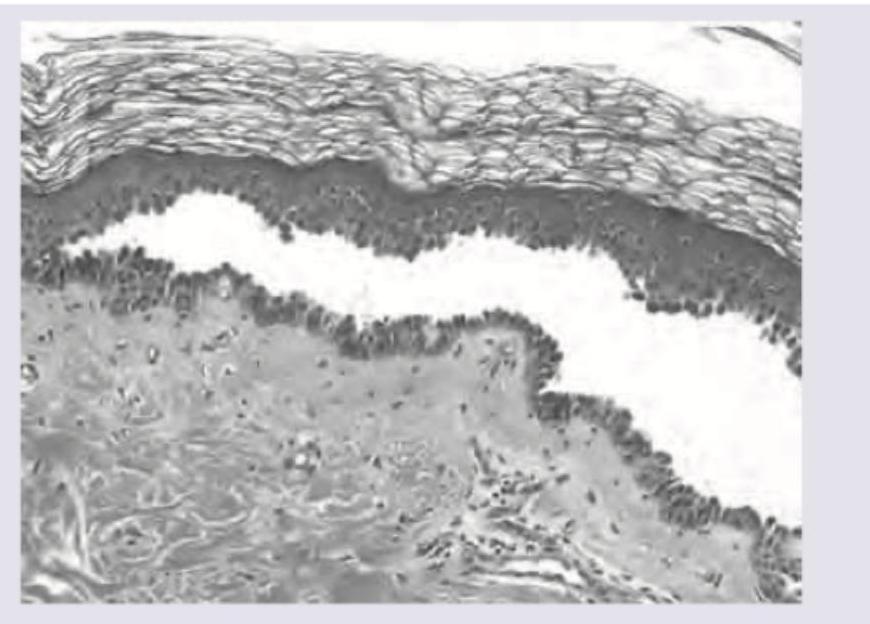
Reperfusion injury is caused by:
Which one of the following impairs epithelialization in wound healing?
Macrophages are characteristically seen in which phase of inflammation?
Which of the following is not capable of replication?
Wound contraction is primarily mediated by which of the following?
A fibroblast in a healing wound contains large quantities of which of the following cell organelles?
Arrange the following steps in order of the events occurring first to last: Margination, Rolling, Stasis, Pavementing?
Which of the following eicosanoids cause vasoconstriction and increase vascular permeability?
Angiogenesis is a function of which of the following types of Fibroblast Growth Factor (FGF)?
Esterase inhibitor deficiency causes which of the following conditions?
Explanation: **Explanation:** **Reperfusion injury** occurs when blood flow is restored to tissues after a period of ischemia (e.g., after thrombolysis in myocardial infarction) [5]. While restoring blood flow is essential, it paradoxically causes additional cell death [2]. **Why Superoxide ion is correct:** The primary mechanism of reperfusion injury is the **burst of Reactive Oxygen Species (ROS)** [2]. When oxygen returns to previously ischemic cells, damaged mitochondria and infiltrating leukocytes (neutrophils) undergo incomplete reduction of oxygen, leading to the massive production of free radicals like the **Superoxide ion ($O_2^{•-}$)** [1]. These radicals cause lipid peroxidation of membranes and DNA damage, exacerbating tissue necrosis [4]. **Why other options are incorrect:** * **Vitamin E (Option A):** This is an antioxidant that scavenges free radicals [3]. It would **protect** against reperfusion injury rather than cause it. * **Calcium ion (Option C):** While intracellular calcium overload *does* contribute to cell injury during reperfusion (by opening the mitochondrial permeability transition pore), it is generally considered a secondary mediator compared to the primary "oxidative burst" represented by the superoxide ion in this context [2]. * **Magnesium ion (Option D):** Magnesium acts as a physiological calcium channel blocker and is often considered cardioprotective; it does not cause reperfusion injury. **High-Yield Clinical Pearls for NEET-PG:** * **Key Enzyme:** Xanthine oxidase is a major source of superoxide radicals during reperfusion in many tissues. * **Morphological Hallmark:** Contraction band necrosis is typically seen in myocardial cells following reperfusion injury [5]. * **Antioxidant Defense:** Superoxide dismutase (SOD) is the enzyme responsible for neutralizing the superoxide ion by converting it into hydrogen peroxide ($H_2O_2$) [1, 3]. **References:** [1] Kumar V, Abbas AK, et al.. Robbins and Cotran Pathologic Basis of Disease. 9th ed. Cellular Responses to Stress and Toxic Insults: Adaptation, Injury, and Death, p. 59. [2] Cross SS. Underwood's Pathology: A Clinical Approach. 6th ed. (Basic Pathology) introduces the student to key general principles of pathology, both as a medical science and as a clinical activity with a vital role in patient care. Part 2 (Disease Mechanisms) provides fundamental knowledge about the cellular and molecular processes involved in diseases, providing the rationale for their treatment. Part 3 (Systematic Pathology) deals in detail with specific diseases, with emphasis on the clinically important aspects., pp. 102-103. [3] Cross SS. Underwood's Pathology: A Clinical Approach. 6th ed. (Basic Pathology) introduces the student to key general principles of pathology, both as a medical science and as a clinical activity with a vital role in patient care. Part 2 (Disease Mechanisms) provides fundamental knowledge about the cellular and molecular processes involved in diseases, providing the rationale for their treatment. Part 3 (Systematic Pathology) deals in detail with specific diseases, with emphasis on the clinically important aspects., pp. 100-101. [4] Kumar V, Abbas AK, et al.. Robbins and Cotran Pathologic Basis of Disease. 9th ed. Cellular Responses to Stress and Toxic Insults: Adaptation, Injury, and Death, pp. 59-60. [5] Kumar V, Abbas AK, et al.. Robbins and Cotran Pathologic Basis of Disease. 9th ed. The Heart, p. 554.
Explanation: Wound healing is a complex process involving inflammation, proliferation (granulation tissue formation), and remodeling. Epithelialization is the specific phase where epithelial cells migrate and proliferate across the wound surface to restore the barrier [1]. **Why Option A is Correct:** The term **Basic Growth Factor (BGF)** is often used in medical exams as a distractor or a misnomer. In the context of standard wound healing physiology, there is no established "Basic Growth Factor" that promotes or impairs healing. However, in the specific context of this question (often sourced from classic pathology MCQs), it is identified as the factor that **impairs** or does not contribute to epithelialization compared to the others. Note: Do not confuse this with *Basic Fibroblast Growth Factor (bFGF)*, which actually promotes healing. **Why the Other Options are Incorrect:** * **B. PDGF:** Released by platelets and macrophages, it is a potent chemoattractant for neutrophils, macrophages, and fibroblasts [2]. It stimulates the synthesis of collagen and glycosaminoglycans. * **C. Fibronectin:** Acts as a critical "scaffold" or pathway. It provides the extracellular matrix (ECM) framework over which epithelial cells migrate during the re-epithelialization phase [1]. * **D. TGF (specifically TGF-β):** This is the most important cytokine in wound healing. It stimulates fibroblast chemotaxis, enhances collagen synthesis, and inhibits collagen degradation, effectively driving the formation of the scar [3]. **High-Yield Clinical Pearls for NEET-PG:** * **Most important growth factor for secondary intention healing:** TGF-β. * **Most important cell in wound healing:** Macrophage (transitions the wound from inflammation to repair) [2]. * **Zinc deficiency:** A classic NEET-PG fact; zinc is a cofactor for collagenase and its deficiency severely impairs wound healing and epithelialization. * **Vitamin C:** Essential for the hydroxylation of proline and lysine residues during collagen synthesis. **References:** [1] Cross SS. Underwood's Pathology: A Clinical Approach. 6th ed. (Basic Pathology) introduces the student to key general principles of pathology, both as a medical science and as a clinical activity with a vital role in patient care. Part 2 (Disease Mechanisms) provides fundamental knowledge about the cellular and molecular processes involved in diseases, providing the rationale for their treatment. Part 3 (Systematic Pathology) deals in detail with specific diseases, with emphasis on the clinically important aspects., pp. 88-90. [2] Kumar V, Abbas AK, et al.. Robbins and Cotran Pathologic Basis of Disease. 9th ed. Inflammation and Repair, pp. 117-119. [3] Kumar V, Abbas AK, et al.. Robbins and Cotran Pathologic Basis of Disease. 9th ed. Inflammation and Repair, pp. 115-116.
Explanation: **Explanation:** The cellular response in acute inflammation follows a predictable temporal sequence. In the **early phase** (first 6–24 hours), **neutrophils** are the predominant cell type due to their high concentration in the blood and rapid response to chemokines like CXCL8 (IL-8) [1]. **Why "Late Inflammation" is correct:** Macrophages become the dominant cell type in the **late phase** (usually 24–48 hours after the initial insult) [2]. Their arrival is delayed because they must be recruited from blood monocytes, which migrate more slowly than neutrophils [2]. Once in the tissue, macrophages are responsible for phagocytosis of debris, secretion of cytokines to orchestrate the transition to repair, and are the hallmark of chronic inflammation if the stimulus persists [4]. **Analysis of Incorrect Options:** * **Early inflammation:** Dominated by neutrophils (PMNs) [2]. * **Wound repair & Healing:** While macrophages are essential for initiating these processes (by releasing growth factors like TGF-β and VEGF), they are *characteristically* identified as the primary inflammatory cell during the transition from acute to chronic phases (late inflammation) [4]. **NEET-PG High-Yield Pearls:** * **The "24-48 Hour Rule":** Neutrophils dominate for the first 24 hours; Monocytes/Macrophages take over after 48 hours [2]. * **Exception:** In **Pseudomonas** infections, neutrophils persist for several days. In **viral** infections, lymphocytes may be the first cells to arrive [3]. In **hypersensitivity** reactions, eosinophils may predominate [3]. * **Life Span:** Neutrophils are short-lived (undergo apoptosis within 24-48 hours), whereas macrophages can survive for weeks or months in tissues. **References:** [1] Kumar V, Abbas AK, et al.. Robbins and Cotran Pathologic Basis of Disease. 9th ed. Inflammation and Repair, p. 89. [2] Cross SS. Underwood's Pathology: A Clinical Approach. 6th ed. (Basic Pathology) introduces the student to key general principles of pathology, both as a medical science and as a clinical activity with a vital role in patient care. Part 2 (Disease Mechanisms) provides fundamental knowledge about the cellular and molecular processes involved in diseases, providing the rationale for their treatment. Part 3 (Systematic Pathology) deals in detail with specific diseases, with emphasis on the clinically important aspects., pp. 192-193. [3] Cross SS. Underwood's Pathology: A Clinical Approach. 6th ed. (Basic Pathology) introduces the student to key general principles of pathology, both as a medical science and as a clinical activity with a vital role in patient care. Part 2 (Disease Mechanisms) provides fundamental knowledge about the cellular and molecular processes involved in diseases, providing the rationale for their treatment. Part 3 (Systematic Pathology) deals in detail with specific diseases, with emphasis on the clinically important aspects., pp. 195-196. [4] Kumar V, Abbas AK, et al.. Robbins and Cotran Pathologic Basis of Disease. 9th ed. Inflammation and Repair, pp. 104-105.
Explanation: **Explanation:** The ability of tissues to repair themselves depends on their regenerative capacity, which classifies cells into three categories based on their cell cycle status: **Labile, Stable, and Permanent cells.** **1. Why Option A (Neuron) is Correct:** Neurons are classified as **Permanent Cells** [1]. These cells are considered terminally differentiated and have left the cell cycle (staying in the $G_0$ phase). They lack the capacity for mitotic division in postnatal life [2]. Therefore, when neurons are destroyed, they cannot replicate; instead, the area is replaced by non-functional scar tissue through a process called **gliosis**. Other examples include cardiac myocytes and skeletal muscle cells. **2. Why the Incorrect Options are Wrong:** * **Option B (Liver):** Hepatocytes are **Stable Cells** (Quiescent) [3]. They normally have a low level of replication but retain the capacity to rapidly enter the cell cycle ($G_1$ phase) in response to injury or loss of tissue mass [4]. This is why the liver can regenerate significantly after a partial hepatectomy. * **Option C (Kidney):** The cells of the renal tubules are also **Stable Cells** [4]. While they do not divide constantly, they can replicate to restore tubular integrity following conditions like Acute Tubular Necrosis (ATN). **Clinical Pearls for NEET-PG:** * **Labile Cells:** Continuously dividing (e.g., Hematopoietic cells in bone marrow, surface epithelia of the GI tract, and skin) [4]. * **Stable Cells:** In $G_0$ phase but can re-enter $G_1$ (e.g., Liver, Kidney, Pancreas, Endothelial cells, and Fibroblasts) [4]. * **Permanent Cells:** Cannot undergo division; injury results in permanent loss of function and scarring (e.g., Neurons, Cardiac muscle) [1]. *Note: While some neurogenesis occurs in specific brain regions (hippocampus), for exam purposes, neurons are strictly permanent.* **References:** [1] Cross SS. Underwood's Pathology: A Clinical Approach. 6th ed. (Basic Pathology) introduces the student to key general principles of pathology, both as a medical science and as a clinical activity with a vital role in patient care. Part 2 (Disease Mechanisms) provides fundamental knowledge about the cellular and molecular processes involved in diseases, providing the rationale for their treatment. Part 3 (Systematic Pathology) deals in detail with specific diseases, with emphasis on the clinically important aspects., pp. 246-247. [2] Cross SS. Underwood's Pathology: A Clinical Approach. 6th ed. (Basic Pathology) introduces the student to key general principles of pathology, both as a medical science and as a clinical activity with a vital role in patient care. Part 2 (Disease Mechanisms) provides fundamental knowledge about the cellular and molecular processes involved in diseases, providing the rationale for their treatment. Part 3 (Systematic Pathology) deals in detail with specific diseases, with emphasis on the clinically important aspects., pp. 78-79. [3] Cross SS. Underwood's Pathology: A Clinical Approach. 6th ed. (Basic Pathology) introduces the student to key general principles of pathology, both as a medical science and as a clinical activity with a vital role in patient care. Part 2 (Disease Mechanisms) provides fundamental knowledge about the cellular and molecular processes involved in diseases, providing the rationale for their treatment. Part 3 (Systematic Pathology) deals in detail with specific diseases, with emphasis on the clinically important aspects., pp. 108-109. [4] Kumar V, Abbas AK, et al.. Robbins and Cotran Pathologic Basis of Disease. 9th ed. Inflammation and Repair, pp. 112-113.
Explanation: **Explanation:** **Wound contraction** is a physiological process that reduces the size of a wound, typically occurring in healing by **secondary union (secondary intention)** [1]. **Why Myofibroblasts are correct:** The primary mediators of this process are **myofibroblasts** [2]. These are specialized cells that differentiate from tissue fibroblasts under the influence of cytokines like **TGF-β**. Myofibroblasts possess features of both fibroblasts (secreting collagen) and smooth muscle cells (containing bundles of **α-smooth muscle actin**) [1][2]. Their contractile activity pulls the edges of the wound toward the center, significantly reducing the surface area of the defect (often by 5% to 10% of its original size) [1]. **Analysis of Incorrect Options:** * **A. Smooth muscle cells:** While they are contractile, they are found in vessel walls and hollow organs, not primarily responsible for the contraction of granulation tissue in a skin wound. * **B. Macrophages:** These are the "master directors" of wound healing (clearing debris and secreting growth factors), but they do not provide the physical force required for contraction. * **C. Fibroblasts:** These cells are responsible for collagen synthesis and providing the structural framework (granulation tissue), but they lack the organized actin-myosin machinery required for significant contraction until they differentiate into myofibroblasts [2]. **High-Yield Clinical Pearls for NEET-PG:** * **Timing:** Wound contraction typically begins around day 3 and peaks between days 5 and 15. * **Secondary Union:** Contraction is much more prominent in healing by secondary intention than primary intention. * **Contracture:** Excessive wound contraction can lead to **contractures**, which are common after severe burns and can limit the mobility of joints [3]. * **Key Cytokine:** **TGF-β** is the most important growth factor for both fibroblast migration and their transformation into myofibroblasts. **References:** [1] Kumar V, Abbas AK, et al.. Robbins and Cotran Pathologic Basis of Disease. 9th ed. Inflammation and Repair, pp. 119-121. [2] Cross SS. Underwood's Pathology: A Clinical Approach. 6th ed. (Basic Pathology) introduces the student to key general principles of pathology, both as a medical science and as a clinical activity with a vital role in patient care. Part 2 (Disease Mechanisms) provides fundamental knowledge about the cellular and molecular processes involved in diseases, providing the rationale for their treatment. Part 3 (Systematic Pathology) deals in detail with specific diseases, with emphasis on the clinically important aspects., pp. 105-106. [3] Cross SS. Underwood's Pathology: A Clinical Approach. 6th ed. (Basic Pathology) introduces the student to key general principles of pathology, both as a medical science and as a clinical activity with a vital role in patient care. Part 2 (Disease Mechanisms) provides fundamental knowledge about the cellular and molecular processes involved in diseases, providing the rationale for their treatment. Part 3 (Systematic Pathology) deals in detail with specific diseases, with emphasis on the clinically important aspects., pp. 88-89.
Explanation: **Explanation:** **1. Why Rough Endoplasmic Reticulum (RER) is correct:** The primary function of a fibroblast in a healing wound is the synthesis and secretion of extracellular matrix proteins, most notably **collagen**. Collagen is a secretory protein [3]. In cell biology, proteins destined for secretion are synthesized on ribosomes attached to the **Rough Endoplasmic Reticulum (RER)**. Once synthesized, these proteins undergo post-translational modifications (like hydroxylation of proline and lysine) within the RER lumen. Therefore, an "activated" fibroblast (often called a myofibroblast in wound contraction) will show a prominent, well-developed RER to meet the high demand for protein export [1]. **2. Analysis of Incorrect Options:** * **Nucleoli:** While nucleoli are prominent in cells with high transcriptional activity (rRNA synthesis), they are not the primary site for the massive protein assembly required for wound repair. * **Free non-membranous bound ribosomes:** These are primarily involved in synthesizing proteins that remain *inside* the cytosol (e.g., hemoglobin, metabolic enzymes). Since collagen must be exported out of the cell, free ribosomes are not the dominant organelle. * **Smooth endoplasmic reticulum (SER):** The SER is primarily involved in lipid synthesis, steroid hormone production, and detoxification (e.g., in hepatocytes or Leydig cells), not protein synthesis [2]. **3. NEET-PG High-Yield Pearls:** * **Vitamin C Connection:** Hydroxylation of collagen occurs in the RER and requires Vitamin C as a cofactor. Deficiency leads to Scurvy (poor wound healing). * **Myofibroblasts:** These are specialized fibroblasts containing **α-smooth muscle actin**, responsible for **wound contraction** [4]. * **Granulation Tissue:** Characterized by a triad of Fibroblasts (collagen), Angiogenesis (new capillaries), and Edema [3]. **References:** [1] Cross SS. Underwood's Pathology: A Clinical Approach. 6th ed. (Basic Pathology) introduces the student to key general principles of pathology, both as a medical science and as a clinical activity with a vital role in patient care. Part 2 (Disease Mechanisms) provides fundamental knowledge about the cellular and molecular processes involved in diseases, providing the rationale for their treatment. Part 3 (Systematic Pathology) deals in detail with specific diseases, with emphasis on the clinically important aspects., pp. 105-106. [2] Kumar V, Abbas AK, et al.. Robbins and Cotran Pathologic Basis of Disease. 9th ed. With Illustrations By, pp. 24-25. [3] Kumar V, Abbas AK, et al.. Robbins and Cotran Pathologic Basis of Disease. 9th ed. Inflammation and Repair, pp. 117-119. [4] Kumar V, Abbas AK, et al.. Robbins and Cotran Pathologic Basis of Disease. 9th ed. Inflammation and Repair, pp. 119-121.
Explanation: ### Explanation The correct sequence of events in the cellular phase of acute inflammation is **Stasis → Margination → Rolling → Pavementing** [1]. **1. Why the Correct Answer is Right:** The process begins with hemodynamic changes. Following initial transient vasoconstriction and subsequent vasodilation, the blood flow slows down significantly—a phenomenon known as **Stasis**. * **Stasis:** As the velocity of blood flow decreases, the normal laminar flow (where cells stay in the center) is disrupted [1]. * **Margination:** Due to stasis, heavier leukocytes are pushed out of the central axial column toward the periphery of the vessel wall (the endothelium) [1]. * **Rolling:** Leukocytes tumble along the endothelial surface, mediated by weak, transient interactions between **Selectins** (L, E, and P-selectins) [2]. * **Pavementing:** Eventually, the leukocytes bind firmly to the endothelium via **Integrins** (ICAM-1, VCAM-1), lining the vessel wall like "cobblestones" or pavement [2]. **2. Why Other Options are Wrong:** * **Options A, B, and D** are incorrect because they place Margination or Pavementing before Stasis. Without the initial slowing of blood (Stasis), the physical displacement of leukocytes toward the walls (Margination) cannot occur effectively, as high-velocity flow would keep cells in the central stream [1]. **3. NEET-PG High-Yield Pearls:** * **Selectins** are responsible for **Rolling** (Sialyl-Lewis X modified glycoprotein) [2]. * **Integrins** (LFA-1, MAC-1) are responsible for **Adhesion/Pavementing** [2]. * **PECAM-1 (CD31)** is the primary molecule involved in **Transmigration (Diapedesis)** [3]. * **Sequence Mnemonic:** **S**top **M**aking **R**eally **P**oor **E**fforts (**S**tasis, **M**argination, **R**olling, **P**avementing, **E**migration). * **Defect Alert:** Leukocyte Adhesion Deficiency (LAD) Type 1 is a defect in Integrins (CD18), while LAD Type 2 is a defect in Sialyl-Lewis X (Rolling) [3]. **References:** [1] Kumar V, Abbas AK, et al.. Robbins and Cotran Pathologic Basis of Disease. 9th ed. Migration in the tissues toward a chemotactic stimulus, pp. 86-87. [2] Kumar V, Abbas AK, et al.. Robbins and Cotran Pathologic Basis of Disease. 9th ed. Inflammation and Repair, p. 87. [3] Kumar V, Abbas AK, et al.. Robbins and Cotran Pathologic Basis of Disease. 9th ed. Inflammation and Repair, pp. 87-89.
Explanation: **Explanation:** The correct answer is **Leukotriene C4 (LTC4)**. Eicosanoids are lipid mediators derived from arachidonic acid via two main pathways: the Cyclooxygenase (COX) pathway and the Lipoxygenase (LOX) pathway [1]. **1. Why Leukotriene C4 is correct:** LTC4, along with LTD4 and LTE4 (collectively known as cysteinyl leukotrienes), are produced via the 5-LOX pathway. These mediators are potent triggers of **smooth muscle contraction**. In the vascular system, they cause **vasoconstriction**, while in the microcirculation, they induce endothelial cell contraction, leading to increased **vascular permeability** (venular leakage) [1]. They are significantly more potent than histamine in inducing these effects [1]. **2. Why the other options are incorrect:** * **Prostacyclin (PGI2):** Produced by vascular endothelium, it is a potent **vasodilator** and inhibitor of platelet aggregation [1]. * **Thromboxane A2 (TXA2):** Produced by platelets, it causes potent vasoconstriction and promotes platelet aggregation, but it does **not** increase vascular permeability [1]. * **PGE1:** Prostaglandins of the E series (PGE1 and PGE2) are primarily **vasodilators** and are involved in inducing pain and fever [1]. **High-Yield Clinical Pearls for NEET-PG:** * **Vasodilation:** PGI2, PGE1, PGE2, PGD2 [1]. * **Vasoconstriction:** TXA2, LTC4, LTD4, LTE4 [1]. * **Increased Vascular Permeability:** LTC4, LTD4, LTE4 (Cysteinyl leukotrienes) [1]. * **Chemotaxis:** LTB4 is the "gold standard" chemotactic agent among eicosanoids (along with IL-8, C5a, and bacterial products) [1]. * **Aspirin-induced Asthma:** Caused by the shunting of arachidonic acid from the COX pathway to the LOX pathway, leading to an overproduction of bronchoconstrictive leukotrienes. **References:** [1] Kumar V, Abbas AK, et al.. Robbins and Cotran Pathologic Basis of Disease. 9th ed. Inflammation and Repair, pp. 93-101.
Explanation: **Explanation:** **Angiogenesis** is a critical step in the repair process (granulation tissue formation). It is primarily mediated by Vascular Endothelial Growth Factor (VEGF) and members of the **Fibroblast Growth Factor (FGF)** family [1]. **Why Option B is Correct:** **FGF-2 (also known as Basic FGF/bFGF)** is the most potent angiogenic factor among the FGFs [2]. It promotes angiogenesis by stimulating the proliferation of endothelial cells and their migration to form new blood vessels. Additionally, it aids in the recruitment of macrophages and fibroblasts to the site of injury, facilitating the synthesis of the extracellular matrix [1]. **Analysis of Incorrect Options:** * **FGF-1 (Acidic FGF):** While it has some mitogenic activity, it is significantly less potent than FGF-2 in the context of physiological angiogenesis and repair. * **FGF-3 (INT-2) and FGF-4 (HST-1):** These are primarily categorized as **proto-oncogenes**. They play vital roles in embryonic development and organogenesis but are more commonly associated with tumorigenesis (cell transformation) rather than the physiological process of wound healing and angiogenesis. **High-Yield Clinical Pearls for NEET-PG:** * **FGF-7** is also known as **Keratinocyte Growth Factor (KGF)**; it is essential for re-epithelialization. * **VEGF** is the most important growth factor for angiogenesis in *both* physiological (healing) and pathological (tumor growth) states [1]. * **TGF-̢** is the most important cytokine for **collagen synthesis** and the termination of the inflammatory response (fibrosis) [1]. * **HIF-1 (Hypoxia-Inducible Factor)** is the primary intracellular sensor that triggers the release of VEGF during tissue ischemia [2]. **References:** [1] Kumar V, Abbas AK, et al.. Robbins and Cotran Pathologic Basis of Disease. 9th ed. Inflammation and Repair, pp. 115-119. [2] Kumar V, Abbas AK, et al.. Robbins and Cotran Pathologic Basis of Disease. 9th ed. Neoplasia, pp. 313-314.
Explanation: **Explanation:** **C1 Esterase Inhibitor (C1-INH)** is a crucial regulatory protein that inhibits the classical pathway of the complement system by inactivating C1r and C1s. It also inhibits elements of the kinin, coagulation, and fibrinolytic pathways (specifically Kallikrein and Factor XII). **Why Option C is Correct:** In **Hereditary Angioneurotic Edema (HANE)**, there is a deficiency or dysfunction of C1-INH. This leads to the uncontrolled activation of the complement system and the kinin system [1]. The lack of inhibition on Kallikrein results in the excessive production of **Bradykinin**, a potent vasodilator that increases vascular permeability [1], [2]. This manifests clinically as recurrent episodes of non-pitting edema in the skin, larynx (causing life-threatening airway obstruction), and gastrointestinal tract. **Why Other Options are Incorrect:** * **A. SLE:** Primarily associated with deficiencies in early complement components like **C1q, C2, or C4**, which lead to impaired clearance of immune complexes [3]. * **B. MPGN (Type II):** Specifically associated with **C3 Nephritic Factor**, an autoantibody that stabilizes C3 convertase, leading to persistent C3 consumption. * **D. Omenn Syndrome:** A severe combined immunodeficiency (SCID) variant caused by mutations in **RAG1/RAG2 genes**, characterized by erythroderma and lymphadenopathy, not complement regulatory defects. **High-Yield Clinical Pearls for NEET-PG:** * **Inheritance:** Autosomal Dominant. * **Key Mediator:** Bradykinin (NOT histamine; hence, it does not respond to antihistamines or steroids) [1]. * **Diagnostic Marker:** Low levels of **C4** are consistently found even between attacks (screening test of choice). * **Treatment:** Acute attacks are treated with C1-INH concentrate or **Icatibant** (Bradykinin B2 receptor antagonist). Prophylaxis includes Danazol (androgens). **References:** [1] Kumar V, Abbas AK, et al.. Robbins and Cotran Pathologic Basis of Disease. 9th ed. Inflammation and Repair, pp. 100-101. [2] Kumar V, Abbas AK, et al.. Robbins and Cotran Pathologic Basis of Disease. 9th ed. Inflammation and Repair, pp. 99-100. [3] Cross SS. Underwood's Pathology: A Clinical Approach. 6th ed. Disorders Involving Inflammatory And Haemopoietic Cells, pp. 639-640.
Acute Inflammation: Vascular Events
Practice Questions
Acute Inflammation: Cellular Events
Practice Questions
Chemical Mediators of Inflammation
Practice Questions
Chronic Inflammation
Practice Questions
Granulomatous Inflammation
Practice Questions
Systemic Effects of Inflammation
Practice Questions
Wound Healing
Practice Questions
Tissue Regeneration
Practice Questions
Fibrosis and Repair
Practice Questions
Resolution of Inflammation
Practice Questions
Get full access to all questions, explanations, and performance tracking.
Start For Free