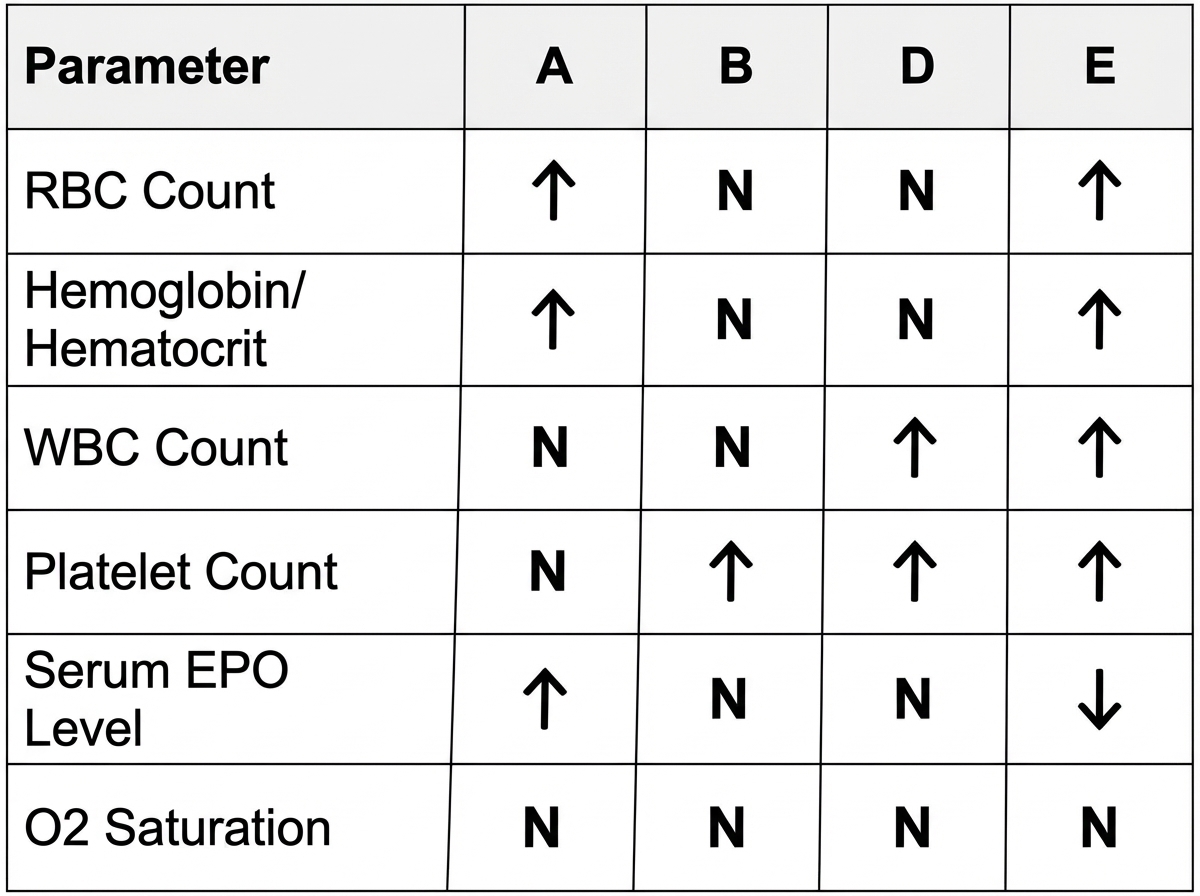
A 63-year-old man presents with splenomegaly and lymphadenopathy. Immunophenotype was positive for CD19, CD79b, and FMC7. What is the most likely diagnosis?
Auer rods are characteristic findings in which of the following conditions?
Increased LAP score is seen in which of the following conditions?
Schistocytes are found in which of the following conditions?
Which subtype of Acute Myeloid Leukemia (AML) commonly causes gingival hypertrophy?
Increased fetal hemoglobin (HbF) is seen in which of the following conditions?
Glanzmann thrombasthenia is due to a defect in which of the following?
Hallmark cells are characteristic findings in which of the following hematological malignancies?
Marginal zone lymphoma is a type of:
Leukocyte common antigen (CD45) is typically seen in which of the following malignancies?
Explanation: ### Explanation **Mantle Cell Lymphoma (MCL)** is the correct diagnosis based on the specific immunophenotypic profile provided. MCL is a B-cell neoplasm that typically expresses mature B-cell markers (**CD19, CD20, CD79b**) and is characterized by the expression of **FMC7** and **CD5** [1]. The presence of **FMC7** and **CD79b** is the crucial differentiator here. These markers are typically **strong/positive** in MCL but **absent or weakly expressed** in Chronic Lymphocytic Leukemia (CLL) [1]. #### Why the other options are incorrect: * **Chronic Lymphocytic Leukemia (CLL):** While both MCL and CLL are CD5+ B-cell lymphomas, CLL is characteristically **FMC7 negative** and has **weak/absent CD79b** and surface Immunoglobulin (sIg) expression [2]. * **Hairy Cell Leukemia (HCL):** HCL presents with massive splenomegaly but is typically **CD5 negative**. It is identified by specific markers like **CD103, CD11c, CD25, and Annexin A1**. * **Follicular Lymphoma:** This is a Germinal Center B-cell lymphoma [3]. It is typically **CD10 positive** and **CD5 negative**. #### High-Yield Pearls for NEET-PG: * **Cytogenetics:** MCL is associated with **t(11;14)**, leading to overexpression of **Cyclin D1** (PRAD1 gene) [1]. * **Immunophenotype Triad for MCL:** CD5(+), CD23(–), and FMC7(+). (Note: CLL is CD5+, CD23+, FMC7–). * **Morphology:** Look for "Centrocyte-like" cells and a hyalinized small vessel in the proliferation center [1]. * **Clinical Variant:** The **Blastoid variant** of MCL is highly aggressive and carries a poor prognosis [1]. **References:** [1] Kumar V, Abbas AK, et al.. Robbins and Cotran Pathologic Basis of Disease. 9th ed. Diseases of White Blood Cells, Lymph Nodes, Spleen, and Thymus, pp. 609-612. [2] Cross SS. Underwood's Pathology: A Clinical Approach. 6th ed. Common Clinical Problems From Blood And Bone Marrow Disease, pp. 612-613. [3] Cross SS. Underwood's Pathology: A Clinical Approach. 6th ed. Common Clinical Problems From Diseases Of The Urinary And Male Genital Tracts, pp. 561-562.
Explanation: **Explanation:** **Auer rods** are elongated, needle-like pink/red inclusions in the cytoplasm of leukemic blasts [1]. They are formed by the fusion and crystallization of **azurophilic granules** (containing myeloperoxidase). Their presence is a pathognomonic marker for **myeloid differentiation**, effectively ruling out lymphoid lineages [1]. **Why Option D is Correct:** While Auer rods can be seen in various subtypes of Acute Myeloid Leukemia (AML), they are most characteristic and numerous in **Acute Promyelocytic Leukemia (AML-M3)** [1]. In this subtype, cells often contain multiple Auer rods bundled together, known as **"Faggot cells."** This is due to the massive accumulation of procoagulant-rich granules in the neoplastic promyelocytes [1]. **Analysis of Incorrect Options:** * **Option A & B:** While Auer rods *can* occasionally be seen in MDS with excess blasts or AML with myelodysplasia-related changes, they are not the "characteristic" or defining hallmark of these conditions compared to the classic association with AML-M3 [1]. * **Option C:** **Acute Lymphoblastic Leukemia (ALL)** never shows Auer rods [2]. Auer rods are exclusive to the myeloid lineage; their presence definitively excludes a diagnosis of ALL. **High-Yield Clinical Pearls for NEET-PG:** * **Composition:** Auer rods are rich in **Myeloperoxidase (MPO)**. * **Faggot Cells:** Pathognomonic for AML-M3 (t(15;17); PML-RARA) [1]. * **Clinical Emergency:** The release of granules from Auer rods in AML-M3 can trigger **Disseminated Intravascular Coagulation (DIC)**, especially during induction therapy [1]. * **Rule of Thumb:** If you see an Auer rod, it is AML until proven otherwise [1]. **References:** [1] Kumar V, Abbas AK, et al.. Robbins and Cotran Pathologic Basis of Disease. 9th ed. Diseases of White Blood Cells, Lymph Nodes, Spleen, and Thymus, pp. 620-622. [2] Kumar V, Abbas AK, et al.. Robbins and Cotran Pathologic Basis of Disease. 9th ed. Diseases of White Blood Cells, Lymph Nodes, Spleen, and Thymus, pp. 599-600.
Explanation: **Explanation:** The **Leukocyte Alkaline Phosphatase (LAP) score** (also known as the Neutrophil Alkaline Phosphatase/NAP score) measures the activity of the enzyme alkaline phosphatase within the secondary granules of mature neutrophils. It is a classic marker used to differentiate reactive leukocytosis from neoplastic processes [1]. **1. Why Myelofibrosis is Correct:** In **Myelofibrosis** (a Chronic Myeloproliferative Neoplasm), there is an increase in mature, functioning neutrophils [1], leading to an **elevated LAP score**. Other conditions causing an increased score include the Leukemoid reaction [1], Polycythemia Vera, pregnancy, and acute infections. **2. Analysis of Incorrect Options:** * **Chronic Myeloid Leukemia (CML):** This is the most high-yield contrast. In CML, the LAP score is **characteristically low** because the rapidly proliferating neoplastic cells are enzymatically deficient. * **Paroxysmal Nocturnal Hemoglobinuria (PNH):** This is a stem cell defect where cells lack GPI-anchored proteins. Since LAP is a GPI-anchored enzyme, its levels are **decreased** in PNH. * **Megaloblastic Anemia:** This condition typically presents with pancytopenia and hypersegmented neutrophils; however, the LAP score is generally **decreased** or normal. **High-Yield Clinical Pearls for NEET-PG:** * **LAP Score Range:** Normal range is typically **40–100**. * **Increased LAP (>100):** Leukemoid reaction [1], Myelofibrosis [1], Polycythemia Vera, Pregnancy, Cushing’s syndrome. * **Decreased LAP (<40):** CML (most common cause), PNH, Hypophosphatasia, Aplastic anemia, and AML. * **The "CML vs. Leukemoid" Rule:** If a patient has a high TLC and splenomegaly, a **low LAP** points to CML, while a **high LAP** points to a Leukemoid reaction [1]. **References:** [1] Cross SS. Underwood's Pathology: A Clinical Approach. 6th ed. Common Clinical Problems From Blood And Bone Marrow Disease, pp. 580-616.
Explanation: **Explanation:** **Schistocytes** (fragmented red blood cells) are the hallmark of **Microangiopathic Hemolytic Anemia (MAHA)** [1]. They are formed when RBCs are mechanically sheared as they pass through small blood vessels partially obstructed by fibrin strands or platelet microthrombi [3]. 1. **Why Option C is Correct:** * **TTP (Thrombotic Thrombocytopenic Purpura):** Characterized by platelet-rich microthrombi due to ADAMTS13 deficiency [2]. These thrombi cause mechanical fragmentation of RBCs, leading to high schistocyte counts. * **DIC (Disseminated Intravascular Coagulation):** Characterized by widespread activation of the coagulation cascade, leading to fibrin mesh formation in microvessels [3]. RBCs are "sliced" by these fibrin strands, resulting in schistocytes [3]. 2. **Why Other Options are Incorrect:** * **Option A & B:** While both conditions feature schistocytes, selecting only one is incomplete as both are classic examples of MAHA [1]. * **Option D (March Hemoglobinuria):** This is a form of mechanical hemolysis caused by repetitive physical impact (e.g., long-distance running). While it involves RBC destruction, it typically occurs in the capillaries of the feet and rarely produces significant schistocytes on a peripheral smear compared to MAHA. **High-Yield Clinical Pearls for NEET-PG:** * **Definition:** Schistocytes are often described as "helmet cells," "triangle cells," or "fragmentocytes." * **Differential Diagnosis of Schistocytes:** TTP, HUS (Hemolytic Uremic Syndrome), DIC, HELLP syndrome, and prosthetic heart valves (Waring Blender Syndrome) [1]. * **TTP Pentad:** Fever, Anemia (MAHA), Thrombocytopenia, Neurological symptoms, and Renal failure (**FAT RN**) [2]. * **Lab Finding:** In MAHA, expect increased LDH, decreased haptoglobin, and a **negative** Direct Coombs Test (as hemolysis is mechanical, not immune-mediated). **References:** [1] Kumar V, Abbas AK, et al.. Robbins and Cotran Pathologic Basis of Disease. 9th ed. Red Blood Cell and Bleeding Disorders, pp. 667-668. [2] Kumar V, Abbas AK, et al.. Robbins and Cotran Pathologic Basis of Disease. 9th ed. The Kidney, pp. 947-948. [3] Cross SS. Underwood's Pathology: A Clinical Approach. 6th ed. Common Clinical Problems From Blood And Bone Marrow Disease, pp. 625-626.
Explanation: **Explanation:** **Correct Answer: D (M4)** The correct answer is **M4 (Acute Myelomonocytic Leukemia)**. The underlying medical concept is the **monocytic lineage**. In the FAB classification, AML subtypes with a monocytic component—specifically **M4** and **M5 (Acute Monocytic Leukemia)**—are notorious for extramedullary infiltration [1]. Monoblasts and monocytes have a high propensity to migrate out of the blood vessels and infiltrate tissues such as the **gingiva (gums)**, skin (leukemia cutis), and central nervous system. Gingival hypertrophy occurs because these leukemic cells physically invade the submucosal connective tissue of the gums. **Analysis of Incorrect Options:** * **A (M1 - AML without maturation):** Characterized by poorly differentiated myeloblasts; tissue infiltration is rare. * **B (M2 - AML with maturation):** The most common subtype, often associated with t(8;21) [1]. While it can cause chloromas (granulocytic sarcomas), it does not typically present with gingival hyperplasia. * **C (M3 - Acute Promyelocytic Leukemia):** Associated with t(15;17). Its hallmark clinical presentation is **DIC (Disseminated Intravascular Coagulation)** due to the release of procoagulants from Auer rods, not tissue infiltration [1]. **High-Yield Clinical Pearls for NEET-PG:** * **M4/M5:** Look for "Gingival Hyperplasia" and "Negative Myeloperoxidase (MPO)" but **"Positive Non-Specific Esterase (NSE)"** stain. * **M3:** Associated with **Auer rods** (faggot cells) and the **PML-RARα** fusion gene [1]. Treatment involves ATRA (All-trans retinoic acid). * **M7:** Associated with Down Syndrome (in children <5 years) and acute myelofibrosis. * **M2:** Most common subtype overall; associated with **t(8;21)** and a relatively good prognosis [1]. **References:** [1] Kumar V, Abbas AK, et al.. Robbins and Cotran Pathologic Basis of Disease. 9th ed. Diseases of White Blood Cells, Lymph Nodes, Spleen, and Thymus, p. 620.
Explanation: **Explanation:** The correct answer is **Juvenile CML (JMML)**. **1. Why Juvenile CML is correct:** Juvenile Myelomonocytic Leukemia (JMML), formerly known as Juvenile CML, is a rare clonal hematopoietic stem cell disorder of childhood. A hallmark feature of JMML is the **reversion to fetal erythropoiesis**, which leads to a significant increase in **Fetal Hemoglobin (HbF)** levels, often disproportionate to the child's age. This occurs because the malignant clone retains or reactivates the program for fetal hemoglobin production. **2. Analysis of Incorrect Options:** * **Congenital red cell aplasia (Diamond-Blackfan Anemia):** While HbF can be elevated in this condition as a stress response to erythroid marrow failure, it is not the primary diagnostic hallmark compared to the classic association with JMML in the context of myeloproliferative disorders. * **Hereditary Spherocytosis:** This is a red cell membrane defect leading to extravascular hemolysis. It does not involve a switch in hemoglobin synthesis; therefore, HbF levels remain normal. * **AML (Acute Myeloid Leukemia):** While some cases of erythroleukemia (M6) may show minor elevations in HbF, it is not a consistent or characteristic finding for AML as a whole. **Clinical Pearls for NEET-PG:** * **JMML Triad:** Hepatosplenomegaly, lymphadenopathy, and skin rash in a child <2 years. * **Laboratory Markers for JMML:** Increased HbF, absence of Philadelphia chromosome ($t(9;22)$), and hypersensitivity of myeloid progenitors to GM-CSF. * **Other conditions with high HbF:** Beta-thalassemia major, Sickle cell anemia (compensatory), and Hereditary Persistence of Fetal Hemoglobin (HPFH).
Explanation: **Explanation:** **Glanzmann Thrombasthenia (GT)** is an autosomal recessive bleeding disorder characterized by a quantitative or qualitative deficiency of the **Glycoprotein IIb/IIIa (GPIIb/IIIa) complex**, also known as integrin ̑IIḅ3 [1]. 1. **Why Option B is Correct:** GPIIb/IIIa is the most abundant receptor on the platelet surface. Its primary function is to act as a receptor for **fibrinogen**. When platelets are activated, this complex undergoes a conformational change, allowing fibrinogen to bridge multiple platelets together [2]. This process is essential for **platelet aggregation**. In GT, the lack of this complex prevents aggregation, leading to mucosal bleeding and a prolonged bleeding time despite a normal platelet count [1]. 2. **Why Other Options are Incorrect:** * **Option A (GPIb-IX):** Deficiency of this complex leads to **Bernard-Soulier Syndrome** [1]. This receptor is responsible for platelet **adhesion** to subendothelial collagen via vWF [2]. * **Option C (CD68):** This is a glycoprotein primarily expressed on **macrophages** and monocytes; it is used as a histopathological marker for myeloid/histiocytic cells, not platelet function. * **Option D (vWF):** Deficiency of Von Willebrand Factor leads to **Von Willebrand Disease**, the most common inherited bleeding disorder, affecting both platelet adhesion and Factor VIII stability [3]. **High-Yield Clinical Pearls for NEET-PG:** * **Peripheral Smear:** Platelets appear normal in morphology and count (unlike Bernard-Soulier, which shows giant platelets and thrombocytopenia). * **Platelet Aggregometry:** Characterized by **absent aggregation with ADP, epinephrine, and collagen**, but **normal aggregation with Ristocetin** [1]. * **Flow Cytometry:** This is the gold standard for diagnosis, showing decreased expression of CD41 (GPIIb) and CD61 (GPIIIa). **References:** [1] Kumar V, Abbas AK, et al.. Robbins and Cotran Pathologic Basis of Disease. 9th ed. Red Blood Cell and Bleeding Disorders, pp. 668-669. [2] Kumar V, Abbas AK, et al.. Robbins and Cotran Pathologic Basis of Disease. 9th ed. Hemodynamic Disorders, Thromboembolic Disease, and Shock, p. 128. [3] Kumar V, Abbas AK, et al.. Robbins and Cotran Pathologic Basis of Disease. 9th ed. Red Blood Cell and Bleeding Disorders, pp. 669-670.
Explanation: ### Explanation **Correct Answer: C. Anaplastic large-cell lymphoma (ALCL)** **Why it is correct:** **Hallmark cells** are the diagnostic morphological feature of Anaplastic Large-Cell Lymphoma (ALCL). These are large, pleomorphic cells characterized by **eccentric, kidney-shaped or horseshoe-shaped nuclei** and an abundant eosinophilic cytoplasm [1]. A distinctive feature is the presence of a prominent perinuclear eosinophilic region (Golgi zone). These cells are typically **CD30 positive** and often associated with the **t(2;5) translocation** [2], which leads to the expression of the ALK (Anaplastic Lymphoma Kinase) protein [1]. **Why the other options are incorrect:** * **A. Diffuse large B-cell lymphoma (DLBCL):** Characterized by large B-cells with prominent nucleoli and a high mitotic index, but it lacks the specific kidney-shaped "hallmark" morphology. * **B. Hodgkin lymphoma:** The characteristic cell is the **Reed-Sternberg (RS) cell**, classically described as having an "owl-eye" appearance (bilobed nucleus with prominent eosinophilic nucleoli). * **D. Hairy cell leukemia:** Characterized by small B-lymphocytes with fine, hair-like cytoplasmic projections. **High-Yield Clinical Pearls for NEET-PG:** * **ALCL Marker:** CD30 (Ki-1 antigen) is strongly and uniformly positive in all cases. * **Cytogenetics:** The most common translocation is **t(2;5)(p23;q35)**, involving the *NPM1* and *ALK* genes [2]. * **Prognosis:** ALK-positive ALCL generally carries a much better prognosis than ALK-negative ALCL. * **Morphology Tip:** If you see "horseshoe nuclei" or "kidney-shaped nuclei" in a lymphoma question, think ALCL [1]. **References:** [1] Kumar V, Abbas AK, et al.. Robbins and Cotran Pathologic Basis of Disease. 9th ed. Diseases of White Blood Cells, Lymph Nodes, Spleen, and Thymus, pp. 613-614. [2] Cross SS. Underwood's Pathology: A Clinical Approach. 6th ed. Common Clinical Problems From Diseases Of The Urinary And Male Genital Tracts, pp. 565-566.
Explanation: **Explanation:** **Marginal Zone Lymphoma (MZL)** is a group of indolent (slow-growing) B-cell neoplasms that originate from B-lymphocytes located in the **marginal zone** of lymphoid follicles [1]. These cells are post-germinal center B cells. MZL is categorized into three distinct types: 1. **Extranodal MZL of MALT type:** The most common form, often associated with chronic inflammation or autoimmunity (e.g., *H. pylori* gastritis) [3]. 2. **Nodal MZL:** Involves the lymph nodes [2]. 3. **Splenic MZL:** Primarily involves the spleen and bone marrow. **Analysis of Options:** * **Option A (Correct):** MZL cells express characteristic B-cell markers such as **CD19, CD20, and CD79a**. They are typically negative for CD5, CD10, and CD23, which helps differentiate them from other small B-cell lymphomas like CLL/SLL or Mantle Cell Lymphoma. * **Option B & C (Incorrect):** T-cell and NK-cell lymphomas arise from different lineages. MZL specifically involves the clonal proliferation of mature B-cells [1]. * **Option D (Incorrect):** Hodgkin Lymphoma is characterized by the presence of Reed-Sternberg (RS) cells in a background of reactive inflammatory cells, which is morphologically and clinically distinct from the small, monocytoid B-cells seen in MZL. **High-Yield Clinical Pearls for NEET-PG:** * **Association:** MALT lymphoma of the stomach is strongly associated with ***H. pylori*** infection; eradication of the bacteria can lead to tumor regression [3]. * **Genetics:** The most common translocation in MALT lymphoma is **t(11;18)(q21;q21)**, involving the *BIRC3-MALT1* (also known as API2-MALT1) fusion gene [2]. * **Immunophenotype:** CD20+, CD5–, CD10–, CD23–, and Cyclin D1–. * **Sjögren’s Syndrome:** Patients with this autoimmune condition have a significantly increased risk of developing parotid gland MALT lymphoma [1]. **References:** [1] Kumar V, Abbas AK, et al.. Robbins and Cotran Pathologic Basis of Disease. 9th ed. Diseases of the Immune System, pp. 235-236. [2] Cross SS. Underwood's Pathology: A Clinical Approach. 6th ed. Common Clinical Problems From Diseases Of The Urinary And Male Genital Tracts, pp. 566-567. [3] Cross SS. Underwood's Pathology: A Clinical Approach. 6th ed. Common Clinical Problems From Alimentary System Disease, pp. 356-357.
Explanation: **Explanation:** **Leukocyte Common Antigen (CD45)** is a transmembrane glycoprotein found on the surface of almost all **hematopoietic cells** and their precursors [1]. It is the most widely used Immunohistochemistry (IHC) marker to differentiate hematopoietic malignancies from non-hematopoietic tumors (small round blue cell tumors). 1. **Why Lymphoma is Correct:** Lymphomas are malignancies of lymphoid lineage. Since CD45 is expressed on all leukocytes (B-cells, T-cells, NK-cells, and granulocytes), it serves as a **pan-leukocyte marker**. Almost all Non-Hodgkin Lymphomas (NHL) are CD45 positive, making it the primary marker for confirming a lymphoid origin in undifferentiated tumors. 2. **Why Other Options are Incorrect:** * **Ewing Sarcoma:** This is a neuroectodermal tumor characterized by the **CD99 (MIC2)** marker. It is CD45 negative. * **Rhabdomyosarcoma:** A skeletal muscle tumor identified by markers like **Desmin, Myogenin, and MyoD1**. It is CD45 negative. * **Osteosarcoma:** A bone-forming tumor that expresses markers like **SATB2** and Osteonectin. It is CD45 negative. **High-Yield Clinical Pearls for NEET-PG:** * **CD45 Exceptions:** While most lymphomas are CD45+, **Classic Hodgkin Lymphoma (RS cells)** is characteristically **CD45 negative** (but CD15+ and CD30+). * **Small Round Blue Cell Tumors (SRBCT):** In a pediatric patient with an undifferentiated SRBCT, the first step in IHC is usually CD45. If positive, it suggests Lymphoma; if negative, other markers like CD99 (Ewing’s) or Desmin (RMS) are evaluated. * **Lineage Specificity:** CD45 confirms the cell is a leukocyte, but further markers (CD3 for T-cells, CD20 for B-cells) are needed to sub-classify the lymphoma [1]. **References:** [1] Kumar V, Abbas AK, et al.. Robbins and Cotran Pathologic Basis of Disease. 9th ed. Diseases of White Blood Cells, Lymph Nodes, Spleen, and Thymus, pp. 596-598.
Anemias: Classification and Approach
Practice Questions
Hemolytic Anemias
Practice Questions
Myeloproliferative Neoplasms
Practice Questions
Myelodysplastic Syndromes
Practice Questions
Acute Leukemias
Practice Questions
Chronic Leukemias
Practice Questions
Lymphomas and Lymphoid Neoplasms
Practice Questions
Plasma Cell Disorders
Practice Questions
Bleeding Disorders
Practice Questions
Thrombotic Disorders
Practice Questions
Get full access to all questions, explanations, and performance tracking.
Start For Free