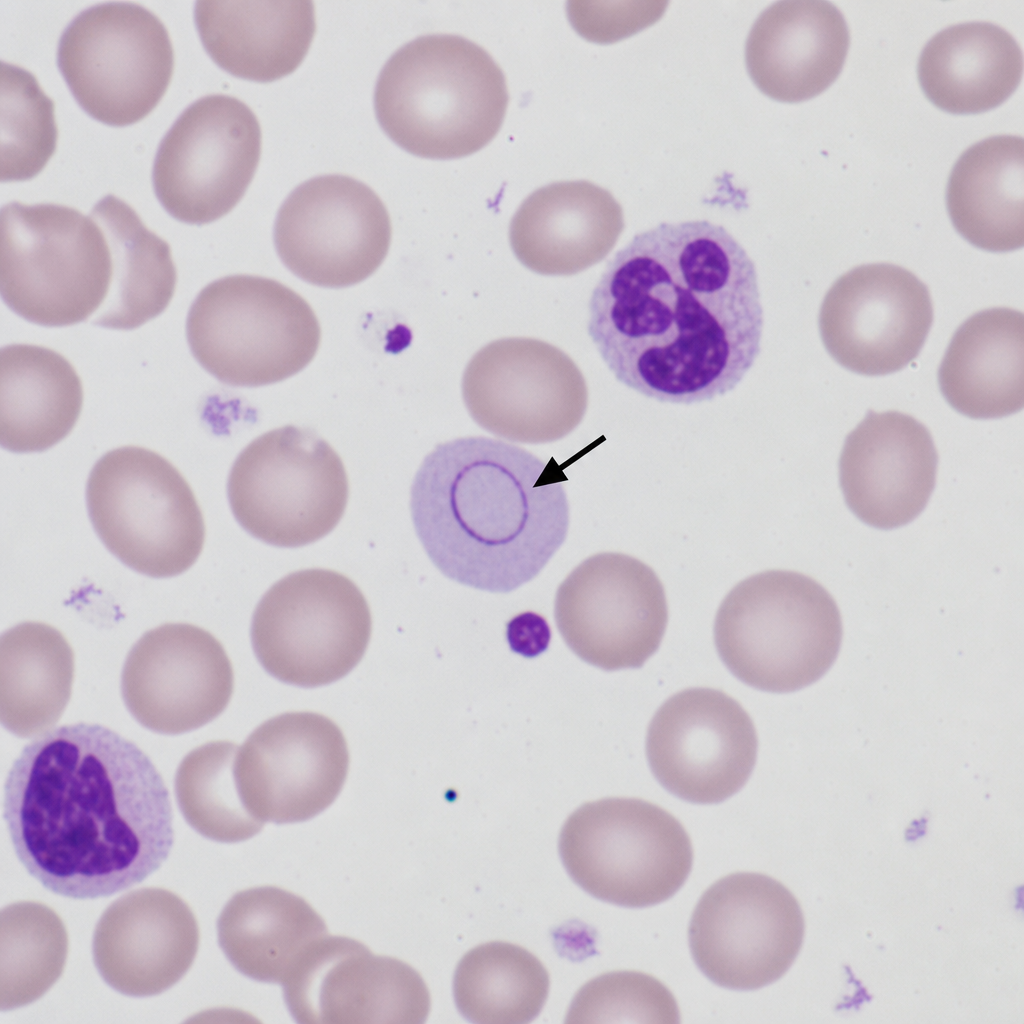
Which of the following is NOT a condition affecting the vessel wall that leads to bleeding?
Clinical Hemophilia is characterized by which of the following laboratory findings?
Idiopathic thrombocytopenic purpura is associated with all of the following except?
Which is the most common red blood cell defect without hemoglobin abnormality?
Which of the following conditions is associated with the maximum Erythrocyte Sedimentation Rate (ESR)?
One unit of fresh blood raises the Hb% concentration by approximately how much?
Hereditary spherocytosis is due to deficiency of which of the following proteins?
Kaolin cephalin clotting time (KCT) is a test primarily used to assess which part of the coagulation cascade?
The t(8;14) translocation is associated with the activation of which of the following genes?
What is the main abnormality in beta-thalassemia minor?
Explanation: To approach bleeding disorders, it is essential to distinguish between **vessel wall abnormalities (vascular purpura)**, **platelet disorders**, and **coagulation factor deficiencies** [1]. ### Why Option B is Correct **Autoimmune Thrombocytopenic Purpura (ITP)** is a condition characterized by the immune-mediated destruction of platelets (Type II hypersensitivity). The underlying pathology involves anti-platelet antibodies (usually IgG against GpIIb/IIIa) leading to a **low platelet count** [2]. It is a **platelet disorder**, not a primary defect of the vessel wall [3]. ### Why the Other Options are Incorrect * **A. Henoch-Schönlein Purpura (HSP):** This is a small-vessel vasculitis caused by IgA immune complex deposition in the vessel walls. It is a classic example of vascular purpura [1]. * **C. Cushing’s Syndrome:** Excess cortisol leads to the breakdown of collagen and atrophy of the perivascular supporting tissue. This weakens the vessel walls, leading to easy bruising and skin striae. * **D. Scurvy:** Vitamin C deficiency results in defective collagen synthesis (specifically hydroxylation of proline and lysine). This leads to fragile capillaries, resulting in perifollicular hemorrhages and bleeding gums. ### NEET-PG High-Yield Pearls * **Vascular Purpura:** Bleeding occurs despite a **normal platelet count** and **normal coagulation profile** (PT/APTT) [1]. * **HSP Triad:** Palpable purpura (usually on buttocks/legs), arthralgia, and abdominal pain. * **Senile Purpura:** Another vessel wall condition caused by age-related loss of dermal collagen. * **Hereditary Hemorrhagic Telangiectasia (Osler-Weber-Rendu syndrome):** An autosomal dominant disorder of the vessel wall leading to thin-walled, dilated capillaries. **References:** [1] Kumar V, Abbas AK, et al.. Robbins and Cotran Pathologic Basis of Disease. 9th ed. Red Blood Cell and Bleeding Disorders, pp. 664-665. [2] Cross SS. Underwood's Pathology: A Clinical Approach. 6th ed. Common Clinical Problems From Blood And Bone Marrow Disease, pp. 619-620. [3] Kumar V, Abbas AK, et al.. Robbins and Cotran Pathologic Basis of Disease. 9th ed. Hemodynamic Disorders, Thromboembolic Disease, and Shock, p. 132.
Explanation: **Explanation:** Hemophilia (A and B) is a classic disorder of the **intrinsic pathway** of the coagulation cascade. Hemophilia A is a deficiency of Factor VIII, while Hemophilia B (Christmas disease) is a deficiency of Factor IX [2]. **1. Why the Correct Answer is Right:** * **Prolonged aPTT:** The Activated Partial Thromboplastin Time (aPTT) measures the intrinsic and common pathways (Factors XII, XI, IX, VIII, X, V, II, and I). Since Hemophilia involves a deficiency in Factor VIII or IX, the aPTT is prolonged. * **Normal PT:** Prothrombin Time (PT) measures the extrinsic pathway (Factor VII). Since Factor VII levels are normal in Hemophilia, the PT remains unaffected. * **Normal BT:** Bleeding Time (BT) is a measure of platelet function and primary hemostasis. Hemophilia is a secondary hemostasis defect; platelet count and function are normal, so BT is normal. **2. Analysis of Incorrect Options:** * **Option A:** Prolonged PT occurs in Factor VII deficiency or Vitamin K deficiency, not Hemophilia [3]. * **Option B:** Prolonged BT, PT, and aPTT are seen in complex consumptive coagulopathies like **Disseminated Intravascular Coagulation (DIC)** or severe end-stage liver disease [1]. * **Option D:** Prolonged BT with normal coagulation studies is characteristic of **Immune Thrombocytopenic Purpura (ITP)** or platelet function defects (e.g., Glanzmann Thrombasthenia) [4]. **3. NEET-PG High-Yield Pearls:** * **Inheritance:** Both Hemophilia A and B are **X-linked recessive** (mostly affecting males) [2]. * **Clinical Hallmark:** Hemarthrosis (bleeding into joints) and muscle hematomas [5]. * **Mixing Study:** If aPTT corrects after mixing the patient's plasma with normal plasma, it indicates a **factor deficiency**. If it does not correct, it suggests a **factor inhibitor**. * **vWD vs. Hemophilia:** In von Willebrand Disease, you may see a prolonged BT *and* a prolonged aPTT (because vWF stabilizes Factor VIII). In Hemophilia, only aPTT is prolonged. **References:** [1] Cross SS. Underwood's Pathology: A Clinical Approach. 6th ed. Common Clinical Problems From Blood And Bone Marrow Disease, pp. 625-626. [2] Kumar V, Abbas AK, et al.. Robbins and Cotran Pathologic Basis of Disease. 9th ed. Red Blood Cell and Bleeding Disorders, pp. 670-671. [3] Cross SS. Underwood's Pathology: A Clinical Approach. 6th ed. Common Clinical Problems From Blood And Bone Marrow Disease, pp. 624-625. [4] Kumar V, Abbas AK, et al.. Robbins and Cotran Pathologic Basis of Disease. 9th ed. Red Blood Cell and Bleeding Disorders, pp. 668-669. [5] Cross SS. Underwood's Pathology: A Clinical Approach. 6th ed. Common Clinical Problems From Blood And Bone Marrow Disease, pp. 623-624.
Explanation: **Explanation:** **Immune Thrombocytopenic Purpura (ITP)** is an autoimmune disorder characterized by the formation of IgG antibodies against platelet surface glycoproteins (most commonly GpIIb/IIIa). These antibody-coated platelets are subsequently destroyed by splenic macrophages. **Why Splenomegaly is the correct answer:** In ITP, the spleen is the site of platelet destruction, but it is **not** typically enlarged [1]. The presence of significant splenomegaly should actually lead a clinician to reconsider the diagnosis and look for alternative causes of thrombocytopenia, such as portal hypertension, leukemia, or lymphoma. In ITP, the spleen is usually normal in size and weight, though it may show congested sinusoids and prominent germinal centers on histology [1]. **Analysis of Incorrect Options:** * **B. Mucosal bleeding:** This is a classic clinical feature of ITP [2]. Since it is a disorder of primary hemostasis (platelet deficiency), patients present with petechiae, ecchymoses, and mucosal bleeds (epistaxis, menorrhagia) [2]. * **C. Thrombocytopenia:** This is the hallmark of the disease. Peripheral destruction leads to a low platelet count, often below 20,000/µL in acute cases [3]. * **D. Increased megakaryocytes:** This is a compensatory response [1]. The bone marrow remains healthy and attempts to compensate for peripheral loss by increasing the number and size of megakaryocytes (accelerated thrombopoiesis) [3]. **NEET-PG High-Yield Pearls:** * **Diagnosis of Exclusion:** ITP is diagnosed only after ruling out other causes of thrombocytopenia [3]. * **Treatment:** First-line treatment is usually Corticosteroids. IVIg is used when a rapid rise in platelets is needed. Splenectomy is considered for refractory cases [3]. * **Key Lab Finding:** Isolated thrombocytopenia with normal PT/aPTT and increased megakaryocytes on marrow aspirate [3]. **References:** [1] Cross SS. Underwood's Pathology: A Clinical Approach. 6th ed. Common Clinical Problems From Blood And Bone Marrow Disease, pp. 620-621. [2] Cross SS. Underwood's Pathology: A Clinical Approach. 6th ed. Common Clinical Problems From Blood And Bone Marrow Disease, pp. 619-620. [3] Kumar V, Abbas AK, et al.. Robbins and Cotran Pathologic Basis of Disease. 9th ed. Red Blood Cell and Bleeding Disorders, pp. 666-667.
Explanation: **Explanation:** **Hereditary Spherocytosis (HS)** is the most common inherited red blood cell (RBC) membrane defect [1, 5]. It is characterized by a deficiency or abnormality in membrane proteins—most commonly **Ankyrin**, followed by Band 3, Spectrin, and Protein 4.2 [1]. These defects lead to a loss of membrane surface area, forcing the RBC to assume a spherical shape (spherocyte) [1, 4]. Crucially, the hemoglobin structure and synthesis remain entirely normal; the pathology is purely structural/mechanical [2]. **Analysis of Options:** * **A. Elliptocytosis:** While also a membrane defect (usually involving protein 4.1 or alpha-spectrin), it is significantly less common than Spherocytosis [2, 5]. * **C. Poikilocytosis:** This is a general descriptive term for abnormally shaped RBCs (e.g., teardrop cells, schistocytes) seen in various anemias, not a specific disease entity. * **D. Sickle Cell Disease:** This is a classic **hemoglobinopathy** caused by a point mutation in the beta-globin chain (Glu → Val). It is a hemoglobin abnormality, which the question specifically excludes [2]. **High-Yield Clinical Pearls for NEET-PG:** * **Inheritance:** Most commonly Autosomal Dominant. * **Diagnosis:** The gold standard is the **Eosin-5-maleimide (EMA) binding test** (flow cytometry). The Osmotic Fragility Test is also used but is less specific [4]. * **Clinical Triad:** Anemia, Jaundice (unconjugated), and Splenomegaly. * **Key Lab Finding:** Increased **MCHC** (>36 g/dL) is a highly characteristic marker for Spherocytosis. * **Complication:** Risk of aplastic crisis triggered by **Parvovirus B19** infection [4]. **References:** [1] Kumar V, Abbas AK, et al.. Robbins and Cotran Pathologic Basis of Disease. 9th ed. Red Blood Cell and Bleeding Disorders, pp. 640-641. [2] Kumar V, Abbas AK, et al.. Robbins and Cotran Pathologic Basis of Disease. 9th ed. Red Blood Cell and Bleeding Disorders, p. 638. [3] Cross SS. Underwood's Pathology: A Clinical Approach. 6th ed. Common Clinical Problems From Blood And Bone Marrow Disease, pp. 602-603. [4] Cross SS. Underwood's Pathology: A Clinical Approach. 6th ed. Common Clinical Problems From Blood And Bone Marrow Disease, pp. 597-598.
Explanation: **Explanation:** The Erythrocyte Sedimentation Rate (ESR) is a non-specific marker of inflammation that measures the rate at which red blood cells (RBCs) sink in a column of anticoagulated blood. **Why Multiple Myeloma is Correct:** The primary determinant of ESR is **rouleaux formation**. In Multiple Myeloma, there is a massive production of monoclonal immunoglobulins (paraproteins). These large, positively charged proteins neutralize the negative surface charge (zeta potential) of RBCs, which normally keeps them apart [1]. This allows RBCs to clump together like a stack of coins (rouleaux). Because these aggregates have a lower surface-area-to-volume ratio than individual cells, they sediment much faster, leading to an **extremely high ESR (often >100 mm/hr).** **Why Other Options are Incorrect:** * **Polycythemia Vera:** An increase in the concentration of RBCs increases the internal viscosity of the blood, which physically hinders the settling of cells, resulting in a **decreased ESR.** * **Congestive Heart Failure (CHF):** CHF is associated with increased plasma volume and changes in fibrinogen levels that typically lead to a **low ESR.** * **Sickle Cell Anemia:** The abnormally shaped (poikilocytic) sickle cells cannot form rouleaux stacks effectively. Their irregular shape interferes with sedimentation, leading to a **very low or zero ESR.** **High-Yield Clinical Pearls for NEET-PG:** * **Extreme ESR (>100 mm/hr):** Think of the "Big Three": Multiple Myeloma, Temporal Arteritis/Polymyalgia Rheumatica, and Metastatic Malignancy (or severe infections like TB). * **Low ESR (0-2 mm/hr):** Seen in Polycythemia, Afibrinogenemia, Sickle cell anemia, and Spherocytosis. * **Factors increasing ESR:** Pregnancy, old age, female gender, anemia, and macrocytosis [1]. * **Factors decreasing ESR:** Microcytosis (e.g., Iron deficiency anemia) and Steroid use. **References:** [1] Kumar V, Abbas AK, et al.. Robbins and Cotran Pathologic Basis of Disease. 9th ed. Diseases of White Blood Cells, Lymph Nodes, Spleen, and Thymus, pp. 606-609.
Explanation: **Explanation:** The standard clinical expectation for a blood transfusion in an average-sized adult (approx. 70 kg) is that **one unit of Packed Red Blood Cells (PRBC) or fresh whole blood will increase the Hemoglobin (Hb) level by 1 gm/dL** and the Hematocrit (Hct) by approximately 3%. This occurs because a standard unit of blood contains roughly 200mg of iron and enough red cell mass to significantly boost the oxygen-carrying capacity of the recipient's intravascular volume, provided there is no ongoing active hemorrhage or hemolysis. **Analysis of Options:** * **Option A (0.1 gm%):** This value is negligible and does not reflect the therapeutic impact of a transfusion. * **Option B (1 gm%):** **Correct.** This is the physiological standard used in clinical practice to calculate transfusion requirements. * **Option C & D (2 gm% & 2.2 gm%):** These values are overestimations for a single unit. While a 2 gm/dL rise might be seen in a very small pediatric patient, it is not the standard for an adult unit. **High-Yield Clinical Pearls for NEET-PG:** * **The 1:3 Rule:** 1 unit of blood = ↑ 1 gm/dL Hb = ↑ 3% Hematocrit. * **Pediatric Dosing:** In children, a transfusion of 10 mL/kg of PRBCs typically raises the Hb by 2–3 gm/dL. * **Transfusion Trigger:** In stable, non-bleeding patients, the restrictive threshold for transfusion is generally an **Hb < 7 gm/dL**. * **Storage:** Fresh blood is preferred in specific scenarios (like exchange transfusions) to avoid the "storage lesion" (decreased 2,3-DPG and increased potassium).
Explanation: ### Explanation: Hereditary Spherocytosis (HS) **Correct Answer: A. Spectrin** **Medical Concept:** Hereditary Spherocytosis is the most common inherited red blood cell (RBC) membrane disorder. It is caused by mutations in genes encoding proteins that link the membrane skeleton to the overlying lipid bilayer. While mutations can occur in various proteins, **Spectrin deficiency** (specifically alpha or beta-spectrin) is the most common biochemical abnormality [1]. This deficiency leads to a loss of membrane surface area, forcing the RBC to adopt a **spherical shape** (spherocyte) to maintain volume. These rigid cells are trapped and destroyed in the splenic cords, leading to extravascular hemolysis [1]. **Analysis of Options:** * **A. Spectrin:** Correct. It is the primary structural component of the RBC cytoskeleton [1]. Its deficiency is the hallmark of HS. * **B. Invertin:** Incorrect. Invertase (invertin) is an enzyme that catalyzes the hydrolysis of sucrose; it has no role in RBC membrane integrity. * **C. Cytokeratin:** Incorrect. Cytokeratins are intermediate filaments found in epithelial cells, used primarily as IHC markers for carcinomas, not in RBCs. * **D. Ankyrin and Band 3:** While mutations in Ankyrin (most common genetic mutation) and Band 3 also cause HS, the question specifically highlights Spectrin as the primary protein deficiency associated with the resulting membrane instability [1]. **High-Yield Clinical Pearls for NEET-PG:** * **Inheritance:** Most commonly Autosomal Dominant. * **Clinical Triad:** Anemia, Jaundice, and Splenomegaly. * **Diagnosis:** Increased **MCHC** (highly characteristic), increased osmotic fragility, and a positive **EMA Binding test** (Gold Standard). * **Peripheral Smear:** Micro-spherocytes (small, dark RBCs lacking central pallor) [2]. * **Complications:** Pigmented gallstones (calcium bilirubinate) [3] and Aplastic crisis (associated with Parvovirus B19) [2]. * **Treatment:** Splenectomy is the definitive treatment for symptomatic cases (usually deferred until age 6). **References:** [1] Kumar V, Abbas AK, et al.. Robbins and Cotran Pathologic Basis of Disease. 9th ed. Red Blood Cell and Bleeding Disorders, pp. 640-641. [2] Kumar V, Abbas AK, et al.. Robbins and Cotran Pathologic Basis of Disease. 9th ed. Red Blood Cell and Bleeding Disorders, pp. 641-642. [3] Kumar V, Abbas AK, et al.. Robbins and Cotran Pathologic Basis of Disease. 9th ed. Red Blood Cell and Bleeding Disorders, p. 640.
Explanation: **Explanation:** **Kaolin Cephalin Clotting Time (KCT)**, more commonly known as **Activated Partial Thromboplastin Time (aPTT)**, is the primary screening test for the **intrinsic and common pathways** of coagulation. 1. **Why the Intrinsic Pathway is Correct:** The test involves adding **Kaolin** (a surface activator like silica or celite) to activate Factor XII and **Cephalin** (a phospholipid substitute for platelets) to the patient's plasma. Since it bypasses Tissue Factor (Factor III), it specifically measures the efficiency of the intrinsic pathway (Factors XII, XI, IX, VIII) and the common pathway (Factors X, V, II, I). In clinical practice and exams, KCT/aPTT is the definitive answer for assessing the intrinsic system. 2. **Why Other Options are Incorrect:** * **Extrinsic Pathway:** This is assessed by **Prothrombin Time (PT)**, which uses Tissue Thromboplastin (Tissue Factor + Phospholipids) to activate Factor VII. * **Common Pathway:** While KCT is affected by the common pathway, it is not its *primary* or exclusive measure. Thrombin Time (TT) is a more specific test for the final step of the common pathway (fibrinogen to fibrin). * **Platelet Function:** KCT uses a phospholipid substitute (Cephalin), making the test independent of the patient's actual platelet count or function [1]. Platelet function is assessed by Bleeding Time or Platelet Function Analyzers (PFA-100). **High-Yield Clinical Pearls for NEET-PG:** * **Heparin Monitoring:** aPTT/KCT is used to monitor Unfractionated Heparin (UFH) therapy. * **Hemophilia:** A prolonged KCT with a normal PT is the classic laboratory finding in Hemophilia A (Factor VIII deficiency) and B (Factor IX deficiency). * **Mixing Studies:** If KCT is prolonged, a mixing study (1:1 with normal plasma) is done. If it corrects, it indicates a factor deficiency; if it doesn't, it indicates an inhibitor (e.g., Lupus Anticoagulant). **References:** [1] Cross SS. Underwood's Pathology: A Clinical Approach. 6th ed. Common Clinical Problems From Blood And Bone Marrow Disease, pp. 625-626.
Explanation: **Explanation:** The **t(8;14)** translocation is the hallmark genetic abnormality of **Burkitt Lymphoma**. In this translocation, the **c-myc** proto-oncogene on chromosome 8 is moved to the **Immunoglobulin Heavy Chain (IgH)** locus on chromosome 14 [1]. Because the IgH locus is highly active in B-cells, this results in the constitutive overexpression of the c-myc transcription factor, leading to rapid cellular proliferation and the characteristic "starry-sky" appearance on histology [1]. **Analysis of Incorrect Options:** * **A. c-abl:** Associated with **t(9;22)**, the Philadelphia chromosome, seen in **Chronic Myeloid Leukemia (CML)** and some cases of ALL [2]. It forms the BCR-ABL fusion protein with tyrosine kinase activity [2]. * **C. bcl-2:** Associated with **t(14;18)**, seen in **Follicular Lymphoma**. Overexpression of bcl-2 inhibits apoptosis, leading to the survival of immortal B-cells. * **D. bcl-1 (Cyclin D1):** Associated with **t(11;14)**, seen in **Mantle Cell Lymphoma**. This leads to the overexpression of Cyclin D1, which promotes cell cycle progression from G1 to S phase. **High-Yield Clinical Pearls for NEET-PG:** * **Burkitt Lymphoma Variants:** Endemic (African, associated with EBV, involves the jaw), Sporadic (abdominal involvement), and Immunodeficiency-associated (HIV). * **Morphology:** Medium-sized lymphocytes with high mitotic index and "starry-sky" pattern (macrophages ingesting apoptotic debris). * **Immunophenotype:** CD19+, CD20+, CD10+, and **BCL-6+**; notably **BCL-2 negative**. * **Ki-67 index:** Typically approaches **100%**, indicating extremely rapid growth. **References:** [1] Kumar V, Abbas AK, et al.. Robbins and Cotran Pathologic Basis of Disease. 9th ed. Neoplasia, pp. 324-325. [2] Cross SS. Underwood's Pathology: A Clinical Approach. 6th ed. (Basic Pathology) introduces the student to key general principles of pathology, both as a medical science and as a clinical activity with a vital role in patient care. Part 2 (Disease Mechanisms) provides fundamental knowledge about the cellular and molecular processes involved in diseases, providing the rationale for their treatment. Part 3 (Systematic Pathology) deals in detail with specific diseases, with emphasis on the clinically important aspects., pp. 225-226.
Explanation: **Explanation:** **Beta-thalassemia minor** (also known as Beta-thalassemia trait) is caused by a heterozygous mutation in the beta-globin gene, resulting in a partial reduction in beta-chain synthesis [1]. **Why Option A is correct:** In beta-thalassemia, the deficiency of beta-globin chains leads to a relative excess of alpha-chains. To compensate, the body increases the production of delta-chains, which combine with alpha-chains to form **HbA2 (α2δ2)**. An elevated HbA2 level (typically **3.5% to 8%**) is the diagnostic hallmark of beta-thalassemia minor and is used to differentiate it from iron deficiency anemia. **Why other options are incorrect:** * **Option B:** While HbA2 is increased, it is rarely "severely" increased. Levels seldom exceed 8%. If HbA2 is extremely high, other hemoglobinopathies should be considered. * **Option C:** HbF (α2γ2) may be slightly elevated (1–5%) in beta-thalassemia minor, but it is the predominant hemoglobin in **Beta-thalassemia major**, not minor. Furthermore, beta-thalassemia minor typically presents with **mild** asymptomatic anemia or is discovered incidentally, unlike the severe, transfusion-dependent anemia seen in the major form [1]. **High-Yield Clinical Pearls for NEET-PG:** * **Mentzer Index:** (MCV/RBC count) < 13 suggests Thalassemia; > 13 suggests Iron Deficiency Anemia. * **Peripheral Smear:** Shows microcytic hypochromic cells with **target cells** and basophilic stippling. * **RBC Count:** Characteristically **increased** (polycythemia) despite low hemoglobin, which is a key clue in MCQ stems. * **Gold Standard Diagnosis:** Hemoglobin electrophoresis or HPLC. **References:** [1] Kumar V, Abbas AK, et al.. Robbins and Cotran Pathologic Basis of Disease. 9th ed. Red Blood Cell and Bleeding Disorders, pp. 646-647, 650.
Anemias: Classification and Approach
Practice Questions
Hemolytic Anemias
Practice Questions
Myeloproliferative Neoplasms
Practice Questions
Myelodysplastic Syndromes
Practice Questions
Acute Leukemias
Practice Questions
Chronic Leukemias
Practice Questions
Lymphomas and Lymphoid Neoplasms
Practice Questions
Plasma Cell Disorders
Practice Questions
Bleeding Disorders
Practice Questions
Thrombotic Disorders
Practice Questions
Get full access to all questions, explanations, and performance tracking.
Start For Free