Nodular lymphocyte predominant type of Hodgkin lymphoma is characterized by the presence of which specific cell type?
ADAMTS-13 is a metalloproteinase. It is produced by the:
Giant platelets are seen in which of the following conditions?
"Cabot" rings are characteristically seen in:
Castleman disease is associated with which of the following?
Neutropenia is not a feature of which of the following conditions?
ADAMTS deficiency is seen in which of the following conditions?
In iron deficiency anemia, which of the following are seen in a peripheral blood smear?
What is the pH of freshly collected blood in a CPD solution bag?
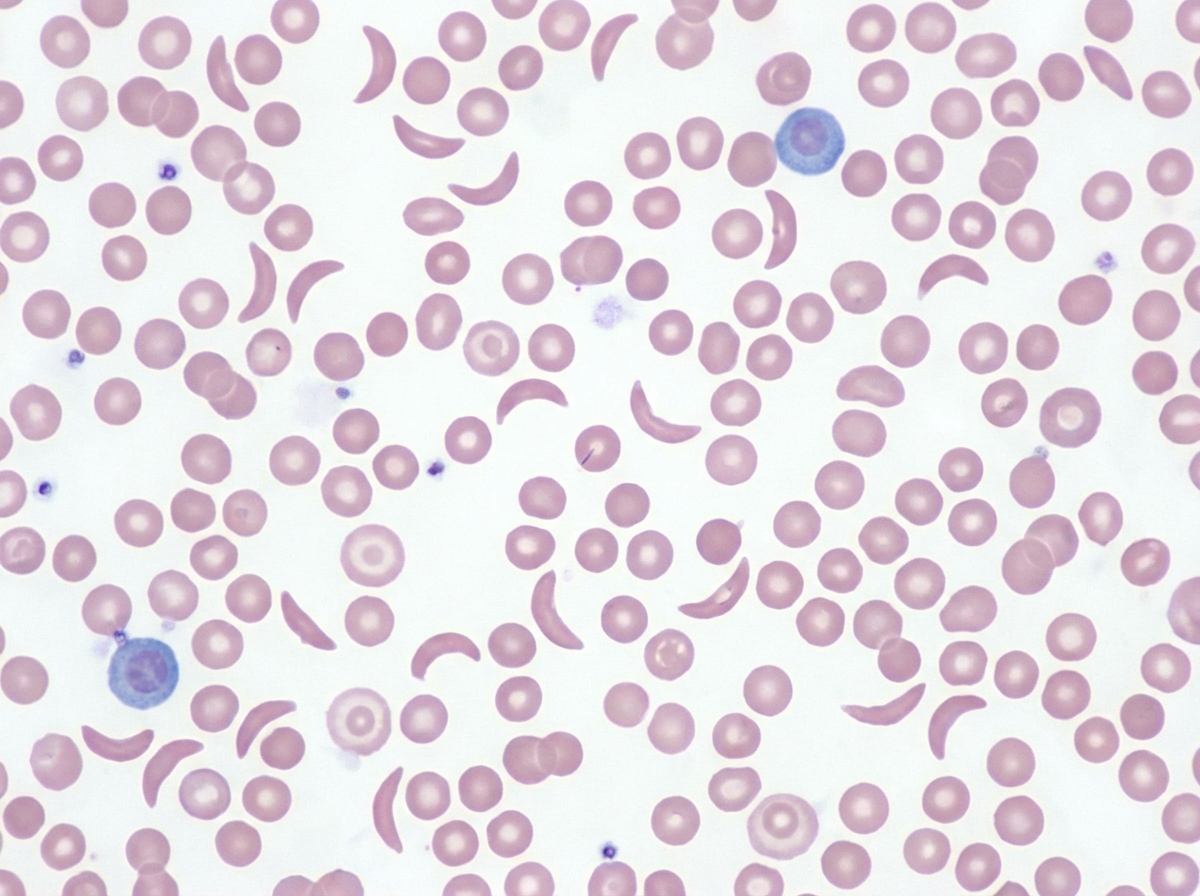
Aplastic anemia in sickle cell anemia is typically due to infection with which of the following viruses?
Explanation: **Explanation:** **Nodular Lymphocyte Predominant Hodgkin Lymphoma (NLPHL)** is a distinct clinical entity that differs from Classical Hodgkin Lymphoma (CHL) in both morphology and immunophenotype [1]. **1. Why "Popcorn cell" is correct:** The hallmark of NLPHL is the presence of **L&H cells (Lymphocytic and Histiocytic variants)**, popularly known as **"Popcorn cells."** [1] These are large cells with delicate, multi-lobed, folded nuclei resembling a kernel of popped corn [2]. Unlike the Reed-Sternberg (RS) cells seen in classical types, popcorn cells are **CD20+ and CD45+**, but negative for CD15 and CD30. **2. Why other options are incorrect:** * **Foam cells:** These are lipid-laden macrophages commonly seen in atherosclerosis, xanthomas, or certain storage diseases (e.g., Niemann-Pick), but they have no diagnostic role in Hodgkin lymphoma. * **Pale cells:** This is a non-specific descriptive term. While some cells in the germinal center may appear pale, it is not a diagnostic feature of NLPHL. **3. NEET-PG High-Yield Pearls:** * **Immunophenotype:** NLPHL is **CD20+, CD45+, BCL6+,** and **EMA+**. It is characteristically **CD15- and CD30-** (the opposite of Classical Hodgkin Lymphoma). * **Clinical Presentation:** It usually involves isolated peripheral lymphadenopathy (cervical or axillary) and has a very indolent (slow) clinical course with a high survival rate [1]. * **Background:** The background in NLPHL consists primarily of follicular dendritic cells and small B-lymphocytes, whereas CHL has a background of reactive T-lymphocytes, eosinophils, and plasma cells [1]. **References:** [1] Kumar V, Abbas AK, et al.. Robbins and Cotran Pathologic Basis of Disease. 9th ed. Diseases of White Blood Cells, Lymph Nodes, Spleen, and Thymus, p. 618. [2] Kumar V, Abbas AK, et al.. Robbins and Cotran Pathologic Basis of Disease. 9th ed. Diseases of White Blood Cells, Lymph Nodes, Spleen, and Thymus, p. 616.
Explanation: **Explanation:** **ADAMTS-13** (A Disintegrin And Metalloproteinase with a ThromboSpondin type 1 motif, member 13) is a plasma zinc-metalloproteinase. Its primary physiological role is to cleave large, pro-thrombotic **von Willebrand Factor (vWF) multimers** into smaller, less active fragments [2]. 1. **Why Option C is Correct:** ADAMTS-13 is synthesized and secreted primarily by the **Stellate cells (Ito cells)** of the liver [1]. While it is also expressed in vascular endothelial cells and platelets to a lesser extent, the hepatic stellate cells are the major source of circulating ADAMTS-13 in the plasma. 2. **Why Other Options are Incorrect:** * **Option A:** Alpha cells of the pancreas produce glucagon. * **Option B:** Oligodendrocytes are responsible for myelinating axons in the Central Nervous System. * **Option C:** Tubular epithelial cells of the kidney are involved in reabsorption and secretion; they do not produce ADAMTS-13 (though the kidney is a target of damage in microangiopathies). **Clinical Pearls for NEET-PG:** * **TTP (Thrombotic Thrombocytopenic Purpura):** This condition is caused by a **deficiency of ADAMTS-13**. Without this enzyme, "Ultra-Large" vWF multimers persist, leading to spontaneous platelet aggregation and microthrombi [2]. * **Etiology:** TTP can be **acquired** (autoantibodies against ADAMTS-13) or **hereditary** (Upshaw-Schulman syndrome) [2]. * **Classic Pentad of TTP:** Fever, Microangiopathic Hemolytic Anemia (MAHA - look for **Schistocytes**), Thrombocytopenia, Neurological symptoms, and Renal failure [2]. * **Treatment:** Plasmapheresis (Plasma exchange) is the gold standard, as it removes antibodies and replenishes the ADAMTS-13 enzyme. **References:** [1] Cross SS. Underwood's Pathology: A Clinical Approach. 6th ed. Common Clinical Problems From Liver And Biliary System Disease, pp. 381-382. [2] Kumar V, Abbas AK, et al.. Robbins and Cotran Pathologic Basis of Disease. 9th ed. The Kidney, pp. 947-948.
Explanation: **Explanation:** **Bernard-Soulier Syndrome (BSS)** is the correct answer because it is a rare autosomal recessive bleeding disorder characterized by the deficiency or dysfunction of the **Glycoprotein Ib-IX-V complex** [1]. This complex acts as the receptor for Von Willebrand Factor (vWF), essential for platelet adhesion to the subendothelium. The hallmark of BSS is the presence of **thrombocytopenia** and **"Giant Platelets"** (often as large as or larger than red blood cells). The large size is attributed to the lack of GP Ib-IX-V, which normally plays a structural role in regulating the platelet cytoskeleton and membrane organization during megakaryocyte fragmentation. **Analysis of Incorrect Options:** * **Von Willebrand Disease (vWD):** This is a deficiency of vWF itself. While it shares clinical features with BSS (impaired adhesion), the platelet morphology and size are typically **normal**. * **Polycythemia Rubra Vera:** This is a myeloproliferative neoplasm characterized primarily by an absolute increase in red cell mass [2]. While thrombocytosis may occur, platelets are generally of normal size. * **Leukemia:** While some leukemias (like Acute Megakaryoblastic Leukemia - AML M7) can show abnormal platelets, "Giant Platelets" are not a classic diagnostic hallmark compared to the specific association with BSS. **High-Yield Clinical Pearls for NEET-PG:** * **Peripheral Smear:** BSS shows large platelets and a low platelet count (thrombocytopenia). * **Ristocetin Aggregation Test:** In BSS, platelets **fail to aggregate** with Ristocetin, and unlike vWD, this is **not corrected** by adding normal plasma [1]. * **Differential for Giant Platelets:** Remember the mnemonic **"B-M-W"**: **B**ernard-Soulier, **M**ay-Hegglin anomaly (associated with Dohle-like bodies), and **W**iskott-Aldrich (Note: Wiskott-Aldrich actually features *small* platelets, a common trap). Gray Platelet Syndrome also features large platelets. **References:** [1] Kumar V, Abbas AK, et al.. Robbins and Cotran Pathologic Basis of Disease. 9th ed. Red Blood Cell and Bleeding Disorders, pp. 668-669. [2] Cross SS. Underwood's Pathology: A Clinical Approach. 6th ed. Common Clinical Problems From Blood And Bone Marrow Disease, pp. 614-615.
Explanation: **Explanation:** **Cabot rings** are thin, red-violet, thread-like strands that appear in a circular, loop-like, or "figure-of-eight" shape within erythrocytes on a Wright-Giemsa stained peripheral smear. They are remnants of the **mitotic spindle** (microtubules) or fragments of the nuclear membrane. **Why Post-splenectomy is correct:** The spleen acts as the body’s primary "filter" (pitting mechanism), where splenic macrophages identify and remove nuclear remnants and inclusions from circulating red blood cells. Following a **splenectomy** (or in states of functional asplenia), this filtering mechanism is lost, allowing cells containing Cabot rings, Howell-Jolly bodies, and Pappenheimer bodies to persist in the peripheral circulation [1]. **Analysis of Incorrect Options:** * **Hemochromatosis (A):** This is a disorder of iron overload. While it affects the liver and pancreas, it does not typically produce specific nuclear remnants like Cabot rings in RBCs. * **Thalassemia (B):** Characterized by target cells, microcytosis, and basophilic stippling. While severe dyserythropoiesis occurs, Cabot rings are not a hallmark feature compared to post-splenectomy states. * **Acquired hemolytic anemia (D):** Usually presents with spherocytes (Autoimmune) or schistocytes (Microangiopathic). Cabot rings are not a characteristic finding here. **High-Yield Clinical Pearls for NEET-PG:** * **Differential Diagnosis:** Cabot rings are also classically seen in **Megaloblastic anemia** (due to disordered erythropoiesis) and **Lead poisoning**. * **Howell-Jolly Bodies:** These are DNA remnants (solid purple dots), also seen post-splenectomy [1]. * **Basophilic Stippling:** Represents precipitated RNA (ribosomes), seen in Lead poisoning and Thalassemia. * **Pappenheimer Bodies:** Siderotic (iron) granules seen in Sideroblastic anemia and post-splenectomy. **References:** [1] Kumar V, Abbas AK, et al.. Robbins and Cotran Pathologic Basis of Disease. 9th ed. Red Blood Cell and Bleeding Disorders, pp. 644-645.
Explanation: **Explanation:** **Castleman Disease (CD)**, also known as angiofollicular lymph node hyperplasia, is a rare lymphoproliferative disorder. The association with **Human Herpesvirus 8 (HHV-8)** is the cornerstone of its pathogenesis, particularly in the **Multicentric** variant (MCD). **Why HHV-8 is the correct answer:** HHV-8 (also known as Kaposi Sarcoma-associated Herpesvirus) encodes a viral homolog of **Interleukin-6 (vIL-6)**. This viral cytokine mimics human IL-6, driving B-cell proliferation, plasma cell differentiation, and systemic inflammation. This is especially prevalent in HIV-positive patients with MCD, where HHV-8 is found in nearly 100% of cases. **Why other options are incorrect:** * **HSV (A) & CMV (B):** While these are common herpesviruses, they are not etiologically linked to the pathogenesis of Castleman disease. CMV is more commonly associated with infectious mononucleosis-like syndromes or retinitis in immunocompromised states. * **EBV (C):** EBV is strongly associated with other lymphoid malignancies like Burkitt lymphoma, Hodgkin lymphoma, and Nasopharyngeal carcinoma, but it is not the primary driver of Castleman disease. **High-Yield Clinical Pearls for NEET-PG:** * **Histological Variants:** 1. **Hyaline-Vascular (80-90%):** Characterized by "Lollipop lesions" (sclerotic vessels entering germinal centers) and "Onion-skinning" of the mantle zone. Usually unicentric. 2. **Plasma Cell Variant:** Associated with systemic symptoms (fever, anemia) and elevated ESR due to IL-6. * **Clinical Association:** HHV-8 positive MCD is a significant risk factor for developing **Kaposi Sarcoma** and **Primary Effusion Lymphoma (PEL)**. * **Key Cytokine:** **IL-6** is the "master regulator" of the disease symptoms and progression.
Explanation: ### Explanation **Correct Answer: C. Congenital asplenia** **Why it is the correct answer:** Neutropenia refers to an absolute neutrophil count (ANC) below 1500/mm³. **Congenital asplenia** (or surgical splenectomy) typically results in **neutrophilia** (increased neutrophil count) and thrombocytosis, rather than neutropenia. The spleen normally acts as a reservoir for leukocytes; its absence leads to a loss of splenic sequestration and a shift of the marginal pool into the circulating pool. Additionally, asplenia is characterized by the presence of **Howell-Jolly bodies** on peripheral smear [1] and an increased risk of infections by encapsulated organisms (e.g., *S. pneumoniae*) [1]. **Why the other options are incorrect:** * **Kostmann Syndrome (Severe Congenital Neutropenia):** An autosomal recessive disorder characterized by a maturation arrest of neutrophil precursors in the bone marrow (at the promyelocyte stage), leading to profound neutropenia and life-threatening infections. * **Wiskott-Aldrich Syndrome:** While primarily known for the triad of thrombocytopenia (small platelets), eczema, and immunodeficiency, it is frequently associated with intermittent or chronic neutropenia due to marrow production defects or immune-mediated destruction. * **X-linked Hyper-IgM Syndrome:** Caused by a defect in **CD40L**, preventing B-cell class switching. Approximately 50% of these patients develop severe neutropenia, likely due to an absence of CD40L-mediated signaling required for granulopoiesis or autoimmune destruction. **High-Yield Clinical Pearls for NEET-PG:** * **Cyclic Neutropenia:** Occurs every 21 days due to *ELANE* gene mutations. * **Felty Syndrome Triad:** Rheumatoid Arthritis, Splenomegaly, and Neutropenia. * **Post-Splenectomy Blood Picture:** Howell-Jolly bodies, Pappenheimer bodies, Heinz bodies, and target cells [1]. * **Most common cause of neutropenia worldwide:** Drug-induced (e.g., NSAIDs, Antithyroid drugs, Chemotherapy). **References:** [1] Cross SS. Underwood's Pathology: A Clinical Approach. 6th ed. Common Clinical Problems From Diseases Of The Urinary And Male Genital Tracts, pp. 570-571.
Explanation: **Explanation:** **Thrombotic Thrombocytopenic Purpura (TTP)** is the correct answer because its primary pathophysiology involves a deficiency of **ADAMTS13**, a plasma metalloprotease [1]. 1. **Mechanism:** ADAMTS13 (also known as von Willebrand factor-cleaving protease) is responsible for cleaving large, pro-thrombotic **ultra-large von Willebrand factor (ULVWF) multimers** into smaller, functional units. When ADAMTS13 is deficient (due to autoantibodies in acquired TTP or genetic mutations in Upshaw-Schulman syndrome), these large multimers persist [1]. They cause spontaneous platelet aggregation and microthrombi formation in small vessels, leading to microangiopathic hemolytic anemia (MAHA) and thrombocytopenia. **Why other options are incorrect:** * **Essential Thrombocythemia (ET):** A myeloproliferative neoplasm characterized by autonomous overproduction of platelets, usually associated with mutations in **JAK2, CALR, or MPL** genes. * **Immune Thrombocytopenic Purpura (ITP):** An autoimmune disorder where anti-platelet antibodies (usually against **GpIIb/IIIa**) lead to premature platelet destruction in the spleen. ADAMTS13 levels are normal [1]. * **Chronic Lymphocytic Leukemia (CLL):** A B-cell neoplasm characterized by the accumulation of mature-appearing lymphocytes. While it can cause secondary autoimmune cytopenias, it is not linked to ADAMTS13 deficiency. **High-Yield Clinical Pearls for NEET-PG:** * **Classic Pentad of TTP:** Fever, Anemia (MAHA), Thrombocytopenia, Neurological symptoms, and Renal failure (Mnemonic: **FAT RN**) [1]. * **Peripheral Smear:** Look for **Schistocytes** (fragmented RBCs) and decreased platelets [1]. * **Coagulation Profile:** PT and APTT are typically **normal** in TTP (unlike DIC). * **Treatment:** Emergency **Plasmapheresis (Plasma Exchange)** is the gold standard to remove antibodies and replenish ADAMTS13. **References:** [1] Kumar V, Abbas AK, et al.. Robbins and Cotran Pathologic Basis of Disease. 9th ed. The Kidney, pp. 947-948.
Explanation: ### Explanation Iron Deficiency Anemia (IDA) is characterized by a depletion of total body iron stores, leading to impaired hemoglobin synthesis. To understand the biochemical markers, one must look at the body's compensatory mechanisms. **1. Why Option B is Correct:** * **Low Ferritin:** Ferritin is the primary storage form of iron in the liver and reticuloendothelial system. In IDA, these stores are the first to be depleted to maintain serum iron levels. Therefore, a **low serum ferritin** is the most specific initial laboratory finding for IDA. * **High TIBC (Total Iron Binding Capacity):** TIBC is an indirect measure of **Transferrin**, the protein that transports iron. When iron stores are low, the liver increases the synthesis of transferrin to maximize the capture of any available iron. Thus, TIBC increases as the body attempts to compensate for the deficiency. **2. Why Other Options are Incorrect:** * **Options A & C (Low TIBC):** A low TIBC is typically seen in **Anemia of Chronic Disease (ACD)** or iron overload states. In ACD, inflammatory cytokines (like Hepcidin) sequester iron and downregulate transferrin production. * **Options C & D (High Ferritin):** High ferritin levels indicate iron overload (Hemochromatosis) or an acute phase response (inflammation/infection), which contradicts a deficiency state. **3. NEET-PG High-Yield Pearls:** * **Gold Standard Diagnosis:** Bone marrow aspiration showing absent stainable iron (Prussian Blue/Perl’s stain). * **Earliest Sign:** Decreased serum ferritin. * **Peripheral Smear:** Microcytic hypochromic RBCs with increased **RDW** (Red Cell Distribution Width), pencil cells, and occasional target cells [1]. * **Mentzer Index:** (MCV/RBC count) >13 suggests IDA, while <13 suggests Thalassemia trait. **References:** [1] Cross SS. Underwood's Pathology: A Clinical Approach. 6th ed. Common Clinical Problems From Blood And Bone Marrow Disease, pp. 590-591.
Explanation: **Explanation:** The correct answer is **7.4 (Option C)**. **1. Why 7.4 is correct:** When blood is freshly collected from a healthy donor, its physiological pH is approximately **7.4**. Although the Citrate Phosphate Dextrose (CPD) anticoagulant solution itself is acidic (pH ~5.6), the high buffering capacity of the plasma proteins and the bicarbonate system in the donor's blood initially neutralizes the acidity of the preservative. Therefore, immediately after collection, the pH of the blood in the bag remains close to the physiological level of 7.4. **2. Analysis of Incorrect Options:** * **Option A (7.1):** This is the pH of blood after approximately **21 days** of storage. As RBCs undergo glycolysis during storage, they produce lactic acid, which causes the pH to drop over time. * **Option B (7.3):** While closer to physiological pH, it does not represent the immediate post-collection state. * **Option D (7.6):** This is alkaline. Blood becomes increasingly acidic, not alkaline, during storage due to metabolic byproducts. **3. NEET-PG High-Yield Pearls:** * **Storage Lesion:** This refers to the biochemical and morphological changes in blood during storage. Key changes include **decreased pH**, **decreased 2,3-DPG** (shifting the oxygen dissociation curve to the left), and **increased Plasma Potassium** (due to leakage from RBCs). * **CPD vs. CPDA-1:** CPD allows for a storage life of **21 days**. The addition of Adenine (CPDA-1) extends the shelf life to **35 days** by maintaining ATP levels. * **pH at Expiry:** By the end of the storage period (35 days for CPDA-1), the pH typically drops to approximately **6.7 to 6.9**.
Explanation: **Explanation:** **Parvovirus B19** is the correct answer because it specifically targets and destroys **erythroid progenitor cells** in the bone marrow by binding to the **P-antigen** on their surface [1]. In healthy individuals, this causes a temporary halt in red cell production that is clinically silent. However, in patients with **Sickle Cell Anemia (SCA)** or other chronic hemolytic states, the RBC lifespan is already significantly shortened (10–20 days). When Parvovirus B19 arrests erythropoiesis, the patient cannot replace the rapidly dying RBCs, leading to a sudden, life-threatening drop in hemoglobin known as an **Aplastic Crisis** [1]. **Incorrect Options:** * **Herpes Simplex Virus (HSV):** Typically causes mucocutaneous lesions or encephalitis; it does not have a tropism for erythroid precursors. * **Cytomegalovirus (CMV):** Primarily causes infectious mononucleosis-like syndromes or opportunistic infections in immunocompromised hosts (retinitis, colitis), but not isolated aplastic crises. * **Papovavirus:** This family includes HPV and Polyomaviruses (JC/BK). While JC virus causes PML in the brain, it does not affect the hematological system in this manner. **High-Yield Clinical Pearls for NEET-PG:** * **Diagnostic Hallmark:** The presence of **Giant Proerythroblasts** with viral intranuclear inclusions in the bone marrow. * **Reticulocyte Count:** A key feature of an aplastic crisis is a **low reticulocyte count** (distinguishing it from a hemolytic crisis where reticulocytes are high). * **Other Manifestations:** In children, Parvovirus B19 causes **Erythema Infectiosum** (Fifth disease/Slapped-cheek rash); in adults, it often causes symmetrical arthralgia. * **Hydrops Fetalis:** If a pregnant woman is infected, the virus can cross the placenta, causing fetal anemia and high-output heart failure. **References:** [1] Cross SS. Underwood's Pathology: A Clinical Approach. 6th ed. Common Clinical Problems From Blood And Bone Marrow Disease, pp. 595-596.
Anemias: Classification and Approach
Practice Questions
Hemolytic Anemias
Practice Questions
Myeloproliferative Neoplasms
Practice Questions
Myelodysplastic Syndromes
Practice Questions
Acute Leukemias
Practice Questions
Chronic Leukemias
Practice Questions
Lymphomas and Lymphoid Neoplasms
Practice Questions
Plasma Cell Disorders
Practice Questions
Bleeding Disorders
Practice Questions
Thrombotic Disorders
Practice Questions
Get full access to all questions, explanations, and performance tracking.
Start For Free