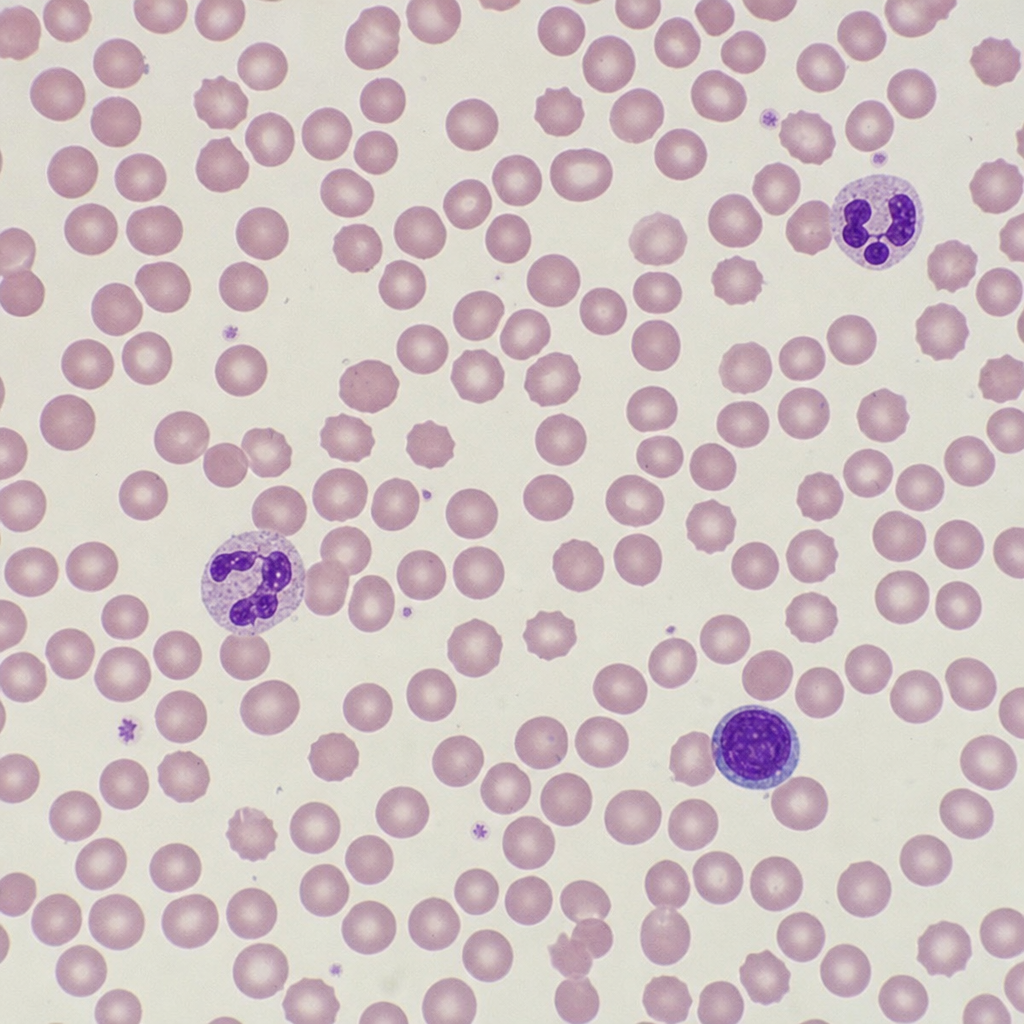
Bence Jones protein is seen in patients with which of the following diseases?
The presence of small-sized platelets on peripheral smear is characteristic of which of the following conditions?
Which stain is used for demonstrating Auer rods in blasts?
What is the characteristic marker for BCL-2 in hematologic malignancies?
Thrombocytopenia due to increased platelet destruction is seen in which of the following conditions?
Which of the following findings is associated with the worst prognosis in Acute Myeloid Leukemia (AML)?
Which of the following carcinomas is not associated with disseminated intravascular coagulation (DIC)?
Which of the following lymphomas shows CD15+/CD30+ expression?
A 28-year-old, previously healthy man has noted increasing fatigue for the past 6 months and the formation of bruises after minimal trauma. Over the past 2 days, he has developed a cough. On physical examination, his temperature is 38.9deg C, and he has diffuse rales in both lungs. He has no hepatosplenomegaly and no lymphadenopathy. Laboratory findings include a sputum culture positive for Streptococcus pneumoniae, hemoglobin of 7.2 g/dL, hematocrit of 21.7%, platelet count of 23,400/ mm3, WBC count of 1310/ mm3, prothrombin time of 13 seconds, partial thromboplastin time of 28 seconds, and total bilirubin of 1 mg/dL. The ANA test result is negative. What is the most likely explanation of these findings?
Hodgkin's lymphoma is caused by which virus?
Explanation: **Explanation:** **Bence Jones proteins (BJP)** are monoclonal immunoglobulin free light chains (either kappa or lambda) produced by neoplastic plasma cells [1]. Due to their small molecular weight, they are filtered by the glomerulus and excreted in the urine [2]. **Why "All of the above" is correct:** While Bence Jones proteinuria is the classic hallmark of **Multiple Myeloma** (Option C) [3], it is not pathognomonic for it. These light chains can be detected in various B-cell proliferative disorders: 1. **Multiple Myeloma:** Seen in approximately 50-80% of cases [3]. 2. **Leukemia (Option A):** Specifically in **Chronic Lymphocytic Leukemia (CLL)** and certain types of Lymphosarcoma, where malignant B-cells produce excess light chains. 3. **Polycythemia (Option B):** While rare, Bence Jones proteins have been documented in cases of **Polycythemia Vera**, often as a result of an associated monoclonal gammopathy or progression toward a plasma cell dyscrasia. **High-Yield Clinical Pearls for NEET-PG:** * **Unique Property:** Bence Jones proteins precipitate when heated to **40°C–60°C** and redissolve (re-dissolve) upon boiling at **100°C**. * **Detection:** They are **NOT** detected by routine urine dipstick (which primarily reacts to albumin). They are detected via the **Sulfosalicylic Acid (SSA) test** or confirmed by **Urine Protein Electrophoresis (UPEP)** and Immunofixation. * **Renal Impact:** They are toxic to renal tubular epithelial cells, leading to "Myeloma Kidney" (Cast Nephropathy), characterized by large, waxy, eosinophilic intratubular casts [4]. * **Differential Diagnosis:** Also seen in Waldenström Macroglobulinemia and Amyloidosis (AL type) [5]. **References:** [1] Cross SS. Underwood's Pathology: A Clinical Approach. 6th ed. Common Clinical Problems From Blood And Bone Marrow Disease, pp. 616-617. [2] Kumar V, Abbas AK, et al.. Robbins and Cotran Pathologic Basis of Disease. 9th ed. Diseases of White Blood Cells, Lymph Nodes, Spleen, and Thymus, pp. 607-608. [3] Kumar V, Abbas AK, et al.. Robbins and Cotran Pathologic Basis of Disease. 9th ed. Diseases of White Blood Cells, Lymph Nodes, Spleen, and Thymus, pp. 608-609. [4] Cross SS. Underwood's Pathology: A Clinical Approach. 6th ed. Common Clinical Problems From Blood And Bone Marrow Disease, pp. 618-619. [5] Kumar V, Abbas AK, et al.. Robbins and Cotran Pathologic Basis of Disease. 9th ed. Diseases of White Blood Cells, Lymph Nodes, Spleen, and Thymus, pp. 606-607.
Explanation: ### Explanation **Correct Answer: D. Wiskott-Aldrich syndrome** **1. Why Wiskott-Aldrich Syndrome (WAS) is correct:** Wiskott-Aldrich Syndrome is an X-linked recessive disorder caused by a mutation in the **WASP gene**, which encodes a protein involved in actin cytoskeleton remodeling. The hallmark hematological finding in WAS is the triad of **thrombocytopenia, small-sized platelets (low Mean Platelet Volume - MPV), and recurrent infections.** The small size occurs because the defective cytoskeleton leads to abnormal proplatelet formation and fragmentation in the bone marrow. **2. Why the other options are incorrect:** * **A. Idiopathic Thrombocytopenic Purpura (ITP):** In ITP, there is peripheral destruction of platelets. The bone marrow compensates by releasing immature "stress platelets" or **megathrombocytes**, which are **large** in size (increased MPV) [1]. * **B. Bernard Soulier Syndrome (BSS):** This is a defect in platelet adhesion (deficiency of GpIb-IX-V) [2]. It is classically associated with **Giant Platelets** (often as large as red blood cells). * **C. Disseminated Intravascular Coagulation (DIC):** DIC involves consumptive thrombocytopenia. Similar to ITP, the bone marrow response often results in larger, younger platelets being released into circulation, not small ones [3]. **3. High-Yield Clinical Pearls for NEET-PG:** * **WAS Triad:** Thrombocytopenia (Microplatelets) + Eczema + Immunodeficiency (recurrent pyogenic infections). * **Giant Platelets (Differential):** Bernard Soulier Syndrome, May-Hegglin anomaly, and Gray Platelet Syndrome. * **WASP Gene:** Essential for T-cell signaling and platelet cytoskeleton; its absence leads to increased splenic clearance of these tiny platelets. * **Memory Aid:** **W**iskott **A**ldrich = **W**eensy (**S**mall) platelets. **References:** [1] Kumar V, Abbas AK, et al.. Robbins and Cotran Pathologic Basis of Disease. 9th ed. Red Blood Cell and Bleeding Disorders, pp. 666-667. [2] Kumar V, Abbas AK, et al.. Robbins and Cotran Pathologic Basis of Disease. 9th ed. Red Blood Cell and Bleeding Disorders, pp. 668-669. [3] Kumar V, Abbas AK, et al.. Robbins and Cotran Pathologic Basis of Disease. 9th ed. Red Blood Cell and Bleeding Disorders, pp. 672-673.
Explanation: **Explanation:** **Auer rods** are pathognomonic features of **Acute Myeloid Leukemia (AML)**, specifically seen in myeloblasts [1]. They are elongated, needle-like pink/red cytoplasmic inclusions formed by the fusion of primary (azurophilic) granules [2]. 1. **Why Myeloperoxidase (MPO) is correct:** Auer rods contain high concentrations of the enzyme **myeloperoxidase**, as well as lysosomal enzymes and peroxidase. Therefore, the MPO stain strongly highlights these structures, making it the gold standard for identifying the myeloid lineage of blasts. 2. **Why other options are incorrect:** * **Periodic Acid Schiff (PAS):** This stain identifies glycogen. It typically shows a "block-like" or "globular" positivity in lymphoblasts (ALL) or erythroleukemia (M6), but it is not used to demonstrate Auer rods. * **Leucocyte Alkaline Phosphatase (LAP):** This is used to differentiate Chronic Myeloid Leukemia (Low LAP) from a Leukemoid Reaction (High LAP). It is not used for blast morphology. * **Non-specific Esterase (NSE):** This stain is a marker for the **monocytic lineage** (M4 and M5 subtypes of AML). While it identifies monoblasts, it does not specifically stain Auer rods. **High-Yield Clinical Pearls for NEET-PG:** * **Auer Rods** are most commonly seen in AML-M2 (t(8;21)) and AML-M3 (APML) [1]. * **Faggot Cells:** These are blasts containing "bundles" of Auer rods, classically seen in **Acute Promyelocytic Leukemia (AML-M3)** [1], [2]. * Auer rods are **never** seen in Lymphoblasts (ALL). Their presence automatically excludes a diagnosis of ALL [2]. * **Sudan Black B (SBB)** is another stain that can demonstrate Auer rods, as it stains the phospholipid membrane of the granules. **References:** [1] Kumar V, Abbas AK, et al.. Robbins and Cotran Pathologic Basis of Disease. 9th ed. Diseases of White Blood Cells, Lymph Nodes, Spleen, and Thymus, p. 620. [2] Kumar V, Abbas AK, et al.. Robbins and Cotran Pathologic Basis of Disease. 9th ed. Diseases of White Blood Cells, Lymph Nodes, Spleen, and Thymus, pp. 621-622.
Explanation: **Follicular Lymphoma (FL)** is the correct answer because it is defined by the hallmark translocation **t(14;18)(q32;q21)** [1], [2]. This translocation involves the *BCL-2* gene on chromosome 18 and the *IgH* (Immunoglobulin Heavy chain) locus on chromosome 14 [3]. This results in the overexpression of the BCL-2 protein, an **anti-apoptotic** molecule [1], [2]. In normal germinal centers, B-cells undergoing selection are BCL-2 negative to allow for apoptosis; however, in FL, the overexpression of BCL-2 prevents programmed cell death, leading to the accumulation of neoplastic B-cells [1], [2]. **Analysis of Incorrect Options:** * **Mycosis Fungoides:** This is a Cutaneous T-cell Lymphoma (CTCL). It is characterized by the proliferation of CD4+ T-cells and is not associated with BCL-2 translocations. * **B-cell Lymphoma:** While this is a broad category that includes Follicular Lymphoma, it is too non-specific. Not all B-cell lymphomas (e.g., Burkitt lymphoma) overexpress BCL-2 via the t(14;18) mechanism [3]. * **Mantle Cell Lymphoma (MCL):** This is characterized by **t(11;14)**, which leads to the overexpression of **Cyclin D1** (PRAD1 gene), a cell cycle regulator, not BCL-2. **High-Yield NEET-PG Pearls:** * **BCL-2 Staining:** In pathology slides, BCL-2 positivity in the follicles helps differentiate Follicular Lymphoma (Positive) from Reactive Follicular Hyperplasia (Negative) [1]. * **Grading:** FL is graded based on the number of **centroblasts** per high-power field (Mann and Berard criteria). * **Transformation:** FL can transform into a more aggressive **Diffuse Large B-cell Lymphoma (DLBCL)**, often referred to as Richter’s transformation in other contexts, but specifically termed "transformation" here [4]. * **Burkitt Lymphoma:** Associated with **t(8;14)** and **c-MYC** overexpression, showing a "starry sky" appearance [3]. **References:** [1] Kumar V, Abbas AK, et al.. Robbins and Cotran Pathologic Basis of Disease. 9th ed. Diseases of White Blood Cells, Lymph Nodes, Spleen, and Thymus, pp. 602-604. [2] Cross SS. Underwood's Pathology: A Clinical Approach. 6th ed. Common Clinical Problems From Diseases Of The Urinary And Male Genital Tracts, pp. 561-562. [3] Kumar V, Abbas AK, et al.. Robbins and Cotran Pathologic Basis of Disease. 9th ed. Neoplasia, pp. 310-311. [4] Cross SS. Underwood's Pathology: A Clinical Approach. 6th ed. Common Clinical Problems From Diseases Of The Urinary And Male Genital Tracts, pp. 563-564.
Explanation: Thrombocytopenia can be broadly classified into two categories: **decreased production** (bone marrow failure) and **increased destruction** (peripheral loss). [1] **1. Why Systemic Lupus Erythematosus (SLE) is correct:** In SLE, thrombocytopenia is primarily caused by **increased peripheral destruction**. This is an immune-mediated process where autoantibodies (anti-platelet antibodies) target surface antigens on platelets. These antibody-coated platelets are then recognized and sequestered by macrophages in the spleen, leading to their premature destruction. This mechanism is similar to Immune Thrombocytopenic Purpura (ITP). [1] **2. Why the other options are incorrect:** * **Aplastic Anemia (Option A):** This is a bone marrow failure syndrome characterized by pancytopenia. The low platelet count is due to a **lack of production** caused by the replacement of hematopoietic stem cells with fat. [1] * **Cancer Chemotherapy (Option B):** Cytotoxic drugs are myelosuppressive. They inhibit rapidly dividing cells in the bone marrow, leading to **decreased production** of megakaryocytes and subsequent thrombocytopenia. [1] * **Acute Leukemia (Option C):** In leukemia, the bone marrow is "packed" with malignant blast cells. These blasts crowd out normal hematopoietic elements, leading to **decreased production** of platelets. [1] **High-Yield Clinical Pearls for NEET-PG:** * **Mechanism Check:** Always distinguish between "Marrow Failure" (Low Reticulocytes/Large Platelets absent) and "Peripheral Destruction" (High Megakaryocytes in marrow/Large Platelets on smear). [1] * **SLE Hematology:** The most common hematological abnormality in SLE is **Anemia of Chronic Disease**, but the most specific "immune" destruction markers are positive Direct Coombs test (AIHA) and thrombocytopenia. * **Evans Syndrome:** The combination of Autoimmune Hemolytic Anemia (AIHA) and Immune Thrombocytopenia (ITP), often seen in SLE patients. **References:** [1] Kumar V, Abbas AK, et al.. Robbins and Cotran Pathologic Basis of Disease. 9th ed. Red Blood Cell and Bleeding Disorders, pp. 665-667.
Explanation: In Acute Myeloid Leukemia (AML), cytogenetics is the single most important predictor of treatment response and overall survival [1]. **Explanation of the Correct Answer:** **Monosomy 7 (-7)** or a deletion of the long arm of chromosome 7 (7q-) is categorized under **Adverse (Poor) Risk** cytogenetics [1]. It is frequently associated with complex karyotypes, therapy-related AML (t-AML), and AML arising from myelodysplastic syndrome (MDS) [1]. Patients with Monosomy 7 typically show poor response to standard induction chemotherapy and have a very high risk of relapse, necessitating aggressive management like Allogeneic Stem Cell Transplant. **Analysis of Incorrect Options:** * **A. t(8;21):** This translocation involves the *RUNX1-RUNX1T1* genes. It is a hallmark of AML-M2 and is classified as **Favorable Risk**, associated with high complete remission rates [1]. * **B. Inversion 16 [inv(16)]:** This involves the *CBFB-MYH11* fusion gene. Along with t(8;21), it belongs to the "Core Binding Factor" (CBF) leukemias, which carry a **Favorable prognosis** [1]. * **C. Normal Cytogenetics:** This is classified as **Intermediate Risk**. Prognosis in these patients is further refined by molecular markers (e.g., *NPM1* mutation is favorable, while *FLT3-ITD* is unfavorable) [1]. **High-Yield Clinical Pearls for NEET-PG:** * **Best Prognosis:** t(15;17) [APML], followed by t(8;21) and inv(16). * **Worst Prognosis:** Monosomy 7, Monosomy 5, 17p deletions (p53 mutation), and complex karyotypes (≥3 abnormalities). * **Molecular Markers:** *NPM1* and *CEBPA* mutations improve prognosis in normal cytogenetics, whereas *FLT3-ITD* worsens it [1]. * **Chloroma (Granulocytic Sarcoma):** Most commonly associated with t(8;21). **References:** [1] Kumar V, Abbas AK, et al.. Robbins and Cotran Pathologic Basis of Disease. 9th ed. Diseases of White Blood Cells, Lymph Nodes, Spleen, and Thymus, pp. 620-621.
Explanation: Disseminated Intravascular Coagulation (DIC) in malignancy is primarily triggered by the release of **procoagulants** (like tissue factor or cysteine proteases) into the circulation, leading to widespread fibrin deposition and subsequent consumption of clotting factors [1]. **Why Breast Carcinoma is the Correct Answer:** While any advanced malignancy can theoretically trigger DIC, **Breast Carcinoma** is the least commonly associated among the options provided. It typically presents with localized thrombotic events or migratory thrombophlebitis rather than acute or chronic DIC. In the context of NEET-PG questions, "not associated" refers to the lack of a strong, classic clinical correlation compared to the other high-yield examples. **Analysis of Incorrect Options:** * **Prostate Carcinoma:** Classically associated with DIC, particularly the chronic form. Prostatic tissue is rich in **thromboplastin** and **fibrinolytic enzymes**, which can trigger both coagulation and primary fibrinolysis. * **Pancreatic Carcinoma:** Highly associated with a hypercoagulable state (Trousseau syndrome). The release of **mucin** and tissue factor-rich microvesicles frequently leads to chronic DIC [1]. * **Stomach Carcinoma:** Mucin-secreting adenocarcinomas (like gastric cancer) are notorious for triggering DIC. The circulating **mucopolysaccharides** directly activate Factor X, initiating the coagulation cascade [1]. **High-Yield Clinical Pearls for NEET-PG:** * **Most common malignancy associated with DIC:** Acute Promyelocytic Leukemia (APL/AML-M3) due to the release of procoagulant granules. * **Mechanism in Adenocarcinomas:** Mucin acts as the primary trigger for the extrinsic pathway [1]. * **Kasabach-Merritt Syndrome:** A classic cause of DIC involving giant hemangiomas. * **Laboratory Hallmark:** Elevated **D-dimer** (most sensitive) and prolonged PT/APTT with thrombocytopenia [1]. **References:** [1] Kumar V, Abbas AK, et al.. Robbins and Cotran Pathologic Basis of Disease. 9th ed. Red Blood Cell and Bleeding Disorders, pp. 671-672.
Explanation: **Explanation:** The correct answer is **Mixed cellularity Hodgkin lymphoma**. **1. Why Option A is correct:** Classical Hodgkin Lymphoma (cHL), which includes subtypes like Mixed Cellularity, Nodular Sclerosis, Lymphocyte Rich, and Lymphocyte Depleted, is characterized by the presence of **Reed-Sternberg (RS) cells** [1]. These neoplastic cells have a distinct immunophenotype: they are typically **CD15+ and CD30+**, while usually being negative for CD45 (LCA) and B-cell markers like CD20 [1]. Mixed cellularity HL specifically presents with a polymorphic inflammatory background (eosinophils, plasma cells) and is strongly associated with the Epstein-Barr Virus (EBV) [1]. **2. Why the other options are incorrect:** * **Mantle cell lymphoma:** This is a B-cell non-Hodgkin lymphoma characterized by the t(11;14) translocation and overexpression of Cyclin D1. Its immunophenotype is **CD5+, CD20+, and CD23 negative**. * **Diffuse T-cell lymphoma:** These are mature T-cell neoplasms that express T-cell markers such as **CD3, CD4, or CD8**, and are negative for CD15/CD30 (unless it is the specific subtype, Anaplastic Large Cell Lymphoma, which is CD30+ but CD15 negative). * **Nodular lymphocyte-predominant Hodgkin lymphoma (NLPHL):** Unlike cHL, the neoplastic cells here are "Popcorn cells" (L&H cells). Their immunophenotype is different: they are **CD20+ and CD45+**, but **CD15- and CD30-**. **High-Yield Pearls for NEET-PG:** * **CD30** is also known as Ki-1 antigen. * **CD15** is also known as Leu-M1. * **RS Cell Variants:** "Popcorn cells" are seen in NLPHL; "Lacunar cells" are seen in Nodular Sclerosis HL [2]. * **Mnemonic:** cHL is "15 + 30 = 45" (CD15+, CD30+, but CD45 negative). **References:** [1] Kumar V, Abbas AK, et al.. Robbins and Cotran Pathologic Basis of Disease. 9th ed. Diseases of White Blood Cells, Lymph Nodes, Spleen, and Thymus, pp. 614-618. [2] Cross SS. Underwood's Pathology: A Clinical Approach. 6th ed. Common Clinical Problems From Diseases Of The Urinary And Male Genital Tracts, pp. 558-560.
Explanation: **Explanation:** The patient presents with **pancytopenia** (anemia, thrombocytopenia, and leukopenia) as evidenced by low hemoglobin, low platelets, and a low WBC count [1]. The clinical manifestations—fatigue (anemia), easy bruising (thrombocytopenia), and a severe infection like *S. pneumoniae* (neutropenia)—are classic for bone marrow failure [1]. The absence of hepatosplenomegaly and lymphadenopathy further points toward **Aplastic Anemia** rather than a lymphoproliferative disorder [1]. 1. **Why Option A is correct:** Aplastic anemia is characterized by a **hematopoietic stem cell defect** leading to marrow hypoplasia [1]. This results in a failure to produce all three cell lines (pancytopenia). In young adults, this is most commonly idiopathic (immune-mediated T-cell destruction of stem cells) or triggered by drugs/toxins [3]. 2. **Why Option B is incorrect:** Hemolysis of antibody-coated cells (Autoimmune Hemolytic Anemia) would cause anemia and elevated bilirubin, but would not typically cause leukopenia or thrombocytopenia (unless it is Evans Syndrome, which is less likely given the negative ANA and clinical picture). 3. **Why Option C is incorrect:** This refers to **Paroxysmal Nocturnal Hemoglobinuria (PNH)**. While PNH can be associated with aplastic anemia, the primary mechanism of pancytopenia in this specific clinical vignette is the stem cell defect itself [3]. 4. **Why Option D is incorrect:** Myelophthisic anemia (marrow infiltration) usually presents with **splenomegaly** and a leucoerythroblastic blood picture (teardrop cells, immature precursors), which are absent here. **NEET-PG High-Yield Pearls:** * **Definition of Aplastic Anemia:** Pancytopenia with a hypocellular marrow (fatty replacement) in the absence of an infiltrative cause [1]. * **Key Negative Finding:** No splenomegaly (if the spleen is enlarged, look for leukemia or portal hypertension) [1]. * **Gold Standard Diagnosis:** Bone marrow aspiration and **trephine biopsy** (shows "dry tap" and >90% fat spaces) [1]. * **Treatment of Choice:** Bone marrow transplant (if <40 years) or immunosuppression (Anti-thymocyte globulin + Cyclosporine) [2]. **References:** [1] Kumar V, Abbas AK, et al.. Robbins and Cotran Pathologic Basis of Disease. 9th ed. Red Blood Cell and Bleeding Disorders, pp. 662-663. [2] Kumar V, Abbas AK, et al.. Robbins and Cotran Pathologic Basis of Disease. 9th ed. Red Blood Cell and Bleeding Disorders, p. 662. [3] Cross SS. Underwood's Pathology: A Clinical Approach. 6th ed. Common Clinical Problems From Blood And Bone Marrow Disease, pp. 595-596.
Explanation: **Explanation:** **Epstein-Barr Virus (EBV)** is the correct answer because it plays a critical role in the pathogenesis of Hodgkin Lymphoma (HL), particularly the **Mixed Cellularity** subtype and cases associated with HIV [1]. EBV infects B-cells and introduces oncogenes like **LMP-1** (Latent Membrane Protein-1), which mimics CD40 signaling [2]. This activates the NF-κB and JAK/STAT pathways, promoting the survival and proliferation of the characteristic **Reed-Sternberg (RS) cells**, preventing them from undergoing apoptosis despite their lack of functional antigen receptors [2]. **Analysis of Incorrect Options:** * **Cytomegalovirus (CMV):** While a common herpesvirus, it is primarily associated with infectious mononucleosis-like syndromes and congenital infections, not oncogenesis in lymphoma. * **HHV-6:** This virus causes Roseola Infantum (Exanthema Subitum). Although it is lymphotropic, it has no proven causative link to Hodgkin Lymphoma. * **HHV-8:** Also known as Kaposi Sarcoma-associated Herpesvirus (KSHV), it is the primary driver of **Kaposi Sarcoma**, Primary Effusion Lymphoma, and Multicentric Castleman Disease, but not HL [1]. **High-Yield Clinical Pearls for NEET-PG:** * **Subtype Association:** EBV is most strongly associated with **Mixed Cellularity HL** (~70% of cases) and least associated with the Lymphocyte Predominant subtype. * **RS Cell Markers:** Classic HL cells are typically **CD15+ and CD30+**, but **CD20 negative**. * **Bimodal Age Distribution:** HL shows two peaks, one in the 20s and another after age 50. * **Other EBV-associated Malignancies:** Burkitt Lymphoma (endemic), Nasopharyngeal Carcinoma, and Post-transplant Lymphoproliferative Disorder (PTLD) [3]. **References:** [1] Kumar V, Abbas AK, et al.. Robbins and Cotran Pathologic Basis of Disease. 9th ed. Diseases of the Immune System, pp. 261-262. [2] Kumar V, Abbas AK, et al.. Robbins and Cotran Pathologic Basis of Disease. 9th ed. Infectious Diseases, pp. 368-369. [3] Kumar V, Abbas AK, et al.. Robbins and Cotran Pathologic Basis of Disease. 9th ed. Neoplasia, pp. 335-336.
Anemias: Classification and Approach
Practice Questions
Hemolytic Anemias
Practice Questions
Myeloproliferative Neoplasms
Practice Questions
Myelodysplastic Syndromes
Practice Questions
Acute Leukemias
Practice Questions
Chronic Leukemias
Practice Questions
Lymphomas and Lymphoid Neoplasms
Practice Questions
Plasma Cell Disorders
Practice Questions
Bleeding Disorders
Practice Questions
Thrombotic Disorders
Practice Questions
Get full access to all questions, explanations, and performance tracking.
Start For Free