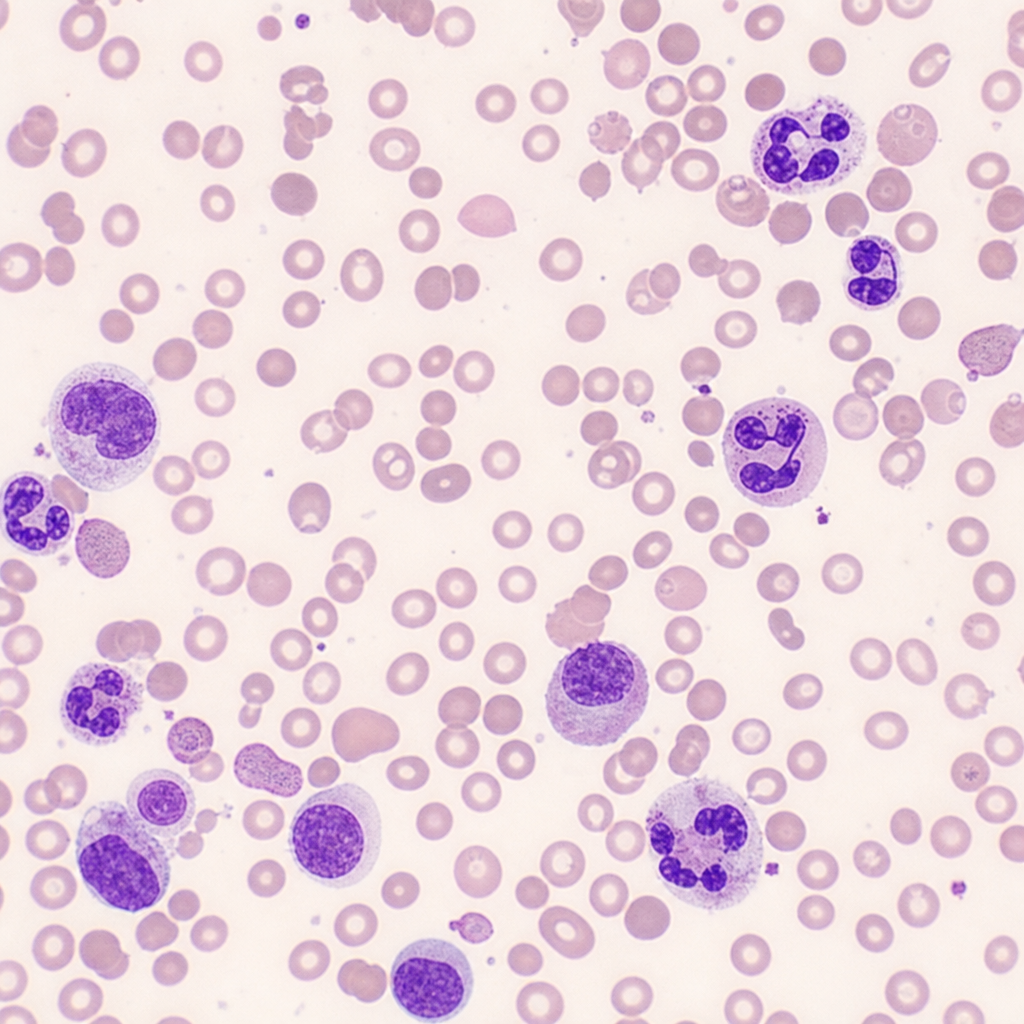
Which of the following are types of Hodgkin's lymphoma?
Which of the following is not a type of Langerhans cell histiocytosis?
The Philadelphia chromosome is most commonly associated with which of the following conditions?
What is the typical HbA2 concentration in thalassemia trait?
All of the following are true regarding Leukemoid reaction, EXCEPT:
Which of the following statements about hematological disorders is true?
Which of the following findings is false regarding thrombotic thrombocytopenic purpura?
Which of the following conditions is associated with necrotizing lymphadenitis?
Reticulocytosis is seen in all conditions EXCEPT:
Maltoma is positive for which of the following markers?
Explanation: **Explanation:** Hodgkin Lymphoma (HL) is a B-cell malignancy characterized by the presence of **Reed-Sternberg (RS) cells** in a background of non-neoplastic inflammatory cells [5]. According to the WHO classification, HL is broadly divided into two main types: **Classical Hodgkin Lymphoma (CHL)** and **Nodular Lymphocyte Predominant Hodgkin Lymphoma (NLPHL)** [4]. The correct answer is **D (All of the above)** because options A, B, and C are the primary histological subtypes of Classical Hodgkin Lymphoma: 1. **Nodular Sclerosis (A):** The most common subtype (60-70%). It is characterized by broad collagen bands and **lacunar variant** RS cells [2]. It frequently involves the mediastinum and is common in young females. 2. **Mixed Cellularity (C):** The second most common type, often associated with **EBV infection** (70% cases) [1]. It features a polymorphic infiltrate (eosinophils, plasma cells) and frequent "classic" RS cells. 3. **Lymphocyte Depletion (B):** The rarest and most aggressive subtype. It is characterized by a paucity of background lymphocytes and abundant, pleomorphic RS cells [3]. It is strongly associated with HIV and EBV. 4. **Lymphocyte Rich:** Another subtype of CHL (not listed) which carries the best prognosis among classical types [3]. **High-Yield Clinical Pearls for NEET-PG:** * **CD Markers:** CHL cells are typically **CD15+ and CD30+**, but CD45 negative. NLPHL is CD20+ and CD45+ (Popcorn cells) [4]. * **Bimodal Age Distribution:** HL shows peaks at 15–35 years and >55 years. * **Prognosis:** Lymphocyte Rich has the best prognosis; Lymphocyte Depletion has the worst [3]. * **Staging:** The **Ann Arbor Staging** system is used to determine the extent of the disease. **References:** [1] Kumar V, Abbas AK, et al.. Robbins and Cotran Pathologic Basis of Disease. 9th ed. Diseases of White Blood Cells, Lymph Nodes, Spleen, and Thymus, pp. 616-618. [2] Cross SS. Underwood's Pathology: A Clinical Approach. 6th ed. Common Clinical Problems From Diseases Of The Urinary And Male Genital Tracts, pp. 558-559. [3] Cross SS. Underwood's Pathology: A Clinical Approach. 6th ed. Common Clinical Problems From Diseases Of The Urinary And Male Genital Tracts, pp. 559-560. [4] Kumar V, Abbas AK, et al.. Robbins and Cotran Pathologic Basis of Disease. 9th ed. Diseases of White Blood Cells, Lymph Nodes, Spleen, and Thymus, p. 618. [5] Kumar V, Abbas AK, et al.. Robbins and Cotran Pathologic Basis of Disease. 9th ed. Diseases of White Blood Cells, Lymph Nodes, Spleen, and Thymus, p. 616.
Explanation: **Explanation:** **Langerhans Cell Histiocytosis (LCH)** is a group of idiopathic disorders [2] characterized by the clonal proliferation of Langerhans cells (dendritic cells). These cells are identified by **Birbeck granules** (tennis-racket shaped) on electron microscopy [1] and express markers like **CD1a, S100, and CD207 (Langerin).** [1] **Why Thomsen Disease is the Correct Answer:** **Thomsen disease** is a form of **Myotonia Congenita**, a genetic neuromuscular channelopathy. It is caused by mutations in the *CLCN1* gene (chloride channel) and is characterized by delayed muscle relaxation after voluntary contraction. It has no pathological relationship with histiocytic disorders. **Analysis of Incorrect Options (Types of LCH):** 1. **Letterer-Siwe Syndrome:** The most aggressive, **multifocal multisystem** form. It typically occurs in infants (<2 years) and presents with skin rashes, hepatosplenomegaly, lymphadenopathy, and bone marrow involvement. 2. **Hand-Schüller-Christian Disease:** A **multifocal unisystem** form usually seen in children. It is classically defined by a high-yield clinical triad: **Calvarial bone defects, Exophthalmos, and Diabetes Insipidus.** 3. **Eosinophilic Granuloma:** The most benign, **unifocal** form. It typically presents as a solitary osteolytic lesion in the skull, ribs, or femur in older children or adults. **High-Yield Clinical Pearls for NEET-PG:** * **BRAF V600E mutation** is seen in approximately 50% of LCH cases. [2] * **Birbeck Granules** are the pathognomonic ultrastructural finding. [1] * **CD1a and Langerin (CD207)** are the most specific immunohistochemical markers. [1] * **Bone** is the most common site of involvement in LCH. **References:** [1] Kumar V, Abbas AK, et al.. Robbins and Cotran Pathologic Basis of Disease. 9th ed. Diseases of White Blood Cells, Lymph Nodes, Spleen, and Thymus, p. 630. [2] Kumar V, Abbas AK, et al.. Robbins and Cotran Pathologic Basis of Disease. 9th ed. Diseases of White Blood Cells, Lymph Nodes, Spleen, and Thymus, pp. 629-630.
Explanation: **Explanation** **Why Chronic Myeloid Leukemia (CML) is correct:** The Philadelphia chromosome (Ph) is the hallmark cytogenetic abnormality of CML, present in >95% of cases [1][2]. It results from a **balanced reciprocal translocation between chromosomes 9 and 22**, denoted as **t(9;22)(q34;q11)** [1]. This translocation fuses the *ABL1* proto-oncogene on chromosome 9 with the *BCR* gene on chromosome 22 [3]. The resulting **BCR-ABL1 fusion gene** encodes a chimeric protein with constitutive **tyrosine kinase activity**, which drives uncontrolled myeloid proliferation by activating downstream signaling pathways [2][3]. **Why the other options are incorrect:** * **Leukemoid Reaction:** This is an exaggerated white blood cell response to stress or infection (WBC >50,000/µl). Unlike CML, it is a reactive process, lacks the Philadelphia chromosome, and typically shows a **high Leukocyte Alkaline Phosphatase (LAP) score** (which is low in CML). * **Eosinophilia:** While CML can present with increased eosinophils (basophilia is more characteristic), isolated eosinophilia is usually reactive (parasites, allergies) or associated with specific mutations like *FIP1L1-PDGFRA* [2]. * **Malaria:** This is a parasitic infection caused by *Plasmodium* species. It causes hemolytic anemia and thrombocytopenia but has no association with chromosomal translocations. **High-Yield Clinical Pearls for NEET-PG:** * **Targeted Therapy:** Imatinib (a Tyrosine Kinase Inhibitor) specifically targets the BCR-ABL1 protein. * **Ph+ ALL:** The Philadelphia chromosome is also found in 25-30% of adult Acute Lymphoblastic Leukemia (ALL) and carries a poor prognosis. * **Molecular Testing:** FISH or RT-PCR for the *BCR-ABL1* transcript is the gold standard for diagnosis and monitoring Minimal Residual Disease (MRD). **References:** [1] Cross SS. Underwood's Pathology: A Clinical Approach. 6th ed. (Basic Pathology) introduces the student to key general principles of pathology, both as a medical science and as a clinical activity with a vital role in patient care. Part 2 (Disease Mechanisms) provides fundamental knowledge about the cellular and molecular processes involved in diseases, providing the rationale for their treatment. Part 3 (Systematic Pathology) deals in detail with specific diseases, with emphasis on the clinically important aspects., pp. 225-226. [2] Kumar V, Abbas AK, et al.. Robbins and Cotran Pathologic Basis of Disease. 9th ed. Diseases of White Blood Cells, Lymph Nodes, Spleen, and Thymus, p. 624. [3] Kumar V, Abbas AK, et al.. Robbins and Cotran Pathologic Basis of Disease. 9th ed. Diseases of White Blood Cells, Lymph Nodes, Spleen, and Thymus, pp. 624-625.
Explanation: **Explanation:** The hallmark of **$\beta$-thalassemia trait (minor)** is a compensatory increase in **HbA2 ($\alpha_2\delta_2$)**. In this condition, there is a reduced synthesis of $\beta$-globin chains. To compensate for the lack of $\beta$-chains, there is a relative increase in the synthesis of $\delta$-globin chains, which combine with free $\alpha$-chains, leading to elevated HbA2 levels [1]. * **Correct Answer (D):** In $\beta$-thalassemia trait, HbA2 levels typically range between **3.5% and 7%**. A value >3.5% is the most reliable diagnostic marker for identifying carriers in a screening setting (using HPLC or electrophoresis). **Analysis of Incorrect Options:** * **Option A (<1%):** This is abnormally low. Low HbA2 is seen in **$\alpha$-thalassemia** or severe **iron deficiency anemia (IDA)** [1]. * **Option B (1% to 2.5%):** This is below the normal range. * **Option C (2.5% to 3.5%):** This represents the **normal physiological range** of HbA2 in a healthy adult. **High-Yield Clinical Pearls for NEET-PG:** 1. **Mentzer Index:** (MCV/RBC count) $<13$ suggests Thalassemia trait, while $>13$ suggests Iron Deficiency Anemia. 2. **Iron Deficiency Masking:** Co-existing iron deficiency can lower HbA2 levels, potentially masking a $\beta$-thalassemia trait diagnosis. Iron stores should be replenished before confirming the HbA2 status. 3. **HbF Levels:** In $\beta$-thalassemia trait, HbF is usually normal or only slightly elevated (1–5%). 4. **Peripheral Smear:** Characterized by microcytic hypochromic anemia with **target cells** and basophilic stippling. **References:** [1] Kumar V, Abbas AK, et al.. Robbins and Cotran Pathologic Basis of Disease. 9th ed. Red Blood Cell and Bleeding Disorders, pp. 647-650.
Explanation: A **Leukemoid Reaction** is an exaggerated non-neoplastic increase in white blood cell count (typically >50,000/µL) in response to infection, inflammation, or malignancy, mimicking leukemia [1]. ### **Explanation of Options** * **Option B (Correct Answer):** This statement is **false** because the diagnostic threshold for a Leukemoid reaction is much higher. While a normal absolute neutrophil count (ANC) is up to 7,500/µL [2], a Leukemoid reaction typically requires a **Total Leukocyte Count (TLC) >50,000/µL**. A count of 11,600/µL merely represents a mild neutrophilia, not a Leukemoid reaction. * **Option A:** In a Leukemoid reaction, there is a "shift to the left" (immature cells like metamyelocytes and myelocytes), but **blasts are typically absent or <5%**. The presence of a high blast percentage (>20%) would instead point toward Acute Leukemia [4]. * **Option C & D:** Leukemoid reactions are reactive processes. Unlike Chronic Myeloid Leukemia (CML), they are generally **not** associated with significant anemia (Hb >9 gm%) or severe thrombocytopenia. Platelet counts are usually normal or slightly elevated (reactive thrombocytosis). ### **High-Yield Clinical Pearls for NEET-PG** To differentiate Leukemoid Reaction from CML (the most common examiner trap): 1. **LAP/NAP Score:** Elevated in Leukemoid reactions; **decreased** in CML. 2. **Toxic Granulations & Dohle Bodies:** Present in neutrophils during Leukemoid reactions (due to infection/inflammation); absent in CML. 3. **Basophilia:** Absent in Leukemoid reactions; a hallmark of CML [3]. 4. **Splenomegaly:** Usually absent in Leukemoid reactions; massive in CML. 5. **Cytogenetics:** Philadelphia chromosome [t(9;22)] is absent in Leukemoid reactions. **References:** [1] Cross SS. Underwood's Pathology: A Clinical Approach. 6th ed. Common Clinical Problems From Blood And Bone Marrow Disease, pp. 580-581. [2] Cross SS. Underwood's Pathology: A Clinical Approach. 6th ed. Common Clinical Problems From Blood And Bone Marrow Disease, pp. 578-579. [3] Kumar V, Abbas AK, et al.. Robbins and Cotran Pathologic Basis of Disease. 9th ed. Diseases of White Blood Cells, Lymph Nodes, Spleen, and Thymus, p. 592. [4] Kumar V, Abbas AK, et al.. Robbins and Cotran Pathologic Basis of Disease. 9th ed. The Heart, pp. 589-590.
Explanation: ### Explanation **Correct Option: B. Both PT and aPTT are increased in DIC.** Disseminated Intravascular Coagulation (DIC) is a consumptive coagulopathy characterized by the systemic activation of the coagulation cascade. This leads to the widespread formation of microthrombi, which consumes clotting factors (including Factors V, VIII, and Fibrinogen) and platelets [1]. Because both the extrinsic and intrinsic pathways are depleted of factors, both **Prothrombin Time (PT)** and **activated Partial Thromboplastin Time (aPTT)** are characteristically prolonged [1]. **Why the other options are incorrect:** * **A. Hemophilia B:** Cryoprecipitate contains Fibrinogen, von Willebrand Factor (vWF), Factor VIII, and Factor XIII. It does **not** contain Factor IX. Therefore, it is useful in Hemophilia A but ineffective for Hemophilia B (Factor IX deficiency) [1]. * **C. von Willebrand Disease (vWD):** Desmopressin (dDAVP) is a mainstay of treatment for Type 1 vWD. It acts by stimulating the release of stored vWF and Factor VIII from Weibel-Palade bodies in endothelial cells. * **D. Hemorrhagic disease of the newborn:** This condition is caused by a deficiency of **Vitamin K**, not Vitamin C [1]. Neonates have low Vitamin K stores due to poor placental transfer and a sterile gut, necessitating prophylactic Vitamin K administration at birth [1]. **High-Yield Clinical Pearls for NEET-PG:** * **DIC Markers:** Look for increased D-dimer (most sensitive), decreased fibrinogen, and **schistocytes** on peripheral smear [1]. * **Cryoprecipitate vs. FFP:** Fresh Frozen Plasma (FFP) contains *all* coagulation factors, whereas Cryoprecipitate is a concentrated source of Fibrinogen and Factor VIII/vWF. * **Vitamin K Dependent Factors:** II, VII, IX, X, Protein C, and Protein S [1]. Factor VII has the shortest half-life, making PT the first lab value to prolong in Vitamin K deficiency or liver disease. **References:** [1] Cross SS. Underwood's Pathology: A Clinical Approach. 6th ed. Common Clinical Problems From Blood And Bone Marrow Disease, pp. 622-626.
Explanation: **Explanation:** Thrombotic Thrombocytopenic Purpura (TTP) is a life-threatening microangiopathic hemolytic anemia (MAHA). The pathophysiology centers on a **deficiency** of the metalloproteinase **ADAMTS13** (either due to genetic mutation or acquired autoantibodies) [1]. **Why Option C is the correct (False) statement:** ADAMTS13 is responsible for cleaving large von Willebrand Factor (vWF) multimers. In TTP, **low ADAMTS13 activity** leads to the persistence of "ultra-large" vWF multimers, which cause spontaneous platelet aggregation and microthrombi formation. Therefore, **High ADAMTS13 activity is incorrect**; the hallmark of TTP is severely reduced activity (usually <10%) [1]. **Analysis of other options:** * **Option A (Renal failure):** Microthrombi in the renal vasculature lead to acute kidney injury, though it is typically less severe than in Hemolytic Uremic Syndrome (HUS) [1]. * **Option B (Schistocytes):** As RBCs pass through vessels partially occluded by platelet thrombi, they undergo mechanical shearing, resulting in fragmented cells (schistocytes) on the peripheral smear [2]. * **Option D (Neurological deficits):** Fluctuating neurological signs (headache, confusion, seizures) are common due to microvascular occlusion in the CNS [1]. **NEET-PG High-Yield Pearls:** * **The Classic Pentad (FAT RN):** **F**ever, **A**nemia (MAHA), **T**hrombocytopenia, **R**enal failure, and **N**eurological deficits [1]. * **Coagulation Profile:** PT, APTT, and Fibrinogen levels are typically **normal** in TTP (unlike DIC), as the process is primarily platelet-driven [2]. * **Treatment:** Emergency **Plasmapheresis (Plasma Exchange)** is the gold standard to remove antibodies and replenish ADAMTS13. **References:** [1] Kumar V, Abbas AK, et al.. Robbins and Cotran Pathologic Basis of Disease. 9th ed. The Kidney, pp. 947-948. [2] Kumar V, Abbas AK, et al.. Robbins and Cotran Pathologic Basis of Disease. 9th ed. Red Blood Cell and Bleeding Disorders, pp. 667-668.
Explanation: **Explanation:** **Kikuchi Disease (Kikuchi-Fujimoto Disease)** is the correct answer as it is classically defined as **Histiocytic Necrotizing Lymphadenitis** [1]. It typically affects young women and presents with fever and painful cervical lymphadenopathy. * **Pathology:** The hallmark is patchy areas of **coagulative necrosis** in the paracortex with abundant **karyorrhectic debris** (nuclear dust). * **Key Feature:** A diagnostic "negative" finding is the **absence of neutrophils** (non-neutrophilic inflammation), which distinguishes it from bacterial lymphadenitis [2]. **Analysis of Incorrect Options:** * **A. Hodgkin’s Disease:** Characterized by the presence of Reed-Sternberg (RS) cells in a background of reactive inflammatory cells [3]. While some subtypes (like Lymphocyte Depletion) may show fibrosis, focal necrosis is not a defining feature. * **C. Kimura Disease:** A chronic inflammatory condition presenting as painless lymphadenopathy and subcutaneous masses in the head and neck. It is characterized by **eosinophilia** and increased IgE levels, not necrotizing lymphadenitis. * **D. Sarcoidosis:** Characterized by **non-caseating granulomas**. These are "naked" granulomas (lacking a peripheral rim of lymphocytes) and do not typically show necrosis (unlike Tuberculosis, which shows caseating necrosis). **High-Yield Pearls for NEET-PG:** * **Kikuchi Disease:** Look for "Karyorrhectic debris," "Crescentic histiocytes," and "CD8+ T-cell predominance." It is self-limiting. * **Cat-Scratch Disease:** Another cause of necrotizing lymphadenitis, but it typically shows **stellate (star-shaped) microabscesses** containing neutrophils. * **SLE Lymphadenopathy:** Can mimic Kikuchi disease histologically; however, SLE will show **Hematoxylin bodies** and DNA deposition in vessel walls (Azzopardi phenomenon). **References:** [1] Cross SS. Underwood's Pathology: A Clinical Approach. 6th ed. Common Clinical Problems From Diseases Of The Urinary And Male Genital Tracts, pp. 553-554. [2] Kumar V, Abbas AK, et al.. Robbins and Cotran Pathologic Basis of Disease. 9th ed. Diseases of White Blood Cells, Lymph Nodes, Spleen, and Thymus, pp. 592-593. [3] Kumar V, Abbas AK, et al.. Robbins and Cotran Pathologic Basis of Disease. 9th ed. Diseases of White Blood Cells, Lymph Nodes, Spleen, and Thymus, p. 618.
Explanation: **Explanation:** Reticulocytes are immature red blood cells that reflect the erythropoietic activity of the bone marrow. A **reticulocytosis** (elevated reticulocyte count) occurs when the bone marrow is healthy and responding to a decrease in RBCs or hypoxia by increasing production. **Why Nutritional Anemia is the correct answer:** Nutritional anemias (Iron, Vitamin B12, or Folate deficiency) are characterized by **ineffective erythropoiesis** or a lack of "building blocks." Since the marrow lacks the necessary raw materials to produce RBCs, the reticulocyte count is characteristically **low (reticulocytopenia)** [2]. A rise in reticulocytes in these patients only occurs *after* specific replacement therapy begins [1]. **Analysis of Incorrect Options:** * **Hemolysis:** In hemolytic states, the bone marrow is functional and attempts to compensate for the premature destruction of peripheral RBCs by releasing young cells prematurely, leading to significant reticulocytosis. * **Paroxysmal Nocturnal Hemoglobinuria (PNH):** PNH is an acquired intracorpuscular hemolytic anemia. Despite being a stem cell disorder, it typically presents with a high reticulocyte count due to ongoing hemolysis, unless there is associated marrow aplasia. * **Dyserythropoietic Syndrome:** While these syndromes involve abnormal RBC maturation, certain phases or types can present with an elevated reticulocyte count as the marrow attempts to compensate for the anemia, though the cells may be morphologically abnormal. **NEET-PG High-Yield Pearls:** * **Reticulocyte Production Index (RPI):** An RPI > 2% indicates an adequate marrow response (Hemolysis/Hemorrhage); an RPI < 2% indicates an inadequate response (Nutritional/Aplastic anemia). * **Supravital Stains:** Reticulocytes are visualized using New Methylene Blue or Brilliant Cresyl Blue, which stains the residual ribosomal RNA (precipitated organelles). * **Correction:** Always use the "Corrected Reticulocyte Count" in anemic patients to avoid overestimating marrow response. **References:** [1] Cross SS. Underwood's Pathology: A Clinical Approach. 6th ed. Common Clinical Problems From Blood And Bone Marrow Disease, pp. 594-595. [2] Cross SS. Underwood's Pathology: A Clinical Approach. 6th ed. Common Clinical Problems From Blood And Bone Marrow Disease, pp. 590-591.
Explanation: **Explanation:** MALToma (Mucosa-Associated Lymphoid Tissue lymphoma) is a type of Extranodal Marginal Zone B-cell Lymphoma. It typically arises in the setting of chronic inflammation, most commonly in the stomach associated with *H. pylori* infection [1]. **Why CD 23 is the correct answer:** MALTomas are derived from post-germinal center B-cells. While the neoplastic B-cells themselves are typically CD20+, CD19+, and **CD23 negative**, the characteristic histological feature of MALToma is the presence of **expanded follicular dendritic cell (FDC) networks** within the colonized reactive germinal centers. These FDC networks are strongly positive for **CD 23** and CD 21. In the context of NEET-PG questions, CD 23 is often used as a marker to identify these underlying meshworks that support the tumor architecture. **Analysis of Incorrect Options:** * **CD 3:** This is a pan-T-cell marker. MALToma is a B-cell neoplasm, so it will be negative for CD 3. * **CD 10:** This is a marker for Germinal Center B-cells (found in Follicular Lymphoma and Burkitt Lymphoma). MALToma is a marginal zone lymphoma and is typically CD 10 negative. * **CD 5:** This marker is positive in Chronic Lymphocytic Leukemia (CLL/SLL) and Mantle Cell Lymphoma. MALToma is characteristically **CD 5 negative**, which helps in its differential diagnosis from other small B-cell lymphomas. **High-Yield Clinical Pearls for NEET-PG:** * **Most common site:** Stomach (*H. pylori* association) [1]. * **Cytogenetics:** t(11;18)(q21;q21) is the most common translocation (API2-MALT1 fusion). * **Hallmark Histology:** Lymphoepithelial lesions (invasion of glandular epithelium by neoplastic B-cells). * **Treatment:** Early-stage gastric MALToma often regresses with *H. pylori* eradication (triple therapy). **References:** [1] Cross SS. Underwood's Pathology: A Clinical Approach. 6th ed. Common Clinical Problems From Alimentary System Disease, pp. 356-357.
Anemias: Classification and Approach
Practice Questions
Hemolytic Anemias
Practice Questions
Myeloproliferative Neoplasms
Practice Questions
Myelodysplastic Syndromes
Practice Questions
Acute Leukemias
Practice Questions
Chronic Leukemias
Practice Questions
Lymphomas and Lymphoid Neoplasms
Practice Questions
Plasma Cell Disorders
Practice Questions
Bleeding Disorders
Practice Questions
Thrombotic Disorders
Practice Questions
Get full access to all questions, explanations, and performance tracking.
Start For Free