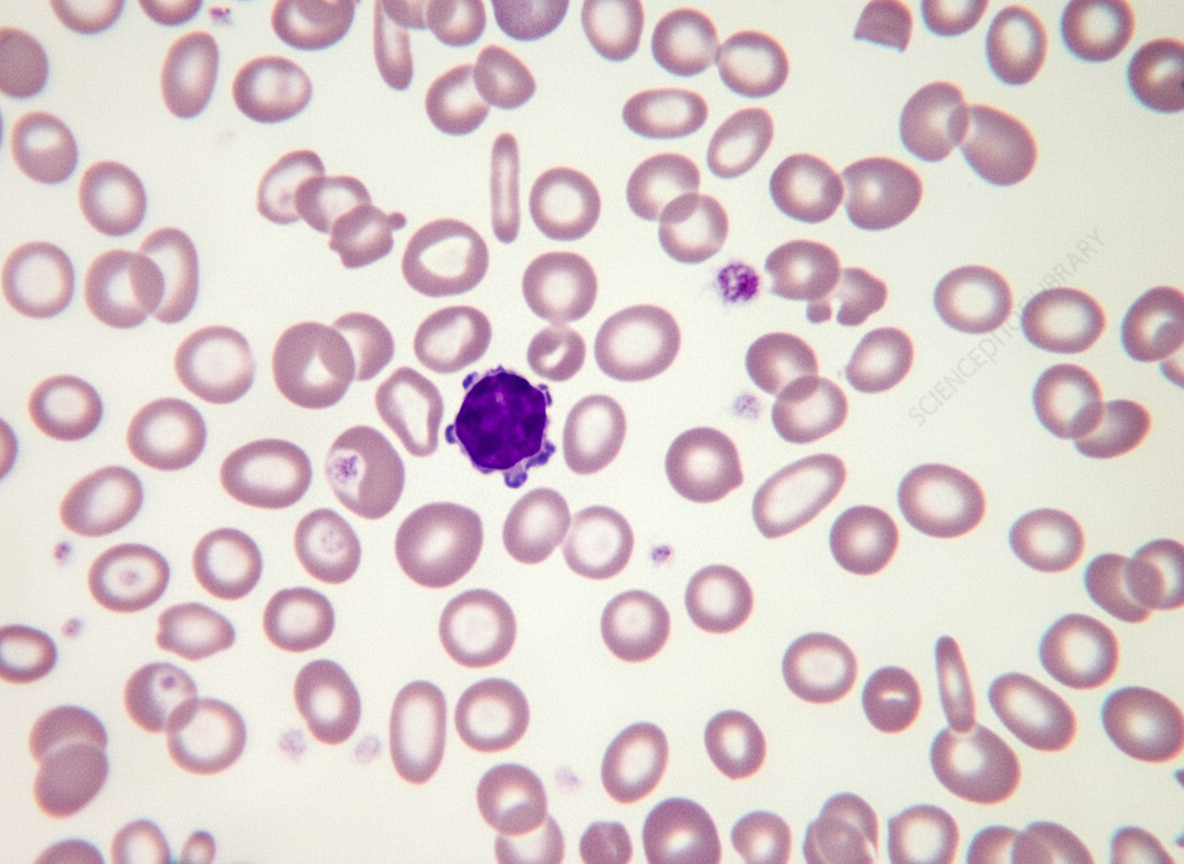
Severe congenital neutropenia syndrome is also known as:
Birbeck granules are characteristically seen in which of the following cell types?
In pernicious anemia, against which component is an antibody formed?
CD59 defect is a marker of which disease?
A normal platelet count is typically seen in which of the following conditions?
A triad of leukoerythroblastosis, tear drop erythrocytes, and large platelets is seen in which of the following conditions?
For how long can blood be stored at 4°C?
All of the following are causes of fragmented RBCs in peripheral blood EXCEPT:
Anemia of chronic disease is due to which of the following mechanisms?
A deficiency of iron can result in anemia. Which type of anemia would occur if iron were deficient?
Explanation: **Explanation:** **Severe Congenital Neutropenia (SCN)**, specifically the autosomal recessive form, is known as **Kostmann syndrome**. It is characterized by a profound reduction in the absolute neutrophil count (ANC < 500/µL) from birth. The underlying pathophysiology involves a "maturation arrest" of neutrophil precursors at the promyelocyte/myelocyte stage in the bone marrow, often due to mutations in the *ELANE* or *HAX1* genes. This leads to recurrent, life-threatening bacterial infections in early infancy. **Analysis of Incorrect Options:** * **Chediak-Higashi syndrome:** An autosomal recessive disorder of vesicle trafficking (*LYST* gene mutation). It presents with partial albinism, giant lysosomal granules in leukocytes, and mild neutropenia, but is primarily a defect in phagocyte function rather than a primary maturation arrest. * **Aldrich syndrome (Wiskott-Aldrich):** An X-linked recessive disorder characterized by the triad of thrombocytopenia (small platelets), eczema, and immunodeficiency. It affects T-cell and B-cell function rather than causing severe isolated neutropenia. * **Fanconi syndrome:** This refers to a generalized dysfunction of the proximal renal tubule. (Note: *Fanconi Anemia* is a DNA repair defect leading to pancytopenia, but it is not synonymous with isolated severe congenital neutropenia). **High-Yield Clinical Pearls for NEET-PG:** * **Bone Marrow Finding:** Maturation arrest at the **promyelocyte stage**. * **Complication:** Patients have a high risk of developing **Acute Myeloid Leukemia (AML)** or Myelodysplastic Syndrome (MDS). * **Treatment:** Recombinant human Granulocyte Colony-Stimulating Factor (rhG-CSF) is the mainstay; Hematopoietic Stem Cell Transplant (HSCT) is the definitive cure.
Explanation: **Explanation:** **Birbeck granules** are the pathognomonic ultrastructural hallmark of **Langerhans cells** [1]. These are specialized dendritic cells (antigen-presenting cells) primarily found in the stratum spinosum of the epidermis [3], [4]. On electron microscopy, Birbeck granules appear as rod-shaped, pentalaminar cytoplasmic organelles with a central striated line and a bulbous end, giving them a characteristic **"tennis racket" appearance** [1]. They contain the protein **Langerin (CD207)**, which is involved in the endocytosis of pathogens [1]. **Analysis of Options:** * **Option A: Eosinophils:** These contain large acidophilic granules with a crystalline core (Charcot-Leyden crystals are derived from eosinophil proteins), but they do not possess Birbeck granules. * **Option C: Reed-Sternberg (RS) cells:** These are the diagnostic cells of Hodgkin Lymphoma. They are characterized by a "mirror-image" or "owl-eye" appearance of nuclei, not Birbeck granules. * **Option D: Anitschkow cells:** These are modified macrophages found in Aschoff bodies in Rheumatic Heart Disease. They are known as "caterpillar cells" due to their unique chromatin pattern. **High-Yield Clinical Pearls for NEET-PG:** * **Langerhans Cell Histiocytosis (LCH):** A group of disorders (e.g., Letterer-Siwe, Hand-Schüller-Christian disease) characterized by the proliferation of these cells [1], [2]. * **Immunohistochemistry (IHC) Markers:** Langerhans cells are positive for **S100, CD1a, and CD207 (Langerin)** [1]. * **Key Association:** If a question mentions "tennis racket bodies" or "S100 positive dendritic cells in the skin," the diagnosis is almost always related to Langerhans cells. **References:** [1] Kumar V, Abbas AK, et al.. Robbins and Cotran Pathologic Basis of Disease. 9th ed. Diseases of White Blood Cells, Lymph Nodes, Spleen, and Thymus, p. 630. [2] Kumar V, Abbas AK, et al.. Robbins and Cotran Pathologic Basis of Disease. 9th ed. Diseases of White Blood Cells, Lymph Nodes, Spleen, and Thymus, pp. 629-630. [3] Kumar V, Abbas AK, et al.. Robbins and Cotran Pathologic Basis of Disease. 9th ed. Diseases of the Immune System, p. 200. [4] Kumar V, Abbas AK, et al.. Robbins and Cotran Pathologic Basis of Disease. 9th ed. The Skin, p. 1144.
Explanation: **Explanation:** Pernicious anemia is an autoimmune form of Vitamin B12 deficiency caused by **Type A chronic atrophic gastritis**. The primary pathology involves the autoimmune destruction of gastric mucosa, specifically targeting the **parietal cells** located in the fundus and body of the stomach [2]. **Why Parietal Cells are the correct answer:** In 90% of patients, **Anti-parietal cell antibodies** are present [1]. These antibodies target the H+/K+ ATPase pump, leading to gastric atrophy and achlorhydria [2]. More importantly, parietal cells produce **Intrinsic Factor (IF)**. Destruction of these cells (or direct neutralization of IF by anti-IF antibodies) prevents Vitamin B12 absorption in the terminal ileum, leading to megaloblastic anemia [3]. **Analysis of Incorrect Options:** * **A. G cells:** These cells secrete gastrin and are located in the antrum. In pernicious anemia, the antrum is spared, and G cells actually undergo **hyperplasia** due to the loss of negative feedback from low gastric acid (hypergastrinemia) [2]. * **C. Stem cells:** While stem cells are responsible for mucosal regeneration, they are not the specific immunological target in this condition. * **D. All:** Incorrect, as the autoimmune attack is highly specific to the oxyntic (acid-producing) mucosa. **High-Yield Clinical Pearls for NEET-PG:** * **Diagnostic Marker:** Anti-Intrinsic Factor antibody is more **specific**, while Anti-parietal cell antibody is more **sensitive** [3]. * **Schilling Test:** Historically used to diagnose B12 malabsorption (now largely replaced by serology). * **Morphology:** Look for **megaloblasts** in the marrow and **hypersegmented neutrophils** (>5 lobes) on peripheral smear. * **Risk:** Patients have a significantly increased risk of **Gastric Adenocarcinoma** and Carcinoid tumors [2]. **References:** [1] Kumar V, Abbas AK, et al.. Robbins and Cotran Pathologic Basis of Disease. 9th ed. Red Blood Cell and Bleeding Disorders, pp. 655-656. [2] Kumar V, Abbas AK, et al.. Robbins and Cotran Pathologic Basis of Disease. 9th ed. The Gastrointestinal Tract, pp. 771-772. [3] Cross SS. Underwood's Pathology: A Clinical Approach. 6th ed. Common Clinical Problems From Blood And Bone Marrow Disease, pp. 592-593.
Explanation: ### Explanation **Correct Option: A. Paroxysmal Nocturnal Hemoglobinuria (PNH)** PNH is an acquired clonal hematopoietic stem cell disorder caused by a somatic mutation in the **PIGA gene** [2]. This gene is essential for synthesizing **GPI (Glycosylphosphatidylinositol) anchors**, which tether specific proteins to the cell membrane. Two critical GPI-anchored proteins are **CD55** (Decay Accelerating Factor) and **CD59** (Membrane Inhibitor of Reactive Lysis). * **CD59** specifically inhibits the formation of the **Membrane Attack Complex (MAC)** [1]. * In PNH, the absence of CD59 makes red blood cells exquisitely sensitive to complement-mediated lysis, leading to intravascular hemolysis [1]. **Incorrect Options:** * **B. PTEN:** This is a tumor suppressor gene. Mutations are associated with various cancers (e.g., prostate, endometrial) but not with complement-regulating surface markers. * **C. Hereditary Spherocytosis:** This is caused by defects in RBC membrane skeletal proteins (e.g., **Ankyrin**, Spectrin, or Band 3), leading to extravascular hemolysis, not GPI-anchor defects. * **D. Cowden Syndrome:** This is an autosomal dominant disorder characterized by multiple hamartomas, typically caused by a germline mutation in the **PTEN** gene. **High-Yield Clinical Pearls for NEET-PG:** * **Gold Standard Diagnosis:** Flow cytometry showing deficiency of CD55 and CD59 on RBCs and granulocytes (FLAER assay is highly sensitive) [1]. * **Classic Triad:** Hemolytic anemia, pancytopenia, and venous thrombosis (often in unusual sites like the Budd-Chiari syndrome) [1]. * **Treatment:** **Eculizumab**, a monoclonal antibody that targets complement protein C5. * **Complications:** High risk of transformation into Acute Myeloid Leukemia (AML) or Aplastic Anemia. **References:** [1] Kumar V, Abbas AK, et al.. Robbins and Cotran Pathologic Basis of Disease. 9th ed. Red Blood Cell and Bleeding Disorders, pp. 650-651. [2] Cross SS. Underwood's Pathology: A Clinical Approach. 6th ed. Common Clinical Problems From Blood And Bone Marrow Disease, pp. 601-602.
Explanation: **Explanation:** The correct answer is **Von Willebrand's disease (vWD)**. **Why it is correct:** Von Willebrand’s disease is primarily a **qualitative platelet disorder** (defect in platelet adhesion) rather than a quantitative one. It is caused by a deficiency or dysfunction of Von Willebrand Factor (vWF), which acts as a bridge between platelet glycoprotein Ib (GpIb) and the subendothelial collagen [1]. Because the pathology lies in the *function* of platelets and their interaction with the vessel wall, the total **platelet count remains normal** in the vast majority of cases (Types 1 and 2). *(Note: An exception is Type 2B vWD, where mild thrombocytopenia may occur, but for exam purposes, vWD is the classic answer for a normal count with a prolonged bleeding time). **Why the other options are incorrect:** * **DIC (Disseminated Intravascular Coagulation):** This is a consumption coagulopathy. Widespread activation of the coagulation cascade leads to the massive consumption of platelets and clotting factors, resulting in significant **thrombocytopenia**. * **Microangiopathic Hemolytic Anemia (MAHA):** Conditions like HUS and TTP involve the formation of microthrombi in small vessels. These thrombi "use up" platelets, leading to **thrombocytopenia** alongside schistocytes on peripheral smear. * **Splenomegaly:** The spleen normally sequesters about one-third of the body's platelets. In splenomegaly (hypersplenism), this sequestration increases significantly, leading to a decrease in circulating platelets (**thrombocytopenia**) [2]. **High-Yield Clinical Pearls for NEET-PG:** * **vWD Triad:** Normal Platelet Count + Prolonged Bleeding Time + Prolonged/Normal aPTT (due to vWF stabilizing Factor VIII) [1]. * **Ristocetin Cofactor Assay:** The gold standard diagnostic test for vWD (measures vWF-induced platelet agglutination). * **Treatment of choice:** Desmopressin (DDAVP), which releases stored vWF from Weibel-Palade bodies in endothelial cells. **References:** [1] Kumar V, Abbas AK, et al.. Robbins and Cotran Pathologic Basis of Disease. 9th ed. Red Blood Cell and Bleeding Disorders, pp. 668-670. [2] Cross SS. Underwood's Pathology: A Clinical Approach. 6th ed. Common Clinical Problems From Blood And Bone Marrow Disease, pp. 581-582.
Explanation: ### Explanation **Primary Myelofibrosis (PMF)** is a myeloproliferative neoplasm characterized by the clonal proliferation of megakaryocytes and granulocytes, leading to reactive bone marrow fibrosis [2]. 1. **Why it is correct:** * **Tear drop erythrocytes (Dacrocytes):** As the bone marrow becomes progressively fibrotic (due to TGF-β from megakaryocytes), RBCs are "squeezed" as they attempt to exit the marrow through narrow sinusoidal spaces, resulting in their characteristic shape [1]. * **Leukoerythroblastosis:** Fibrosis forces hematopoiesis to shift to extramedullary sites (spleen/liver). This "extramedullary hematopoiesis" lacks the regulatory "blood-bone marrow barrier," allowing immature white cells (myelocytes) and nucleated red cells (erythroblasts) to enter the peripheral blood [1]. * **Large Platelets:** Dysplastic megakaryocytes produce giant, abnormally shaped platelets. 2. **Why other options are incorrect:** * **Essential Thrombocytosis:** Characterized by a massive increase in platelet count (>4.5 lakh) with giant platelets, but it lacks significant marrow fibrosis or a leukoerythroblastic picture in early stages. * **Myelodysplastic Syndrome (MDS):** Features cytopenias and dysplastic changes (e.g., Pseudo-Pelger-Huët cells, ring sideroblasts), but not typically the classic triad of fibrosis-related dacrocytes [3]. * **Langerhans Cell Histiocytosis:** A proliferative disorder of dendritic cells; it presents with "Birbeck granules" (tennis racket shape) on EM and bone lesions, not a leukoerythroblastic blood film. ### High-Yield Pearls for NEET-PG: * **Dry Tap:** PMF is a common cause of a "dry tap" on bone marrow aspiration due to extensive reticulin deposition. * **Splenomegaly:** PMF often presents with **massive splenomegaly** due to extramedullary hematopoiesis [2]. * **Mutation:** Approximately 50-60% of cases are positive for the **JAK2 V617F** mutation [4]. * **Stain:** Silver stain (Reticulin stain) is used to grade the degree of marrow fibrosis. **References:** [1] Kumar V, Abbas AK, et al.. Robbins and Cotran Pathologic Basis of Disease. 9th ed. Diseases of White Blood Cells, Lymph Nodes, Spleen, and Thymus, pp. 628-629. [2] Cross SS. Underwood's Pathology: A Clinical Approach. 6th ed. Common Clinical Problems From Blood And Bone Marrow Disease, pp. 615-616. [3] Cross SS. Underwood's Pathology: A Clinical Approach. 6th ed. Common Clinical Problems From Blood And Bone Marrow Disease, pp. 613-614. [4] Cross SS. Underwood's Pathology: A Clinical Approach. 6th ed. Common Clinical Problems From Blood And Bone Marrow Disease, pp. 614-615.
Explanation: ### Explanation The storage life (shelf life) of whole blood is primarily determined by the **anticoagulant-preservative solution** used in the blood bag. **1. Why 21 Days is Correct:** The standard anticoagulant used in basic blood banking is **CPD (Citrate Phosphate Dextrose)** or **ACD (Acid Citrate Dextrose)**. These solutions maintain red cell viability by providing glucose for metabolism and buffering pH. At a storage temperature of **2–6°C**, blood collected in CPD or ACD has a shelf life of **21 days**. By the end of this period, at least 70% of the transfused red cells must remain in the recipient's circulation for 24 hours to meet regulatory standards. **2. Analysis of Incorrect Options:** * **7 and 14 days (Options A & B):** These durations are too short. While metabolic changes (the "storage lesion") begin immediately, the cells remain clinically viable and safe for transfusion well beyond two weeks. * **28 days (Option D):** This is incorrect for standard CPD. However, if **CPDA-1** (Citrate Phosphate Dextrose Adenine) is used, the shelf life extends to **35 days** because adenine helps resynthesize ATP. **3. High-Yield Clinical Pearls for NEET-PG:** * **Storage Temperature:** Always **2–6°C** (never allowed to freeze unless using glycerol). * **CPDA-1:** Extends life to **35 days** (Adenine is the key additive). * **SAGM (Saline Adenine Glucose Mannitol):** An additive solution that extends shelf life to **42 days**. * **Storage Lesion:** During storage, **Potassium increases** (due to leakage from RBCs), while **2,3-DPG and pH decrease**. This shift in 2,3-DPG causes a left shift in the oxygen dissociation curve (increased oxygen affinity).
Explanation: Fragmented RBCs, also known as **schistocytes**, are the hallmark of **Microangiopathic Hemolytic Anemia (MAHA)**. They are formed when red blood cells are mechanically sheared as they pass through small blood vessels partially obstructed by fibrin strands or damaged endothelium. ### Why Hemophilia A is the Correct Answer: **Hemophilia A** is a qualitative or quantitative deficiency of **Factor VIII** [2]. It is a secondary hemostasis disorder characterized by bleeding into joints (hemarthrosis) and muscles [2]. It does not involve microvascular thrombosis or endothelial damage; therefore, it does not cause mechanical shearing of RBCs. ### Explanation of Incorrect Options: * **Microangiopathic Hemolytic Anemia (MAHA):** This is an umbrella term for conditions like TTP (Thrombotic Thrombocytopenic Purpura) and HUS (Hemolytic Uremic Syndrome) where platelet thrombi in microvessels physically slice RBCs into fragments [1]. * **Disseminated Intravascular Coagulation (DIC):** Widespread activation of the coagulation cascade leads to the formation of fibrin meshworks within the microvasculature. RBCs "snag" on these fibrin strands and fragment [1]. * **Malignant Hypertension:** Severe elevation in blood pressure causes fibrinoid necrosis of the arterioles and endothelial injury, leading to microangiopathic hemolysis and schistocyte formation. ### High-Yield NEET-PG Pearls: * **Schistocyte Morphology:** Look for "helmet cells," "triangle cells," or "bite cells" on a peripheral smear. * **Other Causes of Schistocytes:** Prosthetic heart valves (mechanical trauma), severe burns, and March hemoglobinuria. * **Diagnostic Triad for MAHA:** Schistocytes on smear, elevated LDH, and decreased haptoglobin. * **Hemophilia Lab Findings:** Prolonged aPTT with a normal PT and normal bleeding time. **References:** [1] Kumar V, Abbas AK, et al.. Robbins and Cotran Pathologic Basis of Disease. 9th ed. Red Blood Cell and Bleeding Disorders, pp. 667-668. [2] Cross SS. Underwood's Pathology: A Clinical Approach. 6th ed. Common Clinical Problems From Blood And Bone Marrow Disease, pp. 623-624.
Explanation: **Explanation:** **Anemia of Chronic Disease (ACD)**, also known as Anemia of Inflammation, is primarily driven by the inflammatory cytokine **Interleukin-6 (IL-6)**. IL-6 stimulates the liver to produce **Hepcidin**, the master regulator of iron homeostasis [1]. Hepcidin acts by binding to and degrading **ferroportin** (the iron export channel) on macrophages and enterocytes. This leads to: 1. **Sequestration of iron** within macrophages (increased storage iron/Ferritin) [1]. 2. **Reduced intestinal iron absorption.** 3. **Decreased delivery of iron** to the bone marrow for erythropoiesis [1]. Thus, the correct answer is **decreased utilization of stored iron**, as iron is "trapped" and unavailable for hemoglobin synthesis despite adequate body stores. **Analysis of Incorrect Options:** * **Options A & B (Vitamin B12 and Folate deficiency):** These cause **Megaloblastic Anemia** due to impaired DNA synthesis, characterized by macrocytosis and hypersegmented neutrophils. * **Option D (Chronic blood loss):** This leads to **Iron Deficiency Anemia (IDA)**. Unlike ACD, IDA is characterized by depleted iron stores (low Ferritin) and an increase in Total Iron Binding Capacity (TIBC). **High-Yield NEET-PG Pearls:** * **Hallmark Lab Findings in ACD:** Low Serum Iron, **High/Normal Ferritin**, Low TIBC, and Low Transferrin Saturation. * **Morphology:** Initially Normocytic Normochromic; can become Microcytic Hypochromic in long-standing cases. * **Key Mediator:** Hepcidin (Acute phase reactant) [1]. * **Common Causes:** Chronic infections (TB, Osteomyelitis), Autoimmune diseases (RA, SLE), and Malignancies. **References:** [1] Kumar V, Abbas AK, et al.. Robbins and Cotran Pathologic Basis of Disease. 9th ed. Red Blood Cell and Bleeding Disorders, pp. 658-662.
Explanation: Iron is a fundamental component of **heme**, which combines with globin chains to form hemoglobin. When iron is deficient, the synthesis of hemoglobin is impaired. To compensate for the lack of hemoglobin, developing red blood cells (erythroblasts) undergo additional divisions in the bone marrow to maintain a concentration equilibrium, resulting in smaller cells (**microcytic**; Mean Corpuscular Volume <80 fL) [1]. Furthermore, because there is less hemoglobin per cell, the cells appear pale under the microscope (**hypochromic**; Mean Corpuscular Hemoglobin Concentration is decreased) [1]. **Analysis of Incorrect Options:** * **Megaloblastic anemia:** This is a **macrocytic** anemia (MCV >100 fL) caused by impaired DNA synthesis, typically due to Vitamin B12 or Folic acid deficiency. * **Hemolytic anemia:** This refers to anemia caused by the premature destruction of RBCs (e.g., Hereditary Spherocytosis or G6PD deficiency). These are usually normocytic or show signs of regeneration (reticulocytosis). * **Sickle cell anemia:** This is a qualitative hemoglobinopathy caused by a point mutation in the $\beta$-globin gene, leading to the formation of HbS. **NEET-PG High-Yield Pearls:** * **Earliest Sign:** The earliest laboratory sign of iron deficiency is a **decrease in Serum Ferritin** (reflecting depleted stores). * **Blood Film:** Look for "pencil cells" (elliptocytes) and increased Red Cell Distribution Width (RDW) [1]. * **Differential Diagnosis:** Microcytic hypochromic anemia can be remembered by the mnemonic **TAIL**: **T**halassemia, **A**nemia of Chronic Disease, **I**ron Deficiency, and **L**ead Poisoning/Sideroblastic Anemia. * **Gold Standard:** Bone marrow aspiration with **Prussian Blue staining** (Perl's stain) is the gold standard for assessing iron stores, though rarely performed clinically. **References:** [1] Cross SS. Underwood's Pathology: A Clinical Approach. 6th ed. Common Clinical Problems From Blood And Bone Marrow Disease, pp. 589-591.
Anemias: Classification and Approach
Practice Questions
Hemolytic Anemias
Practice Questions
Myeloproliferative Neoplasms
Practice Questions
Myelodysplastic Syndromes
Practice Questions
Acute Leukemias
Practice Questions
Chronic Leukemias
Practice Questions
Lymphomas and Lymphoid Neoplasms
Practice Questions
Plasma Cell Disorders
Practice Questions
Bleeding Disorders
Practice Questions
Thrombotic Disorders
Practice Questions
Get full access to all questions, explanations, and performance tracking.
Start For Free