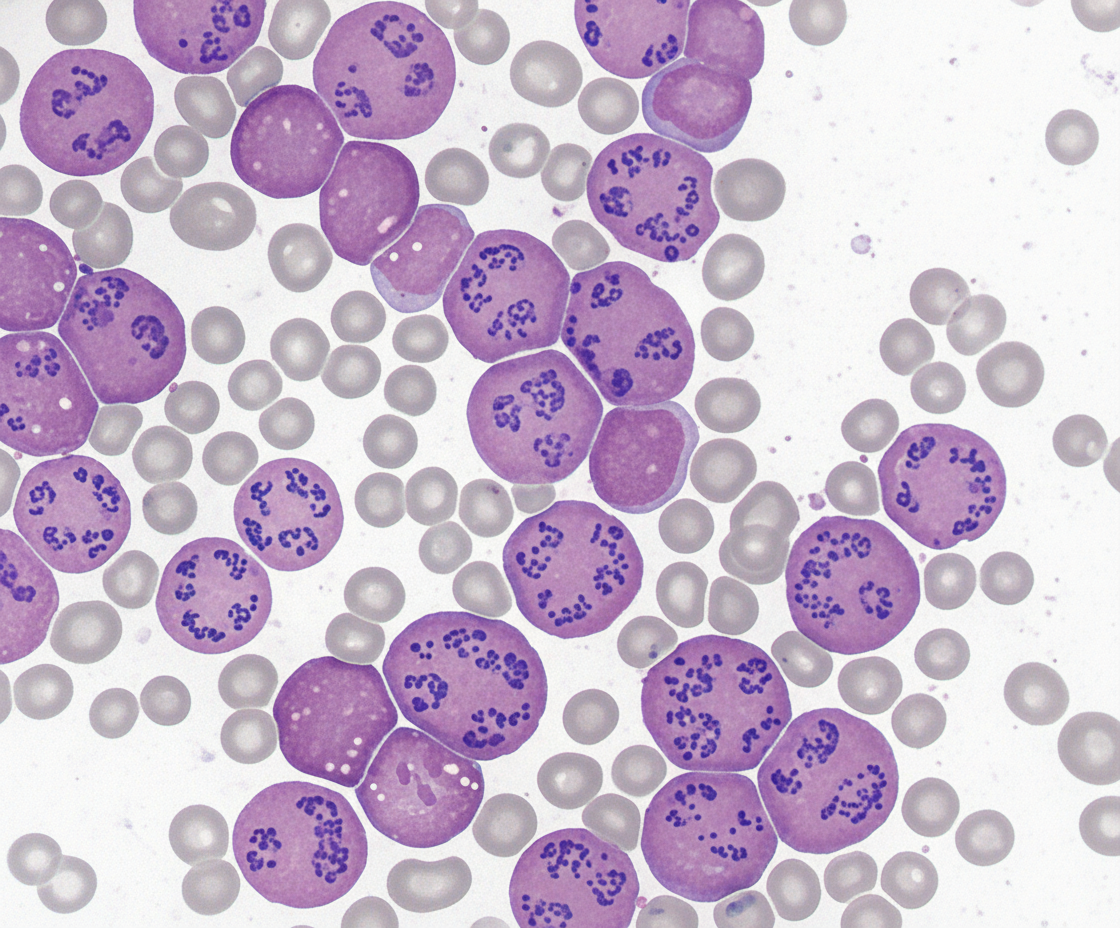
Poikilocytosis is due to difference in:
Spot the diagnosis?

A 1-year-old girl presents with a 3-day history of fever and diarrhea. Her temperature is 38°C (101°F). A CBC reveals a normal WBC count and an increased hematocrit of 48 g/dL. What is the most likely cause of the elevated hematocrit in this patient?
Which statement is false regarding hemolytic anemia?
All of the following are preleukemic conditions, except:
Basophilic stippling is seen with which of the following conditions?
Which of the following is a consequence of extravascular hemolysis?
Peripheral smear may show vacuolated lymphocytes in all of the following conditions EXCEPT?
Which immunoglobulin is typically implicated as a warm antibody in autoimmune hemolytic anemia?
Which type of leukemia is associated with Disseminated Intravascular Coagulation?
Explanation: **Explanation:** **Poikilocytosis** is defined as the presence of abnormally shaped red blood cells (RBCs) in the peripheral blood smear. In a healthy individual, RBCs are uniform, non-nucleated, biconcave discs [1]. When there is a disruption in erythropoiesis or damage to mature RBCs, various shapes emerge (e.g., spherocytes, schistocytes, target cells). **Why Option B is Correct:** The term is derived from the Greek word *poikilos*, meaning "varied." It specifically refers to **variation in shape**. It is a non-specific finding but serves as a crucial morphological indicator of underlying hematological pathology, such as membrane defects, hemoglobinopathies, or mechanical trauma [2]. **Why Other Options are Incorrect:** * **Option A (Size):** Variation in the **size** of RBCs is termed **Anisocytosis** [2]. This is measured quantitatively by the Red Cell Distribution Width (RDW). * **Option C (Number):** Variation in the number of RBCs refers to conditions like anemia (decreased) or polycythemia (increased). * **Option D (Width):** While RDW measures the variation in width/size, it is a parameter of anisocytosis, not poikilocytosis. **High-Yield Clinical Pearls for NEET-PG:** * **Anisopoikilocytosis:** The simultaneous presence of variation in both size and shape, commonly seen in **Megaloblastic anemia** and **Iron Deficiency Anemia (IDA)**. * **Specific Shapes & Associations:** * **Schistocytes (Fragmented cells):** Microangiopathic Hemolytic Anemia (MAHA) and DIC. * **Acanthocytes (Spur cells):** Abetalipoproteinemia and Liver disease. * **Echinocytes (Burr cells):** Uremia. * **Dacrocytes (Tear-drop cells):** Myelofibrosis. * **Degmacytes (Bite cells):** G6PD deficiency [3]. **References:** [1] Cross SS. Underwood's Pathology: A Clinical Approach. 6th ed. Common Clinical Problems From Blood And Bone Marrow Disease, pp. 577-578. [2] Cross SS. Underwood's Pathology: A Clinical Approach. 6th ed. Common Clinical Problems From Blood And Bone Marrow Disease, pp. 590-591. [3] Kumar V, Abbas AK, et al.. Robbins and Cotran Pathologic Basis of Disease. 9th ed. Red Blood Cell and Bleeding Disorders, pp. 652-654.
Explanation: ***Lead poisoning*** - The peripheral blood smear shows **coarse basophilic stippling** in red blood cells, which is pathognomonic for lead poisoning. - Lead inhibits **5'-nucleotidase** enzyme, causing aggregation of ribosomes and RNA that appear as prominent blue dots on Wright-Giemsa stain. *Macrocytic anemia* - Would present with **enlarged red blood cells** (MCV >100 fL) on peripheral smear, not basophilic stippling. - Commonly caused by **vitamin B12** or **folate deficiency**, showing hypersegmented neutrophils and oval macrocytes. *Howell-Jolly bodies* - Appear as **small, single, round purple inclusions** representing nuclear remnants in red blood cells. - Typically seen in **post-splenectomy** patients or **functional asplenia**, not associated with basophilic stippling. *Heinz bodies* - Are **denatured hemoglobin precipitates** that appear as pale inclusions on supravital stains like crystal violet. - Associated with **G6PD deficiency** or **oxidative stress**, causing hemolytic anemia rather than basophilic stippling.
Explanation: **Explanation:** The patient presents with an elevated hematocrit (48%) in the setting of acute diarrhea and fever. This is a classic presentation of **Relative Polycythemia** caused by **Dehydration** [1]. 1. **Why Dehydration is correct:** Hematocrit represents the volume percentage of red blood cells (RBCs) in the blood. In cases of severe diarrhea and fever, there is significant loss of body fluids (plasma volume) [1]. As the plasma volume decreases, the concentration of RBCs increases relative to the total blood volume. This is not a true increase in RBC mass but a "hemoconcentration." In a 1-year-old, diarrhea is a leading cause of rapid fluid loss and subsequent relative polycythemia [1]. 2. **Why the other options are incorrect:** * **Acute phase response:** While fever indicates an inflammatory state, the acute phase response typically leads to an increase in proteins like CRP or ESR, or potentially "Anemia of Chronic Disease" in the long term, not an acute rise in hematocrit. * **Diabetes insipidus:** While this causes fluid loss via polyuria, it is a chronic condition and less likely than acute diarrhea to be the cause of a sudden presentation of fever and gastrointestinal symptoms in an infant. * **Malabsorption:** Chronic malabsorption usually leads to nutritional deficiencies (Iron, B12, or Folate), which would result in **anemia** (decreased hematocrit), not polycythemia. **High-Yield Clinical Pearls for NEET-PG:** * **Relative Polycythemia:** Increased Hct due to decreased plasma volume (e.g., dehydration, burns, diuretics, Gaisbock syndrome) [1]. * **Absolute Polycythemia:** True increase in RBC mass. Can be **Primary** (Polycythemia Vera - low Erythropoietin) or **Secondary** (Hypoxia or EPO-secreting tumors - high Erythropoietin) [1]. * In pediatric cases with diarrhea, always look for signs of dehydration: sunken fontanelles, decreased skin turgor, and dry mucous membranes. **References:** [1] Kumar V, Abbas AK, et al.. Robbins and Cotran Pathologic Basis of Disease. 9th ed. Red Blood Cell and Bleeding Disorders, pp. 663-664.
Explanation: Hemolytic anemia is characterized by the premature destruction of red blood cells (RBCs). To identify the false statement, one must understand the biochemical markers released during erythrocyte breakdown. **Why Option A is the correct (false) statement:** Lactate Dehydrogenase (LDH) is an enzyme present in high concentrations within the cytoplasm of red blood cells. When RBCs are destroyed (hemolysis), LDH is released into the serum. Therefore, **increased LDH** is a hallmark of hemolytic anemia, not decreased LDH. It serves as a sensitive, though non-specific, marker of cell turnover. **Analysis of other options:** * **B. Decreased haptoglobin:** Haptoglobin is a plasma protein that binds to free hemoglobin released during intravascular hemolysis [1]. The hemoglobin-haptoglobin complexes are rapidly cleared by the liver, leading to a characteristic **decrease** in serum haptoglobin levels [1]. * **C. Decreased RBC survival:** By definition, hemolysis involves the shortening of the normal 120-day lifespan of a red blood cell [3]. * **D. Increased unconjugated bilirubin:** When RBCs break down, heme is converted into unconjugated (indirect) bilirubin [2]. If the rate of production exceeds the liver's conjugating capacity, serum levels of **unconjugated bilirubin rise**, often leading to acholuric jaundice [2]. **NEET-PG High-Yield Pearls:** * **Best initial test for hemolysis:** Peripheral smear (look for schistocytes or spherocytes) and Reticulocyte count (will be increased) [2]. * **Most specific marker for intravascular hemolysis:** Decreased Haptoglobin [1]. * **Intravascular vs. Extravascular:** Hemoglobinuria and Hemosiderinuria are features of **intravascular** hemolysis only [1]. * **Triad of Hemolysis:** Anemia, Jaundice, and Splenomegaly (common in extravascular types like Hereditary Spherocytosis). **References:** [1] Kumar V, Abbas AK, et al.. Robbins and Cotran Pathologic Basis of Disease. 9th ed. Red Blood Cell and Bleeding Disorders, pp. 639-640. [2] Kumar V, Abbas AK, et al.. Robbins and Cotran Pathologic Basis of Disease. 9th ed. Red Blood Cell and Bleeding Disorders, p. 640. [3] Cross SS. Underwood's Pathology: A Clinical Approach. 6th ed. Common Clinical Problems From Blood And Bone Marrow Disease, pp. 596-597.
Explanation: **Explanation:** The term **"preleukemic condition"** refers to hematological disorders that have a significant statistical risk of transforming into acute leukemia, most commonly Acute Myeloid Leukemia (AML). **Why Paroxysmal Cold Haemoglobinuria (PCH) is the correct answer:** PCH is a rare form of autoimmune hemolytic anemia caused by the **Donath-Landsteiner antibody** (an IgG antibody with anti-P specificity). It is characterized by complement-mediated intravascular hemolysis triggered by cold exposure. Unlike clonal stem cell disorders, PCH is an immune-mediated destructive process of mature red cells and does **not** involve a malignant or premalignant transformation of the bone marrow. Therefore, it has no association with leukemia. **Analysis of incorrect options:** * **Paroxysmal Nocturnal Haemoglobinuria (PNH):** This is a clonal stem cell disorder caused by a somatic mutation in the *PIGA* gene [2]. While primarily a hemolytic disease, it is closely linked to bone marrow failure syndromes and carries a 3–5% risk of transforming into AML. * **Myelodysplasia (MDS):** Often explicitly called "preleukemia," MDS is characterized by cytopenias and dysplastic morphology [1]. It has the highest rate of transformation, with approximately 30% of cases progressing to AML [1]. * **Aplastic Anemia:** Chronic aplastic anemia, particularly when treated with immunosuppressive therapy, can evolve into clonal disorders like PNH, MDS, or AML [3], [4]. **NEET-PG High-Yield Pearls:** * **PCH:** Associated with the Donath-Landsteiner test and often follows viral infections in children or syphilis in adults. * **Clonal Evolution:** PNH, MDS, and Aplastic Anemia are often grouped together as "Bone Marrow Failure Syndromes" that share a common pathway toward leukemic transformation [3]. * **Other Preleukemic Conditions:** Fanconi anemia, Bloom syndrome, Down syndrome, and Myeloproliferative Neoplasms (MPNs). **References:** [1] Cross SS. Underwood's Pathology: A Clinical Approach. 6th ed. Common Clinical Problems From Blood And Bone Marrow Disease, pp. 613-614. [2] Cross SS. Underwood's Pathology: A Clinical Approach. 6th ed. Common Clinical Problems From Blood And Bone Marrow Disease, pp. 601-602. [3] Cross SS. Underwood's Pathology: A Clinical Approach. 6th ed. Common Clinical Problems From Blood And Bone Marrow Disease, pp. 595-596. [4] Kumar V, Abbas AK, et al.. Robbins and Cotran Pathologic Basis of Disease. 9th ed. Red Blood Cell and Bleeding Disorders, p. 662.
Explanation: **Explanation:** **Basophilic stippling** (punctate basophilia) refers to the presence of numerous small, blue-purple granules distributed throughout the cytoplasm of red blood cells on a peripheral smear. These granules represent **precipitated ribosomes and RNA clusters**, indicating disordered erythropoiesis or impaired hemoglobin synthesis. **1. Why Thalassaemia is correct:** In Thalassaemia, there is a genetic defect in globin chain synthesis [1]. This leads to an imbalance of globin chains and ineffective erythropoiesis [2]. The resulting "coarse" basophilic stippling is a hallmark finding, caused by the precipitation of unstable RNA in the cytoplasm of maturing red cells. **2. Analysis of Incorrect Options:** * **Sickle cell anemia:** Characterized by sickle-shaped cells and Howell-Jolly bodies (due to functional asplenia), but basophilic stippling is not a classic feature. * **Megaloblastic anemia:** While it features macro-ovalocytes and hypersegmented neutrophils, the characteristic inclusion is the **Howell-Jolly body** (DNA remnants), not ribosomal stippling. * **Splenectomy:** Post-splenectomy smears typically show **Howell-Jolly bodies, Pappenheimer bodies, and Heinz bodies**, as the "pitting" function of the spleen is lost. **3. High-Yield Clinical Pearls for NEET-PG:** * **Mnemonic for Basophilic Stippling (TAAL):** **T**halassaemia, **A**rsenic poisoning, **A**nemia of chronic disease, **L**ead poisoning (most common association in exams). * **Fine vs. Coarse Stippling:** Fine stippling is often seen in increased erythropoiesis (e.g., hemorrhage), while **coarse stippling** is highly suggestive of **Lead Poisoning** (due to inhibition of the enzyme 5'-nucleotidase) and **Thalassaemia**. * **Sideroblastic Anemia:** Another important differential where basophilic stippling is frequently observed. **References:** [1] Kumar V, Abbas AK, et al.. Robbins and Cotran Pathologic Basis of Disease. 9th ed. Red Blood Cell and Bleeding Disorders, p. 648. [2] Cross SS. Underwood's Pathology: A Clinical Approach. 6th ed. Common Clinical Problems From Blood And Bone Marrow Disease, pp. 600-601.
Explanation: **Explanation:** Hemolysis is categorized into intravascular (within blood vessels) and extravascular (within the reticuloendothelial system, primarily the spleen and liver) based on the site of RBC destruction. **1. Why Jaundice is the Correct Answer:** In **extravascular hemolysis**, senescent or damaged RBCs are phagocytosed by splenic macrophages. The hemoglobin is broken down into heme and globin. Heme is further metabolized into **unconjugated bilirubin** [1]. When the production of bilirubin exceeds the liver's conjugating capacity, it leads to unconjugated hyperbilirubinemia, clinically manifesting as **Jaundice** [2]. This is the hallmark of extravascular hemolysis (e.g., Hereditary Spherocytosis, Warm AIHA). **2. Why Other Options are Incorrect:** * **Hemoglobinemia (A) and Hemosiderinuria (B):** These are classic features of **intravascular hemolysis** [1]. When RBCs rupture within the circulation, free hemoglobin is released directly into the plasma (Hemoglobinemia). Once the carrier protein haptoglobin is saturated, free hemoglobin is filtered by the kidneys. Some is reabsorbed by tubular cells and stored as iron (detectable as **Hemosiderinuria** after a few days), while the rest is excreted (Hemoglobinuria) [1]. In extravascular hemolysis, hemoglobin is contained within macrophages, so it does not leak into the plasma or urine [1]. **Clinical Pearls for NEET-PG:** * **Haptoglobin:** Decreased in both types of hemolysis, but more severely depleted in intravascular hemolysis. * **Splenomegaly:** Characteristically seen in extravascular hemolysis due to work hypertrophy of splenic macrophages [1]. * **LDH:** Elevated in both, as it is a general marker of RBC turnover. * **Direct Coombs Test:** Essential to differentiate immune-mediated extravascular hemolysis from non-immune causes. **References:** [1] Kumar V, Abbas AK, et al.. Robbins and Cotran Pathologic Basis of Disease. 9th ed. Red Blood Cell and Bleeding Disorders, pp. 639-640. [2] Cross SS. Underwood's Pathology: A Clinical Approach. 6th ed. Common Clinical Problems From Liver And Biliary System Disease, pp. 384-385.
Explanation: **Explanation:** The presence of **vacuolated lymphocytes** on a peripheral blood smear is a classic morphological marker for several **lysosomal storage disorders (LSDs)**. These vacuoles represent enlarged lysosomes filled with undigested substrates due to specific enzyme deficiencies [1]. **1. Why Abetalipoproteinemia is the correct answer:** Abetalipoproteinemia is a disorder of lipid metabolism caused by a mutation in the microsomal triglyceride transfer protein (MTP). The hallmark peripheral smear finding in this condition is **Acanthocytes** (spur cells), not vacuolated lymphocytes. Lipid malabsorption occurs, but it does not result in the lysosomal storage patterns seen in the other options. **2. Analysis of incorrect options (Conditions showing vacuolated lymphocytes):** * **Neuronal Ceroid Lipofuscinosis (NCL):** Specifically the juvenile form (Batten disease), which is a high-yield association for vacuolated lymphocytes. * **Fucosidosis and Sialidosis:** These are glycoprotein storage diseases. Along with **Mannosidosis**, they frequently present with prominent cytoplasmic vacuolation in lymphocytes [1]. * *Other notable causes:* Pompe disease, Wolman disease, and Niemann-Pick disease [1]. **Clinical Pearls for NEET-PG:** * **Acanthocytes (Spur Cells):** Think Abetalipoproteinemia, Chronic Liver Disease, or McLeod Syndrome. * **Vacuolated Lymphocytes + Coarse Facies:** Think Mucopolysaccharidosis (MPS) or Glycoproteinosis (Fucosidosis/Sialidosis) [1]. * **Vacuolated Lymphocytes + Cherry Red Spot:** Think Sialidosis or Niemann-Pick Disease [1]. * **Jordan’s Anomaly:** This refers to vacuoles in **neutrophils** (not lymphocytes), typically seen in Chanarin-Dorfman syndrome (a lipid storage disease). **References:** [1] Kumar V, Abbas AK, et al.. Robbins and Cotran Pathologic Basis of Disease. 9th ed. Genetic Disorders, pp. 161-164.
Explanation: Autoimmune Hemolytic Anemia (AIHA) is classified into Warm and Cold types based on the optimal temperature at which the autoantibodies bind to Red Blood Cells (RBCs). **1. Why IgG is Correct:** **Warm AIHA** is characterized by autoantibodies that react most efficiently at body temperature (**37°C**). In approximately 75-80% of cases, these antibodies are of the **IgG** class [1]. These IgG-coated RBCs are recognized by the Fc receptors of splenic macrophages, leading to partial phagocytosis and the formation of **spherocytes** [1]. This results in **extravascular hemolysis**, primarily within the spleen [1]. **2. Why other options are incorrect:** * **IgM:** This is the primary antibody implicated in **Cold AIHA** (Cold Agglutinin Disease). IgM binds to RBCs at low temperatures (0-4°C) and fixes complement. It typically causes intravascular hemolysis or extravascular hemolysis in the liver [1]. * **IgE & IgA:** These are rarely involved in AIHA. While IgA-mediated AIHA exists, it is extremely rare and usually presents as "Coombs-negative" AIHA because standard reagents look for IgG or C3. **3. High-Yield Clinical Pearls for NEET-PG:** * **Direct Coombs Test (DAT):** The gold standard for diagnosis; it detects IgG or C3b on the RBC surface [2]. * **Peripheral Smear:** Characterized by **Spherocytes** (unlike Hereditary Spherocytosis, the family history will be negative and Coombs will be positive). * **Associations:** Warm AIHA is often associated with **SLE** [1], CLL, or drugs (e.g., α-methyldopa) [2]. * **Treatment:** First-line therapy for Warm AIHA is **Corticosteroids**, whereas for Cold AIHA, it is avoiding cold exposure and Rituximab (steroids and splenectomy are generally ineffective for Cold AIHA). **References:** [1] Cross SS. Underwood's Pathology: A Clinical Approach. 6th ed. Common Clinical Problems From Blood And Bone Marrow Disease, pp. 602-603. [2] Kumar V, Abbas AK, et al.. Robbins and Cotran Pathologic Basis of Disease. 9th ed. Red Blood Cell and Bleeding Disorders, pp. 651-652.
Explanation: **Explanation:** **Acute Promyelocytic Leukemia (APL)**, a subtype of AML (FAB classification M3), is classically associated with **Disseminated Intravascular Coagulation (DIC)** [2]. This occurs because the malignant promyelocytes contain numerous primary granules (procoagulants) and **Auer rods** [1]. When these cells break down or undergo treatment, they release **tissue factor-like substances** [3] and **annexin II**, which trigger the coagulation cascade and primary fibrinolysis, leading to life-threatening hemorrhage and consumption of clotting factors. **Analysis of Options:** * **A. Acute Lymphocytic Leukemia (ALL):** Primarily presents with bone marrow failure (anemia, thrombocytopenia) and lymphadenopathy. While bleeding can occur due to low platelets, DIC is not a characteristic feature. * **C. Chronic Myeloid Leukemia (CML):** Characterized by the Philadelphia chromosome $t(9;22)$ and massive splenomegaly. It typically presents with a high white cell count and hypermetabolic symptoms, not acute coagulopathy. * **D. Chronic Lymphoid Leukemia (CLL):** A disease of elderly patients involving mature B-cell proliferation. Complications usually include autoimmune hemolytic anemia (AIHA) or infections, rather than DIC. **NEET-PG High-Yield Pearls:** * **Cytogenetics:** APL is defined by the translocation **$t(15;17)$**, involving the *PML-RARA* fusion gene [2]. * **Morphology:** Look for **"Faggot cells"** (cells containing bundles of Auer rods) in the peripheral smear [2]. * **Treatment:** The drug of choice is **ATRA (All-Trans Retinoic Acid)**, which induces differentiation of promyelocytes. Arsenic trioxide is also used. * **Emergency:** DIC in APL is a medical emergency; starting ATRA immediately can help resolve the coagulopathy by maturing the cells. **References:** [1] Kumar V, Abbas AK, et al.. Robbins and Cotran Pathologic Basis of Disease. 9th ed. Diseases of White Blood Cells, Lymph Nodes, Spleen, and Thymus, pp. 621-622. [2] Kumar V, Abbas AK, et al.. Robbins and Cotran Pathologic Basis of Disease. 9th ed. Diseases of White Blood Cells, Lymph Nodes, Spleen, and Thymus, p. 620. [3] Kumar V, Abbas AK, et al.. Robbins and Cotran Pathologic Basis of Disease. 9th ed. Red Blood Cell and Bleeding Disorders, pp. 671-672.
Anemias: Classification and Approach
Practice Questions
Hemolytic Anemias
Practice Questions
Myeloproliferative Neoplasms
Practice Questions
Myelodysplastic Syndromes
Practice Questions
Acute Leukemias
Practice Questions
Chronic Leukemias
Practice Questions
Lymphomas and Lymphoid Neoplasms
Practice Questions
Plasma Cell Disorders
Practice Questions
Bleeding Disorders
Practice Questions
Thrombotic Disorders
Practice Questions
Get full access to all questions, explanations, and performance tracking.
Start For Free