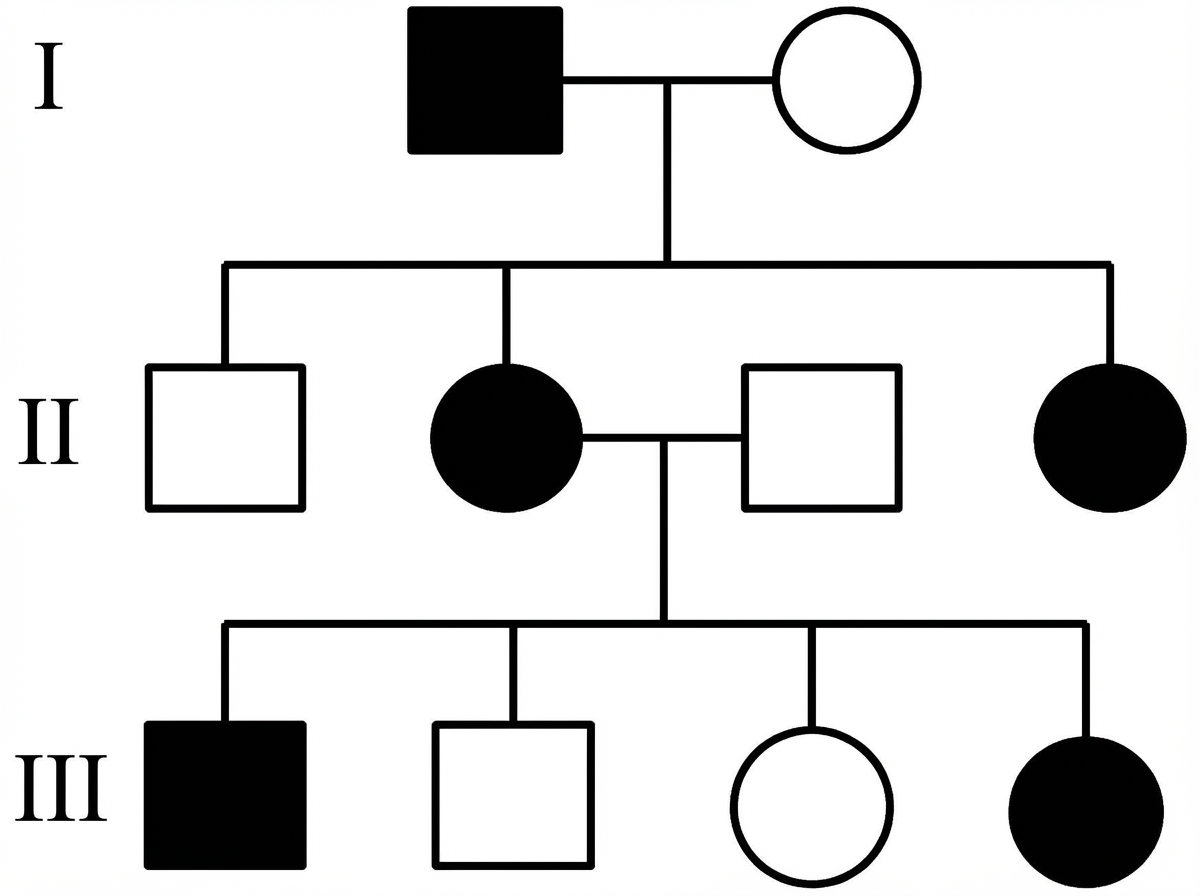
Which of the following statements about p53 is TRUE, except?
Which of the following is the best stain for fungus?
Which of the following is transmitted as an autosomal dominant disorder?
Non-caseating granulomas are seen in all of the following conditions except?
Which of the following statements regarding amyloid is NOT true?
Which of the following are granulomatous diseases?
Which of the following conditions is NOT X-linked?
Which of the following is a form of caspase-dependent programmed cell death?
Angulated body cells are found in which of the following conditions?
A 28-year-old woman with sickle cell anemia marries a 31-year-old man with no abnormality. What are the respective probabilities of having (i) sickle cell disease and (ii) sickle cell trait in their offspring?
Explanation: ### Explanation The **p53 protein**, often called the "Guardian of the Genome," is a tumor suppressor protein encoded by the *TP53* gene on chromosome 17p13.1 [1]. It plays a pivotal role in maintaining genomic stability [2]. **Why Option C is the correct answer (The False Statement):** When a cell is exposed to DNA-damaging agents like **UV radiation**, p53 activity **increases**, not decreases. Under stress, p53 is stabilized (its degradation by MDM2 is inhibited), leading to its accumulation. This triggers the transcription of **p21**, a Cyclin-Dependent Kinase Inhibitor (CDKI), which causes **cell cycle arrest** (usually at the G1-S checkpoint) to allow time for DNA repair [1]. It does not stimulate the cell cycle. **Analysis of Incorrect Options (True Statements):** * **Option A:** p53 acts as a transcription factor that regulates genes like *CDKN1A* (p21), which inhibits the cell cycle, and *GADD45*, which aids in DNA repair [1]. * **Option B:** If DNA damage is irreparable, p53 induces **apoptosis** by upregulating pro-apoptotic genes like *BAX* and *PUMA* [1]. * **Option D:** Mutations in the *TP53* gene are indeed the **most common genetic alteration** in human cancers, found in more than 50% of all cases [1]. **Clinical Pearls for NEET-PG:** * **Li-Fraumeni Syndrome:** A germline mutation in *TP53* leading to a high risk of multiple early-onset cancers (Sarcoma, Breast, Leukemia, Adrenal - **SBLA** syndrome). * **Degradation:** p53 is normally kept at low levels by **MDM2** (via ubiquitination). * **HPV Link:** The E6 protein of High-risk Human Papillomavirus (HPV 16, 18) binds to and facilitates the degradation of p53, leading to cervical cancer. **References:** [1] Kumar V, Abbas AK, et al.. Robbins and Cotran Pathologic Basis of Disease. 9th ed. Neoplasia, pp. 301-304. [2] Cross SS. Underwood's Pathology: A Clinical Approach. 6th ed. (Basic Pathology) introduces the student to key general principles of pathology, both as a medical science and as a clinical activity with a vital role in patient care. Part 2 (Disease Mechanisms) provides fundamental knowledge about the cellular and molecular processes involved in diseases, providing the rationale for their treatment. Part 3 (Systematic Pathology) deals in detail with specific diseases, with emphasis on the clinically important aspects., pp. 226-227.
Explanation: **Explanation:** **Gomori Methenamine Silver (GMS)** is considered the "gold standard" and best stain for identifying fungi in tissue sections [1], [3]. The underlying principle is an oxidation-reduction reaction: chromic acid oxidizes the carbohydrates (polysaccharides) present in the fungal cell wall to form aldehydes. These aldehydes then reduce the silver nitrate in the methenamine silver solution to metallic silver, staining the fungal elements **black** against a green background [3]. It is highly sensitive and can detect even dead or degenerated fungi. **Analysis of Incorrect Options:** * **A. Mucicarmine:** This is a specific stain for **acid mucopolysaccharides** [1]. In mycology, it is primarily used to identify the capsule of *Cryptococcus neoformans* (staining it bright red), but it is not a general stain for all fungi [1]. * **C. Alcian Blue:** Similar to Mucicarmine, this stains acidic mucins. While it can highlight the capsule of *Cryptococcus*, it lacks the broad-spectrum utility of GMS for fungal morphology. * **D. Hematoxylin and Eocus (H&E):** While H&E is the routine screening stain, many fungi appear translucent or are poorly visualized [1]. It is unreliable for definitive fungal identification. **NEET-PG High-Yield Pearls:** * **PAS (Periodic Acid-Schiff):** Another excellent fungal stain; it stains the cell wall **magenta/bright pink** [2]. * **Gridley’s Stain:** A modification of PAS used specifically for fungi. * **Masson-Fontana:** Used to detect **melanin** in the cell walls of dematiaceous (pigmented) fungi and *Cryptococcus*. * **Calcofluor White:** A fluorescent stain that binds to chitin; it is the fastest method for direct microscopic examination. **References:** [1] Kumar V, Abbas AK, et al.. Robbins and Cotran Pathologic Basis of Disease. 9th ed. Infectious Diseases, p. 362. [2] Kumar V, Abbas AK, et al.. Robbins and Cotran Pathologic Basis of Disease. 9th ed. The Skin, p. 1180. [3] Kumar V, Abbas AK, et al.. Robbins and Cotran Pathologic Basis of Disease. 9th ed. The Lung, p. 717.
Explanation: **Explanation:** **Hereditary Spherocytosis (HS)** is the correct answer because it is primarily transmitted as an **Autosomal Dominant (AD)** disorder (approximately 75% of cases) [1]. It is caused by mutations in genes encoding red blood cell membrane proteins, most commonly **Ankyrin**, followed by Spectrin, Band 3, and Protein 4.2 [1]. These defects lead to a loss of membrane surface area, resulting in spherical, fragile erythrocytes that are prematurely destroyed in the spleen [1], [3]. **Analysis of Incorrect Options:** * **Albinism (Oculocutaneous Albinism):** This is a classic **Autosomal Recessive (AR)** disorder characterized by a deficiency in the enzyme tyrosinase, leading to impaired melanin synthesis. * **Sickle Cell Anemia:** This is an **Autosomal Recessive** hemoglobinopathy caused by a point mutation in the ̢-globin gene (glutamic acid replaced by valine at the 6th position). * **Glycogen Storage Diseases (GSD):** Almost all GSDs (e.g., Von Gierke, Pompe, McArdle) are inherited in an **Autosomal Recessive** pattern. **NEET-PG High-Yield Pearls:** * **Mnemonic for AD disorders:** "Very Powerful DOMINANT" (Von Willebrand, Polycystic Kidney [ADPKD], Dystrophia Myotonica, Osteogenesis Imperfecta, Marfan, Intermittent Porphyria, Noonan, Achondroplasia, Neurofibromatosis, Tuberous Sclerosis). * **HS Diagnosis:** The gold standard is the **Eosin-5-maleimide (EMA) binding test** (Flow cytometry). The Osmotic Fragility Test is also used [3]. * **Clinical Triad of HS:** Anemia, Jaundice, and Splenomegaly. * **Key Rule:** Most structural protein defects are AD, while most enzyme deficiencies are AR [2]. **References:** [1] Kumar V, Abbas AK, et al.. Robbins and Cotran Pathologic Basis of Disease. 9th ed. Red Blood Cell and Bleeding Disorders, pp. 640-641. [2] Cross SS. Underwood's Pathology: A Clinical Approach. 6th ed. (Basic Pathology) introduces the student to key general principles of pathology, both as a medical science and as a clinical activity with a vital role in patient care. Part 2 (Disease Mechanisms) provides fundamental knowledge about the cellular and molecular processes involved in diseases, providing the rationale for their treatment. Part 3 (Systematic Pathology) deals in detail with specific diseases, with emphasis on the clinically important aspects., pp. 57-58. [3] Cross SS. Underwood's Pathology: A Clinical Approach. 6th ed. Common Clinical Problems From Blood And Bone Marrow Disease, pp. 597-598.
Explanation: **Explanation:** The correct answer is **Metastatic carcinoma of the lung**. While many malignancies can elicit a stromal reaction, metastatic carcinoma itself typically presents with nests of malignant cells and desmoplasia rather than organized granulomatous inflammation. **Understanding the Concept:** A **granuloma** is a focal collection of inflammatory cells, primarily activated macrophages (epithelioid cells), surrounded by a rim of lymphocytes and often containing multinucleated giant cells [3]. Granulomas are classified as **caseating** (central cheesy necrosis, classic for Tuberculosis) or **non-caseating** (no central necrosis) [2]. **Analysis of Options:** * **Tuberculosis (Option D):** While TB is the prototype for *caseating* granulomas, early lesions or TB in immunocompromised patients can present as **non-caseating** granulomas. Therefore, it is a recognized cause of non-caseating lesions. * **Byssinosis (Option A):** This is an occupational lung disease caused by cotton dust exposure. It can lead to the formation of non-caseating granulomas in the lung parenchyma. * **Hodgkin’s Lymphoma (Option B):** It is a high-yield fact that non-caseating granulomas can be found within the tumor itself or in the draining lymph nodes (a "sarcoid-like reaction"). This is a recognized histological feature in some cases. **High-Yield Clinical Pearls for NEET-PG:** * **Sarcoidosis** is the most common cause of systemic non-caseating granulomas ("naked granulomas") [1]. * **Schistosomiasis** is the most common cause of granulomas worldwide. * **Foreign body granulomas** (e.g., talc, sutures) are always non-caseating and often show the offending agent under polarized light. * **Leprosy:** Tuberculoid leprosy shows well-formed non-caseating granulomas, whereas Lepromatous leprosy does not. **References:** [1] Kumar V, Abbas AK, et al.. Robbins and Cotran Pathologic Basis of Disease. 9th ed. The Lung, pp. 700-701. [2] Cross SS. Underwood's Pathology: A Clinical Approach. 6th ed. (Basic Pathology) introduces the student to key general principles of pathology, both as a medical science and as a clinical activity with a vital role in patient care. Part 2 (Disease Mechanisms) provides fundamental knowledge about the cellular and molecular processes involved in diseases, providing the rationale for their treatment. Part 3 (Systematic Pathology) deals in detail with specific diseases, with emphasis on the clinically important aspects., pp. 198-200. [3] Kumar V, Abbas AK, et al.. Robbins and Cotran Pathologic Basis of Disease. 9th ed. Inflammation and Repair, p. 109.
Explanation: **Explanation:** **1. Why Option A is the Correct Answer (The "NOT True" statement):** Amyloid is defined as a pathological proteinaceous substance that is deposited **extracellularly** (between cells) in various tissues and organs [1]. It is never an intracellular accumulation. It consists of misfolded proteins that aggregate into insoluble fibrils, primarily in the $\beta$-pleated sheet configuration, which leads to organ dysfunction by causing pressure atrophy of adjacent cells [1]. **2. Analysis of Incorrect Options:** * **Option B:** This is a **true** statement and the gold standard for histological diagnosis. When stained with **Congo red**, amyloid appears salmon-pink under regular light [1]. However, when viewed under **polarized light**, it exhibits a characteristic **apple-green birefringence** due to the highly organized arrangement of the $\beta$-pleated sheets [1]. * **Option C:** This is a **true** statement. Abdominal fat pad aspiration or biopsy is a simple, minimally invasive, and highly sensitive bedside procedure used to screen for systemic amyloidosis (e.g., AL or AA types). Other common biopsy sites include the rectum and gingiva. **Clinical Pearls for NEET-PG:** * **Physical Structure:** 95% fibril proteins ($\beta$-pleated sheets) and 5% P-component (glycoprotein) [1]. * **Stains:** Congo Red (most specific), Thioflavin T/S (fluorescent), and Sirius Red. * **Common Types:** * **AL (Amyloid Light Chain):** Associated with Multiple Myeloma (Primary amyloidosis) [1]. * **AA (Amyloid Associated):** Associated with chronic inflammation like RA or TB (Secondary amyloidosis). * **Transthyretin (ATTR):** Seen in Senile Systemic Amyloidosis and Familial Amyloid Polyneuropathies [1]. * **$\mathbf{A\beta}$:** Found in the cerebral plaques of Alzheimer’s disease. **References:** [1] Kumar V, Abbas AK, et al.. Robbins and Cotran Pathologic Basis of Disease. 9th ed. Diseases of the Immune System, pp. 264-269.
Explanation: **Explanation:** Granulomatous inflammation is a distinctive pattern of chronic inflammation characterized by the formation of **granulomas**—aggregates of activated macrophages (epithelioid cells), lymphocytes, and multinucleated giant cells [1]. **Why Histoplasmosis is correct:** * **Histoplasmosis** (caused by *Histoplasma capsulatum*) is a classic example of an infectious granulomatous disease [2]. It typically presents with **necrotizing (caseating) granulomas**, similar to Tuberculosis [3]. The fungal yeast forms can often be visualized within the macrophages using special stains like GMS (Gomori Methenamine Silver) or PAS [2]. **Analysis of Incorrect Options:** * **Lichen Planus (A):** This is a chronic inflammatory dermatosis characterized by **interface dermatitis**. Histologically, it shows a "saw-tooth" appearance of rete ridges and a band-like lymphocytic infiltrate at the dermo-epidermal junction, not granulomas. * **Sarcoidosis (C):** While Sarcoidosis is a quintessential granulomatous disease (characterized by **non-caseating granulomas**) [1], in the context of single-choice questions where Histoplasmosis is marked correct, it often highlights the distinction between infectious vs. systemic etiologies. *Note: In many exams, both B and C would be considered correct, but Histoplasmosis is a definitive infectious cause.* * **Lupus Erythematosus (D):** SLE is an autoimmune connective tissue disease characterized by Type III hypersensitivity (immune complex deposition). It does not typically manifest with granulomatous inflammation. **High-Yield Clinical Pearls for NEET-PG:** * **Caseating Granulomas:** Tuberculosis (most common), Histoplasmosis, Coccidioidomycosis. * **Non-Caseating Granulomas:** Sarcoidosis, Leprosy (Tuberculoid), Crohn’s disease, Berylliosis, Cat-scratch disease (stellate). * **Key Cell:** The **Epithelioid cell** (activated macrophage) is the hallmark of a granuloma [1]. * **Schumann bodies and Asteroid bodies** are characteristic inclusions often seen in the giant cells of Sarcoidosis. **References:** [1] Cross SS. Underwood's Pathology: A Clinical Approach. 6th ed. (Basic Pathology) introduces the student to key general principles of pathology, both as a medical science and as a clinical activity with a vital role in patient care. Part 2 (Disease Mechanisms) provides fundamental knowledge about the cellular and molecular processes involved in diseases, providing the rationale for their treatment. Part 3 (Systematic Pathology) deals in detail with specific diseases, with emphasis on the clinically important aspects., pp. 198-200. [2] Kumar V, Abbas AK, et al.. Robbins and Cotran Pathologic Basis of Disease. 9th ed. The Lung, p. 717. [3] Kumar V, Abbas AK, et al.. Robbins and Cotran Pathologic Basis of Disease. 9th ed. Infectious Diseases, p. 360.
Explanation: **Explanation:** The correct answer is **Facioscapulohumeral muscular dystrophy (FSHD)** because it follows an **Autosomal Dominant** inheritance pattern [1], unlike the other options which are X-linked [2]. **1. Why Facioscapulohumeral MD is the correct answer:** FSHD is caused by a genetic mutation on **Chromosome 4q35** (specifically involving the *DUX4* gene) [1]. It is characterized by weakness in the muscles of the face (frowning, whistling), shoulders (scapular winging), and upper arms [1]. Since it is autosomal dominant, it affects males and females equally and does not follow the X-linked pattern of transmission. **2. Analysis of Incorrect Options (X-linked conditions):** * **Duchenne Muscular Dystrophy (DMD):** The most common and severe form. It is **X-linked recessive**, caused by a complete absence of the *dystrophin* protein [3]. * **Becker Muscular Dystrophy (BMD):** Also **X-linked recessive**, but milder than DMD because *dystrophin* is present but truncated or reduced in quantity [3]. * **Emery-Dreifuss Muscular Dystrophy (EDMD):** This condition can have multiple inheritance patterns, but the **classic form is X-linked recessive** (mutations in the *EMD* gene encoding emerin). It is characterized by the triad of early contractures, slowly progressive muscle weakness, and life-threatening cardiac conduction defects. **Clinical Pearls for NEET-PG:** * **Gower’s Sign:** Classically seen in DMD due to pelvic girdle weakness. * **Pseudohypertrophy:** In DMD/BMD, calf enlargement is due to fibrofatty replacement, not muscle gain. * **Cardiac Involvement:** Always screen for cardiomyopathy in DMD/BMD and arrhythmias in Emery-Dreifuss. * **Inheritance Shortcut:** Most "Dystrophinopathies" are X-linked; FSHD and Myotonic Dystrophy are Autosomal [1], [4]. **References:** [1] Cross SS. Underwood's Pathology: A Clinical Approach. 6th ed. Common Clinical Manifestations Of Central And Peripheral Nervous System Disease, pp. 732-733. [2] Kumar V, Abbas AK, et al.. Robbins and Cotran Pathologic Basis of Disease. 9th ed. Genetic Disorders, p. 151. [3] Kumar V, Abbas AK, et al.. Robbins and Cotran Pathologic Basis of Disease. 9th ed. Peripheral Nerves and Skeletal Muscles, pp. 1244-1245. [4] Kumar V, Abbas AK, et al.. Robbins and Cotran Pathologic Basis of Disease. 9th ed. Peripheral Nerves and Skeletal Muscles, pp. 1245-1246.
Explanation: **Explanation:** **Pyroptosis** is a form of programmed cell death characterized by the activation of the **inflammasome**, which leads to the activation of **Caspase-1** (and sometimes Caspase-4, 5, or 11) [1]. Unlike apoptosis, which uses "executioner" caspases (3, 6, 7), pyroptosis uses inflammatory caspases to cleave **Gasdermin D**. This creates pores in the plasma membrane, resulting in cell swelling, osmotic lysis, and the release of pro-inflammatory cytokines like **IL-1β and IL-18** [1]. **Analysis of Options:** * **A. Necroptosis:** This is a form of programmed cell death that is specifically **caspase-independent** [1]. It is mediated by the RIPK1-RIPK3 complex (necrosome) and MLKL. It occurs when Caspase-8 is inhibited [3]. * **C. Autophagy:** This is a survival mechanism where the cell digests its own organelles via lysosomes during nutrient deprivation [1]. While it can lead to cell death, it is primarily a degradative pathway rather than a caspase-driven process. * **D. None of the above:** Incorrect, as Pyroptosis is a well-defined caspase-dependent pathway. **High-Yield Clinical Pearls for NEET-PG:** * **Pyroptosis vs. Apoptosis:** Both are programmed, but Pyroptosis is **pro-inflammatory** (due to IL-1 release), whereas Apoptosis is typically anti-inflammatory/silent [1]. * **Key Mediator:** **Gasdermin D** is the "pore-forming" protein essential for pyroptosis. * **Clinical Relevance:** Pyroptosis plays a major role in the pathogenesis of **septic shock** and the body's defense against intracellular pathogens (e.g., *Salmonella*). * **Caspase-1** is also known as Interleukin-1 Converting Enzyme (ICE) [1][2]. **References:** [1] Kumar V, Abbas AK, et al.. Robbins and Cotran Pathologic Basis of Disease. 9th ed. Cellular Responses to Stress and Toxic Insults: Adaptation, Injury, and Death, p. 71. [2] Kumar V, Abbas AK, et al.. Robbins and Cotran Pathologic Basis of Disease. 9th ed. Diseases of the Immune System, p. 196. [3] Kumar V, Abbas AK, et al.. Robbins and Cotran Pathologic Basis of Disease. 9th ed. Cellular Responses to Stress and Toxic Insults: Adaptation, Injury, and Death, pp. 69-71.
Explanation: ### Explanation **Correct Option: A. Granular cell myoblastoma (Granular Cell Tumor)** Granular cell myoblastoma (now commonly called Granular Cell Tumor) is a benign neoplasm of Schwann cell origin. Histologically, it is characterized by large, polygonal, or **angulated cells** with abundant, eosinophilic, granular cytoplasm. These granules represent an accumulation of lysosomes (PAS-positive and diastase-resistant). A high-yield diagnostic feature is the presence of **Pustulo-ovoid bodies of Milian**, which are large, round, acidophilic inclusions surrounded by a clear halo. **Incorrect Options:** * **B. Hodgkin’s Disease:** Characterized by the hallmark **Reed-Sternberg (RS) cells**, which are large, multinucleated cells with "owl-eye" nucleoli [1]. It does not feature angulated body cells. * **C. Pemphigus Vulgaris:** Characterized by **Tzanck cells** (acantholytic cells), which are rounded, detached keratinocytes found within intraepidermal vesicles. * **D. Hurler’s Syndrome:** A lysosomal storage disease (Mucopolysaccharidosis I) where cells (especially hepatocytes and fibroblasts) contain "clear vacuoles" or **Gargoyle cells**, but not angulated bodies. **High-Yield Clinical Pearls for NEET-PG:** * **Pseudoepitheliomatous Hyperplasia (PEH):** Granular cell tumors of the tongue often show PEH in the overlying epithelium, which can be mistaken for Squamous Cell Carcinoma. * **S-100 Positivity:** Since they arise from Schwann cells, these tumors are strongly S-100 positive. * **Most Common Site:** The **tongue** is the most frequent site of involvement. * **Pustulo-ovoid bodies:** These are pathognomonic and represent phagolysosomes. **References:** [1] Kumar V, Abbas AK, et al.. Robbins and Cotran Pathologic Basis of Disease. 9th ed. Diseases of White Blood Cells, Lymph Nodes, Spleen, and Thymus, p. 616.
Explanation: ### Explanation **1. Understanding the Genetics (The Correct Answer)** Sickle cell anemia is an **autosomal recessive** disorder [1]. To determine the offspring's risk, we must identify the parental genotypes: * **Mother:** Has sickle cell disease (SCD), meaning her genotype is **SS** [1]. * **Father:** Has no abnormality (Normal), meaning his genotype is **AA**. Using a Punnett square for an **SS × AA** cross: * All possible offspring will receive an 'S' allele from the mother and an 'A' allele from the father. * **Genotype of all offspring:** **AS** (Sickle Cell Trait). * **Probability of Disease (SS):** 0% * **Probability of Trait (AS):** 100% **2. Why Other Options are Incorrect** * **Option B (25% and 50%):** This occurs in a cross between two carriers (**AS × AS**). In that case, there is a 25% chance of SS, 50% chance of AS, and 25% chance of AA. * **Option C (50% and 25%):** This does not follow standard Mendelian inheritance patterns for a single-gene recessive trait. * **Option D (25% and 25%):** This distribution is incorrect for any combination of these specific parental genotypes. **3. NEET-PG High-Yield Clinical Pearls** * **Molecular Basis:** A point mutation (missense) in the β-globin gene on **Chromosome 11**, where **Glutamic acid** is replaced by **Valine** at the 6th position [1]. * **Sickle Cell Trait (AS):** Usually asymptomatic but provides a selective advantage against *Plasmodium falciparum* malaria [1]. * **Screening:** Solubility tests (e.g., Sodium dithionite) are used for screening, while **Hb Electrophoresis** or HPLC is the gold standard for diagnosis. * **Metabisulfite Test:** Induces sickling in both trait (AS) and disease (SS) by reducing oxygen tension [1]. **References:** [1] Cross SS. Underwood's Pathology: A Clinical Approach. 6th ed. Common Clinical Problems From Blood And Bone Marrow Disease, pp. 598-599.
Cell Injury and Cell Death
Practice Questions
Adaptations of Cellular Growth
Practice Questions
Accumulations and Deposits
Practice Questions
Acute and Chronic Inflammation
Practice Questions
Tissue Repair and Wound Healing
Practice Questions
Hemodynamic Disorders
Practice Questions
Genetic Disorders
Practice Questions
Environmental Pathology
Practice Questions
Nutritional Diseases
Practice Questions
Molecular Basis of Disease
Practice Questions
Get full access to all questions, explanations, and performance tracking.
Start For Free