Multifactorial inheritance is seen in which of the following conditions?
Hepatolenticular degeneration is seen with the deposition of which metal?
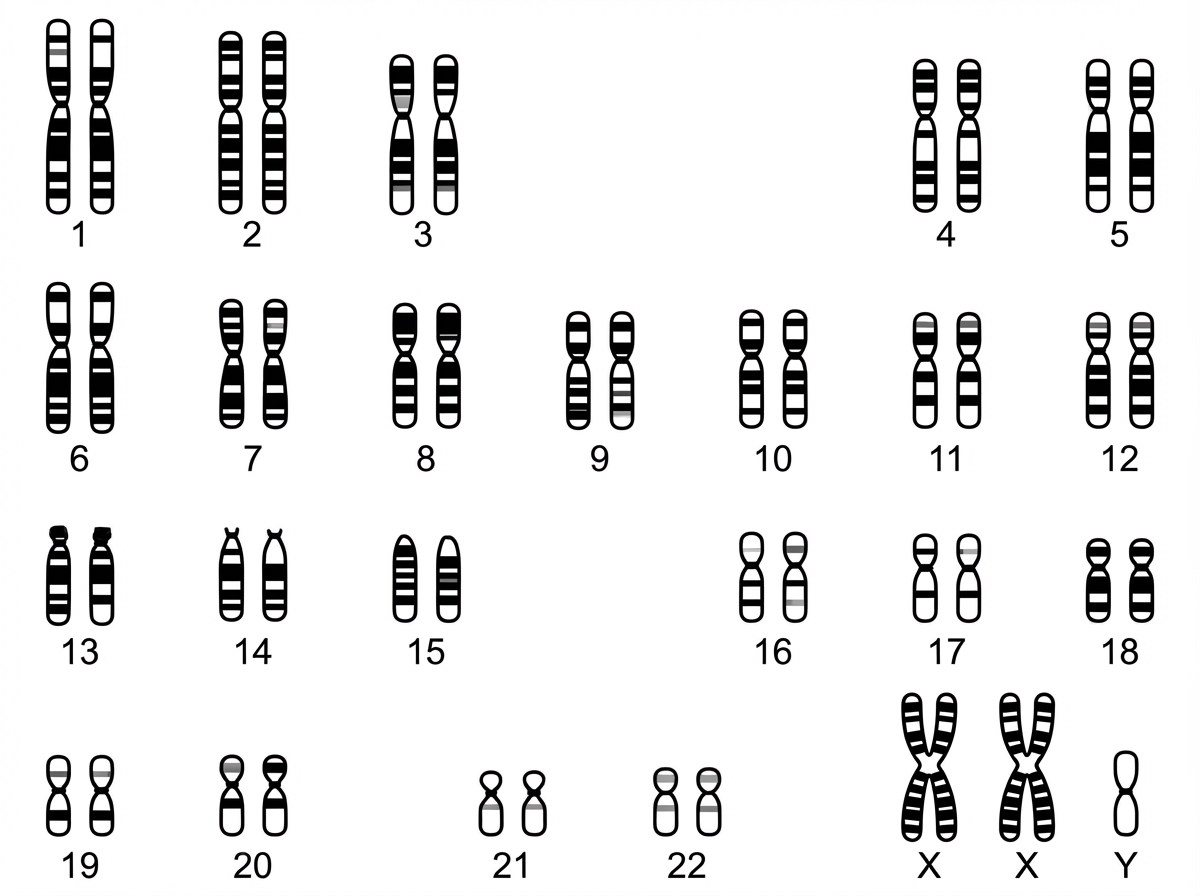
In the provided karyotype, which abnormality is observed? The karyotype shows 2 X-chromosomes and 1 Y-chromosome.
Metastatic calcification is most commonly seen in which of the following locations?
An overproduction of tissue normal to a particular area is called as what?
What is the inheritance pattern of the ABO blood group system?
Biopsy of the parotid gland in Sjogren's syndrome shows which of the following?
Ectopic ACTH production is most commonly seen in which of the following conditions?
HMB 45 is a tumor marker for which of the following conditions?
Explanation: **Explanation:** **Multifactorial inheritance** refers to conditions caused by the combined effects of multiple genes (polygenic) and environmental factors [1]. These disorders do not follow classic Mendelian patterns and often show a "threshold effect." **Why Cardiac Septal Defects is correct:** Congenital heart diseases, including **Atrial Septal Defects (ASD)** and **Ventricular Septal Defects (VSD)**, are classic examples of multifactorial inheritance [2]. While some cases are associated with chromosomal anomalies (like Down syndrome), the majority result from a complex interaction between genetic predisposition and maternal environmental triggers (e.g., diabetes, alcohol, or viral infections). **Analysis of Incorrect Options:** * **A. Neurofibroma (Neurofibromatosis Type 1):** This is an **Autosomal Dominant** disorder caused by a mutation in the *NF1* gene on chromosome 17. * **B. Hemophilia:** This is a classic **X-linked Recessive** disorder (Hemophilia A involves Factor VIII deficiency; Hemophilia B involves Factor IX). * **C. Hypophosphatemic Rickets:** This is one of the few classic examples of **X-linked Dominant** inheritance (Vitamin D-resistant rickets). **High-Yield Clinical Pearls for NEET-PG:** * **Common Multifactorial Disorders:** Cleft lip/palate, Pyloric stenosis, Neural tube defects, Hypertension, Diabetes Mellitus, and Schizophrenia [1]. * **Risk Characteristics:** The risk of recurrence in multifactorial inheritance increases with the number of affected relatives and the severity of the defect. * **Pyloric Stenosis:** A classic multifactorial example showing "Carter’s Effect," where the condition is more common in males, but if a female is affected, she carries a higher genetic load and is more likely to have affected offspring. **References:** [1] Cross SS. Underwood's Pathology: A Clinical Approach. 6th ed. (Basic Pathology) introduces the student to key general principles of pathology, both as a medical science and as a clinical activity with a vital role in patient care. Part 2 (Disease Mechanisms) provides fundamental knowledge about the cellular and molecular processes involved in diseases, providing the rationale for their treatment. Part 3 (Systematic Pathology) deals in detail with specific diseases, with emphasis on the clinically important aspects., pp. 95-96. [2] Kumar V, Abbas AK, et al.. Robbins and Cotran Pathologic Basis of Disease. 9th ed. The Heart, pp. 540-542.
Explanation: **Explanation:** **Hepatolenticular degeneration**, commonly known as **Wilson Disease** [1][2], is an autosomal recessive disorder caused by a mutation in the **ATP7B gene** on chromosome 13 [1]. This mutation leads to impaired biliary excretion of copper and its failure to incorporate into ceruloplasmin [3]. Consequently, toxic levels of **Copper** (Option D) accumulate in various tissues, most notably the liver (causing cirrhosis) and the brain (specifically the basal ganglia/lenticular nucleus), leading to neuropsychiatric symptoms [1][2][3]. **Analysis of Incorrect Options:** * **A. Cadmium:** Chronic exposure primarily leads to renal tubular damage (Fanconi syndrome) and lung toxicity (itai-itai disease). * **B. Lead:** Lead poisoning (Plumbism) typically presents with microcytic anemia (basophilic stippling), abdominal colic, and peripheral neuropathy (wrist drop/foot drop), but not hepatolenticular degeneration. * **C. Aluminium:** Toxicity is often seen in dialysis patients, leading to dialysis encephalopathy and osteomalacia, but it does not cause Wilson-like pathology. **High-Yield Clinical Pearls for NEET-PG:** * **Kayser-Fleischer (KF) Rings:** Copper deposition in the **Descemet’s membrane** of the cornea (pathognomonic) [1][2]. * **Diagnosis:** Decreased serum ceruloplasmin, increased urinary copper excretion, and increased hepatic copper content on biopsy [2][3]. * **Morphology:** "Mallory-Denk bodies" may be seen in the liver; "Putamen necrosis" is common in the brain. * **Treatment:** Chelation therapy with **D-Penicillamine** or Trientine; Zinc is used to prevent absorption. **References:** [1] Kumar V, Abbas AK, et al.. Robbins and Cotran Pathologic Basis of Disease. 9th ed. Liver and Gallbladder, p. 858. [2] Cross SS. Underwood's Pathology: A Clinical Approach. 6th ed. Common Clinical Problems From Liver And Biliary System Disease, pp. 394-395. [3] Kumar V, Abbas AK, et al.. Robbins and Cotran Pathologic Basis of Disease. 9th ed. Liver and Gallbladder, pp. 855-856.
Explanation: ***Gynecomastia with long thin limbs*** - The karyotype **47,XXY** indicates **Klinefelter syndrome**, which commonly presents with **gynecomastia** due to hormonal imbalances and **eunuchoid body habitus** with long limbs. - Males with Klinefelter syndrome typically have **tall stature**, **sparse body hair**, and **small testes** along with these characteristic physical features. *Short stature with polydactyly* - Short stature with polydactyly is characteristic of **Patau syndrome (trisomy 13)** with karyotype **47,XX/XY,+13**. - This syndrome also presents with **cleft lip/palate**, **microcephaly**, and **cardiac defects**, not associated with the XXY karyotype. *Loose connective tissue at the nape of the neck* - **Webbed neck** or nuchal fold is a classic feature of **Turner syndrome** with karyotype **45,X**. - Turner syndrome affects females and includes **short stature**, **streak gonads**, and **coarctation of aorta**, unlike Klinefelter syndrome. *High-pitched crying* - **High-pitched cat-like cry** is pathognomonic for **Cri-du-chat syndrome** caused by **deletion of chromosome 5p**. - This syndrome presents with **microcephaly**, **intellectual disability**, and **distinctive facial features**, not related to sex chromosome abnormalities.
Explanation: **Explanation:** **Metastatic calcification** occurs when calcium salts are deposited in normal tissues due to **hypercalcemia** (elevated serum calcium levels) [1]. The underlying mechanism involves the systemic elevation of calcium-phosphate products. **Why Lungs are the correct answer:** Metastatic calcification preferentially affects tissues that have an **internal alkaline environment**. The lungs, gastric mucosa, and kidneys are the most common sites [1]. In the lungs, the rapid excretion of carbon dioxide ($CO_2$) during respiration increases the local pH (alkalinity). This alkaline environment favors the precipitation of calcium salts, specifically in the alveolar walls and pulmonary veins [1],[2]. **Analysis of Incorrect Options:** * **Cornea (Option A):** While calcification can occur in the cornea (e.g., Band Keratopathy), it is less common than pulmonary involvement in systemic hypercalcemia. * **Extensor Tendon (Option B):** Tendons are more commonly associated with *dystrophic* calcification following chronic injury or in specific metabolic conditions like gout (tophi), but they are not a primary site for metastatic calcification. * **Renal Tubules (Option D):** The kidneys are a major site for metastatic calcification (nephrocalcinosis) because they excrete acid, creating an alkaline environment within the tubular cells [1]. However, in standard pathology textbooks (like Robbins), the **lungs** are frequently cited as the most common or primary site due to the massive surface area and constant $CO_2$ exchange. **High-Yield Clinical Pearls for NEET-PG:** * **Favored Sites:** "Lungs, Stomach, Kidneys" (Mnemonic: **LSK**). These organs all excrete acid, leaving the tissue alkaline [1]. * **Dystrophic vs. Metastatic:** Dystrophic calcification occurs in **dead/dying** tissue with **normal** serum calcium. Metastatic occurs in **normal** tissue with **elevated** serum calcium [2]. * **Morphology:** On H&E stain, calcium appears as basophilic (blue-purple), amorphous granular clumps. * **Common Causes:** Hyperparathyroidism (most common), Vitamin D toxicity, and bone resorption due to malignancies [1],[2]. **References:** [1] Kumar V, Abbas AK, et al.. Robbins and Cotran Pathologic Basis of Disease. 9th ed. Cellular Responses to Stress and Toxic Insults: Adaptation, Injury, and Death, pp. 76-77. [2] Cross SS. Underwood's Pathology: A Clinical Approach. 6th ed. (Basic Pathology) introduces the student to key general principles of pathology, both as a medical science and as a clinical activity with a vital role in patient care. Part 2 (Disease Mechanisms) provides fundamental knowledge about the cellular and molecular processes involved in diseases, providing the rationale for their treatment. Part 3 (Systematic Pathology) deals in detail with specific diseases, with emphasis on the clinically important aspects., pp. 134-135.
Explanation: Metastatic calcification occurs in normal tissues due to hypercalcemia (elevated serum calcium levels) [1]. It preferentially affects tissues that have an **internal alkaline environment**, which facilitates the precipitation of calcium salts [1]. **Why Lungs are the correct answer:** The lungs are a primary site for metastatic calcification because they lose carbon dioxide ($CO_2$) during respiration [1]. This loss of acid creates a **high (alkaline) pH** within the pulmonary tissue [1]. Calcium salts are less soluble in alkaline environments, leading to deposition, particularly in the alveolar walls [2]. **Analysis of other options:** * **Renal tubules:** While the kidneys are a common site for metastatic calcification (nephrocalcinosis) because they excrete acid, the question asks for the *most common* or classic site [1]. In many standard pathology texts (like Robbins), the lungs, kidneys, and gastric mucosa are listed, but the lungs are frequently highlighted due to the rapid pH shift. * **Cornea:** Calcification can occur here (band keratopathy), but it is less common than systemic internal organ involvement. * **Extensor tendons:** These are more commonly associated with urate deposits (tophi) in gout or xanthomas in hyperlipidemia, rather than metastatic calcification. **High-Yield NEET-PG Pearls:** 1. **Favored Sites:** "Lungs, Kidneys, Stomach" (mnemonic: **LKS**). These sites all excrete acid ($CO_2$, $H^+$, and $HCl$ respectively), leaving the tissue alkaline [1]. 2. **Morphology:** Deposits appear as amorphous white granules or clumps; on H&E stain, they are basophilic (blue/purple) [1]. 3. **Stain:** **von Kossa stain** (turns calcium black) or **Alizarin Red S** (turns calcium red). 4. **Common Causes:** Hyperparathyroidism (most common), Vitamin D intoxication, and bone resorption (multiple myeloma) [2],[3]. **References:** [1] Kumar V, Abbas AK, et al.. Robbins and Cotran Pathologic Basis of Disease. 9th ed. Cellular Responses to Stress and Toxic Insults: Adaptation, Injury, and Death, pp. 76-77. [2] Cross SS. Underwood's Pathology: A Clinical Approach. 6th ed. (Basic Pathology) introduces the student to key general principles of pathology, both as a medical science and as a clinical activity with a vital role in patient care. Part 2 (Disease Mechanisms) provides fundamental knowledge about the cellular and molecular processes involved in diseases, providing the rationale for their treatment. Part 3 (Systematic Pathology) deals in detail with specific diseases, with emphasis on the clinically important aspects., pp. 134-135. [3] Cross SS. Underwood's Pathology: A Clinical Approach. 6th ed. (Basic Pathology) introduces the student to key general principles of pathology, both as a medical science and as a clinical activity with a vital role in patient care. Part 2 (Disease Mechanisms) provides fundamental knowledge about the cellular and molecular processes involved in diseases, providing the rationale for their treatment. Part 3 (Systematic Pathology) deals in detail with specific diseases, with emphasis on the clinically important aspects., pp. 127-128.
Explanation: **Explanation:** The correct answer is **Hamartoma**. A **Hamartoma** is defined as a benign, focal malformation that resembles a neoplasm but is actually a disorganized collection of cells and tissues **native to the specific anatomical site** where it is found. For example, a pulmonary hamartoma may consist of cartilage, connective tissue, and epithelium—all elements normally found in the lung, but arranged in a haphazard, non-functional mass. **Why other options are incorrect:** * **Tumor:** A general term for any swelling or neoplasm. Neoplasms involve the uncontrolled proliferation of cells that may or may not resemble the tissue of origin and can be benign or malignant. * **Hyperplasia:** This refers to an increase in the **number of cells** in an organ or tissue, usually resulting in increased volume [1]. Unlike hamartomas, the tissue architecture in hyperplasia remains organized and functional. * **Hypertrophy:** This is an increase in the **size of individual cells**, leading to an increase in the size of the organ, without an increase in cell number [1]. **High-Yield Clinical Pearls for NEET-PG:** * **Hamartoma vs. Choristoma:** While a hamartoma is indigenous tissue in the wrong arrangement, a **Choristoma** (heterotopic rest) is normal tissue in an **abnormal location** (e.g., pancreatic tissue found in the stomach wall). * **Common Examples:** Pulmonary hamartoma (often shows "popcorn calcification" on X-ray) and Lisch nodules in the iris (seen in Neurofibromatosis Type 1). * **Cowden Syndrome:** A germline mutation in the *PTEN* gene characterized by multiple hamartomas and an increased risk of malignancies. **References:** [1] Cross SS. Underwood's Pathology: A Clinical Approach. 6th ed. (Basic Pathology) introduces the student to key general principles of pathology, both as a medical science and as a clinical activity with a vital role in patient care. Part 2 (Disease Mechanisms) provides fundamental knowledge about the cellular and molecular processes involved in diseases, providing the rationale for their treatment. Part 3 (Systematic Pathology) deals in detail with specific diseases, with emphasis on the clinically important aspects., pp. 85-87.
Explanation: **Explanation:** The ABO blood group system is a classic example of **Codominance** and **Multiple Allelism**. In codominance, two different alleles at a single locus are expressed equally, and both gene products are detectable in the phenotype [2]. 1. **Why Codominance is correct:** The ABO system is governed by three alleles: $I^A$, $I^B$, and $i$. While $I^A$ and $I^B$ are both dominant over the recessive $i$ allele (Mendelian inheritance), they are **codominant to each other**. In an individual with the genotype $I^AI^B$, both A and B antigens are fully expressed on the red blood cell surface, resulting in the AB blood group. 2. **Why other options are incorrect:** * **Pseudodominance:** This occurs when a recessive allele is expressed because the dominant allele is missing (e.g., in hemizygosity or deletions). It is not the mechanism for ABO expression. * **Autosomal Dominant/Recessive:** While the system follows autosomal patterns, these terms alone fail to describe the simultaneous expression of A and B alleles [1]. A simple dominant/recessive relationship only exists between $I^A/i$ or $I^B/i$. **Clinical Pearls for NEET-PG:** * **Gene Location:** The ABO gene is located on the long arm of **Chromosome 9 (9q34.2)**. * **H-Substance:** The H antigen (on Chromosome 19) is the precursor for A and B antigens. * **Bombay Phenotype:** A rare condition where the individual lacks the H gene ($hh$), appearing as Type O regardless of their ABO genotype. * **Universal Donor/Recipient:** O negative is the universal donor (no antigens); AB positive is the universal recipient (no antibodies). **References:** [1] Cross SS. Underwood's Pathology: A Clinical Approach. 6th ed. (Basic Pathology) introduces the student to key general principles of pathology, both as a medical science and as a clinical activity with a vital role in patient care. Part 2 (Disease Mechanisms) provides fundamental knowledge about the cellular and molecular processes involved in diseases, providing the rationale for their treatment. Part 3 (Systematic Pathology) deals in detail with specific diseases, with emphasis on the clinically important aspects., pp. 53-54. [2] Kumar V, Abbas AK, et al.. Robbins and Cotran Pathologic Basis of Disease. 9th ed. Genetic Disorders, pp. 148-150.
Explanation: **Explanation:** **Sjögren’s Syndrome (SS)** is a chronic, systemic autoimmune disorder characterized by the progressive destruction of exocrine glands, primarily the lacrimal and salivary glands [1]. **Why Lymphocytes are the correct answer:** The hallmark histopathological feature of Sjögren’s syndrome is **focal lymphocytic infiltration** of the exocrine glands [2]. In the parotid or minor salivary glands (lip biopsy), these infiltrates are predominantly composed of **CD4+ T-helper cells** and some B cells [2]. These lymphocytes aggregate around the ducts (periductal infiltration), leading to the destruction of the acini and the formation of "epimyoepithelial islands" [2]. This chronic inflammatory process results in the classic clinical presentation of xerostomia (dry mouth) and xerophthalmia (dry eyes). **Why other options are incorrect:** * **Neutrophils:** These are markers of acute bacterial inflammation (e.g., acute sialadenitis). SS is a chronic autoimmune process, not an acute infection. * **Eosinophils:** These are typically associated with Type I hypersensitivity (allergic) reactions or parasitic infections, which are not the underlying mechanism of SS. * **Basophils:** These are involved in systemic allergic responses and are rarely the dominant cell type in glandular biopsies. **High-Yield Clinical Pearls for NEET-PG:** * **Diagnostic Gold Standard:** Minor salivary gland biopsy (lip biopsy) showing **Focus Score ≥ 1** (defined as an aggregate of ≥ 50 lymphocytes per 4 $mm^2$ of glandular tissue). * **Serology:** Positive for **Anti-Ro (SS-A)** and **Anti-La (SS-B)** antibodies [1]. * **Risk of Malignancy:** Patients with Sjögren’s syndrome have a **40-fold increased risk** of developing **B-cell Non-Hodgkin Lymphoma** (specifically MALT lymphoma) [2]. * **Schirmer’s Test:** Used to quantify decreased tear production. **References:** [1] Kumar V, Abbas AK, et al.. Robbins and Cotran Pathologic Basis of Disease. 9th ed. Diseases of the Immune System, pp. 234-235. [2] Kumar V, Abbas AK, et al.. Robbins and Cotran Pathologic Basis of Disease. 9th ed. Diseases of the Immune System, pp. 235-236.
Explanation: **Explanation:** **Small cell carcinoma of the lung (SCLC)** is the correct answer because it is a neuroendocrine tumor derived from **Kulchitsky cells** (APUD cells) [2]. These cells have the biochemical machinery to synthesize and secrete polypeptide hormones. Ectopic ACTH production leads to **Ectopic Cushing Syndrome**, characterized by rapid onset hypertension, hypokalemia, and metabolic alkalosis, often without the classic "cushingoid" physical features due to the rapid progression of the underlying malignancy [1]. **Analysis of Incorrect Options:** * **Anaplastic carcinoma of the lung:** While aggressive, it lacks the specific neuroendocrine differentiation required for frequent ectopic hormone production compared to SCLC. * **Squamous cell carcinoma (SCC) of the lung:** This is classically associated with the production of **PTHrP** (Parathyroid Hormone-related Protein), leading to **Hypercalcemia** [3]. It is not a common source of ACTH. * **Adenocarcinoma of the cerebellum:** This is not a recognized clinical entity associated with paraneoplastic syndromes. However, **Hemangioblastoma** of the cerebellum is known for producing **Erythropoietin (EPO)**, leading to polycythemia. **High-Yield Clinical Pearls for NEET-PG:** * **SCLC Paraneoplastic Syndromes:** ACTH (Cushing’s), ADH (SIADH), and Lambert-Eaton Myasthenic Syndrome (antibodies against presynaptic Ca²⁺ channels) [1]. * **SCC Paraneoplastic Syndrome:** PTHrP (Hypercalcemia). Remember: **S**quamous = **S**tones (Hypercalcemia) [3]. * **Most common cause of Ectopic ACTH:** Small cell carcinoma of the lung (followed by Bronchial carcinoids and Thymic carcinoids). * **Diagnosis:** Ectopic ACTH is typically resistant to high-dose dexamethasone suppression tests. **References:** [1] Kumar V, Abbas AK, et al.. Robbins and Cotran Pathologic Basis of Disease. 9th ed. The Lung, pp. 725-727. [2] Cross SS. Underwood's Pathology: A Clinical Approach. 6th ed. Common Clinical Problems From Respiratory Tract Disease, pp. 337-338. [3] Kumar V, Abbas AK, et al.. Robbins and Cotran Pathologic Basis of Disease. 9th ed. Neoplasia, pp. 338-339.
Explanation: **Explanation:** **HMB-45 (Human Melanoma Black-45)** is a highly specific monoclonal antibody used in immunohistochemistry (IHC) to identify melanocytic tumors. It reacts against **gp100**, a glycoprotein found in the stage II melanosomes of melanocytes. **Why Malignant Melanoma is correct:** HMB-45 is considered one of the most specific markers for **Malignant Melanoma** [1]. While other markers like S-100 are more sensitive (meaning they pick up almost all cases), HMB-45 is more specific because it rarely stains non-melanocytic tumors [1]. It is particularly useful in distinguishing amelanotic melanoma from other poorly differentiated carcinomas or sarcomas. **Analysis of Incorrect Options:** * **Neuroblastoma:** Characterized by markers like **NSE (Neuron Specific Enolase)**, Chromogranin, and Synaptophysin [3]. * **Neurofibroma:** Being a nerve sheath tumor, it typically expresses **S-100**, but it does not contain melanosomes and is therefore HMB-45 negative. * **Angiosarcoma:** This is a vascular malignancy. The characteristic IHC markers are **CD31** (most specific), CD34, and von Willebrand factor (vWF). **High-Yield Clinical Pearls for NEET-PG:** * **Melanoma Marker Panel:** Usually includes S-100 (Sensitive), HMB-45 (Specific), and **Melan-A (MART-1)**. * **S-100 Exception:** While S-100 is positive in melanoma, it is also positive in Schwann cell tumors, Langerhans cell histiocytosis [2], and chondrosarcomas. * **HMB-45 in other tumors:** Interestingly, HMB-45 is also positive in **Angiomyolipoma (AML)**, particularly the PEComa (Perivascular Epithelioid Cell tumor) family. **References:** [1] Kumar V, Abbas AK, et al.. Robbins and Cotran Pathologic Basis of Disease. 9th ed. The Skin, pp. 1151-1152. [2] Kumar V, Abbas AK, et al.. Robbins and Cotran Pathologic Basis of Disease. 9th ed. Diseases of White Blood Cells, Lymph Nodes, Spleen, and Thymus, pp. 629-630. [3] Cross SS. Underwood's Pathology: A Clinical Approach. 6th ed. Common Clinical Problems From Liver And Biliary System Disease, pp. 419-420.
Cell Injury and Cell Death
Practice Questions
Adaptations of Cellular Growth
Practice Questions
Accumulations and Deposits
Practice Questions
Acute and Chronic Inflammation
Practice Questions
Tissue Repair and Wound Healing
Practice Questions
Hemodynamic Disorders
Practice Questions
Genetic Disorders
Practice Questions
Environmental Pathology
Practice Questions
Nutritional Diseases
Practice Questions
Molecular Basis of Disease
Practice Questions
Get full access to all questions, explanations, and performance tracking.
Start For Free