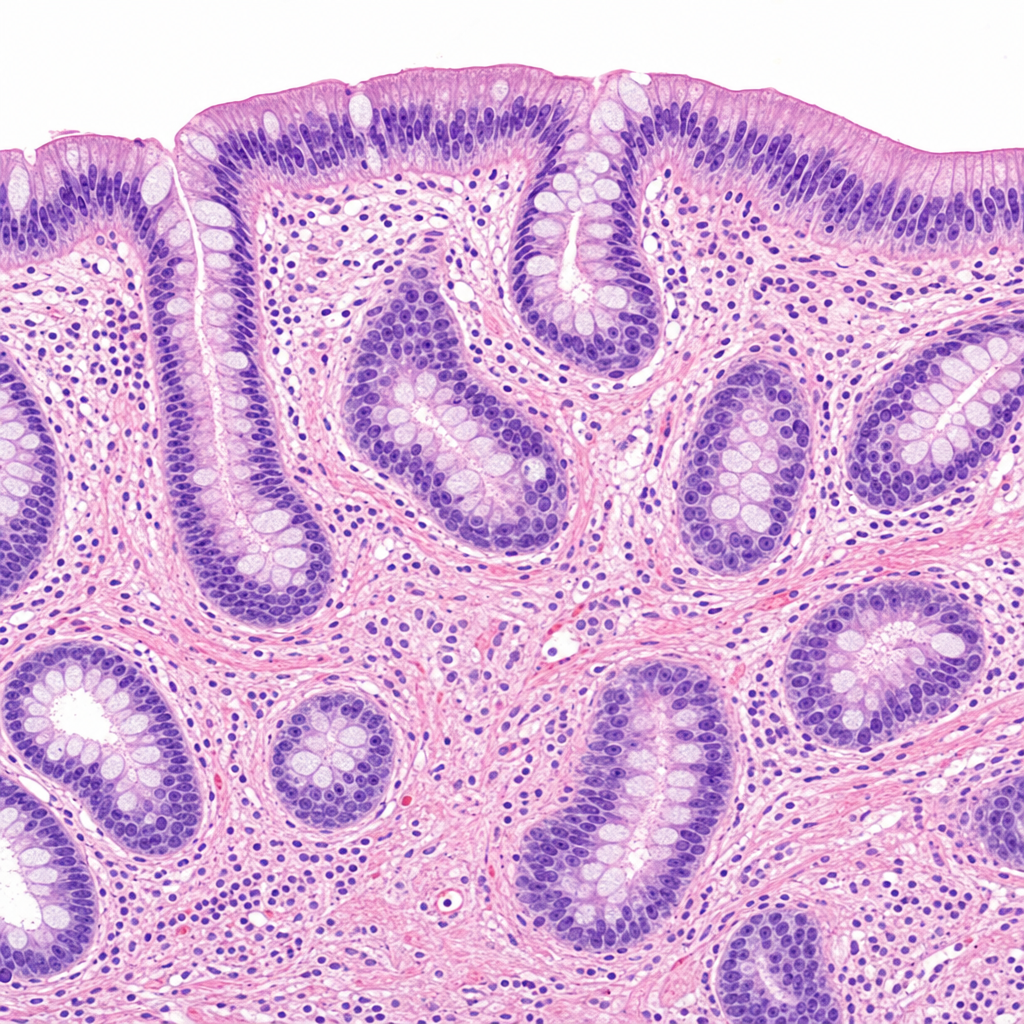
Helicobacter pylori infection is associated with an increased risk of which of the following conditions, except?
Strong correlation with colorectal cancer is seen in which of the following conditions?
Which of the following is a precancerous condition of cancer of the stomach?
A 30-year-old male is diagnosed with Peutz-Jeghers syndrome. What findings are consistent with the diagnosis?
Helicobacter pylori causes all of the following except:
Which of the following statements about Xanthogranulomatous is not true?
Acinic cell carcinomas of the salivary gland arise most often in which location?
Familial polyposis coli is due to which of the following?
In chronic inflammation confined to the portal tract with intact limiting membrane and normal lobular parenchyma, what would be the histopathological diagnosis?
All of the following are pre-malignant conditions except:
Explanation: **Explanation:** The correct answer is **D. Adenocarcinoma of the esophagus.** *H. pylori* is a Gram-negative, microaerophilic bacterium that colonizes the gastric mucosa. While it is a major risk factor for several gastric pathologies, it is actually considered **protective** against esophageal adenocarcinoma. This is because *H. pylori* infection (especially strains causing pangastritis) leads to gastric atrophy and reduced acid production (hypochlorhydria), which decreases the risk of Gastroesophageal Reflux Disease (GERD) and subsequent Barrett’s esophagus—the precursor to esophageal adenocarcinoma. **Analysis of Incorrect Options:** * **A. Peptic Ulcer Disease:** *H. pylori* is the most common cause of both duodenal (90%) and gastric ulcers (70%) due to increased acid secretion and mucosal damage [2]. * **B. Gastric Lymphoma:** It is strongly associated with **MALToma** (Mucosa-Associated Lymphoid Tissue lymphoma) [1]. Chronic inflammation leads to B-cell proliferation. Notably, early-stage MALToma can often be cured by *H. pylori* eradication alone [1]. * **C. Antral Gastric Carcinoma:** *H. pylori* is classified as a Class I Carcinogen. Chronic infection leads to a progression from gastritis → atrophy → intestinal metaplasia → dysplasia → adenocarcinoma. **High-Yield Clinical Pearls for NEET-PG:** * **Location:** *H. pylori* primarily colonizes the **Antrum** of the stomach [3]. * **Virulence Factors:** **CagA** (associated with cancer) and **VacA** (cytotoxin). * **Diagnostic Gold Standard:** Endoscopic biopsy with Histopathology (Warthin-Starry or Giemsa stain) [3]. * **Non-invasive Test of Choice:** Urea Breath Test (based on bacterial **urease** activity). * **Association:** While it increases gastric cancer risk, it is associated with a *decreased* risk of GERD and Esophageal Adenocarcinoma. **References:** [1] Cross SS. Underwood's Pathology: A Clinical Approach. 6th ed. Common Clinical Problems From Alimentary System Disease, pp. 356-357. [2] Cross SS. Underwood's Pathology: A Clinical Approach. 6th ed. Common Clinical Problems From Alimentary System Disease, pp. 353-354. [3] Kumar V, Abbas AK, et al.. Robbins and Cotran Pathologic Basis of Disease. 9th ed. The Gastrointestinal Tract, p. 771.
Explanation: **Explanation:** The correct answer is **Familial Polyposis Coli (FAP)** because it is an autosomal dominant condition characterized by the development of hundreds to thousands of adenomatous polyps in the colon [1]. It is caused by a germline mutation in the **APC gene** (5q21) [2]. The risk of progression to colorectal cancer (CRC) is virtually **100% by age 40** if a prophylactic colectomy is not performed [2]. This makes it the condition with the strongest correlation to malignancy among the options provided. **Analysis of Incorrect Options:** * **Peutz-Jeghers Polyp:** These are **hamartomatous polyps** (not neoplastic) [3]. While Peutz-Jeghers Syndrome increases the lifetime risk of various cancers (breast, pancreas, ovary), the individual polyps themselves have low malignant potential compared to FAP [3]. * **Juvenile Polyposis:** These are also hamartomatous polyps [3]. While Juvenile Polyposis Syndrome carries an increased risk of CRC due to the potential for adenomatous change within the hamartomas, the risk is significantly lower than the absolute certainty seen in FAP [3]. * **Hyperplastic Polyp:** These are the most common type of colonic polyps, typically found in the rectosigmoid region. They are generally considered **benign** with no significant malignant potential (unlike "Sessile Serrated Adenomas") [2]. **High-Yield Clinical Pearls for NEET-PG:** * **Gardner Syndrome:** FAP + Osteomas (mandible) + Soft tissue tumors (Desmoid tumors) + Dental abnormalities. * **Turcot Syndrome:** FAP/HNPCC + CNS tumors (Medulloblastoma/Glioblastoma). * **Rule of 100:** FAP requires >100 polyps for diagnosis [2]. * **Screening:** Annual sigmoidoscopy starting at age 10–12 for family members of FAP patients. **References:** [1] Kumar V, Abbas AK, et al.. Robbins and Cotran Pathologic Basis of Disease. 9th ed. The Gastrointestinal Tract, p. 817. [2] Kumar V, Abbas AK, et al.. Robbins and Cotran Pathologic Basis of Disease. 9th ed. The Gastrointestinal Tract, pp. 821-822. [3] Kumar V, Abbas AK, et al.. Robbins and Cotran Pathologic Basis of Disease. 9th ed. The Gastrointestinal Tract, p. 813.
Explanation: **Explanation:** **Chronic gastric atrophy** is considered a significant precancerous condition for gastric adenocarcinoma (specifically the intestinal type). The underlying mechanism involves the **Correa pathway** of carcinogenesis: Chronic inflammation (often due to *H. pylori* or autoimmune gastritis) leads to mucosal atrophy, which progresses to **intestinal metaplasia** (replacement of gastric epithelium with goblet cells) [1], [2]. This metaplastic tissue is prone to dysplasia and eventual malignant transformation [2]. **Analysis of Incorrect Options:** * **Peptic Ulcer (Option A):** Chronic gastric ulcers (benign) rarely transform into malignancy. While a gastric cancer can occasionally ulcerate and mimic a peptic ulcer, a true benign peptic ulcer is not a precursor lesion. * **Achalasia Cardia (Option C):** This is a motility disorder of the esophagus. While it is a risk factor for **Squamous Cell Carcinoma of the esophagus** due to chronic food stasis and irritation, it is not related to stomach cancer. * **Curling’s Ulcer (Option D):** These are acute stress ulcers occurring in the stomach or duodenum of patients with severe burns. They are transient, acute erosions and do not carry a risk of malignant transformation. **High-Yield Clinical Pearls for NEET-PG:** * **Precancerous Conditions for Gastric Cancer:** Chronic atrophic gastritis, Adenomatous gastric polyps (risk >2cm) [1], [2], Post-gastrectomy stumps (after 15–20 years), and Menetrier’s disease. * **H. pylori:** The most common cause of chronic atrophic gastritis and a Group 1 carcinogen. * **Blood Group A:** Associated with an increased risk of gastric cancer. * **Virchow’s Node:** Left supraclavicular lymphadenopathy indicating metastatic gastric cancer. **References:** [1] Kumar V, Abbas AK, et al.. Robbins and Cotran Pathologic Basis of Disease. 9th ed. The Gastrointestinal Tract, pp. 777-778. [2] Cross SS. Underwood's Pathology: A Clinical Approach. 6th ed. Common Clinical Problems From Alimentary System Disease, pp. 354-355.
Explanation: **Explanation:** **Peutz-Jeghers Syndrome (PJS)** is an autosomal dominant condition characterized by the development of multiple gastrointestinal polyps and mucocutaneous hyperpigmentation [2]. 1. **Why Hamartomas is correct:** The hallmark of PJS is the **Hamartomatous polyp**. Pathologically, these are non-neoplastic malformations consisting of native tissue elements arranged in a disorganized fashion. A key diagnostic feature is the **"arborizing" (tree-like) pattern** of smooth muscle fibers extending into the lamina propria, which supports the overlying branched glands [2]. 2. **Why other options are incorrect:** * **Adenomas / Adenomatous polyps:** These are neoplastic polyps characterized by epithelial dysplasia [3]. While PJS patients have a significantly increased risk of developing various cancers (colorectal, pancreatic, breast), the polyps themselves are hamartomatous, not adenomatous [1]. Adenomatous polyps are the hallmark of **Familial Adenomatous Polyposis (FAP)** [3]. * **Villoglandular polyps:** These are a subtype of adenomas (tubulovillous) and are not the primary pathology in PJS. **High-Yield Clinical Pearls for NEET-PG:** * **Genetics:** Mutation in the **STK11 (LKB1)** gene on chromosome 19p13 [1][2]. * **Clinical Presentation:** Melanocytic macules (dark brown spots) on the lips, buccal mucosa, and digits [2]. * **Complications:** The most common surgical complication is **intussusception** due to the large size of the hamartomas acting as lead points. * **Cancer Risk:** PJS is a "cancer syndrome"; patients require rigorous screening for GI and extra-GI malignancies (especially breast and pancreatic cancer) [1][2]. **References:** [1] Kumar V, Abbas AK, et al.. Robbins and Cotran Pathologic Basis of Disease. 9th ed. The Gastrointestinal Tract, pp. 813-814. [2] Kumar V, Abbas AK, et al.. Robbins and Cotran Pathologic Basis of Disease. 9th ed. The Gastrointestinal Tract, p. 813. [3] Kumar V, Abbas AK, et al.. Robbins and Cotran Pathologic Basis of Disease. 9th ed. The Gastrointestinal Tract, pp. 821-822.
Explanation: **Explanation:** *Helicobacter pylori* is a gram-negative, urease-positive microaerophilic bacterium that colonizes the gastric mucosa [2]. It is a major pathogen implicated in various upper gastrointestinal disorders. **Why Carcinoid Tumor is the Correct Answer:** Carcinoid tumors (Neuroendocrine tumors) of the stomach are typically associated with **Hypergastrinemia**. This occurs in conditions like **Autoimmune Metaplastic Atrophic Gastritis (Type A)**, where the destruction of parietal cells leads to achlorhydria, triggering G-cell hyperplasia and subsequent neuroendocrine cell proliferation [1, 2]. While *H. pylori* causes chronic gastritis, it is not a direct causative agent for carcinoid tumors. **Analysis of Incorrect Options:** * **Peptic Ulcer:** *H. pylori* is the most common cause of peptic ulcer disease (PUD) [4]. It causes antral-predominant gastritis, leading to increased acid secretion (hyperchlorhydria) and duodenal ulcers, or pangastritis leading to gastric ulcers [4]. * **MALToma:** *H. pylori* provides chronic antigenic stimulation, leading to the formation of Mucosa-Associated Lymphoid Tissue (MALT). It is the classic example of a malignancy that can be cured with antibiotics (triple therapy) in its early stages [1, 3]. * **Gastric Carcinoma:** *H. pylori* is classified as a **Group 1 Carcinogen** by the WHO. Chronic infection leads to a sequence of: Chronic gastritis → Atrophy → Intestinal metaplasia → Dysplasia → Adenocarcinoma (Lauren’s Intestinal type). **High-Yield Clinical Pearls for NEET-PG:** * **Virulence Factors:** **CagA** (associated with cancer) and **VacA** (cytotoxin). * **Gold Standard Diagnosis:** Endoscopic biopsy followed by Histopathology (Warthin-Starry or Giemsa stain). * **Non-invasive Screening:** Urea Breath Test (utilizes bacterial urease). * **Site:** *H. pylori* primarily colonizes the **Antrum** of the stomach. **References:** [1] Kumar V, Abbas AK, et al.. Robbins and Cotran Pathologic Basis of Disease. 9th ed. The Gastrointestinal Tract, pp. 780-781. [2] Cross SS. Underwood's Pathology: A Clinical Approach. 6th ed. Common Clinical Problems From Alimentary System Disease, pp. 351-352. [3] Cross SS. Underwood's Pathology: A Clinical Approach. 6th ed. Common Clinical Problems From Alimentary System Disease, pp. 356-357. [4] Cross SS. Underwood's Pathology: A Clinical Approach. 6th ed. Common Clinical Problems From Alimentary System Disease, pp. 353-354.
Explanation: **Explanation:** Xanthogranulomatous inflammation is a rare, specific form of chronic inflammation characterized by the destruction of normal tissue and its replacement by a prominent infiltrate of lipid-laden macrophages (foam cells) [1]. **Why Option B is the Correct Answer (The "Not True" Statement):** Xanthogranulomatous inflammation is **not** typically associated with tuberculosis. Tuberculosis is characterized by **caseating granulomatous inflammation**, driven by *Mycobacterium tuberculosis* [2]. In contrast, xanthogranulomatous processes are most commonly associated with chronic infections (often *E. coli* or *Proteus*) and biliary or urinary obstruction [1]. **Analysis of Incorrect Options:** * **Option A (Foam cells are seen):** This is a hallmark feature. These are activated macrophages that have ingested lipids, giving them a "foamy" or vacuolated cytoplasmic appearance [1]. * **Option C (Yellow nodules are seen):** Macroscopically, the high lipid content within the foam cells gives the affected tissue a characteristic bright yellow, lobulated, or nodular appearance [1]. * **Option D (Giant cells may be seen):** While foam cells predominate, other inflammatory cells like plasma cells, lymphocytes, and multinucleated giant cells (foreign body type) are frequently present in the background [1]. **High-Yield Clinical Pearls for NEET-PG:** * **Most Common Sites:** The **Gallbladder** (Xanthogranulomatous Cholecystitis) and the **Kidney** (Xanthogranulomatous Pyelonephritis) [1]. * **Xanthogranulomatous Cholecystitis (XGC):** Often mimics gallbladder carcinoma on imaging due to wall thickening and extension into adjacent organs. It is caused by the rupture of Rokitansky-Aschoff sinuses, leading to a granulomatous reaction to extravasated bile. * **Xanthogranulomatous Pyelonephritis (XPN):** Classically associated with **Staghorn calculi** and chronic urinary tract infections [1]. It often presents as a "non-functioning kidney." **References:** [1] Kumar V, Abbas AK, et al.. Robbins and Cotran Pathologic Basis of Disease. 9th ed. The Kidney, pp. 939-940. [2] Kumar V, Abbas AK, et al.. Robbins and Cotran Pathologic Basis of Disease. 9th ed. Infectious Diseases, pp. 383-384.
Explanation: **Explanation:** Acinic cell carcinoma (ACC) is a unique salivary gland malignancy characterized by cells showing serous acinar differentiation (containing zymogen granules). **1. Why Parotid Salivary Gland is Correct:** The **parotid gland** is the most common site for acinic cell carcinoma, accounting for approximately **80% to 90%** of all cases [1]. This is because the parotid gland is predominantly composed of serous acini, and ACC is a tumor that recapitulates these serous cells. It is the second most common malignant salivary gland tumor in children (after mucoepidermoid carcinoma) and the third most common overall in adults. **2. Why Other Options are Incorrect:** * **Minor Salivary Glands:** While ACC can occur here (most commonly in the buccal mucosa or lips), it is significantly less frequent than in the parotid. * **Submandibular & Sublingual Glands:** These glands are mixed (seromucous) or predominantly mucous. Primary malignancies in these glands are more likely to be Adenoid Cystic Carcinoma or Mucoepidermoid Carcinoma rather than Acinic Cell Carcinoma. **High-Yield NEET-PG Pearls:** * **Bilateralism:** Acinic cell carcinoma is the most common malignant salivary gland tumor to present **bilaterally** (though Warthin tumor is the most common benign tumor to do so). * **Histology:** Look for "clear cells" or "granular basophilic cytoplasm" (due to zymogen granules). It often stains positive with **PAS (Periodic Acid-Schiff)** and is diastase-resistant. * **Prognosis:** It is generally considered a low-grade malignancy with a relatively favorable prognosis compared to other salivary carcinomas [1]. * **Grading:** Unlike many cancers, its histological appearance does not always correlate with clinical behavior. **References:** [1] Kumar V, Abbas AK, et al.. Robbins and Cotran Pathologic Basis of Disease. 9th ed. Head and Neck, pp. 753-755.
Explanation: **Explanation:** **Familial Adenomatous Polyposis (FAP)**, also known as Familial Polyposis Coli, is an autosomal dominant syndrome characterized by the development of hundreds to thousands of adenomatous colorectal polyps [1]. **Why Option A is Correct:** The condition is caused by a germline mutation in the **APC (Adenomatous Polyposis Coli) gene**, which is located on the **long arm of chromosome 5 (5q21)** [1]. The APC gene is a tumor suppressor gene that regulates the Wnt signaling pathway. A mutation leads to the accumulation of β-catenin, which translocates to the nucleus and activates genes promoting cell proliferation, eventually leading to adenoma formation [1]. **Why Other Options are Incorrect:** * **Option B (Abnormality of chromosomes):** This is too vague. While FAP involves a chromosomal abnormality, medical exams require the specific location (Chromosome 5). * **Option C (Intestinal tuberculosis):** This is an infectious disease caused by *Mycobacterium tuberculosis*, leading to granulomatous inflammation, not genetic polyposis. * **Option D (Intussusception):** This is a clinical complication where one segment of the intestine telescopes into another. While a large polyp in FAP can act as a "lead point" for intussusception, it is a consequence, not the cause of the disease. **High-Yield Clinical Pearls for NEET-PG:** * **Rule of 100:** A diagnosis of FAP typically requires the presence of at least 100 polyps [1]. * **Malignant Potential:** Risk of progression to colorectal carcinoma is **100%** by age 40-50 if prophylactic colectomy is not performed [1]. * **Gardner Syndrome:** FAP + Osteomas (mandible/skull) + Soft tissue tumors (Desmoid tumors) + Epidermoid cysts. * **Turcot Syndrome:** FAP + Central Nervous System tumors (Medulloblastoma). * **Screening:** Annual sigmoidoscopy starting at age 10-12 for at-risk family members. **References:** [1] Kumar V, Abbas AK, et al.. Robbins and Cotran Pathologic Basis of Disease. 9th ed. The Gastrointestinal Tract, pp. 821-822.
Explanation: ### **Explanation** The question describes the classic histopathological presentation of **Chronic Persistent Hepatitis (CPH)**. **1. Why the Correct Answer is Right:** Chronic hepatitis is traditionally classified based on the degree of inflammation and the integrity of the **limiting plate** (the layer of hepatocytes immediately surrounding the portal tract). * In **Chronic Persistent Hepatitis**, the inflammatory infiltrate (primarily lymphocytes) is strictly **confined to the portal tracts** [1]. * The **limiting plate remains intact**, meaning there is no "spillover" of inflammation into the surrounding lobules [1]. * The lobular architecture and parenchyma are preserved, leading to a benign clinical course with minimal progression to cirrhosis. **2. Why the Other Options are Wrong:** * **Active Hepatitis / Chronic Active Hepatitis (CAH):** These are characterized by **"Piecemeal Necrosis"** (Interface Hepatitis). The inflammation breaches the limiting plate and destroys the surrounding hepatocytes. This often leads to "bridging necrosis" and eventually cirrhosis [1]. * **Alcoholic Hepatitis:** This presents with a distinct triad: **Mallory-Denk bodies** (cytoplasmic inclusions), hepatocyte swelling (**ballooning degeneration**), and neutrophilic infiltration, typically in a centrilobular (Zone 3) distribution, rather than isolated portal inflammation. **3. NEET-PG High-Yield Pearls:** * **Interface Hepatitis:** The hallmark of Chronic Active Hepatitis; it refers to the erosion of the limiting plate by inflammatory cells. * **Ground Glass Hepatocytes:** Characteristic of Chronic Hepatitis B (due to HBsAg accumulation in the ER) [1]. * **Councilman Bodies:** Eosinophilic apoptotic hepatocytes seen in viral hepatitis (both acute and chronic). * **Modern Classification:** The terms CPH and CAH are now largely replaced by the **Grade** (degree of necroinflammatory activity) and **Stage** (extent of fibrosis/cirrhosis) system (e.g., Metavir or Ishak scores) [1]. **References:** [1] Kumar V, Abbas AK, et al.. Robbins and Cotran Pathologic Basis of Disease. 9th ed. Liver and Gallbladder, pp. 842-845.
Explanation: ### Explanation The correct answer is **Peutz-Jeghers syndrome (PJS)**. **1. Why Peutz-Jeghers Syndrome is the correct answer:** In the context of gastrointestinal pathology, a "pre-malignant condition" typically refers to a lesion where the cells themselves have a high risk of undergoing neoplastic transformation (e.g., dysplasia). PJS is characterized by multiple **hamartomatous polyps**. Hamartomas are non-neoplastic, disorganized growths of native tissue. While patients with PJS have a significantly increased lifetime risk of developing various cancers (colorectal, pancreatic, breast, etc.) due to the underlying *STK11* mutation [1], the **individual hamartomatous polyps themselves are not considered pre-malignant precursors** to adenocarcinoma. **2. Why the other options are wrong:** * **Ulcerative Colitis (UC) & Crohn’s Disease:** Both are types of Inflammatory Bowel Disease (IBD) [2]. Chronic inflammation leads to a "dysplasia-carcinoma sequence." UC carries a higher risk than Crohn’s, but both are established pre-malignant conditions requiring regular surveillance colonoscopies. * **Barrett’s Esophagus:** This is a classic pre-malignant condition where intestinal metaplasia (columnar epithelium with goblet cells) replaces the normal squamous epithelium due to chronic GERD. It is the primary precursor for esophageal adenocarcinoma. **3. NEET-PG High-Yield Pearls:** * **PJS Triad:** Mucocutaneous hyperpigmentation (lips/buccal mucosa), gastrointestinal hamartomatous polyps, and autosomal dominant inheritance (*STK11/LKB1* gene) [1]. * **Histology of PJS:** Characterized by a "Christmas tree" branching appearance of smooth muscle within the lamina propria. * **Pre-malignant vs. Risk Factor:** While PJS is a *syndrome* that increases cancer risk, the polyps are hamartomas. In contrast, **Adenomatous polyps** (Tubular/Villous) are true pre-malignant neoplastic lesions [3]. * **IBD Cancer Risk:** Increases with the duration of disease (>8–10 years) and the extent of colonic involvement (pancolitis) [2]. **References:** [1] Kumar V, Abbas AK, et al.. Robbins and Cotran Pathologic Basis of Disease. 9th ed. The Gastrointestinal Tract, pp. 813-814. [2] Kumar V, Abbas AK, et al.. Robbins and Cotran Pathologic Basis of Disease. 9th ed. The Gastrointestinal Tract, pp. 807-809. [3] Kumar V, Abbas AK, et al.. Robbins and Cotran Pathologic Basis of Disease. 9th ed. The Gastrointestinal Tract, pp. 821-822.
Oral Cavity and Esophageal Pathology
Practice Questions
Gastritis and Peptic Ulcer Disease
Practice Questions
Inflammatory Bowel Disease
Practice Questions
Malabsorption Syndromes
Practice Questions
Vascular Disorders of Intestine
Practice Questions
Diverticular Disease
Practice Questions
Intestinal Obstruction
Practice Questions
Gastrointestinal Infections
Practice Questions
Polyps and Neoplasms
Practice Questions
Appendiceal Pathology
Practice Questions
Get full access to all questions, explanations, and performance tracking.
Start For Free