A patient presents with bloody diarrhea after eating undercooked meat. Which bacterial pathogen is most likely?
A child presents with abdominal pain, arthralgia, hematuria, and hypertension. What is the diagnosis?
A 17 year old adolescent, presented with fever since one week which is step-ladder in pattern. He also has loose stools which are "pea-soup" in consistency. Rose spots are seen on his body. He is most probably infected with:
Which of the following pathogens are associated with watery diarrhea after an incubation period of 8 to 14 hours?
Which of the following statements about Enterohemorrhagic E. coli (EHEC) is false?
What is the most common extra-intestinal complication of Shigellosis?
Which condition is characterized by bacteremia?
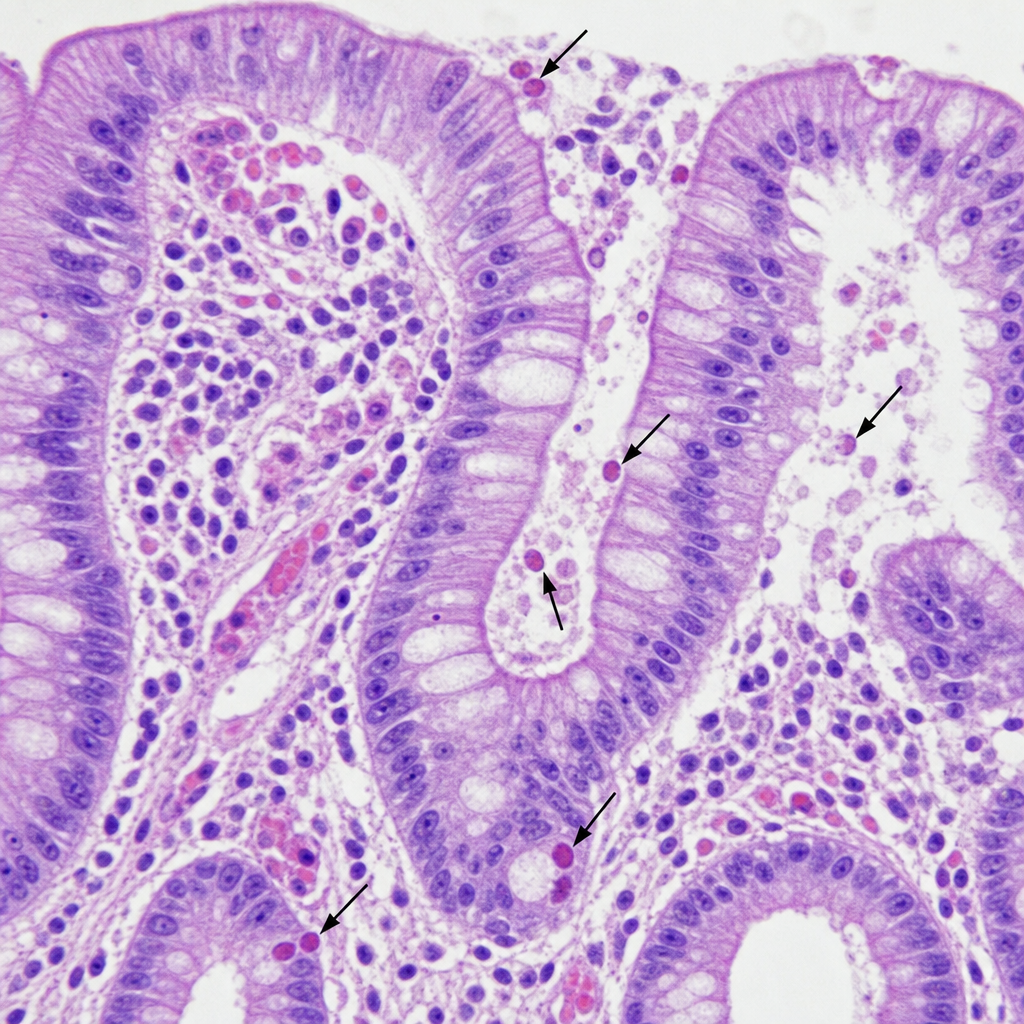
Identify the condition shown in the image.
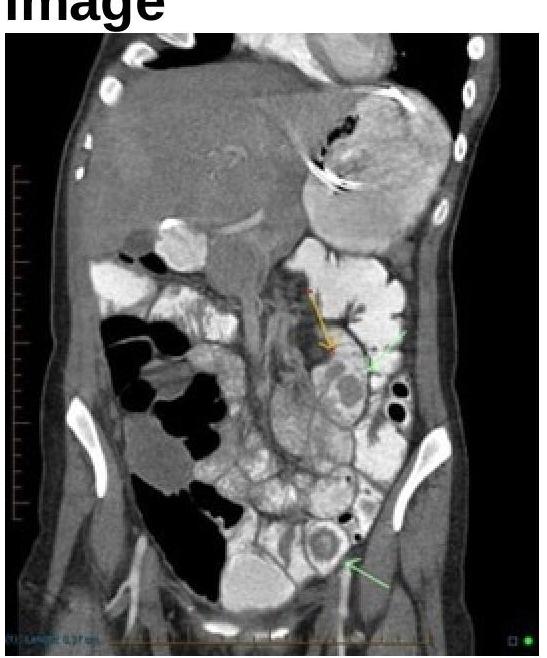
A 3-year-old female child sleeping in a thatched hut woke up in the middle of the night screaming. Her mother thought the child had a nightmare and tried to pacify her. After some time, she noticed that the child was sweating profusely and the hands were becoming cold. The child also vomited a couple of times. The mother immediately rushed the child to the emergency services. Her pulse was 150/minute and her BP 90/60 mm Hg. This child is likely to have -
A young man back from leisure trip has swollen knee joints & foreign body sensation in eyes. Likely cause is -
Explanation: ***Escherichia coli O157:H7*** - **Enterohemorrhagic E. coli (EHEC)** is the classic cause of **bloody diarrhea** following consumption of **undercooked ground beef** or hamburgers, producing **Shiga toxins** that cause **hemorrhagic colitis**. - Can lead to serious complications like **hemolytic uremic syndrome (HUS)**, particularly in children and elderly patients. *Salmonella typhi* - **Salmonella typhi** specifically causes **typhoid fever** with sustained fever, headache, and rose spots, not acute bloody diarrhea from undercooked meat. - While non-typhoidal Salmonella can cause gastroenteritis, it typically produces **non-bloody diarrhea** and is more associated with poultry and eggs. *Shigella dysenteriae* - Although it causes **bloody diarrhea** and severe **dysentery**, transmission is primarily **person-to-person** through the fecal-oral route or contaminated water. - Not typically associated with **undercooked meat consumption** but rather with poor sanitation and contaminated produce. *Vibrio cholerae* - Causes **cholera** with characteristic profuse, **watery diarrhea** ("rice-water stools") leading to severe dehydration, not bloody diarrhea. - Transmission occurs through contaminated **water and seafood**, not undercooked meat.
Explanation: ***Hemolytic uremic syndrome*** - The combination of **abdominal pain**, **hematuria**, and **hypertension** in a child, particularly after a diarrheal illness, is highly suggestive of **hemolytic uremic syndrome (HUS)** [1], [2]. - HUS is characterized by **microangiopathic hemolytic anemia**, **thrombocytopenia**, and **acute kidney injury**, which can manifest as hematuria and hypertension [1], [2]. *Dengue* - While **abdominal pain** and **arthralgia** can be symptoms of dengue, it typically also presents with **fever**, **rash**, and **bleeding manifestations** like petechiae or mucosal bleeding. - Dengue does not typically cause **hematuria** with **hypertension** as a primary feature of renal involvement. *Rheumatic fever* - **Rheumatic fever** is characterized by **arthralgia** (migratory arthritis), but it is primarily a sequela of **Streptococcal pharyngitis** and presents with **carditis**, **chorea**, **erythema marginatum**, and **subcutaneous nodules**. - It does not typically cause the combination of **abdominal pain**, **hematuria**, and **hypertension** seen here. *Henoch-Schönlein Purpura* - **Henoch-Schönlein Purpura (HSP)** involves **abdominal pain**, **arthralgia**, and **hematuria**, and can sometimes cause hypertension. - However, the hallmark of HSP is a **palpable purpuric rash** on the lower extremities and buttocks, which is not mentioned in the patient's presentation.
Explanation: ***Salmonella typhi*** - The combination of **step-ladder fever**, **"pea-soup" diarrhea**, and **rose spots** is a classic presentation of **typhoid fever**, caused by *Salmonella typhi* [1]. - This bacterial infection predominantly affects the gastrointestinal tract and can lead to systemic symptoms [1]. *Adenovirus* - **Adenovirus** typically causes **respiratory tract infections**, **conjunctivitis**, or **gastroenteritis**, but not with the specific symptom profile of step-ladder fever or rose spots. - While it can cause diarrhea, it's usually not described as "pea-soup" and lacks the other systemic features. *Rotavirus* - **Rotavirus** is a common cause of **severe gastroenteritis** in infants and young children, characterized by **watery diarrhea** and vomiting. - It does not present with step-ladder fever or rose spots, which are pathognomonic for typhoid. *Vibrio cholerae* - **Vibrio cholerae** causes **cholera**, an acute diarrheal illness characterized by **profuse watery diarrhea** (often described as "rice-water stools") and rapid dehydration. - It does not typically cause step-ladder fever or skin manifestations like rose spots.
Explanation: **Bacillus cereus and Clostridium perfringens** - Both *Bacillus cereus* diarrheal type and *Clostridium perfringens* are known to cause **watery diarrhea** after an incubation period of **8 to 14 hours**. - This longer incubation period is typical for toxins produced in the gut after ingestion of spores or large numbers of bacteria. *Rotavirus and Norwalk virus* - **Rotavirus** typically has an incubation period of 1-3 days and causes **severe watery diarrhea**, especially in infants and young children. - **Norwalk virus** (norovirus) usually has an incubation period of 12-48 hours and causes **acute gastroenteritis** with vomiting and watery diarrhea. *Shigella and Salmonella* - **Shigella** causes **dysentery** (bloody diarrhea) with a shorter incubation period (1-2 days) rather than watery diarrhea. - **Salmonella** can cause **inflammatory diarrhea** (salmonellosis) with an incubation period ranging from 6 hours to 6 days, often shorter than 8-14 hours for typical infections. *S. aureus and Bacillus cereus* - **Staphylococcus aureus** causes vomiting and diarrhea due to preformed toxin, with a very short incubation period of **1-6 hours**. - While *Bacillus cereus* can cause emetic (vomiting) or diarrheal type illness, the emetic form has a 1-6 hour incubation period, which is not consistent with the 8-14 hour window.
Explanation: ***Sereny test is positive*** - The **Sereny test** assesses the invasiveness of bacteria by observing their ability to invade and replicate in epithelial cells, typically in guinea pig conjunctiva. - *Enterohemorrhagic E. coli* (**EHEC**) is **non-invasive**; its pathogenicity stems from its production of **Shiga-like toxins**, not from cellular invasion, making a positive Sereny test statement false. *Commonly causes HUS* - **EHEC**, particularly serotype **O157:H7**, is a well-known cause of **Hemolytic Uremic Syndrome (HUS)**, especially in children and the elderly. - The **Shiga-like toxins** produced by EHEC are absorbed into the bloodstream, damaging endothelial cells and leading to the characteristic triad of **hemolytic anemia**, **thrombocytopenia**, and **acute kidney injury** seen in HUS. *Bloody diarrhea and HUS linked to O157:H7* - **EHEC O157:H7** is the most common serotype associated with outbreaks of **bloody diarrhea** and the subsequent development of **HUS**. - The toxins cause widespread damage to the intestinal lining, leading to **hemorrhagic colitis** (bloody diarrhea), and can then disseminate to distant organs like the kidneys, causing HUS. *Produces Shiga-like toxin* - The primary virulence factor of **EHEC** is the production of **Shiga-like toxins** (also known as **verotoxins**), specifically Stx1 and Stx2. - These toxins inhibit protein synthesis in eukaryotic cells, leading to cell death and tissue damage, which contribute to the severe gastrointestinal symptoms and systemic complications like HUS.
Explanation: ***Reactive arthritis*** - **Reactive arthritis** is triggered by a prior infection, such as *Shigellosis*, and is the most common extra-intestinal complication, especially in HLA-B27 positive individuals [1]. - It typically presents with a triad of **arthritis**, **urethritis**, and **conjunctivitis**, though not all symptoms may be present [1]. *Pneumonia* - While pneumonia can occur in severely ill patients, it is not a common nor specific extra-intestinal complication directly linked to the pathogenesis of *Shigellosis*. - Respiratory complications are rare in uncomplicated cases of shigellosis. *Meningitis* - **Meningitis** is a rare and severe complication, primarily seen in young children or immunocompromised individuals, and is not the most common extra-intestinal manifestataion. - It suggests systemic spread of the bacteria beyond the gastrointestinal tract, which is uncommon. *HUS* - **Hemolytic Uremic Syndrome (HUS)** is a well-known complication of *E. coli* O157:H7 (Shiga toxin-producing E. coli, STEC), rather than *Shigella* species. - While some *Shigella* strains produce Shiga toxin, HUS is far less common in *Shigellosis* compared to STEC infections.
Explanation: ***Typhoid fever*** - Typhoid fever, caused by **Salmonella Typhi**, is characterized by **bacteremia**, as the bacteria invade the bloodstream from the gut. - The systemic spread of bacteria leads to classic symptoms such as **high fever**, headache, and abdominal pain. *Shigella infection* - Shigella infections, primarily cause **dysentery** by invading the colonic mucosa, leading to **bloody diarrhea**. - While localized to the gut, **bacteremia is rare** and typically seen only in severely immunocompromised individuals. *Cholera infection* - Cholera, caused by **Vibrio cholerae**, is a **non-invasive** infection that primarily affects the small intestine. - It produces a **toxin** that causes massive fluid and electrolyte loss, leading to severe **watery diarrhea**, but **does not typically involve bacteremia**. *Diphtheria infection* - Diphtheria is caused by **Corynebacterium diphtheriae**, which produces a **toxin** that enters the bloodstream and can affect distant organs (heart, nerves). - The bacterial infection itself is usually localized to the upper respiratory tract; **bacteremia is not a characteristic feature** of diphtheria.
Explanation: ***Juvenile polyp*** - Juvenile polyps are commonly found in children and present as **solitary lesions**, usually in the rectum [1]. - They typically appear **smooth**, with a characteristic lobulated surface, emphasizing their benign nature. *Villous adenoma* - Villous adenomas are characterized by **frond-like projections** and have a higher risk of malignant transformation [2]. - These lesions usually occur in adults and are typically larger and more **invasive** compared to juvenile polyps [2]. *Hyperplastic polyp* - Hyperplastic polyps are small, **benign lesions** that result from epithelial overgrowth with a typical **smooth surface** [3]. - They are usually found in the colon and do not present with the distinctive features of juvenile polyps. *Peutz-Jeghers polyp* - Peutz-Jeghers polyps are associated with **Peutz-Jeghers syndrome** and exhibit a **hamartomatous** appearance, often protruding from various gastrointestinal sites [1]. - These polyps are typically more **complex** and can be found in older children and adults, differing significantly from juvenile polyps [1]. **References:** [1] Kumar V, Abbas AK, et al.. Robbins and Cotran Pathologic Basis of Disease. 9th ed. The Gastrointestinal Tract, p. 813. [2] Cross SS. Underwood's Pathology: A Clinical Approach. 6th ed. Common Clinical Problems From Alimentary System Disease, pp. 371-372. [3] Kumar V, Abbas AK, et al.. Robbins and Cotran Pathologic Basis of Disease. 9th ed. The Gastrointestinal Tract, pp. 811-813.
Explanation: ***Scorpion envenomation*** - The combination of **profuse sweating**, **cold hands**, **vomiting**, **tachycardia**, and **hypotension with shock** (BP 90/60 mm Hg is low for a 3-year-old) in a child sleeping in a thatched hut (a common habitat for scorpions) is highly suggestive of **scorpion envenomation**. - **Autonomic storm** with both sympathetic and parasympathetic activation is characteristic, leading to symptoms like sweating, vomiting, and cardiovascular instability. - Scorpion envenomation can cause **initial hypertension** followed by **cardiogenic shock and hypotension** in severe cases, as seen here with cold peripheries and tachycardia. *Food poisoning* - While food poisoning can cause **vomiting** and malaise, it typically presents with **diarrhea** and generally does not cause the severe autonomic features like profuse sweating, cold periphery, or the degree of cardiovascular instability described here. - The sudden onset during sleep in a thatched hut and the specific constellation of symptoms point away from a simple foodborne illness. *Snakebite* - Snakebites, particularly from **neurotoxic snakes**, can cause some autonomic symptoms, but they are more commonly associated with **local swelling**, **fang marks**, and progressive **neurological symptoms** like ptosis, ophthalmoplegia, and respiratory paralysis. - **Viperine envenomation** typically causes **local swelling, bleeding disorders**, and hypotension but without the specific autonomic storm pattern (profuse sweating, vomiting) seen in scorpion sting. *Septic shock* - Septic shock would present with signs of severe infection such as **fever** (though sometimes hypothermia in children), **lethargy**, and ultimately **hypotension** with poor perfusion and organ dysfunction. - There is no mention of an underlying infection or prodromal illness, and the sudden onset of specific autonomic symptoms during sleep in a thatched hut is more characteristic of envenomation rather than sepsis.
Explanation: REITER'S SYNDROME [1] - Reiter's syndrome, also known as **reactive arthritis**, is characterized by the classic triad of **arthritis**, **conjunctivitis** (foreign body sensation in eyes), and **urethritis** [1]. - It often develops after a **genitourinary or gastrointestinal infection**, which aligns with a recent leisure trip [1]. *Behcet's disease* - Behcet's disease primarily presents with recurrent **oral and genital ulcers**, along with **uveitis** and **skin lesions**. - While arthritis can occur, the combination of specific eye foreign body sensation and a recent trip isn't as characteristic as for Reiter's. *SLE* - **Systemic lupus erythematosus (SLE)** is a systemic autoimmune disease with diverse manifestations, including polyarthritis and serositis. - **Conjunctivitis** as a primary eye symptom or a direct association with a preceding infection/trip is less typical compared to Reiter's syndrome. *Sarcoidosis* - **Sarcoidosis** is a multisystem inflammatory disease often involving the **lungs, skin, and lymph nodes**, and can cause arthritis. - However, its acute presentation with foreign body sensation in the eyes and post-trip history is not its common debut.
Get full access to all questions, explanations, and performance tracking.
Start For Free