During autopsy of a 65-year-old man who collapsed while eating dinner at home, a foreign body (food bolus) is found obstructing the larynx with no other injuries. The manner of death is:
Which of the following is a feature of manual strangulation?
The dead body of a 20 year old man found in the sea was brought in for postmortem examination. Which of the following findings would you see in seawater drowning? 1. Hemoconcentration 2. Pulmonary edema 3. Hyponatremia 4. Hypernatremia 5. Hemolysis
A 42-year-old man is found hanging from a ceiling beam with a rope around his neck. At autopsy, which of the following findings would be most consistent with suicidal hanging rather than homicidal strangulation?
Immersion syndrome is also known as?
Which of the following conditions is classified as anemic hypoxia?
Which of the following findings is most indicative of death by hanging?
Which of the following is not a sign of cerebral compression?
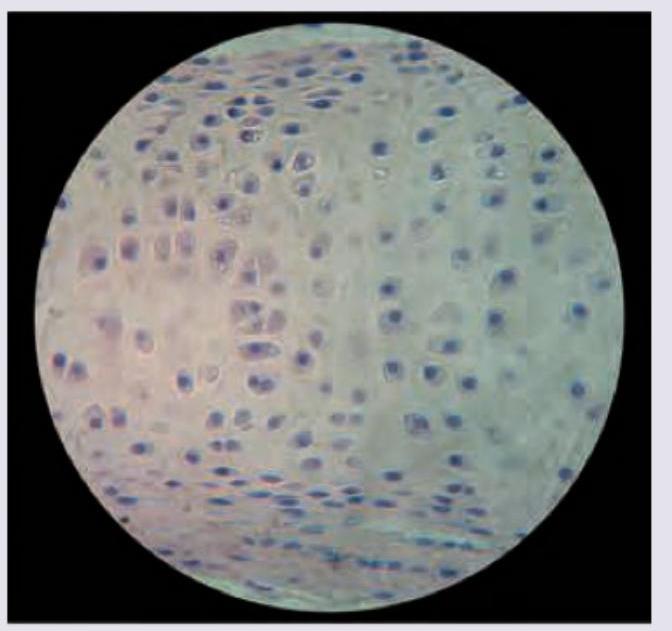
All are true about the cartilage shown in the figure except: (Recent NEET Pattern 2016-17)
In a case of alleged sexual assault followed by homicide, the victim's body shows rigor mortis fully developed in all muscles, stomach contents show partially digested food, and rectal temperature is 30°C (ambient temperature 25°C). Synthesize this information to estimate the postmortem interval:
Explanation: ***Unintentional injury*** - The presence of a **food bolus obstructing the respiratory tract** in a person who collapsed while eating, with **no evidence of trauma or suspicious circumstances**, is classified as **accidental/unintentional death**. - This is the most common manner of death associated with foreign body airway obstruction, particularly in elderly individuals or those with neurological conditions affecting swallowing. - **Café coronary syndrome** (choking on food mimicking cardiac arrest) is a classic example of accidental asphyxia. *Intentional harm (Homicide)* - Homicidal foreign body aspiration would require evidence of: - **Forced insertion** of the foreign body - **Other traumatic injuries** (bruising, struggle marks) - **Suspicious circumstances** at the scene - The scenario described lacks these features, making homicide unlikely. *Self-inflicted harm (Suicide)* - Suicide by foreign body aspiration is **extremely rare** and would require: - **Evidence of suicidal intent** (suicide note, psychiatric history) - Deliberate insertion beyond the gag reflex - Accidental choking while eating does not constitute suicidal behavior. *Death from natural causes* - **Natural death** results from disease processes, not external physical agents. - A foreign body causing mechanical airway obstruction is an **external cause of death**, not a natural disease process. - Even if the person had a predisposing medical condition, the immediate cause (foreign body obstruction) makes this an unintentional injury, not natural death.
Explanation: ***Hyoid bone fracture*** - **Hyoid bone fractures** are a characteristic feature of manual strangulation, occurring in 30-50% of cases - More commonly seen in adults over 40 years when the hyoid bone is ossified - Indicates significant focal force applied to the anterior neck, making it a valuable forensic finding - While not present in all cases, when found it is highly suggestive of manual strangulation *Petechial hemorrhages* - **Petechial hemorrhages** are actually very common in manual strangulation (70-90% of cases) - Result from venous obstruction with continued arterial flow, causing capillary rupture - Seen in conjunctivae, face, and internal organs (lungs, heart) - While they can occur in other forms of asphyxia, in the context of neck findings they are highly significant - The question asks for "a feature" and hyoid fracture is chosen as it's more specific when present *Frothy discharge* - **Frothy discharge** from nose and mouth is typically associated with drowning or pulmonary edema - Results from fluid mixing with air in the airways - Not a characteristic finding in manual strangulation *Cyanosis* - **Cyanosis** is a non-specific sign that can occur in any form of asphyxia - Results from hypoxia and increased deoxygenated hemoglobin - May be present in strangulation but doesn't help identify the mechanism of death
Explanation: ***1 and 4*** - In **seawater drowning**, the hypertonic seawater (3-4% salt) creates an osmotic gradient that pulls plasma fluid from the blood into the alveoli, leading to **hemoconcentration**. - The absorption of hypertonic seawater into the bloodstream results in **hypernatremia** and hyperchloremia. - These are the characteristic electrolyte and hematologic findings specific to seawater drowning. *2, 4 and 5* - While **hypernatremia** is correct, this option incorrectly includes **pulmonary edema** (which is non-specific to drowning type) and **hemolysis** (which is characteristic of freshwater drowning, not seawater). - **Hemolysis** occurs in freshwater drowning when hypotonic water enters the bloodstream, causing red blood cells to swell and lyse. *2, 3 and 5* - This option is incorrect as it includes findings characteristic of **freshwater drowning**: **hyponatremia** and **hemolysis**. - In freshwater drowning, hypotonic water absorption causes hemodilution (not hemoconcentration), leading to hyponatremia and hemolysis. - **Pulmonary edema** is present in both types but does not differentiate between them. *1 and 3* - While **hemoconcentration** is correct for seawater drowning, **hyponatremia** is incorrect. - Hyponatremia is a feature of freshwater drowning due to dilution of serum sodium by absorbed hypotonic water.
Explanation: ***Inverted V-shaped mark*** - In **suicidal hanging**, the ligature is typically suspended from above, creating an **inverted V-shaped mark** on the neck where the knot is located. - This results from the **weight of the body pulling downwards**, causing the ligature to ascend towards the suspension point. - The mark is **oblique, incomplete posteriorly**, and directed upward toward the point of suspension. *Circular continuous mark* - A **circular continuous mark** is more characteristic of **manual strangulation** or a tightly applied ligature in homicidal strangulation where the force is applied horizontally around the entire neck. - This type of mark suggests a **uniform pressure** around the neck, often seen when the body is not suspended. *Horizontal ligature mark* - A **horizontal ligature mark** around the neck is more indicative of **homicidal strangulation** where the force is applied directly and continuously around the neck, or when the body remains horizontal during the act. - In hanging, the suspension point usually prevents a perfectly horizontal mark. *Multiple parallel marks* - **Multiple parallel marks** are generally indicative of **repeated application of force** or different ligature materials, which is more commonly seen in **homicidal strangulation** or a struggle. - In suicidal hanging, a single, clear ligature mark is typical.
Explanation: ***Hydrocution*** - **Immersion syndrome**, or hydrocution, is a sudden death that occurs immediately upon immersion in cold water. - It is believed to be caused by a **vasovagal reflex** triggered by the sudden temperature change, leading to cardiac arrest. *Wet drowning* - This term refers to conventional drowning where an individual inhales water, leading to respiratory compromise and death. - It is characterized by the presence of **fluid in the lungs**, which is not the primary mechanism in immersion syndrome. *Dry drowning* - **Dry drowning** occurs when water does not enter the lungs; instead, the glottis spasms and closes, preventing air and water from entering. - This leads to suffocation, often hours after the initial water exposure, and is distinct from the immediate cardiac event of immersion syndrome. *Secondary drowning* - **Secondary drowning**, or delayed drowning, refers to complications that arise hours or days after a near-drowning incident due to inhaled water causing pulmonary edema. - It involves a delayed physiological response rather than an immediate reflex.
Explanation: ***CO poisoning*** - In **carbon monoxide poisoning**, CO binds to **hemoglobin** with an affinity much higher than oxygen, forming carboxyhemoglobin. - This binding reduces the **oxygen-carrying capacity** of the blood, leading to anemic hypoxia despite normal arterial PO2. *Cyanide poisoning* - **Cyanide poisoning** causes **histotoxic hypoxia**, as it inhibits cellular respiration by blocking cytochrome c oxidase. - While oxygen delivery to tissues may be normal, the cells cannot utilize the oxygen. *COPD* - **COPD (Chronic Obstructive Pulmonary Disease)** causes **hypoxic hypoxia** due to impaired gas exchange in the lungs. - This results in low arterial PO2 because of ventilation-perfusion mismatch. *High altitude* - **High altitude** leads to **hypoxic hypoxia** due to reduced atmospheric partial pressure of oxygen. - This results in a decreased alveolar and arterial PO2, reducing oxygen loading onto hemoglobin.
Explanation: ***Tear of intima of carotid arteries without hemorrhage*** - **Intimal tears of the carotid or vertebral arteries** are considered one of the **most specific and indicative findings** of antemortem hanging in forensic pathology - These tears occur due to **sudden stretching and compression** of the neck vessels during suspension - The **absence of hemorrhage** indicates the tear occurred **at or around the time of death** (perimortem), making it highly specific for vital hanging - This finding helps distinguish **antemortem hanging from postmortem suspension** or ligature strangulation - Reported in **20-25% of hanging cases** and considered a **positive vital sign** *Congestion and hemorrhage in lymph nodes above and below the ligature mark* - While **congestion of lymph nodes** can occur due to venous obstruction, hemorrhage in lymph nodes is **not consistently reported** as a specific diagnostic feature - This finding is **less specific** than vascular injuries and can be variable - Not emphasized in standard forensic texts as a key diagnostic criterion *Ligature mark without petechial hemorrhages* - A **ligature mark alone** can be produced postmortem and is **not specific** for vital hanging - The **absence of petechial hemorrhages** makes it even less indicative of antemortem hanging - While ligature marks are expected, their presence without other vital signs (like petechiae, intimal tears, or fractures) is insufficient for definitive diagnosis *All of the options* - Not all findings are equally indicative; **intimal tears** represent the most specific pathological finding among the options listed
Explanation: ***Hypotension*** - **Hypotension** (low blood pressure) is generally not a direct sign of cerebral compression; rather, **hypertension** (Cushing's triad) is associated with increased intracranial pressure. - While systemic hypotension can reduce cerebral perfusion pressure, it is not a primary compensatory mechanism against rising ICP. *Bradycardia* - **Bradycardia** (slow heart rate) is a key component of the **Cushing's reflex**, which is a physiological response to increased intracranial pressure (ICP) aiming to maintain cerebral perfusion. - It occurs alongside hypertension and irregular respiration in the Cushing's triad. *Papilloedema* - **Papilloedema** refers to swelling of the optic disc due to increased intracranial pressure (ICP), which impedes venous return from the retina. - It is a significant and often late sign of cerebral compression or sustained elevation of ICP. *Vomiting* - **Vomiting**, particularly without nausea and often described as **projectile vomiting**, is a common symptom of increased intracranial pressure. - It results from the stimulation of the vomiting center in the brainstem by the elevated pressure.
Explanation: ***Present in intervertebral disks*** ✓ Correct Answer (FALSE Statement) - The image shows **hyaline cartilage**, characterized by isolated chondrocytes (or in isogenous groups) within lacunae and a homogenous, glassy matrix. - **Intervertebral discs** are primarily composed of **fibrocartilage** (annulus fibrosus) with a gelatinous nucleus pulposus, NOT hyaline cartilage. - This is the **FALSE statement**, making it the correct answer to this "EXCEPT" question. *Hyaline cartilage with chondrocytes in lacunae* (TRUE Statement) - This statement is **true** about the cartilage shown. - The image clearly depicts **chondrocytes** residing within small spaces called **lacunae** embedded in an extracellular matrix [1]. - The matrix around the chondrocytes appears relatively uniform, which is characteristic of **hyaline cartilage**. *Ossifies with ageing* (TRUE Statement) - This is **true** for hyaline cartilage, especially articular cartilage and the cartilage of the nasal septum, larynx, and trachea. - Over time, in a process known as **endochondral ossification**, hyaline cartilage can be replaced by bone, leading to a decrease in flexibility [1]. *Most abundant cartilage in body* (TRUE Statement) - This statement is **true**. **Hyaline cartilage** is the most prevalent type of cartilage in the human body. - It is found in various locations such as the **articular surfaces of joints**, the **trachea**, bronchi, larynx, costal cartilages, and the embryonic skeleton. **References:** [1] Kumar V, Abbas AK, et al.. Robbins and Cotran Pathologic Basis of Disease. 9th ed. Bones, Joints, and Soft Tissue Tumors, pp. 1195-1204.
Explanation: ***12-18 hours*** - **Rigor mortis** typically takes about 12 hours to become fully established in all muscles, suggesting a postmortem interval of at least 12 hours. - The **rectal temperature** drop of 7°C (from 37°C to 30°C) roughly corresponds to a period of 10-14 hours based on standard **algor mortis** cooling rates. *6-8 hours* - At this time frame, **rigor mortis** would only be partially established, usually appearing in the upper body and spreading downwards. - The body temperature would typically be higher (around 32-34°C) as the cooling process would not have progressed to 30°C. *24-36 hours* - By this period, **rigor mortis** would begin to pass off (disappear) due to **secondary flaccidity** caused by autolysis. - The body temperature would likely have reached the **ambient temperature** of 25°C, rather than remaining at 30°C. *2-4 hours* - At this early stage, **rigor mortis** is just beginning to appear in the eyelids and jaw and is not fully developed. - **Stomach contents** showing partially digested food only indicates that death occurred 2-4 hours after the last meal, not the time since death itself.
Get full access to all questions, explanations, and performance tracking.
Start For Free