Pheochromocytomas arise from:
What is the tumor marker for Medullary Carcinoma of the thyroid?
Sheehan syndrome is due to:
Psammoma bodies are characteristically found in which of the following organs?
In which of the following conditions are 'Zellballens' typically seen?
Which of the following is true about anaplastic carcinoma of the thyroid?
Hürthle cells are seen in which of the following conditions?
All are true regarding MEN-I syndrome, except?
What is the commonest thyroid tumor in Multiple Endocrine Neoplasia (MEN)?
Which chromosomal translocation is characteristic of follicular carcinoma?
Explanation: ### Explanation **1. Why the Correct Answer is Right:** Pheochromocytomas are neoplasms composed of **chromaffin cells** [2], which are specialized **neuroendocrine cells** derived from the **neural crest** [1][3]. These cells are primarily located in the **adrenal medulla** [3]. Their primary function is the synthesis, storage, and release of catecholamines (epinephrine and norepinephrine) [2]. Because they are part of the Diffuse Neuroendocrine System (DNES), they stain positive for markers like Chromogranin A and Synaptophysin. **2. Why the Incorrect Options are Wrong:** * **Options A & C (Adrenal Cortex):** The adrenal cortex is derived from the mesoderm and consists of steroid-producing cells (producing cortisol, aldosterone, and androgens), not neuroendocrine cells. Tumors here are adenomas or carcinomas, not pheochromocytomas. * **Option B (Nonendocrine cells):** Pheochromocytomas are functional endocrine tumors. Nonendocrine cells in the medulla (like vascular or connective tissue) do not produce catecholamines and do not give rise to this specific tumor. **3. High-Yield Clinical Pearls for NEET-PG:** * **The Rule of 10s:** 10% are extra-adrenal (called Paragangliomas), 10% are bilateral, 10% are malignant [2], 10% occur in children, and 10% are not associated with hypertension. * **Genetics:** Approximately 25-30% are familial, associated with **MEN 2A/2B**, **VHL syndrome**, **NF-1**, and **SDHB/SDHD** mutations. * **Diagnosis:** Best initial screening test is **Urinary/Plasma Metanephrines** (more sensitive than catecholamines). * **Histology:** Characterized by the **"Zellballen" pattern** (nests of cells surrounded by a vascular stroma) [2]. * **Clinical Triad:** Episodic headache, sweating (diaphoresis), and palpitations. **References:** [1] Kumar V, Abbas AK, et al.. Robbins and Cotran Pathologic Basis of Disease. 9th ed. Diseases of Infancy and Childhood, pp. 483-484. [2] Cross SS. Underwood's Pathology: A Clinical Approach. 6th ed. Common Clinical Problems From Liver And Biliary System Disease, pp. 419-420. [3] Cross SS. Underwood's Pathology: A Clinical Approach. 6th ed. Common Clinical Problems From Liver And Biliary System Disease, pp. 418-419.
Explanation: **Explanation:** **Medullary Thyroid Carcinoma (MTC)** is a neuroendocrine tumor derived from the **Parafollicular C-cells** of the thyroid gland [2]. These cells are embryologically derived from the neural crest and their primary physiological function is the secretion of **Calcitonin**, a hormone involved in calcium homeostasis [1]. Because MTC cells retain this secretory function, serum Calcitonin levels are highly sensitive and specific, serving as the definitive tumor marker for diagnosis, screening, and monitoring post-operative recurrence [3]. **Analysis of Options:** * **Option B (Calcitonin):** Correct. It is the gold-standard marker. Additionally, **Carcinoembryonic Antigen (CEA)** is often used alongside calcitonin as a secondary marker for MTC [1]. * **Option A & C (TSH, T3, T4):** These are markers of thyroid function, not malignancy. While they are used to evaluate hypo- or hyperthyroidism, they do not serve as tumor markers for MTC. Note: Thyroglobulin is the marker for well-differentiated thyroid cancers (Papillary/Follicular), but *not* for Medullary carcinoma. * **Option D (Alpha-Fetoprotein):** This is a marker for Hepatocellular Carcinoma (HCC) and certain Germ Cell Tumors (e.g., Yolk Sac Tumor), having no association with thyroid pathology. **High-Yield NEET-PG Pearls:** 1. **Genetics:** Approximately 25% of MTC cases are familial, associated with **RET proto-oncogene** mutations (MEN 2A and 2B syndromes) [1]. 2. **Histology:** Characterized by polygonal to spindle-shaped cells in nests, with distinctive **extracellular Amyloid deposits** (derived from pro-calcitonin) that stain with Congo Red (Apple-green birefringence) [3]. 3. **Screening:** In patients with known RET mutations, prophylactic thyroidectomy is often performed based on rising calcitonin levels. **References:** [1] Kumar V, Abbas AK, et al.. Robbins and Cotran Pathologic Basis of Disease. 9th ed. The Endocrine System, pp. 1102-1103. [2] Cross SS. Underwood's Pathology: A Clinical Approach. 6th ed. Common Clinical Problems From Liver And Biliary System Disease, pp. 428-429. [3] Cross SS. Underwood's Pathology: A Clinical Approach. 6th ed. Common Clinical Problems From Liver And Biliary System Disease, pp. 430-431.
Explanation: **Explanation:** **Sheehan Syndrome** (postpartum pituitary necrosis) is a classic example of ischemic necrosis of the anterior pituitary gland [5]. During pregnancy, the pituitary gland undergoes physiological hypertrophy and hyperplasia (primarily of prolactin-secreting lactotrophs) to prepare for lactation, nearly doubling in size. However, this enlargement is not accompanied by a proportional increase in blood supply from the low-pressure portal venous system [1]. The correct answer is **Pituitary hemorrhage** (or more accurately, ischemic necrosis triggered by hemorrhage). In the setting of severe obstetric hemorrhage or hypovolemic shock during childbirth, the already vulnerable and enlarged pituitary suffers a sudden drop in blood pressure, leading to infarction and subsequent hemorrhage into the gland [2]. **Analysis of Incorrect Options:** * **Adrenal hemorrhage (A):** This is associated with **Waterhouse-Friderichsen Syndrome**, typically caused by *Neisseria meningitidis* sepsis, leading to acute adrenal insufficiency. * **Hypothalamic hemorrhage (C):** While the hypothalamus is part of the HPA axis, it is not the primary site of pathology in postpartum ischemic necrosis. * **Pancreatic hemorrhage (D):** This is characteristic of **Acute Hemorrhagic Pancreatitis**, usually due to alcohol or gallstones, and is unrelated to postpartum endocrine failure [2]. **Clinical Pearls for NEET-PG:** * **Initial Sign:** Failure of lactation (due to prolactin deficiency) is often the earliest clinical clue. * **Other Symptoms:** Loss of pubic/axillary hair (decreased gonadotropins), hypothyroidism, and secondary adrenal insufficiency [4]. * **Radiology:** Chronic cases show an **"Empty Sella"** on MRI/CT. * **Key Distinction:** Unlike Sheehan syndrome, **Pituitary Apoplexy** refers to sudden hemorrhage into a pre-existing pituitary adenoma [3]. **References:** [1] Cross SS. Underwood's Pathology: A Clinical Approach. 6th ed. (Basic Pathology) introduces the student to key general principles of pathology, both as a medical science and as a clinical activity with a vital role in patient care. Part 2 (Disease Mechanisms) provides fundamental knowledge about the cellular and molecular processes involved in diseases, providing the rationale for their treatment. Part 3 (Systematic Pathology) deals in detail with specific diseases, with emphasis on the clinically important aspects., pp. 150-151. [2] Cross SS. Underwood's Pathology: A Clinical Approach. 6th ed. (Basic Pathology) introduces the student to key general principles of pathology, both as a medical science and as a clinical activity with a vital role in patient care. Part 2 (Disease Mechanisms) provides fundamental knowledge about the cellular and molecular processes involved in diseases, providing the rationale for their treatment. Part 3 (Systematic Pathology) deals in detail with specific diseases, with emphasis on the clinically important aspects., pp. 149-150. [3] Kumar V, Abbas AK, et al.. Robbins and Cotran Pathologic Basis of Disease. 9th ed. The Endocrine System, pp. 1083-1084. [4] Kumar V, Abbas AK, et al.. Robbins and Cotran Pathologic Basis of Disease. 9th ed. The Endocrine System, pp. 1134-1135. [5] Cross SS. Underwood's Pathology: A Clinical Approach. 6th ed. Common Clinical Problems From Liver And Biliary System Disease, pp. 416-417.
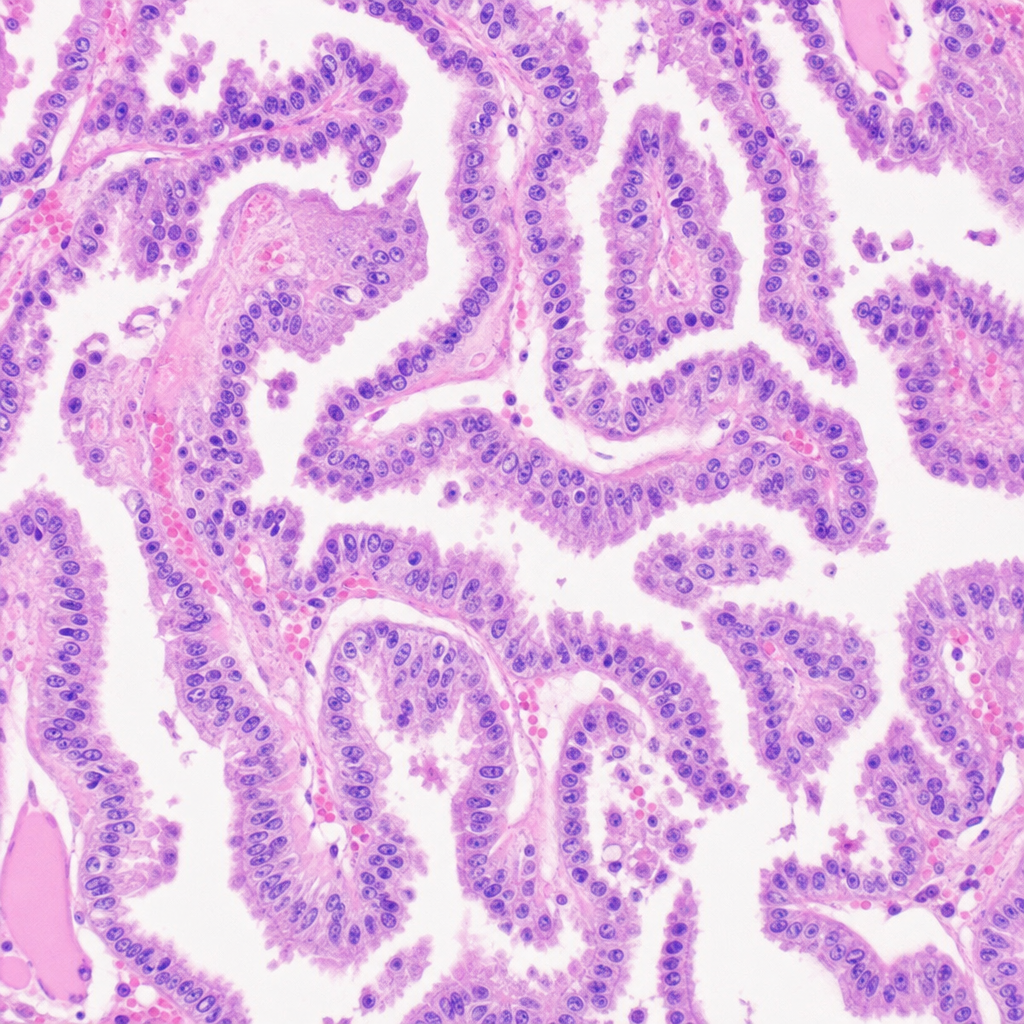
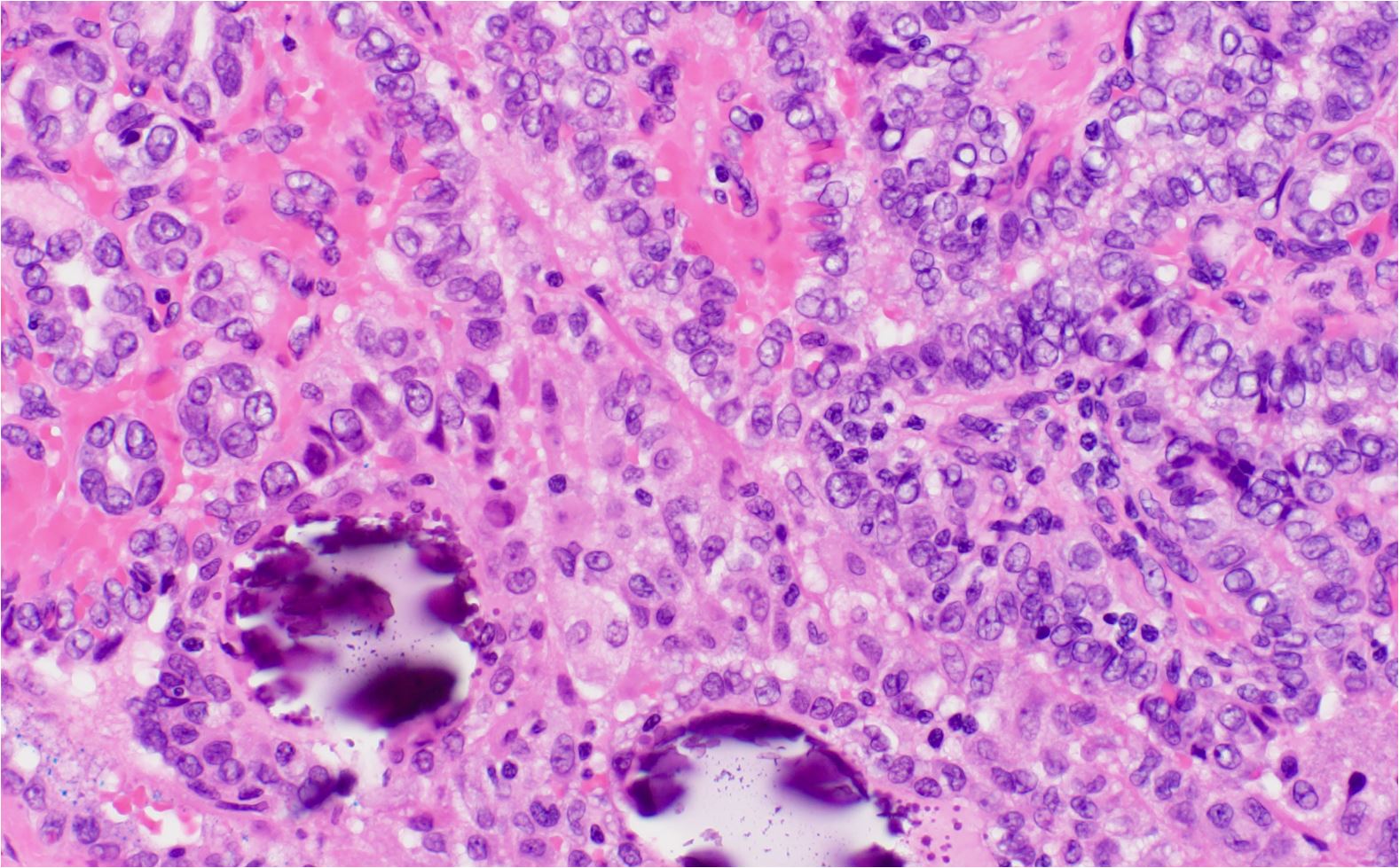
Explanation: **Explanation:** **Psammoma bodies** are microscopic, concentric, laminated calcified structures. They represent a form of **dystrophic calcification** [2], occurring when single necrotic cells serve as a nidus for calcium salt deposition. **Why Thyroid is Correct:** In the context of the thyroid, Psammoma bodies are a hallmark histological feature of **Papillary Thyroid Carcinoma (PTC)** [1]. They are found within the cores of the papillae and are highly suggestive of this diagnosis. While not present in all cases, their presence in a thyroid fine-needle aspiration (FNA) or biopsy is a significant diagnostic clue. **Why Other Options are Incorrect:** * **Stomach:** While gastric cancers (like adenocarcinoma) rarely show calcification, Psammoma bodies are not a characteristic feature. * **Heart:** Calcification in the heart typically occurs in valves (e.g., calcific aortic stenosis) or coronary arteries, but these do not form the classic laminated Psammoma bodies. * **Lungs:** While "microlithiasis" can occur in the lungs, Psammoma bodies are not a standard feature of primary lung malignancies, except occasionally in metastatic papillary tumors from other sites. **NEET-PG High-Yield Pearls:** To remember the common tumors associated with Psammoma bodies, use the mnemonic **"PSaMMoma"**: * **P:** **P**apillary thyroid carcinoma [1], **P**apillary renal cell carcinoma, **P**rolactinoma (rare). * **S:** **S**erous cystadenocarcinoma of the ovary (most common site for these bodies). * **M:** **M**eningioma. * **M:** **M**esothelioma. **Key Concept:** Psammoma bodies signify a slow-growing tumor process where cell death allows for gradual, layered mineral deposition [2]. **References:** [1] Kumar V, Abbas AK, et al.. Robbins and Cotran Pathologic Basis of Disease. 9th ed. The Endocrine System, p. 1099. [2] Cross SS. Underwood's Pathology: A Clinical Approach. 6th ed. (Basic Pathology) introduces the student to key general principles of pathology, both as a medical science and as a clinical activity with a vital role in patient care. Part 2 (Disease Mechanisms) provides fundamental knowledge about the cellular and molecular processes involved in diseases, providing the rationale for their treatment. Part 3 (Systematic Pathology) deals in detail with specific diseases, with emphasis on the clinically important aspects., pp. 134-135.
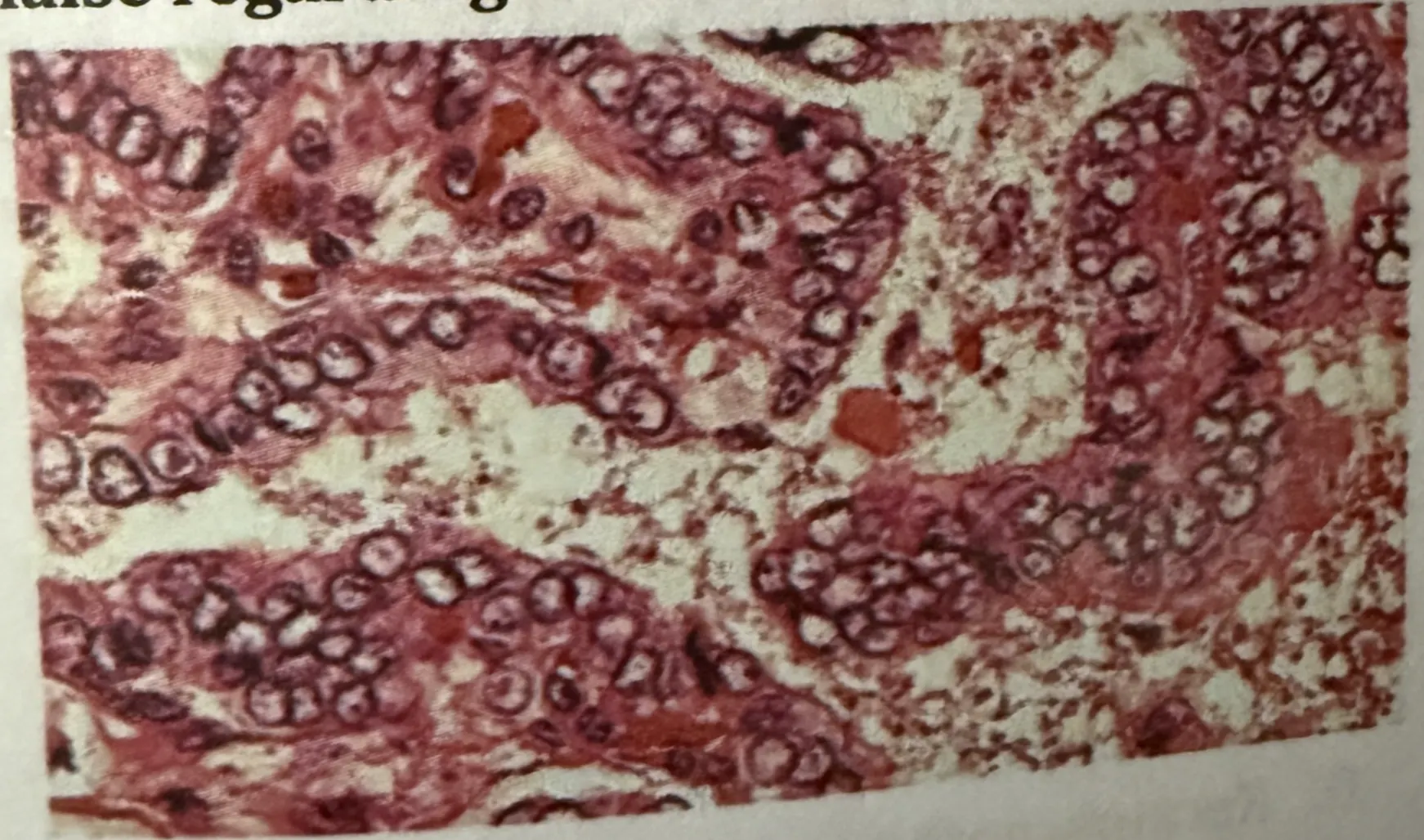
Explanation: **Explanation:** **1. Why Pheochromocytoma is correct:** 'Zellballen' (German for "cell balls") is the characteristic histological pattern seen in **Pheochromocytoma** and **Paragangliomas** [1]. This pattern consists of nests or clusters of large, polygonal chromaffin cells surrounded by a delicate vascular stroma and a peripheral layer of spindle-shaped **sustentacular cells** [1]. These cells contain granular cytoplasm due to the presence of catecholamine-containing membrane-bound vesicles [1]. **2. Why the other options are incorrect:** * **Gastric Carcinoma:** Typically presents with a glandular pattern (adenocarcinoma) or **Signet ring cells** (in diffuse types), where the nucleus is pushed to the periphery by a large mucin vacuole. * **Angiosarcoma:** A malignant vascular tumor characterized by anastomosing vascular channels lined by atypical, pleomorphic endothelial cells. * **Colon Carcinoma:** Characterized by malignant glands invading the basement membrane, often showing "dirty necrosis" (central luminal necrotic debris). **3. High-Yield Clinical Pearls for NEET-PG:** * **Rule of 10s for Pheochromocytoma:** 10% are bilateral, 10% are malignant, 10% are extra-adrenal (Paragangliomas), and 10% occur in children. * **Staining:** Sustentacular cells are positive for **S-100**, while the chief cells are positive for **Chromogranin** and **Synaptophysin**. * **Clinical Triad:** Episodic headache, sweating (diaphoresis), and tachycardia/palpitations in a hypertensive patient. * **Genetic Associations:** Often associated with MEN 2A, MEN 2B, VHL syndrome, and NF-1 [2]. **References:** [1] Cross SS. Underwood's Pathology: A Clinical Approach. 6th ed. Common Clinical Problems From Liver And Biliary System Disease, pp. 419-420. [2] Kumar V, Abbas AK, et al.. Robbins and Cotran Pathologic Basis of Disease. 9th ed. The Endocrine System, p. 1137.
Explanation: **Anaplastic Thyroid Carcinoma (ATC)** is one of the most aggressive solid tumors in humans, characterized by rapid growth and a dismal prognosis [1]. **Explanation of the Correct Option:** * **A. Common in elderly:** ATC typically occurs in the **6th to 7th decades of life** (mean age ~65 years) [2]. It is extremely rare in patients under 40. This distinguishes it from differentiated thyroid cancers like Papillary Carcinoma, which often affect younger cohorts. **Explanation of Incorrect Options:** * **B. Surrounding neck tissues are free:** This is incorrect. ATC is notorious for **extrathyroidal extension**. By the time of diagnosis, it usually invades adjacent structures like the trachea, esophagus, and recurrent laryngeal nerve, leading to symptoms like dyspnea and hoarseness [1]. * **C. Lymphatic infiltration occurs:** While lymphatic spread can occur, ATC is primarily characterized by **extensive local invasion** and early **hematogenous spread** to the lungs and bones [2]. However, in the context of this specific question, "Common in elderly" is the most defining epidemiological feature. * **D. p53 mutation:** While *TP53* mutations are indeed common in ATC (occurring in >70% of cases and often marking the dedifferentiation from a well-differentiated cancer), the question asks for the "true" statement among the choices. In many standard textbooks and previous NEET-PG patterns, the **epidemiological age profile** is considered the classic hallmark. **High-Yield Clinical Pearls for NEET-PG:** * **Microscopy:** Shows highly atypical cells: **Spindle cells, Giant cells, or Squamoid cells** [1]. * **Immunohistochemistry:** Often negative for Thyroglobulin; may show focal **Cytokeratin** or **PAX-8** positivity [1]. * **Origin:** Often arises from a pre-existing **Papillary or Follicular carcinoma** through "dedifferentiation" [1]. * **Prognosis:** Median survival is only **3–6 months** [2]. **References:** [1] Kumar V, Abbas AK, et al.. Robbins and Cotran Pathologic Basis of Disease. 9th ed. The Endocrine System, pp. 1101-1102. [2] Cross SS. Underwood's Pathology: A Clinical Approach. 6th ed. Common Clinical Problems From Liver And Biliary System Disease, pp. 429-430.
Explanation: **Explanation:** **Hürthle cells** (also known as Askanazy cells or oxyphil cells) are modified follicular epithelial cells characterized by abundant, granular, eosinophilic cytoplasm. This appearance is due to the massive accumulation of **altered mitochondria**. **Why Hashimoto Thyroiditis is correct:** In **Hashimoto thyroiditis**, the chronic autoimmune inflammatory process leads to the transformation of normal follicular cells into Hürthle cells [1]. This is a hallmark histological feature, alongside a dense lymphocytic infiltrate and germinal center formation [1]. While Hürthle cells can also be seen in Hürthle cell adenomas/carcinomas, Hashimoto is the most common non-neoplastic condition where they are found. **Analysis of Incorrect Options:** * **Papillary Carcinoma:** Characterized by "Orphan Annie eye" nuclei, Psammoma bodies, and nuclear grooves. While a "tall cell variant" exists, Hürthle cells are not a defining feature of classic papillary carcinoma. * **Granulomatous (de Quervain) Thyroiditis:** Histology shows multinucleated giant cells and granulomatous inflammation surrounding collapsed follicles, typically following a viral infection. Hürthle cell change is not a feature. * **Thyroglossal Cyst:** This is a congenital midline cyst lined by respiratory or squamous epithelium, often containing remnants of normal thyroid tissue, but not Hürthle cells. **High-Yield Clinical Pearls for NEET-PG:** * **Mnemonic:** Hürthle cells = **H**ashimoto’s & **H**ürthle Cell Neoplasms. * **Ultrastructure:** The eosinophilia is due to **mitochondria** (not lysosomes or secretory granules). * **Marker:** They are often positive for PAX8 and thyroglobulin. * **Clinical Context:** Hashimoto thyroiditis is the most common cause of hypothyroidism in iodine-sufficient regions and carries an increased risk of **B-cell Non-Hodgkin Lymphoma** (MALToma) [1]. **References:** [1] Kumar V, Abbas AK, et al.. Robbins and Cotran Pathologic Basis of Disease. 9th ed. The Endocrine System, pp. 1090-1091.
Explanation: **Explanation:** **MEN-I Syndrome (Wermer Syndrome)** is a hereditary cancer syndrome characterized by tumors of the "3 Ps": **P**arathyroid, **P**ancreas (Islet cells), and **P**ituitary [1]. 1. **Why Option A is the Correct Answer (The Exception):** MEN-I syndrome follows an **Autosomal Dominant** inheritance pattern, not autosomal recessive. A single mutated copy of the *MEN1* gene inherited from a parent is sufficient to predispose an individual to tumor development (following Knudson’s "two-hit" hypothesis at the cellular level). 2. **Analysis of Other Options:** * **Option B (Hyperparathyroidism):** This is the most common manifestation (80–95% of cases). It typically presents as multiglandular parathyroid hyperplasia and is often the first clinical sign of the syndrome [1]. * **Option C (Islet cell tumor):** Pancreatic neuroendocrine tumors (NETs) are the leading cause of morbidity and mortality in MEN-I. Common types include Gastrinomas (Zollinger-Ellison Syndrome) and Insulinomas [1]. * **Option D (Chromosome 11):** The *MEN1* gene is a tumor suppressor gene located on the long arm of **chromosome 11 (11q13)** [1]. It encodes the protein **Menin**. **High-Yield Clinical Pearls for NEET-PG:** * **The 3 Ps:** Parathyroid (Hyperplasia), Pancreas (Islet cell tumors/NETs), and Pituitary (most commonly Prolactinoma) [1]. * **Genetic Marker:** Mutation in the *MEN1* gene on Chromosome 11q13 [1]. * **Associated Lesions:** Patients may also present with angiofibromas, collagenomas, and lipomas. * **Contrast with MEN-II:** MEN-II involves the *RET* proto-oncogene (Chr 10) and is characterized by Medullary Thyroid Carcinoma and Pheochromocytoma [1]. **References:** [1] Kumar V, Abbas AK, et al.. Robbins and Cotran Pathologic Basis of Disease. 9th ed. The Endocrine System, pp. 1104-1140.
Explanation: ### Explanation **Correct Answer: D. Medullary** **Medical Concept:** Medullary Thyroid Carcinoma (MTC) is a neuroendocrine tumor derived from the **parafollicular C-cells**, which secrete calcitonin [1]. It is the hallmark thyroid manifestation of **Multiple Endocrine Neoplasia (MEN) syndromes type 2A and 2B** [2]. In these syndromes, MTC is caused by a germline mutation in the **RET proto-oncogene**. Unlike sporadic MTC, MEN-associated MTC is typically multicentric, bilateral, and preceded by C-cell hyperplasia. **Why Incorrect Options are Wrong:** * **A. Follicular:** This tumor arises from follicular cells and is associated with iodine deficiency and RAS mutations/PAX8-PPARγ rearrangements. It is not a component of MEN syndromes [1]. * **B. Papillary:** This is the most common thyroid cancer overall in the general population, but it is not specifically associated with MEN. It is linked to BRAF mutations and radiation exposure. * **C. Anaplastic:** This is a highly aggressive, undifferentiated tumor seen in older patients. It is not part of the MEN spectrum. **High-Yield Clinical Pearls for NEET-PG:** * **MEN 2A (Sipple Syndrome):** Medullary Thyroid Carcinoma + Pheochromocytoma + Parathyroid Hyperplasia. * **MEN 2B (Wagenmann-Froboese):** Medullary Thyroid Carcinoma + Pheochromocytoma + Mucosal Neuromas/Marfanoid habitus [2]. * **Prophylactic Thyroidectomy:** Recommended in children carrying the RET mutation because MTC in MEN 2 is nearly 100% penetrant. * **Tumor Marker:** Calcitonin is used for diagnosis and monitoring recurrence. * **Amyloid Stroma:** Histologically, MTC is characterized by nests of cells in a Congo Red-positive amyloid stroma (derived from calcitonin) [3]. **References:** [1] Cross SS. Underwood's Pathology: A Clinical Approach. 6th ed. Common Clinical Problems From Liver And Biliary System Disease, pp. 428-429. [2] Kumar V, Abbas AK, et al.. Robbins and Cotran Pathologic Basis of Disease. 9th ed. The Endocrine System, pp. 1102-1103. [3] Cross SS. Underwood's Pathology: A Clinical Approach. 6th ed. Common Clinical Problems From Liver And Biliary System Disease, pp. 430-431.
Explanation: **Explanation:** **Correct Option: A (PAX8 - PPAR̳)** Follicular Thyroid Carcinoma (FTC) is characterized by a specific chromosomal translocation, **t(2;3)(q13;p25)**. This results in the fusion of the **PAX8** gene (a transcription factor for thyroid development) and the **PPAR̳** (peroxisome proliferator-activated receptor gamma) gene. This fusion protein acts as an oncogene by interfering with normal thyroid differentiation and promoting uncontrolled cell proliferation. It is found in approximately 30–60% of follicular carcinomas. **Incorrect Options:** * **B. RET - PTC:** This rearrangement is characteristic of **Papillary Thyroid Carcinoma (PTC)**, specifically the classic and tall-cell variants [1]. It involves the fusion of the RET proto-oncogene with the PTC gene. * **C. ALK - NPM1:** The **t(2;5)** translocation involving NPM1 and ALK is the hallmark of **Anaplastic Large Cell Lymphoma (ALCL)**, not thyroid pathology. * **D. JAK - TEL:** This is not a standard translocation for thyroid cancers. (Note: ETV6-NTRK3 fusions, sometimes confused with TEL, are seen in secretory breast cancer and some thyroid variants). **High-Yield Clinical Pearls for NEET-PG:** * **RAS Mutations:** These are also common in Follicular Carcinoma (and Follicular Adenomas), highlighting the difficulty in distinguishing benign from malignant lesions on FNA [1]. * **Diagnosis:** FTC cannot be diagnosed by Fine Needle Aspiration (FNA) because the diagnosis requires evidence of **capsular or vascular invasion**, which can only be seen on histology [1]. * **Spread:** Unlike Papillary Carcinoma (lymphatic spread), Follicular Carcinoma spreads **hematogenously**, commonly to the bone and lungs. * **Iodine:** FTC is more common in areas of **dietary iodine deficiency** [1]. **References:** [1] Kumar V, Abbas AK, et al.. Robbins and Cotran Pathologic Basis of Disease. 9th ed. The Endocrine System, pp. 1097-1100.
Pituitary Gland Disorders
Practice Questions
Thyroid Gland Diseases
Practice Questions
Parathyroid Gland Pathology
Practice Questions
Adrenal Cortical Disorders
Practice Questions
Adrenal Medullary Disorders
Practice Questions
Pancreatic Endocrine Disorders
Practice Questions
Multiple Endocrine Neoplasia Syndromes
Practice Questions
Diffuse Neuroendocrine System
Practice Questions
Pineal Gland Pathology
Practice Questions
Laboratory Diagnosis of Endocrine Diseases
Practice Questions
Get full access to all questions, explanations, and performance tracking.
Start For Free