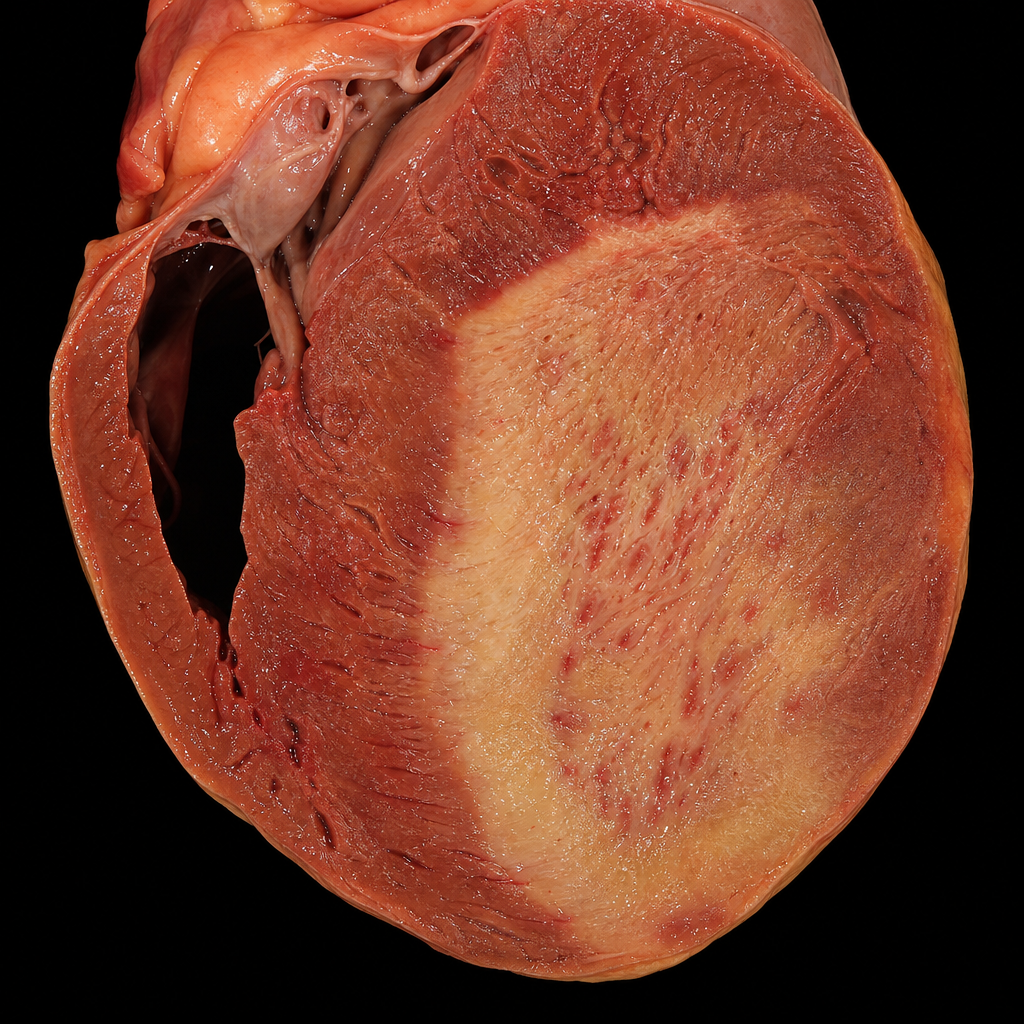
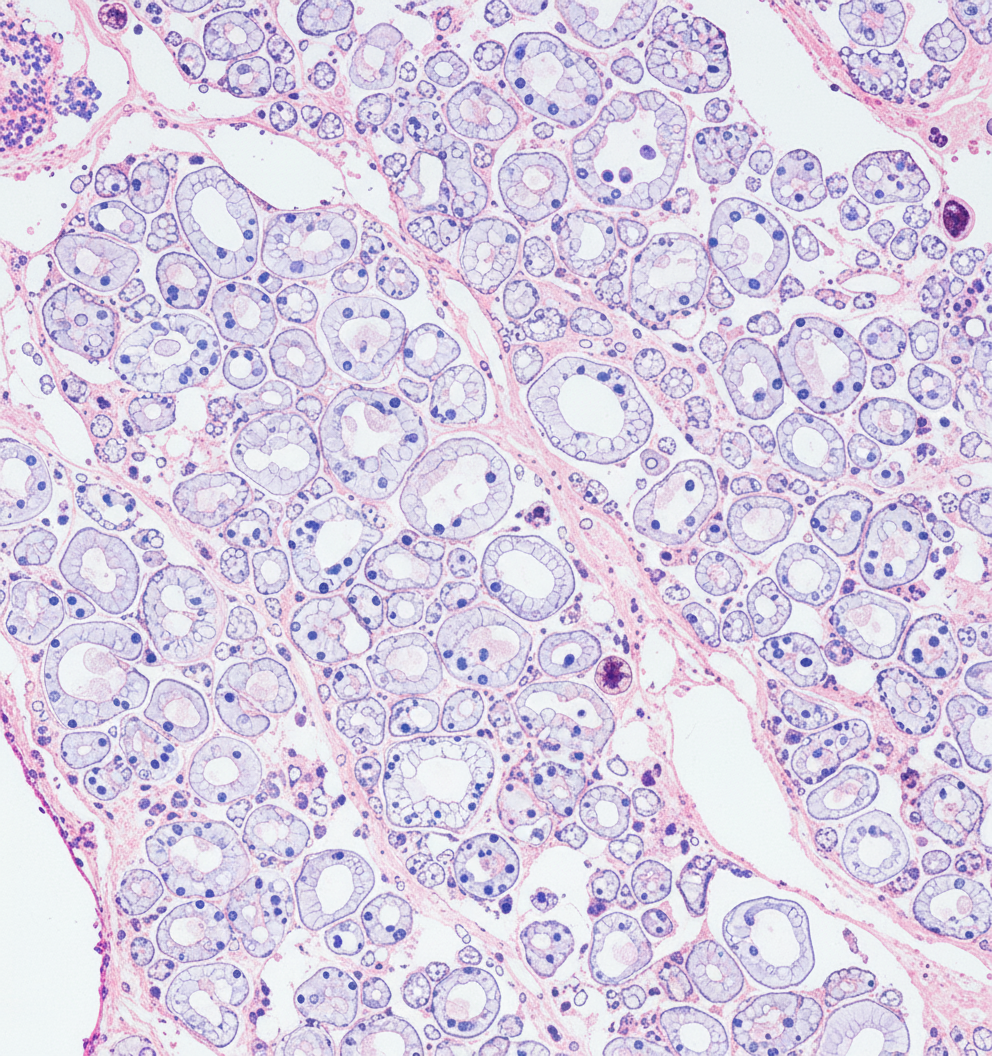
Which of the following mechanisms is NOT responsible for complications in Diabetes Mellitus?
What is the most common subtype of thyroid cancer?
Pheochromocytoma are tumors of which structure?
Expression of which of the following oncogenes is associated with a high incidence of medullary carcinoma of the thyroid?
The neuroendocrine carcinoma arising from parafollicular 'C' cells of thyroid is:
A 30-year-old woman presents with headache, visual disturbances, deepening of the voice, generalized weakness, amenorrhea for one year, and a recent requirement for a larger shoe size. Laboratory studies show impaired glucose tolerance. What additional diagnostic procedure would be most useful?
Pancreatitis, pituitary tumor, and pheochromocytoma may be associated with which of the following?
A 50-year-old man with fasting blood glucose >140 mg/dL on two occasions is put on a restricted caloric diet and started on a glucagon-like peptide-1 (GLP-1) receptor agonist. Which of the following laboratory studies is most likely to afford the best method of monitoring disease control in this man?
Which tumor follows the rule of 10?
Psammoma bodies are typically found in which of the following conditions?
Explanation: The pathogenesis of diabetic complications is primarily driven by **hyperglycemia-induced metabolic disturbances** rather than primary chronic inflammation [1]. While diabetes is associated with a low-grade inflammatory state, the specific biochemical pathways leading to microvascular and macrovascular damage are well-defined. ### Why "Chronic Inflammation" is the Correct Answer Chronic inflammation is a feature of many diseases, but it is **not** considered one of the four primary metabolic pathways (defined by Robbins Pathology) that directly cause diabetic complications. The damage in diabetes is biochemical and structural, resulting from the toxic effects of excess glucose on tissues that do not require insulin for glucose uptake (e.g., nerves, kidneys, blood vessels) [1]. ### Explanation of Other Options (The 3 Main Mechanisms) * **Non-enzymatic glycosylation (Option A):** Glucose binds to proteins (like collagen) without enzymes, forming **Advanced Glycation End-products (AGEs)**. AGEs cross-link proteins, trap LDL in vessel walls, and bind to RAGE (Receptors for AGEs) to release cytokines and pro-coagulant factors [1]. * **Protein Kinase C (PKC) activation (Option B):** Intracellular hyperglycemia increases Diacylglycerol (DAG), which activates PKC [1]. This leads to the production of **VEGF** (causing neovascularization in retinopathy) and **TGF-β** (causing basement membrane thickening). * **Disturbance in Polyol Pathway (Option C):** In tissues like the lens or nerves, glucose is converted to **sorbitol** by aldose reductase. Sorbitol is osmotically active, leading to water influx, oxidative stress, and depleted glutathione, causing cataracts and peripheral neuropathy. ### NEET-PG High-Yield Pearls * **The "Fourth" Mechanism:** Not listed here, but often tested, is the **Hexosamine pathway**, which leads to the production of fructose-6-phosphate and contributes to insulin resistance [1]. * **Common Denominator:** All these pathways are triggered by the production of **Reactive Oxygen Species (ROS)** in the mitochondria. * **HbA1c:** This is a clinical example of non-enzymatic glycosylation used to monitor long-term glycemic control. **References:** [1] Kumar V, Abbas AK, et al.. Robbins and Cotran Pathologic Basis of Disease. 9th ed. The Endocrine System, pp. 1118-1121.
Explanation: **Explanation:** **Papillary Thyroid Carcinoma (PTC)** is the most common subtype of thyroid cancer, accounting for approximately **80–85%** of all thyroid malignancies [1]. The diagnosis is primarily based on characteristic nuclear features rather than architectural patterns [3]. * **Why Papillary Carcinoma is correct:** It is the most frequent thyroid malignancy, typically associated with exposure to ionizing radiation [1]. It has an excellent prognosis and spreads primarily via the **lymphatics** to cervical lymph nodes [2]. * **Why other options are incorrect:** * **Follicular Carcinoma:** The second most common (approx. 10–15%). It is more prevalent in iodine-deficient areas and spreads **hematogenously** (to bone and lungs) [1],[2]. * **Medullary Carcinoma:** Arises from parafollicular **C-cells** (secreting calcitonin). It accounts for only 5% of cases and can be associated with MEN 2A or 2B syndromes [2]. * **Anaplastic Carcinoma:** Rare (<2%) but highly aggressive and undifferentiated. It typically presents in elderly patients and has a very poor prognosis [2]. **High-Yield Clinical Pearls for NEET-PG:** * **Nuclear Features (Diagnostic Gold Standard):** Look for **Orphan Annie eye nuclei** (optically clear), **Pseudo-inclusions**, and **Nuclear grooves** [2],[4]. * **Psammoma Bodies:** These are laminated calcifications frequently seen in PTC (rare in follicular). * **Genetic Mutations:** Most commonly associated with **BRAF mutations** (specifically V600E) and **RET/PTC rearrangements** [3]. * **Prognosis:** PTC has the best overall survival rate among thyroid cancers [2]. **References:** [1] Kumar V, Abbas AK, et al.. Robbins and Cotran Pathologic Basis of Disease. 9th ed. The Endocrine System, pp. 1098-1099. [2] Cross SS. Underwood's Pathology: A Clinical Approach. 6th ed. Common Clinical Problems From Liver And Biliary System Disease, pp. 429-430. [3] Kumar V, Abbas AK, et al.. Robbins and Cotran Pathologic Basis of Disease. 9th ed. The Endocrine System, pp. 1099-1100. [4] Kumar V, Abbas AK, et al.. Robbins and Cotran Pathologic Basis of Disease. 9th ed. The Endocrine System, p. 1099.
Explanation: **Explanation:** **Pheochromocytoma** is a catecholamine-secreting tumor derived from the **chromaffin cells** [2] of the **adrenal medulla** [3]. These cells are embryologically derived from the **neural crest** and are responsible for synthesizing and secreting epinephrine and norepinephrine [3]. **Analysis of Options:** * **Adrenal Cortex (Incorrect):** The cortex is derived from the mesoderm and produces steroid hormones (aldosterone, cortisol, and androgens) [3]. Tumors here include Conn’s syndrome or Cushing’s syndrome adenomas. * **Pancreas (Incorrect):** While the pancreas has endocrine functions (Islets of Langerhans), its tumors (e.g., Insulinoma, Gastrinoma) are distinct from catecholamine-secreting pheochromocytomas. * **Bone (Incorrect):** Bone is not a site for primary chromaffin cell tumors. **High-Yield Clinical Pearls for NEET-PG:** * **The Rule of 10s:** 10% are bilateral, 10% are malignant, 10% occur in children, and 10% are extra-adrenal (known as **Paragangliomas**, most commonly at the Organ of Zuckerkandl) [1]. * **Clinical Triad:** Episodic headache, sweating (diaphoresis), and palpitations/tachycardia, usually accompanied by hypertension [2]. * **Diagnosis:** Best initial screening test is **urinary/plasma metanephrines**. * **Histology:** Characterized by the **"Zellballen" pattern** (nested clusters of cells surrounded by a vascular stroma) [1]. * **Genetic Associations:** Frequently associated with **MEN 2A and 2B**, von Hippel-Lindau (VHL) syndrome, and Neurofibromatosis type 1 (NF1). * **Management:** Pre-operative blockade must follow the sequence: **Alpha-blockade first** (e.g., Phenoxybenzamine), followed by Beta-blockade to prevent a hypertensive crisis. **References:** [1] Cross SS. Underwood's Pathology: A Clinical Approach. 6th ed. Common Clinical Problems From Liver And Biliary System Disease, pp. 419-420. [2] Kumar V, Abbas AK, et al.. Robbins and Cotran Pathologic Basis of Disease. 9th ed. The Endocrine System, pp. 1137-1139. [3] Kumar V, Abbas AK, et al.. Robbins and Cotran Pathologic Basis of Disease. 9th ed. The Endocrine System, pp. 1125-1126.
Explanation: **Explanation:** **Medullary Thyroid Carcinoma (MTC)** is a neuroendocrine tumor derived from the parafollicular C-cells [2], which secrete calcitonin. The molecular hallmark of MTC is the mutation of the **RET proto-oncogene**, located on chromosome 10q11.2. 1. **Why RET is correct:** * **Germline mutations** in RET are responsible for nearly all cases of hereditary MTC, including **MEN 2A, MEN 2B**, and Familial MTC [1]. * **Somatic mutations** in RET are found in approximately 50% of sporadic MTC cases. * The mutation leads to constitutive activation of the receptor tyrosine kinase, driving uncontrolled cell proliferation. 2. **Why other options are incorrect:** * **BRAF:** Mutations (specifically V600E) are most commonly associated with **Papillary Thyroid Carcinoma (PTC)** and some Anaplastic carcinomas, not MTC. * **FOS:** This is an immediate-early gene involved in cell cycle progression but is not a specific diagnostic or prognostic marker for thyroid malignancies. * **WNT1:** Dysregulation of the Wnt/β-catenin pathway is associated with **Follicular Thyroid Carcinoma** and some variants of Papillary carcinoma (e.g., Cribriform-morular variant), but not MTC. **High-Yield Clinical Pearls for NEET-PG:** * **Amyloid Stroma:** Histologically, MTC is characterized by nests of polygonal cells with **amyloid deposits** (derived from pro-calcitonin) that stain with Congo Red. * **Screening:** In families with known MEN 2 syndromes, prophylactic thyroidectomy is often performed based on the detection of a RET mutation before the cancer even develops [1]. * **Marker:** Serum **Calcitonin** is the primary tumor marker for diagnosis and monitoring recurrence [1]. * **Origin:** C-cells are derived from the **ultimobranchial body** (neural crest origin) [2]. **References:** [1] Kumar V, Abbas AK, et al.. Robbins and Cotran Pathologic Basis of Disease. 9th ed. The Endocrine System, pp. 1102-1103. [2] Cross SS. Underwood's Pathology: A Clinical Approach. 6th ed. Common Clinical Problems From Liver And Biliary System Disease, pp. 428-429.
Explanation: **Explanation:** **Correct Answer: C. Medullary Carcinoma** Medullary Thyroid Carcinoma (MTC) is a unique **neuroendocrine tumor** [2] derived from the **parafollicular ‘C’ cells** of the thyroid [1]. Unlike other thyroid cancers, these cells originate from the **neural crest** (ultimobranchial body) rather than the thyroid follicular epithelium. Their primary function is the secretion of **Calcitonin** [1], which serves as a crucial tumor marker for diagnosis and monitoring recurrence [3]. **Analysis of Incorrect Options:** * **A. Papillary Carcinoma:** The most common thyroid malignancy; it arises from follicular cells and is characterized by nuclear features like Orphan Annie eye nuclei and Psammoma bodies. * **B. Follicular Carcinoma:** Arises from follicular cells; it is characterized by capsular or vascular invasion [2] and typically spreads hematogenously [1]. * **D. Anaplastic Carcinoma:** A highly aggressive, undifferentiated tumor arising from follicular cells [2], usually seen in elderly patients. **High-Yield NEET-PG Pearls:** * **Histology:** Shows nests of polygonal cells in an **amyloid stroma** (formed by altered calcitonin) [2]. Amyloid stains positive with **Congo Red** (apple-green birefringence). * **Genetics:** Approximately 20-25% are familial, associated with **MEN 2A and 2B** syndromes [1] involving **RET proto-oncogene** mutations. * **Staining:** Positive for neuroendocrine markers like **Chromogranin A**, Synaptophysin, and Calcitonin. * **Prophylaxis:** In patients with known RET mutations, prophylactic thyroidectomy is often indicated. **References:** [1] Cross SS. Underwood's Pathology: A Clinical Approach. 6th ed. Common Clinical Problems From Liver And Biliary System Disease, pp. 428-429. [2] Cross SS. Underwood's Pathology: A Clinical Approach. 6th ed. Common Clinical Problems From Liver And Biliary System Disease, pp. 430-431. [3] Kumar V, Abbas AK, et al.. Robbins and Cotran Pathologic Basis of Disease. 9th ed. The Endocrine System, pp. 1102-1103.
Explanation: ### Explanation **Clinical Analysis:** The patient presents with classic features of **Acromegaly** (excess Growth Hormone [GH] after epiphyseal closure). Key diagnostic clues include: * **Somatic changes:** Increased shoe size (acral enlargement) and deepening of the voice (laryngeal hypertrophy) [1]. * **Mass effect:** Headache and visual disturbances (likely bitemporal hemianopia) due to a pituitary adenoma compressing the optic chiasm [1], [3]. * **Endocrine/Metabolic dysfunction:** Amenorrhea (often due to co-secretion of prolactin or compression of the pituitary stalk) and impaired glucose tolerance (GH is a counter-regulatory hormone that induces insulin resistance) [1], [2]. **Why Option C is Correct:** The most common cause of acromegaly (>95%) is a **GH-secreting pituitary adenoma**. Once biochemical screening (elevated IGF-1 and failure of GH suppression after an oral glucose load) is suggestive, **Magnetic Resonance Imaging (MRI) of the sella turcica** is the gold standard for visualizing the tumor, assessing its size (usually a macroadenoma >10mm), and planning surgical intervention [3]. **Why Other Options are Incorrect:** * **A. CBC:** This is a non-specific test and does not aid in diagnosing endocrine hyperfunction. * **B. CT Abdomen:** While used to look for ectopic GHRH-secreting tumors (e.g., pancreatic NETs), these are extremely rare. The primary pathology is almost always in the sella. * **D. 21-hydroxylase activity:** This is used to diagnose Congenital Adrenal Hyperplasia (CAH), which presents with virilization and salt-wasting, not acral enlargement or visual loss. **High-Yield NEET-PG Pearls:** * **Best Initial Screening Test:** Serum IGF-1 levels (stable throughout the day). * **Confirmatory Test:** Oral Glucose Tolerance Test (OGTT) – failure to suppress GH <1 ng/mL. * **Most Common Cause of Death:** Cardiovascular disease (specifically dilated cardiomyopathy) [1]. * **Associated Conditions:** Colonic polyps and increased risk of colorectal carcinoma. **References:** [1] Cross SS. Underwood's Pathology: A Clinical Approach. 6th ed. Common Clinical Problems From Liver And Biliary System Disease, pp. 417-418. [2] Cross SS. Underwood's Pathology: A Clinical Approach. 6th ed. Common Clinical Problems From Liver And Biliary System Disease, pp. 412-414. [3] Kumar V, Abbas AK, et al.. Robbins and Cotran Pathologic Basis of Disease. 9th ed. The Endocrine System, p. 1081.
Explanation: This question tests your knowledge of **Multiple Endocrine Neoplasia (MEN) syndromes**, specifically the overlap of clinical features associated with **Medullary Thyroid Carcinoma (MTC)**.### **Explanation of the Correct Answer**The correct answer is **Medullary Carcinoma of Thyroid (MTC)**. This is because MTC is a defining component of **MEN 2A (Sipple Syndrome)** and **MEN 2B** [1]. * **Pheochromocytoma:** This is a classic component of both MEN 2A and 2B [1].* **Pituitary Tumor:** While classically part of MEN 1 (Wermer Syndrome) [3], there is a rare overlap in clinical presentations where patients may exhibit features of multiple syndromes.* **Pancreatitis:** This is the "hidden" link. MTC is associated with MEN 2A, which also includes **Primary Hyperparathyroidism** [1]. Hyperparathyroidism leads to **hypercalcemia**, and a well-known complication of acute hypercalcemia is **acute pancreatitis** (due to calcium-induced activation of trypsinogen).### **Why Other Options are Incorrect*** **B, C, and D (Anaplastic, Papillary, Follicular):** These are all **derived from follicular cells** of the thyroid. They are sporadic or associated with different genetic mutations (e.g., BRAF, RAS, RET/PTC rearrangements) but are **not** components of MEN syndromes. MTC is unique because it arises from **Parafollicular C-cells** (neuroendocrine origin), which explains its association with other endocrine tumors [4].### **High-Yield NEET-PG Pearls**1. **MEN 2A (Sipple Syndrome):** MTC + Pheochromocytoma + Parathyroid Hyperplasia. (Mnemonic: **2** **P**s + **M**TC) [1].2. **MEN 2B:** MTC + Pheochromocytoma + Mucosal Neuromas + Marfanoid Habitus [1].3. **Genetic Marker:** All MEN 2 syndromes are associated with mutations in the **RET proto-oncogene** [1].4. **Tumor Marker:** **Calcitonin** is the specific marker for MTC and is used for both diagnosis and monitoring recurrence [4]. Amyloid stroma (Congo red positive) is a classic histological finding in MTC [2]. **References:** [1] Kumar V, Abbas AK, et al.. Robbins and Cotran Pathologic Basis of Disease. 9th ed. The Endocrine System, p. 1137. [2] Cross SS. Underwood's Pathology: A Clinical Approach. 6th ed. Common Clinical Problems From Liver And Biliary System Disease, pp. 430-431. [3] Kumar V, Abbas AK, et al.. Robbins and Cotran Pathologic Basis of Disease. 9th ed. The Endocrine System, pp. 1139-1140. [4] Kumar V, Abbas AK, et al.. Robbins and Cotran Pathologic Basis of Disease. 9th ed. The Endocrine System, pp. 1102-1103.
Explanation: **Explanation:** **Correct Option: C. Glycosylated hemoglobin (HbA1c)** The patient meets the diagnostic criteria for Diabetes Mellitus (fasting plasma glucose ≥126 mg/dL on two occasions) [1]. In diabetic management, **HbA1c** is the gold standard for monitoring long-term glycemic control. It measures the non-enzymatic glycation of hemoglobin within erythrocytes. Since the average lifespan of a red blood cell is approximately **120 days**, HbA1c provides a retrospective index of the average blood glucose levels over the preceding **2–3 months**. Unlike daily glucose testing, it is not affected by recent meals, exercise, or acute stress. **Incorrect Options:** * **A. Total Cholesterol:** While diabetics are at high risk for dyslipidemia and cardiovascular disease, cholesterol levels reflect lipid metabolism, not glycemic control. * **B. Fasting Plasma Glucose (FPG):** FPG only provides a "snapshot" of the blood sugar at a single point in time. It is useful for diagnosis [2] but unreliable for long-term monitoring as it fluctuates daily based on diet and medication adherence. * **D. Microalbuminuria:** This is a screening tool for **diabetic nephropathy** (early renal damage). While important for monitoring complications, it does not reflect the adequacy of blood glucose management. **NEET-PG High-Yield Pearls:** * **HbA1c Targets:** For most non-pregnant adults, the goal is **<7%**. * **Falsely Low HbA1c:** Seen in conditions with high RBC turnover (e.g., hemolytic anemia, recent blood transfusion, pregnancy, or EPO therapy). * **Falsely High HbA1c:** Seen in iron-deficiency anemia (due to increased RBC lifespan). * **GLP-1 Agonists:** These drugs (e.g., Liraglutide) stimulate insulin secretion, inhibit glucagon, and slow gastric emptying, often leading to weight loss [1]. **References:** [1] Kumar V, Abbas AK, et al.. Robbins and Cotran Pathologic Basis of Disease. 9th ed. The Endocrine System, pp. 1109-1113. [2] Cross SS. Underwood's Pathology: A Clinical Approach. 6th ed. Common Clinical Problems From Liver And Biliary System Disease, pp. 434-435.
Explanation: ### Explanation **Pheochromocytoma** is a catecholamine-secreting tumor derived from chromaffin cells of the adrenal medulla [1]. It is classically associated with the **"Rule of 10s,"** which serves as a high-yield clinical framework for understanding its diverse presentations: * **10% Extra-adrenal:** Occur in sites like the Organ of Zuckerkandl (referred to as Paragangliomas) [4]. * **10% Bilateral:** Frequently associated with familial syndromes (MEN 2A/2B) [2]. * **10% Malignant:** More common in extra-adrenal sites [1]. * **10% Pediatric:** Most cases occur in adults, but 10% are seen in children. * **10% Familial:** (Note: Modern genetics suggests this is closer to 25-30%, but the "Rule of 10" remains the standard exam answer) [2]. * **10% Normotensive:** Do not present with the classic paroxysmal hypertension [3]. **Why the other options are incorrect:** * **Oncocytoma:** A benign epithelial tumor (usually renal or salivary) characterized by cells packed with mitochondria. It does not follow a numerical rule of distribution. * **Lymphoma:** A hematologic malignancy of lymphoid tissue. While it has various classifications (Hodgkin vs. Non-Hodgkin), it lacks a "Rule of 10." * **Renal Cell Carcinoma (RCC):** Known as the "Internist's Tumor" due to paraneoplastic syndromes, but it does not follow the Rule of 10. **Clinical Pearls for NEET-PG:** * **Zellballen Pattern:** The characteristic histological arrangement of tumor cells in nests surrounded by sustentacular cells. * **Diagnosis:** Best initial screening test is **24-hour urinary metanephrines** or plasma free metanephrines [1]. * **Triad:** Episodic headache, sweating (diaphoresis), and tachycardia [3]. * **Management:** Always give **Alpha-blockers (Phenoxybenzamine)** before Beta-blockers to avoid a hypertensive crisis. **References:** [1] Cross SS. Underwood's Pathology: A Clinical Approach. 6th ed. Common Clinical Problems From Liver And Biliary System Disease, pp. 419-420. [2] Kumar V, Abbas AK, et al.. Robbins and Cotran Pathologic Basis of Disease. 9th ed. The Endocrine System, p. 1137. [3] Kumar V, Abbas AK, et al.. Robbins and Cotran Pathologic Basis of Disease. 9th ed. The Endocrine System, pp. 1138-1139. [4] Kumar V, Abbas AK, et al.. Robbins and Cotran Pathologic Basis of Disease. 9th ed. Head and Neck, pp. 748-749.
Explanation: **Explanation:** **Psammoma bodies** are concentric, laminated calcified structures (dystrophic calcification) that represent a hallmark histopathological feature of certain tumors. In the context of thyroid pathology, they are highly characteristic of **Papillary Carcinoma of the Thyroid (PTC)** [1]. They are formed by the infarction and subsequent calcification of the tips of the papillae. **Analysis of Options:** * **A. Papillary Carcinoma of the Thyroid (Correct):** Approximately 40–50% of PTC cases show Psammoma bodies [1]. They are often found within the stroma of the papillae or in the lymphatics. Their presence in a fine-needle aspiration (FNA) or cervical lymph node is highly suggestive of PTC [2]. * **B. Follicular Carcinoma:** This tumor is characterized by follicles and vascular/capsular invasion. It does not form papillae or Psammoma bodies [3]. * **C. Medullary Carcinoma:** Derived from parafollicular C-cells, this tumor is characterized by **Amyloid deposits** (staining with Congo Red) rather than Psammoma bodies [2]. * **D. Anaplastic Carcinoma:** This is an undifferentiated, highly aggressive tumor showing pleomorphic giant cells or spindle cells; it typically lacks the organized architecture required to form Psammoma bodies [2]. **NEET-PG High-Yield Pearls:** * **Mnemonic for Psammoma Bodies (PSaMMoma):** **P**apillary CA (Thyroid/Renal/Endometrial), **S**erous cystadenocarcinoma (Ovary), **M**eningioma, **M**esothelioma. * **Nuclear features of PTC:** "Orphan Annie eye" nuclei (clear/ground-glass), nuclear grooves, and pseudo-inclusions are more diagnostic than Psammoma bodies [1]. * **Dystrophic Calcification:** Psammoma bodies are a classic example of dystrophic calcification (occurs in necrotic/dying tissue with normal serum calcium levels). **References:** [1] Kumar V, Abbas AK, et al.. Robbins and Cotran Pathologic Basis of Disease. 9th ed. The Endocrine System, p. 1099. [2] Cross SS. Underwood's Pathology: A Clinical Approach. 6th ed. Common Clinical Problems From Liver And Biliary System Disease, pp. 429-430. [3] Kumar V, Abbas AK, et al.. Robbins and Cotran Pathologic Basis of Disease. 9th ed. The Endocrine System, pp. 1100-1101.
Explanation: **Explanation:** The correct answer is **Amyloid**. [1] **Why Amyloid is correct:** In **Type 2 Diabetes Mellitus**, the characteristic pathological finding in the pancreas is the deposition of pink, amorphous, hyaline material within the Islets of Langerhans [1]. This hyaline material is actually **Amyloid**. It is composed of **Amylin** (also known as Islet Amyloid Polypeptide or IAPP), which is co-secreted with insulin by the beta cells. In states of insulin resistance and hyperinsulinemia, excessive IAPP accumulates and misfolds into amyloid fibrils, which are toxic to beta cells and contribute to their gradual loss [2]. **Why other options are incorrect:** * **A. Mucin:** Mucin is a glycoprotein found in epithelial secretions (e.g., adenocarcinoma). It does not form hyaline deposits in the islets. * **C. Glycolipid:** These accumulate in lysosomal storage diseases (e.g., Gaucher’s) but do not present as extracellular hyaline in the pancreas. * **D. Phospholipid:** These are primary components of cell membranes and "myelin figures" in cell injury, not the hyaline seen in diabetic islets. **High-Yield Clinical Pearls for NEET-PG:** * **Staining:** Like all amyloid, islet hyaline shows **Apple-green birefringence** under polarized light when stained with **Congo Red** [1]. * **Type 1 vs. Type 2 DM:** Hyaline/Amyloid deposition is a hallmark of **Type 2 DM**. In contrast, Type 1 DM is characterized by **Insulitis** (lymphocytic infiltration) and a marked reduction in islet size/number. * **Insulinoma:** Amyloid deposition can also be seen in the stroma of an Insulinoma (a pancreatic neuroendocrine tumor). **References:** [1] Kumar V, Abbas AK, et al.. Robbins and Cotran Pathologic Basis of Disease. 9th ed. Diseases of the Immune System, pp. 268-269. [2] Kumar V, Abbas AK, et al.. Robbins and Cotran Pathologic Basis of Disease. 9th ed. Diseases of the Immune System, pp. 264-266.
Explanation: **Explanation:** **1. Why Papillary Carcinoma of the Thyroid (PTC) is correct:** Psammoma bodies are one of the hallmark histological features of **Papillary Carcinoma of the Thyroid**, occurring in approximately 40–50% of cases. Pathologically, they represent **dystrophic calcification** occurring at the tips of the vascularized papillae [1]. As the tips of the papillae undergo necrosis, calcium salts deposit in concentric layers, creating the characteristic "laminated" or "onion-skin" appearance [3]. In the context of thyroid pathology, their presence is highly suggestive of PTC [1]. **2. Why the other options are incorrect:** * **Follicular Carcinoma:** This tumor is characterized by microfollicles and capsular/vascular invasion. It lacks papillae and, therefore, does not typically form psammoma bodies [2]. * **Anaplastic Carcinoma:** This is a highly aggressive, undifferentiated tumor showing pleomorphic giant cells or spindle cells [4]. It does not form the organized papillary structures necessary for psammoma body formation. * **Thyroid Lymphoma:** Usually associated with Hashimoto’s thyroiditis, this presents with a dense infiltration of lymphoid cells (typically B-cells) rather than calcified structures. **3. NEET-PG High-Yield Pearls:** * **Nuclear Features of PTC:** Remember the triad: **Orphan Annie eye nuclei** (optically clear), **Pseudo-inclusions**, and **Nuclear grooves** [1], [2]. These are more diagnostic than psammoma bodies. * **Mnemonic for Psammoma Bodies (P-S-A-M-M-O-M-A):** * **P**apillary CA of thyroid * **S**erous cystadenocarcinoma of ovary * **A**denocarcinoma of lung * **M**eningioma * **M**esothelioma * **Spread:** PTC characteristically spreads via **lymphatics**, whereas Follicular CA spreads **hematogenously** [2]. **References:** [1] Kumar V, Abbas AK, et al.. Robbins and Cotran Pathologic Basis of Disease. 9th ed. The Endocrine System, p. 1099. [2] Cross SS. Underwood's Pathology: A Clinical Approach. 6th ed. Common Clinical Problems From Liver And Biliary System Disease, pp. 429-430. [3] Cross SS. Underwood's Pathology: A Clinical Approach. 6th ed. (Basic Pathology) introduces the student to key general principles of pathology, both as a medical science and as a clinical activity with a vital role in patient care. Part 2 (Disease Mechanisms) provides fundamental knowledge about the cellular and molecular processes involved in diseases, providing the rationale for their treatment. Part 3 (Systematic Pathology) deals in detail with specific diseases, with emphasis on the clinically important aspects., pp. 134-135. [4] Kumar V, Abbas AK, et al.. Robbins and Cotran Pathologic Basis of Disease. 9th ed. The Endocrine System, pp. 1101-1102.
Explanation: **Explanation:** **Medullary Thyroid Carcinoma (MTC)** is a neuroendocrine tumor derived from the parafollicular C-cells of the thyroid, which secrete calcitonin [3]. 1. **Why RET Proto-oncogene is correct:** The **RET proto-oncogene** (located on chromosome 10q11.2) encodes a receptor tyrosine kinase. Gain-of-function mutations in RET are the hallmark of MTC. * **Sporadic MTC (75%):** Somatic RET mutations are found in about 50% of cases. * **Familial MTC (25%):** Germline RET mutations are responsible for **MEN 2A and MEN 2B** syndromes [1]. Identifying this mutation is clinically vital as it mandates prophylactic thyroidectomy in carriers. 2. **Why other options are incorrect:** * **APC gene:** Mutations in the Adenomatous Polyposis Coli gene are associated with **Familial Adenomatous Polyposis (FAP)** and colon cancer. While FAP patients have a higher risk of the *cribriform-morular variant* of papillary thyroid carcinoma, it is not linked to MTC. * **Rb gene:** This is a tumor suppressor gene associated with **Retinoblastoma** and Osteosarcoma. * **BRCA 1 gene:** This gene is primarily associated with hereditary **Breast and Ovarian cancer** syndromes. **High-Yield Clinical Pearls for NEET-PG:** * **Amyloid Stroma:** Histologically, MTC is characterized by nests of cells in a prominent amyloid stroma (derived from altered calcitonin). * **Staining:** MTC stains positive for **Congo Red** (showing apple-green birefringence) and **Calcitonin**. * **MEN 2A:** MTC + Pheochromocytoma + Parathyroid Hyperplasia [1]. * **MEN 2B:** MTC + Pheochromocytoma + Mucosal Neuromas + Marfanoid Habitus [1][2]. * **Screening:** Serum Calcitonin levels are used for diagnosis and monitoring recurrence [2]. **References:** [1] Kumar V, Abbas AK, et al.. Robbins and Cotran Pathologic Basis of Disease. 9th ed. The Endocrine System, p. 1137. [2] Kumar V, Abbas AK, et al.. Robbins and Cotran Pathologic Basis of Disease. 9th ed. The Endocrine System, pp. 1102-1103. [3] Cross SS. Underwood's Pathology: A Clinical Approach. 6th ed. Common Clinical Problems From Liver And Biliary System Disease, pp. 428-429.
Explanation: ### Explanation The correct diagnosis is **Papillary Thyroid Carcinoma (PTC)**, the most common thyroid malignancy [1], [2]. The diagnosis is primarily based on characteristic **nuclear features**, which are the "gold standard" for identification [1], [2]. **Why Option C is correct:** The clinical description provides a classic constellation of PTC features: * **Nuclear Features:** These are diagnostic and include **"Orphan Annie eye" nuclei** (optical clearing/ground-glass appearance) [1], [2], **nuclear grooves**, **pseudo-inclusions** (eosinophilic cytoplasmic invaginations), and **overlapping/crowding** of nuclei [1], [2]. * **Architecture:** Presence of **papillae** with a central fibrovascular core [2]. * **Psammoma Bodies:** These are laminated, calcified concentric spheres found in roughly 50% of PTC cases. They are highly suggestive of PTC when found in the thyroid. **Why other options are incorrect:** * **A. Follicular Thyroid Carcinoma:** Characterized by a microfollicular pattern and requires evidence of **capsular or vascular invasion**. It lacks the specific nuclear features and psammoma bodies of PTC [1]. * **B. Medullary Thyroid Carcinoma:** Derived from parafollicular C-cells. It typically shows amyloid stroma (Congo Red positive) and nests of polygonal cells, not papillae or Orphan Annie nuclei [1]. * **D. Riedel’s Thyroiditis:** A rare inflammatory condition characterized by dense **"woody" fibrosis** replacing thyroid parenchyma, often extending into adjacent neck structures. **High-Yield NEET-PG Pearls:** * **Most common** thyroid cancer; associated with **radiation exposure** [2]. * **Genetic markers:** *BRAF* mutations (most common) and *RET/PTC* rearrangements [2]. * **Lymphatic spread** is common (cervical lymphadenopathy), but the prognosis remains excellent [1]. * **Psammoma bodies** in the thyroid are almost pathognomonic for PTC. **References:** [1] Cross SS. Underwood's Pathology: A Clinical Approach. 6th ed. Common Clinical Problems From Liver And Biliary System Disease, pp. 429-430. [2] Kumar V, Abbas AK, et al.. Robbins and Cotran Pathologic Basis of Disease. 9th ed. The Endocrine System, pp. 1098-1100.
Explanation: **Explanation:** **Medullary Thyroid Carcinoma (MTC)** is a neuroendocrine neoplasm that arises from the **Parafollicular cells (C-cells)** of the thyroid gland [1]. These cells are derived from the **ultimobranchial body** (neural crest origin) and are responsible for the secretion of **Calcitonin**, which serves as a crucial tumor marker for diagnosis and monitoring recurrence [2]. **Analysis of Options:** * **Option A (Correct):** Parafollicular cells are located in the connective tissue between thyroid follicles. MTC is unique because it does not arise from the follicular epithelium, explaining why it does not concentrate iodine. * **Option B (Incorrect):** Cells lining the acini (follicular cells) give rise to Papillary, Follicular, and Anaplastic carcinomas [1]. * **Option C & D (Incorrect):** The capsule and stroma are supportive connective tissues. While tumors may invade these structures, they do not originate from them. **High-Yield Clinical Pearls for NEET-PG:** * **Histology:** Characterized by nests of polygonal cells in an **amyloid stroma** (formed by procalcitonin) [3]. Amyloid stains positive with **Congo Red** (apple-green birefringence). * **Genetics:** Approximately 70-80% are sporadic; 20-30% are familial, associated with **MEN 2A and 2B** syndromes involving **RET proto-oncogene** mutations [1], [2]. * **Staining:** Positive for Calcitonin, Chromogranin A, and Synaptophysin [3]. * **Prophylaxis:** In MEN 2 carriers, prophylactic thyroidectomy is often indicated based on the specific RET mutation. **References:** [1] Cross SS. Underwood's Pathology: A Clinical Approach. 6th ed. Common Clinical Problems From Liver And Biliary System Disease, pp. 428-429. [2] Kumar V, Abbas AK, et al.. Robbins and Cotran Pathologic Basis of Disease. 9th ed. The Endocrine System, pp. 1102-1103. [3] Cross SS. Underwood's Pathology: A Clinical Approach. 6th ed. Common Clinical Problems From Liver And Biliary System Disease, pp. 430-431.
Explanation: **Explanation:** Papillary Thyroid Carcinoma (PTC) is the most common thyroid malignancy [3]. The correct answer is **Option C** because PTC is characteristically a **lymphophilic tumor**. It spreads primarily via the lymphatic system to the cervical (neck) lymph nodes [1]. Interestingly, despite the frequent presence of lymph node metastases at the time of diagnosis, the overall prognosis remains excellent [1]. **Analysis of Incorrect Options:** * **Option A (Often encapsulated):** PTC is typically **non-encapsulated** and often shows infiltrative borders [2]. In contrast, Follicular Carcinoma is usually encapsulated. * **Option B (Bad prognosis):** PTC has an **excellent prognosis**, with a 10-year survival rate exceeding 95% [1]. It is the least aggressive of the well-differentiated thyroid cancers [1]. * **Option D (Iodine deficiency):** Iodine deficiency is a risk factor for **Follicular Carcinoma** and Anaplastic Carcinoma [3]. The most significant risk factor for Papillary Carcinoma is exposure to **ionizing radiation** [3]. **High-Yield NEET-PG Pearls:** * **Nuclear Features (Diagnostic Gold Standard):** Look for **Orphan Annie eye nuclei** (optically clear) [1][2], **Psammoma bodies** (laminated calcifications), and **Nuclear grooves/pseudoinclusions** [2]. * **Genetic Mutations:** Most commonly associated with **BRAF mutations** (specifically V600E) and **RET/PTC rearrangements**. * **Variants:** The "Tall Cell Variant" is a more aggressive subtype, while the "Follicular Variant" is common but must show characteristic PTC nuclear features [2][3]. * **Diagnosis:** Fine Needle Aspiration Cytology (FNAC) is the investigation of choice [2]. **References:** [1] Cross SS. Underwood's Pathology: A Clinical Approach. 6th ed. Common Clinical Problems From Liver And Biliary System Disease, pp. 429-430. [2] Kumar V, Abbas AK, et al.. Robbins and Cotran Pathologic Basis of Disease. 9th ed. The Endocrine System, p. 1099. [3] Kumar V, Abbas AK, et al.. Robbins and Cotran Pathologic Basis of Disease. 9th ed. The Endocrine System, pp. 1098-1099.
Explanation: ### Explanation **Correct Option: C. Lactotroph adenoma** Lactotroph adenomas (prolactinomas) are the most common type of hyperfunctioning pituitary adenoma [1]. They have a unique propensity for **dystrophic calcification**, which can range from microscopic isolated grains to large, stony masses known as **"pituitary stones."** The underlying mechanism involves the deposition of calcium salts in necrotic or degenerating tumor tissue. When these calcifications form concentric, laminated structures, they are termed **psammoma bodies**. While other adenomas can calcify, this feature is classically associated with and most frequent in lactotroph adenomas. **Analysis of Incorrect Options:** * **A. Somatotroph adenoma:** These GH-secreting tumors are the second most common type. While they can cause acromegaly or gigantism, they are more typically characterized by "fibrous bodies" (cytokeratin filaments) on histology rather than significant calcification [1]. * **B. Corticotroph adenoma:** These ACTH-secreting tumors are usually small (microadenomas) at the time of diagnosis [3]. Their hallmark histological feature is **Crooke’s hyaline change** (accumulation of intermediate filaments in the non-neoplastic pituitary), not calcification. * **D. Thyrotroph adenoma:** These are the rarest form of pituitary adenomas (<1%) [4]. They typically present with hyperthyroidism and do not have a specific association with dystrophic calcification. **High-Yield Facts for NEET-PG:** * **Psammoma bodies** in the pituitary are a classic histological clue for a **prolactinoma**. * **Dystrophic calcification** occurs in dead/dying tissue with **normal** serum calcium levels. * **Staining:** Lactotroph adenomas are usually **chromophobic** or weakly acidophilic. * **Clinical Presentation:** In females, the classic triad is amenorrhea, galactorrhea, and infertility [2]. In males, it often presents late with mass effect (bitemporal hemianopia) or decreased libido. **References:** [1] Kumar V, Abbas AK, et al.. Robbins and Cotran Pathologic Basis of Disease. 9th ed. The Endocrine System, p. 1081. [2] Kumar V, Abbas AK, et al.. Robbins and Cotran Pathologic Basis of Disease. 9th ed. The Endocrine System, pp. 1081-1082. [3] Kumar V, Abbas AK, et al.. Robbins and Cotran Pathologic Basis of Disease. 9th ed. The Endocrine System, pp. 1082-1083. [4] Kumar V, Abbas AK, et al.. Robbins and Cotran Pathologic Basis of Disease. 9th ed. The Endocrine System, p. 1079.
Explanation: ### Explanation **Clinical Diagnosis: Graves’ Disease** The patient presents with classic signs of **thyrotoxicosis** (heat intolerance, weight loss, palpitations) and pathognomonic **exophthalmos**, pointing to Graves’ Disease [1]. This is an autoimmune disorder caused by Thyroid-Stimulating Immunoglobulins (TSI) that bind to and activate the TSH receptor, leading to autonomous thyroid hyperfunction [3]. **1. Why the Correct Answer is Right:** * **Follicular Hyperplasia:** Chronic stimulation by TSI causes the follicular epithelial cells to become crowded and transition from cuboidal to **tall columnar** [1]. This crowding often results in the formation of small papillae that project into the follicular lumen (without fibrovascular cores, unlike papillary carcinoma) [1]. * **Scalloping of Colloid:** The hyperactive follicular cells rapidly resorb colloid to produce thyroid hormones. This creates clear, "moth-eaten" or **scalloped edges** at the periphery of the colloid where it meets the epithelium [1]. **2. Why the Incorrect Options are Wrong:** * **Option A (Atrophy and Fibrosis):** Characteristic of the late stages of **Riedel’s Thyroiditis** or end-stage Hashimoto’s [5]. * **Option B (Dense lymphoid infiltrate with germinal centers):** This is the hallmark of **Hashimoto’s Thyroiditis**, which typically presents with hypothyroidism and Hürthle cell metaplasia [4]. * **Option D (Necrotizing parenchymal granulomas):** Characteristic of **De Quervain (Subacute) Thyroiditis**, which presents with a painful thyroid gland following a viral infection [3]. **3. NEET-PG High-Yield Pearls:** * **Triad of Graves:** Hyperthyroidism, Exophthalmos (due to retro-orbital glycosaminoglycan deposition), and Pretibial Myxedema [2]. * **Laboratory:** Low TSH, High T3/T4, and positive **Anti-TSHR antibodies** (TSI) [3]. * **Radioiodine uptake:** Shows **diffuse, increased** uptake (unlike toxic multinodular goiter which shows "patchy" uptake) [3]. **References:** [1] Kumar V, Abbas AK, et al.. Robbins and Cotran Pathologic Basis of Disease. 9th ed. The Endocrine System, p. 1093. [2] Kumar V, Abbas AK, et al.. Robbins and Cotran Pathologic Basis of Disease. 9th ed. The Endocrine System, pp. 1092-1093. [3] Kumar V, Abbas AK, et al.. Robbins and Cotran Pathologic Basis of Disease. 9th ed. The Endocrine System, p. 1087. [4] Kumar V, Abbas AK, et al.. Robbins and Cotran Pathologic Basis of Disease. 9th ed. The Endocrine System, pp. 1090-1091. [5] Kumar V, Abbas AK, et al.. Robbins and Cotran Pathologic Basis of Disease. 9th ed. The Endocrine System, pp. 1091-1092.
Explanation: **Explanation:** The correct answer is **Dopamine**. **1. Why Dopamine is correct:** Pheochromocytomas are tumors of the chromaffin cells that typically secrete catecholamines (epinephrine and norepinephrine). However, the secretion of **Dopamine** is a significant biochemical marker for **malignancy**. Malignant pheochromocytomas often lack the enzyme *Dopamine beta-hydroxylase*, which converts dopamine into norepinephrine. Consequently, these poorly differentiated cells secrete dopamine directly into the circulation. Elevated plasma or urinary dopamine (and its metabolite HVA) is a high-yield indicator of malignant potential or extra-adrenal locations (paragangliomas). **2. Why the other options are incorrect:** * **Norepinephrine:** This is the most common catecholamine secreted by both benign and malignant pheochromocytomas [3]. It is responsible for sustained hypertension but does not specifically indicate malignancy. * **Epinephrine:** Secretion of epinephrine requires the enzyme *PNMT*, which is primarily found in the adrenal medulla. While common in benign adrenal pheochromocytomas, its presence actually suggests a more differentiated (often benign) tumor. * **Metanephrine:** This is a metabolite of epinephrine. Metanephrines (normetanephrine and metanephrine) are the most sensitive screening markers for pheochromocytoma in general, but they do not differentiate between benign and malignant states. **Clinical Pearls for NEET-PG:** * **Rule of 10s:** 10% are bilateral, 10% are extra-adrenal, 10% are pediatric, and 10% are malignant (though malignancy rates are higher in extra-adrenal tumors) [1]. * **Zuckerkandl’s Organ:** The most common site for extra-adrenal pheochromocytoma. * **Histology:** Look for the **"Zellballen" pattern** (nests of cells surrounded by vascular stroma) [2]. * **Malignancy Criterion:** Histology cannot reliably predict malignancy [1]; the only definitive proof of malignancy is the **presence of metastases** to non-chromaffin sites (e.g., bone, liver, lymph nodes). **References:** [1] Cross SS. Underwood's Pathology: A Clinical Approach. 6th ed. Common Clinical Problems From Liver And Biliary System Disease, pp. 419-420. [2] Kumar V, Abbas AK, et al.. Robbins and Cotran Pathologic Basis of Disease. 9th ed. The Endocrine System, pp. 1137-1138. [3] Kumar V, Abbas AK, et al.. Robbins and Cotran Pathologic Basis of Disease. 9th ed. The Endocrine System, pp. 1138-1139.
Explanation: **Explanation:** **Malignant Hyperthermia (MH)** is a pharmacogenetic hypermetabolic crisis triggered by volatile anesthetics (e.g., Halothane) or depolarizing muscle relaxants (e.g., Succinylcholine). 1. **Why Option A is Correct:** The underlying defect is most commonly a mutation in the **RYR1 (Ryanodine Receptor)** gene on chromosome 19. This receptor regulates the release of calcium from the sarcoplasmic reticulum. In susceptible individuals, triggers cause the RYR1 channel to remain open, leading to a massive **efflux of calcium ions** into the sarcoplasm. This excess calcium causes continuous muscle contraction and overactivation of the ATP-dependent calcium reuptake pumps. The resulting **hypermetabolic state** consumes massive amounts of ATP, generating excessive heat, CO₂, and lactic acid. 2. **Why Other Options are Incorrect:** * **B. Thermic effect of food:** This refers to the energy expenditure required for digestion and is unrelated to anesthetic-induced crises. * **C. Increased sympathetic discharge:** While MH presents with tachycardia and hypertension (mimicking sympathetic overactivity), these are secondary responses to hypercarbia and acidosis, not the primary source of heat. * **D. Mitochondrial thermogenesis:** While mitochondria are involved in cellular respiration, the primary heat source in MH is the mechanical and biochemical work of the myofibrils and ion pumps in the sarcoplasm. **High-Yield Clinical Pearls for NEET-PG:** * **Earliest Sign:** Increase in **End-tidal CO₂ (ETCO₂)**. * **Clinical Features:** Muscle rigidity (specifically Masseter muscle rigidity), hyperpyrexia, and rhabdomyolysis. * **Drug of Choice:** **Dantrolene** (Mechanism: Acts as a muscle relaxant by binding to RYR1 and inhibiting calcium release). * **Inheritance:** Autosomal Dominant.
Explanation: ### Explanation The question asks for a feature associated with Hashimoto’s thyroiditis, but the marked correct answer (**Option D**) is actually a classic hallmark of **Papillary Thyroid Carcinoma (PTC)**, not Hashimoto’s [3]. In the context of standard pathology: **1. Why Option D (Orphan Annie eye nuclei) is the marked answer:** In medical exams, this is a "distractor" or a potential error in the question key. **Orphan Annie eye nuclei** (large, clear nuclei with peripheral chromatin) are the pathognomonic microscopic feature of **Papillary Thyroid Carcinoma** [3]. However, it is high-yield to note that Hashimoto’s thyroiditis is a major risk factor for developing Papillary Carcinoma and Primary Thyroid Lymphoma [1]. **2. Analysis of Other Options (The actual features of Hashimoto’s):** * **A. Follicular destruction:** This **is true** for Hashimoto’s. It is an autoimmune destruction of thyroid follicles mediated by CD8+ cytotoxic T-cells and ADCC [2]. * **B. Increase in lymphocytes:** This **is true**. The hallmark is a dense lymphocytic infiltrate with the formation of **well-developed germinal centers** [1]. * **C. Oncocytic metaplasia:** This **is true**. Follicular epithelial cells regenerate into **Hürthle cells** (Askanazy cells), which are large cells with abundant, granular eosinophilic cytoplasm due to mitochondrial stress [1]. **Clinical Pearls for NEET-PG:** * **Hashimoto’s Triad:** Lymphocytic infiltrate + Germinal centers + Hürthle cells [1]. * **Antibodies:** Anti-TPO (most sensitive) and Anti-Thyroglobulin. * **HLA Association:** HLA-DR3 and HLA-DR5. * **Note on Orphan Annie:** If this question appeared in an exam with "D" as the key, it likely highlights the **association** between Hashimoto’s and the subsequent risk of Papillary Carcinoma [1]. Always prioritize Hürthle cells and Germinal centers for Hashimoto's diagnosis. **References:** [1] Kumar V, Abbas AK, et al.. Robbins and Cotran Pathologic Basis of Disease. 9th ed. The Endocrine System, pp. 1090-1091. [2] Kumar V, Abbas AK, et al.. Robbins and Cotran Pathologic Basis of Disease. 9th ed. The Endocrine System, pp. 1089-1090. [3] Kumar V, Abbas AK, et al.. Robbins and Cotran Pathologic Basis of Disease. 9th ed. The Endocrine System, p. 1099.
Explanation: **Explanation:** **Familial Hypocalciuric Hypercalcemia (FHH)** is an autosomal dominant disorder characterized by lifelong mild hypercalcemia, inappropriately normal or slightly elevated PTH, and low urinary calcium excretion (hypocalciuria) [1]. **Why the correct answer is right:** The condition is caused by an inactivating **mutation in the Calcium-Sensing Receptor (CaSR)** gene located on chromosome 3q [1]. The CaSR is a G-protein coupled receptor expressed primarily in the parathyroid glands and the renal tubules. * **In the Parathyroid:** The mutation "blunts" the receptor’s sensitivity, meaning higher-than-normal serum calcium levels are required to suppress PTH secretion [1]. * **In the Kidneys:** The defective receptor leads to increased calcium reabsorption in the thick ascending limb of the loop of Henle, resulting in low urinary calcium. **Why incorrect options are wrong:** * **Options A, B, and C:** These are distractors. The CaSR is a cell-surface receptor (plasma membrane), not a mitochondrial, ribosomal, or Golgi-based protein. There are no recognized clinical syndromes involving "mitochondrial calcium receptors" or "ribosomal surface proteins" that present with this biochemical profile. **NEET-PG High-Yield Pearls:** 1. **Biochemical Hallmark:** High serum Ca²⁺, low urinary Ca²⁺ (Calcium/Creatinine clearance ratio < 0.01), and mildly elevated/normal PTH. 2. **Clinical Significance:** FHH is usually asymptomatic and **does not** require surgery (parathyroidectomy is ineffective). It must be differentiated from Primary Hyperparathyroidism (PHPT) to avoid unnecessary surgery [1]. 3. **Homozygous State:** While FHH is heterozygous, a homozygous mutation in the CaSR gene leads to **Neonatal Severe Hyperparathyroidism**, which is life-threatening. **References:** [1] Kumar V, Abbas AK, et al.. Robbins and Cotran Pathologic Basis of Disease. 9th ed. The Endocrine System, pp. 1104-1105.
Explanation: **Explanation:** **Riedel Thyroiditis** is a rare form of chronic thyroiditis characterized by extensive **fibrosis** that replaces the normal thyroid parenchyma and extends into adjacent neck structures (e.g., esophagus, trachea, recurrent laryngeal nerves) [1]. 1. **Why Option D is correct:** The hallmark of Riedel thyroiditis is a **"stony-hard" or "woody" thyroid gland**. This extreme firmness is due to dense fibrous tissue replacement. The fibrosis often extends beyond the capsule, causing obstructive symptoms like dysphagia (difficulty swallowing) or dyspnea, as seen in this patient [1]. 2. **Why other options are incorrect:** * **Option A (Eyeball protrusion):** Exophthalmos is characteristic of **Graves' Disease**, caused by autoimmune-mediated inflammation of orbital tissues, not fibrosis [1]. * **Option B (Massive, soft gland):** A soft or boggy gland is more typical of a simple diffuse goiter. Riedel thyroiditis is never soft; it is fixed and hard [1]. * **Option C (Painful/Tender gland):** Tenderness is the classic feature of **De Quervain (Subacute Granulomatous) Thyroiditis**, which usually follows a viral infection. Riedel thyroiditis is typically painless. **High-Yield Clinical Pearls for NEET-PG:** * **IgG4-Related Disease:** Riedel thyroiditis is now considered part of the systemic IgG4-related sclerosing disease spectrum (associated with retroperitoneal fibrosis and sclerosing cholangitis) [1]. * **"Hard as Wood":** This is the classic descriptor used in exams to differentiate it from Anaplastic Carcinoma, which also presents as a hard, fixed mass in older patients [1]. * **Histology:** Shows dense collagenous fibrous tissue with a sparse lymphocytic infiltrate; importantly, there is **no giant cell formation** (unlike De Quervain). **References:** [1] Kumar V, Abbas AK, et al.. Robbins and Cotran Pathologic Basis of Disease. 9th ed. The Endocrine System, pp. 1091-1092.
Explanation: **Explanation:** **Thymic hyperplasia** (specifically follicular hyperplasia) is characterized by the presence of lymphoid follicles with germinal centers within the thymic medulla [2]. 1. **Why Myasthenia Gravis (MG) is correct:** There is a strong association between the thymus and MG [1]. Approximately **65-70% of patients with Myasthenia Gravis exhibit thymic hyperplasia**. In these cases, the thymus acts as the site of autosensitization, where "myoid cells" (cells expressing acetylcholine receptors) trigger the production of autoantibodies by B-cells in the germinal centers [3]. Surgical removal of the thymus (thymectomy) often leads to clinical improvement in these patients. 2. **Why other options are incorrect:** * **Thymoma:** This is a true neoplasm of the thymic epithelial cells. While 30-45% of patients with thymoma have MG, the question asks for *hyperplasia* (a reactive process), not a neoplastic one [2]. * **Thymic Lymphoma:** This is a malignancy of the lymphoid tissue (commonly T-cell lymphoblastic lymphoma) and is distinct from the reactive follicular hyperplasia seen in autoimmune states [2]. * **Scleroderma:** While an autoimmune condition, it is not classically associated with thymic pathology. Thymic hyperplasia is more commonly linked to MG, Graves' disease, and SLE [4]. **High-Yield Clinical Pearls for NEET-PG:** * **Thymic Hyperplasia vs. Thymoma:** Hyperplasia is seen in ~70% of MG cases, while Thymoma is seen in ~10-15% of MG cases. * **Histology:** The hallmark of thymic hyperplasia is the presence of **B-cell germinal centers** in the medulla (the thymus is normally a T-cell organ) [2]. * **Other Associations:** Thymic hyperplasia can also be seen in Graves' disease, Systemic Lupus Erythematosus (SLE), and Rheumatoid Arthritis [4]. **References:** [1] Kumar V, Abbas AK, et al.. Robbins and Cotran Pathologic Basis of Disease. 9th ed. Peripheral Nerves and Skeletal Muscles, pp. 1237-1238. [2] Cross SS. Underwood's Pathology: A Clinical Approach. 6th ed. Common Clinical Problems From Diseases Of The Urinary And Male Genital Tracts, pp. 571-572. [3] Kumar V, Abbas AK, et al.. Robbins and Cotran Pathologic Basis of Disease. 9th ed. Diseases of White Blood Cells, Lymph Nodes, Spleen, and Thymus, p. 634. [4] Kumar V, Abbas AK, et al.. Robbins and Cotran Pathologic Basis of Disease. 9th ed. The Endocrine System, pp. 1092-1093.
Explanation: **Explanation:** The diagnosis of **Prediabetes** is based on the ADA (American Diabetes Association) criteria, which define a state where blood glucose levels are higher than normal but do not yet meet the threshold for Diabetes Mellitus [1]. **1. Why Prediabetes is correct:** The patient’s values fall precisely within the prediabetic ranges [1]: * **Impaired Fasting Glucose (IFG):** 100–125 mg/dL (Patient: 110 mg/dL). * **Impaired Glucose Tolerance (IGT):** 2-hour postprandial (or OGTT) 140–199 mg/dL (Patient: 180 mg/dL). * **HbA1c:** 5.7% to 6.4% (Patient: 6.1%). Since all three parameters align with these ranges, prediabetes is the definitive diagnosis. **2. Why other options are incorrect:** * **Normal Glucose Tolerance:** Normal values are Fasting <100 mg/dL, 2-hr PP <140 mg/dL, and HbA1c <5.7%. This patient exceeds all these limits. * **Diabetes Mellitus:** Requires Fasting ≥126 mg/dL, 2-hr PP ≥200 mg/dL, or HbA1c ≥6.5%. The patient’s values are below these cut-offs [1]. * **Stress-induced Hyperglycemia:** This is a transient rise in glucose due to acute illness (e.g., sepsis, MI). The patient presents with chronic fatigue and an elevated HbA1c, which reflects average glycemia over 3 months, ruling out an acute stress response. **High-Yield Clinical Pearls for NEET-PG:** * **HbA1c Limitations:** It can be falsely low in conditions with high red cell turnover (e.g., Hemolytic anemia, Pregnancy) and falsely high in Iron deficiency anemia. * **Screening:** In asymptomatic adults, screening for prediabetes/diabetes should begin at age 35 (revised from 45). * **Conversion:** Prediabetes carries a high risk of progression to Type 2 DM (approx. 5-10% per year) and is already associated with an increased risk of cardiovascular disease [1]. **References:** [1] Kumar V, Abbas AK, et al.. Robbins and Cotran Pathologic Basis of Disease. 9th ed. The Endocrine System, pp. 1109-1111.
Explanation: **Explanation:** **Medullary Thyroid Carcinoma (MTC)** is the correct answer because it originates from the **Parafollicular C-cells** [2], which are neuroendocrine cells that secrete **Calcitonin** [1]. The characteristic amyloid stroma is formed by the deposition of pro-calcitonin molecules that undergo misfolding into soluble fibrillar proteins. On histology, these appear as acellular, eosinophilic areas that show **apple-green birefringence** under polarized light when stained with **Congo Red** [3]. **Analysis of Incorrect Options:** * **Papillary Carcinoma:** The most common thyroid cancer [5]. It is characterized by **Psammoma bodies** (laminated calcifications), Orphan Annie eye nuclei, and nuclear grooves [5], but it does *not* contain amyloid. * **Follicular Carcinoma:** Characterized by capsular and vascular invasion [3]. It produces thyroglobulin, not calcitonin, and lacks amyloid stroma. * **Anaplastic Carcinoma:** A highly aggressive, undifferentiated tumor [4]. Histology shows pleomorphic giant cells or spindle cells with frequent mitoses [4], but amyloid is not a feature. **High-Yield Clinical Pearls for NEET-PG:** * **Origin:** Derived from the ultimobranchial body (C-cells) [2]. * **Genetics:** Associated with **RET proto-oncogene** mutations. It is a key component of **MEN 2A and 2B** syndromes [1]. * **Biomarker:** Serum **Calcitonin** is used for diagnosis and monitoring recurrence; Carcinoembryonic Antigen (CEA) is also often elevated [1]. * **Staining:** Positive for neuroendocrine markers like Chromogranin and Synaptophysin [3]. **References:** [1] Kumar V, Abbas AK, et al.. Robbins and Cotran Pathologic Basis of Disease. 9th ed. The Endocrine System, pp. 1102-1103. [2] Cross SS. Underwood's Pathology: A Clinical Approach. 6th ed. Common Clinical Problems From Liver And Biliary System Disease, pp. 428-429. [3] Cross SS. Underwood's Pathology: A Clinical Approach. 6th ed. Common Clinical Problems From Liver And Biliary System Disease, pp. 430-431. [4] Kumar V, Abbas AK, et al.. Robbins and Cotran Pathologic Basis of Disease. 9th ed. The Endocrine System, pp. 1101-1102. [5] Cross SS. Underwood's Pathology: A Clinical Approach. 6th ed. Common Clinical Problems From Liver And Biliary System Disease, pp. 429-430.
Explanation: ### **Explanation** The clinical presentation of **bilateral exophthalmos**, **diplopia** (due to infiltrative ophthalmopathy), and a **painless, diffusely enlarged thyroid** in young women is classic for **Graves’ Disease** [1]. The fact that it occurs in twins highlights the strong genetic predisposition associated with HLA-DR3 and HLA-B8. **1. Why the Correct Answer is Right:** Graves’ disease is caused by **Type II hypersensitivity**, where B-cells produce **Thyroid Stimulating Immunoglobulins (TSI)**. These autoantibodies bind to and activate the TSH receptors on thyroid follicular cells, mimicking the action of TSH. This leads to autonomous, excessive production of T3 and T4. Through the **negative feedback mechanism**, these high levels of circulating thyroid hormones suppress the anterior pituitary, resulting in a **decreased (often undetectable) serum TSH level** [1]. **2. Why Other Options are Wrong:** * **Option A (Decreased free thyroxine):** In Graves’ disease, free T4 (thyroxine) and T3 are characteristically **increased**, causing clinical hyperthyroidism [1]. * **Option C (High titer TPO antibodies):** While TPO antibodies can be present in Graves’, they are the hallmark of **Hashimoto’s Thyroiditis** [3]. Hashimoto’s typically presents with hypothyroidism and lacks the specific infiltrative ophthalmopathy (exophthalmos) seen here. * **Option D (Increased TRH):** High levels of T3 and T4 suppress the hypothalamus, leading to **decreased** Thyrotropin-Releasing Hormone (TRH) levels. **3. NEET-PG High-Yield Pearls:** * **Triad of Graves:** Hyperthyroidism (diffuse goiter), Ophthalmopathy (exophthalmos), and Dermopathy (Pretibial myxedema). * **Pathogenesis of Exophthalmos:** T-cells react against TSH receptors behind the orbit, causing cytokine release, fibroblast proliferation, and accumulation of **glycosaminoglycans (GAGs)** [2], leading to muscle swelling and edema. * **Histology:** Look for **scalloping of colloid** (clear vacuoles at the edge of the colloid) and tall, crowded follicular epithelial cells [2]. * **Most Specific Antibody:** Thyroid Stimulating Immunoglobulin (TSI). **References:** [1] Kumar V, Abbas AK, et al.. Robbins and Cotran Pathologic Basis of Disease. 9th ed. The Endocrine System, pp. 1087-1088. [2] Kumar V, Abbas AK, et al.. Robbins and Cotran Pathologic Basis of Disease. 9th ed. The Endocrine System, p. 1093. [3] Kumar V, Abbas AK, et al.. Robbins and Cotran Pathologic Basis of Disease. 9th ed. The Endocrine System, pp. 1090-1091.
Explanation: **Explanation:** **1. Why Thyroglobulin is Correct:** The thyroid follicle is the functional unit of the thyroid gland. The central lumen of these follicles is filled with **colloid**, a viscous fluid. The primary constituent of this colloid is **Thyroglobulin (Tg)** [1], a large dimeric glycoprotein synthesized by the follicular epithelial cells. Thyroglobulin acts as a scaffold for thyroid hormone synthesis and a storage form of iodine. It contains tyrosine residues that undergo iodination to eventually form T3 and T4. **2. Why Other Options are Incorrect:** * **Thyroxine (T4):** While T4 is the major hormone produced by the thyroid, it is stored *within* the thyroglobulin molecule in the colloid. It is not the "predominant material" itself but a product cleaved from Tg before secretion into the blood. * **Monoiodotyrosine (MIT) & Diiodotyrosine (DIT):** These are intermediate iodinated tyrosine residues found attached to the thyroglobulin backbone. They are precursors to T3 and T4 and do not exist independently as the bulk of the colloid. **3. High-Yield Clinical Pearls for NEET-PG:** * **PAS Staining:** Thyroid colloid is strongly **PAS (Periodic Acid-Schiff) positive** [1] due to the high carbohydrate content of thyroglobulin. * **Scalloping:** In hyperactive states (like Graves' disease), the colloid shows "peripheral scalloping" or "moth-eaten" appearance due to rapid endocytosis of thyroglobulin by follicular cells. * **Tumor Marker:** Serum thyroglobulin is used as a tumor marker to monitor the recurrence of **Papillary and Follicular thyroid carcinomas** after total thyroidectomy. * **Site of Action:** The coupling of MIT and DIT occurs at the apical surface/colloid interface, catalyzed by **Thyroid Peroxidase (TPO)**. **References:** [1] Kumar V, Abbas AK, et al.. Robbins and Cotran Pathologic Basis of Disease. 9th ed. The Endocrine System, pp. 1085-1086.
Explanation: **Adenomatoid goiter** (also known as Multinodular Goiter or MNG) is a common benign condition characterized by the irregular enlargement of the thyroid gland [2]. While the majority of nodules in MNG are benign, malignancy can occasionally coexist. **Why Follicular Carcinoma is the correct answer:** In the context of a long-standing multinodular goiter, **Follicular Carcinoma** is the most frequently associated malignancy. This association is often linked to chronic iodine deficiency, which is a common underlying cause for both adenomatoid goiter and follicular neoplasms [1]. The prolonged stimulation of thyroid tissue by TSH (due to low iodine) leads to hyperplasia (goiter) and increases the risk of follicular cell transformation into follicular carcinoma. **Analysis of Incorrect Options:** * **Papillary Carcinoma (Option C):** While this is the most common thyroid cancer overall, it is more frequently associated with radiation exposure or specific genetic mutations (BRAF, RET/PTC) rather than a background of adenomatoid goiter [1]. * **Medullary Carcinoma (Option A):** This arises from the parafollicular C-cells (neuroendocrine origin) and is typically associated with MEN 2 syndromes or sporadic mutations in the RET proto-oncogene, not with goitrous changes in follicular cells [3]. * **Anaplastic Carcinoma (Option D):** This is a highly aggressive, undifferentiated tumor [3]. While it can occasionally arise from a pre-existing follicular or papillary carcinoma, it is not the most common primary malignancy found within a goiter. **High-Yield Clinical Pearls for NEET-PG:** * **Most common thyroid cancer overall:** Papillary Carcinoma (Orphan Annie eye nuclei, Psammoma bodies) [3]. * **Most common thyroid cancer in iodine-deficient areas:** Follicular Carcinoma [1]. * **Diagnostic Hallmark:** Follicular carcinoma requires evidence of **capsular or vascular invasion** for diagnosis; it cannot be diagnosed by FNA (which only identifies "follicular neoplasms"). * **Route of Spread:** Papillary spreads via lymphatics; Follicular spreads hematogenously (to bone and lungs) [3]. **References:** [1] Kumar V, Abbas AK, et al.. Robbins and Cotran Pathologic Basis of Disease. 9th ed. The Endocrine System, pp. 1098-1099. [2] Kumar V, Abbas AK, et al.. Robbins and Cotran Pathologic Basis of Disease. 9th ed. The Endocrine System, pp. 1094-1095. [3] Cross SS. Underwood's Pathology: A Clinical Approach. 6th ed. Common Clinical Problems From Liver And Biliary System Disease, pp. 429-430.
Explanation: **Explanation:** The correct answer is **Type II Diabetes Mellitus (T2DM)**. The hallmark pathological finding in the pancreatic islets of patients with T2DM is the deposition of **Amyloid**. **1. Why Type II Diabetes Mellitus is correct:** In T2DM, there is a state of insulin resistance leading to the hypersecretion of insulin by pancreatic beta cells. Insulin is co-secreted with a regulatory peptide called **Amylin** (also known as **Islet Amyloid Polypeptide or IAPP**). In chronic T2DM, this excessive production leads to the misfolding and aggregation of IAPP into insoluble amyloid fibrils [1]. These deposits are found in the extracellular space of the Islets of Langerhans, eventually leading to beta-cell replacement and atrophy. **2. Why other options are incorrect:** * **Type I Diabetes Mellitus:** This is an autoimmune condition characterized by the destruction of beta cells. The typical pathology shows **Insulitis** (lymphocytic infiltration) rather than amyloidosis [1]. * **Maturity Onset Diabetes of the Young (MODY):** This refers to a group of monogenic disorders resulting in beta-cell dysfunction. It does not typically involve the amyloid deposition seen in the polygenic T2DM. * **Hypertension:** While often comorbid with T2DM (Metabolic Syndrome), hypertension itself causes **Hyaline Arteriolosclerosis** in the kidneys and other organs, not pancreatic amyloidosis [1]. **High-Yield NEET-PG Pearls:** * **Amyloid Type:** The specific amyloid in T2DM is **AIAPP** (Amylin). * **Staining:** Like all amyloid, it shows **Apple-green birefringence** under polarized light after **Congo Red staining**. * **Pathological Progression:** Islet amyloidosis is present in over 90% of T2DM patients at autopsy and correlates with the severity of the disease. **References:** [1] Kumar V, Abbas AK, et al.. Robbins and Cotran Pathologic Basis of Disease. 9th ed. The Endocrine System, pp. 1119-1123.
Explanation: **Explanation:** The clinical and histopathological features described are classic for **Papillary Thyroid Carcinoma (PTC)**, the most common thyroid malignancy [1]. **1. Why the Correct Answer is Right:** The diagnosis is established by characteristic **nuclear features**, which are the "gold standard" for PTC [1]: * **Optically clear nuclei:** Also known as "Orphan Annie eye" nuclei [1], [2]. * **Nuclear grooves:** Longitudinal indentations of the nuclear membrane. * **Pseudoinclusions:** Eosinophilic cytoplasmic invaginations into the nucleus [1]. * **Overlapping nuclei:** Crowding due to lack of contact inhibition. * **Psammoma bodies:** Laminated calcifications (found in ~50% of cases) and **fibrovascular cores** within the papillae are highly suggestive architectural hallmarks [1]. **2. Why Incorrect Options are Wrong:** * **Follicular Thyroid Carcinoma:** Characterized by capsular or vascular invasion. It lacks the specific nuclear features of PTC and typically does not show psammoma bodies. * **Medullary Thyroid Carcinoma:** Derived from parafollicular C-cells [2]. It shows nests of cells in an **amyloid stroma** (Congo Red positive) and lacks papillae or Orphan Annie nuclei. * **Riedel’s Thyroiditis:** A rare inflammatory condition characterized by dense "woody" fibrous tissue replacing the thyroid parenchyma, often extending into adjacent neck structures. **3. High-Yield Clinical Pearls for NEET-PG:** * **Most common** thyroid cancer; associated with **radiation exposure** [1]. * **Prognosis:** Excellent (10-year survival >95%) [2]. * **Spread:** Primarily via **lymphatics** to cervical lymph nodes [2]. * **Genetic markers:** Most commonly associated with **BRAF mutations** (V600E) and **RET/PTC rearrangements** [1]. * **Psammoma bodies** in the thyroid are almost pathognomonic for PTC. **References:** [1] Kumar V, Abbas AK, et al.. Robbins and Cotran Pathologic Basis of Disease. 9th ed. The Endocrine System, pp. 1098-1100. [2] Cross SS. Underwood's Pathology: A Clinical Approach. 6th ed. Common Clinical Problems From Liver And Biliary System Disease, pp. 429-430.
Explanation: **Explanation:** **Hürthle cells** (also known as Askanazy cells or oxyphil cells) are the hallmark histopathological feature of **Hashimoto’s Thyroiditis** [1]. These are transformed follicular epithelial cells that appear enlarged and polygonal, characterized by abundant, granular, eosinophilic cytoplasm and large nuclei with prominent nucleoli [1]. The granular appearance is due to a massive accumulation of **mitochondria**. * **Hashimoto’s Thyroiditis (Correct):** It is an autoimmune destruction of the thyroid [1]. Histology typically shows a dense lymphocytic infiltrate with germinal center formation and the presence of Hürthle cells, which represent a metaplastic response of the follicular epithelium to chronic injury [1]. * **Agranulomatous Thyroiditis (De Quervain’s):** This is characterized by multinucleated giant cells and granulomatous inflammation following a viral infection, not Hürthle cell metaplasia. * **Papillary Carcinoma of the Thyroid:** The diagnostic features are nuclear, including **Orphan Annie eye nuclei**, Psammoma bodies, and nuclear grooves/pseudoinclusions. While a "Hürthle cell variant" of follicular neoplasm exists, it is not the classic finding for Papillary CA. * **Thyroglossal Cyst:** This is a congenital midline cyst lined by squamous or respiratory epithelium, often containing remnants of normal thyroid tissue, but lacks the specific metaplastic changes seen in Hashimoto’s. **High-Yield Clinical Pearls for NEET-PG:** * **Hürthle cells** are also seen in **Follicular Adenoma/Carcinoma** (Oxyphil variant). * **Hashimoto’s Thyroiditis** is the most common cause of hypothyroidism in iodine-sufficient areas and carries an increased risk of **B-cell Non-Hodgkin Lymphoma** (MALToma) [1]. * **Antibody profile:** Anti-TPO (Antimicrosomal) and Anti-Thyroglobulin antibodies are typically elevated. **References:** [1] Kumar V, Abbas AK, et al.. Robbins and Cotran Pathologic Basis of Disease. 9th ed. The Endocrine System, pp. 1090-1091.
Explanation: **Explanation:** **Type 1 Diabetes Mellitus (T1DM)** is primarily an autoimmune disease characterized by the destruction of pancreatic beta cells [1]. Its pathogenesis is strongly linked to genetic susceptibility, specifically within the **Major Histocompatibility Complex (MHC) class II** genes [1], [2]. Approximately 90-95% of Caucasians with T1DM carry **HLA-DR3 or HLA-DR4**, and the risk is highest in individuals who are heterozygous for both (DR3/DR4) [1]. These HLA alleles are responsible for defective self-antigen presentation, leading to the loss of self-tolerance in T-cells [1]. **Analysis of Incorrect Options:** * **Type 2 Diabetes:** This is characterized by insulin resistance and relative insulin deficiency. While it has a stronger overall genetic component (higher concordance in identical twins) than Type 1, it is **not** associated with HLA genes or autoimmune mechanisms [1]. * **Malnutrition-related Diabetes:** This is a secondary form of diabetes (often seen in tropical countries) related to pancreatic fibrosis or protein deficiency; it does not have an established HLA association. * **Gestational Diabetes:** This occurs due to hormonal changes during pregnancy (e.g., Human Placental Lactogen) causing insulin resistance. It is a transient metabolic state rather than an HLA-linked autoimmune condition. **High-Yield Clinical Pearls for NEET-PG:** * **Strongest Association:** HLA-DR3 and HLA-DR4 [1]. * **Protective Allele:** HLA-DQB1*0602 is known to provide protection against T1DM. * **Autoantibodies:** The presence of Islet Cell Antibodies (ICA), Anti-GAD65, and Anti-IA2 are diagnostic markers of the autoimmune process in T1DM. * **Insulitis:** The classic pathological finding in early T1DM is lymphocytic infiltration of the islets. [1] **References:** [1] Kumar V, Abbas AK, et al.. Robbins and Cotran Pathologic Basis of Disease. 9th ed. The Endocrine System, p. 1113. [2] Cross SS. Underwood's Pathology: A Clinical Approach. 6th ed. (Basic Pathology) introduces the student to key general principles of pathology, both as a medical science and as a clinical activity with a vital role in patient care. Part 2 (Disease Mechanisms) provides fundamental knowledge about the cellular and molecular processes involved in diseases, providing the rationale for their treatment. Part 3 (Systematic Pathology) deals in detail with specific diseases, with emphasis on the clinically important aspects., pp. 177-178.
Explanation: **Explanation:** The correct answer is **Follicular Carcinoma**. The fundamental reason FNAC is least diagnostic in follicular carcinoma is that the diagnosis of malignancy depends on identifying **architectural features**—specifically **capsular invasion** or **vascular invasion**—rather than cellular morphology [1]. FNAC only provides a cytological sample (individual cells or small clusters) and cannot visualize the intact tumor capsule or surrounding blood vessels. Therefore, FNAC can identify a "Follicular Neoplasm," but it cannot distinguish between a benign Follicular Adenoma and a malignant Follicular Carcinoma [1]. Histopathology (biopsy) is mandatory for a definitive diagnosis. **Analysis of Incorrect Options:** * **Papillary Carcinoma:** This is the most common thyroid cancer and is easily diagnosed via FNAC due to characteristic **nuclear features** (Orphan Annie eye nuclei, nuclear grooves, and intranuclear inclusions) and the presence of Psammoma bodies. * **Anaplastic Carcinoma:** These tumors show marked cellular pleomorphism, giant cells, and high mitotic activity, which are easily identified as malignant on cytology. * **Thyroiditis:** Conditions like Hashimoto’s thyroiditis show distinct cytological patterns (Hurthle cells, lymphocytic infiltration), making FNAC a reliable diagnostic tool. **High-Yield Clinical Pearls for NEET-PG:** * **Follicular Carcinoma** typically spreads via the **hematogenous route** (to lungs and bone), unlike other thyroid cancers which prefer lymphatic spread [2]. * **RAS mutation** is commonly associated with Follicular Neoplasms. * If FNAC reports "Follicular Neoplasm," the next best step is usually a **diagnostic lobectomy**. * **Frozen section** is also often unreliable for follicular carcinoma for the same reasons as FNAC; formal paraffin-embedded sections are the gold standard. **References:** [1] Kumar V, Abbas AK, et al.. Robbins and Cotran Pathologic Basis of Disease. 9th ed. The Endocrine System, pp. 1100-1101. [2] Cross SS. Underwood's Pathology: A Clinical Approach. 6th ed. Common Clinical Problems From Liver And Biliary System Disease, pp. 428-429.
Explanation: **Explanation:** **Papillary Thyroid Carcinoma (PTC)** is the most common thyroid malignancy and is strongly linked to **ionizing radiation exposure**, especially during childhood [1]. Radiation induces genetic rearrangements, most notably the **RET/PTC rearrangement** (a fusion protein), which acts as a potent oncogene in the development of PTC [1]. This association was famously observed in the significant increase in pediatric thyroid cancers following the Chernobyl disaster [1]. **Analysis of Incorrect Options:** * **Follicular Carcinoma:** This is more commonly associated with **iodine deficiency** and mutations in the **RAS** oncogene or the **PAX8-PPARγ** rearrangement, rather than radiation [1]. * **Thyroid Lymphoma:** This typically arises in the background of chronic inflammation, specifically **Hashimoto’s thyroiditis**, rather than radiation exposure [2]. * **Hürthle Cell Tumor:** These are considered a variant of follicular neoplasia characterized by mitochondria-rich eosinophilic cells. While they can occur after radiation, the association is not as definitive or classic as it is for PTC. **High-Yield NEET-PG Pearls:** * **Most common** thyroid cancer: Papillary Carcinoma [1][2]. * **Characteristic Histology:** Orphan Annie eye nuclei (cleared-out chromatin), Psammoma bodies (laminated calcifications), and nuclear grooves [1][2]. * **Route of Spread:** Primarily **Lymphatic** (leads to "lateral aberrant thyroid" or cervical lymphadenopathy) [2]. * **Prognosis:** Excellent, even with lymph node metastasis [2]. * **Genetic Markers:** *BRAF* mutations (associated with aggressive variants) and *RET/PTC* rearrangements (associated with radiation) [1]. **References:** [1] Kumar V, Abbas AK, et al.. Robbins and Cotran Pathologic Basis of Disease. 9th ed. The Endocrine System, pp. 1098-1100. [2] Cross SS. Underwood's Pathology: A Clinical Approach. 6th ed. Common Clinical Problems From Liver And Biliary System Disease, pp. 428-430.
Explanation: **Explanation:** **Acidophil Stem Cell Adenoma** is a rare, aggressive subtype of pituitary adenoma derived from the common precursor of somatotrophs and lactotrophs. Understanding its pathophysiology is key to identifying its clinical presentation. **Why Thyrotoxicosis is the correct answer:** Acidophil stem cell tumors involve the **acidophil lineage** (Growth Hormone and Prolactin). They do not involve thyrotrophs (which produce TSH). Therefore, these tumors do not cause secondary hyperthyroidism or thyrotoxicosis [1]. Thyrotoxicosis in pituitary pathology is typically associated with rare TSH-secreting adenomas (thyrotroph adenomas) [1]. **Analysis of other options:** * **Galactorrhea:** These tumors consistently produce **Prolactin**. Hyperprolactinemia is a hallmark feature, leading to galactorrhea in both males and females [1], [2]. * **Hypogonadism:** High levels of Prolactin inhibit the pulsatile release of GnRH from the hypothalamus, leading to decreased LH/FSH and subsequent hypogonadism (presenting as infertility or decreased libido) [2]. * **Acromegaly:** Although these tumors produce Growth Hormone (GH), they are characterized by "oncocytic" changes and inefficient hormone secretion [1]. While patients may have elevated GH levels, the clinical features of acromegaly are often **mild or subclinical** compared to pure somatotroph adenomas, but they are still a recognized feature [3]. **High-Yield NEET-PG Pearls:** 1. **Histology:** Characterized by **oncocytic change** (mitochondrial accumulation) and **fibrous bodies** (cytoplasmic inclusions). 2. **Staining:** They show immunoreactivity for both **GH and Prolactin**, but Prolactin effects usually dominate clinically [1]. 3. **Behavior:** These are more aggressive and invasive than standard prolactinomas and often show a poor response to dopamine agonists. 4. **Misconception:** Do not confuse these with "Mammosomatotroph adenomas," which are slow-growing and cause overt acromegaly [1]. **References:** [1] Kumar V, Abbas AK, et al.. Robbins and Cotran Pathologic Basis of Disease. 9th ed. The Endocrine System, p. 1079. [2] Kumar V, Abbas AK, et al.. Robbins and Cotran Pathologic Basis of Disease. 9th ed. The Endocrine System, pp. 1081-1082. [3] Cross SS. Underwood's Pathology: A Clinical Approach. 6th ed. Common Clinical Problems From Liver And Biliary System Disease, pp. 417-418.
Explanation: **Explanation:** **Humoral Hypercalcemia of Malignancy (HHM)** is the most common cause of hypercalcemia in hospitalized patients [1]. It occurs when a tumor secretes systemic factors that circulate in the blood and cause bone resorption and renal calcium reabsorption, mimicking primary hyperparathyroidism [1]. 1. **Why Option A is Correct:** The primary mediator of HHM is **Parathyroid Hormone-related Peptide (PTH-rP)** [2]. PTH-rP shares structural homology with the N-terminal of native PTH, allowing it to bind to the same **PTH-1 receptor** [2]. This leads to increased osteoclastic activity and decreased renal calcium excretion. It is most commonly associated with **Squamous Cell Carcinomas** (lung, head, and neck), renal cell carcinoma, and breast cancer [2]. 2. **Why Other Options are Incorrect:** * **Option B:** Calcitonin is a hormone that *lowers* serum calcium levels [3]. While medullary thyroid carcinoma produces excess calcitonin, it rarely causes clinical hypocalcemia and never causes hypercalcemia. * **Option C:** Vitamin D hypervitaminosis can cause hypercalcemia, but this is usually due to exogenous intake or granulomatous diseases (like Sarcoidosis) where macrophages convert Vitamin D to its active form (1,25-dihydroxyvitamin D) [1]. This is distinct from the "humoral" mechanism of PTH-rP. * **Option D:** Parafollicular C-cell proliferation leads to Medullary Thyroid Carcinoma, which secretes calcitonin, not PTH-rP [3]. **High-Yield NEET-PG Pearls:** * **Lab Profile in HHM:** High Calcium, Low PTH (suppressed by high Ca²⁺), and High PTH-rP. * **Most common cancer associated:** Squamous cell carcinoma of the lung. * **Note:** HHM is different from "Local Osteolytic Hypercalcemia," which is caused by direct bone metastasis (e.g., Multiple Myeloma) [1]. **References:** [1] Cross SS. Underwood's Pathology: A Clinical Approach. 6th ed. Common Clinical Problems From Osteoarticular And Connective Tissue Disease, pp. 667-668. [2] Kumar V, Abbas AK, et al.. Robbins and Cotran Pathologic Basis of Disease. 9th ed. Neoplasia, pp. 338-339. [3] Cross SS. Underwood's Pathology: A Clinical Approach. 6th ed. Common Clinical Problems From Osteoarticular And Connective Tissue Disease, pp. 664-665.
Explanation: **Explanation:** The diagnosis of **Follicular Thyroid Carcinoma (FTC)** relies entirely on architectural and invasive features rather than nuclear characteristics [1]. **1. Why Option C is the correct answer:** **Intranuclear grooves and nuclear pseudo-inclusions** are the hallmark diagnostic features of **Papillary Thyroid Carcinoma (PTC)**, not Follicular Carcinoma [4]. These nuclear changes (including "Orphan Annie eye" nuclei) are used to identify PTC even in the absence of papillary architecture (e.g., the follicular variant of PTC) [3]. **2. Analysis of Incorrect Options:** * **Option A (Capsular and vascular invasion):** These are the **pathognomonic** requirements for diagnosing FTC [2]. Unlike Follicular Adenoma, which is completely encapsulated, FTC must show penetration through the full thickness of the capsule or invasion into the vessels outside the capsule [1]. * **Option B (Uniform cells forming repetitive follicles):** FTC typically consists of fairly uniform cells arranged in small, micro-follicular patterns containing thick colloid [1]. This distinguishes it from the macro-follicular pattern often seen in benign goiters. * **Option D (Hürthle cell variant):** This is a recognized histological variant of FTC (also called Oncocytic type) characterized by cells with abundant, granular, eosinophilic cytoplasm due to an accumulation of mitochondria. **Clinical Pearls for NEET-PG:** * **FNA Limitation:** Fine Needle Aspiration (FNA) **cannot** distinguish between Follicular Adenoma and Follicular Carcinoma because it cannot assess capsular or vascular integrity [1]. * **Spread:** Unlike Papillary Carcinoma (which spreads via lymphatics), Follicular Carcinoma spreads primarily via the **hematogenous route** to the lungs and bones [5]. * **Molecular Marker:** FTC is frequently associated with **RAS mutations** or the **PAX8-PPARG** fusion gene. **References:** [1] Kumar V, Abbas AK, et al.. Robbins and Cotran Pathologic Basis of Disease. 9th ed. The Endocrine System, pp. 1100-1101. [2] Cross SS. Underwood's Pathology: A Clinical Approach. 6th ed. Common Clinical Problems From Liver And Biliary System Disease, pp. 430-431. [3] Kumar V, Abbas AK, et al.. Robbins and Cotran Pathologic Basis of Disease. 9th ed. The Endocrine System, pp. 1099-1100. [4] Kumar V, Abbas AK, et al.. Robbins and Cotran Pathologic Basis of Disease. 9th ed. The Endocrine System, p. 1099. [5] Cross SS. Underwood's Pathology: A Clinical Approach. 6th ed. Common Clinical Problems From Liver And Biliary System Disease, pp. 429-430.
Explanation: **Explanation:** **Correct Option: D. Pancreatic neuroendocrine tumor** Gastrin is a peptide hormone primarily produced by the G-cells of the gastric antrum [3]. However, in a pathological context, gastrin serves as a specific marker for **Gastrinomas**. While gastrinomas can occur in the duodenum, they are most classically associated with the **Pancreas** (specifically within the "Gastrinoma Triangle") [1]. These are a subtype of Pancreatic Neuroendocrine Tumors (PanNETs) that secrete excessive gastrin, leading to **Zollinger-Ellison Syndrome (ZES)**, characterized by refractory peptic ulcers and diarrhea [2]. **Analysis of Incorrect Options:** * **A. Medullary carcinoma of thyroid:** The characteristic marker is **Calcitonin**. It arises from parafollicular C-cells. While both are neuroendocrine, gastrin is not a marker for thyroid malignancies. * **B. Gastrointestinal stromal tumor (GIST):** These are mesenchymal tumors, not neuroendocrine. The definitive markers are **CD117 (c-KIT)** and **DOG1**. * **C. Gastric carcinoma:** Most gastric cancers are adenocarcinomas. While they occur in the stomach, they do not typically secrete gastrin; instead, markers like **CEA** or **CA 19-9** may be elevated, though they lack high specificity. **High-Yield Clinical Pearls for NEET-PG:** * **Gastrinoma Triangle (Passaro's Triangle):** Boundaries include the junction of the cystic and common bile duct, the junction of the 2nd and 3rd portions of the duodenum, and the neck of the pancreas [1]. * **MEN1 Syndrome:** Approximately 25% of gastrinomas are associated with Multiple Endocrine Neoplasia Type 1 (3 Ps: Parathyroid, Pancreas, Pituitary) [2]. * **Diagnostic Test:** A fasting serum gastrin level >1000 pg/mL is diagnostic. The **Secretin Stimulation Test** is the provocative test of choice (gastrin levels rise in gastrinoma but fall in normal G-cells). **References:** [1] Kumar V, Abbas AK, et al.. Robbins and Cotran Pathologic Basis of Disease. 9th ed. The Endocrine System, pp. 1124-1125. [2] Kumar V, Abbas AK, et al.. Robbins and Cotran Pathologic Basis of Disease. 9th ed. The Endocrine System, p. 1125. [3] Cross SS. Underwood's Pathology: A Clinical Approach. 6th ed. Common Clinical Problems From Alimentary System Disease, pp. 350-351.
Explanation: ### Explanation **Correct Option: D. Medullary Thyroid Carcinoma (MTC)** Medullary thyroid carcinoma arises from the **para-follicular C-cells** of the thyroid [4]. These cells are neuroendocrine in origin and their primary function is the secretion of **calcitonin** [3]. In MTC, excessive production of calcitonin leads to the formation of extracellular **amyloid deposits** within the tumor stroma [2]. This amyloid is derived from altered calcitonin molecules (pro-calcitonin) and is a classic histological hallmark of this tumor. On microscopy, these deposits appear as eosinophilic, acellular material that shows **apple-green birefringence** under polarized light when stained with **Congo Red**. **Why other options are incorrect:** * **A. Papillary Carcinoma:** This is the most common thyroid cancer. It is characterized by nuclear features (Orphan Annie eyes, grooves, pseudoinclusions) and **Psammoma bodies** (laminated calcifications), but not amyloid. * **B. Follicular Carcinoma:** This tumor is characterized by capsular or vascular invasion [2]. It produces thyroglobulin, not calcitonin, and does not feature amyloid deposition. * **C. Anaplastic Carcinoma:** This is a highly aggressive, undifferentiated tumor seen in the elderly. It shows pleomorphic cells and frequent mitosis but lacks specific secretory products like calcitonin-derived amyloid [2]. **High-Yield Pearls for NEET-PG:** * **Genetic Association:** MTC is associated with **RET proto-oncogene** mutations (both sporadic and familial/MEN 2A & 2B) [1]. * **Tumor Marker:** Serum **calcitonin** is used for diagnosis and monitoring recurrence; **CEA** is also a useful marker [1]. * **Histology:** Look for "nesting" (Zellballen) patterns and stromal amyloid. * **MEN 2 Syndromes:** Always screen for Pheochromocytoma before surgery in MTC patients [1]. **References:** [1] Kumar V, Abbas AK, et al.. Robbins and Cotran Pathologic Basis of Disease. 9th ed. The Endocrine System, pp. 1102-1103. [2] Cross SS. Underwood's Pathology: A Clinical Approach. 6th ed. Common Clinical Problems From Liver And Biliary System Disease, pp. 430-431. [3] Cross SS. Underwood's Pathology: A Clinical Approach. 6th ed. Common Clinical Problems From Liver And Biliary System Disease, pp. 428-429. [4] Cross SS. Underwood's Pathology: A Clinical Approach. 6th ed. Common Clinical Problems From Liver And Biliary System Disease, pp. 424-426.
Explanation: ### Explanation **1. Why Vanillylmandelic acid (VMA) is correct:** Pheochromocytoma is a catecholamine-secreting tumor derived from the chromaffin cells of the adrenal medulla [1]. These tumors overproduce epinephrine and norepinephrine. In the body, catecholamines are metabolized by two primary enzymes: **Monoamine oxidase (MAO)** and **Catechol-O-methyltransferase (COMT)**. The end-stage metabolic byproduct of both epinephrine and norepinephrine is **Vanillylmandelic acid (VMA)**. Consequently, elevated urinary levels of VMA (and metanephrines) serve as critical diagnostic markers for this condition [1]. **2. Why the other options are incorrect:** * **5-Hydroxyindoleacetic acid (HIAA):** This is the primary metabolite of **serotonin**. Elevated urinary 5-HIAA is the hallmark diagnostic marker for **Carcinoid Syndrome**, not pheochromocytoma. * **Options C and D:** These are incorrect because VMA and HIAA represent distinct metabolic pathways (catecholamine vs. serotonin metabolism) associated with different neuroendocrine tumors. **3. NEET-PG High-Yield Clinical Pearls:** * **Rule of 10s:** Pheochromocytoma is 10% bilateral, 10% malignant, 10% pediatric, 10% extra-adrenal (Paraganglioma), and 10% familial. * **Best Screening Test:** 24-hour urinary fractionated **metanephrines** (more sensitive than VMA). * **Histology:** Characterized by **Zellballen patterns** (nests of cells surrounded by a vascular stroma) [1]. * **Associated Syndromes:** MEN 2A, MEN 2B, von Hippel-Lindau (VHL), and Neurofibromatosis type 1 (NF1). * **Clinical Triad:** Episodic headache, sweating (diaphoresis), and tachycardia/palpitations in a hypertensive patient [2]. **References:** [1] Cross SS. Underwood's Pathology: A Clinical Approach. 6th ed. Common Clinical Problems From Liver And Biliary System Disease, pp. 419-420. [2] Kumar V, Abbas AK, et al.. Robbins and Cotran Pathologic Basis of Disease. 9th ed. The Endocrine System, pp. 1138-1139.
Explanation: ### Explanation **Correct Option: A. Pheochromocytoma** Pheochromocytoma is a catecholamine-secreting tumor derived from the **chromaffin cells** of the adrenal medulla [2]. These cells originate from the **neural crest** and are responsible for synthesizing epinephrine and norepinephrine. It is the most common primary tumor of the adrenal medulla in adults. **Incorrect Options:** * **B. Eosinophilic adenoma:** This is a historical term for a growth-hormone-secreting tumor of the **anterior pituitary gland** (Acidophil adenoma), typically associated with gigantism or acromegaly. It is not related to the adrenal gland. * **C. Arrhenoblastoma:** Also known as a Sertoli-Leydig cell tumor, this is a primary **ovarian tumor** that produces androgens, leading to virilization in females. It does not arise from the adrenal medulla. **High-Yield Clinical Pearls for NEET-PG:** * **The Rule of 10s:** Pheochromocytoma is famously known as the 10% tumor: 10% are bilateral, 10% are extra-adrenal (Paragangliomas), 10% are malignant, and 10% occur in children. (Note: Recent genetics suggest up to 25-35% may be familial [1]). * **Clinical Triad:** Episodic headache, sweating (diaphoresis), and tachycardia/palpitations in a patient with hypertension [4]. * **Diagnosis:** Best initial screening test is **Urinary/Plasma Metanephrines**. * **Histology:** Characterized by **Zellballen patterns** (nests of cells surrounded by a vascular stroma) [3]. Cells stain positive for **Chromogranin** and **Synaptophysin**. * **Genetic Associations:** Often associated with **MEN 2A and 2B**, Von Hippel-Lindau (VHL) syndrome, and Neurofibromatosis type 1 (NF1) [1]. **References:** [1] Kumar V, Abbas AK, et al.. Robbins and Cotran Pathologic Basis of Disease. 9th ed. The Endocrine System, p. 1137. [2] Cross SS. Underwood's Pathology: A Clinical Approach. 6th ed. Common Clinical Problems From Liver And Biliary System Disease, pp. 419-420. [3] Kumar V, Abbas AK, et al.. Robbins and Cotran Pathologic Basis of Disease. 9th ed. The Endocrine System, pp. 1137-1138. [4] Kumar V, Abbas AK, et al.. Robbins and Cotran Pathologic Basis of Disease. 9th ed. The Endocrine System, pp. 1138-1139.
Explanation: ### Explanation **Diagnosis: Toxic Multinodular Goiter (Plummer Syndrome)** The patient presents with hyperthyroidism (nervousness, weight loss, elevated T3/T4) and a history of multinodular goiter. The absence of exophthalmos (ophthalmopathy) and negative antithyroid antibodies rule out Graves' disease [1]. This clinical picture describes **Toxic Multinodular Goiter**, where nodules become autonomous and hyperfunction independent of TSH. **1. Why Cardiac Arrhythmia is Correct:** Excess thyroid hormones (T3/T4) increase the number and sensitivity of **beta-adrenergic receptors** in the myocardium [1]. This leads to a hypermetabolic state characterized by tachycardia and increased cardiac output. In elderly patients, the most significant and common complication of thyrotoxicosis is **Atrial Fibrillation** and other supraventricular arrhythmias, which can lead to high-output heart failure. **2. Why the Other Options are Incorrect:** * **A. Autoimmune hepatitis:** While associated with Graves' disease (due to shared autoimmune predisposition), it is not a complication of toxic multinodular goiter, which is a structural/functional disorder rather than an autoimmune one. * **C. Follicular carcinoma:** While multinodular goiters are common, they do not typically "transform" into follicular carcinoma. The risk of malignancy in a long-standing multinodular goiter is generally low (approx. 5%) [3]. * **D. Medullary carcinoma:** This arises from parafollicular C-cells and is often associated with MEN 2 syndromes. It is unrelated to hyperthyroidism or multinodular goiter. **Clinical Pearls for NEET-PG:** * **Jod-Basedow Phenomenon:** Hyperthyroidism induced by iodine administration (e.g., contrast dye) in a patient with underlying multinodular goiter. * **Graves vs. Plummer:** Graves has diffuse uptake on scan and extrathyroidal manifestations (pretibial myxedema, exophthalmos) [2]; Plummer shows "patchy" or focal uptake in autonomous nodules. * **Elderly Presentation:** In older patients, hyperthyroidism may present only as "Apathetic Hyperthyroidism" (depression, weight loss, and atrial fibrillation). **References:** [1] Kumar V, Abbas AK, et al.. Robbins and Cotran Pathologic Basis of Disease. 9th ed. The Endocrine System, pp. 1086-1087. [2] Kumar V, Abbas AK, et al.. Robbins and Cotran Pathologic Basis of Disease. 9th ed. The Endocrine System, pp. 1087-1088. [3] Kumar V, Abbas AK, et al.. Robbins and Cotran Pathologic Basis of Disease. 9th ed. The Endocrine System, pp. 1093-1094.
Explanation: **Explanation:** The diagnosis of malignancy in pheochromocytoma is unique because it cannot be determined by the histological appearance of the primary tumor alone [1]. **1. Why "Presence of Metastasis" is correct:** Pheochromocytoma is often referred to as the "10% tumor." Unlike most other neoplasms, there are no reliable microscopic features (like atypia or mitoses) that definitively predict clinical behavior [1]. Therefore, the **only absolute criterion** for malignancy is the presence of **metastatic spread** to non-chromaffin sites where paraganglionic tissue is not normally found, such as the liver, lungs, bone, or regional lymph nodes. **2. Why other options are incorrect:** * **Cellular and Nuclear Pleomorphism:** These features are common in many endocrine tumors (often called "endocrine atypia") and can be seen in perfectly benign pheochromocytomas. They do not correlate with biological aggressiveness. * **Mitotic Figures:** While an increased mitotic rate may be suggestive of a more aggressive tumor, it is not diagnostic of malignancy in this specific context. Even tumors with low mitotic activity can metastasize. **3. High-Yield Clinical Pearls for NEET-PG:** * **The Rule of 10s:** 10% are malignant, 10% are bilateral, 10% are extra-adrenal (paragangliomas), and 10% occur in children. (Note: Modern genetics suggest up to 25-30% may be familial). * **Zellballen Pattern:** The classic histological arrangement where tumor cells are grouped in small nests surrounded by a vascular stroma. * **PASS Score:** The *Pheochromocytoma of the Adrenal Gland Scaled Score* is used to estimate malignant potential, but metastasis remains the "gold standard" for diagnosis. * **Genetics:** Mutations in the **SDHB** gene are the strongest predictors of metastatic potential. **References:** [1] Cross SS. Underwood's Pathology: A Clinical Approach. 6th ed. Common Clinical Problems From Liver And Biliary System Disease, pp. 419-420.
Explanation: ### Explanation **Autoimmune Polyglandular Syndrome Type 2 (APS-2)**, also known as **Schmidt Syndrome**, is a polygenic autoimmune disorder characterized by a specific triad of endocrine failures. **Why "Adrenal" is the correct answer (in the context of "not affected"):** There appears to be a common point of confusion in the question's framing. In APS-2, the **Adrenal gland is almost always affected** (Addison’s disease is a mandatory component). However, if the question asks which organ is **NOT** affected in APS-2 compared to APS-1, the answer is the **Parathyroid**. Hypoparathyroidism is a hallmark of **APS-1** but is characteristically **absent in APS-2** [3], [4]. *Note: If the provided key marks "Adrenal" as the correct answer for "not affected," it is likely a typographical error in the source material, as Addison's disease is the cornerstone of APS-2.* **Analysis of Options:** * **Adrenal (Option C):** Involved in 100% of APS-2 cases as autoimmune adrenalitis (Addison’s disease). * **Thyroid (Option B):** Frequently involved as Hashimoto’s thyroiditis or Graves' disease (Schmidt Syndrome = Addison’s + Thyroid disease) [2], [5]. * **Pancreas (Option D):** Involved as Type 1 Diabetes Mellitus (Carpenter’s Syndrome = Addison’s + Thyroid disease + T1DM) [1]. * **Parathyroid (Option A):** This is the organ **not** typically affected in APS-2. It is instead the classic feature of APS-1 (along with Mucocutaneous Candidiasis) [3]. **High-Yield Clinical Pearls for NEET-PG:** 1. **APS-1 (APECE D):** Mutation in **AIRE gene** (Chr 21). Triad: Chronic Mucocutaneous Candidiasis, Hypoparathyroidism, and Addison’s disease. 2. **APS-2 (Schmidt Syndrome):** Associated with **HLA-DR3/DR4**. More common in adults. 3. **The Triad of APS-2:** Addison’s disease + Autoimmune Thyroid disease + Type 1 Diabetes Mellitus. 4. **Order of occurrence:** T1DM often presents first, followed by Addison’s and then Thyroid dysfunction. **References:** [1] Kumar v, Abbas AK, et al.. Robbins and Cotran Pathologic Basis of Disease. 9th ed. Diseases of the Immune System, pp. 219-220. [2] Kumar v, Abbas AK, et al.. Robbins and Cotran Pathologic Basis of Disease. 9th ed. The Endocrine System, pp. 1089-1090. [3] Kumar v, Abbas AK, et al.. Robbins and Cotran Pathologic Basis of Disease. 9th ed. The Endocrine System, pp. 1107-1108. [4] Cross SS. Underwood's Pathology: A Clinical Approach. 6th ed. Common Clinical Problems From Liver And Biliary System Disease, pp. 432-433. [5] Cross SS. Underwood's Pathology: A Clinical Approach. 6th ed. Common Clinical Problems From Liver And Biliary System Disease, pp. 426-427.
Explanation: **Medullary Thyroid Carcinoma (MTC)** is a neuroendocrine neoplasm that accounts for approximately 5% of thyroid cancers. It is a high-yield topic for NEET-PG due to its unique origin and histopathological features. ### **Explanation of Options:** * **A. Arises from parafollicular cells:** Unlike papillary and follicular carcinomas which arise from follicular cells, MTC originates from **Parafollicular C-cells** (derived from the neural crest) [2]. These cells are responsible for the secretion of calcitonin [2]. * **B. Amyloid in stroma:** A hallmark histological feature of MTC is the presence of **acellular amyloid deposits** in the stroma [2]. This amyloid is formed by the deposition of pro-calcitonin molecules and stains positive with **Congo Red** (showing apple-green birefringence under polarized light). * **C. Secretes calcitonin:** Since it arises from C-cells, MTC is functionally active and secretes high levels of **Calcitonin** [1],[2]. This serves as a highly specific tumor marker for diagnosis and monitoring postoperative recurrence [1]. ### **High-Yield Clinical Pearls for NEET-PG:** * **Genetics:** Approximately 25% of cases are familial, associated with **MEN 2A and 2B** syndromes [1]. All familial cases involve a mutation in the **RET proto-oncogene**. * **Histology:** Shows a "polygonal to spindle-shaped" cell pattern [2]. On electron microscopy, characteristic **membrane-bound neurosecretory granules** are seen. * **Staining:** Positive for Calcitonin, Chromogranin A, and Synaptophysin. * **Clinical Presentation:** Patients may present with diarrhea due to the secretion of VIP (Vasoactive Intestinal Peptide) or serotonin [1],[2]. * **Prophylaxis:** In MEN 2 carriers, prophylactic thyroidectomy is often recommended early in life. **References:** [1] Kumar V, Abbas AK, et al.. Robbins and Cotran Pathologic Basis of Disease. 9th ed. The Endocrine System, pp. 1102-1103. [2] Cross SS. Underwood's Pathology: A Clinical Approach. 6th ed. Common Clinical Problems From Liver And Biliary System Disease, pp. 428-431.
Explanation: **Explanation:** **Correct Answer: D. HbA1c** HbA1c (Glycated Hemoglobin) is the gold standard for monitoring long-term glycemic control in Diabetes Mellitus [1]. It is formed by the **non-enzymatic glycosylation** of the N-terminal valine of the hemoglobin beta chain. Since the average lifespan of a red blood cell is approximately **120 days**, HbA1c levels reflect the average blood glucose concentration over the preceding **2–3 months**. According to ADA criteria, an HbA1c value of **≥ 6.5%** is diagnostic for Diabetes Mellitus [1]. **Analysis of Incorrect Options:** * **A. HbA:** This is normal adult hemoglobin ($̑_2̒_2$), comprising about 95–97% of total hemoglobin in adults. It is not a specific marker for glucose monitoring. * **B. HbS:** This is the abnormal hemoglobin found in **Sickle Cell Anemia**, resulting from a point mutation (glutamic acid replaced by valine at the 6th position of the $̒$-chain). * **C. HbA2:** This is a minor adult hemoglobin ($̑_2̔_2$). Elevated levels (typically >3.5%) are a key diagnostic marker for **Beta-Thalassemia minor**. **High-Yield Clinical Pearls for NEET-PG:** * **Fructosamine Test:** Reflects glycemic control over the past **2–3 weeks** (useful when HbA1c is unreliable, e.g., in hemolytic anemia). * **False Low HbA1c:** Seen in conditions with shortened RBC lifespan (Hemolytic anemia, recent blood loss, or pregnancy). * **False High HbA1c:** Seen in conditions like Iron Deficiency Anemia (due to increased RBC age/structural changes). * **Target HbA1c:** For most non-pregnant adults with diabetes, the goal is **< 7%** to reduce microvascular complications. **References:** [1] Kumar V, Abbas AK, et al.. Robbins and Cotran Pathologic Basis of Disease. 9th ed. The Endocrine System, pp. 1109-1111.
Explanation: **Explanation:** The Multiple Endocrine Neoplasia (MEN) syndromes are autosomal dominant conditions caused by germline mutations. Both MEN 2A and MEN 2B are caused by mutations in the **RET proto-oncogene**, but they are distinguished by their specific clinical constellations [1]. **1. Why Option D is correct:** The presence of **mucosal neuromas** (typically on the tongue, lips, and eyelids) and **gastrointestinal ganglioneuromatosis** (leading to megacolon) is the hallmark of **MEN 2B** [1]. Additionally, MEN 2B patients characteristically exhibit a **Marfanoid habitus** (long limbs, joint laxity) [1]. These features are entirely absent in MEN 2A. **2. Why the other options are incorrect:** * **Options A & B (Medullary Thyroid Carcinoma and Pheochromocytoma):** These are common to **both** MEN 2A and MEN 2B [1]. In fact, MTC occurs in nearly 100% of patients in both syndromes, often being more aggressive in MEN 2B. * **Option C (Parathyroid Hyperplasia):** This is a key component of **MEN 2A** (occurring in 20-30% of cases) but is notably **absent** in MEN 2B [1]. **High-Yield Clinical Pearls for NEET-PG:** * **MEN 1 (Wermer Syndrome):** 3 Ps — **P**ituitary, **P**arathyroid, **P**ancreas. * **MEN 2A (Sipple Syndrome):** 2 Ps — **P**heochromocytoma, **P**arathyroid + MTC [1]. * **MEN 2B:** 1 P — **P**heochromocytoma + MTC + Neuromas/Marfanoid habitus [1]. * **Prophylactic Thyroidectomy:** Recommended in both MEN 2A and 2B due to the inevitable risk of MTC; however, it is performed much earlier in MEN 2B (often in infancy) due to higher virulence. **References:** [1] Kumar V, Abbas AK, et al.. Robbins and Cotran Pathologic Basis of Disease. 9th ed. The Endocrine System, p. 1137.
Explanation: **Explanation:** **De Quervain’s Thyroiditis** (also known as Subacute Granulomatous Thyroiditis) is a self-limiting, inflammatory condition of the thyroid, typically following a viral upper respiratory tract infection. **Why the correct answer is right:** The hallmark of de Quervain’s thyroiditis is the **granulomatous inflammation**. The process begins with follicular destruction and colloid leakage, which triggers an intense inflammatory response. The characteristic histological finding is the presence of **multinucleated giant cells** (foreign-body type) surrounding fragments of colloid or forming organized granulomas. This "giant cell infiltration" is the most specific diagnostic feature on biopsy. **Analysis of incorrect options:** * **A. Mononuclear cell infiltration:** While lymphocytes and plasma cells are present, this is a non-specific finding seen in almost all inflammatory thyroid conditions (e.g., Hashimoto’s). * **B. Histiocytic reaction:** Although macrophages (histiocytes) are involved in forming the granuloma, the presence of fused histiocytes forming **giant cells** is the defining characteristic for this condition. * **D. Eosinophilia:** Eosinophilic infiltration is not a primary feature of de Quervain’s; it is more commonly associated with drug-induced reactions or specific rare conditions like Riedel’s thyroiditis (occasionally). **High-Yield Clinical Pearls for NEET-PG:** * **Clinical Presentation:** It is the **most common cause of a painful thyroid gland**. Look for a patient with a tender, enlarged thyroid and a high ESR. * **Etiology:** Often follows a viral prodrome (Coxsackievirus, Mumps, Adenovirus). * **Laboratory:** Characterized by a "triphasic" course (Hyperthyroidism → Hypothyroidism → Euthyroidism). * **Radioiodine Uptake (RAIU):** Classically **decreased** (low uptake) despite symptoms of thyrotoxicosis, due to follicular damage.
Explanation: **Explanation:** Metastatic involvement of the thyroid gland is relatively uncommon in clinical practice but is frequently identified during autopsies. Among all primary malignancies, **Breast Carcinoma** is the most common source of metastasis to the thyroid gland. **Why Breast Carcinoma is correct:** The thyroid gland is a highly vascular organ, receiving one of the highest rates of blood flow per gram of tissue. Breast cancer, being a common malignancy with a high propensity for hematogenous spread, frequently seeds the thyroid [1]. Large autopsy series consistently rank breast cancer as the leading primary site, followed closely by renal cell carcinoma and lung cancer. **Analysis of Incorrect Options:** * **Testis & Prostate:** While these cancers frequently metastasize to bones and lymph nodes, they rarely involve the thyroid gland. Their patterns of spread do not typically favor the thyroid parenchyma. * **Lungs:** Lung carcinoma is the second or third most common source of thyroid metastasis. While common, it statistically trails behind breast cancer in most comprehensive pathological studies. **High-Yield NEET-PG Pearls:** * **Most common primary site (Autopsy):** Breast Carcinoma [1]. * **Most common primary site (Clinical/Surgical series):** Renal Cell Carcinoma (RCC). This is because RCC metastases are often solitary and present as a cold nodule, leading to surgical resection, whereas breast/lung metastases are often part of widespread terminal disease. * **Diagnostic Clue:** Metastatic lesions usually present as "cold nodules" on radionuclide scans and often mimic primary thyroid anaplastic carcinoma on cytology. * **Immunohistochemistry (IHC):** Metastatic lesions will be **negative for TTF-1 and Thyroglobulin** (unless the primary is lung, where TTF-1 may be positive), helping differentiate them from primary thyroid tumors. **References:** [1] Cross SS. Underwood's Pathology: A Clinical Approach. 6th ed. Common Clinical Problems From Liver And Biliary System Disease, pp. 456-457.
Explanation: **Explanation:** **1. Why Papillary Carcinoma is Correct:** Psammoma bodies are one of the hallmark histological features of **Papillary Thyroid Carcinoma (PTC)**, present in approximately 40–50% of cases [1]. They are concentric, laminated calcifications that represent the end-stage of infarcted and calcified vascular stalks of the papillae [2]. In the context of thyroid pathology, their presence is highly suggestive of PTC, even if found in cervical lymph nodes [3]. **2. Why Other Options are Incorrect:** * **Medullary Carcinoma:** Characterized by nests of polygonal cells in a fibrovascular stroma containing **Amyloid deposits** (derived from calcitonin) [3]. While it may show calcification, it does not typically form laminated Psammoma bodies. * **Follicular Carcinoma:** Defined by capsular or vascular invasion [5]. It typically forms follicles and lacks the papillary architecture or nuclear features (like Orphan Annie eyes) associated with Psammoma bodies [1]. * **Anaplastic Carcinoma:** A highly aggressive, undifferentiated tumor showing pleomorphic giant cells or spindle cells [3]. It lacks the organized papillary structure required to form Psammoma bodies. **3. NEET-PG High-Yield Pearls:** * **Mnemonic for Psammoma Bodies (PSaMMoma):** **P**apillary (Thyroid, Renal, Serous Ovarian), **S**erous Cystadenocarcinoma of Ovary, **M**eningioma, **M**esothelioma. * **Nuclear Features of PTC:** "Orphan Annie eye" nuclei (clear/ground-glass), Pseudoinclusions, and Nuclear grooves [1], [3]. * **Prognosis:** PTC has an excellent prognosis and spreads primarily via **lymphatics**, whereas Follicular carcinoma spreads **hematogenously** [3]. * **Genetic Association:** PTC is frequently associated with **BRAF mutations** (V600E) and **RET/PTC rearrangements** [4]. **References:** [1] Kumar V, Abbas AK, et al.. Robbins and Cotran Pathologic Basis of Disease. 9th ed. The Endocrine System, p. 1099. [2] Cross SS. Underwood's Pathology: A Clinical Approach. 6th ed. (Basic Pathology) introduces the student to key general principles of pathology, both as a medical science and as a clinical activity with a vital role in patient care. Part 2 (Disease Mechanisms) provides fundamental knowledge about the cellular and molecular processes involved in diseases, providing the rationale for their treatment. Part 3 (Systematic Pathology) deals in detail with specific diseases, with emphasis on the clinically important aspects., pp. 134-135. [3] Cross SS. Underwood's Pathology: A Clinical Approach. 6th ed. Common Clinical Problems From Liver And Biliary System Disease, pp. 429-430. [4] Kumar V, Abbas AK, et al.. Robbins and Cotran Pathologic Basis of Disease. 9th ed. The Endocrine System, pp. 1099-1100. [5] Kumar V, Abbas AK, et al.. Robbins and Cotran Pathologic Basis of Disease. 9th ed. The Endocrine System, pp. 1100-1101.
Explanation: **Explanation:** **Riedel Thyroiditis** is the correct answer because it is now recognized as a manifestation of **IgG4-related systemic disease** [1]. It is characterized by dense, "rock-hard" fibrous replacement of the thyroid parenchyma, which often extends beyond the thyroid capsule into adjacent neck structures (muscles, trachea, and nerves) [1]. Histologically, it shows a dense inflammatory infiltrate rich in **IgG4-positive plasma cells** and storiform fibrosis [1]. **Analysis of Incorrect Options:** * **De Quervain Thyroiditis (Subacute Granulomatous):** This is a self-limiting, painful condition typically following a **viral upper respiratory infection**. It is characterized by granulomatous inflammation and multinucleated giant cells, not IgG4-related fibrosis [1]. * **Postpartum Thyroiditis:** This is a variant of silent (painless) lymphocytic thyroiditis occurring within one year of delivery. It is autoimmune in nature but lacks the fibro-inflammatory features of IgG4 disease. * **Hashimoto Thyroiditis:** While Hashimoto’s involves autoimmune destruction (anti-TPO/anti-Tg antibodies) and Hurthle cell changes, it is not primarily an IgG4-related disease. *Note: A rare "fibrosing variant" of Hashimoto exists, but Riedel is the classic association.* **High-Yield Clinical Pearls for NEET-PG:** * **Clinical Presentation:** Riedel thyroiditis presents as a **painless, fixed, "stony hard" neck mass** that can mimic thyroid carcinoma [1]. * **Complications:** Compression of the esophagus (dysphagia), trachea (stridor), and recurrent laryngeal nerve (hoarseness). * **Systemic Associations:** Patients often have other fibro-inflammatory conditions like **retroperitoneal fibrosis**, sclerosing cholangitis, or mediastinal fibrosis [1]. * **Treatment:** Steroids and Tamoxifen are often used to manage the fibrosis. **References:** [1] Kumar V, Abbas AK, et al.. Robbins and Cotran Pathologic Basis of Disease. 9th ed. The Endocrine System, pp. 1091-1092.
Explanation: **Explanation:** **1. Why the Adrenal Medulla is Correct:** Pheochromocytoma is a catecholamine-secreting tumor derived from **chromaffin cells**. These cells are embryologically derived from the neural crest and are primarily concentrated in the **adrenal medulla** [1]. Statistically, approximately **85% to 90%** of these tumors occur within the adrenal medulla, making it the most common site. **2. Why the Other Options are Incorrect:** * **Adrenal Cortex:** This is the outer layer of the adrenal gland derived from mesoderm. it produces steroids (cortisol, aldosterone, androgens). It does not contain chromaffin cells and therefore cannot be the site of a pheochromocytoma. * **Paravertebral Ganglion & Paraaortic-sympathetic Chain:** While these are common sites for **extra-adrenal** pheochromocytomas (also known as **paragangliomas**), they only account for about 10-15% of cases. The most famous extra-adrenal site is the Organ of Zuckerkandl, located at the bifurcation of the aorta. **3. High-Yield Clinical Pearls for NEET-PG:** * **The Rule of 10s:** Traditionally, pheochromocytoma is known as the "10% tumor": 10% are extra-adrenal, 10% are bilateral, 10% are malignant, 10% occur in children, and 10% are not associated with hypertension. (Note: Recent genetics suggest up to 25-30% may be familial). * **Zellballen Pattern:** On histology, the tumor cells are arranged in small clusters or nests surrounded by a rich vascular network. * **Diagnosis:** The best initial screening test is measuring **urinary or plasma metanephrines** (metabolites of catecholamines). * **Associated Syndromes:** MEN 2A, MEN 2B, von Hippel-Lindau (VHL) syndrome, and Neurofibromatosis type 1 (NF1). **References:** [1] Cross SS. Underwood's Pathology: A Clinical Approach. 6th ed. Common Clinical Problems From Liver And Biliary System Disease, pp. 418-419.
Explanation: The clinical presentation of precocious puberty in a 5-year-old boy, characterized by secondary sex characteristics (pubic hair, penile enlargement) without testicular enlargement, is highly suggestive of **Congenital Adrenal Hyperplasia (CAH)** [1]. **1. Why Cortical Hyperplasia is Correct:** CAH is most commonly caused by a deficiency in the enzyme **21-hydroxylase**. This enzymatic block prevents the synthesis of cortisol, leading to a lack of negative feedback on the pituitary gland. Consequently, there is a compensatory increase in **ACTH (Adrenocorticotropic Hormone)** secretion [1]. Chronic elevation of ACTH overstimulates the adrenal cortex, resulting in **bilateral cortical hyperplasia**. The shunting of steroid precursors into the androgenic pathway leads to excessive testosterone production, causing the observed precocious puberty [1]. **2. Why Other Options are Incorrect:** * **Cortical Atrophy:** This occurs in Addison’s disease (autoimmune destruction) or exogenous steroid use (suppression of ACTH). It would result in a deficiency of androgens, not an excess. * **Cortical Nodule:** While a functional adrenal adenoma could cause hormone excess, CAH (the most common cause of such systemic features in a child) typically presents with diffuse hyperplasia due to the systemic drive of ACTH. * **Medullary Atrophy:** The adrenal medulla (producing catecholamines) is embryologically and functionally distinct from the cortex and is not affected by the ACTH-cortisol feedback loop. **Clinical Pearls for NEET-PG:** * **Most common cause of CAH:** 21-hydroxylase deficiency (90-95% of cases). * **Biochemical Marker:** Elevated levels of **17-hydroxyprogesterone**. * **Key Distinction:** In boys with CAH, the penis is enlarged but the **testes are small/pre-pubertal** (pseudoprecocious puberty). If the testes were large, it would suggest a central (GnRH-dependent) cause. * **Morphology:** Adrenals in CAH are typically "brown" due to lipid depletion and show a "wrinkled" cerebriform appearance. **References:** [1] Kumar V, Abbas AK, et al.. Robbins and Cotran Pathologic Basis of Disease. 9th ed. The Endocrine System, pp. 1130-1131.
Explanation: **Explanation:** Pheochromocytoma is a catecholamine-secreting tumor arising from the chromaffin cells of the adrenal medulla [3], [4]. It is famously known as the **"10% Tumor"** because of its consistent clinical patterns. **1. Why Option C is Correct:** The "Rule of 10s" is the hallmark of Pheochromocytoma. Approximately **10% of cases are bilateral**, particularly when associated with familial syndromes like MEN 2A, MEN 2B, von Hippel-Lindau (VHL), and NF-1 [1]. In sporadic cases, the tumor is typically unilateral. **2. Why the Other Options are Incorrect:** * **Option A (Chromaffin negative):** Incorrect. These tumors are derived from **chromaffin cells** (neural crest origin). They are **Chromaffin positive**, meaning they turn dark brown when treated with potassium dichromate salts due to the oxidation of stored catecholamines [3], [4]. * **Option B (Mostly malignant):** Incorrect. According to the Rule of 10s, only **10% are malignant** [4]. Malignancy is defined strictly by the presence of metastases (e.g., to lymph nodes, liver, or bone), not by histological appearance [4]. * **Option D (Unilateral in 10%):** Incorrect. The vast majority (**90%**) of sporadic pheochromocytomas are unilateral. **High-Yield Clinical Pearls for NEET-PG:** * **The Rule of 10s:** 10% Bilateral, 10% Malignant, 10% Extra-adrenal (called Paragangliomas), 10% Pediatric, and 10% Not associated with hypertension [2]. * **Zellballen Pattern:** Histology shows nests of cells (Zellballen) surrounded by a vascular stroma. * **Markers:** Positive for **Chromogranin A** and **Synaptophysin**. S-100 highlights the peripheral sustentacular cells. * **Diagnosis:** Best initial screening test is **Urinary/Plasma Metanephrines** (more sensitive than VMA). **References:** [1] Kumar V, Abbas AK, et al.. Robbins and Cotran Pathologic Basis of Disease. 9th ed. The Endocrine System, p. 1137. [2] Kumar V, Abbas AK, et al.. Robbins and Cotran Pathologic Basis of Disease. 9th ed. The Endocrine System, pp. 1138-1139. [3] Kumar V, Abbas AK, et al.. Robbins and Cotran Pathologic Basis of Disease. 9th ed. The Endocrine System, pp. 1137-1138. [4] Cross SS. Underwood's Pathology: A Clinical Approach. 6th ed. Common Clinical Problems From Liver And Biliary System Disease, pp. 419-420.
Explanation: ### Explanation **Correct Answer: C. Papillary Carcinoma** The presence of calcification in a thyroid nodule, especially when seen as "psammoma bodies" on histology, is a hallmark feature of **Papillary Thyroid Carcinoma (PTC)** [1]. 1. **Why it is correct:** PTC is the most common thyroid malignancy. Histologically, it is characterized by papillary projections and distinctive nuclear features (Orphan Annie eye nuclei, nuclear grooves, and pseudoinclusions) [1],[3]. A key diagnostic feature is the presence of **Psammoma bodies**, which are concentric, laminated calcifications found within the papillae [1]. On ultrasonography, these appear as punctate microcalcifications. 2. **Why other options are incorrect:** * **Follicular Carcinoma:** Characterized by capsular or vascular invasion [4]. It typically lacks psammoma bodies and presents as a cold nodule with a follicular pattern [4]. * **Medullary Carcinoma:** Derived from parafollicular C-cells [3]. While it can show calcification, it is typically associated with **amyloid stroma** (staining with Congo Red). * **Anaplastic Carcinoma:** A highly aggressive tumor in elderly patients [3]. It shows pleomorphic cells and rapid growth but is not typically characterized by the organized microcalcifications seen in PTC. **High-Yield Clinical Pearls for NEET-PG:** * **Most common** thyroid cancer: Papillary Carcinoma (best prognosis) [1],[3]. * **Risk factor:** Prior exposure to ionizing radiation. * **Genetic markers:** *BRAF* mutations (most common) and *RET/PTC* rearrangements [2]. * **Psammoma bodies** are also found in: **M**eningioma, **P**apillary serous cystadenocarcinoma of the ovary, and **M**esothelioma (Mnemonic: **PS**a**MM**oma). * **Lymphatic spread** is common in PTC, whereas Follicular Carcinoma spreads hematogenously [3]. **References:** [1] Kumar V, Abbas AK, et al.. Robbins and Cotran Pathologic Basis of Disease. 9th ed. The Endocrine System, p. 1099. [2] Kumar V, Abbas AK, et al.. Robbins and Cotran Pathologic Basis of Disease. 9th ed. The Endocrine System, pp. 1099-1100. [3] Cross SS. Underwood's Pathology: A Clinical Approach. 6th ed. Common Clinical Problems From Liver And Biliary System Disease, pp. 429-430. [4] Kumar V, Abbas AK, et al.. Robbins and Cotran Pathologic Basis of Disease. 9th ed. The Endocrine System, pp. 1100-1101.
Explanation: ### Explanation The correct answer is **Follicular Carcinoma (Option B)**. **1. Why Follicular Carcinoma is the correct answer:** The diagnosis of Follicular Carcinoma (FC) depends entirely on demonstrating **capsular invasion** or **vascular invasion** [1]. Fine Needle Aspiration Cytology (FNAC) only samples cells; it cannot evaluate the integrity of the surrounding capsule or the presence of cells within blood vessels [4]. On FNAC, Follicular Carcinoma and Follicular Adenoma (benign) appear identical, showing a hypercellular pattern of follicular cells. Therefore, they are collectively reported as "Follicular Neoplasm," and a definitive diagnosis of malignancy requires **histopathological examination** of the excised surgical specimen. **2. Why the other options are incorrect:** * **Papillary Carcinoma (A):** This is the most common thyroid cancer [3] and is easily diagnosed via FNAC due to its characteristic nuclear features: Orphan Annie eye nuclei (clearing), nuclear grooves, and intranuclear inclusions (pseudoinclusions) [2]. * **Anaplastic Carcinoma (C):** This highly aggressive tumor shows marked cellular pleomorphism, giant cells, and spindle cells on FNAC, making it easy to identify as malignant [4]. * **Medullary Carcinoma (D):** Derived from parafollicular C-cells, it shows characteristic salt-and-pepper chromatin and can be confirmed using Congo Red stain (for amyloid) or calcitonin immunostaining on the aspirate [4]. **Clinical Pearls for NEET-PG:** * **FNAC** is the investigation of choice (IOC) for the initial evaluation of a thyroid nodule. * **Psammoma bodies** are a high-yield finding in Papillary Carcinoma but are rarely seen in Follicular Carcinoma. * **Hürthle cell carcinoma** is a variant of follicular carcinoma and, like its counterpart, also cannot be diagnosed by FNAC alone. * **Follicular Carcinoma** typically spreads via the **hematogenous route** (to bone and lungs), unlike Papillary Carcinoma, which spreads via lymphatics [3]. **References:** [1] Kumar V, Abbas AK, et al.. Robbins and Cotran Pathologic Basis of Disease. 9th ed. The Endocrine System, pp. 1100-1101. [2] Kumar V, Abbas AK, et al.. Robbins and Cotran Pathologic Basis of Disease. 9th ed. The Endocrine System, p. 1099. [3] Cross SS. Underwood's Pathology: A Clinical Approach. 6th ed. Common Clinical Problems From Liver And Biliary System Disease, pp. 429-430. [4] Cross SS. Underwood's Pathology: A Clinical Approach. 6th ed. Common Clinical Problems From Liver And Biliary System Disease, pp. 430-431.
Explanation: The **Gs-alpha (GNAS gene)** protein is a critical component of the G-protein coupled receptor (GPCR) signaling pathway, acting as a transducer that activates adenylate cyclase to produce cAMP. [2] Mutations in the *GNAS1* gene can be either "gain-of-function" or "loss-of-function," leading to diverse endocrine pathologies. ### **Detailed Explanation:** * **McCune-Albright Syndrome (Option A):** This is caused by a **somatic gain-of-function mutation** in Gs-alpha occurring early in embryogenesis. [3] This leads to constitutive activation of cAMP signaling in affected tissues, manifesting as the classic triad of polyostotic fibrous dysplasia, café-au-lait spots (Coast of Maine borders), and autonomous endocrine hyperfunction (e.g., precocious puberty). [1] * **Pseudohypoparathyroidism (Option B):** Specifically Type 1a (Albright’s Hereditary Osteodystrophy), this is caused by a **maternally inherited loss-of-function mutation** in Gs-alpha. The body becomes resistant to Parathyroid Hormone (PTH) because the Gs-alpha protein required for PTH receptor signaling is defective. * **Pituitary Adenomas (Option C):** Approximately 40% of somatotroph (GH-secreting) adenomas harbor **somatic gain-of-function mutations** (the *gsp* oncogene) in Gs-alpha. [2] This mimics continuous GHRH stimulation, leading to uncontrolled cell proliferation and GH secretion. ### **High-Yield Clinical Pearls for NEET-PG:** * **Mosaicism:** McCune-Albright is always mosaic; if the mutation were germline (present in all cells), it would be lethal. * **Pseudopseudohypoparathyroidism:** Occurs when the same mutation is inherited **paternally**. Patients have the phenotype (short stature, brachydactyly) but *normal* PTH levels because of tissue-specific imprinting. * **The "gsp" Oncogene:** In the context of pituitary tumors, the mutated Gs-alpha is referred to as the *gsp* oncogene. [2] **References:** [1] Kumar V, Abbas AK, et al.. Robbins and Cotran Pathologic Basis of Disease. 9th ed. The Endocrine System, pp. 1126-1127. [2] Kumar V, Abbas AK, et al.. Robbins and Cotran Pathologic Basis of Disease. 9th ed. The Endocrine System, pp. 1079-1081. [3] Kumar V, Abbas AK, et al.. Robbins and Cotran Pathologic Basis of Disease. 9th ed. Bones, Joints, and Soft Tissue Tumors, p. 1208.
Explanation: ### Explanation **Acinic Cell Carcinoma (ACC)** is a malignant salivary gland tumor that demonstrates cytological differentiation toward serous acinar cells. **Why Parotid Gland is Correct:** The **parotid gland** is the most common site for Acinic Cell Carcinoma, accounting for approximately **80% of cases**. This is because the parotid is primarily composed of serous acini, and this tumor originates from the terminal duct or precursor cells that differentiate into serous cells containing characteristic zymogen-like granules. While it is generally considered a low-grade malignancy with a favorable prognosis, it is the second most common malignant salivary gland tumor in children (after Mucoepidermoid carcinoma) [1]. **Why Other Options are Incorrect:** * **Parathyroid & Thyroid:** These are endocrine glands. While they can develop various adenomas or carcinomas (e.g., Papillary or Follicular thyroid cancer), "Acinic cell tumor" is a specific histopathological entity exclusive to salivary tissues. * **Sublingual Gland:** Although salivary gland tumors can occur here, the sublingual gland is a rare site for any neoplasm. When tumors do occur in minor salivary glands or the sublingual gland, they are more likely to be Adenoid Cystic Carcinoma or Mucoepidermoid Carcinoma [1]. **High-Yield Clinical Pearls for NEET-PG:** * **Histology:** Look for "clear cells" or cells with **basophilic, granular cytoplasm** (resembling normal serous acini). * **Staining:** The granules are **PAS-positive** and diastase-resistant. * **Bilateralism:** Acinic cell carcinoma is the most common salivary gland malignancy to occur **bilaterally** (though still rare overall). * **Demographics:** It shows a slight female predilection and occurs across a wide age range, including pediatric populations. **References:** [1] Kumar V, Abbas AK, et al.. Robbins and Cotran Pathologic Basis of Disease. 9th ed. Head and Neck, pp. 753-755.
Explanation: **Explanation:** Medullary Thyroid Carcinoma (MTC) is a neuroendocrine tumor that accounts for approximately 5% of thyroid malignancies [2]. It is a high-yield topic for NEET-PG due to its unique histological and clinical associations. * **Option A (Origin):** Unlike other thyroid cancers that arise from follicular cells, MTC arises from **parafollicular C-cells** [2], which are derived from the **neural crest**. These cells are responsible for secreting **Calcitonin** [2]. * **Option B (Histology):** A hallmark histological feature of MTC is the presence of an **acellular amyloid stroma** [3]. This amyloid is formed by the deposition of altered calcitonin molecules and stains positive with **Congo Red** (showing apple-green birefringence under polarized light). * **Option C (Clinical Presentation):** MTC can present as a paraneoplastic syndrome [1]. The tumor secretes various bioactive substances, including calcitonin, prostaglandins, and serotonin, which can lead to **secretory diarrhea** [1] and flushing [3]. **Clinical Pearls for NEET-PG:** 1. **Genetics:** Approximately 75% are sporadic, while 25% are familial, associated with **MEN 2A and 2B** syndromes involving **RET proto-oncogene** mutations [1]. 2. **Tumor Marker:** Calcitonin is used for both diagnosis and monitoring recurrence. Carcinoembryonic antigen (CEA) is also often elevated [1]. 3. **Cytology:** On FNAC, cells often show a "salt and pepper" chromatin pattern characteristic of neuroendocrine tumors. 4. **Prophylaxis:** In patients with known RET mutations (MEN 2), prophylactic thyroidectomy is often indicated. **References:** [1] Kumar V, Abbas AK, et al.. Robbins and Cotran Pathologic Basis of Disease. 9th ed. The Endocrine System, pp. 1102-1103. [2] Cross SS. Underwood's Pathology: A Clinical Approach. 6th ed. Common Clinical Problems From Liver And Biliary System Disease, pp. 428-429. [3] Cross SS. Underwood's Pathology: A Clinical Approach. 6th ed. Common Clinical Problems From Liver And Biliary System Disease, pp. 430-431.
Explanation: The **Diffuse Sclerosing Variant (DSV)** is a distinct and aggressive subtype of Papillary Thyroid Carcinoma (PTC). Understanding its unique clinicopathological profile is crucial for NEET-PG. ### **Explanation of Options:** * **Option A (Young individuals):** Unlike the classic variant, DSV typically presents in **younger patients**, frequently involving children and adolescents [1]. It often presents as a diffuse, painless enlargement of the thyroid gland rather than a solitary nodule. * **Option B (Extensive fibrosis):** As the name "sclerosing" suggests, the hallmark of this variant is **marked stromal fibrosis** that extends throughout the thyroid lobe or the entire gland [1]. This often gives the gland a firm, hard consistency on palpation. * **Option C (Lymphocytic infiltrate):** Histologically, DSV is characterized by a prominent **background of chronic lymphocytic thyroiditis** (resembling Hashimoto’s) [1]. This is accompanied by numerous **Psammoma bodies** (often more abundant than in classic PTC) and squamous metaplasia [1]. Since all three features are characteristic of this variant, **Option D** is the correct answer. ### **High-Yield Clinical Pearls for NEET-PG:** * **Imaging:** On ultrasound or X-ray, it may show "snowstorm" calcifications due to the abundance of Psammoma bodies. * **Spread:** It has a higher incidence of **lymph node metastasis** (often bilateral) and **distant metastasis** (especially to the lungs) compared to classic PTC. * **Molecular Profile:** It is frequently associated with **RET/PTC rearrangements** rather than BRAF mutations. * **Prognosis:** Despite its aggressive presentation and higher stage at diagnosis, the overall survival remains relatively good, though the recurrence rate is higher than classic PTC. **References:** [1] Kumar V, Abbas AK, et al.. Robbins and Cotran Pathologic Basis of Disease. 9th ed. The Endocrine System, p. 1099.
Explanation: ### **Explanation** The clinical presentation of a **painful, tender thyroid swelling** following a viral prodrome (fever, fatigue) is the classic hallmark of **Subacute Thyroiditis** (also known as De Quervain’s or Granulomatous Thyroiditis). **1. Why Subacute Thyroiditis is correct:** The diagnosis is confirmed by the FNAC findings of **epithelioid cells and multinucleated giant cells**, which represent the granulomatous inflammatory response to damaged thyroid follicles. This condition is typically triggered by a viral infection (e.g., Coxsackievirus, Mumps) and is the most common cause of a painful thyroid gland. [1] **2. Why the other options are incorrect:** * **Acute Thyroiditis:** Usually caused by a bacterial infection (e.g., *S. aureus*). While it presents with pain and fever, the cytology would show **neutrophils and abscess formation**, not granulomatous inflammation. * **Tubercular Lymphadenitis:** While it shows epithelioid granulomas and giant cells, it typically involves the **lateral cervical lymph nodes**, not a diffuse midline thyroid swelling. Primary tuberculosis of the thyroid is extremely rare. * **Hashimoto’s Thyroiditis:** This is a **painless** goiter. FNAC would reveal a dense lymphocytic infiltrate, germinal centers, and characteristic **Hürthle cells** (oncocytes), but not granulomas. [1] **3. NEET-PG High-Yield Pearls:** * **Etiology:** Post-viral; associated with **HLA-B35**. * **Clinical Phase:** Often follows a triphasic course: Hyperthyroidism (leakage of T3/T4) → Hypothyroidism → Recovery. [1] * **Lab Marker:** Characteristically high **ESR** with **low radioactive iodine uptake (RAIU)** due to follicular damage. [1] * **Treatment:** Self-limiting; managed with NSAIDs or corticosteroids for pain. **References:** [1] Kumar V, Abbas AK, et al.. Robbins and Cotran Pathologic Basis of Disease. 9th ed. The Endocrine System, pp. 1089-1092.
Explanation: **Explanation:** **Medullary Thyroid Carcinoma (MTC)** is the correct answer because it originates from the **Parafollicular C-cells** of the thyroid [3]. These cells are neuroendocrine in nature and secrete **Calcitonin** [1]. In MTC, the excess calcitonin molecules undergo misfolding and aggregate to form extracellular **amyloid deposits** [2]. On histology, this appears as an acellular, eosinophilic material that shows **apple-green birefringence** under polarized light when stained with **Congo Red**. **Analysis of Incorrect Options:** * **Papillary Carcinoma:** The most common thyroid cancer; characterized by Psammoma bodies (laminated calcifications), Orphan Annie eye nuclei, and nuclear grooves, but *not* amyloid. * **Follicular Carcinoma:** Characterized by capsular or vascular invasion [2]. It produces thyroid hormones (T3/T4) or thyroglobulin, not calcitonin, thus no amyloid is formed. * **Anaplastic Carcinoma:** A highly aggressive, undifferentiated tumor seen in the elderly [2]. It presents with pleomorphic giant cells and spindle cells, but lacks specific secretory products like amyloid. **High-Yield NEET-PG Pearls:** * **Genetic Association:** Approximately 25% of MTC cases are familial, associated with **RET proto-oncogene** mutations (MEN 2A and 2B syndromes) [1]. * **Tumor Marker:** Serum **Calcitonin** is used for both diagnosis and monitoring recurrence [1]. * **Staining:** Apart from Congo Red, MTC stains positive for neuroendocrine markers like **Chromogranin A** and **Synaptophysin**. * **Prophylaxis:** In patients with known RET mutations, prophylactic thyroidectomy is often indicated. **References:** [1] Kumar V, Abbas AK, et al.. Robbins and Cotran Pathologic Basis of Disease. 9th ed. The Endocrine System, pp. 1102-1103. [2] Cross SS. Underwood's Pathology: A Clinical Approach. 6th ed. Common Clinical Problems From Liver And Biliary System Disease, pp. 430-431. [3] Cross SS. Underwood's Pathology: A Clinical Approach. 6th ed. Common Clinical Problems From Liver And Biliary System Disease, pp. 428-429.
Explanation: **Explanation:** **1. Why Papillary Carcinoma is Correct:** Psammoma bodies are microscopic, laminated, concentric calcified structures [2]. In the thyroid, they are a hallmark feature of **Papillary Thyroid Carcinoma (PTC)**, occurring in approximately 40–50% of cases [2]. They represent the infarction and calcification of the tips of the papillae. Their presence in a thyroid fine-needle aspiration (FNA) or a cervical lymph node is highly suggestive of PTC, even if the primary tumor is occult [1], [2]. **2. Why Other Options are Incorrect:** * **Follicular Carcinoma:** This tumor is characterized by follicles and vascular invasion [3]. It typically lacks a papillary architecture; therefore, psammoma bodies are not a feature [3]. * **Anaplastic Carcinoma:** This is a highly aggressive, undifferentiated tumor [1]. While it may show areas of necrosis, it does not typically form the organized papillary structures required to produce psammoma bodies [4]. * **Hurthle Cell Carcinoma:** This is a variant of follicular neoplasm characterized by cells with abundant granular, eosinophilic cytoplasm (mitochondria-rich). It does not typically present with psammoma bodies. **3. NEET-PG High-Yield Pearls:** * **Nuclear Features of PTC:** The diagnosis of PTC is based on nuclear features, not just papillae [2]. Look for **"Orphan Annie Eye" nuclei** (optically clear), **Nuclear grooves**, and **Pseudo-inclusions** [1], [2]. * **Mnemonic for Psammoma Bodies (PSaMMoma):** * **P**apillary CA of thyroid * **S**erous cystadenocarcinoma of ovary * **M**eningioma * **M**esothelioma * **Most Common:** PTC is the most common thyroid malignancy and has an excellent prognosis [1]. * **Spread:** PTC spreads primarily via **lymphatics** (hence the mention of metastatic lymph nodes in the question), whereas Follicular CA spreads **hematogenously** [1]. **References:** [1] Cross SS. Underwood's Pathology: A Clinical Approach. 6th ed. Common Clinical Problems From Liver And Biliary System Disease, pp. 429-430. [2] Kumar V, Abbas AK, et al.. Robbins and Cotran Pathologic Basis of Disease. 9th ed. The Endocrine System, p. 1099. [3] Kumar V, Abbas AK, et al.. Robbins and Cotran Pathologic Basis of Disease. 9th ed. The Endocrine System, pp. 1100-1101. [4] Kumar V, Abbas AK, et al.. Robbins and Cotran Pathologic Basis of Disease. 9th ed. The Endocrine System, pp. 1101-1102.
Explanation: Pheochromocytoma is a catecholamine-secreting tumor arising from the chromaffin cells of the adrenal medulla [1]. **Why "Malignant tumor" is the correct (Except) option:** The vast majority of pheochromocytomas (approximately **90%**) are **benign** [1]. Only about 10% are malignant. Therefore, characterizing the tumor generally as a "malignant tumor" is factually incorrect. In pathology, malignancy in pheochromocytoma is strictly defined by the presence of **metastases** (to non-chromaffin sites like bone, liver, or lymph nodes) rather than local invasion or cellular atypia [1]. **Analysis of other options:** * **A. Benign in nature:** This is true for 90% of cases [1]. Most patients are cured by surgical resection. * **C. Secretes hormones:** This is true. These tumors secrete catecholamines (epinephrine and norepinephrine), which are responsible for the clinical symptoms [3]. * **D. Hypertension is seen:** This is the most common clinical sign [3]. It can be persistent or paroxysmal (spells), often accompanied by the classic triad of headache, sweating, and palpitations [3]. **High-Yield NEET-PG Pearls:** * **The Rule of 10s:** 10% are malignant, 10% are bilateral, 10% are extra-adrenal (Paragangliomas), and 10% occur in children. * **Zellballen Pattern:** Histology typically shows nests of cells surrounded by a vascular stroma [1]. * **Diagnosis:** Best initial screening test is **24-hour urinary fractionated metanephrines** or plasma free metanephrines. * **Genetic Associations:** Frequently associated with **MEN 2A and 2B**, Von Hippel-Lindau (VHL) syndrome, and NF-1 [2]. * **Management:** Always give **alpha-blockers (e.g., Phenoxybenzamine)** before beta-blockers to avoid a hypertensive crisis. **References:** [1] Cross SS. Underwood's Pathology: A Clinical Approach. 6th ed. Common Clinical Problems From Liver And Biliary System Disease, pp. 419-420. [2] Kumar V, Abbas AK, et al.. Robbins and Cotran Pathologic Basis of Disease. 9th ed. The Endocrine System, p. 1137. [3] Kumar V, Abbas AK, et al.. Robbins and Cotran Pathologic Basis of Disease. 9th ed. The Endocrine System, pp. 1138-1139.
Explanation: **Explanation:** **Orphan Annie-eyed nuclei** are the pathognomonic histological hallmark of **Papillary Carcinoma of the Thyroid (PTC)** [1], [2]. These are large, overlapping nuclei with finely dispersed chromatin that appears optically clear or "empty" under light microscopy, resembling the eyes of the comic strip character Little Orphan Annie [1], [2]. * **Why Option A is correct:** The diagnosis of PTC is based on nuclear features rather than architectural patterns [2], [3]. Along with Orphan Annie-eyed nuclei, other characteristic nuclear findings include **nuclear grooves** (longitudinal invaginations) and **Pseudo-inclusions** (cytoplasmic invaginations into the nucleus) [2]. * **Why Options B, C, and D are incorrect:** * **Follicular Carcinoma:** Characterized by capsular or vascular invasion; nuclei are typically round with prominent nucleoli, lacking the clearing seen in PTC [1]. * **Anaplastic Carcinoma:** Shows highly pleomorphic, giant, or spindle-shaped cells with frequent mitoses; it is a high-grade, undifferentiated tumor [4]. * **Medullary Carcinoma:** Derived from parafollicular C-cells [1]. It features salt-and-pepper chromatin and amyloid stroma (staining with Congo Red). **High-Yield Clinical Pearls for NEET-PG:** * **Most Common:** PTC is the most common thyroid malignancy (85% of cases) [3]. * **Risk Factor:** Prior exposure to ionizing radiation is a major risk factor [3]. * **Psammoma Bodies:** Concentric calcifications often found in PTC (rare in other thyroid cancers). * **Genetics:** Associated with **BRAF mutations** (most common) and **RET/PTC rearrangements** [5]. * **Spread:** Primarily spreads via **lymphatics** (cervical lymphadenopathy) [1]. **References:** [1] Cross SS. Underwood's Pathology: A Clinical Approach. 6th ed. Common Clinical Problems From Liver And Biliary System Disease, pp. 429-430. [2] Kumar V, Abbas AK, et al.. Robbins and Cotran Pathologic Basis of Disease. 9th ed. The Endocrine System, p. 1099. [3] Kumar V, Abbas AK, et al.. Robbins and Cotran Pathologic Basis of Disease. 9th ed. The Endocrine System, pp. 1098-1099. [4] Kumar V, Abbas AK, et al.. Robbins and Cotran Pathologic Basis of Disease. 9th ed. The Endocrine System, pp. 1101-1102. [5] Kumar V, Abbas AK, et al.. Robbins and Cotran Pathologic Basis of Disease. 9th ed. The Endocrine System, pp. 1099-1100.
Explanation: **Explanation:** **Papillary Carcinoma of Thyroid (PTC)** is the most common thyroid malignancy [1]. The diagnosis is primarily based on characteristic nuclear features rather than architectural patterns. **"Orphan Annie eye" nuclei** refer to large, overlapping nuclei with finely dispersed chromatin that appears optically clear or empty on H&E staining [1], [2]. This appearance is an artifact of fixation [1]. **Why the other options are incorrect:** * **Medullary Carcinoma:** Derived from parafollicular C-cells. It is characterized by nests of cells in an amyloid-rich stroma [2]. It is associated with *RET* mutations and MEN 2A/2B syndromes. * **Anaplastic Carcinoma:** A highly aggressive, undifferentiated tumor seen in older patients [2]. It shows pleomorphic giant cells or spindle cells but lacks the specific nuclear features of PTC. * **Follicular Carcinoma:** Defined by capsular or vascular invasion [2]. The nuclei typically resemble normal follicular cells and do not show clearing or grooves [1]. **High-Yield Clinical Pearls for NEET-PG:** 1. **Other Nuclear Features of PTC:** Besides Orphan Annie nuclei, look for **Nuclear Grooves** (coffee bean appearance) and **Intranuclear Cytoplasmic Inclusions** (Pseudo-inclusions) [1]. 2. **Psammoma Bodies:** These are laminated calcifications frequently seen in the stroma of Papillary Carcinoma (rare in other thyroid cancers). 3. **Genetics:** PTC is associated with **BRAF mutations** (most common) and **RET/PTC rearrangements**. 4. **Prognosis:** It has an excellent prognosis and typically spreads via the **lymphatics** to cervical lymph nodes [2]. **References:** [1] Kumar V, Abbas AK, et al.. Robbins and Cotran Pathologic Basis of Disease. 9th ed. The Endocrine System, pp. 1098-1099. [2] Cross SS. Underwood's Pathology: A Clinical Approach. 6th ed. Common Clinical Problems From Liver And Biliary System Disease, pp. 429-430.
Explanation: ### Explanation **Correct Option: A. Papillary Thyroid Carcinoma (PTC)** Papillary carcinoma is the most common type of thyroid cancer (85%) [1][2]. Its hallmark behavior is a strong tendency for **lymphatic spread**, often involving the cervical lymph nodes [1]. Even small "microcarcinomas" can present with lymph node metastasis. Despite this frequent lymphatic involvement, the overall prognosis remains excellent [1]. **Analysis of Incorrect Options:** * **B. Medullary Thyroid Carcinoma (MTC):** While MTC can spread via lymphatics, it is a neuroendocrine tumor arising from parafollicular C-cells. It often presents with both lymphatic and hematogenous spread, but it is not the *most* characteristic for isolated lymphatic spread when compared to PTC [1]. * **C. Follicular Thyroid Carcinoma (FTC):** This is the classic "exception" in epithelial cancers. FTC characteristically spreads via the **hematogenous route** (bloodstream) to the lungs and bones [1]. Lymph node involvement is rare in FTC. * **D. Lymphoma:** While primary thyroid lymphoma involves the lymphatic system, it is a systemic malignancy of lymphocytes rather than a primary epithelial thyroid carcinoma. **High-Yield NEET-PG Pearls:** * **Spread Patterns:** Remember the mnemonic: **P**apillary = **P**alpable Nodes (Lymphatic); **F**ollicular = **F**ar-away organs (Hematogenous). * **Histology of PTC:** Look for Psammoma bodies (dystrophic calcification), Orphan Annie eye nuclei (cleared-out chromatin), and Pseudo-inclusions [1]. * **Genetic Associations:** PTC is associated with *BRAF* mutations and *RET/PTC* rearrangements. * **Risk Factor:** Prior exposure to ionizing radiation is a major risk factor for Papillary carcinoma [2]. **References:** [1] Cross SS. Underwood's Pathology: A Clinical Approach. 6th ed. Common Clinical Problems From Liver And Biliary System Disease, pp. 429-430. [2] Kumar V, Abbas AK, et al.. Robbins and Cotran Pathologic Basis of Disease. 9th ed. The Endocrine System, pp. 1098-1099.
Explanation: **Explanation:** **Medullary Thyroid Carcinoma (MTC)** is a neuroendocrine tumor derived from the **Parafollicular C-cells** of the thyroid gland [3], [5]. These cells are embryologically derived from the neural crest and their primary physiological function is the secretion of **Calcitonin**, a hormone that lowers blood calcium levels by inhibiting osteoclast activity [4], [5]. Consequently, elevated serum Calcitonin serves as a highly specific **tumor marker** for the diagnosis, staging, and post-operative monitoring of MTC [1], [2]. **Analysis of Incorrect Options:** * **Thyroglobulin (B):** This is a protein produced by follicular cells. It is a tumor marker for differentiated thyroid cancers (Papillary and Follicular), but not for MTC, as MTC does not arise from follicular epithelium. * **T3 and T4 (C & D):** These are thyroid hormones produced by follicular cells under the influence of TSH. Patients with MTC are typically **euthyroid**, as the tumor does not involve the production of metabolic thyroid hormones. **NEET-PG High-Yield Pearls:** * **Amyloid Stroma:** Histologically, MTC is characterized by nests of polygonal cells with "salt and pepper" chromatin and extracellular **amyloid deposits** (formed by procalcitonin) [1]. * **Genetics:** Approximately 25% of cases are familial, associated with **MEN 2A and 2B** syndromes due to germline **RET proto-oncogene** mutations [2]. * **Staining:** MTC stains positive for Calcitonin, Chromogranin A, and Synaptophysin. Congo Red stain shows apple-green birefringence under polarized light due to amyloid. * **CEA:** Carcinoembryonic antigen (CEA) is also often elevated and used as a secondary marker [2]. **References:** [1] Cross SS. Underwood's Pathology: A Clinical Approach. 6th ed. Common Clinical Problems From Liver And Biliary System Disease, pp. 430-431. [2] Kumar V, Abbas AK, et al.. Robbins and Cotran Pathologic Basis of Disease. 9th ed. The Endocrine System, pp. 1102-1103. [3] Cross SS. Underwood's Pathology: A Clinical Approach. 6th ed. Common Clinical Problems From Liver And Biliary System Disease, pp. 424-426. [4] Cross SS. Underwood's Pathology: A Clinical Approach. 6th ed. Common Clinical Problems From Liver And Biliary System Disease, pp. 431-432. [5] Cross SS. Underwood's Pathology: A Clinical Approach. 6th ed. Common Clinical Problems From Osteoarticular And Connective Tissue Disease, pp. 664-665.
Explanation: ### Explanation The clinical presentation of **hypertension, hypokalemia (2.9 mmol/L), and low plasma renin activity** is the classic triad of **Primary Hyperaldosteronism (Conn’s Syndrome)** [1], [2]. **1. Why the Correct Answer is Right:** The patient exhibits signs of mineralocorticoid excess: hypertension (due to sodium retention) and hypokalemia (causing weakness, numbness, and tingling) [1]. The **low renin activity** is the crucial differentiator, indicating that the aldosterone production is autonomous and suppressing the renin-angiotensin system [2]. The most common causes of primary hyperaldosteronism are an **aldosterone-secreting adrenal adenoma** (Conn’s syndrome) or **bilateral idiopathic adrenal hyperplasia** [2]. Both conditions manifest radiologically as **adrenal nodular enlargement** (either a solitary nodule or diffuse nodularity) [2]. **2. Why Incorrect Options are Wrong:** * **B. Pancreatic mass:** This would suggest an insulinoma (hypoglycemia) or gastrinoma (Zollinger-Ellison), which do not cause hypertension and hypokalemia with low renin. * **C. Retroperitoneal mass:** While a pheochromocytoma can be retroperitoneal (Paraganglioma), it typically presents with episodic hypertension, palpitations, and sweating, rather than isolated mineralocorticoid excess. * **D. Thyroid nodular enlargement:** Thyroid disorders (like Graves' or toxic nodules) cause tachycardia and heat intolerance, not the specific electrolyte profile seen here. **3. Clinical Pearls for NEET-PG:** * **Screening Test:** Plasma Aldosterone Concentration (PAC) to Plasma Renin Activity (PRA) ratio. A **PAC:PRA ratio > 20-30** is highly suggestive of primary hyperaldosteronism. * **Metabolic Profile:** Patients often show **metabolic alkalosis** (elevated HCO3-) because H+ ions are secreted in the distal tubule in exchange for sodium, alongside potassium [3]. * **Spironolactone:** This aldosterone antagonist is the medical treatment of choice, especially for bilateral hyperplasia. * **Conn’s Adenoma:** Usually small (< 2cm), solitary, and well-circumscribed with " lipid-rich" cells. **References:** [1] Kumar V, Abbas AK, et al.. Robbins and Cotran Pathologic Basis of Disease. 9th ed. The Endocrine System, pp. 1129-1130. [2] Kumar V, Abbas AK, et al.. Robbins and Cotran Pathologic Basis of Disease. 9th ed. The Endocrine System, p. 1129. [3] Cross SS. Underwood's Pathology: A Clinical Approach. 6th ed. Common Clinical Problems From Liver And Biliary System Disease, pp. 420-421.
Explanation: **Explanation:** Pheochromocytoma is a catecholamine-secreting tumor derived from chromaffin cells. Understanding its "Rule of 10s" is fundamental for NEET-PG. **Why Option C is the correct answer (False statement):** In sporadic (non-familial) cases, approximately **90% of pheochromocytomas are unilateral** and solitary. Bilaterality is a hallmark of **familial syndromes** (such as MEN 2A, MEN 2B, VHL, and NF-1), where the incidence of bilateral tumors can rise to 50% or more [1]. Therefore, stating that 90% of non-familial cases are bilateral is factually incorrect. **Analysis of other options:** * **Option A:** Histologically, both adrenal and extra-adrenal (paragangliomas) tumors are characterized by **Zellballen** (cell balls)—nests of polygonal chromaffin cells surrounded by a delicate vascular stroma and sustentacular cells [2]. * **Option B:** The "Rule of 10s" is the classic teaching for pheochromocytoma: 10% are extra-adrenal, 10% are bilateral, 10% are malignant, and 10% occur in children. (Note: Recent genomic studies suggest familial cases may actually be higher, up to 25-30%, but the "Rule of 10s" remains the standard for exam purposes). * **Option D:** Approximately 10% of these tumors arise in extra-adrenal sites, most commonly the **Organ of Zuckerkandl** (near the aortic bifurcation). **High-Yield Clinical Pearls:** * **Diagnosis:** Best initial screening test is **24-hour urinary metanephrines** or plasma free metanephrines. * **Histology:** Cells show "salt and pepper" chromatin; they stain positive for **Chromogranin** and **Synaptophysin**. * **Malignancy:** There are no reliable histological markers for malignancy; it is defined strictly by the presence of **metastases** to non-chromaffin sites (e.g., bone, liver, lungs) [2]. **References:** [1] Kumar V, Abbas AK, et al.. Robbins and Cotran Pathologic Basis of Disease. 9th ed. The Endocrine System, p. 1137. [2] Cross SS. Underwood's Pathology: A Clinical Approach. 6th ed. Common Clinical Problems From Liver And Biliary System Disease, pp. 419-420.
Explanation: **Explanation:** The clinical presentation of a 14-year-old girl with diffuse thyroid enlargement (goiter) and a normal TSH level suggests **Euthyroid Diffuse Non-toxic Goiter** [1]. In adolescents, this is often termed "pubertal goiter," but it can also be triggered or exacerbated by the ingestion of **goitrogens**. **Why Cabbage is Correct:** Cabbage, along with other cruciferous vegetables (cauliflower, broccoli, Brussels sprouts, and cassava), contains **thiocyanates and isothiocyanates**. These compounds act as goitrogens by competitively inhibiting the transport of inorganic iodine into thyroid follicular cells via the sodium-iodide symporter (NIS). This leads to a relative iodine deficiency, causing a compensatory hypertrophy and hyperplasia of thyroid follicular cells to maintain a euthyroid state, resulting in a diffuse goiter [1]. **Analysis of Incorrect Options:** * **Fava beans:** These are associated with oxidative stress and hemolysis in patients with **G6PD deficiency** (Favism), not thyroid pathology. * **Fish:** Most seafood is naturally rich in **iodine**. Increased intake of fish would typically prevent iodine-deficiency goiter rather than cause it. * **Plantains:** These are a staple carbohydrate source and do not contain significant goitrogenic compounds. **NEET-PG High-Yield Pearls:** * **Goitrogens:** Substances that interfere with thyroid hormone synthesis, leading to increased TSH (initially) and subsequent thyroid gland enlargement [1]. * **Endemic Goiter:** Defined when goiter is present in >10% of a population; usually due to iodine deficiency in mountainous regions (Himalayas). * **Sporadic Goiter:** Can occur due to goitrogen ingestion or hereditary enzymatic defects (Dyshormonogenetic goiter). * **Morphology:** Progresses from a **diffuse hyperplastic phase** to a **colloid involution phase** (where follicles are enlarged and filled with colloid) [1]. **References:** [1] Kumar V, Abbas AK, et al.. Robbins and Cotran Pathologic Basis of Disease. 9th ed. The Endocrine System, pp. 1093-1094.
Explanation: **Explanation:** Medullary Thyroid Carcinoma (MTC) is a neuroendocrine tumor derived from the **parafollicular C-cells** of the thyroid [3]. Unlike follicular and papillary carcinomas, which arise from follicular cells, MTC does not respond to Thyroid Stimulating Hormone (TSH). **1. Why Option B is the Correct Answer:** MTC arises from C-cells, which are embryologically derived from the **neural crest** (ultimobranchial body), not the thyroid follicular epithelium. Therefore, MTC cells do not possess TSH receptors and their growth is **TSH-independent**. In clinical practice, TSH suppression therapy (using Levothyroxine) is ineffective for MTC, whereas it is a standard treatment for differentiated thyroid cancers (DTC). **2. Analysis of Other Options:** * **Option A (Contains amyloid):** A hallmark histological feature of MTC is the presence of extracellular **amyloid deposits**, which represent procalcitonin protein aggregates [1]. These stain positive with **Congo Red** (showing apple-green birefringence). * **Option C (Secretes calcitonin):** C-cells normally produce calcitonin [3]. Serum calcitonin levels serve as a highly specific tumor marker for diagnosis and monitoring recurrence in MTC [2]. * **Option D (RET mutation):** Approximately 25% of MTC cases are familial (MEN 2A, 2B, or FMTC). These are associated with germline **RET proto-oncogene** mutations on **chromosome 10q11.2** [2]. Screening is mandatory for all MTC patients to identify candidates for prophylactic thyroidectomy. **Clinical Pearls for NEET-PG:** * **Stain:** Calcitonin immunostaining is the gold standard for diagnosis. * **MEN 2A:** MTC + Pheochromocytoma + Parathyroid Hyperplasia. * **MEN 2B:** MTC + Pheochromocytoma + Mucosal Neuromas + Marfanoid habitus [2]. * **Microscopy:** Look for "Salt and Pepper" chromatin, a classic feature of neuroendocrine tumors. **References:** [1] Cross SS. Underwood's Pathology: A Clinical Approach. 6th ed. Common Clinical Problems From Liver And Biliary System Disease, pp. 430-431. [2] Kumar V, Abbas AK, et al.. Robbins and Cotran Pathologic Basis of Disease. 9th ed. The Endocrine System, pp. 1102-1103. [3] Cross SS. Underwood's Pathology: A Clinical Approach. 6th ed. Common Clinical Problems From Liver And Biliary System Disease, pp. 428-429.
Explanation: ### Explanation **Medullary Carcinoma of Thyroid (MCT)** is a neuroendocrine neoplasm that differs significantly from other thyroid cancers (like papillary or follicular) in its origin and behavior [1]. **1. Why Option C is the Correct Answer (The False Statement):** MCT arises from the **parafollicular C cells**, which are derived from the **neural crest**, not the thyroid follicular epithelium [3]. Unlike follicular cells, C cells do not possess TSH receptors and their growth is not regulated by Thyroid Stimulating Hormone (TSH). Therefore, MCT is **TSH-independent**, and TSH suppression therapy (commonly used in papillary/follicular cancer) has no role in its management. **2. Analysis of Other Options:** * **Option A:** True. MCT originates from calcitonin-producing C cells located in the interfollicular spaces [2]. * **Option B:** True. Calcitonin is the primary biomarker for MCT [1]. It is used for diagnosis, monitoring treatment response, and detecting recurrence. * **Option C:** True. While 70-80% of cases are sporadic, approximately **20-30% are familial**, occurring as part of **MEN 2A, MEN 2B**, or Familial MCT (FMCT) [1]. *Note: In many textbooks, "most cases are sporadic" is the standard; however, in the context of this specific MCQ, the TSH-independence is the definitive biological "false" fact.* **3. Clinical Pearls for NEET-PG:** * **Genetics:** Strongly associated with **RET proto-oncogene** mutations [3]. Prophylactic thyroidectomy is indicated in carriers. * **Histology:** Characterized by polygonal to spindle-shaped cells in nests (Zellballen pattern) with **Amyloid stroma** (derived from altered calcitonin), which stains with **Congo Red** (apple-green birefringence) [4]. * **Staining:** Positive for Calcitonin, Chromogranin A, and Synaptophysin. * **Diarrhea:** May occur due to the secretion of VIP or serotonin by the tumor cells [1]. **References:** [1] Kumar V, Abbas AK, et al.. Robbins and Cotran Pathologic Basis of Disease. 9th ed. The Endocrine System, pp. 1102-1103. [2] Cross SS. Underwood's Pathology: A Clinical Approach. 6th ed. Common Clinical Problems From Liver And Biliary System Disease, pp. 428-429. [3] Kumar V, Abbas AK, et al.. Robbins and Cotran Pathologic Basis of Disease. 9th ed. The Endocrine System, pp. 1097-1098. [4] Cross SS. Underwood's Pathology: A Clinical Approach. 6th ed. Common Clinical Problems From Liver And Biliary System Disease, pp. 430-431.
Explanation: **Explanation:** Pituitary adenomas are benign neoplasms of the anterior pituitary and represent the most frequent cause of hyperpituitarism [1]. Understanding the histological architecture is key to distinguishing them from normal pituitary tissue. **Why Option B is False (The Correct Answer):** In a normal pituitary gland, cells are arranged in small nests or "acini" surrounded by a robust **reticulin network**. In a **pituitary adenoma**, this reticulin framework is **disrupted or absent**. Therefore, a reticulin stain will show a **loss of the normal reticular pattern**, making the statement "reticular stain is positive" (implying a preserved/normal pattern) histologically incorrect. This loss of reticulin is a diagnostic hallmark used to differentiate an adenoma from hyperplasia. **Analysis of Other Options:** * **Option A:** This is a **true** statement. Pituitary adenomas (especially functional ones like prolactinomas) are the leading cause of excess hormone production from the anterior pituitary [1]. * **Option C:** This is a **true** statement. Pituitary adenomas are a classic component of **MEN-1 (Wermer Syndrome)**, alongside Parathyroid hyperplasia and Pancreatic islet cell tumors (the "3 Ps") [1]. **NEET-PG High-Yield Pearls:** * **Most common type:** Prolactinoma (presents with amenorrhea, galactorrhea, and infertility) [1]. * **Microadenoma vs. Macroadenoma:** Defined by a size cutoff of **10 mm (1 cm)**. * **Genetics:** Mutations in the **GNAS1** gene (encoding the Gsα protein) are common in GH-secreting adenomas [1]. * **Clinical Sign:** Bitemporal hemianopia due to compression of the optic chiasm [1]. * **Histology:** Monomorphism (uniform cell type) and absence of a reticulin network are the two most important diagnostic features. **References:** [1] Kumar V, Abbas AK, et al.. Robbins and Cotran Pathologic Basis of Disease. 9th ed. The Endocrine System, pp. 1079-1081.
Explanation: The diagnosis of **Follicular Carcinoma** of the thyroid cannot be established by Fine Needle Aspiration Cytology (FNAC) because the distinction between a benign Follicular Adenoma and a malignant Follicular Carcinoma depends entirely on histological evidence of **capsular invasion** or **vascular invasion** [1]. Since FNAC only samples individual cells or small clusters (cytology) and does not preserve the architecture of the tumor capsule or surrounding vessels, it can only categorize the sample as a "Follicular Neoplasm." A definitive diagnosis requires a formal histopathological examination (lobectomy or thyroidectomy). [4] **Analysis of other options:** * **Papillary Carcinoma:** This is the most common thyroid cancer and is easily diagnosed via FNAC due to characteristic nuclear features such as **Orphan Annie eye nuclei**, intranuclear inclusions, and nuclear grooves [2]. [3] * **Anaplastic Carcinoma:** These tumors show marked cellular pleomorphism, giant cells, and spindle cells. The high degree of cytological atypia makes them easily identifiable on FNAC. [3] * **Medullary Carcinoma:** These tumors are derived from parafollicular C-cells [4]. FNAC reveals dyscohesive cells with "salt and pepper" chromatin. Diagnosis can be confirmed by staining for **Calcitonin** or identifying amyloid stroma (Congo Red stain). **High-Yield Pearls for NEET-PG:** * **FNAC Limitation:** The "Big Limitation" of thyroid FNAC is the inability to distinguish Follicular Adenoma from Carcinoma. * **Hürthle Cell Neoplasm:** Similar to follicular neoplasms, these also require histology to confirm malignancy. * **Psammoma Bodies:** Frequently seen in Papillary Carcinoma (concentric calcifications). * **Most common site of metastasis:** Papillary (Lymphatic); Follicular (Hematogenous to bone/lungs) [3]. **References:** [1] Kumar V, Abbas AK, et al.. Robbins and Cotran Pathologic Basis of Disease. 9th ed. The Endocrine System, pp. 1100-1101. [2] Kumar V, Abbas AK, et al.. Robbins and Cotran Pathologic Basis of Disease. 9th ed. The Endocrine System, p. 1099. [3] Cross SS. Underwood's Pathology: A Clinical Approach. 6th ed. Common Clinical Problems From Liver And Biliary System Disease, pp. 429-430. [4] Cross SS. Underwood's Pathology: A Clinical Approach. 6th ed. Common Clinical Problems From Liver And Biliary System Disease, pp. 428-429.
Explanation: The **Diffuse Sclerosing Variant (DSV)** is a distinct subtype of Papillary Thyroid Carcinoma (PTC) characterized by its aggressive clinical presentation and unique morphology. **Why C is correct:** * **Demographics:** Unlike the classic PTC, DSV typically affects **younger individuals and children** [1]. * **Metastasis:** It is highly aggressive, with **lymph node metastases** present in nearly 100% of cases at the time of diagnosis [1]. * **Morphology:** It involves one or both lobes diffusely without forming a prominent mass. Histologically, it shows extensive squamous metaplasia, numerous **Psammoma bodies**, and a dense chronic inflammatory infiltrate with germinal centers that **simulates Hashimoto thyroiditis**. **Why the other options are incorrect:** * **A. Tall-cell variant:** Occurs typically in **older patients**. It is characterized by cells whose height is at least 3x their width and carries a poor prognosis, but it does not mimic Hashimoto’s. * **B. Follicular variant:** The most common variant; it shows a follicular growth pattern but retains the nuclear features of PTC [2]. It does not present with diffuse sclerosis or heavy lymphocytic infiltration [3]. * **D. Oncocytic (Hürthle cell) variant:** Composed of cells with abundant granular eosinophilic cytoplasm (mitochondria-rich) [4]. While it can be seen in Hashimoto’s, it does not typically present with the diffuse sclerosing pattern or the high rate of nodal metastasis seen in DSV. **High-Yield Clinical Pearls for NEET-PG:** * **Radiology:** DSV often shows "snowstorm" calcifications on ultrasound due to the abundance of Psammoma bodies. * **Genetics:** DSV is frequently associated with **RET/PTC rearrangements** rather than BRAF mutations. * **Prognosis:** Despite higher rates of nodal and lung metastasis, the overall survival rate remains relatively good with aggressive treatment. **References:** [1] Cross SS. Underwood's Pathology: A Clinical Approach. 6th ed. Common Clinical Problems From Liver And Biliary System Disease, pp. 429-430. [2] Kumar V, Abbas AK, et al.. Robbins and Cotran Pathologic Basis of Disease. 9th ed. The Endocrine System, pp. 1098-1099. [3] Kumar V, Abbas AK, et al.. Robbins and Cotran Pathologic Basis of Disease. 9th ed. The Endocrine System, pp. 1099-1100. [4] Kumar V, Abbas AK, et al.. Robbins and Cotran Pathologic Basis of Disease. 9th ed. The Endocrine System, pp. 1096-1097.
Explanation: ### Explanation Thyroid carcinomas are classified based on their histological origin and clinical behavior. The frequency of these malignancies follows a predictable hierarchy, with **Anaplastic carcinoma** being the rarest and most aggressive form [1]. **1. Why Anaplastic Carcinoma is the correct answer:** Anaplastic carcinoma accounts for less than **2–5%** of all thyroid malignancies [1]. It typically occurs in elderly patients (mean age 65+) and is characterized by rapid growth, early local invasion, and a near 100% mortality rate [1]. It represents the extreme end of dedifferentiation in thyroid pathology. **2. Why the other options are incorrect:** * **Papillary Carcinoma (Option A):** This is the **most common** thyroid malignancy (80–85%) [2]. It is associated with ionizing radiation and carries an excellent prognosis. * **Follicular Carcinoma (Option B):** This is the second most common type (10–15%) [2]. It is more prevalent in iodine-deficient regions and typically spreads via the hematogenous route. * **Medullary Carcinoma (Option C):** This arises from parafollicular C-cells and accounts for approximately 5% of cases [2]. It can be sporadic or associated with MEN 2A/2B syndromes. **High-Yield Clinical Pearls for NEET-PG:** * **Frequency Mnemonic:** **P**apillary > **F**ollicular > **M**edullary > **A**naplastic (**P**lease **F**eed **M**y **A**nt). * **Psammoma bodies** and **Orphan Annie eye nuclei** are hallmark features of Papillary carcinoma [2]. * **Amyloid stroma** (Congo Red positive) is the classic finding in Medullary carcinoma [2]. * **Anaplastic carcinoma** often presents with "pressure symptoms" (dysphagia, hoarseness) due to its rapid, "woody" hard growth [1]. **References:** [1] Kumar V, Abbas AK, et al.. Robbins and Cotran Pathologic Basis of Disease. 9th ed. The Endocrine System, pp. 1101-1102. [2] Cross SS. Underwood's Pathology: A Clinical Approach. 6th ed. Common Clinical Problems From Liver And Biliary System Disease, pp. 429-430.
Explanation: **Explanation:** Pheochromocytoma is a catecholamine-secreting tumor of the adrenal medulla. [3] Approximately **25-35%** of cases are associated with germline mutations in familial syndromes. [1] **Why Prader-Willi Syndrome is the correct answer:** Prader-Willi syndrome is a genetic disorder caused by the loss of function of specific genes on **chromosome 15** (paternal origin). [2] It is clinically characterized by hyperphagia leading to obesity, hypotonia, and hypogonadism. It has **no known association** with the development of pheochromocytoma or other neuroendocrine tumors. **Analysis of Incorrect Options:** * **Von Recklinghausen disease (Neurofibromatosis Type 1):** Caused by mutations in the *NF1* gene. About 1-5% of NF1 patients develop pheochromocytomas. [1] * **Multiple Endocrine Neoplasia Type II (MEN 2A & 2B):** Both subtypes are caused by *RET* proto-oncogene mutations and have a high incidence (approx. 50%) of bilateral pheochromocytomas. [1] * **Sturge-Weber Syndrome:** While rare, this phakomatosis (encephalotrigeminal angiomatosis) is recognized in literature as having a minor clinical association with pheochromocytoma, alongside other neurocutaneous syndromes like Von Hippel-Lindau (VHL). [1] **NEET-PG High-Yield Pearls:** 1. **The "Rule of 10s"** is now outdated; modern genetics show up to **30%** are familial (not 10%). [1] 2. **VHL Syndrome:** The most common genetic cause of pheochromocytoma (often bilateral). [1] 3. **SDHB Mutations:** Associated with the highest risk of **malignancy** in pheochromocytoma. [1] 4. **MEN 2:** Pheochromocytomas in MEN 2 are almost always benign and often preceded by adrenal medullary hyperplasia. **References:** [1] Kumar V, Abbas AK, et al.. Robbins and Cotran Pathologic Basis of Disease. 9th ed. The Endocrine System, p. 1137. [2] Kumar V, Abbas AK, et al.. Robbins and Cotran Pathologic Basis of Disease. 9th ed. Genetic Disorders, pp. 181-182. [3] Cross SS. Underwood's Pathology: A Clinical Approach. 6th ed. Common Clinical Problems From Liver And Biliary System Disease, pp. 419-420.
Explanation: **Explanation:** **Medullary Thyroid Carcinoma (MTC)** is the correct answer because it originates from the **parafollicular C-cells** [1], which secrete excessive amounts of **calcitonin** [2]. In MTC, these calcitonin molecules undergo misfolding and aggregate into insoluble fibrils, forming **amyloid** [2]. On histopathology, this appears as an extracellular, eosinophilic, amorphous material that shows characteristic **apple-green birefringence** under polarized light when stained with **Congo Red**. **Why other options are incorrect:** * **Follicular Carcinoma:** Derived from follicular cells; it is characterized by capsular or vascular invasion but does not involve amyloid deposition [2]. * **Anaplastic Carcinoma:** An extremely aggressive, undifferentiated tumor [2]. While it shows marked pleomorphism and spindle cells, it lacks the hormonal production necessary for amyloid formation. * **Papillary Carcinoma (Commonly tested alternative):** Characterized by Psammoma bodies (calcifications) and nuclear features (Orphan Annie eyes), but not amyloid. **High-Yield Clinical Pearls for NEET-PG:** * **Origin:** Parafollicular C-cells (Neuroendocrine origin) [1]. * **Genetics:** Associated with **RET proto-oncogene** mutations. It occurs in **MEN 2A and 2B** syndromes [1]. * **Tumor Marker:** Serum **Calcitonin** is used for diagnosis and monitoring recurrence [1]. Carcinoembryonic antigen (CEA) is also often elevated [1]. * **Staining:** Positive for Calcitonin, Chromogranin, and Synaptophysin. * **Prognosis:** Intermediate between the indolent Papillary carcinoma and the highly aggressive Anaplastic carcinoma. **References:** [1] Kumar V, Abbas AK, et al.. Robbins and Cotran Pathologic Basis of Disease. 9th ed. The Endocrine System, pp. 1102-1103. [2] Cross SS. Underwood's Pathology: A Clinical Approach. 6th ed. Common Clinical Problems From Liver And Biliary System Disease, pp. 428-431.
Explanation: **Explanation:** **Pheochromocytoma** is a catecholamine-secreting tumor derived from the **chromaffin cells** of the adrenal medulla [1]. These cells are embryologically derived from the **neural crest** [4] and are named for their "chromaffin" (color-loving) property—staining dark brown when exposed to chromium salts due to the oxidation of stored catecholamines. **Analysis of Options:** * **Option A (Correct):** Chromaffin cells are the primary site of origin for 85-90% of these tumors. They synthesize, store, and release epinephrine and norepinephrine [1]. * **Option B (Incorrect):** While similar tumors can arise from extra-adrenal paraganglia, these are specifically termed **Paragangliomas**. Pheochromocytoma is the term reserved for tumors originating within the adrenal medulla [1]. * **Option C (Incorrect):** Nephrogenic rests are precursors to **Wilms tumor** (Nephroblastoma), not adrenal medullary tumors [2]. * **Option D (Incorrect):** Primitive totipotential cells are associated with **Teratomas**, which can differentiate into any of the three germ layers [3]. **High-Yield Clinical Pearls for NEET-PG:** * **The Rule of 10s:** 10% are bilateral, 10% are extra-adrenal (paragangliomas), 10% are malignant, and 10% occur in children. * **Clinical Triad:** Episodic headache, sweating (diaphoresis), and palpitations (tachycardia) in the setting of hypertension. * **Diagnosis:** Best screening test is **24-hour urinary metanephrines** or plasma free metanephrines. * **Histology:** Characterized by **Zellballen** (nests of cells) surrounded by a vascular stroma [1]. * **Genetic Associations:** Often associated with **MEN 2A/2B**, VHL syndrome, and NF-1. **References:** [1] Cross SS. Underwood's Pathology: A Clinical Approach. 6th ed. Common Clinical Problems From Liver And Biliary System Disease, pp. 419-420. [2] Cross SS. Underwood's Pathology: A Clinical Approach. 6th ed. (Basic Pathology) introduces the student to key general principles of pathology, both as a medical science and as a clinical activity with a vital role in patient care. Part 2 (Disease Mechanisms) provides fundamental knowledge about the cellular and molecular processes involved in diseases, providing the rationale for their treatment. Part 3 (Systematic Pathology) deals in detail with specific diseases, with emphasis on the clinically important aspects., pp. 211-212. [3] Kumar V, Abbas AK, et al.. Robbins and Cotran Pathologic Basis of Disease. 9th ed. Diseases of Infancy and Childhood, pp. 483-484. [4] Cross SS. Underwood's Pathology: A Clinical Approach. 6th ed. Common Clinical Problems From Liver And Biliary System Disease, pp. 418-419.
Explanation: ### Explanation **1. Why the Correct Answer is Right:** The clinical presentation—a neck swelling moving with deglutition, hoarseness (recurrent laryngeal nerve involvement), and diarrhea—strongly suggests **Medullary Thyroid Carcinoma (MTC)** [1]. The definitive diagnostic clue is the **raised serum calcitonin**, which is the biochemical marker for MTC [2]. MTC arises from the **Parafollicular C cells** of the thyroid gland [2]. These cells are neuroendocrine in origin and are derived from the **ultimobranchial body** (which originates from the 4th-5th branchial pouches). The presence of hypercalcemia in this context suggests **Multiple Endocrine Neoplasia (MEN) 2A**, where MTC is associated with Primary Hyperparathyroidism and Pheochromocytoma [1]. **2. Why Incorrect Options are Wrong:** * **B. Parathyroid glands:** While hypercalcemia is present, parathyroid glands secrete PTH, not calcitonin. They are involved in MEN 2A, but the primary neck mass and diarrhea (due to calcitonin/VIP secretion) are characteristic of the thyroid pathology [1]. * **C. Thymus:** Derived from the 3rd pharyngeal pouch, the thymus is not associated with calcitonin production or the clinical triad described. * **D. Adrenal medulla:** While Pheochromocytoma (adrenal medulla) occurs in MEN 2A, it would present with hypertension and palpitations, not a neck mass moving with deglutition [1]. **3. NEET-PG High-Yield Pearls:** * **Histology of MTC:** Characterized by nests of polygonal cells in an **amyloid stroma** (amyloid is formed by pro-calcitonin) [2]. * **Staining:** Amyloid shows **Apple-green birefringence** under polarized light with Congo Red stain. * **Genetics:** Strongly associated with **RET proto-oncogene** mutations. * **Calcitonin:** Used for both diagnosis and monitoring post-operative recurrence. * **Diarrhea in MTC:** Caused by the secretion of calcitonin, prostaglandins, or VIP by the tumor cells [1]. **References:** [1] Kumar V, Abbas AK, et al.. Robbins and Cotran Pathologic Basis of Disease. 9th ed. The Endocrine System, pp. 1102-1103. [2] Cross SS. Underwood's Pathology: A Clinical Approach. 6th ed. Common Clinical Problems From Liver And Biliary System Disease, pp. 428-431.
Explanation: **Explanation:** **Correct Option (B):** Pituitary adenomas are benign but can be locally aggressive. As they enlarge (especially macroadenomas >10mm), they exert pressure on the bony confines of the **sella turcica**, leading to erosion of the clinoid processes and floor of the sella [1]. They can extend superiorly into the suprasellar space (compressing the optic chiasm), laterally into the cavernous sinuses, or inferiorly into the sphenoid sinus [1], [3]. **Incorrect Options:** * **Option A:** Pituitary adenomas actually account for approximately **10% to 15% of all intracranial neoplasms**, making them more common than the 10% figure suggests in many clinical datasets. * **Option C:** Prolactinomas are the **most common** type of hyperfunctioning pituitary adenoma (approx. 30%), followed by growth hormone-secreting tumors [1], [2]. * **Option D:** While reticulin staining is used to diagnose pituitary adenomas, it is used to **distinguish an adenoma from normal pituitary tissue**, not to differentiate between types of tumors. In an adenoma, the normal acinar reticulin network is **disrupted or absent**, whereas it is preserved in normal tissue or hyperplasia. **High-Yield Clinical Pearls for NEET-PG:** * **Bitemporal Hemianopia:** The classic visual field defect due to upward extension compressing the optic chiasm [3]. * **Nelson Syndrome:** Rapid enlargement of a pre-existing ACTH-producing microadenoma after bilateral adrenalectomy [2]. * **Pituitary Apoplexy:** Acute hemorrhage into an adenoma; a neurosurgical emergency presenting with sudden headache and visual loss [1], [4]. * **G-Protein Mutations:** The most common molecular abnormality in pituitary adenomas involves the **GNAS gene** (seen in 40% of somatotroph adenomas). **References:** [1] Kumar V, Abbas AK, et al.. Robbins and Cotran Pathologic Basis of Disease. 9th ed. The Endocrine System, p. 1081. [2] Kumar V, Abbas AK, et al.. Robbins and Cotran Pathologic Basis of Disease. 9th ed. The Endocrine System, p. 1079. [3] Cross SS. Underwood's Pathology: A Clinical Approach. 6th ed. Common Clinical Problems From Liver And Biliary System Disease, pp. 417-418. [4] Kumar V, Abbas AK, et al.. Robbins and Cotran Pathologic Basis of Disease. 9th ed. The Endocrine System, pp. 1083-1084.
Explanation: **Explanation:** **Riedel’s Thyroiditis** is the correct answer because it is characterized by extensive **dense fibrous tissue replacement** of the thyroid parenchyma [1]. This fibrosis often extends beyond the thyroid capsule into adjacent neck structures (trachea, esophagus, recurrent laryngeal nerve), mimicking a malignancy [1]. It is now considered a manifestation of **IgG4-related systemic disease** [1]. On palpation, the thyroid is classically described as "stony hard" and fixed [1]. **Why other options are incorrect:** * **Hashimoto’s Thyroiditis:** While late-stage Hashimoto’s can show some fibrosis, its hallmark is **lymphocytic infiltration** with germinal center formation and the presence of **Hürthle cells** (oxyphilic metaplasia). It is the most common cause of hypothyroidism in iodine-sufficient areas. * **De Quervain’s Thyroiditis (Subacute Granulomatous):** This is typically a post-viral inflammatory condition. Histologically, it is characterized by **granulomatous inflammation** with multinucleated giant cells surrounding fragments of colloid, rather than extensive fibrosis. It is clinically associated with a painful, tender thyroid. **NEET-PG High-Yield Pearls:** * **Riedel’s Thyroiditis:** Look for the "Hard as wood/iron" thyroid. It is associated with other fibrosing conditions like retroperitoneal fibrosis, sclerosing cholangitis, and mediastinal fibrosis [1]. * **Microscopy:** Riedel's shows a dense collagenous stroma with a sparse inflammatory infiltrate (lymphocytes, plasma cells, and eosinophils). * **Differential:** Must be differentiated from the **fibrosing variant of Hashimoto’s** and **Anaplastic Carcinoma**; however, Riedel’s lacks the cellular atypia seen in malignancy. **References:** [1] Kumar V, Abbas AK, et al.. Robbins and Cotran Pathologic Basis of Disease. 9th ed. The Endocrine System, pp. 1091-1092.
Explanation: **Explanation:** The correct answer is **Punched-out lesions of the skull**, as this is a classic radiological hallmark of **Multiple Myeloma**, not hyperparathyroidism. **1. Why "Punched-out lesions" is the correct choice:** In hyperparathyroidism, excess Parathyroid Hormone (PTH) increases osteoclast activity [1]. This leads to a generalized decrease in bone density known as **"Salt and Pepper" skull** (granular decalcification), rather than the discrete, well-circumscribed "punched-out" lytic lesions seen in plasma cell dyscrasias like Multiple Myeloma [3]. **2. Analysis of incorrect options:** * **Osteopenia (A):** PTH stimulates osteoclasts to resorb bone to increase serum calcium [1]. This results in generalized bone loss (osteopenia) and, in severe cases, **Osteitis Fibrosa Cystica** [2]. * **Renal Stones (B):** Hypercalcemia leads to hypercalciuria. The increased concentration of calcium in the urine promotes the formation of calcium oxalate or calcium phosphate stones (Nephrolithiasis) [1]. * **Brown Tumors (D):** These are non-neoplastic reactive lesions caused by rapid bone resorption. The "brown" color is due to vascularity, hemorrhage, and hemosiderin deposition within the cystic spaces of the bone [1]. **Clinical Pearls for NEET-PG:** * **Classic Mnemonic:** Hyperparathyroidism is remembered by the phrase: *"Stones (renal), Bones (osteitis fibrosa cystica), Groans (abdominal pain/peptic ulcers), and Psychic Moans (depression/lethargy)."* * **Subperiosteal Resorption:** The most specific radiological sign of hyperparathyroidism is subperiosteal resorption, most commonly seen on the **radial aspect of the middle phalanges** [2]. * **Biochemical Triad:** High Serum Calcium, Low Serum Phosphate, and High PTH (in primary hyperparathyroidism). **References:** [1] Kumar V, Abbas AK, et al.. Robbins and Cotran Pathologic Basis of Disease. 9th ed. The Endocrine System, pp. 1105-1106. [2] Kumar V, Abbas AK, et al.. Robbins and Cotran Pathologic Basis of Disease. 9th ed. Bones, Joints, and Soft Tissue Tumors, p. 1194. [3] Cross SS. Underwood's Pathology: A Clinical Approach. 6th ed. Common Clinical Problems From Osteoarticular And Connective Tissue Disease, pp. 667-668.
Explanation: **Explanation:** **Medullary Carcinoma of the Thyroid (MTC)** is the correct answer because it is a neuroendocrine tumor derived from the **parafollicular C-cells** [2]. These cells secrete excessive amounts of **calcitonin**. The characteristic amyloid stroma seen in MTC is formed by the deposition of procalcitonin molecules that undergo misfolding into insoluble β-pleated sheets [1]. On histopathology, this amyloid appears as an extracellular eosinophilic material that shows **apple-green birefringence** under polarized light when stained with **Congo Red** [1]. **Why other options are incorrect:** * **Papillary Carcinoma (PTC):** The hallmark features are nuclear changes (Orphan Annie eye nuclei, nuclear grooves, pseudo-inclusions) and **Psammoma bodies** (laminated calcifications), not amyloid. * **Follicular Carcinoma:** This is characterized by capsular or vascular invasion [1]. It lacks both amyloid stroma and the specific nuclear features of PTC. * **Anaplastic Carcinoma:** This is a highly aggressive, undifferentiated tumor showing pleomorphic giant cells or spindle cells [1]. It does not produce calcitonin or amyloid. **High-Yield Pearls for NEET-PG:** 1. **Genetic Association:** MTC is associated with **RET proto-oncogene** mutations. It occurs sporadically (75%) or as part of **MEN 2A and 2B** syndromes [2]. 2. **Tumor Marker:** Serum **Calcitonin** is used for diagnosis and monitoring recurrence; **CEA** is also a useful marker [2]. 3. **IHC Marker:** MTC stains positive for **Calcitonin, Chromogranin, and Synaptophysin**. 4. **Precursor Lesion:** C-cell hyperplasia is the precursor in familial cases. **References:** [1] Cross SS. Underwood's Pathology: A Clinical Approach. 6th ed. Common Clinical Problems From Liver And Biliary System Disease, pp. 430-431. [2] Kumar V, Abbas AK, et al.. Robbins and Cotran Pathologic Basis of Disease. 9th ed. The Endocrine System, pp. 1102-1103.
Explanation: **Explanation:** **Correct Answer: B. Medullary carcinoma of the thyroid** **Medical Concept:** Calcitonin is a hormone primarily secreted by the **Parafollicular cells (C-cells)** of the thyroid gland [2]. Its physiological role is to lower blood calcium levels by inhibiting osteoclast activity [3]. **Medullary Thyroid Carcinoma (MTC)** is a neuroendocrine tumor arising directly from these C-cells [2]. Consequently, serum calcitonin levels are significantly elevated in patients with MTC, making it a highly specific **tumor marker** for diagnosis, screening (especially in familial cases), and monitoring post-operative recurrence [1]. **Analysis of Incorrect Options:** * **A. Prostate cancer:** The primary markers are **Prostate-Specific Antigen (PSA)** and Acid Phosphatase. * **C. Pheochromocytoma:** This tumor of the adrenal medulla secretes catecholamines. The diagnostic markers are urinary and plasma **Metanephrines** and Vanillylmandelic acid (VMA). * **D. Pancreatic cancer:** The most common marker used is **CA 19-9**. **High-Yield Clinical Pearls for NEET-PG:** * **Amyloid Stroma:** Histologically, MTC is characterized by nests of polygonal cells with **amyloid deposits** (derived from pro-calcitonin) that stain with Congo Red (showing apple-green birefringence) [4]. * **Genetic Association:** Approximately 25% of MTC cases are familial, associated with **MEN 2A and 2B** syndromes due to mutations in the **RET proto-oncogene** [1]. * **Carcinoembryonic Antigen (CEA):** This is also frequently elevated in MTC and is used alongside calcitonin for prognosis [1]. * **Hypocalcemia:** Despite high calcitonin, patients with MTC rarely present with hypocalcemia due to down-regulation of receptors [1],[3]. **References:** [1] Kumar V, Abbas AK, et al.. Robbins and Cotran Pathologic Basis of Disease. 9th ed. The Endocrine System, pp. 1102-1103. [2] Cross SS. Underwood's Pathology: A Clinical Approach. 6th ed. Common Clinical Problems From Liver And Biliary System Disease, pp. 428-429. [3] Cross SS. Underwood's Pathology: A Clinical Approach. 6th ed. (Basic Pathology) introduces the student to key general principles of pathology, both as a medical science and as a clinical activity with a vital role in patient care. Part 2 (Disease Mechanisms) provides fundamental knowledge about the cellular and molecular processes involved in diseases, providing the rationale for their treatment. Part 3 (Systematic Pathology) deals in detail with specific diseases, with emphasis on the clinically important aspects., pp. 127-128. [4] Cross SS. Underwood's Pathology: A Clinical Approach. 6th ed. Common Clinical Problems From Liver And Biliary System Disease, pp. 430-431.
Explanation: ### Explanation **Correct Answer: B. Hyperparathyroidism** **Underlying Medical Concept:** A "brown tumor" (also known as **Osteitis Fibrosa Cystica**) is a classic skeletal manifestation of **primary hyperparathyroidism** [1]. Excess Parathyroid Hormone (PTH) leads to overstimulation of osteoclasts, resulting in rapid bone resorption. As bone is destroyed, it is replaced by vascularized fibrous tissue and organized hemorrhage [1]. The characteristic "brown" color is due to the extensive deposition of **hemosiderin** (a breakdown product of hemoglobin) within these fibrovascular lesions [1]. It is important to note that despite the name, it is a non-neoplastic reactive lesion, not a true tumor. **Why Incorrect Options are Wrong:** * **A. Hypothyroidism:** This condition is characterized by a decreased metabolic rate and systemic symptoms like myxedema and bradycardia. It does not involve PTH-mediated bone resorption or the formation of hemorrhagic bone cysts. * **C & D:** These are incorrect as the association between brown tumors and hyperparathyroidism is specific and well-documented in endocrine pathology. **NEET-PG High-Yield Pearls:** * **Radiological Sign:** On X-ray, hyperparathyroidism often shows a **"Salt and Pepper" skull** (granular decalcification) and subperiosteal bone resorption (most common in the phalanges) [2]. * **Von Recklinghausen’s Disease of Bone:** This is the eponym for the constellation of bone changes (including brown tumors) seen in severe hyperparathyroidism [1]. * **Biochemical Triad:** Primary hyperparathyroidism typically presents with **Hypercalcemia**, **Hypophosphatemia**, and **elevated PTH** [3]. * **Histology:** Look for giant cells, fibrous tissue, and hemosiderin-laden macrophages (can mimic a Giant Cell Tumor of the bone) [2]. **References:** [1] Kumar V, Abbas AK, et al.. Robbins and Cotran Pathologic Basis of Disease. 9th ed. The Endocrine System, pp. 1105-1106. [2] Kumar V, Abbas AK, et al.. Robbins and Cotran Pathologic Basis of Disease. 9th ed. Bones, Joints, and Soft Tissue Tumors, p. 1194. [3] Cross SS. Underwood's Pathology: A Clinical Approach. 6th ed. Common Clinical Problems From Osteoarticular And Connective Tissue Disease, pp. 667-668.
Explanation: **Explanation:** **Hyperparathyroidism** (specifically Primary and Tertiary) is characterized by an excess of Parathyroid Hormone (PTH). PTH directly stimulates osteoblasts to release RANK-ligand, which activates **osteoclasts**, leading to increased bone resorption [2]. **Why Hyperparathyroidism is correct:** The hallmark skeletal manifestation of hyperparathyroidism is **subperiosteal bone resorption** [1]. This occurs most classically along the radial aspect of the middle phalanges of the 2nd and 3rd fingers. If chronic and severe, this process leads to **Osteitis Fibrosa Cystica**, characterized by the replacement of bone marrow with fibrous tissue and the formation of "Brown tumors" (hemosiderin-laden cystic lesions) [1][3]. **Why other options are incorrect:** * **Hypothyroidism:** Associated with delayed bone age and epiphyseal dysgenesis in children, but does not cause active bone resorption. * **Hyperthyroidism:** While it can increase bone turnover and lead to osteoporosis, it does not typically present with the pathognomonic subperiosteal resorption seen in PTH excess. * **Hypoparathyroidism:** Results in low PTH levels, leading to increased bone density (osteosclerosis) rather than resorption. **High-Yield NEET-PG Pearls:** * **Radiological Sign:** "Salt and pepper" appearance of the skull is another classic sign of hyperparathyroidism. * **Rugger-Jersey Spine:** Seen in secondary hyperparathyroidism (Renal Osteodystrophy), characterized by bands of sclerosis at the vertebral endplates. * **Biochemical Triad:** Hypercalcemia, Hypophosphatemia, and elevated PTH (in Primary Hyperparathyroidism). **References:** [1] Kumar V, Abbas AK, et al.. Robbins and Cotran Pathologic Basis of Disease. 9th ed. Bones, Joints, and Soft Tissue Tumors, p. 1194. [2] Cross SS. Underwood's Pathology: A Clinical Approach. 6th ed. Common Clinical Problems From Osteoarticular And Connective Tissue Disease, pp. 667-668. [3] Kumar V, Abbas AK, et al.. Robbins and Cotran Pathologic Basis of Disease. 9th ed. The Endocrine System, pp. 1105-1106.
Explanation: **Medullary Thyroid Carcinoma (MTC)** is the correct answer because it originates from the **Parafollicular C-cells** (neuroendocrine cells) of the thyroid [3]. These cells are responsible for the secretion of **Calcitonin**, which serves as a highly specific tumor marker for diagnosis and monitoring recurrence [1]. The characteristic histological hallmark of MTC is the presence of **stromal amyloid deposits** [2]. This amyloid is derived from the polymerization of procalcitonin molecules secreted by the tumor cells. On biopsy, this amyloid shows classic **apple-green birefringence** under polarized light when stained with Congo Red. **Analysis of Incorrect Options:** * **Papillary Carcinoma (A):** The most common thyroid cancer. It is characterized by **Psammoma bodies** (laminated calcifications) and nuclear features like "Orphan Annie eye" nuclei and pseudo-inclusions, not amyloid. * **Follicular Carcinoma (B):** Distinguished by capsular or vascular invasion [2]. It produces **Thyroglobulin**, not calcitonin, and does not feature amyloid deposition. * **Anaplastic Carcinoma (D):** A highly aggressive, undifferentiated tumor seen in the elderly [2]. It presents with rapid growth and pleomorphic cells but lacks specific calcitonin secretion or amyloid stroma. **High-Yield Pearls for NEET-PG:** * **Genetics:** Approximately 20-25% of MTC cases are familial, associated with **MEN 2A and 2B** syndromes due to **RET proto-oncogene** mutations [1]. * **Staining:** Tumor cells are positive for neuroendocrine markers like **Chromogranin A** and **Synaptophysin**. * **Prophylaxis:** In patients with known RET mutations, prophylactic thyroidectomy is often indicated. **References:** [1] Kumar V, Abbas AK, et al.. Robbins and Cotran Pathologic Basis of Disease. 9th ed. The Endocrine System, pp. 1102-1103. [2] Cross SS. Underwood's Pathology: A Clinical Approach. 6th ed. Common Clinical Problems From Liver And Biliary System Disease, pp. 430-431. [3] Cross SS. Underwood's Pathology: A Clinical Approach. 6th ed. Common Clinical Problems From Liver And Biliary System Disease, pp. 428-429.
Explanation: The differentiation between parathyroid adenoma and hyperplasia is a classic pathology challenge because they are often histologically indistinguishable. ### **Explanation of the Correct Answer** The gold standard for differentiation is the **gross surgical assessment of all four parathyroid glands**. [1] * **Parathyroid Adenoma:** Typically involves a **single gland** enlargement, while the remaining three glands are normal in size or even atrophic due to feedback inhibition. * **Parathyroid Hyperplasia:** Characteristically involves **multiglandular enlargement** (all four glands), though the enlargement may be asymmetrical. ### **Analysis of Incorrect Options** * **A. Presence of excess chief cells:** Both conditions are primarily composed of a proliferation of chief cells. Histology alone cannot reliably distinguish between a single-gland adenoma and multiglandular hyperplasia. * **B. High levels of parathormone:** Both conditions result in Primary Hyperparathyroidism, leading to elevated PTH and hypercalcemia. Biochemical markers do not help in localizing the pathology to one or four glands. * **C. Infiltration of the capsule:** This is a feature suggestive of **Parathyroid Carcinoma**, not a differentiating factor between adenoma and hyperplasia. Both adenomas and hyperplasia are typically well-circumscribed. ### **Clinical Pearls for NEET-PG** * **Most Common Cause:** Parathyroid adenoma (approx. 85-90%) is the most common cause of primary hyperparathyroidism. * **Histological Hint:** The presence of a **rim of normal/compressed parathyroid tissue** at the periphery is highly suggestive of an **adenoma**, whereas it is usually absent in hyperplasia. * **Genetic Association:** If hyperplasia is identified, always screen for **MEN 1 or MEN 2A** syndromes. [2] * **Sestamibi Scan:** Used pre-operatively to localize an adenoma, but surgical exploration remains the definitive diagnostic step. **References:** [1] Cross SS. Underwood's Pathology: A Clinical Approach. 6th ed. Common Clinical Problems From Liver And Biliary System Disease, pp. 432-433. [2] Kumar V, Abbas AK, et al.. Robbins and Cotran Pathologic Basis of Disease. 9th ed. The Endocrine System, pp. 1104-1105.
Explanation: **Explanation:** **1. Why Adrenal Cortex is the Correct Answer:** Pheochromocytoma is a tumor derived from **chromaffin cells**, which are neuroendocrine cells originating from the **neural crest**. In the adrenal gland, these cells are exclusively located in the **Adrenal Medulla** [1]. The **Adrenal Cortex**, conversely, is derived from the mesoderm and produces steroid hormones (cortisol, aldosterone, androgens) [1]. Therefore, a tumor of the adrenal cortex would be an adenoma or carcinoma, not a pheochromocytoma. **2. Analysis of Incorrect Options:** * **Adrenal Medulla (Option A):** This is the most common site for pheochromocytoma (approximately 85-90% of cases). * **Extra-adrenal sites & Sympathetic chain (Options C & D):** About 10-15% of these tumors arise from extra-adrenal chromaffin tissue [2]. These are technically referred to as **Paragangliomas**. Common sites include the Organ of Zuckerkandl (near the aortic bifurcation) and the sympathetic chains in the abdomen, thorax, or pelvis [2]. **3. High-Yield Clinical Pearls for NEET-PG:** * **The Rule of 10s:** Traditionally, Pheochromocytoma is known as the "10% tumor": 10% are bilateral, 10% are malignant, 10% occur in children, and 10% are extra-adrenal (though modern genetics suggest up to 25-30% may be familial). * **Zellballen Pattern:** On histology, cells are arranged in small nests or alveolar patterns surrounded by a rich vascular network [2]. * **Diagnosis:** The best initial screening test is measuring **urinary or plasma metanephrines** (metabolites of catecholamines). * **Genetic Associations:** Frequently associated with **MEN 2A and 2B**, VHL syndrome, and NF-1. * **Staining:** Positive for neuroendocrine markers like **Chromogranin A** and **Synaptophysin**. **References:** [1] Kumar V, Abbas AK, et al.. Robbins and Cotran Pathologic Basis of Disease. 9th ed. The Endocrine System, pp. 1125-1126. [2] Cross SS. Underwood's Pathology: A Clinical Approach. 6th ed. Common Clinical Problems From Liver And Biliary System Disease, pp. 419-420.
Explanation: **Explanation:** Sipple’s Syndrome, also known as **Multiple Endocrine Neoplasia Type 2A (MEN 2A)**, is an autosomal dominant disorder caused by a germline mutation in the **RET proto-oncogene** on chromosome 10 [1]. It is characterized by a specific triad of endocrine tumors. **Why Hyperthyroidism is the correct answer:** Hyperthyroidism is not a component of MEN 2A [2]. While patients with Sipple’s syndrome develop thyroid pathology, it is specifically **Medullary Thyroid Carcinoma (MTC)**, which arises from the parafollicular C-cells [3]. These cells secrete calcitonin, not thyroid hormone (T3/T4). Therefore, patients do not typically present with clinical hyperthyroidism. **Analysis of Incorrect Options:** * **Medullary Carcinoma Thyroid (MTC):** This is the most common feature (seen in >90% of cases) and often the first clinical manifestation [1]. It is usually multifocal and bilateral in MEN syndromes [3]. * **Pheochromocytoma:** Occurs in approximately 50% of patients [1]. These are often bilateral and arise in the adrenal medulla. * **Hyperparathyroidism:** Seen in 20–30% of cases, typically due to parathyroid hyperplasia rather than a single adenoma [1]. **High-Yield Clinical Pearls for NEET-PG:** * **MEN 2A (Sipple’s):** MTC + Pheochromocytoma + Parathyroid Hyperplasia [1]. * **MEN 2B (Williams-Pollock):** MTC + Pheochromocytoma + Mucosal Neuromas + Marfanoid habitus [1]. (Note: Parathyroid involvement is rare in 2B). * **Screening:** Prophylactic thyroidectomy is often recommended in RET mutation carriers. * **Rule of 10s:** Pheochromocytoma is traditionally associated with the "Rule of 10s," but in MEN syndromes, the incidence of bilaterality is much higher (up to 50%). **References:** [1] Kumar V, Abbas AK, et al.. Robbins and Cotran Pathologic Basis of Disease. 9th ed. The Endocrine System, p. 1137. [2] Cross SS. Underwood's Pathology: A Clinical Approach. 6th ed. Common Clinical Problems From Liver And Biliary System Disease, pp. 424-426. [3] Cross SS. Underwood's Pathology: A Clinical Approach. 6th ed. Common Clinical Problems From Liver And Biliary System Disease, pp. 428-429.
Explanation: **Medullary Thyroid Carcinoma (MTC)** is the correct answer because it originates from the **Parafollicular C-cells**, which secrete the hormone **Calcitonin** [1], [2]. In MTC, excess calcitonin molecules undergo misfolding and aggregate to form insoluble fibrils. These fibrils deposit within the tumor stroma as **amyloid** [2]. On histopathology, this is visualized as extracellular eosinophilic material that shows characteristic **apple-green birefringence** under polarized light when stained with **Congo Red**. **Why other options are incorrect:** * **Papillary Carcinoma:** The most common thyroid cancer; it is characterized by nuclear features (Orphan Annie eyes, grooves) and **Psammoma bodies** (dystrophic calcification), not amyloid. * **Follicular Carcinoma:** Characterized by vascular or capsular invasion [2]. It does not involve calcitonin production or amyloid deposition. * **Anaplastic Carcinoma:** An undifferentiated, highly aggressive tumor in elderly patients. It shows pleomorphic cells and rapid growth but lacks specific amyloid stroma [2]. **High-Yield Pearls for NEET-PG:** 1. **Origin:** MTC arises from C-cells (neuroendocrine cells) derived from the **ultimobranchial body** (neural crest). 2. **Genetics:** Approximately 20-25% are familial, associated with **RET proto-oncogene** mutations (MEN 2A and 2B syndromes) [1]. 3. **Biomarker:** Serum Calcitonin is used for both diagnosis and monitoring recurrence [1]. 4. **Staining:** Calcitonin immunostaining is the gold standard for confirming MTC. **References:** [1] Kumar V, Abbas AK, et al.. Robbins and Cotran Pathologic Basis of Disease. 9th ed. The Endocrine System, pp. 1102-1103. [2] Cross SS. Underwood's Pathology: A Clinical Approach. 6th ed. Common Clinical Problems From Liver And Biliary System Disease, pp. 428-431.
Explanation: ### Explanation Hyperparathyroidism is characterized by the excessive secretion of parathyroid hormone (PTH), leading to hypercalcemia. It is classified into primary, secondary, and tertiary types [2]. Primary hyperparathyroidism (PHPT) is the most common cause of asymptomatic hypercalcemia, and it results from intrinsic pathology of the parathyroid glands [4]. **Why "All of the above" is correct:** Primary hyperparathyroidism is caused by three distinct pathological entities, all of which are represented in the options: 1. **Adenoma (Option C):** This is the **most common cause**, accounting for approximately **85-95%** of cases [4]. It usually involves a single gland. 2. **Hyperplasia (Option B):** This accounts for about **5-10%** of cases. It typically involves all four glands (multiglandular disease) and is often associated with familial syndromes like MEN 1 and MEN 2A [3]. 3. **Carcinoma (Option A):** This is a rare cause, occurring in **<1%** of cases. It is diagnosed by local invasion or distant metastasis rather than cytological features alone. Since all three conditions lead to the autonomous overproduction of PTH, they are all recognized causes of hyperparathyroidism. **High-Yield NEET-PG Pearls:** * **Most Common Cause:** Solitary Parathyroid Adenoma (usually the inferior parathyroid gland). * **Clinical Presentation:** Classically described as "Bones, Stones, Abdominal Groans, and Psychic Overtones" (Osteitis fibrosa cystica, nephrolithiasis, peptic ulcers, and depression) [1]. * **Genetic Association:** Mutations in the *MEN1* gene or *CCND1* (Cyclin D1) are frequently implicated [3]. * **Biochemical Marker:** Elevated Serum Calcium + Elevated/Inappropriately Normal PTH + Low Serum Phosphate [2]. **References:** [1] Kumar V, Abbas AK, et al.. Robbins and Cotran Pathologic Basis of Disease. 9th ed. The Endocrine System, pp. 1105-1106. [2] Kumar V, Abbas AK, et al.. Robbins and Cotran Pathologic Basis of Disease. 9th ed. The Endocrine System, pp. 1106-1107. [3] Kumar V, Abbas AK, et al.. Robbins and Cotran Pathologic Basis of Disease. 9th ed. The Endocrine System, pp. 1104-1105. [4] Cross SS. Underwood's Pathology: A Clinical Approach. 6th ed. Common Clinical Problems From Osteoarticular And Connective Tissue Disease, pp. 667-668.
Explanation: ### Explanation **Why Option D is the Correct Answer:** Papillary Thyroid Carcinoma (PTC) originates from the **follicular epithelial cells** of the thyroid [3]. Therefore, it expresses markers like Thyroglobulin and TTF-1. **Calcitonin** is a hormone secreted by the **Parafollicular C-cells**. Immunopositivity for calcitonin is the diagnostic hallmark of **Medullary Thyroid Carcinoma (MTC)**, not PTC [4]. **Analysis of Incorrect Options:** * **Option A:** PTC is architecturally characterized by branching papillae containing a central **fibrovascular core** [1]. While a follicular variant exists, the presence of complex papillae is a classic morphological feature [1], [3]. * **Option B:** The nuclei in PTC are distinctive [1]. They appear "empty" or "optically clear" due to finely dispersed chromatin, famously known as **Orphan Annie eye nuclei** [1], [2]. Nuclear crowding and overlapping are also characteristic. * **Option C:** These are the most reliable diagnostic features of PTC. **Nuclear grooves** result from longitudinal folding of the nuclear membrane, while **pseudoinclusions** (cytoplasmic invaginations into the nucleus) appear as sharp, round "holes" within the nucleus [1]. **NEET-PG Clinical Pearls:** * **Most Common:** PTC is the most common thyroid malignancy (85%) and has an excellent prognosis [2]. * **Risk Factor:** Prior exposure to ionizing radiation is a major risk factor. * **Psammoma Bodies:** These are concentric calcified laminated structures found in ~50% of PTC cases; they are highly suggestive of the diagnosis [1]. * **Genetics:** Frequently associated with **BRAF mutations** (specifically V600E) and **RET/PTC rearrangements** [3]. * **Spread:** PTC characteristically spreads via **lymphatics** to cervical lymph nodes, whereas Follicular Carcinoma spreads hematogenously [2]. **References:** [1] Kumar V, Abbas AK, et al.. Robbins and Cotran Pathologic Basis of Disease. 9th ed. The Endocrine System, p. 1099. [2] Cross SS. Underwood's Pathology: A Clinical Approach. 6th ed. Common Clinical Problems From Liver And Biliary System Disease, pp. 429-430. [3] Kumar V, Abbas AK, et al.. Robbins and Cotran Pathologic Basis of Disease. 9th ed. The Endocrine System, pp. 1099-1100. [4] Kumar V, Abbas AK, et al.. Robbins and Cotran Pathologic Basis of Disease. 9th ed. The Endocrine System, pp. 1102-1103.
Explanation: **Explanation:** **Psammoma bodies** are concentric, laminated calcified structures (dystrophic calcification) that are a hallmark histological feature of **Papillary Thyroid Carcinoma (PTC)**. They are found in approximately 40–50% of PTC cases, occurring within the fibrovascular cores of the papillae or in the surrounding stroma and lymphatics [1]. Their presence in a thyroid fine-needle aspiration (FNA) or a cervical lymph node is highly suggestive of PTC, even if the primary tumor is occult [1], [2]. **Why other options are incorrect:** * **Follicular Carcinoma:** Characterized by follicular architecture and vascular/capsular invasion [3]. It typically lacks papillae and psammoma bodies. * **Anaplastic Carcinoma:** A highly aggressive, undifferentiated tumor showing pleomorphic giant cells or spindle cells [2]. While it may show necrosis, psammoma bodies are not a characteristic feature. * **Hurthle Cell Carcinoma:** A variant of follicular neoplasm defined by an abundance of mitochondria-rich eosinophilic cells (oncocytes) [4]. It does not typically form psammoma bodies. **High-Yield NEET-PG Pearls:** 1. **Mnemonic for Psammoma Bodies:** **PSaMM**oma – **P**apillary (Thyroid, Renal, Serous Ovarian), **S**erous cystadenocarcinoma of ovary, **M**eningioma, **M**esothelioma. 2. **Nuclear Features of PTC:** The diagnosis of PTC is based on nuclear morphology (**Orphan Annie eye nuclei**, nuclear grooves, and pseudo-inclusions), not just the presence of papillae or psammoma bodies [1], [2]. 3. **Lymphatic Spread:** PTC primarily spreads via lymphatics to cervical nodes, whereas Follicular carcinoma spreads hematogenously [2]. **References:** [1] Kumar V, Abbas AK, et al.. Robbins and Cotran Pathologic Basis of Disease. 9th ed. The Endocrine System, p. 1099. [2] Cross SS. Underwood's Pathology: A Clinical Approach. 6th ed. Common Clinical Problems From Liver And Biliary System Disease, pp. 429-430. [3] Kumar V, Abbas AK, et al.. Robbins and Cotran Pathologic Basis of Disease. 9th ed. The Endocrine System, pp. 1100-1101. [4] Kumar V, Abbas AK, et al.. Robbins and Cotran Pathologic Basis of Disease. 9th ed. The Endocrine System, pp. 1096-1097.
Explanation: **Explanation:** Parathyroid carcinoma is a rare cause of primary hyperparathyroidism. The correct answer reflects the fundamental pathophysiology of the disease: **excessive secretion of Parathyroid Hormone (PTH).** [1] 1. **Why Option B is correct:** Parathyroid carcinoma causes extreme elevations in PTH levels (often >10 times the upper limit of normal). PTH stimulates osteoclasts to resorb bone matrix, leading to the mobilization of calcium into the bloodstream. This results in **decreased calcium in the bone** (manifesting as osteitis fibrosa cystica) and profound hypercalcemia. [1] 2. **Why other options are incorrect:** * **Option A:** Parathyroid carcinoma is very rare, accounting for **<1%** of cases of primary hyperparathyroidism, not 5-10%. * **Option C:** Cytology (FNAC) is **not diagnostic** and is generally contraindicated. It cannot reliably distinguish between a benign adenoma and a carcinoma. Furthermore, FNAC carries a risk of "capsular seeding," potentially spreading malignant cells. * **Option D:** While metastasis is a definitive sign of malignancy, it is **not "essential"** for the initial diagnosis. Diagnosis is primarily based on local invasion into surrounding structures (thyroid, recurrent laryngeal nerve) or specific histological features like capsular/vascular invasion and high mitotic figures. **NEET-PG High-Yield Pearls:** * **Clinical Presentation:** Patients often present with a **palpable neck mass** and severe symptomatic hypercalcemia (Calcium often >14 mg/dL). * **Genetic Association:** Strongly linked to mutations in the **CDC73 (HRPT2)** gene, which encodes the protein **Parafibromin**. Loss of parafibromin expression is a key IHC marker. * **Gold Standard for Diagnosis:** Histological evidence of **local invasion** or **metastasis** (most commonly to regional lymph nodes, lungs, or liver). [1] Kumar V, Abbas AK, et al.. Robbins and Cotran Pathologic Basis of Disease. 9th ed. The Endocrine System, pp. 1105-1106. **References:** [1] Kumar V, Abbas AK, et al.. Robbins and Cotran Pathologic Basis of Disease. 9th ed. The Endocrine System, pp. 1105-1106.
Explanation: **Explanation:** **Hashimoto’s Thyroiditis** (Chronic Lymphocytic Thyroiditis) is the most common cause of hypothyroidism in iodine-sufficient regions [2]. It is primarily an **autoimmune disorder** characterized by the breakdown of self-tolerance to thyroid autoantigens [5]. The pathogenesis involves a combination of **Type IV hypersensitivity** (T-cell mediated cytotoxicity) and **Type II hypersensitivity** (Antibody-dependent cell-mediated cytotoxicity), leading to the progressive destruction of thyroid follicles [5]. **Analysis of Options:** * **Option B (Correct):** It is an autoimmune disease marked by the presence of circulating autoantibodies, most notably **Anti-TPO (Antithyroid peroxidase)** and **Anti-Tg (Antithyroglobulin)**. * **Option A:** Granulomatous thyroiditis refers to **de Quervain’s thyroiditis**, which is characterized by multinucleated giant cells and is typically triggered by a viral infection. * **Option C:** Fibrous thyroiditis refers to **Riedel’s thyroiditis**, a rare condition where the thyroid parenchyma is replaced by dense fibrous tissue (associated with IgG4-related disease). * **Option D:** Viral infections are associated with Subacute (de Quervain’s) thyroiditis, not Hashimoto’s. **High-Yield Clinical Pearls for NEET-PG:** * **Histology:** Look for a dense **lymphocytic infiltrate** with well-developed **germinal centers** [1], [4]. * **Hürthle Cells:** These are transformed follicular epithelial cells with abundant, granular, eosinophilic cytoplasm (due to mitochondrial metaplasia) [1], [4]. * **HLA Association:** Strongly linked with **HLA-DR3** and **HLA-DR5**. * **Risk of Malignancy:** Patients have an increased risk of developing **B-cell Non-Hodgkin Lymphoma** (specifically MALToma) and Papillary Thyroid Carcinoma [3]. * **Clinical Sign:** Often presents as a painless, diffuse enlargement of the thyroid (goiter) in middle-aged women [1]. **References:** [1] Cross SS. Underwood's Pathology: A Clinical Approach. 6th ed. Common Clinical Problems From Liver And Biliary System Disease, pp. 427-428. [2] Cross SS. Underwood's Pathology: A Clinical Approach. 6th ed. Common Clinical Problems From Liver And Biliary System Disease, pp. 426-427. [3] Kumar V, Abbas AK, et al.. Robbins and Cotran Pathologic Basis of Disease. 9th ed. Diseases of the Immune System, pp. 235-236. [4] Kumar V, Abbas AK, et al.. Robbins and Cotran Pathologic Basis of Disease. 9th ed. The Endocrine System, pp. 1090-1091. [5] Kumar V, Abbas AK, et al.. Robbins and Cotran Pathologic Basis of Disease. 9th ed. The Endocrine System, pp. 1089-1090.
Explanation: **Explanation:** The differentiation between follicular adenoma and follicular carcinoma is a classic high-yield topic in pathology. Both lesions are composed of follicular cells and often appear identical on Fine Needle Aspiration Cytology (FNAC). **Why Capsular Invasion is Correct:** The hallmark of malignancy in follicular neoplasms is the presence of **capsular invasion** or **vascular invasion** [1]. To diagnose follicular carcinoma, the tumor cells must penetrate the full thickness of the fibrous capsule or invade into the vessels within or outside the capsule. Because these features can only be identified by examining the capsule-tumor interface, **FNAC cannot distinguish between an adenoma and a carcinoma**; a formal histological examination (lobectomy or thyroidectomy) is required [1]. **Analysis of Incorrect Options:** * **A & B (Nuclear Pleomorphism & Hürthle cell change):** These features can be seen in both benign adenomas and malignant carcinomas. They are not reliable indicators of malignancy in the thyroid. * **D (Absence of Colloid):** While some carcinomas may have scant colloid [1], many adenomas (especially fetal or embryonal types) also lack significant colloid. It is not a diagnostic criterion for malignancy. **NEET-PG Clinical Pearls:** * **FNAC Limitation:** Always remember that FNAC can only diagnose a "Follicular Neoplasm." It cannot definitively diagnose follicular carcinoma. * **Spread:** Unlike Papillary Carcinoma (which spreads via lymphatics), Follicular Carcinoma spreads primarily via the **hematogenous route** (commonly to bone and lungs). * **Molecular Marker:** *RAS* mutations and the *PAX8-PPARG* fusion gene are frequently associated with follicular neoplasms. * **Hürthle Cell Carcinoma:** Considered a variant of follicular carcinoma, characterized by cells with abundant granular eosinophilic cytoplasm (due to mitochondria). **References:** [1] Kumar V, Abbas AK, et al.. Robbins and Cotran Pathologic Basis of Disease. 9th ed. The Endocrine System, pp. 1100-1101.
Explanation: **Explanation:** The prognosis of thyroid cancer is primarily determined by its histological subtype [2]. **Anaplastic Thyroid Carcinoma (ATC)** is the correct answer because it is one of the most aggressive solid tumors in humans, carrying a near-universal mortality rate [1]. **Why Anaplastic is the Correct Answer:** Anaplastic carcinoma is an undifferentiated tumor typically seen in elderly patients [2]. It presents as a rapidly enlarging neck mass that invades local structures (trachea, esophagus), leading to dyspnea and dysphagia [1]. Most patients have distant metastases at the time of diagnosis. The 5-year survival rate is less than 5%, making it the thyroid cancer with the **worst prognosis** [2]. **Analysis of Incorrect Options:** * **Papillary Carcinoma (A):** This is the most common thyroid cancer [2]. It has an **excellent prognosis** (10-year survival >95%) and typically spreads via lymphatics [2]. * **Follicular Carcinoma (D):** This is the second most common type. While more aggressive than papillary (spreads hematogenously), it still carries a **good prognosis** if caught early [2]. * **Medullary Carcinoma (B):** Derived from parafollicular C-cells (secreting Calcitonin) [4], its prognosis is **intermediate**—worse than papillary/follicular but significantly better than anaplastic [2]. **NEET-PG High-Yield Pearls:** * **Prognosis Order (Best to Worst):** Papillary > Follicular > Medullary > Anaplastic [2]. * **Psammoma bodies** are a hallmark of Papillary carcinoma. * **Amyloid stroma** (Congo Red positive) is the classic finding in Medullary carcinoma. * **Orphan Annie eye nuclei** and **nuclear grooves** are diagnostic for Papillary carcinoma [3]. * Anaplastic carcinoma often stains positive for **PAX8** but is usually negative for Thyroglobulin [1]. **References:** [1] Kumar V, Abbas AK, et al.. Robbins and Cotran Pathologic Basis of Disease. 9th ed. The Endocrine System, pp. 1101-1102. [2] Cross SS. Underwood's Pathology: A Clinical Approach. 6th ed. Common Clinical Problems From Liver And Biliary System Disease, pp. 429-430. [3] Kumar V, Abbas AK, et al.. Robbins and Cotran Pathologic Basis of Disease. 9th ed. The Endocrine System, p. 1099. [4] Cross SS. Underwood's Pathology: A Clinical Approach. 6th ed. Common Clinical Problems From Liver And Biliary System Disease, pp. 428-429.
Explanation: **Explanation:** The correct answer is **Papillary Thyroid Carcinoma (PTC)**. In the context of NEET-PG, any solitary thyroid nodule in a young female (20–40 years) is considered a "red flag." Statistically, PTC is the most common thyroid malignancy (85% of cases) and frequently presents as a painless, slow-growing solitary nodule in an otherwise euthyroid patient [2]. **Why the other options are less likely:** * **Adenomatous Goiter:** This typically presents as a multinodular enlargement of the thyroid (Multinodular Goiter) rather than a discrete, long-standing solitary nodule [1]. * **Follicular Adenoma:** While it presents as a solitary nodule, it is less common than PTC [2]. Furthermore, the "most likely" examiner expectation for a solitary nodule in a young female is malignancy, specifically PTC. * **Graves Disease:** This is a functional disorder presenting with diffuse thyroid enlargement (goiter) and clinical features of hyperthyroidism (tachycardia, tremors, exophthalmos), not a localized 2 cm nodule. **High-Yield Clinical Pearls for NEET-PG:** * **Diagnosis:** Fine Needle Aspiration Cytology (FNAC) is the investigation of choice for thyroid nodules [1]. * **Hallmark Histology of PTC:** Look for **Orphan Annie eye nuclei** (optically clear), **Psammoma bodies** (laminated calcifications), and **Nuclear grooves/pseudoinclusions** [1]. * **Prognosis:** PTC has an excellent prognosis despite a tendency for early lymphatic spread to cervical lymph nodes [2]. * **Risk Factor:** Prior exposure to ionizing radiation is a significant risk factor for developing PTC. **References:** [1] Kumar V, Abbas AK, et al.. Robbins and Cotran Pathologic Basis of Disease. 9th ed. The Endocrine System, pp. 1095-1100. [2] Cross SS. Underwood's Pathology: A Clinical Approach. 6th ed. Common Clinical Problems From Liver And Biliary System Disease, pp. 428-430.
Explanation: ### Explanation **Hashimoto’s Thyroiditis (Correct Answer)** Hashimoto’s thyroiditis (Chronic Lymphocytic Thyroiditis) is the most common cause of hypothyroidism in iodine-sufficient regions [2]. It is an autoimmune disorder characterized by the destruction of thyroid follicles by CD8+ cytotoxic T-cells and cytokine-mediated cell death. [1] * **Clinical Presentation:** Typically presents in middle-aged females as a painless, diffuse enlargement of the thyroid (goiter). * **Lab Findings:** The classic triad includes **primary hypothyroidism** (High TSH, Low T3/T4) and the presence of **circulating autoantibodies** (Anti-TPO and Anti-thyroglobulin) [1]. * **Pathology:** Histologically, it shows intense lymphocytic infiltration with germinal centers and **Hürthle cells** (metaplastic eosinophilic, granular cells) [1], [2]. **Why Incorrect Options are Wrong:** * **De Quervain’s Thyroiditis (Subacute Granulomatous):** This is typically post-viral and presents with a **painful, tender** thyroid gland. It usually follows a triphasic course (hyperthyroidism → hypothyroidism → recovery) and is associated with an elevated ESR. * **Riedel’s Thyroiditis:** A rare manifestation of IgG4-related disease characterized by extensive **fibrosis** that extends beyond the thyroid capsule into adjacent neck structures, making the gland "stony hard" and fixed [1]. **High-Yield NEET-PG Pearls:** * **HLA Association:** Strongly linked with **HLA-DR3** and **HLA-DR5**. * **Increased Risk:** Patients have an increased risk of developing **B-cell Non-Hodgkin Lymphoma** (specifically MALT lymphoma) and Papillary Thyroid Carcinoma [1]. * **Hurthle Cells:** Also known as Askanazy cells; they are follicular epithelial cells with abundant mitochondria [1], [2]. **References:** [1] Kumar V, Abbas AK, et al.. Robbins and Cotran Pathologic Basis of Disease. 9th ed. The Endocrine System, pp. 1090-1092. [2] Cross SS. Underwood's Pathology: A Clinical Approach. 6th ed. Common Clinical Problems From Liver And Biliary System Disease, pp. 426-428.
Explanation: **Explanation:** Hyperparathyroidism (HPT) is characterized by excessive secretion of Parathyroid Hormone (PTH), which stimulates osteoclast activity, leading to increased bone resorption [1]. **Why Subperiosteal Resorption is the Correct Answer:** Subperiosteal resorption of the phalanges (specifically the radial aspect of the middle phalanges) is considered the **pathognomonic** radiological hallmark of hyperparathyroidism [1]. It is the most sensitive and specific sign of the disease. PTH acts on the subperiosteal bone, which has a high turnover rate, making this the earliest and most diagnostic site for identifying hyperparathyroid bone disease (**Osteitis Fibrosa Cystica**) [2]. **Analysis of Incorrect Options:** * **A. Osteopenia:** This is a non-specific finding characterized by decreased bone mineral density. It occurs in many conditions, including osteoporosis and osteomalacia, and is not unique to HPT [1]. * **B. Loss of lamina dura:** This refers to the disappearance of the cortical bone lining the tooth sockets. While it is a classic sign of HPT, it is **not pathognomonic** as it can also be seen in Paget’s disease and severe osteoporosis. * **C. Brown’s tumor:** These are non-neoplastic reactive lesions (masses of osteoclasts and fibrous tissue with hemorrhage) that occur in advanced HPT [2]. While highly suggestive, they are a late manifestation and less specific than subperiosteal resorption. **NEET-PG High-Yield Pearls:** * **Osteitis Fibrosa Cystica (von Recklinghausen disease of bone):** The classic constellation of skeletal changes in HPT [2]. * **Salt and Pepper Skull:** Granular decalcification of the skull seen on X-ray. * **Rugger Jersey Spine:** Characteristic of secondary hyperparathyroidism (Renal Osteodystrophy) [3]. * **Biochemical Triad:** Hypercalcemia, Hypophosphatemia, and elevated PTH (in Primary HPT) [4]. **References:** [1] Kumar V, Abbas AK, et al.. Robbins and Cotran Pathologic Basis of Disease. 9th ed. Bones, Joints, and Soft Tissue Tumors, p. 1194. [2] Kumar V, Abbas AK, et al.. Robbins and Cotran Pathologic Basis of Disease. 9th ed. The Endocrine System, pp. 1105-1106. [3] Kumar V, Abbas AK, et al.. Robbins and Cotran Pathologic Basis of Disease. 9th ed. Bones, Joints, and Soft Tissue Tumors, pp. 1194-1195. [4] Cross SS. Underwood's Pathology: A Clinical Approach. 6th ed. Common Clinical Problems From Osteoarticular And Connective Tissue Disease, pp. 667-668.
Explanation: ### Explanation **Correct Option: D (Neurohypophysis)** The clinical presentation of polyuria and polydipsia following head trauma is classic for **Central Diabetes Insipidus (CDI)** [1]. The pathogenesis involves a deficiency of **Antidiuretic Hormone (ADH/Vasopressin)**. ADH is synthesized in the supraoptic and paraventricular nuclei of the hypothalamus and transported via axons to the **neurohypophysis (posterior pituitary)**, where it is stored and released. Trauma to the skull base or pituitary stalk disrupts this transport or release mechanism, leading to an inability of the kidneys to concentrate urine, resulting in the excretion of large volumes of dilute urine [1], [2]. **Analysis of Incorrect Options:** * **A. Adenohypophysis:** The anterior pituitary produces hormones like GH, ACTH, and TSH. While trauma can cause panhypopituitarism, isolated polyuria is specifically a result of posterior pituitary (neurohypophysis) dysfunction [2]. * **B. Brain stem:** This area controls vital functions (respiration, heart rate) and cranial nerve nuclei. It does not play a direct role in ADH production or water homeostasis. * **C. Mammillothalamic tract:** This tract is part of the limbic system (Papez circuit) involved in memory. Lesions here (e.g., Wernicke-Korsakoff syndrome) cause memory deficits, not polyuria. **High-Yield Clinical Pearls for NEET-PG:** * **Triad of CDI:** Polyuria, polydipsia, and low urine specific gravity (<1.005) [1]. * **Water Deprivation Test:** In CDI, urine osmolality remains low after water restriction but **increases by >50%** following administration of exogenous desmopressin (differentiating it from Nephrogenic DI). * **Most common cause of CDI:** Idiopathic (30%), followed by tumors (craniopharyngioma) and trauma [2]. * **"Bright Spot" on MRI:** The normal posterior pituitary shows a high-intensity signal (T1) on MRI; the absence of this "bright spot" is characteristic of CDI. **References:** [1] Kumar V, Abbas AK, et al.. Robbins and Cotran Pathologic Basis of Disease. 9th ed. The Endocrine System, pp. 1084-1085. [2] Kumar V, Abbas AK, et al.. Robbins and Cotran Pathologic Basis of Disease. 9th ed. The Endocrine System, pp. 1083-1084.
Explanation: **Explanation:** Primary hyperparathyroidism (PHPT) is characterized by the autonomous overproduction of parathyroid hormone (PTH), leading to hypercalcemia. **1. Why "Single Adenoma" is correct:** A **solitary parathyroid adenoma** is the most frequent cause, accounting for approximately **85% to 95%** of all cases of PHPT. Pathologically, these are usually well-circumscribed, solitary nodules (often involving the inferior parathyroid glands) composed of chief cells, with a characteristic rim of compressed normal parathyroid tissue. **2. Why the other options are incorrect:** * **Multiple gland hyperplasia:** This accounts for about **10% to 15%** of cases. It typically involves all four glands and is frequently associated with familial syndromes like MEN1 or MEN2A [1]. * **Multiple adenomas:** These are rare (approx. **1%**) and involve two or more glands while others remain normal. * **Single gland hyperplasia:** This is not a standard pathological entity; hyperplasia by definition involves a proliferation of cells that typically affects multiple glands in the parathyroid context. * **Parathyroid Carcinoma:** (Not listed, but important) This is the rarest cause, occurring in <1% of cases. **High-Yield Clinical Pearls for NEET-PG:** * **Clinical Presentation:** Classically described as "Bones, Stones, Abdominal Groans, and Psychic Moans" (osteitis fibrosa cystica, nephrolithiasis, peptic ulcers, and depression). * **Biochemical Hallmark:** Elevated Serum Calcium + Elevated (or inappropriately normal) PTH + Low Serum Phosphate. * **Most common genetic mutation:** *MEN1* gene (sporadic or syndromic) and *CCND1* (Cyclin D1) inversions [1]. * **Sestamibi Scan:** The investigation of choice for localizing an adenoma before surgery. **References:** [1] Kumar V, Abbas AK, et al.. Robbins and Cotran Pathologic Basis of Disease. 9th ed. The Endocrine System, pp. 1104-1105.
Explanation: **Explanation:** **MEN IIA (Sipple Syndrome)** is an autosomal dominant disorder characterized by a triad of Medullary Thyroid Carcinoma (MTC), Pheochromocytoma, and Parathyroid Hyperplasia [1]. **1. Why Option C is the correct answer (The False Statement):** MEN IIA is caused by a **gain-of-function** (activating) mutation in the **RET proto-oncogene** on chromosome 10 [1]. In contrast, "loss-of-function" mutations in the RET gene are associated with **Hirschsprung disease**. This is a high-yield distinction for NEET-PG. **2. Analysis of Incorrect Options (True Statements):** * **Option A:** MTC is the most consistent feature of MEN IIA, occurring in **100%** of patients [1]. It is often multifocal and preceded by C-cell hyperplasia. * **Option B:** Pheochromocytomas occur in approximately **40-50%** of patients [1]. They are frequently bilateral and extra-adrenal. * **Option C:** Primary hyperparathyroidism (due to hyperplasia) is seen in **10-20%** of cases. Because it occurs in the minority of patients compared to MTC and Pheochromocytoma, it is considered the **most variable** clinical feature. **Clinical Pearls for NEET-PG:** * **MEN IIA Components:** MTC + Pheochromocytoma + Parathyroid Hyperplasia [1]. * **MEN IIB Components:** MTC + Pheochromocytoma + Mucosal Neuromas/Marfanoid habitus (No parathyroid involvement) [1]. * **Prophylactic Thyroidectomy:** Recommended in children carrying the RET mutation because MTC is inevitable. * **Screening:** Always rule out Pheochromocytoma (via urinary metanephrines) before performing surgery for MTC to prevent a hypertensive crisis. **References:** [1] Kumar V, Abbas AK, et al.. Robbins and Cotran Pathologic Basis of Disease. 9th ed. The Endocrine System, p. 1137.
Explanation: **Explanation:** The correct answer is **Medullary Carcinoma of the Thyroid (MTC)**. This association is explained by the **Multiple Endocrine Neoplasia (MEN) syndromes**, specifically **MEN 2A (Sipple Syndrome)** and **MEN 2B**. [1] 1. **Why Medullary Carcinoma is correct:** * **Pheochromocytoma:** MTC is a hallmark of both MEN 2A and 2B. These syndromes are caused by a germline mutation in the **RET proto-oncogene**. [1] * **Pituitary Tumor:** While classically part of MEN 1 (Wermer Syndrome), there is a rare overlap where patients with MEN-related syndromes or mixed phenotypes can present with pituitary adenomas. * **Pancreatitis:** This is a clinical "red herring" that points toward **Hyperparathyroidism** (part of MEN 2A). [1] Hypercalcemia resulting from hyperparathyroidism is a known cause of acute pancreatitis. Therefore, the constellation of MTC, Pheochromocytoma, and Hyperparathyroidism (leading to pancreatitis) strongly indicates MEN 2A. 2. **Why other options are incorrect:** * **Papillary Carcinoma (C):** The most common thyroid cancer; associated with *BRAF* mutations and radiation exposure, not MEN syndromes. [2] * **Follicular Carcinoma (D):** Associated with iodine deficiency and *RAS* mutations/PAX8-PPAR̳ rearrangements. [2] * **Anaplastic Carcinoma (A):** A highly aggressive undifferentiated tumor, usually seen in the elderly, with no association with pheochromocytoma or MEN. **High-Yield Clinical Pearls for NEET-PG:** * **MTC Origin:** Derived from **Parafollicular C-cells** (neuroendocrine); secretes **Calcitonin** (used for diagnosis and follow-up). [3] * **Amyloid Stroma:** Histology shows nests of cells in a Congo-red positive amyloid stroma (derived from pro-calcitonin). [4] * **MEN 2A:** MTC + Pheochromocytoma + Parathyroid Hyperplasia. [1] * **MEN 2B:** MTC + Pheochromocytoma + Mucosal Neuromas + Marfanoid Habitus. [1] * **Prophylactic Thyroidectomy:** Recommended for children with identified *RET* mutations. **References:** [1] Kumar V, Abbas AK, et al.. Robbins and Cotran Pathologic Basis of Disease. 9th ed. The Endocrine System, p. 1137. [2] Kumar V, Abbas AK, et al.. Robbins and Cotran Pathologic Basis of Disease. 9th ed. The Endocrine System, pp. 1097-1098. [3] Cross SS. Underwood's Pathology: A Clinical Approach. 6th ed. Common Clinical Problems From Liver And Biliary System Disease, pp. 428-429. [4] Cross SS. Underwood's Pathology: A Clinical Approach. 6th ed. Common Clinical Problems From Liver And Biliary System Disease, pp. 430-431.
Explanation: **Explanation:** **1. Why the correct answer is right:** Carcinoid tumors are well-differentiated neuroendocrine tumors (NETs) that arise from **enterochromaffin (EC) cells**, also known as **Argentaffin cells** [1]. These cells are part of the Diffuse Neuroendocrine System (DNES). While they can occur throughout the body (bronchi, stomach, rectum), the **small intestine** (specifically the ileum) is the most common site for clinically significant carcinoid tumors [1], [2]. They are called "Argentaffin" because they have the ability to reduce silver salts to metallic silver due to their high serotonin content [3]. **2. Why the incorrect options are wrong:** * **Option A:** Gastrin cells (G-cells) in the pancreas or duodenum lead to Gastrinomas (Zollinger-Ellison Syndrome), which are distinct from classic serotonin-producing carcinoid tumors [1]. * **Option C:** While the pancreas can host neuroendocrine tumors (e.g., Insulinomas, Glucagonomas), the term "carcinoid" specifically refers to the serotonin-producing tumors most prevalent in the midgut [2]. * **Option D:** Colon polyps are typically epithelial growths (adenomas) and are precursors to adenocarcinoma, not neuroendocrine carcinoid tumors. **3. High-Yield Clinical Pearls for NEET-PG:** * **Most common site overall:** Historically the appendix (often incidental), but the **small intestine (ileum)** is the most common site for symptomatic/metastatic disease [1], [2]. * **Carcinoid Syndrome:** Occurs only when the tumor metastasizes to the **liver** (bypassing first-pass metabolism). Symptoms include flushing, diarrhea, and wheezing. * **Diagnosis:** 24-hour urinary **5-HIAA** (metabolite of serotonin) and Serum **Chromogranin A** (tumor marker) [3]. * **Cardiac Involvement:** Right-sided heart failure (Tricuspid regurgitation/Pulmonary stenosis) due to endocardial fibrosis. Left-sided heart is spared because the lungs metabolize serotonin. **References:** [1] Kumar V, Abbas AK, et al.. Robbins and Cotran Pathologic Basis of Disease. 9th ed. The Gastrointestinal Tract, pp. 780-781. [2] Cross SS. Underwood's Pathology: A Clinical Approach. 6th ed. Common Clinical Problems From Alimentary System Disease, pp. 375-376. [3] Kumar V, Abbas AK, et al.. Robbins and Cotran Pathologic Basis of Disease. 9th ed. The Lung, p. 727.
Explanation: ### Explanation **Concept:** Pheochromocytomas are catecholamine-secreting tumors derived from **chromaffin cells**. These cells originate from the **neural crest** and are primarily found in the adrenal medulla [1]. However, during embryogenesis, chromaffin cells migrate along the sympathetic chain. Tumors arising from extra-adrenal chromaffin tissue are technically called **paragangliomas**, though they are often clinically grouped under the "Rule of 10s" for pheochromocytoma [2]. **Why "Chest Wall" is the Correct Answer:** Chromaffin tissue is distributed along the **para-axial sympathetic chain** (from the neck to the pelvis) and the **pre-vertebral sympathetic ganglia**. The **chest wall** (ribs, intercostal muscles) does not contain sympathetic ganglia or chromaffin tissue; therefore, it is not a site for these tumors. **Analysis of Incorrect Options:** * **Adrenal Gland:** The most common site (90% of cases), specifically the adrenal medulla [1]. * **Mediastinum:** Paragangliomas can occur in the posterior mediastinum along the paravertebral sympathetic chain [2]. * **Neck:** Carotid body tumors are a well-known type of head and neck paraganglioma [2]. **High-Yield Clinical Pearls for NEET-PG:** * **The Rule of 10s:** 10% are extra-adrenal, 10% are bilateral, 10% are malignant, and 10% occur in children. * **Organ of Zuckerkandl:** The most common extra-adrenal site, located near the bifurcation of the aorta [2]. * **Zellballen Pattern:** The characteristic histological arrangement of tumor cells in nests surrounded by sustentacular cells. * **Associated Syndromes:** MEN 2A, MEN 2B, von Hippel-Lindau (VHL), and NF-1 [3]. * **Diagnosis:** Best initial test is 24-hour urinary fractionated metanephrines and catecholamines. **References:** [1] Cross SS. Underwood's Pathology: A Clinical Approach. 6th ed. Common Clinical Problems From Liver And Biliary System Disease, pp. 419-420. [2] Kumar V, Abbas AK, et al.. Robbins and Cotran Pathologic Basis of Disease. 9th ed. Head and Neck, pp. 748-749. [3] Kumar V, Abbas AK, et al.. Robbins and Cotran Pathologic Basis of Disease. 9th ed. The Endocrine System, p. 1137.
Explanation: **Explanation:** **Medullary Carcinoma of the Thyroid (MTC)** is the correct answer because it originates from the **Parafollicular C-cells**, which secrete the hormone **Calcitonin** [2]. The characteristic amyloid seen in MTC is derived from the deposition of pro-calcitonin molecules (localized endocrine amyloid) [1]. On histopathology, these tumors show polygonal to spindle-shaped cells in nests (Zellballen pattern) separated by a fibrovascular stroma containing these acellular, eosinophilic amyloid deposits [1]. **Why other options are incorrect:** * **Papillary Carcinoma (PTC):** The hallmark microscopic features are nuclear changes (Orphan Annie eye nuclei, nuclear grooves, and pseudo-inclusions) and **Psammoma bodies** (laminated calcifications), not amyloid. * **Follicular Carcinoma (FTC):** This is characterized by follicular architecture with evidence of **capsular or vascular invasion**. Amyloid is not a feature. * **Anaplastic Carcinoma:** This is a highly aggressive, undifferentiated tumor showing marked cytologic pleomorphism and giant cells. It lacks the secretory products required for amyloid formation. **High-Yield Clinical Pearls for NEET-PG:** * **Staining:** Amyloid in MTC shows **Apple-green birefringence** under polarized light when stained with **Congo Red**. * **Genetics:** Approximately 25% of cases are familial, associated with **MEN 2A and 2B** syndromes involving the **RET proto-oncogene** mutation. * **Tumor Marker:** Serum **Calcitonin** is used for diagnosis and monitoring recurrence; **CEA** is also a useful marker [1]. * **IHC:** MTC is positive for Calcitonin, Chromogranin, and Synaptophysin. **References:** [1] Kumar V, Abbas AK, et al.. Robbins and Cotran Pathologic Basis of Disease. 9th ed. The Endocrine System, pp. 1102-1103. [2] Cross SS. Underwood's Pathology: A Clinical Approach. 6th ed. Common Clinical Problems From Liver And Biliary System Disease, pp. 430-431.
Explanation: **Explanation:** Follicular Carcinoma of the Thyroid (FTC) is the second most common thyroid malignancy. Its pathogenesis is driven by specific molecular alterations that promote follicular cell proliferation and survival [1]. **Why Option C is correct:** **Point mutations of TP53** are characteristic of **Anaplastic Thyroid Carcinoma**, not Follicular Carcinoma. TP53 mutations are late-stage events associated with dedifferentiation and extreme clinical aggressiveness. While they may occasionally be seen in very advanced, poorly differentiated cases, they are not a hallmark or diagnostic feature of FTC. **Analysis of Incorrect Options:** * **A. PAX8-PPARG fusion:** This translocation, $t(2;3)(q13;p25)$, is seen in approximately 30-35% of FTCs. It results in a fusion protein that acts as a dominant-negative inhibitor of wild-type PPARG, promoting oncogenesis. * **B. RAS gene mutations:** Mutations in the RAS family (especially NRAS, followed by HRAS and KRAS) are found in 40-50% of FTCs [1]. They activate the MAPK and PI3K/AKT signaling pathways. * **C. Loss-of-function mutations of PTEN:** PTEN is a negative regulator of the PI3K/AKT pathway. Germline mutations cause **Cowden Syndrome** (which has a high risk of FTC), and somatic mutations/deletions are common in sporadic FTC. **High-Yield Clinical Pearls for NEET-PG:** * **Spread:** Unlike Papillary Carcinoma (lymphatic), FTC spreads primarily via the **hematogenous route** (to lungs and bone) [2]. * **Diagnosis:** FTC **cannot** be diagnosed by FNAC. Histological evidence of **capsular or vascular invasion** is mandatory to differentiate it from Follicular Adenoma [2]. * **Hurthle Cell Carcinoma:** A variant of FTC characterized by abundant mitochondria-rich eosinophilic cytoplasm. * **Molecular Summary:** * Papillary: BRAF V600E, RET/PTC. * Follicular: RAS, PAX8-PPARG, PTEN. * Medullary: RET (point mutations). * Anaplastic: TP53. **References:** [1] Kumar V, Abbas AK, et al.. Robbins and Cotran Pathologic Basis of Disease. 9th ed. The Endocrine System, pp. 1097-1098. [2] Cross SS. Underwood's Pathology: A Clinical Approach. 6th ed. Common Clinical Problems From Liver And Biliary System Disease, pp. 428-431.
Explanation: **Explanation:** **Crooke’s hyaline change** refers to a specific morphological alteration occurring in the **ACTH-producing basophils** of the anterior pituitary gland [1]. This change is a response to chronic high levels of circulating glucocorticoids (hypercortisolism), most commonly seen in **Cushing’s syndrome** (regardless of the cause) and **Cushing’s disease** [1]. **Why it occurs:** Under the influence of excess cortisol, the normal granular cytoplasm of the basophils is replaced by a homogenous, pale, eosinophilic, and glassy material. This "hyaline" represents an accumulation of **intermediate keratin filaments** (cytokeratins), which occurs as a result of the feedback inhibition of ACTH secretion [1]. **Analysis of Incorrect Options:** * **Voluntary muscles:** Chronic steroid excess leads to muscle wasting (steroid myopathy) due to catabolism, but not "hyaline change." * **Liver in Diabetes Mellitus:** The liver in DM typically shows **steatosis** (fatty change) or glycogenated nuclei, not Crooke’s hyaline. * **Liver in Viral Hepatitis B:** This is characterized by **"Ground-glass hepatocytes"** (due to HBsAg accumulation in the ER) or **Councilman bodies** (apoptotic hepatocytes). **High-Yield Clinical Pearls for NEET-PG:** * **Microscopy:** Look for the replacement of basophilic granules with a pale, "glassy" cytoplasmic appearance [1]. * **Reversibility:** Crooke’s hyaline change is a reactive process and is potentially reversible if the source of excess cortisol is removed. * **Differential:** Do not confuse this with **Mallory-Denk bodies** (seen in alcoholic liver disease), which are also composed of intermediate filaments but occur in hepatocytes. **References:** [1] Kumar V, Abbas AK, et al.. Robbins and Cotran Pathologic Basis of Disease. 9th ed. The Endocrine System, p. 1127.
Explanation: **Explanation:** The correct answer is **Hypocalcemia**. **1. Why Hypocalcemia is correct:** DiGeorge Syndrome (22q11.2 deletion syndrome) results from the failure of the **3rd and 4th pharyngeal pouches** to develop. This leads to the **aplasia or hypoplasia of the parathyroid glands** and the thymus [1]. The absence of parathyroid glands causes a deficiency in Parathyroid Hormone (PTH), leading to **hypocalcemia**. In neonates, severe hypocalcemia increases neuromuscular excitability, manifesting as tetany, muscle cramps, and convulsions (seizures) [2]. **2. Why the other options are incorrect:** * **A. Acute hemorrhagic adrenalitis:** Also known as Waterhouse-Friderichsen syndrome, this is typically associated with *Neisseria meningitidis* sepsis and causes adrenal insufficiency, not DiGeorge syndrome. * **C. Hypoglycemia:** While common in neonates of diabetic mothers or those with Beckwith-Wiedemann syndrome, it is not a primary feature of the developmental defects seen in DiGeorge syndrome. * **D. Hypokalemia:** This refers to low potassium levels. DiGeorge syndrome primarily affects calcium homeostasis; potassium levels are generally unaffected by parathyroid aplasia. **3. Clinical Pearls for NEET-PG:** * **CATCH-22 Mnemonic:** **C**ardiac defects (Truncus arteriosus, TOF), **A**bnormal facies, **T**hymic hypoplasia (T-cell deficiency/infections), **C**left palate, **H**ypocalcemia, due to **22**q11 deletion. * **Chest X-ray:** Look for the "absent thymic shadow" in a neonate. * **Diagnosis:** Confirmed via **FISH** (Fluorescence In Situ Hybridization) for the 22q11.2 microdeletion [1]. * **Pharyngeal Pouches:** Remember, the 3rd pouch forms the inferior parathyroids and thymus; the 4th pouch forms the superior parathyroids. **References:** [1] Kumar V, Abbas AK, et al.. Robbins and Cotran Pathologic Basis of Disease. 9th ed. The Endocrine System, pp. 1107-1108. [2] Cross SS. Underwood's Pathology: A Clinical Approach. 6th ed. Common Clinical Problems From Liver And Biliary System Disease, pp. 432-433.
Explanation: **Explanation:** **Hürthle cell carcinoma (HCC)** is traditionally classified as a variant of **Follicular Thyroid Carcinoma (FTC)** [1]. It is characterized by a predominance (>75%) of Hürthle cells (oncocytes), which are large, polygonal cells with abundant, granular, eosinophilic cytoplasm. This appearance is due to the massive accumulation of dysfunctional mitochondria. Like FTC, the diagnosis of HCC requires evidence of capsular or vascular invasion, as it cannot be distinguished from Hürthle cell adenoma by fine-needle aspiration (FNA) alone [1]. **Analysis of Options:** * **Follicular Carcinoma (Correct):** HCC shares the same growth patterns and metastatic behavior (hematogenous spread to bone/lungs) as FTC [2]. However, it is often more aggressive, more likely to metastasize to lymph nodes, and less likely to take up radioactive iodine. * **Medullary Carcinoma:** This arises from parafollicular C-cells (secreting calcitonin) and is associated with amyloid stroma and MEN 2 syndromes [2]. It does not feature Hürthle cells. * **Papillary Carcinoma:** While Hürthle cell changes can occasionally occur in Papillary Thyroid Carcinoma (PTC), the defining features of PTC are nuclear (Orphan Annie eyes, pseudoinclusions, grooves) and architectural (papillae, Psammoma bodies). * **Anaplastic Carcinoma:** This is an undifferentiated, highly aggressive tumor. While it may arise from differentiated cancers, it lacks the specific mitochondrial-rich follicular morphology of Hürthle cells. **High-Yield Clinical Pearls for NEET-PG:** * **Mitochondria:** The eosinophilic granularity of Hürthle cells is due to **mitochondrial hyperplasia**. * **Iodine Uptake:** Hürthle cell tumors are generally **non-avid** for Radioiodine (I-131) compared to classic FTC. * **Genetics:** Often associated with mitochondrial DNA mutations and losses of chromosomes 7 and 12. * **Staining:** Hürthle cells stain positive for **Thyroglobulin** (unlike Medullary carcinoma). **References:** [1] Kumar V, Abbas AK, et al.. Robbins and Cotran Pathologic Basis of Disease. 9th ed. The Endocrine System, pp. 1100-1101. [2] Cross SS. Underwood's Pathology: A Clinical Approach. 6th ed. Common Clinical Problems From Liver And Biliary System Disease, pp. 428-429.
Explanation: ### Explanation **Correct Answer: C. Hyperparathyroidism** The hallmark of **Hyperparathyroidism (HPT)**, particularly the primary and secondary forms, is increased osteoclastic activity due to elevated Parathyroid Hormone (PTH). PTH stimulates osteoblasts to release RANK-L, which activates osteoclasts to resorb bone [1]. * **Subperiosteal resorption:** This is the most specific radiographic sign of HPT [1]. It occurs most commonly on the radial aspect of the middle phalanges of the 2nd and 3rd fingers [1]. * **Skull Involvement:** In the skull, this resorption creates a mottled, granular appearance known as the **"Salt and Pepper" skull**. While there is resorption, there is also compensatory reactive bone formation, which can lead to an overall **increase in the thickness** of the calvarium. --- ### Why the other options are incorrect: * **A & B. Rickets and Osteomalacia:** These conditions are characterized by a failure of **osteoid mineralization** (due to Vitamin D deficiency) [3]. While they can show "Looser’s zones" (pseudofractures), they do not typically present with subperiosteal resorption or increased skull thickness. * **D. Thalassemia:** While Thalassemia causes skull changes due to extramedullary hematopoiesis (widening of the diploic space), it classically presents with a **"Crew-cut" or "Hair-on-end"** appearance on X-ray, not subperiosteal resorption. --- ### NEET-PG High-Yield Pearls: 1. **Osteitis Fibrosa Cystica (von Recklinghausen disease of bone):** The advanced stage of bone disease in HPT characterized by bone pain, cysts, and fractures [2]. 2. **Brown Tumors:** These are non-neoplastic collections of osteoclasts, reactive giant cells, and hemorrhagic debris (hemosiderin gives the brown color) seen in HPT [2]. 3. **Rugger-Jersey Spine:** A classic radiological sign of secondary hyperparathyroidism (renal osteodystrophy) showing bands of increased bone density at the vertebral endplates [3]. **References:** [1] Kumar V, Abbas AK, et al.. Robbins and Cotran Pathologic Basis of Disease. 9th ed. Bones, Joints, and Soft Tissue Tumors, p. 1194. [2] Kumar V, Abbas AK, et al.. Robbins and Cotran Pathologic Basis of Disease. 9th ed. The Endocrine System, pp. 1105-1106. [3] Cross SS. Underwood's Pathology: A Clinical Approach. 6th ed. Common Clinical Problems From Osteoarticular And Connective Tissue Disease, pp. 668-669.
Explanation: ### Explanation **Correct Answer: C. Infarction of the pituitary** **Concept:** This patient is presenting with **Sheehan Syndrome** (postpartum pituitary necrosis) [1]. During pregnancy, the pituitary gland undergoes physiological hyperplasia (primarily of prolactin-secreting cells), doubling in size. However, its blood supply (the low-pressure portal venous system) does not increase proportionally. Severe obstetric hemorrhage and hypotension (as seen in abruptio placentae) lead to sudden ischemia and **infarction of the anterior pituitary**. The clinical features reflect **panhypopituitarism**: * **Failure of lactation:** Loss of Prolactin [1]. * **Amenorrhea:** Loss of FSH/LH. * **Lethargy/Pallor:** Loss of TSH (hypothyroidism) and ACTH (secondary adrenal insufficiency) [1]. **Why other options are incorrect:** * **A. Atrophy of the endocrine pancreas:** This is associated with Type 1 Diabetes Mellitus, not postpartum hemorrhage. * **B. Autoimmune destruction of the adrenal cortex:** This describes **Addison’s Disease** [2]. While this patient has symptoms of adrenal insufficiency, it is *secondary* (due to lack of ACTH) rather than a primary autoimmune attack on the adrenal gland. * **D. Pituitary prolactinoma:** This would typically cause galactorrhea (excess milk production) and amenorrhea, but it is a neoplastic process, not an ischemic one triggered by hemorrhage [3]. **NEET-PG High-Yield Pearls:** * **Sheehan Syndrome** is the most common cause of anterior pituitary necrosis [1]. * **Posterior Pituitary** is usually spared because it receives a direct arterial supply from the inferior hypophyseal artery. * **Initial Sign:** Failure of lactation (agalactia) is often the earliest clinical clue [1]. * **Radiology:** Chronic cases show an **"Empty Sella"** on MRI due to pituitary atrophy. **References:** [1] Cross SS. Underwood's Pathology: A Clinical Approach. 6th ed. Common Clinical Problems From Liver And Biliary System Disease, pp. 416-417. [2] Cross SS. Underwood's Pathology: A Clinical Approach. 6th ed. Common Clinical Problems From Liver And Biliary System Disease, pp. 423-424. [3] Cross SS. Underwood's Pathology: A Clinical Approach. 6th ed. Common Clinical Problems From Liver And Biliary System Disease, pp. 417-418.
Explanation: **Explanation:** Follicular Carcinoma of the Thyroid (FTC) is characterized by specific genetic alterations that drive follicular cell proliferation [1]. The most common mutations involve the **RAS oncogene family**, specifically point mutations in **NRAS**. 1. **Why NRAS is correct:** Mutations in the RAS family (NRAS, HRAS, and KRAS) are found in approximately 40-50% of Follicular Carcinomas [1]. Among these, **NRAS** is the most frequently mutated isoform. These mutations activate the MAPK and PI3K/AKT signaling pathways, promoting uncontrolled cellular growth [1]. Another significant genetic hallmark of FTC is the **PAX8-PPARG** fusion gene (t(2;3)(q13;p25)), seen in about 30-35% of cases. 2. **Why other options are incorrect:** * **HRAS & KRAS:** While these are part of the RAS family and can be mutated in FTC, they occur much less frequently than NRAS. * **NTRK1:** Rearrangements involving *NTRK1* are typically associated with **Papillary Thyroid Carcinoma (PTC)**, not Follicular Carcinoma [1]. **High-Yield Clinical Pearls for NEET-PG:** * **Follicular Carcinoma:** Spreads primarily via **hematogenous route** (to lungs and bone). Lymphatic spread is rare (unlike PTC). * **Diagnosis:** Cannot be made by FNAC. Histological evidence of **capsular or vascular invasion** is mandatory to distinguish FTC from Follicular Adenoma [2]. * **Iodine Deficiency:** FTC is more common in areas with dietary iodine deficiency [1]. * **Hürthle Cell Carcinoma:** A variant of FTC characterized by abundant granular eosinophilic cytoplasm (due to mitochondria) [2]. **References:** [1] Kumar V, Abbas AK, et al.. Robbins and Cotran Pathologic Basis of Disease. 9th ed. The Endocrine System, pp. 1097-1098. [2] Kumar V, Abbas AK, et al.. Robbins and Cotran Pathologic Basis of Disease. 9th ed. The Endocrine System, pp. 1096-1097.
Explanation: **Explanation:** The clinical presentation describes a classic triad of **diabetic complications**: peripheral neuropathy (non-healing foot ulcer and reduced sensation), retinopathy (reduced visual acuity), and nephropathy (elevated serum creatinine of 2.9 mg/dL). These findings collectively point to a long-standing diagnosis of **Diabetes Mellitus (DM)** [1]. **Why Glucosuria is the correct answer:** In Diabetes Mellitus, insulin deficiency or resistance leads to persistent hyperglycemia [2]. When blood glucose levels exceed the renal threshold (approximately **180 mg/dL**), the proximal convoluted tubules can no longer reabsorb the excess glucose, leading to its excretion in the urine (**Glucosuria**). This is the hallmark laboratory finding in uncontrolled DM [1]. **Analysis of Incorrect Options:** * **B. Hypoalbuminemia:** While diabetic nephropathy eventually leads to proteinuria (microalbuminuria progressing to nephrotic-range proteinuria), hypoalbuminemia typically occurs in the late stages of nephrotic syndrome. Glucosuria is a more direct and common finding associated with the primary disease process. * **C. Hypokalemia:** Patients with diabetic ketoacidosis or renal failure (suggested by high creatinine) are more prone to **hyperkalemia** due to insulin deficiency or decreased potassium excretion, rather than hypokalemia. * **D. Leukopenia:** Diabetes is associated with impaired leukocyte *function* (chemotaxis and phagocytosis), which increases infection risk, but it does not typically cause a decrease in the absolute white blood cell count (leukopenia). **NEET-PG High-Yield Pearls:** * **Diabetic Nephropathy:** The earliest clinical sign is **microalbuminuria** (30-300 mg/day). The characteristic histopathological finding is **Kimmelstiel-Wilson (KW) nodules** (nodular glomerulosclerosis). * **Sorbitol Pathway:** Peripheral neuropathy and cataracts in DM are caused by the accumulation of sorbitol via the polyol pathway (Aldose reductase enzyme). * **Foot Ulcers:** These are multifactorial, resulting from a combination of **ischemia** (microangiopathy) and **neuropathy** (loss of protective sensation). **References:** [1] Cross SS. Underwood's Pathology: A Clinical Approach. 6th ed. Common Clinical Problems From Liver And Biliary System Disease, pp. 434-435. [2] Kumar V, Abbas AK, et al.. Robbins and Cotran Pathologic Basis of Disease. 9th ed. The Endocrine System, pp. 1116-1117.
Explanation: **Explanation:** The **Zellballen pattern** (German for "cell balls") is the characteristic histological hallmark of tumors derived from the **extra-adrenal paraganglia (Paraganglioma)** and the **adrenal medulla (Pheochromocytoma)** [1]. **1. Why Paraganglioma is Correct:** Paragangliomas are neuroendocrine tumors. Their histology features nests or clusters of round-to-oval **chief cells** (containing catecholamines) surrounded by a delicate vascular stroma and a peripheral layer of spindle-shaped **sustentacular cells** [1]. This nested architectural arrangement is termed the "Zellballen" pattern. **2. Analysis of Incorrect Options:** * **Neuroblastoma:** Characterized by **Homer-Wright rosettes**, where tumor cells surround a central fibrillar area (pseudorosettes), rather than organized nests [1]. * **Ewing’s Sarcoma:** Shows a monotonous sheet of small, round blue cells with scant cytoplasm. It may occasionally show **Homer-Wright rosettes**, but not a Zellballen pattern. * **Renal Cell Carcinoma (RCC):** The most common subtype (Clear Cell RCC) shows a **nested or alveolar pattern** of cells with clear cytoplasm and distinct cell membranes, but it lacks the specific neuroendocrine sustentacular framework of Zellballen [3]. **3. High-Yield Clinical Pearls for NEET-PG:** * **IHC Markers:** Chief cells are positive for **Chromogranin** and **Synaptophysin**, while sustentacular cells are positive for **S-100**. * **Rule of 10s:** Historically associated with Pheochromocytoma (10% bilateral, 10% malignant, 10% extra-adrenal). * **Genetic Associations:** Often linked to mutations in the **SDH (Succinate Dehydrogenase)** gene family, VHL, and RET proto-oncogene [3, 4]. **References:** [1] Cross SS. Underwood's Pathology: A Clinical Approach. 6th ed. Common Clinical Problems From Liver And Biliary System Disease, pp. 419-420. [2] Kumar V, Abbas AK, et al.. Robbins and Cotran Pathologic Basis of Disease. 9th ed. Head and Neck, pp. 748-749. [3] Kumar V, Abbas AK, et al.. Robbins and Cotran Pathologic Basis of Disease. 9th ed. The Endocrine System, p. 1137.
Explanation: **Explanation:** **Medullary Thyroid Carcinoma (MTC)** is the correct answer because it originates from the **Parafollicular C-cells**, which are neuroendocrine cells [1] responsible for secreting **Calcitonin**. In MTC, excessive calcitonin molecules undergo misfolding and aggregate to form insoluble fibrils. These fibrils deposit within the tumor stroma as **amyloid** [2]. On histopathology, this is visualized as acellular, eosinophilic material [2] that shows characteristic **apple-green birefringence** under polarized light when stained with **Congo Red**. **Analysis of Incorrect Options:** * **Papillary Carcinoma:** The most common thyroid cancer; it is characterized by nuclear features (Orphan Annie eyes, pseudoinclusions) and **Psammoma bodies** (laminated calcifications), not amyloid. * **Follicular Carcinoma:** Characterized by capsular or vascular invasion [2]. It produces thyroglobulin, which does not form amyloid. * **Anaplastic Carcinoma:** An extremely aggressive, undifferentiated tumor. It presents with pleomorphic giant cells or spindle cells [2] but lacks a specific amyloid stroma. **High-Yield Clinical Pearls for NEET-PG:** * **Genetic Association:** Approximately 25% of MTC cases are familial, associated with **RET proto-oncogene** mutations (MEN 2A and 2B syndromes) [1]. * **Tumor Marker:** Serum **Calcitonin** is used for both diagnosis and monitoring recurrence [1]. * **IHC Marker:** Positive for **Carcinoembryonic Antigen (CEA)** [1] and Chromogranin. * **Prophylaxis:** In patients with known RET mutations, prophylactic thyroidectomy is often indicated. **References:** [1] Kumar V, Abbas AK, et al.. Robbins and Cotran Pathologic Basis of Disease. 9th ed. The Endocrine System, pp. 1102-1103. [2] Cross SS. Underwood's Pathology: A Clinical Approach. 6th ed. Common Clinical Problems From Liver And Biliary System Disease, pp. 428-431.
Explanation: **Explanation:** The clinical presentation points towards **Multiple Endocrine Neoplasia Type 2A (MEN 2A)**. The thyroid lesion described—featuring neuroendocrine cells and amyloid deposition (derived from calcitonin)—is a classic description of **Medullary Thyroid Carcinoma (MTC)** [3]. The finding of enlarged parathyroid glands indicates **Parathyroid Hyperplasia** [1]. 1. **Why 'ret' is correct:** The **RET proto-oncogene** (located on chromosome 10q11.2) encodes a receptor tyrosine kinase. Germline gain-of-function mutations in *RET* are the genetic hallmark of the MEN 2 syndromes (MEN 2A and 2B) and Familial Medullary Thyroid Carcinoma (FMTC) [1]. In MEN 2A (Sipple Syndrome), patients typically develop MTC (100%), Pheochromocytoma (50%), and Parathyroid Hyperplasia (10-30%) [1]. 2. **Why other options are incorrect:** * **bcl-2:** An anti-apoptotic gene associated with Follicular Lymphoma [t(14;18)]. * **C-myc:** A transcription factor oncogene associated with Burkitt Lymphoma [t(8;14)]. * **erb-B2 (HER2/neu):** A growth factor receptor gene commonly amplified in Breast and Gastric carcinomas. **High-Yield Clinical Pearls for NEET-PG:** * **Amyloid in MTC:** Stains with **Congo Red** (showing apple-green birefringence) and is composed of pro-calcitonin [3]. * **MEN 2A vs. 2B:** Both involve MTC and Pheochromocytoma. However, MEN 2A includes Parathyroid Hyperplasia, while MEN 2B includes Mucosal Neuromas and Marfanoid habitus [1]. * **Prophylactic Thyroidectomy:** In patients with known *RET* mutations, thyroidectomy is often performed early in life because MTC is almost inevitable. * **Screening:** Calcitonin levels are used for both diagnosis and monitoring recurrence of MTC [2]. **References:** [1] Kumar V, Abbas AK, et al.. Robbins and Cotran Pathologic Basis of Disease. 9th ed. The Endocrine System, p. 1137. [2] Kumar V, Abbas AK, et al.. Robbins and Cotran Pathologic Basis of Disease. 9th ed. The Endocrine System, pp. 1102-1103. [3] Cross SS. Underwood's Pathology: A Clinical Approach. 6th ed. Common Clinical Problems From Liver And Biliary System Disease, pp. 430-431.
Explanation: **Medullary Thyroid Carcinoma (MTC)** is a neuroendocrine tumor derived from the **parafollicular C-cells** of the thyroid [1][2]. 1. **Why Option D is the Correct Answer (The "Except"):** Histological confirmation of mitochondria is **not** a diagnostic requirement for MTC. While MTC cells contain numerous membrane-bound neuroendocrine granules (visible on electron microscopy), mitochondria are a universal organelle found in almost all cells and lack diagnostic specificity. In contrast, tumors like Hürthle cell carcinoma are characterized by an abundance of mitochondria (oncocytic change), but even there, "essential confirmation" is rarely the standard for diagnosis. 2. **Analysis of Other Options:** * **Option A (Spindle cell stroma):** MTC is highly heterogeneous. It can present with various patterns, including nests, trabeculae, or **spindle-shaped cells**. The absence of thyroid follicles is a key feature, as MTC does not arise from follicular epithelium. * **Option B (Amyloid deposition):** This is the **pathognomonic hallmark** of MTC [2]. The amyloid consists of altered **calcitonin** fibrils and stains positive with Congo Red (showing apple-green birefringence). * **Option C (Calcitonin):** Since MTC arises from C-cells, it secretes calcitonin [1]. Immunohistochemistry for calcitonin is the gold standard for confirming the diagnosis. **NEET-PG High-Yield Pearls:** * **Origin:** Parafollicular C-cells (derived from the **neural crest**). * **Genetics:** Associated with **RET proto-oncogene** mutations (MEN 2A and 2B syndromes) [1]. * **Biomarker:** Serum Calcitonin is used for diagnosis and monitoring recurrence; CEA is also often elevated [1]. * **Microscopy:** Look for "salt and pepper" chromatin (typical of neuroendocrine tumors) and stromal amyloid [2]. **References:** [1] Kumar V, Abbas AK, et al.. Robbins and Cotran Pathologic Basis of Disease. 9th ed. The Endocrine System, pp. 1102-1103. [2] Cross SS. Underwood's Pathology: A Clinical Approach. 6th ed. Common Clinical Problems From Liver And Biliary System Disease, pp. 430-431.
Explanation: **Explanation:** The presence of **parafollicular cells (C-cells)** in a neck mass biopsy is diagnostic of **Medullary Thyroid Carcinoma (MTC)**. These cells are neuroendocrine in origin and are embryologically derived from the ultimobranchial body (neural crest cells) [2]. **1. Why Calcitonin is the correct answer:** Parafollicular cells are physiologically responsible for the secretion of **Calcitonin**, a hormone that lowers blood calcium levels. In MTC, serum calcitonin levels are significantly elevated [1]. It serves as a highly specific and sensitive **tumor marker** for diagnosis, monitoring treatment response, and detecting recurrence during follow-up [1]. **2. Why the other options are incorrect:** * **Thyroglobulin (B):** This is a protein produced by follicular cells of the thyroid. It is a marker for differentiated thyroid cancers (Papillary and Follicular), but not for Medullary carcinoma. * **T4 (C) and T3 (D):** These are thyroid hormones produced by follicular cells under the influence of TSH. While they reflect thyroid functional status, they are not used as tumor markers for any thyroid malignancy. **Clinical Pearls for NEET-PG:** * **Amyloid Stroma:** Histologically, MTC is characterized by nests of cells in a prominent amyloid stroma (formed by pro-calcitonin) [2]. This stains positive with **Congo Red** (apple-green birefringence). * **Genetic Association:** Approximately 25% of MTC cases are familial, associated with **MEN 2A and 2B** syndromes due to **RET proto-oncogene** mutations [1]. * **Carcinoembryonic Antigen (CEA):** This is another useful marker for monitoring MTC, especially in cases where the tumor is poorly differentiated and loses the ability to secrete calcitonin [1]. **References:** [1] Kumar V, Abbas AK, et al.. Robbins and Cotran Pathologic Basis of Disease. 9th ed. The Endocrine System, pp. 1102-1103. [2] Cross SS. Underwood's Pathology: A Clinical Approach. 6th ed. Common Clinical Problems From Liver And Biliary System Disease, pp. 430-431.
Explanation: **Explanation:** **1. Why Adrenal Cortex is Correct:** Spironolactone is a potassium-sparing diuretic and an aldosterone antagonist. When patients are treated with spironolactone, it leads to the formation of **Spironolactone bodies** specifically within the cells of the **Adrenal Cortex** (most commonly in the *Zona Glomerulosa*). [1] These bodies are characteristic **eosinophilic, laminated, round-to-oval cytoplasmic inclusions** (often 2–10 µm in size). They represent whorls of smooth endoplasmic reticulum. Their formation is a result of the drug's interference with steroidogenesis, particularly the inhibition of aldosterone synthesis, leading to a compensatory "overworking" of the smooth endoplasmic reticulum in the cortical cells. **2. Why Incorrect Options are Wrong:** * **Adrenal Medulla:** This part of the gland is derived from the neural crest and secretes catecholamines (epinephrine/norepinephrine). [2] It does not involve steroid hormone synthesis and therefore does not develop spironolactone bodies. * **Renal Cortex & Renal Medulla:** While spironolactone acts on the distal convoluted tubules and collecting ducts in the kidney to exert its diuretic effect [3], the histological hallmark of "spironolactone bodies" is an **anatomical finding in the steroid-producing cells** of the adrenal gland, not the renal parenchyma. **3. Clinical Pearls & High-Yield Facts for NEET-PG:** * **Staining:** Spironolactone bodies are strongly eosinophilic on H&E stain and are **PAS-negative** (unlike some other inclusions). * **Location:** Though primarily in the *Zona Glomerulosa*, they can occasionally be seen in the *Zona Fasciculata*. * **Reversibility:** These bodies disappear once the drug is discontinued. * **Conn’s Syndrome Connection:** In exams, these are often mentioned in the context of patients being treated for primary hyperaldosteronism (Conn’s Syndrome) prior to surgical resection of an adrenal adenoma. [1] **References:** [1] Kumar V, Abbas AK, et al.. Robbins and Cotran Pathologic Basis of Disease. 9th ed. The Endocrine System, pp. 1129-1130. [2] Kumar V, Abbas AK, et al.. Robbins and Cotran Pathologic Basis of Disease. 9th ed. The Endocrine System, pp. 1125-1126. [3] Cross SS. Underwood's Pathology: A Clinical Approach. 6th ed. Common Clinical Problems From Liver And Biliary System Disease, pp. 420-421.
Explanation: **Explanation:** **Hurthle cells** (also known as Askanazy cells or oxyphil cells) are modified follicular epithelial cells characterized by abundant, granular, eosinophilic cytoplasm and enlarged nuclei with prominent nucleoli [1]. This appearance is due to an **accumulation of dysfunctional mitochondria**. 1. **Why Hashimoto’s Thyroiditis is correct:** In Hashimoto’s thyroiditis, the chronic autoimmune inflammatory process leads to the transformation of normal follicular cells into Hurthle cells [1]. This is a classic histological hallmark of the disease, alongside a dense lymphocytic infiltrate and germinal center formation [2]. 2. **Analysis of Incorrect Options:** * **Medullary Carcinoma Thyroid:** This tumor arises from **Parafollicular C-cells** (secreting calcitonin). Histology shows nests of cells in an amyloid stroma, not Hurthle cells. * **Papillary Carcinoma Thyroid:** Characterized by nuclear features like **Orphan Annie eye nuclei**, Psammoma bodies, and nuclear grooves/pseudoinclusions. While a "Hurthle cell variant" of papillary cancer exists, it is rare and not the primary association. * **Pituitary Adenoma:** These are tumors of the anterior pituitary gland (acidophils, basophils, or chromophobes) and have no relation to thyroid follicular cell morphology. **High-Yield Clinical Pearls for NEET-PG:** * **Differential Diagnosis:** Hurthle cells are also seen in **Hurthle cell adenoma/carcinoma** and occasionally in **Graves' disease** (post-treatment). * **Staining:** The granular eosinophilia is due to mitochondria, which can be highlighted using **phosphotungstic acid-hematoxylin (PTAH)** stain. * **Hashimoto’s Marker:** It is the most common cause of hypothyroidism in iodine-sufficient regions; look for **Anti-TPO** and **Anti-Thyroglobulin** antibodies [2]. **References:** [1] Kumar V, Abbas AK, et al.. Robbins and Cotran Pathologic Basis of Disease. 9th ed. The Endocrine System, pp. 1089-1091. [2] Cross SS. Underwood's Pathology: A Clinical Approach. 6th ed. Common Clinical Problems From Liver And Biliary System Disease, pp. 426-428.
Explanation: **Medullary Thyroid Carcinoma (MTC)** is the correct answer because it is a defining component of Multiple Endocrine Neoplasia type 2 (MEN 2) syndromes [1]. MTC arises from the **parafollicular C-cells**, which are derived from the neural crest and secrete calcitonin [2]. In MEN 2A and 2B, MTC is typically multifocal, bilateral, and preceded by C-cell hyperplasia. This association is driven by a germline mutation in the **RET proto-oncogene** [1]. **Analysis of Incorrect Options:** * **A. Papillary Carcinoma:** The most common thyroid cancer, characterized by Orphan Annie eye nuclei and Psammoma bodies [3]. It is associated with *RET/PTC* rearrangements or *BRAF* mutations, but not with MEN syndromes. * **C. Anaplastic Carcinoma:** A highly aggressive, undifferentiated tumor seen in older patients. It is not associated with hereditary MEN syndromes. * **D. Follicular Carcinoma:** Associated with iodine deficiency and *RAS* mutations or *PAX8-PPARG* rearrangements. It spreads hematogenously but is not part of the MEN complex. **High-Yield Clinical Pearls for NEET-PG:** * **MEN 2A (Sipple Syndrome):** MTC + Pheochromocytoma + Parathyroid Hyperplasia [1]. * **MEN 2B (Wagenmann-Froboese):** MTC + Pheochromocytoma + Mucosal Neuromas + Marfanoid habitus [1]. * **Screening:** In families with known *RET* mutations, prophylactic thyroidectomy is often performed because MTC in MEN 2 is nearly 100% penetrant. * **Tumor Marker:** Calcitonin is used for both diagnosis and monitoring recurrence of MTC [2]. **References:** [1] Kumar V, Abbas AK, et al.. Robbins and Cotran Pathologic Basis of Disease. 9th ed. The Endocrine System, p. 1137. [2] Kumar V, Abbas AK, et al.. Robbins and Cotran Pathologic Basis of Disease. 9th ed. The Endocrine System, pp. 1102-1103. [3] Kumar V, Abbas AK, et al.. Robbins and Cotran Pathologic Basis of Disease. 9th ed. The Endocrine System, pp. 1097-1098.
Explanation: **Explanation:** **Askanazy cells** (also known as Hürthle cells or oxyphil cells) are the hallmark microscopic finding in **Hashimoto’s thyroiditis**. These are transformed follicular epithelial cells that have become enlarged and polygonal due to an abundance of granular, eosinophilic cytoplasm [1]. This characteristic appearance is caused by a massive accumulation of dysfunctional mitochondria, representing a metaplastic response to chronic inflammation and injury. **Analysis of Options:** * **Option C (Correct):** In Hashimoto’s thyroiditis, the thyroid parenchyma shows a dense lymphocytic infiltrate with germinal center formation [1]. The remaining follicles are lined by these eosinophilic Askanazy cells [1]. * **Option A (Incorrect):** **De Quervain’s (Subacute Granulomatous) thyroiditis** is characterized by granulomatous inflammation, multinucleated giant cells, and microabscesses, typically following a viral infection. * **Option B (Incorrect):** **Riedel’s thyroiditis** is characterized by dense, "woody" fibrous tissue replacing the thyroid parenchyma, often extending into adjacent neck structures (IgG4-related disease). **High-Yield Clinical Pearls for NEET-PG:** * **Hürthle Cell Neoplasms:** While Askanazy cells are common in Hashimoto’s, a predominant mass of these cells can indicate a Hürthle cell adenoma or carcinoma. * **Antibodies:** Hashimoto’s is most strongly associated with **Anti-TPO** (Antithyroid peroxidase) and **Anti-Tg** (Antithyroglobulin) antibodies. * **Risk of Malignancy:** Patients with Hashimoto’s have an increased risk of developing **B-cell Non-Hodgkin Lymphoma** (specifically MALToma) and Papillary Thyroid Carcinoma [2]. * **HLA Association:** Strongly linked with **HLA-DR3** and **HLA-DR5**. **References:** [1] Kumar V, Abbas AK, et al.. Robbins and Cotran Pathologic Basis of Disease. 9th ed. The Endocrine System, pp. 1089-1091. [2] Kumar V, Abbas AK, et al.. Robbins and Cotran Pathologic Basis of Disease. 9th ed. Diseases of the Immune System, pp. 235-236.
Explanation: ### Explanation **Correct Answer: C. Medullary Carcinoma** **1. Why Medullary Carcinoma is correct:** Medullary Thyroid Carcinoma (MTC) originates from the **Parafollicular C-cells** of the thyroid [2]. These cells are neuroendocrine in origin and their primary physiological function is the secretion of **Calcitonin** [3]. In MTC, serum calcitonin levels are significantly elevated, making it a highly specific and sensitive tumor marker for diagnosis, monitoring treatment response, and detecting recurrence [1]. **2. Why the other options are incorrect:** * **Papillary (B) and Follicular (D) Carcinomas:** These are "Differentiated Thyroid Cancers" (DTC) arising from the thyroid follicular cells [3]. Their primary tumor marker is **Thyroglobulin**, not calcitonin. * **Anaplastic Carcinoma (A):** This is an undifferentiated, highly aggressive tumor. While it arises from follicular cells, it is so poorly differentiated that it usually does not produce thyroglobulin or calcitonin. **3. NEET-PG High-Yield Pearls:** * **Origin:** C-cells are derived from the **Ultimobranchial body** (Neural crest cells). * **Histology:** Look for polygonal cells in a "nest-like" pattern with **Amyloid stroma** (formed by altered calcitonin pro-peptides) [1]. Amyloid stains positive with **Congo Red** (Apple-green birefringence). * **Genetics:** Approximately 25% of cases are familial, associated with **MEN 2A and 2B** syndromes involving **RET proto-oncogene** mutations [1]. * **Prophylaxis:** In patients with known RET mutations, prophylactic thyroidectomy is often indicated. * **CEA:** Carcinoembryonic Antigen (CEA) is also often elevated in MTC and used as a secondary marker [1]. **References:** [1] Kumar V, Abbas AK, et al.. Robbins and Cotran Pathologic Basis of Disease. 9th ed. The Endocrine System, pp. 1102-1103. [2] Cross SS. Underwood's Pathology: A Clinical Approach. 6th ed. Common Clinical Problems From Liver And Biliary System Disease, pp. 424-426. [3] Cross SS. Underwood's Pathology: A Clinical Approach. 6th ed. Common Clinical Problems From Liver And Biliary System Disease, pp. 428-429.
Explanation: **Explanation:** Pheochromocytomas are catecholamine-secreting tumors of the adrenal medulla. While most cases are sporadic, approximately **25-35%** are associated with germline mutations in specific familial syndromes [1]. **Why Prader-Willi Syndrome is the Correct Answer:** Prader-Willi syndrome is a genetic disorder caused by the loss of function of genes on the paternal copy of **chromosome 15**. It is clinically characterized by hyperphagia leading to obesity, intellectual disability, and hypogonadism. It has **no known association** with the development of pheochromocytomas or other neuroendocrine tumors. **Analysis of Incorrect Options:** * **Von Recklinghausen Disease (Neurofibromatosis Type 1):** Caused by mutations in the *NF1* gene. About 1-3% of NF1 patients develop pheochromocytomas [1]. * **Multiple Endocrine Neoplasia Type II (MEN 2A & 2B):** Both subtypes are caused by *RET* proto-oncogene mutations. Pheochromocytoma occurs in approximately 50% of these patients (often bilateral) [1]. * **Sturge-Weber Syndrome:** While rarer than the others, this phakomatosis (encephalotrigeminal angiomatosis) is classically listed in pathology textbooks as a minor syndromic association with pheochromocytoma. **High-Yield Clinical Pearls for NEET-PG:** 1. **The "Rule of 10s"** is now outdated; current data shows up to 35% are hereditary [1]. 2. **Von Hippel-Lindau (VHL) Syndrome:** Another major association (VHL gene mutation) frequently tested alongside MEN 2 [1]. 3. **SDH Mutations:** Mutations in Succinate Dehydrogenase (SDHB, SDHD) are high-yield causes of familial paragangliomas and pheochromocytomas [1]. 4. **Most Common Site:** The most common extra-adrenal site is the **Organ of Zuckerkandl**. **References:** [1] Kumar V, Abbas AK, et al.. Robbins and Cotran Pathologic Basis of Disease. 9th ed. The Endocrine System, p. 1137.
Explanation: **Explanation:** Medullary Thyroid Carcinoma (MTC) is a neuroendocrine neoplasm that differs significantly from other thyroid cancers in its origin and molecular profile [3]. **Why Option C is the correct answer (The Exception):** The hallmark molecular driver of Medullary Thyroid Carcinoma is the **RET proto-oncogene mutation**, not RAS. RET mutations are found in nearly 100% of hereditary cases and approximately 50% of sporadic cases. In contrast, **RAS mutations** are typically associated with **Follicular Thyroid Carcinoma** and the follicular variant of Papillary Thyroid Carcinoma [3]. **Analysis of Incorrect Options:** * **Option A:** MTC arises from the **parafollicular cells (C-cells)**, which are derived from the neural crest (ultimobranchial body), unlike other thyroid cancers which arise from follicular epithelium [2]. * **Option B:** Approximately 20-25% of MTC cases are hereditary, occurring as part of **MEN-2A or MEN-2B** syndromes (autosomal dominant) [1, 5]. * **Option D:** Since C-cells normally produce **calcitonin**, MTC cells also secrete it. Serum calcitonin serves as a highly specific tumor marker for diagnosis and monitoring recurrence [1, 4]. **High-Yield Clinical Pearls for NEET-PG:** * **Amyloid Stroma:** Histologically, MTC is characterized by acellular amyloid deposits (derived from altered calcitonin) that stain with **Congo Red** (apple-green birefringence) [4]. * **IHC Markers:** Positive for Calcitonin, Chromogranin A, and Synaptophysin. * **Screening:** In families with known RET mutations, prophylactic thyroidectomy is often indicated. * **CEA:** Carcinoembryonic antigen (CEA) is also often elevated and used as a secondary tumor marker [1]. **References:** [1] Kumar V, Abbas AK, et al.. Robbins and Cotran Pathologic Basis of Disease. 9th ed. The Endocrine System, pp. 1102-1103. [2] Cross SS. Underwood's Pathology: A Clinical Approach. 6th ed. Common Clinical Problems From Liver And Biliary System Disease, pp. 428-429. [3] Kumar V, Abbas AK, et al.. Robbins and Cotran Pathologic Basis of Disease. 9th ed. The Endocrine System, pp. 1097-1098. [4] Cross SS. Underwood's Pathology: A Clinical Approach. 6th ed. Common Clinical Problems From Liver And Biliary System Disease, pp. 430-431. [5] Kumar V, Abbas AK, et al.. Robbins and Cotran Pathologic Basis of Disease. 9th ed. The Endocrine System, pp. 1139-1140.
Explanation: **Explanation:** The correct answer is **Adrenal hyperplasia**. To answer this question correctly, it is vital to distinguish between the **etiology** (the source of the problem) and the **morphological change** in the adrenal glands [2]. 1. **Why Adrenal Hyperplasia is correct:** Cushing’s syndrome refers to the clinical state of chronic hypercortisolism. The most common cause overall (approx. 70-80%) is **Exogenous (Iatrogenic) steroid administration**. However, among endogenous causes, **Cushing’s Disease** (an ACTH-secreting pituitary adenoma) is the most frequent (approx. 70%) [3]. In both Cushing’s Disease and Ectopic ACTH syndrome, the chronically elevated ACTH levels overstimulate the adrenal cortex, leading to **bilateral adrenal hyperplasia** [2]. Therefore, hyperplasia is the most common pathological finding in the adrenals in endogenous Cushing's syndrome. 2. **Why the other options are incorrect:** * **Adrenal Adenoma & Carcinoma:** These are primary adrenal causes (ACTH-independent). While they cause Cushing’s syndrome, they are significantly less common than ACTH-dependent causes [1]. * **Adrenal Atrophy:** This occurs in the contralateral gland when a unilateral functional tumor is present, or bilaterally in **Exogenous steroid use** (due to feedback inhibition of ACTH) [2]. While exogenous use is the "commonest cause" of the syndrome, "Atrophy" is a regressive change, whereas the question typically looks for the proliferative cause of endogenous hypercortisolism. **High-Yield Pearls for NEET-PG:** * **Most common cause of Cushing Syndrome:** Exogenous steroids (leads to bilateral adrenal atrophy) [2]. * **Most common Endogenous cause:** Cushing’s Disease (Pituitary adenoma) [3]. * **Most common Adrenal morphology in Endogenous Cushing's:** Bilateral Diffuse Hyperplasia. * **Ectopic ACTH:** Most commonly associated with Small Cell Carcinoma of the Lung; presents with very high ACTH and bilateral adrenal hyperplasia. **References:** [1] Kumar V, Abbas AK, et al.. Robbins and Cotran Pathologic Basis of Disease. 9th ed. The Endocrine System, pp. 1127-1129. [2] Kumar V, Abbas AK, et al.. Robbins and Cotran Pathologic Basis of Disease. 9th ed. The Endocrine System, p. 1127. [3] Kumar V, Abbas AK, et al.. Robbins and Cotran Pathologic Basis of Disease. 9th ed. The Endocrine System, pp. 1082-1083.
Explanation: **Explanation:** **Correct Answer: D. Dense core granules** **Why it is correct:** Paragangliomas (and their adrenal counterpart, pheochromocytoma) are neuroendocrine tumors derived from **neural crest cells**. These cells specialize in the synthesis, storage, and secretion of catecholamines (epinephrine and norepinephrine). On electron microscopy (ultrastructure), these hormones are stored within membrane-bound, electron-dense organelles known as **"dense-core neurosecretory granules."** [1] These granules typically exhibit a characteristic "bull’s eye" appearance—a dark central core separated from the surrounding membrane by a thin clear halo. [1] **Why the other options are incorrect:** * **A. Deposition of glycogen:** This is a hallmark of "clear cell" tumors, such as **Clear Cell Renal Cell Carcinoma (RCC)** or Ewing sarcoma, but not neuroendocrine tumors. * **B & C. Enlarged/Shrunken mitochondria:** While mitochondrial abnormalities occur in various pathologies (e.g., Oncocytomas feature an abundance of mitochondria), they are not the diagnostic ultrastructural feature for paragangliomas. **NEET-PG High-Yield Pearls:** * **Histology:** Look for the **"Zellballen" pattern** (nested clusters of tumor cells surrounded by a delicate vascular stroma and sustentacular cells). * **Immunohistochemistry (IHC):** The chief cells are positive for **Chromogranin** and **Synaptophysin**, while the peripheral sustentacular cells are positive for **S-100**. * **Rule of 10s:** Classically associated with pheochromocytoma (10% bilateral, 10% malignant, 10% extra-adrenal, 10% pediatric). * **Genetic Associations:** Often linked to mutations in the **SDH (Succinate Dehydrogenase)** gene subunits (especially SDHB and SDHD), VHL, and RET. [2] **References:** [1] Kumar V, Abbas AK, et al.. Robbins and Cotran Pathologic Basis of Disease. 9th ed. Diseases of Infancy and Childhood, pp. 484-485. [2] Kumar V, Abbas AK, et al.. Robbins and Cotran Pathologic Basis of Disease. 9th ed. The Endocrine System, p. 1137.
Explanation: **Explanation:** The correct answer is **Follicular Carcinoma**. The fundamental limitation of Fine Needle Aspiration Cytology (FNAC) in thyroid pathology is its inability to evaluate **architectural integrity**. The diagnosis of Follicular Carcinoma depends entirely on identifying **capsular invasion** or **vascular invasion** [2]. Since FNAC only provides a cellular sample (cytology) and not a tissue sample (histology), it cannot visualize the capsule-tumor interface. Consequently, FNAC can only categorize such lesions as "Follicular Neoplasms." A definitive diagnosis of carcinoma requires a formal histopathological examination (lobectomy or thyroidectomy) [3]. **Analysis of other options:** * **Papillary Carcinoma:** FNAC is the gold standard here because the diagnosis relies on characteristic **nuclear features** (Orphan Annie eye nuclei, nuclear grooves, and pseudo-inclusions) which are easily visible on cytology [1]. * **Anaplastic Carcinoma:** These tumors show marked pleomorphism, giant cells, and spindle cells [2]. The high degree of cellular atypia makes them easily identifiable via FNAC. * **Medullary Carcinoma:** This neuroendocrine tumor presents with plasmacytoid cells and amyloid stroma [2]. It can be diagnosed via FNAC and confirmed with calcitonin immunostaining [3]. **High-Yield Pearls for NEET-PG:** * **Most common thyroid cancer:** Papillary Carcinoma (best prognosis) [2]. * **Psammoma bodies:** Classically seen in Papillary Carcinoma. * **Hürthle cells:** Modified follicular cells with abundant granular eosinophilic cytoplasm (mitochondria-rich). * **Medullary Carcinoma:** Associated with **MEN 2A and 2B**; arises from parafollicular C-cells [3]. * **Amiodarone:** Can cause both hypothyroidism and hyperthyroidism (Jod-Basedow effect). **References:** [1] Kumar v, Abbas AK, et al.. Robbins and Cotran Pathologic Basis of Disease. 9th ed. The Endocrine System, p. 1099. [2] Cross SS. Underwood's Pathology: A Clinical Approach. 6th ed. Common Clinical Problems From Liver And Biliary System Disease, pp. 429-431. [3] Cross SS. Underwood's Pathology: A Clinical Approach. 6th ed. Common Clinical Problems From Liver And Biliary System Disease, pp. 428-429.
Explanation: ### Explanation **Correct Answer: D. Multinodular goiter (MNG)** **Why it is correct:** The clinical and pathological features described are classic for **Multinodular Goiter**. MNG typically presents in older adults as a non-tender, diffuse, or irregular enlargement of the thyroid gland [1]. Patients are usually **euthyroid** (unlike Graves disease). Histologically, the hallmark is **heterogeneity**: follicles of varying sizes, many of which are dilated and filled with **abundant, flat-looking colloid** [2]. Over time, these glands undergo secondary changes due to repeated cycles of hyperplasia and involution, leading to **fibrosis, hemorrhage, and cystic degeneration**, as seen in this case [1]. **Why the other options are incorrect:** * **A. Colloid carcinoma:** This is not a standard pathological entity. While "Colloid carcinoma" exists in the breast or pancreas (mucinous carcinoma), it is not a recognized primary thyroid malignancy. * **B & C. Diffuse toxic goiter / Graves disease:** These are synonymous. Clinically, patients present with **hyperthyroidism** (tachycardia, weight loss, exophthalmos). Histologically, Graves is characterized by **colloid scalloping** (due to active resorption) and tall, columnar epithelial cells, both of which are specifically absent in this description [3]. **NEET-PG High-Yield Pearls:** * **Plummer Syndrome:** A multinodular goiter that develops autonomous nodules, leading to hyperthyroidism (Toxic MNG). Unlike Graves, it lacks infiltrative ophthalmopathy. * **Dominant Nodule:** In MNG, one nodule may grow significantly larger than others, mimicking a neoplasm. Fine Needle Aspiration (FNA) is often required to rule out malignancy. * **Pemberton Sign:** Facial flushing and inspiratory stridor when arms are raised, indicating a large MNG causing thoracic inlet obstruction. * **Histology Tip:** If you see "Hurthle cells" and "lymphocytic infiltrates," think Hashimoto’s Thyroiditis. If you see "Orphan Annie eyes," think Papillary Carcinoma. **References:** [1] Kumar V, Abbas AK, et al.. Robbins and Cotran Pathologic Basis of Disease. 9th ed. The Endocrine System, pp. 1094-1095. [2] Kumar V, Abbas AK, et al.. Robbins and Cotran Pathologic Basis of Disease. 9th ed. The Endocrine System, pp. 1093-1094. [3] Kumar V, Abbas AK, et al.. Robbins and Cotran Pathologic Basis of Disease. 9th ed. The Endocrine System, p. 1093.
Explanation: The **Gs-alpha (GNAS1) gene** encodes the alpha subunit of the stimulatory G-protein, which is essential for transmembrane signaling [2]. Mutations in this gene lead to diverse clinical phenotypes depending on whether the mutation is **activating** (gain-of-function) or **inactivating** (loss-of-function), and whether it is somatic or germline. ### Explanation of Options: * **McCune-Albright Syndrome (MAS):** This is caused by a **somatic activating mutation** in GNAS1 during early embryogenesis [1], [3]. This leads to constitutive activation of adenylate cyclase, resulting in the classic triad of polyostotic fibrous dysplasia, café-au-lait spots, and autonomous endocrine hyperfunction (e.g., precocious puberty) [1], [3]. * **Pseudohypoparathyroidism (PHP) Type 1a:** This is caused by a **germline inactivating mutation** in the maternal allele of GNAS1. It results in end-organ resistance to Parathyroid Hormone (PTH), leading to hypocalcemia and hyperphosphatemia, alongside the **Albright Hereditary Osteodystrophy (AHO)** phenotype (short stature, round face, short 4th/5th metacarpals). * **Pseudopseudohypoparathyroidism (PPHP):** This occurs when the **germline inactivating mutation** is inherited from the father. Due to tissue-specific imprinting, these patients exhibit the AHO phenotype but have **normal** calcium and PTH levels (no hormone resistance). ### High-Yield Clinical Pearls for NEET-PG: * **GNAS1 Imprinting:** The gene is paternally silenced in the proximal renal tubules; hence, only maternal mutations cause PTH resistance (PHP 1a). * **Mosaicism:** McCune-Albright syndrome must be mosaic to be compatible with life; a germline activating mutation would be lethal. * **Test-Taking Tip:** If a question mentions "short 4th metacarpal" or "Archibald’s sign," think of GNAS1 mutations (AHO phenotype). **References:** [1] Kumar V, Abbas AK, et al.. Robbins and Cotran Pathologic Basis of Disease. 9th ed. The Endocrine System, pp. 1126-1127. [2] Kumar V, Abbas AK, et al.. Robbins and Cotran Pathologic Basis of Disease. 9th ed. The Endocrine System, pp. 1079-1081. [3] Kumar V, Abbas AK, et al.. Robbins and Cotran Pathologic Basis of Disease. 9th ed. Bones, Joints, and Soft Tissue Tumors, p. 1208.
Explanation: **Explanation:** **1. Why Down Syndrome is Correct:** Down syndrome (Trisomy 21) is strongly associated with an increased risk of autoimmune disorders, particularly **Autoimmune Thyroid Disease (AITD)**. Both Hashimoto thyroiditis (hypothyroidism) and Graves’ disease (hyperthyroidism) occur at a significantly higher frequency in these patients compared to the general population. The underlying mechanism involves immune dysregulation caused by the extra copy of chromosome 21, which carries genes involved in immune response regulation (e.g., *AIRE* gene and *interferon receptors*), leading to a breakdown in self-tolerance. **2. Why Other Options are Incorrect:** * **Marfan Syndrome:** This is a connective tissue disorder caused by mutations in the *FBN1* gene (Fibrillin-1). It presents with skeletal, ocular, and cardiovascular issues (e.g., aortic dissection) but has no established link to autoimmune thyroiditis. * **Lowe Syndrome (Oculocerebrorenal syndrome):** An X-linked recessive disorder characterized by congenital cataracts, mental retardation, and renal Fanconi syndrome. It does not involve autoimmune endocrine pathology. * **Edwards Syndrome (Trisomy 18):** Characterized by severe multi-system defects (rocker-bottom feet, clenched fists, micrognathia). Most patients do not survive infancy, and it is not typically associated with autoimmune thyroiditis. **3. Clinical Pearls for NEET-PG:** * **Screening:** Due to the high prevalence, children with Down syndrome should have annual thyroid function tests (TFTs). * **Other Associations:** Down syndrome is also associated with **Celiac disease**, Type 1 Diabetes [1], and an increased risk of **Alzheimer’s disease** (due to the APP gene on chromosome 21) and **Acute Leukemia** (AMKL and ALL). * **Most Common Cause:** Hashimoto thyroiditis is the most common cause of hypothyroidism in iodine-sufficient regions and is characterized by Hurthle cells and lymphocytic infiltration on histology [1]. **References:** [1] Kumar V, Abbas AK, et al.. Robbins and Cotran Pathologic Basis of Disease. 9th ed. The Endocrine System, pp. 1089-1090.
Explanation: The correct answer is **Apoptosis**. **Why Apoptosis is correct:** In the context of endocrine pathology, the regulation of hormone-secreting cells is a highly controlled process. When the physiological demand for a hormone decreases or when specific pathological triggers occur (such as the withdrawal of trophic hormones or specific feedback inhibition), the corresponding cells undergo **programmed cell death**, or **apoptosis** [1]. Specifically, in the anterior pituitary, the loss of growth hormone-secreting cells (somatotrophs) in various disease states or physiological shifts is mediated by the activation of caspases, leading to cell shrinkage and fragmentation without an inflammatory response [2]. **Why other options are incorrect:** * **Aging:** While aging leads to a functional decline in the somatotropic axis (somatopause), it is a chronological process rather than the primary *mechanism* of acute or disease-induced cell death [3]. * **Necrosis:** Necrosis is accidental, uncontrolled cell death resulting from severe external injury (e.g., ischemia in Sheehan’s syndrome) [3]. While it occurs in pituitary infarction, it is not the standard mechanism for the selective loss of specific cell types like growth hormone cells in general disease states. * **All of the above:** Since apoptosis is the specific programmed mechanism for selective cell deletion in endocrine regulation, this option is incorrect. **References:** [1] Kumar V, Abbas AK, et al.. Robbins and Cotran Pathologic Basis of Disease. 9th ed. Cellular Responses to Stress and Toxic Insults: Adaptation, Injury, and Death, pp. 63-64. [2] Kumar V, Abbas AK, et al.. Robbins and Cotran Pathologic Basis of Disease. 9th ed. Cellular Responses to Stress and Toxic Insults: Adaptation, Injury, and Death, pp. 64-65. [3] Kumar V, Abbas AK, et al.. Robbins and Cotran Pathologic Basis of Disease. 9th ed. Cellular Responses to Stress and Toxic Insults: Adaptation, Injury, and Death, p. 45.
Explanation: **Explanation:** The correct answer is **Calcitonin**. **1. Why Calcitonin is Correct:** The thyroid gland contains two distinct endocrine cell populations: follicular cells and **parafollicular cells (C-cells)**. Parafollicular cells are derived from the neural crest (ultimobranchial body) and are responsible for the synthesis and secretion of **Calcitonin** [1], a hormone that lowers blood calcium levels. When these cells undergo neoplastic transformation, they result in **Medullary Thyroid Carcinoma (MTC)** [4]. Therefore, Calcitonin serves as the definitive tumor marker for diagnosis and monitoring recurrence in MTC [2]. **2. Why Other Options are Incorrect:** * **T4 and Thyroxine (Options B & C):** These are the same hormone. They are produced by the **follicular cells** of the thyroid gland, not the parafollicular cells [1]. While they reflect thyroid function, they are not used as specific tumor markers for thyroid malignancies. * **Thyroglobulin (Option D):** This is a glycoprotein produced exclusively by **follicular cells**. It is used as a tumor marker for differentiated thyroid cancers, specifically **Papillary and Follicular Thyroid Carcinoma**, but it is not produced by parafollicular cells. **High-Yield Clinical Pearls for NEET-PG:** * **Medullary Thyroid Carcinoma (MTC):** Associated with **MEN 2A and 2B** syndromes (RET proto-oncogene mutations) [2]. * **Histology:** Characterized by polygonal cells in nests with **amyloid stroma** (derived from pro-calcitonin), which stains with **Congo Red** (apple-green birefringence) [3]. * **CEA (Carcinoembryonic Antigen):** Also used as a secondary tumor marker for MTC [2]. * **Origin:** Parafollicular cells are located in the upper two-thirds of the thyroid lobes. **References:** [1] Cross SS. Underwood's Pathology: A Clinical Approach. 6th ed. Common Clinical Problems From Liver And Biliary System Disease, pp. 424-426. [2] Kumar V, Abbas AK, et al.. Robbins and Cotran Pathologic Basis of Disease. 9th ed. The Endocrine System, pp. 1102-1103. [3] Cross SS. Underwood's Pathology: A Clinical Approach. 6th ed. Common Clinical Problems From Liver And Biliary System Disease, pp. 430-431. [4] Cross SS. Underwood's Pathology: A Clinical Approach. 6th ed. Common Clinical Problems From Liver And Biliary System Disease, pp. 428-429.
Explanation: **Explanation:** The adrenal glands are highly vascular organs, making them a frequent site for hematogenous metastasis. In fact, metastatic disease is the most common cause of a non-functioning adrenal mass. **1. Why Lung is Correct:** Carcinoma of the **Lung** is the most common primary source of adrenal metastasis [1]. This is attributed to the rich sinusoidal blood supply of the adrenal cortex, which traps circulating tumor cells. In clinical practice, when a patient with a known lung malignancy presents with an adrenal mass, it is statistically more likely to be a secondary deposit than a primary adrenal cortical carcinoma. **2. Analysis of Incorrect Options:** * **Kidney (B):** While Renal Cell Carcinoma (RCC) can spread to the adrenals due to anatomical proximity and venous drainage, it is less frequent than lung primaries. * **Breast (C):** Breast cancer is the second most common primary site for adrenal metastasis, particularly in females, but it trails behind lung cancer in overall incidence. * **Stomach (D):** Gastric carcinomas typically metastasize to the liver, peritoneum, or Virchow’s node; adrenal involvement is rare compared to thoracic malignancies. **3. High-Yield Pearls for NEET-PG:** * **Order of Frequency:** Lung > Breast > Stomach > Pancreas > Colon. * **Clinical Presentation:** Most adrenal metastases are asymptomatic and discovered incidentally ("incidentalomas"). They rarely cause adrenal insufficiency (Addison’s disease) unless >90% of the gland is destroyed bilaterally. * **Imaging:** On CT/MRI, metastases typically show lower lipid content and slower contrast washout compared to benign adrenal adenomas. * **Primary vs. Secondary:** Metastatic disease is significantly more common than primary Adrenocortical Carcinoma (ACC). **References:** [1] Kumar V, Abbas AK, et al.. Robbins and Cotran Pathologic Basis of Disease. 9th ed. The Lung, pp. 724-725.
Explanation: **Explanation:** **Medullary Thyroid Carcinoma (MTC)** is a neuroendocrine tumor derived from the **parafollicular C-cells**, which secrete calcitonin [3]. The molecular hallmark of MTC is the mutation of the **RET proto-oncogene** (located on chromosome 10q11.2) [1]. 1. **Why RET is correct:** * **Germline mutations** in the RET gene are responsible for hereditary MTC, seen in **MEN 2A and MEN 2B** syndromes [1]. * **Somatic mutations** in the RET gene are found in approximately 50% of sporadic MTC cases. * The mutation leads to constitutive activation of the receptor tyrosine kinase, driving oncogenic signaling. 2. **Why other options are incorrect:** * **FAP gene (APC):** Mutations in the APC gene lead to Familial Adenomatous Polyposis. While FAP is associated with the **Cribriform-morular variant of Papillary Thyroid Carcinoma**, it is not linked to Medullary carcinoma. * **Rb gene:** This tumor suppressor gene is associated with **Retinoblastoma** and **Osteosarcoma**. * **BRCA1 gene:** This is primarily associated with hereditary **Breast and Ovarian cancer** syndromes. **High-Yield Clinical Pearls for NEET-PG:** * **Amyloid Stroma:** Histologically, MTC shows nests of cells in a prominent amyloid stroma (derived from pro-calcitonin), which stains with **Congo Red** (Apple-green birefringence). * **Screening:** In families with known MEN2 mutations, prophylactic thyroidectomy is often performed because MTC is nearly 100% penetrant. * **Tumor Marker:** **Calcitonin** is used for diagnosis and monitoring recurrence; **CEA** is also a useful marker [2]. * **Origin:** Unlike other thyroid cancers, MTC does **not** arise from follicular cells and therefore does **not** take up radioactive iodine [3]. **References:** [1] Kumar V, Abbas AK, et al.. Robbins and Cotran Pathologic Basis of Disease. 9th ed. The Endocrine System, p. 1137. [2] Kumar V, Abbas AK, et al.. Robbins and Cotran Pathologic Basis of Disease. 9th ed. The Endocrine System, pp. 1102-1103. [3] Cross SS. Underwood's Pathology: A Clinical Approach. 6th ed. Common Clinical Problems From Liver And Biliary System Disease, pp. 428-429.
Explanation: ### Explanation The patient presents with a classic triad of tumors suggesting **Multiple Endocrine Neoplasia (MEN) Type 1 and 2 overlap features**, specifically pointing toward a syndromic association. The presence of a **pheochromocytoma** and a **thyroid nodule** is the hallmark of **MEN 2 (Sipple Syndrome)** [1]. **Why Medullary Carcinoma is Correct:** Medullary Thyroid Carcinoma (MTC) is a neuroendocrine tumor derived from **parafollicular C-cells** (which secrete calcitonin) [2]. It is a mandatory component of both **MEN 2A and MEN 2B** [1]. In the context of a pheochromocytoma, MTC is the most likely diagnosis [3]. While pituitary tumors are typically associated with MEN 1 (Wermer Syndrome), clinical scenarios in exams often combine these features to test your knowledge of the specific cancers associated with germline mutations (like the **RET proto-oncogene** in MTC) [1]. **Why Incorrect Options are Wrong:** * **Papillary Carcinoma (C):** The most common thyroid cancer overall, associated with *BRAF* mutations and radiation exposure, but not typically part of the MEN syndromes. * **Follicular Carcinoma (A):** Associated with iodine deficiency and *RAS* mutations/PAX8-PPAR\u03b3 rearrangements; it does not occur as part of MEN syndromes. * **Anaplastic Carcinoma (D):** A highly aggressive, undifferentiated tumor seen in elderly patients; it is not associated with pheochromocytoma or pituitary adenomas. **High-Yield NEET-PG Pearls:** * **MEN 2A:** Medullary Thyroid Ca + Pheochromocytoma + Parathyroid Hyperplasia [1]. * **MEN 2B:** Medullary Thyroid Ca + Pheochromocytoma + Mucosal Neuromas/Marfanoid habitus [1]. * **Genetics:** All MEN 2 variants are associated with **RET proto-oncogene** mutations [1]. * **Diagnosis:** MTC is identified by **amyloid stroma** (Congo Red positive) and elevated **Serum Calcitonin** levels [2]. **References:** [1] Kumar V, Abbas AK, et al.. Robbins and Cotran Pathologic Basis of Disease. 9th ed. The Endocrine System, p. 1137. [2] Cross SS. Underwood's Pathology: A Clinical Approach. 6th ed. Common Clinical Problems From Liver And Biliary System Disease, pp. 430-431. [3] Kumar V, Abbas AK, et al.. Robbins and Cotran Pathologic Basis of Disease. 9th ed. The Endocrine System, pp. 1102-1103.
Explanation: The diagnosis of malignancy in pheochromocytoma is unique in pathology. Unlike most other tumors, histological features such as cellular pleomorphism, mitotic activity, or even local vascular invasion are **not** definitive indicators of malignancy [1]. **1. Why Option D is Correct:** The only absolute criterion for diagnosing a malignant pheochromocytoma is the **presence of distant metastases** to sites where chromaffin tissue is not normally found (e.g., bone, liver, lungs, or lymph nodes). This is because benign pheochromocytomas can often exhibit "worrisome" histological features (atypia, capsular invasion) without ever metastasizing, while histologically "bland" tumors may spread aggressively [1]. **2. Analysis of Incorrect Options:** * **Option A:** This is incorrect. Approximately **10%** of pheochromocytomas are malignant (the "Rule of 10"). Recent data suggests this may be slightly higher (15-17%), but it is nowhere near 50%. * **Option B:** While the **PASS (Pheochromocytoma of the Adrenal Gland Scaled Score)** uses atypia and invasion to *predict* aggressive behavior, these features do not *define* malignancy. Only metastasis does. * **Option C:** This is incorrect. **123I-MIBG scans** are highly sensitive and specific for identifying both the primary tumor and distant metastatic deposits. **Clinical Pearls for NEET-PG:** * **The Rule of 10:** 10% are malignant, 10% are bilateral, 10% are extra-adrenal (Paragangliomas), and 10% occur in children. * **Genetic Association:** Up to 25-30% are now known to be familial (MEN 2A/2B, VHL, NF-1, and SDHB mutations). * **Zellballen Pattern:** The classic histological arrangement of tumor cells in nests surrounded by sustentacular cells. * **Biomarker:** Urinary vanillylmandelic acid (VMA) and plasma metanephrines are used for diagnosis. **References:** [1] Cross SS. Underwood's Pathology: A Clinical Approach. 6th ed. Common Clinical Problems From Liver And Biliary System Disease, pp. 419-420.
Explanation: Papillary Thyroid Carcinoma (PTC) is the most common thyroid malignancy [1]. Its pathogenesis is primarily driven by the activation of the **MAPK (Mitogen-Activated Protein Kinase) pathway**. **Why "Mutation of RAS gene" is the correct answer:** While RAS mutations can occur in many thyroid tumors, they are characteristically associated with **Follicular Adenomas** and **Follicular Thyroid Carcinomas (FTC)**, as well as the follicular variant of PTC. However, in the context of classic Papillary Carcinoma, RAS mutations are not a defining feature. Instead, PTC is defined by specific rearrangements and BRAF mutations. **Analysis of Incorrect Options:** * **A. Rearrangement of RET gene:** Chromosomal rearrangements involving the RET proto-oncogene (forming **RET/PTC fusion genes**) are found in approximately 20-40% of PTCs, especially in cases associated with radiation exposure and in children [1]. * **B. Rearrangement of NTRK1 gene:** Similar to RET, rearrangements of the Nerve Growth Factor Receptor (NTRK1) are seen in a smaller subset (5-10%) of PTC cases. * **C. Mutation of BRAF gene:** This is the most common genetic alteration in PTC (seen in 40-60% of cases). The **V600E mutation** is highly specific for Papillary Carcinoma and is often associated with a higher risk of lymph node metastasis and extrathyroidal extension. **High-Yield Clinical Pearls for NEET-PG:** * **Psammoma bodies:** Laminated calcifications characteristic of PTC (not seen in Follicular Ca). * **Nuclear features (Diagnostic):** Orphan Annie eye nuclei (clearing), nuclear grooves, and pseudo-inclusions [2]. * **Spread:** PTC primarily spreads via **lymphatics** (Cervical lymph nodes), whereas Follicular Ca spreads **hematogenously** [2]. * **Prognosis:** Excellent, with a 10-year survival rate >95% [2]. **References:** [1] Kumar V, Abbas AK, et al.. Robbins and Cotran Pathologic Basis of Disease. 9th ed. The Endocrine System, pp. 1098-1099. [2] Cross SS. Underwood's Pathology: A Clinical Approach. 6th ed. Common Clinical Problems From Liver And Biliary System Disease, pp. 429-430.
Explanation: **Explanation:** The most common cause of hypercalcemia in the **outpatient (ambulatory) setting** is **Primary Hyperparathyroidism (PHPT)** [1]. Among the causes of PHPT, a solitary **Parathyroid Adenoma** is the most frequent, accounting for approximately **85-90%** of cases [2]. It typically involves a single gland, while the remaining glands are normal or slightly atrophic due to feedback inhibition. **Analysis of Options:** * **B. Parathyroid Hyperplasia:** This involves all four parathyroid glands and accounts for about **10-15%** of PHPT cases. It is frequently associated with hereditary syndromes like MEN 1 and MEN 2A [1]. * **A. Ectopic Secretion:** This refers to the secretion of Parathyroid Hormone-related Protein (PTHrP) by malignant tumors (e.g., squamous cell carcinoma of the lung). While malignancy is the most common cause of hypercalcemia in **hospitalized patients**, it is less common overall than adenomas [1]. * **D. Parathyroid Carcinoma:** This is an extremely rare cause, accounting for **<1%** of PHPT cases. It is characterized by very high calcium levels and a palpable neck mass. **High-Yield Clinical Pearls for NEET-PG:** * **Classic Triad of PHPT:** "Stones (renal calculi), bones (osteitis fibrosa cystica), abdominal groans (peptic ulcers/pancreatitis), and psychic overtones (depression)." [3] * **Biochemical Profile:** ↑ Serum Calcium, ↓ Serum Phosphate, and ↑ PTH. * **Morphology:** On histopathology, adenomas are usually hypercellular and lack stromal fat, often showing a rim of normal parathyroid tissue at the periphery. * **Most common gene mutation:** *Cyclin D1* (PRAD1) overexpression or *MEN1* mutations. **References:** [1] Cross SS. Underwood's Pathology: A Clinical Approach. 6th ed. Common Clinical Problems From Osteoarticular And Connective Tissue Disease, pp. 667-668. [2] Cross SS. Underwood's Pathology: A Clinical Approach. 6th ed. (Basic Pathology) introduces the student to key general principles of pathology, both as a medical science and as a clinical activity with a vital role in patient care. Part 2 (Disease Mechanisms) provides fundamental knowledge about the cellular and molecular processes involved in diseases, providing the rationale for their treatment. Part 3 (Systematic Pathology) deals in detail with specific diseases, with emphasis on the clinically important aspects., pp. 127-128. [3] Kumar V, Abbas AK, et al.. Robbins and Cotran Pathologic Basis of Disease. 9th ed. The Endocrine System, pp. 1105-1106.
Explanation: **Medullary Carcinoma of Thyroid (MTC)** is the correct answer because it is a defining component of **Multiple Endocrine Neoplasia (MEN) type 2 syndromes (2A and 2B)** [1]. MTC originates from the **parafollicular C-cells**, which are neuroendocrine cells derived from the neural crest that secrete calcitonin [2]. In the context of MEN 2, MTC is typically multifocal, bilateral, and preceded by C-cell hyperplasia. It is associated with germline mutations in the **RET proto-oncogene** [1]. **Analysis of Incorrect Options:** * **Papillary Carcinoma (A):** The most common thyroid cancer overall, associated with *BRAF* mutations and radiation exposure, but not typically part of MEN syndromes. * **Follicular Carcinoma (B):** Associated with iodine deficiency and *RAS* mutations/PAX8-PPARγ rearrangements; it does not have a genetic link to MEN. * **Anaplastic Carcinoma (D):** A highly aggressive, undifferentiated tumor seen in older patients; it is not associated with the inherited MEN syndromes. **High-Yield Clinical Pearls for NEET-PG:** * **MEN 2A (Sipple Syndrome):** MTC + Pheochromocytoma + Parathyroid Hyperplasia [1]. * **MEN 2B (Wagenmann-Froboese):** MTC + Pheochromocytoma + Mucosal Neuromas + Marfanoid Habitus [1]. * **Tumor Marker:** Calcitonin is used for diagnosis and monitoring recurrence [2]. Amyloid stroma (formed by calcitonin pro-peptides) is a classic histological finding [3]. * **Prophylactic Thyroidectomy:** Recommended for children carrying the *RET* mutation before MTC develops. **References:** [1] Kumar V, Abbas AK, et al.. Robbins and Cotran Pathologic Basis of Disease. 9th ed. The Endocrine System, p. 1137. [2] Cross SS. Underwood's Pathology: A Clinical Approach. 6th ed. Common Clinical Problems From Liver And Biliary System Disease, pp. 428-429. [3] Cross SS. Underwood's Pathology: A Clinical Approach. 6th ed. Common Clinical Problems From Liver And Biliary System Disease, pp. 430-431.
Explanation: **Explanation:** **1. Why Option A is Correct:** Psammoma bodies are a hallmark histopathological feature of **Papillary Carcinoma of the Thyroid (PTC)**, occurring in approximately 40–50% of cases. They are round, concentric, laminated calcifications that represent the infarction and subsequent calcification of the tips of the papillae [1], [3]. In the context of thyroid pathology, their presence is highly suggestive of PTC, even if found in cervical lymph nodes [2]. **2. Why the Other Options are Incorrect:** * **Medullary Carcinoma (MTC):** Characterized by nests of polygonal cells in a fibrovascular stroma containing **Amyloid deposits** (derived from calcitonin). While focal calcification can occur, laminated Psammoma bodies are not characteristic [2]. * **Follicular Carcinoma:** This tumor is characterized by follicles and a thick capsule with vascular or capsular invasion [2]. It typically lacks both papillae and Psammoma bodies. * **Anaplastic Carcinoma:** This is a highly aggressive, undifferentiated tumor showing pleomorphic giant cells or spindle cells [2]. It does not form the organized papillary structures required to produce Psammoma bodies. **3. NEET-PG High-Yield Clinical Pearls:** * **Mnemonic for Psammoma Bodies (PSaMMoma):** **P**apillary CA (Thyroid/Renal/Serous Ovarian), **S**erous Cystadenocarcinoma of Ovary, **M**eningioma, **M**esothelioma [3]. * **Nuclear Features of PTC:** For NEET-PG, remember that nuclear findings are more diagnostic than Psammoma bodies. Look for **Orphan Annie eye nuclei** (optically clear), **Pseudo-inclusions**, and **Nuclear grooves** [1], [2]. * **Genetic Association:** PTC is frequently associated with **BRAF mutations** (V600E) and **RET/PTC rearrangements**. **References:** [1] Kumar V, Abbas AK, et al.. Robbins and Cotran Pathologic Basis of Disease. 9th ed. The Endocrine System, p. 1099. [2] Cross SS. Underwood's Pathology: A Clinical Approach. 6th ed. Common Clinical Problems From Liver And Biliary System Disease, pp. 429-430. [3] Cross SS. Underwood's Pathology: A Clinical Approach. 6th ed. (Basic Pathology) introduces the student to key general principles of pathology, both as a medical science and as a clinical activity with a vital role in patient care. Part 2 (Disease Mechanisms) provides fundamental knowledge about the cellular and molecular processes involved in diseases, providing the rationale for their treatment. Part 3 (Systematic Pathology) deals in detail with specific diseases, with emphasis on the clinically important aspects., pp. 134-135.
Explanation: ### Explanation **Correct Answer: B. Medullary Carcinoma of the Thyroid (MTC)** Medullary carcinoma of the thyroid arises from the **para-follicular C-cells**, which secrete **calcitonin** [1]. While calcitonin typically lowers serum calcium, its excessive secretion in MTC can lead to **dystrophic calcification** within the tumor stroma. A classic histopathological hallmark of MTC is the presence of **amyloid deposits** (derived from pro-calcitonin), which frequently undergo calcification [2]. When these deposits occur in the thyroid capsule or stroma, they appear as radiopaque or gritty areas. Furthermore, MTC can be associated with MEN 2A/2B syndromes, which may present with hypermetabolic states (though the hyperthyroidism in this specific question stem is a distractor or related to associated MEN-related pheochromocytoma/hyperparathyroidism) [1]. **Why Incorrect Options are Wrong:** * **Follicular Carcinoma:** Characterized by capsular and vascular invasion [3]. While it can show calcification, it lacks the specific association with amyloid-driven calcification seen in MTC. * **De Quervain’s Thyroiditis:** A subacute granulomatous thyroiditis typically following a viral infection. It presents with a **painful** thyroid and transient hyperthyroidism, but not capsular calcium deposits. * **Riedel’s Thyroiditis:** Characterized by dense **"rock-hard" fibrosis** that extends beyond the thyroid capsule into adjacent neck structures. It mimics malignancy but is an IgG4-related systemic disease, not primarily a calcifying process. **NEET-PG High-Yield Pearls:** * **Stain for Amyloid:** Congo Red (shows **apple-green birefringence** under polarized light). * **Tumor Marker:** Calcitonin (used for diagnosis and monitoring recurrence) and CEA [1]. * **Genetics:** Strongly associated with **RET proto-oncogene** mutations. * **Psammoma Bodies:** These are characteristic of **Papillary** Thyroid Carcinoma, not Medullary. MTC has irregular calcified amyloid, not laminated psammoma bodies. **References:** [1] Kumar V, Abbas AK, et al.. Robbins and Cotran Pathologic Basis of Disease. 9th ed. The Endocrine System, pp. 1102-1103. [2] Cross SS. Underwood's Pathology: A Clinical Approach. 6th ed. Common Clinical Problems From Liver And Biliary System Disease, pp. 430-431. [3] Kumar V, Abbas AK, et al.. Robbins and Cotran Pathologic Basis of Disease. 9th ed. The Endocrine System, pp. 1100-1101.
Explanation: **Explanation:** The presence of **polygonal tumor cells** and **amyloid** on Fine Needle Aspiration (FNA) is pathognomonic for **Medullary Thyroid Carcinoma (MTC)** [1]. MTC arises from the parafollicular C-cells, which secrete calcitonin [1]. This calcitonin undergoes misfolding to form pro-amyloid, which stains positive with Congo Red (showing apple-green birefringence). Unlike follicular-derived tumors, MTC lacks significant colloid and follicular architecture [1]. **Analysis of Incorrect Options:** * **Follicular Thyroid Carcinoma (A):** Characterized by follicular cells arranged in microfollicles [3]. It lacks amyloid and typically shows abundant or altered colloid. FNA cannot distinguish it from a follicular adenoma; capsular/vascular invasion is required. * **Hashimoto's Disease (B):** An autoimmune condition presenting with diffuse enlargement (not usually a solitary nodule). Cytology shows Hurthle cells (oncocytes) and a dense lymphocytic infiltrate with germinal centers. * **Papillary Thyroid Carcinoma (D):** The most common thyroid cancer. Key features include Orphan Annie eye nuclei, nuclear grooves, intranuclear inclusions, and **Psammoma bodies** (laminated calcifications), not amyloid. **NEET-PG High-Yield Pearls:** * **Origin:** Parafollicular C-cells (Neuroendocrine) [1]. * **Marker:** Serum **Calcitonin** (used for diagnosis and monitoring recurrence) and CEA [2]. * **Genetics:** Associated with **RET proto-oncogene** mutations. * **Syndromes:** 20-25% are familial, occurring in **MEN 2A and 2B** [2]. * **Staining:** Amyloid stains with **Congo Red**; tumor cells are positive for Chromogranin and Synaptophysin. **References:** [1] Cross SS. Underwood's Pathology: A Clinical Approach. 6th ed. Common Clinical Problems From Liver And Biliary System Disease, pp. 430-431. [2] Kumar V, Abbas AK, et al.. Robbins and Cotran Pathologic Basis of Disease. 9th ed. The Endocrine System, pp. 1102-1103. [3] Cross SS. Underwood's Pathology: A Clinical Approach. 6th ed. Common Clinical Problems From Liver And Biliary System Disease, pp. 428-429.
Explanation: Primary hyperparathyroidism is characterized by the autonomous overproduction of parathyroid hormone (PTH), leading to hypercalcemia. **Why Parathyroid Adenoma is correct:** Solitary **parathyroid adenoma** is the most common cause of primary hyperparathyroidism, accounting for approximately **85% to 95%** of cases [1]. It typically involves a single gland, while the remaining glands remain normal or slightly atrophic due to feedback inhibition from high calcium levels. **Analysis of Incorrect Options:** * **B. Parathyroid hyperplasia:** This involves all four parathyroid glands. It accounts for about **10-15%** of cases and is often associated with familial syndromes [1]. * **C. Multiple endocrine neoplasia type 1 (MEN 1):** While hyperparathyroidism is the most common and earliest manifestation of MEN 1 (3 Ps: Parathyroid, Pancreas, Pituitary), it is a rare genetic syndrome and not the most common cause in the general population [1]. * **D. Medullary carcinoma of thyroid:** This is a component of MEN 2A and 2B [2]. While MEN 2A is associated with parathyroid hyperplasia, the carcinoma itself does not cause hyperparathyroidism; rather, it secretes calcitonin [2]. **High-Yield Clinical Pearls for NEET-PG:** * **Most common cause of Secondary Hyperparathyroidism:** Chronic Renal Failure (due to hyperphosphatemia and hypocalcemia). * **Most common cause of Tertiary Hyperparathyroidism:** Long-standing secondary hyperparathyroidism (often post-renal transplant). * **Biochemical Hallmark:** Elevated Serum Calcium + Elevated/Inappropriately Normal PTH + Low Serum Phosphate. * **Clinical Mnemonic:** "Stones, bones, abdominal groans, and psychic overtones" (Renal stones, osteitis fibrosa cystica, peptic ulcers, and depression). **References:** [1] Kumar V, Abbas AK, et al.. Robbins and Cotran Pathologic Basis of Disease. 9th ed. The Endocrine System, pp. 1104-1105. [2] Kumar V, Abbas AK, et al.. Robbins and Cotran Pathologic Basis of Disease. 9th ed. The Endocrine System, pp. 1102-1103.
Explanation: **Explanation:** **Ectopic ACTH Syndrome** occurs when non-pituitary tumors secrete adrenocorticotropic hormone (ACTH) or its precursors, leading to ACTH-dependent Cushing syndrome [1]. **Why Bronchogenic Carcinoma is Correct:** The most common cause of ectopic ACTH production is **Small Cell Carcinoma of the Lung** (a type of bronchogenic carcinoma), accounting for approximately 50% of cases [1]. These neuroendocrine tumors possess the cellular machinery to synthesize and secrete polypeptide hormones like ACTH. Other common sources include bronchial carcinoids, medullary thyroid carcinoma, and pancreatic islet cell tumors. **Analysis of Incorrect Options:** * **Renal Cell Carcinoma (RCC):** While RCC is a classic "great imitator" known for paraneoplastic syndromes, it most commonly secretes **Erythropoietin** (leading to polycythemia) or **PTHrP** (leading to hypercalcemia) [2], not ACTH. * **Lymphoma:** Although rare cases exist, lymphomas are not a classic or common source of ectopic ACTH. * **Pituitary Adenoma:** This is the cause of **Cushing Disease**. While it involves high ACTH, it is considered "eutopic" (originating from the normal site) rather than "ectopic." **High-Yield Clinical Pearls for NEET-PG:** * **Cushing Disease vs. Ectopic ACTH:** In Ectopic ACTH syndrome, ACTH levels are typically **very high**, and unlike pituitary adenomas, the secretion is **not suppressed** by high-dose dexamethasone. * **Clinical Presentation:** Patients with ectopic ACTH (especially from Small Cell Lung Cancer) often present with rapid onset, severe **hypokalemic metabolic alkalosis**, and **hyperpigmentation** (due to MSH-like activity of ACTH precursors) [1], rather than the classic centripetal obesity seen in chronic Cushing’s. * **Most common cause of Cushing Syndrome overall:** Exogenous (iatrogenic) glucocorticoids. * **Most common endogenous cause:** Cushing Disease (Pituitary adenoma). **References:** [1] Cross SS. Underwood's Pathology: A Clinical Approach. 6th ed. Common Clinical Problems From Liver And Biliary System Disease, pp. 421-423. [2] Kumar V, Abbas AK, et al.. Robbins and Cotran Pathologic Basis of Disease. 9th ed. Neoplasia, pp. 338-339.
Explanation: The diagnosis of malignancy in **Pheochromocytoma** is unique and often challenging in pathology. Unlike many other tumors, cellular features of "atypia" do not necessarily correlate with clinical behavior [1]. **Why Vascular Invasion is Correct:** In Pheochromocytoma, malignancy is defined strictly by the **presence of metastases** (spread to non-chromaffin sites like lungs, liver, or bone) or extensive **vascular/capsular invasion**. Among the options provided, **vascular invasion** is a definitive hallmark of malignant potential, as it indicates the tumor's ability to enter the systemic circulation and seed distant sites. **Why the Other Options are Incorrect:** * **A. Presence of mitotic figures:** While increased mitosis can be seen in aggressive tumors, it is not a standalone criterion for malignancy in pheochromocytoma. * **B. Capsular invasion:** While a feature of malignancy, it is often considered less definitive than vascular invasion or distant metastasis in this specific tumor type. * **D. Pleomorphism:** This is the most important "trap" in endocrine pathology. Benign pheochromocytomas often exhibit significant nuclear pleomorphism and hyperchromasia (known as "endocrine atypia") [1]. Therefore, cellular appearance alone cannot distinguish benign from malignant lesions. **NEET-PG High-Yield Pearls:** * **Rule of 10s:** 10% are malignant, 10% are bilateral, 10% are extra-adrenal (Paragangliomas), and 10% occur in children. * **Zellballen Pattern:** The classic histological arrangement of tumor cells in nests surrounded by sustentacular cells. * **PASS Score:** The *Pheochromocytoma of the Adrenal Gland Scaled Score* is used to predict malignant potential, but clinical metastasis remains the only absolute proof. * **Genetic Association:** Strongly linked with **MEN 2A/2B**, VHL syndrome, and NF-1 [2]. **References:** [1] Cross SS. Underwood's Pathology: A Clinical Approach. 6th ed. Common Clinical Problems From Liver And Biliary System Disease, pp. 419-420. [2] Kumar V, Abbas AK, et al.. Robbins and Cotran Pathologic Basis of Disease. 9th ed. The Endocrine System, p. 1137.
Explanation: ### **Explanation** **1. Why Option A is correct:** Follicular Thyroid Carcinoma (FTC) is unique among epithelial thyroid cancers because it primarily spreads via the **hematogenous route** (bloodstream) rather than the lymphatic system [1]. This leads to distant metastases, most commonly to the **lungs and bones** (osteolytic lesions) [3]. In contrast, Papillary Thyroid Carcinoma (PTC) typically spreads via lymphatics to cervical nodes [3]. **2. Why the other options are incorrect:** * **Option B:** FTC is typically a **solitary** lesion [1]. Multifocality is a hallmark feature of Papillary Thyroid Carcinoma (PTC) [3]. * **Option C:** FTC **cannot** be diagnosed by Fine Needle Aspiration Cytology (FNAC). FNAC can only identify a "follicular neoplasm." The diagnosis of carcinoma requires histological evidence of **capsular or vascular invasion**, which can only be seen on a formal tissue biopsy (lobectomy/thyroidectomy). * **Option D:** **Papillary Thyroid Carcinoma (PTC)** is the most common thyroid malignancy (approx. 85%) [2]. FTC is the second most common (approx. 5–15%) [3]. --- ### **High-Yield Clinical Pearls for NEET-PG** * **Risk Factor:** FTC is more common in areas of **iodine deficiency** [2]. * **Genetics:** Associated with **RAS mutations** and **PAX8-PPAR-γ1** rearrangements. * **Hürthle Cell Carcinoma:** A variant of FTC characterized by cells with abundant granular, eosinophilic cytoplasm (due to mitochondria). * **Prognosis:** Generally good, but worse than PTC due to the higher likelihood of distant metastasis at the time of presentation. * **Tumor Marker:** **Thyroglobulin** is used to monitor for recurrence after total thyroidectomy. **References:** [1] Cross SS. Underwood's Pathology: A Clinical Approach. 6th ed. Common Clinical Problems From Liver And Biliary System Disease, pp. 428-429. [2] Kumar V, Abbas AK, et al.. Robbins and Cotran Pathologic Basis of Disease. 9th ed. The Endocrine System, pp. 1098-1099. [3] Cross SS. Underwood's Pathology: A Clinical Approach. 6th ed. Common Clinical Problems From Liver And Biliary System Disease, pp. 429-430.
Explanation: **Explanation:** The patient presents with chronic kidney disease (CKD), evidenced by elevated creatinine (4.9 mg/dL), elevated BUN, and bilateral small (atrophic) kidneys. This clinical scenario leads to **Secondary Hyperparathyroidism.** [1] **Mechanism:** In CKD, the kidneys fail to excrete phosphate (hyperphosphatemia) and cannot adequately convert Vitamin D to its active form, 1,25-(OH)₂D₃ (calcitriol). [1] This results in hypocalcemia. The persistent low serum calcium and high phosphate levels act as potent stimuli for the parathyroid glands. [2] In an attempt to restore calcium homeostasis, all four parathyroid glands undergo **diffuse or nodular hyperplasia** to secrete more Parathyroid Hormone (PTH). [3] **Why Incorrect Options are Wrong:** * **Adrenal atrophy:** Usually results from exogenous steroid use or pituitary failure (secondary hypocortisolism). It is not a consequence of renal failure. * **Islet cell hyperplasia:** This is typically seen in neonates of diabetic mothers or as part of MEN1 syndrome, not CKD. * **Multinodular goiter:** This is related to iodine deficiency or biosynthetic defects in thyroid hormone production, unrelated to renal pathology. **NEET-PG High-Yield Pearls:** * **Renal Osteodystrophy:** The collective bone changes (osteitis fibrosa cystica, osteomalacia) resulting from secondary hyperparathyroidism in CKD. [2] * **Tertiary Hyperparathyroidism:** Occurs when parathyroid hyperplasia becomes autonomous after long-standing secondary hyperparathyroidism, leading to hypercalcemia (often seen post-renal transplant). * **Lab Profile in Secondary HPT:** ↓ Serum Calcium, ↑ Serum Phosphate, ↑ Serum PTH, and ↓ Vitamin D levels. [1] **References:** [1] Kumar V, Abbas AK, et al.. Robbins and Cotran Pathologic Basis of Disease. 9th ed. The Endocrine System, pp. 1106-1107. [2] Kumar V, Abbas AK, et al.. Robbins and Cotran Pathologic Basis of Disease. 9th ed. Bones, Joints, and Soft Tissue Tumors, pp. 1194-1195. [3] Cross SS. Underwood's Pathology: A Clinical Approach. 6th ed. Common Clinical Problems From Osteoarticular And Connective Tissue Disease, pp. 667-668.
Explanation: ### Explanation **Correct Option: D. Medullary Thyroid Carcinoma (MTC)** Medullary Thyroid Carcinoma arises from the **Parafollicular C-cells** (neuroendocrine cells) of the thyroid, which are embryologically derived from the neural crest [1]. These cells are responsible for the secretion of **Calcitonin**. In MTC, the excessive production of calcitonin leads to its conversion into pro-calcitonin, which then misfolds and aggregates into insoluble fibrils. These fibrils deposit within the tumor stroma as **amyloid** [2]. On histopathology, this is visualized as acellular, eosinophilic material that shows **apple-green birefringence** under polarized light when stained with **Congo Red**. **Why the other options are incorrect:** * **A. Papillary Carcinoma:** This is the most common thyroid cancer. It is characterized by nuclear features (Orphan Annie eyes, pseudoinclusions) and **Psammoma bodies** (laminated calcifications), but not amyloid. * **B. Follicular Carcinoma:** This tumor is characterized by capsular and vascular invasion [1]. It produces thyroglobulin, not calcitonin, and does not feature amyloid deposition. * **C. Anaplastic Carcinoma:** This is a highly aggressive, undifferentiated tumor seen in the elderly. It shows pleomorphic cells and high mitotic activity but lacks specific hormonal markers like calcitonin [1]. **High-Yield Clinical Pearls for NEET-PG:** * **Genetic Association:** Approximately 25% of MTC cases are familial, associated with **MEN 2A and 2B** syndromes due to **RET proto-oncogene** mutations [3]. * **Screening:** Serum Calcitonin levels are used for diagnosis and monitoring recurrence. * **Staining:** MTC stains positive for neuroendocrine markers like **Chromogranin A** and **Synaptophysin**. * **Prophylaxis:** In patients with known RET mutations, prophylactic thyroidectomy is often indicated. **References:** [1] Cross SS. Underwood's Pathology: A Clinical Approach. 6th ed. Common Clinical Problems From Liver And Biliary System Disease, pp. 428-429. [2] Cross SS. Underwood's Pathology: A Clinical Approach. 6th ed. Common Clinical Problems From Liver And Biliary System Disease, pp. 430-431. [3] Kumar V, Abbas AK, et al.. Robbins and Cotran Pathologic Basis of Disease. 9th ed. The Endocrine System, pp. 1102-1103.
Explanation: **Explanation** Hashimoto’s Thyroiditis (Chronic Lymphocytic Thyroiditis) is the most common cause of hypothyroidism in iodine-sufficient regions. It is an autoimmune destruction of the thyroid gland mediated by T-cell-induced apoptosis and autoantibodies (Anti-TPO and Anti-Tg) [2]. **Why Option D is Correct:** All the provided statements (A, B, and C) are factually incorrect based on clinical and pathological evidence: * **Statement A is False:** While the hallmark of Hashimoto’s is a **lymphocytic and plasma cell infiltrate** with germinal centers [1], **neutrophils** can be seen, particularly in the early "Hashitoxicosis" phase or when there is concurrent focal necrosis [1]. * **Statement B is False:** Although the peak incidence is in women aged **45–65 years**, Hashimoto’s is the **most common cause of sporadic goiter in children** and adolescents. It is not exclusive to middle age. * **Statement C is False:** Hashimoto’s is typically a "painless goiter." However, a subset of patients (Painful Hashimoto’s Thyroiditis) presents with significant **thyroid pain and tenderness**, which can radiate to the hyoid or jaw region, mimicking De Quervain’s thyroiditis. **High-Yield Clinical Pearls for NEET-PG:** * **Histology:** Look for **Hürthle cells** (Askanazy cells)—follicular epithelial cells with abundant, granular, eosinophilic cytoplasm due to mitochondrial stress [1]. * **Genetics:** Strongly associated with **HLA-DR3** and **HLA-DR5**. * **Risk of Malignancy:** Patients have an increased risk of developing **B-cell Non-Hodgkin Lymphoma** (specifically MALT lymphoma) and potentially Papillary Thyroid Carcinoma [3]. * **Serology:** High titers of **Anti-Thyroid Peroxidase (Anti-TPO)** and **Anti-Thyroglobulin (Anti-Tg)** antibodies. **References:** [1] Kumar V, Abbas AK, et al.. Robbins and Cotran Pathologic Basis of Disease. 9th ed. The Endocrine System, pp. 1090-1091. [2] Kumar V, Abbas AK, et al.. Robbins and Cotran Pathologic Basis of Disease. 9th ed. The Endocrine System, pp. 1089-1090. [3] Kumar V, Abbas AK, et al.. Robbins and Cotran Pathologic Basis of Disease. 9th ed. Diseases of the Immune System, pp. 235-236.
Explanation: **Explanation:** **Pheochromocytoma** is a catecholamine-secreting tumor derived from the chromaffin cells of the adrenal medulla [1]. While most cases are sporadic, approximately 25–30% are associated with hereditary syndromes [1]. **Why Neurofibromatosis is Correct:** **Neurofibromatosis Type 1 (NF1)**, caused by a mutation in the *NF1* gene on chromosome 17, is a well-established neurocutaneous syndrome associated with pheochromocytoma [1]. Although it occurs in only about 1–5% of NF1 patients, the association is a classic medical fact [1]. Other major associations include **MEN 2A and 2B** (*RET* proto-oncogene) and **Von Hippel-Lindau (VHL) disease** [1]. **Analysis of Incorrect Options:** * **Pancreatic exocrine carcinoma:** There is no known genetic or clinical link between pheochromocytoma and exocrine pancreatic cancer. However, pheochromocytoma *is* associated with pancreatic **neuroendocrine** tumors (Islet cell tumors) in MEN 1 (rarely) or VHL [1]. * **Astrocytoma:** While NF1 patients are prone to gliomas (specifically optic nerve gliomas), astrocytomas are not the primary tumor associated with pheochromocytoma [1]. * **Neuroblastoma:** This is a common childhood tumor also derived from neural crest cells, but it is a separate clinical entity and does not typically co-occur with pheochromocytoma as part of a syndrome. **High-Yield Clinical Pearls for NEET-PG:** * **Rule of 10s:** 10% bilateral, 10% malignant, 10% extra-adrenal (Paraganglioma), 10% pediatric, and 10% calcify (though recent data suggests familial cases are now closer to 30%). * **Diagnosis:** Best initial screening test is **Urinary/Plasma Metanephrines**. * **Zellballen Pattern:** Histology shows nests of cells surrounded by sustentacular cells. * **Classic Triad:** Episodic headache, sweating (diaphoresis), and tachycardia. **References:** [1] Kumar V, Abbas AK, et al.. Robbins and Cotran Pathologic Basis of Disease. 9th ed. The Endocrine System, p. 1137.
Explanation: The clinical presentation of a **painful, tender thyroid** following a **viral upper respiratory tract infection (URTI)** is the classic hallmark of **Subacute Granulomatous Thyroiditis (de Quervain thyroiditis)** [1]. **1. Why the Correct Answer is Right:** Subacute granulomatous thyroiditis is a self-limiting inflammatory condition, likely post-viral in etiology. The pathology involves the destruction of thyroid follicles, leading to the leakage of preformed thyroid hormones into the blood [1]. This causes a transient **hyperthyroid phase** (high T4, low TSH), followed by a brief hypothyroid phase, and eventually a return to **euthyroid state** within 2–4 months [1]. The hallmark is a **tender, enlarged gland** and an elevated Erythrocyte Sedimentation Rate (ESR) [1]. **2. Why Incorrect Options are Wrong:** * **Hashimoto Thyroiditis:** While it causes diffuse enlargement, it is typically **painless**. It is an autoimmune destruction leading to permanent hypothyroidism, not a transient resolution. * **Medullary Thyroid Carcinoma:** This is a neoplasm of parafollicular C-cells. It presents as a **painless, firm nodule** and does not cause transient thyrotoxicosis or follow a viral prodrome. * **Toxic Follicular Adenoma:** This is a "hot" nodule that autonomously produces thyroid hormone [1]. It presents as a **painless** solitary nodule and does not resolve spontaneously; it causes persistent hyperthyroidism. **3. NEET-PG High-Yield Pearls:** * **Most common cause of thyroid pain:** Subacute Granulomatous Thyroiditis [1]. * **Microscopy:** Characterized by **multinucleated giant cells** and granulomatous inflammation surrounding collapsed follicles. * **Diagnostic Clue:** Low radioactive iodine uptake (RAIU) during the thyrotoxic phase (due to follicular damage, not hyperfunctioning tissue) [1]. * **HLA Association:** Strongly associated with **HLA-B35**. **References:** [1] Kumar V, Abbas AK, et al.. Robbins and Cotran Pathologic Basis of Disease. 9th ed. The Endocrine System, pp. 1087, 1091-1092.
Explanation: In the pathology of pheochromocytoma, the diagnosis of malignancy is unique and cannot be determined by traditional histological criteria. [1] **Why "None of the above" is correct:** The only definitive and most reliable feature of malignancy in pheochromocytoma is the **presence of distant metastasis** (non-chromaffin sites such as bone, liver, lungs, or lymph nodes). Unlike most other tumors, there are no specific morphological, biochemical, or immunocytochemical markers that can reliably distinguish a benign pheochromocytoma from a malignant one. [1] **Why other options are incorrect:** * **A. Mitotic figures:** While increased mitoses can be seen in aggressive tumors, they are not pathognomonic for malignancy in pheochromocytoma. * **B & C. Capsular and Vascular invasion:** In many endocrine tumors (like Follicular Thyroid Carcinoma), these are hallmarks of malignancy. However, in pheochromocytoma, both capsular and vascular invasion can be seen in tumors that follow a completely benign clinical course. Therefore, they are considered unreliable predictors. **NEET-PG High-Yield Pearls:** 1. **Rule of 10s:** 10% are extra-adrenal (Paragangliomas), 10% are bilateral, 10% are malignant (higher in extra-adrenal cases), and 10% occur in children. 2. **Zellballen Pattern:** The classic histological arrangement of tumor cells in nests surrounded by sustentacular cells. 3. **PASS Score:** The *Pheochromocytoma of the Adrenal Gland Scaled Score* is used to estimate metastatic potential, but clinical metastasis remains the "gold standard" for malignancy. 4. **Genetics:** Approximately 25-30% are familial (associated with **RET** [MEN2], **VHL**, **NF1**, and **SDHB/D** mutations). [2] **References:** [1] Cross SS. Underwood's Pathology: A Clinical Approach. 6th ed. Common Clinical Problems From Liver And Biliary System Disease, pp. 419-420. [2] Kumar V, Abbas AK, et al.. Robbins and Cotran Pathologic Basis of Disease. 9th ed. The Endocrine System, p. 1137.
Explanation: Medullary Carcinoma of the Thyroid (MTC) is a unique neuroendocrine tumor that accounts for approximately 5% of thyroid malignancies [1]. **Why Option B is the correct answer (The "Not True" statement):** Medullary thyroid carcinoma is characteristically associated with **MEN-2A and MEN-2B** syndromes [4], not MEN-1. MEN-1 (Wermer Syndrome) typically involves the "3 Ps": Pituitary adenoma, Parathyroid hyperplasia, and Pancreatic islet cell tumors [4]. In contrast, MTC is the hallmark feature of MEN-2, caused by germline mutations in the **RET proto-oncogene**. **Analysis of incorrect options (True statements about MTC):** * **Option A:** MTC originates from **Parafollicular 'C' cells**, which are neuroendocrine cells derived from the ultimobranchial body [2]. These cells secrete **Calcitonin**, which serves as a vital tumor marker for diagnosis and monitoring [1]. * **Option C:** While sporadic cases (75%) are usually solitary, **familial cases** (associated with MEN syndromes) are characteristically **multicentric and bilateral**, often preceded by C-cell hyperplasia. * **Option D:** A pathognomonic histological feature of MTC is the presence of **stromal amyloid** [3]. This amyloid is formed by the deposition of pro-calcitonin molecules and stains positive with **Congo Red** (showing apple-green birefringence under polarized light). **High-Yield Clinical Pearls for NEET-PG:** * **Genetics:** 100% of MEN-2 associated MTC cases have **RET mutations**. Prophylactic thyroidectomy is often indicated in carriers. * **Microscopy:** Features "nesting" (Zellballen) patterns and spindle-shaped cells. * **Tumor Markers:** Calcitonin (for screening/recurrence) and CEA (for prognosis) [1]. * **Diarrhea:** Some patients present with secretory diarrhea due to the release of VIP (Vasoactive Intestinal Peptide) or prostaglandins by the tumor [1]. **References:** [1] Kumar V, Abbas AK, et al.. Robbins and Cotran Pathologic Basis of Disease. 9th ed. The Endocrine System, pp. 1102-1103. [2] Cross SS. Underwood's Pathology: A Clinical Approach. 6th ed. Common Clinical Problems From Liver And Biliary System Disease, pp. 428-429. [3] Cross SS. Underwood's Pathology: A Clinical Approach. 6th ed. Common Clinical Problems From Liver And Biliary System Disease, pp. 430-431. [4] Kumar V, Abbas AK, et al.. Robbins and Cotran Pathologic Basis of Disease. 9th ed. The Endocrine System, pp. 1139-1140.
Explanation: **Explanation:** The correct answer is **Follicular Carcinoma**. **1. Why Follicular Carcinoma is the correct answer:** Fine Needle Aspiration Cytology (FNAC) evaluates individual cells or small clusters (cytology), but it cannot assess tissue architecture. The definitive diagnosis of Follicular Carcinoma requires the identification of **capsular invasion** or **vascular invasion** [1]. Since FNAC only samples cells from within the nodule, it cannot visualize the integrity of the capsule or the surrounding blood vessels [1]. Therefore, FNAC can identify a "Follicular Neoplasm" but cannot distinguish between a benign Follicular Adenoma and a malignant Follicular Carcinoma. Histopathology (biopsy) is mandatory for diagnosis. **2. Why other options are incorrect:** * **Anaplastic Carcinoma:** FNAC is highly diagnostic as it shows overt features of malignancy, such as extreme pleomorphism, giant cells, and spindle cells [4]. * **Papillary Carcinoma:** This is the most common thyroid cancer and is easily diagnosed via FNAC based on characteristic nuclear features: **Orphan Annie eye nuclei** (clearing), **nuclear grooves**, and **pseudo-inclusions** [2], [3]. * **Thyroiditis:** Conditions like Hashimoto’s thyroiditis show distinct cytological patterns, including Hurthle cells and a dense lymphocytic background, making FNAC very useful. **Clinical Pearls for NEET-PG:** * **Gold Standard for Thyroid Nodules:** FNAC is the initial investigation of choice for any thyroid nodule. * **Psammoma Bodies:** Frequently seen in Papillary Carcinoma (laminated calcifications). * **Amyloid Stroma:** Characteristic of Medullary Carcinoma (diagnosed via FNAC + Calcitonin staining). * **Hurthle Cells:** Found in both Hashimoto’s thyroiditis and Hurthle cell tumors (a variant of follicular neoplasm). **References:** [1] Kumar V, Abbas AK, et al.. Robbins and Cotran Pathologic Basis of Disease. 9th ed. The Endocrine System, pp. 1100-1101. [2] Kumar V, Abbas AK, et al.. Robbins and Cotran Pathologic Basis of Disease. 9th ed. The Endocrine System, p. 1099. [3] Cross SS. Underwood's Pathology: A Clinical Approach. 6th ed. Common Clinical Problems From Liver And Biliary System Disease, pp. 429-430. [4] Kumar V, Abbas AK, et al.. Robbins and Cotran Pathologic Basis of Disease. 9th ed. The Endocrine System, pp. 1101-1102.
Explanation: **Medullary Thyroid Carcinoma (MTC)** is a neuroendocrine tumor derived from the **Parafollicular C-cells** of the thyroid gland [1], [2]. These cells are embryologically derived from the neural crest and are responsible for the secretion of **Calcitonin**, a hormone involved in calcium homeostasis [2]. Therefore, serum calcitonin serves as a highly specific tumor marker for the diagnosis, screening, and monitoring of recurrence in MTC [1]. **Analysis of Options:** * **Papillary Carcinoma (Option A):** This is the most common thyroid malignancy. It arises from follicular epithelium and typically secretes **Thyroglobulin**, not calcitonin. It is characterized by "Orphan Annie eye" nuclei and Psammoma bodies. * **Anaplastic Carcinoma (Option C):** An undifferentiated, highly aggressive tumor of the follicular epithelium [2]. It lacks the functional capacity to produce specific hormones like calcitonin and usually presents in elderly patients with a rapidly enlarging neck mass. * **Adenocarcinoma (Option D):** This is a general term for glandular cancers. While most thyroid cancers are technically adenocarcinomas, the term is non-specific and does not define the calcitonin-secreting properties unique to MTC. **High-Yield Clinical Pearls for NEET-PG:** * **Amyloid Stroma:** Histologically, MTC shows nests of cells in a prominent amyloid stroma (formed by altered calcitonin propeptides), which stains with **Congo Red** [2]. * **Genetics:** Approximately 25% of cases are familial, associated with **MEN 2A and 2B** syndromes [1], [2]. These are linked to germline mutations in the **RET proto-oncogene**. * **CEA:** Carcinoembryonic antigen (CEA) is also often elevated in MTC and is used alongside calcitonin for follow-up [1]. **References:** [1] Kumar V, Abbas AK, et al.. Robbins and Cotran Pathologic Basis of Disease. 9th ed. The Endocrine System, pp. 1102-1103. [2] Cross SS. Underwood's Pathology: A Clinical Approach. 6th ed. Common Clinical Problems From Liver And Biliary System Disease, pp. 424-431.
Explanation: **Explanation:** **Hashimoto’s Thyroiditis** is an autoimmune destruction of the thyroid gland characterized by intense lymphocytic infiltration and the formation of germinal centers. **1. Why B-cell lymphoma is correct:** The chronic, intense immune stimulation and lymphocytic proliferation inherent in Hashimoto’s thyroiditis significantly increase the risk of developing **Primary Thyroid Lymphoma** [1]. Specifically, these are almost exclusively of **B-cell origin**, most commonly **Diffuse Large B-Cell Lymphoma (DLBCL)** or **MALToma** (Extranodal Marginal Zone B-cell Lymphoma) [2]. The risk is estimated to be 40–80 times higher than in the general population [1]. **2. Why the other options are incorrect:** * **A & B (Papillary and Follicular Carcinoma):** While some studies suggest a slight association between Hashimoto’s and Papillary Thyroid Carcinoma (PTC), the association is not as definitive or classically "high-yield" as the link to lymphoma. Follicular carcinoma has no established association with Hashimoto’s. * **C (T-cell lymphoma):** Primary thyroid lymphomas are overwhelmingly B-cell derived [2]. T-cell lymphomas of the thyroid are exceedingly rare and not associated with Hashimoto’s thyroiditis. **3. NEET-PG High-Yield Pearls:** * **Histology:** Look for **H#253;rthle cells** (Askanazy cells)—large epithelial cells with abundant eosinophilic, granular cytoplasm (metaplastic response). * **Antibodies:** Anti-thyroid peroxidase (anti-TPO) and anti-thyroglobulin (anti-Tg) antibodies. * **Clinical Clue:** A patient with long-standing Hashimoto’s who develops a **rapidly enlarging thyroid mass** and compressive symptoms (dysphagia/hoarseness) should be suspected of having B-cell lymphoma. * **HLA Association:** Associated with **HLA-DR3** and **HLA-DR5**. **References:** [1] Kumar V, Abbas AK, et al.. Robbins and Cotran Pathologic Basis of Disease. 9th ed. Diseases of the Immune System, pp. 235-236. [2] Cross SS. Underwood's Pathology: A Clinical Approach. 6th ed. Common Clinical Problems From Liver And Biliary System Disease, pp. 428-429.
Explanation: **Explanation:** The correct answer is **Pancreatic neuroendocrine tumor (PanNET)**. Gastrin is a peptide hormone primarily produced by G-cells in the gastric antrum and duodenum. However, it serves as a specific biochemical marker for **Gastrinomas**, which are a subtype of functional pancreatic neuroendocrine tumors [1]. These tumors lead to **Zollinger-Ellison Syndrome (ZES)**, characterized by hypergastrinemia, gastric acid hypersecretion, and refractory peptic ulcers [1]. While most gastrinomas occur in the "Gastrinoma Triangle" (duodenum and pancreas), they are classically categorized under PanNETs in the context of biochemical markers [1]. **Analysis of Incorrect Options:** * **Medullary Carcinoma of Thyroid (MTC):** The hallmark biochemical marker is **Calcitonin**. Carceaembryonic antigen (CEA) is also used for monitoring. * **Pheochromocytoma:** This tumor of the adrenal medulla produces catecholamines [2]. The diagnostic markers are urinary and plasma **Metanephrines** and Vanillylmandellic acid (VMA). * **Gastrointestinal Stromal Tumor (GIST):** These are mesenchymal tumors, not endocrine. The key diagnostic marker is the immunohistochemical expression of **CD117 (c-KIT)** or **DOG1**, rather than a secreted hormone. **High-Yield Clinical Pearls for NEET-PG:** * **Gastrinoma Triangle:** Boundaries are the junction of the cystic/common bile duct, the junction of the 2nd and 3rd parts of the duodenum, and the neck/body of the pancreas [1]. * **MEN1 Syndrome:** Gastrinomas are the most common functional PanNET associated with Multiple Endocrine Neoplasia Type 1 (The 3 P’s: Pituitary, Parathyroid, Pancreas) [1]. * **Chromogranin A:** This is a non-specific but universal serum marker for almost all neuroendocrine tumors, including PanNETs and Pheochromocytomas. **References:** [1] Kumar V, Abbas AK, et al.. Robbins and Cotran Pathologic Basis of Disease. 9th ed. The Endocrine System, pp. 1124-1125. [2] Kumar V, Abbas AK, et al.. Robbins and Cotran Pathologic Basis of Disease. 9th ed. The Endocrine System, pp. 1138-1139.
Explanation: **Explanation:** The clinical presentation points toward **Medullary Thyroid Carcinoma (MTC)**. The key diagnostic features include a "cold" thyroid nodule, watery diarrhea (due to secretion of VIP or prostaglandins) [2], and characteristic histopathology showing malignant cells with **amyloid stroma** (derived from procalcitonin) that exhibits apple-green birefringence under Congo red staining [1]. The mention of a family history and a "familial cancer syndrome" indicates **Multiple Endocrine Neoplasia (MEN) type 2**. MTC is a component of both MEN 2A and 2B [1]. Given the patient also has **hyperparathyroidism**, the diagnosis is specifically **MEN 2A (Sipple Syndrome)** [2]. **MEN 2A consists of the "3 Ps":** 1. **M**edullary Thyroid Carcinoma 2. **P**heochromocytoma (Option D) [2] 3. **P**arathyroid Hyperplasia [2] **Why other options are incorrect:** * **A. Craniopharyngioma:** A suprasellar tumor derived from Rathke’s pouch; not associated with MEN syndromes. * **B. Follicular adenoma:** A benign tumor of thyroid follicular cells. MTC arises from parafollicular C-cells [1]. * **C. Neuroblastoma:** A common pediatric adrenal tumor; not part of the MEN 2A constellation. **NEET-PG High-Yield Pearls:** * **Genetic Mutation:** MEN 2A and 2B are associated with germline mutations in the **RET proto-oncogene** (receptor tyrosine kinase) [2]. * **MEN 2B:** Includes MTC and Pheochromocytoma (like 2A) but features **Mucosal Neuromas** and **Marfanoid habitus** instead of hyperparathyroidism [2]. * **Tumor Marker:** Serum **Calcitonin** is used for diagnosis and monitoring recurrence of MTC [2]. * **Management:** Prophylactic thyroidectomy is often recommended for RET mutation carriers. **References:** [1] Cross SS. Underwood's Pathology: A Clinical Approach. 6th ed. Common Clinical Problems From Liver And Biliary System Disease, pp. 428-429. [2] Kumar V, Abbas AK, et al.. Robbins and Cotran Pathologic Basis of Disease. 9th ed. The Endocrine System, pp. 1102-1137.
Explanation: The term **fetal adenoma** refers to a specific histological subtype of **follicular adenoma of the thyroid**. It is characterized by the presence of small, closely packed follicles containing little or no colloid, resembling the primitive thyroid tissue seen in a fetus [2]. **Why the correct answer is right:** Follicular adenomas are benign encapsulated tumors of the thyroid [1]. Based on the growth pattern and size of the follicles, they are classified into several types: * **Fetal (Microfollicular):** Small follicles with scant colloid [2]. * **Embryonal (Trabecular):** Solid cords of cells with no follicle formation. * **Colloid (Macrofollicular):** Large follicles distended with colloid. * **Hürthle cell (Oxyphilic):** Composed of eosinophilic, granular cells [1]. **Why other options are incorrect:** * **Hepatoma (Hepatocellular Carcinoma):** This is a primary malignancy of the liver. While "Hepatoblastoma" occurs in children, the term fetal adenoma is not used here. * **Fibroadenoma of the breast:** This is a biphasic tumor (epithelial and stromal). While common in young women, it is not termed "fetal." * **Craniopharyngioma:** These are tumors derived from Rathke’s pouch. While they can have an "adamantinomatous" pattern (resembling tooth-forming organs), they are not called fetal adenomas. **High-Yield Pearls for NEET-PG:** 1. **Hallmark of Follicular Adenoma:** A complete, intact fibrous capsule [1]. If there is **capsular or vascular invasion**, the diagnosis changes to **Follicular Carcinoma**. 2. **Fine Needle Aspiration (FNA):** Cannot distinguish between follicular adenoma and carcinoma; histopathology of the entire capsule is required [1]. 3. **Cold Nodule:** Most follicular adenomas appear as "cold" (non-functional) nodules on radioactive iodine uptake scans. **References:** [1] Kumar V, Abbas AK, et al.. Robbins and Cotran Pathologic Basis of Disease. 9th ed. The Endocrine System, pp. 1096-1097. [2] Cross SS. Underwood's Pathology: A Clinical Approach. 6th ed. Common Clinical Problems From Liver And Biliary System Disease, pp. 428-429.
Explanation: **Explanation:** **Hashimoto Thyroiditis (Chronic Lymphocytic Thyroiditis)** is an autoimmune disorder characterized by the destruction of thyroid follicles by T-cell mediated cytotoxicity and autoantibody production [1]. The hallmark of this condition is the presence of high titers of circulating antithyroid antibodies, specifically **Anti-thyroglobulin (Anti-Tg)** and **Anti-thyroid peroxidase (Anti-TPO)** antibodies. Anti-TPO is more sensitive (present in >90% of cases), but Anti-Tg is a classic marker used for diagnosis. **Analysis of Incorrect Options:** * **Graves Disease:** While Anti-TPO and Anti-Tg can be present, the diagnostic hallmark is **Thyroid Stimulating Immunoglobulin (TSI)** or TSH-receptor antibodies, which cause hyperthyroidism [3]. * **De Quervain Thyroiditis (Subacute Granulomatous):** This is a post-viral inflammatory condition, not an autoimmune one. It is characterized by a high ESR and painful thyroid, but autoantibodies are typically absent or transiently low. * **Subacute Lymphocytic Thyroiditis (Painless Thyroiditis):** Although this is considered a variant of Hashimoto’s and can show Anti-TPO antibodies, Hashimoto thyroiditis remains the primary and most definitive association for high-titer Anti-Tg in exam contexts. **NEET-PG High-Yield Pearls:** * **Gold Standard Diagnosis:** Fine Needle Aspiration Cytology (FNAC) showing **Hurthle cells** (Askanazy cells) and dense lymphocytic infiltrates with germinal centers. * **HLA Association:** Strongly linked with **HLA-DR3** and **HLA-DR5**. * **Risk of Malignancy:** Patients have an increased risk of developing **B-cell Non-Hodgkin Lymphoma** (specifically MALT lymphoma) and Papillary Thyroid Carcinoma [2]. * **Clinical Course:** Often presents with a transient "Hashitoxicosis" followed by permanent hypothyroidism. **References:** [1] Kumar V, Abbas AK, et al.. Robbins and Cotran Pathologic Basis of Disease. 9th ed. The Endocrine System, pp. 1089-1090. [2] Kumar V, Abbas AK, et al.. Robbins and Cotran Pathologic Basis of Disease. 9th ed. Diseases of the Immune System, pp. 235-236. [3] Kumar V, Abbas AK, et al.. Robbins and Cotran Pathologic Basis of Disease. 9th ed. Diseases of the Immune System, pp. 213-214.
Explanation: **Explanation:** The distinction between **Follicular Adenoma** and **Follicular Carcinoma** is a classic high-yield topic in endocrine pathology. Both tumors are composed of follicles and can appear identical on Fine Needle Aspiration Cytology (FNAC) [1]. **Why Option A is Correct:** The diagnosis of Follicular Carcinoma is strictly based on histological evidence of **capsular invasion** (full-thickness penetration of the tumor capsule) or **vascular/angioinvasion** (tumor cells within a vessel in or outside the capsule) [1], [3]. Since these features can only be identified by examining the entire capsule under a microscope, a definitive diagnosis requires surgical excision (lobectomy or thyroidectomy) and histopathology [1]. **Why Other Options are Incorrect:** * **Radiography (Option B):** Imaging (Ultrasound/CT) can identify nodules and suspicious features like microcalcifications, but it cannot visualize microscopic capsular or vascular breaches. * **Peripheral Smear (Option C):** Thyroid cancers do not typically shed cells into the systemic circulation in a manner detectable by a routine peripheral blood smear. **NEET-PG High-Yield Pearls:** * **FNAC Limitation:** FNAC can identify a "follicular neoplasm" but **cannot** distinguish between adenoma and carcinoma because it only samples cells, not the capsule [1]. * **Spread:** Unlike Papillary Carcinoma (which spreads via lymphatics), Follicular Carcinoma spreads primarily via the **hematogenous route** to bones and lungs [3]. * **Molecular Marker:** *PAX8-PPARG* fusion and *RAS* mutations are commonly associated with follicular neoplasms [2]. * **Hürthle Cell Carcinoma:** A variant of follicular carcinoma characterized by eosinophilic, granular cytoplasm (oncocytes) due to abundant mitochondria [1]. **References:** [1] Kumar V, Abbas AK, et al.. Robbins and Cotran Pathologic Basis of Disease. 9th ed. The Endocrine System, pp. 1096-1101. [2] Kumar V, Abbas AK, et al.. Robbins and Cotran Pathologic Basis of Disease. 9th ed. The Endocrine System, pp. 1099-1100. [3] Cross SS. Underwood's Pathology: A Clinical Approach. 6th ed. Common Clinical Problems From Liver And Biliary System Disease, pp. 428-429.
Explanation: **Explanation:** **Hashimoto’s Thyroiditis** (Chronic Lymphocytic Thyroiditis) is the most common cause of hypothyroidism in iodine-sufficient regions. It is an autoimmune disorder characterized by the destruction of thyroid cells by cell-mediated and humoral immune processes. It typically presents in two clinical forms: 1. **Goitrous Form:** Characterized by a diffuse, painless enlargement of the thyroid gland (goiter) [1]. This is the classic **Hashimoto’s disease**. 2. **Atrophic Form:** Characterized by a small, fibrotic thyroid gland, often representing the end-stage of the inflammatory process. **Analysis of Options:** * **Hashimoto’s Disease (Correct):** It is the definitive "goitrous form" of autoimmune thyroiditis. Histologically, it shows intense lymphocytic infiltration with germinal center formation and the presence of **Hürthle cells** (oxyphilic, eosinophilic granular cytoplasm) [1]. * **Myxoedema:** This refers to the clinical state of severe hypothyroidism characterized by non-pitting edema. While Hashimoto’s can lead to myxoedema, it is a clinical manifestation/complication, not the name of the goitrous disease itself. * **Riedel’s Thyroiditis:** This is a rare condition characterized by extensive systemic fibrosis (IgG4-related disease) where the thyroid is replaced by dense fibrous tissue ("woody" or "iron-hard" thyroid). It is not primarily classified as an autoimmune lymphocytic thyroiditis. **NEET-PG High-Yield Pearls:** * **Antibodies:** Anti-Thyroid Peroxidase (Anti-TPO) and Anti-Thyroglobulin (Anti-Tg) are hallmarks. * **Genetics:** Associated with **HLA-DR3** and **HLA-DR5**. * **Risk:** Increased risk of **B-cell Non-Hodgkin Lymphoma** (specifically MALToma) and Papillary Thyroid Carcinoma. * **Cytology:** Look for "Hurthle cells" (metaplastic follicular cells) and "Lymphocytic clusters" [1]. **References:** [1] Cross SS. Underwood's Pathology: A Clinical Approach. 6th ed. Common Clinical Problems From Liver And Biliary System Disease, pp. 427-428.
Explanation: **Explanation:** Hashimoto’s Thyroiditis (Chronic Lymphocytic Thyroiditis) is an autoimmune disorder characterized by the destruction of thyroid cells by both humoral and cell-mediated immune processes [1]. **Why Thyroglobulins is correct:** The pathogenesis involves a breakdown in immune tolerance to thyroid autoantigens [1]. The most significant antibodies produced are directed against **Thyroglobulin (Tg)** and **Thyroid Peroxidase (TPO)** (formerly known as the microsomal antigen). These antibodies serve as markers for the disease and contribute to antibody-dependent cell-mediated cytotoxicity (ADCC). While TPO antibodies are more sensitive for diagnosis [1], Thyroglobulin antibodies are a hallmark feature of the disease's serology. **Analysis of Incorrect Options:** * **A. Thyroid follicles:** While the follicles are the site of destruction and lymphocytic infiltration, antibodies are directed against specific molecular components (proteins) within or produced by the cells, not the anatomical structure of the follicle itself [1]. * **B. Thyroxine (T4):** Antibodies against thyroid hormones (T3/T4) are extremely rare and do not play a role in the pathogenesis of Hashimoto’s disease [2]. * **C. Iodine:** Iodine is an inorganic element required for hormone synthesis; it is not an antigenic protein capable of eliciting a specific autoantibody response in this context. **High-Yield NEET-PG Pearls:** * **Most Sensitive Marker:** Anti-TPO (Thyroid Peroxidase) antibodies are present in >90% of patients. * **Histology:** Look for a dense lymphocytic infiltrate with **Germinal Centers** and the presence of **Hürthle cells** (metaplastic follicular cells with granular eosinophilic cytoplasm) [2]. * **Genetics:** Strongly associated with **HLA-DR3** and **HLA-DR5**. * **Risk:** Increased risk of developing **B-cell Non-Hodgkin Lymphoma** (specifically MALT lymphoma) of the thyroid [2]. **References:** [1] Kumar V, Abbas AK, et al.. Robbins and Cotran Pathologic Basis of Disease. 9th ed. The Endocrine System, pp. 1089-1090. [2] Kumar V, Abbas AK, et al.. Robbins and Cotran Pathologic Basis of Disease. 9th ed. The Endocrine System, pp. 1090-1091.
Explanation: **Explanation:** Pituitary adenomas are common benign neoplasms of the anterior pituitary. The correct statement is that they can **erode the sella turcica and extend into surrounding areas** [2]. As these tumors grow (especially macroadenomas >10mm), they exert pressure on the bony walls of the sella, leading to erosion and expansion [2]. They frequently extend superiorly into the suprasellar space, compressing the optic chiasm (causing bitemporal hemianopsia) [1], [2], or laterally into the cavernous sinuses. **Analysis of Options:** * **Option A:** Pituitary adenomas actually account for approximately **10% to 15%** of all intracranial neoplasms, making them the most common tumor in the sellar region. * **Option C:** Prolactinoma is the **most common** type of functioning pituitary adenoma (approx. 30%), followed by growth hormone-secreting adenomas [1], [2]. * **Option D:** This is a common distractor. Pituitary adenomas are characterized by the **loss/disruption of the reticulin network**. While the reticulin stain is used to *diagnose* them, the statement "it is differentiated by reticulin stain" is often used to describe the *absence* of the normal acinar reticulin pattern seen in the healthy pituitary gland. **High-Yield NEET-PG Pearls:** * **Morphology:** Monomorphism (cells look identical) and absence of a reticulin network are the hallmarks of an adenoma. * **Genetics:** Mutations in the **GNAS1** gene (encoding the Gsα protein) are found in 40% of somatotroph (GH) adenomas. * **MEN1 Syndrome:** Pituitary adenomas are a component of the "3 Ps" (Pituitary, Parathyroid, Pancreas). * **Clinical:** The "classic" presentation of a macroadenoma is **bitemporal hemianopsia** due to optic chiasm compression [1], [2]. **References:** [1] Cross SS. Underwood's Pathology: A Clinical Approach. 6th ed. Common Clinical Problems From Liver And Biliary System Disease, pp. 417-418. [2] Kumar V, Abbas AK, et al.. Robbins and Cotran Pathologic Basis of Disease. 9th ed. The Endocrine System, p. 1081.
Explanation: **Explanation:** **Medullary Carcinoma of the Thyroid (MTC)** is a neuroendocrine tumor derived from the **parafollicular C-cells**, which secrete the hormone **calcitonin**. The characteristic amyloid deposition seen in MTC is "procalcitonin-derived amyloid." [1] Excess calcitonin undergoes misfolding and aggregates into insoluble fibrils, which deposit within the tumor stroma. [3] On histopathology, this appears as extracellular eosinophilic material that shows **apple-green birefringence** under polarized light when stained with **Congo Red**. [2] **Analysis of Incorrect Options:** * **Acute Liver Failure:** Characterized by massive hepatic necrosis and cerebral edema, but not amyloid deposition. * **Cirrhosis:** Defined by diffuse fibrosis and regenerative nodules. While chronic inflammation can lead to systemic AA amyloidosis, cirrhosis itself is not characterized by localized amyloid deposition. * **Budd-Chiari Syndrome:** Caused by hepatic vein obstruction leading to post-sinusoidal portal hypertension. The pathology involves centrilobular congestion and necrosis, not amyloid. **High-Yield Clinical Pearls for NEET-PG:** * **Origin:** Parafollicular C-cells (Ultimobranchial body). * **Genetics:** Associated with **RET proto-oncogene** mutations (MEN 2A and 2B syndromes). [1] * **Tumor Marker:** Serum **Calcitonin** is used for diagnosis and monitoring recurrence. [1] * **Staining:** Congo Red (Apple-green birefringence) and Immunohistochemistry for Calcitonin. [2] * **Microscopy:** Polygonal to spindle-shaped cells in nests (Zellballen pattern) or cords, separated by amyloid stroma. [1] **References:** [1] Kumar V, Abbas AK, et al.. Robbins and Cotran Pathologic Basis of Disease. 9th ed. The Endocrine System, pp. 1102-1103. [2] Kumar V, Abbas AK, et al.. Robbins and Cotran Pathologic Basis of Disease. 9th ed. Diseases of the Immune System, pp. 268-269. [3] Kumar V, Abbas AK, et al.. Robbins and Cotran Pathologic Basis of Disease. 9th ed. Diseases of the Immune System, pp. 264-266.
Explanation: The correct answer is **Merkel cell** because it is a primary neuroendocrine carcinoma of the **skin**, not the thyroid gland. ### **Detailed Explanation** **1. Why Merkel Cell is the Correct Answer:** Merkel cell carcinoma is a rare, aggressive cutaneous malignancy derived from mechanoreceptor cells in the basal layer of the epidermis. While it is a neuroendocrine tumor, it does not originate in the thyroid. In the context of thyroid pathology, the primary neuroendocrine tumor is **Medullary Thyroid Carcinoma (MTC)**, which arises from parafollicular C-cells [1]. **2. Analysis of Incorrect Options:** * **Follicular (Option A):** This is a major category of thyroid neoplasm [4]. It includes Follicular Adenoma (benign) and Follicular Thyroid Carcinoma (malignant), characterized by the formation of follicles without the nuclear features of papillary carcinoma [1], [3]. * **Insular (Option B):** This is a specific histological variant of **Poorly Differentiated Thyroid Carcinoma (PDTC)**. It is characterized by "islands" (insulae) of small, uniform cells and carries a prognosis intermediate between well-differentiated and anaplastic carcinomas. * **Anaplastic (Option D):** This is an undifferentiated, highly aggressive thyroid malignancy [4]. Histologically, it presents with pleomorphic giant cells, spindle cells, or squamoid features [2]. ### **NEET-PG High-Yield Pearls** * **Most common thyroid cancer:** Papillary Thyroid Carcinoma (associated with *Orphan Annie eye* nuclei and *Psammoma bodies*) [4]. * **Insular Carcinoma marker:** Often shows positivity for **Thyroglobulin**, helping distinguish it from Medullary carcinoma. * **Merkel Cell Carcinoma marker:** Characteristically expresses **CK20** in a "perinuclear dot-like" pattern. * **Medullary Carcinoma marker:** Calcitonin and Amyloid stroma (Congo Red positive) [2]. **References:** [1] Cross SS. Underwood's Pathology: A Clinical Approach. 6th ed. Common Clinical Problems From Liver And Biliary System Disease, pp. 428-429. [2] Cross SS. Underwood's Pathology: A Clinical Approach. 6th ed. Common Clinical Problems From Liver And Biliary System Disease, pp. 430-431. [3] Kumar V, Abbas AK, et al.. Robbins and Cotran Pathologic Basis of Disease. 9th ed. The Endocrine System, pp. 1099-1100. [4] Cross SS. Underwood's Pathology: A Clinical Approach. 6th ed. Common Clinical Problems From Liver And Biliary System Disease, pp. 429-430.
Explanation: **Explanation:** **Pheochromocytoma** is a catecholamine-secreting tumor arising from the chromaffin cells of the adrenal medulla [1]. The correct answer is B because **Vanillylmandelic acid (VMA)** is the major end-stage metabolic byproduct of catecholamines (epinephrine and norepinephrine). In pheochromocytoma, the excessive production and subsequent degradation of these catecholamines by the enzymes Monoamine Oxidase (MAO) and Catechol-O-methyltransferase (COMT) lead to significantly elevated levels of VMA in a 24-hour urine collection [2]. **Analysis of Incorrect Options:** * **A. Parathyroidism:** Hyperparathyroidism involves excess Parathyroid Hormone (PTH), leading to hypercalcemia and hyperphosphaturia, but has no direct link to catecholamine metabolism. * **C. MEN-1 (Wermer Syndrome):** This syndrome is characterized by the "3 Ps": Pituitary, Parathyroid, and Pancreatic tumors. While Pheochromocytoma is associated with **MEN-2A and 2B**, it is not a feature of MEN-1. * **D. Addison’s Disease:** This is primary adrenocortical insufficiency (deficiency of cortisol and aldosterone). It typically results in low blood pressure and electrolyte imbalances, rather than an increase in catecholamine metabolites. **High-Yield Clinical Pearls for NEET-PG:** * **Gold Standard Screening:** While VMA was traditionally used, **Urinary or Plasma Fractionated Metanephrines** are now considered more sensitive and are the preferred initial screening test for Pheochromocytoma. * **Rule of 10s:** Pheochromocytoma is 10% bilateral, 10% malignant, 10% pediatric, 10% extra-adrenal (Paraganglioma), and 10% familial. * **Zellballen Pattern:** On histopathology, tumor cells are arranged in small nests or "balls" surrounded by a vascular stroma [2]. * **Clinical Triad:** Episodic headache, sweating (diaphoresis), and tachycardia in a patient with hypertension [1]. **References:** [1] Kumar V, Abbas AK, et al.. Robbins and Cotran Pathologic Basis of Disease. 9th ed. The Endocrine System, pp. 1138-1139. [2] Cross SS. Underwood's Pathology: A Clinical Approach. 6th ed. Common Clinical Problems From Liver And Biliary System Disease, pp. 419-420.
Explanation: **Explanation:** **Medullary Thyroid Carcinoma (MTC)** is a neuroendocrine neoplasm derived from the **parafollicular C-cells** of the thyroid [1]. These cells are responsible for secreting **calcitonin** [1]. 1. **Why Amyloid Stroma is Correct:** The hallmark of MTC is the presence of an acellular, eosinophilic **amyloid stroma**. This amyloid is unique because it is formed by the deposition of **procalcitonin** (altered calcitonin) molecules. On histology, these deposits appear as pink, amorphous material that shows **apple-green birefringence** under polarized light when stained with **Congo Red**. 2. **Why Other Options are Incorrect:** * **Anaplasia:** This is a feature of Anaplastic Thyroid Carcinoma, which shows extreme pleomorphism and giant cells, rather than MTC. * **Mitotic Figures:** While present in aggressive tumors, they are not a diagnostic or pathognomonic feature of MTC. * **Psammoma Bodies:** These are laminated calcifications characteristic of **Papillary Thyroid Carcinoma (PTC)**. They are almost never seen in MTC. **High-Yield Clinical Pearls for NEET-PG:** * **Origin:** Neural crest cells (C-cells). * **Genetics:** Associated with **RET proto-oncogene** mutations. It occurs in **MEN 2A and 2B** syndromes (familial cases are often bilateral/multicentric) [2]. * **Tumor Marker:** Serum **Calcitonin** (used for diagnosis and monitoring recurrence) and CEA [2]. * **Histology:** Polygonal to spindle-shaped cells in nests (Zellballen pattern), follicles, or sheets. * **IHC Markers:** Positive for Calcitonin, Chromogranin A, and Synaptophysin. **References:** [1] Cross SS. Underwood's Pathology: A Clinical Approach. 6th ed. Common Clinical Problems From Liver And Biliary System Disease, pp. 428-429. [2] Kumar V, Abbas AK, et al.. Robbins and Cotran Pathologic Basis of Disease. 9th ed. The Endocrine System, pp. 1102-1103.
Explanation: **Explanation:** Multiple Endocrine Neoplasia (MEN) syndromes are autosomal dominant disorders characterized by tumors involving two or more endocrine glands. **Why Option D is the correct answer:** **Medullary Carcinoma of Thyroid (MTC)** is the hallmark feature of **MEN 2A and MEN 2B**, not MEN 1 [1]. MTC in these syndromes is typically multicentric and associated with *RET* proto-oncogene mutations. In MEN 1, the genetic defect involves the *MEN1* gene (encoding the protein Menin) on chromosome 11q13, which does not predispose to MTC [2]. **Why the other options are incorrect:** MEN 1 syndrome, also known as **Wermer Syndrome**, is classically defined by the **"3 Ps"**: * **Hyperparathyroidism (Option C):** The most common (95%) and usually the earliest manifestation [2]. It typically presents as multiglandular parathyroid hyperplasia. * **Pancreatic Neuroendocrine Tumors (Option A):** These are the leading cause of morbidity/mortality in MEN 1. Common types include Gastrinomas (Zollinger-Ellison Syndrome) and Insulinomas [2]. * **Pituitary Tumors (Option B):** Most commonly Prolactinomas, followed by Somatotropinomas (causing Acromegaly). **High-Yield Clinical Pearls for NEET-PG:** * **MEN 1 (Wermer):** 3 Ps (Parathyroid, Pancreas, Pituitary). Gene: *MEN1* (Chromosome 11q13) [2]. * **MEN 2A (Sipple):** 2 Ps (Parathyroid, Pheochromocytoma) + MTC. Gene: *RET* [1]. * **MEN 2B:** 1 P (Pheochromocytoma) + MTC + Mucosal Neuromas/Marfanoid habitus. Gene: *RET* [1]. * **Key Distinction:** Parathyroid involvement is common in MEN 1 and 2A, but **absent** in MEN 2B [1]. **References:** [1] Kumar V, Abbas AK, et al.. Robbins and Cotran Pathologic Basis of Disease. 9th ed. The Endocrine System, p. 1137. [2] Kumar V, Abbas AK, et al.. Robbins and Cotran Pathologic Basis of Disease. 9th ed. The Endocrine System, pp. 1104-1105, 1125.
Explanation: **Explanation:** Hashimoto’s Thyroiditis (Chronic Lymphocytic Thyroiditis) is the most common cause of hypothyroidism in iodine-sufficient regions [1]. It is characterized by the autoimmune destruction of the thyroid gland [1]. **Why Neuropathy is the Correct Answer:** Neuropathy is **not** a direct pathological feature or a primary diagnostic criterion for Hashimoto’s thyroiditis [2]. While severe, long-standing hypothyroidism (myxedema) can lead to secondary complications like Carpal Tunnel Syndrome (due to deposition of mucopolysaccharides) [2] or "hung-up" deep tendon reflexes, neuropathy itself is not a direct mechanism of the disease. In contrast, Hashimoto's is fundamentally defined by its autoimmune nature and its effect on thyroid function. **Analysis of Other Options:** * **A. Hypothyroidism:** This is the clinical hallmark. The destruction of thyroid follicles by CD8+ T-cells and autoantibodies eventually leads to primary thyroid failure [1]. * **B. Slow onset:** Hashimoto’s is a chronic, progressive disease. It typically presents as a gradual, painless enlargement of the thyroid (goiter) with slowly evolving symptoms of thyroid deficiency [1]. * **D. Autoimmune disease:** It is a Type IV (cell-mediated) and Type II (antibody-mediated) hypersensitivity reaction [1]. Key markers include Anti-TPO (Antithyroid peroxidase) and Anti-Tg (Antithyroglobulin) antibodies. **NEET-PG High-Yield Pearls:** * **Histology:** Look for **Hurthle cells** (Askanazy cells)—eosinophilic, granular cytoplasm—and dense **lymphocytic infiltrates** with germinal centers [1]. * **Genetic Association:** Linked with **HLA-DR3** and **HLA-DR5**. * **Risk of Malignancy:** Patients have an increased risk of developing **B-cell Non-Hodgkin Lymphoma** (specifically MALToma) and potentially Papillary Thyroid Carcinoma [1]. * **Pathogenesis:** Mediated by cytotoxic T-cells and cytokines (IFN-γ) [1]. **References:** [1] Kumar V, Abbas AK, et al.. Robbins and Cotran Pathologic Basis of Disease. 9th ed. The Endocrine System, pp. 1089-1091. [2] Cross SS. Underwood's Pathology: A Clinical Approach. 6th ed. Common Clinical Problems From Liver And Biliary System Disease, pp. 426-428.
Explanation: **Explanation:** **Medullary Thyroid Carcinoma (MTC)** is the correct answer because it originates from the **Parafollicular C-cells** [3], which are neuroendocrine cells responsible for secreting the hormone **Calcitonin** [1]. In MTC, excessive calcitonin molecules undergo misfolding and aggregate to form pro-amyloid fibrils. These are deposited within the tumor stroma as **localized amyloid**, which stains positive with **Congo Red** (showing apple-green birefringence under polarized light) [2]. This is a classic diagnostic hallmark of MTC. **Why other options are incorrect:** * **Papillary Carcinoma (B):** The most common thyroid cancer, characterized by "Orphan Annie eye" nuclei and **Psammoma bodies** (laminated calcifications), not amyloid. * **Follicular Carcinoma (A):** Characterized by follicular architecture with capsular or vascular invasion [2]. It does not involve neuroendocrine secretions that lead to amyloidosis. * **Anaplastic Carcinoma (C):** A highly aggressive, undifferentiated tumor composed of pleomorphic giant cells or spindle cells [2]. It lacks the secretory machinery to produce amyloid. **High-Yield Clinical Pearls for NEET-PG:** * **Origin:** Derived from C-cells (Ultimobranchial body) [3]. * **Genetics:** Associated with **RET proto-oncogene** mutations. It occurs in **MEN 2A and 2B** syndromes [1]. * **Tumor Marker:** Serum Calcitonin is used for diagnosis and monitoring recurrence [1]. * **Histology:** Nests of polygonal cells in a prominent fibrovascular stroma containing amyloid [2]. **References:** [1] Kumar V, Abbas AK, et al.. Robbins and Cotran Pathologic Basis of Disease. 9th ed. The Endocrine System, pp. 1102-1103. [2] Cross SS. Underwood's Pathology: A Clinical Approach. 6th ed. Common Clinical Problems From Liver And Biliary System Disease, pp. 430-431. [3] Cross SS. Underwood's Pathology: A Clinical Approach. 6th ed. Common Clinical Problems From Liver And Biliary System Disease, pp. 428-429.
Explanation: **Explanation:** **Medullary Carcinoma of the Thyroid (MTC)** is the correct answer because it originates from the **parafollicular C-cells**, which secrete excessive amounts of **calcitonin** [2]. The characteristic amyloid stroma is formed by the deposition of altered calcitonin molecules (procalcitonin) into extracellular fibrillar proteins. On histopathology, these deposits appear as acellular, eosinophilic material that shows **apple-green birefringence** under polarized light when stained with **Congo Red** [2]. **Analysis of Incorrect Options:** * **A. Papillary Carcinoma:** The hallmark features are nuclear changes (Orphan Annie eye nuclei, nuclear grooves, pseudoinclusions) and **Psammoma bodies** (laminated calcifications), not amyloid. * **B. Follicular Carcinoma:** Characterized by capsular or vascular invasion [2]. It typically produces thyroid hormones (T3/T4) and does not involve calcitonin-derived amyloid. * **C. Anaplastic Carcinoma:** A highly aggressive, undifferentiated tumor showing pleomorphic giant cells or spindle cells [2]. It lacks the organized secretory function required to produce amyloid. **High-Yield Clinical Pearls for NEET-PG:** * **Origin:** Derived from C-cells (neuroendocrine cells) of the ultimobranchial body. * **Genetics:** Associated with **RET proto-oncogene** mutations. It occurs in **MEN 2A and 2B** syndromes [1]. * **Tumor Marker:** Serum **Calcitonin** is used for diagnosis and monitoring recurrence; **CEA** is also a useful marker [1]. * **Staining:** Positive for neuroendocrine markers like **Chromogranin A** and **Synaptophysin**. * **Microscopy:** Features a "nesting" (Zellballen) pattern or trabecular arrangement of cells. **References:** [1] Kumar V, Abbas AK, et al.. Robbins and Cotran Pathologic Basis of Disease. 9th ed. The Endocrine System, pp. 1102-1103. [2] Cross SS. Underwood's Pathology: A Clinical Approach. 6th ed. Common Clinical Problems From Liver And Biliary System Disease, pp. 428-431.
Explanation: **Explanation:** **Papillary Thyroid Carcinoma (PTC)** is the most common thyroid malignancy [3]. The diagnosis is primarily based on distinct nuclear features rather than architectural patterns. **"Orphan Annie eye" nuclei** refer to large, overlapping nuclei with finely dispersed chromatin that appears optically clear or empty on Hematoxylin and Eosing (H&E) staining [1]. This appearance is an artifact of fixation [1]. Other pathognomonic nuclear features of PTC include **nuclear grooves** (longitudinal indentations) and **intranuclear cytoplasmic inclusions** (pseudoinclusions) [1]. **Why the other options are incorrect:** * **Medullary Carcinoma:** Derived from parafollicular C-cells; characterized by amyloid stroma (Congo Red positive) and "salt and pepper" chromatin, not clear nuclei [2]. * **Anaplastic Carcinoma:** A highly aggressive tumor showing marked pleomorphism, spindle cells, and giant cells with frequent mitoses; it lacks the specific nuclear clarity of PTC [5]. * **Follicular Carcinoma:** Distinguished from follicular adenoma by capsular or vascular invasion. The nuclei typically resemble normal follicular cells and do not exhibit "Orphan Annie" features [2]. **NEET-PG High-Yield Pearls:** * **Psammoma bodies:** Laminated calcifications frequently seen in PTC (60-70% of cases). * **Genetic Associations:** *BRAF* mutations (most common, specifically V600E) and *RET/PTC* rearrangements [4]. * **Risk Factor:** Prior exposure to ionizing radiation is a major risk factor for PTC [3]. * **Prognosis:** Excellent, despite a tendency for early lymphatic spread to cervical lymph nodes [2]. **References:** [1] Kumar V, Abbas AK, et al.. Robbins and Cotran Pathologic Basis of Disease. 9th ed. The Endocrine System, p. 1099. [2] Cross SS. Underwood's Pathology: A Clinical Approach. 6th ed. Common Clinical Problems From Liver And Biliary System Disease, pp. 429-430. [3] Kumar V, Abbas AK, et al.. Robbins and Cotran Pathologic Basis of Disease. 9th ed. The Endocrine System, pp. 1098-1099. [4] Kumar V, Abbas AK, et al.. Robbins and Cotran Pathologic Basis of Disease. 9th ed. The Endocrine System, pp. 1099-1100. [5] Kumar V, Abbas AK, et al.. Robbins and Cotran Pathologic Basis of Disease. 9th ed. The Endocrine System, pp. 1101-1102.
Explanation: **Explanation:** Medullary Thyroid Carcinoma (MTC) is a neuroendocrine tumor that accounts for approximately 5% of thyroid malignancies [2]. **Why Option B is the Correct Answer (The False Statement):** Medullary Thyroid Carcinoma is associated with **MEN-2A and MEN-2B** syndromes, not MEN-1 [1]. MEN-1 (Wermer Syndrome) typically involves the "3 Ps": Pituitary adenoma, Parathyroid hyperplasia, and Pancreatic islet cell tumors [3]. MTC is the hallmark feature of MEN-2, caused by germline mutations in the **RET proto-oncogene**. **Analysis of Other Options:** * **Option A:** MTC originates from the **parafollicular C cells**, which are neuroendocrine cells derived from the ultimobranchial body [2]. These cells secrete **calcitonin**, which serves as a crucial tumor marker for diagnosis and monitoring [1]. * **Option C:** While sporadic MTC is usually solitary, **familial cases** (associated with MEN syndromes) are characteristically **multicentric and bilateral**, often preceded by C-cell hyperplasia. * **Option D:** A classic histological feature of MTC is the presence of **amyloid deposits** in the stroma [2]. This amyloid is derived from altered calcitonin molecules and stains positive with **Congo Red**, showing apple-green birefringence under polarized light. **High-Yield Clinical Pearls for NEET-PG:** 1. **Genetic Link:** 75% of cases are sporadic; 25% are familial (MEN-2A, 2B, or FMTC) [1]. 2. **Tumor Marker:** Calcitonin is used for diagnosis; CEA is used for monitoring prognosis [1]. 3. **Histology:** Nests of polygonal cells (Zellballen pattern) with "salt and pepper" chromatin. 4. **Prophylaxis:** In patients with known RET mutations, prophylactic thyroidectomy is often indicated. **References:** [1] Kumar V, Abbas AK, et al.. Robbins and Cotran Pathologic Basis of Disease. 9th ed. The Endocrine System, pp. 1102-1103. [2] Cross SS. Underwood's Pathology: A Clinical Approach. 6th ed. Common Clinical Problems From Liver And Biliary System Disease, pp. 428-431. [3] Kumar V, Abbas AK, et al.. Robbins and Cotran Pathologic Basis of Disease. 9th ed. The Endocrine System, pp. 1139-1140.
Explanation: ### Explanation **Pheochromocytoma** is a tumor of the chromaffin cells, most commonly arising from the adrenal medulla. The correct answer is **A** because it contradicts the famous **"Rule of 10s"** associated with this condition. #### 1. Why Option A is the Correct Answer (The False Statement) In pheochromocytoma, **10% are malignant**, not 90%. Malignancy is not determined by histological appearance but strictly by the presence of **metastases** to non-chromaffin sites (e.g., bone, liver, lymph nodes) [2]. Approximately 90% of cases are benign. #### 2. Why the Other Options are Incorrect (True Statements) * **Option B:** Roughly **95% occur in the abdomen**, with the vast majority (approx. 85-90%) located in the adrenal medulla and the remainder in extra-adrenal sites like the Organ of Zuckerkandl. * **Option C:** These tumors **secrete catecholamines** (primarily norepinephrine and epinephrine), leading to the classic clinical triad of episodic headache, sweating, and tachycardia [1]. * **Option D:** Extra-adrenal pheochromocytomas (paragangliomas) **arise from sympathetic ganglia** [3]. While the adrenal medulla is the primary site, the sympathetic chain is a common origin for extra-adrenal variants. #### 3. NEET-PG High-Yield Pearls: The "Rule of 10s" To excel in NEET-PG, remember that Pheochromocytoma is the "10% Tumor": * **10%** are Malignant. * **10%** are Bilateral (higher in familial cases). * **10%** are Extra-adrenal (Paragangliomas). * **10%** occur in Children. * **10%** are NOT associated with hypertension. * **25%** are now known to be familial (associated with **MEN 2A/2B, VHL, NF-1, and SDH mutations**) [1]. **Diagnostic Tip:** The most sensitive screening test is **plasma free metanephrines**, while the most specific is **24-hour urinary catecholamines and metanephrines**. **References:** [1] Kumar V, Abbas AK, et al.. Robbins and Cotran Pathologic Basis of Disease. 9th ed. The Endocrine System, pp. 1137-1139. [2] Cross SS. Underwood's Pathology: A Clinical Approach. 6th ed. Common Clinical Problems From Liver And Biliary System Disease, pp. 419-420. [3] Kumar V, Abbas AK, et al.. Robbins and Cotran Pathologic Basis of Disease. 9th ed. Head and Neck, pp. 748-749.
Explanation: **Explanation:** Hashimoto’s Thyroiditis (Chronic Lymphocytic Thyroiditis) is an autoimmune disorder characterized by the gradual destruction of the thyroid gland by the immune system [1]. The pathogenesis involves a breakdown in self-tolerance to thyroid autoantigens [1]. **Why Thyroglobulins is correct:** In Hashimoto’s disease, the immune system produces specific autoantibodies against components of the thyroid gland. The two most significant antibodies are: 1. **Anti-Thyroglobulin (anti-Tg) antibodies:** These target thyroglobulin, the precursor protein for thyroid hormones stored in the colloid. 2. **Anti-Thyroid Peroxidase (anti-TPO) antibodies:** Formerly known as anti-microsomal antibodies, these target the enzyme responsible for iodine organification. Among the given options, **Thyroglobulins (Option C)** is the primary biochemical target. **Analysis of Incorrect Options:** * **A. Thyroid follicles:** While the follicles are destroyed during the disease process (via CD8+ T-cell mediated cytotoxicity and cytokines), the antibodies are directed against specific molecular antigens (Tg and TPO) within the follicles, not the "follicle" as a generic unit [1]. * **B. Thyroxine (T4):** Antibodies against the thyroid hormones themselves (T3/T4) are extremely rare and are not the diagnostic hallmark of Hashimoto’s. * **C. Iodine:** Iodine is an inorganic element required for hormone synthesis; the body does not produce antibodies against iodine. **High-Yield Clinical Pearls for NEET-PG:** * **Most Sensitive Marker:** Anti-TPO antibodies are more sensitive (present in >90% of cases) than anti-Tg. * **Histopathology:** Characterized by intense **lymphocytic infiltrate** with **germinal centers** and the presence of **Hürthle cells** (metaplastic eosinophilic follicular cells) [1]. * **Genetic Association:** Linked with **HLA-DR3** and **HLA-DR5**. * **Risk:** Patients have an increased risk of developing **B-cell Non-Hodgkin Lymphoma** (specifically MALToma) of the thyroid [1]. **References:** [1] Kumar V, Abbas AK, et al.. Robbins and Cotran Pathologic Basis of Disease. 9th ed. The Endocrine System, pp. 1089-1093.
Explanation: Pituitary adenomas are classified based on their hormone production and clinical presentation. **Non-functioning pituitary adenomas (NFPAs)** are those that do not result in a clinical syndrome of hormone excess [1]. **Why Gonadotroph cells are correct:** The vast majority (approximately 80-90%) of non-functioning pituitary adenomas are derived from **gonadotroph cells**. While these cells possess the machinery to produce LH and FSH (or their subunits like alpha-subunit), they do so inefficiently and in small quantities that usually do not cause a recognizable clinical syndrome. Therefore, they typically present only when they become large enough to cause mass effects [1] (e.g., bitemporal hemianopia or headache). **Analysis of Incorrect Options:** * **Prolactin producing cells:** These are the most common type of **functioning** pituitary adenoma (Prolactinomas) [1]. They present early with galactorrhea and amenorrhea. * **GH producing cells:** These are the second most common functioning adenomas, leading to Gigantism (in children) or Acromegaly (in adults). * **TSH producing cells:** These are the rarest form of pituitary adenomas (Thyrotroph adenomas) and typically present with secondary hyperthyroidism. **High-Yield Pearls for NEET-PG:** 1. **Most common pituitary adenoma overall:** Prolactinoma [1]. 2. **Most common cell type in NFPAs:** Gonadotroph cells (stain positive for SF-1 transcription factor). 3. **Mass Effect:** NFPAs often present as "Macroadenomas" (>1cm) because they lack early hormonal symptoms [1]. 4. **Stalk Effect:** Large NFPAs can compress the pituitary stalk, blocking dopamine (the prolactin-inhibitor), leading to mild elevations in prolactin (pseudoprolactinoma). 5. **Null Cell Adenomas:** A small subset of NFPAs that show no hormone or transcription factor expression on immunohistochemistry. **References:** [1] Kumar V, Abbas AK, et al.. Robbins and Cotran Pathologic Basis of Disease. 9th ed. The Endocrine System, pp. 1079-1081.
Explanation: **Explanation:** Papillary Thyroid Carcinoma (PTC) is the most common thyroid malignancy and is characterized by distinct nuclear features (Orphan Annie eye nuclei, nuclear grooves, and pseudoinclusions) [1,3]. It has several histological variants that differ in prognosis and morphology [1]. **Why Columnar Cell is Correct:** The **Columnar cell variant** is a rare but aggressive subtype of PTC. Histologically, it shows tall, columnar cells with stratified nuclei, often mimicking endometrial adenocarcinoma or colonic epithelium. Unlike the classic variant, it frequently lacks typical papillary nuclear features and carries a poorer prognosis due to a higher risk of extrathyroidal extension. **Analysis of Incorrect Options:** * **Medullary (A):** This is a distinct type of thyroid cancer arising from the **parafollicular C-cells** (neuroendocrine origin), not a variant of PTC [2]. It is associated with MEN 2A and 2B syndromes and secretes calcitonin [4]. * **Warthin (B):** While there is a **"Warthin-like variant"** of PTC (which features papillary stalks infiltrated by lymphocytes, resembling a Warthin tumor of the salivary gland), "Warthin" alone refers to a benign salivary gland tumor (adenolymphoma). * **Insular (D):** This is a pattern seen in **Poorly Differentiated Thyroid Carcinoma (PDTC)**. It sits prognostically between well-differentiated (Papillary/Follicular) and undifferentiated (Anaplastic) carcinomas. **High-Yield NEET-PG Pearls:** * **Most common variant of PTC:** Follicular variant [1]. * **Most aggressive variants:** Tall cell, Columnar cell, and Hobnail variants. * **Psammoma bodies:** Present in ~50% of PTC cases; they represent infarcted papillae. * **Genetic markers:** *BRAF* mutations (V600E) are highly specific for PTC, especially the tall cell variant [1]. **References:** [1] Kumar V, Abbas AK, et al.. Robbins and Cotran Pathologic Basis of Disease. 9th ed. The Endocrine System, pp. 1099-1100. [2] Cross SS. Underwood's Pathology: A Clinical Approach. 6th ed. Common Clinical Problems From Liver And Biliary System Disease, pp. 428-429. [3] Cross SS. Underwood's Pathology: A Clinical Approach. 6th ed. Common Clinical Problems From Liver And Biliary System Disease, pp. 429-430. [4] Kumar V, Abbas AK, et al.. Robbins and Cotran Pathologic Basis of Disease. 9th ed. The Endocrine System, pp. 1102-1103.
Explanation: **Explanation:** The correct answer is **D. Amyloid deposits**, as these are the hallmark histological feature of **Medullary Carcinoma of the Thyroid (MTC)**, not Papillary Carcinoma. In MTC, the amyloid is derived from the deposition of altered **calcitonin** molecules secreted by neoplastic parafollicular C-cells. **Analysis of Options:** * **A. Complex branching papillae:** Papillary Thyroid Carcinoma (PTC) is characterized by a papillary architecture consisting of stalks of fibrovascular cores covered by a single or multiple layers of cuboidal to columnar epithelial cells [1]. * **B. Orphan Annie eye nuclei and intranuclear grooves:** These are the "nuclear signatures" of PTC [1], [2]. **Orphan Annie eye nuclei** refer to large, overlapping nuclei with finely dispersed chromatin (optically clear appearance) [1]. **Intranuclear grooves** and **pseudoinclusions** (cytoplasmic invaginations) are also critical diagnostic criteria [1]. * **C. Psammoma bodies:** These are concentric calcified lamellated structures found in approximately 40-50% of PTC cases. They represent the end stage of necrotic individual papillae. **High-Yield Clinical Pearls for NEET-PG:** * **Most Common:** PTC is the most common thyroid malignancy (85% of cases) and has an excellent prognosis [2]. * **Risk Factor:** Prior exposure to **ionizing radiation** is the strongest risk factor. * **Genetics:** Associated with **BRAF mutations** (most common) and **RET/PTC rearrangements** [3]. * **Spread:** PTC characteristically spreads via the **lymphatics** (cervical lymphadenopathy), whereas Follicular Carcinoma spreads hematogenously [2]. * **Diagnosis:** Nuclear features are diagnostic even in the absence of papillae (e.g., Follicular variant of PTC) [3]. **References:** [1] Kumar V, Abbas AK, et al.. Robbins and Cotran Pathologic Basis of Disease. 9th ed. The Endocrine System, p. 1099. [2] Cross SS. Underwood's Pathology: A Clinical Approach. 6th ed. Common Clinical Problems From Liver And Biliary System Disease, pp. 429-430. [3] Kumar V, Abbas AK, et al.. Robbins and Cotran Pathologic Basis of Disease. 9th ed. The Endocrine System, pp. 1099-1100.
Explanation: Multiple Endocrine Neoplasia Type 1 (MEN-1), also known as **Wermer Syndrome**, is an autosomal dominant disorder caused by a mutation in the *MEN1* tumor suppressor gene (encoding the protein Menin) [1]. **Why Thyroid is the correct answer:** While thyroid abnormalities (like adenomas or goiter) can occasionally coexist in patients with MEN-1, the **Thyroid gland is not part of the classic diagnostic triad**. Medullary Thyroid Carcinoma (MTC) is a hallmark of MEN-2A and MEN-2B, but not MEN-1 [1]. **Analysis of Incorrect Options:** The classic MEN-1 syndrome is characterized by the **"3 Ps"**: * **Parathyroid (Option C):** This is the most common manifestation (95% of cases). It typically presents as multiglandular parathyroid hyperplasia leading to primary hyperparathyroidism [1]. * **Pancreas (Option B):** Pancreatic neuroendocrine tumors (PanNETs) are the leading cause of morbidity/mortality [1]. Common types include Gastrinomas (Zollinger-Ellison Syndrome) and Insulinomas. * **Pituitary (Option A):** Anterior pituitary adenomas occur in about 25% of patients [1], with **Prolactinoma** being the most frequent subtype. **High-Yield Clinical Pearls for NEET-PG:** * **Gene Locus:** Chromosome **11q13** [1]. * **Most common initial presentation:** Hypercalcemia (due to Parathyroid hyperplasia). * **Other associated tumors:** Adrenal cortical tumors, carcinoid tumors (thymic, bronchial, GI), and cutaneous lesions (angiofibromas, lipomas). * **Rule of 3s:** Remember **P**arathyroid, **P**ancreas, and **P**ituitary to distinguish MEN-1 from MEN-2 (which involves Medullary Thyroid Cancer and Pheochromocytoma) [1]. **References:** [1] Kumar V, Abbas AK, et al.. Robbins and Cotran Pathologic Basis of Disease. 9th ed. The Endocrine System, pp. 1079, 1104-1105, 1125, 1139-1140.
Explanation: ### Explanation: Papillary Thyroid Carcinoma (PTC) **Correct Option: C (The tumor is encapsulated)** While most Papillary Thyroid Carcinomas (PTC) are non-encapsulated and infiltrative, a specific variant known as the **Encapsulated Variant of PTC** exists [1], [3]. In the context of this specific question and standard pathology textbooks, PTC can present as a well-circumscribed, encapsulated lesion [3]. *Note: Recent classifications now categorize non-invasive encapsulated follicular-patterned lesions as NIFTP to reflect their indolent nature.* **Analysis of Incorrect Options:** * **A. Cells exhibit intranuclear vacuolation:** This is a distractor. PTC is characterized by **intranuclear inclusions** (pseudo-inclusions) and **intranuclear grooves**, but "vacuolation" is not a standard pathological term used to describe the diagnostic nuclear features (Orphan Annie eye nuclei) [3]. * **B. Amyloid deposition is observed:** This is a classic feature of **Medullary Thyroid Carcinoma (MTC)**, derived from parafollicular C-cells, where calcitonin converts into amyloid. PTC is characterized by **Psammoma bodies** (concentric calcifications), not amyloid. * **D. It comprises 10-15% of all thyroid cancers:** This is incorrect. PTC is the **most common** thyroid malignancy, accounting for **>85%** of cases [2]. The 10-15% range is more characteristic of Follicular Carcinoma [2]. **High-Yield Clinical Pearls for NEET-PG:** * **Nuclear Features (Diagnostic Gold Standard):** Orphan Annie eye nuclei (ground-glass chromatin), nuclear grooves, and intranuclear pseudo-inclusions [3]. * **Psammoma Bodies:** Present in ~50% of cases; highly suggestive of PTC. * **Risk Factor:** Prior exposure to **ionizing radiation** is the most significant risk factor. * **Genetics:** Associated with **BRAF mutations** (most common) and **RET/PTC rearrangements** [1]. * **Spread:** Primarily via **lymphatics** to cervical lymph nodes (unlike Follicular, which spreads hematogenously) [2]. * **Prognosis:** Excellent, with a 10-year survival rate >95% [2]. **References:** [1] Kumar V, Abbas AK, et al.. Robbins and Cotran Pathologic Basis of Disease. 9th ed. The Endocrine System, pp. 1099-1100. [2] Cross SS. Underwood's Pathology: A Clinical Approach. 6th ed. Common Clinical Problems From Liver And Biliary System Disease, pp. 429-430. [3] Kumar V, Abbas AK, et al.. Robbins and Cotran Pathologic Basis of Disease. 9th ed. The Endocrine System, p. 1099.
Explanation: **Explanation:** The Multiple Endocrine Neoplasia (MEN) syndromes are autosomal dominant disorders characterized by tumors arising in multiple endocrine organs. This question tests the ability to distinguish between **MEN-1 (Wermer Syndrome)** and **MEN-2 (Sipple Syndrome)** [1]. **Why Islet Cell Hyperplasia is the correct answer:** Islet cell hyperplasia (or tumors like Gastrinomas and Insulinomas) is a classic component of **MEN-1**, not MEN-2 [2]. The "3 Ps" of MEN-1 are **P**arathyroid hyperplasia/adenoma, **P**ituitary adenoma, and **P**ancreatic islet cell tumors. Therefore, it is the "except" in this list. **Analysis of incorrect options (Components of MEN-2):** * **Medullary Thyroid Carcinoma (MTC):** This is the most consistent feature of MEN-2 (seen in nearly 100% of cases) [3]. It arises from C-cell hyperplasia. * **Pheochromocytoma:** Occurs in approximately 50% of patients with MEN-2A and MEN-2B [1]. They are often bilateral and multifocal. * **Parathyroid Adenoma/Hyperplasia:** This is seen in **MEN-2A** (20-30% of cases) [1] but is notably **absent in MEN-2B**. **High-Yield Clinical Pearls for NEET-PG:** * **Genetic Mutation:** MEN-1 is caused by mutations in the *MEN1* gene (Menin protein). MEN-2 (both 2A and 2B) is caused by gain-of-function mutations in the **RET proto-oncogene** [1]. * **MEN-2B Distinction:** Patients with MEN-2B present with MTC and Pheochromocytoma (like 2A) but also exhibit **Mucosal neuromas** and a **Marfanoid habitus** [1], while lacking parathyroid involvement. * **Prophylactic Surgery:** Due to the high penetrance of MTC, prophylactic thyroidectomy is often indicated in children carrying the *RET* mutation. **References:** [1] Kumar V, Abbas AK, et al.. Robbins and Cotran Pathologic Basis of Disease. 9th ed. The Endocrine System, p. 1137. [2] Kumar V, Abbas AK, et al.. Robbins and Cotran Pathologic Basis of Disease. 9th ed. The Endocrine System, p. 1125. [3] Kumar V, Abbas AK, et al.. Robbins and Cotran Pathologic Basis of Disease. 9th ed. The Endocrine System, pp. 1102-1103.
Explanation: **Explanation:** **MEN 1 (Wermer Syndrome)** is characterized by the "3 Ps": **P**arathyroid hyperplasia, **P**ancreatic islet cell tumors, and **P**ituitary adenomas [1]. However, for NEET-PG, it is crucial to recognize the **non-endocrine manifestations** of MEN 1. These include cutaneous lesions such as **lipomas** (both subcutaneous and visceral), angiofibromas, and collagenomas. The presence of multiple lipomas in a patient with endocrine dysfunction is a strong clinical marker for the MEN1 gene mutation (located on chromosome 11q13) [2]. **Analysis of Incorrect Options:** * **MEN 2A (Sipple Syndrome):** Characterized by Medullary Thyroid Carcinoma (MTC), Pheochromocytoma, and Parathyroid hyperplasia [3]. It is not associated with lipomas. * **MEN 2B:** Characterized by MTC, Pheochromocytoma, and a distinct phenotype including **Mucosal Neuromas** (on the tongue/lips) and a **Marfanoid habitus** [3]. While it involves skin/nerve findings, lipomas are not a feature. * **MEN 2C:** This is an outdated term sometimes used for familial Medullary Thyroid Carcinoma (FMTC) without other endocrine features. It does not involve lipomas. **High-Yield Clinical Pearls for NEET-PG:** * **MEN 1 Gene:** Encodes the protein **Menin**, a tumor suppressor [1]. * **Most common initial presentation of MEN 1:** Primary Hyperparathyroidism (Hypercalcemia) [2]. * **Most common Pancreatic tumor in MEN 1:** Gastrinoma (Zollinger-Ellison Syndrome) [1]. * **MEN 2 Gene:** Associated with the **RET proto-oncogene** (tyrosine kinase receptor) [3]. * **Prophylactic Thyroidectomy:** Indicated in MEN 2A and 2B due to the 100% penetrance of Medullary Thyroid Carcinoma. **References:** [1] Kumar V, Abbas AK, et al.. Robbins and Cotran Pathologic Basis of Disease. 9th ed. The Endocrine System, pp. 1139-1140. [2] Kumar V, Abbas AK, et al.. Robbins and Cotran Pathologic Basis of Disease. 9th ed. The Endocrine System, pp. 1104-1105. [3] Kumar V, Abbas AK, et al.. Robbins and Cotran Pathologic Basis of Disease. 9th ed. The Endocrine System, p. 1137.
Explanation: Explanation: Papillary Thyroid Carcinoma (PTC) is the most common thyroid malignancy and is characterized by distinct nuclear features (Orphan Annie eye nuclei, nuclear grooves, and pseudoinclusions) [1],[2],[3]. It has several histological variants that differ in morphology and clinical prognosis [1]. 1. Why Option A is Correct: * Columnar cell variant: An aggressive variant characterized by pseudostratified columnar cells; it often presents at an advanced stage. * Diffuse sclerosing variant: Typically seen in younger patients, characterized by prominent psammoma bodies, extensive squamous metaplasia, and diffuse involvement of the gland. * Insular variant: While traditionally classified under poorly differentiated thyroid carcinoma, it is frequently associated with or arises from a papillary background and is recognized in the context of aggressive thyroid patterns. 2. Why Other Options are Incorrect: * Medullary Carcinoma (Options B & D): This is a completely distinct neuroendocrine tumor arising from Parafollicular C-cells, not follicular cells [3]. It is associated with MEN 2A/2B syndromes and secretes Calcitonin. * Warthin-like variant (Option B): While "Warthin-like" is a true variant of PTC (resembling a salivary gland Warthin tumor with oncocytic cells and lymphoid stroma), the inclusion of Medullary carcinoma makes the option incorrect. * Papillary (Options C & D): "Papillary" is the primary diagnosis, not a "variant" of itself in this taxonomic context. High-Yield Clinical Pearls for NEET-PG: * Most common variant: Classical/Conventional PTC [1]. * Most common "Indolent" variant: Follicular variant (specifically NIFTP if non-invasive) [1]. * Worst Prognosis: Tall cell, Columnar cell, and Hobnail variants. * Psammoma bodies: Highly characteristic of PTC (found in ~50% of cases). * Genetic Association: BRAF V600E mutation is the most common genetic alteration in PTC [1]. **References:** [1] Kumar V, Abbas AK, et al.. Robbins and Cotran Pathologic Basis of Disease. 9th ed. The Endocrine System, pp. 1099-1100. [2] Kumar V, Abbas AK, et al.. Robbins and Cotran Pathologic Basis of Disease. 9th ed. The Endocrine System, p. 1099. [3] Cross SS. Underwood's Pathology: A Clinical Approach. 6th ed. Common Clinical Problems From Liver And Biliary System Disease, pp. 429-430.
Explanation: ### Explanation **Correct Answer: C. Osteitis fibrosa cystica** **Mechanism:** The patient has **End-Stage Renal Disease (ESRD)**, which leads to **Secondary Hyperparathyroidism**. In ESRD, phosphate retention and decreased Vitamin D activation ($1,25-(OH)_2D_3$) cause hypocalcemia, which chronically stimulates the Parathyroid glands to secrete **Parathyroid Hormone (PTH)** [3]. High PTH levels increase osteoclast activity, leading to subperiosteal bone resorption and the replacement of marrow with fibrous tissue [1]. This process results in the formation of cystic lesions and "Brown tumors" (masses of fibrous tissue and hemorrhage) [1]. This constellation of skeletal changes is known as **Osteitis fibrosa cystica** (also called von Recklinghausen’s disease of bone) [1]. **Why Incorrect Options are Wrong:** * **A. Chronic osteomyelitis:** This is a persistent bone infection characterized by a *sequestrum* (dead bone) and *involucrum* (new bone formation). It typically presents with fever, sinus tracts, and localized swelling rather than generalized cystic changes related to renal failure. * **B. Marble bone disease (Osteopetrosis):** This is a genetic disorder of defective osteoclast function resulting in abnormally dense, "stone-like" bones. It presents with increased bone density on X-ray, not cystic radiolucencies. * **C. Osteoid osteoma:** A benign bone-forming tumor characterized by a small radiolucent *nidus* (usually <2cm) surrounded by reactive sclerosis, typically causing nocturnal pain relieved by aspirin. It does not present with multiple cysts or a history of renal failure. **NEET-PG High-Yield Pearls:** * **Radiological Hallmark:** Subperiosteal resorption of the radial aspect of the middle phalanges is the most sensitive sign of hyperparathyroidism. * **Brown Tumors:** These are not true neoplasms; they are collections of osteoclasts, reactive giant cells, and hemorrhagic debris (hemosiderin gives the "brown" color) [1]. * **Renal Osteodystrophy:** A broader term encompassing osteitis fibrosa cystica, osteomalacia, and osteoporosis associated with chronic kidney disease [2]. **References:** [1] Kumar V, Abbas AK, et al.. Robbins and Cotran Pathologic Basis of Disease. 9th ed. The Endocrine System, pp. 1105-1106. [2] Cross SS. Underwood's Pathology: A Clinical Approach. 6th ed. Common Clinical Problems From Osteoarticular And Connective Tissue Disease, pp. 668-669. [3] Kumar V, Abbas AK, et al.. Robbins and Cotran Pathologic Basis of Disease. 9th ed. The Endocrine System, pp. 1106-1107.
Explanation: **Explanation:** The correct answer is **Calcitonin**. This question focuses on the unique pathological manifestation of hormone accumulation as **amyloid deposits**. **Why Calcitonin is correct:** Calcitonin is secreted by the parafollicular C-cells of the thyroid [1][2]. In **Medullary Thyroid Carcinoma (MTC)**, there is an excessive production of calcitonin. This hormone undergoes misfolding and aggregates into insoluble fibrils, forming **amyloid** [2]. In MTC, these amyloid deposits (procalcitonin-derived) accumulate within the thyroid stroma [2]. While calcitonin itself doesn't cause systemic metabolic dysfunction like other hormones, its physical accumulation as amyloid is a hallmark of organ-specific pathology in MTC [1][2]. **Why other options are incorrect:** * **Growth Hormone (GH):** Excess GH causes functional syndromes like Gigantism (children) or Acromegaly (adults) due to its metabolic effects, but it does not "accumulate" as a physical substance causing organ infiltration. * **Prolactin:** Excess prolactin leads to functional disturbances such as galactorrhea, amenorrhea, and infertility (Hyperprolactinemia), but it does not deposit in tissues. * **Parathormone (PTH):** Excess PTH leads to hypercalcemia and bone resorption (Hyperparathyroidism). While it causes "metastatic calcification" in organs, the hormone itself does not accumulate to cause dysfunction. **NEET-PG High-Yield Pearls:** * **Amyloid in MTC:** The amyloid in Medullary Thyroid Carcinoma is derived from **Procalcitonin** (A Cal) [2]. * **Staining:** Amyloid is identified by **Congo Red stain**, showing **apple-green birefringence** under polarized light. * **MTC Associations:** It is a key component of **MEN 2A and 2B** syndromes (associated with *RET* proto-oncogene mutations) [1]. * **Tumor Marker:** Serum Calcitonin levels are used for both diagnosis and monitoring recurrence of MTC [1]. **References:** [1] Kumar V, Abbas AK, et al.. Robbins and Cotran Pathologic Basis of Disease. 9th ed. The Endocrine System, pp. 1102-1103. [2] Cross SS. Underwood's Pathology: A Clinical Approach. 6th ed. Common Clinical Problems From Liver And Biliary System Disease, pp. 430-431.
Explanation: **Explanation:** **Hashimoto’s Thyroiditis** is an autoimmune destruction of the thyroid gland characterized by intense lymphocytic infiltration and the formation of germinal centers. **Why B-cell Lymphoma is Correct:** The chronic, intense immune stimulation and lymphocytic proliferation in Hashimoto’s thyroiditis significantly increase the risk (approximately 40 to 80-fold) of developing **Primary Thyroid Lymphoma** [1]. The vast majority of these are of **B-cell origin**, most commonly **Diffuse Large B-Cell Lymphoma (DLBCL)** or **MALT lymphoma** (Mucosa-Associated Lymphoid Tissue lymphoma) [1]. The underlying mechanism involves the malignant transformation of the reactive B-cell population present within the thyroid’s lymphoid follicles. **Analysis of Incorrect Options:** * **A & B (Papillary and Follicular Carcinoma):** While some studies suggest a slight coexistence between Hashimoto’s and Papillary Thyroid Carcinoma (PTC) due to shared molecular pathways (like *RET/PTC* rearrangements), the association is not as definitive or classically tested as the link with lymphoma. Follicular carcinoma has no established association with Hashimoto’s. * **C (T-cell Lymphoma):** Primary thyroid lymphomas are almost exclusively B-cell derived [2]. T-cell lymphomas of the thyroid are exceedingly rare. **NEET-PG High-Yield Pearls:** * **Histology:** Look for **Hürthle cells** (Askanazy cells)—follicular epithelial cells with abundant, granular, eosinophilic cytoplasm due to mitochondrial stress. * **Antibodies:** Anti-thyroid peroxidase (Anti-TPO) and Anti-thyroglobulin (Anti-Tg) are diagnostic hallmarks. * **Clinical Presentation:** A patient with long-standing Hashimoto’s who develops a **rapidly enlarging thyroid mass** should be immediately evaluated for B-cell lymphoma. * **HLA Association:** Strongly linked with **HLA-DR3** and **HLA-DR5**. **References:** [1] Kumar V, Abbas AK, et al.. Robbins and Cotran Pathologic Basis of Disease. 9th ed. Diseases of the Immune System, pp. 235-236. [2] Cross SS. Underwood's Pathology: A Clinical Approach. 6th ed. Common Clinical Problems From Liver And Biliary System Disease, pp. 428-429.
Explanation: Graves' disease is an autoimmune disorder characterized by hyperthyroidism due to Thyroid Stimulating Immunoglobulins (TSI) that bind to and activate the TSH receptor. This leads to diffuse hypertrophy and hyperplasia of the thyroid parenchyma [1]. **Why Option C is the Correct Answer:** In Graves' disease, the follicular epithelial cells undergo intense proliferation, often forming small **papillary projections** into the follicular lumen [1]. However, a defining feature of these papillae in Graves' is that they **lack a true fibrovascular core**. The presence of papillae with distinct fibrovascular cores is a hallmark of **Papillary Thyroid Carcinoma (PTC)**, not Graves' disease [2]. This is a critical high-yield distinction for pathology exams. **Analysis of Incorrect Options:** * **Option A:** Graves' disease typically presents with **symmetrical, diffuse enlargement** of the thyroid gland (diffuse goiter) because the autoantibodies stimulate the entire gland uniformly [1]. * **Option B:** Due to overstimulation, the follicular lining cells change from cuboidal to **tall, columnar, and crowded** cells [1]. * **Option C:** The hyperactive follicular cells rapidly resorb colloid for hormone synthesis, leading to **pale, thin colloid** with characteristic **"scalloped" or "moth-eaten" margins** at the periphery [1]. **High-Yield Clinical Pearls for NEET-PG:** * **Triad of Graves':** Hyperthyroidism, Exophthalmos (due to retro-orbital glycosaminoglycan deposition), and Pretibial Myxedema (Dermopathy) [1]. * **Laboratory:** Low TSH, High T3/T4, and presence of **TSH-receptor antibodies (TRAb/TSI)**. * **Radioiodine uptake:** Shows **diffuse, increased uptake** (unlike toxic multinodular goiter which shows "hot" nodules). **References:** [1] Kumar V, Abbas AK, et al.. Robbins and Cotran Pathologic Basis of Disease. 9th ed. The Endocrine System, pp. 1092-1093. [2] Kumar V, Abbas AK, et al.. Robbins and Cotran Pathologic Basis of Disease. 9th ed. The Endocrine System, p. 1099.
Explanation: **Explanation:** **Calcitriol [1,25-(OH)₂D₃]** is the most active form of Vitamin D. Its primary physiological role is to maintain calcium and phosphate homeostasis to ensure adequate mineralization of bone [1]. **Why Option B is Correct:** The most significant effect of Calcitriol is the **promotion of intestinal calcium absorption** [1]. It enters the enterocytes and binds to the Vitamin D Receptor (VDR), which then acts as a transcription factor to increase the expression of **Calbindin-D9k** (a calcium-binding protein) and apical calcium channels (TRPV6). This facilitates the active transport of calcium from the intestinal lumen into the bloodstream. **Analysis of Incorrect Options:** * **Option A:** Calcitriol actually **increases** calcium resorption from bone by stimulating RANKL expression on osteoblasts [1], which activates osteoclasts. This provides a "buffer" to maintain serum calcium levels when dietary intake is low. * **Option C:** Calcitriol **increases** (not decreases) calcium reabsorption in the distal renal tubules, working synergistically with Parathyroid Hormone (PTH). * **Option D:** This is the physiological opposite of Calcitriol’s primary function. **NEET-PG High-Yield Pearls:** * **Activation:** Vitamin D is hydroxylated first in the **liver** (25-hydroxylase) and then in the **kidney** (1-alpha-hydroxylase) [1]. * **Enzyme Regulation:** 1-alpha-hydroxylase is stimulated by **PTH** and low serum phosphate, and inhibited by **FGF-23** [1]. * **Clinical Correlation:** Deficiency leads to **Rickets** in children (defective mineralization of osteoid) and **Osteomalacia** in adults (remodeling defect) [1]. * **VDR Mutation:** Mutations in the Vitamin D receptor lead to **Hereditary Vitamin D-resistant rickets (Type II)**, characterized by alopecia and high levels of calcitriol. **References:** [1] Kumar V, Abbas AK, et al.. Robbins and Cotran Pathologic Basis of Disease. 9th ed. Central Nervous System Synapse, pp. 446-448.
Explanation: ### Diagnosis: Primary Adrenal Insufficiency (Addison’s Disease) The patient presents with chronic lethargy, hypotension (95/65 mm Hg), and hyperpigmentation. Laboratory findings confirm primary adrenal insufficiency: a low 8:00 A.M. serum cortisol (3 mg/mL) and an elevated ACTH (65 pg/mL). The hyperpigmentation occurs because ACTH and melanocyte-stimulating hormone (MSH) share a common precursor, Pro-opiomelanocortin (POMC). **Why Hashimoto Thyroiditis is Correct:** In developed nations, the most common cause of primary adrenal insufficiency is **Autoimmune Adrenalitis**. This condition frequently occurs as part of **Autoimmune Polyendocrine Syndromes (APS)**. Patients with one autoimmune endocrine disorder are at a significantly higher risk of developing others. [1] **Hashimoto thyroiditis** (autoimmune hypothyroidism) is the most common co-occurring autoimmune endocrine disease associated with Addison’s disease (often seen in APS Type 2, also known as Schmidt Syndrome). [1] **Analysis of Incorrect Options:** * **A. Type 2 Diabetes Mellitus:** While Type 1 DM is associated with APS, Type 2 DM is a metabolic disorder, not an autoimmune one, and has no direct association with Addison’s. * **B. Classic Polyarteritis Nodosa:** This is a systemic necrotizing vasculitis typically associated with Hepatitis B; it does not have a known association with autoimmune adrenal destruction. * **D. Systemic Lupus Erythematosus (SLE):** While SLE is autoimmune, it is a systemic connective tissue disease. It is far less commonly associated with primary adrenal failure than organ-specific autoimmune diseases like Hashimoto’s. [1] **NEET-PG High-Yield Pearls:** * **Most common cause of Addison’s:** Autoimmune (Worldwide/Developed); Tuberculosis (Developing countries/Infectious). [2] * **APS Type 1:** Triad of Mucocutaneous Candidiasis, Hypoparathyroidism, and Addison’s (AIRE gene mutation). * **APS Type 2 (Schmidt Syndrome):** Addison’s + Autoimmune Thyroid Disease and/or Type 1 DM. * **Hyperpigmentation:** Only seen in *Primary* adrenal insufficiency (high ACTH), not secondary (low ACTH). **References:** [1] Kumar V, Abbas AK, et al.. Robbins and Cotran Pathologic Basis of Disease. 9th ed. The Endocrine System, pp. 1090-1091. [2] Kumar V, Abbas AK, et al.. Robbins and Cotran Pathologic Basis of Disease. 9th ed. The Endocrine System, pp. 1133-1134.
Explanation: **Explanation:** The differentiation between parathyroid adenoma and parathyroid hyperplasia is primarily based on **gross surgical findings** rather than histopathology or laboratory values [1]. **1. Why Option D is Correct:** * **Parathyroid Adenoma:** Typically involves a **single gland** (solitary), while the remaining three glands are normal or atrophic due to feedback inhibition. * **Parathyroid Hyperplasia:** Characterized by the enlargement of **all four parathyroid glands** (multiglandular involvement) [1]. During surgery, if the surgeon identifies that all four glands are enlarged, the diagnosis is hyperplasia. If only one is enlarged and the others are normal, it is an adenoma. **2. Why Other Options are Incorrect:** * **Option A:** Both adenomas and hyperplasia are predominantly composed of **chief cells**. Histologically, they look nearly identical, making microscopic differentiation extremely difficult. * **Option B:** Infiltration of the capsule is a feature suggestive of **Parathyroid Carcinoma**, not a differentiating factor between adenoma and hyperplasia. * **Option C:** Both conditions result in primary hyperparathyroidism, leading to **elevated Parathormone (PTH)** and hypercalcemia. Therefore, biochemical markers cannot distinguish between the two. **High-Yield Clinical Pearls for NEET-PG:** * **Most common cause of Primary Hyperparathyroidism:** Parathyroid Adenoma (~85-90%). * **Genetic Association:** Parathyroid hyperplasia is frequently associated with **MEN 1 and MEN 2A** syndromes. * **Histological Clue:** The presence of a **rim of normal/compressed parathyroid tissue** at the periphery is more characteristic of an adenoma. * **Stromal Fat:** A decrease in stromal fat is seen in both conditions; however, its absence is a hallmark of hypercellularity. **References:** [1] Cross SS. Underwood's Pathology: A Clinical Approach. 6th ed. Common Clinical Problems From Liver And Biliary System Disease, pp. 432-433.
Explanation: **Explanation:** **Medullary Thyroid Carcinoma (MTC)** is a neuroendocrine neoplasm derived from the parafollicular C-cells, which secrete calcitonin [3]. 1. **Why RET Proto-oncogene is correct:** The **RET proto-oncogene** (located on chromosome 10q11.2) encodes a receptor tyrosine kinase. Germline mutations in RET are responsible for nearly 100% of hereditary MTC cases, including **MEN 2A and MEN 2B** syndromes [1]. Additionally, somatic RET mutations are found in approximately 50% of sporadic MTC cases. These mutations lead to constitutive activation of the receptor, driving cellular proliferation. 2. **Why other options are incorrect:** * **APC gene:** Mutations in the Adenomatous Polyposis Coli (APC) gene are associated with **Familial Adenomatous Polyposis (FAP)** and colon cancer. While FAP patients have a higher risk of the cribriform-morular variant of papillary thyroid carcinoma, it is not linked to MTC. * **Rb gene:** The Retinoblastoma (Rb) tumor suppressor gene is associated with **Retinoblastoma** and **Osteosarcoma**. * **BRCA 1 gene:** This gene is primarily associated with hereditary **Breast and Ovarian cancer** syndromes. **High-Yield Clinical Pearls for NEET-PG:** * **Amyloid Stroma:** MTC is histologically characterized by polygonal to spindle-shaped cells with extracellular **amyloid deposits** (derived from altered calcitonin). * **Screening:** In families with known MEN 2 mutations, prophylactic thyroidectomy is often performed because of the high penetrance of MTC. * **Markers:** Calcitonin is used for both diagnosis and monitoring recurrence; **CEA** is also a useful tumor marker for MTC [1][2]. * **Staining:** MTC stains positive for **Congo Red** (showing apple-green birefringence) due to amyloid. **References:** [1] Kumar V, Abbas AK, et al.. Robbins and Cotran Pathologic Basis of Disease. 9th ed. The Endocrine System, p. 1137. [2] Kumar V, Abbas AK, et al.. Robbins and Cotran Pathologic Basis of Disease. 9th ed. The Endocrine System, pp. 1102-1103. [3] Cross SS. Underwood's Pathology: A Clinical Approach. 6th ed. Common Clinical Problems From Liver And Biliary System Disease, pp. 428-429.
Explanation: **Explanation:** **Hashimoto’s Thyroiditis (Option B)** is the correct answer. The term **'Struma Lymphomatosa'** was coined by Hakaru Hashimoto in 1912 to describe the characteristic histopathological appearance of the gland: "Struma" refers to a goiter (enlarged thyroid), and "Lymphomatosa" refers to the intense infiltration of lymphocytes and the formation of lymphoid follicles with germinal centers [1]. It is an autoimmune destruction of the thyroid gland [2] and is the most common cause of acquired hypothyroidism in iodine-sufficient regions [3]. **Why other options are incorrect:** * **De Quervain Thyroiditis (Subacute Granulomatous):** Characterized by a painful thyroid, usually following a viral infection. Histology shows multinucleated giant cells and granulomas, not dense lymphocytic follicles. * **Riedel’s Thyroiditis:** A rare manifestation of IgG4-related disease characterized by dense "rock-hard" fibrous tissue replacing the thyroid parenchyma. * **Suppurative Thyroiditis:** An acute bacterial infection of the thyroid gland presenting with abscess formation and neutrophils, rather than chronic lymphocytic infiltration. **High-Yield Clinical Pearls for NEET-PG:** * **Pathognomonic Feature:** Presence of **Hürthle cells** (Askanazy cells)—large epithelial cells with abundant granular eosinophilic cytoplasm (metaplastic response) [1]. * **Antibodies:** Anti-Thyroid Peroxidase (anti-TPO) and Anti-Thyroglobulin (anti-Tg) antibodies are typically positive. * **Genetics:** Associated with **HLA-DR3** and **HLA-DR5**. * **Risk of Malignancy:** Patients have an increased risk of developing **B-cell Non-Hodgkin Lymphoma** (specifically MALToma) and Papillary Thyroid Carcinoma [1]. * **Clinical Sign:** Often presents as a painless, diffuse goiter with "Hashitoxicosis" (transient hyperthyroidism) followed by permanent hypothyroidism [1]. **References:** [1] Kumar V, Abbas AK, et al.. Robbins and Cotran Pathologic Basis of Disease. 9th ed. The Endocrine System, pp. 1090-1091. [2] Kumar V, Abbas AK, et al.. Robbins and Cotran Pathologic Basis of Disease. 9th ed. The Endocrine System, pp. 1089-1090. [3] Cross SS. Underwood's Pathology: A Clinical Approach. 6th ed. Common Clinical Problems From Liver And Biliary System Disease, pp. 426-427.
Explanation: **Explanation:** Follicular Carcinoma of the Thyroid (FTC) is primarily driven by mutations in the **RAS oncogene** (specifically N-RAS, H-RAS, and K-RAS) or the **PAX8-PPARG** fusion gene. RAS mutations are found in approximately 40-50% of follicular carcinomas and are also frequently seen in follicular adenomas, suggesting they are an early event in follicular tumorigenesis. **Analysis of Options:** * **RAS (Correct):** Point mutations in RAS activate the MAPK and PI3K/AKT signaling pathways, promoting uncontrolled cellular proliferation and survival in follicular lineage cells [1]. * **HGF (Incorrect):** Hepatocyte Growth Factor (HGF) and its receptor MET are more commonly associated with papillary thyroid carcinoma (PTC) and renal cell carcinoma, but are not the primary drivers for FTC. * **RET (Incorrect):** Rearrangements in the **RET** gene (RET/PTC) are characteristic of **Papillary Thyroid Carcinoma** [1], while point mutations in RET are the hallmark of **Medullary Thyroid Carcinoma** (associated with MEN 2A and 2B) [1]. * **ABL (Incorrect):** The BCR-ABL fusion gene (Philadelphia chromosome) is the diagnostic hallmark of Chronic Myeloid Leukemia (CML) and is not involved in thyroid pathology. **High-Yield Clinical Pearls for NEET-PG:** * **FTC Spread:** Unlike Papillary carcinoma (lymphatic spread), Follicular carcinoma spreads **hematogenously** (commonly to bone and lungs). * **Diagnosis:** FTC cannot be diagnosed by FNAC; it requires histological evidence of **capsular or vascular invasion**. * **Iodine Deficiency:** FTC is more common in areas with dietary iodine deficiency (Endemic Goiter) [1]. * **Hurthle Cell Carcinoma:** A variant of FTC characterized by cells with abundant granular eosinophilic cytoplasm (mitochondria-rich). **References:** [1] Kumar V, Abbas AK, et al.. Robbins and Cotran Pathologic Basis of Disease. 9th ed. The Endocrine System, pp. 1097-1099.
Explanation: ### Explanation **Pheochromocytoma** is a catecholamine-secreting tumor derived from chromaffin cells of the adrenal medulla. Understanding its distribution and patterns is crucial for NEET-PG. **Why Option C is Incorrect (The Correct Answer):** In **sporadic (non-familial) cases**, pheochromocytomas are typically **unilateral**. Only about **10%** of sporadic cases are bilateral. Conversely, bilateral involvement is much more common in **familial syndromes** (such as MEN 2A, MEN 2B, VHL, and NF-1), where the incidence of bilaterality can exceed 50% [1]. **Analysis of Other Options:** * **Option A:** The **Zellballen pattern** (nests of polygonal cells surrounded by a vascular stroma) is the classic histological hallmark of both adrenal and extra-adrenal pheochromocytomas (paragangliomas) [3]. * **Option B:** Pheochromocytoma is famously known for the **"Rule of 10s"**: 10% are extra-adrenal, 10% are bilateral, 10% are malignant, 10% occur in children, and 10% are not associated with hypertension [2]. (Note: Recent genetics show up to 25-40% may be familial, but the "Rule of 10s" remains a standard teaching point). * **Option D:** Approximately **10% of cases are extra-adrenal**, often located in the Organ of Zuckerkandl or the carotid body; these are specifically termed **paragangliomas** [2]. **High-Yield Clinical Pearls for NEET-PG:** * **Diagnosis:** Best initial screening test is **24-hour urinary metanephrines** or plasma free metanephrines. * **Histology:** Cells show "salt and pepper" chromatin; **Zellballen pattern** is highlighted by Synaptophysin/Chromogranin (tumor cells) and S100 (sustentacular cells) [3]. * **Malignancy:** There are no definitive histological features of malignancy; it is only diagnosed by the presence of **metastases** to non-chromaffin sites (e.g., bone, liver, lungs) [3]. **References:** [1] Kumar V, Abbas AK, et al.. Robbins and Cotran Pathologic Basis of Disease. 9th ed. The Endocrine System, p. 1137. [2] Kumar V, Abbas AK, et al.. Robbins and Cotran Pathologic Basis of Disease. 9th ed. The Endocrine System, pp. 1138-1139. [3] Cross SS. Underwood's Pathology: A Clinical Approach. 6th ed. Common Clinical Problems From Liver And Biliary System Disease, pp. 419-420.
Explanation: ### Explanation Hyperparathyroidism is categorized into primary, secondary, and tertiary types. Primary hyperparathyroidism (PHPT) is characterized by the autonomous overproduction of parathyroid hormone (PTH), leading to hypercalcemia [2]. **Why "Single Adenoma" is Correct:** In approximately **85% to 95%** of cases, primary hyperparathyroidism is caused by a **solitary (single) parathyroid adenoma** [2]. These are benign, monoclonal neoplasms usually involving one of the four glands. The remaining glands are typically small or atrophic due to feedback inhibition from high serum calcium levels. **Analysis of Incorrect Options:** * **Multiple Adenomas:** These occur in only about **1–2%** of cases. They are rare and must be distinguished from hyperplasia. * **Single Gland Hyperplasia:** This is not a standard pathological entity. Hyperplasia by definition involves the proliferation of cells across multiple glands. * **Multiple Gland Hyperplasia:** This accounts for about **5–10%** of cases [2]. It involves all four glands and is frequently associated with hereditary syndromes like **MEN 1** and **MEN 2A** [1]. **High-Yield Clinical Pearls for NEET-PG:** * **Most common cause of asymptomatic hypercalcemia:** Primary Hyperparathyroidism (often detected on routine biochemical screening) [2]. * **Clinical Presentation:** Classically described as "stones (renal calculi), bones (osteitis fibrosa cystica), abdominal groans (peptic ulcers/pancreatitis), and psychic overtones (depression)." * **Biochemical Hallmark:** Elevated Serum Calcium + Elevated/Inappropriately Normal PTH + Low Serum Phosphate. * **Morphology:** Parathyroid adenomas are usually encapsulated, orange-brown, and lack the adipose tissue seen in normal glands. * **Parathyroid Carcinoma:** A very rare cause (<1%), suspected when calcium levels are extremely high and a palpable neck mass is present. **References:** [1] Kumar V, Abbas AK, et al.. Robbins and Cotran Pathologic Basis of Disease. 9th ed. The Endocrine System, pp. 1104-1105. [2] Cross SS. Underwood's Pathology: A Clinical Approach. 6th ed. Common Clinical Problems From Osteoarticular And Connective Tissue Disease, pp. 667-668.
Explanation: **Explanation:** The diagnosis of **Follicular Thyroid Carcinoma (FTC)** cannot be established by Fine Needle Aspiration Cytology (FNAC) because the distinction between a benign follicular adenoma and a malignant follicular carcinoma depends entirely on **architectural features**, not cellular ones [1]. 1. **Why Follicular Cancer is the correct answer:** To diagnose FTC, a pathologist must demonstrate **capsular invasion** or **vascular invasion** [1]. FNAC only samples individual cells or small clusters (cytology); it cannot visualize the intact capsule or the relationship of cells to the surrounding blood vessels. Therefore, FNAC can only categorize these lesions as a "Follicular Neoplasm," necessitating surgical excision (lobectomy) for a definitive histopathological diagnosis. 2. **Why the other options are incorrect:** * **Papillary Cancer:** Diagnosed via FNAC based on characteristic **nuclear features** (Orphan Annie eye nuclei, intranuclear grooves, and pseudoinclusions) [2], [3]. * **Medullary Cancer:** Identified by the presence of polygonal or spindle-shaped cells that stain positive for **calcitonin** and show amyloid stroma (C-cell origin) [2]. * **Anaplastic Cancer:** Diagnosed by the presence of highly pleomorphic, giant, or spindle cells with frequent mitoses [4], reflecting its high-grade nature. **High-Yield Clinical Pearls for NEET-PG:** * **Hürthle Cell Carcinoma:** Like FTC, it also requires evidence of invasion for diagnosis and cannot be confirmed by FNAC. * **Psammoma Bodies:** Most commonly seen in Papillary Thyroid Cancer [2]. * **Amyloid Stroma:** Pathognomonic for Medullary Thyroid Cancer (stains with Congo Red) [2]. * **Cold Nodule:** Most thyroid cancers present as "cold" nodules on radioactive iodine uptake scans. **References:** [1] Kumar V, Abbas AK, et al.. Robbins and Cotran Pathologic Basis of Disease. 9th ed. The Endocrine System, pp. 1100-1101. [2] Cross SS. Underwood's Pathology: A Clinical Approach. 6th ed. Common Clinical Problems From Liver And Biliary System Disease, pp. 429-430. [3] Kumar V, Abbas AK, et al.. Robbins and Cotran Pathologic Basis of Disease. 9th ed. The Endocrine System, p. 1099. [4] Kumar V, Abbas AK, et al.. Robbins and Cotran Pathologic Basis of Disease. 9th ed. The Endocrine System, pp. 1101-1102.
Explanation: **Explanation:** The degree of differentiation in thyroid tumors refers to how closely the tumor cells resemble normal thyroid follicular cells in structure and function. **Why Papillary Carcinoma (PTC) is the correct answer:** Papillary carcinoma is considered the most well-differentiated thyroid malignancy [1]. Although it exhibits characteristic nuclear features (like Orphan Annie eye nuclei), it maintains a high degree of functional and structural similarity to normal thyroid tissue [2]. It is slow-growing, typically remains localized to the neck, and has an excellent prognosis (10-year survival >95%) [1]. Its "well-differentiated" status is clinically significant because these cells usually retain the ability to trap iodine, making them responsive to Radioactive Iodine (RAI) therapy. **Analysis of Incorrect Options:** * **Follicular Carcinoma:** Also a well-differentiated tumor, but it is generally considered slightly less "indolent" than the classic papillary subtype due to its propensity for hematogenous spread to bone and lungs [1]. * **Medullary Carcinoma:** This tumor arises from **Parafollicular C-cells**, not thyroid follicular cells [3]. Because it originates from a different cell lineage altogether, it does not concentrate iodine and is considered moderately differentiated [1]. * **Anaplastic Carcinoma:** This is the most **undifferentiated** thyroid tumor [1]. It is highly aggressive, pleomorphic, and loses all functional characteristics of thyroid tissue, leading to a very poor prognosis [3]. **NEET-PG High-Yield Pearls:** * **Most common thyroid cancer:** Papillary Carcinoma (associated with *BRAF* mutations and radiation exposure). * **Psammoma bodies:** Characteristic laminated calcifications found in Papillary Carcinoma. * **Ground-glass nuclei:** Also known as "Orphan Annie Eye" nuclei, the pathognomonic feature of PTC [2]. * **Staging:** Age is a unique and critical prognostic factor in the TNM staging of well-differentiated thyroid cancers (PTC and FTC). **References:** [1] Cross SS. Underwood's Pathology: A Clinical Approach. 6th ed. Common Clinical Problems From Liver And Biliary System Disease, pp. 429-430. [2] Kumar V, Abbas AK, et al.. Robbins and Cotran Pathologic Basis of Disease. 9th ed. The Endocrine System, p. 1099. [3] Cross SS. Underwood's Pathology: A Clinical Approach. 6th ed. Common Clinical Problems From Liver And Biliary System Disease, pp. 430-431.
Explanation: ### Explanation The correct answer is **Follicular carcinoma**. **1. Why Follicular Carcinoma is the Correct Answer:** The definitive diagnosis of Follicular Carcinoma depends on identifying **capsular invasion** or **vascular invasion** [1]. Fine-needle aspiration cytology (FNAC) only samples individual cells or small groups of cells; it cannot visualize the intact architecture of the tumor capsule or the surrounding blood vessels [2]. Therefore, FNAC can identify a "Follicular Neoplasm" but cannot distinguish between a benign Follicular Adenoma and a malignant Follicular Carcinoma [1]. Histopathological examination (biopsy) is mandatory for confirmation. **2. Analysis of Incorrect Options:** * **Colloid Goitre:** FNAC easily identifies abundant thin/thick colloid and benign-appearing follicular cells, which are characteristic of this condition. * **Papillary Carcinoma:** This is diagnosed based on distinct **nuclear features** (Orphan Annie eye nuclei, nuclear grooves, and pseudo-inclusions) rather than tissue architecture [2]. Since these features are visible at the cellular level, FNAC is the gold standard for its diagnosis. * **Hashimoto Thyroiditis:** This condition shows a characteristic cellular triad on FNAC: a dense infiltrate of lymphocytes, plasma cells, and the presence of **Hürthle cells** (oncocytes). **3. NEET-PG High-Yield Pearls:** * **Limitation of FNAC:** The two main thyroid conditions FNAC cannot diagnose are **Follicular Carcinoma** and **Hürthle Cell Carcinoma** (as both require evidence of invasion) [1]. * **Most Common Thyroid Cancer:** Papillary Carcinoma (best diagnosed by FNAC). * **Psammoma Bodies:** Frequently seen in Papillary Carcinoma and are a high-yield cytological finding. * **Treatment Note:** If FNAC reports "Follicular Neoplasm," the next clinical step is usually a diagnostic lobectomy to check for invasion. **References:** [1] Kumar V, Abbas AK, et al.. Robbins and Cotran Pathologic Basis of Disease. 9th ed. The Endocrine System, pp. 1096-1101. [2] Cross SS. Underwood's Pathology: A Clinical Approach. 6th ed. Common Clinical Problems From Liver And Biliary System Disease, pp. 430-431.
Explanation: **Explanation:** **1. Why Papillary Carcinoma is Correct:** Papillary Thyroid Carcinoma (PTC) is the most common thyroid malignancy [1] and has a well-established, strong association with **ionizing radiation exposure**, especially during childhood [1]. Exposure can occur via medical treatments (e.g., radiation for tinea capitis or lymphomas) or environmental disasters (e.g., Chernobyl) [1]. Radiation induces specific genetic alterations, most notably **RET/PTC rearrangements**, which are characteristic of radiation-associated papillary cancers. **2. Why Other Options are Incorrect:** * **Follicular Carcinoma:** This is primarily associated with **iodine deficiency** and dietary factors rather than radiation [1]. It is characterized by *RAS* mutations or *PAX8-PPAR̳* translocations. * **Medullary Carcinoma:** This arises from parafolliccular C-cells and is strongly linked to **genetic mutations (RET proto-oncogene)**, either sporadically or as part of MEN 2A/2B syndromes [2]. It is not associated with radiation. * **Anaplastic Carcinoma:** This is a highly aggressive, undifferentiated tumor [2]. While it can arise from pre-existing papillary or follicular cancers, radiation is not its primary or most common risk factor. **3. High-Yield Clinical Pearls for NEET-PG:** * **Most common** thyroid cancer overall: Papillary Carcinoma [1]. * **Microscopic Hallmarks:** Orphan Annie eye nuclei (ground-glass), Psammoma bodies (calcifications), and Nuclear grooves [2]. * **Route of Spread:** Papillary spreads via **lymphatics** (Neck nodes), whereas Follicular spreads **hematogenously** (Bones/Lungs) [2]. * **Prognosis:** Papillary has an excellent prognosis; Anaplastic has the worst [2]. * **Genetic Marker:** *BRAF* mutation (specifically V600E) is the most common mutation in sporadic PTC and correlates with a poorer prognosis. **References:** [1] Kumar V, Abbas AK, et al.. Robbins and Cotran Pathologic Basis of Disease. 9th ed. The Endocrine System, pp. 1098-1099. [2] Cross SS. Underwood's Pathology: A Clinical Approach. 6th ed. Common Clinical Problems From Liver And Biliary System Disease, pp. 429-430.
Explanation: **Explanation:** **Papillary Carcinoma of the Thyroid (PTC)** is the most common thyroid malignancy [3]. The diagnosis is primarily based on characteristic nuclear features rather than architectural patterns. **Orphan Annie eyed nuclei** refer to large, overlapping nuclei with finely dispersed chromatin, giving them a clear or "ground-glass" appearance [1]. This optical clarity is an artifact of fixation, resembling the vacant eyes of the comic strip character "Little Orphan Annie" [2]. **Analysis of Options:** * **Option A (Correct):** Along with Orphan Annie nuclei, PTC is characterized by **Psammoma bodies** (laminated calcifications), **nuclear grooves** (longitudinal ridges), and **intranuclear cytoplasmic inclusions** (pseudoinclusions) [1]. * **Option B:** Follicular carcinoma is characterized by capsular or vascular invasion [2]. The nuclei are typically hyperchromatic and lack the clear, ground-glass features of PTC. * **Option C:** Medullary carcinoma arises from parafollicular C-cells. It is characterized by amyloid stroma (calcitonin deposits) and "salt and pepper" chromatin, typical of neuroendocrine tumors [2]. * **Option D:** Hashimoto’s thyroiditis shows a dense lymphocytic infiltrate with germinal centers and **Hürthle cells** (oncocytes with granular eosinophilic cytoplasm). **High-Yield Clinical Pearls for NEET-PG:** * **Most common risk factor:** Exposure to ionizing radiation [3]. * **Genetic mutations:** *BRAF* (most common), *RET/PTC* rearrangements, and *RAS*. * **Spread:** Primarily via lymphatics to cervical lymph nodes (unlike Follicular Ca, which spreads hematogenously) [2]. * **Prognosis:** Excellent, with a 10-year survival rate >95% [2]. **References:** [1] Kumar V, Abbas AK, et al.. Robbins and Cotran Pathologic Basis of Disease. 9th ed. The Endocrine System, p. 1099. [2] Cross SS. Underwood's Pathology: A Clinical Approach. 6th ed. Common Clinical Problems From Liver And Biliary System Disease, pp. 429-430. [3] Kumar V, Abbas AK, et al.. Robbins and Cotran Pathologic Basis of Disease. 9th ed. The Endocrine System, pp. 1098-1099.
Explanation: **Explanation:** **1. Why Bronchial Carcinoid is Correct:** APUD cells (**A**mine **P**recursor **U**ptake and **D**ecarboxylation) are a group of endocrine cells that share the common function of secreting low-molecular-weight polypeptide hormones. These cells are part of the **Diffuse Neuroendocrine System (DNES)** [2]. **Bronchial carcinoids** are neuroendocrine tumors derived from these APUD cells (specifically Kulchitsky cells) located in the bronchial epithelium. They characteristically contain neurosecretory granules (visible on electron microscopy) [1] and express markers like Chromogranin A and Synaptophysin [4]. **2. Why the Other Options are Incorrect:** * **Bronchial Adenoma:** This is an outdated, non-specific clinical term that previously included carcinoids, adenoid cystic carcinomas, and mucoepidermoid carcinomas. In modern pathology, it is not a distinct histological entity associated with APUD cells [1]. * **Hepatic Adenoma:** This is a benign proliferation of hepatocytes. Hepatocytes are epithelial cells of the liver parenchyma, not neuroendocrine/APUD cells. * **Villous Adenoma:** This is a type of colonic polyp with a high risk of malignant transformation. It arises from the glandular epithelium of the colon, not from the neuroendocrine cell lineage. **3. NEET-PG High-Yield Pearls:** * **Origin:** APUD cells are derived from the **neural crest**. * **Silver Stains:** Carcinoid tumors are often identified using **Argentaffin** or **Argyrophil** stains. * **Markers:** The most specific serum marker for neuroendocrine tumors is **Chromogranin A**. * **Carcinoid Syndrome:** Occurs when these tumors metastasize to the liver, releasing serotonin into the systemic circulation (symptoms: flushing, diarrhea, wheezing, and right-sided heart valve lesions) [3]. **References:** [1] Kumar V, Abbas AK, et al.. Robbins and Cotran Pathologic Basis of Disease. 9th ed. The Lung, p. 727. [2] Kumar V, Abbas AK, et al.. Robbins and Cotran Pathologic Basis of Disease. 9th ed. The Gastrointestinal Tract, pp. 780-781. [3] Kumar V, Abbas AK, et al.. Robbins and Cotran Pathologic Basis of Disease. 9th ed. The Gastrointestinal Tract, pp. 781-782. [4] Cross SS. Underwood's Pathology: A Clinical Approach. 6th ed. Common Clinical Problems From Respiratory Tract Disease, pp. 337-338.
Explanation: **Medullary Thyroid Carcinoma (MTC)** is a neuroendocrine tumor derived from the **Parafollicular C-cells** of the thyroid [2], which secrete calcitonin. 1. **Why RET oncogene is correct:** The **RET (REarranged during Transfection)** proto-oncogene, located on chromosome 10q11.2, encodes a receptor tyrosine kinase. Germline mutations in the RET oncogene are responsible for nearly all cases of **familial MTC** (associated with MEN 2A and 2B syndromes). Additionally, somatic RET mutations are found in approximately 50% of sporadic MTC cases. 2. **Why other options are incorrect:** * **P53 gene:** This is a tumor suppressor gene. Mutations are typically associated with **Anaplastic Thyroid Carcinoma**, representing a progression from well-differentiated forms, but not the primary driver for MTC. * **RAS (H-RAS, K-RAS, N-RAS):** Mutations in the RAS family are most commonly associated with **Follicular Adenomas/Carcinomas** and the follicular variant of Papillary Thyroid Carcinoma [1]. * **BRCA-1:** This is a DNA repair gene primarily associated with hereditary breast and ovarian cancer syndromes, not thyroid pathology. **High-Yield Clinical Pearls for NEET-PG:** * **Amyloid Stroma:** Histologically, MTC is characterized by nests of polygonal cells with **amyloid deposits** (derived from altered calcitonin) that stain with Congo Red. * **Screening:** In families with known MEN 2 mutations, prophylactic thyroidectomy is often performed because the penetrance for MTC is nearly 100%. * **Biomarker:** Serum **Calcitonin** is used for both diagnosis and monitoring recurrence [2]. * **Origin:** Unlike Papillary and Follicular cancers (follicular epithelium), MTC arises from the **ultimobranchial body**. **References:** [1] Kumar V, Abbas AK, et al.. Robbins and Cotran Pathologic Basis of Disease. 9th ed. The Endocrine System, pp. 1097-1098. [2] Cross SS. Underwood's Pathology: A Clinical Approach. 6th ed. Common Clinical Problems From Liver And Biliary System Disease, pp. 428-429.
Explanation: **Medullary Thyroid Carcinoma (MTC)** is the correct answer because it is a defining component of **Multiple Endocrine Neoplasia (MEN) type 2 syndromes (2A and 2B)** [1], [2]. MTC arises from the parafollicular C-cells, which are derived from the neural crest and secrete calcitonin [1]. In the context of MEN 2, MTC is typically multifocal, bilateral, and preceded by C-cell hyperplasia. It is driven by a germline mutation in the **RET proto-oncogene** [2]. **Analysis of Incorrect Options:** * **A. Papillary Carcinoma:** This is the most common type of thyroid cancer overall. While it is associated with radiation exposure and mutations like *BRAF* or *RET/PTC* rearrangements, it is not a component of MEN syndromes. * **C. Follicular Carcinoma:** This is associated with iodine deficiency and *RAS* mutations or *PAX8-PPAR̲* translocations [1]. It spreads hematogenously but has no association with MEN [1]. * **D. Anaplastic Carcinoma:** This is a highly aggressive, undifferentiated tumor seen in elderly patients. It often arises from pre-existing differentiated thyroid cancers but is not linked to MEN. **High-Yield Clinical Pearls for NEET-PG:** * **MEN 2A (Sipple Syndrome):** MTC + Pheochromocytoma + Parathyroid Hyperplasia [2]. * **MEN 2B (Wermer-like):** MTC + Pheochromocytoma + Mucosal Neuromas/Marfanoid habitus [2]. * **Screening:** In families with known *RET* mutations, prophylactic thyroidectomy is often recommended in early childhood because MTC in MEN 2 is nearly 100% penetrant. * **Tumor Marker:** Calcitonin is used for both diagnosis and monitoring recurrence of MTC [1], [2]. **References:** [1] Cross SS. Underwood's Pathology: A Clinical Approach. 6th ed. Common Clinical Problems From Liver And Biliary System Disease, pp. 428-429. [2] Kumar V, Abbas AK, et al.. Robbins and Cotran Pathologic Basis of Disease. 9th ed. The Endocrine System, pp. 1102-1103; 1137.
Explanation: **De Quervain Thyroiditis (Subacute Granulomatous Thyroiditis)** **Explanation of the Correct Option (C):** The statement "Bacterial infection is a trigger" is **incorrect**, making it the right answer for this "except" question. De Quervain thyroiditis is classically triggered by a **viral infection** (e.g., Coxsackievirus, mumps, measles, adenovirus) or a post-viral inflammatory response. It is not a bacterial process. It is frequently preceded by an upper respiratory tract infection (URTI) and is associated with the **HLA-B35** haplotype. **Analysis of Other Options:** * **Option A:** In the early (acute) phase, the thyroid follicles are indeed disrupted and replaced by **neutrophils**, which can aggregate to form **microabscesses**. * **Option B:** As the disease progresses to the subacute phase, the characteristic finding is a granulomatous inflammation. The infiltrate consists of **lymphocytes, plasma cells, and macrophages** surrounding pools of colloid, often with multinucleated **giant cells** (granuloma formation). * **Option C:** It is clinically recognized as the **most common cause of a painful thyroid gland**. Patients typically present with exquisite thyroid tenderness, fever, and referred pain to the jaw or ears. **High-Yield Clinical Pearls for NEET-PG:** * **Triphasic Clinical Course:** Initial **Hyperthyroidism** (due to follicle destruction and T3/T4 leak) → Transient **Hypothyroidism** → **Euthyroid** state (recovery) [1]. * **Lab Findings:** Characterized by a **high ESR** and **low radioactive iodine uptake (RAIU)** during the thyrotoxic phase (distinguishes it from Graves' disease) [1]. * **Treatment:** Usually self-limiting; managed with NSAIDs or corticosteroids for pain and inflammation. [1]. * **Pathology Keyword:** "Giant cell thyroiditis" or "Granulomatous thyroiditis.". **References:** [1] Kumar V, Abbas AK, et al.. Robbins and Cotran Pathologic Basis of Disease. 9th ed. The Endocrine System, pp. 1091-1092.
Explanation: **Medullary Thyroid Carcinoma (MTC)** is a neuroendocrine tumor derived from the parafollicular C-cells, which secrete calcitonin [3]. The **RET proto-oncogene** (located on chromosome 10q11.2) is the hallmark genetic driver of this malignancy. * **Germline mutations** in RET are responsible for hereditary cases, including **MEN 2A and 2B** syndromes and Familial MTC [1]. * **Somatic mutations** in RET are found in approximately 50% of sporadic MTC cases. Testing for RET mutations is a standard clinical practice for all MTC patients to screen for associated endocrine tumors [1][2]. **Analysis of Incorrect Options:** * **B. FAP gene (APC gene):** Mutations in the *APC* gene cause Familial Adenomatous Polyposis. While FAP is associated with the "Cribriform-morular" variant of Papillary Thyroid Carcinoma, it is not linked to Medullary Carcinoma. * **C. Rb gene:** The Retinoblastoma gene is a tumor suppressor gene associated with retinoblastoma and osteosarcoma. * **D. BRCA 1 gene:** This gene is primarily associated with hereditary breast and ovarian cancer syndromes. **High-Yield Clinical Pearls for NEET-PG:** * **Amyloid Stroma:** Histologically, MTC is characterized by nests of cells in a prominent amyloid stroma (formed by altered calcitonin). * **Staining:** MTC stains positive for **Congo Red** (apple-green birefringence) and **Calcitonin**. * **MEN 2A:** MTC + Pheochromocytoma + Parathyroid Hyperplasia [1]. * **MEN 2B:** MTC + Pheochromocytoma + Mucosal Neuromas + Marfanoid habitus [1]. * **Prophylactic Thyroidectomy:** Recommended for children carrying germline RET mutations. **References:** [1] Kumar V, Abbas AK, et al.. Robbins and Cotran Pathologic Basis of Disease. 9th ed. The Endocrine System, p. 1137. [2] Kumar V, Abbas AK, et al.. Robbins and Cotran Pathologic Basis of Disease. 9th ed. The Endocrine System, pp. 1102-1103. [3] Cross SS. Underwood's Pathology: A Clinical Approach. 6th ed. Common Clinical Problems From Liver And Biliary System Disease, pp. 428-429.
Explanation: **Explanation:** The correct answer is **D. Ret**. **1. Why Ret is correct:** The **RET proto-oncogene**, located on chromosome **10q11.2**, encodes a receptor tyrosine kinase involved in cell growth and differentiation. Germline **gain-of-function mutations** in the RET gene are the hallmark of **MEN 2A (Type II)** and **MEN 2B (Type III)** [1]. * **MEN 2A:** Characterized by Medullary Thyroid Carcinoma (MTC), Pheochromocytoma, and Parathyroid hyperplasia [1]. * **MEN 2B:** Characterized by MTC, Pheochromocytoma, Mucosal neuromas, and Marfanoid habitus [1]. * *Note:* In contrast, MEN Type I is caused by a mutation in the *MEN1* gene (Menin protein) on chromosome 11. **2. Why other options are incorrect:** * **A. C-myc:** An oncogene (transcription factor) associated with **Burkitt Lymphoma** (t[8;14]). * **B. Erb-B2 (HER2/neu):** A growth factor receptor overexpressed in certain **Breast and Gastric cancers**. * **C. L-myc:** An oncogene primarily associated with **Small Cell Carcinoma of the Lung**. **High-Yield Clinical Pearls for NEET-PG:** * **Screening:** Prophylactic thyroidectomy is recommended for children carrying the RET mutation because Medullary Thyroid Carcinoma (MTC) occurs in nearly 100% of these patients. * **Hirschsprung Disease:** While *gain-of-function* RET mutations cause MEN 2, *loss-of-function* RET mutations are associated with Hirschsprung disease. * **MTC Marker:** Calcitonin is the tumor marker used for diagnosis and monitoring of MTC in MEN 2 patients. **References:** [1] Kumar V, Abbas AK, et al.. Robbins and Cotran Pathologic Basis of Disease. 9th ed. The Endocrine System, p. 1137.
Explanation: In endocrine pathology, specifically regarding **Pheochromocytoma**, the traditional histological criteria for malignancy used in other tumors (like pleomorphism or mitosis) are notoriously unreliable [1]. ### **Why "None of the above" is Correct** The only definitive and most reliable feature of malignant transformation in pheochromocytoma is the **presence of metastases in non-chromaffin sites** (e.g., lymph nodes, liver, lungs, or bone). Unlike other cancers, the histological appearance of a pheochromocytoma does not reliably predict its clinical behavior [1]. A tumor can appear histologically "benign" but metastasize aggressively, or appear "ugly" with significant atypia but remain localized. ### **Why the other options are incorrect:** * **A. Presence of mitotic figures:** While increased mitoses are factored into scoring systems like the **PASS (Pheochromocytoma of the Adrenal Gland Scaled Score)**, they are not definitive proof of malignancy on their own. * **B & C. Capsular and Vascular invasion:** In many tumors (like Follicular Thyroid Carcinoma), these are hallmarks of malignancy. However, in pheochromocytoma, even benign tumors can occasionally show capsular or vascular "pushing" or entrapment that mimics invasion. Therefore, they are considered suggestive but **not reliable** diagnostic features of malignancy. ### **NEET-PG High-Yield Pearls:** * **Rule of 10s:** Historically, 10% are malignant, 10% are bilateral, 10% are extra-adrenal (Paragangliomas), and 10% occur in children. (Note: Modern genetics show up to 25-40% are familial). * **Zellballen Pattern:** The classic histological arrangement of tumor cells in nests surrounded by sustentacular cells. * **Biomarker:** **Chromogranin A** is a useful serum marker for monitoring. * **Genetic Associations:** Often associated with **MEN 2A/2B, VHL syndrome, and NF-1** [2]. **References:** [1] Cross SS. Underwood's Pathology: A Clinical Approach. 6th ed. Common Clinical Problems From Liver And Biliary System Disease, pp. 419-420. [2] Kumar V, Abbas AK, et al.. Robbins and Cotran Pathologic Basis of Disease. 9th ed. The Endocrine System, p. 1137.
Explanation: **Medullary Thyroid Carcinoma (MTC)** is a neuroendocrine tumor derived from the **Parafollicular C-cells** of the thyroid gland [2]. These cells are responsible for the secretion of **Calcitonin**, a polypeptide hormone. 1. **Why Option D is Correct:** As a neuroendocrine tumor, MTC cells synthesize and store hormones in specialized secretory vesicles. On **Electron Microscopy (EM)**, these appear as membrane-bound, **electron-dense neurosecretory granules** located within the **cytoplasm**. These granules contain calcitonin and other peptides (like CGRP). Their presence is a diagnostic hallmark of neuroendocrine differentiation. 2. **Why Other Options are Incorrect:** * **Option A (Nucleus):** The nucleus contains genetic material (chromatin) and the nucleolus. While MTC may show "salt and pepper" chromatin on light microscopy, secretory granules are never found within the nucleus. * **Option B (Mitochondria):** Mitochondria are involved in energy production (ATP). While they may be abundant in certain tumors (like Hürthle cell tumors/Oncocytomas), they do not store neurosecretory products. * **Option C (Endoplasmic Reticulum):** The ER is the site of protein synthesis. While pro-hormones are processed here, they are packaged into dense granules only after reaching the Golgi apparatus and are subsequently stored in the cytoplasm. **High-Yield Clinical Pearls for NEET-PG:** * **Origin:** Derived from **Ultimobranchial body** (Neural crest cells). * **Amyloid Stroma:** MTC is classic for having stromal amyloid deposits (formed by pro-calcitonin), which stain with **Congo Red** (Apple-green birefringence). * **Genetics:** Strongly associated with **RET proto-oncogene** mutations (MEN 2A and 2B syndromes) [1]. * **Marker:** Serum **Calcitonin** is used for diagnosis and monitoring recurrence; **CEA** is also a useful tumor marker [1]. **References:** [1] Kumar V, Abbas AK, et al.. Robbins and Cotran Pathologic Basis of Disease. 9th ed. The Endocrine System, pp. 1102-1103. [2] Cross SS. Underwood's Pathology: A Clinical Approach. 6th ed. Common Clinical Problems From Liver And Biliary System Disease, pp. 428-429.
Explanation: **Explanation:** **1. Why Papillary Carcinoma is Correct:** Papillary Thyroid Carcinoma (PTC) is the most common thyroid malignancy overall and specifically the most common type associated with **ionizing radiation exposure** [1]. This association was famously demonstrated by the significant increase in PTC cases among children following the Chernobyl nuclear disaster [1]. The underlying molecular mechanism often involves the **RET/PTC rearrangement**, a balanced translocation that creates a fusion gene, leading to constitutive activation of the MAP kinase pathway. **2. Why the Other Options are Incorrect:** * **Follicular Carcinoma:** While it is the second most common thyroid cancer, its primary risk factor is **iodine deficiency**, not radiation [1]. It is characterized by *RAS* mutations or *PAX8-PPARG* rearrangements. * **Medullary Carcinoma:** This tumor arises from parafollicular C-cells and is associated with **RET proto-oncogene point mutations** (not rearrangements). It is frequently part of MEN 2A or 2B syndromes and is not linked to radiation exposure. * **Anaplastic Carcinoma:** (Though not an option, it is worth noting) This is a highly aggressive tumor of the elderly, often arising from pre-existing well-differentiated carcinomas, but radiation is not its primary driver. **3. NEET-PG Clinical Pearls:** * **Most common thyroid cancer:** Papillary Carcinoma (>85%) [1]. * **Characteristic Histology:** Orphan Annie eye nuclei (empty-appearing), Psammoma bodies (laminated calcifications), and nuclear grooves [2]. * **Prognosis:** Excellent, despite a high tendency for **lymphatic spread** to cervical nodes [2]. * **Diagnosis:** Fine Needle Aspiration (FNA) is the gold standard, but it **cannot** distinguish between Follicular Adenoma and Carcinoma (requires histology to see capsular/vascular invasion). **References:** [1] Kumar V, Abbas AK, et al.. Robbins and Cotran Pathologic Basis of Disease. 9th ed. The Endocrine System, pp. 1098-1099. [2] Cross SS. Underwood's Pathology: A Clinical Approach. 6th ed. Common Clinical Problems From Liver And Biliary System Disease, pp. 429-430.
Explanation: **Explanation:** **Paragangliomas** (and their adrenal counterpart, Pheochromocytoma) are neuroendocrine tumors derived from the extra-adrenal chromaffin cells of the autonomic nervous system. **Why "Dense core granules" is correct:** Under electron microscopy (ultrastructure), these cells characteristically contain numerous membrane-bound, electron-dense neurosecretory granules [1]. These are known as **"Zellballen"** granules or dense-core granules. They represent the storage sites for catecholamines (epinephrine and norepinephrine) and are a hallmark of neuroendocrine differentiation [1]. **Why the other options are incorrect:** * **A. Deposition of glycogen:** This is a characteristic feature of "Clear Cell" tumors, such as Clear Cell Renal Cell Carcinoma (RCC) or Ewing Sarcoma, but not neuroendocrine tumors. * **B & C. Enlarged/Shrunken mitochondria:** While mitochondrial abnormalities occur in various pathologies (e.g., Oncocytomas show an abundance of mitochondria), they are not the diagnostic ultrastructural feature for paragangliomas. **High-Yield Clinical Pearls for NEET-PG:** * **Histology:** Shows a characteristic **"Zellballen" pattern** (nests of cells surrounded by a delicate vascular stroma). * **Immunohistochemistry (IHC):** The chief cells are positive for **Chromogranin** and **Synaptophysin**, while the peripheral sustentacular cells are positive for **S-100**. * **Rule of 10s:** Historically associated with Pheochromocytoma (10% bilateral, 10% malignant, 10% extra-adrenal), though genetic understanding is evolving. * **Genetic Association:** Often linked to mutations in the **SDH (Succinate Dehydrogenase)** gene complex. **References:** [1] Kumar V, Abbas AK, et al.. Robbins and Cotran Pathologic Basis of Disease. 9th ed. Diseases of Infancy and Childhood, pp. 484-485.
Explanation: ### **Explanation** **Correct Option: C. Infarction of the pituitary** The clinical presentation describes **Sheehan Syndrome** (postpartum pituitary necrosis). During pregnancy, the pituitary gland undergoes physiological hyperplasia (mainly of lactotroph cells) to prepare for lactation, doubling its size without a corresponding increase in blood supply [1]. This makes the gland highly susceptible to ischemia. In this case, the **abruptio placentae** caused severe obstetric hemorrhage and hypovolemic shock, leading to ischemic infarction of the enlarged anterior pituitary [1]. The subsequent symptoms reflect **panhypopituitarism**: * **Failure of lactation:** Loss of Prolactin. * **Amenorrhea:** Loss of FSH and LH. * **Lethargy/Pallor/Weakness:** Loss of TSH (hypothyroidism) and ACTH (secondary adrenal insufficiency) [1]. --- ### **Why Other Options are Incorrect:** * **A. Atrophy of the endocrine pancreas:** This would lead to Diabetes Mellitus (Type 1). While the patient has weakness, the specific obstetric history and failure of lactation point directly to the pituitary. * **B. Autoimmune destruction of the adrenal cortex:** This describes **Addison’s Disease**. While it causes lethargy and weakness, it does not explain the failure of lactation or the specific trigger of postpartum hemorrhage. * **D. Pituitary prolactinoma:** This would cause **galactorrhea** (excessive milk production) and amenorrhea, rather than a failure to lactate. It is a neoplastic process, not an ischemic one triggered by hemorrhage. --- ### **NEET-PG High-Yield Pearls:** * **Sheehan Syndrome** typically involves the **anterior pituitary** (adenohypophysis); the posterior pituitary is usually spared due to its independent arterial blood supply. * **First clinical sign:** Failure of lactation (agalactia). * **Most common cause of panhypopituitarism in adults:** Pituitary adenoma (non-functional). * **Most common cause of postpartum panhypopituitarism:** Sheehan Syndrome [1]. * **Diagnosis:** Low levels of target hormones (T4, Cortisol, Estrogen) with inappropriately low/normal trophic hormones (TSH, ACTH, FSH/LH). MRI shows an **"Empty Sella"** in late stages. **References:** [1] Cross SS. Underwood's Pathology: A Clinical Approach. 6th ed. Common Clinical Problems From Liver And Biliary System Disease, pp. 416-417.
Explanation: **Explanation:** **Medullary Thyroid Carcinoma (MTC)** is a neuroendocrine neoplasm derived from the **parafollicular C-cells** of the thyroid [2]. These cells are embryologically derived from the neural crest and are responsible for secreting **calcitonin**. In MTC, the excessive production of calcitonin molecules undergoes misfolding and aggregates into insoluble fibrils, forming **amyloid** within the tumor stroma [2]. On histology, this is seen as acellular, eosinophilic material that shows characteristic **apple-green birefringence** under polarized light when stained with Congo Red. **Why the other options are incorrect:** * **Papillary Carcinoma:** The most common thyroid cancer; it is characterized by nuclear features (Orphan Annie eyes, grooves) and **Psammoma bodies** (laminated calcifications), not amyloid. * **Follicular Carcinoma:** Derived from follicular cells; it is characterized by capsular or vascular invasion [2]. It does not secrete calcitonin. * **Anaplastic Carcinoma:** A highly aggressive, undifferentiated tumor seen in the elderly [2]. It lacks specific secretory products like calcitonin. **High-Yield Pearls for NEET-PG:** * **Genetic Association:** Approximately 25% of cases are familial, associated with **RET proto-oncogene** mutations (MEN 2A and 2B syndromes) [1]. * **Tumor Marker:** Serum **Calcitonin** is used for diagnosis and monitoring recurrence; **CEA** is also a useful marker [1]. * **Histology:** Nests of polygonal to spindle-shaped cells separated by amyloid stroma [2]. * **Prophylaxis:** In patients with known RET mutations, prophylactic thyroidectomy is often indicated. **References:** [1] Kumar V, Abbas AK, et al.. Robbins and Cotran Pathologic Basis of Disease. 9th ed. The Endocrine System, pp. 1102-1103. [2] Cross SS. Underwood's Pathology: A Clinical Approach. 6th ed. Common Clinical Problems From Liver And Biliary System Disease, pp. 430-431.
Explanation: **Explanation:** **Hashimoto’s Thyroiditis** is the most common cause of hypothyroidism in iodine-sufficient regions [3]. It is an autoimmune disorder characterized by the destruction of the thyroid gland by both humoral and cell-mediated mechanisms. **Why "Orphan Annie eye nuclei" is the correct answer:** **Orphan Annie eye nuclei** (large, clear, "empty-looking" nuclei) are the pathognomonic histological hallmark of **Papillary Thyroid Carcinoma (PTC)**, not Hashimoto’s Thyroiditis [1]. These nuclei result from finely dispersed chromatin that gives them a transparent appearance on H&E staining. **Analysis of other options:** * **A. Follicular destruction:** The hallmark of Hashimoto’s is the progressive autoimmune destruction of thyroid follicles, leading to primary hypothyroidism [4]. * **B. Increase in lymphocytes:** Histology typically shows a dense **lymphocytic infiltrate** with well-developed **germinal centers**, resembling a lymph node (hence the name "struma lymphomatosa") [2]. * **C. Oncocytic metaplasia:** The remaining follicular epithelial cells often undergo a transformation into **Hürthle cells** (Askanazy cells) [2]. These are large cells with abundant, granular, eosinophilic cytoplasm due to an increased number of mitochondria. **NEET-PG High-Yield Pearls:** * **Antibodies:** Anti-TPO (most sensitive) and Anti-thyroglobulin antibodies. * **HLA Association:** Strongly associated with **HLA-DR3** and **HLA-DR5**. * **Increased Risk:** Patients have a significantly higher risk of developing **B-cell Non-Hodgkin Lymphoma** (specifically MALToma) and a slightly increased risk of Papillary Thyroid Carcinoma [2]. * **Clinical Phase:** May present initially with "Hashitoxicosis" (transient hyperthyroidism) due to follicle rupture before progressing to permanent hypothyroidism [2]. **References:** [1] Kumar V, Abbas AK, et al.. Robbins and Cotran Pathologic Basis of Disease. 9th ed. The Endocrine System, p. 1099. [2] Kumar V, Abbas AK, et al.. Robbins and Cotran Pathologic Basis of Disease. 9th ed. The Endocrine System, pp. 1090-1091. [3] Cross SS. Underwood's Pathology: A Clinical Approach. 6th ed. Common Clinical Problems From Liver And Biliary System Disease, pp. 426-427. [4] Cross SS. Underwood's Pathology: A Clinical Approach. 6th ed. Common Clinical Problems From Liver And Biliary System Disease, pp. 427-428.
Explanation: **Explanation:** **Medullary Thyroid Carcinoma (MTC)** is the correct answer because it originates from the **Parafollicular C-cells**, which are neuroendocrine cells responsible for secreting **Calcitonin** [1, 2]. In MTC, excessive calcitonin undergoes misfolding and polymerizes into insoluble fibrils, which are deposited within the tumor stroma as **amyloid** [2]. On histopathology, this amyloid appears as extracellular, eosinophilic, amorphous material that shows characteristic **apple-green birefringence** under polarized light when stained with **Congo Red**. **Analysis of Incorrect Options:** * **Papillary Carcinoma:** The most common thyroid cancer; it is characterized by nuclear features (Orphan Annie eyes, grooves, pseudoinclusions) and **Psammoma bodies** (laminated calcifications), not amyloid. * **Follicular Carcinoma:** Characterized by capsular and vascular invasion [2]. It produces thyroglobulin, which does not form amyloid. * **Anaplastic Carcinoma:** A highly aggressive, undifferentiated tumor composed of pleomorphic giant cells or spindle cells; amyloid is not a feature of this malignancy [2]. **High-Yield Clinical Pearls for NEET-PG:** * **Genetic Association:** Approximately 20-25% of MTC cases are familial, associated with **RET proto-oncogene** mutations (MEN 2A and 2B syndromes) [1]. * **Tumor Marker:** Serum **Calcitonin** is used for both diagnosis and monitoring recurrence [1]. * **IHC Marker:** MTC stains positive for **Carcinoembryonic Antigen (CEA)** and **Chromogranin** [1]. * **Prophylaxis:** In patients with known RET mutations, prophylactic thyroidectomy is often indicated. **References:** [1] Kumar V, Abbas AK, et al.. Robbins and Cotran Pathologic Basis of Disease. 9th ed. The Endocrine System, pp. 1102-1103. [2] Cross SS. Underwood's Pathology: A Clinical Approach. 6th ed. Common Clinical Problems From Liver And Biliary System Disease, pp. 430-431.
Explanation: **Explanation:** **Spironolactone bodies** are eosinophilic, laminated, round cytoplasmic inclusions (measuring 2-10 µm) surrounded by clear halos. They are a characteristic histological finding in the **adrenal cortex**, specifically within the cells of the **Zona Glomerulosa** [3]. They develop in patients with primary hyperaldosteronism (Conn’s Syndrome) who have been treated with the aldosterone antagonist, Spironolactone. **Why "None of the above" is correct:** Spironolactone bodies are found in the **cytoplasm of adrenal cortical cells**. They are derived from the **smooth endoplasmic reticulum (SER)** [1]. Since none of the options (Neuron, Mitochondria, or Hippocampus) represent the adrenal cortex or the SER, "None of the above" is the correct choice. **Analysis of Incorrect Options:** * **A. Neuron:** Neurons contain specific inclusions like Lewy bodies (Parkinson’s) or Negri bodies (Rabies), but not Spironolactone bodies. * **B. Mitochondria:** While the adrenal cortex is rich in mitochondria for steroidogenesis, Spironolactone bodies specifically originate from the whorls of the **smooth endoplasmic reticulum**, not the mitochondria [1]. * **C. Hippocampus:** This brain region is associated with **Hirano bodies** (in Alzheimer’s) or Negri bodies, not endocrine-related inclusions. **NEET-PG High-Yield Pearls:** * **Staining:** They stain strongly with **Luxol fast blue** and are PAS-negative. * **Clinical Context:** Most commonly seen in **Conn’s Syndrome** (Aldosterone-producing adenoma) following medical management [2]. * **Composition:** They represent an exuberant proliferation of the smooth endoplasmic reticulum [1]. * **Differential:** Do not confuse them with **Michaelis-Gutmann bodies** (Malakoplakia) or **Psammoma bodies** (Papillary thyroid CA/Meningioma). **References:** [1] Kumar V, Abbas AK, et al.. Robbins and Cotran Pathologic Basis of Disease. 9th ed. With Illustrations By, pp. 24-25. [2] Kumar V, Abbas AK, et al.. Robbins and Cotran Pathologic Basis of Disease. 9th ed. The Endocrine System, pp. 1129-1130. [3] Cross SS. Underwood's Pathology: A Clinical Approach. 6th ed. Common Clinical Problems From Liver And Biliary System Disease, pp. 420-421.
Explanation: **Explanation** **1. Why Option D is the correct (False) statement:** Hashimoto’s thyroiditis is a localized autoimmune destruction of the **thyroid gland** [1]. It does not involve the parathyroid glands. Hypoparathyroidism typically occurs due to accidental surgical removal during thyroidectomy or autoimmune destruction in polyglandular syndromes, but it is not a feature of Hashimoto’s itself. Therefore, stating it results in a hypoparathyroid state is incorrect. **2. Why the other options are wrong (True statements):** * **Option A:** It is the most common cause of hypothyroidism in iodine-sufficient areas and is characterized by a breakdown in self-tolerance to thyroid autoantigens (anti-TPO and anti-thyroglobulin antibodies) [1, 2]. * **Option B:** Histologically, the hallmark is a dense inflammatory infiltrate consisting of **lymphocytes and plasma cells**, often forming well-developed germinal centers (lymphoid follicles) [1, 3]. * **Option C:** While there may be a transient "Hashitoxicosis" due to follicle rupture, the progressive destruction of thyroid parenchyma inevitably leads to primary **hypothyroidism** [1]. **3. High-Yield NEET-PG Pearls:** * **Hürthle Cells:** Look for "Askanazy cells"—follicular epithelial cells with abundant, granular, eosinophilic cytoplasm due to mitochondrial metaplasia [1, 3]. * **Genetics:** Strongly associated with **HLA-DR3** and **HLA-DR5**. * **Malignancy Risk:** Patients have an increased risk of developing **B-cell Non-Hodgkin Lymphoma** (specifically MALT lymphoma) and potentially papillary thyroid carcinoma [1]. * **Physical Exam:** Characterized by a painless, diffuse, "rubbery" goiter [3]. **References:** [1] Kumar V, Abbas AK, et al.. Robbins and Cotran Pathologic Basis of Disease. 9th ed. The Endocrine System, pp. 1089-1090. [2] Cross SS. Underwood's Pathology: A Clinical Approach. 6th ed. Common Clinical Problems From Liver And Biliary System Disease, pp. 426-427. [3] Cross SS. Underwood's Pathology: A Clinical Approach. 6th ed. Common Clinical Problems From Liver And Biliary System Disease, pp. 427-428.
Explanation: **Explanation:** **Medullary Thyroid Carcinoma (MTC)** is the correct answer because it originates from the **parafollicular C-cells**, which are neuroendocrine cells derived from the neural crest [1]. Unlike other thyroid cancers, MTC cells have the biochemical machinery to synthesize and secrete various peptide hormones. While **Calcitonin** is the most characteristic marker, MTC can also cause **paraneoplastic syndromes** by secreting hormones such as **ACTH** (leading to ectopic Cushing syndrome), Serotonin (leading to Carcinoid syndrome), and VIP (leading to watery diarrhea) [1],[2]. **Analysis of Incorrect Options:** * **Follicular Carcinoma (A) and Papillary Carcinoma (C):** These are "differentiated thyroid cancers" arising from follicular epithelial cells. Their primary function is related to thyroglobulin production and iodine metabolism; they do not possess neuroendocrine properties and thus do not secrete ACTH [4]. * **Anaplastic Carcinoma (D):** This is an undifferentiated, highly aggressive tumor. While it loses most specialized functions of thyroid tissue, it does not typically manifest with neuroendocrine hormone secretion like ACTH. **High-Yield Clinical Pearls for NEET-PG:** * **Amyloid Stroma:** Histologically, MTC is characterized by nests of cells in a prominent amyloid stroma (formed by pro-calcitonin) [2]. * **Genetics:** Approximately 25% of cases are familial, associated with **RET proto-oncogene** mutations (MEN 2A and 2B) [3]. * **Staining:** MTC stains positive for **Congo Red** (apple-green birefringence under polarized light) and neuroendocrine markers like **Chromogranin A** and **Synaptophysin**. * **Screening:** Serum Calcitonin levels are used for both diagnosis and monitoring recurrence. **References:** [1] Kumar V, Abbas AK, et al.. Robbins and Cotran Pathologic Basis of Disease. 9th ed. The Endocrine System, pp. 1102-1103. [2] Cross SS. Underwood's Pathology: A Clinical Approach. 6th ed. Common Clinical Problems From Liver And Biliary System Disease, pp. 430-431. [3] Kumar V, Abbas AK, et al.. Robbins and Cotran Pathologic Basis of Disease. 9th ed. The Endocrine System, p. 1137. [4] Cross SS. Underwood's Pathology: A Clinical Approach. 6th ed. Common Clinical Problems From Liver And Biliary System Disease, pp. 428-429.
Explanation: **Explanation:** The correct answer is **Epinephrine (Option A)**. **Why Epinephrine is correct:** Pheochromocytomas are catecholamine-secreting tumors of the adrenal medulla. While sporadic (non-familial) pheochromocytomas predominantly secrete **norepinephrine**, those associated with **Multiple Endocrine Neoplasia type 2 (MEN 2A and 2B)** are unique. In MEN 2 syndromes, the tumors often exhibit high activity of the enzyme **Phenylethanolamine N-methyltransferase (PNMT)**, which converts norepinephrine into epinephrine. Consequently, these patients typically present with symptoms driven by epinephrine excess, such as episodic palpitations, sweating, and paroxysmal hypertension [1]. **Why the other options are incorrect:** * **B. Norepinephrine:** This is the primary hormone secreted by **sporadic** pheochromocytomas and extra-adrenal paragangliomas. In the context of MEN 2A, epinephrine is the more characteristic finding. * **C. Dopamine:** While some pheochromocytomas can secrete dopamine, it is rare and more commonly associated with malignant or extra-adrenal tumors (paragangliomas). * **D. 5-Hydroxyindoleacetic acid (5-HIAA):** This is the breakdown product of serotonin and is the diagnostic marker for **Carcinoid Syndrome**, not pheochromocytoma. **High-Yield Clinical Pearls for NEET-PG:** * **MEN 2A (Sipple Syndrome) Components:** Medullary Thyroid Carcinoma (100%), Pheochromocytoma (50%), and Parathyroid Hyperplasia (20%) [1]. * **Genetics:** Both MEN 2A and 2B are associated with germline mutations in the **RET proto-oncogene** [1]. * **Rule of 10s:** Pheochromocytoma is traditionally known as the "10% tumor" (10% bilateral, 10% malignant, 10% extra-adrenal, 10% pediatric). However, in MEN 2A, the incidence of **bilaterality** is much higher (approx. 50-80%). * **Diagnosis:** The most sensitive initial screening test is plasma free metanephrines; the most specific is 24-hour urinary metanephrines and catecholamines. **References:** [1] Kumar V, Abbas AK, et al.. Robbins and Cotran Pathologic Basis of Disease. 9th ed. The Endocrine System, pp. 1137-1139.
Explanation: ### Explanation **Correct Option: A. Hyperparathyroidism** The "floating teeth" appearance is a classic radiographic sign of **Primary Hyperparathyroidism**. This occurs due to excessive secretion of Parathyroid Hormone (PTH), which stimulates osteoclastic activity [1]. In the jaw, this leads to the **loss of the lamina dura** (the dense cortical bone lining the tooth socket) and generalized demineralization of the alveolar bone [2]. When the supporting alveolar bone is resorbed, the teeth appear to be "floating" in soft tissue on a radiograph. Additionally, focal areas of intense bone resorption can lead to **Brown tumors** (Osteitis fibrosa cystica), which further displace or loosen teeth [1]. **Why other options are incorrect:** * **B. Hypoparathyroidism:** Characterized by low PTH levels, leading to increased bone density (osteosclerosis) rather than resorption. Dental findings include enamel hypoplasia and delayed tooth eruption, but not floating teeth. * **C. Rickets:** Caused by Vitamin D deficiency in children. While it leads to delayed eruption and enamel defects, the hallmark is a failure of osteoid mineralization, not the aggressive cortical bone resorption seen in hyperparathyroidism. * **D. Scurvy:** Vitamin D deficiency leads to defective collagen synthesis. While it causes gingival bleeding and tooth mobility (due to weakened periodontal ligaments), it does not produce the specific radiographic "floating teeth" sign associated with bone loss. **High-Yield Clinical Pearls for NEET-PG:** * **Radiographic Triad of Hyperparathyroidism:** Subperiosteal resorption (most common in radial aspect of middle phalanges), loss of lamina dura, and "Salt and Pepper" appearance of the skull [2]. * **Brown Tumors:** These are not true neoplasms but masses of fibrous tissue, woven bone, and giant cells (hemosiderin gives the brown color) [1]. * **Clinical Mnemonic:** "Stones, bones, abdominal groans, and psychic overtones" [3]. **References:** [1] Kumar V, Abbas AK, et al.. Robbins and Cotran Pathologic Basis of Disease. 9th ed. The Endocrine System, pp. 1105-1106. [2] Kumar V, Abbas AK, et al.. Robbins and Cotran Pathologic Basis of Disease. 9th ed. Bones, Joints, and Soft Tissue Tumors, p. 1194. [3] Cross SS. Underwood's Pathology: A Clinical Approach. 6th ed. Common Clinical Problems From Osteoarticular And Connective Tissue Disease, pp. 667-668.
Explanation: **Explanation:** **Hashimoto’s Thyroiditis** is the most common cause of hypothyroidism in iodine-sufficient regions [4]. It is an autoimmune disorder characterized by the destruction of thyroid follicles by a breakdown in self-tolerance to thyroid autoantigens [2]. **Why "Orphan Annie eye nuclei" is the correct answer (The Exception):** **Orphan Annie eye nuclei** (large, clear, "ground-glass" nuclei) are the pathognomonic histological hallmark of **Papillary Thyroid Carcinoma (PTC)**, not Hashimoto’s thyroiditis [1]. These nuclei result from finely dispersed chromatin that gives them a transparent appearance [1]. **Analysis of Incorrect Options:** * **A. Follicular Destruction:** Hashimoto’s is characterized by a progressive loss of thyroid follicular cells due to CD8+ T-cell-mediated cytotoxicity and cytokine-induced apoptosis [2]. * **B. Increase in Lymphocytes:** Histology typically shows a dense **lymphocytic infiltrate** with well-developed **germinal centers**, reflecting the autoimmune nature of the disease [3], [5]. * **C. Oncocytic Metaplasia:** The remaining follicular epithelial cells often undergo transformation into **Hürthle cells** (Askanazy cells) [3], [5]. These are cells with abundant, granular, eosinophilic cytoplasm due to a high mitochondrial content. **High-Yield Clinical Pearls for NEET-PG:** * **Antibodies:** Anti-Thyroid Peroxidase (anti-TPO) and Anti-Thyroglobulin (anti-Tg) are usually elevated. * **HLA Association:** Strongly linked with **HLA-DR3** and **HLA-DR5**. * **Increased Risk:** Patients have an increased risk of developing **B-cell Non-Hodgkin Lymphoma** (specifically MALT lymphoma) and a potential predisposition to Papillary Thyroid Carcinoma. * **Painless Goiter:** It typically presents as a diffuse, painless enlargement of the thyroid gland. **References:** [1] Kumar V, Abbas AK, et al.. Robbins and Cotran Pathologic Basis of Disease. 9th ed. The Endocrine System, p. 1099. [2] Kumar V, Abbas AK, et al.. Robbins and Cotran Pathologic Basis of Disease. 9th ed. The Endocrine System, pp. 1089-1090. [3] Kumar V, Abbas AK, et al.. Robbins and Cotran Pathologic Basis of Disease. 9th ed. The Endocrine System, pp. 1090-1091. [4] Cross SS. Underwood's Pathology: A Clinical Approach. 6th ed. Common Clinical Problems From Liver And Biliary System Disease, pp. 426-427. [5] Cross SS. Underwood's Pathology: A Clinical Approach. 6th ed. Common Clinical Problems From Liver And Biliary System Disease, pp. 427-428.
Explanation: Explanation: In thyroid pathology, the presence of **frequent and atypical mitoses** is a hallmark of high-grade malignancy, specifically **Anaplastic Carcinoma** [1]. **1. Why Anaplastic Carcinoma is correct:** Anaplastic carcinoma is one of the most aggressive solid tumors in humans [2]. Histologically, it is characterized by extreme cytological pleomorphism, giant cells, spindle cells, and extensive areas of necrosis [1]. Because it is a high-grade, undifferentiated tumor with a very high proliferation rate, **brisk mitotic activity** (often atypical) is a defining feature required for diagnosis [1]. **2. Why other options are incorrect:** * **Follicular Carcinoma (A):** The diagnosis of follicular carcinoma depends on identifying **capsular or vascular invasion**, not mitotic count [3]. These tumors are usually well-differentiated and show very few mitoses [3]. * **Papillary Carcinoma (C):** This is the most common thyroid cancer [2]. Its diagnosis is based entirely on **nuclear features** (Orphan Annie eye nuclei, nuclear grooves, and pseudo-inclusions) [4]. Mitoses are characteristically rare or absent in conventional papillary carcinoma. **Clinical Pearls for NEET-PG:** * **Anaplastic Carcinoma:** Associated with *TP53* mutations; presents as a rapidly enlarging neck mass in elderly patients; carries a dismal prognosis [1], [2]. * **Psammoma bodies:** Highly characteristic of Papillary carcinoma (also seen in Meningioma and Serous cystadenocarcinoma of the ovary). * **Ground-glass nuclei:** Another name for Orphan Annie eye nuclei (Papillary Ca) [2]. * **PAX8-PPARG fusion:** Commonly associated with Follicular carcinoma. * **Rule of thumb:** In thyroid pathology, "Nuclear features = Papillary," "Invasion = Follicular," and "Mitosis/Necrosis = Anaplastic." **References:** [1] Kumar V, Abbas AK, et al.. Robbins and Cotran Pathologic Basis of Disease. 9th ed. The Endocrine System, pp. 1101-1102. [2] Cross SS. Underwood's Pathology: A Clinical Approach. 6th ed. Common Clinical Problems From Liver And Biliary System Disease, pp. 429-430. [3] Kumar V, Abbas AK, et al.. Robbins and Cotran Pathologic Basis of Disease. 9th ed. The Endocrine System, pp. 1096-1097. [4] Kumar V, Abbas AK, et al.. Robbins and Cotran Pathologic Basis of Disease. 9th ed. The Endocrine System, pp. 1099-1100.
Explanation: **Explanation:** **Hürthle cells** (also known as Askanazy cells or oxyphil cells) are modified follicular epithelial cells characterized by abundant, granular, eosinophilic cytoplasm. This appearance is due to the accumulation of a massive number of **altered mitochondria**. [1] 1. **Why Hashimoto’s Thyroiditis is correct:** In Hashimoto’s thyroiditis, the chronic autoimmune-mediated destruction of the thyroid gland leads to a compensatory transformation of follicular cells. The presence of Hürthle cells, alongside a dense lymphocytic infiltrate and germinal center formation, is a hallmark histological feature of this condition. [2] 2. **Why other options are incorrect:** * **Granulomatous thyroid disease (De Quervain’s):** Characterized by multinucleated giant cells and granulomas surrounding pools of colloid, not Hürthle cell metaplasia. * **Papillary carcinoma of the thyroid:** Defined by nuclear features such as "Orphan Annie eye" nuclei, Psammoma bodies, and nuclear grooves. While a "Hürthle cell variant" of follicular neoplasms exists, it is not a feature of classic papillary carcinoma. * **Thyroglossal duct cyst:** Typically lined by squamous or respiratory epithelium; it is a developmental remnant rather than an inflammatory or metaplastic process. **High-Yield Clinical Pearls for NEET-PG:** * **Hürthle Cell Metaplasia:** While most common in Hashimoto’s, it can also be seen in **Follicular Adenoma/Carcinoma** (Hürthle cell variant) and occasionally in Graves' disease after treatment. * **Mnemonic:** "Hürthle cells are **H**uge, **H**ighly eosinophilic, and have **H**eaps of mitochondria." * **Scintigraphy:** Hürthle cell tumors are typically "cold" on iodine scans but may show uptake on Sestamibi scans due to high mitochondrial content. **References:** [1] Cross SS. Underwood's Pathology: A Clinical Approach. 6th ed. Common Clinical Problems From Liver And Biliary System Disease, pp. 427-428. [2] Kumar V, Abbas AK, et al.. Robbins and Cotran Pathologic Basis of Disease. 9th ed. The Endocrine System, pp. 1090-1091.
Explanation: **Explanation:** The malignant potential of Gastrointestinal Neuroendocrine Tumors (NETs) varies significantly based on their hormone production and anatomical location. **Why Insulinoma is the correct answer:** Insulinomas are the most common functional pancreatic neuroendocrine tumors (PanNETs). The vast majority—approximately **90%**—are **benign**, solitary, and small (<2 cm) [1]. They typically present with the classic **Whipple’s triad** (symptoms of hypoglycemia, low blood glucose levels, and relief of symptoms upon glucose administration) [1]. Because such a high percentage are benign, they carry the least malignant potential among the options provided. **Why the other options are incorrect:** * **Glucagonoma:** These are frequently large at the time of diagnosis, and approximately **60-90%** are metastatic (malignant) upon presentation. * **VIPoma:** These tumors cause Verner-Morrison syndrome (WDHA: Watery Diarrhea, Hypokalemia, Achlorhydria). About **60-80%** of VIPomas are malignant at the time of discovery. * **Somatostatinoma:** These are rare tumors associated with diabetes, gallstones, and steatorrhea [3]. They have a very high rate of malignancy, with over **70-90%** showing metastasis at diagnosis. **High-Yield Clinical Pearls for NEET-PG:** * **Rule of 10s for Insulinoma:** 10% are malignant, 10% are multiple, and 10% are associated with **MEN1 syndrome** [1]. * **Most common site for NETs:** The small intestine (specifically the ileum) is the most common site for GI carcinoids [2], but among PanNETs, Insulinoma is the most common. * **Zollinger-Ellison Syndrome (Gastrinoma):** About 60-90% of gastrinomas are malignant, ranking them high in malignant potential alongside glucagonomas [1], [3]. * **Staining:** NETs characteristically stain positive for **Chromogranin A** and **Synaptophysin**. **References:** [1] Kumar V, Abbas AK, et al.. Robbins and Cotran Pathologic Basis of Disease. 9th ed. The Endocrine System, p. 1125. [2] Kumar V, Abbas AK, et al.. Robbins and Cotran Pathologic Basis of Disease. 9th ed. The Gastrointestinal Tract, pp. 780-781. [3] Kumar V, Abbas AK, et al.. Robbins and Cotran Pathologic Basis of Disease. 9th ed. The Gastrointestinal Tract, pp. 776-777.
Explanation: **Explanation:** **Medullary Thyroid Carcinoma (MTC)** is a neuroendocrine tumor derived from the **parafollicular C-cells**, which secrete calcitonin [2]. Approximately 20-25% of MTC cases are familial, occurring as part of **Multiple Endocrine Neoplasia (MEN) type 2** syndromes. 1. **Why Option B is Correct:** **MEN IIA (Sipple Syndrome)** is characterized by the triad of **Medullary Thyroid Carcinoma** (nearly 100% penetrance), **Pheochromocytoma**, and **Parathyroid Hyperplasia** [1]. It is caused by a germline mutation in the **RET proto-oncogene** [1]. MTC is the most common and often the first manifestation of this syndrome. 2. **Why Other Options are Incorrect:** * **Option A (MEN I):** Also known as Wermer syndrome, it involves the "3 Ps": **P**ituitary adenoma, **P**arathyroid hyperplasia, and **P**ancreatic neuroendocrine tumors [3]. It is not associated with MTC. * **Option C (Li-Fraumeni Syndrome):** This is caused by a **TP53** mutation and predisposes patients to a wide range of tumors, most notably SBLA (Sarcoma, Breast, Leukemia, and Adrenal cortical carcinoma), but not typically MTC. * **Option D (Hashimoto’s Thyroiditis):** This is an autoimmune destruction of the thyroid. While it significantly increases the risk of **Primary Thyroid Lymphoma**, it is not a precursor or syndromic component of MTC. **High-Yield Clinical Pearls for NEET-PG:** * **Genetics:** MEN IIA and IIB are both associated with **RET proto-oncogene** mutations (Chromosome 10) [1]. * **MEN IIB:** Includes MTC, Pheochromocytoma, **Mucosal neuromas**, and **Marfanoid habitus** (but lacks parathyroid involvement) [1]. * **Histology:** MTC is characterized by nests of polygonal cells in an **amyloid stroma** (derived from pro-calcitonin), which stains with **Congo Red** (apple-green birefringence). * **Screening:** In families with RET mutations, prophylactic thyroidectomy is often performed. **References:** [1] Kumar V, Abbas AK, et al.. Robbins and Cotran Pathologic Basis of Disease. 9th ed. The Endocrine System, p. 1137. [2] Cross SS. Underwood's Pathology: A Clinical Approach. 6th ed. Common Clinical Problems From Liver And Biliary System Disease, pp. 428-429. [3] Kumar V, Abbas AK, et al.. Robbins and Cotran Pathologic Basis of Disease. 9th ed. The Endocrine System, pp. 1139-1140.
Explanation: ### Explanation **Correct Option: A. Papillary Thyroid Carcinoma (PTC)** Papillary carcinoma is the **most common** type of thyroid malignancy, accounting for approximately **80–85%** of all thyroid cancers [1]. It is strongly associated with exposure to ionizing radiation [1] and mutations in the **BRAF gene** (specifically V600E) or **RET/PTC rearrangements** [3]. It has an excellent prognosis and typically spreads via the **lymphatics** to cervical lymph nodes [2]. **Incorrect Options:** * **B. Medullary Thyroid Carcinoma (MTC):** This arises from the parafollicular C-cells and accounts for only about 5% of cases [2]. It is associated with **MEN 2A and 2B** syndromes and secretes **Calcitonin**. * **C. Follicular Thyroid Carcinoma (FTC):** This is the second most common type (approx. 10–15%). It is more prevalent in iodine-deficient areas and characteristically spreads **hematogenously** (to lungs and bone) [2], [4]. * **D. Anaplastic Thyroid Carcinoma:** This is a rare (<5%) but highly aggressive and undifferentiated tumor. It typically occurs in elderly patients and has a very poor prognosis [2]. **High-Yield Clinical Pearls for NEET-PG:** * **Microscopic Hallmarks of PTC:** Look for **Orphan Annie eye nuclei** (cleared-out chromatin), **Psammoma bodies** (laminated calcifications), and **Nuclear grooves/pseudoinclusions** [2], [5]. * **Diagnosis:** Fine Needle Aspiration Cytology (FNAC) is the gold standard for PTC, but it **cannot** distinguish between Follicular Adenoma and Follicular Carcinoma (which requires histological proof of capsular or vascular invasion) [4]. * **Most common site of metastasis:** Papillary = Cervical Lymph Nodes; Follicular = Bone (Osteolytic lesions) [2]. **References:** [1] Kumar V, Abbas AK, et al.. Robbins and Cotran Pathologic Basis of Disease. 9th ed. The Endocrine System, pp. 1098-1099. [2] Cross SS. Underwood's Pathology: A Clinical Approach. 6th ed. Common Clinical Problems From Liver And Biliary System Disease, pp. 429-430. [3] Kumar V, Abbas AK, et al.. Robbins and Cotran Pathologic Basis of Disease. 9th ed. The Endocrine System, pp. 1099-1100. [4] Kumar V, Abbas AK, et al.. Robbins and Cotran Pathologic Basis of Disease. 9th ed. The Endocrine System, pp. 1100-1101. [5] Kumar V, Abbas AK, et al.. Robbins and Cotran Pathologic Basis of Disease. 9th ed. The Endocrine System, p. 1099.
Explanation: **Explanation:** **Medullary Thyroid Carcinoma (MTC)** is a neuroendocrine tumor derived from the **Parafollicular C-cells** of the thyroid gland [3]. These cells are embryologically derived from the neural crest and their primary physiological function is the secretion of **Calcitonin** [4]. Consequently, MTC serves as a functional tumor where serum calcitonin levels are significantly elevated, making it a highly specific diagnostic and prognostic tumor marker [1]. * **Why Calcitonin is Correct:** Since MTC originates from C-cells (not follicular cells), the tumor cells retain the ability to produce calcitonin. It is used for screening (especially in familial cases), monitoring treatment response, and detecting recurrence. **Analysis of Incorrect Options:** * **Thyroglobulin (B):** This is a protein produced by the thyroid **follicular cells**. It is a marker for differentiated thyroid cancers (Papillary and Follicular carcinoma) but is **not** elevated in MTC. * **T3 and T4 (C & D):** These are thyroid hormones produced by follicular cells under the influence of TSH. Patients with MTC are typically euthyroid, as the tumor does not involve the thyroid hormone production pathway. **High-Yield Clinical Pearls for NEET-PG:** * **Histology:** Characterized by polygonal to spindle-shaped cells in nests, with **amyloid stroma** (derived from pro-calcitonin) that stains with **Congo Red** (showing apple-green birefringence) [1]. * **Genetics:** Approximately 25% of cases are familial, associated with **MEN 2A and 2B** syndromes due to germline **RET proto-oncogene** mutations [2]. * **CEA:** Carcinoembryonic Antigen (CEA) is also often elevated in MTC and serves as a secondary tumor marker [2]. **References:** [1] Cross SS. Underwood's Pathology: A Clinical Approach. 6th ed. Common Clinical Problems From Liver And Biliary System Disease, pp. 430-431. [2] Kumar V, Abbas AK, et al.. Robbins and Cotran Pathologic Basis of Disease. 9th ed. The Endocrine System, pp. 1102-1103. [3] Cross SS. Underwood's Pathology: A Clinical Approach. 6th ed. Common Clinical Problems From Liver And Biliary System Disease, pp. 428-429. [4] Cross SS. Underwood's Pathology: A Clinical Approach. 6th ed. Common Clinical Problems From Liver And Biliary System Disease, pp. 424-426.
Explanation: **Explanation:** **1. Why Option A is correct:** Follicular Thyroid Carcinoma (FTC) is characterized by its propensity for **hematogenous (blood-borne) spread** [1]. Unlike most epithelial malignancies that spread via lymphatics, FTC typically metastasizes through the bloodstream to distant sites, most commonly the **lungs and bones** (often presenting as osteolytic lesions). **2. Why the other options are incorrect:** * **Option B:** FTC is typically a **solitary** nodule [1]. Multifocality is a classic feature of Papillary Thyroid Carcinoma (PTC), not FTC. * **Option C:** FTC **cannot** be diagnosed by FNAC. The distinction between a benign follicular adenoma and a malignant follicular carcinoma depends entirely on identifying **capsular or vascular invasion**. FNAC only samples cells (cytology) and cannot evaluate the intactness of the capsule; therefore, histopathology is mandatory for diagnosis. * **Option D:** **Papillary Thyroid Carcinoma (PTC)** is the most common thyroid malignancy (approx. 85%) [2]. FTC is the second most common (approx. 5-15%). **High-Yield Clinical Pearls for NEET-PG:** * **Risk Factor:** FTC is more common in areas of **iodine deficiency** [2]. * **Genetics:** Associated with **RAS mutations** and the **PAX8-PPARG** fusion gene. * **Hürthle Cell Carcinoma:** A variant of FTC characterized by cells with abundant granular eosinophilic cytoplasm (due to mitochondria). * **Treatment:** Total thyroidectomy followed by Radioiodine ($I^{131}$) ablation, as FTC cells often retain the ability to take up iodine. * **Tumor Marker:** Serum **Thyroglobulin** is used to monitor for recurrence post-surgery. **References:** [1] Cross SS. Underwood's Pathology: A Clinical Approach. 6th ed. Common Clinical Problems From Liver And Biliary System Disease, pp. 428-429. [2] Kumar V, Abbas AK, et al.. Robbins and Cotran Pathologic Basis of Disease. 9th ed. The Endocrine System, pp. 1098-1099.
Explanation: **Explanation:** Multiple Endocrine Neoplasia (MEN) syndromes are autosomal dominant conditions characterized by tumors involving two or more endocrine glands. This question tests the ability to differentiate between MEN-1 and MEN-2 [4]. **Why Islet Cell Hyperplasia is the correct answer:** Islet cell hyperplasia (or tumors like Gastrinomas and Insulinomas) is a hallmark of **MEN-1 (Wermer Syndrome)**, which is characterized by the "3 Ps": **P**ituitary adenoma, **P**arathyroid hyperplasia/adenoma, and **P**ancreatic islet cell tumors [2], [4]. It is not a feature of MEN-2. **Analysis of Incorrect Options:** * **A. Pheochromocytoma:** This is a core component of both **MEN-2A (Sipple Syndrome)** and **MEN-2B** [1]. It occurs in approximately 50% of patients with these syndromes. * **C. Parathyroid adenoma:** Parathyroid hyperplasia or adenoma is seen in **MEN-2A** (though less frequently than in MEN-1) [1]. Note: Parathyroid involvement is typically *absent* in MEN-2B. **High-Yield Clinical Pearls for NEET-PG:** * **MEN-2 Genetics:** All MEN-2 variants are associated with germline mutations in the **RET proto-oncogene** [1]. Prophylactic thyroidectomy is often indicated in carriers. * **Medullary Thyroid Carcinoma (MTC):** This is the most consistent feature (100%) of MEN-2A and MEN-2B [3]. * **MEN-2A vs. 2B:** * **MEN-2A:** MTC + Pheochromocytoma + Parathyroid hyperplasia [1]. * **MEN-2B:** MTC + Pheochromocytoma + **Mucosal neuromas/Marfanoid habitus** (No parathyroid involvement) [1], [3]. * **MEN-1 Genetics:** Associated with the *MEN1* gene which encodes the protein **Menin** [4]. **References:** [1] Kumar V, Abbas AK, et al.. Robbins and Cotran Pathologic Basis of Disease. 9th ed. The Endocrine System, p. 1137. [2] Kumar V, Abbas AK, et al.. Robbins and Cotran Pathologic Basis of Disease. 9th ed. The Endocrine System, p. 1125. [3] Kumar V, Abbas AK, et al.. Robbins and Cotran Pathologic Basis of Disease. 9th ed. The Endocrine System, pp. 1102-1103. [4] Kumar V, Abbas AK, et al.. Robbins and Cotran Pathologic Basis of Disease. 9th ed. The Endocrine System, pp. 1139-1140.
Explanation: **Explanation:** **Pheochromocytoma** is a catecholamine-secreting tumor derived from chromaffin cells of the adrenal medulla [2]. It is classically associated with the **"Rule of 10s,"** which serves as a high-yield clinical framework for understanding its presentation and behavior: * **10% are Extra-adrenal:** Occurring in sites like the Organ of Zuckerkandl (where they are called Paragangliomas). * **10% are Bilateral:** Frequently associated with familial syndromes (MEN 2A/2B, VHL) [1]. * **10% are Malignant:** Though most are benign; malignancy is defined by the presence of metastases, not histology [3]. * **10% occur in Children.** * **10% are Familial:** (Note: Modern genetics suggests this may now be as high as 25-30%) [1]. * **10% are NOT associated with hypertension.** **Why the other options are incorrect:** * **Oncocytoma:** A benign renal tumor characterized by cells with abundant mitochondria (eosinophilic cytoplasm). It does not follow a numerical rule of 10. * **Lymphoma:** While common, it follows various staging systems (Ann Arbor) but no "rule of 10." * **Renal Cell Carcinoma (RCC):** Known as the "internist's tumor" due to paraneoplastic syndromes, it is associated with a "classic triad" (hematuria, flank pain, palpable mass), but not the rule of 10. **NEET-PG High-Yield Pearls:** * **Histology:** Look for **"Zellballen"** (nests of cells) surrounded by sustentacular cells. * **Diagnosis:** Best initial screening is **24-hour urinary metanephrines** or plasma free metanephrines. * **Management:** Always give **Alpha-blockers (Phenoxybenzamine)** BEFORE Beta-blockers to avoid a hypertensive crisis (unopposed alpha stimulation) [2]. **References:** [1] Kumar V, Abbas AK, et al.. Robbins and Cotran Pathologic Basis of Disease. 9th ed. The Endocrine System, p. 1137. [2] Kumar V, Abbas AK, et al.. Robbins and Cotran Pathologic Basis of Disease. 9th ed. The Endocrine System, pp. 1138-1139. [3] Cross SS. Underwood's Pathology: A Clinical Approach. 6th ed. Common Clinical Problems From Liver And Biliary System Disease, pp. 419-420.
Explanation: ### Explanation **Correct Answer: A. Activation of PPAR-gamma nuclear receptor in adipocytes** The patient’s clinical presentation (BMI of 35, fasting glucose >126 mg/dL or OGTT >200 mg/dL) confirms a diagnosis of **Type 2 Diabetes Mellitus (T2DM)** [2]. The primary pathophysiology in T2DM is insulin resistance, often exacerbated by obesity [1]. **Thiazolidinediones (TZDs)**, such as Pioglitazone and Rosiglitazone, are insulin sensitizers. They act as selective ligands for the **Peroxisome Proliferator-Activated Receptor-gamma (PPAR-γ)**, a nuclear receptor highly expressed in adipose tissue [2]. Activation of PPAR-γ leads to: 1. **Adiponectin secretion:** Increases insulin sensitivity [4]. 2. **Lipogenesis:** Promotes the storage of fatty acids in peripheral fat rather than in the liver or muscle (reducing "lipotoxicity"). 3. **GLUT-4 Expression:** Increases glucose uptake in peripheral tissues [1]. --- ### Why Other Options are Incorrect: * **B. Decreased production of insulin autoantibodies:** This describes the management of Type 1 DM (an autoimmune process) [2]. TZDs do not affect antibody production. * **C. Greater density of insulin receptors:** While TZDs improve insulin signaling, they do not significantly increase the absolute *number* or *density* of insulin receptors; they primarily enhance post-receptor signaling and glucose transporter (GLUT-4) translocation [1]. * **D. Increased half-life of circulating plasma insulin:** This is not a mechanism of TZDs. Drugs that affect insulin levels directly (like Sulfonylureas) increase secretion, while DPP-4 inhibitors increase the half-life of GLP-1, not insulin itself [3]. --- ### NEET-PG High-Yield Pearls: * **PPAR-γ vs. PPAR-α:** TZDs act on PPAR-**γ** (Glucose metabolism), whereas Fibrates act on PPAR-**α** (Lipid metabolism). * **Side Effects of TZDs:** Weight gain (due to adipogenesis), fluid retention/edema (contraindicated in NYHA Class III/IV heart failure), and increased risk of bone fractures. * **Diagnostic Criteria for DM:** Fasting Plasma Glucose ≥126 mg/dL, 2-hr OGTT ≥200 mg/dL, or HbA1c ≥6.5%. **References:** [1] Kumar V, Abbas AK, et al.. Robbins and Cotran Pathologic Basis of Disease. 9th ed. The Endocrine System, pp. 1114-1115. [2] Kumar V, Abbas AK, et al.. Robbins and Cotran Pathologic Basis of Disease. 9th ed. The Endocrine System, p. 1111. [3] Kumar V, Abbas AK, et al.. Robbins and Cotran Pathologic Basis of Disease. 9th ed. The Endocrine System, pp. 1111-1113. [4] Kumar V, Abbas AK, et al.. Robbins and Cotran Pathologic Basis of Disease. 9th ed. Liver and Gallbladder, pp. 851-852.
Explanation: **Explanation:** Pheochromocytoma is a catecholamine-secreting tumor derived from chromaffin cells of the adrenal medulla [1]. It is classically known as the **"10% tumor"** because of its predictable distribution and behavior. **Why Option D is the Correct Answer:** The statement "10% are symptomatic" is incorrect because the vast majority of patients with pheochromocytoma (approximately **90% or more**) are **symptomatic** [1]. The classic triad consists of episodic headache, sweating (diaphoresis), and tachycardia, often accompanied by hypertension [1]. Only a small minority are discovered incidentally ("incidentalomas") without symptoms. **Analysis of the "Rule of 10":** * **10% are Extra-adrenal:** These occur in sites like the Organ of Zuckerkandl and are termed paragangliomas. * **10% are Bilateral:** Most commonly seen in familial syndromes like MEN 2A and 2B [2]. * **10% are Malignant:** Malignancy is defined strictly by the presence of metastases (e.g., to bone, liver, or lymph nodes), not by histology [3]. * **10% occur in Children:** Though primarily an adult tumor, a small percentage occurs in the pediatric population. * **10% are Familial:** Note that recent genomic studies suggest this number may actually be higher (up to 30-40%), but for exam purposes, the "Rule of 10" remains the standard teaching [2]. **High-Yield Clinical Pearls for NEET-PG:** * **Zellballen Pattern:** The characteristic histological arrangement of tumor cells in nests surrounded by sustentacular cells. * **Diagnosis:** Best initial screening test is **24-hour urinary fractionated metanephrines** or plasma free metanephrines. * **Management:** Always give **Alpha-blockers first** (e.g., Phenoxybenzamine) before Beta-blockers to avoid a hypertensive crisis caused by unopposed alpha-adrenergic stimulation. **References:** [1] Kumar V, Abbas AK, et al.. Robbins and Cotran Pathologic Basis of Disease. 9th ed. The Endocrine System, pp. 1138-1139. [2] Kumar V, Abbas AK, et al.. Robbins and Cotran Pathologic Basis of Disease. 9th ed. The Endocrine System, p. 1137. [3] Cross SS. Underwood's Pathology: A Clinical Approach. 6th ed. Common Clinical Problems From Liver And Biliary System Disease, pp. 419-420.
Explanation: **Explanation:** **Medullary Thyroid Carcinoma (MTC)** is a neuroendocrine tumor derived from the **parafollicular C-cells** [2], which secrete calcitonin. While 75% of cases are sporadic, 25% are familial and strongly associated with **Multiple Endocrine Neoplasia type II (MEN II)** [1]. * **Why Option B is correct:** MEN II (both IIA and IIB) is caused by a germline mutation in the **RET proto-oncogene** [1]. MTC is the most consistent feature of MEN II, occurring in nearly 100% of affected individuals. [3] * **MEN IIA (Sipple Syndrome):** MTC + Pheochromocytoma + Parathyroid hyperplasia [1]. * **MEN IIB (Wagenmann-Froboese Syndrome):** MTC + Pheochromocytoma + Mucosal neuromas + Marfanoid habitus [1]. * **Why other options are incorrect:** * **MEN I (Wermer Syndrome):** Characterized by the "3 Ps"—Pituitary, Parathyroid, and Pancreatic islet cell tumors [3]. It is not associated with MTC. * **Li-Fraumeni Syndrome:** Caused by a **TP53** mutation; it predisposes to a wide range of tumors (SBLA syndrome: Sarcoma, Breast, Leukemia, Adrenal), but MTC is not a classic component. * **Hashimoto’s Thyroiditis:** An autoimmune condition that increases the risk of **Thyroid Lymphoma** [2] (specifically B-cell MALT lymphoma), not MTC. **High-Yield Clinical Pearls for NEET-PG:** * **Histology:** Look for nests of polygonal cells in an **amyloid stroma** (derived from pro-calcitonin), which stains with **Congo Red** (apple-green birefringence). * **Screening:** In MEN II families, prophylactic thyroidectomy is often performed based on RET mutation status. * **Tumor Marker:** Serum **Calcitonin** is used for diagnosis and monitoring recurrence [2]. **References:** [1] Kumar V, Abbas AK, et al.. Robbins and Cotran Pathologic Basis of Disease. 9th ed. The Endocrine System, p. 1137. [2] Cross SS. Underwood's Pathology: A Clinical Approach. 6th ed. Common Clinical Problems From Liver And Biliary System Disease, pp. 428-429. [3] Kumar V, Abbas AK, et al.. Robbins and Cotran Pathologic Basis of Disease. 9th ed. The Endocrine System, pp. 1139-1140.
Explanation: **Explanation:** **Medullary Thyroid Carcinoma (MTC)** is a neuroendocrine neoplasm derived from the **parafollicular C-cells** of the thyroid, which secrete calcitonin [1, 2]. **Why RET is correct:** The **RET proto-oncogene** (located on chromosome 10q11.2) encodes a receptor tyrosine kinase. Gain-of-function mutations in RET are the hallmark of MTC [1]. * **Sporadic MTC (75%):** Somatic RET mutations are found in approximately 50% of cases. * **Familial MTC (25%):** Germline RET mutations are present in virtually 100% of cases associated with **MEN 2A and MEN 2B** syndromes [1]. Identifying this mutation is clinically vital as it dictates the timing of prophylactic thyroidectomy in carriers. **Why other options are incorrect:** * **APC gene:** Associated with **Familial Adenomatous Polyposis (FAP)**. While FAP increases the risk of the "cribriform-morular" variant of papillary thyroid carcinoma, it is not linked to MTC. * **RB gene:** A tumor suppressor gene associated with **Retinoblastoma** and osteosarcoma. * **BRCA1 gene:** Primarily associated with hereditary **breast and ovarian cancer** syndromes. **High-Yield Clinical Pearls for NEET-PG:** * **Amyloid Stroma:** Histologically, MTC is characterized by nests of polygonal cells with extracellular **amyloid deposits** (derived from pro-calcitonin), staining positive with **Congo Red** (apple-green birefringence) [3]. * **Biomarker:** Serum **Calcitonin** is used for diagnosis and monitoring recurrence [2]. Carcinoembryonic antigen (CEA) is also often elevated [2]. * **MEN 2A:** MTC + Pheochromocytoma + Parathyroid Hyperplasia [1]. * **MEN 2B:** MTC + Pheochromocytoma + Mucosal Neuromas/Marfanoid habitus [1]. **References:** [1] Kumar V, Abbas AK, et al.. Robbins and Cotran Pathologic Basis of Disease. 9th ed. The Endocrine System, p. 1137. [2] Kumar V, Abbas AK, et al.. Robbins and Cotran Pathologic Basis of Disease. 9th ed. The Endocrine System, pp. 1102-1103. [3] Cross SS. Underwood's Pathology: A Clinical Approach. 6th ed. Common Clinical Problems From Liver And Biliary System Disease, pp. 430-431.
Explanation: **Explanation:** **Pheochromocytoma** is famously known as the **"Great Masquerader"** because its clinical presentation is incredibly varied and often mimics other conditions [1]. It is a catecholamine-secreting tumor derived from the chromaffin cells of the adrenal medulla. The episodic release of epinephrine and norepinephrine leads to the classic triad of symptoms: **Palpitations, Perspiration (diaphoretic), and Pounding Headache [1].** Because these symptoms overlap with anxiety attacks, hyperthyroidism, essential hypertension, and even menopause, it is frequently misdiagnosed initially. **Analysis of Options:** * **Pheochromocytoma (Correct):** Its ability to mimic a wide range of cardiovascular and neurological disorders earns it the "Great Masquerader" title. * **Chemodectoma:** This is a type of paraganglioma specifically arising from the carotid body [4]. While it is a vascular tumor, it does not typically present with the systemic "masquerading" symptoms of catecholamine excess. * **Argentaffinoma:** This is an older term for **Carcinoid tumors**, which secrete serotonin. While they cause "Carcinoid Syndrome" (flushing, diarrhea), they are not historically referred to by this specific moniker. * **Paraganglioma:** These are extra-adrenal pheochromocytomas. While they share similar pathophysiology, the term "Great Masquerader" is classically associated with the adrenal-based Pheochromocytoma in medical literature. **High-Yield NEET-PG Pearls:** * **Rule of 10s:** 10% are bilateral, 10% are malignant, 10% are extra-adrenal, and 10% occur in children. * **Diagnosis:** Best initial screening test is **24-hour urinary fractionated metanephrines** or plasma free metanephrines. * **Genetics:** Associated with **MEN 2A and 2B**, von Hippel-Lindau (VHL) syndrome, and NF-1 [2]. * **Histology:** Characterized by **"Zellballen"** (nests of cells) surrounded by a vascular stroma [3]. * **Management:** Always give **Alpha-blockers (Phenoxybenzamine)** before Beta-blockers to avoid a hypertensive crisis. **References:** [1] Kumar V, Abbas AK, et al.. Robbins and Cotran Pathologic Basis of Disease. 9th ed. The Endocrine System, pp. 1138-1139. [2] Kumar V, Abbas AK, et al.. Robbins and Cotran Pathologic Basis of Disease. 9th ed. The Endocrine System, p. 1137. [3] Cross SS. Underwood's Pathology: A Clinical Approach. 6th ed. Common Clinical Problems From Liver And Biliary System Disease, pp. 419-420. [4] Kumar V, Abbas AK, et al.. Robbins and Cotran Pathologic Basis of Disease. 9th ed. Head and Neck, pp. 748-749.
Explanation: **Explanation:** **Hürthle cells** (also known as Askanazy cells or oxyphil cells) are modified follicular epithelial cells characterized by abundant, granular, eosinophilic cytoplasm and enlarged nuclei with prominent nucleoli. This appearance is due to the **accumulation of dysfunctional mitochondria**. **Why Hashimoto’s Thyroiditis is Correct:** In Hashimoto’s thyroiditis, the chronic autoimmune destruction of the thyroid gland leads to a compensatory transformation of follicular cells. Hürthle cell metaplasia is a hallmark histological feature of this condition, occurring alongside a dense lymphocytic infiltrate and germinal center formation [1]. **Analysis of Incorrect Options:** * **Granulomatous thyroid disease (De Quervain’s):** Characterized by multinucleated giant cells and granulomas surrounding fragmented colloid; Hürthle cells are not a typical feature. * **Papillary carcinoma of thyroid:** Defined by nuclear features like "Orphan Annie eye" nuclei, Psammoma bodies, and nuclear grooves. While a Hürthle cell variant of follicular neoplasm exists, it is not the classic finding for Papillary CA. * **Thyroglossal cyst:** A developmental remnant lined by squamous or respiratory epithelium; it does not typically show metaplastic Hürthle cell changes. **High-Yield Clinical Pearls for NEET-PG:** * **Mnemonic:** Hürthle cells = **H**ashimoto’s, **H**ürthle cell adenoma/carcinoma. * **Staining:** They stain strongly with **PTAH** (Phosphotungstic Acid Hematoxylin) due to high mitochondrial content. * **Differential:** While most common in Hashimoto’s, they can also be seen in Graves' disease and following radiation therapy. * **Note:** If a thyroid nodule consists entirely of Hürthle cells, it is classified as a Hürthle cell neoplasm (a variant of Follicular Neoplasm). **References:** [1] Kumar V, Abbas AK, et al.. Robbins and Cotran Pathologic Basis of Disease. 9th ed. The Endocrine System, pp. 1090-1091.
Explanation: **Explanation:** **Medullary Thyroid Carcinoma (MTC)** is a neuroendocrine tumor derived from the **Parafollicular C-cells** of the thyroid gland [3, 4]. These cells are embryologically derived from the neural crest (ultimobranchial body) and their primary physiological function is the synthesis and secretion of **Calcitonin** [4]. 1. **Why Calcitonin is Correct:** Since MTC originates from C-cells, it serves as a functional tumor that secretes high levels of Calcitonin [1, 2]. In clinical practice, serum Calcitonin is used as a highly specific **tumor marker** for diagnosis, screening of high-risk relatives, and monitoring for postoperative recurrence. 2. **Why Incorrect Options are Wrong:** * **Thyroglobulin (B):** This is a protein produced by follicular cells. It is a marker for differentiated thyroid cancers (Papillary and Follicular), but not for MTC. * **T3 and T4 (C & D):** These are thyroid hormones produced by the follicular cells under the influence of TSH. MTC does not involve the follicular epithelium; therefore, patients are typically euthyroid, and these levels remain normal [4]. **High-Yield Clinical Pearls for NEET-PG:** * **Amyloid Stroma:** Histologically, MTC is characterized by nests of polygonal cells with extracellular **amyloid deposits** (derived from pro-calcitonin), which stain with **Congo Red** (Apple-green birefringence) [1]. * **Genetics:** Approximately 25% of cases are familial, associated with **MEN 2A and 2B** syndromes due to germline mutations in the **RET proto-oncogene** [2, 3]. * **Other Markers:** MTC also secretes **Carcinoembryonic Antigen (CEA)**, which is useful for monitoring disease progression [2]. **References:** [1] Cross SS. Underwood's Pathology: A Clinical Approach. 6th ed. Common Clinical Problems From Liver And Biliary System Disease, pp. 430-431. [2] Kumar V, Abbas AK, et al.. Robbins and Cotran Pathologic Basis of Disease. 9th ed. The Endocrine System, pp. 1102-1103. [3] Cross SS. Underwood's Pathology: A Clinical Approach. 6th ed. Common Clinical Problems From Liver And Biliary System Disease, pp. 428-429. [4] Cross SS. Underwood's Pathology: A Clinical Approach. 6th ed. Common Clinical Problems From Liver And Biliary System Disease, pp. 424-426.
Explanation: The presence of **multiple submucosal neuromas** (typically involving the tongue, lips, and eyelids) is a pathognomonic clinical sign of **Multiple Endocrine Neoplasia Type 2B (MEN 2B)**. **1. Why Medullary Carcinoma of the Thyroid is correct:** MEN 2B is an autosomal dominant syndrome caused by a mutation in the **RET proto-oncogene**. It is characterized by a triad of: * **Medullary Carcinoma of the Thyroid (MTC):** Occurs in 100% of cases, is aggressive, and often appears in early childhood. * **Pheochromocytoma:** Often bilateral [1]. * **Mucosal Neuromas and Marfanoid Habitus:** These are the distinguishing features that separate MEN 2B from MEN 2A [1]. Since MTC is a core component of this syndrome, it is the most likely association. **2. Why the other options are incorrect:** * **Ovarian Carcinoma:** Not associated with MEN syndromes or mucosal neuromas. * **Testicular Teratoma:** A germ cell tumor with no link to the RET mutation or neuroendocrine syndromes. * **Pancreatic Beta Cell Carcinoma (Insulinoma):** While pancreatic endocrine tumors are a hallmark of **MEN 1 (Wermer Syndrome)**, they are not associated with mucosal neuromas or MEN 2B. **High-Yield Clinical Pearls for NEET-PG:** * **MEN 2A (Sipple Syndrome):** MTC + Pheochromocytoma + Parathyroid Hyperplasia [1]. * **MEN 2B (Williams-Pollock Syndrome):** MTC + Pheochromocytoma + Mucosal Neuromas + Marfanoid Habitus. * **Key Difference:** MEN 2A has Hyperparathyroidism; MEN 2B has Neuromas/Marfanoid features [1]. * **Prophylactic Thyroidectomy:** Recommended in MEN 2 patients due to the high risk of early-onset MTC. **References:** [1] Kumar V, Abbas AK, et al.. Robbins and Cotran Pathologic Basis of Disease. 9th ed. The Endocrine System, p. 1137.
Explanation: **Explanation:** **Correct Option: C. Insulitis** Type 1 Diabetes Mellitus (T1DM) is an autoimmune disease characterized by the destruction of pancreatic beta cells [1]. The hallmark histopathological finding in the early stages of T1DM is **Insulitis**, which is a lymphocytic infiltration (primarily T-cells) of the islets of Langerhans [1]. This inflammatory process leads to progressive beta-cell depletion. In contrast, Type 2 Diabetes (T2DM) does not involve an autoimmune inflammatory infiltrate. **Analysis of Incorrect Options:** * **A. Amylin (Islet Amyloid) deposition:** This is a characteristic finding in **Type 2 Diabetes**. It results from the deposition of Islet Amyloid Polypeptide (IAPP), which is co-secreted with insulin. Over time, these deposits replace the islet cells. * **B. Armanni-Ebstein lesion:** This refers to the deposition of glycogen in the epithelial cells of the **distal convoluted tubules** and thick ascending limb of the loop of Henle. It is a non-specific finding seen in severe hyperglycemia/glycosuria and can occur in both T1DM and T2DM. * **D. Kimmelstiel-Wilson (KW) nodules:** Also known as nodular glomerulosclerosis, these are pathognomonic for **Diabetic Nephropathy**. While highly specific for diabetes, they occur in both types as a long-term microvascular complication and do not differentiate between the two. **High-Yield Clinical Pearls for NEET-PG:** * **T1DM Triad:** Genetic susceptibility (HLA-DR3/DR4), Environmental trigger, and Autoimmunity (Anti-GAD, Anti-IA2, and Anti-insulin antibodies) [1]. * **Most common cause of death in T1DM:** Renal failure (Diabetic Nephropathy). * **Most common cause of death in T2DM:** Cardiovascular disease (Myocardial Infarction). * **Insulitis** is most prominent in children with recent-onset T1DM; in long-standing cases, islets become atrophic and fibrotic. **References:** [1] Kumar V, Abbas AK, et al.. Robbins and Cotran Pathologic Basis of Disease. 9th ed. The Endocrine System, pp. 1113-1114.
Explanation: **Explanation:** **Hurthle cells** (also known as Askanazy cells or oxyphil cells) are the hallmark histopathological feature of **Hashimoto’s Thyroiditis**. These are transformed follicular epithelial cells characterized by abundant, granular, eosinophilic cytoplasm and enlarged nuclei with prominent nucleoli [1]. This granular appearance is due to a massive accumulation of **mitochondria** within the cytoplasm, representing a cellular response to chronic metabolic stress or injury. * **Hashimoto’s Thyroiditis (Correct):** It is an autoimmune destruction of the thyroid gland. Histology typically shows a dense lymphocytic infiltrate with germinal center formation and the presence of prominent Hurthle cell metaplasia [1]. * **Agranulomatous Thyroiditis (De Quervain’s):** Characterized by multinucleated giant cells and granulomatous inflammation following a viral infection, not Hurthle cell metaplasia. * **Papillary Carcinoma of the Thyroid:** Identified by nuclear features like "Orphan Annie eye" nuclei, Psammoma bodies, and nuclear grooves. While a "Hurthle cell variant" of follicular neoplasm exists, Hurthle cells are most classically associated with Hashimoto's in a general context. * **Thyroglossal Cyst:** A congenital midline cyst lined by stratified squamous or respiratory epithelium; it does not typically feature Hurthle cells. **NEET-PG High-Yield Pearls:** * **Mnemonic:** Hurthle cells = **H**ashimoto’s. * **EM Finding:** The eosinophilia of Hurthle cells is due to **increased mitochondria**. * **Other Associations:** Hurthle cells can also be seen in Follicular Thyroid Carcinoma (Hurthle cell variant) and occasionally after radiotherapy to the neck. * **Hashimoto's Risk:** Patients have an increased risk of developing **B-cell Non-Hodgkin Lymphoma** (specifically MALToma) of the thyroid [1]. **References:** [1] Kumar V, Abbas AK, et al.. Robbins and Cotran Pathologic Basis of Disease. 9th ed. The Endocrine System, pp. 1090-1091.
Explanation: **Explanation:** The diagnosis of **parathyroid carcinoma** is notoriously difficult because the histological features of malignancy often overlap with those of benign parathyroid adenomas. **1. Why Metastasis is the Correct Answer:** The only absolute, unequivocal criteria for diagnosing parathyroid carcinoma are **metastasis** (to regional lymph nodes or distant organs like the lungs and liver) or **direct invasion** into adjacent structures (e.g., thyroid, esophagus, or recurrent laryngeal nerve) [1]. Histological features like mitotic figures, fibrous bands, and nuclear atypia can be seen in atypical adenomas; therefore, true malignancy is defined by biologically aggressive behavior (spread) [1]. **2. Why Other Options are Incorrect:** * **Cytology (A):** Fine-needle aspiration (FNA) is generally contraindicated in suspected parathyroid tumors due to the risk of "seeding" the needle track and the inability of cytology to distinguish between adenoma and carcinoma based on cellular morphology alone. * **Clinical Features (C):** While clinical signs like very high serum calcium (>14 mg/dL), palpable neck masses, and severe renal/bone disease are highly suggestive of carcinoma, they are not definitive diagnostic features. **3. High-Yield Clinical Pearls for NEET-PG:** * **Genetic Association:** Often associated with mutations in the **CDC73 (HRPT2)** gene, which encodes the protein **parafibromin**. Loss of parafibromin expression is a strong immunohistochemical marker for carcinoma. * **Histological Clue:** The presence of thick, "crashing" **fibrous bands** and capsular/vascular invasion are suspicious, but metastasis remains the gold standard [1]. * **Clinical Presentation:** Unlike adenomas (which are often asymptomatic), carcinomas usually present with symptomatic, profound hypercalcemia. **References:** [1] Kumar V, Abbas AK, et al.. Robbins and Cotran Pathologic Basis of Disease. 9th ed. Neoplasia, p. 280.
Explanation: **Explanation:** The clinical presentation of **hypocalcemia**, **elevated PTH**, and **symmetrical enlargement of all four parathyroid glands** is the classic triad of **Secondary Hyperparathyroidism** [1]. **Why Renal Insufficiency is Correct:** Chronic Kidney Disease (CKD) is the most common cause of secondary hyperparathyroidism [1], [3]. The pathophysiology involves: 1. **Phosphate Retention:** Failing kidneys cannot excrete phosphate, leading to hyperphosphatemia [2]. High phosphate directly depresses serum calcium [1]. 2. **Vitamin D Deficiency:** Kidneys lose the ability to convert 25-hydroxyvitamin D to its active form, **1,25-dihydroxyvitamin D (Calcitriol)**, due to the loss of alpha-1 hydroxylase enzyme [1]. 3. **Hypocalcemia:** Reduced calcitriol leads to decreased intestinal calcium absorption [1]. The resulting low serum calcium chronically stimulates the parathyroid glands, leading to **compensatory chief cell hyperplasia** (symmetrical enlargement of all four glands) and high PTH levels to maintain calcium homeostasis [1], [3]. **Why Incorrect Options are Wrong:** * **Adrenal Insufficiency:** Typically presents with hypercalcemia (due to decreased renal excretion and increased bone resorption), not hypocalcemia. * **Chronic Liver Disease:** While it can lead to Vitamin D deficiency (impaired 25-hydroxylation), it is a much less common cause of secondary hyperparathyroidism compared to renal failure [1] and does not typically present with the severe biochemical profile seen here. * **Insulin Deficiency:** Type 1 Diabetes or advanced Type 2 Diabetes does not directly cause parathyroid hyperplasia. **NEET-PG High-Yield Pearls:** * **Primary Hyperparathyroidism:** Usually a single **adenoma** (85-90%); presents with **hypercalcemia** and high PTH ("Stones, bones, abdominal groans, and psychic moans") [3]. * **Secondary Hyperparathyroidism:** **Four-gland hyperplasia**; presents with **hypocalcemia** and high PTH [1]. * **Tertiary Hyperparathyroidism:** Occurs when PTH secretion becomes autonomous after long-standing secondary HPT (usually post-renal transplant); presents with **hypercalcemia** and very high PTH. * **Renal Osteodystrophy:** The collective bone changes (osteitis fibrosa cystica, osteomalacia) resulting from secondary hyperparathyroidism in CKD [2]. **References:** [1] Kumar V, Abbas AK, et al.. Robbins and Cotran Pathologic Basis of Disease. 9th ed. The Endocrine System, pp. 1105-1107. [2] Kumar V, Abbas AK, et al.. Robbins and Cotran Pathologic Basis of Disease. 9th ed. Bones, Joints, and Soft Tissue Tumors, pp. 1194-1195. [3] Cross SS. Underwood's Pathology: A Clinical Approach. 6th ed. Common Clinical Problems From Osteoarticular And Connective Tissue Disease, pp. 667-668.
Explanation: **Explanation:** The **Zellballen pattern** is the characteristic histopathological hallmark of **Paragangliomas**, including **Carotid body tumors** and Pheochromocytomas [1]. 1. **Why Carotid body tumor is correct:** Paragangliomas are neuroendocrine tumors derived from extra-adrenal chromaffin cells [3]. Microscopically, they consist of nests or clusters of round-to-oval chief cells (containing neurosecretory granules) surrounded by a delicate vascular stroma and peripheral spindle-shaped **sustentacular cells**. This nested architectural arrangement is termed "Zellballen" (German for "cell balls") [1]. 2. **Why other options are incorrect:** * **Gastrointestinal stromal tumor (GIST):** Characterized by bundles of spindle cells or epithelioid cells. It typically expresses **CD117 (c-KIT)**. * **Astrocytoma:** Features a fibrillary background of glial processes. High-grade versions (GBM) show pseudopalisading necrosis. * **Retinoblastoma:** Characterized by small round blue cells forming **Flexner-Wintersteiner rosettes** (lumen-containing) or Homer Wright rosettes [4]. **High-Yield Pearls for NEET-PG:** * **Stains:** Chief cells in Zellballen are positive for **Synaptophysin** and **Chromogranin**, while sustentacular cells are positive for **S-100**. * **Carotid Body Tumor:** Specifically located at the bifurcation of the common carotid artery; it is highly vascular and may exhibit the "Lyre sign" on angiography [3]. * **Rule of 10s:** Traditionally associated with Pheochromocytoma (10% bilateral, 10% malignant, 10% extra-adrenal), though genetic understanding is evolving [2]. **References:** [1] Kumar V, Abbas AK, et al.. Robbins and Cotran Pathologic Basis of Disease. 9th ed. The Endocrine System, pp. 1137-1138. [2] Kumar V, Abbas AK, et al.. Robbins and Cotran Pathologic Basis of Disease. 9th ed. The Endocrine System, p. 1137. [3] Kumar V, Abbas AK, et al.. Robbins and Cotran Pathologic Basis of Disease. 9th ed. Head and Neck, pp. 748-749. [4] Cross SS. Underwood's Pathology: A Clinical Approach. 6th ed. (Basic Pathology) introduces the student to key general principles of pathology, both as a medical science and as a clinical activity with a vital role in patient care. Part 2 (Disease Mechanisms) provides fundamental knowledge about the cellular and molecular processes involved in diseases, providing the rationale for their treatment. Part 3 (Systematic Pathology) deals in detail with specific diseases, with emphasis on the clinically important aspects., pp. 211-212.
Explanation: **Explanation:** Pheochromocytoma is a catecholamine-secreting tumor of the adrenal medulla [1]. Approximately **25–30%** of cases are associated with germline mutations in familial syndromes [1]. **1. Why Prader-Willi Syndrome (PWS) is the correct answer:** Prader-Willi syndrome is a genetic disorder caused by the loss of function of specific genes on **chromosome 15** (paternal imprinting) [2]. It is clinically characterized by hyperphagia, obesity, intellectual disability, and hypogonadism [2]. It has **no known association** with the development of pheochromocytomas or any other neuroendocrine tumors. **2. Analysis of Incorrect Options (Associated Syndromes):** * **MEN Type II (A and B):** Strongly associated with pheochromocytoma (approx. 50% of patients) due to **RET proto-oncogene** mutations [1]. * **Von Recklinghausen Disease (Neurofibromatosis Type 1):** Caused by mutations in the **NF1 gene**. About 1–3% of NF1 patients develop pheochromocytomas [1]. * **Sturge-Weber Syndrome:** While rare, this phakomatosis (encephalotrigeminal angiomatosis) is classically listed in pathology textbooks as a minor association with pheochromocytoma, alongside other neurocutaneous syndromes. **3. High-Yield Clinical Pearls for NEET-PG:** * **The "Rule of 10s"** (though now debated) is a classic exam favorite: 10% bilateral, 10% malignant, 10% extra-adrenal (paragangliomas), and 10% in children [1]. * **Von Hippel-Lindau (VHL) Syndrome:** Another major association (VHL gene on chromosome 3p) [1]. * **SDH Mutations:** Mutations in Succinate Dehydrogenase (SDHB, SDHD) are high-yield causes of familial paragangliomas and pheochromocytomas [1]. * **Diagnosis:** Best initial screening test is **Urinary/Plasma Metanephrines** (higher sensitivity than catecholamines). **References:** [1] Kumar V, Abbas AK, et al.. Robbins and Cotran Pathologic Basis of Disease. 9th ed. The Endocrine System, pp. 1137-1139. [2] Kumar V, Abbas AK, et al.. Robbins and Cotran Pathologic Basis of Disease. 9th ed. Genetic Disorders, pp. 181-182.
Explanation: **Explanation:** Medullary Thyroid Carcinoma (MTC) is a neuroendocrine tumor derived from the parafollicular C-cells of the thyroid [3]. While 75% of cases are sporadic, 25% occur as part of hereditary syndromes due to germline mutations in the **RET proto-oncogene** [1]. **Why Option C is correct:** **MEN IIb** (also known as MEN III) is characterized by the most aggressive clinical course of MTC [1]. In MEN IIb, MTC typically develops in early childhood (often before age 5), is multifocal, and has a high propensity for early metastasis. Due to this extreme virulence, prophylactic thyroidectomy is recommended within the first year of life for infants identified with the associated RET mutation (codon 918). **Why other options are incorrect:** * **Option A (MEN I):** This syndrome (Wermer syndrome) involves the "3 Ps"—Pituitary, Parathyroid, and Pancreatic tumors [2]. It is **not** associated with Medullary Thyroid Cancer. * **Option B (MEN IIa):** While MTC is a hallmark of MEN IIa (Sipple syndrome), it generally appears later in life (teens or young adulthood) and follows a more indolent course compared to MEN IIb [1]. * **Option D (Sporadic MTC):** These usually present as solitary nodules in the 40s–50s. While they can be aggressive, they lack the early onset and rapid progression seen in the hereditary MEN IIb variant. **High-Yield Clinical Pearls for NEET-PG:** * **Biomarker:** Serum **Calcitonin** is used for diagnosis and monitoring recurrence [3]. Amyloid stroma (procalcitonin) is a classic histological finding. * **MEN IIb Phenotype:** Look for "Marfanoid habitus" and mucosal neuromas (tongue/lips) in the clinical stem [1]. * **Genetics:** MEN IIa and IIb are both caused by **RET** mutations, but the specific codons differ, dictating the aggressiveness [1]. * **Rule of 10s:** MTC is associated with MEN syndromes, but always screen for **Pheochromocytoma** before surgery to prevent a hypertensive crisis [1]. **References:** [1] Kumar V, Abbas AK, et al.. Robbins and Cotran Pathologic Basis of Disease. 9th ed. The Endocrine System, p. 1137. [2] Kumar V, Abbas AK, et al.. Robbins and Cotran Pathologic Basis of Disease. 9th ed. The Endocrine System, pp. 1139-1140. [3] Cross SS. Underwood's Pathology: A Clinical Approach. 6th ed. Common Clinical Problems From Liver And Biliary System Disease, pp. 428-429.
Explanation: ### Explanation The correct answer is **D. Orphan Annie eye nuclei**. **Note on the Question:** There appears to be a discrepancy in the provided key. **Orphan Annie eye nuclei** are the pathognomonic hallmark of **Papillary Thyroid Carcinoma (PTC)**, not Hashimoto’s thyroiditis [1]. In Hashimoto’s thyroiditis, the classic features are follicular destruction, dense lymphocytic infiltration, and Hurthle cell (oncocytic) metaplasia. If this question appeared in a NEET-PG context with "D" as the marked correct answer, it likely represents a "recall error" or a specific focus on the association between Hashimoto’s and the increased risk of developing Papillary Carcinoma. #### Why the options are significant: * **Orphan Annie eye nuclei (Correct per key):** These are large, clear, "ground-glass" nuclei seen in Papillary Thyroid Carcinoma [1]. While not a primary feature of Hashimoto’s, patients with Hashimoto’s have a significantly higher risk (approx. 3x) of developing PTC. * **Follicular destruction (A):** This is a primary feature of Hashimoto’s. The autoimmune process (anti-TPO and anti-thyroglobulin antibodies) leads to the progressive destruction of thyroid follicles [2, 3]. * **Increase in lymphocytes (B):** Hashimoto’s is characterized by a dense inflammatory infiltrate consisting of lymphocytes and plasma cells, often forming **germinal centers** [2, 3]. * **Oncocytic metaplasia (C):** Also known as **Hurthle cells** or Askanazy cells. These are follicular epithelial cells with abundant, granular, eosinophilic cytoplasm due to mitochondrial stress [2]. #### NEET-PG High-Yield Pearls: * **Hashimoto’s Triad:** Lymphocytic infiltrate + Germinal centers + Hurthle cells [2]. * **Most common cause** of hypothyroidism in iodine-sufficient regions [3]. * **HLA Association:** HLA-DR3 and HLA-DR5. * **Malignancy Risk:** Hashimoto’s increases the risk of **B-cell Non-Hodgkin Lymphoma** (specifically MALToma) and Papillary Thyroid Carcinoma [2]. * **Antibodies:** Anti-TPO (most sensitive) and Anti-Thyroglobulin. **References:** [1] Kumar V, Abbas AK, et al.. Robbins and Cotran Pathologic Basis of Disease. 9th ed. The Endocrine System, p. 1099. [2] Kumar V, Abbas AK, et al.. Robbins and Cotran Pathologic Basis of Disease. 9th ed. The Endocrine System, pp. 1090-1091. [3] Cross SS. Underwood's Pathology: A Clinical Approach. 6th ed. Common Clinical Problems From Liver And Biliary System Disease, pp. 427-428.
Explanation: **Explanation:** **Hürthle cell carcinoma (HCC)** is traditionally classified as a **variant of Follicular Thyroid Carcinoma (FTC)** [1]. It is characterized by a neoplasm composed of at least 75% Hürthle cells (also known as oxyphil or oncocytic cells). These cells are large, polygonal cells with abundant, granular, eosinophilic cytoplasm due to an **accumulation of abnormal mitochondria**. Like FTC, the diagnosis of malignancy in Hürthle cell tumors depends on demonstrating **capsular or vascular invasion** [1], as fine-needle aspiration (FNA) cannot distinguish between a Hürthle cell adenoma and carcinoma. **Analysis of Options:** * **Option A (Papillary Carcinoma):** While Hürthle cells can be seen in the "Oncocytic variant of Papillary Carcinoma," it is a distinct entity characterized by classic nuclear features (Orphan Annie eyes, grooves) [2][3]. HCC is genetically and behaviorally more aligned with follicular neoplasms. * **Option C (Lymphoma):** Thyroid lymphomas (commonly B-cell type) often arise in the background of Hashimoto’s thyroiditis. While Hashimoto’s features Hürthle cell metaplasia, the malignancy itself is lymphoid, not epithelial. * **Option D (Anaplastic Carcinoma):** This is an undifferentiated, highly aggressive tumor. While it can arise from pre-existing differentiated cancers, it is not the primary classification for Hürthle cell tumors. **High-Yield Clinical Pearls for NEET-PG:** * **Mitochondria:** The hallmark of Hürthle cells is the excessive accumulation of mitochondria (seen on electron microscopy). * **Iodine Uptake:** Unlike other differentiated thyroid cancers, Hürthle cell carcinomas **do not take up radioactive iodine (I-131)** effectively, making them harder to treat with radioablation. * **Metastasis:** They tend to spread via the **hematogenous route** (like FTC) [3] but have a higher rate of lymph node metastasis compared to classic FTC. * **WHO Update:** Recent WHO classifications have started to categorize Hürthle cell neoplasms as a distinct entity, but for examination purposes, they remain closely linked to the follicular lineage. **References:** [1] Kumar V, Abbas AK, et al.. Robbins and Cotran Pathologic Basis of Disease. 9th ed. The Endocrine System, pp. 1100-1101. [2] Kumar V, Abbas AK, et al.. Robbins and Cotran Pathologic Basis of Disease. 9th ed. The Endocrine System, pp. 1099-1100. [3] Cross SS. Underwood's Pathology: A Clinical Approach. 6th ed. Common Clinical Problems From Liver And Biliary System Disease, pp. 429-430.
Explanation: **Explanation:** **Hashimoto’s Thyroiditis** (Chronic Lymphocytic Thyroiditis) is an autoimmune disorder characterized by the destruction of thyroid follicles by the immune system [1]. The hallmark of this condition is a dense **mononuclear inflammatory infiltrate** within the thyroid parenchyma [1]. **Why "Leukocytes" is the correct answer:** In medical terminology, "leukocytes" is a broad category encompassing all white blood cells [4]. Specifically, Hashimoto’s is defined by a massive infiltration of **lymphocytes** (T-cells and B-cells) and **plasma cells** [1]. These lymphocytes often organize into well-developed **germinal centers**, mimicking the architecture of a lymph node [2]. Since lymphocytes are a type of leukocyte, this option represents the primary cellular component of the disease pathology. **Analysis of Incorrect Options:** * **A. Macrophages:** While macrophages may be present to clear debris, they are not the defining or predominant cell type of the infiltrate. * **B. Neutrophils:** These are markers of acute inflammation (e.g., infectious thyroiditis). Hashimoto’s is a chronic, autoimmune process [4]. * **D. Eosinophils:** These are typically associated with allergic reactions or parasitic infections and do not play a primary role in Hashimoto’s [2]. **High-Yield Clinical Pearls for NEET-PG:** * **Hürthle Cells (Askanazy cells):** These are follicular epithelial cells that undergo metaplasia, appearing enlarged with granular, eosinophilic cytoplasm due to mitochondrial stress. * **Antibodies:** Most patients are positive for **Anti-TPO** (Thyroid Peroxidase) and **Anti-Thyroglobulin** antibodies. * **HLA Association:** Strongly linked with **HLA-DR3** and **HLA-DR5**. * **Risk of Malignancy:** Patients have an increased risk of developing **B-cell Non-Hodgkin Lymphoma** (specifically MALToma) and Papillary Thyroid Carcinoma [3]. **References:** [1] Kumar V, Abbas AK, et al.. Robbins and Cotran Pathologic Basis of Disease. 9th ed. The Endocrine System, pp. 1089-1090. [2] Kumar V, Abbas AK, et al.. Robbins and Cotran Pathologic Basis of Disease. 9th ed. Inflammation and Repair, pp. 107-109. [3] Kumar V, Abbas AK, et al.. Robbins and Cotran Pathologic Basis of Disease. 9th ed. Diseases of the Immune System, pp. 235-236. [4] Cross SS. Underwood's Pathology: A Clinical Approach. 6th ed. Common Clinical Problems From Blood And Bone Marrow Disease, pp. 579-580.
Explanation: **Explanation:** The **Gsα (GNAS1 gene)** mutation leads to the constitutive activation of adenylate cyclase, resulting in the overproduction of cAMP. This pathway acts as a potent mitogen in several endocrine tissues. **Why Papillary Carcinoma Thyroid (PTC) is the correct answer:** Papillary carcinoma of the thyroid is primarily associated with mutations in the **MAPK pathway**, most commonly the **BRAF V600E mutation** (found in ~60% of cases) or **RET/PTC rearrangements**. Gsα mutations are not a feature of PTC. **Analysis of Incorrect Options:** * **McCune-Albright Syndrome:** Caused by a **post-zygotic somatic mutation** in GNAS1 [1]. It presents with the triad of polyostotic fibrous dysplasia, café-au-lait spots, and autonomous endocrine hyperfunction (e.g., precocious puberty). * **Pituitary Adenomas:** Somatic mutations in Gsα (specifically the **gsp oncogene**) are found in approximately 40% of **Somatotroph (GH-secreting) adenomas** [1]. The mutation mimics the action of GHRH, leading to persistent GH secretion. * **Pseudohypoparathyroidism (PHP):** Specifically Type 1a (Albright’s Hereditary Osteodystrophy), which involves an **inactivating mutation** of the Gsα protein. This leads to end-organ resistance to PTH, resulting in hypocalcemia and hyperphosphatemia despite elevated PTH levels. **High-Yield Clinical Pearls for NEET-PG:** * **GNAS1 Mutation:** If *activating*, it leads to McCune-Albright or Pituitary adenomas [1]. If *inactivating*, it leads to Pseudohypoparathyroidism. * **Follicular Thyroid Carcinoma:** Associated with **RAS mutations** or **PAX8-PPARG** translocations. * **Medullary Thyroid Carcinoma:** Associated with **RET proto-oncogene** mutations (MEN 2A/2B). **References:** [1] Kumar V, Abbas AK, et al.. Robbins and Cotran Pathologic Basis of Disease. 9th ed. The Endocrine System, pp. 1079-1081.
Explanation: **Explanation:** **Correct Answer: D. Carcinoma of the thyroid** Calcitonin is a 32-amino acid hormone produced by the **Parafollicular cells (C-cells)** of the thyroid gland [2]. Its primary physiological role is to lower blood calcium levels by inhibiting osteoclast activity [4]. In pathology, Calcitonin serves as a highly specific and sensitive tumor marker for **Medullary Thyroid Carcinoma (MTC)**, which arises from these C-cells [2]. It is used for diagnosis, monitoring treatment response, and detecting recurrence. **Analysis of Incorrect Options:** * **A. Pancreatic cancer:** The primary markers for pancreatic adenocarcinoma are **CA 19-9** and CEA. While some neuroendocrine tumors of the pancreas may produce ectopic hormones, Calcitonin is not a standard marker. * **B. Lobular carcinoma of the breast:** The markers for breast cancer include **ER/PR, HER2/neu**, and **CA 15-3**. Lobular carcinoma is specifically associated with a loss of **E-cadherin** expression. * **C. Melanoma:** Key immunohistochemical markers for melanoma include **S-100, HMB-45, and Melan-A**. **NEET-PG High-Yield Pearls:** * **Amyloid Stroma:** Medullary Thyroid Carcinoma is histologically characterized by nests of tumor cells in a prominent **amyloid stroma** (formed by pro-calcitonin fibrils) [3], which stains with **Congo Red** (apple-green birefringence). * **Genetics:** Approximately 25% of MTC cases are familial, associated with **RET proto-oncogene** mutations in **MEN 2A and 2B** syndromes [1]. * **CEA:** Carcinoembryonic antigen (CEA) is also often elevated in MTC and is used alongside Calcitonin for prognosis [1]. **References:** [1] Kumar V, Abbas AK, et al.. Robbins and Cotran Pathologic Basis of Disease. 9th ed. The Endocrine System, pp. 1102-1103. [2] Cross SS. Underwood's Pathology: A Clinical Approach. 6th ed. Common Clinical Problems From Liver And Biliary System Disease, pp. 428-429. [3] Cross SS. Underwood's Pathology: A Clinical Approach. 6th ed. Common Clinical Problems From Liver And Biliary System Disease, pp. 430-431. [4] Cross SS. Underwood's Pathology: A Clinical Approach. 6th ed. Common Clinical Problems From Liver And Biliary System Disease, pp. 431-432.
Explanation: ### **Explanation** **Hashimoto’s Thyroiditis** (Chronic Lymphocytic Thyroiditis) is the most common cause of hypothyroidism in iodine-sufficient regions. It is an autoimmune disorder characterized by the destruction of thyroid follicles by a cell-mediated immune response [1]. #### **1. Why Option B is Correct** The hallmark histological features of Hashimoto’s are: * **Diffuse Lymphocytic Infiltrate:** The thyroid parenchyma is heavily infiltrated by lymphocytes and plasma cells, often forming **well-developed germinal centers** [1]. * **Hurthle Cells (Askanazy Cells):** These are follicular epithelial cells that have undergone metaplasia. They appear enlarged with abundant, granular, **eosinophilic cytoplasm** due to a high concentration of mitochondria [1]. * **Follicular Destruction:** The cytotoxic T-cell-mediated attack leads to the progressive loss of thyroid follicles [1]. #### **2. Why Other Options are Incorrect** * **Option A:** Describes **Subacute Granulomatous (De Quervain) Thyroiditis**. This is characterized by granulomatous inflammation with multinucleated giant cells, typically following a viral infection. * **Option C:** Describes **Papillary Thyroid Carcinoma**, which features papillary (finger-like) projections with fibrovascular cores, or potentially Graves' disease (scalloping of colloid). * **Option D:** Describes a **Colloid Goiter**. In this state, the follicles are distended with abundant colloid and the lining epithelium is flattened/inactive. #### **3. NEET-PG High-Yield Pearls** * **Antibodies:** Anti-TPO (Thyroid Peroxidase) and Anti-Thyroglobulin antibodies are markers of the disease. * **HLA Association:** Strongly associated with **HLA-DR3** and **HLA-DR5**. * **Clinical Sign:** Initially, patients may present with transient hyperthyroidism (**Hashitoxicosis**) due to follicle rupture, followed by permanent hypothyroidism [1]. * **Increased Risk:** Patients have an increased risk of developing **B-cell Non-Hodgkin Lymphoma** (specifically MALT lymphoma) and Papillary Thyroid Carcinoma. **References:** [1] Kumar V, Abbas AK, et al.. Robbins and Cotran Pathologic Basis of Disease. 9th ed. The Endocrine System, pp. 1089-1091.
Explanation: **Explanation:** The differentiation between follicular adenoma and follicular carcinoma is a classic high-yield topic in thyroid pathology. Both lesions present with a similar follicular architecture and lack the characteristic nuclear features of papillary carcinoma. **Why Capsular/Vascular Invasion is Correct:** The definitive diagnosis of **Follicular Thyroid Carcinoma (FTC)** relies exclusively on the demonstration of **capsular invasion** (penetration through the entire thickness of the capsule) or **vascular invasion** (vessels within or outside the capsule) [1]. If the lesion is completely encapsulated without these features, it is classified as a Follicular Adenoma [1]. Therefore, a Fine Needle Aspiration (FNA) cannot distinguish between the two; a formal histological examination of the surgical specimen is mandatory. **Analysis of Incorrect Options:** * **A & D (Nuclear pleomorphism & Absence of colloid):** These features can be seen in both benign and malignant follicular lesions. Cellular atypia and reduced colloid are common in hypercellular adenomas and do not signify malignancy in the thyroid. * **B (Hürthle cell change):** This refers to oncocytic change (cells with granular, eosinophilic cytoplasm). While Hürthle cell variants exist for both adenomas and carcinomas, the presence of these cells alone does not determine malignancy [1]. **NEET-PG High-Yield Pearls:** * **Mode of Spread:** Unlike Papillary carcinoma (lymphatic), Follicular carcinoma spreads primarily via the **hematogenous route** (commonly to bone and lungs) [2]. * **Molecular Pathology:** FTC is frequently associated with **RAS mutations** or the **PAX8-PPARG** fusion gene. * **Cold Nodule:** On scintigraphy, both adenomas and carcinomas typically appear as "cold" nodules. * **Frozen Section:** Generally unreliable for differentiating these two; permanent sections are required to evaluate the capsule thoroughly. **References:** [1] Kumar V, Abbas AK, et al.. Robbins and Cotran Pathologic Basis of Disease. 9th ed. The Endocrine System, pp. 1096-1101. [2] Cross SS. Underwood's Pathology: A Clinical Approach. 6th ed. Common Clinical Problems From Liver And Biliary System Disease, pp. 428-429.
Explanation: ### Explanation **Correct Answer: B. Somatotrophs** **Mechanism and Pathophysiology:** The **GNAS gene** (located on chromosome 20q13) encodes the alpha subunit of the stimulatory G-protein (**Gsα**). In approximately **40% of somatotroph (Growth Hormone-secreting) adenomas**, a gain-of-function mutation occurs in the GNAS gene [1]. This mutation inhibits the GTPase activity of the Gsα subunit, leading to constitutive activation of adenylate cyclase [1]. This results in persistent elevation of intracellular **cAMP**, which acts as a potent mitogenic signal for somatotrophs, driving cellular proliferation and autonomous GH secretion (leading to Gigantism or Acromegaly) [1]. **Analysis of Incorrect Options:** * **A. Lactotrophs:** While prolactinomas are the most common pituitary tumors, they are rarely associated with GNAS mutations [3]. They are more frequently linked to *MEN1* mutations or *AIP* gene alterations. * **C. Thyrotrophs:** TSH-secreting tumors are rare. While they utilize the cAMP pathway, GNAS mutations are not a characteristic primary driver for these specific cells compared to somatotrophs [1]. * **D. Corticotrophs:** ACTH-secreting adenomas (Cushing’s disease) are primarily associated with mutations in the **USP8 gene**, which prevents the degradation of the EGF receptor, rather than GNAS mutations. **High-Yield Clinical Pearls for NEET-PG:** * **McCune-Albright Syndrome:** Characterized by the triad of polyostotic fibrous dysplasia, café-au-lait spots, and precocious puberty. It is caused by a **post-zygotic somatic mutation** in the GNAS gene [2]. * **Somatotroph Adenomas:** These are the second most common type of functioning pituitary adenoma [3]. * **Morphology:** On pathology, GH-secreting tumors are classified into **densely granulated** (strong GH staining) and **sparsely granulated** (weak staining, characterized by "fibrous bodies" on IHC for cytokeratin) [3]. **References:** [1] Kumar V, Abbas AK, et al.. Robbins and Cotran Pathologic Basis of Disease. 9th ed. The Endocrine System, pp. 1079-1081. [2] Kumar V, Abbas AK, et al.. Robbins and Cotran Pathologic Basis of Disease. 9th ed. The Endocrine System, pp. 1126-1127. [3] Kumar V, Abbas AK, et al.. Robbins and Cotran Pathologic Basis of Disease. 9th ed. The Endocrine System, p. 1079.
Explanation: ### Explanation The clinical presentation of a **painful, tender thyroid gland** following a viral prodrome (fever, sore throat) is the classic hallmark of **Subacute Granulomatous Thyroiditis (De Quervain Thyroiditis)** [1][3]. **1. Why the Correct Answer is Right:** Subacute granulomatous thyroiditis is a self-limiting inflammatory condition, often triggered by a viral infection (e.g., Coxsackievirus, Mumps). The inflammation causes the destruction of thyroid follicles, leading to the **leakage of preformed thyroid hormones** into the bloodstream [1]. This results in a transient phase of **hyperthyroidism** (low TSH, high T4). As the hormone stores are depleted, a brief hypothyroid phase may follow, but the condition typically resolves completely within 6–8 weeks, returning the patient to a **euthyroid state** [1]. The hallmark is an **exquisitely tender thyroid** [3] and an elevated Erythrocyte Sedimentation Rate (ESR). **2. Why the Other Options are Wrong:** * **Diffuse nontoxic goiter:** Presents as painless thyroid enlargement without clinical hyperthyroidism or hypothyroidism. * **Graves Disease:** Characterized by painless goiter, exophthalmos, and pretibial myxedema [4]. It is a chronic autoimmune condition caused by TSH-receptor antibodies and does not resolve spontaneously. * **Hashimoto’s Thyroiditis:** While it can cause transient "Hashitoxicosis" [2], it typically presents as a **painless** goiter and eventually leads to permanent hypothyroidism. Histology shows Hurthle cells and lymphoid follicles with germinal centers [2]. **3. NEET-PG High-Yield Pearls:** * **Most common cause of thyroid pain:** Subacute Granulomatous Thyroiditis. * **Key Lab Finding:** Elevated ESR and **low radioactive iodine uptake (RAIU)** (due to follicular damage, not increased synthesis) [1]. * **Histology:** Granulomatous inflammation with **multinucleated giant cells**. * **Treatment:** Usually supportive with NSAIDs or corticosteroids; antithyroid drugs (PTU/Methimazole) are **not** indicated because the hyperthyroidism is due to leakage, not overproduction. **References:** [1] Kumar V, Abbas AK, et al.. Robbins and Cotran Pathologic Basis of Disease. 9th ed. The Endocrine System, pp. 1091-1092. [2] Kumar V, Abbas AK, et al.. Robbins and Cotran Pathologic Basis of Disease. 9th ed. The Endocrine System, pp. 1090-1091. [3] Kumar V, Abbas AK, et al.. Robbins and Cotran Pathologic Basis of Disease. 9th ed. The Endocrine System, p. 1087. [4] Kumar V, Abbas AK, et al.. Robbins and Cotran Pathologic Basis of Disease. 9th ed. The Endocrine System, pp. 1087-1088.
Explanation: **Explanation:** **Papillary Thyroid Carcinoma (PTC)** is the most common type of thyroid malignancy [2]. The molecular pathogenesis of PTC primarily involves the activation of the **MAP Kinase (MAPK) pathway** [1]. 1. **Why BRAF is correct:** The **BRAF V600E mutation** is the most common genetic alteration in PTC, occurring in approximately **40–50%** of cases. This point mutation leads to constitutive activation of the BRAF kinase, driving uncontrolled cell proliferation. Clinically, BRAF mutations are often associated with specific variants (like the classic and tall-cell variants) and may correlate with a higher risk of lymph node metastasis. 2. **Why other options are incorrect:** * **RET:** While *RET/PTC* rearrangements (translocations) are characteristic of PTC (found in 20–40% of cases), they are less frequent than BRAF mutations [1]. Germline *RET* mutations are specifically associated with Medullary Thyroid Carcinoma (MEN 2A/2B). * **RAS:** Mutations in the *RAS* family are more typical of **Follicular Thyroid Carcinoma** and the follicular variant of PTC, but they are not the most common overall for PTC. * **p53:** Mutations in the *TP53* tumor suppressor gene are rare in well-differentiated thyroid cancers; they are typically markers of progression to **Anaplastic Thyroid Carcinoma** [3]. **High-Yield Clinical Pearls for NEET-PG:** * **Psammoma bodies:** Concentric calcifications highly characteristic of PTC (found in ~50% of cases). * **Nuclear features:** "Orphan Annie eye" nuclei (clearing), nuclear grooves, and pseudo-inclusions are diagnostic hallmarks [3]. * **Risk factor:** Prior exposure to ionizing radiation is the most significant environmental risk factor [2]. * **Prognosis:** Excellent, with a 10-year survival rate >95% [3]. **References:** [1] Kumar V, Abbas AK, et al.. Robbins and Cotran Pathologic Basis of Disease. 9th ed. The Endocrine System, pp. 1097-1098. [2] Kumar V, Abbas AK, et al.. Robbins and Cotran Pathologic Basis of Disease. 9th ed. The Endocrine System, pp. 1098-1099. [3] Cross SS. Underwood's Pathology: A Clinical Approach. 6th ed. Common Clinical Problems From Liver And Biliary System Disease, pp. 429-430.
Explanation: **Explanation:** The correct answer is **D (Orphan Annie eye nuclei)** because this is the pathognomonic histological feature of **Papillary Thyroid Carcinoma (PTC)**, not Hashimoto’s thyroiditis. These are large, overlapping nuclei with finely dispersed chromatin, giving them a clear or "ground-glass" appearance. **Analysis of Options:** * **A. Follicular destruction:** Hashimoto’s is an autoimmune destruction of the thyroid gland mediated by cytotoxic T-cells and autoantibodies (Anti-TPO, Anti-Tg). This leads to the progressive loss of thyroid follicles, resulting in hypothyroidism [1]. * **B. Increase in lymphocytes:** A hallmark histological feature is a dense **mononuclear inflammatory infiltrate** consisting of lymphocytes and plasma cells, often forming well-developed **germinal centers** (similar to a lymph node) [2]. * **C. Oncocytic metaplasia:** The remaining follicular epithelial cells often undergo a transformation into **Hürthle cells** (also known as Askanazy or oxyphil cells). These cells are characterized by abundant, granular, eosinophilic cytoplasm due to an accumulation of mitochondria [2]. **NEET-PG High-Yield Pearls:** * **Most common cause** of hypothyroidism in iodine-sufficient regions [3]. * **HLA Association:** Strongly linked with **HLA-DR3** and **HLA-DR5**. * **Serology:** Elevated **Anti-TPO (Antimicrosomal)** antibodies are seen in >90% of cases. * **Increased Risk:** Patients have a significantly higher risk of developing **B-cell Non-Hodgkin Lymphoma** (specifically MALToma) and a slightly increased risk of Papillary Thyroid Carcinoma [2]. * **Gross Appearance:** The gland is typically diffusely enlarged, pale, and firm ("fleshy" appearance) [4]. **References:** [1] Kumar V, Abbas AK, et al.. Robbins and Cotran Pathologic Basis of Disease. 9th ed. The Endocrine System, pp. 1089-1090. [2] Kumar V, Abbas AK, et al.. Robbins and Cotran Pathologic Basis of Disease. 9th ed. The Endocrine System, pp. 1090-1091. [3] Cross SS. Underwood's Pathology: A Clinical Approach. 6th ed. Common Clinical Problems From Liver And Biliary System Disease, pp. 426-427. [4] Cross SS. Underwood's Pathology: A Clinical Approach. 6th ed. Common Clinical Problems From Liver And Biliary System Disease, pp. 427-428.
Explanation: **Explanation:** **Medullary Thyroid Carcinoma (MTC)** is a neuroendocrine tumor derived from the parafollicular C-cells, which secrete calcitonin [2]. The hallmark genetic association for MTC is the **RET proto-oncogene**, located on chromosome 10q11.2. * **Germline mutations** in RET are responsible for hereditary cases (MEN 2A, MEN 2B, and Familial MTC) [1]. * **Somatic mutations** in RET are found in approximately 50% of sporadic MTC cases. **Analysis of Incorrect Options:** * **RAS:** Mutations (H-RAS, K-RAS, N-RAS) are most commonly associated with **Follicular Thyroid Carcinoma** and the follicular variant of Papillary Thyroid Carcinoma (PTC). * **p53:** Mutations in the TP53 tumor suppressor gene are typically late-stage events associated with **Anaplastic Thyroid Carcinoma**, contributing to its highly aggressive nature. * **MET:** While the MET proto-oncogene is overexpressed in some cases of Papillary Thyroid Carcinoma, it is not the primary diagnostic or pathogenic driver for MTC. **High-Yield Clinical Pearls for NEET-PG:** * **Amyloid Stroma:** Histologically, MTC shows nests of cells in a prominent amyloid stroma (derived from calcitonin). * **Screening:** In families with known MEN 2 syndromes, prophylactic thyroidectomy is often performed if a **RET mutation** is detected [1]. * **Staining:** MTC stains positive for **Calcitonin**, Chromogranin, and Synaptophysin. * **RET in PTC:** Note that while *point mutations* in RET cause MTC, *chromosomal rearrangements* (RET/PTC) are associated with Papillary Thyroid Carcinoma. **References:** [1] Kumar V, Abbas AK, et al.. Robbins and Cotran Pathologic Basis of Disease. 9th ed. The Endocrine System, pp. 1102-1137. [2] Cross SS. Underwood's Pathology: A Clinical Approach. 6th ed. Common Clinical Problems From Liver And Biliary System Disease, pp. 428-429.
Explanation: **Explanation:** **Hurthle cells** (also known as Askanazy cells or oxyphil cells) are modified follicular epithelial cells characterized by abundant, granular, eosinophilic cytoplasm. This appearance is due to the presence of a high concentration of **dysfunctional mitochondria**. **Why Hashimoto’s Thyroiditis is Correct:** Hashimoto’s thyroiditis is the most common cause of hypothyroidism in iodine-sufficient regions [1]. The hallmark histopathological features include a dense lymphocytic infiltrate with germinal center formation and the transformation of normal follicular cells into **Hurthle cells** [2]. This change is a metaplastic response to chronic inflammation and cellular stress [2][3]. **Analysis of Incorrect Options:** * **Agranulomatous Thyroiditis (De Quervain’s):** Characterized by multinucleated giant cells and granulomatous inflammation following a viral infection, not Hurthle cell metaplasia. * **Papillary Carcinoma of the Thyroid:** The diagnostic hallmarks are nuclear features (Orphan Annie eye nuclei, Psammoma bodies, and nuclear grooves). While a "Hurthle cell variant" of follicular neoplasm exists, it is not a feature of classic Papillary carcinoma. * **Thyroglossal Cyst:** This is a congenital midline cyst lined by respiratory or squamous epithelium; it does not typically show Hurthle cell changes. **High-Yield Clinical Pearls for NEET-PG:** * **Hurthle Cell Differential:** Besides Hashimoto’s, these cells are also seen in **Hurthle cell adenoma/carcinoma** and occasionally in **Graves' disease** (post-treatment). * **Markers:** Hurthle cells are typically **PAX8 positive** but show decreased expression of thyroglobulin compared to normal follicular cells. * **Hashimoto’s Triad:** 1. Lymphocytic infiltrate, 2. Germinal centers, 3. Hurthle cells [2]. * **Risk:** Patients with Hashimoto’s have an increased risk of developing **B-cell Non-Hodgkin Lymphoma** (specifically MALToma) of the thyroid. **References:** [1] Cross SS. Underwood's Pathology: A Clinical Approach. 6th ed. Common Clinical Problems From Liver And Biliary System Disease, pp. 426-427. [2] Cross SS. Underwood's Pathology: A Clinical Approach. 6th ed. Common Clinical Problems From Liver And Biliary System Disease, pp. 427-428. [3] Kumar V, Abbas AK, et al.. Robbins and Cotran Pathologic Basis of Disease. 9th ed. The Endocrine System, pp. 1089-1090.
Explanation: **Explanation:** **Waterhouse-Friderichsen Syndrome (WFS)** is a catastrophic form of acute primary adrenal insufficiency [3] characterized by bilateral adrenal hemorrhage [1]. **Why Option C is Correct:** The syndrome is classically associated with **disseminated bacterial infection**, most commonly **Neisseria meningitidis** (Meningococcemia). The pathogenesis involves severe septicemia leading to **Disseminated Intravascular Coagulation (DIC)** [2]. This triggers widespread microvascular thrombosis and subsequent massive hemorrhagic infarction of the adrenal glands, resulting in acute adrenal crisis, hypotension, and shock [1]. **Analysis of Incorrect Options:** * **Option A:** Rapid withdrawal of exogenous steroids causes acute adrenal insufficiency due to suppression of the HPA axis, but it does not typically cause adrenal hemorrhage. * **Option B:** While difficult labor can cause neonatal adrenal hemorrhage, this is a localized mechanical/ischemic event and is not termed Waterhouse-Friderichsen Syndrome, which specifically implies a septic/infectious etiology. * **Option D:** This describes an **Addisonian Crisis**. While clinically similar in presentation (acute shock), it occurs in patients with pre-existing chronic insufficiency (Addison’s disease) rather than de novo hemorrhage due to sepsis [3]. **High-Yield Clinical Pearls for NEET-PG:** * **Most Common Organism:** *Neisseria meningitidis* (others include *H. influenzae*, *Staphylococci*, and *Pseudomonas*). * **Classic Triad:** Septicemia, DIC (petechial rashes/purpura), and bilateral adrenal hemorrhage. * **Pathology:** Grossly, the adrenals appear as "sacs of blood" [1]. Microscopically, there is total destruction of the cortex. * **Clinical Sign:** Look for "Purpura fulminans" in the clinical vignette. **References:** [1] Kumar V, Abbas AK, et al.. Robbins and Cotran Pathologic Basis of Disease. 9th ed. The Endocrine System, p. 1133. [2] Kumar V, Abbas AK, et al.. Robbins and Cotran Pathologic Basis of Disease. 9th ed. Red Blood Cell and Bleeding Disorders, pp. 672-673. [3] Cross SS. Underwood's Pathology: A Clinical Approach. 6th ed. Common Clinical Problems From Liver And Biliary System Disease, pp. 423-424.
Explanation: **Explanation:** **Follicular Thyroid Carcinoma (FTC)** is the correct answer because of its unique mode of metastasis. Unlike other thyroid cancers, FTC characteristically spreads via the **hematogenous route** (bloodstream) [1]. It has a high affinity for bones (especially the skull, ribs, and pelvis). Because FTC is a highly vascular tumor, these secondary deposits are often extremely vascular, leading to the classic clinical presentation of **pulsatile bone metastasis.** **Analysis of Options:** * **Papillary Thyroid Carcinoma (PTC):** This is the most common thyroid cancer [1]. It primarily spreads via the **lymphatics** to local cervical lymph nodes ("Orphan Annie eye" nuclei and Psammoma bodies are hallmarks) [1]. Bone metastasis is rare and typically non-pulsatile. * **Medullary Thyroid Carcinoma (MTC):** Derived from parafollicular C-cells, it secretes calcitonin [1]. While it can spread to bones, it does not typically form the hypervascular, pulsatile lesions associated with FTC. * **Anaplastic Carcinoma:** This is a highly aggressive, undifferentiated tumor [1]. It usually presents with rapid local invasion of neck structures (causing dysphagia or dyspnea) rather than isolated pulsatile skeletal deposits. **High-Yield Clinical Pearls for NEET-PG:** * **Pulsatile Metastasis Triad:** The three most common causes of pulsatile bone secondaries are **Follicular Thyroid Ca**, **Renal Cell Carcinoma (RCC)**, and sometimes Hepatocellular Carcinoma (HCC) [3]. * **Diagnosis:** FTC cannot be diagnosed by FNAC because FNAC cannot distinguish between a follicular adenoma and carcinoma; **capsular or vascular invasion** on histology is mandatory for a diagnosis of malignancy [2]. * **Iodine Deficiency:** FTC is more common in areas with dietary iodine deficiency. **References:** [1] Cross SS. Underwood's Pathology: A Clinical Approach. 6th ed. Common Clinical Problems From Liver And Biliary System Disease, pp. 429-430. [2] Cross SS. Underwood's Pathology: A Clinical Approach. 6th ed. Common Clinical Problems From Liver And Biliary System Disease, pp. 428-429. [3] Cross SS. Underwood's Pathology: A Clinical Approach. 6th ed. Common Clinical Problems From Osteoarticular And Connective Tissue Disease, pp. 671-672.
Explanation: **Explanation:** The correct answer is **Follicular Carcinoma (Option B)**. **Understanding the Concept:** Adenomatoid goiter (also known as Multinodular Goiter or MNG) is characterized by prolonged periods of follicular hyperplasia and involution [1]. This chronic stimulation and the presence of numerous follicular nodules create a microenvironment where **Follicular Carcinoma** is more likely to arise. Both conditions share a common lineage (follicular cells) and often present as "cold" nodules on scintigraphy. In regions with iodine deficiency, where goiters are endemic, the incidence of Follicular Carcinoma is significantly higher compared to Papillary Carcinoma [1]. **Why other options are incorrect:** * **Papillary Carcinoma (Option C):** While it is the most common thyroid malignancy overall, it is typically associated with radiation exposure or specific genetic mutations (BRAF, RET/PTC) rather than a pre-existing adenomatoid goiter [1]. * **Medullary Carcinoma (Option A):** This arises from the parafollicular C-cells (neuroendocrine origin), not the follicular cells [2]. It is associated with MEN 2A/2B syndromes and is unrelated to goitrous changes. * **Anaplastic Carcinoma (Option D):** Although it can arise from a long-standing goiter or dedifferentiate from a follicular/papillary carcinoma, it is much rarer than the primary follicular variant in this context. **NEET-PG High-Yield Pearls:** * **Most common thyroid cancer:** Papillary Carcinoma (Orphan Annie eye nuclei, Psammoma bodies) [1]. * **Cancer associated with Iodine deficiency:** Follicular Carcinoma [1]. * **Diagnosis of Follicular Carcinoma:** Cannot be made by FNAC; requires histopathology to demonstrate **capsular or vascular invasion**. * **Hematogenous spread:** Follicular carcinoma is unique among epithelial cancers for spreading via blood (often to bone/lungs) rather than lymphatics [2]. **References:** [1] Kumar V, Abbas AK, et al.. Robbins and Cotran Pathologic Basis of Disease. 9th ed. The Endocrine System, pp. 1094-1099. [2] Cross SS. Underwood's Pathology: A Clinical Approach. 6th ed. Common Clinical Problems From Liver And Biliary System Disease, pp. 428-429.
Explanation: **Explanation:** **Hürthle cell carcinoma (HCC)** is traditionally classified as a variant of **Follicular Thyroid Carcinoma (FTC)**. According to the WHO classification, it is defined as a follicular neoplasm composed of at least 75% Hürthle cells (also known as oxyphil or oncocytic cells). These cells are characterized by abundant, granular, eosinophilic cytoplasm due to an accumulation of dysfunctional mitochondria. 1. **Why Follicular Carcinoma is Correct:** Like FTC, Hürthle cell carcinoma is distinguished from its benign counterpart (Hürthle cell adenoma) by the presence of **capsular or vascular invasion** [1]. It shares the same growth patterns and hematogenous spread tendencies as FTC, though it is often considered more aggressive and less likely to take up radioactive iodine [1]. 2. **Why Other Options are Incorrect:** * **Papillary Carcinoma (PTC):** While a "Tall Cell" variant exists, Hürthle cells are not the hallmark of PTC. PTC is defined by nuclear features (Orphan Annie eyes, grooves, pseudoinclusions) and Psammoma bodies, which are absent in HCC [1]. * **Medullary Thyroid Carcinoma (MTC):** This arises from parafollicular C-cells and secretes calcitonin [1]. It is associated with amyloid stroma and *RET* mutations, not oncocytic follicular cells. **High-Yield Clinical Pearls for NEET-PG:** * **Cytology:** Hürthle cells can be seen in Hashimoto’s thyroiditis and multinodular goiter; therefore, FNAC cannot distinguish between Hürthle cell adenoma and carcinoma. Histopathology is mandatory to see invasion. * **Genetics:** HCC is associated with mitochondrial DNA mutations and gains of chromosomes 5 and 7. * **Prognosis:** HCC has a higher rate of lymph node metastasis compared to classic FTC and is generally less responsive to RAI (Radioactive Iodine) therapy. **References:** [1] Cross SS. Underwood's Pathology: A Clinical Approach. 6th ed. Common Clinical Problems From Liver And Biliary System Disease, pp. 428-430.
Explanation: **Explanation** **Hurthle cells** (also known as Askanazy cells or oxyphil cells) are modified follicular epithelial cells. Morphologically, they are characterized by abundant, granular, **eosinophilic cytoplasm** due to an accumulation of dysfunctional **mitochondria** [2]. **1. Why Follicular Adenoma is Correct:** Hurthle cells are a hallmark of several thyroid conditions, most notably **Hashimoto’s thyroiditis** [1] and **Hurthle cell neoplasms** (a variant of follicular neoplasms). A Follicular Adenoma can be composed entirely of these cells, in which case it is specifically termed a Hurthle cell adenoma [2]. **2. Analysis of Incorrect Options:** * **Medullary Carcinoma (A):** This tumor arises from **Parafollicular C-cells** (secreting calcitonin), not follicular cells [4]. It typically shows nests of polygonal cells with "salt and pepper" chromatin and amyloid stroma. * **Papillary Carcinoma (B):** Characterized by nuclear features like **Orphan Annie eye nuclei**, Psammoma bodies, and nuclear grooves/pseudoinclusions [3]. While a Hurthle cell variant exists, it is not the "characteristic" finding for the classic type. * **Pituitary Adenoma (D):** These are classified as acidophilic, basophilic, or chromophobic based on hormone production, but they do not contain Hurthle cells, which are unique to the thyroid. **3. NEET-PG High-Yield Pearls:** * **Stain:** Hurthle cells stain intensely with **Luxol fast blue** (due to mitochondria). * **Differential:** Presence of Hurthle cells is **not** a sign of malignancy; they are seen in benign (Hashimoto's, Goiter) and malignant (Hurthle cell carcinoma) conditions. * **Mnemonic:** "Hurthle cells are **H**ungry for oxygen" (explaining the mitochondrial density). **References:** [1] Cross SS. Underwood's Pathology: A Clinical Approach. 6th ed. Common Clinical Problems From Liver And Biliary System Disease, pp. 427-428. [2] Kumar V, Abbas AK, et al.. Robbins and Cotran Pathologic Basis of Disease. 9th ed. The Endocrine System, pp. 1096-1097. [3] Kumar V, Abbas AK, et al.. Robbins and Cotran Pathologic Basis of Disease. 9th ed. The Endocrine System, p. 1099. [4] Cross SS. Underwood's Pathology: A Clinical Approach. 6th ed. Common Clinical Problems From Liver And Biliary System Disease, pp. 424-426.
Explanation: **Explanation:** **Hurthle cells** (also known as oxyphil cells or Askanazy cells) are modified follicular epithelial cells. They are characterized by an abundant, granular, eosinophilic cytoplasm and a prominent nucleolus. This granular appearance is due to the **accumulation of altered mitochondria**. **Why Follicular Adenoma is correct:** Hurthle cells are a hallmark feature of several thyroid conditions, most notably **Hashimoto’s thyroiditis** and **Hurthle cell tumors** (which are variants of Follicular Adenoma or Carcinoma) [1]. In a Follicular Adenoma, if more than 50% of the tumor is composed of these cells, it is specifically termed a Hurthle cell adenoma. **Analysis of Incorrect Options:** * **A. Medullary Carcinoma:** This tumor arises from **Parafollicular C-cells** (neuroendocrine origin), not follicular cells. It is characterized by amyloid stroma and calcitonin production. * **B. Papillary Carcinoma:** The diagnostic hallmarks are nuclear features like **Orphan Annie eye nuclei**, Psammoma bodies, and nuclear grooves, rather than Hurthle cell change. * **D. Pituitary Adenoma:** These are classified based on the hormones they secrete (e.g., Prolactinoma) and consist of acidophils, basophils, or chromophobes, but do not contain Hurthle cells. **High-Yield Clinical Pearls for NEET-PG:** * **Mnemonic:** Hurthle cells = **H**ashimoto’s and **H**urthle cell tumors [1]. * **Staining:** They stain intensely with **PTAH** (Phosphotungstic Acid Hematoxylin) due to the high mitochondrial content. * **Fine Needle Aspiration (FNA):** It is impossible to distinguish between a Hurthle cell adenoma and carcinoma via FNA; vascular or capsular invasion must be seen on histology. * **Scintigraphy:** Hurthle cell tumors are typically "cold" nodules on iodine uptake scans. **References:** [1] Cross SS. Underwood's Pathology: A Clinical Approach. 6th ed. Common Clinical Problems From Liver And Biliary System Disease, pp. 427-428.
Explanation: **Explanation:** **Medullary Thyroid Carcinoma (MTC)** is a neuroendocrine tumor derived from the **parafollicular C-cells** of the thyroid, which secrete calcitonin [2]. **Why MEN II is correct:** MTC is a hallmark feature of **Multiple Endocrine Neoplasia type 2 (MEN II)** [1]. It occurs in nearly 100% of patients with both MEN 2A and MEN 2B. These syndromes are caused by a germline mutation in the **RET proto-oncogene** [1]. * **MEN 2A (Sipple Syndrome):** MTC + Pheochromocytoma + Parathyroid hyperplasia [1]. * **MEN 2B (Williams Syndrome):** MTC + Pheochromocytoma + Mucosal neuromas/Marfanoid habitus [1]. **Why the other options are incorrect:** * **MEN I (Wermer Syndrome):** Characterized by the "3 Ps"—Pituitary adenoma, Parathyroid hyperplasia, and Pancreatic islet cell tumors [3]. It is not associated with MTC. * **Li-Fraumeni Syndrome:** Caused by a **TP53** mutation; it predisposes individuals to a wide range of tumors (SBLA: Sarcoma, Breast, Leukemia, Adrenal gland), but MTC is not a classic component. * **Hashimoto’s Thyroiditis:** An autoimmune destruction of the thyroid. While it increases the risk of **Thyroid Lymphoma** (B-cell type) and Papillary Carcinoma, it has no direct association with MTC [2]. **High-Yield NEET-PG Pearls:** 1. **Biomarker:** Serum **Calcitonin** is used for diagnosis and monitoring recurrence [4]. 2. **Histology:** Characterized by polygonal cells in a nest-like pattern with **Congo Red-positive amyloid stroma** (derived from pro-calcitonin) [5]. 3. **Genetics:** In sporadic cases, somatic RET mutations are common. Prophylactic thyroidectomy is often indicated in MEN 2 carriers [4]. 4. **Origin:** C-cells are derived from the **ultimobranchial body** (neural crest origin). **References:** [1] Kumar V, Abbas AK, et al.. Robbins and Cotran Pathologic Basis of Disease. 9th ed. The Endocrine System, p. 1137. [2] Cross SS. Underwood's Pathology: A Clinical Approach. 6th ed. Common Clinical Problems From Liver And Biliary System Disease, pp. 428-429. [3] Kumar V, Abbas AK, et al.. Robbins and Cotran Pathologic Basis of Disease. 9th ed. The Endocrine System, pp. 1139-1140. [4] Kumar V, Abbas AK, et al.. Robbins and Cotran Pathologic Basis of Disease. 9th ed. The Endocrine System, pp. 1102-1103. [5] Cross SS. Underwood's Pathology: A Clinical Approach. 6th ed. Common Clinical Problems From Liver And Biliary System Disease, pp. 430-431.
Explanation: The correct answer is **A. Amyloid**. In **Type 2 Diabetes Mellitus (T2DM)**, the characteristic histopathological finding in the pancreas is the deposition of **amyloid** within the Islets of Langerhans [1]. This occurs because beta cells co-secrete insulin along with a peptide called **Amylin** (Islet Amyloid Polypeptide - IAPP). In the insulin-resistant state of T2DM, there is a compensatory hypersecretion of insulin and amylin. Over time, this excess amylin misfolds and aggregates into insoluble amyloid fibrils, leading to the "hyalinization" seen on light microscopy [2]. This process is cytotoxic to beta cells, further contributing to the progression of the disease. **Why other options are incorrect:** * **B. Collagen type IV:** This is a major component of the basement membrane. While thickening of the capillary basement membrane (microangiopathy) is a hallmark of diabetes, it is not the primary constituent of the hyalinized islet masses. * **C. Fibrin:** This is involved in acute inflammation and the coagulation cascade (e.g., fibrinous pericarditis). It does not form chronic hyaline deposits in the islets. * **D. Fibronectin:** This is a glycoprotein involved in cell adhesion and wound healing; it is not the material found in islet hyalinization. **High-Yield NEET-PG Pearls:** * **T1DM vs. T2DM Histology:** T1DM is characterized by **Insulitis** (lymphocytic infiltration), whereas T2DM is characterized by **Amyloid/Hyalinization**. * **Staining:** Amyloid shows **Apple-green birefringence** under polarized light when stained with **Congo Red** [1]. * **Amylin (IAPP):** It is the specific precursor protein for amyloid in the pancreas. * **Insulinoma:** Amyloid deposition can also be seen in the stroma of an Insulinoma (a pancreatic neuroendocrine tumor). **References:** [1] Kumar V, Abbas AK, et al.. Robbins and Cotran Pathologic Basis of Disease. 9th ed. Diseases of the Immune System, pp. 268-269. [2] Kumar V, Abbas AK, et al.. Robbins and Cotran Pathologic Basis of Disease. 9th ed. Diseases of the Immune System, pp. 264-266.
Explanation: **Explanation:** Follicular Carcinoma of the Thyroid (FTC) is primarily driven by mutations in the **RAS oncogene** (specifically N-RAS, H-RAS, and K-RAS) or the **PAX8-PPARG** fusion gene [1]. RAS mutations are found in approximately 40-50% of follicular carcinomas and are also frequently seen in follicular adenomas, suggesting they are an early event in follicular tumorigenesis. **Analysis of Options:** * **A. RAS (Correct):** Mutations in the RAS family of oncogenes lead to constitutive activation of the MAPK and PI3K/AKT signaling pathways, promoting uncontrolled follicular cell proliferation [1]. * **B. HGF:** Hepatocyte Growth Factor (HGF) and its receptor MET are more commonly associated with Papillary Thyroid Carcinoma (PTC) and tumor invasion, but are not the primary drivers for FTC. * **C. RET:** Rearrangements in the *RET* gene (RET/PTC) are characteristic of **Papillary Thyroid Carcinoma** [1], while point mutations in *RET* are the hallmark of **Medullary Thyroid Carcinoma** (both sporadic and MEN 2 syndromes). * **D. ABL:** The *c-ABL* gene is typically associated with the BCR-ABL translocation (Philadelphia chromosome) seen in **Chronic Myeloid Leukemia (CML)**, not thyroid pathology. **High-Yield Clinical Pearls for NEET-PG:** * **Spread:** Unlike Papillary carcinoma (lymphatic spread), Follicular carcinoma spreads **hematogenously** (commonly to bone and lungs). * **Diagnosis:** FTC cannot be diagnosed by FNAC; histological evidence of **capsular or vascular invasion** is mandatory to differentiate it from Follicular Adenoma. * **Iodine:** FTC is more common in areas of **dietary iodine deficiency** [1]. * **Hurthle Cell Carcinoma:** A variant of FTC characterized by cells with abundant granular eosinophilic cytoplasm (due to mitochondria). **References:** [1] Kumar V, Abbas AK, et al.. Robbins and Cotran Pathologic Basis of Disease. 9th ed. The Endocrine System, pp. 1097-1099.
Explanation: The diagnosis of **Follicular Thyroid Carcinoma (FTC)** cannot be established by Fine Needle Aspiration Cytology (FNAC) because the distinction between a benign Follicular Adenoma and a malignant Follicular Carcinoma depends entirely on histological evidence of **capsular invasion** or **vascular invasion** [1]. FNAC only provides a sample of individual cells or small clusters; it does not allow for the visualization of the intact tumor capsule or surrounding blood vessels. Therefore, a cytological report will typically label these cases as "Follicular Neoplasm," necessitating surgical excision (lobectomy or thyroidectomy) for a definitive histopathological diagnosis. **Analysis of Incorrect Options:** * **Papillary Thyroid Carcinoma (PTC):** This is the most common thyroid cancer and is easily diagnosed via FNAC due to characteristic nuclear features, such as **Orphan Annie eye nuclei**, intranuclear inclusions, and nuclear grooves [1], [2]. * **Medullary Thyroid Carcinoma (MTC):** Diagnosed by the presence of amyloid stroma and spindle-shaped or plasmacytoid cells [2]. Calcitonin staining can confirm the diagnosis. * **Anaplastic Thyroid Carcinoma:** Characterized by highly pleomorphic, giant, or spindle cells with frequent mitoses [2]. The extreme cellular atypia makes it easily identifiable as malignant on FNAC. **High-Yield Clinical Pearls for NEET-PG:** * **Hürthle Cell Carcinoma** is a variant of follicular carcinoma and, like FTC, also requires histological evidence of invasion for a diagnosis of malignancy. * **Psammoma bodies** are a classic finding in Papillary Thyroid Carcinoma but are rarely seen in Follicular Carcinoma. * FTC tends to spread **hematogenously** (to bone and lungs), whereas PTC primarily spreads via **lymphatics** [2]. **References:** [1] Kumar V, Abbas AK, et al.. Robbins and Cotran Pathologic Basis of Disease. 9th ed. The Endocrine System, pp. 1099-1101. [2] Cross SS. Underwood's Pathology: A Clinical Approach. 6th ed. Common Clinical Problems From Liver And Biliary System Disease, pp. 429-431.
Explanation: **Explanation:** **Papillary Thyroid Carcinoma (PTC)** is the most common thyroid malignancy and is characterized by specific nuclear features (Orphan Annie eye nuclei, nuclear grooves, and pseudoinclusions) [1][2]. It has several histological variants that differ in prognosis and morphology [1]. 1. **Why Columnar Cell is correct:** The **Columnar cell variant** is a rare but aggressive subtype of PTC. Histologically, it shows tall, columnar cells with pseudostratified nuclei, often mimicking endometrial adenocarcinoma or colonic epithelium. Unlike the classic variant, it frequently lacks the typical "Orphan Annie eye" nuclei and carries a poorer prognosis. 2. **Why other options are incorrect:** * **Insular Carcinoma:** This is a variant of **Poorly Differentiated Thyroid Carcinoma (PDTC)**. It sits biologically between well-differentiated (Papillary/Follicular) and undifferentiated (Anaplastic) carcinomas. It is characterized by nests (insulae) of small, uniform cells. * **Hurthle Cell Carcinoma:** Previously considered a variant of Follicular Carcinoma, it is now classified as a distinct entity. It is composed of >75% Hurthle cells (oncocytes) which are rich in mitochondria. * **Medullary Carcinoma:** This arises from the **Parafollicular C-cells** (neuroendocrine origin), not the follicular epithelium [2][3]. It is associated with RET mutations and MEN 2A/2B syndromes [3]. **High-Yield Clinical Pearls for NEET-PG:** * **Most common PTC variant:** Follicular variant [1]. * **Most aggressive PTC variants:** Tall cell, Columnar cell, and Hobnail variants. * **Psammoma bodies:** Present in ~50% of PTC cases (laminated calcifications). * **Genetic markers:** BRAF V600E mutation is most common in PTC; RET/PTC rearrangements are also characteristic [1][4]. **References:** [1] Kumar V, Abbas AK, et al.. Robbins and Cotran Pathologic Basis of Disease. 9th ed. The Endocrine System, pp. 1099-1100. [2] Cross SS. Underwood's Pathology: A Clinical Approach. 6th ed. Common Clinical Problems From Liver And Biliary System Disease, pp. 429-430. [3] Cross SS. Underwood's Pathology: A Clinical Approach. 6th ed. Common Clinical Problems From Liver And Biliary System Disease, pp. 428-429. [4] Kumar V, Abbas AK, et al.. Robbins and Cotran Pathologic Basis of Disease. 9th ed. The Endocrine System, pp. 1097-1098.
Explanation: **Medullary Thyroid Carcinoma (MTC)** is a neuroendocrine neoplasm that accounts for approximately 5% of all thyroid cancers [1]. It is unique among thyroid malignancies because it does not arise from the follicular epithelium [4]. ### **Explanation of Options:** * **A. Arises from parafollicular cells:** MTC originates from the **Parafollicular C-cells** [1], which are derived from the **ultimobranchial body (neural crest cells)**. Unlike papillary or follicular cancers, it does not concentrate iodine. * **B. Secretes calcitonin:** C-cells are responsible for the synthesis and secretion of **calcitonin** [1]. Elevated serum calcitonin levels serve as a highly specific tumor marker for diagnosis and monitoring postoperative recurrence [2]. * **C. Occurs in families:** While 75% of cases are sporadic, **25% are familial**, occurring as part of **MEN 2A or 2B syndromes** or Familial MTC [1]. These cases are associated with germline mutations in the **RET proto-oncogene** [2]. Since all three statements are characteristic features of the disease, **Option D (All of the above)** is the correct answer. ### **High-Yield Clinical Pearls for NEET-PG:** * **Microscopy:** Characterized by nests of polygonal to spindle-shaped cells separated by a fibrovascular stroma containing **Amyloid deposits** (derived from pro-calcitonin) [3]. * **Staining:** Amyloid shows **apple-green birefringence** under polarized light with Congo Red stain. * **Genetics:** All patients diagnosed with MTC should be screened for **RET mutations** [2]. If positive, prophylactic thyroidectomy is indicated for family members. * **IHC Markers:** Positive for Calcitonin, Chromogranin A, and Synaptophysin; **Negative for Thyroglobulin**. **References:** [1] Cross SS. Underwood's Pathology: A Clinical Approach. 6th ed. Common Clinical Problems From Liver And Biliary System Disease, pp. 428-429. [2] Kumar V, Abbas AK, et al.. Robbins and Cotran Pathologic Basis of Disease. 9th ed. The Endocrine System, pp. 1102-1103. [3] Cross SS. Underwood's Pathology: A Clinical Approach. 6th ed. Common Clinical Problems From Liver And Biliary System Disease, pp. 430-431. [4] Kumar V, Abbas AK, et al.. Robbins and Cotran Pathologic Basis of Disease. 9th ed. The Endocrine System, pp. 1097-1098.
Explanation: **Explanation:** **1. Why Papillary Carcinoma is Correct:** Papillary Thyroid Carcinoma (PTC) is the most common thyroid malignancy and has a well-established association with **ionizing radiation exposure**, especially during childhood [1]. Radiation induces DNA damage, specifically leading to chromosomal rearrangements. The most characteristic genetic alteration associated with radiation-induced PTC is the **RET/PTC rearrangement** (a fusion of the *RET* proto-oncogene with the *PTC* gene). This was famously observed in the high incidence of thyroid cancers following the Chernobyl disaster [1]. **2. Why the Other Options are Incorrect:** * **Follicular Carcinoma:** This is primarily associated with **iodine deficiency** and mutations in the **RAS** oncogene or the **PAX8-PPAR̳** fusion protein [1]. It is not classically linked to radiation. * **Medullary Carcinoma:** This arises from parafollicular C-cells. It is associated with **RET point mutations** (not rearrangements) and is often part of **MEN 2A or 2B** syndromes. It has no known link to radiation. * **Anaplastic Carcinoma:** This is a highly aggressive, undifferentiated tumor typically occurring in elderly patients. While it can arise from pre-existing differentiated thyroid cancers, it is not the primary cancer associated with radiation exposure. **3. High-Yield Clinical Pearls for NEET-PG:** * **Most common** thyroid cancer: Papillary Carcinoma [1]. * **Microscopic Hallmarks:** Orphan Annie eye nuclei (empty-appearing), Psammoma bodies (calcifications), and Nuclear grooves. * **Route of Spread:** Papillary spreads via **lymphatics** (cervical nodes), whereas Follicular spreads **hematogenously** (bones/lungs). * **Best Prognosis:** Papillary; **Worst Prognosis:** Anaplastic. * **Diagnosis:** Fine Needle Aspiration Cytology (FNAC) is the gold standard for Papillary, but **cannot** distinguish between Follicular Adenoma and Carcinoma (requires histology to see capsular/vascular invasion). **References:** [1] Kumar V, Abbas AK, et al.. Robbins and Cotran Pathologic Basis of Disease. 9th ed. The Endocrine System, pp. 1098-1099.
Explanation: **De Quervain’s thyroiditis**, also known as **Subacute Granulomatous Thyroiditis**, is a self-limiting inflammatory condition of the thyroid gland, typically following a viral upper respiratory tract infection. ### **Explanation of Options** * **A. Granulomatous thyroiditis (Correct):** The hallmark histological feature of De Quervain’s is the presence of **multinucleated giant cells** and **granulomas** surrounding collapsed thyroid follicles. This is a response to the release of colloid into the interstitium, hence the name. * **B & D. Struma lymphomatosa / Hashimoto's thyroiditis (Incorrect):** These are synonyms for the same condition. Hashimoto’s is a chronic autoimmune thyroiditis characterized by a lymphocytic infiltrate, Hürthle cells, and germinal center formation, rather than granulomas [1]. * **C. Acute thyroiditis (Incorrect):** Also known as Acute Suppurative Thyroiditis, this is a rare bacterial infection (usually *Staph* or *Strep*) characterized by abscess formation and neutrophils. ### **High-Yield Clinical Pearls for NEET-PG** * **Etiology:** Post-viral (Coxsackie, Mumps, Adenovirus). Strongly associated with **HLA-B35**. * **Clinical Presentation:** It is the **most common cause of a painful/tender thyroid gland**. Patients often present with jaw pain and fever. * **Triphasic Course:** Initial hyperthyroidism (due to follicle destruction), followed by transient hypothyroidism, and finally a return to euthyroid state [2]. * **Lab Findings:** Characterized by a **markedly elevated ESR** and a **low radioactive iodine uptake (RAIU)** during the thyrotoxic phase (due to gland damage) [2]. * **Treatment:** Usually self-limiting; managed with NSAIDs or corticosteroids for pain. **References:** [1] Kumar V, Abbas AK, et al.. Robbins and Cotran Pathologic Basis of Disease. 9th ed. The Endocrine System, pp. 1090-1091. [2] Kumar V, Abbas AK, et al.. Robbins and Cotran Pathologic Basis of Disease. 9th ed. The Endocrine System, pp. 1091-1092.
Explanation: **Medullary Thyroid Carcinoma (MTC)** is a neuroendocrine neoplasm derived from the **parafollicular C-cells** of the thyroid [1], [2]. These cells are responsible for secreting **calcitonin** [1]. 1. **Why Option C is Correct:** The hallmark histological feature of MTC is the presence of polygonal to spindle-shaped cells arranged in nests, follicles, or sheets, separated by a fibrovascular stroma containing **amyloid deposits** [1]. This amyloid is formed by the polymerization of excess **procalcitonin** molecules secreted by the tumor cells. On microscopy, this amyloid demonstrates characteristic "apple-green birefringence" under polarized light when stained with Congo Red [1]. 2. **Why Other Options are Incorrect:** * **Options A & B:** "Orphan Annie" eye nuclei (large, pale nuclei with central clearing) and **Psammoma bodies** (laminated calcifications) are classic diagnostic features of **Papillary Thyroid Carcinoma**, the most common thyroid malignancy [1]. * **Option D:** Lymphocytic infiltrates with germinal center formation are characteristic of **Hashimoto Thyroiditis**, an autoimmune condition that increases the risk of B-cell lymphomas, not MTC. **High-Yield Clinical Pearls for NEET-PG:** * **Origin:** Derived from C-cells (ultimobranchial body/neural crest origin). * **Genetics:** Approximately 20-25% are familial, associated with **MEN 2A and 2B** syndromes involving **RET proto-oncogene** mutations [1], [2]. * **Biomarker:** Serum **Calcitonin** is used for diagnosis and monitoring recurrence; Carcinoembryonic Antigen (CEA) is also often elevated [2]. * **Staining:** Positive for Calcitonin, Chromogranin A, and Synaptophysin [1]. **References:** [1] Cross SS. Underwood's Pathology: A Clinical Approach. 6th ed. Common Clinical Problems From Liver And Biliary System Disease, pp. 428-431. [2] Kumar V, Abbas AK, et al.. Robbins and Cotran Pathologic Basis of Disease. 9th ed. The Endocrine System, pp. 1102-1103.
Explanation: **Explanation:** The clinical presentation of **bilateral milky nipple discharge (galactorrhea)** and **irregular menses** (amenorrhea-galactorrhea syndrome) in a young woman, combined with an enlarged anterior pituitary on MRI, is classic for a **Prolactinoma** [1]. 1. **Why Adenoma is correct:** Pituitary adenomas are the most common cause of hyperpituitarism. Prolactinomas are the most frequent type of functional pituitary adenoma [2]. They secrete excess prolactin, which inhibits GnRH, leading to decreased LH/FSH (causing irregular menses/infertility) and directly stimulates milk production (galactorrhea) [1]. Histologically, these are benign epithelial neoplasms characterized by cellular monomorphism and an absence of a reticulin network. 2. **Why incorrect options are wrong:** * **Choriostoma:** This is a mass of histologically normal tissue in an abnormal anatomical location (e.g., gastric mucosa in the ileum). It is not a primary pituitary neoplasm. * **Hamartoma:** A disorganized but mature mass of indigenous tissue (e.g., hypothalamic hamartoma). While they can occur in the CNS, they do not typically present as anterior pituitary masses causing galactorrhea. * **Papilloma:** This refers to a benign epithelial tumor growing in exophytic projections. While Choroid Plexus Papillomas exist in the brain, they do not occur in the anterior pituitary. **High-Yield Clinical Pearls for NEET-PG:** * **Most common pituitary adenoma:** Prolactinoma [3]. * **Microadenoma vs. Macroadenoma:** Cut-off is **10 mm (1 cm)**. * **Histology Gold Standard:** Loss of the **reticulin network** (demonstrated by Reticulin stain) distinguishes an adenoma from normal pituitary acini. * **Treatment of choice:** Unlike most adenomas, Prolactinomas are primarily treated medically with **Dopamine agonists** (Cabergoline, Bromocriptine). **References:** [1] Kumar V, Abbas AK, et al.. Robbins and Cotran Pathologic Basis of Disease. 9th ed. The Endocrine System, pp. 1081-1082. [2] Kumar V, Abbas AK, et al.. Robbins and Cotran Pathologic Basis of Disease. 9th ed. The Endocrine System, p. 1081. [3] Cross SS. Underwood's Pathology: A Clinical Approach. 6th ed. Common Clinical Problems From Liver And Biliary System Disease, pp. 417-418.
Explanation: ### Explanation **Diagnosis: Hyperosmolar Hyperglycemic State (HHS)** The patient presents with extreme hyperglycemia (872 mg/dL), severe dehydration (hypotension, poor turgor), and altered mental status (obtunded), but notably **lacks ketonuria**. This classic triad defines HHS, a complication typically seen in elderly patients with Type 2 Diabetes Mellitus (T2DM). **1. Why Peripheral Insulin Resistance is Correct:** The underlying pathogenesis of T2DM (and thus HHS) is **peripheral insulin resistance** coupled with a relative insulin deficiency [1]. In HHS, there is enough circulating insulin to inhibit lipolysis and prevent the formation of ketone bodies (explaining the absence of ketosis), but not enough to stimulate glucose uptake by peripheral tissues [1]. This leads to massive osmotic diuresis, profound dehydration, and extreme hyperosmolarity. **2. Why the Other Options are Incorrect:** * **A & C (Autoimmune insulitis / HLA-DR3/DR4):** These are hallmarks of **Type 1 Diabetes Mellitus (T1DM)**. T1DM typically presents in younger patients with Diabetic Ketoacidosis (DKA), characterized by positive ketones and lower glucose levels than seen here [1]. * **B (Glucokinase gene mutation):** This is the most common cause of **MODY (Maturity-Onset Diabetes of the Young)**, specifically MODY type 2. It presents as mild, stable fasting hyperglycemia in younger individuals, not as an acute hyperosmolar crisis. **3. High-Yield Clinical Pearls for NEET-PG:** * **HHS vs. DKA:** HHS has higher glucose (>600 mg/dL), higher osmolarity (>320 mOsm/L), and **no significant ketosis/acidosis** compared to DKA [1]. * **Insulin Role:** In HHS, the "trace" insulin present is sufficient to suppress hormone-sensitive lipase (preventing ketosis) but insufficient to prevent hyperglycemia [1]. * **Primary Treatment:** Aggressive fluid resuscitation (Normal Saline) is the most critical initial step in HHS management due to the massive fluid deficit (often 8–10 liters). **References:** [1] Kumar V, Abbas AK, et al.. Robbins and Cotran Pathologic Basis of Disease. 9th ed. The Endocrine System, pp. 1114-1115.
Explanation: **Explanation:** The diagnosis of **Follicular Carcinoma** of the thyroid cannot be established by Fine Needle Aspiration Cytology (FNAC) because the distinction between a benign Follicular Adenoma and a malignant Follicular Carcinoma depends entirely on **histological evidence** of **capsular invasion** or **vascular invasion** [1]. FNAC only samples individual cells or small clusters (cytology), which cannot demonstrate the integrity of the fibrous capsule or the presence of cells within blood vessels [2]. Therefore, FNAC reports these cases as "Follicular Neoplasm," and definitive diagnosis requires surgical excision and histopathology. **Analysis of Incorrect Options:** * **A. Thyroiditis:** Conditions like Hashimoto’s thyroiditis show characteristic cytological features such as Hurthle cells and a dense lymphocytic background, making them easily diagnosable via FNAC. * **B. Medullary Carcinoma:** This tumor is identifiable by the presence of spindle-shaped or plasmacytoid cells and the presence of **amyloid** stroma (confirmed with Congo Red stain) [1]. * **C. Lymphoma:** Primary thyroid lymphoma presents with a monomorphic population of atypical lymphoid cells, which can be identified on FNAC and further categorized by flow cytometry. **High-Yield Clinical Pearls for NEET-PG:** * **Hurthle Cell Carcinoma:** Like follicular carcinoma, it also cannot be diagnosed by FNAC for the same reasons (requires evidence of invasion). * **Papillary Carcinoma:** The most common thyroid cancer; it **can** be diagnosed by FNAC due to characteristic nuclear features (Orphan Annie eyes, nuclear grooves, and Psammoma bodies) [3]. * **Bethesda System:** Used for reporting thyroid cytopathology; Follicular Neoplasm is categorized as Bethesda Category IV. **References:** [1] Cross SS. Underwood's Pathology: A Clinical Approach. 6th ed. Common Clinical Problems From Liver And Biliary System Disease, pp. 429-431. [2] Kumar V, Abbas AK, et al.. Robbins and Cotran Pathologic Basis of Disease. 9th ed. The Endocrine System, pp. 1100-1101. [3] Kumar V, Abbas AK, et al.. Robbins and Cotran Pathologic Basis of Disease. 9th ed. The Endocrine System, p. 1099.
Explanation: ### Explanation The clinical and pathological features described point to a diagnosis of **Medullary Thyroid Carcinoma (MTC)**. **1. Why Calcitonin is Correct:** MTC is a neuroendocrine tumor derived from the **parafollicular C-cells** of the thyroid [3]. These cells are embryologically derived from the neural crest and are responsible for secreting **calcitonin** [1]. * **Microscopy:** The "nests and trabeculae" of polygonal/spindle cells are characteristic. * **Amyloid Stroma:** The "pink hyaline stroma" that stains with **Congo red** (showing apple-green birefringence under polarized light) represents altered calcitonin fibrils (amyloid) [2]. * **Electron Microscopy:** The "membrane-bound, electron-dense granules" are typical of neuroendocrine cells containing stored hormones. * **Immunohistochemistry (IHC):** Calcitonin is the most specific and diagnostic marker for MTC [1]. **2. Why Incorrect Options are Wrong:** * **CD3:** A marker for T-lymphocytes; used in the diagnosis of lymphomas, not thyroid carcinomas. * **Cytokeratin:** While positive in most epithelial tumors (including MTC), it is non-specific and cannot differentiate MTC from other thyroid cancers or metastatic lesions. * **Estrogen Receptor (ER):** Primarily used for breast and gynecological malignancies; it has no diagnostic role in medullary thyroid pathology. **High-Yield Clinical Pearls for NEET-PG:** * **Genetic Association:** Approximately 20-25% of MTC cases are familial, associated with **RET proto-oncogene** mutations (MEN 2A and 2B syndromes) [1]. * **Tumor Marker:** Serum calcitonin levels are used for both diagnosis and monitoring postoperative recurrence [1]. * **Amyloid:** MTC is a classic example of "hormone-derived" localized amyloidosis [2]. * **IHC Profile:** MTC is also positive for **Carcinoembryonic Antigen (CEA)**, Synaptophysin, and Chromogranin [1]. **References:** [1] Kumar V, Abbas AK, et al.. Robbins and Cotran Pathologic Basis of Disease. 9th ed. The Endocrine System, pp. 1102-1103. [2] Cross SS. Underwood's Pathology: A Clinical Approach. 6th ed. Common Clinical Problems From Liver And Biliary System Disease, pp. 430-431. [3] Cross SS. Underwood's Pathology: A Clinical Approach. 6th ed. Common Clinical Problems From Liver And Biliary System Disease, pp. 428-429.
Explanation: **Explanation:** The hallmark of **Thyroid Adenoma** (specifically Follicular Adenoma) is that it is a **benign** neoplasm. By definition, benign tumors do not exhibit invasion into surrounding structures, vessels, or the capsule [1]. **Why Option D is the Correct Answer (The False Statement):** Vascular invasion and capsular invasion are the two pathognomonic features used to distinguish **Follicular Carcinoma** from Follicular Adenoma [1], [2]. If vascular invasion is present, the diagnosis automatically shifts to malignancy. Therefore, vascular invasion is never seen in an adenoma. **Analysis of Other Options:** * **Option A:** True. Adenomas typically present as a solitary, "cold" nodule that is well-demarcated from the surrounding thyroid parenchyma by a **intact, well-defined fibrous capsule** [1], [3]. * **Option B:** True. Most adenomas consist of mature, uniform follicles containing colloid, often resembling normal thyroid tissue but separated by the capsule (Simple Adenoma) [1]. * **Option C:** True. Degenerative changes are common in larger adenomas due to outgrowing their blood supply. These include **hemorrhage, cystic change, fibrosis, and calcification** [1], [3]. **Hurthle cell change** (oxyphilic change) is also a recognized histological variant of follicular adenoma [1]. **High-Yield NEET-PG Pearls:** 1. **The Gold Standard Rule:** The distinction between Follicular Adenoma and Carcinoma **cannot** be made by FNAC (Fine Needle Aspiration Cytology) because FNAC only samples cells, not the capsule-tumor interface [1]. Histopathology is mandatory to rule out invasion. 2. **Toxic Adenoma:** A subset of adenomas can be "hot" (functional) due to somatic mutations in the TSH receptor or Gsα subunit, leading to hyperthyroidism. 3. **Clinical Presentation:** Most are solitary, painless nodules; however, any sudden increase in size usually indicates internal hemorrhage [3]. **References:** [1] Kumar V, Abbas AK, et al.. Robbins and Cotran Pathologic Basis of Disease. 9th ed. The Endocrine System, pp. 1096-1097. [2] Kumar V, Abbas AK, et al.. Robbins and Cotran Pathologic Basis of Disease. 9th ed. The Endocrine System, pp. 1100-1101. [3] Cross SS. Underwood's Pathology: A Clinical Approach. 6th ed. Common Clinical Problems From Liver And Biliary System Disease, pp. 428-429.
Explanation: **Explanation:** **5-Hydroxyindoleacetic acid (5-HIAA)** is the primary end-metabolite of **Serotonin** (5-HT). The correct answer is **Carcinoid tumor**, specifically those originating from enterochromaffin (Kulchitsky) cells [1]. These neuroendocrine tumors overproduce serotonin [1]. In the liver, serotonin is metabolized by monoamine oxidase (MAO) into 5-HIAA, which is then excreted in the urine. *Note:* In primary intestinal carcinoids, 5-HIAA levels typically rise only after **liver metastasis** occurs, as the liver can no longer "clear" the serotonin before it reaches the systemic circulation (leading to Carcinoid Syndrome) [1]. **Analysis of Incorrect Options:** * **A. Liver Cirrhosis:** This involves hepatic fibrosis and does not involve serotonin overproduction. In fact, advanced cirrhosis might impair the metabolism of various amines. * **B. Papillary Carcinoma of the Thyroid:** This tumor is derived from follicular cells and is associated with Psammoma bodies and "Orphan Annie eye" nuclei, not serotonin. (Note: *Medullary* thyroid carcinoma produces Calcitonin [2]). * **D. Small Cell Carcinoma of the Lung:** While this is a neuroendocrine tumor, it is more commonly associated with ectopic hormone production like ACTH (Cushing’s) or ADH (SIADH), rather than the serotonin-driven carcinoid syndrome [3]. **High-Yield Clinical Pearls for NEET-PG:** * **Diagnostic Gold Standard:** 24-hour urinary 5-HIAA is the best initial screening test for Carcinoid Syndrome (Sensitivity ~75%). * **Dietary Interference:** Patients must avoid serotonin-rich foods (bananas, walnuts, pineapples, avocados) for 72 hours before the test to prevent false positives. * **Cardiac Involvement:** Right-sided heart valves (Tricuspid regurgitation, Pulmonary stenosis) are often affected; the left side is spared because the lungs contain MAO which degrades serotonin. * **Pellagra Link:** Chronic carcinoid can lead to **Niacin (B3) deficiency** (Pellagra) because the tumor diverts dietary Tryptophan toward Serotonin synthesis instead of Niacin. **References:** [1] Kumar V, Abbas AK, et al.. Robbins and Cotran Pathologic Basis of Disease. 9th ed. The Gastrointestinal Tract, pp. 780-782. [2] Cross SS. Underwood's Pathology: A Clinical Approach. 6th ed. Common Clinical Problems From Liver And Biliary System Disease, pp. 430-431. [3] Kumar V, Abbas AK, et al.. Robbins and Cotran Pathologic Basis of Disease. 9th ed. The Lung, pp. 725-727.
Explanation: **Explanation:** The correct answer is **Type II Diabetes Mellitus**. In the early stages of **Type 2 Diabetes Mellitus (T2DM)**, there is a compensatory response to peripheral insulin resistance. To maintain euglycemia, the pancreas undergoes **islet cell hyperplasia**, leading to a true increase in the number and mass of beta cells [1]. However, as the disease progresses, this compensation fails, leading to amyloid deposition (amylin) and eventual beta-cell exhaustion. **Analysis of Options:** * **Nesidioblastosis:** Historically used to describe the "budding" of islet cells from ductal epithelium, it is now considered a controversial term. In adults (Non-insulinoma pancreatogenous hypoglycemia syndrome), it typically involves islet hypertrophy and disorganized growth rather than a simple "true increase" in normal islet cell distribution. * **Insulinoma:** This is a localized **neoplasm** (tumor) of the beta cells. While there is an increase in the number of cells within the tumor, it represents a neoplastic proliferation rather than a generalized physiological or compensatory increase in the pancreatic islet cell population. * **Pancreatitis:** Chronic inflammation leads to the destruction of both exocrine and endocrine components of the pancreas, resulting in **atrophy** and fibrosis of islet cells, not an increase. **High-Yield NEET-PG Pearls:** * **T2DM Pathology:** Characterized by **Amyloid (Amylin) deposition** in the islets of Langerhans in the late stages. * **T1DM Pathology:** Characterized by **Insulitis** (lymphocytic infiltration) and a marked reduction in islet mass [1]. * **Zollinger-Ellison Syndrome:** Often associated with islet cell hyperplasia (specifically G-cells) in the context of MEN-1. * **Infants of Diabetic Mothers:** These neonates show marked **islet cell hyperplasia** due to fetal exposure to maternal hyperglycemia. **References:** [1] Kumar V, Abbas AK, et al.. Robbins and Cotran Pathologic Basis of Disease. 9th ed. The Endocrine System, p. 1111.
Explanation: **Explanation:** The **Zellballen pattern** is the characteristic histological hallmark of **Pheochromocytoma** (and other paragangliomas). The term "Zellballen" is German for "cell balls." It describes nests or clusters of large, pleomorphic chromaffin cells surrounded by a delicate vascular stroma and a peripheral layer of spindle-shaped **sustentacular cells** (S100 positive) [1]. **Analysis of Options:** * **A. Pheochromocytoma (Correct):** This tumor arises from the chromaffin cells of the adrenal medulla. The Zellballen architecture is highly characteristic, though it does not reliably distinguish between benign and malignant lesions [2]. * **B & C. Schwannoma / Acoustic Neuroma (Incorrect):** These are peripheral nerve sheath tumors. Histologically, they exhibit **Antoni A** (dense, hypercellular areas with Verocay bodies) and **Antoni B** (loose, hypocellular myxoid areas) patterns, not Zellballen [3]. * **D. Transitional Cell Carcinoma (Incorrect):** Also known as Urothelial Carcinoma, it typically shows papillary fronds or nests of transitional epithelium with varying degrees of nuclear atypia. **High-Yield Clinical Pearls for NEET-PG:** * **Rule of 10s:** 10% are bilateral, 10% are extra-adrenal (Paraganglioma), 10% are malignant, and 10% occur in children. * **Associated Syndromes:** MEN 2A, MEN 2B, von Hippel-Lindau (VHL), and NF-1. * **Diagnosis:** Best initial screening test is **Urinary/Plasma Metanephrines**. * **Staining:** Chromaffin cells are positive for **Chromogranin** and **Synaptophysin**; Sustentacular cells are positive for **S100** [2]. * **Electron Microscopy:** Shows characteristic "membrane-bound neurosecretory granules." **References:** [1] Kumar V, Abbas AK, et al.. Robbins and Cotran Pathologic Basis of Disease. 9th ed. Head and Neck, pp. 748-749. [2] Cross SS. Underwood's Pathology: A Clinical Approach. 6th ed. Common Clinical Problems From Liver And Biliary System Disease, pp. 419-420. [3] Kumar V, Abbas AK, et al.. Robbins and Cotran Pathologic Basis of Disease. 9th ed. Peripheral Nerves and Skeletal Muscles, p. 1250.
Explanation: **Explanation:** Medullary Thyroid Carcinoma (MTC) is a neuroendocrine tumor derived from the **Parafollicular C-cells** of the thyroid gland [2]. These cells are embryologically derived from the neural crest and possess the ability to secrete various hormones and peptides. * **Calcitonin (Option A):** This is the most specific and sensitive primary tumor marker for MTC [1]. It is used for diagnosis, monitoring treatment response, and detecting recurrence [2]. * **Carcinoembryonic Antigen (CEA) (Option B):** While commonly associated with GI malignancies, CEA is a highly reliable secondary marker for MTC [1]. It is particularly useful for monitoring disease progression; rising CEA levels often indicate a more aggressive clinical course or dedifferentiation. * **Serotonin (Option C):** As a neuroendocrine tumor, MTC can secrete various biogenic amines and ectopic hormones, including serotonin, ACTH, and CRH [1], [2]. Serotonin secretion can occasionally lead to clinical manifestations like flushing or diarrhea (Carcinoid-like symptoms) [2]. **Conclusion:** Since MTC cells can produce all three substances, **Option D (All of the above)** is the correct answer. **High-Yield Clinical Pearls for NEET-PG:** * **Genetics:** Approximately 25% of MTC cases are familial, associated with **RET proto-oncogene** mutations (MEN 2A and 2B) [1]. * **Histology:** Characterized by nests of polygonal cells in a fibrovascular stroma containing **Amyloid deposits** (derived from pro-calcitonin), which stain positive with **Congo Red** (Apple-green birefringence) [2]. * **Screening:** In families with known RET mutations, prophylactic thyroidectomy is often indicated based on rising serum calcitonin levels. **References:** [1] Kumar V, Abbas AK, et al.. Robbins and Cotran Pathologic Basis of Disease. 9th ed. The Endocrine System, pp. 1102-1103. [2] Cross SS. Underwood's Pathology: A Clinical Approach. 6th ed. Common Clinical Problems From Liver And Biliary System Disease, pp. 428-431.
Explanation: **Explanation:** **Medullary Thyroid Carcinoma (MTC)** is a neuroendocrine tumor derived from the parafollicular C-cells of the thyroid, which secrete calcitonin [3]. The **RET proto-oncogene** (located on chromosome 10q11.2) is the hallmark genetic driver of this malignancy. * **Germline mutations** in the RET gene are responsible for hereditary forms, including **Multiple Endocrine Neoplasia (MEN) 2A and 2B**, as well as Familial Medullary Thyroid Carcinoma (FMTC) [1]. * **Somatic mutations** in the RET gene are found in approximately 50% of sporadic MTC cases. **Analysis of Incorrect Options:** * **FAP gene (APC gene):** Mutations in the *APC* gene cause Familial Adenomatous Polyposis, characterized by thousands of colonic polyps and an increased risk of colon cancer and Gardner syndrome. * **Rb gene:** This is a tumor suppressor gene associated with **Retinoblastoma** and **Osteosarcoma**. It regulates the G1-S phase transition of the cell cycle. * **BRCA 1 gene:** This is a DNA repair gene. Mutations significantly increase the risk of **Breast and Ovarian cancers**, but are not linked to thyroid pathology. **High-Yield Clinical Pearls for NEET-PG:** * **Amyloid Stroma:** Histologically, MTC is characterized by nests of cells in a prominent **amyloid** background (formed by altered calcitonin). * **Prophylactic Thyroidectomy:** In patients with known MEN2 syndromes, the detection of a germline *RET* mutation is an indication for prophylactic thyroidectomy. * **Staining:** MTC stains positive for **Calcitonin**, Chromogranin, and Synaptophysin [2]. * **RET in other cancers:** While *mutations* cause MTC, *rearrangements* (RET/PTC) are associated with **Papillary Thyroid Carcinoma**. **References:** [1] Kumar V, Abbas AK, et al.. Robbins and Cotran Pathologic Basis of Disease. 9th ed. The Endocrine System, p. 1137. [2] Kumar V, Abbas AK, et al.. Robbins and Cotran Pathologic Basis of Disease. 9th ed. The Endocrine System, pp. 1102-1103. [3] Cross SS. Underwood's Pathology: A Clinical Approach. 6th ed. Common Clinical Problems From Liver And Biliary System Disease, pp. 428-429.
Explanation: **Explanation:** The diagnosis of malignancy in pheochromocytoma is unique in pathology. Unlike most tumors, malignancy **cannot be determined by microscopic examination** of the primary lesion alone [1]. **1. Why the correct answer is right:** The only definitive criterion for malignancy in pheochromocytoma is the **presence of metastases** in non-chromaffin sites (e.g., lymph nodes, liver, bone, or lungs). Histological features that typically suggest malignancy in other tumors—such as cellular atypia, necrosis, or mitotic figures—can be seen in benign pheochromocytomas [1]. Conversely, a tumor that appears histologically "bland" may still metastasize. Therefore, a frozen section or routine microscopy cannot reliably predict biological behavior. **2. Why the incorrect options are wrong:** * **Blood vessel invasion (A):** While a worrisome feature, capsular or vascular invasion can occur in tumors that never metastasize and is not a standalone proof of malignancy in pheochromocytomas. * **Hemorrhage and necrosis (C):** These are common findings in large pheochromocytomas due to their high metabolic activity and fragile vascularity; they do not correlate with malignant potential [2]. * **Nuclear pleomorphism (D):** "Endocrine atypia" (marked nuclear pleomorphism and hyperchromasia) is a common feature of many benign endocrine tumors and is not a reliable indicator of cancer. **High-Yield NEET-PG Pearls:** * **The 10% Rule:** Traditionally, 10% are malignant, 10% are bilateral, 10% are extra-adrenal (Paragangliomas), and 10% occur in children. * **PASS Score:** The *Pheochromocytoma of the Adrenal Gland Scaled Score* is used to estimate malignant potential, but clinical metastasis remains the gold standard. * **Zellballen Pattern:** The classic histological arrangement of nests of cells surrounded by sustentacular cells. * **Genetics:** Up to 25-30% are now known to be familial (associated with **RET** [MEN2], **VHL**, **NF1**, and **SDHB** mutations). SDHB mutations carry the highest risk of malignancy. **References:** [1] Cross SS. Underwood's Pathology: A Clinical Approach. 6th ed. Common Clinical Problems From Liver And Biliary System Disease, pp. 419-420. [2] Kumar V, Abbas AK, et al.. Robbins and Cotran Pathologic Basis of Disease. 9th ed. The Endocrine System, pp. 1137-1138.
Explanation: **Explanation:** The diagnosis of **parathyroid carcinoma** is notoriously difficult because many features of malignancy overlap with those of benign parathyroid adenomas. **1. Why Metastasis is the Correct Answer:** The only absolute, unequivocal criteria for diagnosing parathyroid carcinoma are **metastasis** (to regional lymph nodes or distant organs like the lungs and liver) or **direct invasion** into adjacent structures (e.g., thyroid, esophagus, or recurrent laryngeal nerve). Histological features like cellular atypia, pleomorphism, and even mitotic figures can occasionally be seen in benign adenomas (the "endocrine atypia" phenomenon), making metastasis the gold standard for a definitive diagnosis. **2. Why Other Options are Incorrect:** * **A. Cytology:** Fine-needle aspiration (FNA) is generally **contraindicated** in suspected parathyroid carcinoma. It cannot distinguish between benign and malignant cells and carries a high risk of "seeding" malignant cells along the needle track. * **C. Clinical Features:** While parathyroid carcinoma often presents with very high serum calcium (>14 mg/dL) and palpable neck masses, these are suggestive but **not diagnostic**, as severe primary hyperparathyroidism can mimic these signs. **3. High-Yield Clinical Pearls for NEET-PG:** * **Histological Clues:** While not definitive, the presence of **thick fibrous bands** (capsular) and **extensive capsular/vascular invasion** are highly suspicious [1]. * **Genetic Association:** Parathyroid carcinoma is strongly associated with mutations in the **CDC73 (formerly HRPT2) gene**, which encodes the protein **Parafibromin**. Loss of parafibromin expression is a useful IHC marker. * **Clinical Presentation:** Patients often present with "renal and bone" manifestations more severely than in adenomas. **References:** [1] Cross SS. Underwood's Pathology: A Clinical Approach. 6th ed. (Basic Pathology) introduces the student to key general principles of pathology, both as a medical science and as a clinical activity with a vital role in patient care. Part 2 (Disease Mechanisms) provides fundamental knowledge about the cellular and molecular processes involved in diseases, providing the rationale for their treatment. Part 3 (Systematic Pathology) deals in detail with specific diseases, with emphasis on the clinically important aspects., pp. 232-233.
Explanation: ### Explanation **1. Why the Correct Answer is Right:** Pheochromocytomas are neoplasms composed of **chromaffin cells** [2], which are specialized **neuroendocrine cells** derived from the **neural crest** [1][3]. These cells are primarily located in the **adrenal medulla** [3]. Their primary function is the synthesis, storage, and release of catecholamines (epinephrine and norepinephrine) [2]. Because they are part of the Diffuse Neuroendocrine System (DNES), they stain positive for markers like Chromogranin A and Synaptophysin. **2. Why the Incorrect Options are Wrong:** * **Options A & C (Adrenal Cortex):** The adrenal cortex is derived from the mesoderm and consists of steroid-producing cells (producing cortisol, aldosterone, and androgens), not neuroendocrine cells. Tumors here are adenomas or carcinomas, not pheochromocytomas. * **Option B (Nonendocrine cells):** Pheochromocytomas are functional endocrine tumors. Nonendocrine cells in the medulla (like vascular or connective tissue) do not produce catecholamines and do not give rise to this specific tumor. **3. High-Yield Clinical Pearls for NEET-PG:** * **The Rule of 10s:** 10% are extra-adrenal (called Paragangliomas), 10% are bilateral, 10% are malignant [2], 10% occur in children, and 10% are not associated with hypertension. * **Genetics:** Approximately 25-30% are familial, associated with **MEN 2A/2B**, **VHL syndrome**, **NF-1**, and **SDHB/SDHD** mutations. * **Diagnosis:** Best initial screening test is **Urinary/Plasma Metanephrines** (more sensitive than catecholamines). * **Histology:** Characterized by the **"Zellballen" pattern** (nests of cells surrounded by a vascular stroma) [2]. * **Clinical Triad:** Episodic headache, sweating (diaphoresis), and palpitations. **References:** [1] Kumar V, Abbas AK, et al.. Robbins and Cotran Pathologic Basis of Disease. 9th ed. Diseases of Infancy and Childhood, pp. 483-484. [2] Cross SS. Underwood's Pathology: A Clinical Approach. 6th ed. Common Clinical Problems From Liver And Biliary System Disease, pp. 419-420. [3] Cross SS. Underwood's Pathology: A Clinical Approach. 6th ed. Common Clinical Problems From Liver And Biliary System Disease, pp. 418-419.
Explanation: **Explanation:** **Medullary Thyroid Carcinoma (MTC)** is a neuroendocrine tumor derived from the **Parafollicular C-cells** of the thyroid gland [2]. These cells are embryologically derived from the neural crest and their primary physiological function is the secretion of **Calcitonin**, a hormone involved in calcium homeostasis [1]. Because MTC cells retain this secretory function, serum Calcitonin levels are highly sensitive and specific, serving as the definitive tumor marker for diagnosis, screening, and monitoring post-operative recurrence [3]. **Analysis of Options:** * **Option B (Calcitonin):** Correct. It is the gold-standard marker. Additionally, **Carcinoembryonic Antigen (CEA)** is often used alongside calcitonin as a secondary marker for MTC [1]. * **Option A & C (TSH, T3, T4):** These are markers of thyroid function, not malignancy. While they are used to evaluate hypo- or hyperthyroidism, they do not serve as tumor markers for MTC. Note: Thyroglobulin is the marker for well-differentiated thyroid cancers (Papillary/Follicular), but *not* for Medullary carcinoma. * **Option D (Alpha-Fetoprotein):** This is a marker for Hepatocellular Carcinoma (HCC) and certain Germ Cell Tumors (e.g., Yolk Sac Tumor), having no association with thyroid pathology. **High-Yield NEET-PG Pearls:** 1. **Genetics:** Approximately 25% of MTC cases are familial, associated with **RET proto-oncogene** mutations (MEN 2A and 2B syndromes) [1]. 2. **Histology:** Characterized by polygonal to spindle-shaped cells in nests, with distinctive **extracellular Amyloid deposits** (derived from pro-calcitonin) that stain with Congo Red (Apple-green birefringence) [3]. 3. **Screening:** In patients with known RET mutations, prophylactic thyroidectomy is often performed based on rising calcitonin levels. **References:** [1] Kumar V, Abbas AK, et al.. Robbins and Cotran Pathologic Basis of Disease. 9th ed. The Endocrine System, pp. 1102-1103. [2] Cross SS. Underwood's Pathology: A Clinical Approach. 6th ed. Common Clinical Problems From Liver And Biliary System Disease, pp. 428-429. [3] Cross SS. Underwood's Pathology: A Clinical Approach. 6th ed. Common Clinical Problems From Liver And Biliary System Disease, pp. 430-431.
Explanation: **Explanation:** **Sheehan Syndrome** (postpartum pituitary necrosis) is a classic example of ischemic necrosis of the anterior pituitary gland [5]. During pregnancy, the pituitary gland undergoes physiological hypertrophy and hyperplasia (primarily of prolactin-secreting lactotrophs) to prepare for lactation, nearly doubling in size. However, this enlargement is not accompanied by a proportional increase in blood supply from the low-pressure portal venous system [1]. The correct answer is **Pituitary hemorrhage** (or more accurately, ischemic necrosis triggered by hemorrhage). In the setting of severe obstetric hemorrhage or hypovolemic shock during childbirth, the already vulnerable and enlarged pituitary suffers a sudden drop in blood pressure, leading to infarction and subsequent hemorrhage into the gland [2]. **Analysis of Incorrect Options:** * **Adrenal hemorrhage (A):** This is associated with **Waterhouse-Friderichsen Syndrome**, typically caused by *Neisseria meningitidis* sepsis, leading to acute adrenal insufficiency. * **Hypothalamic hemorrhage (C):** While the hypothalamus is part of the HPA axis, it is not the primary site of pathology in postpartum ischemic necrosis. * **Pancreatic hemorrhage (D):** This is characteristic of **Acute Hemorrhagic Pancreatitis**, usually due to alcohol or gallstones, and is unrelated to postpartum endocrine failure [2]. **Clinical Pearls for NEET-PG:** * **Initial Sign:** Failure of lactation (due to prolactin deficiency) is often the earliest clinical clue. * **Other Symptoms:** Loss of pubic/axillary hair (decreased gonadotropins), hypothyroidism, and secondary adrenal insufficiency [4]. * **Radiology:** Chronic cases show an **"Empty Sella"** on MRI/CT. * **Key Distinction:** Unlike Sheehan syndrome, **Pituitary Apoplexy** refers to sudden hemorrhage into a pre-existing pituitary adenoma [3]. **References:** [1] Cross SS. Underwood's Pathology: A Clinical Approach. 6th ed. (Basic Pathology) introduces the student to key general principles of pathology, both as a medical science and as a clinical activity with a vital role in patient care. Part 2 (Disease Mechanisms) provides fundamental knowledge about the cellular and molecular processes involved in diseases, providing the rationale for their treatment. Part 3 (Systematic Pathology) deals in detail with specific diseases, with emphasis on the clinically important aspects., pp. 150-151. [2] Cross SS. Underwood's Pathology: A Clinical Approach. 6th ed. (Basic Pathology) introduces the student to key general principles of pathology, both as a medical science and as a clinical activity with a vital role in patient care. Part 2 (Disease Mechanisms) provides fundamental knowledge about the cellular and molecular processes involved in diseases, providing the rationale for their treatment. Part 3 (Systematic Pathology) deals in detail with specific diseases, with emphasis on the clinically important aspects., pp. 149-150. [3] Kumar V, Abbas AK, et al.. Robbins and Cotran Pathologic Basis of Disease. 9th ed. The Endocrine System, pp. 1083-1084. [4] Kumar V, Abbas AK, et al.. Robbins and Cotran Pathologic Basis of Disease. 9th ed. The Endocrine System, pp. 1134-1135. [5] Cross SS. Underwood's Pathology: A Clinical Approach. 6th ed. Common Clinical Problems From Liver And Biliary System Disease, pp. 416-417.
Explanation: **Explanation:** **Hurthle cell tumor** (also known as oxyphilic cell tumor) is traditionally considered a variant or subtype of **Follicular Carcinoma of the Thyroid**. It is characterized by a predominance of Hurthle cells—large, polygonal cells with abundant, granular, eosinophilic cytoplasm. This appearance is due to the massive accumulation of altered **mitochondria**. [1] 1. **Why Follicular Carcinoma is correct:** Hurthle cell neoplasms (both adenomas and carcinomas) share the same growth patterns and diagnostic criteria as follicular neoplasms. Specifically, the distinction between a Hurthle cell adenoma and carcinoma depends on the presence of **capsular or vascular invasion**, identical to the criteria used for follicular carcinoma. [1], [2] 2. **Why other options are incorrect:** * **Papillary Carcinoma:** While some variants of Papillary carcinoma (like the Tall cell variant) may show eosinophilia, they are defined by characteristic nuclear features (Orphan Annie eyes, Psammoma bodies), which are absent in Hurthle cell tumors. * **Medullary Carcinoma:** This arises from parafollicular C-cells and secretes calcitonin. [2] It does not originate from the follicular epithelium and does not form Hurthle cell variants. **High-Yield NEET-PG Pearls:** * **Mitochondria:** The hallmark of Hurthle cells is an abundance of mitochondria (seen on electron microscopy). * **Iodine Uptake:** Unlike typical follicular carcinomas, Hurthle cell carcinomas are less likely to take up Radioactive Iodine ($I^{131}$), making them harder to treat. * **Metastasis:** They tend to metastasize via the **hematogenous route** (to bones and lungs), similar to follicular carcinoma, but have a higher propensity for lymph node involvement than classic follicular types. [2] * **WHO Classification:** Note that the recent WHO classification (2022) now categorizes Hurthle cell neoplasms as a distinct entity, but for exam purposes, they remain closely linked to the follicular lineage. **References:** [1] Kumar V, Abbas AK, et al.. Robbins and Cotran Pathologic Basis of Disease. 9th ed. The Endocrine System, pp. 1100-1101. [2] Cross SS. Underwood's Pathology: A Clinical Approach. 6th ed. Common Clinical Problems From Liver And Biliary System Disease, pp. 428-431.
Explanation: **Explanation:** **Psammoma bodies** are microscopic, concentric, laminated calcified structures. They represent a form of **dystrophic calcification** [2], occurring when single necrotic cells serve as a nidus for calcium salt deposition. **Why Thyroid is Correct:** In the context of the thyroid, Psammoma bodies are a hallmark histological feature of **Papillary Thyroid Carcinoma (PTC)** [1]. They are found within the cores of the papillae and are highly suggestive of this diagnosis. While not present in all cases, their presence in a thyroid fine-needle aspiration (FNA) or biopsy is a significant diagnostic clue. **Why Other Options are Incorrect:** * **Stomach:** While gastric cancers (like adenocarcinoma) rarely show calcification, Psammoma bodies are not a characteristic feature. * **Heart:** Calcification in the heart typically occurs in valves (e.g., calcific aortic stenosis) or coronary arteries, but these do not form the classic laminated Psammoma bodies. * **Lungs:** While "microlithiasis" can occur in the lungs, Psammoma bodies are not a standard feature of primary lung malignancies, except occasionally in metastatic papillary tumors from other sites. **NEET-PG High-Yield Pearls:** To remember the common tumors associated with Psammoma bodies, use the mnemonic **"PSaMMoma"**: * **P:** **P**apillary thyroid carcinoma [1], **P**apillary renal cell carcinoma, **P**rolactinoma (rare). * **S:** **S**erous cystadenocarcinoma of the ovary (most common site for these bodies). * **M:** **M**eningioma. * **M:** **M**esothelioma. **Key Concept:** Psammoma bodies signify a slow-growing tumor process where cell death allows for gradual, layered mineral deposition [2]. **References:** [1] Kumar V, Abbas AK, et al.. Robbins and Cotran Pathologic Basis of Disease. 9th ed. The Endocrine System, p. 1099. [2] Cross SS. Underwood's Pathology: A Clinical Approach. 6th ed. (Basic Pathology) introduces the student to key general principles of pathology, both as a medical science and as a clinical activity with a vital role in patient care. Part 2 (Disease Mechanisms) provides fundamental knowledge about the cellular and molecular processes involved in diseases, providing the rationale for their treatment. Part 3 (Systematic Pathology) deals in detail with specific diseases, with emphasis on the clinically important aspects., pp. 134-135.
Explanation: **Explanation:** **1. Why Pheochromocytoma is correct:** 'Zellballen' (German for "cell balls") is the characteristic histological pattern seen in **Pheochromocytoma** and **Paragangliomas** [1]. This pattern consists of nests or clusters of large, polygonal chromaffin cells surrounded by a delicate vascular stroma and a peripheral layer of spindle-shaped **sustentacular cells** [1]. These cells contain granular cytoplasm due to the presence of catecholamine-containing membrane-bound vesicles [1]. **2. Why the other options are incorrect:** * **Gastric Carcinoma:** Typically presents with a glandular pattern (adenocarcinoma) or **Signet ring cells** (in diffuse types), where the nucleus is pushed to the periphery by a large mucin vacuole. * **Angiosarcoma:** A malignant vascular tumor characterized by anastomosing vascular channels lined by atypical, pleomorphic endothelial cells. * **Colon Carcinoma:** Characterized by malignant glands invading the basement membrane, often showing "dirty necrosis" (central luminal necrotic debris). **3. High-Yield Clinical Pearls for NEET-PG:** * **Rule of 10s for Pheochromocytoma:** 10% are bilateral, 10% are malignant, 10% are extra-adrenal (Paragangliomas), and 10% occur in children. * **Staining:** Sustentacular cells are positive for **S-100**, while the chief cells are positive for **Chromogranin** and **Synaptophysin**. * **Clinical Triad:** Episodic headache, sweating (diaphoresis), and tachycardia/palpitations in a hypertensive patient. * **Genetic Associations:** Often associated with MEN 2A, MEN 2B, VHL syndrome, and NF-1 [2]. **References:** [1] Cross SS. Underwood's Pathology: A Clinical Approach. 6th ed. Common Clinical Problems From Liver And Biliary System Disease, pp. 419-420. [2] Kumar V, Abbas AK, et al.. Robbins and Cotran Pathologic Basis of Disease. 9th ed. The Endocrine System, p. 1137.
Explanation: **Anaplastic Thyroid Carcinoma (ATC)** is one of the most aggressive solid tumors in humans, characterized by rapid growth and a dismal prognosis [1]. **Explanation of the Correct Option:** * **A. Common in elderly:** ATC typically occurs in the **6th to 7th decades of life** (mean age ~65 years) [2]. It is extremely rare in patients under 40. This distinguishes it from differentiated thyroid cancers like Papillary Carcinoma, which often affect younger cohorts. **Explanation of Incorrect Options:** * **B. Surrounding neck tissues are free:** This is incorrect. ATC is notorious for **extrathyroidal extension**. By the time of diagnosis, it usually invades adjacent structures like the trachea, esophagus, and recurrent laryngeal nerve, leading to symptoms like dyspnea and hoarseness [1]. * **C. Lymphatic infiltration occurs:** While lymphatic spread can occur, ATC is primarily characterized by **extensive local invasion** and early **hematogenous spread** to the lungs and bones [2]. However, in the context of this specific question, "Common in elderly" is the most defining epidemiological feature. * **D. p53 mutation:** While *TP53* mutations are indeed common in ATC (occurring in >70% of cases and often marking the dedifferentiation from a well-differentiated cancer), the question asks for the "true" statement among the choices. In many standard textbooks and previous NEET-PG patterns, the **epidemiological age profile** is considered the classic hallmark. **High-Yield Clinical Pearls for NEET-PG:** * **Microscopy:** Shows highly atypical cells: **Spindle cells, Giant cells, or Squamoid cells** [1]. * **Immunohistochemistry:** Often negative for Thyroglobulin; may show focal **Cytokeratin** or **PAX-8** positivity [1]. * **Origin:** Often arises from a pre-existing **Papillary or Follicular carcinoma** through "dedifferentiation" [1]. * **Prognosis:** Median survival is only **3–6 months** [2]. **References:** [1] Kumar V, Abbas AK, et al.. Robbins and Cotran Pathologic Basis of Disease. 9th ed. The Endocrine System, pp. 1101-1102. [2] Cross SS. Underwood's Pathology: A Clinical Approach. 6th ed. Common Clinical Problems From Liver And Biliary System Disease, pp. 429-430.
Explanation: **Explanation:** **Hürthle cells** (also known as Askanazy cells or oxyphil cells) are modified follicular epithelial cells characterized by abundant, granular, eosinophilic cytoplasm. This appearance is due to the massive accumulation of **altered mitochondria**. **Why Hashimoto Thyroiditis is correct:** In **Hashimoto thyroiditis**, the chronic autoimmune inflammatory process leads to the transformation of normal follicular cells into Hürthle cells [1]. This is a hallmark histological feature, alongside a dense lymphocytic infiltrate and germinal center formation [1]. While Hürthle cells can also be seen in Hürthle cell adenomas/carcinomas, Hashimoto is the most common non-neoplastic condition where they are found. **Analysis of Incorrect Options:** * **Papillary Carcinoma:** Characterized by "Orphan Annie eye" nuclei, Psammoma bodies, and nuclear grooves. While a "tall cell variant" exists, Hürthle cells are not a defining feature of classic papillary carcinoma. * **Granulomatous (de Quervain) Thyroiditis:** Histology shows multinucleated giant cells and granulomatous inflammation surrounding collapsed follicles, typically following a viral infection. Hürthle cell change is not a feature. * **Thyroglossal Cyst:** This is a congenital midline cyst lined by respiratory or squamous epithelium, often containing remnants of normal thyroid tissue, but not Hürthle cells. **High-Yield Clinical Pearls for NEET-PG:** * **Mnemonic:** Hürthle cells = **H**ashimoto’s & **H**ürthle Cell Neoplasms. * **Ultrastructure:** The eosinophilia is due to **mitochondria** (not lysosomes or secretory granules). * **Marker:** They are often positive for PAX8 and thyroglobulin. * **Clinical Context:** Hashimoto thyroiditis is the most common cause of hypothyroidism in iodine-sufficient regions and carries an increased risk of **B-cell Non-Hodgkin Lymphoma** (MALToma) [1]. **References:** [1] Kumar V, Abbas AK, et al.. Robbins and Cotran Pathologic Basis of Disease. 9th ed. The Endocrine System, pp. 1090-1091.
Explanation: **Explanation:** **MEN-I Syndrome (Wermer Syndrome)** is a hereditary cancer syndrome characterized by tumors of the "3 Ps": **P**arathyroid, **P**ancreas (Islet cells), and **P**ituitary [1]. 1. **Why Option A is the Correct Answer (The Exception):** MEN-I syndrome follows an **Autosomal Dominant** inheritance pattern, not autosomal recessive. A single mutated copy of the *MEN1* gene inherited from a parent is sufficient to predispose an individual to tumor development (following Knudson’s "two-hit" hypothesis at the cellular level). 2. **Analysis of Other Options:** * **Option B (Hyperparathyroidism):** This is the most common manifestation (80–95% of cases). It typically presents as multiglandular parathyroid hyperplasia and is often the first clinical sign of the syndrome [1]. * **Option C (Islet cell tumor):** Pancreatic neuroendocrine tumors (NETs) are the leading cause of morbidity and mortality in MEN-I. Common types include Gastrinomas (Zollinger-Ellison Syndrome) and Insulinomas [1]. * **Option D (Chromosome 11):** The *MEN1* gene is a tumor suppressor gene located on the long arm of **chromosome 11 (11q13)** [1]. It encodes the protein **Menin**. **High-Yield Clinical Pearls for NEET-PG:** * **The 3 Ps:** Parathyroid (Hyperplasia), Pancreas (Islet cell tumors/NETs), and Pituitary (most commonly Prolactinoma) [1]. * **Genetic Marker:** Mutation in the *MEN1* gene on Chromosome 11q13 [1]. * **Associated Lesions:** Patients may also present with angiofibromas, collagenomas, and lipomas. * **Contrast with MEN-II:** MEN-II involves the *RET* proto-oncogene (Chr 10) and is characterized by Medullary Thyroid Carcinoma and Pheochromocytoma [1]. **References:** [1] Kumar V, Abbas AK, et al.. Robbins and Cotran Pathologic Basis of Disease. 9th ed. The Endocrine System, pp. 1104-1140.
Explanation: ### Explanation **Correct Answer: D. Medullary** **Medical Concept:** Medullary Thyroid Carcinoma (MTC) is a neuroendocrine tumor derived from the **parafollicular C-cells**, which secrete calcitonin [1]. It is the hallmark thyroid manifestation of **Multiple Endocrine Neoplasia (MEN) syndromes type 2A and 2B** [2]. In these syndromes, MTC is caused by a germline mutation in the **RET proto-oncogene**. Unlike sporadic MTC, MEN-associated MTC is typically multicentric, bilateral, and preceded by C-cell hyperplasia. **Why Incorrect Options are Wrong:** * **A. Follicular:** This tumor arises from follicular cells and is associated with iodine deficiency and RAS mutations/PAX8-PPARγ rearrangements. It is not a component of MEN syndromes [1]. * **B. Papillary:** This is the most common thyroid cancer overall in the general population, but it is not specifically associated with MEN. It is linked to BRAF mutations and radiation exposure. * **C. Anaplastic:** This is a highly aggressive, undifferentiated tumor seen in older patients. It is not part of the MEN spectrum. **High-Yield Clinical Pearls for NEET-PG:** * **MEN 2A (Sipple Syndrome):** Medullary Thyroid Carcinoma + Pheochromocytoma + Parathyroid Hyperplasia. * **MEN 2B (Wagenmann-Froboese):** Medullary Thyroid Carcinoma + Pheochromocytoma + Mucosal Neuromas/Marfanoid habitus [2]. * **Prophylactic Thyroidectomy:** Recommended in children carrying the RET mutation because MTC in MEN 2 is nearly 100% penetrant. * **Tumor Marker:** Calcitonin is used for diagnosis and monitoring recurrence. * **Amyloid Stroma:** Histologically, MTC is characterized by nests of cells in a Congo Red-positive amyloid stroma (derived from calcitonin) [3]. **References:** [1] Cross SS. Underwood's Pathology: A Clinical Approach. 6th ed. Common Clinical Problems From Liver And Biliary System Disease, pp. 428-429. [2] Kumar V, Abbas AK, et al.. Robbins and Cotran Pathologic Basis of Disease. 9th ed. The Endocrine System, pp. 1102-1103. [3] Cross SS. Underwood's Pathology: A Clinical Approach. 6th ed. Common Clinical Problems From Liver And Biliary System Disease, pp. 430-431.
Explanation: **Explanation:** **Correct Option: A (PAX8 - PPAR̳)** Follicular Thyroid Carcinoma (FTC) is characterized by a specific chromosomal translocation, **t(2;3)(q13;p25)**. This results in the fusion of the **PAX8** gene (a transcription factor for thyroid development) and the **PPAR̳** (peroxisome proliferator-activated receptor gamma) gene. This fusion protein acts as an oncogene by interfering with normal thyroid differentiation and promoting uncontrolled cell proliferation. It is found in approximately 30–60% of follicular carcinomas. **Incorrect Options:** * **B. RET - PTC:** This rearrangement is characteristic of **Papillary Thyroid Carcinoma (PTC)**, specifically the classic and tall-cell variants [1]. It involves the fusion of the RET proto-oncogene with the PTC gene. * **C. ALK - NPM1:** The **t(2;5)** translocation involving NPM1 and ALK is the hallmark of **Anaplastic Large Cell Lymphoma (ALCL)**, not thyroid pathology. * **D. JAK - TEL:** This is not a standard translocation for thyroid cancers. (Note: ETV6-NTRK3 fusions, sometimes confused with TEL, are seen in secretory breast cancer and some thyroid variants). **High-Yield Clinical Pearls for NEET-PG:** * **RAS Mutations:** These are also common in Follicular Carcinoma (and Follicular Adenomas), highlighting the difficulty in distinguishing benign from malignant lesions on FNA [1]. * **Diagnosis:** FTC cannot be diagnosed by Fine Needle Aspiration (FNA) because the diagnosis requires evidence of **capsular or vascular invasion**, which can only be seen on histology [1]. * **Spread:** Unlike Papillary Carcinoma (lymphatic spread), Follicular Carcinoma spreads **hematogenously**, commonly to the bone and lungs. * **Iodine:** FTC is more common in areas of **dietary iodine deficiency** [1]. **References:** [1] Kumar V, Abbas AK, et al.. Robbins and Cotran Pathologic Basis of Disease. 9th ed. The Endocrine System, pp. 1097-1100.
Explanation: **Explanation:** Multiple Endocrine Neoplasia (MEN) syndromes are autosomal dominant disorders characterized by tumors arising in multiple endocrine organs [1]. The correct answer is **Pituitary tumor** because it is a hallmark of **MEN I (Wermer Syndrome)**, not MEN IIa [3]. **Breakdown of Options:** * **A. Pituitary tumor (Correct):** Pituitary adenomas (most commonly prolactinomas) are part of the "3 Ps" of MEN I: **P**ituitary, **P**arathyroid, and **P**ancreatic islet cell tumors [3]. * **B. Pheochromocytoma:** This is a key component of both MEN IIa and MEN IIb [1]. These tumors are often bilateral and arise from the adrenal medulla. * **C. Medullary carcinoma of the thyroid (MTC):** MTC is the most consistent feature (virtually 100% penetrance) of both MEN IIa and MEN IIb [1]. It arises from calcitonin-secreting C-cells [2]. * **D. Neuromas:** Mucosal neuromas (on the tongue, lips, and GI tract) are a classic feature of **MEN IIb** [1]. However, in the context of this question, "Neuromas" is listed as a feature to distinguish it from MEN IIa. *Note: While MEN IIa includes Parathyroid hyperplasia, MEN IIb includes Neuromas and Marfanoid habitus.* **High-Yield Clinical Pearls for NEET-PG:** * **MEN IIa (Sipple Syndrome):** MTC + Pheochromocytoma + Parathyroid Hyperplasia [1]. * **MEN IIb (Gorlin Syndrome):** MTC + Pheochromocytoma + Mucosal Neuromas + Marfanoid Habitus [1]. * **Genetics:** Both MEN IIa and IIb are associated with germline mutations in the **RET proto-oncogene** (Chromosome 10) [1]. * **Screening:** In families with RET mutations, prophylactic thyroidectomy is often performed early in life due to the high risk of aggressive MTC. **References:** [1] Kumar V, Abbas AK, et al.. Robbins and Cotran Pathologic Basis of Disease. 9th ed. The Endocrine System, p. 1137. [2] Kumar V, Abbas AK, et al.. Robbins and Cotran Pathologic Basis of Disease. 9th ed. The Endocrine System, pp. 1102-1103. [3] Kumar V, Abbas AK, et al.. Robbins and Cotran Pathologic Basis of Disease. 9th ed. The Endocrine System, pp. 1139-1140.
Explanation: **Explanation:** The Multiple Endocrine Neoplasia (MEN) syndromes are autosomal dominant conditions characterized by tumors involving two or more endocrine glands. This question tests the ability to differentiate between **MEN Type 1 (Wermer Syndrome)** and **MEN Type 2 (Sipple Syndrome/MEN 2B).** **1. Why Pituitary Tumour is the Correct Answer:** Pituitary tumors are a hallmark of **MEN Type 1**, not MEN Type 2 [2]. MEN 1 is classically defined by the "3 Ps": **P**ituitary adenomas (most commonly prolactinomas), **P**arathyroid hyperplasia, and **P**ancreatic islet cell tumors (e.g., Gastrinoma, Insulinoma) [2], [3]. **2. Analysis of Incorrect Options (Features of MEN 2):** * **Medullary Carcinoma of Thyroid (MTC):** This is the most consistent feature of both MEN 2A and 2B (occurring in >95% of cases) [1]. It arises from calcitonin-secreting parafollicular C-cells. * **Phaeochromocytoma:** This occurs in approximately 50% of patients with both MEN 2A and 2B [1]. It is often bilateral and extra-adrenal. * **Neuroma:** Mucosal neuromas (on the tongue, lips, and eyelids) are a pathognomonic clinical sign of **MEN 2B** [1]. **3. High-Yield Clinical Pearls for NEET-PG:** * **Genetic Mutation:** MEN 1 is caused by the *MEN1* gene (Menin protein); MEN 2 (both A and B) is caused by gain-of-function mutations in the **RET proto-oncogene** [1], [3]. * **MEN 2A vs. 2B:** * **MEN 2A:** MTC + Phaeochromocytoma + **Parathyroid hyperplasia** [1]. * **MEN 2B:** MTC + Phaeochromocytoma + **Mucosal Neuromas + Marfanoid habitus** [1]. * **Prophylactic Thyroidectomy:** Due to the high penetrance of MTC, prophylactic removal of the thyroid is often indicated in children carrying the RET mutation. **References:** [1] Kumar V, Abbas AK, et al.. Robbins and Cotran Pathologic Basis of Disease. 9th ed. The Endocrine System, p. 1137. [2] Kumar V, Abbas AK, et al.. Robbins and Cotran Pathologic Basis of Disease. 9th ed. The Endocrine System, pp. 1139-1140. [3] Kumar V, Abbas AK, et al.. Robbins and Cotran Pathologic Basis of Disease. 9th ed. The Endocrine System, pp. 1104-1105.
Explanation: The correct answer is **Islet cell hyperplasia**. ### **Explanation** Multiple Endocrine Neoplasia (MEN) syndromes are autosomal dominant disorders characterized by tumors involving two or more endocrine glands [3]. The key to answering this question lies in distinguishing between **MEN 1 (Wermer Syndrome)** and **MEN 2 (Sipple Syndrome)** [2], [3]. * **Islet cell hyperplasia/tumors** (such as Gastrinomas or Insulinomas) are a hallmark of **MEN 1**, along with Pituitary adenomas and Parathyroid hyperplasia (the "3 Ps") [1], [3]. They are **not** a component of MEN 2 [3]. ### **Analysis of Other Options** * **Medullary Thyroid Carcinoma (MTC):** This is the most consistent feature of MEN 2 (occurring in nearly 100% of cases) [2]. It arises from calcitonin-secreting C-cells. * **Pheochromocytoma:** This occurs in approximately 50% of patients with both MEN 2A and 2B [2]. It is often bilateral and extra-adrenal. * **Parathyroid Adenoma/Hyperplasia:** This is seen in **MEN 2A** (but notably absent in MEN 2B) [2], [4]. ### **NEET-PG High-Yield Pearls** * **Genetics:** MEN 2 is associated with a germline mutation in the **RET proto-oncogene** (Chromosome 10) [2], [4]. In contrast, MEN 1 involves the *MEN1* gene (Menin protein) on Chromosome 11 [3], [4]. * **MEN 2A vs. 2B:** * **MEN 2A:** MTC + Pheochromocytoma + Parathyroid hyperplasia [2]. * **MEN 2B:** MTC + Pheochromocytoma + **Mucosal neuromas** + **Marfanoid habitus** (No parathyroid involvement) [2]. * **Prophylaxis:** Due to the high penetrance of MTC, prophylactic thyroidectomy is often recommended for RET mutation carriers. **References:** [1] Kumar V, Abbas AK, et al.. Robbins and Cotran Pathologic Basis of Disease. 9th ed. The Endocrine System, p. 1125. [2] Kumar V, Abbas AK, et al.. Robbins and Cotran Pathologic Basis of Disease. 9th ed. The Endocrine System, p. 1137. [3] Kumar V, Abbas AK, et al.. Robbins and Cotran Pathologic Basis of Disease. 9th ed. The Endocrine System, pp. 1139-1140. [4] Kumar V, Abbas AK, et al.. Robbins and Cotran Pathologic Basis of Disease. 9th ed. The Endocrine System, pp. 1104-1105.
Explanation: **Explanation:** **Papillary Thyroid Carcinoma (PTC)** is the most common histological type of thyroid cancer, accounting for approximately **80–85%** of all cases [1]. It is highly associated with exposure to ionizing radiation and carries an excellent prognosis. The diagnosis is primarily based on characteristic nuclear features, such as **Orphan Annie eye nuclei** (optically clear) [2], **Psammoma bodies** (laminated calcifications), and **nuclear grooves**. **Analysis of Options:** * **Option A (Medullary):** This arises from the parafollicular C-cells and secretes calcitonin [4]. It accounts for only about 5% of cases and is associated with MEN 2A and 2B syndromes. * **Option B (Follicular):** This is the second most common type (approx. 10–15%). It is more prevalent in iodine-deficient areas and is characterized by hematogenous spread rather than lymphatic spread [1]. * **Option D (Anaplastic):** This is a rare (<5%) but highly aggressive, undifferentiated tumor typically seen in elderly patients [2]. It has a near 100% mortality rate. **High-Yield Pearls for NEET-PG:** * **Most common site of metastasis:** Cervical lymph nodes (via lymphatics) [2]. * **Genetic mutations:** *BRAF* mutations (most common) and *RET/PTC* rearrangements [3]. * **Diagnosis:** Fine Needle Aspiration Cytology (FNAC) is the gold standard for PTC, but it **cannot** distinguish between Follicular Adenoma and Follicular Carcinoma (which requires evidence of capsular or vascular invasion). * **Prognosis:** Excellent, with a 10-year survival rate >95%. **References:** [1] Kumar V, Abbas AK, et al.. Robbins and Cotran Pathologic Basis of Disease. 9th ed. The Endocrine System, pp. 1098-1099. [2] Cross SS. Underwood's Pathology: A Clinical Approach. 6th ed. Common Clinical Problems From Liver And Biliary System Disease, pp. 429-430. [3] Kumar V, Abbas AK, et al.. Robbins and Cotran Pathologic Basis of Disease. 9th ed. The Endocrine System, pp. 1099-1100. [4] Cross SS. Underwood's Pathology: A Clinical Approach. 6th ed. Common Clinical Problems From Liver And Biliary System Disease, pp. 428-429.
Explanation: ### Explanation **1. Why Metastasis is the Correct Answer:** Parathyroid carcinoma is notoriously difficult to distinguish from parathyroid adenoma based on histology alone. Many features typically associated with malignancy—such as cellular pleomorphism, nuclear atypia, and mitotic figures—can also be seen in benign parathyroid lesions. Therefore, the **absolute diagnostic criteria** for parathyroid carcinoma are: * **Metastasis** to distant sites (e.g., lungs, liver, bone) or regional lymph nodes [1]. * **Invasion** into surrounding structures (e.g., thyroid, esophagus, recurrent laryngeal nerve) [1]. * **Vascular or capsular invasion.** **2. Why Other Options are Incorrect:** * **A. Cytology:** Fine-needle aspiration (FNA) is generally contraindicated in suspected parathyroid carcinoma due to the risk of "seeding" the tumor along the needle track. Furthermore, cytological features cannot reliably differentiate between a benign adenoma and a carcinoma. * **C. Clinical Features:** While patients with carcinoma often present with severe hypercalcemia (>14 mg/dL) and a palpable neck mass, these are suggestive but not definitive diagnostic features. * **D. All of the Above:** Since cytology and clinical features are not definitive diagnostic markers, this option is incorrect. **3. High-Yield Clinical Pearls for NEET-PG:** * **Biochemical Profile:** Extremely high PTH levels (5–10x normal) and severe hypercalcemia are hallmarks. * **Genetic Association:** Loss of the **CDC73 (HRPT2)** tumor suppressor gene, which encodes the protein **parafibromin**, is strongly associated with parathyroid carcinoma (and Hyperparathyroidism-Jaw Tumor Syndrome). * **Histology:** Look for "broad fibrous bands" and "palisading of nuclei," though these are not as definitive as invasion. * **Treatment:** Radical surgical resection is the primary treatment; chemotherapy and radiation are generally ineffective. **References:** [1] Cross SS. Underwood's Pathology: A Clinical Approach. 6th ed. (Basic Pathology) introduces the student to key general principles of pathology, both as a medical science and as a clinical activity with a vital role in patient care. Part 2 (Disease Mechanisms) provides fundamental knowledge about the cellular and molecular processes involved in diseases, providing the rationale for their treatment. Part 3 (Systematic Pathology) deals in detail with specific diseases, with emphasis on the clinically important aspects., pp. 206-207.
Explanation: **Explanation:** **Pheochromocytoma** is a catecholamine-secreting tumor derived from chromaffin cells of the adrenal medulla [2]. It is classically associated with the **"Rule of 10s,"** which serves as a high-yield clinical framework for understanding its diverse presentations: * **10% Extra-adrenal:** Occurring in sites like the Organ of Zuckerkandl (referred to as Paragangliomas) [5]. * **10% Bilateral:** Common in familial syndromes (MEN 2A/2B, VHL) [1]. * **10% Malignant:** More common in extra-adrenal sites [2]. * **10% Pediatric:** Usually occurs in children as part of genetic syndromes. * **10% Familial:** (Note: Modern genetics suggest this is now closer to 25-30%) [1]. * **10% Not associated with hypertension.** [4] **Analysis of Incorrect Options:** * **B. Oncocytoma:** A benign renal tumor characterized by cells with abundant mitochondria (eosinophilic cytoplasm). It does not follow a numerical rule of 10. * **C. Lymphoma:** A diverse group of hematologic malignancies. While common, they follow staging systems (Ann Arbor) rather than the rule of 10. * **D. Renal Cell Carcinoma (RCC):** Known as the "internist’s tumor" due to paraneoplastic syndromes, it is associated with the "classic triad" (hematuria, flank pain, palpable mass), but not the rule of 10. **Clinical Pearls for NEET-PG:** * **Diagnosis:** Best initial screening test is **24-hour urinary metanephrines**; the most sensitive plasma test is free metanephrines. * **Histology:** Look for the **"Zellballen" pattern** (nested clusters of cells surrounded by vascular stroma) [3]. * **Management:** Always give **Alpha-blockers (Phenoxybenzamine)** before Beta-blockers to avoid a hypertensive crisis (unopposed alpha-stimulation). **References:** [1] Kumar V, Abbas AK, et al.. Robbins and Cotran Pathologic Basis of Disease. 9th ed. The Endocrine System, p. 1137. [2] Cross SS. Underwood's Pathology: A Clinical Approach. 6th ed. Common Clinical Problems From Liver And Biliary System Disease, pp. 419-420. [3] Kumar V, Abbas AK, et al.. Robbins and Cotran Pathologic Basis of Disease. 9th ed. The Endocrine System, pp. 1137-1138. [4] Kumar V, Abbas AK, et al.. Robbins and Cotran Pathologic Basis of Disease. 9th ed. The Endocrine System, pp. 1138-1139. [5] Kumar V, Abbas AK, et al.. Robbins and Cotran Pathologic Basis of Disease. 9th ed. Head and Neck, pp. 748-749.
Explanation: **Explanation:** The clinical presentation and cytological findings are diagnostic of **Medullary Thyroid Carcinoma (MTC)**. 1. **Why Calcitonin is correct:** Medullary Thyroid Carcinoma originates from the **Parafollicular C-cells** of the thyroid [1, 2]. These cells are neuroendocrine in nature and are responsible for secreting **Calcitonin** [1, 2]. On cytology (FNAC), MTC typically shows a diverse morphology including plasmacytoid cells (eccentric nuclei), spindle-shaped cells, and polygonal cells. Calcitonin serves as a highly specific **tumor marker** for MTC [1, 2]. It is used for diagnosis, monitoring treatment response, and detecting recurrence during follow-up [1]. 2. **Why other options are incorrect:** * **TSH level:** Used primarily to evaluate functional thyroid status (hypo/hyperthyroidism) or to screen for follicular/papillary carcinoma management; it is not a marker for C-cell tumors. * **Anti-TPO antibody:** This is a marker for autoimmune thyroiditis (e.g., Hashimoto’s thyroiditis), which typically shows Hürthle cells and lymphocytic infiltration on cytology, not plasmacytoid/spindle cells. * **TRH (Thyrotropin-Releasing Hormone):** Used in specialized dynamic testing for pituitary or hypothalamic disorders, not for thyroid malignancy follow-up. **High-Yield Clinical Pearls for NEET-PG:** * **Amyloid Stroma:** MTC is characteristically associated with extracellular amyloid deposits (derived from pro-calcitonin), which stain with **Congo Red** (Apple-green birefringence) [2]. * **Genetic Association:** Approximately 25% of MTC cases are familial, associated with **MEN 2A and 2B** syndromes due to **RET proto-oncogene** mutations [1, 2]. * **CEA:** Carcinoembryonic Antigen (CEA) is another important tumor marker used alongside Calcitonin for monitoring MTC [1]. * **Immunohistochemistry (IHC):** MTC cells are positive for Calcitonin, Chromogranin A, and Synaptophysin [2]. **References:** [1] Kumar V, Abbas AK, et al.. Robbins and Cotran Pathologic Basis of Disease. 9th ed. The Endocrine System, pp. 1102-1103. [2] Cross SS. Underwood's Pathology: A Clinical Approach. 6th ed. Common Clinical Problems From Liver And Biliary System Disease, pp. 424-431.
Explanation: **Explanation:** **Understanding the Concept:** Cushing’s **Disease** specifically refers to hypercortisolism caused by an ACTH-secreting pituitary adenoma [3]. In this condition, the chronic overproduction of ACTH leads to **bilateral diffuse hyperplasia** of the adrenal cortex [1]. While a normal individual adrenal gland weighs approximately 4 grams, the constant trophic stimulation by ACTH in Cushing’s disease causes the glands to enlarge significantly. In most clinical cases, the combined weight of the adrenal glands ranges between **25-40 grams**. **Analysis of Options:** * **Option A (4-11 gm):** This represents the normal weight range for a pair of healthy adrenal glands (approx. 4g each). * **Option B & C (11-24 gm):** These represent mild enlargement. While hyperplasia begins here, the classic diagnostic weight range for established Cushing’s disease in pathology textbooks is higher. * **Option D (25-40 gm):** This is the **correct** characteristic weight range for bilateral adrenal hyperplasia secondary to an ACTH-secreting pituitary tumor. **High-Yield Clinical Pearls for NEET-PG:** * **Morphology:** In Cushing’s disease, the adrenal cortex is thickened and appears yellow due to lipid-rich cells, but the medulla remains unaffected. [1] * **Cushing Syndrome vs. Disease:** If the cause is an **Adrenal Adenoma**, the affected gland usually weighs <30g, while the contralateral gland undergoes **atrophy** due to suppressed ACTH [2]. * **Ectopic ACTH:** In cases of ectopic ACTH production (e.g., Small Cell Lung Cancer), the adrenal glands can become massive, sometimes exceeding **40-50 grams** combined, as the ACTH levels are often much higher than in pituitary-driven disease [4]. * **Crooke Hyaline Change:** This is a high-yield microscopic finding in the **pituitary gland** (not adrenal) where ACTH-producing cells show accumulation of intermediate keratin filaments due to high cortisol levels [1]. **References:** [1] Kumar V, Abbas AK, et al.. Robbins and Cotran Pathologic Basis of Disease. 9th ed. The Endocrine System, p. 1127. [2] Kumar V, Abbas AK, et al.. Robbins and Cotran Pathologic Basis of Disease. 9th ed. The Endocrine System, pp. 1127-1129. [3] Kumar V, Abbas AK, et al.. Robbins and Cotran Pathologic Basis of Disease. 9th ed. The Endocrine System, pp. 1082-1083. [4] Cross SS. Underwood's Pathology: A Clinical Approach. 6th ed. Common Clinical Problems From Liver And Biliary System Disease, pp. 421-423.
Explanation: **Explanation:** **1. Why Papillary Carcinoma is Correct:** Papillary Thyroid Carcinoma (PTC) is the most common thyroid malignancy overall and has the strongest association with **ionizing radiation** exposure (e.g., history of childhood neck irradiation or nuclear accidents like Chernobyl) [1]. Radiation induces specific genetic rearrangements, most notably the **RET/PTC rearrangement**, which is a hallmark of radiation-associated papillary cancer. It typically presents as a "cold" nodule and has an excellent prognosis. **2. Why the Other Options are Incorrect:** * **Follicular Carcinoma:** This is more commonly associated with **dietary iodine deficiency** rather than radiation [1]. Its primary genetic drivers are RAS mutations or the PAX8-PPARγ fusion. * **Anaplastic Carcinoma:** This is a highly aggressive, undifferentiated tumor seen in older adults [2]. While it can arise from pre-existing papillary or follicular cancers, it is not directly "induced" by radiation in the primary sense. * **Medullary Carcinoma:** This arises from parafollicular C-cells (secreting calcitonin) [2]. It is primarily associated with **RET proto-oncogene point mutations** (MEN 2A/2B syndromes) and is not linked to radiation exposure. **3. High-Yield Clinical Pearls for NEET-PG:** * **Microscopic Hallmarks:** Look for **Orphan Annie eye nuclei** (clear/ground-glass nuclei), **Psammoma bodies** (laminated calcifications), and **Nuclear grooves** [1], [2]. * **Genetic Markers:** *BRAF* mutations (most common sporadic) and *RET/PTC* rearrangements (radiation-linked). * **Spread:** Papillary cancer spreads primarily via **lymphatics** (cervical lymphadenopathy), whereas Follicular cancer spreads **hematogenously** [2]. * **Diagnosis:** Fine Needle Aspiration Cytology (FNAC) is the gold standard for Papillary, but it **cannot** distinguish between Follicular Adenoma and Carcinoma (requires histology to see capsular/vascular invasion). **References:** [1] Kumar V, Abbas AK, et al.. Robbins and Cotran Pathologic Basis of Disease. 9th ed. The Endocrine System, pp. 1098-1099. [2] Cross SS. Underwood's Pathology: A Clinical Approach. 6th ed. Common Clinical Problems From Liver And Biliary System Disease, pp. 429-430.
Explanation: ### Explanation The clinical presentation and cytology findings are diagnostic of **Medullary Thyroid Carcinoma (MTC)**. **1. Why Calcitonin is the Correct Answer:** Medullary Thyroid Carcinoma arises from the **parafollicular C-cells** of the thyroid [1][2]. These cells are neuroendocrine in origin and are responsible for the secretion of **Calcitonin** [1]. * **Cytology:** The presence of plasmacytoid cells (eccentric nuclei) and spindle-shaped cells in a background of amyloid (often seen) is a classic cytological hallmark of MTC. * **Follow-up:** Serum Calcitonin levels serve as a highly specific **tumor marker** [1]. It is used for initial diagnosis, monitoring the response to treatment, and detecting postoperative recurrence or metastasis. **2. Why Other Options are Incorrect:** * **TSH Level:** Used primarily to evaluate functional thyroid status (hypo/hyperthyroidism) or to monitor differentiated thyroid cancers (Papillary/Follicular) where TSH suppression is required. MTC does not arise from follicular cells and is not TSH-dependent. * **Anti-TPO Antibody:** This is a marker for autoimmune thyroiditis (e.g., Hashimoto’s thyroiditis), which typically presents with Hurthle cells and lymphocytic infiltration on cytology. * **TRH (Thyrotropin-Releasing Hormone):** Used in dynamic testing for pituitary or hypothalamic dysfunction, not as a follow-up marker for thyroid malignancies. **3. High-Yield Clinical Pearls for NEET-PG:** * **Amyloid Stroma:** MTC is characterized by extracellular amyloid deposits (derived from pro-calcitonin), which stain with **Congo Red** (apple-green birefringence). * **Genetic Association:** Approximately 25% of MTC cases are familial, associated with **MEN 2A and 2B** syndromes due to **RET proto-oncogene** mutations [1]. * **CEA:** Carcinoembryonic Antigen (CEA) is another important tumor marker used alongside Calcitonin for monitoring MTC [1]. * **IHC Markers:** MTC stains positive for Calcitonin, Chromogranin A, and Synaptophysin. **References:** [1] Kumar V, Abbas AK, et al.. Robbins and Cotran Pathologic Basis of Disease. 9th ed. The Endocrine System, pp. 1102-1103. [2] Cross SS. Underwood's Pathology: A Clinical Approach. 6th ed. Common Clinical Problems From Liver And Biliary System Disease, pp. 424-426.
Explanation: ### Explanation **Concept Overview:** In **Cushing’s Disease**, the primary pathology is an ACTH-secreting pituitary adenoma. This excess ACTH causes **bilateral diffuse cortical hyperplasia** of the adrenal glands [1]. Under constant trophic stimulation, the adrenal cortex (specifically the zona fasciculata and reticularis) thickens, leading to a significant increase in total glandular weight [1]. **Why Option D is Correct:** The normal combined weight of both adrenal glands is approximately **8–10 grams**. In cases of ACTH-dependent Cushing’s disease, the glands undergo marked hyperplasia. Most pathology textbooks (including Robbins) state that in these cases, the combined weight typically ranges from **25 to 40 grams**. The glands appear thickened, yellow (due to lipid content), and may show subtle nodularity. **Analysis of Incorrect Options:** * **Option A (4-11 gm):** This represents the **normal weight range** of healthy adrenal glands. * **Option B & C (11-24 gm):** These ranges represent mild enlargement. While the weight can technically fall here in very early stages, the "typical" diagnostic range for established hyperplasia in Cushing's disease is significantly higher (>25 gm). **High-Yield Clinical Pearls for NEET-PG:** * **Cushing’s Disease vs. Syndrome:** "Disease" specifically refers to a pituitary origin (ACTH-dependent), while "Syndrome" is the clinical manifestation of hypercortisolism from any cause. * **Morphology:** In Cushing’s disease, the hyperplasia is usually **diffuse**. If the cause is ectopic ACTH (e.g., Small Cell Lung Cancer), the glands can become even heavier than 40 grams [2]. * **Adrenal Atrophy:** If the Cushing’s syndrome is caused by an **exogenous glucocorticoid** intake, the adrenal glands will be **atrophic** (bilateral decrease in weight) due to the suppression of the hypothalamic-pituitary-adrenal (HPA) axis [1]. * **Crooke Hyaline Change:** This is a high-yield microscopic finding in the **pituitary gland** (not adrenal) where normal ACTH-producing cells accumulate intermediate keratin filaments due to high cortisol levels [1]. **References:** [1] Kumar V, Abbas AK, et al.. Robbins and Cotran Pathologic Basis of Disease. 9th ed. The Endocrine System, pp. 1127-1129. [2] Cross SS. Underwood's Pathology: A Clinical Approach. 6th ed. Common Clinical Problems From Liver And Biliary System Disease, pp. 421-423.
Explanation: **Explanation:** **1. Why Papillary Carcinoma is Correct:** Papillary Thyroid Carcinoma (PTC) is the most common thyroid malignancy overall and has the strongest association with **ionizing radiation** exposure (e.g., history of childhood neck irradiation or nuclear accidents like Chernobyl) [1]. Radiation induces specific genetic rearrangements, most notably the **RET/PTC rearrangement**, which is a hallmark of radiation-associated papillary cancer [3]. **2. Why the Other Options are Incorrect:** * **Follicular Carcinoma:** This is more commonly associated with **iodine deficiency** and mutations in the RAS oncogene or PAX8-PPAR̳ translocation [1]. While it can occur after radiation, the link is significantly weaker than in PTC. * **Anaplastic Carcinoma:** This is a highly aggressive, undifferentiated tumor typically seen in elderly patients [4]. It usually arises from long-standing multinodular goiter or by the transformation of a pre-existing well-differentiated (papillary or follicular) carcinoma, rather than being directly induced by radiation [2]. * **Medullary Carcinoma:** This tumor arises from parafollicular C-cells. It is primarily associated with **RET proto-oncogene point mutations** (either sporadic or familial as part of MEN 2A/2B syndromes) and is not linked to radiation exposure. **3. High-Yield Clinical Pearls for NEET-PG:** * **Most common thyroid cancer:** Papillary Carcinoma [1]. * **Best prognosis:** Papillary Carcinoma (spreads via lymphatics) [4]. * **Microscopic Hallmarks of PTC:** Orphan Annie eye nuclei (ground-glass), Psammoma bodies (dystrophic calcification), and Nuclear grooves [5]. * **Genetic Association:** *BRAF* mutation is the most common mutation in sporadic PTC, while *RET/PTC* is classic for radiation-induced cases [3]. * **Diagnosis:** Fine Needle Aspiration Cytology (FNAC) is the investigation of choice for thyroid nodules, except for Follicular Carcinoma (which requires histological evidence of capsular/vascular invasion) [5]. **References:** [1] Kumar V, Abbas AK, et al.. Robbins and Cotran Pathologic Basis of Disease. 9th ed. The Endocrine System, pp. 1098-1099. [2] Kumar V, Abbas AK, et al.. Robbins and Cotran Pathologic Basis of Disease. 9th ed. The Endocrine System, pp. 1101-1102. [3] Kumar V, Abbas AK, et al.. Robbins and Cotran Pathologic Basis of Disease. 9th ed. The Endocrine System, pp. 1099-1100. [4] Cross SS. Underwood's Pathology: A Clinical Approach. 6th ed. Common Clinical Problems From Liver And Biliary System Disease, pp. 429-430. [5] Kumar V, Abbas AK, et al.. Robbins and Cotran Pathologic Basis of Disease. 9th ed. The Endocrine System, p. 1099.
Explanation: **Explanation:** **Correct Answer: A. Simmonds' disease** Hypopituitarism in adults, characterized by a total or partial deficiency of anterior pituitary hormones, is most commonly caused by ischemic necrosis or infarction [1]. When this chronic deficiency occurs in adults (often due to non-pregnancy-related causes like tumors, trauma, or vascular accidents), it is termed **Simmonds' disease**. It results in generalized atrophy of the thyroid, adrenal cortex, and gonads. **Analysis of Incorrect Options:** * **B. Hilton's disease:** This is a distractor. Hilton’s Law refers to the nerve supplying a joint also supplying the muscles moving the joint and the skin over it; there is no recognized "Hilton's disease" in endocrine pathology. * **C. Wilson disease:** An autosomal recessive disorder of copper metabolism (ATP7B mutation) leading to copper accumulation in the liver, brain (basal ganglia), and cornea (Kayser-Fleischer rings). * **D. Addison disease:** Refers to primary chronic adrenocortical insufficiency (adrenal crisis/failure), usually due to autoimmune destruction or infections like TB, not pituitary infarction [1]. **High-Yield Clinical Pearls for NEET-PG:** * **Sheehan Syndrome:** A specific form of Simmonds' disease occurring due to postpartum pituitary necrosis. The pituitary enlarges during pregnancy, making it susceptible to ischemia during obstetric hemorrhage. * **Clinical Presentation:** The earliest sign is often failure of lactation (loss of prolactin) and loss of pubic/axillary hair (loss of gonadotropins). * **Empty Sella Syndrome:** Another cause of hypopituitarism where the pituitary is compressed by CSF due to a defect in the diaphragma sellae. * **Pituitary Apoplexy:** An acute, life-threatening hemorrhage into a pituitary adenoma, presenting with sudden "thunderclap" headache and visual disturbances [1]. **References:** [1] Kumar V, Abbas AK, et al.. Robbins and Cotran Pathologic Basis of Disease. 9th ed. The Endocrine System, pp. 1083-1135.
Explanation: **Explanation:** **Simmonds' disease** (Option A) refers to chronic panhypopituitarism in adults, typically resulting from the destruction of the anterior pituitary gland [1]. While it can be caused by tumors or trauma [2], the most classic etiology is **ischemic infarction**. A specific subtype of this condition is **Sheehan syndrome**, which occurs due to postpartum pituitary necrosis following severe obstetric hemorrhage [2]. In Simmonds' disease, the loss of pituitary hormones leads to secondary atrophy of the thyroid, adrenal cortex, and gonads [1], manifesting as cachexia, loss of secondary sexual characteristics, and hypotension. **Why other options are incorrect:** * **Hilton’s disease (Option B):** This is not a recognized medical term for a systemic disease; however, "Hilton’s Law" in orthopedics states that the nerve supplying a joint also supplies the muscles moving the joint and the skin over it. * **Wilson disease (Option C):** An autosomal recessive disorder of copper metabolism characterized by toxic accumulation of copper in the liver, brain (basal ganglia), and eyes (Kayser-Fleischer rings). * **Addison disease (Option D):** This refers to **primary adrenocortical insufficiency** (destruction of the adrenal cortex itself), not a pituitary issue [1]. While Simmonds' disease causes *secondary* adrenal insufficiency, Addison disease is typically autoimmune or infectious (e.g., TB) in origin. **NEET-PG High-Yield Pearls:** * **Sheehan Syndrome:** The most common cause of ischemic necrosis of the anterior pituitary [2]. The first clinical sign is usually the **failure to lactate** (due to prolactin deficiency). * **Empty Sella Syndrome:** Another cause of hypopituitarism where the pituitary is compressed or absent from the sella turcica on imaging. * **Pituitary Apoplexy:** An acute, life-threatening hemorrhage into a pituitary adenoma, presenting with sudden "thunderclap" headache and visual disturbances [1]. **References:** [1] Kumar V, Abbas AK, et al.. Robbins and Cotran Pathologic Basis of Disease. 9th ed. The Endocrine System, pp. 1134-1135. [2] Cross SS. Underwood's Pathology: A Clinical Approach. 6th ed. Common Clinical Problems From Liver And Biliary System Disease, pp. 416-417.
Explanation: ### Explanation The correct diagnosis is **Multiple Endocrine Neoplasia type IIB (MEN IIB)**. **1. Why MEN IIB is correct:** MEN IIB (also known as MEN 3) is an autosomal dominant syndrome caused by a specific germline mutation in the **RET proto-oncogene** (typically M918T). The classic clinical triad includes [1]: * **Medullary Thyroid Carcinoma (MTC):** Occurs in 100% of cases, often more aggressive and appearing earlier than in MEN IIA [2]. * **Pheochromocytoma:** Presents with paroxysmal hypertension [1], [3]. * **Mucosal Neuromas/Marfanoid Habitus:** This is the pathognomonic feature that distinguishes IIB from IIA [1]. Mucosal neuromas typically involve the tongue, lips, and eyelids. **2. Why other options are incorrect:** * **MEN I (Wermer’s Syndrome):** Characterized by the "3 Ps": **P**arathyroid hyperplasia, **P**ituitary adenoma, and **P**ancreatic neuroendocrine tumors. It does not involve MTC or Pheochromocytoma. * **MEN IIA (Sipple’s Syndrome):** While it includes MTC and Pheochromocytoma, it is characterized by **Parathyroid hyperplasia** [1]. It lacks the mucosal neuromas and marfanoid habitus seen in this patient. * **Sipple’s Syndrome:** This is simply another name for MEN IIA. Since the patient has mucosal neuromas and no parathyroid involvement, this is incorrect. **3. High-Yield Clinical Pearls for NEET-PG:** * **RET Proto-oncogene:** Mutations are central to both MEN IIA and IIB. Prophylactic thyroidectomy is often indicated in carriers. * **MEN IIB Phenotype:** Look for "bumpy" lips (neuromas) and long limbs (marfanoid habitus) in clinical vignettes [1]. * **Screening:** In any patient with Medullary Thyroid Carcinoma, always rule out Pheochromocytoma (via urinary metanephrines) *before* surgery to prevent a hypertensive crisis during anesthesia [3]. **References:** [1] Kumar V, Abbas AK, et al.. Robbins and Cotran Pathologic Basis of Disease. 9th ed. The Endocrine System, p. 1137. [2] Kumar V, Abbas AK, et al.. Robbins and Cotran Pathologic Basis of Disease. 9th ed. The Endocrine System, pp. 1102-1103. [3] Kumar V, Abbas AK, et al.. Robbins and Cotran Pathologic Basis of Disease. 9th ed. The Endocrine System, pp. 1138-1139.
Explanation: ***RET***- The **RET proto-oncogene** mutation is the defining genetic feature of medullary thyroid carcinoma (MTC), which arises from parafollicular C-cells. [1] - Germline mutations in **RET** are responsible for hereditary forms of MTC, including **Multiple Endocrine Neoplasia type 2 (MEN 2A and 2B)**, making it the most critical diagnostic marker. [1] *RAS* - Mutations in the **RAS family** of genes (NRAS, HRAS, KRAS) are highly prevalent in **follicular thyroid carcinoma (FTC)** and follicular variants of papillary thyroid carcinoma (PTC). - These mutations are typically associated with a less aggressive tumor phenotype compared to RET or BRAF alterations. *BRAF* - The **BRAF V600E mutation** is the most common genetic alteration found in **papillary thyroid carcinoma (PTC)**, specifically the classical and tall cell variants. - The presence of **BRAF V600E** often correlates with increased risk of aggressive features, such as lymph node metastasis and extrathyroidal extension in PTC. *TP53* - **TP53** is a tumor suppressor gene whose mutations are primarily seen in highly aggressive, **anaplastic (undifferentiated) thyroid carcinoma (ATC)**. - Mutations in **TP53** indicate a progression from well-differentiated tumors and are associated with a very poor prognosis. **References:** [1] Kumar V, Abbas AK, et al.. Robbins and Cotran Pathologic Basis of Disease. 9th ed. The Endocrine System, pp. 1139-1140.
Explanation: ***Anti-TPO antibody*** - **Anti-thyroid peroxidase (Anti-TPO)** antibodies are the classic serological marker for Hashimoto's thyroiditis, present in over 90% of cases. They target an enzyme essential for the synthesis of thyroid hormones. - The presence of these antibodies signifies an autoimmune process causing lymphocytic infiltration (as seen with **germinal centers** [2] in the image) and destruction of thyroid follicular cells [1], leading to **hypothyroidism** and characteristic **Hürthle cell** changes [2]. *Anti-TSH receptor antibody* - Antibodies against the **TSH receptor** are primarily associated with **Graves' disease**, where they typically stimulate the receptor, causing hyperthyroidism [3]. - While blocking anti-TSH receptor antibodies can cause hypothyroidism, they are much less common in Hashimoto's than **Anti-TPO** and **anti-thyroglobulin** antibodies. *Anti TBG* - **Thyroxine-binding globulin (TBG)** is a carrier protein for thyroid hormones in the blood, and its levels can be altered by various conditions or medications, but autoantibodies against it are not a standard marker for autoimmune thyroid disease. - Diagnosis of Hashimoto's relies on detecting antibodies against thyroid cellular components like **peroxidase** and **thyroglobulin**, not transport proteins like TBG. *Long-acting thyroid-stimulating antibody* - **Long-acting thyroid-stimulating antibody (LATS)** is an older term for a type of **TSH receptor antibody** (specifically a **Thyroid-Stimulating Immunoglobulin, TSI**) that is characteristic of **Graves' disease** [3]. - These antibodies cause hyperthyroidism by continuously stimulating the thyroid gland, which is the opposite pathophysiology of the hypothyroidism seen in Hashimoto's thyroiditis [3]. **References:** [1] Kumar V, Abbas AK, et al.. Robbins and Cotran Pathologic Basis of Disease. 9th ed. The Endocrine System, pp. 1089-1090. [2] Kumar V, Abbas AK, et al.. Robbins and Cotran Pathologic Basis of Disease. 9th ed. The Endocrine System, pp. 1090-1091. [3] Cross SS. Underwood's Pathology: A Clinical Approach. 6th ed. Common Clinical Problems From Liver And Biliary System Disease, pp. 424-426.
Explanation: ***Follicular CA (Hürthle cell variant)*** - The description of **follicular cells with abundant pink eosinophilic cytoplasm** is characteristic of the **Hürthle cell variant** (also known as the oncocytic or oxyphil variant) of follicular thyroid carcinoma. - This **eosinophilic appearance** is due to the presence of numerous abnormal **mitochondria** within the cytoplasm of the tumor cells. - The **absence of nuclear features** (grooves, ground-glass nuclei) helps distinguish this from the Hürthle cell variant of papillary carcinoma [2], [3]. - Diagnosis requires evidence of **capsular or vascular invasion** to differentiate from Hürthle cell adenoma [1], [5]. *Papillary CA* - While papillary carcinoma can also have a **Hürthle cell variant**, it would show characteristic **nuclear changes** including **Orphan Annie eye nuclei** (ground-glass chromatin), **nuclear grooves**, and **intranuclear pseudoinclusions** [3], [4]. - The question specifically excludes these nuclear features, making follicular carcinoma more likely. - The classic variant shows papillary architecture with defining nuclear features [3]. *Medullary CA* - This tumor originates from **parafollicular C-cells** (not follicular cells) and is characterized by the presence of **amyloid deposits** (derived from calcitonin) in the stroma [4], [5]. - The tumor cells are usually spindle or polygonal and lack the described eosinophilic follicular cell morphology. - Positive for **calcitonin** and **CEA** on immunohistochemistry. *Anaplastic CA* - Anaplastic carcinoma is highly undifferentiated and consists of bizarre, **highly pleomorphic cells**, including spindle cells and **multinucleated giant cells** [4]. - It is characterized by extensive necrosis, high mitotic activity, and lacks the structural and cellular uniformity of differentiated follicular tumors. - Shows aggressive invasive behavior with poor prognosis [4]. **References:** [1] Kumar V, Abbas AK, et al.. Robbins and Cotran Pathologic Basis of Disease. 9th ed. The Endocrine System, pp. 1100-1101. [2] Kumar V, Abbas AK, et al.. Robbins and Cotran Pathologic Basis of Disease. 9th ed. The Endocrine System, pp. 1099-1100. [3] Kumar V, Abbas AK, et al.. Robbins and Cotran Pathologic Basis of Disease. 9th ed. The Endocrine System, p. 1099. [4] Cross SS. Underwood's Pathology: A Clinical Approach. 6th ed. Common Clinical Problems From Liver And Biliary System Disease, pp. 429-430. [5] Cross SS. Underwood's Pathology: A Clinical Approach. 6th ed. Common Clinical Problems From Liver And Biliary System Disease, pp. 428-429.
Explanation: ***Papillary Thyroid Carcinoma*** - The classic cytological findings described—**nuclear grooves** (coffee bean appearance), **nuclear pseudoinclusions** (referring to the hypochromatic "Orphan Annie Eye" nuclei), and **psammoma bodies**—are virtually diagnostic of **Papillary Thyroid Carcinoma (PTC)** [1], [2]. - Psammoma bodies are laminar calcifications often found in the core of vascular stalks of papillary structures in PTC, resulting from the degeneration of papillary fronds. *Follicular Thyroid Carcinoma* - Follicular carcinoma is characterized by a follicular architecture without the distinctive **nuclear features** (grooves, pseudoinclusions) or psammoma bodies seen in PTC [4]. - Definitive diagnosis requires surgical pathology to demonstrate **vascular or capsular invasion**, as FNA/cytology cannot reliably differentiate it from a benign follicular adenoma [4]. *Medullary Thyroid Carcinoma* - This tumor arises from parafollicular C cells (C cells) and characteristically features extracellular deposits of **amyloid**, which is typically derived from calcitonin [3]. - Cytologically, the cells are often plasmacytoid or spindle-shaped and lack the specific nuclear changes and psammoma bodies found in PTC. *Anaplastic Thyroid Carcinoma* - Anaplastic carcinoma is an aggressive, high-grade malignancy presenting with marked cellular pleomorphism, spindle cells, and/or bizarre **multinucleated giant cells**. - It typically presents as a rapidly enlarging neck mass in older adults and does **not display the characteristic features** (grooves, pseudoinclusions, psammoma bodies) of PTC [2]. **References:** [1] Kumar V, Abbas AK, et al.. Robbins and Cotran Pathologic Basis of Disease. 9th ed. The Endocrine System, p. 1099. [2] Cross SS. Underwood's Pathology: A Clinical Approach. 6th ed. Common Clinical Problems From Liver And Biliary System Disease, pp. 429-430. [3] Cross SS. Underwood's Pathology: A Clinical Approach. 6th ed. Common Clinical Problems From Liver And Biliary System Disease, pp. 428-429. [4] Kumar V, Abbas AK, et al.. Robbins and Cotran Pathologic Basis of Disease. 9th ed. The Endocrine System, pp. 1100-1101.
Explanation: ***Medullary thyroid carcinoma*** - The tumor cells are positive for **Synaptophysin** and **Chromogranin**, confirming their **neuroendocrine origin** from the parafollicular C cells [1][2]. - The characteristic finding of **amyloid deposition** is due to the precipitation of stored pro-hormone (primarily **calcitonin**) produced by these C cells, which is highly diagnostic for MTC [2]. *Papillary thyroid carcinoma* - While positive for TTF-1, it is characterized by distinctive nuclear features such as **Orphan Annie eye nuclei** and **nuclear grooves**. - It does **not** exhibit neuroendocrine differentiation (Synaptophysin/Chromogranin negative) or **amyloid deposition**. *Follicular thyroid carcinoma* - This tumor consists of follicular cells and is diagnosed by the demonstration of **capsular** or **vascular invasion**. - It is **negative** for neuroendocrine markers and **lacks** the pathognomonic **calcitonin-derived amyloid**. *Anaplastic thyroid carcinoma* - This is highly malignant and rapidly growing, often presenting with severe compression symptoms, but is histologically characterized by undifferentiated **spindle and giant cells**. - It is typically **negative** for specific neuroendocrine markers and TTF-1 expression is often lost; **amyloid deposits are not a feature**. **References:** [1] Kumar V, Abbas AK, et al.. Robbins and Cotran Pathologic Basis of Disease. 9th ed. The Endocrine System, pp. 1102-1103. [2] Cross SS. Underwood's Pathology: A Clinical Approach. 6th ed. Common Clinical Problems From Liver And Biliary System Disease, pp. 430-431.
Explanation: ***Correct: Hyperparathyroidism*** - **Osteitis fibrosa cystica** is a classic bone manifestation of **severe primary hyperparathyroidism**, resulting from excessive **parathyroid hormone (PTH)** [1]. - **PTH** causes increased bone resorption, leading to fibrous tissue replacement, cystic changes, and **brown tumors** (osteoclast-rich lesions with hemosiderin deposition) [1], [2]. - This represents advanced skeletal disease in hyperparathyroidism, though now rare due to early detection [1]. *Incorrect: Milk-alkali syndrome* - This syndrome is characterized by **hypercalcemia**, **metabolic alkalosis**, and **renal insufficiency** due to excessive intake of calcium and absorbable alkali. - It does not cause osteitis fibrosa cystica, which is a specific bone lesion requiring prolonged elevated **PTH**. *Incorrect: Rickets* - **Rickets** is a disorder primarily affecting children, characterized by defective bone mineralization leading to soft and weakened bones. - It is caused by **vitamin D deficiency** or resistance and manifests as bone deformities (bowing, rachitic rosary), not cystic bone lesions. *Incorrect: Hyperthyroidism* - **Hyperthyroidism** can lead to generalized **osteopenia** or **osteoporosis** due to increased bone turnover, but it does not cause osteitis fibrosa cystica. - The bone changes in hyperthyroidism are diffuse and distinct from the focal cystic lesions seen in excessive **PTH** activity. **References:** [1] Kumar V, Abbas AK, et al.. Robbins and Cotran Pathologic Basis of Disease. 9th ed. The Endocrine System, pp. 1105-1106. [2] Kumar V, Abbas AK, et al.. Robbins and Cotran Pathologic Basis of Disease. 9th ed. Bones, Joints, and Soft Tissue Tumors, p. 1194.
Explanation: ***Medullary carcinoma of thyroid*** - This image shows sheets and nests of **polygonal to spindle-shaped cells**, which are characteristic of medullary thyroid carcinoma, especially when mixed with an **amyloid stroma** (seen as amorphous eosinophilic material) [2]. - The presence of **neuroendocrine features** and the production of **calcitonin** are hallmarks of these C-cell tumors [1], [2]. *Papillary carcinoma of thyroid* - Characterized by **papillary architecture**, **ground-glass (Orphan Annie eye) nuclei**, nuclear grooves, and intranuclear cytoplasmic inclusions. - These features are not prominently seen in the provided image. *Follicular carcinoma of thyroid* - Defined by an invasive growth pattern of **well-differentiated follicular cells** forming follicles, with either capsular or vascular invasion [2]. - The image does not show classic follicular architectural patterns or clear evidence of invasion in the absence of a capsule. *Anaplastic carcinoma of thyroid* - This is a highly aggressive and undifferentiated tumor with **marked pleomorphism**, bizarre giant cells, and high mitotic activity [2]. - While there is some pleomorphism, the overall pattern and cellular morphology in the image are more consistent with medullary carcinoma than the extreme anaplasia. **References:** [1] Kumar V, Abbas AK, et al.. Robbins and Cotran Pathologic Basis of Disease. 9th ed. The Endocrine System, pp. 1102-1103. [2] Cross SS. Underwood's Pathology: A Clinical Approach. 6th ed. Common Clinical Problems From Liver And Biliary System Disease, pp. 428-431.
Explanation: ***Ground glass nuclei*** - **Ground glass nuclei**, also known as **Orphan Annie eye nuclei** [1][2], are the most **characteristic and recognized nuclear feature** of **papillary thyroid carcinoma (PTC)** on FNA cytology. [1] - This appearance results from **fine, evenly dispersed chromatin** that gives the nucleus a clear, empty, or translucent appearance with a prominent nuclear membrane. [1] - Among the given options, this is the **single best feature** that would support a PTC diagnosis when 'bubble gum' colloid is present. *Nuclear grooves* - **Nuclear grooves** are a common and highly supportive feature of PTC, particularly when **prominent and numerous**. - However, as a **single finding**, they are less definitive than ground glass nuclei, as grooves can occasionally be seen in benign conditions (though usually less prominent). - In combination with other features, nuclear grooves are highly specific for PTC. *Prominent nucleoli* - **Prominent nucleoli** are more frequently associated with **follicular neoplasms**, **medullary thyroid carcinoma**, or anaplastic thyroid carcinoma. - Classical PTC typically has **inconspicuous nucleoli**, so prominent nucleoli would suggest an alternative diagnosis or a tall cell variant of PTC. *Salt and pepper chromatin* - **Salt and pepper chromatin** (finely stippled chromatin) is a classic cytological feature of **medullary thyroid carcinoma** (MTC). - This chromatin pattern reflects neuroendocrine differentiation and is distinct from the nuclear characteristics of PTC. **References:** [1] Kumar V, Abbas AK, et al.. Robbins and Cotran Pathologic Basis of Disease. 9th ed. The Endocrine System, pp. 1098-1100. [2] Cross SS. Underwood's Pathology: A Clinical Approach. 6th ed. Common Clinical Problems From Liver And Biliary System Disease, pp. 429-430.
Explanation: ***Papillary carcinoma*** - **Papillary carcinoma** is the most common type of thyroid cancer, accounting for about 80-85% of all thyroid malignancies [1], [2]. - It often arises in the setting of multifocal disease or within a **multinodular goiter**, particularly when a dominant nodule undergoes malignant transformation [2]. *Anaplastic carcinoma* - **Anaplastic carcinoma** is a very aggressive and rare form of thyroid cancer, typically presenting as a rapidly growing neck mass in elderly patients [2]. - While it can occur in a multinodular goiter, it is far less common than papillary carcinoma and carries a much poorer prognosis [2]. *Follicular carcinoma* - **Follicular carcinoma** is the second most common type of thyroid cancer (10-15%) and is often difficult to distinguish from benign follicular adenomas without surgical excision [2]. - While it can be found in a multinodular goiter, **papillary carcinoma** is still statistically more frequent in this context [1]. *Medullary carcinoma* - **Medullary carcinoma** originates from the parafollicular C cells of the thyroid and accounts for about 1-2% of all thyroid cancers [2]. - It is often associated with inherited syndromes like **Multiple Endocrine Neoplasia type 2 (MEN2)** and is distinct from tumors arising from follicular cells within a multinodular goiter [2]. **References:** [1] Kumar V, Abbas AK, et al.. Robbins and Cotran Pathologic Basis of Disease. 9th ed. The Endocrine System, pp. 1098-1099. [2] Cross SS. Underwood's Pathology: A Clinical Approach. 6th ed. Common Clinical Problems From Liver And Biliary System Disease, pp. 429-430.
Explanation: ***Beta cell*** - Nesidioblastoma is a rare pancreatic disorder characterized by the **hyperplasia of pancreatic islet beta cells**. - This over-proliferation of **insulin-producing beta cells** leads to excessive insulin secretion and recurrent hypoglycemia [2]. *Alpha cell* - Hyperplasia of **alpha cells** would primarily lead to an overproduction of **glucagon**, potentially causing hyperglycemia [1], [2]. - Nesidioblastoma is specifically linked to hypoglycemia due to excessive insulin. *D cells* - **D cells** (delta cells) in the pancreas produce **somatostatin**, which inhibits the secretion of insulin and glucagon [2]. - Hyperplasia of D cells would more likely dampen both insulin and glucagon effects rather than cause insulin-driven hypoglycemia. *Acinus* - The **acinus** refers to the exocrine portion of the pancreas, responsible for producing digestive enzymes [1]. - Nesidioblastoma originates from the **endocrine islet cells**, not the exocrine acinar cells. **References:** [1] Cross SS. Underwood's Pathology: A Clinical Approach. 6th ed. Common Clinical Problems From Liver And Biliary System Disease, pp. 433-434. [2] Kumar V, Abbas AK, et al.. Robbins and Cotran Pathologic Basis of Disease. 9th ed. The Endocrine System, pp. 1109, 1125.
Explanation: ***Follicular Ca*** - **Follicular carcinoma** is the second most common type of thyroid cancer and is **classically associated with long-standing endemic goiters**, especially in areas of **iodine deficiency** [1]. - The risk of malignant transformation in a long-standing multinodular goiter to follicular carcinoma increases over time due to chronic TSH stimulation and accumulation of genetic alterations. - This is the **most characteristic malignancy** developing in the setting of a long-standing benign goiter [1]. *Medullary Ca* - **Medullary thyroid carcinoma** originates from the parafollicular **C cells** of the thyroid, not from follicular epithelium [3]. - It is **not associated with chronic goiter formation** and occurs sporadically or as part of **Multiple Endocrine Neoplasia type 2 (MEN2)** syndromes [3]. *Papillary Ca* - **Papillary carcinoma** is the most common type of thyroid cancer overall and is primarily associated with **radiation exposure**, not iodine deficiency or long-standing goiters [1]. - While it can arise in a nodular thyroid, it is not the typical malignant transformation seen in chronic endemic goiter [4]. *Anaplastic Ca* - **Anaplastic carcinoma** is a highly aggressive undifferentiated thyroid cancer that can arise from **transformation of pre-existing differentiated thyroid cancers** (papillary or follicular carcinoma) within a long-standing goiter [2]. - However, it represents **dedifferentiation of existing malignancy** rather than direct malignant transformation of benign goiter tissue. - It typically presents as a rapidly growing neck mass in **elderly patients** with very poor prognosis and is much less common than follicular carcinoma in the setting of endemic goiter [2]. **References:** [1] Kumar V, Abbas AK, et al.. Robbins and Cotran Pathologic Basis of Disease. 9th ed. The Endocrine System, pp. 1098-1099. [2] Kumar V, Abbas AK, et al.. Robbins and Cotran Pathologic Basis of Disease. 9th ed. The Endocrine System, pp. 1101-1102. [3] Kumar V, Abbas AK, et al.. Robbins and Cotran Pathologic Basis of Disease. 9th ed. The Endocrine System, pp. 1102-1103. [4] Kumar V, Abbas AK, et al.. Robbins and Cotran Pathologic Basis of Disease. 9th ed. The Endocrine System, pp. 1099-1100.
Explanation: ***Chromogranin-A*** - **Chromogranin-A** is a glycoprotein found in the neurosecretory granules of various neuroendocrine cells, making it a reliable **general neuroendocrine tumor marker** [1]. - Elevated levels are particularly useful for detecting and monitoring **pancreatic non-functional neuroendocrine tumors**, which often lack specific hormonal symptoms. *CEA* - **Carcinoembryonic antigen (CEA)** is primarily used as a tumor marker for **colorectal cancer**, and less commonly for other adenocarcinomas like pancreatic adenocarcinoma. - It is generally **not a specific marker** for neuroendocrine tumors. *PSA* - **Prostate-specific antigen (PSA)** is a specific marker for **prostate cancer**, used for screening, diagnosis, and monitoring of this particular malignancy. - It has **no relevance** in the diagnosis or monitoring of pancreatic neuroendocrine tumors. *CD100* - **CD100** (also known as semaphorin-4D) is a membrane glycoprotein involved in immune cell regulation and has been implicated in certain cancers, such as those of **hematopoietic origin**. - It is **not used as a marker** for pancreatic non-functional neuroendocrine tumors. **References:** [1] Kumar V, Abbas AK, et al.. Robbins and Cotran Pathologic Basis of Disease. 9th ed. The Gastrointestinal Tract, pp. 780-781.
Explanation: ***Hashimoto's thyroiditis*** - **Elevated TSH** with diffuse thyroid swelling suggests **hypothyroidism**, and **chronic inflammation** with characteristic cellular changes (lymphocytic infiltration, Hurthle cells) on histopathology are hallmarks of **Hashimoto's thyroiditis** [1], [2]. - This condition is an **autoimmune disorder** leading to gradual destruction of thyroid tissue [1], [2]. *Grave's disease* - Grave's disease is an autoimmune condition causing **hyperthyroidism**, which would typically manifest as **low TSH levels** [1]. - Histopathology would show features consistent with **thyroid hyperactivity**, not chronic inflammation and destruction. *Medullary thyroid carcinoma* - This is a **neuroendocrine tumor** derived from parafollicular C cells, which produce calcitonin, not thyroid hormones. - It would not typically present with elevated TSH or diffuse chronic inflammation, and biopsy would show **malignant cells** with amyloid deposits. *Follicular carcinoma* - Follicular carcinoma is a **malignant thyroid tumor** characterized by invasion through the capsule or vascular invasion. - While it can present as a thyroid nodule or swelling, it is a malignancy and not primarily a chronic inflammatory condition with elevated TSH typical of hypothyroidism. **References:** [1] Kumar V, Abbas AK, et al.. Robbins and Cotran Pathologic Basis of Disease. 9th ed. The Endocrine System, pp. 1088-1091. [2] Cross SS. Underwood's Pathology: A Clinical Approach. 6th ed. Common Clinical Problems From Liver And Biliary System Disease, pp. 427-428.
Explanation: ***Parafollicular C cells*** - The presence of **cell nests** and **pink extracellular amyloid stroma** are classic histopathological findings for **medullary thyroid carcinoma (MTC)**, which originates from the parafollicular C cells [2], [3]. - Parafollicular C cells are responsible for producing **calcitonin**, and the amyloid in these tumors is derived from calcitonin [3]. - MTC accounts for 5-10% of thyroid cancers and can be sporadic or familial (associated with MEN 2A and 2B syndromes) [1], [4]. *Chief cells* - Chief cells are **parathyroid gland cells** that produce parathyroid hormone (PTH), not thyroid tumor cells. - While parathyroid adenomas can cause neck masses, they do not produce the characteristic amyloid stroma seen in medullary carcinoma. *Hürthle cells* - Hürthle cells (also known as Askanazy cells or oncocytes) are a type of **follicular cell** characterized by abundant **eosinophilic, granular cytoplasm** due to numerous mitochondria. - While they can form tumors (**Hürthle cell adenoma or carcinoma**), these tumors do not typically feature cell nests or amyloid stroma. *Follicular cells* - Follicular cells are the most common cell type in the thyroid and are the origin of most thyroid cancers, including **papillary** and **follicular carcinomas** [4]. - These tumors generally do not present with the characteristic **amyloid stroma** and cell nests described in the question. **References:** [1] Kumar V, Abbas AK, et al.. Robbins and Cotran Pathologic Basis of Disease. 9th ed. The Endocrine System, pp. 1102-1103. [2] Cross SS. Underwood's Pathology: A Clinical Approach. 6th ed. Common Clinical Problems From Liver And Biliary System Disease, pp. 430-431. [3] Cross SS. Underwood's Pathology: A Clinical Approach. 6th ed. Common Clinical Problems From Liver And Biliary System Disease, pp. 428-429. [4] Cross SS. Underwood's Pathology: A Clinical Approach. 6th ed. Common Clinical Problems From Liver And Biliary System Disease, pp. 429-430.
Explanation: ***Medullary thyroid carcinoma*** - Characterized by elevated **calcitonin levels** due to C-cell hyperplasia, which is a hallmark of this tumor type [1][3]. - The presence of **amyloid deposits** within the tumor supports the diagnosis, as medullary carcinoma is associated with amyloidogenesis [2]. *Anaplastic thyroid carcinoma* - Typically presents as a **rapidly enlarging neck mass** without significant hormonal elevation or amyloid deposits. - It is known for its **aggressive behavior** and poor prognosis, rather than the specific findings of calcitonin elevation. *Follicular thyroid carcinoma* - This type does not typically produce calcitonin and is characterized by **thyroid hormone metabolism** issues, not amyloid deposits. - Tumors usually present as a **solitary nodule** without the specific features seen in this case. *Papillary thyroid carcinoma* - Primarily associated with **thyroid hormone elevation** and shows characteristic **nuclear features** rather than calcitonin production. - Also does not generally display the presence of **amyloid deposits**, distinguishing it from medullary carcinoma. **References:** [1] Cross SS. Underwood's Pathology: A Clinical Approach. 6th ed. Common Clinical Problems From Liver And Biliary System Disease, pp. 428-429. [2] Cross SS. Underwood's Pathology: A Clinical Approach. 6th ed. Common Clinical Problems From Liver And Biliary System Disease, pp. 430-431. [3] Kumar V, Abbas AK, et al.. Robbins and Cotran Pathologic Basis of Disease. 9th ed. The Endocrine System, pp. 1102-1103.
Explanation: ***BRAF mutation; schedule for thyroidectomy*** - The presence of **nuclear grooves** and **optically clear nuclei** suggests a diagnosis of **papillary thyroid carcinoma** [1], for which **BRAF** mutations are frequently associated. - Management often includes **surgical intervention**, typically a **thyroidectomy**, to prevent progression or metastasis. *TP53 mutation; observe with regular follow-up* - **TP53** mutations are typically associated with **follicular thyroid carcinoma** or other malignancies, not specifically with papillary thyroid carcinoma. - The recommendation to **observe** is not appropriate for confirmed malignancy; surgical management is required. *RET mutation; initiate chemotherapy* - **RET mutations** are linked to **medullary thyroid carcinoma** and are not relevant for papillary thyroid carcinoma. - Chemotherapy is not a standard treatment for thyroid cancers; **surgical excision is preferred**. *RAS mutation; consider lobectomy* - **RAS mutations** are associated with **follicular thyroid carcinoma** and benign follicular adenomas, not specifically with the findings described. - While **lobectomy** may be considered for some thyroid nodules, the cytological findings indicate a necessity for **more aggressive surgical management**. **References:** [1] Kumar V, Abbas AK, et al.. Robbins and Cotran Pathologic Basis of Disease. 9th ed. The Endocrine System, p. 1099.
Explanation: ***Thyroid carcinoma is found in 5-15% of multinodular goiters*** - This range accurately reflects the **established risk of malignancy** found in surgical series and diagnostic evaluations of multinodular goiters, providing the most specific and quantifiable information about thyroid tumor development in this condition. [1] - While the majority of thyroid nodules are benign, this **5-15% prevalence** makes careful evaluation crucial and represents the most direct answer to the question about tumor development in nodular goiter. [1] - This statement provides **epidemiologic data** that is most relevant for clinical risk assessment and patient counseling. *Both benign and malignant neoplasms can occur* - While medically correct, this statement is a **general truth** about nodular pathology and does not provide specific, quantifiable information about the **prevalence or risk of malignancy** in multinodular goiter. [1] - The presence of both types of neoplasms is a given in nodular disease but does not convey the **likelihood** or specific risk that characterizes tumor development. *Carcinoma risk is positively correlated with TSH level* - A **high TSH level** is indeed associated with an increased risk of thyroid cancer because TSH is a growth-stimulating hormone for thyroid cells. - However, this statement describes a **risk factor** for cancer development rather than the actual prevalence or characteristic pattern of tumor development in existing multinodular goiter, making it less direct for the specific question asked. *Papillary carcinoma is the most common type of thyroid carcinoma in multinodular goiter* - **Papillary carcinoma** is indeed the most common type of thyroid cancer overall, accounting for approximately 80% of all thyroid malignancies. [2] - While true, this statement describes the **histologic type** of cancer when present, not the **prevalence of malignancy** within multinodular goiter or the overall development pattern, which is the primary focus of the question. **References:** [1] Kumar V, Abbas AK, et al.. Robbins and Cotran Pathologic Basis of Disease. 9th ed. The Endocrine System, pp. 1094-1095. [2] Kumar V, Abbas AK, et al.. Robbins and Cotran Pathologic Basis of Disease. 9th ed. The Endocrine System, pp. 1098-1099.
Explanation: ***Medullary thyroid carcinoma*** - Characterized by the presence of **spindle cells** and **amyloid deposits** on fine needle aspiration, which are diagnostic features of this tumor type. - Arises from **C-cells** of the thyroid, resulting in elevated levels of **calcitonin** and often associated with **MEN 2 syndrome** [1]. *Anaplastic thyroid carcinoma* - Presents as a **rapidly enlarging neck mass**, often in older patients [2], but typically lacks the specific **amyloid deposits** found in medullary thyroid carcinoma. - Features **undifferentiated cells** and a more aggressive behavior with frequent local invasion and metastasis [2]. *Follicular thyroid carcinoma* - Usually presents with a **well-circumscribed mass** and is associated with **vascular invasion**, but would not display the presence of **amyloid deposits**. - Characterized by **follicular patterns** in histology and a tendency to metastasize hematogenously rather than via lymphatics [3]. *Papillary thyroid carcinoma* - Most commonly presents with **nuclear features** like **orphan Annie nuclei** and **psammoma bodies** [4], with no **amyloid** seen upon aspiration. - Often resultant in a slower-growing mass compared to the more aggressive types and typically has a good prognosis [3]. **References:** [1] Kumar V, Abbas AK, et al.. Robbins and Cotran Pathologic Basis of Disease. 9th ed. The Endocrine System, pp. 1102-1103. [2] Kumar V, Abbas AK, et al.. Robbins and Cotran Pathologic Basis of Disease. 9th ed. The Endocrine System, pp. 1101-1102. [3] Cross SS. Underwood's Pathology: A Clinical Approach. 6th ed. Common Clinical Problems From Liver And Biliary System Disease, pp. 429-430. [4] Kumar V, Abbas AK, et al.. Robbins and Cotran Pathologic Basis of Disease. 9th ed. The Endocrine System, p. 1099.
Explanation: ***Anaplastic thyroid carcinoma*** - This highly aggressive tumor is characterized by **rapid growth**, **pleomorphic cells** [1], and **extensive necrosis**, often arising in the context of long-standing thyroid disease like Hashimoto's [3]. - It is typically seen in **older patients** and has a very poor prognosis due to its undifferentiated nature and propensity for early local invasion and metastasis [1], [4]. *Papillary thyroid carcinoma* - This is the **most common** type of thyroid cancer, usually presenting as a slow-growing mass [4]. - Histologically, it is characterized by **"orphan Annie eye" nuclei**, **nuclear grooves**, and **intranuclear inclusions**, which are distinct from the pleomorphism seen in anaplastic carcinoma [4]. *Follicular thyroid carcinoma* - This type of carcinoma is characterized by its **follicular architecture** and a tendency for **vascular invasion**, requiring surgical resection for diagnosis [2]. - It generally has a better prognosis than anaplastic carcinoma and is not typically associated with the rapid growth and extensive necrosis described [4]. *Medullary thyroid carcinoma* - This neuroendocrine tumor arises from the **parafollicular C cells** of the thyroid and secretes **calcitonin** [2]. - It can be sporadic or familial (**MEN 2 syndrome**) and usually presents as a thyroid nodule, but not with the aggressive, undifferentiated features of anaplastic carcinoma [4]. **References:** [1] Kumar V, Abbas AK, et al.. Robbins and Cotran Pathologic Basis of Disease. 9th ed. The Endocrine System, pp. 1101-1102. [2] Cross SS. Underwood's Pathology: A Clinical Approach. 6th ed. Common Clinical Problems From Liver And Biliary System Disease, pp. 428-429. [3] Cross SS. Underwood's Pathology: A Clinical Approach. 6th ed. Common Clinical Problems From Liver And Biliary System Disease, pp. 427-428. [4] Cross SS. Underwood's Pathology: A Clinical Approach. 6th ed. Common Clinical Problems From Liver And Biliary System Disease, pp. 429-430.
Explanation: ***Papillary thyroid carcinoma*** [1,2] - The presence of **orphan Annie eye nuclei** and **psammoma bodies** on fine needle aspiration is characteristic of papillary thyroid carcinoma [1,2]. - Often presents with local symptoms like **hoarseness** and typically features normal serum TSH and T4 levels [1]. *Follicular thyroid carcinoma* - Generally presents with **invasion of the capsule** or vascular invasion, which is not indicated here [1]. - Lacks **psammoma bodies** and does not feature the distinctive orphan Annie eye nuclei [1]. *Anaplastic thyroid carcinoma* - Characterized by aggressive behavior and often presents in older patients with rapid growth; usually lacks typical features like orphan Annie eye nuclei [1]. - Tends to show high levels of **anaplasia** and poor prognosis compared to other thyroid carcinomas [1]. *Medullary thyroid carcinoma* - Derived from **C-cells**, and associated with elevated calcitonin levels; does not usually present with the specific nuclear features observed here [3]. - Typically does not show **psammoma bodies** and lacks the histological features of papillary thyroid carcinoma [1]. **References:** [1] Cross SS. Underwood's Pathology: A Clinical Approach. 6th ed. Common Clinical Problems From Liver And Biliary System Disease, pp. 429-430. [2] Kumar V, Abbas AK, et al.. Robbins and Cotran Pathologic Basis of Disease. 9th ed. The Endocrine System, p. 1099. [3] Kumar V, Abbas AK, et al.. Robbins and Cotran Pathologic Basis of Disease. 9th ed. The Endocrine System, pp. 1102-1103.
Explanation: ***Papillary thyroid carcinoma*** - The presence of **clear nuclei** and **nuclear grooves** strongly indicates papillary thyroid carcinoma, which is known for these characteristic cytological features [1]. - This type of thyroid cancer often has a favorable prognosis and commonly presents in younger patients [2]. *Medullary thyroid carcinoma* - This type is characterized by **calcitonin** production and the presence of **C-cells**, which do not relate to clear nuclei seen here [2]. - Typically shows **spindle-shaped** cells rather than the distinctive nuclear features of papillary thyroid carcinoma. *Anaplastic thyroid carcinoma* - Presents with **undifferentiated** cells and rapid growth, not the nuclear characteristics described in the question [2]. - It typically arises from a well-differentiated thyroid cancer and has a very poor prognosis, making it clinically distinct. *Follicular thyroid carcinoma* - Generally lacks the **clear nuclei** associated with papillary carcinoma and instead features **follicular patterns** on histology [2]. - More likely to present as a solid mass without the specific nuclear features noted in this aspirate. **References:** [1] Kumar V, Abbas AK, et al.. Robbins and Cotran Pathologic Basis of Disease. 9th ed. The Endocrine System, p. 1099. [2] Cross SS. Underwood's Pathology: A Clinical Approach. 6th ed. Common Clinical Problems From Liver And Biliary System Disease, pp. 429-430.
Explanation: ***Follicular adenoma*** - **Follicular adenomas** are common benign thyroid nodules, often presenting as a **painless, 'cold' nodule** on scintigraphy due to lack of iodine uptake [1]. - Histologically, they feature a well-defined **fibrous capsule** with uniform follicular cells, crucial for differentiating them from follicular carcinoma which shows capsular or vascular invasion [1]. *Papillary carcinoma* - **Papillary carcinoma** is the most common type of thyroid malignancy and typically shows characteristic nuclear features such as **'orphan Annie eye' nuclei**, nuclear grooves, and intranuclear inclusions [2]. - While it can present as a 'cold' nodule, its histopathology is distinctly malignant, not benign [3]. *Medullary carcinoma* - **Medullary carcinoma** arises from the parafollicular C cells of the thyroid and secretes calcitonin, which can be used as a marker [4]. - Histologically, it's characterized by nests or cords of polygonal cells and abundant **amyloid deposits**, which are distinct from follicular lesions [4]. *Anaplastic carcinoma* - **Anaplastic carcinoma** is a rare, highly aggressive, and undifferentiated thyroid malignancy, often presenting as a rapidly enlarging mass [3]. - Histopathology reveals highly pleomorphic, bizarre giant cells and spindle cells with extensive necrosis, lacking any evidence of benign follicular architecture [4]. **References:** [1] Kumar V, Abbas AK, et al.. Robbins and Cotran Pathologic Basis of Disease. 9th ed. The Endocrine System, pp. 1096-1097. [2] Kumar V, Abbas AK, et al.. Robbins and Cotran Pathologic Basis of Disease. 9th ed. The Endocrine System, p. 1099. [3] Cross SS. Underwood's Pathology: A Clinical Approach. 6th ed. Common Clinical Problems From Liver And Biliary System Disease, pp. 429-430. [4] Cross SS. Underwood's Pathology: A Clinical Approach. 6th ed. Common Clinical Problems From Liver And Biliary System Disease, pp. 430-431.
Explanation: ***BRAF mutation*** - The presence of **nuclear overlapping** and **papillary architecture** is characteristic of papillary thyroid carcinoma, which is commonly associated with a **BRAF mutation** [1]. - This mutation is linked to **increased aggressiveness** and poor prognosis in thyroid cancers. *TP53 mutation* - Typically associated with **follicular carcinoma** and **anaplastic thyroid carcinoma**, not papillary carcinoma. - TP53 alterations indicate a **different oncogenic pathway**, primarily related to tumor suppressor gene function. *RET/PTC rearrangement* - More frequently linked with **papillary thyroid carcinoma** but less common than BRAF mutations in current presentations [1]. - Often seen in **radiation-related** thyroid tumors; does not explain the cases associated with BRAF mutation. *PAX8/PPARγ fusion* - Primarily associated with **thyroid follicular adenomas** and **carcinomas**, not with the papillary architecture described. - This fusion indicates a different pathophysiological mechanism and does not correlate with papillary thyroid carcinoma. **References:** [1] Kumar V, Abbas AK, et al.. Robbins and Cotran Pathologic Basis of Disease. 9th ed. The Endocrine System, pp. 1099-1100.
Explanation: ***Anaplastic thyroid cancer*** - Anaplastic thyroid cancer is characterized by its **aggressive nature** and often presents as a **rapidly enlarging (painless or painful) neck mass** in older patients (typically >60 years) [1], [3]. - The presence of **spindle-shaped cells** on fine-needle aspiration biopsy is a classic histological feature of anaplastic thyroid cancer, indicating a **highly undifferentiated malignancy** with pleomorphic cells (spindle, giant, and epithelioid cells) [1]. - The combination of **elderly age + spindle cells** strongly favors anaplastic carcinoma [1], [3]. *Medullary thyroid cancer* - While medullary thyroid cancer can present as a neck mass, it typically arises from **parafollicular C cells** [4] and secretes **calcitonin** [2]. - Histologically, it features **uniform polygonal or spindle cells** with characteristic **amyloid deposits** (Congo red positive). - The **highly pleomorphic undifferentiated spindle cells** in an elderly patient favor anaplastic over the more organized cellular pattern of medullary carcinoma. *Thyroid lymphoma* - Thyroid lymphoma usually occurs in the setting of **Hashimoto's thyroiditis** and presents as a rapidly enlarging neck mass, often with systemic B symptoms. - Biopsy would reveal **lymphoid cells**, not spindle-shaped cells, making this diagnosis less likely [4]. *Papillary thyroid cancer* - Papillary thyroid cancer is the **most common type of thyroid cancer**, typically indolent, and often presents with well-differentiated cells [3]. - Characteristic microscopic features include **Orphan Annie eye nuclei**, **intranuclear grooves**, and **psammoma bodies**, not spindle cells [5]. **References:** [1] Kumar V, Abbas AK, et al.. Robbins and Cotran Pathologic Basis of Disease. 9th ed. The Endocrine System, pp. 1101-1102. [2] Kumar V, Abbas AK, et al.. Robbins and Cotran Pathologic Basis of Disease. 9th ed. The Endocrine System, pp. 1102-1103. [3] Cross SS. Underwood's Pathology: A Clinical Approach. 6th ed. Common Clinical Problems From Liver And Biliary System Disease, pp. 429-430. [4] Cross SS. Underwood's Pathology: A Clinical Approach. 6th ed. Common Clinical Problems From Liver And Biliary System Disease, pp. 428-429. [5] Kumar V, Abbas AK, et al.. Robbins and Cotran Pathologic Basis of Disease. 9th ed. The Endocrine System, p. 1099.
Explanation: ***The risk of development of carcinoma is not correlated with the level of TSH*** - Higher levels of **TSH (Thyroid Stimulating Hormone)** can actually stimulate proliferation of follicular cells, thus potentially increasing the risk of **thyroid carcinoma** [1]. - Consequently, lower TSH levels often correlate with lower risks, contradicting the notion that there is **no correlation**. *Both benign and malignant neoplasms can be seen in patients with nodular goiter* - This statement is **true** as nodular goiter can indeed contain both **benign** (e.g., adenomas) and **malignant** lesions. - The occurrence of neoplasms is a recognized complication in the **multinodular goiter** setting. *Prevalence of thyroid carcinoma ranges between 5-15% in the patients with multinodular goiter* - This statement is also **true**; studies show that the prevalence of thyroid cancer in **multinodular goiter** can be in this percentage range. - Routine evaluations often reveal malignancies within this spectrum in patients undergoing surgery for **multinodular goiter**. *Papillary carcinoma is the most common carcinoma developed in patients with nodular goiter* - This statement is **true**, as **papillary thyroid carcinoma** accounts for the majority of thyroid cancers arising in patients with nodular goiter [1]. - Its prevalence in nodular goiter cases supports the need for careful monitoring and management of thyroid nodules. **References:** [1] Kumar V, Abbas AK, et al.. Robbins and Cotran Pathologic Basis of Disease. 9th ed. The Endocrine System, pp. 1093-1094, 1098-1099.
Explanation: ***Myasthenia gravis*** - Thymic hyperplasia is commonly associated with **myasthenia gravis**, particularly in **thymic enlargement** cases [1]. - This autoimmune condition often results in **autoantibody production** against acetylcholine receptors due to changes in the thymus [1]. *Scleroderma* - This condition primarily involves **skin thickening** and is characterized by **autoimmune fibrosis**, with no direct association with thymic hyperplasia. - Thymic changes are not a common finding or related to the pathophysiology of scleroderma. *Thymoma* - While thymoma can cause **thymic enlargement**, it is characterized more by **tumor formation** rather than hyperplasia. - Thymoma is a tumor of the thymus itself, which can be associated with myasthenia gravis, but does not represent **hyperplastic changes**. *Thymic lymphoma* - This is a malignancy of the thymus that presents as a mass rather than **hyperplastic tissue**. - Thymic lymphoma typically results in **destructive processes** rather than dietary overgrowth or hyperplasia of thymic tissue. **References:** [1] Kumar V, Abbas AK, et al.. Robbins and Cotran Pathologic Basis of Disease. 9th ed. Diseases of White Blood Cells, Lymph Nodes, Spleen, and Thymus, p. 634.
Explanation: ***Fine needle aspiration cytology (FNAC) is not diagnostic*** - FNAC can often provide significant insights, but in cases of **specific malignancies** or certain lesions, it may not yield definitive diagnoses [1]. - Diagnostic challenges arise as **cellular architecture** or certain **nuclear features** may not be appreciated in FNAC samples [1]. *It spreads quickly via lymphatics* - This condition can indeed spread via lymphatics, making it **aggressive** in nature [1]. - **Lymphatic spread** is a common pathway for many head and neck conditions, particularly malignancies [1]. *Excellent prognosis is associated with this condition* - While some conditions may have favorable prognoses, many midline neck lesions can have **serious implications** depending on their nature [1]. - Prognosis often varies widely and may not always be classified as **excellent** based solely on initial presentation [1]. *Nuclear characteristics are used for the identification* - Nuclear morphology is critical for identifying various **neoplastic conditions**, aiding in differentiation from benign lesions [1][2]. - Many pathologies, especially those involving **malignancy**, rely heavily on **nuclear features** for accurate diagnosis [1][2]. **References:** [1] Kumar V, Abbas AK, et al.. Robbins and Cotran Pathologic Basis of Disease. 9th ed. The Endocrine System, pp. 1101-1102. [2] Kumar V, Abbas AK, et al.. Robbins and Cotran Pathologic Basis of Disease. 9th ed. The Endocrine System, pp. 1100-1101.
Explanation: ***Hashimoto's thyroiditis*** - The presence of **lymphocytic infiltration** and **Hurthle cells** on postoperative pathology is characteristic of Hashimoto's thyroiditis [1,2]. - Elevated **TSH levels** indicate hypothyroidism, which aligns with the autoimmune nature of Hashimoto's affecting thyroid hormone production [1]. *Graves disease* - Typically presents with **hyperthyroidism**, leading to suppressed TSH levels rather than elevation. - Characterized by **thyroid enlargement** and the presence of **autoantibodies** like TSI, not lymphocytic infiltration. *Follicular carcinoma* - While it can cause **thyroid swelling**, it is usually associated with **malignant characteristics** rather than Hurthle cells and lymphocytic infiltration. - TSH levels can be normal, as it does not principally engage in autoimmune thyroid destruction like Hashimoto's. *Medullary carcinoma thyroid* - Originates from **C cells** producing calcitonin, and typically presents with elevated calcitonin levels, not TSH. - Characteristic findings include **C-cell hyperplasia** or **neoplastic changes**, which do not match the presented lymphocytic infiltration. **References:** [1] Kumar V, Abbas AK, et al.. Robbins and Cotran Pathologic Basis of Disease. 9th ed. The Endocrine System, pp. 1090-1092. [2] Cross SS. Underwood's Pathology: A Clinical Approach. 6th ed. Common Clinical Problems From Liver And Biliary System Disease, pp. 427-428.
Explanation: ***Painless*** - Granulomatous thyroiditis is characterized by **painful** thyroid gland inflammation, which is a distinguishing feature. - Thus, describing it as **painless** contradicts the typical clinical presentation. *Hyperthyroidism* - Granulomatous thyroiditis may lead to **hyperthyroidism** initially due to the release of thyroid hormones from damaged follicles [1]. - However, this condition can also lead to transient thyroid function changes or even permanent hypothyroidism later on [1]. *Hypothyroidism* - While **hypothyroidism** can occur post-thyroiditis, it is not a feature of granulomatous thyroiditis at the outset like the **painless** descriptor. - This condition often starts with hyperthyroid symptoms and may evolve later, differing from primary hypothyroid disorders. *Giant cells on histology* - Histological examination typically reveals **multinucleated giant cells**, a hallmark of granulomatous inflammation, as seen in this thyroid condition. - This significant finding helps in differentiating it from other thyroid disorders. **References:** [1] Kumar V, Abbas AK, et al.. Robbins and Cotran Pathologic Basis of Disease. 9th ed. The Endocrine System, pp. 1091-1092.
Explanation: ***Papillary carcinoma thyroid***[1][2] - Characterized by **Orphan Annie nuclei**[1], which are large and round with a clear or empty appearance due to the presence of intranuclear cytoplasmic inclusions[1]. - Often associated with **thyroid follicular structures** and is the most common type of thyroid cancer[2]. *Meningioma* - Typically presents with **dural-based tumors** and does not exhibit Orphan Annie nuclei. - Histologically, it may demonstrate **whorled patterns** or calcifications instead. *Carcinoma pituitary* - Involves **adenomatous changes** in the pituitary gland but does not demonstrate the characteristic Orphan Annie nuclei. - More commonly shows **varied cellular morphology** depending on the type of secretory cells (e.g., prolactin, ACTH). *Paraganglioma* - Derived from **neuroendocrine cells**, and presents with **zellballen pattern** rather than Orphan Annie nuclei. - Often shows **chromaffin cells** and is typically associated with catecholamine secretion. **References:** [1] Kumar V, Abbas AK, et al.. Robbins and Cotran Pathologic Basis of Disease. 9th ed. The Endocrine System, p. 1099. [2] Cross SS. Underwood's Pathology: A Clinical Approach. 6th ed. Common Clinical Problems From Liver And Biliary System Disease, pp. 429-430.
Explanation: ***Presence of metastases in non-chromaffin tissues*** - The definitive diagnosis of malignant pheochromocytoma is based solely on the presence of **metastases** in sites where chromaffin cells are not normally found, such as bone, liver, lung, or lymph nodes. - Unlike many other cancers, histological features like pleomorphism, mitotic activity, or tumor size do not reliably distinguish between benign and malignant pheochromocytomas. *Capsular invasion* - While **capsular invasion** suggests more aggressive behavior, it is not a definitive criterion for malignancy in pheochromocytoma. - Benign pheochromocytomas can also exhibit some degree of capsular invasion, making it an unreliable indicator of metastatic potential. *Vascular invasion* - Similar to capsular invasion, **vascular invasion** indicates an increased risk of recurrence or more aggressive behavior, but it is not a singular definitive feature of malignancy. - The presence of tumor cells within blood vessels does not automatically confirm metastatic disease without evidence of spread to distant sites. *None of the options are definitive features of malignancy* - This statement is incorrect because the presence of metastases in non-chromaffin tissues is indeed the **definitive feature** for diagnosing malignant pheochromocytoma. - Without evidence of metastasis, distinguishing between benign and malignant pheochromocytoma based on other features is often challenging and unreliable.
Explanation: ***Follicular carcinoma of thyroid*** - The definitive diagnosis of **follicular carcinoma** requires the presence of **capsular or vascular invasion**, which cannot be assessed through **fine needle aspiration cytology (FNAC)** alone [1], [5]. - FNA may show features suggestive of follicular neoplasm (e.g., hypercellularity with microfollicles), but differentiation from **follicular adenoma** requires histological examination of the excised specimen [1], [4]. *Anaplastic carcinoma of thyroid* - **Anaplastic carcinoma** is highly aggressive and characterized by **pleomorphic, bizarre cells** that are easily identifiable on FNAC [2], [5]. - The distinctive cytological features, including **spindle cells, giant cells, and rapid cellular atypia**, allow for a relatively straightforward diagnosis via FNAC [2]. *Medullary carcinoma of thyroid* - **Medullary carcinoma** cells have characteristic cytological features, such as **plasmacytoid appearance**, **amyloid deposition**, and **neuroendocrine granules**, which can be identified on FNAC [5]. - Confirmation can be made by **immunohistochemical staining for calcitonin** on the FNA sample [5]. *Papillary carcinoma of thyroid* - **Papillary carcinoma** has distinct cytological features, including **orphan Annie eye nuclei**, **intranuclear grooves**, **pseudoinclusions**, and **papillary structures**, readily identified by FNAC [3]. - These features are highly specific and often allow for a definitive diagnosis of papillary thyroid carcinoma [3]. **References:** [1] Kumar V, Abbas AK, et al.. Robbins and Cotran Pathologic Basis of Disease. 9th ed. The Endocrine System, pp. 1100-1101. [2] Kumar V, Abbas AK, et al.. Robbins and Cotran Pathologic Basis of Disease. 9th ed. The Endocrine System, pp. 1101-1102. [3] Cross SS. Underwood's Pathology: A Clinical Approach. 6th ed. Common Clinical Problems From Liver And Biliary System Disease, pp. 429-430. [4] Cross SS. Underwood's Pathology: A Clinical Approach. 6th ed. Common Clinical Problems From Liver And Biliary System Disease, pp. 428-429. [5] Cross SS. Underwood's Pathology: A Clinical Approach. 6th ed. Common Clinical Problems From Liver And Biliary System Disease, pp. 430-431.
Explanation: ***Medullary*** - The **commonest thyroid tumor** in Multiple Endocrine Neoplasia (MEN) type 2 is medullary thyroid carcinoma, associated with **calcitonin production** [1]. - It arises from **C cells (parafollicular cells)** and is linked to **RET oncogene mutations** in MEN syndromes [1]. *Papillary* - Papillary thyroid carcinoma is the **most common thyroid cancer overall**, but not specifically associated with MEN syndromes. - It typically presents with **lymphatic spread**, whereas medullary carcinoma has a different genetic association. *Follicular* - Follicular thyroid carcinoma is less common in MEN and usually occurs sporadically. - It primarily arises from **follicular cells** and involves a different mechanism than medullary carcinoma. *Anaplastic* - Anaplastic thyroid carcinoma is a rare and highly aggressive form, not commonly associated with MEN. - It usually arises from **differentiated thyroid cancers** and presents in older patients, which does not align with MEN's typical presentations. **References:** [1] Kumar V, Abbas AK, et al.. Robbins and Cotran Pathologic Basis of Disease. 9th ed. The Endocrine System, pp. 1102-1103.
Explanation: ***Papillary thyroid carcinoma*** - This is the **most common type** of thyroid cancer, accounting for approximately 80-85% of all thyroid malignancies [1], [2]. - It typically has an **excellent prognosis** due to its relatively slow growth and tendency to metastasize through lymphatics rather than hematogenously [2]. *Follicular thyroid carcinoma* - This is the **second most common** type of thyroid cancer, comprising about 10-15% of cases [2]. - It tends to metastasize **hematogenously** to distant sites like bones and lungs, which is a key differentiator from papillary carcinoma [2]. *Hurthle cell carcinoma* - Also known as **oxyphilic follicular carcinoma**, this is considered a variant of follicular carcinoma, though sometimes classified separately. - It is **less common** than papillary or follicular carcinoma and is characterized by cells with abundant, eosinophilic, granular cytoplasm. *Medullary thyroid carcinoma* - This is a neuroendocrine tumor arising from the **parafollicular C cells** of the thyroid, which produce **calcitonin** [3], [4]. - It accounts for only about 3-5% of thyroid cancers and can be sporadic or hereditary, often associated with **MEN 2 syndromes** [3], [4]. **References:** [1] Kumar V, Abbas AK, et al.. Robbins and Cotran Pathologic Basis of Disease. 9th ed. The Endocrine System, pp. 1098-1099. [2] Cross SS. Underwood's Pathology: A Clinical Approach. 6th ed. Common Clinical Problems From Liver And Biliary System Disease, pp. 428-430. [3] Cross SS. Underwood's Pathology: A Clinical Approach. 6th ed. Common Clinical Problems From Liver And Biliary System Disease, pp. 428-429. [4] Kumar V, Abbas AK, et al.. Robbins and Cotran Pathologic Basis of Disease. 9th ed. The Endocrine System, pp. 1102-1103.
Explanation: ***Orphan Annie eye nuclei*** - This feature is **not seen** in Hashimoto thyroiditis; it is typically associated with **papillary thyroid carcinoma** [1][2]. - In Hashimoto thyroiditis, the presence of **Orphan Annie eye nuclei** would be considered **abnormal** and indicative of malignancy. *Hurtle cell metaplasia* - **Hurtle cells** can be found in Hashimoto thyroiditis but are not definitive; they are more associated with **thyroid follicular neoplasms**. - Presence of Hurtle cells indicates **metaplasia** but not a hallmark of Hashimoto thyroiditis specifically. *Lymphocytic infiltrate with germinal center formation* - This is a **typical histological feature** of Hashimoto thyroiditis and indicates an **autoimmune response**. - The presence of lymphocytes and germinal centers reflects **chronic inflammation** characteristic of this condition. *Follicular destruction and atrophy* - Follicular destruction is indeed a **key feature** of Hashimoto thyroiditis, leading to hypothyroidism. - Atrophic follicles occur due to **autoimmune-mediated damage**, distinct to Hashimoto thyroiditis. **References:** [1] Kumar V, Abbas AK, et al.. Robbins and Cotran Pathologic Basis of Disease. 9th ed. The Endocrine System, p. 1099. [2] Cross SS. Underwood's Pathology: A Clinical Approach. 6th ed. Common Clinical Problems From Liver And Biliary System Disease, pp. 429-430.
Explanation: ***Vascular invasion*** - The definitive distinction between a **follicular adenoma** (benign) and a **follicular carcinoma** (malignant) is the presence of **capsular or vascular invasion** [1]. - **Vascular invasion**, specifically, indicates that tumor cells have entered blood vessels, signifying metastatic potential and malignancy [1]. *Hürthle cell change* - **Hürthle cells** (oncocytes) are characterized by abundant granular eosinophilic cytoplasm due to numerous mitochondria. - While they can be seen in both benign conditions (e.g., adenomas, Hashimoto's thyroiditis) and malignant conditions (**Hürthle cell carcinoma**, a variant of follicular carcinoma), their presence alone does not differentiate between adenoma and carcinoma. *Lining of tall columnar and cuboidal cells* - The appearance of **tall columnar and cuboidal cells** is a general histological feature seen in various thyroid conditions and is not specific for differentiating follicular adenoma from carcinoma. - While these cell types can form follicular structures, their morphology alone does not indicate malignancy or benignity without evidence of invasion [1]. *Nuclear features* - Nuclear features like **grooves**, **inclusions**, and **"orphan Annie eye" nuclei** are characteristic of **papillary thyroid carcinoma**, not typically follicular carcinoma. - Follicular carcinomas generally have bland nuclear features similar to normal follicular cells, making nuclear changes unreliable for differentiating them from follicular adenomas [1]. **References:** [1] Kumar V, Abbas AK, et al.. Robbins and Cotran Pathologic Basis of Disease. 9th ed. The Endocrine System, pp. 1100-1101.
Explanation: ***Capsular invasion*** - **Capsular invasion** is the **classic and most commonly cited** histological criterion used to differentiate follicular carcinoma from follicular adenoma. - **Follicular adenomas** have an intact, well-defined capsule, while **follicular carcinomas** demonstrate tumor cells invading through or destroying the capsular boundary. - This is the **primary feature** taught in medical education and is easier to identify than vascular invasion. *Nuclear atypia* - **Nuclear atypia** is characteristic of **papillary thyroid carcinoma** (nuclear grooves, pseudoinclusions, ground-glass nuclei) rather than follicular lesions. - Nuclear features are **not reliable** for distinguishing follicular adenoma from carcinoma, as both can show similar nuclear morphology. - Atypia alone is insufficient to diagnose malignancy in follicular neoplasms. *Vascular invasion* - **Vascular invasion** (tumor cells within blood vessel lumens) is also a **valid diagnostic criterion** for follicular carcinoma and, when present, is sufficient for diagnosis. - Both capsular invasion and vascular invasion are **equally definitive** for diagnosing malignancy in follicular neoplasms. - However, **capsular invasion** is more commonly emphasized in teaching as the "key" differentiating feature and is more frequently encountered. *Presence of colloid* - The presence or absence of **colloid** reflects the functional activity of thyroid follicles, not malignant potential. - Both **follicular adenomas** and **follicular carcinomas** can contain abundant colloid, making this feature unreliable for differentiation.
Explanation: ***It can be diagnosed by FNAC.*** - **Fine-needle aspiration cytology (FNAC)** alone cannot definitively diagnose Hürthle cell carcinoma because distinguishing between **benign Hürthle cell adenoma** and **malignant Hürthle cell carcinoma** requires evidence of **capsular or vascular invasion**, which cannot be assessed cytologically [1]. - FNAC results typically return as "**follicular neoplasm, Hürthle cell type**" or "**suspicious for Hürthle cell neoplasm**," necessitating surgical excision for definitive diagnosis [1]. *Arises from Hürthle cells of the thyroid.* - This statement is **true** because Hürthle cell carcinoma originates from **Hürthle cells** (also known as oxyphil cells or oncocytes), which are found in the thyroid gland. - These cells are characterized by abundant **eosinophilic, granular cytoplasm** due to a high concentration of mitochondria. *Central neck dissection is performed in certain cases.* - This statement is **true** because **central neck dissection** is considered in Hürthle cell carcinoma when there is evidence of **lymph node metastasis** or **high-risk disease features**. - While Hürthle cell carcinoma is less likely to metastasize to lymph nodes than papillary thyroid carcinoma, such an intervention may be necessary for staging and disease control. *It is not a variant of papillary thyroid cancer.* - This statement is **true** because Hürthle cell carcinoma is a distinct entity, classified as a variant of **follicular thyroid carcinoma**, not papillary thyroid carcinoma [1]. - It has a separate biological behavior and treatment strategy compared to papillary thyroid cancer. **References:** [1] Kumar V, Abbas AK, et al.. Robbins and Cotran Pathologic Basis of Disease. 9th ed. The Endocrine System, pp. 1100-1101.
Pituitary Gland Disorders
Practice Questions
Thyroid Gland Diseases
Practice Questions
Parathyroid Gland Pathology
Practice Questions
Adrenal Cortical Disorders
Practice Questions
Adrenal Medullary Disorders
Practice Questions
Pancreatic Endocrine Disorders
Practice Questions
Multiple Endocrine Neoplasia Syndromes
Practice Questions
Diffuse Neuroendocrine System
Practice Questions
Pineal Gland Pathology
Practice Questions
Laboratory Diagnosis of Endocrine Diseases
Practice Questions
Get full access to all questions, explanations, and performance tracking.
Start For Free