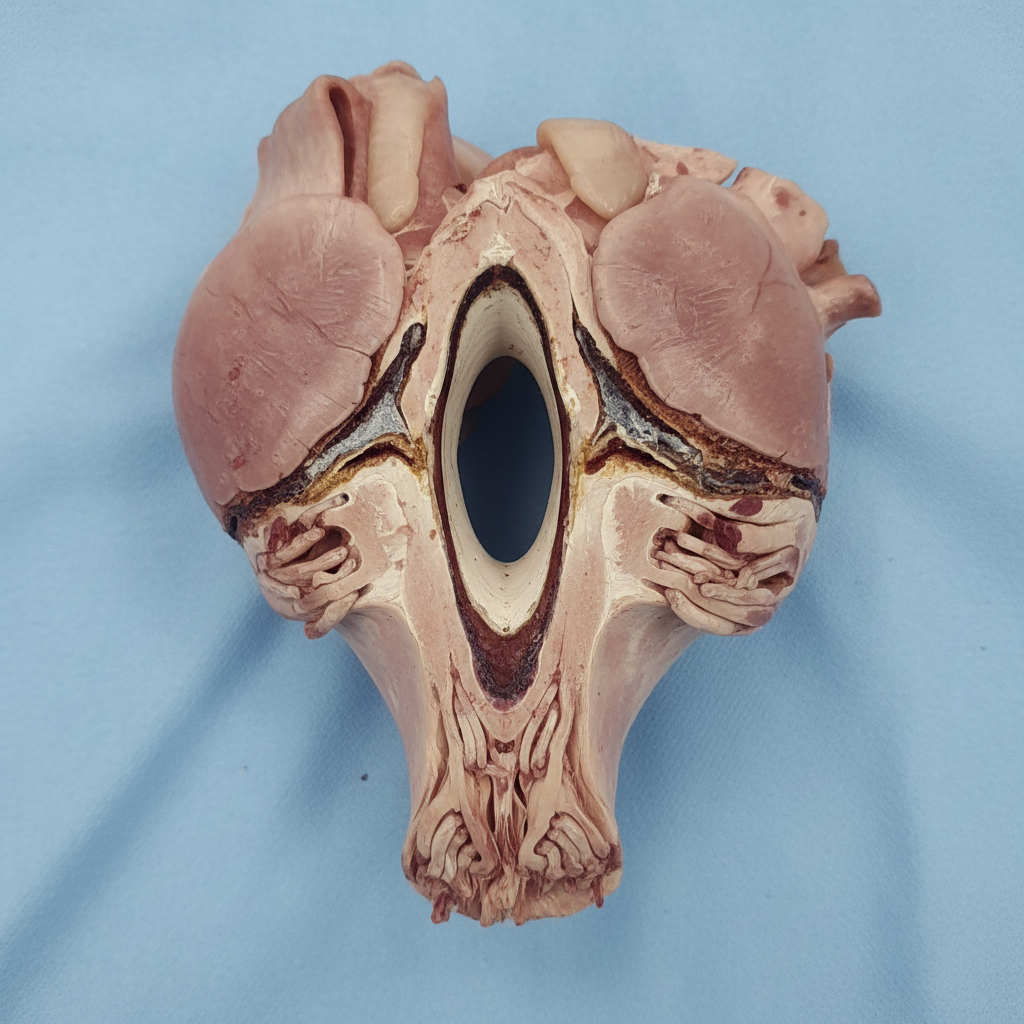
Which of the following findings is expected on microscopic examination of a biopsy from a heart showing ventricular hypertrophy with asymmetric septal thickening?
"Aschoff bodies" are seen in:
A 62-year-old woman undergoing chemotherapy for breast cancer presents with a 3-day history of fever and chest pain. Cardiac catheterization reveals a markedly reduced ejection fraction with normal coronary blood flow. A myocardial biopsy is obtained, and a PCR test for coxsackievirus is positive. Histologic examination of this patient's myocardium will most likely reveal an abundance of which of the following inflammatory cells?
Concentric hypertrophy of the heart is most commonly associated with which of the following conditions?
What is true about vegetations in rheumatic fever?
Carcinoid of the heart presents as?
Which of the following is/are the characteristics of the vegetations seen in patients with Libman-Sacks endocarditis?
Vegetations on the under-surface of Aortic valve leaflets are typically found in which condition?
Antischkow cells are characteristic findings in which of the following conditions?
Mitral valve vegetations do not typically embolize to which of the following organs?
Explanation: The clinical presentation of ventricular hypertrophy with asymmetric septal thickening is the classic hallmark of **Hypertrophic Cardiomyopathy (HCM)** [1]. ### **Explanation of the Correct Answer** The characteristic microscopic finding in HCM is **myocyte disarray** (disorganization of myofibrils) [1]. In a normal heart, myocytes are arranged in parallel bundles. In HCM, the myocytes are hypertrophied, haphazardly arranged, and branch at sharp angles, losing their parallel orientation [1]. This architectural chaos is often accompanied by interstitial fibrosis and is the primary substrate for life-threatening arrhythmias [2]. ### **Why Other Options are Incorrect** * **A. Aschoff bodies:** These are pathognomonic for **Acute Rheumatic Carditis**. They consist of foci of fibrinoid necrosis surrounded by lymphocytes, plasma cells, and Anitschkow cells (caterpillar cells). * **C. Infiltration by inflammatory cells:** This is characteristic of **Myocarditis** (e.g., viral, Chagas disease, or giant cell myocarditis), not a primary hypertrophic cardiomyopathy. * **D. Localized fibrous scarring:** While fibrosis occurs in HCM, localized scarring is more typical of a **healed Myocardial Infarction** or chronic ischemic heart disease. ### **NEET-PG High-Yield Pearls** * **Genetics:** HCM is most commonly caused by mutations in genes encoding sarcomeric proteins, most frequently the **Beta-myosin heavy chain** (MYH7) and **Myosin-binding protein C** (MYBPC3). * **Inheritance:** Autosomal Dominant. * **Clinical:** It is the leading cause of **Sudden Cardiac Death (SCD)** in young athletes [2]. * **Gross Pathology:** "Banana-shaped" left ventricular cavity due to the bulging interventricular septum. **References:** [1] Kumar V, Abbas AK, et al.. Robbins and Cotran Pathologic Basis of Disease. 9th ed. The Heart, pp. 577-578. [2] Cross SS. Underwood's Pathology: A Clinical Approach. 6th ed. Common Clinical Problems From Cardiovascular Disease, pp. 303-304.
Explanation: **Explanation:** **Aschoff bodies** are the pathognomonic histological hallmark of **Acute Rheumatic Fever (ARF)** [1]. They represent areas of focal interstitial inflammation found in all three layers of the heart (pancarditis). 1. **Why Rheumatic Fever is correct:** Aschoff bodies are granulomatous lesions consisting of a central zone of fibrinoid necrosis surrounded by chronic inflammatory cells (lymphocytes, plasma cells) and characteristic **Anitschkow cells** (caterpillar cells)—enlarged macrophages with condensed chromatin [1]. Over time, these bodies fibrose and form scars. Their presence indicates the active phase of rheumatic carditis. 2. **Why other options are incorrect:** * **Rheumatoid arthritis:** While it can cause rheumatoid nodules (fibrinoid necrosis surrounded by palisading macrophages), it does not present with Aschoff bodies [2]. * **Bacterial endocarditis:** Characterized by "vegetations" consisting of thrombotic debris and organisms [3]. It may lead to abscess formation but not Aschoff bodies. * **Marantic endocarditis (NBTE):** Involves sterile, small thrombi on valves, typically seen in wasting diseases or hypercoagulable states; it lacks the granulomatous inflammation of ARF [3]. **High-Yield Clinical Pearls for NEET-PG:** * **Anitschkow Cells:** Known as "caterpillar cells" in longitudinal section and "owl-eye cells" in cross-section [1]. * **Location:** Most commonly found in the **myocardium** and subendocardium [1]. * **MacCallum Patch:** An area of endocardial thickening (usually in the left atrium) caused by subendocardial Aschoff bodies. * **Jones Criteria:** Remember that Carditis is a major criterion for the diagnosis of ARF. **References:** [1] Kumar V, Abbas AK, et al.. Robbins and Cotran Pathologic Basis of Disease. 9th ed. The Heart, pp. 566-567. [2] Cross SS. Underwood's Pathology: A Clinical Approach. 6th ed. Common Clinical Problems From Osteoarticular And Connective Tissue Disease, pp. 677-678. [3] Kumar V, Abbas AK, et al.. Robbins and Cotran Pathologic Basis of Disease. 9th ed. The Heart, p. 568.
Explanation: ### Explanation **Correct Answer: B. Lymphocytes** **1. Why Lymphocytes are Correct:** The clinical presentation describes **Viral Myocarditis**. The patient has a history of fever, chest pain, and heart failure (reduced ejection fraction) despite normal coronary arteries (ruling out myocardial infarction) [2]. The positive PCR for **Coxsackievirus B** (the most common viral cause) confirms the diagnosis . In viral myocarditis, the characteristic histopathological finding is a **diffuse lymphocytic infiltrate** (predominantly T-cells) associated with focal or patchy myocyte necrosis and edema [1], [2]. This inflammatory response is the body's reaction to the viral infection of the cardiomyocytes. **2. Why Other Options are Incorrect:** * **A. Eosinophils:** These are the hallmark of **Hypersensitivity Myocarditis** (often drug-induced) or parasitic infections [1]. While chemotherapy can cause cardiotoxicity, the positive viral PCR points specifically to an infectious etiology. * **C. Macrophages:** While macrophages are present during the later healing phase of myocarditis to clear debris, they are not the predominant diagnostic cell type in the acute phase of viral myocarditis. * **D. Mast cells:** These are involved in Type I hypersensitivity and anaphylaxis; they do not play a primary role in the pathology of viral myocarditis. **3. Clinical Pearls for NEET-PG:** * **Most Common Cause:** Coxsackievirus B is the leading cause of viral myocarditis . * **Gold Standard Diagnosis:** Endomyocardial biopsy (though clinical diagnosis is often made via Cardiac MRI) [2]. * **Dallas Criteria:** The traditional histological criteria for diagnosing myocarditis require an inflammatory infiltrate (lymphocytes) with associated myocyte necrosis [2]. * **Giant Cell Myocarditis:** A rare, aggressive form characterized by multinucleated giant cells and a poor prognosis; it requires urgent treatment [1]. * **Chagas Disease:** Caused by *Trypanosoma cruzi*, it is a common cause of myocarditis in endemic areas, characterized by pseudocysts of amastigotes in myocytes [1]. **References:** [1] Kumar V, Abbas AK, et al.. Robbins and Cotran Pathologic Basis of Disease. 9th ed. The Heart, pp. 578-580. [2] Cross SS. Underwood's Pathology: A Clinical Approach. 6th ed. Common Clinical Problems From Cardiovascular Disease, pp. 298-299.
Explanation: **Explanation:** **1. Why Systemic Hypertension is Correct:** Concentric hypertrophy is the adaptive response of the myocardium to **pressure overload** [2]. In systemic hypertension, the left ventricle must generate higher pressure to overcome increased systemic vascular resistance (afterload). To handle this stress, new sarcomeres are added **in parallel**, leading to an increase in the thickness of the ventricular wall without a corresponding increase in chamber size [2]. This results in a decreased ventricular lumen and reduced compliance [1]. **2. Analysis of Incorrect Options:** * **Mitral Regurgitation (B):** This condition causes **volume overload**. The heart responds by adding sarcomeres **in series**, leading to **eccentric hypertrophy**, where the ventricular wall may thicken slightly, but the chamber undergoes significant dilation [2]. * **Hypertrophic Cardiomyopathy (C):** While this involves massive hypertrophy, it is typically **asymmetric** (disproportionate septal hypertrophy) and is a primary genetic disorder of sarcomeric proteins rather than a secondary response to hemodynamic load. * **Mitral Stenosis (D):** This leads to pressure overload of the **left atrium**, resulting in atrial dilation and hypertrophy. The left ventricle is usually normal or even small (atrophic) because it is "protected" from volume/pressure by the stenotic valve. **3. High-Yield Clinical Pearls for NEET-PG:** * **Pressure Overload** $\rightarrow$ Parallel sarcomeres $\rightarrow$ **Concentric** Hypertrophy (e.g., Hypertension, Aortic Stenosis) [2]. * **Volume Overload** $\rightarrow$ Series sarcomeres $\rightarrow$ **Eccentric** Hypertrophy/Dilation (e.g., Regurgitant valves, Shunts) [1]. * **Microscopic Hallmark:** Enlarged "Box-car" shaped nuclei in cardiomyocytes [2]. * **Gene Expression:** Hypertrophy often involves a shift back to the **fetal gene program** (e.g., expression of $\beta$-myosin heavy chain instead of $\alpha$-isoform). **References:** [1] Kumar V, Abbas AK, et al.. Robbins and Cotran Pathologic Basis of Disease. 9th ed. The Heart, pp. 560-562. [2] Kumar V, Abbas AK, et al.. Robbins and Cotran Pathologic Basis of Disease. 9th ed. The Heart, p. 536.
Explanation: In **Acute Rheumatic Fever (ARF)**, the characteristic valvular lesions are known as **verrucae**. These are small, sterile vegetations that form along the lines of closure of the heart valves (most commonly the mitral valve) [1]. ### Why "Soft and Firm" is Correct: The vegetations in ARF are unique because they are composed of small, organized thrombi (fibrin and platelets) that have undergone a degree of organization. * **Soft:** They are small (1–2 mm) and lack the bulky, necrotic debris seen in infections. * **Firm:** Unlike the vegetations in infective endocarditis, rheumatic verrucae are **firmly adherent** to the underlying endocardium [1]. This adherence is due to the underlying inflammatory process (pancarditis) and subsequent organization, making them difficult to dislodge. ### Why Other Options are Incorrect: * **A & D (Friable):** "Friable" means easily crumbled or detached. This is a hallmark of **Infective Endocarditis (IE)**, where large, irregular masses easily break off to cause systemic emboli [1]. Rheumatic vegetations rarely embolize because they are firm and adherent. * **B & D (Large):** Rheumatic vegetations are tiny (pinhead-sized). Large vegetations are characteristic of **Infective Endocarditis** or **Libman-Sacks Endocarditis** (SLE) [1]. ### NEET-PG High-Yield Pearls: * **Location:** Verrucae occur specifically along the **lines of closure** [1]. * **Sterility:** These vegetations are **sterile** (no bacteria), unlike IE [3]. * **Aschoff Bodies:** These are the pathognomonic microscopic lesions of ARF, containing **Anitschkow cells** ("caterpillar cells") [2]. * **MacCallum Patch:** A map-like area of subendocardial thickening, usually in the posterior wall of the left atrium, caused by regurgitant jets. **References:** [1] Kumar V, Abbas AK, et al.. Robbins and Cotran Pathologic Basis of Disease. 9th ed. The Heart, p. 568. [2] Kumar V, Abbas AK, et al.. Robbins and Cotran Pathologic Basis of Disease. 9th ed. The Heart, p. 566. [3] Kumar V, Abbas AK, et al.. Robbins and Cotran Pathologic Basis of Disease. 9th ed. The Heart, p. 570.
Explanation: **Carcinoid Heart Disease** is a complication of carcinoid syndrome, occurring in approximately 50% of patients with systemic symptoms. It is caused by the high circulating levels of bioactive amines (primarily **Serotonin**) secreted by neuroendocrine tumors that have metastasized to the liver. **Why Tricuspid Regurgitation is correct:** The high levels of serotonin cause **fibrous intimal thickening** (plaques) of the endocardium [1]. These plaques are composed of smooth muscle cells and collagen embedded in an acid mucopolysaccharide matrix [1]. * **Right-sided involvement:** The lesions characteristically affect the right side of the heart because the lungs contain **Monoamine Oxidase (MAO)**, which degrades serotonin before it can reach the left heart. * **Valvular dysfunction:** The fibrous plaques cause the tricuspid valve leaflets to become thickened, shortened, and retracted [1]. This prevents proper closure, leading primarily to **Tricuspid Regurgitation** (and occasionally pulmonary stenosis) [1]. **Why other options are incorrect:** * **Aortic Stenosis & Aortic Regurgitation (A & D):** These involve the left side of the heart. Carcinoid heart disease rarely affects the left side unless there is a right-to-left shunt (e.g., Patent Foramen Ovale) or a primary bronchial carcinoid. * **Mitral Stenosis (C):** This is typically a sequela of Rheumatic Heart Disease. In carcinoid syndrome, the mitral valve is protected by pulmonary metabolic inactivation of serotonin. **High-Yield NEET-PG Pearls:** * **Biochemical Marker:** 24-hour urinary **5-HIAA** (5-hydroxyindoleacetic acid) is used for diagnosis. * **Pathognomonic Lesion:** "Glistening white, pearly plaques" on the endocardial surface [1]. * **Drug Association:** Similar valvular lesions were historically seen with the use of Fenfluramine (appetite suppressant) and Ergotamine. **References:** [1] Kumar V, Abbas AK, et al.. Robbins and Cotran Pathologic Basis of Disease. 9th ed. The Heart, pp. 570-572.
Explanation: **Explanation:** **Libman-Sacks Endocarditis (LSE)** is a form of non-bacterial endocarditis classically associated with **Systemic Lupus Erythematosus (SLE)**. It is characterized by the formation of sterile, inflammatory vegetations on heart valves [1]. 1. **Why Option D is Correct:** * **Medium Sized (A):** Unlike the tiny, pinpoint vegetations of Non-Bacterial Thrombotic Endocarditis (NBTE) or the large, bulky, friable vegetations of Infective Endocarditis (IE), LSE vegetations are typically **medium-sized** (1-4 mm) [1][2]. * **Irregular Contour (B):** The vegetations are described as verrucous (wart-like), granular, and **irregular** in shape [1][2]. * **Surface of Cusps (C):** A pathognomonic feature of LSE is that vegetations can occur **anywhere on the valve surface**, including the undersurface of the cusps, the chordae tendineae, or the endocardial surfaces (mural endocardium) [1]. 2. **Analysis of Options:** Since all three descriptors (medium size, irregular contour, and presence on cusp surfaces) accurately define the morphology of LSE, "All the above" is the correct choice. **High-Yield Clinical Pearls for NEET-PG:** * **Location:** LSE is unique because it affects **both sides of the valve** (undersurface/ventricular surface and flow surface) [2]. Most other endocarditides affect only the line of closure. * **Valve Involvement:** The **Mitral valve** is most commonly affected [1]. * **Histology:** Characterized by intense valvulitis, fibrinoid necrosis, and the presence of **Hematoxylin bodies (LE bodies)** within the vegetations [1]. * **Association:** While primarily seen in SLE, it can also occur in **Antiphospholipid Antibody Syndrome (APS)**. * **Nature:** These are **sterile** (non-infective) vegetations; however, they can become a nidus for secondary bacterial seeding. **References:** [1] Kumar V, Abbas AK, et al.. Robbins and Cotran Pathologic Basis of Disease. 9th ed. The Heart, p. 570. [2] Kumar V, Abbas AK, et al.. Robbins and Cotran Pathologic Basis of Disease. 9th ed. The Heart, p. 568.
Explanation: **Explanation:** **Libman-Sacks Endocarditis (LSE)**, also known as verrucous endocarditis, is the characteristic cardiac manifestation of Systemic Lupus Erythematosus (SLE). The hallmark of LSE is the presence of small, sterile, pinkish vegetations that can occur **anywhere on the valve surface** [2]. Uniquely, these vegetations are frequently found on the **under-surface of the leaflets** (ventricular surface of semilunar valves or atrial surface of AV valves), the chordae tendineae, and the endocardial surfaces [1]. **Analysis of Options:** * **Acute Rheumatic Carditis:** Vegetations (verrucae) are small, sterile, and friable, but they occur strictly along the **lines of closure** on the atrial surface of AV valves [2]. * **Non-Bacterial Thrombotic Endocarditis (NBTE):** These are sterile, bland thrombi usually found in hypercoagulable states (e.g., Trousseau syndrome). Like rheumatic fever, they are typically restricted to the **lines of valve closure** [2]. * **Chronic Rheumatic Carditis:** This stage is characterized by valve thickening, commissural fusion ("fish-mouth" deformity), and calcification rather than active vegetations. **High-Yield NEET-PG Pearls:** * **Location Trick:** If the question mentions "both sides of the valve" or "under-surface," think **Libman-Sacks (SLE)**. * **Pathology:** LSE vegetations consist of immune complexes, fibrin, and "hematoxylin bodies" (the tissue equivalent of LE cells). * **Clinical:** While usually asymptomatic, LSE can lead to valvular regurgitation or embolic events. * **Most Common Valve:** Mitral valve is most frequently involved in all forms of non-infective endocarditis [1]. **References:** [1] Kumar V, Abbas AK, et al.. Robbins and Cotran Pathologic Basis of Disease. 9th ed. The Heart, p. 570. [2] Kumar V, Abbas AK, et al.. Robbins and Cotran Pathologic Basis of Disease. 9th ed. The Heart, p. 568.
Explanation: ### Explanation **Correct Answer: C. Rheumatic myocarditis** **Anitschkow cells** (also known as "caterpillar cells") are pathognomonic for **Acute Rheumatic Fever (ARF)**. They are specialized, activated macrophages found within **Aschoff bodies**, which are the characteristic granulomatous lesions of rheumatic carditis [1]. * **Morphology:** These cells have an abundant cytoplasm and a central nucleus where the chromatin is condensed into a slender, wavy, longitudinal ribbon, resembling a **caterpillar** when viewed in cross-section [1]. If viewed in cross-section, they may appear as "owl-eye" cells. * **Significance:** Aschoff bodies can be found in all three layers of the heart (pancarditis), but they are most distinct in the myocardium. --- ### Why the other options are incorrect: * **A. Infective Endocarditis:** This condition is characterized by **vegetations** (friable masses of fibrin, inflammatory cells, and bacteria) on heart valves [2]. It does not feature Aschoff bodies or Anitschkow cells. * **B. Myocardial Infarction:** The hallmark of MI is **coagulative necrosis** followed by an inflammatory infiltrate (neutrophils, then macrophages) and eventually a collagenous scar. It lacks the specific granulomatous inflammation seen in ARF. --- ### High-Yield Pearls for NEET-PG: 1. **Aschoff Body Components:** Consists of a central zone of fibrinoid necrosis surrounded by T-lymphocytes, plasma cells, and **Anitschkow cells** [1]. When these macrophages become multinucleated, they are called **Aschoff giant cells**. 2. **Pancarditis:** ARF affects the endocardium (MacCallum patches), myocardium (Aschoff bodies), and pericardium ("Bread and butter" pericarditis). 3. **Chronic Rheumatic Heart Disease:** Characterized by "fish-mouth" or "buttonhole" stenosis of the mitral valve due to commissural fusion [1]. 4. **Jones Criteria:** Used for clinical diagnosis; remember "J♥NES" (Joints, Carditis, Nodules, Erythema marginatum, Sydenham chorea). **References:** [1] Kumar V, Abbas AK, et al.. Robbins and Cotran Pathologic Basis of Disease. 9th ed. The Heart, pp. 566-567. [2] Kumar V, Abbas AK, et al.. Robbins and Cotran Pathologic Basis of Disease. 9th ed. The Heart, p. 568.
Explanation: **Explanation:** The correct answer is **Lungs (Option D)**. This question tests your understanding of the circulatory pathway and the destination of systemic versus pulmonary emboli. **1. Why Lungs is the correct answer:** The mitral valve is located on the **left side** of the heart (between the left atrium and left ventricle). When vegetations (seen in Infective Endocarditis or NBTE) break off from the mitral valve, they enter the left ventricle and are ejected into the **Aorta**. From the aorta, these emboli travel through the **systemic arterial circulation** [1]. Since the lungs are supplied by the pulmonary arteries (originating from the right heart), systemic emboli cannot reach the lungs unless there is a right-to-left shunt (paradoxical embolism) [1], [2]. **2. Why the other options are incorrect:** * **Brain (Option A):** Emboli traveling up the carotid arteries frequently lodge in the middle cerebral artery, leading to embolic strokes or mycotic aneurysms [4], [5]. * **Spleen (Option C) & Liver (Option B):** These are major abdominal organs supplied by branches of the abdominal aorta (Celiac trunk). Splenic infarction is a classic complication of left-sided endocarditis due to its terminal arterial supply [3]. **High-Yield Clinical Pearls for NEET-PG:** * **Left-sided valves (Mitral > Aortic)** are most commonly involved in Infective Endocarditis, leading to **systemic emboli** (Brain, Spleen, Kidneys) [3], [4]. * **Right-sided valves (Tricuspid)** are commonly involved in **IV drug users** (*S. aureus*), leading to **pulmonary emboli** (septic pulmonary infarcts). * **Libman-Sacks Endocarditis (SLE):** Characterized by small, sterile vegetations on **both sides** of the valve leaflets. * **Marantic Endocarditis (NBTE):** Associated with advanced malignancy (Trousseau sign) and carries a high risk of systemic embolization. **References:** [1] Kumar V, Abbas AK, et al.. Robbins and Cotran Pathologic Basis of Disease. 9th ed. Hemodynamic Disorders, Thromboembolic Disease, and Shock, pp. 137-138. [2] Cross SS. Underwood's Pathology: A Clinical Approach. 6th ed. (Basic Pathology) introduces the student to key general principles of pathology, both as a medical science and as a clinical activity with a vital role in patient care. Part 2 (Disease Mechanisms) provides fundamental knowledge about the cellular and molecular processes involved in diseases, providing the rationale for their treatment. Part 3 (Systematic Pathology) deals in detail with specific diseases, with emphasis on the clinically important aspects., pp. 144-145. [3] Kumar V, Abbas AK, et al.. Robbins and Cotran Pathologic Basis of Disease. 9th ed. Hemodynamic Disorders, Thromboembolic Disease, and Shock, pp. 136-137. [4] Cross SS. Underwood's Pathology: A Clinical Approach. 6th ed. (Basic Pathology) introduces the student to key general principles of pathology, both as a medical science and as a clinical activity with a vital role in patient care. Part 2 (Disease Mechanisms) provides fundamental knowledge about the cellular and molecular processes involved in diseases, providing the rationale for their treatment. Part 3 (Systematic Pathology) deals in detail with specific diseases, with emphasis on the clinically important aspects., pp. 145-146. [5] Cross SS. Underwood's Pathology: A Clinical Approach. 6th ed. (Basic Pathology) introduces the student to key general principles of pathology, both as a medical science and as a clinical activity with a vital role in patient care. Part 2 (Disease Mechanisms) provides fundamental knowledge about the cellular and molecular processes involved in diseases, providing the rationale for their treatment. Part 3 (Systematic Pathology) deals in detail with specific diseases, with emphasis on the clinically important aspects., pp. 146-147.
Congenital Heart Disease
Practice Questions
Ischemic Heart Disease
Practice Questions
Hypertensive Heart Disease
Practice Questions
Valvular Heart Disease
Practice Questions
Myocarditis and Cardiomyopathies
Practice Questions
Pericardial Disease
Practice Questions
Cardiac Tumors
Practice Questions
Heart Failure Pathophysiology
Practice Questions
Cardiac Transplantation Pathology
Practice Questions
Endocarditis
Practice Questions
Get full access to all questions, explanations, and performance tracking.
Start For Free