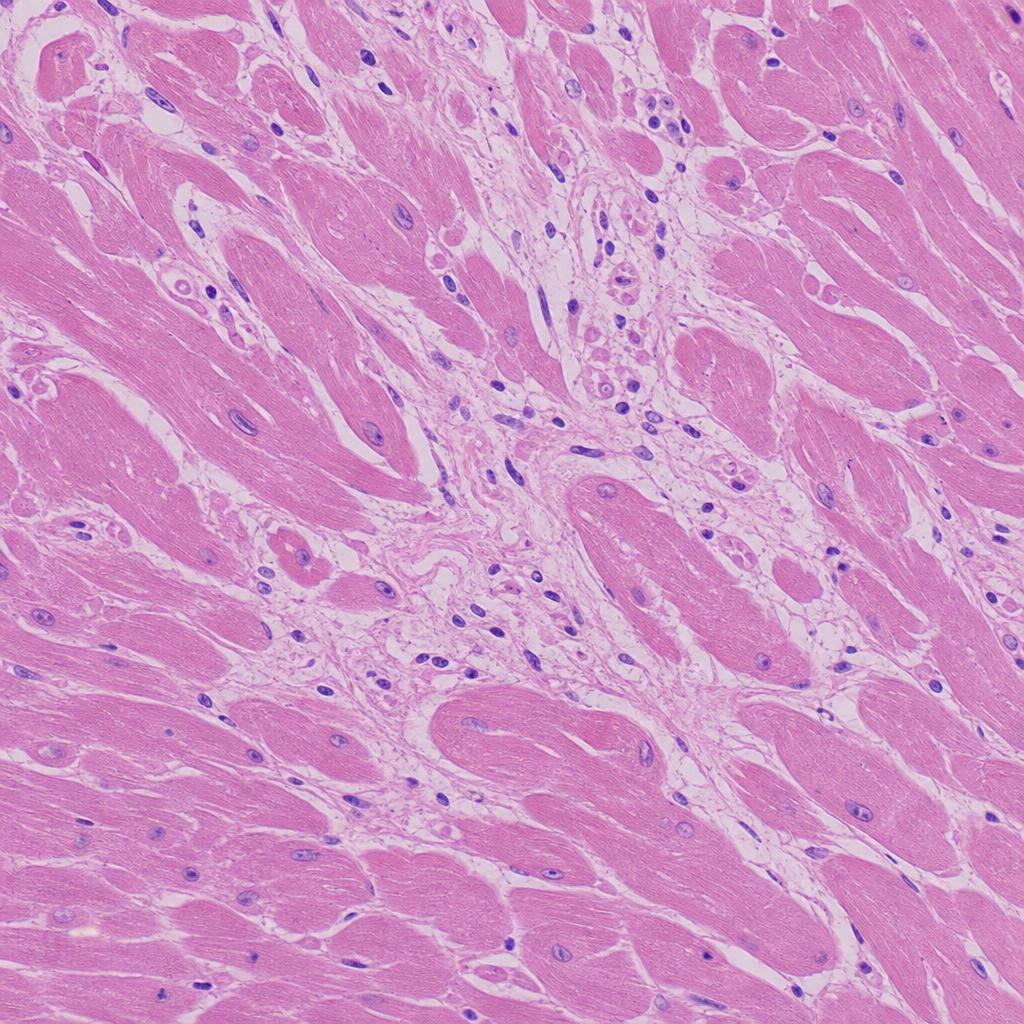
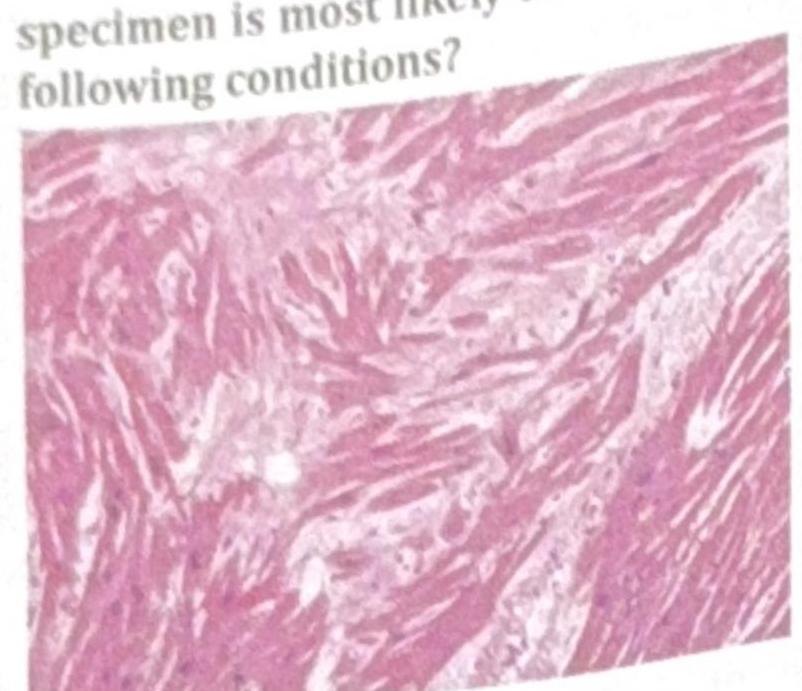
A 60-year-old man presents with chest pain lasting 6 hours, diagnosed as acute myocardial infarction. Angiography showed involvement of the anterior descending branch of the left coronary artery. What is the most probable site of infarct?
Libman-Sacks endocarditis is associated with?
The "Me Callum patch" is typically seen in which chamber of the heart?
Anitschkow cells are modified:
All of the following are clinical features of myxoma, EXCEPT:
Sterile vegetations are seen in all except?
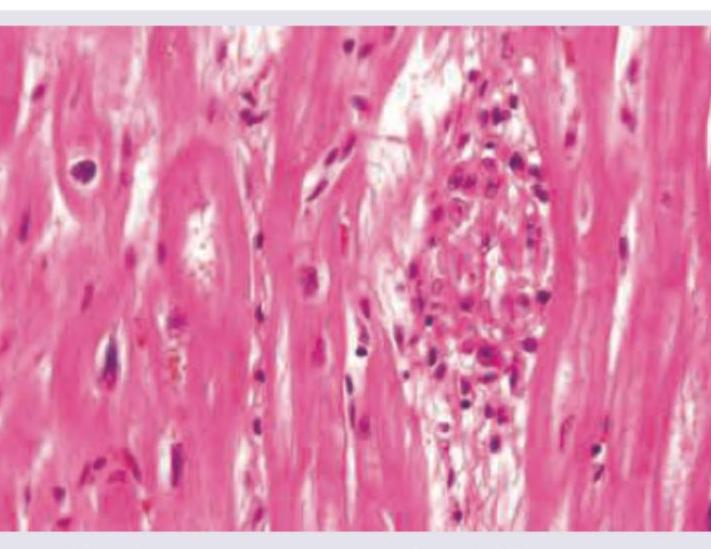
Aschoff bodies in rheumatic heart disease show all of the following features, except?
Which condition is characterized by large way vegetation?
In carcinoid syndrome, which part of the right ventricle is most affected?
Which of the following cardiac valves is not commonly involved in rheumatic fever?
Explanation: **Explanation:** The distribution of myocardial infarction (MI) is directly determined by the specific coronary artery occluded. In this case, the occlusion involves the **Left Anterior Descending (LAD) artery**, which is the most common site of coronary occlusion (40-50%). 1. **Why Anterolateral wall is correct:** The LAD supplies the anterior wall of the left ventricle, the anterior 2/3rd of the interventricular septum, and the apex [1]. When the LAD is occluded, it typically results in an **Anterolateral** or **Anteroapical** infarct [1]. In many clinical contexts and exam patterns, "Anterolateral" is used to describe the broad territory affected by a proximal LAD lesion. 2. **Why other options are incorrect:** * **Posterior wall:** Usually results from occlusion of the **Right Coronary Artery (RCA)** or the Left Circumflex Artery (LCX), depending on dominance [1]. * **Inferior wall:** Primarily caused by occlusion of the **RCA** (in 80% of "right-dominant" hearts) [1]. * **Septal:** While the LAD does supply the anterior septum, a purely septal infarct is less common than a combined anteroseptal or anterolateral presentation. In the context of this question, "Anterolateral" represents the most significant bulk of the affected ventricular wall. **NEET-PG High-Yield Pearls:** * **LAD (40-50%):** "The Widow Maker." Leads to Anterior/Anterolateral wall MI (V1-V6 leads on ECG). * **RCA (30-40%):** Leads to Inferior wall MI (Leads II, III, aVF) and Posterior wall MI. * **LCX (15-20%):** Leads to Lateral wall MI (Leads I, aVL, V5, V6). * **Earliest microscopic change (0-4 hrs):** Usually none, or wavy fibers [1]. * **First gross change (4-12 hrs):** Dark mottling [1]. **References:** [1] Kumar V, Abbas AK, et al.. Robbins and Cotran Pathologic Basis of Disease. 9th ed. The Heart, pp. 550-552.
Explanation: **Explanation:** **Libman-Sacks Endocarditis (LSE)** is a classic manifestation of **Systemic Lupus Erythematosus (SLE)** [1], [2]. It is characterized by small, sterile, fibro-fibrinous vegetations (verrucae) that can develop on any heart valve, most commonly the mitral and aortic valves [2]. **Why Option B is correct:** The underlying pathophysiology involves the deposition of immune complexes and subsequent complement activation, leading to inflammation and the formation of vegetations [4]. A unique diagnostic feature of LSE is that these vegetations can occur on **both sides of the valve leaflets** (surface and undersurface), as well as on the chordae tendineae and endocardial surfaces [1], [2]. **Why other options are incorrect:** * **Option A (Rheumatic Heart Disease):** While RHD also presents with vegetations (verrucae), they are typically small, sterile, and located strictly along the **lines of closure** of the valve leaflets, not on both sides [2]. * **Option C (Carcinoma):** Advanced malignancies (especially mucinous adenocarcinomas) are associated with **Non-Bacterial Thrombotic Endocarditis (NBTE)** or Marantic endocarditis. These vegetations are also sterile but are usually found on previously normal valves and are more prone to embolization [1]. **High-Yield Clinical Pearls for NEET-PG:** * **Sterility:** Like NBTE and Rheumatic endocarditis, LSE vegetations are **sterile** (non-infective) [1]. * **Location:** "Both sides of the valve" is the buzzword for Libman-Sacks [2]. * **Histology:** Vegetations consist of eosinophilic material (fibrin) and may contain **Hematoxylin bodies** (the tissue equivalent of LE cells) [4]. * **Association:** LSE is also strongly associated with **Antiphospholipid Antibody Syndrome (APS)** [3]. * **Complication:** While often asymptomatic, it can lead to valvular regurgitation or serve as a nidus for secondary Bacterial Endocarditis. **References:** [1] Kumar V, Abbas AK, et al.. Robbins and Cotran Pathologic Basis of Disease. 9th ed. The Heart, p. 570. [2] Kumar V, Abbas AK, et al.. Robbins and Cotran Pathologic Basis of Disease. 9th ed. Diseases of the Immune System, pp. 232-233. [3] Kumar V, Abbas AK, et al.. Robbins and Cotran Pathologic Basis of Disease. 9th ed. Hemodynamic Disorders, Thromboembolic Disease, and Shock, pp. 134-135. [4] Kumar V, Abbas AK, et al.. Robbins and Cotran Pathologic Basis of Disease. 9th ed. Diseases of the Immune System, p. 230.
Explanation: The **MacCallum patch** is a characteristic pathological finding in **Rheumatic Heart Disease (RHD)**. It represents an area of endocardial thickening caused by the mechanical stress of regurgitant blood flow. **1. Why the Left Atrium is correct:** In Acute Rheumatic Fever, inflammation primarily affects the endocardium and valves [2]. The **mitral valve** is the most commonly involved valve [1]. Mitral regurgitation (MR) occurs during the acute phase, causing high-pressure jets of blood to strike the posterior wall of the **left atrium**, usually just above the posterior leaflet of the mitral valve [2]. This chronic irritation leads to sub-endocardial inflammation and subsequent fibrosis, appearing as a puckered, thickened, and wrinkled "patch." **2. Why other options are incorrect:** * **Right Atrium & Right Ventricle:** While RHD can affect the tricuspid or pulmonary valves (rarely), the pressures in the right heart are significantly lower than the left. Consequently, regurgitant jets are not forceful enough to create distinct endocardial patches. * **Left Ventricle:** Although the left ventricle is involved in RHD (myocarditis/Aschoff bodies [2]), the specific hemodynamic "jet lesion" known as the MacCallum patch is anatomically localized to the atrium due to the direction of mitral regurgitation. **Clinical Pearls for NEET-PG:** * **Aschoff Bodies:** The pathognomonic histological feature of RHD (found in all three layers of the heart—pancarditis) [2]. * **Anitschkow Cells:** "Caterpillar cells" (activated macrophages) found within Aschoff bodies [3]. * **Valve Involvement Frequency:** Mitral > Aortic > Tricuspid > Pulmonary (MATP) [1, 3]. * **Fish-mouth/Button-hole deformity:** Seen in chronic RHD due to valvular stenosis and commissural fusion [3]. **References:** [1] Cross SS. Underwood's Pathology: A Clinical Approach. 6th ed. Common Clinical Problems From Cardiovascular Disease, pp. 293-294. [2] Kumar V, Abbas AK, et al.. Robbins and Cotran Pathologic Basis of Disease. 9th ed. The Heart, p. 566. [3] Kumar V, Abbas AK, et al.. Robbins and Cotran Pathologic Basis of Disease. 9th ed. The Heart, pp. 566-567.
Explanation: **Explanation:** **Anitschkow cells** (also known as "caterpillar cells") are pathognomonic features of **Acute Rheumatic Carditis**. They are specialized, **activated macrophages** found within **Aschoff bodies** [1], which are the characteristic granulomatous lesions of Rheumatic Heart Disease (RHD). 1. **Why Macrophages are Correct:** Anitschkow cells are derived from the mononuclear phagocyte system. Under microscopy, they exhibit abundant cytoplasm and a central, longitudinal nucleus [1]. The chromatin is condensed into a central wavy ribbon, resembling a "caterpillar" in longitudinal section and an "owl’s eye" in cross-section. When these macrophages fuse, they form multinucleated **Aschoff giant cells**. 2. **Why Other Options are Incorrect:** * **Neutrophils (A):** These are markers of acute bacterial inflammation. While they may be present in early stages, they do not transform into Anitschkow cells. * **Lymphocytes (C):** While T-lymphocytes are present within the Aschoff body, they do not undergo the specific nuclear remodeling seen in Anitschkow cells [1]. * **Eosinophils (D):** These are associated with parasitic infections or Type I hypersensitivity (e.g., Löffler endocarditis), not the Type II/IV hypersensitivity seen in RHD. **High-Yield Clinical Pearls for NEET-PG:** * **Aschoff Bodies:** These are the hallmark of RHD and represent a form of granulomatous inflammation [1]. They are most commonly found in the **myocardium**. * **Pancarditis:** RHD affects all three layers. Look for **McCallum patches** (subendocardial thickening, usually in the left atrium) and "bread and butter" pericarditis. * **Molecular Mimicry:** RHD is caused by antibodies against **Group A Beta-hemolytic Streptococci (M-protein)** cross-reacting with cardiac self-antigens [1]. **References:** [1] Kumar V, Abbas AK, et al.. Robbins and Cotran Pathologic Basis of Disease. 9th ed. The Heart, pp. 566-567.
Explanation: **Explanation:** Atrial myxoma is the most common primary cardiac tumor in adults, typically located in the left atrium (75%) [1]. The clinical presentation is characterized by a "classic triad" of constitutional symptoms, embolic events, and obstructive symptoms. **Why Hypertension is the Correct Answer:** Hypertension is **not** a feature of atrial myxoma. While myxomas can cause various hemodynamic changes due to valvular obstruction (simulating mitral stenosis), they do not directly cause systemic hypertension [1]. In fact, severe obstruction may lead to decreased cardiac output and hypotension or syncope [2]. **Analysis of Incorrect Options:** * **Fever & Clubbing (Options A & B):** Myxomas are biologically active tumors that secrete **Interleukin-6 (IL-6)**, a pro-inflammatory cytokine. This leads to constitutional symptoms including fever, weight loss, malaise, anemia, and digital clubbing. These features often mimic systemic vasculitis or endocarditis. * **Embolic Phenomenon (Option D):** Myxomas are friable, gelatinous tumors [2]. Fragments of the tumor or overlying thrombi can easily detach and enter the systemic circulation, leading to embolic strokes, mesenteric ischemia, or peripheral arterial occlusion [1]. **NEET-PG High-Yield Pearls:** * **Location:** Most common in the Left Atrium, specifically attached to the **fossa ovalis** of the interatrial septum [2]. * **Auscultation:** Characterized by a **"Tumor Plop"** (a low-pitched sound heard during early or mid-diastole as the tumor drops into the mitral orifice). * **Histology:** Features "Stellate" or "Myxoma cells" embedded in a glycosaminoglycan-rich mucopolysaccharide stroma [2]. * **Genetics:** Associated with **Carney Complex** (PRKAR1A mutation), which includes cardiac myxomas, skin pigmentation (lentigines), and endocrine overactivity. **References:** [1] Cross SS. Underwood's Pathology: A Clinical Approach. 6th ed. Common Clinical Problems From Cardiovascular Disease, pp. 304-306. [2] Kumar V, Abbas AK, et al.. Robbins and Cotran Pathologic Basis of Disease. 9th ed. The Heart, pp. 583-584.
Explanation: **Explanation:** The core concept differentiating these conditions is the presence or absence of microorganisms within the cardiac vegetations. **Infective Endocarditis (IE)** is characterized by **non-sterile** vegetations because they are composed of a thrombotic meshwork containing live bacteria, fungi, or other pathogens [1]. In contrast, the other options represent forms of non-bacterial thrombotic endocarditis (NBTE) or inflammatory processes where the vegetations are sterile [1]. **Analysis of Options:** * **Infective Endocarditis (Correct):** These vegetations are large, friable, and destructive [2]. They contain colonies of microorganisms, making them non-sterile [1]. * **Systemic Lupus Erythematosus (SLE):** Known as **Libman-Sacks Endocarditis**, these are small, sterile, "mulberry-like" vegetations that can occur on both sides of the valves (unique feature) [1]. * **Rheumatic Fever:** Acute Rheumatic Heart Disease produces small, sterile, firm vegetations (verrucae) along the lines of closure of the valve leaflets [1]. * **Marantic Endocarditis:** Also known as Non-Bacterial Thrombotic Endocarditis (NBTE), these are sterile vegetations typically seen in patients with wasting diseases (cancer, sepsis) or hypercoagulable states [1]. **High-Yield Clinical Pearls for NEET-PG:** * **Location:** Libman-Sacks (SLE) is the only one that classically involves the **undersurface** of the valves [1]. * **Friability:** Vegetations of IE and Marantic endocarditis are friable and carry a high risk of **embolization**, whereas Rheumatic verrucae are firmly attached [1]. * **Culture-Negative Endocarditis:** If a patient has IE symptoms but sterile cultures, consider **HACEK organisms** or *Coxiella burnetii* [1]. **References:** [1] Kumar V, Abbas AK, et al.. Robbins and Cotran Pathologic Basis of Disease. 9th ed. The Heart, p. 568. [2] Kumar V, Abbas AK, et al.. Robbins and Cotran Pathologic Basis of Disease. 9th ed. The Heart, pp. 568-570.
Explanation: **Explanation:** The **Aschoff body** is the pathognomonic histological hallmark of acute rheumatic carditis [1]. It is a form of granulomatous inflammation characterized by a specific evolution of cellular components. **Why "Epithelioid cells" is the correct answer:** Epithelioid cells (activated macrophages resembling epithelial cells) are characteristic of **Type IV hypersensitivity granulomas**, such as those seen in Tuberculosis or Sarcoidosis [2]. While Aschoff bodies are often described as "granuloma-like," they do not typically contain classic epithelioid cells. Instead, they contain specialized modified macrophages known as Anitschkow cells. **Analysis of Incorrect Options:** * **Anitschkow cells:** These are the most characteristic cells of the Aschoff body [3]. They are plump activated macrophages with abundant cytoplasm and nuclei containing a central ribbon of chromatin (appearing as **"Caterpillar cells"** in longitudinal section and **"Owl-eye cells"** in cross-section) [1]. * **Giant cells:** As the Aschoff body matures, Anitschkow cells can coalesce to form multinucleated cells known as **Aschoff giant cells** [2]. * **Fibrinoid necrosis:** This is the hallmark of the early "exudative" phase of Aschoff body formation, where collagen undergoes eosinophilic fragmentation. **NEET-PG High-Yield Pearls:** 1. **Stages of Aschoff Body:** 1. Exudative (Early), 2. Granulomatous (Intermediate/Diagnostic), 3. Healing (Fibrotic). 2. **Location:** Most commonly found in the **interstitial connective tissue** of the myocardium (though RHD is a pancarditis) [3]. 3. **MacCallum Patch:** An area of subendocardial thickening, usually in the **left atrium**, caused by regurgitant jets. 4. **Chronic RHD:** Characterized by "fish-mouth" or "button-hole" stenosis of the mitral valve due to commissural fusion [1]. **References:** [1] Kumar V, Abbas AK, et al.. Robbins and Cotran Pathologic Basis of Disease. 9th ed. The Heart, pp. 566-567. [2] Kumar V, Abbas AK, et al.. Robbins and Cotran Pathologic Basis of Disease. 9th ed. Inflammation and Repair, p. 109. [3] Kumar V, Abbas AK, et al.. Robbins and Cotran Pathologic Basis of Disease. 9th ed. The Heart, p. 566.
Explanation: ### Explanation In cardiac pathology, the morphology and size of vegetations (verrucae) are critical diagnostic markers. **Why Subacute Bacterial Endocarditis (SBE) is correct:** SBE, typically caused by *Viridans group streptococci*, results in the formation of **large, friable, and bulky vegetations** [1, 2]. These vegetations are composed of fibrin, inflammatory cells, and dense colonies of bacteria. Because they are large and loosely attached, they carry a high risk of systemic embolization. In contrast to Acute Bacterial Endocarditis (which has even larger, more destructive vegetations), SBE vegetations are still significantly larger than those seen in non-infective conditions. **Analysis of Incorrect Options:** * **Systemic Lupus Erythematosus (SLE):** This condition is associated with **Libman-Sacks Endocarditis**. These vegetations are characteristically **small (1-4 mm)**, sterile, and granular [2]. A unique high-yield feature is that they can occur on both sides of the valve leaflets (undersurface) and on the chordae tendineae. * **Both:** This is incorrect because the size and nature of the vegetations in SLE and SBE are diametrically opposite (Small/Sterile vs. Large/Infective). **NEET-PG High-Yield Pearls:** 1. **Rheumatic Heart Disease (RHD):** Small, firm, "bead-like" vegetations along the line of closure [2]. 2. **Non-Bacterial Thrombotic Endocarditis (NBTE):** Small, sterile vegetations along the line of closure, often associated with malignancy (Marantic endocarditis) [2]. 3. **Location:** SBE vegetations usually occur on previously damaged valves, whereas Acute Endocarditis can attack healthy valves. 4. **Mnemonic for SLE:** Libman-Sacks = **S**mall, **S**terile, **S**urface (both sides). **References:** [1] Cross SS. Underwood's Pathology: A Clinical Approach. 6th ed. Common Clinical Problems From Cardiovascular Disease, pp. 295-296. [2] Kumar V, Abbas AK, et al.. Robbins and Cotran Pathologic Basis of Disease. 9th ed. The Heart, pp. 568-570.
Explanation: **Explanation:** **Carcinoid Heart Disease** is a hallmark of systemic carcinoid syndrome, occurring when vasoactive substances (primarily **serotonin**) are released by neuroendocrine tumors. **1. Why the Inflow Tract of the RV is correct:** The primary pathology in carcinoid heart disease is the deposition of **pearly-white, fibrous plaques** on the endocardium [1]. These plaques consist of smooth muscle cells and collagen embedded in an acid mucopolysaccharide matrix [1]. These deposits preferentially affect the **right heart** because it is the first site reached by the serotonin-rich blood from the systemic circulation (via the IVC/SVC) [1]. Specifically, the plaques involve the **tricuspid valve and the pulmonary valve**, as well as the **endocardial surface of the inflow tract of the right ventricle** [1]. This leads to tricuspid regurgitation and pulmonary stenosis. **2. Why the incorrect options are wrong:** * **Outflow tract of RV:** While the pulmonary valve (part of the outflow) is often affected, the most extensive endocardial plaque deposition and structural remodeling typically involve the inflow apparatus (tricuspid valve and ventricular wall) [1]. * **Inflow/Outflow tract of LV:** The left heart is generally **spared** because the lungs contain **monoamine oxidase (MAO)**, which metabolizes serotonin into the inactive metabolite 5-HIAA before it reaches the left atrium. (Note: Left-sided lesions only occur in cases of right-to-left shunts like PFO or primary bronchial carcinoids). **High-Yield Clinical Pearls for NEET-PG:** * **Biomarker:** Elevated 24-hour urinary **5-HIAA** is the diagnostic gold standard. * **Morphology:** "Plaque-like" thickening; valves are thickened and shortened but **not fused** (unlike Rheumatic Heart Disease) [1]. * **Triad of Carcinoid Syndrome:** Flushing, Diarrhea, and Right-sided heart failure. * **Key Enzyme:** Pulmonary MAO protects the left heart. **References:** [1] Kumar V, Abbas AK, et al.. Robbins and Cotran Pathologic Basis of Disease. 9th ed. The Heart, pp. 570-572.
Explanation: **Explanation:** In **Rheumatic Heart Disease (RHD)**, the frequency of valvular involvement is directly related to the hemodynamic stress (pressure) experienced by the valves. The left-sided valves, which endure higher systemic pressures, are significantly more affected than the right-sided valves [2]. **Why Pulmonary is the correct answer:** The **Pulmonary valve** is the least commonly involved valve in RHD [2]. It is rarely affected in isolation and is typically only involved in cases of severe, multi-valvular disease. This is because the pulmonary circulation is a low-pressure system, resulting in minimal mechanical trauma to the valve leaflets, which limits the progression of rheumatic inflammation and subsequent scarring. **Analysis of Incorrect Options:** * **Mitral Valve (A):** This is the **most commonly** involved valve in RHD (isolated involvement in 65-70% of cases) [2], [3]. The high pressure of the left ventricle during systole makes it highly susceptible to damage. * **Aortic Valve (B):** This is the **second most common** valve involved. It is frequently affected alongside the mitral valve (combined mitral and aortic disease) [2]. * **Tricuspid Valve (D):** While less common than left-sided valves, the tricuspid valve is involved more frequently than the pulmonary valve, usually in the context of "pancarditis" or multi-valvular involvement [2]. **NEET-PG High-Yield Pearls:** * **Order of frequency:** Mitral > Aortic > Tricuspid > Pulmonary (M > A > T > P). * **Pathognomonic lesion:** **Aschoff bodies** (interstitial myocardial inflammation) [1]. * **MacCallum Patch:** A map-like area of subendocardial thickening, usually in the **posterior wall of the left atrium**, caused by regurgitant jets. * **Fish-mouth/Button-hole deformity:** Characteristic appearance of chronic mitral stenosis due to commissural fusion [2]. **References:** [1] Kumar V, Abbas AK, et al.. Robbins and Cotran Pathologic Basis of Disease. 9th ed. The Heart, p. 566. [2] Kumar V, Abbas AK, et al.. Robbins and Cotran Pathologic Basis of Disease. 9th ed. The Heart, pp. 566-567. [3] Cross SS. Underwood's Pathology: A Clinical Approach. 6th ed. Common Clinical Problems From Cardiovascular Disease, pp. 293-294.
Congenital Heart Disease
Practice Questions
Ischemic Heart Disease
Practice Questions
Hypertensive Heart Disease
Practice Questions
Valvular Heart Disease
Practice Questions
Myocarditis and Cardiomyopathies
Practice Questions
Pericardial Disease
Practice Questions
Cardiac Tumors
Practice Questions
Heart Failure Pathophysiology
Practice Questions
Cardiac Transplantation Pathology
Practice Questions
Endocarditis
Practice Questions
Get full access to all questions, explanations, and performance tracking.
Start For Free