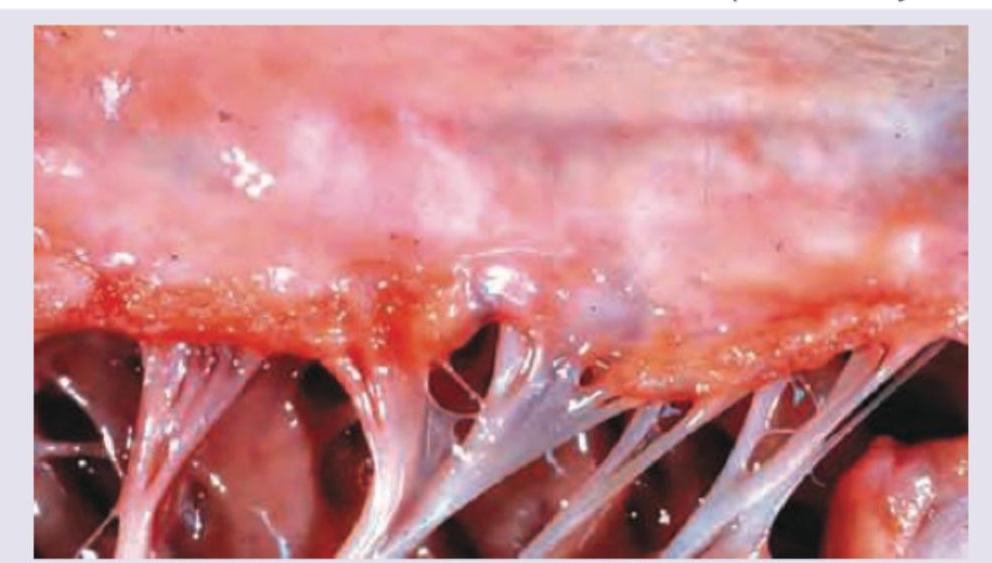
Hemopericardium is seen in which of the following conditions?
Senile cardiac amyloid is associated with which protein?
Which of the following cells are predominantly seen in the myocardial tissue within 48 hours of myocardial infarction?
Which of the following conditions is associated with destruction of heart valves?
A 70-year-old male with advanced visceral cancer dies of extensive myocardial infarction. Autopsy reveals sterile non-destructive vegetations along the mitral leaflet edges. What is the pathogenesis of this patient's vegetations most similar to?
What does "cardiac polyp" refer to?
A 74-year-old woman presents with acute chest pain and shortness of breath. Cardiac catheterization demonstrates occlusion of the left anterior descending coronary artery. Laboratory studies and ECG are consistent with acute myocardial infarction. Which of the following is the most likely pathological finding in the affected heart muscle 4 weeks later?
What are the pathognomic features of acute rheumatic fever?
What are heart failure cells?
All of the following are usual features of left atrial myxoma, except?
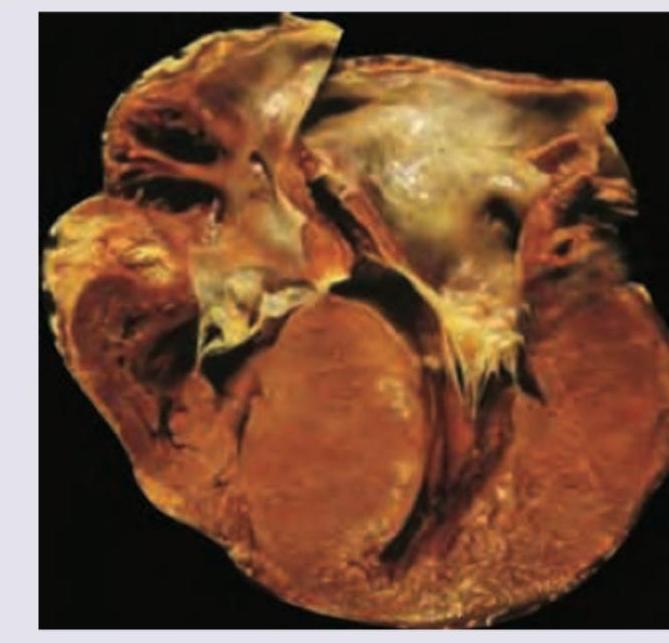
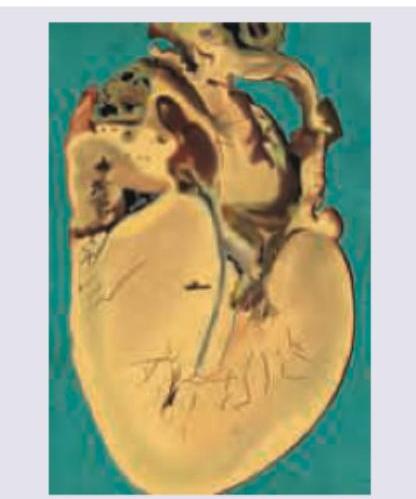
Explanation: **Explanation:** **Hemopericardium** refers to the accumulation of whole blood in the pericardial cavity. It is a critical clinical condition because rapid accumulation of even a small amount of blood (150–200 mL) can lead to **cardiac tamponade**, where the intrapericardial pressure exceeds the diastolic filling pressure of the heart, resulting in fatal circulatory collapse. **Why "All of the Above" is Correct:** * **Chest Injury (Option A):** Penetrating trauma (e.g., stab wounds) or blunt chest trauma can lacerate the myocardium or coronary vessels, leading to rapid bleeding into the pericardial sac. * **Myocardial Infarction (Option B):** A classic complication of transmural MI is **ventricular free wall rupture**, typically occurring **3 to 7 days** post-infarct when the necrotic myocardium is softest (myomalacia cordis) [2]. This leads to massive hemopericardium. * **Ruptured Aortic Aneurysm (Option C):** A proximal **Type A Aortic Dissection** can retrograde into the pericardial sac [1]. If the aneurysm or dissection ruptures within the pericardial reflection, it causes immediate hemopericardium. **High-Yield NEET-PG Pearls:** 1. **Triad of Cardiac Tamponade (Beck’s Triad):** Hypotension, Jugular Venous Distension (JVD), and Muffled heart sounds. 2. **Pulsus Paradoxus:** A common finding in hemopericardium/tamponade (an exaggerated drop in systolic BP >10 mmHg during inspiration). 3. **Morphology:** Unlike serous pericarditis, hemopericardium involves pure blood [3]. If it is a mix of inflammatory exudate and blood, it is termed "hemorrhagic pericarditis" (commonly seen in Malignancy or TB) [3]. 4. **Post-MI Rupture:** Most common in the left ventricle; risk factors include first-time MI, hypertension, and female gender. **References:** [1] Kumar V, Abbas AK, et al.. Robbins and Cotran Pathologic Basis of Disease. 9th ed. Diseases of Infancy and Childhood, pp. 512-513. [2] Kumar V, Abbas AK, et al.. Robbins and Cotran Pathologic Basis of Disease. 9th ed. The Heart, pp. 556-557. [3] Kumar V, Abbas AK, et al.. Robbins and Cotran Pathologic Basis of Disease. 9th ed. The Heart, pp. 582-583.
Explanation: **Explanation:** **Senile Systemic Amyloidosis (SSA)**, also known as Senile Cardiac Amyloidosis, is a condition typically seen in elderly patients (usually >70 years). It results from the deposition of **wild-type Transthyretin (TTR)** in the myocardium [1]. Transthyretin is a serum protein synthesized in the liver that normally transports thyroxine and retinol [1]. In the elderly, this protein can become unstable, misfold, and deposit as amyloid fibrils, leading to restrictive cardiomyopathy. **Analysis of Incorrect Options:** * **Option B: Atrial Natriuretic Peptide (ANP):** This is associated with **Isolated Atrial Amyloidosis (IAA)**. Unlike SSA, which involves the ventricles and can lead to heart failure, ANP deposition is confined to the atria and is often an incidental finding in the elderly. * **Option C: Beta 2 microglobulin:** This protein is associated with **Dialysis-related amyloidosis** [1]. It typically deposits in joints, tendon sheaths (causing Carpal Tunnel Syndrome), and bones in patients on long-term hemodialysis [1]. * **Option D: Gelsolin:** This is associated with **Familial Amyloidosis (Finnish type)**, a rare autosomal dominant systemic amyloidosis characterized primarily by corneal lattice dystrophy and cranial neuropathy. **High-Yield Clinical Pearls for NEET-PG:** * **Staining:** All amyloid types show **Apple-green birefringence** under polarized light after **Congo Red** staining [2]. * **TTR Mutations:** While *wild-type* TTR causes Senile Amyloidosis, *mutated* TTR causes **Familial Amyloid Polyneuropathy/Cardiomyopathy** [1]. * **AL Amyloidosis:** The most common systemic amyloidosis, involving **Immunoglobulin Light Chains**, often associated with Multiple Myeloma. * **AA Amyloidosis:** Associated with chronic inflammation (e.g., RA, TB, Osteomyelitis) involving **Serum Amyloid S** protein. **References:** [1] Kumar V, Abbas AK, et al.. Robbins and Cotran Pathologic Basis of Disease. 9th ed. Diseases of the Immune System, p. 266. [2] Kumar V, Abbas AK, et al.. Robbins and Cotran Pathologic Basis of Disease. 9th ed. The Heart, pp. 580-581.
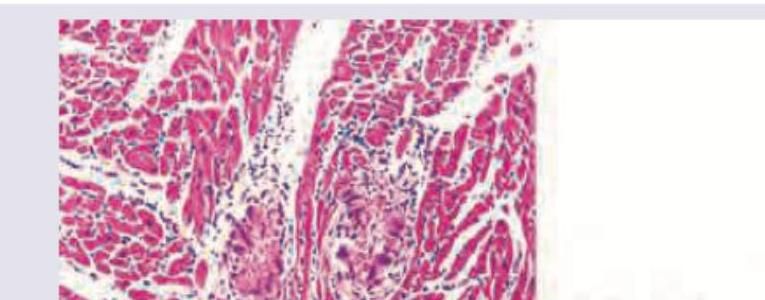
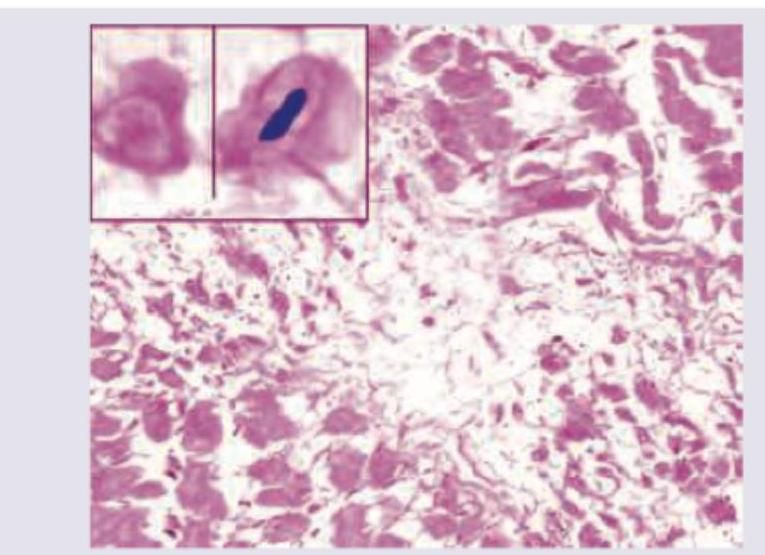
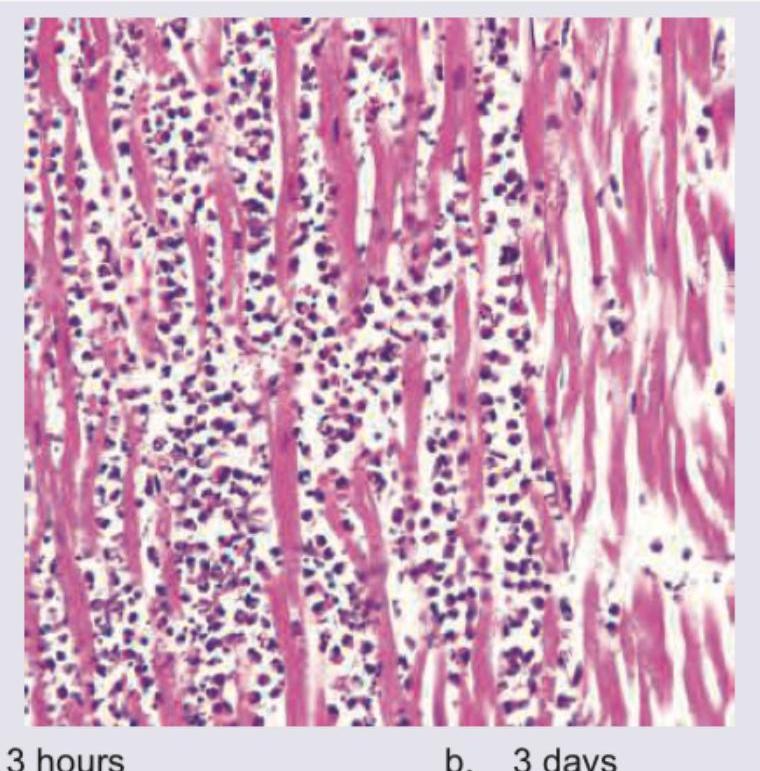
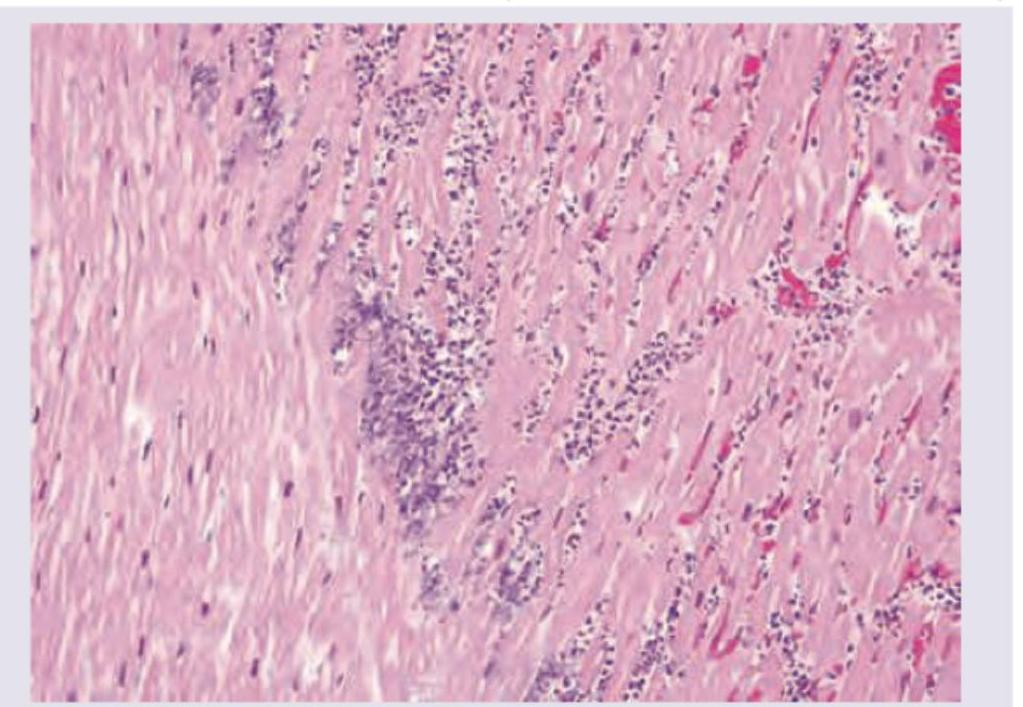
Explanation: **Explanation:** The histological evolution of a myocardial infarction (MI) follows a predictable chronological sequence based on the inflammatory response to coagulative necrosis [3]. **Why Neutrophils are Correct:** Between **24 to 48 hours** post-MI, the predominant inflammatory cell type is the **neutrophil** [2],[3]. Following the initial phase of wavy fibers and early coagulative necrosis (4–12 hours), neutrophils are recruited to the site of injury by chemotactic factors released from necrotic myocytes. Their primary role is to begin the process of enzymatic digestion of the dead tissue. Neutrophilic infiltration typically peaks around day 2 to 3 [3]. **Analysis of Incorrect Options:** * **Macrophages (A) & Monocytes (D):** These cells become the predominant cell type between **3 to 7 days** post-MI [3]. They replace neutrophils to phagocytose the necrotic debris and apoptotic neutrophils, clearing the way for repair. * **Fibroblasts (C):** These are involved in the late stage of healing (repair). They appear during the **granulation tissue phase (1 to 3 weeks)** to deposit collagen, eventually leading to the formation of a dense collagenous scar (after 2 months). **NEET-PG High-Yield Pearls:** * **0–4 hours:** No gross or light microscopic changes. * **4–12 hours:** Early coagulative necrosis, edema, and **wavy fibers** [3]. * **1–3 days:** Dense neutrophilic infiltrate and loss of nuclei (pyknosis/karyolysis) [3]. * **3–7 days:** Macrophage infiltration; this is the period of maximum tissue softening, making it the most common time for **ventricular wall rupture** [1],[3]. * **10 days:** Maximum prominence of granulation tissue. **References:** [1] Kumar V, Abbas AK, et al.. Robbins and Cotran Pathologic Basis of Disease. 9th ed. The Heart, pp. 552-554. [2] Kumar V, Abbas AK, et al.. Robbins and Cotran Pathologic Basis of Disease. 9th ed. Inflammation and Repair, p. 89. [3] Kumar V, Abbas AK, et al.. Robbins and Cotran Pathologic Basis of Disease. 9th ed. The Heart, p. 552.
Explanation: **Explanation:** The hallmark of **Acute Infective Endocarditis (AIE)** is the presence of large, friable, and **destructive** vegetations [1], [2]. Unlike other forms of endocarditis, AIE is typically caused by highly virulent organisms like *Staphylococcus aureus* [3]. These pathogens produce potent toxins and enzymes that lead to rapid tissue necrosis, resulting in the actual **destruction (perforation or erosion)** of the valve leaflets [1] or chordae tendineae [2]. This often leads to acute valvular regurgitation and heart failure. **Why other options are incorrect:** * **Libman-Sacks Endocarditis:** Associated with SLE, these are small, sterile, "mulberry-like" vegetations found on both sides of the valves [2]. While they cause inflammation and scarring, they are **non-destructive** to the underlying valve tissue. * **Rheumatic Heart Disease (RHD):** In the acute phase, RHD presents with small, sterile verrucae along the lines of closure [2]. The pathology is characterized by inflammation and subsequent **fibrosis/scarring** (leading to stenosis), rather than acute destruction or perforation of the valve. **High-Yield NEET-PG Pearls:** 1. **Most common valve involved:** Mitral valve (except in IV drug users, where the **Tricuspid valve** is most common). 2. **Most common organism (AIE):** *Staphylococcus aureus* (attacks previously normal valves) [3]. 3. **Most common organism (Subacute IE):** *Viridans streptococci* (attacks previously damaged valves) [3]. 4. **Culture-negative Endocarditis:** Most commonly due to *HACEK* group or *Coxiella burnetii*. 5. **Microscopic hallmark of RHD:** Aschoff bodies containing Anitschkow cells ("caterpillar cells"). **References:** [1] Cross SS. Underwood's Pathology: A Clinical Approach. 6th ed. Common Clinical Problems From Cardiovascular Disease, pp. 295-296. [2] Kumar V, Abbas AK, et al.. Robbins and Cotran Pathologic Basis of Disease. 9th ed. The Heart, p. 568. [3] Kumar V, Abbas AK, et al.. Robbins and Cotran Pathologic Basis of Disease. 9th ed. The Heart, pp. 567-568.
Explanation: ### Explanation **Correct Option: C. Trousseau syndrome** The clinical presentation describes **Non-Bacterial Thrombotic Endocarditis (NBTE)**, also known as marantic endocarditis. NBTE is characterized by small, sterile, bland fibrin and platelet thrombi (vegetations) along the lines of closure of cardiac valves (most commonly the mitral valve). The pathogenesis of NBTE is rooted in a **hypercoagulable state**, often associated with advanced malignancies (especially mucinous adenocarcinomas) or chronic wasting diseases. **Trousseau syndrome** (migratory thrombophlebitis) shares the exact same underlying pathogenesis: the release of procoagulants (like mucin or tissue factor) from tumor cells, leading to systemic activation of the coagulation cascade and thrombus formation [1], [2]. **Analysis of Incorrect Options:** * **A. Hypercalcemia of malignancy:** While common in cancer (due to PTHrP or bone metastases), it leads to metastatic calcification, not sterile fibrin vegetations. * **B. Distant metastases:** NBTE is a paraneoplastic phenomenon, not a direct result of tumor seeding on the endocardium. * **D. Raynaud's phenomenon:** This is a vasospastic disorder of digital arteries and is unrelated to the systemic hypercoagulability seen in malignancy. **High-Yield Pearls for NEET-PG:** * **NBTE vs. Rheumatic Fever:** Both occur at the lines of closure, but NBTE vegetations are larger and occur in the setting of cachexia/cancer. * **NBTE vs. Libman-Sacks (SLE):** Libman-Sacks vegetations occur on *both* sides of the valve leaflets [1]. * **Clinical Risk:** The primary danger of NBTE is **systemic embolization** (e.g., stroke or myocardial infarction), as the vegetations are friable and easily detached [3]. * **Most common association:** Adenocarcinoma of the pancreas or lung. **References:** [1] Kumar V, Abbas AK, et al.. Robbins and Cotran Pathologic Basis of Disease. 9th ed. The Heart, p. 570. [2] Kumar V, Abbas AK, et al.. Robbins and Cotran Pathologic Basis of Disease. 9th ed. Diseases of Infancy and Childhood, pp. 522-523. [3] Kumar V, Abbas AK, et al.. Robbins and Cotran Pathologic Basis of Disease. 9th ed. Hemodynamic Disorders, Thromboembolic Disease, and Shock, pp. 135-136.
Explanation: **Explanation:** The term **"Cardiac Polyp"** is a classic pathological descriptor for an **organized fibrinous clot** (thrombus) that is attached to the endocardial lining of the heart chambers [2]. These are typically mural thrombi that have undergone a process of organization, where the fibrin meshwork is replaced by granulation tissue and eventually fibrous connective tissue. They often appear pedunculated or polypoid, mimicking a tumor, which is why the term "polyp" is used. **Analysis of Options:** * **Option D (Correct):** A cardiac polyp is histologically a thrombus. It occurs most commonly in the atria (associated with mitral stenosis/atrial fibrillation) [2] or the ventricles (post-myocardial infarction) [1]. * **Option A (Acute Infarct):** An acute infarct refers to coagulative necrosis of the myocardium due to ischemia. While an infarct can *lead* to the formation of a mural thrombus (cardiac polyp) due to endocardial injury, the infarct itself is not the polyp. * **Option B (Cardiac Aneurysm):** This is a localized dilation of the ventricular wall, usually a late complication of a transmural MI. While thrombi often form *inside* an aneurysm, the aneurysm refers to the wall deformity, not the clot. * **Option C (Benign Tumor):** While a **Cardiac Myxoma** is the most common benign primary tumor of the heart and often appears polypoid, the specific historical pathological term "cardiac polyp" refers specifically to an organized clot, not a true neoplasm. **High-Yield Pearls for NEET-PG:** * **Most common site:** Left atrium (especially the auricle). * **Ball-valve thrombus:** A specific type of cardiac polyp that is mobile and can intermittently occlude the mitral valve orifice, mimicking the clinical presentation of a myxoma (postural dyspnea and "tumor plop"). * **Lines of Zahn:** Microscopic feature of these thrombi, consisting of alternating layers of platelets/fibrin (pale) and RBCs (dark), indicating formation in flowing blood. **References:** [1] Kumar V, Abbas AK, et al.. Robbins and Cotran Pathologic Basis of Disease. 9th ed. The Heart, p. 576. [2] Cross SS. Underwood's Pathology: A Clinical Approach. 6th ed. (Basic Pathology) introduces the student to key general principles of pathology, both as a medical science and as a clinical activity with a vital role in patient care. Part 2 (Disease Mechanisms) provides fundamental knowledge about the cellular and molecular processes involved in diseases, providing the rationale for their treatment. Part 3 (Systematic Pathology) deals in detail with specific diseases, with emphasis on the clinically important aspects., pp. 145-146.
Explanation: **Explanation:** The question describes the natural progression of myocardial healing following an acute myocardial infarction (MI). Myocardial tissue is composed of permanent cells that cannot regenerate; therefore, healing occurs exclusively through **repair by fibrosis (scarring)** [1, 2]. **1. Why Option B is Correct:** By **4 weeks (1 month)** post-MI, the healing process is nearing completion. The initial granulation tissue is replaced by dense, **collagen-rich scar tissue** [1]. This fibrous tissue provides structural integrity to the ventricular wall but lacks contractile properties. On gross examination, this appears as a firm, grey-white area. **2. Why the Other Options are Incorrect:** * **Option A (Granulation tissue):** This is characteristic of the **1 to 2-week** period post-MI [1]. It consists of newly formed capillaries, fibroblasts, and chronic inflammatory cells (macrophages). By 4 weeks, this is replaced by mature collagen. * **Option C (Granulomatous inflammation):** This is a specialized form of chronic inflammation (seen in TB or Sarcoidosis) and is not a feature of the sterile ischemic necrosis found in MI. * **Option D (Neutrophils and necrotic debris):** This represents the **acute phase (24–72 hours)** [1, 2]. Neutrophils are the first responders to coagulative necrosis, peaking around day 2–3. **NEET-PG High-Yield Pearls (Timeline of MI):** * **0–24 hours:** Coagulative necrosis, wavy fibers, and contraction bands [2]. * **1–3 days:** Peak neutrophilic infiltration (Risk of fibrinous pericarditis) [2]. * **3–7 days:** Macrophage infiltration (Peak risk of **ventricular wall rupture** due to tissue softening) [1, 2]. * **1–2 weeks:** Granulation tissue formation. * **>2 months:** Completed dense collagenous scar. **References:** [1] Kumar V, Abbas AK, et al.. Robbins and Cotran Pathologic Basis of Disease. 9th ed. The Heart, pp. 552-554. [2] Kumar V, Abbas AK, et al.. Robbins and Cotran Pathologic Basis of Disease. 9th ed. The Heart, p. 552.
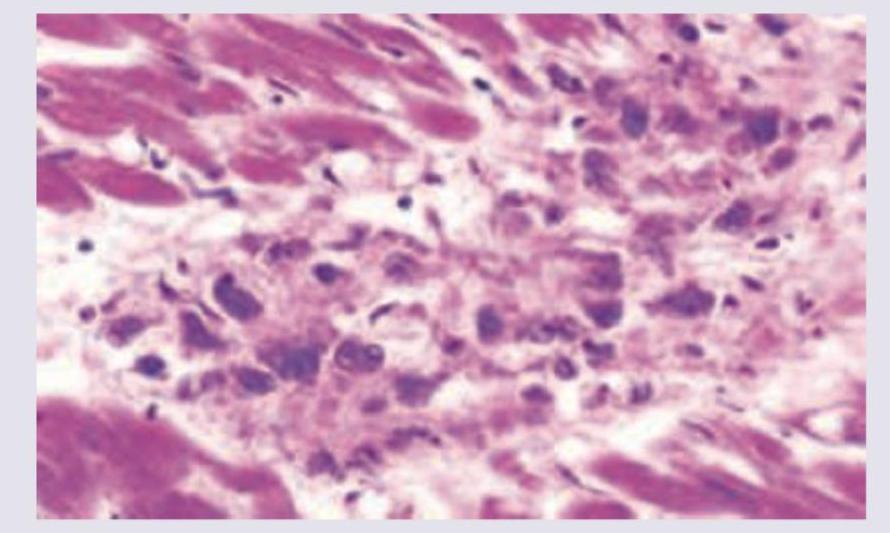
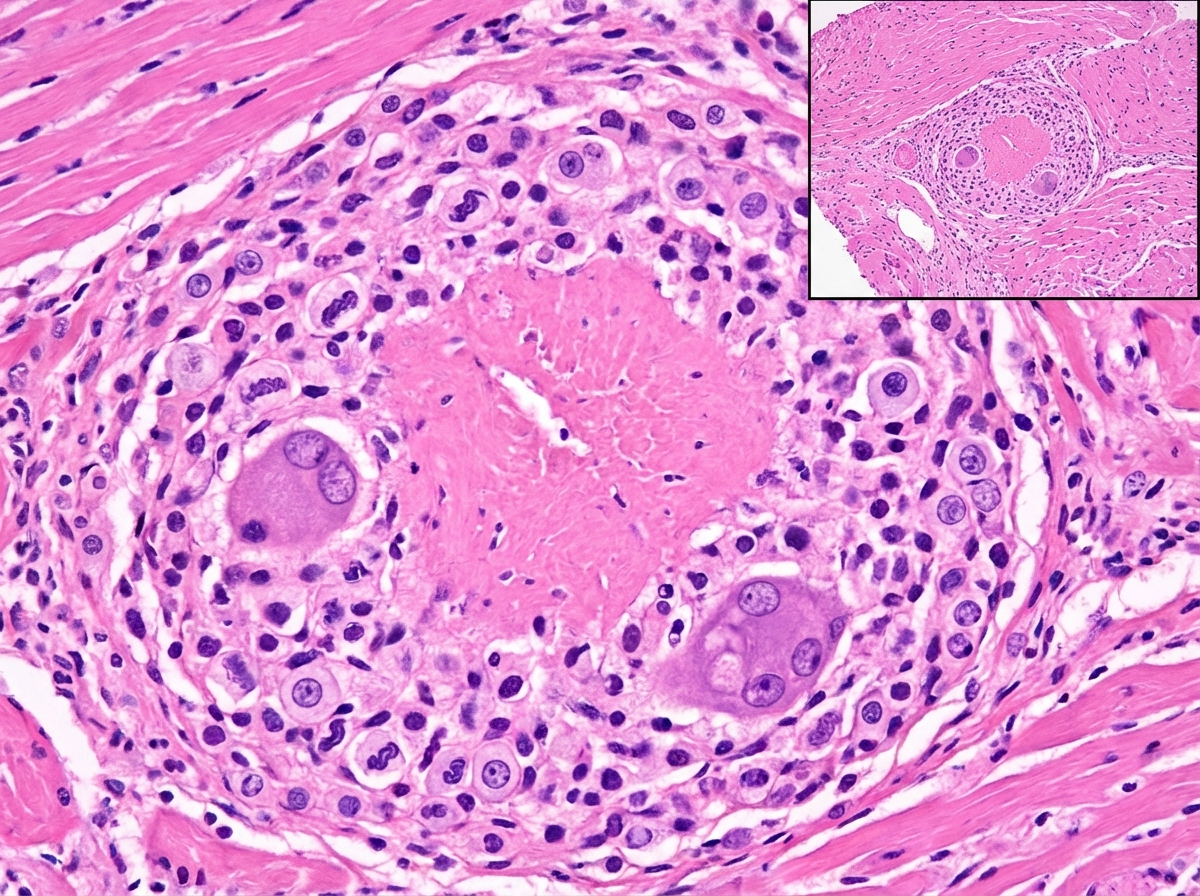
Explanation: **Explanation:** **Aschoff’s nodules** are the pathognomonic (diagnostic) histological hallmark of **Acute Rheumatic Fever (ARF)** [1]. These are areas of focal interstitial inflammation consisting of fragmented collagen, fibrinoid material, and a characteristic cellular infiltrate [2]. The most specific component within these nodules is the **Anitschkow cell** (caterpillar cell)—an enlarged macrophage with a central ribbon-like chromatin pattern [1]. When these cells become multinucleated, they are known as **Aschoff giant cells** [1]. **Analysis of Incorrect Options:** * **A & B (Pericarditis & Myocarditis):** While ARF typically causes **pancarditis** (inflammation of all three layers: endo-, myo-, and pericardium), these findings are not unique to ARF [1]. They can occur in viral infections, uremia, or systemic lupus erythematosus (SLE) [2]. * **C (Mitral Stenosis):** This is a feature of **Chronic Rheumatic Heart Disease**, not the acute phase [1]. It results from years of fibrotic healing, commissural fusion, and calcification (the "fish-mouth" or "buttonhole" deformity) [1]. **High-Yield Clinical Pearls for NEET-PG:** * **Jones Criteria:** Used for clinical diagnosis (Major: Joint/Polyarthritis, Carditis, Nodules/Subcutaneous, Erythema marginatum, Sydenham chorea). * **MacCallum Patch:** A map-like area of subendocardial thickening, usually in the left atrium, caused by regurgitant jets in ARF. * **Molecular Mimicry:** ARF is a Type II hypersensitivity reaction where antibodies against Group A Streptococcal M-proteins cross-react with cardiac self-antigens [1]. * **Valvular involvement:** Mitral valve is most common, followed by the Aortic valve [1]. Isolated right-sided valve involvement is rare. **References:** [1] Kumar V, Abbas AK, et al.. Robbins and Cotran Pathologic Basis of Disease. 9th ed. The Heart, pp. 566-567. [2] Kumar V, Abbas AK, et al.. Robbins and Cotran Pathologic Basis of Disease. 9th ed. The Heart, pp. 581-582.
Explanation: **Explanation:** **Heart failure cells** are **hemosiderin-laden alveolar macrophages**. They are a classic histopathological hallmark of **chronic passive congestion of the lungs**, most commonly caused by **Left-Sided Heart Failure**. **Why Macrophages are the correct answer:** In left-sided heart failure, the left ventricle cannot pump blood efficiently, leading to increased pressure in the pulmonary capillaries. This high pressure causes red blood cells (RBCs) to leak out of the capillaries into the alveolar spaces (micro-hemorrhages). Alveolar macrophages then phagocytose these RBCs. Inside the macrophage, the hemoglobin is broken down into **hemosiderin**, a golden-brown pigment. These pigment-filled macrophages are termed "heart failure cells." **Analysis of Incorrect Options:** * **A. Neutrophils:** These are markers of acute inflammation (e.g., bacterial pneumonia). While they may be present in acute lung injury, they do not phagocytose RBCs to form hemosiderin. * **C & D. Lymphocytes:** These are mononuclear cells involved in chronic inflammation and viral infections. They lack the phagocytic capacity to ingest large amounts of RBCs and convert them into hemosiderin. **Clinical Pearls for NEET-PG:** * **Stain:** Heart failure cells are best visualized using the **Prussian Blue stain (Perl’s reaction)**, which stains the iron in hemosiderin a deep blue color. * **Gross Appearance:** Chronic congestion leads to a condition called **"Brown Induration"** of the lungs, characterized by fibrosis and heavy hemosiderin deposition. * **Clinical Correlation:** Their presence in sputum or bronchoalveolar lavage (BAL) fluid can be a diagnostic clue for occult heart failure or pulmonary hemorrhage.
Explanation: **Explanation:** **Cardiac Myxoma** is the most common primary tumor of the heart in adults, with approximately 75–80% occurring in the **left atrium** [1][2] (usually attached to the interatrial septum at the fossa ovalis) [1]. **Why "Markedly enlarged left atrium" is the correct (except) answer:** While a left atrial myxoma can cause a "ball-valve" obstruction of the mitral orifice (mimicking mitral stenosis) [1], it rarely leads to **marked** enlargement of the left atrium. This is because the tumor is often diagnosed relatively early due to systemic symptoms or embolic events before the chronic pressure changes required for massive atrial remodeling can occur. In contrast, chronic rheumatic mitral stenosis typically causes much more significant atrial dilatation. **Analysis of other options:** * **Raised ESR & Pyrexia (Options A & B):** Myxomas are biologically active tumors that secrete **Interleukin-6 (IL-6)**, a pro-inflammatory cytokine. This leads to constitutional "constitutional symptoms" including fever (pyrexia), weight loss, and elevated acute-phase reactants like ESR and CRP. * **Systemic Embolism (Option D):** Myxomas are often friable or have villous surfaces [1]. Fragments of the tumor or overlying thrombi can easily break off and enter the systemic circulation [2], leading to strokes or peripheral infarction. **High-Yield Clinical Pearls for NEET-PG:** * **Auscultation:** Characterized by a **"Tumor Plop"** (a low-pitched sound heard during early or mid-diastole as the tumor drops into the mitral valve). * **Carney Complex:** An autosomal dominant syndrome (PRKAR1A mutation) featuring atrial myxomas, skin pigmentation (lentigines), and endocrine overactivity. * **Diagnosis:** Echocardiography is the gold standard for initial visualization. * **Histology:** Features "Stellate cells" (myxoma cells) embedded in a loose mucopolysaccharide stroma [1]. **References:** [1] Kumar V, Abbas AK, et al.. Robbins and Cotran Pathologic Basis of Disease. 9th ed. The Heart, pp. 583-584. [2] Cross SS. Underwood's Pathology: A Clinical Approach. 6th ed. Common Clinical Problems From Cardiovascular Disease, pp. 304-306.
Congenital Heart Disease
Practice Questions
Ischemic Heart Disease
Practice Questions
Hypertensive Heart Disease
Practice Questions
Valvular Heart Disease
Practice Questions
Myocarditis and Cardiomyopathies
Practice Questions
Pericardial Disease
Practice Questions
Cardiac Tumors
Practice Questions
Heart Failure Pathophysiology
Practice Questions
Cardiac Transplantation Pathology
Practice Questions
Endocarditis
Practice Questions
Get full access to all questions, explanations, and performance tracking.
Start For Free