All of the following are seen in Coarctation of the Aorta, except?
Ground glass appearance of the ventricular septum is seen in which of the following conditions?
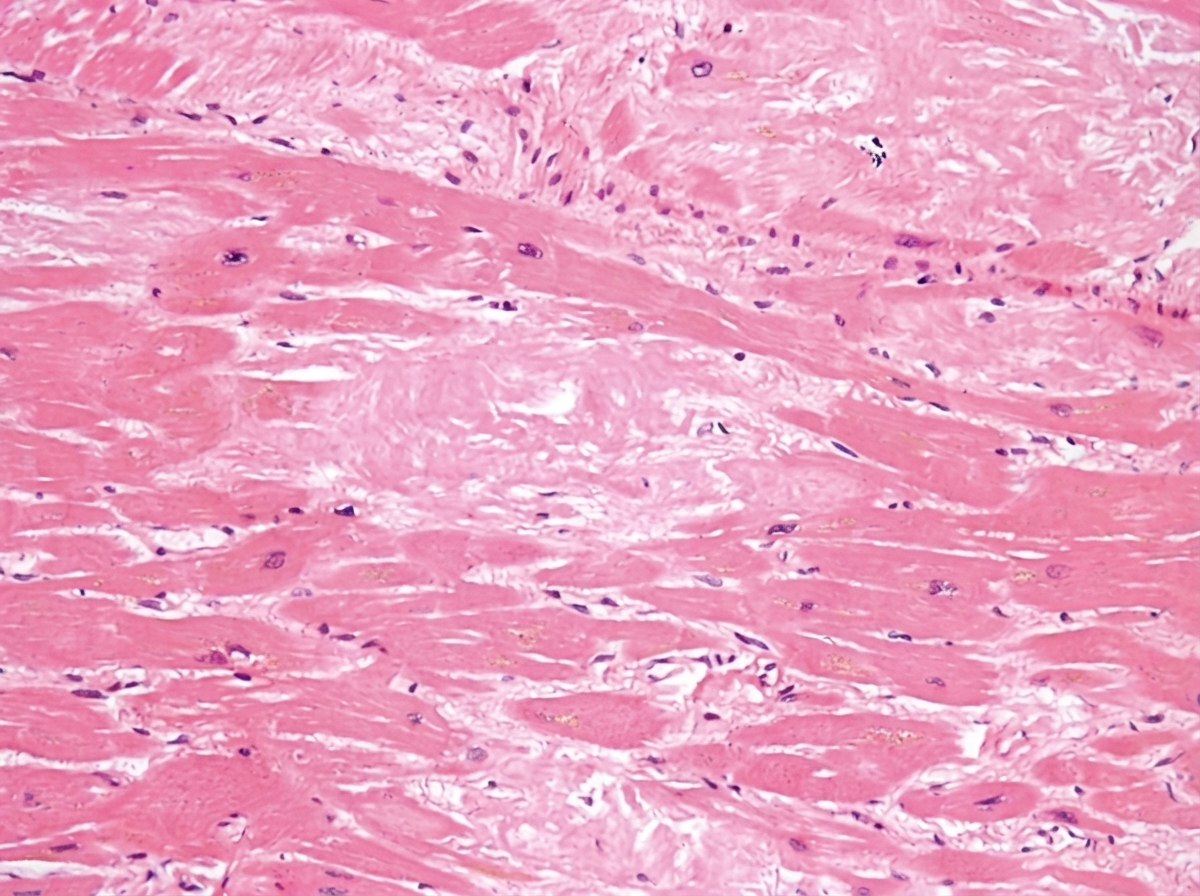
Which of the following statements is NOT true regarding the specimen shown?

Osler's nodes are seen in which of the following conditions?
Antischkow cells are seen in all conditions EXCEPT:
Which carcinoma metastasizes to the heart?
What type of exudate is characteristic of rheumatic fever?
A young female presents with verrucous vegetations on the surface of mitral valve cusps. What is the most likely diagnosis?
Aschoff's bodies are seen in which of the following conditions?
What are Aschoff cells?
Explanation: **Explanation:** **Coarctation of the Aorta (CoA)** is a congenital narrowing of the aortic lumen [1], most commonly occurring distal to the origin of the left subclavian artery (juxtaductal) [1]. **Why "Boot-shaped heart" is the correct answer:** The **"Boot-shaped heart" (Coeur en sabot)** is the classic radiological hallmark of **Tetralogy of Fallot (TOF)**, not Coarctation [2]. In TOF, the "toe" of the boot is formed by right ventricular hypertrophy (RVH) displacing the apex upward, combined with a narrow mediastinum due to pulmonary hypoplasia [2]. In contrast, CoA primarily affects the left side of the heart. **Analysis of Incorrect Options:** * **Diminution of femoral pulsations:** This is a classic clinical sign of CoA. The narrowing creates a pressure gradient, leading to hypertension in the upper extremities and hypotension/weak pulses in the lower extremities (radio-femoral delay). * **High incidence of Bicuspid Aortic Valve (BAV):** This is the most common associated cardiac anomaly, seen in approximately **50-70%** of patients with CoA [1]. * **Left Ventricular Hypertrophy (LVH):** Because the heart must pump against the high resistance of the narrowed aorta (increased afterload), the left ventricle undergoes compensatory concentric hypertrophy [3]. **High-Yield Clinical Pearls for NEET-PG:** 1. **Rib Notching:** Seen on X-ray due to pressure erosion of the lower borders of ribs by dilated intercostal collateral arteries. 2. **3-Sign:** Seen on X-ray/Barium swallow; the "3" is formed by pre-stenotic dilation, the coarctation, and post-stenotic dilation. 3. **Turner Syndrome:** Approximately 15-20% of patients with Turner Syndrome (45,XO) have Coarctation of the Aorta. 4. **Berry Aneurysms:** CoA is associated with an increased risk of intracranial berry aneurysms and subarachnoid hemorrhage. **References:** [1] Cross SS. Underwood's Pathology: A Clinical Approach. 6th ed. Common Clinical Problems From Cardiovascular Disease, pp. 300-301. [2] Kumar V, Abbas AK, et al.. Robbins and Cotran Pathologic Basis of Disease. 9th ed. The Heart, pp. 543-544. [3] Kumar V, Abbas AK, et al.. Robbins and Cotran Pathologic Basis of Disease. 9th ed. The Heart, pp. 541-542.
Explanation: **Explanation:** **Hypertrophic Obstructive Cardiomyopathy (HOCM)** is the correct answer. The "ground glass appearance" refers to the macroscopic (gross) look of the interventricular septum (IVS) due to massive, asymmetrical hypertrophy [1]. This appearance is caused by the dense, disorganized arrangement of hypertrophied myocytes and compensatory interstitial fibrosis [1]. On a cellular level, this corresponds to **myocyte disarray**, where muscle fibers lose their parallel alignment and are arranged in whorls or pinwheel patterns [1]. **Analysis of Incorrect Options:** * **Tetralogy of Fallot (TOF):** Characterized by a ventricular septal defect (VSD), overriding aorta, pulmonary stenosis, and right ventricular hypertrophy. The septum is not typically described as "ground glass"; rather, it is incomplete due to the VSD. * **Transposition of the Great Arteries (TGA):** This is a cyanotic congenital heart disease involving ventriculoarterial discordance. While the ventricles may hypertrophy due to pressure changes, the specific "ground glass" septal morphology is absent. * **Congestive Heart Failure (CHF):** This is a clinical syndrome resulting from various etiologies (like Dilated Cardiomyopathy). In DCM, the heart chambers are dilated and the walls are often thinned out, rather than showing the massive septal thickening seen in HOCM [3]. **High-Yield Clinical Pearls for NEET-PG:** * **Genetics:** HOCM is most commonly caused by mutations in genes encoding sarcomeric proteins, specifically the **Beta-myosin heavy chain** (most common) and **Myosin-binding protein C** [2]. * **Histology:** The hallmark is **myocyte disarray** and replacement fibrosis [1]. * **Clinical:** It is the leading cause of **Sudden Cardiac Death (SCD)** in young athletes [2]. * **Murmur:** An ejection systolic murmur that **increases** with Valsalva or standing (decreased preload) and **decreases** with squatting (increased preload). **References:** [1] Kumar V, Abbas AK, et al.. Robbins and Cotran Pathologic Basis of Disease. 9th ed. The Heart, pp. 576-578. [2] Cross SS. Underwood's Pathology: A Clinical Approach. 6th ed. Common Clinical Problems From Cardiovascular Disease, pp. 303-304. [3] Kumar V, Abbas AK, et al.. Robbins and Cotran Pathologic Basis of Disease. 9th ed. The Heart, pp. 572-574.
Explanation: ***Diamond-shaped cavity of left ventricle*** - In **hypertrophic cardiomyopathy (HCM)**, the left ventricular cavity appears **banana-shaped** or **slit-like**, not diamond-shaped, due to asymmetric septal hypertrophy. - The **thickened interventricular septum** encroaches into the LV cavity, creating a characteristic crescent or banana-like appearance. *Septal hypertrophy* - **Asymmetric septal hypertrophy** is the hallmark feature of HCM, with septal thickness typically >15mm or septal-to-posterior wall ratio >1.3. - This hypertrophy is usually **disproportionate** compared to other cardiac walls and occurs without obvious cause. *Left ventricular outflow tract obstruction* - **LVOTO** occurs in approximately 70% of HCM cases due to **systolic anterior motion (SAM)** of the mitral valve. - The hypertrophied septum and abnormal mitral valve movement create **dynamic obstruction** that worsens with decreased preload or increased contractility. *Diastolic dysfunction* - **Impaired relaxation** and **reduced compliance** are cardinal features of HCM due to myocardial hypertrophy and fibrosis. - Patients typically present with **exertional dyspnea** and **fatigue** secondary to elevated filling pressures despite preserved systolic function.
Explanation: **Explanation:** **Osler’s nodes** are painful, erythematous, pea-sized nodules typically found on the pads of the fingers and toes. Pathologically, they represent **immune complex deposition** (Type III hypersensitivity) leading to focal vasculitis [1]. **Why Rheumatic Carditis is the Correct Answer:** While Osler’s nodes are classically associated with Infective Endocarditis (IE), in the context of this specific question and standard NEET-PG patterns, they are also recognized as a rare peripheral manifestation of **Acute Rheumatic Fever (ARF)**. In ARF, they occur due to the systemic inflammatory response and vasculitis associated with the disease. *Note: In most clinical scenarios, Osler’s nodes are the hallmark of Subacute Bacterial Endocarditis. However, if the examiner marks Rheumatic Carditis as correct, it refers to the shared immunologic mechanism of vasculitis seen in both conditions.* **Analysis of Incorrect Options:** * **Subacute Bacterial Endocarditis (SBE):** Classically, Osler’s nodes are a major peripheral sign of SBE [1]. If this were a "multiple correct" style or if SBE is not the intended answer, it is usually because the question focuses on the broader inflammatory spectrum of Rheumatic Heart Disease [2]. * **Libman-Sacks Endocarditis:** Associated with SLE. It features small, sterile vegetations on both sides of the valves [2]. Peripheral stigmata like Osler’s nodes are absent. * **Non-bacterial Thrombotic Endocarditis (NBTE):** Seen in wasting diseases (Marantic endocarditis). These are sterile, bland thrombi without the immunologic or embolic phenomena required to produce Osler’s nodes [2]. **High-Yield Clinical Pearls for NEET-PG:** * **Osler’s Nodes:** "O" for **O**uch (Painful) and **O**sler. * **Janeway Lesions:** Non-tender, erythematous macules on palms/soles (Microabscesses/Embolic). * **Roth Spots:** Retinal hemorrhages with pale centers. * **Aschoff Bodies:** Pathognomonic histological feature of Rheumatic Carditis (contains Anitschkow cells/caterpillar cells) [3]. **References:** [1] Cross SS. Underwood's Pathology: A Clinical Approach. 6th ed. Common Clinical Problems From Cardiovascular Disease, pp. 296-297. [2] Kumar V, Abbas AK, et al.. Robbins and Cotran Pathologic Basis of Disease. 9th ed. The Heart, p. 568. [3] Kumar V, Abbas AK, et al.. Robbins and Cotran Pathologic Basis of Disease. 9th ed. The Heart, p. 566.
Explanation: **Explanation:** **Anitschkow cells** (also known as "caterpillar cells") are specialized activated macrophages characterized by an ovoid nucleus and a central ribbon-like chromatin pattern. While classically associated with **Rheumatic Heart Disease (RHD)**, they are not pathognomonic for it and can be seen in various inflammatory and regenerative states. 1. **Why Systemic Sclerosis is the correct answer:** In **Systemic Sclerosis (Scleroderma)**, the primary pathology involves excessive collagen deposition, fibroblast activation, and microvascular damage [1]. While it can cause myocardial fibrosis, Anitschkow cells are typically **absent** . The inflammatory infiltrate in scleroderma is usually lymphocytic rather than the specialized histiocytic response seen in RHD. 2. **Analysis of other options:** * **Rheumatic Fever:** This is the most common association. Anitschkow cells are the hallmark of **Aschoff bodies**, which represent the pathognomonic granulomatous lesion of acute rheumatic carditis. * **Iron Deficiency Anemia:** Interestingly, Anitschkow cells can be found in the hearts of patients with severe, chronic anemia (likely due to hypoxic stress/remodeling). * **Recurrent Aphthous Stomatitis:** These cells have been identified in the inflammatory infiltrate of oral ulcers, demonstrating that they are a general feature of certain types of tissue injury/inflammation beyond the heart. **High-Yield Clinical Pearls for NEET-PG:** * **Aschoff Body Components:** Anitschkow cells (activated macrophages) and **Aschoff cells** (multinucleated giant cells). * **Morphology:** On longitudinal section, they look like "caterpillars"; on cross-section, they look like "owl eyes." * **Location:** Aschoff bodies are most commonly found in the **subendocardium** and **myocardium** (specifically the interventricular septum). * **Macroscopic Sign:** Look for **McCallum’s patch** (roughened endocardium in the left atrium) in chronic RHD. **References:** [1] Kumar V, Abbas AK, et al.. Robbins and Cotran Pathologic Basis of Disease. 9th ed. Diseases of the Immune System, pp. 237-238.
Explanation: **Explanation:** Metastatic tumors of the heart are significantly more common (about 20–40 times) than primary cardiac tumors [1]. While any malignant tumor can spread to the heart, **Carcinoma of the Lung** is the most common source of cardiac metastases due to its high incidence and anatomical proximity [1]. **1. Why Lung Carcinoma is Correct:** The heart is anatomically adjacent to the lungs. Lung cancer spreads to the heart via **direct extension**, lymphatic spread, or hematogenous routes [1]. It most frequently involves the pericardium, often leading to pericardial effusion or tamponade [2], [3]. **2. Analysis of Incorrect Options:** * **Carcinoma of the Breast (Option A):** This is the second most common source of cardiac metastasis [1]. While frequent, it statistically trails behind lung cancer in overall incidence. * **Carcinoma of the Stomach (Option B) & Urinary Bladder (Option D):** These tumors rarely metastasize to the heart. When they do, it is usually via the hematogenous route in the setting of widespread disseminated disease. **3. NEET-PG High-Yield Pearls:** * **Most common primary cardiac tumor (Adults):** Myxoma (usually in the Left Atrium). * **Most common primary cardiac tumor (Children):** Rhabdomyoma (associated with Tuberous Sclerosis). * **Most common tumor of the heart overall:** Metastatic tumors (Lung > Breast > Melanoma > Lymphoma) [1]. * **Highest relative risk:** While lung cancer is the most common in absolute numbers, **Malignant Melanoma** has the highest *propensity* (percentage of cases) to metastasize to the heart [1]. * **Clinical Presentation:** Most cardiac metastases are clinically silent, but the most common sign is a hemorrhagic pericardial effusion [1]. **References:** [1] Kumar V, Abbas AK, et al.. Robbins and Cotran Pathologic Basis of Disease. 9th ed. The Heart, pp. 584-586. [2] Kumar V, Abbas AK, et al.. Robbins and Cotran Pathologic Basis of Disease. 9th ed. The Lung, p. 725. [3] Cross SS. Underwood's Pathology: A Clinical Approach. 6th ed. Common Clinical Problems From Respiratory Tract Disease, pp. 334-335.
Explanation: **Explanation:** **Why Fibrinous is Correct:** Acute Rheumatic Fever (ARF) is characterized by pancarditis (inflammation of all three layers of the heart). The inflammation of the pericardium leads to a **fibrinous or serofibrinous exudate** [1], famously described as a **"Bread and Butter" pericarditis**. This occurs because the intense inflammatory response increases vascular permeability, allowing large plasma proteins like fibrinogen to leak out and deposit as fibrin on the pericardial surfaces [2]. When the visceral and parietal pericardium are pulled apart, the shaggy, irregular appearance resembles buttered bread. **Why Incorrect Options are Wrong:** * **Serous:** This exudate is thin and watery, typical of mild irritations or viral infections (e.g., early viral pericarditis) [1]. While ARF can have a serous component, the defining characteristic is the fibrin deposition. * **Purulent (Suppurative):** This is characterized by pus and neutrophils, typically seen in bacterial infections (e.g., Staphylococcal or Pneumococcal pericarditis). ARF is an immune-mediated non-suppurative inflammatory process [1]. * **Myxomatous:** This refers to the accumulation of mucoid ground substance, characteristic of **Mitral Valve Prolapse (MVP)**, not the acute inflammatory phase of rheumatic fever. **High-Yield NEET-PG Pearls:** * **Aschoff Bodies:** The pathognomonic histological feature of ARF (granulomatous inflammation). * **Anitschkow Cells:** Found within Aschoff bodies; these are modified macrophages with a "caterpillar-like" chromatin nucleus. * **MacCallum Patch:** Subendocardial thickening, usually in the left atrium, due to regurgitant jets. * **Most Common Cause of Death in ARF:** Myocarditis (not the pericarditis). **References:** [1] Kumar V, Abbas AK, et al.. Robbins and Cotran Pathologic Basis of Disease. 9th ed. The Heart, pp. 581-582. [2] Kumar V, Abbas AK, et al.. Robbins and Cotran Pathologic Basis of Disease. 9th ed. Inflammation and Repair, pp. 101-103.
Explanation: ### Explanation The correct answer is **Libman-Sacks Endocarditis (LSE)**. **1. Why Libman-Sacks Endocarditis is correct:** Libman-Sacks endocarditis is the classic cardiac manifestation of **Systemic Lupus Erythematosus (SLE)**, which typically affects young females [3]. The hallmark pathological finding is the presence of small, sterile, **verrucous (wart-like) vegetations** [2]. Crucially, these vegetations can occur on **both sides** of the valve leaflets (surface, undersurface, and chordae tendineae), though they are most common on the mitral valve surface [1][2]. **2. Why the other options are incorrect:** * **Rheumatic Fever:** Vegetations (verrucae) in Acute Rheumatic Fever are typically small and occur strictly along the **lines of closure** of the valve leaflets, not randomly across the surface [1]. * **Marantic Endocarditis (NBTE):** These are small, sterile vegetations usually seen in patients with wasting diseases or underlying malignancy (paraneoplastic). They occur along the lines of closure and are not specifically associated with "young females" unless SLE is specified [1]. * **Infective Endocarditis:** These vegetations are typically **large, friable, and destructive**, often leading to valve perforation [1]. They are composed of bacteria and inflammatory cells, unlike the sterile verrucae of LSE. **3. High-Yield NEET-PG Pearls:** * **Location Trick:** If the question mentions vegetations on **both surfaces** (undersurface/ventricular surface) of the valve, always think **Libman-Sacks** [3]. * **Composition:** LSE vegetations consist of eosinophilic material (fibrin) and hematoxylin bodies (LE bodies). * **Most Common Valve:** Mitral valve (followed by Aortic). * **Clinical Context:** Often asymptomatic but can lead to mitral regurgitation or embolic events. **References:** [1] Kumar V, Abbas AK, et al.. Robbins and Cotran Pathologic Basis of Disease. 9th ed. The Heart, p. 568. [2] Kumar V, Abbas AK, et al.. Robbins and Cotran Pathologic Basis of Disease. 9th ed. The Heart, p. 570. [3] Kumar V, Abbas AK, et al.. Robbins and Cotran Pathologic Basis of Disease. 9th ed. Diseases of the Immune System, pp. 232-233.
Explanation: **Explanation:** **Aschoff bodies** are the pathognomonic histological hallmark of **Acute Rheumatic Fever (ARF)** [1]. They represent areas of focal interstitial inflammation consisting of a central zone of fibrinoid necrosis surrounded by chronic inflammatory cells [1]. **Why Rheumatic Myocarditis is Correct:** Aschoff bodies can be found in any of the three layers of the heart (pericardium, myocardium, or endocardium), a condition known as pancarditis [1]. However, they are most characteristically identified within the **myocardium** (interstitial connective tissue) [1]. Their presence indicates an active phase of rheumatic carditis [1]. **Analysis of Incorrect Options:** * **Rheumatic Arthritis:** While arthritis is a major Jones criterion for ARF, it is characterized by non-specific inflammatory changes and synovial effusions. Aschoff bodies are **not** found in the joints; they are specific to cardiac tissue. * **Bacterial Endocarditis:** This is characterized by "vegetations" consisting of thrombotic debris and organisms [2]. The classic histological finding is acute inflammatory infiltrate (neutrophils) and tissue destruction, not granulomatous Aschoff bodies. * **Marantic Endocarditis (NBTE):** This involves sterile, non-destructive vegetations (fibrin and platelets) typically seen in wasting diseases or hypercoagulable states [2]. It does not involve the granulomatous inflammation seen in ARF [2]. **High-Yield Clinical Pearls for NEET-PG:** 1. **Anitschkow Cells:** Found within Aschoff bodies, these are modified macrophages with "caterpillar-like" nuclei (condensed chromatin) [1]. 2. **McCallum Patch:** A map-like area of subendocardial thickening, usually in the left atrium, caused by regurgitant jets in ARF. 3. **Evolution:** Aschoff bodies evolve through three stages: Exudative (Early) → Proliferative (Intermediate/Granulomatous) → Healed (Fibrotic). 4. **Pancarditis:** ARF is the most common cause of death during the acute phase due to myocarditis leading to heart failure. **References:** [1] Kumar V, Abbas AK, et al.. Robbins and Cotran Pathologic Basis of Disease. 9th ed. The Heart, pp. 566-567. [2] Kumar V, Abbas AK, et al.. Robbins and Cotran Pathologic Basis of Disease. 9th ed. The Heart, p. 568.
Explanation: **Explanation:** **Aschoff bodies** are the pathognomonic histological hallmark of **Acute Rheumatic Carditis** [1, 3]. These are focal areas of interstitial inflammation consisting of fibrinoid necrosis surrounded by a collection of specific inflammatory cells. **Why Monocytes are the correct answer:** Aschoff cells are essentially **activated macrophages** (which are derived from **monocytes**) [1]. They are characterized by abundant cytoplasm and one or more nuclei containing prominent, wavy, ribbon-like chromatin (often described as "caterpillar cells" when the chromatin is longitudinal) [1, 3]. While they are specialized macrophages, in the context of NEET-PG options, they are classified under the mononuclear phagocyte system (Monocytes). **Analysis of Incorrect Options:** * **A. Fibroblasts:** While fibroblasts are present in the later "healing" or "cicatricial" stage of the Aschoff body (leading to collagen deposition and scarring), they are not the defining "Aschoff cells." * **C. Neutrophils:** These are markers of acute bacterial inflammation. Rheumatic fever is an immune-mediated post-streptococcal sequela; thus, neutrophils are not the predominant cell type in these granulomatous lesions [2]. * **D. Lymphocytes:** Although T-lymphocytes and plasma cells are present within the Aschoff body, they do not transform into the characteristic large, multinucleated Aschoff cells [2]. **High-Yield Clinical Pearls for NEET-PG:** * **Anitschkow Cells:** These are the smaller, mononuclear versions of activated macrophages [2]. When they become large and multinucleated, they are called **Aschoff cells**. * **Caterpillar Cells:** Refers to the longitudinal nuclear chromatin pattern of Anitschkow/Aschoff cells [1]. * **Owl-eye appearance:** Refers to the cross-sectional view of the chromatin. * **Location:** Aschoff bodies can be found in all three layers of the heart (**Pancarditis**), but are most commonly found in the myocardium and subendocardium (McCallum’s patch) [2]. **References:** [1] Kumar V, Abbas AK, et al.. Robbins and Cotran Pathologic Basis of Disease. 9th ed. The Heart, pp. 566-567. [2] Kumar V, Abbas AK, et al.. Robbins and Cotran Pathologic Basis of Disease. 9th ed. The Heart, p. 566.
Congenital Heart Disease
Practice Questions
Ischemic Heart Disease
Practice Questions
Hypertensive Heart Disease
Practice Questions
Valvular Heart Disease
Practice Questions
Myocarditis and Cardiomyopathies
Practice Questions
Pericardial Disease
Practice Questions
Cardiac Tumors
Practice Questions
Heart Failure Pathophysiology
Practice Questions
Cardiac Transplantation Pathology
Practice Questions
Endocarditis
Practice Questions
Get full access to all questions, explanations, and performance tracking.
Start For Free