Who invented the Jaipur foot?
The Milwaukee brace is used in the treatment of which of the following conditions?
Taylor's Brace is used for which of the following?
Who invented the Jaipur foot?
Which of the following is NOT true regarding the SACH Foot?
Who invented the Jaipur foot?
Which of the following statements is FALSE about the SACH Foot?
Which prosthesis is shown below in the X-ray?

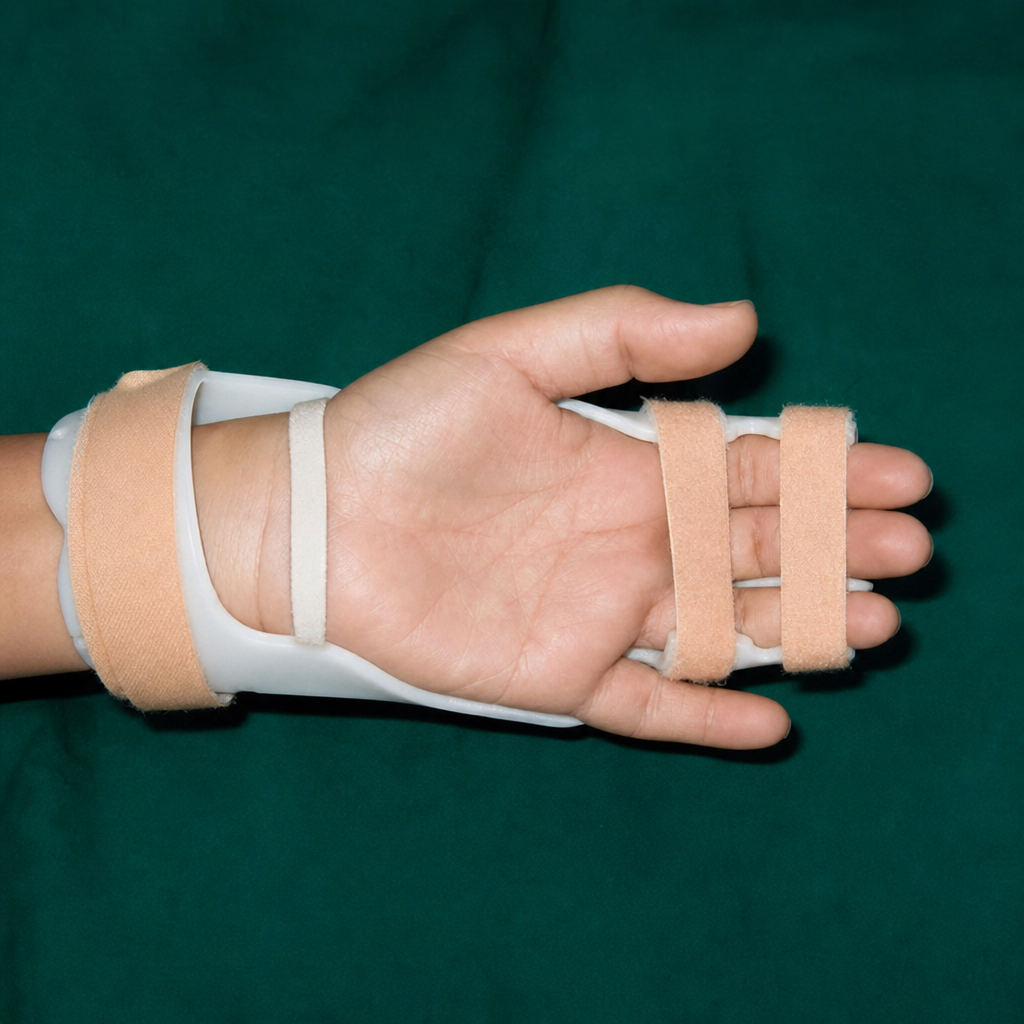
The shown apparatus is used for

All the following are advantages of the Jaipur foot over the conventional prosthetic foot except
Explanation: **Explanation:** The **Jaipur Foot** is a world-renowned prosthetic limb developed in 1968 at the Sawai Man Singh Medical College in Jaipur. **Correct Option: A. P. K. Sethi** Dr. Pramod Karan Sethi, an orthopedic surgeon, is credited with the invention of the Jaipur Foot along with Master Craftsman **Ram Chandra Sharma**. Unlike Western prosthetics (like the SACH foot), which were designed for use with shoes on flat surfaces, the Jaipur Foot was specifically engineered for the Indian lifestyle. It is made of polyurethane and vulcanized rubber, allowing for barefoot walking, squatting, sitting cross-legged, and walking on uneven terrain. Dr. Sethi was awarded the Magsaysay Award and the Padma Shri for this contribution. **Incorrect Options:** * **B. S. K. Verma:** A prominent figure in Indian orthopedics and former director of the Central Institute of Orthopaedics (Safdarjung Hospital), but not the inventor of the Jaipur Foot. * **C. B. L. Sehgal:** Not associated with the primary development of this prosthetic technology. * **D. H. R. Gupta:** While there are many contributors to Indian orthopedics, Dr. Gupta is not the recognized inventor of this specific prosthesis. **High-Yield Clinical Pearls for NEET-PG:** * **Material:** It is a **rubber-based** prosthesis (polyurethane/vulcanized rubber). * **Unique Feature:** It allows **multi-axial movements** at the ankle, facilitating squatting and cross-legged sitting (essential for rural Indian activities). * **Waterproof:** Unlike traditional wooden or leather prosthetics, it is waterproof and durable for agricultural work. * **Comparison:** While the **SACH (Solid Ankle Cushion Heel)** foot is the international standard, the Jaipur Foot is superior for patients requiring high mobility without footwear.
Explanation: **Explanation:** The **Milwaukee brace** (also known as a Cervico-Thoraco-Lumbo-Sacral Orthosis or CTLSO) is a classic active corrective orthosis designed specifically for the non-operative management of **Scoliosis**. **1. Why Scoliosis is Correct:** The brace is used for curves with an apex above T7. It works on the principle of **longitudinal traction** and **lateral pressure**. It consists of a pelvic mold, three upright metal stays (one anterior, two posterior), and a neck ring with a throat mold and occipital pads. This design encourages the patient to pull away from the pads, thereby actively correcting the spinal curvature. It is typically indicated for progressive curves between 25° and 40° (Cobb’s angle) in a skeletally immature child (Risser sign 0-II). **2. Why Other Options are Incorrect:** * **Kyphosis:** While a modified Milwaukee brace can be used for Scheuermann’s kyphosis, it is primarily and classically associated with Scoliosis in medical examinations. For lower thoracic kyphosis, a Boston brace or Taylor’s brace is more common. * **Cubitus varus:** This is a coronal plane deformity of the elbow (Gunstock deformity), usually a late complication of supracondylar fractures. It is treated surgically (e.g., French osteotomy), not with a spinal brace. * **Genu varum:** This refers to "bow legs." Treatment involves observation, Vitamin D (if rachitic), or corrective braces like the **HKAFO** or medial upright orthotics, but never a spinal brace. **High-Yield Clinical Pearls for NEET-PG:** * **Boston Brace:** A TLSO (Thoraco-Lumbo-Sacral Orthosis) used for curves with an apex below T7; it is "low-profile" and lacks the neck ring. * **Charleston Bending Brace:** A nocturnal (night-time) brace used for scoliosis. * **Somerset/SOMI Brace:** Used for cervical spine stabilization. * **Indication Rule:** Bracing is generally indicated when the Cobb’s angle is **25°–40°**. If the angle exceeds **40°–45°**, surgical intervention (e.g., spinal fusion with pedicle screws) is usually required.
Explanation: **Explanation:** **Taylor’s Brace** is a high-yield spinal orthosis in orthopaedics. It is a **thoraco-lumbo-sacral orthosis (TLSO)** designed specifically for **dorsolumbar immobilization**. The brace consists of two vertical posterior bars (paraspinal bars) and a pelvic band. It works on the principle of **three-point pressure**, providing hyperextension to the spine. By limiting flexion and rotation of the thoracolumbar junction, it stabilizes the spine, making it the gold standard for conditions like **Pott’s disease (Spinal TB)** and stable compression fractures of the lower thoracic or upper lumbar vertebrae. **Analysis of Options:** * **A. Cervical immobilization:** This requires a cervical collar (e.g., Philadelphia collar) or a Halo-vest. Taylor’s brace does not extend high enough to stabilize the neck. * **C. Scoliosis:** While some TLSOs are used for scoliosis, the specific brace of choice is usually the **Milwaukee brace** (for high curves) or the **Boston brace** (for lower curves). Taylor’s brace is for immobilization, not for corrective lateral forces. * **D. Fracture femur:** Femur fractures are managed with traction, intramedullary nails, or plates; orthotic management involves a Thomas splint or a Knee-Ankle-Foot Orthosis (KAFO), not a spinal brace. **Clinical Pearls for NEET-PG:** * **Ashman’s/Knight’s Brace:** Used for Lumbo-sacral immobilization (LSO). * **Milwaukee Brace:** A CTLSO used for Scoliosis with an apex above T8. * **Somersault/SOMI Brace:** Used for cervical spine injuries (C4-C5 level). * **Key Component:** Taylor’s brace specifically restricts **flexion and extension** of the dorsolumbar spine.
Explanation: **Explanation:** The **Jaipur Foot** is a globally renowned prosthetic limb specifically designed for the needs of patients in developing countries. It was developed in **1968** through a unique collaboration between **Dr. P.K. Sethi**, an orthopedic surgeon, and **Master Ram Chander Sharma**, a traditional artisan (sculptor). **Why Option A is Correct:** **Dr. P.K. Sethi** is credited as the inventor of the Jaipur Foot. Unlike Western prosthetics of that era, which were rigid and required shoes, the Jaipur Foot was designed using rubber, wood, and aluminum to be waterproof, durable, and flexible. This allowed users to walk barefoot, squat, and work in paddy fields—activities essential for the Indian lifestyle. For this innovation, Dr. Sethi was awarded the Ramon Magsaysay Award. **Why Other Options are Incorrect:** * **S.K. Verma, B.L. Sehgal, and H.R. Gupta:** While these individuals may be associated with Indian orthopedics or medical administration, they were not the primary innovators behind the design or development of the Jaipur Foot. **High-Yield Clinical Pearls for NEET-PG:** * **Material:** It is made of polyurethane (modern versions) or a combination of vulcanized rubber and wood. * **Unique Feature:** It has a **universal joint** mechanism at the ankle, allowing for dorsiflexion, plantarflexion, and inversion/eversion, which is crucial for walking on uneven terrain. * **Social Impact:** It is distributed largely through the NGO **Bhagwan Mahaveer Viklang Sahayata Samiti (BMVSS)**. * **Comparison:** Unlike the SACH (Solid Ankle Cushion Heel) foot, the Jaipur Foot is specifically designed for barefoot walking and squatting.
Explanation: **Explanation:** The **SACH (Solid Ankle Cushion Heel) Foot** is the most commonly used non-articulated prosthetic foot. The correct answer is **Option C** because the SACH foot is rigid and lacks a functional ankle joint, which makes **squatting very difficult** for the user. In the Indian context, where squatting is culturally significant, specialized modifications or different prostheses (like the Jaipur Foot) are preferred. **Analysis of Options:** * **A. It has a solid ankle cushion heel:** This is **true**. The SACH foot consists of a rigid internal wooden or plastic keel surrounded by a molded foam rubber shell. The "cushion heel" compresses at heel strike to simulate plantarflexion. * **B. It is a type of prosthesis:** This is **true**. It is a distal component of a lower limb prosthesis used for transtibial (below-knee) and transfemoral (above-knee) amputees. * **D. It does not look like a normal foot:** This is **true**. While it is shaped like a foot, it is a static, cosmetic block. It lacks the realistic texture, toe movements, and flexibility of a natural foot or more advanced lifelike prosthetics. **High-Yield Clinical Pearls for NEET-PG:** * **Mechanism:** It simulates "pseudo-plantarflexion" through heel compression during the early stance phase. * **Indication:** Best for elderly patients or those with low activity levels due to its high stability and low maintenance. * **Contraindication:** Not ideal for uneven terrain or activities requiring squatting/pivoting. * **Comparison:** Unlike the SACH foot, the **Jaipur Foot** allows for squatting and cross-legged sitting, making it more suitable for the Indian lifestyle.
Explanation: The **Jaipur Foot** is a world-renowned prosthetic limb specifically designed to meet the socio-cultural and geographical needs of patients in developing countries. ### **Explanation of Options** * **A. P. K. Sethi (Correct):** Dr. Pramod Karan Sethi, an orthopaedic surgeon, co-developed the Jaipur Foot in 1968 along with **Master Ram Chander Sharma** (a traditional craftsman). Dr. Sethi was awarded the Magsaysay Award and the Padma Shri for this innovation. The design was revolutionary because it allowed for squatting, sitting cross-legged, and walking on uneven terrain—activities difficult with the Western "SACH" (Solid Ankle Cushion Heel) foot. * **B. S. K. Verma:** Dr. S. K. Verma was a prominent figure in Physical Medicine and Rehabilitation (PMR) in India, but he was not the inventor of the Jaipur Foot. * **C. B. L. Sehgal:** Not associated with the primary invention or development of the Jaipur Foot. * **D. H. R. Gupta:** While there are many contributors to Indian orthopaedics, Dr. Gupta is not credited with the design of this specific prosthesis. ### **High-Yield Clinical Pearls for NEET-PG** * **Material:** The Jaipur Foot is made of **rubber** (outer), **wood** (inner), and **polyurethane**. It is waterproof and does not require shoes. * **Key Feature:** Unlike the SACH foot, the Jaipur Foot allows for **multi-axial mobility** (dorsiflexion, plantarflexion, inversion, and eversion), making it ideal for rural Indian conditions. * **Organization:** It is widely distributed by the NGO **Bhagwan Mahaveer Viklang Sahayata Samiti (BMVSS)**. * **Comparison:** While the **SACH Foot** is the most common prosthetic foot globally, the **Jaipur Foot** is the gold standard for barefoot walking and floor-level activities.
Explanation: **Explanation:** The **SACH Foot (Solid Ankle Cushion Heel)** is the most commonly used non-articulated prosthetic foot. The core concept behind its design is that it provides **pseudo-motion** rather than true anatomical movement. 1. **Why Option A is False (Correct Answer):** The SACH foot is a **non-articulated** prosthesis, meaning it has no mechanical ankle joint. It does **not** allow actual movement (dorsiflexion or plantarflexion) at the ankle. Instead, the soft "cushion heel" compresses at heel strike, simulating plantarflexion to allow the forefoot to reach the ground. Because there is no actual joint, the statement that it "allows easy movement at the ankle" is incorrect. 2. **Why Option B is True:** Since the ankle is a solid internal wooden or plastic keel, there is no mechanism for mediolateral tilt. Therefore, **inversion and eversion are not possible**, making it unsuitable for uneven terrain. 3. **Why Option C is True:** SACH stands for **Solid Ankle Cushion Heel**, which accurately describes its components: a rigid internal keel (Solid Ankle) and a compressible foam heel (Cushion Heel). 4. **Why Option D is True:** The SACH foot is designed to be worn with a shoe (usually with a 3/4 inch heel). Without the shoe, the prosthesis loses its alignment and stability, making **barefoot walking impossible** or highly unstable. **High-Yield Clinical Pearls for NEET-PG:** * **Mechanism:** It absorbs shock at heel strike through heel compression. * **Indication:** Ideal for sedentary patients, children, and those requiring a durable, low-maintenance, and inexpensive prosthesis. * **Contraindication:** Not recommended for active individuals or those walking on uneven surfaces (due to lack of inversion/eversion). * **Comparison:** Unlike the **Madras Foot**, which allows barefoot walking and squatting, the SACH foot is restricted to shod (shoed) walking.
Explanation: ***Austin Moore's prosthesis*** - The image clearly shows a unipolar femoral head prosthesis with a **fenestrated stem** for bony ingrowth, which is characteristic of the Austin Moore design. - This prosthesis is typically used in **hemiarthroplasty** for femoral neck fractures or avascular necrosis, where the acetabulum is preserved. *Thompson prosthesis* - While also a unipolar hemiarthroplasty, the Thompson prosthesis has a **collar** and a **solid stem** without fenestrations, which differentiates it from the one pictured. - It is also primarily used in hip hemiarthroplasty. *Articular resurfacing* - Articular resurfacing involves capping both the femoral head and the acetabulum with metallic implants, preserving more bone than traditional hip replacement. - The X-ray shows a stem extending into the femoral shaft, which is not consistent with **acetabular resurfacing**. *Birmingham hip* - The Birmingham hip is a type of **hip resurfacing arthroplasty**, characterized by a metal cap on the femoral head and a metal cup in the acetabulum. - The prosthesis shown has a **femoral stem**, thus it is not a resurfacing implant like the Birmingham hip.
Explanation: ***Patella tendon bearing brace*** - This orthotic device is designed to **transfer weight-bearing load through the patella tendon**, reducing stress on the lower extremity during ambulation. - It features a **molded cuff** that fits snugly below the patella and distributes weight through the **patellar tendon bearing area**, commonly used in **prosthetic applications** and **below-knee amputees**. *Ankle knee stabilizer* - This device provides **combined support to both ankle and knee joints** simultaneously, typically used for **multi-joint injuries** or instability. - It features **dual bracing systems** with straps and supports extending from ankle to knee, unlike the focused patellar tendon bearing design. *Thomas splint* - A **rigid metal-framed splint** used primarily for **femur fracture stabilization** and maintaining **skeletal traction** in emergency situations. - It consists of a **ring that fits around the upper thigh** with extending metal bars, designed for **fracture immobilization** rather than weight distribution. *Knee brace* - A general **knee joint support device** used for **ligament injuries**, **post-surgical recovery**, or **osteoarthritis management**. - Available in various forms (**sleeve, hinged, or wraparound designs**) but lacks the specific **weight-bearing transfer mechanism** of a patella tendon bearing brace.
Explanation: <b><i>Jaipur foot is electrically operated</i></b> - The Jaipur foot is a **passive prosthetic device** that relies on mechanical design and material properties for function, not electrical power. - Its advantages stem from its **biomechanical design** and **material composition**, allowing for natural movement and cultural suitability. *Appearance of the Jaipur foot is that of normal foot* - This is an **advantage** of the Jaipur foot, as its cosmetic design closely mimics a natural foot, enhancing body image and social acceptance. - Its **cosmetic cover** and lifelike appearance help amputees integrate into daily life without obvious visual differences. *It is suitable for bare foot walking* - This is a significant **advantage** in regions where barefoot walking is common, as its design is robust enough to withstand uneven terrain and provides good traction. - The materials used make it **durable** and adaptable to diverse walking conditions, including unpaved surfaces. *Allows movement at fore foot and midfoot* - This feature is an **advantage** as it provides great flexibility and natural gait pattern, allowing for activities like squatting, sitting cross-legged, and walking on uneven surfaces. - The multi-axial movement at the **ankle and subtalar joint** mimics the natural foot's adaptability, improving stability and comfort.
Explanation: **Just distal to tibial tuberosity** - This level allows for a **short residual limb** but still provides sufficient leverage for effective prosthetic control and weight-bearing. - Amputations at this level generally preserve the **knee joint**, which is crucial for maximizing function and ambulation. *Just proximal to tibial tuberosity* - An amputation **proximal to the tibial tuberosity** would result in a **knee disarticulation** or above-knee amputation, leading to a much greater functional deficit. - This level means losing the **knee joint**, which is not considered a trans-tibial amputation. *15 cm distal to joint line* - This level of amputation would result in a **longer residual limb** than necessary, which can be beneficial, but it's not the *shortest functional* level. - While functional, a longer limb might sometimes present challenges with prosthetic fit or bulk in certain situations. *10 cm distal to joint line* - Similar to 15 cm distal, this length is considered a **standard or optimal length** for trans-tibial amputations, resulting in good function. - However, it is not the **shortest possible functional level** while still retaining an effective limb for prosthetic use.
Explanation: ***Wooden keel absorbs the impact of heel strike*** - This statement is incorrect because SACH feet do not have a **wooden keel** for shock absorption. - Instead, the **cushioned heel** itself absorbs the impact of heel strike. *May wear out with time* - **SACH feet**, like all prosthetic components, are subject to **wear and tear** from repeated use and environmental factors. - The materials used, such as rubber and foam, can degrade over time, necessitating replacement. *'SACH' stands for 'Solid Ankle Cushioned Heel'* - The acronym **SACH** accurately describes the design of this prosthetic foot. - It features a **solid ankle** component and a **cushioned heel** to provide shock absorption during gait. *Forms the base of a lower limb prosthesis* - The **SACH foot** is a fundamental component of many lower limb prostheses, regardless of the amputation level. - It provides the essential interface with the ground, enabling basic ambulation and stability for the user.
Explanation: ***Dr. Pramod Karan Sethi*** - The **Jaipur Foot** was developed in collaboration between **Dr. Pramod Karan Sethi**, an orthopedic surgeon, and Ram Chandra Sharma, a craftsman. - Their innovative design focused on creating a **low-cost, durable, and functional prosthetic limb** that could easily adapt to traditional Indian footwear and lifestyles. *Dr. A. P. J. Abdul Kalam* - **Dr. A. P. J. Abdul Kalam** was a renowned aerospace scientist and former President of India, known for his contributions to missile technology. - His work was primarily in **defense and space research**, not in prosthetic limb development. *Dr. Vikram Sarabhai* - **Dr. Vikram Sarabhai** is widely regarded as the father of the Indian space program. - He was instrumental in establishing the **Indian Space Research Organization (ISRO)** and other scientific institutions. *Dr. B. R. Ambedkar* - **Dr. B. R. Ambedkar** was a prominent social reformer, economist, and the chief architect of the Indian Constitution. - His contributions were primarily in **social justice, law, and politics**, not in medical prosthetics.
Upper Limb Prosthetics
Practice Questions
Lower Limb Prosthetics
Practice Questions
Spinal Orthoses
Practice Questions
Upper Limb Orthoses
Practice Questions
Lower Limb Orthoses
Practice Questions
Assistive Devices for Mobility
Practice Questions
Prosthetic Fitting and Training
Practice Questions
Biomechanics of Prostheses
Practice Questions
Materials in Prosthetics and Orthotics
Practice Questions
Rehabilitation with Prostheses
Practice Questions
Modern Advances in Prosthetics
Practice Questions
Psychosocial Aspects
Practice Questions
Get full access to all questions, explanations, and performance tracking.
Start For Free