What is the most common type of supracondylar fracture in children?
Which of the following deformities is evident in case of Erb's palsy?
A 4-year-old child while playing suddenly had his elbow pulled by his servant maid's hand and is now continuously crying, not allowing anyone to touch his elbow. He is keeping his elbow extended. What is the most likely diagnosis?
A child presented to an orthopaedic clinic with a limp. The surgeon suspected him to have a fixed flexion deformity of the hip. Which test should the surgeon perform to confirm his finding?
Greenstick/ Nightstick fractures are seen in -
Which of the following statements about limb shortening is FALSE?
Who devised the correction of CTEV by serial casting?
What condition is characterized by a waddling gait?
The Salter Harris classification is used for classifying which type of injuries?
4 year old child presented to the clinic with a history of fall on outstretched hand. Radiographs revealed a broken anterior cortex with an intact posterior cortex of the radius with an exaggerated bowing of the radius. The fracture sustained is known as -
Explanation: ***Posteromedial extension*** - The vast majority of supracondylar humerus fractures in children are **extension-type fractures** (about 95-98%), and among these, **posteromedial displacement** is the most common pattern. - This type typically results from a **fall on an outstretched hand** with the elbow extended, causing the distal fragment to displace posteriorly and medially relative to the proximal fragment. *Anteromedial flexion* - **Flexion-type supracondylar fractures** are much less common (2-5%) and involve the distal fragment displacing anteriorly. - While medial displacement can occur with flexion, it's not the predominant type of supracondylar fracture. *Anterolateral flexion* - This describes a **flexion-type fracture** with anterior and lateral displacement of the distal fragment, which is rare. - Flexion fractures themselves are uncommon, and specific lateral displacement patterns are even less frequent. *Posterolateral extension* - While part of the common **extension-type fractures**, **posterolateral displacement** is less common than posteromedial displacement. - In extension fractures, the distal fragment typically displaces either posteromedially or posterolaterally, with posteromedial being seen more frequently.
Explanation: ***Waiter's tip deformity*** - Erb's palsy primarily affects the C5-C6 nerve roots, leading to paralysis of muscles such as the **deltoid**, **biceps**, and **brachialis**. - This results in adduction and internal rotation of the shoulder, extension of the elbow, and pronation of the forearm, mimicking a **waiter expecting a tip**. *Scapular winging* - This condition is typically caused by damage to the **long thoracic nerve**, affecting the **serratus anterior muscle**. - It results in the medial border of the **scapula protruding** from the back, which is distinct from the upper limb paralysis seen in Erb's palsy. *Ulnar claw hand* - This deformity occurs due to damage to the **ulnar nerve**, which paralyzes the **intrinsics of the hand**. - It leads to **hyperextension** of the metacarpophalangeal joints and **flexion** of the interphalangeal joints of the fourth and fifth digits. *Radial wrist drop* - **Radial nerve** injury causes paralysis of the extensors of the wrist and fingers, leading to the characteristic **wrist drop**. - This involves inability to extend the wrist and fingers, contrasting with the proximal upper limb affected in Erb's palsy.
Explanation: ***Pulled elbow*** - This classic presentation involves a sudden pull on the extended arm, causing the **annular ligament** to slip over the **radial head**, characteristic of a pulled elbow (Nursemaid's elbow). - The child holds the arm in a pronated-extended position, refusing to use it due to pain, and cries when the elbow is touched, which aligns with the clinical picture. *Radial head fracture* - While a fracture can occur with trauma, a history of a distinct pulling mechanism and the absence of swelling or deformity make a **pulled elbow** more likely. - A radial head fracture would typically present with more localized pain and potentially **crepitus** or obvious swelling upon examination. *Supracondylar fracture* - This fracture usually results from a fall onto an outstretched hand, a different mechanism than described. - A supracondylar fracture would typically involve significant swelling, **ecchymosis**, and potential neurovascular compromise, which are not mentioned here. *Elbow dislocation* - Elbow dislocations usually result from high-energy trauma and present with obvious deformity and severe pain. - The history of a "pull" and the child holding the arm in an **extended, pronated position** are more consistent with a pulled elbow than a full dislocation.
Explanation: ***Thomas test*** - The **Thomas test** is specifically designed to detect a **fixed flexion deformity of the hip**, where the hip cannot fully extend. - During the test, the patient's hip is flexed to flatten the lumbar spine, and if the contralateral leg then rises off the table, it indicates a fixed flexion deformity. *Trendelenburg's test* - The **Trendelenburg's test** assesses the strength and function of the **hip abductor muscles**, primarily the gluteus medius. - A positive result indicates weakness of the abductors on the standing leg, causing the pelvis to drop on the unsupported side, which is unrelated to fixed flexion deformity. *Nelaton's test* - **Nelaton's test** is used to determine the relative position of the **greater trochanter** in relation to the **ischial tuberosity** and **anterior superior iliac spine (ASIS)**, primarily in cases of hip dislocation or fracture. - It would not specifically identify a fixed flexion deformity of the hip joint itself. *Telescoping test* - The **telescoping test** is used to evaluate for hip instability, particularly in infants with **developmental dysplasia of the hip (DDH)**. - It involves applying axial pressure to the femur while moving the hip, assessing for abnormal movement of the femoral head within the acetabulum, and does not directly detect fixed flexion deformity.
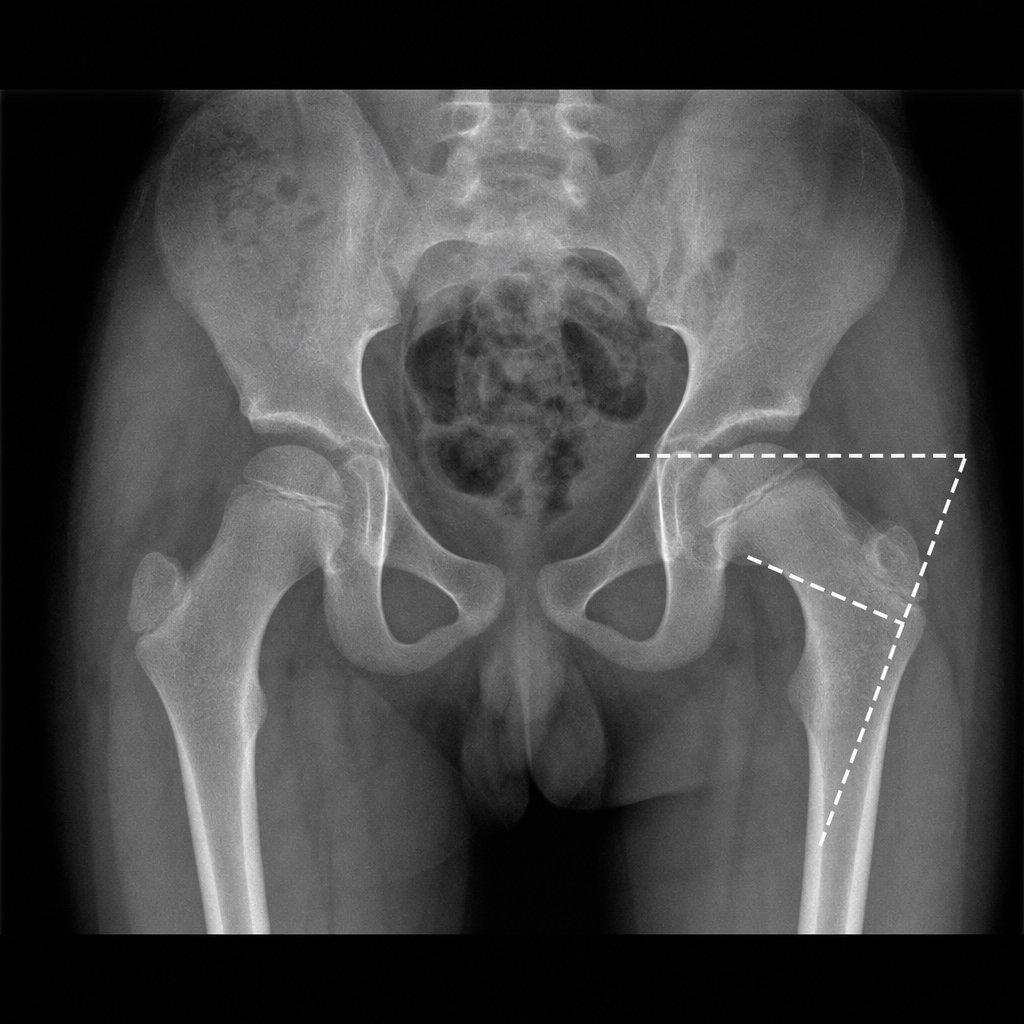
Explanation: ***
Explanation: ***Limb shortening is always due to injury.*** - This statement is false because **limb shortening** can also be caused by **congenital defects**, diseases, or **developmental abnormalities**, not exclusively injury. - While **trauma** can lead to limb length discrepancies, it is not the sole or universal cause. *Limb shortening can be caused by congenital defects.* - **Congenital limb length discrepancy** is a well-recognized condition where a limb is shorter from birth due to **developmental anomalies**, such as **fibula hemimelia** or **proximal focal femoral deficiency**. - These conditions are present at birth and are not related to external injury. *Limb shortening can occur due to disease.* - Various **diseases** can lead to limb shortening, including **bone dysplasias** (e.g., **achondroplasia**), **osteomyelitis** during childhood affecting growth plates, or **neuromuscular disorders** creating disuse and poor growth. - Conditions like **Perthes disease** or **slipped capital femoral epiphysis** can also cause growth disturbances resulting in a shorter limb. *All of the options.* - This option is incorrect because there is only one true statement among the choices that incorrectly describes limb shortening, which is "Limb shortening is always due to injury." The other options accurately describe causes of limb shortening.
Explanation: ***Ignacio Ponseti*** - Dr. Ignacio Ponseti developed the **Ponseti method**, a non-surgical technique for correcting **congenital talipes equinovarus (CTEV)**, commonly known as clubfoot. - This method involves a series of **gentle manipulations** and **serial casting**, followed by the use of a foot abduction brace. *Gerhardt Kuntscher* - **Gerhardt Kuntscher** was a German surgeon known for developing the **intramedullary nail** for fixing long bone fractures. - His contributions revolutionized the surgical management of fractures, but he did not develop the method for CTEV correction. *Gavril Ilizarov* - **Gavril Ilizarov** was a Soviet orthopedic surgeon famous for inventing the **Ilizarov apparatus**, an external fixator used for limb lengthening and complex fracture treatment. - His work focused on osteogenesis and bone regeneration, not the non-surgical correction of clubfoot. *Hugh Owen Thomas* - **Hugh Owen Thomas** was a Welsh orthopedic surgeon regarded as the "father of British orthopaedic surgery," known for the development of the **Thomas splint**. - His contributions were primarily in managing fractures and tuberculosis of the joints, independent of CTEV correction techniques.
Explanation: ***Bilateral congenital dysplasia of hip*** - A **waddling gait**, also known as a **Trendelenburg gait**, occurs due to weakness of the hip abductor muscles (gluteus medius and minimus) on both sides. - In bilateral congenital dysplasia of the hip, the **femoral heads are poorly seated** or dislocated, leading to ineffective abductor function and the characteristic gait. *Coxa valga* - This condition involves an **increased angle** between the femoral neck and shaft, which can alter biomechanics but does not typically cause a waddling gait in isolation. - While it can be associated with other hip pathologies, **coxa valga itself is not the primary cause** of a waddling gait. *CTEV* - **CTEV (Congenital Talipes Equinovarus)**, or **clubfoot**, is a deformity of the foot and ankle, not the hip. - It affects the patient's ability to walk normally, but results in a different type of gait abnormality, typically involving limping or walking on the outer edge of the foot, **not a waddling gait**. *Muscular dystrophy* - While many forms of muscular dystrophy can lead to a waddling gait due to **proximal muscle weakness**, it is a broad category of genetic disorders. - Without further context or specific type of muscular dystrophy, **bilateral congenital hip dysplasia is a more direct and specific cause** for the symptom described.
Explanation: ***Fractures involving the physis in children*** - The **Salter-Harris classification system** is specifically designed for classifying fractures that involve the **growth plate (physis)** in children. - This system helps predict the risk of **growth disturbance** and guides treatment decisions based on the fracture pattern. *Soft tissue injuries in pediatric patients* - The Salter-Harris classification does not apply to **soft tissue injuries** like sprains or strains. - Soft tissue injuries are assessed using different classification systems or descriptive terms. *Long bone fractures without growth plate involvement* - Fractures in children that do not involve the growth plate are classified using descriptive terms, such as **transverse**, **oblique**, or **spiral fractures**, or other systems like the **AO pediatric classification**, not Salter-Harris. - The Salter-Harris system is unique to physis involvement. *Joint dislocations in pediatric orthopedics* - **Joint dislocations** involve the displacement of bones at a joint and are classified by the direction of displacement (e.g., anterior, posterior). - They do not involve a fracture of the growth plate itself, so the Salter-Harris system is not applicable.
Explanation: ***Greenstick fracture*** - This fracture type involves a **broken anterior cortex** but an **intact posterior cortex**, leading to an exaggerated bowing of the bone, characteristic of a greenstick fracture. - It occurs predominantly in **children** due to their softer, more flexible bones, which tend to bend rather than fully break when subjected to force like a fall on an outstretched hand. *Torus Fracture* - A torus fracture, or **buckle fracture**, involves compression of the bone leading to a bulging or buckling of the cortex, usually on one side, without a complete break in the bone. - While it occurs in children, it presents as a compression injury and not with a broken cortex and intact posterior cortex with bowing. *Galleazi Fracture* - A Galleazi fracture is a fracture of the **distal radius** with **dislocation of the distal radioulnar joint (DRUJ)**. - This fracture pattern involves two bones and two distinct injuries (fracture and dislocation), which is fundamentally different from the described single-bone incomplete fracture. *Monteggia Fracture Dislocation* - A Monteggia fracture involves a fracture of the **proximal ulna** with **dislocation of the radial head** at the elbow. - This injury also involves two bones and two distinct components (fracture and dislocation) and affects a different anatomical location (ulna and elbow) than described.
Developmental Dysplasia of Hip
Practice Questions
Clubfoot
Practice Questions
Pediatric Fractures
Practice Questions
Growth Plate Injuries
Practice Questions
Legg-Calvé-Perthes Disease
Practice Questions
Slipped Capital Femoral Epiphysis
Practice Questions
Pediatric Spine Deformities
Practice Questions
Cerebral Palsy: Orthopaedic Aspects
Practice Questions
Neuromuscular Disorders in Children
Practice Questions
Pediatric Bone and Joint Infections
Practice Questions
Limb Length Discrepancies
Practice Questions
Orthopedic Manifestations of Genetic Disorders
Practice Questions
Get full access to all questions, explanations, and performance tracking.
Start For Free