What is the purpose of compensatory extractions?
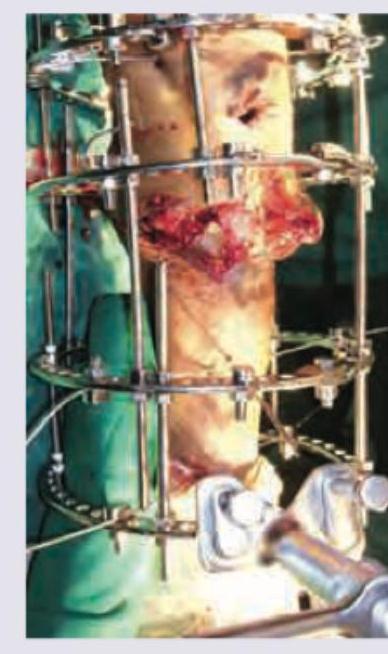
What is the recommended rate of distraction for small bone segments?
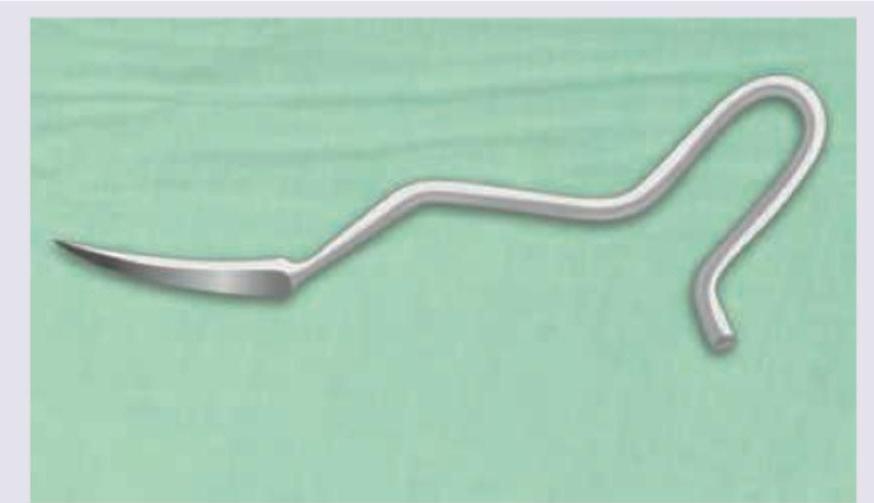
Which type of amputation is shown below?

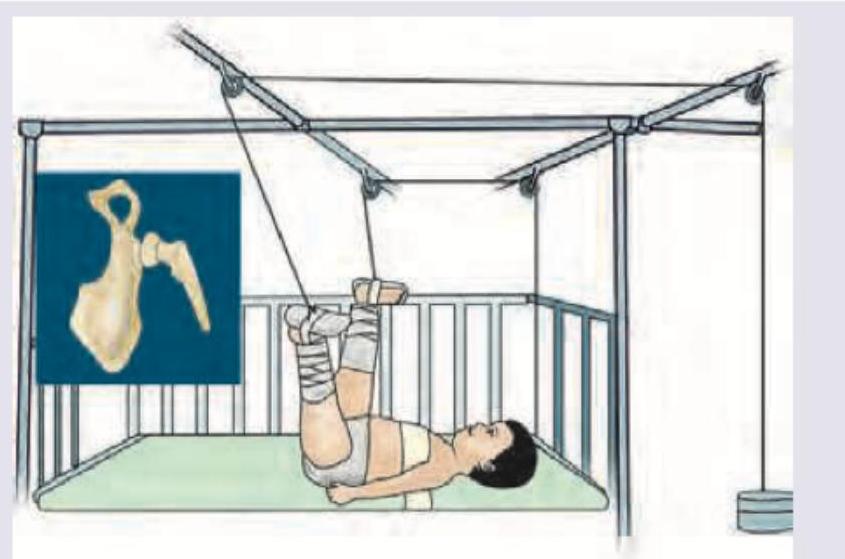
The Kebab treatment is used for the treatment of which of the following conditions?
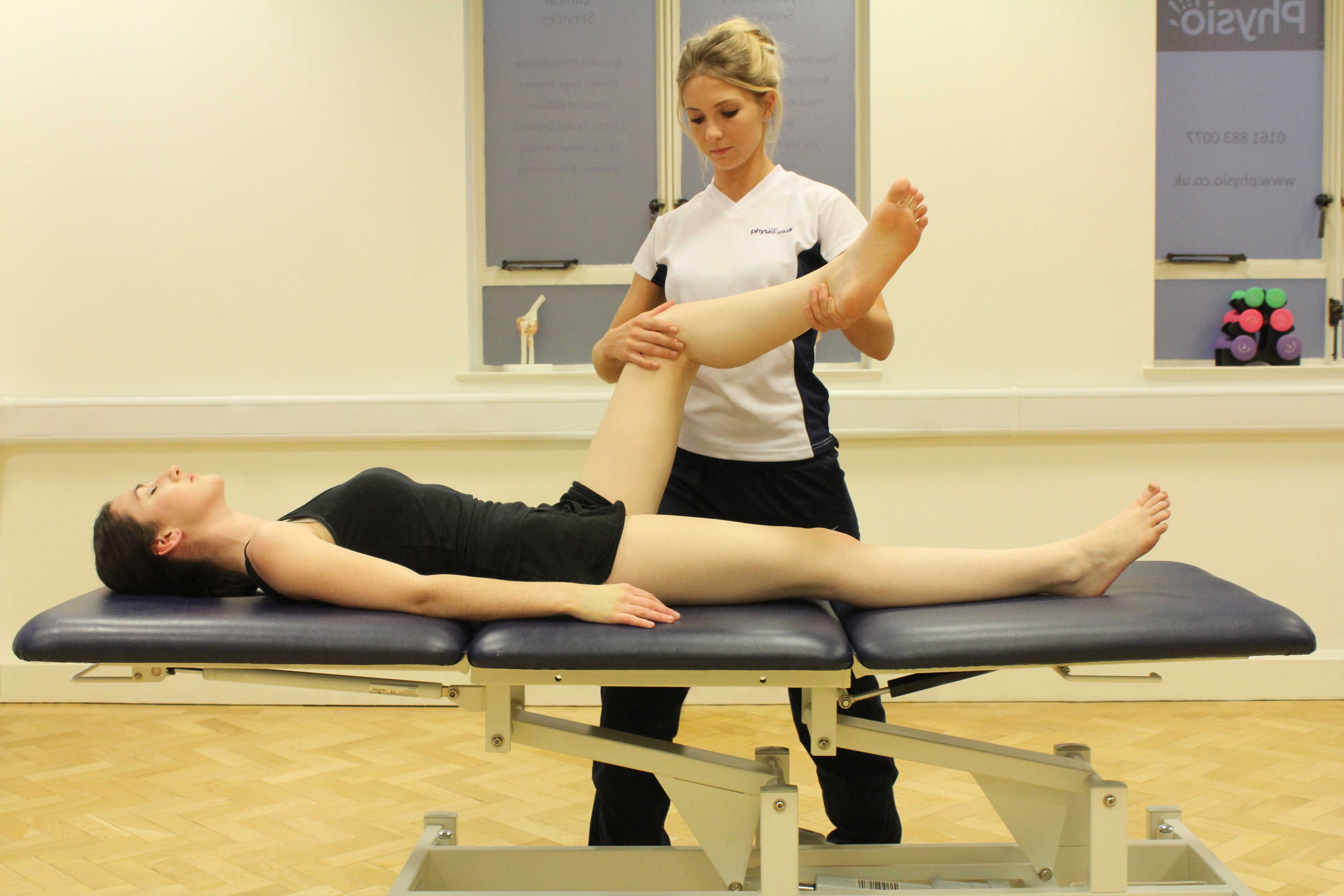
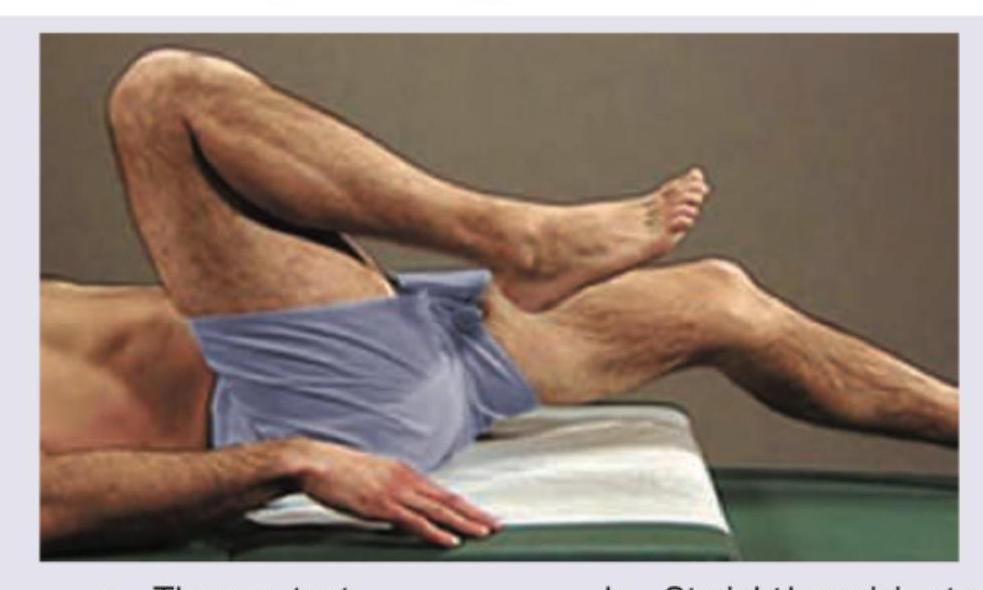
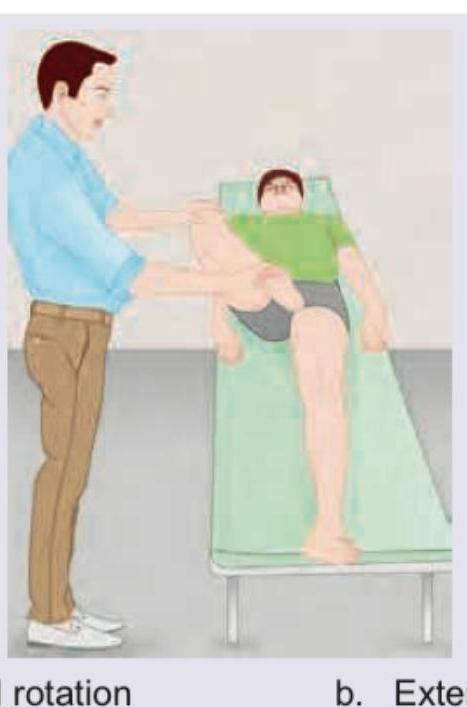
The abduction contracture at the hip joint is evaluated clinically by which test?
Which of the following tests is known for assessing De Quervain's tenosynovitis?
In the surgical anterolateral approach to the tibia, why is the incision taken over the tibialis anterior muscle mass rather than over the shaft?
All of the following are principles of tendon transfers except?
What is the maximum tourniquet time for the upper limb?
What is the most important technical consideration at the time of performing a below-knee amputation?
Explanation: ### Explanation **Compensatory extraction** refers to the removal of a tooth from the opposing arch (e.g., extracting a lower premolar when an upper premolar is extracted) to maintain the dental relationship. #### Why Option B is Correct The primary goal of compensatory extraction is to **preserve the occlusal relationship of the buccal segment**. When a tooth is removed from only one arch, the teeth in the opposing arch lose their occlusal contact, leading to over-eruption or drifting. By performing a compensatory extraction, the clinician ensures that the molar and premolar relationships (Class I occlusion) remain stable and coordinated between the maxillary and mandibular arches. #### Why Other Options are Incorrect * **Option A:** Preventing a **midline shift** is the primary objective of **Balancing Extractions** (removing a tooth from the opposite side of the *same* arch). While compensatory extractions help with overall symmetry, they are specifically designed for vertical/occlusal harmony rather than transverse midline stability. * **Option C & D:** Since only the buccal segment relationship is the specific indication for compensatory extraction, these options are incorrect. #### NEET-PG High-Yield Pearls * **Balancing Extraction:** Removal of a tooth on the **opposite side of the same arch** to prevent midline shift. * **Compensatory Extraction:** Removal of a tooth from the **opposite arch** to maintain buccal occlusion. * **Enforced Extraction:** Extraction of a tooth that is so badly decayed or damaged that it cannot be saved, often necessitating balancing or compensatory moves to maintain symmetry. * **Timing:** These extractions are most effective during the mixed dentition or early permanent dentition phase to allow for natural space closure.
Explanation: **Explanation:** The question pertains to **Distraction Osteogenesis**, a biological process of new bone formation between two bone segments that are gradually separated by controlled traction. This technique is most commonly associated with the **Ilizarov method**. **1. Why 0.5 to 0.7 mm/day is correct:** The rate of distraction is critical for successful bone formation. For **small bone segments** (such as the metacarpals, metatarsals, or phalanges), the surface area of the bone ends is smaller, and the blood supply is more delicate compared to long bones. A rate of **0.5 to 0.7 mm/day** (usually divided into 2–4 increments) is recommended to allow the regenerate (new bone) to form without outstripping the local microvasculature. **2. Analysis of Incorrect Options:** * **A (0.3 to 0.5 mm/day):** This rate is generally too slow. Slow distraction can lead to **premature consolidation**, where the bone heals across the gap before the desired length is achieved, halting the process. * **C & D (0.7 to 1.0 mm/day):** While **1.0 mm/day** is the standard "gold vertical" rate for **large long bones** (like the femur or tibia), it is too aggressive for small bones. Distracting small bones at 1.0 mm/day often leads to **non-union** or poor-quality regenerate because the soft tissues and blood vessels cannot adapt quickly enough. **High-Yield Clinical Pearls for NEET-PG:** * **Standard Rate:** 1 mm/day (for long bones). * **Rhythm:** The frequency of distraction. 0.25 mm four times a day is superior to 1 mm once a day (promotes better osteogenesis). * **Latency Period:** The waiting period between corticotomy and the start of distraction, typically **5 to 7 days**. * **Stages of Ilizarov:** Corticotomy → Latency → Distraction phase → Consolidation phase (usually twice as long as the distraction phase).
Explanation: ***Krukenberg's*** - Creates a **bifurcated forearm** by separating the **radius and ulna** to form a functional pincer-like grip mechanism. - Particularly indicated for **bilateral below-elbow amputees**, especially **blind patients**, as it provides tactile feedback and functional grasping ability. *Syme's* - An **ankle disarticulation** amputation that removes the foot while preserving the **heel pad** for weight-bearing. - Performed at the **ankle joint level**, not involving forearm structures like the case shown. *Lisfranc's* - A **foot amputation** through the **tarsometatarsal joints**, removing the metatarsals and toes. - Preserves the **midfoot and hindfoot**, allowing for some weight-bearing capacity with prosthetic fitting. *Chopart's* - A **midtarsal amputation** through the **talonavicular and calcaneocuboid joints**, removing the forefoot. - Results in **equinus deformity** and requires **tendon transfers** to maintain proper foot positioning.
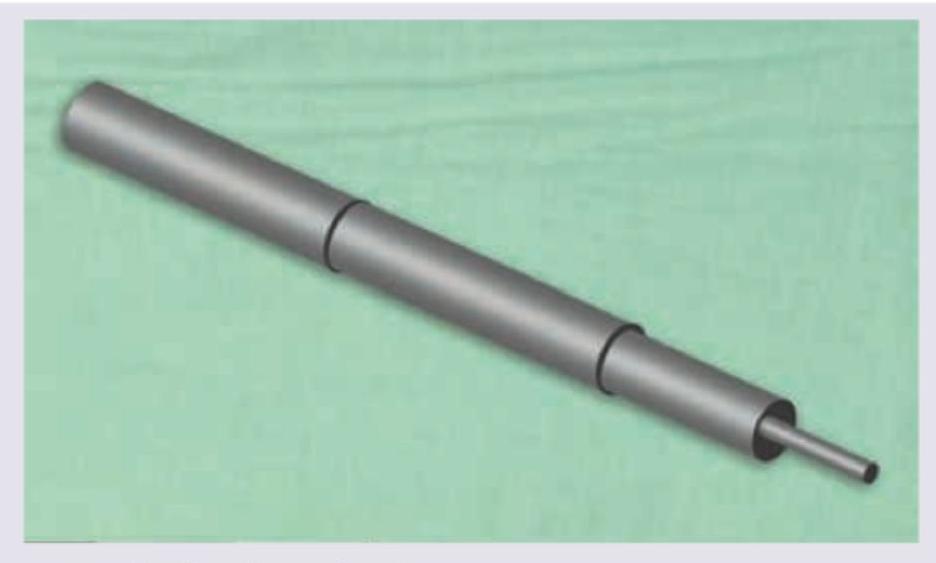
Explanation: **Explanation:** The **Kebab treatment** (also known as the **Sillence technique** or **Sofield-Millar procedure**) is a classic surgical intervention for **Osteogenesis Imperfecta (OI)**. In patients with OI, bones are extremely fragile and prone to multiple fractures, leading to severe bowing and deformities. The "Kebab" technique involves performing multiple osteotomies (cutting the bone) along the shaft of a long bone (usually the femur or tibia). These segments are then realigned and threaded onto a single, long intramedullary rod—much like pieces of meat on a skewer (kebab). This provides internal stabilization, corrects the deformity, and prevents future fractures. Modern variations use **telescoping rods** (e.g., Bailey-Dubow or Fassier-Duval rods) that elongate as the child grows. **Why other options are incorrect:** * **Paget’s Disease:** Treated primarily with bisphosphonates (medical) or joint replacement if secondary arthritis occurs. * **Osteoarthritis:** Managed with lifestyle changes, analgesics, and ultimately Total Joint Replacement (Arthroplasty). * **Myositis Ossificans:** Managed with rest, NSAIDs, and surgical excision only after the ectopic bone has matured (usually after 6–12 months). **High-Yield Clinical Pearls for NEET-PG:** * **Osteogenesis Imperfecta:** Caused by a defect in **Type I Collagen** synthesis. * **Clinical Triad:** Blue sclera, fragile bones (multiple fractures), and early-onset deafness (otosclerosis). * **Drug of Choice:** Bisphosphonates (e.g., Pamidronate/Zoledronate) to increase bone mineral density. * **Radiology:** Look for "Popcorn calcifications" near the growth plates and "Codfish vertebrae."
Explanation: **Explanation:** The correct answer is **Ober’s test**. This test is specifically designed to evaluate for tightness or contracture of the **Iliotibial (IT) Band** and the **Tensor Fasciae Latae (TFL)**. Since the TFL and IT band act as stabilizers and abductors of the hip, a contracture in these structures results in an **abduction contracture**. * **Mechanism of Ober’s Test:** The patient lies in a lateral decubitus position with the affected side up. The clinician flexes the knee to 90°, abducts and extends the hip to clear the greater trochanter, and then attempts to adduct the thigh toward the table. If the thigh remains abducted and fails to adduct past the midline, the test is positive, indicating an abduction contracture. **Analysis of Incorrect Options:** * **Thomas Test:** Used to assess **fixed flexion deformity (FFD)** of the hip. It identifies tightness in the iliopsoas muscle. * **Gerhardt’s Test:** Not a standard orthopedic hip test; it is typically associated with vocal cord paralysis (neurology/ENT). * **Ely’s Test:** Used to assess **Rectus Femoris tightness**. A positive test occurs when the hip spontaneously flexes as the clinician passively flexes the patient's knee. **NEET-PG High-Yield Pearls:** * **Trendelenburg Test:** Evaluates the strength of hip abductors (Gluteus medius/minimus). * **Galeazzi Sign:** Used to assess limb length discrepancy (often due to DDH). * **Adams Forward Bend Test:** Used for clinical screening of Scoliosis. * **Contracture vs. Deformity:** Remember that Ober’s specifically targets the lateral structures (IT Band), which are the primary culprits in abduction contractures of the hip.
Explanation: ### Explanation **Correct Option: A. Finkelstein Test** De Quervain's tenosynovitis is a stenosing tenosynovitis of the **first dorsal compartment** of the wrist, involving the **Abductor Pollicis Longus (APL)** and **Extensor Pollicis Brevis (EPB)** tendons. The **Finkelstein test** is the pathognomonic clinical assessment for this condition. It is performed by having the patient deviate the wrist ulnarly while the thumb is flexed into the palm and grasped by the fingers. A positive test elicits sharp pain over the radial styloid process due to the stretching of the inflamed tendons against the narrowed fibro-osseous tunnel. **Analysis of Incorrect Options:** * **B. Tinel’s sign:** This involves percussing over a nerve (commonly the median nerve at the carpal tunnel) to elicit a "pins and needles" sensation. It is used to assess nerve regeneration or compression syndromes like **Carpal Tunnel Syndrome (CTS)**. * **C. Phalen’s test:** The patient holds their wrists in forced flexion for 60 seconds. Numbness or tingling in the median nerve distribution indicates **Carpal Tunnel Syndrome**. * **D. Cozen’s test:** This is used to diagnose **Lateral Epicondylitis (Tennis Elbow)**. It involves resisted wrist extension with the elbow extended, which elicits pain at the lateral epicondyle. **High-Yield Clinical Pearls for NEET-PG:** * **Anatomy:** The first dorsal compartment contains APL and EPB. Remember the mnemonic: *"Apples (APL) over Bananas (EPB)"*. * **Demographics:** Most common in middle-aged women and "new mothers" (due to repetitive lifting of the infant). * **Management:** Initial treatment is conservative (thumb spica splint, NSAIDs, or steroid injection). Surgical release of the first dorsal compartment is reserved for refractory cases. * **Differential Diagnosis:** Must be distinguished from **Intersection Syndrome** (pain more proximal and dorsal) and **Wartenberg’s Syndrome** (compression of the superficial radial nerve).
Explanation: In the surgical management of tibial fractures, the anterolateral approach is preferred over a direct midline incision because the tibia is a subcutaneous bone with a precarious blood supply. **Explanation of the Correct Answer:** The incision is placed over the **tibialis anterior muscle belly** (lateral to the tibial crest) for several critical reasons: 1. **Less chances of wound dehiscence (Option B):** Placing the incision over the muscle provides a vascularized soft tissue bed. If the incision were made directly over the subcutaneous tibial shaft, any minor skin necrosis would lead to bone exposure, infection, and hardware failure. The muscle acts as a "buffer" that supports primary healing. 2. **Medially based flap (Option A):** By incising over the muscle, the surgeon creates a thick, medially based fasciocutaneous flap. This preserves the blood supply to the skin over the shin, which primarily comes from the medial side. 3. **Extensile approach (Option C):** This incision can be easily extended proximally to the lateral femoral condyle or distally to the ankle joint, allowing for better visualization of complex intra-articular fractures (e.g., tibial pilon or plateau fractures). **Why "All the Above" is Correct:** Each factor contributes to the safety and versatility of the procedure. The primary goal is to avoid placing a surgical scar directly over a subcutaneous bone to prevent the "bone-under-skin" complication. **Clinical Pearls for NEET-PG:** * **Vascularity:** The tibia is notorious for **delayed union** and **non-union** because its nutrient artery (branch of the posterior tibial artery) enters the middle third, and the anteromedial surface is devoid of muscle attachments. * **Safe Zone:** Always preserve the **periosteum** as much as possible during dissection to maintain the cortical blood supply. * **Compartment Syndrome:** The anterolateral approach involves incising the deep fascia of the anterior compartment; surgeons must be mindful of the **Deep Peroneal Nerve** and **Anterior Tibial Artery** located deep to the tibialis anterior.
Explanation: ### Explanation Tendon transfer is a surgical procedure where the insertion of a functioning muscle-tendon unit is moved to a new location to restore lost function. **Why Option B is the Correct Answer (The Exception):** While a straight line of pull is **ideal** for maximum efficiency, it is **not a mandatory principle**. In many clinical scenarios, tendons must be redirected using "pulleys" or "slings" (e.g., using the flexor carpi ulnaris to restore finger extension). While redirection reduces the effective force (due to friction and vector changes), the transfer remains functional. Therefore, saying the line of pull *must* be straight is incorrect. **Analysis of Other Options (Mandatory Principles):** * **Option A (No contractures):** A tendon transfer cannot move a stiff joint. Passive range of motion must be restored via physiotherapy or release before the transfer. * **Option C (One tendon, one function):** A single muscle cannot effectively perform two antagonistic functions (e.g., simultaneous flexion and extension). If a tendon is split to perform two tasks, its power is significantly diminished. * **Option D (Muscle power):** This is a **fundamental rule**. A muscle loses **one grade of power** (Medical Research Council - MRC scale) after transfer. Therefore, only muscles with a power of **Grade 4 or 5** should be used to achieve a functional result of Grade 3 or 4. A muscle with power less than 3 (Grade 2 or below) will become Grade 1 (flicker) or 0, rendering the transfer useless. **High-Yield Clinical Pearls for NEET-PG:** * **Synergistic Muscles:** Transfers work best if the donor muscle is synergistic to the recipient (e.g., using wrist flexors to achieve finger extension). * **Expendability:** The donor muscle must be redundant; its removal should not result in a significant functional deficit. * **Amplitude:** The "excursion" (distance a tendon moves) of the donor should match the recipient (e.g., Wrist flexors = 33mm; Finger extensors = 50mm; Finger flexors = 70mm).
Explanation: **Explanation:** The correct answer is **90 minutes (Option C)**. **1. Why 90 minutes is correct:** The primary goal of a pneumatic tourniquet is to provide a bloodless surgical field. However, prolonged ischemia leads to metabolic changes (acidosis, hyperkalemia) and potential nerve injury. In clinical practice and standard orthopaedic textbooks (like Campbell’s), the generally accepted safe upper limit for continuous tourniquet inflation in the **upper limb is 90 minutes**. For the lower limb, the limit is slightly higher (up to 120 minutes) due to larger muscle mass and better tolerance to ischemia. If the surgery exceeds this time, the tourniquet should be deflated for 10–15 minutes (reperfusion period) before re-inflation. **2. Why other options are incorrect:** * **30 & 60 minutes (Options A & B):** These durations are well within the safety margin but are too short for many standard orthopaedic procedures. While safe, they do not represent the *maximum* recommended threshold. * **120 minutes (Option D):** While 120 minutes is the standard maximum for the **lower limb**, applying this duration to the upper limb increases the risk of "tourniquet paralysis" and nerve compression injuries, particularly to the radial nerve. **3. High-Yield Clinical Pearls for NEET-PG:** * **Pressure Settings:** Usually **100 mmHg above systolic BP** for the upper limb and **2x systolic BP** (or 100-150 mmHg above) for the lower limb. * **Nerve Vulnerability:** The **Radial nerve** is the most common nerve injured by a tourniquet in the upper limb. * **Post-Tourniquet Syndrome:** Characterized by edema, pallor, and stiffness after deflation, usually due to prolonged ischemia. * **Contraindications:** Sickle cell anemia (risk of crisis), severe peripheral vascular disease, and crush injuries.
Explanation: ### Explanation In a below-knee amputation (BKA), the **long posterior flap technique** (Burgess technique) is the standard of care. This is primarily because the posterior calf skin and musculature (gastrocnemius-soleus complex) have a significantly **better blood supply** compared to the anterior pretibial skin. By making the posterior flap longer, it can be folded forward to cover the bone end, ensuring the surgical scar is positioned anteriorly and away from the weight-bearing area. This promotes better healing and provides a well-padded, durable stump for prosthesis fitting. **Analysis of Options:** * **Option A (Correct):** The posterior flap is richer in vascularity. A longer posterior flap allows for a tension-free closure and places the scar in a non-pressure-bearing zone. * **Option B & C (Incorrect):** While stump length matters, it is not the *most* important technical consideration compared to flap design. An ideal BKA stump is typically **12–15 cm** (or 5–7 inches) from the tibial tuberosity. A stump that is too long has poor distal circulation, while one that is too short (less than 5 cm) lacks the lever arm required to control a prosthesis. * **Option D (Incorrect):** An anterior flap is thinner and has a poorer blood supply. Using a longer anterior flap would result in a scar at the distal-posterior aspect, which is prone to breakdown and poor healing. **Clinical Pearls for NEET-PG:** * **Ideal Level:** The junction of the upper and middle third of the leg is considered the "gold standard" level. * **Nerve Management:** Nerves (like the tibial nerve) should be pulled down, cut cleanly, and allowed to retract deep into the soft tissue to prevent **symptomatic neuromas**. * **Bone Preparation:** The **fibula** should be cut approximately **1–2 cm shorter** than the tibia to prevent lateral pressure pain within the prosthetic socket. * **Ertl Procedure:** A variation involving an osteoperiosteal bridge between the tibia and fibula to create a stable distal platform.
Principles of Internal Fixation
Practice Questions
External Fixation
Practice Questions
Intramedullary Nailing
Practice Questions
Plate Osteosynthesis
Practice Questions
Tension Band Wiring
Practice Questions
Minimally Invasive Orthopaedic Surgery
Practice Questions
Arthroscopic Techniques
Practice Questions
Suture Techniques in Orthopaedics
Practice Questions
Navigation and Robotics
Practice Questions
3D Printing Applications
Practice Questions
Bone Grafting Techniques
Practice Questions
Local Flaps and Soft Tissue Coverage
Practice Questions
Get full access to all questions, explanations, and performance tracking.
Start For Free