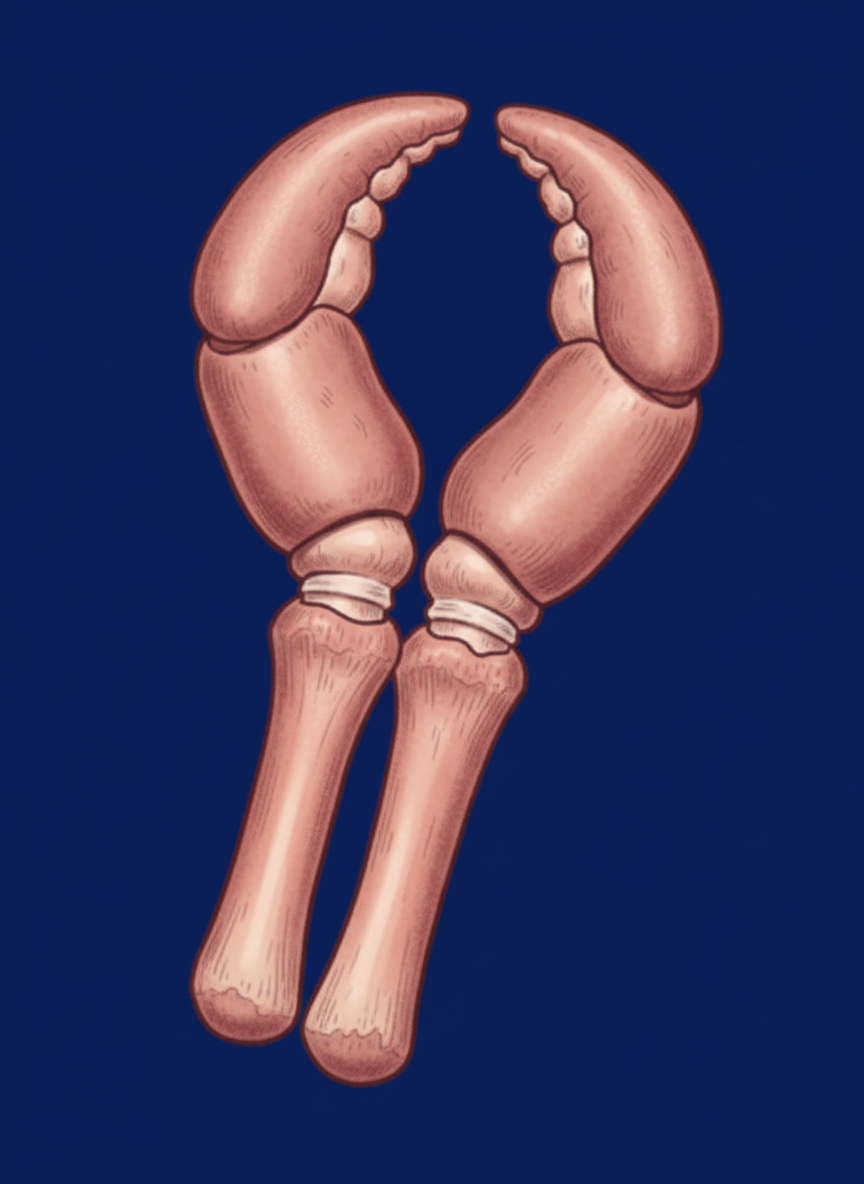
Mc.Murray osteotomy is used in which of the following conditions?
Which type of distraction osteogenesis does not involve a transport disc?
What is the recommended pressure used in a pneumatic tourniquet for the upper limb?
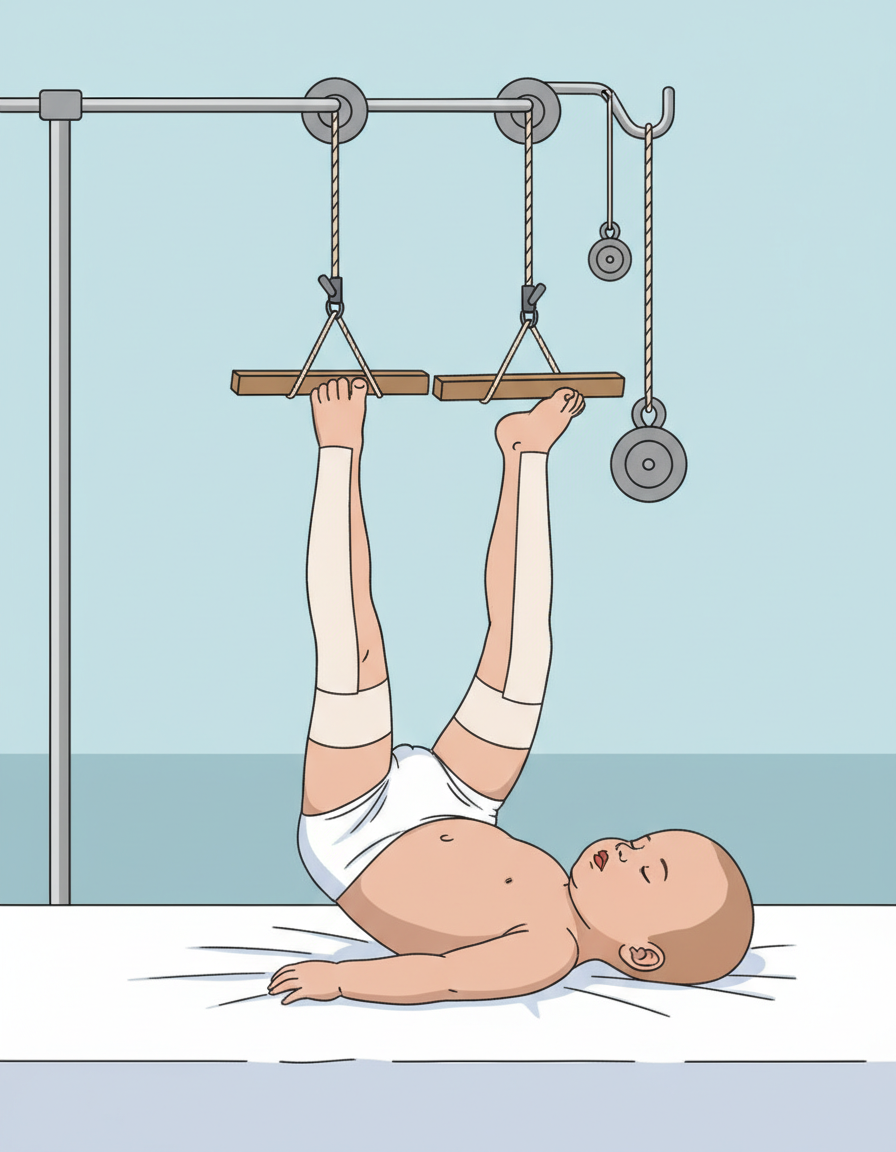
Which of the following is NOT used for skeletal traction?
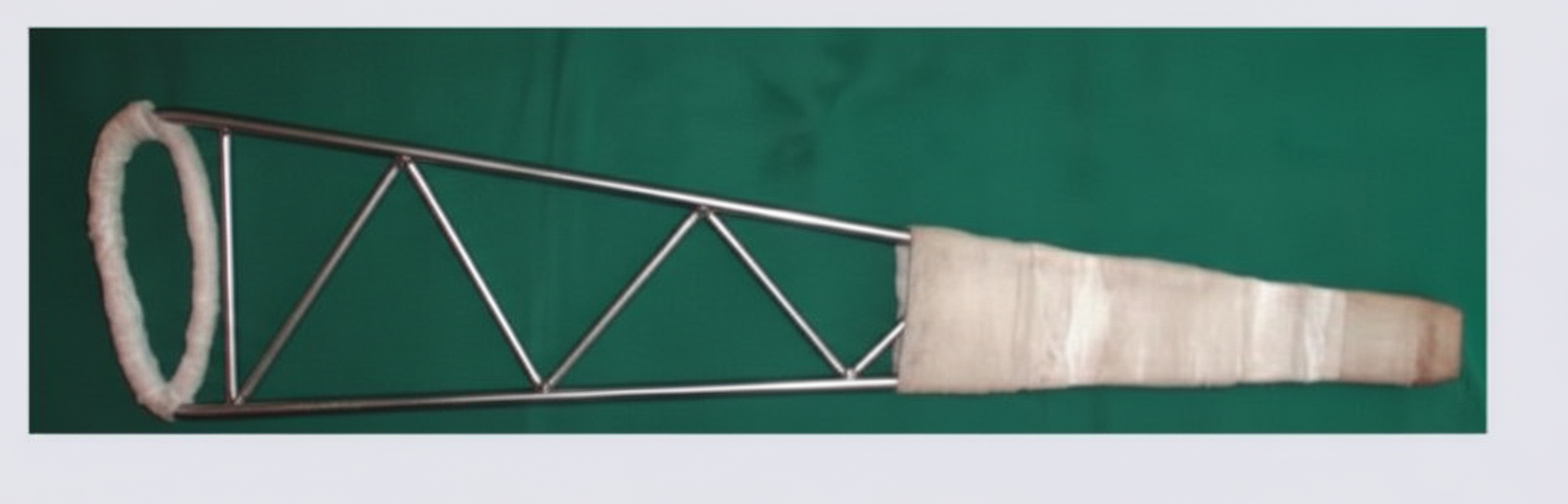
Which splint is used for the condition shown below?

Exsanguination is one of the first steps before the application of a tourniquet preoperatively. All of the following are contraindications for exsanguination EXCEPT:
What is the correct direction for the bevel of a chisel when cutting bone?
What is the rate of distraction beyond which soft tissue limits the distraction?
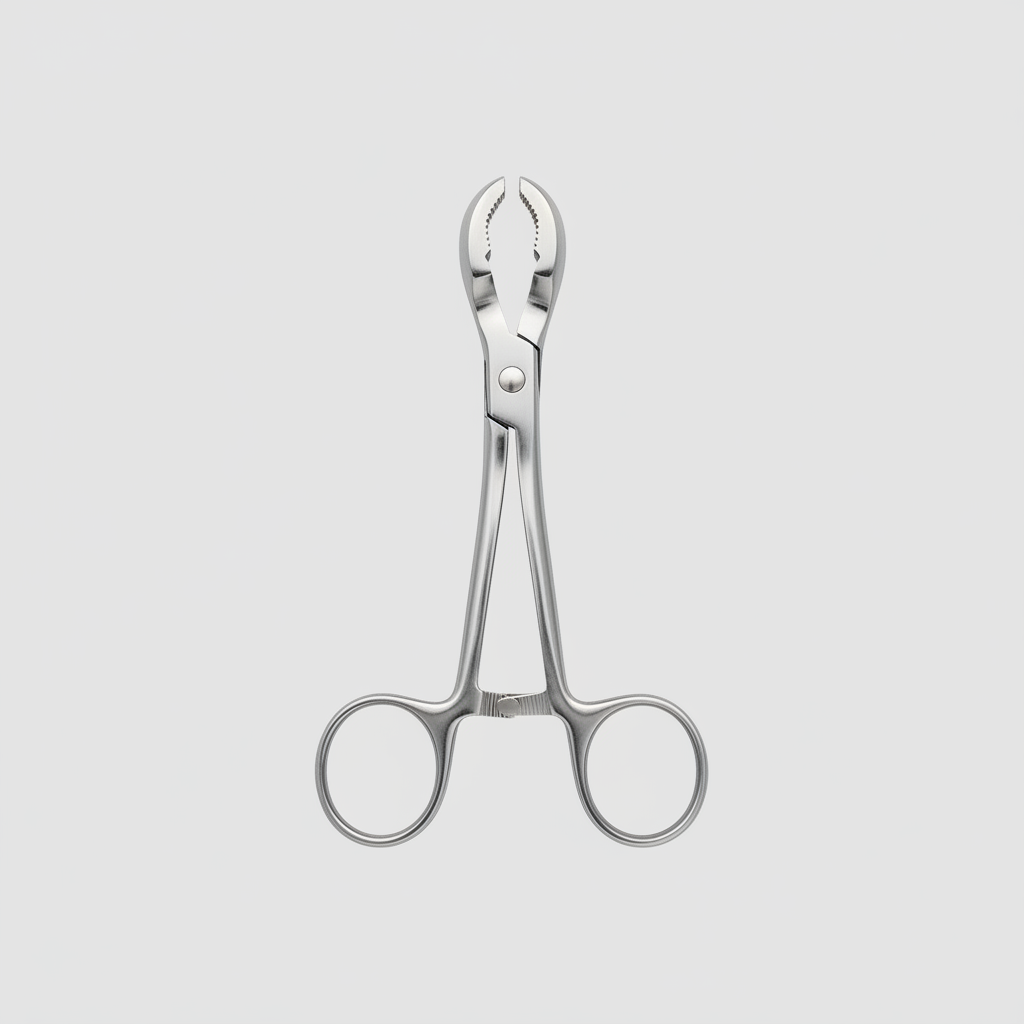
Osteotomes differ from chisels in that they are
All of the following are associated with tests or operations around the hip joint except?
Explanation: **McMurray Osteotomy** is a high-yield topic in orthopaedics, specifically regarding the management of **ununited fractures of the neck of the femur**. ### **Explanation of the Correct Answer** McMurray osteotomy is a **displacement proximal femoral osteotomy** performed at the level of the lesser trochanter. The primary goal is to convert **shearing forces** into **compressive forces** at the fracture site. By displacing the distal femoral shaft medially, the weight-bearing axis is shifted directly under the fracture line. This promotes healing in cases of non-union or delayed union of femoral neck fractures, especially in younger patients where head preservation is preferred over replacement. ### **Analysis of Incorrect Options** * **A. CTEV:** Surgical management for clubfoot involves soft tissue releases (like Turco’s procedure) or bony procedures like **Dwyer’s osteotomy** (calcaneal) or **Evans procedure**, but not McMurray’s. * **C. Supracondylar humerus fracture:** Malunion here (Cubitus varus) is typically treated with a **French osteotomy** (lateral closed wedge osteotomy). * **D. Condylar fracture of femur:** These are intra-articular fractures managed with ORIF (Open Reduction Internal Fixation) using distal femoral plates or screws, not proximal displacement osteotomies. ### **Clinical Pearls for NEET-PG** * **Type of Osteotomy:** It is a "Medial Displacement Osteotomy." * **Pauwels’ Classification:** It is particularly relevant for Pauwels Type III fractures (vertical fracture line >70°), which are highly unstable due to shear stress. * **Other Femoral Osteotomies:** * **Schanz Osteotomy:** Used for neglected CCH (Congenital Dislocation of Hip). * **Girdlestone Procedure:** A salvage excision arthroplasty for the hip. * **Chiari Osteotomy:** A pelvic osteotomy to increase acetabular coverage.
Explanation: **Explanation:** Distraction osteogenesis (Ilizarov technique) is based on the **"Law of Tension-Stress,"** where slow, controlled traction on living tissues stimulates bone and soft tissue regeneration. The classification depends on the number of corticotomy sites and the presence of a "transport disc" (a segment of bone moved across a gap). * **Why Unifocal is correct:** In **Unifocal distraction**, there is only one surgical site. It is used for **limb lengthening** or correcting angular deformities. The bone is cut (corticotomy), and the two ends are gradually pulled apart. Since there is no bone gap to bridge, **no transport disc is required**. The bone simply grows longer at the single distraction site. * **Why the others are incorrect:** * **Bifocal Distraction:** Used for **bone transport** to fill a large gap (e.g., after tumor resection or infected non-union). It involves two sites: the gap itself and a corticotomy site. A segment of bone (the **transport disc**) is moved from the corticotomy site across the gap. * **Trifocal Distraction:** Involves two corticotomies and two transport discs moving simultaneously toward a central gap. This significantly reduces the total treatment time for massive bone defects. * **Alveolar Distraction:** A specialized form of bone transport used in maxillofacial surgery to increase the height of the alveolar ridge. It involves creating and moving a small segment of bone (transport disc) vertically. **High-Yield Clinical Pearls for NEET-PG:** * **Rate of Distraction:** The standard rate is **1 mm per day** (usually divided into 0.25 mm four times a day). * **Latency Period:** The waiting period between corticotomy and the start of distraction is typically **5–7 days**. * **Phases:** 1. Osteotomy/Corticotomy → 2. Latency → 3. Distraction (Active phase) → 4. Consolidation (Hardening of the callus). * **Common Complication:** Pin tract infection is the most frequent complication of the Ilizarov fixator.
Explanation: ### Explanation The primary goal of a pneumatic tourniquet is to create a bloodless surgical field while minimizing the risk of nerve injury or soft tissue damage. The pressure must be high enough to occlude arterial flow but not excessively high to cause crush injuries. **1. Why Option B is Correct:** Current clinical guidelines (including those by AORN and standard orthopaedic texts like Campbell’s) recommend calculating tourniquet pressure based on the patient's **Systolic Blood Pressure (SBP)**. * **For the Upper Limb:** The recommended pressure is **SBP + 50 to 75 mmHg**. * **For the Lower Limb:** Due to increased muscle mass and deeper arteries, the recommended pressure is **SBP + 100 to 150 mmHg**. In the context of NEET-PG, **SBP + 75 mmHg** is the standard accepted value for the upper limb to ensure complete arterial occlusion across various patient profiles. **2. Why Other Options are Incorrect:** * **Option A (SBP + 50 mmHg):** While this is the lower limit for the upper limb, it may occasionally fail to provide a completely bloodless field in patients with calcified vessels or high BMI. * **Option C (SBP + 100 mmHg):** This pressure is generally reserved for the **lower limb**. Applying this to the upper limb increases the risk of "tourniquet palsy" (radial or ulnar nerve compression). **3. High-Yield Clinical Pearls for NEET-PG:** * **Maximum Duration:** The tourniquet should ideally be deflated within **1.5 to 2 hours**. If more time is needed, a "breathing period" of 10–15 minutes is required before re-inflation. * **Exsanguination:** Before inflation, the limb is elevated and wrapped with an **Esmarch bandage** to push venous blood centrally. * **Nerve Vulnerability:** The **Radial nerve** is the most common nerve injured by excessive tourniquet pressure in the upper limb. * **Limb Occlusion Pressure (LOP):** Modern electronic tourniquets use LOP (the minimum pressure required to stop the pulse) to further personalize and reduce pressure settings.
Explanation: **Explanation:** The core concept here is the distinction between **Skeletal Traction** and **Orthotic/Skin devices**. **Why Pavlik Harness is the correct answer:** The **Pavlik harness** is a functional dynamic **orthosis**, not a traction device. It is the gold standard treatment for Developmental Dysplasia of the Hip (DDH) in infants under 6 months. It works by maintaining the hips in "human position" (flexion and abduction) to allow the acetabulum to deepen. It does not involve the insertion of pins into bone or the application of a pulling force via weights. **Analysis of Incorrect Options:** * **Steinmann’s Pin:** A rigid, stainless steel pin (3-6 mm diameter) used for heavy skeletal traction in large bones like the femur or tibia. * **Denham Pin:** Similar to a Steinmann pin but features a **threaded central portion**. This threading provides a better grip in the bone, preventing the pin from sliding, making it ideal for use in osteoporotic bone. * **K-wire (Kirschner wire):** Thin, sharp wires used for skeletal traction in smaller bones (e.g., calcaneal traction) or in pediatric patients where larger pins might damage the physis. **High-Yield NEET-PG Pearls:** * **Common sites for Skeletal Traction:** Supracondylar (femur), Proximal Tibia (most common), and Calcaneum. * **Complication:** The most common complication of skeletal traction is **Pin Tract Infection**. * **Denham vs. Steinmann:** Remember, "Denham has a Thread" (D and T) to prevent side-to-side slipping. * **Pavlik Harness Contraindication:** It should not be used if the hip is stiff or in cases of teratologic dislocation. Over-flexion in a Pavlik harness can lead to **Femoral Nerve Palsy**.
Explanation: ***Knuckle bender splint*** - Specifically designed to correct **claw hand deformity** caused by **ulnar nerve palsy** by preventing hyperextension at the MCP joints and allowing proper finger flexion. - Works biomechanically by blocking **MCP hyperextension** while preserving **PIP and DIP flexion**, restoring functional grip patterns. *Gutter splint* - Used primarily for **metacarpal fractures** or **finger fractures**, providing immobilization along the lateral or medial aspect of the hand. - Does not address the **MCP hyperextension** problem seen in claw hand deformity, making it inappropriate for this condition. *Mallet splint* - Designed specifically for **mallet finger injury** (extensor tendon rupture at DIP joint), keeping the DIP joint in extension. - Targets only the **DIP joint** and would not correct the **MCP hyperextension** characteristic of claw hand deformity. *Cock-up splint* - Used for **wrist drop** or **radial nerve palsy**, positioning the wrist in extension to improve hand function. - Addresses **wrist positioning** rather than finger MCP joint mechanics, making it unsuitable for ulnar nerve claw hand correction.
Explanation: **Explanation:** Exsanguination is the process of expelling blood from a limb before inflating a tourniquet to ensure a bloodless surgical field. This is typically achieved using an **Esmarch bandage** (gravity-assisted drainage is an alternative). **Why "Underlying Fracture" is the Correct Answer:** An underlying fracture is **not** a contraindication for exsanguination. In trauma surgery, achieving a bloodless field is essential for visualizing anatomy and achieving stable internal fixation. While vigorous Esmarch wrapping is avoided directly over the fracture site to prevent displacement or further soft tissue trauma, the limb can still be safely exsanguinated (often by simple elevation for 2–3 minutes) before tourniquet inflation. **Why the other options are Contraindications:** * **Deep Vein Thrombosis (A):** Exsanguination (especially with a bandage) can dislodge a thrombus, leading to a life-threatening **pulmonary embolism**. * **Presence of Infection (C):** Applying pressure to an infected limb (e.g., osteomyelitis or cellulitis) can force bacteria or purulent material into the systemic circulation, causing **septicaemia**. * **Tumour (D):** Mechanical compression of a malignant mass can lead to the shedding of cancer cells into the bloodstream, increasing the risk of **metastasis**. **NEET-PG High-Yield Pearls:** * **Method of choice:** Elevation of the limb at 45° for 2–3 minutes is the safest method for exsanguination in "at-risk" cases. * **Tourniquet Pressure:** Usually set at **100 mmHg above systolic BP** for the upper limb and **2x systolic BP** (or 100-150 mmHg above) for the lower limb. * **Safe Duration:** Generally **up to 90 minutes** for the upper limb and **120 minutes** for the lower limb to prevent nerve palsy and "post-tourniquet syndrome."
Explanation: **Explanation:** In orthopaedic surgery, understanding the geometry of cutting instruments is vital for precision. A **chisel** is a tool with a single beveled edge (unlike an osteotome, which is beveled on both sides). **1. Why the correct answer is B:** When using a chisel, the flat surface remains in contact with the bone you wish to preserve, while the **bevel faces the bone to be sacrificed**. As the chisel is driven forward, the wedge shape of the bevel naturally forces the blade to deviate away from the flat side. By placing the bevel towards the waste bone, the cutting edge "bites" into the unwanted portion, ensuring that the remaining bone surface is straight, smooth, and not inadvertently gouged or weakened. **2. Why other options are incorrect:** * **Option A:** If the bevel is away from the sacrificed bone (facing the preserved bone), the chisel will tend to dive deeper into the healthy bone, leading to an uneven cut or accidental fracture of the part you intend to keep. * **Option C:** The direction is never independent; surgical precision depends on the predictable "drift" caused by the bevel. * **Option D:** While stress lines (Wolff’s Law) are important for long-term healing, the immediate mechanical direction of a cut is determined by the instrument's bevel, not the stress lines. **High-Yield Clinical Pearls for NEET-PG:** * **Chisel vs. Osteotome:** A **Chisel** is beveled on **one side** (used for shaving/contouring). An **Osteotome** is beveled on **both sides** (used for splitting or deep bone cuts). * **Gouge:** A half-round chisel used for harvesting bone grafts or creating grooves. * **Directionality:** Always remember—**Flat side to the "Keep," Bevel side to the "Heap"** (the bone to be discarded).
Explanation: ### Explanation The question pertains to the principles of **Distraction Osteogenesis**, a biological process popularized by **Gavriil Ilizarov**. This technique relies on the "Tension-Stress Effect," where slow, steady traction on living tissues stimulates the regeneration of both bone and soft tissues. **Why 1.5 mm to 2.0 mm per day is the limit:** The standard, ideal rate for bone distraction is **1.0 mm per day** (usually divided into four increments of 0.25 mm). At this rate, bone and soft tissues (muscles, nerves, and vessels) regenerate synchronously. However, research and clinical practice show that when the rate exceeds **1.5 mm to 2.0 mm per day**, the soft tissues cannot keep pace with the bone distraction. This leads to complications such as muscle contractures, nerve palsies, and vascular compromise. Therefore, 1.5–2.0 mm/day is considered the threshold beyond which soft tissue becomes the limiting factor. **Analysis of Incorrect Options:** * **A (0.5 mm to 1.0 mm/day):** This is considered the "safe zone." Rates below 0.5 mm/day often lead to **premature consolidation** (the bone heals too quickly, preventing further lengthening). * **B (1.0 mm to 1.5 mm/day):** While slightly faster than the ideal, soft tissues generally tolerate this range without significant failure. * **D (2.0 mm to 2.5 mm/day):** At this excessive rate, not only do soft tissues fail, but the bone itself fails to form, resulting in **non-union** or a "fibrous gap." **High-Yield Clinical Pearls for NEET-PG:** * **Ideal Rate:** 1 mm/day. * **Ideal Rhythm:** 0.25 mm four times a day (frequent small increments are more biological than one large daily stretch). * **Latency Period:** The waiting period between corticotomy and the start of distraction, typically **5 to 7 days**. * **Limiting Factor:** In limb lengthening, the **soft tissue** (specifically the nerves and muscles) is always the primary limiting factor, not the bone.
Explanation: **Explanation:** The fundamental difference between an osteotome and a chisel lies in the configuration of the cutting edge (the bevel). * **Osteotome (Bi-beveled):** An osteotome is tapered on **both sides** to form a central cutting edge. This design allows it to cut through bone in a straight line, as the equal pressure from both beveled surfaces prevents the tool from veering. It is primarily used for cutting or dividing bone (e.g., in corrective osteotomies). * **Chisel (Uni-beveled):** A chisel is beveled on only **one side**, while the other side remains flat. This design causes the tool to naturally "drift" or curve toward the flat side during use. It is primarily used for shaving, contouring, or harvesting bone grafts. **Analysis of Options:** * **A. Sharp:** Both instruments must be sharp to function effectively; this is not a distinguishing feature. * **B. Slightly curved:** While some specialized osteotomies (like the Lambotte) can be curved, "curved" refers to the longitudinal shape, not the cutting edge configuration. * **C. Non-beveled:** Both instruments require a bevel to create a cutting wedge; a non-beveled tool would be a blunt impactor. * **D. Bi-beveled (Correct):** This is the defining anatomical characteristic of an osteotome. **High-Yield Clinical Pearls for NEET-PG:** * **Gouge:** A specialized chisel with a **curved/U-shaped cross-section**, used for scooping out cancellous bone or creating troughs. * **Curette:** A spoon-shaped instrument used for scraping or debriding bone (e.g., in curettage of a Giant Cell Tumor). * **Periosteal Elevator:** Used to strip the periosteum from the bone; the most common eponymous version is the **Farabeuf** or **Langenbeck**.
Explanation: **Explanation:** The correct answer is **Salter**, as the question asks for the exception among tests or operations associated with the hip joint. However, there is a common point of confusion in orthopaedic nomenclature that NEET-PG aspirants must clarify. 1. **Why Salter is the exception (in this context):** While **Salter’s Osteotomy** is a famous operation for Developmental Dysplasia of the Hip (DDH), the term **Salter-Harris Classification** is the most ubiquitous use of the name in orthopaedics, referring to **physeal (growth plate) injuries** in children, which can occur at any long bone, not just the hip. In the context of this specific question, Salter is often used as a distractor or refers to the classification rather than a hip-specific test. 2. **Bryant (Option A):** Refers to **Bryant’s Triangle**, a clinical measurement used to assess the position of the greater trochanter. It helps diagnose supratrochanteric shortening (e.g., in femoral neck fractures or DDH). 3. **Shenton (Option B):** Refers to **Shenton’s Line**, a continuous imaginary arc formed by the inferior border of the femoral neck and the superior margin of the obturator foramen. Disruption of this line on an X-ray indicates hip pathology like dislocation or fracture. 4. **McMurray (Option C):** While the **McMurray Test** is primarily for **meniscal tears in the knee**, it is performed by flexing the hip and knee. *Note:* In some older texts, "McMurray’s Osteotomy" refers to a displacement osteotomy of the femur for non-union of the femoral neck, making it hip-associated. **Clinical Pearls for NEET-PG:** * **Bryant’s Traction:** Used for children <2 years with femoral shaft fractures. * **Salter-Harris Type II:** The most common type of physeal injury (Thurston-Holland sign). * **Shenton’s Line:** Broken in DDH, Perthes disease, and Slipped Capital Femoral Epiphysis (SCFE).
Principles of Internal Fixation
Practice Questions
External Fixation
Practice Questions
Intramedullary Nailing
Practice Questions
Plate Osteosynthesis
Practice Questions
Tension Band Wiring
Practice Questions
Minimally Invasive Orthopaedic Surgery
Practice Questions
Arthroscopic Techniques
Practice Questions
Suture Techniques in Orthopaedics
Practice Questions
Navigation and Robotics
Practice Questions
3D Printing Applications
Practice Questions
Bone Grafting Techniques
Practice Questions
Local Flaps and Soft Tissue Coverage
Practice Questions
Get full access to all questions, explanations, and performance tracking.
Start For Free