In hypoparathyroidism:
The primary pharmacological intervention to retard avascular necrosis progression is?
A 10-year-old boy has a fracture of the femur. Biochemical evaluation revealed a hemoglobin level of 11.5 g/dL and an erythrocyte sedimentation rate of 18 mm in the first hour. Serum calcium levels were 12.8 mg/dL, serum phosphorus levels were 2.3 mg/dL, alkaline phosphatase levels were 28 KA units, and blood urea levels were 32 mg/dL. Which of the following is the most probable diagnosis in his case?
What is the initial treatment of choice for managing secondary hyperparathyroidism in patients with renal osteodystrophy?
A patient is on a low calcium diet for 8 weeks. Which of the following increases to maintain serum calcium levels?
A 70 year old male, known case of chronic renal failure suffers from a pathological fracture of Rt femur, the diagnosis is -
False about Marble bone disease
Marble bone disease is:
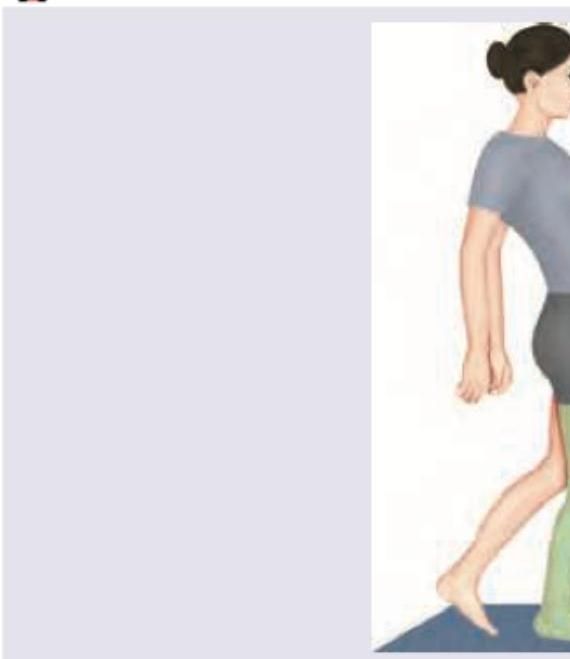
The following gait is seen due to weakness of:
The commonest complication of fracture of clavicle is :
Explanation: ***Plasma calcium is low and inorganic phosphorous high*** - **Hypoparathyroidism** is characterized by insufficient parathyroid hormone (PTH) production, leading to decreased bone resorption and reduced renal reabsorption of calcium [1]. This results in **hypocalcemia** (low plasma calcium) [1]. - PTH also promotes renal excretion of phosphate [2]. With insufficient PTH, renal phosphate excretion is impaired, leading to **hyperphosphatemia** (high inorganic phosphorus) [1]. *Plasma calcium is high and inorganic phosphorous low* - This profile is characteristic of **primary hyperparathyroidism**, where excessive PTH causes increased bone resorption and renal calcium reabsorption (high calcium), and increased renal phosphate excretion (low phosphorus). - It directly contradicts the defining features of hypoparathyroidism [1]. *Plasma calcium and inorganic phosphorous are low* - While plasma calcium is low in hypoparathyroidism, plasma inorganic phosphorus is characteristically high, not low [1]. - A combination of low calcium and low phosphorus can be seen in conditions like **vitamin D deficiency** (osteomalacia), but not directly in pure hypoparathyroidism [1]. *Plasma calcium and inorganic phosphorous are high* - This combination of high calcium and high phosphorus is uncommon and not typically seen in either hypoparathyroidism or hyperparathyroidism. - It could potentially indicate conditions like **milk-alkali syndrome** or **vitamin D intoxication**, but not hypoparathyroidism, which is defined by low calcium [1].
Explanation: ***Bisphosphonates (Alendronate)*** - **Bisphosphonates** inhibit osteoclast-mediated bone resorption and reduce bone cell death, showing promise in preventing progression of early-stage **avascular necrosis**. [1] - Alendronate specifically has been studied for its **bone-preserving effects** in AVN by maintaining bone architecture and potentially slowing femoral head collapse. *Corticosteroid therapy* - **Corticosteroids** are a major **risk factor** for developing avascular necrosis, not a treatment for it. - They cause AVN through mechanisms including **fat embolism**, increased **intraosseous pressure**, and direct **osteocyte toxicity**. *High-dose calcium supplementation* - **Calcium supplementation** supports general bone health but does not address the underlying **vascular disruption** in AVN. - No evidence exists that calcium alone can retard **AVN progression**, which involves interruption of blood supply leading to bone death. *Vitamin D supplementation alone* - **Vitamin D** is essential for calcium absorption and bone mineralization but does not target **AVN pathophysiology**. - Like calcium, it does not address the primary mechanism of **blood supply disruption** that characterizes avascular necrosis.
Explanation: ***Hyperparathyroidism*** - The patient exhibits **hypercalcemia** (12.8 mg/dL), **hypophosphatemia** (2.3 mg/dL), and an **elevated alkaline phosphatase** (28 KA units), which are classic hallmarks of hyperparathyroidism. - The femur fracture suggests **bone demineralization** due to chronically elevated parathyroid hormone levels, leading to increased bone turnover. Primary hyperparathyroidism is indicated by significant hypercalcemia (calcium > 11.4 mg/dL) and may lead to complications like osteoporosis [2]. *Nutritional rickets* - This condition is typically characterized by **hypocalcemia** or **normal calcium** levels, **hypophosphatemia**, and an **elevated alkaline phosphatase** due to defective bone mineralization from vitamin D deficiency [1]. - The presented case has frank **hypercalcemia**, which rules out nutritional rickets. *Renal rickets* - Also known as renal osteodystrophy, this condition primarily results in **hypocalcemia**, **hyperphosphatemia** (due to impaired phosphate excretion), and **elevated alkaline phosphatase** [1]. - The patient's **normal blood urea** and **hypercalcemia** make renal rickets unlikely. *Skeletal dysplasia* - This is a broad term for genetic disorders affecting bone and cartilage development, often leading to abnormal bone shape and fractures. - While it can cause fractures, it does not typically present with the specific constellation of **hypercalcemia** and **hypophosphatemia** seen in this patient's biochemical profile.
Explanation: ***Phosphate binders*** - **Phosphate binders** are the initial treatment because **hyperphosphatemia** is the primary driver of secondary hyperparathyroidism in renal disease, triggering parathyroid hormone (PTH) release [1]. - They work by binding dietary phosphate in the gastrointestinal tract, preventing its absorption and thus lowering serum phosphate levels [1]. *Cinacalcet* - **Cinacalcet** is a calcimimetic that increases the sensitivity of calcium-sensing receptors on the parathyroid gland, reducing **PTH secretion** [1]. - It is often used if **phosphate binders** and **vitamin D analogs** are insufficient in controlling PTH, making it a second-line treatment [1]. *Bisphosphonates* - **Bisphosphonates** are used to treat osteoporosis by inhibiting osteoclast activity and reducing bone resorption. - They are generally contraindicated in advanced renal osteodystrophy due to concerns about adynamic bone disease and are not an initial treatment for **secondary hyperparathyroidism**. *Calcium restriction* - While restricting dietary calcium might seem intuitive, **hypocalcemia** is often a problem in renal disease due to impaired vitamin D activation [1]. - Overly restricting calcium can worsen hypocalcemia, which would further stimulate PTH release, thus it is not an initial treatment for **secondary hyperparathyroidism**.
Explanation: ***PTH*** - **Parathyroid hormone (PTH)** is the primary regulator of calcium homeostasis and the key hormone that **increases in response to hypocalcemia** (low serum calcium). - In a patient on a low calcium diet for 8 weeks, **PTH secretion increases** to maintain normal serum calcium levels. - PTH acts through three main mechanisms: increasing **bone resorption** (releasing calcium from bone), enhancing renal **calcium reabsorption** in the distal tubule, and stimulating the production of **active vitamin D (1,25-dihydroxycholecalciferol)** which increases intestinal calcium absorption. *Active 24,25 dihydroxy cholecalciferol* - **24,25-dihydroxycholecalciferol** is a relatively **inactive metabolite** of vitamin D and represents a pathway of vitamin D catabolism, not activation. - The **active form** of vitamin D that increases calcium absorption is **1,25-dihydroxycholecalciferol (calcitriol)**, whose production is stimulated by PTH. - This metabolite does **not increase** in response to hypocalcemia as a compensatory mechanism. *Serum phosphate level* - A low calcium diet would **not directly lead to an increase in serum phosphate levels**. - In fact, PTH (which increases in response to low calcium) typically causes a **decrease in serum phosphate** by promoting renal phosphate excretion (phosphaturic effect). - High phosphate levels can actually exacerbate hypocalcemia by forming insoluble calcium-phosphate complexes. *Calcitonin* - **Calcitonin** is released from the thyroid parafollicular cells (C cells) in response to **high serum calcium levels** (hypercalcemia). - It acts to **lower** calcium by inhibiting osteoclast activity and reducing renal calcium reabsorption. - In hypocalcemia (low calcium diet), calcitonin secretion would **decrease, not increase**, making this the opposite of what occurs to maintain calcium homeostasis.
Explanation: ***Secondary Hyperparathyroidism*** - **Chronic renal failure** causes **hyperphosphatemia** and **decreased production of calcitriol (active vitamin D)**. - This leads to hypocalcemia, which stimulates the parathyroid glands to produce excessive **parathyroid hormone (PTH)**, resulting in bone demineralization and **pathological fractures** [2]. *Scurvy* - Caused by **vitamin C deficiency**, leading to impaired collagen synthesis and fragility of blood vessels. - While it can cause bone pain and potential for fractures in severe cases, it is not directly associated with **chronic renal failure** as a primary cause of pathological fracture. *Vitamin D Resistant rickets* - This is a genetic disorder (e.g., X-linked hypophosphatemia) characterized by impaired renal phosphate reabsorption and normal or elevated PTH levels. - While it causes bone demineralization, it is typically a **childhood-onset condition** [1] and not directly linked to **acquired chronic renal failure** in a 70-year-old male. *Primary Hyperparathyroidism* - Characterized by autonomous **overproduction of PTH** due to parathyroid gland adenoma or hyperplasia, leading to **hypercalcemia** and hypophosphatemia. - Unlike secondary hyperparathyroidism, which is a compensatory response to hypocalcemia in the context of renal failure, primary hyperparathyroidism is a direct parathyroid gland pathology.
Explanation: ***Associated with Type II Renal Tubular Acidosis*** - **Marble bone disease**, or **osteopetrosis**, is characterized by increased bone density due to defective osteoclast function [1]. - It is **not typically associated** with Type II Renal Tubular Acidosis; instead, some forms of osteopetrosis, particularly carbonic anhydrase II deficiency, can lead to **Type I (distal) Renal Tubular Acidosis** [1]. *Pancytopenia* - **Osteopetrosis** leads to bone marrow encroachment, reducing the space available for hematopoiesis. - This often results in **pancytopenia** (anemia, leukopenia, and thrombocytopenia) due to bone marrow failure. *Treated with bone marrow transplantation* - **Bone marrow transplantation (BMT)** is a crucial treatment for severe forms of osteopetrosis, especially the infantile malignant autosomal recessive type. - BMT can introduce functional **osteoclast precursors** from the donor, which can then differentiate and restore bone resorption. *Mandible osteomyelitis* - Patients with **osteopetrosis** have bones that are dense but paradoxically brittle, making them prone to fractures and infections. - The **mandible** is particularly susceptible to **osteomyelitis** due to its dense structure and vascular compromise in osteopetrosis, often complicated by dental issues.
Explanation: ***Osteopetrosis*** - **Osteopetrosis**, also known as **marble bone disease**, is a rare genetic disorder characterized by abnormally dense bones due to a defect in **osteoclast function** [1]. - Impaired bone resorption leads to an accumulation of woven bone, causing bones to be fragile despite their density [1]. *Osteosclerosis* - **Osteosclerosis** is a general term for increased bone density and can be a feature of various conditions, including osteopetrosis. - However, it is a descriptive term rather than a specific disease diagnosis equivalent to marble bone disease. *Histiocytosis X* - **Histiocytosis X**, also known as **Langerhans cell histiocytosis**, is a rare disorder involving the proliferation of Langerhans cells. - It primarily affects bone but can also involve other organs, presenting with lytic lesions rather than increased bone density. *Osteomalacia* - **Osteomalacia** is a condition characterized by inadequate mineralization of bone tissue, leading to soft and weakened bones. - It is typically caused by **vitamin D deficiency** and is the opposite of increased bone density. **References:** [1] Kumar V, Abbas AK, et al.. Robbins and Cotran Pathologic Basis of Disease. 9th ed. Bones, Joints, and Soft Tissue Tumors, pp. 1188-1189.
Explanation: ***Gluteus medius*** - Weakness of the **gluteus medius** leads to a **Trendelenburg gait**, where the pelvis drops on the unsupported side during the swing phase of gait. - The image suggests pelvic tilting, which is characteristic of the body attempting to compensate for the inability of the gluteus medius to stabilize the pelvis. *Gluteus maximus* - Weakness of the gluteus maximus causes difficulty in **hip extension**, resulting in a **lurching gait** where the trunk is thrown backward at heel strike. - This is commonly known as a **gluteus maximus lurch**, which is not depicted in an obvious manner here. *Psoas major* - Weakness of the psoas major would primarily affect **hip flexion**, making it difficult to lift the leg off the ground (e.g., during the swing phase). - This would result in compensatory movements such as circumduction or hiking the hip, rather than the characteristic pelvic drop. *Tibialis anterior* - Weakness of the tibialis anterior causes **foot drop**, leading to a **steppage gait** where the knee is lifted high to avoid dragging the foot. - The image does not show a foot drop or high stepping, thus ruling out tibialis anterior weakness.
Explanation: ***malunion*** - **Malunion** is the most frequent complication following a clavicle fracture, meaning the bone heals in an anatomically incorrect or deformed position. - This often results in a palpable bump or cosmetic deformity, and can occasionally cause functional impairment. *non union* - **Non-union** occurs when the fracture fails to heal completely, leaving a persistent gap between the bone fragments. - While possible, it is less common than malunion in clavicle fractures, especially with appropriate management. *avascular necrosis* - **Avascular necrosis** is rare in clavicle fractures because the clavicle has a rich blood supply. - It typically affects bones with precarious blood supply, such as the femoral head or scaphoid. *Neurovascular injury* - **Neurovascular injury** involving the subclavian vessels or brachial plexus is a serious but relatively rare complication of clavicle fractures. - While possible, especially with displaced fractures, it is not the most common adverse outcome.
Get full access to all questions, explanations, and performance tracking.
Start For Free