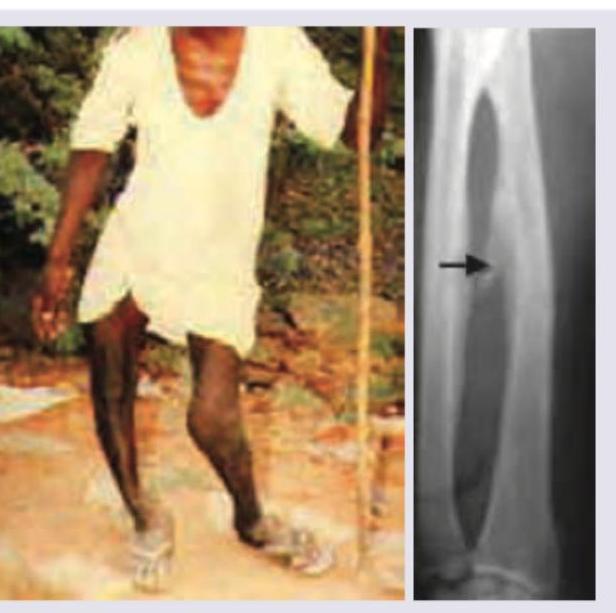
Pseudofractures are seen in which of the following conditions?
Sclerosis of bone is seen in all conditions listed below except?
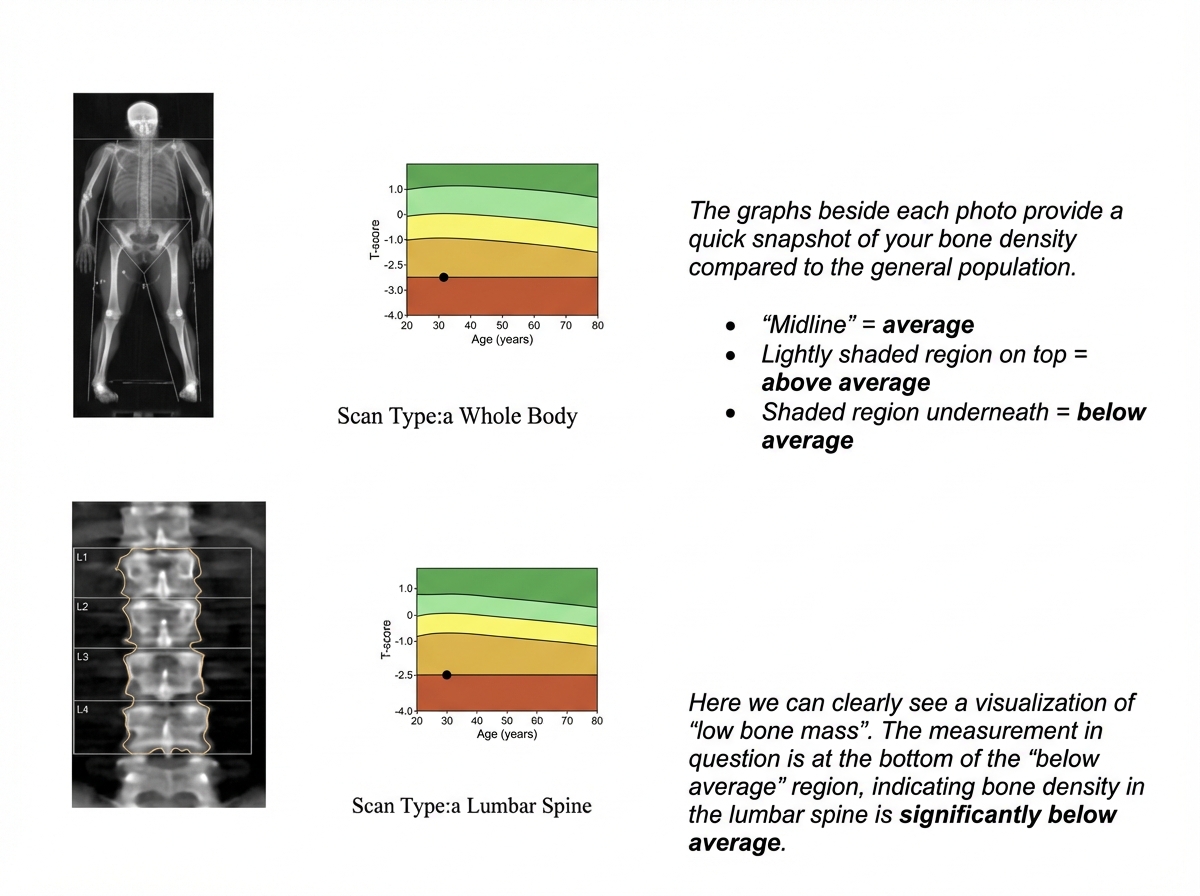
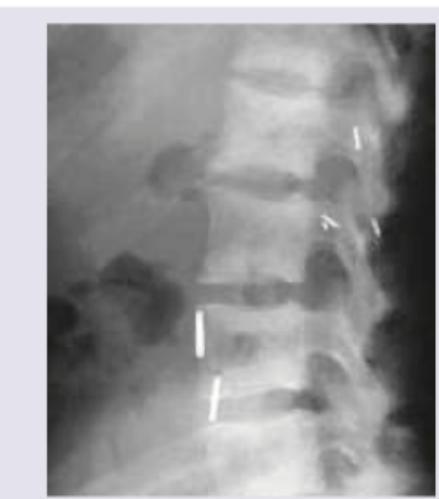
Regarding osteoporosis, all of the following statements are true except?
Which of the following statements regarding osteogenesis imperfecta is false?
Paget's disease of bone is a chronic disease of which skeleton?
Brown tumor is characteristic of which condition?
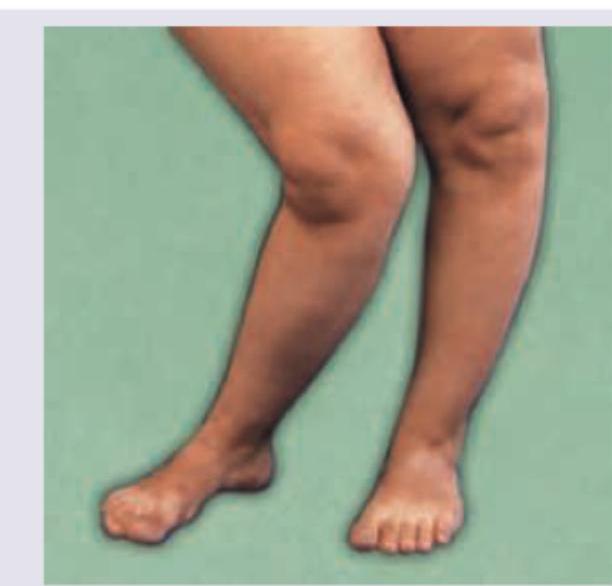
All of the following are seen in rickets except:
Which of the following is a true statement regarding synovial fluid in gout?
Which of the following is NOT seen in osteopetrosis?
Pseudofracture can be seen in which of the following conditions?
Explanation: ### Explanation **Correct Answer: C. Osteomalacia** **Understanding the Concept:** Pseudofractures, also known as **Looser’s zones** or **Milkman’s lines**, are the hallmark radiological feature of **Osteomalacia** (and its pediatric counterpart, Rickets). They are not true fractures but represent stress fractures that have healed with **unmineralized osteoid** (callus) rather than mature bone. On X-ray, they appear as thin, radiolucent lines oriented perpendicular to the bone cortex, often occurring symmetrically. Common sites include the axillary border of the scapula, inner cortex of the femoral neck, pubic rami, and ribs. **Analysis of Incorrect Options:** * **A. Osteoarthritis:** This is a degenerative joint disease characterized by joint space narrowing, osteophytes, and subchondral sclerosis, not metabolic defects in mineralization. * **B. Rickets:** While Rickets is the childhood version of osteomalacia, the classic radiological findings emphasized in exams are **cupping, splaying, and fraying** of the metaphysis. While pseudofractures *can* occur, they are the definitive diagnostic sign for adult **Osteomalacia**. * **D. Osteoporosis:** This involves a decrease in total bone mass (both matrix and mineral are lost), leading to **fragility fractures** (e.g., Colles, vertebral compression). The bone that remains is normally mineralized, so pseudofractures do not form. **High-Yield Clinical Pearls for NEET-PG:** * **Biochemical Triad of Osteomalacia:** Low/Normal Calcium, Low Phosphate, and **Elevated Alkaline Phosphatase (ALP)**. * **Looser’s Zones** are most commonly found at the **axillary border of the scapula** (most specific site). * **Vitamin D Deficiency** is the most common cause. * **Clinical Presentation:** Diffuse bone pain, tenderness, and a characteristic **waddling gait** due to proximal muscle weakness.
Explanation: ### Explanation The core concept behind this question is distinguishing between **osteosclerotic** (increased bone density) and **osteolytic** (decreased bone density) processes. **Why Hyperparathyroidism is the correct answer:** Hyperparathyroidism (HPT) is characterized by an excess of Parathyroid Hormone (PTH), which stimulates **osteoclastic activity**. This leads to generalized **bone resorption** (osteopenia/osteoporosis) rather than sclerosis. Classic radiological hallmarks include subperiosteal resorption (pathognomonic, best seen in radial aspect of middle phalanges), "Salt and Pepper" skull, and Brown tumors (Osteitis Fibrosa Cystica). **Analysis of Incorrect Options (Conditions showing Sclerosis):** * **Fluorosis:** Chronic fluoride toxicity stimulates osteoblasts, leading to increased bone formation and dense, chalky white bones (osteosclerosis), particularly in the axial skeleton. * **Osteopetrosis (Marble Bone Disease):** A genetic defect in osteoclast function prevents normal bone resorption. This results in excessively dense, brittle bones with a "bone-within-bone" appearance. * **Secondaries from Prostate:** Prostatic metastasis to the bone is classically **osteoblastic**, resulting in focal or diffuse areas of increased bone density (sclerotic lesions) on X-ray. **NEET-PG High-Yield Pearls:** * **Rugger Jersey Spine:** Seen in secondary hyperparathyroidism (Renal Osteodystrophy); it is a rare instance where HPT shows sclerosis (at the vertebral endplates). However, primary HPT is predominantly resorptive. * **Osteoblastic Metastases:** Remember the mnemonic **"Prostate, Breast (can be mixed), Lung (small cell), Carcinoid, and Lymphoma."** * **Looser’s Zones:** Characteristic of Osteomalacia (pseudofractures), not sclerosis. * **Erlenmeyer Flask Deformity:** Classic sign of Osteopetrosis.
Explanation: **Explanation:** The correct answer is **A (Raised alkaline phosphatase)** because, in primary osteoporosis, biochemical markers including **Serum Calcium, Phosphorus, and Alkaline Phosphatase (ALP) typically remain within the normal range.** Osteoporosis is characterized by a decrease in bone mass (quantity) while the mineral-to-matrix ratio remains normal. Elevated ALP is instead a hallmark of conditions with high bone turnover or mineralization defects, such as Paget’s disease, Osteomalacia, or healing fractures. **Analysis of other options:** * **B. DEXA scan is helpful:** This is the **Gold Standard** for diagnosing osteoporosis. It measures Bone Mineral Density (BMD). A T-score of ≤ -2.5 SD is diagnostic of osteoporosis. * **C. Reduced bony matrix:** Osteoporosis is defined as a metabolic bone disease where there is a **quantitative reduction** in both the mineral and the organic osteoid matrix, leading to porous and brittle bones. * **D. Cod fish appearance on X-ray:** This refers to the biconcave appearance of vertebrae caused by the pressure of intervertebral discs on weakened, osteoporotic vertebral bodies. It is a classic radiological sign of the disease. **Clinical Pearls for NEET-PG:** * **Most common site of fracture:** Vertebral body (compression fracture), followed by the neck of the femur and Colles' fracture. * **Singh’s Index:** Used to grade osteoporosis based on the disappearance of trabecular patterns in the proximal femur. * **First-line treatment:** Bisphosphonates (e.g., Alendronate), which act by inhibiting osteoclast-mediated bone resorption. * **Ward’s Triangle:** An area of low bone density in the neck of the femur, often the first site to show changes in osteoporosis.
Explanation: **Explanation:** The question asks for the **false** statement regarding Osteogenesis Imperfecta (OI). **Why Option A is the "False" Statement (The Correct Answer):** The statement "It is caused by defects in type 1 collagen" is actually a **true** statement. In the context of multiple-choice questions where you must identify the false option, if a statement is factually correct, it cannot be the answer unless there is a typographical error in the question's key or the phrasing of the options. *Note: In many standard medical exams, if all options are factually true, the question may be technically flawed. However, OI is fundamentally a disorder of **Type 1 Collagen** (COL1A1 and COL1A2 genes). If the option intended to say Type 2 or Type 3, it would be clearly false.* **Analysis of Other Options:** * **Option B (True):** Most cases of OI (Types I-IV) follow an **Autosomal Dominant** inheritance pattern. Rare types (Type V onwards) may show autosomal recessive patterns. * **Option C (True):** **Blue sclera** occurs due to thinning of the collagen, allowing the underlying choroidal veins to show through. **Deafness** (otosclerosis) is a common secondary feature due to middle ear ossicle involvement. * **Option D (True):** **Bisphosphonates** (like Pamidronate or Zoledronate) are the mainstay of medical management. They increase bone mineral density and reduce the frequency of fractures by inhibiting osteoclast activity. **NEET-PG High-Yield Pearls:** * **Sillence Classification:** The most common system used to classify OI (Types I to IV). * **Type II OI:** The most severe form; usually lethal in the perinatal period due to respiratory failure. * **Wormian Bones:** Small, irregular bones found in the sutures of the skull; a classic radiological sign of OI. * **Triad of OI:** Fragile bones, blue sclera, and early-onset deafness.
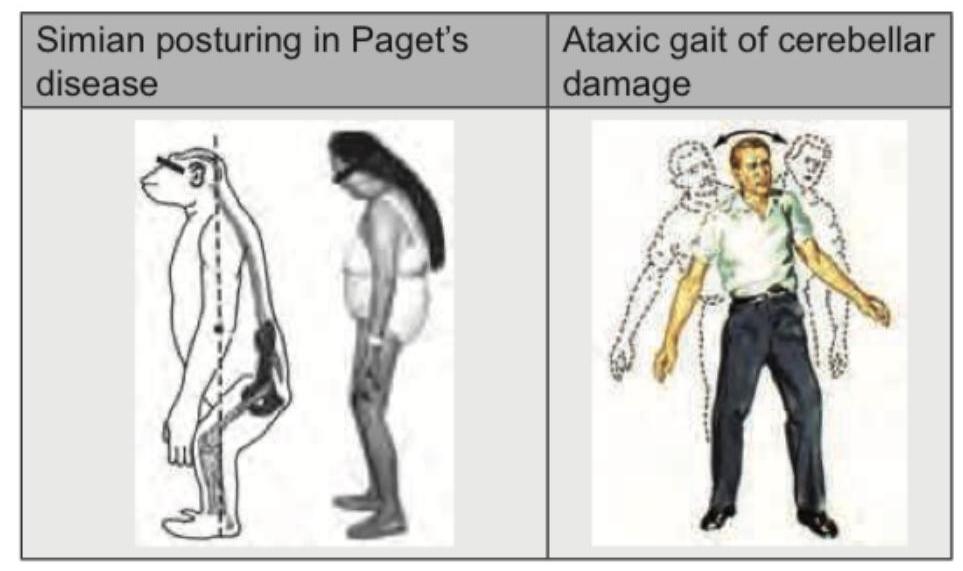
Explanation: **Explanation:** **Paget’s Disease of Bone (Osteitis Deformans)** is a chronic skeletal disorder characterized by excessive and disorganized bone remodeling. The correct answer is the **Adult skeleton** because this condition is almost exclusively seen in individuals over the age of 40, with its prevalence increasing significantly with advancing age (affecting up to 3% of the population over 55). * **Why Option D is correct:** Paget’s disease involves an initial phase of overactive osteoclasts (resorption) followed by compensatory, chaotic osteoblastic activity. This process requires a mature, fully formed skeleton. It is a disease of aging and is rarely, if ever, diagnosed in patients under 20. * **Why Options A, B, and C are incorrect:** These options refer to the developing or immature skeleton. Metabolic bone diseases affecting these stages are typically related to mineralization defects (like **Rickets**) or genetic collagen disorders (like **Osteogenesis Imperfecta**). Paget’s disease does not occur in infants or during the pubertal growth spurt. **High-Yield Clinical Pearls for NEET-PG:** * **Pathology:** The hallmark is the **"Mosaic pattern"** of bone (thickened trabeculae with irregular cement lines). * **Markers:** Characterized by **isolated elevation of Serum Alkaline Phosphatase (ALP)** with normal Calcium and Phosphate levels. * **Radiology:** Look for **"Blade of grass"** or "Flame-shaped" lytic lesions and **"Cotton wool"** appearance of the skull. * **Complications:** The most feared late complication is **Osteosarcoma** (seen in <1% of cases). * **Treatment:** **Bisphosphonates** (e.g., Zoledronic acid) are the drug of choice to inhibit osteoclast activity.
Explanation: **Explanation:** **1. Why Hyperparathyroidism is Correct:** Brown tumors (also known as **Osteitis Fibrosa Cystica**) are a hallmark of advanced **Hyperparathyroidism** (most commonly primary). The pathophysiology involves excessive secretion of Parathyroid Hormone (PTH), which overstimulates osteoclasts. This leads to rapid bone resorption and the replacement of marrow with vascular fibrous tissue. The "brown" color is due to **hemosiderin deposition** resulting from micro-hemorrhages within these cystic lesions. Despite the name, it is a reactive process, not a true neoplasm. **2. Why the Other Options are Incorrect:** * **Hypoparathyroidism:** This condition involves low PTH levels, leading to increased bone density (osteosclerosis) rather than resorptive cystic lesions. * **Hyperthyroidism:** While it can cause increased bone turnover and osteoporosis, it does not typically result in the focal, cystic, giant-cell-containing lesions characteristic of brown tumors. * **Hypopituitarism:** This leads to growth hormone deficiency and delayed bone age/growth retardation, but does not involve the specific osteoclastic pathology of brown tumors. **3. High-Yield Clinical Pearls for NEET-PG:** * **Radiological Sign:** Classically associated with the **"Salt and Pepper" skull** and subperiosteal resorption (most common on the radial aspect of the middle phalanx). * **Biochemical Triad:** Hypercalcemia, Hypophosphatemia, and elevated Alkaline Phosphatase. * **Histology:** Brown tumors are histologically indistinguishable from **Giant Cell Tumors (GCT)**; always check serum calcium/PTH levels to differentiate. * **Classic Mnemonic:** Symptoms of hypercalcemia are "Stones (renal), Bones (brown tumors), Groans (abdominal pain), and Psychic Moans (depression)."
Explanation: In Rickets, the primary pathology is a failure of mineralization of the osteoid matrix at the growth plate. This leads to characteristic radiological changes primarily seen at the metaphysis of long bones. **Explanation of the Correct Answer:** * **A. Fraenkel’s Line (White line of Fraenkel):** This is a dense, radiopaque line seen at the zone of provisional calcification. It is a hallmark of **Scurvy (Vitamin C deficiency)**, not rickets. In Scurvy, there is a failure of osteoid formation, but the calcification of existing cartilage continues, leading to this dense line. In Rickets, the zone of provisional calcification is lost or blurred. **Explanation of Incorrect Options:** * **B. Widening of epiphysis-diaphysis distance:** In rickets, the non-mineralized osteoid and hypertrophic cartilage accumulate, causing the radiolucent gap between the epiphysis and the shaft to increase. * **C. Cupping and splaying of metaphysis:** Due to the weight-bearing load on softened, uncalcified bone, the metaphysis expands laterally (**splaying**) and develops a concave, saucer-like appearance (**cupping**). * **D. Rarefaction:** This refers to a generalized decrease in bone density (osteopenia) due to poor mineralization of the bone trabeculae, a consistent finding in rickets. **NEET-PG High-Yield Pearls:** * **Rickets Triad on X-ray:** Cupping, Splaying, and Fraying (shaggy margins) of the metaphysis. * **Scurvy Signs (for differential):** Wimberger’s ring (dense epiphysis), Pelkan spur (metaphyseal spurs), and Trummerfeld zone (scurvy zone/lucent line). * **Earliest Sign of Rickets:** Fraying of the metaphysis (best seen at the lower end of the radius and ulna). * **Biochemical Profile:** Low/Normal Calcium, Low Phosphate, and **Elevated Alkaline Phosphatase (ALP)**.
Explanation: **Explanation:** The hallmark of **Gout** is the deposition of **Monosodium Urate (MSU)** crystals in the joints. Definitive diagnosis is made via synovial fluid analysis using **compensated polarized light microscopy**, which reveals needle-shaped crystals that exhibit **strong negative birefringence** (they appear yellow when parallel to the slow axis of the compensator). * **Option B is correct:** The presence of these urate crystals is the pathognomonic finding for gouty arthritis. * **Option A is incorrect:** Decreased glucose levels in synovial fluid are typically characteristic of **Septic Arthritis** or Rheumatoid Arthritis, where bacteria or high metabolic activity of inflammatory cells consume glucose. * **Option C is incorrect:** Pyrophosphate crystals (Calcium Pyrophosphate Dihydrate or CPPD) are found in **Pseudogout**. These crystals are rhomboid-shaped and show **weak positive birefringence** (blue when parallel to the axis). * **Option D is incorrect:** While the WBC count is elevated in gout (inflammatory range: 2,000–50,000 cells/mm³), it is **not a specific finding**. High WBC counts are seen in all inflammatory and infectious arthritides. The presence of crystals is the specific "true statement" that defines the disease. **High-Yield Clinical Pearls for NEET-PG:** * **First joint affected:** Usually the 1st Metatarsophalangeal (MTP) joint (**Podagra**). * **Radiology:** Look for "punched-out" erosions with overhanging edges (**Martel’s sign**). * **Acute Management:** NSAIDs (first-line), Colchicine, or Corticosteroids. * **Chronic Management:** Xanthine oxidase inhibitors like **Allopurinol** or Febuxostat (never start during an acute attack).
Explanation: **Explanation:** **Osteopetrosis** (Marble Bone Disease) is a genetic disorder characterized by **defective osteoclast function**, leading to failure of bone resorption. While the bones appear dense on X-ray, they are structurally weak and "chalk-like." 1. **Why "Delayed healing of fractures" is the correct answer:** In osteopetrosis, fractures actually **heal at a normal rate** or sometimes even faster. This is because fracture healing primarily depends on **osteoblastic activity** (callus formation), which is preserved or even hyperactive in this condition. The defect lies in the remodeling phase (osteoclasts), not the initial repair phase. 2. **Analysis of Incorrect Options:** * **Pancytopenia:** The failure of bone resorption leads to the obliteration of the medullary canal by calcified cartilage and bone. This "crowding out" of the bone marrow results in myelophthisic anemia and pancytopenia. * **Compression of cranial nerves:** Failure of remodeling prevents the enlargement of cranial foramina. As the skull thickens, nerves (especially II, VII, and VIII) are compressed, leading to blindness, facial palsy, or deafness. * **Osteomyelitis of mandible:** Despite the high density, the bone is relatively **avascular**. This poor blood supply, combined with dental caries (common in these patients), makes the mandible highly susceptible to refractory osteomyelitis. **High-Yield Clinical Pearls for NEET-PG:** * **Radiological Signs:** "Bone-within-a-bone" appearance (Endobone), "Sandwich vertebrae" (Rugger-Jersey spine appearance), and "Erlenmeyer flask deformity" of the distal femur. * **Most Common Type:** Autosomal Dominant (Albers-Schönberg disease) is the benign adult form; Autosomal Recessive is the malignant infantile form. * **Treatment:** Bone Marrow Transplant is the definitive treatment for the infantile form to provide functional osteoclasts.
Explanation: **Explanation:** **Pseudofractures**, also known as **Looser’s zones** or **Milkman’s lines**, are narrow radiolucent lines that represent stress fractures where the callus has failed to mineralize. They are typically oriented perpendicular to the bone cortex and are often bilateral and symmetrical. **Why "All the Above" is correct:** While most commonly associated with **Osteomalacia** and **Rickets**, pseudofractures occur in various conditions characterized by increased bone turnover or abnormal mineralization: * **Paget’s Disease:** Characterized by excessive and disorganized bone remodeling. Pseudofractures (often called "incremental fractures") typically occur on the convex side of long bones. * **Fibrous Dysplasia:** Normal bone is replaced by weak fibrous tissue, leading to mechanical instability and the formation of Looser’s zones. * **Hereditary Hyperphosphatasia (Juvenile Paget’s):** A rare genetic disorder with rapid bone turnover and poor mineralization, leading to skeletal deformities and pseudofractures. **Clinical Pearls for NEET-PG:** 1. **Common Sites:** Axillary border of the scapula, inner cortex of the femoral neck, pubic rami, and ribs. 2. **Differential Diagnosis:** Apart from the options above, consider **Osteogenesis Imperfecta**, **Renal Osteodystrophy**, and **Hypophosphatasia**. 3. **Radiological Appearance:** They are "pseudo" because they do not involve a complete break in the cortex initially; they are lucent zones of uncalcified osteoid. 4. **Key Distinction:** In Paget’s disease, these occur on the **convex** surface, whereas in Osteomalacia, they often appear on the **concave** surface of stressed bones.
Osteoporosis
Practice Questions
Osteomalacia and Rickets
Practice Questions
Paget's Disease of Bone
Practice Questions
Hyperparathyroidism
Practice Questions
Renal Osteodystrophy
Practice Questions
Fluorosis
Practice Questions
Osteogenesis Imperfecta
Practice Questions
Bone Mineral Density Assessment
Practice Questions
Pharmacological Management of Metabolic Bone Diseases
Practice Questions
Surgical Considerations in Metabolic Bone Diseases
Practice Questions
Fragility Fractures
Practice Questions
Prevention Strategies
Practice Questions
Get full access to all questions, explanations, and performance tracking.
Start For Free