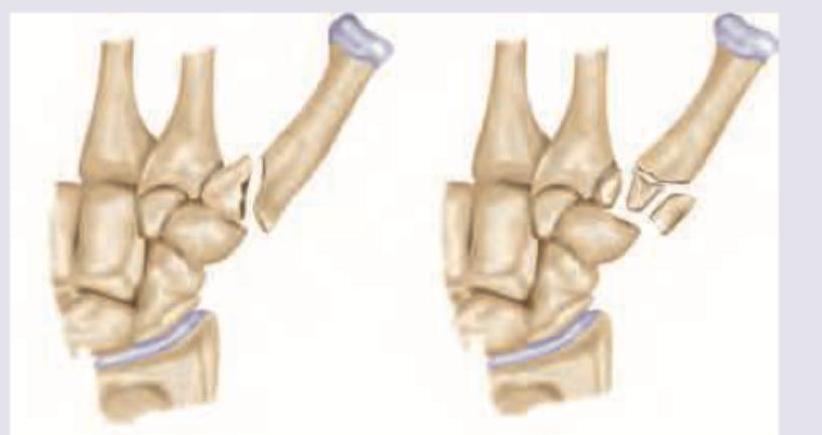
The most commonly involved nerve in lunate dislocation is -
In hand injury, the first structure to be repaired should be?
Dequervain's tenosynovitis is a stenosing tenosynovitis of the
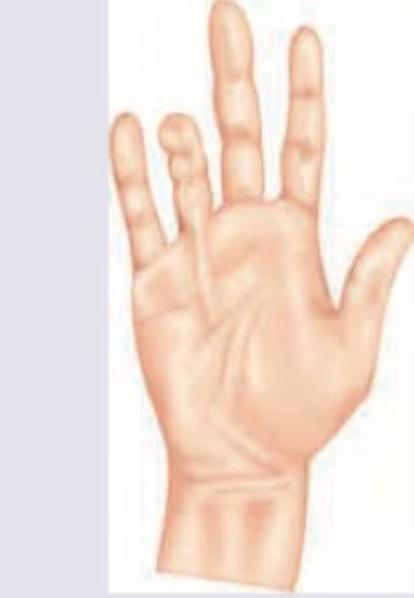
Cubital tunnel syndrome involves compression of which nerve?
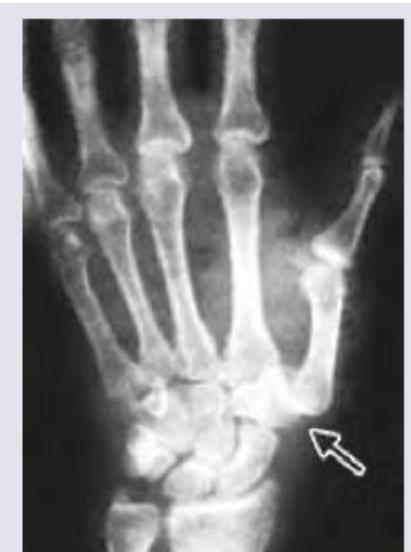
Kienböck's disease is due to avascular necrosis of-
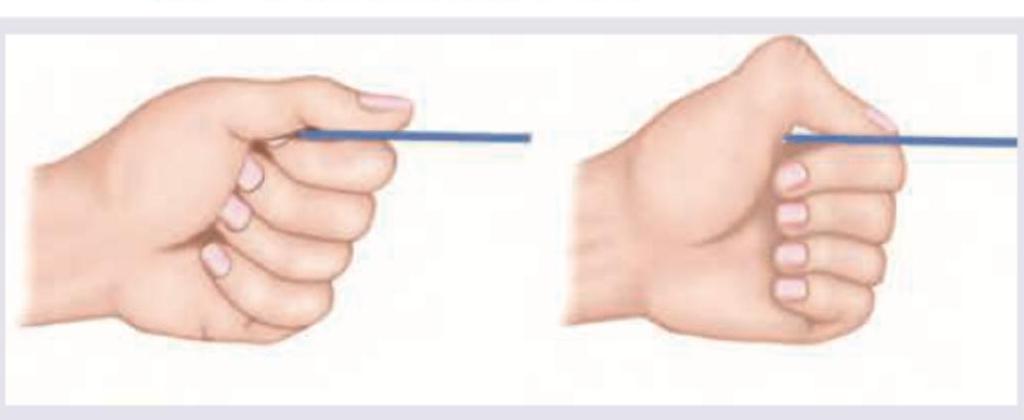
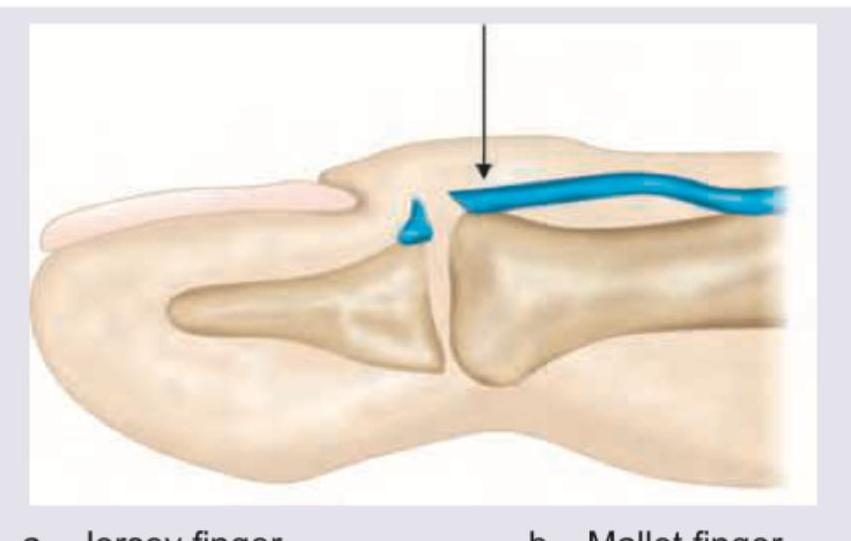
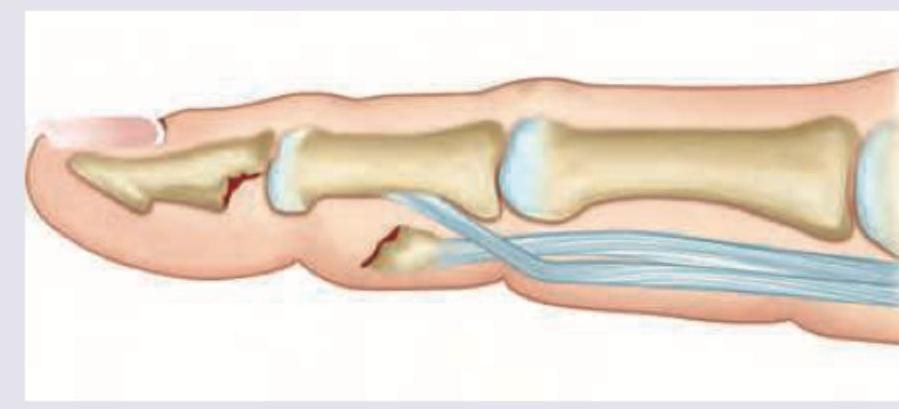
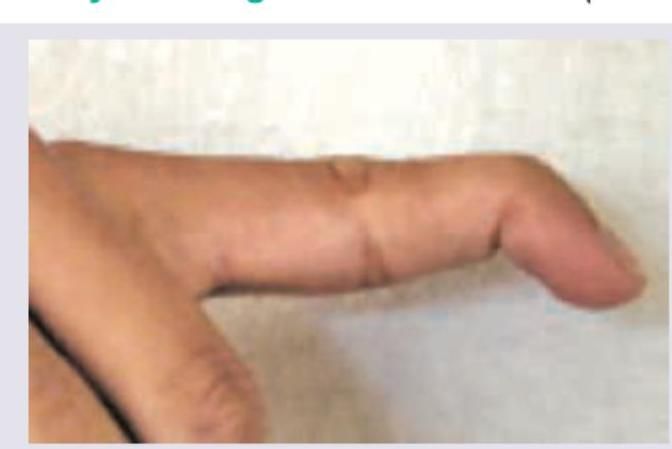
What causes mallet finger?
De-Quervain's disease classically affects the -
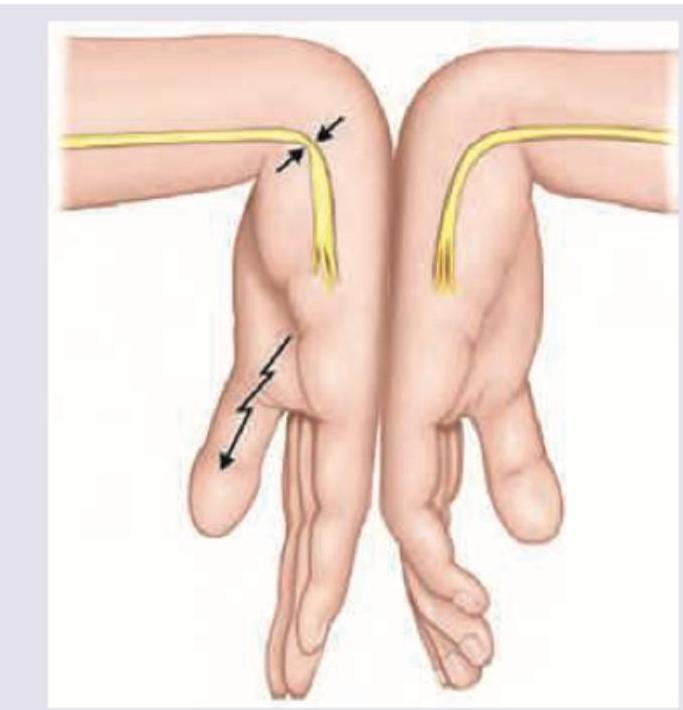
Carpal tunnel syndrome is due to compression of -
True about carpal tunnel syndrome - a) Occurs in pregnancy b) Affects medial 3½ fingers c) Associated with hypothyroidism d) Froment sign is positive e) Median nerve involvement is present
Tinel's sign that is positive and non-progressive is seen in:
Explanation: ***Median nerve*** - In a **lunate dislocation**, the lunate bone dislocates anteriorly and rotates. This displaced lunate can directly compress the **median nerve** within the carpal tunnel, which lies just anterior to it. - Compression of the median nerve leads to symptoms of **carpal tunnel syndrome**, including numbness and tingling in the thumb, index, middle, and radial half of the ring finger. *Ulnar nerve* - The **ulnar nerve** passes through Guyon's canal, which is located more medially and is generally not directly compressed by an isolated lunate dislocation. - While other wrist injuries can affect the ulnar nerve, it is not the most common nerve involved in lunate dislocation. *Posterior interosseous* - The **posterior interosseous nerve** is a branch of the radial nerve and supplies muscles in the posterior compartment of the forearm; it is located away from the carpal bones and is very rarely affected by lunate dislocation. - Injury to this nerve typically results in wrist drop or issues with finger extension. *Anterior interosseous* - The **anterior interosseous nerve** is a branch of the median nerve that supplies deep flexor muscles in the forearm; it also lies away from the direct path of a dislocated lunate. - Injury to this nerve leads to an inability to make the "ok" sign due to paralysis of the flexor pollicis longus and flexor digitorum profundus to the index finger.
Explanation: ***Bone*** - In hand injury, **skeletal stability** is paramount and is typically the first structure to be addressed to provide a stable foundation. - Repairing bone first allows for proper alignment and length restoration, which is crucial for the subsequent repair of soft tissues like tendons, nerves, and vessels. *Skin* - While skin closure is the final step in wound management, it should only be performed after deeper structures like bone, tendons, and nerves have been repaired. - Repairing the skin first would prevent access to underlying damaged structures and could lead to functional impairment. *Muscle* - Muscle repair is important for restoring function but should follow bone stabilization to ensure proper length and tension. - Unstable bone fragments can impede effective muscle repair and healing. *Nerve* - Nerve repair is critical for restoring sensation and motor function and should be done with meticulous attention to detail. - However, nerve repair typically follows bone stabilization and sometimes tendon repair, as a stable environment is necessary for successful nerve coaptation and healing.
Explanation: ***First extensor compartment of the wrist*** - **De Quervain's tenosynovitis** specifically involves the tendons of the **abductor pollicis longus (APL)** and **extensor pollicis brevis (EPB)** as they pass through the first dorsal extensor compartment of the wrist. - Inflammation and thickening of the tendon sheaths within this compartment lead to **pain and tenderness** on the radial side of the wrist, aggravated by movements of the thumb and wrist. *Median nerve* - The **median nerve** is associated with **carpal tunnel syndrome**, which presents with numbness, tingling, and weakness in the thumb, index, middle, and radial half of the ring fingers. - This condition involves compression of the median nerve as it passes through the carpal tunnel, not tenosynovitis of a specific tendon compartment. *Tendo Achilles* - The **Achilles tendon** is located at the back of the ankle and connects the calf muscles to the heel bone. - Conditions affecting the Achilles tendon include **Achilles tendinopathy** or rupture, causing pain and stiffness in the heel, which is distinct from wrist pain. *Iliolumbar ligament* - The **iliolumbar ligament** connects the transverse process of the fifth lumbar vertebra to the iliac crest. - Pain in this area is typically associated with **low back pain** or iliolumbar ligament sprain, not tenosynovitis in the wrist.
Explanation: ***Ulnar nerve*** - **Cubital tunnel syndrome** specifically refers to the compression of the **ulnar nerve** as it passes through the cubital tunnel at the elbow. - Symptoms include **numbness** and **tingling** in the little finger and half of the ring finger, and sometimes weakness of intrinsic hand muscles. *Radial nerve* - The **radial nerve** is compressed in conditions like **radial tunnel syndrome** or **wrist drop**, but not cubital tunnel syndrome. - It supplies sensation to the **dorsum of the hand** and motor function to the **extensor muscles** of the forearm and hand. *Popliteal nerve* - The **popliteal nerve** is located in the **lower limb**, specifically in the posterior knee region. - Compression of this nerve is typically associated with conditions like **peroneal nerve palsy**, affecting foot and ankle function, and is unrelated to the elbow. *Brachial nerve* - The term "brachial nerve" is generally not used in clinical anatomy; rather, it refers to the nerves originating from the **brachial plexus**. - The **brachial plexus** gives rise to several major nerves of the upper limb, including the ulnar, radial, and median nerves, but itself is not a specific site of compression in cubital tunnel syndrome.
Explanation: ***Lunate bone*** - **Kienböck's disease** is specifically defined as **avascular necrosis** of the **lunate bone** in the wrist. - This condition leads to the collapse and fragmentation of the lunate, causing wrist pain, stiffness, and weakness. *Medial cuneiform bone* - Avascular necrosis of the medial cuneiform is rare and not associated with Kienböck's disease. - This bone is located in the midfoot and is primarily involved in supporting the arch of the foot. *Femoral neck* - Avascular necrosis of the femoral neck is known as **avascular necrosis of the hip** or **osteonecrosis of the femoral head**, not Kienböck's disease. - It most commonly affects individuals with risk factors like steroid use, alcohol abuse, or trauma, and presents with groin pain. *Scaphoid bone* - Avascular necrosis of the scaphoid bone is known as **Preiser's disease**, which is distinct from Kienböck's disease. - The scaphoid is another carpal bone, and its avascular necrosis is often associated with trauma and presents with radial wrist pain.
Explanation: ***Bony avulsion of distal phalanx at the extensor tendon*** - Mallet finger commonly results from a **sudden forceful flexion** of an extended finger, leading to avulsion of the **extensor tendon's insertion** from the distal phalanx. - This specific injury, where a piece of bone is pulled away, results in the inability to **actively extend the distal interphalangeal (DIP) joint**. *Strain and subsequent stretching of the extensor tendon* - While stretching of the extensor tendon can occur, it is a less severe injury and typically does not result in the distinct **drooping deformity** characteristic of mallet finger. - This would manifest as weakness rather than a complete loss of **active extension** of the DIP joint. *Extensor tendon rupture* - A simple extensor tendon rupture means the tendon itself is torn, but it does not specify if a piece of bone has been avulsed. - While a rupture causes the inability to extend the DIP joint, the **bony avulsion** is a more precise and common mechanism for mallet finger, especially when due to trauma. *Extensor tendon rupture and bony avulsion of distal phalanx* - This option is partially correct but less precise than the most accurate answer. Mallet finger is specifically defined by the disruption of the **extensor mechanism at the DIP joint**. - Whether it's a pure tendon rupture or an avulsion fracture, the critical aspect is the loss of the tendon's attachment, with **bony avulsion** being a very common and specific cause.
Explanation: ***Extensor pollicis brevis and abductor pollicis longus*** - **De Quervain's tenosynovitis** is an inflammation of the tendons of the **extensor pollicis brevis** and **abductor pollicis longus** within the first dorsal compartment of the wrist. - This condition is characterized by pain and tenderness at the **radial styloid process**, often exacerbated by movements of the thumb or wrist. *Extensor carpi radialis and extensor pollicis longus* - The **extensor carpi radialis** muscles (longus and brevis) primarily extend and abduct the wrist, while the **extensor pollicis longus** extends the distal phalanx of the thumb. - While these muscles are in the forearm and wrist, they are not directly involved in De Quervain's tenosynovitis, which specifically affects the tendons of the first dorsal compartment. *Flexor pollicis longus and brevis* - The **flexor pollicis longus** flexes the interphalangeal joint of the thumb, and the **flexor pollicis brevis** flexes and opposes the thumb at the metacarpophalangeal joint. - These are **flexor muscles** located on the palmar side of the forearm and hand, and their tendons are not affected in De Quervain's disease. *Abductor pollicis longus and brevis* - While the **abductor pollicis longus** is one of the affected tendons in De Quervain's tenosynovitis, the **abductor pollicis brevis** is not. - The abductor pollicis brevis is a thenar muscle that abducts the thumb at the carpometacarpal joint and is typically not involved in the pathogenesis of De Quervain's.
Explanation: ***Median nerve*** - **Carpal tunnel syndrome** is a condition caused by the compression of the **median nerve** as it passes through the confined space of the carpal tunnel in the wrist. - Symptoms include numbness, tingling, and weakness in the thumb, index finger, middle finger, and the radial half of the ring finger, correlating with the median nerve's sensory and motor innervation. *Radial nerve* - The **radial nerve** is primarily responsible for innervation of the extensor muscles of the forearm and hand, and sensation over the back of the hand. - Compression of the radial nerve typically causes symptoms like **wrist drop** or sensory deficits on the dorsal aspect of the hand, which are not characteristic of carpal tunnel syndrome. *Ulnar nerve* - The **ulnar nerve** provides innervation to the little finger and the ulnar half of the ring finger, as well as some intrinsic hand muscles. - Compression of the ulnar nerve (e.g., in **Guyon's canal** or at the elbow in **cubital tunnel syndrome**) results in sensory or motor deficits in its distribution, distinctly different from carpal tunnel syndrome. *Palmar branch of the Ulnar nerve* - The **palmar branch of the ulnar nerve** is a superficial sensory branch of the ulnar nerve that innervates the skin over the hypothenar eminence. - Compression of this specific branch would cause isolated sensory changes in the hypothenar region, not the characteristic distribution seen in carpal tunnel syndrome.
Explanation: ***Median nerve involvement is present*** - Carpal tunnel syndrome is characterized by **compression of the median nerve** as it passes through the carpal tunnel in the wrist. - This compression leads to the classic symptoms of **numbness, tingling, and pain** in the median nerve distribution. *Associated with Hypothyroidism* - While **hypothyroidism** can *contribute* to carpal tunnel syndrome, it is not always present, nor is it a defining characteristic of the syndrome itself. - Hypothyroidism can cause **fluid retention** and deposition of mucopolysaccharides, which can increase pressure within the carpal tunnel. *Affects medial 3 1/2 finger* - The median nerve supplies sensation to the **thumb, index finger, middle finger, and the radial half of the ring finger** (which totals 3½ digits), not the medial 3½ fingers. - **Medial fingers** would refer to the ulnar digits, which are supplied by the ulnar nerve. *Occur in pregnancy* - **Pregnancy** is a known risk factor for developing carpal tunnel syndrome due to **hormonal changes and fluid retention**, but it is not a universally present feature in all cases. - Many individuals develop carpal tunnel syndrome without being pregnant. *Froment sign positive* - **Froment's sign** is a clinical test for **ulnar nerve palsy**, specifically weakness of the adductor pollicis muscle. - It is **not associated with carpal tunnel syndrome**, which primarily involves the median nerve.
Explanation: ***Neurotmesis*** - A positive and non-progressive **Tinel's sign** indicates that regenerating nerve fibers are unable to cross an existing **neuroma** or scar tissue, which is characteristic of **neurotmesis**. - In **neurotmesis**, there is a complete disruption of the axon, myelin, and surrounding connective tissue, making regeneration across the gap highly improbable without surgical intervention. *Neuropraxia* - In **neuropraxia**, there is a **concussion** of the nerve without disruption of the axon; nerve conduction is temporarily blocked. - A **Tinel's sign** is typically **negative** in neuropraxia because there is no axonal regeneration occurring and the nerve is fundamentally intact. *Axonotmesis* - **Axonotmesis** involves axonal disruption, but the **endoneurium** and other connective tissue layers remain intact. - While regeneration occurs in axonotmesis, a **Tinel's sign** would typically be **progressive**, indicating the advancement of regenerating axons, rather than non-progressive. *All of the options* - This option is incorrect because **neuropraxia** generally does not present with a positive Tinel's sign, and in **axonotmesis**, the sign should be progressive, not non-progressive.
Hand Anatomy and Biomechanics
Practice Questions
Hand Fractures and Dislocations
Practice Questions
Tendon Injuries
Practice Questions
Nerve Injuries in Hand
Practice Questions
Dupuytren's Disease
Practice Questions
Carpal Tunnel Syndrome
Practice Questions
Rheumatoid Hand
Practice Questions
Reconstructive Hand Surgery
Practice Questions
Tendon Transfers
Practice Questions
Congenital Hand Anomalies
Practice Questions
Hand Infections
Practice Questions
Microsurgery in Hand Surgery
Practice Questions
Get full access to all questions, explanations, and performance tracking.
Start For Free