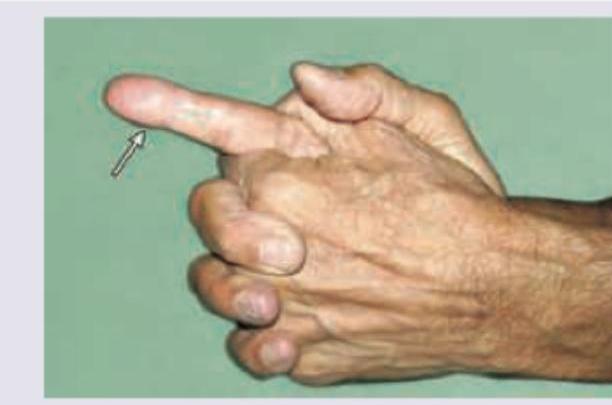
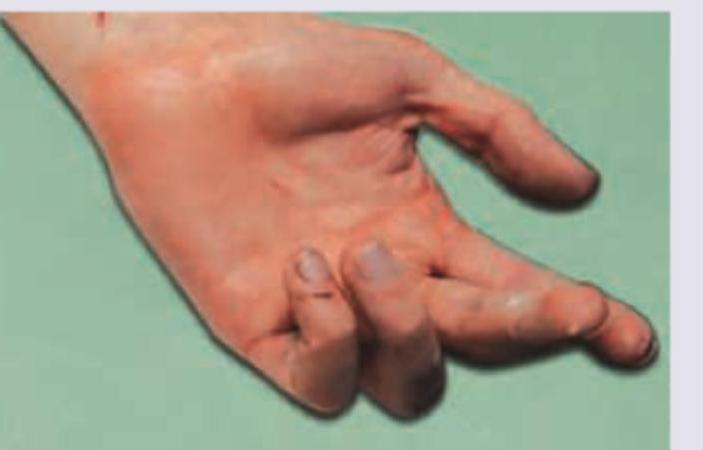
What is the MOST characteristic feature of low ulnar nerve palsy? a) Claw hand b) Sensory loss of medial four digits c) Weakness of grip d) Inability to abduct the thumb
Rupture of extensor pollicis longus tendon occurs in all of the following except -
Tardy ulnar nerve palsy is seen in ?
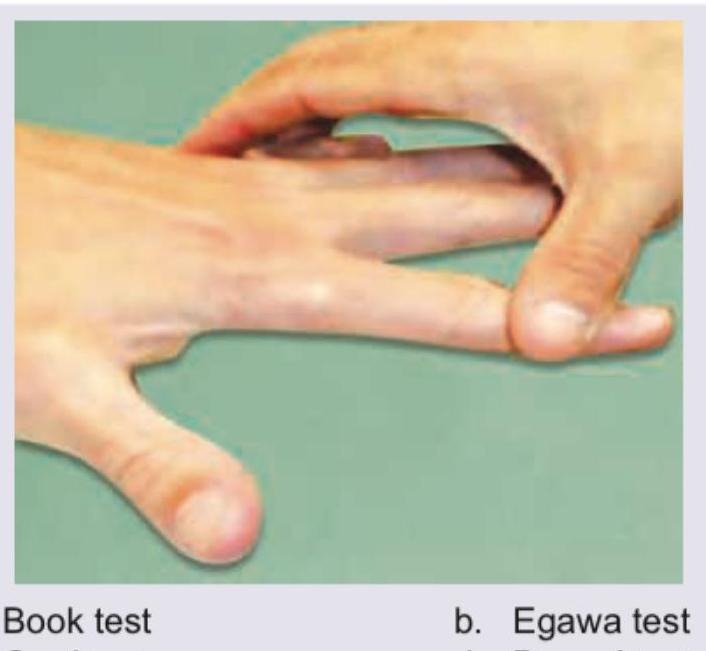
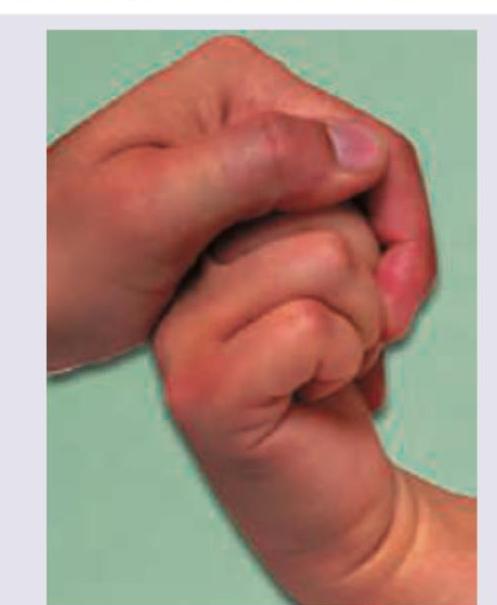
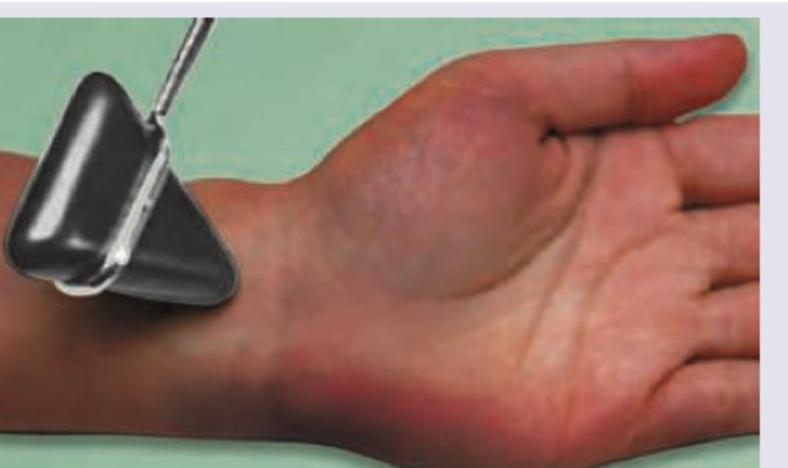
Test for De-quervain's tenovaginitis -
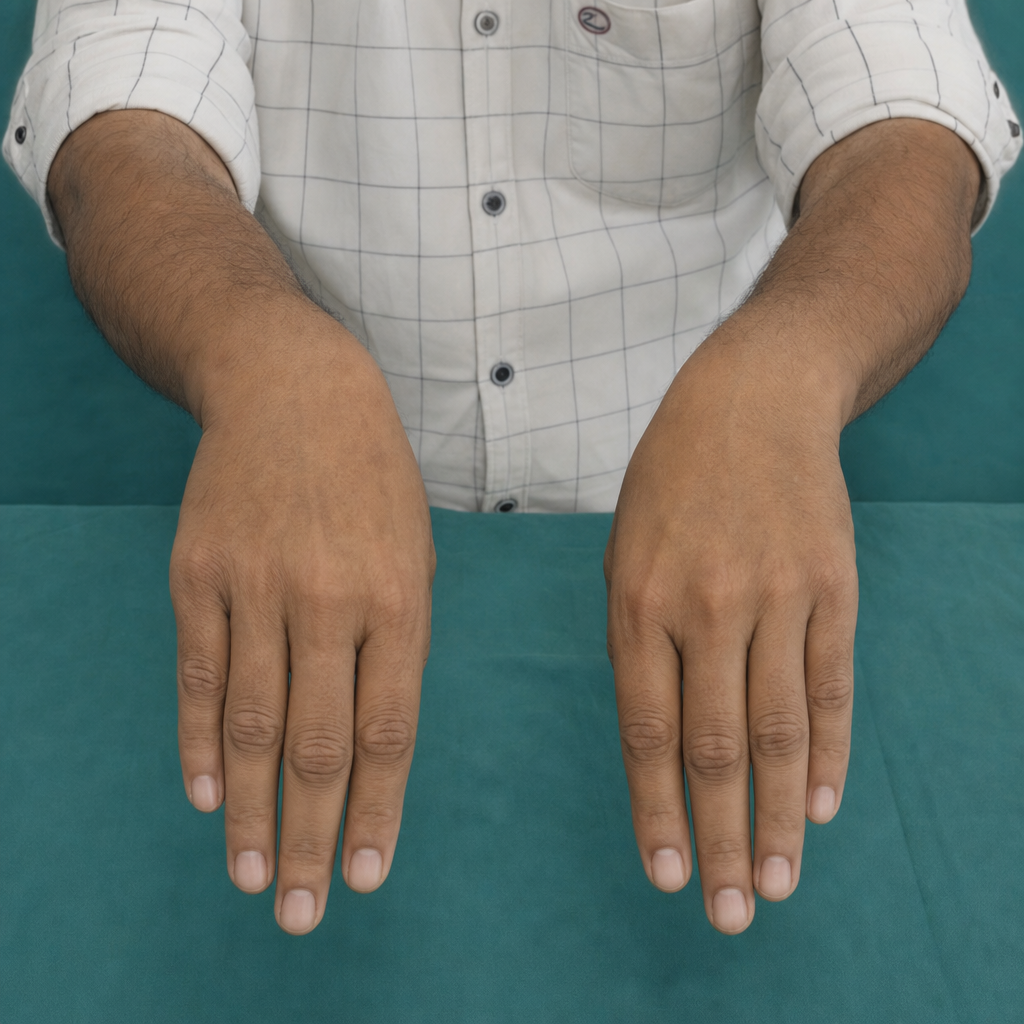
A 40-year old male after binge drinking slept on a chair. On the next day, he presented with weakness of the right arm and was not able to move his hand. Examination showed radial nerve palsy. What would be the management?
Tardy ulnar nerve palsy caused by:
Dupuytrens Contracture occurs in
Most common cause of trigger finger -
Bennett's fracture-dislocation is associated with fracture of
Swan neck deformity is:
Explanation: ***Claw hand*** - A **claw hand** (specifically an **ulnar claw**) is a classic sign of low ulnar nerve palsy, resulting from paralysis of the **interossei** and **medial two lumbricals**. - This leads to hyperextension at the **metacarpophalangeal (MCP) joints** and flexion at the **interphalangeal (IP) joints** of the 4th and 5th digits. *Sensory loss of lateral three digits* - Sensory loss in the **lateral three digits** (thumb, index, middle fingers) is characteristic of **median nerve palsy**, not ulnar nerve palsy. - The ulnar nerve supplies sensation to the **medial 1.5 digits** (half of the ring finger and the little finger). *Weakness of wrist flexion* - While the ulnar nerve contributes to wrist flexion via the **flexor carpi ulnaris**, significant weakness in overall wrist flexion alone is not its most characteristic distinguishing feature. - The median nerve and radial nerve also play crucial roles in wrist flexion and extension, respectively. *Inability to oppose the thumb* - The inability to **oppose the thumb** (touch the thumb to the tips of the other fingers) is a hallmark of **median nerve palsy**, specifically affecting the **opponens pollicis** muscle. - The ulnar nerve primarily affects adduction of the thumb via the **adductor pollicis**. *Inability to extend at M.C.P. joint* - The inability to extend at the **metacarpophalangeal (MCP) joint** is more characteristic of **radial nerve palsy**, which affects the **extensor muscles** of the fingers. - Ulnar nerve palsy causes increased extension at the MCP joints due to paralysis of the lumbricals and interossei.
Explanation: ***De Quervain's disease*** - This condition involves **tenosynovitis** of the **extensor pollicis brevis** and **abductor pollicis longus** tendons, not a rupture of the extensor pollicis longus. - The pathology is an inflammation and thickening of the tendon sheaths, distinct from a tendon tear. *Rheumatoid arthritis* - **Chronic inflammation** in rheumatoid arthritis can lead to weakening and eventual rupture of tendons, including the **extensor pollicis longus**, often due to synovitis eroding the tendon. - The condition creates an environment where tendons are vulnerable to **attrition** and damage, making rupture a recognized complication. *Drummers* - Repetitive, high-force movements involved in drumming can cause significant **stress** and microscopic damage to tendons, including the **extensor pollicis longus**. - Over time, this cumulative trauma can lead to inflammation, degeneration, and eventual **rupture** due to overuse. *Colles' fracture* - A **Colles' fracture** of the distal radius can cause a delayed rupture of the **extensor pollicis longus (EPL)** tendon. - This occurs due to attrition of the tendon as it rubs over the **roughened fracture site** or due to *avascular necrosis* of the tendon as it passes through a narrow osteofibrous tunnel.
Explanation: ***Cubitus valgus*** - **Cubitus valgus** is an increased carrying angle at the elbow, often a result of a childhood elbow fracture (e.g., **supracondylar humerus fracture**). - This deformity causes chronic stretching and friction on the **ulnar nerve** as it passes behind the medial epicondyle, leading to delayed onset (tardy) neuropathy. *Cubitus varus* - **Cubitus varus** is a decreased carrying angle (gunstock deformity), which does not typically predispose to ulnar nerve compression or palsy. - While it is also often a sequela of elbow fractures, it alters the nerve's path differently. *Excision of elbow joint* - Excision of the elbow joint is a severe surgical procedure, usually performed for conditions like severe **arthritis** or **infection**. - While it could potentially damage the ulnar nerve intraoperatively or due to scarring, it is not a classic cause of "tardy" (delayed onset) ulnar nerve palsy in the same chronic mechanical way as cubitus valgus. *Fracture of olecranon process* - An **olecranon fracture** could cause acute injury to the ulnar nerve due to direct trauma or swelling. - However, it is not a common cause of *tardy* (delayed) ulnar nerve palsy unless it leads to significant deformity impacting the ulnar groove or chronic instability, which is less common than with cubitus valgus.
Explanation: ***Finkelstein test*** - The **Finkelstein test** is performed to diagnose **De Quervain's tenosynovitis**, which involves inflammation of the **abductor pollicis longus** and **extensor pollicis brevis** tendons. - The test involves making a fist with the thumb tucked inside the fingers, followed by **ulnar deviation** of the wrist. Pain along the **radial styloid** is a positive sign. *Phalen test* - The **Phalen test** is used to diagnose **carpal tunnel syndrome**, which is compression of the **median nerve**. - This test involves holding the wrists in maximal **flexion** for 30-60 seconds, which exacerbates median nerve symptoms like **numbness** and **tingling**. *Cozen test* - The **Cozen test** is used to diagnose **lateral epicondylitis**, also known as "tennis elbow." - It involves resisted **wrist extension** and **radial deviation** with the elbow extended, causing pain at the **lateral epicondyle**. *Kanavel's sign* - **Kanavel's signs** (pain on passive extension, uniform swelling, flexed posture of digit, tenderness along the tendon sheath) are clinical indicators for **flexor tenosynovitis** in the hand. - These signs suggest a severe infection of the **flexor tendon sheath**, requiring urgent surgical intervention.
Explanation: ***Give a knuckle bender splint*** - This patient presents with features of **Saturday Night Palsy** (radial nerve compression from prolonged pressure), which is typically a **neurapraxia**. - Management for neurapraxia usually involves **conservative measures** like splinting to support the wrist and fingers, protecting the nerve, and allowing for spontaneous recovery, which typically occurs within weeks to months. *Neurolysis* - **Neurolysis** (surgical freeing of a nerve from scar tissue) is an invasive procedure generally reserved for cases of **nerve entrapment** or persistent compression that have failed conservative therapy or show signs of ongoing nerve damage. - Given the acute presentation and typical course of Saturday Night Palsy, it is too premature and often unnecessary for this type of injury, where spontaneous recovery is common. *Instant exploration* - **Instant surgical exploration** of the nerve is usually only indicated in cases of **acute, severe trauma** where nerve transection or severe crush injury is suspected, or when there are clear signs of progressive nerve dysfunction. - In Saturday Night Palsy, the injury is typically a **mild compression (neurapraxia)**, making immediate surgery unwarranted and potentially more harmful than beneficial. *Electromyography after 2 days and decide after results* - **Electromyography (EMG)** and **nerve conduction studies (NCS)** are valuable diagnostic tools but have limitations in the very acute phase of a nerve injury. - **EMG changes (denervation potentials)** typically take 2-3 weeks to develop after an injury, so performing it after only two days would likely yield normal results and not provide useful information for immediate management.
Explanation: ***Cubitus valgus and lateral condylar fracture*** - **Cubitus valgus**, often a sequela of a **lateral condylar fracture** in childhood, is the most common cause of **tardy ulnar nerve palsy**. - The increased valgus angle stretches the ulnar nerve behind the medial epicondyle over time, leading to demyelination and eventual palsy. *Cubitus varus and medial epicondylitis* - **Cubitus varus** is not typically associated with ulnar nerve compression; it can cause elbow instability but less commonly affects the ulnar nerve directly. - **Medial epicondylitis** (golfer's elbow) is an inflammation of the common flexor tendon origin and does not primarily cause ulnar nerve compression or palsy through anatomical deformity. *Cubitus varus* - **Cubitus varus**, also known as **gunstock deformity**, is a decrease in the carrying angle of the elbow. - It usually does not directly cause ulnar nerve compression, but rather can lead to other issues like elbow instability. *Medial epicondylitis and lateral epicondylitis* - **Medial epicondylitis** (golfer's elbow) involves inflammation at the medial epicondyle, and **lateral epicondylitis** (tennis elbow) involves inflammation at the lateral epicondyle; neither is a direct cause of tardy ulnar nerve palsy. - While prolonged inflammation or swelling around the medial epicondyle in some severe cases *might* indirectly affect the ulnar nerve, these conditions are not the primary cause of **tardy palsy** linked to a long-standing anatomical deformity. *Lateral condylar fracture* - A **lateral condylar fracture** itself, particularly if it heals with a **cubitus valgus** deformity, is an indirect cause. - The immediate fracture does not cause tardy palsy; rather, the *consequence* of the fracture (the deformity) causes the delayed onset of symptoms.
Explanation: ***Palmar fascia*** - **Dupuytren's contracture** is a fibromatosis affecting the palmar fascia, causing gradual flexion contractures of the fingers. - The condition leads to thickening and shortening of the **fibrous tissue** in the palm, particularly affecting the fourth and fifth digits. *Plantar fascia* - The plantar fascia is located on the sole of the foot; its inflammation or degeneration leads to **plantar fasciitis**, characterized by heel pain. - While it is a type of fibromatosis, it is distinct from Dupuytren's contracture, which specifically affects the hand. *Shoulder fascia* - The shoulder fascia is not typically associated with contractures in the same way Dupuytren's affects the hand. - Conditions affecting the shoulder, like **adhesive capsulitis** (frozen shoulder), involve the joint capsule, not primarily the fascia in this context. *Hip joint fascia* - The fascia around the hip joint can be involved in various conditions, but it does not develop **Dupuytren's-like contractures**. - Hip problems often involve the joint itself, muscles, or tendons, not a localized fascial contracture similar to that seen in the palm.
Explanation: ***Repetitive use*** - **Repetitive gripping** activities are the most common cause of trigger finger (stenosing tenosynovitis), leading to inflammation and thickening of the flexor tendon sheath. - This inflammation restricts the smooth gliding of the tendon, causing it to catch, particularly at the **A1 pulley**. *Diabetes* - While **diabetes** is a common risk factor for trigger finger, it is not the direct cause but rather predisposes individuals to the condition due to microvascular changes and increased tendon thickness. - Diabetic patients often experience more severe or multiple digit involvement, but the immediate precipitating factor is often overuse. *Trauma* - **Acute trauma** can sometimes lead to trigger finger if it directly injures the tendon sheath, but it is a less common cause than chronic repetitive strain. - Direct impact or lacerations are typically required for trauma to be the sole cause. *Rheumatoid arthritis* - **Rheumatoid arthritis** can cause tenosynovitis and contribute to trigger finger due to systemic inflammation, but it is not the most common direct cause. - In rheumatoid arthritis, the inflammation is widespread and often affects multiple joints, with trigger finger being one possible manifestation in that context.
Explanation: ***First metacarpal*** - A **Bennett's fracture** is an **intra-articular fracture** of the base of the **first metacarpal** bone. - It involves a small fragment remaining attached to the **carpus** while the rest of the metacarpal displaces radially and dorsally due to muscle pull. *Carpal* - **Carpal fractures** involve the bones of the wrist (e.g., scaphoid, lunate) and are distinct from fractures of the metacarpals. - While the first metacarpal articulates with the trapezium (a carpal bone), the fracture itself is of the metacarpal, not the carpal bone directly. *Phalanx* - **Phalanx fractures** involve the bones of the fingers or toes, which are distal to the metacarpals. - These are typically caused by direct trauma to the digits, not typically associated with the specific mechanism of a Bennett's fracture. *Ulna* - The **ulna** is one of the two long bones in the forearm and is not directly involved in hand fractures like Bennett's. - Fractures of the ulna (e.g., Monteggia, Galeazzi fractures) are distinct injuries affecting the forearm.
Explanation: ***Flexion at DIP, Hyperextension at PIP*** - In a **swan neck deformity**, the **proximal interphalangeal (PIP) joint** is hyperextended, and the **distal interphalangeal (DIP) joint** is flexed. - This characteristic posture resembles the neck of a swan and is commonly seen in conditions like **rheumatoid arthritis**. *Extension of both DIP & PIP* - This describes a neutral or extended position of the finger joints, which is not characteristic of a **swan neck deformity**. - A swan neck deformity involves abnormal angulation at both the PIP and DIP joints. *Hyperextension at DIP, Flexion of PIP* - This configuration describes a **Boutonnière deformity**, which is the reverse of a swan neck deformity. - In a **Boutonnière deformity**, the **PIP joint is flexed**, and the **DIP joint is hyperextended**. *Extension of DIP, Hyperflexion at PIP* - This describes **flexion at the PIP joint** with the DIP joint extended, which is also seen in a **Boutonnière deformity**, not a swan neck deformity. - The key distinguishing feature of a swan neck is **PIP hyperextension**.
Hand Anatomy and Biomechanics
Practice Questions
Hand Fractures and Dislocations
Practice Questions
Tendon Injuries
Practice Questions
Nerve Injuries in Hand
Practice Questions
Dupuytren's Disease
Practice Questions
Carpal Tunnel Syndrome
Practice Questions
Rheumatoid Hand
Practice Questions
Reconstructive Hand Surgery
Practice Questions
Tendon Transfers
Practice Questions
Congenital Hand Anomalies
Practice Questions
Hand Infections
Practice Questions
Microsurgery in Hand Surgery
Practice Questions
Get full access to all questions, explanations, and performance tracking.
Start For Free