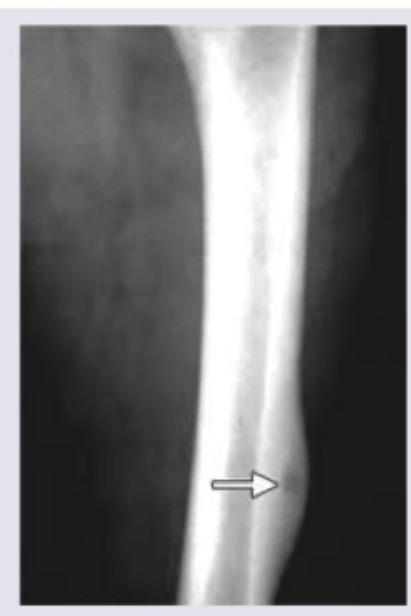
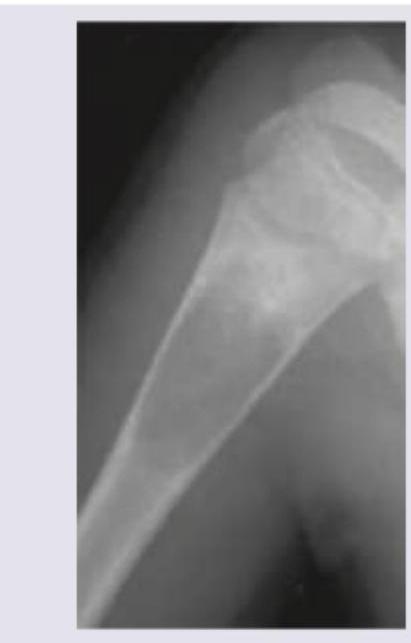
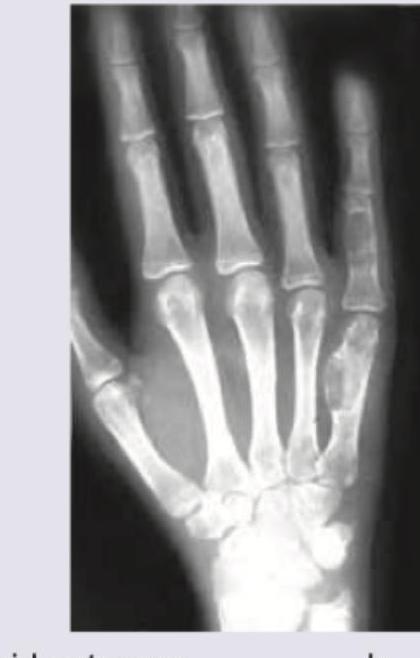
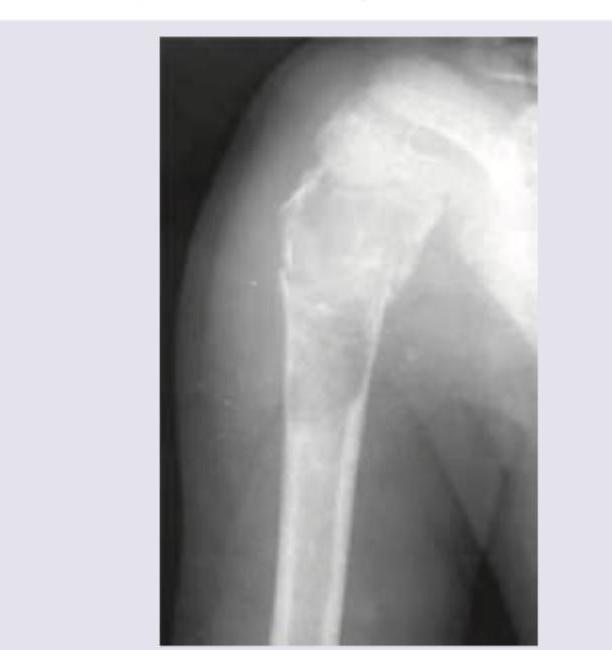
Ollier's disease of bone involves which of the following?
What is the most common site for an ivory osteoma?
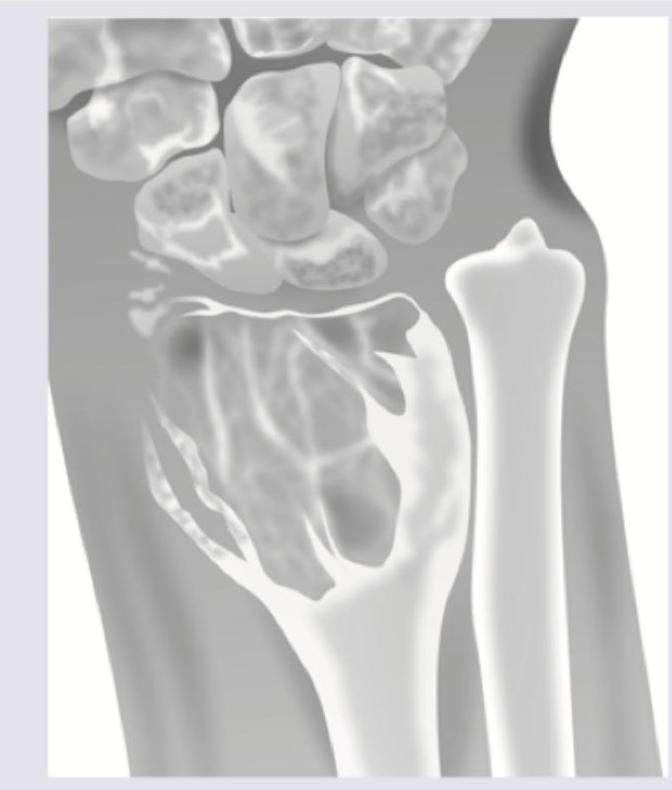
A 40-year-old female presented with an epiphyseal tumor at the lower end of the radius. What is the most likely diagnosis?
Secondaries of which of the following cause osteolytic lesions except?
Giant cell tumor is typically seen at which location within a long bone?
Which among the following is the most common malignancy of bone?
A rapid increase in the size of an osteochondroma might occur when?
Which one of the following is a rare site for metastasis?
Which of the following is true about osteochondromatosis?
Which of the following statements is TRUE regarding parosteal osteosarcoma?
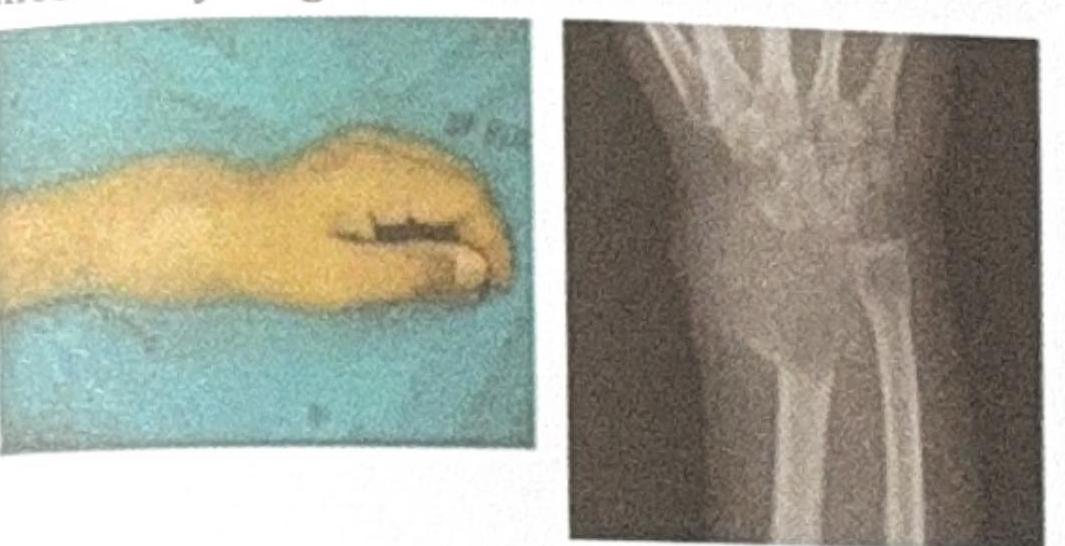
Explanation: **Explanation:** **Ollier’s disease** is a rare, non-hereditary skeletal disorder characterized by **Multiple Enchondromatosis**. Enchondromas are benign cartilaginous tumors that develop within the medullary cavity of bones, typically originating from the growth plate (physis). * **Why Option C is correct:** Ollier’s disease involves the presence of multiple enchondromas, usually with an asymmetrical distribution. These tumors primarily affect the small bones of the hands and feet, as well as the long bones (femur, tibia, humerus). The failure of normal endochondral ossification leads to skeletal deformities, limb length discrepancy, and a significant risk of malignant transformation. **Analysis of Incorrect Options:** * **Option A (Osteochondromatosis):** This refers to multiple exostoses (cartilage-capped bony outgrowths). While also a cartilaginous disorder, it is genetically distinct (EXT1/EXT2 mutations) and involves the bone surface rather than the medullary cavity. * **Option B (Metaphyseal dysplasia):** This is a group of disorders (like Pyle’s disease) characterized by defective modeling of the metaphyses, leading to a "Erlenmeyer flask" deformity, but it does not involve primary cartilaginous tumors. * **Option D (Osteoporosis):** This is a metabolic bone disease characterized by low bone mineral density and micro-architectural deterioration, unrelated to the neoplastic proliferation seen in Ollier’s. **High-Yield Clinical Pearls for NEET-PG:** * **Maffucci Syndrome:** Ollier’s disease + Soft tissue **Hemangiomas** (increased risk of visceral malignancies like GI or ovarian cancer). * **Malignant Transformation:** There is a 25–30% risk of transformation into **Chondrosarcoma** (look for sudden pain or increase in size). * **Radiology:** Classic "popcorn calcification" or "stippled" appearance within lucent lesions. * **Inheritance:** Ollier’s is **sporadic** (not inherited), unlike Multiple Hereditary Exostoses (Autosomal Dominant).
Explanation: **Explanation:** **Osteoma** is a benign, slow-growing, osteogenic lesion composed of mature compact (ivory) or cancellous bone. It is the most common benign tumor of the paranasal sinuses. 1. **Why Frontal-ethmoidal region is correct:** The majority of osteomas occur in the **paranasal sinuses**, with the **frontal sinus** being the most common site (approx. 80%), followed by the **ethmoid sinus**. These tumors are often asymptomatic and discovered incidentally on imaging. When they occur in the skull or facial bones, they are typically of the "ivory" variety—extremely dense, radiopaque bone resembling elephant tusks. 2. **Why other options are incorrect:** * **Mandible & Maxilla:** While osteomas can occur in the jaw (often associated with Gardner’s Syndrome), they are significantly less common here than in the frontal-ethmoidal complex. * **Sphenoid:** The sphenoid and maxillary sinuses are much rarer sites for osteoma compared to the frontal and ethmoid regions. **NEET-PG High-Yield Pearls:** * **Gardner’s Syndrome:** If a patient presents with multiple osteomas (especially of the mandible), look for **colonic polyposis**, soft tissue tumors (desmoids), and supernumerary teeth. * **Radiology:** On X-ray/CT, an ivory osteoma appears as a very dense, homogeneous, "bone-hard" radiopaque mass with smooth margins. * **Management:** Asymptomatic lesions are usually managed with observation. Surgery is indicated only if the tumor causes obstruction of the sinus ostium (leading to sinusitis or mucocele) or orbital/cranial complications.
Explanation: **Explanation:** The correct diagnosis is **Giant Cell Tumor (GCT)**, also known as Osteoclastoma. The key to solving this question lies in the patient’s age and the specific anatomical location of the tumor. **1. Why Giant Cell Tumor is correct:** * **Location:** GCT is characteristically an **epiphyseal** tumor that often extends into the metaphysis after the growth plate closes. The lower end of the radius is the second most common site (after the distal femur/proximal tibia). * **Age:** It typically occurs in skeletally mature adults aged **20–40 years**. * **Radiology:** It classically presents as an eccentric, "soap-bubble" appearance with a narrow zone of transition and no sclerotic rim. **2. Why other options are incorrect:** * **Ewing’s Sarcoma:** This is a tumor of children and adolescents (5–15 years) and is characteristically **diaphyseal** in location. It shows an "onion-skin" periosteal reaction. * **Osteogenic Sarcoma (Osteosarcoma):** While it is the most common primary bone malignancy, it typically affects the **metaphysis** of long bones in a younger age group (10–20 years). It presents with a "sunburst" appearance or Codman’s triangle. * **Chondromyxoid Fibroma:** This is a rare benign tumor that is usually **metaphyseal** and eccentric, typically occurring in the second or third decade of life. **High-Yield Clinical Pearls for NEET-PG:** * **GCT** is "locally aggressive" but usually benign. However, it can metastasize to the **lungs** (benign pulmonary implants). * **Histology:** Shows characteristic multinucleated giant cells scattered against a background of mononuclear stromal cells (the stromal cells are the actual neoplastic component). * **Treatment:** Extended curettage with the use of adjuvants (like liquid nitrogen or phenol) and bone grafting/bone cement (PMMA).
Explanation: **Explanation:** The majority of bone metastases are **osteolytic**, meaning they destroy bone tissue by stimulating osteoclast activity. However, certain cancers stimulate osteoblasts, leading to **osteoblastic (sclerotic)** lesions. **1. Why Prostate is the Correct Answer:** Carcinoma of the **Prostate** is the classic example of a malignancy that produces **osteoblastic (sclerotic) lesions**. The tumor cells secrete factors like Bone Morphogenetic Proteins (BMPs) and Prostate-Specific Antigen (PSA) that promote bone formation rather than destruction. Therefore, it is the exception to the rule of osteolytic secondaries. **2. Analysis of Incorrect Options (Osteolytic Lesions):** * **Kidney (Renal Cell Carcinoma):** Characteristically produces purely osteolytic, "blow-out" expansile lesions. These are often highly vascular. * **Bronchus (Lung Cancer):** Primarily causes osteolytic destruction. It is a common source of bone secondaries in men. * **Thyroid:** Like the kidney, thyroid secondaries are typically osteolytic and expansile (pulsatile). **High-Yield Clinical Pearls for NEET-PG:** * **Most common source of bone secondaries:** Breast (Women), Prostate (Men). * **Purely Osteoblastic:** Prostate, Carcinoid, Medulloblastoma. * **Mixed (Lytic + Blastic):** Breast (most common mixed), Lung, Cervix. * **Purely Osteolytic:** Kidney, Thyroid, GI tract, Melanoma. * **Pulsatile Secondaries:** Classically seen in **Renal Cell Carcinoma** and **Thyroid Carcinoma**. * **Investigation of choice:** **Bone Scan** (Technetium-99m) is highly sensitive for blastic lesions but may show a "cold spot" in purely lytic lesions like Multiple Myeloma.
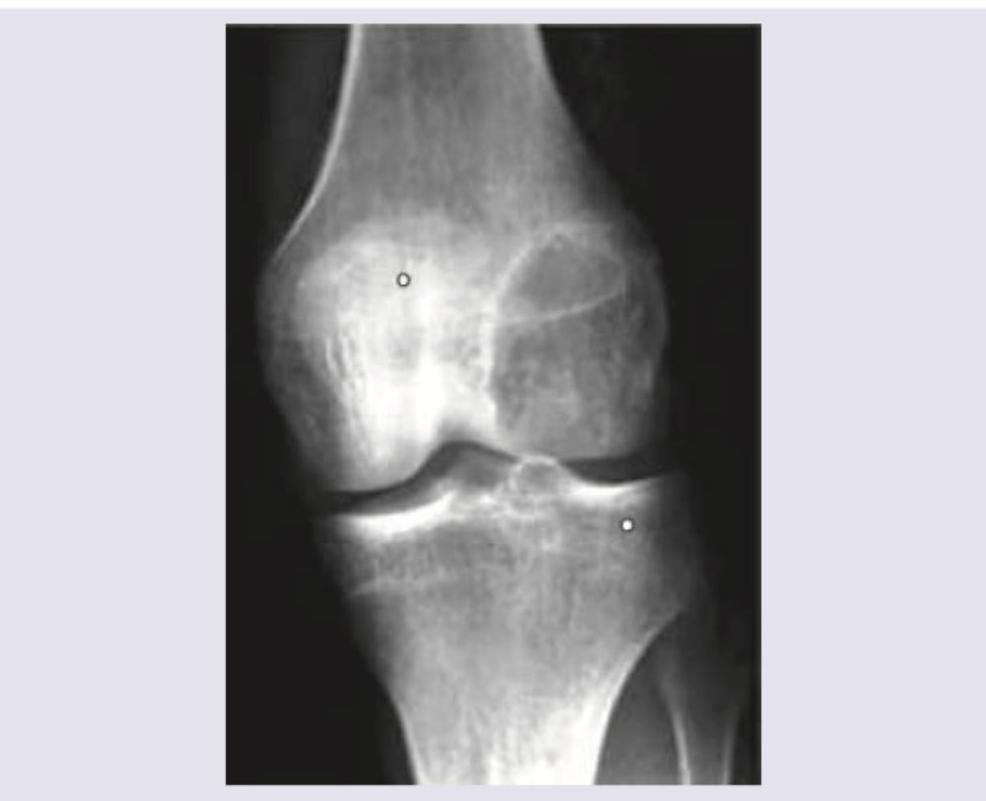
Explanation: **Explanation:** Giant Cell Tumor (GCT), also known as **Osteoclastoma**, is a benign but locally aggressive tumor. The hallmark of GCT is its specific anatomical location: it is an **epiphyseal tumor** that occurs after the closure of the growth plate (typically in adults aged 20–40 years). **Why Epiphysis is Correct:** GCT originates in the epiphysis but frequently extends into the adjacent metaphysis once the physis has fused. It is characterized by its "subarticular" location, meaning it extends right up to the joint surface (articular cartilage), which acts as a natural barrier to further spread. **Analysis of Incorrect Options:** * **Metaphysis:** This is the most common site for most primary bone tumors (e.g., Osteosarcoma, Ewing’s Sarcoma). While GCT involves the metaphysis, its *origin* and diagnostic hallmark is the epiphysis. * **Diaphysis:** This site is characteristic of tumors like Ewing’s Sarcoma, Adamantinoma, and Osteoid Osteoma. * **Growth Plate:** GCT typically occurs *after* the growth plate has fused. If a similar-looking lesion appears in a child with an open growth plate, the diagnosis is more likely to be a Chondroblastoma. **NEET-PG High-Yield Pearls:** * **Radiological Appearance:** Characterized by a **"Soap Bubble" appearance** (eccentric, expansile, lytic lesion with no reactive bone formation). * **Pathology:** Shows multinucleated giant cells scattered among mononuclear stromal cells (the stromal cells are the actual neoplastic component). * **Treatment:** Extended curettage followed by filling the cavity with **Bone Cement** (PMMA), which provides thermal necrosis of residual tumor cells. * **Other Epiphyseal Tumors:** Remember the mnemonic **"GEC"** — **G**iant Cell Tumor, **E**nchondroma (sometimes), and **C**hondroblastoma (in children).
Explanation: **Explanation:** The correct answer is **Secondary deposits (Metastatic bone disease)**. In clinical practice, metastatic tumors originating from primary sites such as the breast, prostate, lung, kidney, and thyroid are far more common than primary bone malignancies. **Breakdown of Options:** * **Secondary deposits (A):** These are the **most common malignant tumors of bone** overall. They typically occur in the older age group and most frequently involve the axial skeleton (spine, pelvis, and ribs) due to the presence of red marrow and the Batson venous plexus. * **Multiple myeloma (B):** This is the **most common primary malignant bone tumor** in adults. While frequent, its incidence is still lower than that of metastatic disease from other organs. * **Osteosarcoma (C):** This is the **most common primary solid (non-hematological) malignant bone tumor**, typically seen in children and adolescents. * **Osteoid osteoma (D):** This is a **benign** bone-forming tumor characterized by a small nidus and nocturnal pain relieved by NSAIDs; it is not a malignancy. **High-Yield Clinical Pearls for NEET-PG:** 1. **Most common bone tumor (overall):** Osteochondroma (Benign). 2. **Most common malignancy of bone:** Secondary deposits. 3. **Most common primary malignancy of bone:** Multiple Myeloma. 4. **Most common primary solid malignancy of bone:** Osteosarcoma. 5. **Commonest site for bone metastasis:** Spine (Thoracic > Lumbar). 6. **Osteoblastic vs. Osteolytic:** Prostate cancer typically causes osteoblastic (sclerotic) metastases, while most others (like lung or thyroid) are primarily osteolytic. Breast cancer is often mixed.
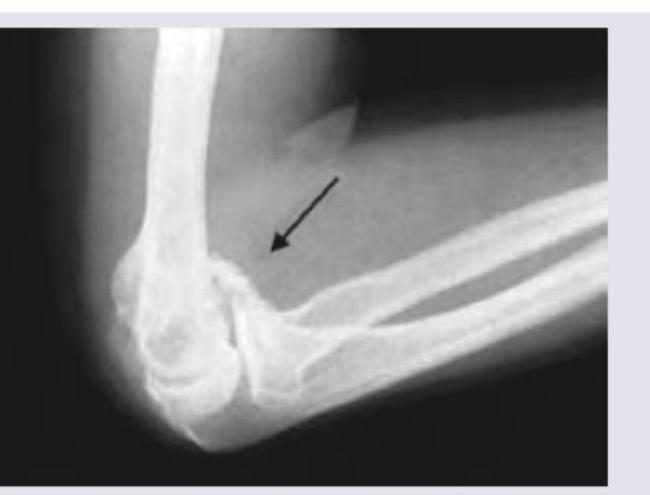
Explanation: **Explanation:** **Osteochondroma** (Exostosis) is the most common benign bone tumor. It is characterized by a cartilage-capped bony outgrowth from the metaphysis. While usually asymptomatic, a **rapid increase in size** after skeletal maturity is a classic "red flag" for **Malignant Transformation** into a Chondrosarcoma (occurring in <1% of solitary cases and ~5-10% of Multiple Hereditary Exostoses). **Why the other options are incorrect:** * **Bursitis:** While an overlying bursa (exostosis bursata) can form and cause swelling due to friction against soft tissues, it typically presents as a fluctuant, painful mass rather than a rapid growth of the bony lesion itself. * **Rupture of the stalk:** This is a traumatic event (fracture of the pedicle) that leads to acute pain and displacement, not a progressive increase in size. * **Dystrophic calcification:** This refers to the deposition of calcium in dead or degenerate tissue. While it may change the radiological density of the cartilage cap, it does not cause a rapid clinical increase in the tumor's dimensions. **NEET-PG High-Yield Pearls:** 1. **Cartilage Cap Thickness:** In adults, a cartilage cap **>2 cm** on MRI is highly suggestive of malignancy. 2. **Growth Plate:** Osteochondromas typically stop growing once the nearest epiphyseal plate closes. Growth in an adult is suspicious. 3. **Genetics:** Associated with mutations in **EXT1** and **EXT2** genes. 4. **Direction of Growth:** The tumor always grows **away from the joint** (towards the diaphysis).
Explanation: **Explanation:** The distribution of skeletal metastasis is primarily determined by the presence of **red bone marrow**. Metastatic cells typically travel via the bloodstream and settle in areas with high vascularity and active marrow. **1. Why "Forearm and leg bones" is the correct answer:** In adults, red marrow is replaced by yellow (fatty) marrow in the distal parts of the appendicular skeleton. Therefore, metastasis is **rarely seen distal to the elbow and the knee**. When metastasis does occur in the hands or feet (acrometastasis), it is most commonly associated with primary bronchogenic carcinoma. **2. Analysis of incorrect options:** * **A. Vertebrae:** This is the **most common site** for skeletal metastasis due to the extensive axial red marrow and the **Batson’s venous plexus**, which allows retrograde spread from pelvic and abdominal organs without passing through the lungs. * **B. Skull:** A frequent site for metastasis, particularly from breast, lung, and thyroid cancers. In children, Neuroblastoma often metastasizes here. * **C. Pelvis:** Along with the spine and ribs, the pelvis contains significant amounts of hematopoietically active red marrow, making it a high-predilection site. **Clinical Pearls for NEET-PG:** * **Most common primary source:** Prostate (in men) and Breast (in women). * **Most common site of metastasis:** Spine (Thoracic > Lumbar > Cervical). * **Osteoblastic lesions:** Classically seen in Prostate cancer. * **Osteolytic lesions:** Classically seen in Lung, Thyroid, and Kidney (RCC) cancers. * **Investigation of choice:** **PET-CT** or **Bone Scan** (Technetium-99m), except for Multiple Myeloma where bone scans are often negative.
Explanation: **Explanation:** **Osteochondromatosis** (also known as Synovial Chondromatosis) is a benign monoarticular arthropathy characterized by the metaplastic development of cartilaginous nodules within the synovial membrane. These nodules can detach and become "loose bodies" within the joint. 1. **Why Option B is Correct:** Unlike Osteochondroma (a bone tumor of childhood), **Synovial Osteochondromatosis typically manifests in adulthood**, most commonly in the 3rd to 5th decades of life (ages 30–50). It presents with joint pain, swelling, and restricted range of motion. 2. **Analysis of Incorrect Options:** * **Option A:** Malignant transformation into synovial chondrosarcoma is **rare** (occurring in <5% of cases). It is primarily a benign condition. * **Option C:** While the knee is the most common site for *solitary* osteochondroma, in the context of synovial osteochondromatosis, the **knee is indeed the most common site**, but the question asks for the "true" statement among specific distractors. *Note: In many exam patterns, if B is the keyed answer, it highlights the age of onset as the primary distinguishing feature from pediatric bone tumors.* * **Option D:** The condition is significantly **more common in men** (Male:Female ratio is approximately 2:1 to 4:1). **NEET-PG High-Yield Pearls:** * **Radiological Sign:** Characterized by multiple "rice grain" or "cobblestone" calcified loose bodies within the joint space. * **Pathophysiology:** Synovial metaplasia (Type Reichel-Jones-Henderson Syndrome). * **Treatment:** Arthroscopic or open synovectomy with removal of loose bodies. * **Distinction:** Do not confuse this with *Hereditary Multiple Exostoses* (Diaphyseal Aclasis), which involves multiple bone outgrowths (osteochondromas) and presents in childhood.
Explanation: **Explanation:** **Parosteal Osteosarcoma** is a subtype of surface osteosarcoma that arises from the outer layer of the periosteum. It is a **low-grade, slow-growing** malignancy, which distinguishes it from the highly aggressive conventional (medullary) osteosarcoma. 1. **Why Option C is Correct:** While parosteal osteosarcoma primarily grows on the bone surface (juxtacortical), it is a misconception that it is strictly limited to the surface. In approximately **20-25% of cases**, the tumor can erode the underlying cortex and **involve the medullary cavity**. Identifying medullary involvement is crucial for surgical planning (wide resection). 2. **Why Other Options are Incorrect:** * **Option A:** Parosteal osteosarcoma has a **significantly better prognosis** (5-year survival >90%) compared to medullary osteosarcoma, due to its low-grade nature and lower metastatic potential. * **Option B:** As explained above, medullary involvement is possible and documented in advanced stages. * **Option D:** Unlike most primary bone tumors, parosteal osteosarcoma shows a **female predilection** (F:M ratio approx. 3:2). **High-Yield Clinical Pearls for NEET-PG:** * **Most Common Site:** Posterior aspect of the **distal femur** (popliteal fossa). * **Age Group:** Older than conventional osteosarcoma (typically 20–40 years). * **Radiological Feature:** A "stuck-on" cauliflower-like ossified mass with a **radiolucent "string sign"** (a thin line separating the tumor from the cortex). * **Histology:** Shows well-differentiated osteoid with minimal atypia (often confused with Fibrous Dysplasia or Myositis Ossificans). * **Treatment:** Wide local excision is usually curative; chemotherapy is generally not required unless dedifferentiation occurs.
Classification of Bone Tumors
Practice Questions
Benign Bone Tumors
Practice Questions
Malignant Primary Bone Tumors
Practice Questions
Metastatic Bone Disease
Practice Questions
Tumor-Like Lesions of Bone
Practice Questions
Soft Tissue Tumors
Practice Questions
Evaluation and Staging of Bone Tumors
Practice Questions
Biopsy Principles
Practice Questions
Limb Salvage Surgery
Practice Questions
Amputation for Bone Tumors
Practice Questions
Adjuvant Therapies
Practice Questions
Surveillance and Follow-up
Practice Questions
Get full access to all questions, explanations, and performance tracking.
Start For Free