Wolff's law states that:
Who coined the term orthopaedics?
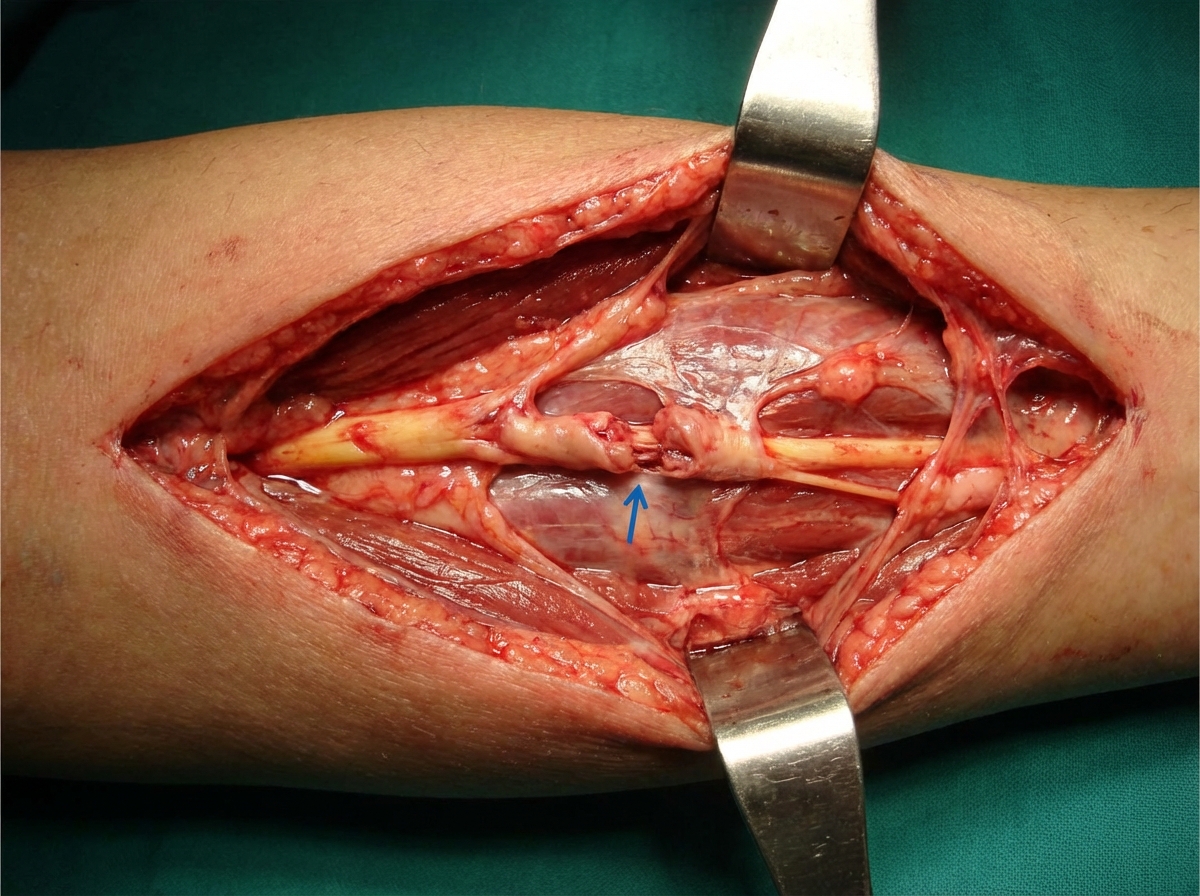
What is the difference between neuropraxia and axonotmesis?
All are true regarding bone remodeling, EXCEPT:
Myositis ossificans is differentiated from other reactive fibroblastic proliferations by the presence of?
Which of the following changes occurs during bone growth?
All of the following cause osteonecrosis except?
What type of joint is the inferior tibiofibular joint?
The X-ray shows plating done for a fracture. How does this fracture heal?

If the outer sheath and nerve fibres are intact and the inner axon is damaged, it is known as
Explanation: **Explanation:** **Wolff’s Law** is a fundamental principle in orthopaedics which states that bone is a dynamic tissue that models and remodels in response to the mechanical demands placed upon it. * **Why Option A is correct:** When a bone is subjected to increased loading (stress), it undergoes internal architectural changes. Osteoblasts lay down new bone along the lines of stress, increasing bone density and strength. Conversely, if loading decreases (e.g., prolonged bed rest or spaceflight), the bone weakens due to increased osteoclastic activity. This is the basis of "form follows function." **Analysis of Incorrect Options:** * **Option B:** Longitudinal growth occurs at the **physis (epiphyseal plate)**, not the diaphysis. The diaphysis contributes primarily to the girth (width) of the bone via appositional growth. * **Option C:** In acute osteomyelitis, X-ray changes (including periosteal reaction) typically take **7–14 days** to appear. A normal X-ray within the first week never rules out infection; MRI is the gold standard for early diagnosis. * **Option D:** This is a misconception. While some deformities may progress, many angular deformities (like physiological genu valgum) resolve spontaneously. Furthermore, **Heuter-Volkmann Law** (the counterpart to Wolff’s Law) suggests that excessive pressure on a growth plate inhibits growth, which can actually worsen or create deformities. **High-Yield Clinical Pearls for NEET-PG:** * **Heuter-Volkmann Law:** Relates to the physis; increased pressure inhibits longitudinal growth, while decreased pressure accelerates it. * **Piezoelectric Effect:** The mechanism behind Wolff’s Law. Bone compression produces a negative electrical charge, which stimulates osteoblasts (bone formation). * **Clinical Application:** Early mobilization and weight-bearing after fractures (where stable) promote faster healing and prevent disuse osteoporosis.
Explanation: **Explanation:** **Correct Answer: C. Nicholas Andry** The term "Orthopaedics" was coined by **Nicholas Andry** in **1741**. He was a French physician who published a famous book titled *Orthopaedia: or the Art of Correcting and Preventing Deformities in Children*. The word is derived from the Greek roots **"Orthos"** (meaning straight) and **"Paidios"** (meaning child). Andry believed that many adult skeletal deformities originated during childhood and could be prevented or corrected through exercise and posture. **Analysis of Incorrect Options:** * **A. Louis Pasteur:** Known as the father of microbiology; he developed the germ theory of disease and vaccines for rabies and anthrax. * **B. Edward Jenner:** Known as the father of immunology; he pioneered the concept of vaccines and created the first smallpox vaccine. * **C. Kuntscher (Gerhard Kuntscher):** A pioneer in modern trauma surgery who introduced the **Kuntscher nail (K-nail)** for the intramedullary nailing of long bone fractures (specifically the femur) during WWII. **High-Yield Clinical Pearls for NEET-PG:** * **The Symbol of Orthopaedics:** Nicholas Andry is also responsible for the **"Tree of Andry"** (a crooked sapling tied to a straight stake), which remains the universal symbol for orthopaedic surgery. * **Father of Orthopaedics:** While Andry coined the term, **Jean-André Venel** is often considered the "Father of Orthopaedics" for establishing the first true orthopaedic institute. * **Father of Modern Orthopaedics (UK):** Sir Hugh Owen Thomas. * **Father of Indian Orthopaedics:** Dr. Mukhopadhaya.
Explanation: This question tests your understanding of the **Seddon Classification of Nerve Injuries**. ### 1. Why the Correct Answer is Right The fundamental difference between **Neuropraxia** and **Axonotmesis** lies in the integrity of the axon and the subsequent occurrence of **Wallerian degeneration**. * **Neuropraxia:** This is a physiological conduction block (usually due to focal demyelination) without any axonal discontinuity. Since the axon is intact, Wallerian degeneration does not occur. On **Electromyography (EMG)**, there are **no denervation potentials** (fibrillations or positive sharp waves) because the nerve distal to the injury remains viable. * **Axonotmesis:** There is physical disruption of the axon but the endoneurial sheath remains intact. This leads to Wallerian degeneration distal to the injury. On **EMG**, this is characterized by **denervation potentials** appearing 2–3 weeks post-injury. ### 2. Why Other Options are Wrong * **Sensory and Motor Loss (B & C):** Both Neuropraxia and Axonotmesis present clinically with motor paralysis and sensory loss. Therefore, clinical examination alone cannot reliably distinguish between the two in the acute phase. * **All of the Above (D):** Since sensory and motor deficits are common to both, they are not "differences." ### 3. High-Yield Clinical Pearls for NEET-PG * **Neuropraxia:** Best prognosis; recovery is rapid (days to weeks) as it only requires remyelination. Example: *Saturday Night Palsy*. * **Axonotmesis:** Recovery is slow (1 mm/day) as the axon must regenerate from the site of injury to the target muscle. *Tinel’s sign* will be positive and will migrate distally as the nerve heals. * **Neurotmesis:** Complete transection of the nerve (axon + all connective tissue sheaths). Requires surgical intervention; spontaneous recovery is impossible. * **Sunderland Classification:** A more detailed 5-degree classification where Grade 1 is Neuropraxia and Grade 2 is Axonotmesis.
Explanation: **Explanation:** Bone remodeling is a lifelong physiological process where mature bone tissue is removed (resorption) and new bone tissue is formed (ossification). **1. Why Option A is the Correct Answer (The Exception):** In bone remodeling, the goal is to maintain structural integrity. Therefore, **woven bone (immature, disorganized bone) is replaced by lamellar bone (mature, organized bone)**, not the other way around. Woven bone is typically seen during rapid growth, initial fracture healing (callus), or pathological states (e.g., Paget’s disease). Remodeling converts this weak woven bone into strong, load-bearing lamellar bone. **2. Analysis of Other Options:** * **Option B:** Resorption is the first stage of the remodeling cycle (ARF: Activation-Resorption-Formation). This is carried out by **osteoclasts**, which create Howship’s lacunae. * **Option C:** Both cortical and cancellous bones undergo remodeling via **Basic Multicellular Units (BMUs)**, which consist of a coordinated team of osteoclasts (cutting cone in cortical bone) and osteoblasts (closing cone). * **Option D:** Once osteoblasts finish secreting the bone matrix (osteoid), some become trapped within the matrix and differentiate into **osteocytes**, which act as mechanosensors. **High-Yield NEET-PG Pearls:** * **Woven Bone:** Characterized by random collagen arrangement; it is always pathological in adults except during fracture healing. * **Lamellar Bone:** Characterized by parallel collagen layers; it is the hallmark of healthy mature bone. * **Wolff’s Law:** Bone remodels in response to the mechanical stresses placed upon it. * **RANKL/OPG Pathway:** The primary regulator of osteoclast differentiation and activity during remodeling.
Explanation: **Explanation:** **Myositis Ossificans (MO)** is a benign, non-neoplastic condition characterized by the formation of heterotopic bone within soft tissues, typically following trauma. **Why Metaplastic Bone is Correct:** The hallmark of Myositis Ossificans is **metaplasia**. In this process, primitive mesenchymal cells in the soft tissue differentiate into osteoblasts, which then lay down organized bone where it does not normally exist. Histologically, MO exhibits a characteristic **"Zonal Phenomenon"**: 1. **Central zone:** Proliferating undifferentiated fibroblasts. 2. **Intermediate zone:** Osteoblasts laying down unmineralized osteoid. 3. **Peripheral zone:** Mature, mineralized **metaplastic lamellar bone**. The presence of this well-organized metaplastic bone at the periphery helps differentiate it from malignant lesions like osteosarcoma (where the center is more mature). **Why Other Options are Incorrect:** * **Dysplastic bone:** Refers to abnormal, disorganized growth (often seen in fibrous dysplasia). MO is a reactive, not a dysplastic, process. * **Dystrophic bone:** This term is usually associated with *dystrophic calcification* (calcium deposits in dead/degenerate tissue without bone formation). MO involves true bone formation (ossification), not just calcification. * **Hypertrophic bone:** Refers to an increase in the size of existing bone (e.g., in response to stress). MO involves the formation of *new* bone in a new location. **NEET-PG High-Yield Pearls:** * **Common Site:** Brachialis (elbow) and Quadriceps (thigh). * **Clinical Sign:** Pain and a palpable mass following trauma; "Stiff joint" if near an articulation. * **Radiology:** "Egg-shell calcification" (peripheral mineralization). * **Management:** Conservative initially (Rest, NSAIDs). **Surgery is contraindicated** in the early stages as it leads to high recurrence; excision should only be done once the bone is "mature" (usually 6–12 months).
Explanation: **Explanation:** Bone growth and remodeling are dynamic processes involving bone formation (osteoblastic activity) and bone resorption (osteoclastic activity). **Why Option D is Correct:** **Osteocalcin** is a non-collagenous protein hormone synthesized specifically by **mature osteoblasts**. It plays a crucial role in bone mineralization and calcium ion binding. Because its synthesis is directly linked to osteoblast activity, serum osteocalcin levels serve as a highly specific **biochemical marker of bone formation**. During periods of active bone growth (such as puberty or fracture healing), osteoblast activity increases, leading to elevated levels of osteocalcin. **Why Other Options are Incorrect:** * **A. Increased acid phosphatase:** Tartrate-resistant acid phosphatase (TRAP) is a marker of **bone resorption** (osteoclast activity), not bone formation. * **B. Increased urinary calcium:** Urinary calcium is typically a marker of bone resorption or metabolic derangements (like hyperparathyroidism). It does not specifically indicate physiological bone growth. * **C. Increased bone nucleotidase:** This is not a standard marker for bone growth. While 5'-nucleotidase is a liver enzyme, it has no specific diagnostic value in monitoring bone formation. **NEET-PG High-Yield Pearls:** * **Markers of Bone Formation:** Serum Alkaline Phosphatase (ALP) - *most commonly used*; Osteocalcin - *most specific*; Serum P1NP (Procollagen type 1 N-terminal propeptide). * **Markers of Bone Resorption:** Urinary Hydroxyproline; Serum/Urinary Pyridinoline and Deoxypyridinoline; Serum TRAP. * **Clinical Note:** Osteocalcin is Vitamin K and Vitamin D dependent; it also has an extra-skeletal role in glucose metabolism by increasing insulin secretion and sensitivity.
Explanation: **Explanation:** Osteonecrosis, also known as **Avascular Necrosis (AVN)**, is a condition resulting from the temporary or permanent loss of blood supply to the bone, leading to cell death and eventual collapse of the bone structure. The correct answer is **"None of the above"** because all three listed conditions (A, B, and C) are well-established causes of osteonecrosis. * **Sickle Cell Anemia:** This is a classic cause of AVN. The sickled red blood cells cause "sludging" and vaso-occlusion in the microvasculature of the bone (especially the femoral head), leading to ischemia. * **Corticosteroid Use:** Steroids are the most common non-traumatic cause of AVN. They are thought to cause hypertrophy of fat cells in the bone marrow, increasing intraosseous pressure and reducing sinusoidal blood flow. * **Disseminated Intravascular Coagulation (DIC):** DIC leads to the formation of widespread microthrombi within the systemic circulation. When these thrombi occur in the terminal vessels supplying bone, they cause infarction and subsequent necrosis. **Clinical Pearls for NEET-PG:** * **Most Common Site:** The **Femoral Head** is the most common site for AVN due to its retrograde blood supply (primarily the medial circumflex femoral artery). * **Most Sensitive Investigation:** **MRI** is the gold standard for early diagnosis (shows the "double line sign"). * **X-ray Finding:** The **"Crescent Sign"** (subchondral lucency) indicates impending articular collapse. * **Mnemonic for Causes (PLASTIC RAGS):** **P**ancreatitis/Pregnancy, **L**upus (SLE), **A**lcohol, **S**teroids, **T**rauma, **I**diopathic/Infection, **C**aisson disease, **R**adiation, **A**myloidosis, **G**aucher disease, **S**ickle cell anemia.
Explanation: **Explanation:** The **inferior tibiofibular joint** is a classic example of a **Syndesmosis**. A syndesmosis is a type of fibrous joint where two adjacent bones are linked by a strong interosseous membrane or ligament, allowing for minimal movement but providing significant structural stability. At the ankle, this joint is formed by the rough surfaces of the distal tibia and fibula, held together by the anterior and posterior tibiofibular ligaments and the interosseous ligament. **Analysis of Options:** * **Gomphosis (A):** This is a specialized fibrous "peg-and-socket" joint, found exclusively where the roots of the **teeth** fit into the alveolar sockets of the mandible and maxilla. * **Condylar (B):** This is a type of synovial joint (e.g., the knee or metacarpophalangeal joints) where an ovoid articular surface fits into an elliptical cavity, allowing movement in two planes. * **Synchondrosis (D):** This is a primary cartilaginous joint where bones are joined by hyaline cartilage (e.g., the **epiphyseal plate** in growing bone or the first rib-sternum junction). These usually ossify with age. **Clinical Pearls for NEET-PG:** * **High-Yield Fact:** The inferior tibiofibular syndesmosis is crucial for the stability of the **ankle mortise**. * **Clinical Correlation:** A "High Ankle Sprain" refers to an injury of this syndesmosis. * **Radiology:** On an X-ray, an increase in the "tibiofibular clear space" (>6mm) indicates a syndesmotic injury, often requiring surgical stabilization with a syndesmotic screw. * **Other Syndesmoses:** The middle radio-ulnar joint is another example of a syndesmosis in the human body.
Explanation: **Primary healing** - **Plating of a fracture** aims to achieve **absolute stability** at the fracture site, which facilitates primary bone healing. - In primary healing, there is **direct bone formation** across the fracture gap without the formation of a significant callus. *Secondary healing* - Secondary healing involves the formation of a **callus** (fibrous tissue, cartilage, and immature bone) to bridge the fracture gap. - This type of healing occurs in situations with **relative stability** and some micromotion at the fracture site, such as with casting or intramedullary nailing. *Tertiary healing* - **Tertiary healing** is not a recognized term in the context of fracture healing. - Bone healing typically involves either primary or secondary mechanisms depending on the stability achieved. *Distraction histiogenesis* - **Distraction histiogenesis** is the process by which new bone is formed between bone surfaces that are gradually pulled apart using an external fixator (**distraction osteogenesis**). - This is used in procedures like **limb lengthening** and is distinct from the direct healing of a fracture fixed with a plate.
Explanation: ***Axonotmesis*** - This type of nerve injury involves damage to the **axon** itself, while the connective tissue layers (**endoneurium, perineurium, epineurium**) remain intact. - While the axon is disrupted, the preservation of the nerve's outer sheath allows for potential, albeit slow, **regeneration** of the axon. *Axonapraxia* - This term is not a standard classification of nerve injury. The correct term for a transient block in nerve conduction is **neurapraxia**. *Neurotmesis* - **Neurotmesis** is the most severe type of nerve injury, involving complete severance of the **axon** and all supporting **connective tissue sheaths**. - This type of injury requires **surgical repair** for any chance of functional recovery. *Neurapraxia* - **Neurapraxia** is the mildest form of nerve injury, characterized by a temporary **conduction block** without axonal damage. - Recovery is typically complete within days to weeks, as the **myelin sheath** may be temporarily dysfunctional but the axon remains intact.
Bone Structure and Function
Practice Questions
Cartilage Biology and Physiology
Practice Questions
Muscle and Tendon Physiology
Practice Questions
Joint Biomechanics
Practice Questions
Fracture Healing Process
Practice Questions
Bone Metabolism and Turnover
Practice Questions
Orthopaedic Biomaterials
Practice Questions
Tribology in Orthopaedics
Practice Questions
Gait Analysis
Practice Questions
Biomechanics of Spine
Practice Questions
Applied Surgical Anatomy
Practice Questions
Bone Banking and Grafting
Practice Questions
Get full access to all questions, explanations, and performance tracking.
Start For Free