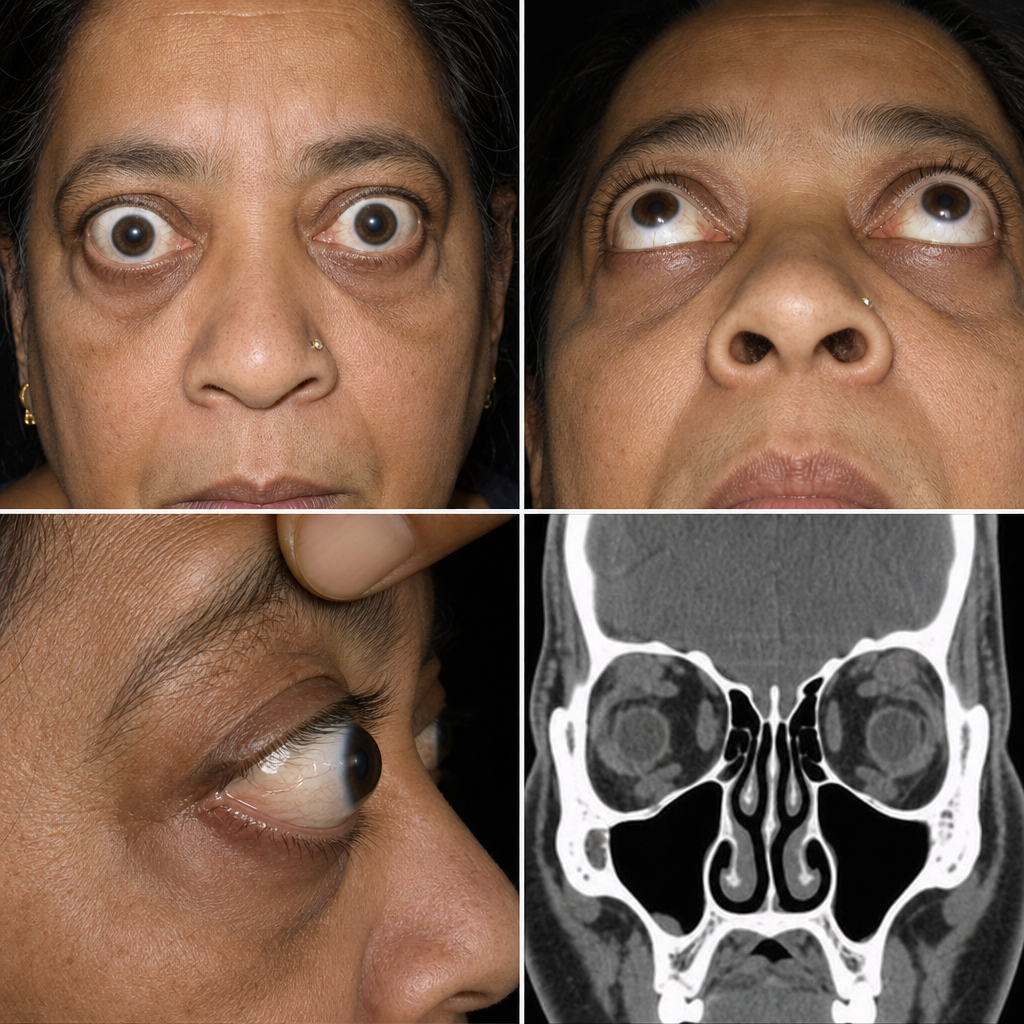
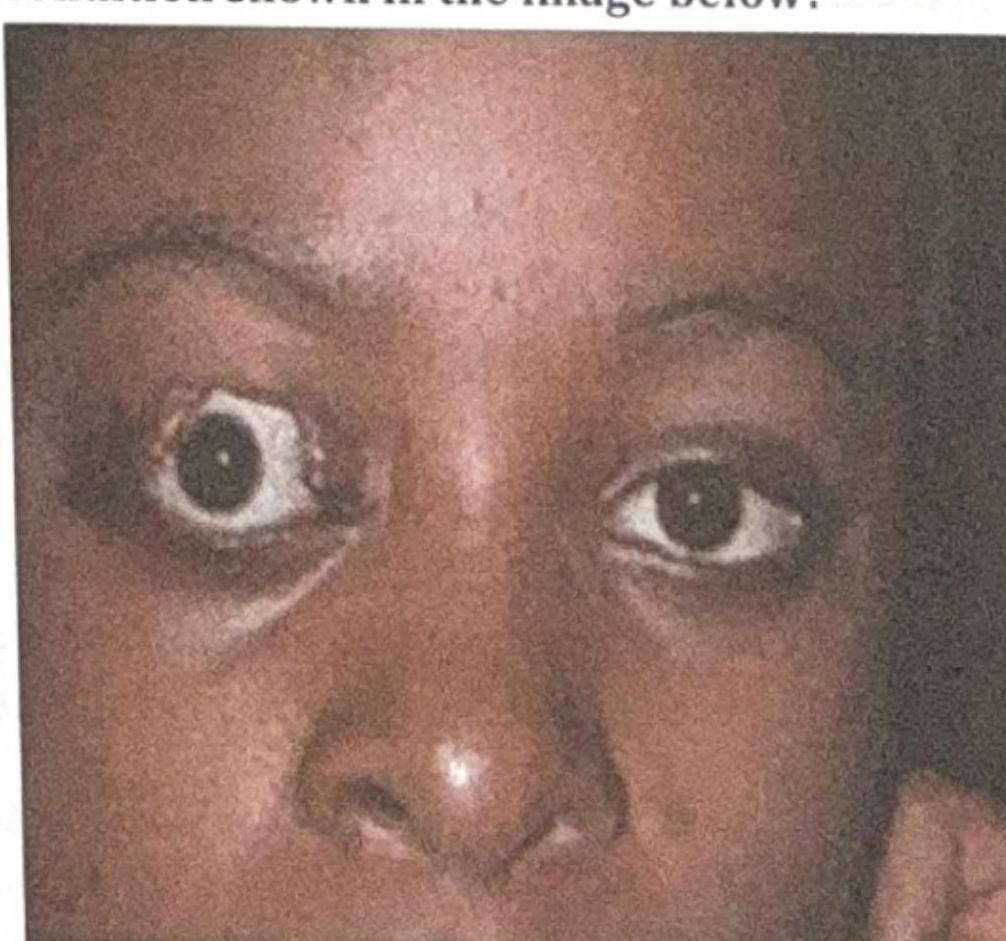
Which is the weakest wall of the human orbit?
In a patient with orbital cellulitis, culture of the causative microorganism shows greenish colonies and optochin sensitivity. What is the most likely organism?
One of the early symptoms of orbital involvement by basal cell carcinoma of the lid is:
Which of the following tumours present with proptosis?
Proptosis is seen in which of the following conditions?
Intraorbital abscess formation occurs most commonly in which quadrant of the orbit?
All of the following types of lymphoma are commonly seen in the orbit except?
What is the most common cause of intermittent exophthalmos?
What is the most common tumor to metastasize to the orbit in children?
Intermittent proptosis is seen in which of the following conditions?
Explanation: **Explanation:** The human orbit is a pyramidal structure composed of seven bones. Understanding the relative strength and thickness of its walls is a high-yield topic for NEET-PG. **Correct Answer: B. Medial Wall** The medial wall is considered the **weakest wall** of the orbit. It is primarily composed of the **lamina papyracea** of the ethmoid bone. As the name suggests ("papyracea" meaning paper-like), it is extremely thin (0.2–0.4 mm). This fragility makes it the most common site for orbital wall fractures and the most frequent route for the spread of infection from the ethmoid sinuses into the orbit (orbital cellulitis). **Analysis of Incorrect Options:** * **A. Roof:** Formed mainly by the frontal bone. While thin, it is generally stronger than the medial wall. Its primary clinical significance is its proximity to the anterior cranial fossa. * **C. Floor:** Formed mainly by the maxillary bone. It is the **second weakest wall** and the most common site for **blow-out fractures** (specifically the thin bone medial to the infraorbital groove). While frequently fractured, the lamina papyracea remains anatomically thinner. * **D. Lateral Wall:** Formed by the zygomatic bone and the greater wing of the sphenoid. This is the **strongest and thickest wall** of the orbit, as it is the most exposed to external trauma. **Clinical Pearls for NEET-PG:** * **Strongest Wall:** Lateral Wall. * **Weakest Wall:** Medial Wall (Lamina Papyracea). * **Most Common Fracture Site:** Orbital Floor (Blow-out fracture). * **Largest Bone of Orbit:** Maxilla. * **Smallest Bone of Orbit:** Palatine bone. * **Volume of Orbit:** Approximately 30 mL.
Explanation: **Explanation:** The correct answer is **Pneumococcus (*Streptococcus pneumoniae*)**. The question provides two specific microbiological clues: **greenish colonies** and **optochin sensitivity**. 1. **Greenish colonies:** This indicates **alpha-hemolysis** (partial hemolysis) on blood agar, where hemoglobin is converted to biliverdin. Both *Streptococcus pneumoniae* and *Streptococcus viridans* exhibit this property. 2. **Optochin Sensitivity:** This is the definitive biochemical test to differentiate between alpha-hemolytic streptococci. **Pneumococcus is optochin sensitive**, whereas *Streptococcus viridans* is optochin resistant. Additionally, Pneumococcus is bile soluble. **Analysis of Incorrect Options:** * **A. Streptococcus viridans:** While it produces greenish alpha-hemolytic colonies, it is **optochin resistant**, making it incorrect. * **B. Staphylococcus:** *S. aureus* typically shows **beta-hemolysis** (clear zones) and appears as golden-yellow colonies. It is catalase and coagulase positive. * **C. Pseudomonas:** This gram-negative organism produces a characteristic **fruity odor** and blue-green pigmentation (pyocyanin/pyoverdin) on nutrient agar, but it does not show optochin sensitivity. **Clinical Pearls for NEET-PG:** * **Orbital Cellulitis:** The most common cause in children is often *Haemophilus influenzae* (historically) or *Staphylococcus/Streptococcus* species spreading from the ethmoid sinus. * **Pneumococcus Characteristics:** It is a Gram-positive, lancet-shaped diplococcus. It is the most common cause of community-acquired pneumonia and bacterial meningitis in adults. * **High-Yield Differentiation:** * *S. pneumoniae*: Alpha-hemolytic, Optochin **Sensitive**, Bile **Soluble**, Quellung reaction positive. * *S. viridans*: Alpha-hemolytic, Optochin **Resistant**, Bile **Insoluble**.
Explanation: **Explanation:** Basal Cell Carcinoma (BCC) is the most common malignant eyelid tumor. While it is typically slow-growing and locally invasive, it can involve the orbit by direct extension, especially when arising from the medial canthus. **Why Diplopia is the Correct Answer:** The earliest sign of orbital invasion in BCC is often **restriction of ocular motility**, which clinically manifests as **diplopia** (double vision). This occurs because the tumor infiltrates the orbital soft tissues, extraocular muscles, or the periorbita, tethering the globe before it is large enough to physically displace it. Medial canthal tumors, in particular, can involve the medial rectus or the trochlea early in the disease course. **Analysis of Incorrect Options:** * **B. Defective vision:** This is usually a late feature. Vision loss occurs only when the tumor reaches the orbital apex, involves the optic nerve, or causes severe exposure keratopathy. * **C. Proptosis:** While proptosis is a hallmark of orbital disease, it typically occurs later than diplopia in infiltrative tumors like BCC. Infiltrative lesions often cause "enophthalmos" (pulling the eye inward) or fixation of the globe before significant forward protrusion occurs. * **D. Severe pain:** BCC is characteristically painless. Pain only develops in advanced stages if there is perineural invasion or secondary infection. **Clinical Pearls for NEET-PG:** * **Most common site:** Lower lid (50-60%), followed by the medial canthus. * **Medial Canthal Tumors:** These are the most dangerous as they have a higher tendency for deep orbital invasion and involvement of the lacrimal drainage system. * **Management:** Gold standard is **Mohs Micrographic Surgery** to ensure clear margins while preserving tissue. * **Characteristic feature:** "Pearly" rolled edges with telangiectasia (Rodent ulcer).
Explanation: **Explanation:** Proptosis (exophthalmos) is the forward protrusion of the eyeball from the orbit. It can be caused by primary orbital tumors or secondary deposits from distant sites. **1. Neuroblastoma:** This is the most common extracranial solid tumor in children. It frequently metastasizes to the orbit (specifically the orbital bones). Clinical hallmarks include **rapidly progressive proptosis** often accompanied by **periorbital ecchymosis** (the "Raccoon Eyes" sign), which is a high-yield clinical finding for NEET-PG. **2. Nephroblastoma (Wilms’ Tumor):** While primarily a renal tumor of childhood, it is known to metastasize to the orbit, albeit less frequently than neuroblastoma. When it does, it presents as a retrobulbar mass causing proptosis. **3. Meningioma:** These can cause proptosis through two mechanisms: * **Optic Nerve Sheath Meningioma:** Primary tumor arising from the arachnoid villi of the optic nerve. * **Sphenoid Wing Meningioma:** Secondary invasion of the orbit from the cranial cavity. These typically cause a slow, painless, and progressive proptosis. **Clinical Pearls for NEET-PG:** * **Most common cause of Unilateral Proptosis (Adults):** Thyroid Eye Disease (Graves' Ophthalmopathy). * **Most common cause of Unilateral Proptosis (Children):** Orbital Cellulitis. * **Most common Primary Malignant Orbital Tumor (Children):** Rhabdomyosarcoma. * **Pulsatile Proptosis:** Classically seen in Carotid-Cavernous Fistula (CCF) or Orbital Encephalocele. * **Intermittent Proptosis:** Classically seen in Orbital Varices (increases with Valsalva maneuver).
Explanation: **Explanation:** **Proptosis** refers to the abnormal protrusion of the eyeball. In the context of pediatric oncology, **Neuroblastoma** (specifically metastatic neuroblastoma) is a classic cause of rapidly progressive proptosis. 1. **Why Neuroblastoma is Correct:** Neuroblastoma is the most common extracranial solid tumor of childhood. It frequently metastasizes to the **orbital bones** (especially the zygomatic bone and orbital roof). This leads to retrobulbar hemorrhage and bone destruction, resulting in sudden-onset proptosis, often accompanied by periorbital ecchymosis (the characteristic **"Raccoon Eyes"**). 2. **Why the Other Options are Incorrect:** * **Meningioma:** While sphenoid wing meningiomas can cause proptosis, the question likely refers to the classic association with pediatric malignancy. Furthermore, primary optic nerve sheath meningiomas more commonly present with painless, slow visual loss and opticociliary shunt vessels rather than acute proptosis. * **Sympathetic Ophthalmia:** This is a bilateral granulomatous panuveitis following a penetrating injury to one eye. It presents with photophobia, redness, and blurring of vision, but **not** proptosis. * **Injuries:** While trauma can cause orbital emphysema or hematoma leading to proptosis, "Injuries" is too vague a term compared to the specific pathological entity of Neuroblastoma, which is a high-yield association for orbital metastasis. **Clinical Pearls for NEET-PG:** * **Most common cause of Unilateral Proptosis (Adults):** Thyroid Eye Disease (Graves' Ophthalmopathy). * **Most common cause of Unilateral Proptosis (Children):** Orbital Cellulitis. * **Most common primary orbital tumor (Children):** Rhabdomyosarcoma (presents with sudden, explosive proptosis). * **Raccoon Eyes Differential:** Neuroblastoma metastasis, Basal skull fracture (Le Fort II/III), and Amyloidosis.
Explanation: **Explanation:** The **superonasal quadrant** is the most common site for intraorbital abscess formation because the majority of orbital cellulitis cases (up to 90%) are secondary to **ethmoid sinusitis**. The ethmoid sinus is separated from the orbit only by the **lamina papyracea**, a paper-thin bone. Bacteria and inflammatory debris can easily penetrate this barrier or spread via the valveless ethmoidal veins. Anatomically, the ethmoid sinus is located medially, and the frontal sinus is located superiorly; their proximity to the medial and superior orbital walls makes the superonasal quadrant the primary site for pus accumulation (subperiosteal abscess). **Analysis of Incorrect Options:** * **Inferonasal:** While the maxillary sinus is located inferiorly, it is less frequently the primary source of acute orbital abscesses compared to the ethmoid sinus. * **Superotemporal & Inferotemporal:** These quadrants are distant from the paranasal sinuses. Abscesses here are rare and usually result from penetrating trauma, infected dermoid cysts, or dacryoadenitis, rather than sinus spread. **High-Yield Clinical Pearls for NEET-PG:** * **Chandler’s Classification:** Used to stage orbital complications of sinusitis (Stage I: Preseptal cellulitis; Stage IV: Orbital abscess). * **Most Common Cause:** Ethmoid sinusitis is the #1 cause of orbital cellulitis in children. * **Clinical Sign:** A superonasal abscess typically causes **proptosis** with displacement of the globe **downward and laterally**. * **Emergency:** Rapidly progressing orbital abscess requires surgical drainage to prevent optic nerve compression and permanent vision loss.
Explanation: **Explanation:** The orbit is a common site for extranodal lymphomas, accounting for nearly 50–60% of all primary orbital tumors in adults. **Why Hodgkin’s Lymphoma is the Correct Answer:** Hodgkin’s lymphoma (HL) primarily involves the lymph nodes and rarely presents as an extranodal disease. Primary orbital involvement in Hodgkin’s lymphoma is **extremely rare**. In contrast, the vast majority of orbital lymphomas (over 90%) are **Non-Hodgkin’s Lymphomas (NHL)**, typically arising from B-cells. **Analysis of Incorrect Options:** * **Options A & B (NHL variants):** The most common orbital lymphomas are Non-Hodgkin’s types. Specifically, **MALT lymphoma** (Marginal Zone B-cell Lymphoma) is the most frequent subtype. Other variants, including mixed lymphocytic-histiocytic and poorly differentiated lymphocytic NHL, are well-documented in orbital pathology. * **Option C (Burkitt’s Lymphoma):** While rare in adults, Burkitt’s lymphoma is a high-grade NHL that frequently involves the orbit in children, particularly the **African (endemic) variant**, where it often presents as a rapidly progressing jaw or orbital mass. **NEET-PG High-Yield Pearls:** * **Most common orbital malignancy in adults:** Lymphoma (specifically NHL). * **Most common subtype:** MALToma (Extranodal Marginal Zone B-cell Lymphoma). * **Clinical Presentation:** Characteristically presents as a painless, "salmon-pink" patch (if conjunctival) or a slow-growing, rubbery anterior orbital mass in elderly patients (60s–70s). * **Imaging:** Shows a "molding" effect, where the tumor conforms to the shape of the globe or orbital structures without eroding bone. * **Management:** Highly radiosensitive; localized radiotherapy is the treatment of choice for primary orbital NHL.
Explanation: **Explanation:** **Intermittent exophthalmos** is characterized by transient protrusion of the eyeball, typically triggered by activities that increase venous pressure. **1. Why Orbital Varices is Correct:** Orbital varices are the **most common cause** of intermittent exophthalmos. They consist of thin-walled, low-pressure venous malformations that communicate with the systemic venous circulation. When venous pressure rises—such as during a **Valsalva maneuver**, coughing, bending forward, or straining—the varices engorge with blood, causing the globe to protrude. When the pressure is released, the proptosis disappears. **2. Why the Other Options are Incorrect:** * **Cavernous Hemangioma:** This is the most common **benign orbital tumor in adults**. It typically causes *slowly progressive, axial proptosis*, not intermittent episodes. * **Lymphangioma:** These are vascular malformations that can cause sudden, painful proptosis due to spontaneous hemorrhage into the lesion (forming "chocolate cysts"), but they do not fluctuate with venous pressure. * **Caroticocavernous Fistula (CCF):** This causes **pulsatile proptosis**, often accompanied by a bruit and chemosis, due to an abnormal communication between the arterial and venous systems. **Clinical Pearls for NEET-PG:** * **Diagnosis:** Best confirmed via **CT/MRI with Valsalva maneuver** or prone positioning to demonstrate the enlargement of the venous channels. * **Phleboliths:** Small, calcified venous stones seen on X-ray or CT are a classic diagnostic sign of orbital varices. * **Enophthalmos:** Long-standing varices can cause atrophy of the surrounding orbital fat, leading to *enophthalmos* (sunken eye) when the patient is at rest.
Explanation: **Explanation:** **Neuroblastoma** is the most common primary tumor to metastasize to the orbit in the pediatric population. It typically arises from the adrenal medulla or the sympathetic chain. Orbital involvement occurs in approximately 10–20% of cases, often presenting with rapid-onset proptosis and characteristic **periorbital ecchymosis ("Raccoon eyes")** due to the high vascularity of the metastatic lesions and spontaneous hemorrhage. **Analysis of Options:** * **Neuroblastoma (Correct):** It is the leading cause of orbital metastasis in children. The metastases usually involve the orbital bones (especially the zygomatic bone), leading to displacement of the globe. * **Myeloid Leukemia (Incorrect):** While leukemia is a common pediatric malignancy, its orbital manifestation usually presents as a **Granulocytic Sarcoma (Chloroma)**. It is a common orbital malignancy but ranks second to neuroblastoma in terms of metastatic frequency to the orbital tissues. * **Hodgkin’s Lymphoma (Incorrect):** Lymphoma rarely involves the orbit in children; it is much more common in the elderly population as a primary orbital adnexal tumor. * **Medulloblastoma (Incorrect):** This is a common CNS tumor in children, but it typically spreads via the cerebrospinal fluid (leptomeningeal spread) rather than hematogenous spread to the orbit. **High-Yield NEET-PG Pearls:** * **Most common primary orbital malignancy in children:** Rhabdomyosarcoma. * **Most common metastatic orbital tumor in children:** Neuroblastoma. * **Most common metastatic orbital tumor in adults:** Breast carcinoma (followed by Lung carcinoma). * **Clinical Sign:** "Raccoon eyes" in a child with proptosis should immediately raise suspicion for Neuroblastoma. * **Diagnosis:** Elevated urinary catecholamines (VMA/HVA) and imaging of the abdomen are essential workup steps.
Explanation: **Explanation:** **Orbital varices** are the most common cause of **intermittent proptosis**. This condition involves congenital venous malformations (dilated thin-walled veins) that communicate directly with the systemic venous circulation. Proptosis occurs when venous pressure in the head and neck increases, causing the varices to engorge. * **Clinical Mechanism:** The proptosis is characteristically triggered by the **Valsalva maneuver**, coughing, bending forward, or straining. A unique feature is that it may be associated with **enophthalmos** (recession of the eyeball) when the patient is upright and relaxed, due to atrophy of the surrounding orbital fat. **Why the other options are incorrect:** * **Orbital tumor:** Typically presents with **progressive (axial or non-axial) proptosis** that is constant and does not fluctuate with venous pressure. * **Orbital cellulitis:** Presents with **acute, painful proptosis** accompanied by fever, chemosis, and restricted ocular motility. It is inflammatory/infectious, not intermittent. * **Cavernous sinus thrombosis:** Presents with **rapidly progressive, painful, bilateral proptosis** (due to venous congestion) along with multiple cranial nerve palsies (III, IV, VI). **High-Yield Clinical Pearls for NEET-PG:** * **Pulsatile Proptosis:** Think of Carotid-Cavernous Fistula (CCF) or orbital roof defects (e.g., in Neurofibromatosis-1). * **Bilateral Proptosis:** Most common cause in adults is **Thyroid Eye Disease**; in children, consider **Leukemia (Chloroma)** or Neuroblastoma metastasis. * **Diagnosis of Varices:** Best confirmed by CT/MRI with the patient performing a Valsalva maneuver.
Orbital Anatomy
Practice Questions
Orbital Imaging Techniques
Practice Questions
Orbital Inflammations
Practice Questions
Orbital Infections
Practice Questions
Orbital Tumors: Primary
Practice Questions
Orbital Tumors: Secondary
Practice Questions
Vascular Lesions of Orbit
Practice Questions
Thyroid Orbitopathy
Practice Questions
Orbital Trauma
Practice Questions
Congenital Orbital Anomalies
Practice Questions
Orbital Surgery Techniques
Practice Questions
Enucleation and Exenteration
Practice Questions
Get full access to all questions, explanations, and performance tracking.
Start For Free