The light rays come to focus in front of the retina because of the increased length of the eyeball in which refractive error?
Soft contact lenses are primarily used for which of the following refractive errors?
A patient complains of distorted vision after wearing spectacles, which worsens progressively in both meridians. Which of the following is NOT true about this condition?
Which drug is best for the refraction of a hypermetropic child?
What is the range of accommodation in the eye?
For refraction in a hypermetropic child, which is the best drug?
A patient with open-angle glaucoma and 7D of myopia complains of blurring of vision after receiving pilocarpine. What is the reason for this blurring?
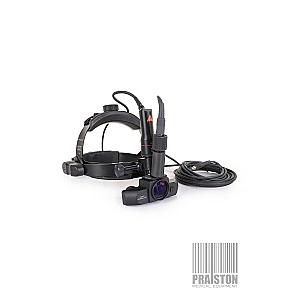
Which of the following procedures or tests is NOT performed using this instrument?

Which statement is true about Jackson's Cross Cylinder test?
Which of the following lasers is used in LASIK?
Explanation: ### Explanation **Correct Option: A. Myopia** In **Myopia (Nearsightedness)**, the parallel rays of light coming from infinity are focused **in front of the retina** when the eye is at rest. This occurs due to an imbalance between the eye's refractive power and its axial length. Specifically, **Axial Myopia**—the most common form—is caused by an **increased anteroposterior length of the eyeball**. For every 1 mm increase in axial length, there is approximately a 3-diopter increase in myopia. **Incorrect Options:** * **B. Hypermetropia (Farsightedness):** Light rays focus **behind the retina**, typically due to a **shortened eyeball** (axial hypermetropia) or insufficient refractive power. * **C. Astigmatism:** Light rays do not come to a single point focus; instead, they form two focal lines due to unequal curvature of the cornea or lens in different meridians. * **D. Presbyopia:** This is an age-related physiological loss of accommodation due to decreased elasticity of the crystalline lens. It affects near vision but does not change the primary axial length of the eye. **High-Yield Clinical Pearls for NEET-PG:** * **Standard Axial Length:** Normal adult eye is ~24 mm. * **Curvaturual Myopia:** Seen in conditions like Keratoconus (increased corneal curvature). * **Index Myopia:** Seen in **Nuclear Cataract** due to an increase in the refractive index of the lens (leads to "second sight"). * **Complication:** High Myopia (Axial length >26 mm) increases the risk of **Retinal Detachment** and **Lattice Degeneration**. * **Treatment:** Corrected with **Concave (minus) lenses**, which diverge rays to shift the focus back onto the retina.
Explanation: **Explanation:** **Correct Answer: A. High myopia** Soft contact lenses (SCLs) are the preferred choice for high myopia because they offer superior comfort and stability compared to rigid lenses. In high myopia, SCLs provide a wider field of vision and eliminate the **image minification** associated with thick spectacle lenses. They are made of hydrogel or silicone hydrogel materials, which allow high oxygen permeability and conform to the corneal curvature, making them ideal for correcting spherical refractive errors. **Why other options are incorrect:** * **B. Astigmatism:** While "Toric" soft lenses exist, significant astigmatism (especially >1.5D) is better managed with **Rigid Gas Permeable (RGP)** lenses. RGPs create a "tear lens" between the cornea and the lens, which neutralizes corneal irregularity more effectively than soft lenses. * **C. Presbyopia:** This is primarily managed with bifocal spectacles, reading glasses, or specialized multifocal contact lenses. It is not the "primary" indication for standard soft lenses. * **D. Keratoconus:** This condition involves an irregular, cone-shaped cornea. Soft lenses drape over the irregularity without correcting it. **RGP lenses or Scleral lenses** are the gold standard here, as they provide a new, regular refractive surface. **High-Yield Clinical Pearls for NEET-PG:** * **Material of Choice:** Silicone hydrogel is currently preferred due to its high **Dk/L (Oxygen transmissibility)**, reducing the risk of corneal neovascularization. * **Complications:** The most serious complication of soft contact lens wear is **Acanthamoeba keratitis** (often associated with poor hygiene or using tap water). * **Giant Papillary Conjunctivitis (GPC):** A common hypersensitivity reaction seen in long-term soft lens users. * **Tight Lens Syndrome:** Occurs when a lens fits too snugly, leading to circumcorneal congestion and corneal edema.
Explanation: ### Explanation The question describes **Distortion**, a monochromatic aberration occurring in high-power lenses where the magnification varies with the distance from the optical center. **1. Why Option D is the Correct Answer (The False Statement):** Distortion is primarily a feature of high-power **spherical lenses** (like aphakic spectacles). While a cylindrical lens can cause meridional magnification, it does not inherently "increase" the specific distortion caused by a spherical lens. In fact, to minimize distortion, clinicians often use **aspheric lenses** or contact lenses. The statement that a cylindrical lens increases this specific progressive distortion is clinically incorrect. **2. Analysis of Other Options:** * **Option A (Pincushion Effect):** This is a true statement. In a **convex lens**, magnification increases toward the periphery. This causes the corners of a square object to be magnified more than the center, resulting in a "pincushion" shape. * **Option B (Seen with Convex Lens):** This is true. High-plus lenses (convex) cause pincushion distortion, whereas high-minus lenses (concave) cause "barrel distortion" (where peripheral magnification is less than central). * **Option C (Type of Aniseikonia):** This is true. Distortion is considered a form of **sub-group aniseikonia** (specifically "spatial" or "meridional" aniseikonia) because the brain perceives a difference in the size and shape of the image, leading to spatial disorientation. ### Clinical Pearls for NEET-PG: * **Aphakia:** High-plus spectacles (+10D to +12D) are the classic cause of the pincushion effect, "Jack-in-the-box" phenomenon (ring scotoma), and significant aniseikonia. * **Barrel Distortion:** Associated with high-minus lenses used in high myopia. * **Management:** The best way to eliminate distortion in high refractive errors is to use **Contact Lenses** or **Intraocular Lenses (IOLs)**, as they minimize the vertex distance and peripheral magnification.
Explanation: **Explanation:** In children, especially those with hypermetropia, the ciliary muscle has a very high accommodative power. To obtain an accurate refractive error measurement (Cycloplegic Refraction), it is essential to completely paralyze the ciliary muscle (cycloplegia). **Why Atropine Ointment is the Correct Choice:** * **Potency:** Atropine is the most potent cycloplegic available. It is the gold standard for children under 7 years of age because their strong accommodation can "hide" the true degree of hypermetropia (latent hypermetropia). * **Safety (Ointment vs. Drops):** In children, **Atropine ointment (1%)** is preferred over drops. Ointment is absorbed more slowly through the conjunctiva and has less risk of draining through the nasolacrimal duct. This significantly reduces systemic absorption and the risk of systemic toxicity (e.g., flushing, fever, tachycardia). **Why Other Options are Incorrect:** * **Phenylephrine:** This is a sympathomimetic drug that causes mydriasis (dilatation) but has **no cycloplegic effect**. It cannot paralyze accommodation, making it useless for refractive errors in children. * **Atropine Drops:** While effective, drops carry a higher risk of systemic side effects in pediatric patients due to rapid absorption through the nasal mucosa. * **Homatropine:** This is a weaker cycloplegic with a shorter duration of action. It is often insufficient to overcome the strong accommodation present in hypermetropic children. **NEET-PG High-Yield Pearls:** * **Drug of choice for cycloplegic refraction:** * < 7 years: Atropine (Ointment preferred). * 7–15 years: Homatropine or Cyclopentolate. * > 15 years/Adults: Tropicamide. * **Atropine Toxicity Mnemonic:** "Hot as a hare, red as a beet, dry as a bone, blind as a bat, and mad as a hen." * **Contraindication:** Avoid Atropine in children with Down Syndrome (increased sensitivity) and patients with Narrow-Angle Glaucoma.
Explanation: ### Explanation **1. Understanding the Correct Answer (Option A)** The **Range of Accommodation** refers to the physical distance over which an eye can see clearly by changing its refractive power. It is defined as the linear distance between the **Far Point (Punctum Remotum)**—the farthest point at which an object is focused on the retina without accommodation—and the **Near Point (Punctum Proximum)**—the closest point at which an object is focused with maximum accommodation. * **Key Concept:** While the *Amplitude* of accommodation is measured in Diopters (power), the *Range* is measured in units of distance (e.g., centimeters or meters). **2. Why Other Options are Incorrect** * **Option B:** The distance between the eye and the near point is specifically called the **Near Point distance**. It represents the limit of maximum accommodation but does not account for the starting point (far point). * **Option C:** The distance between the eye and the far point is the **Far Point distance**. In an emmetropic eye, this is infinity. * **Option D:** The distance between the retina and the near point is anatomically irrelevant to the functional range of vision; refractive changes occur at the lens/cornea level, not the retina. **3. NEET-PG High-Yield Pearls** * **Amplitude of Accommodation:** The difference between the refractive power of the eye in its relaxed state and its fully accommodated state. Formula: $A = P - R$ (where $P$ is the dioptric value of the near point and $R$ is the far point). * **Presbyopia:** A physiological decrease in the amplitude of accommodation due to age-related loss of lens elasticity. It clinically manifests when the near point recedes beyond the comfortable reading distance (usually >25 cm). * **Ciliary Muscle:** The primary muscle responsible for accommodation (parasympathetic control via the 3rd Cranial Nerve). Contraction leads to relaxation of zonules, making the lens more globular.
Explanation: **Explanation:** In pediatric ophthalmology, the gold standard for refraction is **Cycloplegic Refraction**. Children have a very strong accommodative reflex due to a highly active ciliary muscle. To accurately measure the refractive error (especially hypermetropia), this accommodation must be completely paralyzed (cycloplegia). **Why Atropine Ointment is the Correct Choice:** * **Potency:** Atropine is the most potent cycloplegic available. It ensures total paralysis of the ciliary muscle, uncovering the "latent" component of hypermetropia that weaker agents might miss. * **Ointment vs. Drops:** In children, **Atropine ointment (1%)** is preferred over drops. Ointment has better contact time, leading to superior absorption. More importantly, it minimizes systemic absorption through the nasolacrimal duct, significantly reducing the risk of systemic toxicity (e.g., flushing, fever, tachycardia). It is typically applied twice daily for three days prior to the refraction. **Analysis of Incorrect Options:** * **Phenylephrine:** This is a sympathomimetic mydriatic. It dilates the pupil but has **no cycloplegic effect** (it does not act on the ciliary muscle). It cannot be used for refractive testing in children. * **Atropine drops:** While effective, drops carry a higher risk of systemic side effects in children due to rapid drainage into the nose and throat. * **Homatropine:** This is a weaker cycloplegic with a shorter duration of action. It is insufficient to overcome the strong accommodation of a child for an initial refractive assessment. **High-Yield Clinical Pearls for NEET-PG:** * **Drug of choice for refraction:** * Children < 7 years/Strabismus: **Atropine** * Children 7–15 years: **Homatropine** or **Cyclopentolate** * Adults: **Tropicamide** (shortest acting) * **Atropine Toxicity Mnemonic:** "Hot as a hare, red as a beet, dry as a bone, blind as a bat, and mad as a hatter." * **Contraindication:** Avoid Atropine in children with Down Syndrome (increased sensitivity).
Explanation: **Explanation:** The correct answer is **Small pupil (Miosis)**. Pilocarpine is a parasympathomimetic drug that acts on the **sphincter pupillae** muscle, causing miosis (a small pupil). In patients with high myopia (like 7D), a constricted pupil significantly reduces the amount of light entering the eye. This leads to a **diminution of vision**, especially in low-light conditions. Furthermore, while miosis increases the depth of focus, it can exacerbate the perception of floaters and cause a "dimming" effect that the patient perceives as blurring. **Analysis of Incorrect Options:** * **B & C (Myopic/Hypermetropic asymmetry):** While pilocarpine causes contraction of the ciliary muscle (leading to an "accommodative spasm" or induced myopia), the term "asymmetry" is clinically inaccurate here. The blurring is primarily due to the optical effects of the constricted pupil and the sudden shift in refractive power, not a lack of symmetry between the eyes. * **D (Increased astigmatism):** Pilocarpine changes the spherical power of the lens by increasing its curvature (accommodation), but it does not typically alter the corneal or lenticular shape in a way that increases astigmatism. **Clinical Pearls for NEET-PG:** * **Mechanism of Action:** Pilocarpine causes miosis (sphincter pupillae contraction) and opens the trabecular meshwork (ciliary muscle contraction), making it useful in glaucoma. * **Side Effects:** The most common side effects are **brow ache** (due to ciliary spasm), **induced myopia**, and **dimness of vision** (due to miosis). * **Retinal Warning:** In high myopes (like this patient), pilocarpine should be used with caution as ciliary body contraction can exert traction on the peripheral retina, potentially leading to **retinal detachment**.
Explanation: ***Corneal tattooing*** - **Corneal tattooing** requires specialized **needles** and **opaque dyes** (like India ink) to create permanent marks on the cornea for cosmetic purposes. - A **streak retinoscope** only projects light beams and cannot deliver the physical instruments needed for this invasive procedure. *Finchams test* - **Fincham's test** uses a **streak retinoscope** to assess **accommodation** by observing pupillary light reflexes during near vision tasks. - The retinoscope's **moving light streak** is essential for detecting changes in the eye's **refractive state** during this test. *Iridectomy* - A **streak retinoscope** can be used to check **iridectomy patency** by observating light transmission through the surgical opening. - The retinoscope's light beam helps assess whether the **peripheral iridectomy** is functioning properly in **glaucoma patients**. *Axis of cylindrical lens in refractive errors* - **Streak retinoscopy** is the gold standard for determining the **axis of astigmatism** and cylindrical lens orientation. - The **moving light streak** neutralizes at specific meridians, allowing precise measurement of **astigmatic axes** and refractive errors.
Explanation: ### Explanation **Jackson’s Cross Cylinder (JCC)** is a diagnostic tool used for the **subjective refinement** of the axis and power of a cylinder during refraction. #### Why Option C is Correct The JCC lens is a **spherocylindrical toric lens** in which the power of the cylinder is exactly twice the power of the sphere and of the opposite sign (e.g., a +0.25D sphere combined with a -0.50D cylinder). This specific construction results in a lens with **equal refractive power in both principal meridians but of opposite signs** (e.g., +0.25D in one meridian and -0.25D in the other). This creates a "Circle of Least Confusion" on the retina, allowing for precise refinement without changing the overall spherical equivalent. #### Why Other Options are Incorrect * **Option A:** JCC is used for the refinement of **cylindrical error** (axis and power), not spherical error. Spherical error is typically refined using techniques like the Duochrome test or "fogging." * **Option B:** While the cylinder is twice the sphere, the most commonly used JCC in clinical practice is the **±0.25D** (a +0.25D sphere with a -0.50D cylinder). The ±0.50D version is generally reserved for patients with low visual acuity. * **Option D:** Since A and B are incorrect, "All of the above" is false. #### High-Yield Clinical Pearls for NEET-PG * **Principle:** It is based on the principle of **Sturm’s Conoid**. * **The Handle:** The handle of the JCC is placed at **45°** to the axis of the cylinders. * **Refining Axis:** To check the axis, the handle is aligned with the trial cylinder's axis. * **Refining Power:** To check power, the axes of the JCC (marked by red/white dots) are aligned with the trial cylinder's axis. * **Red vs. White:** Red marks indicate the **minus cylinder axis**, while white/black marks indicate the **plus cylinder axis**.
Explanation: **Explanation:** **Correct Answer: A. Excimer** LASIK (Laser-Assisted In Situ Keratomileusis) utilizes the **Excimer laser** (Argon-Fluoride gas, wavelength **193 nm**) to reshape the corneal stroma. The underlying principle is **photoablation**, where the high-energy ultraviolet light breaks intermolecular bonds in the corneal tissue without causing thermal damage to the surrounding areas. This precise thinning of the cornea corrects refractive errors like myopia, hyperopia, and astigmatism. **Why the other options are incorrect:** * **B. Nd:YAG (1064 nm):** This is a solid-state laser used for **photodisruption**. Its primary uses include Posterior Capsulotomy (for PCO) and Peripheral Iridotomy (for Angle-closure glaucoma). *Note: Femtosecond lasers, used to create the LASIK flap, are a subtype of infrared lasers, but the actual refractive reshaping is always done by the Excimer.* * **C. Argon (488–514 nm):** This laser works via **photocoagulation**. It is used for retinal procedures (Pan-retinal photocoagulation in Diabetic Retinopathy) and Trabeculoplasty. * **D. Krypton (647 nm):** Similar to Argon, it is used for photocoagulation, particularly when treating through dense cataracts or vitreous hemorrhage, as it is less scattered. **High-Yield Clinical Pearls for NEET-PG:** 1. **LASIK Flap:** Created using either a Microkeratome (mechanical) or a Femtosecond laser. 2. **Prerequisites for LASIK:** Age >18 years, stable refraction for at least 1 year, and a minimum residual stromal bed thickness of **250 microns** to prevent corneal ectasia. 3. **Contraindications:** Keratoconus (absolute), thin corneas, and severe dry eye. 4. **SMILE:** A newer "flapless" procedure that uses only the Femtosecond laser to create a lenticule.
Physical Optics
Practice Questions
Geometric Optics
Practice Questions
Optical System of Eye
Practice Questions
Visual Acuity and Contrast Sensitivity
Practice Questions
Refractive Errors
Practice Questions
Accommodation and Presbyopia
Practice Questions
Optical Instruments
Practice Questions
Lenses and Prisms
Practice Questions
Retinoscopy
Practice Questions
Subjective Refraction
Practice Questions
Contact Lens Optics
Practice Questions
Wavefront Technology
Practice Questions
Get full access to all questions, explanations, and performance tracking.
Start For Free