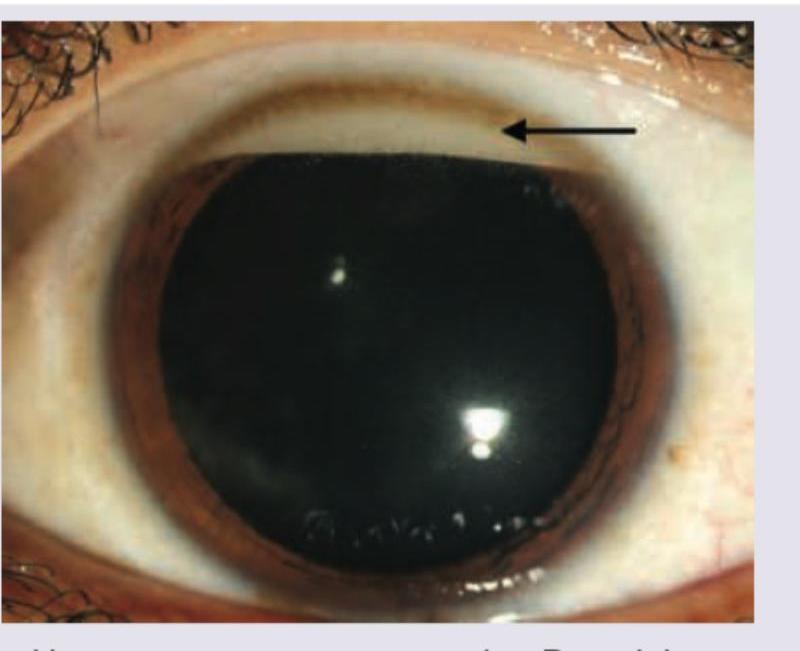
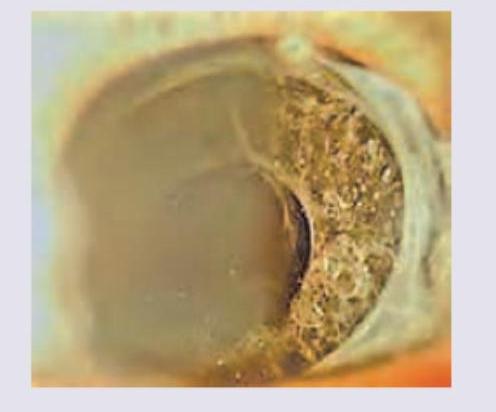
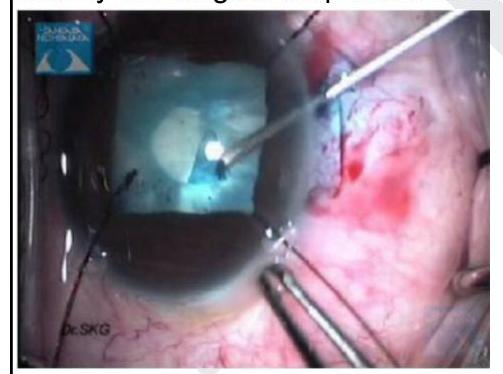
Which of these areas is called the "key area" for orbital reconstruction?
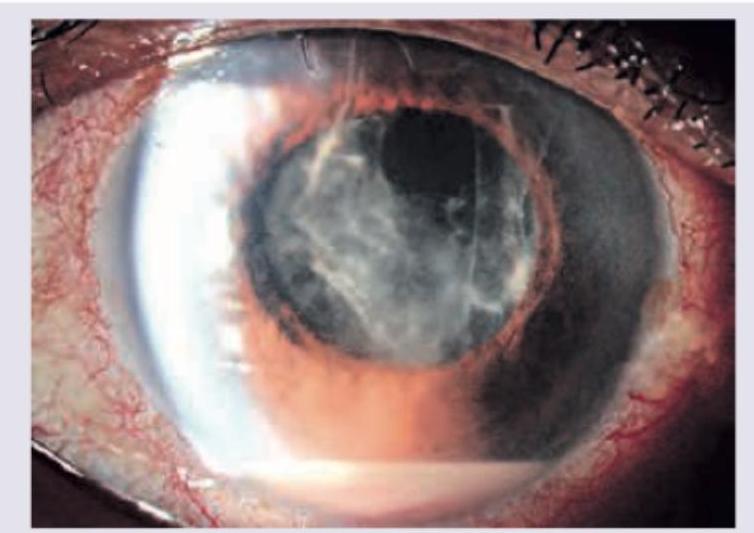
Which of the following is an indication for therapeutic keratoplasty?
A patient is on follow-up after enucleation of a painful blind eye. After enucleation of the eyeball, a proper-sized artificial prosthetic eye is advised after a postoperative period of:
Through which vessel is dye injected for a retinal artery angiogram?
Probing and irrigation is not indicated in which of the following conditions?
Peribulbar injection is given in which space?
All of the following conditions can be diagnosed on distant direct ophthalmoscopy except?
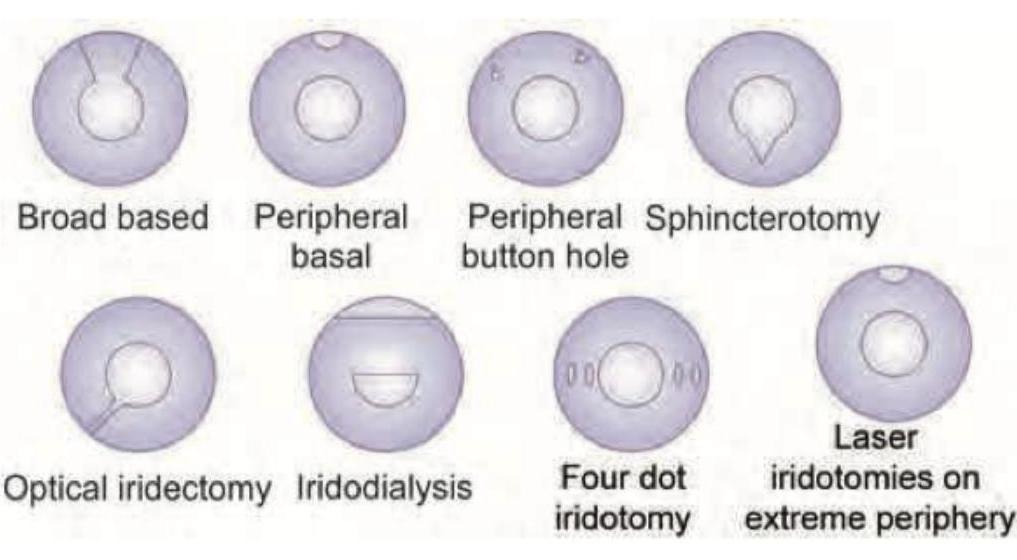
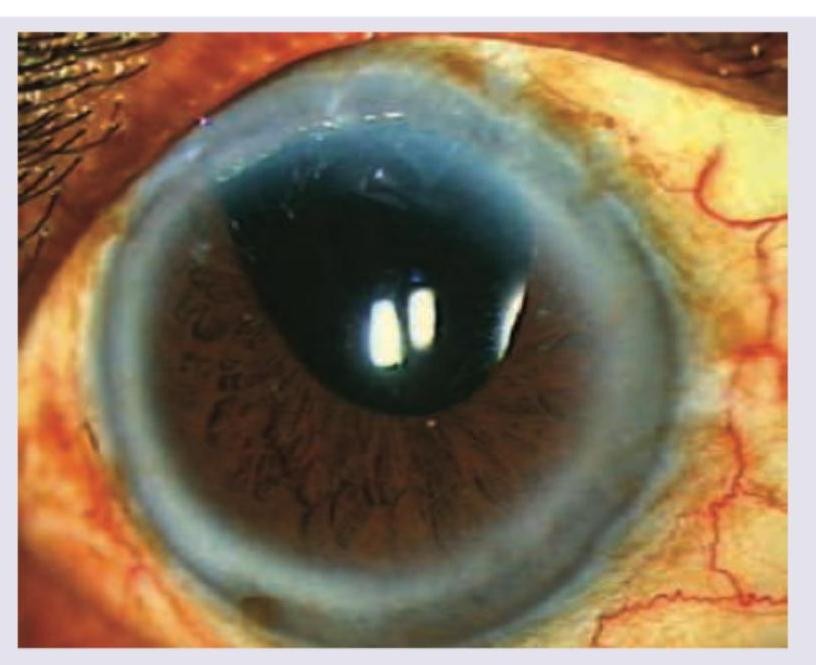
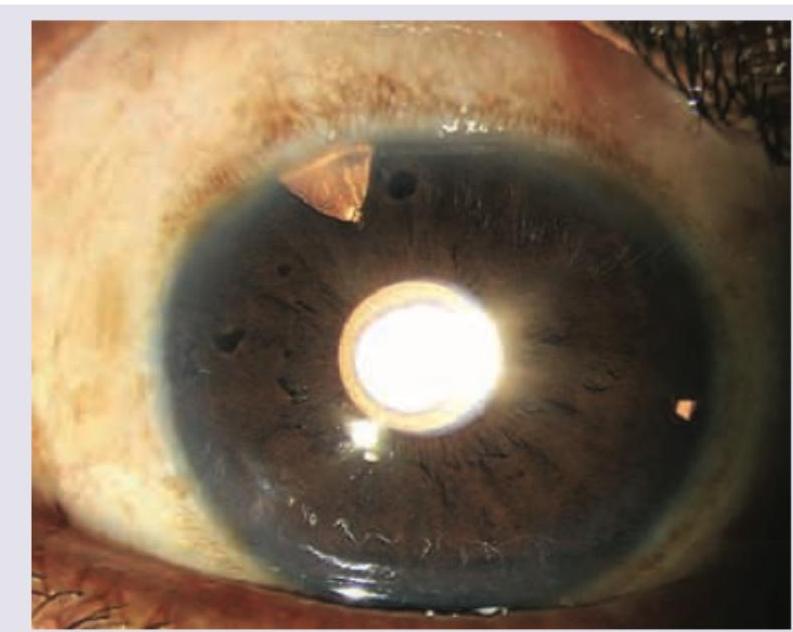
Which laser is used in Iridotomy?
Retrobulbar injection is given in which space?
In cataract surgery, when are spectacles typically advised post-operation?
Explanation: ### Explanation The **postero-medial wall** (specifically the junction of the medial wall and the orbital floor, posterior to the globe's equator) is considered the **"key area"** or the "anchor point" for orbital reconstruction. #### Why is the Postero-medial Wall the Correct Answer? In complex orbital fractures (like "blow-out" fractures), the internal orbital anatomy is often distorted. The postero-medial area is critical because: 1. **Stable Landmark:** It often remains intact even in extensive trauma, providing a stable "ledge" or shelf of bone. 2. **Volume Restoration:** This area is responsible for the characteristic "S-shape" of the orbital floor. Proper placement of an implant on this posterior shelf is essential to restore orbital volume and prevent **enophthalmos** (sunken eye). 3. **Support:** It serves as the primary posterior support for any reconstructive plate or mesh. #### Why the Other Options are Incorrect: * **Postero-lateral wall:** While important for access to the orbital apex, it does not provide the specific anatomical "ledge" required to support the floor implants used in common blow-out fractures. * **Antero-medial/Antero-lateral walls:** These areas are easily accessible but do not provide the posterior anchorage needed to prevent the implant from tilting or failing to support the orbital contents against gravity. #### High-Yield Clinical Pearls for NEET-PG: * **Enophthalmos:** The most common indication for orbital reconstruction is a fracture involving >50% of the orbital floor or a volume increase that leads to cosmetic deformity. * **Surgical Landmark:** During surgery, the **palatine bone** (orbital process) forms the most posterior part of the orbital floor and is a vital landmark for the posterior limit of dissection. * **The "Safe Zone":** Dissection along the medial wall should stay below the **fronto-ethmoidal suture** to avoid injuring the anterior and posterior ethmoidal arteries and the cribriform plate.
Explanation: **Explanation:** Keratoplasty (Corneal Transplantation) is classified into four main types based on the surgical objective: Optical, Therapeutic, Tectonic, and Cosmetic. **1. Why Keratoconus is the Correct Answer:** Keratoconus is a primary indication for **Optical Keratoplasty**. The goal is to replace the scarred or irregular cornea with a clear donor graft to improve visual acuity. While the question asks for "therapeutic" keratoplasty, in the context of standard ophthalmic classification and NEET-PG patterns, Keratoconus is the most common indication for a corneal graft among the choices provided. *Note: There is a technical distinction in terminology. If the question specifically meant "Therapeutic Keratoplasty" (to treat active disease), the answer would be a progressive corneal ulcer. However, if the question implies "Therapeutic" as a general term for surgical intervention for a condition like Keratoconus, it remains the most high-yield clinical association.* **2. Analysis of Incorrect Options:** * **Progressive Corneal Ulcer:** This is the classic indication for **Therapeutic Keratoplasty** (specifically to eliminate an active infection unresponsive to antibiotics). * **Anterior Staphyloma:** This is an indication for **Cosmetic Keratoplasty** (to improve appearance) or **Tectonic Keratoplasty** (to restore structural integrity), though often these eyes have poor visual potential and may require evisceration. * **High Myopia:** This is managed via refractive surgeries (LASIK, ICL, or Clear Lens Extraction), not keratoplasty. **Clinical Pearls for NEET-PG:** * **Most common indication for Keratoplasty in India:** Corneal scarring (post-keratitis). * **Most common indication in the West:** Bullous Keratopathy/Fuchs’ Dystrophy. * **Optical Keratoplasty:** Done for Keratoconus, corneal dystrophies, and old scars. * **Tectonic Keratoplasty:** Done to restore structural integrity (e.g., corneal perforation).
Explanation: **Explanation:** The primary goal after enucleation (surgical removal of the eyeball) is to allow for adequate wound healing and the resolution of postoperative edema before fitting a permanent prosthesis. **1. Why Option B is Correct:** Following enucleation, a temporary **conformer** (a plastic shell) is placed in the conjunctival fornices immediately after surgery to maintain the shape of the socket and prevent symblepharon (adhesion) formation. The inflammatory response and tissue swelling typically subside significantly within **3 weeks (about 20 days)**. At this stage, the socket is stable enough to be measured for a custom-made artificial prosthetic eye. Fitting it too early may lead to a poor fit as the tissues continue to shrink, while waiting too long may lead to socket contraction. **2. Why Other Options are Incorrect:** * **Option A (10 days):** At 10 days, the surgical site is still in the early stages of healing. Significant edema is usually present, and the conjunctival chemosis hasn't fully resolved, making it premature for a permanent prosthesis. * **Options C & D (6–24 weeks):** While complete remodeling of the socket can take months, waiting 6 to 24 weeks is unnecessarily long. Prolonged absence of a prosthesis or conformer can lead to contraction of the conjunctival fornices, making future fitting difficult. **Clinical Pearls for NEET-PG:** * **Enucleation vs. Evisceration:** Enucleation involves removing the entire eyeball; Evisceration involves removing the intraocular contents while leaving the sclera and optic nerve intact. * **Indications for Enucleation:** Retinoblastoma (most common intraocular tumor in children), painful blind eye (e.g., absolute glaucoma), and severe ocular trauma where the globe cannot be salvaged. * **Sympathetic Ophthalmitis:** Evisceration carries a theoretical risk of sympathetic ophthalmitis; therefore, enucleation is often preferred in cases of severe trauma to the uveal tissue. * **Implant vs. Prosthesis:** An **implant** (e.g., hydroxyapatite) is placed deep in the orbit during surgery; the **prosthesis** is the removable aesthetic shell fitted over the healed conjunctiva.
Explanation: **Explanation:** The standard procedure for visualizing the retinal vasculature is **Fundus Fluorescein Angiography (FFA)**. Despite the name "artery angiogram," the dye (Sodium Fluorescein) is injected into the systemic venous circulation, most commonly via the **antecubital vein**. **Why the Antecubital Vein is Correct:** The antecubital vein is the preferred site because it is easily accessible and allows for a rapid bolus injection. Once injected, the dye follows the venous return to the heart (Right Atrium → Right Ventricle → Lungs → Left Atrium → Left Ventricle) and enters the systemic arterial circulation via the aorta. It reaches the eye through the Internal Carotid Artery and finally the Ophthalmic Artery. The transit time from the arm to the retina (Arm-to-Retina time) is typically **8 to 14 seconds**. **Why Other Options are Incorrect:** * **Retinal Artery:** Direct injection is anatomically impossible and clinically dangerous; the retinal artery is a terminal branch inside the eye. * **Ophthalmic Artery:** While this is the artery that supplies the eye, direct catheterization is invasive and unnecessary for routine diagnostic imaging. * **Femoral Vein:** While it could technically reach the heart, it is unnecessarily invasive compared to the antecubital vein and is not the standard of care. **High-Yield Clinical Pearls for NEET-PG:** * **Dye Used:** 5-10 ml of **10% Sodium Fluorescein** (most common) or 25% (smaller volume). * **Filter System:** Uses a **Cobalt Blue** exciter filter (465-490 nm) and a **Yellow-Green** barrier filter (520-530 nm). * **Side Effects:** Nausea (most common), yellowish skin/urine discoloration (transient). * **Contraindication:** History of severe anaphylaxis to the dye. * **Phases of FFA:** Pre-arterial (Choroidal flush) → Arterial → Arteriovenous (Capillary) → Venous → Recirculation/Late phase.
Explanation: **Explanation:** **Acute Dacryocystitis** is an absolute contraindication for probing and irrigation. In the acute phase, the lacrimal sac is inflamed, infected, and highly tender. Attempting to pass a probe or force fluid through the system can lead to: 1. **Spread of Infection:** It can push bacteria into the surrounding periorbital tissues, potentially causing orbital cellulitis. 2. **Tissue Trauma:** The inflamed mucosa is friable; probing can easily create a "false passage" or lead to permanent scarring and canalicular obstruction. The management of acute dacryocystitis involves systemic antibiotics and warm compresses; surgical intervention is deferred until the infection becomes quiescent. **Analysis of Other Options:** * **Lacrimal Fistula:** Probing and irrigation are often performed here to confirm the patency of the lacrimal system and to identify the site of the fistula before surgical repair. * **Congenital Dacryocystitis (CNLDO):** Probing is the **treatment of choice** if the condition does not resolve with Crigler’s massage by age 1. It mechanically ruptures the persistent membrane (Valve of Hasner). * **Trauma to the Eye:** In cases of canalicular laceration, probing is essential to identify the medial and lateral ends of the cut canaliculus for surgical anastomosis and stenting. **High-Yield Clinical Pearls for NEET-PG:** * **Management Sequence for CNLDO:** Massage (up to 1 year) → Probing (1–2 years) → Intubation/Balloon Dilatation (2–4 years) → DCR (after 4 years). * **Dacryocystography (DCG):** The gold standard for anatomical localization of a block in the lacrimal system. * **Jones Dye Test I:** Differentiates between a partial block and hypersecretion of tears.
Explanation: **Explanation:** **Peribulbar anesthesia** is a regional block used commonly in ophthalmic surgeries (like cataract extraction). The injection is placed into the **periorbital space**, which is the area within the orbit but **outside the muscle cone** (extraconal space). 1. **Why Option C is correct:** The goal of peribulbar anesthesia is to deposit local anesthetic into the extraconal orbital fat. From here, the drug diffuses into the muscle cone to reach the ciliary nerves and cranial nerves (III, IV, and VI), resulting in both anesthesia and akinesia. Unlike retrobulbar blocks, it carries a lower risk of optic nerve injury because the needle remains outside the muscle cone. 2. **Why other options are incorrect:** * **Anterior chamber (A):** This is the fluid-filled space between the iris and the innermost corneal surface. Injecting here is reserved for intracameral medications, not regional anesthesia. * **Subtenon space (B):** This lies between the Tenon’s capsule and the sclera. A "Sub-Tenon block" is a distinct technique using a blunt cannula, offering a faster onset than peribulbar but involving a different anatomical plane. * **Subperiorbital space (D):** This is the potential space between the orbital bone and the periosteum (periorbita). Injecting here would not allow the anesthetic to diffuse effectively to the globe or extraocular muscles. **High-Yield Clinical Pearls for NEET-PG:** * **Needle used:** Usually a 25-gauge, 25mm (1 inch) Atkinson needle. * **Site of injection:** Typically at the junction of the lateral one-third and medial two-thirds of the lower orbital rim. * **Advantage:** Lower risk of retrobulbar hemorrhage and globe perforation compared to retrobulbar blocks. * **Disadvantage:** Slower onset of action and may require a larger volume of anesthetic (6–10 ml).
Explanation: ### Explanation **Distant Direct Ophthalmoscopy (DDO)** is a screening technique performed from a distance of 20–25 cm using a direct ophthalmoscope. It relies on the **Red Free Reflex** (glow from the vascular choroid) to identify abnormalities in the ocular media. #### Why "Hole in the Macula" is the Correct Answer A macular hole is a microscopic structural defect in the fovea. DDO provides no magnification and is used primarily to detect gross opacities or large structural shifts. To visualize a macular hole, high-magnification tools like **Slit-lamp Biomicroscopy (with a 90D/78D lens)** or **Optical Coherence Tomography (OCT)** are required. The lesion is too small and posterior to alter the red reflex visible at a distance. #### Analysis of Incorrect Options * **Opacities in the refractive media:** This is the primary use of DDO. Any opacity (corneal scar, cataract, or vitreous hemorrhage) will appear as a **black shadow** against the red glow. * **A hole in the iris:** If there is a hole in the iris (e.g., polycoria or traumatic iridodialysis), the red reflex will shine through that defect, appearing as a bright red spot where it shouldn't be. * **A detached retina:** A large retinal detachment appears as a **greyish-white reflex** (leukocoria) or an interruption in the uniform red glow, as the retina is displaced forward into the vitreous cavity. #### High-Yield Clinical Pearls for NEET-PG * **Position:** DDO is done at 25 cm; Direct Ophthalmoscopy is done at 2 cm. * **Parallactic Displacement:** This principle is used in DDO to localize opacities. * Opacity moving in the **same** direction as the eye: Behind the pupillary plane (Vitreous). * Opacity moving in the **opposite** direction: In front of the pupillary plane (Cornea). * **No movement:** At the pupillary plane (Anterior lens capsule). * **Key Finding:** DDO is the quickest bedside test to differentiate a total cataract (black shadow) from a normal red reflex.
Explanation: **Explanation:** Laser iridotomy is performed to create a hole in the iris to facilitate aqueous flow from the posterior to the anterior chamber, primarily in Angle-Closure Glaucoma. **Why CO2 is the Correct Answer (in this context):** While **Nd:YAG** is the most common laser used for peripheral iridotomy (PI) in modern clinical practice, the **CO2 laser** is specifically utilized in **surgical/non-invasive iridotomy** due to its high absorption by water, which allows for precise tissue vaporization with minimal collateral damage. In some specific exam contexts or older surgical techniques, CO2 is highlighted for its "bloodless" cutting ability. **Analysis of Other Options:** * **Nd:YAG (Neodymium-doped Yttrium Aluminum Garnet):** This is a **photodisruptive** laser (1064 nm). It is the gold standard for creating a peripheral iridotomy because it can punch through the iris tissue regardless of pigmentation. * **Argon Laser:** This is a **photocoagulative** laser. It was historically used for iridotomy but often required more energy and had a higher risk of the hole closing due to late-stage scarring. It is now often used to "prep" thick brown irises before using the Nd:YAG. * **Diode Laser:** Primarily used for **cyclophotocoagulation** (destroying ciliary processes) in refractory glaucoma or for retinal photocoagulation. **High-Yield Clinical Pearls for NEET-PG:** * **Nd:YAG Laser:** Used for Posterior Capsulotomy (after PCO) and Peripheral Iridotomy. * **Argon Laser:** Used for Pan-Retinal Photocoagulation (PRP) in Diabetic Retinopathy and Trabeculoplasty. * **Excimer Laser (193 nm):** Used in LASIK/PRK for corneal refractive surgery (photoablation). * **Complication of Iridotomy:** Transient rise in Intraocular Pressure (IOP) is the most common side effect; Apraclonidine or Brimonidine is used pre-operatively to prevent this.
Explanation: **Explanation:** **Retrobulbar anesthesia** involves the injection of local anesthetic (typically a mixture of Lidocaine and Bupivacaine) directly into the **intraconal space** (inside the muscle cone). The muscle cone is formed by the four recti muscles originating from the Annulus of Zinn. 1. **Why Option A is Correct:** The primary goal of a retrobulbar block is to deposit anesthetic near the **ciliary ganglion** and the **cranial nerves (III, VI, and branches of V)** that reside within the muscle cone. This achieves rapid sensory anesthesia of the globe and complete akinesia (paralysis) of the extraocular muscles. 2. **Why Options B, C, and D are Incorrect:** * **Outside muscle cone (Peribulbar):** This describes a peribulbar injection. It is safer but requires a larger volume of anesthetic and more time to achieve effect as the drug must diffuse into the cone. * **Subtenon space:** This involves injecting anesthetic between the Tenon’s capsule and the sclera. It is a popular alternative that avoids the risks of "blind" needle penetration into the cone. * **Subperiosteum:** This space lies between the orbital bone and the periorbita; it is not a standard site for ophthalmic regional anesthesia. **High-Yield Clinical Pearls for NEET-PG:** * **Nerve spared:** The **Trochlear nerve (IV)** is the only motor nerve to the extraocular muscles that remains **outside** the muscle cone. Therefore, the Superior Oblique muscle may retain some function after a retrobulbar block. * **Complications:** The most serious complications include **retrobulbar hemorrhage**, globe perforation, and **"brainstem anesthesia"** (due to accidental injection into the optic nerve sheath, allowing the drug to travel to the midbrain). * **Classic Sign:** Successful block results in anesthesia, akinesia, and a "fixed" eye.
Explanation: **Explanation:** The correct answer is **6 weeks (Option A)**. **Why 6 weeks is correct:** Following cataract surgery (whether SICS or Phacoemulsification), the corneal incision undergoes a physiological healing process. It typically takes about **6 weeks** for the surgical wound to stabilize and for the resultant **post-operative astigmatism** to become permanent. Prescribing spectacles before this period is avoided because the refractive power of the eye fluctuates as the wound heals and sutures (if any) settle. By the end of 6 weeks, the "refractive stability" is achieved, ensuring the prescription remains accurate for the long term. **Why other options are incorrect:** * **10, 12, and 14 weeks (Options B, C, D):** While the eye continues to refine its strength over months, waiting this long is clinically unnecessary. Delaying spectacles beyond 6 weeks unnecessarily prolongs the patient's visual rehabilitation period. In modern Phacoemulsification (micro-incision), stability is often reached even earlier, but 6 weeks remains the standard teaching and gold-standard duration for conventional surgery. **High-Yield Clinical Pearls for NEET-PG:** * **Refractive Stability:** The primary goal of waiting 6 weeks is to allow for the stabilization of **Surgically Induced Astigmatism (SIA)**. * **Phacoemulsification vs. SICS:** In sutureless Phacoemulsification, some surgeons perform refraction at 2–3 weeks due to faster healing, but for exam purposes, **6 weeks** is the universal answer. * **Steroid Tapering:** The 6-week mark usually coincides with the completion of the post-operative topical steroid tapering schedule. * **Aphakia:** If a patient is left aphakic (no IOL), the standard prescription is **+10D sphere** with additional cylinders, also prescribed at 6 weeks.
Surgical Anatomy of Eye
Practice Questions
Asepsis and Sterilization in Eye Surgery
Practice Questions
Anesthesia in Ophthalmic Surgery
Practice Questions
Cataract Surgery Techniques
Practice Questions
Corneal Surgeries
Practice Questions
Glaucoma Surgeries
Practice Questions
Oculoplastic Surgeries
Practice Questions
Vitreoretinal Surgeries
Practice Questions
Strabismus Surgery
Practice Questions
Refractive Surgery
Practice Questions
Ocular Oncology Surgeries
Practice Questions
Management of Surgical Complications
Practice Questions
Get full access to all questions, explanations, and performance tracking.
Start For Free