Pilocarpine is an:
Which of the following is a recently approved drug for the treatment of neovascular age-related macular degeneration?
What concentration of alcaftadine was used in its trial?
A 29-year-old female diagnosed with AIDS presents with progressive blurring of vision in her right eye. Funduscopic examination reveals a small, white, opaque lesion on the retina of her right eye. What is the most appropriate therapy for this patient?
In a patient predisposed to glaucoma, which drug is contraindicated?
A patient with glaucoma develops blepharoconjunctivitis after instilling an anti-glaucoma medication. Which of the following drugs is most likely responsible for this side effect?
Which drug is used during a trabeculectomy procedure?
What is the drug of choice for the treatment of intermediate uveitis?
Which of the following topical local anesthetics is commonly used in cataract surgery?
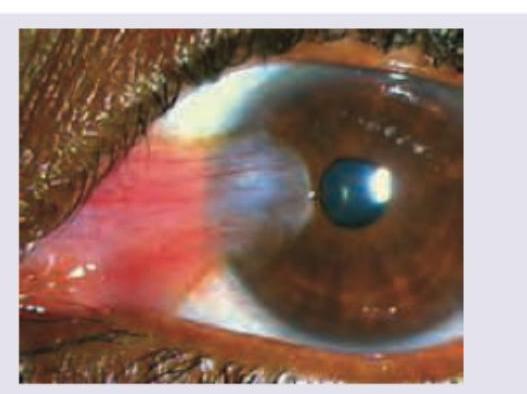
A patient has the following presentation. After administration of an intravenous drug to the patient, in 6 minutes his symptoms have resolved. The diagnosis of the patient is:
Explanation: **Explanation:** **Pilocarpine** is a direct-acting parasympathomimetic (cholinergic) drug. It acts directly on the **muscarinic receptors (M3)** located on the **sphincter pupillae** muscle of the iris. 1. **Why it is an Active Miotic:** An "active" agent is one that causes contraction of a muscle to achieve its effect. Pilocarpine stimulates the sphincter pupillae to contract, leading to pupillary constriction (miosis). Because it achieves miosis through the active stimulation of a muscle, it is classified as an **Active Miotic**. 2. **Why other options are incorrect:** * **Passive Miotic:** This would involve the relaxation of the dilator pupillae muscle (e.g., via sympathetic blockers like Guanethidine). Pilocarpine does not work by relaxation; it works by contraction. * **Active Mydriatic:** These are drugs that cause pupillary dilation by actively contracting the dilator pupillae (e.g., Phenylephrine, an alpha-1 agonist). * **Passive Mydriatic:** These cause dilation by paralyzing/relaxing the sphincter pupillae (e.g., Atropine or Tropicamide, which are anticholinergics). **High-Yield Clinical Pearls for NEET-PG:** * **Mechanism in Glaucoma:** Pilocarpine causes contraction of the **ciliary muscle**, which pulls on the scleral spur, opens the trabecular meshwork, and increases aqueous outflow. * **Drug of Choice:** It is the emergency drug of choice in **Acute Angle Closure Glaucoma** (used once intraocular pressure is lowered below 40 mmHg). * **Side Effects:** Brow ache (due to ciliary muscle spasm), induced myopia, and a potential risk of retinal detachment. * **Contraindication:** It should be avoided in young patients (due to accommodative spasm) and in cases of uveitic glaucoma (may promote posterior synechiae).
Explanation: **Explanation:** **Brolucizumab** is the correct answer. It is a humanized single-chain antibody fragment (scFv) that inhibits all isoforms of **Vascular Endothelial Growth Factor-A (VEGF-A)**. Approved recently for neovascular (wet) Age-Related Macular Degeneration (nAMD), its primary advantage is its small molecular weight (26 kDa), which allows for better retinal penetration and a longer duration of action, enabling 12-week dosing intervals. **Analysis of Incorrect Options:** * **Istradefylline:** An adenosine A2A receptor antagonist used as an add-on treatment to levodopa/carbidopa in patients with **Parkinson’s disease** experiencing "off" episodes. * **Lefamulin:** A pleuromutilin antibiotic used for the treatment of **community-acquired bacterial pneumonia (CABP)**. * **Upadacitinib:** A selective Janus kinase (JAK) inhibitor used primarily in **Rheumatoid Arthritis** and other inflammatory conditions like atopic dermatitis. **High-Yield Clinical Pearls for NEET-PG:** * **Mechanism of nAMD:** Characterized by Choroidal Neovascularization (CNV). VEGF is the primary mediator of this leakage and vessel growth. * **Other Anti-VEGF agents:** Ranibizumab (Fab fragment), Bevacizumab (Full-length mAb - off-label), and Aflibercept (VEGF Trap). * **Faricimab:** Another recent approval; it is a bispecific antibody targeting both **VEGF and Angiopoietin-2 (Ang-2)**. * **Side Effect Alert:** Brolucizumab has been associated with a higher risk of **retinal vasculitis** and intraocular inflammation compared to other anti-VEGFs.
Explanation: **Explanation:** **Alcaftadine** is a potent, second-generation antihistamine (H1-receptor antagonist) used topically for the prevention of itching associated with allergic conjunctivitis. **Why 0.25% is Correct:** The clinical trials leading to the FDA approval of alcaftadine (specifically the **Lastacaft** clinical development program) evaluated various concentrations. The **0.25% ophthalmic solution** was identified as the optimal concentration, demonstrating a rapid onset of action (within 3 minutes) and a prolonged duration of effect (up to 16 hours) with a favorable safety profile. It works through a triple mechanism: H1-receptor antagonism, mast cell stabilization, and anti-inflammatory properties (decreasing eosinophil chemotaxis). **Analysis of Incorrect Options:** * **A (5%) and D (2.50%):** These concentrations are significantly higher than those typically used for potent antihistamines. High concentrations of such drugs would likely cause ocular surface toxicity or significant stinging without added therapeutic benefit. * **B (1%):** While 1% is a common concentration for other ophthalmic drugs (like Prednisolone or Cyclogyl), it was not the concentration established for Alcaftadine's efficacy in clinical trials. **High-Yield Clinical Pearls for NEET-PG:** * **Dosage:** Alcaftadine 0.25% is administered as **one drop once daily** (QD), making it superior for patient compliance compared to older twice-daily drugs. * **Pregnancy Category:** It is classified as **Pregnancy Category B**, making it one of the safer options for allergic conjunctivitis during pregnancy (unlike Olopatadine, which is Category C). * **Comparison:** It is often compared to **Olopatadine (0.1%, 0.2%, 0.7%)** and **Epinastine (0.05%)**. Alcaftadine is noted for its superior ability to reduce conjunctival redness and itch compared to some earlier formulations.
Explanation: ### Explanation **Correct Answer: D. Ganciclovir** **Medical Concept:** The clinical presentation of a patient with **AIDS** (immunosuppression) and progressive blurring of vision, combined with the funduscopic finding of a **white, opaque retinal lesion**, is classic for **Cytomegalovirus (CMV) Retinitis**. CMV is the most common opportunistic ocular infection in patients with CD4 counts <50 cells/mm³. The lesions are often described as having a "pizza-pie" or "cottage cheese and ketchup" appearance (hemorrhage mixed with white exudates). **Ganciclovir** is the first-line treatment for CMV retinitis as it inhibits viral DNA polymerase. **Why Other Options are Incorrect:** * **A. Acyclovir:** While an antiviral, it is highly effective against Herpes Simplex Virus (HSV) and Varicella-Zoster Virus (VZV) but has **poor activity against CMV** due to the lack of viral thymidine kinase in CMV. * **B. Amantadine:** This is an anti-influenza A medication and a dopaminergic agent used in Parkinson’s disease; it has no role in treating retinal infections. * **C. Flucytosine:** This is an antifungal agent used primarily for Cryptococcal meningitis. It does not have antiviral properties. **NEET-PG High-Yield Pearls:** * **CMV Retinitis:** Most common cause of blindness in AIDS patients. * **Drug of Choice:** Ganciclovir (Intravenous or Intravitreal implant). Alternatives include **Foscarnet** (used if Ganciclovir resistance occurs) and **Cidofovir**. * **Side Effects:** A common side effect of Ganciclovir is **bone marrow suppression** (neutropenia), whereas Foscarnet is known for **nephrotoxicity**. * **Differential:** Acute Retinal Necrosis (ARN) is usually caused by HSV/VZV and presents with more rapid progression and prominent vitritis, unlike CMV.
Explanation: **Explanation:** The correct answer is **None of the above** because all three drugs listed are actually used in the management of glaucoma, rather than being contraindicated. **Understanding the Concept:** Glaucoma management focuses on lowering Intraocular Pressure (IOP) by either increasing the outflow of aqueous humor or decreasing its production. * **Pilocarpine (Option A):** A direct-acting cholinergic (miotic). It causes contraction of the ciliary muscle, which pulls on the scleral spur and opens the trabecular meshwork, increasing aqueous outflow. It is specifically used in Angle Closure Glaucoma to pull the iris away from the angle. * **Ecothiopate (Option B):** An irreversible acetylcholinesterase inhibitor (miotic). Like pilocarpine, it increases trabecular outflow. While rarely used today due to side effects (like cataract formation), it is a recognized anti-glaucoma agent. * **Timolol (Option C):** A non-selective beta-blocker. It is a first-line treatment that reduces IOP by decreasing the production of aqueous humor from the ciliary body. **Contraindications to Watch For (High-Yield):** In a patient predisposed to **Angle Closure Glaucoma**, the actual contraindicated drugs are **Mydriatics** (e.g., Atropine, Homatropine, Cyclopentolate) and **Sympathomimetics** (e.g., Phenylephrine), as pupillary dilation can bunch up the peripheral iris and mechanically block the drainage angle, precipitating an acute attack. **NEET-PG Clinical Pearls:** * **Drug of choice for Acute Angle Closure Glaucoma:** IV Acetazolamide + Topical Pilocarpine (once IOP is lowered). * **Drug of choice for Open Angle Glaucoma:** Prostaglandin analogues (e.g., Latanoprost). * **Timolol Contraindication:** Avoid in patients with Asthma or Heart Block due to systemic beta-blockade.
Explanation: **Explanation:** The correct answer is **Timolol**. **Why Timolol is the correct answer:** Timolol, a non-selective beta-blocker, is one of the most common anti-glaucoma medications associated with **allergic contact blepharoconjunctivitis**. This hypersensitivity reaction typically manifests as itching, redness of the conjunctiva, and eczematous changes (scaling and erythema) of the eyelid skin. While the active drug itself can cause this, the preservative **Benzalkonium chloride (BAK)**, frequently found in Timolol formulations, is also a major culprit for ocular surface toxicity and follicular conjunctivitis. **Analysis of Incorrect Options:** * **Latanoprost:** While it can cause conjunctival hyperemia, its hallmark side effects are iris hyperpigmentation, eyelash lengthening (trichomegaly), and periorbitopathy. It is less commonly associated with acute blepharoconjunctivitis compared to beta-blockers. * **Dipivefrine:** This is a prodrug of epinephrine. Its classic side effect is **follicular conjunctivitis** and adrenochrome deposits, but it is rarely used in modern practice due to systemic sympathomimetic effects. * **Pilocarpine:** A miotic agent. Its primary side effects are "brow ache" (due to ciliary muscle contraction), pupillary constriction (miosis), and potential retinal detachment. It does not typically cause blepharoconjunctivitis. **High-Yield Clinical Pearls for NEET-PG:** * **Brimonidine:** Among all glaucoma drugs, Brimonidine (Alpha-2 agonist) has the **highest incidence** of delayed-type hypersensitivity reactions (up to 30%), often presenting as a late-onset follicular conjunctivitis. * **Dorzolamide:** Can cause a bitter taste (dysgeusia) and local stinging. * **Systemic Side Effects of Timolol:** Always remember to screen for asthma or bradycardia, as systemic absorption via the nasolacrimal duct can trigger bronchospasm or heart block. Punctal occlusion after instillation can minimize these risks.
Explanation: **Explanation:** The correct answer is **Mitomycin-C (MMC)**. **1. Why Mitomycin-C is correct:** Trabeculectomy is a filtering surgery for glaucoma where a "fistula" is created to drain aqueous humor. The most common cause of surgical failure is **subconjunctival fibrosis (scarring)** at the site of the bleb. Mitomycin-C is a potent **alkylating agent** that inhibits fibroblast proliferation and DNA synthesis. When applied topically to the scleral bed during surgery (usually via a soaked sponge), it acts as an **antimetabolite** to prevent scarring, thereby maintaining the patency of the filtration site and ensuring long-term intraocular pressure (IOP) control. **2. Why the other options are incorrect:** * **Azathioprine:** An immunosuppressant used in systemic autoimmune diseases and organ transplants; it is not used topically in glaucoma surgery. * **Cetuximab:** A monoclonal antibody (EGFR inhibitor) used in treating colorectal and head/neck cancers; it has no role in ophthalmic wound healing. * **Ketorolac:** A topical NSAID used to manage post-operative inflammation and pain; while used in ophthalmology, it does not prevent the fibroblast proliferation required for trabeculectomy success. **3. High-Yield Clinical Pearls for NEET-PG:** * **5-Fluorouracil (5-FU):** Another antimetabolite used in trabeculectomy, though MMC is more potent and requires a shorter application time. * **MMC Concentration:** Typically used in concentrations of **0.02% to 0.04%**. * **Complications:** Over-use of MMC can lead to "thin-walled cystic blebs," which carry a high risk of **blebitis** and **endophthalmitis**. * **Other uses of MMC in Ophthalmology:** Pterygium surgery (to prevent recurrence) and Haze prevention after PRK (Refractive surgery).
Explanation: **Explanation:** **Intermediate uveitis** is a chronic inflammatory condition primarily involving the vitreous and peripheral retina (pars plana). The mainstay of management for any non-infectious uveitis is the control of inflammation, making **Steroids (Option C)** the drug of choice. * **Why Steroids are Correct:** Steroids are potent anti-inflammatory agents that suppress the immune response. In intermediate uveitis, they are indicated when vision is threatened (usually <6/9) or if cystoid macular edema (CME) is present. Treatment typically follows a "stepladder" approach: starting with **Periocular (Sub-Tenon) injections** (e.g., Triamcinolone acetonide), followed by intravitreal implants or systemic steroids if the condition is bilateral or recalcitrant. * **Why other options are incorrect:** * **Cycloplegics (Option A):** While essential in *anterior* uveitis to prevent posterior synechiae and relieve ciliary spasm, they have no therapeutic role in the vitreous inflammation characteristic of intermediate uveitis. * **Analgesics (Option B):** Intermediate uveitis is typically **painless** (presenting with floaters and blurred vision); therefore, analgesics do not treat the underlying pathology. * **Antibiotics (Option D):** These are only indicated if an infectious etiology (like Syphilis or TB) is confirmed. Most cases are idiopathic or associated with systemic conditions like Sarcoidosis or Multiple Sclerosis. **Clinical Pearls for NEET-PG:** 1. **Snowballing/Snowbanking:** Classic clinical signs of intermediate uveitis (pars planitis). 2. **Cystoid Macular Edema (CME):** The most common cause of vision loss in these patients. 3. **Pars Planitis:** A subset of intermediate uveitis where "snowbank" formation occurs in the absence of an associated systemic disease. 4. **Side Effects:** Always monitor for steroid-induced glaucoma and cataracts during treatment.
Explanation: ***Proparacaine 0.5%***- It is an **ester-type** topical anesthetic that provides rapid, short-duration anesthesia essential for preparatory steps (like measuring **intraocular pressure**) and the initiation of cataract surgery. - **Proparacaine** is the highly preferred topical agent in ophthalmology due to its low corneal toxicity and efficacy in anesthetizing the **corneal** and **conjunctival** surfaces. *Bupivacaine 0.5%*- **Bupivacaine** is an **amide-type** anesthetic known for its potent, long-lasting effects, typically utilized for regional or infiltration blocks (e.g., retrobulbar or peribulbar blocks) in the eye, but not standard for topical application alone.- It is less favored than proparacaine for simple topical anesthesia due to potential **corneal epithelial toxicity** if used excessively topically.*Halothane*- **Halothane** is a potent **volatile inhaled general anesthetic** agent used to induce unconsciousness and muscle relaxation during major surgery.- It is not a local anesthetic agent and cannot be used topically to anesthetize the **ocular surface**.*Nitrous Oxide*- **Nitrous oxide** is an **inhalational anesthetic gas** often used for sedation (or as an adjunct to general anesthesia) due to its analgesic properties.- It provides systemic central nervous system effects and is not formulated or used as a **topical local anesthetic** solution for eye surgery.
Explanation: The question refers to an accompanying image (not provided in the text, but essential for context) showing a patient with **ptosis** (drooping eyelid) and possibly other ocular muscle weakness. The key information is that symptoms resolve within 6 minutes after administration of an intravenous drug. This rapid and complete resolution of symptoms following drug administration is highly characteristic of a specific condition and a specific diagnostic test. ***Myasthenia gravis*** - The rapid resolution of symptoms (ptosis and possibly other ocular muscle weakness) within 6 minutes after intravenous drug administration is the hallmark of a positive **Tensilon test**. - The **Tensilon test** involves injecting **edrophonium**, a short-acting acetylcholinesterase inhibitor, which temporarily increases acetylcholine at the neuromuscular junction, improving muscle strength in patients with **myasthenia gravis**. *Sixth nerve palsy* - Sixth nerve palsy (abducens nerve palsy) causes **diplopia** (double vision) and an inability to abduct the affected eye. - While symptoms may fluctuate or improve with treatment, they would not resolve completely in 6 minutes with a diagnostic agent like edrophonium. *Third nerve palsy* - Third nerve palsy (oculomotor nerve palsy) can cause **ptosis**, **diplopia**, and impairment of eye movements (inability to adduct, elevate, or depress the eye). - Nerve palsies are structural or neurological deficits that do not rapidly reverse with a cholinergic agonist like edrophonium. *Tolosa-Hunt syndrome* - Tolosa-Hunt syndrome is a rare inflammatory disorder characterized by **painful ophthalmoplegia** (paralysis of eye muscles), often affecting the third, fourth, and/or sixth cranial nerves. - It typically responds to corticosteroids, but symptoms would not resolve in 6 minutes with an intravenous drug, and the diagnostic approach is different.
Ocular Pharmacokinetics
Practice Questions
Anti-infective Agents
Practice Questions
Anti-inflammatory Drugs
Practice Questions
Antiglaucoma Medications
Practice Questions
Mydriatics and Cycloplegics
Practice Questions
Ocular Lubricants
Practice Questions
Anti-VEGF Agents
Practice Questions
Ocular Diagnostic Agents
Practice Questions
Anesthetics in Ophthalmology
Practice Questions
Preservatives and Their Effects
Practice Questions
Ocular Toxicology
Practice Questions
Novel Drug Delivery Systems
Practice Questions
Get full access to all questions, explanations, and performance tracking.
Start For Free