A 50-year-old male presents with cicatricial entropion of the upper and lower eyelids. Upon eversion of the upper eyelid, linear conjunctival scars are observed. What is the most likely diagnosis?
Ankyloblepheron is defined as
A child has ptosis and poor levator function. What surgery will you do?
Which condition is characterized by an extra row of eyelashes growing from the meibomian gland orifices, typically located along the posterior border of the grey line?
Dalrymple's sign of ocular Graves' disease refers to which of the following?
What is the preferred treatment for congenital ptosis with poor levator muscle function?
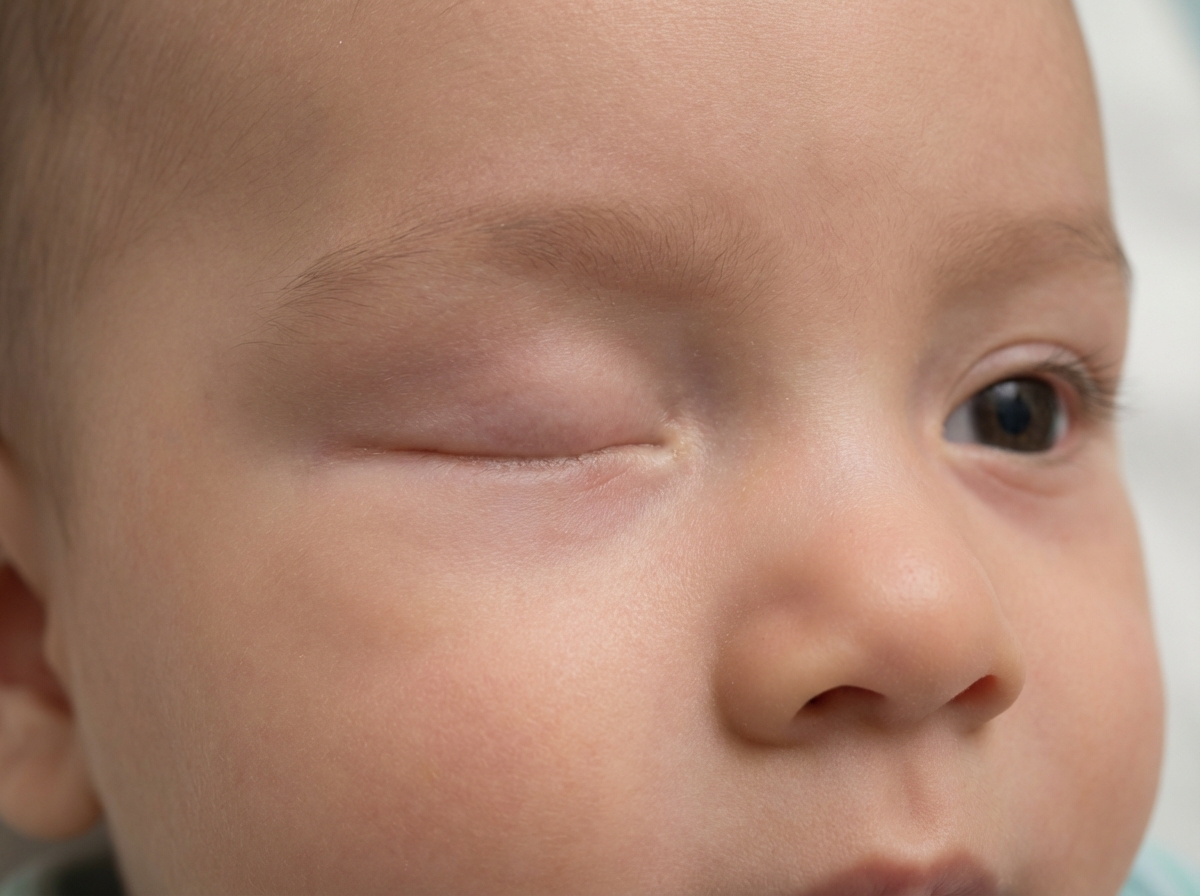
What is the most common cause of eyelid ptosis in children?
In congenital dacryocystitis, the blockage occurs at?
A patient with ptosis, where the upper eyelid covers 4 mm of the cornea, is classified as having which grade of ptosis?
Hordeolum internum is?
Explanation: ***Trachoma*** - **Cicatricial entropion** with **linear conjunctival scars** (specifically **Arlt's line**) along the upper tarsal conjunctiva are pathognomonic late-stage signs of chronic ocular *Chlamydia trachomatis* infection, known as trachoma. - This condition is a leading cause of preventable blindness worldwide, predominantly affecting developing countries due to poor hygiene. *Spring catarrh* - Also known as **vernal keratoconjunctivitis**, this is a chronic, bilateral allergic conjunctivitis, usually seen in children, characterized by large, flattened papillae on the upper tarsal conjunctiva ("cobblestone papillae") and often associated with shield ulcers on the cornea. - While it affects the upper eyelid and can cause scarring in severe, chronic cases, it typically does not lead to the specific linear scarring and cicatricial entropion seen in trachoma. *Ligneous conjunctivitis* - This rare form of chronic pseudomembranous conjunctivitis is characterized by the formation of **wood-like, firm, white-yellow fibrinous plaques** on the conjunctiva, often associated with a deficiency in plasminogen. - It does not present with the typical linear scarring or cicatricial entropion characteristic of trachoma. *Parinaud oculoglandular syndrome* - This syndrome is characterized by **unilateral granulomatous conjunctivitis** with prominent preauricular and/or submandibular **lymphadenopathy**, often caused by bacterial infections (e.g., Cat Scratch Disease due to *Bartonella henselae*) or viral infections. - It does not cause the diffuse cicatricial changes or entropion seen in trachoma and is typically an acute or subacute process rather than a chronic scarring one.
Explanation: ***Adhesion of the eyelid margins to each other*** - **Ankyloblepharon** specifically refers to the condition where the **eyelid margins fuse together**, either partially or completely. - This can be congenital or acquired due to inflammation, trauma, or burns. *Adhesion of the lid to the eyeballs* - This condition is known as **symblepharon**, where the conjunctiva of the lid adheres to the bulbar conjunctiva or cornea. - It often results from severe conjunctival inflammation or injury, such as chemical burns. *Inturned eyelash* - An inturned eyelash is called **trichiasis**, where eyelashes grow inwards and rub against the cornea or conjunctiva. - This can cause irritation, corneal abrasions, and ultimately vision impairment. *Inflammation of the lid margin* - Inflammation of the lid margin is known as **blepharitis**, a common condition characterized by redness, swelling, and crusting along the eyelid edges. - It is typically caused by bacterial infection, meibomian gland dysfunction, or allergic reactions.
Explanation: ***Frontalis suspension surgery*** - This procedure is indicated for **severe ptosis** with **poor levator function** (typically <4 mm), as the levator muscle is too weak to lift the eyelid effectively. - It uses the **frontalis muscle** (forehead muscle) to elevate the eyelid, connecting the eyelid to the eyebrow, which is a suitable approach when the primary elevator is compromised. *Mullerectomy* - This procedure excises the **Müller's muscle** and a small portion of conjunctiva for **mild ptosis** and should only be performed when **good levator function** is present. - It relies on an intact **sympathetic innervation** to the Müller's muscle and is ineffective in cases of poor levator function. *Fasanella Servat surgery* - This procedure involves resecting the **tarsus** and **conjunctiva** along with Müller's muscle and is indicated for **mild ptosis** with **good levator function**. - It is not suitable for cases where there is significant weakness of the levator palpebrae superioris muscle. *Levator muscle resection* - This involves shortening the **levator palpebrae superioris muscle** and is indicated for **moderate to severe ptosis** but only when there is **fair to good levator function** (generally >5 mm). - It relies on the presence of sufficient residual function in the levator muscle to achieve satisfactory lift, which is absent in this child's case.
Explanation: ***Distichiasis*** - This condition involves the growth of an **accessory row of eyelashes** from the meibomian glands, typically located along the posterior border of the **grey line** of the tarsal plate. - These eyelashes are often **thinner** and **shorter** than normal lashes and can cause ocular irritation. *Tylosis* - This term refers to the **thickening** and hardening of the skin, often associated with a chronic inflammatory process, but it does not specifically describe an extra row of eyelashes. - It more commonly refers to skin conditions like **palmar-plantar keratoderma** or chronic inflammation leading to thickening. *Madarosis* - This condition is characterized by the **loss of eyelashes** (or eyebrows), which is the opposite of having an extra row. - It can be caused by various factors, including local skin conditions, systemic diseases, or trauma. *Trichiasis* - This condition involves the **misdirection of normally placed eyelashes** so that they rub against the cornea, leading to irritation and potential corneal damage. - Unlike distichiasis, there is no extra row of lashes; rather, existing lashes are misdirected.
Explanation: ***Retraction of the upper lid*** - **Dalrymple's sign** specifically refers to the **wide-eyed stare** seen in **Graves' ophthalmopathy** due to **retraction of the upper eyelid**. - This symptom is caused by sympathetic overactivity of the **levator palpebrae superioris muscle**. *Lid lag* - **Lid lag (Graefe's sign)** is a different ocular sign where the **upper eyelid lags behind the globe** on downward gaze. - While also seen in **Graves' disease**, it is distinct from constant upper lid retraction. *Proptosis* - **Proptosis**, or **exophthalmos**, is the **forward protrusion of the eyeball** from the orbit. - This is a common feature of **Graves' ophthalmopathy**, but it is not what Dalrymple's sign refers to. *Convergence insufficiency* - **Convergence insufficiency (Moebius sign)** refers to the **inability to maintain convergence** during near vision. - While this can occur in **thyroid eye disease**, it is not Dalrymple's sign.
Explanation: ***Muscle suspension technique*** - For congenital ptosis with **poor levator function** (typically <4 mm excursion), suspending the eyelid from the **frontalis muscle** is the preferred surgical approach. - This technique utilizes the forehead muscle to elevate the eyelid, compensating for the weak levator muscle. *Muscle advancement procedure* - This technique, generally **levator advancement** or **resection**, is indicated for ptosis with **good to fair levator function** (typically >5 mm excursion). - It involves strengthening the existing levator muscle, which would be ineffective in cases of poor function. *Conservative management* - **Conservative management** is generally reserved for **mild ptosis** or when surgical intervention is not immediately necessary, often involving observation. - It is **not appropriate** for congenital ptosis with poor levator function that often leads to **amblyopia** if left untreated. *Direct muscle repair* - Direct muscle repair is not a standard term for ptosis surgery; surgical procedures like **levator resection** or **aponeurotic repair** modify the levator muscle. - In cases of **poor levator function**, directly repairing or strengthening a severely compromised muscle is **unlikely to yield effective eyelid elevation**.
Explanation: ***Congenital ptosis*** - **Congenital ptosis** is the most frequent cause of a droopy eyelid in children, present from birth due to **dysgenesis (developmental abnormality) of the levator palpebrae superioris muscle**. - It accounts for the **majority of pediatric ptosis cases** and often presents as an isolated finding with varying degrees of severity. - Can impact vision development if the eyelid covers the pupil, potentially leading to **amblyopia** (lazy eye). *Myasthenia gravis* - While it can cause ptosis, **myasthenia gravis** is a rare autoimmune neuromuscular disorder in children, with ptosis that typically **fluctuates** throughout the day. - The ptosis classically **worsens with fatigue** and improves with rest, unlike congenital ptosis which is static and non-fatigable. - Usually associated with other signs of muscle weakness including extraocular muscle involvement. *Idiopathic* - The term "idiopathic" refers to ptosis of **unknown etiology**; however, in pediatric cases, most ptosis can be attributed to a **specific identifiable cause**, most commonly congenital levator muscle dysgenesis. - This makes "idiopathic" an imprecise diagnosis when **congenital ptosis** represents a specific, well-defined developmental abnormality. *Paralysis of 3rd nerve* - A **3rd nerve (oculomotor) palsy** causes ptosis due to paralysis of the levator muscle, but is **less common than congenital ptosis** in children. - Typically accompanied by other characteristic signs: **pupil dilation, impaired adduction, elevation, and depression** of the eye. - When present in children, usually results from trauma, tumors, congenital anomalies, or vascular causes, presenting with a broader clinical picture beyond isolated ptosis.
Explanation: ***Nasolacrimal duct*** - **Congenital dacryocystitis** is primarily caused by an obstruction in the **nasolacrimal duct**, specifically at the **valve of Hasner** at its distal end near the inferior meatus. - This blockage prevents the proper drainage of tears into the nasal cavity, leading to tear overflow (epiphora), mucoid discharge, and potential secondary infection. - Present in approximately **5-6% of newborns**, with most cases resolving spontaneously by 12 months of age. *Punctum* - Congenital **punctal agenesis** is rare and not the typical site of obstruction in congenital dacryocystitis. - The puncta are usually patent in this condition. *Lacrimal canaliculi* - Obstruction of the **lacrimal canaliculi** is uncommon in congenital cases. - Canalicular obstruction is more often acquired (trauma, infection, medications). *Lacrimal sac* - The **lacrimal sac** itself is not the site of primary obstruction in congenital dacryocystitis. - The sac may become distended due to downstream obstruction at the nasolacrimal duct.
Explanation: ***Moderate*** - A ptosis in which the upper eyelid covers **4 mm of the cornea** is classified as **moderate ptosis**. - Moderate ptosis often correlates with a **margin-reflex distance 1 (MRD1)** between 1 to 2 mm. *Mild* - **Mild ptosis** is defined by the upper eyelid covering **2 mm or less of the cornea**. - This corresponds to an **MRD1 measurement** of 3 mm or more. *Severe* - **Severe ptosis** typically involves the upper eyelid covering **5 mm or more of the cornea**. - This degree of ptosis is associated with an **MRD1 of 0 mm or less**. *Profound* - "Profound" is not a standard grading term for ptosis based on precise corneal coverage measurements. - Ptosis is generally categorized as mild, moderate, or severe based on the extent of **corneal obstruction** or **MRD1**.
Explanation: ***Acute infection of Meibomian gland*** - A **hordeolum internum** is an acute, purulent infection of the **Meibomian glands**, which are sebaceous glands located within the tarsal plate of the eyelid. - The infection primarily manifests on the **inner surface of the eyelid** due to the gland's location, causing localized inflammation and pain. *Acute infection of Zeis gland* - An acute infection of a **Zeis gland** (a sebaceous gland connected to an eyelash follicle) is known as a **hordeolum externum**, or external stye. - Unlike a hordeolum internum, a **hordeolum externum** usually points externally at the lid margin. *Acute infection of Moll gland* - An acute infection of a **Moll gland** (apocrine sweat glands located near the lid margin) is also a type of **hordeolum externum**. - While it's an acute infection of an eyelid gland, it is not specifically referred to as a **hordeolum internum**. *Chronic infection of Zeis gland* - A chronic infection of a **Zeis gland** is not a typical designation for eyelid lesions; chronic inflammatory processes of sebaceous glands often lead to conditions like a **chalazion**, though chalazia are more commonly associated with Meibomian glands. - This option incorrectly identifies the gland for a hordeolum internum and specifies **chronic infection**, whereas a hordeolum is inherently **acute**.
Eyelid Anatomy and Physiology
Practice Questions
Ptosis
Practice Questions
Entropion and Ectropion
Practice Questions
Eyelid Tumors
Practice Questions
Facial Nerve Palsy
Practice Questions
Blepharospasm and Hemifacial Spasm
Practice Questions
Blepharitis and Meibomian Gland Dysfunction
Practice Questions
Lacrimal System Disorders
Practice Questions
Orbital Inflammations
Practice Questions
Orbital Tumors
Practice Questions
Thyroid Eye Disease
Practice Questions
Anophthalmic Socket Management
Practice Questions
Get full access to all questions, explanations, and performance tracking.
Start For Free