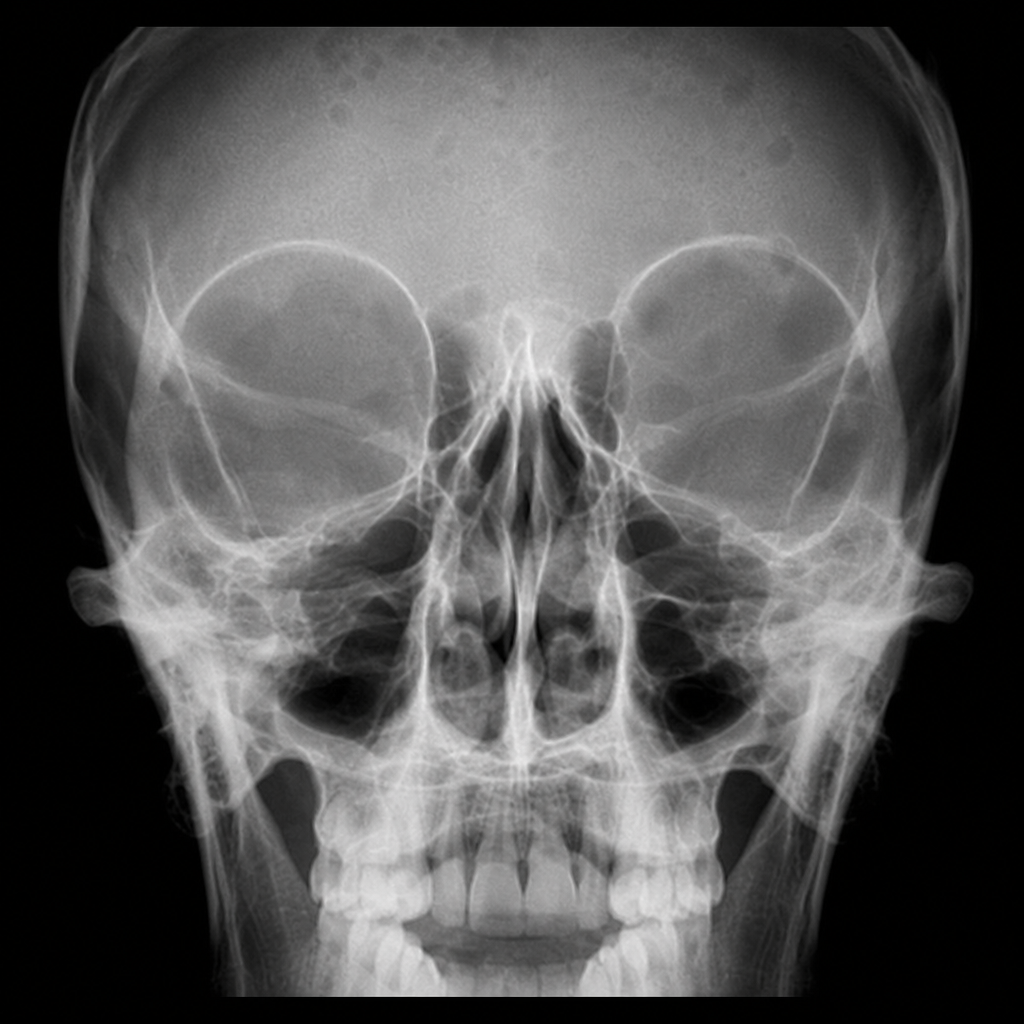
What is a chalazion?
Fundoscopic examination of a child shows "pepper and salt" appearance. This finding is pathognomonic of?
Brown pigmented spots of the iris in neurofibromatosis are called:
What is the treatment of choice for Eale's disease?
Iris pearl is seen in which condition?
Which of the following histological features of malignant melanoma of the choroid has the best prognosis?
Which of the following is an ocular side-effect of HAA therapy?
Which of the following are characteristic manifestations of Vitamin A deficiency?
A six-year-old child presents with a history of night blindness and corneal scarring, six months after suffering from measles. What deficiency should be suspected?
Roth spots are seen in which of the following conditions?
Explanation: **Explanation** A **Chalazion** (also known as a tarsal cyst) is a common eyelid condition characterized by a **chronic, non-infective, granulomatous inflammation** of the **Meibomian glands**. The underlying pathology involves the obstruction of the gland duct, leading to the leakage of sebaceous secretions (lipids) into the surrounding tarsal stroma. This triggers a "foreign body" type **lipo-granulomatous reaction** involving giant cells, lymphocytes, and plasma cells. **Analysis of Options:** * **Option A:** Describes a **Hordeolum Externum (Stye)**. This is an acute, painful, bacterial infection of the superficial glands (Zeis or Moll) at the eyelid margin. * **Option C:** Describes a **Hordeolum Internum**. While it involves the Meibomian gland like a chalazion, it is an *acute suppurative* infection (usually *S. aureus*), whereas a chalazion is chronic and sterile. * **Option D:** Viral infections (like Molluscum Contagiosum) present with umbilicated nodules, not lipo-granulomatous inflammation. **High-Yield Clinical Pearls for NEET-PG:** * **Presentation:** A painless, firm, slow-growing nodule away from the lid margin. * **Treatment:** Small ones may resolve spontaneously. Conservative management includes warm compresses. Definitive treatment is **Incision and Curettage (I&C)**, performed through a vertical incision on the conjunctival surface (to avoid damaging Meibomian ducts). * **Recurrence:** Recurrent chalazia in the same location in elderly patients must be biopsied to rule out **Sebaceous Gland Carcinoma**. * **Association:** Frequently associated with **Acne Rosacea** and Seborrheic dermatitis.
Explanation: **Explanation:** The **"pepper and salt" fundus** is a classic clinical sign characterized by fine, mottled pigmentary changes (pigment clumps and atrophy) in the peripheral retina. It is a hallmark of **Congenital Syphilis**, resulting from a chronic, low-grade peripheral chorioretinitis. While it can be seen in other conditions like Rubella or Usher syndrome, in the context of standard medical examinations, it is most frequently associated with late congenital syphilis. **Analysis of Options:** * **Congenital Syphilis (Correct):** The "pepper and salt" appearance occurs due to the destruction of the retinal pigment epithelium (RPE) and subsequent pigment migration. It is often asymptomatic and does not typically affect central vision unless the macula is involved. * **Eale's Disease:** This is an idiopathic peripheral retinal perivasculitis (primarily affecting young males). It is characterized by peripheral neovascularization, vitreous hemorrhage, and tractional retinal detachment, not pigmentary mottling. * **Toxocariasis:** Typically presents as a unilateral posterior pole granuloma or a peripheral inflammatory mass with tractional bands (Leukocoria), rather than diffuse pigmentary changes. * **Leprosy:** Ocular involvement usually includes madarosis (loss of eyebrows/lashes), lagophthalmos, interstitial keratitis, and chronic granulomatous uveitis with "pearls" on the iris. **High-Yield Clinical Pearls for NEET-PG:** * **Hutchinson’s Triad (Congenital Syphilis):** 1. Interstitial Keratitis, 2. Hutchinson’s teeth (notched incisors), 3. Eighth nerve deafness. * **Other "Pepper and Salt" causes:** Congenital Rubella (most common cause of this sign), Cystinosis, and Leber’s Congenital Amaurosis. * **Interstitial Keratitis:** The most common late ocular manifestation of congenital syphilis (usually appearing between ages 5 and 20).
Explanation: **Explanation:** **Lisch nodules** (Option A) are the hallmark ocular manifestation of **Neurofibromatosis Type 1 (NF-1)**, also known as von Recklinghausen’s disease. Pathologically, these are melanocytic hamartomas—well-defined, dome-shaped, brown-to-tan pigmented elevations on the surface of the iris. They are typically bilateral and do not affect vision. Their clinical significance lies in diagnosis: they are present in over 95% of affected individuals by age 20, making them a key diagnostic criterion. **Analysis of Incorrect Options:** * **Verocay bodies (Option B):** These are histological features characterized by stacks of nuclei (palisading) found in **Schwannomas**. While Schwannomas can occur in NF-2, Verocay bodies are microscopic findings, not clinical iris spots. * **Crowe’s sign (Option C):** This refers to **axillary or inguinal freckling**, which is a cutaneous diagnostic criterion for NF-1. It is a systemic sign, not an ocular one. * **Petechiae (Option D):** These are small (1-2mm) red or purple spots on the skin or mucous membranes caused by minor hemorrhage (capillary bleeding), unrelated to neurofibromatosis. **High-Yield Clinical Pearls for NEET-PG:** * **NF-1 (Chromosome 17):** Associated with Lisch nodules, Optic nerve gliomas, Café-au-lait spots, and Sphenoid wing dysplasia. * **NF-2 (Chromosome 22):** Associated with **PSC (Posterior Subcapsular Cataract)** or combined hamartomas of the retina and RPE, but rarely Lisch nodules. * **Slit-lamp examination** is essential to differentiate Lisch nodules from common iris nevi (nevi are usually flat, while Lisch nodules are raised).
Explanation: **Explanation:** **Eales' Disease** is an idiopathic, inflammatory peripheral retinal perivasculitis (primarily affecting the venules) that typically affects young healthy males. The pathogenesis involves three stages: perivasculitis (inflammation), peripheral capillary non-perfusion (ischemia), and neovascularization (leading to vitreous hemorrhage). **Why Corticosteroids are the Correct Answer:** The primary underlying mechanism in the early, active stage of Eales' disease is **inflammation** (perivasculitis). Systemic or periocular **corticosteroids** are the mainstay of treatment to suppress this inflammation, reduce exudation, and prevent the progression to the proliferative stage. They are the treatment of choice for active vasculitis. **Analysis of Incorrect Options:** * **A. Antibiotics:** While Eales' disease was historically associated with Tuberculosis (hypersensitivity to *M. tuberculosis* protein), it is not an active infection of the eye. Antibiotics (or AKT) are only supportive if systemic TB is proven; they do not treat the ocular inflammation directly. * **C. Antihistaminics:** These are used for Type I hypersensitivity (allergic conjunctivitis). Eales' is a vasculitic process where antihistamines have no therapeutic role. * **D. Surgery:** Pars Plana Vitrectomy (PPV) is reserved for **complications** (non-resolving vitreous hemorrhage or tractional retinal detachment), not as the primary treatment of the disease itself. **High-Yield Clinical Pearls for NEET-PG:** * **Demographics:** Most common in males aged 20–30 years. * **Classic Presentation:** Sudden painless floaters or vision loss due to **Vitreous Hemorrhage**. * **Staging:** 1. Perivasculitis (Venous sheathing) $\rightarrow$ 2. Ischemia $\rightarrow$ 3. Neovascularization $\rightarrow$ 4. Complications (VH/TRD). * **Management Strategy:** * Active Inflammation: **Corticosteroids**. * Non-perfusion/Neovascularization: **Laser Photocoagulation** (Scatter/PRP). * Vitreous Hemorrhage: **Surgery** (if not resolving).
Explanation: **Explanation:** **Iris pearls** are a pathognomonic clinical feature of **Leprosy (Hansen’s Disease)**, specifically the lepromatous type. These are small, white, sand-like pedunculated nodules found on the iris surface or pupillary margin. Pathologically, they represent miliary lepromas containing *Mycobacterium leprae*. They typically appear years after the systemic infection and may eventually enlarge, coalesce, and drop into the anterior chamber. **Analysis of Options:** * **Leprosy (Correct):** In addition to iris pearls, ocular leprosy is characterized by madarosis (loss of eyebrows/lashes), lagophthalmos (due to 7th nerve palsy), and chronic granulomatous uveitis. * **Tuberculosis:** Ocular TB typically presents with "mutton-fat" keratic precipitates, Koeppe/Busacca nodules, or choroidal tubercles. It does not present with the distinct "pearl" morphology. * **Sarcoidosis:** This systemic granulomatous disease causes "candle-wax drippings" (periphlebitis) on the retina and iris nodules, but these are larger and more vascularized than iris pearls. * **Cat Scratch Disease:** Caused by *Bartonella henselae*, it is most famously associated with **Parinaud’s Oculoglandular Syndrome** (unilateral follicular conjunctivitis with lymphadenopathy) and neuroretinitis (macular star). **High-Yield Clinical Pearls for NEET-PG:** * **Iris Pearls:** Pathognomonic for Lepromatous Leprosy. * **Busacca Nodules:** Located on the iris stroma (seen in granulomatous uveitis like TB/Sarcoid). * **Koeppe Nodules:** Located at the pupillary border (seen in granulomatous uveitis). * **Lisch Nodules:** Melanocytic hamartomas seen in Neurofibromatosis Type 1. * **Brushfield Spots:** White/grey spots on the iris periphery seen in Down Syndrome.
Explanation: **Explanation:** The prognosis of choroidal melanoma is primarily determined by the **Callender Classification**, which categorizes these tumors based on their histological cell types. **1. Why Spindle-A is Correct:** **Spindle-A melanoma** has the best prognosis among all types. Histologically, these cells are elongated with slender, spindle-shaped nuclei and a characteristic longitudinal fold in the nuclear membrane (chromatin stripe). They lack distinct nucleoli and show minimal mitotic activity. The 15-year mortality rate for Spindle-A tumors is very low (approximately 5-10%), as they are the least aggressive and slowest to metastasize. **2. Analysis of Incorrect Options:** * **Spindle-B melanoma (Option C):** These cells are also spindle-shaped but are more plump and possess a prominent, distinct nucleolus. While they have a relatively good prognosis, it is statistically worse than Spindle-A. * **Epithelioid cell melanoma (Option A):** These are large, round, or polygonal cells with abundant cytoplasm and prominent nucleoli. This is the **most aggressive** cell type with the **worst prognosis** due to high metastatic potential. * **Mixed cell melanoma (Option D):** This is the most common clinical presentation, containing a mixture of spindle and epithelioid cells. Its prognosis is intermediate—worse than pure spindle cell tumors but better than pure epithelioid tumors. **High-Yield Clinical Pearls for NEET-PG:** * **Most common primary intraocular malignancy in adults:** Choroidal Melanoma. * **Most common site of metastasis:** Liver (Hematogenous spread). * **Modified Callender Classification:** Spindle cell (A & B), Mixed, and Epithelioid. * **Worst Prognostic Factors:** Epithelioid cell type, large tumor size, extraocular extension, and high mitotic rate. * **Genetic Marker:** Monosomy 3 is associated with a poor prognosis and increased risk of metastasis.
Explanation: **Explanation:** **HAA therapy** refers to the combination of **Highly Active Antiretroviral Therapy (HAART)** used in the management of HIV/AIDS. While HAART has significantly reduced the incidence of opportunistic infections like CMV retinitis, it is associated with a specific ocular complication known as **Immune Recovery Uveitis (IRU)**. **1. Why Uveitis is the correct answer:** As HAART restores the patient's immune system (indicated by a rise in CD4+ T-cell counts and a decrease in viral load), the body begins to mount an inflammatory response against residual cytomegalovirus (CMV) antigens already present in the eye. This paradoxical inflammatory reaction manifests as **Uveitis** (typically anterior or intermediate). It is characterized by vitritis, cystoid macular edema (CME), and the formation of epiretinal membranes, which can lead to vision loss despite the control of the underlying viral infection. **2. Why other options are incorrect:** * **Retinitis:** This is a manifestation of the **disease (HIV/CMV)** itself, rather than a side effect of the therapy. HAART actually helps in the regression of retinitis. * **Optic neuritis:** While certain drugs like Ethambutol cause optic neuritis, it is not a classic or primary side effect associated with standard HAART regimens. * **Scleritis:** This is typically associated with systemic autoimmune conditions (like Rheumatoid Arthritis) and is not a recognized complication of immune recovery under HAART. **High-Yield Clinical Pearls for NEET-PG:** * **Immune Recovery Uveitis (IRU)** usually occurs when CD4+ counts rise above **100 cells/µL**. * The most common cause of vision loss in IRU is **Cystoid Macular Edema (CME)**. * **Rifabutin**, often used in HIV patients for MAC prophylaxis, is another notorious cause of drug-induced uveitis. * **Didanosine (ddI)**, a component of some ARV regimens, is specifically linked to **peripheral retinal atrophy**.
Explanation: **Explanation:** Vitamin A (Retinol) is essential for the maintenance of specialized epithelia and the synthesis of rhodopsin in the retina. Deficiency leads to a spectrum of ocular signs collectively known as **Xerophthalmia**. 1. **Why Option A is correct:** * **Night Blindness (Nyctalopia):** The earliest clinical symptom. It occurs due to impaired regeneration of rhodopsin in the rod cells. * **Bitot’s Spots:** These are characteristic triangular, foamy, silvery-white patches on the bulbar conjunctiva (usually temporal). They represent keratinized epithelial debris and *Corynebacterium xerosis* colonization. * **Xerophthalmia:** This term encompasses the entire range of manifestations, from conjunctival xerosis to keratomalacia (corneal melting). 2. **Why other options are incorrect:** * **Options B, C, and D:** These are incomplete or contain **Tranta’s spots**. Tranta’s spots (Horner-Tranta spots) are small, white apical dots found at the limbus in **Vernal Keratoconjunctivitis (VKC)**, a type of allergic conjunctivitis. They are composed of eosinophils and are not related to Vitamin A deficiency. **High-Yield Clinical Pearls for NEET-PG:** * **WHO Classification of Xerophthalmia:** * **X1A:** Conjunctival xerosis * **X1B:** Bitot’s spots * **X2:** Corneal xerosis * **X3A/X3B:** Keratomalacia (<1/3 or >1/3 of corneal surface) * **XF:** Xerophthalmic fundus (small white lesions in the periphery) * **XS:** Corneal scarring * **Treatment (WHO Schedule):** 200,000 IU orally on Day 0, Day 1, and Day 14 (half dose for infants 6–12 months; 50,000 IU for <6 months). * **First Sign:** Conjunctival xerosis. * **First Symptom:** Night blindness.
Explanation: ### Explanation **Correct Option: A. Vitamin A** The clinical presentation of **night blindness (nyctalopia)** and **corneal scarring** in a child following a measles infection is a classic manifestation of **Xerophthalmia**. **Medical Concept:** Vitamin A is essential for the synthesis of **rhodopsin** (visual purple) in the retinal rods and for maintaining the integrity of epithelial surfaces. Measles acts as a major precipitant of Vitamin A deficiency (VAD) because the virus: 1. Depletes existing Vitamin A stores. 2. Causes intestinal malabsorption. 3. Increases metabolic demand due to high fever. In such cases, the ocular surface undergoes squamous metaplasia, leading to Bitot’s spots, keratomalacia, and eventually permanent corneal scarring. **Why Incorrect Options are Wrong:** * **Vitamin D:** Deficiency primarily affects calcium metabolism, leading to Rickets in children and Osteomalacia in adults. It has no direct link to night blindness or corneal epithelial health. * **Vitamin C:** Deficiency causes **Scurvy**, characterized by defective collagen synthesis leading to bleeding gums, subperiosteal hemorrhages, and corkscrew hair. * **Vitamin B:** Deficiencies (like B1, B2, or B12) typically present with neurological symptoms, glossitis, or optic neuropathy (nutritional amblyopia), but not acute corneal melting or post-measles xerophthalmia. **High-Yield Clinical Pearls for NEET-PG:** * **WHO Classification of Xerophthalmia:** X1A (Conjunctival xerosis), X1B (**Bitot’s spots**—triangular, foamy patches), X2 (Corneal xerosis), X3A/B (**Keratomalacia**), XS (Corneal scar). * **First Clinical Sign:** Conjunctival xerosis. * **First Symptom:** Night blindness. * **Measles Management:** All children with measles in endemic areas should receive two doses of Vitamin A (200,000 IU for >1 year old) to prevent blindness and reduce mortality.
Explanation: **Explanation:** **Roth spots** are classic ophthalmological findings characterized by **retinal hemorrhages with a pale/white center**. The white center typically consists of fibrin-platelet aggregates, inflammatory cells, or neoplastic cells, depending on the underlying etiology. **Why Leukemia is Correct:** In **Leukemia**, Roth spots occur due to a combination of severe anemia and thrombocytopenia, leading to capillary fragility. The white center in leukemic Roth spots often represents an accumulation of **leukemic (blast) cells** or a localized fibrin thrombus. While classically associated with Subacute Bacterial Endocarditis (SBE), Leukemia is one of the most common systemic causes encountered in clinical practice and exams. **Why the Other Options are Incorrect:** * **Adreno-leukodystrophy (ALD):** This is a peroxisomal disorder primarily affecting the white matter of the brain and adrenal glands. Ocular findings are typically **optic atrophy** due to the degeneration of the visual pathways, not retinal hemorrhages. * **Metachromatic leukodystrophy (MLD):** A lysosomal storage disease (arylsulfatase A deficiency) that causes demyelination. It may present with **optic atrophy** or a faint **cherry-red spot** in some cases, but not Roth spots. * **Gaucher disease:** A lysosomal storage disorder where the most common ocular finding is **pinguecula** (Gaucher cells in the conjunctiva) or occasionally vitreous opacities, but not Roth spots. **High-Yield Clinical Pearls for NEET-PG:** * **Mnemonic for Roth Spots:** "**L**-**S**-**D**" (**L**eukemia, **S**BE, **D**iabetes Mellitus). * **Other Causes:** Severe Anemia, Hypertension, Preeclampsia, and HIV. * **Differential Diagnosis:** Do not confuse Roth spots with **Cotton Wool Spots** (which are micro-infarcts of the nerve fiber layer and do not have a surrounding hemorrhage). * **Pathology:** The white center is NOT always pus; it is most commonly a **fibrin-platelet plug** at the site of vessel rupture.
Diabetes Mellitus
Practice Questions
Hypertension
Practice Questions
Autoimmune Disorders
Practice Questions
Thyroid Disease
Practice Questions
HIV and AIDS
Practice Questions
Hematological Disorders
Practice Questions
Neurological Disorders
Practice Questions
Dermatological Conditions
Practice Questions
Pregnancy-Related Eye Changes
Practice Questions
Metabolic Disorders
Practice Questions
Ocular Toxicity of Systemic Medications
Practice Questions
Infectious Systemic Diseases
Practice Questions
Get full access to all questions, explanations, and performance tracking.
Start For Free