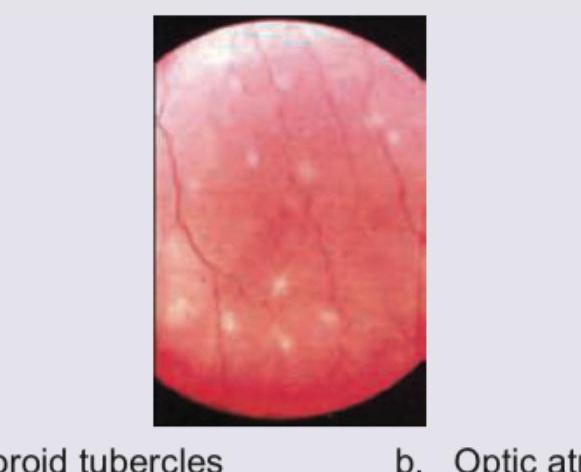
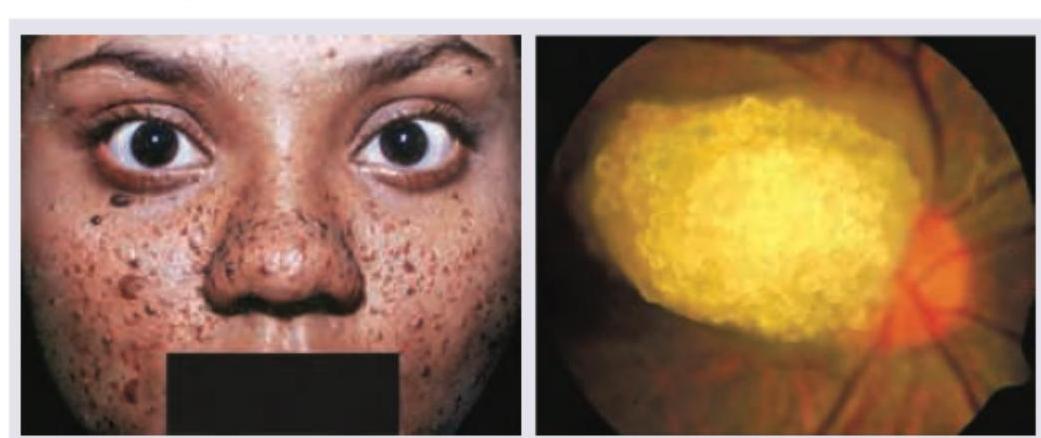
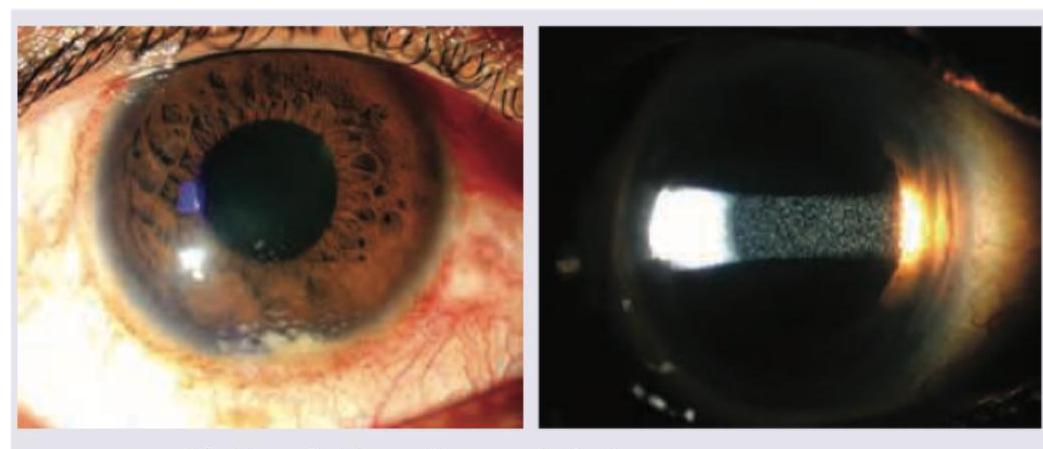
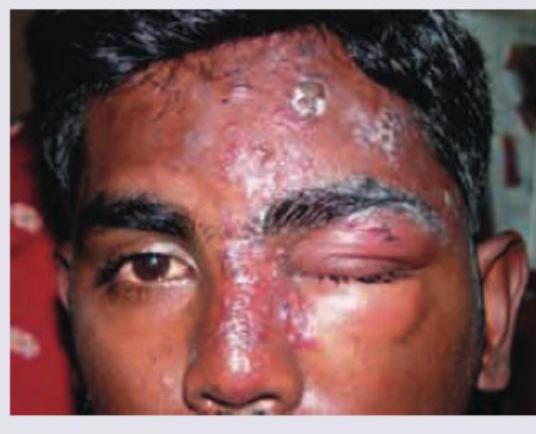
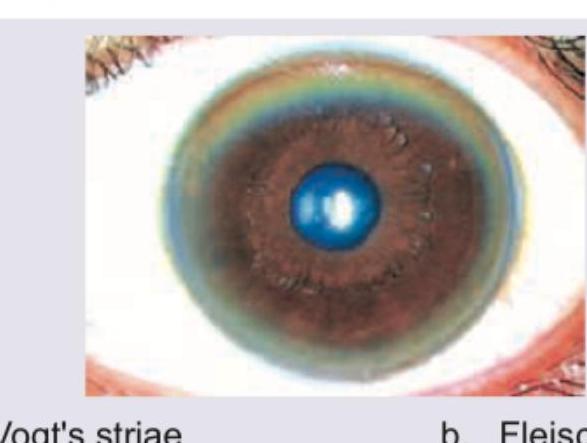
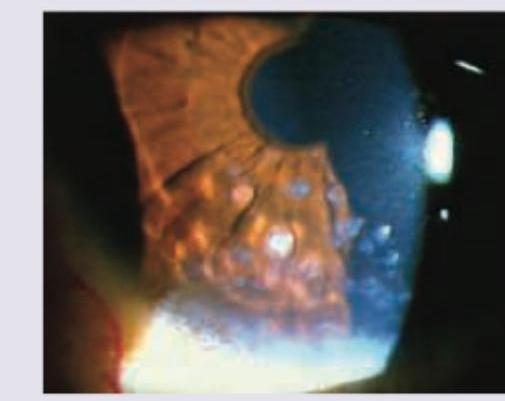
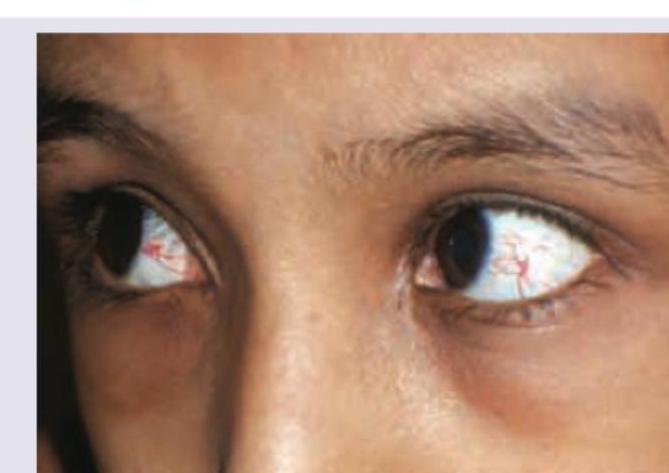
A cherry red spot is seen in which of the following conditions?
All of the following HLA-phenotypes are associated with uveitis except?
Which of the following conditions is most commonly associated with acute anterior uveitis?
A child presents with albinism. What specialist evaluation is indicated?
What is the first sign of Vitamin A deficiency?
Dalen-Fuchs nodules are characteristic of which condition?
A recurrent chalazion should be subjected to histopathologic evaluation to exclude which of the following possibilities?
In a patient with iridocyclitis, which of the following types of synechiae result in iris bombe formation?
A young adult presented with diminished vision. On examination, he has anterior uveitis, vitritis, focal necrotizing granuloma, and macular spot. What is the probable diagnosis?
Which among the following is the commonest parasitic cause of uveitis?
Explanation: ### Explanation The **Cherry Red Spot** is a classic clinical finding in ophthalmology, characterized by a bright red appearance of the fovea contrasted against a pale, opacified surrounding retina. **Underlying Pathophysiology:** The fovea is the thinnest part of the retina and lacks the ganglion cell layer. In certain systemic or vascular conditions, the surrounding retinal layers become opaque due to either **intracellular storage of lipids** (in metabolic disorders) or **ischemic edema** (in vascular occlusion). Because the fovea remains thin and transparent, the underlying vascularized choroid shines through, creating the "cherry red" appearance. **Analysis of Options:** * **Tay-Sachs & Niemann-Pick Disease:** These are Lysosomal Storage Disorders (Sphingolipidoses). Accumulation of gangliosides (Tay-Sachs) or sphingomyelin (Niemann-Pick) in the retinal ganglion cells causes the surrounding retina to appear milky white, highlighting the red fovea. * **Central Retinal Artery Occlusion (CRAO):** Sudden blockage of the retinal blood supply leads to profound ischemia and intracellular edema of the inner retinal layers. The fovea, supplied by the underlying choriocapillaris, remains perfused and appears red against the pale, infarcted retina. **Clinical Pearls for NEET-PG:** * **Mnemonic for Cherry Red Spot:** "**S**ome **M**en **A**re **C**onfused **G**irls" (**S**andhoff disease, **M**ucholipidosis, **A**maurotic idiocy/Tay-Sachs, **C**RAO, **G**aucher disease/GM1 Gangliosidosis). * **Differential:** In **Farber’s disease**, a cherry red spot is also seen. * **Distinction:** In **Niemann-Pick Type C**, the cherry red spot is often absent; it is most characteristic of **Type A**. * **Quicksand:** Remember that **Hurler Syndrome** (MPS I) does *not* typically feature a cherry red spot; it is known for corneal clouding.
Explanation: **Explanation:** The association between Human Leukocyte Antigens (HLA) and uveitis is a high-yield topic in ophthalmology. The correct answer is **HLA-10**, as it has no established clinical association with uveitis or any specific ocular inflammatory syndrome. **Why the other options are associated with uveitis:** * **HLA-B27 (Option A):** This is the most common HLA association. It is strongly linked with **Acute Anterior Uveitis (AAU)**, often occurring in patients with seronegative spondyloarthropathies like Ankylosing Spondylitis, Reiter’s syndrome, and Psoriatic arthritis. * **HLA-B5 (Option B):** Specifically the **HLA-B51** subtype is a hallmark marker for **Behçet’s Disease**. Ocular involvement typically manifests as a devastating "cold" hypopyon uveitis and retinal vasculitis. * **HLA-BW54 (Option C):** This phenotype is specifically associated with **Posner-Schlossman Syndrome** (Glaucomatocyclitic crisis), characterized by recurrent episodes of mild anterior uveitis with significantly elevated intraocular pressure. **High-Yield Clinical Pearls for NEET-PG:** 1. **HLA-A29:** Strongly associated with **Birdshot Retinochoroidopathy** (highest relative risk among all HLA associations). 2. **HLA-DR4:** Associated with **Vogt-Koyanagi-Harada (VKH) syndrome** and Sympathetic Ophthalmitis. 3. **HLA-B7 & HLA-DR2:** Associated with **Presumed Ocular Histoplasmosis Syndrome (POHS)**. 4. **HLA-B27 Uveitis** is typically unilateral (or alternating), sudden in onset, and presents with a heavy cellular reaction (fibrinous exudates).
Explanation: **Explanation:** **Ankylosing Spondylitis (AS)** is the most common systemic association of **Acute Anterior Uveitis (AAU)**. Approximately 25–30% of patients with AS will develop AAU during their lifetime. Conversely, in patients presenting with non-granulomatous AAU, nearly 50% are HLA-B27 positive, and of those, a significant portion has underlying AS. The uveitis in AS is typically unilateral (though it can alternate), sudden in onset, and recurrent. **Analysis of Options:** * **Reiter Syndrome (Reactive Arthritis):** While strongly associated with HLA-B27 and AAU, it is less common than AS. It is characterized by the classic triad of urethritis, conjunctivitis (more common than uveitis), and arthritis. * **Psoriatic Arthritis:** This is associated with uveitis in about 7% of cases. The inflammation is more likely to be chronic, bilateral, and may involve the posterior segment (panuveitis) more frequently than AS. * **Juvenile Rheumatoid Arthritis (JRA/JIA):** Specifically the **oligoarticular type** is a major cause of uveitis in children. However, JIA typically causes **Chronic Non-granulomatous Anterior Uveitis**, which is often asymptomatic ("white eye") and insidious, unlike the acute presentation seen in AS. **NEET-PG High-Yield Pearls:** * **HLA-B27 Association:** AS has the strongest association with HLA-B27 (>90% of patients). * **Clinical Presentation:** AAU presents with "Ciliary congestion," miosis, and aqueous cells/flare. * **Treatment:** Topical corticosteroids and cycloplegics (to prevent posterior synechiae) are the mainstays of treatment. * **Gender Predominance:** AS is significantly more common in young males (3:1 ratio).
Explanation: **Explanation:** Albinism is a group of genetic disorders characterized by a deficit in melanin production. In **Oculocutaneous Albinism (OCA)**, both the skin and eyes are affected, while in **Ocular Albinism (OA)**, the manifestations are primarily confined to the eyes. Melanin is crucial for the normal development of the optic pathway; its absence leads to significant ocular morbidity. **Why Ophthalmology is the correct answer:** Melanin deficiency during embryogenesis results in: 1. **Foveal Hypoplasia:** Failure of the fovea to develop, leading to poor central visual acuity. 2. **Optic Nerve Misrouting:** Excessive decussation (crossing) of nerve fibers at the optic chiasm, resulting in loss of stereopsis (depth perception). 3. **Iris Transillumination & Photophobia:** Lack of pigment in the iris allows light to pass through it. 4. **Nystagmus:** Often develops early in life due to poor fixation. A specialist evaluation is mandatory to manage refractive errors, provide low-vision aids, and monitor for squint or nystagmus. **Why other options are incorrect:** * **ENT/Neurosurgery:** Albinism does not typically involve the auditory system or intracranial structures requiring surgical intervention. * **Electrocardiography:** While some rare syndromes like **Hermansky-Pudlak** (bleeding diathesis/pulmonary fibrosis) or **Chédiak-Higashi** (immunodeficiency) are associated with albinism, they do not primarily present with cardiac conduction defects requiring routine ECG. **Clinical Pearls for NEET-PG:** * **Pendular Nystagmus** is a hallmark sign in children with albinism. * **Tyrosinase** is the key enzyme deficient in the most common form (OCA1). * **Photophobia management:** Tinted glasses or photochromic lenses are standard recommendations. * **Systemic Association:** Always rule out Hermansky-Pudlak syndrome if a patient with albinism presents with easy bruising or bleeding.
Explanation: **Explanation:** Vitamin A (Retinol) is essential for maintaining the integrity of epithelial surfaces and the health of the retina. The ocular manifestations of Vitamin A deficiency are collectively termed **Xerophthalmia**. **Why Conjunctival Xerosis is the correct answer:** According to the WHO classification of Xerophthalmia, **Conjunctival Xerosis (Stage X1A)** is considered the **first clinical sign**. It is characterized by the loss of goblet cells, leading to a dry, lusterless, and "muddy" appearance of the bulbar conjunctiva. While Night Blindness (XN) is the earliest *symptom*, Conjunctival Xerosis is the first *objective sign* visible on examination. **Analysis of Incorrect Options:** * **Bitot’s Spot (X1B):** These are triangular, foamy, silvery-white patches on the bulbar conjunctiva. While highly characteristic of Vitamin A deficiency, they occur *after* the initial xerosis. * **Corneal Ulcer (X3A):** This represents advanced disease where the cornea becomes involved. It is a late stage and carries a risk of permanent scarring. * **Keratomalacia (X3B):** This is the most severe stage, characterized by liquefactive necrosis of the cornea. It is a medical emergency and occurs long after the initial signs. **High-Yield Facts for NEET-PG:** * **WHO Classification Sequence:** XN (Night blindness) → X1A (Conjunctival xerosis) → X1B (Bitot’s spots) → X2 (Corneal xerosis) → X3A (Corneal ulcer <1/3) → X3B (Keratomalacia >1/3) → XS (Corneal scar) → XF (Xerophthalmic fundus). * **Earliest Symptom:** Night Blindness (Nyctalopia). * **Earliest Sign:** Conjunctival Xerosis. * **Treatment:** The "Schedule of 0, 1, and 14" (200,000 IU orally on day 0, day 1, and day 14 for children >1 year).
Explanation: **Explanation:** **Dalen-Fuchs nodules** are a hallmark histopathological finding in **Sympathetic Ophthalmitis (SO)**. SO is a rare, bilateral granulomatous panuveitis that occurs following a penetrating ocular injury or intraocular surgery in one eye (the "exciting" eye), subsequently affecting the other eye (the "sympathizing" eye). The nodules represent clusters of epithelioid cells, macrophages, and pigment-laden cells (derived from the retinal pigment epithelium) located between the **Bruch’s membrane and the RPE**. Their presence indicates a cell-mediated immune response against uveal antigens. **Analysis of Incorrect Options:** * **Chronic iridocyclitis:** While this involves chronic inflammation, it typically presents with Keratic Precipitates (KPs) on the corneal endothelium or Koeppe/Busacca nodules on the iris, rather than sub-RPE Dalen-Fuchs nodules. * **Neurofibromatosis (Type 1):** The characteristic ocular findings are **Lisch nodules**, which are melanocytic hamartomas located on the surface of the iris, not the choroid/RPE. * **Trachoma:** This is a chronic keratoconjunctivitis caused by *Chlamydia trachomatis*. Characteristic findings include **Herbert’s pits** (limbal follicles) and **Arlt’s line** (conjunctival scarring), not intraocular nodules. **High-Yield Clinical Pearls for NEET-PG:** 1. **Vogt-Koyanagi-Harada (VKH) Syndrome:** Dalen-Fuchs nodules can also be seen in VKH, as it shares a similar granulomatous pathology. 2. **Histopathology of SO:** Characterized by "non-necrotizing granulomatous inflammation" with **sparing of the choriocapillaris**. 3. **Prevention:** Evisceration or enucleation of the injured eye within 10–14 days of trauma is traditionally recommended to prevent the development of SO.
Explanation: **Explanation:** The correct answer is **Sebaceous cell carcinoma (SGC)**. **Why it is correct:** Sebaceous cell carcinoma is a highly malignant tumor arising from the meibomian glands (most common), Zeis glands, or the caruncle. It is notorious for its ability to mimic benign inflammatory conditions, a phenomenon known as **"masquerade syndrome."** A recurrent chalazion at the same site or a chronic unilateral blepharitis in an elderly patient should always raise suspicion for SGC. Histopathologic evaluation is mandatory to rule out malignancy, as SGC can be fatal due to its tendency for pagetoid spread and early metastasis. **Why the other options are incorrect:** * **Squamous cell carcinoma (A):** While it is a common eyelid malignancy, it typically presents as a nodular or ulcerative lesion on the lid margin, not as a mimic of a deep-seated meibomian cyst (chalazion). * **Malignant melanoma (C):** This is a rare eyelid tumor that presents as a pigmented lesion with irregular borders. It does not clinically resemble a chalazion. * **Basal cell carcinoma (D):** This is the most common eyelid malignancy. It typically presents as a "pearly" nodule with telangiectasia or a "rodent ulcer" on the lower lid. Unlike SGC, it rarely mimics a chalazion. **High-Yield Clinical Pearls for NEET-PG:** * **Most common site for SGC:** Upper eyelid (due to a higher density of meibomian glands). * **Most common site for BCC:** Lower eyelid. * **Pagetoid spread:** SGC cells can migrate into the conjunctival epithelium, necessitating full-thickness "map biopsies." * **Stain of choice:** Oil Red O (requires fresh/frozen tissue) to identify lipid content within the tumor cells.
Explanation: **Explanation:** The correct answer is **Ring synechiae (Option C)**. **Mechanism of Iris Bombe:** Iris bombe occurs due to the complete 360-degree adhesion of the pupillary margin to the anterior lens capsule. This condition is known as **Ring Synechiae** (or *seclusio pupillae*). * **The Pathophysiology:** In iridocyclitis, inflammatory exudates cause the iris to stick to the lens. When this occurs circumferentially (360°), it creates a water-tight seal that blocks the flow of aqueous humor from the posterior chamber to the anterior chamber. * **The Result:** Aqueous humor accumulates in the posterior chamber, increasing pressure behind the iris. This causes the peripheral iris to bulge forward (ballooning), a clinical sign known as **Iris Bombe**. This leads to secondary angle-closure glaucoma. **Analysis of Incorrect Options:** * **A. Segmental synechiae:** These are localized adhesions involving only a portion of the pupillary circumference. Because aqueous humor can still escape through the non-adhered areas of the pupil, no pressure buildup occurs, and iris bombe does not develop. * **B. Total synechiae:** This refers to the adhesion of the entire posterior surface of the iris to the lens capsule. While this is a severe complication, it prevents the iris from bulging forward because the iris is "plastered" down against the lens; hence, iris bombe cannot form. **High-Yield Clinical Pearls for NEET-PG:** * **Seclusio pupillae:** 360° ring synechiae (leads to iris bombe). * **Occlusio pupillae:** An inflammatory membrane covering the entire pupillary area. * **Festooned pupil:** An irregular pupil shape seen after using mydriatics in a patient with segmental synechiae. * **Management:** The immediate treatment for iris bombe is **Laser Peripheral Iridotomy (LPI)** to create a bypass for aqueous humor.
Explanation: **Explanation:** The clinical presentation of **Ocular Toxoplasmosis**, caused by the parasite *Toxoplasma gondii*, typically features a "headlight in the fog" appearance. This is due to active **focal necrotizing retinochoroiditis** (the granuloma) associated with significant overlying **vitritis**. The presence of anterior uveitis and macular involvement (macular spot) are common complications. In young adults, this is often a reactivation of congenital infection. **Why the other options are incorrect:** * **Proteus Syndrome:** This is a rare genetic condition characterized by overgrowth of bones, skin, and other tissues (e.g., macrodactyly). It does not typically present with posterior segment inflammatory granulomas. * **White Dot Syndromes:** This is a group of idiopathic inflammatory conditions (like APMPPE or Birdshot chorioretinopathy). While they involve the choroid/retina, they present with multiple, small, discrete white lesions rather than a single focal necrotizing granuloma with intense vitritis. * **Multifocal Choroiditis (MFC):** As the name suggests, this involves multiple inflammatory foci. While it can cause vitritis, it lacks the classic focal necrotizing "granuloma" appearance characteristic of Toxoplasmosis. **Clinical Pearls for NEET-PG:** * **Classic Sign:** "Headlight in the fog" (active yellowish-white retinal lesion seen through dense vitreous haze). * **Most common cause** of posterior uveitis worldwide. * **Treatment:** The "Triple Therapy" includes Pyrimethamine, Sulfadiazine, and Folinic acid (to prevent bone marrow suppression). Systemic steroids are added only *after* starting anti-parasitic drugs. * **Kyrieleis Arteritis:** A specific type of retinal periarteritis sometimes seen in ocular toxoplasmosis.
Explanation: **Explanation:** **Toxocariasis (Option A)** is the most common parasitic cause of uveitis worldwide. It is caused by the larvae of *Toxocara canis* (dog roundworm) or *Toxocara cati* (cat roundworm). In humans, the larvae cannot mature and instead migrate through tissues, a condition known as **Visceral Larva Migrans**. When they reach the eye, it is termed **Ocular Larva Migrans**. It typically presents as a unilateral posterior uveitis, often manifesting as a localized retinal granuloma (posterior pole or periphery) or chronic endophthalmitis, primarily in children. **Why other options are incorrect:** * **Amoebiasis (Option B):** While *Acanthamoeba* is a significant cause of severe keratitis (especially in contact lens users), it rarely causes primary uveitis. * **Taenia solium (Option C):** This causes **Cysticercosis**. While the larvae (*Cysticercus cellulosae*) can lodge in the subretinal space or vitreous, it is less frequent than Toxocara and usually presents as a space-occupying cyst rather than classic uveitis. * **Onchocercosis (Option D):** Caused by *Onchocerca volvulus* ("River Blindness"), it is a major cause of blindness in endemic regions (Africa/South America) but is geographically restricted and less common globally than Toxocara. **High-Yield Clinical Pearls for NEET-PG:** * **Most common cause of Posterior Uveitis overall:** Toxoplasmosis (Protozoal, not Helminthic/Parasitic). * **Toxocara Presentation:** Characteristically presents as a **white pupillary reflex (Leukocoria)**, making it a crucial differential diagnosis for Retinoblastoma. * **Diagnosis:** Primarily clinical and serological (ELISA); aqueous or vitreous fluids may show eosinophilia. * **Treatment:** Periocular or systemic steroids to control inflammation; anthelmintics (Albendazole) are used if active larvae are suspected.
Diabetes Mellitus
Practice Questions
Hypertension
Practice Questions
Autoimmune Disorders
Practice Questions
Thyroid Disease
Practice Questions
HIV and AIDS
Practice Questions
Hematological Disorders
Practice Questions
Neurological Disorders
Practice Questions
Dermatological Conditions
Practice Questions
Pregnancy-Related Eye Changes
Practice Questions
Metabolic Disorders
Practice Questions
Ocular Toxicity of Systemic Medications
Practice Questions
Infectious Systemic Diseases
Practice Questions
Get full access to all questions, explanations, and performance tracking.
Start For Free