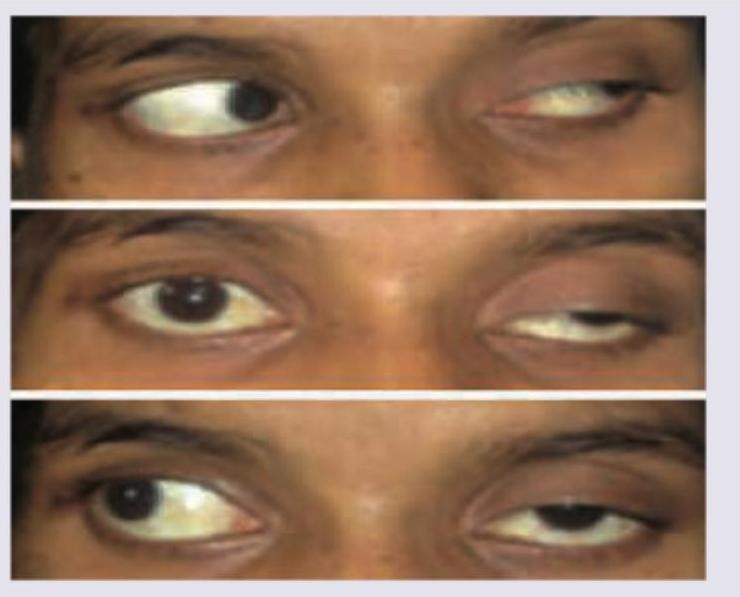
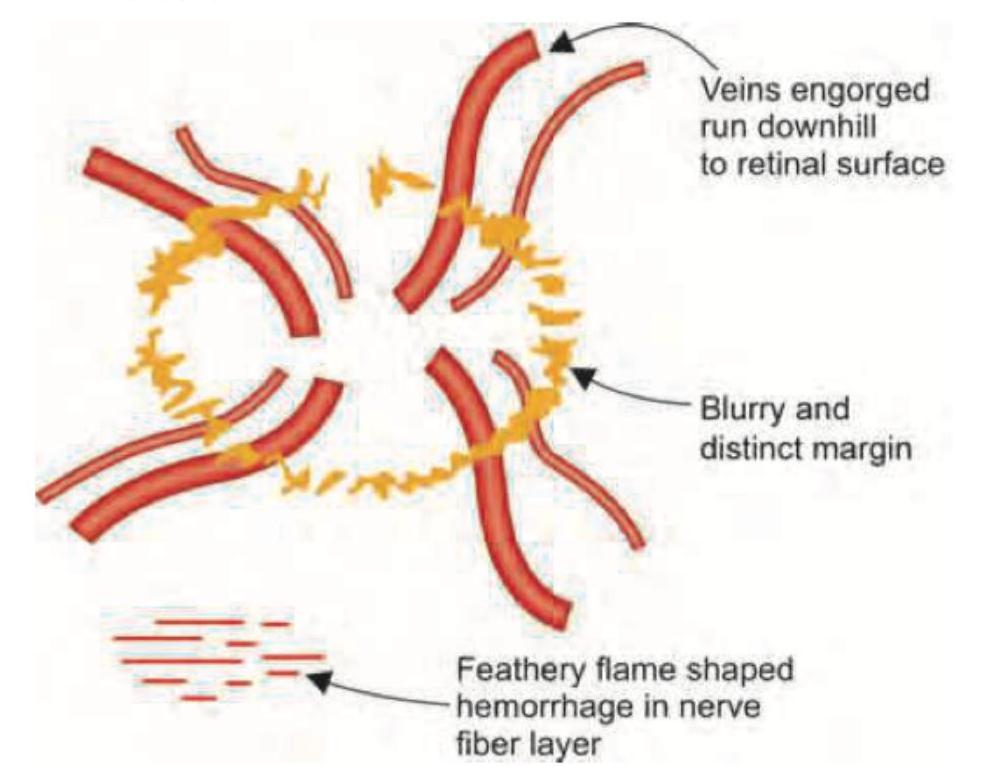
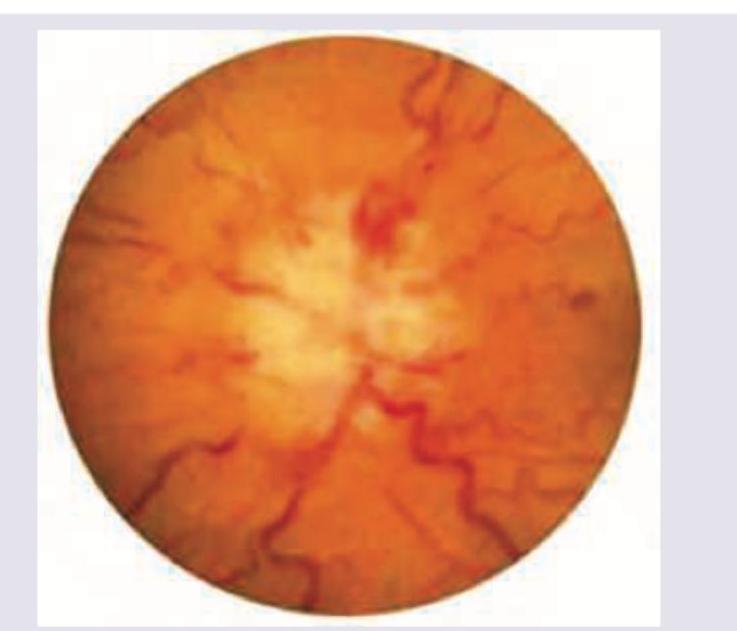
Features of papilloedema include all except:
Which visual field defects are seen in a lesion at the tip of the lateral geniculate body?
Enophthalmos is an uncommon feature of Horner's syndrome. Enophthalmos is due to palsy of which muscle?
In papilledema, all of the following are true except?
Which of the following signs is not typically associated with Horner's syndrome?
A Marcus Gunn pupil is associated with a lesion in which of the following locations?
Which of the following best describes the visual loss associated with optic neuritis?
Methanol toxicity primarily affects which part of the retina?
Optic nerve meningioma arises from which layer?
A man with Pancoast tumor developed Horner's syndrome. All of the following are the features of Horner's syndrome, EXCEPT?
Explanation: **Explanation:** The hallmark of **Papilloedema** (true optic disc swelling due to raised intracranial pressure) is that **vision is typically preserved** in the early and well-developed stages. This is a critical clinical differentiator from other causes of disc edema like optic neuritis. **1. Why "Vision is impaired" is the correct (except) answer:** In papilloedema, visual acuity remains normal (6/6 or 20/20) because the optic nerve fibers are initially only congested, not destroyed. Visual loss only occurs in the **chronic or atrophic stages** due to secondary optic atrophy. The only early visual symptom is usually "transient visual obscurations" (blurring lasting seconds, often triggered by posture). **2. Analysis of other options:** * **A. May be due to intracranial haemorrhage:** Any space-occupying lesion or hemorrhage (e.g., Subarachnoid Hemorrhage) that increases intracranial pressure (ICP) can cause papilloedema. * **B. Disc becomes elevated:** Axoplasmic flow stasis leads to swelling of the nerve fibers, causing the disc to project forward (measured in diopters). * **C. Cotton wool spots may be seen:** In the "Fully Developed" stage, severe venous stasis leads to retinal nerve fiber layer infarcts (cotton wool spots) and flame-shaped hemorrhages. **Clinical Pearls for NEET-PG:** * **Earliest Sign:** Loss of spontaneous venous pulsations (SVP) and blurring of the nasal disc margin. * **Visual Field Defect:** The characteristic early field defect is an **enlarged blind spot** (due to peripapillary retinal displacement). * **Foster Kennedy Syndrome:** Ipsilateral optic atrophy (due to direct tumor compression) and contralateral papilloedema (due to raised ICP), typically seen in olfactory groove meningiomas. * **Paton’s Lines:** Circumferential retinal folds seen on the temporal side of the swollen disc.
Explanation: **Explanation:** The **Lateral Geniculate Body (LGB)** is the primary relay station for visual information traveling from the optic tract to the optic radiations. It has a unique tonotopic arrangement and a dual blood supply, which dictates the specific field defects seen in vascular lesions. **Why "Keyhole visual field defect" is correct:** The LGB is supplied by two main arteries: the **Anterior Choroidal Artery (AChA)** and the **Lateral Posterior Choroidal Artery (LPChA)**. * The **AChA** supplies the lateral and medial aspects of the LGB. * The **LPChA** supplies the central wedge-shaped area (the "hilum" or "tip"). A lesion or infarct involving the **LPChA** results in a loss of the central visual fibers while sparing the periphery, or vice versa, creating a characteristic **horizontal sectoranopia** or a **"keyhole" shaped defect** (specifically, a wedge-shaped sector defect that respects the horizontal meridian). **Analysis of Incorrect Options:** * **Pie in the sky (Superior Quadrantanopia):** This occurs due to a lesion in **Meyer’s Loop** (temporal lobe), which carries fibers from the inferior retina. * **Pie on the floor (Inferior Quadrantanopia):** This occurs due to a lesion in **Baum’s Loop** (parietal lobe), which carries fibers from the superior retina. * **Homonymous hemianopia:** While a total destruction of the LGB would cause a complete contralateral homonymous hemianopia, a lesion specifically at the **tip/hilum** (vascular territory) results in the sectorial "keyhole" pattern. **High-Yield Clinical Pearls for NEET-PG:** 1. **Dual Blood Supply:** Remember AChA (Lateral/Medial) vs. LPChA (Central/Hilum). 2. **Wernicke’s Pupil:** Seen in optic tract lesions, but **absent** in LGB lesions (since pupillary fibers leave the tract before reaching the LGB). 3. **LGB Layers:** Layers 1, 4, 6 receive contralateral (crossed) fibers; Layers 2, 3, 5 receive ipsilateral (uncrossed) fibers.
Explanation: **Explanation:** **Horner’s Syndrome** is caused by a lesion in the sympathetic pathway supplying the eye. The classic triad includes miosis, partial ptosis, and anhidrosis. While **enophthalmos** (the backward displacement of the eyeball) is often described as a clinical feature, it is frequently an "apparent" enophthalmos caused by the narrowing of the palpebral fissure rather than true displacement. **Why Orbitalis Muscle is Correct:** The **Orbitalis muscle (Müller’s orbital muscle)** is a rudimentary smooth muscle that bridges the inferior orbital fissure. It is innervated by **sympathetic fibers**. In Horner’s syndrome, the loss of sympathetic tone leads to the relaxation of this muscle, which can result in a slight sinking of the globe into the orbit (true enophthalmos). **Analysis of Incorrect Options:** * **Levator palpebrae superioris (LPS):** This is a skeletal muscle innervated by the **Oculomotor nerve (CN III)**. Its paralysis causes complete ptosis, not enophthalmos. * **Superior tarsal muscle (Müller’s muscle):** This is a smooth muscle in the upper lid innervated by sympathetic fibers. Its palsy causes the **partial ptosis** seen in Horner’s, but it does not affect the position of the globe. * **Inferior tarsal muscle:** This is the sympathetic smooth muscle in the lower lid. Its palsy leads to "upside-down ptosis" (slight elevation of the lower lid), contributing to the narrowed palpebral fissure. **High-Yield Clinical Pearls for NEET-PG:** * **Apparent vs. True:** Most enophthalmos in Horner’s is "apparent" due to ptosis and lower lid elevation. * **Cocaine Test:** Confirms the diagnosis of Horner's; a Horner's pupil will **not** dilate. * **Apraclonidine Test:** Causes **reversal of anisocoria** (the Horner's pupil dilates while the normal pupil remains unchanged). * **Hydroxyamphetamine Test:** Used to differentiate preganglionic from postganglionic lesions.
Explanation: **Explanation:** **Papilledema** is defined as passive swelling of the optic disc due to increased intracranial pressure (ICP). The hallmark of papilledema is that **visual acuity remains normal** in the early and well-developed stages. **Why Option D is the Correct Answer:** In papilledema, vision is typically preserved because the pathology is mechanical (axoplasmic stasis) rather than inflammatory or ischemic. Patients may experience "transient visual obscurations" (blurring lasting seconds, often triggered by posture), but **sudden loss of vision** is characteristic of conditions like **Optic Neuritis** or **Ischemic Optic Neuropathy**. Significant vision loss in papilledema occurs only in the late, chronic, or atrophic stages due to secondary optic atrophy. **Analysis of Incorrect Options:** * **A. Blurring of the disc:** This is the earliest sign of papilledema, starting at the nasal margin and progressing to the temporal margin as the nerve fibers swell. * **B. Congestion of retinal veins:** Increased ICP is transmitted to the subarachnoid space around the optic nerve, compressing the central retinal vein. This leads to venous engorgement and a loss of normal spontaneous venous pulsations (SVP). * **C. Soft white exudates:** Also known as "Cotton Wool Spots," these represent micro-infarctions of the nerve fiber layer due to severe axoplasmic stasis and are common in acute, high-grade papilledema. **High-Yield Clinical Pearls for NEET-PG:** * **Paton’s Lines:** Circumferential retinal folds seen on the temporal side of the disc in papilledema. * **Foster Kennedy Syndrome:** Anosmia, ipsilateral optic atrophy, and contralateral papilledema (usually due to a frontal lobe tumor). * **Modified Frisén Scale:** Used for clinical grading of papilledema severity. * **Key Differentiator:** Papilledema is almost always **bilateral**. Unilateral disc edema should prompt a search for local orbital or inflammatory causes (e.g., Papillitis).
Explanation: **Explanation:** Horner’s syndrome results from a lesion in the **oculosympathetic pathway** (a three-neuron chain). Since the sympathetic nervous system is responsible for pupillary dilation, its disruption leads to the clinical features of the syndrome. **1. Why Mydriasis is the Correct Answer:** Mydriasis refers to pupil dilation, which is mediated by the sympathetic system (dilator pupillae muscle). In Horner’s syndrome, sympathetic activity is lost, leading to unopposed parasympathetic action. This results in **Miosis** (constriction of the pupil), not mydriasis. Therefore, mydriasis is the "odd one out." **2. Analysis of Incorrect Options:** * **Ptosis:** Occurs due to paralysis of **Müller’s muscle** (superior tarsal muscle), which provides 2mm of eyelid elevation. This results in a "partial ptosis." * **Anhidrosis:** Loss of sympathetic supply to the sweat glands of the face leads to decreased sweating. Note: This is usually absent in post-ganglionic (third-order) lesions. * **Enophthalmos:** This is often an **apparent enophthalmos** caused by the narrowing of the palpebral fissure (due to upper lid ptosis and lower lid "upside-down ptosis"). **Clinical Pearls for NEET-PG:** * **Cocaine Test:** A classic diagnostic test; a Horner’s pupil will **not dilate** with cocaine drops. * **Apraclonidine Test:** Causes **reversal of anisocoria** (the Horner’s pupil dilates while the normal one does not). * **Heterochromia Iridis:** Seen in **congenital** Horner’s syndrome (the affected eye is lighter/blue). * **Pancoast Tumor:** A common cause of pre-ganglionic Horner’s syndrome due to involvement of the sympathetic chain at the lung apex.
Explanation: **Explanation:** The **Marcus Gunn pupil**, also known as an **Afferent Pupillary Defect (APD)**, occurs when there is a lesion in the afferent limb of the pupillary light reflex. This limb consists of the retina and the optic nerve. **Why "Cortex" is the correct answer:** In the context of neuro-ophthalmology and standard medical examinations, the term "Cortex" in this specific question refers to the **Visual Cortex** or the pathways leading to it (specifically the pre-tectal area and optic nerve fibers). While a Marcus Gunn pupil is most classically associated with **Optic Nerve lesions** (like Optic Neuritis), it can also be seen in extensive retinal disease or lesions of the optic tract. Among the given options, the "Cortex" represents the highest level of visual processing and is the only option directly involved in the visual pathway. **Why other options are incorrect:** * **B. Cerebellum:** This is responsible for motor coordination, balance, and fine-tuning of movements. It has no role in the pupillary light reflex. * **C. Midbrain:** While the Edinger-Westphal nucleus (efferent limb) and the Pre-tectal nucleus are located here, a lesion in the midbrain typically results in an **Efferent** defect or Argyll Robertson pupil, not a Marcus Gunn pupil. * **D. Pons:** The pons is involved in horizontal gaze (PPRF) and contains the nuclei for CN V, VI, and VII, but it is not part of the afferent visual pathway. **NEET-PG High-Yield Pearls:** * **The Test:** Marcus Gunn pupil is diagnosed using the **Swinging Flashlight Test**. * **The Sign:** When the light is moved from the normal eye to the affected eye, the affected pupil appears to **dilate** (paradoxical dilation) because the brain perceives a decrease in light intensity. * **Most Common Cause:** Optic Neuritis (strongly associated with Multiple Sclerosis). * **Key Distinction:** In a Marcus Gunn pupil, the **consensual reflex** is intact when light is shone into the normal eye, but both pupils fail to constrict fully when light is shone into the affected eye.
Explanation: **Explanation:** Optic neuritis is an inflammatory, demyelinating condition of the optic nerve, most commonly associated with **Multiple Sclerosis**. **1. Why Option D is Correct:** The classic presentation of optic neuritis is a **sudden (acute/subacute)** onset of visual impairment that develops over hours to a few days. The loss is characteristically **painful**; approximately 90% of patients experience periocular pain or a dull ache that is significantly **exacerbated by eye movements**. This pain occurs because the origins of the superior and medial recti muscles are closely attached to the dural sheath of the optic nerve at the orbital apex. **2. Why Other Options are Incorrect:** * **Option A & C (Gradual):** Gradual vision loss (over months/years) is typical of compressive lesions (e.g., tumors) or nutritional/toxic optic neuropathies, not inflammatory neuritis. * **Option B (Sudden painless):** Sudden painless loss of vision is the hallmark of vascular events, such as **Central Retinal Artery Occlusion (CRAO)** or **Ischemic Optic Neuropathy (ION)**. **3. NEET-PG High-Yield Pearls:** * **Clinical Triad:** Sudden vision loss, periocular pain on movement, and a **Relative Afferent Pupillary Defect (RAPD)**. * **Visual Field:** The most common defect is a **Central or Centrocecal scotoma**. * **Fundus Appearance:** In **Retrobulbar Neuritis** (most common in adults), the optic disc appears **normal** initially ("The patient sees nothing, and the doctor sees nothing"). In **Papillitis**, the disc is hyperemic and edematous. * **Pulfrich Phenomenon:** Objects moving in a straight line appear to move in a curved path. * **Uhthoff’s Phenomenon:** Temporary worsening of vision when body temperature rises (e.g., after a hot bath or exercise). * **Management:** Based on the **ONTT (Optic Neuritis Treatment Trial)**, the standard treatment is **IV Methylprednisolone** (1g/day for 3 days) followed by oral tapering. *Note: Oral steroids alone are contraindicated as they increase the rate of recurrence.*
Explanation: ### Explanation **Methanol toxicity** (often due to ingestion of adulterated alcohol) is a classic high-yield topic in Neuro-ophthalmology. The primary mechanism of injury involves the metabolic conversion of methanol into **formic acid** (via alcohol dehydrogenase and formaldehyde). #### Why Ganglion Cells are the Correct Answer: Formic acid acts as a potent mitochondrial toxin by inhibiting **cytochrome c oxidase**, the final enzyme in the respiratory electron transport chain. This leads to "histotoxic hypoxia" at the cellular level. The **Retinal Ganglion Cells (RGCs)** and the **Optic Nerve** are uniquely sensitive to this metabolic insult due to their high metabolic demand and the specific vulnerability of the unmyelinated prelaminar portion of the optic nerve. This results in axonal stasis, edema, and subsequent permanent atrophy of the ganglion cell layer. #### Why Other Options are Incorrect: * **A & B (Cones and Rods):** While methanol can cause generalized retinal edema, the photoreceptors (rods and cones) are not the primary site of damage. The visual loss in methanol poisoning is "central" (optic neuropathy) rather than a primary retinopathy of the outer layers. * **D (Germinal cell layer):** This is not a standard anatomical term for a functional layer of the adult retina; it refers to embryological development and is irrelevant to methanol’s toxic mechanism. #### NEET-PG High-Yield Pearls: * **Clinical Presentation:** Patients typically present with a "snowfield vision" (blurring as if looking through a snowstorm) and a dense central scotoma. * **Fundus Findings:** Early stages show hyperaemia of the optic disc and peripapillary retinal edema. Late stages show **primary optic atrophy**. * **Treatment:** The antidote is **Fomepizole** (inhibits alcohol dehydrogenase) or **Ethanol**. Hemodialysis is indicated for severe metabolic acidosis. * **Classic Triad:** Metabolic acidosis (with high anion gap), visual disturbances, and central nervous system depression.
Explanation: ### Explanation **Correct Option: D. Arachnoid** Optic Nerve Sheath Meningiomas (ONSM) are benign tumors that arise from the **cap cells of the arachnoid villi** located within the optic nerve sheath. Since the optic nerve is an embryological extension of the central nervous system (diencephalon), it is encased by all three layers of the meninges (dura, arachnoid, and pia). The proliferation of these arachnoid cells leads to a tumor that grows circumferentially around the nerve, often resulting in the classic "tram-track" sign on imaging. **Analysis of Incorrect Options:** * **A. Pia mater:** This is the innermost vascular layer closely adherent to the optic nerve. While it provides nourishment, it is not the site of origin for meningiomas. * **B. Dura mater:** This is the tough, outermost layer. While the tumor eventually compresses the dura and may be contained by it, it does not originate here. * **C. Astrocytes:** These are glial cells within the nerve parenchyma. Proliferation of astrocytes leads to an **Optic Nerve Glioma**, not a meningioma. **High-Yield Clinical Pearls for NEET-PG:** * **Classic Triad (Hoyt-Spencer Triad):** 1. Visual loss, 2. Optic atrophy, and 3. Optociliary shunt vessels (collaterals). * **Radiology:** Contrast-enhanced CT or MRI shows the **"Tram-track sign"** (calcified or enhancing tumor sheath surrounding the non-enhancing optic nerve). * **Demographics:** Most common in middle-aged women. * **Management:** Observation or Radiotherapy (Surgery is usually avoided as it often leads to immediate blindness due to damage to the pial blood supply).
Explanation: ### Explanation **Horner’s Syndrome** is caused by a lesion in the **sympathetic pathway** supplying the eye and face. In this case, a Pancoast tumor (apical lung carcinoma) compresses the sympathetic chain (often the stellate ganglion), leading to the classic clinical triad. #### Why "Apparent Exophthalmos" is the Correct Answer: The correct feature of Horner’s syndrome is actually **Apparent Enophthalmos** (the eye looks sunken). This occurs because of the paralysis of **Müller’s muscle** (superior tarsal muscle), which leads to a narrowing of the palpebral fissure. Because the eye appears "smaller" or more closed, it gives the false impression that the eyeball has receded into the orbit. **Exophthalmos** (protrusion of the eye) is never seen in Horner’s; it is typically associated with conditions like Graves' ophthalmopathy. #### Analysis of Other Options: * **A. Ptosis and Miosis:** These are hallmark features. Ptosis is "partial" (1-2mm) due to Müller’s muscle paralysis. Miosis occurs because of unopposed parasympathetic action on the pupillary sphincter (paralysis of the dilator pupillae). * **B. Anhidrosis:** Loss of sweating on the ipsilateral face occurs if the lesion is **pre-ganglionic** (below the superior cervical ganglion), which is common in Pancoast tumors. * **C. Heterochromia Iridis:** This is seen in **congenital** Horner’s syndrome or very long-standing cases. Sympathetic innervation is required for melanin deposition in the iris; lack of it results in a lighter-colored iris on the affected side. #### Clinical Pearls for NEET-PG: 1. **Cocaine Test:** Confirms the diagnosis. A Horner’s pupil will **not** dilate with cocaine. 2. **Hydroxyamphetamine Test:** Differentiates pre-ganglionic from post-ganglionic lesions. 3. **Inverse Ptosis:** Slight elevation of the lower lid (due to paralysis of the inferior tarsal muscle) contributes to the "narrowed" look of the eye. 4. **Pancoast Tumor:** Always suspect this in an elderly smoker presenting with Horner's and shoulder pain.
Anatomy of Visual Pathways
Practice Questions
Pupillary Disorders
Practice Questions
Optic Neuritis
Practice Questions
Ischemic Optic Neuropathies
Practice Questions
Other Optic Neuropathies
Practice Questions
Papilledema
Practice Questions
Cranial Nerve Palsies
Practice Questions
Nystagmus
Practice Questions
Visual Field Defects
Practice Questions
Neuro-ophthalmic Manifestations of Intracranial Lesions
Practice Questions
Functional Visual Disorders
Practice Questions
Migraine and the Eye
Practice Questions
Get full access to all questions, explanations, and performance tracking.
Start For Free