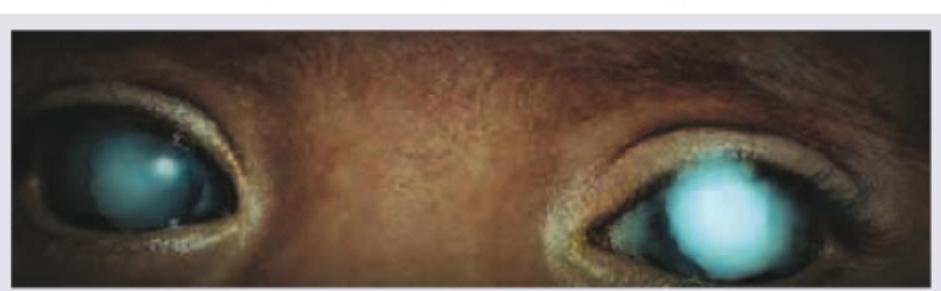
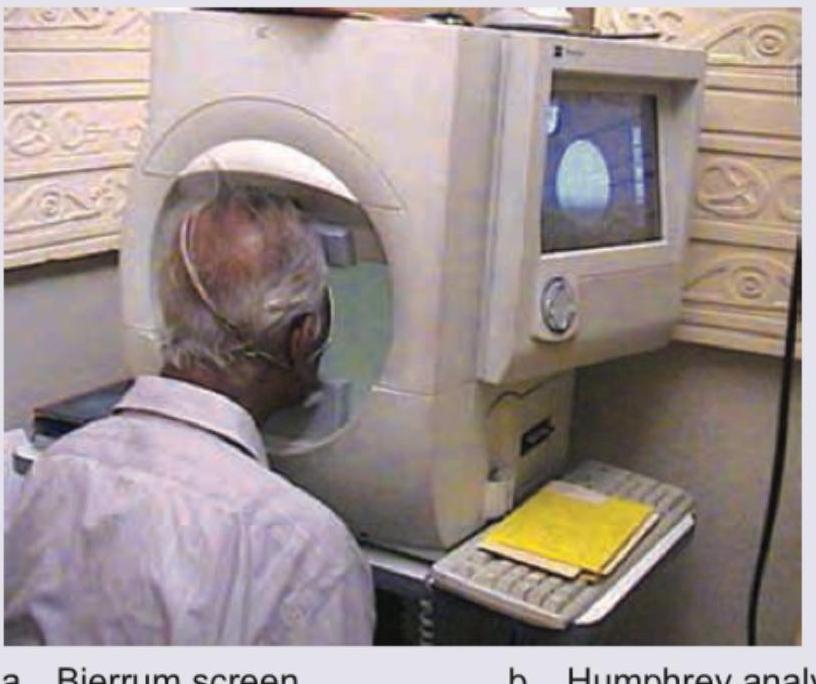
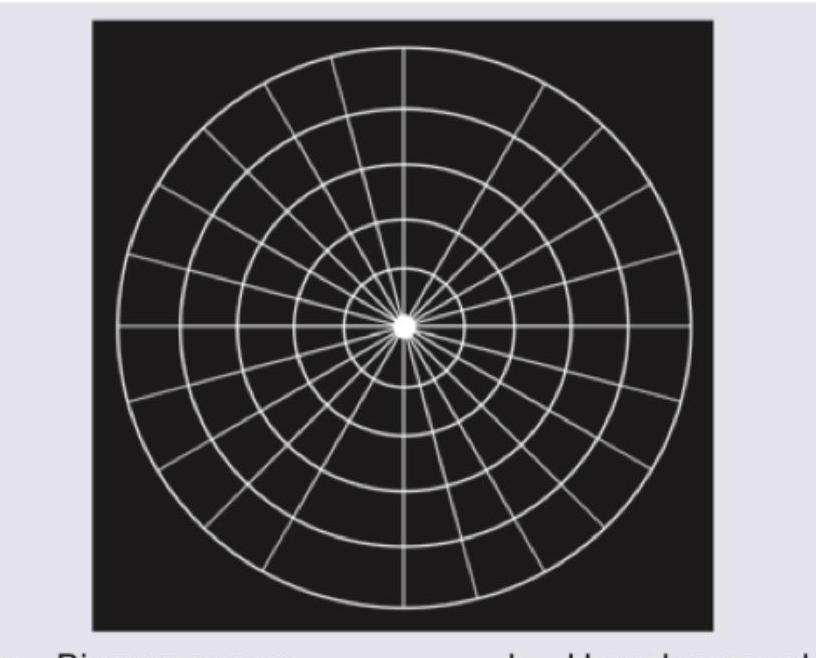
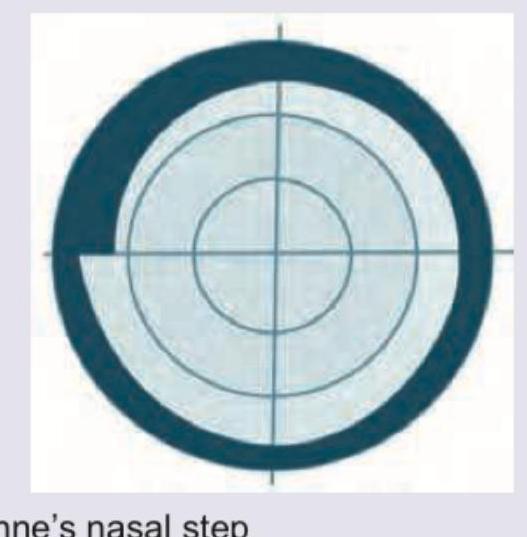
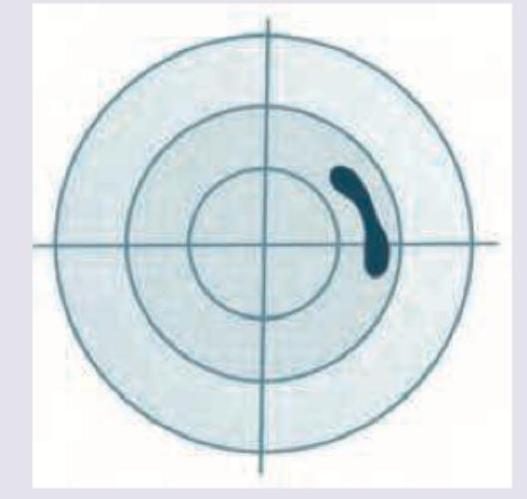
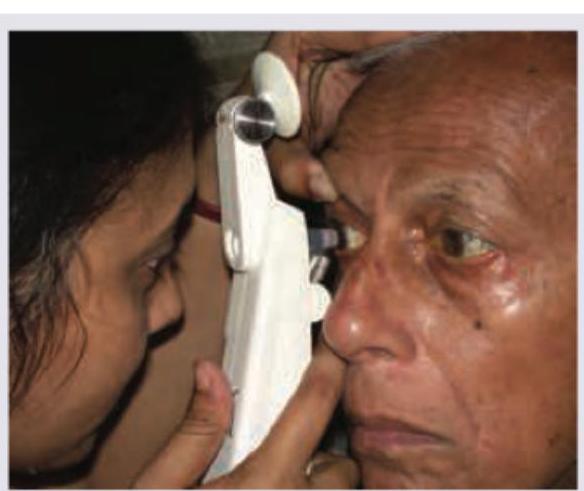
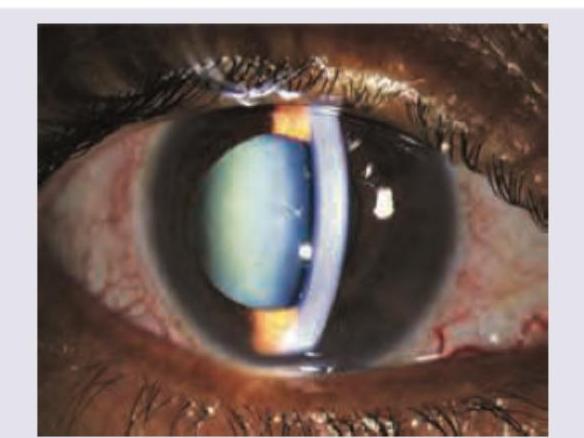
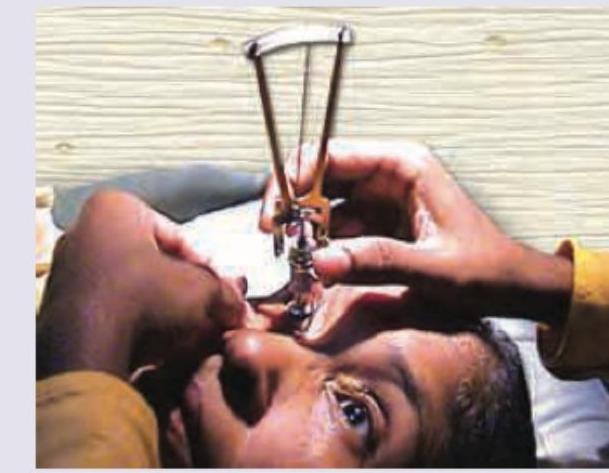
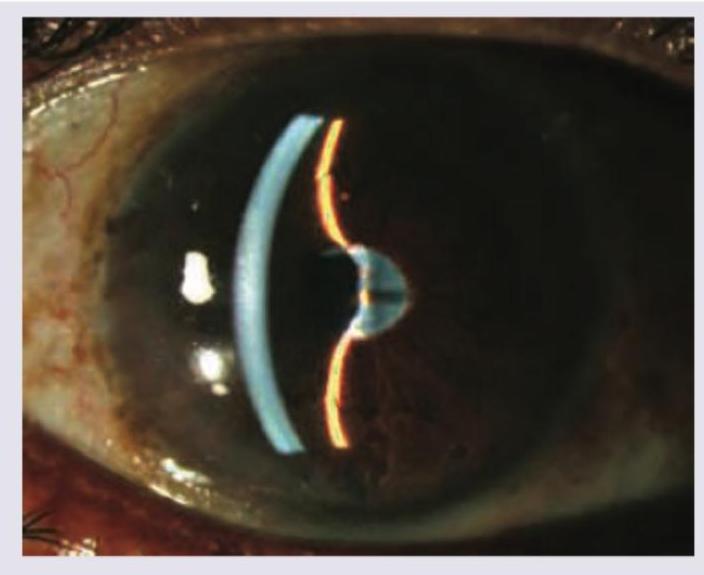
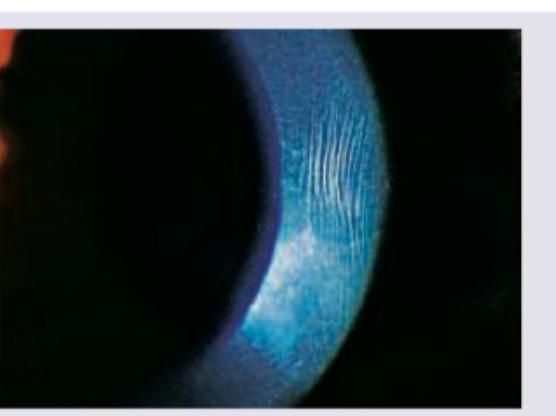
Which procedure is being done in the patient?

Pilocarpine is not used in young adults as it causes:
What is the main mechanism of action of brimonidine in glaucoma?
What is not true about the ciliary body?
Iridocorneal endothelial syndrome is associated with which of the following?
Laser trabeculoplasty is indicated in which of the following types of glaucoma?
The cause of a coloured halo in narrow angle glaucoma is?
What is the most common cause of neovascular glaucoma?
A patient with open-angle glaucoma and 7 diopters of myopia complains of blurring of vision after administration of pilocarpine. What is the reason for this blurring?
What is the classical sign of neovascular glaucoma?
Explanation: ***Indentation tonometry*** - Uses the **Schiotz tonometer** which applies a weighted plunger to the cornea, measuring **intraocular pressure** by the degree of corneal indentation. - The instrument consists of a **footplate** that rests on the cornea and a **weighted plunger** that indents the eye, with pressure readings from a scale. *Applanation tonometry* - Uses the **Goldmann applanation tonometer** which flattens a small area of the cornea rather than indenting it. - Considered the **gold standard** for IOP measurement, requiring **fluorescein dye** and a **cobalt blue light** for visualization. *A scan ultrasonography* - An **ultrasonic technique** used to measure **axial length** of the eye and assess intraocular structures. - Primarily used for **biometry** in cataract surgery planning and detecting **posterior segment pathology**, not for pressure measurement. *Keratometry* - Measures the **curvature of the anterior corneal surface** to determine **corneal astigmatism** and **refractive power**. - Used for **contact lens fitting** and **pre-operative assessment** for refractive surgery, not related to intraocular pressure.
Explanation: **Explanation:** Pilocarpine is a direct-acting parasympathomimetic (miotic) agent. In young adults, the crystalline lens is highly flexible and the ciliary muscle is robust. When Pilocarpine is administered, it causes **contraction of the ciliary muscle**, which relaxes the zonules of Zinn. This allows the lens to become more globular (increased anterior-posterior diameter), leading to an increase in its refractive power. This phenomenon results in **accommodative spasm** and **induced myopia** (specifically, pseudomyopia), which causes significant blurring of distant vision—a side effect poorly tolerated by young, active patients. **Analysis of Options:** * **B. Myopia (Correct):** As explained, ciliary muscle contraction leads to induced accommodative myopia. This is the primary reason it is avoided in young adults. * **A. Retinal detachment:** While Pilocarpine is associated with a risk of retinal tears/detachment (due to the forward pull on the vitreous base during ciliary contraction), this is a risk across all ages, particularly in high myopes, rather than a specific reason to avoid it only in young adults. * **C. Iris cysts:** These are more commonly associated with long-acting **indirect** cholinesterase inhibitors (e.g., Echothiophate), not typically with Pilocarpine. * **D. Shallow anterior chamber:** Pilocarpine actually tends to pull the iris away from the angle in open-angle glaucoma, though it can worsen pupillary block in certain predisposed eyes. It does not "cause" a shallow chamber as a standard side effect in young adults. **High-Yield Clinical Pearls for NEET-PG:** * **Drug of Choice:** Pilocarpine is the drug of choice in **Acute Angle Closure Glaucoma** (pre-operatively) to pull the iris away from the angle. * **Mechanism in POAG:** It increases aqueous outflow by tension on the scleral spur, which opens the trabecular meshwork. * **Side Effects:** "Brow ache" (due to ciliary spasm) and "dimness of vision" at night (due to miosis).
Explanation: **Explanation:** **Brimonidine** is a highly selective **alpha-2 (α2) adrenergic agonist**. Its primary mechanism of action in lowering intraocular pressure (IOP) is twofold, but its **initial and main effect** is the **reduction of aqueous humor production** (secretion) from the ciliary body. 1. **Why Option A is correct:** Alpha-2 receptors are located on the ciliary epithelium. Stimulation of these receptors inhibits the enzyme adenylate cyclase, leading to a decrease in cAMP levels. This biochemical pathway results in a significant reduction in the active secretion of aqueous humor. 2. **Why Option C is partially correct but not the "main" mechanism:** Brimonidine is unique because it has a **dual mechanism**. While it primarily decreases production, it also increases **uveoscleral outflow** (via prostaglandin release). However, in the context of standard examinations like NEET-PG, "decreased secretion" is recognized as the primary/initial action. 3. **Why Options B and D are incorrect:** Brimonidine has no significant effect on the trabecular (conventional) outflow pathway (unlike miotics or Rho-kinase inhibitors). It also does not affect vitreous volume (a mechanism associated with hyperosmotic agents like Mannitol). **High-Yield Clinical Pearls for NEET-PG:** * **Neuroprotection:** Brimonidine is the only antiglaucoma medication currently credited with potential neuroprotective properties for the optic nerve. * **Side Effects:** It is notorious for causing **Lid Retraction** and **Allergic Conjunctivitis** (follicular conjunctivitis). * **Contraindication:** It is strictly **contraindicated in infants and children** (under 2 years) as it can cross the blood-brain barrier, causing CNS depression, apnea, and bradycardia.
Explanation: **Explanation:** The ciliary body is a vital part of the uveal tract, extending from the root of the iris to the ora serrata. **Why Option A is the correct answer (False statement):** The ciliary body extends from the limbus (corneo-scleral junction) to approximately **6–7 mm** posteriorly, not 10 mm. Specifically, the pars plicata occupies the first 2 mm, and the pars plana extends for the next 4–4.5 mm. Understanding these dimensions is crucial for surgical procedures like pars plana vitrectomy, where ports are typically placed 3.5–4 mm from the limbus to avoid damaging the lens or retina. **Analysis of incorrect options (True statements):** * **Option B:** Anatomically, it is divided into the **pars plicata** (anterior 2 mm with ciliary processes) and the **pars plana** (posterior 4 mm, relatively avascular). * **Option C:** Contraction of the ciliary muscle (innervated by parasympathetic fibers of the CN III) reduces tension on the zonules. This allows the lens to become more spherical, increasing its refractive power for **accommodation**. * **Option D:** The non-pigmented epithelium of the ciliary processes in the pars plicata actively secretes **aqueous humor** into the posterior chamber. **High-Yield Clinical Pearls for NEET-PG:** * **Blood Supply:** Derived from the long posterior ciliary arteries and anterior ciliary arteries (forming the Major Arterial Circle of the Iris). * **Nerve Supply:** Parasympathetic fibers via the **short ciliary nerves** (from the ciliary ganglion) mediate accommodation. * **Surgical Landmark:** The pars plana is the safest site for intraocular entries (intravitreal injections/vitrectomy) because it is less vascular and lacks retinal tissue.
Explanation: **Explanation:** **Iridocorneal Endothelial (ICE) Syndrome** is a rare group of conditions characterized by an abnormal corneal endothelial cell layer that migrates across the anterior chamber angle and onto the iris surface. **Why Option A is Correct:** The hallmark of ICE syndrome is the proliferation of "beaten bronze" appearance endothelial cells. As this abnormal membrane contracts, it leads to **progressive atrophy of the iris stroma**, corectopia (displaced pupil), and pseudopolycoria (multiple holes in the iris). This is most classically seen in the **Essential Iris Atrophy** variant of the syndrome. **Analysis of Incorrect Options:** * **Option B:** ICE syndrome is characteristically **unilateral**. While corneal edema occurs due to endothelial pump failure, the iris involvement is atrophic rather than edematous. * **Options C & D:** The pathology involves the migration of an abnormal endothelial basement membrane over the angle and iris. It does not involve the primary deposition of collagen or glycosaminoglycans within Descemet’s membrane itself. **High-Yield Clinical Pearls for NEET-PG:** * **The Triad of ICE Syndrome:** Includes (1) Progressive Iris Atrophy, (2) Chandler Syndrome (predominant corneal edema), and (3) Cogan-Reese Syndrome (iris nodules/pedunculated lesions). * **Demographics:** Typically affects young to middle-aged females. * **Mechanism of Glaucoma:** Contraction of the abnormal membrane leads to secondary **angle-closure glaucoma** due to the formation of high peripheral anterior synechiae (PAS). * **Specular Microscopy:** Shows characteristic "dark holes" or "ice-pick" appearance of endothelial cells.
Explanation: **Explanation:** **Laser Trabeculoplasty (ALT/SLT)** works by applying laser energy to the trabecular meshwork (TM) to increase aqueous outflow. For this procedure to be effective and safe, the **angle must be open** and the TM must be visible. 1. **Why Pseudoexfoliative Glaucoma (PXG) is correct:** PXG is a type of secondary open-angle glaucoma. In PXG, there is heavy deposition of pigment and fibrillar material within the trabecular meshwork (Sampaolesi line). This increased pigmentation makes the TM an excellent target for laser absorption, often resulting in a **more profound pressure-lowering response** compared to primary open-angle glaucoma. 2. **Why the other options are incorrect:** * **Neovascular Glaucoma (NVG):** This is a secondary closed-angle glaucoma where a fibrovascular membrane pulls the iris over the TM. Laser trabeculoplasty is ineffective because the TM is physically obstructed. * **Chronic Angle Closure Glaucoma (CACG):** In CACG, the angle is narrowed or closed by peripheral anterior synechiae (PAS). If the TM cannot be visualized, trabeculoplasty cannot be performed. * **Uveitic Glaucoma:** This is a relative contraindication. Laser energy can exacerbate intraocular inflammation, potentially leading to a "spike" in IOP or the formation of further synechiae. **High-Yield Clinical Pearls for NEET-PG:** * **Prerequisite:** A clear, open iridocorneal angle (Gonioscopy is mandatory). * **Mechanism:** Argon Laser Trabeculoplasty (ALT) causes mechanical tightening of the TM; Selective Laser Trabeculoplasty (SLT) uses a "cold laser" to stimulate biological remodeling without thermal damage. * **Best Candidates:** Pigmentary glaucoma and Pseudoexfoliative glaucoma (due to high TM pigmentation). * **Common Complication:** Transient post-operative rise in IOP (IOP spike).
Explanation: **Explanation:** In **Narrow-Angle Glaucoma** (specifically Acute Angle Closure), a sudden and severe rise in Intraocular Pressure (IOP) exceeds the pumping capacity of the corneal endothelium. This leads to the accumulation of fluid within the corneal stroma and epithelium, a condition known as **Corneal Oedema**. The oedematous corneal epithelium acts as a **diffraction grating**, breaking up white light into its constituent spectral colors. This optical phenomenon results in the patient seeing "rainbow-colored halos" around lights. **Analysis of Options:** * **Corneal Oedema (Correct):** This is the direct anatomical cause of the diffraction. Specifically, the fluid droplets between epithelial cells act like tiny prisms. * **Increased IOP (Incorrect):** While high IOP is the *triggering event*, it is not the direct optical cause of the halo. The halo is a secondary effect of the resulting oedema. * **Lenticular changes (Incorrect):** While cataracts (lenticular changes) can cause halos, they are typically "dull" and do not resolve with treatment, unlike the vivid halos of glaucoma which disappear once IOP is lowered. * **Lacrimation (Incorrect):** Excessive tearing may cause blurred vision or light scattering, but it does not produce the classic structured colored halos seen in glaucoma. **High-Yield Clinical Pearls for NEET-PG:** 1. **Finchan’s Test:** Used to differentiate glaucomatous halos from cataractous halos. When a stenopaeic slit is passed across the pupil, glaucomatous halos remain intact, whereas cataractous halos break into segments. 2. **Differential Diagnosis:** Colored halos are also seen in **Mucopurulent Conjunctivitis** (due to mucus flakes; these disappear after washing the eyes/blinking). 3. **Management:** The definitive treatment for Narrow-Angle Glaucoma is **Laser Peripheral Iridotomy (LPI)**.
Explanation: **Explanation:** Neovascular Glaucoma (NVG) is a secondary glaucoma caused by retinal ischemia, which triggers the release of **Vascular Endothelial Growth Factor (VEGF)**. This leads to the formation of new vessels (neovascularization) on the iris (rubeosis iridis) and the anterior chamber angle, eventually causing mechanical obstruction of aqueous outflow. **1. Why Diabetes Mellitus is correct:** **Diabetic Retinopathy (specifically PDR)** is the most common cause of NVG worldwide, accounting for approximately **33-50%** of cases. The chronic, widespread retinal ischemia in diabetic patients provides a persistent stimulus for VEGF production. **2. Analysis of Incorrect Options:** * **Central Retinal Vein Occlusion (CRVO):** This is the **second** most common cause. Ischemic CRVO is famously associated with "100-day glaucoma" because NVG typically develops within 3 months of the event. While it is a classic association, statistically, Diabetes is more frequent. * **Central Retinal Artery Occlusion (CRAO):** This is a rare cause of NVG (approx. 1-5% of cases). Since the inner retina is infarcted, there is often insufficient viable tissue to produce sustained VEGF compared to venous stasis or diabetes. * **Eale’s Disease:** While this idiopathic peripheral perivasculitis causes ischemia and neovascularization, it is a much less common cause of NVG compared to systemic metabolic diseases like Diabetes. **Clinical Pearls for NEET-PG:** * **The "100-Day Glaucoma":** Specifically refers to NVG following **Ischemic CRVO**. * **Sequence of NVG:** Rubeosis iridis (at pupillary margin) → Neovascularization of the angle (NVA) → Open-angle stage → **Synechial Angle-closure stage** (contracture of fibrovascular membrane). * **Management Gold Standard:** **Pan-retinal Photocoagulation (PRP)** to reduce the ischemic drive, often combined with Anti-VEGF injections.
Explanation: ### Explanation **Correct Answer: A. Miosis (small pupil)** **Mechanism:** Pilocarpine is a direct-acting parasympathomimetic (cholinergic) agent. It causes contraction of the **sphincter pupillae** muscle, leading to **miosis**. In patients with high myopia (like the 7D myopia in this case), miosis causes blurring of vision through two primary mechanisms: 1. **Reduced Light Entry:** A constricted pupil limits the amount of light reaching the retina, which is particularly problematic in dim light. 2. **Diffraction:** A very small pupil can increase light diffraction, degrading the quality of the retinal image. *Note: While pilocarpine also causes contraction of the ciliary muscle (leading to an "accommodative spasm" or induced myopia), the question specifically asks for the most common reason for blurring in this context, which is the pupillary effect.* **Analysis of Incorrect Options:** * **B & C (Myopic/Hypermetropic asymmetry):** While pilocarpine induces a "myopic shift" due to ciliary muscle contraction (accommodation), it does not typically create "asymmetry" unless used unilaterally. Furthermore, "hypermetropic asymmetry" is physiologically impossible with a cholinergic agonist. * **D (Increased astigmatism):** Pilocarpine changes the lens shape (making it more spherical) and position, but it does not significantly alter the corneal or lenticular curvature in a way that increases astigmatism. **High-Yield Clinical Pearls for NEET-PG:** * **Mechanism of Action in Glaucoma:** Pilocarpine contracts the **ciliary muscle**, which pulls on the **scleral spur**, opening the trabecular meshwork spaces and increasing aqueous outflow. * **Side Effects:** Brow ache (due to ciliary spasm), retinal detachment (especially in high myopes due to peripheral retinal traction), and iris cysts. * **Drug of Choice:** Pilocarpine is the drug of choice for **Acute Angle Closure Glaucoma** (once IOP is lowered below 40 mmHg) to pull the iris away from the angle. * **Contraindication:** It is contraindicated in **Uveitic Glaucoma** as it can lead to the formation of posterior synechiae due to a small, immobile pupil.
Explanation: **Explanation:** **Neovascular Glaucoma (NVG)** is a secondary glaucoma caused by retinal ischemia, most commonly due to Central Retinal Vein Occlusion (CRVO) or Proliferative Diabetic Retinopathy (PDR). **Why Option D is Correct:** The hallmark of NVG is **Iris neovascularization (Rubeosis Iridis)**. When the retina becomes ischemic, it releases Vascular Endothelial Growth Factor (VEGF). This factor diffuses forward into the anterior segment, stimulating the growth of new, fragile vessels on the iris surface and in the iridocorneal angle. These vessels are accompanied by a fibrovascular membrane that eventually contracts, pulling the peripheral iris toward the cornea (Peripheral Anterior Synechiae), leading to secondary angle-closure glaucoma. **Why Other Options are Incorrect:** * **A & B (Retinal/Disc Neovascularization):** While these often coexist with NVG (as they share the same ischemic trigger), they are signs of the underlying retinal disease (like PDR) rather than the defining clinical sign of the glaucoma itself. * **C (Ciliary Body Neovascularization):** This is not a standard clinical sign of NVG. The pathological process primarily involves the iris and the trabecular meshwork. **High-Yield Clinical Pearls for NEET-PG:** * **"100-Day Glaucoma":** A classic term for NVG occurring approximately 3 months after an Ischemic CRVO. * **Clinical Stages:** It begins as *Pre-glaucoma* (Rubeosis only), progresses to *Open-angle* (vessels blocking the meshwork), and ends in *Angle-closure* (membrane contraction). * **Management:** The mainstay of treatment is **Pan-retinal Photocoagulation (PRP)** to reduce the ischemic drive, often combined with Anti-VEGF injections. * **Early Sign:** Neovascularization usually first appears at the **pupillary margin** before spreading to the angle.
Aqueous Humor Dynamics
Practice Questions
Primary Open-Angle Glaucoma
Practice Questions
Primary Angle-Closure Glaucoma
Practice Questions
Secondary Open-Angle Glaucomas
Practice Questions
Secondary Angle-Closure Glaucomas
Practice Questions
Developmental and Congenital Glaucomas
Practice Questions
Medical Management of Glaucoma
Practice Questions
Laser Therapy in Glaucoma
Practice Questions
Glaucoma Filtration Surgery
Practice Questions
Glaucoma Drainage Devices
Practice Questions
Angle Assessment Techniques
Practice Questions
Visual Field Testing in Glaucoma
Practice Questions
Get full access to all questions, explanations, and performance tracking.
Start For Free