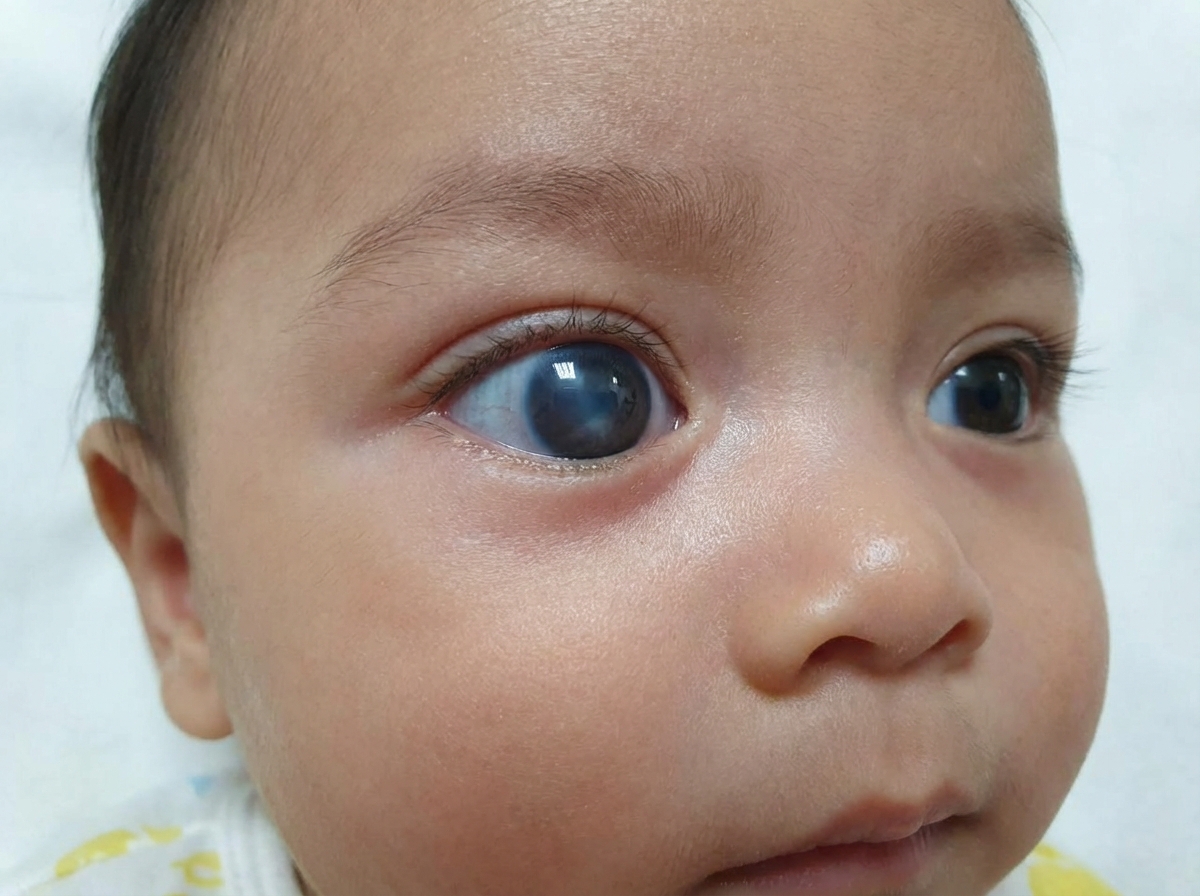
Chronic systemic steroid use causes which of the following ophthalmological conditions?
A patient presented with uveitis with raised intraocular pressure (secondary glaucoma). What drug is used?
Hypermature morgagnian cataract most commonly leads to which type of glaucoma?
Which beta-blocker is the drug of choice for treating glaucoma in a patient with hyperlipidemia?
Increased intraocular tension is seen in all except?
Beta-blockers act in glaucoma by which of the following mechanisms?
What is the earliest visual field change in open-angle glaucoma?
Tonography helps determine which of the following?
Neovascular glaucoma is not seen in which of the following conditions?
What is the last visual field to be lost in Glaucoma?
Explanation: **Explanation:** Chronic systemic steroid use is most classically associated with the development of **Posterior Subcapsular Cataract (PSC)**. The underlying mechanism involves the binding of steroids to lens crystallin proteins, leading to protein aggregation and the disruption of lens fiber arrangement. This typically presents as a painless, progressive blurring of vision, often with significant glare. **Analysis of Options:** * **A. Open angle glaucoma:** While steroids *do* cause secondary open-angle glaucoma (due to increased resistance to aqueous outflow at the trabecular meshwork), this occurs more frequently and severely with **topical** (eye drops) or periocular administration rather than systemic use. In the context of this question, cataract is the more definitive systemic association. * **B. Conjunctival and lid papillomatosis:** This is typically viral (HPV) or idiopathic in origin and has no established link to steroid therapy. * **C. Uveitis:** Steroids are actually the primary *treatment* for uveitis due to their anti-inflammatory properties; they do not cause the condition. **High-Yield Clinical Pearls for NEET-PG:** * **Steroid-Induced Cataract:** Characteristically **Posterior Subcapsular (PSC)**. It is dose and duration-dependent. * **Steroid-Induced Glaucoma:** Known as "Steroid Responders." It mimics Primary Open Angle Glaucoma (POAG). The risk is highest with **Dexamethasone** and lowest with **Fluorometholone/Loteprednol**. * **CSCR:** Systemic steroids are a major risk factor for **Central Serous Chorioretinopathy**, which can lead to sudden metamorphopsia. * **Other Ocular Side Effects:** Delayed wound healing and increased susceptibility to secondary fungal or viral (Herpetic) keratitis.
Explanation: **Explanation:** In cases of **uveitis with secondary glaucoma** (hypertensive uveitis), the primary goal is to control inflammation and prevent complications like synechiae. **Why 1% Atropine is the correct answer:** Atropine is a potent cycloplegic and mydriatic. It is the drug of choice here for three main reasons: 1. **Ciliary Body Rest:** It paralyzes the ciliary muscle, reducing the intense pain associated with ciliary spasm. 2. **Prevention of Synechiae:** By keeping the pupil dilated, it prevents the formation of posterior synechiae (adhesion of iris to lens). 3. **Restoration of Blood-Aqueous Barrier:** It reduces vascular permeability, thereby decreasing the inflammatory exudate. While it doesn't directly lower IOP, it addresses the underlying cause (inflammation) and prevents pupillary block, which is crucial in uveitic glaucoma. **Analysis of Incorrect Options:** * **A. 1% Pilocarpine:** This is **absolutely contraindicated**. Miotics like pilocarpine increase inflammation, promote the formation of posterior synechiae by constricting the pupil, and can worsen the breakdown of the blood-aqueous barrier. * **C & D. Timolol and Acetazolamide:** These are aqueous suppressants used to lower IOP. While they are often used as *adjuncts* in hypertensive uveitis, they do not treat the primary inflammatory process. In the context of "the drug used" for the management of the condition itself, the cycloplegic (Atropine) takes precedence. **High-Yield Clinical Pearls for NEET-PG:** * **Drug of Choice for Uveitis:** Atropine (1%). * **Steroids:** Topical steroids are the mainstay to reduce inflammation in uveitis. * **Avoid Latanoprost:** Prostaglandin analogues are generally avoided in uveitic glaucoma as they are pro-inflammatory. * **Inverse Glaucoma:** If IOP rises after using Atropine in a patient with a narrow angle, suspect angle-closure; however, in uveitis, Atropine is protective.
Explanation: **Explanation:** **Phacolytic glaucoma** is the correct answer because it is a direct complication of a **hypermature cataract** (including the Morgagnian type). In this condition, the lens capsule becomes leaky, allowing liquefied cortical proteins to escape into the anterior chamber. These high-molecular-weight proteins are engulfed by macrophages. The resulting protein-laden macrophages, along with the free proteins themselves, clog the trabecular meshwork, leading to a sudden rise in intraocular pressure (IOP) despite an open angle. **Analysis of Incorrect Options:** * **Phacomorphic glaucoma:** This is a secondary **angle-closure** glaucoma caused by an intumescent (swollen) lens. The increased lens thickness pushes the iris forward, leading to pupillary block. While it occurs in advanced cataracts, it is associated with the *immature/intumescent* stage rather than the *hypermature/liquefied* stage. * **Phacoanaphylactic glaucoma:** This is a rare, granulomatous uveitis occurring after **trauma or surgery** where the lens capsule is ruptured. It is an autoimmune reaction to sensitized lens proteins, not a spontaneous leakage from an intact (though leaky) capsule. * **Buphthalmos:** This refers to the enlargement of the globe seen in **congenital glaucoma** due to the distensibility of the infant sclera. It is unrelated to adult cataractous changes. **Clinical Pearls for NEET-PG:** * **Key Presentation:** Sudden painful red eye, corneal edema, and "milky" aqueous with heavy flare. * **Management:** Immediate medical reduction of IOP followed by **Urgent Cataract Extraction** (ECCE/Phaco). * **Mnemonic:** Phaco**L**ytic = **L**eaky capsule + **L**iquefied cortex. Phaco**M**orphic = **M**assive lens (swollen).
Explanation: **Explanation:** The correct answer is **Carteolol**. **Why Carteolol is the correct choice:** Carteolol is a non-selective beta-blocker with **Intrinsic Sympathomimetic Activity (ISA)**. Unlike other beta-blockers, it does not adversely affect the lipid profile. In fact, it has a "lipid-neutral" or even a slight lipid-lowering effect by reducing the elevation of triglycerides and maintaining HDL levels. This makes it the drug of choice for glaucoma patients with comorbid **hyperlipidemia**. Additionally, it causes less nocturnal bradycardia compared to timolol. **Analysis of Incorrect Options:** * **Betaxolol:** This is a **cardioselective (Beta-1)** blocker. While it is the drug of choice for glaucoma patients with respiratory issues (like asthma or COPD) because it spares Beta-2 receptors in the lungs, it does not possess the specific ISA required to benefit lipid profiles. * **Carvedilol:** This is a combined alpha and beta-blocker used primarily in systemic hypertension and heart failure. It is not a standard topical treatment for glaucoma. * **Timolol:** This is the "gold standard" non-selective beta-blocker for glaucoma. However, it lacks ISA and can negatively impact lipid profiles by increasing VLDL and decreasing HDL levels. **High-Yield Clinical Pearls for NEET-PG:** * **Drug of choice in Asthma/COPD:** Betaxolol (Cardioselective). * **Most potent topical beta-blocker:** Timolol. * **Longest acting:** Levobunolol. * **Mechanism of Action:** Beta-blockers treat glaucoma by **decreasing aqueous humor production** from the ciliary body. * **Side Effect Warning:** Always check for bradycardia or heart block before prescribing topical beta-blockers due to systemic absorption via the nasolacrimal duct.
Explanation: **Explanation:** The question asks for the condition where intraocular pressure (IOP) is **not** increased. **1. Why Phthisis Bulbi is the correct answer:** Phthisis bulbi represents the "end-stage" of a severely damaged eye. It is characterized by atrophy of the ciliary body, leading to a cessation or significant reduction in aqueous humor production. This results in **ocular hypotony** (very low IOP), a shrunken globe, and disorganized intraocular structures. Therefore, it is the only condition among the options where IOP is decreased rather than increased. **2. Analysis of Incorrect Options:** * **Epidemic Dropsy:** Caused by ingestion of Argemone mexicana oil (sanguinarine toxin). It leads to **Glaucoma** due to increased permeability of the uveal capillaries and increased production of aqueous humor. * **Branch Retinal Vein Occlusion (BRVO):** While not a direct cause of high IOP itself, BRVO is strongly associated with **pre-existing Primary Open Angle Glaucoma (POAG)**. Furthermore, ischemic variants can lead to neovascular glaucoma (NVG) due to iris neovascularization. * **Malignant Melanoma:** Intraocular tumors can cause secondary glaucoma through various mechanisms, including direct invasion of the angle, displacement of the iris-lens diaphragm anteriorly, or pigment dispersion (melanomalytic glaucoma). **Clinical Pearls for NEET-PG:** * **Hypotony definition:** IOP < 5 mmHg. * **Epidemic Dropsy:** Look for keywords like "Sanguinarine," "dilated uveal capillaries," and "normal angle" (it is a form of open-angle glaucoma). * **Neovascular Glaucoma (NVG):** Often follows Central Retinal Vein Occlusion (CRVO) rather than BRVO (the "100-day glaucoma"). * **Phthisis Bulbi:** Characterized by a "squared-off" globe due to the pull of extraocular muscles on a soft eye.
Explanation: **Explanation:** **Mechanism of Action (Correct Answer: A):** Beta-adrenergic blockers (e.g., Timolol, Betaxolol) are a mainstay in glaucoma therapy. They work by **decreasing the production of aqueous humor** from the ciliary body. Specifically, they block the $\beta_2$-receptors located on the non-pigmented ciliary epithelium. This inhibition reduces the activity of the cyclic AMP (cAMP) pathway, which is essential for the active secretion of aqueous humor. **Analysis of Incorrect Options:** * **B. Increased aqueous humor outflow:** This is the mechanism of action for **Prostaglandin analogues** (Latanoprost), which increase uveoscleral outflow, and **Miotics** (Pilocarpine), which increase trabecular outflow. * **C. Reducing vitreous volume:** This is the mechanism of **Hyperosmotic agents** (e.g., Mannitol, Glycerol). These agents create an osmotic gradient that draws water out of the vitreous cavity into the bloodstream, rapidly lowering intraocular pressure (IOP) in acute scenarios. **High-Yield Clinical Pearls for NEET-PG:** * **Drug of Choice:** While Prostaglandin analogues are the first-line for Primary Open Angle Glaucoma (POAG), **Timolol** (0.5%) is frequently used and was historically the gold standard. * **Contraindications:** Systemic absorption can occur via the nasolacrimal duct. Therefore, beta-blockers are strictly contraindicated in patients with **Bronchial Asthma**, COPD, and **Bradycardia/Heart block**. * **Betaxolol:** It is a **cardioselective ($\beta_1$) blocker**. While it is safer for the lungs, it is slightly less effective at lowering IOP compared to non-selective blockers like Timolol. * **Nocturnal Dip:** Beta-blockers are less effective at night because aqueous production naturally decreases during sleep.
Explanation: In Primary Open-Angle Glaucoma (POAG), visual field defects follow a specific chronological sequence based on the damage to the retinal nerve fiber layer (RNFL). ### **Why Paracentral Scotoma is Correct** The **earliest** clinically detectable visual field change in glaucoma is a **paracentral scotoma**. These are small, isolated islands of vision loss typically located between 10° and 20° from the fixation point. They occur due to early damage to the papillomacular bundle or adjacent arcuate fibers. While generalized depression of the field or increased fluctuation in responses may occur first, the paracentral scotoma is the first definitive localized defect. ### **Analysis of Incorrect Options** * **Siedel’s Scotoma:** This occurs when a paracentral scotoma enlarges and reaches the blind spot. It is a **progression** of the initial defect, not the earliest sign. * **Arcuate (Bjerrum) Scotoma:** This is a late-stage defect formed by the coalescence of paracentral and Siedel’s scotomas, creating a comma-shaped defect extending from the blind spot around the fixation point. * **Ring Scotoma:** This is an **advanced** stage defect where superior and inferior arcuate scotomas meet. It is also classically associated with Retinitis Pigmentosa. ### **High-Yield Clinical Pearls for NEET-PG** * **Sequence of Defects:** Paracentral scotoma → Siedel’s scotoma → Arcuate/Bjerrum scotoma → Ring scotoma → Tubular vision. * **Roenne’s Nasal Step:** A defect that respects the horizontal midline; it is a very common early sign but often appears alongside or slightly after paracentral scotomas. * **Bjerrum’s Area:** The arcuate area between 10°–20° from fixation where most glaucomatous defects originate. * **Gold Standard:** Automated Perimetry (specifically the Humphrey Field Analyzer) is the standard for detecting these changes.
Explanation: **Explanation:** **Tonography** is a non-invasive diagnostic procedure used to measure the **facility of aqueous humor outflow** (represented by the coefficient ‘C’). It is based on the principle that applying a constant weight to the eye (usually via a Schiotz tonometer) will artificially raise intraocular pressure (IOP), thereby forcing aqueous humor out of the eye. By measuring the rate at which the IOP falls over a specific period (usually 4 minutes), clinicians can calculate how easily fluid leaves the eye through the trabecular meshwork. * **Option A is incorrect:** The rate of aqueous humor formation is typically measured using **fluorophotometry**, not tonography. * **Option C is incorrect:** Measuring IOP at different times of the day refers to **Diurnal Variation Testing** (Phasic Tension Curve), which is used to detect the peak pressure spikes in glaucoma patients. **High-Yield Clinical Pearls for NEET-PG:** * **Grant’s Equation:** The mathematical basis for tonography is $C = \frac{\Delta V}{t \times (\text{P}_{av} - \text{P}_e)}$, where 'C' is the facility of outflow. * **Normal Value:** The normal value for the facility of outflow (C) is approximately **0.22 to 0.28 $\mu$L/min/mmHg**. A value below **0.18** is considered suspicious for glaucoma. * **Becker’s Ratio:** Calculated as **Po/C** (Initial IOP / Facility of outflow). A ratio greater than **100** is highly suggestive of Open Angle Glaucoma. * **Current Status:** While historically significant, tonography is rarely used in modern clinical practice due to its technical difficulty and the advent of more reliable imaging like OCT.
Explanation: **Explanation:** Neovascular Glaucoma (NVG) is a secondary glaucoma caused by the formation of new vessels (neovascularization) on the iris (rubeosis iridis) and in the iridocorneal angle. The fundamental trigger for NVG is **retinal ischemia**, which leads to the release of Vascular Endothelial Growth Factor (VEGF). **Why JRA is the correct answer:** Juvenile Rheumatoid Arthritis (JRA) is typically associated with **chronic non-granulomatous anterior uveitis**. The primary mechanism of glaucoma in JRA is inflammatory, involving trabeculitis or the formation of peripheral anterior synechiae (PAS) due to inflammatory debris. It does **not** cause significant retinal ischemia; therefore, it does not lead to neovascularization. **Analysis of incorrect options:** * **CRVO:** This is the most common cause of NVG (specifically the ischemic type). It is often referred to as "100-day glaucoma" because NVG typically develops 3 months after the occlusion. * **CRAO:** While less common than in CRVO, about 5–10% of CRAO cases develop NVG due to the resulting inner retinal ischemia. * **Eales' Disease:** This is an idiopathic peripheral perivasculitis that causes severe peripheral retinal ischemia and vitreous hemorrhage, frequently leading to neovascularization of the disc, retina, and iris. **Clinical Pearls for NEET-PG:** * **Top 3 causes of NVG:** Diabetic Retinopathy (most common overall), Ischemic CRVO, and Carotid Artery Occlusive Disease. * **Management:** The priority is treating the underlying ischemia via **Pan-retinal Photocoagulation (PRP)** and anti-VEGF injections. * **JRA Triad:** Band-shaped keratopathy, chronic iridocyclitis, and complicated cataract.
Explanation: In Glaucoma, the pattern of visual field loss follows the specific anatomy of the retinal nerve fiber layer (RNFL). The correct answer is **Temporal**, as this represents the "Temporal Island of Vision," which is typically the final area to be extinguished before total blindness. ### Why Temporal is Correct: Glaucomatous damage primarily affects the **arcuate fibers** (superior and inferior poles of the optic disc) first. These fibers are most vulnerable to increased intraocular pressure (IOP). The fibers responsible for the temporal visual field originate from the **nasal retina**. These nasal fibers enter the optic disc directly (radial fibers) and are anatomically more resistant to glaucomatous cupping than the arcuate bundles. Consequently, while central and peripheral vision constricts, a small island of vision remains in the extreme temporal periphery until the end stage of the disease. ### Why Other Options are Incorrect: * **Nasal:** This is often the **earliest** area to show field defects (e.g., Roenne’s Nasal Step) because the temporal retinal fibers (arcuate bundles) are the most sensitive to early damage. * **Superior/Inferior:** These fields are lost as arcuate scotomas (like Bjerrum’s scotoma) progress and coalesce. Because the superior and inferior poles of the disc are damaged early, these fields are lost long before the temporal island. ### High-Yield Clinical Pearls for NEET-PG: * **Sequence of Loss:** Nasal field → Paracentral/Arcuate areas → Central vision (Macular sparing) → Temporal island. * **Macular Sparing:** Central vision is often preserved until late stages because the papillomacular bundle is relatively resistant. * **10-2 Perimetry:** Used in advanced glaucoma when only a small central island remains, as standard 24-2 or 30-2 tests lack the resolution to monitor terminal field remnants.
Aqueous Humor Dynamics
Practice Questions
Primary Open-Angle Glaucoma
Practice Questions
Primary Angle-Closure Glaucoma
Practice Questions
Secondary Open-Angle Glaucomas
Practice Questions
Secondary Angle-Closure Glaucomas
Practice Questions
Developmental and Congenital Glaucomas
Practice Questions
Medical Management of Glaucoma
Practice Questions
Laser Therapy in Glaucoma
Practice Questions
Glaucoma Filtration Surgery
Practice Questions
Glaucoma Drainage Devices
Practice Questions
Angle Assessment Techniques
Practice Questions
Visual Field Testing in Glaucoma
Practice Questions
Get full access to all questions, explanations, and performance tracking.
Start For Free