The sclera, the protective outer layer of the eye, is thinnest at which of the following sites?
Ciliary staphyloma is a complication of:
What is a known cause of scleritis?
All of the following are true about episcleritis except?
Episcleritis is commonly associated with which condition?
Episcleritis periodica refers to:
Scleritis is commonly seen with which of the following conditions?
Blue coloured sclera is frequently associated with which of the following conditions?
Ciliary staphyloma affects the ciliary zone up to how many mm behind the limbus?
Which of the following is NOT true about scleritis?
Explanation: The sclera is the opaque, fibrous, protective outer layer of the eye, composed primarily of collagen and elastic fibers. Its thickness varies significantly across different anatomical regions, which is a high-yield concept for surgical and clinical ophthalmology. ### **Explanation of the Correct Answer** **Option D (Behind insertion of rectus muscle)** is correct. The sclera is thinnest at the point immediately posterior to the insertions of the four rectus muscles, measuring approximately **0.3 mm**. This anatomical vulnerability is clinically significant because it is the most common site for **scleral rupture** following blunt ocular trauma. ### **Analysis of Incorrect Options** * **Option A (Apex/Posterior Pole):** This is the **thickest** part of the sclera, measuring approximately **1.0 mm to 1.3 mm**. The thickness here provides structural support where the optic nerve exits. * **Option B (Limbus):** At the corneoscleral junction (limbus), the sclera is relatively thick, measuring about **0.8 mm**. * **Option C (In front of insertion of rectus muscle):** The sclera gradually thins as it moves posteriorly from the limbus toward the muscle insertions, but it does not reach its minimum thickness until just behind the insertion point. ### **High-Yield Clinical Pearls for NEET-PG** * **Thickest point:** Posterior pole (1.0 mm). * **Thinnest point:** Behind the insertion of rectus muscles (0.3 mm). * **Equator thickness:** Approximately 0.4 mm to 0.6 mm. * **Scleral Rupture:** Usually occurs at the thinnest points (behind muscle insertions) or at the limbus. * **Blue Sclera:** Occurs due to thinning of the sclera (allowing the underlying uveal pigment to show through), seen in **Osteogenesis Imperfecta**, Ehlers-Danlos syndrome, and Buphthalmos. * **Lamina Cribrosa:** The sieve-like portion of the sclera through which optic nerve fibers pass; it is a site of structural weakness in glaucoma.
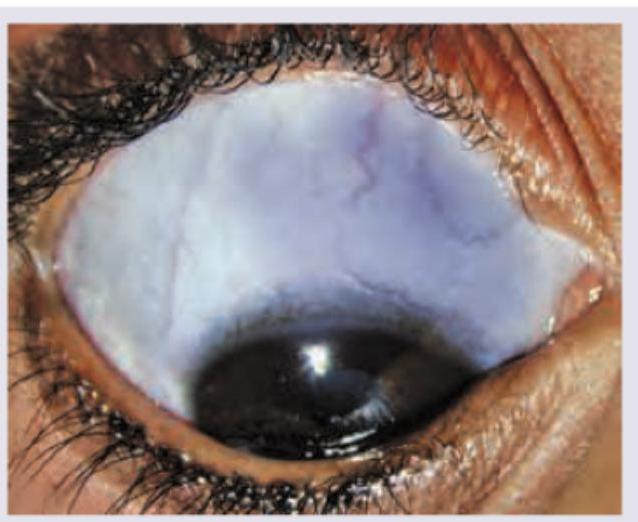
Explanation: ### Explanation **Correct Answer: A. Scleritis** **Mechanism:** A **staphyloma** is a localized bulging of the weak outer coat of the eye (sclera or cornea) lined by uveal tissue. **Ciliary staphyloma** specifically occurs when the sclera overlying the ciliary body becomes thinned and weakened. The primary cause is **Scleritis** (specifically necrotizing scleritis). Chronic inflammation leads to the destruction of collagen fibers and thinning of the scleral lamellae. Under the influence of normal or raised intraocular pressure (IOP), this weakened sclera bulges outward, appearing bluish because the underlying dark ciliary body shines through. **Why other options are incorrect:** * **B. Episcleritis:** This is a benign, self-limiting inflammation of the superficial episcleral tissues. It does not involve the deep scleral lamellae and, therefore, does not lead to scleral thinning or staphyloma formation. * **C. Perforated corneal ulcer:** This typically leads to an **Anterior staphyloma**, where the cornea is replaced by organized cicatricial tissue (pseudocornea) lined by the iris. * **D. Degenerative myopia:** This is the classic cause of **Posterior staphyloma**, which occurs at the posterior pole (macular area) due to excessive axial elongation of the globe. **High-Yield Clinical Pearls for NEET-PG:** 1. **Types of Staphyloma:** * **Anterior:** Ectasia of cornea (e.g., post-perforation). * **Intercalary:** Bulging at the limbus (root of iris). * **Ciliary:** Bulging over the ciliary body (2–8 mm behind limbus). * **Equatorial:** Bulging at the exit of vortex veins (widest part of the eye). * **Posterior:** Bulging at the posterior pole (associated with High Myopia). 2. **Clinical Sign:** The characteristic **bluish discoloration** in staphyloma is not due to pigment in the sclera, but due to the visibility of the underlying uveal tissue through the thinned sclera. 3. **Commonest Cause of Ciliary Staphyloma:** Chronic inflammatory conditions like Scleritis or absolute glaucoma.
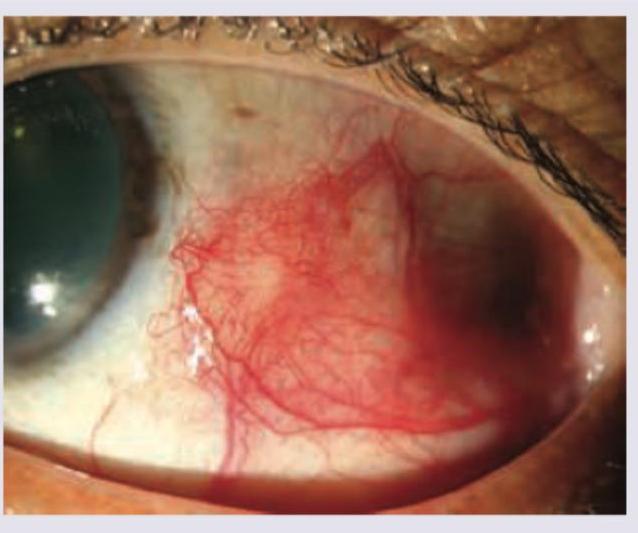
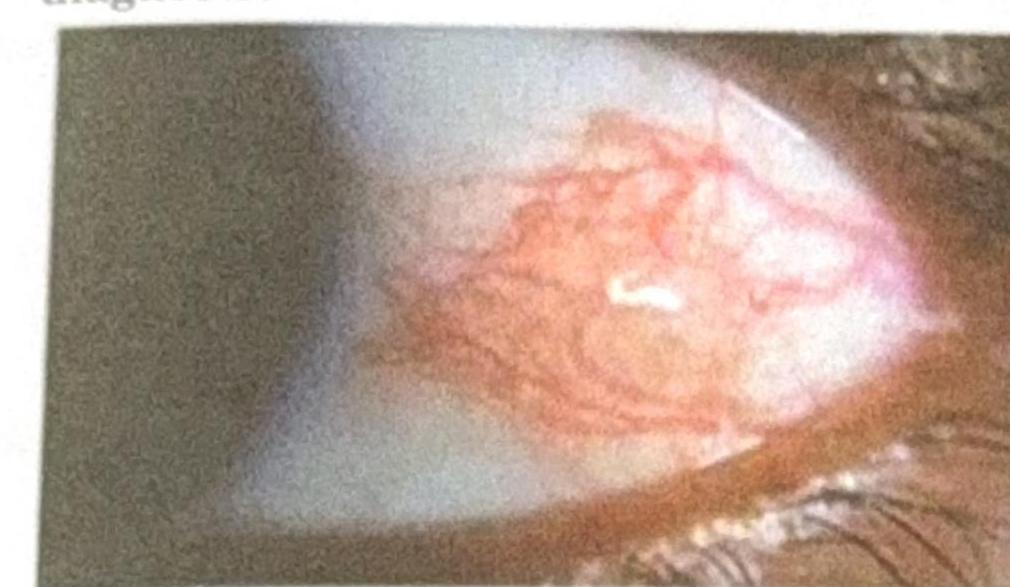
Explanation: **Explanation:** Scleritis is a severe, vision-threatening inflammatory condition of the sclera. The underlying pathophysiology is typically a **Type III (Immune-complex mediated) or Type IV (Delayed-type)** hypersensitivity reaction. **1. Why Collagen Vascular Disease is Correct:** Approximately **30–50%** of patients with scleritis have an underlying systemic autoimmune disease. **Rheumatoid Arthritis (RA)** is the most common association, followed by Granulomatosis with polyangiitis (Wegener's) and Systemic Lupus Erythematosus (SLE). In these conditions, vasculitis of the deep episcleral plexus leads to scleral destruction and necrosis. **2. Analysis of Incorrect Options:** * **Tuberculosis (B):** While TB can cause ocular inflammation (like uveitis or phlyctenular keratoconjunctivitis), it is a rare cause of primary scleritis compared to autoimmune etiologies. * **Trauma (C):** Trauma usually leads to scleral lacerations or "Scleral Perforation," but it is not a primary cause of the inflammatory disease known as scleritis. However, surgical trauma (like pterygium surgery) can rarely cause "Surgical Induced Necrotizing Scleritis" (SINS). * **Glaucoma (D):** Glaucoma is a *complication* of scleritis (due to trabeculitis or peripheral anterior synechiae), not a cause. **High-Yield Clinical Pearls for NEET-PG:** * **Key Symptom:** Severe, boring pain that radiates to the forehead/jaw and worsens at night (awakens the patient). * **Phenylephrine Test:** Unlike episcleritis, the congested deep vessels in scleritis **do not blanch** with 10% phenylephrine. * **Scleromalacia Perforans:** A specific type of necrotizing scleritis without inflammation, typically seen in elderly women with long-standing Rheumatoid Arthritis. * **Treatment:** Systemic NSAIDs are the first line; systemic steroids or immunosuppressants are required for necrotizing cases.
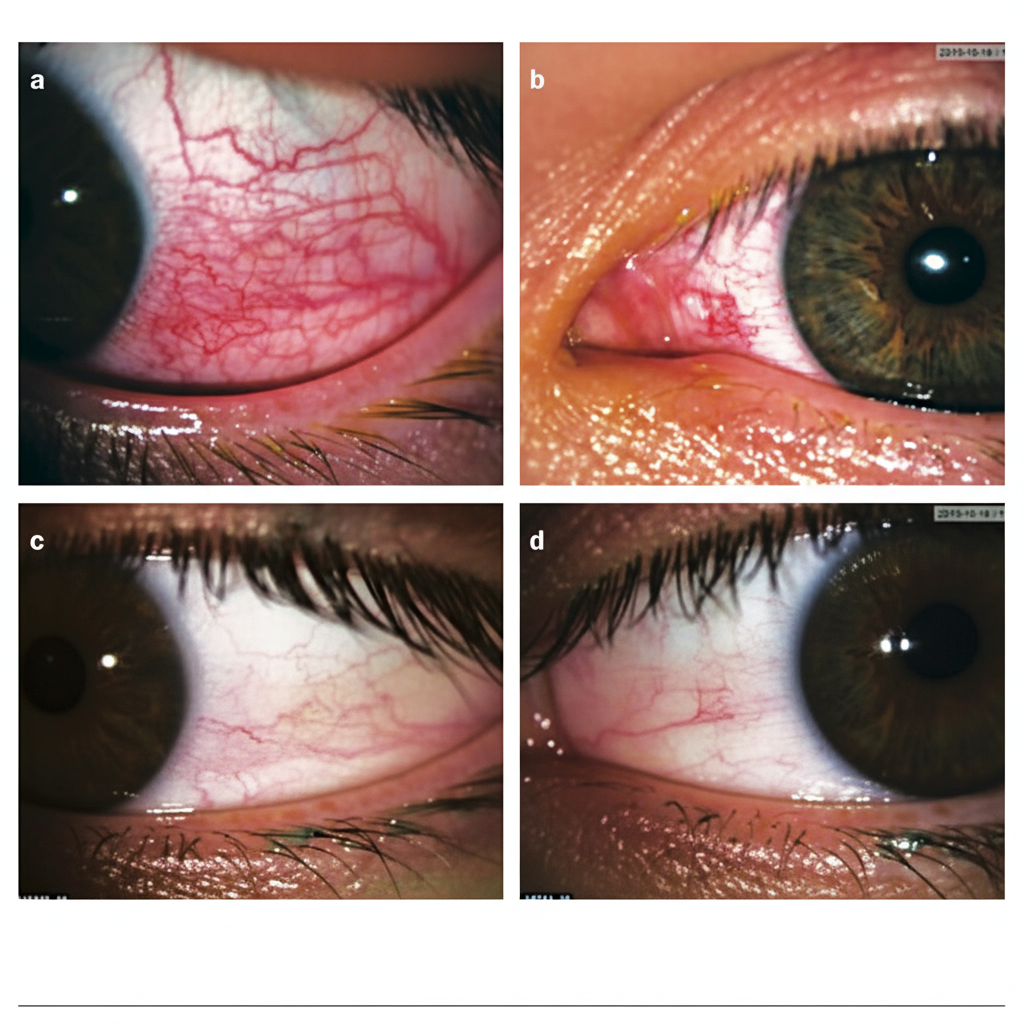
Explanation: **Explanation:** Episcleritis is a benign, self-limiting inflammation of the episclera. Understanding its clinical profile is crucial for differentiating it from the more serious scleritis. **Why Option C is the Correct Answer (The False Statement):** Episcleritis typically affects **young to middle-aged adults** (20–40 years), with a higher prevalence in females. It is **not** primarily a disease of the elderly. In contrast, scleritis is more common in older age groups (40–60 years) and is often associated with more severe systemic morbidity. **Analysis of Other Options:** * **Option A (Connective Tissue Disorders):** While most cases are idiopathic, about 25–30% are associated with systemic conditions like Rheumatoid Arthritis, SLE, or Polyarteritis Nodosa. * **Option B (Blanching with Phenylephrine):** This is the **gold standard clinical test**. Phenylephrine (2–10%) causes vasoconstriction of the superficial episcleral vascular plexus, leading to "blanching" (redness disappears). In scleritis, the deep vascular plexus is involved, which does not blanch. * **Option D (Recurrence):** Episcleritis is notorious for being recurrent. Attacks may occur in the same or the other eye at intervals of weeks or months. **NEET-PG High-Yield Pearls:** 1. **Clinical Presentation:** Characterized by "painless" redness (or mild discomfort/grittiness), unlike scleritis which presents with "boring" severe pain. 2. **Types:** Simple (75% - sectoral or diffuse) and Nodular (25% - a firm, movable nodule). 3. **Treatment:** Usually self-limiting; managed with topical NSAIDs or mild steroids if symptomatic. 4. **Key Differentiator:** If the redness **blanches** with phenylephrine, it is **Episcleritis**. If it **does not blanch**, it is **Scleritis**.
Explanation: **Explanation:** **Episcleritis** is a benign, self-limiting inflammation of the episcleral tissues. While the majority of cases (up to 70-80%) are idiopathic, when a systemic association is present, **Rheumatoid Arthritis (RA)** is the most common. 1. **Why Rheumatoid Arthritis is correct:** Episcleritis and scleritis are both extra-articular manifestations of collagen vascular diseases. RA leads to immune-complex deposition and chronic inflammation in connective tissues, including the episclera. In NEET-PG, if a systemic association for any "scleral" inflammation is asked, RA is the top priority. 2. **Why other options are incorrect:** * **Trachoma:** This is a chronic keratoconjunctivitis caused by *Chlamydia trachomatis*. It affects the conjunctiva and cornea (leading to scarring and pannus), not the episclera. * **Cataract extraction surgery:** While surgery can cause "Surgically Induced Necrotizing Scleritis" (SINS), it is a rare complication and not a "common association" for simple episcleritis. * **Usually associated with none:** While many cases are idiopathic, the question asks which *condition* it is associated with. Among the choices provided, RA is a well-documented and high-yield association. **High-Yield Clinical Pearls for NEET-PG:** * **Phenylephrine Test:** This is the gold standard to differentiate episcleritis from scleritis. 10% Phenylephrine drops will **blanch** (whiten) the conjunctuval and episcleral vessels in episcleritis, but will **not** blanch the deep scleral vessels in scleritis. * **Clinical Presentation:** Episcleritis presents as a "bright red eye" with mild discomfort/grittiness, whereas scleritis presents with "boring, severe pain" and a "bluish-red" hue. * **Types:** Simple (most common) and Nodular. Both are generally self-limiting and treated with topical NSAIDs or mild steroids.
Explanation: **Explanation:** **Episcleritis periodica** (also known as *Episcleritis periodica fugax*) is a specific clinical variant of episcleritis characterized by its transient and recurrent nature. 1. **Why Option A is correct:** The term "fugax" or "periodica" refers to the **fleeting** nature of the condition. In this type, episodes of inflammation are sudden in onset, involve a localized or diffuse area of the episclera, and typically last for a very short duration (a few hours to a few days) before spontaneously resolving. However, these episodes tend to recur at regular intervals (periodic) in the same or the other eye. 2. **Why other options are incorrect:** * **Option B:** Episcleritis is generally a benign, self-limiting condition. "Complicated episcleritis" is not a standard clinical term; complications like uveitis or glaucoma are rare in episcleritis and more characteristic of scleritis. * **Option C:** Episcleritis and scleritis are distinct clinical entities. While scleritis is more severe, episcleritis does not typically "evolve" into scleritis as an intermediate stage; they involve different layers of the ocular coat (episcleral tissue vs. scleral stroma). **High-Yield Clinical Pearls for NEET-PG:** * **Simple vs. Nodular:** Simple episcleritis (including the periodica type) is more common than nodular episcleritis. * **Phenylephrine Test:** A key diagnostic feature is that episcleral vessels **blanch (whiten)** upon application of 2.5% or 10% Phenylephrine drops. Scleral vessels (in scleritis) do not blanch. * **Systemic Association:** While most cases are idiopathic, about 30% are associated with systemic conditions like Rheumatoid Arthritis, Gout, or IBD. * **Treatment:** Most cases require no treatment or simple topical NSAIDs/lubricants. Topical steroids are reserved for severe or non-resolving cases.
Explanation: **Explanation:** **1. Why Rheumatoid Arthritis (RA) is the Correct Answer:** Scleritis is a severe, vision-threatening inflammatory condition of the deep sclera. It is strongly associated with systemic autoimmune diseases, which are present in approximately 50% of patients. **Rheumatoid Arthritis (RA)** is the **most common** systemic association, accounting for nearly 18–33% of all scleritis cases. The underlying pathophysiology involves a Type III (immune-complex mediated) and Type IV (delayed-type) hypersensitivity reaction leading to vasculitis of the deep episcleral plexus. **2. Analysis of Incorrect Options:** * **Reiter’s Syndrome (Reactive Arthritis) & Ankylosing Spondylitis (Options A & C):** These are Seronegative Spondyloarthropathies (HLA-B27 associated). While they are classic causes of **Acute Anterior Uveitis** and occasionally episcleritis, they are rarely associated with true scleritis. * **Wegener’s Granulomatosis (Granulomatosis with Polyangiitis) (Option D):** This is a significant cause of **necrotizing scleritis**, which is the most severe form. However, in terms of overall prevalence and frequency in clinical practice, RA remains the more common association compared to Wegener’s. **3. High-Yield Clinical Pearls for NEET-PG:** * **The "Rule of 50":** 50% of scleritis patients have an underlying systemic disease; 50% of those have RA. * **Scleromalacia Perforans:** This is a specific type of necrotizing scleritis without inflammation, seen almost exclusively in elderly women with long-standing RA. * **Clinical Distinction:** Unlike episcleritis, the pain in scleritis is severe, boring in nature, radiates to the temple/jaw, and the redness **does not blanch** with 10% phenylephrine drops. * **Investigation:** If Wegener's is suspected, the most specific test is **c-ANCA**. For RA, **Rheumatoid Factor** and **Anti-CCP** are key.
Explanation: **Explanation:** The blue appearance of the sclera is not due to a blue pigment, but rather due to **thinning of the scleral collagen**, which allows the underlying dark-pigmented **uveal tissue** (choroid) to shine through. **1. Why Osteogenesis Imperfecta (OI) is correct:** OI is the most classic association with blue sclera (seen in ~90% of Type I cases). It is a genetic disorder caused by a deficiency in **Type I collagen** synthesis. Since the sclera is primarily composed of Type I collagen, the defect leads to an abnormally thin scleral coat, making it translucent. **2. Analysis of Incorrect Options:** * **Ehlers-Danlos Syndrome (EDS):** While EDS (specifically Type VI, the Kyphoscoliotic type) can occasionally present with blue sclera and scleral fragility, it is much more frequently associated with **keratoconus, keratoglobus, and retinal detachment**. OI remains the "textbook" primary association for blue sclera. * **Chondrodysplasia:** This refers to a group of skeletal disorders affecting cartilage (Type II collagen). It does not typically involve the Type I collagen-rich sclera. * **Alport Syndrome:** This is a defect in **Type IV collagen** (basement membranes). Ocular hallmarks include **anterior lenticonus** and "dot-and-fleck" retinopathy, not blue sclera. **NEET-PG High-Yield Pearls:** * **Differential Diagnosis of Blue Sclera:** Osteogenesis imperfecta, Ehlers-Danlos syndrome, Marfan syndrome, Pseudoxanthoma elasticum, and Buphthalmos (due to stretching in congenital glaucoma). * **Drug-induced Blue Sclera:** Long-term use of **Minocycline**. * **OI Triad (Van der Hoeve sequence):** Blue sclera, Fragile bones (multiple fractures), and Otosclerosis (conductive deafness).
Explanation: **Explanation:** A **staphyloma** is a localized bulging of the weak outer coat of the eyeball (sclera or cornea) lined by uveal tissue. In **Ciliary Staphyloma**, the sclera in the ciliary zone becomes thin and atrophic, allowing the underlying ciliary body to bulge through, giving it a characteristic bluish-black appearance. **Why 8 mm is correct:** The ciliary zone of the sclera extends from the limbus to approximately **8 mm behind the limbus**. This area corresponds to the location of the ciliary body. Therefore, any ectasia occurring within this specific anatomical boundary is classified as a ciliary staphyloma. It is most commonly caused by chronic endophthalmitis, scleritis, or absolute glaucoma. **Analysis of Incorrect Options:** * **4 mm:** This distance corresponds roughly to the width of the *pars plicata* of the ciliary body but does not encompass the entire ciliary zone (which includes the *pars plana*). * **6 mm:** While some anatomical landmarks exist here, it is an incomplete measurement for the posterior extent of the ciliary body. * **10 mm:** This distance extends beyond the ciliary body into the *equatorial* region of the eye. Bulging occurring at the equator (where the vortex veins exit) is termed **Equatorial Staphyloma**. **High-Yield NEET-PG Pearls:** 1. **Intercalary Staphyloma:** Occurs between the limbus and the anterior limit of the ciliary body (up to 2 mm from the limbus). 2. **Posterior Staphyloma:** Occurs at the posterior pole; most commonly associated with **High Myopia**. 3. **Appearance:** The bluish color of a staphyloma is not due to pigment in the sclera, but due to the **pigmented uveal tissue** showing through the thinned scleral fibers. 4. **Commonest cause:** For anterior types, it is usually secondary to uncontrolled **Absolute Glaucoma**.
Explanation: **Explanation:** Scleritis is a severe, vision-threatening inflammatory condition of the sclera. The hallmark clinical feature that distinguishes it from episcleritis is **intense, deep, boring pain** that often radiates to the forehead, brow, or jaw. 1. **Why Option A is the correct answer (False statement):** Scleritis is **not** a painless condition. In fact, the presence of severe pain is the most important diagnostic clue. It is caused by the activation of sensory trigeminal nerve fibers within the sclera. If a patient presents with a red eye that is painless or only mildly itchy, the diagnosis is more likely to be conjunctivitis or episcleritis. 2. **Why other options are incorrect (True statements):** * **Option B:** Secondary **glaucoma** can occur due to trabeculitis, peripheral anterior synechiae (PAS), or steroid-induced ocular hypertension. * **Option C:** **Necrotizing scleritis** is indeed the most severe form, often associated with systemic autoimmune diseases (like Rheumatoid Arthritis) and can lead to scleral thinning (scleromalacia perforans) and globe perforation. * **Option D:** The pain of anterior scleritis is characteristically **worse at night**, often waking the patient from sleep, and is exacerbated by eye movements. **High-Yield Clinical Pearls for NEET-PG:** * **Phenylephrine Test:** 10% Phenylephrine drops will blanch the superficial vessels in episcleritis but **will NOT blanch** the deep, violaceous (bluish-red) vessels of scleritis. * **Systemic Association:** Approximately 50% of scleritis patients have an underlying systemic disease, most commonly **Rheumatoid Arthritis**. * **Scleromalacia Perforans:** A specific type of necrotizing scleritis that occurs in elderly women with long-standing RA; it is uniquely **painless**.
Anatomy and Physiology of Sclera
Practice Questions
Episcleritis
Practice Questions
Scleritis: Anterior
Practice Questions
Scleritis: Posterior
Practice Questions
Infectious Scleritis
Practice Questions
Scleral Manifestations of Systemic Disease
Practice Questions
Blue Sclera Syndromes
Practice Questions
Scleral Degenerations
Practice Questions
Scleral Trauma
Practice Questions
Scleral Surgeries
Practice Questions
Necrotizing Scleritis
Practice Questions
Staphyloma
Practice Questions
Get full access to all questions, explanations, and performance tracking.
Start For Free