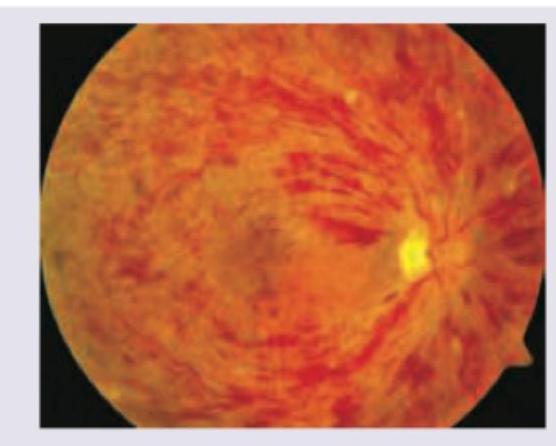
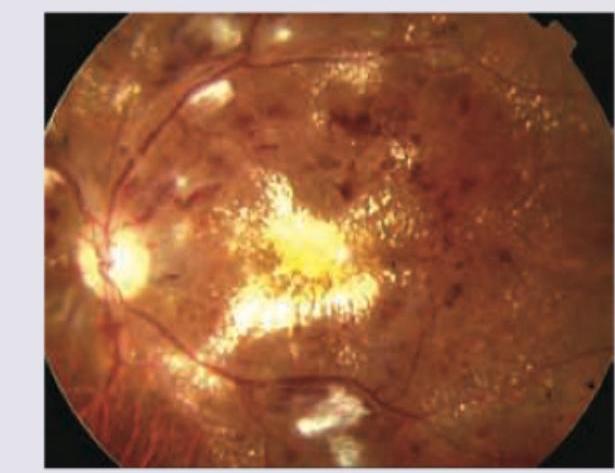
What is the treatment of choice for Eale's disease?
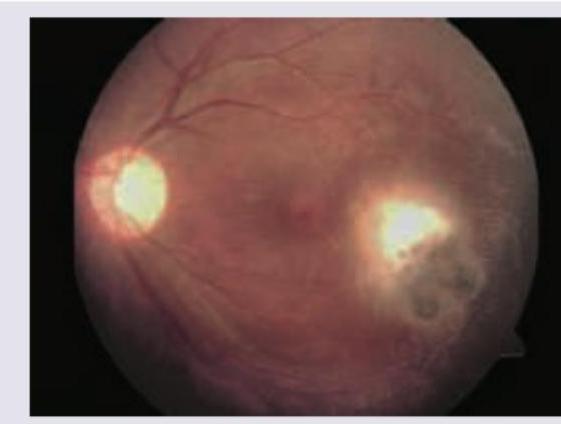
A 60-year-old male patient, operated for cataract 6 months ago, now complains of floaters and sudden loss of vision. What is the most likely diagnosis?
Which of the following statements is NOT true regarding retinal anatomy?
Purtscher retinopathy is seen in patients with which of the following conditions?
What is the commonest type of retinal detachment?
What is the most common cause of macular edema?
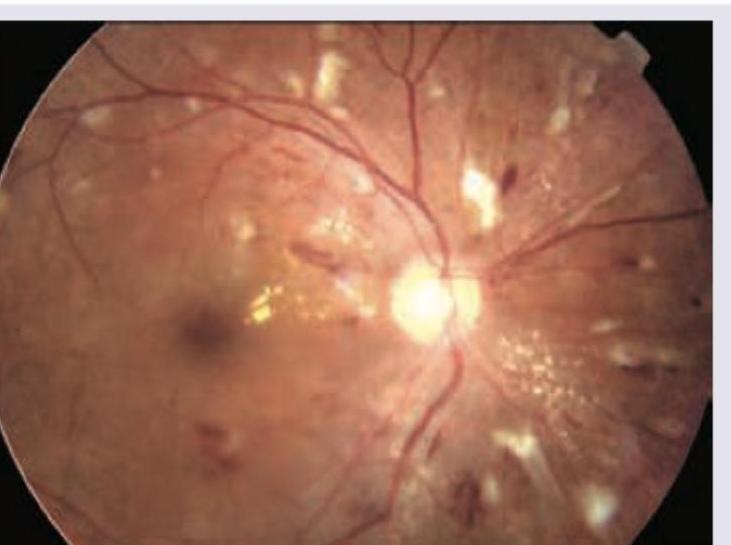
Hard exudates are seen in all of the following conditions EXCEPT:
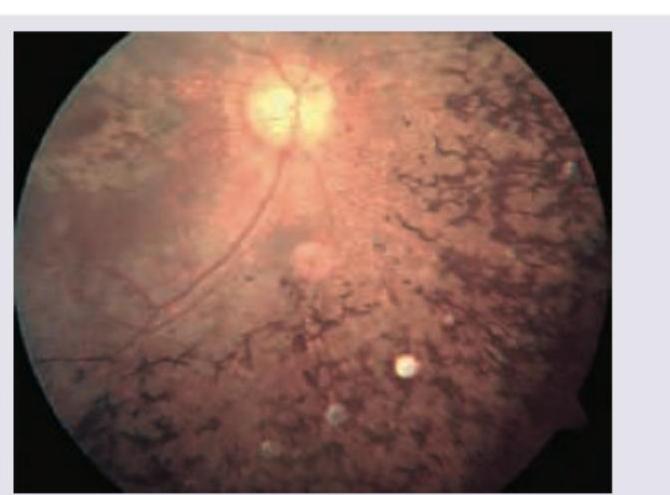
About retinitis pigmentosa, all are true EXCEPT:
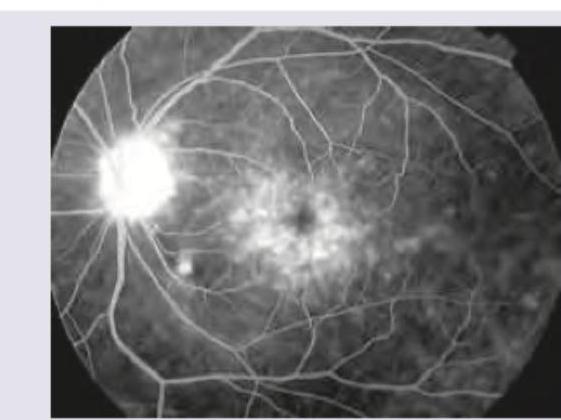
The "smoke stack" pattern on optical coherence tomography is characteristic of which condition?
What is the commonest cause of vision loss in non-proliferative diabetic retinopathy?
Explanation: **Explanation:** **Eales’ Disease** is an idiopathic, inflammatory peripheral retinal perivasculitis (primarily affecting the venules) that typically affects healthy young adult males. **Why Corticosteroids are the Treatment of Choice:** The primary underlying pathology in the active stage of Eales’ disease is **inflammation** (perivasculitis). Systemic **corticosteroids** are the mainstay of treatment during this active exudative phase to reduce vascular inflammation, prevent further exudation, and minimize the risk of vitreous hemorrhage. They are often administered orally (e.g., Prednisolone 1mg/kg) and tapered slowly. **Analysis of Incorrect Options:** * **Antibiotics:** While Eales’ disease was historically associated with Tuberculosis (hypersensitivity to tuberculoprotein), it is not a direct bacterial infection of the retina. Antibiotics (ATT) are only indicated if there is evidence of active systemic TB. * **Antihistaminics:** These have no role in treating retinal vasculitis as the mechanism is not a Type I hypersensitivity reaction. * **Surgery:** Pars Plana Vitrectomy (PPV) is reserved for **complications** of the disease, such as non-clearing vitreous hemorrhage or tractional retinal detachment, but it is not the primary treatment for the disease itself. **High-Yield Clinical Pearls for NEET-PG:** * **Classic Presentation:** Peripheral periphlebitis (cuffing), peripheral non-perfusion (ischaemia), and subsequent neovascularization. * **Stages:** 1. Perivasculitis (Inflammation) → 2. Ischemia → 3. Neovascularization → 4. Complications (Vitreous hemorrhage/RD). * **Management of Neovascularization:** If areas of capillary non-perfusion or neovascularization (NVE) are present, **Laser Photocoagulation** (Scatter/PRP) is the treatment of choice to prevent hemorrhage. * **Key Association:** Often associated with a positive Mantoux test (delayed hypersensitivity).
Explanation: **Explanation:** The correct diagnosis is **Retinal Detachment (RD)**, specifically Rhegmatogenous RD. **Why Retinal Detachment is correct:** Pseudophakia (post-cataract surgery status) is a significant risk factor for retinal detachment. The classic presentation involves **floaters** (due to vitreous traction or Weiss ring), **photopsia** (flashing lights), and a **"curtain-like" loss of vision**. In a post-operative patient, the sudden onset of floaters followed by vision loss strongly suggests a retinal tear leading to detachment. **Why the other options are incorrect:** * **Vitreous Hemorrhage:** While it presents with sudden floaters and vision loss, it is most commonly associated with proliferative diabetic retinopathy or trauma. While it can occur with RD, RD is a more specific "textbook" complication following cataract surgery. * **Central Retinal Artery Occlusion (CRAO):** This presents as sudden, painless, profound loss of vision, but it is **not** associated with floaters. Clinical findings would include a "cherry-red spot." * **Cystoid Macular Edema (CME):** Known as Irvine-Gass syndrome when occurring post-cataract surgery, it typically presents with a **gradual** blurring of central vision (usually 6–10 weeks post-op), not a sudden loss of vision or floaters. **Clinical Pearls for NEET-PG:** * **Irvine-Gass Syndrome:** The most common cause of decreased vision after uncomplicated cataract surgery; diagnosed via FFA (Flower-petal appearance). * **Shafer’s Sign:** Presence of "tobacco dust" (pigment granules) in the anterior vitreous is pathognomonic for a retinal tear. * **Risk Factor:** The risk of RD increases if there was a posterior capsular rupture (PCR) during the cataract surgery.
Explanation: **Explanation:** The retina consists of 10 distinct layers. To identify the incorrect statement, we must understand the anatomical orientation of these layers. **1. Why Option B is the Correct Answer (The False Statement):** The retina has two main surfaces: the **outer surface** (facing the choroid) and the **inner surface** (facing the vitreous). * The **Retinal Pigment Epithelium (RPE)** is the outermost layer, situated between the neurosensory retina and the Bruch’s membrane/choroid. * The layer in direct contact with the vitreous is the **Internal Limiting Membrane (ILM)**, which forms the innermost boundary of the retina. Therefore, stating the RPE is in contact with the vitreous is anatomically incorrect. **2. Analysis of Other Options:** * **Option A:** At the **foveola** (the center of the fovea), the inner retinal layers are displaced laterally to allow light to fall directly on the photoreceptors. Only the RPE, photoreceptors, and parts of the limiting membranes are present. * **Option C:** The **posterior pole** is the area of the retina located between the superior and inferior temporal vascular arcades. Anatomically, it encompasses the macula and the optic nerve head (optic disc). * **Option D:** The center of the fovea contains the **Foveal Avascular Zone (FAZ)**. This area lacks retinal capillaries to prevent light scattering, ensuring maximum visual acuity. It is nourished solely by the underlying choriocapillaris. **Clinical Pearls for NEET-PG:** * **Thickness:** The retina is thickest at the papillomacular bundle (near the disc) and thinnest at the foveola (0.13 mm). * **Photoreceptors:** The foveola contains **only cones**; rods are absent. * **Blood-Retinal Barrier:** The outer barrier is formed by the tight junctions of the **RPE**, while the inner barrier is formed by the **non-fenestrated endothelial cells** of retinal capillaries.
Explanation: **Explanation:** **Purtscher Retinopathy** is a traumatic angiopathy characterized by sudden vision loss following severe non-ocular trauma. **Why Head Trauma is Correct:** The condition is most classically associated with **severe head trauma**, chest compression (crush injuries), or long bone fractures. The underlying pathophysiology involves **complement-mediated leukoembolization** or microemboli (fat, air, or fibrin) that lead to precapillary arteriolar occlusion. This results in the pathognomonic clinical finding of **Purtscher flecks** (areas of retinal whitening between the retinal arterioles and venules) and superficial cotton-wool spots, typically located around the optic disc. **Analysis of Incorrect Options:** * **A. Chronic Pancreatitis:** While *acute* pancreatitis is a known cause of "Purtscher-like retinopathy," chronic pancreatitis is not typically associated with this acute vascular event. * **B. Occlusion of the anterior retinal artery:** This is a misnomer; the central retinal artery or its branches are involved in occlusive diseases, but Purtscher’s is a specific syndrome of multiple micro-infarctions rather than a single large vessel occlusion. * **D. Diabetes Mellitus:** DM causes diabetic retinopathy characterized by microaneurysms, hemorrhages, and neovascularization, which follows a chronic progressive course rather than the acute embolic presentation of Purtscher’s. **High-Yield Clinical Pearls for NEET-PG:** * **Pathognomonic Sign:** Purtscher flecks (clear zone between the lesion and the retinal vessels). * **Purtscher-like Retinopathy:** Term used when similar retinal findings occur in non-traumatic conditions like **Acute Pancreatitis**, SLE, or amniotic fluid embolism. * **Diagnosis:** Primarily clinical; Fundus Fluorescein Angiography (FFA) shows areas of capillary non-perfusion. * **Prognosis:** Vision usually recovers spontaneously over weeks to months as the emboli clear, though some permanent deficit may remain.
Explanation: **Explanation:** **Rhegmatogenous Retinal Detachment (RRD)** is the most common type of retinal detachment encountered in clinical practice. The term is derived from the Greek word *rhegma*, meaning a "break." The underlying pathophysiology involves a full-thickness break (hole or tear) in the neurosensory retina. This allows liquefied vitreous to enter the subretinal space, separating the neurosensory retina from the underlying retinal pigment epithelium (RPE). The most common predisposing factor is **Posterior Vitreous Detachment (PVD)**. **Analysis of Incorrect Options:** * **Tractional RD:** The second most common type. It occurs when fibrovascular membranes (commonly in **Proliferative Diabetic Retinopathy**) pull the retina away from the RPE. There is no retinal break involved. * **Exudative (Serous) RD:** Occurs when fluid leaks into the subretinal space due to inflammation or vascular masses (e.g., Vogt-Koyanagi-Harada syndrome or posterior scleritis) without a break or traction. * **Choroidal Hemorrhage:** This is a complication (often surgical) involving bleeding in the suprachoroidal space; it is not a classification of retinal detachment itself. **High-Yield Clinical Pearls for NEET-PG:** * **Risk Factors for RRD:** High myopia (most common association), aphakia, and lattice degeneration. * **Clinical Triad:** Photopsia (flashing lights), sudden onset of floaters, and a "curtain-like" loss of visual field. * **Shafer’s Sign:** The presence of "tobacco dust" (pigment cells) in the anterior vitreous is pathognomonic for a retinal tear. * **Management:** RRD is a surgical emergency. The goal is to seal the break using cryotherapy or laser photocoagulation, combined with procedures like scleral buckling or vitrectomy.
Explanation: **Explanation:** **Cataract surgery** is the most common cause of macular edema, specifically known as **Irvine-Gass Syndrome** (pseudophakic cystoid macular edema). The underlying mechanism involves the release of inflammatory mediators (prostaglandins) during surgery, which increase the permeability of the perifoveal capillaries, leading to fluid accumulation in the Henle’s layer of the retina. It typically peaks 4–6 weeks post-operatively. **Analysis of Incorrect Options:** * **Secondary Glaucoma:** While glaucoma involves high intraocular pressure that damages the optic nerve head, it does not typically cause macular edema. However, certain medications used to treat it (like Prostaglandin analogues) can induce CME. * **Retinitis Pigmentosa (RP):** CME is a known complication of RP (occurring in about 10-20% of cases), but it is far less common than post-surgical edema in the general population. * **Uveitis:** Inflammatory conditions of the eye frequently cause macular edema, but statistically, the sheer volume of cataract surgeries performed makes post-operative CME the more frequent clinical occurrence. **High-Yield Clinical Pearls for NEET-PG:** * **Gold Standard Diagnosis:** **Optical Coherence Tomography (OCT)** is the investigation of choice (shows "honeycomb" cystic spaces). * **Classic Sign:** On **Fundus Fluorescein Angiography (FFA)**, it shows a characteristic **"Flower-petal appearance"** due to the radial arrangement of Henle’s layer. * **Management:** Prophylactic and therapeutic use of topical **NSAIDs** (e.g., Nepafenac or Ketorolac) is the first-line treatment. * **Other Causes:** Diabetic Retinopathy (most common cause of *vision loss* in diabetics) and Retinal Vein Occlusions (RVO).
Explanation: **Explanation:** Hard exudates are yellowish-waxy deposits with distinct margins, composed of **lipoproteins and lipid-laden macrophages**. They form due to **chronic vascular leakage** from incompetent capillaries (breakdown of the blood-retinal barrier). **Why Leukemic Retinopathy is the correct answer:** Leukemic retinopathy is primarily characterized by hematological changes rather than chronic lipid leakage. Key findings include **Roth spots** (flame-shaped hemorrhages with white centers), venous tortuosity, and cotton wool spots. While "soft exudates" (cotton wool spots) are common due to ischemia, **hard exudates are typically absent** because the primary pathology is leukostasis and anemia, not chronic lipoprotein extravasation. **Analysis of Incorrect Options:** * **Diabetic Retinopathy:** Hard exudates are a hallmark feature, often forming a "circinate" pattern around leaking microaneurysms. * **Hypertensive Retinopathy:** Seen in Grade III and IV (Keith-Wagener-Barker classification). A classic finding is the **Macular Star**, formed by hard exudates radiating in the Henle’s layer. * **Coats’ Disease:** Also known as exudative retinopathy, it is characterized by massive subretinal hard exudates due to telangiectatic retinal vessels. **High-Yield Clinical Pearls for NEET-PG:** * **Hard Exudates:** Located in the **Outer Plexiform Layer** (Henle’s layer at the macula). * **Soft Exudates (Cotton Wool Spots):** Not true exudates; they are micro-infarcts of the **Nerve Fiber Layer**. * **Roth Spots:** Though classic for Subacute Bacterial Endocarditis (SABE), they are most commonly seen in **Leukemia**. * **Circinate Retinopathy:** A ring of hard exudates, most commonly caused by Diabetes Mellitus.
Explanation: **Explanation:** Retinitis Pigmentosa (RP) is a hereditary, progressive dystrophy primarily affecting the **rod photoreceptors** first, followed by the cones. **Why Option C is the correct answer (The "Except"):** In RP, the degeneration starts in the mid-peripheral retina where rod density is highest. This leads to **peripheral field loss** (tunnel vision) and night blindness. **Central vision is typically preserved** until the late stages of the disease. Early loss of central vision is characteristic of macular dystrophies (like Stargardt disease) or Cone-Rod dystrophy, not classic RP. **Analysis of other options:** * **A. Night Blindness (Nyctalopia):** This is the **earliest clinical symptom** of RP due to the primary involvement of rods, which are responsible for scotopic (low-light) vision. * **B. Waxy Disc:** This refers to "waxy pallor" of the optic disc, a classic sign caused by gliosis and optic atrophy as the disease progresses. * **D. Attenuation of retinal vessels:** Marked narrowing (attenuation) of retinal arterioles is a hallmark finding, likely due to reduced metabolic demand of the degenerating retina. **Clinical Pearls for NEET-PG:** * **Classic Triad:** 1. Bony spicule pigmentation (perivascular), 2. Arteriolar attenuation, 3. Waxy disc pallor. * **ERG Findings:** The Electroretinogram (ERG) is the most sensitive test; it shows a **subnormal or extinguished** (flat) response even before fundus changes appear. * **Visual Field:** Characteristically shows a **ring scotoma**, which eventually expands to leave only a small island of central "tunnel vision." * **Associations:** Usher Syndrome (RP + Sensorineural hearing loss) and Laurence-Moon-Biedl Syndrome (RP + Obesity + Polydactyly + Hypogonadism + Intellectual disability).
Explanation: **Explanation:** **Central Serous Retinopathy (CSR)** is the correct answer. CSR is characterized by a localized serous detachment of the sensory retina at the macula, caused by leakage from the choriocapillaris through a defect in the Retinal Pigment Epithelium (RPE). The **"Smoke Stack" appearance** is a classic finding traditionally described in **Fluorescein Angiography (FFA)**. It occurs when fluorescein leaks through a small RPE opening and rises vertically (due to convection currents or pressure gradients) before spreading laterally in the subretinal space, resembling a plume of smoke. While the question mentions OCT, it is important to note that in clinical practice, "Smoke Stack" is the hallmark of FFA, whereas OCT typically shows a "dome-shaped" elevation of the neurosensory retina. **Analysis of Incorrect Options:** * **Sickle Cell Retinopathy:** Characterized by peripheral "Sea-fan" neovascularization and "Salmon-patch" hemorrhages, not smoke-stack leaks. * **Sarcoidosis:** Presents with "Candle-wax drippings" (perivascular exudates) and granulomatous uveitis. * **Acute Retinal Necrosis (ARN):** A viral infection (HSV/VZV) presenting with peripheral retinal whitening and rapid necrosis. **High-Yield Clinical Pearls for NEET-PG:** * **Demographics:** Typically affects young to middle-aged males with **Type A personalities** or those on **steroid therapy**. * **FFA Patterns:** "Smoke stack" (10%) and "Ink blot" (most common, 90%). * **OCT Finding:** Neurosensory detachment with or without Ped (Pigment Epithelial Detachment). * **Management:** Most cases are self-limiting; observation is the first line. If persistent, focal laser photocoagulation or PDT (Photodynamic Therapy) is used.
Explanation: **Explanation:** In Diabetic Retinopathy (DR), vision loss occurs through different mechanisms depending on the stage of the disease. **Why Macular Edema is correct:** Macular edema (specifically Diabetic Macular Edema or DME) is the **most common cause of vision loss** in patients with **Non-Proliferative Diabetic Retinopathy (NPDR)**. It occurs due to the breakdown of the blood-retinal barrier, leading to the leakage of fluid and plasma constituents (like hard exudates) into the intraretinal layers of the macula. Since the macula is responsible for central, high-acuity vision, any thickening or edema here significantly impairs sight. **Analysis of Incorrect Options:** * **A. Vitreous Hemorrhage:** This is a hallmark complication of **Proliferative Diabetic Retinopathy (PDR)**, caused by the rupture of fragile new vessels (neovascularization). It is not a feature of NPDR. * **C. Detachment of the Retina:** Specifically, **Tractional Retinal Detachment** is a late-stage complication of PDR caused by fibrovascular proliferation. It does not occur in the NPDR stage. * **D. Subretinal Hemorrhage:** While it can occur in various retinal pathologies (like Wet AMD), it is not a primary or common cause of vision loss in NPDR. **High-Yield Clinical Pearls for NEET-PG:** * **Most common cause of blindness in DR overall:** Diabetic Macular Edema (DME). * **Most common cause of sudden, painless vision loss in PDR:** Vitreous Hemorrhage. * **Earliest clinical sign of NPDR:** Microaneurysms (located in the inner nuclear layer). * **Investigation of choice for DME:** Optical Coherence Tomography (OCT) to measure retinal thickness. * **Standard Treatment for DME:** Intravitreal Anti-VEGF injections (e.g., Ranibizumab, Bevacizumab).
Retinal Anatomy and Physiology
Practice Questions
Age-Related Macular Degeneration
Practice Questions
Diabetic Retinopathy
Practice Questions
Retinal Vascular Diseases
Practice Questions
Retinal Detachment
Practice Questions
Hereditary Retinal Dystrophies
Practice Questions
Inflammatory Retinal Diseases
Practice Questions
Retinal Tumors
Practice Questions
Retinopathy of Prematurity
Practice Questions
Retinal Imaging Techniques
Practice Questions
Intravitreal Pharmacotherapy
Practice Questions
Vitreoretinal Surgery
Practice Questions
Get full access to all questions, explanations, and performance tracking.
Start For Free