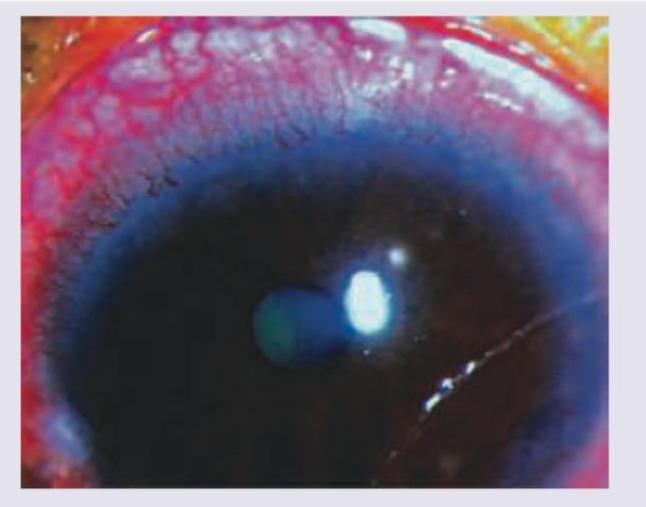
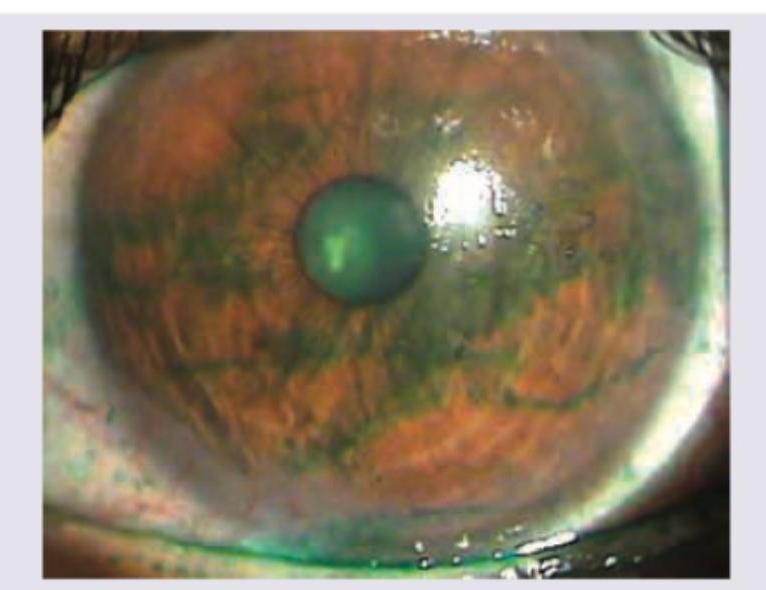
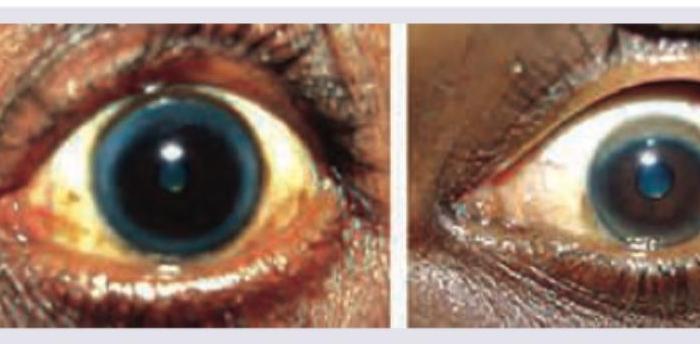
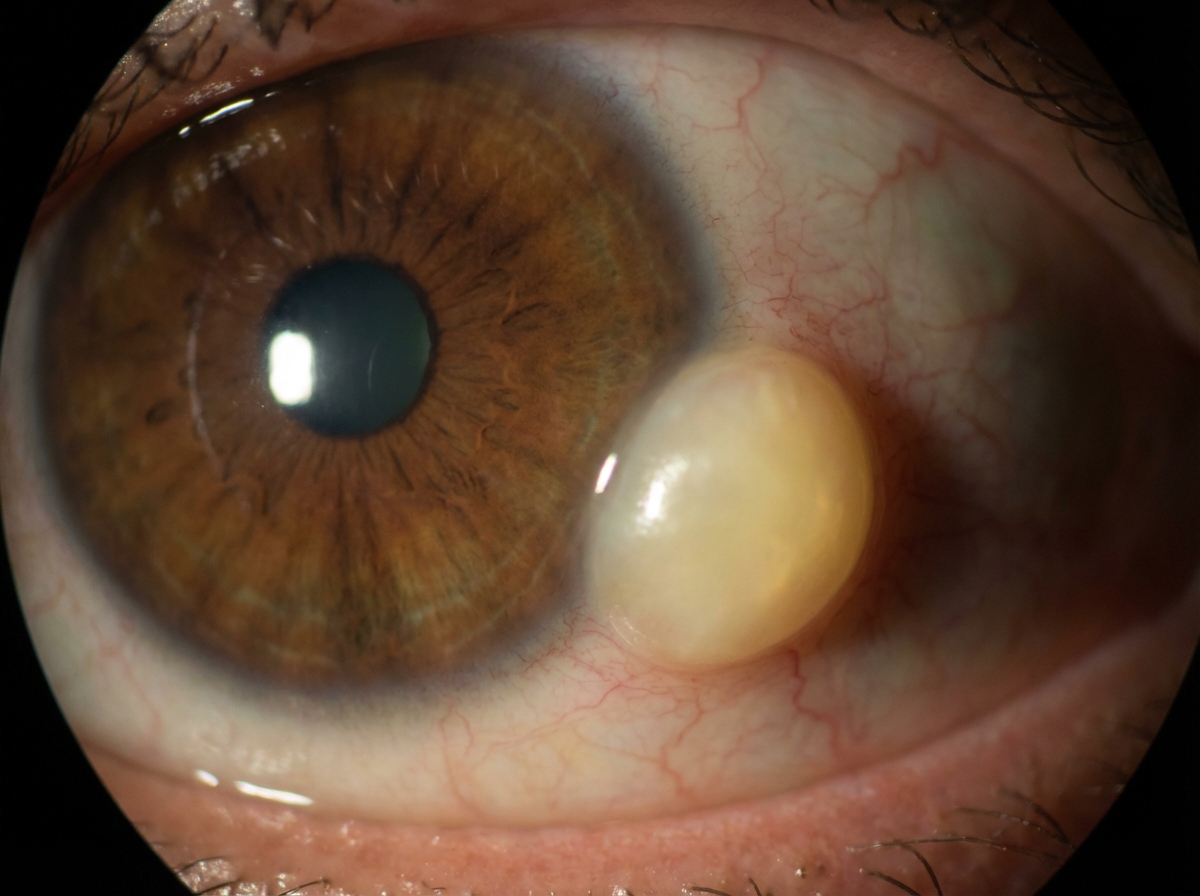
Corneal scraping from a patient reveals narrow angled septate hyphae. What is the most likely etiologic agent?
All are features of rosacea keratitis except?
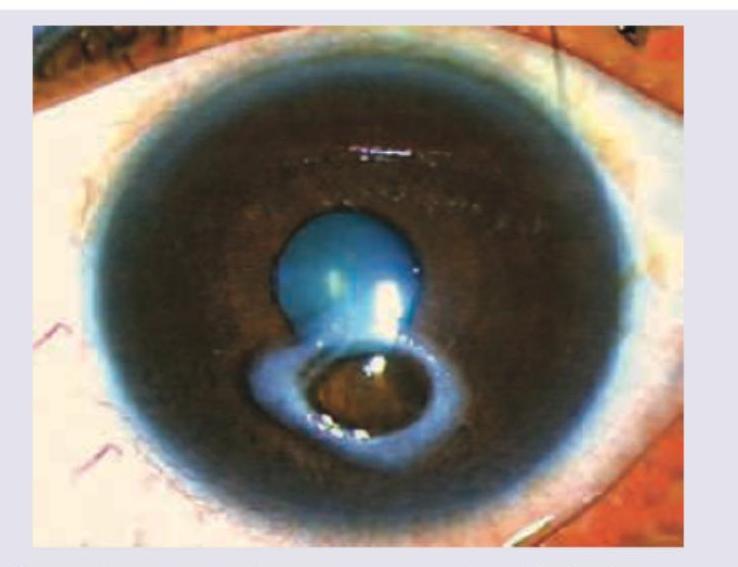
Which of the following is NOT an indication for the prosthesis shown in the image?

Which of the following statements regarding corneal transplantation is true?
What is the most common cause of corneal keratitis in soft contact lens users?
Enlarged corneal nerves may be seen in all of the following except?
Under hypoxic conditions, which of the following is strongly implicated as a cause of corneal edema?
Keratic precipitates are found on which layer of the cornea?
Hutchinson’s rule is related to which of the following conditions?
Keratitis can be caused by which of the following?
Explanation: ### Explanation **Correct Answer: C. Aspergillus** The diagnosis of fungal keratitis relies heavily on the morphological characteristics of the fungi seen on corneal scraping (KOH mount or Gram stain). 1. **Why Aspergillus is correct:** Filamentous fungi are the most common cause of fungal keratitis globally. **Aspergillus** and **Fusarium** are characterized by **septate hyphae** that branch at **narrow angles** (typically 45 degrees). In a clinical setting, these are often associated with trauma involving vegetative matter (e.g., a branch hitting the eye). 2. **Why other options are incorrect:** * **Mucor:** Characterized by **broad, non-septate (coenocytic) hyphae** that branch at **right angles** (90 degrees). It is more commonly associated with Rhino-oculo-cerebral mucormycosis in diabetic patients rather than isolated corneal ulcers. * **Candida:** This is a yeast-like fungus. On scraping, it typically shows **pseudohyphae** and **budding yeast cells**. It usually affects eyes with pre-existing ocular surface disease. * **Histoplasma:** This is a dimorphic fungus that primarily causes systemic disease (Presumed Ocular Histoplasmosis Syndrome - POHS) affecting the choroid and retina, not the cornea. It does not present as hyphae in corneal scrapings. ### High-Yield Clinical Pearls for NEET-PG: * **Clinical Sign:** Look for **"Feathery borders,"** **"Satellite lesions,"** and an **immune ring (Wessely ring)** on slit-lamp examination, which are classic for filamentous fungal keratitis. * **Stains:** **Gomori Methenamine Silver (GMS)** and **Periodic Acid-Schiff (PAS)** are the best stains for visualizing fungal morphology. **Calcofluor White** is a rapid fluorescent stain. * **Treatment:** **Natamycin (5%)** is the drug of choice for filamentous fungi (Aspergillus/Fusarium), while **Amphotericin B (0.15%)** is preferred for Candida. * **Culture:** **Sabouraud’s Dextrose Agar (SDA)** is the standard medium; growth typically appears in 48–72 hours.
Explanation: **Explanation:** Rosacea keratitis is a complication of **Acne Rosacea**, a chronic idiopathic skin condition. The ocular involvement typically follows a peripheral-to-central progression, which is the key to identifying the correct answer. **Why "Central superficial ulcer" is the correct answer:** In rosacea keratitis, corneal involvement typically begins at the **periphery** (limbus). It starts as marginal infiltrates or vascularization, which then progresses toward the center. It does **not** typically present as a primary central superficial ulcer; rather, any central involvement is usually a late-stage progression of peripheral disease. **Analysis of other options:** * **Corneal vascularization:** This is a hallmark feature. It often presents as "spade-shaped" or sectorial superficial vascularization, usually starting from the inferior limbus. * **Chronic blepharoconjunctivitis:** This is the most common ocular manifestation of rosacea. Patients frequently present with meibomian gland dysfunction (MGD), telangiectasia of the lid margins, and recurrent chalazia. * **Progresses to involve the whole cornea:** If left untreated, the peripheral infiltrates and vascularization can advance centripetally, eventually leading to total corneal scarring, thinning, or even perforation. **Clinical Pearls for NEET-PG:** * **Demographics:** More common in females, but ocular complications are often more severe in males. * **Classic Sign:** Look for "Spade-shaped" peripheral corneal vascularization. * **Treatment:** Systemic **Tetracyclines** (e.g., Doxycycline) are the mainstay of treatment because they inhibit matrix metalloproteinases (MMPs) and improve meibomian gland secretions, in addition to their antibacterial properties. * **Steroids:** Topical steroids are used for the keratitis but must be used cautiously due to the risk of corneal thinning/melting.
Explanation: ***Oral Contraceptive Pills (OCP) - Stage 1 or 2*** - **Early-stage OCP** (Stage I-II by Foster/Mondino staging) does NOT qualify for **Boston Keratoprosthesis** as the corneal surface is still manageable with medical therapy. - **Boston KPro** is reserved for **advanced stages (III-IV)** with severe **dry eye**, **surface keratinization**, and failed conventional treatments. *Crouzon Disease* - **Syndromic craniosynostosis** with **shallow orbits** leads to severe **exposure keratopathy** and corneal scarring unresponsive to conventional grafts. - The **anatomical abnormalities** make traditional **penetrating keratoplasty** technically challenging and prone to failure. *Multiple failed Penetrating Keratoplasty* - **Repeated PKP failures** indicate poor **host bed vascularity** or **immune-mediated rejection**, making further conventional grafts futile. - **Boston KPro** bypasses the need for **donor corneal tissue integration** and provides immediate visual rehabilitation. *Epidermolysis Bullosa Acquisita* - **Autoimmune blistering disease** causes severe **cicatricial changes** and **symblepharon formation** that destroy the corneal surface. - The **chronic inflammatory process** makes conventional grafts prone to failure due to poor healing and recurrent scarring.
Explanation: **Explanation:** **Correct Option (C):** Specular microscopy is the gold standard for evaluating the donor cornea's health before transplantation. It allows for a non-invasive, high-magnification morphological analysis of the **corneal endothelium**. For a successful graft, the endothelial cell density (ECD) should ideally be **>2000–2500 cells/mm²**. Since endothelial cells do not regenerate, a healthy count is critical to maintain graft clarity by preventing corneal edema. **Incorrect Options:** * **A:** The whole eye is typically preserved in a moist chamber at 4°C for short periods (up to 24 hours). However, for modern corneal transplantation, the **corneo-scleral rim** is excised and preserved in specialized media like **MK Medium** (3–4 days) or **Optisol-GS** (up to 14 days). Tissue culture is used for long-term storage (up to 35 days). * **B:** There is no strict upper age limit for corneal donation. While younger tissue is preferred, corneas from donors **over 60 years** are frequently used if the specular microscopy shows a healthy endothelial count and the tissue is clear. * **D:** Unlike kidney or heart transplants, **HLA matching is NOT mandatory** for routine corneal transplants because the cornea is an "immunologically privileged" site. It is only considered in "high-risk" cases (e.g., vascularized corneas or repeat grafts). **High-Yield Clinical Pearls for NEET-PG:** * **Ideal time for eye donation:** Within 6 hours of death. * **Contraindications for donation:** Death of unknown cause, HIV, Hepatitis B & C, Rabies, Septicemia, Leukemia, and Creutzfeldt-Jakob Disease. * **Storage Media:** MK Medium (4°C), Optisol (4°C), and Cryopreservation (Liquid Nitrogen for long-term). * **Most common cause of graft failure:** Late graft failure is usually due to chronic endothelial cell loss; early failure is often due to primary graft non-function or rejection.
Explanation: **Explanation:** **Pseudomonas keratitis** is the most common cause of bacterial keratitis in soft contact lens wearers. The underlying medical concept involves the ability of *Pseudomonas aeruginosa* to adhere to the surface of soft contact lenses (especially hydrogel and silicone hydrogel types) and the lens cases. It produces proteases and toxins that can cause rapid stromal necrosis and corneal perforation, often presenting as a characteristic "soupy" yellowish-green discharge. **Analysis of Options:** * **Acanthamoeba keratitis:** While highly associated with poor contact lens hygiene (e.g., using tap water), it is much **rarer** than bacterial infections. It is characterized by "pain out of proportion to clinical findings" and ring-shaped infiltrates. * **Corneal erosion:** This is a mechanical complication or a sequela of trauma/dystrophy, not an infectious keratitis. While contact lenses can cause abrasions, they are not the primary "cause" of infectious keratitis itself. * **Herpes simplex keratitis:** This is typically a viral reactivation in the trigeminal ganglion and is not specifically linked to contact lens use. It presents with characteristic dendritic ulcers. **High-Yield Clinical Pearls for NEET-PG:** * **Most common organism overall for bacterial keratitis:** *Staphylococcus aureus*. * **Most common organism in contact lens users:** *Pseudomonas aeruginosa*. * **Risk Factors:** Overnight wear (extended wear) is the single greatest risk factor for developing contact lens-related keratitis. * **Clinical Sign:** Look for a rapidly progressing ulcer with a ground-glass appearance of the surrounding cornea. * **Management:** Immediate cessation of lens wear and intensive topical fortified antibiotics (e.g., Fluoroquinolones or Cephazolin + Gentamicin).
Explanation: **Explanation:** The correct answer is **Herpes simplex keratitis (B)**. In this condition, corneal nerves are typically **destroyed or damaged**, leading to **corneal anesthesia** (loss of sensation), rather than enlargement. **Why the other options are incorrect (Conditions with Enlarged Corneal Nerves):** Enlarged or prominent corneal nerves occur due to infiltration, edema of the nerve sheath, or structural changes in the stroma. * **Keratoconus (A):** Prominent corneal nerves are a classic early sign, often seen in the mid-periphery due to stromal thinning and increased visibility. * **Leprosy (C):** This is a high-yield association. Leprosy causes "beaded" corneal nerves due to the infiltration of the nerves by *Mycobacterium leprae*. * **Neurofibromatosis (D):** Type 1 (NF-1) is frequently associated with thickened, prominent corneal nerves as part of the generalized neuroectodermal dysplasia. **High-Yield Clinical Pearls for NEET-PG:** To remember the causes of enlarged corneal nerves, use the mnemonic **"MEN2B KHL"**: 1. **M**ultiple **E**ndocrine **N**eoplasia (**Type 2B**): Most common association. 2. **K**eratoconus. 3. **H**erpes Zoster (Note: *Simplex* causes loss of sensation; *Zoster* can occasionally show early nerve prominence before atrophy). 4. **L**eprosy (Beaded appearance). 5. **F**uchs’ Endothelial Dystrophy. 6. **I**chthyosis. **Key Distinction:** While Herpes Simplex Keratitis is characterized by **reduced corneal sensations**, it does not cause nerve enlargement. Testing for corneal sensations is a vital diagnostic step in any suspected dendritic ulcer.
Explanation: **Explanation:** The cornea maintains its transparency through a state of relative dehydration (deturgescence). This balance is primarily managed by the corneal endothelium's metabolic pump. **Why Lactate is Correct:** Under **hypoxic conditions** (commonly caused by contact lens overwear or epithelial edema), the cornea shifts from aerobic metabolism to **anaerobic glycolysis**. In this pathway, glucose is converted into **lactate** instead of entering the Krebs cycle. Because the corneal epithelium is relatively impermeable to lactate, it accumulates within the corneal stroma. This creates an **osmotic gradient** that draws water from the aqueous humor into the stroma, resulting in **corneal edema**. **Analysis of Incorrect Options:** * **B. Glycogen:** This is the storage form of glucose in the corneal epithelium. During hypoxia, glycogen stores are depleted (not increased) to provide glucose for anaerobic metabolism. * **C. Carbon dioxide:** While CO2 levels may rise slightly during hypoxia, it diffuses rapidly out of the cornea and does not exert the significant osmotic pressure required to cause stromal edema. * **D. Pyruvate:** In the anaerobic pathway, pyruvate is rapidly converted into lactate by the enzyme lactate dehydrogenase (LDH). It is the accumulation of the end-product (lactate), not the intermediate (pyruvate), that drives the osmotic shift. **High-Yield Clinical Pearls for NEET-PG:** * **Maurice’s Theory:** Attributes corneal transparency to the uniform lattice arrangement of collagen fibrils. * **Goldmann’s Theory:** Attributes transparency to the small size of fibrils (less than half the wavelength of light). * **Critical Oxygen Tension:** The minimum oxygen required to prevent corneal edema is approximately **11–19 mmHg**. * **Pachymetry:** The gold standard for measuring corneal thickness; an increase in thickness is the earliest clinical sign of corneal edema.
Explanation: **Explanation:** **Keratic Precipitates (KPs)** are inflammatory cell deposits (leukocytes) that settle on the posterior surface of the cornea. These cells originate from the uveal tract (iris and ciliary body) and are shed into the aqueous humor during episodes of **anterior uveitis**. 1. **Why Endothelium is correct:** The endothelium is the innermost layer of the cornea, directly in contact with the aqueous humor. Due to gravity and the convection currents of the aqueous humor (thermal circulation), inflammatory cells circulate and eventually adhere to the **endothelial surface**. The presence of KPs is a hallmark sign of active or past intraocular inflammation. 2. **Why other options are incorrect:** * **Epithelium:** This is the outermost layer. Deposits here are usually foreign bodies or superficial punctate keratitis, not KPs. * **Stroma:** This is the thickest middle layer. While it can show edema or infiltrates (as in interstitial keratitis), KPs are surface deposits, not stromal ones. * **Bowman’s Membrane:** This is a thin acellular layer between the epithelium and stroma; it does not come into contact with the aqueous humor. **Clinical Pearls for NEET-PG:** * **Arlt’s Triangle:** KPs typically distribute in a triangular pattern on the inferior part of the endothelium due to gravity and convection currents. * **Mutton-fat KPs:** Large, greasy-looking KPs (composed of macrophages) are characteristic of **Granulomatous uveitis** (e.g., Sarcoidosis, Tuberculosis). * **Small/Fine KPs:** Composed of neutrophils and lymphocytes, these are seen in **Non-granulomatous uveitis**. * **Stellate KPs:** Fine, star-shaped KPs distributed over the entire endothelium are classic for **Fuchs’ Heterochromic Iridocyclitis**.
Explanation: **Explanation:** **Hutchinson’s Rule** is a clinical sign used to predict ocular involvement in **Herpes Zoster Ophthalmicus (HZO)**. It states that if the tip, side, or root of the nose is involved with herpetic vesicles, there is a high probability of subsequent ocular complications. **Why Option C is Correct:** The rule is based on the anatomy of the **Nasociliary nerve**, which is a branch of the Ophthalmic division (V1) of the Trigeminal nerve. The nasociliary nerve provides sensory innervation to both the **tip of the nose** (via the external nasal branch) and the **eyeball** (via the ciliary nerves). Therefore, cutaneous involvement of the nose indicates that the nasociliary nerve is affected, significantly increasing the risk of corneal involvement (keratitis) and uveitis. **Why Other Options are Incorrect:** * **Option A (Herpes Simplex Keratitis):** While also caused by a herpes virus, it typically presents with dendritic ulcers and is not associated with the specific dermatomal distribution or the Hutchinson’s sign seen in Zoster. * **Option B (Mycotic Keratitis):** This is a fungal infection usually following trauma with vegetative matter. It presents with feathery margins and satellite lesions, unrelated to nerve distribution. **High-Yield Clinical Pearls for NEET-PG:** * **Pseudodendrites:** HZO causes "pseudodendrites" (stuck-on appearance, no terminal bulbs), whereas HSV causes "true dendrites" (terminal bulbs present). * **Sensitivity:** While Hutchinson’s sign is a strong predictor, ocular involvement can still occur in its absence (negative rule does not rule out eye disease). * **Treatment:** Oral Acyclovir (800 mg 5 times daily) started within 72 hours of rash onset is the standard of care for HZO.
Explanation: **Explanation:** Keratitis refers to the inflammation of the cornea, which can be broadly classified into **Infective** and **Non-infective** etiologies. This question tests the candidate's ability to recognize the diverse spectrum of corneal insults. 1. **Bacteria (Option A):** This is the most common cause of suppurative corneal ulcers. Common pathogens include *Staphylococcus aureus*, *Streptococcus pneumoniae*, and *Pseudomonas aeruginosa* (especially in contact lens wearers). 2. **Atopy (Option B):** This represents the **non-infective/allergic** category. Atopic Keratoconjunctivitis (AKC) can lead to secondary keratitis, including "shield ulcers" or punctate epithelial erosions. Chronic atopy is also a major risk factor for Keratoconus due to persistent eye rubbing. 3. **Protozoa (Option C):** *Acanthamoeba* is a free-living protozoan that causes a devastating, painful keratitis, typically associated with contaminated tap water and contact lens use. Since keratitis can be triggered by biological pathogens (Bacteria, Protozoa, Fungi, Viruses) as well as hypersensitivity/immunological reactions (Atopy), **Option D** is the correct answer. **High-Yield Clinical Pearls for NEET-PG:** * **Acanthamoeba Keratitis:** Characterized by "disproportionate pain" and a pathognomonic **Radial Keratoneuritis** (infiltration around corneal nerves). * **Pseudomonas Keratitis:** Known for a rapid course and a characteristic **greenish-yellow purulent discharge**. * **Fungal Keratitis:** Look for "feathery margins," "satellite lesions," and a history of trauma with vegetative matter (e.g., a branch hitting the eye). * **Viral Keratitis (HSV):** Presents with **dendritic ulcers** (true ulcers with terminal bulbs) that stain with Fluorescein.
Corneal Anatomy and Physiology
Practice Questions
Bacterial Keratitis
Practice Questions
Viral Keratitis
Practice Questions
Fungal Keratitis
Practice Questions
Protozoan Keratitis
Practice Questions
Corneal Degenerations
Practice Questions
Corneal Dystrophies
Practice Questions
Keratoconus and Ectatic Disorders
Practice Questions
Corneal Transplantation
Practice Questions
Corneal Topography and Imaging
Practice Questions
Dry Eye Disease
Practice Questions
Corneal Trauma
Practice Questions
Get full access to all questions, explanations, and performance tracking.
Start For Free